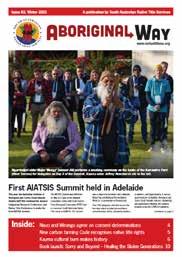
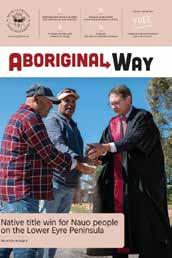
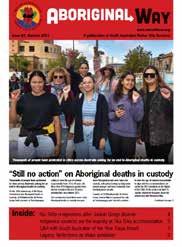
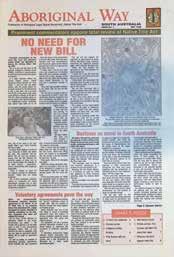
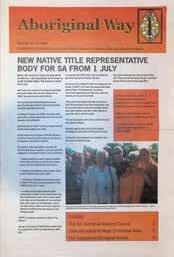
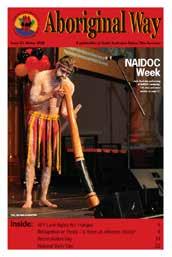
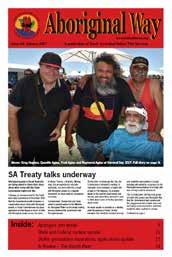
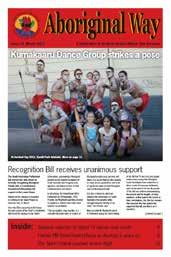
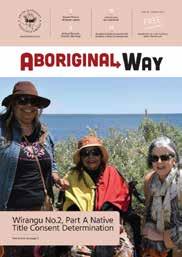
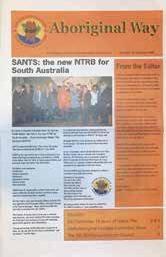
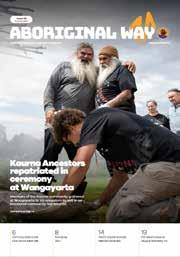
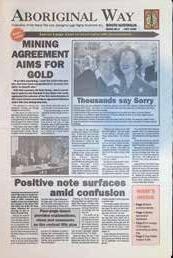
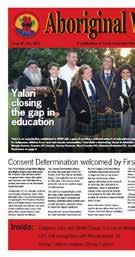
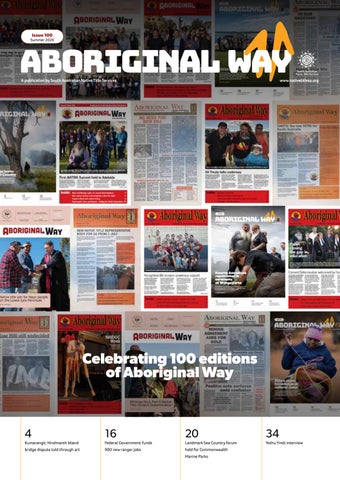
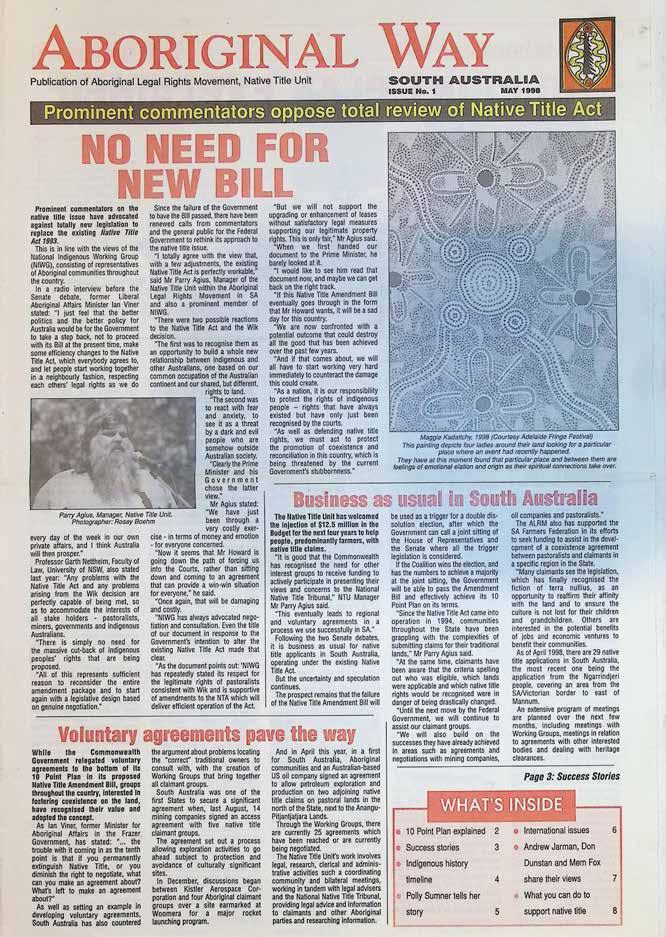
It’s been nearly three decades since the very first edition of Aboriginal Way was published. A time when the publication was under auspices of the Aboriginal Legal Rights Movement’s Native Title Unit.
Included in that historic first edition was a profile of prominent Ngarrindjeri woman and Aboriginal health advocate (amongst many other things) Polly Sumner (Dodd) as well as views from well-known South Australians Don Dunstan and Andrew Jarman.
Looking back, the first edition of Aboriginal Way paved the way for the start of something big for our community.
And in the 99 editions that followed over the next 28 years, this publication – now published by South Australian Native Title Services - has cemented its role and reputation as a reliable and valuable resource for the Aboriginal community.
It’s a dependable source of information on the issues that are impacting First Nations communities around our state – not just within the Native Title field, but in everything from language and culture, environmental issues, infrastructure, health, education and more.
Importantly it’s not just the ‘what’, that makes this publication what it is.
Aboriginal Way has a clear focus on, and interest in, the ‘who’… the people that drive change across our state, the people who advocate for First Nations South Australians and the people who are taking a leading role in strengthening Aboriginal communities.
It is this pride and recognition in our communities – the achievements, the vision and the significant resilience – that makes this publication such an essential piece of reading for both members of the community and those who work with Aboriginal communities.
Reflecting this importance, I know that Aboriginal Way is widely circulated within our government agencies, to ensure members of the public sector are up to date on key events and on issues of importance for the Aboriginal community as well as hearing and understanding the views, experiences, and the hard work occurring across Aboriginal communities.
Thanks to advances in technology, the Aboriginal Way podcast is another way that the important stories, the wins, the celebrations, and the critical conversations can be heard in greater depth.
I encourage anyone who hasn’t yet heard it, to tune into the Aboriginal Way podcast.
Looking back at that first edition, it is inspiring to see how far this vital publication has come. The high standard of this publication is possible with significant effort that goes on behind the scenes ahead of each publication. The stories that
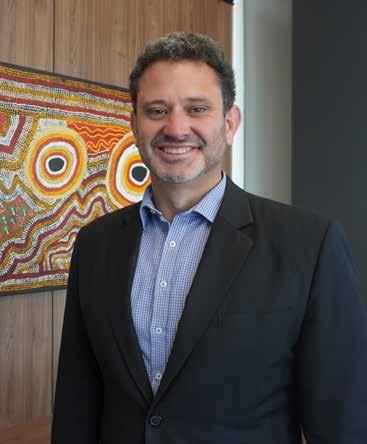
IIN THE 28 YEARS SINCE ABORIGINAL WAY LAUNCHED, WE’VE SEEN TREMENDOUS STRIDES IN THE WAY THAT GOVERNMENTS RESPOND TO ISSUES CONFRONTING OUR COMMUNITIES, WHICH OFTEN DISPROPORTIONATELY AFFECT FIRST NATIONS PEOPLE. WE ARE ALL THE BETTER FOR THAT CHANGE, BUT WE ALL KNOW THERE’S STILL SO MUCH MORE TO DO SUPPORTING EQUITY AND JUSTICE.”
- KYAM MAHER.
reflect what is happening across our communities, reflects I think just how far we have come as a broader community, and the importance of listening and learning.
It fills me with great hope and optimism of the great things ahead, with Aboriginal Way there to report on the actions of governments, hold us to account when needed, and to continue reminding us of the way forward as we step forward in our collective journey.
Congratulations to SANTS and all the contributors over the decades on your milestone 100th edition of Aboriginal Way!
Hon Kyam Maher MLC
Deputy Premier Minister for Aboriginal Affairs
Attorney-General
Minister for Industrial Relations and Public Sector
Special Minister of State
Leader of the Government in the Legislative Council
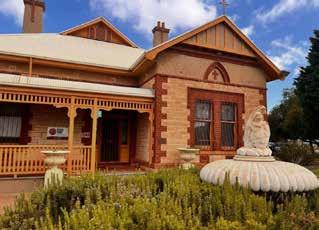
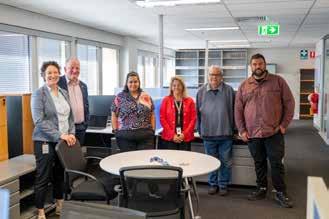
Kaurna Yerta Aboriginal Corporation (KYAC) has reached an exciting milestone with the opening of a dedicated Adelaide/Tarntanya CBD office, made possible through a tailored pilot program developed with the Department for Infrastructure and Transport (DIT).
Nukunu Wapma Thura Aboriginal Corporation has also opened their office in Port Augusta. Offices are an important step for PBCs, to have spaces where they can meet with stakeholders, engage with community and grow their capacity on Country.

Aboriginal Way Editor: Keith Thomas Journalists: Joy Lothian, Isaac Selby
Communications Officer: Caleb Sweeting
Design and Printing: We Create Print Deliver
Advertising Enquiries: aboriginalway@nativetitlesa.org
Aboriginal Way is a publication of South Australian Native Title Services
Level 6
27 Currie St Adelaide SA 5000 www.nativetitlesa.org
Ph: (08) 8110 2800
Fax: (08) 8110 2811
FREECALL: 1800 010 360
If you have any stories of interest to our readers, please address correspondence to: aboriginalway@nativetitlesa.org
The Editor has the final decision on all stories and advertising that appear in this publication.
WARNING: Aboriginal and Torres Strait Islander readers are warned that the following publication may contain images, names, and stories of deceased persons.
Welcome to the 100th edition of Aboriginal Way. This magazine started as a publication of the Aboriginal Legal Rights Movement, Native Title Unit, the predecessor of South Australian Native Title Services, back in May of 1998.
What began as a modest newspaper has grown over nearly three decades into a trusted voice for South Australia’s Aboriginal community, sharing stories about native title news and Aboriginal affairs that would otherwise be hard to find.
From the beginning, Aboriginal Way has had a clear purpose: to ensure information about native title and Aboriginal affairs is accessible, relevant and community focused.
Through providing the magazine to any subscriber in physical form we’re able to reach audiences that may not rely on digital media to deliver their news.
By keeping it free, we’re able to ensure that anyone can access the stories we feature.
Supported through Aboriginal education funding via the National Indigenous Australians Agency, Aboriginal Way has continued to fulfil that purpose, ensuring that complex issues are shared in ways that are meaningful, engaging and easy to understand.
Much of what we share is retrospective, looking back on important events, decisions, achievements and moments that shape our communities. But in doing so, we provide an ongoing and irreplaceable record of Aboriginal stories and perspectives that might otherwise go unreported.
Over time, Aboriginal Way has expanded beyond print to include a podcast (Aboriginal Way on Apple Podcasts and Spotify) and a radio show (Radio Adelaide at 6pm Fridays), further strengthening the ways we connect with our community. You’ll find stories from older editions of Aboriginal Way throughout this issue. It’s interesting to look back on how far we’ve come.
As we celebrate this 100th edition, we thank our readers, contributors and community for their continued support.
We hope you enjoy this special edition.

Keith Thomas SANTS CEO
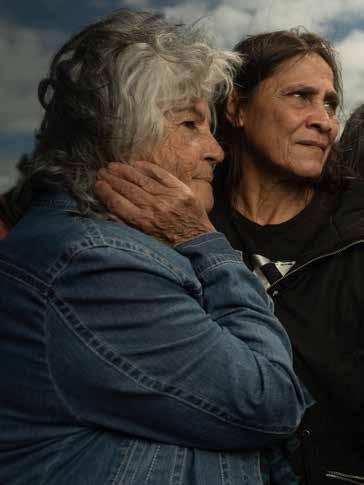
Indigenous storytelling begins and ends with land, and this story is from the Ruwe (Country) of the Ramindjeri Larkinjeri (clan) of the Ngarrindjeri Nation.
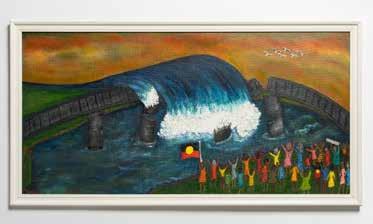
Kumarangk (Hindmarsh Island) is a landmark new intergenerational First Nations arts project from Country Arts SA, exploring the true story of the Ngarrindjeri women who resisted the construction of the Hindmarsh Island bridge, a story untold from their perspective, until now.
Over 10 years in the 1990s, these protestors faced an onslaught of attacks from both media and politics for speaking out over their Country and culture against the building of the bridge from Goolwa to Hindmarsh Island.
Through the process of truth-telling, Kumarangk seeks to provide a form of restorative justice for the Ngarrindjeri women by replacing the vitriol they faced at the time in defending their culture and Country with appreciation from a new generation of audiences who will, critically, learn about history from a First Nations perspective.
“This exhibition is about the ongoing love and fight in Ngarrindjeri women’s circles,” said one of the 13 featured artists, Sandra Saunders.
“It finally gives me and my sisters, as artists and activists, a chance to tell our story our way. Culture is important and heritage places of significance to Aboriginal people are important to every Australian.
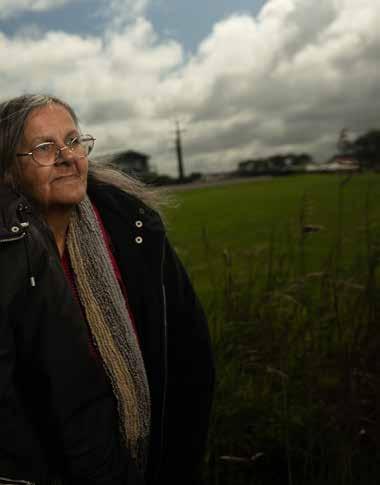
We celebrate the strong women who stood up and fought to protect heritage, even through the firestorm that surrounded them.”
Premiering at the Adelaide Festival, Kumarangk is the first step in telling the story from the women who lived it. It will be followed by a documentary film in the Adelaide Film Festival in October and an on-Country theatre performance in Goolwa in 2027, all underpinned by a research and community archive.
Featuring thirteen artists: Sandra Saunders, Aunty Betty Sumner, Sonya Rankine, Carly Tarkari Dodd, Tiarnie Edwards, along with the Mardawi Collective made up of Aunty Ellen Trevorrow, Temeika Campbell, Zemiah Campbell, Debra Rankine, Elizabeth Rankine, Bessie Rigney, Stephanie Russell and Margi Sumner, with text by Aunty Katrina Powers and Aunty Eunice Aston.
Curated by Dominic Guerrera (Ngarrindjeri/Kaurna) with associate curators Danni Zuvela and Jayda Wilson (Gugada/Wirangu)
Adelaide Contemporary Experimental (ACE) Kaurna Yerta, Adelaide: 22 February – 4 April.
Listen to the episode of Aboriginal Way podcast on Apple Podcasts or Spotify.
Kumarangk is guided by the Ngarrindjeri miminar Cultural Authority: Sandra Saunders, Aunty Margaret Brodie (representing her late mother, Aunty Veronica Brodie) and Aunty Ellen Trevorrow and Tahlia and Illira Wanganeen (representing their nana the late Dr Doreen Kartinyeri), not pictured.
Sandra Saunders, Ngarrindjeri/Bungandidj people, South Australia, born Millicent, South Australia 1947, Nature’s Justice, 2025, Port Lincoln, South Australia, oil on hardboard, 130.0 x 75.0cm. Photo: Nat Rogers.
Ngarrindjeri - Claim determined on the 24th of October 2025.
Arabana 2 - High Court appeal was successful - remitted to Full Federal Court.
Far West Coast sea claim – Full Federal Court appeal heard on 5 th and 6 th of November 2025.
First Nations of the South East 1 and 2consent determination held for 2 on the 24th of October 2025.
First Peoples of the River Murray and Mallee 2 - consent determination negotiations ongoing.
Malyangapa - consent determination negotiations ongoing.
AMYAC Compensation - mediation ongoing.
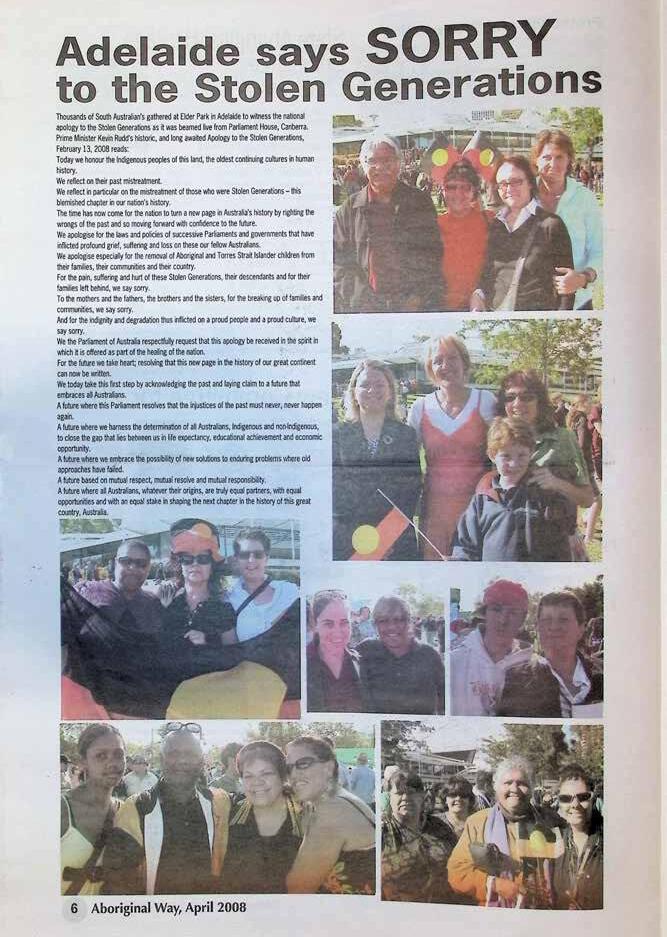
You’ll find stories “from the archives” of old editions of Aboriginal Way sprinkled throughout this 100th edition
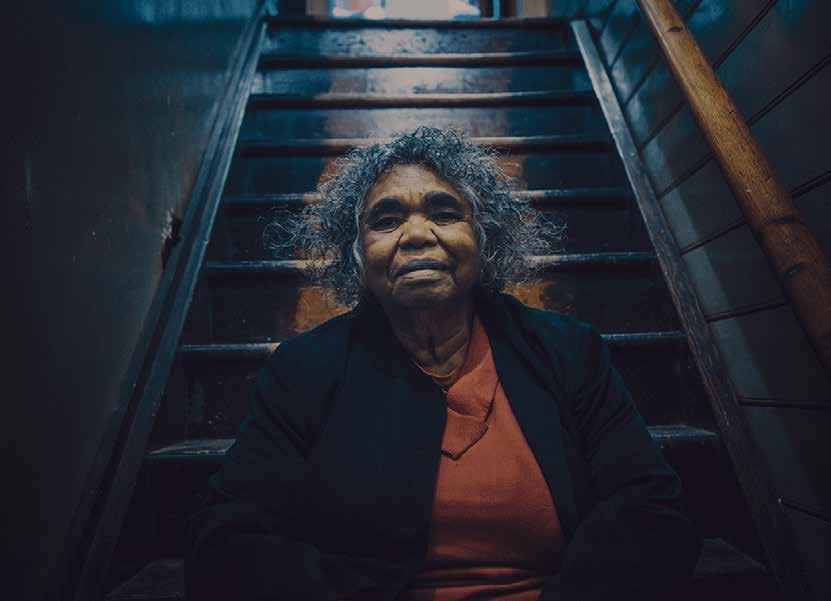
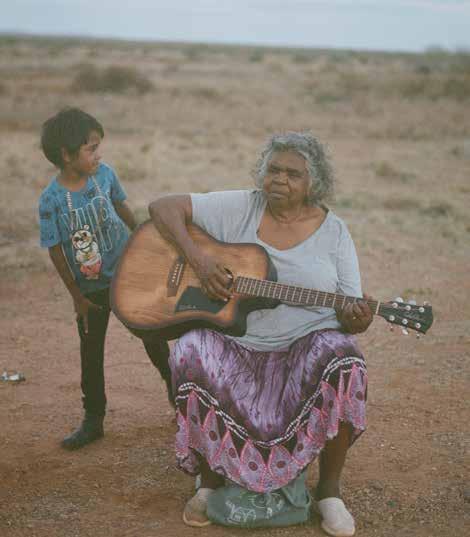
Walmajarri Elder and acclaimed singersongwriter Auntie Olive Knight (Kankawa Nagarra) will bring a lifetime of storytelling, cultural knowledge and environmental advocacy to WOMADelaide this March, performing on Kaurna Country as part of the festival’s diverse 2026 program.
Kankawa Nagarra’s music blends blues, gospel, country and Walmajarri language into songs shaped by ceremony, lived experience and an enduring connection to Country.
For Nagarra, the blues is not a borrowed form but one that mirrors musical traditions she has known since childhood.
Knight grew up living a traditional nomadic life with her clan in the Kimberley before being relocated onto a pastoral lease.
Later, working on cattle stations, she encountered recorded music for the first time through vinyl records sold by travelling hawkers and played on wind-up gramophones.
Country and western artists such as Slim Dusty and Buddy Williams were among the first non-Indigenous musicians she heard.
Their narrative-driven songs resonated with her, echoing the cyclical structures of traditional storytelling.
Despite that pull, cultural restrictions shaped her early
relationship with instruments as traditionally Walmajarri women were not permitted to play instruments made of wood. While men used boomerangs for rhythm, women’s tools were practical, coolamons for carrying food and cradling babies – rather than musical.
“I still wanted to touch the guitar,” Aunty Olive said. “I wanted to hold it.”
“When I heard the blues for the first time, I thought, ‘My word, this is our traditional songs.’ The whole thing, the idea of it, the system of it and how it portrays the whole, like the genre itself of how it is done in our own cultural events and the songs is consistent.”
She also incorporates unconventional instruments such as the washboard, reflecting what she describes as an exploratory approach to sound-making, adapting everyday objects into rhythm and song.
Language sits at the core of Knight’s work, singing in English, Kimberly Kriol and Walmajarri, a language she has spent decades helping to document and preserve.
Performing language on stage, particularly within blues and gospel frameworks, creates a powerful point of connection for diverse audiences.
“People may not understand the words,” she says, “but they understand the feeling.”
Knight’s commitment to language and culture was recognised nationally in 2024 when her album Wirlmani won the Australian Music Prize.
The award marked a major milestone after decades of recording and performance, bringing wider attention to an artist whose work has long operated outside mainstream music industries.
Her profile expanded further through a collaboration with actor Hugh Jackman on his Broadway-style world tour.
Invited to translate and perform Somewhere Over the Rainbow in language, Knight joined Jackman on stages around the world, a stark contrast to her upbringing in remote Australia.
Before meeting him, she says she watched Wolverine to familiarise herself with the actor.
“He wasn’t Wolverine,” she laughs. “Just a normal man.”
Despite performing in front of tens of thousands of people, Knight says the scale of a performance does not change her approach. Whether on a global stage or in a small community setting, her focus remains on truth-telling.
“I’m an artist of the heart,” she says. “I give what is real.”
Living on the edge of the desert above the Canning Basin, Knight has become a vocal advocate against mining and fracking in the Kimberley. She is a member of the Martuwarra Fitzroy River Council, which campaigns to protect rivers and Country from large-scale industrial development.
Her song Canning Basin Blues directly addresses the impact of resource extraction, using metaphor to describe land damaged by drilling and greed. The song, which features prominently in her live sets, serves as both warning and call to action.
“We have to protect the land,” she says. “If we don’t, what future do we have?”
Knight also writes openly about grief, incarceration and social justice. She has lost two grandsons to suicide – a tragedy that has shaped new work she is currently developing, including a song titled The Vortex, which explores how suicidal thought can overwhelm individuals and families.
“When that vortex takes over, you can’t see the people around you anymore,” she said.
“When the suicidal thought or suicidal tendencies takes over a person, it’s like the swirling
vortex which sucks you down. The people are no longer there, you can’t see them, your own children.”
“I detest the fact that our young men are being ostracised in prison when there’s a huge land - there’s a huge land of deserts where they can roam and touch their own soil with their bare feet instead of the prison bars and the cement floors.”
As WOMADelaide prepares to welcome artists from across the world, Knight says performing on Kaurna Country holds particular meaning. She hopes audiences come ready to listen – not only to the music, but to the stories carried within it.
“I am a person with language, with identity,” she says. “That’s what I bring.”
For WOMADelaide audiences, Kankawa Nagarra’s performance offers a powerful meeting point between ancient tradition and contemporary music – a reminder that the blues, at its core, is about survival, memory and truth.
I DEFINE MYSELF NOT AS AN ARTIST OF THE STAGE, BUT THE ARTIST OF THE HEART. SO THAT IS WHERE I SEE MYSELF. I’M NO SEARCH PERSON, I’M A GIVER. I GIVE TRUTH TELLING.”
First Nations authors Chelsea Watego, Melissa Lucashenko and Dr Evelyn Araluen were among the first in a long list of writers to swiftly withdraw from Australia’s largest free literary festival following the then-board’s removal of Palestinian writer Dr Randa Abdel-Fattah from its 2026 program, which has since been cancelled.

On January 8, Adelaide Writer’s Week announced that due to ‘cultural sensitivity’ and ‘community tensions’ following the Bondi shooting in December, the board had decided to uninvite the Palestinian advocate and author of the 2025 book Discipline.
“Whilst we do not suggest in any way that Dr Randa Abdel-Fattah or her writings have any connection with the tragedy at Bondi, given her past statements we have formed the view that it would not be culturally sensitive to continue to program her at this unprecedented time so soon after Bondi,” the board’s statement read in part.
Within days of the decision, more than 180 national and international writers had pulled out from their scheduled appearances at the prominent literary festival held annually over a week in late February/early March as part of the Adelaide Festival.
Melissa Lucashenko’s statement read: “Stanner’s ‘great Australian silence’ has now apparently been extended to Palestinians. Like ‘good’ Aboriginal people, ‘good’ Palestinians must now be invisible, silent and complicit in the face of the ongoing genocide in Gaza. I cannot in good
conscience stand idly by and watch RA-F [Randa AbdelFattah] be scapegoated by Adelaide Writers Festival for the evil act at Bondi.”
SA Premier Peter Malinauskas was one of the few who publicly supported the board’s decision stating that, whilst by law he is prevented from directing the board, he made it clear to them that the State Government did not support the inclusion of Dr Abdel-Fattah on the Adelaide Writer’s Week program.
“While the decision on whether to program Dr AbdelFattah remains one for the Board, I want to put it on the record that the South Australian Government fundamentally opposes the inclusion of Dr Randa Abdel-Fattah on the 2026 Adelaide Writers’ Week program and reserves the right to make public statements to this effect,” he wrote in a threepage letter to the Chair of the Board, Tracey Whiting, on January 2 that has since been made public.
In the letter he referred to Abdel-Fattah’s past comment that Zionists “have no claim or right to cultural safety” and noted her decision to change her social media cover image to that of a paraglider with a Palestinian
STANNER’S ‘GREAT AUSTRALIAN SILENCE’ HAS NOW APPARENTLY BEEN EXTENDED TO PALESTINIANS. LIKE ‘GOOD’ ABORIGINAL PEOPLE, ‘GOOD’ PALESTINIANS MUST NOW BE INVISIBLE, SILENT AND COMPLICIT IN THE FACE OF THE ONGOING GENOCIDE IN GAZA. I CANNOT IN GOOD CONSCIENCE STAND IDLY BY AND WATCH RANDA ABDEL-FATTAH BE SCAPEGOATED BY ADELAIDE WRITERS FESTIVAL FOR THE EVIL ACT AT BONDI.”- MELISSA LUCASHENKO
flag directly after the Hamas terrorist attacks on October 7, 2023.
Dr Abdel-Fattah has since told the ABC that “At that point, I had no idea about the death toll, I had no idea about what was happening on the ground… Of course, I do not support the killing of civilians.”
She has also denied conveying antisemitism: “I have never, ever attacked Jewish people,” she told ABC radio, making the distinction between antisemitism and Zionism.
“I am attacking a political ideology and state which is carrying out genocide against my people.”
Following the mass exodus of writers after Dr AbdelFattah’s invitation had been rescinded, the chair of the Board Ms Whiting stepped down from her position on January 11 with three other board members, Daniela Ritorto, Donny Walford and Nicholas Linke OAM also resigning. The remaining board members stepped down the following day, excluding the Adelaide City Council’s nominated appointee, who continued her term until its expiry in February 2026.
Adelaide Writers’ Week Director at the time Louise Adler, who is also on the advisory committee of the Jewish Council of Australia and the daughter of Holocaust survivors, was against the board’s decision from the beginning. She announced her own resignation that day also, writing in an opinion piece for the Guardian: “I cannot be party to silencing writers, which is why I am resigning as director of Adelaide writers’ week,” she wrote.
“The Adelaide Festival board’s decision – despite my strongest opposition – to disinvite the Australian Palestinian writer Randa Abdel-Fattah from Adelaide writers’ week weakens freedom of speech and is the harbinger of a less free nation, where lobbying and political pressure determine who gets to speak and who doesn’t.
“The board’s statement cites community cohesion, an oft-referenced anxiety which should be treated with scepticism. This is a managerialist term intended to stop thinking. Who, after all, would argue in favour of social division? Presumably only a terrorist or a nihilist. The raison d’être of art and literature is to disrupt the status quo: and one doesn’t have to be a student of history to know that art in the service of “social cohesion” is propaganda.”
The controversy looked ready to spill over into the main Adelaide Festival at that point, with Brit-pop band Pulp considering boycotting their opening act.
However, within two days a new Board had been appointed to the Festival by Minister for the Arts, Andrea Michaels MP. Its first public statement on January 15 retracted the former Board’s statement, reversing the decision with an invitation for Dr Abdel-Fattah to speak at next year’s Writers’ Week and apologising unreservedly for the harm caused by the original decision.
“Intellectual and artistic freedom is a powerful human right. Our goal is to uphold it, and in this instance Adelaide Festival Corporation fell well short,” concluded the statement.
The new board also apologised publicly to Louise Adler.
Dr Abdel-Fattah accepted the apology but has not yet made the decision about attending future writers’ weeks.
Her lawyers have now served the Premier with two separate concern notices for defamation: one for ‘comparing me to an imagined “far right” shooter entering a mosque and killing 15 people’, the second for ‘false claims’ he made about her in a radio interview, saying she had no choice but to send the second notice as he had doubled down, and asking for contributions to her legal costs through crowd funding.

A new literary umbrella festival, ‘Constellations: Not Writers’ Week’ has been organised by a group of local booksellers, authors and publishers in the absence of the event; not to replace it, but to show support for the writers and readers who boycotted it. Dr Abdel-Fattah will appear in conversation there with Louise Adler. There will be plenty of other sessions including Aboriginal and Torres Strait Islander writers such as Melissa Lucashenko, academic Chelsea Watego, Yankunytjatjara poet Ali Cobby Eckermann, Narungga author Natalie Harkin and Ngarrindjeri/Kaurna creative Dominic Guerrera.
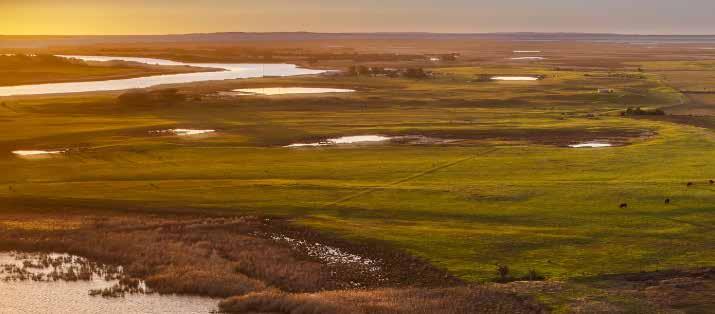
The State and Federal Government have partnered with the Foundation for National Parks and Wildlife (FNPW) to acquire Mundoo Island, a 1900-hectare property to be added into Coorong National Park – increasing the span of the internationally recognised park to more than 50,000 hectares.
A cattle station will be turned into a vital wetland habitat and form part of an expanded national park, helping to protect endangered species, reduce nutrient runoff and improve environmental resilience across the Murray Mouth.
Mundoo Island Station, which has operated as a cattle and sheep station for more than a century, will be destocked - with grazing, cropping and fertiliser use ceased to enable significant wetland restoration and rehabilitation.
Mundoo Island is culturally significant to the Ngarrindjeri people and contains registered Aboriginal heritage sites.
The Department of Environment and Water (DEW) will work with Ngarrindjeri Aboriginal Corporation (NAC) to ensure these important sites are protected, including the ‘Meeting of the Waters’ where the River Murray and Coorong and surrounding waters connect.
Located just south of Goolwa, Mundoo Island Station sits at the end of the River Murray and is part of the 142,500ha Coorong and Lake Alexandrina and Albert Ramsar Wetland –one of Australia’s most important wetland sites.
The existing Lawari Conservation Park, on the eastern side of nearby Hindmarsh Island, will also be incorporated into Coorong National Park and DEW will prepare a new management plan to guide management of the new additions.
Preliminary visits have been made to the former pastoral land slated for rejuvenation, with Ngarrindjeri rangers visiting Mundoo Island Station and performing initial checks on the vast property.
The bilateral move from the State and Federal Governments to purchase the land has been met with
NGARRINDJERI ABORIGINAL CORPORATION LOOK FORWARD TO WORKING IN CO-PARTNERSHIP RELATIONSHIP WITH THE STATE GOVERNMENT AROUND THE CARE AND PROTECTION OF MUNDOO ISLAND INTO THE FUTURE.”- BILL WILSON
approval from NAC, with the Ngarrindjeri Ranger team particularly enthusiastic to manage their traditional lands and protect sites of cultural significance.
NAC executive officer Bill Wilson voiced his support for the land buyback saying he felt optimistic about the future preservation of the area.
“Ngarrindjeri Aboriginal Corporation are genuinely excited by the State Government purchase of Mundoo Island, which holds significant cultural heritage to the Ngarrindjeri Nation,” Mr Wilson said.
Foundation for National Parks and Wildlife CEO, Ian Darbyshire, likewise spoke positively about the acquisition of the former farming land.
“The acquisition of Mundoo Island Station marks a significant milestone in the Foundation for National Parks and Wildlife’s commitment to safeguarding Australia’s unique natural environment and protecting First Nations cultural heritage,” Mr Darbyshire said.
“We are proud to partner with the Federal and State governments to support the conservation of up to 65 nationally listed threatened species and three threatened ecological communities, helping to set a global benchmark for conservation excellence.
“This collaborative work advances our three pillars of Healing Our Land, Saving Species and Growing Parks, with a clear focus on embedding the knowledge and stewardship of Traditional Owners at the heart of conservation outcomes.”

Australia’s leading First Nations forum will be held this year June 1-5 on the Gold Coast, with early-bird registrations now open.
The summit will contain five full days of meaningful presentations and conversations featuring Elders, leaders, youth, researchers, GLAM professionals and policy makers, all celebrating cultural strength and innovation.
AIATSIS is partnering with the Danggan Balan Aboriginal Corporation to deliver the summit, which is held in a different part of Australia over the same week each year. This year’s theme Our Truth. Our Power. Our Future acknowledges and pays tribute to the lived experience, strength, solidarity and resilience of Aboriginal and Torres Strait Islander peoples. By owning our truths and stepping into our power, we actively build a more just, inclusive and hopeful future.
The sub-themes for this summit are:
Caring for Land and Sea Country (Sustainability)Understanding the deep spiritual and cultural connection Aboriginal and Torres strait Islander peoples have with their ancestral lands and water and how it influences their ways of being, knowing and doing.
Rights, Recognition and Representation (Native Title, land rights, ICIP etc) - Leveraging Traditional Owner rights for recognition and representation locally, regionally and nationally.
Cultural Preservation, Revitalisation and Resurgence - Celebrating the strength, depth and brilliance of the oldest continuous living culture in the world.
Intergenerational Knowledge - Recognising the invaluable knowledge, traditions and practices handed down from Elders and Ancestors and how they shape the present and future.
Contemporary Innovations – Celebrating the contemporary contributions and innovations of Aboriginal and Torres Strait Islander peoples and practices in various fields including the arts, education and governance.
Find out more at aiatsis.gov.au/whats-new/events/ aiatsis-summit-2026
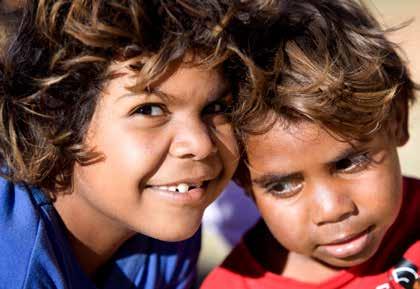
Your skills. Our mission. One goal.
Multiple roles available in metro and regional South Australia – ongoing recruitment
Pay: $67,589 – $72,033 per year + 12% super
Shift penalties can increase your pay by up to $15,000 per year
Full-time, part-time and casual positions available
Help our kids grow up strong, safe and proud.
This role is about looking after our kids and helping them stay connected to culture, community and identity
If you care about young people, have strong community values, and want to make a real difference — this job is for you
You don’t need qualifications to start. If you bring lived experience, cultural knowledge and a willingness to learn, you’ll be supported every step of the way.
You’ll work with children and young people in residential care, creating safe spaces for yarns, learning and healing, while supporting daily life — meals, school, sport and community activities.
We know people stay in roles where they feel supported, respected and valued. You’ll get purposeful work, paid training, job security, cultural support and career pathways.
If you’ve ever thought “I want to give back” or “I want to help our kids” — this is your chance. Find out more about the role and apply online at bit.ly/DCP-Careers-Portal
We want this process to feel welcoming so chat to us if you need support: DCPRecruitment@sa.gov.au
Reconciliation SA News





participate in, through our choices, our conversations and our actions. It challenges the idea that reconciliation is a passive process, or that advancing Aboriginal Peoples’ rights is the responsibility of Aboriginal Peoples’ communities alone.
For far too long, Aboriginal Peoples have carried the weight of championing, explaining and acting for reconciliation. This year’s theme reinforces that reconciliation is a shared national responsibility, grounded not in guilt or shame, but in the reciprocal responsibility of being Australian.
Reconciliation SA’s Anti-Racism Consultant, Shaun Childs, said that this year’s theme spoke to him about the importance of really having an all in mentality about how reconciliation is approached.


“It shouldn’t be the responsibility solely on Aboriginal and Torres Strait Islander peoples to carry the weight, but the commitment shown by the broader community,” he said.
“As we advance into 25 years of reconciliation, the message remains that we continue to build respectful, authentic, and meaningful relationships between Aboriginal and Torres Strait Islander peoples for the benefit of all Australians. I want to echo the sentiments that reconciliation is not a spectator sport, and we need to step away from the sidelines as observers and be more active participators in reconciliation.’’
National Reconciliation Week, held
from 27 May to 3 June each year, is a time for all Australians to learn about our shared histories, cultures and achievements, and to recommit to reconciliation and the ongoing pursuit of justice.
This National Reconciliation Week, Reconciliation Australia invites everyone to show up, lean in and commit, because reconciliation requires all of us to be all in.
A range of resources for Reconciliation Week is available at reconciliation.org.au/ our-work/national-reconciliation-week/ posters-resources/ members) and March 26 (general) reconciliationsa.org.au/nrwb-2026
Last year, SANTS released its new Strategic Plan for 2025-2030.
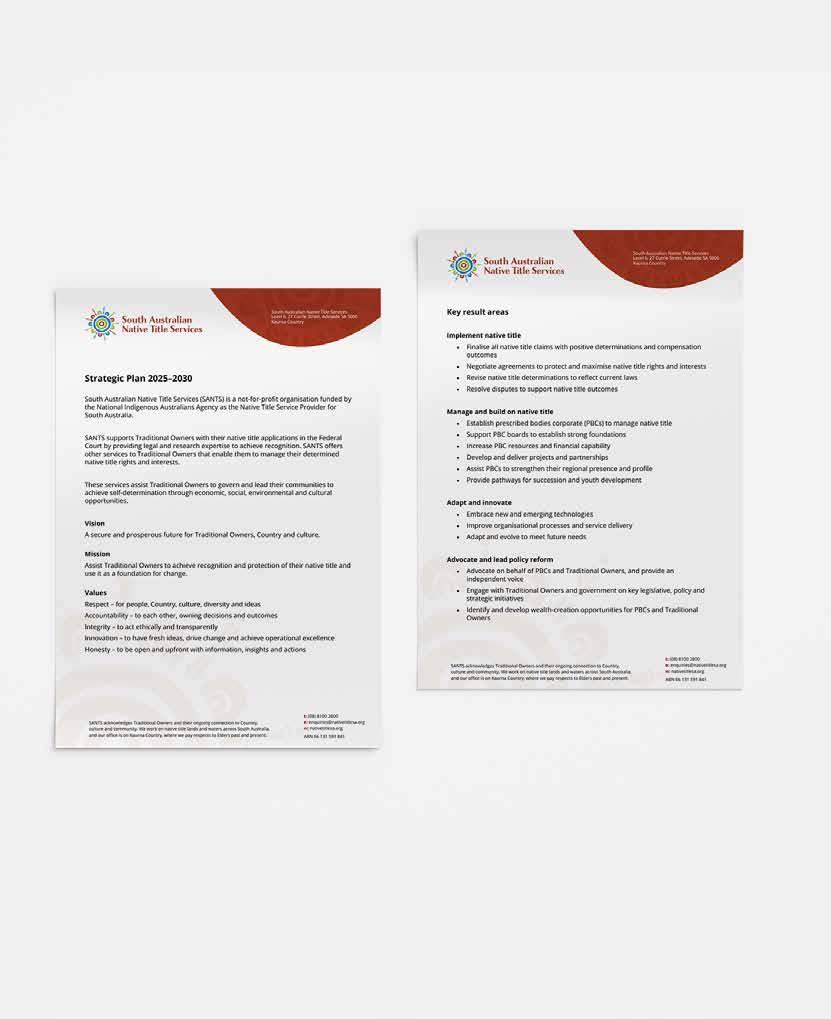
As the native title service provider for South Australia, SANTS’ mission is to assist Traditional Owners to achieve recognition and protection of their native title, using it as a foundation for change.
With much of the state’s native title now determined, SANTS’ is looking at ways to best assist and support Aboriginal Nations in developing strong governance and building on their native title.
This can include a range of services and results, from developing and delivering projects and partnerships, to adapting and evolving to meet future needs, to advocating for and engaging with Traditional Owners and government on key legislative, policy and strategic initiatives.
SANTS CEO Keith Thomas sees the current landscape as an opportunity to build sustainable Aboriginal nations and lead innovative policy reform.
“Overall, SANTS aims to remain the South Australian provider of choice for Aboriginal Nations to not only
recognise and protect their native title rights and interests, but to realise their aspirations moving forward post-native title determination,” Mr Thomas said.
“It’s post-determination that the work really begins to build sustainable Aboriginal Nations, and that’s where many of our key result areas like adapt and innovate, advocate and lead policy reform come into play.
“We’ve had great success in these areas already and will continue to offer flexible services in line with our vision of a secure and prosperous future for Traditional Owners, Country and culture.
Scan this QR code to read the Strategic Plan 2025-2030
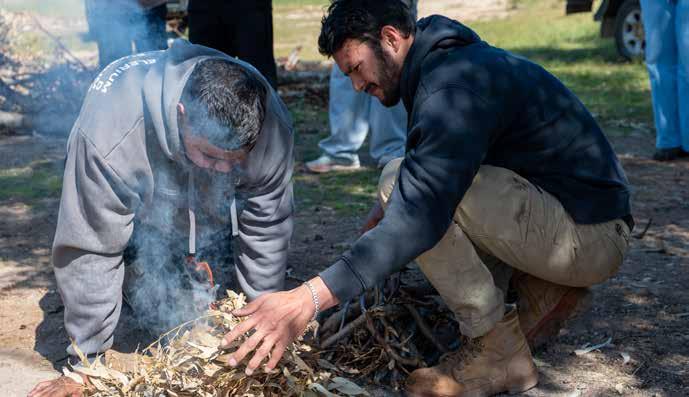
More than 900 new Indigenous ranger jobs will be created across the country, as the Federal Government aims to double the number of Indigenous rangers by 2030.
82 new ranger projects will receive funding nationally under a $190 million investment over three years.
Almost half of the new Commonwealth Indigenous Rangers Program (IRP) positions will be held by First Nations women.
Minister for Indigenous Australians, Senator Malarndirri McCarthy, recognised the vital work undertaken by rangers across the country.
“This second round expansion will also create new opportunities for First Nations women -whose cultural responsibilities and deep knowledge are vital to caring for Country and protecting sacred women’s sites.”
CEO of SANTS, Keith Thomas, welcomed the opportunity for more prescribed body corporates to establish their own ranger programs on Country.
“These ranger programs create important opportunities for Aboriginal people to fulfil their cultural obligations by protecting and caring for their lands and waters,” he said.
“They empower our communities to live and work on Country and provide pathways for future generations to continue connecting with and caring for it.”
This expansion builds on the first round, which created over 1,000 new ranger jobs and supported more than 110 new projects.
The program contributes directly to several Closing the Gap targets including strong economic participation
INDIGENOUS RANGERS DO IMPORTANT WORK ACROSS AUSTRALIA, PROTECTING ENDANGERED SPECIES, RESTORING VITAL HABITATS AND CARING FOR COUNTRY FOR FUTURE GENERATIONS”SENATOR MALARNDIRRI MCCARTHY.
and development of First Nations people and their communities.
CEO of Country Needs People, Paddy O’Leary, said his organisations has advocated for many years to secure funding for more ranger programs.
Country Needs People is an independent notfor-profit organisation that supports and promotes the vital work of Indigenous rangers.
“We applaud the Federal Government for delivering on its promise of funding which we campaigned so hard for alongside our Indigenous partners”, he said.
“What is of utmost importance now is that we do not set these jobs up to fail. The Indigenous Rangers Program is too valuable and too important.”
Mr O’Leary says new rangers will need tailored and focused support from federal agencies to manage complex matters like fire, feral animal and invasive weed control, threatened species management, cultural landscape and seascape protection.
“Indigenous rangers desperately need the Federal Government to rebuild their practical and dedicated support for host organisations, which will ensure this work can succeed, supporting not only wages but also operational needs.”
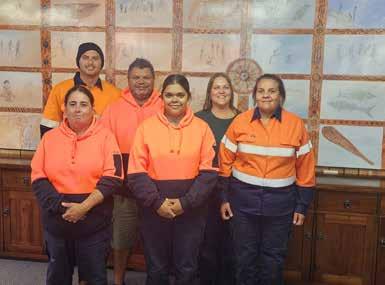
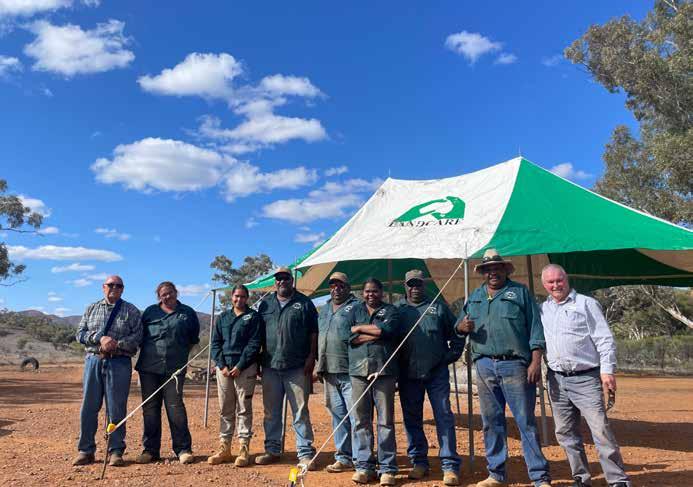
The Nauo & Wirangu Ranger Program was funded after the first round of the Commonwealth Indigenous Rangers Program.
Ranger Coordinator Kristina Miletic said ranger programs empower Aboriginal people with meaningful employment and training on Country.
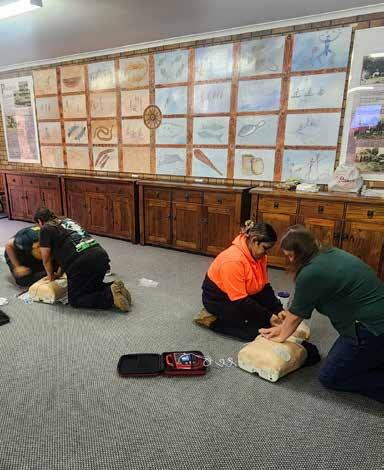
“In a few short months the ranger team have been recruited and completed a comprehensive induction,” she said.
“The induction included Aboriginal and Torres Strait Islander mental health first aid training and workplace policy and procedures.
South Australian Native Title Services completed the applications for the following new ranger teams:
Northern SA PBC consortium of De Rose Hill-Ilpalka Aboriginal Corporation RNTBC, Tjayuwara Unmuru Aboriginal Corporation RNTBC, Yankunytjatjara
Native Title Aboriginal Corporation RNTBC and Walka Wani Aboriginal Corporation RNTBC
Kaurna Yerta Aboriginal Corporation RNTBC; Ngadjuri Nation Aboriginal Corporation; and The River Murray and Mallee Aboriginal Corporation (RMMAC) RNTBC.
“Rangers have been introduced to several environmental topics and resources such as native and pest plants. They’ve also been learning and exploring Country with Elders, Traditional Owners and the programs key partners.
“In the future we are planning to have all rangers enrolled in Certificate 3 Conservation and Ecosystem Management and to develop a Healthy Country Plan to incorporate Traditional Owners’ priorities in future projects.”
At least eight new regions nationally will be given official protection after the federal government announced a $13 million funding boost to expand First Nations-led conservation through Indigenous Protected Areas (IPAs).
IPAs are created through voluntary agreements between First Nations people and the Australian Government to manage and protect land and sea for biodiversity conservation.
South Australia is home to 13 IPAs, including 11 dedicated IPAs and a further two currently in consultation.
Prominent IPAs include the Maralinga Tjarutja Lands IPA, the largest in Australia at 10,604,522 hectares and the Nantawarrina IPA which was the first dedicated Indigenous Protected Area in 1998.
As of December 2025, just under a quarter of Australia’s land mass was formally protected.
The Australian Bushland program was announced in March 2025, with $250 million invested over five years starting July 2025, in efforts to boost conservation efforts, including expanding the current IPA designations. Included within the Australian Bushland Program
is funding for several sites across the country, one of these slated sites for expansion is the Mount Willoughby IPA Expansion Project, a pre-existing IPA which is part of the traditional estates of the Antakirinja Yankunytjatjara people.
The Mount Willoughby IPA is located north of Coober Pedy and has been managed by the Lennon family since 2021.
This IPA consultation project will be delivered by Tjirilya Aboriginal Corporation and will protect culturally significant sites across the area, including Evelyn Downs Station.
Conservation activities that can take place on this site include managing invasive weeks like buffel grass, managing wandering stock and feral herbivores, and undertaking traditional burning to reduce bushfire risk.
In addition, cultural activities such as collecting bush tucker and bush medicines, supporting Indigenous knowledge transfer, and on-Country trips and language
Nantawarrina Rangers
25 years since their IPA handback.
camps can be provided.
Federal Environment Minister Murray Watt said he wanted to see Indigenous communities continue providing leadership in land management and conservation, with a goal of having 30 per cent of Australia’s lands included in IPA arrangements by 2030.
“We want to empower more Traditional Owners to care for Country and safeguard their cultural heritage,” Mr Watt said.
“South Australia has a proud legacy in the IPA Program, with 11 dedicated IPAs across the state, including Australia’s first – the Nantawarrina IPA and largest – the Maralinga Tjarutja Lands IPA.
“Our government is committed to supporting Indigenous communities to continue their leadership in land management and conservation.”
The Bushland Program is designed to support IPA’s nation-wide, with six new IPAs declared in 2025 and a further two expanded.
The latest round of IPA grants opened on 13 January 2026, with the competitive grand round restricted to applications from Indigenous organisations.
The final round of applications for this round will close 11 March 2026.
For more information about the IPA program contact IPA@dcceew.gov.au.
Nantawarrina Nipapanha Community Incorporated
Dedicated IPA
Yalata Yalata Anangu Aboriginal Corporation Dedicated IPA
Watarru Anangu Pitjantjatjara Inc
Dedicated IPA
Walalkara Anangu Pitjantjatjara Inc Dedicated IPA
Kalka-Pipalyatjara Anangu Pitjantjatjara Inc Dedicated IPA
Apara-MakiriPunti Anangu Pitjantjatjara Inc Dedicated IPA
Antara-Sandy Bore Anangu Pitjantjatjara Inc
Dedicated IPA
Yappala The Aboriginal Lands Trust of South Australia Dedicated IPA
Wardang Island
Sea Country Consultation The Aboriginal Lands Trust of South Australia Consultation IPA
Wardang Island The Aboriginal Lands Trust of South Australia Dedicated IPA
Maralinga Tjarutja Lands Oak Valley (Maralinga) Aboriginal Corporation Dedicated IPA
Mount Willoughby Tjirilya Aboriginal Corporation Dedicated IPA
Mount Willoughby Expansion Consultation Tjirilya Aboriginal Corporation Consultation IPA
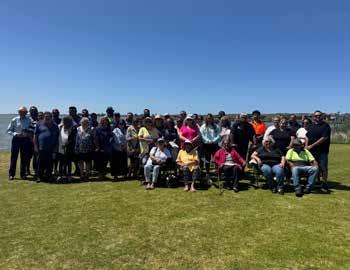
A bright shining sun and a cool breeze off the waters of Goolwa on Ngarrindjeri Ruwe provided the backdrop for the Ngarrindjeri Aboriginal Corporation RNTBC (NAC) Board Annual General meeting on Friday December 12 last year.
Conducting their first outside AGM allowed Ngarrindjeri people to be able to connect with Ruwe whilst doing business.
The AGM commenced with the members electing a Chair for the meeting and business was carried out in an engaging and cheerful atmosphere. The new NAC Board was unanimously elected with seven directors in total. The members and common law holders were then invited to ask questions and provide their concerns with the new board.
The new Chair Errol Lovegrove said “I look forward to working with and supporting our operations team and continue the great work they and the previous boards have put in place and telling more stories about the work they do and partnerships we have built, supporting Ngarrindjeri people and communities like we did with the Raukkan Community through their Municipal Services Program.
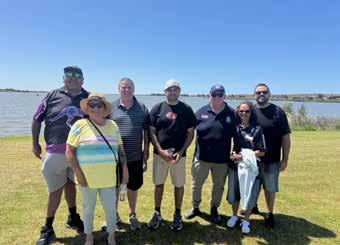
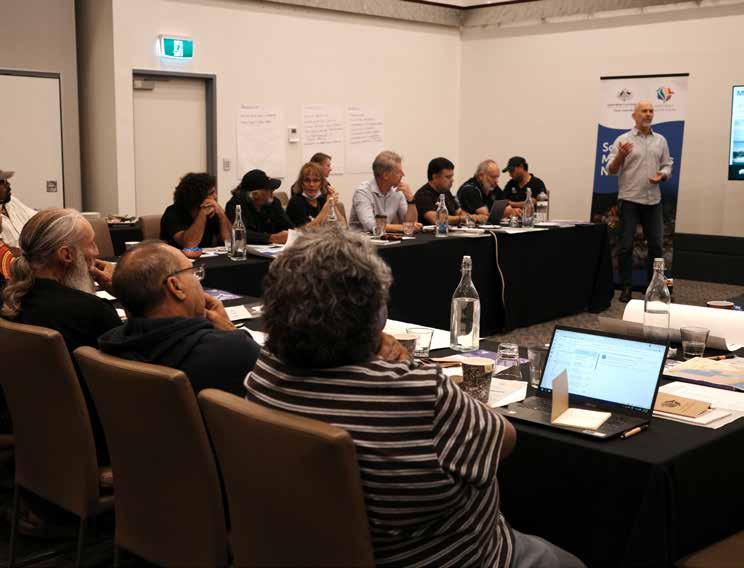
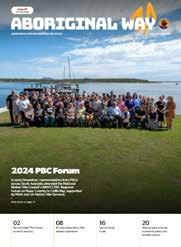
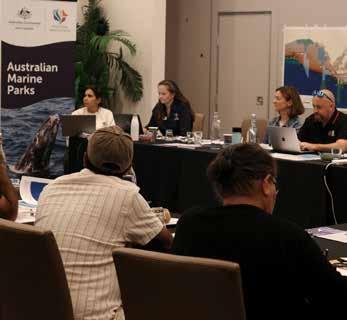
Aboriginal groups with Sea Country connections across South Australia formally came together for the first time in December 2025 to discuss First Nations engagement in Commonwealth Marine Parks, marking a significant step forward in recognising and strengthening Aboriginal involvement in marine management.
The two-day forum held in Normanville on the Fleurieu Peninsula was led by Parks Australia in collaboration with South Australian Native Title Services (SANTS).
It brought together coastal Prescribed Body Corporate (PBC) groups alongside representatives from both State and Commonwealth governments, creating an important space for dialogue, relationship-building and future collaboration.
The forum represented a first step in resetting how
Aboriginal engagement in Commonwealth Marine Parks is approached, with further conversations and actions planned for 2026.
Nicole Middleton from Parks Australia said the forum came about because the organisation is examining the way Commonwealth marine parks are managed.
“The marine parks that we’ve had offshore have been in place and managed for about seven years, and we’re coming up to an in-depth review of their management as we’re rolling towards the next 10 years of management,” she said.
“We’re looking at what we’re learning about the offshore marine parks we manage and how to protect the marine biodiversity that’s there. Alongside that we’re looking at the natural and cultural values, and we don’t know very much about the cultural values offshore and that’s why we want to start journeying into that space in South Australia with the communities that are here.”
The PBC groups represented at the forum were:
Far West Coast Aboriginal Corporation
First Nations of the South East
Kaurna Yerta Aboriginal Corporation
Narungga Aboriginal Corporation
Nauo Aboriginal Corporation
Ngarrindjeri Aboriginal Corporation
Nori Aboriginal Corporation
Nukunu Wapma Thura Aboriginal Corporation
Wirangu Aboriginal Corporation
Wirangu Nauo Aboriginal Corporation
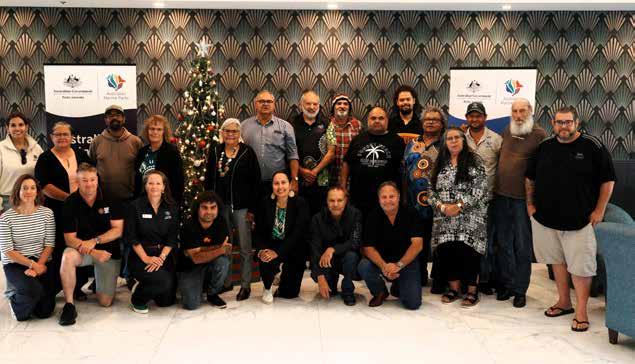
FOR ALL OF US IN THE ROOM TODAY, VALUING SEA COUNTRY IS VALUING YOUR CULTURAL HERITAGE, YOUR IDENTITY, YOUR RELATIONSHIP TO SEA COUNTRY AND EVERYTHING THAT HOLDS WITH YOUR SPIRITUAL BELIEFS AND YOUR DREAMING. THERE IS FAR TOO MUCH SUPPRESSING OR IGNORING THE FACT THAT THERE IS DREAMING IN SEA COUNTRY ANCIENT STORIES AND THAT NEED TO BE UPHELD AND NOT FORGOTTEN ABOUT.”- FAR WEST COAST ABORIGINAL CORPORATION REPRESENTATIVE AND MIRNING WOMAN, APRIL LAWRIE.
Kaurna Yerta Aboriginal Corporation (KYAC) representative Alan Sumner, a Kaurna-NgarrindjeriYankunytjatjara man, said this broad representation was essential to ensure each group could speak for its own Country.
“It was good to have so many PBC’s from across the state come together because we all play different roles in the way we use Country and live on the Country,” he said.
“It’s good getting the Far West Coast perspective down to the southeast coast where you’ve got Kaurna and Ngarrindjeri, right down to Boandik Country, because we all use the water differently and have different relationships with the water.”
“We’ve often been overlooked and this is our opportunity to be heard,” said Mirning woman April Lawrie, who represented the Far West Coast Aboriginal Corporation.
Parks Australia looks after six national parks and 60 marine parks across the country, including six offshore marine parks here in SA. The forum provided an overview of both Federal and State Marine parks including location, networks, statutory framework and purpose, and an outline of management plan programs.
Aboriginal groups in turn shared their interests, aspirations, priorities, obligations and existing initiatives relating to Sea Country. This exchange helped identify opportunities for future engagement and collaboration, alongside the steps needed to strengthen Aboriginal involvement in marine park management.
There were sessions around projects, research and monitoring, and participants heard examples of how First Nations engagement is already working successfully in marine parks elsewhere, particularly in Western Australia.
Ms Middleton emphasised the importance of listening rather than making assumptions.
“We don’t presume what different groups and communities might need or what their aspirations would be,” she said.
“This is just the start of the journey for us to really strengthen our partnerships with First Nations groups in SA for the management of the parks. We’d definitely look to work in partnership with the state; a coordinated effort, to be able to hold another forum like this over the next year.”
The erosion of sea country rights, the algal bloom, climate change, pollution and industry and development along coastal areas were concerns that came up for many groups.
“We are worried about our sea cultural rights being eroded, being suppressed, not being valued,” Ms Lawrie said.
“Our interests also are about preventing disasters in our Sea Country and acknowledging that one of our biggest worries is climate change, and now that’s changing seascapes and affecting our totems and our seafood that we rely upon. And we’re really, really worried about industry and development along this sea coast, and the huge impact some land-based industries have on sea country.”
There were interests in the development of research, educating communities about caring for Sea Country and developing robust marine or Sea Country ranger programs.
“We have a lot to offer to the South Australian community in marine park management. We hope that our
THIS
Sea Country values will help inform the framework for the review of the Australian Marine Parks plan which I believe is soon up for review,” Ms Lawrie said.
“But I also hope that this may help with approaching research; knowing that government is listening to Aboriginal people and wanting greater Aboriginal investment of Sea Country people and caring for Sea Country and that there is a wealth of knowledge, cultural knowledge, expertise to be accessed.”
Despite there being no Commonwealth marine park in Nukunu Sea Country, Nukunu representative Jared Thomas said the maintenance of Sea Country was critical to the group, given its unique geographical position.
“Nukunu Sea Country is connected to Barngarla, Nauo, Narungga and Kaurna waters. It’s the biggest contributor to the productivity of the Southern Oceans,” he said.
“But the really unique thing is that it’s the nursery. The health of other nations’ Sea Country is reliant on the health of Nukunu Sea Country. When things happen on our land, it doesn’t always have an impact on our neighbour’s Country. But when it’s in the ocean, there’s a ripple effect.”
Mr Thomas had a suggestion for Sea Country groups to come together even more.
“I think it’d be incredible if there was an Aboriginal Sea Country alliance where all Australian nations that have Sea Country had the opportunity to talk about shared concerns, to be able to advocate in connection to each other, so there’s more weight.”
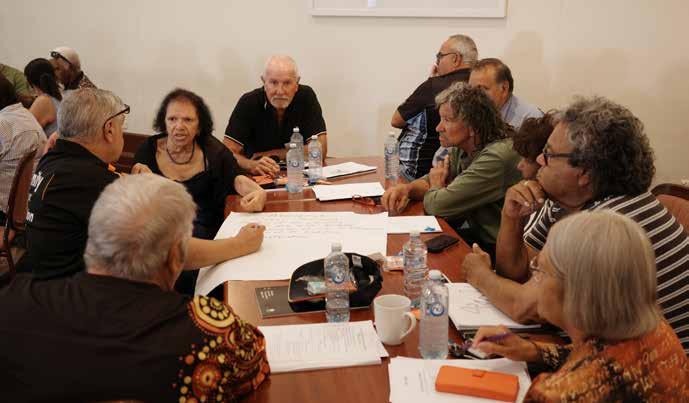
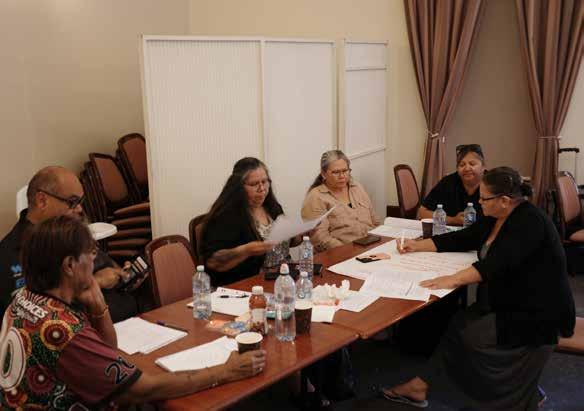
Traditional Owners from PBCS across South Australia recently came together in Port Augusta for a two-day codesign workshop on the 25th and 26th of November with SA Native Title Services and the Department for Environment and Water.
Their aim was to help finalise the South Australian Framework to Advance First Nations’ Water Interests, drawing on months of earlier engagement
The workshop was held over two days (Nov 25-26) in Port Augusta at the Standpipe Golf Motor Inn, where participants came together to continue shaping the draft framework.
Building on earlier engagement rounds held in February - April 2025 and July - August 2025, the workshop brought together First Nations representatives and stakeholders to refine the draft framework.
The desired outcomes for the workshop included identifying and progressing First Nations water priorities, strengthening cultural authority in water management and securing access to water for economic, social, environmental, spiritual and cultural purposes.
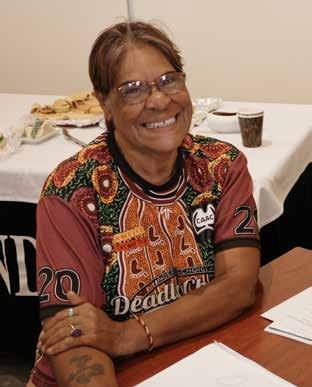
Wirangu man and Far West Coast Aboriginal Corporation chair, Jack Johncock, said the conversation was “too long coming” and that their mission was clearreclaim control over water resources that have sustained their people for thousands of years.
“Something I see that should be given is all those communities living along the river Murray. I’m talking about the people down the Lower Lakes there and up on the missions at Gerard (near Loxton), up around Berri area and down south at Raukkan - I can’t see why they should not be having free water.
“I mean, they’re living right on the edge of the river. They’ve done it for thousands of years. Why should they be paying for water when there’s abundant water coming down the Murray for those communities that live along there?”
Mr Johncock additionally referenced BHP’s extraction of water from the Great Artesian Basin to facilitate Olympic Dam as a concern for himself and other Kokatha Traditional Owners.
Wangkangurru woman Deborah Fuschtei wanted to see water allocation resources managed within the different clan groups around the waterways.
“The water sovereignties are really important for all the different clan groups around the region and I think that
I
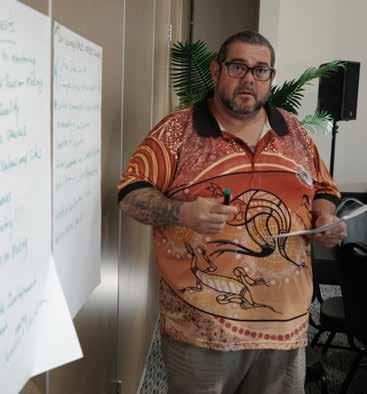
THINK THIS IS A GOOD START - WHAT WE’RE DOING HERE. WE’VE GOT REPRESENTATION FROM ALL THE PBCS AROUND THE STATE AND IT’S BEEN FAR TOO LONG COMING, HAVING DIALOGUE WITH GOVERNMENT OR WITH SA WATER ABOUT WATER RIGHTS FOR INDIGENOUS PEOPLE”- JACK JOHNCOCK
part of it is all about the PBC recognition and how we are going to implement all the different strategies to make this happen within the legislation,” Ms Fuschtei said.
“We got representatives in this forum from a lot of the different clan groups, but we also have a strong voice that we can bring together and address what are the needs within, what are the needs for us to bring forward to government and how we’re going to do it, especially for our young people.”
“I just want to say that cultural practices and protocols are really important to address and to bring that forward, especially with out storylines, our connection to Country and the way we share our stories.
“You can’t just have people coming in such as BHP thinking that there’s no traditional links with us or no traditional connection to the water. That’s really important as this meeting to address that and make it really clear for us as Traditional Owners.”
Wangkangurru Elder Raylene Crombie holds strong connection to the management of water in the Birdsville area (situated on the Queensland border with Northern Territory and South Australia), a location carrying strong traditional ties for her family.
“They block the water off getting to a traditional, spiritual waterhole which is going dry – it’s actually like a weir where they put cement causeway down without blooming (check),” Ms Crombie said.
“So the water is sort of trapped like a weir and that’s very hurtful because that is from our Elders. There was our people that was born there, my brothers and sisters, so it’s a really spiritual traditional place for us.
South Australian First Nations Voice to Parliament Election 2026

On Saturday 21 March, the South Australian First Nations Voice to Parliament election will be held.
Eligible Aboriginal and/or Torres Strait Islanders on the South Australian electoral roll have the opportunity to be heard and have a direct say in decisions that impact their lives by voting at the election.
The SA First Nations Voice Election is the same day as the 2026 State Election. All polling locations for the State Election will also offer voting for the SA First Nations Voice Election.
If you can’t get to a polling booth on polling day, there are other ways you can vote:
n Early Voting Centres
Saturday 14 March – Friday 20 March (excluding Sunday 15 March)
n Mobile Polling
Tuesday 10 March – Friday 20 March
n Postal Voting
Applications now available online at ecsa.sa.gov.au
Voting in the SA First Nations Voice Election is not compulsory. However, voting in the 2026 State Election is compulsory
Voters with a sight or motor impairment may be eligible to vote using the telephone assisted voting service on 1300 951 579.
To find out more about the SA First Nations Voice to Parliament Election, scan the QR code or call 1300 655 232
A federal election is held at least every three years so Australians can vote to decide who will represent them in the federal Parliament. Federal Parliament has two houses — the House of Representatives, based on the area where you live, and the Senate, based on the state or territory where you live. The party or group of parties with more than half the people in the House of Representatives becomes the government. The head of government is the Prime Minister.
These governments make laws and decisions for their specific state or territory. Each state has a parliament of two houses (upper and lower), except for Queensland, the Australian Capital Territory and the Northern Territory which have one house called the Legislative Assembly. The leader of a state government is called the Premier. The leader of a territory government is called the Chief Minister.
Local governments, often called city councils or shire councils, are established by state governments to look after the needs of a city or local community. The head of the council is the Mayor or Shire President. During local government elections, you will vote for people called councillors who form the council.
Voting is important for many different reasons. It could be about putting your views forward; helping your family and community; wanting a seat at the table; or having a say about who represents you in Parliament. Whatever your reason, the AEC can help with the process.
SANTS CEO Keith Thomas has met with SA’s Attorney-General Kyam Maher to propose the handback of land held by the Aboriginal Lands Trust (ALT), to Traditional Owners to work towards self-determination and economic development.
The ALT currently holds 65 land titles across South Australia, made up of a diverse portfolio of land uses, assets and lease arrangements.
Mr Thomas says that holding lands in a trust at a state level does not align with the development of strong, proud and prosperous Aboriginal Nations, and that there is a need to modernise the holding of Aboriginal lands under the ALT to enable Aboriginal Nations to directly hold the title to their lands. This would, in turn, provide greater regional autonomy and enable social, cultural and economic opportunities.
“Divestment of ALT lands to the Traditional Owners of these lands will give them the opportunity to hold, enjoy, manage and develop these assets and build sustainable futures,” he said.
The proposal to the Attorney-General seeks a new State Government policy, created in partnership with Aboriginal Nations, for the divestment of ALT lands to Aboriginal Nations, represented by Prescribed Bodies Corporate (PBCs) who are the Traditional Owners of these lands, by mid-2026, ready for implementation in the latter half of the year onwards.
The establishment of the Aboriginal Lands Trust Act 1966 (SA) was an important development in the recognition of Aboriginal land rights.
It was the first legal structure for Aboriginal land rights in the country and therefore the starting point for what has become a substantial and growing ‘Indigenous estate’. The ALT portion of SA’s Indigenous Estate is around 542,112 hectares.
The Native Title Act 1993 (Cth) was introduced nearly
30 years after the ALT Act, offering a pathway to the legal recognition of Aboriginal groups land rights and interests. This brought a shift from larger regional or state-based land rights schemes, such as the ALT, to more localised, ‘Country-based’ recognition and accompanying governance arrangements.
Now 67.5% of the state has been determined and, given the Anangu Pitjantjatjara Yankunytjatjara (APY)*, and Maralinga Tjarutja (MT) lands** comprise a further 20% of the state, there is only a relatively small portion of areas yet to be determined.
The recognition and management of native title and land rights and interests is through the 27 Aboriginal corporations, or Prescribed Body Corporates (PBCs) now established in SA.
“The good governance of these PBCs represents the current and future drivers of social, cultural and economic participation and growth, and this must be reflected in State legislation and government policy and strategy,” Mr Thomas said.
SA has a history of being a progressive force in Aboriginal Affairs. There was the enactment of the Pitjantjatjara Yankunytjatjara Land Rights Act back in 1981 and the Maralinga Tjarutja Land Rights Act in 1984. These laws followed the course charted by the Aboriginal Lands Trust Act 1966, which was replaced by the Aboriginal Lands Trust Act in 2013. More recently, the First Nations Voice Act was passed in 2023.
“These are all important pieces of legislation recognising the land rights of Aboriginal Nations in South Australia, and the need for the State Government to engage meaningfully
with the State’s First Peoples,” Mr Thomas said.
There have also been many determinations of native title recognising the rights and interests of Aboriginal Nations that have existed since before the state of South Australia came into being.
The Australian Government has, furthermore, endorsed the United Nations Declaration on the Rights of Indigenous People and the path towards its full implementation continues.
“In the context of the progressive position of SA’s Government and the strong representation and voice of Aboriginal Nations - we consider the time to be appropriate for the State Government to consider the divestment of Aboriginal Lands Trust Land to Aboriginal Nations,” Mr Thomas said.
“Despite an update of the ALT Act with the Aboriginal Lands Trust Act 2013 (SA), more legislative and policy reform is needed. Key issues linger around land ownership, resource exploration and economic development, and the aspirations of native title holders and claimants to be the owners of ALT lands are still unmet.”
The State Government should create a policy to transfer Aboriginal Lands Trust (ALT) lands to Aboriginal Nations represented by Prescribed Bodies Corporate (PBCs).
This divestment aims to modernise land ownership, enhance regional autonomy, and foster social, cultural, and economic opportunities.
Recommendations include establishing a policy framework by June 2026, developed in consultation with Aboriginal Nations, SANTS, ALT Communities, and the ALT. Key considerations should include:
Pathways for divestment, preserving native title, and ensuring community interests.
Management of water rights, existing assets, and associated risks.
Prioritisation of divestment based on Aboriginal Nation interests and complexities of land parcels. Resource identification and budget impacts for implementation.
The Aboriginal Lands Trust Act 1966 was a significant step in recognising Aboriginal rights, but further reforms are necessary to align with the Native Title Act 1993 Native title has been recognised over 67.5% of South Australia, with 27 PBCs established to manage rights and interests.
Current legislation does not adequately support the aspirations of native title holders to own ALT lands, which hinders self-determination and regional development.
Current land ownership structures create inefficiencies, such as requiring multiple negotiations for mining and exploration, and limiting economic development opportunities for native title holders.
THE ALT STANDS AS A BARRIER TO SELF-DETERMINATION AND REGIONAL DEVELOPMENT - LAND SHOULD BE HELD BY ABORIGINAL NATIONS, NOT FOR ABORIGINAL NATIONS.”- KEITH THOMAS
Divesting ALT lands to Aboriginal Nations would enable them to build asset bases, simplify land access for resource development, and drive regional economic growth. Successful models from other jurisdictions, like Western Australia, demonstrate the potential benefits of divestment.
Risks include potential loss of land from failed enterprises and managing interests of non-native title holders.
Mitigation strategies involve strengthening PBC governance, providing business support, and ensuring community rights are respected during the divestment process.
A reform agenda is essential for the ALT to divest lands to Aboriginal Nations, promoting self-determination and economic development. The State Government is urged to initiate this process collaboratively by June 2026.
* The Anangu Pitjantjatjara Yankunytjatja (APY) is incorporated by the 1981 Anangu Pitjantjatjara Yankunytjatja Land Rights Act when the SA Parliament gave Aboriginal people title to more than 103,000sq km of arid land in the far northwest of the state. All Pitjantjatjara, Yankunytjatjara and Ngaanyatjarra people who are traditional owners of any part of the Lands are members of Anangu Pitjantjatjara Yankunytjatjara.
** Maralinga Tjarutja (MT) lands were established by the Maralinga Tjarutja Land Rights Act 1984 and includes a large area of contaminated land from British nuclear testing in the 1950s.
Native title determined over 67.5% of the state 27 Aboriginal corporations (or Prescribed Body Corporates – PBCs) representing native title holders and managing their rights and interests
As Anangu Pitjantjatjara Yankunytjatjara (APY) and Maralinga Tjarutja (MT) lands comprise a further 20% of the state, there is only a relative small portion of areas yet to be determined
It is likely that native title determinations and native title corporations will be finalised over the remainder of the state within 3-4 years
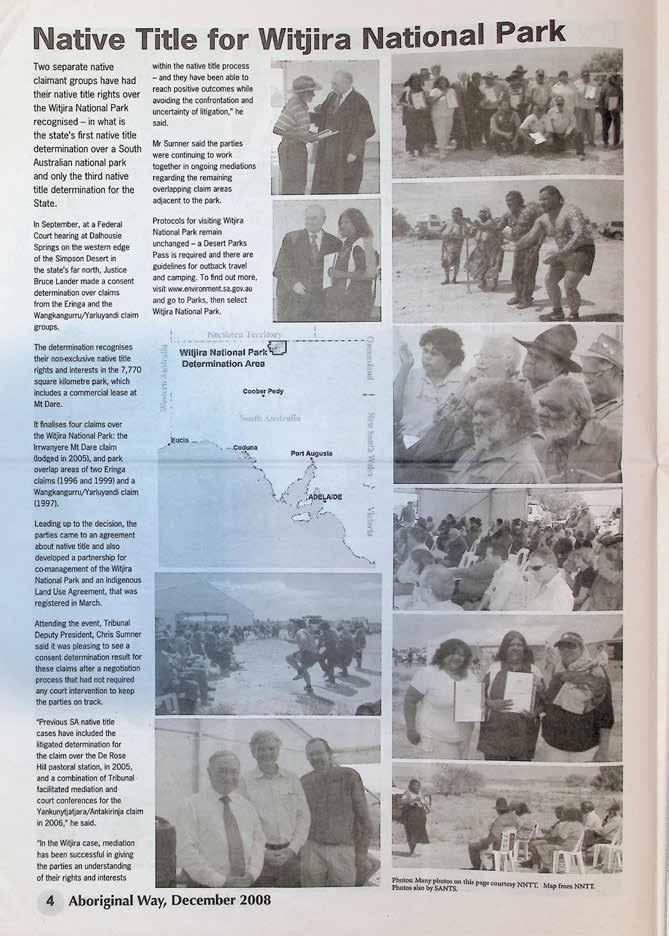
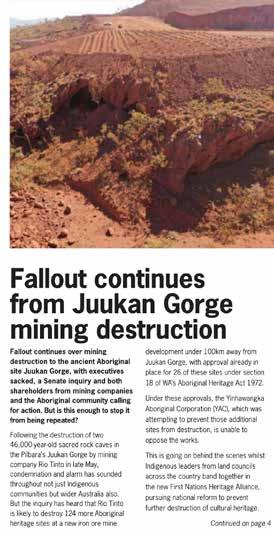
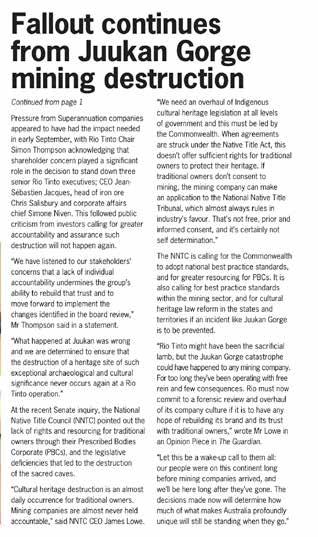
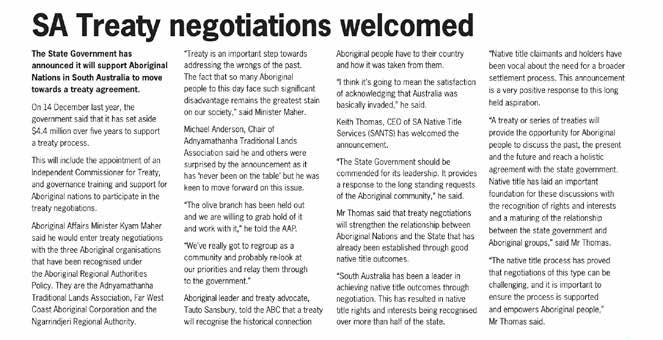
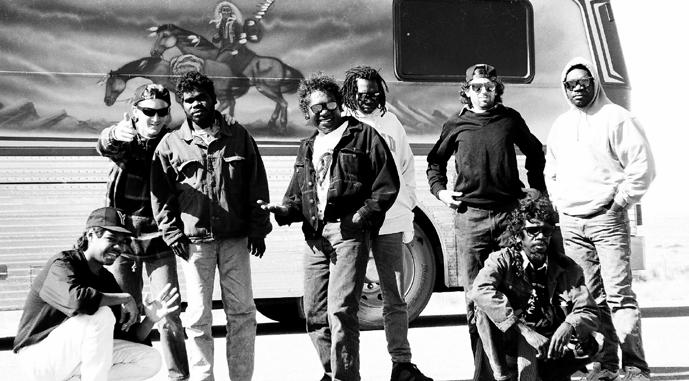
When Yothu Yindi walk onto the WOMADelaide stage in March, it will be the band’s first appearance at the festival in 33 years.
For founding member Witiyana Marika, the return is less about nostalgia and more about continuity. Their work, he says, is not finished.
The performance will mark 35 years since the release of Tribal Voice, the album that took Yothu Yindi from Arnhem Land to international stages and placed Aboriginal political demands into the centre of Australian popular music.
Songs such as Treaty and Djapana (Sunset Dreaming) remain closely associated with moments of national debate, many of which remain unresolved.
Yothu Yindi formed in 1985 in North East Arnhem Land, bringing together Yolngu musicians and balanda players in a structure that reflected the Yolngu concept of yothu yindi, meaning child and mother.
From the outset, the band set out to work in both Yolngu and Western musical systems, combining traditional song cycles, dance and language with rock, pop and funk.
Speaking from Naarm/Melbourne on December 12, ahead of a treaty celebration concert at John Cain Arena, Marika reflected on the early years of the band and the conditions that shaped their work.
“We came from the top of Australia, Arnhem Land, Northern Territory,” he said.
“We carried our culture through a very hard time, through the mission days and the changes that came. Music became a way to explain who we are, not just to whitefellas but to ourselves as well.”
By the late 1980s, Yothu Yindi were drawing attention beyond the Northern Territory.
In 1988, during the bicentenary of British colonisation, Midnight Oil’s Peter Garrett invited the band to tour the United States as an alternative to the official celebrations taking place in Australia.
The tour took Yothu Yindi across 48 states alongside Midnight Oil and Native American activist and poet John Trudell.
This trip placed Yolngu political concerns in conversation with Indigenous struggles elsewhere and exposed the band to international audiences who were receptive to music that carried explicit political messages.
Three years later, Yothu Yindi released Tribal Voice. The album’s centrepiece, Treaty, was written in response to the
WE CARRIED OUR CULTURE THROUGH A VERY HARD TIME, THROUGH THE MISSION DAYS AND THE CHANGES THAT CAME. MUSIC BECAME A WAY TO EXPLAIN WHO WE ARE, NOT JUST TO WHITEFELLAS BUT TO OURSELVES AS WELL.”- WITIYANA MARIKA.
failure of the Hawke government to deliver a treaty with First Nations peoples by 1990, despite a promise made after the presentation of the Barunga Statement in 1988.
The song called directly for action, alternating between English and Yolngu Matha, and made its demands unmistakable.
Initially Treaty received limited commercial attention. That changed when Melbourne dance producers Filthy Lucre remixed the track, transforming it into a club hit.
The remix brought the song into mainstream radio rotation and onto dancefloors across the country. It reached the ARIA top 10 and made Yothu Yindi one of the first Indigenous bands to achieve sustained mainstream commercial success.
The visibility came with pressure. Marika says the band was conscious of being treated as representatives rather than musicians.
“We were carrying something heavy,” he said. “People expected us to explain everything about Aboriginal Australia. But sometimes they only wanted the song, not the message behind it.”
Treaty has been performed at major national events, including the closing ceremony of the Sydney 2000 Olympic Games, where its message reached a global audience.
In 1993, Yothu Yindi performed at WOMADelaide for the first time. During that appearance, the band joined festival co-founder Peter Gabriel on stage to perform his song Biko, written about South African anti-apartheid activist Steve Biko.
Marika remembers the moment clearly.
“Peter Gabriel invited us to sing Biko with him,” he said.
“That was powerful because it connected our struggle with another struggle. Different countries, same history of injustice.”
The collaboration reflected WOMADelaide’s broader ethos of cultural exchange, something that aligned closely with Yothu Yindi’s own approach.
Since their peak commercial success in the 1990s, Yothu Yindi have continued to perform, record and mentor younger musicians.
The group has worked with artists including Paul Kelly, Jimmy Barnes, Kate Ceberano, Deborah Conway and Slim Dusty, collaborations that helped embed Indigenous perspectives within the Australian music mainstream.
Today, the band includes both original members and younger players, maintaining an intergenerational structure that mirrors Yolngu cultural practice.
“The old people teach the young ones,” he said. “That’s how culture survives. Music is just one way of doing that.”
The timing of Yothu Yindi’s return to WOMADelaide coincides with renewed political attention on treaty processes.
In Victoria, landmark treaty legislation passed in late 2025, establishing a legal framework for negotiations between the state government and First Nations peoples. The passage of the bill was marked by a public celebration concert in Melbourne, where Yothu Yindi performed.
Marika describes the moment as significant, though not an endpoint.
“We have been fighting for this for 50 years,” he said. “It is good to see something finally happening, but it is only one state. The work is still there.”
While welcoming the Victorian treaty process, he stresses that meaningful change depends on how agreements are implemented and respected over time.
“A treaty is not just a paper,” he said. “It is about how people treat each other after that.”
At the Melbourne concert, Marika spoke about the need for cooperation rather than division.
“We live in the mainstream world now,” he said. “Black and white together. That means responsibility on both sides.”
As Yothu Yindi prepare for their WOMADelaide return, Marika sees the performance as part of a longer continuum rather than a retrospective celebration.
He wants younger audiences to understand that the band’s music emerged from specific political moments and ongoing struggles, not abstract ideals.
“This is not history,” he said. “This is still happening.”
The WOMADelaide set will draw from across the band’s catalogue, including material from Tribal Voice. For Marika, the goal is clarity rather than sentiment.
“We want people to listen properly,” he said. “To hear the words, to hear the language, and to think about what it means now.”
Nearly four decades after Yothu Yindi formed, the conditions that shaped their music have changed, but many of the core questions remain.
Land rights, political recognition and the place of Indigenous law and culture continue to be contested.
Yothu Yindi’s return to WOMADelaide reasserts a position the band has held since the beginning: that music can be a forum for difficult conversations, and that those conversations must continue being held.