
Regulatory Register Summer 2022
Nutrition and Food Safety
NMPF Shapes Policy Response to Infant Formula Shortage
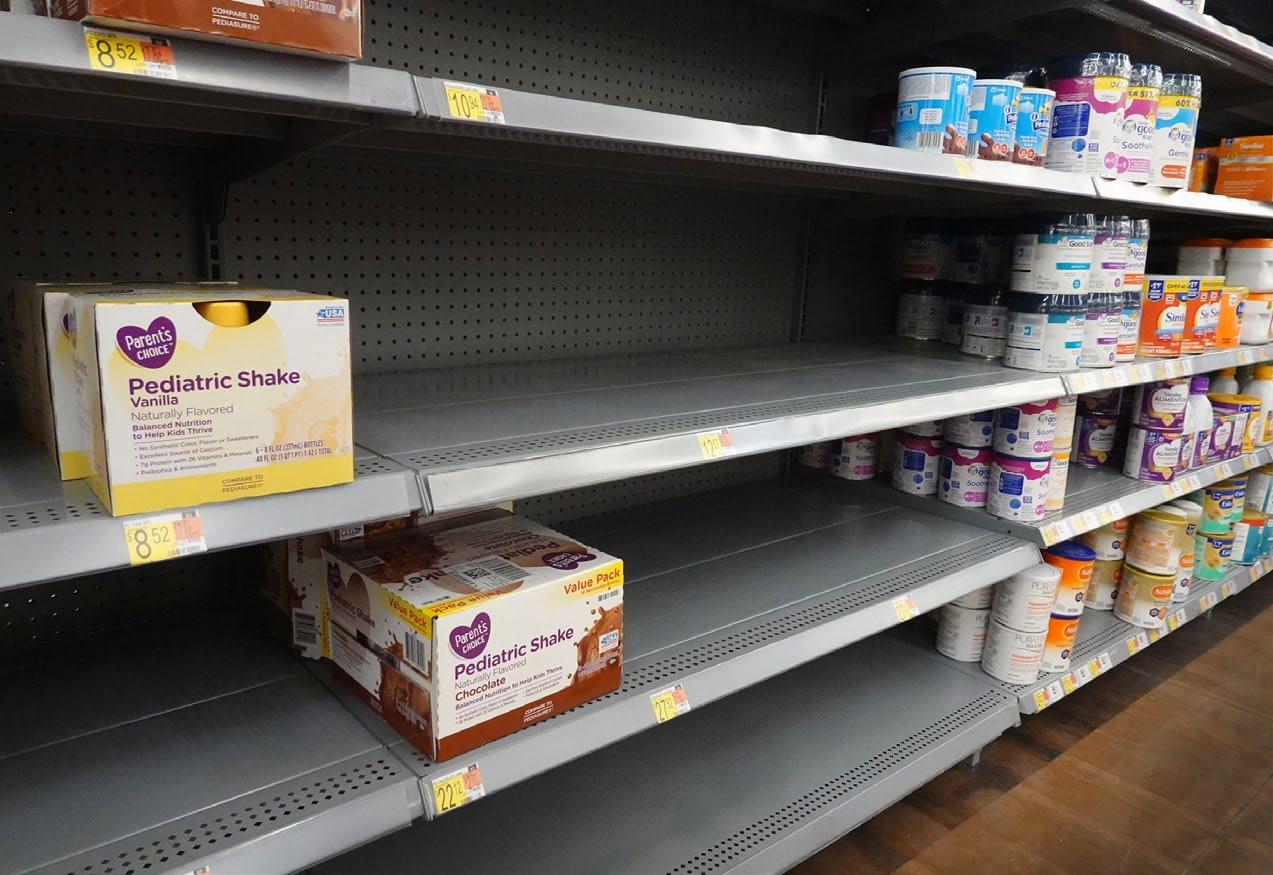
As the country has grappled with severe infant formula shortages brought on by a rare and temporary manufacturing issue, the National Milk Producers Federation (NMPF) has encouraged a targeted, multi-faceted government response to increase domestic and imported formula supplies in the shortterm while outlining the critical need for deeper policy reform to stimulate larger, more diversified U.S. formula production in the NMPFfuture.staff in a July 14 meeting with Deputy Director of the White House National Economic Council Sameera Fazili underscored that the long-term solution to the crisis is boosting domestic production. Examining current policy and determining necessary changes to regulation around domestic processing to achieve that goal would best provide the type of production cushion the United States needs to ensure a formula availability crisis does not occur again in the Tofuture.complement its work with the White House and other agencies such as the U.S. Department of Agriculture (USDA) and Office of the U.S. Trade Representative, NMPF is continuing to advise the Food and Drug Administration (FDA) leadership on weekly calls. FDA has been providing certain infant formula importers “enforcement discretion,” which has had the effect of waiving certain FDA rules and regulations to enable shortterm market access. NMPF has emphasized that these enforcement discretion efforts should only continue until the domestic market balance is restored.
NMPF has encouraged a targeted, multi-faceted government response to increase domestic and imported formula supplies in the short-term while outlining the critical need for deeper policy reform to stimulate larger, more diversified U.S. formula production in the future.
NMPF staff also worked with Congress on the carefully tailored, time-limited Formula Act, H.R. 8351, which was signed into law July 21 after quick House and Senate passage. The law waives U.S. tariffs on certain infant formula imports until Dec. 31 to ensure that the domestic market has the necessary supplies to meet the needs of infants. NMPF insisted the legislation be short-term and avoid granting tariff benefits for formula inputs that would simply displace U.S. dairy ingredients rather than work to bridge the remaining formula availability gap.
Currently, all U.S. milk is tested for Beta Lactam drugs as required in FDA’s Grade “A” Pasteurized Milk Ordinance.
Project FDA, in collaboration with the National Conference on Interstate Milk Shipments, has planned a three-year sampling project that will inform the agency about potential changes to the required residue testing for Themilk.project, expected to start in January, will test for 19 different drug residues, including ivermectin, gentamicin and tetracycline among others. State milk regulatory officials will take the samples from milk trucks at dairy processing plants and double-blind them for testing, thus making them untraceable to an individual plant or farm. The information gathered will guide the food safety risk assessment process to ensure testing requirements reflect the latest science, thus affirming the safety of U.S. milk.
Testing
Enrofloxacin ErythromycinTylosin NaproxenFlunixin Phenylbutazone SulfadimethoxineSulfamethazineSulfaquinoxalineOxytetracycline ChlortetracyclineTetracycline 19
FDA Plans for New Drug Residue
Drug residues in truckloads of milk again reached a record low in 2021, affecting only one out of every 12,500 loads — a reduction of more than 90% over the past two decades. The project will test for drug
ThiabendazoleGentamicinresidues:NeomycinFlorfenicolIvermectinDoramectinEprinomectin


The U.S. Court of Appeals for the District of Columbia Circuit on June 10 found a raw milk butter-maker’s argument that pasteurization changes butter’s standard of identity was “meritless,” letting a lower-court ruling against him stand. Mark McAfee, who makes raw milk butter, petitioned FDA to revoke the agency’s rule under the Public Health Service Act (PHSA) forbidding the interstate sale of raw butter and replace it with a rule allowing interstate sale. McAfee claimed that FDA’s rule banning the interstate sale of raw milk unlawfully changes butter’s statutory definition. FDA responded, denying McAfee’s petition and concluded that the PHSA authorizes the agency to require pasteurization and that
Raw Milk Butter Lawsuit Against FDA Loses on Appeal, Lower Court Ruling Stands
regulating butter for safety does not conflict with the definition of butter under the Food, Drug and Cosmetic Act (FDCA). FDA states “manufacturing controls intending to ensure safety may exist independent of any standards of Followingidentity.”FDA’s denial of the petition, the district court sustained FDA’s decision, citing that the ban on the interstate sales of raw butter was a “straightforward” exercise of the PHSA authority and was not in conflict with the FDCA or standard of identity. Following the district court’s decision, McAfee appealed claiming that a new rulemaking was necessary because banning the interstate sale of raw butter violates the FDCA’s definition of butter. The appeal failed, with the U.S. Court of Appeals noting that FDA did not alter the statutory definition because FDA’s public health regulatory authorities are distinct from, serve different purposes than, and do not conflict with its standard of identity rules. The district court sustained FDA’s decision, citing that the ban on the interstate sales of raw butter was “straightforward”a exercise of the Public Health Service Act authority and was not in conflict with the Food, Drug and Cosmetic Act or standard of identity.
“When the White House announced its Conference on Hunger, Nutrition, and Health, we at NMPF were excited by the potential for this conference to help propel meaningful advancement toward achieving the conference’s stated goals of ending hunger, increasing healthy eating and physical activity, and decreasing the prevalence of diet-related diseases in America,” said NMPF President and CEO Jim Mulhern in remarks at the session. The effort was part of a broader drive to provide input to the White House as it crafts its national strategy to end hunger and increase healthy eating and physical activity by 2030, which the White House has said it plans to release at the conference being held on September 28. The National Strategy is anticipated to identify steps the government will take and catalyzes the public and private sectors to address the intersections between food, hunger, nutrition, and health. The conference will be livestreamed.
The NMPF-organized session, which included the International Dairy Foods Association, the National Dairy Council and other allies, offered the White House both expertise and lived experience from a wide range of organizations on how important increased access to food and a diverse range of food choices are to fight nutrition insecurity and improve nutrition-related health.
NMPF, Allies Tell White House to Prioritize Food Access at Hunger Conference
NMPF is excited by the potential for this conference to help propel meaningful advancement toward achieving the conference’s stated goals of ending hunger, increasing healthy eating and physical activity, and decreasing the prevalence of diet-related diseases in America.
NMPF led 11 national agricultural, anti-hunger, nutrition and medical groups in a virtual listening session June 30 urging the White House to place a high priority on access to affordable, diverse and nutritious foods when it holds its Conference on Hunger, Nutrition, and Health this September.
NMPF Voices Concern over Proposed SEC Rule
Sustainability and the Environment
FARM ES is the dairy community’s platform for a consistent, unified approach to GHG measurement that is free and accessible to all dairy farmers. Currently, over 80 percent of U.S. milk is handled by cooperatives and processors participating in FARM Environmental Stewardship. NMPF also emphasized the significant financial burden the proposed rule would have on dairy farmers and their cooperatives related to the collection and aggregation of on-farm GHG data.
NMPF also pointed out that U.S. dairy farmers have been leading environmental stewards for decades, tending their animals, land and water with great care. Improvements in productivity, new technologies and evolving best management practices have allowed a gallon of milk to be produced with less water, less land and a smaller carbon footprint than ever before. Still, the industry remains committed to its continued progress, devoting resources to programs, research and services that advance its 2050 goals to achieve industrywide neutral or better greenhouse gas emissions, optimize water usage and improve water quality. To track progress and reach these important environmental goals, the FARM Program in 2017 launched the Environmental Stewardship platform. The program provides a comprehensive estimate of GHG emissions and energy use on dairy farms with a suite of tools and resources for farmers to measure and improve their environmental footprint.
SEC’s proposed rule mandating extensive climate disclosures from publicly traded companies could undermine the dairy industry’s progress toward its sustainability goals and create far-reaching technical and financial challenges for American dairy farmers and their cooperatives.
The U.S. Securities and Exchange Commission’s (SEC) proposed rule mandating extensive climate disclosures from publicly traded companies could undermine the dairy industry’s progress toward its sustainability goals and create far-reaching technical and financial challenges for American dairy farmers and their cooperatives, NMPF said in comments submitted June 17. SEC’s proposed rule, “The Enhancement and Standardization of Climate Related Disclosures for Investors,” would require public companies to disclose GHG emissions, including emissions from upstream and downstream activities in its value chain, known as Scope 3. NMPF cautioned SEC in its comments that the inclusion of Scope 3 emissions disclosure within the rule is premature and risks undermining the dairy industry’s extensive efforts to develop trust and buy-in for its voluntary GHG assessment program through the National Dairy Farmers Assuring Responsible Management (FARM) Environmental Stewardship program.
Modeling; NMPF Reviewing EPA released July 12 its preliminary draft report on ammonia, hydrogen sulfide, and particulate matter emission models for dairy operations developed using data gathered during the National Air Emissions Monitoring Study (NAEMS). The report is now available via the NAEMS project website. The report’s release will be followed by EPA’s draft report on Volatile Organic Compounds emission models for dairy farms, set for release later this year. Once the second report is released, EPA will then revise and improve the preliminary draft models for all animal types. Once all the models have been reviewed and revised, EPA will release the entire set of revised draft models for a formal public comment period, currently scheduled for mid-year 2023 with finalization by that year’s end. NMPF will be reviewing the current and future drafts to provide comment to EPA. The NAEMS was established in 2006 by a voluntary Air Compliance Agreement between EPA and the pork, dairy, egg and broiler industries, to address the lack of scientific data. Funded through a one-time authorization through the national dairy checkoff, dairy farmers provided the financial support for NAEMS so that emissions data could be collected at select sites to first, accurately assess emissions from livestock operations and compile a database for estimation of emission rates, and second, promote a national consensus for emissionsestimation methods and procedures from livestock operations.
EPCRA Exemption on Chopping Block
The amendment to the Emergency Planning and Community Right-to-Know Act (EPCRA) that exempts agriculture from reporting air emissions from animal waste is currently up in the air after being sent back to Environmental Protection Agency (EPA) for “remand without vacatur” by a D.C. District Court on Feb. 14. The “remand without vacatur” motion keeps the exemption in effect while EPA undergoes a new notice and comment rulemaking procedure to revise or rescind the rule.
EPA Releases Draft NAEMS
A bill codifying the exemption has been drafted in the Senate. NMPF is hopeful that EPA will keep the exemption in place and is working closely with fellow animal agriculture groups to provide EPA with all necessary information.
PFAS Issues Haunting Food and Agriculture
Two food manufacturers, Crown Prince, Inc. and Bumble Bee Foods, LLC, in June issued the first voluntary recalls for foods contaminated with per- and polyfluoroalkyl substances (PFAS) chemicals after FDA discovered high levels of the so-called “forever chemicals” in two separate canned clam products during a routine surveillance assignment on seafood.
EPA has revised its health advisory limits for drinking water from 70 ppt to 0.004 ppt for perfluorooctanoic acid (PFOA) and 0.02 ppt for perfluorooctane sulfonic acid (PFOS), the two main PFAS chemicals of concern. These limits are well below what can be detected by laboratories today, making the standard questionable. EPA also issued a health advisories limit of 10 ppt for GenX chemicals, and 2,000 ppt for perfluorobutane sulfonic acid. EPA has already announced that it is considering revisiting these limits and may revise them upwards. However, this move by EPA has already initiated changes at the state level. For example, Maine dropped its marketability level for farm milk from 210 ppt to 44 ppt. New Mexico, meanwhile, is maintaining its 400 ppt marketability limit for farm milk.
Finally, on Aug 26, EPA formally announced its intent to add PFOS and PFOA to the Superfund list of hazardous chemicals which it intends to publish midSeptember. NMPF and many other agricultural groups have been vocal that farms must not be designated as Superfund sites, as that could likely bankrupt many farmers. Congressional action would be necessary should EPA list these PFAS chemicals as SuperFund chemicals.
EPA confirmed it still plans to issue Maximum Contaminant Levels for drinking water for at least PFOA and PFOS by the end of the year. NMPF is concerned that EPA may not set those in a scientifically valid manner and they influence other PFAS-related regulatory schemes.
The assignment involved testing 81 seafood samples for 20 different PFAS chemicals. Sixty of those samples had detected levels of PFAS chemicals and two samples of smoked clams had levels that were likely a human health concern containing 19,822 and 20,133 parts per trillion (ppt) respectively. FDA’s policy is to make PFAS-related marketability and recall decisions on a case-bycase basis, factoring in consumption patterns when making those decisions. For example, FDA determined that in the clam cases, someone who consumes three cans of those products in a month would be at risk of health harm.


NMPF, Submit Joint Comments on USDA Feed Management Standard
Newtrient
NMPF and Newtrient submitted joint comments to USDA Natural Resources Conservation Service (NRCS) on June 15 supporting a modernized “NRCS Conservation Practice Standard 592 – Feed Management.” The portion of the feed management standard which addresses air quality was expanded to include ammonia, volatile organic compounds, greenhouse gases and dust to be consistent, which will expand the opportunity for dairy farmers to use that standard for enteric methane-reducing feed Dairyadditives.farmerscurrently do not use the Feed Management practice. NMPF and Newtrient anticipate that changes to the practice standard, along with updated cost share rates, will result in a practice that works for dairy farmers and result in reduced methane emissions. In reviewing data from NRCS related to dairy producers’ use of NRCS conservation programs between FY2014 and FY2020, dairy operators across the country had only one contract for a Feed Management plan and only three associated with the use of the Feed Management Conservation Practice Standard. None of the contracts had financial assistance obligations associated with the Feed Management practices. The most significant positive impact on the environment in animal agriculture is the incredible efficiency that has been achieved by U.S. producers. This efficiency can be improved through the feed and feeding practices as new advances are made. The potential of using this NRCS Feed Management Conservation Practice Standard (592) is tremendous, particularly if it encourages the goal of increasing efficiency while reducing the environmental impact.
HealthAnimal
FARM Biosecurity has two arms: Enhanced Biosecurity, which encompasses the on-farm portion of the Secure Milk Supply program; and Everyday Biosecurity, which focuses on the biosecurity steps that need to be taken every day to protect the health of both the cattle and employees.
Foot and Mouth Disease Found in Imported Meat in Australia Emphasizing Continued Risk
NMPF Signs onto Letter Supporting the Beagle Brigade NMPF joined an agriculture coalition letter sent July 20 to House and Senate leadership, supporting the swift passage of the Beagle Brigade Act. The Beagle Brigade Act, sponsored by Reps. Sanford Bishop, D-GA, Drew Ferguson, R-GA, Dan Kildee, D-MI, and Adrian Smith, R-NE, funds the canines to protect U.S. agriculture. The Beagle Brigade are trained at the National Detector Dog Training Center in Georgia and are used at ports of entry (airports, seaports, land crossings) to detect fruits, vegetables, and meats in international passenger baggage, mailed packages, and vehicles entering the U.S. The introduction of foreign animal and plant pests and diseases costs the American economy tens of billions of dollars annually. This effort also is part of the system used to minimize the risk of Foot and Mouth Disease introduction into the United States. Other signees included National Cattlemen’s Beef Association, the National Pork Producers Council, the United Egg Producers and many more.
The Australian government detected viral fragments of foot-and-mouth disease (FMD) and African swine fever in imported meat in July. Coming on top of Australian concerns about a recent FMD outbreak in Indonesia its government has introduced new measures to wash shoes at international airports. Both diseases have spread through Asia, and a widespread outbreak of either livestock disease in Australia could cost the economy billions of dollars. The U.S. guards against similar scenarios through the Secure Milk Supply program, which was developed through federalstate-industry partnership with the goal of preparing U.S. dairy industry for a potential FMD outbreak. The FARM Biosecurity program area, funded in part through a USDA Cooperative Agreement, is being developed to assist with implementation of the Secure Milk Supply Plan at the farm level and is working to ensure business continuity should an outbreak occur.

CatherineKrogstadMcVey
NMPF also sponsors student awards through the American Dairy Science Association (ADSA). This year’s Richard M. Hoyt Award winner, Bethany Dado-Senn, was recognized at ADSA’s annual meeting June 21. Dado-Senn grew up on her family’s dairy farm in Wisconsin. Her doctoral research at the University of Wisconsin-Madison investigates consequences and solutions to environmental heat stress in dairy cattle.
NMPF’s Board of Directors also awarded a scholarship to Kirby Krogstad. Krogstad grew up on dairy farms in South Dakota and Minnesota. He completed his undergraduate degree at South Dakota State University, followed by a master’s degree in dairy cattle nutrition at the University of Nebraska-Lincoln. He is currently a doctoral candidate in Animal Science at Michigan State University and studies nutritional strategies and feed additives to modulate inflammation and health of dairy cows.
NMPF announced the recipients of its 2022 National Dairy Leadership Scholarship awards on July 14, recognizing outstanding graduate students pursuing research of interest to the U.S. dairy industry. The awards, funded by dairy farmers and their cooperatives, support the next generation of dairy researchers, extension staff, academics and industry
Board of Directors, NMPF is proud to recognize, support and celebrate this year’s scholarship recipients,” said Jim Mulhern, president and CEO of NMPF. “Our scholarship program helps graduate students pursue research that brings scientific solutions to many of dairy’s challenges. We applaud this year’s awardees and look forward to their future contributions.”
NMPF Announces
“Onprofessionals.behalfofits
Scholarship Winners
Michigan State University graduate students Ursula Abou-Rjeileh and Thainá Minela received first-place recognition as part of the NMPF sponsored ADSA Graduate Student Paper Presentation Contest in Dairy Production in the Ph.D. and M.S. divisions, Learnrespectively.moreabout the NMPF scholarship program here. The 2023 application period will open in January 2023. For information about ADSA awards, visit its awards page here. Bethany Dado-Senn Kirby
Catherine McVey received this year’s top scholarship, NMPF’s Hintz Memorial Scholarship award. A North Carolina native, McVey received dual undergraduate degrees in Animal Science and Statistics at North Carolina State University. She is currently a doctoral candidate in Animal Biology at the University of California-Davis, where she is supported by the Dean’s Distinguished Research Fellowship. McVey’s research focuses on extracting complex behavioral patterns from precision livestock farming through unsupervised machine learning.



National Milk Producers Federation 2107 Wilson Blvd., Suite 600 Arlington, VA Phone:info@nmpf.org22201703-243-6111