REGULATORY REGISTER

Nutrition
Whole Milk for Healthy Kids Act Signed into Law
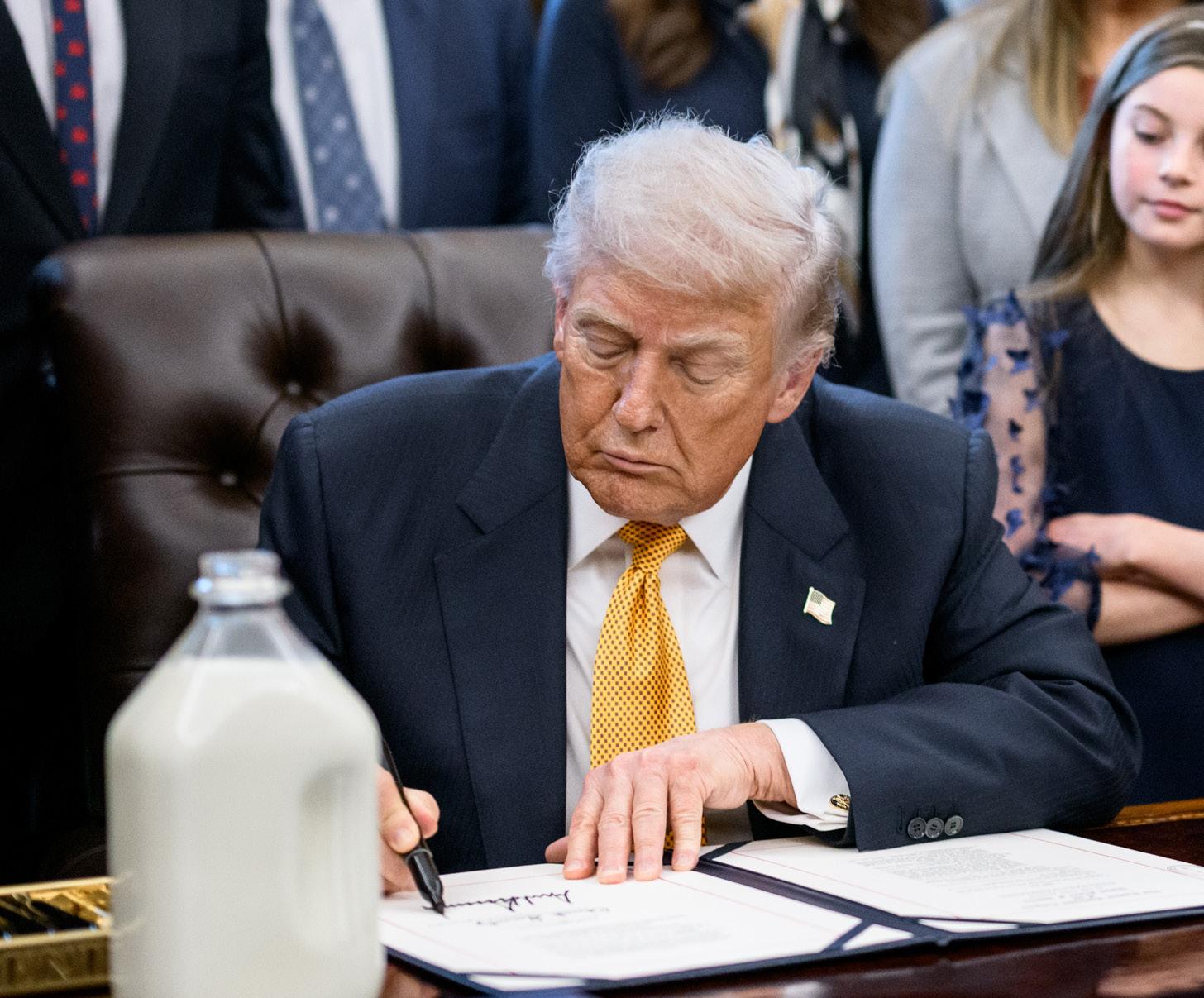
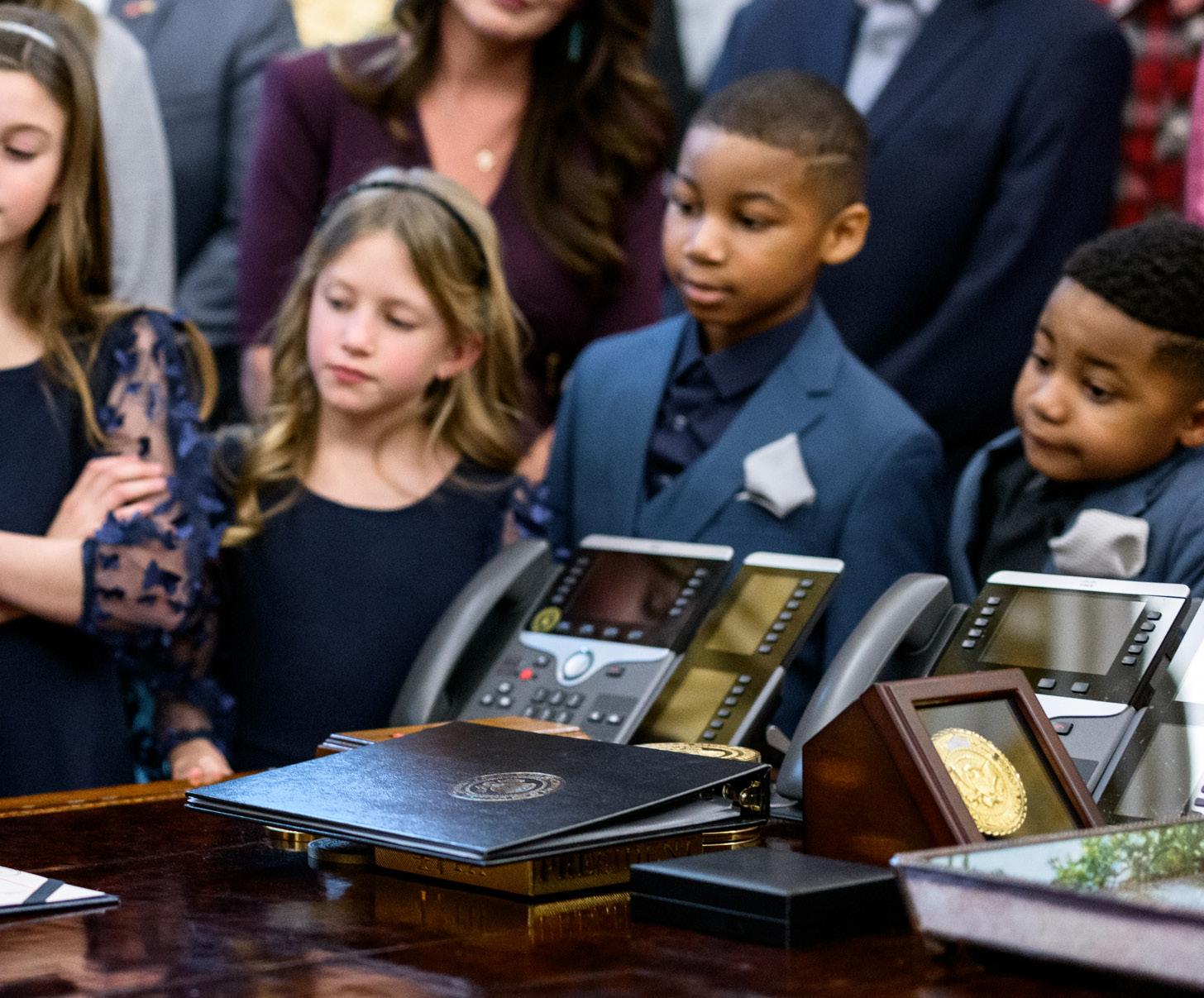
After years of NMPF advocacy and the work of the entire dairy community, the Whole Milk for Healthy Kids Act was signed into law Jan. 14. The president’s signature means schools are once again able to serve all fat levels of milk, a flexibility unavailable since 2012.
The law permits school meal programs to offer a greater variety of milk, including whole and reduced-fat (2%) milk, organic milk, and nondairy beverages that meet nutritionalequivalency standards. This is in addition to current options of low-fat (1%), fat-free (skim), flavored and unflavored, and lactose-free milk.
“Dairy farmers and their cooperatives couldn’t be more thrilled that whole and 2% milk is returning to school meals,” NMPF President & CEO Gregg Doud said in a statement upon
signing. “Dairy is a nutrition powerhouse that should be used to its fullest potential — and that means making it available in the same varieties families consume at home.”
Focus now shifts to USDA implementation. The department published guidance for schools on the updated fluid milk requirements for school lunch programs Jan. 14. The department will move forward with formal rulemaking in the months ahead to address both whole milk and the updated Dietary Guidelines for Americans.
NMPF will be actively involved in the rulemaking process, working to ensure schools have the support they need to include whole milk on their menus.
“We are ready to help schools and USDA in any way we can as this important legislation is implemented,” Doud said in his statement. “We thank the Trump administration, our advocates on Capitol Hill, and everyone who has worked to make school meals better through increased access to dairy.”
New Dietary Guidelines for Americans Reflect Dairy’s Importance
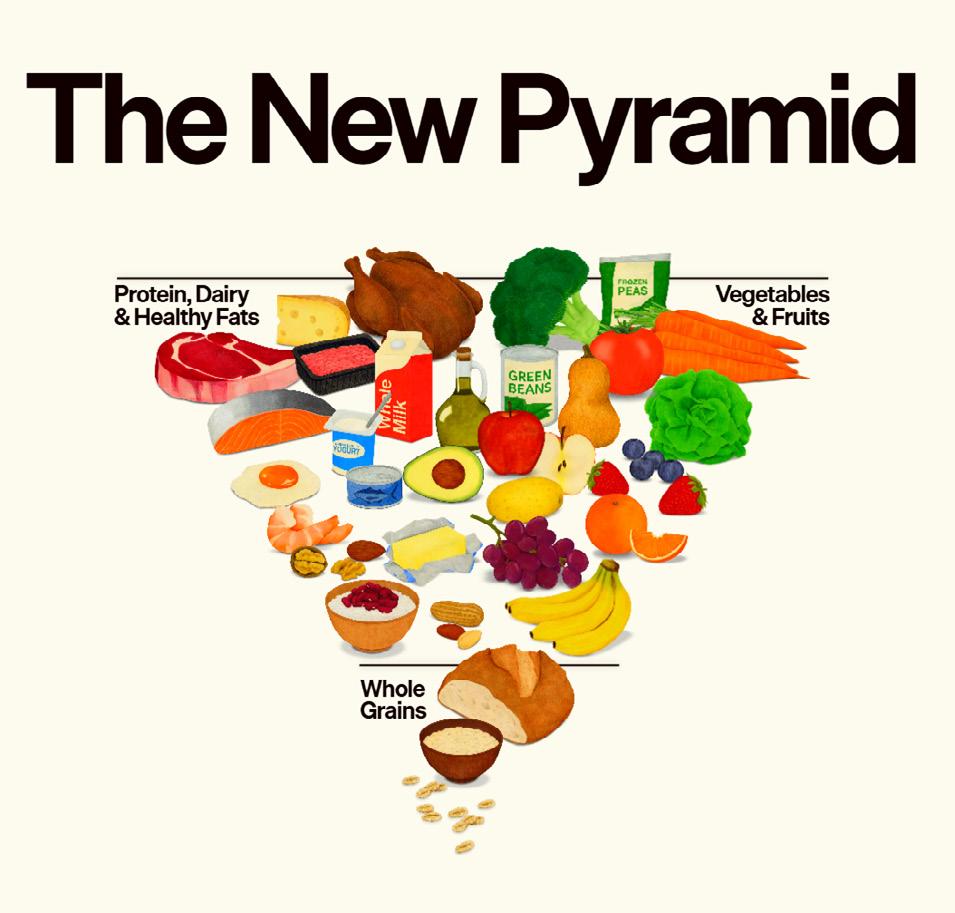
A yearslong effort by NMPF to maintain dairy’s prominence in American diets and regain support for dairy products of all fat levels culminated in the Jan. 7 release of the 20252030 Dietary Guidelines for Americans by the Department of Health and Human Services and USDA.
USDA and HHS update the guidelines every five years and affect government policies in numerous ways, including school meal offerings. The latest guidelines maintain the previous recommendation of three dairy servings per day for those consuming a 2,000-calorie diet. This year’s edition explicitly endorses full-fat dairy consumption, including
whole milk, which is a marked departure from previous guidelines that recommended only low- and non-fat milk.
“NMPF thanks HHS and USDA for recognizing dairy’s critical role in a healthy diet in the new Dietary Guidelines for Americans, as shown by its continued recommendation of three servings of dairy for Americans, its recognition of dairy’s benefits at all fat levels, and dairy’s prominence in diverse diets,” NMPF President & CEO Gregg Doud said in a statement.
“We are proud to benefit American health in fundamental ways, and we welcome the potential these guidelines hold for expanding upon dairy’s critical role in the diet.”
NMPF has worked to highlight advances in nutrition and scientific research showing the
value of dairy consumption of all fat levels, including evidence that substituting higherfat dairy for lower-fat dairy is not linked with increased risk of cardiovascular disease morbidity. The Dietary Guidelines Advisory Committee that makes recommendations for dietary guidelines previously acknowledged that reducing or eliminating dairy from the diet leads to undernourishment in key nutrients for millions of Americans, which is reflected in the final guidelines.
The new guidelines also include stricter limits on added sugars, stating that while no amount of added sugars or non-nutritive sweeteners is recommended or considered part of a healthy or nutritious diet, one meal should contain no more than 10 grams of added sugars. The naturally occurring sugar in milk is acknowledged as not counting towards those 10 grams; still, the new guidelines may pose a challenge for some flavored milks and dairy products, such as yogurt, as the administration signals work on a new school meals rule.
The accompanying document to the guidelines, “Daily Servings by Calorie Level,” also includes concerning language about “fortified dairy alternatives” in its definition of the “dairy” food group. Previously, the guidelines only acknowledged fortified soy as a dairy substitute.
NMPF has repeatedly emphasized that imitators do not offer the same consistent package of nutrition provided by real milk, which the Advisory Committee agreed in its 2024 report. Any encouragement of plantbased alternatives when lactose-free milk is available to those who are lactose-intolerant is out of step with otherwise encouraging recommendations.
With the guidelines out, the federal government will begin applying them across federal programs.
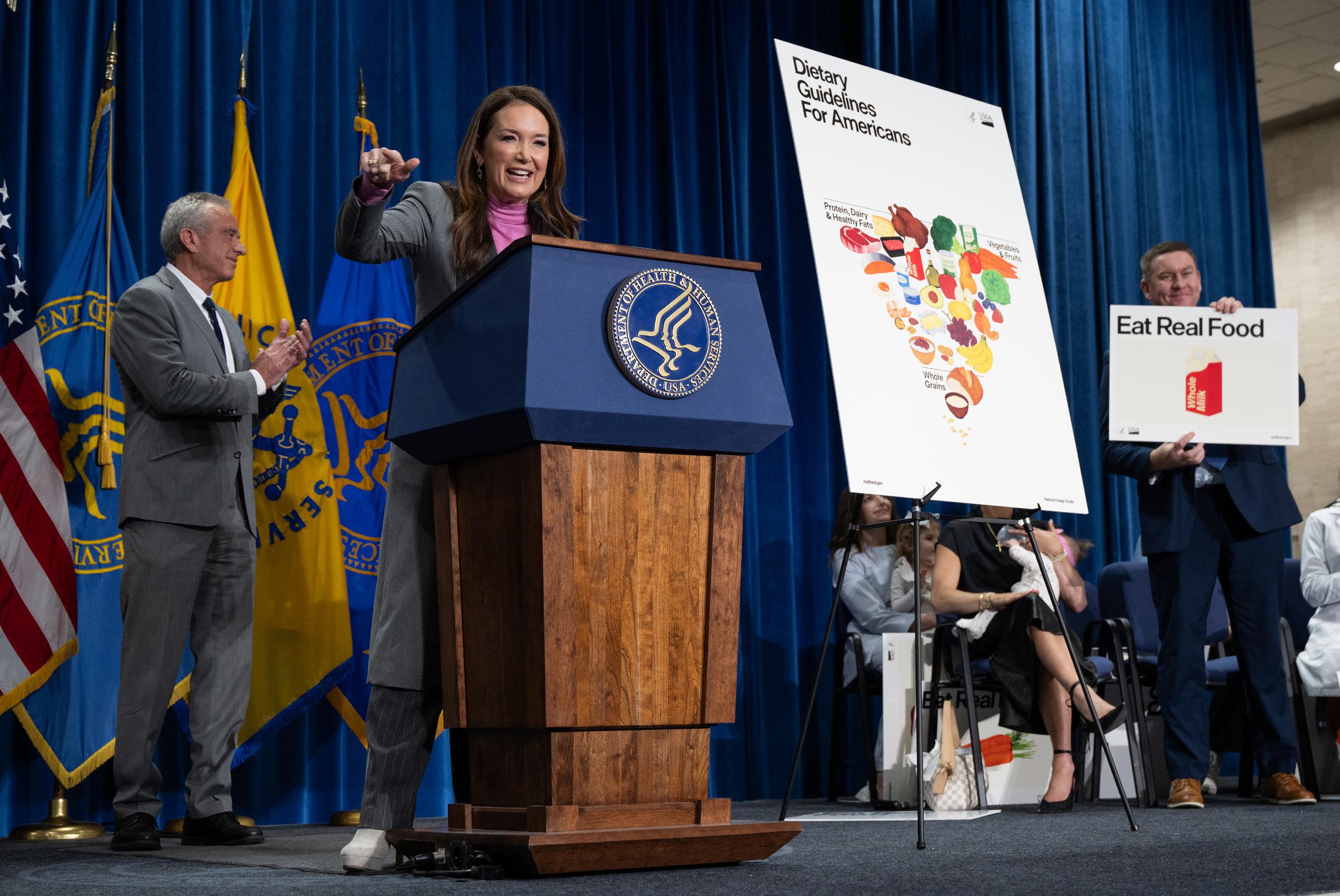
Pictured Left: NMPF Chairman Brian Rexing (right) holds a sign featuring whole milk at the unveiling of the 2025-2030 Dietary Guidelines for Americans with USDA Secretary Brooke Rollins (center) and HHS Secretary Robert F. Kennedy Jr. (left)
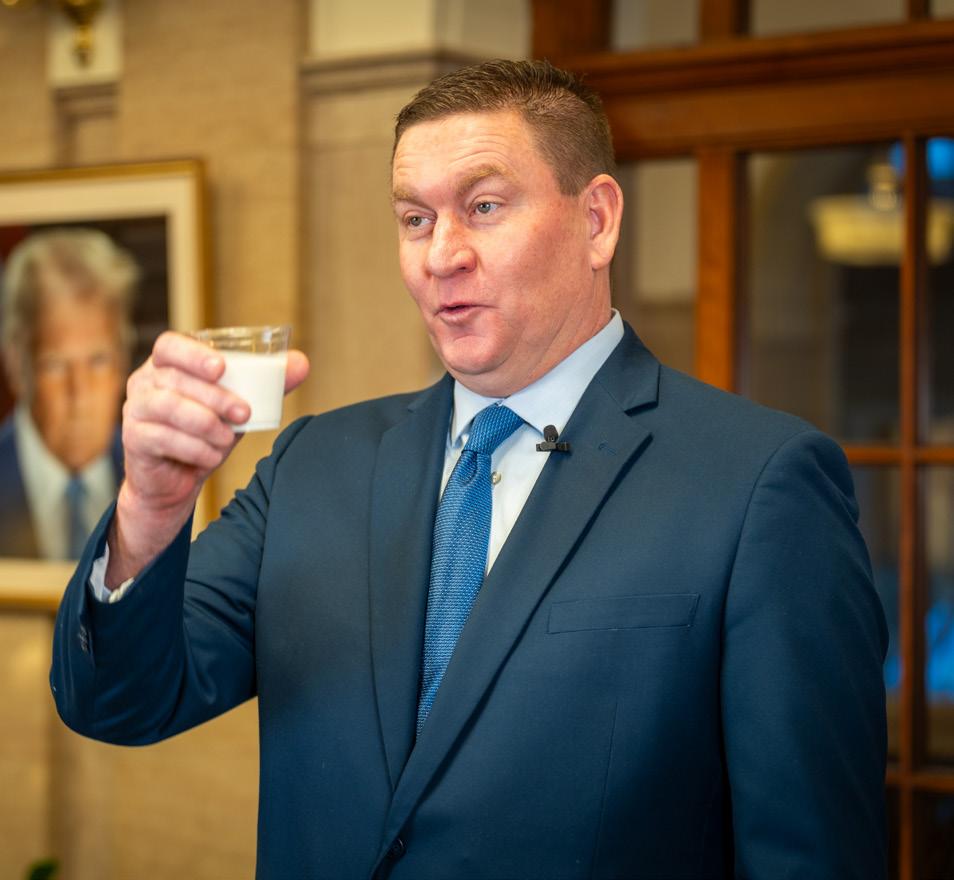
NMPF Chairman Brian Rexing toasts to whole milk Jan. 7 at the unveiling of the 2025-2030 Dietary Guidelines for Americans.
Animal Health
USDA Ramps Up Screwworm
Prevention, Surveillance
USDA’s Animal and Plant Health Inspection Service (APHIS) announced Jan. 30 a shift in its 100 million per week sterile fly dispersal efforts to stop the northern spread of New World screwworm.
USDA changed the location of the sterile fly dispersal to reinforce coverage along the U.S.Mexico border, and will include operations about 50 miles into Texas, along the U.S. border with the state of Tamaulipas, Mexico. Mass production and targeted dispersal of sterile insects are critical components of an effective strategy to fight screwworm.
On Feb. 9, USDA announced the completion of a U.S.-based sterile fly dispersal facility in Edinburg, Texas. This facility expands USDA’s ability to disperse sterile flies along the border and into the United States, if necessary.
Through USDA’s import requirements and protocols, the first U.S. case of New World screwworm was confirmed in Florida on Jan. 30. A horse from Argentina presented for routine inspection at an import quarantine facility in Florida was found by APHIS inspectors to have an open wound with larvae, a common visible sign of a potential screwworm infection. The larvae were confirmed to be New World screwworm at the National Veterinary Services Laboratories in Iowa.
“While this situation does not appear to be associated with the NWS outbreak in Mexico that USDA is currently fighting, it underscores the need for vigilance in all of USDA’s coordinated efforts to fight NWS,” USDA said in a statement.
USDA will continue to deploy its screwworm response efforts including implementing import protocols and ongoing surveillance and trapping efforts along the border.
FDA Conditionally Approves Topical Drug for Cattle for Screwworm
The U.S. Food and Drug Administration on Dec. 4 conditionally approved Exzolt Cattle-CA1 (fluralaner) topical solution for the prevention and treatment of New World screwworm larval infestations, and the treatment and control of cattle fever tick in beef cattle 2 months of age and older and replacement dairy heifers less than 20 months of age.
This conditional approval means the FDA has determined Exzolt Cattle-CA1 is safe and has a reasonable expectation of effectiveness for its intended use. To prevent unsafe drug residues in meat from treated cattle and ensure human food safety, the slaughter withdrawal period for Exzolt Cattle-CA1 is 98 days. This product is not for use in lactating dairy cattle, dairy calves, veal calves, or bulls at least 1 year old that are intended for breeding. There are currently no drugs with conditional or emergency authorization approval for use in lactating dairy cattle producing milk for human consumption
FDA granted Emergency Use Authorization Feb. 5 to use the approved product Ivomec
(ivermectin) injection for the prevention of infestations caused by New World screwworm when administered within 24 hours of birth, at the time of castration, or at the appearance of a wound in cattle. The injection is not authorized for use in female dairy cattle producing milk for human consumption or in calves that will be processed for veal. The injection is also not authorized for the treatment of existing screwworm infestations, only the prevention of myasis when a wound is present.
First H5N1 Dairy Case Reported in Europe While Cases Slow in U.S.
The first European case of H5N1 in dairy cows was detected at a dairy farm in the Dutch municipality of Noardeast-Fryslân, Friesland province, the Netherlands in January.
The cow tested positive for antibodies indicating previous exposure to the virus, but there is no evidence of active viral circulation of avian influenza among the dairy cows on this farm. Currently, there are no signs of avian influenza spreading to other dairy farms in the Netherlands. The instigation for testing dairy cattle was the death of a cat from H5N1 traced to a dairy farm.
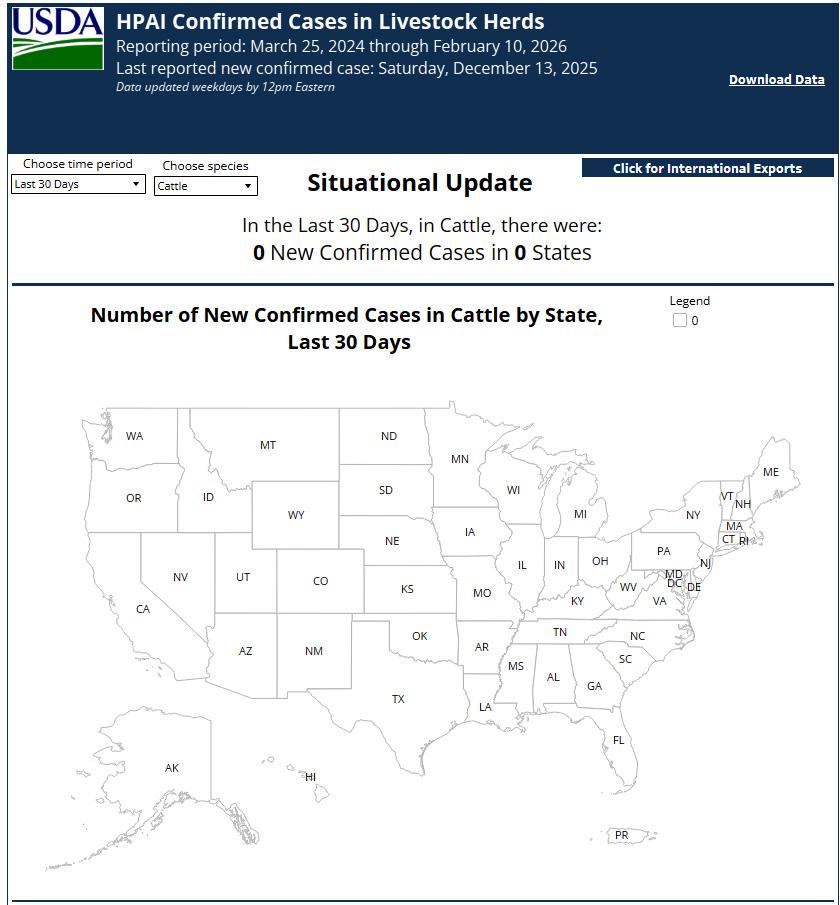
In the United States, ongoing testing and surveillance activities through the National Milk Testing Strategy continue to demonstrate the absence of H5N1 in dairy cattle, with no new dairy farm cases reported since Dec. 13.
U.S. Milk Drug Residues Increase Slightly in 2025
The dairy industry saw a small uptick in drug residues found in milk in 2025, but industry efforts continue to support producers by providing continuing education on and evaluating proper antibiotic use in dairy cattle.
According to the 2025 National Milk Drug Residue Database report released in December, more than 3.2 million bulk milk pickup tankers were tested from October 2024 to September 2025, yielding 206 (1 in every 15,860 milk trucks) positive samples. This is a slight increase from 2024 with only 196 positive samples (1 in every 17,080 milk trucks). The number of samples tested (tankers, packaged products, producer samples) and reported positive increased from 301 in 2024 to 307 in 2025. It’s important to note that any milk or milk product found with a drug residue violation is destroyed and not sold to the public.
Despite the small uptick in the number of positive samples, the overall percentage of milk samples that tested positive for antibiotic residues in 2025 remains the second lowest recorded level since the NMDRD was created. U.S. dairy farmers remain committed to producing safe, high-quality milk.
NMPF Denounces Proposed EU Animal Welfare Regulations
NMPF and the U.S. Dairy Export Council pushed back against proposed European Union standards that would dictate on-farm animal welfare practices in a Jan. 23 submission to the European Commission, warning that the measures could create new and unnecessary barriers to access in the EU market. The proposal follows a pattern of frequently changing and overly complex EU requirements that appear designed to restrict imports.
The filing responds to an EU questionnaire assessing the impact of proposed on-farm animal handling regulations. The questionnaire requests comparisons between EU and U.S. regulatory approaches, signaling the EU’s consideration of extending new requirements beyond EU producers under the guise of competitiveness.
In the submission, NMPF and USDEC underscore the science-based animal welfare practices voluntarily adopted by the U.S. dairy industry through the National Dairy FARM animal care program. This industry-led
framework contrasts with the EU’s prescriptive, top-down regulatory model, but the comments note that the lack of a comparative U.S. regulatory approach cannot be the impetus for the European Union to limit trade. While NMPF and USDEC acknowledge the European Union’s sovereignty to set standards applicable to its own producers, the filing strongly objects to any EU attempts to dictate U.S. farming practices and cites that doing so would be a violation of international trade rules.
The comments instead urge the European Union to rely on internationally recognized World Organization for Animal Health (WOAH) standards for animal welfare in a manner that would not implicate trade flows. The proposed EU measures would exceed WOAH guidance by mandating particular elements such as minimum calf weaning periods prior to separation from the mother and imposing more stringent housing standards than those recommended internationally. NMPF will continue to work with both the U.S. and EU governments to ensure that any final regulation does not introduce additional barriers to the already one-sided transatlantic dairy trade relationship.
International
U.S. Dairy Secures Access Assurances with El Salvador, Guatemala and Argentina
NMPF welcomed the Jan. 29 signing of an Agreement on Reciprocal Trade between the United States and El Salvador, one with Guatemala on Jan. 30 and a third with Argentina on Feb. 5 that included market access commitments for U.S. dairy exports. While NMPF had already secured tariff-free access as a result of the Central AmericaDominican Republic Free Trade Agreement (CAFTA-DR) over a decade ago to El Salvador and Guatemala, the new reciprocal agreement commits the two markets to adopt trade facilitating measures and preempt nontariff barriers.
Under the agreement, both countries agree to recognize U.S. regulatory oversight and accept currently agreed certificates issued by U.S. regulatory authorities, prohibit facility registration requirements for U.S. dairy products and streamline product registration processes. El Salvador and Guatemala also agree to ensure that market access for common cheese terms like “parmesan” and “feta” will not be restricted, including an explicit list of 38 cheese names to be protected. Additional details about both agreements can be found here.
Following on the heels of the Central America agreements, the United States finalized a reciprocal agreement with Argentina that includes tariff reductions for select U.S. dairy products, including milk powders, whey products, dairy proteins, lactose, casein and food preparations that incorporate dairy products. The deal commits Argentina to
eliminate current tariffs on the products range from 12.6% to 28%. Argentina also commits to establish a new 1,000 metric ton tariff rate quota for certain cheeses.
Beyond tariff reductions, the agreement includes provisions to protect 39 common cheese names and robust transparency and evaluation procedures for generic terms. Argentina also agrees to not impose dairy processing facility registration requirements, streamline or remove import licensing and conformity assessment procedures, and ensure unjustified barriers are not implemented under the guise of sanity and phytosanitary measures.
Implementation timing for all three deals is still pending.
The United States exported more than $130 million in dairy products to the three countries in 2024, with milk powders, cheese and dairy proteins amounting for the largest share.
NMPF Provides Guidance on Protecting Common Cheese Names
NMPF and the U.S. Dairy Export Council (USDEC) outlined the European Union’s continued abuse of its geographical indications (GI) system to monopolize common cheese names like “parmesan” in a Jan. 28 filing to the U.S. Trade Representative’s (USTR) Special 301 report on intellectual property abuses. The comments commended the administration for prioritizing the protection of generic cheese terms through a series of Agreements on Reciprocal Trade, including strong, precedentsetting commitments with Malaysia and Cambodia.
The NMPF and USDEC submission support detailed, market-by-market comments from the Consortium for Common Food Names (CCFN), which was founded and is staffed by NMPF’s trade policy team. The CCFN filing details the specific threats across 23 markets and provides per-market recommendations to the U.S. government on necessary steps to preserve access for U.S. exporters using common names in the face of bad-faith EU trademark applications or outright exclusive use claims entrenched in EU trade agreements.
Published on an annual basis, the Special 301 report documents the most egregious abuse of intellectual property tools to establish disguised trade barriers. Due to sustained engagement by NMPF and CCFN in the Special 301 process, including testimony at annual USTR hearings, protections for common names have been front and center in nearly all the ongoing reciprocal trade negotiations. As a result, eight trade agreements and frameworks announced to date include some form of commitment to preserve the continued use of generic terms.
U.S. Dairy Secures Continued TariffFree Access to Colombia
Colombia has closed its Subsidies and Countervailing Measures case against U.S. milk powder exports, formally ending the proceeding on Dec. 30. The decision means that U.S. exports will not face additional import duties and milk powder exports to Colombia will remain duty-free. Throughout the process, NMPF partnered with USDEC, U.S. government agencies, and member companies to push back against an effort viewed as politically driven and unjustified.
The investigation launched in 2024 and alleged that the United States had unduly subsidized U.S. milk powder exports, hurting Colombian
dairy producers. NMPF worked together with USDEC to coordinate the industry response, gathering evidence demonstrating that the allegations were without merit, helped shape the U.S. government’s official opposition filing, and initiated a public relations campaign in Colombia to refute the unfounded claims. Executive vice president Jaime Castaneda testified in an October 2024 hearing to elaborate that the Colombian government’s methodology was flawed, assumed benefits to the U.S. dairy industry were miscalculated and no evidence of harm to Colombian producers could be substantiated.
Colombia initially imposed additional tariffs of 4.86% on U.S. milk powders but opted not to extend the provisional duties in January 2025 even as the evaluation of the case continued. With the official end of the investigation in December and the successful finding in the case, U.S. dairy exporters can continue exporting product tariff-free into the Colombian market thanks to the U.S.-Colombia FTA. As a result of the final decision, Colombian importers who paid the preliminary duties are eligible for refunds. Members with questions on the refund process can contact Tony Rice at trice@nmpf.org