REPORT ANNUAL
20 25
20 25
Established in 1916 and based in Arlington, Virginia, the National Milk Producers Federation carries out policies that advance the well-being of dairy farmers and the cooperatives they own.
The members of NMPF’s cooperatives produce the majority of the U.S. milk supply, making NMPF the voice of dairy farmers on Capitol Hill and with government agencies.
For more than 100 years, NMPF has been one of the country’s most recognized and influential membership organizations. Advocating policies determined by its members, the positions expressed by NMPF are the result of grassroots work by dairy farmers and their cooperatives on national policy.

Helping member cooperatives export nearly 142 million pounds of dairy to 33 countries in 2025, expanding U.S. dairy’s market reach and competitiveness worldwide.
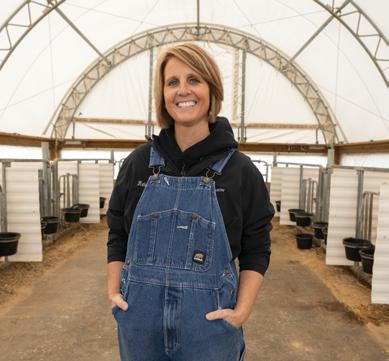
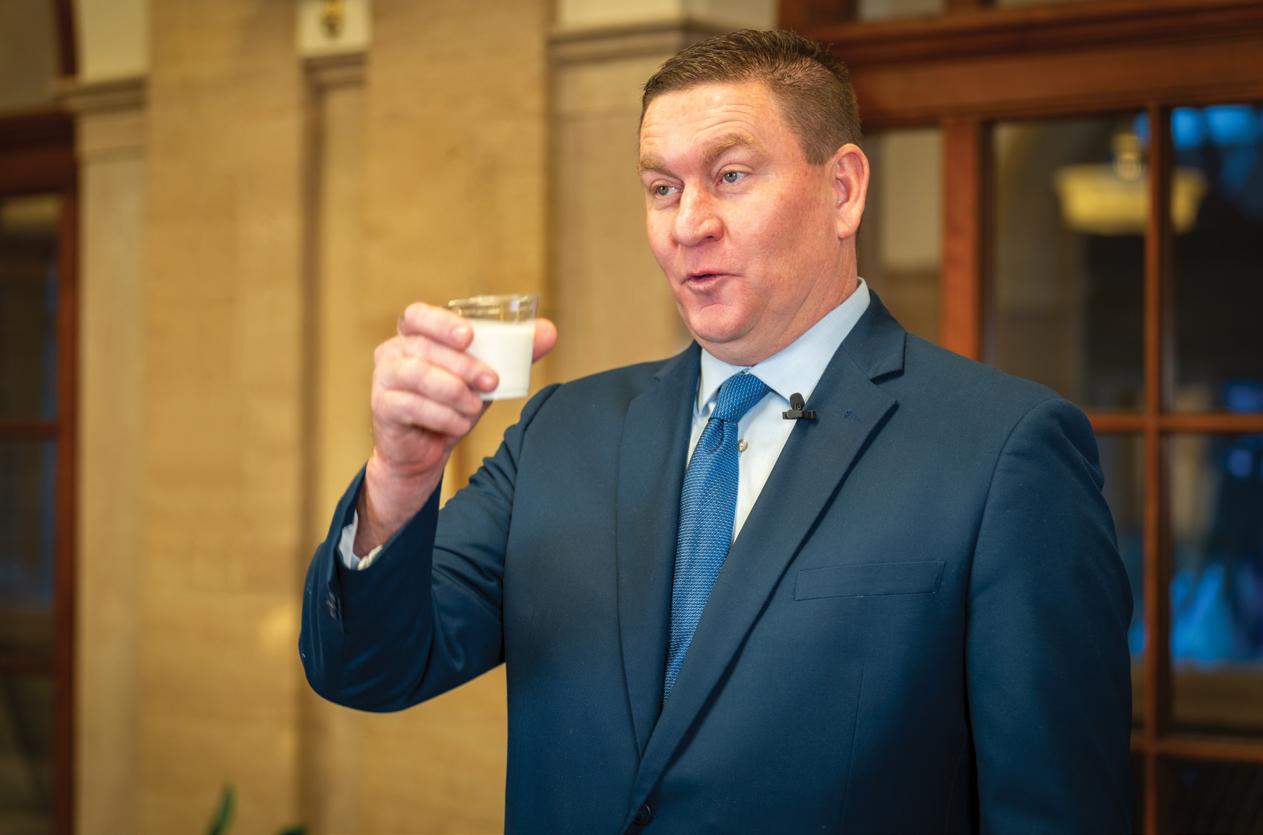
Indiana dairy farmer Brian Rexing as NMPF chairman
Bringing experienced, farmer-focused leadership to guide the organization’s priorities and initiatives.
Successfully advocated for increased USDA funding to promote U.S. dairy exports
Enhancing global market opportunities and supporting growth for American dairy producers.

Secured recognition of dairy at all fat levels in the 2025 –2030 Dietary Guidelines for Americans
Ensuring three daily servings are recommended and reflecting the latest science on dairy’s essential nutrients.
Secured permanent Section 199A tax deduction
Delivering long-term tax relief and greater financial stability for dairy cooperatives.
Fostered critical partnerships between government and industry to combat threats like H5N1 avian influenza and screwworm
Helping protect livestock and safeguard the nation’s food supply.
Championed the passage of the Whole Milk for Healthy Kids Act
Ensuring that nutrient-rich whole milk will be available in school meal programs nationwide.
2025 was a year of profound challenges and great accomplishments for dairy.
President Trump’s signing of the Whole Milk for Healthy Kids Act in January 2026 capped a years-long fight to get whole milk back on school meal menus, a charge NMPF led. The latest Dietary Guidelines for Americans, also released in January, reaffirmed dairy’s critical role in nutrition, reinforcing the value of milk at all fat levels and noting the wide array of dairy products that safeguard American health. And the One Big Beautiful Bill Act, signed July 4, improved the dairy farmer safety net and made permanent a tax deduction that keeps co-ops competitive.
At the same time, the dairy labor crisis sharpened, as tensions rose over the role of foreign-born workers in America. Tariff uncertainty required expert navigation skills as dairy exports reached record levels even as trade policy became less predictable. And a downturn in milk prices late in the year called for risk management solutions, even as the newly implemented Federal Milk Marketing Order system, the result of NMPF leadership, modernized milk pricing.
As the nation’s leading organization for dairy farmers and the cooperatives they own, we have led, managed and reacted to considerable change over the past year. But as $11 billion in new plant investment proves, this industry’s
future is bright, and in tangible ways, the dairy policy environment today is stronger than it was a year ago. This isn’t to give short shrift to the challenges ahead — they remain considerable. But our track record is formidable, as is our determination.
We hope this year in review adds to the confidence you have placed in us, as it shows what we can achieve as an industry, and what we can build on in the year ahead.
GREGG DOUD President and CEO, NMPF
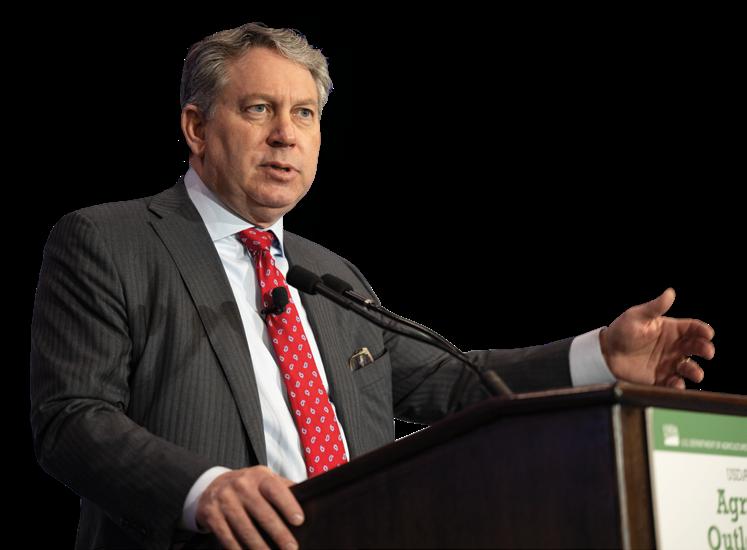
As the nation’s leading organization for dairy farmers and the cooperatives they own, we have led, managed and reacted to considerable change over the past year.”
Government Relations
KEY ADVANCES
1 Saw successful passage of whole milk law
2 Obtained long-term safety net funding in the One Big Beautiful Bill Act
3 Advocated successfully for permanent Section 199A tax deduction
4 Secured $9 million for mandatory dairy processing cost surveys
NMPF achieved victories on behalf of U.S. dairy farmers and their cooperatives in 2025, demonstrating the power of persistent, strategic advocacy.
From helping bring whole milk back to schools with the bipartisan Whole Milk for Healthy Kids Act, to securing historic farm bill and budget reconciliation wins, including permanent tax relief and expanded trade and conservation programs, NMPF advanced policies that strengthen the dairy industry.
Whole milk is back in schools. And NMPF is a big part of why.
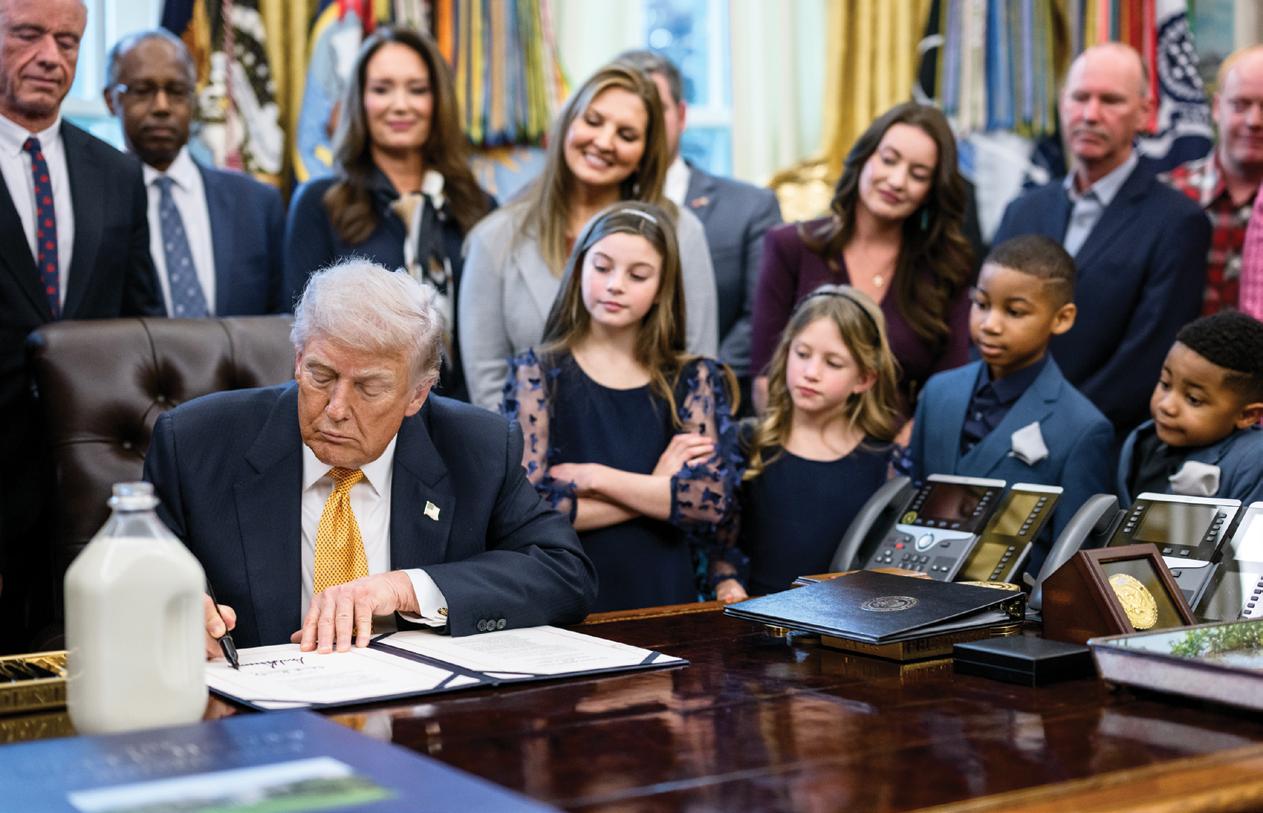
The January signing of the Whole Milk for Healthy Kids Act capped a landmark year in federal policy that helped dairy farmers, their cooperatives and the consumers they serve. After more than a decade of effort, fuller-fat varieties of milk that had been kept out of the national school lunch program since 2012 were brought back, building the next generation of milk drinkers and boosting demand for dairy.
“It’s hard to overstate the significance of congressional passage of the Whole Milk for Healthy Kids Act, not only because it represents major progress in improving the nourishment of American schoolkids, but also because of what it says about how persistent, long-term effort can still bring bipartisan success in Congress,” NMPF President and CEO Gregg Doud when Congress passed the bill in December.
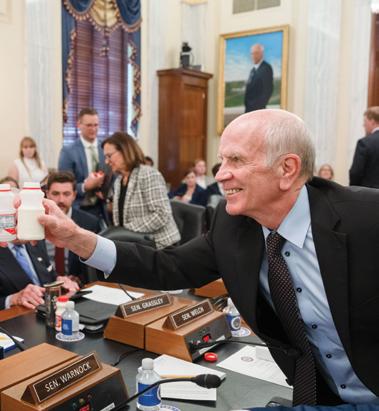
The legislation, which first passed the House of Representatives in 2023, was approved by both chambers unanimously in 2025, the result of tireless advocacy from NMPF, its cooperatives and grassroots dairy supporters.
From Advocacy Alerts to in-person lobbying, NMPF relentlessly brought attention to the issue, as evidenced by the floor speeches of House Agriculture Committee Chairman and leading whole milk advocate GT Thompson and Senate Agriculture Committee Chairman John Boozman. Both the Pennsylvania Republican and Arkansas Republican singled out NMPF Executive Vice President Paul Bleiberg for praise in their remarks, noting how the legislation had made it to passage due to his specific efforts, along with others.
THE LEGISLATION WAS APPROVED BY BOTH CHAMBERS UNANIMOUSLY IN 2025, THE RESULT OF TIRELESS ADVOCACY FROM NMPF, ITS COOPERATIVES AND GRASSROOTS DAIRY SUPPORTERS.
left: President Donald Trump signs the Whole Milk for Healthy Kids Act into law.
Pictured above: Vermont Sen. Peter Welch, a sponsor of the bill, joins a milk toast during the committee markup and vote on the whole milk bill.
Whole Milk was a capstone accomplishment, but far from the only significant NMPF-assisted legislative success for dairy farmers and co-ops in 2025.
NMPF ALSO SUCCESSFULLY PUSHED FOR DEDICATED FUNDING FOR USDA TO CONDUCT MANDATORY PROCESSING PLANT COST SURVEYS EVERY TWO YEARS AND REPORT THE RESULTS TO DAIRY STAKEHOLDERS.
NMPF secured success for dairy farmers and their cooperatives in the 2025 budget reconciliation package, also known as the One Big Beautiful Bill Act. The law, signed on July 4, included the first new farm bill spending since 2018, as well as a reauthorized Dairy Margin Coverage program through 2031 that updates the program’s production history calculation, among other program changes.
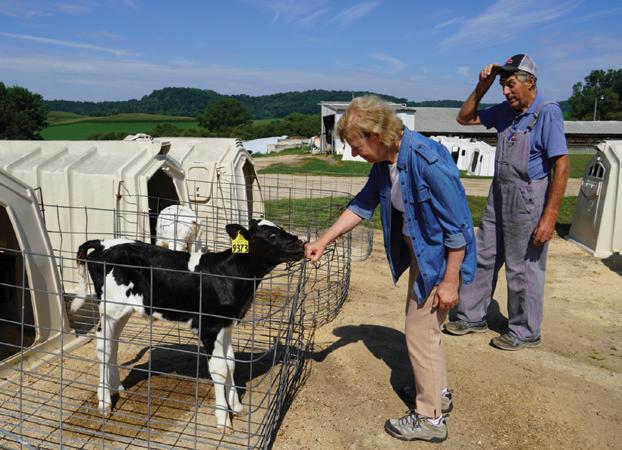
Other advances through the law included:
→ In a tax-package provision pivotal to cooperatives, NMPF also succeeded in making the Section 199A tax deduction permanent, enabling dairy farmer-owned co-ops to continue either passing the deduction back to their farmer owners or reinvesting it in their cooperatives. A permanent Section 199A helps farmer cooperatives stay competitive in today’s marketplace.
→ NMPF also successfully pushed for dedicated funding for USDA to conduct mandatory processing plant cost surveys every two years and report the results to dairy stakeholders, a key part of its Federal Milk Marketing Order modernization plan implemented in June.
→ The reconciliation law also reinvested remaining Inflation Reduction Act conservation dollars into the farm bill baseline, an NMPF-backed policy that will permanently make more funds available for dairy farmers and their cooperatives to use conservation programs like the Environmental Quality Incentives Program and the Regional Conservation Partnership Program.
→ NMPF also celebrated an adjusted gross income (AGI) waiver that allows producers whose AGI is over $900,000 to use conservation programs as long as 75% or more of their income comes from farming, ranching or forestry-related activities.
→ Finally, the package included new trade promotion funding based on current programs that return well over $20 in export revenue for every dollar invested in the programs.
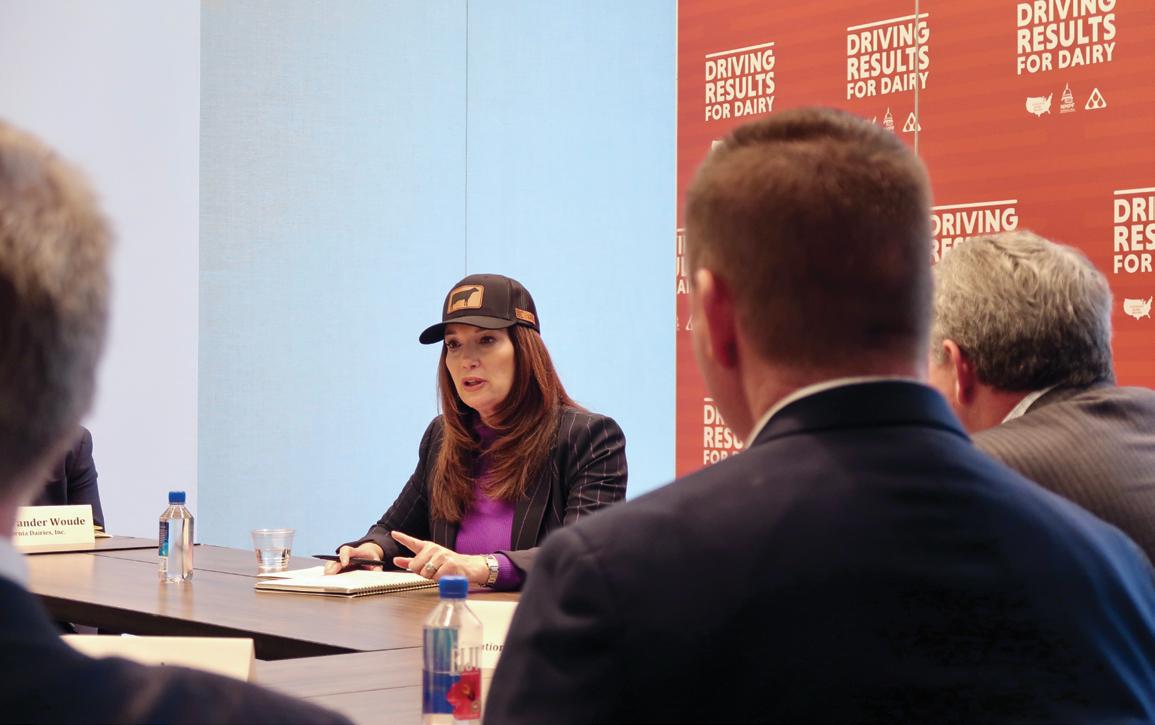
Beyond the tax and spending law, work continues toward another longtime priority: ag labor reform that gives dairy farmers access to the H-2A visa program and provides stability for current dairy farm workers and their families.
NMPF has met with key individuals at the White House, USDA and the Department of Labor to highlight the dire workforce uncertainty facing America’s dairies and seek a path forward to securing farm labor.
Internally, the organization has put together a member-led immigration task force to create a specific set of ideas to share with the administration and Congress, increasing dairy’s effectiveness in pursuing its goals.
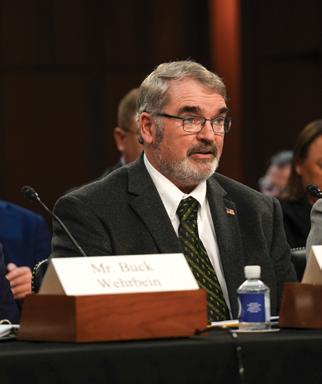
NMPF will continue to push for progress on ag labor and other priorities in the 119th Congress and with the current administration for the betterment and prosperity of dairy farmers and the cooperatives they own.
KEY ADVANCES
1 Leveraged trade negotiations to advance market access
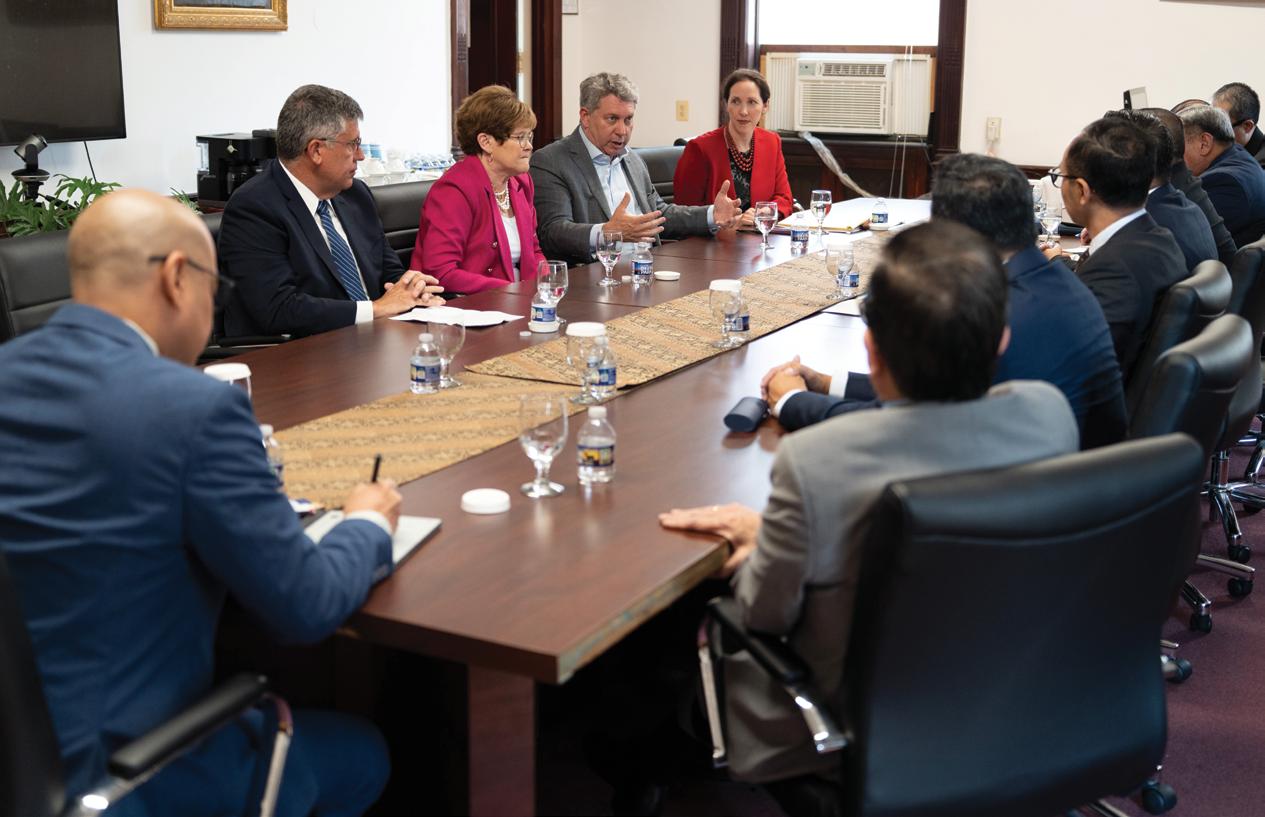
2 Preserved tariff-free access in Colombia
4 Secured groundbreaking wins protecting common cheese names Trade Policy
3 Successfully advocated for increased USDA ag export promotion funds
NMPF, in partnership with the U.S. Dairy Export Council, advanced U.S. dairy interests on multiple fronts in 2025, turning a complex and uncertain trade environment into tangible opportunities for farmers and cooperatives.
The organization helped open new markets through trade frameworks in Southeast Asia and Latin America, defended zero-tariff access in Colombia, safeguarded common cheese names worldwide and expanded formal international partnerships to strengthen dairy consumption globally.
NMPF leveraged the United States’ reciprocal trade negotiations to advance U.S. dairy market access priorities in key markets. The agreements and frameworks with partners in Southeast Asia and Latin America reflected years of coordinated advocacy by NMPF and USDEC and are poised to deliver meaningful progress for American dairy producers once implemented.
NMPF Executive Vice Presidents Jaime Castaneda and Shawna Morris served as technical advisors to U.S. negotiators throughout the talks, providing confidential guidance to ensure dairy priorities were incorporated
directly into agreement text. This built on sustained groundwork laid by NMPF and USDEC through congressional testimony, public comments and direct engagement with U.S. officials highlighting the strategic importance of these regions to U.S. dairy exports.
As a result, 10 trade agreements and frameworks announced in 2025 included commitments to eliminate or reduce tariffs, recognize U.S. dairy safety systems and certificates, streamline facility registration requirements and preempt future trade barriers. The agreements also included strong protections for common food names. Collectively, this progress sets the stage to help level the playing field for U.S. dairy exporters as the trade deals are finalized and implemented.
NMPF LEVERAGED THE UNITED STATES’ RECIPROCAL TRADE AGREEMENTS TO ADVANCE U.S. DAIRY MARKET ACCESS PRIORITIES IN KEY MARKETS.
NMPF and USDEC at the end of 2025 successfully prevailed in Colombia’s subsidies and countervailing measures investigation, preserving zero-tariff access to the market. The investigation, launched in July 2024, baselessly alleged unfounded subsidies on U.S. milk powder. It had threatened to result in tariffs on U.S. dairy exports and set a troubling precedent.
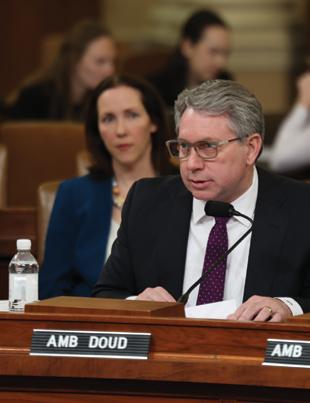
Pictured right: Doud testifies at a House Ways and Means Trade Subcommittee hearing.
NMPF and USDEC, working closely with member companies and the U.S. government, coordinated a fullscale defense in response. This included leading rigorous, data-driven legal submissions, supporting company filings, testifying before the Colombian government and retaining local counsel and expert advisors. NMPF and USDEC also worked to elevate the case as a political priority with USTR, USDA and Congress.
The sustained legal, diplomatic, political and on-the-ground efforts paid off first in January 2025 when Colombia chose not to extend 4.86% preliminary tariffs imposed as a result of the investigation. The final win came in December, when the government formally terminated the investigation, preserving hard-won market access for U.S. dairy.
NMPF worked closely with the Consortium for Common Food Names to achieve a series of major policy and legal victories safeguarding U.S. producers’ rights to use common cheese names worldwide.
NMPF and CCFN helped shape new U.S. trade agreements with Malaysia and Cambodia that established the strongest protections yet for dozens of common food names, with similar commitments advancing across Asia and Latin America.
Additionally, in Vietnam, years of advocacy paid off when trademark applications for “fontina” and “gorgonzola” were approved with generous disclaimers protecting prior users, preserving market access for most U.S. exporters. In South America, NMPF and CCFN
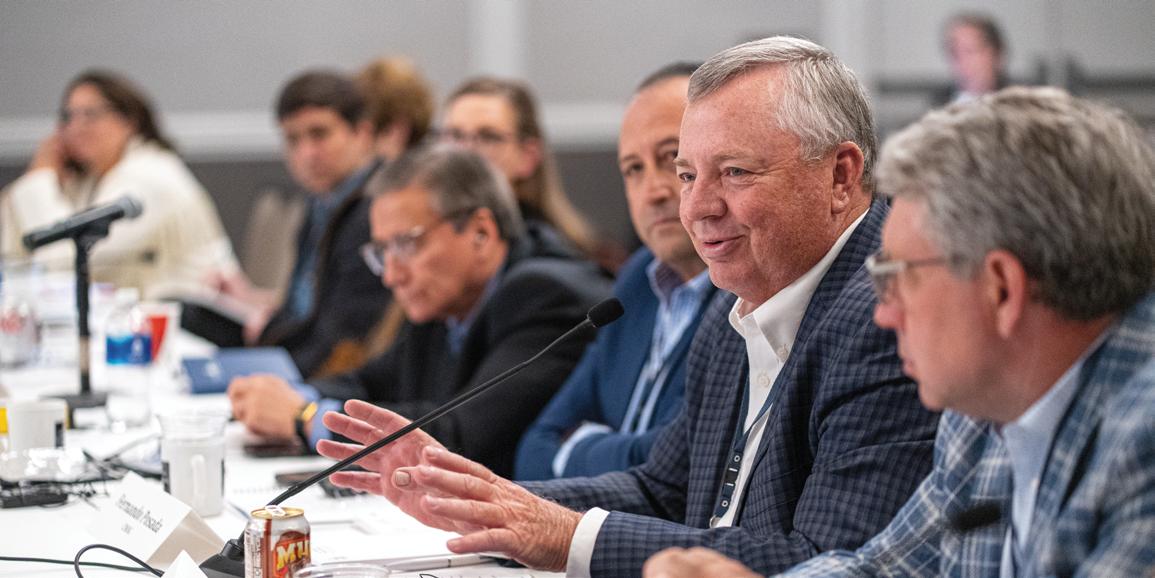
NMPF CONTINUED TO GROW ITS INTERNATIONAL NETWORK OF FORMAL PARTNERSHIPS DEDICATED TO EXPANDING TRADE OPPORTUNITIES, GUARDING AGAINST BARRIERS, AND SAFEGUARDING DAIRY CONSUMPTION ACROSS KEY GLOBAL MARKETS.
marked another win when Peruvian authorities ruled this past March that “emmental” is a generic term in the Peruvian market. The decision stemmed from a March 2024 request by Switzerland to recognize “emmentaler” as an Appellation of Origin in Peru, which NMPF and CCFN opposed on the grounds that the term is widely and generically used to describe a type of cheese.
Legislatively, NMPF secured reintroduction of the bipartisan Safeguarding American Food and Export Trade Yields (SAFETY) Act in both chambers of Congress in April. The legislation would direct the U.S. government to proactively negotiate protections for common names like “parmesan” and establish a long-term U.S. trade policy directive to preserve the right to use generic terms.
NMPF continued to grow its international network of formal partnerships dedicated to expanding trade opportunities, guarding against barriers and safeguarding dairy consumption across key global markets.
In March 2025, NMPF and USDEC signed a Memorandum Of Understanding with the Guatemalan Dairy Development Association to strengthen communication on shared priority areas and promote dairy consumption throughout the Americas.
In May, NMPF and USDEC joined the Indonesian Chamber of Commerce in a landmark MOU to deepen
cooperation on dairy trade, reinforcing U.S. dairy’s ties with Indonesia. And a partnership with the Dairy Association of Taiwan signed in September formalized closer dialogue on commercial ties and dairy’s role in healthy diets.
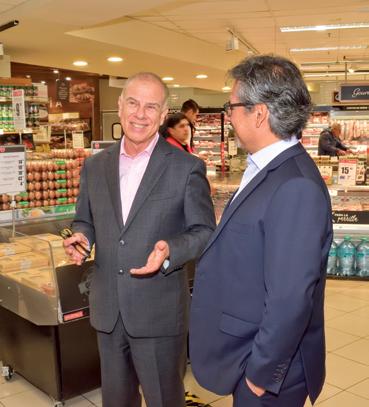
NMPF successfully advocated for a significant increase in federal funding for agricultural trade promotion programs as part of the One Big Beautiful Bill Act. The legislation permanently expanded USDA’s trade promotion resources, including $285 million annually for the new Supplemental Agricultural Trade Promotion Program, effectively doubling total funding available to grow U.S. agricultural exports.
The legislation permanently expanded USDA’s trade promotion resources, including $285 million annually for the new Supplemental Agricultural Trade Promotion Program.
This long-overdue investment will strengthen U.S. dairy’s ability to compete globally, expand partnerships and support new market development efforts that drive exports and long-term industry growth.
KEY ADVANCES
1 Amplified the importance of dairy in diets
2 Raised concerns about unlawful FDA labeling proposals
4 Shepherded change at NCIMS Regulatory Affairs
3 Stood against EPA regulations that fail to account for farm realities
NMPF advanced key regulatory priorities in 2025 that protect both farmers and consumers.
From securing recognition of dairy at all fat levels in the 2025–2030 Dietary Guidelines to challenging misleading labeling rules and ensuring practical, science-based environmental and milk safety standards, the Regulatory Affairs team defended industry interests across nutrition, environmental and food safety regulations.
A years-long NMPF effort to regain support for dairy products of all fat levels in American diets culminated in the Jan. 7, 2026 release of the 2025–2030 Dietary Guidelines for Americans by the Department of Health and Human Services and USDA. The new guidelines continued the recommendation of three daily servings of dairy for Americans, and recognized that dairy products, at all fat levels, offer nutrients critical to human health. This is a change from previous guidelines, which recommended only consuming reduced-fat or fat-free dairy products for most Americans.
The guidelines are updated every five years and affect government policies in numerous ways, such as guiding what can be served in school meal programs. NMPF has worked for years to highlight advances in nutrition and scientific research showing the value of dairy consumption at all fat levels.
NMPF also continued other important nutrition and labeling regulation efforts in 2025. For the third time on the same rule, NMPF filed comments July 11 to HHS opposing FDA’s proposed front-of-pack labeling rule, as well as the two proposed plant-based labeling guidance documents. These comments responded to a request for information as part of HHS’s deregulatory initiative
and echo comments NMPF submitted directly to FDA in January 2025 about the proposed rules and guidance.
In its comments to HHS, NMPF stated that FDA’s Front-of-Pack nutrition labeling scheme is a highly flawed, unlawful approach to educating consumers about food nutritional profiles. Because the front-of-pack label would only list saturated fat, sodium and added sugar, consumers will get an incomplete picture of that food’s nutritional profile. In its separate comments to HHS on plant-based guidance, NMPF pointed to ample evidence that mislabeling has led to confusion among consumers regarding the nutritional deficiencies of plant-based alternatives and that there are negative human health consequences as result of that confusion.
In a win for all of agriculture, the U.S. District Court for the District of Columbia on Aug. 7 upheld a 2019 U.S. Environmental Protection Agency rule that exempted air emissions from animal waste at farms from select reporting requirements subject to the Emergency Planning and Community Right-to-Know Act of 1986, or EPCRA.
EPCRA reporting requirements are tied closely to the reporting requirements for the Comprehensive Environmental Response, Compensation and Liability Act of 1980, or CERCLA, which is commonly known as the Superfund statute. Both CERCLA and EPCRA include reporting requirements for releases of hazardous substances to the environment that NMPF has successfully contested for years. NMPF and other livestock organizations have met with EPA staff to ask the agency to formally announce its regulatory review of the EPCRA reporting rule is over, and to reaffirm the exemption consistent with the court ruling.
AFTER SIGNIFICANT ANALYSIS, NMPF CONCLUDED THAT THE CURRENT DRAFT EPA DAIRY AIR EMISSIONS ESTIMATING METHODOLOGIES (EEMS) ARE NOT APPROPRIATE FOR PREDICTING DAIRY FARM EMISSIONS.
NMPF and other major agriculture organizations submitted joint comments Aug. 13 against a draft risk assessment in which EPA models human exposure to the “forever chemicals” PFOA or PFOS from the application of sewage sludge, or biosolids, to farmland. The groups asserted that EPA’s models operate on extreme assumptions that don’t reflect agricultural realities. NMPF participated in a multi-day workgroup with EPA and other stakeholders to review the various barnyard models in the risk assessment, including a dairy model. NMPF filed separate comments specifically on the dairy model, arguing that it needs to be completely scrapped.
NMPF also continued its decades-long fight against improper and ineffective air emissions modeling with the National Air Emissions Monitoring Study.
NMPF submitted comments Aug. 18 to the National Air Emissions Monitoring Study Group in response to draft revised emission models for animal feeding operations released by EPA late last fall. After significant analysis, NMPF concluded that the current draft EPA dairy Air Emissions Estimating Methodologies (EEMs) are not appropriate for predicting dairy farm emissions. NMPF described the specific modeling flaws in its extensive technical comments to support its argument
that EPA should permanently cease its efforts in this area. NMPF met at the end of 2025 and in early 2026 with both the EPA Office of Air and Radiation and the Office of Enforcement and Compliance Assurance to deliver the message that NAEMS must be terminated.
NMPF helped deliver favorable outcomes for nine proposals it submitted on behalf of its members,
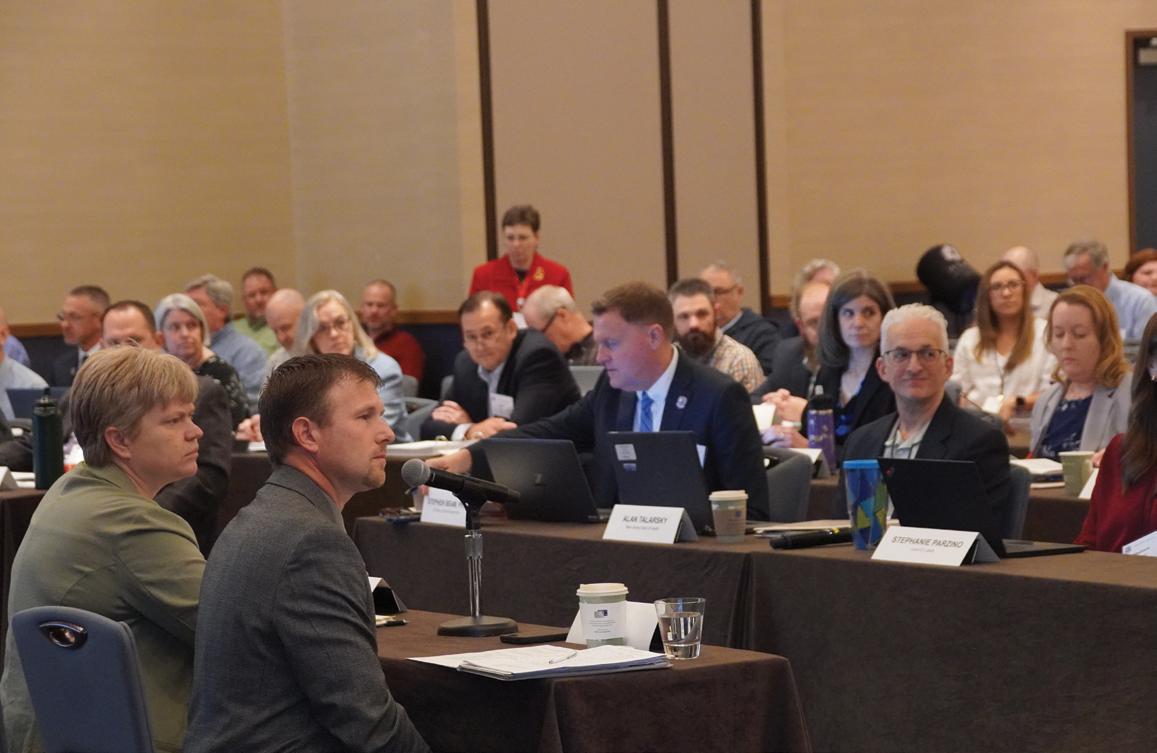
including a standard for bulk-tank cleaning that’s better aligned with milk-truck standards, at the 39th National Conference on Interstate Milk Shipments, which met April 11–16 in Minneapolis. The conference deliberated on numerous important issues facing FDA’s National Grade “A” Milk Program, the Grade “A” Milk Pasteurized Milk Ordinance and related documents.

KEY ADVANCES
1 Launched the NEXT program and delivered record-setting export results
3 Updated Federal Milk Marketing Orders fully implemented in December promotion funds Economics
2 Expanded market intelligence and economic guidance for members
142M
Pounds of product from NEXT member cooperative year-end export sales for 2025.
The launch of the NEXT program powered record export results, while the team provided critical analysis on domestic and international markets, including guiding members through updates to the Federal Milk Marketing Order. These efforts reinforced NMPF’s role in helping dairy farmers and their cooperatives make informed, strategic economic decisions.
When NMPF members approved the launch of the NMPF Exports and Trade Program, or NEXT, on June 10, their leadership sent a clear worldwide message that U.S. dairy was committed to building global demand for U.S. dairy products and supporting U.S. dairy producers.
With more than two-thirds of the milk produced by NMPF members supporting the NEXT program with a 2 cent/cwt contribution through 2028, the program is off to an impressive start.
NEXT expands NMPF’s support for dairy farmers while exploring innovative strategies to grow dairy’s market share. This includes expanding the program’s product offerings and delivering targeted, supplemental assistance in key global markets where the U.S. faces tariff disadvantages or has strong potential to increase market share.
600+
Offers of export assistance accepted by NEXT member cooperatives in its six months of activity in 2025.
NEXT member cooperatives accepted over 600 offers of export assistance in its six months of activity in 2025. NEXT-assisted export volume in 2025 nearly matched full-year 2024 volumes under the prior Cooperatives Working Together program, showcasing the strength of and need for the new, revised export program. In fact, total assisted product was greater than nearly every other full year under CWT and posted the strongest
Commitments by Year (July 1–December 31)
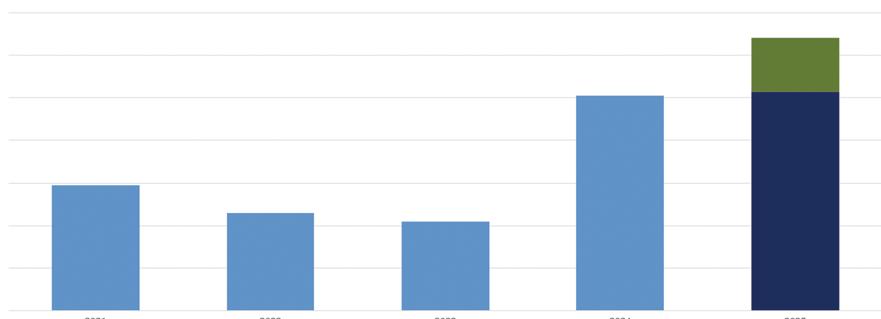
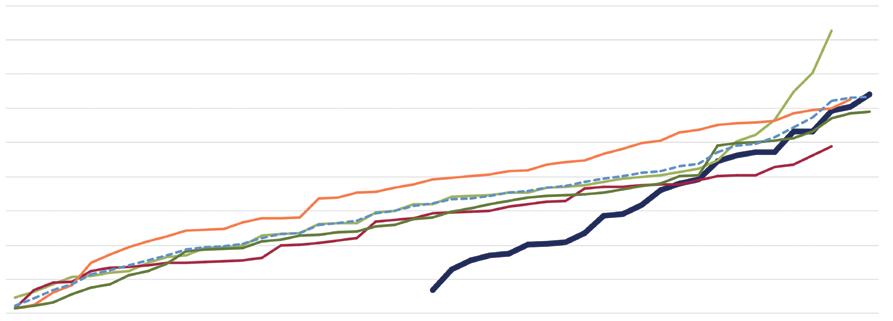
half-year results on record, including the CWT era.
NEXT member cooperative year-end export sales for 2025 totaled nearly 142 million pounds of product. Assisted dairy products were sent to 33 countries across the globe showcasing a broader reach than in previous years.
Countries across the globe were sent assisted dairy products, showcasing a broader reach than in previous years.
The program’s launch also included the newly formed Strategic Advisory Group made up of representatives from participating cooperatives and chaired by Doug Chapin of Michigan Milk Producers Association.
In addition to launching and managing NEXT, the Economics team, managed jointly with USDEC, provided valuable insights and analysis on dairy markets both domestically and abroad. In 2025, the team wrote more than 70 reports and market intelligence publications for NMPF members and delivered more than 75 presentations to external audiences.
Many of these reports and presentations included analysis and explanations of the changes to Federal Milk Marketing Order. On June 1, the new rule took effect, completing a multi-year effort to update the FMMO pricing formulas. The “higher-of” Class I price mover for most non-ESL milk has been restored; dairy product make allowances and Class I differentials nationwide are updated, and USDA is no longer using barrel cheese to determine the Class III price. USDA implemented a final part of the rule increasing the component composition factors for skim milk in all FMMO price classes on Dec. 1 to avoid disrupting existing risk management positions.
NMPF successfully argued for these necessary updates in five specific proposals presented at a record-long FMMO hearing from late summer 2023 to early winter 2024. The arguments all flowed from the fundamental principle that FMMO product price formulas must evolve with the changing structure of the dairy industry to properly fulfill their role of accurately translating dairy product prices into milk values embodied in the orders’ classified prices. The rule results from more than four years of effort that included more than 200 meetings to formulate and defend NMPF’s proposal, led by NMPF leaders and experts.
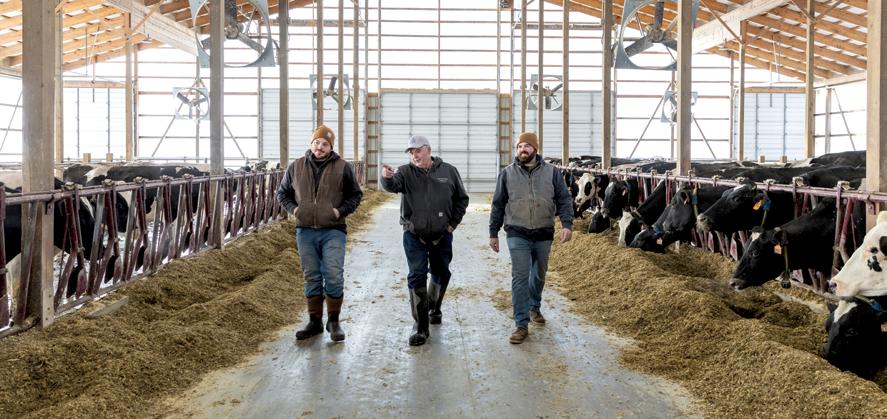
KEY ADVANCES
1 Fostered government and industry collaboration on H5N1 and screwworm

2 Created resources to encourage on-farm adoption of best practices
3 Increased farmer involvement by expanding avenues for feedback FARM Program
while responding to emerging animal health and biosecurity
From leading efforts to prepare for H5N1 and New World screwworm threats to advancing on-farm practices in animal care, biosecurity, environmental stewardship, workforce development and antibiotic stewardship, FARM supported farmer success and consumer confidence in 2025.
FARM Animal Care aligned on-farm procedures with science-based best practices through trainings, webinars and industry events. The program facilitated Version 5 trainings in both virtual and in-person formats, with a total of 12 trainings. In 2025, 7,163 evaluations were conducted by 358 certified evaluators.
During NMPF’s Board of Directors meeting in March 2025, the program area reformed its governance structure by providing more farmer feedback opportunities. NMPF’s Animal Health and Wellbeing Committee now sets priorities for the FARM Animal Care Task Force and FARM Farmer Advisory Council ahead of the initial standards review.
FARM Animal Care released its Version 4.0 Data Highlights, affirming the program area’s commitment
THE PROGRAM FACILITATED
VERSION 5 TRAININGS IN BOTH A VIRTUAL AND IN-PERSON FORMAT, WITH A TOTAL OF 12 TRAININGS.
to exceptional animal welfare. This summary document outlines farm demographic information and recognizes the consistent high dairyfarm compliance in the program.
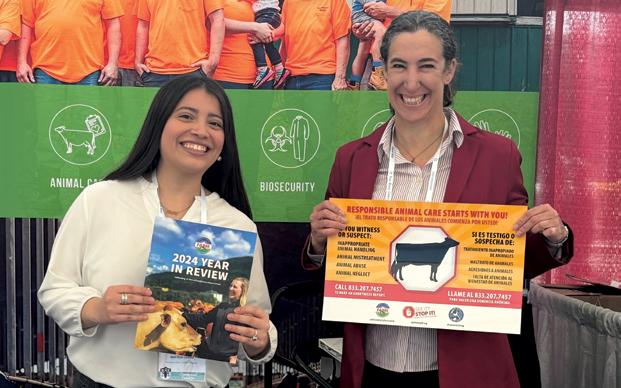
FARM Biosecurity offered two in-person enhanced biosecurity trainings in 2025, boosting on-farm efforts to address animal health threats from outbreaks. The first of its kind, these trainings helped FARM evaluators visualize farm-level implementation of biosecurity best practices.
A cooperative agreement with USDA National Animal Disease Preparedness and Response Plan supported the trainings. The agreement supported expanding FARM Biosecurity resources available through the FARM Biosecurity program, including adding additional modules to the online enhanced biosecurity training.
training.
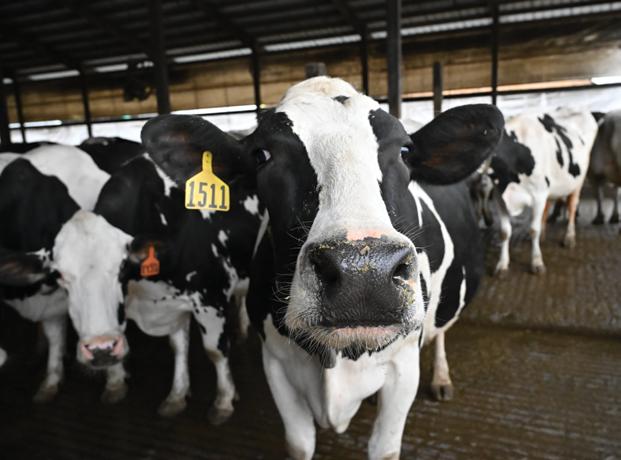
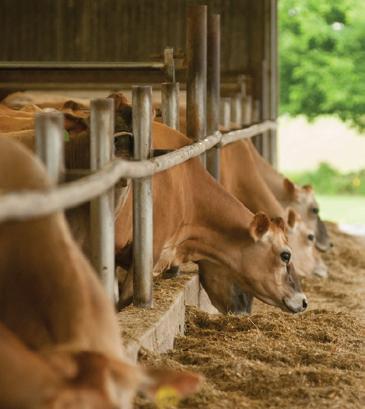
above: Jersey cows at Dutch Hollow Farm, an Agri-Mark member in Schodack Landing, NY.
Evaluations were conducted for FARM ES Version 3 in 2025.
Additionally, as part of this cooperative agreement, the Secure Milk Supply technical committee was formed to review and propose updates to the Secure Milk Supply plan. Key changes include streamlining guidance for milk movement at the beginning of an FMD outbreak by removing the option to stop milk movement to commerce; expanding the SMS plan beyond foot and mouth disease to include “similar contagious diseases” and creating new supplemental documents for producers.
FARM Biosecurity remains an industry leader in onfarm preparedness, offering a suite of tools for producers such as customizable templates, signage and checklists.
FARM Environmental Stewardship continued to develop its Version 3 evaluation tool with the Ruminant Farm Systems (RuFaS) model, which incorporates innovative research to simulate a whole-farm system.
More than 1,700 evaluations were conducted for FARM ES Version 3 in 2025. The Conservation Practice Questionnaire, an optional add-on to the FARM Environmental Stewardship evaluation, addresses field and dairy-level conservation activities to capture a more holistic sustainability story. The add-on questionnaire was completed by 245 farms in 2025.
The program area released new training and resources to aid in
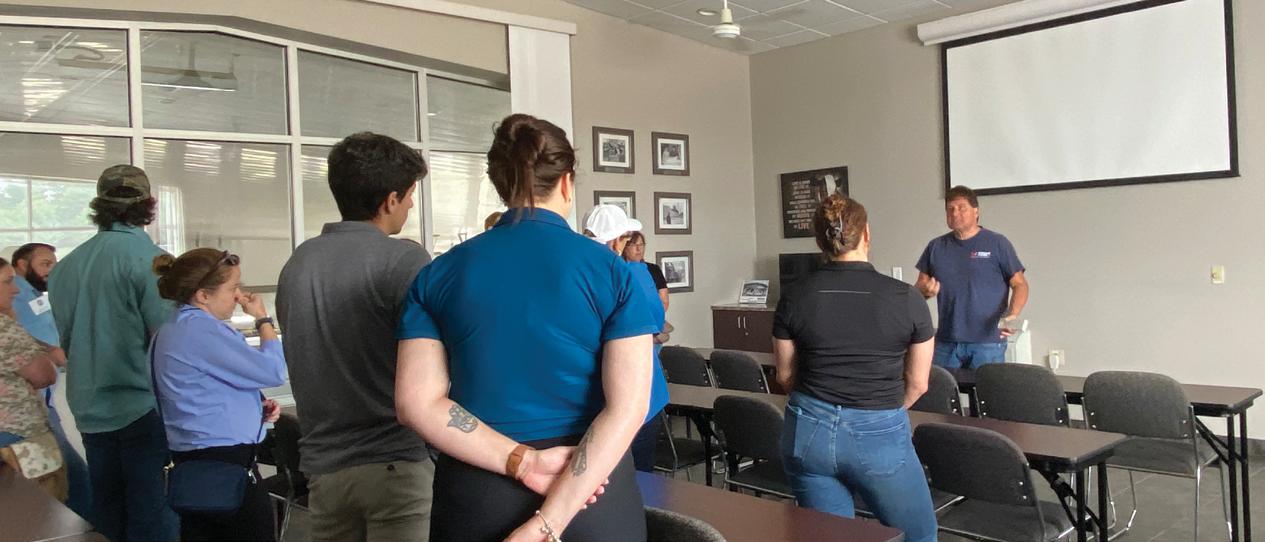
implementing FARM ES Version 3, including a User Guide and Prep Guide to prepare farmers and evaluators for on-farm evaluations. Version 3 trainings were available as online self-paced modules, with the option to complete guided, advanced training specific to topics within the evaluation tool such as manure, feed and energy.
FARM Workforce Development offered seven evaluator trainings to meet growing interest in the program area. Trainings were offered in a virtual format, with subject matter experts guiding evaluators on topics such as promoting on-farm culture, youth safety and communication. A total of 130 evaluators were certified in 2025.
Participating organizations completed FARM WFD Version 2 evaluations on 1,547 farms, representing 12,553 family and non-family employees. The program offers a wide variety of fillable templates, fact sheets, self-assessments and manuals to support implementation. State legal fact sheets updated annually summarize applicable state laws and regulations for dairy farms in plain language. FARM WFD offers reference manuals for both HR and safety topics, in addition to a fully customizable employee handbook.
Industry efforts continue to support producers by educating on and evaluating proper antibiotic use in dairy cattle.
According to the 2025 National Milk Drug Residue Database report released in December, more than 3.2 million bulk milk pickup tankers were tested
from October 2024 to September 2025, yielding 206 (1 in every 15,860 milk trucks) positive samples, a slight increase from 2024. The number of samples evaluated (tankers, packaged products, producer samples) and reported positive increased from 301 in 2024 to 307 in 2025. Any milk or milk product found with a drug residue violation is destroyed and not sold to the public.
Despite the small uptick in the number of positive samples, the overall percentage of milk samples that tested positive for antibiotic residues in 2025 remains among the lowest recorded levels since the database was created.
FARM Antibiotic Stewardship collaborates with industry partners to publish the biennial Milk and Dairy Beef Drug Residue Prevention Manual. This resource serves as an informational guide for drugs approved for use in dairy animals and can also be used as an educational tool to develop on-farm best management practices.

Reaching Out
KEY ADVANCES
1 Welcomed new cooperative and associate members
2 Supported the development of young dairy farmer leaders
3 Enhanced the value of NMPF membership
Attendees participated in the Joint Annual Meeting, which featured breakout sessions on a variety of industry topics.
Through timely member webinars, the organization kept producers and cooperative staff informed while fostering stronger connections across the industry. Initiatives like the National Young Cooperators program continued to develop the next generation of dairy leaders.
Lanco Pennland joined NMPF in June as its newest cooperative member, representing 300 farms in Maryland, Pennsylvania, Kentucky and Virginia. The co-op owns a plant in Hancock, MD, producing Havarti, cotija, asiago and other cheeses under the brand Pennland Pure.
NMPF also welcomed eight new associate members:
→ C-Lock Inc.
→ fairlife
→ HP Hood LLC
→ Idaho Milk Products
→ John Deere
→ Merck Animal Health
→ Meristem Crop Performance
→ Northeast Dairy Producers Association
Dairy cooperatives, dairy product manufacturers, suppliers of goods and services, consultants, state and
U.S. DAIRY FARMERS ARE THRIVING IN THE MARKETPLACE EVEN AS LABOR SHORTAGES AND A VOLATILE POLICY ENVIRONMENT REMAIN CHALLENGES.
regional dairy associations and others join NMPF to benefit from access to expert staff, networking opportunities and increased visibility and exposure. NMPF members also gain exclusive access to member webinars, alerts and newsletters to stay up to date on policy developments and other events affecting the U.S. dairy community.
NMPF hosted monthly webinars in 2025 covering a wide range of topics, including H5N1, immigration compliance, global dairy trade in the post-Trump era, economic insights on beef-on-dairy, New World screwworm and the evolving landscape of dairy in the “Make America Healthy Again” era. In 2026, these and other webinars will be available to members in a new webinar archive.
In early 2026, a new NMPF team focused on membership and state issues launched new initiatives meant to add value to NMPF membership and recruit new members.
Projects set in motion include:
→ STATE ISSUES COORDINATION: NMPF is beginning to play a more active role in coordinating state dairy issues, fostering stronger collaboration and information sharing among state organizations, aiming to ensure that state-level challenges and opportunities are effectively addressed in ways that strengthen the policy effectiveness of dairy producers nationwide.
I may be stepping into this role, but it isn’t about me. It’s about who we represent, and the future we’re building together.” “
→ A NEW WEBINAR ARCHIVE: This resource houses all NMPF webinars in a centralized, easily accessible platform that allows members to watch and reference webinars on demand. The archive will help members stay informed about industry trends, policy updates, and educational topics at their own pace, ensuring they never miss valuable content. It’s the first step toward a robust members-only website.
→ AI SUCCESS STORIES: NMPF in January began creating a structure to collect and share memberdriven AI implementation examples throughout the year, offering practical, proven strategies to help members enhance their AI use in the dairy industry.
U.S. dairy farmers are thriving in the marketplace even as labor shortages and a volatile policy environment remain challenges, dairy industry leaders stressed at NMPF’s annual meeting held in Arlington, TX Nov. 10–12. NMPF also named a new chairman, Brian Rexing, an Indiana member of Dairy Farmers of America.

“Thank you for giving me the opportunity to serve as your chairman,” said Rexing in his first remarks as chairman. “I may be stepping into this role, but it isn’t about me,” he said. “It’s about who we represent, and the future we’re building together.”
Dairy producers in the past year have grappled with workforce instability and a shifting trade environment, even as consumer demand has remained strong and the nutrition and policy communities increasing recognize the benefits of dairy. But the firm foundation built for dairy over the past several years bodes well for the industry’s future, said outgoing NMPF Chairman
Randy Mooney, who used his remarks to reflect on 17 years leading NMPF’s Board of Directors.
“We’ve built a stronger foundation for dairy farmers across the country by ensuring that each and every day, farmers, no matter the size of their operation are where they call home, have the tools, the support, and the representation they need to succeed on their operation for generations to come,” he said. “We’ve moved the industry forward on major policy fronts, and together, we’ve made collective voice stronger in Washington.”
The meeting attracted roughly 750 attendees and featured breakout sessions on industry topics ranging from an economic outlook to navigating immigration enforcement dairy farms. Featured panelists at the meeting’s general session included NMPF President and CEO Gregg Doud, who appeared with fellow dairy CEOs Barb O’Brien of Dairy Management Inc. and Krysta Harden of the U.S. Dairy Export Council. Agriculture Secretary Brooke Rollins joined the meeting, touting the Trump administration’s milk action plan to support American dairy farmers. In her remarks, Rollins outlined USDA’s dairy priorities, and the administration’s approach to support the industry.
The National Young Cooperators (YC) Program brought together young dairy farmers from across the country in 2025, equipping them with leadership skills and knowledge to help them shape the future of their cooperatives and the dairy industry.
This year’s flagship Leadership and Development Program was held Nov. 9–10 in Dallas in conjunction with NMPF’s annual meeting. YC Chairs Megan and Tim Schrupp of First District Association were among the 74 young farmers in attendance, and staff representing 12 member cooperatives participated in the two-day event.
The program focused on preparing participants for service on cooperative boards of directors, with sessions covering cooperative governance fundamentals, financial management and strategies for managing group conflict, along with a panel discussion with co-op CEOs and a tour of the Fort Worth Stockyards.
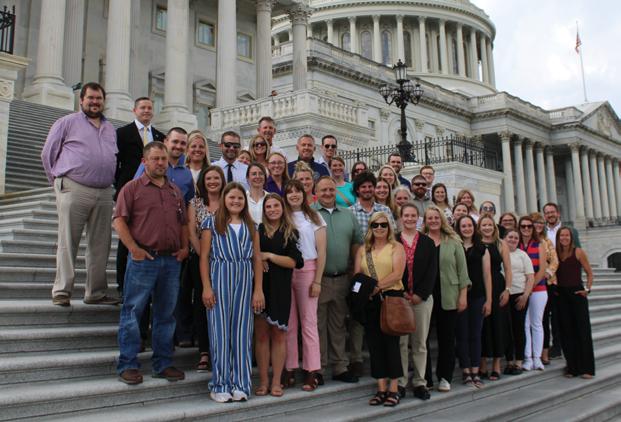
The Dairy Policy and Legislative Forum, held June 9–11 in Washington, D.C., brought together young dairy leaders from 15 states for two days of education and advocacy on Capitol Hill. Participants discussed key dairy priorities directly with members of Congress and staffs to advocate for the Whole Milk for Healthy Kids Act, agricultural labor reform and strong dairy trade policies.
During the World Dairy Expo in Madison, WI, Oct. 3–4, the YC Program hosted a panel discussion titled “Innovation, Strategy and the Future of Dairy Farming.” The YCs also partnered with the Dairy Girl Network to present a panel focused on building better dairy workplaces.
Gregg Doud
President & Chief Executive Officer
Nicole Ayache Chief Sustainability Officer
Alan Bjerga Executive Vice President, Communications & Industry Relations
Paul Bleiberg Executive Vice President, Government Relations
Charlene Boulden
Executive Assistant to the Office of the President & CEO
Maria Brockamp Senior Manager, Government Relations
Stephen Cain
Vice President, Economic Policy and Market Analysis
Jaime Castaneda
Executive Vice President, Policy Development & Strategy
Ashley Childs Manager, Finance & Administration
Jessi-Ryah Cordova
Communications Manager, FARM Program
Clay Detlefsen
Senior Vice President, Regulatory & Environmental Affairs
Trey Forsyth
Vice President, Government & Regulatory Affairs
Khadija Gibson-White Program Manager, NEXT
Meggan Hain Chief Veterinary Officer
Beverly Hampton Phifer Senior Director, FARM Animal Care
Brian Rexing
Chairman – Dairy Farmers of America, Inc.
Cricket Jacquier
First Vice Chairman – Agri-Mark, Inc.
Simon Vander Woude
Second Vice Chairman –California Dairies, Inc.
Craig Caballero
Secretary – United Dairymen of Arizona
Pete Kappelman
Treasurer – Land O’ Lakes, Inc.
Sheryl Meshke
Associated Milk Producers Inc.
Rob Vandenheuvel California Dairies, Inc.
Miquela Hanselman Senior Director, Regulatory Affairs
Abdullah Ibrahimzada Information System Analyst, FARM Program
Jamie Jonker Chief Science Officer and Vice President, Sustainability & Scientific Affairs
Louise Kamali Vice President, Meetings & Office Services
Casey Kinler
Senior Director, Board, State & Member Relations
Will Loux
Senior Vice President, Global Economic Affairs
Katriel Marks-Yant Director, Economic Affairs
Shawna Morris Executive Vice President, Trade Policy & Global Affairs
Rachel Ravencraft Director, Communications
Tony Rice Senior Director, Trade Policy
Sage Saffran
Senior Manager, Special Projects & Strategic Initiatives
Scott Sanborn Office Assistant
Theresa Sweeney-Murphy
Senior Director, Communications & Outreach
David West
Chief Operating Officer
Allison Wilton Market Analyst
Bobby Yi Vice President, Information Technology
Melvin Medeiros Dairy Farmers of America
Randy Mooney Dairy Farmers of America
Joel Eigenbrood Foremost Farms
Brian Hemann
Lone Star Milk Producers
Jon Cowell
Maola Local Dairies
Doug Chapin
Michigan Milk Producers Association
Frank Doll Prairie Farms Dairy
Jacob Larson
Southeast Milk Inc.
Cricket Jacquier
Agri-Mark, Inc. – Connecticut
Sheryl Meshke
Associated Milk Producers Inc. – Minnesota
Dave Peterson
Associated Milk Producers Inc. – Wisconsin
Tom Beringer Bongards’ Creameries – Minnesota
Will Dyt
California Dairies, Inc. – California
Darrin Monteiro
California Dairies, Inc. – California
Robert Vandenheuvel
California Dairies, Inc. – California
Cory Vanderham
California Dairies, Inc. – California
Simon Vander Woude
California Dairies, Inc. – California
Neil Zwart
California Dairies, Inc. – California
Dale Mattoon
Cayuga Marketing – New York
Jimmy Kerr
Cooperative Milk Producers Association – Virginia
Brad Bateman
Dairy Farmers of America – Utah
Craig Edler
Dairy Farmers of America – Wisconsin
Travis Fogler
Dairy Farmers of America – Maine
Corey Gillins
Dairy Farmers of America, Inc. –Missouri
Jerrel Heatwole
Dairy Farmers of America – Delaware
Alex Peterson
Dairy Farmers of America – Missouri
Neil Hoff
Dairy Farmers of America – Texas
Harold Howrigan
Dairy Farmers of America – Vermont
Karen Jordan
Dairy Farmers of America –
North Carolina
Jackie Klippenstein
Dairy Farmers of America – Kansas
Chris Kraft
Dairy Farmers of America – Colorado
Dan Kullot
Dairy Farmers of America – Kansas
Michael Lichte
Dairy Farmers of America – Kansas
Melvin Medeiros
Dairy Farmers of America – California
Randy Mooney
Dairy Farmers of America – Missouri
Doug Nuttelman
Dairy Farmers of America – Nebraska
Kim Parks
Dairy Farmers of America – Kansas
Jeff Raney
Dairy Farmers of America –Pennsylvania
Brian Rexing
Dairy Farmers of America – Indiana
Dennis Rodenbaugh
Dairy Farmers of America – Kansas
Perry Tjaarda
Dairy Farmers of America – California
Joe Becker
First District Association – Minnesota
Brenda Dehart
Foremost Farms USA – Wisconsin
Joel Eigenbrood
Foremost Farms USA – Michigan
Kurt Williams
Lanco Pennland – Maryland
Pete Kappelman
Land O’ Lakes, Inc. – Wisconsin
Andy Mason
Land O’ Lakes, Inc. – Maryland
Stephen Mancebo
Land O’ Lakes, Inc. – California
Chris Sukalski
Land O’ Lakes, Inc. – Minnesota
Brian Hemann
Lone Star Milk Producers – Kansas
Jon Cowell
Maola Local Dairies – Virginia
Joe Diglio
Michigan Milk Producers Association – Michigan
Doug Chapin
Michigan Milk Producers Association – Michigan
Gib Martin
Mt. Joy Farmers Cooperative –Pennsylvania
Amy Humphreys
Northwest Dairy Association/ Darigold – Washington
Tim Kuenzi
Northwest Dairy Association/ Darigold – Washington
Mike Schoneveld
Northwest Dairy Association/ Darigold – Washington
Frank Doll
Prairie Farms Dairy – Illinois
Jacob Larson
Southeast Milk Inc. – Florida
Joe Jenck
Tillamook County Creamery Association – Oregon
Craig Caballero
United Dairymen of Arizona – Arizona
Richard Hill
Upstate Niagara Cooperative, Inc. –New York