November 2025 – February 2026
November 2025 – February 2026
Reflecting on the Paradise of Dissent
Heritage collaborations Willunga’s national art treasures
Nature conservation appeal Spring at Gamble Cottage
With controversial moves afoot to develop Adelaide’s Park Lands, Loine Sweeney challenges South Australians to reflect on what is at stake.
South Australia’s 2025 Historian of the Year, Dr Heidi Ing, explores the power of collaboration in bringing heritage and history to life.
The first in a new series highlighting women associated with National Trust properties in South Australia takes us to Penola’s Petticoat Lane.
Find out more about a new appeal established by the National Trust to support our nature reserves, and why they matter.
With spring in full bloom, National Trust horticultural adviser Merilyn Kuchel meets the volunteers who tend a rare cottage garden in the Adelaide foothills.
Mark Staniforth explains why the National Trust of South Australia’s first dedicated gallery is putting Waverley Park Homestead on the map for art lovers.
Tea Tree Gully Branch shares some of the creative approaches that have reinvigorated volunteers and made its museum a thriving community space.
Meet the National Trust’s new Chief Executive Officer and share Graham Hancock’s reflections on 40 years’ involvement, and not being related to a certain Moonta mine captain.
As we head into summer, plan to enjoy a series of special events celebrating Christmas and begin the New Year exploring your creative side.
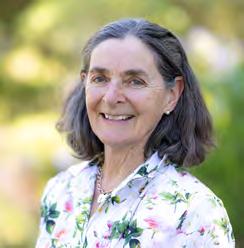
MILLIE NICHOLLS
This edition of our magazine comes at a moment when heritage in South Australia is both under pressure and full of possibility. The stories gathered here remind us of the breadth of the National Trust’s purpose – to conserve, to advocate, to collaborate and to inspire future generations.
Loine Sweeney’s article on Adelaide’s ‘Paradise of Dissent’ reminds us that heritage is not just about preserving the past — it’s about the decisions we make now and the future we want to create. With major developments and planning pressures threatening places like our treasured Park Lands, the National Trust’s role, and working together with other heritage organisations, is more vital than ever.
Working together is key. Earlier this year, the National Trust signed a memorandum of cooperation with the History Trust of South Australia. By combining our efforts, we can have more influence and make sure that South Australia’s history and heritage remain central to community life.
Heritage is not just about buildings either. Our new conservation appeal is a reminder that natural heritage — our trees, landscapes and biodiversity — also needs our care. Protecting nature is vital for our identity and for the wellbeing of future generations.
I’m also delighted to welcome our new Chief Executive Officer, Nicolette Di Lernia. Nicolette brings extensive experience in architecture, heritage and community leadership, along with a strong passion for sustainability. Her skills and energy will help guide the National Trust through the next stage of our journey, ensuring we continue to protect South Australia’s unique places, stories and natural environments.
I hope you enjoy this issue. It highlights the challenges we face, but also the opportunities. With your support, and by working with others, the National Trust will continue to stand up for the places and values that make South Australia special.
The National Trust of South Australia is a communitybased organisation established in 1955 to preserve, protect and promote the State's built, natural and cultural heritage. Our magazine is published three times a year.
National Trust of South Australia Ayers House 288 North Terrace Adelaide SA 5000 08 8202 9200 publications@nationaltrustsa.org.au www.nationaltrust.org.au/sa
EDITOR Liz Harfull www.lizharfull.com
DESIGNER
Rosie Everett Brand Warrior www.brandwarrior.com.au
ON THE COVER
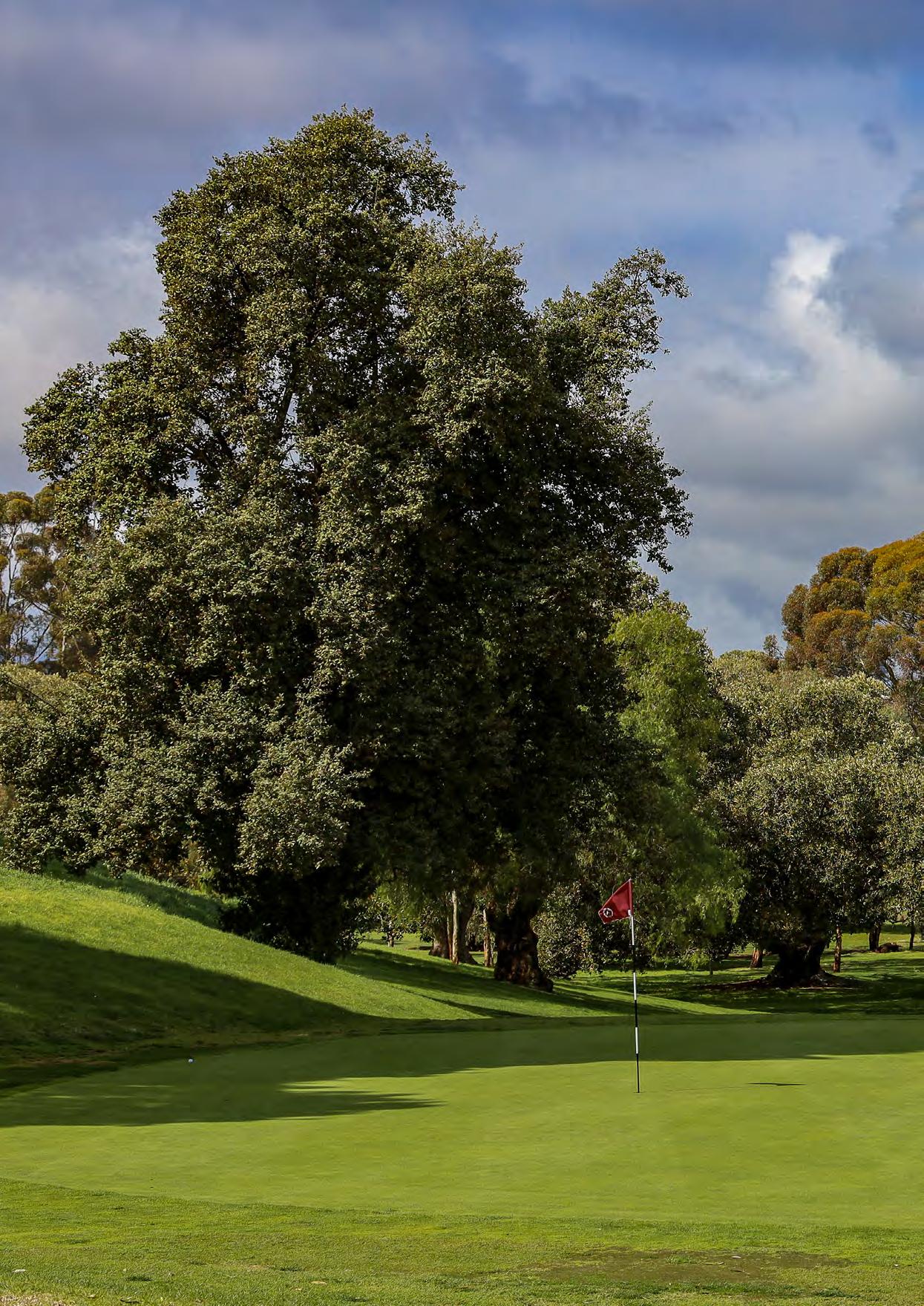
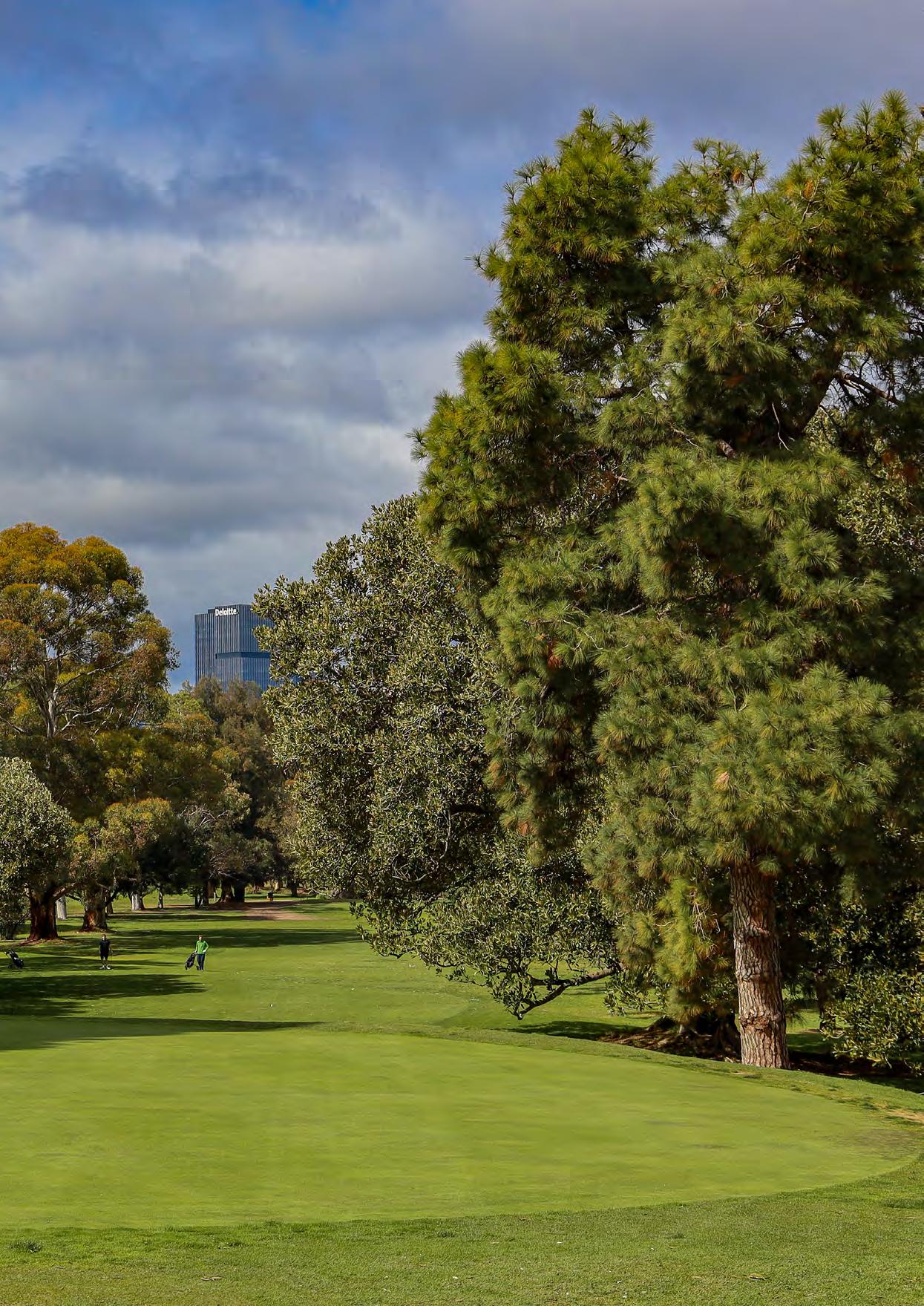
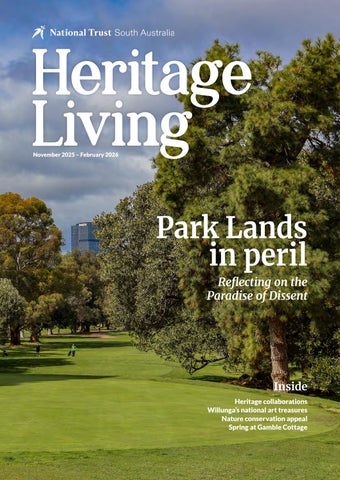
The current North Adelaide Golf Course in Possum Park (photo by Jan Bowman).
The National Trust acknowledges the Traditional Owners and ongoing occupants of the lands and waters in South Australia. We respect their spiritual beliefs, culture and heritage, and pay deep respect to Elders past and present.
ISSN 0815-7871 PP536155/0036
OPPOSITE: Protestors gather on the steps of Parliament House at an Adelaide Park Lands Association rally in June 2025 (photo by Jan Bowman).
BY LOINE SWEENEY
Plans for large-scale developments in Adelaide’s precious park lands has sparked significant protest in recent months. Adelaide Park Lands Association Deputy President and former Women’s Suffrage Centenary executive officer Loine Sweeney challenges South Australians to think about what is at stake, in a place founded as a ‘Paradise of Dissent’.

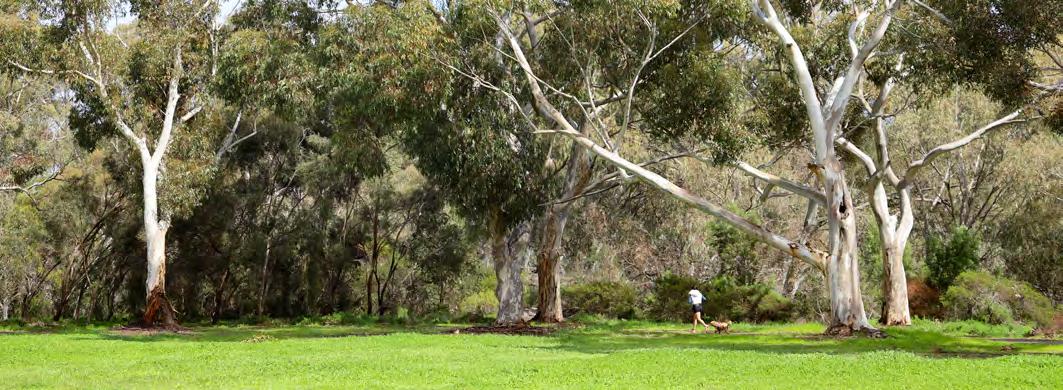
As we approach South Australia’s bicentenary, we have an important opportunity to reflect on where we’ve come from and where we are going. There is a widely held sense that Adelaide and South Australia are at a crossroads in how the future is being shaped, and increasing concerns about what democratic say the community is having in that. This has been brought into sharp relief by recent protests defending Adelaide’s globally unique features, born from the founding idea of South Australia as a Paradise of Dissent.
This reformist vision led to an extraordinary innovation — the world’s first planned public park. The radical idea was to break away from parks and nature being accessible only to the wealthy. To this day, Adelaide remains the world’s only ‘City in a Park’. The Adelaide Park Lands Association (APA) champions the park lands remaining open, green and public, and that they not be given over to exclusive commercial events, fenced off with ticketed entry and repeatedly damaged and then patched up in the pursuit of private profit.
The enlightened vision on which South Australia was founded also led to a series of world-leading suffrage reforms that are formally recognised by the Australian Heritage Council. It was on North Terrace that our parliament passed the first legislation on the planet to bring about secret ballot voting, to ensure each vote was counted as one value, to give women their full political rights to vote and stand for political office and, in so doing, to achieve universal suffrage regardless of property, race or gender.
South Australia should be shouting from the rooftops about these extraordinary achievements, and our government should be protecting the sites where these advances were achieved. We should draw on them as a source of strength and inspiration, build on them with public programs, and highlight them as global achievements in civic education and to visitors.
However, as our bicentenary draws closer, the Malinauskas Government, encouraged by the Property Council, is treating
these hallowed public sites as wasted space, unless they can be commercialised or used as free land banks. They frame these developments as “getting things done” in a city that is “growing up”, but in practice our proud heritage is seen as prime real estate and is, arguably, being ‘done over’. Such is the haste and determination to take or hand over these key sites that the government recently made unprecedented moves that have pre-empted public scrutiny and the usual approval processes.
The first of these moves was immediately behind our Parliament House, where the Sydney-based Walker Corporation was given Festival Plaza to build a commercial skyscraper. Office towers are suited to the commercial districts of cities, so enabling a speculative skyscraper to be built on this key public land amounts to vandalism. It will strip away heritage vistas and diminish the main view of our parliamentary buildings.
The Premier and his Planning Minister, Nick Champion, claimed that approval for what is known as Walker Tower 2 was in the hands of an independent umpire, the State Commission Assessment Panel (SCAP). But the government stood by while the developer moved, ahead of the SCAP meeting, to construct underground car-parking and foundations for the proposed skyscraper. Champion even declared on radio that they’d already sold the air rights above the site to Walker. This pre-emptive action was breathtaking. It seemed a fait accompli that our home of democracy, our parliament, would be overshadowed by a corporation being granted prize riverbank views at public expense.
An alternative vision for the plaza, advocated by the Save Festival Plaza Alliance of which I’ve been part, was to create a world-class, low-rise democracy hub that highlights South Australia’s achievements in global democracy. Contemporary overseas experience of such hubs shows they can be major drawcards for visitors.
Following on from the public loss of Festival Plaza was the State Government’s sudden move to seize control of a large area of the north park lands to redevelop it for the Saudi-backed LIV Golf juggernaut. Controversial laws enabling this takeover from the Adelaide City Council were passed in June. Kaurna Elders have since revealed that the works required for such an elite golf course on Pirltawardli/Possum Park and the adjacent John E. Brown Park, are likely to disturb land of deep significance to traditional owners and that the nature of consultation with them is failing to meet legislative requirements.
On a Sunday morning this past winter, I found myself walking to Parliament House to MC a protest gathering in urgent defence of these two sites, which make Adelaide unique. Looking down from the steps, I saw a big, vibrant and very diverse crowd had come in from all over the metropolitan area, the Adelaide Hills and even country regions to ‘Save the Heart of Adelaide.’ They came because something precious to Adelaide’s heritage and future was at stake. Speaking later on radio, the Premier dismissed those raising concerns as “rabble-rousers.” What I saw at the rally and at other gatherings of concerned citizens was democracy in action and a continuity of protest that has long defended South Australia’s natural, built and cultural heritage.
The stakes are clear. What is at risk is not just land or a skyline, but our ability to make Adelaide a better city and South Australia a better place — for citizens, for workers, for residents, for visitors. Faced with decisions being pushed through by an electorally unassailable government, concerned citizens and organisations need to build alliances, think strategically and make their voices heard — and not just in the Adelaide electorate. We must use ‘people power’ to actively defend the very nature of democracy and make it work for the community.
In 2036, Adelaide will be 200 years old. We know we will be facing the increasing impact of climate change. We might also be facing a skyline of broken promises and regret, with heritage, democracy and environment traded away for short-term gain. Or we could mark that milestone with a ‘City in a Forest’ — a place where democratic heritage, Indigenous custodianship and environmental stewardship are intertwined. If we follow this alternative path, our bicentenary will not be mere commemoration, but a realization of a true Paradise of Dissent, where Adelaide’s future unites its proud heritage of reform with a healthy democracy and justice for its first custodians.

BY DR HEIDI ING
South Australia’s 2025 Historian of the Year and The House of History curator, Dr Heidi Ing, reflects on the power of collaboration in bringing heritage and history to life, and capturing the imaginations of a wider audience.
When entering a heritage space, whether it be resplendently restored or authentically aged, people often lament “If only these walls could talk!” Most heritage homes have played host to a multitude of sins and celebrations, their walls reverberating with laughter and tears. We ask ourselves, who were the people associated with this space? Who walked these corridors in the dead of night? We can make this reverie a reality when history is brought to life within our preserved buildings. People from the past need to be connected to place in order to come alive in our imagination. Our heritage houses provide us with the opportunity to engage the present with the past, but to accomplish this collaboration is key.
During South Australia’s History Festival in May, the National Trust and Ayers House Events joined forces with the History Trust of South Australia to turn Ayers House on North Terrace into ‘The House of History’. Instigated by the History Trust’s now retired Chief Executive Officer, Greg Mackie AM, history enthusiasts were offered presentation space within this stunning building, and speakers associated with 19 different organisations answered the call, providing 25 presentations over 13 days. A wide variety of history and heritage organisations were represented, supported by volunteers drawn from Genealogy SA, the Historical Society of South Australia, the Pioneers Association of SA and the Professional Historians Association (SA).
Presentations were made in The Ballroom and Henry’s Table venue spaces, with guests mingling at Henry’s Bar before and after events. The large, looming black metal gate which separates the two sides of Ayers House was opened and attendees flowed through the corridor to explore rooms under the guidance of National Trust staff and volunteers. Before listening to presentations, attendees could view objects, portraits and projected images, which highlighted the key position of Ayers House in South Australia’s past.
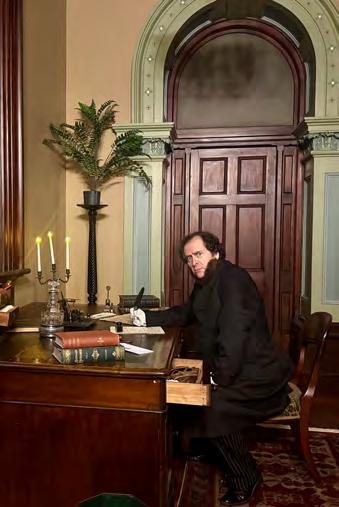
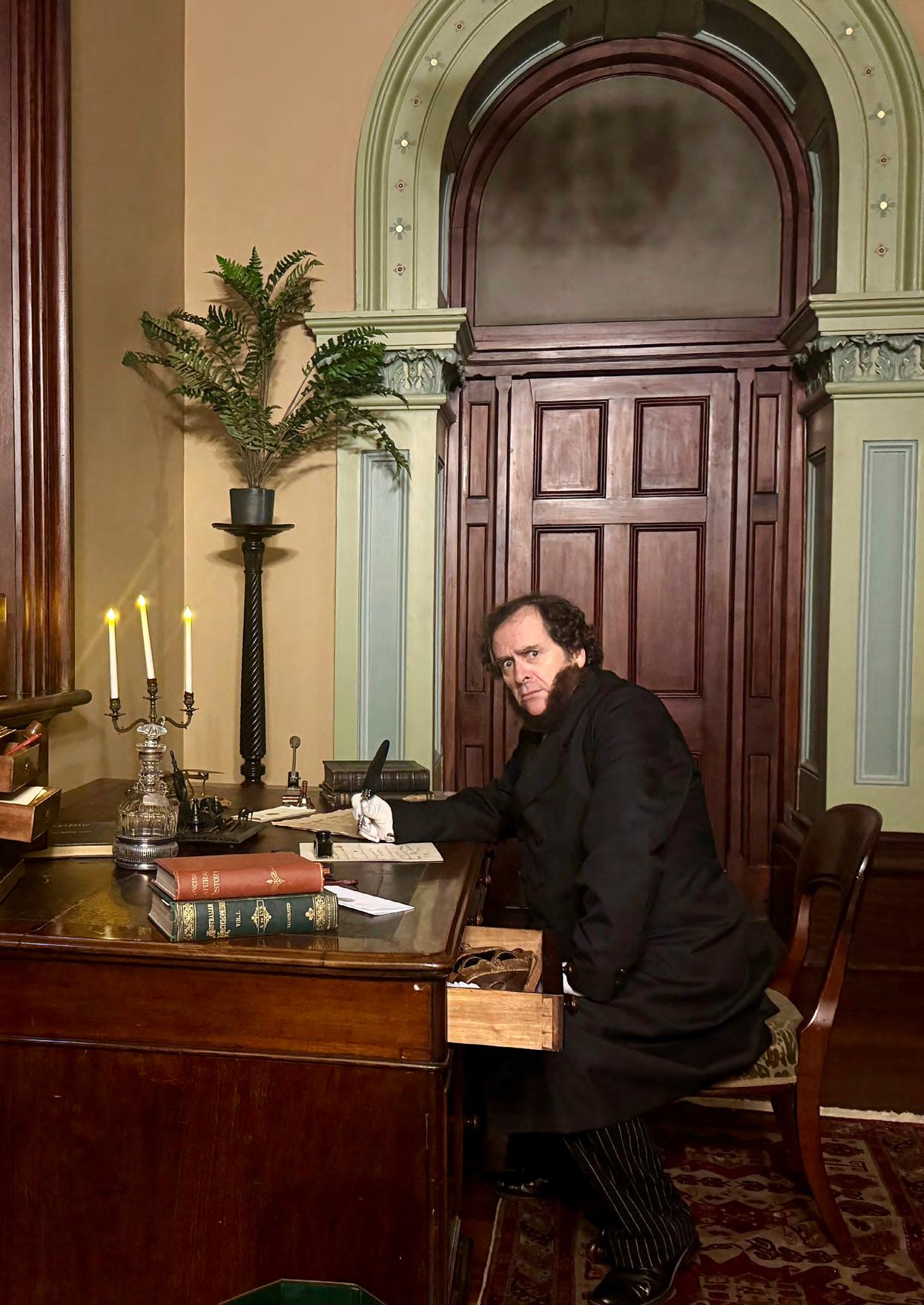
Just off the main hallway, performer Michael Mills from Heaps Good Productions sat at an imposing writing desk, which had once served as the workspace of Sir Henry Ayers. Sir Henry welcomed guests as they explored his home, commenting on the shocking spectacle of women brazenly parading about in men’s britches and greeting with delight families who arrived in period costume. Young children appeared very much in place with the decor and artefacts as they wandered through rooms, combining creativity and theatrics to embody history and bring the house to life. In this way, members of the public provided an appreciated contribution to The House of History
by taking advantage of an evening outing to play make-believe in beautifully renovated heritage spaces.
On the 31 May 2025, the History Trust and the National Trust signed a new Memorandum of Cooperation and Collaboration, agreeing to ‘share expertise in collection management, public programming and engagement’ and to ‘explore joint opportunities for future collaboration in events, festivals, and cultural preservation’. Let’s hope that there will be more opportunities for these two organisations to work together in the future, empowering locals and visitors alike to connect to and engage meaningfully with our state’s past. We all understand that the ability to visualise people from history in heritage places is core to bringing our past into the present.
To see an example of what can be accomplished through such collaboration, we should look across Bass Strait where National Trust Tasmania has been working with Digital History Tasmania (DHT) programmers and data visualisers. DHT is a not-forprofit organisation that has, in turn, collaborated with The State Library and Archives of Tasmania, family and local history groups, academics and history enthusiasts, to transcribe, clean, code and link well over 2.5 million historical records.
The diligent work of these many contributors has led to displays in heritage-listed buildings across Tasmania, and, in particular, at the Convict Memorial in the Penitentiary Chapel Historic Site managed by the National Trust in Hobart. The Convict Memorial forms part of the Unshackled: Hobart Penitentiary exhibition and guided tour, a digital history experience which encourages visitors to explore the lives of over 75,000 convicts who were transported to Tasmania between 1803 and 1853. The Convict Memorial was recently listed as Australia’s number one tourist experience by Tripadvisor’s Best of the Best Traveler’s Choice Awards.
By leveraging digitised resources within linked datasets to create engaging and immersive visual displays, National Trust Tasmania and DHT are bringing people from the past to life within the walls of heritage buildings. How might South Australia learn from and emulate these accomplishments? Can our history and heritage organisations utilise digital technology and smartphone capabilities to link people to place? Can we embrace new ways to allow the walls of our heritage buildings to tell us their stories? Let’s get creative in our collaborations!
BY EVELYNNE BOWDEN AND LIZ HARFULL
In the first in a new series reflecting on women associated with National Trust properties in South Australia, Penola local history volunteer Evelynne Bowden and Heritage Living editor Liz Harfull explore the humble life of Ellen Sharam, who raised a large family in what is now known as Petticoat Lane.
Ellen Patching was nine years old when she travelled from rural Sussex to Melbourne with her parents, William and Eliza, and two younger brothers, via the barque Platina, arriving at Port Phillip in July 1842. A farm labourer, William was brought out as a ‘bounty immigrant’ by pastoralist and land speculator Henry Dendy. By 1846 the Patchings had moved to Glenroy station in the isolated south-eastern district of South Australia, which lacked established townships at the time.
Working on neighbouring Limestone Ridge station was Christopher Sharam, known as Long Christie, a cobbler from Devon, who was more than twice Ellen’s age. They married in 1848, when he was 35 and she was just 15, travelling almost 200 kilometres to Portland by bullock wagon to find the nearest clergyman. They were living at Limestone Ridge when their first child, John, was born the following year. Soon after Christopher set up a boot-making business in what became known as Christie’s Row, now Petticoat Lane, at the request of Alexander Cameron, who was founding the private township of Penola on the land of the Pinchunga (Pinejunga) First Nations people.
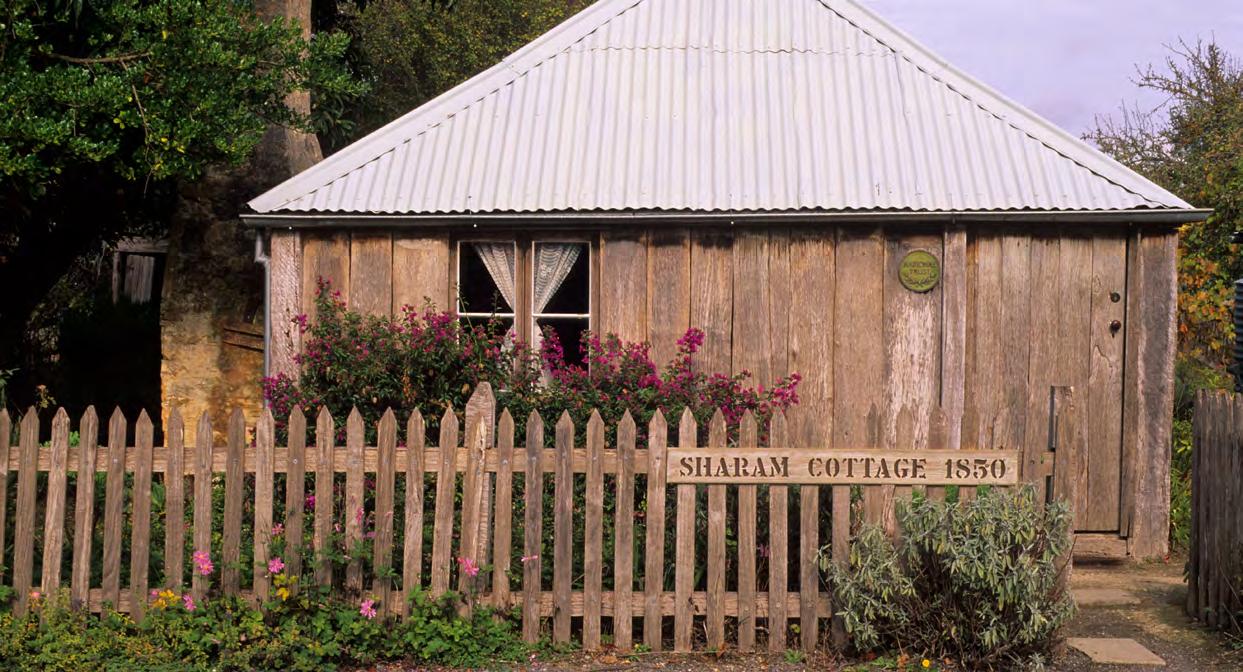
It was along this track through native scrub that Christopher built a two-roomed cottage — recognised as the town’s first private residence. He used no nails. From the site he cut four large posts, eight long straight beams and slabs for the walls. The roof consisted of shingles covered with bark. Clay was spread between the slabs to weatherproof the walls, which were then lined with hessian and later with wallpaper. The floor was made of slabs set into the soil.
The Sharams moved into this modest dwelling in 1850. It’s hard to imagine how Ellen managed to attend to all manner of things required to keep her family fed, clothed, educated and safe. No other white women lived nearby and she led an isolated life, with few comforts or conveniences. An iron arm set into the wall of the kitchen fireplace held a cast-iron kettle or water
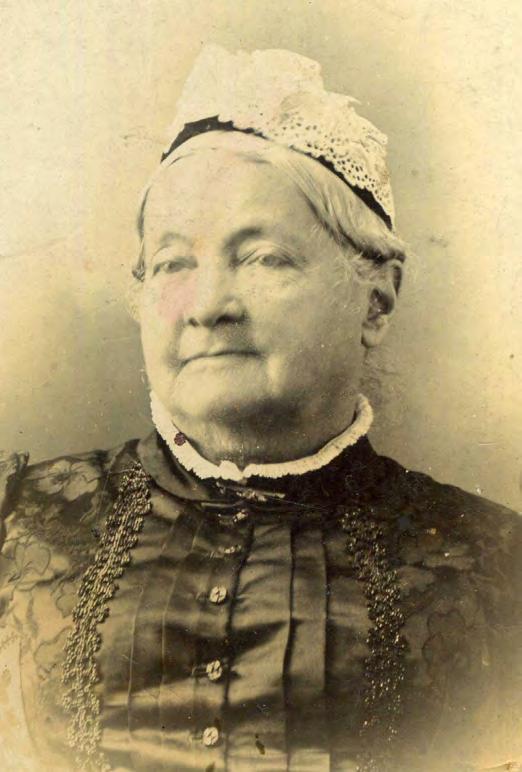
fountain, which provided hot water. Meals were cooked in heavy cast-iron pots set over the open coals — a hazardous arrangement, especially with young children in the house.
By 1851, Ellen had three sons to care for. According to The Pride of Christie’s Row, Sharam Heritage Penola, written by Betty Byrne and Jill Fox, she found practical ways to juggle household duties with managing their safety. When it was time to milk the family cow, Ellen put the youngest baby in his cradle and tied the other two children to the legs of the kitchen table.
By the mid 1860s, Ellen had given birth to 10 children. Two daughters, Eliza and Ellen, sadly died of scarlatina (scarlet fever) within a month of each other in 1864, when they were only six and almost four years of age respectively. But the small cottage was still bursting at the seams, so a second cottage was built next-door around the mid to late 1860s. It had two front rooms, which served as a sitting room and a bedroom for Christopher and Ellen. A lean-to at the back provided two more small rooms for the children.
The washhouse was a separate three-sided structure in the backyard, with a workbench at the back. Clothes would have been washed in a large copper and scrubbed clean using homemade soap. A recipe found in family papers records that it was made by boiling together five pounds of clarified fat and one pound of resin, then adding 26 cups of water and one
Plan a visit
By the time Ellen was 41, she had given birth to 15 children — the last, Alice, arrived in 1874. Apart from Eliza and Ellen, all but two survived well into adulthood. A son, Thomas, died before his third birthday from consumption (tuberculosis) and another, Henry, died when he was 16 from complications after being injured falling off a penny-farthing bicycle.
In the early years of married life, Ellen also had to contend with a ‘boisterous’ husband known for his drinking habits. Apparently, he quit after she decided enough was enough and joined him at the local shanty, ordering a pannikin of rum. Christopher went on to serve as warden of the Anglican church for 15 years, until his death in 1890. Ellen was a devout Christian, and the Sharam children recalled walking to church on Sundays — two by two, oldest to youngest, in front of their parents.
A confidante, healer and adviser to her family and community, Ellen became affectionately known to all around her as Granny Sharam. She was cared for in her final years by her youngest daughter, and died peacefully at home in July 1910, aged 77. More than 40 conveyances joined the funeral procession to the cemetery after a service at St Mary’s Anglican Church.
Purchased by the National Trust in 1981, Sharam Cottages in the Penola State Heritage Area are part of the unique Petticoat Lane precinct — a hidden treasure with original cottages and gardens, which gives visitors a taste of 19th century life in a small country town. The Sharam property is open daily, from 9am to 5pm. For more information visit nationaltrust.org.au/places/sharam-cottages/
BY SIMON LEWIS
A new appeal has been launched to generate support for National Trust efforts to conserve, restore and manage its nature reserves in South Australia. Long-term Natural Heritage Committee member and active volunteer bush carer Simon Lewis explains why this endeavour is so important.
The National Trust manages 23 nature reserves across South Australia, representing a variety of ecosystems and encompassing a total area of more than 2,500 hectares. The first was Roachdale Reserve, near Kersbrook, which was gifted in 1955 and formally transferred to the National Trust in 1957. More were quickly added, resulting in 19 of the first 21 National Trust properties being nature reserves.
The importance of the National Trust’s nature reserves needs to be considered in the context of the extensive clearance of native vegetation in the agricultural areas of South Australia until the 1980s, when clearance regulations were introduced. By 1976 regions such as Yorke Peninsula and the Mount Lofty Ranges had lost at least 95% of their native vegetation, with Yorke Peninsula remaining the most cleared part of the state. At that stage, protected areas under the National Parks and Wildlife Act were limited in their coverage, and private initiatives for bushland conservation were rare. The National Trust was a leader in conserving natural heritage well in advance of many other nature conservation programs.
Today, the National Trust’s nature reserves, along with a wide range of other private conservation initiatives, significantly complement the state’s reserves system and help preserve the fragmented biodiversity that we have left. These nature reserves are precious oases for native flora and fauna, including many threatened and rare species. They are also valuable for educational and passive recreational purposes and as sources of propagation material for restoration programs. Many reserves have walking trails, which appeal to bushwalkers and hikers, meandering through stunning bushland backdrops. The health benefits of spending time in nature are well established.
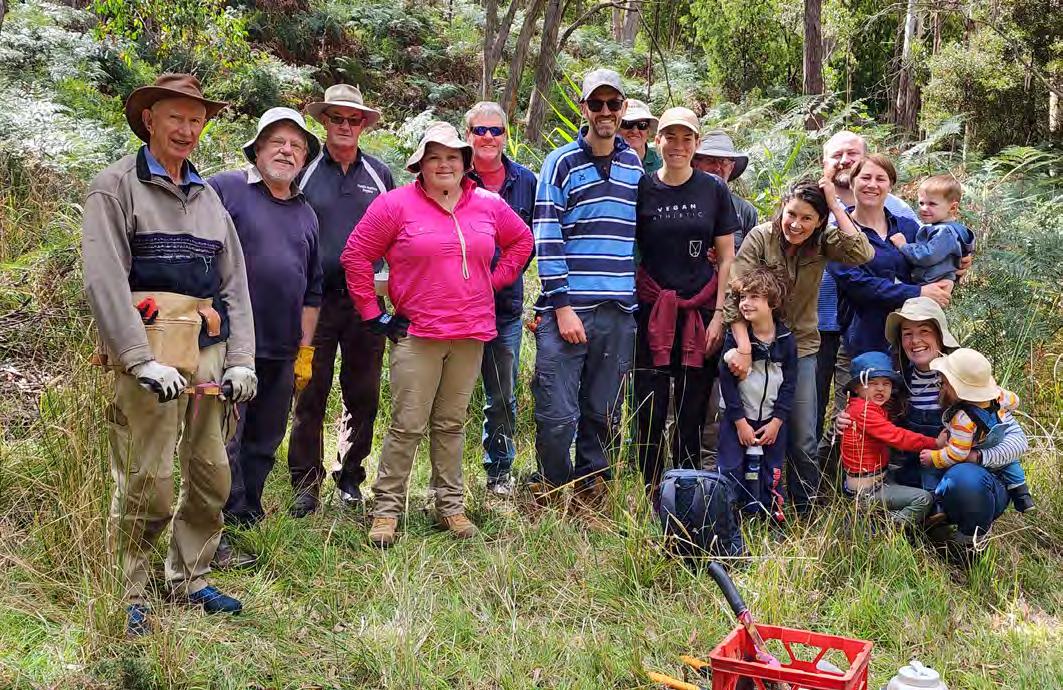
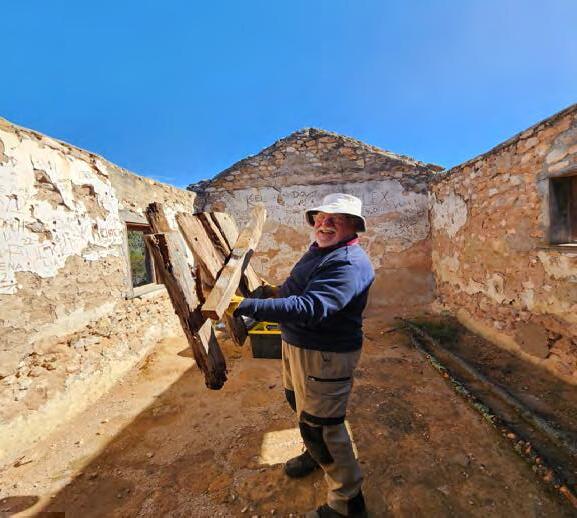
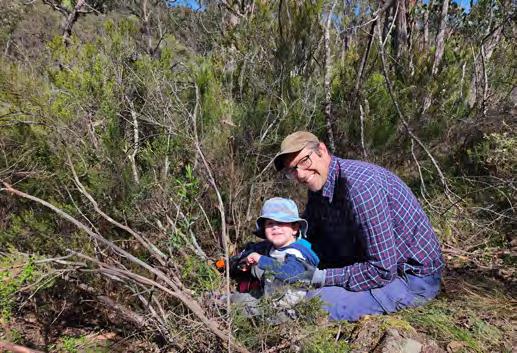
Vast numbers of volunteers make a critical contribution to nature conservation in National Trust reserves and other bushland areas through activities such as weed and pest animal
control, species monitoring, track and trail maintenance, revegetation and installation of infrastructure. Careful management of native vegetation is essential, particularly bearing in mind that most of the reserves are in highly cleared parts of the state, where the fragmented nature of the landscapes presents particular challenges for vegetation management, exacerbating weed and pest animal control problems. The National Trust’s loyal band of volunteers play a central role in addressing this. The National Trust also has strong working relationships with First Nations people in managing the nature reserves.
These contributions make a huge difference but more resources are needed to support them and help to both care for the reserves and to enhance experiences for visitors. Better infrastructure such as signage, walking trails, shelters and seating are required, and volunteers need tools and personal protective equipment. Money also has to be found to engage contractors for tasks such as weed control in difficult areas that volunteers are unable to access. Funding through federal, state, regional and non-government grants has helped the National Trust to undertake many projects that have improved our nature reserves for future generations, but we cannot rely on this infrequent funding alone.
This is where National Trust members and supporters can help! Any contribution no matter how big or small, once-off or regular, will make a difference, and it does not necessarily have to be financial. A donation may be in-kind, such as volunteering time to assist in managing a particular reserve or monitoring wildlife. It may be a donation of equipment or infrastructure, such as the seating donated by long-standing National Trust member and volunteer Marcus Beresford at HK Fry Reserve in Crafers West. Your support will be invaluable in helping to maintain this vital network of nature reserves.
To make a donation and find out more about other ways you can assist, visit nationaltrust.org.au/sa/nature-appeal/
Donations can also be posted to The Nature Conservation Appeal, c/o National Trust of South Australia, PO Box 290, North Adelaide SA 5006. Donations of $2 or more are tax deductable.
BY ALEX EMMINS
Natural Heritage Manager Alex
Emmins shares her excitement about encountering rare birdlife and carpets of spring wildflowers during a recent visit to Mulbura Park Reserve – a precious pocket of bushland on Yorke Peninsula.
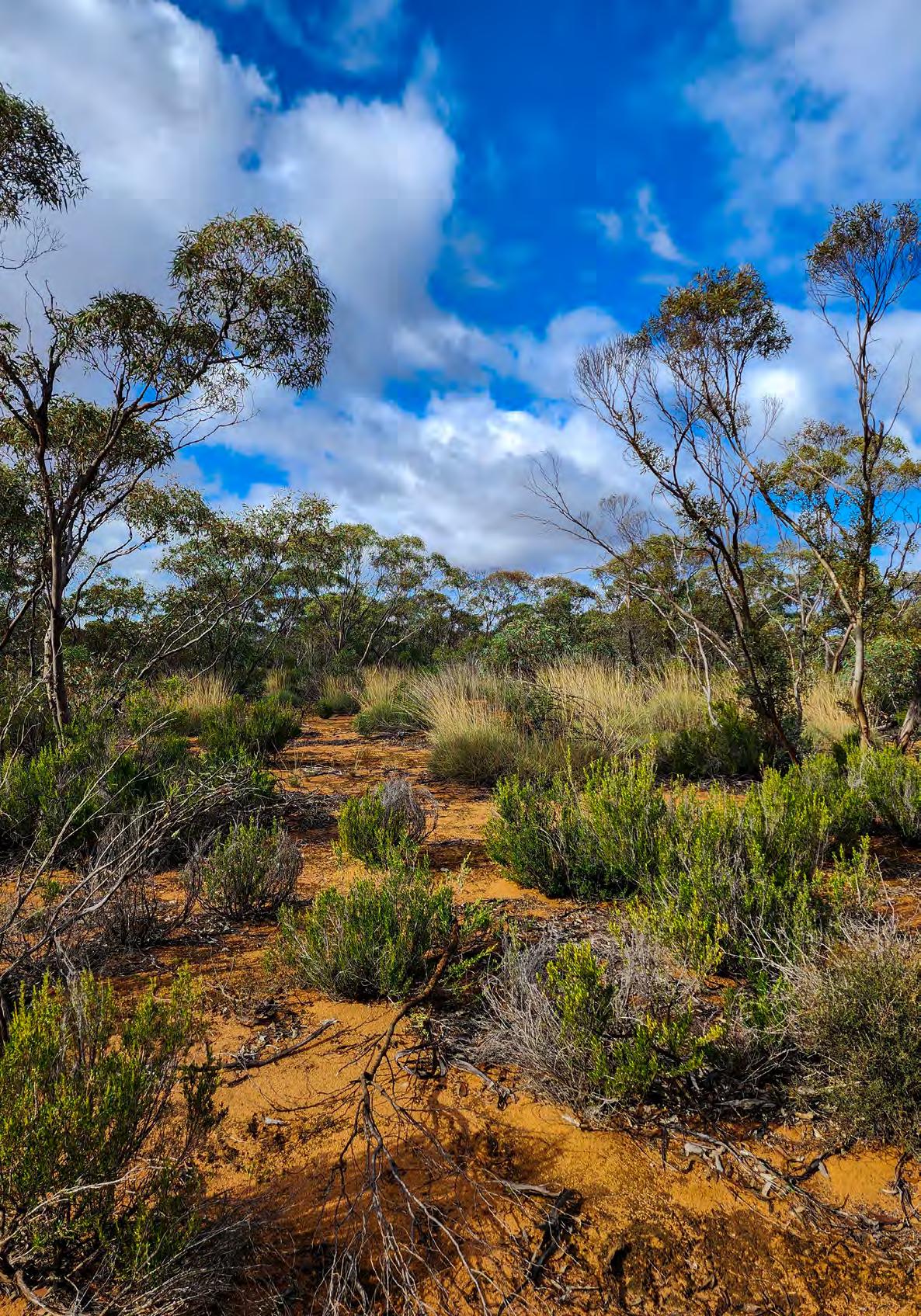
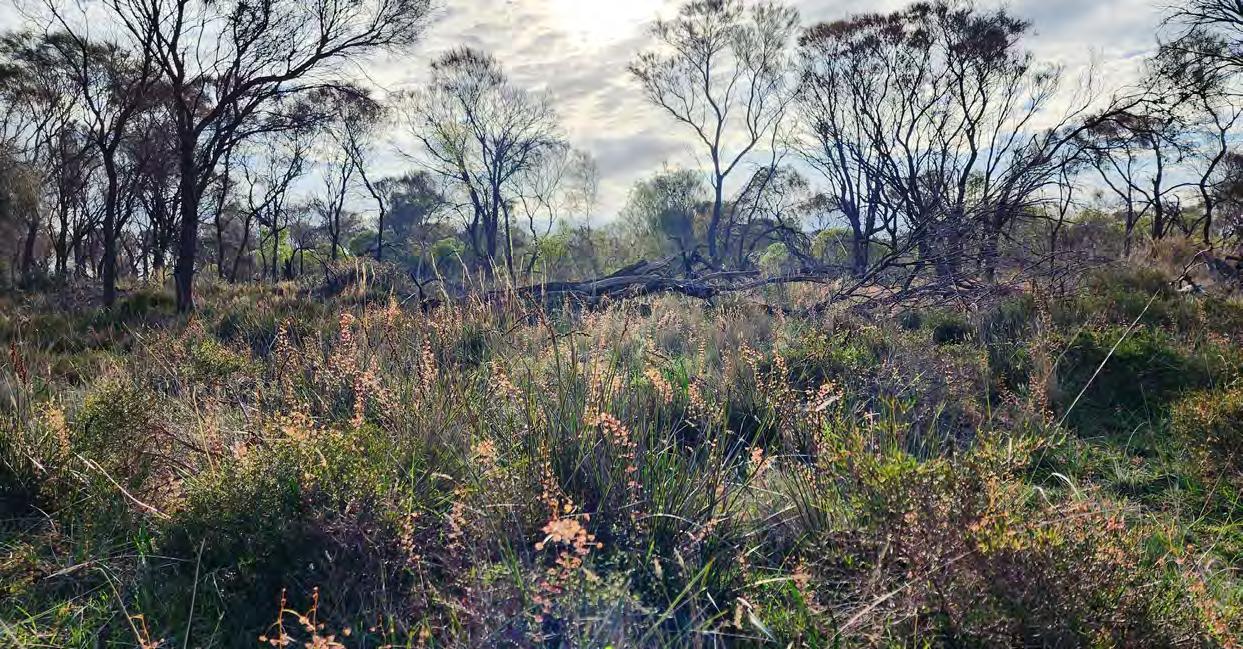
Mulbura Park is one of my absolute favourite nature reserves. The diversity of flora and fauna, the condition of the vegetation and the sheer number of native orchids to be found there in the spring, make it a very special place. Then there are the unexpected encounters. During my last visit I was fortunate to see my first crested bellbird in the wild as I stood quietly listening to the sound of drooping she-oaks in the wind, followed by a pair of nesting brown falcons bringing back a bearded dragon for their chicks to feast on.
Surrounded by cropping country about 10 kilometres north of Port Vincent, Mulbura Park sits on the land of the Narungga
(traditionally spelled Nharangga) people. Comprising 19 hectares of remnant drooping she-oak (Allocasuarina verticillata) woodland and Mallee (Eucalyptus socialis), it conserves an extremely valuable vegetation type, of which only an estimated 2% remains. This type of grassy woodland on calcrete is listed as Critically Endangered in what is known as the Eyre Yorke Block – a bioregion that extends across both Eyre and Yorke peninsulas, where much of the land was historically cleared for agriculture, especially on Yorke Peninsula with its relatively flat terrain and fertile soils making it prime farming land. In fact, it’s recognised as the most cleared region in the state.
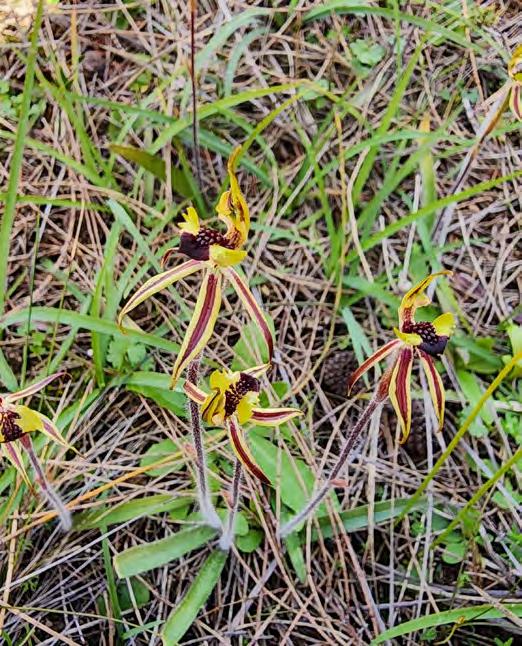
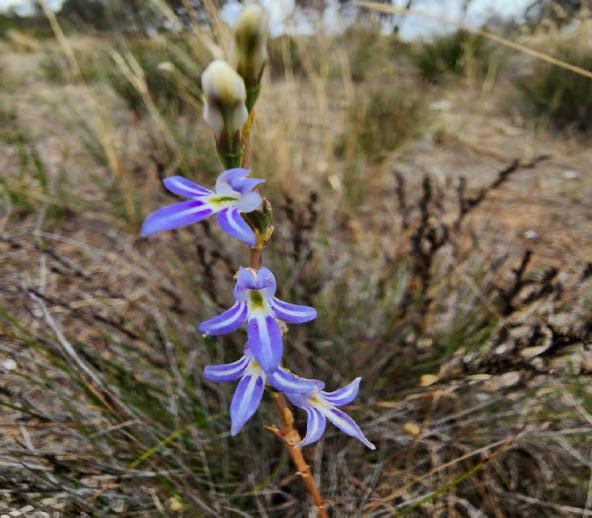
At least 136 indigenous plant species have been identified within the woodland, of which one species is endangered, another is vulnerable, and 10 are rare on Yorke Peninsula. Among the rare species found at the reserve is the coast spider-orchid (Caladenia conferta). The near-threatened upright spider-orchid (Caladenia stricta) can be found here too. Five bird species of Regional Conservation Significance have also been observed in the park, as well as less common species such as the painted buttonquail, white-fronted chat, purple-backed fairywren, hooded robin and Jacky Winter.
Mulbura Park Reserve is open daily, apart from total fire ban days. Please note, dogs are not allowed. For more information visit nationaltrust.org.au/places/mulbura-parkreserve/
The drooping she-oak is ecologically and culturally important to many First Nations people. Its strong timber is used to make tools such as boomerangs and shields — the oldest known surviving boomerang was made from a drooping she-oak in South Australia approximately 11,000 years ago! The seeds and immature cones provide a source of vitamin C and can be used to make flour; and the dropped needles made a soft bed for infants. The tree’s spiritual significance is also profound; the wind blowing through its branches carries ancestral voices and provides a connection to them. The tree also supports the ecosystem, enriching the soil by fixing nitrogen and providing habitat for animals, including many threatened species.
The Southern Yorke Peninsula Landcare Group assists with weed control in Mulbura Park, focussing in particular on bridal creeper, African boxthorns and weedy acacias. However, the reserve remains largely weed-free thanks to decades of work from dedicated volunteers.
The best time to visit is during spring when the wildflowers are in full bloom. If you’re fortunate to experience Mulbura Park then, you’ll wonder where to place your next step amongst the carpet of orchids, lilies and other small ephemerals. Sundews are prolific in the reserve and at the right time of day glisten spectacularly across the whole park. And did you know that before European occupation, native orchid flowers were the most prolific flower on Yorke Peninsula? After visiting Mulbura Park you will certainly appreciate that this is true. If you’re lucky, you may even spot a rare species or two!
Mulbura Park was gifted to the National Trust in 1975 by Yorke Peninsula farmer Digby Clifford Germein (1913-1990), a descendant of the Germein family, who played a significant part in South Australia’s maritime history. His grandfather, Captain John Germein, spent many years in the pilot service and commanded the coastal steamer Ceres, which traded between Yorke Peninsula and Port Adelaide.
The reserve was part of land acquired by Digby’s father, Perce Germein, who moved to the area as a young man and married Ethel Gregor of Curramulka. Born in 1913, Digby was the fourth of six children. According to his son, Colin, he decided to gift Mulbura Park to the National Trust because it was good natural scrubland that had never been cleared. “He loved going for walks in the scrub and enjoying nature,” Colin recalls.
Digby was encouraged by his cousin, Reg Sprigg, the renowned geologist and conservationist, who officially opened the park at a ceremony arranged by the Minlaton and District Branch on 28 August 1977. Digby chose the name because he understood Mulbura to be an Aboriginal word pertaining to the area.
BY MERILYN KUCHEL OAM
National Trust horticulture adviser Merilyn Kuchel visits a rare surviving example of a true cottage garden in Adelaide’s foothills, and the enthusiastic volunteers who tend it.
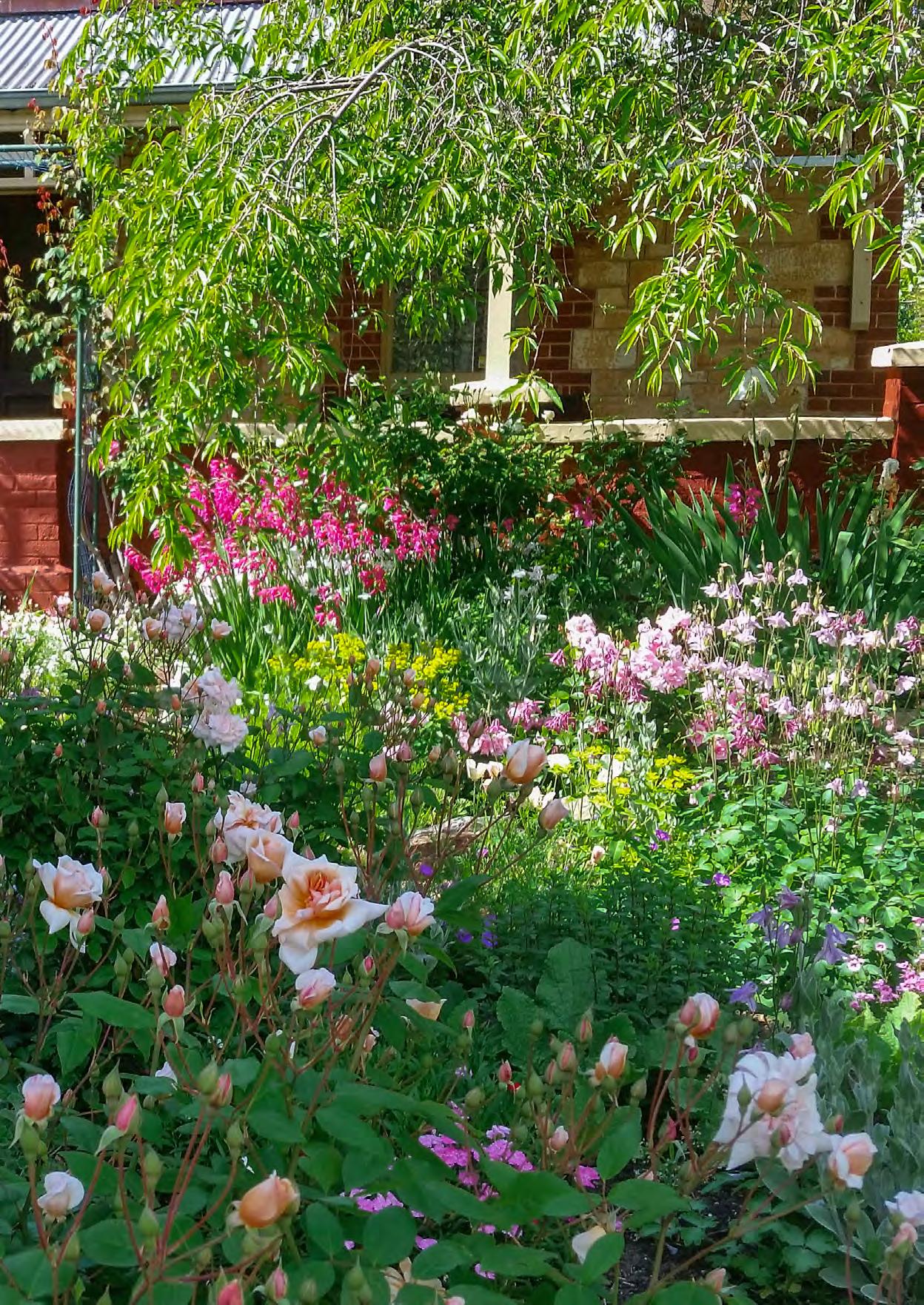
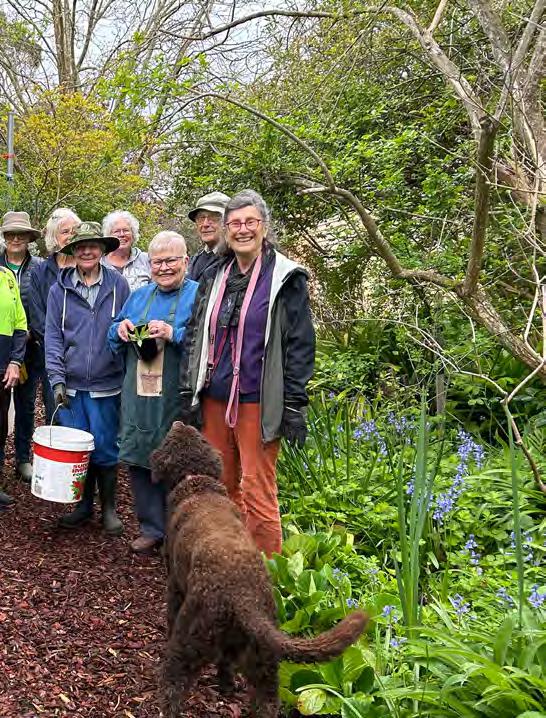
Every Tuesday morning a small group of dedicated volunteers gather at The Gamble Garden in Blackwood. I was fortunate to be able to pay a visit on a beautiful sunny morning in early spring, when I met with Alison Oldland, who joined the Friends of the Gamble Garden in 2014 and presently coordinates the volunteers. I also spoke with some of the volunteers, including George, who has been helping in the garden for more than 25 years. The oldest member, Gwen, is now into her nineties.
Alison explained that the group is motivated not just by their shared love of plants and gardens but by the social benefits of working in groups. They are supported in their endeavours by the City of Mitcham, which owns the property, providing a garden shed, an enclosed nursery, tools, mulch and fertiliser, and professional care for the aging trees.
The garden embraces a heritage-listed stone cottage leased by council to the Coromandel Valley and Districts Branch of the National Trust. The cottage was built in 1902 for Joseph Gamble (1867-1945) and his wife, Harriet (1866-1940), who married at Coromandel in 1890, and had four daughters – Clara, Harriet, Dorothy and Edith. Clara and Edith never married and continued to live at the cottage until they moved into aged care accommodation in 1982. They bequeathed the property to the City of Mitcham for use by the local community. Although they led a simple life, they were also able to make a combined bequest of $70,000 to the Methodist Ladies College (now Annesley Junior School).
In the early years, the cottage had no running water or electricity. Early photographs show that the front garden was planted out with rows of strawberries ‘to break up the ground’ before the flower garden was established. From there, the sisters supplied flowers to their local church. Behind the cottage, Joseph planted an orchard of fruit and nut trees, some of which still survive, including figs, persimmon, mulberries, apples, pears, loquat, quince and almonds. A walnut, Seville orange, medlar and bay tree are amongst plantings added by the Friends.
Joseph was employed at the nearby Blackwood Experimental Orchard, which was established on 23 hectares at Coromandel Valley in 1907-08. Reputed to be largest collection of fruit trees in the world, it apparently contained more than 4000 different varieties by 1928 and was the main research facility servicing orchardists in the central Adelaide Hills until a new facility was established at Lenswood. The orchard finally closed down in the mid 1970s.
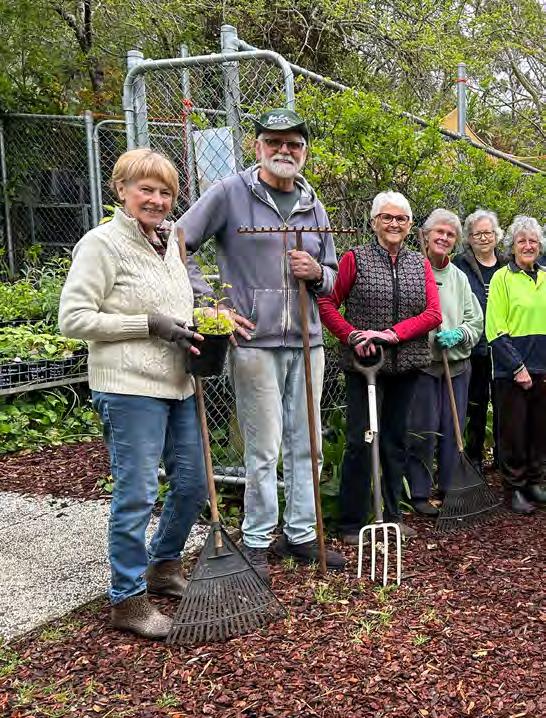
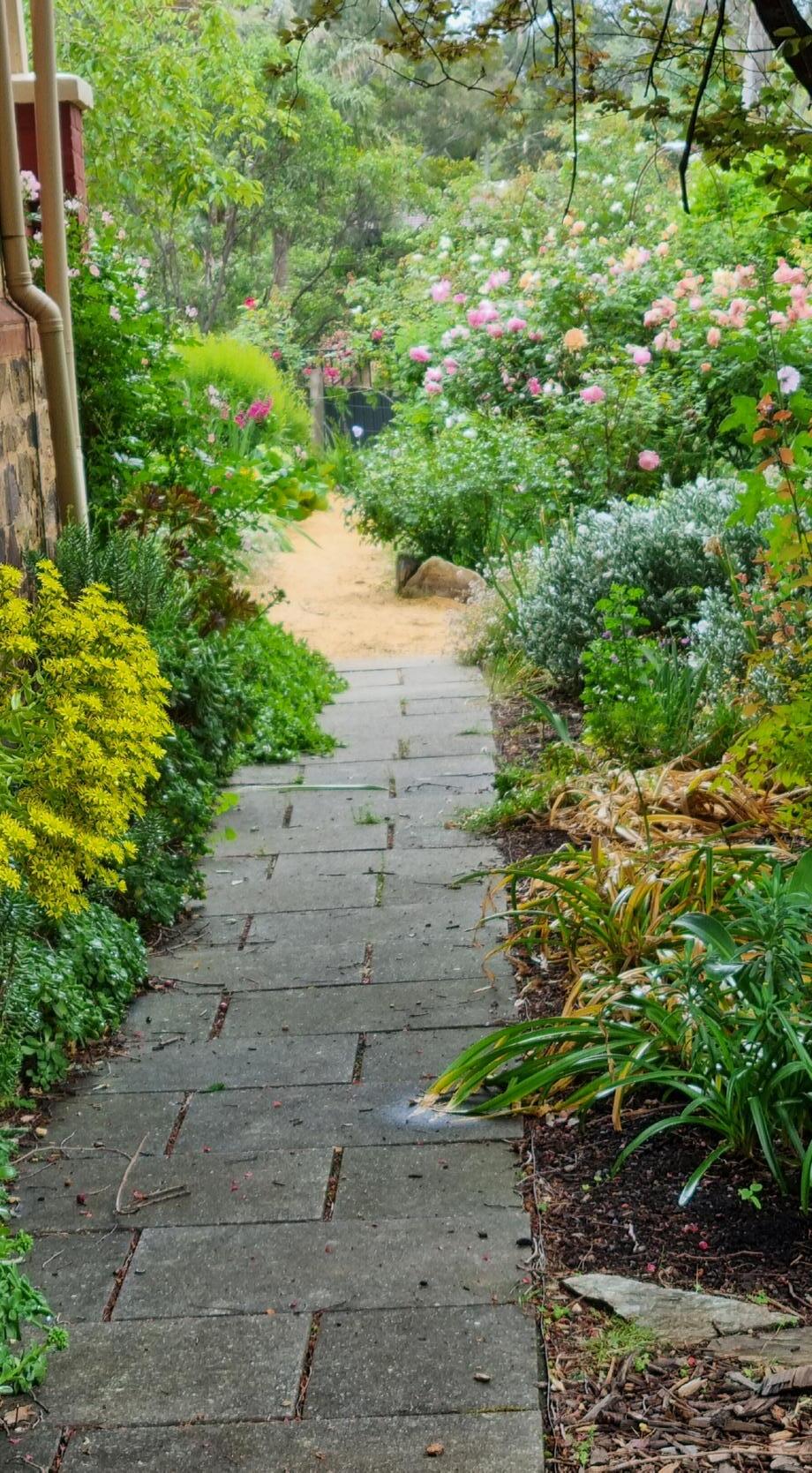
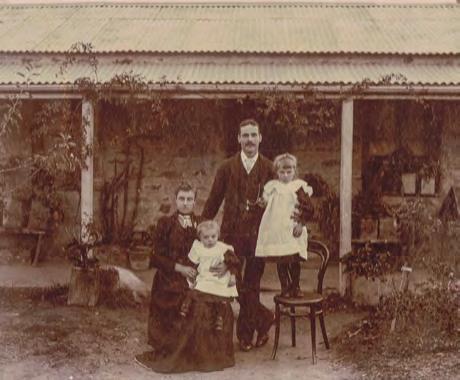
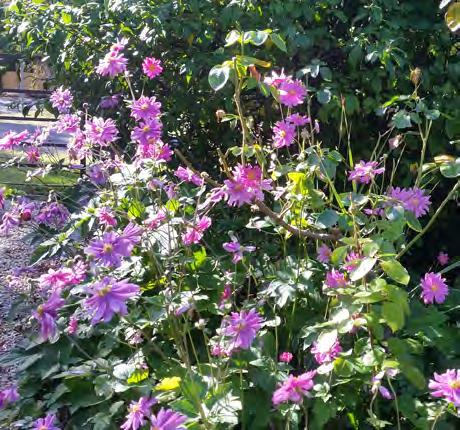
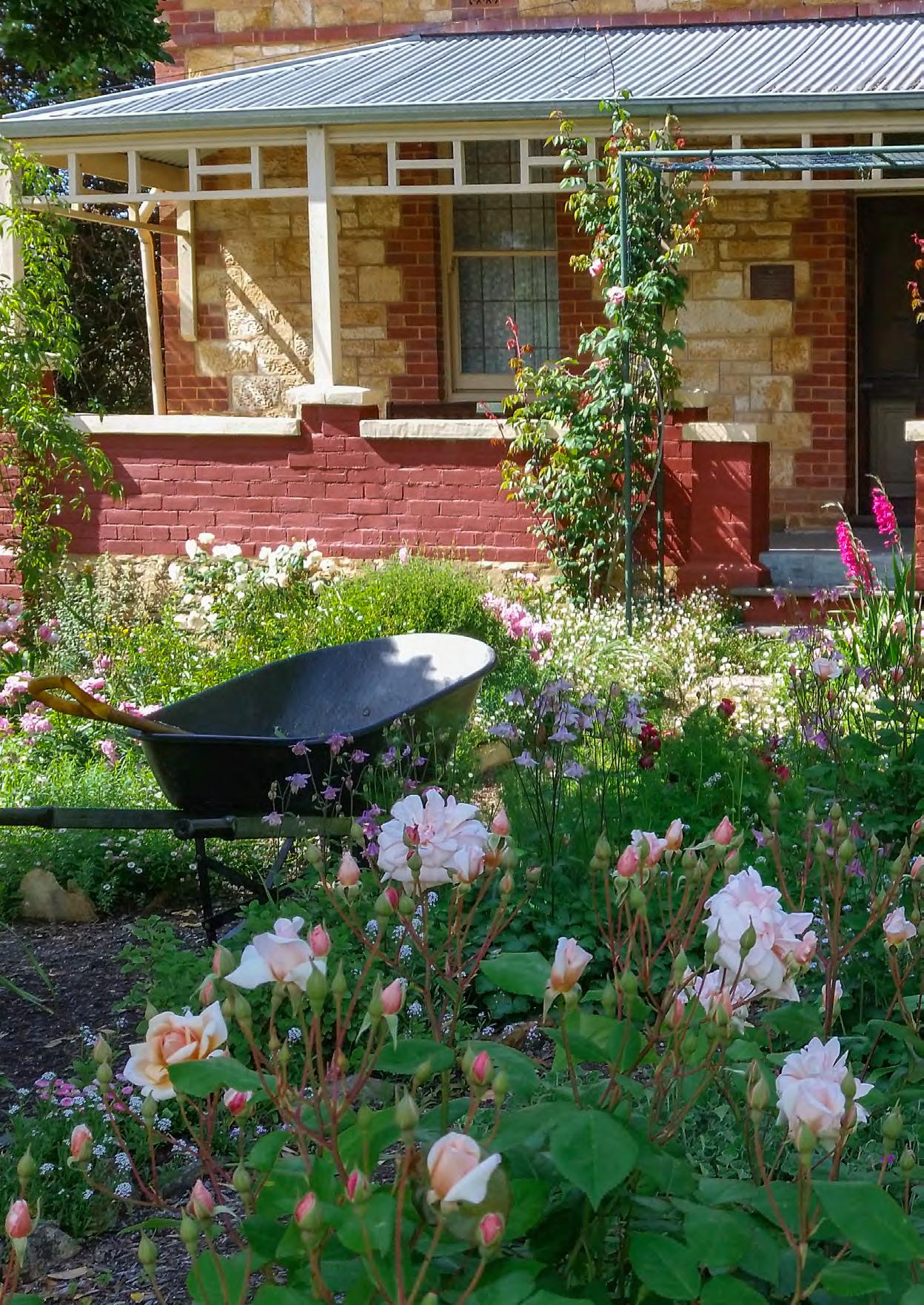
After their parents died, the Gamble sisters maintained the garden for four decades, planting roses and cottage perennials. By the time the aging siblings left the cottage in 1982 the garden was run down and overgrown. The Friends, who mainly lived nearby, began working on the garden and the Mitcham council undertook to restore both it and the cottage in 1986 as a Jubilee 150 project. Then living at Resthaven, the sisters were able to provide detailed descriptions of the garden so that the layout of the beds and paths could be faithfully restored. Garden historian and author Trevor Nottle was commissioned to advise on the replanting. He recommended old-fashioned hardy bulbs, shrubs and perennials commonly grown in early 20th century gardens, but now often considered rare and not easily sourced.
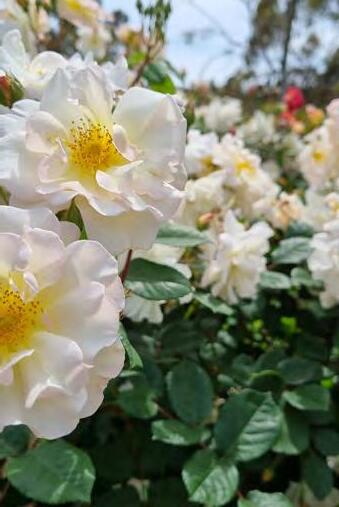
Many of the original trees and shrubs planted by Joseph or his daughters still survive, including Irish strawberry (Arbutus unedo), dombeya, spindle bush (Euonymous japonicus), carob, peppertrees (Schinus molle) oaks and pines. Bulbs such as snowflakes, muscari, Roman hyacinths, jonquils and daffodils provide welcome colour during the grey days of August, and are succeeded by spring flowering groundcovers of dianthus, geraniums and centranthus. In the shady areas, the volunteers have added clivias, hellebores, bromeliads and ferns. A collection of 150 roses includes Alister Clark varieties such as Lady Huntingfield, Lorraine Lee, Diana Allen and Fairlie Rede. Other hardy shrubs include viburnums, kolkwitzia, duranta, plumbago, spirea, daphne, azaleas, camellias, port wine magnolia, philadelphus and lilacs.
Two volunteers propagate plants from the garden throughout the year. These are used to replenish the beds or sold to raise money for new projects or specialty plants. Sales take place during the Tuesday working bees or at the popular open days hosted in conjunction with the National Trust branch, which provides afternoon teas and free access to the cottage and its small museum.
The Gamble Garden is open to the public year-round. The cottage is open on the third Sunday of most months (excluding July, August, December and January) between 1pm and 4pm. For more details visit nationaltrust.org.au/places/gamble-cottage. Groups or garden clubs can arrange guided tours by contacting the Coromandel Valley and Districts Branch on 0474 066 776. For garden tours only, email ntcoro1@bigpond. com or oldlanda@gmail.com. To volunteer in the garden contact Alison Oldland on 0413 272 020 or Chris Box on 0418 827 825.
BY MARK STANIFORTH
National art treasures are gracing the walls of Waverley Park Homestead, putting it on the map for art lovers just two short years after becoming the National Trust of South Australia’s first dedicated gallery, explains Mark Staniforth.
The parliamentary act that established the National Trust of South Australia in 1955 specifically addressed the issue of paintings when it talked about the objectives of the organisation including the ‘preservation of furniture and pictures and chattels of national, historic, artistic, or scientific interest’. The National Trust and some of its branches have paintings in their collections, however, unlike other states, South Australia has never had a dedicated National Trust art gallery, until very recently.
In 2022, the Willunga Branch began negotiations with the City of Onkaparinga to lease the vacant heritagelisted Waverley Park Homestead. This resulted in a oneyear agreement and now a three-year lease, until 2027. It was decided to use the building for two purposes. Firstly, the branch would collect and display locallyrelevant art, primarily depicting heritage buildings and local landscapes. The homestead would also become a community centre where small community groups could hold meetings and activities.
The Willunga Branch was working towards this vision in early 2023, when the Australian Government announced a new Sharing the National Collection initiative so small outer suburban and regional galleries could borrow from the National Gallery of Australia's collection of 155,000 artworks held in Canberra. After carefully examining the eligibility criteria, the branch expressed interest in July 2023.
Over the next 12 months negotiations included a visit from curator Leanne Santoro, and identifying issues relating to keeping loaned artworks safe. Where possible, temperature and relative humidity control was rectified and the Onkaparinga council (as owners of the building) upgraded security measures. A formal partnership agreement between the National Trust of
South Australia and the National Gallery of Australia was finally signed in May 2024.
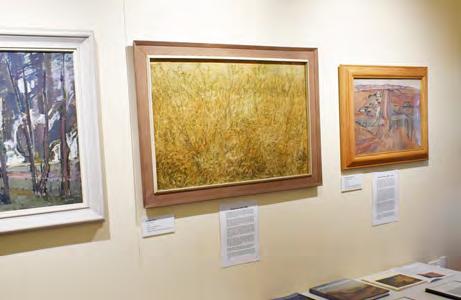
During negotiations, the branch expressed particular interest in artworks depicting local places by famous artists who were resident in the area. The first of four oil paintings to arrive on a two-year loan was Kathleen Sauerbier’s Jetty ramp and Howe's fishing lookout (c. 1935), which was included in the Know My Name: Willunga temporary exhibition when it opened in July 2024. Three more oil paintings arrived in early 2025 –James Cant’s Dry grasses (1959), and Horace Trennery’s Pines, Port Willunga (c.1945) and Road, Aldinga Hill (c.1940).
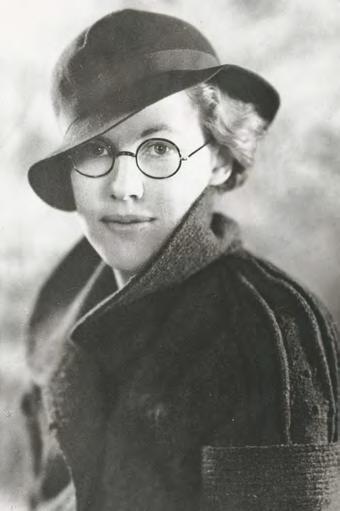
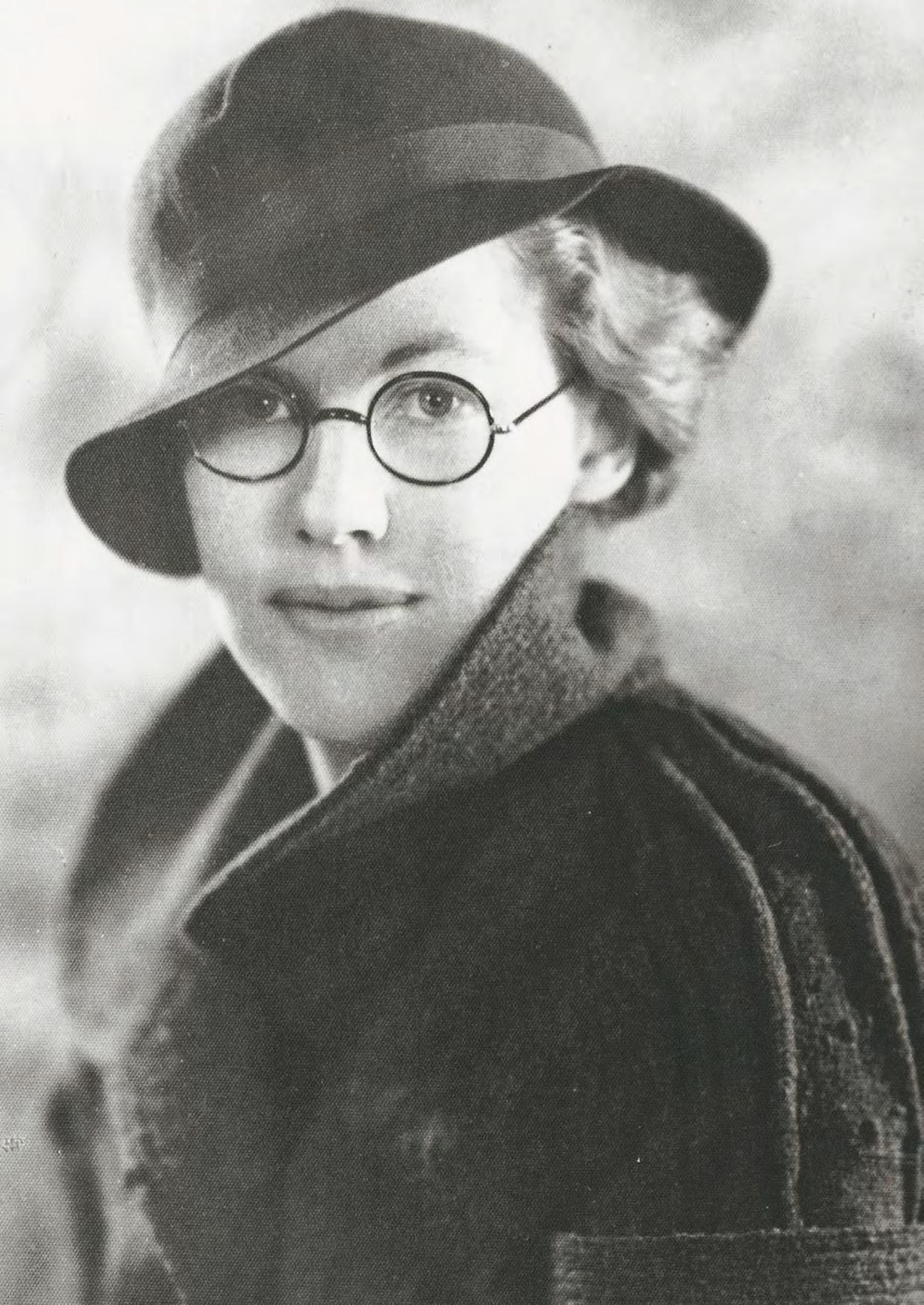
Like other ‘dangerously modern’ women artists, Sauerbier studied art in London and Europe in the late 1920s. On her return, she fell in love with painting at Port Willunga. In the mid 1930s, she held artist summer camps while staying at the former Seaview Hotel and she encouraged Trenerry to move to Port Willunga in 1934. Trenerry lived in the district for nearly two decades, painting many local landscapes including a series capturing the row of memorial Aleppo pine trees on Port Road, of which Pines, Port Willunga is a particularly fine example.
James Cant and his wife, fellow artist Dora Chapman, regularly visited the Willunga district before purchasing Heysed’s Cottage (Somerset) in 1965 and making it their second home. The sunny and dry landscape of the district inspired Cant to paint close-up views of grasses and bush, resulting in his famous series of ‘grass-scapes’.
OPPOSITE: Kathleen Sauerbier, c 1930s (private collection, from Kathleen Sauerbier: A modern pursuit by Gloria Strzelecki, courtesy Wakefield Press).
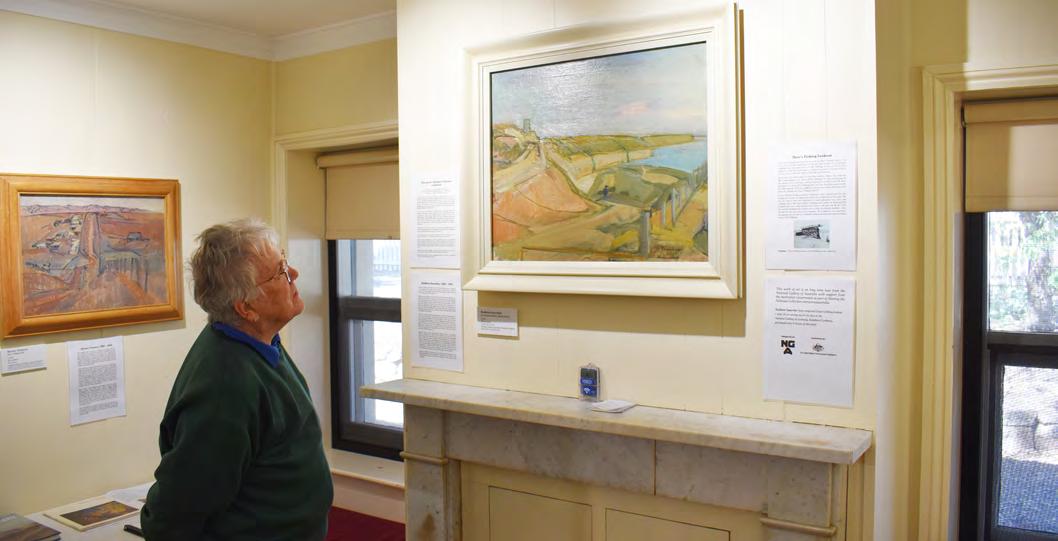
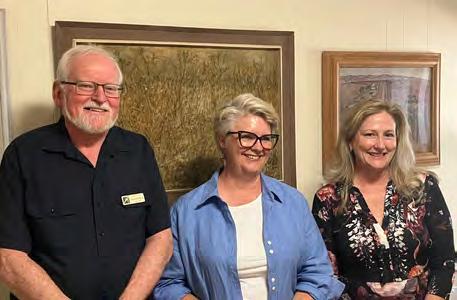
Negotiating to be part of the Sharing the National Collection initiative and preparing the gallery involved substantial work by members and volunteers, but it has brought positive results. Visitation to Waverley Park Homestead has significantly increased, including visits and events organised by special interest societies and groups such as ArtsNational Adelaide, ArtsNational Fleurieu, the Victor Harbor Art Society and volunteers from Carrick Hill. Serious lovers of South Australian art have been impressed that a small outer suburban gallery has nationally significant artworks such as these on display and they are making special trips to Willunga to see them. Hosting important artworks like this has also encouraged some new volunteers, enabling the art gallery to open three afternoons a week.
All four artworks will remain on display for the duration of their loan and the branch has recently applied for an extension so that National Trust members and visitors to the gallery can continue to enjoy them for some time to come.
Waverley Park Homestead is open on Friday, Saturday and Sunday afternoons, from 1pm to 4pm. For more information email willungaheritageart@gmail.com or visit willungantsa.au/museums or follow the branch on Facebook for the latest information about exhibitions and eventsfacebook.com/WillungaMuseums
BY FELICITY WHEELER
Earlier this year, the National Trust received an unusual letter making a special request. After careful consideration, it led to a surprise gift for an Adelaide woman about to celebrate her 103rd birthday. Collections and Built Heritage Coordinator Felicity Wheeler tells the story.
The National Trust of SA has an established accessioning policy, which guides deliberations about what the organisation should collect. Once an item is part of the collection it is our responsibility to respect and care for it. However, very occasionally, it becomes becomes clear that the National Trust may no longer be the best home.
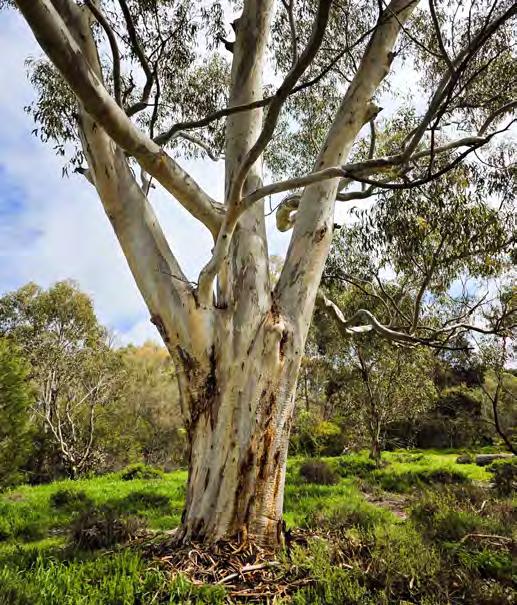
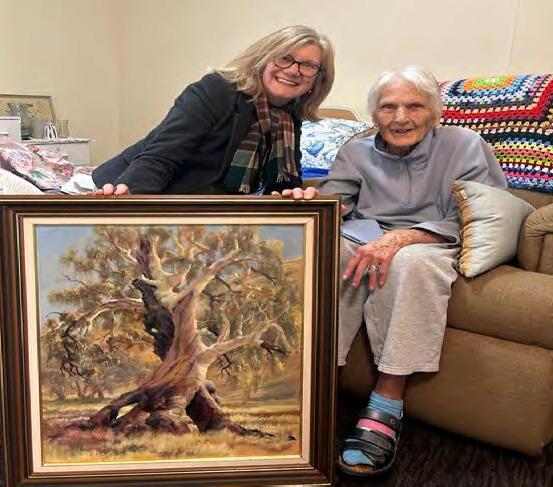
That proved to be the case earlier this year, when the collections team considered a special request regarding a painting by Adelaide artist William Fraser Wilson (19202007). A chemist by profession, in his spare time Wilson was a prolific amateur painter, who gave away most of his art. One of those paintings is Monarch of the Glen, which captures an ancient river red gum known by the same name. Listed on the National Trusts of Australia Register of Significant Trees, it stands on the land of the Kaurna people at Mitcham. A hollow in the tree’s gnarled trunk undoubtedly provided them with shelter, as it is recorded to have done for the Harrison family after they emigrated to South Australia in 1839.
In a letter to the National Trust, Wilson’s grand-daughter, Jen, wrote about the tree’s deep personal significance to her family:
My grandfather loved [the tree] and as a youth, cycled from Adelaide to visit it often. When he fell in love with my Grandmother (Beatrice), he would take her there to see it. Later he would take his children and grandchildren there and teach us to appreciate its beauty, age and history. Centred around this tree, he taught us to love and care for the Australian bush more widely. After his funeral, our family gathered under this special tree at Brownhill Creek to be together and to mourn for him. To my family, this tree is a powerful symbol of my grandfather, evoking his own history, his love for the Australian bush (especially River Red Gum trees).
Jen explained that Wilson’s undated painting of the tree was her grandmother’s favourite. After he died, she would
occasionally visit Beaumont House to view the artwork where it hung in an office while the property served as the National Trust’s headquarters. Beatrice had recently moved into residential aged care and she had none of her husband’s paintings to take with her, so the family asked if it might be possible for the artwork to be returned.
A careful process was followed to consider the request. Once agreed by senior staff, the Cultural Heritage Advisory Committee and State Council, the collections team arranged with the family to deliver the painting to Beatrice as a surprise gift, the day before her 103rd birthday. Monarch of the Glen now hangs beside her bed, where she can see it every day.
BY PETER FOSTER OAM
Honorary Curator of the National Trust’s horse-drawn vehicle collection, Peter Foster, takes us on an elegant ride with royalty.

‘A carriage is a complex production — from one point of view it is a piece of mechanism, from another a work of art.’ Henry Julian, Art Applied to Coachbuilding, 1884.
The landau carriage in the National Trust horse-drawn vehicle collection fits well with Julian's description. It is the jewel in the collection’s crown. Known as the Rounsevell landau, it takes its name from former owners – the Rounsevell family.
William Rounsevell (1816-1874) was a prominent citizen in the early history of South Australia. From Tregony in Cornwall, he is believed to have arrived with his family aboard the City of Adelaide in 1839. William soon found employment in the police force, where he remained for 12 years, retiring with the rank of sergeant. In 1852, he, like many males in the colony,
was drawn to the Victorian goldfields. Apparently successful, on his return he revisited a former business interest, that of livery stable proprietor. A newspaper advertisement in 1854 lists among his offerings a handsome landau, proudly proclaiming it to be the only wedding vehicle in the colony.
The landau emerged from a cumbersome four-wheeled carriage built in the early 18th century in the city of Landau in Germany. It was able to seat four people facing one another. The roof, or head, was usually made of leather with both front and back sections folding back, allowing the vehicle to function as an open carriage and providing a splendid view of the occupants. Or the roof could be closed against bad weather.
The Rounsevell landau is canoe-shaped with a slightly
heavier depth of body than vehicles often used by the less affluent, which were more suited to two horses. Built in 1872, it is a splendid example of a C-spring design built by Morgan and Co. of Long Acre, London. The firm won many first-class medals at yearly carriage exhibitions featuring the best examples from the city's coachbuilders. Its patented C-springs were even selected for a stylish barouche carriage especially commissioned by Australian colonists as a gift for Queen Victoria on the occasion of her Golden Jubilee in 1887, with the Coach Builders' Art Journal noting they were eminently suitable for that type of vehicle, as well as landaus, because they gave ‘an impression as well as the reality of great lightness, while preserving the beauty of the outline’.
The landau was rescued by Tom Downer from a graveyard of vehicles in the grounds of the Royal Agricultural and Horticultural Society at Wayville. The founder and a former chairman of the collection, Downer made its restoration a key project. A sum of $6,000 was raised to enable the Adelaide firm Holly, Oke and Prior to complete the refurbishment.
Landaus have always been synonymous with vice regal occasions in Australia, with a succession of governors bringing one or more of these vehicles with them from overseas when
they assumed their appointments. Usually, the vehicles returned with these dignitaries when their terms in Australia concluded but this was not always so. Two such vehicles remained in South Australia. One of them, a Shelburne-style landau, is also part of the National Trust collection. The former owner is believed to be Sir George Ruthven Le Hunte KCMG, who served as governor from 1903 to 1909. Its builder was the highly acclaimed London firm of Peters and Sons, coachbuilders to Queen Victoria.
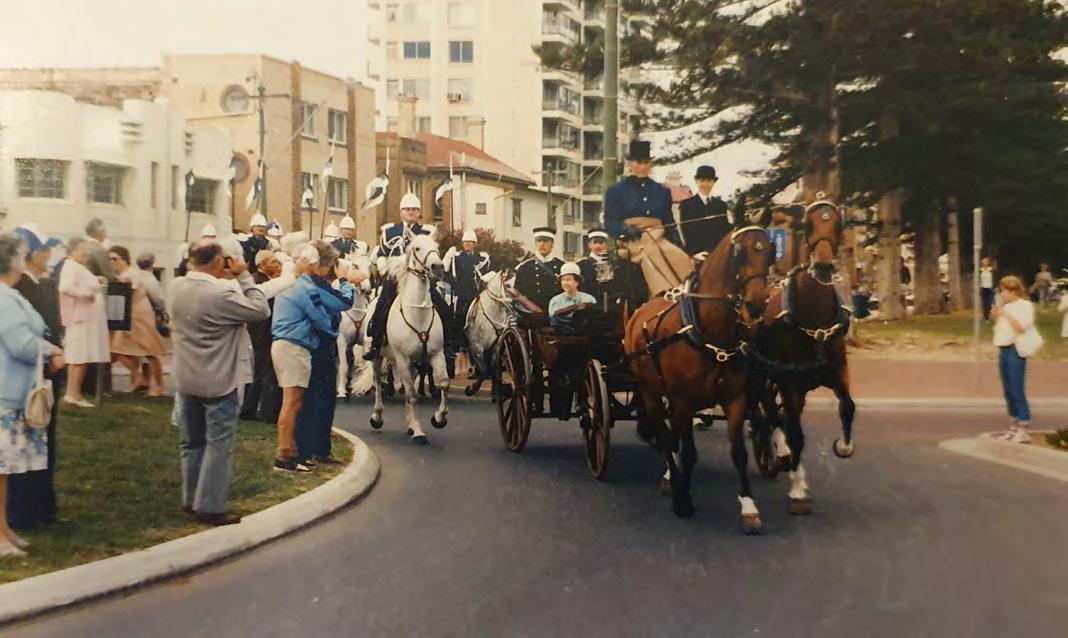
The Rounsevell landau also has a royal connection. On Monday 10 March 1986, the now state landau was used in a royal procession during South Australia’s Jubilee 150 celebrations to carry Her Majesty Queen Elizabeth II and Prince Philip from the Glenelg Town Hall to the Old Gum Tree. The following day a local newspaper reported phenomenal crowds.
The Rounsevell landau is on display at the Millicent Museum, which is home to the National Trust horse-drawn vehicle collection, regarded as one of Australia’s finest. For more information and opening times visit nationaltrust.org.au/places/ millicent-museum


BY MARK TAYLOR
As the Tea Tree Gully Branch of the National Trust marks its 60th anniversary, Secretary Mark Taylor shares some of the creative approaches that have reinvigorated volunteers and made their museum a thriving community gathering place.
In 1965, a group of concerned citizens in Adelaide’s northeastern suburbs gathered to protect the local two-storey stone building known as the Old Highercombe Hotel. They created a National Trust branch to add impetus to their cause. The building was constructed of local stone in 1853-54. After a short period as a hotel, it spent most of its life divided in two. The Australian Government ran the local post office from the north side, with a residence for the postal officer; and the State Government provided the south side as an overflow classroom and headmaster’s residence. The entire building later served as a local council library and office space until, by 1965, it was derelict and destined for demolition.
In 1967, the State Government handed over control of the property to the newly formed branch. Volunteers then began restoring the building and site, and collecting items from local residents to form the Old Highercombe Hotel Folk Museum. This proved to be far-sighted — the museum became the jewel in the crown of what the City of Tea Tree Gully came to term the Tea Tree Gully Township Precinct.
Largely driven by committee members, the branch managed and maintained the museum successfully for many years. They registered the museum in what is now the History Trust of South Australia’s Museums and Collections Program and started working towards accreditation, which requires meeting a level of excellence measured against national standards. As well as documenting and improving processes, this effort reinforced the need for planning. It also provided access to annual grants.
Starting in 2010, efforts were directed into the Steventon Village Project (Steventon was Tea Tree Gully’s former name). This project aimed to expand the offerings of the museum, based on a professionally created display concept plan obtained via a grant. Through 10 stages, the museum site outside the main building was transformed. A team of volunteers
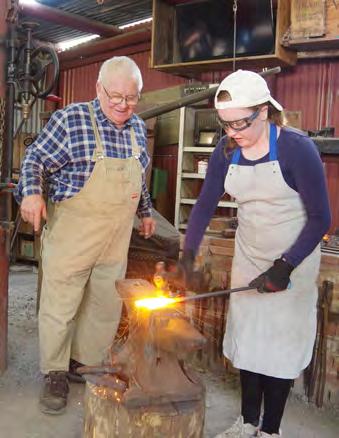
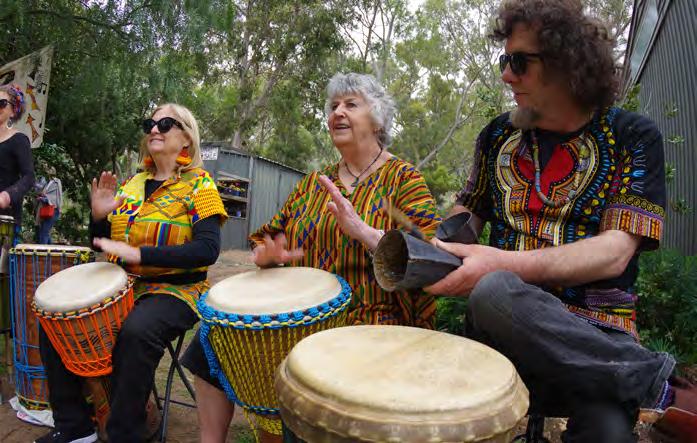
constructed a range of exhibits and further grants enabled professional designers to be engaged to create interpretation panels. Meanwhile, the Branch Committee ran several planning workshops to address challenges such as attracting more people to the weekly Sunday afternoon openings, making more use of the whole site, not just the original building, and encouraging repeat visits. These workshops marked a tipping point in revitalising the museum and volunteer morale.
In 2015, the facility was reborn as the Tea Tree Gully Heritage Museum, ending confusion about its location! The Branch Committee agreed on an appropriate logo, organised a ‘corporate uniform’ for volunteers, and established a branch newsletter, Heritage For All Ages. Instead of opening every Sunday afternoon, a single opening on the third Sunday of each month was introduced and promoted as Heritage on Sunday. The handful of visitors changed to average attendances of 175, with a peak of 555.
Today, each event has a different theme, such as Spring in the Garden and Curious Collections, and presents much for visitors to see and do. Beyond the main building are gardens and lawn, plus five display pavilions, a mobile police cell, a working blacksmith shop and hands-on activities for children. The latest creation is a nature play area. Other organisations and individuals bring their expertise to each theme, including the Adelaide Hills Motor Restorers Club, the Victoriana Society of South Australia and South Australian Miniature Enthusiasts. Success is evidenced by return visitations.
Obviously, running these events requires more volunteers. Typically, 20 are allocated as guides and a range of roles such as providing Devonshire tea and a sausage sizzle, staffing the gift shop and handling plant sales. A blacksmith and farrier also provide working demonstrations in the blacksmith shop. “Morale is great amongst our volunteers. A real team effort prevails, they are invested and they have built friendships,” says
Branch Chair Gill Starks. The volunteers are so keen they even agreed to extend the event times, starting at 11am to capture the lunchtime market, which helps generate more income.
Heritage on Sundays are not the only events at the museum. A school holiday event is held each year over four days, with themes such as Teddy Bear Affair and Dr Seuss is on the Loose. A school program is delivered to over 1,000 primary school-aged children. Youth visit because Children’s University Adelaide has designated the museum one of its Learning Destinations — places where students can enjoy unique and engaging experiences outside school hours. Group tours also visit and may book morning tea or light lunches, and the grounds are available to hire for weddings and other special occasions.
The museum achieved accreditation in 2012 and has passed subsequent five-yearly reviews, making it one of only eight accredited museums in South Australia. Another important milestone came in 2018, when the State Government transferred the property title to the National Trust. While challenges remain, the future is looking positive for this important community museum.
The Tea Tree Gully Heritage Museum is open to the public on the third Sunday of each month, from 11am to 4pm. For more information about the museum and special events visit ttgmuseum.org.au or follow the museum on Facebook. To join our volunteers and help support the Tea Tree Gully Branch email Jenny Cremin at visits@ttgmuseum.org.au or phone 0431 080 062.
Retiring as Moonta Branch Chair at the age of 81,
Graham Hancock reflects on almost 40 years of involvement in the National Trust, and not being related to a certain famous mine captain.
Graham Hancock comes from Mid North farming stock, however he chose to become a teacher. Since leaving the profession in the mid 1980s, his working life has involved stints in regional development and management positions with the National Trust, in between serving on branch committees and State Council, including three years as vice president. During his time as executive officer from 2008 to 2010, Graham joined efforts to explore World Heritage-listing for South Australia’s copper mining sites. As chair of the Moonta Branch for the past few years, he has drawn on his combined experience to help the branch prepare.
HOW DID YOU COME TO JOIN THE NATIONAL TRUST?
My interest in history probably started when I was at teacher’s college. I ended up in Kadina, teaching geography and English, and children with special needs. I did that for about eight years and then I applied for a new position with the local council as economic development and promotions officer. My first involvement with the National Trust was in 1986 when the council appointed me liaison officer to the Kadina Branch. I subsequently became a member and took up the role of secretary, and then regional representative to State Council.
WHAT ARE THE HIGHLIGHTS OF ALL THE PROJECTS YOU’VE BEEN INVOLVED IN?
In 1995, the National Trust moved its headquarters from Ayers House to Pulteney Street; as assets manager it was my responsibility to organise it. The move opened up a new opportunity to present the house as a family mansion and, of course, our visitor numbers started to grow and we won a major tourism award. In 1999, I returned to Kadina to manage what became a $1.2 million project to create a national dryland farming heritage centre. It was the start of what we know today as the Farm Shed Heritage Museum. Then in my capacity as executive officer, I joined a committee seeking out World Heritage-listing possibilities for Cornish mining sites in South Australia. I’ve been involved in this project for 15 years — it’s an amazing project and I’ve met some amazing people.
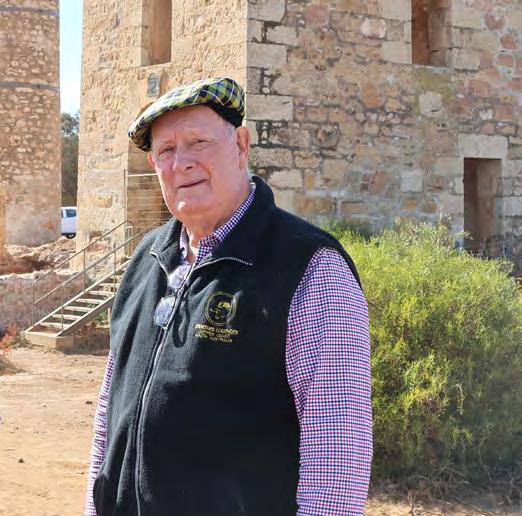
One of the things that I’ve always pursued in all my management positions is looking after volunteers, committee members and branches, and I’ve gained great personal satisfaction from my relationships with a loyal and willing staff, and the friendships created with branch volunteers all over the state.
DO YOU HAVE A FAVOURITE NATIONAL TRUST PROPERTY?
Without doubt my favourite site is Ayers House. I have been involved in so many projects there over the years – I think I know every nook and cranny. I even lived upstairs in the butler’s quarters for more than two years, which was a pretty novel experience. That house is so special, and for me it’s the connection to Burra. Henry Ayers was secretary of the South Australian Mining Association and he was involved in mining at Burra, and of course, he made a fair bit of money. So you have that contrast with the poor old miner living a miserable life in dugouts in the creek, and then at the other end is Ayers House.
My family history goes back to 1846 in Burra, where one of my forebears was a miner although he only stayed until he made enough money to buy a farm. Everybody asks me if there’s a connection to Captain Henry Richard Hancock (a famous figure in Moonta’s history as superintendent and manager of the mines for more than 30 years). It’s a good way to start a conversation, but I’m actually no relation at all that I’m aware of. I’ve studied him from front to back and I’d be very proud to be, but I’m not.
WHY DO YOU THINK SUPPORTING THE NATIONAL TRUST IS SO IMPORTANT?
From inception, the National Trust has been the foremost guardian of heritage sites across the state. I have been proud to be a part of this. It’s not just about bricks and mortar though. It’s also about an advocacy role in maintaining positive attitudes to heritage conservation and protection, and that includes our natural conservation areas, which are so important. We are simply borrowers on the timeline, and it is our responsibility to pass on our heritage for generations to come.
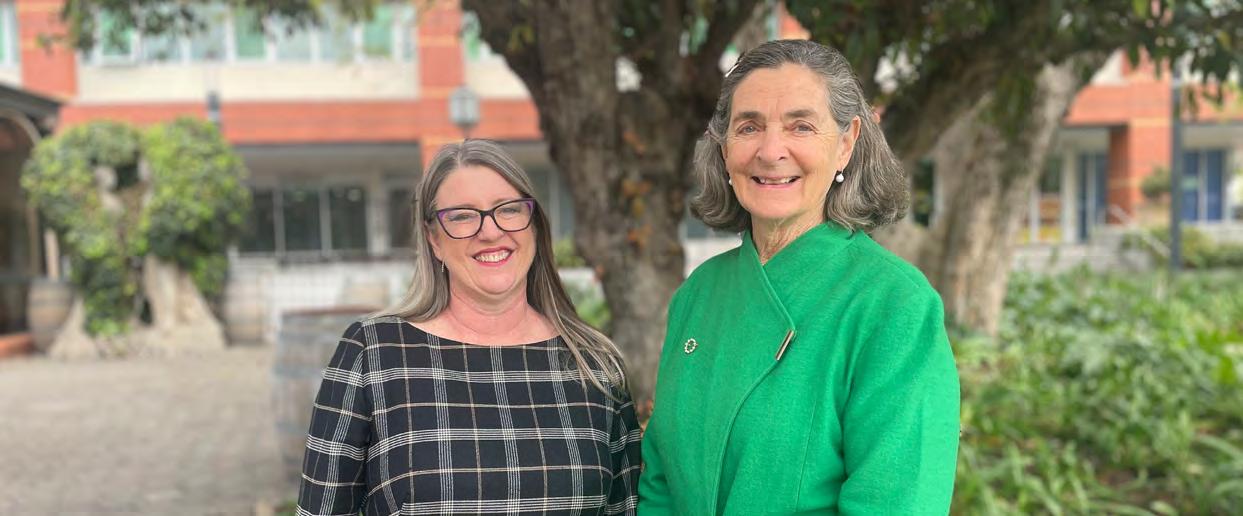
The National Trust of South Australia is thrilled to welcome Nicolette Di Lernia, who took up her post as the new Chief Executive Officer in late September. Heritage Living editor Liz Harfull finds out more about her background and long-standing passion for heritage.
Nicolette Di Lernia credits family holidays travelling Australia and visiting museums and historic houses for her taking an interest in heritage at an early age. Adelaide born and bred, she chose to study architecture at the University of Adelaide because the profession combined her love of being creative and her aptitude for both mathematics and science. She gained her honours exploring facadism and issues around the ethics and best practice of retaining the facade of heritage buildings while demolishing the rest.
Spanning more than 30 years, Ms Di Lernia’s career since graduating has included significant work in the cultural, education and community sectors, ranging from the redevelopment of civic and educational facilities to heritage and conservation initiatives. She has also been a strong advocate for sustainable design, heritage protection and the preservation of South Australia’s built and natural environments.
After university, Ms Di Lernia spent about five years working at Hodgkison Architects, gaining a solid grounding in architectural practice before moving to Grieve Gillett Andersen, where she became an associate in 2010. During this time she focussed on two main areas — adaptive reuse, and projects in the cultural and education sectors. Projects included restoring and adapting the former Glenside hospital administration building to create Adelaide Studios, and converting the male wards and dining hall into a new home for the Adelaide Central School of
Art. She also worked on projects to develop the Basil Hetzel laboratories building on the University of South Australia City East Campus, and Flinders University’s Lincoln Marine Science Centre in Port Lincoln. “I didn’t just want to do upfront design or on-site delivery, I like the whole process, which meant that as I gained more experience I tended to be the project architect, leading the team and making sure everyone was working together,” she explains.
For the past decade Ms Di Lernia has been South Australian Executive Director of the Australian Institute of Architects, where she has led strategic planning, advocacy, education and community engagement programs. “The role was very similar in some ways to what I am doing now at the National Trust. It involved providing team leadership, but also working together with staff and members on advocacy, education, being a spokesperson for the organisation when required, helping to make sure the wheels were turning, but also that we had a voice and a presence, which I think is really important,” she says.
“I am passionate about the role that heritage plays in our communities — both as a source of identity and as a driver for innovation and sustainability. I look forward to working with the Council, members, staff and volunteers to strengthen the National Trust’s important work in protecting and activating our heritage places and natural reserves,” Ms Di Lernia says.
“I also like working with people. Yes, it can be challenging but I’m very interested in what motivates them and makes them feel valued. Volunteers want to give back to the community and feel connected, and the National Trust offers that for many people. They are an amazing resource.”
Ms Di Lernia says that she is very conscious the National Trust has been through a period of significant change in recent times, and that she hopes to offer stability and continuity so the organisation can build on all it’s amazing assets – buildings, objects and people. “It’s not just about any one of those things but all of them,” she says. “The National Trust is such a great organisation with such huge potential, but there are clearly areas where we can do better.”
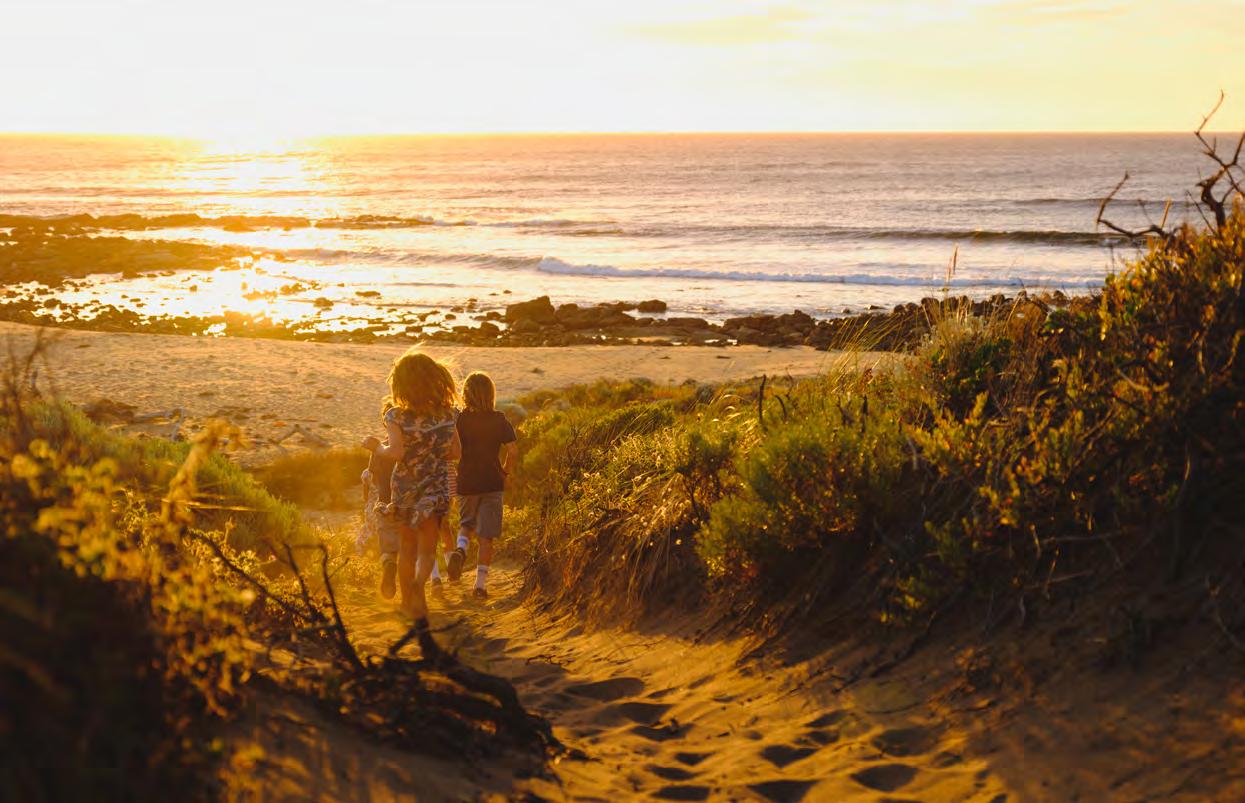
WHERE WILL YOUR MEMBERSHIP TAKE YOU?
BY ALEXANDER HAZELL
Make the most of your membership if you’re heading west for a summer holiday, and visit the diverse National Trust properties scattered across Western Australia. History and writing intern Alexander Hazell suggests four of his favourites.
The National Trust of Western Australia was founded in 1959 during a period of critical discourse over the value of history and heritage, prompted by the destruction of Perth’s historic landscape. Today the organisation cares for a diverse portfolio of more than 60 properties across the state, 11 of which are open to the public. Each property offers unique visitor experiences, challenges perspectives and reflects our diverse approach to heritage and conservation. From grand estate houses to wonders of Victorian engineering and areas of great natural beauty with deep Aboriginal significance, there is something to tempt every visitor. Experience Western Australia in a new and profound way this summer by visiting these specially selected metropolitan and regional properties.
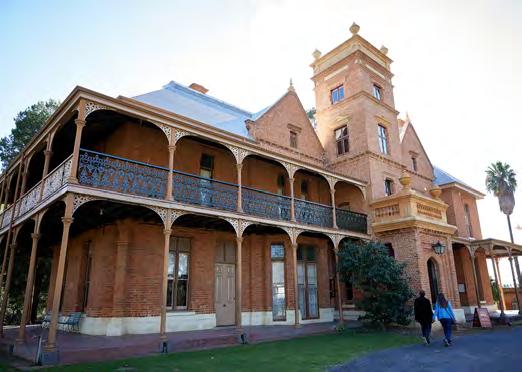
Sitting in an area known as Minderinjy to the local Whadjuk people, the No 1 Pump Station represents the marvels of late Victorian-era engineering that industrialised and made modern Australia. Designed by Charles Yelverton O’Connor as one of eight steam pump stations in the Goldfields Water Supply Scheme, it transferred water over 560 kilometres from Perth to the Goldfields. This site at Mundaring about 40 kilometres east of the city offers enjoyable and informative activities for people of all ages.
As you arrive, you’ll be greeted by the massive brick chimney that towers over the surrounding forest. Inside the station, the original Babcock and Wilcox boilers, along with the Green’s Economiser, are still in excellent condition. Engaging and informative signs are dotted around the building, along with interactive elements for young visitors. Our volunteers are on hand to answer questions and share stories. While you’re here, walk across the Mundaring Weir wall or take in the natural beauty of the Darling Ranges from the trails and picnic spots nearby.
Woodbridge at Mandoon on Whadjuk Nyoongar Country serves as a grand example of Western Australia’s colonial architecture. This impressive and excellently preserved estate house, in what is now suburban Perth, was originally commissioned by Australian politician Charles Harper in 1883. It has had many incarnations over the years, from family home to a farm and even a grammar school. Explore this two-storey Victorian house and scenic riverside grounds at your own pace while learning about the site’s history and its many stories, then grab a bite or a coffee at the cafe. Keep an eye on your screens later this year — Woodbridge at Mandoon will feature as Ramshead Manor in a new Australian version of the hit series Ghosts, due for release on Paramount+ and Network 10.
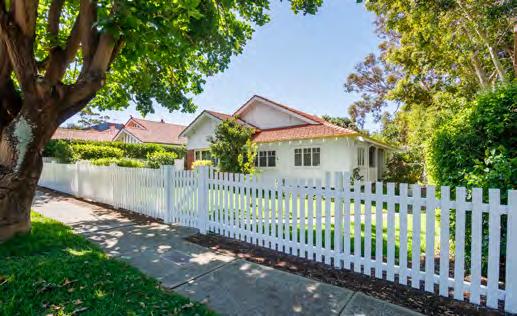
Imagine having the opportunity to stay in the family home of one of Australia’s most influential prime ministers. Nestled in the affluent suburb of Cottesloe, just minutes from Perth’s most photographed beach and a vibrant shopping and dining precinct, the Curtin Family Home provides accommodation for visitors looking for a relaxing stay with a charming historical twist. The modest house was built by John Curtin and his wife Elsie in 1923 and remained in the family for 75 years, most notably during Curtin’s time as the 14th Prime Minister of Australia, from 1941 until his death in 1945. The house represents a typical middle-class dwelling in the 1930s and 1940s period. Following a major restoration and interpretation
project in 2010, it provides a fascinating insight into the lives of John and Elsie Curtin, with guests able to learn more about the Curtin family from audio guides — best enjoyed while relaxing in the lounge or dining in the kitchen.
You’ll find Ellensbrook at Mokidup on Wadandi Noongar Country in the heart of the internationally renowned Margaret River Region. Ellen and Alfred Bussell chose this site surrounded by nature, and overlooking the pristine beach nearby, as their family home in 1857. Inside, learn about the history and life of the Bussell family and the homestead’s connection to the Wadandi people, their stories and culture by taking a self-guided tour. Stop for a picnic at one of the many spots around the grounds and enjoy a pleasant, 30-minute walk to Meekadarabee Falls along the Cape-to-Cape Track. There are five registered Aboriginal heritage sites at this location situated in within the popular Leeuwin-Naturaliste National Park. With the interweaving of colonial and Aboriginal stories, Ellensbrook will challenge perspectives of heritage and history in Western Australia.
Your National Trust of South Australia membership entitles you to free or discounted access to any of our properties open to the public. Check opening times and book tickets online via ntwa.com.au.
For a full picture of where National Trust of South Australia membership can take you visit www.into.org/places
Not a member? Join now.
Scan the QR Code or visit: nationaltrust.org.au/membership-sa
As we head into the holiday season, enjoy a series of special National Trust events that celebrate the Christmas spirit, set in some of our most beautiful heritage buildings and gardens. Then begin the new year exploring your creative side.
For the latest information and to book please visit the Event section on our website. Event details in this magazine are correct at time of printing.
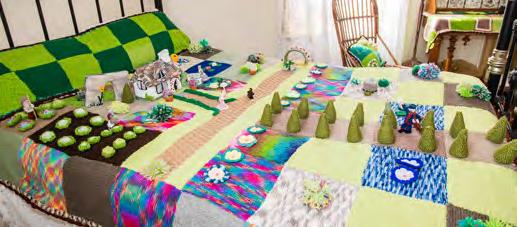
TEA TREE GULLY HERITAGE MUSEUM
14, 15, 21 & 22 November 2025, 10am to 2pm 16 & 23 November 2025, 11am to 4pm
Prepare to be amazed by an incredible showcase of skill, creativity and imagination that has been two years in the making. This extraordinary event celebrates the art of knitting like never before, with stunning displays that will inspire and delight. Browse the Gift Shop for unique, hand-made items you won’t find anywhere else. Then relax and enjoy the beautiful garden setting — the perfect place to wander and soak in the atmosphere. Treat yourself to a delicious Devonshire tea (available every day), or come along on Sundays for the added treat of a sizzling BBQ sausage.
Tickets: National Trust members free, adults $5, concession $4, children free
Z WARD, GLENSIDE
6 December 2025, 11am to 3pm
Experience a Christmas market like no other, inside the historic walls of Z Ward. In a unique twist, each cell will be transformed into a charming mini market stall, offering handmade gifts, artisan goods, festive treats and local wares. Discover something new behind every door.
Tickets: National Trust members $4, adults $5, children (under 15) free
Scan the QR Code or visit: nationaltrust.org.au/sa/
NORTH ADELAIDE BAPTIST CHURCH
14 December 2025, 2pm to 3pm
Gather your friends and family and come celebrate the magic of the season at the North Adelaide Baptist Church with festive Christmas music. Experience a special program featuring our talented organist playing the famous pipe organ, as well as our choir, as we come together to sing beloved traditional Christmas songs that will fill your heart with joy and spread holiday cheer. This is a unique opportunity to hear the magnificent sounds of the church's renowned pipe organ, adding a truly special touch to the celebration. Whether you’re a seasoned singer or simply wish to enjoy the melodies, this is a perfect way to embrace the holiday spirit.
Tickets: National Trust members $8, adults $10, children (under 15) free

BEAUMONT HOUSE, BEAUMONT
24 January 2026, 2pm to 4pm
Unwind and get creative at our Paint & Sip event on the lawns of Beaumont House. Set against the backdrop of this stunning heritage property, enjoy a relaxing evening of painting, sipping and soaking up the atmosphere. Bring along your friends for an afternoon of laughter and creativity as a local artist guides you step by step through creating your very own masterpiece. No experience necessary, just a willingness to have fun!
Tickets: Adults $60
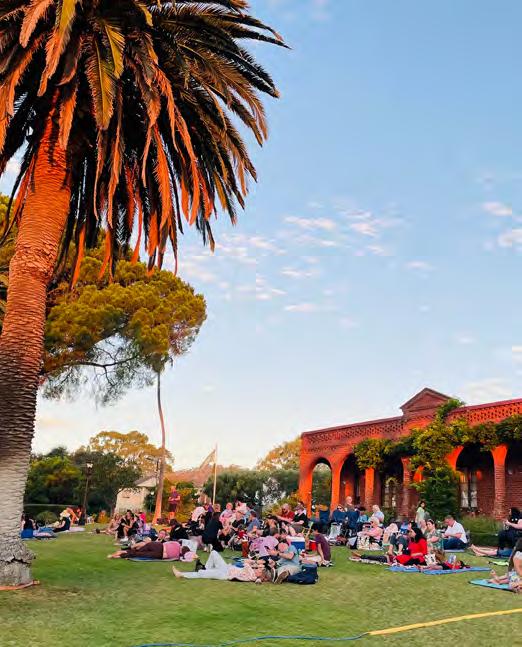
BEAUMONT HOUSE, BEAUMONT
14 February 2026, 6pm to 10pm
Celebrate love under the stars this Valentine’s Day with a magical evening in the romantic gardens of Beaumont House. Pack a picnic rug, bring someone special (or a group of friends!) and settle in for the screening of a timeless, blackand-white romantic movie classic on our beautiful outdoor lawn. Surrounded by the elegance of this State Heritage-listed property, you’ll be transported back to a golden era of cinema.
Tickets: National Trust members $10, adults $12, children (under 15) $5
STATE DINING ROOM, AYERS HOUSE
25 February to 21 March 2026
Discover the magic of the Adelaide Fringe in the historic State Dining Room at Ayers House. Nestled in the heart of the city, this elegant venue offers an intimate setting for a diverse range of Fringe performances. From captivating theatre to comedy and music, experience fantastic entertainment in a stunning heritage building.
Adelaide, Sundays at 1pm and 3pm
Go underground and journey through a winding hallway and hidden chambers to discover one of Adelaide’s oldest buildings. Meet some of the colourful characters who shaped South Australia.
Glenside, selected weekend dates at 2pm
Constructed in the 1880s, Z Ward was home to South Australia’s ’Criminally Insane’ for almost 90 years. Take a 90-minute tour and discover the extraordinary history of this institution. Visit the rare complete example of a Ha Ha Wall, a deception piece of design that provided security while softening the prison-like image.
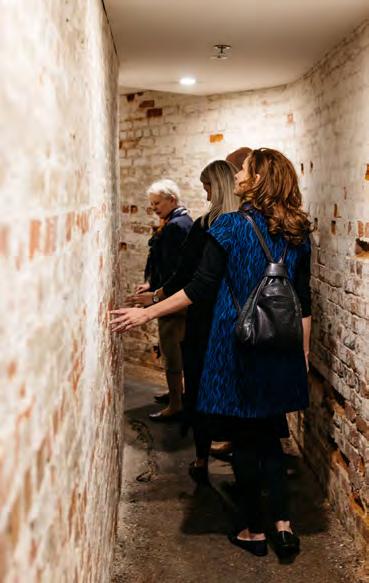
Bookings are essential. Tickets for all the above tours: National Trust members $20, adults $30, concession $25, students and children (under 15) $20, under 5 and Companion Cardholders free


COUNCIL
President, Millie Nicholls
Vice President, Alice Fitch
Alison Stillwell
Catherine Peacock
Chris Guille
Di Wilkins
Elaine Davies
James Harvey
Jo-Ann Lokan
Paul Leadbeter
Tully Brookes
Vivienne Pitman
HEAD OFFICE STAFF
Nicolette Di Lernia, CEO
Leanne Plews, Business Manager
Laura Evans, Regional Operations Manager
Victoria Pavliv, Finance Manager
Alex Emmins, Natural Heritage Manager
Louise Stanford, Events & Engagement Coordinator
Beverley Stacey, Senior Finance Officer
Pauline Carty, Membership & Administration Coordinator
Colleen Schirmer, Compliance Coordinator
Felicity Wheeler, Collections & Built
Heritage Coordinator
COUNCIL COMMITTEES
Audit, Finance and Governance
Cultural Heritage
Members, Regions and Branches
Natural Heritage BRANCHES
Ardrossan, Auburn, Barmera, Beachport, Burnside, Burra, Ceduna, Central Yorke Peninsula, Clare, Cleve, Coromandel Valley, Gawler, Glencoe, Goolwa, Hahndorf, Jamestown, Kadina, Keith, Kingscote KI, Kingston SE, Koppio, Millicent, Minlaton, Moonta, Mount Barker, Mount Gambier, Naracoorte, Overland Corner, Penneshaw, Penola, Port of Adelaide, Port Elliot, Port Pirie, Renmark, Robe, Strathalbyn, Streaky Bay, Tea Tree Gully, Tumby Bay, Victor Harbor, Waikerie, Wallaroo, Whyalla, Willunga, Yankalilla
PATRON IN CHIEF
Her Excellency the Honourable Frances Adamson AC Governor of South Australia
Treat family and friends to an unforgettable year of discovery with a National Trust of South Australia gift membership.
As a member, they’ll enjoy:
• Free entry to hundreds of amazing museums, houses and gardens across Australia and overseas
• Discount ticket prices to our fantastic events
• Our Heritage Living magazine, delivered three times a year
• Monthly updates with early booking options for our latest events
And you will be supporting our important work preserving, protecting and promoting South Australia’s built, natural and cultural heritage
Individual and family memberships available FOR MORE INFORMATION VISIT NATIONALTRUST.ORG.AU/GIFTMEMBERSHIP