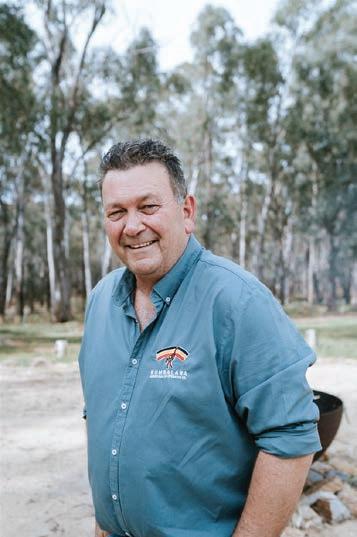
Finance Ashok Binder
CHALLENGES AND OPPORTUNITIES
INTRODUCTION
Rumbalara is experiencing significant expansion in its service areas, bringing both new opportunities and operational challenges. The decentralised, multilocational nature of its programs introduces business risks such as communication issues, inconsistencies, rising costs, silo formation, and compliance complexities. All of which can be detrimental to compliance and service quality
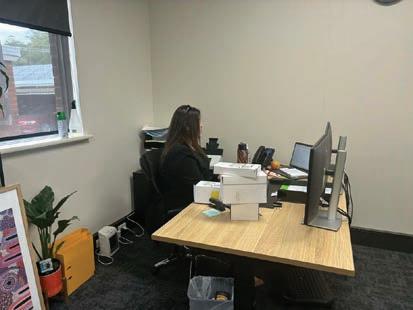
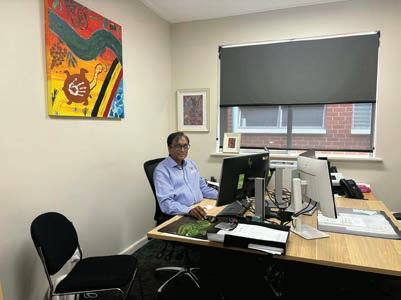
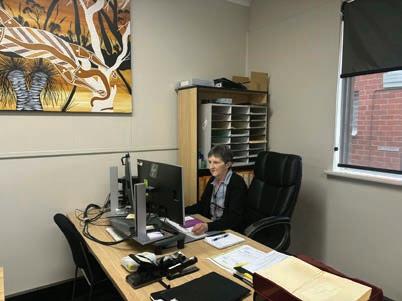
The finance team at Rumbalara is guided by a CFO and supported by a group of capable professionals with varied experience across finance, accounting, and business management The CFO brings extensive knowledge in finance, accounting, and business administration, along with valuable experience in corporate governance, regulatory compliance, and strategic financial management Under this leadership, the team effectively manages day-to-day financial operations while ensuring that financial strategies align with the organisation’s wider goals of community empowerment and quality health service delivery
To address these challenges, Rumbalara has implemented several strategic initiatives designed to mitigate operational risks, strengthen service quality, and support sustainable growth
The finance team comprises members with extensive experience in the management of complex funding agreements and grants compliance, as well as the detailed reporting requirements unique to Aboriginal health services This depth of expertise ensures the team is well-equipped to handle the intricacies of funding streams and regulatory obligations specific to the sector
Standardised Procedures
Rumbalara has implemented standardised procedures across its services to promote consistency in financial operations and ensure compliance. Training has been provided to program managers to enhance their understanding of stakeholder requirements
Several team members are Indigenous, contributing valuable cultural perspectives and a deep understanding of the social, cultural, and economic contexts in which Rumbalara operates This cultural knowledge is essential for maintaining a balance between robust technical financial governance and the values of the community served by Rumbalara.
Key Performance Indicators
The finance team at Rumbalara exemplifies a unique combination of professional financial expertise, strategic direction, and cultural awareness Their collective efforts play a crucial role in supporting Rumbalara’s mission, which is to deliver culturally appropriate, holistic health and community services to the Aboriginal community in the region in an effective and sustainable manner
Most programs use measurable key performance indicators to monitor client outcomes, helping staff evaluate progress and maintain accountability
This structure ensures Rumbalara maintains its position as a leading Aboriginal community-controlled organisation with an annual budget exceeding $50 million and a workforce of approximately 315 people, reflecting its significant role as an employer and economic contributor in the region
Integrated Systems
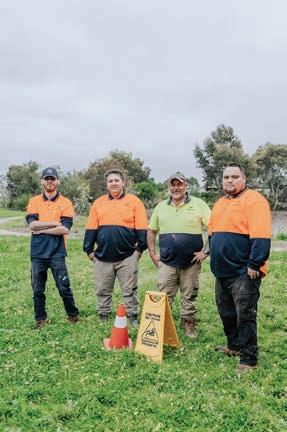
Our Finance Team
Data- Driven Improvements
Looking Forward
Integration of systems and platforms has been prioritised to streamline reporting processes and reduce inefficiencies By consolidating data and resources, Rumbalara is able to simplify administrative tasks and improve overall operational efficiency
Ongoing monitoring of data enables Rumbalara to optimise its programs and resources continually This approach ensures that services remain responsive to community needs and supports informed decision-making for program improvements
The finance team at Rumbalara exemplifies a unique combination of professional financial expertise, strategic direction, and cultural awareness.
With robust financial performance, a strengthened balance sheet, and a skilled and growing team, Rumbalara has positioned itself to deliver sustainable growth and long-term community benefit Its forward-looking finance function and integrated risk management strategies enable it to meet rising community needs and continue making a meaningful impact across its expanding service footprint
Rumbalara
OVERVIEW
OVERVIEW
The Finance team at Rumbalara plays a vital and comprehensive role in ensuring the Rumbalara’s financial health, regulatory compliance, and resource efficiency aligned with its community-focused objectives. Specifically, the finance function manages:
The Finance team at Rumbalara plays a vital and comprehensive role in ensuring the Rumbalara’s financial health, regulatory compliance, and resource efficiency aligned with its community-focused objectives Specifically, the finance function manages:
Financial Reporting & Budgeting
Financial Reporting & Budgeting
Financial reporting and budgeting to sustain Rumbalara's financial stability and support its strategic goals
Financial reporting and budgeting to sustain Rumbalara's financial stability and support its strategic goals.
Daily Financial Operations
Daily Financial Operations
Daily financial operations including accounts payable and receivable, purchasing oversight, and banking transactions with strict authorisation controls to prevent errors and fraud.
Daily financial operations including accounts payable and receivable, purchasing oversight, and banking transactions with strict authorisation controls to prevent errors and fraud
Compliance
Compliance
Compliance with regulations and fulfilling detailed reporting requirements across diverse programs and various government funding agreements.
Compliance with regulations and fulfilling detailed reporting requirements across diverse programs and various government funding agreements
Income Oversight
Income Oversight
Income oversight from grants and program-level reporting to relevant service areas
Income oversight from grants and program-level reporting to relevant service areas.
Financial Accuracy
Financial Accuracy
Providing accurate, timely financial information to support Board and Executive Management decisionmaking
Providing accurate, timely financial information to support Board and Executive Management decisionmaking.
Financial Controls
Financial Controls
Maintaining robust internal financial controls
Maintaining robust internal financial controls.
Funding Agreements
Funding Agreements
Coordination of funding agreements and performance reporting to funding bodies
Coordination of funding agreements and performance reporting to funding bodies
Financial and Funding Data
Financial and Funding Data
Management of information databases related to financial and funding data
Management of information databases related to financial and funding data
These responsibilities enable Rumbalara to deliver culturally appropriate, holistic health and community services effectively to the Aboriginal community in the Goulburn Valley region, ensuring resources are used efficiently and contributing towards the long-term sustainability of the cooperative and its community impact
These responsibilities enable Rumbalara to deliver culturally appropriate, holistic health and community services effectively to the Aboriginal community in the Goulburn Valley region, ensuring resources are used efficiently and contributing towards the long-term sustainability of the cooperative and its community impact
CHALLENGES AND OPPORTUNITIES
ACHIEVEMENTS AND STORIES
Rumbalara is experiencing significant expansion in its service areas, bringing both new opportunities and operational challenges. The decentralised, multilocational nature of its programs introduces business risks such as communication issues, inconsistencies, rising costs, silo formation, and compliance complexities. All of which can be detrimental to compliance and service quality
During the year under review, the Finance team at Rumbalara Aboriginal Co-operative implemented several targeted initiatives to reinforce financial management and operational resilience, including:
Data-Driven Budgeting: Carried out an evidence-based budgeting process for the next financial year 2025-26 involving Executive Managers, program manager insights, yielding precise budgeting and better alignment of resources
To address these challenges, Rumbalara has implemented several strategic initiatives designed to mitigate operational risks, strengthen service quality, and support sustainable growth
Enhanced Collaboration with Service Areas: Established regular information-sharing meetings and appointed resources to provide timely reporting and acquittal processes, improving alignment and responsiveness to service needs.
Standardised Procedures
Operational Resilience: Maintained seamless financial operations amid increased workloads and planned staff absences, demonstrating team agility and commitment
Team Capacity & Technical Strength: Continued enhancement of technical knowledge and experience within the team to handle greater workloads and ensure sound internal control
Rumbalara has implemented standardised procedures across its services to promote consistency in financial operations and ensure compliance. Training has been provided to program managers to enhance their understanding of stakeholder requirements
Internal Control Improvements: Designed and implemented a comprehensive internal control framework for financial closings, resulting in more accurate and timely financial statements, which increased stakeholder confidence and improved audit outcomes
Knowledge Management: Began documenting core processes to reduce dependency on individuals and strengthen organizational knowledge retention.
Process Automation: Advanced digitization efforts, prioritizing automated accounts payable to reduce manual handling and improve efficiency
Key Performance Indicators
STATISTICS AND DATA
Most programs use measurable key performance indicators to monitor client outcomes, helping staff evaluate progress and maintain accountability
These initiatives have collectively helped Rumbalara maintain robust financial management practices while supporting its holistic, community-centered service delivery and ensuring long-term sustainability for the Aboriginal community in the region
KPI Scorecard
Rumbalara demonstrated strong financial and operational performance in FY2025, with revenue rising to approximately $54.04 Million, representing around 32% growth over the previous year Staff costs increased from $27 54 million to $31 67 Million, and client support costs rose from $6 22 million to $6 86 million The workforce expanded to 315 employees, reinforcing Rumbalara’s commitment to robust client support and resourcing. These figures highlight both financial growth and a strategic focus on scaling workforce capabilities to meet community needs
Systems
Rumbalara Housing Limited, a subsidiary, earned $3 4 million in revenue and a $2 9 million net surplus in FY2024-25
Integration of systems and platforms has been prioritised to streamline reporting processes and reduce inefficiencies By consolidating data and resources, Rumbalara is able to simplify administrative tasks and improve overall operational efficiency
Ongoing monitoring of data enables Rumbalara to optimise its programs and resources continually This approach ensures that services remain responsive to community needs and supports informed decision-making for program improvements
With robust financial performance, a strengthened balance sheet, and a skilled and growing team, Rumbalara has positioned itself to deliver sustainable growth and long-term community benefit Its forward-looking finance function and integrated risk management strategies enable it to meet rising community needs and continue making a meaningful impact across its expanding service footprint
Rumbalara
Rumbalara
Rumbalara is experiencing significant expansion in its service areas, bringing both new opportunities and operational challenges. The decentralised, multilocational nature of its programs introduces business risks such as communication issues, inconsistencies, rising costs, silo formation, and compliance complexities. All of which can be detrimental to compliance and service quality
To address these challenges, Rumbalara has implemented several strategic initiatives designed to mitigate operational risks, strengthen service quality, and support sustainable growth
Standardised Procedures
Data- Driven Improvements CHALLENGES AND OPPORTUNITIES
Key Performance Indicators
Rumbalara has implemented standardised procedures across its services to promote consistency in financial operations and ensure compliance. Training has been provided to program managers to enhance their understanding of stakeholder requirements
Integrated Systems
Most programs use measurable key performance indicators to monitor client outcomes, helping staff evaluate progress and maintain accountability
Costs ($ M) Head Counts (No.)
Integration of systems and platforms has been prioritised to streamline reporting processes and reduce inefficiencies By consolidating data and resources, Rumbalara is able to simplify administrative tasks and improve overall operational efficiency
Ongoing monitoring of data enables Rumbalara to optimise its programs and resources continually This approach ensures that services remain responsive to community needs and supports informed decision-making for program improvements
With robust financial performance, a strengthened balance sheet, and a skilled and growing team, Rumbalara has positioned itself to deliver sustainable growth and long-term community benefit Its forward-looking finance function and integrated risk management strategies enable it to meet rising community needs and continue making a meaningful impact across its expanding service footprint
Rumbalara
CHALLENGES AND OPPORTUNITIES
CHALLENGES AND OPPORTUNITIES
Rumbalara is experiencing significant expansion in its service areas, bringing both new opportunities and operational challenges. The decentralised, multilocational nature of its programs introduces business risks such as communication issues, inconsistencies, rising costs, silo formation, and compliance complexities. All of which can be detrimental to compliance and service quality
Rumbalara is experiencing significant expansion in its service areas, bringing both new opportunities and operational challenges The decentralised, multilocational nature of its programs introduces business risks such as communication issues, inconsistencies, rising costs, silo formation, and compliance complexities All of which can be detrimental to compliance and service quality
To address these challenges, Rumbalara has implemented several strategic initiatives designed to mitigate operational risks, strengthen service quality, and support sustainable growth
To address these challenges, Rumbalara has implemented several strategic initiatives designed to mitigate operational risks, strengthen service quality, and support sustainable growth
Standardised Procedures
Standardised Procedures
Rumbalara has implemented standardised procedures across its services to promote consistency in financial operations and ensure compliance. Training has been provided to program managers to enhance their understanding of stakeholder requirements
Rumbalara has implemented standardised procedures across its services to promote consistency in financial operations and ensure compliance Training has been provided to program managers to enhance their understanding of stakeholder requirements
Key Performance Indicators
Key Performance Indicators
Most programs use measurable key performance indicators to monitor client outcomes, helping staff evaluate progress and maintain accountability
Most programs use measurable key performance indicators to monitor client outcomes, helping staff evaluate progress and maintain accountability
Integrated Systems
Data- Driven Improvements
Looking Forward
Looking Forward
Integration of systems and platforms has been prioritised to streamline reporting processes and reduce inefficiencies By consolidating data and resources, Rumbalara is able to simplify administrative tasks and improve overall operational efficiency
Integration of systems and platforms has been prioritised to streamline reporting processes and reduce inefficiencies By consolidating data and resources, Rumbalara is able to simplify administrative tasks and improve overall operational efficiency
Ongoing monitoring of data enables Rumbalara to optimise its programs and resources continually This approach ensures that services remain responsive to community needs and supports informed decision-making for program improvements
Ongoing monitoring of data enables Rumbalara to optimise its programs and resources continually This approach ensures that services remain responsive to community needs and supports informed decision-making for program improvements
With robust financial performance, a strengthened balance sheet, and a skilled and growing team, Rumbalara has positioned itself to deliver sustainable growth and long-term community benefit Its forward-looking finance function and integrated risk management strategies enable it to meet rising community needs and continue making a meaningful impact across its expanding service footprint
With robust financial performance, a strengthened balance sheet, and a skilled and growing team, Rumbalara has positioned itself to deliver sustainable growth and long-term community benefit Its forward-looking finance function and integrated risk management strategies enable it to meet rising community needs and continue making a meaningful impact across its expanding service footprint.
Rumbalara
IMAGE: Worakiai Larkins & Waylon Boney
Rumbalara Aboriginal Co-Operative stands as a pillar of strength and care for our community, deeply rooted in the values of self-determination and cultural pride.
We deliver holistic, community-led services that nurture our people from pre-birth through to Dreamtime.
Heart Of Community | Holistic | Integrated | Respectful
We commit to work in partnership with individuals, families and community, to support them in achieving an optimal quality and standard of living Through active partnerships we will strengthen Health & Culture Our People, Our Way!
Rumbalara Aboriginal Co-Operative Ltd and the entity it controlled
Rumbalara Aboriginal Co-Operative Ltd and the entity it controlled
ABN 84 530 647 942
ABN 84 530 647 942
Consolidated Financial Statements for the year ended 30 June 2025
Consolidated Financial Statements for the year ended 30 June 2025
ABN 84 530 647 942
ABN 84 530 647 942
Directors’ Report
For the year ended 30 June 2025
The directors present their report, together with the consolidated financial statements, on the consolidated entity (referred to hereafter as the “consolidated entity”) consisting of Rumbalara Aboriginal Co-Operative Ltd (referred to hereafter as the “parent entity”) and the entity it controlled being Rumbalara Housing Limited (referred to hereafter as the “subsidiary”) at the end of, or during, the year ended 30 June 2025.
Directors
The following persons were directors of the parent entity and subsidiary during the whole of the financial year and up to the date of this report, unless otherwise stated:
Rumbalara Aboriginal Co- Operative Ltd
Neville Atkinson
Marie Barbance
Eric Egan
Pamela Pederson
Joanne Atkinson
Suzanne Nelson
Mark Anselmi (commenced 29 November 2024)
Rumbalara Housing Ltd
Eric Egan
Marie Barbance
Edel Conroy
Neville Atkinson
Kenneth Marchingo AM (commenced 18 August 2025)
Review of operations
The surplus of the consolidated entity after providing for income tax amounted to $10,824,207 (2024: deficit $784,677).
Principal activities
The principal activity of the consolidated entity during the financial year was the provision of health, wellbeing and social services to members of the Aboriginal Community in the Goulburn Valley Region.
No significant changes in the nature of the consolidated entity’s activities occurred during the financial year.
Significant changes in the state of affairs
There were no significant changes in the state of affairs of the consolidated entity during the financial year.
Matters subsequent to the end of the financial year
No matters or circumstances has arisen since 30 June 2025 that has significantly affected, or may significantly affect the consolidated entity's operations, the results of those operations, or the consolidated entity's state of affairs in future financial years.
Likely developments and expected results of operations
There are no known likely developments or expected changes in the operations of the company that will significantly affect the results in future financial years.
Environmental regulation
The consolidated entity is not subject to any significant environmental regulation under Australian Commonwealth or State law.
Dividends
No dividends were paid or declared during the financial year (2024: Nil).
ABN 84 530 647 942
Directors’ Report
For the year ended 30 June 2025
Shares and contributions on winding up
The parent entity is registered as a co-operative without shares under the Co- operatives National Law (Vic)
As such there are no member guarantees, no shares under option, and no ordinary shares of the parent entity issued on the exercise of options.
The subsidiary is registered as a company limited by guarantee without shares under the Corporations Act 2001. As such there is a member guarantee which relates to the parent entity as sole member.
Information on directors
Neville Atkinson Chairperson
Experience and expertise
Marketing and Research – Peat Marwick, Cultural Heritage Legislation Act Regulations, Management Planning, Victorian Aboriginal Legal Services, Para legal Training Qualifications, Victorian Aboriginal Deaths in Custody Research and Investigation tam, Business Development Management, Governance Training, Financial management, Establishing Horticultural/ Agricultural Businesses
Special responsibilities Board Member RHL
Marie Barbance Vice Chairperson
Qualifications
Experience and expertise
Certified OHS Practitioner; Diploma in OHS; Cert IV in OHS; Cert IV in Training and Assessment, Community Leader Fellowship, Cert. in Community Leadership & Governance (local gov.) 5 years recognition of service (GSCC).
28+ years in the Health Industry Nursing and Educator/ facilitation; 4 years Rumbalara Aboriginal Co-operative; Currently employed by City of Greater Shepparton Director Aboriginal Advancement League, 3 years; Director of the Torch Programme, and Currently on Rumbalara Board of Directors since October 2020.
Special responsibilities Deputy Chair RHL, Chairperson Clinical Governance Committee
Eric Egan Board Member
Experience and expertise
Hume Region Department of Justice, 3 years; Employed at MADEC, 6 years; Currently employed by Vic. Police; Dhelk Dja (previously IFVRAG), 8 years; Campaspe Shire Youth Services Network Committee, 6 years; Marrung Wurreker (Education), 5 years; Aboriginal Workforce Development Strategy Group (Employment) 3.6 years; GOTAFE Aboriginal Community Advisory Committee; Previously a Hume RAJAC and Shepparton LAJAC member.
Special responsibilities Chairperson RHL
Pamela Pederson
Experience and expertise
Board Member
Currently sitting on various courts in Melbourne and Shepparton, held these positions since 2005 (Melbourne Magistrates, Lorrie Court, County Koorie Court, Melbourne and Heidelberg Children’s Koorie Court, Shepparton County Koorie Court, Shepparton magistrates Koorie Court, Shepparton Children’s Koorie Court; Member of the Adult Parole Board.
Joanne Atkinson Board Member
Qualifications
Experience and expertise
Suzanne Nelson
Qualifications
Experience and expertise
Bachelor of Education; Diploma of Education; Diploma of Management; Certificate IV Train the Trainer; Diploma of Life Coaching
Currently Manager, Manager Koori Courts, Courts Services Victoria, held these positions since 1997 (Close the Health Gap Executive Officer, Victorian Aboriginal Health Service, HR & Operations Manager/Acting CEO - Aboriginal Housing Victoria, Tenancy Manager, Aboriginal Housing Victoria, Executive Officer, Hume Regional Aboriginal Justice Advisory Committee (RAJAC) – Dept. of Justice, Indigenous Facilitator Council of Australian Government (COAG) Department of Aboriginal Affairs Victoria (12-month secondment from Department of Justice to implement this initiative); Aboriginal Housing Services Officer - Department of Human Services
Board member
Certificate of Completion DRUMBEAT Facilitator Training, CRAF Training, Cognitive Behavioral Therapy Training, Ice: Training for Frontline Workers 6 Modules, 1st Aid Certificate, Diploma of Community Services, Mental Health First Aid Instructor, Certificate III, Community Services Work
Enrolled Nurse, Alcohol and other Drugs Therapeutic Clinician, Aboriginal Hospital Liaison Officer, Outreach Worker, Grief and Trauma Counsellor & AOD Support Worker, Family Support Worker, Family Aid Unit Coordinator.
ABN 84 530 647 942
Directors’ Report
For the year ended 30 June 2025
Information on directors (cont.)
Mark Anselmi Board Member
Experience and expertise
Certificate IV cultural heritage management, Corporate Governance Training, Facilitation Skills Training, Contract Management essentials for project managers, Stedan people management.
Special responsibilities Chairperson – Finance, Risk and Audit Committee
Edel Conroy Board Member
Qualifications
Experience and expertise
Special responsibilities
Bachelor of Commerce; Member of the Australian Institute of Company Directors; Agile Lead Auditor
Highly skilled, experienced finance, risk and governance executive with over 25 years’ experience across the private, public and NFP sectors. Edel has held various senior executive positions as well as positions on various Boards as Director and extensive experience as Company Secretary.
Consulting on Governance, Risk and Change Management, a Director of First Nations Health, Myanmar Atlantic Pearling Co., and Touchtile Pty Ltd.
Kenneth Marchingo AM Board Member
Qualifications
Experience and expertise
Grad Cert Hsg Pol Mgt.
over 40 years experience in the Social &Community housing sector, with over 30 years as a CEO, Board Director and Strategy advisor to multiple entities and housing organisations, Founder of PowerHousing Australia, first Australian Chair of the International Housing Partnership, keynote speaker to the largest community housing conferences on 3 continents. Most recently Interim CEO of the Aboriginal Community Controlled, Community Housing Central Australia.
Cooperative and company secretary
Edel Conroy has held the role of the parent entity secretary since 29 July 2019. Edel is also secretary, public officer and Director of the subsidiary since inception.
Edel Conroy Cooperative and company secretary
Qualifications
Experience and expertise
Bachelor of Commerce; Member of the Australian Institute of Company Directors
Highly skilled, experienced finance, risk and governance executive with over 25 years’ experience across the private, public and NFP sectors. Edel has held various senior executive positions as well as positions on various Boards as Director and extensive experience as Company Secretary.
Consulting on Governance, Risk and Change Management, a Director of First Nations Health, Myanmar Atlantic Pearling Co., and Touchtile Pty Ltd.
Special responsibilities Finance, Risk and Audit Committee
Meetings of directors
The number of meetings of the parent entity Board of Directors ('the Board') held during the year ended 30 June 2025, and the number of meetings attended by each director were:
ABN 84 530 647 942
Directors’ Report
For the year ended 30 June 2025
Meetings of directors (cont.)
The number of meetings of the subsidiary’s Board of Directors ('the Board') held during the period ended 30 June 2025, and the number of meetings attended by each director were:
Indemnity and insurance of officers
The consolidated entity has indemnified the directors and executives for costs incurred, in their capacity as a director or executive, for which they may be held personally liable, except where there is a lack of good faith.
During the financial year, the consolidated entity paid a premium in respect of a contract to insure the directors and executives of the consolidated entity against a liability to the extent permitted by the Co-operatives National Law (Vic) and the ACNC Act. The contract of insurance prohibits disclosure of the nature of the liability and the amount of the premium.
Indemnity and insurance of auditor
The consolidated entity has not, during or since the end of the financial year, indemnified or agreed to indemnify the auditor of the consolidated entity or any related entity against a liability incurred by the auditor.
During the financial year, the consolidated entity has not paid a premium in respect of a contract to insure the auditor of the consolidated entity or any related entity.
Proceedings on behalf of the consolidated entity
No person has applied to the Court under the Co-operatives National Law (Vic) for leave to bring proceedings on behalf of the consolidated entity, or to intervene in any proceedings to which the consolidated entity is a party for the purpose of taking responsibility on behalf of the consolidated entity for all or part of those proceedings.
Auditor’s independence declaration
A copy of the auditor's independence declaration as required under Section 283 of Co-operatives National Law Application Act 2013 (Victoria) and Section 60-40 of the Australian Charities and Not for Profits Commission Act 2012 is set out immediately after this directors' report.
This report is made in accordance with a resolution of directors.
On behalf of the directors
Neville Atkinson
Mark Anselmi Chairperson Board member
Dated this 1st day of December 2025
Responsibilities of Management and Those Charged with Governance for the Financial Report
Responsibilities of Management and Those Charged with Governance for the Financial Report
AUDITOR’S INDEPENDENCE DECLARATION
The directors of the company are responsible for the preparation of the financial report that gives a true and fair view in accordance with Australian Accounting Standards – Simplified Disclosures and the ACNC Act, and for such internal control as the directors determine is necessary to enable the preparation of the financial report that gives a true and fair view and is free from material misstatement, whether due to fraud or error.
The directors of the company are responsible for the preparation of the financial report that gives a true and fair view in accordance with Australian Accounting Standards – Simplified Disclosures and the ACNC Act, and for such internal control as the directors determine is necessary to enable the preparation of the financial report that gives a true and fair view and is free from material misstatement, whether due to fraud or error.
In preparing the financial report, the directors are responsible for assessing Rumbalara Housing Limited's ability to continue as a going concern, disclosing, as applicable, matters related to going concern and using the going concern basis of accounting unless management either intends to liquidate Rumbalara Housing Limited or to cease operations, or has no realistic alternative but to do so.
In preparing the financial report, the directors are responsible for assessing Rumbalara Housing Limited's ability to continue as a going concern, disclosing, as applicable, matters related to going concern and using the going concern basis of accounting unless management either intends to liquidate Rumbalara Housing Limited or to cease operations, or has no realistic alternative but to do so.
As lead auditor for the audit of the consolidated financial report of Rumbalara Aboriginal Co-operative Limited and its subsidiary for the year ended 30 June 2025, I declare that, to the best of my knowledge and belief, there have been no contraventions of:
The directors are responsible for overseeing the company’s financial reporting process.
The directors are responsible for overseeing the company’s financial reporting process.
Auditor's Responsibilities for the Audit of
Auditor's Responsibilities for the Audit of the Financial Report
the Financial Report
(i) the auditor independence requirements of the Co-operatives National Law Application Act 2013 and Division 60 of the Australian Charities and Not-for-profits Commission Act 2012 in relation to the audit; and
(ii) any applicable code of professional conduct in relation to the audit.
Our objectives are to obtain reasonable assurance about whether the financial report as a whole is free from material misstatement, whether due to fraud or error, and to issue an auditor's report that includes our opinion. Reasonable assurance is a high level of assurance, but is not a guarantee that an audit conducted in accordance with the Australian Auditing Standards will always detect a material misstatement when it exists. Misstatements can arise from fraud or error and are considered material if, individually or in the aggregate, they could reasonably be expected to influence the economic decisions of users taken on the basis of this financial report.

Our objectives are to obtain reasonable assurance about whether the financial report as a whole is free from material misstatement, whether due to fraud or error, and to issue an auditor's report that includes our opinion. Reasonable assurance is a high level of assurance, but is not a guarantee that an audit conducted in accordance with the Australian Auditing Standards will always detect a material misstatement when it exists. Misstatements can arise from fraud or error and are considered material if, individually or in the aggregate, they could reasonably be expected to influence the economic decisions of users taken on the basis of this financial report.
RSM AUSTRALIA PARTNERS
A further description of our responsibilities for the audit of the financial report is located at the Auditing and Assurance Standards Board website at: http://www.auasb.gov.au/Home.aspx. This description forms part of our auditor's report.
A further description of our responsibilities for the audit of the financial report is located at the Auditing and Assurance Standards Board website at: http://www.auasb.gov.au/Home.aspx. This description forms part of our auditor's report.
Independence
Independence
JOHN FINDLAY Partner
We confirm that the independence declaration required by the ACNC Act, which has been given to the responsible entities of Rumbalara Housing Limited, would be in the same terms if given to the responsible entities as at the time of this auditor’s report.
We confirm that the independence declaration required by the ACNC Act, which has been given to the responsible entities of Rumbalara Housing Limited, would be in the same terms if given to the responsible entities as at the time of this auditor’s report.
Ballarat, Victoria
Dated this 4th day of December 2025
RSM AUSTRALIA PARTNERS
RSM AUSTRALIA PARTNERS
JOHN FINDLAY Partner
JOHN FINDLAY Partner
Ballarat, Victoria
Ballarat, Victoria
Dated this 4th day of December 2025
Dated this 4th day of December 2025
ABN 84 530 647 942
Consolidated Statement of Profit or Loss and Other Comprehensive Income For the year ended 30 June 2025
Other comprehensive income:
Items that will not be reclassified subsequently to profit or loss Gain on revaluation of property, plant and equipment, net of tax - 18,630,907 Other comprehensive income for the year, net of tax - 18,630,907
ABN 84 530 647 942
Consolidated Statement of Financial Position As at 30 June 2025
ABN 84 530 647 942
Consolidated Statement of Changes in Equity For the year ended 30 June 2025
2024 Balance
28,200,870
ABN 84 530 647 942
Consolidated Statement of Cash Flows For the year ended 30 June 2025
CASH FLOWS FROM INVESTING ACTIVITIES
CASH FLOWS FROM FINANCING ACTIVITIES
(604,641)
ABN 84 530 647 942
Notes to the Consolidated Financial Statements
For the year ended 30 June 2025
Note 1 Summary of Material Accounting Policies
The consolidated financial statements cover Rumbalara Aboriginal Co-Operative Ltd and the entity it controlled (referred to hereafter as the “consolidated entity”) consisting of Rumbalara Aboriginal Co-Operative Ltd (referred to hereafter as the “parent entity”) and the entity it controlled being Rumbalara Housing Limited (referred to hereafter as the “subsidiary”) at the end of, or during, the year.
The parent entity is a co-operative, and the subsidiary is a company limited by guarantee which are both incorporated and domiciled in Australia.
The accounting policies that are material to the consolidated entity are set out below. The accounting policies adopted are consistent with those of the previous financial year, unless otherwise stated. When required by Accounting Standards, comparative figures have been adjusted to conform to changes in presentation for the current financial year.
New or amended Accounting Standards and Interpretations adopted
The consolidated entity has adopted all of the new or amended Accounting Standards and Interpretations issued by the Australian Accounting Standards Board ('AASB') that are mandatory for the current reporting period.
Any new or amended Accounting Standards or Interpretations that are not yet mandatory have not been early adopted.
Basis of preparation
These general purpose consolidated financial statements have been prepared in accordance with the Australian Accounting Standards – Simplified Disclosures issued by the Australian Accounting Standards Board ('AASB'), the Co-operatives National Law Application Act 2013 and the Australian Charities and Not-for-profits Commission Act 2012, as appropriate for not-for-profit oriented entities
The consolidated financial statements, except for the cash flow information, have been prepared on an accruals basis and are based on historical costs, modified, where applicable, by the measurement at fair value, of selected noncurrent assets, financial assets and financial liabilities.
The amounts presented in the consolidated financial statements have been rounded to the nearest dollar and the functional and presentation currency of the consolidated entity is Australian dollars.
The consolidated financial statements have also been prepared on a going concern basis.
Critical accounting estimates
The preparation of the consolidated financial statements requires the use of certain critical accounting estimates. It also requires management to exercise its judgement in the process of applying the consolidated entity's accounting policies. The areas involving a higher degree of judgement or complexity, or areas where assumptions and estimates are significant to the consolidated financial statements, are disclosed in the relevant notes.
a) Consolidated entity details
The registered office and principal place of business are:
Registered office
PO Box 614
Mooroopna Vic 3629
b) Income tax
Principal place of business
20 Rumbalara Road
Mooroopna Vic 3629
The consolidated entity is exempt from income tax under Division 50 of the Income Tax Assessment Act 1997
ABN 84 530 647 942
Notes to the Consolidated Financial Statements
For the year ended 30 June 2025
Note 1 Summary of Material Accounting Policies (cont.)
c) Goods and services tax (GST)
Revenues, expenses and assets are recognised net of the amount of GST, except where the amount of GST incurred is not recoverable from the Australian Taxation Office (ATO). In these circumstances, the GST is recognised as part of the cost of acquisition of the asset or as part of an item of expense.
Receivables and payables in the consolidated statement of financial position are shown inclusive of GST.
Cash flows are presented in the statement of cash flows on a gross basis, except for the GST components of investing and financing activities, which are disclosed as operating cash flows.
Commitments and contingencies are disclosed net of the amount of GST recoverable from, or payable to, the ATO.
d) Current and non-current classification
Assets and liabilities are presented in the statement of financial position based on current and non-current classification.
An asset is classified as current when: it is either expected to be realised or intended to be sold or consumed in the consolidated entity’s normal operating cycle; it is held primarily for the purpose of trading; it is expected to be realised within 12 months after the reporting period; or the asset is cash or cash equivalent unless restricted from being exchanged or used to settle a liability for at least 12 months after the reporting period. All other assets are classified as non-current.
A liability is classified as current when: it is either expected to be settled in the consolidated entity’s normal operating cycle; it is held primarily for the purpose of trading; it is due to be settled within 12 months after the reporting period; or there is no unconditional right to defer the settlement of the liability for at least 12 months after the reporting period. All other liabilities are classified as non-current.
e) Economic dependence
The consolidated entity is dependent on the Victorian State Government and Australian Federal Government for the majority of its revenue. At the date of this report, the directors have no reason to believe the Victorian State Government and Australian Federal Government will not continue to support the consolidated entity
f) Parent entity information
In accordance with the requirements of AASB 10 Consolidated Financial Statements, these consolidated financial statements present the results of the consolidated entity only. Supplementary information about the parent entity is disclosed in note 8.5
g) Principles of consolidation
The consolidated financial statements incorporate the assets and liabilities of the subsidiary of Rumbalara Aboriginal Co-Operative Ltd (“parent entity”) as at 30 June 2025 and the results of the subsidiary for the year then ended. Rumbalara Aboriginal Co-Operative Ltd and the entity it controlled together are referred to in these consolidated financial statements as the “consolidated entity”.
Subsidiaries are all those entities over which the consolidated entity has control. The consolidated entity controls an entity when the consolidated entity is exposed to, or has rights to, variable returns from its involvement with the entity and has the ability to affect those returns through its power to direct the activities of the entity. Subsidiaries are fully consolidated from the date on which control is transferred to the consolidated entity. They are de-consolidated from the date that control ceases.
Intercompany transactions, balances and unrealised gains on transactions between entities in the consolidated entity are eliminated. Unrealised losses are also eliminated unless the transaction provides evidence of the impairment of the asset transferred. Accounting policies of subsidiaries have been changed where necessary to ensure consistency with the policies adopted by the consolidated entity.
ABN 84 530 647 942
Notes to the Consolidated Financial Statements
For the year ended 30 June 2025
Note 1 Summary of Material Accounting Policies (cont.)
g) Principles of consolidation (cont.)
The acquisition of subsidiaries is accounted for using the acquisition method of accounting. A change in ownership interest, without the loss of control, is accounted for as an equity transaction, where the difference between the consideration transferred and the book value of the share of the non-controlling interest acquired is recognised directly in equity attributable to the parent.
Non-controlling interest in the results and equity of subsidiaries are shown separately in the statement of profit or loss and other comprehensive income, statement of financial position and statement of changes in equity of the consolidated entity. Losses incurred by the consolidated entity are attributed to the non-controlling interest in full, even if that results in a deficit balance.
Where the consolidated entity loses control over a subsidiary, it derecognises the assets including goodwill, liabilities and non-controlling interest in the subsidiary together with any cumulative translation differences recognised in equity. The consolidated entity recognises the fair value of the consideration received and the fair value of any investment retained together with any gain or loss in profit or loss.
ABN 84 530 647 942
Notes to the Consolidated Financial Statements For the year ended 30 June 2025
Note 2 Funding Delivery of Our Services
The principal activity of the consolidated entity during the financial year was the provision of health, wellbeing and social services to members of the Aboriginal Community in the Goulburn Valley Region.
2.1: Core operations
2.2: Other revenue
2.3: Other income
Note 2.1: Core operations
(AASB 15)
government grants (AASB 1058)
government grants (AASB 1058 – Capital)
Note 2.2: Other revenue
Note 2.3: Other income
disaggregation of revenue is as follows:
Revenue recognition
All revenue is stated net of the amount of goods and services tax (GST).
ABN 84 530 647 942
Notes to the Consolidated Financial Statements
For the year ended 30 June 2025
Note 2 Funding Delivery of Our Services (cont.)
Revenue from contracts with customers
Revenue is recognised at an amount that reflects the consideration to which the consolidated entity is expected to be entitled in exchange for transferring goods or services to a client in accordance with AASB 15
For each contract with a customer, the consolidated entity:
1. identifies the contract with our clients;
2. identifies the performance obligations in the contract;
3. determines the transaction price which takes into account estimates of variable consideration and the time value of money;
4. allocates the transaction price to the separate performance obligations on the basis of the relative stand-alone selling price of each distinct good or service to be delivered; and
5. recognises revenue when or as each performance obligation is satisfied in a manner that depicts the transfer to the client of the goods or services promised.
Grants
Grant revenue is recognised when the consolidated entity satisfies the performance obligations stated within the funding agreements and this is recognised as revenue in accordance with AASB 15
If conditions are attached to the grant which must be satisfied before the consolidated entity is eligible to retain the contribution, the grant will be recognised in the consolidated statement of financial position as a contract liability until those conditions are satisfied.
Where no specific performance obligations are identified in the grant agreement income is recognised on receipt in accordance with AASB 1058
Service revenue
Service revenue for medical clinics, aged care and NDIS is recognised once the consolidated entity satisfies the performance obligations and this is recognised as revenue in accordance with AASB 15. Revenue is recognised at a point in time which is after the requested service has been provided to our clients.
Interest
Interest income is recognised using the effective interest rate method, which for floating rate financial assets is the rate inherent in the instrument.
Rental income
Rental revenue is recognised over the period of the lease term as invoiced by the consolidated entity’s property managers.
Donations
Donations and bequests are recognised as revenue when received.
Volunteer services
The consolidated entity has elected not to recognise volunteer services as either revenue or other form of contribution received. As such, any related consumption or capitalisation of such resources received is also not recognised.
Assets received free of charge
The consolidated entity received 19 residential during the year under a deed of surrender arrangement from Rural Housing Network Ltd. These assets have been recognised at fair value.
ABN 84 530 647 942
Notes to the Consolidated Financial Statements
For the year ended 30 June 2025
Note 3 The Cost of Delivering Our Services
This section provides an account of the expenses incurred by the consolidated entity in providing key services. In Note 2, the funds that enable the provision of our services were disclosed and in this note the cost associated with provision of our services are recorded.
3.1: Breakdown of employee benefits expenses
3.2: Breakdown of operating expenses
3.3: Finance costs
3.4: Employee benefits in the consolidated statement of financial position
Note 3.1: Breakdown of employee benefits expenses
Employee expenses include all costs related to employment including wages and salaries, temp staff, leave entitlements, related payroll taxes and recruitment costs
Contributions are made by the consolidated entity to an employee’s superannuation fund and are charged as expenses when incurred.
Note 3.2: Breakdown of operating expenses
Other operating expenses generally represent the day-to-day running costs incurred in normal operations and are recognised as incurred.
Note 3.3: Finance costs
Finance fees are recognised as an expense in the period in which they are incurred. Interest expense is incurred on lease liabilities. Refer note 6.2 for further information.
ABN 84 530 647 942
Notes to the Consolidated Financial Statements For the year ended 30 June 2025
Note 3 The Cost of Delivering Our Services (cont.)
Note 3.4: Employee benefits in the consolidated statement of financial position
benefits recognition
The consolidated entity participates in the Victorian Portable Long Service Leave (PLSL) scheme as legislated, which allows eligible employees to accrue long service leave entitlements that are transferable across employers within the same industry.
Provision is made for the consolidated entity’s liability for employee benefits arising from services rendered by employees to reporting date. These provisions are calculated under AASB 119 Employee Benefits.
Short-term employee benefits
Liabilities for wages and salaries, including non-monetary benefits, annual leave and long service leave expected to be settled within 12 months of the reporting date are recognised in current liabilities in respect of employees' services up to the reporting date and are measured at the amounts expected to be paid when the liabilities are settled.
Other long-term employee benefits
The liability for annual leave and long service leave not expected to be settled within 12 months of the reporting date are recognised in non-current liabilities, provided there is an unconditional right to defer settlement of the liability. The liability is measured as the present value of expected future payments to be made in respect of services provided by employees up to the reporting date using the projected unit credit method. Consideration is given to expected future wage and salary levels, experience of employee departures and periods of service. Expected future payments are discounted using market yields at the reporting date on corporate bonds with terms to maturity and currency that match, as closely as possible, the estimated future cash outflows.
Critical accounting estimates and judgments: Employee benefits
As discussed above, the liability for employee benefits expected to be settled more than 12 months from the reporting date are recognised and measured at the present value of the estimated future cash flows to be made in respect of all employees at the reporting date. In determining the present value of the liability, estimates of attrition rates and pay increases through promotion and inflation have been taken into account.
ABN 84 530 647 942
Notes to the Consolidated Financial Statements
For the year ended 30 June 2025
Note 4
Key Assets to Support Service Delivery
The consolidated entity controls infrastructure and other investments that are utilised in fulfilling our objectives and conducting our activities. They represent the key resources to be utilised for delivery of those outputs.
4.1: Property, plant and equipment
4.2: Right-of-use assets
4.3: Intangible assets
4.4: Depreciation and amortisation
4.5 Financial assets
4.6: Interests in subsidiary
Note 4.1: Property, plant and equipment Non-current
Notes to the Consolidated Financial Statements For the year ended 30 June 2025
Note 4 Key Assets to Support Service Delivery (cont.)
Note 4. 1 : Property, plant and equipment (cont.) Movements in carrying amounts Movement in the carrying amounts for each class of property, plant and equipment between the beginning and the end of the current
Land and buildings carried at valuation
The freehold land and buildings were last independently valued at 30 June 2024 by Acumentis.
Caveats over land and buildings
Numerous properties in the name of the consolidated entity have caveats over the title in the name of the various government bodies that assisted with the funding for their acquisition.
ABN 84 530 647 942
Notes to the Consolidated Financial Statements
For the year ended 30 June 2025
Note 4 Key Assets to Support Service Delivery (cont.)
Note 4.1: Property, plant and equipment (cont.)
Property, plant and equipment recognition
Each class of property, plant and equipment is carried at cost or fair value less, where applicable any accumulated depreciation and impairment.
Class of fixed asset
Land
Buildings
Leasehold improvements
Plant and equipment
Motor vehicles
ICT equipment
Fixtures, furniture and fittings
Work in progress
Method
Fair
Fair
Cost
Cost
Cost
Cost
Cost
Cost
Land and buildings are shown at fair value, based on periodic, at least every 5 years, valuations by external independent valuers, less subsequent depreciation and impairment for buildings. The valuations are undertaken more frequently if there is a material change in the fair value relative to the carrying amount. Any accumulated depreciation at the date of revaluation is eliminated against the gross carrying amount of the asset and the net amount is restated to the revalued amount of the asset. Increases in the carrying amounts arising on revaluation of land and buildings are credited in other comprehensive income through to the revaluation reserve in equity. Any revaluation decrements are initially taken in other comprehensive income through to the revaluation surplus reserve to the extent of any previous revaluation surplus of the same asset. Thereafter the decrements are taken to the net result.
Plant and equipment is stated at historical cost less accumulated depreciation and impairment. Historical cost includes expenditure that is directly attributable to the acquisition of the items.
An item of property, plant and equipment is derecognised upon disposal or when there is no future economic benefit to the consolidated entity. Gains and losses between the carrying amount and the disposal proceeds are taken to the net result. Any revaluation surplus reserve relating to the item disposed of is transferred directly to retained earnings.
Impairment of assets
At each reporting date, the consolidated entity assesses the carrying values of its tangible and intangible assets to determine whether there is any indication that those assets have been impaired. The assessment will include considering external sources of information. If such an indication exists, the recoverable amount of the assets, being the higher of the asset's fair value less costs to sell and value in use, is compared to the asset's carrying value. Any excess of the asset's carrying value over its recoverable amount is expensed to the statement of comprehensive income.
Where it is not possible to estimate the recoverable amount of an individual asset, the consolidated entity estimates the recoverable amount of the cash-generating unit to which the asset belongs.
ABN 84 530 647 942
Notes to the Consolidated Financial Statements
For the year ended 30 June 2025
Note 4 Key Assets to Support Service Delivery (cont.)
Note 4.2: Right-of-use assets
Gross carrying amount and accumulated depreciation Non-current
Reconciliations of the carrying amounts of each class of asset
Right-of-use asset recognition
A right-of-use asset is recognised at the commencement date of a lease as required by AASB 16 Leases. The rightof-use asset is measured at cost, which comprises the initial amount of the lease liability, adjusted for, as applicable, any lease payments made at or before the commencement date net of any lease incentives received, any initial direct costs incurred, and, except where included in the cost of inventories, an estimate of costs expected to be incurred for dismantling and removing the underlying asset, and restoring the site or asset.
The consolidated entity has elected not to recognise a right-of-use asset and corresponding lease liability for shortterm leases with terms of 12 months or less and leases of low-value assets. Lease payments on these assets are expensed as incurred. Refer note 3.2 for further details.
ABN 84 530 647 942
Notes to the Consolidated Financial Statements For the year ended 30 June 2025
Note 4 Key Assets to Support Service Delivery (cont.)
Note 4.3: Intangible assets
Intangible assets recognition
Software is measured on the cost basis and are therefore carried at cost less accumulated amortisation and any accumulated impairment losses
Impairment of non-financial assets
Non-financial assets are reviewed for impairment whenever events or changes in circumstances indicate that the carrying amount may not be recoverable. An impairment loss is recognised for the amount by which the asset's carrying amount exceeds its recoverable amount.
Recoverable amount is the higher of an asset's fair value less costs of disposal and value- in-use. The value-in-use is the present value of the estimated future cash flows relating to the asset using a pre-tax discount rate specific to the asset or cash-generating unit to which the asset belongs. Assets that do not have independent cash flows are grouped together to form a cash-generating unit.
Note 4.4: Depreciation and amortisation
(note 4.3)
Depreciation and amortisation recognition
Property, plant and equipment, excluding freehold land, is depreciated on either a straight-line or diminishing value basis over the assets’ useful life to the consolidated entity, commencing when the asset is ready for use.
Right-of-use assets are depreciated on a straight-line basis over the unexpired period of the lease or the estimated useful life of the asset, whichever is the shorter. Where the consolidated entity expects to obtain ownership of the leased asset at the end of the lease term, the depreciation is over its estimated useful life. Right-of-use assets are subject to impairment or adjusted for any remeasurement of lease liabilities.
Intangible software assets are amortised over its estimated useful life.
ABN 84 530 647 942
Notes to the Consolidated Financial Statements
For the year ended 30 June 2025
Note 4 Key Assets to Support Service Delivery (cont.)
Note 4.4: Depreciation and amortisation (cont.)
The depreciation rates used for each class of depreciable asset are shown below:
At the end of each annual reporting period, the depreciation method, useful life and residual value of each asset is reviewed. Any revisions are accounted for prospectively as a change in estimate.
Critical accounting estimates and judgments: Estimation of useful lives of assets
The consolidated entity determines the estimated useful lives and related depreciation and amortisation charges for its property, plant and equipment and finite life intangible assets. The useful lives could change significantly as a result of technical innovations or some other event. The depreciation charge will increase where the useful lives are less than previously estimated lives, or technically obsolete or non-strategic assets that have been abandoned or sold will be written off or written down.
Note 4.5: Financial assets
Refer note 7.1 for details on recognition accounting policy in relation to financial assets.
Note 4.6: Interests in subsidiary
The consolidated financial statements incorporate the assets, liabilities and results of the following subsidiaries in accordance with the accounting policy described in note 1.
ABN 84 530 647 942
Notes to the Consolidated Financial Statements
For the year ended 30 June 2025
Note 5 Other Assets and Liabilities
This section sets out those assets and liabilities that arose from the consolidated entity’s operations.
5.1 : Trade and other receivables
5.2: Other assets
5.3 : Trade and other payables
5.4: Contract liabilities
Note 5.1: Trade and other receivables
Non-current
Receivables recognition
Trade receivables are initially recognised at fair value and subsequently measured at amortised cost using the effective interest method, less any allowance for expected credit losses. Trade receivables are generally due for settlement within 30 days.
Other receivables are recognised at amortised cost, less any allowance for expected credit losses.
The consolidated entity has applied the simplified approach to measuring expected credit losses, which uses a lifetime expected loss allowance. To measure the expected credit losses, trade receivables have been grouped based on days overdue.
Refer note 3.4 for accounting policy surrounding portable long service leave.
Note 5.2: Other assets
Other assets recognition
Other assets include prepayments which represent payments in advance of receipt of goods or services or that part of expenses made in one accounting period covering a term extending beyond that period.
Security bonds are held on account for leases
ABN 84 530 647 942
Notes to the Consolidated Financial Statements For the year ended 30 June 2025
Note 5 Other Assets and Liabilities (cont.)
Note 5.3: Trade and other payables
Payables recognition
These amounts represent liabilities for goods and services provided to the consolidated entity prior to the end of the financial year and which are unpaid. Due to their short-term nature, they are measured at amortised cost and are not discounted. The amounts are unsecured and are usually paid within 30 days of recognition.
Note 5.4: Contract liabilities
Contract liabilities recognition
Contract liabilities represent the consolidated entity’s obligation to transfer services to a client/funding body that are recognised when a client/funding body pays consideration, or when the consolidated entity recognises a receivable to reflect the unconditional right to consideration (whichever is earlier), before the consolidated entity has transferred the services to the client/funding body
This funding has been deferred in accordance with the requirements of AASB 15 and AASB 1058 (capital grants) as funding received for specific programs but has yet to be spent. These funds will be spent in accordance with the grant agreements over future financial years.
ABN 84 530 647 942
Notes to the Consolidated Financial Statements
For the year ended 30 June 2025
Note 6 How We Finance Our Operations
This section provides information on the sources of finance utilised by the consolidated entity during its operations, along with other information related to financing activities of the consolidated entity This section includes disclosures of balances that are financial instruments.
6.1: Cash and cash equivalents
6.2: Lease liabilities
6.3: Capital and leasing commitments
Note 6.1: Cash and cash equivalents
Cash and cash equivalents recognition
Cash and cash equivalents comprise cash at bank and on hand along with deposits held at call and short-term deposits maturing within three months
Note 6.2: Lease liabilities
Lease liabilities recognition
A lease liability is recognised at the commencement date of a lease as required by AASB 16 Leases. The lease liability is initially recognised at the present value of the lease payments to be made over the term of the lease, discounted using the interest rate implicit in the lease or, if that rate cannot be readily determined, the consolidated entity’s incremental borrowing rate.
Lease payments comprise of fixed payments less any lease incentives receivable, variable lease payments that depend on an index or a rate, amounts expected to be paid under residual value guarantees, exercise price of a purchase option when the exercise of the option is reasonably certain to occur, and any anticipated termination penalties. The variable lease payments that do not depend on an index or a rate are expensed in the period in which they are incurred.
ABN 84 530 647 942
Notes to the Consolidated Financial Statements
For the year ended 30 June 2025
Note 6 How We Finance Our Operations (cont.)
Note 6.2: Lease liabilities (cont.)
Lease liabilities are measured at amortised cost using the effective interest method. The carrying amounts are remeasured if there is a change in the following:
future lease payments arising from a change in an index or a rate used;
residual guarantee;
lease term;
certainty of a purchase option; and
termination penalties.
When a lease liability is remeasured, an adjustment is made to the corresponding right-of-use asset, or to the net result if the carrying amount of the right-of-use asset is fully written down.
The consolidated entity has also applied the peppercorn lease practical expedient for its lease of part of the premises of the former Mooroopna Secondary College. The lease is for an initial 3 years with one further option of 2 years. Rent is payable at $1 per annum and is payable in the commencement date and each successive anniversary. The lease commenced on 12 March 2024.
Critical accounting estimates and judgments: Lease term
The lease term is a significant component in the measurement of both the right-of-use asset and lease liability. Judgement is exercised in determining whether there is reasonable certainty that an option to extend the lease or purchase the underlying asset will be exercised, or an option to terminate the lease will not be exercised, when ascertaining the periods to be included in the lease term. In determining the lease term, all facts and circumstances that create an economical incentive to exercise an extension option, or not to exercise a termination option, are considered at the lease commencement date. Factors considered may include:
the importance of the asset to the consolidated entity’s operations;
comparison of terms and conditions to prevailing market rates;
incurrence of significant penalties;
existence of significant leasehold improvements; and
the costs and disruption to replace the asset.
The consolidated entity reassesses whether it is reasonably certain to exercise an extension option, or not exercise a termination option, if there is a significant event or significant change in circumstances.
Critical accounting estimates and judgments: Incremental borrowing rate
Where the interest rate implicit in a lease cannot be readily determined, an incremental borrowing rate is estimated to discount future lease payments to measure the present value of the lease liability at the lease commencement date. Such a rate is based on what the consolidated entity estimates it would have to pay a third party to borrow the funds necessary to obtain an asset of a similar value to the right-of-use asset, with similar terms, security and economic environment.
ABN 84 530 647 942
Notes to the Consolidated Financial Statements
For the year ended 30 June 2025
Note 6 How We Finance Our Operations (cont.)
Note 6.3: Capital and leasing commitments
a) Operating lease commitments
If leases are categorised as either low value or short-term leases management have elected to apply the practical expedients in relation to these leases, and as such these leases are accounted on a straight-line basis in the net result
Where management is in the process of negotiating new lease agreements these have not been disclosed as an operating lease commitment as they were not committed at balance date. These leases become short-term leases with month-to-month tenancy until a new lease is formalised.
There were no material operating lease commitments to disclose as at 30 June 2025 (2024: Nil).
b) Capital expenditure commitments
Capital expenditure commitments contracted:
ABN 84 530 647 942
Notes to the Consolidated Financial Statements
For the year ended 30 June 2025
Note 7 Risks, Contingencies and Valuation Uncertainties
The consolidated entity is exposed to risk from its activities and outside factors. In addition, it is often necessary to make judgements and estimates associated with recognition and measurement of items in the consolidated financial statements. This section sets out financial instrument specific information, as well as those items that are contingent in nature or require a higher level of judgement to be applied, which for the consolidated entity is related mainly to fair value determination.
7.1: Financial instruments
7.2: Contingent assets and contingent liabilities
7.3: Fair value measurement
Note 7.1: Financial instruments
Financial instruments arise out of agreements that give rise to a financial asset of one entity and a financial liability or equity instrument of another entity. The consolidated entity applies AASB 9 and classifies all of its financial assets based on the business model for managing the assets and the asset’s contractual terms.
Financial assets at amortised cost
Financial assets are measured at amortised costs if both of the following criteria are met and the assets are not designated as fair value through net result:
the assets are held by the consolidated entity to collect the contractual cash flows; and
the assets’ contractual terms give rise to cash flows that are solely payments of principal and interest.
These assets are initially recognised at fair value plus any directly attributable transaction costs and subsequently measured at amortised cost using the effective interest method less any impairment.
The consolidated entity recognises the following assets in this category:
cash and cash equivalents;
term deposits; and
trade and other receivables
Categories of financial liabilities
Financial liabilities at amortised cost
Financial liabilities at amortised cost are initially recognised on the date they are originated. They are initially measured at fair value plus any directly attributable transaction costs. Subsequent to initial recognition, these financial instruments are measured at amortised cost with any difference between the initial recognised amount and the redemption value being recognised in net results over the period of the interest-bearing liability, using the effective interest rate method.
The consolidated entity recognises the following liabilities in this category:
payables; and
lease liabilities.
Derecognition of financial assets and financial liabilities
Financial assets
A financial asset (or, where applicable, a part of a financial asset or part of a group of similar financial assets) is derecognised when:
the rights to receive cash flows from the asset have expired; or
the consolidated entity retains the right to receive cash flows from the asset, but has assumed an obligation to pay them in full without material delay to a third party under a ‘pass through’ arrangement; or
ABN 84 530 647 942
Notes to the Consolidated Financial Statements
For the year ended 30 June 2025
Note 7 Risks, Contingencies and Valuation Uncertainties (cont.)
Note 7.1: Financial instruments (cont.)
the consolidated entity has transferred its rights to receive cash flows from the asset and either:
o has transferred substantially all the risks and rewards of the asset; or
o has neither transferred nor retained substantially all the risks and rewards of the asset but has transferred control of the asset.
Where the consolidated entity has neither transferred nor retained substantially all the risks and rewards or transferred control, the asset is recognised to the extent of the consolidated entity’s continuing involvement in the asset.
Financial liabilities
A financial liability is derecognised when the obligation under the liability is discharged, cancelled or expires.
Note 7.2: Contingent assets and contingent liabilities
There are no known material contingent assets or contingent liabilities for the consolidated entity as at 30 June 2025 (2024: Nil).
Note 7.3: Fair value measurement
When an asset or liability, financial or non-financial, is measured at fair value for recognition or disclosure purposes, the fair value is based on the price that would be received to sell an asset or paid to transfer a liability in an orderly transaction between market participants at the measurement date; and assumes that the transaction will take place either: in the principal market; or in the absence of a principal market, in the most advantageous market.
Fair value is measured using the assumptions that market participants would use when pricing the asset or liability, assuming they act in their economic best interests. For non-financial assets, the fair value measurement is based on its highest and best use. Valuation techniques that are appropriate in the circumstances and for which sufficient data are available to measure fair value, are used, maximising the use of relevant observable inputs and minimising the use of unobservable inputs.
Assets and liabilities measured at fair value are classified into three levels, using a fair value hierarchy that reflects the significance of the inputs used in making the measurements. Classifications are reviewed at each reporting date and transfers between levels are determined based on a reassessment of the lowest level of input that is significant to the fair value measurement.
The consolidated entity measures land and buildings at fair value on a recurring basis
The following tables detail the consolidated entity’s assets and liabilities, measured or disclosed at fair value, using a three level hierarchy, based on the lowest level of input that is significant to the entire fair value measurement, being:
Level 1: Quoted prices (unadjusted) in active markets for identical assets or liabilities that the entity can access at the measurement date.
Level 2: Inputs other than quoted prices included within level 1 that are observable for the asset or liability, either directly or indirectly.
Level 3: Unobservable inputs for the asset or liability.
For recurring and non-recurring fair value measurements, external valuers may be used when internal expertise is either not available or when the valuation is deemed to be significant. External valuers are selected based on market knowledge and reputation. Where there is a significant change in fair value of an asset or liability from one period to another, an analysis is undertaken, which includes a verification of the major inputs applied in the latest valuation and a comparison, where applicable, with external sources of data.
ABN 84 530 647 942
Notes to the Consolidated Financial Statements
For the year ended 30 June 2025
Note 7 Risks, Contingencies and Valuation Uncertainties (cont.)
Note 7.3: Fair value measurement (cont.)
Fair value hierarchy
The table below shows the assigned level for each asset held at fair value:
There were no transfers between levels during the financial year.
ABN 84 530 647 942
Notes to the Consolidated Financial Statements
For the year ended 30 June 2025
Note 8 Other Disclosures
This section includes additional material disclosures required by accounting standards or otherwise, for the understanding of this financial report.
8.1: Equity – reserves
8.2: Related parties
8.3: Key management personnel compensation
8.4: Remuneration of auditors
8.5: Parent entity information
8.6: Events occurring after the reporting date
Note 8.1: Equity – reserves
a) Community support fund reserve
community support fund reserve
1,000,000
The fund was established in 2017 to provide the board of the consolidated entity with the opportunity to make one off contributions to the community to assist our members in time of need.
b) Asset revaluation reserve
The reserve is used to recognise increments and decrements in the fair value of land and buildings.
Note 8.2: Related parties
Key management personnel
Disclosures relating to key management personnel are set out in note 8.3.
Transactions with related parties
On the establishment of RAC’s subsidiary, RHL, RAC entered into a loan agreement with RHL. RAC incurred transactions on behalf of RHL which was subsequently transferred to the loan account at balance date. This loan is eliminated on consolidation.
There were no other material transactions with related parties during the current and previous financial year.
Receivable from and payable to related parties
There were no material trade receivables from or trade payables to related parties at the current and previous reporting date.
Loans to/from related parties
There were no loans to or from related parties at the current and previous reporting date other than those eliminated on consolidation.
ABN 84 530 647 942
Notes to the Consolidated Financial Statements
For the year ended 30 June 2025
Note 8 Other Disclosures (cont.)
Note 8.3: Key management personnel compensation
Any persons having authority and responsibility for planning, directing and controlling the activities of the consolidated entity, directly or indirectly, is considered key management personnel. For the consolidated entity this includes directors and the executive management team.
The aggregate compensation made to key management personnel of consolidated entity is set out below:
Note 8.4: Remuneration of auditors
During the financial year the following fees were paid or payable for services provided by RSM Australia Partners, the auditor of the consolidated entity:
Note 8.5: Parent entity information
a) Summary financial information
The individual financial statements for the parent entity show the following aggregate amounts:
ABN 84 530 647 942
Notes to the Consolidated Financial Statements
For the year ended 30 June 2025
Note 8 Other Disclosures (cont.)
Note 8.5: Parent entity information (cont.)
b) Guarantees
The parent entity provided a comfort letter to its subsidiary as at 30 June 2025.
c) Contingent assets or liabilities
The parent entity did not have any material contingent assets or liabilities as at 30 June 2025 or 30 June 2024
d)Commitments
Operating lease commitments
The parent entity did not have any material operating lease commitments to disclose as at 30 June 2025 (2024: Nil).
Note 8.6: Events occurring after the reporting date
No matters or circumstances has arisen since 30 June 2025 that has significantly affected, or may significantly affect the consolidated entity's operations, the results of those operations, or the consolidated entity's state of affairs in future financial years.
ABN 84 530 647 942
Directors’ Declaration
For the year ended 30 June 2025
In the directors' opinion:
the attached consolidated financial statements and notes comply with the Co-operatives National Law Application Act 2013, the Australian Charities and Not-for-profits Commission Act 2012 and associated regulations, the Australian Accounting Standards – Simplified Disclosures and other mandatory professional reporting requirements;
the attached consolidated financial statements and notes give a true and fair view of the consolidate entity’s financial position as at 30 June 2025 and of its performance for the financial year ended on that date; and
there are reasonable grounds to believe that the consolidated entity will be able to pay its debts as and when they become due and payable.
Signed in accordance with a resolution of directors.
On behalf of the directors
Neville Atkinson
Mark Anselmi Chairperson Board member
Dated this 1st day of December 2025
Responsibilities of Management and Those Charged with Governance for the Financial Report
Responsibilities of Management and Those Charged with Governance for the Financial Report
INDEPENDENT AUDITOR’S REPORT
To the Members of Rumbalara Aboriginal Co-operative Limited and its subsidiary
The directors of the company are responsible for the preparation of the financial report that gives a true and fair view in accordance with Australian Accounting Standards – Simplified Disclosures and the ACNC Act, and for such internal control as the directors determine is necessary to enable the preparation of the financial report that gives a true and fair view and is free from material misstatement, whether due to fraud or error.
The directors of the company are responsible for the preparation of the financial report that gives a true and fair view in accordance with Australian Accounting Standards – Simplified Disclosures and the ACNC Act, and for such internal control as the directors determine is necessary to enable the preparation of the financial report that gives a true and fair view and is free from material misstatement, whether due to fraud or error.
Opinion
In preparing the financial report, the directors are responsible for assessing Rumbalara Housing Limited's ability to continue as a going concern, disclosing, as applicable, matters related to going concern and using the going concern basis of accounting unless management either intends to liquidate Rumbalara Housing Limited or to cease operations, or has no realistic alternative but to do so.
In preparing the financial report, the directors are responsible for assessing Rumbalara Housing Limited's ability to continue as a going concern, disclosing, as applicable, matters related to going concern and using the going concern basis of accounting unless management either intends to liquidate Rumbalara Housing Limited or to cease operations, or has no realistic alternative but to do so.
The directors are responsible for overseeing the company’s financial reporting process.
The directors are responsible for overseeing the company’s financial reporting process.
Auditor's Responsibilities for the Audit of the Financial Report
We have audited the consolidated financial report of Rumbalara Aboriginal Co-operative Limited (the Co-operative) and its subsidiary (the Group), which comprises the consolidated statement of financial position as at 30 June 2025, the consolidated statement of profit or loss and other comprehensive income, the consolidated statement of changes in equity and the consolidated statement of cash flows for the year then ended, and notes to the financial statements, including material accounting policy information, and the directors' declaration.
Auditor's Responsibilities for the Audit of the Financial Report
In our opinion, the accompanying financial report of the Group is in accordance with the Co-operatives National Law Application Act 2013 and Division 60 of the Australian Charities and Not-for-profits Commission Act 2012 (ACNC Act), including:
(a) giving a true and fair view of the Group's financial position as at 30 June 2025 and of its financial performance and cash flows for the year then ended; and
Our objectives are to obtain reasonable assurance about whether the financial report as a whole is free from material misstatement, whether due to fraud or error, and to issue an auditor's report that includes our opinion. Reasonable assurance is a high level of assurance, but is not a guarantee that an audit conducted in accordance with the Australian Auditing Standards will always detect a material misstatement when it exists. Misstatements can arise from fraud or error and are considered material if, individually or in the aggregate, they could reasonably be expected to influence the economic decisions of users taken on the basis of this financial report.
Our objectives are to obtain reasonable assurance about whether the financial report as a whole is free from material misstatement, whether due to fraud or error, and to issue an auditor's report that includes our opinion. Reasonable assurance is a high level of assurance, but is not a guarantee that an audit conducted in accordance with the Australian Auditing Standards will always detect a material misstatement when it exists. Misstatements can arise from fraud or error and are considered material if, individually or in the aggregate, they could reasonably be expected to influence the economic decisions of users taken on the basis of this financial report.
(b) complying with Australian Accounting Standards – Simplified Disclosures and Division 60 of the Australian Charities and Not-for-profits Commission Regulation 2022
A further description of our responsibilities for the audit of the financial report is located at the Auditing and Assurance Standards Board website at: http://www.auasb.gov.au/Home.aspx. This description forms part of our auditor's report.
A further description of our responsibilities for the audit of the financial report is located at the Auditing and Assurance Standards Board website at: http://www.auasb.gov.au/Home.aspx. This description forms part of our auditor's report.
Independence
Independence
Basis for Opinion
We conducted our audit in accordance with Australian Auditing Standards. Our responsibilities under those standards are further described in the Auditor's Responsibilities for the Audit of the Financial Report section of our report. We are independent of the Group in accordance with the ethical requirements of the Accounting Professional and Ethical Standards Board's APES 110 Code of Ethics for Professional Accountants (the Code) that are relevant to our audit of the financial report in Australia. We have also fulfilled our other ethical responsibilities in accordance with the Code. We believe that the audit evidence we have obtained is sufficient and appropriate to provide a basis for our opinion.
We confirm that the independence declaration required by the ACNC Act, which has been given to the responsible entities of Rumbalara Housing Limited, would be in the same terms if given to the responsible entities as at the time of this auditor’s report.
We confirm that the independence declaration required by the ACNC Act, which has been given to the responsible entities of Rumbalara Housing Limited, would be in the same terms if given to the responsible entities as at the time of this auditor’s report.
Other Information
RSM AUSTRALIA PARTNERS
RSM AUSTRALIA PARTNERS
Those charged with governance are responsible for the other information. The other information comprises the information included in the Group's annual report for the year ended 30 June 2025, but does not include the financial report and the auditor's report thereon.
JOHN FINDLAY Partner
JOHN FINDLAY
Our opinion on the financial report does not cover the other information and accordingly we do not express any form of assurance conclusion thereon.
Partner
Ballarat, Victoria
Ballarat, Victoria
Dated this 4th day of December 2025
Dated this 4th day of December 2025
In connection with our audit of the financial report, our responsibility is to read the other information and, in doing so, consider whether the other information is materially inconsistent with the financial report or our knowledge obtained in the audit or otherwise appears to be materially misstated.
If, based on the work we have performed, we conclude that there is a material misstatement of this other information, we are required to report that fact. We have nothing to report in this regard.
Responsibilities of Management and Those Charged with Governance for the Financial Report
Responsibilities of Management and Those Charged with Governance for the Financial Report
Responsibilities of Management and Those Charged with Governance for the Financial Report
The directors of the Group are responsible for the preparation of the financial report that gives a true and fair view in accordance with Australian Accounting Standards – Simplified Disclosures, the Co-operatives National Law Application Act 2013 and the ACNC Act, and for such internal control as the directors determine is necessary to enable the preparation of the financial report that gives a true and fair view and is free from material misstatement, whether due to fraud or error.
The directors of the company are responsible for the preparation of the financial report that gives a true and fair view in accordance with Australian Accounting Standards – Simplified Disclosures and the ACNC Act, and for such internal control as the directors determine is necessary to enable the preparation of the financial report that gives a true and fair view and is free from material misstatement, whether due to fraud or error.
The directors of the company are responsible for the preparation of the financial report that gives a true and fair view in accordance with Australian Accounting Standards – Simplified Disclosures and the ACNC Act, and for such internal control as the directors determine is necessary to enable the preparation of the financial report that gives a true and fair view and is free from material misstatement, whether due to fraud or error.
In preparing the financial report, the directors are responsible for assessing Rumbalara Housing Limited's ability to continue as a going concern, disclosing, as applicable, matters related to going concern and using the going concern basis of accounting unless management either intends to liquidate Rumbalara Housing Limited or to cease operations, or has no realistic alternative but to do so.
In preparing the financial report, the directors are responsible for assessing the Group's ability to continue as a going concern, disclosing, as applicable, matters related to going concern and using the going concern basis of accounting unless management either intends to liquidate the Group or to cease operations, or has no realistic alternative but to do so.
In preparing the financial report, the directors are responsible for assessing Rumbalara Housing Limited's ability to continue as a going concern, disclosing, as applicable, matters related to going concern and using the going concern basis of accounting unless management either intends to liquidate Rumbalara Housing Limited or to cease operations, or has no realistic alternative but to do so.
The directors are responsible for overseeing the company’s financial reporting process.
The directors are responsible for overseeing the Group's financial reporting process.
The directors are responsible for overseeing the company’s financial reporting process.
Auditor's
Auditor's Responsibilities for the Audit of the Financial Report
Auditor's Responsibilities for the Audit of the Financial Report
Responsibilities for the Audit of the Financial Report
Our objectives are to obtain reasonable assurance about whether the financial report as a whole is free from material misstatement, whether due to fraud or error, and to issue an auditor's report that includes our opinion. Reasonable assurance is a high level of assurance, but is not a guarantee that an audit conducted in accordance with the Australian Auditing Standards will always detect a material misstatement when it exists. Misstatements can arise from fraud or error and are considered material if, individually or in the aggregate, they could reasonably be expected to influence the economic decisions of users taken on the basis of this financial report.
Our objectives are to obtain reasonable assurance about whether the financial report as a whole is free from material misstatement, whether due to fraud or error, and to issue an auditor's report that includes our opinion. Reasonable assurance is a high level of assurance, but is not a guarantee that an audit conducted in accordance with the Australian Auditing Standards will always detect a material misstatement when it exists. Misstatements can arise from fraud or error and are considered material if, individually or in the aggregate, they could reasonably be expected to influence the economic decisions of users taken on the basis of this financial report.
Our objectives are to obtain reasonable assurance about whether the financial report as a whole is free from material misstatement, whether due to fraud or error, and to issue an auditor's report that includes our opinion. Reasonable assurance is a high level of assurance, but is not a guarantee that an audit conducted in accordance with the Australian Auditing Standards will always detect a material misstatement when it exists. Misstatements can arise from fraud or error and are considered material if, individually or in the aggregate, they could reasonably be expected to influence the economic decisions of users taken on the basis of this financial report.
A further description of our responsibilities for the audit of the financial report is located at the Auditing and Assurance Standards Board website at: http://www.auasb.gov.au/Home.aspx. This description forms part of our auditor's report.
A further description of our responsibilities for the audit of the financial report is located at the Auditing and Assurance Standards Board website at: http://www.auasb.gov.au/Home.aspx. This description forms part of our auditor's report.
A further description of our responsibilities for the audit of the financial report is located at the Auditing and Assurance Standards Board website at: http://www.auasb.gov.au/Home.aspx. This description forms part of our auditor's report.
Independence
Independence
Independence
We confirm that the independence declaration required by the ACNC Act, which has been given to the responsible entities of the Group, would be in the same terms if given to the responsible entities as at the time of this auditor’s report.
We confirm that the independence declaration required by the ACNC Act, which has been given to the responsible entities of Rumbalara Housing Limited, would be in the same terms if given to the responsible entities as at the time of this auditor’s report.
We confirm that the independence declaration required by the ACNC Act, which has been given to the responsible entities of Rumbalara Housing Limited, would be in the same terms if given to the responsible entities as at the time of this auditor’s report.
RSM AUSTRALIA PARTNERS
RSM AUSTRALIA PARTNERS
RSM AUSTRALIA PARTNERS
JOHN FINDLAY Partner
JOHN FINDLAY
JOHN FINDLAY Partner
Partner
Ballarat, Victoria
Ballarat, Victoria
Ballarat, Victoria
Dated this 4th day of December 2025
Dated this 4th day of December 2025
Dated this 4th day of December 2025
Rumbalara Aboriginal Co-Operative Ltd
Rumbalara Aboriginal Co-Operative Ltd
ABN 84 530 647 942
ABN 84 530 647 942
Financial Statements for the year ended 30 June 2025
Financial Statements for the year ended 30 June 2025
ABN 84 530 647 942
Directors’ Report
For the year ended 30 June 2025
The directors present their report, together with the financial statements of Rumbalara Aboriginal Co-Operative Ltd (“RAC”) as a stand-alone entity for the year ended 30 June 2025.
Separate consolidated financial statements are also prepared for the year ended 30 June 2025
Directors
The following persons were directors of RAC during the whole of the financial year and up to the date of this report, unless otherwise stated:
Neville Atkinson
Marie Barbance
Eric Egan
Pamela Pederson
Joanne Atkinson
Suzanne Nelson
Mark Anselmi (commenced 29 November 2024)
Review of operations
The surplus of RAC after providing for income tax amounted to $7,885,379 (2024: deficit $735,242)
Principal activities
The principal activity of RAC during the financial year was the provision of health, wellbeing and social services to members of the Aboriginal Community in the Goulburn Valley Region.
No significant changes in the nature of RAC’s activities occurred during the financial year.
Significant changes in the state of affairs
There were no significant changes in the state of affairs of RAC during the financial year.
Matters subsequent to the end of the financial year
No matters or circumstances has arisen since 30 June 2025 that has significantly affected, or may significantly affect the company’s operations, the results of those operations, or the company’s state of affairs in future financial years.
Likely developments and expected results of operations
There are no known likely developments or expected changes in the operations of the company that will significantly affect the results in future financial years.
Environmental regulation
RAC is not subject to any significant environmental regulation under Australian Commonwealth or State law.
Dividends
No dividends were paid or declared during the financial year (2024: Nil).
Shares and contributions on winding up
RAC is registered as a co-operative without shares under the Co-operatives National Law (Vic).
As such there are:
no member guarantees;
or no shares under option; and
no ordinary shares of RAC issued on the exercise of options.
ABN 84 530 647 942
Directors’ Report
For the year ended 30 June 2025
Information on directors
Neville Atkinson Chairperson
Experience and expertise
Marketing and Research – Peat Marwick, Cultural Heritage Legislation Act Regulations, Management Planning, Victorian Aboriginal Legal Services, Para legal Training Qualifications, Victorian Aboriginal Deaths in Custody Research and Investigation tam, Business Development Management, Governance Training, Financial management, Establishing Horticultural/ Agricultural Businesses
Special responsibilities Board Member RHL
Marie Barbance Vice Chairperson
Qualifications
Experience and expertise
Certified OHS Practitioner; Diploma in OHS; Cert IV in OHS; Cert IV in Training and Assessment, Community Leader Fellowship, Cert. in Community Leadership & Governance (local gov.) 5 years recognition of service (GSCC).
28+ years in the Health Industry Nursing and Educator/ facilitation; 4 years Rumbalara Aboriginal Co-operative; Currently employed by City of Greater Shepparton Director Aboriginal Advancement League, 3 years; Director of the Torch Programme, and Currently on Rumbalara Board of Directors since October 2020.
Special responsibilities Board member RHL, Chairperson Clinical Governance Committee
Eric Egan Board Member
Experience and expertise Hume Region Department of Justice, 3 years; Employed at MADEC, 6 years; Currently employed by Vic. Police; Dhelk Dja (previously IFVRAG), 8 years; Campaspe Shire Youth Services Network Committee, 6 years; Marrung Wurreker (Education), 5 years; Aboriginal Workforce Development Strategy Group (Employment) 3.6 years; GOTAFE Aboriginal Community Advisory Committee; Previously a Hume RAJAC and Shepparton LAJAC member.
Special responsibilities Chairperson RHL
Pamela Pederson
Experience and expertise
Currently sitting on various courts in Melbourne and Shepparton, held these positions since 2005 (Melbourne Magistrates, Lorrie Court, County Koorie Court, Melbourne and Heidelberg Children’s Koorie Court, Shepparton County Koorie Court, Shepparton magistrates Koorie Court, Shepparton Children’s Koorie Court; Member of the Adult Parole Board.
Joanne Atkinson Board Member
Qualifications
Experience and expertise
Bachelor of Education; Diploma of Education; Diploma of Management; Certificate IV Train the Trainer; Diploma of Life Coaching
Currently Manager, Manager Koori Courts, Courts Services Victoria, held these positions since 1997 (Close the Health Gap Executive Officer, Victorian Aboriginal Health Service, HR & Operations Manager/Acting CEO - Aboriginal Housing Victoria, Tenancy Manager, Aboriginal Housing Victoria, Executive Officer, Hume Regional Aboriginal Justice Advisory Committee (RAJAC) – Dept. of Justice, Indigenous Facilitator Council of Australian Government (COAG) Department of Aboriginal Affairs Victoria (12-month secondment from Department of Justice to implement this initiative); Aboriginal Housing Services Officer - Department of Human Services
Suzanne Nelson Board Member
Qualifications
Experience and expertise
Certificate of Completion DRUMBEAT Facilitator Training, CRAF Training, Cognitive Behavioral Therapy Training, Ice: Training for Frontline Workers 6 Modules, 1st Aid Certificate, Diploma of Community Services, Mental Health First Aid Instructor, Certificate III, Community Services Work
Enrolled Nurse, Alcohol and other Drugs Therapeutic Clinician, Aboriginal Hospital Liaison Officer, Outreach Worker, Grief and Trauma Counsellor & AOD Support Worker, Family Support Worker, Family Aid Unit Coordinator.
ABN 84 530 647 942
Directors’ Report
For the year ended 30 June 2025
Information on directors (cont.)
Mark Anselmi Board Member
Experience and expertise
Certificate IV cultural heritage management, Corporate Governance Training, Facilitation Skills Training, Contract Management essentials for project managers, Stedan people management.
Special responsibilities Chairperson – Finance, Risk and Audit Committee
Co-operative secretary
Edel Conroy has held the role of co-operative secretary since 29 July 2019.
Edel Conroy
Qualifications
Experience and expertise
Co-operative Secretary
Bachelor of Commerce; Member of the Australian Institute of Company Directors
Highly skilled, experienced finance, risk and governance executive with over 25 years’ experience across the private, public and NFP sectors. Edel has held various senior executive positions as well as positions on various Boards as Director and extensive experience as Company Secretary.
Consulting on Governance, Risk and Change Management, a Director of First Nations Health, Myanmar Atlantic Pearling Co., and Touchtile Pty Ltd.
Special responsibilities Finance, Risk and Audit Committee
Meetings of directors
The number of meetings of RAC’s Board of Directors ('the Board') held during the year ended 30 June 2025, and the number of meetings attended by each director were:
Indemnity and insurance of officers
RAC has indemnified the directors and executives for costs incurred, in their capacity as a director or executive, for which they may be held personally liable, except where there is a lack of good faith.
During the financial year, RAC paid a premium in respect of a contract to insure the directors and executives of RAC against a liability to the extent permitted by the Co-operatives National Law (Vic). The contract of insurance prohibits disclosure of the nature of the liability and the amount of the premium.
Indemnity and insurance of auditor
RAC has not, during or since the end of the financial year, indemnified or agreed to indemnify the auditor of RAC or any related entity against a liability incurred by the auditor.
During the financial year, RAC has not paid a premium in respect of a contract to insure the auditor of RAC or any related entity.
ABN 84 530 647 942
Directors’ Report
For the year ended 30 June 2025
Proceedings on behalf of the co-operative
No person has applied to the Court under Co-operatives National Law (Vic) for leave to bring proceedings on behalf of RAC, or to intervene in any proceedings to which RAC is a party for the purpose of taking responsibility on behalf of RAC for all or part of those proceedings.
Auditor’s independence declaration
A copy of the auditor's independence declaration as required under Section 283 of Co-operatives National Law Application Act 2013 (Victoria) and Section 60-40 of the Australian Charities and Not for Profits Commission Act 2012 is set out immediately after this directors' report.
This report is made in accordance with a resolution of directors. On behalf of the directors
Neville Atkinson Mark Aneselmi Chairperson Board member
Dated this 1st day of December 2025
Responsibilities of Management and Those Charged with Governance for the Financial Report
Responsibilities of Management and Those Charged with Governance for the Financial Report
AUDITOR’S INDEPENDENCE DECLARATION
The directors of the company are responsible for the preparation of the financial report that gives a true and fair view in accordance with Australian Accounting Standards – Simplified Disclosures and the ACNC Act, and for such internal control as the directors determine is necessary to enable the preparation of the financial report that gives a true and fair view and is free from material misstatement, whether due to fraud or error.
The directors of the company are responsible for the preparation of the financial report that gives a true and fair view in accordance with Australian Accounting Standards – Simplified Disclosures and the ACNC Act, and for such internal control as the directors determine is necessary to enable the preparation of the financial report that gives a true and fair view and is free from material misstatement, whether due to fraud or error.
In preparing the financial report, the directors are responsible for assessing Rumbalara Housing Limited's ability to continue as a going concern, disclosing, as applicable, matters related to going concern and using the going concern basis of accounting unless management either intends to liquidate Rumbalara Housing Limited or to cease operations, or has no realistic alternative but to do so.
In preparing the financial report, the directors are responsible for assessing Rumbalara Housing Limited's ability to continue as a going concern, disclosing, as applicable, matters related to going concern and using the going concern basis of accounting unless management either intends to liquidate Rumbalara Housing Limited or to cease operations, or has no realistic alternative but to do so.
As lead auditor for the audit of the financial report of Rumbalara Aboriginal Co-operative Limited (standalone entity) for the year ended 30 June 2025, I declare that, to the best of my knowledge and belief, there have been no contraventions of:
The directors are responsible for overseeing the company’s financial reporting process.
The directors are responsible for overseeing the company’s financial reporting process.
Auditor's Responsibilities
Auditor's Responsibilities for the Audit of the Financial Report
for the Audit of the Financial Report
(i) the auditor independence requirements of the Co-operatives National Law Application Act 2013 and Division 60 of the Australian Charities and Not-for-profits Commission Act 2012 in relation to the audit; and
(ii) any applicable code of professional conduct in relation to the audit.
Our objectives are to obtain reasonable assurance about whether the financial report as a whole is free from material misstatement, whether due to fraud or error, and to issue an auditor's report that includes our opinion. Reasonable assurance is a high level of assurance, but is not a guarantee that an audit conducted in accordance with the Australian Auditing Standards will always detect a material misstatement when it exists. Misstatements can arise from fraud or error and are considered material if, individually or in the aggregate, they could reasonably be expected to influence the economic decisions of users taken on the basis of this financial report.
Our objectives are to obtain reasonable assurance about whether the financial report as a whole is free from material misstatement, whether due to fraud or error, and to issue an auditor's report that includes our opinion. Reasonable assurance is a high level of assurance, but is not a guarantee that an audit conducted in accordance with the Australian Auditing Standards will always detect a material misstatement when it exists. Misstatements can arise from fraud or error and are considered material if, individually or in the aggregate, they could reasonably be expected to influence the economic decisions of users taken on the basis of this financial report.
RSM AUSTRALIA PARTNERS
A further description of our responsibilities for the audit of the financial report is located at the Auditing and Assurance Standards Board website at: http://www.auasb.gov.au/Home.aspx. This description forms part of our auditor's report.
A further description of our responsibilities for the audit of the financial report is located at the Auditing and Assurance Standards Board website at: http://www.auasb.gov.au/Home.aspx. This description forms part of our auditor's report.
Independence
Independence
JOHN FINDLAY Partner
We confirm that the independence declaration required by the ACNC Act, which has been given to the responsible entities of Rumbalara Housing Limited, would be in the same terms if given to the responsible entities as at the time of this auditor’s report.
We confirm that the independence declaration required by the ACNC Act, which has been given to the responsible entities of Rumbalara Housing Limited, would be in the same terms if given to the responsible entities as at the time of this auditor’s report.
Ballarat, Victoria
Dated this 4th day of December 2025
RSM AUSTRALIA PARTNERS
RSM AUSTRALIA PARTNERS
JOHN FINDLAY Partner
JOHN FINDLAY Partner
Ballarat, Victoria
Ballarat, Victoria
Dated this 4th day of December 2025
Dated this 4th day of December 2025
ABN 84 530 647 942
Statement of Profit or Loss and Other Comprehensive Income For the year ended 30 June 2025
Other comprehensive income: Items that will not be reclassified subsequently to profit or loss Gain on revaluation of property, plant and equipment, net of tax - 18,630,907
comprehensive income for the year, net of tax - 18,630,907
ABN 84 530 647 942
Statement of Financial Position As at 30 June 2025
ABN 84 530 647 942
Statement of Changes in Equity For the year ended 30 June 2025
2025 Balance
(735,242)
ABN 84 530 647 942
Statement of Cash Flows
For the year ended 30 June 2025
CASH FLOWS FROM OPERATING ACTIVITIES
CASH FLOWS FROM INVESTING ACTIVITIES
CASH FLOWS FROM FINANCING ACTIVITIES
(604,641)
ABN 84 530 647 942
Notes to the Financial Statements
For the year ended 30 June 2025
Note 1 Summary of Material Accounting Policies
The financial statements are for Rumbalara Aboriginal Co-Operative Ltd (“RAC”), a co-operative incorporated and domiciled in Australia. These are standalone financial statements of RAC. A separate consolidated financial report is also prepared for Rumbalara Aboriginal Co-Operative Ltd and its subsidiary.
The material accounting policies adopted in the preparation of the financial statements are set out below. These policies have been consistently applied to all the years presented, unless otherwise stated. When required by Accounting Standards, comparative figures have been adjusted to conform to changes in presentation for the current financial year.
New or amended Accounting Standards and Interpretations adopted
The company has adopted all of the new or amended Accounting Standards and Interpretations issued by the Australian Accounting Standards Board ('AASB') that are mandatory for the current reporting period.
Any new or amended Accounting Standards or Interpretations that are not yet mandatory have not been early adopted.
Basis of preparation
These general purpose financial statements have been prepared in accordance with the Australian Accounting Standards – Simplified Disclosures issued by the Australian Accounting Standards Board ('AASB'), the Co-operatives National Law Application Act 2013 and the Australian Charities and Not-for-profits Commission Act 2012, as appropriate for not-for-profit oriented entities
The financial statements, except for the cash flow information, have been prepared on an accruals basis and are based on historical costs, modified, where applicable, by the measurement at fair value, of selected non-current assets, financial assets and financial liabilities.
The amounts presented in the financial statements have been rounded to the nearest dollar and the functional and presentation currency of RAC is Australian dollars.
The financial statements have also been prepared on a going concern basis.
Critical accounting estimates
The preparation of the financial statements requires the use of certain critical accounting estimates. It also requires management to exercise its judgement in the process of applying RAC’s accounting policies. The areas involving a higher degree of judgement or complexity, or areas where assumptions and estimates are significant to the financial statements, are disclosed in the relevant notes.
a) Co-operative details
The registered office and principal place of business are:
Registered office Principal place of business PO Box 614 20 Rumbalara Road
Mooroopna Vic 3629
b) Goods and services tax (GST)
Mooroopna Vic 3629
Revenues, expenses and assets are recognised net of the amount of GST, except where the amount of GST incurred is not recoverable from the Australian Taxation Office (ATO). In these circumstances, the GST is recognised as part of the cost of acquisition of the asset or as part of an item of expense.
Receivables and payables in the statement of financial position are shown inclusive of GST.
Cash flows are presented in the statement of cash flows on a gross basis, except for the GST components of investing and financing activities, which are disclosed as operating cash flows.
Commitments and contingencies are disclosed net of the amount of GST recoverable from, or payable to, the ATO.
ABN 84 530 647 942
Notes to the Financial Statements
For the year ended 30 June 2025
Note 1 Summary of Material Accounting Policies (cont.)
c) Current and non-current classification
Assets and liabilities are presented in the statement of financial position based on current and non-current classification.
An asset is classified as current when: it is either expected to be realised or intended to be sold or consumed in the company’s normal operating cycle; it is held primarily for the purpose of trading; it is expected to be realised within 12 months after the reporting period; or the asset is cash or cash equivalent unless restricted from being exchanged or used to settle a liability for at least 12 months after the reporting period. All other assets are classified as non-current.
A liability is classified as current when: it is either expected to be settled in the company’s normal operating cycle; it is held primarily for the purpose of trading; it is due to be settled within 12 months after the reporting period; or there is no unconditional right to defer the settlement of the liability for at least 12 months after the reporting period. All other liabilities are classified as non-current.
d) Income tax
RAC is exempt from income tax under Division 50 of the Income Tax Assessment Act 1997
e) Economic dependence
RAC is dependent on the Victorian State Government and Australian Federal Government for the majority of its revenue At the date of this report, the directors have no reason to believe the Victorian State Government and Australian Federal Government will not continue to support RAC
ABN 84 530 647 942
Notes to the Financial Statements For the year ended 30 June 2025
Note 2 Funding Delivery of Our Services
The principal activity of RAC during the financial year was the provision of health, wellbeing and social services to members of the Aboriginal Community in the Goulburn Valley Region.
2.1: Core operations
2.2: Other revenue
2.3: Other income
Note 2.1: Core operations
(AASB 15)
(AASB 1058)
government grants (AASB 1058 – Capital)
Note 2.2: Other revenue
Note 2.3: Other income
Disaggregation of revenue
The disaggregation of revenue from contracts with customers is as follows:
Revenue recognition
All revenue is stated net of the amount of goods and services tax (GST).
ABN 84 530 647 942
Notes to the Financial Statements
For the year ended 30 June 2025
Note 2 Funding Delivery of Our Services
(cont.)
Revenue from contracts with customers
Revenue is recognised at an amount that reflects the consideration to which the company is expected to be entitled in exchange for transferring goods or services to a client in accordance with AASB 15
For each contract with a customer, the company:
1. identifies the contract with our clients;
2. identifies the performance obligations in the contract;
3. determines the transaction price which takes into account estimates of variable consideration and the time value of money;
4. allocates the transaction price to the separate performance obligations on the basis of the relative stand-alone selling price of each distinct good or service to be delivered; and
5. recognises revenue when or as each performance obligation is satisfied in a manner that depicts the transfer to the client of the goods or services promised.
Grants
Grant revenue is recognised when RAC satisfies the performance obligations stated within the funding agreements and this is recognised as revenue in accordance with AASB 15
If conditions are attached to the grant which must be satisfied before RAC is eligible to retain the contribution, the grant will be recognised in the statement of financial position as a contract liability until those conditions are satisfied. Where no specific performance obligations are identified in the grant agreement income is recognised on receipt in accordance with AASB 1058
Service revenue
Service revenue for medical clinics, aged care and NDIS is recognised once RAC satisfies the performance obligations and this is recognised as revenue in accordance with AASB 15. Revenue is recognised at a point in time which is after the requested service has been provided to our clients.
Interest
Interest income is recognised using the effective interest rate method, which for floating rate financial assets is the rate inherent in the instrument.
Rental income
Rental revenue is recognised over the period of the lease term as invoiced by RAC’s property managers.
Donations
Donations and bequests are recognised as revenue when received.
Volunteer services
RAC has elected not to recognise volunteer services as either revenue or other form of contribution received. As such, any related consumption or capitalisation of such resources received is also not recognised.
Assets received free of charge
RAC received 19 residential during the year under a deed of surrender arrangement from Rural Housing Network Ltd. These assets have been recognised at fair value.
ABN 84 530 647 942
Notes to the Financial Statements
For the year ended 30 June 2025
Note 3 The Cost of Delivering Our Services
This section provides an account of the expenses incurred by RAC in providing key services. In Note 2, the funds that enable the provision of our services were disclosed and in this note the cost associated with provision of our services are recorded.
3.1: Breakdown of employee benefits expenses
3.2: Breakdown of operating expenses
3.3: Finance costs
3.4: Employee benefits in the statement of financial position
Note 3.1: Breakdown of employee benefits expenses
Employee expenses include all costs related to employment including wages and salaries, temp staff, leave entitlements, related payroll taxes and recruitment costs.
Contributions are made by RAC to an employee’s superannuation fund and are charged as expenses when incurred.
Note 3.2: Breakdown of operating
Other operating expenses generally represent the day-to-day running costs incurred in normal operations and are recognised as incurred.
Note 3.3: Finance costs
Finance fees are recognised as an expense in the period in which they are incurred. Interest expense is incurred on lease liabilities. Refer note 6.2 for further information
ABN 84 530 647 942
Notes to the Financial Statements For the year ended 30 June 2025
Note 3 The Cost of Delivering Our Services (cont.)
Note 3.4: Employee benefits in the statement of financial position
Employee benefits recognition
RAC participates in the Victorian Portable Long Service Leave (PLSL) scheme as legislated, which allows eligible employees to accrue long service leave entitlements that are transferable across employers within the same industry.
Provision is made for RAC’s liability for employee benefits arising from services rendered by employees to reporting date. These provisions are calculated under AASB 119 Employee Benefits.
Short-term employee benefits
Liabilities for wages and salaries, including non-monetary benefits, annual leave and long service leave expected to be settled within 12 months of the reporting date are recognised in current liabilities in respect of employees' services up to the reporting date and are measured at the amounts expected to be paid when the liabilities are settled.
Other long-term employee benefits
The liability for annual leave and long service leave not expected to be settled within 12 months of the reporting date are recognised in non-current liabilities, provided there is an unconditional right to defer settlement of the liability. The liability is measured as the present value of expected future payments to be made in respect of services provided by employees up to the reporting date using the projected unit credit method. Consideration is given to expected future wage and salary levels, experience of employee departures and periods of service. Expected future payments are discounted using market yields at the reporting date on corporate bonds with terms to maturity and currency that match, as closely as possible, the estimated future cash outflows.
Critical accounting estimates and judgments: Employee benefits
As discussed above, the liability for employee benefits expected to be settled more than 12 months from the reporting date are recognised and measured at the present value of the estimated future cash flows to be made in respect of all employees at the reporting date. In determining the present value of the liability, estimates of attrition rates and pay increases through promotion and inflation have been taken into account.
ABN 84 530 647 942
Notes to the Financial Statements For the year ended 30 June 2025
Note
4
Key Assets to Support Service Delivery
RAC controls infrastructure and other investments that are utilised in fulfilling our objectives and conducting our activities. They represent the key resources to be utilised for delivery of those outputs.
4.1: Property, plant and equipment
4.2: Right-of-use assets
4.3 : Intangible assets
4.4: Depreciation and amortisation
4.5: Financial assets
Note 4.1: Property, plant and equipment Non-current Land
Land and buildings carried at valuation
The freehold land and buildings were last independently valued at 30 June 20 24 by Acumentis .
Caveats over land and buildings
Numerous properties in the name of RAC have caveats over the title in the name of the various government bodies that assisted with the funding for their acquisition .
ABN 84 530 647 942
Notes to the Financial Statements
For the year ended 30 June 2025
Note 4 Key Assets to Support Service Delivery (cont.)
Note 4.1: Property, plant and equipment (cont.)
Property, plant and equipment recognition
Each class of property, plant and equipment is carried at cost or fair value less, where applicable any accumulated depreciation and impairment.
Class of fixed asset
Land
Buildings
Leasehold improvements
Plant and equipment
Motor vehicles
ICT equipment
Fixtures, furniture and fittings
Work in progress
Method
Cost
Cost
Cost
Cost
Cost
Cost
Land and buildings are shown at fair value, based on periodic, at least every 5 years, valuations by external independent valuers, less subsequent depreciation and impairment for buildings. The valuations are undertaken more frequently if there is a material change in the fair value relative to the carrying amount. Any accumulated depreciation at the date of revaluation is eliminated against the gross carrying amount of the asset and the net amount is restated to the revalued amount of the asset. Increases in the carrying amounts arising on revaluation of land and buildings are credited in other comprehensive income through to the revaluation reserve in equity. Any revaluation decrements are initially taken in other comprehensive income through to the revaluation surplus reserve to the extent of any previous revaluation surplus of the same asset. Thereafter the decrements are taken to the net result.
Plant and equipment is stated at historical cost less accumulated depreciation and impairment. Historical cost includes expenditure that is directly attributable to the acquisition of the items.
An item of property, plant and equipment is derecognised upon disposal or when there is no future economic benefit to RAC. Gains and losses between the carrying amount and the disposal proceeds are taken to the net result Any revaluation surplus reserve relating to the item disposed of is transferred directly to retained earnings.
Impairment of assets
At each reporting date, RAC assesses the carrying values of its tangible and intangible assets to determine whether there is any indication that those assets have been impaired. The assessment will include considering external sources of information. If such an indication exists, the recoverable amount of the assets, being the higher of the asset's fair value less costs to sell and value in use, is compared to the asset's carrying value. Any excess of the asset's carrying value over its recoverable amount is expensed to the statement of comprehensive income.
Where it is not possible to estimate the recoverable amount of an individual asset, RAC estimates the recoverable amount of the cash-generating unit to which the asset belongs.
ABN 84 530 647 942
Notes to the Financial Statements
For the year ended 30 June 2025
Note 4 Key Assets to Support Service Delivery (cont.)
Note 4.2: Right-of-use assets
Gross carrying amount and accumulated depreciation Non-current
Reconciliations of the carrying amounts of each class of asset
Year ended 30 June 2025
Right-of-use asset recognition
A right-of-use asset is recognised at the commencement date of a lease as required by AASB 16 Leases. The rightof-use asset is measured at cost, which comprises the initial amount of the lease liability, adjusted for, as applicable, any lease payments made at or before the commencement date net of any lease incentives received, any initial direct costs incurred, and, except where included in the cost of inventories, an estimate of costs expected to be incurred for dismantling and removing the underlying asset, and restoring the site or asset.
RAC has elected not to recognise a right-of-use asset and corresponding lease liability for short-term leases with terms of 12 months or less and leases of low-value assets. Lease payments on these assets are expensed as incurred. Refer note 3.2 for further details.
ABN 84 530 647 942
Notes to the Financial Statements
For the year ended 30 June 2025
Note 4 Key Assets to Support Service Delivery (cont.)
Note 4.3: Intangible assets
Intangible assets recognition
Software is measured on the cost basis and are therefore carried at cost less accumulated amortisation and any accumulated impairment losses
Impairment of non-financial assets
Non-financial assets are reviewed for impairment whenever events or changes in circumstances indicate that the carrying amount may not be recoverable. An impairment loss is recognised for the amount by which the asset's carrying amount exceeds its recoverable amount.
Recoverable amount is the higher of an asset's fair value less costs of disposal and value- in-use. The value-in-use is the present value of the estimated future cash flows relating to the asset using a pre-tax discount rate specific to the asset or cash-generating unit to which the asset belongs. Assets that do not have independent cash flows are grouped together to form a cash-generating unit.
Note 4.4: Depreciation and amortisation
Property, plant and equipment (note 4.1) 1,074,121 971,562
Right-of-use assets (note 4.2) 696,748 611,850
Intangible assets (note 4.3) 74,106 55,076
Total depreciation and amortisation 1,844,975 1,638,488
Depreciation and amortisation recognition
Property, plant and equipment, excluding freehold land, is depreciated on either a straight-line or diminishing value basis over the assets’ useful life to RAC, commencing when the asset is ready for use.
Right-of-use assets are depreciated on a straight-line basis over the unexpired period of the lease or the estimated useful life of the asset, whichever is the shorter. Where RAC expects to obtain ownership of the leased asset at the end of the lease term, the depreciation is over its estimated useful life. Right-of-use assets are subject to impairment or adjusted for any remeasurement of lease liabilities.
Intangible software assets are amortised over its estimated useful life
ABN 84 530 647 942
Notes to the Financial Statements
For the year ended 30 June 2025
Note 4 Key Assets to Support Service Delivery (cont.)
Note 4.4: Depreciation and amortisation (cont.)
The depreciation and amortisation rates used for each class of asset are shown below:
At the end of each annual reporting period, the depreciation and/or amortisation method, useful life and residual value of each asset is reviewed.
Critical accounting estimates and judgments: Estimation of useful lives of assets
RAC determines the estimated useful lives and related depreciation and amortisation charges for its property, plant and equipment and finite life intangible assets. The useful lives could change significantly as a result of technical innovations or some other event. The depreciation charge will increase where the useful lives are less than previously estimated lives, or technically obsolete or non-strategic assets that have been abandoned or sold will be written off or written down.
Note 4.5: Financial assets
Refer note 7.1 for details on recognition accounting policy in relation to financial assets.
ABN 84 530 647 942
Notes to the Financial Statements
For the year ended 30 June 2025
Note 5 Other Assets and Liabilities
This section sets out those assets and liabilities that arose from RAC’s operations.
5.1 : Trade and other receivables
5.2: Other assets
5.3 : Trade and other payables
5.4: Contract liabilities
Note 5.1: Trade and other receivables
Non-current
Receivables recognition
Trade receivables are initially recognised at fair value and subsequently measured at amortised cost using the effective interest method, less any allowance for expected credit losses. Trade receivables are generally due for settlement within 30 days.
Other receivables are recognised at amortised cost, less any allowance for expected credit losses.
RAC has applied the simplified approach to measuring expected credit losses, which uses a lifetime expected loss allowance. To measure the expected credit losses, trade receivables have been grouped based on days overdue.
Refer note 3.4 for accounting policy surrounding portable long service leave.
Note 5.2: Other assets
Other assets recognition
Other assets include prepayments which represent payments in advance of receipt of goods or services or that part of expenses made in one accounting period covering a term extending beyond that period.
Security bonds are held on account for leases.
ABN 84 530 647 942
Notes to the Financial Statements
For the year ended 30 June 2025
Note 5 Other Assets and Liabilities (cont.)
Note 5.3: Trade and other payables
Payables recognition
These amounts represent liabilities for goods and services provided to RAC prior to the end of the financial year and which are unpaid. Due to their short-term nature, they are measured at amortised cost and are not discounted. The amounts are unsecured and are usually paid within 30 days of recognition.
Note 5.4: Contract liabilities
Contract liabilities recognition
Contract liabilities represent RAC’s obligation to transfer services to a client/funding body that are recognised when a client/funding body pays consideration, or when RAC recognises a receivable to reflect the unconditional right to consideration (whichever is earlier), before RAC has transferred the services to the client/funding body
This funding has been deferred in accordance with the requirements of AASB 15 and AASB 1058 (capital grants) as funding received for specific programs but has yet to be spent. These funds will be spent in accordance with the grant agreements over future financial years.
ABN 84 530 647 942
Notes to the Financial Statements
For the year ended 30 June 2025
Note 6 How We Finance Our Operations
This section provides information on the sources of finance utilised by RAC during its operations, along with other information related to financing activities of RAC This section includes disclosures of balances that are financial instruments.
6.1: Cash and cash equivalents
6.2: Lease liabilities
6.3: Capital and leasing commitments
Note 6.1: Cash and cash equivalents
Cash and cash equivalents recognition
Cash and cash equivalents comprise cash at bank and on hand along with deposits held at call and short-term deposits maturing within three months
Note 6.2: Lease liabilities
Lease liabilities recognition
A lease liability is recognised at the commencement date of a lease as required by AASB 16 Leases. The lease liability is initially recognised at the present value of the lease payments to be made over the term of the lease, discounted using the interest rate implicit in the lease or, if that rate cannot be readily determined, RAC’s incremental borrowing rate.
Lease payments comprise of fixed payments less any lease incentives receivable, variable lease payments that depend on an index or a rate, amounts expected to be paid under residual value guarantees, exercise price of a purchase option when the exercise of the option is reasonably certain to occur, and any anticipated termination penalties. The variable lease payments that do not depend on an index or a rate are expensed in the period in which they are incurred.
ABN 84 530 647 942
Notes to the Financial Statements
For the year ended 30 June 2025
Note 6 How We Finance Our Operations (cont.)
Note 6.2: Lease liabilities (cont.)
Lease liabilities are measured at amortised cost using the effective interest method. The carrying amounts are remeasured if there is a change in the following:
future lease payments arising from a change in an index or a rate used;
residual guarantee;
lease term;
certainty of a purchase option; and
termination penalties.
When a lease liability is remeasured, an adjustment is made to the corresponding right-of-use asset, or to the net result if the carrying amount of the right-of-use asset is fully written down.
RAC has also applied the peppercorn lease practical expedient for its lease of part of the premises of the former Mooroopna Secondary College. The lease is for an initial 3 years with one further option of 2 years. Rent is payable at $1 per annum and is payable in the commencement date and each successive anniversary. The lease commenced on 12 March 2024.
Critical accounting estimates and judgments: Lease term
The lease term is a significant component in the measurement of both the right-of-use asset and lease liability. Judgement is exercised in determining whether there is reasonable certainty that an option to extend the lease or purchase the underlying asset will be exercised, or an option to terminate the lease will not be exercised, when ascertaining the periods to be included in the lease term. In determining the lease term, all facts and circumstances that create an economical incentive to exercise an extension option, or not to exercise a termination option, are considered at the lease commencement date. Factors considered may include:
the importance of the asset to RAC’s operations;
comparison of terms and conditions to prevailing market rates;
incurrence of significant penalties;
existence of significant leasehold improvements; and
the costs and disruption to replace the asset.
RAC reassesses whether it is reasonably certain to exercise an extension option, or not exercise a termination option, if there is a significant event or significant change in circumstances.
Critical accounting estimates and judgments: Incremental borrowing rate
Where the interest rate implicit in a lease cannot be readily determined, an incremental borrowing rate is estimated to discount future lease payments to measure the present value of the lease liability at the lease commencement date. Such a rate is based on what RAC estimates it would have to pay a third party to borrow the funds necessary to obtain an asset of a similar value to the right-of-use asset, with similar terms, security and economic environment.
ABN 84 530 647 942
Notes to the Financial Statements
For the year ended 30 June 2025
Note 6 How We Finance Our Operations (cont.)
Note 6.3: Capital and leasing commitments
a) Operating lease commitments
If leases are categorised as either low value or short-term leases management have elected to apply the practical expedients in relation to these leases, and as such these leases are accounted on a straight-line basis in the net result
Where management is in the process of negotiating new lease agreements these have not been disclosed as an operating lease commitment as they were not committed at balance date. These leases become short-term leases with month-to-month tenancy until a new lease is formalised.
There were no material operating lease commitments to disclose as at 30 June 2025 (2024: Nil).
b) Capital expenditure commitments
ABN 84 530 647 942
Notes to the Financial Statements
For the year ended 30 June 2025
Note 7 Risks, Contingencies and Valuation Uncertainties
RAC is exposed to risk from its activities and outside factors. In addition, it is often necessary to make judgements and estimates associated with recognition and measurement of items in the financial statements. This section sets out financial instrument specific information, as well as those items that are contingent in nature or require a higher level of judgement to be applied, which for RAC is related mainly to fair value determination.
7.1: Financial instruments
7.2: Contingent assets and contingent liabilities
7.3: Fair value measurement
Note 7.1: Financial instruments
Financial instruments arise out of agreements that give rise to a financial asset of one entity and a financial liability or equity instrument of another entity. RAC applies AASB 9 and classifies all of its financial assets based on the business model for managing the assets and the asset’s contractual terms.
Financial assets at amortised cost
Financial assets are measured at amortised costs if both of the following criteria are met and the assets are not designated as fair value through net result:
the assets are held by RAC to collect the contractual cash flows; and
the assets’ contractual terms give rise to cash flows that are solely payments of principal and interest.
These assets are initially recognised at fair value plus any directly attributable transaction costs and subsequently measured at amortised cost using the effective interest method less any impairment.
RAC recognises the following assets in this category:
cash and cash equivalents;
term deposits;
loans receivable; and
trade and other receivables .
Categories of financial liabilities
Financial liabilities at amortised cost
Financial liabilities at amortised cost are initially recognised on the date they are originated. They are initially measured at fair value plus any directly attributable transaction costs. Subsequent to initial recognition, these financial instruments are measured at amortised cost with any difference between the initial recognised amount and the redemption value being recognised in net results over the period of the interest-bearing liability, using the effective interest rate method.
RAC recognises the following liabilities in this category:
payables; and
lease liabilities
Derecognition of financial assets and financial liabilities
Financial assets
A financial asset (or, where applicable, a part of a financial asset or part of a group of similar financial assets) is derecognised when:
the rights to receive cash flows from the asset have expired; or
RAC retains the right to receive cash flows from the asset, but has assumed an obligation to pay them in full without material delay to a third party under a ‘pass through’ arrangement; or
ABN 84 530 647 942
Notes to the Financial Statements
For the year ended 30 June 2025
Note 7 Risks, Contingencies and Valuation Uncertainties (cont.)
Note 7.1: Financial instruments (cont.)
RAC has transferred its rights to receive cash flows from the asset and either:
o has transferred substantially all the risks and rewards of the asset; or
o has neither transferred nor retained substantially all the risks and rewards of the asset but has transferred control of the asset.
Where RAC has neither transferred nor retained substantially all the risks and rewards or transferred control, the asset is recognised to the extent of RAC’s continuing involvement in the asset.
Financial liabilities
A financial liability is derecognised when the obligation under the liability is discharged, cancelled or expires.
Note 7.2: Contingent assets and contingent liabilities
There are no other known contingent assets or contingent liabilities for RAC as at 30 June 2025 (2024: Nil).
Note 7.3: Fair value measurement
When an asset or liability, financial or non-financial, is measured at fair value for recognition or disclosure purposes, the fair value is based on the price that would be received to sell an asset or paid to transfer a liability in an orderly transaction between market participants at the measurement date; and assumes that the transaction will take place either: in the principal market; or in the absence of a principal market, in the most advantageous market.
Fair value is measured using the assumptions that market participants would use when pricing the asset or liability, assuming they act in their economic best interests. For non-financial assets, the fair value measurement is based on its highest and best use. Valuation techniques that are appropriate in the circumstances and for which sufficient data are available to measure fair value, are used, maximising the use of relevant observable inputs and minimising the use of unobservable inputs.
Assets and liabilities measured at fair value are classified into three levels, using a fair value hierarchy that reflects the significance of the inputs used in making the measurements. Classifications are reviewed at each reporting date and transfers between levels are determined based on a reassessment of the lowest level of input that is significant to the fair value measurement.
RAC measures land and buildings at fair value on a recurring basis
The following tables detail RAC’s assets and liabilities, measured or disclosed at fair value, using a three level hierarchy, based on the lowest level of input that is significant to the entire fair value measurement, being:
Level 1: Quoted prices (unadjusted) in active markets for identical assets or liabilities that the entity can access at the measurement date.
Level 2: Inputs other than quoted prices included within level 1 that are observable for the asset or liability, either directly or indirectly.
Level 3: Unobservable inputs for the asset or liability.
For recurring and non-recurring fair value measurements, external valuers may be used when internal expertise is either not available or when the valuation is deemed to be significant. External valuers are selected based on market knowledge and reputation. Where there is a significant change in fair value of an asset or liability from one period to another, an analysis is undertaken, which includes a verification of the major inputs applied in the latest valuation and a comparison, where applicable, with external sources of data.
ABN 84 530 647 942
Notes to the Financial Statements
For the year ended 30 June 2025
Note 7 Risks, Contingencies and Valuation Uncertainties (cont.)
Note 7.3: Fair value measurement (cont.)
Fair value hierarchy
The table below shows the assigned level for each asset held at fair value:
There were no transfers between levels during the financial year.
ABN 84 530 647 942
Notes to the Financial Statements
For the year ended 30 June 2025
Note 8 Other Disclosures
This section includes additional material disclosures required by accounting standards or otherwise, for the understanding of this financial report.
8.1: Equity – reserves
8.2: Related parties
8.3: Key management personnel compensation
8.4: Remuneration of auditors
8.5: Events occurring after the reporting date
Note 8.1: Equity – reserves
a) Community support fund reserve
The fund was established in 2017 to provide the board of RAC with the opportunity to make one off contributions to the community to assist our members in time of need.
b) Asset revaluation reserve
The reserve is used to recognise increments and decrements in the fair value of land and buildings.
Note 8.2: Related parties
Key management personnel
Disclosures relating to key management personnel are set out in note 8.3
Transactions with related parties
On the establishment of RAC’s subsidiary, RHL, RAC entered into a loan agreement with RHL. RAC incurred transactions on behalf of RHL which was subsequently transferred to the loan account at balance date.
There were no other material transactions with related parties during the current and previous financial year.
Receivable from and payable to related parties
There were no trade receivables from or trade payables to related parties at the current and previous reporting date.
Loans to/from related parties
The loan is unsecured in nature and no interest was charged on the loan during the 2025 and 2024 financial years.
Outstanding loan receivable at 30 June
ABN 84 530 647 942
Notes to the Financial Statements
For the year ended 30 June 2025
Note 8 Other Disclosures (cont.)
Note 8.3: Key management personnel compensation
Any persons having authority and responsibility for planning, directing and controlling the activities of RAC, directly or indirectly, is considered key management personnel. For RAC this includes directors and the executive management team.
The aggregate compensation made to key management personnel of RAC is set out below:
Note 8.4: Remuneration of auditors
During the financial year the following fees were paid or payable for services provided by RSM Australia Partners, the auditor of RAC:
130,000 139,000
4,400 8,000
157,369
Note 8.5: Events occurring after the reporting date
No matters or circumstances has arisen since 30 June 2025 that has significantly affected, or may significantly affect RAC’s operations, the results of those operations, or RAC’s state of affairs in future financial years.
ABN 84 530 647 942
Directors’ Declaration
For the year ended 30 June 2025
In the directors' opinion:
the attached financial statements and notes comply with the Co-operatives National Law Application Act 2013, the Australian Charities and Not-for-profits Commission Act 2012 and associated regulations, the Australian Accounting Standards – Simplified Disclosures and other mandatory professional reporting requirements;
the attached financial statements and notes give a true and fair view of the co-operatives financial position as at 30 June 2025 and of its performance for the financial year ended on that date; and
there are reasonable grounds to believe that the co-operative will be able to pay its debts as and when they become due and payable.
Signed in accordance with a resolution of directors. On behalf of the directors
Neville Atkinson Mark Anselmi Chairperson Board member
Dated this 1st day of December 2025
Responsibilities of Management and Those Charged with Governance for the Financial Report
Responsibilities of Management and Those Charged with Governance for the Financial Report
INDEPENDENT AUDITOR’S REPORT
To the Members of Rumbalara Aboriginal Co-operative Limited
The directors of the company are responsible for the preparation of the financial report that gives a true and fair view in accordance with Australian Accounting Standards – Simplified Disclosures and the ACNC Act, and for such internal control as the directors determine is necessary to enable the preparation of the financial report that gives a true and fair view and is free from material misstatement, whether due to fraud or error.
The directors of the company are responsible for the preparation of the financial report that gives a true and fair view in accordance with Australian Accounting Standards – Simplified Disclosures and the ACNC Act, and for such internal control as the directors determine is necessary to enable the preparation of the financial report that gives a true and fair view and is free from material misstatement, whether due to fraud or error.
Opinion
In preparing the financial report, the directors are responsible for assessing Rumbalara Housing Limited's ability to continue as a going concern, disclosing, as applicable, matters related to going concern and using the going concern basis of accounting unless management either intends to liquidate Rumbalara Housing Limited or to cease operations, or has no realistic alternative but to do so.
In preparing the financial report, the directors are responsible for assessing Rumbalara Housing Limited's ability to continue as a going concern, disclosing, as applicable, matters related to going concern and using the going concern basis of accounting unless management either intends to liquidate Rumbalara Housing Limited or to cease operations, or has no realistic alternative but to do so.
The directors are responsible for overseeing the company’s financial reporting process.
The directors are responsible for overseeing the company’s financial reporting process.
We have audited the financial report of Rumbalara Aboriginal Co-operative Limited as a standalone entity, which comprises the statement of financial position as at 30 June 2025, the statement of profit or loss and other comprehensive income, the statement of changes in equity and the statement of cash flows for the year then ended, and notes to the financial statements, including material accounting policy information, and the directors' declaration.
Auditor's Responsibilities for the Audit of the Financial Report
Auditor's Responsibilities for the Audit of the Financial Report
In our opinion, the financial report of Rumbalara Aboriginal Co-operative Limited has been prepared in accordance with the Co-operatives National Law Application Act 2013 and Division 60 of the Australian Charities and Not-forprofits Commission Act 2012 (ACNC Act), including:
(a) giving a true and fair view of the co-operative’s financial position as at 30 June 2025 and of its financial performance and cash flows for the year then ended; and
Our objectives are to obtain reasonable assurance about whether the financial report as a whole is free from material misstatement, whether due to fraud or error, and to issue an auditor's report that includes our opinion. Reasonable assurance is a high level of assurance, but is not a guarantee that an audit conducted in accordance with the Australian Auditing Standards will always detect a material misstatement when it exists. Misstatements can arise from fraud or error and are considered material if, individually or in the aggregate, they could reasonably be expected to influence the economic decisions of users taken on the basis of this financial report.
Our objectives are to obtain reasonable assurance about whether the financial report as a whole is free from material misstatement, whether due to fraud or error, and to issue an auditor's report that includes our opinion. Reasonable assurance is a high level of assurance, but is not a guarantee that an audit conducted in accordance with the Australian Auditing Standards will always detect a material misstatement when it exists. Misstatements can arise from fraud or error and are considered material if, individually or in the aggregate, they could reasonably be expected to influence the economic decisions of users taken on the basis of this financial report.
(b) complying with Australian Accounting Standards – Simplified Disclosures and Division 60 of the Australian Charities and Not-for-profits Commission Regulation 2022
A further description of our responsibilities for the audit of the financial report is located at the Auditing and Assurance Standards Board website at: http://www.auasb.gov.au/Home.aspx. This description forms part of our auditor's report.
A further description of our responsibilities for the audit of the financial report is located at the Auditing and Assurance Standards Board website at: http://www.auasb.gov.au/Home.aspx. This description forms part of our auditor's report.
Basis for Opinion
Independence
Independence
We conducted our audit in accordance with Australian Auditing Standards. Our responsibilities under those standards are further described in the Auditor's Responsibilities for the Audit of the Financial Report section of our report. We are independent of Rumbalara Aboriginal Co-operative Limited in accordance with the ethical requirements of the Accounting Professional and Ethical Standards Board's APES 110 Code of Ethics for Professional Accountants (the Code) that are relevant to our audit of the financial report in Australia. We have also fulfilled our other ethical responsibilities in accordance with the Code.
We confirm that the independence declaration required by the ACNC Act, which has been given to the responsible entities of Rumbalara Housing Limited, would be in the same terms if given to the responsible entities as at the time of this auditor’s report.
We confirm that the independence declaration required by the ACNC Act, which has been given to the responsible entities of Rumbalara Housing Limited, would be in the same terms if given to the responsible entities as at the time of this auditor’s report.
We believe that the audit evidence we have obtained is sufficient and appropriate to provide a basis for our opinion.
RSM AUSTRALIA PARTNERS
Other Information
RSM AUSTRALIA PARTNERS
Those charged with governance are responsible for the other information. The other information comprises the information included in Rumbalara Aboriginal Co-operative Limited's annual report for the year ended 30 June 2025, but does not include the financial report and the auditor's report thereon.
JOHN FINDLAY Partner
JOHN FINDLAY
Our opinion on the financial report does not cover the other information and accordingly we do not express any form of assurance conclusion thereon.
Partner
Ballarat, Victoria
Ballarat, Victoria
Dated this 4th day of December 2025
Dated this 4th day of December 2025
In connection with our audit of the financial report, our responsibility is to read the other information and, in doing so, consider whether the other information is materially inconsistent with the financial report or our knowledge obtained in the audit or otherwise appears to be materially misstated.
If, based on the work we have performed, we conclude that there is a material misstatement of this other information, we are required to report that fact. We have nothing to report in this regard.
Responsibilities of Management and Those Charged with Governance for the Financial Report
Responsibilities of Management and Those Charged with Governance for the Financial Report
Responsibilities of Management and Those Charged with Governance for the Financial Report
The directors of the co-operative are responsible for the preparation of the financial report that gives a true and fair view in accordance with Australian Accounting Standards – Simplified Disclosures, the Co-operatives National Law Application Act 2013 and the ACNC Act, and for such internal control as the directors determine is necessary to enable the preparation of the financial report that gives a true and fair view and is free from material misstatement, whether due to fraud or error.
The directors of the company are responsible for the preparation of the financial report that gives a true and fair view in accordance with Australian Accounting Standards – Simplified Disclosures and the ACNC Act, and for such internal control as the directors determine is necessary to enable the preparation of the financial report that gives a true and fair view and is free from material misstatement, whether due to fraud or error.
The directors of the company are responsible for the preparation of the financial report that gives a true and fair view in accordance with Australian Accounting Standards – Simplified Disclosures and the ACNC Act, and for such internal control as the directors determine is necessary to enable the preparation of the financial report that gives a true and fair view and is free from material misstatement, whether due to fraud or error.
In preparing the financial report, the directors are responsible for assessing Rumbalara Housing Limited's ability to continue as a going concern, disclosing, as applicable, matters related to going concern and using the going concern basis of accounting unless management either intends to liquidate Rumbalara Housing Limited or to cease operations, or has no realistic alternative but to do so.
In preparing the financial report, the directors are responsible for assessing Rumbalara Aboriginal Co-operative Limited's ability to continue as a going concern, disclosing, as applicable, matters related to going concern and using the going concern basis of accounting unless management either intends to liquidate Rumbalara Aboriginal Cooperative Limited or to cease operations, or has no realistic alternative but to do so.
In preparing the financial report, the directors are responsible for assessing Rumbalara Housing Limited's ability to continue as a going concern, disclosing, as applicable, matters related to going concern and using the going concern basis of accounting unless management either intends to liquidate Rumbalara Housing Limited or to cease operations, or has no realistic alternative but to do so.
The directors are responsible for overseeing the company’s financial reporting process.
The directors are responsible for overseeing the company’s financial reporting process.
The directors are responsible for overseeing the co-operative’s financial reporting process.
Auditor's
Responsibilities for the Audit of the Financial
Auditor's Responsibilities for the Audit of the Financial Report
Auditor's Responsibilities for the Audit of the Financial Report
Report
Our objectives are to obtain reasonable assurance about whether the financial report as a whole is free from material misstatement, whether due to fraud or error, and to issue an auditor's report that includes our opinion. Reasonable assurance is a high level of assurance, but is not a guarantee that an audit conducted in accordance with the Australian Auditing Standards will always detect a material misstatement when it exists. Misstatements can arise from fraud or error and are considered material if, individually or in the aggregate, they could reasonably be expected to influence the economic decisions of users taken on the basis of this financial report.
Our objectives are to obtain reasonable assurance about whether the financial report as a whole is free from material misstatement, whether due to fraud or error, and to issue an auditor's report that includes our opinion. Reasonable assurance is a high level of assurance, but is not a guarantee that an audit conducted in accordance with the Australian Auditing Standards will always detect a material misstatement when it exists. Misstatements can arise from fraud or error and are considered material if, individually or in the aggregate, they could reasonably be expected to influence the economic decisions of users taken on the basis of this financial report.
Our objectives are to obtain reasonable assurance about whether the financial report as a whole is free from material misstatement, whether due to fraud or error, and to issue an auditor's report that includes our opinion. Reasonable assurance is a high level of assurance, but is not a guarantee that an audit conducted in accordance with the Australian Auditing Standards will always detect a material misstatement when it exists. Misstatements can arise from fraud or error and are considered material if, individually or in the aggregate, they could reasonably be expected to influence the economic decisions of users taken on the basis of this financial report.
A further description of our responsibilities for the audit of the financial report is located at the Auditing and Assurance Standards Board website at: http://www.auasb.gov.au/Home.aspx. This description forms part of our auditor's report.
A further description of our responsibilities for the audit of the financial report is located at the Auditing and Assurance Standards Board website at: http://www.auasb.gov.au/Home.aspx. This description forms part of our auditor's report.
A further description of our responsibilities for the audit of the financial report is located at the Auditing and Assurance Standards Board website at: http://www.auasb.gov.au/Home.aspx. This description forms part of our auditor's report.
Independence
Independence
Independence
We confirm that the independence declaration required by the ACNC Act, which has been given to the responsible entities of Rumbalara Aboriginal Co-operative Limited, would be in the same terms if given to the responsible entities as at the time of this auditor’s report.
We confirm that the independence declaration required by the ACNC Act, which has been given to the responsible entities of Rumbalara Housing Limited, would be in the same terms if given to the responsible entities as at the time of this auditor’s report.
We confirm that the independence declaration required by the ACNC Act, which has been given to the responsible entities of Rumbalara Housing Limited, would be in the same terms if given to the responsible entities as at the time of this auditor’s report.
RSM AUSTRALIA PARTNERS
RSM AUSTRALIA PARTNERS
RSM AUSTRALIA PARTNERS
JOHN FINDLAY Partner
JOHN FINDLAY Partner
JOHN FINDLAY Partner
Ballarat, Victoria
Ballarat, Victoria
Ballarat, Victoria
Dated this 4th day of December 2025
Dated this 4th day of December 2025
Dated this 4th day of December 2025
Rumbalara Housing Ltd
Rumbalara Housing Ltd
ABN 64 669 638 064
ABN 64 669 638 064
Financial Statements for the year ended 30 June 2025
Financial Statements for the year ended 30 June 2025
ABN 64 669 638 064
ABN 64 669 638 064
Contents
Contents
ABN 64 669 638 064
Directors’ Report
For the year ended 30 June 2025
The directors present their report, together with the financial statements of Rumbalara Housing Ltd (“RHL”) for the year ended 30 June 2025.
RHL was established as a subsidiary of parent entity Rumbalara Aboriginal Co-operative Ltd on 12 July 2023.
Directors
The following persons were directors of RHL during the whole of the financial year and up to the date of this report, unless otherwise stated:
Eric Egan
Marie Barbance
Edel Conroy
Neville Atkinson
Kenneth Marchingo AM (commenced 18 August 2025)
Review of operations
The surplus of RHL after providing for income tax amounted to $2,938,827 (2024: deficit of $49,435)
Objectives
Deliver on Social Housing Growth Fund Projects on time and within budget. Management of Community Housing and asset management leased from RAC.
Strategy to achieving our objectives
Establish a memorandum of understanding for tenancy and management of leased housing from RAC, increase community rated housing stock.
Principal activities and objectives
RHL is a not-for-profit charitable organization.
The principal purpose of RHL is to provide benevolent relief to people in need by providing affordable housing and associated services.
No significant changes in the nature of RHL’s activities occurred during the financial year.
Likely developments and expected results of operations
There are no known likely developments or expected changes in the operations of the company that will significantly affect the results in future financial years.
Information on directors
Eric Egan Chairperson
Experience and expertise Hume Region Department of Justice, 3 years; Employed at MADEC, 6 years; Currently employed by Vic. Police; Dhelk Dja (previously IFVRAG), 8 years; Campaspe Shire Youth Services Network Committee, 6 years; Marrung Wurreker (Education), 5 years; Aboriginal Workforce Development Strategy Group (Employment) 3.6 years; GOTAFE Aboriginal Community Advisory Committee; Previously a Hume RAJAC and Shepparton LAJAC member.
Qualifications
Experience and expertise
Certified OHS Practitioner; Diploma in OHS; Cert IV in OHS; Cert IV in Training and Assessment, Community Leader Fellowship, Cert. in Community Leadership & Governance (local gov.) 5 years recognition of service (GSCC).
28+ years in the Health Industry Nursing and Educator/ facilitation; 4 years Rumbalara Aboriginal Co-operative; Currently employed by City of Greater Shepparton Director Aboriginal Advancement League, 3 years; Director of the Torch Programme, and Currently on Rumbalara Board of Directors since October 2020.
Special responsibilities Finance, Risk and Audit Committee
Marie Barbance Board Member
ABN 64 669 638 064
Directors’ Report
For the year ended 30 June 2025
Information on directors (cont.)
Edel Conroy
Qualifications
Experience and expertise
Board Member
Bachelor of Commerce; Member of the Australian Institute of Company Directors; Agile Lead Auditor
Highly skilled, experienced finance, risk and governance executive with over 25 years’ experience across the private, public and NFP sectors. Edel has held various senior executive positions as well as positions on various Boards as Director and extensive experience as Company Secretary. Consulting on Governance, Risk and Change Management, a Director of First Nations Health, Myanmar Atlantic Pearling Co., and Touchtile Pty Ltd.
Special responsibilities Finance, Risk and Audit Committee
Neville Atkinson Board Member
Experience and expertise
Marketing and Research – Peat Marwick, Cultural Heritage Legislation Act Regulations, Management Planning, Victorian Aboriginal Legal Services, Para legal Training Qualifications, Victorian Aboriginal Deaths in Custody Research and Investigation tam, Business Development Management, Governance Training, Financial management, Establishing Horticultural/ Agricultural Businesses
Kenneth Marchingo AM Board Member
Qualifications
Experience and expertise
Company secretary
Grad Cert Hsg Pol Mgt.
Over 40 years experience in the Social &Community housing sector, with over 30 years as a CEO, Board Director and Strategy advisor to multiple entities and housing organisations, Founder of PowerHousing Australia, first Australian Chair of the International Housing Partnership, keynote speaker to the largest community housing conferences on 3 continents. Most recently Interim CEO of the Aboriginal Community Controlled, Community Housing Central Australia.
Edel Conroy has held the role of Company Secretary for RHL since inception on 12 July 2023.
Edel Conroy Company Secretary
Qualifications
Experience and expertise
Bachelor of Commerce; Member of the Australian Institute of Company Directors
Highly skilled, experienced finance, risk and governance executive with over 25 years’ experience across the private, public and NFP sectors. Edel has held various senior executive positions as well as positions on various Boards as Director and extensive experience as Company Secretary.
Consulting on Governance, Risk and Change Management, a Director of First Nations Health, Myanmar Atlantic Pearling Co., and Touchtile Pty Ltd.
Special responsibilities Finance, Risk and Audit Committee
Meetings of directors
The number of meetings of RHL’s Board of Directors ('the Board') held during the year ended 30 June 2025, and the number of meetings attended by each director were:
Matters subsequent to the end of the financial year
No matters or circumstances has arisen since 30 June 2025 that has significantly affected, or may significantly affect the company’s operations, the results of those operations, or the company’s state of affairs in future financial years.
ABN 64 669 638 064
Directors’ Report
For the year ended 30 June 2025
Contributions on winding up
In the event of the company being wound up, ordinary members are required to contribute a maximum of $10 each. The total amount that members of the company are liable to contribute if the company is wound up is $10, based on 1 current ordinary member which is Rumbalara Aboriginal Co-operative Ltd.
Auditor’s independence declaration
A copy of the auditor's independence declaration as required under Section 60-40 of the Australian Charities and Not for Profits Commission Act 2012 is set out immediately after this directors' report. This report is made in accordance with a resolution of directors.
On behalf of the directors
Eric Egan Chairperson Board member
Dated this 1st day of December 2025
Responsibilities of Management and Those Charged with Governance for the Financial Report
Responsibilities of Management and Those Charged with Governance for the Financial Report
AUDITOR’S INDEPENDENCE DECLARATION
The directors of the company are responsible for the preparation of the financial report that gives a true and fair view in accordance with Australian Accounting Standards – Simplified Disclosures and the ACNC Act, and for such internal control as the directors determine is necessary to enable the preparation of the financial report that gives a true and fair view and is free from material misstatement, whether due to fraud or error.
The directors of the company are responsible for the preparation of the financial report that gives a true and fair view in accordance with Australian Accounting Standards – Simplified Disclosures and the ACNC Act, and for such internal control as the directors determine is necessary to enable the preparation of the financial report that gives a true and fair view and is free from material misstatement, whether due to fraud or error.
In preparing the financial report, the directors are responsible for assessing Rumbalara Housing Limited's ability to continue as a going concern, disclosing, as applicable, matters related to going concern and using the going concern basis of accounting unless management either intends to liquidate Rumbalara Housing Limited or to cease operations, or has no realistic alternative but to do so.
As lead auditor for the audit of the financial report of Rumbalara Housing Limited for the period ended 30 June 2025, I declare that, to the best of my knowledge and belief, there have been no contraventions of:
In preparing the financial report, the directors are responsible for assessing Rumbalara Housing Limited's ability to continue as a going concern, disclosing, as applicable, matters related to going concern and using the going concern basis of accounting unless management either intends to liquidate Rumbalara Housing Limited or to cease operations, or has no realistic alternative but to do so.
The directors are responsible for overseeing the company’s financial reporting process.
The directors are responsible for overseeing the company’s financial reporting process.
(i) the auditor independence requirements of the Division 60 of the Australian Charities and Not-for-profits Commission Act 2012 in relation to the audit; and
Auditor's Responsibilities for the Audit of the Financial Report
Auditor's Responsibilities for the Audit of the Financial Report
(ii) any applicable code of professional conduct in relation to the audit.
RSM AUSTRALIA PARTNERS
Our objectives are to obtain reasonable assurance about whether the financial report as a whole is free from material misstatement, whether due to fraud or error, and to issue an auditor's report that includes our opinion. Reasonable assurance is a high level of assurance, but is not a guarantee that an audit conducted in accordance with the Australian Auditing Standards will always detect a material misstatement when it exists. Misstatements can arise from fraud or error and are considered material if, individually or in the aggregate, they could reasonably be expected to influence the economic decisions of users taken on the basis of this financial report.
Our objectives are to obtain reasonable assurance about whether the financial report as a whole is free from material misstatement, whether due to fraud or error, and to issue an auditor's report that includes our opinion. Reasonable assurance is a high level of assurance, but is not a guarantee that an audit conducted in accordance with the Australian Auditing Standards will always detect a material misstatement when it exists. Misstatements can arise from fraud or error and are considered material if, individually or in the aggregate, they could reasonably be expected to influence the economic decisions of users taken on the basis of this financial report.
A further description of our responsibilities for the audit of the financial report is located at the Auditing and Assurance Standards Board website at: http://www.auasb.gov.au/Home.aspx. This description forms part of our auditor's report.
A further description of our responsibilities for the audit of the financial report is located at the Auditing and Assurance Standards Board website at: http://www.auasb.gov.au/Home.aspx. This description forms part of our auditor's report.
Independence
Independence
JOHN FINDLAY Partner
Ballarat, Victoria
We confirm that the independence declaration required by the ACNC Act, which has been given to the responsible entities of Rumbalara Housing Limited, would be in the same terms if given to the responsible entities as at the time of this auditor’s report.
We confirm that the independence declaration required by the ACNC Act, which has been given to the responsible entities of Rumbalara Housing Limited, would be in the same terms if given to the responsible entities as at the time of this auditor’s report.
Dated this 4th day of December 2025
RSM AUSTRALIA PARTNERS
RSM AUSTRALIA PARTNERS
JOHN FINDLAY Partner
JOHN FINDLAY Partner
Ballarat, Victoria
Ballarat, Victoria
Dated this 4th day of December 2025
Dated this 4th day of December 2025
ABN 64 669 638 064
Statement of Profit or Loss and Other Comprehensive Income For the year ended 30 June 2025
the
(49,435)
ABN 64 669 638 064
Statement of Financial Position As at 30 June 2025
ABN 64 669 638 064
Statement of Changes in Equity For the year ended 30 June 2025
ABN 64 669 638 064
Statement of Cash Flows For the year ended 30 June 2025
CASH FLOWS FROM OPERATING ACTIVITIES
CASH FLOWS FROM INVESTING ACTIVITIES
CASH FLOWS FROM FINANCING ACTIVITIES
ABN 64 669 638 064
Notes to the Financial Statements
For the year ended 30 June 2025
Note 1 Summary of Material Accounting Policies
The financial statements are for Rumbalara Housing Ltd (“RHL”), a company incorporated and domiciled in Australia. Rumbalara Housing Ltd is a company limited by guarantee that was established on 12 July 2023.
The financial statements were authorised for issue by the board of directors on 1 December 2025
The principal accounting policies adopted in the preparation of the financial statements are set out below.
New or amended Accounting Standards and Interpretations adopted
The company has adopted all of the new or amended Accounting Standards and Interpretations issued by the Australian Accounting Standards Board ('AASB') that are mandatory for the current reporting period.
Any new or amended Accounting Standards or Interpretations that are not yet mandatory have not been early adopted.
Basis of preparation
These general purpose financial statements have been prepared in accordance with the Australian Accounting Standards – Simplified Disclosures issued by the Australian Accounting Standards Board ('AASB') and the Australian Charities and Not-for-profits Commission Act 2012, as appropriate for not-for-profit oriented entities
The financial statements, except for the cash flow information, have been prepared on an accruals basis and are based on historical costs, modified, where applicable, by the measurement at fair value, of selected non-current assets, financial assets and financial liabilities.
The amounts presented in the financial statements have been rounded to the nearest dollar and the functional and presentation currency of the company is Australian dollars.
The financial statements have been prepared on a going concern basis.
Critical accounting estimates
The preparation of the financial statements requires the use of certain critical accounting estimates. It also requires management to exercise its judgement in the process of applying the company’s accounting policies. The areas involving a higher degree of judgement or complexity, or areas where assumptions and estimates are significant to the financial statements, are disclosed in the relevant notes
a) Company details
The registered office and principal place of business are:
Registered office
PO Box 614
Mooroopna Vic 3629
b) Goods and services tax (GST)
Principal place of business
20 Rumbalara Road
Mooroopna Vic 3629
Revenues, expenses and assets are recognised net of the amount of GST, except where the amount of GST incurred is not recoverable from the Australian Taxation Office (ATO). In these circumstances, the GST is recognised as part of the cost of acquisition of the asset or as part of an item of expense.
Receivables and payables in the statement of financial position are shown inclusive of GST.
Cash flows are presented in the statement of cash flows on a gross basis, except for the GST components of investing and financing activities, which are disclosed as operating cash flows.
Commitments and contingencies are disclosed net of the amount of GST recoverable from, or payable to, the ATO.
c) Income tax
RHL is exempt from income tax under Division 50 of the Income Tax Assessment Act 1997
ABN 64 669 638 064
Notes to the Financial Statements
For the year ended 30 June 2025
Note 1 Summary of Material Accounting Policies (cont.)
d) Current and non-current classification
Assets and liabilities are presented in the statement of financial position based on current and non-current classification.
An asset is classified as current when: it is either expected to be realised or intended to be sold or consumed in the company’s normal operating cycle; it is held primarily for the purpose of trading; it is expected to be realised within 12 months after the reporting period; or the asset is cash or cash equivalent unless restricted from being exchanged or used to settle a liability for at least 12 months after the reporting period. All other assets are classified as non-current.
A liability is classified as current when: it is either expected to be settled in the company’s normal operating cycle; it is held primarily for the purpose of trading; it is due to be settled within 12 months after the reporting period; or there is no unconditional right to defer the settlement of the liability for at least 12 months after the reporting period. All other liabilities are classified as non-current.
ABN 64 669 638 064
Notes to the Financial Statements
For the year ended 30 June 2025
Note 2 Funding Delivery of Our Services
The principal activity of RHL during the financial year was the provision of health, wellbeing and social services to members of the Aboriginal Community in the Goulburn Valley Region.
2.1: Revenue
2.2: Other revenue
2.3: Other income
Note 2.1: Revenue
Note 2.2:
Note 2.3: Other income
(AASB 15)
(AASB 1058 – Capital)
Disaggregation of revenue
The disaggregation of revenue from contracts with customers is as follows:
All revenue is stated net of the amount of goods and services tax (GST).
ABN 64 669 638 064
Notes to the Financial Statements
For the year ended 30 June 2025
Note 2 Funding Delivery of Our Services (cont.)
Revenue from contracts with customers
Revenue is recognised at an amount that reflects the consideration to which the RHL is expected to be entitled in exchange for transferring goods or services to a client in accordance with AASB 15
For each contract with a customer, the RHL:
1. identifies the contract with our clients;
2. identifies the performance obligations in the contract;
3. determines the transaction price which takes into account estimates of variable consideration and the time value of money;
4. allocates the transaction price to the separate performance obligations on the basis of the relative stand-alone selling price of each distinct good or service to be delivered; and
5. recognises revenue when or as each performance obligation is satisfied in a manner that depicts the transfer to the client of the goods or services promised.
Grants
Grant revenue is recognised when the RHL satisfies the performance obligations stated within the funding agreements and this is recognised as revenue in accordance with AASB 15.
If conditions are attached to the grant which must be satisfied before the RHL is eligible to retain the contribution, the grant will be recognised in the consolidated statement of financial position as a contract liability until those conditions are satisfied.
Where no specific performance obligations are identified in the grant agreement income is recognised on receipt in accordance with AASB 1058.
Interest
Interest income is recognised using the effective interest rate method, which for floating rate financial assets is the rate inherent in the instrument.
Rental income
Rental revenue is recognised over the period of the lease term as invoiced by the RHL’s property managers.
ABN 64 669 638 064
Notes to the Financial Statements
For the year ended 30 June 2025
Note 3 The Cost of Delivering Our Services
This section provides an account of the expenses incurred by RHL in providing key services.
3 1: Breakdown of employee benefits expenses
3.2: Breakdown of operating expenses
Note 3.1: Breakdown of employee benefits expenses
Employee expenses include all costs related to employment.
Note 3.2: Breakdown of operating expenses
Other operating expenses generally represent the day-to-day running costs incurred in normal operations and are recognised as incurred.
ABN 64 669 638 064
Notes to the Financial Statements
For the year ended 30 June 2025
Note 4 Key Assets to Support Service Delivery
RHL controls infrastructure that is utilised in fulfilling our objectives and conducting our activities. They represent the key resources to be utilised for delivery of those outputs.
4 1: Property, plant and equipment
4.2: Depreciation
Note 4.1: Property, plant and equipment
Movements in carrying amounts
Movement in the carrying amounts for each class of property, plant and equipment between the beginning and the end of the current financial year is set out below:
Property, plant and equipment recognition
Each class of property, plant and equipment is carried at cost or fair value less, where applicable any accumulated depreciation and impairment.
fittings and
in
Work in progress is stated at historical cost Historical cost includes expenditure that is directly attributable to the acquisition of the items.
An item of property, plant and equipment is derecognised upon disposal or when there is no future economic benefit to RHL. Gains and losses between the carrying amount and the disposal proceeds are taken to the net result.
Impairment of assets
At each reporting date, the company assesses the carrying values of its tangible assets to determine whether there is any indication that those assets have been impaired. The assessment will include considering external sources of information. If such an indication exists, the recoverable amount of the assets, being the higher of the asset's fair value less costs to sell and value in use, is compared to the asset's carrying value. Any excess of the asset's carrying value over its recoverable amount is expensed to the statement of comprehensive income.
Where it is not possible to estimate the recoverable amount of an individual asset, the company estimates the recoverable amount of the cash-generating unit to which the asset belongs.
ABN 64 669 638 064
Notes to the Financial Statements
For the year ended 30 June 2025
Note 4 Key Assets to Support Service Delivery (cont.)
Note 4.2: Depreciation
Depreciation recognition
The depreciation rates used for each class of asset are shown below:
Property, plant and equipment, is depreciated on a straight-line basis over the assets’ useful life to RHL, commencing when the asset is ready for use.
At the end of each annual reporting period, the depreciation method, useful life and residual value of each asset is reviewed.
Critical accounting estimates and judgments: Estimation of useful lives of assets
RHL determines the estimated useful lives and related depreciation charges for its property, plant and equipment. The useful lives could change significantly as a result of technical innovations or some other event. The depreciation charge will increase where the useful lives are less than previously estimated lives, or technically obsolete or nonstrategic assets that have been abandoned or sold will be written off or written down.
ABN 64 669 638 064
Notes to the Financial Statements
For the year ended 30 June 2025
Note 5 Other Assets and Liabilities
This section sets out those assets that arose from RHL’s operations.
5.1 : Trade and other receivables
5.2: Other assets
5.3: Trade and other payables
5.4: Contract liabilities
Note 5.1: Trade and other receivables Current
Receivables recognition
-
-
-
Trade receivables are initially recognised at fair value and subsequently measured at amortised cost using the effective interest method, less any allowance for expected credit losses. Trade receivables are generally due for settlement within 30 days.
Other receivables are recognised at amortised cost, less any allowance for expected credit losses.
RHL has applied the simplified approach to measuring expected credit losses, which uses a lifetime expected loss allowance. To measure the expected credit losses, trade receivables have been grouped based on days overdue.
Note 5 2: Other assets
Other assets recognition
Other assets include prepayments which represent payments in advance of receipt of goods or services or that part of expenses made in one accounting period covering a term extending beyond that period.
Note 5.3: Trade and other payables
Current
Payables recognition
These amounts represent liabilities for goods and services provided to RHL prior to the end of the financial year and which are unpaid. Due to their short-term nature, they are measured at amortised cost and are not discounted. The amounts are unsecured and are usually paid within 30 days of recognition.
ABN 64 669 638 064
Notes to the Financial Statements
For the year ended 30 June 2025
Note 5 Other Assets and Liabilities (cont.)
Note 5.4: Contract liabilities
Contract liabilities recognition
Contract liabilities represent RHL’s obligation to transfer services to a client/funding body that are recognised when a client/funding body pays consideration, or when RHL recognises a receivable to reflect the unconditional right to consideration (whichever is earlier), before RHL has transferred the services to the client/funding body.
This funding has been deferred in accordance with the requirements of AASB 15 and AASB 1058 (capital grants) as funding received for specific capital programs but has yet to be spent. These funds will be spent in accordance with the grant agreements over future financial years.
ABN 64 669 638 064
Notes to the Financial Statements For the year ended 30 June 2025
Note 6 How We Finance Our Operations
This section provides information on the sources of finance utilised by RHL during its operations, along with other information related to financing activities of RHL
6.1: Cash and cash equivalents
6.2: Borrowings
6.3: Commitments for expenditure
Note 6.1: Cash and cash equivalents
Cash and cash equivalents recognition
Cash and cash equivalents comprise cash at bank.
Note 6.2: Borrowings Current Loan from Rumbalara Aboriginal Co-Operative Ltd -
Disclosures relating to borrowings are set out in note 8.2.
Note 6.3: Commitments for expenditure a)
Note 7: Contingent assets and contingent liabilities
There are no known contingent assets or contingent liabilities for RHL as at 30 June 2025 (2024: Nil).
ABN 64 669 638 064
Notes to the Financial Statements
For the year ended 30 June 2025
Note 8 Other Disclosures
This section includes additional material disclosures required by accounting standards or otherwise, for the understanding of this financial report.
8.1: Equity
8.2: Related parties
8 3: Key management personnel compensation
8 4: Remuneration of auditors
8 5: Matters subsequent to the end of the financial year
Note 8.1: Equity
Opening balance (49,435)Surplus/(deficit) after income tax expense for the year 2,938,827 (49,435) Retained losses at the end of the financial year 2,889,392 (49,435)
Note 8.2: Related parties
Key management personnel
Disclosures relating to key management personnel are set out in note 8 3
Transactions with related parties
Related parties consist of transactions with Rumbalara Aboriginal Co-Operative Ltd.
During the financial year a portion of costs incurred by RHL were funded via the loan agreement.
There were no other material transactions with related parties during the current financial year
Receivable from and payable to related parties
There were no trade receivables from or trade payables to related parties at the current reporting date.
Loans to/from related parties
There was a loan from Rumbalara Aboriginal Co-Operative Ltd at the current reporting date. Refer note 6 2 for further details.
Note 8.3: Key management personnel compensation
Any persons having authority and responsibility for planning, directing and controlling the activities of RHL , directly or indirectly, is considered key management personnel.
For RHL this includes directors. The executive management team of Rumbalara Aboriginal Co-operative Ltd remuneration is paid by the entity itself While some benefit may be provided to RHL costs are not transferred to RHL at this point in time.
The aggregate compensation made to key management personnel of RHL is set out below:
Aggregate compensation 51,483 20,061
ABN 64 669 638 064
Notes to the Financial Statements
For the year ended 30 June 2025
Note 7 Other Disclosures (cont.)
Note 7.4: Remuneration of auditors
During the financial year the following fees were paid or payable for services provided by RSM Australia Partners, the auditor of RHL:
Note 7 5: Matters subsequent to the end of the financial year
No matters or circumstances has arisen since 30 June 2025 that has significantly affected, or may significantly affect the company’s operations, the results of those operations, or the company’s state of affairs in future financial years.
ABN 64 669 638 064
Directors’ Declaration
For the year ended 30 June 2025
In the directors' opinion:
the attached financial statements and notes comply with the Australian Accounting Standards – Simplified Disclosures issued by the Australian Accounting Standards Board ('AASB') and the Australian Charities and Notfor-profits Commission Act 2012 and associated regulations;
the attached financial statements and notes give a true and fair view of the company’s financial position as at 30 June 2025 and of its performance for the financial year ended on that date; and
there are reasonable grounds to believe that the company will be able to pay its debts as and when they become due and payable.
Signed in accordance with a resolution of directors.
On behalf of the directors
Eric Egan Chairperson Board member
Dated this 1st day of December 2025
Responsibilities of Management and Those Charged with Governance for the Financial Report
Responsibilities of Management and Those Charged with Governance for the Financial Report
INDEPENDENT AUDITOR’S REPORT
To the Members of Rumbalara Housing Limited
The directors of the company are responsible for the preparation of the financial report that gives a true and fair view in accordance with Australian Accounting Standards – Simplified Disclosures and the ACNC Act, and for such internal control as the directors determine is necessary to enable the preparation of the financial report that gives a true and fair view and is free from material misstatement, whether due to fraud or error.
The directors of the company are responsible for the preparation of the financial report that gives a true and fair view in accordance with Australian Accounting Standards – Simplified Disclosures and the ACNC Act, and for such internal control as the directors determine is necessary to enable the preparation of the financial report that gives a true and fair view and is free from material misstatement, whether due to fraud or error.
Opinion
In preparing the financial report, the directors are responsible for assessing Rumbalara Housing Limited's ability to continue as a going concern, disclosing, as applicable, matters related to going concern and using the going concern basis of accounting unless management either intends to liquidate Rumbalara Housing Limited or to cease operations, or has no realistic alternative but to do so.
In preparing the financial report, the directors are responsible for assessing Rumbalara Housing Limited's ability to continue as a going concern, disclosing, as applicable, matters related to going concern and using the going concern basis of accounting unless management either intends to liquidate Rumbalara Housing Limited or to cease operations, or has no realistic alternative but to do so.
The directors are responsible for overseeing the company’s financial reporting process.
The directors are responsible for overseeing the company’s financial reporting process.
We have audited the financial report of Rumbalara Housing Limited, which comprises the statement of financial position as at 30 June 2025, the statement of profit or loss and other comprehensive income, the statement of changes in equity and the statement of cash flows for the period then ended, and notes to the financial statements, including material accounting policy information, and the directors' declaration.
Auditor's Responsibilities for the Audit of the Financial
Auditor's Responsibilities for the Audit of the Financial Report
Report
In our opinion, the financial report of Rumbalara Housing Limited has been prepared in accordance with Division 60 of the Australian Charities and Not-for-profits Commission Act 2012 (ACNC Act), including:
(a) giving a true and fair view of the company’s financial position as at 30 June 2025 and of its financial performance and cash flows for the period then ended; and
Our objectives are to obtain reasonable assurance about whether the financial report as a whole is free from material misstatement, whether due to fraud or error, and to issue an auditor's report that includes our opinion. Reasonable assurance is a high level of assurance, but is not a guarantee that an audit conducted in accordance with the Australian Auditing Standards will always detect a material misstatement when it exists. Misstatements can arise from fraud or error and are considered material if, individually or in the aggregate, they could reasonably be expected to influence the economic decisions of users taken on the basis of this financial report.
(b) complying with Australian Accounting Standards – Simplified Disclosures and Division 60 of the Australian Charities and Not-for-profits Commission Regulation 2022
Our objectives are to obtain reasonable assurance about whether the financial report as a whole is free from material misstatement, whether due to fraud or error, and to issue an auditor's report that includes our opinion. Reasonable assurance is a high level of assurance, but is not a guarantee that an audit conducted in accordance with the Australian Auditing Standards will always detect a material misstatement when it exists. Misstatements can arise from fraud or error and are considered material if, individually or in the aggregate, they could reasonably be expected to influence the economic decisions of users taken on the basis of this financial report.
A further description of our responsibilities for the audit of the financial report is located at the Auditing and Assurance Standards Board website at: http://www.auasb.gov.au/Home.aspx. This description forms part of our auditor's report.
Basis for Opinion
A further description of our responsibilities for the audit of the financial report is located at the Auditing and Assurance Standards Board website at: http://www.auasb.gov.au/Home.aspx. This description forms part of our auditor's report.
Independence
Independence
We conducted our audit in accordance with Australian Auditing Standards. Our responsibilities under those standards are further described in the Auditor's Responsibilities for the Audit of the Financial Report section of our report. We are independent of Rumbalara Housing Limited in accordance with the ethical requirements of the Accounting Professional and Ethical Standards Board's APES 110 Code of Ethics for Professional Accountants (the Code) that are relevant to our audit of the financial report in Australia. We have also fulfilled our other ethical responsibilities in accordance with the Code.
We confirm that the independence declaration required by the ACNC Act, which has been given to the responsible entities of Rumbalara Housing Limited, would be in the same terms if given to the responsible entities as at the time of this auditor’s report.
We confirm that the independence declaration required by the ACNC Act, which has been given to the responsible entities of Rumbalara Housing Limited, would be in the same terms if given to the responsible entities as at the time of this auditor’s report.
We believe that the audit evidence we have obtained is sufficient and appropriate to provide a basis for our opinion.
Other Information
RSM AUSTRALIA PARTNERS
RSM AUSTRALIA PARTNERS
Those charged with governance are responsible for the other information. The other information comprises the information included in Rumbalara Housing Limited's annual report for the year ended 30 June 2025, but does not include the financial report and the auditor's report thereon.
JOHN FINDLAY Partner
JOHN FINDLAY
Our opinion on the financial report does not cover the other information and accordingly we do not express any form of assurance conclusion thereon.
Partner
Ballarat, Victoria
Ballarat, Victoria
Dated this 4th day of December 2025
Dated this 4th day of December 2025
In connection with our audit of the financial report, our responsibility is to read the other information and, in doing so, consider whether the other information is materially inconsistent with the financial report or our knowledge obtained in the audit or otherwise appears to be materially misstated.
If, based on the work we have performed, we conclude that there is a material misstatement of this other information, we are required to report that fact. We have nothing to report in this regard.
Responsibilities of Management and Those Charged with Governance for the Financial Report
Responsibilities of Management and Those Charged with Governance for the Financial Report
Responsibilities of Management and Those Charged with Governance for the Financial Report
The directors of the company are responsible for the preparation of the financial report that gives a true and fair view in accordance with Australian Accounting Standards – Simplified Disclosures and the ACNC Act, and for such internal control as the directors determine is necessary to enable the preparation of the financial report that gives a true and fair view and is free from material misstatement, whether due to fraud or error.
The directors of the company are responsible for the preparation of the financial report that gives a true and fair view in accordance with Australian Accounting Standards – Simplified Disclosures and the ACNC Act, and for such internal control as the directors determine is necessary to enable the preparation of the financial report that gives a true and fair view and is free from material misstatement, whether due to fraud or error.
The directors of the company are responsible for the preparation of the financial report that gives a true and fair view in accordance with Australian Accounting Standards – Simplified Disclosures and the ACNC Act, and for such internal control as the directors determine is necessary to enable the preparation of the financial report that gives a true and fair view and is free from material misstatement, whether due to fraud or error.
In preparing the financial report, the directors are responsible for assessing Rumbalara Housing Limited's ability to continue as a going concern, disclosing, as applicable, matters related to going concern and using the going concern basis of accounting unless management either intends to liquidate Rumbalara Housing Limited or to cease operations, or has no realistic alternative but to do so.
In preparing the financial report, the directors are responsible for assessing Rumbalara Housing Limited's ability to continue as a going concern, disclosing, as applicable, matters related to going concern and using the going concern basis of accounting unless management either intends to liquidate Rumbalara Housing Limited or to cease operations, or has no realistic alternative but to do so.
In preparing the financial report, the directors are responsible for assessing Rumbalara Housing Limited's ability to continue as a going concern, disclosing, as applicable, matters related to going concern and using the going concern basis of accounting unless management either intends to liquidate Rumbalara Housing Limited or to cease operations, or has no realistic alternative but to do so.
The directors are responsible for overseeing the company’s financial reporting process.
The directors are responsible for overseeing the company’s financial reporting process.
The directors are responsible for overseeing the company’s financial reporting process.
Auditor's Responsibilities for the Audit of the Financial Report
Auditor's Responsibilities for the Audit of the Financial Report
Auditor's Responsibilities for the Audit of the Financial Report
Our objectives are to obtain reasonable assurance about whether the financial report as a whole is free from material misstatement, whether due to fraud or error, and to issue an auditor's report that includes our opinion. Reasonable assurance is a high level of assurance, but is not a guarantee that an audit conducted in accordance with the Australian Auditing Standards will always detect a material misstatement when it exists. Misstatements can arise from fraud or error and are considered material if, individually or in the aggregate, they could reasonably be expected to influence the economic decisions of users taken on the basis of this financial report.
Our objectives are to obtain reasonable assurance about whether the financial report as a whole is free from material misstatement, whether due to fraud or error, and to issue an auditor's report that includes our opinion. Reasonable assurance is a high level of assurance, but is not a guarantee that an audit conducted in accordance with the Australian Auditing Standards will always detect a material misstatement when it exists. Misstatements can arise from fraud or error and are considered material if, individually or in the aggregate, they could reasonably be expected to influence the economic decisions of users taken on the basis of this financial report.
Our objectives are to obtain reasonable assurance about whether the financial report as a whole is free from material misstatement, whether due to fraud or error, and to issue an auditor's report that includes our opinion. Reasonable assurance is a high level of assurance, but is not a guarantee that an audit conducted in accordance with the Australian Auditing Standards will always detect a material misstatement when it exists. Misstatements can arise from fraud or error and are considered material if, individually or in the aggregate, they could reasonably be expected to influence the economic decisions of users taken on the basis of this financial report.
A further description of our responsibilities for the audit of the financial report is located at the Auditing and Assurance Standards Board website at: http://www.auasb.gov.au/Home.aspx. This description forms part of our auditor's report.
A further description of our responsibilities for the audit of the financial report is located at the Auditing and Assurance Standards Board website at: http://www.auasb.gov.au/Home.aspx. This description forms part of our auditor's report.
A further description of our responsibilities for the audit of the financial report is located at the Auditing and Assurance Standards Board website at: http://www.auasb.gov.au/Home.aspx. This description forms part of our auditor's report.
Independence
Independence
Independence
We confirm that the independence declaration required by the ACNC Act, which has been given to the responsible entities of Rumbalara Housing Limited, would be in the same terms if given to the responsible entities as at the time of this auditor’s report.
We confirm that the independence declaration required by the ACNC Act, which has been given to the responsible entities of Rumbalara Housing Limited, would be in the same terms if given to the responsible entities as at the time of this auditor’s report.
We confirm that the independence declaration required by the ACNC Act, which has been given to the responsible entities of Rumbalara Housing Limited, would be in the same terms if given to the responsible entities as at the time of this auditor’s report.
RSM AUSTRALIA PARTNERS
RSM AUSTRALIA PARTNERS
RSM AUSTRALIA PARTNERS
JOHN FINDLAY Partner
JOHN
JOHN FINDLAY Partner
FINDLAY Partner
Ballarat, Victoria
Ballarat, Victoria
Ballarat, Victoria
Dated this 4th day of December 2025
Dated this 4th day of December 2025
Dated this 4th day of December 2025
Office Locations
Our service areas encompass key regions in Victoria, reflecting our commitment to supporting communities across the state.