Justice Federal Credit Union is pleased to partner with the National Active and Retired Federal Employees Association (NARFE), to o er financial products and services to all active and retired federal employees, their families, and survivors.
Established in 1935, within the Department of Justice, when twelve employees pooled their monies to support colleagues during the Great Depression. Today, Justice Federal remains dedicated to advancing the financial security of our Members nationwide.
NARFE members and their families are eligible to join Justice Federal and benefit from banking solutions designed to enhance their financial well-being. Save. Spend. Borrow. Belong. Join Today.
ON THE TELEPHONE: This publication can be heard on the telephone by persons who have trouble seeing or reading the print edition. For more information, contact the National Federation of the Blind NFB-NEWSLINE® service at 866-504-7300 or go to www.nfbnewsline.org.
ON DIGITAL AUDIO: Issues of NARFE Magazine are also available in audio format through the National Library Service for the Blind and Physically Handicapped (NLS). For availability, call 202-727-2142 or your local NLS service provider.
The Association, since July 1970, has been classified by the IRS as a tax-exempt labor organization [not a union]; however, dues and gifts or contributions to the Association are not deductible as charitable contributions for income tax purposes.
CALL (TOLL-FREE) 800-456-8410 OR GO TO www.narfe.org
TO CHANGE YOUR ADDRESS, PHONE NUMBER OR EMAIL LISTING:
CALL (TOLL-FREE) 800-456-8410
EMAIL memberrecords@narfe.org
OR GO TO www.narfe.org, log in and click on “My Account”
TO REACH A FEDERAL BENEFITS SPECIALIST: EMAIL fedbenefits@narfe.org
NARFE HEADQUARTERS
606 N. Washington St. Alexandria, VA 22314
703-838-7760
Hours of operation: Monday-Friday, 8 a.m.-5 p.m. ET
REGIONAL VICE PRESIDENTS
REGION I Jeff Anliker (Connecticut, Maine, Massachusetts, New Hampshire, New York, Rhode Island and Vermont) Tel: 413-813-8136
Email: jeff.anliker@outlook.com
REGION II Paul Schwartz (Delaware, District of Columbia, Maryland, New Jersey and Pennsylvania) Tel: 240-838-2200
Email: schwartzpaul02@gmail.com
REGION III Lynn Harper (Alabama, Florida, Georgia, Mississippi, South Carolina and Puerto Rico) Tel: 478-951-3260
Email: lynnlarry79@outlook.com
REGION IV Ed Konys (Illinois, Indiana, Michigan, Ohio and Wisconsin) Tel: 937-207-6087
Email: rvpkonys@outlook.com
REGION V Linda Sawvell (Iowa, Kansas, Minnesota, Missouri, Nebraska, North Dakota and South Dakota) Tel: 563-340-4823
Email: Lsawvell262@gmail.com
REGION VI Patsy Ashton (Arkansas, Louisiana, Oklahoma, Republic of Panama and Texas) Tel: 504-452-3870
Email: rvp6@narfe.org
REGION VII Sharon Reese (Arizona, Colorado, New Mexico, Utah and Wyoming) Tel: 575-649-6035
Email: sreese346@gmail.com
REGION VIII John Almquist (California, Hawaii, Nevada and Republic of Philippines) Tel: 949-246-4378
Email: almquistjw@yahoo.com
REGION IX Steven Roy (Alaska, Idaho, Montana, Oregon and Washington) Tel: 425-344-3926
Email: stevenroy1@yahoo.com
REGION X Robert Allen (Kentucky, North Carolina, Tennessee, Virginia and West Virginia) Tel: 757-404-3880
Email: rvp10@narfe.org
NARFE’S MISSION STATEMENT
To support legislation and regulations beneficial to federal civilian employees and annuitants and potential annuitants under any federal civilian retirement system and to oppose those detrimental to their interests.
To promote the general welfare of federal civilian employees and annuitants and potential annuitants, to advise and assist them with respect to their rights under retirement, health and other employee and retiree benefits laws and regulations, and to represent their interests before appropriate authorities.
To cooperate with other organizations and associations in furtherance of these general objectives.
• Extra Room & Comfort: Enjoy a spacious 18” wide seat and taller 18” backrest for outstanding support, ideal for extended use or larger users. Just 24.25 lbs. without the battery and cushions!
• Premium Ride: Lightweight premium carbon fiber frame, memory foam cushions, and a super-quiet motor deliver lasting comfort, indoors or out.
• Higher Weight Capacity: Feel safe and confident with a robust 330 lb. capacity, accommodating a wider range of individuals.
• Extended Travel Freedom: Dual 12Ah lithium batteries auto-switch to support 19.8 miles of nonstop adventures. FAA compliant.
• Smart, User-Friendly Controls: The advanced LED controller displays speed and mileage, includes USB charging, and offers voice notifications for a personalized experience.
Footrests
IPreparing For Political Winds in 2026
n my column last month, I stated that 2025 was a very political year, with actions on issues critical to federal employees and retirees spanning both ends of the political spectrum. In January, our success was rewarded with the signing of the Social Security Fairness Act on January 5. Between October 1 and November 12, we navigated through the longest government shutdown (43 days) in history. From a legislative standpoint, we must be prepared to face challenges and attacks to our earned benefits, as we have in the past several years. Certainly, the headlines during 2025 were not favorable to feds. On the positive side, the NARFE Advocacy staff continues to be very successful in representing the interests of the federal community on Capitol Hill. The question: Will NARFE be prepared for the changes that may take place in Washington in 2026? The answer is “Yes!”
NARFE-PAC MONTH HAS ARRIVED
We are midway through the 119th Congress, and the primary and midterm elections will begin dominating the headlines. Leadership changes create new political dynamics, and Staff Vice President John Hatton and his team are working diligently to maintain NARFE’s excellent reputation in both chambers of Congress.
As you may realize, it is challenging to predict Congress’s moves in advance. As we become aware of legislative activities that affect federal employees, retirees and spousal annuitants, we will provide the latest information available, present guidance and request grassroots action from our members. We need everyone to be proactive in informing each individual legislator about NARFE’s and their constituents’ positions.
Since its creation in 1982, NARFE-PAC has served as the federal employees’ and retirees’ defense fund and an investment in your future. These funds are used to support our friends in Congress as well as the party committees. Its efforts complement the work done by our grassroots advocates and our NARFE lobbyists.
Since 2002, March has been designated NARFE-PAC Month. One way every member can support working and retired Feds is by contributing to NARFE-PAC. Your contributions to NARFE-PAC provide us with an opportunity to speak directly to the leadership of both parties, which improves our influence. NARFEPAC contributions are significant this election year. They enhance our efforts to support candidates whose voting records indicate support for NARFE. Please contribute to NARFE-PAC and help us persuade members of Congress to support NARFE’s legislative goals and to oppose any proposals that put federal workers’ and retirees’ earned benefits at risk.
A strong NARFE-PAC ensures that your voice is heard.
I want to thank all members for their support of NARFE. Your involvement makes us strong.
WILLIAM SHACKELFORD NARFE NATIONAL PRESIDENT natpres@narfe.org
Active and Retired Federal Employees–Join NARFE (or Renew) Today!
The only organization dedicated solely to protecting and preserving the benefits of all federal workers and retirees, NARFE informs you of any developments and proposals that affect your compensation, retirement and health benefits, AND provides clear answers to your questions.
Who Should Join NARFE?
If your future security is tied to federal retirement benefits—federal retirees, current employees, spouses and individual survivors—you should join NARFE. Membership expiring? Renew now!
NARFE MEMBER BENEFITS
• Understand benefit changes and key aspects to stay on top of with NARFE’s monthly webinars, held on a variety of topics such as Thrift Savings Plan, health insurance options and long term care insurance updates
• Direct access to Federal Benefits Institute experts who can answer your most pressing questions and help you get answers you need from OPM
• Topical and robust articles on new legislation, and topics like car buying tips and finding your path in retirement, and the ever popular Q&A section addressing your most burning benefit questions in NARFE Magazine
• Support from your peers with access to FEDHub, the only national online community for the federal community, and local chapters, where you can meet feds in a neighborhood near you
• Weekly news roundup email called Newsline, with helpful tips and updates from NARFE on the work we are doing to support you
• Discounts on popular national brands with NARFE Perks
• Powerful advocacy and alerts to take action on important legislation pending in Congress and our advocacy team that protects your benefits every day!
NARFE MEMBERSHIP APPLICATION
o I want to join NARFE for the low annual dues of $48
o Mr. o Mrs. o Miss o Ms.
Full Name
Address
Retirement date (or expected)
I am a (check all that apply)
o Active Federal Employee o Active Federal Employee Spouse
o Annuitant o Annuitant Spouse o Survivor Annuitant
o Please enroll my spouse
Spouse’s Full Name
Spouse’s Email
LOOKING
TO MEET OTHERS
in the federal community? Go to www.narfe.org/chapters to find a chapter near you.
Are you a new member who wants to receive a FREE one-year chapter membership? Choose one: o Chapter closest to home OR o Chapter #____________
1. Complete this application and mail with your payment to NARFE Member Services / 606 N Washington St / Alexandria, VA 22314-1914.
o Renew my membership
Membership ID (ID # can be found on cover of magazine)
Verify your chapter dues amount or join a NARFE chapter today by calling 800-456-8410 x1.
To view your current renewal invoice (with chapter dues if applicable), login to narfe.org, click “Member Portal,” then “My Account” and then “My Invoices.” Simply pay online or return this form with the invoice amount.
PAYMENT OPTIONS
o Check or Money Order (Payable to NARFE)
o Charge my: o MasterCard o VISA o Discover o AMEX
Card No.
Expiration Date _______/_______ (MM/YY)
Name on Card
Signature
Date TOTAL DUES
$48 annual dues x ________=_________ per person #enrolling total dues
Dues payments are not deductible as charitable contributions for federal income tax purposes.
THANK YOUR RECRUITER Did someone introduce you to NARFE? Please provide their name and member ID.
Recruiter’s Name
Recruiter’s Membership ID
Federal Employees to See Modest 1% Pay Raise in 2026 After Executive Order Finalized
Federal employees will receive a 1% across-the-board pay raise beginning in 2026. President Donald Trump has signed an executive order finalizing the increase for most civilian federal workers.
The executive order, issued on Dec. 18, 2025, implements the raise for the 2026 pay year and largely follows the “alternative pay plan” the White House submitted to Congress in August. Under that plan, the 1% increase will apply to basic pay rates across statutory pay systems, including the General Schedule (GS) and other civilian federal pay schedules, effective on the first pay period beginning on or after January 1, 2026.
This year’s raise marks one of the smallest annual adjustments in recent history, reflecting a more constrained budget environment and diverging sharply from pay increases of recent years. For context, federal employees received a 2 percent average raise in 2025 and larger increases in earlier years.
NO LOCALITY INCREASE; BROADER PAY DETAILS
A significant point for many in the federal workforce is
that locality pay rates—the geographic pay differentials designed to help federal salaries stay competitive with local labor markets—will remain unchanged from 2025 levels in 2026. That means employees in high-cost areas, such as the Washington, D.C. region, New York, or California, will not see any adjustment to locality pay next year.
For most civilian employees, the 1% raise represents a modest boost in base salary. Because there is no increase in locality pay, employees’ overall paychecks in higher-cost urban areas may see even smaller net increases than the headline figure suggests.
NARFE RESPONSE
NARFE National President William Shackelford reacted to the news, stating, “Federal workers face increased costs of daily living from higher health insurance premiums to basic
MARCH ACTION ALERT: PROTECT MERIT-BASED CIVIL SERVICE SYSTEM
Visit NARFE’s Legislative Action Center at www.narfe.org to send a message to your lawmakers urging them to cosponsor the Saving Civil Service Act, H.R. 492/ S. 134. This act would prohibit the return of Schedule F (now Schedule P/C), ensuring the public’s expectations of a system that is efficient, fair, free from political interference, and staffed by honest, competent, and dedicated employees. Merit-based civil service rules are integral to preserving institutional knowledge and expertise within the federal government.
goods. They face increased workloads following large-scale reductions in force and missed work time due to a record-long
MYTH VS. REALITY
MYTH: Schedule P/C (formerly known as Schedule F) only affects a small sector of the workforce and has been implemented to improve government efficiency and accountability.
REALITY: Interpreted broadly, Schedule P/C may apply to 50,000 federal employees or more. This would greatly expand the number of employees subject to termination due to political considerations, substantially beyond the 4,000 or so political appointees that each administration employs. Rather than improve government efficiency and accountability, it would bring a return to the spoils system of the Gilded Age, likely leading to greater corruption, political favoritism in the application of law, and undermining the rule of law and adherence to the U.S. Constitution.
43-day government shutdown. Yet they are offered a belowmarket, 1% pay increase. Is it
better than nothing? Yes. Is it enough? Clearly, no.”
—BY RJ THACKER, MANAGER, POLICY AND PROGRAMS
No Additional Progress on Government Funding As the New Year Approached
Following a 43-day government shutdown that ended in midNovember 2025, Senate appropriators attempted in December to pass a fivebill “minibus” covering funding for Defense; Labor, Health and Human Services, Transportation and Housing and Urban Development; Interior and Environment, and Commerce, Justice and Science.
While the committee advanced bills to the floor with bipartisan support, Senate leaders were unable to resolve all objections and amendments before the holiday recess, leaving just a month to resolve funding disputes heading toward the January 30 deadline.
The November agreement extended fiscal year 2025 funding into the new year and provided full-year funding
for agencies covered by three of the 12 appropriations bills. This showed a good faith sign of progress toward further full-year agreements. At press time, negotiations appeared to be moving slowly in the right direction, but only time will tell whether a larger deal will come to fruition.
—BY JOHN HATTON, STAFF VICE PRESIDENT, POLICY AND PROGRAMS
Court Blocks Additional Firings Due to Law Passed by Congress, Supported by NARFE
In December, Judge Susan Illston filed a temporary restraining order against the U.S. State Department, blocking them from finalizing approximately 250 employee layoffs. The order comes pursuant to legislative language championed by Sen. Tim Kaine, D-VA, and supported by NARFE, that passed in the continuing resolution (CR) that
ended the recent government shutdown.
The judge’s order shows the broad application of the legislative language passed in the CR. Not only did it prevent future reductions in force, but it also stopped the administration from effectuating further layoffs without the consent of Congress.
Judge Illston cited this CR when passing the injunction:
“No federal funds may be used to initiate, carry out, implement, or otherwise notice a reduction in force to reduce the number of employees within any department, agency, or office of the federal government.”
Due to the explicit language in the CR, supported by NARFE, courts have been siding with
NARFE GRASSROOTS ADVOCACY
LEARN MORE about how you can take action to protect your earned pay and benefits by reviewing NARFE Grassroots materials at www.narfe.org/advocacy
NARFE Seeks Submissions for 2027-2028 Advocacy Positions
While we are still well underway with our advocacy efforts in the current 119th Congress (20252026), NARFE is gearing up for the next one. The 120th Congress (2027-2028) will convene on January 3, 2027, and we are relying on our membership to help guide our advocacy positions for the term ahead.
NARFE’s advocacy positions outline our specific policy stances and guide NARFE’s leadership and staff in their decision-making when determining whether to support an action taken by Congress or the administration. The advocacy positions for the current Congress can be viewed in its entirety on NARFE’s website under “Advocacy Resources.” Still, the primary focuses are to:
1. Defend and advance the earned pay and benefits of America’s current and retired civil servants,
2. Protect the viability, stability and standards of service of established federal government functions, and
3. Promote understanding of, and trust in, the government. Given current events and changes that affect the federal community, we are turning to our membership to determine where we should focus our efforts moving forward.
NARFE members, chapters and federation boards play a critical role in the formation of NARFE’s advocacy positions, as all can submit proposed changes to NARFE’s Advocacy Positions for consideration. Proposed changes may be submitted via a web form on NARFE’s website and posted on FEDHub. You can also request a hard copy form via e-mail to advocacy@ narfe.org, or by calling NARFE and requesting the Advocacy Department. The deadline for submissions is June 1.
After the submission deadline has passed, an Advocacy Committee appointed by NARFE’s national president, with a representative from each NARFE region, will consider proposed changes to NARFE’s advocacy positions and review the existing positions. The committee will then propose a final recommendation for adoption by the National Executive Board for 2027-28.
Proposals must fall into one of these three categories to qualify for consideration by the Advocacy Committee:
i. Submissions from chapters (receiving support from a majority of those present and voting);
ii. Submission from federation boards (receiving support from a majority of those present and voting);
iii. Submissions from individuals who receive a recommendation on FEDHub from at least five other NARFE members. All proposals submitted will be posted to FEDHub for discussion and comment. But only proposals from individuals will need the recommendation of at least five NARFE members to be considered.
As a final note, while federations, chapters, and individuals can submit proposals, the Advocacy Committee will give additional weight to chapter proposals that also receive endorsement from the federation. However, it will not be bound by such endorsement. If you are a chapter officer wanting to receive federation endorsement, a federation officer must communicate such endorsement by email advocacy@narfe.org no later than June 1, 2026.
We encourage all members to engage in this vital process so that, as we develop our strategy and agenda for the next Congress, we can act with confidence that our collective efforts will continue to shape a more equitable and supportive landscape for the federal community.
—BY NICOLE BLACKSTONE, GRASSROOTS AND POLICY MANAGER
House Passes the Protect America’s Workforce Act
The U.S. House of Representatives passed the Protect America’s Workforce Act, PAWA, H.R. 2550, on December 11, 2025, with support from both parties in a 231-195 vote. This came after 218 members signed a discharge petition that allowed the bill to bypass House leadership and gain a vote on the House floor. Sponsored by Representatives Jared Golden (D-ME) and Brian Fitzpatrick (R-PA), the bill seeks to reverse the Trump Administration’s executive orders that took away collective bargaining rights
from about one million federal employees. If enacted, it would restore collective rights and reaffirm existing contracts. The bill now heads to the Senate for consideration.
NARFE supports H.R. 2550, as the executive orders
targeted specific unions for their opposition to Trump Administration policies, undermining the rights to free speech and free association of federal employees.
—BY
JOHN HATTON, STAFF VICE PRESIDENT, POLICY AND PROGRAMS
HAVE QUESTIONS ABOUT THE SOCIAL SECURITY
FAIRNESS ACT? Visit NARFE’s Federal Benefits Institute to find frequently asked questions our staff is compiling at https://www.narfe.org/advocacy/ social-security-fairness-act-frequently-asked-questions/. Members may also call 1-800-456-8410, and press 2 for federal benefits experts, or email fedbenefits@narfe.org.
Blue Cross and Blue Shield Service Benefit Plan members may be eligible for two fully covered hearing aids with zero out-of-pocket cost*. Call 1-855-252-0025 to discover more or visit www.blue365deals.com/fep.
Members have access to the latest hearing aid models, styles and technology, including the New Signia Silk Charge&Go IX.
LEGISLATIVE RESOURCES
NARFE NewsLine A weekly newsletter that goes out to NARFE members on Tuesdays and includes weekly recaps of legislative news, compiled by NARFE’s advocacy and communications teams.
LEGISLATIVE ACTION CENTER—A one-stop site to send a letter to Congress, and more, at www.narfe.org
New OPM Delivery Method for 1099-R Forms
The Office of Personnel Management (OPM) has updated its delivery policy for the 1099-R form. Annuitants who have provided an email address will receive their 1099-R forms electronically, unless they opt to receive them by mail through their OPM online account.
OPM states these improvements are part of its broader effort to modernize its Retirement Services operations and enhance the customer experience through expanded selfservice options. Beginning in early January 2026, retirees can:
• Securely download their 1099-R tax forms without logging into Retirement Services Online, offering a faster, paperless option for accessing tax documents.
• View current retirement processing times to better
understand the expected timeline for the completion of their retirement benefit applications at https://www.opm.gov/ retirement-center/apply/ retirement-processing-times/. “These new self-service tools are another step toward delivering the efficient, transparent, and customer-focused experience federal retirees deserve,” OPM Director Scott Kupor said. “By expanding digital access and improving automation, we’re giving retirees more control over their information and freeing up our team to focus on complex cases that require extra care.”
These tools join a growing list of digital resources available through Retirement Services Online, which can be found at https://www.servicesonline.opm. gov/, where retirees can view
monthly annuity statements, verify life insurance enrollment, update tax withholdings, change direct deposit information, and access a range of other self-service features. More enhancements to OPM’s online retirement services are expected in the coming months as part of the agency’s ongoing modernization initiative. Individuals without internet or computer access should contact OPM’s Retirement Services to request a mailed copy of their 1099-R forms. Annuitants can change their delivery preference by visiting their Retirement Services Online account at www.opm.gov/ rso or by calling the Retirement Services hotline at 1-888-767-6738 to request a mailed copy.
—BY ELLIE DORSEY, FEDERAL BENEFITS INSTITUTE MANAGER
Final Schedule P/C Rule at OIRA Pending Review
At press time, the Office of Personnel Management (OPM) rule to eliminate merit-based civil protections from more than 50,000 federal employees was pending final review by the Office of Information and Regulatory Affairs, the last stage before it becomes a final rule. The rule would eliminate civil service protections by creating a new excepted service schedule, Schedule P/C, and reclassifying positions into that schedule, removing restrictions on and protections against politically motivated terminations.
NARFE opposed the proposed rule and submitted comments arguing against it. NARFE also challenged the initial executive order directing the implementation of Schedule P/C via a lawsuit. Court proceedings on that suit have been delayed pending the issuance of a final rule. NARFE continues to support the Saving the Civil Service Act, H.R.492/S.134, to oppose the policy as well. Check the NARFE website News/Advocacy News section at https://www.narfe.org/blog/ category/news/advocacy/ for
updates, also shared via NARFE NewsLine.
—BY JOHN HATTON, STAFF VICE PRESIDENT, POLICY AND PROGRAMS
FIRINGS FROM P.7
federal employees and unions despite arguments to the contrary from the Trump Administration. Even though federal layoffs are not permitted during this time, federal agencies and the Trump Administration are continually testing the limits of what the courts will allow.
—BY JOHN HATTON, STAFF VICE PRESIDENT, POLICY AND PROGRAMS
Dues Withholding is for retired members and is only $42 annually ($3.50/monthly annuity
To apply, see NARFE’s Dues Witholding application on pg. 49 of this issue of NARFE Magazine or on the back of your next renewal notice. It takes about 4-5 months to get members onto dues withholding.
NARFE BILL TRACKER
THE NARFE BILL TRACKER IS YOUR MONTHLY GUIDE TO LEGISLATION NARFE IS FOLLOWING. CHECK BACK EACH ISSUE FOR UPDATES.
ISSUE
BILL NUMBER / NAME / SPONSOR
H.R. 1: One Big Beautiful Bill Act / Rep. Jodey Arrington, R-TX-19
FEDERAL BENEFITS
H.Res. 70 / S.Res.147: Rep. Stephen Lynch, D-MA-8 / Sen. Gary Peters, D-MI
Cosponsors: H. Res. 70: 208 (D) 21 (R) S. Res. 147: 3 (D) 4 (R)
The Senate-amended, final version of the bill that passed both chambers and was signed into law by the president did not contain any of the objectionable federal workforce provisions NARFE opposed throughout the process.
The House-passed version of this budget reconciliation bill, passed pursuant to the instructions of H.Con.Res.14, would (i) eliminate the Federal Employees Retirement System (FERS) annuity supplement as of January 1, 2028, cutting back vested benefits earned based on past service for individuals at or approaching retirement eligibility age; (ii) require new federal employees to choose between retaining merit systems protections or accepting a 5% pay cut via increased contributions toward retirement without any additional benefit; and (iii) institute a fee to appeal adverse actions to the Merit Systems Protection Board (MSPB).
The original version of the bill would have also (i) increased employee contributions toward retirement by up to 3.6% without any added FERS benefit, and (ii) calculated federal annuities under FERS and the Civil Service Retirement System (CSRS) based on the highest five years of salary rather than the highest three years of salary. Those provisions were eliminated via amendment prior to House floor consideration.
Senate-amended version (without objectionable federal workforce provisions) passed the Senate on 7/1/25, passed the House on 7/3/25, and was signed into law by the president on 7/4/25.
Expressing the sense that Congress should take all appropriate measures to ensure that the United States Postal Service remains an independent establishment of the federal government and is not subject to privatization.
POSTAL SERVICE
Referred to the House Committee on Oversight and Government Reform. 01/28/2025
Referred to the Committee on Homeland Security and Governmental Affairs. 03/27/2025
NARFE BILL TRACKER
ISSUE BILL NUMBER / NAME / SPONSOR
H.R. 2550/S.2837: Protect America’s Workforce Act / Rep. Jared Golden, D-ME02 / Sen. Mark Warner, D-VA
H.R.492/S.134: Saving the Civil Service Act of 2025 / Rep. James Walkinshaw, D-VA-11 / Sen. Tim Kaine, D-VA
Cosponsors:
H.R. 492: 89 (D) 3 (R) S. 134: 20 (D) 2 (I)
Overturns a recent executive order that targeted certain unions due to opposition to administrative actions via public statements and lawsuits, ending collective bargaining for covered federal employees.
Prohibits the establishment of Schedule F of the excepted service, to ensure merit-based hiring and firing of civil servants.
H.R. 2550 passed the House of Representatives by a vote of 231-195. 12/11/25. Received in Senate 12/15/25.
Read twice and referred to the Committee on Homeland Security and Governmental Affairs. 09/17/25
FEDERAL PERSONNEL POLICY
H.R. 5249: Limit on Sweeping Executive Reorganization Act / Rep. James Walkinshaw D-VA-11
Cosponsors: H.R. 5249: 4 (D)
Requires the President and Executive Branch to provide Congress with a Reorganization Impact Report to which Congress must approve before the President may enact major federal employee terminations.
Referred to the House Committee on Oversight and Government Reform. 1/16/2025
ASSUMING FIRST SPONSORSHIP - Mr. Walkinshaw asked unanimous consent that he may hereafter be considered as the first sponsor of H.R. 492, a bill originally introduced by Representative Connolly, for the purpose of adding cosponsors and requesting reprintings pursuant to clause 7 of rule XII. Agreed to without objection.
Action By: House of Representatives 09/16/2025
Read twice and referred to the Senate Committee on Homeland Security and Governmental Affairs. 1/16/2025
Referred to the House Committee on Oversight and Government Reform. 09/10/2025
Provides full cost-of-living adjustments, based on the relevant change in consumer prices, to Federal Employees Retirement System annuities.
Referred to the House Committee on Oversight and Government Reform. 1/16/2025
ASSUMING FIRST SPONSORSHIP - Mr. Walkinshaw asked unanimous consent that he may hereafter be considered as the first sponsor of H.R. 491, a bill originally introduced by Representative Connolly, for the purpose of adding cosponsors and requesting reprintings pursuant to clause 7 of rule XII. Agreed to without objection.
Action By: House of Representatives 09/16/2025
Read twice and referred to the Senate Committee on Homeland Security and Governmental Affairs. 02/18/2025
Provides that civilian service in a temporary position after December 31, 1988, may be creditable service under the Federal Employees Retirement System, and for other purposes.
ASSUMING FIRST SPONSORSHIP - Ms. Randall asked unanimous consent that she may hereafter be considered as the first sponsor of H.R. 1522, a bill originally introduced by Representative Connolly, for the purpose of adding cosponsors and requesting reprintings pursuant to clause 7 of rule XII. Agreed to without objection. 07/22/2025
H.R. 493/ S. 126: The Federal Adjustment of Income Rates (FAIR) Act / Rep. James Walkinshaw, D-VA-11 / Sen. Brian Schatz, D-HI
Provides federal employees with a 3.3% across-the-board pay raise in 2026, plus a 1% average increase to locality pay rates.
Referred to the House Committee on Oversight and Government Reform. 02/24/2025 FEDERAL COMPENSATION
Referred to the House Committee on Oversight and Government Reform. 1/16/2025
ASSUMING FIRST SPONSORSHIP - Mr. Walkinshaw asked unanimous consent that he may hereafter be considered as the first sponsor of H.R. 493, a bill originally introduced by Representative Connolly, for the purpose of adding cosponsors and requesting reprintings pursuant to clause 7 of rule XII. Agreed to without objection.
Action By: House of Representatives 09/16/2025
Read twice and referred to the Senate Committee on Homeland Security and Governmental Affairs. 1/16/2025
AQTHE FOLLOWING QUESTIONS & ANSWERS were compiled by NARFE’s Federal Benefits Institute experts. NARFE does not provide legal, financial planning or tax advice or assistance.
I plan to retire sometime in 2026. How much can I contribute to my Thrift Savings Plan (TSP) account?
Federal law limits the dollar amount of contributions to retirement plans, and these limits are adjusted annually. In 2026, the limits are $24,500 for traditional or Roth contributions, $8,000 catch-up contributions for those who turn 50 in 2026 or older, and a special catch-up contribution limit of $11,250 for employees aged 60 to 63. For more information, visit https://www.tsp. gov/making-contributions/contribution-limits/.
You may contribute up to the annual limit even if you retire mid-year. Use this calculator to help determine your contribution amount each pay period: https://www.tsp.gov/making-contributions/ how-much-can-i-contribute/#panel-1.
To use it, you’ll need your most recent leave and earnings statement (LES) and the number of salary payments you have left for the year. For example, if you want to retire in June, you can have the annual limit amount spread out over only 12 pay periods. You may elect to contribute a whole percentage of your basic pay that you earn for each pay period (i.e., 1 to 100%) or a specific whole dollar amount for each pay period. Remember to allow for mandatory deductions and TSP loan payments for the pay period. Let’s say you elect to contribute 100% of your basic pay to the TSP, and your basic pay for the pay period is $4,000. If the other deductions taken from your pay add up to $400, then your remaining pay is $3,600, and this is the TSP contribution for the pay period.
FERS RETIREMENT SUPPLEMENT
QHow do I know if I am eligible to receive the FERS retirement supplement?
AIt is easier to determine who is not eligible for the Federal Employee Retirement System (FERS) supplement. The following individuals are not eligible to receive this benefit:
• Disability retirees
• Individuals retiring under the minimum retirement age (MRA) + 10 provision
• Individuals who are eligible only for a deferred annuity
• Individuals who retire at age 62 or later. The Office of Personnel Management will determine your eligibility and the amount of supplement at the time of your first regular retirement payment. It will be paid retroactively to the first month of your retirement, with the following exception: If you retire early under a Voluntary Early Retirement Authority (VERA) or under Discontinued Service Retirement (DSR), the supplement is payable beginning at your MRA; age 57 if you were born in 1970 or later. There is no separate application to be entitled to receive this benefit. The supplement is subject to an earnings limit. To learn more: https://www.opm.gov/support/retirement/faq/ fers-annuity-supplement-survey/
THRIFT SAVINGS PLAN
WITHHOLDING STATE TAXES
QHow can I have state taxes withheld from my annuity?
AYou can set up state tax withholding once your annuity is finalized. You can use Services Online, https://www.servicesonline.opm.gov/, to change both your federal and state tax withholdings. You need to indicate the state and specific dollar amount you want withheld for your state taxes.
FEDERAL INCOME TAXES
Q What is my “gross annuity” amount that is subject to federal income tax?
AThe following reductions reduce your gross annuity amount that is subject to federal (and state, if applicable) tax.
1. Age reduction for MRA + 10 FERS retirements that were not postponed.
2. Reduction to a Civil Service Retirement System (CSRS) benefit or the CSRS component of a FERS benefit for an unpaid deposit to cover previous service performed before October 1, 1982, that was not subject to retirement contributions.
3. Survivor benefit elections for your current spouse or former spouse or for a person with an insurable interest.
4. Actuarial reduction for unpaid redeposit covering refunded retirement contributions for service that ended before March 1, 1991, for CSRS and CSRS Offset and the CSRS component of a FERS benefit.
5. Alternative annuity reduction when a lump-sum total of the retirement contributions is paid in exchange for an actuarially reduced retirement, generally on account of a life-threatening illness for a non-disability retirement.
6. The reduction (offset) from a CSRS benefit for an employee retiring under the CSRS Offset retirement coverage. This reduction may occur later when the retiree becomes eligible for Social Security.
TAXES ON FERS RETIREMENT BENEFITS
QWhere can I learn more about the taxes I pay on my FERS retirement benefit?
ACSRS, CSRS Offset, and FERS benefits are taxable, and IRS Publication 721, Tax Guide to U.S. Civil Service Retirement Benefits, specifically addresses federal taxes on federal retirement benefits. The publication is located at https://www. irs.gov/forms-pubs/about-publication-721. See the April issue of NARFE Magazine next month for a review of state taxes on federal retirement benefits.
RETIREMENT
MEDICARE PART B
QI retired from the Federal workforce in 2017. My wife and I (both 72 years old) have continued my federal Blue Cross Blue Shield (BCBS) health care coverage since retirement. Of course, we have enrolled in Medicare Part A at age 65, but not Part B. What are the pluses and minuses of signing up for Medicare Part B now? We want to maintain our federal BCBS coverage.
AThe benefits of Medicare become more evident when you experience a greater need for healthcare to treat chronic conditions. When you are no longer covered by current employment health insurance—that is, when the premiums are being deducted from a retirement benefit rather than a paycheck—Medicare becomes the primary payer for your healthcare. When Medicare is the primary payer, many Federal Employee Health Benefits (FEHB) plans waive their cost-sharing (i.e., deductibles, copayments, and coinsurance) if Medicare pays first, leaving you close to $0 out-ofpocket expense. Also, some plans provide a partial rebate for the Part B premium. Your plan may offer an option to enroll in a Medicare Advantage plan through your FEHB enrollment (Federal
COUNTDOWN TO COLA
The Consumer Price Index for Urban Wage Earners and Clerical Workers (CPI-W) decreased by 0.13% in December 2025. To calculate the 2026 cost-of-living adjustment (COLA), the 2026 third-quarter indices will be averaged and compared with the 2025 third-quarter average of 317.265, which is 2.8% greater than the average CPI-W for the third quarter of 2024 of 308.729. As a reminder, the COLA will be 2.8% for Civil Service Retirement System (CSRS) annuities and Social Security benefits and 2% for Federal Employee Retirement System (FERS) annuities.
The CPI represents purchases of food and beverages, housing, apparel, transportation, medical care, recreation, education and communication, and other goods and services.
Because there was no data collected for October 2025 due to a lapse in government funding, the monthly percentage change for November 2025 is calculated based on a two-month change from September 2025.
For FECA COLA updates, visit narfe.org and search for FECA.
Employee Plan BCBS does not provide this option). These plans provide a direct reduction in the Part B premium along with additional benefits such as gym membership, non-emergency transportation to medical appointments, dental and vision coverage. There is a general enrollment period (GEP) from January through March every year. The problem is that unless you were covered by “current employment” health insurance, you will incur a 10% permanent late enrollment penalty based on the standard Part B premium for the number of 12-month periods that have passed since the end of your Initial Enrollment Period (IEP) (or the last month of “current employment” health coverage) to the month your enrollment takes effect.
If you decide the late enrollment penalty makes enrollment too costly, be sure to maintain your Standard Option BCBS plan or other comparable plan. If you choose to enroll and Medicare becomes the primary payer, there are less expensive plans (including BC/BS Basic Option) that provide excellent “wrap-around” coverage to Medicare, eliminating most of your out-of-pocket expenses. NARFE has on-demand webinars archived under the Education tab. Visit https://www.narfe.org/ education/narfe-webinars/.
MEDICARE PART D
QBCBS Basic FEHB health insurance automatically enrolled my spouse and me in Medicare D. Can we opt out of Part D (Medicare Prescription Drug Benefit) at any time? Is there a penalty for re-enrolling later? Also, what are the pros & cons of keeping BCBS without Medicare D?
ABCBS, like all FEHB (and Postal Service Health Benefits, or PSHB) plans that offer Medicare Part D coverage to their Medicare-eligible enrollees, includes on its website information on the Medicare Prescription Drug Program (MPDP) provided by the carrier. You will find information there to help you opt out or opt back into the MPDP. Under FEHB, there are no penalties for either decision. Under FEHB, you will maintain the plan’s drug benefit if you cancel Part D coverage. For postal annuitants covered under PSHB, you will lose your drug coverage if you drop your Part D benefit.
Benefits of Part D coverage include reduced cost sharing and a limit on your out-of-pocket drug expenses ($2,100 for 2026). For BC/BS, visit: https://www.fepblue.org/medicarerx
A NARFE webinar recorded during the 2025 open season explains the benefits of Part D through
your FEHB/PSHB carrier: https://www.narfe.org/ education/narfe-webinars/webinar-archive/
FEHB AND MEDICARE
QI recently enrolled in Medicare Parts A & B and have an FEHB plan. Do I need to let my plan know I have Medicare, and how does it coordinate with Medicare?
AYes, you should call your FEHB or PSHB plan using the number on the back of your ID card to let them know you have enrolled in Medicare (you may be asked to provide the information on your Medicare card). Also, be sure to let your healthcare providers know that you have enrolled in Medicare. Section 9 of all FEHB and PSHB plan brochures addresses coverage coordination. Communication with FEHB and your providers will go a long way toward avoiding billing confusion when Medicare becomes the primary payer for your healthcare. The pamphlet “Medicare’s Coordination of Benefits” provides details of how Medicare works with other health or drug coverage and who should pay your bills first. For more information, visit https:// www.medicare.gov/publications/11546-MedicareCoordination-of-Benefits-Getting-Started.pdf.
COST-OF-LIVING ADJUSTMENT (COLA)
QI retired in December 2020 at age 57 and received the FERS Supplement until I reached age 62 on December 3, 2025. Now that the supplement has ended, I will receive cost-of-living adjustments (COLAs) on my FERS retirement benefit. Unfortunately, I did not receive a COLA in my January annuity payment. When will I receive my COLA?
AYou will receive your first COLA increase on December 1, 2026, which will be payable in your benefit payable on or around January 1, 2027. The retiree COLAs for FERS (and CSRS) are effective on December 1 each year. Not all FERS annuitants will receive FERS COLA in their early years of retirement. FERS COLAs generally do not apply to annuitants who are under age 62 as of December 1 except for spouse, former spouse, or insurable interest survivor annuitants; disability annuitants in the first 12 months of benefits; retirees under the special provisions for law enforcement officers, firefighters, Capitol Police and air traffic controllers; military reserve technicians (age 50, 25 years of service) because they ceased to quality for military membership on account of disability; and Joint Payroll Office FERS Special annuitants.
QI heard that the COLA announced in October 2025 was 2.8%; it doesn’t seem like my FERS benefit was increased by this amount. What gives?
AThe first COLA you receive in retirement may be prorated based on the number of months you were entitled to benefits before December 1. COLAs are calculated by comparing the average Consumer Price Index (CPI) for urban wage earners (CPI-W) from the third quarter (July-Sept) of the previous year to the third quarter of the current year; the percentage increase determines the adjustment, though it’s rounded and sometimes has caps or specific rules for different benefits. There is no COLA if the CPI decreases. Under FERS, if the increase is greater than 2% and less than 3%, then the FERS COLA will be capped at 2%. If the increase is 3% or greater, the FERS COLA is 1% less than the increase in the CPI. Also, most FERS retirees will not see the COLA until they reach age 62.
IRMAA
QMy modified adjusted gross income went down significantly in 2024 after my retirement. How can I reduce the Medicare Part B premium surcharge I pay under the Income-Related Monthly Adjustment Amount (IRMAA)?
AMedicare Part B premiums are based on your modified adjusted gross income (MAGI) as reported on your Internal Revenue Service (IRS) tax return. The 2026 premium was based on your 2024 tax return since the income from 2025 isn’t reported to the IRS until you file your 2025 tax return in 2026. Contact the Social Security Administration at 1-800-772-1213 (1-800-325-0778 TTY) to report a qualifying life-changing event that can allow your IRMAA surcharge to be reduced. SSA may request you complete Form SSA-44, “Medicare IncomeRelated Monthly Adjustment Amount-Life Changing Event”, which is available at www.ssa.gov/forms/ ssa-44.pdf.
FEHB PREMIUMS FOR SURVIVORS
QI am currently enrolled in FEHB (Self +1) coverage, and I have elected for my wife to receive a survivor benefit if I predecease her. Will the government continue to pay its portion of the FEHB premium if my wife receives her survivor annuity? We have not enrolled in Medicare Part B, so I am worried about what will happen if I die first.
AFEHB coverage and the government’s contribution to the premium will continue for your surviving spouse if she receives a survivor benefit and was covered as a family member under your FEHB plan.
If a surviving spouse is not entitled to continue FEHB enrollment, then they may need to sign up for Part A (Hospital Insurance) and Part B (Medical Insurance) if they are not already enrolled. The risk of signing up late for Part B may result in a penalty. Under federal law, you will have a six-month Medigap Open Enrollment Period, starting the first month you have Medicare Part B, and you’re 65 or older.
If not entitled to retain FEHB coverage, then the combination of “original Medicare” (parts A & B) along with a Medicare Supplement (aka Medigap) will provide excellent coverage; however, the cost may be higher than continuing FEHB coverage. You also need both Medicare Part A and Part B to join a Medicare Advantage Plan.
ADDING NEW SPOUSE
QI retired a few years ago, and now I am planning to get married. Can I add my spouse to my health benefit and elect a survivor benefit?
AC ongratulations! To cover your new spouse under your FEHB (or PSHB) enrollment, be sure to contact OPM starting 31 days before your marriage and no later than 60 days after. Otherwise, you will have to wait until the next open season for health benefits to take effect. If you already have a family plan, contact your health benefits carrier to add your spouse to the coverage. To provide a survivor annuity benefit for your new spouse, you must contact OPM within two years of marriage. Life events affecting your insurance and retirement information are available at https://www. opm.gov/retirement-center/my-annuity-andbenefits/ .
To obtain an answer to a federal benefits question, NARFE members should call 800-456-8410 and select option 2 for the Federal Benefits Institute; send the question by postal mail to NARFE Headquarters, ATTN: Federal Benefits; or submit it by email to fedbenefits@narfe.org.
CWhat to Expect in the First Months of Retirement
ongratulations on your retirement! If you are one of the tens of thousands of federal employees who retired in 2025, you may continue to be in the transition period between federal employment and retirement. Your application for Civil Service Retirement System (CSRS) or Federal Employees Retirement System (FERS) annuity benefits must travel from your human resources office, your payroll provider and the Office of Personnel Management’s (OPM) Retirement Operations Center. Here is a review of the steps and processes that must be completed along the way.
INITIAL APPLICATION REVIEW AND SUBMISSION
Overwhelmed human resources offices and payroll providers must perform important steps that add necessary information to the transmission that is submitted to OPM. This typically occurs within 30 to 45 days after your retirement date; however, in these unprecedented times of massive and quick downsizing, this may take longer, in some cases, much longer. Most agencies began using the Online Retirement Application (ORA) system last year, allowing you to track your application, and it is designed to lessen some of the delays that typically occur. Still, with any new system, there are always a few “bugs” to work out. More information is available at the Retirement Quick Guide at https:// www.opm.gov/retirementcenter/apply/quick-guide/ and the ORA at https://www.opm. gov/retirement-center/apply/ online-retirement-application/.
OPM PROCESSING
Do you remember the TV show, “Lost in Space?” The Robot’s
famous line was, “Danger, Will Robinson!” That is the warning many recent retirees would give to those who may be planning a 2026 retirement. Due to the incredible volume of 2025 separations from federal service, a serious traffic jam led to significant processing delays. As many as 50,000 retirement packages have been in the queue at OPM. Retirees are advised to remain patient while awaiting “interim pay” status and to rely on personal savings. During the initial stages, questions should be directed to your HR specialist at your former agency. Once you receive your Civil Service Active (CSA) number, then you may contact OPM. You may also find help at the OPM Retirement Support Center at https://www. opm.gov/support/retirement/ contact/
Pro Tip: OPM will provide access to Retirement Services Online, where you can monitor your annuity payments, change your address, adjust your tax withholding (federal and state tax), and more. This can avoid a long wait for an email response or a delayed hold when calling
BENEFITS RESOURCES
NARFE OFFERS MEMBERS a wide range of information on federal benefits. Visit www.narfe.org/federal-benefits-institute.
customer service. Be sure to log in when you are granted access. Otherwise, you will need to obtain a new access code. Learn more at https://www. servicesonline.opm.gov/
Once your case is finalized, any money owed to you will be deposited into your bank account. If you are entitled to the FERS Special Retirement Supplement, this will be paid as part of this “catch-up” payout. While your retirement was being processed, your FEHB and FEGLI coverage continued if you met the requirements to continue coverage. The premiums will be withheld from this payment retroactive to your first month of retirement. Your retirement payments are made on the first business day of each month for the previous month’s benefits. It is important to keep your CSRS and FERS Designation of Beneficiary form, SF 3102, up to date so that your final retirement payment will be paid according to this election! OPM will prepare a personalized retirement booklet summarizing your benefits. You will receive an email to alert you when this is available in your Services Online account.
FEDVIP, FLTCIP AND BENEFEDS
If you are enrolled, your Federal Long-Term Care Insurance Program (FLTCIP) and Federal Employees Dental and /Vision Insurance Program (FEDVIP) coverage will continue in retirement. However, while receiving interim payments, you are responsible for promptly
paying premiums directly to BENEFEDS to maintain coverage. BENEFEDS which must be paid promptly to maintain coverage. Deductions will begin from your annuity once processing is complete. If you need assistance, contact BENFEDS at 1-877-888-FEDS or visit https://www.benefeds.gov/learn/fedvip/fedvip-billingpayments or https://www.benefeds.gov/learn/fltcip/ fltcip-transition-to-retirement
THRIFT SAVINGS PLAN (TSP)
Access to your TSP account is not immediate since the TSP must await the personnel action that must be processed after you separate. Your payroll provider will send an Employee Data Record with a separation code to the TSP to trigger your ability to make post-separation account changes. Any payments that are not sent directly to an individual retirement account (IRA) or an eligible employer plan can be deposited into your checking or savings account electronically via direct deposit. Otherwise, the TSP will mail a check to the preferred address on your account. Be sure to keep your address up to date on your TSP account. For your protection, the destination you wish to send your TSP payment to must be on file for at least seven days before it can receive funds. This includes any postal address or any direct deposit information you’ve entered. Make sure this information is on file for at least seven days before you start your request. Lost, stolen, damaged, or misdirected checks can take six weeks or longer to replace.
Once TSP receives the separation code from your payroll provider, you may log in and begin the withdrawal or transfer process. Typically, you will be able to access your TSP account four to five weeks after separation, depending on agency processing times. Here are two important TSP publications:
• Tax Rules About TSP Payments: https://www.tsp.gov/ publications/tspbk26.pdf
You must apply to begin receiving your Social Security retirement benefits between the ages of 62 and 70. By waiting until your full retirement age (FRA), which is between 65 and 67, depending on your year of birth, you will receive 100% of your earned retirement benefit. Applying for your benefit earlier will result in a permanent reduction and delaying past your FRA, you will receive delayed retirement credits of eight percent per year (prorated monthly), providing a permanent increase. Whether you apply early or wait until later, you will receive around the same amount if you live to your “normal” life expectancy. As a hedge against the risk of longevity, delaying your application will result in larger payments that you can’t outlive. The Social Security planning tool is available at https://www.ssa.gov/benefits/retirement/ planner/agereduction.html.
To apply for Social Security benefits, create a “my Social Security” account at ssa.gov/myaccount. There you will find a list of information and documents you will need, such as your Social Security number, birth certificate, W-2’s/tax returns, marital information (as applicable, you will need to provide a copy of your marriage certificate, death certificate, divorce decree, etc.) and bank info. You may complete the online application or apply by phone or in person up to four months before your desired start date.
MEDICARE A, B, C, AND D
Medicare enrollment depends on factors such as your age on the date of separation from your employment and whether you are covered by “current employment” health insurance. At retirement, if you are:
• Under age 65: Enroll during your initial enrollment period (IEP), starting three months before, and ending three months after, the month you turn 65. If you are already receiving Social Security benefits, you will be automatically enrolled in Medicare Part A (Inpatient Hospital) and Part B (Outpatient).
• Over age 65: Enroll during your special enrollment period (SEP), which allows you to delay enrollment without incurring a late enrollment penalty for Part B. Your SEP will last eight months, beginning on the first of the month after your “current employment” health coverage ends. This may be after your spouse’s retirement date if you are covered by a self plus one or self and family enrollment.
Medicare enrollment can be a complex decision. I encourage you to visit the NARFE Education Hub for more information at https://www.narfe.org/education/ education-hub/navigate-medicare-with-confidence/ and also www.Medicare.gov.
FINAL REMINDERS AND PREPARATION TIPS
Preparation is the key to fewer problems during the transition to life after retirement. Review your agency’s retirement estimate carefully before retiring and ask questions if something doesn’t look right or makes sense to you. Remember that OPM has the final authority over your retirement amount. The new ORA System will provide checks and balances to help avoid processing errors but be sure to ask questions if you are asked to decide something that you don’t fully understand such as survivor benefit elections. Consult your HR benefits specialist for support as needed. NARFE members have access to experienced retirement specialists who can help with your questions. For more information, visit https://www.narfe.org/federal-benefits-institute/. We hope that you are looking forward to your next chapter of life after retirement that you have earned after a career of dedicated public service!
—MERCEDES JOHNSON IS A RETIREMENT AND BENEFITS SPECIALIST WITH RETIRE FEDERAL.
BY RJ THACKER, POLITICAL AND LEGISLATIVE AFFAIRS MANAGER
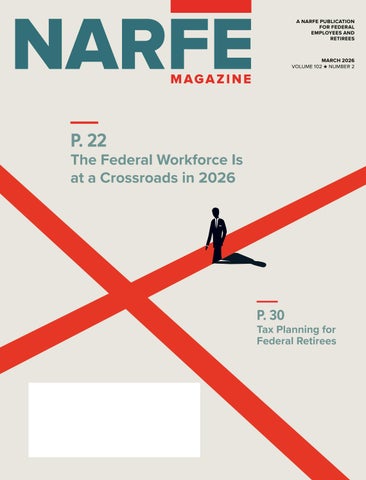
The year ahead is one of the most consequential moments the federal workforce has faced in decades. The debates that will shape 2026 are not routine policy disagreements. They are making choices about what kind of civil service this country will rely on for the next generation.
Will our nation be served by a partisan and political workforce or a nonpartisan and merit-based one? Will the government continue to honor promised earned retirement and health benefits? Will large-scale reductions in the federal workforce continue, or will hiring need to accelerate to meet emerging demands?
At the center of this environment is NARFEPAC, which gives federal employees and retirees a powerful voice at a time when it is needed more than ever.
The challenges facing the federal workforce are intensifying. Large segments of federal employees are preparing for retirement, and agencies are struggling to attract young, highly skilled professionals who have many private-sector options and higher salaries. Demands on government services continue to grow as the nation relies on federal workers to manage health care systems, process benefits, protect national security, and support scientific and technological advancement. Despite this rising demand, proposals that target earned benefits or weaken civil service protections
reappear year after year. Attempts to revive political hiring schemes, reduce the workforce, or remove key competitive service rules are likely to resurface in 2026. These proposals would upend decades of policies that support an impartial, expert federal workforce. The stakes could not be higher.
At the same time, major elections this cycle will determine who writes the laws that guide federal employee pay, benefits, and workplace protections. The outcome of these elections will influence retirement security, health care options, and the basic structure of the civil service. The next Congress could strengthen the foundations of public service, or it could pursue harmful changes that weaken a workforce that the country depends on in every national emergency and every ordinary day. NARFE-PAC ensures that the voices of federal employees and retirees are not sidelined in these decisions. Without strong representation and advocacy, the people who make government work risk being overlooked at the very moment when their future is being shaped.
NARFE has seen extraordinary victories in recent years, including the historic repeal
Will our nation be served by a partisan and political workforce or a nonpartisan and merit-based one?
of the Windfall Elimination Provision and the Government Pension Offset. These achievements show what federal employees and retirees can accomplish when they remain engaged and persistent. For decades, these unfair provisions reduced Social Security benefits earned through hard work and taxed wages. Their repeal corrected an injustice that affected countless retired public servants. Victories like this demonstrate that committed advocacy can overcome obstacles, even in a divided political environment. They also show that progress depends on lawmakers who understand the value of public service and who
are willing to defend it. Electing these lawmakers requires sustained engagement and the kind of targeted support that NARFE-PAC provides. NARFE-PAC strengthens our ability to support lawmakers who defend federal employees and retirees. It helps us protect champions in Congress who have stood up against efforts to reduce earned benefits, weaken federal pay structures, or politicize federal hiring systems. Many of the strongest voices for federal workers serve in Congress today because NARFE-PAC helped them win competitive races. Their leadership has been
essential in stopping proposals that would have forced federal retirees and employees to bear a greater share of health care premiums, eliminated earned retirement benefits for those nearing or eligible for retirement, and more.
NARFE-PAC also helps elect rising leaders who understand that a strong government workforce benefits the entire nation. These lawmakers recognize that the federal government must be able to recruit and retain top talent, and they know that fair pay, dependable retirement benefits, and impartial hiring systems are crucial to that goal.
The pressures on the federal workforce will continue to grow in the coming years. Technology is evolving rapidly. The demand for cybersecurity, data science, artificial intelligence, and national
security expertise continues to grow each year. Agencies must adapt to a more competitive labor market while maintaining their commitment to integrity and impartial public service. The federal government cannot meet twenty-firstcentury challenges with a weakened workforce. These challenges require thoughtful leaders in Congress who understand how to strengthen federal hiring, improve pay and benefits, and ensure that agencies can meet their missions. Without strong allies in elected office, the federal workforce could fall behind at a moment when the country needs it to succeed.
The outcome of these next elections will influence retirement security, health care options, and the basic structure of the civil service. The next Congress could strengthen the foundations of public service, or it could pursue harmful changes that weaken a workforce that the country depends on in every national emergency and every ordinary day.
NARFE-PAC provides the resources needed to support candidates who will stand up for an impartial civil service and protect earned benefits. Across the country, federal retirees and federal workers contribute because they understand that elections directly shape their financial security and professional futures. Each contribution helps ensure that Congress includes lawmakers who know the importance of the federal workforce. It allows NARFE to explain the consequences of harmful proposals and helps ensure that they do not advance without challenge. NARFE-PAC gives a national voice to the people who dedicated their
careers to public service and who deserve fair treatment and respect.
The year 2026 will shape federal workforce policy for years to come. The choices made in Congress will affect retirement security, agency staffing, workplace protections, and the basic structure of public service. These decisions will determine whether federal employees are treated as partners in the nation’s success or as an expense to be reduced without regard for consequences. The country needs a strong civil service now more than ever, and federal employees and retirees cannot afford to sit on
CONTRIBUTE TO
OR Contribute monthly through your annuity or by credit card. Get started at ww.narfe.org/pac-sustainer
Monthly contributors of $10 or more receive a sustainer lapel pin
Make a one-time contribution:
q $25 – Basic lapel pin
q $50 – Bronze lapel pin
q $100 – Silver lapel pin
q $250 – Gold lapel pin
q $500 – Platinum lapel pin
q Other: _________ n No pin
NARFE Member #: ____________________________________
q Charge my credit card q MasterCard q VISA q Discover q AMEX Card #: ____________________________________________
Exp. Date: _____ /_________ mm yyyy
Name on Card: ______________________________________
Signature:
Date: _____________________ Mail coupon and/or check payable to NARFE-PAC to: NARFE-PAC
To comply with federal law, we must use our best efforts to obtain, maintain and submit the name, mailing address, occupation and name of employer of individuals whose contributions exceed $200 each calendar year. NARFE-PAC is for the benefit of political candidates and activities on a national level. NARFE members have the right to refuse to contribute without reprisal, and NARFE will neither favor nor disadvantage anyone based on the amount of a contribution or failure to make a voluntary contribution. The suggested amounts are only suggestions and not enforceable. Only members of NARFE may contribute to the PAC. Contributions from non-members will be returned. NARFE-PAC contributions are not deductible for federal income tax purposes.
Contribution totals are cumulative for the 2025-2026 election cycle NARFE-PAC strengthens our ability to support lawmakers who defend federal employees and retirees. It helps us protect champions in Congress who have stood up against efforts to reduce earned benefits, weaken federal pay structures, or politicize federal hiring systems.
the sidelines. By contributing to NARFE-PAC, you help build a Congress that values integrity, expertise, and the contributions of those who serve the public. You help defend the future of the federal workforce at a moment when its strength is vital to our nation.
Together, we can meet this moment. Together, we can ensure that the federal workforce remains strong, respected, and ready to serve for decades to come.
—RJ THACKER, POLITICAL AND LEGISLATIVE AFFAIRS MANAGER
EARLY BIRD
AUGUST 23-25, 2026
HYATT REGENCY INDIANAPOLIS
Take advantage of the EARLY BIRD discount which ends May 22! Register today at www.fedcon.narfe.org.
THE EFFORT TO ADVANCE NARFE’S MISSION STARTS WITH YOU.
JOIN US for FEDcon26, NARFE’s biennial national training conference. Gain the knowledge necessary to LEARN how to make the most of your benefits, ADVOCATE to protect those earned benefits, and LEAD the organization that defends them into the future.
LEARN. ADVOCATE. LEAD.
TAX
NGPLANNI
for Federal Retirees
BY MARK A. KEEN
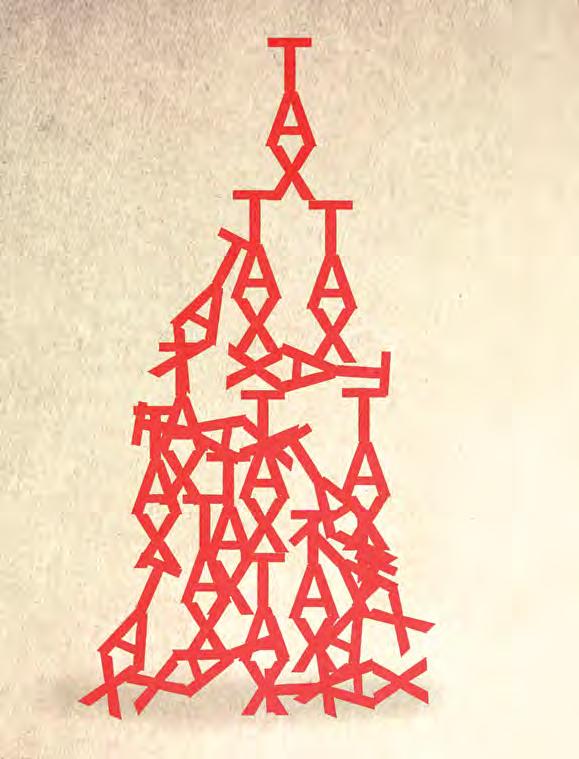
It’s not what you make, it’s what you keep that counts, and in retirement, that depends on understanding taxes and proactive planning.
Unfortunately, many federal retirees manage their taxes reactively—simply taking distributions from their retirement plans without considering the tax consequences. Others kick the can down the road and avoid distributions until required minimum distributions (RMDs) force their hand. Neither approach is ideal and often leads to tax surprises that could have been avoided.
Tax planning goes beyond managing tax brackets. The U.S. tax code is filled with stealth taxes— provisions that can drive effective tax rates far higher than the marginal rates most retirees focus on.
Understanding how the tax system works— and where stealth taxes hide—can help you plan strategically, avoid costly surprises, and keep more of your hard-earned retirement savings.
How Income Is Taxed
The U.S. federal income tax system is progressive, with rates increasing as income rises through seven marginal tax brackets ranging from 10% to 37%. Ordinary income, such as pensions, withdrawals from traditional retirement accounts, and interest, is taxed based on these marginal tax rates.
However, not all income is taxed as ordinary income. Qualified dividends and long-term capital gains from investments held outside retirement accounts are taxed at preferential rates. For 2025, joint filers pay 0% on qualified investment income when total taxable income is $94,050 or less, 15% between $94,050 and $583,750, and 20% above that.
A key point to understand is that ordinary income and qualified investment income are taxed separately. While total taxable income determines the tax rate on qualified investment income, qualified investment income doesn’t affect the marginal tax rate on ordinary income.
For example, consider a couple with $130,000 of taxable income—$100,000 in ordinary income and $30,000 in qualified investment income from taxable investments. The $100,000 of ordinary income is taxed under the marginal brackets, while the $30,000 in qualified dividends is taxed at 15% under the qualified investment income brackets.
Anatomy of a Tax Return
Tax planning in retirement starts with understanding how income flows through the tax return. The process begins with total income, which includes the taxable portion of all your income sources before any deductions are applied. Not all income is taxable—for example, a portion of Federal Employee Retirement System (FERS) and Civil Service Retirement System (CSRS) pensions represents a return of after-tax contributions, and it is excluded, as are qualified Roth individual retirement account (IRA) withdrawals.
From Total Income, you subtract above-the-line deductions to arrive at Adjusted Gross Income (AGI). The “line” refers to AGI, and deductions can be either above-the-line or below-the-line. Above-the-line deductions reduce both AGI and taxable income, making them especially valuable because, as discussed later, many stealth taxes are based on AGI. Examples of above-the-line deductions include traditional IRA contributions, health savings account (HSA) contributions, selfemployed health insurance premiums, and selfemployed retirement plan contributions.
From AGI, you subtract below-the-line deductions to arrive at taxable income. These include either the standard deduction or itemized deductions, whichever is higher.
For 2025, the standard deduction is $15,750 for single filers and $31,500 for married couples filing jointly. Taxpayers age 65 and older may claim an additional deduction of $2,000 if single or $1,600 per spouse if married filing jointly.
Itemized deductions include mortgage interest, state and local taxes (SALT), charitable contributions, and medical expenses. Medical expenses, including Medicare and long-term care
A key point to understand is that ordinary income and qualified investment income are taxed separately. While total taxable income determines the tax rate on qualified investment income, doesn’t affect the marginal tax rate on ordinary income.
The One Big Beautiful Bill Act (OBBBA) made several changes to below-the-line deductions. Most notably, it introduced an enhanced senior deduction for tax years 2025 through 2027. Taxpayers 65 and older may deduct an additional $6,000 if single or $12,000 if married filing jointly (with both spouses 65 or older). This deduction phases out beginning at AGI of $75,000 for single filers and $150,000 for joint filers.
insurance premiums, are deductible only to the extent they exceed 7.5% of AGI.
The One Big Beautiful Bill Act (OBBBA) made several changes to below-the-line deductions. Most notably, it introduced an enhanced senior deduction for tax years 2025 through 2027. Taxpayers 65 and older may deduct an additional $6,000 if single or $12,000 if married filing jointly (with both spouses 65 or older). This deduction phases out beginning at AGI of $75,000 for single filers and $150,000 for joint filers.
Beginning in 2026, OBBBA also provides a charitable deduction for non-itemizers. Taxpayers who take the standard deduction may deduct up to $1,000 if single or $2,000 if married filing jointly for qualified cash donations.
OBBBA also made other changes, including raising the SALT cap from $10,000 to $40,000 and introducing new limitations on itemized deductions. For complete details on how these provisions may affect your situation, consult Internal Revenue Service guidance or a tax professional.
When Marginal Rates Don't Tell the Whole Story
The U.S. tax code is filled with sneaky stealth taxes that can catch retirees by surprise and drive effective tax rates far higher than expected. This is why it’s critical to understand the difference between the marginal tax rate and the effective marginal tax rate.
The marginal tax rate is the rate applied to your next dollar of ordinary income. The effective marginal tax rate reflects the actual tax cost of each additional dollar, accounting not just for the bracket itself, but also for how that income affects phaseouts, surcharges, and other income-based provisions.
One of the most common stealth taxes that catches federal retirees is Medicare’s IncomeRelated Monthly Adjustment Amount (IRMAA). IRMAA imposes surcharges on Medicare Part B and D premiums based on your modified adjusted gross income (MAGI) from two years prior. For IRMAA purposes, MAGI is AGI plus tax-exempt interest. In 2025, IRMAA surcharges begin at MAGI of $106,000 (single) or $212,000 (joint), with an annual surcharge starting at $888 per person for Part B alone.
IRMAA is particularly unforgiving. Go over the threshold by just one dollar and you’re stuck paying the full IRMAA increase for the year,
which can have a dramatic impact on the effective rate. Take, for example, a married couple with $200,000 in AGI who decides to take a $15,000 Thrift Savings Plan (TSP) withdrawal. In addition to the $3,300 in ordinary federal tax, they’ll owe an additional $1,776 ($888 per person) in Medicare surcharges, pushing their effective rate on the withdrawal to 34% versus their marginal rate of 22%.
Since IRMAA is based on income from two years prior, recent retirees are often caught off guard by these surcharges. Fortunately, work stoppage due to retirement is a qualifying lifechanging event that allows those impacted to request a reduction in IRMAA by completing Form SSA-44.
Another stealth tax is the Net Investment Income Tax (NIIT), which is a 3.8% surtax on investment income when MAGI exceeds $200,000 (single) or $250,000 (married filing jointly). It’s assessed on investment income, including interest, dividends, capital gains, and rental income.
Social Security taxation adds yet another wrinkle. Whether and how much of your benefits are taxable depends on your provisional income, which is your AGI (excluding Social Security), taxexempt interest, and half of your Social Security benefits. The greater the provisional income, the more benefits become taxable, up to 85%. This creates the so-called tax torpedo, in which new income is taxed and more Social Security benefits become taxable.
Consider Mary, a single 65-year-old federal retiree with a $35,000 FERS pension and $40,000 in Social Security benefits. Her taxable income is $33,600, putting her in the 12% bracket.
She decides to take a $10,000 TSP withdrawal, expecting to owe $1,200 in tax. However, the withdrawal causes an additional $8,500 of her Social Security benefits to become taxable, increasing her taxable income to $52,151 (she also loses $51 of her senior deduction). Instead of owing $1,200, she ends up owing $2,594—an effective marginal rate of 26%.
Strategies for Reducing Taxes and Stealth Taxes
Understanding stealth taxes is essential, but it’s only part of the equation. Effective tax planning requires a proactive approach that addresses both traditional taxes and the hidden provisions that can drive up your costs. The strategies that follow can help you reduce your total lifetime tax burden.
Tax planning in retirement starts with understanding how income flows through the tax return.
Coordinate Withdrawals Across Account Types
Ideally, retirees will have retirement savings spread across account types: tax-deferred, Roth, and taxable. This tax diversification allows retirees to strategically shift withdrawals between account types. The goal is to avoid crossing key thresholds that trigger higher marginal rates or stealth taxes, such as IRMAA or increased Social Security taxation.
Take the earlier example of a married couple with $200,000 of AGI who need an additional $15,000 to cover expenses. If they take the full amount from their IRA, their AGI rises to $215,000—just over the $212,000 threshold—and triggers IRMAA surcharges of roughly $1,776 in additional Medicare premiums. But if they instead withdraw $12,000 from the IRA and the remaining $3,000 from a Roth IRA or savings, their AGI stays below the IRMAA threshold. That simple coordination of account types saves them nearly $1,800 in stealth taxes.
Plan for Large Expenses
Suppose you’re planning a significant retirement expense, such as home renovations, a new home purchase, or a substantial purchase. The initial thought may be to wait until the expense comes due and withdraw the full amount in one lump
sum from a retirement account. Doing so may not only push your income into a higher tax bracket but also trigger stealth taxes, like IRMAA or the Net Investment Income Tax, consequences that proactive planning could have avoided. Whenever possible, plan for significant expenses in advance. Consider spreading smaller distributions over multiple years or using a series of Roth conversions in advance to position funds for a single, tax-free Roth withdrawal when the expense arises. This kind of planning allows you to manage AGI more deliberately, stay below key thresholds, and avoid unnecessary tax consequences.
Isolate IRA Basis for Tax-Free Conversions
Retirees with basis (after-tax dollars) in a traditional IRA—often from non-deductible contributions or rollovers of voluntary contributions—may be able to isolate the basis and convert it, tax-free, to a Roth IRA. Once in the Roth IRA, earnings are tax-free with a qualified withdrawal. Left in the traditional IRA, those earnings grow tax-deferred and will be taxed when withdrawn. Isolating basis and converting to a Roth IRA can be a powerful strategy to shift after-tax dollars into a Roth at no tax cost. (See this issue’s Managing Money column for a deeper dive.)
Become a Silver Circle contributor today
Your contribution to the Silver Circle supports the direct work of NARFE as we continue to provide you resources and advocacy that you rely on and that member dues alone cannot support. When you donate to the Silver Circle, you are ensuring that NARFE has the resources to continue to fight for the financial security and earned benefits for you and the federal community.
NARFE appreciates all financial support you provide to us and would like to recognize you for your generous contributions to our cause.
NARFE offers members a way to give to the association’s General Fund through its donor recognition program, the Silver Circle.
Donate now to the Silver Circle at www.narfe.org/silvercircle.
With NARFE’s thanks, you will receive:
• A Silver Circle pin and recognition on NARFE.ORG with a donation of $100 or more.
• A Silver Circle pin, your name plate placed on the Silver Circle plaque at NARFE Headquarters, recognition on NARFE.ORG and recognition at the NARFE yearly conference with a donation of $1,000 or more.
To learn more about the Silver Circle donor recognition program or how to recommend an outstanding NARFE member to the Silver Circle, please visit www.narfe.org/silvercircle or email us at donatenow@narfe.org
NARFE Silver Circle
Enclosed is my NARFE donation: $ _________________
PLEASE MAIL COUPON AND CHECK TO: NARFE, Attn: Silver Circle, 606 N. Washington St., Alexandria, VA 22314 Donations to NARFE are not tax-deductible for federal income tax purposes.
Charitable Giving Strategies
Charitable giving may offer tax benefits while supporting causes you care about, but the benefit depends on how you give.
One strategy is to bunch multiple years of donations into a single tax year to exceed the standard deduction threshold and receive a tax benefit for your charitable intentions. If you’re not ready to give the full amount to charity all at once, donor-advised funds (DAFs) allow you to take a deduction upfront while making distributions to charities over time.
Donating appreciated securities—either directly to a charity or to a donor-advised fund (DAF)—can further enhance the tax benefit. You avoid capital gains tax on the appreciation and, if you itemize, you can deduct the full fair market value of the donation. This also allows you to preserve cash for other purposes, or even to repurchase the donated securities to step up your basis and improve tax efficiency moving forward.
For those who don’t itemize, OBBBA’s new charitable deduction for non-itemizers allows taxpayers to deduct up to $1,000 (single) or $2,000 (married filing jointly) for cash donations to qualified charities.
While these charitable deductions are helpful, they only reduce taxable income—not AGI—so they don’t provide relief from stealth taxes like IRMAA, NIIT, or the Social Security tax torpedo. This is where Qualified Charitable Distributions (QCDs) excel.
For those age 70½ and older, QCDs are a powerful tool in the tax-planning toolbox. The amount counts toward required minimum distributions but is excluded from total income, and therefore, from AGI and taxable income as well. That not only supports charitable goals but also helps reduce exposure to stealth taxes.
The catch is that QCDs are only allowed from IRAs, not the TSP. Retirees who want to use this strategy will need to transfer funds from the TSP to an IRA first. (See the Managing Money column in the December 2025 issue of NARFE Magazine for more details.)
Use Roth Conversions Strategically
Roth conversions can be a powerful tool for reducing taxes over the long run. When you convert from a Traditional TSP or IRA to a Roth account, you pay tax now; however, future qualified withdrawals are excluded from total income— meaning they’re not only tax-free but also help
One of the most common stealth taxes that catches federal retirees is
to NARFE programs Donate
Donate to NARFE
MAKE CHECK PAYABLE TO: NARFE
PLEASE MAIL COUPON AND CHECK TO: NARFE / 606 N. Washington St. / Alexandria, VA 22314 or donate online at www.narfe.org/ donate
With NARFE’s thanks, you will receive a NARFE Photo Calendar
NARFE safeguards the earned pay and benefits of America’s five million federal workers, retirees, their spouses, and survivors. NARFE is YOUR legislative voice and tireless advocate.
NARFE contributions are NOT tax-deductible.
Enclosed is my NARFE Contribution: $ __________________
All donations go to the NARFE General Fund to support NARFE Programs and operations.
NARFE members contributed for Alzheimer’s research: $17 Million Fund $16,844,850.95*
*Total as of December 31, 2025. All contributions go directly to Alzheimer’s research, with the exception of funds given to the Walk to End Alzheimer’s or The Longest Day.
If you have any questions, write to: National Committee Chair
Olivia Williams PO Box 2175 Columbia, SC 29202
OR E MAIL: oeashf3@gmail.com
MAKE CHECK PAYABLE TO:
NARFE-Alzheimer’s Research (w rite your chapter number on memo line)
PLEASE MAIL COUPON AND CHECK TO: Alzheimer’s A ssociation 225 N. Michigan Ave., 17th Floor Chicago, I L 60 601-7633
Your charitable contribution is tax-deductible to the fullest extent allowed by law.
Enclosed is my NARFE-Alzheimer’s contribution: $ Every cent that is contributed is used for research.
The NARFE-FEEA Fund supports NARFE members during disasters; provides scholarships to their children, grandchildren and great-grandchildren; and funds other programs to support NARFE members at the direction of NARFE and FEEA.
MAKE CHECK PAYABLE TO: NARFE-FEEA Fund
PLEASE MAIL COUPON AND CHECK TO: FEEA
1641 Prince St. Alexandria, VA 22314
Your charitable contribution is tax-deductible to the fullest extent allowed by law.
Enclosed is my NARFE-FEEA Fund Contribution: $ ________
Name:
Address:
City:
State:______________________________ ZIP:
Email:
To make credit card or e-check contributions, visit www.feea.org/givenarfe.
you avoid stealth taxes tied to AGI. Roth accounts also aren’t subject to RMDs during your lifetime, further limiting stealth tax exposure.
Roth conversions are not an all-or-nothing proposition. In most cases, the better approach is to convert gradually over several years. The goal is to fill up the remaining room in your target tax bracket while avoiding thresholds that would trigger higher taxes (including stealth taxes) than the money would otherwise be subject to in the future.
For many retirees, the golden opportunity will be the years between retirement and the start of Social Security or RMDs. With greater control over income during this period, retirees can reshape their future tax liability while locking in today’s low tax rates.
Beginning in 2026, Roth in-plan conversions will be available within the TSP. While this may simplify the process, it’s important to note that the TSP doesn’t allow taxes to be withheld from plan balances. You’ll need outside funds to cover the tax bill, which may make IRA-based conversions more practical for some.
While the process of a Roth conversion is relatively straightforward, the implications must be carefully planned, or the strategy can become counterproductive. The key is to convert just enough each year to stay below critical thresholds while still making progress toward long-term tax savings.
Above-the-Line Deductions for the Self-Employed
Above-the-line deductions are rare in retirement but highly valuable, since they reduce both AGI and taxable income. Many federal retirees become self-employed consultants after their federal career, creating opportunities for above-the-line deductions. Self-employed individuals may deduct Medicare and long-term care insurance premiums as self-employed health insurance without being subject to the 7.5% AGI floor that applies to medical deductions when taking them as an itemized deduction.
Federal retirees face not only traditional income taxes but also stealth taxes that can quietly erode their resources. Managing these taxes doesn’t have to be complicated, but it does require planning. Having a basic understanding of how the tax system works and taking a proactive approach can significantly improve how much you keep over time.
—MARK A. KEEN, CFP ®, PARTNER, KEEN & POCOCK. SECURITIES OFFERED THROUGH THE STRATEGIC FINANCIAL ALLIANCE, INC. (SFA), MEMBER FINRA/SIPC. ADVISORY SERVICES OFFERED THROUGH STRATEGIC BLUEPRINT, LLC AND THE STRATEGIC FINANCIAL ALLIANCE, INC. MARK KEEN IS A REGISTERED PRINCIPAL OF SFA AND AN INVESTMENT ADVISOR REPRESENTATIVE OF SFA AND STRATEGIC BLUEPRINT, LLC. SFA AND STRATEGIC BLUEPRINT ARE AFFILIATED THROUGH COMMON OWNERSHIP BUT OTHERWISE UNAFFILIATED WITH KEEN & POCOCK. NEITHER STRATEGIC BLUEPRINT NOR SFA PROVIDE TAX OR LEGAL ADVICE..
Charitable giving may offer tax benefits while supporting causes you care about, but the benefit depends on how you give.
Make Your Voice Heard on Capitol Hill
NARFE’s Legislative Action Center is NARFE’s easy way to send letters to your members of Congress, search for your legislators, report your congressional meetings, view voting records and much more.
Support the Equal COLA Act
Support the Saving the Civil Service Act
Protect the Freedoms of America’s Workforce
Save the Postal Service, Stop Privatization
narfe.org/advocacy/legislative-action-center/
MWhy You Don’t Want to Leave Basis in a Traditional IRA
any federal employees and retirees have basis in a traditional individual retirement account (IRA) and may not realize there is a more tax-efficient place for that money. While basis itself will not be taxed again when distributed, leaving after-tax dollars inside a traditional IRA often represents a missed planning opportunity. Understanding why and how to isolate basis can help position those dollars more effectively for the future.
Traditional IRAs typically consist of pre-tax contributions and tax-deferred earnings, all of which are fully taxable as ordinary income when distributed. However, traditional IRAs may also contain after-tax dollars, known as basis (see my column in the January/February issue of NARFE Magazine for a detailed explanation of basis). While basis itself is distributed tax-free, the real issue is that earnings on basis grow taxdeferred in a traditional IRA and are therefore taxable when distributed. Rather than leave basis in a traditional IRA, a better strategy is to convert it to a Roth IRA so future earnings on those after-tax dollars can grow tax-free.
The challenge is that the IRS does not allow taxpayers to cherry-pick only basis from a traditional IRA. Instead, when a traditional IRA contains both pre-tax dollars and basis, the Internal Revenue Service (IRS) applies what’s known as the pro-rata rule. This rule requires all traditional, simplified employee pension (SEP), and Savings Incentive Match Plan for Employees (SIMPLE) IRAs to be aggregated and treated as one
single IRA, with each distribution or Roth conversion consisting of a proportionate share of taxable and tax-free dollars.
Here’s what’s interesting: while the pro-rata rule applies to IRA distributions and Roth conversions, it does not apply when IRA assets are transferred to an employer-sponsored retirement plan. Under IRS rules, only pre-tax dollars may be rolled from a traditional IRA into an eligible employer plan. This exception makes it possible to separate pre-tax and after-tax dollars. By transferring the pretax portion of IRA assets into an employer-sponsored retirement plan that accepts rollovers, the remaining IRA balance will consist entirely of basis.
Once the IRA contains only after-tax dollars, it can be converted to a Roth IRA with no tax impact, because only dollars that have already been taxed are converted, and the IRS will not tax them again.
A word of caution: while IRS rules are designed to allow only pre-tax dollars to transfer to an employer plan, it is possible to transfer basis inadvertently. If that happens, those dollars lose their after-tax character and
become pre-tax dollars in the employer plan, which means they’ll be taxed again when distributed. Accurate tracking and proper execution are critical.
Importantly, this process does not require multiple IRAs. The IRS views all your IRAs as one when applying the pro-rata rule, regardless of which account originally held the basis. When done correctly, the result is a clean separation: pre-tax dollars remain tax-deferred inside an employer plan, and after-tax dollars are repositioned into a Roth IRA where future growth can be tax-free.
Isolating basis requires access to an employer-sponsored retirement plan that accepts rollovers of tax-deferred money from eligible retirement plans, such as traditional IRAs. For federal employees and retirees, the Thrift Savings Plan (TSP) allows participants to transfer pre-tax dollars from traditional IRAs, SIMPLE IRAs, and eligible employer plans. For additional information, see the TSP booklet tspbk08, Summary of the Thrift Savings Plan.
While there is no immediate tax benefit to converting basis to a Roth IRA—those dollars are simply being moved from one retirement account to another— the real benefits accrue over time. The main benefit is that once the basis is inside a Roth IRA, future earnings on those dollars grow tax-free, but another important, and often overlooked, benefit is the impact on required minimum distributions (RMDs). RMDs are calculated based on the
BENEFITS RESOURCES
NARFE OFFERS MEMBERS a wide range of information on federal benefits. Visit www.narfe.org/federal-benefits-institute.
total value of a traditional IRA, including any amount that represents basis. While the IRS’s pro-rata rule ensures that a portion of each distribution is treated as a tax-free return of basis, those dollars are still forced out of the IRA, causing taxpayers to miss out on years—possibly decades—of tax-free growth.
Unlike Traditional IRAs, Roth IRAs are not subject to required minimum distributions during the owner’s lifetime, allowing the converted basis to remain invested and growing tax-free for life. If a surviving spouse inherits the Roth IRA, the funds can continue to grow tax-free for the spouse’s lifetime as well. When a child or another non-spouse beneficiary inherits a Roth IRA, the entire balance typically can remain invested and grow tax-free for up to 10 years. In most cases, non-spouse beneficiaries have 10-years to distribute an inherited IRA. However, there are a few exceptions (minor children, disabled/chronically ill beneficiaries, and beneficiaries not more than 10 years younger).
Viewed this way, isolating basis is less about avoiding tax today and more about positioning already-taxed dollars in the most favorable longterm environment available.
Isolating basis requires accurate reporting using Form 8606. Given the complexity, consulting with a tax professional can help ensure you execute the strategy correctly and preserve the tax benefits.
MARK A. KEEN, CFP®, PARTNER, KEEN & POCOCK. SECURITIES
OFFERED THROUGH THE STRATEGIC FINANCIAL ALLIANCE, INC. (SFA), MEMBER FINRA/SIPC. ADVISORY SERVICES OFFERED THROUGH STRATEGIC BLUEPRINT, LLC AND THE STRATEGIC FINANCIAL ALLIANCE, INC. MARK KEEN IS A REGISTERED PRINCIPAL OF SFA AND AN INVESTMENT ADVISOR REPRESENTATIVE OF SFA AND STRATEGIC BLUEPRINT, LLC. SFA AND STRATEGIC BLUEPRINT ARE AFFILIATED THROUGH COMMON OWNERSHIP BUT OTHERWISE UNAFFILIATED WITH KEEN & POCOCK. NEITHER STRATEGIC BLUEPRINT NOR SFA PROVIDE TAX OR LEGAL ADVICE.
Are you looking for a way to get involved with local feds in your community?
Are you missing the friends you used to work with every day in the office?
Find a local chapter convenient to you! Visit www.narfe.org/chapters to find the chapter that’s right for you, and then call us between 8 a.m.-5 p.m. ET at 800-456-8410. Then dial 1 for membership and we’ll get you signed up right away.
ETwo New Grants Awarded For Alzheimer’s Research
ach year, the NARFE-Alzheimer’s National Committee determines which research projects will be awarded grants from the NARFE-Alzheimer’s Research Fund.
Recently, the committee held its annual virtual training from Nov. 6 to Nov. 7, 2025, and the Alzheimer’s Association awarded grants to 99 researchers through fiscal year 2025. The total amount allocated by NARFE is $340,801.00, as listed below.
Hong Seok Shim, Ph.D., the University of Texas MD Anderson Cancer Center awarded $199,994, fully funded, for a 2025 Alzheimer’s Association Research Fellowship to Promote Diversity—$199,994, fully funded. It focuses on selective Telomerase Reverse Transcriptase (TERT) activation to treat APOE4-driven Alzheimer’s disease.
The apolipoprotein E (APOE) gene makes the ApoE protein, which is thought to help with (lipids (fats) throughout the body. There are several variants of the APOE gene, including APOE-e2, APOE-e3, and APOE-e4. In some different populations, the APOE-e4 is thought to increase a person’s risk of developing Alzheimer’s disease.
The gene called TERT is thought to help keep cells healthy by protecting their DNA, and it has also been linked to slower aging and better brain function. Also, in studies, activating the TERT gene in mice improved and reduced signs of Alzheimer’s disease. However, it still appears unclear exactly how the TERT helps the brain. However, understanding how TERT
works and finding safe ways to boost its activity could lead to a new approach to treating or preventing Alzheimer’s.
In this project, Dr. Shim and colleagues will explore how activating TERT can help mitigate brain damage caused by the APOE-e4 gene in Alzheimer’s disease. First, the researchers will study how TERT affects brain cells and whether it reduces the toxic effects of APOE-e4 in both mouse models and human stem cells derived from brain cells. Also, special focus will be given to understanding how TERT interacts with astrocytes, brain supports the cells that produce APOE, and influences brain health. Therefore, the study will also investigate how TERT might reduce harmful proteins in the brain associated with memory loss.
In addition to genetic methods, the project will test a new drug, TAC, that can safely increase TERT activity. Also, earlier research in aged mice showed that TAC improved brain function and reduced Alzheimer’s-related changes. As a result of these changes, researchers will test whether TAC can help mice carrying the human APOE-e4 allele. They will also study brain issues to see whether TAC reduces harmful proteins, improves memory, and maybe protects brain cells. The drug will also be tested on lab-
grown human brain cells to better understand how it works and whether it can prevent damage caused by APOE-e4.
If this is successful, this research could uncover a new way to treat or prevent Alzheimer’s, especially in people who carry APOE-e4. Also, boosting the TERT gene or using the TAC drug may help slow brain aging, reduce harmful protein buildup, and protect memory and thinking. Because the APOE-e4 gene is common in people with Alzheimer’s, these findings could lead to the development of new, targeted therapies that might benefit a large number of people.
Swati Mishra, Ph.D., of the University of Washington, Seattle, WA, was awarded a partially funded grant aimed at probing the role of microglia lysosome dysfunction in Alzheimer’s disease pathogenesis. This 2025 Alzheimer’s Association Research Fellowship to Promote Diversity is sponsored for $140,807.
Microglia are the primary cells of the brain, and they also play a major role in maintaining healthy nerve cells, in part by removing unwanted material from the brain. This disposal system is also responsible for removing Alzheimer’srelated molecules, such as beta-amyloid, and damaged connections between brain cells. Also, there are compartments within microglia cells called “lysosomes” that contain enzymes that can digest waste. Understanding the changes in
lysosomes that relate to Alzheimer’s will help to clarify their role in the disease.
Dr. Mishra and colleagues will use brain tissue samples from 40 people who had a lateonset sporadic Alzheimer’s disease (LOAD), by far the most common form of the disease. Therefore, the researchers will evaluate the size and number of microglial lysosomes in the samples and measure the amount of betaamyloid accumulated in the lysosomes.
Additionally, they will collect induced pluripotent stem cells (PSCs), a special type of stem cell derived from adult skin tissue that can be reprogrammed to differentiate into any cell type in the human body, from the sample donors and grow them into microglia and nerve cells. They will also then evaluate the cells to determine the extent to which lysosomes degrade proteins and accumulate beta-amyloid. Finally, they will use cells derived from IPSCs to determine whether lysosomes have deficits in their ability to release their contents outside the cell.
The study results may help researchers understand the underlying biology of Alzheimer’s with such changes in how brain immune cells
manage and remove waste and suggest possible new ways to target these changes.
Special thanks to the NARFE members for their generous donations to the Alzheimer’s Association as we aim to help find a cure for Alzheimer’s. You can see your donations are at work, which are very much needed and appreciated. Also, more NARFE members are starting to make their donations through planned giving and through their investment portfolios. Please continue to give in that one day a cure will be found, and we will get to see the white flowers representing the first Alzheimer’s survivor.
NARFE chapter members are encouraged to share the Alzheimer’s information with friends and family members, as well as encourage others to do the same.
For more information about Alzheimer’s disease and dementia, please contact the Alzheimer’s Association at www.alz,org, or call the 24-hour helpline at 800-272-3900.
OLIVIA
A. WILLIAMS IS CHAIR OF THE NARFE-ALZHEIMER’S NATIONAL COMMITTEE. EMAIL: OEASHF3@GMAIL.COM. THIS COLUMN APPEARS QUARTERLY.
NARFE FEDERAL BENEFITS INSTITUTE
NARFE Webinars
Answers for the Federal Community
ON-DEMAND WEBINARS NOW AVAILABLE
Open Season Follow-Up
Estate Planning for Feds
FEHB and Medicare Prescription Drug Plans
FEHB/PSHB with Medicard
FEHB/PSHB without Medicare (Active Feds)
Medicare: To Part B or Not to B
And more!
To see On-Demand webinars go to www.NARFE.org/webinar-archive, where you can find links to each webinar and download the slides from each presentation.
Questions? Members can call 800-456-8410 x2 or email NARFE’s federal benefits specialists at fedbenefits@narfe.org
Not a member? Join NARFE today at NARFE.org/Join
Online Members, Active Feds Stand Out in 2025
As an update from the January/February report, NARFE membership was steady and hopeful in 2025, with more than 16,000 new and reinstated members, which is more than 6,500 more than in 2024. This is the first year in a long time with a break-even and no significant loss in membership, from 128,300 members in December 2024 to 128,144 members in December 2025. The goal is to maintain the membership levels and maintain stability.
The growth in new membership was most popular online, with double the number of new members over last year. New digital advertising with Street Level Studio launched in March and April and capitalized on the uncertain environment for federal employees, giving them a place to go for information.
There was a pause in digital advertising spending during the summer, but when it picked back up, there were almost twice as
NARFE-FEEA SCHOLARSHIP
The deadline to apply for the 2026 NARFE-FEEA Fund Scholarship Awards Program is 3 p.m. ET Thursday, March 12, 2026. For more information and to access the application, visit www.feea.org/ our-programs/scholarships/.
many members as in October 2024. There was more growth in December year-over-year, too. There were also an unprecedented number of retirements reported in 2025, and NARFE updated many records to reflect this change. Even with these updates, NARFE’s active employee
FEDERATION CONFERENCES AND MEETINGS
MISSOURI FEDERATION CONFERENCE: April 22-23. Margaritaville, Osage Beach, Missouri 65065. For information visit www.narfe.org/mo/meetings-events/events/.
72ND ANNUAL KANSAS FEDERATION CONFERENCE: April 27-28, Prairie Band Casino, 12305 150th Road, Mayetta, KS. For information visit www.narfe.org/ks/
NORTH CAROLINA FEDERATION 70TH ANNIVERSARY ANNUAL CONFERENCE: April 28-30, Hyatt Place Streets of Southpoint, Durham NC. More information to come.
MARYLAND FEDERATION BOARD MEETING: May 5-6. The Comfort Inn & Conference Center, 4500 Crain Highway, Bowie, MD 20716. More information to come.
DAKOTA FEDERATION CONFERENCE (COMBINED NORTH AND SOUTH DAKOTA FEDERATIONS): May 15-16, Ramkota Hotel and Conference Center, Pierre, SD Please visit www.narfe.org/sd for more information.
membership is now more than 600, up from 600 a year ago. Creating greater awareness among the active federal workforce has long been a goal
of NARFE, and we are pleased to see progress in that area.
—BY NORA MACDONALD, SENIOR DIRECTOR, MEMBER ENGAGEMENT
Last Chance to Enter NARFE’s 2026 Photo Contest
Capture the image that conveys your interpretation of the theme “Our American Adventure” and submit it to the 2026 NARFE Photo Contest. Winning photos will be featured in the 2027 NARFE Calendar. Submissions will be accepted now through March 6, 2026
All NARFE members in good standing, except for those who are professional photographers, are eligible to enter, even if they’ve already had a photo appear in past calendars.
By entering the contest, you grant NARFE a nonexclusive license to use your photo in perpetuity in any medium, including editing, publishing, distributing and republishing it in any form. Entrants retain the copyright to their images. NARFE assumes no liability for any misuse of copyright.
Photos for the 2027 calendar will be selected and winners notified by the end of June 2026.
Send photos to NARFE Photo Contest, Attn: Communications, NARFE, 606 N. Washington St., Alexandria, VA 22314.
DEADLINE MARCH 6!
CONTEST GUIDELINES
• Photos must be horizontal and size 10″ w x 8″ h or 11″ w x 8.5″ h
• Each member is limited to five photo entries
• No photos of children or pets, please
• Photos sent by email will not be accepted
• No Polaroids
• Photos will not be returned
The following information must be written on a piece of paper and taped to the back of each photo:
• Title of photo
• Description (up to 15 words)
• Member name / address / email / phone number
• Indicate chapter name and number or national member
SUBMIT YOUR 2026 FEDERATION/REGIONAL EVENT INFORMATION
If your federation or region is planning to hold a 2026 event or election, please complete the form att https://www.narfe.org/submit-2026-federation-conferenceselections/ to provide location, dates and contact information. Event details will be published in NARFE Magazine at no charge as space allows throughout 2026.
Make the Most of Your Membership
Congratulations! You’ve made a smart decision by joining or renewing your membership with NARFE. NARFE, the association for ALL feds, provides valuable resources, advocacy, and support to federal employees, retirees and their families. But now that you’re a member—what’s next? Leverage your membership to protect your benefits and get more involved.
CHAPTER MEMBERSHIP
Looking to get to know feds in your area? Want to get more involved as a leader or volunteer?
NARFE has you covered! Join a local chapter, where you can take part in local advocacy activities, informative meetings and chances to connect with likeminded civil servants. Action: Visit www.narfe.org/chapters to find the chapters in your area, then call 800-456-8410 to join today! Plus, if you’re a new member, your chapter dues are free for the first year.
BENEFITS EXPERTISE
Navigating federal benefits can be confusing, but NARFE provides expert resources to guide you. With access to webinars, NARFE Magazine, and personalized advice from the Federal Benefits Institute, you can feel confident in making decisions about retirement,
health insurance, and more. Action: Learn about webinars announced for 2026 at www. narfe.org/webinars or email fedbenefits@narfe.org to get answers to your burning questions right away!
ADVOCATING FOR YOU
NARFE advocates on your behalf, working to protect your pay, health care and earned benefits. As a member, you have the power to add your voice to these efforts. Grassroots advocacy is a pillar of NARFE’s mission. Start by educating yourself about the issues that impact the federal community. Action: Take action on the issues that matter most to you at www. narfe.org/action .
NETWORKING OPPORTUNITIES
NARFE provides additional means of networking with fellow federal employees and retirees through national events, and FEDHub, our online community. These connections allow you to exchange ideas, crowdsource answers to your questions, learn about federal employment trends, and build professional relationships. Action: Login to your account at https:// fedhub.narfe.org and start a conversation today!
PLANNING GUIDANCE
Whether you’re just starting your career or planning for retirement, NARFE offers comprehensive resources to help you stay on track. Action: Check out our robust webinar archives for free today at www. narfe.org/webinar-archive.
TIMELY UPDATES
NARFE keeps you informed on the latest developments affecting federal employees and retirees through its publications and alerts. NARFE Magazine , the NARFE NewsLine weekly newsletter, and NARFE Daily News Clips email updates ensure you stay ahead of any changes that might impact your benefits or retirement. Action: Make sure NARFE.org emails are marked as a safe sender within your email provider and sign up for Daily Clips by visiting www.narfe.org/ communications
HOW TO LEARN MORE
If you have questions about your membership or want to learn more, reach our membership team by sending an email to membership@narfe. org or calling 800-456-8410 ext. 1 between 8 a.m. and 5 p.m. Monday through Friday.
—BY NORA MACDONALD, DIRECTOR, MEMBER ENGAGEMENT
2026 NARFE Scholarship Application Closes Soon
In 1987, the Federal Employee Education & Assistance Fund (FEEA) established a scholarship program for children and grandchildren of federal employees. Ten years later, NARFE joined FEEA’s Board of Directors and soon after that authorized creation of a scholarship program open to
the children, grandchildren and great-grandchildren of NARFE members.
The program is funded by the NARFE-FEEA Fund, supported by NARFE members and administered by FEEA. To support the program, donations to the NARFE-FEEA Fund can be made online or by check payable to NARFE-FEEA Fund
mailed to: NARFE-FEEA Fund c/o FEEA, 1641 Prince St., Alexandria, VA 22314.
The deadline to apply for the 2026 NARFE-FEEA Fund Scholarship Awards Program is 3 p.m. ET Thursday, March 12, 2026. For more information and to access the application, visit www.feea.org/our-programs/ scholarships/.
What is dues withholding?
NARFE’s Dues Withholding Program
It is a dues-payment method available to retired NARFE members, their spouses and annuitant survivors giving them the option to have their annual NARFE membership dues deducted from their annuities each month.
Advantages
• Save more than 10% off your annual NARFE dues
• Sign up your spouse and double your savings
• You’ll never get another dues reminder from us
• Your monthly payment is affordable and convenient
• You may cancel your dues withholding at any time
How does it work?
One-twelfth of your total dues is automatically deducted from your monthly annuity. Your monthly deduction is determined by the following formula: ($42 NARFE dues ÷ 12) + (Chapter dues - if applicable ÷ 12) = total monthly deduction
How do I sign up?
Complete the Dues Withholding Application below. Send no payment. It may take 60 to 90 days before auto-deduction starts. Your membership starts as soon as your application is received. To learn more about dues withholding, call 800-456-8410
NARFE Dues Withholding Application for NARFE Members who are Retirees, Spouses of Retirees or Annuitant Survivors
STOP! Complete this section ONLY if you are signing up for Dues Withholding. If so, DO NOT send payment
o YES. I want to enroll in NARFE’s Dues Withholding Program. NARFE dues of $42* and chapter dues, if applicable, to be withheld annually. (*Dues-withholding members save more than 10% off the regular NARFE dues rate.)
Social Security Number (9-digit number)
–
o Mr. o Mrs. o Miss o Ms.
Full Name ____________________________________
Street Address ________________________________
Apt./Unit _____________________________________
City ________________________________________
State ___________ ZIP _________________________
Phone (__________) ___________________________
Email _______________________________________
Date of Birth _________ /_________ / mm dd yyyy
S
(Include prefix, CSA or CSF) (Include any applicable suffix) – – –Civil Service Annuity Number
NARFE MEMBERSHIP INFORMATION
NARFE Membership ID _______________________________
NARFE Chapter Number ______________________________
o YES. I also authorize my (NARFE member) spouse’s dues to be withheld from my annuity. (Additional annual dues of $42 and chapter dues, if applicable, to be withheld annually. If YES, enter spouse’s information below.)
Spouse’s Name ____________________________________
Spouse’s Membership ID _____________________________
AUTHORIZATION (Withholding will begin in 60-90 days). Send NO PAYMENT with Dues Withholding Application!
I authorize the United States Office of Personnel Management to make appropriate deductions from my annuity payments, not to exceed the amount certified by the National Active and Retired Federal Employees Association as the amount of dues for which I am annually obligated, in accordance with elections I made above, and to pay the deducted sum to the National Active and Retired Federal Employees Association (NARFE). This authorization shall also apply to any and all dues changes certified by NARFE membership in accordance with elections I made. Please allow 60-90 days for processing.
I understand that this authorization shall be valid until NARFE receives and processes my written notice of cancellation in accordance with its agreement with the Office of Personnel Management and that any disputes regarding this authorization shall be a matter between NARFE and myself. I hold the Office of Personnel Management harmless for any erroneous allotment deduction made pursuant to this authorization.
Signature of Annuitant or Survivor-Annuitant
Date
Dues payments and gifts or contributions to NARFE are not deductible as charitable contributions for federal income tax purposes.
MAIL THIS FORM TO: NARFE, ATTN: Member Services, 606 N. Washington St., Alexandria, VA 22314-1914 800-456-8410 memberrecords@narfe.org Do not send money with this form
Use your NARFE Perks and your membership will more than pay for itself!
THE TOP-6 MOST POPULAR NARFE PERKS
As the largest operator of senior living communities in the US, Brookdale has over 600 locations all across the country. Members are eligible for 7.5% discount at Brookdale Independent Living, Assisted Living and Memory Care communities and 10% discounts on Brookdale Private Duty Home Care. Discounts are for new move-ins/customers only.
Brookdale Senior Living Communities 877-713-2762 | www.brookdale.com/narfe
With 6,400 hotels throughout the world, Choice Hotels offers something for everyone. As a member, receive 20% off your next stay at participating hotels when you use Special Rate ID 00801967
Choice Hotels International | 800-258-2847 www.choicehotels.com
With over 160 tours to all 7 continents and travel styles varying from small group to river cruising, Collette offers something for everyone. As a NARFE member, you receive an additional $50-$100 off all tours including sales and offers! Just use your member benefit code NARFESAVE or let our reservation agent know you are a NARFE Member when booking. Collette Travel | 844-311-6563 www.narfe.org/gocollette
Designed exclusively for NARFE members, (plans administered by AMBA Administrators, Inc.) Senior Age Whole Life Insurance, Senior Term Life Insurance, Hospital Indemnity and Short Term Recovery Insurance, Dental Insurance, Vision Insurance, AssistPlus, Discount Prescription Plan and Pet Insurance. NARFE Insurance Services | 800-233-5764 www.narfeinsurance.com
At Wheaton, we know interstate relocation is much more than trucks and boxes. With a network of top-quality agents throughout the United States, Wheaton provides peace of mind with every relocation.
Wheaton World Wide Moving | 800-248-7960 narfe@wvlcorp.com
R
Life Line Screening, America’s leading provider of community-based preventive health screenings, will conduct health screenings using state-of-the-art ultrasound technology in your neighborhood. Operator code BKHN075
Life Line Screening | 800-324-9906 www.lifelinescreening.com/NARFE
OTHER FAVORITE PERKS
IDShield monitors your identity from every angle, not just your Social Security number, credit cards and bank accounts. We make sure everything connected to you is safe, including your passport, email, phone numbers, driver’s license number, medical IDs and more.
Whether it’s big, small or somewhere in between, you have affordable legal help when you need it. Members receive the discounted rate of $18.95 for families of 10 (two adults and up to 8 children) when you sign up through the website above.
Renting with Alamo is easy and affordable. Book now! At Alamo Rent A Car, save more so you can see more and take advantage of a wide selection of vehicles for all your car rental needs. Reference Contract ID 262544 when you call or visit our website today.
In this 1910 photo, Bureau of Animal Industry (BAI) inspectors oversee sausage manufacturing in a Nebraska meat packing plant. BAI inspectors were on site to ensure only clean and wholesome meats were used, to prevent the use of prohibited preservatives and adulterations, and to ensure the process was sanitary. The BAI was established within the Department of Agriculture in 1884 to protect the public from contaminated meat products, to eradicate animal disease, and to improve livestock quality. Today, the U.S. Department of Agriculture’s Food Safety and Inspection Service is responsible for ensuring the quality of the nation’s commercial supply of meat, poultry, and egg products.
PHOTO from the Records of the National Archives, courtesy of the National Archives History Office, in collaboration with the Society for History in the Federal Government (SHFG), bringing together government professionals, academics, consultants, students and citizens interested in understanding federal history work and the historical development of the federal government. To join, visit www.shfg.org.
DID YOU KNOW?
In 1905, author Upton Sinclair published the novel titled The Jungle, taking aim at the poor working conditions in a Chicago meatpacking house. However, it was the filthy conditions, described in nauseating detail— and the threat they posed to meat consumers—that caused a public furor. Sinclair urged President Theodore Roosevelt to require federal inspectors in meat-packing houses. The Pure Food and Drug Act and the Federal Meat Inspection Act (FMIA) became law on the same day in 1906 .
For more information, visit https://www.fsis.usda.gov/ about-fsis/history
Get your prescription oxygen without the tank.
Inogen® Portable Oxygen Concentrators are used by over 1 million patients worldwide to get their oxygen therapy on-the-go. Their compact size and long battery life help you stay active and engaged in life.
CALL NOW for a FREE Doctor Discussion Guide and see if your insurance would cover our device.
USES: The Inogen Portable Oxygen Concentrator provides a high concentration of supplemental oxygen to patients requiring respiratory therapy on a prescriptive basis. It may be used in home, institution, vehicle, and various mobile environments. DO NOT USE IF: This device is not intended to be used in any way other than described in the indications for use. Do not use in parallel or series with other oxygen concentrators or oxygen therapy devices. This device is to be used as an oxygen supplement and is not intended to be life sustaining or life supporting. ONLY use this product if the patient is capable of spontaneous breath, able to inhale and exhale without the use of a machine. The conserving, or pulse dose, oxygen delivery technique used by this device is contraindicated in persons whose breathing during normal resting would be unable to trigger the device. Proper device triggering, setup and operation must be confirmed by an experienced clinician or other respiratory professional. Not for pediatric use. Not for use by tracheotomized patients. WARNINGS: The device produces enriched oxygen gas, which accelerates combustion. Do not allow smoking or open flames within 2m (6.56ft) of this device while in use. If you feel ill or uncomfortable, or if the concentrator does not signal an oxygen pulse and you are unable to hear and/or feel the oxygen pulse, consult your equipment provider and/or your physician immediately. If you are unable to communicate discomfort, you may require additional monitoring and or a distributed alarm system to convey the information about the discomfort and or the medical urgency to your responsible caregiver to avoid harm. Use only spare parts recommended by the manufacturer to ensure proper function and to avoid the risk of fire and burns. To avoid danger of choking or strangulation hazard, keep cords away from children and pets. TALK TO YOUR HEALTH CARE PROVIDER: The oxygen flow setting must be determined and recorded for each patient individually by the prescriber, including the configuration of the device, its parts, and the accessories. It is the responsibility of the patient to periodically reassess the setting(s) of the therapy for effectiveness. The proper placement and positioning of the prongs of the nasal cannula in the nose is critical for oxygen to be delivered.