Sensuous Placemaking
Towards an Egalitarian Community
Nanyang Academy of Fine Arts

University of Central Lancashire

BA (Hons) IN3205 Critical Appraisal
Mohamed Nazal Nazim
2020
I declare that no material contained in this research proposal has been used in any other submission for an academic award and is solely my own work.
Abstract
The purpose of this research paper is to understand how placemaking can be practiced in ways that can be inclusive for all. Placemaking provides spaces in coliving conditions as well as in public spaces for all cultures, income levels and classes by recognising, understanding and engaging diversity. Architecture and design have the capacity to exhibit culture to create spaces for people from all aspects of life giving them the sense of belongingness and relate themselves to their surroundings.
The case studies in this research paper further demonstrates the human need of belongingness, their instinctive devotion to nature and how phenomena can induce physiological and psychological benefits to occupants. Furthermore, it analyses how the lower income classes, foreign helpers and the elderly can enjoy benefits of sustainable living, biophilic architecture and maximise their interactions among themselves and also with the rest of the society, proceeding towards an egalitarian community.
Acknowledgement
This paper would not have been developed without the kind assistance of my lecturers for BA (Hons) Spatial Design, NAFA UCLAN. I would like to express my special thanks and gratitude to my lecturer Mr. Ash Yeo who gave me the golden opportunity to do this wonderful project, helped me in research and guiding me. I would also like to thank my parents and wife who helped me a lot in finalizing this project within the limited time frame.
List of Figures
https://www.straitstimes.com/singapore/sunday-visitors-in-some-mallsparks-up-as-more-maids-get-rest-days
https://www.archdaily.com/557185/preserving-a-place-for-protest-inparis/543d1ba4c07a801fe70001fa-preserving-a-place-for-protest-in-paris-photo
Figure
Source: https://www.dezeen.com/2014/01/04/tvk-place-de-la-republique-paris/
Figure
Source: https://www.dezeen.com/2014/01/04/tvk-place-de-la-republique-paris/ Figure
Source: http://www.fondationlecorbusier.fr/corbucache/900x720_2049_791.jpg?r=0
Figure
Source: https://www.architecturaldigest.com/story/heatherwick-studiocompletes-verdant-maggies-centre-leeds-uk
Source: https://static.dezeen.com/uploads/2015/08/MaggiesYorkshire_Heatherwick-Studio_dezeen_468_1.jpg
Figure 12. Image showing the interior softscape theme of Maggie’s Centre by Heatherwich Studio, Leeds 14
Source: http://www.heatherwick.com/project/maggies/
Figure 13. Image showing the overall building of ZiNi Twelve Portal Project 15
Source: https://www.gooood.cn/zini-twelve-portal-project-china-by-feiarchitecture.htm
Figure 14 Image showing the exterior wall transformed to activity space 16
Source: https://www.gooood.cn/zini-twelve-portal-project-china-by-feiarchitecture.htm
Figure 15 Image showing how the activity space is utilised by occupants 16
Source: https://www.gooood.cn/zini-twelve-portal-project-china-by-feiarchitecture.htm
Figure 16. Image showing the exterior façade of ZiNi Twelve Portal 16
Source: https://www.dezeen.com/2020/10/24/fei-architects-borderlesscommunity-of-zi-ni-twelve-portals-guangzhou/
Figure 17. Image showing the how occupants can see and interact with one another from their own living spaces ........................................................................................................ 17
Source: https://www.dezeen.com/2020/10/24/fei-architects-borderlesscommunity-of-zi-ni-twelve-portals-guangzhou/
Figure
Source: https://blog.interface.com/paramit-factory-in-a-forest/
Figure
Source: https://blog.interface.com/paramit-factory-in-a-forest/
Figure
Source: https://blog.interface.com/paramit-factory-in-a-forest/
CHAPTER 1
Introduction
The environment is synchronically related to mental health, and yet, most designers are unaware that they are at the helm of this significant force. In the urban environment, everything about the design is a trigger, a response, or a reaction, and so it is directly correlated to mental health. However, the significance of this is not valued in parallel within the society. Places for the rich and the affluent are designed musing on all aspects, including the above stated mental health, whereas those of the lower classes live in the meagre spaces.
Understandably, it is not feasible to project all the spaces with top-notch provisions. Even so, the gap between the rich and the poor can be minimised by improving their living spaces, shared spaces, and if that is not viable, a space for them to connect can be catered. In this context, the spaces for all, including the often-neglected foreign migrant workers, the forgotten elderly, the underprivileged of the low-income families must be well-planned, respectfully designed, and thoroughly managed in order to move towards an egalitarian community.
Current Context
Placemaking can help meliorate the overall well-being of society by letting the congruent find comfort amongst themselves, learn from one another, and battle mental health issues, together. It can help them find contentment at times of melancholy. Such placemaking strategies cultivate cultural competencies, facilitate
individual interests, and allow people to address their distress in a more immediate setting.
The key elements for a creative placemaking can be recognizing, understanding, and engaging difference, diversity, and cultural heterogeneity in creative and productive ways through cultural competencies. The initial step towards creative placemaking is to define culture, difference, and equality as a platform to call for a broader conception of culture in the planning profession than that implicit in multiculturalism. From the view of a governing body, placemaking can contain and control overcrowding of places and ensure citizens follow the rules and regulations strictly within the given freedom and entertainment.
For instance, the pavement in front of Lucky Plaza is a well-known gathering spot for domestic helpers, precisely the Filipino community. They currently sit on the concrete pavements in an unorganised fashion that can make the locals look down upon them, whereas if they are provided with proper space, this can be well avoided. The management of Lucky Plaza said the Sunday crowd, which could swell up to 10,000 people, was a threat to safety, adding that the crowd blocked fire escapes, walkways and escalators hence, they had to “clean-up” which forced the domestic helpers to move to the pavement outside. On December 29th, 2019, a horrifying accident that claimed the lives of two Filipino domestic helpers and injured four others shook Singapore. It is reported that the driver of the car
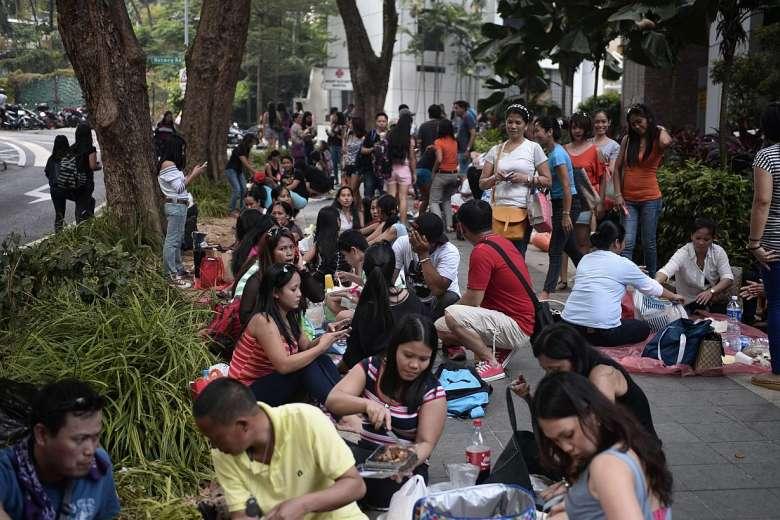
allegedly accelerated while making a U-turn along Nutmeg Road behind Lucky Plaza, drove onto the footway, through a guardrail and onto a service road colliding into the six helpers who were picnicking along the footway 1 . Perhaps if provided with public spaces or a ‘place’, the wellbeing of the foreign helpers could be valued more, headaches relieved and accidents avoided.
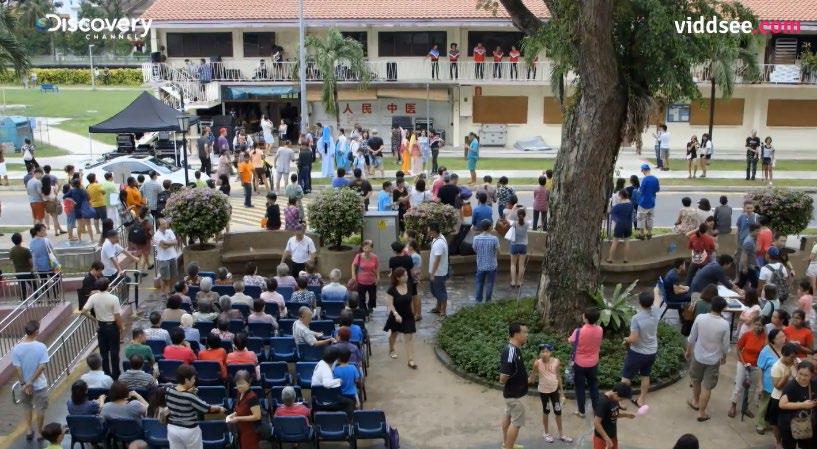
Similarly, the relocation of the community living in Dakota Crescent HDB announced on 25th of July 2014 2 , to Cassia Crescent agitated a controversy as most of the relocated were elderly who were immobile, and found the relocation course challenging; they had to forsake their old homes and its binding memories to start over again. Numerous initiatives sprung to capture the estate's kampong spirit of olden days and preserve the community's precious history and heritage. Such projects include 'Heartland', a 24-minute documentary on Dakota Crescent, 3 The Between Two Homes 4 project which sought on how the community gather to keep the memories of a place alive. Multiple volunteer groups such as Cassia Resettlement Team (CRT) 5 also came together to help the residents of Dakota Crescent resettle in the new Cassia Crescent estate and aid those affected by relocation by many ways as well. It is understandable that Dakota Crescent is one of Singapore's oldest and historical housing estates and holds many cherished memories for its residents. However, if the newly provided homes, in this case, Cassia Residences, was designed with spaces for the occupants to interact with one another, revive the kampong spirits and was planned based on first-hand narratives of the residents, their personal reflections and old memories of Dakota Crescent cherished, the hegira could have been less painful for the frail and often
1 Tang, L. (2020, September 02). Lucky Plaza car crash: 64-year-old man charged with dangerous driving that killed 2 domestic workers. Retrieved September 15, 2020, from https://www.todayonline.com/singapore/lucky-plaza-car-crashman-charged-dangerous-driving-led-2-domestic-workers-deaths
2 Philomin, L. E. (2014, July 25). Dakota Crescent tenants hit by news of redevelopment. Retrieved October 19, 2020, from https://www.todayonline.com/singapore/dakota-crescent-tenants-hit-news-redevelopment
3 Kwan, M., &; Chua, M. (2015, July 25). Heartland - Singapore 紀錄片Short Film: Viddsee. Retrieved October 19, 2020, from https://www.viddsee.com/video/heartland/1030u?locale=zh
4 Between Two Homes. (n.d.). Retrieved October 19, 2020, from https://www.sg/oursingaporefund/projectshowcase/between2homes
5 Jingzhou, L., & Howe, R. (2019, January 24). Building communities of care - an example from Cassia Crescent. Retrieved October 19, 2020, from https://www.todayonline.com/commentary/building-communities-care-example-cassiacrescent
neglected elderly. Furthermore, if some of the spaces within or around Dakota Crescent was re-used or adapted with attention given to the physical, cultural, and social identities that define Dakota Crescent’s significance or even as a mere homage to its roots, the deep values of those who feel intimately connected to Dakota Crescent can relive the memories.
It is evident from both the cases that the need for belonging is inevitable, and human beings will permeate to fulfil their demand for pertainment anyhow. In the plight of the failed attempts to stop the gatherings in Lucky Plaza and the relocation of Dakota Crescent community which lead to unambiguous altercations due to the loss of place, proves that belonging is primal, fundamental to the sense of happiness and well-being, and is a need 6 .
6 Mcleod, S. (2020, March 20). Maslow's Hierarchy of Needs. Retrieved October 19, 2020, from https://www.simplypsychology.org/maslow.html
CHAPTER 2
The Need to Belong
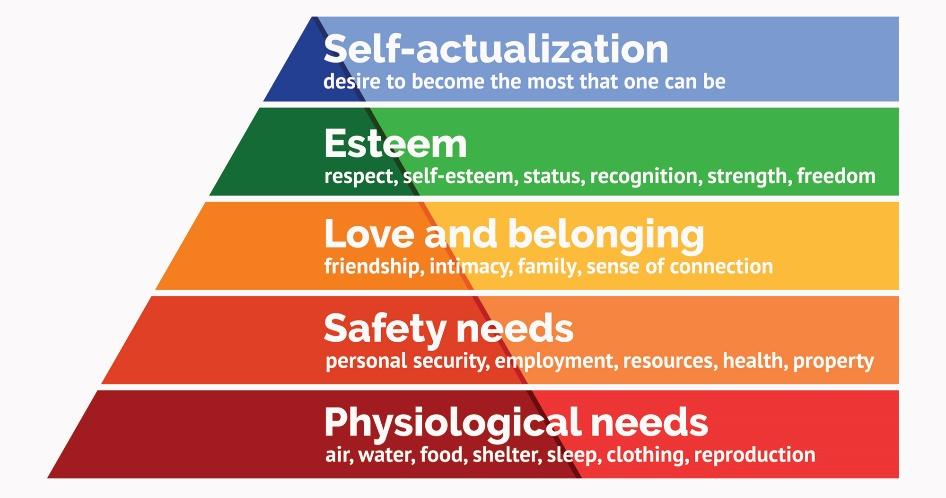
Abraham Maslow, a world-renowned psychologist, classified human needs into higher and lower levels and is referred to as the "hierarchy of needs." 7 It states that the lower-level needs: physiological (hunger, shelter, etc.) and safety-related (security and protection from physical and emotional harm) must be at least adequately satisfied before an individual may successfully pursue the higher-level needs of belongingness, esteem, and self-actualisation. According to Maslow, once the lower need is satisfied, the next level becomes dominant, and where a need is absent, the movement to the next level is clogged.
From this milieu, it is safe to presume that in countries such as Singapore, the lower level needs of people are more than satisfied and the next need along the hierarchy to be fulfilled is the sense of belonging. As a result, those who lack this sense of belonging will join with similarly situated others for mutual support, acceptance, and friendship. This further denotes that sensuous and creative placemaking for all within the community, significantly the deteriorated, may be the missing link towards an egalitarian community and help the individuals reach the ultimate goal of self-actualisation.
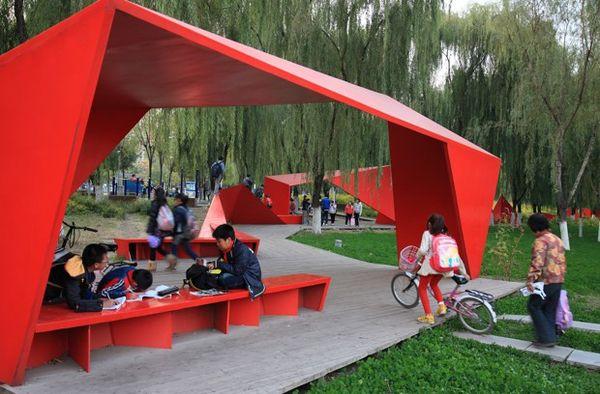
In this setting, architecture needs to embrace the public spaces around and within, inviting those who want to make a place out from it. It is peculiar how or why places become places without it being the intention of the designer, yet those who later manage so-called spaces, do not appreciate the beauty of it. English parks, such as Hyde Park, the market square in the Greek civitas or even the coffee houses in Vienna gave birth to creative ideas, harmonious gatherings with their speakers' corner belonging to all people within.
On the other hand, it is understood that modernist urban planning focuses on to creating ‘tidy and clean’ cities where the streets are built straight, functions divide the living, working and recreation as well as assigning individuals to classes at the cost of culture, heritage and narratives, leading to most of the phenomenology being plain and stagnant. The question that arises now is what prevents the proletariat of the community from fulfilling their need of belongingness? Is the formation of social bonds among the so-called plebian foiling the prevalence of the country? Is this congenial harmony among the lower class obstructing the further spread of consumerism and globalisation? Is the sole and only function of a pathway to link point A to point B?
The hermetic answer is that it is the duty of architects, urban planners and developers to design spaces that can project rich narratives from the epigrammatic
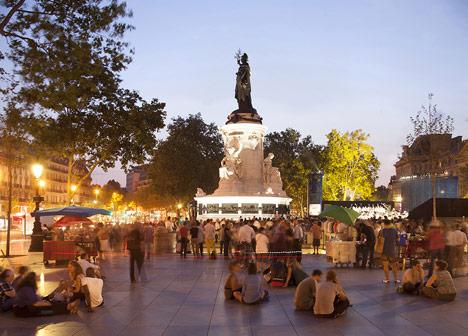
phenomena, let people accommodate spaces without disrupting the routines of others who also use the same spaces, creating a harmony that reflects culture. One of such designs that is significant in this terrain is the redevelopment of Place de la République, Paris by TVK Agency. In Paris, it is accustomed to protest and celebrate disapprovals of political viewpoints 8 at Place de la République and it has been a treasured point of nascence for countless marches that interpret democracy in the French Capital. However, this redevelopment is based on the concept of being hospitable to multiple urban uses and so angry strikers, protesters, and revolutionist can still gather but can no longer intercept others from continuing in their routines. This overhaul of Place de la République proposes a new effigy for participative democracy, creating an all-inclusive approach rather than an obstructive one,
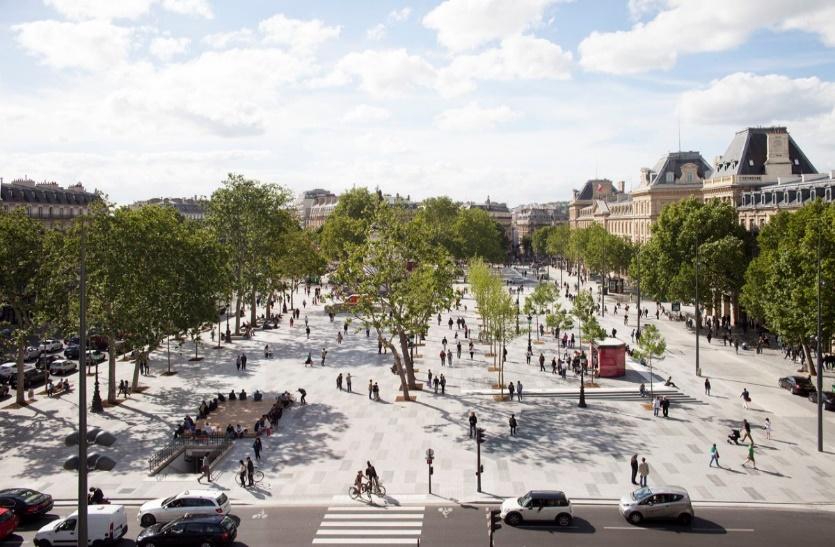
Apropos to the phenomena, links with the large boulevards evidently elevate a balance on soft transport for pedestrians, cyclists and public transport, the statue of Marianne, the array of tree, the reflective pool and the pavilion holistically contour a clear axis. This unity is further amped by the usage of the mineral element used in the hardscape. All these elements collectively created the fundamentals to the expression of harmony between the materials in a timeless and contemporary context, and multiple explorations such as the monotonous colours, use of water,
8 Place de la République. (2020, July 18). Retrieved October 20, 2020, from https://en.wikipedia.org/wiki/Place_de_la_R%C3%A9publique
placements of lights creating different urban ambiences. The environmental and functional two-fold slants are used along the long axis of the square to brew into the general urban setting. Motor traffic has also been adapted and precede along the southern edge and two equal sides of the square. The pavements are widened, to match the broad Paris boulevards around.
As mentioned before, Place de la République welcomes various groups to participate in an extensive range of activities and one of the sole purposes of the revamp to welcome new groups by changing the balance between the roadway and the concourse. The most crucial objection was to unite the attributes of the city with those of the local neighbourhood. Each segment of the plaza is modulated to familiarize to different usages and events, ranging from outdoor board game areas to concerts, tournaments to just people sitting on steps and working on their laptops. The monument was restored, refurbished, and repurposed and acts as a belvedere. Around its pedestal, they were transformed into a viewing stand where couples can dance day and night and kids can run around.
What needs to be understood from this case study is the fact that the satisfaction of the need of belongingness, whether in a political context or for mere appreciation or to fill a void, cannot and should not be prevented. Instead, it is ideal to find a circumvention and accommodate those who are actively seeking comfort in places and provide them with a sensuous space for their placemaking rather than
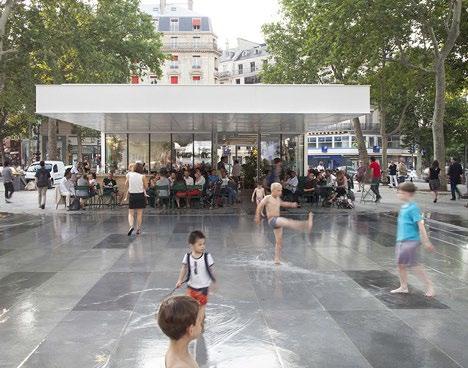
barricading and stripping them off a human need. The architects who redesigned the Place de la République have achieved a paradigm shift, by merely letting the occupants or visitors be in control, creating a place and allowing placemaking. This case study proves that places can be revived in relatively simple ways and with few resources, be embraced and adored by a diverse public, embody all kinds of lively activities, brace culture and strengthen the identity on adjacent places with the help of experiential empathy.
Love for Life
What makes the four walls of a house a home is the feeling of belongingness, peace, and devotion that comes with it. The phenomena must provide the forestated qualities for the occupants after a long day of work, stressful times, in sickness and in health. Similar is the situation for the foreign migrant workers or in better words
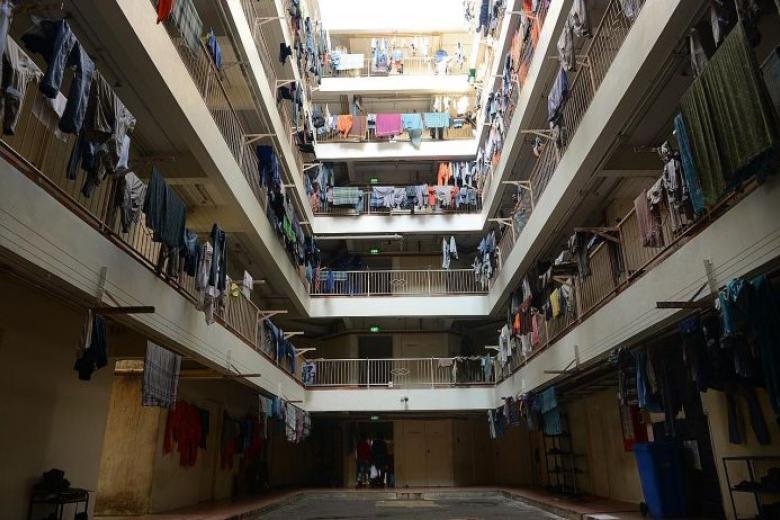
‘the foreign help’, yet why is it deemed acceptable for these workers to go back “home” to the stale four walls and a bed? The use of the term “dormitories” for their place of residence itself is derogatory. Evidently, migrant helpers are not countenanced with the most pleasant living conditions that provide them comfort. As the rest of the world is migrating towards psychological wellbeing through nature and human connections at the convenience of their homes, is it even-handed that these workers must find it elsewhere but their homes?
This attests that empathy is the missing term in the vocabulary of design and it is crucial to experience empathy in order to witness a sustainable world. It must be understood that a part of sustainability in architecture is to recognise the place, embrace the feelings and emotions that come with it. A building must communicate with its residents; the focal point of the building or space must be its occupants. The cultural touch on the designs should amplify human-nature bonds and heighten humane connections with one another whilst making the occupants feel sociable.
Desire for Nature
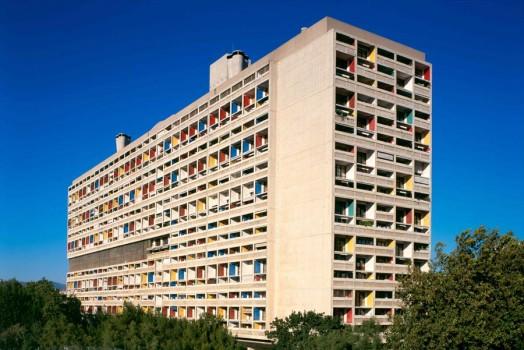
The influence of modernism with its stiff doctrines, uniformity, lack of local and cultural context is still seen in such social housings, clinics as well as in the residences for foreign helpers. This is evident from the similarities between the phenomenology of the above stated and the modernist social housings such as Unité d'Habitation by Le Corbusier which also can be considered as a modern 'ghetto'. Social housings and subsidised housing for the mass or any place designed for human beings should embrace new trends that is brings about a positive boost to their occupants such as biophilic architecture. Moreover, the current way of living revolves around various technological means and concrete jungles, drifting further away from the natural, intimate world that being the case, more of nature must be brought into man-made structures.
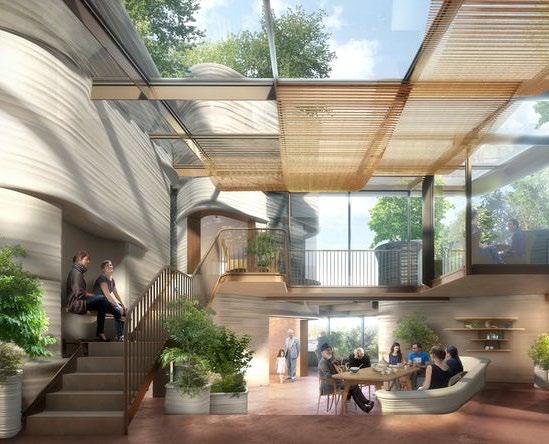
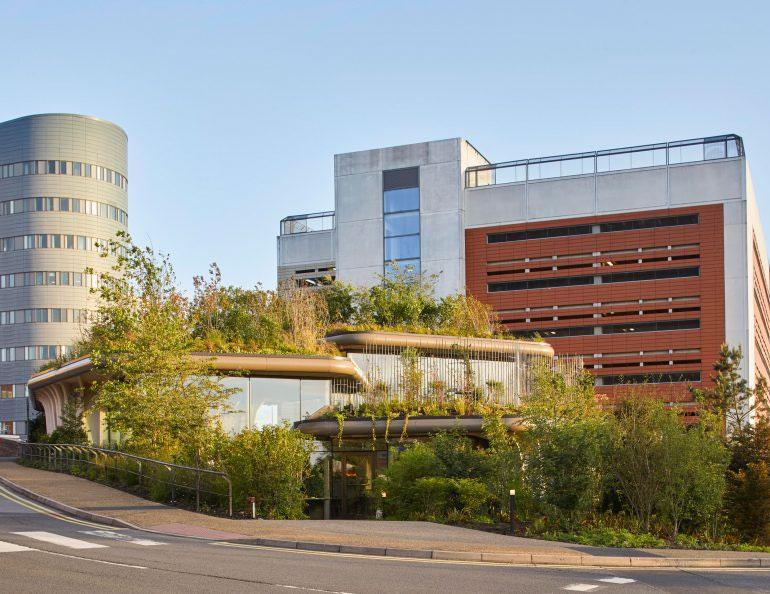
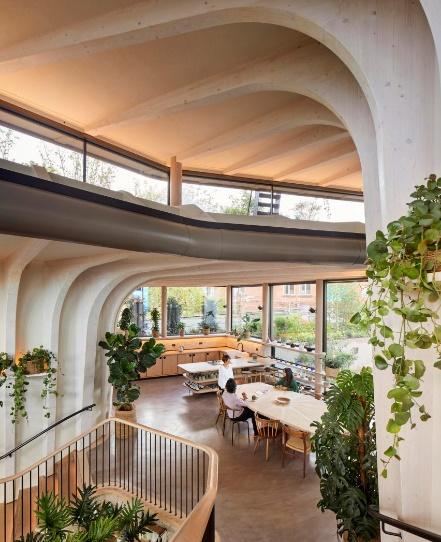
Biophilia is described as “an innate and genetically determined affinity of human beings with the natural world” 9. Whether it is a subconscious aroha or an apparent desire, multiple studies have proved that all human beings crave natural settings for a physiological and a psychological well-being. Aimed to build a home for those affected by cancer Heatherwick Studio's Maggie's Centre 10 in Leeds shows how natural and sustainable architecture can create a sensuous, sensational environment that can inspire visitors and occupants during difficult times. It shows how biophilia can be used to create places that are soulful, welcoming, and eloquent.
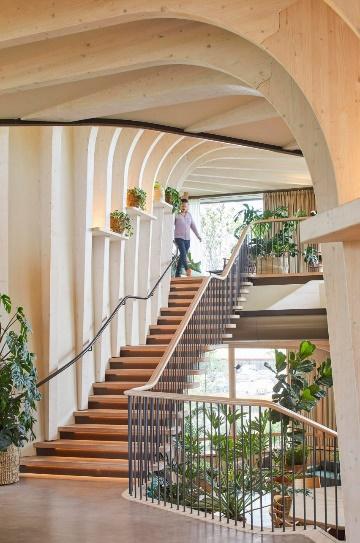
The prefabricated framework of the building is made from sustainably acquired spruce wood. Three mushroom-shaped spaces counsel rooms within them and around them are the communal areas such a kitchen, a lounge, and a fitness room. Glazed outer glass walls look over gardens of trees and plants. Evergreen trees and shrubs that will colourise the indoors even in winter are used as a softscape scheme. Heatherwick Studio used lime plaster for the walls for its porous qualities, that can aid in maintaining the humidity of the unpretentiously ventilated building
9 Rogers, K. (2019, June 25). Biophilia hypothesis. Retrieved October 28, 2020, from https://www.britannica.com/science/biophilia-hypothesis

Plants grow from straw woven pots and grow parallel with the walls, up to the mezzanine, while shelves are built into the staircases where the occupants can add their own objects to relive their moments. The studio also designed cork and beechwood tables as furniture with podiums that imitate the arching shape of the timber fins. The tables are placed in the kitchen area and while seated, occupants can overlook the garden for an intimate relation between them and nature.
The design of this Maggie's Centre for cancer patient sets an example on how places can be designed that allows occupants to be at ease, happy and calm even at difficult times. Social housing, housing for foreign helpers and places for all can and must also be designed in ways that can provide intimate spaces with heightened interactions with nature. If biophilic designs can ease journey of cancer patients who go through so many levels of physical pain, severe depression, and extreme stress, it can be a rejuvenating experience for others and must be practiced in design. Furthermore, as Singapore adopts a multi-pronged approach towards a zero-suicide country 11 , and towards a mentally and emotionally healthy nation, it is important to ensure all within the society, are included in this strategy and the initial step can be designing better homes. Sensuous phenomena can induce better mental health, a
11 Ministry of Health, Singapore (2020, March 25). Working together towards a zero-suicide Singapore. Retrieved October 28, 2020, from https://www.moh.gov.sg/news-highlights/details/multi-pronged-approach-to-suicide-prevention-andintervention-in-singapore
happier community and help to advance towards an egalitarian community.
Social Bonds
It is understandable that governments and urban planners prefer the principles of modernism in urban planning due to the ease and its simplicity, though it is not restricted to designers to follow every notion of the style. For instance, Modern architecture can be summarised by “form follows function” 12; their principles of automation and simplicity of designs can still be inspired by its specific and recognisable aesthetic. Accommodating masses, social housing and places can still be constructed by minimising the usage of unnecessary ornamentations through simple façades that can still depict culture and create places among the households by incorporating different spaces within and around a building.
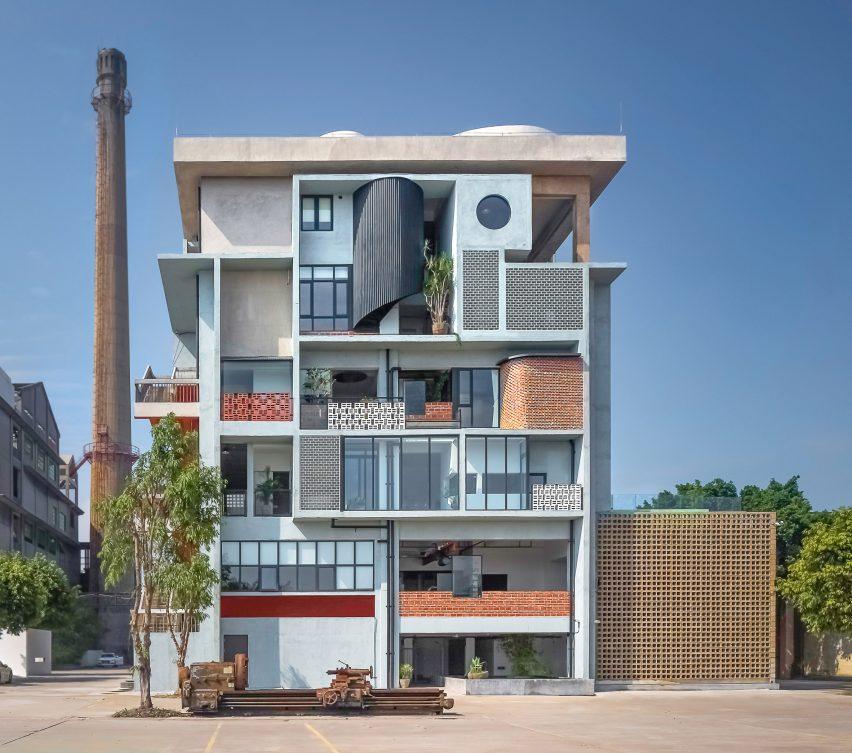
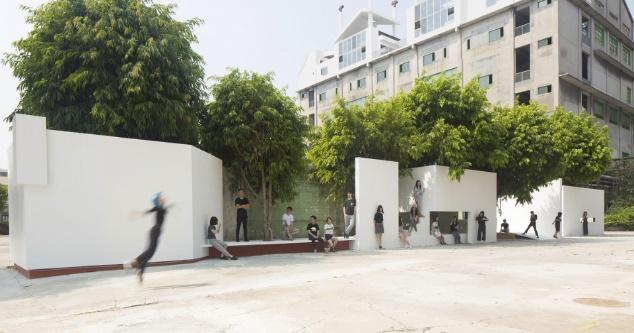
An example of this is the ZiNi Twelve Portal Project, China by FEI Architects, or better known as The Borderless Community 13. The building located in Guangzhou is a restoration project that is now a mixed space for both public and private life, a place for work, creative experience, habitations, exhibition and also social
12
13
gatherings. It has wide windows carved out and balconies with a variety of material finishes. This approach highlights inward connection, displaying the work and life of occupants and outward exhibition depicting the industrial heritage site and natural scene. With each other as its backdrop, makes the building an integral holistic design. The exterior wall was transformed into an activity space, introducing multiple communal spaces, and a spiral staircase that beams over a sheltered terrace where residents sit next to a pool of water and enjoy the fresh air
Inspired from extensive transparent areas in Bauhaus dormitories, transparency of overlapping planes in analytical cubism and Le Corbusier’s Villa Stein which mainly occupied with the planar qualities and achieves transparency without optical
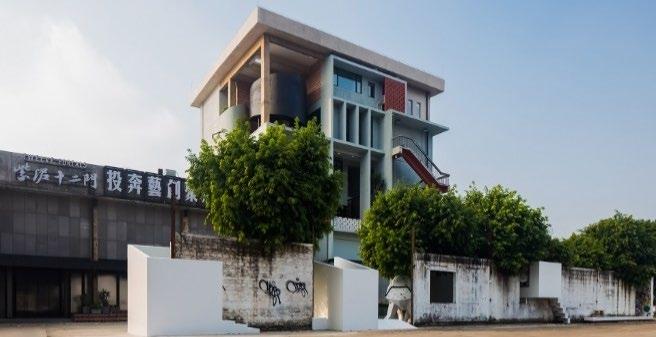
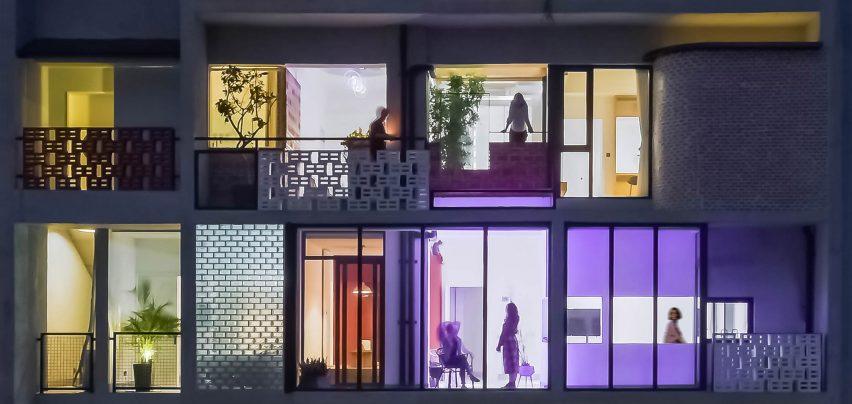
destruction of each other 14, the façade projects a series of framed screens that play a vivid film of everyday life.
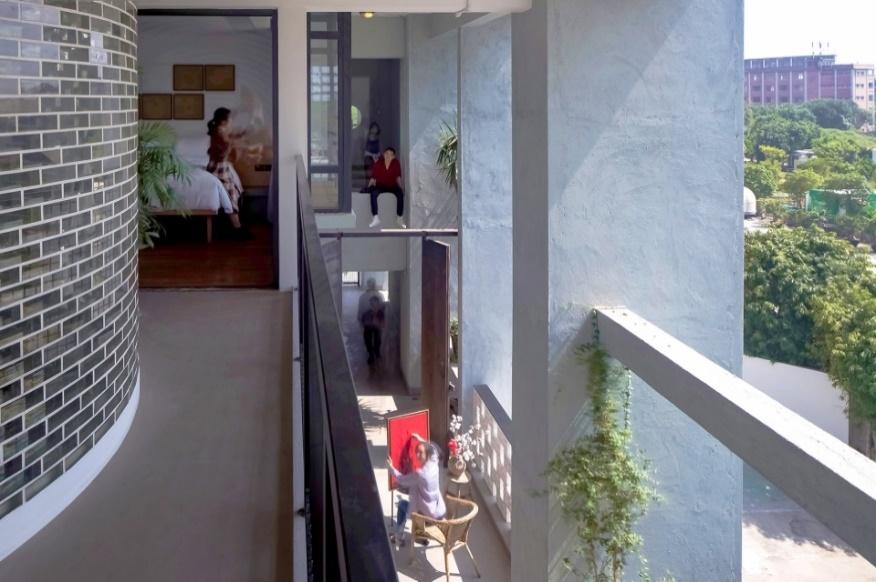
The individual apartments are designed to cater to this new mode of life where spatial boundaries are blurred in order to introduce a variety of ways of living and working thus, creating a harmony, a creative connectivity and a support system. The balconies are deeply sheltered and designed to accommodate the warm or rainy climate allowing occupants to leave the doors open for a breeze, or even sit outside when it is pouring rain, creating a connection with the surrounding.
This borderless attitude seemed like an experimental living but, due to the Covid-19 pandemic, most people were forced to stay at home in isolation, cut off from social life This project shows how social distancing aspect can be utilised in designs and still provide means of social connections. ZiNi Twelve Portal Project proves that form follow function principle can be applied to create spaces for placemaking and does not necessarily have to obliterate culture or interactions and create intimate spaces.
Sensuous Workplaces
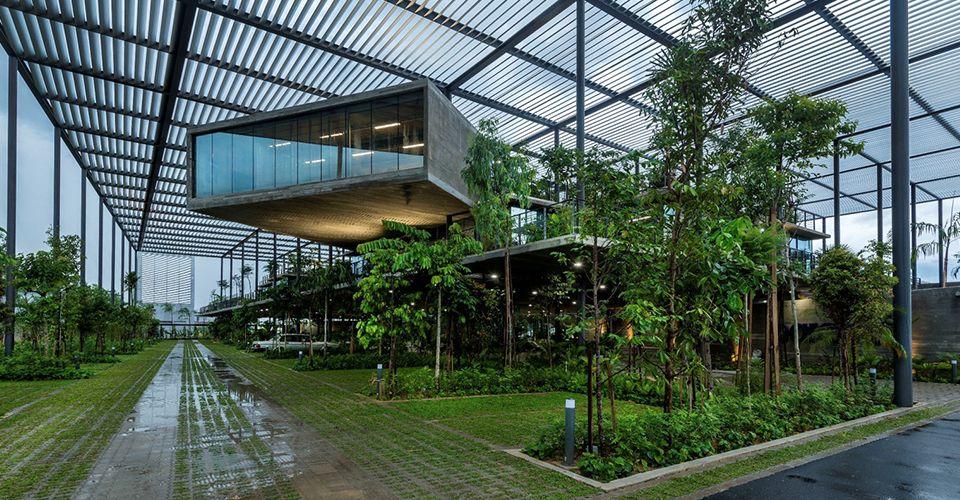
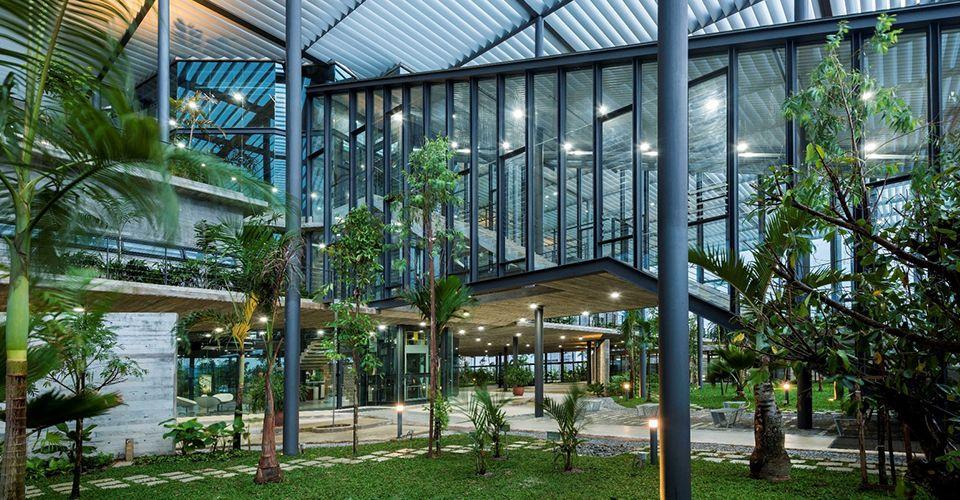
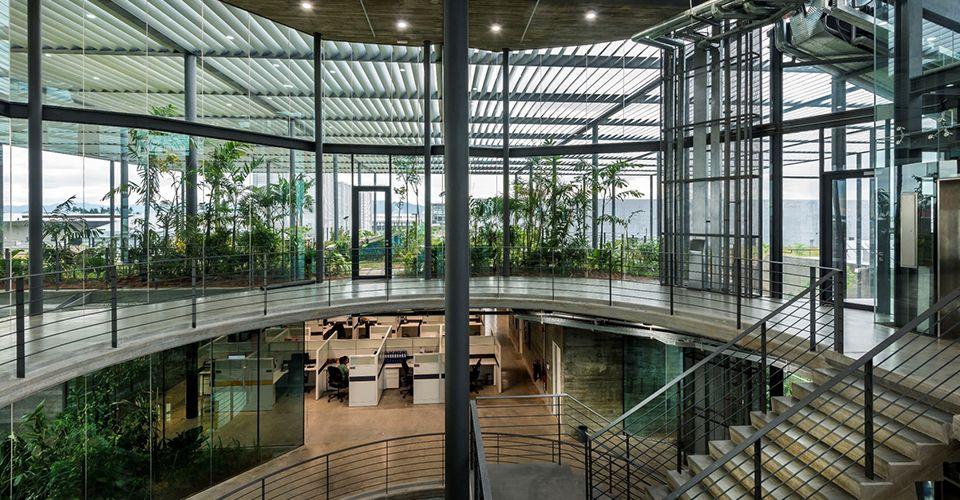
The Paramit Factory by Design Unit Sdn. Bhd., Malaysia, has defied the norm that factories, blue-collar workplaces, and industrial work zones cannot be in tune with biophilia or sustainability and will have to have ‘Mad Max’ vibe. The Paramit Factory or better known as “Factory in the Forest”, is a remarkable architectural marvel which has the right elements such as space, light, views, and plants, unified together and backed by efficiency and comfort. The building is designed in a way that it invites daylight, highlights greenery and frondescence with the louvred canopy roofs for shading, which also connects indoor with outdoor, portraying partially covered landscaped spaces that are natural. The design of this factory focuses on creatively bridging the gap between manufacturing and sustainability, pertaining to the design principles such as energy efficiency, water efficiency, natural lighting, and biophilia. And these are the fundamentals needed for the human connection to nature.
This rectangular site which was set to minimise the effects of solar radiation with the help of columns of canopies is mainly divided into four parallel zones, and each of these zones are designed in unity with maximum contact with nature. These four zones are the car park, office area, courtyard, and manufacturing zones. The pathways to office and courtyard are shaded by the ‘forest’ while giving protection from the tropical sun, and office levels provide access to roof gardens. The courtyard separates the office and factory with scenic views. The link to the office and production area is a bridge that goes over the courtyard, which is a space for formal gatherings or recreation.
The whole entity blesses its occupants with seamless views to the landscape and sky via the full height and clerestory glazing. Rainwater cascading from the roof, raises awareness to tropical storms, allowing stormwater collection into storage tanks for landscape irrigation. Moreover, the factory receives natural diffused light across the entire factory floor, mitigating the reliance on artificial lighting. Along with this, chilled water floor slab cooling and cutting-edge air-conditioning technology can effortlessly reduce energy consumption to half of a typical factory of similar size.
It is apparent that the architecture and spatial aspects were focused on the occupants and the approach was to create a stimulating, energising and meaningful working environment for all. Forests, critical for both macro & microclimates are also vital for psychological wellbeing. It can also be said that the designers designed with empathy in mind by understanding the importance of nature to alleviate mood, soothe the minds of occupants with a toolset of creativity to transform a gloomy industrial site into a radiant workplace.
The “Factory in the Forest” has set a good example of how sustainability and biophilia can be used in architecture with experiential empathy in mind. In addition, the spatial and psychological benefits of using natural elements in architecture should not be disregarded as the sensuous experience of tapping into one’s sensorial realms through nature is something that everyone would enjoy and appreciate. It is about time that places for the common labourers, migrant helpers, the low income, and the elderly are also designed with more empathy. Provided, such designs can satisfy their need for belongingness as placemaking can happen within their
workplaces. If mixing of classes within the society is frowned upon, then places should be provided for all classes to get together, belong, adore, and find comfort in their homes. Empathy is the key.
CHAPTER 3
Morals and Precept
The case studies presented show how sustainability biophilia and use of natural elements can be used in designing that can aid in psychological wellbeing, meaningfulness, and vitality. It also shows that modern architecture without much use of extensive ornamentation can still be designed to maximise human interactions. Based on these examples, it is understandable that places which people tend to gather, such as commercial areas, public recreational parks and their homes can be designed to invite and welcome people all that reside within the community. The crop yielded from sustainability and biophilia as well as sensuous architecture should be shared with all and must not be enjoyed only by a selective and subjective portion of the society. It is binding upon all designers to address immediate and urgent local issues that are evident, though unvoiced, as an obligation to humanity. As Wayne Dyer states, “if you change the way you look at things, the things you look at change” and so gathering of people, be it migrant helpers, should not be frowned upon or stopped but celebrated and appreciated. It shows recognition and grace towards an egalitarian community. Practicing this, it should be understood that gathering of any of those within the society cannot be barricaded ethically or morally and if it does not disturb the functions and circulation, then occupants can be provided with places and encouraged to make their own placemaking. The commercial paraphernalia can run fluidly, in their shallow views and the often neglected of the society can be free to satisfy their needs right along. For instance, the Filipino helpers who gather at Lucky Plaza pavements, through placemaking such as designing pocket parks or picnic spots across Nutmeg Road, can find a more
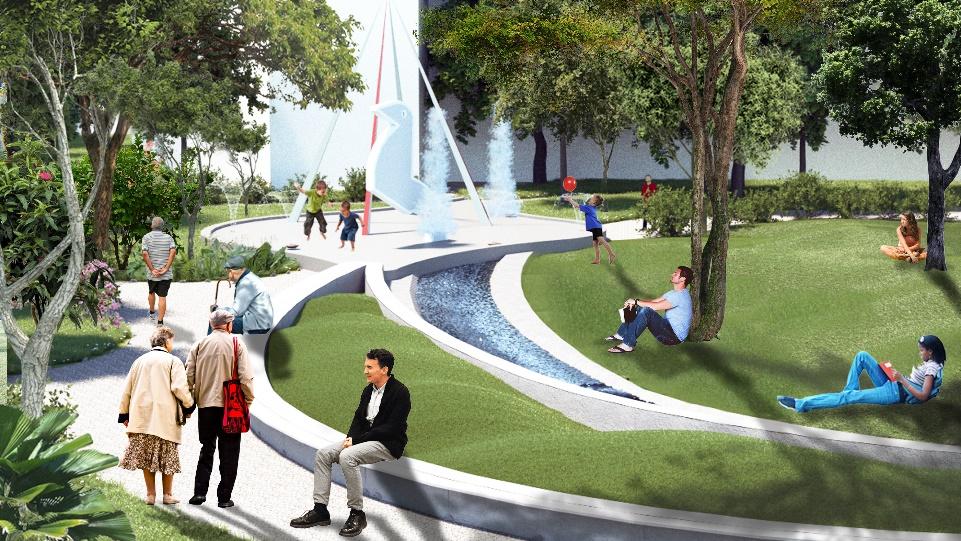
fitting gathering point. Spaces as such will lessen the crowds that are now regarded as an eyesore for the visitors of Orchard Road. Similarly, Dakota Crescent, which is deeply engraved to Singapore’s culture and history, can be redeveloped, and adapted as an elderly home village. Once home to hundreds of families can again be home to a lot more, making it not only functional, but also a tribute to the historical and iconic narrative of Dakota Crescent. This can be a sanctuary for the often neglected elderly and heal them and become their home. In addition, it can restore the almost forgotten space to its former glory, a biophilic space and be part of a sustainable future.
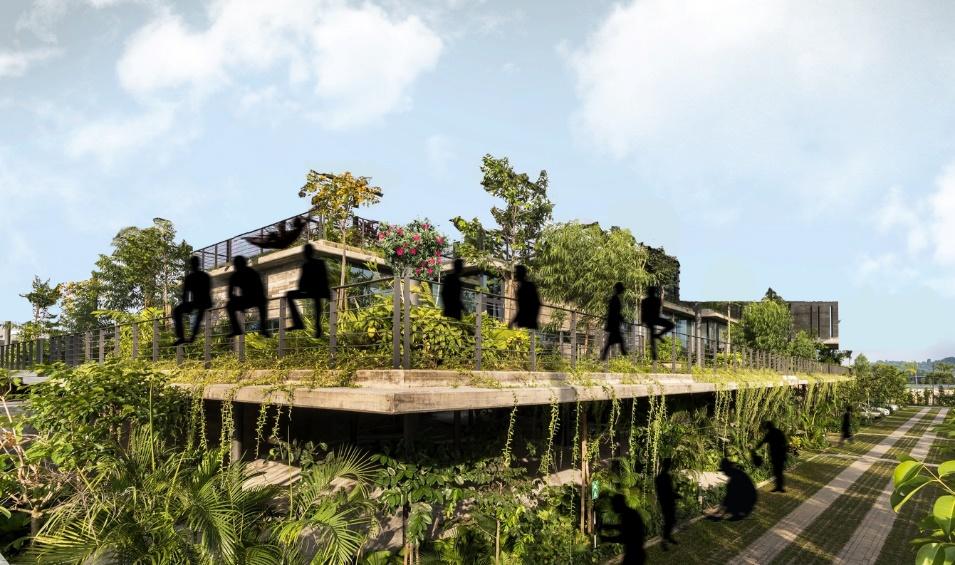
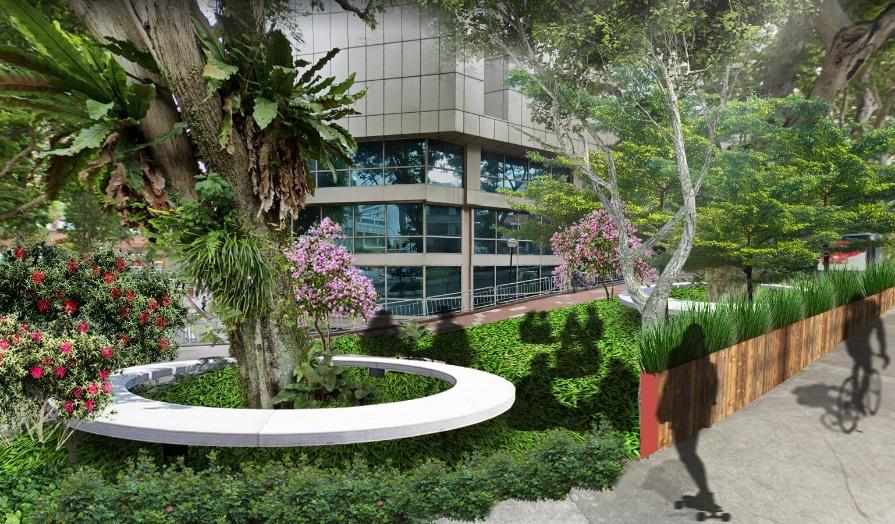
On top of that, housing for foreign workers can be designed with biophilic aspects for a sustainable living condition, allowing the occupants to tap into the psychological benefits of mother nature, providing them with a proper home away from home. Social housing in Modernist architectural style can still provide spaces for interactions and co-living experiences even with social distancing being practiced. Spaces around and within these buildings can exhibit culture, invite the public and create interactive spaces. Programs such as community gardening can be introduced to allow interactions with nature, spaces can be provided to practice their respective religious and cultural customs, traditions, rituals, and rites. An interactive co-living experience, with the use of technological advancements and cost cutting methods for mentally and physically exhilarated employees can help them become more efficient in their work. In short, a happy, well balanced egalitarian community, destined for more attainment.
Manifesto and Conclusion
As Robert L. Peters said, “Designs creates culture. Culture shapes values. Values determine the future.” 15 If the cultures of all who make up the community are not taken into account, the cleansing process itself will wash away the intrinsic values that can make a society better. Placemaking should be practised and must be in sync with those who occupy so that it can help stop a place from becoming alienated and can welcome all. The malpractice of this is the cause of why many places are losing their public and local character. It is in the hands of designers to create better alternatives than to force connections, such as creating opportunities for multimodal interactions between groups and entities. The mixing of those from various cultural backgrounds and creating spaces for mingling should not be looked down upon but encouraged. The appreciation of life starts only when living states of the others are seen and empathised.
As Juhani Pallasmaa stated, "every touching experience of architecture is multisensory; qualities of space, matter, and scale are measured equally by the eye, ear, nose, skin, tongue, skeleton and muscle." 16 In this urban context, placemaking should be inclusive for all coeval within society. Kengo Kumar, one of the globally acclaimed architects of the current times, stated that the place is a result of nature and time and that he believes that his architecture is some kind of frame of nature with which, nature can be experienced more deeply and more intimately. 17 This justifies that to commensurate successful placemaking, the emotions felt by those of all cultures can help move towards an egalitarian society where the ethics are valued, designs are morally backed, ephemeral relationships are uncloaked, and the facades exhibit cultures and traditions of all within the community.
Sustainability must be used along with the term social and empathy. The value of human lives is never lower than that of anything in the universe and this is a fact. First world countries should be able to accommodate and not forgo those who helped them reach the level. It needs to be understood that foreign helpers, the elderly and low-income families are also part of the society and stripping them from the need for belongingness is the suppression of their right. Creative and sensuous placemaking must be practiced to move towards an inclusive, egalitarian society.
16 Pallasmaa, J. (2005). Multi-Sensory Experience. In The eyes of the skin: Architecture and the senses (p. 41). Chichester: Wiley-Academy.
17 Kuma, K., & Bogná r, B. (2009). Material immaterial: The new work of Kengo Kuma. New York: Princeton Architectural.
Reference List
Baldwin, E. (2020, June 04). Social Impact: Architecture Building Space for Empathy. Retrieved October 29, 2020, from https://www.archdaily.com/941031/social-impact-architecture-buildingspace-for-empathy
Block, I. (2020, October 24). Fei Architects designs apartment block that frames residents' daily lives in Guangzhou. Retrieved October 29, 2020, from https ://www.dezeen.com/2020/10/24/fei-architects-borderless-community-ofzi-ni-twelve-portals-guangzhou/
C. (2014). Sensuous. Retrieved September 08, 2020, from https://www.the free dictionary.com/sensuous
Courage, C. (Producer). (2017, June 03). Placemaking and Community | Cara Cour age | TEDxIndianapolis [Video file]. Retrieved September 09, 2020, from https://youtu.be/Sfk1ZW9NRDY
Cheong, M. (2014, March 17). Crowds enjoying picnics on the concrete pavement in front of Lucky Plaza [Digital image]. Retrieved 2020, from https://www.straitstimes.com/singapore/sunday-visitors-in-some-mallsparks-up-as-more-maids-get-rest-days
Creative Communities and Arts-Based Placemaking. (2015, June 12). Retrieved Oct ober 29, 2020, from https://www.pps.org/article/creative-communitiesand-arts-based-placemaking
Creative Empathy [Interview by 1016300563 781527098 A. Melbourne-Hayward]. (2016, June 17). Architecture Now. Retrieved October 29, 2020, from https ://architecturenow.co.nz/articles/mario-cucinella/
Dosch, U. (2020, August 07). Paramit: Fantastic factory in the forest. Retrieved
October 29, 2020, from https://applications.kurtzersa.com/ersa/reflow /paramit-fantastic-factory-in-the-forest/
Ekman, P. (2007). Emotions revealed: Recognizing faces and feelings to improve communication and emotional life (pp. 180-181). New York: Henry Holt.
Frearson, A. (2014, January 04). TVK transforms Place de la République into Paris' largest pedestrian square. Retrieved October 29, 2020, from https://www.de zeen.com/2014/01/04/tvk-place-de-l
Frearson, A. (2015, August 04). Thomas Heatherwick gets the green light for Maggie 's Centre modelled on pot plants. Retrieved October 29, 2020, from https:// www.dezeen.com/2015/08/04/thomas-heatherwick-leeds-yorkshire-mag gies-centre-green-light-pot-plants/
Heeman, J. (2015, February 24). Musical events bring people to the otherwise empty space [Digital image]. Retrieved from https://www.pps.org/article/culturalconnections-building-the-placemaking-movement-in-brazil
Ho, L. (2018, May 09). Paramit’s “Factory in the Forest” [Digital image]. Retrieved October 29, 2020, from https://blog.interface.com/paramit-factory-in-aforest/
Hou, J., & Roberts, J. L. (2011). Transcultural Cities: Symposium Proceedings. Seattle, WA: Department of Landscape Architecture, University of Washington.
Jan Verheul, W. (2018, September 24). Placemaking and the discourse of the public place. Retrieved October 29, 2020, from https://thecityateyelevel.com/stor ies/placemaking-and-the-discourse-of-thepublicplace/
Jay, M. (1996). The dialectical imagination: A history of the Frankfurt School and the Institute of Social Research. Berkeley: Univ. of California Press.
Kishnani, N. (2019, March 04). Paramit Factory: A Case Study in Industrial Biophilic Design. Retrieved October 29, 2020, from https://blog. interface.com/paramit-factory-in-a-forest/
Kozlowski, P. (1945). Unité d'Habitation, Marseille [Digital image]. Retrieved October 29, 2020, from http://www.fondationlecorbusier.fr/corbucache/ 900x720_2049_791.jpg?r=0
Kwan, M. (Director). (2016, May 30). Hearland [Video file]. Retrieved September 15, 2020, from https://www.viddsee.com/video/heartland/1030u?locale=en
Kuma, K., & Bogná r, B. (2009). Material immaterial: The new work of Kengo Kuma. New York: Princeton Architectural.
Le Corbusier (1967): The City of Tomorrow [1925], Paris: Dover Publications.
M. (2020, March 25). News Highlights. Retrieved October 28, 2020, from https://ww w.moh.gov.sg/news-highlights/details/multi-pronged-approach-to-suicide -prevention-and-intervention-in-singapore
Mafi, N. (2020, June 30). Heatherwick Studio Completes the Verdant Maggie's Centre in Leeds, England. Retrieved October 29, 2020, from https://www.architec turaldigest.com/story/heatherwick-studio-completes-verdant-maggiescentre-leeds-uk
Mafi, N. (2020, June 30). Heatherwick Studio Completes the Verdant Maggie’s Centre in Leeds, England [Digital image]. Retrieved October 29, 2020, from https://www.architecturaldigest.com/story/heatherwick-studio-completes -verdant-maggies-centre-leeds-uk
Maggie's Centres. (2020, June 11). Retrieved October 29, 2020, from https://en.wiki pedia.org/wiki/Maggie's_Centres
Montgomery, C. (2013). Happy city: transforming our lives through urban design. First edition. New York: Farrar, Straus and Giroux.
Pallasmaa, J. (2005). The eyes of the skin: Architecture and the senses. Chichester: John Wiley. Retrieved September 12, 2020, from http://cc-catalogo.org/site/ pdf/Pallasmaa_EyesoftheSkin.pdf
Place de la République. (2020, July 18). Retrieved October 20, 2020, from https://en. wikipedia.org/wiki/Place_de_la_R%C3%A9publique
Rambert, F. (2016, January 18). Multimedia - PublicSpace. Retrieved October 29, 2020, from https://www.publicspace.org/multimedia/-/post/whenarchitecture-speaks-up-for-public-space
Rogers, K. (2019, June 25). Biophilia hypothesis. Retrieved October 28, 2020, from https://www.britannica.com/science/biophilia-hypothesis
Rossali, I. (2016, June 02). CLEANER: KT Mesdorm was fined the maximum $300,000 but conditions have since improved. [Digital image]. Retrieved October 01, 2020, from https://www.tnp.sg/news/singapore/inside-foreign-workersdormitory
Rowe, C., & Slutzky, R. (1963). Transparency: Literal and Phenomenal. Perspecta, 8. 45.
Seow, J. (2016, January 19). Sunday visitors in some malls, parks up as more maids get rest days. Retrieved October 29, 2020, from https://www.straitstimes.com/ singapore/sunday-visitors-in-some-malls-parks-up-as-more-maids-getrest-days
Tang, L. (2020, September 02). Lucky Plaza car crash: 64-year-old man charged with dangerous driving that killed 2 domestic workers. Retrieved September 15,
2020, from https://www.todayonline.com/singapore/lucky-plaza-carcrash-man-charged-dangerous-driving-led-2-domestic-workers-deaths
Wang, M. (2018, August 17). The Placemaking Experience in Private Residential Environments. Retrieved October 29, 2020, from https://www.formand place.com/perspectives/the-placemaking-experience-in-privateresidential-environments
Yu, K. (2013). The Folding Paper is used by school kids as seats and tables to do homework, acting as a gathering place for kids during the after-school hours [Digital image]. Retrieved September 10, 2020, from https://www.asla.org/2013awards/062.html
ZiNi Twelve Portal Project, China by FEI Architects. (2018, November 07). Retrieved October 29, 2020, from https://www.gooood.cn/zini-twelve-portal-projectchina-by-fei-architecture.htm