New statue to honor Gordon Parks at Landmark Plaza in St. Paul
By Tom Gitaa Mshale
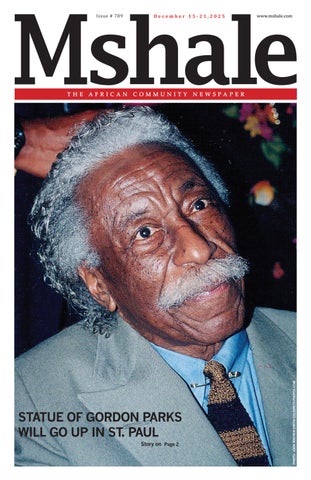
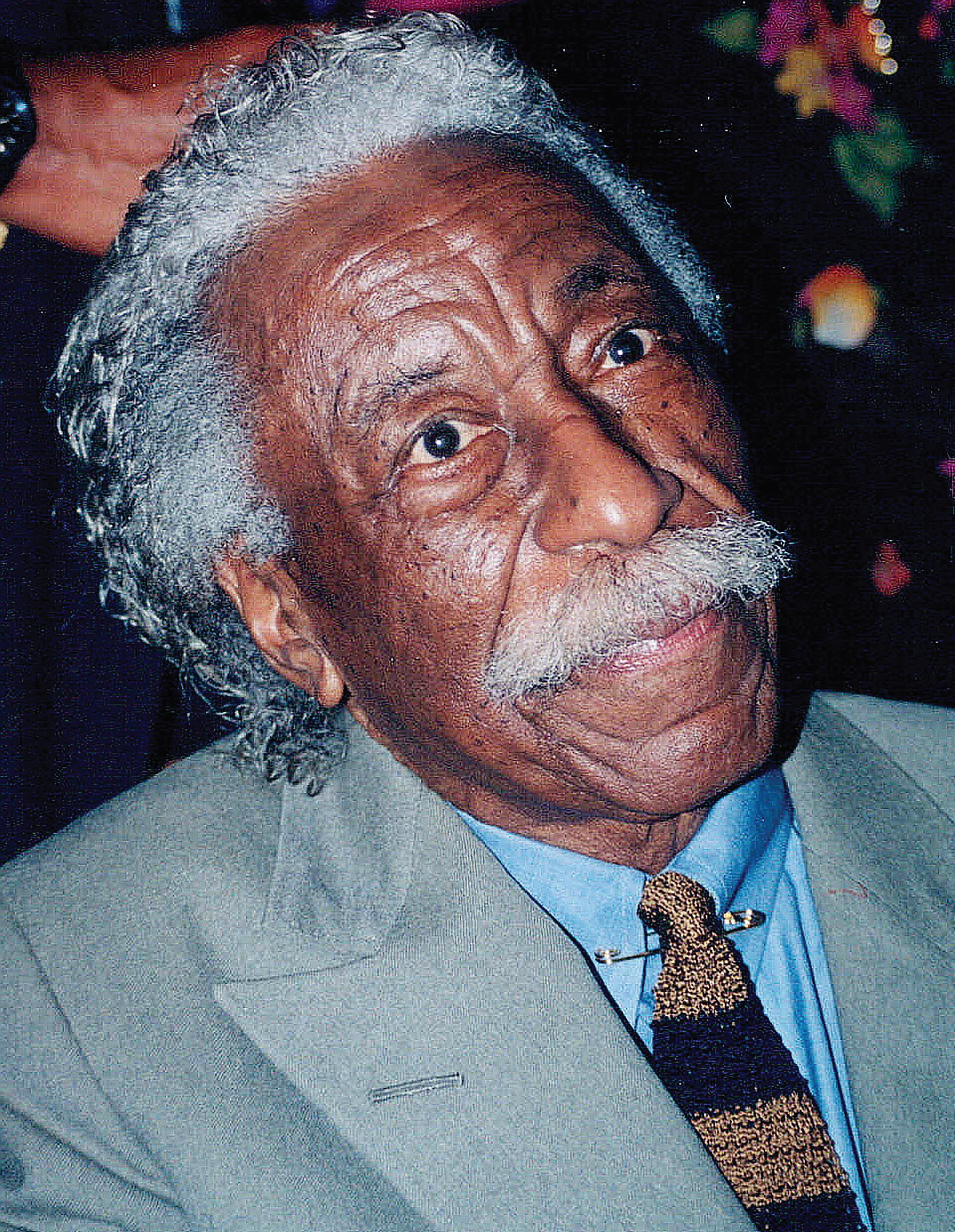
A new statue in St. Paul will honor photographer, author, filmmaker and activist Gordon Parks.
State Rep. Samakab Hussein and state Sen. Foung Hawj – both Democrats representing St. Paul –announced on Sunday, Nov. 30 during a press conference at the Landmark Center that they had succeeded in securing a $250,000 appropriation for the commemoration. The funding was part of the 2025 Legacy Bill that Gov. Walz signed into law in the summer. The two legislators carried the bill in their respective chambers.
The announcement happened on what would have been Park’s’ 113th birthday. He died in 2006 at the age of 93. In 2008 when time came to dedicate a new building for the then Unidale Alternative Learning Center, St. Paul Public Schools renamed it Gordon Parks High School in honor of his legacy.
On his birthday in November 30, 2000 HBO released a documentary about his life, Gordon Parks: Half Past Autumn.
Although a native of Fort Scott,
Kansas, Parks made St. Paul his home after moving there when he was 14 following his mother’s death.
kicked him out when
he was 15 making him homeless. According to an account by the Minnesota Museum of American Art, Parks then moved in with another sister Lillian, later leading to a stay at a boarding house in St. Paul.
By his early twenties he worked various jobs in both St. Paul and Minneapolis, eventually getting his start as a photographer at the state’s only Black newspapers at the time, the St. Paul Recorder and the Minneapolis Spokesman (Now the Minnesota Spokesman Recorder). He went on to become one of the nation’s greatest photographers with his 1948 photo essay on the life of a Harlem gang leader winning him widespread acclaim.
The Gordon Parks Foundation, which archives his work, said the photo essay landed him a “position as the first African American staff photographer for Life.”
In 1969, he became the first Black director to make a major Hollywood studio film with the release of “Shaft” in 1971 which he directed, starring Richard Roundtree as private detective John Shaft.
Parks Cont’d on Pg. 6

Once in St. Paul he stayed with his sister Maggie and her husband, but his brother-in-law
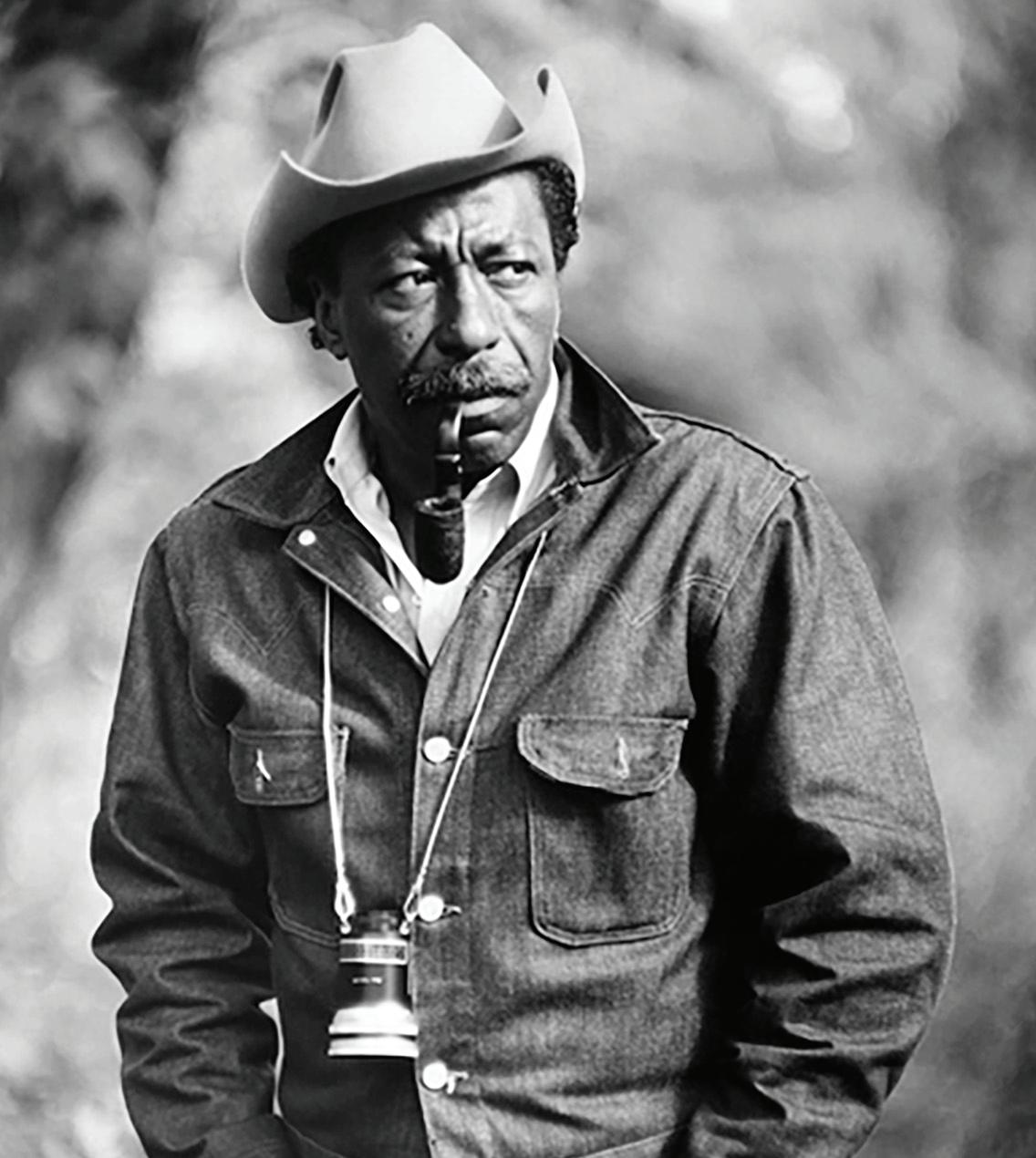
A photo of Gordon Parks on the set of The Learning Tree in 1969 as seen on the Gordon Parks Foundation website. CREDIT: Photographer Unknown
Guest Commentary by Imam Omar Suleiman
When Donald Trump, speaking at a Cabinet meeting Tuesday (Dec. 2) at the White House, used the word “garbage” while discussing America’s Somalis, he wasn’t dismissing a policy concern about the immigrant community or talking about an incident that he objected to. He was speaking about people — and not any people, but a group known for resilience, faith and service to others. The Somalis, refugees from East Africa, have overcome much to make their own contribution to the civic fabric of the United States.
The attack was disgraceful, but not new. Somalis have long lived at the intersection of anti-Black racism and anti-Muslim bigotry, where they are an easy target for the most dehumanizing political rhetoric. When, in his first term as president, Trump disparaged African nations as “s–thole countries,” it was dismissed as crude language from a crude man. But language is never simply language. Words like these are invitations to treat people as expendable, unwelcome or unworthy of human regard.
The Somali community in the U.S. bears little resemblance to the one painted by these slurs. Arriving as refugees fleeing war, Somalis have become one of the most civically engaged and socially productive Muslim communities in the country. Minnesota, home to the largest Somali population, consistently reports high levels of community participation and entrepreneurship. Somali Minnesotans generate some $500 million in income annually and pay close to $67 million in state and local taxes every year, with an estimated $8 billion overall impact on the state’s economy.
These are not small numbers. They are the footprint of a hardworking community that has transformed vacant commercial corridors in major U.S. cities into thriving markets, restaurants and neighborhood hubs. Somali American truck drivers keep supply chains moving, Somali physicians and nurses and home health aides support our health care system, teachers shape future generations. Somali entrepreneurs create jobs. Somali academics pursue their research in America’s universities and teach in our public and private schools.
Like many other immigrant groups in American history, Somalis face real challenges. Refugee communities often arrive with significant trauma, limited English proficiency and spare financial resources. Poverty rates are higher, as they have been for every displaced population that arrived without the benefit of generational wealth. Some young people, navigating complex pressures, fall into crime. None of this is surprising or takes away from the overall contribution of the Somali community.
Like American Muslims more broadly, Somalis are often expected to be extraordinary just to be treated as ordinary, to be given a chance. Their two identities, Black and Muslim, lead them to be stereotyped and demonized, and disparaging them is an easy way to score cheap political points.
The real danger of a public figure — especially the president, of all people — calling human beings “garbage” is that it grants permission for a society to see them that way — indeed, trains society to do so. That’s how the seeds for hate crimes are planted. How discriminatory policies gain traction and tacit support from the mob. It’s how the dehumanization cycle works.
Having survived civil war, famine and displacement, thousands of Somalis are raising children born in this country who still feel the shadow of the previous generations’ trauma. They should not have to endure political dehumanization in the country they now call, and contribute to as, home. This country is blessed with Somalis who have come, like generations of immigrants before them, to build dreams for those who will follow. Treasure them. Our Somali neighbors are a gift, not garbage.
The Imam Dr. Omar Suleiman is a world renowned scholar and theologically driven activist for human rights. He is the Founder and President of the Yaqeen Institute for Islamic Research, and an adjunct professor of Islamic Studies in the Graduate Liberal Studies program at Southern Methodist University. He wrote this for Religion News Service where it first appeared.

Why Somali migrants may still aim for US despite travel restrictions
By Omar Faruk Associated Press
MOGADISHU, Somalia (AP) — Somali migrant Mohamed Abdi Awale endured horrors on an ill-fated journey across Africa to seek a better life in the West — but he’s determined to try again one day, even aiming for the U.S. despite increasing restrictions.
Awale is one of 165 Somali migrants recently repatriated after being detained in Libya, where the International Organization for Migration says those caught on journeys to Europe face “unacceptable and inhumane conditions.”
Awale undertook a more than 5,000-kilometer (3,100-mile) journey, leaving Somalia’s capital, Mogadishu, to cross Kenya, Uganda, South Sudan and Sudan.
He was captured by smugglers near the Sudan-Libyan border and taken to the Sahara oasis town of Kufra, where captors filmed him being tortured in a bid to extract a ransom from his family.
“Torture became normal,” Awale said. “If you failed to pay, they beat you until you fainted. Some people lost their minds. Others didn’t survive.”
Unable to afford the ransom, his mother, Hawo Elmo Rage, turned to social media, pleading with Somalis at home and abroad to help her save her son.
“They told me to send the money or they would take his life,”
facing starvation and dehydration.
“I thought we would die there,” Awale said.
The group was then detained outside of Tripoli, and Awale spent a month in prison in the coastal town of Sirte and another two months
that another 3.5 million people are displaced within Somalia itself.
While most Somali refugees live in neighboring countries like Kenya, according to UNHCR, many like Awale have been inspired to seek a future in the West. Awale said that he dreamed of moving to the U.S. since he was a child.
Awale. U.S. President Donald Trump banned travel to the U.S. by citizens of Somalia and 11 other countries in June — so Awale set his sights on Europe.
Awale remains hopeful that he will reach the U.S. one day, despite antiSomali sentiment from the White House and a further tightening of
Rage said. She ultimately raised $17,000, enough to free him.
Awale was released from Kufra and put in a car bound for the Mediterranean coast with other migrants. After their vehicle broke down, the group trekked for more than two weeks,
in detention in Tripoli before his repatriation to Somalia in November.
Awale became one of hundreds of thousands of Somalis that have fled the country in more than three decades of civil war, according to UNHCR, the U.N. refugee agency, which estimates
“I want him to stay,” his mother said. “But I know he wishes for a better life. I pray God gives him a safe future— not the dangerous one he found.”
Changes to immigration policy this year under Trump administration changed the calculus of migrants like
immigration restrictions for Somalis.
The White House also announced this week that it was pausing all immigration applications for people from 19 countries, including Somalia.
“My dream was America, but I felt like Trump closed that door,” Awale said. “Maybe after Trump’s term ends.”
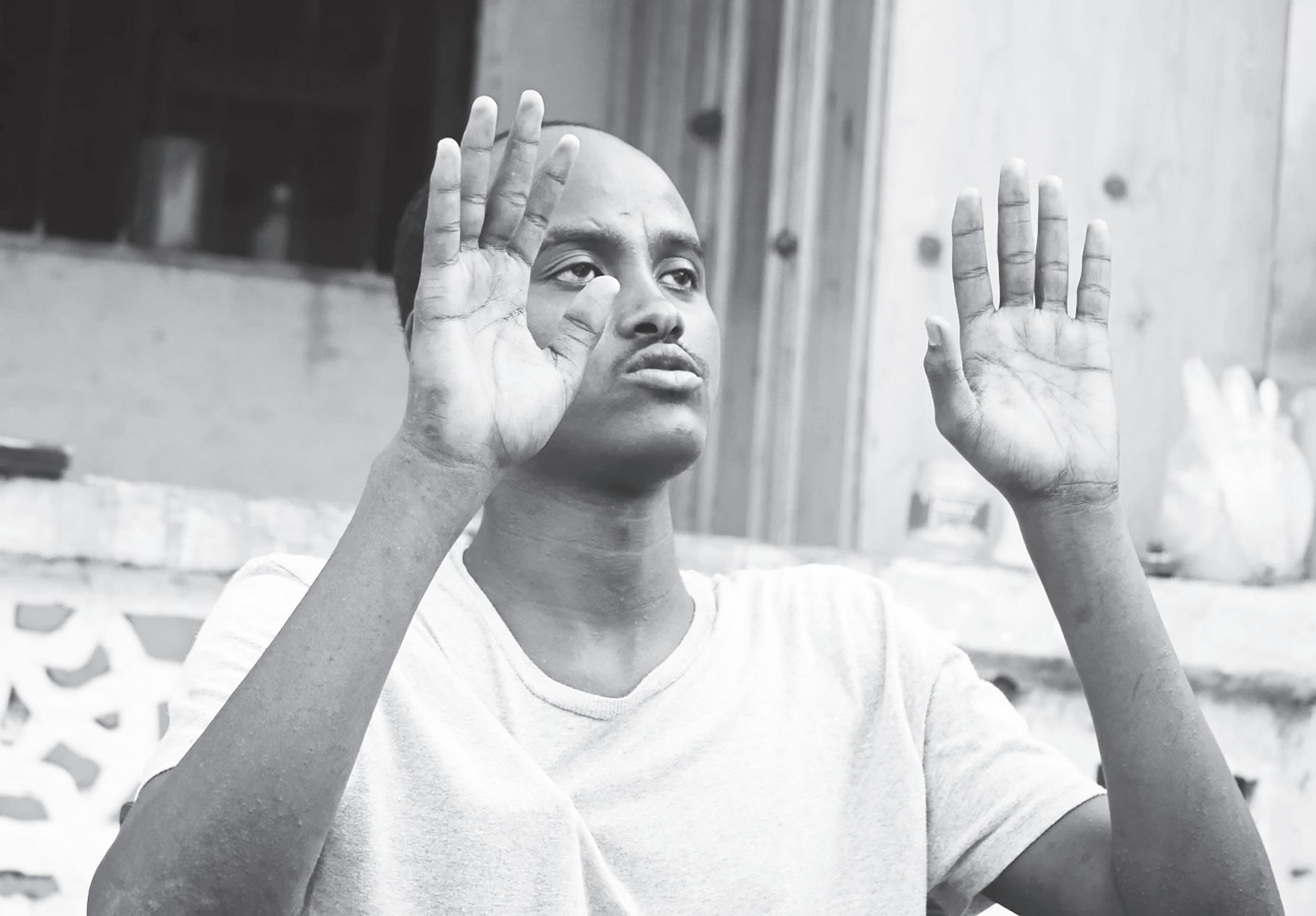
Mohamed Abdi Awale, who says he was captured and tortured by smugglers while attempting to reach Europe, gestures during an interview with The Associated Press in Mogadishu, Somalia, Monday, Nov. 17, 2025.
Photo: Farah Abdi Warsameh/AP
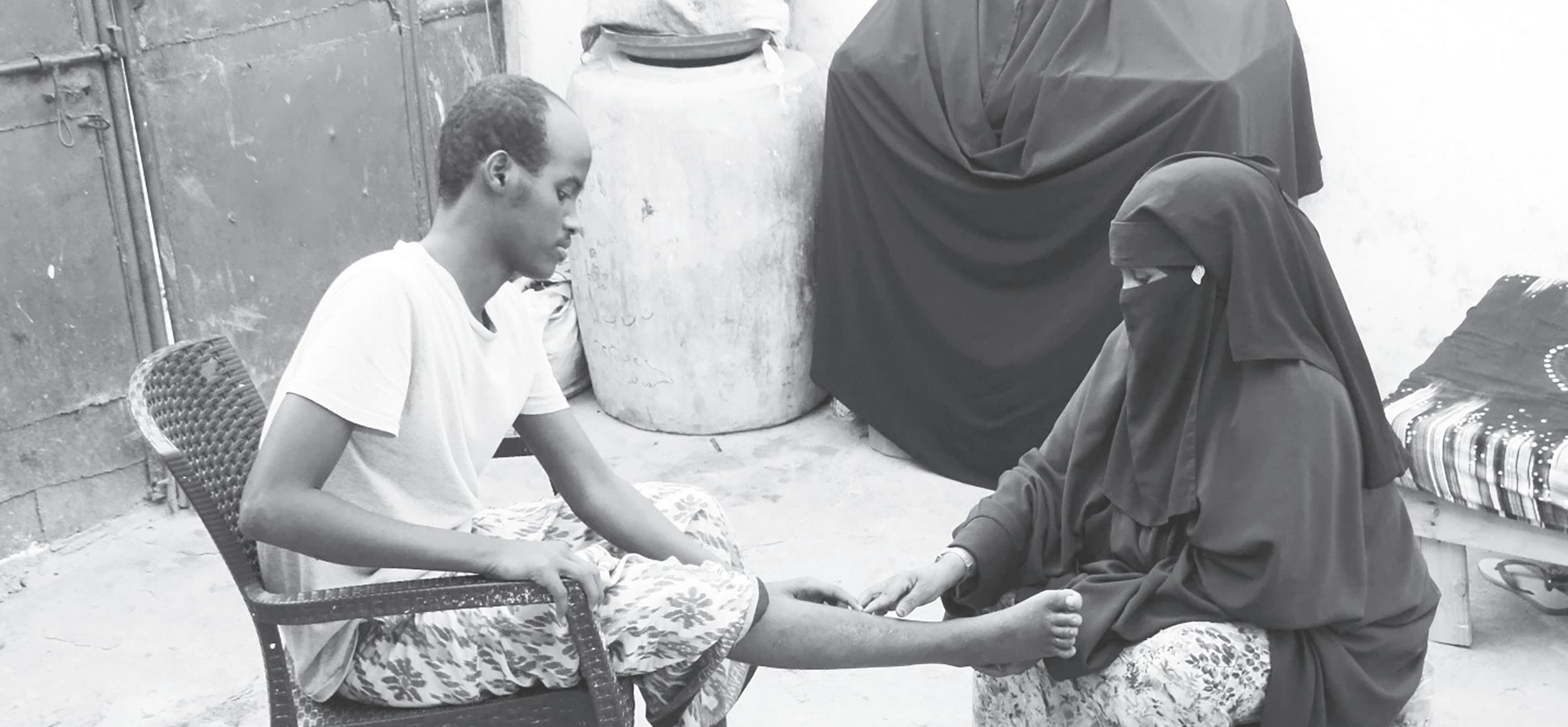
Mohamed Abdi Awale, who says he was captured and tortured by smugglers while attempting to reach Europe, shows his mother wounds during an interview with The Associated Press in Mogadishu, Somalia, Monday, Nov. 17, 2025.
Photo: Farah Abdi Warsameh/AP
African community urged to break silence, as it sees worrying trend of suicides
By Lizzy Nyoike Mshale Contributing Reporter
Mental health experts have urged members of the African immigrant community to break the silence about trauma, substance abuse, and mental illness if they want to curb rising cases of suicide.
The experts were speaking at the Mental Health Forum, a convention of community and religious leaders, and mental health practitioners held recently in Brooklyn Park by the ladies’ ministry of the Kenyan Christian Outreach Church.
Dr. Kathleen Heaney, an addiction psychiatrist at Hennepin County Medical Center (HCMC), addressed the weight of suicide in community.
“People who know someone that has died by suicide are called suicide survivors,” she said. “We are suicide survivors,” she told attendees.
Minnesota’s African immigrant has been grappling with high cases of suicide. Between January 2020 and December 2024, there were 45 suicides by individuals identifying as being of African ethnicity, according to an analysis of the state’s death certificate data. The data analysis was part of a larger study of the African immigrant community exclusively conducted for Mshale by Minnesota Compass, a project
be placed on those left behind.
“It’s not our fault,” she said. “We all feel that we should have prevented it. We feel that we should have seen it coming.”
Her presentation transitioned into the dangers of addiction, especially as younger people shift from alcohol toward marijuana and vaping. What many families didn’t realize, she said, was how the landscape drastically changes.
“The potency of THC is pushing 80 to 90%,” Heaney said. “We have young people using this during the time when their brain is developing and it changes the brain.”
She also addressed the rise in fentanyl, calling it “highly, highly addictive” and deadly, even as young people are becoming more health conscious about alcohol.
For Maina Ngunyi, who has spent
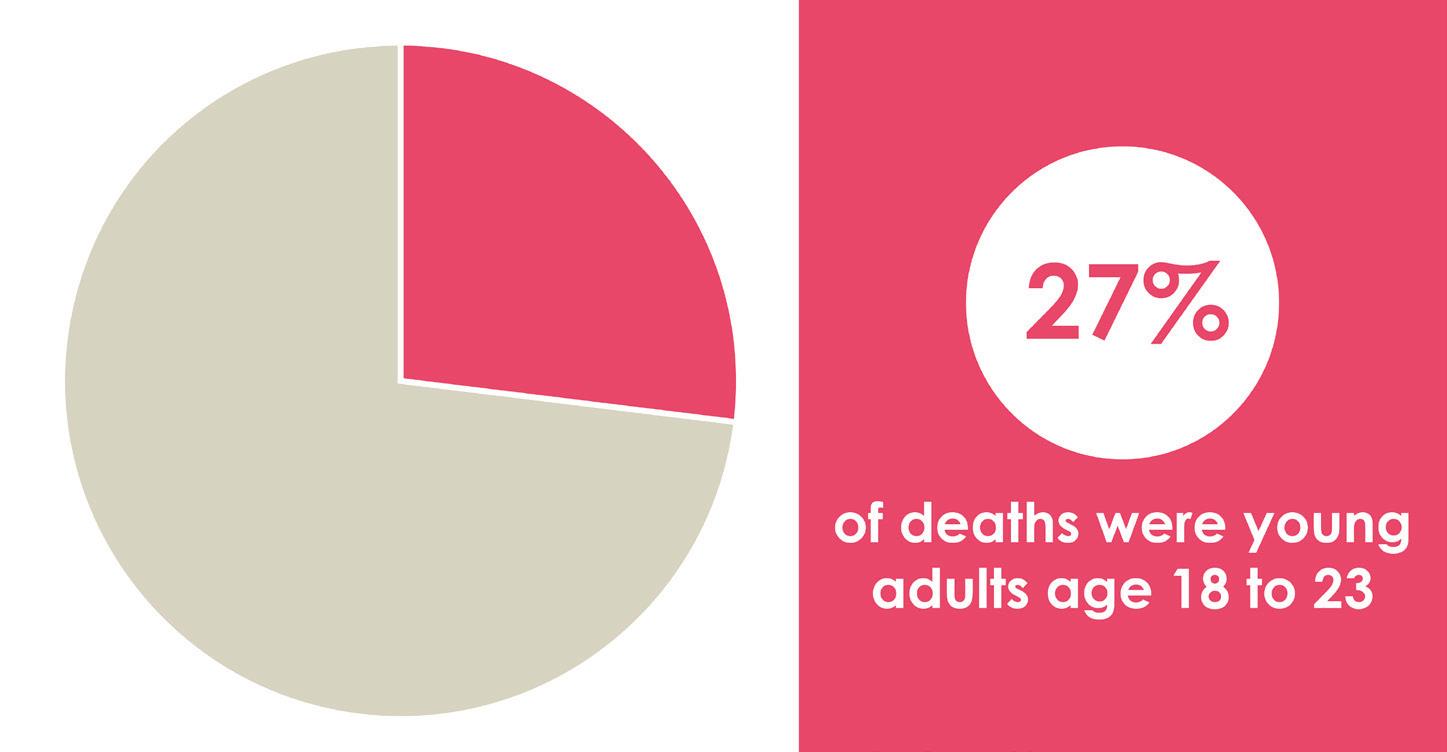
of St. Paul-based Wilder Research, and was funded by a grant from Press Forward Minnesota. Among its findings was that more than a quarter of the deaths (27%) were of young adults age 18 to 23, and that 64% of the 45 were never married.
Still, health care professionals and advocates say the numbers are likely underreported because of the stigma mental health and suicide carry in some communities. Heaney, the HCMC psychiatrist, said that families often blame themselves when a loved one dies by suicide, but that responsibility should not
24 years working with Ramsey County, addressing mental health in African immigrant families starts with self-reflection. Many parents, he said, tried to raise children the way they were raised, even though the environment and culture were different.
“My father was born in 1911,” he said. “My father parented me the way he was parented, but we are raising our children in a totally different environment and living in very different times.”
Ngunyi urged parents to
examine how they communicate with to their children as it might be contributing to their children’s emotional struggles.
“We might talk about people’s mental health, our kids’ mental health, but maybe we are
“When somebody starts isolating and just really not being with everybody else, that is a sign that something is going on,” Nampala said.

the cause of it,” he said.
He informed families that there were many mental health support resources available and encouraged them to use them first before involving law enforcement.
“Counties usually have a crisis line for kids,” Ngunyi said. “You don’t have to call the police all the time.”
Dr. Ngozi Wamuo, also a psychiatrist, spoke about the importance of addressing mental health holistically.
“For us African immigrants, we are very highly spiritual people,” Wamuo said. “We are made of body, soul, and spirit. Our spiritual lifestyle helps in helping us manage these conditions.”
Wamuo stressed that “mental illness is a medical condition. When we keep it to ourselves, that is when we run the risk of people not getting the help, and the negative consequences of losing our loved ones.”
Zadok Nampala, an independent licensed clinician, focused on identifying warning signs early, especially for men and young women who often suffer in silence.
Loneliness and lack of social support have become issues of growing concern in the United States, according to the Centers for Disease Control and Prevention (CDC). In 2024, the agency released the “Health Effects of Social Isolation and Loneliness” report, which revealed that about a third of adults in the country reported feeling lonely, while 25% of adults said they did not have the social or emotional support they needed. CDC warns that limited social connection can result in risk factors leading to depression, anxiety, and earlier death. Among the risks, it may impact some groups such as young people, immigrants and adults living alone.
In the African immigrant community, where stigma still runs deep, the Mental Health Forum served as both educational and an opportunity to heal, understand, and speak honestly about the pain many carry quietly. One young attendee, Cyrus Warigi, said the forum gave him perspective on the mental health struggles his Gen Z peers face.
“Everybody goes through different struggles,” he said. “Having this helps a lot.”
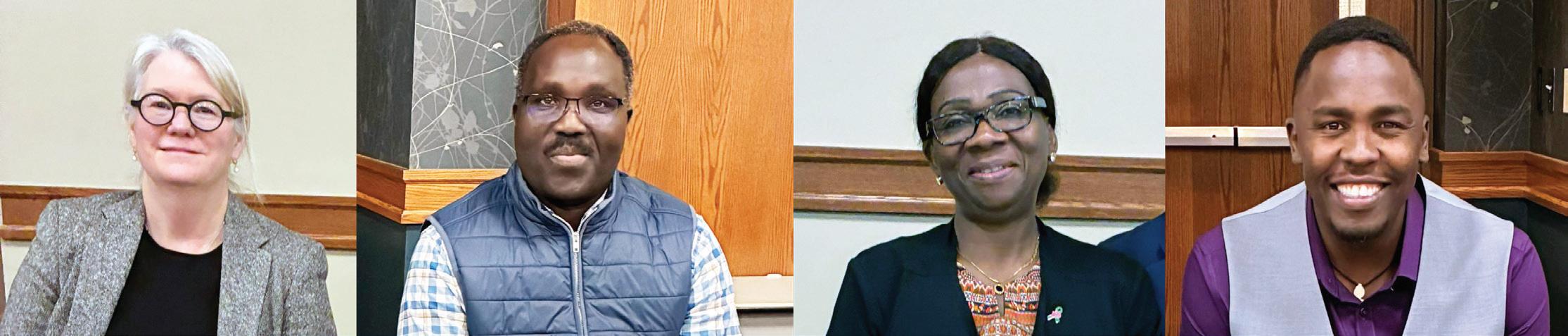
Mental health experts speaking at a recent mental health forum in Brooklyn Park that was hosted by the ladies’ ministry of the Kenyan Christian Outreach Church included Dr. Kathleen Heaney of Hennepin County Medical Center, Mr. Maina Ngunyi of Ramsey County Social Services, Dr. Ngozi Wamuo and Mr. Zadok Nampala.
Photos: Lizzy Nyoike for Mshale
27% of the 45 suicides by individuals identifying as being of African ethnicity between January 2020 and December 2024 in Minnesota were of young adults aged between 18 to 23. Graphic: Minnesota Compass/Wilder Foundation for Mshale
64% of the 45 suicides by individuals identifying as being of African ethnicity between January 2020 and December 2024 in Minnesota were never married.
Graphic: Minnesota Compass/Wilder Foundation for Mshale
“The living memorial to Gordon Parks must be complete because it honors one of America’s greatest storytellers. Gordon Parks represents the best of Minnesota, and the very best of St. Paul. It just makes sense that we build the Gordon Parks memorial here in the city where his extraordinary career began,” Sen. Hawj said.
Hawj said Parks worked hard to realize his dream and inspired generations to expand their horizons and “imagine new futures.”
The statue honoring Parks will be placed at Landmark Plaza in downtown St. Paul, adjacent to the historic Landmark Center where Sunday’s ceremony took place, and is near
where a statue of a Peanuts character is located that honors St. Paul native Charles Schulz. Across the plaza is the historic St. Paul Hotel and is also less than a block from the Ordway Center for the Performing Arts.
No artist has been commissioned yet to create the statue.
Retired WCCO anchor Don Shelby said at the press conference that there are also plans to create a permanent exhibit of Parks’ work at Minneapolis-St. Paul International Airport. St. Paul’s Pioneer Press quoted him the next day that the exhibit will cost $75,000 a year.
Robin Hickman-Winfield, who is Parks’ grandniece, and the CEO and executive producer of SoulTouch

Productions, told Mshale that the exhibit at the airport will require additional fundraising of which details will be forthcoming.
During her remarks at Sunday’s presser, Hickman-Winfield recalled a moment during a celebratory memorial at the Minnesota History Center after Parks’ passing where “I remember then Councilmember Debbie Montgomery got up and she said ‘if we can have Snoopy on Parade we should have had a statue of Gordon Parks’ (so) this has been a long journey,” adding that March 2026 will mark 20 years since the passing of Parks.
“This effort in partnership with Robin we are looking to hopefully not just take a moment to recognize the initial funding of $250,000 from the Legislature but we are seeking to leverage and partner with her
One easy $0 premium plan
HealthPartners ® Minnesota Senior Health Options (MSHO) (HMO SNP) bundles Medicare, Medical Assistance and prescription drug coverage into a simple $0 premium plan. It saves you money. And it comes with valuable perks and support.
Plan highlights
• A dedicated care coordinator helps you navigate your health
• Rides to appointments
• Extras like tablets with well-being tools and lifelike support pets*
• Up to $450 in rewards for health screenings
HealthPartners is a health plan that contracts with both Medicare and the Minnesota Medical Assistance (Medicaid) program to provide benefits of both programs to enrollees. Enrollment in HealthPartners depends on contract renewal.
*The benefits mentioned are a part of special supplemental benefits for members with certain chronic conditions such as: heart failure, dementia, diabetes, cancer, or a disabling mental health condition. Not all members will qualify, and all applicable eligibility requirements must be met. For details and a complete list of eligible conditions, please contact us.
Discrimination is against the law. HealthPartners does not discriminate because of race, color, national origin, creed, religion, sexual orientation, public assistance status, marital status, age, disability or sex. H2422_004969_M Accepted 8/30/25 25-3491751-3609008 (9/25) © 2025 HealthPartners
to amplify Gordon Parks memory beyond this commemoration,” Minnesota Humanities Center CEO Kevin Lindsey said in his remarks.
Rep. Samakab Hussein is the first Somali American to represent St. Paul in the Minnesota House of Representatives. He is vice chair of the House Legacy Finance committee. He said he was proud to have caried the bill in the House but ultimately it was also personal to him because with a statue of Gordon Parks in the heart of downtown “I want my kids to look at downtown St. Paul and say ‘I can be like him, or I can be better, or I can try, I can dream’ and that dream we are making it a reality today.”
“I know he is watching us and we are doing what Minnesota should look like,” Hussein said.
Easy, guided enrollment Call 855-394-8845 (TTY: 711) to find out if you’re eligible.
Oct. 1 to March 31: 8 a.m. to 8 p.m. CT, seven days a week April 1 to Sept. 30: 8 a.m. to 8 p.m. CT, Monday through Friday

or
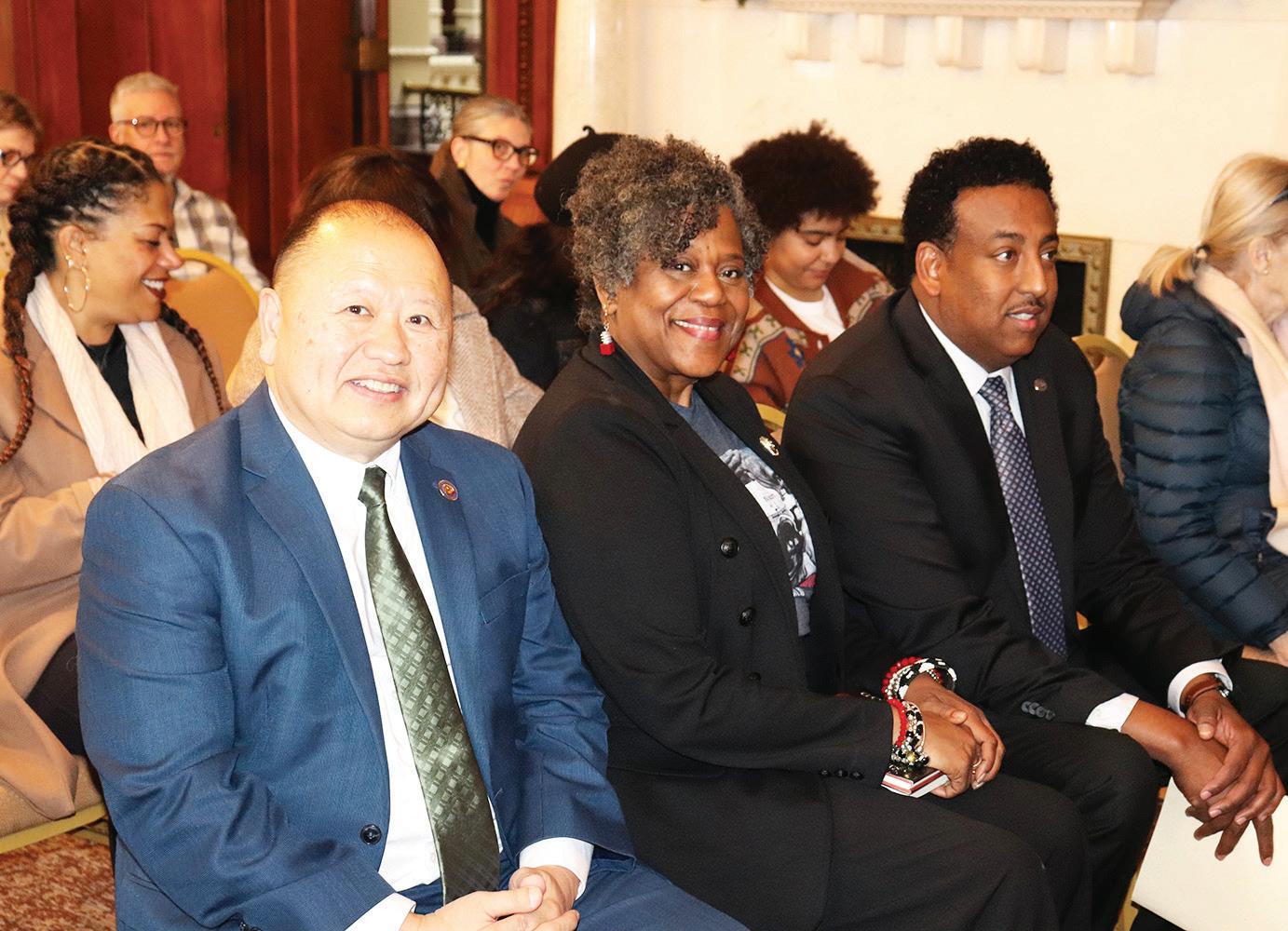
State Sen. Foung Hawj, Ms. Robin Hickman-Winfield, grandniece of Gordon Parks and State Rep. Samakab Hussein at the press conference where they made the announcement on Sunday, Nov. 30, 2025. Mshale Staff Photo by Tom Gitaa
A view of Landmark Plaza in St. Paul from the third-floor of the Landmark Center on Sunday, Nov. 30, 2025 where state legislators announced that a statue of Gordon Parks will go on the plaza to honor his legacy. Mshale Staff Photo by Tom Gitaa
are secretly tampered with by thieves who record the numbers and wipe the funds moments after purchase.
Additionally, Morgan Stanley warns that package delivery scams escalate sharply in December. Criminals send text messages or emails urging people to click links to track packages, update delivery preferences, or pay new shipping fees. Clicking the link can install malware or direct victims to fraudulent forms requesting personal information. The firm notes that even missed delivery notices posted on doors may be fake and advises people to double-check any delivery claims through verified shipper websites.
Gift card scams have taken new forms as well. Criminals send emails or texts impersonating relatives or company officials and ask recipients to buy gift cards urgently. Morgan Stanley officials have urged people to call the individual directly before acting on any request.
The Better Business Bureau has cataloged a long list of holiday traps. They range from fake toll collection texts to fraudulent Advent calendar promotions and counterfeit luxury goods. The BBB confirms that online purchase scams were one of the top reported dangers last year and continues to warn consumers that payment requests through gift cards or wire transfers are immediate red flags.
The FBI has also issued its strongest holiday warning yet. The bureau reports that artificial intelligence has

accelerated nearly every type of scam. In the first seven months of this year, more than nine thousand AI-related fraud complaints were submitted to the Internet Crime Complaint Center. Criminals are now using cloned voices, fake identification documents, and fabricated videos to impersonate loved ones and public figures. “Talk to your families. Protect each other from scams,” FBI Director Kash Patel said.
Experian’s latest guidance echoes the call for vigilance. The organization reports that the U.S. Postal Service was one of the most impersonated entities in 2024 and that fake delivery notifications continue to surge. Experian has told consumers not to click links in unsolicited messages and instead track packages through
verified carrier sites. The company also reminds shoppers that card skimming remains a billion-dollar threat and that public wi-fi networks can expose people to interception of sensitive financial information.
Mastercard notes that even experienced shoppers fall for sophisticated schemes. Its global survey found that nearly half of consumers would ignore red flags if a discount appeared attractive enough or if a rare item seemed available. The company’s research shows that fraud is expanding as criminals use generative artificial intelligence to build convincing fake ads and manipulate consumers into entering financial information.
As Americans race to finish shopping, wrap presents, and prepare for family gatherings, experts say the most effective protection remains caution. Verified websites, traceable payments, skepticism toward unsolicited contacts, and a refusal to act under pressure can help keep thieves at bay.
“While you’re focused on finding the perfect gift, Mastercard is working behind the scenes to keep your transactions safe,” Alissa “Dr. Jay” Abdullah, deputy chief security officer for Mastercard, said on the company’s website. “Our goal is simple: make sure your holiday shopping is secure so you can focus on what matters most.”

Shoppers line up to get into Mall of America for Black Friday deals, Friday, Nov. 28, 2025, in Bloomington, Minn. Photo: Adam Bettcher/AP
Bible sales keep growing, even as many Americans lose their religion
By Bob Smietana Religion News Service
(RNS) — Many Americans may have lost faith in organized religion, but according to recent data, they still love the Good Book.
As of September, Bible sales were up 11% this year over 2024, part of a continuing boom in Bible sales. That includes 2.4 million sold in September 2025 as part of a surge that coincided with the death of conservative Christian activist Charlie Kirk, according to data from Circana, a company that tracks book sales. All told, more than 18 million Bibles have been sold so far this year.
“Sales for Bibles have been steadily growing in the U.S. since 2021 and have set unprecedented annual sales records since 2022,” Brenna Connor, an industry analyst at Circana BookScan, told RNS in an email. “2024 marked a 20-year high for Bible sales in the U.S., and 2025 is on track to surpass these levels, underscoring the growing interest in religious content among U.S. consumers.”
Among the bestsellers are an economy version of the English Standard Bible — the top seller, according to Circana— the Adventure Bible for kids and the She Reads Truth Bible, named for an online community of Bible-reading women. A pink, giant-print King James Version gift Bible has been a bestseller for years. And Donald Trump earned more than $1.3 million last year for endorsing a patriotic Bible named for country singer Lee Greenwood’s song “God Bless the USA.”
While publishers can track how many Bibles are sold, they don’t have demographic details of the buyers. But Tim Wildsmith, a former college campus minister turned author and Bible YouTuber, wonders if the tumult of the last five years, from the COVID-19 pandemic to the current political polarization, is playing a role. With the world going crazy, he said, folks may be looking for something they can rely on.
“Part of me wonders if people are just looking for something to kind of settle themselves — that spiritual looking for peace, whatever you want to call it,” he said.
At the Christian Connection bookstore in Sycamore, Illinois, a town west of Chicago, the most popular version of the Bible is the New Living Translation, especially its editions that pair with a new app from Tyndale, the NLT’s publisher. That translation is easy to read, and the app, known as Filament, makes it easy for readers to access study materials to help understand the text, said Kelli Malm, who runs the store with her mother.

“People want the readability, especially if they’re new Christians, and if they’re younger, they can use an app,” she said. “It’s kind of a no-brainer situation for people — they’ve got a Bible and carry it around with them, and they don’t have to necessarily grab the big study Bible.”
The store has seen an uptick in sales since September, and at least one buyer said Kirk’s death prompted them to go back to church, Malm said.
She said that before September, she had no idea who Kirk was, but that God can take something terrible and redeem it. While most people who buy Bibles at the store are older, she has also seen an uptick in customers in their 30s and 40s.
“They’ve just found their faith, or they’re coming back to it,” she said.
Colton Burkhart, a freshman student at the University of Wisconsin-Whitewater, is on his third Bible, a MacArthur Study Bible he bought last year after wearing out a previous edition. He has it filled with colored tabs to help him find different topics, and he carries a colorcoded chart for easy reference.
Burkhart said he tried to read the Bible on his phone but found it too distracting.
“I need something I can really read,” he said, adding that he likes to write notes in his Bible and highlight verses he has read.
Amy Simpson, the Bible publisher for Tyndale House Publishers, which publishes the NLT, said the company sells several hundred different editions of Bibles, often in different colors. She said no one kind of Bible is driving the growth of sales, but they are seeing growth across the board. That’s one
reason publishers offer so many kinds — different versions can appeal to people of all ages.
And having so many editions of the Bible has made it easier for publishers to keep up with demand, said Melinda Bouma, a HarperCollins Christian Publishing vice president and Bible publisher for Zondervan. If one version sells out, there are many other options. HarperCollins publishes 22 translations of the Bible in English and Spanish, in hundreds of editions.
Bouma said Bible sales are up for all kinds — including kids’ Bibles. She said the NIV Study Bible, which has been out for 40 years, has seen growth and recently passed 10 million copies sold.
The Jesus Bible, an edition aimed at Gen Z readers, is also doing well, Bouma said. She has seen data showing renewed interest in faith among younger folks, and some of that interest seems to be showing up in Bible sales.
The American Bible Society’s annual State of the Bible report found that about 41% of Americans qualify as “Bible users,” meaning they have read the Bible at least three times a year outside of church services. That’s up from 38% last year but down from 2021, when 50% of Americans fit that category.
The report also found that 36% of Gen Z and 39% of millennials would qualify as Bible users — an increase for millennials over 2024, when 30% were identified as Bible users. Only 1-in-5 Americans would qualify as what the Bible Society calls “Scripture engaged,” meaning the Bible has a major role in their lives.
Jennifer Holloran, president of the ABS, said the boom in Bible sales offers
a chance for churches to help congregants understand what they are reading.
“I’d go further and say churches have a real responsibility to steward this moment, not just to educate but to accompany new Bible readers along a journey of discovery, serving as both interpreters and companions in this pivotal moment,” she told RNS in an email.
Despite the boom in Bible sales, a recent survey from Gallup released Thursday (Nov. 13) found that less than half of Americans (49%) say religion is important to their lives, part of a continued documented decline in religiosity.
Wildsmith said he first started hearing that people were buying more Bibles in 2020, during COVID. So, he started reviewing Bibles on YouTube, hoping to help viewers find one that worked for them. His first review, of a Crossway ESV Heirloom single-column, personalsize Bible, got more than 18,000 views, and he eventually launched a new career as a streamer. He now has more than a quarter-million followers and more Bibles to review than he can keep up with. He eventually wrote a guide called “Bible Translations for Everyone.”
Most of his audience consists of folks who have already read the Bible and are looking for something different, he said. But a growing number of them are new to it.
The Bible boom, he said, has changed his life.
“If you had told me five years ago, when I was just kind of messing around, that this would actually be a job and something I could do, I would have thought you were crazy,” Wildsmith said. “But here we are.”
Three bibles sit on a couch Monday, Nov. 24, 2025, in Brooklyn, New York. Photo: David Crary/AP
Art & Entertainment
Festive Beats of Afrika to bring dance and holiday joy to the Cedar this weekend
By Lizzy Nyoike Mshale Contributing Reporter
The Twin Cities performing art scene will receive a dose of African cultural brilliance through music, dance, and storytelling on Dec. 20, when three trailblazing performers take the stage at The Cedar Cultural Center.
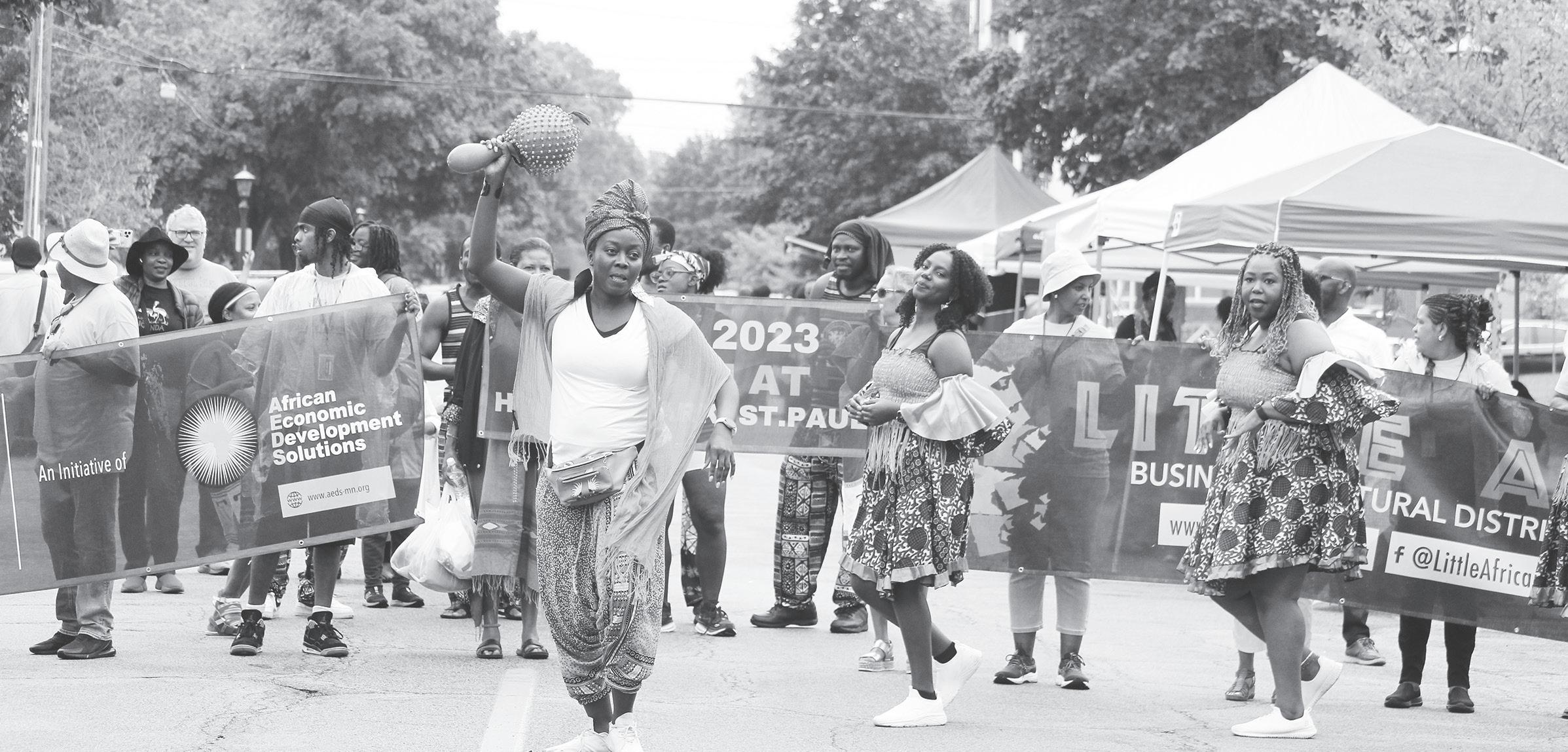
The three, Carolyne Naomi, DiaToti, and Korma Aguh-Stuckmayer of Afrocontigbo, will be participating in Festive Beats of Afrika an event that organizers hope will become an annual celebration showcasing the diversity, storytelling and joy of African music and dance.
The showcase was the idea of Korma Aguh-Stuckmayer, the founder of Afrocontigbo, a West African dance and wellness company known for its dedication to promote African heritage, intergenerational wellness, and community empowerment through dance and storytelling.
After collaborating with fellow artists Naomi, and DiaToti, Aguh-Stuckmayer said she felt the timing was right for such a festival.
“I thought, ‘Let’s get something going before the end
in 2019, she has gained recognition for blending Afro-fusion, Congolese rumba, R&B, and other contemporary music styles. Her goal was to make every audience member feel connected, regardless of cultural background, she said.
“Music is a universal language,” she said. “Music is its own culture and language. It heals, and unites. Even if you don’t understand the words you feel

of the year,’” she said. “We're talented African women artists and we have enough talent to entertain you.”
Naomi, a singer-songwriter, guitarist and performer based in the Twin Cities since 2017, performs a blend of Afrobeats music, with influences from soul, R&B, reggae, and gospel. Naomi said she hoped the audience feels the holiday warmth she remembers from Lagos, Nigeria.
“Growing up in Nigeria, Christmas wasn’t snow and winter,” Naomi said. “It was dance, music, food, and celebration. We’d take Christmas songs and put a fusion of African rhythm and beats to give them an Afro-festive vibe. That’s the experience I want people to have. Like going back home again to the motherland.”
For Congolese singer-songwriter, and dancer DiaToti, Festive Beats of Afrika is about inclusion.
“We are trying to include everybody in this show,” DiaToti said. “There will be people from Uganda, Ivory Coast, Kenya, South Africa, Gambia. Come, even though your country is not represented.” DiaToti transitioned from modeling to performing
it. Music is basically a healer, it's a medicine.”
The artists share a mutual belief in the importance of showcasing African arts in Minnesota, especially during the long winter months.
“When we engage with our culture, community, food, we experience joy we can't measure,” AguhStuckmayer said. “Winter when it's cold outside, a lot of times people fall into depression and are looking for ways to stay connected. This gives people a chance to come out and connect.”
The artists said they hope the event will strengthen the African diaspora by creating a space for people to connect with one another.
“I've met people who are from certain parts of Africa who are like, ‘I don't even know if I have a community here’,” Naomi said. “Events like this help people find belonging. It makes Minnesota’s diversity visible, not just by color but in the arts and music representation.”
The trio gave credit to a wide network of other artists, including choreographers, drummers, cultural
organizers, and DJs, who they said were shaping the show’s sound and movement from behind the scenes. Featured partners include Tamu Grill, Papa Joe from Kenya, DJ Boziah, and choreographer Peacenwar. The artists’ hope is to fill the venue

with people ready to dance, and celebrate.
“Bring your dancing shoes, because you gotta get ready to boogie,” Aguh-Stuckmayer said with a laugh.
DiaToti said the community does not have to wait until some big name entertainer comes to town to buy tickets to shows.
“Support us the local artists,” DiaToti said “We are very good at what we do.”
The evening event will be a two-hour live concert, featuring drumming, storytelling, and traditional and contemporary dances, with performances spanning from all regions of Africa.
“We open the doors for other people to come in and discover who we are and what we do,” DiaToti said.
Tickets are availbale online at thecedar.org for $20 or may be purchased at the door for $25.
Festive Beats of Afrika is the brainchild of Korma Aguh-Stuckmayer (with calabash shaker). It will take place at the Cedar Cultural Center in Minneapolis on Saturday, Dec. 20, 2025. Mshale Staff Photo by Jasmine Webber
Carolyne Naomi Mshale Staff Photo by Jasmine Webber
Diatoti Mshale Staff Photo by Richard Ooga