

A Deep Dive into Contracts
BARRIER ISLAND
OCEAN RESCUE GIVEN A MONTH TO PRESENT COST BREAKDOWN
BY THERESA STRATFORD

The Barrier Island Ocean Rescue team will have a month to gather data about how its services break down monetarily for a presentation in March before Kiawah Island’s Town Council concerning its current contract.
A representative of Barrier Island Ocean Rescue, Michael Sosnowski, presented to Council on February 6 a short synopsis of why its rates had increased in 2023 and how there wasn’t an intention to increase the rates again in 2024 during the three-year term they agreed to last year.
In February 2023, Sosnowski gave a detailed presentation about why its rates had to increase by $115,000 from years prior due to the changes that occurred since the pandemic.
Although there is not a rate increase planned for 2024, Sosnowski reiterated the increases from last year and how those rates would remain this year.
“From last year, we presented that we had an increase in payroll of $41,000; vehicle and fuel went up $24,000; training went up $15,000; retention and recruitment services were at $13,000 — which was not something we had ever budgeted for before the pandemic – insurance was $12,000; and tech was $10,000. So that is $115,000-ish of increased cost we saw over the course of the pandemic. We economized in other areas and found ways to make it work,” he said.
The current contract is close to $390,000 total. Kiawah Island Town Council votes every year on continuing with the contract with Barrier Island Ocean Rescue, even though they present its rates on a three-year term. The current three-year term began in 2023, which
Building a Better Boardwalk
KIAWAH TOWN COUNCIL DISCUSSES SAFETY AND FUTURE OF BEACH WALKOVERS
BY THERESA STRATFORD For The Island Connection
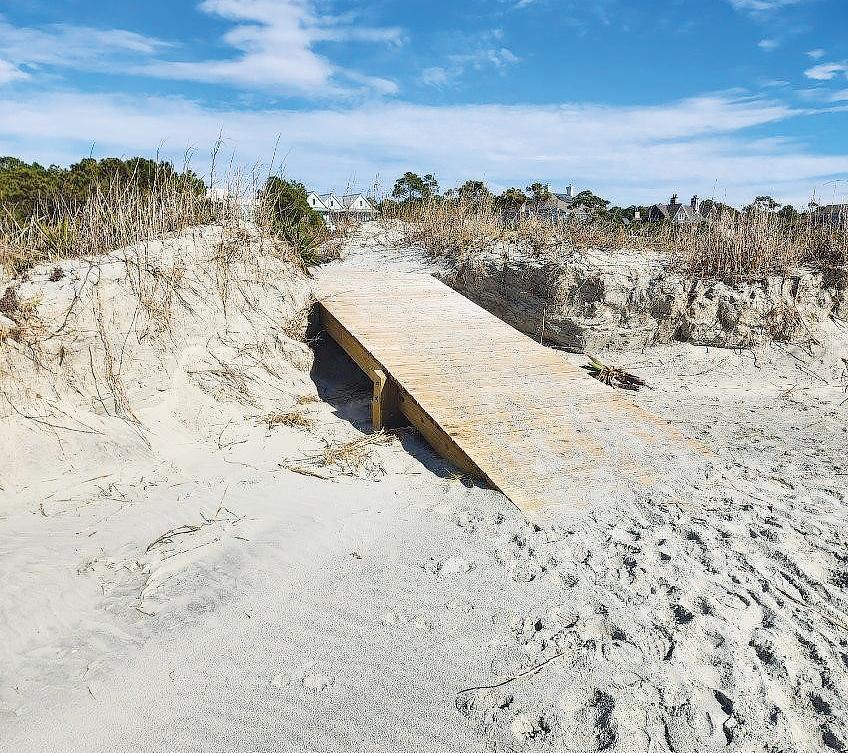
The almost five-hour-long Kiawah Island Town Council meeting on February 6 brought many issues to light, but probably one of the most pressing is the current state of the island’s various beach boardwalks.
Kiawah Island’s Biologist Jim Jordan took the liberty of educating the Town Council with a review of his assessment of the 189 walkovers, aka boardwalks, going out to the beach.
He started his presentation by reviewing the Town’s current boardwalk ordinance. “Boardwalks have to be constructed following the DHEC guidelines, and then we have additional restrictions,” Jordan explained. “It varies by boardwalk type—by private and community boardwalk. A community boardwalk is anything that serves a multifamily regime, obviously the community association boardwalks. Those would all be considered community boardwalks. Those are high-use, as opposed
to private boardwalks, which are single-family residents’ boardwalks, only so for both of those categories. They cannot exist in a state of disrepair on the active beach, and if they do, owners have 30 days to fix that. They also cannot extend more than 10 feet under the active beach. Again, the owner has 30 days to submit plans in this case and 60 days to complete the work. For private boardwalks, if they stop short of the beach, they are technically grandfathered in. They can travel through the dunes on a pre-existing path to the beach. That is specifically allowed by Town ordinance. This differs for community high-use boardwalks. If they terminate more than 20 feet from the active beach and are causing the destruction of dune vegetation, they must be extended to the active beach. Owners have 30 days to submit plans and 180 days to complete the work.”
Jordan also noted that walking on the dunes is, in fact, allowed in some cases. “If you are conducting
(continued on page 5) (continued on page 2)

PHOTO: TOWN OF KIAWAH ISLAND
PHOTO: SSGT HARRISON WINCHELL/USAF 1ST COMBAT CAMERA SQUADRON
For The Island Connection
MYLO N EWS
Walkovers
(continued from page 1)
official business,” he said. “Golf play is specifically allowed. So if you're at the ocean course and hit your ball, you can play in it. Also, if a boardwalk stops 200 feet from the beach because we have such an extensive dune field, it is perfectly legal for you to walk on a pre-existing path to the beach.”
Of the 189 boardwalks, 47 are community walkovers and 142 are private walkovers.
Heidingsfelder asked Jordan to provide more information about the issue at the Town Council Retreat on May 9 and 10.
Denise K. James editor ICeditor@luckydognews.com
Swan Richards graphic design
Ada Jenkins web editor
Jeff Lovins sales manager JLovins@mylonews.com 843-885-8662
Lynn Pierotti consultant lynn@luckydognews.com
Christian LeBlanc social media christian@luckydognews.com
CONTRIBUTORS
Theresa Stratford
Bonnie
Rom
Susan McLaughlin John Nelson
As for whether all these walkovers are compliant with the ordinance, of the 47 community walkovers, Jordan and his team looked specifically at 13 of those for the sake of the presentation. Three extended beyond 10 feet, but are under redesign, two extended beyond 10 feet, one is in a state of disrepair and seven stop more than 20 feet from the active dune but are not destroying vegetation.
For private dunes, there are 142, and 14 were noted for the presentation.
Jordan said, “We have 11 in a state of disrepair and we have three that are currently under construction and do not meet the 24-inch clearance requirement.”
Council Member Russ Berner said, “I feel it's wrong to allow walkovers where you are walking with your feet over the first level of dunes and depressing them to a point where it puts the dune in danger of breaching because it's not just that one house that's being put at risk, it's the entire neighborhood actually.”
Council Member Michael Heidingsfelder asked Jordan, “How many of the 180 or 190 walkovers we have would not meet the requirement or the recommendation of the current ordinance? I think it was saying one or two feet above the ideal height of the dune, so how many of those boardwalks, private and community boardwalks, would not meet that recommendation?”
Jordan responded that very few would not meet that recommendation at this time.
Berner added, “I walk the beach every morning when it's not raining and there are large cuts, and I mean large cuts, in the front row or where there are private boardwalks. The next storm is what I am concerned about. The water is going to get back to that first row.”
Mayor John Labriola suggested that even though those areas are in compliance with the current ordinance, the answer might be to change the ordinance.
“How many are really cutting deep into the dune, and then also what Russ is concerned about. How many of these private boardwalks are cutting into this, so that we have a little bit more data and a better understanding of what the situation is with our 180 to 190 walkovers. We need a better understanding of where they really are, and where these critical points really are. We need to understand the magnitude of the problem, and then have exactly that discussion that the mayor was talking about: Do we need to change some of our ordinances, which way should we do it, and should we maybe bring in a consulting project that would help us?”
Kiawah Island last changed its boardwalk ordinance in 2017. Jordan said that he took a report of every boardwalk. “We took pictures of all of the boardwalks that were non-compliant or cut through the dunes. We also made notes on ones that cut through the dunes so we have all of that data. It's all in a GIS map, and we could go through it boardwalk by boardwalk, click on the boardwalk and see what it looks like.”
Council Member Bradley Belt added that he would like to know if there is one type of structure that is better for the health of the dune system. He added that they should look at the aesthetic as

well. “There is one that is more visually obtrusive and another that is visually unobtrusive,” he noted.
Council Member Madeleine Kaye said, “In addition to the aesthetics and the safety of the dunes, I'd like to see safety for pedestrian traffic.”
Jordan added that currently private walkovers/boardwalks are not reviewed by the Town, they are only reviewed by the ARB.
For example, the boardwalks at the new Cape development had to be cut back due to the erosion from the recent storm in December.
Heidingsfelder added, “That is why the boardwalks that were proposed and then also built by The Cape turned out to be different than usually allowed because they were clearly bigger and they were clearly longer, and they clearly didn’t obey the 10 feet rule.”
Jordan added that the Cape made its boardwalk ADA compliant, which is not a requirement.
Labriola interjected, “I would focus on the bigger issue and the fact that you know how the climate is changing and how it is affecting us, and then really start wrapping these things up inclusive of who is approving these things. Let’s face it: Since 2017, a lot has changed.”
Heidingsfelder concluded, “At the retreat, maybe have some recommendations that we can discuss, and then based on that, we can alter the ordinances on how to build a better boardwalk.”

TOWN OF KIAWAH
Board of Zoning Appeals
Monday, Feb 26, 1 p.m.
Kiawah Town Hall
Ways and Means Committee
Tuesday, Mar. 5, 10 a.m.
Kiawah Town Hall
Town Council
Tuesday, Mar. 5, 1 p.m.
Kiawah Town Hall
Planning Commission Workshop
Tuesday, Mar. 6, 12:30 p.m.
Kiawah Town Hall
TOWN OF SEABROOK
Short-Term Rental Public Forum
Feb. 25 , 1 p.m. & Mar 4, 6 p.m.
Seabrook Town Hall
Town Council Regular Meeting
Tuesday, Feb. 27, 2:30 p.m.
Seabrook Town Hall
Special Committee on Short-Term Rentals
Wednesday, Mar. 13, 10 a.m.
Seabrook Town Hall
Planning Commission
Wednesday, Mar. 13, 1:30
Seabrook Town Hall
Longtime Fire Chief
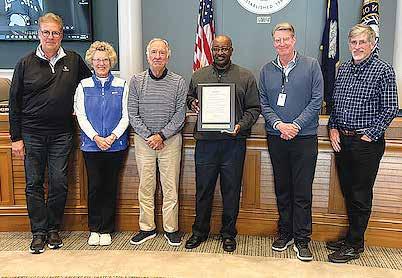
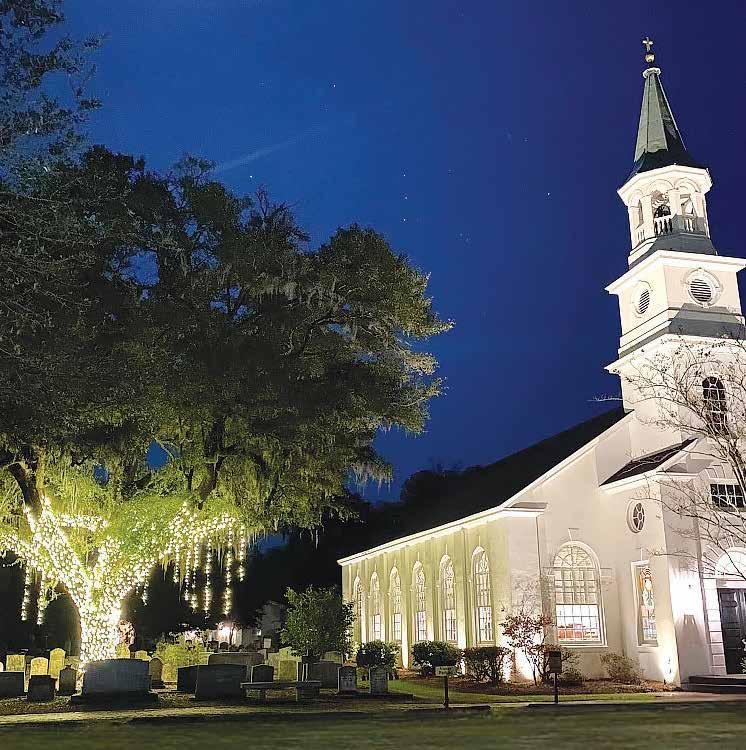
On February 5, the Kiawah Island Town Council recognized retired St. Johns Fire Department Deputy Fire Chief Jackie Stanley for his 43 years of dedicated service to St. Johns Fire District and the Town of Kiawah Island. They proclaimed February 6, 2024 as Deputy Chief Jackie Stanley Day. Stanley began his career with St. Johns in 1980 and was promoted to
deputy fire chief in 2013. Stanley served as the first African American deputy fire chief for the St. Johns Fire Department. Pictured left to right in the photo are: Town of Kiawah Island Mayor Pro Tempore Michael Heidingsfelder; Council Member Madeleine Kaye; Mayor John Labriola; Deputy Chief Jackie Stanley; Council Member Brad Belt; and Council Member Russell Berner.




An Environmental Education Pioneer
S.C. Sea Grant Consortium educator
Elizabeth Vernon Bell is the recipient of the 2023 South Carolina Environmental Awareness Award. Bell received the award on February 2 at a reception organized by the award’s 2023 hosting agency, the South Carolina Department of Natural Resources (SCDNR).
Bell had the distinction of being nominated by not one but two independent parties for her contributions to developing a statewide certification program for environmental educators.
“Ms. Bell is just one individual – but through creative partnerships, networking and training, she’s been able to amplify positive impacts through the thousands of people she has taught and mentored over the years,” said SCDNR’s chief of staff, Shannon Bobertz, who presented the award.
Elizabeth “E.V.” Bell has worked at South Carolina Sea Grant for over 15 years, where she serves as a marine education specialist, developing and coordinating marine environmental education programs for the field and the classroom.
Bell’s career began at SCDNR’s Marine Resources Center in Charleston, where she coordinated the creation of the agency’s original boat-based curriculum aboard the Education Vessel, Discovery. She was one

of the agency’s first female Coast Guardcertified captains.
At South Carolina Sea Grant, she’s been responsible for the creation of numerous programs and tools designed to connect ocean and coastal research to educators. She developed From Seeds to Shoreline®, the first and only youth salt marsh restoration program in the state.
“Her programs impact not only educators, but students too — the experience E.V. gives students in the salt marshes is one they won't forget,” wrote one nominator.
As adjunct faculty at the College of Charleston, Bell has advised on graduate committees to nurture students in the development and execution of their internship or thesis. Bell currently serves


on the boards of the Environmental Education Association of SC (EEASC), the Southeastern Coastal and Ocean Observing Regional Association, and the South Carolina Association of Natural Resource Extension Professionals.
But above all, it has been Bell’s role in the development of the state's professional certification program for environmental educators—the PEEC Program—that nominators thought made her most deserving of this award. One said that this program only exists because of the vision, passion and dedication of E.V. Bell.
Efforts to develop the PEEC Program began in 2013 when the SC Sea Grant Consortium disseminated a state-wide survey and hosted focus groups to gauge the interest and need among educators for this type of professional training. Since that time, the Consortium, in partnership with 14 educators representing organizations across the state, developed the PEEC Program.
This is a pioneering effort in the field of environmental education for South Carolina. Less than 25% of the United States have a certification program like this. The inaugural class started in Fall 2018, and a fourth cohort is now working on certification. Bell’s passion for the environment, her commitment to bringing
awareness to South Carolina citizens and especially teachers, and her diligence in finding external sources of funding to supplement Sea Grant funding has led to the success and continuation of the efforts to build an environmental educators certification program for the state of South Carolina.
By creating the Palmetto Environmental Education Certification Program, Bell created a vehicle for ensuring South Carolina’s environmental educators have access to the best professional and leadership development opportunities available.
The S.C. Environmental Awareness Award was established by the legislature in 1992 to recognize outstanding contributions toward the conservation of South Carolina’s environment. This award is jointly hosted by members of the South Carolina Department of Natural Resources, the South Carolina Department of Health and Environmental Control, the S.C. Sea Grant Consortium and the S.C. Forestry Commission. The committee considers several factors when reviewing nominations, including excellence in innovation, leadership, and accomplishments that influence positive changes affecting the state’s natural air, land, water and coastal resources.



Elizabeth Vernon Bell.
6 Montagu - Original Watercolor by Mary Whyte 14” x 10.5”
(continued from page 1)
means there would be no increase until 2026, if necessary.
Barrier Island Ocean Rescue has been providing the island’s beach patrol services since 2009. They are certified by South Carolina DHEC as an Advanced Life Support Rapid Response Agency and an Advanced United States Lifesaving Association Accredited Organization. They contract to provide beach patrol and open-water lifeguard services to various entities in the greater Charleston area, including Seabrook Island and Kiawah Island.
Council Member Michael Heidingsfelder made a motion to approve the contract with the Barrier Island Ocean Rescue for only one month at this time and for Sosnowski and his team to come back to them with more detailed data. He asked for a breakdown by person, by months of work and all the different elements from personal cost, training cost, equipment cost and vehicle cost.
“We need to have a better understanding of how much of this $390,000 is for a 12-month person or for a 9-month person – things like that. We need to have a better understanding of the math,” he said. “And please don’t wait until two days before to submit the data. We will need time to read it and ask questions if needed.”
Mayor John Labriola asked what the rate breaks down to per hour. Sosnowski said it is currently at $104 per hour. Before the pandemic, they were at $88 per hour. Sosnowski said that they start EMTs at $21 per hour and paramedics at $24.50 per hour. There are no benefits.
Council Member Bradley Belt commented on how its rates contrast starkly with the police contract the Town recently agreed to, which will provide more law enforcement on the island. That contract is $55 per hour for trained law enforcement.
“I know this isn’t apples to apples, or even apples to oranges, but that is why we are coming to you and asking you to help us better understand this over $100 per hour rate,” he said.
Heidingsfelder added, “Give us more transparency. What is behind the $104 per hour? The community needs to understand that this is a superior service that we want, but that it costs money. We owe them an explanation. I would feel more comfortable with a breakdown, and then we can give you the other 10 or 11 months of the contract.”
Sosnowski replied, “Since I was coming here today to request a renewal without an increase, I didn’t come prepared to negotiate, but I’ll have that data for you. It will be very similar to what we presented last year.”
The next Town Council will be on March 5, where Barrier Islands Ocean Rescue will present the cost breakdown of its rates.
Historical Context:
• In 2022, the Public Safety Committee noted that in 2017, there were 397 annual enforcement actions. In 2021, there were 1,933 – that’s a 386% increase.
• In 2017, there were 103 medical responses from beach patrol. In 2021, there were
become
a
Shorebird Steward
with the Seabrook Island Birders
The 2024 steward program needs volunteers two-hour shifts to help educate people about the importance of our tiny piece of the world to the shorebirds that visit.
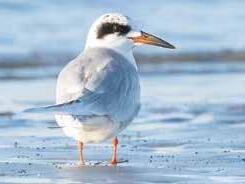

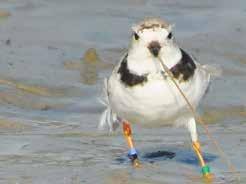
WHY: Seabrook Island is a critical junction for shorebirds. Many species of shorebirds do a migratory stop over here to put on weight for migration.
PURPOSE: Our Stewards perform a significant service as many people don’t understand how important our sanctuary is. Volunteers educate people on the significance of our tiny piece of the world for shorebirds. It’s not about enforcement, but about education.
VOLUNTEER’S COMMITMENT: No special bird skills are needed. Just an interest to greet/interact with people on the beach discussing these shorebirds and how we can protect them. From March 1 through May volunteers do 2-hoiur beach shifts, convenient to their schedules.
TRAINING: Our team, along with Audubon SC, will provide training to learn about the birds and positive ways to interact with beach walkers. You’ll have materials and equipment to use on the beach Training begins Feb 24. We’ll pair you with an experienced Steward to start.



438, which equates to a 325% increase. Even stingray stings went up from 50 in 2017 to 271 in 2021 – a 442% increase.
• The Town entered into an agreement with Barrier Island Ocean Rescue in 2019 for a one-year contract with the option to renew for two one-year extensions for $288,580. When that agreement came up for renewal in 2021, the Town agreed to renew at $288,580 again from February 2022 to February 2023.
• In February 2023, Kiawah Island Town Council renewed the contract with Barrier Island Ocean Rescue for a one-year contract that commenced on February 14, 2023, with the option to renew for two one-year extensions for $389,376 with no changes to the current contract scope or schedule.
• Its contract had not increased since January of 2020.
• Barrier Island Ocean Rescue has been contracted with Kiawah Island to do beach patrol since 2009 and code enforcement since 2020. A large part of its code enforcement is short-term rental enforcement.
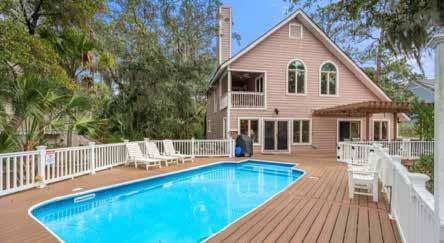

PHOTO: MICHELLE BAKER, CITY OF CHARLESTON POLICE DEPARTMENT
Seabrook Island Artist Guild presents Christopher Leeper
BY BONNIE YOUNGINER
For The Island Connection
Chris Leeper’s award-winning work has been shown in solo and juried exhibitions throughout the country. In 2021, he was a finalist in the Plein Air Magazine salon and was featured in the August/September 2021 issue of the magazine. Leeper is past president of the Ohio Watercolor Society and is a signature member of the National Oil and Acrylic Painters’ Society. He has illustrated four children’s books and has written and illustrated the book Realism in Watermedia.
His work has also been featured in The Artist’s Magazine, Plein Air Magazine, Watercolor Magic and Ohio Magazine and in the book Splash 14. Leeper is a graduate of Youngstown State University with a BFA degree in graphic design.
The artist will be featured at the upcoming Seabrook Island Artist Guild meeting on Thursday, March 21 at the Lake House. Guild members and guests are welcome to view his live watercolor demonstration at 1:30 in the Live Oak Room.
On Friday, March 22 and Saturday, March 23, Leeper will lead an oil & acrylic workshop from 9 a.m. until 4 p.m. at the Oyster Catcher facility. The cost is $200 for Guild members, and non-members are welcome at $250. Contact Tina Mayland at tinamayland@mindspring.com to register.
More information is available at seabrookislandartistguild.com.

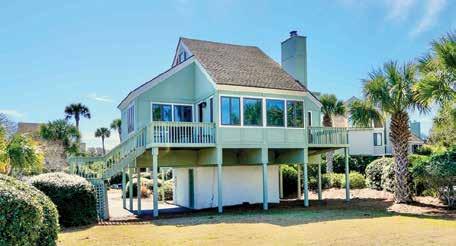
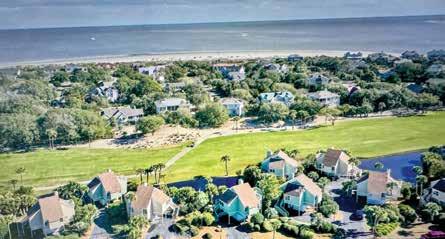
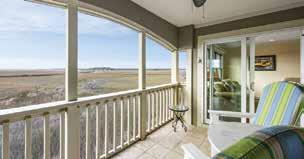
921 Sealoft Villa, Seabrook Island 3 Beds, 2 Baths, 1231 Ft2

This Sealoft Villa is light, bright and enhanced by copious windows, cathedral ceilings, and good elevation. It is a short walk to the beach and just a one minute walk to the community pool. The villa has great rental potential and offers open green space to the rear with peeks of the marsh and lagoon.





ARTIST OF THE MONTH PATTY GOULD ROSENBERG
Patty Rosenberg majored in art history at Mary Washington College in Fredericksburg, Virginia. She holds a master’s in Christian education. She and her husband, Eric, raised their family on the North River of Chesapeake Bay. Their second home was on Seabrook Island until moving to Johns Island in 2020.
Since high school, Rosenberg has worked in many mediums —drawing, etching, pottery, pastels and painting. She was on the board of a community-based art school and continues to support their efforts.
The artist has studied with Helen Beacham of Summerville, with Joe Gyurcsak of New Jersey and Theodora Tilden of Alexandria, Virginia. In 2019, she took an art trip to France and stayed at Chateau Marouatte for a week of painting with Helen Beacham.
As a member of the Seabrook Island Art Guild, Rosenberg has taken a number of workshops and has attended plein air outings.
From 2004 to 2007 she was owner of Angelwing Stationers at Freshfields. Currently, she is arranging flowers weekly
for St James Episcopal Church. She enjoys gardening, reading and walking her dog.
Please join the Seabrook Island Artist Guild for a reception to meet Patty Rosenberg and view her work on Tuesday, March 5 from 4:30 p.m. until 6 p.m. at the Lake House.
More information about the Seabrook Island Artist Guild can be found at seabrookislandguild.com.
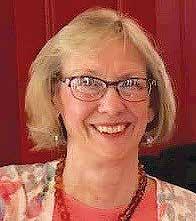







Patty Rosenberg.
44TH EDITION DESIGNER SHOWCASE RESTORES TRADITION, BRIMMING WITH NEW DESIGNERS, EVENTS AND MUSIC
BY CAROL CRONK For The Island Connection
In 1803, John Rudolph Switzer, a King Street saddler, constructed a plantation-style home at 6 Montagu in the new Harleston Village suburb. Two centuries later, the house has undergone a historic restoration and current addition, all to be further enriched by 16 leading Lowcountry designers who will transform the house for the Charleston Symphony Orchestra League Designer Showhouse.
The 44th edition of the Designer Showhouse from March 13 to April 13 promises to be bigger and better than ever – a historic architectural treasure, restored and enhanced with modern design elements to make the house a home and to celebrate life, Charleston-style. The Showhouse event also offers an enticing list of special additional events as well. All proceeds benefit the Charleston Symphony and CSOL Music Scholarships.

6 Montagu is considered a legacy project by the homeowner, Mr. Claron Robertson (aka Rob), who has renovated a number of homes in the neighborhood. This circa 1803 structure is being converted from its most recent configuration of six apartments to a reimagined single-family home. The vision combines an extensive historic renovation of the front of the original house with an artistically designed three-story

addition in the back. The renovation includes newly landscaped front and rear gardens as well as a pool.
The following events are scheduled at the house:
February 4: Blue Jeans and Blueprints – the Bare Boards Party
March 12: IMAGINE! Opening Night Party
March 15: Chansons et Champagne featuring Charleston Opera Theater
March 17: St. Patrick’s Day Garden Party
March 26: A Taste of Gullah Culture Brunch
April 7, 9: Historic Charleston Supper Club
The designers each bring their own modern vision to a different sector of the distinguished house and garden. Participating designers include:
• Sandy Ericksen - Sandra Ericksen Design
• Linda Burnside – LGB Interiors
• Michael Mitchell and Stephen Shutts - Mitchell Hill Design
• Maria Schendzelos - Morton James
• Heidi Huddleston, CKD -Delicious Kitchens and Interiors LLC
• Patti Wilbourne - PWD Studio
• Linda Frederick - Linda Frederick Interiors
• Molly Basile, Lindsey Junger and Mary Anna Fricks - Molly Basile Interiors
• Terry Stephenson - Juxtaposition Charleston
• Aldous Bertram - Aldous Bertram LLC
• Brittanya Tammearu - Brittanya Tammearu Interiors
• Wendy Thrower and Wiggie Bitter - Everything Home Charleston with Sandy Ericksen
All proceeds from the 2024 Designer Showhouse will benefit Charleston’s Symphony and music scholarships. The CSOL’s financial support allows the Symphony to offer free or low-cost educational opportunities, with a special emphasis on reaching Title I schools and underserved areas.
Follow the CSOL on Facebook at facebook.com/csolinc.






6 Montagu by Mary Whyte.



Beach jurisdiction and property rights
BY ROM REDDY
BRING THE ISLAND TO YOUR INBOX


the MyLo Insider
SUBSCRIBE TO OUR FREE NEWSLETTER
Discover the pulse of our micro local island community, delivered to your inbox!
Are you ready to uncover the hidden gems, exciting events, and local news that make your island community thrive? Look no further! We're thrilled to present The MyLo Insider Newsletter, your ultimate source for all things island life.
GET AHEAD OF THE CURVE
Tired of waiting for the print newspapers to catch up? Subscribe to our free newsletter for instant updates delivered straight to your inbox. Immerse yourself in captivating stories, enriching interviews, upcoming events, and fascinating features that highlight the vibrant spirit and unique culture of our island.
As a subscriber, you're in for a treat! We've partnered with local businesses and restaurants to bring you "Half-Off Lowcountry" –a collection of exclusive deals and vouchers. Experience the finest culinary delights, indulge in rejuvenating spa treatments, or embark on thrilling adventures, all at incredible discounts.
Unleash the islander within and unlock remarkable savings!

Sign up today to receive the MyLo Insider Newsletter straight to your inbox for free. Stay in the loop, share the joy, and spread the word about the island's hidden treasures. Join a vibrant community of like-minded individuals, all passionate about celebrating the beauty and essence of our micro local island paradise. Go to www.mylolowcountry.com/subscribe
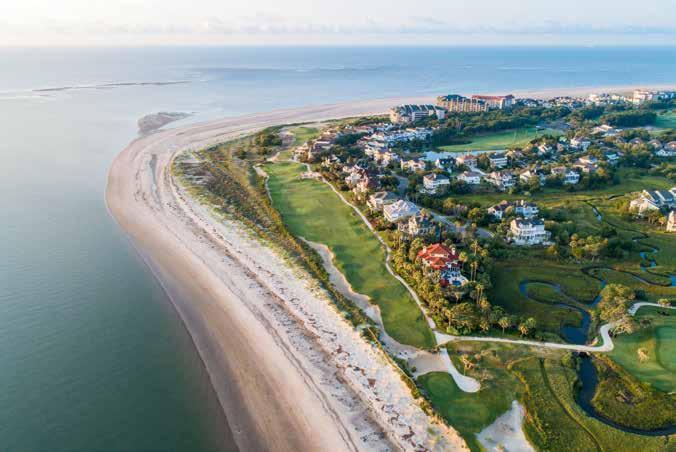
or many of you, there are a multitude of beach erosion and jurisdiction issues that are playing out at the same time, and this has led to confusion for some and anger for others. Social media postings, often with false or faulty information, have fueled this flame. Without promoting any point of view, I will attempt to give you information so you can reach your own

First: government jurisdiction over private land. The U.S. Constitution takes a dim view of government taking private land without compensation other than for public safety or health reasons that are clearly and narrowly defined. As George Washington said, “Freedom and property rights are inseparable. You cannot have one without the other.” The Fifth Amendment to the U.S. Constitution says in summary: “Without just compensation, government regulations cannot limit the use of private property to such a degree that the landowner is deprived of all reasonable use or value.”
The state of South Carolina in Section 48-39-30 of its beach management laws says: “In the implementation of the chapter, no government agency shall adopt a rule or regulation or issue any order that is unduly restrictive, so as to constitute a taking of property without the payment of just compensation in violation of the Constitution of this state or of the United States.”
With this as background, the General Assembly has been very clear about its jurisdiction over private land on beaches by defining a beach critical area in Section 48-39-10. There is a baseline (toe of the primary dune) and a setback line (40-year erosion estimate of baseline) that are set every seven to 10 years and approved by the General Assembly. These lines are fixed until reset, and, for the Isle of Palms, were set in 2018 and are due to be reset in 2026. Based on these lines, beach critical areas are defined, setting the limit of state jurisdiction over private property.
and be impossible to track. It will be at the discretion of the state to tell you on an individual basis where their jurisdiction is. Baselines and setback lines will be obsolete. For homeowners, with one storm, your backyard can be annexed by the state and essentially become part of a public beach. I would hope that any waterfront owner would stand up and fight this jurisdictional grab that has never been voted on by the General Assembly.
Adding to this, IOP is the only municipality that has restrictions on property owners protecting their property that are more stringent than those of the state. The IOP ordinance states that homeowners cannot protect their property in any way for 250 feet landward from the high tide line, which is to the back porch of most homes. In addition to being inconsistent with constitutional law, this ordinance exposes every taxpayer in IOP to unlimited liability and puts them at the mercy of unpredictable juries. The first homeowner whose home falls into the ocean will claim the city ordinance prevented him from any protection whatsoever, and the city is therefore liable for his losses and could be held negligent for not taking more aggressive action to protect the homeowner after prohibiting him from protecting himself. This unlimited liability is why no other municipality exposes its citizens to this risk.

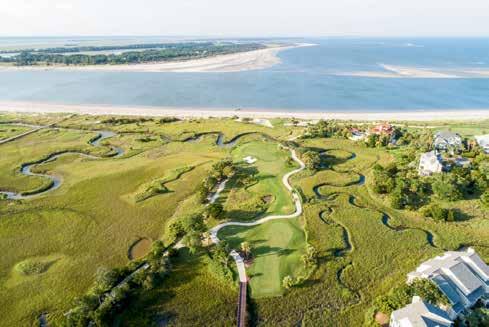
Beach critical areas consist of two components – the Beach/Dune system, defined as seaward of the setback line, and Beaches, defined as those lands subject to periodic or routine tidal and wave action so that no nonlittoral vegetation is established. While active beach is a defined term in the overall tideland and wetlands act, that term is never used anywhere in state jurisdictional law defined in section 48-39-10. Active beach recently became a weapon the Office of Ocean and Resource Management uses to claim that if any waterfront property owner lost any land, even from one storm, that land became state jurisdiction. Once it becomes state jurisdiction, you can only use beach compatible sand to repair the property – no replacing shrubs, fences or even dirt. This is clearly illegal and would make state jurisdiction constantly variable and different for every owner
Finally, in 2018, the state changed its policy from a retreat policy, where no protection was allowed, to a replenish, renourish and “hold the line” policy. Anyone who has watched the ocean rise and beach levels drop as much as 10 feet on the southern side of the island due to insufficient replenishment and excessive scraping will quickly realize that it is impossible to hold the line using only sand. The best compromise is a protective structure that is always covered in sand and landscaped, with sand dunes on the ocean side that support the eco structure we are all in favor of. The structure is only exposed in the event of a catastrophic storm that washes out the dunes and sand. The structure is immediately covered back with sand, having accomplished its goal of property protection. The state and city get out of trying to repair private yards and focus on building a nonexistent dune system and replenishing the public beach. We all have the same goals, but all the rhetoric and false accusations and pitting us against each other gets in the way of coming up with solutions that work for all.
“Reddy or Not” is a periodic column representing the opinion of Lucky Dog Publishing owner Rom Reddy but not necessarily the opinion of the newspaper. In keeping with the paper’s philosophy of publishing all opinions, the publisher welcomes responses, which must be limited to 300 words and will be published on a space-available basis.







around the islands...
ONGOING
WHAT: Cool Cats
WHEN: Feb. 2 - Mar. 16
WHERE: Redux Contemporary Art Center
MORE INFO: Join us for the opening reception of a Redux Studio Artist collection featuring recent works on paper. The exhibition will be on view an run through March 16. Participating artists include Hale Horstman, Karen Vournakis, Kris Hanson, Daisy McClellan, Rebecca Hopkins, Susan Altman, Nancy Perry, Taylor Faulkner, Lauren Sloan, Carson Carroll, Jenifer Padilla, Jillian Thorvaldson, Kirsten Hoving, George Read, Shannon Mayo McBride, Nick Kawcynski, Susan Vitali, Liz Lantz, Rebecca Dew, Christine Patterson, and Kate Ritchie.
WHAT: Textile Gallery
WHEN: Jan. 20 - Sept. 15
WHERE: Charleston Museum
MORE INFO: Quilting, a timeless form of creative expression, melds colors and patterns into purposeful objects. Like paint on canvas, fabric pieces serve as artistic boundaries, challenging individual visual acuity and imagination. We're excited to announce a collaborative exhibition with the Gibbes Museum of Art, featuring abstract artwork alongside the Museum's quilts. This showcase highlights the artistic splendor of both mediums.
WHAT: Ming Smith: Feeling the Future
WHEN: Jan. 31 - April 28
WHERE: International African American Museum
MORE INFO: The International African American Museum (IAAM) presents "Ming Smith: Feeling the Future" from January 31 to April 28. This special exhibition showcases the groundbreaking career of Ming Smith from the 1970s to the present, exploring her vibrant and multi-layered artistic practice. Featuring works from her five-decade career, the exhibition delves into themes of Afrofuturism, Black cultural expression, representation, and social examination, offering insight into the unseen moments of life captured by this profoundly gifted artist.
WHAT: Rory McEwen: A New Perspective on Nature
WHEN: Jan. 26 - April 28
WHERE: Gibbes Museum of Art
MORE INFO: Presenting the vibrant and varied career of the renowned Scottish artist, Rory McEwen (1932 –1982), this exhibition reveals McEwen’s lifelong enquiry into light and color through his remarkable paintings of plants. Bringing a modern sensibility to botanical art, McEwen developed a distinctive style, painting on vellum and using large empty backgrounds on which his plant portraits seem to float. McEwen’s work, shown alongside the works of master botanical artists from the 18th, 19th and 20th centuries, “has had a lasting impact on the botanical art world.
SUNDAY, MAR. 12
WHAT: Quentin E. Baxter Presents Jontavious Willis
WHERE: Turtle Point Club House
WHEN: 4 p.m.
MORE INFO: The third concert in the series features GRAMMY®-Nominated, Award-winning vocalist/ guitarist Jontavious Willis. He's on a mission to revive traditional Blues with his unique blend of Georgia heritage and reverence for the genre's roots. With dynamic vocals and technical prowess, Jontavious delivers original toe-tapping tunes in the Delta,

Piedmont, Texas, and Gospel Blues styles, injecting vitality into the Blues community.
MONDAY, MAR. 18
WHAT: Queens of Rock and Soul: A Tribute to Tina Turner and Aretha Franklin
WHERE: West Beach Conference Center
WHEN: 7:30 p.m.
MORE INFO: Immerse yourself in the electrifying blend of rock and soul with Queens of Rock & Soul, a tribute honoring the legendary Tina Turner and Aretha Franklin. Prepare to be mesmerized as Nadia Rochelle delivers a sensational portrayal of Tina Turner, igniting the stage with her dynamic performance. Joining her is Christian "Black Diamond" Smalls, paying homage to the Queen of Soul, Aretha Franklin, with a soulful tribute that spans the realms of R&B and Soul.
SUNDAY, APR. 7
WHAT: College of Charleston Young Artists: Clara Camacho, Pianist
WHERE: Church of Our Savior
WHEN: 4 p.m.
MORE INFO: The Kiawah Island Arts Council and the College of Charleston Department of Music are thrilled to introduce Clara Camacho, a talented pianist with Franco-Venezuelan roots, hailing from a family of musicians. Clara's musical journey began at the age of 3 at the Mozarteum School in Caracas under the tutelage of Carlos Urbaneja. By the age of 10, her exceptional talent led her to be admitted to the CRR of Paris. In 2019, she earned her DEM diploma from the Regional Conservatory of Paris under the guidance of David Saudubray. Throughout her years of dedicated study, Clara achieved remarkable success, winning the prestigious National Piano Competition of Chatou for two consecutive years.


Residential Cleaning Services

A Garden Club Tradition
35TH ANNIVERSARY OPEN HOUSE A SUCCESS
BY SUSAN MCLAUGHLIN For The Island Connection
The Seabrook Island Garden Club hosted its annual Open House on Sunday, February 4 at the Lake House’s Live Oak Hall. This year’s theme was “Our 35th Anniversary—See how we’ve grown!” The Open House is a Garden Club tradition and one of the events that make Seabrook a special place to live.
Guests enjoyed a variety of hot and cold hors d’oeuvres, mini cupcakes and drinks. In honor of the 35th anniversary celebration, Paula Murphy baked a tiered limoncello cake, decorated with fresh flowers. The evening was topped off with a successful raffle of items secured by raffle chairperson Dianne Cain and donated by local businesses and Garden Club members.
Proceeds from the raffle and other Garden Club activities support local community charitable initiatives. With creative direction from member Deb Duerr, Live Oak hall was transformed into a magical woodlands garden. And past president, Karen Nuttall, created and displayed a visual timeline of garden club photos taken through the years.
A much deserved thank you goes to Open House Committee chair, Victoria Fehr, her members and all of the Garden Club members for helping make this event a success.
Not Just Another Purdy Place
BROOKGREEN GARDENS EXPANDS WITH NEW CENTER FOR FUTURE
BY MEG LEWIS
For The Island Connection
Brookgreen Gardens, a National Historic Landmark on the Lowcountry coast, has broken ground on its new Welcome Center and Conservatory Gardens, The Purdy Center.
The Purdy Center is the capstone project within Brookgreen's broader initiative, the Campaign for the Next Generation, aimed at expanding its art, nature and history programs for future generations. This initiative includes new and renovated facilities as well as supporting endowments.
"As we break ground on The Purdy Center, Brookgreen Gardens welcomes a new era of education, cultural enrichment and horticultural exploration," says Page Kiniry, president and CEO of Brookgreen Gardens. "This new Welcome Center and Conservatory will dramatically enhance the experiences and educational opportunities we provide to members."
Brookgreen is home to the largest and most significant collection of American figurative sculpture in the country. It is a leader in sculpture conservation, environmental conservation and the protection of the plants, animals and history of the South Carolina Lowcountry. The Campaign for the Next Generation, funded entirely by gifts and grants, will expand Brookgreen in four key areas – this new Contemporary Conservatory and Welcome Center, new art facilities, expanded Lowcountry history exhibits and a new exhibit in the Lowcountry Zoo.
The Purdy Center, the largest of these capital projects, will serve as the Welcome Center for
Brookgreen Gardens, provide additional event and educational program space and include a new Contemporary Conservatory. The Purdy Center will transform the campus, welcoming guests from around the world and enabling Brookgreen to expand horticulture programs. Guests will enjoy an accessible, year-round garden to explore tropical biomes, including a butterfly garden to educate children and families.
The Conservatory Great Hall will be the public centerpiece of the project and will feature skylights, clear story windows and accordion doors opening onto an expansive courtyard. With ever-changing botanical displays, a floor-to-ceiling Green Wall showcasing tropical plants and an array of hanging baskets and planters, this space will be a seamless extension of the Gardens.
Outside, the Conservatory Veranda, an elevated terrace featuring a Kalwall shade in the shape of butterfly wings, pays tribute to Anna Hyatt Huntington's original design of the formal Gardens in the 1930s. A landscaped Courtyard will serve as a gathering space for Brookgreen's programs and tours, doubling as a private event space for special occasions.
The Center is named for Verl and Sandra Purdy of Charlotte, North Carolina and the Peninsula at Inlet Point South at Litchfield, South Carolina, in honor of their leadership support of the Campaign and love of the Gardens as Honorary Trustees.
For more information on this new expansion and to donate to the campaign for the next generation, please visit brookgreen.org/campaign-next-generation.

In the Kitchen, Not the Garden
BY JOHN NELSON For The Island Connection
It's so Fly-Day, Fly-Day Chinatown… ~Yasuha, 1981
This song came out 40 years ago or so, and of course I wasn’t “hip” enough then to quite understand what it was all about. It was a rather popular song, though, in a good many circles. And, indeed, it’s got a catchy bounce-along rhythm and accompanying melody line.
But this song involves Chinatown, as in New York City, which is one of my favorite places to visit. Last time was a couple of years ago, and we were able to satisfy not only a magnificent dim-sum lunch requirement but a need to see lots of really interesting things. If you happen to be a botanist, as am I, you will find Chinatown a supremely intriguing place. Take the little markets, for example.
In these, you will find all kinds of food items that you don’t usually run into at your local MegaLoMart. Some of the items hanging from the shelves are rather easily identifiable: the ducks and chickens, bereft of feathers. Then there is the seafood — strange things renderable into gourmet fare such as a cooked octopus, a box holding live crabs. Bins with baubles and those little cat toys with the raised paw and mysterious smiles. Vegetables and fruits from unknown parts of the planet, both fresh and dried or in cans or jars, along with piles of spices and pastes full of exotic flavors and aromas which you may never have even imagined.
Here's something I found, offered in a plastic bin, along with a crypto-Latin sign indicating what it held: I had to do a bit of research on this one to figure it out.
The white, elongated wafers are the dried shavings of a plant native to China. The shavings come from an extensive rhizome (not a root, and not a tuber) which takes several years to develop below ground. A twining vine sprouts from the rhizome, high-climbing in a garden, with attractive, heart-shaped leaves. The individual plants are either male or female, and, of course it’s only the female vines which make seeds. And, the vines commonly produce small, gray-brown aerial tubers, only an inch or so long. These are easily capable of starting new plants once they fall from the vines.
The rhizomes have been used in China as a common food source for thousands of years. Rhizomes must be variously cooked in order to make them edible, but once cooked, are full of carbs and those other things. Additionally, these rhizomes are an important part of traditional folk medicine in eastern Asia, and of course, are easily available these days in Asian markets or specialty stores online.
This species has been imported widely around the world, including the United


BY
States, which brings me back to those little aerial tubers. Because of them, the plants have escaped from gardens into natural settings, and this species is now an awful weed—yet another invasive, alien species capable of covering up the native plants. Give it a try in your kitchen…but not in your garden, please.
John Nelson is the retired curator of the Herbarium at the University of South Carolina, in the Department of Biological Sciences. As a public service, the Herbarium offers free plant identifications. For more information, call 803-777-8175 or email johnbnelson@sc.rr.com.
[Answer: “Chinese yam,”
Tide Chart
We also offer FREE deconstruction services.
Source: saltwatertides.com 8:05am/8:26pm 8:39am/9:02pm 9:11am/9:35pm 9:42am/10:07pm 10:13am/10:38pm 10:46am/11:13pm 11:24am/11:56pm 12:10pm 12:50am/1:06pm 1:56am/2:12pm 3:09am/3:22pm 4:20am/4:30pm 5:23am/5:33pm 6:20am/6:31pm 1:43am/2:12pm 2:21am/2:44pm 2:58am/3:14pm 3:35am/3:43pm 4:11am/4:13pm 4:50am/4:47pm 5:34am/5:27pm 6:24am/6:14pm 7:23am/7:13pm 8:29am/8:22pm 9:36am/9:34pm 10:38am/10:41pm 11:35am/11:43pm 12:27pm
Dioscorea polystachya]
PHOTO
JOHN NELSON







Standing: Tom Peck, John Halter, Amanda Benepe, Ryan Straup, Patsy Zanetti, Ingrid Phillips, Mary Ann Lloyd, Stuart Spisak, Joy Dellapina,
Seated:
Olsen, Stuart Rumph,
McCormack, Marc Chafe