

Taylorsville
Severe anxiety and cancer finally behind her, Taylorsville High cheerleading captain now thriving
By Carl Fauver | c.fauver@mycityjournals.com
Megan Clegg doesn’t actually attend THS, but is making the most of the opportunities Utah Connections Academy online school provides her
Taylorsville High School Cheer Team
Captain Megan Clegg was scheduled to fly to Florida last month to perform in a Disneyworld parade just before Thanksgiving. The trip occurred after our press deadline; but we’ll assume all went well – unlike the many challenges Megan has faced already in her young life.
Born in July 2010, Megan has no memory of losing her first grandparent just six months later. But, at age 10, Clegg does clearly recall losing two other grandparents in 2020, due to COVID complications. Less than three years later, her final grandparent passed when she was between seventh and eighth grades.
Megan’s mom, Barbara Clegg, isn’t exactly sure how much the loss of those grandparents contributed to Megan’s ever-growing anxiety. But she says it became unbearable for her young daughter.
“We began to recognize Megan’s severe anxiety when she was in fifth and sixth grades,” Clegg said. “It became a daily fight to get her up and off to school. We could bare-
ly do it. She was just so anxious. This was also right after schools had been shut down for months due to COVID. Megan always thought she was in danger and would text me from school all day long. She had to know I was here.”
Clegg says her daughter never reported being bullied at school. But she describes Megan’s anxiety as overwhelming. Then, as the challenge continued to grow, Megan came home one day with a suggestion for her parents that has turned her life around entirely.
She wanted to attend school, full time, from home.
“Every morning as I was getting ready for school, I would begin to feel physically sick,” Megan said. “But then two of my friends told me about attending school online. I did some research and liked what I saw on the Utah Connections Academy website (connectionsacademy.com). They want you to do well; and they help you reach your expectations.”
Soon, Clegg was doing her own investigating.
“The first online school I researched just felt kind of weird,” she explained. “The second one was very hard to reach – and when I finally spoke with someone there, they had no
Continued page 4

Taylorsville High Varsity Cheer team captain, Megan Clegg, is only a sophomore – and does not actually attend THS. (Photo courtesy Barbara Clegg)




















room. Then I reached out to Utah Connections Academy. They were very transparent – answered all my questions – and said they had room to admit Megan. So, we decided to give it a shot.”
Megan began her eighth-grade year with Utah Connections about a month late, in September 2023. But with her anxiety now largely in check – because she was no longer surrounded by other students – Clegg says her daughter was able to catch up with her new, remote classmates and has been thriving ever since.
“Megan logs on each day to be taught, online, by live instructors,” Barbara Clegg continued. “Utah Connections has allowed Megan to figure herself out and to figure out schooling on her own terms. It is a public school and charges no tuition. After struggling for so many years, her GPA is now 3.7. And the other important thing for Megan is, she’s allowed to participate in extracurricular activities at ‘regular’ high schools.”
That’s where the Taylorsville High School varsity cheerleading team comes in.
Megan’s only sibling is a sister, a dozen years her senior, who was active in cheerleading. Through big sis’s interest, Clegg became a certified cheer coach herself… and Megan got the cheerleading bug at a very young age.
“Megan and I are both cheer coaches for the Special Olympics now,” Clegg explained. “And because Utah Connections Academy doesn’t offer extracurricular activities, their students are allowed concurrent enrollment at ‘regular’ public high schools. That’s what she has at Taylorsville High. That makes her eligible to try out for any of their teams… or for a school play… choir… yearbook staff… anything she would like. So far, she’s concentrating on cheerleading.”
And that’s where Megan excels. A year ago, she earned her way onto the Taylors-

TAYLORSVILLE TEAM
The Taylorsville Journal is a monthly publication distributed directly to residents via the USPS as well as locations throughout Taylorsville. For information about distribution please email hello@thecityjournals.com or call our offices. Rack locations are also available on our website. The views and opinions expressed in display advertisements do not necessarily reflect or represent the views and opinions held by Loyal Perch Media or the City Journals. This publication may not be reproduced in whole or in part without the express written consent of the owner. © 2019 Loyal Perch Media, Inc.
ville High School varsity cheer squad as a freshman. This year she returned to the varsity squad, and was made a captain, still two years younger than her senior peers. Additionally, Megan is on the school’s competition cheerleading team, which will mean a trip to the national finals in California in February.
Also, earlier this year at a cheerleading camp, Megan was named an All-American by the National Cheer Association. This designation is what qualified her to appear in last month’s Florida parade with Mickey Mouse.
But just when everything appeared to finally be on the upswing in Megan’s life – after beginning her online education with Utah Connections Academy – along came one more big challenge, in June of last year.
“I was sitting on the couch with Megan and noticed a lump on her throat,” Clegg said. “The doctors initially did not detect cancer. But when they removed the lump on Oct. 14, 2024, some cancer spots were found. It was out of her body by then, so no radiation or chemotherapy has been necessary. She has her blood screened every four months; and Megan will have to take a thyroid medication pill every day for the rest of her life.”
Compared to the other challenges she’s already faced in her young life, Megan says a pill a day – and a few blood draws – aren’t about to slow her down.
“I love my cheerleading teammates at Taylorsville High and definitely hope to continue on the team for two more years,” she said. “I’m glad I am able to do it (through the concurrent enrollment eligibility) while continuing with Utah Connections Academy. I learn so much better through that program.”
However, looking into her future, Megan also believes she’ll be ready for a more traditional brick-and-mortar setting in a couple of years.
“I’m thinking about studying criminol-
ogy in college,” she concluded. “But I also definitely want to be involved in a cheer program. I’ve begun researching schools, even though college is a couple of years away. The one I like most so far is the John Jay College of Criminal Justice.”
Oh, in case you are wondering, that
PUBLISHER
Bryan Scott | bryan.s@thecityjournals.com
EDITOR
Travis Barton | travis.b@thecityjournals.com
ADVERTISING EXECUTIVES
Mieka Sawatzki | mieka.s@thecityjournals.com
Lindsay Andreasen | lindsay.a@thecityjournals.com
Ryan Casper | ryan.c@thecityjournals.com
Marc Davis | marc.d@thecityjournals.com
school is smack dab in the middle of one of the busiest cities in the world – walking distance from Time Square and Central Park, in New York City. Quite a change for a girl who spent years being too anxious to be around elementary school classmates in Utah.l
Connect socialmedia
CIRCULATION
Lydia Rice | lydia.r@thecityjournals.com 385-557-1022
Rack
Stacey LaMont Ty Gorton
9500 South 500 West, Suite 205 Sandy, UT 84070
PHONE: 801-254-5974

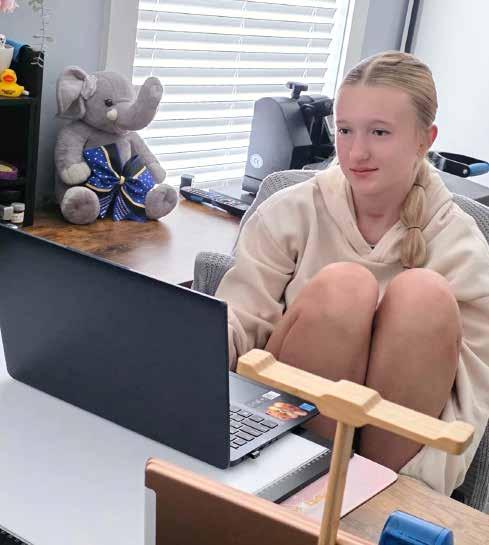
Megan Clegg has a 3.7 GPA this year, doing all of her schoolwork for the Utah Connections Academy from home. (Photo courtesy Barbara Clegg)




Expert tips for a joyful and injury-free holiday season
By Holly Curby hello@hollycurby.com
As the holiday season approaches, the excitement of gift giving and family gatherings fills the air. But amid the ribbons, wrapping paper and shiny new toys, it’s important to remember that safety should never take a holiday. According to the U.S. Consumer Product Safety Commission (CPSC), nearly 150,000 toy-related injuries sent children to emergency rooms in 2020, and tragically, nine children under the age of 14 lost their lives.
Those numbers are a sobering reminder that joy and safety must go hand in hand. “We talk a lot about the magic of the season,” said Judy Echavez, public affairs specialist with the CPSC, “but we can’t overlook the very real risks. Thousands of children are seriously injured in toy-related incidents every year — and many of these accidents are preventable.”
From bicycles to scooters, some of the season’s most popular gifts come with hidden hazards. “Non-motorized scooters alone account for about 21% of all toy-related emergency department injuries,” Echavez said. “If you’re gifting a bike, scooter or skates this Christmas, make sure a properly fitted helmet and safety pads come with it — and more importantly, make sure kids actually wear them.”
Amy Bryant, crime prevention specialist with Sandy City, added that parents should pay close attention to packaging and product labels. “That age guidance and safety information isn’t just a suggestion — it’s there for a reason,” she said.
“Small parts and tiny balls can easily become choking hazards for children under 3. What might look like a piece of candy can block a child’s airway in seconds.” She also cautioned parents to physically inspect toys for sharp edges. “A quick run of your hand over a toy can reveal edges that could easily cut soft skin,” she said. “A minute of prevention can save a trip to the ER.”
In an age where information is always at our fingertips, there’s no excuse for unsafe shopping. “We’re lucky to live in this generation where you can research anything online,” Echavez said. “Before you buy, do your homework. Check reviews, safety recalls and even past reports of injuries. It’s all preventative — and it can save a child’s life.” Echavez encouraged parents to consult the CPSC’s recall database. “They have a great resource for identifying recalled toys and other unsafe products,” she said. “It’s one of the easiest ways to make sure you’re bringing safe gifts into your home.”
After the unwrapping frenzy, be mindful of what’s left behind. “When you’re throwing away boxes from TVs, laptops or

expensive toys, break them down,” Bryant advised. “Leaving them intact by the curb advertises to potential thieves what new valuables are inside your house.”
When it comes to New Year’s celebrations, a different set of safety concerns emerges. “The biggest issue on New Year’s Eve and New Year’s Day is impaired driving,” Bryant said. “If you plan to drink, plan a ride ahead of time. With Lyft, Uber and other ride services at your fingertips,
there’s no excuse for getting behind the wheel.” But driving isn’t the only concern. “If you’re at a party, always keep your drink with you,” Bryant said. “Never leave it unattended, and if you step away, get a new one. Sadly, drink tampering can and does happen.” Crowded events can also bring security concerns. “Pay attention to your surroundings,” Bryant said. “If you see something suspicious, report it immediately to law enforcement. A quick call can prevent tragedy.”
When asked for any additional tips or advice, both Echavez and Bryant agreed on one key point: safety is a lifelong habit. “Err on the side of caution,” Echavez said. Bryant echoed that sentiment. “Knowledge is power,” she said. “The information you need to stay safe is out there. Use it. Learn from safety experts, talk to your community officers, and equip yourself to protect your loved ones.”
This holiday season, let’s make safety part of the celebration. Whether it’s checking labels, breaking down boxes, or planning a safe ride home, small steps can make a big difference. For more practical tips on family safety, parenting and holiday preparedness, tune in to Season 3 Episode 21 on Holly’s Highlights podcast, where Echavez, Bryant and host Holly dive deeper into how to protect your family while keeping the holidays merry and bright. l
Make this holiday season joyful and secure with simple safety tips for gift giving and beyond. (Photo courtesy of Holly Curby)
Pediatric care nurse in Taylorsville and Productive Workspace business in Sandy are ‘Titans’ in their respective communities
By Cassie Goff c.goff@mycityjournals.com
Community was the emphasis at this year’s South Valley Chamber’s Titan Awards Gala. Four chamber members and one small business were honored for their dedication in supporting not only their local business chambers and committees, but their surrounding Utah communities. The 2025 South Valley Chamber Titan Awards were held on Oct. 29 at the Grand America.
“Kindness and community are stronger than that which pulls us apart,” said Jay Francis, South Valley Chamber president and CEO. “All of the honorees have exemplified innovation, determination and education with their integrity towards building a stronger community.”
Katy Welkie, Primary Children’s Hospital vice president, was recognized for her work in helping to build out Intermountain Health’s new campaign for a health care system for children. Primary Promise focuses on supporting new research, bringing innovative programs to hospitals and adapting community care to help support children’s health care.
“Kids have a unique ability for joy in the darkest day,” Welkie said as she shared her years of experience working with young patients during her acceptance speech. “They have a power for kindness and an instinct to comfort others.”
Primary Promise’s focus is to make health care more accessible for children and their families by bringing quality care closer to home.
“Utah’s generosity in making sure kids not only survive but thrive is unwavering,” Welkie said. “Investing in the true potential of children is investing in the future.”
Together, Jeremy and Kristin Andrus were nominated for their seemingly endless drive to continually pursue and serve within community work.
“We link arms and come together to solve problems,” Kristin Andrus said.
Jeremy Andrus, president and CEO of Traeger Grills, was recognized for how his incorporation of community culture helped him to grow a regional company to a multi-hundred-million-dollar company.
“Our life is full of smoked meats and soccer cleats,” Kristin Andrus said.
Kristin Andrus, community advocate

and philanthropist, was also recognized for her work illuminating social issues, serving underrepresented communities and empowering women in the nonprofit realm.
“We see the hand of goodness and kindness,” Jeremy Andrus said.
Jeremy and Kristin moved to Sugarhouse from Oregon over 20 years ago. They quickly decided to put down roots in the Salt Lake Valley after their community members showed them the “real community spirit” of Utah. They have since started additional businesses and a family with six children.
Amy Rees Anderson, managing partner of REES Capital (an angel investing firm), was recognized for her devotion toward perpetuating and educating for entrepreneurship opportunities.
“It’s more about the people you’ve served than the accomplishments,” said Anderson. “It’s been a blessing to get to give back to the people who mean so much.”
Anderson started her business to put food on the table. She quickly realized being a single mom to two kids and a business owner took a lot of hard work.
“Dalton and Ashley had to share their mom with 100 employees. … Every hour spent working was an hour away from them. … They are the real heroes in my life stories,” she said.
Salt Mine Productive Workspace in Sandy was recognized as Small Business of the Year for its innovative work constructing a community gathering spot that cultivates connection and collaboration. Their hospitality within those training rooms and office spaces allows remote workers to connect to others in an otherwise remote workspace.
“People make the place,” said David Edmunds, founder of Salt Mine Productive Workspace.
The South Valley Chamber’s annual Titan Awards inaugurated in 2009. Since then, they have continued to recognize “Titans” within the local business community, with this year’s gala drawing more than 200 guests.
“Sixteen years later, we are still here to honor amazing businesses and community leaders,” said Francis.
Sharing a handful of statistics about the South Valley Chamber’s growth, he said the membership has grown from 375 to 600 businesses. In addition, the chamber has been able to grow its Women in Business opportunities as well as their scholarship program for junior entrepreneurs.
“Our success reflects a caring community for what we have achieved and built together,” he said. l




From left to right: Katy Welkie, Primary Children’s Hospital vice president; Amy Rees Anderson, managing partner of REES Capital and Kristin Andrus, community advocate and philanthropist, were honored with Titan Awards by the South Valley Chamber of Commerce. (Photos courtesy South Valley Chamber of Commerce)
Grimshaw girls – mom and two daughters –clean up at the Taylorsville Art Show
Camille, Erin and Aven are frequent entrants at the annual show and took home seven ribbons and awards this year.
By Carl Fauver c.fauver@mycityjournals.com
The Grimshaw family is split right down the middle: three boys… three girls… three artists… and three who do, well, “other things.”
“My husband Bryan, and older son, Seth, are definitely not into art; but John, my 10-year-old, seems to be still deciding,” Camille Grimshaw said. “But my guess is, he’ll find other things to do also.”
That seems to be OK though – because the Grimshaw girls are gathering plenty of trophies and ribbons for their artwork at shows throughout the Wasatch Front.
During this fall’s annual Taylorsville Art Show at the Mid-Valley Performing Arts Center, mom Camille Grimshaw, Utah Valley University freshman Erin Grimshaw, 18, and middle schooler Aven, 12, entered a total of nine pieces. They went home with seven ribbons and awards between them.
Perhaps most impressive, last year’s Visual Arts Sterling Scholar winner for the Wasatch

Region, Erin Grimshaw, earned the “People’s Choice” award at the Taylorsville show for a second consecutive year.




It’s all a far cry from how Camille Grimshaw got started in a field that’s kept her busy for more than 30 years.
“During summer break following my sixth-grade year, I took a one-week drawing class and came out with a horse drawing,” Camille Grimshaw said. “Without telling me, my grandmother decided to enter it in the county fair. It was the first time I ever saw my art hanging in public display. I didn’t win a ribbon; but I was hooked.”
Six years later, Camille was graduating from Olympus High School (1998), and five years after that she had her bachelor’s degree in Art and Education from Westminster College. Since then, she’s been teaching art, either at schools or through private lessons. Older daughter Erin Grimshaw says her mom never really gave her a lot of art instruction, but has always been available to offer sage advice.
“I took a few art lessons from mom when I was maybe 9; but she kicked me out because I wasn’t paying close enough attention,” Erin Grimshaw said. “Since then, I’ve thought of her as my ‘art manager.’ She helps me with ideas and offers advice whenever I have a question about what to do next with a certain piece. Mom has inspired me since I was very little.”
With her Sterling Scholar win last spring, Erin Grimshaw earned a variety of scholarship offers. She is now making her way back and forth to Utah Valley University each day because “they made me the best offer – so far, college has not cost me anything.”
Meantime, this was only the second year for younger daughter/sister Aven to enter pieces into the Taylorsville Art Show. Her acrylic painting of a girl wading into the ocean, entitled “Catalina,” earned a second-place ribbon
in the show’s youth division.
“I’m very excited to win a ribbon this year,” Aven said. “Like my sister, I’ve enjoyed art from the youngest age. I plan to try for the Sterling Scholar, like her, in a few years.”
Camille Grimshaw believes a big reason why her daughters have gravitated toward art is that she herself was not willing to set it completely aside to raise her family. She would like to see more moms do the same.
“I took a long break from teaching art in schools – from 2008 to 2021 – so I could raise my kids,” Camille Grimshaw said. “But I never stopped creating art. I taught private lessons at my home. I think it’s important our children see we can do more. I believe too many new moms feel what I call ‘mom guilt.’ They set all of their interests aside too often. I think it’s important for kids to see us doing more – not necessarily art…but whatever a mom is passionate about.”
Interestingly, the Grimshaw girls have now become more passionate about a genre of art you can’t hang on a wall or set on a shelf: chalk art.
“Erin and I just returned from a chalk art festival in Georgia where we worked together on a 10-by-10-foot section of sidewalk,” Camille Grimshaw said. “I have done well over 100 chalk art pieces… Erin’s done at least 80… and Aven has created maybe 30 of them. Sometimes we work together; but most we do on our own. Obviously, you can’t keep any of them, except in photographs. I think of it like acting in a play or performing a piece of music. You can’t take that with you either. But it’s all art.”
You can see more of the Grimshaw family’s art on their website, camillioncreations. com. l
Aven, Camille and Erin Grimshaw (L-R) are all accomplished artists who took home several ribbons from this year’s Taylorsville Art Show. (Carl Fauver/City Journals)
Blake’s Gourmet catering company is a mouth-watering Taylorsville family affair
Namesake Blake didn’t grow up cooking fine cuisine; but loving dads sometimes change course entirely, when a daughter asks.
By Carl Fauver c.fauver@mycityjournals.com
Blake and Lori Jensen will celebrate their 45th wedding anniversary next year. And the calendar change will also mark 35 years since the young couple moved to Taylorsville, in 1991. The Jensens put all four of their kids through Taylorsville High School, with graduations in 2000, 2001, 2003 and 2007.
Daughter Tiffany (the 2001 THS graduate) says Dad purposely moved the family into Taylorsville for her brothers. But she’s not complaining – because Blake Jensen has also helped her build one of the most successful catering businesses in Utah.
“My Dad played baseball at BYU, graduating from there in 1987,” Tiffany Allen begins. “We are a baseball family, and dad wanted my brothers to have the best opportunity to succeed in the game. Taylorsville High was a baseball dynasty back then. That’s the biggest reason why we moved here.”
Her brothers’ baseball playing days have come and gone. But now all four of the siblings are on a different team: Blake’s Gourmet catering company (blakesgourmet.com).
“The business gives my family a great opportunity to work hard together, for each other,” Jensen said. “We all trust one another, because we’re all related – or close family friends. I know I’m getting their best work.”
When they decided to start the business, Blake Jensen was a school teacher. And, although he boasts of “making a mean barbeque,” he was not much into cooking. So, why jump into the competitive world of professional catering? He says it’s because his daughter asked.
“Tiffany had been a catering manager for Jason’s Deli for several years – but always wanted to run her own business,” Jensen continued. “I had been teaching junior high for several years and was ready for something else. So, in 2013 I bought an old Snap-on Tools truck and we began converting it into a food truck.”
“I had been a catering director for a long time, working for other companies before Jason’s Deli,” Tiffany Allen added. “During much of that time, I wanted to start my own bakery shop. But, instead, my dad and brothers bought the truck and we decided to go into catering instead. Dad and I co-own the business – but I manage it.”
Siblings are also in the mix.
“My sister Ambree does our payroll and
accounting,” Allen continued. “My youngest brother, Justin, operates our website and does our ‘tech stuff.’ My other brother, Blake Jr., isn’t really involved in the business anymore. But he helped Dad convert the Snap-on truck into the one and only food truck we still operate today.”
Allen reports it took about a year to retrofit the food truck. By then, the catering business was already starting to take off.
“We actually have a much larger menu through the catering business,” Allen said. “We only serve sliders (beef, chicken and pork mini-burgers), scones and fries out of the truck. Ever since COVID, we only book the truck for private events.”
Meantime, Blake’s Catering serves hundreds of meals a week – sometimes even more.
“Our business has just snowballed, mostly through word of mouth,” Allen said. “We do lots of weddings and corporate events. The largest hot meal event we ever did was for about 650 guests for Taylorsville Youth Baseball. Another time we provided 3,000 cold box lunches, over two days, to teachers returning to work at all the Granite District schools.”
Blake’s Gourmet has also provided hot meals for the Utah Jazz, University of Utah teams and the new Utah Mammoth NHL team members.
And it’s not always larger groups the Taylorsville-based company serves. Allen says, for some four or five years – several days a week – Blake’s Gourmet was catering to just one: a 7’1” Frenchman.
“Through our catering at the University of Utah, I got to know the school nutritionist, who also worked parttime for the Utah Jazz,” Allen said. “One day she asked me if we wanted to do any private work. The next thing I knew, we were cooking meals for (former Jazz center and 4-time NBA Defensive Player of the Year) Rudy Gobert. Three or four times a week, either I or my brotherin-law Chris would go to Rudy’s home and cook for him. The first few years it was at his Salt Lake condo. Then, after he signed a big contract with the Jazz, it was at his home.”
It seems Allen, her dad and the rest of the family had even more to lament than the rest of us Jazz fans when Gobert packed his bags for Minnesota.
Truth be told, Blake’s Gourmet catering company is owned and operated by a Taylorsville family – but the food is prepared each day much further west.
“As the business has grown, we have had to relocate into larger spaces three times,” Allen said. “We now lease a former restaurant in Magna and prepare all our meals there. I would say our business has grown at least 10 times (in annual revenues) since we started in
2013. Our most popular menu items are lasagna, barbeque, the taco bar – and our sliders are still a big hit when we send out the food truck.”
Another truth: Allen is the only immediate family member still living in Taylorsville. Her parents have made their way to South Jordan, while siblings now call Bountiful, Bluffdale and Herriman home. But Allen and husband Ryan are singlehandedly keeping Taylorsville schools busy, with six children ages 21 to 5. Their oldest, Keaton (a Blake’s Gourmet part timer), just got married. Their second oldest, Kobe Allen, was a standout Taylorville High three-sport athlete. He’s now playing basketball on scholarship at Everett Community College in Washington State.
But whatever path his kids and grandkids choose to take in life, Jensen will be forever grateful he gave up on school teaching a decade ago to help his daughter pursue her business dream.
“Listen, I’m just the official go-fer in the business; I make runs to get supplies,” Jensen concluded. “I help cook a little – but we have chefs for that (more relatives and close friends). I see this as a family business that can run for years. I have grandkids getting involved, along with their boy and girlfriends.

I’m grateful to all of them – and very proud of what we’ve built as a family.” l




Tiffany Allen served nutritious meals to former Utah Jazz star Rudy Gobert for years. (Photo courtesy Tiffany Allen)
Project Elf brings holiday magic to children
Run by The Christmas Box International, the program helps thousands of children each year.
By Peri Kinder peri.k@thecityjournals.com
Organizers of Project Elf believe every child deserves a Christmas. The Christmas Box International has run the program for nearly 30 years, providing Christmas gifts to children and young adults in Utah’s foster care program.
The Christmas Box International Executive Director, Celeste Edmunds, understands the importance of the holiday because she was once part of the state’s foster system.
“When you’re in the system, like I was, you are constantly given borrowed or used items,” Edmunds said. “You never get your own new things, and there’s no way to have your own sense of dignity.
“So for us, it’s about dignity and respect and helping kids understand that they have the same worth as any other child. Their circumstances look different, what they’re navigating looks different, but there’s no difference in the ability to have the right to be respected and loved any differently than any other child.”
Project Elf asks donors to provide holiday presents and gift cards or make a financial donation to ensure children in foster care receive new clothes and toys for Christmas. Edmunds said it’s a way to remind children what childhood is supposed to look like.
The greatest request for Project Elf is $25 Walmart gift cards, which are given to teens in the program so they can purchase their own personal items. All donated gifts should be new and unwrapped so parents working with the
Division of Child and Family Services can have the experience of wrapping gifts themselves.
“For the kiddos that come into the shelter, we will identify them as needing Christmas no matter where they are,” Edmunds said. “So they’re either in the shelter, and then we wrap all our gifts to give to them at Christmas, or they’re going to be placed somewhere, and we send the gifts to the family, so the family can wrap them and celebrate in the way that their family celebrates.”
Each year, The Christmas Box International serves 14,000 children and young adults, providing an emergency shelter for children escaping abuse and teens transitioning out of the foster care system.
Edmunds said programs like Project Elf remind these children and teens that the community is here for them and wants them to feel loved.
“There’s a way for everybody to be involved that works for them. There’s a need, obviously, and the need is to give 3,000 children and young adults a Christmas,” she said. “There are individuals, corporations, church groups, neighborhoods and families who are willing to help. With Project Elf, there’s a way for them to give that makes sense.”
Donations for Project Elf will be accepted through Friday, Dec. 19, at the Christmas Box Donation Center at 1415 S. 700 West in Salt Lake City, or through Tuesday, Dec. 23, at the two Christmas Box House locations: 3660 S. West Temple in Salt Lake City and 950 E. 12th Street in Ogden.
Those who would like to organize a Project Elf Donation Drive can also find information at Thechristmasbox. org/project-elf, along with gift ideas, the Amazon Project Elf Wishlist and Venmo information. l

Donations to Project ELF help thousands of children, teens and young adults in Utah’s foster care system enjoy new presents on Christmas morning. (Adobe Stock)
Taylorsville Arts Council founding member has been styling hair 60+ years
Born nearly a year before Pearl Harbor Day, JoAnn Buck was in the very first graduating class at the “old” Granger High School in 1959.
By Carl Fauver c.fauver@mycityjournals.com
When JoAnn Buck finds something she likes, she sticks with it. She was a founding member of the Taylorsville Arts Council back in 1996 and is still active in the group. She’s lived in her same Taylorsville home since 1965. And JoAnn has been styling hair since the 1940s – although she didn’t start getting paid for it until Kennedy was in the White House.
Her one exception to the “stick with it” rule? Buck (actually Spencer, back then) was not going to miss out on attending the shiny, new Granger High School. She wasn’t about to “stick with” her old one.
“They gave us the option to remain at Granite High School for our senior year or to shift to the brand-new school,” Buck explained. “A lot of my classmates wanted to remain at Granite. But I, and several of my friends, didn’t want to miss out on the new school. Plus, Granger High was much closer to our Taylorsville home.”
Among the friends who joined Buck on that move to the new school (the one, by the way, that was torn down and replaced more than a decade ago, due to old age) were classmates Jeanne Jensen and Joyce Parsons. Back then they shared the same last name, because they’re twin sisters. And, to this day, Parsons and Jensen still get together with their classmate every Saturday, in Buck’s Taylorsville home, to get their hair styled.
“I’ve known Jeanne and Joyce since we were in elementary school together,” Buck said. “I actually styled their hair back then – in the 1940s. I’ve just always loved doing it. Of course, I hadn’t gone to beauty school back then – and wasn’t getting paid for it yet.”
Born Feb. 20, 1941, Buck was in diapers on Pearl Harbor Day (12.7.41). She lived in Taylorsville then… and, except for a twoyear stint when her dad moved the family to California and back again, Buck has lived in Taylorsville almost ever since.
“Everyone in Taylorsville I either know… am related to… or both,” she likes to say.
The only other time Buck strayed from Taylorsville briefly was in the fall of 1959, when she found her way into a Utah State University dorm in Logan. But that proved to not be a great fit – and she was soon back in Taylorsville.
“I was studying business at USU and just didn’t enjoy it as much as I liked styling hair,” she explained. “I had been hairdressing since I was a kid. I always cut my own
hair. Once I went to a hair salon and someone did it for me for a high school prom. But I disliked it so much, I had to pull it out and redo it myself. So, I moved back home from Logan and soon enrolled at Darrell’s Beauty School in downtown Salt Lake.”
Like the “old” Granger High, that beauty school is also long gone. But not before Buck graduated in 1962 and launched a hairdressing career that continues today – still five-days-a-week, in three different locations.
“I’ve been cutting hair at the Escalante at Coventry Senior Living Center (6898 S. 2300 East) since about 2000 – since it first opened,” she said. “I’m over there three days a week. Then, once a week, I do hair at Aspen Ridge West (Transitional Rehab, 5323 S. 700 West), in Murray. And I still enjoy doing Joyce and Jeanne’s hair every Saturday at my home.”
The same way Buck was styling hair at Coventry since the moment it opened, Buck has also been active on the Taylorsville Arts Council since day one.
“We formed the arts council the same year Taylorsville was incorporated, in 1996,” she explained. “There were several of us who just felt it was very important, in our brandnew city, to support the arts. I was the Taylorsville Arts Council Vice Chair when we first formed. I became council chair in 1999.”
You recently read about this year’s sixth rendition of Tombstone Tales in these pages. That free production – depicting the lives of deceased Taylorsville residents at their gravesites in the city cemetery – was the original brainchild of Mavis Steadman and co-creator, Helene Smith. Buck has been in charge of all the production costuming, for the six presentations in 1998, 2003, 2009, 2015, 2022 and 2025. The traditional production is a joint effort from the Taylorsville Arts Council and the city’s Historic Preservation Committee.
“I was at that very first meeting in 1998 when Mavis asked ‘Could we use the Taylorsville Cemetery for a theatrical production?’ and we thought it was a good idea,” Buck said. “In the early years, I scoured Goodwill Thrift Stores and Deseret Industries, searching for the perfect period piece clothing. But we discovered the clothes never fit very well. More recently, we’ve relied on the actors to find appropriate clothing. But I still round up all of the props. I was back at all three performance nights again this year, making sure everything was ready to go.”
JoAnn and Jeff Buck were married in 1963 and had their first of two daughters the following year. Both daughters still live here in the Salt Lake Valley. Buck has three adult grandkids; but none are married – so no great grandchildren yet. Jeff Buck passed away “about 35 years ago. I’ve dated a few men over the years – but never wanted to bring one home. My grandson is my man.”
And speaking of men – that was an interesting quirk in Buck’s long and successful

hairdressing career.
“It was against the law in Utah for women to cut men’s hair until the early 1970s,” Buck said. “My first male customers were my husband, father, two brothers and a brother-in-law. Men wore their hair much longer back then, so it wasn’t difficult. I’ve given a lot of mullet cuts in my career. For many years now, my number of male and female customers has been about 50/50.”
Buck ran her own JoAnn’s Beauty Salon in Taylorsville from 1963 to 1971. At its height, she had three employees and the four of them were tending to dozens of unruly heads every week.
“I took my young daughters to the shop for a time – and also found babysitters,” Buck said. “But eventually I just told my husband, ‘I’m closing the shop – my girls need
me.’ That’s when I started doing hair in my home.”
After losing her husband, Buck worked outside the house for 25 years, for the Utah Food Industry Association. But she continued tending to hair after work and on weekends the entire time.
“When I attended college, I learned a lot,” Buck concluded. “But I have learned so much more standing behind this chair. A retired World War II nurse once told me all about how she succeeded in smuggling medicine behind enemy lines. I’ve learned about many of our world’s religions. And I once had a customer from Vietnam who clearly explained to me why I never wanted to live under a dictator or Communist rule. It’s been a wonderful education, behind this chair, from many different teachers.” l


Taylorsville resident JoAnn Buck has been cutting and styling hair since grade school – and earning money at it for more than 60 years. (Carl Fauver/City Journals)
Energage partners with City Journals on new home for Utah Top Workplaces
Nominations open for 2026 employer recognition award honoring Utah companies.
Energage, the HR technology company
powering the Top Workplaces employer recognition program, recently announced a partnership with the publisher of the Salt Lake Business Journal to create a new home for Utah Top Workplaces in 2026.
The partnership with Top Workplaces marks a shift in Utah; the awards had been published since 2014 by The Salt Lake Tribune. Now, City Journals, the publisher of Salt Lake Business Journal and 13 community newspapers, offers employers statewide the opportunity to earn trusted, credible recognition for companies that prioritize people-first cultures and the workplace experience. Nominations for the 2026 Utah Top Workplaces award will be accepted through May, and the winners will be announced in the fall of 2026.
“We are excited to offer the Utah Top Workplaces award in partnership with Energage,” said Bryan Scott, publisher of City Journals. “We’re committed to serving our community, and this initiative gives us a powerful way to celebrate the organizations making Utah a fantastic place to work and do business. By shining a light on companies that prioritize their employees, we’re not only providing valuable insights for job seekers but also strengthening the business community.”
All organizations with 35 or more employees in Utah are eligible to participate, including public, private, nonprofit and government employers. There is no cost to nominate, participate or win the award.
Top Workplaces winners are determined by employee feedback collected through the confidential, science-backed Energage Workplace survey. This trusted survey measures key culture drivers proven to predict organizational success and employee engagement,




and it has been refined by insights from millions of employees across more than 70,000 organizations over the past two decades.
“We’re thrilled to partner with City Journals to spotlight companies where employees feel truly seen, heard and valued,” said Dan Kessler, president of Energage.
“This partnership ensures that deserving employers across Utah receive the visibility and credibility they’ve earned, helping them stand out to both top talent and customers.”
In addition to statewide recognition, participating companies may also be eligible for national Top Workplaces awards across culture excellence and industry categories — all based on the same single survey.
To nominate your organization for the 2026 Utah Top Workplaces award, visit www. topworkplaces.com/nominate/saltlake. l


Annual Festival of Trees runs Dec. 3-6
Be sure to try the homemade fudge.
The annual Festival of Trees to benefit Intermountain Primary Children’s Hospital will be held Dec. 3-6 at the Mountain America Expo Center in Sandy. This traditional holiday event, now in its 55th year, has raised millions of dollars throughout its history in support of the hospital, one of the nation’s top children’s medical facilities.
As always, festival-goers can enjoy scones, live music and dance performances, visits with Santa and lots of tasty treats. Perhaps best known is the Festival’s fudge, made and donated by volunteers. Over 5,000 pounds of fudge have been sold in the event’s history.

The highlight of the festival is decorated trees, nearly 550 last year adorned with half a million lights. Many trees are decorated with themes—perhaps tributes to a loved one or to another Utah tradition, and many are in honor of a former patient at Primary. The trees are also donated, sold at an invitation-only silent auction, and then proceeds go to the hospital. Last year, the Festival of Trees raised over $3.4 million.
In addition to the trees, the Festival features wreaths, nativities, gingerbread houses, quilts and other holiday decorations.
More information is available online at FestivalofTreesUtah.org. l

Volunteers put the finishing touches on a tree before last year’s Festival, which features holiday decorations and treats as a fundraiser for Intermountain Primary Children’s Hospital. (Photo courtesy of the Festival of Trees)








































The Gifting Tree allows teens to celebrate the holidays
Every small donation helps create a big result.
By Peri Kinder peri.k@thecityjournals.com
Thousands of teens in Salt Lake County face a Christmas holiday in emergency shelters, temporary housing or foster homes, but the County has partnered with the ShelterKids nonprofit organization to ensure these youth have new clothes, toys, school supplies and more.
The Gifting Tree is a historically impactful program that allows residents, businesses and organizations in Salt Lake County to provide gifts for these teens. Gifting Trees are located in County libraries and local businesses, displaying tags that include a wish list or essential needs for children in programs through Salt Lake County Youth Services.
“The Gifting Tree supports youth in our community who are in crisis,” said Noelle Reymond, Salt Lake County Youth Services communications manager. “These are children who are in emergency shelters, who have been removed from their home by DCFS from an unsafe home environment.”
Each year, more than 9,000 kids in Salt Lake County experience abuse, neglect or foster care disruption. The Gifting Tree provides gifts for children in the ShelterKids emergency shelter, transitional living, after-school programs or short-term crisis placement.
Residents are asked to select a tag from a Gifting Tree, purchase the items listed and return the unwrapped gifts to any of the 18 libraries in The County Library system, participating business or directly to ShelterKids at
177 W. Price Avenue in Salt Lake City.
“ShelterKids helps bring in all the extra donations for these kids and that’s everything from gifts for the holidays to new clothing,” Reymond said. “It includes toys and gifts for birthdays, hygiene products and school supplies, so pretty much anything that those kids need.”
Reymond said this year is especially difficult with inflation, higher prices and the government shutdown that affected SNAP benefits. The most requested items are comfortable sweatpants and sweatshirts in all sizes, journals, art supplies, books, LEGO kits, sports balls, card games, full-size hygiene products, toiletries, make-up, snacks and treats.
The goal of the Gifting Tree Program is to provide teens with the simple joys that can make a significant difference in their lives. Children and teens who experience the holiday season in crisis situations often feel isolated and lonely. Reymond stresses that even small donations are greatly appreciated.
“The most amazing part of the annual Gifting Tree donation drive is that it’s made up of many, many, many small donations,” she said. “When we see all of those small donations come together, it has a huge impact. That is the beauty of this project, so every little bit helps.
“Everyone doing their small part to support this program helps create a huge effort that supports the thousands of youth that we serve every year. We couldn’t be more grateful for that tremendous community support.”
New and unwrapped items can be dropped off through Monday, Dec. 22. For more information, and for a list of suggested items, visit ShelterKids.org. l









Gifting Tree donations can be brought to any of the 18 Salt Lake County libraries through Monday, Dec. 22. (Photo courtesy of Salt Lake County Youth Services)
Utah PTA celebrates a century of advocacy for students
From school lunches to student safety, Utah PTA volunteers have spent 100 years making a difference in schoolchildren’s lives.
By Julie Slama j.slama@mycityjournals.com
This year, Utah’s students, families and schools are celebrating a milestone: Utah Parent Teacher Association turns 100. For a century, this volunteer-driven organization has been shaping education, student well-being and community engagement across the state.
Utah PTA President Julie Cluff says the organization’s century-long mission goes far beyond classroom parties.
“PTA volunteers sometimes get pegged as the ‘party moms,’ but our work has changed lives and we’ve shaped education policy in Utah for generations,” she said. “Our programs are the heart of what we do, but advocacy is why we started.”
The roots of Utah PTA stretch back to 1897 when three Utah delegates attended the first meeting of the nationwide parent-teacher movement, then called the National Congress of Mothers. A year later, Mrs. C.E. Allen established the Utah Congress of Mothers, laying the groundwork for organized parent advocacy. Though that early group dissolved by 1901, momentum continued. By 1910, the state formed a chapter of the National Education Association’s Department of School Patrons, and by October 1925, the Utah PTA officially began with Lucille Young Reid as the first president. In 1951, every school in the state had a PTA.
The mission established then remains at the heart of the organization: “To make every child’s potential a reality by engaging and

empowering families and communities to advocate for all children.”
Utah PTA President 2023-25 Corey Fairholm loves the mission.
“When they first started in 1925, they were worried about some of same things we’re worried about — making sure children don’t have access to smoke shops and here we are 100 years later, and we’re worried about vape shops,” she said. “At the legislature, they realize I’m representing 70,000–80,000 members who are concerned so the legislators are listening. Because the power of PTA, we have kindergarten, school lunches, support for students with disabilities and so many things beneficial to schoolchildren.”
Through the decades, volunteers have donated more than 1 million hours in 605 schools, bridging families and educators while supporting programs which enhance children’s health, safety and education.
Utah PTA’s impact can be seen in nearly every corner of school life. In the 1930s, it advocated for school lunches, paving the way for the National School Lunch Program in 1941. In Utah, longtime PTA member Tibby Milne remembers its start.
“I was a first grader in Richfield Elementary, and they started hot lunch there in this little cabin on the school grounds,” she said. “Mrs. Rowley did it, and she went on to run it nationally. She cooked the best food. I still remember her homemade bread and peanut butter cookies.”
PTA helped establish school libraries through legislation signed in 1956 and introduced the Reflections arts program in 1969. Utah was the first to introduce categories of theater, 3D visual arts and film and to advocate for a special needs division.
Last year, Utah had more than 17,000 Reflections entries statewide, with nearly half of its national submissions receiving awards. The state is also one of the few to have developed its own online submission portal, now a model for others across the country, Cluff said.
PTA promoted student safety in partnership with national organizations in the 1980s, including seat belt campaigns and bus safety programs.
“Our PTA worked on helmets, which was part of our safety campaign, and getting seat belts into cars — that was not easy,” said Milne, who helped shape initiatives such as the DARE program and the National Child Protection Act. “We had to change attitudes, but it was for the safety of children.”
One of Utah PTA’s most enduring accomplishments began in the 1980s, when a group of PTA parents discovered Utah’s trust lands — public lands granted by the federal government at statehood to benefit schools — were being mismanaged.
Those PTA parents put in motion a 30year advocacy effort which completely transformed the handling of funds, Cluff said.
“Today, those efforts bring millions of dollars every year to Utah’s schoolchildren,” she said. “What’s even better is that it’s not just today’s kids who benefit, it’s tomorrow’s kids too.”
Utah PTA was among the first in the nation to create a state-level special needs committee. Led by PTA advocate Karen Conder, the committee successfully passed a national resolution in 2018 establishing “high expectations for students with special needs.”
Utah has since added new resolutions supporting students with dyslexia and learning disabilities and continues to update them every seven years to reflect current research.
“Our resolutions are what give us a voice,” Cluff said. “They’re how we can walk into the Capitol, sit down with lawmakers, and say, ‘Here’s what our members want for Utah’s kids.’”
State PTA President 2013-15 Liz Zentner discovered her passion for advocacy.
“The first time as a PTA president, I went up to the Capitol for PTA Day at the Capitol and I realized this is where I can make a difference,” she said. “Now I encourage all members to send your representative and
your senator emails and tell them what you think about something.”
Utah PTA also runs unique programs such as the Battle of the Bands, a 23-year tradition which gives student musicians a stage to shine.
“It might not reach every kid, but it reaches kids who need that connection the most,” Cluff said. “Some of these students are not just talented musicians, they’re amazing and polite kids.”
Beyond education, the Utah PTA has tackled broader community issues which affect children’s ability to learn, including affordable housing, homelessness and food insecurity. Cluff has authored resolutions on these topics after seeing firsthand how unstable housing impacts students in her Midvale community.
“If kids don’t have a safe place to live, they can’t focus on learning,” she said.
Utah has hosted the National PTA convention twice, in 1938 and 1988, reflecting its leadership on a national stage. Most recently, in 2022, Utah PTA received the National PTA Outstanding State PTA Award and Gov. Spencer Cox has declared October 2025 as Utah PTA Centennial Celebration Month.
Through all its initiatives, Utah PTA teaches students to advocate for themselves. Each year, secondary students participate in PTSA Day at the Legislature, meeting lawmakers, discussing issues and even learning how to draft bills.
“I really believe the kids can make a difference,” Milne said.
After 100 years, Utah PTA remains a powerful advocate for children, families and educators.
“When our community comes together with a shared mission, we can do a lot of good to ensure every child has the support and opportunities needed to thrive,” Cluff said. l
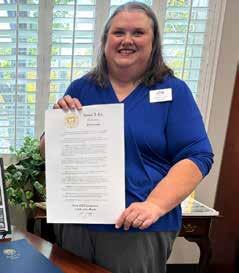
Utah PTA President Julie Cluff holds the proclamation signed by Gov. Spencer J. Cox has declaring October 2025 as Utah PTA Centennial Celebration Month. (Julie Slama/City Journals)
Displays showcased the advocacy and history of Utah’s PTA during its centennial celebration. (Julie Slama/City Journals)
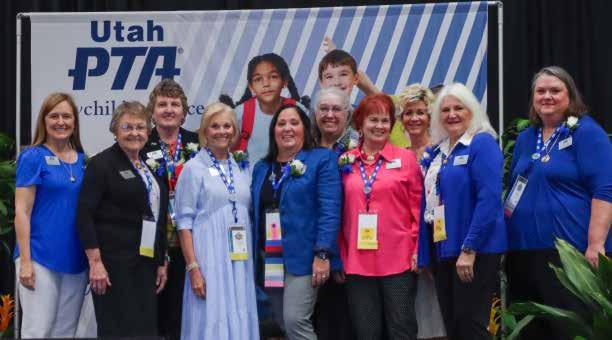
Current and past Utah PTA presidents pose for a recent photo. (Photo courtesy of Utah PTA)
Elevating hot chocolate to a culinary craft
Local shops create their own spin on a classic favorite.
By Peri Kinder peri.k@thecityjournals.com
InUtah, hot chocolate season starts in September and doesn’t end until the daffodils bloom. Next to dirty Dr. Pepper, hot chocolate could be the state beverage.
Thanks to its popularity, gourmet hot chocolate is easy to find in local shops that offer myriad recipes for the chocolate gourmand. Here are some spots to get you through the winter months.
Black Bow Chocolates, 13 W. Center Street, Kaysville
Jessica Sunderland’s award-winning chocolates are the first reason to stop by this cozy shop in Davis County. With recipes handed down from her grandmother, Sunderland creates hand-dipped chocolates in flavors like coconut cream and cherry cordial. But the Black Bow Hot Cocoa is a treat you don’t want to miss.
“We use the best cocoa and dipping chocolate, plus the finest cream, sugar and milk,” she said. “I would say our hot chocolate is somewhere between sipping chocolate and a normal hot chocolate.”
Customers can add flavors to their hot cocoa for a personalized taste and finish it off with made-from-scratch cream flavored with Mexican vanilla. The shop also offers a


non-coffee drink, a Choffy, made from brewed cacao beans. To learn more, visit BlackBowChocolates.com.
Sir Walter Candy Co., 3828 S. Main Street, South Salt Lake
This candy store is a chocolate-lover’s dream. The family-operated business features hand-dipped chocolates, popcorns, brittles and more, but its Frozen Hot Chocolate offers a unique flavor and crunchy chocolate shell.
Customers choose between Belgian milk, dark or white chocolate, which is run through a slushie machine. Then they select a flavor of chocolate to line the cup. The chocolate slushie is poured into the cup, which freezes the chocolate lining. Once broken up, the chocolate adds a nice crunch.
Sir Walter Candy Co. Frozen Hot Chocolate is popular year-round. For traditionalists, a regular hot chocolate is available, made with melted Belgian chocolate. Visit SirWalterCandy.com for more information.
“You come here for the experience because it’s more than just a treat,” said Amir Porras, son of the founders and vice president of the Sir Walter Candy Co. “There’s a nostalgic feel, like if your grandma made candy during the holidays. It’s a great place to come and have a good treat.”
Hatch Family Chocolates, 376 E. 8th Ave., Salt Lake City
The Decadent Hot Chocolate at Hatch Family Chocolates is reminiscent of sitting in an outdoor European cafe. With a taste de-

Chocolate comes with luscious chocolate, whipped cream and glitter.
“Our hot cocoa is not just hot cocoa,” said Janet Wall, Sacred Energy owner. “We make it with a rich chocolate syrup, no powders, and a sprinkling of pink and lavender glitter for a magical experience. It’s so delicious and creamy.”
Sacred Energy’s heated patio is the perfect place to enjoy a hot chocolate as the temperatures drop or sip a Divine Decadence Latte (with white chocolate and pistachio) and wander the store that features crystals in all sizes and colors. To see Sacred Energy’s menu, visit SacredEnergySLC.com
Tulie Bakery, 1510 S. 1500 East and 863 E. 700 South, Salt Lake City
scribed as “drinking melted chocolate,” the signature beverage is made to be enjoyed slowly.
The drink is mixed with either milk or dark chocolate (or a combination of the two), combined with steamed milk (dairy, almond, coconut, oat or soy) and topped with housemade whipped cream.
Hatch Family Chocolates is a local favorite, specializing in hand-dipped chocolates, hot fudge, toffee and more. For information, visit HatchFamilyChocolates.com.
Sacred Energy Crystals, Coffee & Cafe, 296 E. 4500 South, Murray
If you like your hot chocolate accompanied by crystals and tarot cards, Sacred Energy is a must-stop shop. The cafe’s Fairy Hot
Hot chocolate and pastries go hand-inhand at Tulie Bakery, featuring classic items made with high-quality ingredients.
After a day of shopping or skiing, a cup of hot chocolate is a rich reminder to enjoy the simple pleasures of life. Steamed and frothed milk is whisked into a cup of melted chocolate and topped with cream and chocolate shavings. The result is a delicious confection that calls for a fireplace and a good book.
The bakery has gained popularity as customers are drawn to its modest storefront and delicious bakery items (including gluten-free options). Tulie Bakery serves sustainably-sourced coffee, sandwiches, breakfast items, cakes and cookies. Visit TulieBakery.com to learn more. l





The Sir Walter Candy Co. in South Salt Lake features both hot and frozen chocolate beverages year-round. (Photo courtesy of Sir Walter Candy Co.)
After-school programs honored at Granite District celebration
There are 11 sites within the Granite School District where students can enroll and participate in after-school programs.
By Tom Haraldsen t.haraldsen@mycityjournals.com
Each year, more than 900 students and their families are served by the Salt Lake County Youth Services after-school program within the Granite School District. On Oct. 23, a celebration of the program was held at Matheson Junior High School, one of 11 sites within the District running after-school programs where students can enroll to be part of the program.
“Providing safe places for youth to gather after school is crucial to their health and well-being,” said Salt Lake County Mayor Jenny Wilson. “In addition to building confidence in youth, these programs strengthen our neighborhoods, support working families, and contribute to community resiliency.”
She said the Lights On After-school Celebration helped highlight the importance of continued investment in after-school programs. At Matheson, booths were set up in the lobby outside the school auditorium showcasing various services and community partners who are part of the program.
The Matheson program is housed in a former Church of Jesus Christ of Latter-day Saints’ Seminary building adjacent to the campus. The building has several different “sections” where students can spend time, including a games room, library-type reading area, a Grub Hub for snacks provided by the Utah Food Bank, a classroom area with desks where they can finish homework or other projects, and the Zen Den, a room where they can sit in quiet and/or meditate. The entire facility is brightly


decorated and inviting.
Salt Lake County Associate Deputy Mayor Katherine Fife spoke to the audience, saying she got to see the benefits of the program “by having my son enrolled when he was younger. Everyone who runs and works and dedicates their careers to after-school programs is experiencing an opportunity that stays with you for life—investing in the future for our youngsters. I also want to pay tribute to all the parents who are here for participating and having your children enroll in such enriching activities. And for you kids, I hope you know how lucky you are to have the opportunity to be part of these activities every day. You’re probably going to think back on this in about 10 years and realize it was the coolest thing.”
She said the programs are vitally important and “I am honored to be here to celebrate it. Our partnership from the county with the Granite School District is so important to us. The
difference these programs make in our lives is so incredibly important.”
“These programs provide peace of mind to parents, knowing their children are in a safe, structured, and supportive academic environment during out-of-school hours,” said Danielle Latta, after-school program manager with Salt Lake County Youth Services.
Following a tour of the facility, families enjoyed a dinner as well as visits to the resource booths showcased at the school.
“Thanks to our nearly 20-year partnership with Granite School District, high-quality after-school programs…have served approximately 18,000 Salt Lake County youth and families,” Mayor Wilson said. “We look forward to serving thousands more in the years to come.” l


A games room, reading area and classroom are among the special sections set aside for the program. (Tom Haraldsen/City Journals)
The Zen Den allows students to sit quietly or meditate while at the Matheson after-school facility next to the regular junior high. (Tom Haraldsen/City Journals)
A $7-a-month question: Should Salt Lake County raise property taxes?
Salt Lake County’s proposed 2026 budget includes a 19.6% property tax adjustment—about $7 a month for the average homeowner—to maintain essential services and fund public safety.
By Shaun Delliskave s.delliskave@mycityjournals.com
Salt Lake County Mayor Jenny Wilson says the County’s first tax adjustment since 2019 is needed to keep up with inflation and rising service demands. Voters will get their say Dec. 9 at a Truth-inTaxation hearing.
According to Mayor Wilson, Salt Lake County’s property-tax rate has effectively declined for 15 years due to Utah’s Truth-in-Taxation law, which automatically reduces the certified rate as property values rise—keeping overall County revenue roughly flat unless leaders formally vote for an increase. While this prevents hidden tax hikes, it also means County revenues haven’t kept pace with inflation, population growth, or the rising costs of public safety and health services. Over that same 15-year period, inflation has eroded nearly 30% of the County’s purchasing power, even as average home values have soared from roughly $250,000 in 2010 to about $638,000 today.
The mayor’s proposed 19.63% adjustment would restore part of that lost ground, adding about $7.28 per month—or roughly $90 per year—for the average homeowner. Importantly, the increase affects only the County’s portion of the total property-tax bill—about 17%—with the remainder going to cities, school districts and service districts such as fire, water and sewer. In practical terms, the proposal adjusts just the County’s “slice” of the tax pie, not the full amount residents pay each year.
“Salt Lake County is a community that addresses vital needs, invests in parks and open spaces, enriches our lives through arts and culture, and protects public safety,” Wilson said in her October newsletter.
“After years of tightening budgets and absorbing inflation, this adjustment is needed to sustain essential services and maintain a balanced budget.”
Where the money would go
Wilson emphasized that public safety consumes about 74% of the County’s general fund, supporting the sheriff’s office, the County Jail, the District Attorney and indigent defense. The increase, she said, would also preserve regional programs such as flood control, Meals on Wheels and public health initiatives.
The proposed budget also expands evidence-based alternatives to incarceration, such as mental-health treatment, early-intervention programs and community supervision—efforts the mayor says “make communities safer and stronger.”
Public input and the road to approval
The Salt Lake County Council is now reviewing Wilson’s proposal through a series of public meetings. The Council will vote on a preliminary budget Nov. 25, followed by a Truth-in-Taxation hearing on Dec. 9 at 6 p.m. at the Salt Lake County Government Center, 2001 S. State St. in Salt Lake City.
Residents can attend in person or submit comments online before the Council votes on the final budget later that evening. Utah’s Truth-in-Taxation law requires local governments to hold such a public hearing whenever they propose collecting more property-tax revenue than the previous year.
Public safety remains the flash point
The proposal comes one year after Salt Lake County voters rejected a $507-million public-safety bond that would have raised property taxes to expand jail capacity and build a new justice center. Roughly 52% of voters opposed the bond, citing confusion about its scope and overall costs. After the defeat, the County shifted to a smaller 0.2% sales-tax increase earlier this year to fund limited jail-expansion efforts.
That rejection still looms large in the background of this year’s debate. Coun-


ty officials argue that while voters turned down the bond, the need for additional funding to maintain core public-safety operations remains.
Part of a statewide trend
Salt Lake County isn’t alone in revisiting property taxes. Across Utah, 59 cities, school districts and local entities have held or scheduled Truth-in-Taxation hearings this year—many citing inflation and unfunded state mandates. Neighboring counties such as Davis and Utah counties have also warned that they may consider rate adjustments next year to offset rising costs.
At the same time, the Utah State Tax Commission recently denied 35 requests for property-tax increases statewide, amounting to nearly $50 million in rejected revenue proposals—underscoring both the legal and political hurdles facing local governments seeking more funds.
Supporters of Wilson’s plan argue that the County’s budget has reached a breaking point. “Public safety, public health and regional services simply can’t keep running on 2019 dollars,” one budget analyst said. Critics counter that government should “tighten its belt” before asking residents for more, particularly as homeowners already face higher housing costs and assessments.
Residents who want to weigh in can find full budget details and a comment link at slco.to/rate. l

Graphic on proposed tax increase on the impact on a




$638,000 home. (Shaun Delliskave/City Journals)
West Valley City looking at the Ridge Golf Club as part of survey
The city is conducting a study of the property where the Ridge Golf Club sits in West Valley City.
By Tom Haraldsen t.haraldsen@mycityjournals.com
What’s the future of the Ridge Golf Club in West Valley City? Residents have been pondering that question since word got out that the city is looking at an assessment of the course. But not to worry….it doesn’t mean the club is looking at being sold.
“Not even on the radar,” said West Valley City Director of Communications Sam Johnson. “We’re doing an ALTA survey which is more or less an appraisal of the property.” He said the study will look at boundaries of the course, its infrastructure, access points and other facets of the course, which spans over 200 acres both east and west of Mountain View Corridor and borders on 5600 West.
The course, which opened in 1991 and then went through a significant remodel when Mountain View was completed, is one of two the city operates. The other one is Stonebridge Golf Club that opened in 1999 and was designed in part by PGA golfer

Johnny Miller.
Johnson said the study is more or less like a routine check-up. As West Valley City continues to expand, officials like to know valuations of their properties as they look at future growth patterns.
Though the subject has not been addressed by city council or been put on a future agenda, Johnson said any discussion about the golf course would be done in part




at a public meeting.
In addition to the course itself, the clubhouse is used frequently for wedding receptions, parties and banquets. Its snack bar features panoramic views of the Wasatch Mountains and the course borders the Utah First Credit Union Amphitheatre. It’s not uncommon to hear music from Utah First Amp while playing golf on summer evenings.
The course also boasts about using reclaimed water for irrigation, water that is stored in a holding pond before it evaporates.
Senior golfers and men’s association members use the course regularly each year. Statistics from the Utah Golf Association show the Ridge is among the top courses in Utah for rounds played each year.
Results of the study were expected to be completed by the end of November. l




The Ridge Golf Club in West Valley City is part of a study being conducted on land valuations. (Tom Haraldsen/City Journals)
Certain activity centers to close as Salt Lake County defunds four childcare centers
Dozens of parents spoke at the council’s meeting to speak against the county childcare centers closing.
By Alexandra Straumann a.straumann@mycityjournals.com
Across the country, parents are struggling to find affordable options for child care. It is estimated that the daycare inflation rate is approximately 1.5 times greater than the overall inflation rate, putting extra stress on families and forcing some parents to choose between their careers and financial security.
Government subsidized childcare centers are one remedy to this crisis, yet despite this, the Salt Lake County Council has been in a contentious debate over whether or not to close four county subsidized childcare centers.
The centers are located in Millcreek, Magna, Kearns and Fairpark and combined serve 271 Salt Lake County families. The Millcreek Activity Center provides care for students in preschool, pre-kindergarten, and before- and after-school care for kids aged 6-12, with costs ranging from $225-$460 a month. A consulting firm hired by Salt Lake County determined these costs are approximately half of what other equivalent programs around Salt Lake County charge, a stark reminder of the seriousness of the crisis facing working families trying to survive.
The initial vote to close the care centers occurred Oct. 28 with the council splitting 5-4 down party lines, with Republicans in favor of ceasing their operations. The Republican majority argued that the cost of operation is not worth keeping the centers open, and that funding them with county money is unfair to residents who pay taxes and don’t use the centers.
Dozens of concerned residents from across Salt Lake County attended a Nov. 4 council meeting to speak to the councilmembers about their concerns with the closure. During public comment, a Millcreek mother that attended the meeting with her daughter said, “the Center is not just a place where my kids spend time after school, it is a lifeline that makes our days possible.” Another Millcreek mother spoke to the council, stating that since her son started participating in the two-year-old class at the Activity Center, he has shown immense developmental improvement that would not be possible without the center and its staff.
Other parents voiced similar concerns, with some women pointing out the disproportionate impact increased childcare costs have on women’s ability to participate in the workforce. According to the Bureau of Labor Statistics, 212,000 women have left the workforce since January 2025 (as of August 2025), with many women citing childcare difficulties as the primary reason for doing so. There were also many parents and concerned residents in attendance questioning why there wasn’t an opportunity to consider raising costs or scaling back certain elements of the program as opposed to cutting it all together.
Millcreek Councilmember Sylvia Catten was present at the meeting and addressed the council about their decision during public comment. Catten represents District 1

where the Millcreek Activity Center is located and said to the council, “Millcreek is a home to a really diverse population. We have a big socioeconomic spectrum in our city, most of which is filled by middle class families....This is going to hurt middle class families the most.”
This feels like a war on families, a war on women, a war on working mothers. We know for a fact that this will impact mothers and women.
Natalie Pinkney
She went on to explain that Millcreek’s City councilmembers pride themselves on developing creative solutions to problems and suggested that a collaborative process with the Millcreek Council could have been used to derive a plan to upkeep the activity center. Catten mentioned the Promise Program as one potential avenue, as the Promise Program is a collaboration with United Way of Salt Lake that works to provide resources and support to Millcreek families.
Salt Lake County Councilmember Aimee Winder Newton asked members of the public present to consider
that 1.2 million people would be funding the facilities for these families, but not all of them are using the resource. “To take their [Salt Lake County residents who don’t use the facilities] tax money to subsidize 271 kids, doesn’t seem equitable,” to which she was met with outcries of disagreement from the audience. After the audience was asked to be quiet, Newton emphasized that this was a difficult choice and thanked the public for making their voices heard.
At-large Salt Lake County Councilmember Natalie Pinkney spoke strongly in support of keeping the daycare centers open and recognized the closure’s real-world impact on working families. “This feels like a war on families, a war on women, a war on working mothers. We know for a fact that this will impact mothers and women. We already have statistics about how many women are being pushed out of the workforce...and I want every single one of you to know we will keep fighting for you, keep fighting for your families, because in Utah we care about families.”
Other members of the council expressed a similar desire to keep the centers open, and an emergency meeting was called for Nov. 10 to vote on whether or not to extend the day care centers through May 2026. The council voted 5-3 to extend the closure of the daycare centers through May 31, 2026, with costs for families increasing 20% beginning in January.
While this is a win for families for now, it isn’t the end of the road. The centers are still scheduled to close on May 31, 2026, and the council will decide their final budget for 2026 in December, which will ultimately determine whether or not these facilities continue to operate. l
Salt Lake County councilmembers at the Nov. 4 meeting after public comment. (Photo credit Salt Lake County Council video)
New sidewalk near Jordan River Trail to help with safety

South Salt Lake City and Salt Lake County are partnering to build a new, safer sidewalk connecting the Jordan River Trail to 3300 South, addressing recent safety concerns.
By Linda Petersen l.petersen@mycityjournals.com
South Salt Lake City and Salt Lake are teaming up to increase safety and accessibility for users of the Jordan River Trail. The two entities are planning to construct a new section of sidewalk connecting the popular trail directly to 3300 South.
This project is being undertaken in response to reports of safety concerns near the current connection point, particularly surrounding a dark bridge.
“There have been some reports of safety issues on the Jordan River Trail where it meets 3300 South,” Planner Carl Osterberg told the city council on Oct. 29. “There’s a dark bridge there that has been reported to have a quite unsafe feeling.”
“There were even a couple of assaults there where residents or victims did not have a place to go,” he added.
To address these concerns, the city and county jointly applied for and received a




grant through the Utah Division of Natural Resources. The total project cost is estimated at $49,666. The grant will cover the majority of the expense, but South Salt Lake City is responsible for a $10,000 local match to activate the funding.
“We need to pay that local match to get this connection built,” Osterberg said. “All we need is to transfer our match to the county.”
The project involves moving a fence into Tracy Aviary’s property to create a wider, safer path.
“The goal is to make a wider path that would more safely connect somebody to 3300 South,” Osterberg said. “It’s just another access point that users of the trail can get on and feel safe and comfortable.”
Construction is anticipated to begin next spring or summer, following the finalization of an interlocal agreement between the two government bodies. The county will oversee the project, including hiring and paying the contractor.
South Salt Lake City staff are excited about the project.
“There’s a lot of coordination between different city departments. Fire is excited to get this extra connection. Police are excited to have a safer spot,” Osterberg said, saying the project will benefit the whole community. l




A new section of the Jordan River Trail (seen here in West Valley City), will see a sidewalk built. (File photo City Journals)
Council works to provide taxpayers best value during budget process resulting in tough cuts
In the 12 years I’ve been on the Salt Lake County Council, this was the most intense budget season I’ve ever encountered. It began when Salt Lake County Mayor Jenny Wilson proposed a 19.6% property tax increase. As we see the economy softening, some of us on the council vowed to dig in, realign the county spending with top priorities, and find ways to be more efficient and effective with your tax dollars so we could lower that property tax ask. I’ve since learned that while it may feel good to give people government perks, it is sure painful when it’s time to take them away.
I’ll start with daycare. It’s a big issue throughout the state and while there are fewer daycare waiting lists in Salt Lake County, it’s still unaffordable for many families. Somehow Salt Lake County has been subsidizing four daycares to the tune of $6000-$10,000 per child. That means that property taxpayers, like you, are paying half the tuition for about 271 kids.
I had many people contact me and say they were fine with their tax dollars to go to low-income families, but this program had no income qualifications. We certainly had many families who were making more than
Aimee Winder Newton
Salt Lake County Councilmember District 3

the median household income, yet they were being subsidized by those on low or fixed incomes. We made the decision to get out of the daycare business.
Another tough decision was related to a senior center. We voted to close a senior center on 10th East in SLC that is currently vacant and only 1.8 miles away from another senior center. Not every city has a senior center, so to have two so close did not make sense. It saves taxpayers $6-7 million in one-time costs and $400,000 in ongoing costs each year. The empty building was in the process of being renovated and the $3 million funds spent thus far to remove asbestos would’ve needed to happen regardless of the use.




We hope those who love the 10th East Senior Center will be able to continue attending activities at the Liberty Senior Center, as I’m a big believer in the value of the human connection that seniors can get by interacting with others. We love all of our seniors, and this decision was made recognizing that we have many on fixed incomes who feel that the more we rein in government spending, the better. Our taxpayers have made it clear that they are stretched to the limit and the county needs to focus on core services.
Budgets are tricky and Salt Lake County has one of the most complicated budgets. While the overall budget is $2 billion, $500 million of that is just pass-through taxes that go from the state to cities or UTA. Another $1 billion make up restricted funds, enterprise funds, and tourism taxes – which can only fund certain things or those that are tourist-related. Have you ever wondered why we justify spending money on arts, culture, parks, golf, recreation, and convention centers? Those entire budgets either generate their own revenue sources or they use tourism taxes from hotels, car
rentals and restaurants. They do not use any property tax.
About $500 million of the budget is the General Fund. That is where we have total flexibility to use the funds however we please. This is where your property taxes go -- $220 million from residential property taxes. Currently 74% of our General Fund expenditures are public safety related – jail, prosecution, criminal justice services, etc. The rest covers things like elections, audits, etc. Because we capture the same amount of money as the previous year (minus new construction), the county does tax increases every few years just to keep up with inflation. To read my FAQs about the budget, visit tinyurl.com/SLCObudget
During this year’s budget I’ve tried hard to look at programs that are out of the county’s scope (daycare) or items that seem duplicative or unnecessary (two senior centers within 2 miles of each other). We’ve also cut positions that aren’t fulfilling the county’s overall mission or that we don’t believe are necessary. Rest assured that we are going to bat for you so you can keep more of your hard-earned money.




Life & Laughter - A Christmas Carol: Corporate Edition
Ebeneezer Scrooge sits on the edge of his vast four-poster bed, wondering what the heck just happened. Three ghosts have shown him his greedy behavior and how, because of his miserly ways, he’ll die hated and alone.
“Oh, well,” he says, as he jumps off the bed and heads to his vault, where he swims through stacks of gold coins like Scrooge McDuck. “It’s not my fault there are poor people.”
Jacob Marley’s ghost hovers nearby, rattling his heavy chains. “Remorse is a heavy burden,” he cries. Scrooge tells him to get lost and skips downstairs to count his money.
The jolly Ghost of Christmas Present jumps out from behind the couch, reminding Scrooge of the two ghastly children hidden in his robes, representing poverty and ignorance. “You have so much,” the ghost says. “You could help so many.”
“They should get jobs,” Scrooge replies. “It’s not my problem.”
The spirit starts to disagree, but Scrooge calls in officers from Interstellar Creature Enforcement to haul the ghost away. Christmas Present mutters something about corporate greed as he gets zip-tied.
Scrooge runs to the window and sees a young boy on the street below. “Hello, fine
Peri Kinder Life and Laughter

fellow! Run to the Cratchit house and tell Bob to come to work. I gave him the day off, but there are debts to collect!”
“But it’s Christmas,” the boy responds.
“Humbug! Christmas is just an excuse for sloth. Remind him that although I didn’t give him a raise or bonus this year, I put a ping-pong table in the break room and, because it’s Christmas, he can use the Keurig one time today. He should be grateful.”
The Ghost of Christmas Past taps Scrooge on the shoulder. “Old Fezziwig shared his wealth with employees and friends. He was greatly mourned.”
“Well, Fezziwig is dead,” Scrooge says. “Where did compassion get him?”
He dismisses the spirit, then calls his maid to bring him weak tea (“I’m not wasting money on sugar!”), plain, toasted bread (“Jam is a luxury!”) and a hard-boiled egg (because it is Christmas, after all).
Scrooge slurps his tea, the sound echoing through the cavernous room as the grandfather clock ticks away the final moments of his miserly life.
Meanwhile, across the city, Bob Cratchit and his family wake up to a vast display of gifts and food. Knowing exactly how stingy Scrooge would be, friends and neighbors quietly pooled their money to create the perfect Christmas morning for the family.
The Cratchit children are awed by the generosity. Peter eagerly opens the latest Dickens novel, Martha admires her fashionable scarf and the baby toddles around with a new doll.
Neighbors even started a GoFundMe for Tiny Tim so he could see a doctor and the town carpenter made him a new crutch. The home is filled with laughter and friendship as everyone roasts Ebeneezer Scrooge with Victorian cocktails. Even the dog gets tipsy.
While Scrooge and Cratchit live just miles apart, their life experiences are vastly different. Although poor, the Cratchits love each other and are cared for by the people around them. Communities take care of each other.
It’s something Scrooge will never understand. All his wealth won’t save him.
He sees the Ghost of Christmas Yet to
Come dramatically using his bony finger to beckon Scrooge to follow. Time’s up.
“Fine,” Scrooge says, “but I’m taking my egg. Eggs are expensive, you know.”
Marley moans from the hall, “Mankind was your business.”
“Gold was my business!” Scrooge yells as he stomps after the ghost, wishing he could roll around in his money just one more time.