

Project Elf brings holiday magic to children
By Peri Kinder | peri.k@thecityjournals.com
Organizersof Project Elf believe every child deserves a Christmas. The Christmas Box International has run the program for nearly 30 years, providing Christmas gifts to children and young adults in Utah’s foster care program.
The Christmas Box International Executive Director, Celeste Edmunds, understands the importance of the holiday because she was once part of the state’s foster system.
“When you’re in the system, like I was, you are constantly given borrowed or used items,” Edmunds said. “You never get your own new things, and there’s no way to have your own sense of dignity.
“So for us, it’s about dignity and respect and helping kids understand that they have the same worth as any other child. Their circumstances look different, what they’re navigating looks different, but there’s no difference in the ability to have the right to be respected and loved any differently than any other child.”
Project Elf asks donors to provide holiday presents and gift cards or make a financial donation to ensure children in foster care receive new clothes and toys for Christmas. Edmunds said it’s a way to remind children what childhood is supposed to look like.
The greatest request for Project Elf is $25 Walmart gift cards, which are given to teens in the program so they can purchase their own personal items. All donated gifts should be new and unwrapped so parents working with the Division of Child and Family Services can have the experience of wrapping gifts themselves.
“For the kiddos that come into the shel-

ter, we will identify them as needing Christmas no matter where they are,” Edmunds said. “So they’re either in the shelter, and then we wrap all our gifts to give to them at Christmas, or they’re going to be placed somewhere, and we send the gifts to the family, so the family can wrap them and celebrate in the way that their family celebrates.”
Each year, The Christmas Box International serves 14,000 children and young adults, providing an emergency shelter for children escaping abuse and teens transitioning out of the
foster care system.
Edmunds said programs like Project Elf remind these children and teens that the community is here for them and wants them to feel loved.
“There’s a way for everybody to be involved that works for them. There’s a need, obviously, and the need is to give 3,000 children and young adults a Christmas,” she said. “There are individuals, corporations, church groups, neighborhoods and families who are willing to help. With Project Elf, there’s a way for them to give that makes sense.”
Donations for Project Elf will be accepted through Friday, Dec. 19, at the Christmas Box Donation Center at 1415 S. 700 West in Salt Lake City, or through Tuesday, Dec. 23, at the two Christmas Box House locations: 3660 S. West Temple in Salt Lake City and 950 E. 12th Street in Ogden.
Those who would like to organize a Project Elf Donation Drive can also find information at Thechristmasbox.org/project-elf, along with gift ideas, the Amazon Project Elf Wishlist and Venmo information. l


Donations to Project ELF help thousands of children, teens and young adults in Utah’s foster care system enjoy new presents on Christmas morning. (Adobe Stock)
















South Salt Lake shifts its mobility focus
City leaders move forward with major updates to their 10-year mobility plan, focusing on quickbuild infrastructure and new amenities.
By Linda Petersen l.petersen@mycityjournals.com
City leaders are rethinking aspects of the city’s mobility plan based on input provided by residents at community events and in a city survey. The proposed changes update the city’s 10-year plan, which is currently about halfway through its intended lifespan.
Mobility Planner Carl Osterberg outlined the proposed changes at an Oct. 15 city council work session.
“We got actually a lot of feedback from residents, some of them in person, some of it at a survey that went out,” Osterberg said. These updates were based on a combination of public feedback and input from other city departments.
Among the new concepts proposed is a comfortable walking loop in downtown South Salt Lake. This would serve a recreational need for the growing number of residents and visitors, especially since the city currently lacks sufficient property to create a traditional park space downtown.
“I think a lot of people are getting excited about Salt Lake City’s Green Loop and want to see something similar to that in our area,” Osterberg said.
This walking loop would also be a backbone of the multimodal transportation system, connecting important locations such as State Street, transit stations, housing and other commercial areas, according to the plan.
The plan suggests that the city could also maximize where residents can travel comfortably by utilizing quickbuild solutions—such as traffic paint, flexible plastic posts and planter boxes—rather than focusing resources on a few major thoroughfares.
“We got a lot of feedback that improving the amount of facilities that we have, the places people can go, is more important than having a couple really great thoroughfares that don’t go everywhere necessarily,” Osterberg said.
The plan continues to emphasize the need for safe and comfortable east-west connections. Currently, the only continuous east-west street through the center of the city is 3300 South.

SOUTH SALT LAKE TEAM
The South Salt Lake Journal is a monthly publication distributed directly to residents via the USPS as well as locations throughout South Salt Lake.
For information about distribution please email hello@thecityjournals.com or call our offices. Rack locations are also available on our website. The views and opinions expressed in display advertisements do not necessarily reflect or represent the views and opinions held by Loyal Perch Media or the City Journals. This publication may not be reproduced in whole or in part without the express written consent of the owner. © 2019 Loyal Perch Media, Inc.

This table indicates current and future projects proposed in South Salt Lake to help make the city more navigable for residents. (Image courtesy of South Salt Lake City)
While Parley’s Trail provides a safe corridor on the city’s north end, the updated plan notes that, beyond that, “no safe, continuous connections exist across town.”
To address this, the plan has designated several projects as high priority:
Central Pointe TRAX Station Expansion: Improving the area to make the station accessible from the east side of the tracks.
Mill Creek Trail: Creating a safe, comfortable trail that runs along Mill Creek from the Jordan River to 700 East.
SOUTHJORDAN JOURNAL.COM
PUBLISHER
Bryan Scott | bryan.s@thecityjournals.com
EDITOR
Travis Barton | travis.b@thecityjournals.com
ADVERTISING EXECUTIVES
Mieka Sawatzki | mieka.s@thecityjournals.com
Marc Davis | marc.d@thecityjournals.com
Ryan Casper | ryan.c@thecityjournals.com
Gregson Avenue Neighborhood Byway: Establishing a quieter, safer route along Gregson Avenue.
State Street Crossing Safety: Implementing a safer crossing of State Street near Woodrow Wilson Elementary.
Complete Street in downtown SSL: Developing a continuous “complete street” from 300 West to State Street in the city’s downtown area.
The proposed changes will be presented to the planning commission in the coming months before returning to the city council for final approval, Osterberg said. l
CIRCULATION COORDINATOR
Lydia Rice | lydia.r@thecityjournals.com 385-557-1022
Rack locations are also available on our website.
EDITORIAL & AD DESIGN
Stacey LaMont
Ty Gorton
SOUTH SALT LAKE CITY JOURNAL 9500 South 500 West, Suite 205 Sandy, UT 84070 PHONE: 801-254-5974
MISSION STATEMENT
Our mission is to inform and entertain our community while promoting a strong local economy via relevant content presented across a synergetic network of print and digital media.
PUBLISHER
Designed, Published, & Distributed by





City council greenlights Meadowbrook and Millcreek Station Area Plan
Plan complies with a state law requiring cities to increase accessible and affordable housing options within a half-mile of transit stations.
By Linda Petersen l.petersen@mycityjournals.com
OnOct. 29, the city council approved the Meadowbrook and Millcreek Station Area Plan. This was part of the city’s efforts to comply with a 2022 state law which requires any municipality that has a fixed transit station to complete a station area plan for the area within a half mile of that station to encourage an increase in accessible and affordable housing options along major transit corridors.
This is the third of four plans the city needed to approve before year’s end; Central Pointe and South Salt Lake Streetcar stations already got their approval. The final one is the downtown connect plan.
Senior Planner Spencer Cawley and consultant Chris Geddes of Design Workshop presented the plan to city officials before the vote.
“There’s a really good opportunity in these locations for station area planning, in particularly because these are two of the most culturally and economically diverse neighborhoods in the city,” Geddes said. “We’ve got historically industrial land uses, some older single-family neighborhoods, but you’re seeing a lot of new infill, higher density infill, residential development happening along the I-15 corridor and specifically related to both of these.”
Since the half-mile zones of Meadowbrook and Millcreek overlap, they were studied together, which Geddes noted “really makes sense to make sure that we’re considering those stations holistically when they do have very similar geographies.”
Another commonality is that the Millcreek and Meadowbrook areas represent some of the most culturally and economically diverse neighborhoods along the Wasatch Front.
The study area stretches roughly from Millcreek to Big Cottonwood Canyon and from 500 West to 200 East, mixing residential, commercial and industrial spots. The plan sees these areas as prime spots—”catalytic nodes for growth”—that should become lively, walkable centers based around transit. The existing mix of people and businesses creates a “good opportunity in these locations for station area planning…because these are two of the most culturally and economically diverse neighborhoods in the city,” Geddes said.
The main goals of the plan are to figure out the economic potential for mixed-use, transit-friendly communities, focus on “catalytic” projects to kick-start change, increase housing availability and affordability for everyone, improve safety, offer more transportation options and promote sustainable conditions.

Since March, the consultants have gathered input from the community through workshops, open houses, pop-ups and an online survey. People repeatedly stressed that improved safety and security is a must. Respondents also asked for better access to shops and grocery stores. “A lot of talk about food desert in these areas,” the consultant noted, pointing out the need to bring in local, neighborhood-serving businesses.
Residents also want more ways to connect for walkers and bikers, safer places to stroll, more green space, trees and traffic calming features added at 3300 South and 3900 South.
Millcreek Station Area Plan
This plan aims to turn currently underutilized industrial land into a residential and community hub complete with services and retail. The main focus is a high-density residential area near Washington Street and 3300 South, which could offer varied and affordable housing in bigger buildings. South of 3300 South, a mix of townhomes and apartments is planned.
A new plaza next to Millcreek Station would be a flexible gathering spot, connected to new development by a pedestrian crossing. The plan makes West Temple a major northsouth path for walking and biking, while a redesigned 3300 South would feature neighborhood retail and a linear park for green space. Parks and plazas would also be tucked into
South Salt Lake City adjusts municipal fees
South Salt Lake City is updating its municipal fee schedule, raising charges for banking penalties, certain general services and solid waste and recycling fees.
By Linda Petersen l.petersen@mycityjournals.com
TheSouth Salt Lake City Municipal Code’s consolidated fee schedule is undergoing modifications with increases to several general and utility-related charges. The changes involve updates to banking-related penalties, solid waste disposal charges and recycling fees.
Several general fees have been adjusted, to bring what the city’s charges in line with the fees the city itself incurs, city officials say. These are:
Additional waste container (waste or recycling) has been increased from $14 to $14.29/month per additional can.
New can delivery fee/redelivery fee after nonpayment has been increased from $25 to $50 per trip.
Glass recycling fee has been increased from $8 to $8.25 per customer per month.
The late payment fee has been updated from a flat $10 fee to a charge of 1.5% of the overdue amount.
the center of blocks for community use.
Proposed improvements include finishing the sidewalk network, better bike connections (especially north-south), and enhancing east-west links by extending Granite Avenue and creating a multiuse trail along Mill Creek.
Meadowbrook Station Area Plan
This plan begins by focusing on upgrades to West Temple and quickly redeveloping the UTA-owned parcel next to the station. UTA has already shown interest, Geddes said.
Later investments include upgrading 3900 South to be better for walking and transit, and creating a green buffer along the TRAX line. The long-term vision centers on turning the former Salt Lake Community College site into a recreation center. This is expected to be a major catalyst, “bringing new activity to the area, while providing access to health, services and community gathering,” according to Geddes. The plan also includes building a new pedestrian bridge over the TRAX line to connect both sides of the rail to the new facilities.
Geddes also suggested the city seek Housing and Transit Reinvestment Zone funding from the Wasatch Front Regional Council to help pay for many of these proposed upgrades.
The council’s final vote in the regular meeting was unanimous approval for the plans. l
Insufficient/Closed Account Charge has been increased from $14 to $15.
Customer Stop Payment Charge has been increased from $29 to $31.
City officials say that these adjustments are necessary to reflect current costs and maintain a fair and cohesive municipal services financial structure. l

South Salt Lake is adjusting fee schedules like charges for banking penalties and recycling. (File photo City Journals)
On Oct. 29, the city council approved the Meadowbrook and Millcreek Station Area Plan. (Photo courtesy South Salt Lake)
New sidewalk near Jordan River Trail to help with safety

South Salt Lake City and Salt Lake County are partnering to build a new, safer sidewalk connecting the Jordan River Trail to 3300 South, addressing recent safety concerns.
By Linda Petersen l.petersen@mycityjournals.com
SouthSalt Lake City and Salt Lake are teaming up to increase safety and accessibility for users of the Jordan River Trail. The two entities are planning to construct a new section of sidewalk connecting the popular trail directly to 3300 South.
This project is being undertaken in response to reports of safety concerns near the current connection point, particularly surrounding a dark bridge.
“There have been some reports of safety issues on the Jordan River Trail where it meets 3300 South,” Planner Carl Osterberg told the city council on Oct. 29. “There’s a dark bridge there that has been reported to have a quite unsafe feeling.”
“There were even a couple of assaults there where residents or victims did not have a place to go,” he added.
To address these concerns, the city and county jointly applied for and received a
grant through the Utah Division of Natural Resources. The total project cost is estimated at $49,666. The grant will cover the majority of the expense, but South Salt Lake City is responsible for a $10,000 local match to activate the funding.
“We need to pay that local match to get this connection built,” Osterberg said. “All we need is to transfer our match to the county.”
The project involves moving a fence into Tracy Aviary’s property to create a wider, safer path.
“The goal is to make a wider path that would more safely connect somebody to 3300 South,” Osterberg said. “It’s just another access point that users of the trail can get on and feel safe and comfortable.”
Construction is anticipated to begin next spring or summer, following the finalization of an interlocal agreement between the two government bodies. The county will oversee the project, including hiring and paying the contractor.
South Salt Lake City staff are excited about the project.
“There’s a lot of coordination between different city departments. Fire is excited to get this extra connection. Police are excited to have a safer spot,” Osterberg said, saying the project will benefit the whole community. l
Cottonwood homecoming brings everyone aboard the wave
Cottonwood High’s homecoming was a celebration of inclusion and community.
By Julie Slama j.slama@mycityjournals.com
Cottonwood
High’s “Under the Wave” homecoming this year brought the school community together in a memorable, inclusive celebration.
“Every school does homecoming dances, but what I loved most about our homecoming experience was our students with special needs that showed up,” Principal Justin Pitcher said. “Many of them came with their peer mentors and with their class teacher and the students gave them the entire front of the floor to dance in. It was just really a heartwarming experience to see young people making choices to allow for those who are different from them to be part of the group.”
The dance, held in the school’s main commons area, featured thoughtful touches to ensure every student could enjoy themselves, including seating areas with card games and quieter spaces for students who needed a break from the lights and music, Assistant Principal Ashley Snarr said.
“They just went the extra mile for this dance to make it something that every student felt like it was their best dance,” she said. l

A new section of the Jordan River Trail (seen here in West Valley City), will see a sidewalk built. (File photo City Journals)
Cottonwood High’s homecoming dance included all students, including those with special needs. (Photo courtesy Justin Pitcher)
No translation needed — friendship knows no borders
Cottonwood High students welcome Korean peers for a day of cultural and educational exchange.
By Julie Slama j.slama@mycityjournals.com
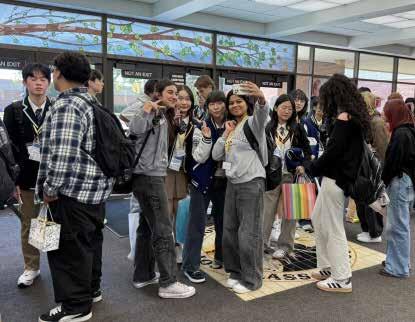
Cottonwood High School recently hosted students from Incheon International High School in South Korea for a day filled with learning, cultural connection and creating friendships that stretch across the globe.
“We had 46 Korean students visiting our school, and they were paired up with Cottonwood students, who volunteered,” said Cottonwood Assistant Principal Ashley Snarr. “We begin by bringing them into the auditorium, where the Korean students are called on stage by their Korean teacher, and Justin (Pitcher, principal) calls our Cottonwood buddy, and they get to meet each other for the first time. We also gave them these really cool Cottonwood mugs with our logo on them so they could use them throughout the day.”
After introductions, the pairs head to first period. The visiting students attend four classes, experiencing firsthand how American classrooms function.
“Our teachers are incredible and do a great job at making sure that they have materials ready for all the students. They participate in all the class activities and assignments just like the Cottonwood students,” she said.
Pitcher said it’s inspiring to watch both groups learn side by side.
“It’s pretty incredible to watch our Korean students sitting in a math class,” he said. “There may be some language proficiency challenges, but they’re working together with the Cottonwood students to get through
these problems, because they’re recognizing that, even though it’s taught in English, finding a slope is finding a slope.”
The visiting students were amazed by the range of electives available at Cottonwood, from auto shop and woodworking to theater and choir.
“They had a jaw-dropping experience when they saw the auto shop, and kids actually working on cars,” Pitcher said. “They said they don’t have a lot of electives in their school.”
They also were impressed by the arts programs.
“We went into a theater class where kids were giving monologues; they came out and said, these kids are like professional actors,” he said.
Snarr said many were fascinated by differences in American schools.
“They talked about how they don’t have a swimming class in their schools, and about our tennis and baseball facilities; they were amazed by that,” Snarr said. “They love being able to experience all the new and excitement of the American schools.”
Music also is a common topic, said Steve Perschon, Granite school leadership and improvement director.
“The fun thing right now is K-pop is really popular,” he said. “Our kids get into that and they have fun talking about K-pop and listening to the songs and dancing together.”
During lunch, the students shared a meal that’s quintessentially American.
“We get them Chick-fil-A, because it’s an American meal, and one of our kids’ favorite. They love to share it with the Korean students,” Snarr said.
Students also had a chance to exchange social media contacts and token gifts.
“Our students already are missing them; they’ve said, ‘They were so fun. I love learn-

ing from them. We’re already good friends,’” Snarr said. “Our kids enjoy this, and they see this as a super valuable experience for themselves, because they learn so much about the Korean culture of these students and how their school works.”
The exchange program has been running for about a decade.
“It’s a partnership between the University of Utah and Incheon, which is a top honors-level school, so they spend a day at the U before coming to our high schools Olympus, Taylorsville and Cottonwood,”
Perschon said, saying the three schools were selected for teaching Korean or Asian languages and proximity to each other.
In addition, the Korean students visit Boston, New York, Las Vegas and Los Angeles and national parks as part of their twoweek cultural tour.
Perschon said the impact reaches far beyond the classroom.
“This is really good for our students to see that global perspective and to recognize that, in this world, we’re a lot more similar than we are different,” he said. l
Annual Festival of Trees runs Dec. 3-6
Be sure to try the homemade fudge.
The annual Festival of Trees to benefit Intermountain Primary Children’s Hospital will be held Dec. 3-6 at the Mountain America Expo Center in Sandy. This traditional holiday event, now in its 55th year, has raised millions of dollars throughout its history in support of the hospital, one of the nation’s top children’s medical facilities.
As always, festival-goers can enjoy scones, live music and dance performances, visits with Santa and lots of tasty treats. Perhaps best known is the Festival’s fudge, made and donated by volunteers. Over 5,000 pounds of fudge have been sold in the
event’s history.
The highlight of the festival is decorated trees, nearly 550 last year adorned with half a million lights. Many trees are decorated with themes—perhaps tributes to a loved one or to another Utah tradition, and many are in honor of a former patient at Primary. The trees are also donated, sold at an invitation-only silent auction, and then proceeds go to the hospital. Last year, the Festival of Trees raised over $3.4 million.
In addition to the trees, the Festival features wreaths, nativities, gingerbread houses, quilts and other holiday decorations.
More information is available online at FestivalofTreesUtah.org. l
Cottonwood High and South Korea’s Incheon International High School students attended classes and lunch together for a day as part of a cultural and educational opportunity. (Photo courtesy Ashley Snarr)
Volunteers put the finishing touches on a tree before last year’s Festival, which features holiday decorations and treats as a fundraiser for Intermountain Primary Children’s Hospital. (Photo courtesy of the Festival of Trees)
Elevating hot chocolate to a culinary craft
Local shops create their own spin on a classic favorite.
By Peri Kinder peri.k@thecityjournals.com
InUtah, hot chocolate season starts in September and doesn’t end until the daffodils bloom. Next to dirty Dr. Pepper, hot chocolate could be the state beverage.
Thanks to its popularity, gourmet hot chocolate is easy to find in local shops that offer myriad recipes for the chocolate gourmand. Here are some spots to get you through the winter months.
Black Bow Chocolates, 13 W. Center Street, Kaysville
Jessica Sunderland’s award-winning chocolates are the first reason to stop by this cozy shop in Davis County. With recipes handed down from her grandmother, Sunderland creates hand-dipped chocolates in flavors like coconut cream and cherry cordial. But the Black Bow Hot Cocoa is a treat you don’t want to miss.
“We use the best cocoa and dipping chocolate, plus the finest cream, sugar and milk,” she said. “I would say our hot chocolate is somewhere between sipping chocolate and a normal hot chocolate.”
Customers can add flavors to their hot cocoa for a personalized taste and finish it off with made-from-scratch cream flavored with Mexican vanilla. The shop also offers a
non-coffee drink, a Choffy, made from brewed cacao beans. To learn more, visit BlackBowChocolates.com.
Sir Walter Candy Co., 3828 S. Main Street, South Salt Lake
This candy store is a chocolate-lover’s dream. The family-operated business features hand-dipped chocolates, popcorns, brittles and more, but its Frozen Hot Chocolate offers a unique flavor and crunchy chocolate shell.
Customers choose between Belgian milk, dark or white chocolate, which is run through a slushie machine. Then they select a flavor of chocolate to line the cup. The chocolate slushie is poured into the cup, which freezes the chocolate lining. Once broken up, the chocolate adds a nice crunch.
Sir Walter Candy Co. Frozen Hot Chocolate is popular year-round. For traditionalists, a regular hot chocolate is available, made with melted Belgian chocolate. Visit SirWalterCandy.com for more information.
“You come here for the experience because it’s more than just a treat,” said Amir Porras, son of the founders and vice president of the Sir Walter Candy Co. “There’s a nostalgic feel, like if your grandma made candy during the holidays. It’s a great place to come and have a good treat.”
Hatch Family Chocolates, 376 E. 8th Ave., Salt Lake City
The Decadent Hot Chocolate at Hatch Family Chocolates is reminiscent of sitting in an outdoor European cafe. With a taste de-





Chocolate comes with luscious chocolate, whipped cream and glitter.
“Our hot cocoa is not just hot cocoa,” said Janet Wall, Sacred Energy owner. “We make it with a rich chocolate syrup, no powders, and a sprinkling of pink and lavender glitter for a magical experience. It’s so delicious and creamy.”
Sacred Energy’s heated patio is the perfect place to enjoy a hot chocolate as the temperatures drop or sip a Divine Decadence Latte (with white chocolate and pistachio) and wander the store that features crystals in all sizes and colors. To see Sacred Energy’s menu, visit SacredEnergySLC.com
Tulie Bakery, 1510 S. 1500 East and 863 E. 700 South, Salt Lake City
scribed as “drinking melted chocolate,” the signature beverage is made to be enjoyed slowly.
The drink is mixed with either milk or dark chocolate (or a combination of the two), combined with steamed milk (dairy, almond, coconut, oat or soy) and topped with housemade whipped cream.
Hatch Family Chocolates is a local favorite, specializing in hand-dipped chocolates, hot fudge, toffee and more. For information, visit HatchFamilyChocolates.com.
Sacred Energy Crystals, Coffee & Cafe, 296 E. 4500 South, Murray
If you like your hot chocolate accompanied by crystals and tarot cards, Sacred Energy is a must-stop shop. The cafe’s Fairy Hot
Hot chocolate and pastries go hand-inhand at Tulie Bakery, featuring classic items made with high-quality ingredients.
After a day of shopping or skiing, a cup of hot chocolate is a rich reminder to enjoy the simple pleasures of life. Steamed and frothed milk is whisked into a cup of melted chocolate and topped with cream and chocolate shavings. The result is a delicious confection that calls for a fireplace and a good book.
The bakery has gained popularity as customers are drawn to its modest storefront and delicious bakery items (including gluten-free options). Tulie Bakery serves sustainably-sourced coffee, sandwiches, breakfast items, cakes and cookies. Visit TulieBakery.com to learn more. l




The Sir Walter Candy Co. in South Salt Lake features both hot and frozen chocolate beverages year-round. (Photo courtesy of Sir Walter Candy Co.)
Celebration of Life concert honors a Utah visionary

Jeff Whiteley founded Excellence in the Community to share his love for music.
By Peri Kinder peri.k@thecityjournals.com
Hundredsof friends, family and musicians
packed the Salt Lake Community College Grand Theater in South Salt Lake on Nov. 10 to pay tribute to a man who transformed and uplifted communities through the power of music. The Celebration of Life concert honored Jeff Whiteley, who organized more than 1,400 free concerts in the state, featuring some of Utah’s finest musicians.
Whiteley, the founder of Excellence in the Community, passed away in September, leaving artists and audiences heartbroken over the loss of the visionary man who used music to connect, encourage and unite.
The Latin/pop group Senxao performed during the event, under the direction of Venezuelan singer/songwriter Nayi Escalona, who shared his appreciation for Whiteley for giving them the chance to perform in front of Utah audiences.
“Jeff was the one who saw something in us that we couldn’t even see in ourselves. He believed in our music, in our dream, and because of his vision, we’ve reached stages we
never imagined,” Escalona said. “Jeff, your calm spirit, your kindness and your good energy touched every one of us. You were more than a friend. You were part of our band, part of our story. Tonight, every note, every song, every beat, is for you. We carry you in our hearts always.”
Whiteley and his wife, Lori Decker, spent decades together, creating music in France, Switzerland and Germany before bringing their work to the U.S. The duo would often perform free concerts throughout Utah with their acoustic-jazz ensemble Lark & Spur, including their popular Christmas concerts.
“To be with Jeff Whiteley was an opportunity for surprises, often that lifted the heart and delighted the soul,” said Whiteley’s cousin Chris Taylor, a guitarist with Lark & Spur. “Jeff believed that vibrating strings or reeds or any other musical conveyance held power.”
Taylor shared memories of going with Whiteley to the homes of struggling families to perform personal concerts to help them feel supported. Whiteley’s friend Justin Hohl said the musician will be remembered for his powerful storytelling and the ability he had to draw listeners into the narrative.
“I remember listening to many stories he would tell about his past, his memories of his mission, or other stories, and being captivated by the way he would bring you
into this memory from his past,” Hohl said. “I also loved how he connected everybody through music and his work with Excellence in the Community.”
Concert pianist Josh Wright also performed during the event. He said he loved working with Whiteley because he always made sure musicians had the best lighting and audio, the best pianos and the most optimal situation for a musician to thrive.
“He was a great musician,” Wright said. “So he understood that those things should be taken very seriously, which I always appreciated. He was also very giving. We thought that he took an interest in our family because we were musicians, but we’ve come to know that he treated everybody like that.”
Whiteley, who was a Sandy resident, is survived by his wife and his son, Austin. For those who would like to honor his memory by supporting Excellence in the Community, donations can be made at excellenceconcerts.org/donate.
“Jeff Whiteley’s life was lyrical, like the poetry he loved. It was loving and it was full of laughter, although he would use the word ‘mirth,’ as a proper poet,” Taylor said. “He taught me that music held power and was transformative…[He] was a remarkable human being. Let us celebrate him as a person who can shine a light of love and compassion upon others.” l
A Celebration of Life concert held in November paid tribute to Jeff Whiteley, musician and founder of Excellence in the Community. (Photo courtesy of Excellence in the Community)




















Inclusion takes the field at unified soccer tournaments

More than 2,000 student-athletes participated in the largest-ever unified soccer tournament in Utah, showing teamwork and inclusion are the true goals of the game.
By Julie Slama j.slama@mycityjournals.com
More than 2,000 student-athletes from 73 schools comprising of 170 teams took to the field this fall for high school unified soccer, a record-setting number for a program that continues to grow at an incredible pace.
Only a few years ago, unified soccer had about 24 teams competing statewide. This year, 24 teams alone advanced to the finals, held at America First Field in Sandy.
For the first year, unified soccer, which is promoted by both the Utah High School Activities Association and Special Olympics Utah, provided an avenue for 48 $500 scholarships — two per team — for continued education, awarded by America First Charitable Foundation.
While several area teams won state titles — Bingham, Herriman, Hunter blue, Murray, Skyline — or were runners-up Highland, Hunter gray, Jordan, West Jordan — most participants agree unified soccer is about much more than winning. It’s about inclusion, friendship and giving every student the chance to be part of a team.
Alexis Brown understands that mission, both as a former partner and as a coach of three teams at Riverton High.
“The bigger that it grows, the more it shows that students with disabilities are just as capable of doing things as everyone else,” Brown said. “It gets the gen ed population more involved and less scared of what’s stigmatized about disabilities — they start to see that they’re just normal people having a good time.”
Riverton’s unified club, Wolf Buddies,
is central to that effort. “We go to football games, school plays, dances; the goal is to get our students as involved in the high school experience as possible,” Brown said. “High school is fun, and they deserve to be included.”
Senior Kevin Perez said his Riverton team has bonded on and off the field.
“We’re a good team and we prepared,” he said. “We play two times per week. I like scoring goals and kicking the ball. I like my team too — we’re great together.”
Riverton senior Mac Wall, who once played varsity volleyball, said unified sports have meant even more.
“The fun I have in unified sports is way more exciting than anything I found in varsity programs,” Wall said. “The connection between people is completely unmatched. Everyone’s kind; there’s no drama. We’re a tight-knit group.”
Hillcrest High senior Yadiel Rodriguez said playing unified soccer and basketball “is fun because we play with our friends; we go out to the movies, hang out, go bowling. It’s special to be part of the team.”
His teammate, senior Ella Blackbourn, agreed: “I find a lot of joy being around these people who are always happy and positive; they’re amazing people. The bond we’ve formed is really cool.”
Jordan High coach Jenna Fox and her players emphasized teamwork and connection.
“With freshmen new to the team, we’ve had to learn to build new relationships, learn skills and include new kids; they’ve really connected,” she said.
One of her players, junior Dimas Deleon, added, “I like soccer, playing with friends. It’s fun to get them involved and play side by side.”
Jordan senior Caden Crocker chimed in: “I like the teamwork and how the team is positive. It’s fun for everyone.”
“It’s about being part of something,” said Murray junior Landyn Timms. “They all have heart to play the game — they’re all very skilled too. It just smoothens my
heart to see how happy they are when they get to play.”
His teammate, Pit Soe, was excited about the team’s state championship.
“It’s pretty cool; now we get to eat and celebrate,” he said. “It’s a fun team to play on. We help each other playing and at other times.”
West Jordan High coach Sheldon Russell said his team’s second-place finish was
more than just a result.
“They’re a tight-knit group because these guys are together a lot of the day,” Russell said. “Many have been in the same class since elementary school. Playing together and playing in the championship I count as a win, especially since our kids don’t get very many wins to begin with. The inclusion and spirit of unified sports really redefine high school sports.” l




Highland High were runners-up in the state unified high school soccer tournament. (Julie Slama/City Journals)
Cottonwood girls volleyball falls just short of a state playoff berth
Colts drop four of final six matches to fall out of 4A contention, but finish with best overall record in several years at 7-21.
By Brian Shaw b.shaw@mycityjournals.com
TheCottonwood Colts girls volleyball team sure served up a platter of hope to kickstart October.
As staff urged fans to “show your patriotism!” at ‘Merica Night at the Oct. 2 match between the Colts and Judge Memorial Catholic and all settled in for a Region 10 showdown, you had a sequel between a team that’s been in the league for years and a newbie.
Cottonwood dropped the first set, one day after getting swept in three straight sets at Bountiful.
Would the Colts bounce back against Judge, having lost the first set?
Cottonwood (7-21, 5-9 Region 10) would, but only just. The Colts would win the second set 25-23 in front of a raucous house at home, and then took their second consecutive set with even more ease, 25-18. Judge battled back, but it wasn’t enough and Cottonwood prevailed, 11-25, 25-23, 25-18 and 25-21.
That completed a two-match sweep for the Colts that lost in three straight sets Oct. 7 at Juan Diego Catholic to make their lives more difficult.
The loss at Juan Diego set the stage for a frenetic finish, in which Cottonwood needed a minimum six points over its final three games of region play and one nonleague game to stay in the state tournament chase.
It looked like the Colts might be on their way to a huge win at home against Jordan in Region 10 action.
On Superhero & Staff Appreciation Night Oct. 9, the Colts played like some of the Powerpuff Girls in the first set, winning it 25-21. But Cottonwood lost some of its magical powers in the second set, dropping it 25-15, and then Jordan went on to hand the Colts a tough loss at home in the last two sets, 21-25, 25-15, 25-21 and 25-19.

That put the Colts in a tough spot on Senior Night Oct. 10 against the East Leopards. In a must-win situation in front of some people dressed to the nines as requested, Cottonwood played like it had been shot out of a cannon, thrashing East in three straight sets, 25-12, 25-16 and 25-19.
But after two losses in a row at Lehi and Highland, Cottonwood’s coaching staff and players could only watch the 4A state tournament pairings and hope.
It was not to be. But, a 7-21 record improved upon last year’s record by one win.
After Cottonwood lost two of its first eight matches, you had to wonder if the Colts were headed down the same road as last year.
But when people close to the program said that this team was improving, and that games were no longer as lopsided, you had to check the scores for yourself.


Three sets to one in their losses—and the same was true in their early wins.
Under head coach Michaela Hatch, who was in her fourth full season in charge of Cottonwood, she battened down the hatches, so to speak.
No player information was being shared about her team, and no statistics were available, same as the football team.
The marketing was still getting out, though, and so were the theme nights—one of Cottonwood’s biggest highlights of the week. Disco Night, Country Night, and the uber-popular Beach Night were all back.
What else? The fan interest in girls volleyball was beginning to pay off, as was coach Hatch’s insistence several years ago on bringing her players through the ranks of each of Cottonwood’s teams, slowly.
Save for a 3-0 loss to Olympus and a
welcome to another revamped Region 10 by old league nemesis Park City, the Colts were competing in every match.
West got the dub by the skin of their Panther chin by winning the first set 31-29 in a marathon, then surviving the next three sets to win. That season-opening slugfest kind of deflated the Colts spirit and energy in the next two games, both decisive losses.
After losing the first set in a 28-26 street fight to Kearns Aug. 26, Cottonwood rebounded with a vengeance, refusing to allow its 5A opponent to even break 18 points in each of the next three sets, as the Colts rolled to their first victory.
That was the story of a memorable season for Cottonwood, who loses five seniors (Cora Young, Hallie Jensen, Brynley Anderson, Kaila Cruz and Eimi Vatuvei) to graduation. l


Cottonwood volleyball finished its season at 7-21 with five of those wins in region. Five seniors will graduate this year. (Photo courtesy Michaela Hatch)
Cottonwood head football coach Tai Satuala steps down after two seasons
Satuala was instrumental in recreating a Little League program at Cottonwood, building up the freshman/sophomore team in his first head coaching job.
By Brian Shaw b.shaw@mycityjournals.com
At the outset of his hiring, Tui Satuala was presented with an impossible dream, one he couldn’t pass up.
n late October, after having his second straight season without a win, Satuala stepped down as Cottonwood’s head football coach.
“It’s been a dream come true being a head coach these past two seasons,” said Satuala, who had an 0-19 record at Cottonwood. “Want to thank my wife for supporting me and holding down the fort with our family. She is amazing!”
The Colts coaching staff, comprised of Cottonwood alums and former college and NFL players and headed by local businessman and CHS alum AJ Jones, asked Satuala — who himself played at Weber State and was a longtime assistant at many successful high school programs but never a head coach — to recreate a team and culture that
was falling apart after Donovan Malmrose, himself never a head coach, resigned the spring after his first season.
A Cottonwood alum, longtime teacher and top assistant under two other CHS football and basketball coaches, Malmrose stunned the community by stepping down after leading the Colts to a 2-8 season that almost resulted in a state playoff berth, even though it was his first year in charge, and concluded with a win over rival Murray.
Looking back, it is obvious that those in charge of Cottonwood’s football program thought Satuala could at least keep the Colts competitive since his resume looked awfully similar to Malmrose’s.
But Cottonwood was also in the midst of a total rebuilding, from the ground up.
Satuala was handed a big to-do list: resurrect a dormant Cottonwood Little League program that hadn’t been active in over a decade, and begin summer camps to provide outreach to kids in the K-8 grades.
The reformation of the Little League stirred up a little controversy, however, when Murray High parents accused Satuala and his staff of recruiting seventh and eighth graders within Murray’s boundaries to play at Cottonwood, after the two schools agreed to band together to form one Little League program. (Satuala apologized for any con-




fusion, in a statement to City Journals.)
Arguably the biggest issue, though, was that many of the kids that played at Cottonwood under the former coach Malmrose — who accepted a teaching and football assistant coaching position at Bingham closer to his home — transferred or opted to play for another school while they attended one of Cottonwood’s AMES schools. That has been a huge issue for previous coaches and one that several cited before they resigned, the inability to retain some of Cottonwood’s own top student-athletes.
The problem got so bad for Satuala in year two that, after he lost over half of this past year’s roster to transfers, his staff refused player and coach interviews to all media, including City Journals.
Not only that, Satuala needed some of his eighth graders to sign waivers over the summer of 2025 to play high school varsity football at Cottonwood this past year, after losing last year’s starting quarterback, running back and more, to graduation and transfers.
One of his eighth graders, Gage Cooper, played most of the snaps as Cottonwood’s starting varsity quarterback.
That said, new Cottonwood Athletic Director James MacIntyre and staff said they were planning to have Satuala back for
his third year in charge of the Colts, and saw improvements in the way the team played, particularly in games seven and eight, in which Cottonwood scored 17 points at Skyline (17-62) and 19 fourth-quarter points at home against Jordan in a 39-19 loss.
“Would have loved to see him stay, but support him in his decision to be able to give more time to his young family,” MacIntyre said.
As for Satuala, he also thanked his staff and players before departing, opening the door for the naming of Cottonwood’s fourth head football coach in five years, and the third in a row to cite their young families as a reason for stepping down.
Satuala wrote: “Big thank you to the coaches. Couldn’t have done it without them this season. Appreciate you guys. Big thank you to the players this season! They are resilient kids! It was an honor to coach them. Cottonwood has such a unique demographic. Many of them stepped out of their comfort zones and played football for the first time in high school. So cool to see the progress every player made! Big thank you to the parents this season! Thank you for all your help and support! Big thanks to the Cottonwood Admin and AD. They are amazing. I’ve never seen an admin who helped clean up after games, and help support the players the way they have!” l





A $7-a-month question: Should Salt Lake County raise property taxes?
Salt Lake County’s proposed 2026 budget includes a 19.6% property tax adjustment—about $7 a month for the average homeowner—to maintain essential services and fund public safety.

By Shaun Delliskave s.delliskave@mycityjournals.com
Salt Lake County Mayor Jenny Wilson says the County’s first tax adjustment since 2019 is needed to keep up with inflation and rising service demands. Voters will get their say Dec. 9 at a Truth-inTaxation hearing.
According to Mayor Wilson, Salt Lake County’s property-tax rate has effectively declined for 15 years due to Utah’s Truth-in-Taxation law, which automatically reduces the certified rate as property values rise—keeping overall County revenue roughly flat unless leaders formally vote for an increase. While this prevents hidden tax hikes, it also means County revenues haven’t kept pace with inflation, population growth, or the rising costs of public safety and health services. Over that same 15-year period, inflation has eroded nearly 30% of the County’s purchasing power, even as average home values have soared from roughly $250,000 in 2010 to about $638,000 today.
The mayor’s proposed 19.63% adjustment would restore part of that lost ground,
adding about $7.28 per month—or roughly $90 per year—for the average homeowner. Importantly, the increase affects only the County’s portion of the total property-tax bill—about 17%—with the remainder going to cities, school districts and service districts such as fire, water and sewer. In practical terms, the proposal adjusts just the County’s “slice” of the tax pie, not the full amount residents pay each year.
“Salt Lake County is a community that addresses vital needs, invests in parks and open spaces, enriches our lives through arts and culture, and protects public safety,” Wilson said in her October newsletter. “After years of tightening budgets and absorbing inflation, this adjustment is needed to sustain essential services and maintain a balanced budget.”
Where the money would go
Wilson emphasized that public safety consumes about 74% of the County’s general fund, supporting the sheriff’s office, the County Jail, the District Attorney and indigent defense. The increase, she said, would also preserve regional programs such as flood control, Meals on Wheels and public health initiatives.
The proposed budget also expands evidence-based alternatives to incarceration, such as mental-health treatment, early-intervention programs and community supervi-
sion—efforts the mayor says “make communities safer and stronger.”
Public input and the road to approval
The Salt Lake County Council is now reviewing Wilson’s proposal through a series of public meetings. The Council will vote on a preliminary budget Nov. 25, followed by a Truth-in-Taxation hearing on Dec. 9 at 6 p.m. at the Salt Lake County Government Center, 2001 S. State St. in Salt Lake City.
Residents can attend in person or submit comments online before the Council votes on the final budget later that evening. Utah’s Truth-in-Taxation law requires local governments to hold such a public hearing whenever they propose collecting more property-tax revenue than the previous year.
Public safety remains the flash point
The proposal comes one year after Salt Lake County voters rejected a $507-million public-safety bond that would have raised property taxes to expand jail capacity and build a new justice center. Roughly 52% of voters opposed the bond, citing confusion about its scope and overall costs. After the defeat, the County shifted to a smaller 0.2% sales-tax increase earlier this year to fund limited jail-expansion efforts.
That rejection still looms large in the background of this year’s debate. County officials argue that while voters turned down the bond, the need for additional funding to maintain core public-safety operations remains.
Part of a statewide trend
Salt Lake County isn’t alone in revisiting property taxes. Across Utah, 59 cities, school districts and local entities have held or scheduled Truth-in-Taxation hearings this year—many citing inflation and unfunded state mandates. Neighboring counties such as Davis and Utah counties have also warned that they may consider rate adjustments next year to offset rising costs.
At the same time, the Utah State Tax Commission recently denied 35 requests for property-tax increases statewide, amounting to nearly $50 million in rejected revenue proposals—underscoring both the legal and political hurdles facing local governments seeking more funds.
Supporters of Wilson’s plan argue that the County’s budget has reached a breaking point. “Public safety, public health and regional services simply can’t keep running on 2019 dollars,” one budget analyst said. Critics counter that government should “tighten its belt” before asking residents for more, particularly as homeowners already face higher housing costs and assessments.
Residents who want to weigh in can find full budget details and a comment link at slco.to/rate. l
Graphic on proposed tax increase on the impact on a $638,000 home. (Shaun Delliskave/City Journals)
Energage partners with City Journals on new home for Utah Top Workplaces
Nominations open for 2026 employer recognition award honoring Utah companies.
Energage, the HR technology company
powering the Top Workplaces employer recognition program, recently announced a partnership with the publisher of the Salt Lake Business Journal to create a new home for Utah Top Workplaces in 2026.
The partnership with Top Workplaces marks a shift in Utah; the awards had been published since 2014 by The Salt Lake Tribune. Now, City Journals, the publisher of Salt Lake Business Journal and 13 community newspapers, offers employers statewide the opportunity to earn trusted, credible recognition for companies that prioritize people-first cultures and the workplace experience. Nominations for the 2026 Utah Top Workplaces award will be accepted through May, and the winners will be announced in the fall of 2026.
“We are excited to offer the Utah Top Workplaces award in partnership with Energage,” said Bryan Scott, publisher of City Journals. “We’re committed to serving our community, and this initiative gives us a powerful way to celebrate the organizations making Utah a fantastic place to work and do business. By shining a light on companies that prioritize their employees, we’re not only providing valuable insights for job seekers but also strengthening the business community.”
All organizations with 35 or more employees in Utah are eligible to participate, including public, private, nonprofit and government employers. There is no cost to nominate, participate or win the award.
Top Workplaces winners are determined by employee feedback collected through the confidential, science-backed Energage Workplace survey. This trusted survey measures key culture drivers proven to predict organizational success and employee engagement, and it has been refined by insights from millions of employees across more than 70,000 organizations over the past two decades.
“We’re thrilled to partner with City Journals to spotlight companies where employees feel truly seen, heard and valued,” said Dan Kessler, president of Energage. “This partnership ensures that deserving employers across Utah receive the visibility and credibility they’ve earned, helping them stand out to both top talent and customers.”
In addition to statewide recognition, participating companies may also be eligible for national Top Workplaces awards across culture excellence and industry categories — all based on the same single survey.
To nominate your organization for the 2026 Utah Top Workplaces award, visit www. topworkplaces.com/nominate/saltlake. l












Cottonwood boys, girls basketball ready to get underway
Colts boys are expected to be one of the top teams in Class 4A and the girls return several key players.
By Brian Shaw b.shaw@mycityjournals.com
Last year, the Cottonwood Colts boys basketball team fell short of their objectives according to Marc Miller, the Colts head coach.
But this year, the Colts are playing a difficult schedule to tune up for what they hope will be a fourth straight Region 10 title defense and even more, according to Cottonwood’s new athletic director that also played high school and college basketball and coached at both levels.
“Love the chances of both teams to compete for another region championship, but Region 10 is going to be a tight race for both boys and girls,” said James MacIntyre, Cottonwood athletic director.
First, the boys. With last year’s 3A state semifinalist Judge Memorial Catholic now in the fold in Class 4A Region 10 where the Colts are, Cottonwood now has a legitimate contender to their throne in the Bulldogs, a team that was 3A champions two years ago.
But this is a Cottonwood squad that only lost three seniors to graduation.
These Colts return two starters and were ranked the No. 2 team in 4A in the Deseret News preseason coaches’ poll.
There is already a buzz building around the state about this Cottonwood team that brings back 6-foot-8 Luka Cecez, the Colts second leading scorer as a sophomore (11 points per game) who will be a junior this year. The other, Tengis Bayasgalan, is a senior who was one of the Colts’ top playmakers (8 points per game, 2 assists) and was the team’s top three-point shooter, last season.
How does this schedule look for Cottonwood?
A Colts team that reached the 4A state quarterfinals and exited at that stage one year after being the 4A state runner-up opened their season at Brighton Nov. 19. The preseason will continue against Riverton, helmed by Cottonwood’s previous coach Lance Gummersall, Nov. 25.
The month of December begins with a home game Dec. 2 against Clearfield, and then the Colts will play three straight games in Cache County Dec. 4-6.
Then, Cottonwood will head down to Utah County for another holiday tournament for three games from Dec. 11-13, before hosting Jordan on Dec. 16 and rival Murray Dec. 18 to tip off Region 10 action.
The additions of the two Catholic
schools should make things more entertaining for a Colts squad that won a Region 10 title by one game.
The one game to circle on your calendar, though, is a rematch against Layton Christian Academy, now an independent but the school that defeated the Colts in the 4A state championship game two years ago, and that showdown will be played on Jan. 16.
Girls
Under the direction of longtime head coach Teresa Soracco, the Colts have won consecutive Region 10 championships.
How are the Lady Colts feeling about this season?
“Boys and girls basketball have had a great first week of practice and there is an excitement for the year to start,” MacIntyre said.
Like the Colts boys though, the girls basketball team fell short of their objectives at state, losing in the 4A second round. Cottonwood finished with a 17-5 record, its best in years.
The Colts lost five to graduation, including three that will continue playing in college. It is a huge loss for this Cottonwood program to have to say goodbye to two of their three leading scorers.
The good news is the Colts have a program that is deep in talent, and still has
plenty of returning players including Carley Caton, a senior who was Cottonwood’s second leading scorer and welcomes back sophomore Lexie Tripp, the third Tripp sister to play there in five years.
Considering the two older Tripps are playing college basketball still, and Lexie averaged 2 points, 2 rebounds, an assist and a steal on a loaded team as a freshman, don’t be too surprised if another Tripp sister trips up Region 10 with her skills.
There are also seniors, such as Sophie Yates, along with Luka Cecez’ sister Jovana that figure to fill in and produce larger roles on this Colts squad.
The Cottonwood girls began their season on the road at Provo, on the same night the boys start theirs, Nov. 19, after press time.
The Colts will play at Hunter Nov. 21, before they have their home opener against Summit Academy on Nov. 24.
In December, the girls will play at Olympus Dec. 3, and then they will head back home for two games: Granger, Dec. 5, and Roy, Dec. 6.
That’s when Region 10 play gets underway, and the Colts will stay put at Cottonwood when they take on Park City Dec. 12, and then battle Jordan on Dec. 17—all before the big rivalry game against Murray on Dec. 19. l
The Gifting Tree allows teens to celebrate the holidays
Every small donation helps create a big result.
By Peri Kinder peri.k@thecityjournals.com
Thousands of teens in Salt Lake County face a Christmas holiday in emergency shelters, temporary housing or foster homes, but the County has partnered with the ShelterKids nonprofit organization to ensure these youth have new clothes, toys, school supplies and more.
The Gifting Tree is a historically impactful program that allows residents, businesses and organizations in Salt Lake County to provide gifts for these teens. Gifting Trees are located in County libraries and local businesses, displaying tags that include a wish list or essential needs for children in programs through Salt Lake County Youth Services.
“The Gifting Tree supports youth in our community who are in crisis,” said Noelle Reymond, Salt Lake County Youth Services communications manager. “These are children who are in emergency shelters, who have been removed from their home by DCFS from an unsafe home environment.”
Each year, more than 9,000 kids in Salt Lake County experience abuse, neglect or foster care disruption. The Gifting Tree provides gifts for children in the ShelterKids emergency shelter, transitional living, after-school programs or short-term crisis placement.
Residents are asked to select a tag from a Gifting Tree, purchase the items listed and return the unwrapped gifts to any of the 18 libraries in The County Library system, participating business or directly to
ShelterKids at 177 W. Price Avenue in Salt Lake City.
“ShelterKids helps bring in all the extra donations for these kids and that’s everything from gifts for the holidays to new clothing,” Reymond said. “It includes toys and gifts for birthdays, hygiene products and school supplies, so pretty much anything that those kids need.”
Reymond said this year is especially difficult with inflation, higher prices and the government shutdown that affected SNAP benefits. The most requested items are comfortable sweatpants and sweatshirts in all sizes, journals, art supplies, books, LEGO kits, sports balls, card games, full-size hygiene products, toiletries, makeup, snacks and treats.
The goal of the Gifting Tree Program is to provide teens with the simple joys that can make a significant difference in their lives. Children and teens who experience the holiday season in crisis situations often feel isolated and lonely. Reymond stresses that even small donations are greatly appreciated.
“The most amazing part of the annual Gifting Tree donation drive is that it’s made up of many, many, many small donations,” she said. “When we see all of those small donations come together, it has a huge impact. That is the beauty of this project, so every little bit helps.
“Everyone doing their small part to support this program helps create a huge effort that supports the thousands of youth that we serve every year. We couldn’t be more grateful for that tremendous community support.”
New and unwrapped items can be dropped off through Monday, Dec. 22. For more information, and for a list of suggested items, visit ShelterKids.org. l

Gifting Tree donations can be brought to any of the 18 Salt Lake County libraries through Monday, Dec. 22. (Photo courtesy of Salt Lake County Youth Services)
Utah PTA celebrates a century of advocacy for students
From school lunches to student safety, Utah PTA volunteers have spent 100 years making a difference in schoolchildren’s lives.
By Julie Slama j.slama@mycityjournals.com
This year, Utah’s students, families and schools are celebrating a milestone: Utah Parent Teacher Association turns 100. For a century, this volunteer-driven organization has been shaping education, student well-being and community engagement across the state.
Utah PTA President Julie Cluff says the organization’s century-long mission goes far beyond classroom parties.
“PTA volunteers sometimes get pegged as the ‘party moms,’ but our work has changed lives and we’ve shaped education policy in Utah for generations,” she said. “Our programs are the heart of what we do, but advocacy is why we started.”
The roots of Utah PTA stretch back to 1897 when three Utah delegates attended the first meeting of the nationwide parent-teacher movement, then called the National Congress of Mothers. A year later, Mrs. C.E. Allen established the Utah Congress of Mothers, laying the groundwork for organized parent advocacy. Though that early group dissolved by 1901, momentum continued. By 1910, the state formed a chapter of the National Education Association’s Department of School Patrons, and by October 1925, the Utah PTA officially began with Lucille Young Reid as the first president. In 1951, every school in the state had a PTA.
The mission established then remains at the heart of the organization: “To make every child’s potential a reality by engaging and
empowering families and communities to advocate for all children.”
Utah PTA President 2023-25 Corey Fairholm loves the mission.
“When they first started in 1925, they were worried about some of same things we’re worried about — making sure children don’t have access to smoke shops and here we are 100 years later, and we’re worried about vape shops,” she said. “At the legislature, they realize I’m representing 70,000–80,000 members who are concerned so the legislators are listening. Because the power of PTA, we have kindergarten, school lunches, support for students with disabilities and so many things beneficial to schoolchildren.”
Through the decades, volunteers have donated more than 1 million hours in 605 schools, bridging families and educators while supporting programs which enhance children’s health, safety and education.
Utah PTA’s impact can be seen in nearly every corner of school life. In the 1930s, it advocated for school lunches, paving the way for the National School Lunch Program in 1941. In Utah, longtime PTA member Tibby Milne remembers its start.
“I was a first grader in Richfield Elementary, and they started hot lunch there in this little cabin on the school grounds,” she said. “Mrs. Rowley did it, and she went on to run it nationally. She cooked the best food. I still remember her homemade bread and peanut butter cookies.”
PTA helped establish school libraries through legislation signed in 1956 and introduced the Reflections arts program in 1969. Utah was the first to introduce categories of theater, 3D visual arts and film and to advocate for a special needs division.
Last year, Utah had more than 17,000 Reflections entries statewide, with nearly half of its national submissions receiving awards. The state is also one of the few to have developed its own online submission portal, now a model for others across the country, Cluff said.
PTA promoted student safety in partnership with national organizations in the 1980s, including seat belt campaigns and bus safety programs.
“Our PTA worked on helmets, which was part of our safety campaign, and getting seat belts into cars — that was not easy,” said Milne, who helped shape initiatives such as the DARE program and the National Child Protection Act. “We had to change attitudes, but it was for the safety of children.”
One of Utah PTA’s most enduring accomplishments began in the 1980s, when a group of PTA parents discovered Utah’s trust lands — public lands granted by the federal government at statehood to benefit schools — were being mismanaged.
Those PTA parents put in motion a 30year advocacy effort which completely transformed the handling of funds, Cluff said.
“Today, those efforts bring millions of dollars every year to Utah’s schoolchildren,” she said. “What’s even better is that it’s not just today’s kids who benefit, it’s tomorrow’s kids too.”
Utah PTA was among the first in the nation to create a state-level special needs committee. Led by PTA advocate Karen Conder, the committee successfully passed a national resolution in 2018 establishing “high expectations for students with special needs.”
Utah has since added new resolutions supporting students with dyslexia and learning disabilities and continues to update them every seven years to reflect current research.
“Our resolutions are what give us a voice,” Cluff said. “They’re how we can walk into the Capitol, sit down with lawmakers, and say, ‘Here’s what our members want for Utah’s kids.’”
State PTA President 2013-15 Liz Zentner discovered her passion for advocacy.
“The first time as a PTA president, I went up to the Capitol for PTA Day at the Capitol and I realized this is where I can make a difference,” she said. “Now I encourage all members to send your representative and
your senator emails and tell them what you think about something.”
Utah PTA also runs unique programs such as the Battle of the Bands, a 23-year tradition which gives student musicians a stage to shine.
“It might not reach every kid, but it reaches kids who need that connection the most,” Cluff said. “Some of these students are not just talented musicians, they’re amazing and polite kids.”
Beyond education, the Utah PTA has tackled broader community issues which affect children’s ability to learn, including affordable housing, homelessness and food insecurity. Cluff has authored resolutions on these topics after seeing firsthand how unstable housing impacts students in her Midvale community.
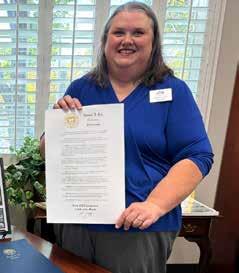
“If kids don’t have a safe place to live, they can’t focus on learning,” she said. Utah has hosted the National PTA convention twice, in 1938 and 1988, reflecting its leadership on a national stage. Most recently, in 2022, Utah PTA received the National PTA Outstanding State PTA Award and Gov. Spencer Cox has declared October 2025 as Utah PTA Centennial Celebration Month.
Through all its initiatives, Utah PTA teaches students to advocate for themselves. Each year, secondary students participate in PTSA Day at the Legislature, meeting lawmakers, discussing issues and even learning how to draft bills.
“I really believe the kids can make a difference,” Milne said.
After 100 years, Utah PTA remains a powerful advocate for children, families and educators.
“When our community comes together with a shared mission, we can do a lot of good to ensure every child has the support and opportunities needed to thrive,” Cluff said. l
Utah PTA President Julie Cluff holds the proclamation signed by Gov. Spencer J. Cox has declaring October 2025 as Utah PTA Centennial Celebration Month. (Julie Slama/City Journals)
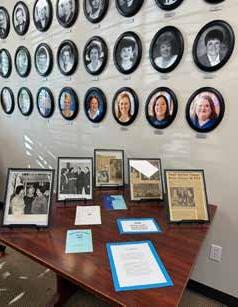
Displays showcased the advocacy and history of Utah’s PTA during its centennial celebration. (Julie Slama/City Journals)
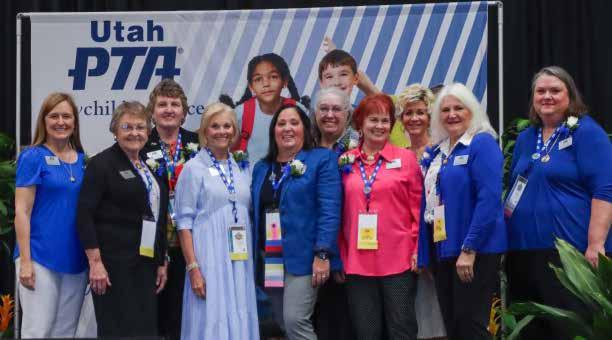
Current and past Utah PTA presidents pose for a recent photo. (Photo courtesy of Utah PTA)
Council works to provide taxpayers best value during budget process resulting in tough cuts
In the 12 years I’ve been on the Salt Lake County Council, this was the most intense budget season I’ve ever encountered. It began when Salt Lake County Mayor Jenny Wilson proposed a 19.6% property tax increase. As we see the economy softening, some of us on the council vowed to dig in, realign the county spending with top priorities, and find ways to be more efficient and effective with your tax dollars so we could lower that property tax ask. I’ve since learned that while it may feel good to give people government perks, it is sure painful when it’s time to take them away.
I’ll start with daycare. It’s a big issue throughout the state and while there are fewer daycare waiting lists in Salt Lake County, it’s still unaffordable for many families. Somehow Salt Lake County has been subsidizing four daycares to the tune of $6000-$10,000 per child. That means that property taxpayers, like you, are paying half the tuition for about 271 kids.
I had many people contact me and say they were fine with their tax dollars to go to low-income families, but this program had no income qualifications. We certainly had many families who were making more than
Aimee
Winder Newton
Salt Lake County Councilmember
District 3

the median household income, yet they were being subsidized by those on low or fixed incomes. We made the decision to get out of the daycare business.
Another tough decision was related to a senior center. We voted to close a senior center on 10th East in SLC that is currently vacant and only 1.8 miles away from another senior center. Not every city has a senior center, so to have two so close did not make sense. It saves taxpayers $6-7 million in one-time costs and $400,000 in ongoing costs each year. The empty building was in the process of being renovated and the $3 million funds spent thus far to remove asbestos would’ve needed to happen regardless of the use.
We hope those who love the 10th East Senior Center will be able to continue attending activities at the Liberty Senior Center, as I’m a big believer in the value of the human connection that seniors can get by interacting with others. We love all of our seniors, and this decision was made recognizing that we have many on fixed incomes who feel that the more we rein in government spending, the better. Our taxpayers have made it clear that they are stretched to the limit and the county needs to focus on core services.
Budgets are tricky and Salt Lake County has one of the most complicated budgets. While the overall budget is $2 billion, $500 million of that is just pass-through taxes that go from the state to cities or UTA. Another $1 billion make up restricted funds, enterprise funds, and tourism taxes – which can only fund certain things or those that are tourist-related. Have you ever wondered why we justify spending money on arts, culture, parks, golf, recreation, and convention centers? Those entire budgets either generate their own revenue sources or they use tourism taxes from hotels, car
rentals and restaurants. They do not use any property tax.
About $500 million of the budget is the General Fund. That is where we have total flexibility to use the funds however we please. This is where your property taxes go -- $220 million from residential property taxes. Currently 74% of our General Fund expenditures are public safety related – jail, prosecution, criminal justice services, etc. The rest covers things like elections, audits, etc. Because we capture the same amount of money as the previous year (minus new construction), the county does tax increases every few years just to keep up with inflation. To read my FAQs about the budget, visit tinyurl.com/SLCObudget
During this year’s budget I’ve tried hard to look at programs that are out of the county’s scope (daycare) or items that seem duplicative or unnecessary (two senior centers within 2 miles of each other). We’ve also cut positions that aren’t fulfilling the county’s overall mission or that we don’t believe are necessary. Rest assured that we are going to bat for you so you can keep more of your hard-earned money.
With a new head coach, Cottonwood cross country qualifies for state during a rebuilding year
Colts boys place 11th at 4A Divisionals, finish in 20th place at the state championships.
By Brian Shaw b.shaw@mycityjournals.com
According to Cottonwood head cross country coach Jiree Riding, one of his Colts lost a shoe at around the 2-mile mark at the 4A state championships at BYU.
“Still finished the race tough,” said Riding of his runner.
That sort of attitude epitomized this Colts team, added Riding, who was also in his first season as a high school head coach. His Cottonwood team crossed the finish line in 20th place, on Oct. 29.
Due to all the changes in the athletic department and within the Cottonwood administration over the summer, Riding wasn’t actually hired with much time to spare.
But over the season, and as the team competed in more meets, times were shaved considerably, and Cottonwood was moving up the leaderboards in Region 10.
By the time it was Divisionals, the Colts were ready and even had runners fin-
ishing in the top 50.
“We placed 11th at Divisionals qualifying the Colts for state, first time in over four years,” Riding said.
Individually, senior Grant Adams crossed in 40th place, in a time of 18:01. His teammate, junior Turner Hamel was three seconds behind in 18:04, 42nd place, respectively. Junior Damien Fernandez was 61st and Samuel Frew, 67th while sophomore Logan Fogg was 82nd and Elijah Leek 89th.
For the girls at Divisionals, senior Sunny Evans finished in 81st place in a time of 25:34, while Rylie Seydel crossed in 25:55 in 86th. To round out the Colts girls top 100, senior Paulina Garrido was in 90th position.
As a team, the Colts girls did not qualify for the state championships teamwise, but had several good individual performances at Divisionals, held at Lakeside Park in Orem, and will have plenty to build on, according to what Riding told City Journals back in October.
At state, Cottonwood continued its assault of the top 100 on BYU’s campus.
On the boys’ side, senior Grant Adams finished in 66th place in a time of 17:16, 45 seconds better than his effort at Divisionals. Other Colts that competed and finished the
course were Samuel Frew, who was 106th, Elijah Leek in 112th, Turner Hamel 118th, Caleb Hill in 124th, Logan Fogg 141st and Damien Fernandez in 153rd.
“Going into state we were ranked 23rd out of 23 teams in Class 4A, but the boys stepped up and finished 20th,” Riding said. “We’re excited for next year as we return our top six and graduate just one senior.”
Teamwise and individually, the Colts boys and girls showed they had plenty of promise heading into the track and field portion of the season—Riding is also that

team’s new coach, as a matter of fact. To have to go from a new coach in cross country and have that much success initially, is usually unheard of. In the view of Riding, the Colts weren’t supposed to be in this position yet.
“Overall, it was a great season. Honestly, we were shocked to make it to state in what was supposed to be a rebuild year,” Riding said. “But at the same time I’m not too surprised — this group was hungry and determined to show that Cottonwood cross country is back.” l

Members of the Colts’ team. (Photo courtesy Jiree Riding)
Life & Laughter - A Christmas Carol: Corporate Edition
Ebeneezer Scrooge sits on the edge of his vast four-poster bed, wondering what the heck just happened. Three ghosts have shown him his greedy behavior and how, because of his miserly ways, he’ll die hated and alone.
“Oh, well,” he says, as he jumps off the bed and heads to his vault, where he swims through stacks of gold coins like Scrooge McDuck. “It’s not my fault there are poor people.”
Jacob Marley’s ghost hovers nearby, rattling his heavy chains. “Remorse is a heavy burden,” he cries. Scrooge tells him to get lost and skips downstairs to count his money.
The jolly Ghost of Christmas Present jumps out from behind the couch, reminding Scrooge of the two ghastly children hidden in his robes, representing poverty and ignorance. “You have so much,” the ghost says. “You could help so many.”
“They should get jobs,” Scrooge replies. “It’s not my problem.”
The spirit starts to disagree, but Scrooge calls in officers from Interstellar Creature Enforcement to haul the ghost away. Christmas Present mutters something about corporate greed as he gets zip-tied.
Scrooge runs to the window and sees a young boy on the street below. “Hello, fine
Peri Kinder Life and Laughter

fellow! Run to the Cratchit house and tell Bob to come to work. I gave him the day off, but there are debts to collect!”
“But it’s Christmas,” the boy responds.
“Humbug! Christmas is just an excuse for sloth. Remind him that although I didn’t give him a raise or bonus this year, I put a ping-pong table in the break room and, because it’s Christmas, he can use the Keurig one time today. He should be grateful.”
The Ghost of Christmas Past taps Scrooge on the shoulder. “Old Fezziwig shared his wealth with employees and friends. He was greatly mourned.”
“Well, Fezziwig is dead,” Scrooge says. “Where did compassion get him?”
He dismisses the spirit, then calls his maid to bring him weak tea (“I’m not wasting money on sugar!”), plain, toasted bread (“Jam is a luxury!”) and a hard-boiled egg (because it is Christmas, after all).
Scrooge slurps his tea, the sound echoing through the cavernous room as the grandfather clock ticks away the final moments of his miserly life.
Meanwhile, across the city, Bob Cratchit and his family wake up to a vast display of gifts and food. Knowing exactly how stingy Scrooge would be, friends and neighbors quietly pooled their money to create the perfect Christmas morning for the family.
The Cratchit children are awed by the generosity. Peter eagerly opens the latest Dickens novel, Martha admires her fashionable scarf and the baby toddles around with a new doll.
Neighbors even started a GoFundMe for Tiny Tim so he could see a doctor and the town carpenter made him a new crutch. The home is filled with laughter and friendship as everyone roasts Ebeneezer Scrooge with Victorian cocktails. Even the dog gets tipsy.
While Scrooge and Cratchit live just miles apart, their life experiences are vastly different. Although poor, the Cratchits love each other and are cared for by the people around them. Communities take care of each other.
It’s something Scrooge will never understand. All his wealth won’t save him.
He sees the Ghost of Christmas Yet to
Come dramatically using his bony finger to beckon Scrooge to follow. Time’s up.
“Fine,” Scrooge says, “but I’m taking my egg. Eggs are expensive, you know.”
Marley moans from the hall, “Mankind was your business.”
“Gold was my business!” Scrooge yells as he stomps after the ghost, wishing he could roll around in his money just one more time.