




Tiffany Donnelly / Editor
It’s very easy to live inside a bubble. We grow up a certain way, live in a specific environment, and are raised in a way that causes everything in our little world to make sense. We are comfortable there. But what about that place outside of our comfort zone…that scary place that feels foreign to us? I want us to focus on that place.
I was in my mid-twenties and working my second job out of college – a sales position. I had an account called Shared Hope International. In the attempt to understand the clients I worked with, I had asked my contact there to explain to me what Shared Hope actually did. I don’t remember everything she said that day, but I do remember her directing me to their website. They are an international organization that help victims of sex trafficking escape the lives that imprison them. I remember tears flooding my cheeks as I sat in my cubicle at work and read story after story on their website. I was in my twenties, and I had no idea that human trafficking even existed. Talk about living in a bubble. Wow – had I lived a sheltered life!
Fast forward to present day. I am 36 years old. I think two life-altering things have happened in my thirties: my compassion for all living things has deepened in a way I didn’t even know was possible, and the older
I get, the stronger my convictions seem to grow. My eyes are being opened to the world around me, and I don’t necessarily like what I see. I feel like I am finally beginning to understand what I am passionate about and what stirs my soul. I guess I am a late bloomer.
Jane Goodall said, “The greatest danger to our future is apathy.” I think the only way we can make an impact on the world around us is to make the conscious decision to educate ourselves. Do not listen to others blindly—educate yourself. Also, we must move outside our comfort zone to impact the world. It’s easy to stay with what we know, but I want to challenge you to let your mind and your heart go to that place where it isn’t as comfortable.
What are you passionate about?
What stirs your soul?
What ignites such compassion and empathy in the depth of your heart that you cannot ignore it?
Make a difference. Don’t just sit in a cubicle blindly as I did. Stretch yourself to move outside the bubble you live in and change the world. You are far more capable of change than you think. I believe in you…now go make a difference!
Only if we understand, can we care. Only if we care, we will help. Only if we help, we shall be saved." "
– Jane Goodall
Henry W. Spaulding II, Ph.D. President
President Henry W. Spaulding II, Ph.D.
Vice President for University Relations
Scott Peterson Communications / PR Coordinator
Tiffany Donnelly
Director of Creative Services and Marketing Production
Tricia Bowles
Art Direction / Design
Arthur Cherry
NOW (USPS 761-980) is published twice a year by Mount Vernon Nazarene University, located at 800 Martinsburg Road, Mount Vernon, OH 43050. Standard Postage Paid at Mount Vernon, OH 43050 and additional mailing offices.
Campus Switchboard: (740) 392-6868
Subscription Updates: MVNU.Communications@mvnu.edu
Katie
Scott MVNU Senior, Public Relations

Mike Vayda Founder of Notfar.org
Jarrett Davis '08 Theological Studies

Karen Buchwald Wright, President and CEO of Ariel Corporation, has been awarded an honorary Doctor of Humane Letters degree by MVNU’s Board of Trustees. Through her private family foundation, the Ariel Foundation, Wright has partnered with MVNU to improve the city of Mount Vernon, donating to University buildings downtown. She has also made possible the construction of Ariel Arena, the new state-of-the-art home of Cougar athletics. Her most recent contribution to MVNU has been through the former Historic Curtis Inn, scheduled to open in the fall of 2015.

MVNU has released a mobile app for alumni and friends. It allows for easy access to MVNU news and events and features alumni information, a calendar of campus and athletic activities, the chapel schedule, photos, and much more. The app is a great way for alumni to stay connected with what is happening daily on the campus of MVNU. To download, just search for "MVNU" in the App Store or the Google Play store. It is compatible with Apple and Android devices.
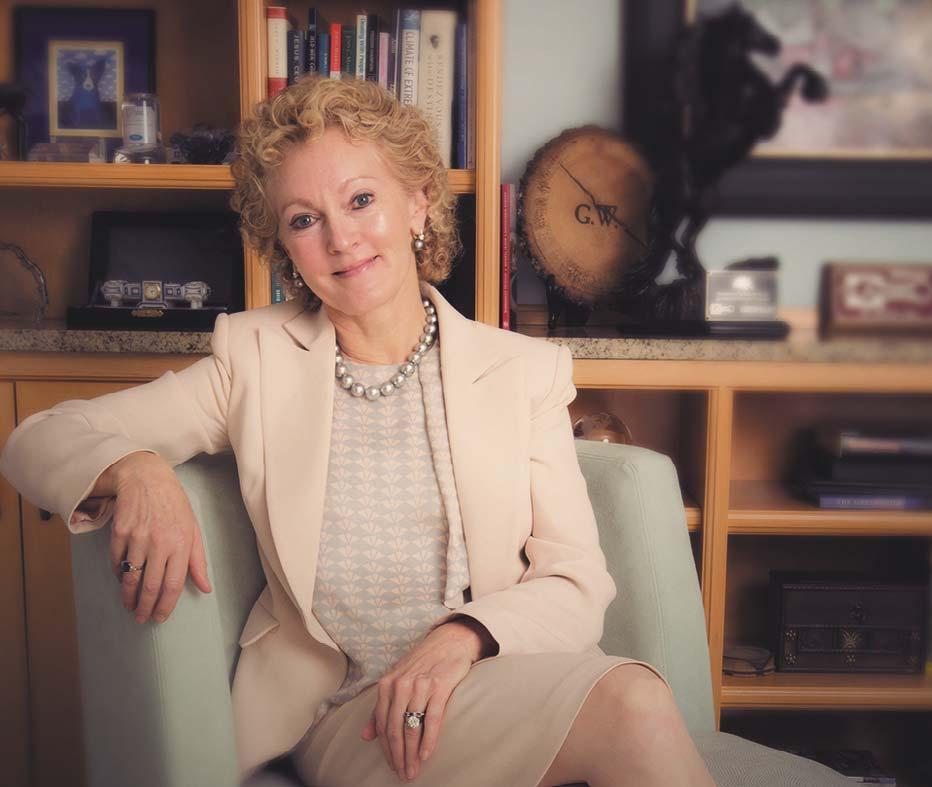
During the month of November, MVNU faculty, staff, and students raised $9,121.80 for the people of Knox County through the M2540 Knox Needs initiative. Donations benefitted the Knox County branches of The Salvation Army and Interchurch Social Services, which provide vital resources to local families throughout the year. A large amount of the money raised went toward purchasing food for hungry families in Knox County. Through the Mid-Ohio Food Bank, a gift of $1 makes it possible to purchase $8 worth of food, which can feed a family of four for up to three days. In addition, a portion of the funds was also given to help offer $100 subsidies to assist families with rent and utilities. MVNU thanks everyone who participated in this effort!

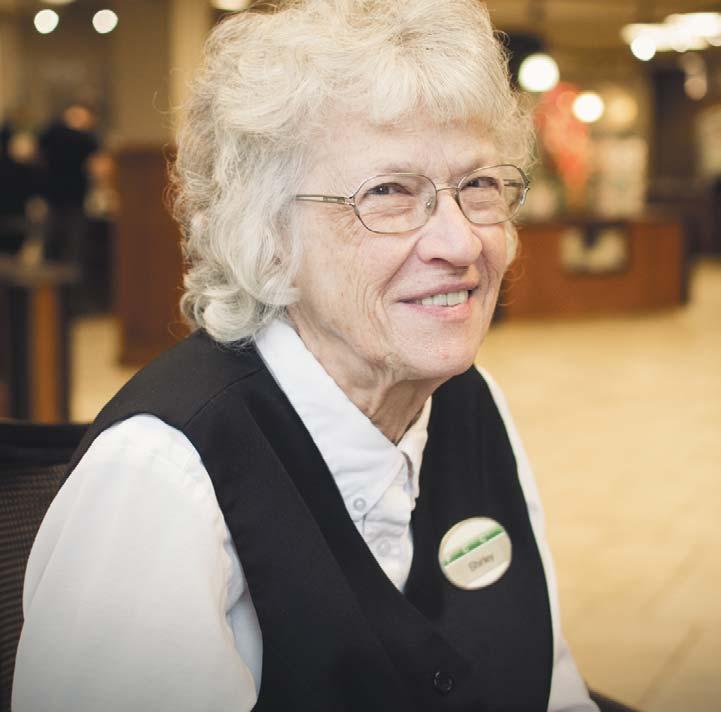
Shirley Reddick, one of the most loved and well-known faces in the MVNU cafeteria, retired on December 11, 2014, after 32 years of dedicated service to MVNU and Pioneer College Caterers. During her years working at the check-in station in front of the cafeteria, Shirley’s smiling face has seen and greeted every residential student on the MVNU main campus. She was known and loved by thousands of students, professors, and staff members who walked past her on their way to lunch every day. She has been a blessing to many people and will be sorely missed as she heads on to this new chapter of her life. God’s best to you, Shirley!
As of January 2015, the Community Foundation of Mount Vernon and Knox County has provided over $1 million in support of Mount Vernon Nazarene University. Since the inception of the University, the Community Foundation has been generous in its support of MVNU, providing numerous grants for programs and facilities.
Dr. Henry Spaulding has recently published a small book in the Dialog Series for Beacon Hill Press titled Searching for Answers: Exploring Difficult Questions About Faith and the Bible.
The U. S. Department of Education has awarded MVNU a Title III Strengthening Institutions Program (SIP) grant for the construction of a Center for Student Success. With the help of this grant, the Center will integrate divergent student learning services, incorporating them into one central administrative structure and location in the Thorne Library/Learning Resource Center. The authorized funding for the first year of the 5-year grant is $449,944.
Eric Stetler has been appointed as Director of Admissions for Graduate and Professional Studies
Dr. Brad Whitaker has been appointed Assistant Vice President for Student Success and Retention (formerly Director). Dr Whitaker oversees the center and continues to report to the Vice President for Academic Affairs.
Dr. Paul Madtes, Chair of the Biology Department, was a keynote speaker for the 1o Seminário Internacional sobre Fé e Ciência (1st International Seminar in Science and Faith), held on August 16-17, 2014, in Itaperuna, Rio de Janeiro, Brazil. His talk, titled “Living as a Christian in a Scientific World: Intersecting Faith and Science,” was presented via Skype.
Dr. Richard Sutherland, Dean of the School of Natural and Social Sciences, had one of his publications in the Journal of the Optical Society of America listed by the journal as one of 15 highly cited articles. An abbreviated title of the article is “Excited-state characterization and effective three-photon absorption model of organic push-pull charge-transfer chromophores."
MVNU’s nursing program has been awarded a 10-year accreditation by the Commission on Collegiate Nursing Education (CCNE). The CCNE, an autonomous accrediting agency, contributes to public health by ensuring the quality and integrity of nursing programs. The accreditation process included an extensive self-study and an intensive on-campus visit.
Dr. Bob Tocheff, Professor of Music, was the recipient of the Emmett Lifetime Achievement Award at the Dan Emmett Music and Arts Festival. This award is presented for recognition of excellence and dedication to the development, production, and presentation of the performing arts in Knox County.
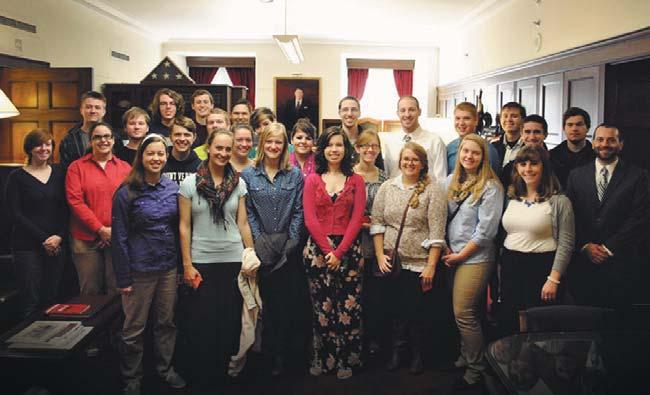
MVNU’s Honors Seminar, led by Dr. Chris Devine, took a three-day trip to Washington, D.C. for the class entitled "‘Saints’ and ‘Sacred Places’: The Presidential Landmarks of Washington, D.C." Students visited all of the major presidential landmarks, including Mount Vernon, home of George Washington; they also received a tour of the capitol building by MVNU students Chris Rednour and Johanna Kraynak who served as interns in D.C. this past fall.
Andrew Hendrixson, Assistant Professor of Art, engaged in the House Shows project this past summer and fall. He traveled around the country displaying his artwork in houses and small venues, erecting one-day galleries of his work and interacting with the public. The House


Shows project will continue throughout the remainder of the academic year.
Dr. Chris Devine, Assistant Professor of Political Science, had an article accepted for publication by Political Behavior, the journal of the American Political Science Association’s Elections, Public Opinion, and Voting Behavior section. The article is titled “Ideological Social Identity: Psychological Attachment to Ideological In-Groups as a Political Phenomenon and a Behavioral Influence.”
Dr. David Wilkes, Professor of English, published a book review of Sean Grass’s Charles Dickens’s Our Mutual Friend: A Publishing History in Review 19, an online journal at Dartmouth College.
Professor John Donnelly, Chair of the Art and Design Department, was selected to be in ARTPRIZE, an international exhibition in Grand Rapids, Michigan, with over 1500 artists selected from 47 countries. He also exhibited work in a solo exhibition titled “Layers” at The Little Gallery on Firelands campus at Bowling Green State University, which was accompanied by an artist’s talk for students. The show ran October 13 –November 18.
Dr. Dean Abbott, Assistant Professor of Communication, has had two essays published this year: one by EcoTheo Review, an online journal devoted to exploring issues at the intersection of theology and environmentalism, and one by Humane Pursuits, an online magazine addressing cultural issues for a millennial audience.
Ryan Long has been hired as the new Assistant Professor of Drama.
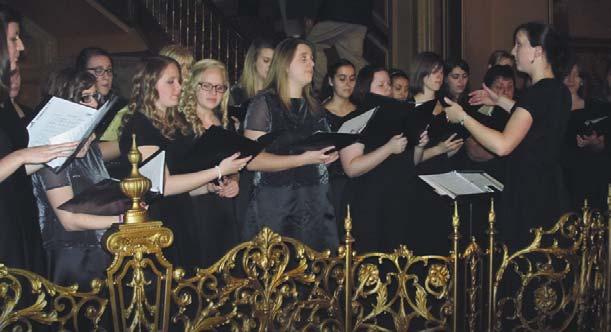
Members of Treble Singers Women's Choir and Collegians Chorale travelled to Columbus on December 18, to perform in BalletMet's production of The Nutcracker. Each year, BalletMet invites women's choirs from the central Ohio area to sing the "Snow Chorus" during the “Waltz of the Snowflakes.”
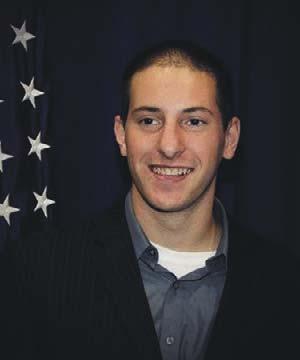
Chris Rednour, an MVNU Senior double-majoring in Political Science and History, was accepted for an internship with the Speaker of the United States House of Representatives, John Boehner. Chris spent the fall semester as an intern three days a week in the Speaker's Washington, D.C. office, while participating in the CCCU's semester-long American Studies Program. Chris is the co-founder and President of the MVNU College Republicans and last spring was reelected by the Ohio Federation of College Republicans to serve as its Central Ohio Regional Director.
Brian Baby, Adjunct Professor and Schnormeier Gallery Coordinator, received the 2014 Knox County Wellness and Recovery Champion Award on September 18, 2014, in recognition of his work to increase public awareness of the role art plays in recovery from addiction and mental health issues. During the month of September, art produced by local consumers in conjunction with Art of Recovery was displayed in an exhibition at the Schnormeier Gallery.
Where will you spend Spring Break 2016? Travel to Italy or to Israel/Jordan. For more information please visit mvnu.edu/italy or mvnu.edu/bibletrips.
You can also contact Prof. John Donnelly (donnelly@mvnu.edu) for Italy or Dr. Jeanne Serrao (cserrao@mvnu.edu) for Israel/Jordan.
Limited spots available. Open to students, staff, faculty, alumni and friends of the University.
MVNU now has a Financial Planning Concentration certified by the CFP Board. As the only Christian university in Ohio and contiguous states to offer this certification, finance majors graduating with this concentration will have fulfilled the first of four steps in becoming a Certified Financial Planner.
Paul Linhares, Adjunct Professor of Ceramics, exhibited work in the Canton Museum of Art, "An Art of Connections," from Aug. 27 - Oct. 26, and in The Zanesville Prize for Contemporary Ceramics exhibition from Sep. 27 - Oct. 12.
Dr. Melanie Timmerman, Professor of Business, had a book review of David A. Robinson’s book Some Tips to Prevent Employment Discrimination Lawsuits: A Faith-Based Legal Guide for Managers published in the Journal of Biblical Integration in Business.
Eight JSB faculty members received scholarships to attend the 2014 Free Market Forum in Indianapolis on October 23-25, 2014: Margaret Britt,
Jim Dalton, Kevin Hughes, Judy Madtes, Robert Roller, Kelly Rush, Mark Shoaf, and Melanie Timmerman. Dr. Britt presented on the topic, “Online Education: Where Are We Headed?” and Dr. Hughes presented on the topic, “How I Used Poverty Cure in the Last Year.”
Dr. Bob Roller, Dean of the Jetter School of Business, chaired a site visit team for the Accreditation Council for Business Schools and Program (ACBSP) to Freed Hardeman University in Henderson, TN. He also had a book review of Richard C. Chewning’s book Becoming Partakers of the Divine Nature published in the Journal of Biblical Integration in Business.
Ten MVNU faculty members participated in the 2014 Christian Business Faculty Association Conference, hosted by Trevecca Nazarene University: Jim Dalton, Bob Roller, Tim Chesnut, Melanie Timmerman, Margaret Britt, Kelly Rush, Wayne Yerxa, Phil Rickard, Judy Madtes, and Kevin Hughes.
Dr. Dean Goon, Assistant Professor of Education, presented a keynote speech and led multiple workshops for the faculty of Corban University in Salem, Oregon, for their faculty development week in August 2014. He worked with both the online and face-to-face faculty on instructional strategies to effectively engage learners.
Dr. Sharon Metcalfe, Associate Professor of Education, and Dr. Arfe Ozcan coauthored a paper entitled “Experiences of First Generation Immigrant Turkish Mothers with the American Public
Educational System” that has been accepted for publication in the March 2015 issue of the Journal of Educational Leadership in Action.
Dr. Pam Owen, Professor of Education, co-presented “Co-Teaching as Transformative Practice in Early Childhood Clinical Settings: Reflections from Teacher Educators” at the National Association of Early Childhood Teacher Educators Conference. She also presented a paper, “Maximizing Student Motivation: Meaningful Course Revision” at The World Conference of Learning, Teaching, and Educational Leadership.
Traditional undergraduate students in religion and ministry are now able to earn a bachelor’s degree and a Master of Ministry degree in just five academic years with MVNU’s new 4+1 M.Min. program. Students wishing to enroll in this program will apply at the beginning of their 4th year. All current MVNU religion and ministry undergraduate students with a GPA of at least 3.0 are guaranteed enrollment. Credits from this program can also be transferred into a Master of Divinity degree (M.Div.) from Nazarene Theological Seminary, all on the campus of MVNU.

Dr. Matt Price, Chair of the Christian Ministry Department, has recently published a small group discipleship book with Beacon Hill Press entitled Suit Up! Putting on the Full Armor of God
and an article in the Wesleyan Theological Journal entitled “Ordination and Power Relations: A Cultural Analysis from the Ritual Theory of Practice.” He also led training workshops with local church leaders in Church Planting Essentials on the Philadelphia District that took place May 13-16, 2014, in Ephrata, PA.
MVNU faculty members Jeanne Serrão, Carlos Serrão, Paul Mayle, Eric Vail, and Karen Higginbotham led a group of 26 MVNU students on a trip to Turkey and Greece during January 2015. On this trip, entitled “In the Footsteps of Paul,” students spent a total of sixteen days touring sites from Paul’s travels in the New Testament, including ancient Ephesus, Corinth, Thessalonica, and Antioch.
The School of Theology is collaborating with the Jetter School of Business on a dual degree: MBA/M.Min.; an MBA with a Ministry Leadership concentration and an M.Min. with a business concentration. These are all scheduled to begin Fall 2015.
MVNU hosted the Wesleyan Theological Society's annual meeting March 6-7, 2015. This was the 50th Anniversary meeting with the theme: The Past and Future of Wesleyan-Holiness Identity.
Mike King has been hired as MVNU’s new Men’s and Women’s Golf Coach.
GOD’S BLESSING ON YOUR
Dr. John Nielson – 11 years
Professor Karen Boyd – 23 ½ years
Dr. Margaret Britt – 10 years
LOO
L et MVNU be U a p ar t of your f special occasion. l
Our comfortable and inviting facilities can accommodate groups as small as 10 or as large as 1,000, and our Event Services Staff are here to help provide an excellent experience.

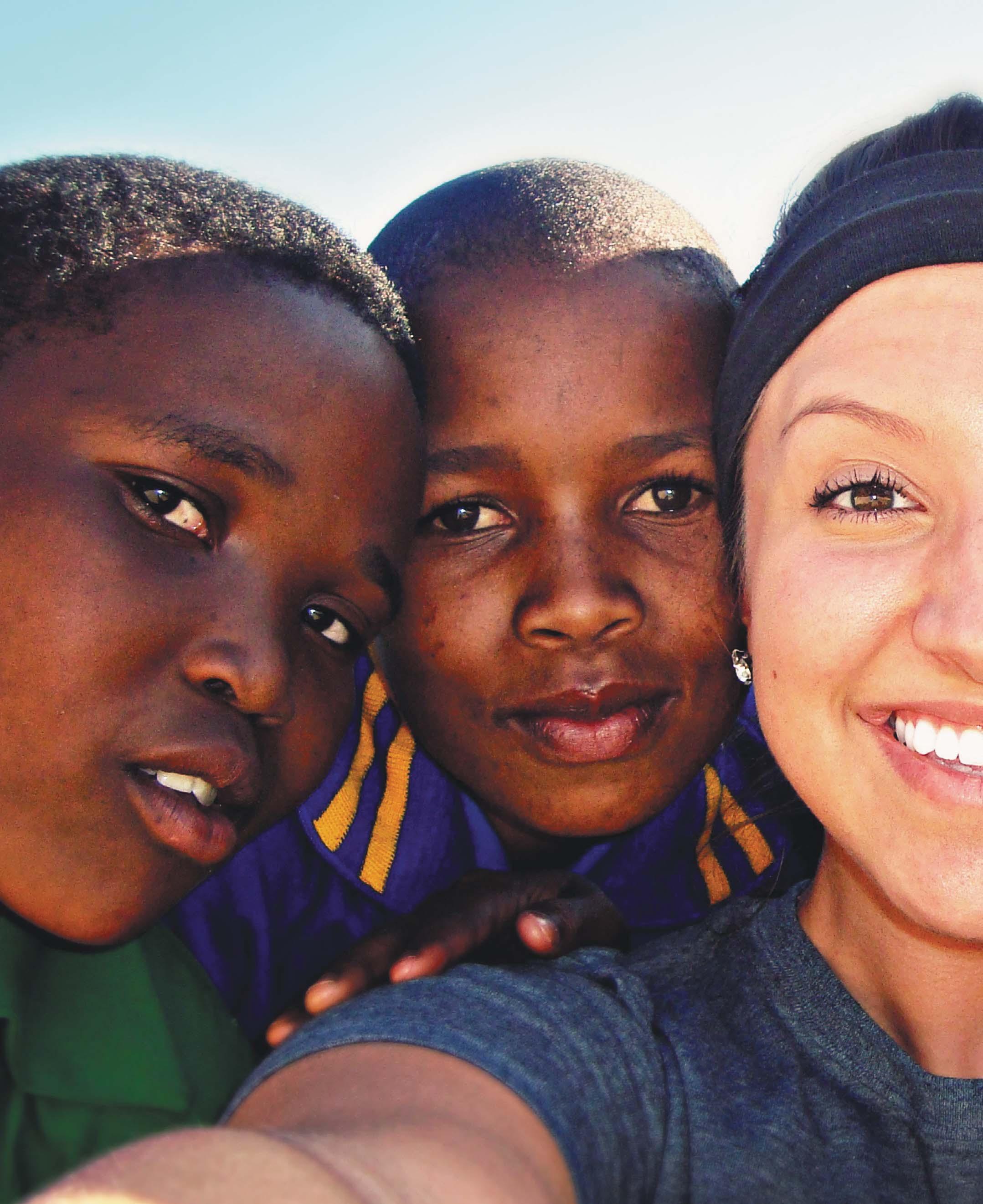
Every May, MVNU students travel to southeastern Africa. There, in the nation of Swaziland, MVNU partners with The Luke Commission (TLC), a medical mission team fighting the HIV epidemic through compassionate, comprehensive healthcare.
Students are given the opportunity to serve alongside TLC in their mobile clinics, sharing the love of Christ in tangible ways by supplying individuals in rural areas with holistic care. Learn more about The Luke Commission at lukecommission.org.
Pictured here is current MVNU senior Melissa Anderson , a nursing major.












Henry W. Spaulding II, Ph.D. President









The heritage of Mount Vernon Nazarene University is deeply grounded in the expectation and reality of transformation. Paul explores this in his letter to the Ephesians, writing, “you must no longer live as the Gentiles live, in the futility of their minds” (4:17b). He adds to this, “and clothe yourselves with the new self, created according to the likeness of God in true righteousness and holiness” (4:24). Deep within the DNA of the University we believe that human beings can be transformed. The love of Christ expels all other affections until, with a single eye, a vision for embodied redemption emerges. We are not surprised when a prayer uttered by a student results in a total change of life direction. Personal salvation is a living testimony to our most vital convictions regarding faith and life.
John Wesley, an eighteenth-century theologian, frames much of our understanding of the Christian faith. He famously said, “The gospel of Christ knows no religion but social; no holiness but social holiness” (Wesley’s Works, XIV, 321). Certainly, salvation is internal/personal, but it is also external/social. Any separation between personal and social holiness is false, because a personal relationship with Jesus Christ always reaches out toward the world. Jesus dared to touch the marginalized. Jesus cared about the poor, the sick, and those who were dismissed, or even feared, by others. The church saw the importance of caring for the needs of others from the start (Acts 2:43), and Paul thanked the Philippians for sending help when it was needed (4:16). Wesley himself speaks to the relationship between personal and social holiness:
ing, gentleness, meekness, fidelity, temperance; and if any other were comprised in “the mind which was in Christ.” In an exterior circle are all the works of mercy whether to the souls or the bodies of men. By these we exercise all holy tempers, but these we continually improve, so that all these are real means of grace, although this is not commonly adverted to. Next to these are those that are usually termed works of piety;--reading and hearing the word, public, family, private prayer, receiving the Lord’s Supper, fasting, and abstinence. Lastly, that his followers may the more effectually provoke one another to love, holy tempers, and good works, our blessed Lord has united them together in one body, the Church, dispersed all over the earth; a little emblem of the Church universal we have in every particular Christian congregation. (On Zeal, Wesley’s Works, 7: 60-61)
Wesley effectively links personal and social holiness in a manner that makes any bifurcation of the two impossible to entertain. The Church of the Nazarene was born out of a desire to see heart holiness and ministry to the poor joined together. Phineas Bresee, the founding personality of the Church of the Nazarene, addressed slavery and prohibition in his sermons. There was no possibility of separating personal and social religion for the early Nazarenes. The original Church of the Nazarene was actually a rescue mission. Just as Wesley’s desire to minister to the poor defined his understanding of holiness, it characterized those called Nazarenes.



In a Christian believer love sits upon the throne which is erected in the inmost soul; namely, the love of God and man, which fills the whole heart, and reigns without a rival. In a circle near the throne are all the holy tempers;--longsuffer-
The call to social justice is to embody holiness. Isaiah 61:8a reads, “For I the Lord love justice.” Moses exhorts those who will enter Canaan with these words, “Justice and only justice, you shall pursue, so that you may live and occupy the land that the Lord your God is giving you” (Deuteronomy


16:20). Social justice is deeply embedded in the DNA of the Judeo-Christian tradition. While there is no true justice except in the City of God, it becomes our responsibility as the Church to extend the hand of mercy to those in need.
Social justice is the initiative to extend the gospel to economic structures, environmental concerns, and political action. These words capture the spirit of Wesley, “Do all the good you can. By all the means you can. In all the ways you can. In all the places you can. At all the times you can. To all the people you can. As long as ever you can.” Wesley embodies much of what social justice means for those who call themselves Christian. A commitment to social justice means that we seek to relieve the suffering of the hungry, while addressing the policies that create poverty. It means that attention will be given to enacting laws that honor human beings and contribute to human flourishing. Such a commitment to social justice requires that worship sound a note heard outside the sanctuary. Daniel Bell writes, “At the center of the Christian faith stands a supreme act of justice and liberation. Jesus Christ is the justice of God who liberates humanity from sin. More specifically, the heart of the Christian gospel is the good news of the justice of God as that justice displayed in Christ’s work of atonement” (The Blackwell Companion to Christian Ethics, 187). It is out of this good news that justice can emerge as a testimony to the faithfulness of God to humanity. Paul writes, “For our struggle is not against enemies of blood and flesh, but against the rulers, against the authorities, against the cosmic powers of this present darkness, against the spiritual forces of evil in
the heavenly places” (Ephesians 6:12). A full understanding of social justice requires that we see justice as more than an economic, environmental, or political agenda. It is precisely the spiritual dimension of life that sets the agenda for a Christian understanding of social justice.


A full understanding of social justice requires that we see justice as more than an economic, environmental, or political agenda. It is precisely the spiritual dimension of life that sets the agenda for a Christian understanding of social justice.
Social justice is reflective of clear-headed theology, but it is also incarnated in specific ways. When MVNU students volunteer at Columbia Elementary School, the gospel takes shape. When students travel to Belize to offer resources for schools, it is a manifestation of the Great Commission. When students with limited resources give so that those suffering with AIDS in Swaziland might have the hope of a better life, it comes as an act of true discipleship. Around the world the Church ministers to unwed mothers, people in the grip of poverty, the hungry, those addicted to alcohol and drugs, and those in need of an education. Schools are erected, hospitals built, and homeless shelters provided in order to serve the cause of Christ. Social justice begins as a tear in the eye of the compassionate, but it ends with the calloused hand of the faithful on behalf of the broken and abused.
Social justice may be a catch-phrase these days, but it has always been a part of the DNA of the Holiness tradition. Wesley married personal and social religion. He was most afraid that faith would be nothing more than private or mystical, so he consistently taught that we live out our faith with others. We are accountable to one another. These days, college students are looking for the kind of faith that drives them toward the hurting and broken of the world, a faith that necessarily embodies itself in the compassionate care of others.


Megan Ashley & Luke McCusker
The usefulness of the vegetable oil that cooks chicken tenders, French fries, and other crispy foods in the MVNU cafeteria extends beyond the kitchen. It is taken by the University and repurposed into biodiesel fuel.
In 2008, Denny Taylor, Director of Facilities Management and Campus Safety, compiled a list of initiatives to help reduce MVNU’s environmental impact. One such initiative called for the University to reuse the waste vegetable oil (WVO) from Pioneer College Caterers by converting it into biodiesel fuel. Facilities Services purchased a biodiesel processor from homebiodieselkits.com, and, on a snowy presidential inauguration day in November, 2008, a mix of MVNU-produced biodiesel and regular diesel fuel powered one of the University’s sidewalk snow plows.
Fast forward to 2015, and the repurposed cooking oil from the cafeteria and the 586 Café is still being converted into biodiesel. Pioneer no longer has to pay a fee every
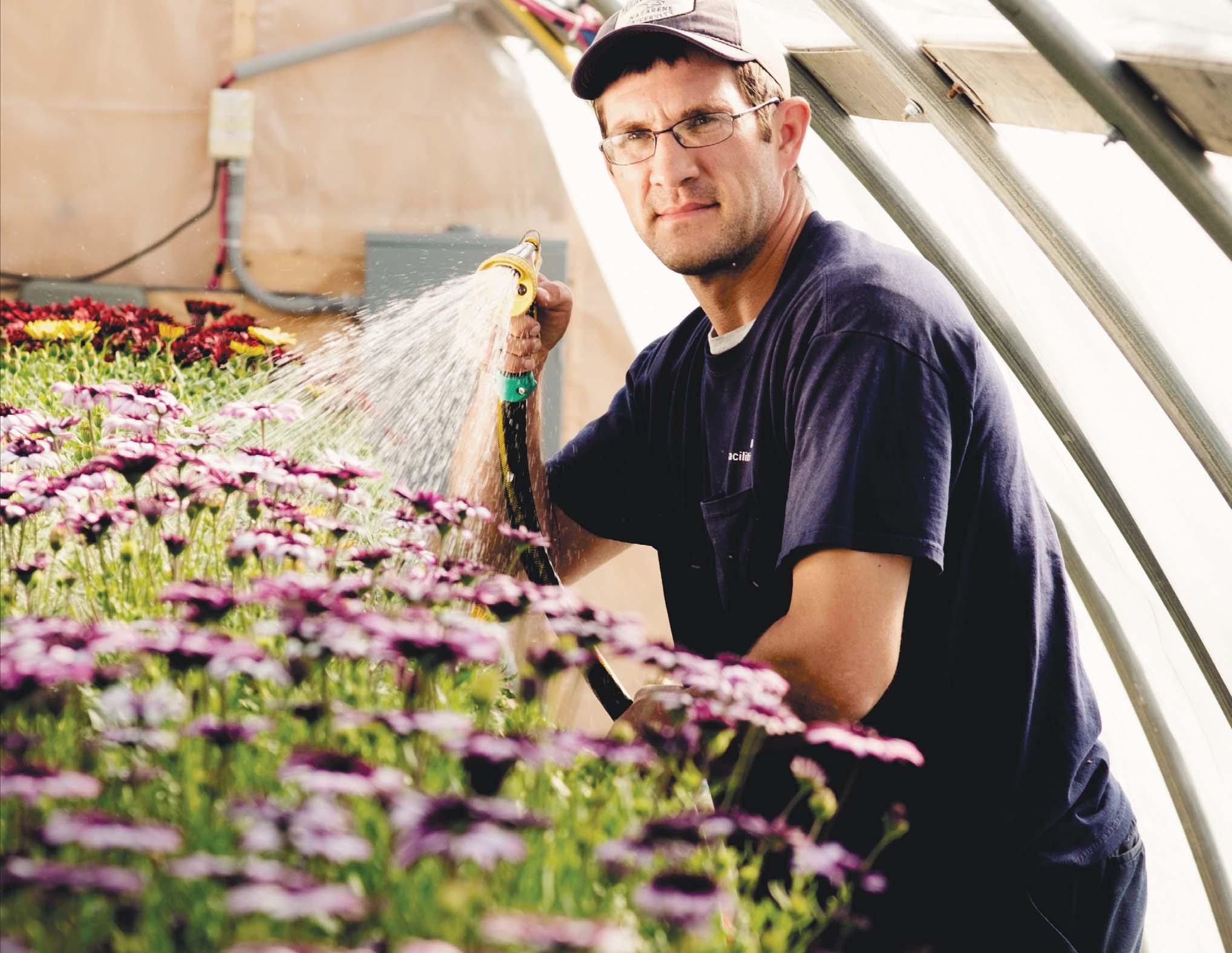
month to dispose of its used oil, and MVNU can manufacture 90 gallons of biodiesel at a time for only $1.00 per gallon, a savings of over $2.50 for each gallon produced. The fuel is used to power a greenhouse on campus, which has to be heated four to five months out of the year. With biodiesel burning in the greenhouse boiler, the flowers and plants for MVNU’s annual Blue/Green Day can be grown in an economically and environmentally sustainable way.
MVNU’s environmental initiatives don’t end there. The campus recycling program has taken off in recent years, with the recycling trailer now needing to be swapped out every 3-4 weeks instead of every 6 weeks. As environmental awareness grows, students, faculty, and staff are recycling more than ever. By focusing their efforts on reducing the environmental impact of MVNU, Facilities Services is saving money, being green, and challenging the next generation to do more with less.
Mike Vayda
“Mike! Over here—and stay out of the way!”
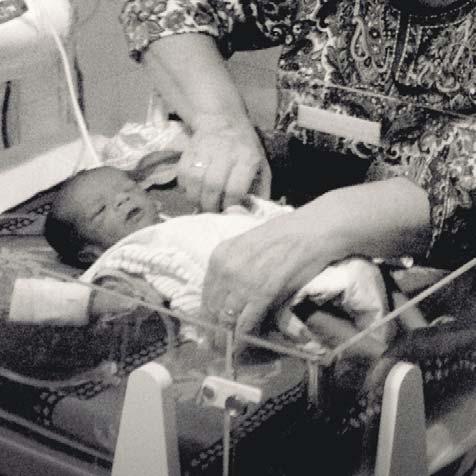
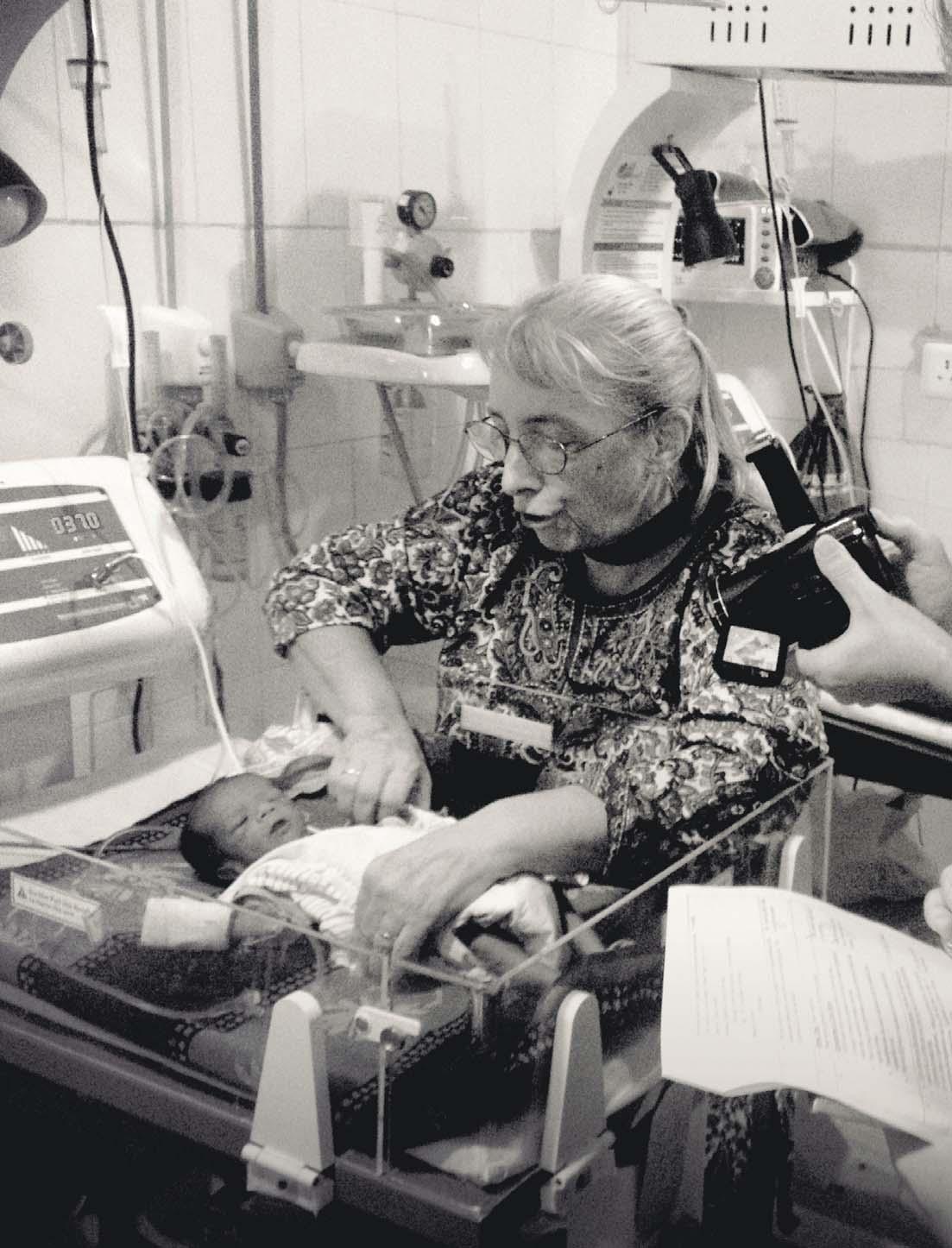
I am in a hot, crowded, noisy neonatal intensive care unit in northern India. Three nurses have just scurried in. One of them is cradling a tiny baby girl. The little body comes into focus on my video camera. She’s not breathing.
After calling to me, Wendy Cowles, an American nurse practitioner, calmly gives orders to the Indian nurses amidst the chaos. I raise my camera up high above the din and watch through my screen. I am filming either a miracle of mercy or the end of someone’s life. I’m a long way from Ohio. Once again, I remember how I got here.
Growing up as a preacher’s kid, I considered myself prenatally Christian. But back in 2006, I stumbled on a story in Luke 18 that changed the way I lived my faith.
Jesus is walking on a road, followed close behind by a large group of people. Some are true believers, some enemies, many just along for the ride. There is excitement in the air;
this man is on the most important journey in the history of mankind, a path to literally save the world.
Suddenly, a faint voice from the side of the road calls: “Have mercy on me!”
It’s a noisy group, so the voice is easy to miss. Yet it continues: “Jesus, Son of David, have mercy!” Eventually, everyone hears it. Many ignore it. Some drown it out. Others, the closest followers of Jesus, actually tell the man to shut up. But the voice, annoyingly, persists.
“Have mercy.”
Then, a ridiculous thing happens: Jesus stops walking. (I imagine a comical scene where everyone following him bumps into each other, one after the other.) Rubbing their hurt noses, they stare as Jesus actually halts his galaxy-changing agenda and calls to the man.
Reading it, I was as stunned as those people must have been. Why in the world would he stop? If there was ever a
reason to stay on your path, wouldn’t this be it? And yet, inexplicably, he pauses for one person. For mercy. That passage really bothered me. I was on my own path, like Jesus was on his. Granted, his was more important, but I was hard at work raising a family and being a good businessman. Yet, he stopped for mercy. Was there something I should be stopping for too?
It reminded me that Jesus promised a life more abundant—a life to the full. My life was full, alright. But it wasn’t meaning-full. If I kept going on the path I was on, what would I truly accomplish? What would be my mark on the world?
And that’s how I found myself on a medical mission trip to India. I had offered to make a video chronicling the trip, hoping maybe somehow this would be enough of a “pause for mercy” that I could get back to my life.
Throughout the trip, I watched as people, Indians and Americans, gave healing and health, saving babies who would otherwise die. It certainly made the path I was on seem less important than I had thought.
I came back home and tried to pick up where I left off, but something had changed.
babies die. Did you know, for example, that every day over 16,000 children die from causes we already have the cures for?
Even though most of the reasons were totally out of my control, I quizzed Wendy, the American nurse, on what I could do. What if I could use the video camera to help her educate mothers, nurses, and doctors? Together, we started to create culturally appropriate health training. My way of giving mercy was helping educate the people who could help the most.
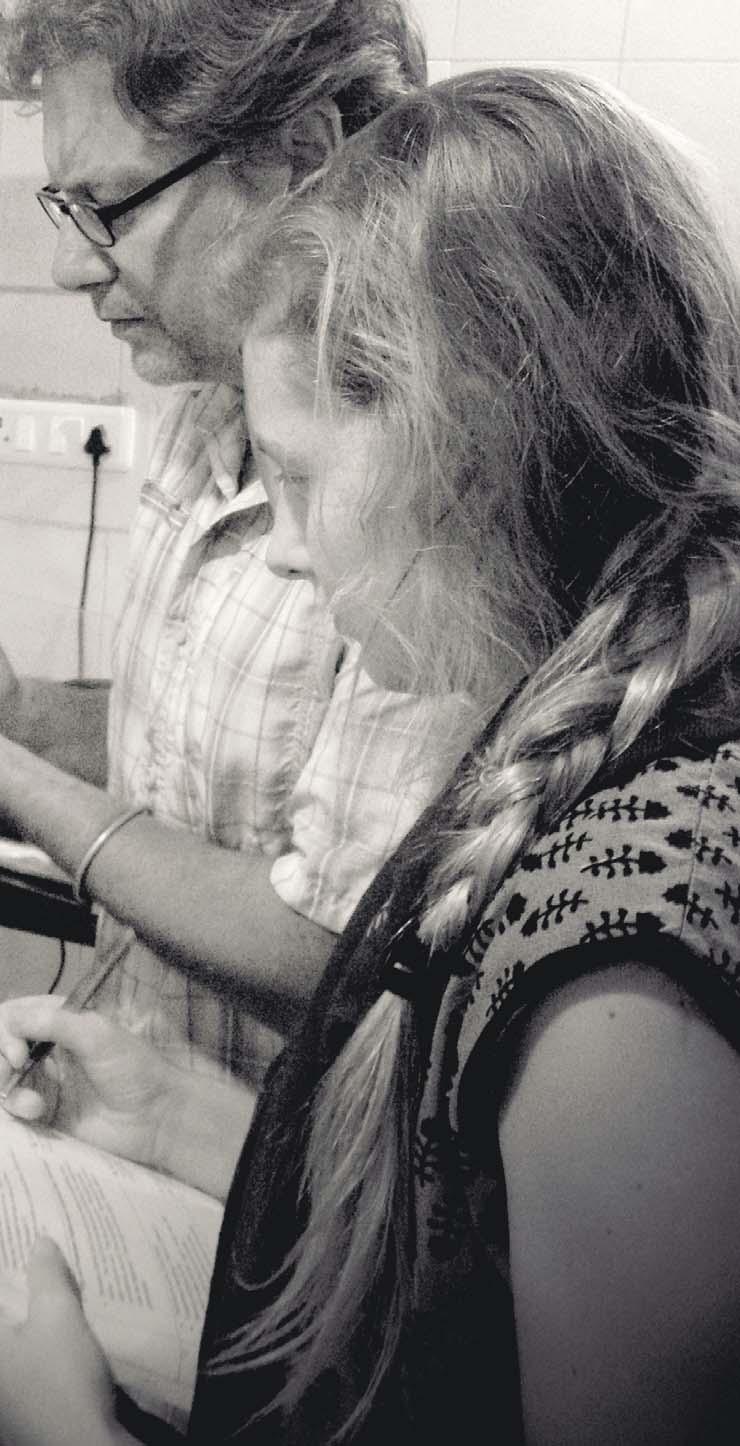
I spent my spare time researching the causes of poverty and why so many

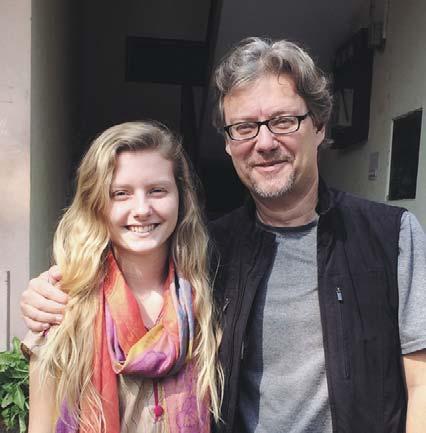
Since then, I’ve made seven trips to India. I’ve had the privilege of my children joining me. Zack and Jake have provided assistance and, hopefully, learned about giving mercy. And in November 2014, Brynn was with me as we watched the life-and-death drama unfold.
“Come on, honey. Breathe.” Wendy is speaking quietly to the lifeless baby. The seconds tick by. Finally, the little girl chokes, coughs, and wails. She’s going to live.
I turn to Brynn. The parents of that baby girl care just as much for their daughter as I do for mine. Creating this curriculum with Wendy will make a difference for parents and children. Mercy is simply giving to others what I would want for myself.
Since 2006, the path of my life has really changed. My priorities are different; my perspective, passion, and purpose are focused in a far better direction, simply because I made a space for mercy.
Last year, we were researching college options for my son Jake. Walking into the MVNU chapel, we saw posters about social justice. It was one of the factors in Jake’s decision to attend MVNU. And, next year, Brynn may also step foot onto the MVNU campus as a freshman. It is my hope that MVNU’s commitment to the whole gospel, to justice and mercy, will help equip my children for a life’s journey of making a difference.
Each of us is on a path in life: We all have goals and dreams. It’s very hard to hear in our noisy society, but there is a still, small voice that cries out from the sidelines. “Mercy,” it whispers. Like the people in the Luke story we can ignore it, drown it out, or tell it to shut up.
But, what if…we stopped for that voice, just like Jesus did? I’m very glad I slowed down to listen.




Globally, 1 in 6 males and 1 in 4 females are sexually exploited before the age of 18.



In 2013, there were 3,609 reported sex trafficking cases inside the United States



100K American children are being exploited through pornography or prostitution every year The average age a child is first exploited through prostitution is 13
= 10,000 MEN, WOMEN OR CHILDREN


48% of kids who engaged in commercial sex said they did it because they didn’t have a place to stay


The buyers of sex : professionals, students, tourists, military personnel, a family member, professional athletes, business leaders, or politicians.
The recruitment, harboring, transportation, provision, or obtaining of a person for the purpose of a commercial sex act, in which a commercial sex act is induced by force, fraud, or coercion or in which the person forced to perform such an act is under the age of 18 years old.



The recruitment, harboring, transportation, provision, or obtaining of a person for labor or services, through the use of force, fraud, or coercion for the purpose of subjection to involuntary servitude, peonage, debt bondage, or slavery.

































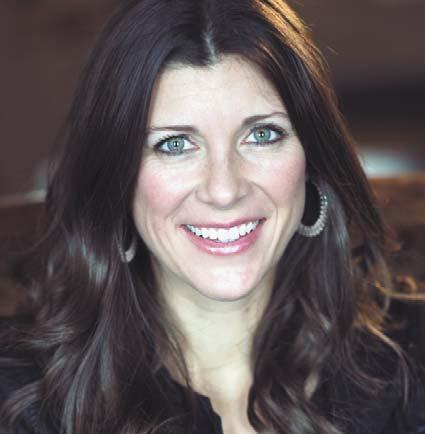
When I was seventeen, I heard the story of a child who was forced to give up her bodily freedom on the streets of her own community. An unusual man had approached her one night. He brought her to his hotel, gave her something to eat, and let her watch cartoons. “I care for you,” he said, “and I want you to have your childhood back. You deserve to have someone fighting for you.” Her story breaks God’s heart, and it broke mine. I saw myself in that girl, longing to restore parts of my
own childhood that had been lost in other ways. I wondered if I could find healing through caring for people like her. At that moment, a passion was born in me, but I didn’t know how I would pursue it. Then, as I made plans for college, I realized that going to school could be about much more than just getting the job I wanted—it could set me on a path to a life greater than I could imagine. I simply needed to take the first step.
For me, college was about curiosity more than curriculum. MVNU gave me freedom and space to explore and to ask questions, as well as the structure I needed to prepare for the rest of my life. (I love that about school— it readied me for situations I couldn’t imagine until I encountered them.) Ultimately, I settled on a degree in Christian education and social science. I learned broadly, assimilating information and skills from numerous disciplines that would serve as a foundation for a number of future opportunities, including a vocation in youth ministry.
I couldn’t see it at the time, but the Holy Spirit was doing important work in me as I stepped into my first pastoral role. My education had prepared me to press on when I didn’t have answers, only more questions. For fourteen years I used the unique skills and capacities born in my education and relationships at MVNU to follow God’s call on my life— leaning into stories of pain and hardship that should never have happened. As I became aware of the needs of the world, prayer and advocacy became increasingly important. I began to write, speak about, and journey with teenagers to places of social transformation. I hoped to show them how love could enter the world through prayer and compassionate action. I started teaching seminars at youth ministry conferences and pushed for new ways to make justice a bigger part of youth ministry. Whole youth ministry cannot ignore spiritual formation, walking with the wounded, and social transformation.
When the global church called me to discuss a new priority in the denomination—justice advocacy in youth ministry through Nazarene Youth International and Nazarene Compassionate Ministries—it truly felt like the culmination of all God had been doing in
my life for the past eighteen years. God says that he is able to do so much more than all we ask or imagine, so it shouldn’t come as a surprise when he does it in us. Impossible dreams have been made possible; God has done more than I could have imagined.
Soon after that, I accepted a new role that had never existed before, teaching and developing social justice strategies to heal the wounds of the world. This is a new journey for me; it has meant walking away from the comforts and successes of traditional youth ministry and into a place of total trust and humility. And even though my questions are more numerous than my answers, I am confident. God has prepared me for this moment. I am privileged to help church leaders around the world invite their young people into the places where Jesus makes his home—among the poor. I am privileged to be a voice that encourages the church not to be satisfied with simply worshipping on Sundays and shopping at the mall on the weekends. We must love those in need, because the things that break God’s heart should break our own.
God used every nuance of my education to prepare me for this journey, to bring these passions of spiritual formation and compassionate action together in the heart of youth ministry. It has been exhilarating (and terrifying) to step out into the unknown. But I am confident that this is what God has prepared me to do. In just a few short weeks, we will launch a global justice movement in the Church of the Nazarene. At Nazarene Youth Conference, the same event at which God revealed his purpose for my life, I will challenge another generation to compassionate action. We will take what we have learned working in various regions and communities and create a space where it is safe for students to begin their own journeys of curiosity and trust. We will introduce them to a movement, a resource, and a campaign that will allow them to unleash their passions. The curriculum and the events we are creating are not U.S. centric—they are global. I believe in whole youth ministry, and I believe in the whole church. I pray that God will use this new journey to interrupt the cycles of loss in the world and to provide the church with a vision of unprecedented life and freedom. I believe teenagers and young adults can do great things. They are the church of today, and we need them. The justice movement is what I’m giving my life to, because there is more to youth ministry than a curriculum: there is an incredible call to unleash our holy imaginations in the world by mobilizing the church to love and give as Jesus did.

be important to us?
BRENITA
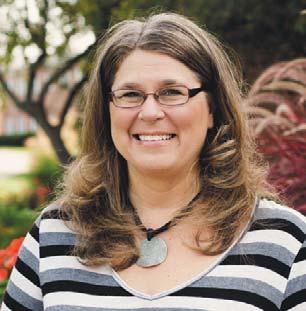
NICHOLAS Professor of Social Work
Social justice should matter to Christians because it matters to God. As Jesus announces his public ministry, justice is central:
“The Spirit of the Lord is on me, because he has anointed me to proclaim good news to the poor. He has sent me to proclaim freedom for the prisoners and recovery of sight for the blind, to set the oppressed free” (Luke 4:18 NIV). And, Jesus instructs us to join him. Doing the work of justice is being obedient to Jesus’ command that sums up all of scripture: “‘Love the Lord your God with all your heart and with all your soul and with all your strength and with all your mind'; and, 'Love your neighbor as yourself’” (Luke 10:27). Through deep encounters with some of the world’s most vulnerable children and families, I have learned that social justice is about balance, equality, and a restored humanity. Many people today live under the weight of discrimination and without basic necessities. God sees their pain, cares deeply for them, and calls us to engage in acts of justice by meeting their needs and providing food, clothes, shelter, and care for the sick (Isaiah 58:7; Matthew 25:31-46). But our call to social justice as Christians, moves beyond providing sustenance or relieving symptoms. We must identify the root causes of poverty, hunger, and powerlessness. All people deserve the opportunity to reach their God-given potential unfettered by these conditions. As Christians, we are called to break the chains of injustice, rid the world of exploitation, and free the oppressed (Isaiah 58:6). To obey God, therefore, is to care about social justice.
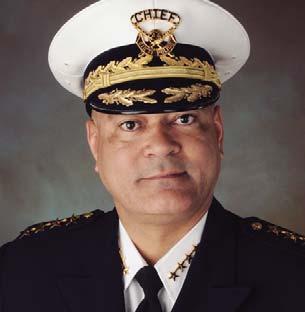
JEFF BLACKWELL, ’06 Cincinnati Chief of Police
Christians have a God-given responsibility to impact and enhance the societies in which we live, and social justice is directly connected to all the other branches of our society. As Chief of Police of the Cincinnati Police Department, I don’t just work on criminal cases with the other members of the police and emergency departments. I am also involved in community engagement activities, constitutionally equitable policing, education opportunities, and healthcare; I fight childhood poverty and address the “No Snitch” mentality and urban violence as a whole. Some of these areas of engagement may seem to be outside of my normal impact zone, but they’re not. We all need to have the energy, courage, and conviction to become relentless workers for social justice. We must allow God to direct our paths, and we will soon see how he uses us to make our neighborhoods, cities, states, and our nation a better place for us and for future generations.
MVNU
In the beginning, God created everything and said it was good. However, this goodness was perverted when humanity fell into idolatry and corrupted the love that God gave to them. When God created humanity, He wanted to enter into a covenantal relationship with them, but that was fractured by the love of things other than God. This perversion of love has led to cycles of brokenness that result in many atrocities being committed around the world. The results of such brokenness can be seen all around us—through homelessness, broken relationships, abuse, unfair wages and work conditions, and sexual exploitation. In the larger global sphere, we see genocide, child soldiers, human trafficking, inequality, hunger, poverty, and so on.
Through the coming of Christ, God began His reign and invited humanity to help usher the Kingdom of God to earth. In the Lord’s Prayer, Jesus taught His followers to pray, “Your kingdom come, your will be done, on earth as it is in heaven.” It is clear that we are meant to take part in bringing shalom to the world; we must help create God’s kingdom and restore things to how they were intended to be. Social justice is one way that we can take part in this ongoing activity of reconciliation and redemption. As a member of the Wesleyan-Holiness tradition, I am quick to remember the words of John Wesley, who said that there is no holiness but social holiness. If we are to live holy lives, we must be participants in social justice. Holiness is about loving God, loving others as yourself, and loving creation. In order to do this, we must take part in social justice. When I think of social justice, I cannot help but think of the countless verses in Scripture that command us to look after the poor, widowed, orphaned, and alien in our land. I also reflect on the words of Jesus in Matthew 25:40, which read, “And the king will answer them, ‘Truly I tell you, just as you did it to one of the least of these who are members of my family, you did it to me’” (New Revised Standard Version). So why, as Christians, should we be concerned about social justice? Because that is truly the way of a follower of Christ. If we claim to follow Christ, then we must build our lives around caring for others in our communities; which, at its core, is what social justice is all about.
“He has told you, O mortal, what is good; and what does the Lord require of you, but to do justice, and to love kindness, and to walk humbly with your God?” (NRSV). If this verse isn’t a straightforward charge from God to seek social justice, then I don’t know what is.

“This is where they stand almost every night; the boys stand over there and the girls, over here.” I was taking a walk in the Tondo area of Manila, Philippines, with a 16-year-old friend of mine—let’s call him Pitoy—who was giving me a tour of his neighborhood. Like many people in his community, Pitoy slept on the street and did whatever he could to earn enough money to take care of his aging parents and allow his younger siblings to go to school. Pitoy was describing to me his “former work”: He and other young children from his community would support their families by waiting in the plaza late at night for adults to offer them food or a small amount of money in exchange for sex. This is a common occurrence in Pitoy’s neighborhood, with children as young as eight years old regularly and visibly being solicited for sex in the plaza.
Stories like Pitoy’s are challenging and provocative, but we almost never hear them. Despite the vast complexity of the global issue of human trafficking and exploitation, the
common understanding and communication of it is often quite simple, coming from quick video clips, provocative Instagram images, and pleas for justice crafted to fit into 144 characters or less. While simple communication like this is useful in helping a mass audience understand important social issues, it often fails to convey the real depth of trafficking and exploitation.
If you want to see what I mean, do a Google image search for “trafficking victim.” Most, if not all, of the pictures you see will be of women and girls, some bound with ropes, some in shackles, and others with hands covering their mouths, all depicted as helpless, vulnerable, and voiceless. While these pictures may be helpful and meaningful, they belie one very important truth. The injustice of trafficking and exploitation is not only a female issue. It is a deeply human issue—one that reaches far beyond gender, race, class, and sexual orientation; yet, the anti-trafficking dialogue often overlooks this reality.
For the past several decades, the growing conversation about trafficking and exploitation has been largely focused on
women’s rights. While it is certainly true that a large number of victims are women and girls, all children, regardless of their gender, are at risk of sexual exploitation. The conversation taking place around the globe must be extended to encompass all areas of human rights. By framing the anti-trafficking movement solely as a women’s rights issue, we risk amplifying social and cultural stereotypes that men and boys are somehow invulnerable to sexual exploitation, abuse, and violence. Because of this misconception, the efforts of organizations and individuals striving to reach out to male survivors are often deeply under-supported. Boys and men who have been raped, abused, or sexually exploited often have few resources available to meet their needs.
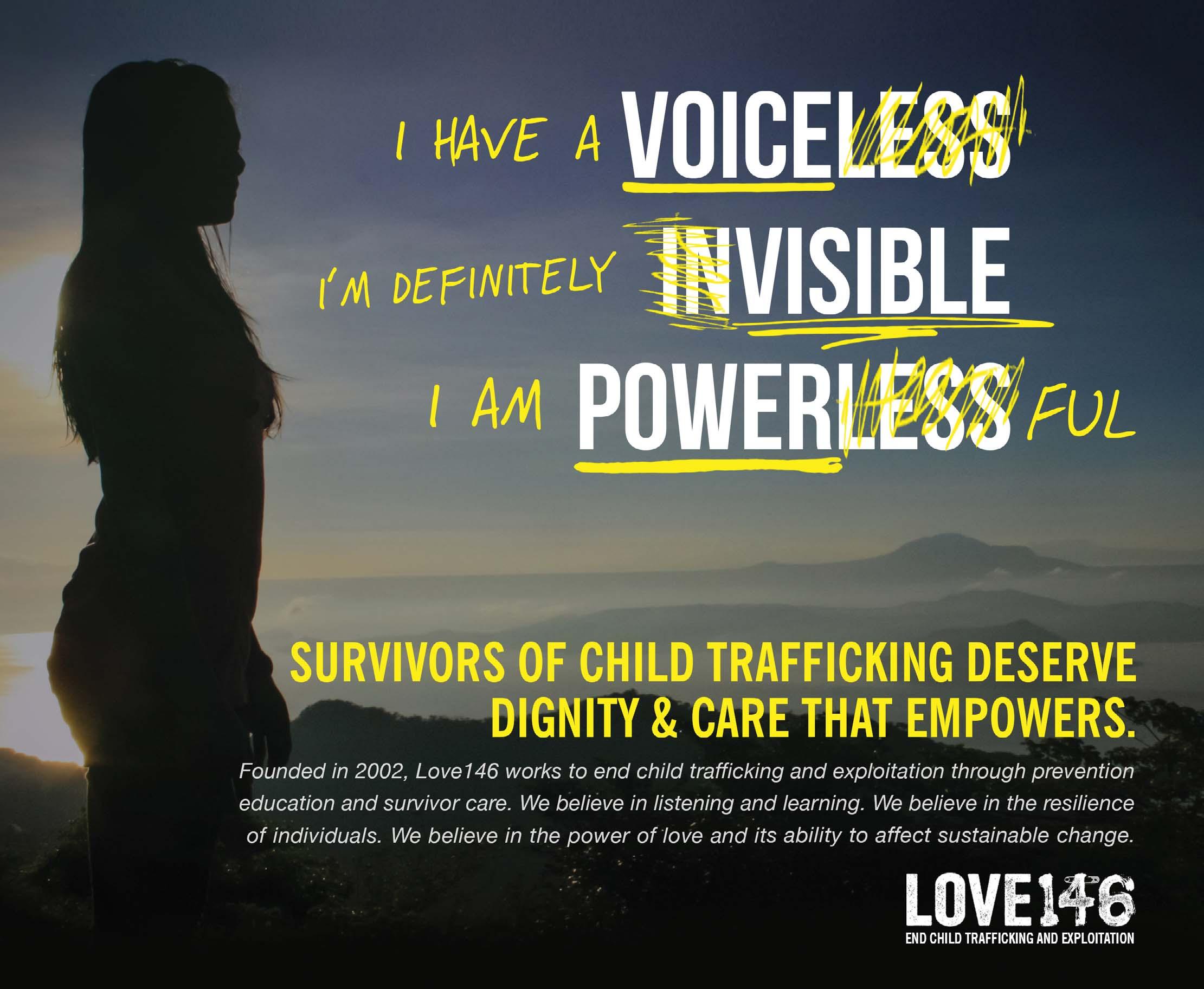
Internationally, one out of every six boys is sexually abused before reaching adulthood. In some nations, the exploitation and abuse of boys far outweighs that of girls. For instance, in Sri Lanka, it is estimated that as many as 90% of the victims of sexual exploitation are boys. However, despite this fact, the victimization of men and boys remains misunderstood and commonly ignored in the larger conversation. Similarly, research on trafficking and exploitation has almost exclusively focused on the needs of women and girls. What studies do involve males, generally focus on sexual health, namely HIV, seeing males as responsible for the spread of disease, rather than as human beings who are, in fact, vulnerable. For me personally, developing and communicating a deeper, more comprehensive understanding of trafficking and exploitation has been my passion. Over the past three years, I have worked as a social researcher and consultant for an international human rights organization called Love146 that works to end child trafficking and exploitation. A core part of this work has involved leading a series of baseline studies in key metropolitan areas across the Southeast Asia region that explore the ways that young men, boys, and transgender persons are vulnerable to exploitation and violence. Most recently, we have been looking at the exploitation of boys who live or work on the streets in Cambodia, Thailand, and the Philippines.
So far, the findings have been staggering. In Manila, Philippines, as many as half of the boys on the streets (47%) have disclosed sexual abuse by adults; in Kampong Som, Cambodia, more than a third (38%) have disclosed the same abuse. More than one in every four boys in both the Philippines Alumnus, Jarrett Davis is the
and Cambodia disclosed being prostituted for food or money, and about one in every two have disclosed instances in which adults have shown them pornographic materials, a common indicator that they are being groomed for further sexual abuse.


Our earlier studies have explored the vulnerabilities of young men and boys working in the entertainment industry in Chiang Mai, Thailand; Siem Reap, Cambodia; and Manila, Philippines, as well as the vulnerabilities of transgender persons working in the sex industries in Phnom Penh, Cambodia, and Bangkok, Thailand.
The reality is that global trafficking and exploitation is multifaceted and complex. Because of this complexity, it takes nothing less than a massive, interdisciplinary, and collaborative effort to begin to make any measurable progress against its expansion. Governments, non-profit organizations, for-profit businesses, faith communities, and gender rights advocates must all have a voice in the conversation. Together, we must fight for an understanding that preserves human dignity and protects all who are vulnerable, regardless of gender, race, or any other categorical distinction.
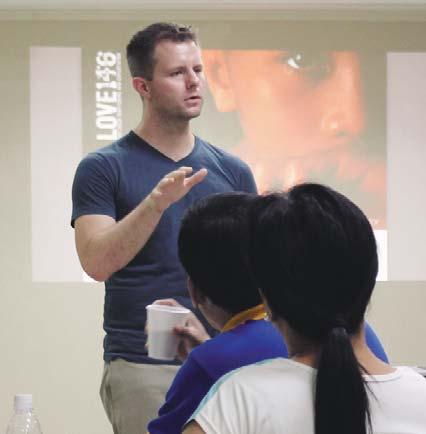

These are just a few of the unique job opportunities that Engineering majors have open to them after graduation. MVNU Engineering may be the right career choice for you or someone you know.
gotomvnu.com/engineering
than two


If you have completed some coursework in criminal justice, this is the degree you need to take your education to the next level. Flexible and convenient, this is an education designed for you.






















Every year, families in Knox County go hungry. This fall, as the November cold set in, MVNU faculty, staff, and students came together to help their neighbors. Through the M2540 Knox Needs initiative, MVNU raised $9,121.80 for those who needed it most. The sum has been handed over to The Salvation Army and Interchurch Social Services. It will be used to provide food and other vital resources to local families. MVNU’s digital photography students captured these images of what rural poverty might look like.




General Information: polarisproject.org
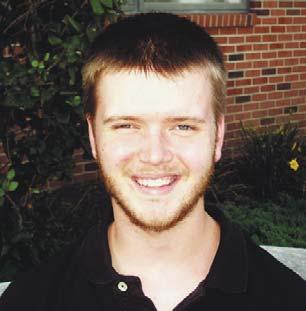
Katie Scott MVNU Senior, Public Relations
I am a middle-class woman attending a liberal arts university. Back home, I live in a safe, rural neighborhood with my close-knit family, wonderful friends, and supportive church body. I drive a nice car, my closet is full, and I think nothing of purchasing a $4 coffee when it is cold.
Social justice is a hard topic for me to address.
After Jesus Christ rises from the dead, he confronts Peter, the man that had denied knowing him before his crucifixion.
shadowontheheartland.com | centralohiorescueandrestore.org
Jesus asks Peter if he loves him. Peter says, “Yes, Lord, you know that I love you.” Jesus asks him twice more; each time Peter answers affirmatively, and each time Christ commands him, “Feed my lambs,” “Take care of my sheep,” “Feed my sheep” (John 21:15-17). When I read these words, I cannot help but feel that Jesus asks the same of me and of every Christian. He loves and cares for his people, and he calls me to love and care for them also.
It is often assumed that human trafficking is only a concern for impoverished populations or that it only happens in other countries. In reality, the United States is both a major location of kidnapping and trafficking and a prominent destination for international traffickers, both for sex and labor. In 2013, there were trafficking cases reported in all fifty states. The city of Toledo, Ohio, only three hours from Mount Vernon Nazarene University, is one of the top five sites in the U.S. for sex trafficking.
In Ohio, one out of every three runaways missing for two weeks or longer is likely to be pulled into the sex trade (Shadow on the Heartland). Often these girls come from circumstances of previous abuse, so when a pimp—a human trafficker—offers them a better life, they take it. The pimp could be a man or a woman. He or she might tell the victim about a job opportunity that could lead to independence from their family. Once the victim begins prostituting, the pimp takes any money he or she makes to cover the “debt” of the pimp providing shelter and food. Alternatively, the pimp might initially hide his identity and pursue a seemingly innocent romantic relationship with the victim, creating an emotional bond that that she will struggle to escape even after discovering that she is to be prostituted. Manipulation is essential to the success of this crime.
The circumstances of trafficking cases and the tactics used to traffic vary widely, but the definition of the crime remains constant. According to the Polaris Project, a national organization fighting trafficking, “any minor under the age of 18 years induced into commercial sex is a victim of sex trafficking—regardless of whether or not the trafficker used force, fraud, or coercion.” Actual movement of people does not have to occur for the crime to be considered trafficking. People are trafficked from every socioeconomic class and from every part of the world. And though the majority of victims are young girls, boys are trafficked as well.
Human trafficking is one of the largest criminal industries on the planet, second only to drug trafficking and on par with illegal arms trafficking. Of the three, human trafficking involves the least risk because the sexual services of one victim can be sold over and over, and the perpetrator never needs to pay them. The average age of entry into sex trafficking is thirteen. Trafficking commonly occurs at fake massage businesses, residential brothels, strip clubs, and hotels and motels; in public, on city streets, and in truck stops; and in the form of online escort services.
What can we do to help? Know the signs of trafficking and call the national hotline at 1-888-373-7888 if you suspect someone is being trafficked. Donations to recovery organizations are also critical. Victims need around-the-clock care to heal from such physical and emotional abuse; the annual cost to care for one teen per year is about $112. Many of these organizations also welcome the help of volunteers. Ultimately, though, the most effective action a person can take is to educate themselves about the issue and then educate others. For more information about trafficking globally, domestically, or in your region, visit one of the sites listed at the end of this article.
A child’s innocence should never be stolen. That is why human trafficking breaks my heart. Anyone can empathize with victims of social injustice, but to respond with appropriate action requires will, education, and effort. Do research, watch films, read personal stories. Remind yourself of the suffering of others. Choose to connect and respond. Help Christ care for his sheep.
INSTRUMENTAL ENSEMBLE CONCERT
MARCH 31 / 7:30 PM R. R. HODGES CHAPEL
ACSI SPEECH MEET
MARCH 17
BREAKAWAY
APRIL 9-10
MAY
FINE ART SENIOR EXHIBITION
RECEPTION I
MAY 1 / 6-9 PM
SCHNORMEIER GALLERY
JUNE
DARLENE YEAGERTORRE & DOUG NEESE EXHIBITION RECEPTION
JUNE 5 / 6-9 PM SCHNORMEIER GALLERY
APRIL 24 / 6-9 PM
SCHNORMEIER GALLERY GRAPHIC DESIGN SENIOR EXHIBITION RECEPTION

OHIO ART LEAGUE EXHIBITION
SCHNORMEIER GALLERY
MARCH 5-APRIL 15

COLLEGIANS CONCERT
APRIL 28 / 8:00 PM / CHAPEL
JAZZ BAND CONCERT
APRIL 27 / 7:30 PM / PSU
SPRING PLAY
APR 24, 25, 30, MAY 1, 2 7:00 PM / THORNE
INSTRUMENTAL
ENSEMBLES CONCERT MAY 3 / 3:00 PM / CHAPEL
TREBLE SINGERS CONCERT
MAY 5 / 8:00 PM / CHAPEL GOLIARDS CONCERT
MAY 7 / 8:00 PM / CHAPEL
MAY 8
FOSTER HALL, ARIEL ARENA
FINE ART SENIOR EXHIBITION RECEPTION II
MAY 8 / 6-9 PM SCHNORMEIER GALLERY
SPRING COMMENCEMENT MAY 16 / 10:00 AM
JUNE 11-13
JUNE 19 & 26 / 12:30-4:30 PM / ARIEL ARENA
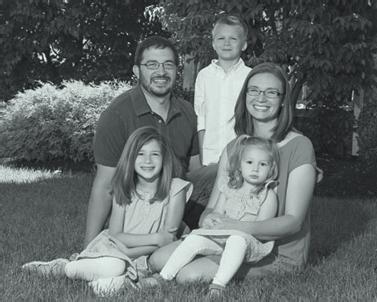
Nick Hershberger (’00), along with his wife Ashlie and their children Hannah (7), Gabe (5), and Leah (2), has taken a service position with Wycliffe Bible Translators in Ukarumpa, Paupa New Guinea. Nick will work as an Information Technology Specialist at the Wycliffe Center; Ashlie looks forward to establishing their new home and hopes to pursue nursing at the on-site clinic. Follow their journey at hershbergerhappenings.wordpress.com. nick.hershberger@gmail.com

Dr. Denver J. Fowler (’05) was recently named the 2015 State Assistant Principal of the Year in the state of Ohio. Dr. Fowler currently serves as the assistant principal at Gahanna Middle School South, in the Gahanna-Jefferson School District. In addition to his duties as an assistant principal, Dr. Fowler teaches undergraduate and graduate level courses in Educational Leadership and Educational Technology as an adjunct professor and lecturer at The Ohio State University, Bowling Green State University, and University of West Florida. denverfowler@gmail.com
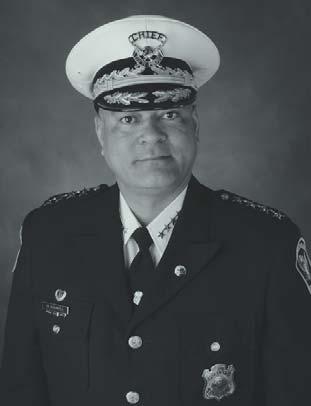
Jeffrey Blackwell (’06), Chief of Police of the Cincinnati Police Department, was honored with the Distinguished Alumni Service Award during MVNU’s 2014 Homecoming Weekend. The award is conferred on an MVNU graduate who demonstrates outstanding professional achievements and selfless church and community service and exemplifies the university motto: “To Seek to Learn is to Seek to Serve.”
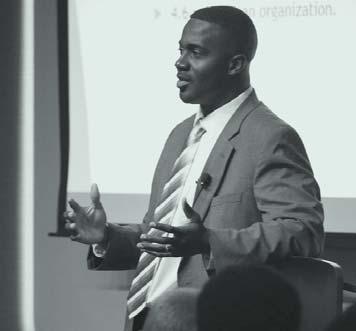
Konrad Morris (’05) was the guest speaker at MVNU’s Boesger Christian Lecture Series on November 7, 2014. Konrad has served in the banking industry for more than ten years. He is currently a Commercial Lender at US Bank in Cambridge, Ohio. After obtaining his undergraduate degree in Accounting and Finance from MVNU, Konrad earned an MBA in Global Management and a certification in Organizational Leadership.
Craig Drurey (’07) recently contributed an essay to the book Renovating Holiness. The book, edited by Tom Oord and Josh Broward, focuses on the holiness perspectives of Nazarene Gen X'ers and millenials from across the world. Craig's essay addresses the importance of a re-traditioned version of John Wesley's class meeting in the Church of the Nazarene today. More information on the book can be found at renovatingholiness.com.

Kassandra (Davila ’07)
Miller and her husband
Jonathan joyously welcomed a daughter, Madalynne Grace, into the world on September 10, 2014. She joins older siblings Dallas (6), Kaylynne (4), and Maddox (2).
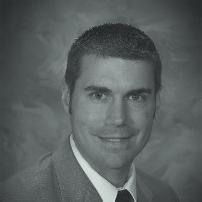
Cliff Ridgeway (’07) has been named Assistant Vice President of Commercial and Business Banking at S&T Bank. In his new role, he will work with current and prospective clients to provide commercial and business banking services. Ridgeway brings over twelve years of lending experience to the Columbus-area S&T Bank team.

Zachary Wilson (’07) and his wife Leanna welcomed their first child, Grace Lindsay Wilson, on May 3, 2014. Zachary graduated from the University of South Florida College of Medicine in 2001; he and Leanna were married in December of that same year. They currently reside in Niceville, Florida, while Zachary serves in the United States Air Force at Eglin Air Force Base. zwwilson84@gmail.com

Brittney (Watson ’10) Miltimore and her husband Seth welcomed their first child, a daughter named Nora Mae Miltimore, on September 16, 2014, at Licking Memorial Hospital in Newark, Ohio.

Kathryn Vasquez (’11) and Sarah Einselen (’11) spent nine days traveling around China together, visiting the cities of Beijing, Xi'an, and Tianjin. Afterward, Vasquez returned to her teaching position at an international school in Tianjin and Einselen returned to Indiana where she works as news editor at a small city newspaper. readersis@gmail.com

Jordan (’10) and Emily (Weaver ’11) Rogers were married on June 14, 2014, at Clary Gardens in Coshocton, Ohio. Emily is a reporter with the Mount Vernon News; Jordan is a banker at the Peoples Bank in Gambier. rogersemw@gmail.com
Joe ('10) and Kayla (Yoshino '12) Pittenger were married on July 20, 2014, in Toledo, Ohio. They currently reside in Maumee, Ohio, where Joe is the Family Life Pastor at a local church and Kayla is a graphic designer for a local marketing company.

Joshua (’12) and Courtney (Ricker ’12) Weikart were married on October 25, 2014, in Columbus, Ohio. Courtney played soccer and Josh played basketball at MVNU.
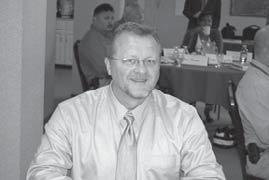
Darrin Adams (MBA ’14) has been asked to appear as a guest speaker at the 2014 Franklin University Leadership Symposium. The theme for the symposium is “Leader, Led, and Leading.” Darrin will address the Led in government leadership. adamsd@hotmail.com

We offer five specific giving opportunities. Choose the area that you are most passionate about:
Engage Education – STEM (Science/Technology/Engineering/Math) Programs
Seek to Serve - Tennis
Support Success – Center for Student Success
Fund the Future – Endowed Scholarships Sustain Commitment - Annual Sustainability
If you want to make an immediate impact, your gift can be directed to the 1968 Fund. This fund provides financial support for students who are encountering financial difficulties due to family emergencies, health issues, or accidents and is part of the “Sustain Commitment” option.


the Campaign for
Every gift makes a difference to individual students. Thank you for participating in MVNU’s life-changing work.
To give, visit mvnu.edu/iwill


A passion for education. A will to change the world.

Nota McCall (’76) passed away on October 4, 2014. She was a member of the pioneer staff and a graduate of the first baccalaureate class at MVNU. She also served for twenty-six years in the office of the Dean of Students.
Dee (Beile ’79) Perry passed away at home on September 5, 2014. Her stepson John and her husband Jim were at her side. After her time at MVNU she enjoyed a fulfilling marriage and a successful career helping small business owners obtain contracts with the government.
Treisa Ruhl-Nedrow (‘90) passed away on November 5, 2014. Treisa played four years on the MVNU Women’s Softball team; her name holds a place on the Cougar Wall of Fame. She served as an elementary school teacher and coach for twenty-two years in Ohio’s Clear Fork School District.
Glen Chesnut, a member of the pioneer faculty of MVNU, passed away in Mandalay, Myanmar, on October 15, 2014. He taught history at MVNU for twenty-six years and, after his early retirement, spent many years teaching in China and other countries.
Please submit updates and photos for publication by email to alumni@mvnu.edu or online at grapevine.mvnu.edu.
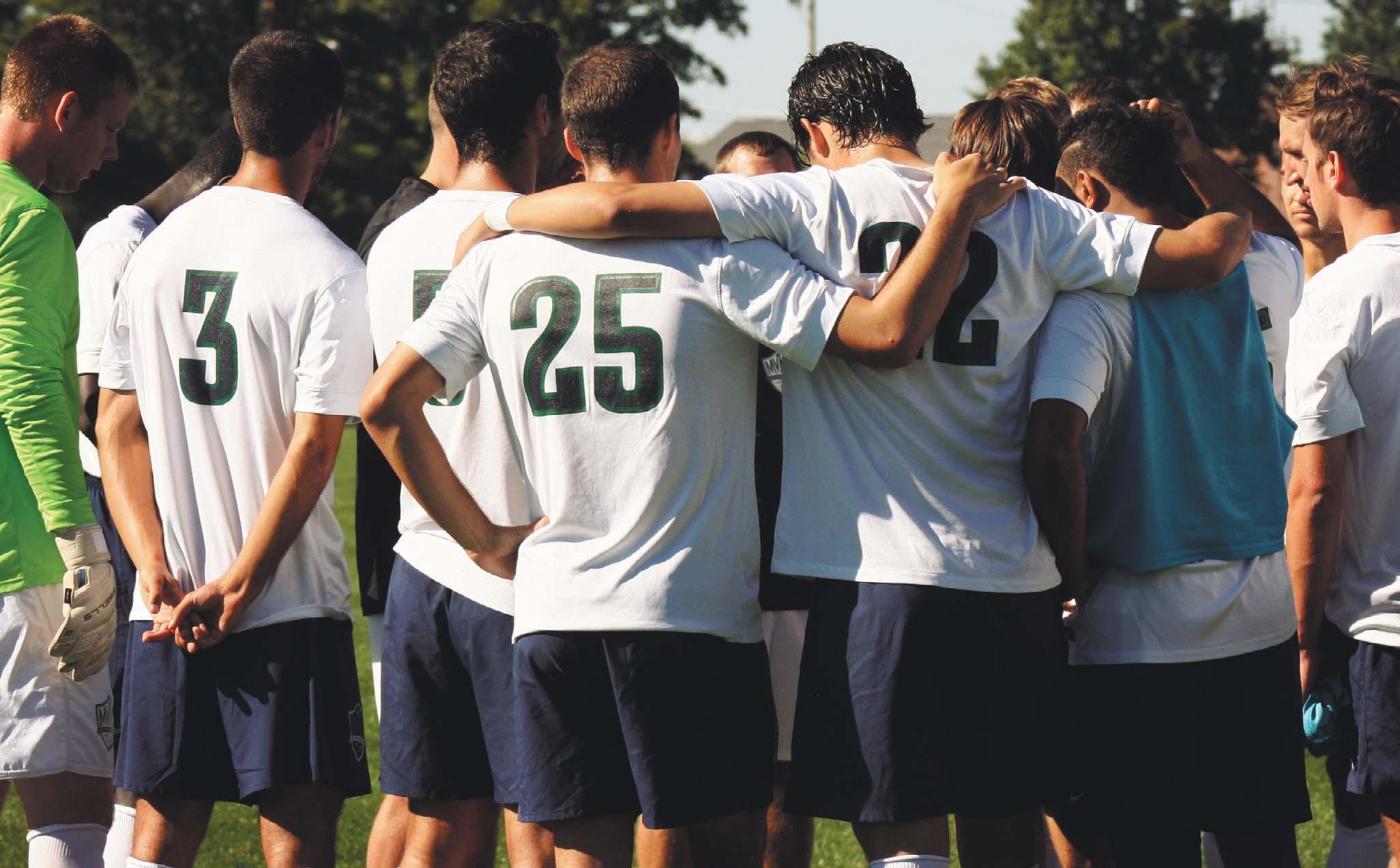
Finished the season with a 10-6-3 record. Finished third in the Crossroads League standings and were 35th out of 190 teams in the final NAIA MRPI Rankings.
Adam Miller was named Crossroads League Defensive Player of the Week two times.
Tyler Lilly was named to the Crossroads League First Team while Preston Spurrier and Collin Riley were selected to the Crossroads League Second Team.

Josh Richardson claimed two Crossroads League Runner of the Week honors.
Annie Winkler was named Crossroads League Player of the Week.

Ellis Gallion, Josh Richardson, and Sarah Mast were named 2014 Daktronics-NAIA Scholar Athletes.
Best winning percentage (.697) since 2010 season. Finished the season with a 23-10 record and finished fourth in the Crossroads League.
Marlowe Beatty and Annelise Rohrer were announced as 2014 Capital One Academic All-District First Team selections for District 1 in the College Division. The awards recognize the nation’s top student-athletes for their combined performances athletically and in the classroom.
Beatty also earned Crossroads League Libero of the Week honors four times.
Rohrer was also selected as the Player of the Year and a 2014 Tachikara-NAIA Volleyball All-America Honorable mention selection, and was named hitter and overall player of the week in the Crossroads League two times.
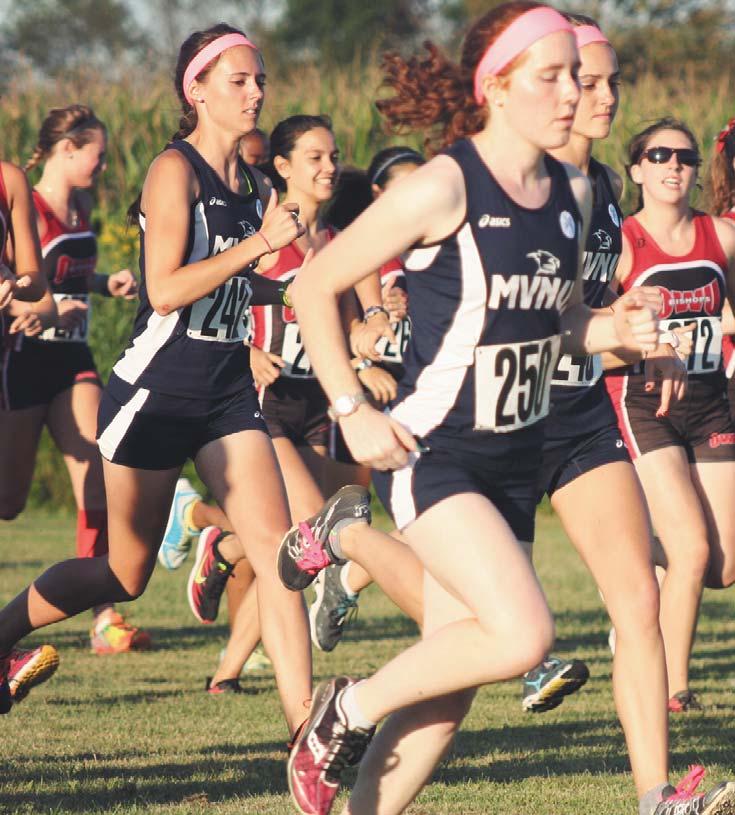
Most wins (13) since the 2010 season. Best winning percentage (.711) since the 2004 season. Third place finish in the Crossroads League regular season standings.
Megan Griffith was selected as Crossroads League Offensive Player of the Week two times, Rachel Baker as the Crossroads League Offensive Player of the Week once, and Eleni Miller as Crossroads League Defensive Player of the Week two times. All three were selected for the All-Crossroads League Team.
Baker was also an NAIA All-American Honorable Mention selection.
Brittney Bogantz, Michelle Dobson, Dayna Setzler, and Tiffany Wright were named 2014 Daktronics-NAIA Scholar Athletes. In order to be nominated, a student-athlete must maintain a minimum grade point average of 3.5 on a 4.0 scale.

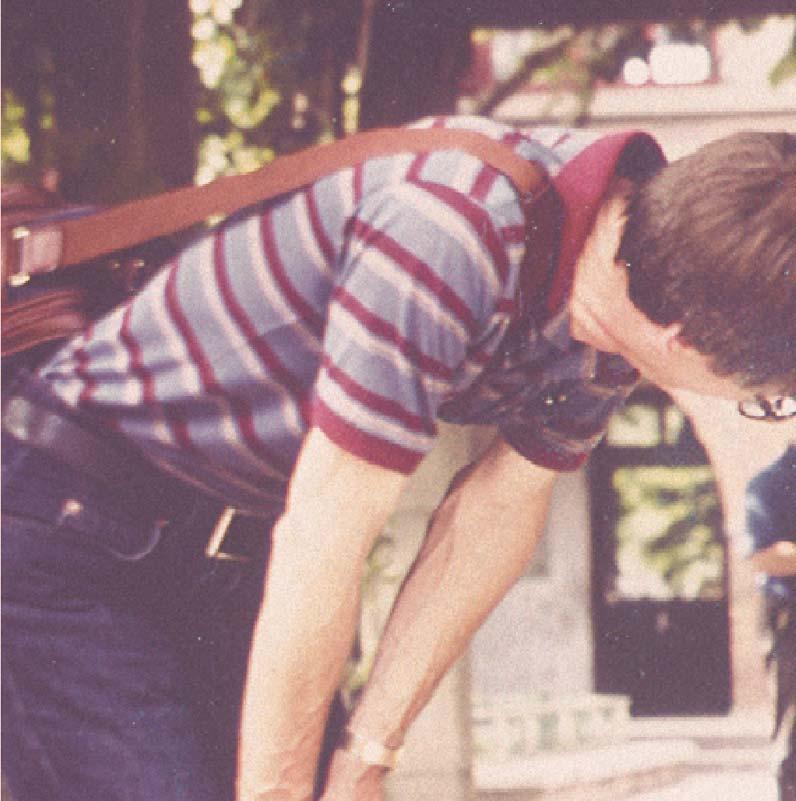




Pioneer faculty member Glen Chesnut taught American history at MVNU for 26 years, from the fall of 1968 to the spring of 1994. This photo, from the late 1980s, shows him in China where he spent over a decade teaching after he left MVNU. Chesnut passed away at the age of 77 on October 15, 2014, in Mandalay, Myanmar.
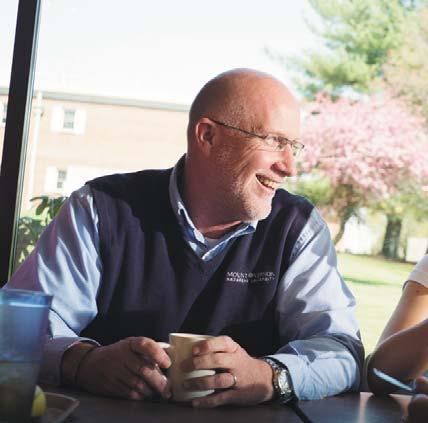
Rev. Joe Noonen / University Chaplain
Psalm 85:10
Love and faithfulness meet together.
Justice and shalom kissed each other.
Can you imagine the offspring, should these couplets get married? In this issue, we are considering justice—which is essentially about relationships. It is about the way things “ought” to be. I remember in class one day we were discussing human rights. A student pushed back strongly that the concept of human rights was not biblical. It was simply an agenda of “those people” on the left.
We looked at the biblical narrative to better understand the Christian perspective on human rights. A cursory review of the biblical narrative yielded some interesting insights. It seems that God was up to something quite intentional and relational in creation. He created all that was necessary to sustain human life and declared that it was good, because that which was created did respond to the intent of the creator, so all was as it ought to be.
The creation story begins with God creating man in His image and placing him right in the middle of all this earthly stuff. God calls, liberates, protects, keeps, sustains, and all sorts of other action verbs connected to humanity. There was something particularly special about this relationship rooted in His love. God’s love encompassed all of creation; it was good, and all was as it ought to be. If the biblical narrative does convey relational intent, then we the people of God, must be committed

to the way things “ought” to be. There it was: no left-leaning human rights language was necessary! We could now find ourselves right in the middle of the biblical texts if we changed “rights” to “oughts.”
So, there you have it. The understanding of justice as God’s own action worked out within the lives of His people to be loyal to the way things ought to be. Viewed this way, justice leans towards those who need deliverance: the poor, the widow, the orphan, and the alien. It does so, because it seeks to justly realize relationships as they ought to be. Thus, justice and shalom kiss, as shalom is the essence of the biblical vision of how things ought to be.
Shalom kisses justice on the cheek and sends it out the door to look for that which is not as it ought to be. This is why, at MVNU, we engage in the education of the whole person so that our students have an enhanced capacity to go out and see things that are, not as they ought to be. They are moved with compassion, resulting in lives committed to what is right and just. We hope our students better understand what is good. We pray that they come to understand what the Lord requires of us. We desire that they act justly, love mercy, and walk humbly with God.