John Ballenger Director of Student Success
John Ballenger Director of Student Success
Tiffany Donnelly / Editor
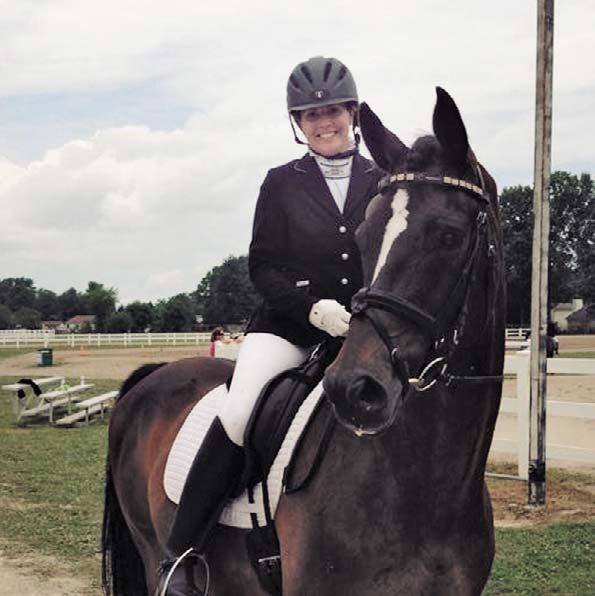
Since my graduation from MVNC in 2001, I have worked as editor of a magazine, a sales rep at a large corporation, in two veterinary clinics, and started my own business. God ultimately led me back to MVNU and I have been working here for three years.
I am passionate. I am strong. I am weak.
I am aware.
I am a child of Abba.
I am a writer.
For my first edition of the Now, I wanted to explore the idea of the value we place on a liberal arts education. I think our understanding of this, coupled with our ability to explain this value, is essential to the flourishing of this institution in which we work.
Through the years, the holistic education that I received at MVNU, has been essential to my success. Not just in my career, but in my life as a whole. This education shaped my entire person with the critical thinking, adaptation, creativity, and empathy that keep one hungry to learn and grow as an individual and lifelong learner. We are always being called to expand, and a holistic education is essential to this expansion.
As the new Coordinator of Communications/PR, I am excited about creating compelling messaging and diving head first into the social media sphere. There is much that I believe I can offer to the school in this new role – keeping us relevant to the world around us and showing the unique culture we have at MVNU.
01. I am a perfectionist.
02. I am a PK - my dad is a Nazarene pastor.
03. I love to travel.
04. I have five rescue cats that actually rescued me.
05. I love period films with great costuming & tragic love stories.
06. I love baking cakes!
07. I could live in Italy quite happily.
08. I love working in my flower beds & have a particular affinity for garden roses.
09. I firmly believe I should have lived during the Renaissance Era.
10. I have competitively ridden horses since I was 11-years-old & it is my passion. (Most recently, I have taken up Dressage & am leasing a horse named Murray for this show season!)
Email us at MVNU.Communications@mvnu.edu
Henry W. Spaulding II, Ph.D. President
John Ballenger, MFA Director of Student Success
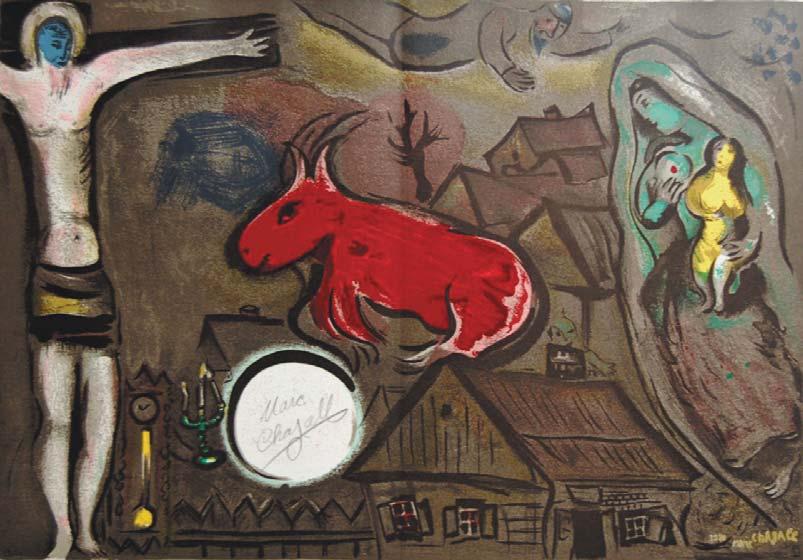
The Schnormeier Gallery, in Mount Vernon Nazarene University's Buchwald Center is pleased to present the original artwork of Marc Chagall. This exhibition will be on display August 15 to November 15, with the opening reception taking place on September 5 from 6:00 p.m. to 9:00 p.m. Additionally, a panel discussion led by MVNU faculty will be held on September 24 from 6:30 p.m. to 8:00 p.m. All events are free and open to the public.
MVNU held its first annual Symposium for Undergraduate Research and Creative Work (sURC) this spring in the Jetter School of Business. The symposium, featured more than 20 MVNU students from ten different majors who presented their research or creative work to the campus community in a conference-style event. Sponsored by the office of the Vice President of Academic Affairs, the Honors Program, and the university's schools and deans, showcased the wide range of research and creative projects being completed on campus each year.
During the month of April MVNU faculty and staff were given an opportunity to contribute toward student scholarships. Throughout the month, we enjoyed hearing the stories of appreciation from our students, participated in social media communications, and thought about various ways in which we can help our students. This year we also invited alumni and friends to join us in this effort.
Through gifts and pledges a total of $24,115 was donated through “30 Days of Giving.” Of that total, faculty and staff came together in a big way giving $19,040. This fiscal year 50% of our faculty and staff have supported MVNU giving initiatives. These contributions will be used to support our returning students and incoming freshman and transfer students. Thank you for your generosity and continued support of the MVNU life changing experience.
Trevor Rhodes, senior Philosophy major, was selected as the first-ever recipient of the sURC Excellence Award. His presentation was entitled, "The Roman Military's Evolution of Unit Formation in the 2nd Punic War.” This award acknowledges the significance of completed research, the strength of the application submitted, and the quality of the presentation. The faculty also awarded a runner-up prize to Priscilla Radcliffe, senior English major. Her presentation was titled, "Reading Towards Love: The Transformative Potential of Reading in Jane Austen's Pride and Prejudice.” Congratulations to the winners and to all students who submitted work.
The following faculty members were granted emeritus status: Dr. Candace Fox, Dr. Bruce Petersen, Mrs. Donna Shiverdecker, and Dr. Alex Varughese.
Dr. Henry Spaulding spoke at the Nazarene Theological Seminary Commencement.
The Mount Vernon City Council approved the easement requested for the Curtis Inn on Monday, May 12. The University has resumed demolition and we are prepared for construction of the new hotel.
The building that adjoins Hunter Hall (Nursing and Health Sciences) in downtown Mount Vernon was recently donated to the University. It currently houses Paragraphs Bookstore, Science Play-Space Initiative (SPI), and the medical offices of a Nurse Practitioner. These businesses will provide income for the University as we make plans for how to best use this generous gift. The Engineering department may be located in this building, but no plans have been finalized.
Professor David Winyard has been hired as the new Associate Professor of Engineering.
Dr. Randy Cronk assumed the role of Department Chair for Psychology, Sociology, and Criminal Justice effective fall 2014.
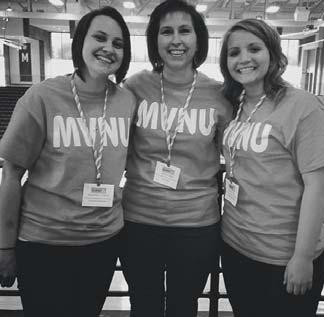
MVNU's psychology department hosted the 26th annual Ohio Undergraduate Psychology Research Conference (OUPRC). The conference, sponsored by a consortium of Ohio colleges and universities, provides a platform for undergraduate psychology majors to present their original research in a public forum. Student presentations
occurred throughout the day with attendees having the opportunity to select from one of four presentations occurring simultaneously.
The conference was highlighted by a keynote address by Dr. David Myers of Hope College in Michigan. A social psychologist and prolific textbook author, Dr. Myers presented research on “The Scientific Pursuit of Happiness.” MVNU’s psychology department was proud of its many student volunteers, attendees, and presenters.
MVNU was well-represented at a recent series of community conversations about eliminating hunger in Knox County. The conversations highlighted the reality of hunger in the county, discussed what could be done about it, and explored how to build on existing programs in the county like “Food for the Hungry.” Participants also developed a vision statement to end hunger.
MVNU attendees included Dr. Carol Dorough and Professor Judy Gregg from Nursing, plus student Audra Cubie; Marcy and Joe Rinehart represented WNZR and Food For Hungry, ‘07 alumnus Aaron Behr (Salvation Army), ’99 alumnus Emily Boggs (Knox Community Hospital) and Sandy Rhoton (Food For The Hungry).
Jim Puckett (’91), music adjunct, will be one of the featured composers at the Christian Fellowship of Art Music Composers (CFMAC) National Conference this coming October. His percussion quartet, “Three 4 Hand Drums,” will be performed by the percussion ensemble of Biola University in La Mirada, California. The three movement work explores the primary and secondary sounds of various hand drums individually and together with an emphasis on African and Cuban influenced rhythmic patterns.
Dr. Dean Abbott, Assistant Professor of Communication, has had an essay published in Countryside and Small
Stock Journal, a national publication covering rural and farm issues. The essay is a humorous reflection on being married to an avid gardener. The magazine is available at local retailers around the country. Dean also had another essay published at EcoTheoReview.org, an online journal devoted to connecting environmental concerns and faith communities. This essay is a reflection on videos produced by designer and farmer P. Allen Smith.
Dr. Yvonne Schultz, Dean of Arts and Humanities, has had a poem, "Creations (Take Two--They're Small)," accepted for publication in the next volume of Windhover: A Journal of Christian Literature, to be released in February 2015.
Professor John Donnelly, Chair of the Art Department, was featured at Café 304 Gallery in Pittsburgh, Pa. His solo exhibition was titled “Layers.” John presented an artist talk and helped create a dialogue related to his art and faith in the cultural context of the arts district of Pittsburgh. A total of 37 pieces were on display.
Dr. Christopher Devine, Assistant Professor of Political Science, along with co-author Kyle Kopko (Elizabethtown College), has accepted a contract from Bloomsbury Publishing to publish their in-progress book manuscript, tentatively titled “The Vice Presidential Home State Advantage: How, When, and Why Vice Presidential Candidates Influence Home State Voting in Presidential Elections.” The book is scheduled to be published in December 2015.
Dr. JoAnn Koh-Baker, Professor of Music, was invited to serve on a panel of three judges for the 2014 Central East District Buckeye Auditions for all the piano divisions. All contestants in the competition are classified by instrument and age: Elementary, Junior, and Senior Divisions. The panel of judges selected a Winner, an Alternate and an Honorable Mention in each categor y. Each category winner will represent the district to compete in the State auditions in June.


The competition took place at Otterbein University in Ohio.
Dr. Dorothea Hawthorne, English, was promoted to Associate Professor.
Heather Bush, (’99) earned her Ph.D. from the University of Kentucky, where she also currently teaches. She has written a textbook titled, “Biostatistics: An Applied Introduction for the Public Health Practitioner.”
EDUCATION AND PROFESSIONAL STUDIES
Dr. Ardyth Stull, Assistant Professor of Family and Consumer Sciences, was presented the Outstanding Dissertation Award at the Ohio Association of Family and Consumer Sciences Annual Meeting, April 11. She presented a session entitled, “Lessons Learned from Parents During the Great Depression.” The information presented highlighted Dr. Stull’s dissertation research findings. She is beginning the second year of her term as the Treasurer of the state association.
Dr. Amy Biggs, Director of Graduate Education, was announced as the winner of the Teaching Excellence Award for the GPS program.
Dr. Dean Goon, Assistant Professor of Education, presented at the Convergence Learning Symposium in Raleigh, North Carolina. His paper was titled “Creating Multi-Sensory Learning with VoiceThread Technologies. In addition, Dr. Goon presented at the Midwest
Greater Homeschool Convention in Cincinnati on “Gamifying your Curriculum.”
Dr. Sharon Metcalfe, Assistant Professor of Education, presented a paper she co-authored with Dr. Arfe Ozcan at the Chicago International Conference on Education on May 22-23, 2014. The paper was titled “Experiences of First Generation Immigrant Turkish Mothers with the American Public Educational System.”
Dr. Damon Osborne, Dean of School of Education and Professional Studies, was promoted to Professor.
Dr. Pam Owen, Professor of Education, presented a paper at “The World Conference of Learning, Teaching, and Educational Leadership” in Barcelona, Spain on October 28, 2013. The paper discussed “The effects of tutoring an adult with child-incurred brain injuries in order to develop reading skills.”
Dr. Alexander Varughese, Emeritus Professor of Biblical Literature, was announced as the winner of the Teaching Excellence Award for the Traditional program.
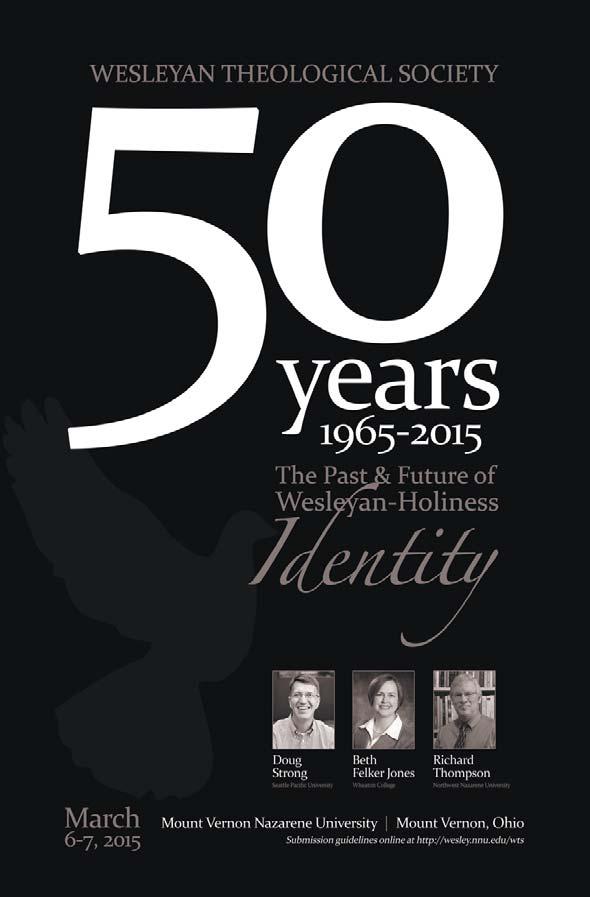
MVNU will host the Wesleyan Theological Society's annual meeting March 6-7, 2015. This is the 50th Anniversary meeting with the theme: The Past and Future of Wesleyan-Holiness Identity.
Dr. Lincoln Stevens, Chair of the Philosophy Program, has been appointed Director of General Education.
Congratulations to Dr. Hunter Dale Cummings on his successful defense of his doctoral dissertation at the University of Manchester. His dissertation was in the area of Wesleyan studies. Hunter is an MVNU adjunct teaching Christian Heritage 1 and 2 courses and he is a youth pastor at Mount Vernon First Church of the Nazarene.
Dr. Rick Williamson presented “Ecological Echoes in the Apocalypse?” for the Bible and Justice Conference at Saint Ambrose University (Davenport, IA).

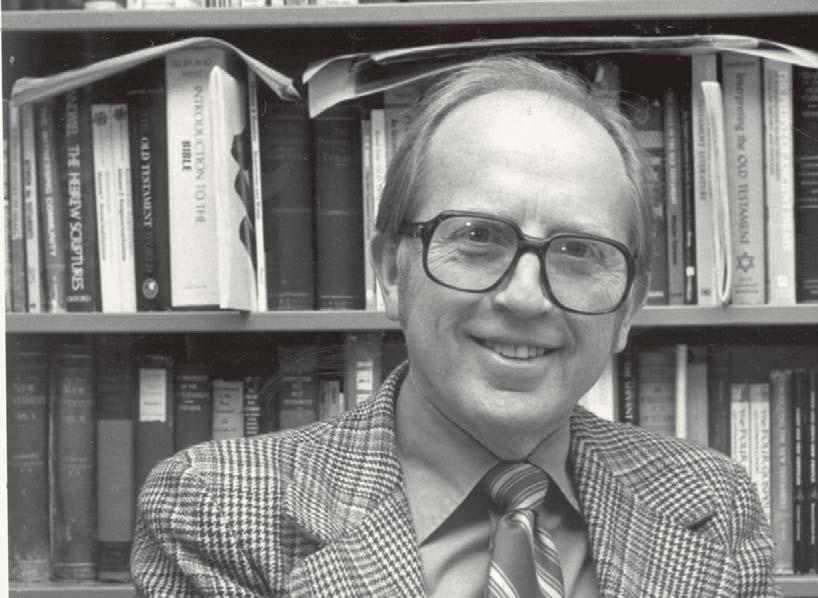
Dr. David L. Cubie (age 86), Professor Emeritus of Religion at MVNU, died on Sunday, June 29, 2014 at Mount Carmel St. Ann's Hospital in Westerville, Ohio.
Dr. Cubie was much loved by our community, his church family, and a host of former students all over the globe. His gentle manner, teacher's heart, and love for Jesus will be greatly missed.
Cubie began teaching at MVNU in 1971 and continued until his retirement in 2002. He served as chairperson of the Division of Religion and Philosophy from 1971 to 1994. Working with then-
President John A. Knight, Cubie was a chief architect of the Adult Studies program (now known as the Certificate of Ministry Preparation Program), a program to help bi-vocational pastors in the region complete the educational requirements for ordination. Even after his retirement, he continued to teach courses in the undergraduate and Certificate of Ministry Preparation programs. Cubie was a consummate churchman, active in Lakeholm Church of the Nazarene as Sunday School teacher, and a consultant to the North Central District Church of the Nazarene and its Ministerial Studies Board.
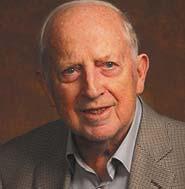
Author of a number of Beacon Dictionary of Theology articles, Cubie also penned a series of Sunday School lessons on the Gospel of Luke. On multiple occasions he presented scholarly papers at a number of theological conferences. Cubie held various offices in the Wesleyan Theological Society including president. He was awarded the President’s Award for Excellence in teaching from MVNU in 1979 and again in 1991.
Born in Perth, Scotland, to the family of a Nazarene minister, Cubie earned his Bachelor of Arts degree from Eastern Nazarene College in 1951, the Bachelor of Divinity (now M. Div.) degree from Nazarene Theological Seminary in 1954, and the Ph.D. degree from Boston University in 1965. Dr. Cubie was also awarded the honorary Doctor of Divinity degree from MVNU in 2006. Prior to his teaching assignments at Eastern Nazarene College, Canadian Nazarene College and MVNU, he held pastoral positions in West Newberry and Malden, Mass., and in Erlanger and Corbin, Ky. He married Dr. Genevieve Cubie, who taught English at MVNU from 1971 until 1990. Their four grown children are all graduates of Nazarene institutions.

A liberal arts degree is more than just a specialization in a specific field or discipline –it is a commitment to a lifestyle of critical thinking, adaptation, empathy, and lifelong learning. It is a skill set that grows and becomes more refined with each added experience, long af ter graduation. A liberal arts degree does not only provide adequate preparation to work in one specific job, but instead constructs the mindset and abilities necessary to succeed in an ever-changing job market and to thrive in an ever-changing world.


noun plural
: areas of study (such as history, language, and literature) that are intended to give you general knowledge rather than to develop specific skills needed for a profession

Henry W. Spaulding II, Ph.D. President
I was privileged to grow up surrounded by books. The family room looked like a section of the library. My mother decided to go back to college when I was in second grade. She shelved all of her books in the family room. After the love of God and family, my parents sought to instill a love of learning in me. It worked! A thousand or more times during the early years of my life the message was communicated to me – get an education! There was never any doubt in our home that an education was priceless. The first philosophy book I ever read was taken from the bookshelf in the family room. An entire constellation of meaning opened up to me through reading some of those books. It has been my privilege to walk the halls of education for more than thirty years, but the journey began in my family room.
Every fall a group of students arrive on campus with the bright hope of graduating. A core conviction of the University is to offer “a quality holistic education, guided by the liberal arts tradition and professional excellence.” Somewhere along the way the question of the return on investment will emerge. Will I get a job after graduation? One of the first questions that we ask a student is about his/her major. This query tends to diminish the significance of the liberal arts that undergirds the major. Every student will take a second major in the liberal arts before graduating. The purpose of the liberal arts speaks to the enduring significance of such an education. We call it general education at MVNU, but the
liberal arts are the essence of what it means to be an educated person. When the courses have been taken, the education must be worth the effort. Therein, we locate the deepest value of an education and its enduring contribution to the good life.
WE CALL IT GENERAL EDUCATION AT MVNU, BUT THE LIBERAL ARTS ARE THE ESSENCE OF WHAT IT MEANS TO BE AN EDUCATED PERSON.
A liberal arts education contributes to the formation of character. All learning calls students to understand that character is not simply delivered. Rather, it emerges in the midst of the labors associated with a liberal arts education. Since knowledge intends to free a person to participate meaningfully with others in cooperative endeavors, it opens one’s life toward the future. The student is rendered greater by the material aspects of a liberal arts education. Character is worth the time it takes to achieve because it can enrich one’s entire life.
The liberal arts enjoy a rich history dating back to ancient Greece. The medieval period combined the sciences (geometry, astronomy, arithmetic, and music) with the humanities (logic,
rhetoric, and grammar) to form the quadrivium. Some knowledge of the sciences and the arts enhances the major taken by a student. Such an education renders the opportunity to envision whatever is good and noble. Proverbs 4:7 reads, “The beginning of wisdom is this; Get wisdom, and whatever else you get, get insight.” The importance of a liberal arts education is expressed in the vision it engenders.
Beyond character formation the liberal arts promote the ability to write and speak clearly. Clear writing must be undergirded by the capacity to think. Learning to think critically is essential for the capacity to find and promote understanding. Informed and clear-headed thinking contributes to character formation and as such to freedom and meaningful relationships with others. An educated person is also able to engage, construct, and analyze arguments. An education shaped by the liberal arts refuses to engage in emotionally driven interaction. The value of a liberal arts education rests in the capacity to engage in reasoned discourse with others. The world needs our graduates, if for no other reason than to point the way out of unreflective and unhelpful chatter.
A liberal arts education requires patience. The shelves of bookstores are populated by resources that give easy “how-to” instructions to do anything. Undoubtedly, the message of our time is that almost anything can be solved quickly. There is no need for analysis or consultation, just present an outline and the problem is solved. Add to this the steady diet of thirty-minute programs filled with snippets of information and most anyone could reasonably believe that we are just a simple formula away from the answer. Yet, a careful reading of history reveals that understanding belongs to those who risk patience through a conviction that truth endures. Central to the importance of the liberal arts is the capacity it has for engendering patience in an impatient world.

A liberal arts education increases the capacity to face change. The pace of change in our world boggles the mind. Technology makes it possible to locate our vehicle and give reliable directions to another destination. The cell phone is a phone, camera, calendar, Bible, dictionary, and the door to the worldwide web. If we have a question, it is possible to go to “Ask.com” and get the information we need. Such a world may seem to close the door on careful reading or attention to the history of something. In fact, we know how to do things, but rarely know why it is important to do so. The worth of a liberal arts education is that it locates the ground upon which to stand in the face of massive change. This does not mean that all change is bad, or good, for that matter, but it does mean that the logic of discernment is in place to determine the difference.
We are most apt to remember our mentors years after graduation. These men and women armed with a quality education served as our guides. Another type of mentor can be found in another place as well – great books and ideas. The liberal arts open the doors for those who dare to invest in the tough work of getting an education worth the effort. The writer of Proverbs sums this up: “For the wise the path of life leads upward . . .” (15:24a). This constitutes the value of a liberal arts education.







"For this very reason, make every effort to supplement your faith with virtue, and virtue with knowledge, and knowledge with self-control, and self-control with steadfastness, and steadfastness with godliness, and godliness with brotherly affection, and brotherly affection with love.” 2 Peter 1:5-7
When I first moved to DC, I relied on the metro for my daily commute until I had every stop on the blue line memorized. The metro was, without a question, the most efficient way for me to get where I needed to go, and as a directionally challenged individual, I was grateful that my only task was to hop on the correct line. All was well and good in my world until the day the metro broke down, and passengers were asked to either walk or take a bus to their destinations. I surfaced from my subterranean safe-haven and blinked into the sunlight, realizing I had no idea where I was, or how to find my way to my quickly approaching appointment. In reality, I was only a ten-minute walk from where I needed to be, but in my dedication to a predetermined route, I never oriented myself to the city.
From where I stand, this experience characterizes the value of a liberal arts education. Diversification of subject matter, much like diversification of a daily commute, builds new pathways of understanding for both where we are and where we want to be. With this information, we have a more comprehensive picture of the world around us and are equipped to serve it in a holistic way. Biology tells the same story: A multifaceted approach to education aids in constructing complex neural connections, expanding our capacity to problem solve. By pushing ourselves beyond our proficiencies and into lesschartered territory, we are brought into a mindset of learning, a mindset of humility, and an orientation towards the bigger picture. Sure, it’s a challenge to get off the metro and walk, but by the time we reach our destination, we are richer for having experienced both.
A liberal arts education recognizes a whole person, a person whose life is textured and many-layered, and because of this, mastery of an academic discipline is not an end in itself. The study of fine art, for example, does not find its end in arcane musings that are divorced from the concerns and joys of dayto-day life. My classes are about learning to draw and create evocative form and use color in compelling ways, but, ultimately these tools are learned so that they may be at the service of questions of being and of navigating the world.
Having worked at both a research university and now a liberal arts university, I understand the value of having four years with students. The model at most research universities is to hand freshman and sophomores off to graduate students and not engage them until they are juniors and seniors. This can only truncate the relationship between students and faculty, and the model of the liberal arts university is a welcome counterpoint, one that more intentionally facilitates this relationship.
ANDREW HENDRIXSON
Assistant Professor of
Art
If you know anything about our family, it's pretty obvious how highly we value a liberal arts education, and more specifically, a Christian liberal arts education. My husband and I are both MVNU alumni. One of our daughters is an alumna, one is an MVNU senior, and one is an incoming freshman.
College shouldn't just be about the academics, it should be the “whole package.” Our children had and still have opportunities we never dreamed of. MVNU grads are changing the world. It's been exciting to hear our daughters talk about the “extra” things they are getting outside the classroom: small groups, mission trips, community outreach, etc. They have the opportunity to participate in classes and activities that are not just in their majors, but in areas they may have never considered otherwise. They surprise themselves.
A liberal arts education isn't just about academics. It's about being open to new experiences, people, and ideas. It's trying something different; it’s being open to new possibilities.
We placed MVNU against the competition and this is what we found.
John Ballenger, MFA Director of Student Success
Christian Wiman, a poet and an instructor at Yale Divinity School, is one of my favorite contemporary authors. Wiman has a rare and incurable form of blood cancer that often leaves him hospitalized and in agony. He’s had a bone marrow transplant and lives, constantly, inside the shadow of death. His writings are filled with the binary streams of suffering and faith. This is why his words hit me so forcefully when he says,
“Let us remember...that in the end we go to poetry for one reason, so that we might more fully inhabit our lives and the world in which we live them, and that if we more fully inhabit these things, we might be less apt to destroy both.”
Wiman’s contention is that poetry can help us live. In fact, I think he is implying that it is poetry’s responsibility to foster a more lived-in life. By holding poetry to this kind of standard Wiman is also forcing us to consider all human effort, thought, and communication in the same light. Implicit too, in Wiman’s statement is a sense of the great underlying complexity of life and of the world.
One of the central goals, as I see it, of a Christian liberal arts education is to bring about more fully inhabited lives in our students. Obviously attending MVNU isn’t the only way to accomplish this goal, but those of us here feel a great weight of responsibility to get it right for the students who enter our community each year. The wide-ranging core of courses that our students take offer them a complex and richly textured experience that mirrors the kind of thoughts and actions and communication that a complex and richly textured world requires.
Taking history or literature or philosophy alongside biology or calculus provides opportunity to grasp the connectedness in creation and to think critically about how these fields work together. The challenges that our students will face in the coming years (political/ideological divides, bankrupt cities, declining churches, soaring prison populations, to name a few) will require a kind of rigor and enthusiasm that MVNU attempts to instill. The hope is that a broad curriculum (including the Chapel curriculum and the Residence Life co-curricular pieces) offers creative solutions to problems in communities across the globe. If our students tell better stories, if they consider real world applications to ethical models in science and economics and nursing, if they challenge injustice in our school systems, then
we are hitting the target of more fully inhabited lives. It is an aspirational project to be sure.
In addition to my day job as Director of Student Success here at MVNU, I also teach creative writing. In the spring of 2014, Brent Schnipke, our outgoing Student Body President, took my Introduction to Creative Writing course. Brent was in his final semester as a Pre-Med major and took the course out of curiosity. It turns out that there is a long tradition of poetry and fiction writing in the medical field. Anton Chekhov, Sir Arthur Conan Doyle, William Carlos Williams (always wins for best name), and Robert Coles are just a few in a long and distinguished line. The point is that we didn’t know until we started looking into it. Who knows what help their writing and solidarity in the medical field might bring to Brent down the line? Who knows if Brent might become a better doctor due in part to their words? And Brent is just one student in one class.
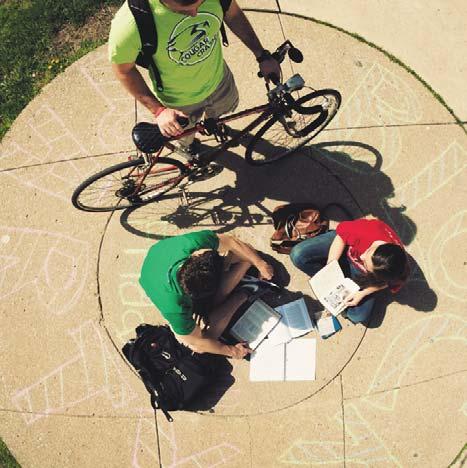
Education is almost universally valued but a liberal arts education has come under some fire of late. We live in a time and a culture that seems to value the formation of the whole person less and less. Specialization is the buzzword and it only takes a cursory glance around the internet to find ranked lists* of “useless college majors.” In this climate, it would be easy to abandon our core values, to abandon the commitment to the kind of crosspollination in education that Brent and I found.
In a recent interview, Wendell Berry, the writer and Kentucky farmer, expressed what I think is an appropriate stance for us:
“We don’t have a right to ask whether we’re going to succeed or not. The only question we have a right to ask is what’s the right thing to do? “**
I said above that this Christian liberal arts idea is an aspirational project. Sometimes, of course, we will fail. But I am convinced that it is our responsibility to offer our students an education that fosters more fully inhabited lives. It is the right thing to do.

Before attending MVNU, I had the opportunity to experience and appraise two other institutions of higher learning—both of which were decidedly vocational. I had a clear vision of what I wanted to study and naively believed that other subjects would depreciate the value of my education and somehow make me a less relevant graphic designer. Like most students anticipating life after college, I wanted to ensure that what I gained from those four years was applicable and that every class cultivated the development of marketable skills. With such a specific occupation in mind, it was easy to assume that a foundation in liberal arts would be superfluous. Six years and three colleges later, however, I have an entirely different perspective.
Being the resident graphic designer for a full-service agency necessitates that I am skilled in my craft as well as professionally versatile. If my knowledge was limited to the specifics of my vocation, I would struggle with half of my responsibilities as an art director. When I am not behind the computer, I am meeting internally with our marketing team to discuss potential strategies or meeting externally with clients to present and defend our ideas. Participating in a liberal arts education has made other subjects more accessible and given me the means to collaborate more fluidly with those outside my discipline. I owe my ability to think critically and communicate effectively—two skills that will never become obsolete—to many areas of study, not just one.
Recently, I had the experience of reviewing job applications from graduates who had attended prestigious art and design institutions in the area. Although their portfolios were conceptually and technically strong, I was struck by their inability to express themselves in a professional, thoughtful manner. The ability to articulate oneself in a meaningful way is one of the many practical skills that are reinforced by a broadly-based, general education. Had I stayed in one of my other vocational programs, my degree track would not have accommodated courses in history, literature, or philosophy, and I would have graduated in a somewhat deficient state. Looking back, these are the subjects that helped me foster disciplined creative habits that have been invaluable to my career.
While a narrow, design-centric curriculum would have certainly prepared me for success in my chosen field, a well-rounded degree has provided me with a wealth of resources that I can draw from in a variety of situations. MVNU gave me the space to focus on my passion while still encouraging me to be flexible, and this is a balancing act that plays out daily in agency life. At the start of my college career, I was convinced that a diverse learning experience could not better equip me for the future. Now that I am applying all that I have learned, I no longer underestimate the enduring relevance of a liberal arts education.
MYTH: THERE IS NOT ANY FLEXIBILITY WITH STUDENT LOAN PAYMENT OPTIONS.
FACT: There are many student loan payment options offered and you are not required to settle for the standard repayment plan. Options other than standard repayment include Graduated Repayment, Extended Repayment, Income-Based Repayment, Income-Contingent Repayment, Pay as you Earn Repayment, and Income-Sensitive Repayment. To learn more about repayment options, visit studentaid.ed.gov/repay-loans/understand/plans.
MYTH: THERE ARE NOT OPTIONS FOR STUDENT LOAN FORGIVENESS.
FACT: You may qualify for student loan forgiveness under one of the student loan forgiveness programs offered. Public Service Loan Forgiveness and Teacher Loan Forgiveness are two loan forgiveness programs offered by the US Department of Education. For more information on loan forgiveness, go to studentaid.ed.gov/repay-loans/forgiveness-cancellation.
MYTH: I CAN’T AFFORD TO GO TO GRADUATE SCHOOL AND BEGIN REPAYMENT ON MY LOANS.
FACT: As long as you are enrolled at least half-time in an accredited program, your student loan payments are not required to begin until you finish your graduate program.
MYTH: MY EARNINGS CANNOT BE TAKEN INTO CONSIDERATION WHEN DETERMINING MY LOAN PAYMENTS.
FACT: Many of the repayment plans outside of the standard repayment plan take into account your earnings to calculate your loan payments.
MYTH: IF I DON’T FIND A JOB AFTER GRADUATION, I DON’T HAVE TO BEGIN REPAYMENT UNTIL I AM ABLE TO FIND A JOB.
FACT: You must begin repayment regardless of your employment status; however, you may qualify for an income based repayment plan.
Helpful Student Loan Resources:
studentloans.gov nslds.ed.gov studentaid.ed.gov
MYTH: THERE IS NO WAY TO TRACK MY LOANS AND ESTIMATE MONTHLY PAYMENT AMOUNTS BEFORE THE PAYMENTS BEGIN.
FACT: There are many resources that allow you track your loans throughout your education and estimate what your monthly payments may be when repayment begins. One of the best resources for tracking your loans through your education is through the National Student Loan Data System nslds.ed.gov/nslds_SA. You may also view loan information and use repayment calculators by logging in to studentloans.gov or studentaid.ed.gov.
MYTH: MISSING OR LATE STUDENT LOAN PAYMENTS WILL NOT HAVE ANY EFFECT ON MY CREDIT SCORE OR ABILITY TO BORROW ANOTHER TYPE OF LOAN (HOME, CAR, ETC.).
FACT: Missing or late student loan payments may affect your credit score along with your ability to borrow other loans. To gain a better understanding of how to avoid student loan default and the consequences of student loan default, please visit studentaid.ed.gov/repay-loans/default.
MYTH: THE GOVERNMENT DOES NOT HAVE THE ABILITY TO COLLECT ON A STUDENT LOAN IF IT GOES INTO DEFAULT.
FACT: The government has the ability to garnish wages and/or withhold tax refunds for loans that have gone into default.
MYTH: UPON GRADUATION, THE MVNU STUDENT FINANCIAL SERVICES OFFICE CANNOT ASSIST ME REGARDING MY STUDENT LOANS.
FACT: Please contact the MVNU Student Financial Services Office with any questions that you have regarding your loans and repayment at 740-397-9000, ext. 4520 or finaid@mvnu.edu.
Dr. Yvonne R. Schultz Dean of the School of Arts and Humanities Associate Professor of English
The sequence occurs so frequently, it’s almost clichéd: During the new student’s registration process with the adviser, he or she says something like, “Let’s schedule some more general education. I’d like to get them over with.” Then somewhere between the junior and senior year, he or she says something like, “Wow, Dr. Interpersonal Communication, active listening really works! I can’t believe how much difference it makes!” As Virginia Satir, family therapy pioneer, says, “Communication is to a relationship what breathing is to maintaining life.” 1
But communication in relationships extends far more widely than social interactions. In fact, “Communication skills (listening, verbal, written)” are by far, the one set of skills “mentioned most often” as “critical employability skills that employers demand of job-seekers,” according to career educators Dr. Randall Hansen and Dr. Katharine Hansen.
So you’ve landed the job because you have demonstrated during the interview process that you have the “ability to listen, write, and speak effectively." Now what?
According to the most recent research, that liberal arts education, where you learned many of those communication skills, will serve you well. In “How Liberal Arts and Sciences Majors Fare in Employment,” authors Debra Humphreys and Patrick Kelly argue that "whatever undergraduate major they
1(qtd. in Beebe, Beebe, and Redmond 1.).
2(qtd. in “New Report”)
3(qtd. in Longman 24)
may choose, students who pursue their major within the context of a broad liberal education substantially increase their likelihood of achieving long-term professional success."2
How a college student achieves “long-term professional success” is influenced by diverse choices and providences, but prevailing principles emerge. As the Rev. Dr. Roberta Hestenes, former president of Eastern University, says, “Leadership is about people— influencing people, listening to people, understanding what makes them tick, forming networks, relationships, and alliances.”3 In other words, leadership is about effective communication skills.
However, the communication skills developed by students in their general education courses—the University Core— are not just housed in the Communication Department. The list of choices for students to meet their core requirements is extensive, including offerings from nearly every discipline in the University. In fact, the University Core model initiated in fall 2012 sounds much like the “liberal arts” as defined by the LEAP National Leadership Council of the Association of American Colleges and Universities, which “disputes the idea that liberal education is achieved only through studies in arts and sciences disciplines. It also challenges the conventional view that liberal education is, by definition, ‘nonvocational.’
4(“The LEAP” 8-9).
5(13)
6(qtd. in Longman 25)
The council defines liberal education for the twenty-first century as a comprehensive set of aims and outcomes …that are essential for all students because they are important to all fields of endeavor. [These outcomes] are the foundations for American success in all fields—from technology and the sciences to communications and the creative arts.”4
Among the “Essential Learning Outcomes”: “Intellectual and Practical Skills, including… Inquiry and analysis; Critical and creative thinking; Written and oral communication.”5
“So pay attention to people, where they are, what’s happening to them, both men and women,” Hestenes goes on to say. “You can be the most effective person in the room if you pay attention…and then master the skills of learning how to ride the wave of relationships in those interactions and decision-making kinds of processes.”6
These are essential communication skills for professional success—organizational, small group, interpersonal, management skills; oral, written, listening skills. And they’re learned, developed, practiced in the context of a Christian liberal arts education at Mount Vernon Nazarene University.

Laura Short Managing Director of University Advancement
In 1964 during the course of the sixteenth General Assembly of the Church of the Nazarene, this University became more than a hope and a dream. Since then, thousands of people have considered an MVNU education to be a worthy investment. Decades earlier, one of the founders of the Church of the Nazarene, J.B. Chapman, stated:
We must make our schools strong in scholarship and adequate in equipment and must turn out educated people who are not only spiritually right, but intellectually correct and scholastically strong. Here, as everywhere in our work, the emphasis is on quality…
The emphasis on a co-educational liberal arts university with a solid evangelical Christian foundation and mission is not something new. It’s been at the forefront of our purpose since before the first bricks were laid in Founder’s Hall. Generations of founders, alumni, and friends have deemed an education at MVNU one of quality and excellence where curiosity is fueled, critical thinking is celebrated, spiritual growth is encouraged, and the liberal arts core is integrated into the aspects of campus life.
Alumni and friends give because they want to partner in the University priorities, mission, and vision. Alumni David Merki (’80) works for a company that provides matching funds and has provided an extra incentive to support the University. Dave and his wife, Annette (Tilmant ’80), believe “scholarships are vital in enabling most of today’s high school graduates to continue their education.” They believe that “MVNU
develops, nurtures, and prepares students for the future, regardless of their career plans.” For them, it was, and still is, an ideal setting for that crucial step between home and career.
Dave Merki commented, “My dad was a Nazarene pastor in Ohio and served on the MVNU Board of Trustees during my high school years. Through his work and campus visits, I knew MVNU was where I belonged. MVNU was a place where I grew spiritually, strengthened lifelong friendships, and prepared academically for the business world where I now work alongside graduates of universities both large and small. I married my high school sweetheart, MVNU graduate, Annette. My two younger sisters and three cousins attended MVNU, and in 2008 our daughter, Kristen (Merki) Potter, graduated.”
Patrick and Sharon Dodds also feel that investing in MVNU students is a worthy legacy, believing their investment will go beyond anything they could imagine. Six of their eight children are MVNU alumni. The other two both attended liberal arts institutions, and their first grandchild, currently attending MVNU, will be a sophomore this fall. They place a high value on the liberal arts education offered, as it helps students expand their focus to other disciplines outside a specific area of study, creating a well-rounded individual. When asked why they are advocates for a liberal arts education, they commented that “A liberal arts education can give more options and possibly help students
consider other areas they may not have otherwise considered,…maybe even forcing them to think outside their comfort zone and, therefore, have less limitations in the job market.” Their support is reaching, teaching, and changing lives in a world in need of the love of Christ.
“Graduates are exposed to a Godly environment consistently,” shared Patrick and Sharon. “Even if they did not become grounded in this environment at home, their exposure to it at MVNU leads us to believe that individuals will have a life changing experience that is priceless.”
As with most MVNU alumni and friends, both the Merkis and Dodds know that young adults attending MVNU will be exposed to a Godly environment while becoming equipped through a liberal arts perspective to impact and influence the world around them. Because of their own MVNU experience, they want others to have the same opportunity.
A liberal arts education developed in me critical thinking skills and the capacity to put tough issues into a larger context. I am well equipped to develop and implement solutions instead of just making arguments — at work, at home, at church, and in life. The ethical thought processes and intentionally Christian worldview I embraced at MVNU instilled a service-leadership mentality that has served me well in both faith-based and secular professional circles.
Obtaining a liberal arts degree has altered the way that I view, consider, and react to personal or professional challenges in my life. The greatest impact is that my intellectual field of vision is wider, and I diligently work to employ learned abilities to make better long term decisions. The liberal arts degree develops important life skills such as critical thinking, leadership confidence, objective evaluation of multiple perspectives, effective communication and problemsolving, the ability to work in diverse teams, effective use of research and technological tools, and the ability to employ ethical reasoning in decisionmaking, to name a few. These are the demonstrated skills that are critical to all employers as we compete in an everchanging global economy.
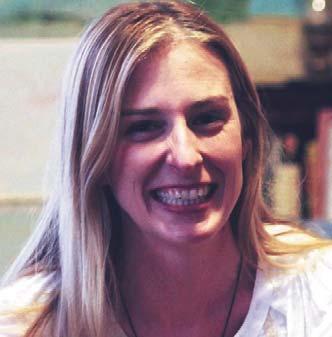
Careers tend to change and unfold these days more than they did in the past, and a liberal arts education prepared me for those changes as I find myself in a career I never imagined when I graduated. Today, as a small business owner, problem solving is something I do all day long. My education has better equipped me to walk into any situation and know a solution can be found.

Obtaining a liberal arts education from MVNU enabled me to develop a comprehensive knowledge base that will help me succeed in whatever area of work I choose. It prepared me to enter the workforce and start full-time employment more quickly than many of my peers -- and in an industry I didn't necessarily expect. I believe a liberal arts background made me a well-rounded and appealing job candidate with the skills required to get an early start on my career.
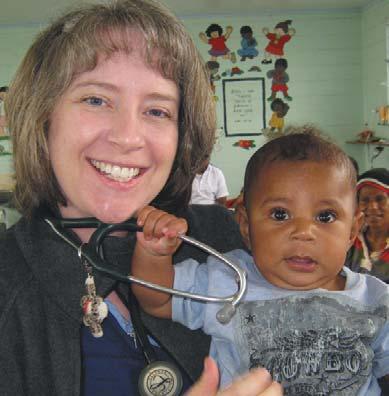
My liberal arts education at MVNU gave me a holistic, balanced, and Christ-centered perspective for life and ministry. In my science classes, I learned about the beauty of God's creation. This helped to develop my love for medicine. I took classes in music, theology, history, and business where I saw the Lord's presence across the disciplines. I participated in a discipleship group that taught me the value of the Bible, prayer, and community. I was also involved in campus ministries. Trips to the inner city and out of the country helped me to put the things I learned together so that I could share the love of Jesus with others across cultures. And so the foundations for my future as a missionary doctor were laid. The photo is me with one of the patients on pediatrics ward at Kudjip Nazarene Hospital in Papua New Guinea.
311
ESTIMATED FIRST-TIME FRESHMAN ENROLLED THIS FALL


TRANSFER STUDENTS H M A T
45
16,000 STUDENTS INQUIRED ABOUT ENROLLING.
1,000 WENT ON TO APPLY.
GRAND
OPENING OF THE COLUMBUS-NEW ALBANY SITE IN THE SUMMER OF 2013.

LAUNCHED A NEW GPS PROGRAM IN THE FALL OF 2014: Bachelor of Science in Computer Science-Software Development at our New Albany site.
LAUNCHED AN MBA 4+1 PROGRAM for traditional age students to complete a bachelor’s degree and MBA in 5 years.
OFFERING A COMPLETE MENU OF ONLINE GENERAL EDUCATION COURSES for GPS undergraduate students to complete degree requirements.

STRATEGIC REPACKAGING OF TUITION COSTS and textbook supply now makes all GPS programs the most affordable programs in Central Ohio and online.
COMMISSIONED STUDENTS AND STAFF MEMBERS WHO SERVED IN CHICAGO, ORLANDO, BELIZE, HAITI AND SWAZILAND.
COLLABORATED WITH THE CAMPUS COMMUNITY AND CAMPUS MINISTRIES TO RAISE OVER $12,000 FOR KNOX NEEDS (FOOD FOR THE HUNGRY).
INCREASED ANNUAL GIVING BY 86.5 % PROCESSING 5,506 GIFTS TOTALING ALMOST
$9.1 MILLION
ACQUIRED OVER 50% FACULTY AND STAFF PARTICIPATION in the 30 Days of Giving campaign with a total of $20,000 for student scholarships.
RAISED FOR OUR M2540 INITIATIVES IN BELIZE, HAITI, SWAZILAND AND KNOX COUNTY THROUGH VARIOUS STUDENT-LED FUNDRAISERS LIKE CONCERTS AND ATHLETIC EVENTS.
HIRED TWO NEW RESIDENT DIRECTORS: TIM RADCLIFFE (’10) AND AMY REEVES (’13).
INCREASED DIRECT MAIL GIFTS BY 28.5%.
INCREASED THE NUMBER OF GIFTS RECEIVED BY 5.5%.
RECOGNIZED OVER 170 ALUMNI AND FRIENDS WHO CONTRIBUTED GIFTS individually or as families of $1,000 or more during the fiscal year and became members of the President’s Circle.
MOUNT VERNON NAZARENE UNIVERSITY



FRESHMAN CLASS (INCLUDES FIRSTTIME FRESHMEN)
TRADITIONAL STUDENT PROFILE

NON-TRADITIONAL STUDENTS
UNDERGRADUATE
FIRST-TIME FRESHMEN (included in Freshman Class count)
UNDERGRAD PROGRAMS ANNOUNCED
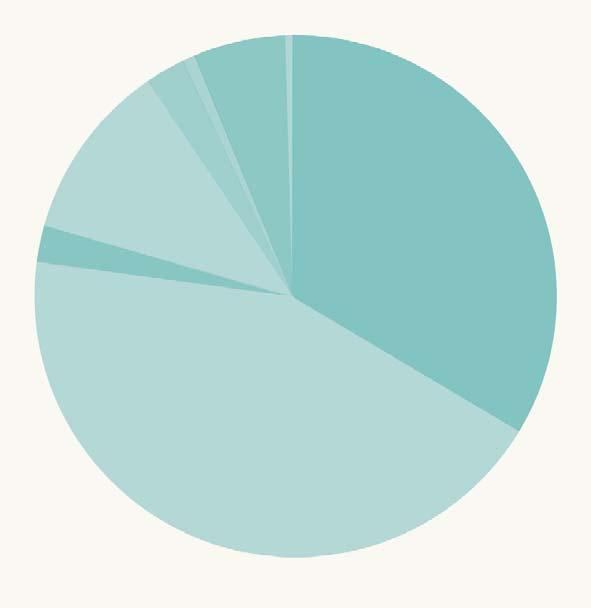
$9,070,246
SEPTEMBER
FIRST DAY OF CLASSES | SEPT 01

CHAGALL PANEL
DISCUSSION
SCHNORMEIER GALLERY SEPT 24
OCTOBER
STEM VISIT DAY | SEPT 27
MARC CHAGALL LITHOGRAPHS AND ETCHINGS
EXHIBITION IN THE SCHNORMEIER GALLERY
SHOW OPEN UNTIL NOV 15TH
FESTIVAL of JOY // GRANDPARENTS’ DAY
SEPT 25
Music Department Ensembles perform R. R. HODGES CHAPEL
MVNYOU VISIT DAY JUNIORS AND SENIORS | OCT 13
OCTOBER 4 / THE GROVE
LANCASTER ALUMNI TRIP OCTOBER 7-10
PERFORMANCE OF WORKS OCTOBER 11 @ 8:00PM IN THORNE
MVNYOU VISIT DAY | SEPT 29 SEPT 28
LEAP SEMINAR with JOHN BURKE
(MUD AND THE MASTERPIECE, SEEING YOURSELF AND OTHERS THROUGH THE EYES OF JESUS)
SIBS WEEKEND | OCT 31-NOV 01
FALL SCHOLARSHIP RECITAL
OCT 14 / 7:30PM THORNE RECITAL HALL
LECTURE ARTIST SERIES DR. JOANN KOH-BAKER
PIANO LECTURE-RECITAL
R.R. HODGES CHAPEL AUDITORIUM; OCT 22 / 7:15PM
MVNYOU VISIT DAY JUNIORS AND SENIORS | NOV 10 TRI-STATE BIBLE QUIZ | NOV 21-22
OMEA HONORS
FALL PLAY
CHOIR CONCERT NOV 15 / 3:00PM, R.R. HODGES CHAPEL AUDITORIUM NOV 7-9
MUSIC DEPARTMENT
HOMECOMING CONCERT NOV 8 / 1:00PM
DECEMBER
JAZZ BAND CONCERT
PRINCE STUDENT UNION, DEC 4 / 7:30PM
Same Old Story
NOV 7, 8, 13, 14 8PM IN THORNE
GOLIARDS CHAMBER CHOIR CONCERT NOV 20 / 8:00PM
DEC 5
10:20AM; R.R. HODGES CHAPEL AUDITORIUM STUDENT Messiah
OMEA HONORS CHOIR CONCERT
DEC 6 / 3:30PM, R.R. HODGES CHAPEL AUDITORIUM
VARIOUS MUSIC DEPARTMENT
ENSEMBLES TOUR THE MVNU EDUCATIONAL REGION NOV 22-23

MESSIAH
R.R. HODGES CHAPEL AUDITORIUM
DEC 7 / 7:00PM
Please join us for a day on campus with your MVNU student!
Parents' Day exists to encourage parents, siblings, and grandparents to spend a day on campus experiencing weekend student life here at MVNU.
We want to celebrate you! Please join us for breakfast at 9 a.m. in Foster Hall located in Ariel Arena. Network with other parents and receive some free give-a-ways while your student enjoys sleeping in on Saturday morning!
The Student Government Association will be sponsoring Dime-a-Dog at the home soccer match. You will also be able to enjoy OAKtoberfest, a fall festival that includes a hog roast, pumpkin carving, hay rides, a few games, s'mores, caramel apples, and apple cider.
Questions? Contact Director of Student Life, Travis Keller at (740) 392-6868, ext. 4604, or e-mail travis.keller@mvnu.edu.
$10/ PARENT (INCLUDES BREAKFAST AND OAKTOBERFEST DINNER)

Darrell Holland (’78) is married to Dianne (Gaston ’83), a Malone University graduate, with three children: Emily (26) lives in Chicago and just finished grad school, Grant and Olivia are seniors in high school. Darrell is practicing law in Canton, Ohio and Dianne has retired from teaching to care for her father. Life is good with fond memories of MVNU! darrell@darrellholland.com
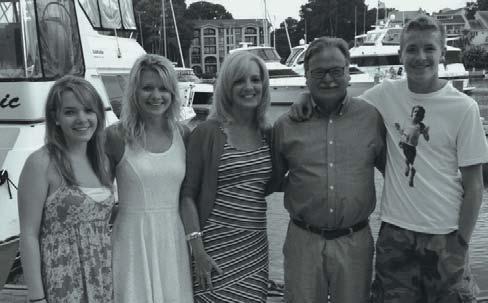
Scott Flemming (’80), formerly Head Men's Basketball Coach and Athletics Director at Mount Vernon Nazarene University, recently led the Indian National basketball team to a historic victory over China. On July 13, the team achieved its first ever win against China with a 65-58 triumph in the FIBA Asia Cup. India has also had a number of other successes recently, including receiving the gold medal at the Lusofonia Games in Goa in January under the coaching of Flemming, who came to India in November of 2013.
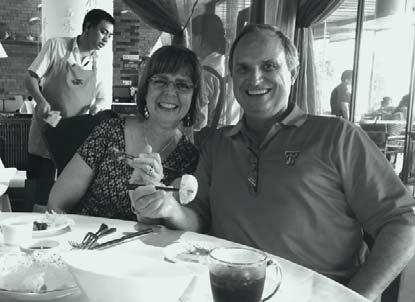
Kent Rinehart (’80) has accepted a 3-4 year position as Exploration Coordinator for Chevron’s China Energy Company. In this role, he will provide coordination between Chevron’s exploration team in Houston, their drilling operations team in Shekou, and the China National Offshore Oil Company. He and his wife, Kelli (Melton ’80), now reside in Shekou, China. Kent joined Texaco in 1980 as geophysicist. Since 2009, he has worked in Chevron’s Project Resources Company, providing project management consulting to major capital projects worldwide. rinehkr@chevron.com
Medina High School Spanish teacher Sharon Schorr (’90) was awarded the prestigious Crystal Apple Award. She was nominated by one of her students, Mackenzie Debnar, who stated,"There are not enough words in our diccionarios españoles, let alone an English dictionary, to thoroughly illustrate how amazing of a teacher Mrs. Schorr is. Not only have the beautiful aspects of the language influenced me, but her passion and love for what she does inspires me most of all. She is gallant, courageous and the most valuable teacher I have ever had." Only 12 award winners were chosen this school year. Mrs. Schorr was recognized at a surprise presentation in her classroom where a representative from Northeast Ohio Media Group and Bryant & Stratton College personally congratulated her. Mrs. Schorr received her Crystal Apple at an awards banquet held in May.
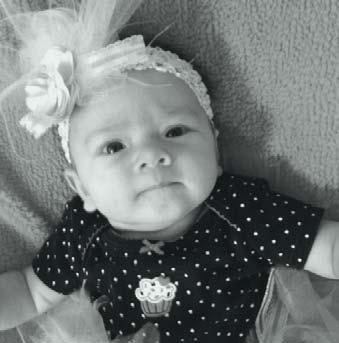
Steph (Boord ’96) and John Chandler’s 4th daughter, Addison Grace Elizabeth Chandler, was born on February 14, 2014.They now live in Redding, CA, and Steph is currently a homeschooling, stay at home mom. steffeboord@yahoo.com
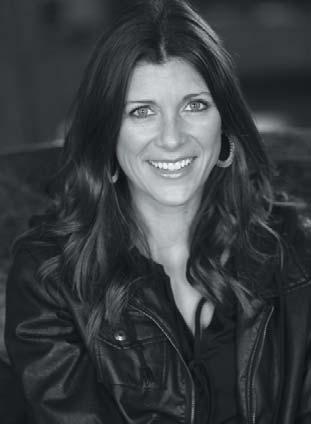
The Church of the Nazarene has selected Rev. Brooklyn Lindsey (’01) as its global justice advocate. Brooklyn has a bachelor's degree in Christian Education. This newly created position is embedded in Nazarene Youth International in partnership with Nazarene Compassionate Ministries. Brooklyn will work to build partnerships with local Nazarene churches and youth ministries around issues of global poverty and justice. As the justice advocate, she will focus on developing educational resources, training, and speaking as ways to educate and engage youth in issues surrounding global poverty, as well as promoting discipleship in the Church of the Nazarene.
Heather (Bell ‘01) League and her husband, Theron, welcomed a daughter, Hollyn Elizabeth, on January 14, 2013. Hollyn weighed 6 lb, 9 oz and was 19 inches long. She joins big brothers Parker and Grayson. heather_r_league@yahoo.com
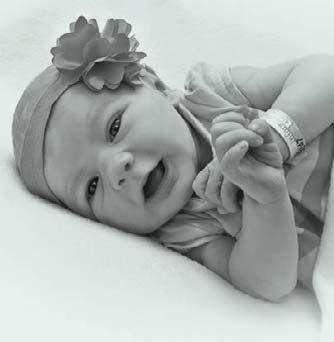
Steve (’01) and Dana Schaal announce the birth of their second daughter, Olivia Donna Schaal, born on April 29th at 8:12 am, weighing 7 pounds, 3 ounces. She is beautiful and joins her sister Addison Kenna Schaal.
Please submit updates and photos for publication by email to alumni@mvnu.edu or online at grapevine.mvnu.edu.
Trisha Anne (Smith ’02) and Zain Latif’s first child, Mikail Zain Latif, was born January 24, 2014. Smithtrisha14@aol.com
Kendra (Sapp ’03) McVay’s husband, Vince, accepted an amazing opportunity to put his stellar photography and videography knowledge and experience to work at Making the Moment Photography in Westlake, OH. Through this opportunity, Kendra is now able to be a stay at home mom to their youngest son, Braxton (19 months). They have two older boys, Bailey (13) and Bryson (11). Until March 2014, she had been teaching middle school language arts within Portage Public Schools in Portage, MI. southpaw544@yahoo.com
Mike Crider (’03) was appointed principal of Southwestern Randolph Middle School in Asheboro, NC, effective 7/1/14. Mike resides in the Greater Greensboro area with his wife, Holly, a 2004 graduate of Western Carolina University, and his twin girls Meredith and Natalie, who will turn three in July. mgcrider@gmail.com
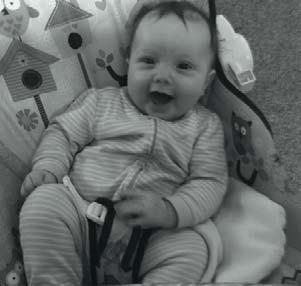
Amy (Dixon ’03) and Tony Stemen’s (’06) Daughter, Annabelle Elizabeth, was born early in the morning November 17, 2013 at home. Her brothers Will (7) and Ben (5) and sister Rosalie (3) were thrilled to wake up and meet her! amy.stemen@yahoo.com
Ben Radcliffe (’03) was the 2013-2014 recipient of both the General Surgery Patient Choice Award and the General Surgery Resident Teacher of the Year Award from Riverside Methodist Hospital in Ohio. Ben and Katherine (Stevens) ('04) will be joining the medical staff at Kudjip Nazarene Hospital in Papua New Guinea in 2015.
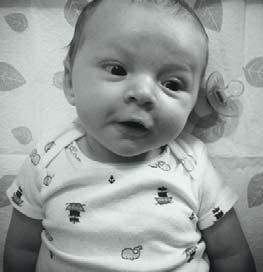
Brian (’04) and Kim (Miller ’06) Trexler, welcomed their first child on January 23, 2014, a son named Elijah Pearce Trexler. tr3xler@gmail.com
Kimberly (Haflett ’05) and Paul Grandinette’s son, Remington Burl Grandinette, joined their family on July 3, 2014. He joins big brother Paul, Jr. (2). Kim currently teaches English Language Learners to children in K-6 for Springfield City Schools. Her husband runs the water plant at Wright State University, and they reside in Enon, Ohio. Squeakz2001@aol.com
Rebekah Baker (’05) was married Sept. 19, 2009 to Neil Baker. They have 3 boys: Micah, Jaret, and Derek. She is working in Wooster, OH at Verizon Wireless as an Assistant Manager. Rdb0919@gmail.com
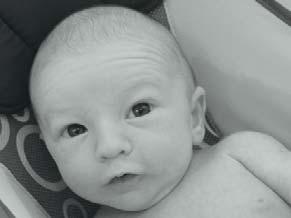
Sara (Jones ’06) and Shaun Wilson (’05) welcomed their first child, Miles Allan Wilson, on June 5, 2014.
Stephanie (’07) and David (’06) Jenkins announce the birth of Drew Eugene Jenkins on February 17, 2014. He joins big brother, Bryce (7).
Joel Potter ('07) completed Ph.D. in Philosophy at SUNY, Buffalo (2013). He joined the faculty at the University of Alaska (Anchorage) Fall 2013.
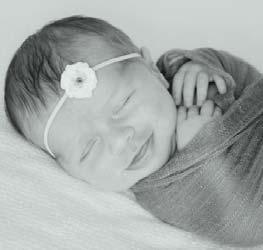
Andy (’07) and Jennifer (Oxley ‘07) Newman would like to announce the birth of their daughter, Avery Rose, on 6/4/14. Andy received his MS in 2011 from Eastern Kentucky University and is working for an environmental consulting firm for the gas and oil industry. Jennifer received her MBA in 2013 from Indiana Wesleyan University and works in Human Resources at a nonprofit organization. They live in Houston, Texas.
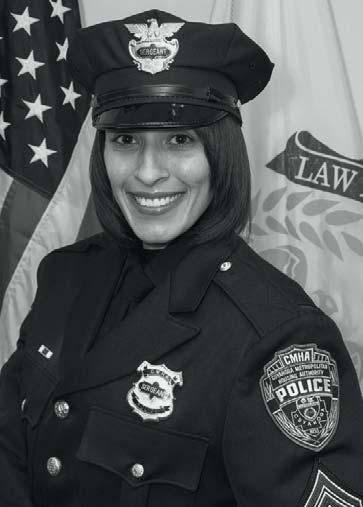
Jackelyn Vanessa Burgos (’08) was promoted to Sergeant of Police at the Cuyahoga Metropolitan Housing Authority Police Department in May of 2014. She is currently the only female Sergeant at CMHAPD. She is also the first and only Hispanic female to have ever risen to the rank of Sergeant of Police in the history of CMHAPD. To God be all the glory!
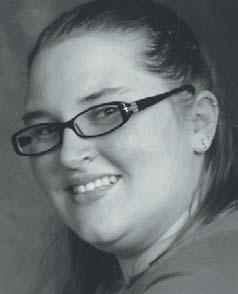
Kristina Carver (’08) of Willowick, Ohio, has received the J. Allen Oakum Memorial Scholarship from Kent State University's School of Library and Information Science (SLIS) where she is pursuing a Master of Library and Information Science specializing in school librarianship.
Diana (Hochschild ’09) and Fabio Gonzalez were married on December 14th, 2013. dmh_872@yahoo.com
John-Paul Kemmenoe, (’09) was nominated as the recipient of Newark schools’ Excellence in Education award.
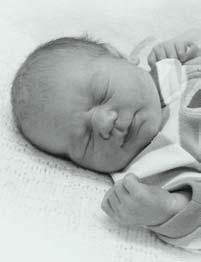
Ben (’10) and Ashley (Davis ’09) Kuhn are proud to welcome Joshua Steven Kuhn, to the family. Josh was born February 4th, 2014 at 2:18 p.m. in Marietta, Ohio. Big brother Boaz is so excited!
ashleykuhn@broadwaynazarene.com
Kara (Miller ’12) and Aaron Ballard’s (’10) son, Jacoby Aaron Ballard, was born on March 24th, 2014.
Sean Fleming (’14) has been hired by the NFL's Miami Dolphins as a Membership Development Associate.
Congratulations to Coach Keith Veale who was named Crossroads League “Coach of the Year” for 2014. Coach Veale led the Cougars to a 29-5 Crossroads League mark (44-12 overall) and the Crossroads League Regular Season Championship. The Cougars were nationally ranked in the NAIA for most of the season as well and won 20-straight games in the month of April.
Dr. Richard “Dick” Jones, Professor of Chemistry at MVNC/U from 1972 to 1998, passed away on April 17, 2014.
Deborah (Bryan ’81) Jones passed away April 17 and had been residing in Texas.
Ron Steenbergen (’71) passed away on April 18 and had been living in the Trenton, OH area.
Roy Flowers (’79) passed away June 9. His wife, Nancy (Kean) Flowers, was also a part of the class of 1979.
Kirk McDonnell joined the athletic department as Sports Information Director in July after spending the last six years as the Director of Athletics Communication at Belhaven University in Jackson, Mississippi. McDonnell is a 1999 graduate of MVNU with a degree in Communications Broadcasting. He has also completed his Masters of Business Administration degree with an emphasis in Sports, Arts, and
Entertainment Management from Point Park University in Pittsburgh, PA.
"We are thrilled that Kirk is returning to MVNU," said MVNU Director of Athletics Keith Veale. "He brings a tremendous amount of experience in the field of Sports Information back to our athletic department.”



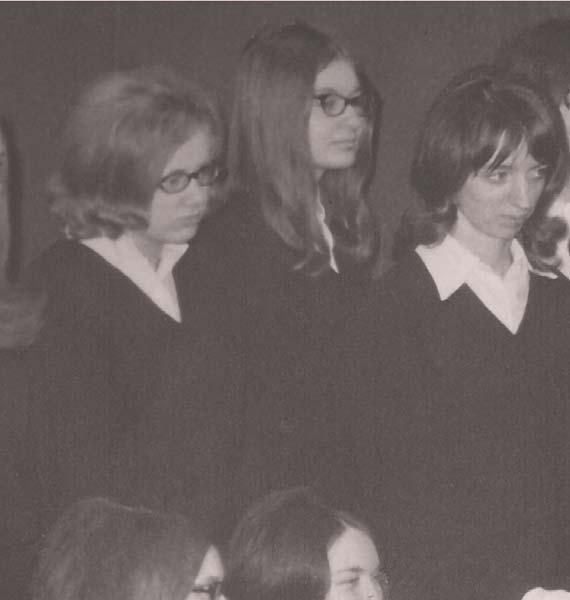
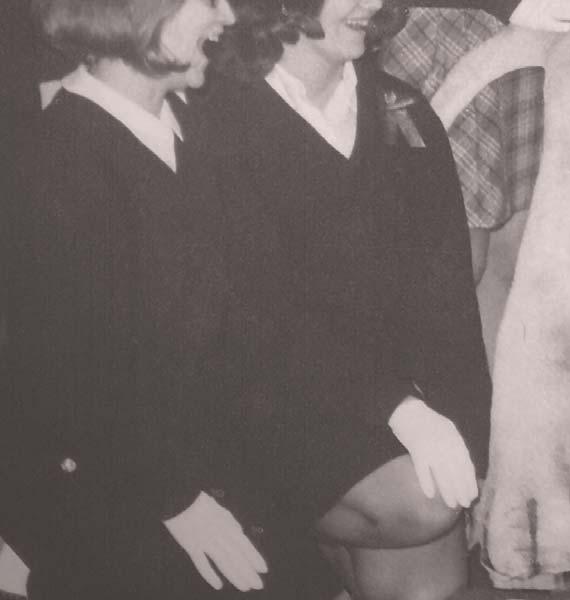
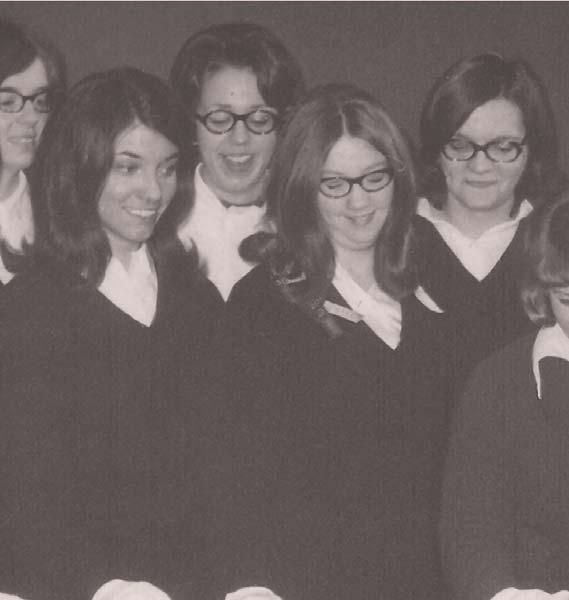
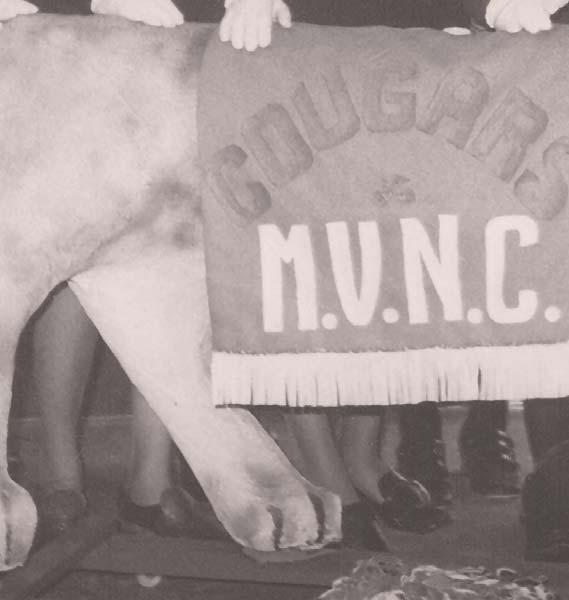
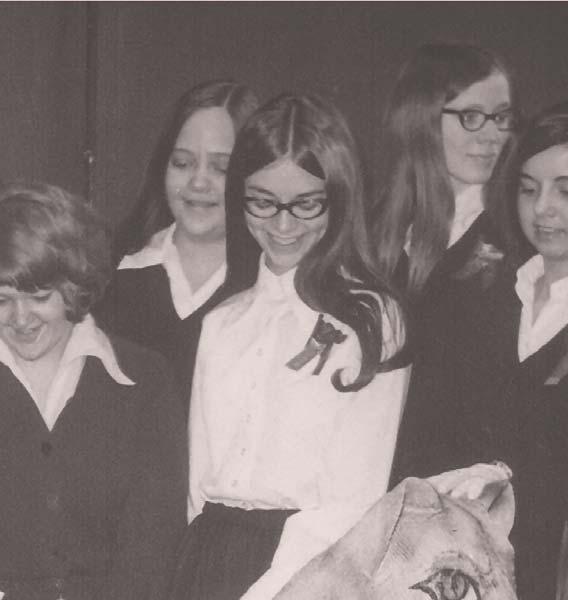
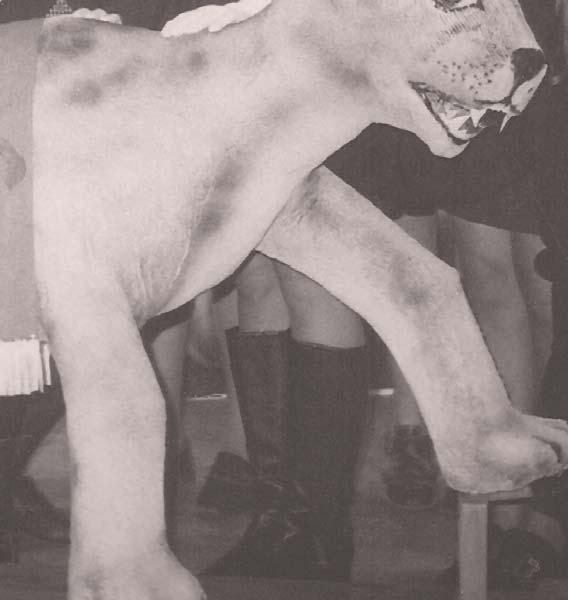
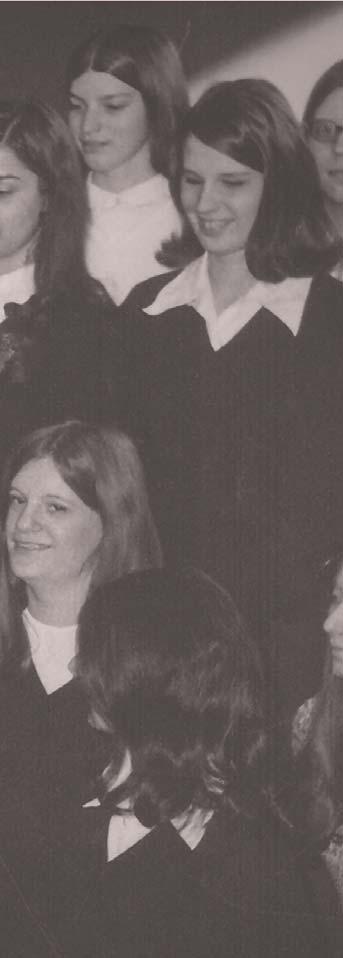
The Block M was a popular and active organization at athletic events that was first organized in the fall of 1970. Led by the alternate cheerleaders, these women were responsible for encouraging school spirit and good sportsmanship. The members sat in a square, and cheered for the Cougars — along with the cheerleaders and the pep band. With a uniform of white gloves, blue and white sweaters, and shakers, the Block M dutifully fired up the crowd.
Pictured are the following alongside Casey Cougar:
Kneeling: Debbie Wright, Linda Shupe, Linda DeVinney, Nancy Taylor, Tricy Hays, Linda Fogarty, Rhonda Heflin.
Standing: Kathy DePew, Phyllis Vanderpool, Carole Moats, Sharon Nestor, Rose Burky, Cathy Thurman, Kathy Allen, Pam Norris, Marlene Allen, Sue Camp, Sara Poe,
Mary June Colestock, Vickie Oiler, Cheryl Shinaberry, Joyce Walters, Gwen Clark, Karen Lybarger, Judi Parks, Brenda Deskins, Pam McNear.
Serving as co-advisors were Becky Beam and Tricy Hays. Co-captains for the group were Rhonda Heflin and Linda Fogarty.
Rev. Joe Noonen / University Chaplain
Much has been written about liberal arts education. The impact of the liberal arts core curriculum on those who experience it has been the focus of much research as well. The amount of words allotted to this column does not permit me to explore these findings, so I will use my own anecdotal research from 19 years of service at MVNU. A common theme, whether in a traditional class setting or somewhere in the world, can be summarized by this statement made by students: “I had no idea.”
We shall know the truth and the truth shall set us free. If engaged well, there is an element of freedom located within the process of the liberal arts. It is not just exposure to and mastery of content that constitutes a liberally educated person. It is also inquiry and dialogue where learning and understanding take place within a learning community.
For years, I taught a course required for all first year traditional students at MVNU “ITD 1101: Introduction to the Liberal Arts”. In one of the lectures for this course, I used Caravaggio’s Doubting Thomas painting to show what this process of inquiry centered in Christ looks like.
who gaze in wonder at what is taking place. Perhaps they were those too scared to ask the question. Perhaps they were bound by preconceived notions with little to no basis in truth. They look and listen and learn and are richer because of this process.
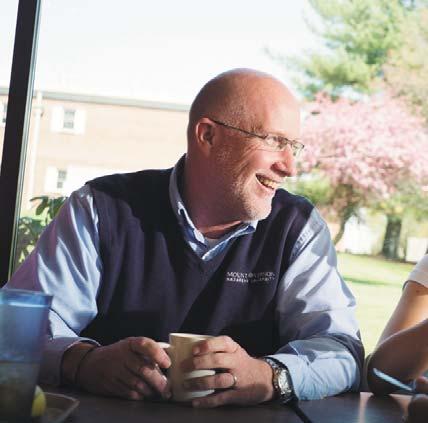
So what? The biblical account can be summarized in the following story: all of us are children of a single family with membership in a single tribe and are heirs to a singular hope bearing a single destiny which is: the care and management of all of God’s creation in a manner consistent with the order and intent of creation. That can be summarized in one word: shalom. Shalom is understood as the flourishing and well-being of the created order.
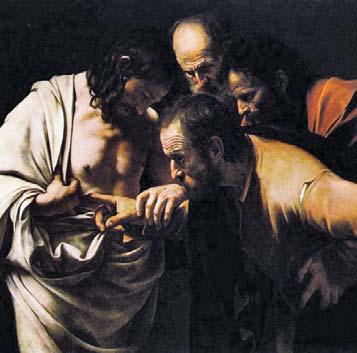
Thomas’ finger, quite dirty on detailed examination, probes the wound of Christ as Christ pulls back his robe and gently guides the hand of Thomas. This inquiry is done in the context of a community of others
To a certain extent, the thought of C.S. Lewis that in and through Christ we are trying to retake territory that has been captured by the enemy, can provide a framework for understanding why we ought to be committed to a liberal arts education. If we are to be faithfully present in a world we are called to change with the love of Christ, then it stands to reason that it will require a place to train and educate those who will follow that call.
This is the beauty and wonder of what is happening at Mount Vernon Nazarene University: by God’s grace we are providing the requisite skills and knowledge for the sake of all creation. Listen to the stories and look at the lives of those who have gone from here and you will hear and see what God has been and continues to be up to in and through the MVNU experience.
Please join us for Mount Vernon Nazarene University’s 2014 homecoming weekend! From exciting events like the Cougar basketball games and the 5K Run/Walk to the brand new Welcome Home Celebration and President’s Prayer Breakfast, it is sure to be a weekend you don’t want to miss!
FRIDAYSATURDAYSUNDAY
Homecoming Chapel
New! Welcome Home Celebration 5K Run/Walk
Class Reunion Brunches
Affinity Groups Gatherings
There will be activities for children on Saturday.
Homecoming Queen Coronation
Cougar Men’s and Women’s Basketball Games w/ special half time entertainment
Dessert Theater
New! President’s Prayer Breakfast