EDITOR’S NOTE
For nearly five decades, Mount Vernon Nazarene University has come a long way. From the miracle on the Kokosing to developing a thriving downtown campus, MVNU has remained faithful to its mission and the vision set by founding President Stephen Nease. The God-given resources MVNU has been given have led to the physical growth of a campus and an academic curriculum, the development of children of God, as informed and educated human beings leaving this place with an education and a spirit of service.
As a Christian liberal arts institution of higher education in 2017, MVNU faces a wide range of challenges. MVNC was established in 1968 — think of how much has changed. Since then, there have been 10 U.S. presidents, several major world conflicts, we’ve seen a man on the moon, experienced the inception of the personal computer, talked on mobile phones, and more.
Time moves things forward, whether it’s in terms of technology, global relations, government, space exploration, or innovation. Change causes us to pay attention, to keep our
eyes and minds open for what is coming, to study what is in the here and now, and learn how to adapt or stand in our truths when the next thing comes along. Even when change is abrupt, it’s a constant motion forward.
Time has shaped the university in unthinkable ways, but at its core, MVNU remains constantly devoted to maintaining and carrying out what our founders believed in: remaining faithful to God, furthering his kingdom here on earth, and equipping students with the knowledge and discernment they need for their own seasons of struggle and change. In this issue, we examine how higher education is changing from social, pedagogical, and global perspectives.
Change doesn’t necessarily have to be negative, but change is inevitable. The key is to remain flexible, open minded, and aware, and to be present and in tune with the Holy Spirit. From the very beginning, God had a vision for MVNU — and that vision continues. We will forever Seek to Learn, in order to Seek to Serve.
Henry W. Spaulding II, Ph.D. President
Dr.
Tricia
NEWS & NOTES
APPROVED FOR NEW TERM
The MVNU Board of Trustees unanimously passed a renewal vote for a four-year term of president Henry W. Spaulding II, Ph.D. Spaulding was elected as MVNU’s seventh president in November 2012 and inaugurated in November 2013. Spaulding served as interim president from April to November of 2012. He first came to MVNU in 2009 as provost and chief academic officer.
NEW SCHOOL
The Jetter School of Business and the School of Education and Professional Studies will become one school under the leadership of Dr. Melanie Timmerman. The name for the new school will be The Jetter School of Professional Studies. This merging recognizes the deep ties between Business, Education, Social Work, and Sport and Exercise Studies at the point of professional practice. This merger has freed resources to support current academic programs.
MVNU CELEBRATES 46TH HOMECOMING
MVNU celebrated its 46th annual homecoming celebration Nov. 11-12, 2016. During the homecoming chapel service, the Distinguished Alumni Service Award was presented to Jeremy Walls (’02). Other highlights include the crowning of Tova Ray, senior, as the 2016 homecoming queen and the MVNU men’s and women’s basketball homecoming classic.
OUTSTANDING ARCHITECTURE
The Mount Vernon Grand Hotel has been awarded the Outstanding Architectural Contribution Award by the Knox County Landmarks Foundation.
#MVNU & #SHINEFORTH TWEETS
@mvnuWBB
Thankful for a team who comes together and grows not only athletically but also mentally and spiritually! #mmvnutthannks
@AfternoonDrive
I know I'm early on this, but grateful to work with leaders who #MVNUThanks
@saxophonist_72
I'm so happy to be at a college where everyone is so supportive! It's such an incredible community. #MVNNU
@raudia
Always great to see and spend time with one of my best friends and former college roommates, and even better to get to worship as he and other good college friends lead. Thankful for him and pumped to see God continuing to use him. #mvnuhc16 #sshinefforrth #MMVVNU #homecoming
@obvi.meg
"You've been waiting for this" is an understatement. For years, attending MVNU has been my dream! Ten minutes ago, I opened my acceptance letter to attend there this fall... I fell into tears. God is working in my life and I'm so blessed to have amazing people and amazing support. #MVNU #Blessed
@traviskeller
There is no better place for our daughters to grow and learn and live! We're honored to be a part of our MVNU community with some of the most incredible fellow faculty/staff and alumni. Thank you to all who invest in our daughters and who helped create an incredible Homecoming Weekend. #MVNUhc16 6 #ShineeFoorth
GENERAL & ADMINISTRATION
Dr. Scott Peterson, Vice President for University Relations, has successfully defended his dissertation for the Doctor of Education degree at Indiana Wesleyan University.
Denny Taylor was recognized as Staff Member of the Year.
Dr. Brad Whitaker will transition to teaching full time in the math department for the 2017-18 academic year. He has spent the past five years leading the Center for Student Success.
Kristina Van Der Eems has been hired as Resident Director of Galloway Hall.
Jill Morrison has been hired as GPS Admissions Recruiter at the New Albany campus.
Annabelle Harray has been hired as Resident Director of Maplewood and Elmwood Townhome Apartments.
Lindsay Andrews has been hired as Development Services Coordinator.
Morgan Pauley has been hired as Admissions Counselor for the North Central Ohio Region.
Brittany Estep has been hired as Admissions Counselor for the Northeast Ohio Region.
Robin DePolo has been hired as Institutional Reporting and Grant Management Assistant.
Aaron Quinn, Dean of Students and Title IX Coordinator, has assumed responsibility for Campus Safety.
Bill Fanning has been hired as the Campus Events Manager.
Katie Sherman has been hired as Human Resources Specialist.
Gretchen Wenzel has been hired as Housekeeper.
Shirley Carbonneau has been hired as 586 Operations Manager.
Billy Wisneski has been hired as Assistant Director of Student Financial Service and Veteran Administration Benefits.
Denis Gomez has been hired as Applications Engineer.
Jennifer Dean has been hired as Student Financial Advisor.
Barry Van Hoose has been hired as Data Reporting and Analysis Specialist.
Jamie Heupel has been hired as Administrative Assistant for Graduate and Professional Studies and Site Operations Assistant for Hunter Hall in downtown Mount Vernon.
Ashley Lowe was hired as Part-Time Housekeeper.
Lorna Hagner and Rob Pienkos have been promoted to Sergeant Campus Safety Officers.
Buck Traylor was honored for his service to MVNU and retired at the end of the 2016 calendar year.
Amy Flavin has been hired as GPS Applications Specialist for the Newark campus.
NATURAL & SOCIAL SCIENCES
Dr. Jon Bossley has been hired as Assistant Professor of Biology.
Dr. David Che has been hired as Professor of Engineering.
Dr. Gary Koester has been hired as Professor of Engineering.
Professor Deborah Smith has been hired as Assistant Professor of Mathematics.
Dr. David Winyard, Associate Professor of Engineering, has been promoted to the Chair of the Department of Engineering.
Dr. David Winyard, Associate Professor of Engineering, successfully defended his Ph.D. dissertation, “TranshumanismChristianity Diplomacy: To Transform Science-Religion Relations,” at Virginia Polytechnic Institute and State University, earning him the Doctor of Philosophy in Science and Technology Studies.


NEWS & NOTES
Dr. David Winyard and Dr. LeeAnn Couts presented “What does a Christian need to know about science?” at the American Scientific Affiliation Annual Meeting at Azusa Pacific University in summer of 2016.
Professors Deborah Smith and Denise Parks took six education students with a concentration in math to the Ohio Council of Teachers of Mathematics conference, where four MVNU alumni also presented. The conference was held at the Kalahari Conference Center in Sandusky, Ohio.
Dr. Paul Madtes taught overseas at Africa Nazarene University during the fall of 2016. Madtes taught four classes with limited time and resources. Madtes also recently received an Eastern Nazarene College Alumni Achievement Award.
NURSING & HEALTH SCIENCES
Professor Billie Maglott has been hired as Assistant Professor of Nursing.
Dr. Teresa Phillips has been hired as Associate Professor of Nursing.
Dr. Teresa Phillips has successfully defended her dissertation for the Doctor of Education degree at Walden University.
Professor Teresa Farnham presented at the annual Ohio School Speech Pathology and Educational Audiology Coalition as well as at the Alaska Speech and Hearing Association Convention. She hosted a workshop entitled “Phonology Focus: Putting Principles into Practice,” which shows how to apply learning theory to the treatment of speech sound disorders in young children. Several MVNU students attended the conference and were able to see keynote speaker, Chris Klein.
ARTS & HUMANITIES
Margaret Allotey-Pappoe, M.F.A. was recognized with a hospitality award for providing excellent service in her position as Assistant Professor of Graphic Design and Department Chair of the Art and Graphic Design Department.
Dr. Brett Wiley recently authored a piece for Image Journal, a publication of Seattle Pacific University, in Seattle, Wash., on author George Saunders. In the spring, Wiley will be going on sabbatical and hopes to publish a few more articles on Saunders.
Dr. Mike Sherfy has been hired as Assistant Professor of History.
Justin Sorensen, M.F.A. has been hired as Assistant Professor of Art.
Dr. Dean Abbott, Associate Professor of Communication, recently completed a short promotional film for the Friends of the Quarry Chapel. The film is designed to promote the use and enjoyment of this Knox County historical site. The film can be seen on the Friends of the Quarry Chapel website at quarrychapel.com.
Nicholas DeWalt (voice) and Aubrey Bailey (voice) tied for second place in the collegiate division of the Knox Symphony Young Artist competition on Saturday, Oct. 1, 2016. Each performed in concert with the symphony in February 2017. Six other students from the Music Department who competed were Riley Zimmerman (piano), Shiloh Six (violin), Sarah Marshall (voice), Austin Miller, (voice), Caleb Gibbs (voice), and Kendra Vosler (voice).
Rebecca Abbott, organ instructor, was awarded a full scholarship to attend “Fresh Hymns of Thankful Praise Arise: A Symposium for Hymn Writers and Translators,” in November 2016 at Concordia Theological Seminary, Fort Wayne, Ind. Abbott maintains the website hymnnotes.com and recently wrote a hymn text in celebration of the 500th anniversary of the Protestant Reformation, which was performed by the congregation on Reformation Sunday (Oct. 30, 2016) at Hope Lutheran Church in Sunbury, Ohio.
MVNU’s 49th performance of Handel’s Messiah was presented on Sunday, Dec. 11, 2016. It was performed by the MVNU Choral Union, faculty, guest soloists, and chamber orchestra. The 160-voice Choral Union included the combined choirs of MVNU and community singers. Conducting the performance was Dr. Robert Tocheff, Professor of Music in the MVNU Music Department.
John Donnelly, M.F.A. had a large painting from his Chasing Faroe series selected to be in the Art for Life exhibition and auction at the Columbus Museum of Art, in September 2016. The auction raises money for HIV/AIDS awareness and research. Donnelly is one of 65 artists chosen nationally to be included. He has been participating in this biannual event since 1990.
John Donnelly, M.F.A. has been invited to two exhibitions: The first is The Art of Recovery fundraiser auction held at the Hilton Downtown Columbus, Ohio; and the second exhibition is comprised of 140 paintings selected from Donnelly’s Chasing Faroe and Italian Sojourn paintings. This is an invitational two-person show opening at the Bonnet Gallery in Pittsburgh, Pa.
MVNU students Emily Porter and Jessica Wells have been accepted into the Council for Christian Colleges and Universities Los Angeles Film Studies Center program during spring semester. Both are Journalism and Media Production majors with Film Studies minors.
MVNU’s radio station, WNZR 90.9 FM, celebrated 30 years of ministry. This accomplishment was celebrated with an event at Hunter Hall.
JETTER SCHOOL OF BUSINESS
Michaela Hershberger, senior Accounting and Finance double major, was awarded the Women in Wealth Management Scholarship from Budros, Ruhlin & Roe, Inc. on April 1, 2016.
Dr. Melanie Timmerman, Dean of the Jetter School of Business, accepted the certificate of accreditation reaffirmation from the Accreditation Council for Business Schools and Programs. Accreditation of MVNU’s baccalaureate and graduate degree business programs was reaffirmed for 10 years by this council.
Delta Mu Delta, an International Honor Society in Business, named MVNU’s Gamma Delta Chapter a Star Chapter for the third year in a row. Dennis Taylor and Denis Gomez, senior business students, were also named as Delta Mu Delta scholarship recipients.
Dr. Anne Rathbone Bradley spoke in Thorne Performance Hall as a guest of the Lecture/Artist Series. Bradley is the Vice President of Economic Initiatives at the Institute for Faith, Work, and Economics, in McLean, Va., where she develops and commissions research toward a systematic biblical theology of economic freedom.
EDUCATION & PROFESSIONAL STUDIES
Professor Danielle Giroux has been hired as Assistant Professor of Social Work.
Dr. Steven and Dr. Sharon Metcalfe were recognized as Faculty Members of the Year.
Jessica Grubaugh and Amy Dubusky presented MVNU Summer Quest: Utilization of Community Partnerships to Extend STEAM Opportunities to Children through Teacher Education Programming at the International Community for Teacher Education in May 2016.
The MVNU Education Department organized the Educators of Tomorrow Conference in October 2016.
The MVNU School of Education and Professional Studies hosted the Symposium for Undergraduate Research & Creative Works for the 2015-16 academic year. Amy Dubusky and Jessica Grubaugh coordinated the event.
Andrea Neuenschwander received the Early Childhood Student Teacher of the Year Award in spring of 2016.
Dr. Stephen Metcalfe presented at the International Community for Teacher Education in May of 2016 with MVNU education graduate student, Shayna Noonen.
Dr. Pam Owen co-authored “Co-Teaching as transforming practice in early childhood clinical setting: Reflections from teacher educators in Ohio,” an article that was published in Volume 29 of The Ohio Journal of Teacher Education.
Dr. Pam Owen authored “Maximizing student motivation: Meaningful course revision,” an article discussing the necessity and effects of redesigning classes to fit students’ needs, was published in Volume 186 of Procedia—Social and Behavioral Sciences.
LaVern Secrest, Field and Clinical Specialist, traveled to Costa Rica with the intent to develop a new partnership with the Christian Academy of Language and Learning. This will allow student teachers to be placed in the International Christian School in Heredia.
Dr. Bevin Shiverdecker conducted the workshop “Perfecting and Personalizing Your Approach to Classroom Discipline,” to the Knox County Career Center and teachers in the Mount Vernon area. This allows teachers to assess current classroom management strategies and work toward successful goals and procedures.
Dr. Michael Traugh, along with Dr. Carol Young, developed and fieldtested a web-based decision tree to guide Individualized Education Plan teams. This will help teachers and administrators make appropriate service decisions for Ohio students with disabilities.
The Education Department has continued their partnership with Moler Elementary in Columbus, Ohio. Weekly fundraisers help buy supplies for the school and community. Faculty and staff also volunteer at bimonthly produce distributions, holiday activities, and parent-teacher conferences.
Professor Elizabeth Napier took sophomore education majors to Moler Elementary in spring 2016. These students developed and enacted activities that connected national education standards to music and movement.
THEOLOGY & PHILOSOPHY
Dr. Doug Van Nest, Dr. C. Jeanne Serrão, Dr. Eric Vail, Dr. Matt Price, and Dr. Jane Kennard accompanied students to the USA/Canada Theology Conference at Nazarene Theological Seminary. Here, Dr. Serrão participated in a panel discussion led by Gordon T. Smith entitled “Preparing Leaders for Exile and Pilgrimage — Formation for Ministers and Laity.”
Dr. C. Jeanne Serrão attended the 2016 annual meeting of the American Academy of Religion /Society of Biblical Literature in San Antonio, Texas. AAR is the world’s largest association of scholars in the field of religious studies and related topics. The SBL is the oldest and largest learned society devoted to the critical investigation of the Bible from a variety of academic disciplines.
GRADUATE & PROFESSIONAL STUDIES
Dr. Jim Dalton is the GPS Program Coordinator responsible for GPS business and public safety administration programs.
The newly designed Master of Ministry (M.Min.) and dual M.Min./MBA programs are now available completely online.
The Master of Arts in Education and Intervention Specialist program is available entirely online, the first completely online graduate education degree at MVNU.
ATHLETICS
Anthony Fairhurst has been hired as Assistant Basketball Coach.
Jeff Estep has been hired as Assistant Baseball Coach.
Jace Wolford has been hired as Assistant Cross Country Coach.
Ian Johnson has been hired as Men’s Assistant Soccer Coach.
Molly Gerber has been hired as Assistant Volleyball Coach.
Nathan Short has been hired as Assistant Women’s Basketball Coach.
Paul Swanson, Women’s Volleyball Head Coach, won his 1,100th career game when the Lady Cougars beat Ohio Christian University on Oct. 27, 2016.
MVNU IN THE ARTS
Joe Rinehart, Department Chair and Assistant Professor of Communication, co-authored the 10th edition of “Media Ethics: Cases and Moral Reasoning.” He worked on a team to edit and create new content for the instructor and student resource website. Rinehart was responsible for sections of the book on Journalism and Advertising.

Hannah Montgomery (’08) recently authored “True Tangerine,” a collection of short stories that follows a series of characters whose lives and goals intersect multiple times. From heartache to newfound love, deep loss to new life, the wide variety of experiences intertwine to bring people together within the same Midwestern small town.
Bob Hamill, Vice President for Finance, recently published “The Heritance,” a sequel to his previous work, “The Scheme.” In “The Heritance” (which is broken into “Part 1-Rejection” and “Part 2-Retribution”), the protagonist, Mark Holman, is now a college professor at a Christian college in the South. The college, whose president was murdered at a ski resort in Vermont, has a new leader. After settling in on campus, Mark comes upon a number of alarming circumstances and must decide how to piece them together, without jeopardizing himself or those around him. Each of Hamill’s books contains a clear salvation message to reaffirm the reader’s faith. amazon.com/-/e/B00K3LZLWI
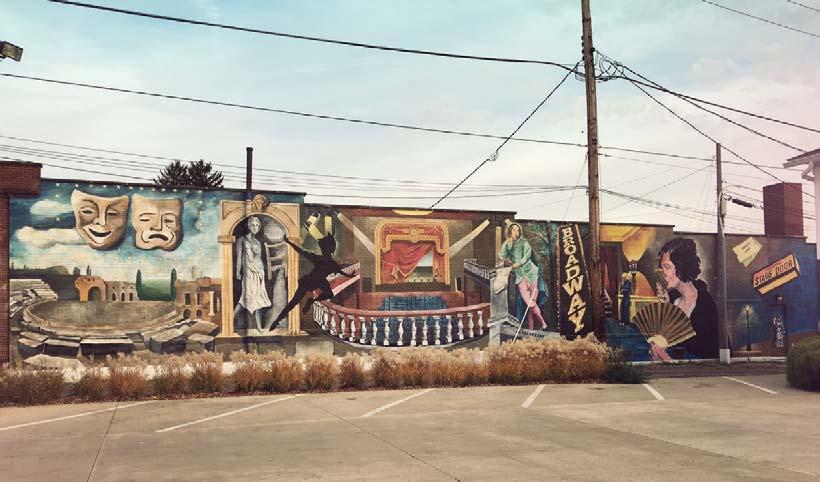
John Donnelly, Professor of Art, completed a two and a half month-long project of a 127 x 25 foot mural for the Knox County Landmark Foundation, “A History of Theatre” from GræcoRoman to Broadway. It is located on the exterior wall of the MTVarts building at Ohio Avenue and South Main Street in downtown Mount Vernon, Ohio.
WHAT ARE WE IN ?
W
r l d
Henry W. Spaulding II, Ph.D. President
Many years ago, my son, who is now 28 years old, asked a question from his car seat — what world are we in? My wife and I had gotten up early to travel and take advantage of slumbering children. When my son, who is currently writing a dissertation in Christian ethics, asked the question, he was startled. He knew that he was not in his bed. He knew that he recognized nothing outside the window. He did not know how to make sense of things. He asked — what world
are we in? This was a much more profound question than he could have known on that morning. Perhaps it is the question we are asking about higher education these days. What is next? How did we get here? Will we be able to make sense of it all?
The Chronicle of Higher Education provides a weekly commentary on the range of challenges confronting university education. Cost of attendance is often raised. Parents and students
think about the return on investment. Diversity consistently comes up in the pages of the Chronicle. Racial tensions capture a good bit of attention. Title IX (gender equality in athletics, prevention of sexual harassment and sexual assault) often becomes an issue. The continuing challenges and opportunities of technology on university campuses is an important higher education agenda. Issues of governance emerge in conversation as well. What weight should be given to faculty, staff, and/or students in major decisions on campus? There have been several examples of tension between university presidents and entities on campus, i.e. faculty, students, and/ or trustees, discussed. The national conversation regarding student debt is on the minds of those involved in higher education. One further example is the future of “brickand-mortar” campuses. Will online education or distance education eclipse the need to have buildings? These are just a sampling of the ongoing discussions in higher education in the United States and around the world.
The conversation regarding higher education impacts MVNU in several ways. First, the national discussion regarding “free tuition” threatens to weaken private higher education. It is obvious that students will gravitate toward the sort of education that incurs no debt. While this does not seem to be a live possibility, the underlying theme of affordability is on the mind of every prospective student and their parents. Second, the need to provide a global perspective for students is important. We live in a shrinking world, one where television cameras can bring live coverage from almost anywhere in the world. Our lives and thus our education is intertwined with the rest of the globe. Third, new forms of education are impacting our university. For example, competency-based education
We willnotbecome a bunkerfrom which t o l o b fetah“lu ” cirotehr ta eht inummocredaorb t y .
is emerging. This might preclude the need for classroom instruction at all. It is more likely that it could dramatically decrease the time in college. Fourth, private higher education faces the resource question on a daily basis. Shrinking enrollments, increasing scholarships, and the need to address salaries and maintenance on campus put stress upon budgets. Finally, the growing cultural shifts toward pluralism threatens the very existence of Christian higher education. Now that the Judeo-Christian tradition has lost much of its cultural influence, tolerance of our brand of education becomes a question. Will society see the wisdom of making space for places like MVNU? No one can possibly predict how these issues will be resolved, but there is work to be done.
MVNU will always be a university intent upon honoring Christ in all that we do. The challenges above present a call to engage the national conversation. We will not become a bunker from which to lob “hateful” rhetoric at the broader community. We will not become cynics in our society. We will trust in the God who called us into being and who will sustain us. Most of all, we know the God of the universe will guide us. MVNU needs to take part in this discussion, that together we may be able to make sense of that profound question: What world are we in?
Keep Moving Forward
Dr. Dean Goon Director of Innovative Education

Learners all around the world are taking their education out of the classroom and into their homes, coffee shops, and anywhere they can use their mobile devices. The digital information age has brought about a shift in learning: The learner can decide what to learn, when to learn, and how to learn. The rapid growth of new learning alternatives has challenged the traditional model of education. These changes are having a profound effect on how we teach and learn.
With the emergence of the digital information age, universities have rushed to incorporate technologies into the system of learning. A typical campus has several computer labs, multimedia projectors in every classroom, technology literacy courses, open Wi-Fi access, learning management systems, and online 24/7 information systems. Technology has evolved over the last several decades to make sophisticated work and learning more accessible to students and faculty. Much of human knowledge has found its way to the internet. This challenges the paradigm of gaining knowledge from a classroom lecture. This has loosened the place-based classroom boundaries for learning. Just as the printing press reshaped how knowledge could be accessible, the digital information age is changing the very ways we think, evaluate and synthesize information, and make sense of the world.
Like many other universities, MVNU is rethinking teaching and learning in this new high-tech era. MVNU has a reputation of building authentic learning communities. Digital technologies have been part of this community learning process for a long time. A large percentage of MVNU faculty use MVNUonline to create new learning opportunities for students to interact, complete assigned work virtually, blog, and discuss content outside of the traditional classroom. Educational tools like MVNUonline improve communication between students and faculty, as well as providing immediate feedback on course
projects and assignments. MVNU continues to create flexibility in learning by providing multiple options for taking courses. Summer Learn is a fully online general studies program that offers MVNU and guest students a flexible learning opportunity at a discounted rate. The MVNU School of Graduate and Professional Studies offers a number of degree programs online. Blended learning, which is a blend of the best of online learning and face-to-face instruction, is creating traction across campus. For example, students could meet with their professor three times a month and complete the rest of their coursework online. Lastly, MVNU is launching a new office to keep up with the current educational trends and create future-ready faculty. The office of Innovative Education will be opening in the fall of 2017 to provide training and support for faculty, develop strategic learning initiatives, and explore trends in higher education.
The digital information age is rapidly changing the landscape of higher education. It is breaking down barriers for students and challenging what it means to teach and learn in the 21st century. Take, for example, Ohio’s College Credit Plus initiative: College Credit Plus (CCP) allows eligible seventh through 12th-grade students to take courses that count simultaneously for high school and college credit. The costs of these courses are covered in cooperation between the State of Ohio, MVNU, and the local public schools. MVNU is working hard to be a premier partner with high schools and the state of Ohio for CCP.
At a time when the digital information age and technology are dramatically altering the world we live in, MVNU wants to lead the way with innovative learning alternatives and a strategically created, future-ready university.
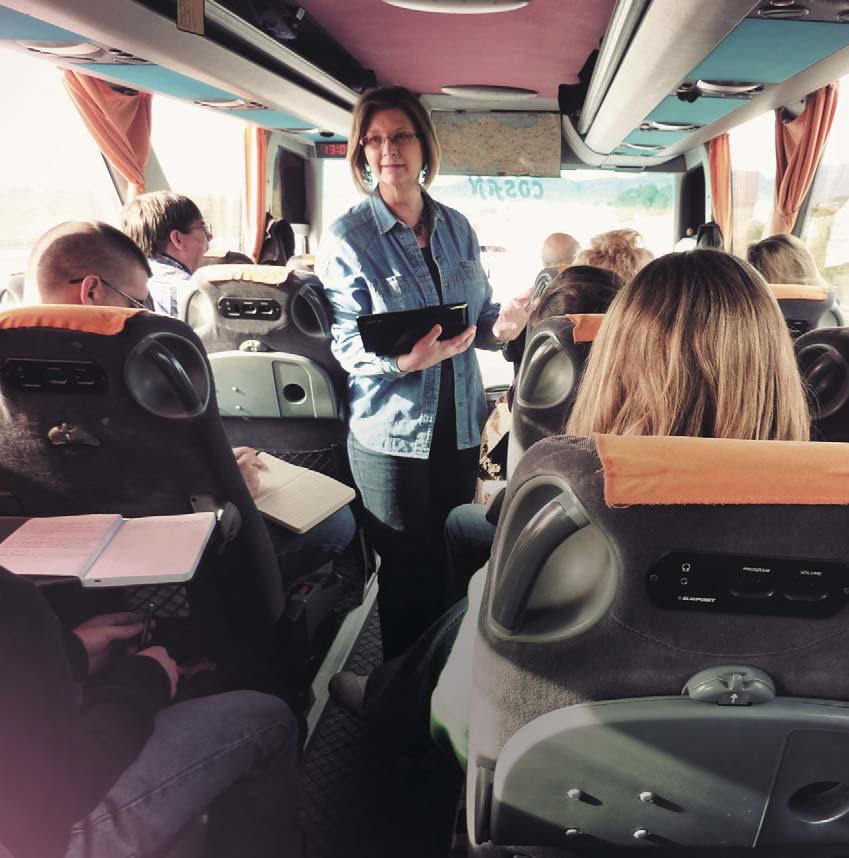







I made my first cross-cultural trip when I was a year and a half old. My parents flew us from our home in Port-au-Prince, Haiti to Jamaica for their first official vacation as missionaries for the Church of the Nazarene. I have been making cross-cultural trips ever since. There is no substitute for understanding another culture, or your own culture in an objective way, than traveling outside your home culture. These experiences have so influenced my way of thinking, my understanding of the world and my education, that I can’t imagine never having traveled outside the country in which I was born.
When I came to MVNU to teach Biblical literature, I soon became aware that many of my students had never been outside of Ohio, let alone outside of the U.S. As I tried to communicate the different contexts, cultures, and Bible languages, I realized that many were completely monocultural and had a hard time understanding why the context, culture, and history of the Biblical lands were so important when trying to understand the Bible.
I began to dream of taking students to Bible lands. In 2007, I took my first group on an academic trip to Turkey and Greece, following in the footsteps of the Apostle Paul. Before the trip, I conducted orientation sessions so the students would know what to expect when we arrived. The students were introduced to the geography and culture of Paul’s world and how it differs from its current context.
It was an intense January, with guided tours and lectures in the day, and reflection and preparation for the next day in the evening. Specific daily readings helped the students understand and interpret the sites we were visiting. Upon returning to the U.S., they finished detailed travel journals with the insights and experiences gathered on the trip.
One of the student reflections included:
“This trip was the most amazing time I experienced as an MVNU student. My feet grew dusty walking the roads traveled by the apostles. Then they got wet in the lukewarm springs near Laodicea. The Biblical texts came to life everywhere we traveled. God used this trip to set my life on an incredible course I never would have imagined possible!” — Peter Blankenship (’07)
Since that first journey, we have also led trips to Israel, Jordan, and Egypt with the same transforming results. Soon I began to realize the interdisciplinary nature of these trips and how more MVNU students could benefit from the cross-cultural experience. Theology, church history, cultural diversity, nursing, and ethics classes began participating in these trips as well. The diversity of these disciplines have contributed to a broadening of the students’ and faculty’s educational experiences.
Perhaps more importantly, our students are being exposed to national guides, pastors, and natives as they learn firsthand how the U.S. is perceived abroad. They are learning how to relate to people they have never met before who worship in a very different way, eat very different food, and speak languages they have never heard before.
One of the delights of recent years at Nazarene Theological Vernon Nazarene University making their way into our community to learn from each other — different cultures, accents, ideas, like being so wide open to the world — your very life is changed! The variety of student experience has had a huge impact on our community! One student joined in a local night shelter working with people seeking asylum from wars and it was amazing to hear him learning Arabic, talking, playing chess, and engaging in deep conversations. Another found herself travelling all over the country, joining in a coffee church and discovering that her real passion in life is bridge-building between communities. One student came for a semester, and then returned to do her government policy for the homeless. The way you connect deeply with others, and learn about yourself, when you move thousands of miles from home is powerful.
all kinds of things: eggplant = aubergine, cookie = biscuit, soccer = football; classes are taught differently; and we drive on the “wrong”
then became a major centre (oh, our spelling is different too!) of
come have also all said that in the process of becoming a “study abroad” student, they feel like us, and we like them. They quickly become a part of the community and their faith in Jesus deepens. We are thankful for every single person who comes — our learning is enhanced and our community is extended by their presence.
We live in a world that has been brought closer together because of the ease of communication, the internet, and social media. No longer can we retreat to our own home culture and forget the world at large. To be effective and wise leaders in the decades to come, MVNU students need the opportunity to get out of their home culture and experience very different contexts so that they understand both the diversity of our world, and the unity of the human experience. We are all fellow travelers in this world and we really do need each other.

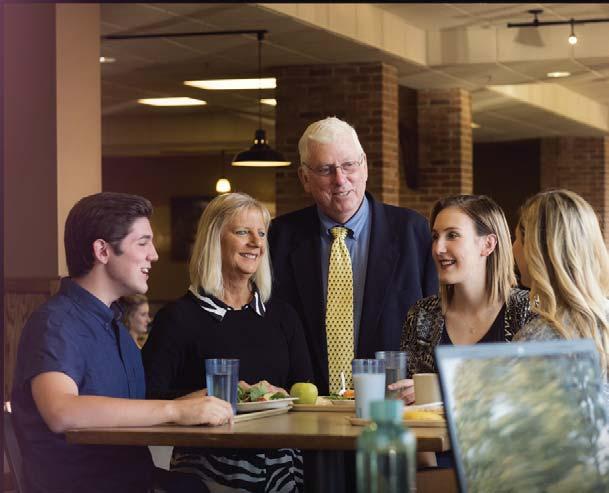
Re g ar dl ess o f w h ere we are or w h ere we're g oin g , we sti ll g at h e r around tables to talk, have coffee, and build community.



Alumni Highlight

To Everything There is a Season: An Unorthodox Journey
Rachel (Weaver ’07) Legros
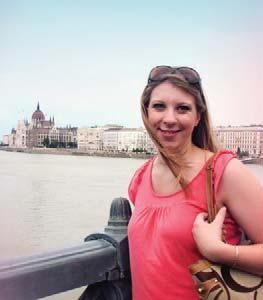
MVNU changed my life, but not in the way I expected. Going to college had been one of my dreams since childhood and I loved every minute of it. I studied English, Music, Spanish, and Art History, and dabbled in drama. I explored Europe, studying art in Italy, literature at Oxford, and singing with Collegians in the Iberian Peninsula. I devoured knowledge, steadily cultivating my persona as a modern Renaissance Woman. When graduation ultimately arrived, I stood in my cap and gown with my freshly printed diploma... and suddenly realized that I had no idea what to do with my life.
Shortly after graduation, my best friend informed me that she was going to teach overseas before attending law school. She had been a part of MVNU’s semester abroad in Debrecen, Hungary and wanted to return. I had become bitterly acquainted with the ugly truth that college degrees do not guarantee jobs, so I decided to accompany her. I had never wanted to be a teacher, but I craved adventure.
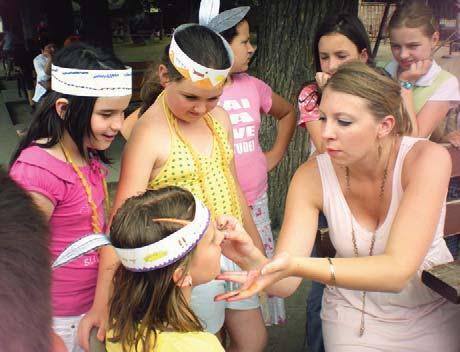
My introduction to teaching was a trial by fire. My first class was comprised of 12 six-year-old Hungarians who spoke no English; I had no idea what to do with them. By the grace of God, I persevered. I worked with and observed fellow teachers, took copious amounts of advice from my mother (an elementary teacher), and discovered that I had a knack for teaching. I developed great
rapport with my students and colleagues, and my Hungarian escapade turned into one of the best years of my life.
When I returned home, I began substitute teaching. I loved subbing because the variety of ages and content areas kept my skills sharp and my interests piqued. Overwhelming support and encouragement from staff, family, and friends ultimately led me to pursue a full-time teaching license. After years of never knowing what to do with myself, I finally found my calling in teaching.
I have taken a meandering path toward a career in education, but oh, the experiences I have had along the way! I Corinthians 13:12 states “For now we see through a glass darkly, but then face to face;” I spent many years feeling like a failure because I could not see the entirety of God’s plan for my life. Now I understand how each stage of my unorthodox journey both prepared me for a career in teaching, and allowed me to fill the needs of people I met along the way. If I would have gone straight into education while I was in undergrad, I would have missed out on valuable life lessons. I did not initially study education; however, MVNU provided opportunities to explore the world in ways I could never have imagined, each of which played a tremendous role in shaping the person I am today. It took me nearly 10 years and traveling halfway around the world to discover that I was meant to be a teacher, and MVNU was the catalyst that sparked my journey.
An Itinerant Education
Dr. Matt Price
The task of educating the next generation is moving forward through rapid advances in technology. Fifteen years ago, distance online courses, video conferencing, and mobile applications were seen as expensive, and risky, luxuries among institutions of higher education. Today, they are the familiar language of those delivering the most up-to-date educational resources to students of all ages and backgrounds. Accessibility to these and other technologies makes education available to more people than ever before, no matter where they live.

In less than a decade, I’ve taught hundreds of undergraduate and graduate students. My classrooms have seated students from every corner of our educational zone — Ohio, West Virginia, and Kentucky — as well as crisscrossing the United States, including Massachusetts, Florida, Texas, and California. I have also taught students from Ghana, Jamaica, Korea, and Argentina. Recent students of mine have lived and worked on six continents. The classroom is where the doorway to the rest of the world begins to open.

Education connects — teacher to student, student to the content, teacher and student to the context of this great, wide open world.
Through the technology of video conferencing, I can also add Poland and Croatia to the list of where students have studied. Through directed studies (one-on-one guided learning), I have taught students via Skype and email as they traveled to India, Uganda, Jordan, Bahrain, and the Dominican Republic. I also send a dozen students every year to Costa Rica and England on semesterabroad experiences. The classroom has changed; it no longer resides just on 327 acres of former farmland in north central Ohio. For my students, study begins on campus and reaches into the far corners of the world in which they live.
One aspect of teaching and learning has not changed: The importance of raising up the next generation through the connection between teacher and student. Current technology and what will come later only facilitates the original goal of education. Education connects — teacher to student, student to the content, teacher and student to the context of this great, wide open world. As a faculty member in a Christian university, this process, for me, is not complete without making a connection to the Lord that has called us to live in this world, and love it, too.


Hi, I’m Ben Haws, Videographer/ Photographer, at MVNU. My job responsibilities include filming, editing, and production of all video promotions for the university, photographing campus events, managing our photo library and providing images for social media and print needs, and sometimes I get to fly a drone!
Describe how your education contributed to your craft.
How do you keep up with changing technologies in your position?
in Mount Vernon for 22 years now, but I graduated from Union University in Jackson, Tenn., in May of 2013 and God blessed me with this wonderful job less than one month later. I majored in Media
Studies. My liberal arts education not only prepared me for what I do on a day-to-day basis here at MVNU, it also prepared me to effectively communicate with others, think critically in complex situations, and around me.
that shoot 4K video, live-streaming social media, and 360-degree “virtual reality” videos are just some of the things that have been increasing in popularity in the slowing down!


Tell Me the Story: The Value of a Christian Liberal Arts Education
The song playing on WNZR’s Afternoon Drive sounded familiar, but also vaguely plagiarized, like a paper written by a student who copied a phrase here and there, ignoring the need for quotation marks or attribution.
Big Daddy Weave’s “My Story,” does indeed, contain many phrases and a refrain from two old hymns — “Grace Greater than Our Sin,” by Julia Johnston (1910); and “Tell Me the Story of Jesus,” by Frances J. Crosby (1880). In fact, the remix is a perfectly “fair use” mashup using songs available in the public domain.
This song sounded so familiar to me because these lyrics are embedded in my accumulated repertoire of hymnody. Aristotle talks about the need to develop a similar repertoire of rhetorical content and strategy, a concept to which the Apostle Peter referred when he said, “Always be prepared to give an answer to everyone who asks you to give the reason for the hope that you have” (1 Peter 3:15b, NIV).
This is precisely what a Christian liberal arts education does for the student: It creates a repertoire of references that prepares the student for all kinds of contexts. It repeatedly answers the questions: How am I ever going to use this math formula? This grammar rule? This historical fact? This environmental tidbit? This author’s, artist’s, or musician’s sonnet, sculpture, or song?
“Learning is about making connections,” as K. Patricia Cross notes in her eponymously named article (1999, p. 5), “whether the connections are established by firing synapses in the brain, the ‘ah ha’ experience of seeing the connection between two formerly isolated concepts, or the satisfaction of seeing the connection between an abstraction and a ‘hands-on’ concrete application.”
In fact, an education in the liberal arts is of more importance than a student’s major because it makes these connections. The results of one national survey show that “93
percent of employers agree that candidates’ demonstrated capacity to think critically, communicate clearly, and solve complex problems is more important than their undergraduate major” (“Liberal Arts Graduates and Employment: Setting the Record Straight,” 2014).
Indeed, one need not look far to find MVNU alumni who were prepared in one discipline but who have migrated to another career: the history major who went to graduate school in journalism, the journalism major who went to graduate school in public administration, the English major who is in marketing for an international nonprofit organization.
Let’s also note that “Christian” is not lightly used. A Christian liberal arts education is important because, as Stanley Hauerwas writes in “Go with God: An Open Letter to Young Christians on Their Way to College” (2010), students need “to interrogate theologically what (they) are learning.” The student who is steeped in the liberal arts, for
example, may know enough about psychology and economics, not only to recognize a problem in a business context, but also to respond thoughtfully, insightfully, and ethically.
Finally, although asking a question about the pragmatic worth of a liberal arts education has its own value, Arthur F. Holmes, in The Idea of a Christian College, said the better question is, “What is it doing to me — as a person?” (1975, p. 25). What the student becomes as he or she is educated “lives forever,” Holmes said. “Christian liberal arts education has an eternity in view.”
Such a view — one that looks to the past for a cache of connections to the present — prepares students for a future when they may tell the story of Jesus, “sweetest that ever was heard.”
The Universal Call
The Christian Beliefs class in January of my junior year changed my life. I was struggling with the fact that I felt led to pursue a career as a family physician rather than feeling called to become a missionary. Many friends and classmates were certain of their calls and many chapel speakers would offer challenges to come forward if you are willing to sacrifice everything for God and serve as a full-time missionary in another country (or at least that is what I heard). A heaviness blanketed my spirit as I wrestled with why a call to full-time mission work did not come despite my willingness and best efforts.
to be a deeper relationship with him lived out in serving others.
A vocation means serving in a way that brings glory to God and points others to the true source of hope and peace.
During my Christian Beliefs class, I began to understand that a vocation is much more than a career choice or a location. A vocation involves living in a relationship with the God who created you and has a plan for your life. It means serving in a way that brings glory to him and points others to the true source of hope and peace. Suddenly, the burden of not feeling called to be a missionary lifted and the goal of becoming a family physician and serving a rural community made sense and began to fall into place.
The steps to reach my goal became clear: Get accepted to medical school, graduate from MVNU, marry my highschool sweetheart, survive medical school and residency, and then find an underserved rural community to begin practice. Eight years later, the boxes were checked and the learning started. I had arrived at a career, but God wanted the vocation
After six years of building a family and a practice, my wife Deanna and I were challenged with a change in our plans. It became obvious that God was leading us to leave what was growing and successful, trust him, and move back to Columbus to train future family-medicine physicians. The stories of Abraham, Joseph, Daniel, Jonah, and Paul began to take on new meaning as I wrestled with leaving our plans and trusting God. I realized my understanding of vocation that began to take shape in the Christian Beliefs class several years earlier was out of balance and was focused more on the career than the relationship. I was creating security and doing things for God, rather than walking with and trusting him.
There have been many changes since that time 15 years ago. The journey included returning to MVNU to complete an MBA, serving as a leader in an urban, level-1 trauma center, and now includes a full-time administrative role developing healthcare leaders and impacting patient care in six different communities. Along this journey, I have gained new insights into the God I serve. He truly calls me into a deeper relationship with him and never leaves me the same. He takes me from where I am comfortable to a new land where I am stretched to trust him and depend on him. I am not sure what might be next, but I am growing in the knowledge that the God who pursued me, saved me by grace, and allows me to participate in his redemptive work in this world is faithful and he will see it through to completion.









WOMEN’S AUXILIARY SPRING CONFERENCE
INSTRUMENTAL ENSEMBLES CONCERT

NYI REGIONAL QUIZ MVNU SENIOR GRAPHIC DESIGN EXHIBITION
SPRING OPERA
JAZZ BAND CONCERT
FLUTE CHOIR, CHAMBER WINDS, GOLIARDS CONCERT
COLLEGIANS, TREBLE SINGERS, WIND ENSEMBLE CONCERT
SPRING COMMENCEMENT
The GRAPE V INE

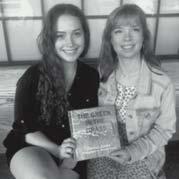
Denise (Ash ’88) Jones and her daughter,
based on a song that Denise created and sang to her daughter to teach her about the colors that God created in our world. The book is available through Kids At Heart Publishing or by contacting the author at denisej@rcs.k12.in.us.
Tom (’90) and Tara (Hodges ’89) West
are each taking new career positions. Tom resigned from MVNU after 17 years to accept the position of Regional Director of Southern Ohio/Northern Kentucky for Indiana Wesleyan University. Tara received a Master of Arts in Spiritual Formation from Northwest Nazarene University in May 2016 and is now an adjunct instructor for MVNU. Thwest66@gmail.com
Heather (Clyburn ’99) Bush, Associate Professor of Biostatistics and Kate Spade &
Against Women, is leading the research study
which types of violence prevention programs are most impactful to incoming students at the
positive results and may lead to a reform in violence prevention and substance abuse training for students in college.
Dr. Casey Tygrett (’00) will have
Spiritual Practice of Asking Questions,” published in May 2017 by InterVarsity Press. Tygrettfamily2000@yahoo.com
Mary Thompson-Hufford (’01),
for Excellence Award at the PAR and OSDA
than 20 years. This award is given annually to a director, manager, supervisor, or a direct care staff member who is devoted to serving people with developmental disabilities and played a role in training staff and moving the system forward.
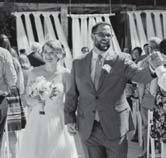
Matt (’03) and Emily (Weaver) Shetler were joined in marriage on Sept. 5, 2016, Ohio. mattshetler@ gmail.com
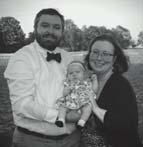
Allison (Beekman ’04) Fedon and her Lucy Joy Fedon, into the world on April 21, 2016. They reside in Loveland, Ohio.

Maria (Watkins ’04) and Nick Brown (’05) welcomed Pierson Isaac Brown in the world on Sept. 25, 2016. He joins big sisters, McKinley and Kensington. Maria is an occupational photographer, raising funds to support mission work worldwide. Nick manages the JPMorgan serves as Nazarene Missions International President for their church, and led a trip to Haiti in November 2016.

Arthur Cherry (’05), design director, was
Megan (Fowler ’10) and Augustus “Gus” Peders, were married May 14, 2016, in Mentor, Ohio.


his wife, Danica, and two daughters, Lila and Eloise. arthur@arthuradesign.com

Mike and Justina (Olsen ’05) Bennett welcomed child, Jean, on April 7, 2016. The family resides in Hagerstown, Md., where Justina works part time as a physician assistant and Mike is a program requirements writer for FEMA.
Tera (Orcena ’06) Holderman was accepted Business Analytics Management program. She expects to graduate in the fall of 2018. Holderman33@gmail.com
Beth Ann (Grimes ’14) Kadesch, and her husband, Kody, relocated to in February 2016. Kody accepted a position as a manufacturing engineer for an automotive company. Beth International as a home study social worker, working with American families in Beijing and children with special needs. She is also a School of Shanghai.
Matt Rider (’14) oversee the company maintaining its position as a leader in the industry through the use of technology, management, and operations. He comes to this position after 20 years of experience in the mortgage banking industry.

Phil (’16) and Lauren (Craft ’12) Lanz welcomed their
Alexander Lanz, on Oct. 14, 2016.
Nicholas DeWalt (’16) was selected to perform as a tenor for the Young Adults
in February 2017. Participation in one of the Honors Performance Series is limited to the highest-rated young adult performers from across the world. Nicholas has studied music for more than 10 years.

Kendrick (’17) and Bethany (Smith ’13) Flanagan
Kate Flanagan, on Sept. 27, 2016.
Dafne Bianchi, a former student at MVNU, with cancer. She studied early childhood education while at MVNU. She is survived by her brother, Brett Bianchi; and her grandparents, Larry and Regina Nunley.
Harrold Curl, former Professor of Sociology from 1978-93, passed away on Sept. 23, 2016.
Nancy (Smitley ’70) Gillman passed away July
She is survived by her husband, Rodney Gillman; and her sons, Jeremy Gillman and Reid Gillman, along with many other loved family members.
Larry Allen (’77) passed away Nov. 29, 2016. He was pastor of the Sardinia, the Nazarene. He is survived by his wife, Allen; daughter, Kami Owen and husband, Mark; son, Anthony Allen and wife, Maria, among other family and friends.
Elaine (Billow ’82) Collum passed away on Sunday, Dec. 11, 2016 at Hospice of NW Ohio in Perrysburg, Ohio. Elaine is survived by her
children, Lisa Foreman, Brendan and Zachary and Steve (Deborah) Billow, and Dennis (Susan) Billow.
Missy (Wright ’91) Iriarte passed away July 31, 2016, after a short battle with cancer. She is survived by her mother, Ida Jenkins Wright; and her daughters, Britney Iriarte and Brooklyn Iriarte, among other family and friends.

MAKE A JOYFUL NOISE UNTO THE LORD
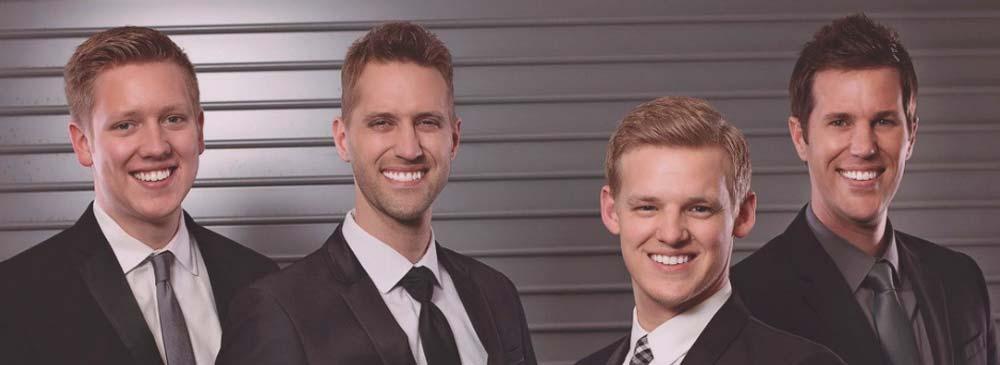
Join us on April 4, 2017, from 10 a.m. to 3 p.m. for a great day of worship, hear from our special speaker, Dr. Doug Van Nest, and fellowship with friends.
An afternoon concert will feature The Ball Brothers, a “Horizon Group of the Year” nominee by the Singing News Fan Awards.
mvnu.edu/joy



FROM THE ARCHIVES
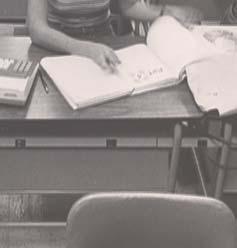
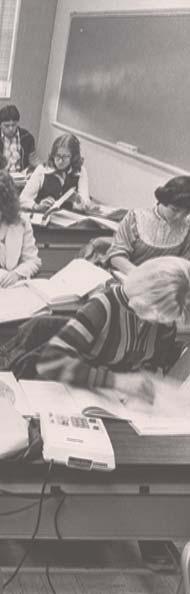
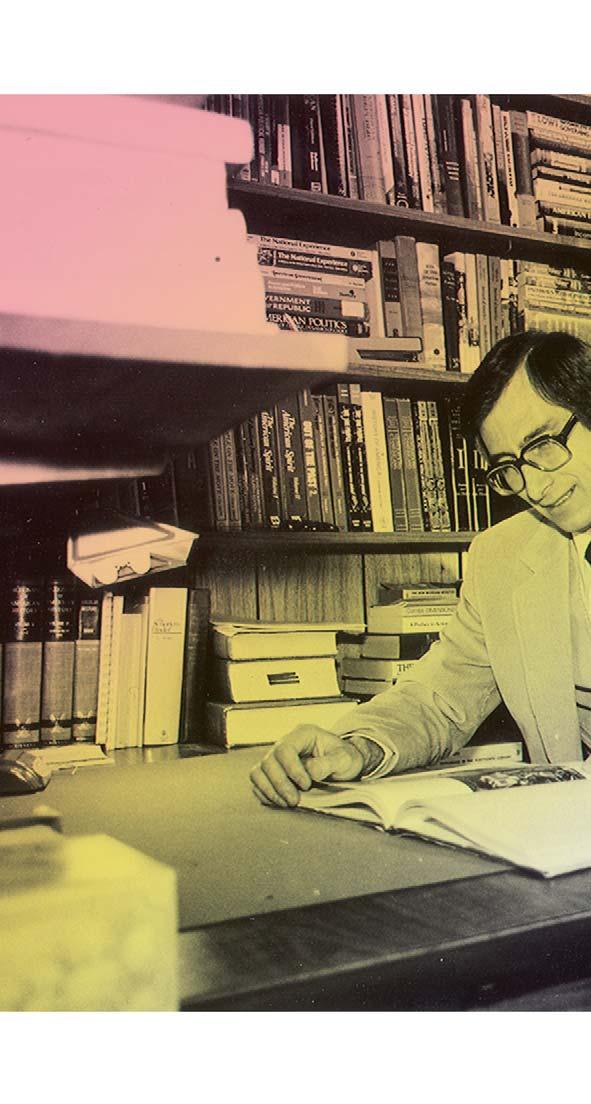
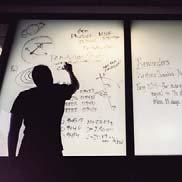
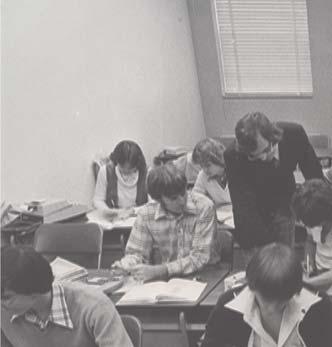
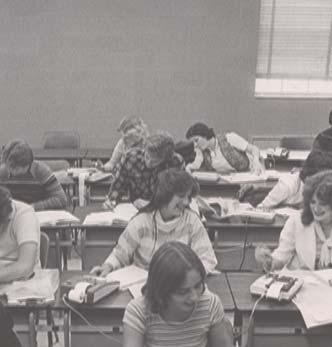
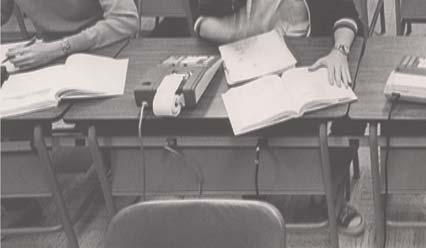
This photo from the late 1970s of Dr. Daryl technological school environment than exists in 2017. Today, instead of notebooks, one might see laptops and much smaller and more complex calculators than shown here. Although the face of higher education is constantly changing and MVNU adapts to
these changes with new facilities and greater technology, the vision of the institution remains the same. No matter the changes, MVNU will always exist to shape lives through educating the whole person and cultivating

C HAPLAIN’S CORNER
Bob Dylan was awarded a Nobel Prize in literature. So, it only seems fitting to use his words to describe the current context of higher education: “The times, they are a-changin’.” Colleges and universities are facing profound pressure for change. Those who manage this pressure well have a clear and focused mission and an understanding of their core identity.
Wendell Berry has stated that “…the thing being made in a university is humanity… What universities are mandated to make or help make is human beings … responsible heirs and members of human culture.”
The people of God within the narrative of scripture are called to remember the mighty acts of God within their history. They celebrate a God who creates, sustains, redeems, and delivers. These memories shape and inform their understanding of who they are.
Recently, I found the Student Handbook from 197576, which was my first year here at Mount Vernon Nazarene College. Located on page five, in a section entitled “College Ideal,” are these words:
“The institutional objectives of MVNC grow out of a philosophy of education that has its roots in a distinctively Christian understanding of life. … Divine Love in Jesus Christ provides the most adequate basis for the understanding of the meaning of all events and facts, our objectives rest upon the claim that truth involves a proper relationship of persons — vertically with God and horizontally with others.
“MVNC strives for the education of the whole person — to enable the student to develop a sense of meaning and purpose in life, and to live creatively and redemptively in society.”

How does MVNU understand its mission today?
“MVNU’s educational philosophy and purpose are… informed by the Bible, focused on Christ-likeness in every aspect of life, and defined by an emphasis on loving God with all of one’s heart, mind, soul, and strength, as well as one’s neighbor as one’s self. Students are … challenged to be devoted disciples of Christ, drawn toward discovery of wisdom and truth in every discipline of study, prepared for leadership in various professions, equipped to be lifelong learners, and sent into the world to live out their faith … in service to God and others.
“… A spirit of worship unifies the student body, and the community is shaped through shared commitments, values, and experiences. … As students become graduates, the marks of (MVNU) continue to identify them as devoted disciples, servant leaders, learning professionals, and loyal alumni.”
We must ask how what we do at MVNU can be done better as we pay close attention to changes within higher education, and we must do so without compromising our identity. What would it profit MVNU if we grew enrollment, maintained financial stability, and taught innovatively, but lost our Christian identity?
Does MVNU remember its distinct Christian identity? If this was an exam, we might be asked to compare and contrast the 1975-1976 “College Ideal” and the current “Mission Context” statements. Take your blue book and write. What is a blue book, you ask? The times, they are a-changin’.