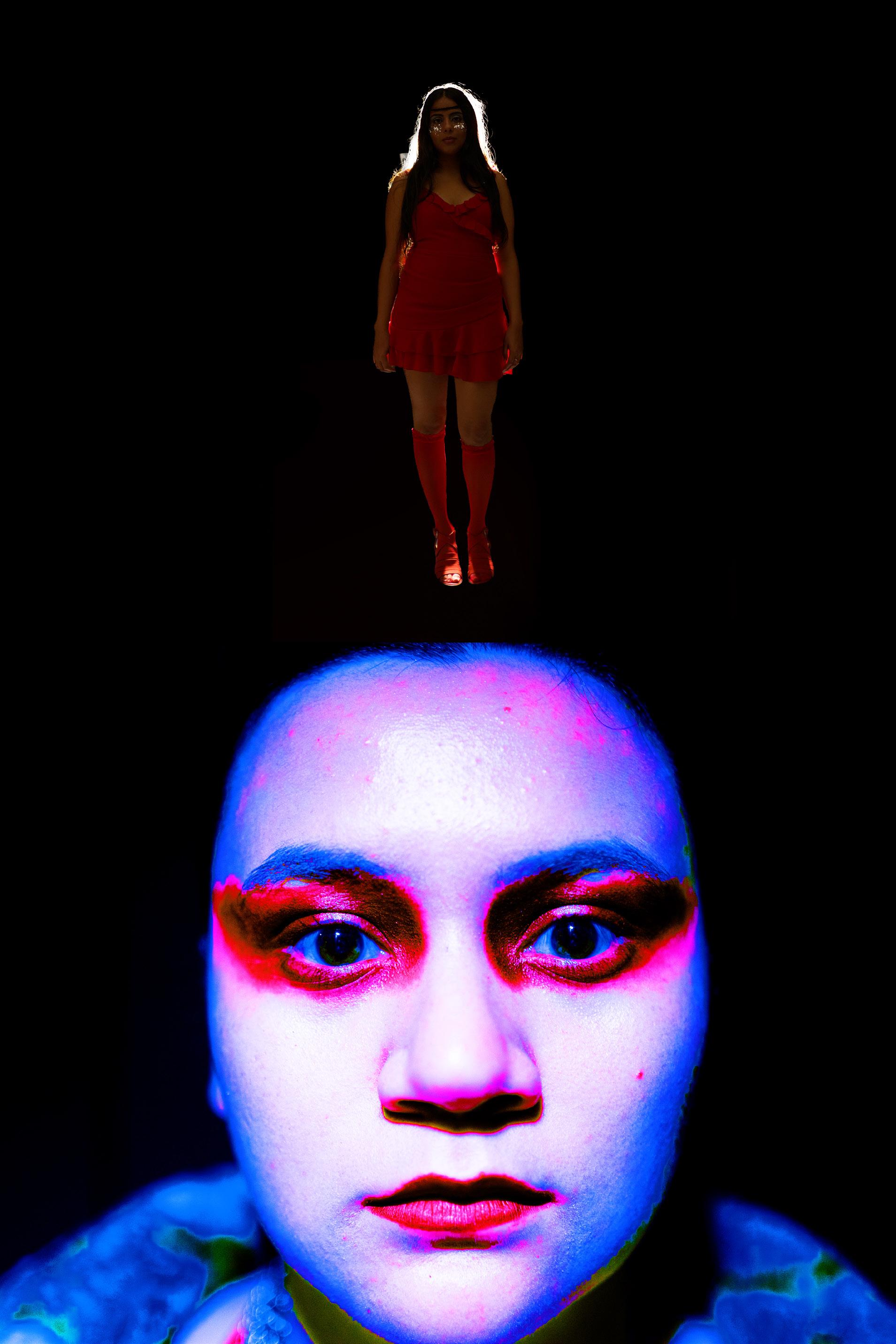
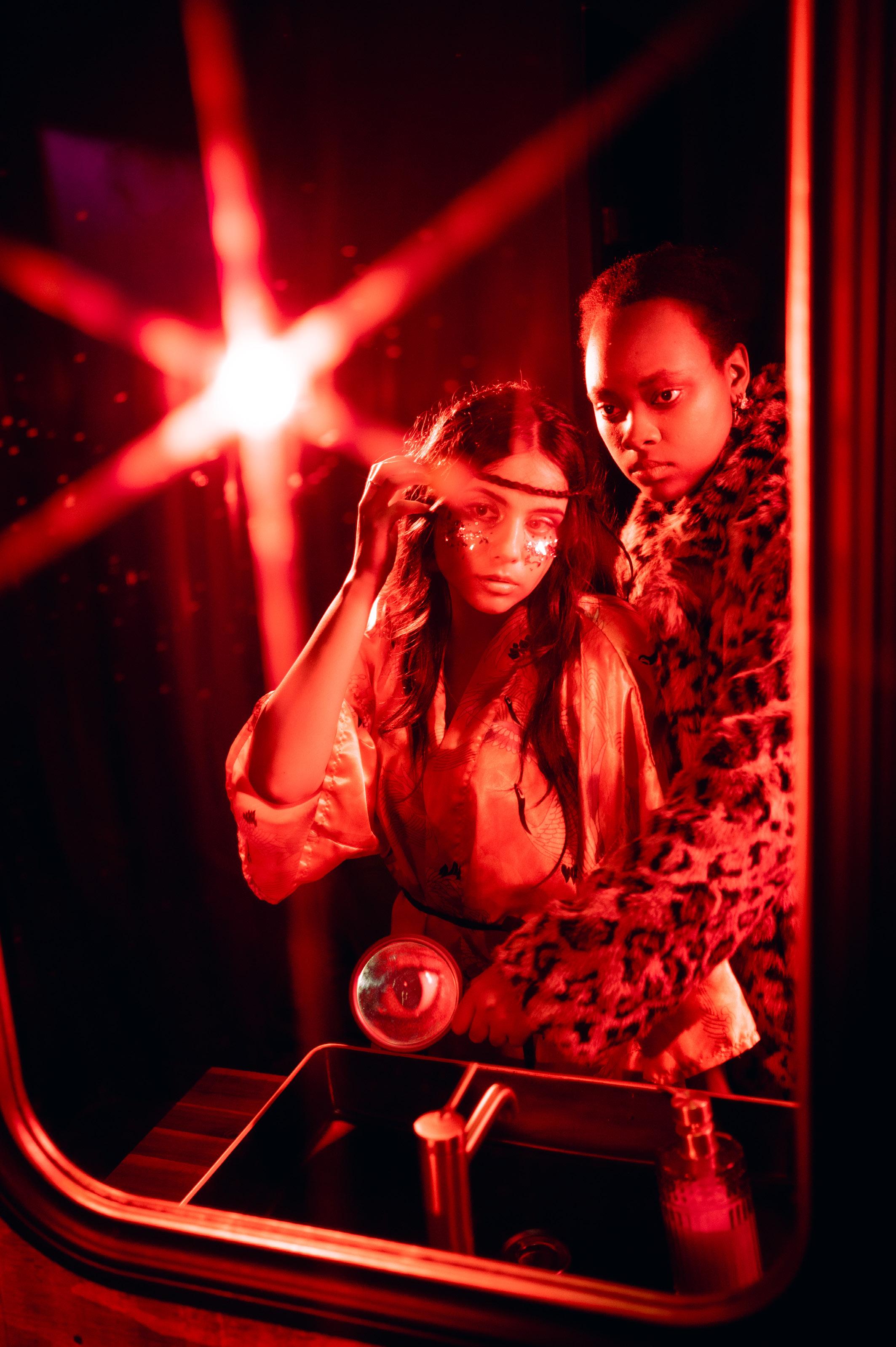
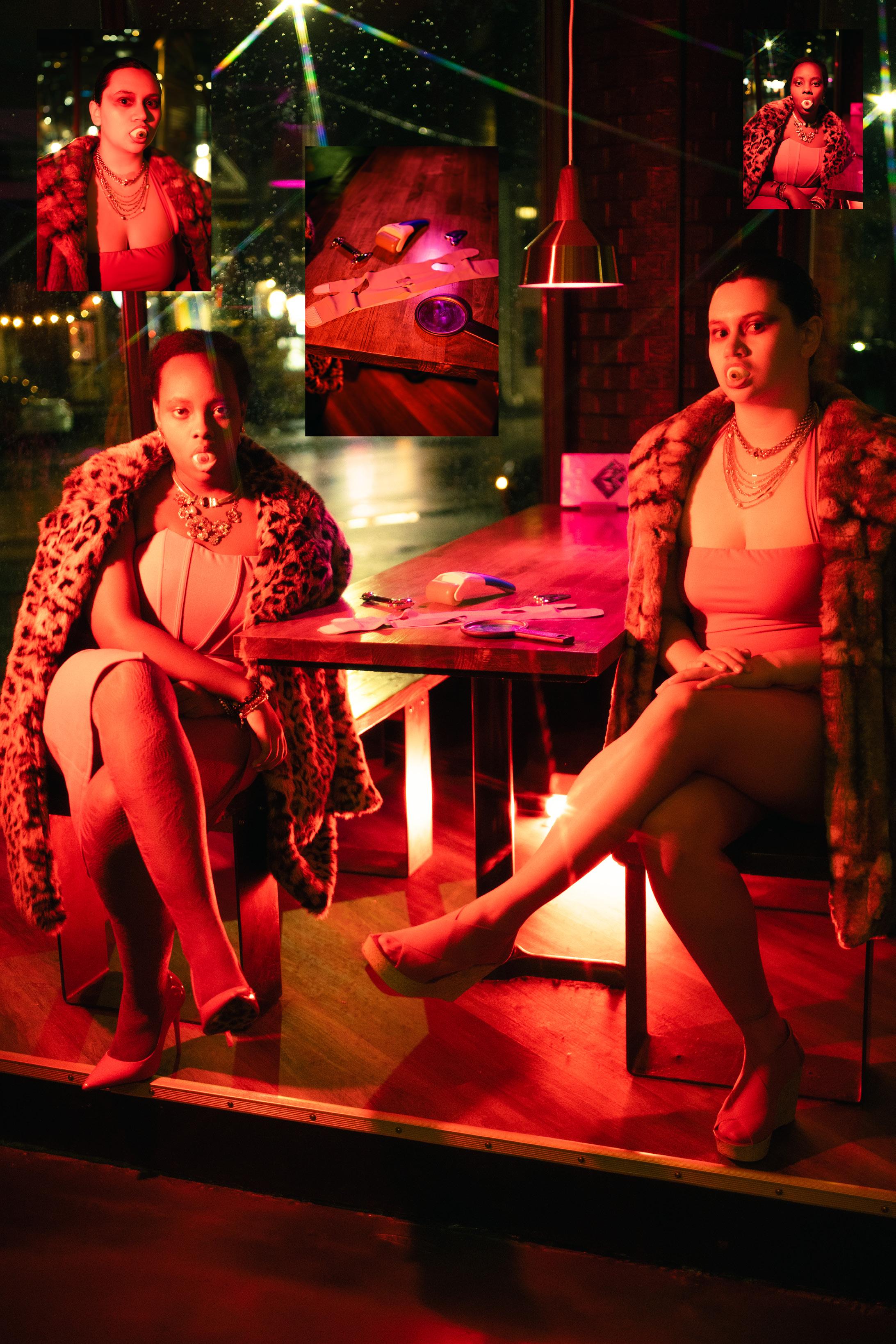
“Okay, unc,” was my cousin’s response to a story I posted of myself.
For those who are unfamiliar with the term unc, Merriam-Webster defines it as a shortening of “uncle.” It has been used humorously on the internet as the phrase “unc status” to imply that someone is old or getting older. I know this whole ‘unc’ discourse is a joke, and I wasn’t about to internalize what my younger cousin said, though I couldn’t help taking a bit of offence. After all, I’m only twenty-one. But it also led me to realize something much more profound, and that’s the fact that ageism is more pervasive than ever. A good example is the growing trend of girls aged ten and under shopping at Sephora. This has been popularized to the point that it has been named “Sephora Kids.” Piecing this all together makes me question a lot. Why are university students being called unc by kids? Why are ten-year-olds buying retinols at Sephora for their skincare routine? Overall, these examples serve as clear indicators of society’s skewed conceptions of age.
Another example we can turn to is the rise in consumption of age-reversing products and procedures. An article
published by Lampoon, a cultural magazine about sustainable thinking, further expands on this phenomenon. In a survey done by the magazine, American women aged 18 and above demonstrated that seventy percent of these women use some sort of anti-aging product for their skin. Moreover, the article also connects this notion of ageism with social media: “With their endless multi-step skincare routine videos, a varying cast of ‘holy grail’ must-have products, talk of Baby Botox, and the inescapable promotion of the use of sunscreen for anti-aging purposes, TikTok and its fellow social media platforms are contributing to building a homogenized beauty ideal for women.” Reading this made me reflect on my own experience. Unrealistic beauty standards have always been imposed on women, but today they feel even more intense— and I’ve felt that impact personally. When I look at pictures of myself in my first year versus now, it is crazy to see how much my face has changed. I looked like a literal child compared to now. Now I feel as though I truly exhibit the features of a “woman.”
Roshni Perera
Unc?
Ageism is not only tied to beauty but also to timelines and expectations about one’s life—in essence, to one’s very existence. It is so easy to get lost in ideals about age and having “xyz” done at a particular age or within a specific timeline. The truth is, it is important to avoid succumbing to these notions because your life is not bound by the construct of age. For instance, when I entered university at eighteen, I truly felt like I had learned everything and had life figured out. Maybe it was because of society’s idea of ‘adulthood,’ or maybe it was simply the fact that I was starting a new chapter, living away from my parents and gaining more autonomy. I don’t know if anyone else can relate, but I bought into this idea so completely that when I was finally challenged or placed in an unfamiliar situation, it became a huge adjustment.
The reason I am providing this anecdote is that if I hadn’t submitted to these ageist ideals, I might have been less hard on myself and embraced the trials and tribulations of university. Obviously, this is also easier to say in hindsight, but that’s how age-oriented notions can cause you to feel like you are in this pressure cooker.
So on one hand, I have my younger cousins referring to me as “unc,” and on the other hand, I have people like my mom telling me, “Roshni, you are twenty-one, you are in your prime,” both expecting me to live up to conflicting ideas of what my 20s should look like. This has led me to have a completely paradoxical understanding of age in my head. One day, I’m with my friends getting ready to go out, feeling young, and the next day I am stressing over my future or the fact that I have not found a stable relationship; it can be very exhausting. If you are in third or fourth year, this is especially applicable because there is this feeling of needing to have everything “figured out.” The truth is, your twenties are special because you don’t have everything figured out. These are the times it is acceptable to be a little messy and to make stupid mistakes. YOU DO NOT HAVE TO HAVE YOUR LIFE FIGURED OUT. Do not brainwash yourself with ageist ideals. We need to resist ageist rhetoric and embrace the messiness and confusion of our twenties.
Basically, I wrote this whole thing to reassure you that you are not “unc.”
I don’t know if I can pinpoint the exact moment I decided to like school. There was no definitive moment of deciding to enjoy and embrace school, rather than continue on with the pessimistic worldview a lot of my peers had. Maybe it was the speech I wrote in middle school that won an award, or the English paper in high school my teacher said she actually enjoyed reading. The realization eventually dawned on me as I was applying to university that I actually enjoyed learning. I had more than just a desire for it, but a hunger. Starting university at Queen’s felt like the perfect way to satisfy that craving. I absorbed theory and information and enjoyed the process of learning through lectures, readings, even
with my professor about him possibly helping me with grad school applications, which prompted him to ask me about what I wanted to pursue. I hesitated, and told him I loved the process of learning, just as much as I loved creating. He told me “once you’re in the academics, it’s hard to get out.” On my walk home, I spiraled. On one hand, I loved the idea of continuing to learn and absorb new knowledge through school, but I found it petrifying to think about myself as a professor for the rest of my life. Maybe I was wrong growing up and thinking I could be an artist? Maybe something ‘practical’ was my path all along. In my spiral, I got a call from another creative friend. I tried not to cry in
Life Long LEARNER
Simrit Grewal
papers. I didn’t just come to university to get a degree and move on with my life, I wanted to engage with the material I was learning, and I was good at it. The validation and desire mixed together feel incredible, but it’s not the only desire. Unlike learning, I can remember making the conscious choice to make things. Anything from comic books, to short stories, music videos, paintings; anything I could get my hands on creatively, I did. I found being creative was the best outlet for me to express myself, and I loved doing it. As fourth year approaches and leaving the university bubble grows closer, it feels impossible to ignore making a decision between the two.
A few weeks ago, I was able to see myself at the crossroad of those paths. I had spoken
my overwhelmed state, explaining how maybe I wasn’t fit to be an artist, or whatever that means. He put it to me simply “do you want to create things, or do you need to create things?” I hesitated for a moment. Reflecting, there was something carnal about my desire to create, something that felt more eternal than staying in school forever.
I think deep down, my need to create is something that will continue to fuel me for the rest of my life. I know I can continue to make and learn at the same time, figuring that out is the next step, but for now, I can just continue to learn and create in a space where I feel safe.
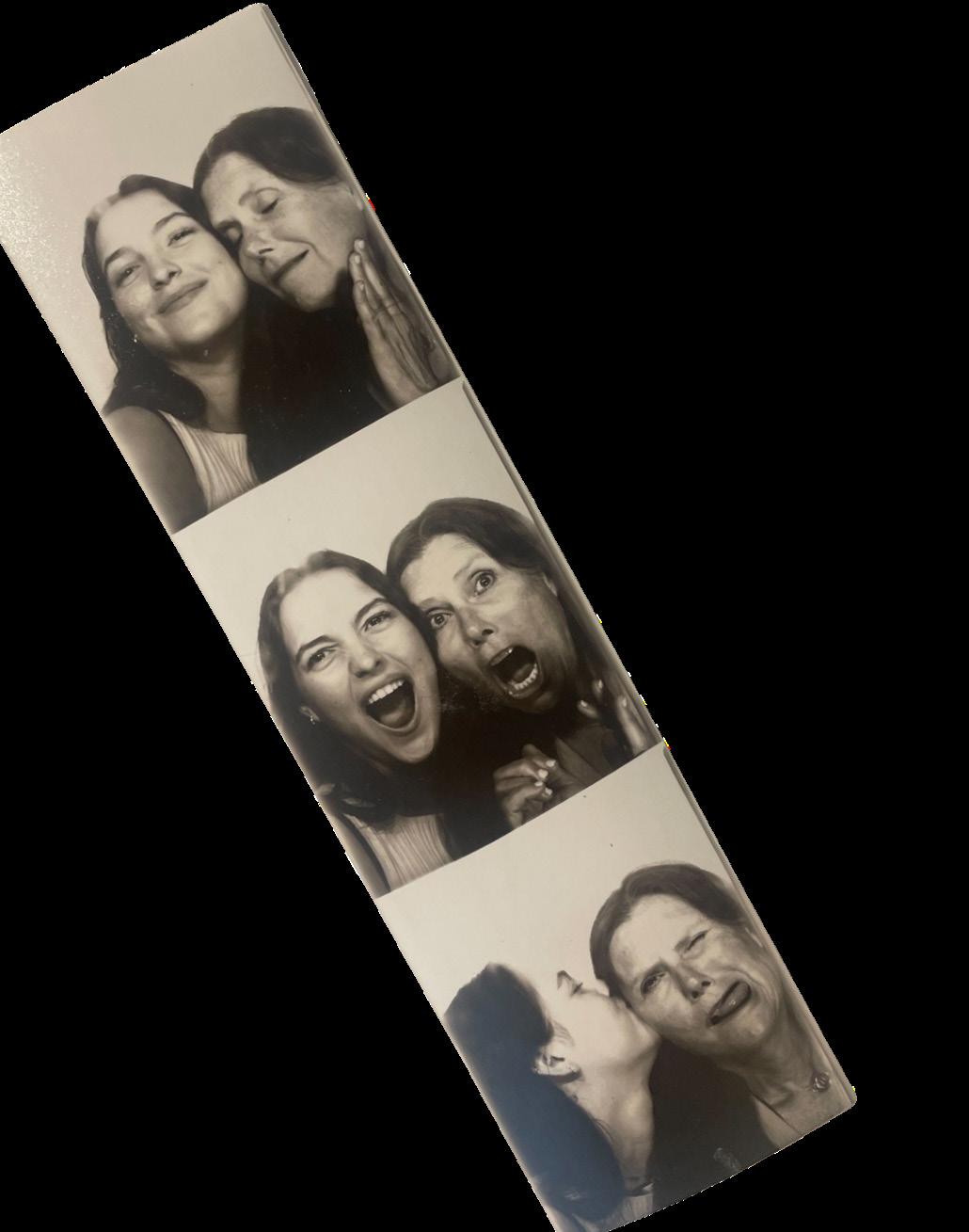
I was in Italy this summer with my parents. Between Rome and the Cinque Terre, we stopped for two days in Florence. There were three things I was dying to do while we were there: get rosé from a wine window, visit the Duomo, and go to this old photobooth, squished in a corner on Via del Proconsolo. There was a line when my mom and I arrived at the booth. We got behind a group of teenage girls, all primping and videoing the experience.
It exasperated me more than it should have. I had a short fuse that day; my dad’s snoring had kept me up the night before, and in the morning, he claimed I was being dramatic, despite sounding like a goddamn foghorn.
Sydney Toby
So, when I got in the booth with my poor mom, who hates having her picture taken, and found that after all that, it wasn’t taking my euros, I was discouraged. We gave up and left. She kept saying “we’ll go back”, but I didn’t even want to.
I can be a brat. The thing people don’t often mention about traveling is how rarely your plans work out. The photobooth malfunctions, the restaurant you planned to go to on your last night is closed, or the tour company screws up your Vatican visit, and you end up sweating in line for five hours. Before my trip, I built up these plans in my head, and each time they didn’t work out, I grew more disappointed.
However, there’s a reason people discover themselves while traveling. I think it happens in the gap between what you’ve planned and what really happens. Immersing yourself in an entirely foreign setting means surrendering whatever control you’ve established in your life at home. That obviously means your plans are not going to work out the way you expect them to. After all, how could I possibly predict the mechanics of a foreign photobooth while scrolling in bed at home? You don’t discover new parts of yourself by staying in your comfort zone.
Maybe that’s common knowledge, but in my opinion, it’s the most interesting aspect of travel, and it’s one that no one asks about. When I came home, my friends wanted to know about the Colosseum and the Venetian gondolas. Those were amazing of course, but my favourite memories from the trip were the ones we didn’t plan, and that seems to be a common experience.
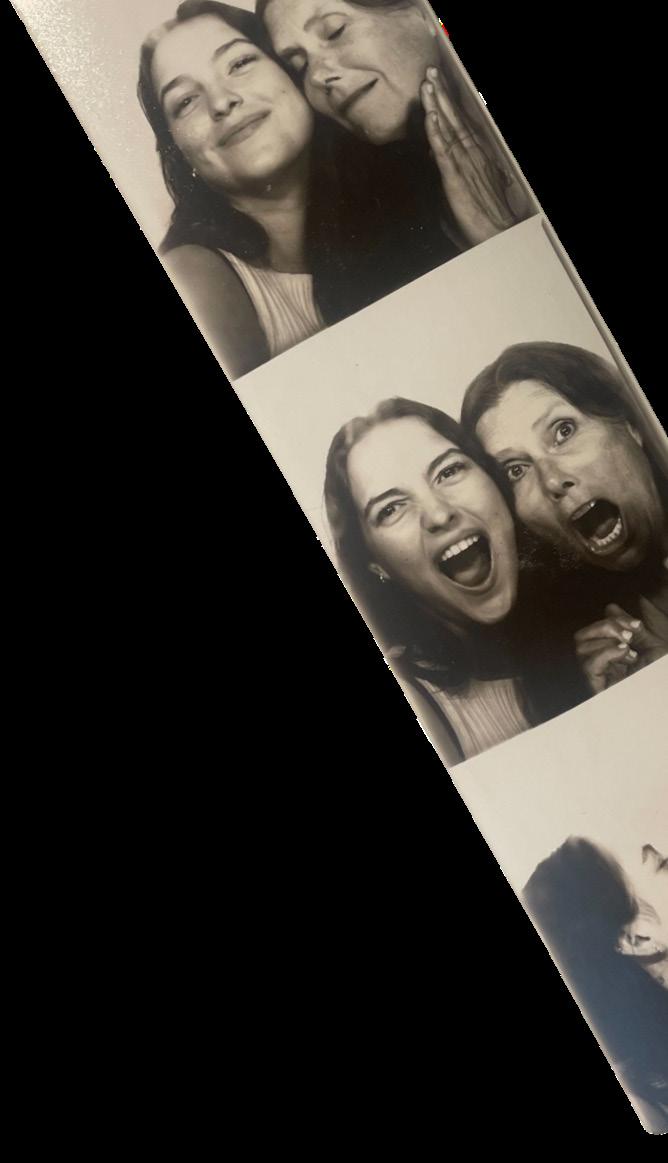
My mom and I went back to the photobooth that night. In line, we met an Australian couple and two girls from Chicago, who had some valuable insight for Tuscany. After trying many times to insert my euros, it finally worked and spit out a little black-and-white film strip. The pictures were far from perfect; we weren’t ready for the first one, so it caught us mid-blink, but they’re the best photos my mom and I have ever taken together.
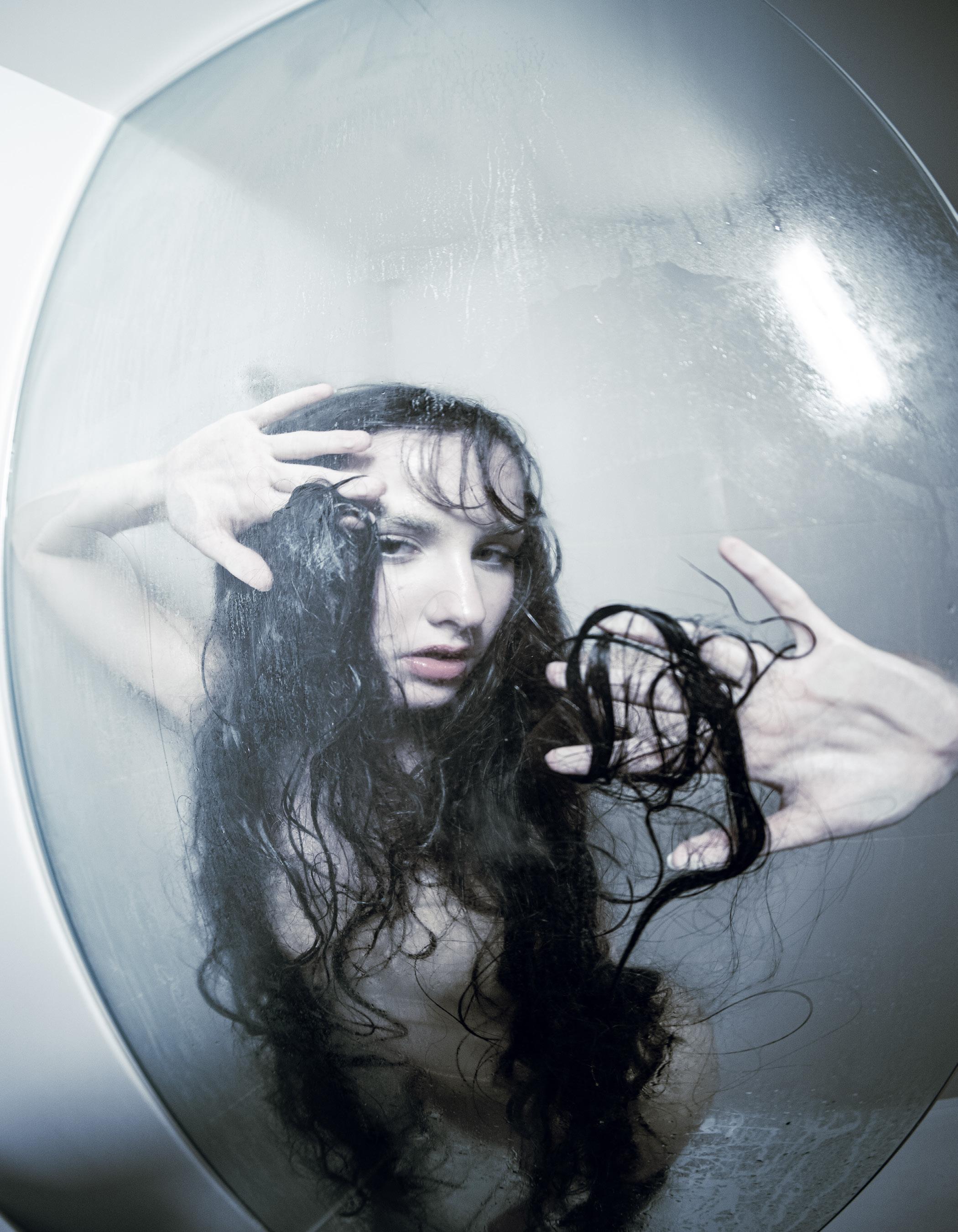
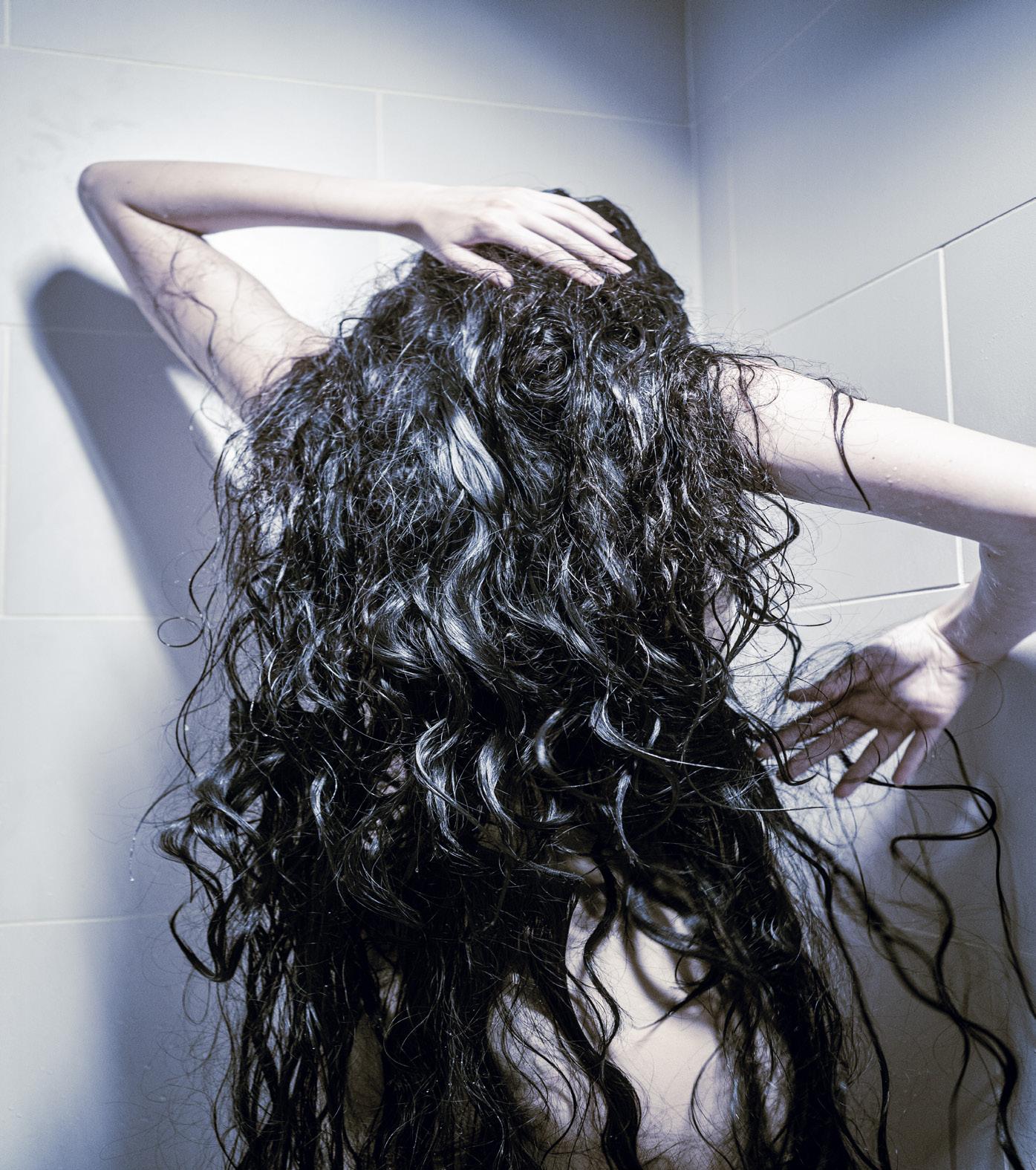
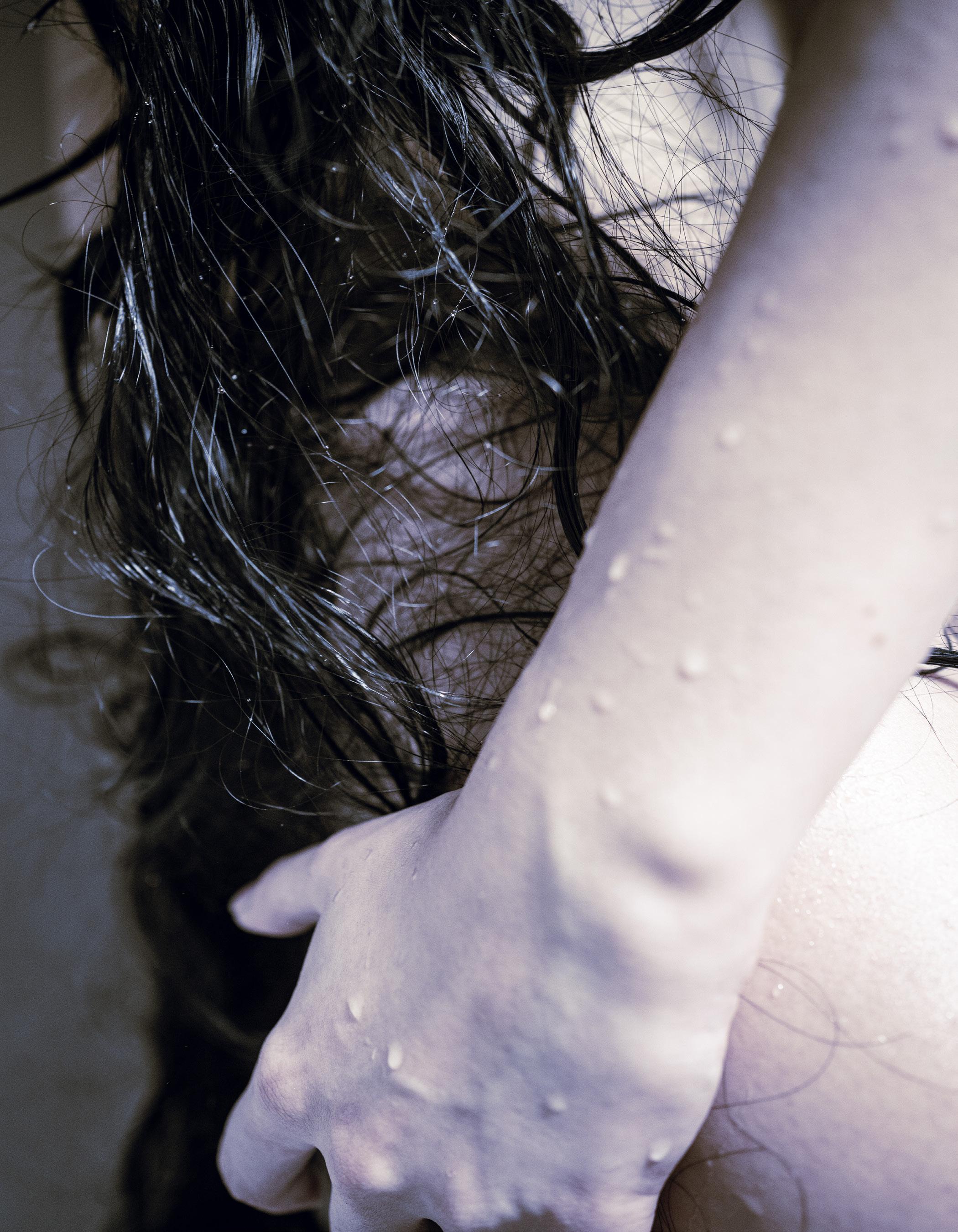
SANITARY
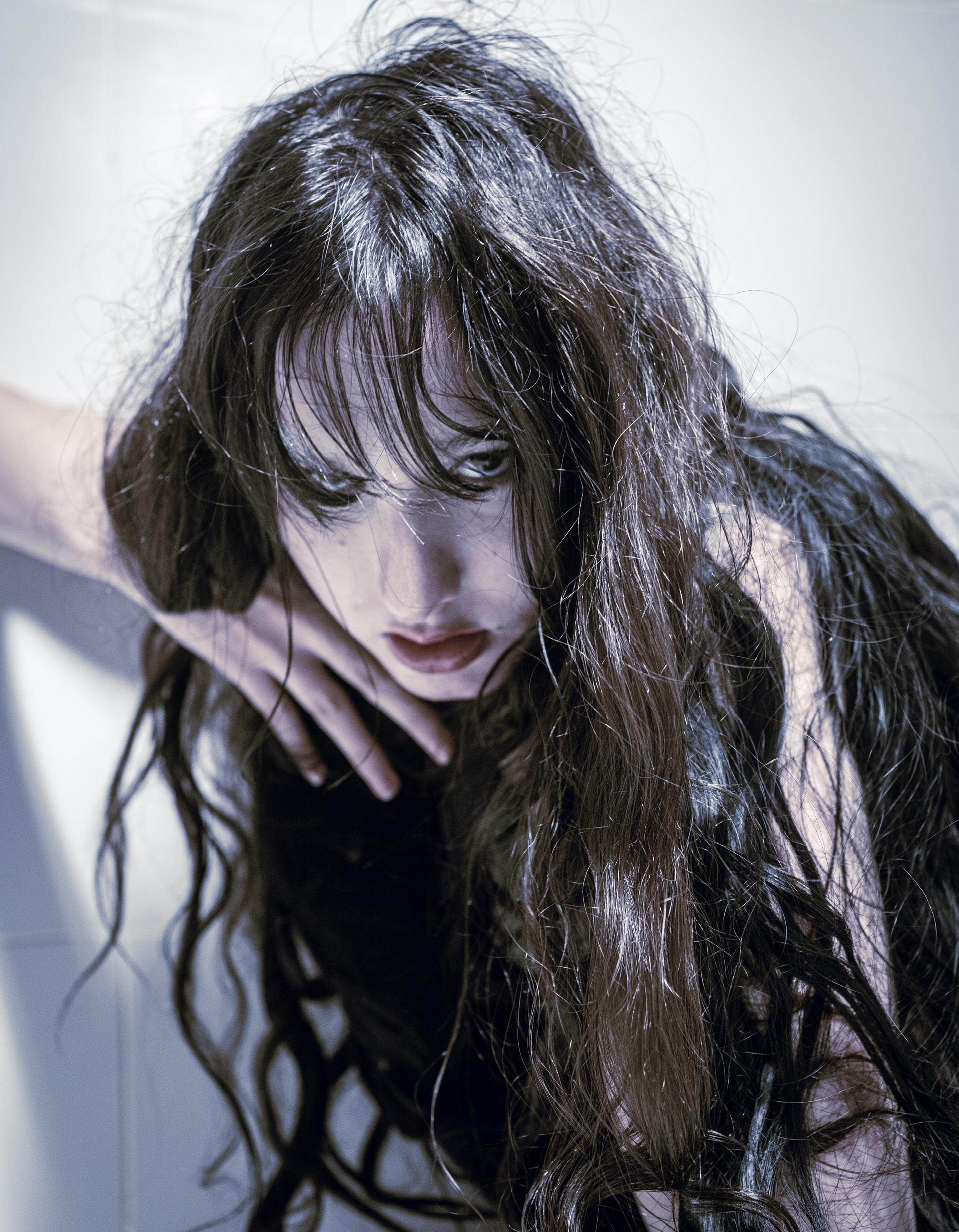
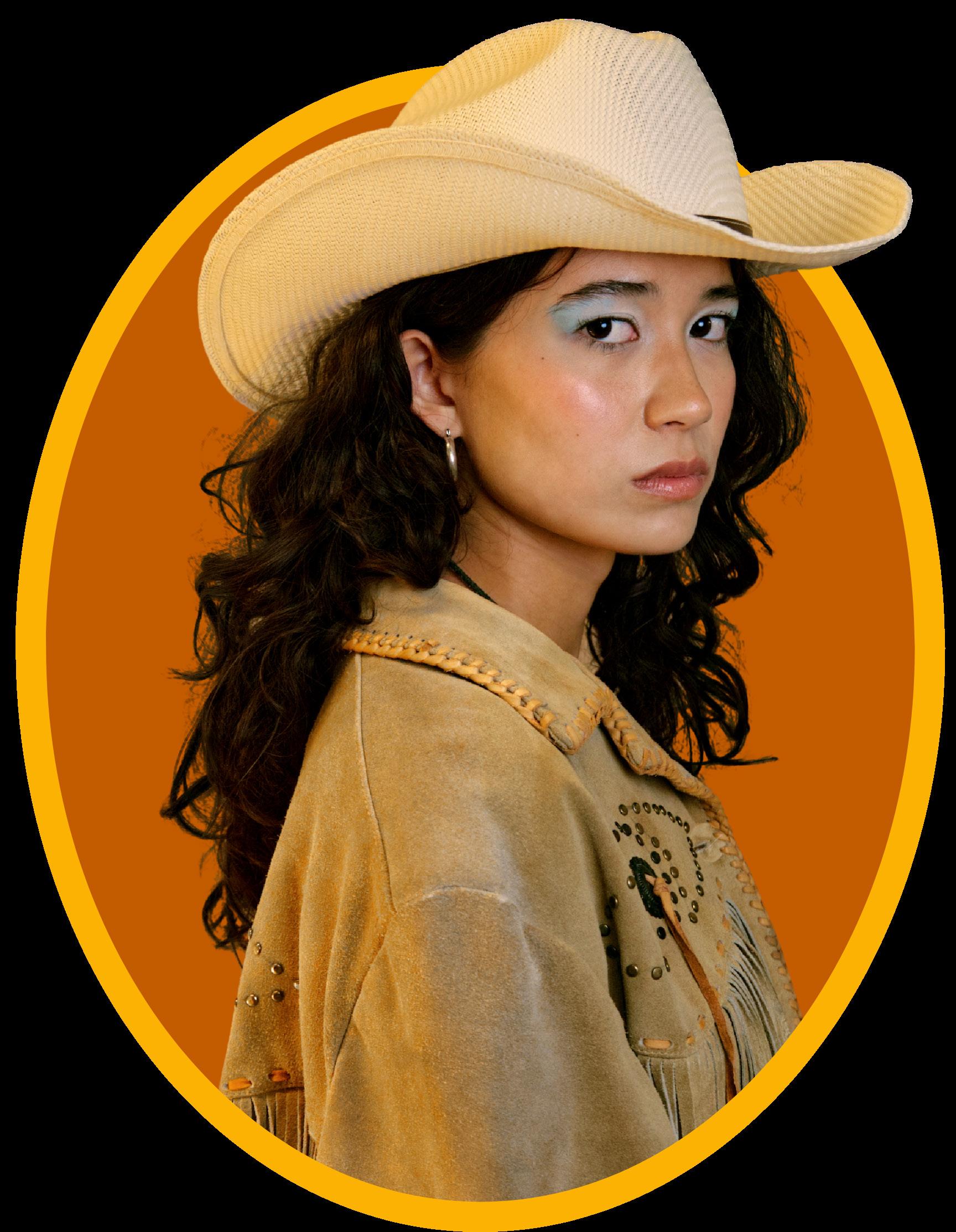
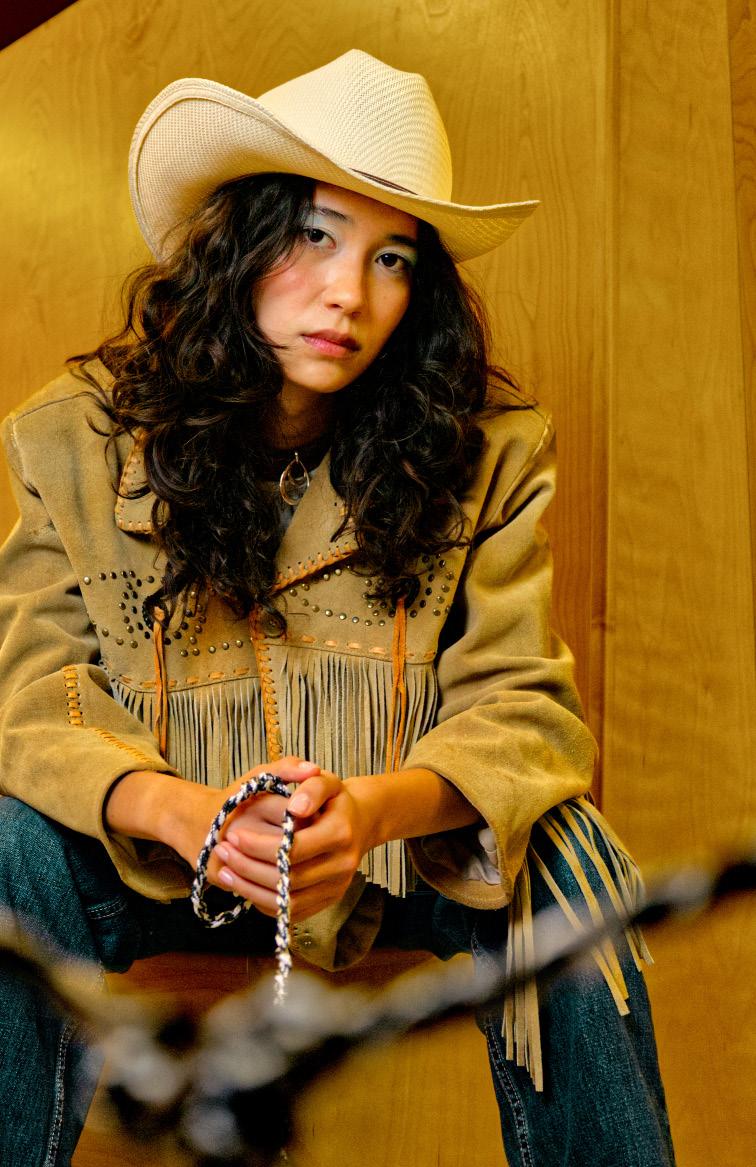
Creative Director: Nic Lindegger
Photography: Nathan Zhe
Videography: Emily Furhrman
MUA: Natassia Lee
Model: Anastasia Lipova
Why does the current social climate elevate imperfect characters?
They're Literally Me
What is it we want to become when we idolize those we see on TV?
“They’re literally me”
A phrase said by almost every pop culture fanatic, a phrase with such loose meaning yet broad interpretation. Though it never seems like we say this phrase about the ‘good’ characters, the characters with a healthy style of communication, a promising job, and lack of mental health issues. It seems like audiences are usually quick to amplify connections to the characters who never seem to be understood, the ones with daddy issues, crash outs, and major relationship flaws. But why do we find ourselves relating to those who can’t seem to have their life in order? Perhaps there is humanity in disorder, comfort in chaos.
We cling on to the characters who cry, the ones who are troubled, manic, and tragic. It seems like everyone views themselves as the devastating protagonist of their own life. Thus, we grasp at the connections to those troubled characters even if we don’t directly relate to their situation. Succession’s Kendall Roy is a billionaire son to a CEO of a Fortune 500 company, yet, it’s in his childish understanding of relationships that we find relatability. He struggles to accept being wrong and is unable to fix relationships with those around him. It’s in his struggle that we find ourselves saying, “he’s literally me.” The Bear’s Carmy Bearzatto, a burnt out chef of
Isabella Persad
Chicago who, while perfecting a Michelin star level dish, also rants about his problems with avoidance and his pure dedication to work above all else. He is a terrible friend, and an even worse boyfriend. But audiences will still cater their lives to mirror him. Not because he’s a good person, but because his pain is our pain. His stress and worry is so humane in a way that doesn’t feel like a fictional character at all, but a reflection of our own lives. Normal People’s Connell Waldron, the infamous sad boy, is known for self-sabotaging and miscommunicating. We absorb how his actions affect others for the worse, how his selfishness caused a rift of insecurity in others, and the toxicity of his pride. Yet fans will preach about his character as a mirror. He is flawed but he is real. He gets scared of being alone, he says stupid things to impress his friends, he cries, and he’s embarrassed. He is alive not only on our TV screens, but in every one of us.
Though the characters we relate to never seem to be perfect, it’s because we aren’t either. We relish in our own pain, seek out the familiarity of melancholy in everything we consume. To delude ourselves with picturesque characters on screen would be doing ourselves a disservice. Ultimately, our idolization of devastating characters gives us a platform to absorb our humanity, flaws and all.
RISE OF THE GARAGE BAND
Jillian Morris
For as long as I can remember, my family’s day-to-day life was never complete without a soundtrack. Whether it was a turn of the radio dial as we got into the car or the soft hum of our stereo forming the backdrop of our Sunday morning breakfast escapades, music has been with me every step of the way. From hanging on to my parents’ every word as they detailed their wild festival experiences, recounted their high school garage band days, and casually mentioned the big names that played their local bars, my entire childhood was spent desperately awaiting the day that their old stories would become my reality.
Oh, how I was so disappointed to realize that I was born in an age that soon turned digital. Highschool garage bands made way for wanna-be Soundcloud rappers, the live music scene was soon exchanged for DJ booths and boiler rooms, and pop music roared its way to centre stage. So long were the days of heavy metal and soft rock topping the charts. Seeing your favourite band and being within arms reach of their lead singer no longer came with cover, now costing you your first month’s rent IF you even survive the Ticketmaster trenches in the first place.
As I mourned what could have been, I soon recognized that I was not the only 20-something that felt this way. Daisy Jones and the
Six quickly became a cult favourite, racing its way into people’s hearts and causing a major resurgence of folk and rock amongst people’s playlists. Younger generations soon discovered the likes of Fleetwood Mac, The Eagles, and The Smiths, paving a path towards a rock renaissance. New bands inspired by the past soon rose to the surface, The Favours amongst the forefront with their September 2025 album Dreams. Then came The Runarounds, a recent Prime Video sensation following the fictional story of a very real band. University students everywhere fell hard for their undeniable chemistry, desperate to see more rock band drama unfold not only across their screens, but also in venues near them. Through the show’s focus on live music, even the raw and unfiltered, the rise of the garage band has officially begun. With their Minivan Tour selling out within days of the show’s release, The Runarounds have shown how a good-old fashioned backyard concert can outdo any large-scale venue, bringing a personal, teenage dirtbag element back to the music scene that has been missing oh so long.
So now, as I reminisce on my parents’ old stories, I look at the rapidly multiplying band flyers appearing around campus with a smile on my face. Who knew that Rolling Stone was right? Like everything else, music is a cycle - and its eras are never truly over.
CLIMB THE TURN-
BUCKLE CLIMB THE TURNBUCKLE
Jenna McBride
There’s no piece of media that fits my interests quite like the 2015 album Beat the Champ by The Mountain Goats. The now 10-year-old concept album retains the themes and style we’ve come to expect from the band— death, love, and childhood—through the lens of professional wrestling. In frontman John Darnielle’s words, “Some people might be thinking to themselves, JD, wrestling, I don't know, I've never really been into wrestling, but did I steer you wrong with the Bible album, even though you may not have been super-into the Bible? Fear not.”
Wrestling has never been for everybody. Hell, I wouldn’t call it something for most people. Thankfully, it’s for me. I had the pleasure of finding Beat the Champ around the same time as I discovered professional wrestling. As one can imagine, it resonated with me. People always ask me, “Why wrestling?”, to which I’ve never given a satisfying answer. Instinctively, I always want to push people towards Beat the Champ. Its first single, The Legend of Chavo Guerrero, exemplifies the aalbum’s spirit. The ode to JD’s titular childhood hero illustrates what wrestling means in the child’s mind. Throughout the album, Darnielle references his abusive step-father and their shared passion for wrestling in his youth. “He was my hero back when I was a kid/You let me down but Chavo never once did/You called him names to try to get beneath my skin/Now your ashes are scattered on the wind,” goes the song. “Look high: it’s my last hope/Chavo Guerrero coming off the top rope,” reiterates the chorus. It’s never been hard to identify a hero or a villain, known as (baby)faces and heels respectively, in the wrestling world. This industry is many things but subtle is not one of them. People love to love and they love to hate, and the world of wrestling provides just that.
Beat the Champ also serves as an introduction to wrestling culture. It wraps up with Hair Match, a somber depiction of the titular event. In a hair versus hair match, the loser is shaved by the winner. It’s undignified, yes, but that’s the point of a stipulation. Similarly, Unmasked! illustrates the importance of the luchadore’s mask. The mask is synonymous with identity in lucha libre, and to take another’s mask is no easy feat. I’d be remiss not to mention Heel Turn 2, the album’s second single. While the first single
may have been about the glory of childhood heroes, Heel Turn 2 sees the good guy go bad. Wrestlers often shift between good and evil, face and heel, and when they do, they make it loud and clear.
I laud this album for its character work. Songs like Luna, The Legend of Chavo Guerrero, Fire Editorial, Stabbed to Death Outside San Juan, and The Ballad of Bull Ramos, are all stories about real wrestlers that came up during Darnielle’s childhood, namely Luna Vachon, Bruiser Brody, The Sheik, the Guerrero family, and the titular Bull Ramos. JD invents his own talent too, like the protagonist of Werewolf Gimmick and the dynamic duo of Animal Mask. Wrestling is about many things–technicality, power, pageantry–but at the end of the day, I think it’s about people. Kayfabe is the term for the unreality of pro wrestling; you must accept what is obviously fake as if it were real. In our daily lives, we tell stories that are exaggerated, with pre planned endings, and yet we can't help but buy into them every time. People love a compelling character, and wrestling creates them in a way unlike anything else.
I’ve always struggled to classify wrestling. My instinct is to call it a sport, but is that really encompassing? Instead, I’ve opted to call it a performance art. Wrestling is fake, but it’s also very real. Together, talented individuals put on a show with their bodies. They know the ending but not the path forwards, so they trust one another and form it along the way. It’s a skilled craft, regardless of the stereotype of it being “low culture.” It’s often said that, when an independent wrestler does something impressive, they do it all for nothing but a hotdog and the love of the game. The statement is twofold; for one, talent is underpaid for their work. This is typical, especially in the independent scene. Second though, no one picks up this line of work without a profound appreciation for it. Whatever you want to call professional wrestling, there’s something about it that resonates with people, and Beat the Champ is a testament to that. Through rich storytelling and emotional lyricism, John Darnielle shares his attachment to wrestling with the listener. As Hair Match puts it, “I loved you before I ever even knew what love was like.”
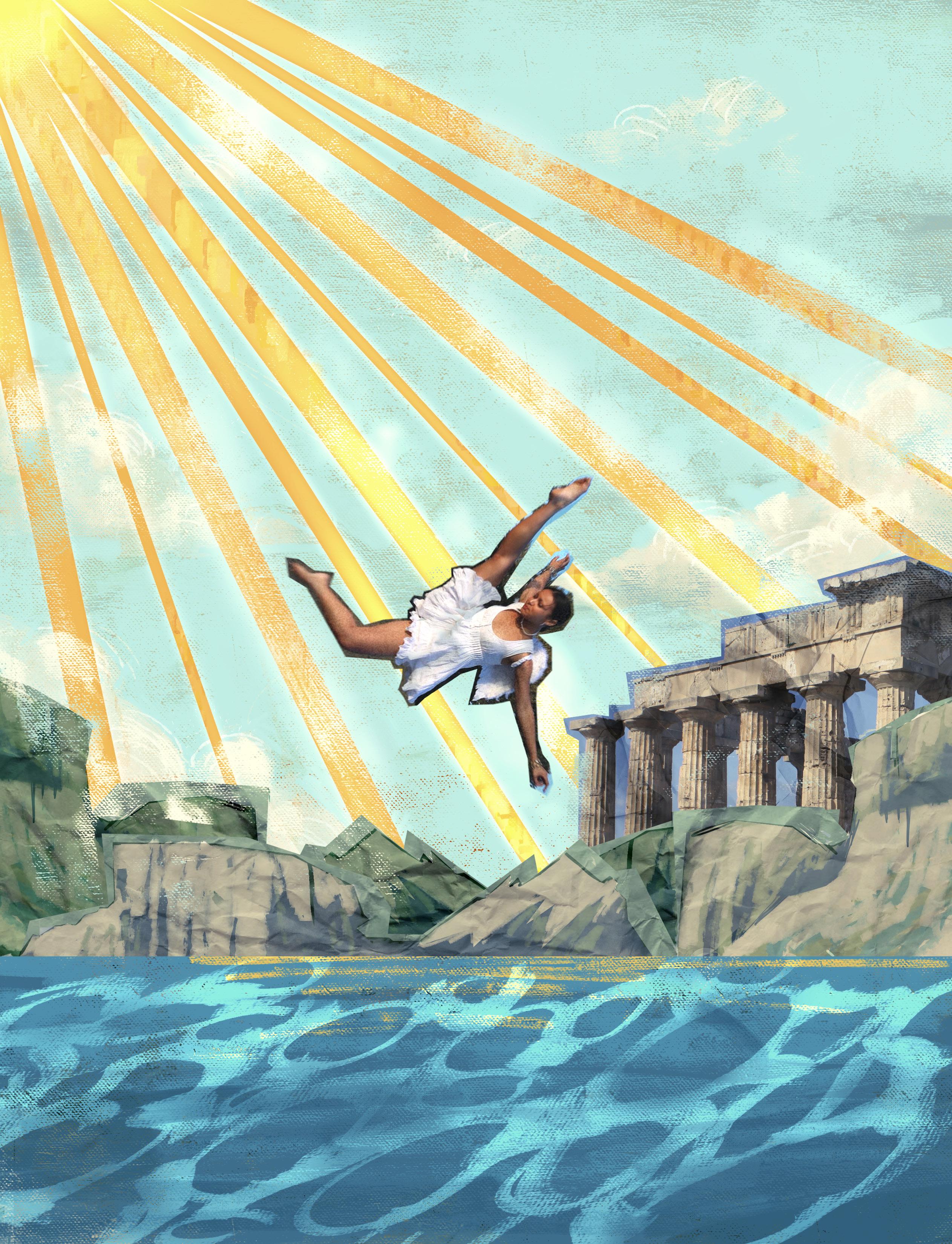
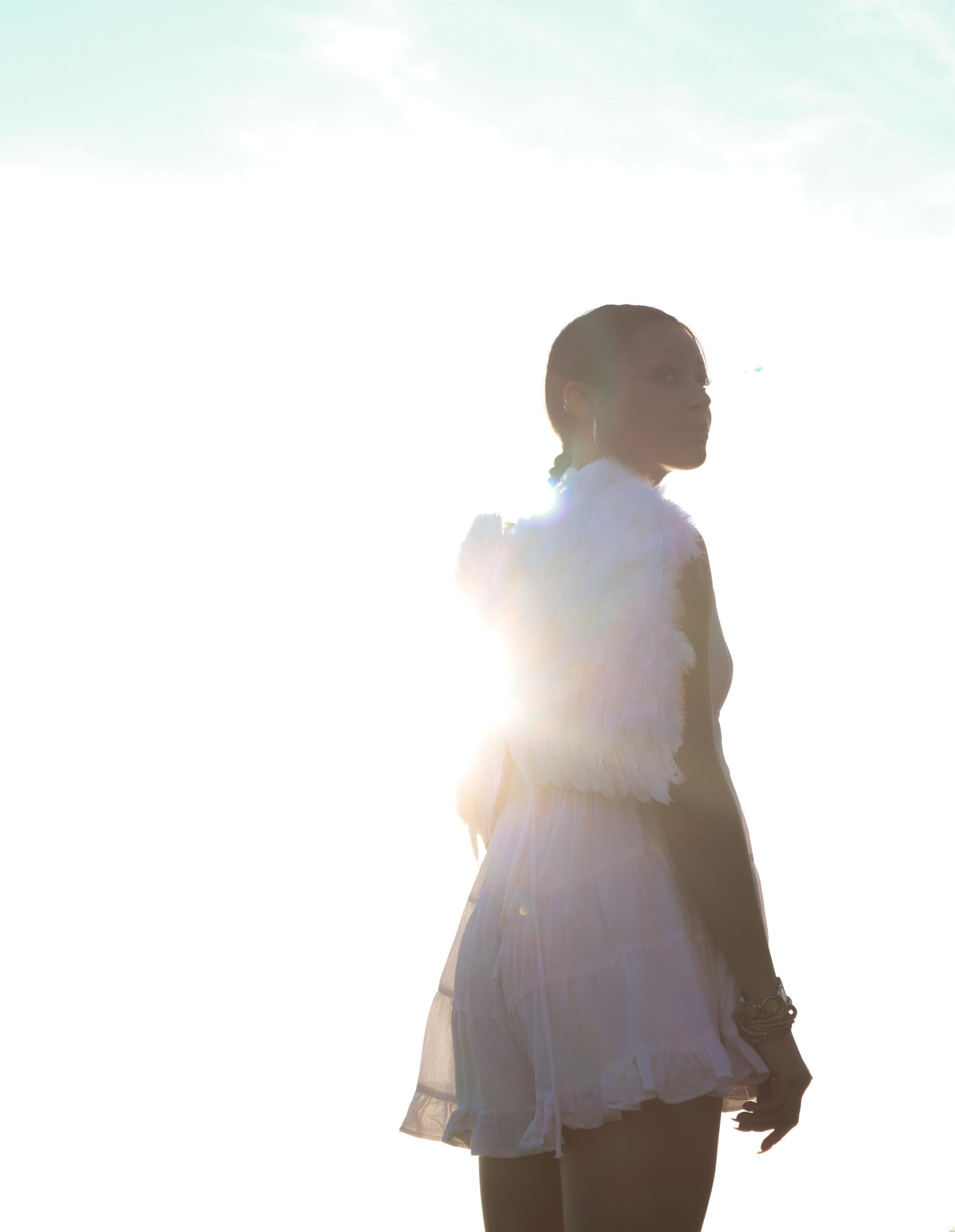
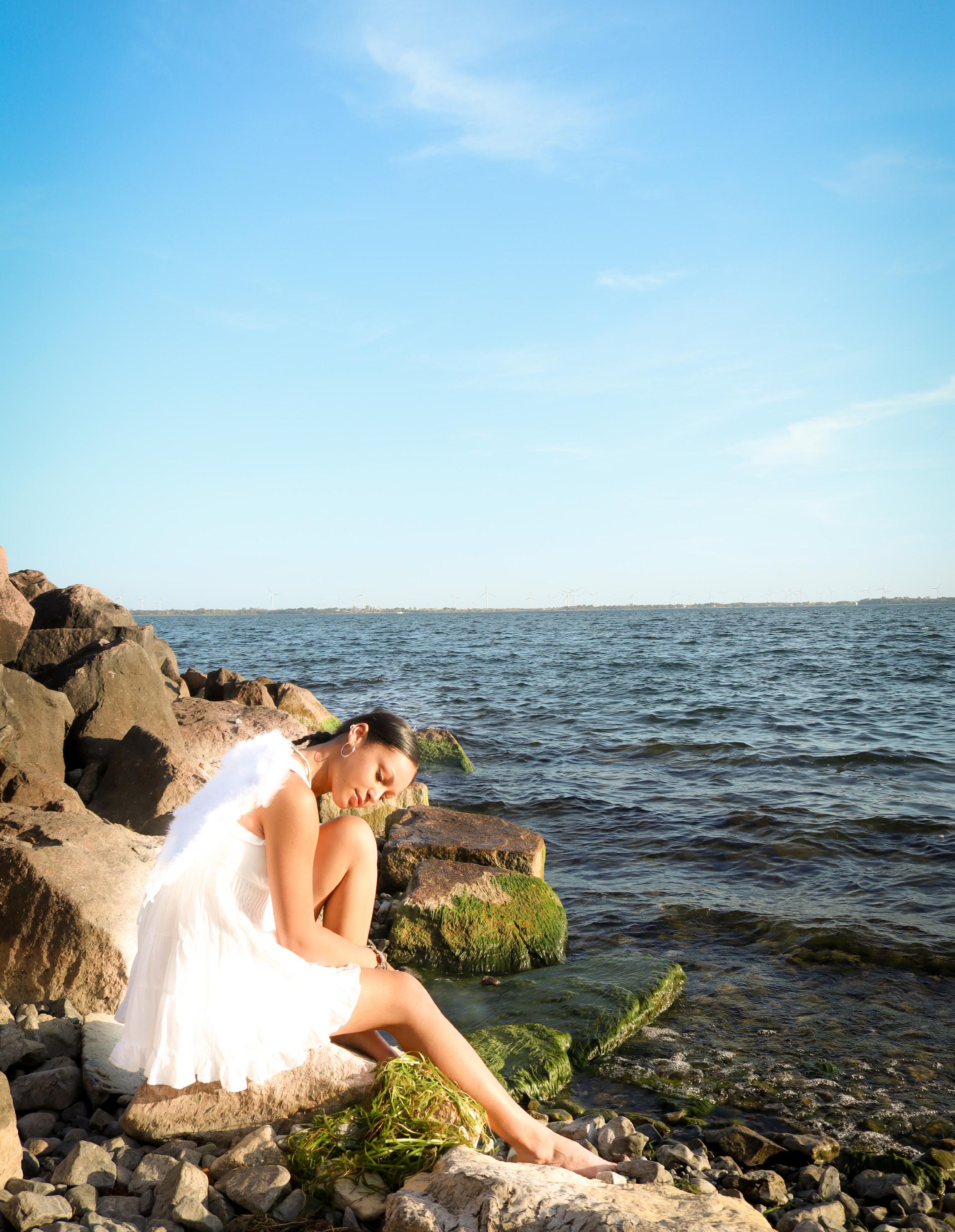
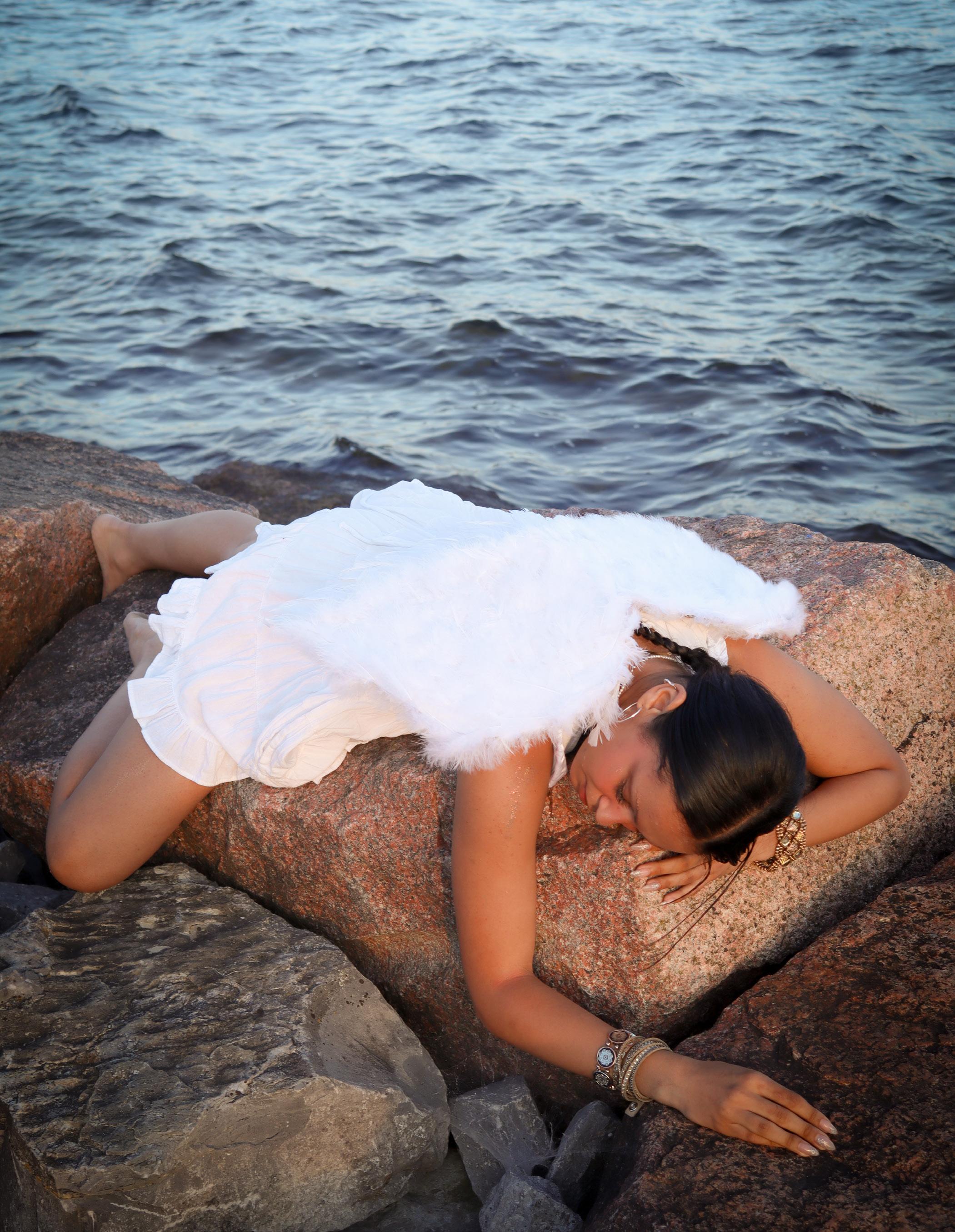
DON'T FLY TOO CLOSE TO THE SUN
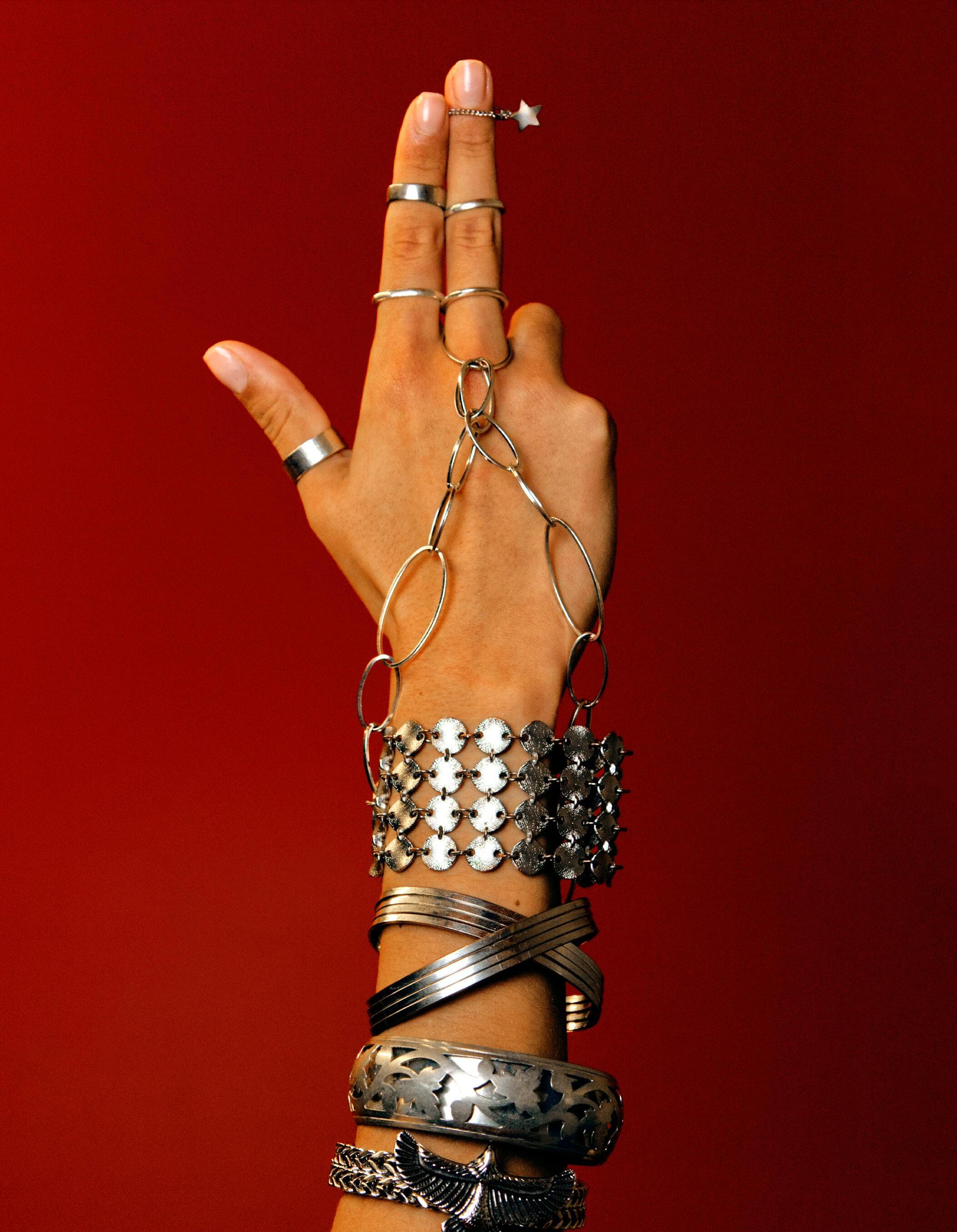
Creative Director: Sofia Merulla Photographer: Laura Solà
Videographer: Meg Horton
MUA: Kelly Gao
Models: Clarke Smith & Emma Weatherbee
Scribbled Stars
Tia Olesen
My greatest artistic inspiration is my niece, Peyton. Throughout her almost three years of life, she has curated my favourite works of art amongst an endless supply of original creations. She is an expert in expressive pursuits, such as drawing, dancing, singing, and sculpting (with Play-Doh, of course). Peyton doodles in sketch pads and colouring books, so I buy bulk packs of stickers and markers for our playdates and sleepovers. I display her vibrant pieces on my walls and shelves, even though her canvases typically consist of Crayola, finger paints, sticker arrangements, and stamps. She’s no Picasso, but I hold her abstract art in great value.
It’s not just because she’s my niece that Peyton is my favourite artist, but because of the pure happiness that she exudes when exploring her artistic impulses. Her colouring books are messy, and the ink never remains within the lines, but her smile always stretches from ear to ear as she presents her finished piece.
Making art that doesn’t fit into the conventional definition of “skillful” doesn’t mean that the outcome is necessarily inadequate. Good or bad, creating art benefits people, young and old. When we allow ourselves to make bad art, we become free of expectations and give ourselves the grace to become comfortable with personal expression. Art that embraces messiness and unconventionality opens up space for the artist to rediscover their childlike wonder and appreciate the little things that are often overlooked as we grow up.
Peyton’s love for everyday objects (her favourites at the moment include stars, flowers, and garages) shows up in her unique works, reminding me that her art stems from a place of admiration. Artwork means more when it’s made with honesty and joy. Besides, how can art become “good” if we never try?
Disconnecting from our innate creativity and adolescent imagination is a common experience as we grow up and find fewer opportunities to express them. Our childlike
wonder for the simplest things can wither if we don’t give ourselves the time to exercise it. Art class made it possible for me to develop my creativity, but now, without mandatory lessons, I have found how to stay motivated to create art on my own time.
Thanks to Little Miss Peyton, she inspires me to make more of my own art for pure enjoyment and release the creative ideas that bounce around my brain. In the little blue-handprint tote bag that she painted herself, she carries her treasures and artistic inventory that we use to dream up worlds on paper. When we colour together, she’ll request specific doodles or to add grass along the bottom of the page and stars in the sky to set the scene. I scribble alongside her and we sing Twinkle Twinkle together because of that sweet smile of hers and how it reminds me how lucky I am to be her Aunt.
When I’m stuck in a creative rut and forget to nurture my inner artist, I think of Peyton and remember.
inSpeaking Silence
There are 7,159 languages currently being spoken throughout the world today. Yet, amongst the gleeful chatter enveloping every street corner and dancing amongst restaurant tables worldwide, there exist certain languages that simply cannot be spoken.
For the past eight months, my days have been spent working with the bright, resilient, and endlessly kind people who make up our local disabled community. Though much of my work involves interactions similar to those had with friends circling your dingy student house’s dinner table or the comfortable conversations shared with grandparents over tea, there is one aspect that is a completely new addition to my life - many of the people I work with are very, if not entirely, limited verbally. You simply do not understand how vital communication is until its easiest form - talking - is suddenly unavailable to you.
As our summer camp programming unfurled its chaotic wings at the beginning of July, I walked into work one day to find myself partnered with a young girl I had never worked with before. Though the hallmarks of my day were the same - providing hygiene care, ensuring we follow a proper meal schedule, and so on - the conversation that filled in the gaps was entirely new. While she was non-verbal and did not communicate through American Sign Language, I quickly noticed her skills with her iPad.
Jillian Morris
From plotting out routes to her favourite stores, quizzing herself on the world’s flags, and shopping for the next item on her wishlist, she surprised me with how much can be said, and understood, without any words being exchanged. As I watched her make her way throughout the day, and after looking over the scribbles filling the pages of her journal, I quietly pulled out a fresh sheet and set my pen to work. Soon our conversations became lively, our pens flying back and forth as we communicated through shared interests sketched out on pieces of paper.
Soon after this revelation, drawing became my main source of communication at work. Whether it was through tracing out construction equipment to bring a smile to a participant’s face, creating a colourful mural depicting another’s favourite cartoon characters (shout out Bubble Guppies), or sketching out funny jokes to tell back and forth, something as simple as paper, pen, and some artistic ability liberated a whole new form of communication between me and the participants. In a world that often just can’t stop talking, I found immense joy in the simplicities of conversation via coloured pencils and paint palettes.
Towards the end of the summer, I worked again with the young girl who started it all. At drop-off, I chatted with her caretaker, who then told me about how she had slept with one of the very first drawings I had ever done for her for many nights afterwards. To this day, though a little crumpled, it remains in her backpack, a reminder of how important it is for everyone, no matter their ability, to feel seen and heard.
The earth has music for those who listen. The sea has a song for those who search for its sound. You can find its nautical melody stored in the seashells that wash onto Neptune’s shores, as they carry this tune wherever they go.
Seashell resonance is a folklore myth that the sound of the ocean may be heard through the resonant cavity of seashells. The ambient noises swirling around the encompassing environment reverberate off the shell’s interior walls, increasing their amplitude due to its organic angles. The curved surfaces within the shell reflect these sound waves. As their vibrations strengthen and amplify these resonant frequencies, they turn this natural echo chamber into a wind instrument. As a result, when you raise a conch shell to your ear, you’re likely to unlock an amplified ambient symphony that mimics the waves breaking, wind roaring, and current pulse underneath the surface.
From this fable stemmed the seashell headphone design, a wearable headphone sculpture with a wired headband and shells for speakers. It is a simple design, but eye-catching and experimental in a way that engages the senses.
Several artists have created their own interpretations of the seashell headphone as both immersive works and visual symbols of listening. In 1987, Joyce Hinterding and Ian Hobbs presented their Seashell Headphones at an art installation, where they hung 10 headsets on the walls, each above a wooden chair to imitate a lounge-like atmosphere of white noise relaxation. Soon after, the duo began to slowly sell 200 of the handcrafted one-of-a-kind pieces, one of which inhabits the National Gallery of Australia. Luxembourgish artist Su-Mei Tse presented her shell headphone work using photography. Untitled, 1999, is a digital colour print of a woman wearing a set of shell headphones, her hands gently supporting the pink conch shells covering her ears and peering intently off to the side. Her Untitled shot of the listening figure records the fleeting moment of reaction to the sound of the resonance, and salutes the passing nature of Earth itself.
The iShell, 2009, was an ironic and expressive project by Joana Astolfi in Lisbon, whose work stems from everyday observation and humorous yet poetic critique of modern habits. Astolfi’s inspiration came from the contrast between the noise
of technology and the natural, soothing sound of the sea heard inside a shell. Instead of listening to music or digital noise, one hears the eternal sound of the sea, which acts as a subtle commentary on this generation’s disconnect from nature in a digital world. Mark Cena’s Listening to the Sea, 2014, regularly makes an appearance on my Pinterest feed. The artist’s intention for this nature-inspired project was to tune into the sounds of the ocean while drowning out distractions. An immersive and nature-inspired listening experience is created by utilizing sensory-mimicking devices and a design that blurs the lines between the environment and technology.
The sea is a source of inspiration for many creatives, serving as both a muse and a medium. The seashell headphone design has evolved and been reimagined over decades, yet each artist attributes their own style while intending their work to reflect different meanings and symbolic associations. In every one of these projects, the design can be read as a playful object that simultaneously meditates on ways of listening. Audio accessories are becoming extensions of the body, and their use in this context offers an escape to different environments through the application of
unique designs and sound techniques. The playfulness of the seashell headphone sculpture invites us to listen differently while imagining sound as something deeply connected to our environment and memory. When pushing the boundaries between nature and technology, we rethink conventional ways of listening and redefine the act.
Growing up, I found the earth’s music on the beach in front of my grandmother’s Vancouver Island home. Below the sandstone coast lay a muddy ocean floor, where crabs, clams, and shells lived, so they could only be retrieved at low tide. Thinking back, I hear the bubbling waves, squelching sand, and knocks of rocks against one another as we flipped them over and looked at the ecosystems underneath. In these coastal sounds, I hear her voice telling me to raise the spiralled conch shells against my ear. “Can you hear it? Can you hear Neptune calling your name?” she’d ask, grinning at the wonder in my widened eyes as I listened and made out sounds from the shell’s hollowed world.
My grandmother always reminded me to listen to the ocean. There is impermanence in the natural world, so to remember this
oceanic feeling, I return to my roots on the sandstone beach and listen to the soundscape of the waterfront. Up against my ear, I can hear the conch singing this song to me; the harmonic hum of the sea.
Songs of Seathe
Tia Olesen
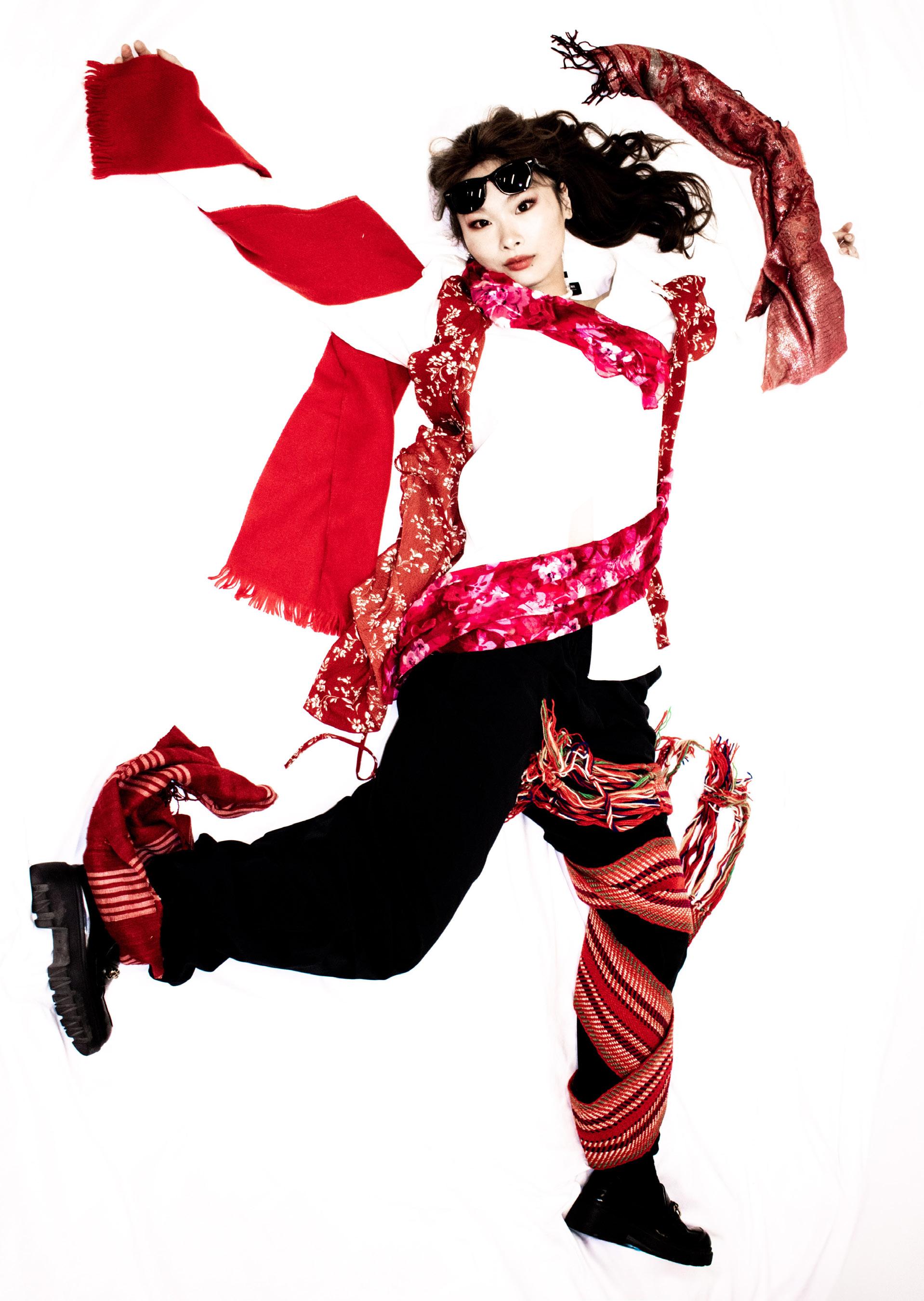
UNRAVELED
UNRAVELED
Creative Director: Kai Ronceria
Photographer: Maya Vlasais
Videographer: Sofia Merulla
MUA: Natassia Lee
Models: Sylvia Shi & Celine Mpora
&SSENSE Sensibility
Most are familiar with the Montreal designer clothing outlet SSENSE, whether you are a frequent purchaser of the store’s merchandise or have watched hauls on social media. SSENSE is an online retailer for designers, from Rick Owens to ACNE Studios, but particularly notable as a space for smaller fashion designers to sell their products. The online vendor, while being founded in 2003, grew in popularity and traction during the pandemic. However, the company is now facing an economic downturn, struggling out of a honeymoon phase, so much so that it is filing for bankruptcy protection.
Bankruptcy protection, for readers who are not Goodes Hall Gods, is a countermeasure businesses can take to protect their company from bankruptcy, by proposing a brand restructure to regain profitability and sustainability. This comes after the SSENSE lenders tried to force a sale of the company without their
consent. Motivations for the sale were due to lower profit margins that emerged at the beginning of 2025, with sales falling by over 25%.
For the Montreal company, it is easy to blame the tariffs imposed by President Trump on Canada this past summer. These 25% tariffs, along with the removal of the de minimis exemption for purchases over $800 to the US, mean that American consumers are even less inclined to purchase from SSENSE. However, the sales fall prior to these tariffs. Other designer retailers, such as Saks and LuisaViaRoma, are likewise struggling, posing a larger threat than bad trade policies brought by the Trump administration; a broke Gen Z.
Between 2019-2023, designer merchandise became prevalent in the Gen Z look, often emerging out of the romanticization of vintage designer brands and archive fashion. Sought out brands include the aforementioned Rick Owens, Vivienne Westwood, Jean Paul Gaultier, Alexander McQueen,
and Maison Margiela. This rise was amplified by the popularization of online used clothing vendors such as Grailed, Depop, and Mercari. However, this desire has been restricted by the political-economic climate in North America. When you don’t know if your paycheck will cover rent and groceries, when you’ve endured 10 job interviews in a week that you’re overqualified for, when you are taking out loans for school and housing, the desire for designer clothes shrinks and becomes impossible to sustain. Gen Z, in particular, does not have the capacity to indulge in this space anymore. Designer clothing as an art and a hobby has become inaccessible to those it’s directly targeted towards.
SSENSE’s rebrand must factor in how it will address both the economic instability and its effects on its target demographic. The inaccessibility of the luxury market must be remedied without losing the integrity of its value and exclusivity.
Liyah Suliman
Used Clothes, Used Customers
In the mid 2010’s era of Emma Chamberlain’s teenage vlogger influence, I—like any other impressionable follower—started thrifting when I was twelve years old. Since then, I’ve noticed the prices of items have more than doubled. Tee shirts that used to be $3.99 are now $10.99. Jackets are being sold for upwards of $30. We’re buying worn t-shirts with paint splatters and rips for $40 because someone’s uncle who worked construction bought it at a warehouse sale in the 90’s and refused to throw it out. Now it’s considered “vintage” and “trendy,” but popularity should not equate to worth—not when the items were donated pre-worn and free.
What’s the reason for this markup? Inflation! Inflation and taxes and minimum wage and all the other jargon my commerce roommate tells me is true and fair for any business trying to make a profit (spoiler, that’s all of them!). Thrifting has morphed from cheap, sustainable shopping into trendy individualism that corporations are salivating over. As a result, we are sacrificing realistic worth, cheap alternatives, and sustainable operations. The companies who started out selling clothes to low-income customers have pivoted away from the very people they sought to market towards, until they could barely afford to shop at the “affordable” stores.
Saying “It’s thrifted!” has become the new “Thanks, it’s designer” of the fashion world.
It’s trendy, cool, a symbol of individuality and status that can’t be achieved through buying something new from just any department store. While increased demand is typically indicative of increased prices, companies are charging original value price or adding a few dollars more as an ‘aesthetic tax’.
A few weeks ago, I was scouring the shelves of the thrift store when I found a cute jewelry dish…that was fifteen dollars. Was it painted in real gold? Was it owned by the Queen? Why was this small little piece of glass almost the same price as one hour working minimum wage in Ontario? By the time I got to the checkout counter, the sticker had been…accidentally misplaced. When I went to the front desk and asked the manager for the price, he opened a binder from behind the counter, scanned a barcode, and printed me off a sticker for $1.99. It didn’t matter what the brand was or what it looked like. There is a set value to each general item, a value that is more appropriate and fairer, and still ensures a profit is made. Yet that is never the chosen price on the shelves.
What can the customer do? Boycott? Shop less? My guess is as good as yours. However, I think a customer’s ability to recognize the worth of what they’re paying for and the willpower to leave something on the shelf because it’s unreasonably priced is a powerful skill. Buy less and buy smart. That way, those who cannot afford to be price gauged can afford to shop as well.
Lone Hero
Creative Director: Gemma Falasconi
Photography: Mia Popelas
Videography: Hadleigh Green
MUA: Ester Narduzzi
Model: Annabelle Browne
Isabella Persad
Yearning Reworded
I thought by now I’d stop thinking about how I can be with you again. I thought that I wouldn’t look for you in every room, even the ones where I know you don’t exist. But even if I accept that you’re not coming back, it doesn’t mean I will forgive myself for losing you. I don’t know how to do that and I refuse to move on.
Is it selfish to hope that you’re not over it either? To hope that you seek out my face in every girl you see, for you to suffer with comparisons. Am I selfish to pray you don’t forget me? Unable to touch another girl the way you touched me, I hope when your hands caress her skin your palms explode in blisters and sores. Though you choose to be with her you are physically restricted, your own body knows you better than your mind. Your lips are calloused on hers, chapped and rough, her spit sour on your tongue.
Every kiss exchanged poisons your gums, a sea of veins bitter and black crawling down your throat. Your body is dead to her touch.
I’m obsessed with the one who will replace me. She won’t carry your shadow, you don’t live in her mind like you do mine. She has all of you without the anguish of uncertainty. She’ll never know the weight of you every time she looks to the ground on a sunny day; there is no shadow behind her. No darkness hangs by her, stuck to the soles of her feet, grasping at her ankles yanking her to the floor. It’s almost a nuisance not being able to rid you from my mind, yet I never once contemplated trying to. I cling onto your old words, words from a man who never got to know me the way I wanted him to. You never spoke in promises, which was to be expected, some sort of certainty
we both agreed upon until we realized we were on unstable ground. We were built on sand, ready to sink into the pits of grain at any second. Still, nothing has changed, I bury deeper in the neverending sand trying to find another to replace you. I didn’t know it was possible for someone to fall short of a man I never even had. I’ve become a terrible person in my relationships, I’ve become a liar. I look at him and say things I’ve heard before, every word a quote from your mouth. I am lying to him. He’s not you; every kiss and every conversation, I am reminded that he’s not you. I have become the worst person I’ve ever known. I still act like he could live up to the fantasy I’ve made of you. But even when he stands to block the sun, your shadow still stains the ground I walk upon.
My relationship with food has always been complicated. We go through fits like toxic lovers who can never quite justify leaving for good. I never gave it much thought as a kid until I entered my teens. It became pervasive, sapping more and more of my time and energy as I grew older. In grade 10, it turned clinical. Two years later, I realized that I needed to get better. And so I did. It’s been a long road of nonlinear progress with losses and wins aplenty. Old habits die hard after all. This is not a sob story, nor is it an inspirational one. It’s the unfortunate reality that so many live in. My therapist recently told me that, as the eating disorder is left untreated for longer, the likelihood of making a full recovery decreases. The thoughts and feelings
may never fully go away, but they do get better. That fight is not always an easy one, but it is one you don’t have to fight alone.
When you’re sick, you feel separated from everyone around you, like there’s a pane of glass between you and the rest of the world. Everybody could tell that something was wrong with me, and yet we never really talked about it. For the longest time, all I wanted was for somebody to stop me. I wanted to be saved, despite the fact that, had someone tried, I would have kicked and screamed and resisted all attempts. You adapt and you overcome or you submit and you waste away. Simple as that.
I’ve told this story and I’m sure that I’ll tell it many more. Such is the life of an ex-anorexic, but what now? Who am I without this label? I’m uncertain of my answer. In the words of Mary Oliver, mostly, I want to be kind. I want to be a living reminder that recovery is not only possible, but it is necessary. Again, it is a choice I must make every day, and I won’t know how far I’ve come until I’m looking back from 30 feet ahead.
PLA Sharing PLA
Jenna McBride
It’s easy to think about everything you’ve missed out on and curse your past self. I grieve an adolescence that should have belonged to me, but I do not dwell on it. Instead, I am grateful for the perspective this experience has given me. I’ve a newfound appreciation for not only food and what it means to share food.
Every week when I call my parents, they sneak in a “How are you doing food-wise?” On cue, I reply, “Yes, I promise I’m good.” I know they know my answer before it comes from my mouth, and yet I know they’ll never stop asking. Even though I’ve been recovered for years, they’ll still always look out for me. When my partner cooks dinner, he keeps the nutrition labels down on the counter or positioned out of sight. He talks me through the process and suddenly everything isn’t so daunting. These simple acts of consideration remind me of how far I have come. I owe it to the people who love me to eat well.
When I come home for the holidays, my sister and I get overpriced coffees to keep us company while we shoot the breeze. As we drive the backroads, I’m reminded of our profound, enduring bond, and the moment is as sweet as my latte. I go for drinks with old
coworkers, and we catch up over pub fare and classic anecdotes. The alcohol makes my face flush, as does the laughter we share. My friends and I honor our tradition of getting all-you-can-eat sushi when we’re all in town. Plates shift from hand to hand and I silently wish that the dinner will never end. Moments like these are dear to me and I can’t fathom giving them up without a fight. Recovery is hard; I refuse to pretend like it is fun and easy. Through therapy, a ton of bravery, and a strong support system, though, you can see it through.
We imbue love into what we make for others. In our darkest hours, a hot meal dropped off at your door is a blood transfusion. To deprive oneself of that is self-harm to the soul. The eating disorder thrives in isolation and feeds on comparison. By cutting you off from others it tightens its grasp on your life. In a world where thinness is king, it’s no surprise that our people yearn for community. Food has always played a critical role in not only our survival as a species but the traditions we form and the cultures we build. What we eat is both a product and a creator of communities. Above all, love is expressed through food and shared over meals. What a blessing it is to eat.
TES TES
Drown to
A river ran through my home.
It happened at the end of autumn reading break, on the day of my flight back to school after a week in BC. My house resides at the bottom of a very steep driveway overlooking the ocean, so all the runoff from the mountains above during the abrupt atmospheric river gravitated towards us. The rain pooled in our driveway until the culvert underneath clogged with debris, the asphalt caved in, and our papier-mache walls could not withstand the water pressure. The months’ worth of rain knocked down all the doors and busted through windows to clear a path for the water heading towards the sea, taking our belongings along with it. Within a few hours of the natural disaster’s commencement, my family stood stranded at the top of the driveway, watching our home of 21 years fall victim to the natural ebb and flow of the Earth’s landscape and our changing climate.
I felt paralyzed; nothing seemed real. Guilt consumed me as I flew away from the wreckage and left my family to deal with this mess. Everything in me wanted to stay and support in any way that I could, but I faced a hard truth:
there was nothing I could do. As my life in BC halted, my life here forced me to keep moving forward with school, friends and life like a stubborn dog dragged by its leash. My house was always on my mind, so every chance I had, I called to ask for updates and see what I could do to help. However, I had no control over the situation; all I could control was how I handled it. I dealt with my emotions poorly at first, keeping to myself and becoming absorbed by distractions. I overindulged in sleep, smoking, scrolling; anything I could use to console my anxious mind. In conversation with others, I’d rarely bring it up, and when I did, I put on a smile and kept the conversation lighthearted. I felt part of myself swept into the sea along with the house.
All I wanted was to be there, to go home. But there was no physical home to go to, so I intuitively began seeking “home” elsewhere. I found home within Kingston, in the worn-down rental house that I have lived in for 3 years, and in the girls I share it with. Through frequent calls, I found it in the people I missed most from BC. My home is with my parents, brothers, sisters, nieces, and friends, who make me whole and rooted, even through distance. Most importantly, I realised the importance of finding home within myself.
Breathe
The pit I had fallen into was deep, but not bottomless, and I knew that the only way I could willingly move forward and grow was to change my entire perspective, perceiving loss not as an ending, but as a new beginning. Rather than focusing on all we had lost, I redirected towards the things we were able to salvage. The absence of some people has allowed my family and me to strengthen our connections with others. The loss of our belongings and capsules of memory clears a path to create new ones. The suffocation of a house pushed me to discover home in places and people elsewhere.
When everything you believe to be permanent is put into perspective, you realise how fragile the foundation upon which our lives are built truly is. Giving up resistance to change brings me waves of clarity in how I navigate my stress and grief amidst uncertainty and continuous change. I can admittedly be a childishly nostalgic person who gets attached to the past and connects fond memories to the smallest junk drawer trinkets, but I’ve been learning to let go and look ahead. I give myself grace to miss my childhood toys, my grandparents’ memorabilia, a century of photo albums, the rooms
that hosted my youth, but don’t let it bind me.
It has been a year since the river ran through my house, and I am a different person this autumn because of it. I no longer depend on distractions to get me through my days. I open up to the people who got me through, and I no longer miss the people I let go to get through. I still long for my childhood house, but I have found the comfort it brought me in the people who pulled me out of the water and resuscitated me.
This autumn was different. This autumn I chose change, and in doing so, chose myself. Like the river, I keep moving forward. To lose the familiarity of the life I know - to drown - allows the chance to be reborn and begin again on the other side - to breathe.
Tia Olesen
Creative Director: Tavishi Trivedi
Photographer: Sheana Tchebotaryov
Videographer: Meg Horton
MUAH: Isabella Li & Lois Aguda
Models: Katrina Reimer & Edidiong Essienton
HA MM ER HEAD
May was a chubby child. She wore a polka dot bathing suit that filled with sand as she worked to build the best sandcastle this beach had ever seen. But she got bored, as children do, and wandered down the shoreline, away from her mother’s three—five—empty daiquiri glasses and father’s obnoxious cigar smoke. She walked forever and ever, past the twin boys who had knocked over her sandcastle the day before. They started towards her, ginger hair glowing like radioactive waste. May moved her little feet before they could reach her; she was in no mood to cry again. She walked past the old couple staying in the hotel room beside her, past the teenage girls playing cards in their tiny bikinis. They looked like her dolls from home, with bouncy ponytails and cat-like sunglasses. She heard her mother’s voice in her head: “One slice is enough, May.” May guessed these girls never ate more than one slice of chocolate cake, and if they did, their mothers never got mad at them for it. It must be said that May’s mother was, in the kindest words, a social climber. The wife of a banker, her afternoons smelt of gin and Chanel No. 29, as she worked tirelessly to throw fabulous cocktail parties, laugh at the jokes of men with cufflinks and amuse their wives. She measured her days in martini onions and had had little time for the ways of her five-year-old; other than the moments she took to brush her hair and smooth out the wrinkles on her clothes. Her father was better, slightly. He didn’t care about the hair and the wrinkles, but he also cared little for teaching his daughter to ride a bike, and May resented that he always seemed to be right about everything.
May had walked so far, the sand gave way to rocks that hugged the bottom of a cliff. She climbed across them until the curve of the cliff’s edge hid her from sight and only then she sat, careful not to skin her knees. Inhaling dramatically, May tried to smell the salt but only caught the scent of her own sunscreen.
Just as her interest was beginning to fade, she saw a fin. It was a shark, swimming right below her after a school of fish. The shark moved slowly,deliberately,then would suddenly twist its body and dart after it’s chosen prey. May watched, crouched on her knees while her hands gripped the edge of the rock. The water bloodied, a rusty red fogging through the teal. Death wasn’t what she had thought. It was quiet; the ocean seemed to quickly forget its little
creatures. May guessed this shark never worried about other sharks taking its food. He was big and seemed certain of himself. No one stomped on his sandcastles or told him that one bite was enough.
The shark was close enough to touch. If she reached down, her fat arm that was barely long enough to skim the water might graze his fin. As May extended her elbow, the shark, now full, twisted and swam away out into the open blue. May watched as the fin disappeared, and the blood faded from the shallow water like it was never even there.
She walked back across the beach, ignoring the bikinis. When she passed by the twins, May stuck her tongue out rudely. They began to yell at her but were silenced by their mother’s scolding. Babies.
“I see’d a shark.” She told her parents casually, upon returning. “With the long face.”
Her father, ashtray now full, was reading the morning newspaper. He didn’t look up. “Th’hell do you mean, long face?”
“The eyeballs goed sideways and sticked out.”
“Hammerhead. Hammerheads don’t come close to shore, May.”
May looked at her father with disgust. She returned to her sandcastle until the sun sat low and her parents wanted to go back to the bar.
May, sweating now, examined her work. Multiple towers, decorated with shells and twigs and surrounded by a large moat. It was perfect. She stomped and swept her feet over her hours-long endeavour, until it turned into regular sand again. May loomed large, her shadow covering the fallen sand kingdom with its fallen sand kings. Let them eat cake. “Mabel!” Her mother exclaimed, coming closer. “You’re so dirty! You must have a bath as soon as we go back to the room.” May responded by shaking her head like a dog, flinging sand and sweat all over her mother’s white suit. Her mother shrieked, and called for her father, who came over and took May’s hand.
“Hammerhead.” She told her father sternly. May twisted her body away from his grip, ran in front, and led her parents back up to the hotel. What did he know about sharks anyway?
Droplets scatter blue and violet as they rest on the lily pads of the brain.
The noise creaks like wooden floors in the night.
A simple acronym. Three single letters. OCD.
What’s The Doc?
Bound together not through love or common interest but debilitation and self-destruction, thoughts worry like a child who’s lost their mother in the grocery store.
Sleep deprivation, thoughts racing like a speeding car, no strength to put in the work needed to let the mind rest.
Cyan pills melt on the tongue, the discomfort of exposure therapy, forced to acknowledge the knocks as they batter against the door of the skull.
Let these compulsions knock, let these urges bubble. Answer the door, and look them straight in the face.
Caylin McNeill
I close my eyes, draw in a breath, and I am there, in my grandparents’ basement, long gone.
The scent of white onions rises first, sharp, sweet, unshakable.
It carries me back to the harvest of patient hands.
yellow onions
A garden, even abandoned, still survives, its roots stubborn, its memory green.
Nicole Turner
Another family lives there now, but the walls remember, and so do I.
It was never the way we shouted at each other. It was never the hardships, the obstacles that plagued us. It was the pauses between every sentence, the small distractions that pulled us away. The texts left on read, the sighs mistaken for indifference.
It was that one single word, slightly misspoken. How it landed like a pebble in the river, yet somehow built a dam, suffocating the land where love once flowed freely.
You told me you needed time. All I heard was that you didn’t care. A soft indifference to what we both felt, and neither of us thought to ask again.
said they meant nothing. But nothings always turn to everything.
It began with the smallest things: the shrug instead of an answer, the silence stretched too long, the calls that stayed unanswered. We lied to ourselves, Our unspoken words, our mistaken thoughts, chipped away at us. Tiny misunderstandings we never thought worth fixing.
Until one day, we looked across the room and could not recognize the person there someone we once whispered everything to.
It wasn’t because we changed. It wasn’t because we lost our love. We had simply stopped trying to understand the little nothings about each other.
It’s strange hearts don’t break in big, loud ways. They drift, quietly, slowly. Until all that’s left are two people out of sync.
Little Nothings
Safowan Mostaque
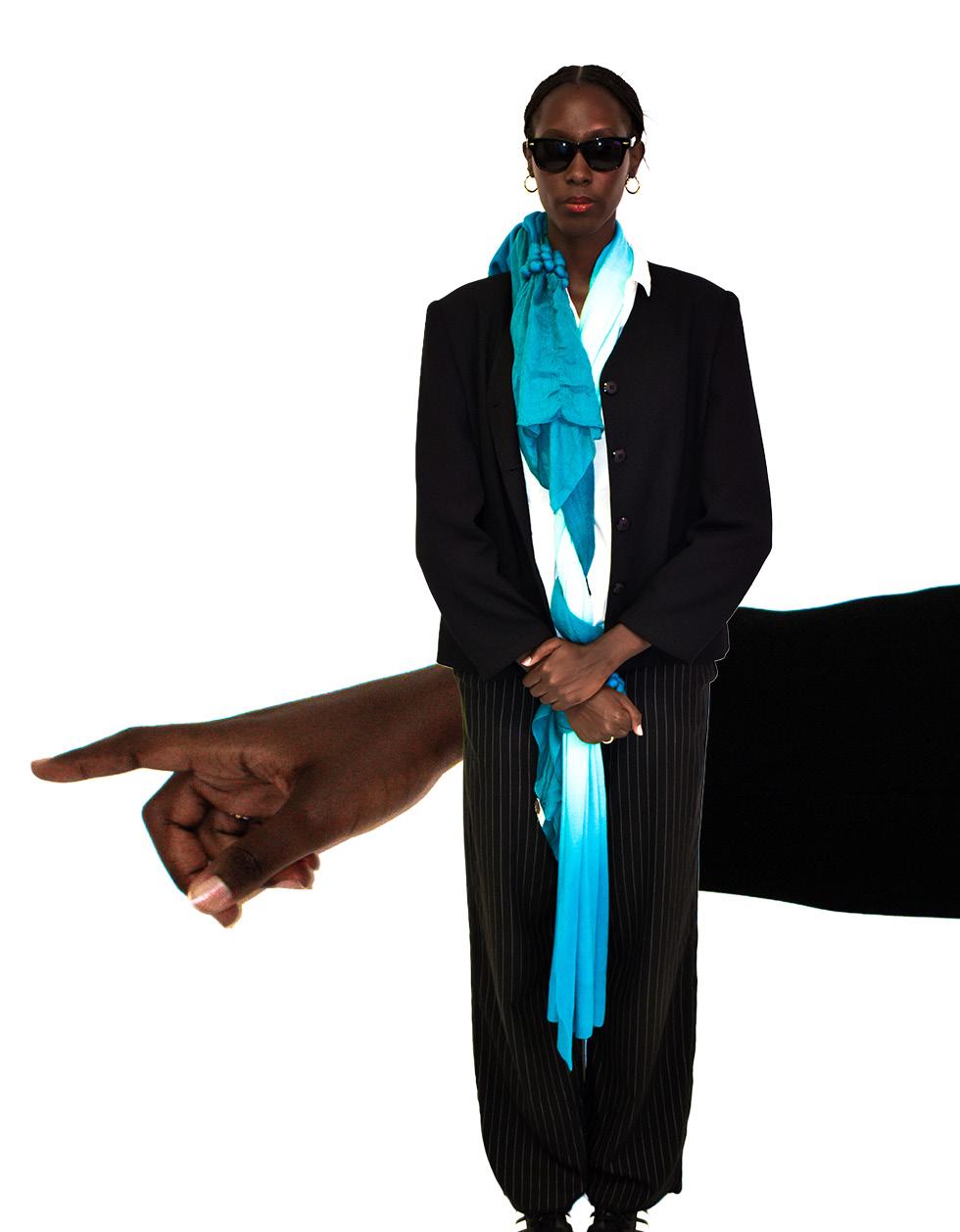
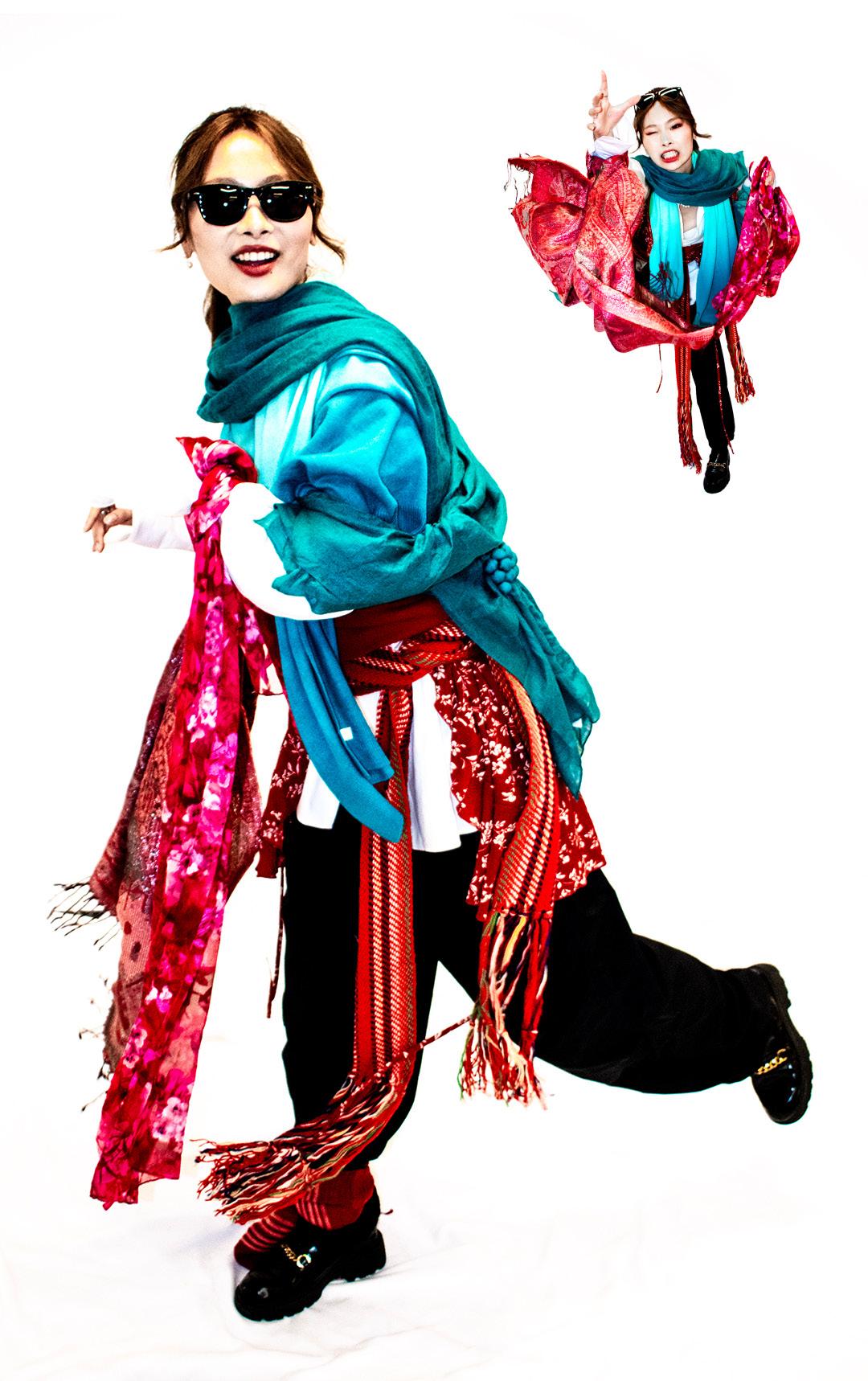
Decay of The Ideal
Creative Director: Zahara Wong Groenewald
Photographer: Nathan Zhe
Videographer: Emily Fuhrman
MUA: Ester Narduzzi
Models: Kaavreet Kaur, Serena Bahezagire, Mo Kelly
I do not STARVE for them, you see,
they HUNGER just to FEAST on me.
MUSE is proud to feature the writing, photography, and creativity of students. We intend to create a platform for students’ voices - and we need your help to do so. Shoot us an email at eic.muse@gmail.com.