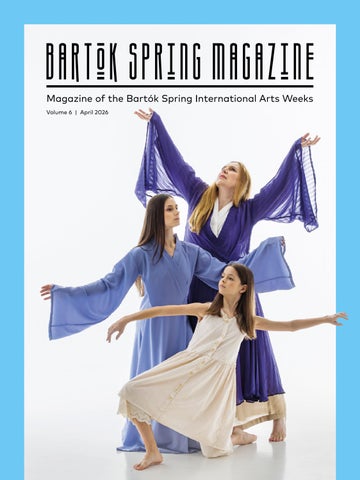
Volume 6 | April 2026



Volume 6 | April 2026
In every respect.








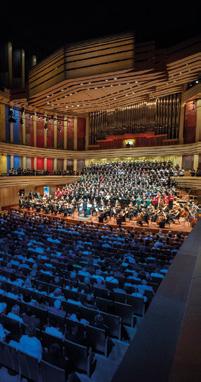

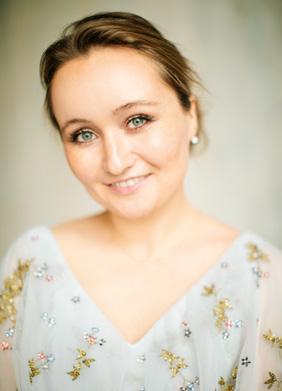
Budapest is far more to me than just a city – it is one of Europe’s vibrant cultural heartlands, shaped by history, tradition and a deep love of music. Hungarian music is also impressively diverse. The works of Ferenc Liszt, a highly influential Romantic composer, are as significant as those of Béla Bartók, a modern composer whose pieces draw heavily on Hungarian folk music traditions.
Every return to this place is filled with special memories. To make music in the city’s magnificent halls is always a gift. My first recital at the Opera and my debut at Müpa Budapest alongside Ton Koopman remain unforgettable moments. Now it is a great joy to return once again.
I am especially looking forward to the concert performance of Antonio Vivaldi’s Il Tamerlano: a work of immense emotional power that speaks of authority, love, suffering and inner resistance. To bring this opera to life together with Les Accents under the direction of Thibault Noally, and alongside my wonderful colleagues is a true honor.
Julia Lezhneva
The Icon of Neo-Expressionism A Dream Come True Not Bad, Plus Chris Potter is Good Too
Culture – Generations – 21st century
“The girl who is creating today is the same 13-year-old who already saw images in her mind at music history classes”
The Tradition Starts to Glow A Refreshing Alternative

“I tried to do something different” Friendships in Music
“We try to see the good even in the bad” György Selmeczi and János Vajda A Tale of East and West
Sindbad, the Adventurer of One Thousand and One Nights Bartók’s Budapest

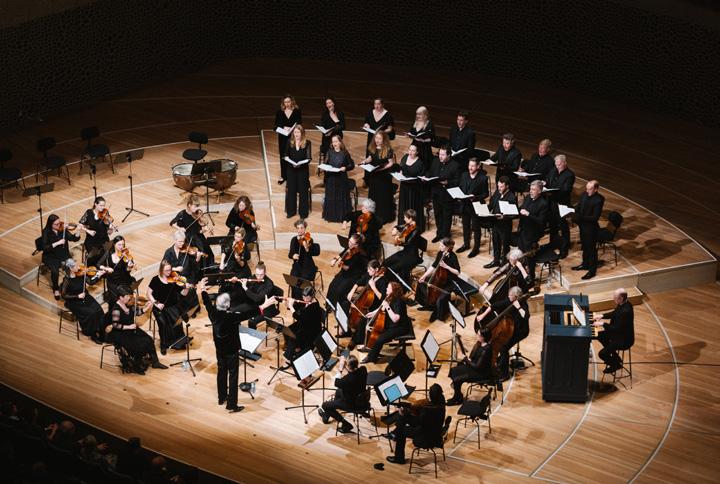
“Bartók is my mother tongue” Bartók’s Influence on Subsequent Generations of Composers
The Haute Couture of Classical Music
Treasures of the Trousseau The Editor Recommends
“Beautiful to the Ear, Beautiful to the Eye” An evening of arts based on Bartók’s collections in the Balkans and Hungary
The Sweet Wrapper and What’s Inside
KRISTÁLY SZÍNTÉR
1138 Budapest, Margitsziget
RAM-ART THEATRE
1133 Budapest, Kárpát utca 23.
MILLENÁRIS
1024 Budapest, Kis Rókus utca 16–20.
NATIONAL DANCE THEATRE
1024 Budapest, Kis Rókus utca 16–20.
HUNGARIAN NATIONAL GALLERY
1014 Budapest, Szent György tér 2.
LISZT ACADEMY
1061 Budapest, Liszt Ferenc tér 8.
AKVÁRIUM KLUB
1051 Budapest, Erzsébet tér 12.
PESTI VIGADÓ
1051 Budapest, Vigadó tér 1.
BUDAPEST MUSIC CENTER
1093 Budapest, Mátyás utca 8.
1095 Budapest, Komor Marcell utca 1.
HOUSE OF MUSIC HUNGARY
1146 Budapest, Olof Palme sétány 3.
LUDWIG MUSEUM – MUSEUM OF CONTEMPORARY ART
1095 Budapest, Komor Marcell utca 1.
EIFFEL ART STUDIOS
1101 Budapest, Kőbányai út 30.
EXHIBITION
04. 08– Dolce vita
Impressions of Italy in Two Centuries of Hungarian Art 04. 08– Black Mirror. The Long Shadow of the Future
DANCE
04. 02–03. Latvian National Opera and Ballet: Nijinsky
04. 05. Hungarian State Folk Ensemble: His Cross Blossomed
04. 06. Félix Lajkó–Székesfehérvár Ballet Theatre: The Innermost Room – premiere
04. 07–08. Yvette Bozsik Company: The Inner Child – premiere
04. 08. Söndörgő | Ballet Company of Győr | Hungarian State Folk Ensemble
Pure Source – An evening of art based on Bartók’s collections in the Balkans and Hungary
04. 10–12. Tanztheater Wuppertal Pina Bausch: Vollmond
JAZZ
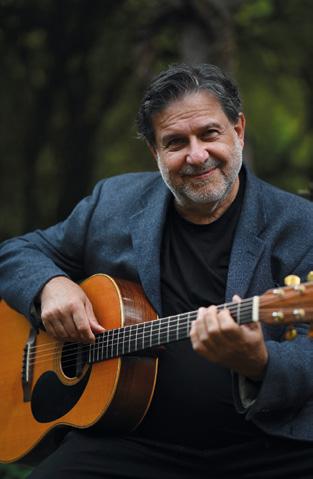
04. 01. The Bad Plus | Chris Potter | Craig Taborn
CLASSICAL MUSIC
04. 02. Julija Lezsnyeva | Les Accents
04. 03. Peter Whelan | English Baroque Soloists | Monteverdi Choir
04. 04. Márta Sebestyén | Judit Andrejszki
04. 07. Sir John Eliot Gardiner | The Constellation Choir & Orchestra
04. 08–10. Classical:Next 2026
04. 11. Hommage à Tallér Zsófia
OPERA
04. 11. György Selmeczi: Royal Highness | János Vajda: The Verdict
04. 12. Hisham Gabr: Sindbad, the Omani Sailor
CROSSOVER
04. 08. Söndörgő | Ballet Company of Győr | Hungarian State Folk Ensemble
Pure Source – An evening of art based on Bartók’s collections in the Balkans and Hungary
POPULAR MUSIC
04. 09. Gerendás Generations
04. 11. Red Axes (Live Band)
WORLD MUSIC
04. 09–11. Budapest Ritmo
LITERATURE
04. 09–11. Spring Margó Literary Festival
CONFERENCE, EXPO
04. 08–10. Classical:Next 2026
04. 09–11. Budapest Ritmo
by Beáta Barda
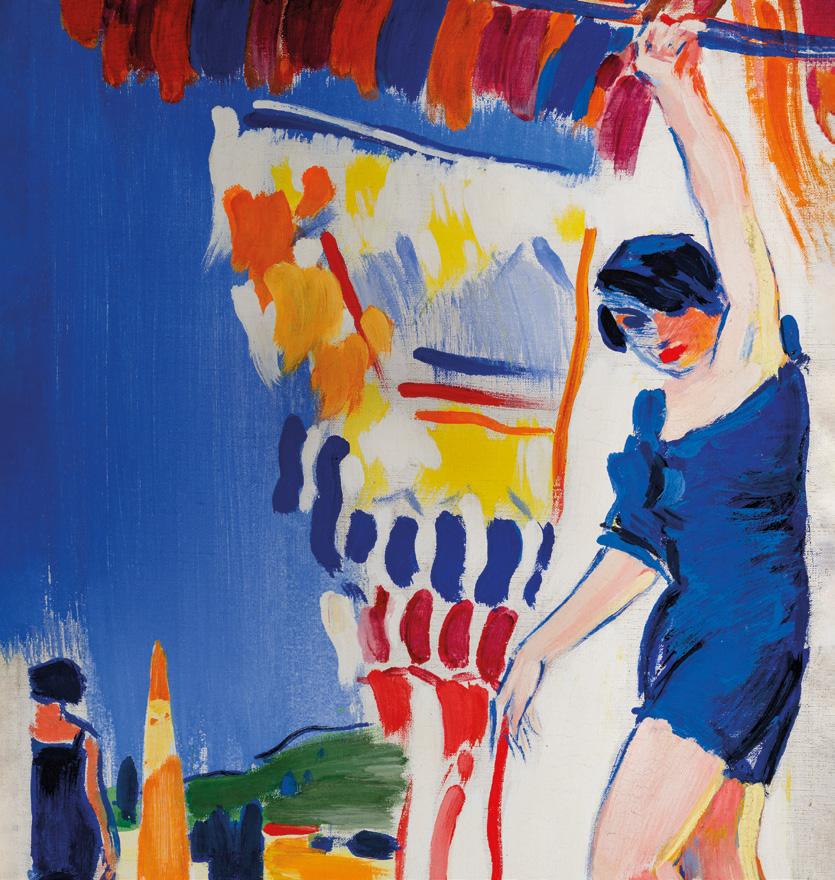
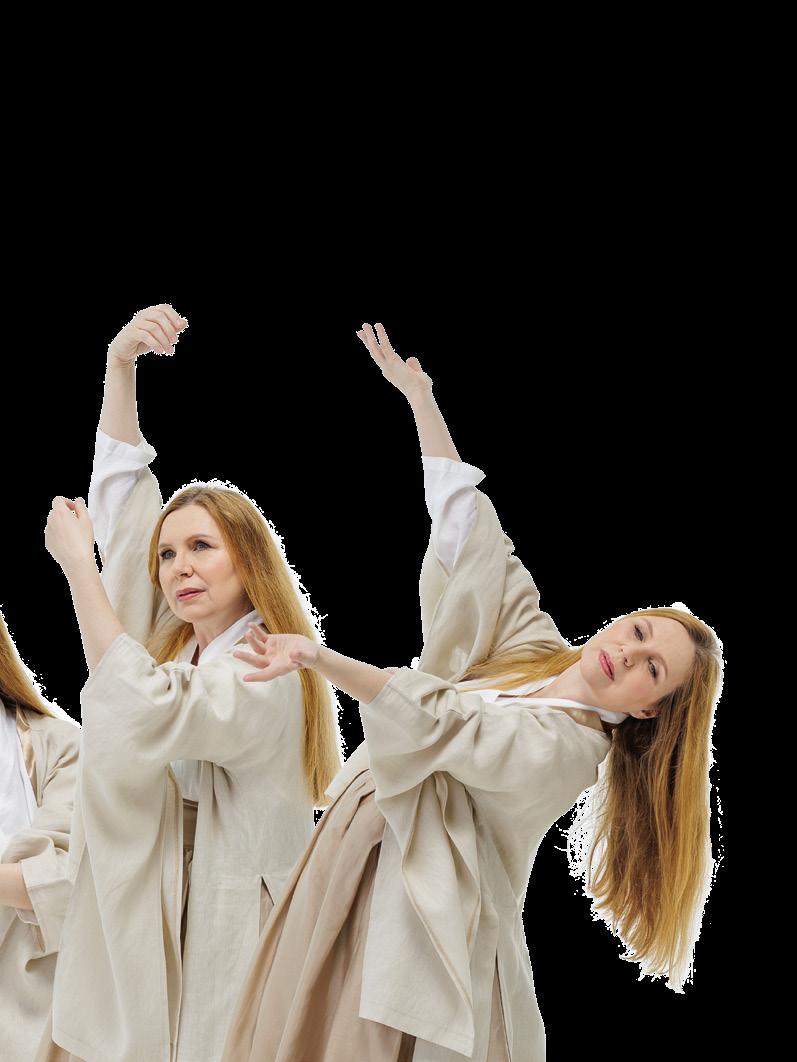
Continuity: That’s the keyword here. The German Pina Bausch became director of the Wuppertal Ballet in 1968. In 1973, she renamed the institution Tanztheater Wuppertal, thereby defining the direction that the company was to follow: dance and theatre. Thus began the process that made Bausch an icon of neo-expressionism, and the Wuppertal Dance Theatre a maker of dance history. Bausch wanted to blur the boundaries between dance, theatre and performance art, and this particular blend of genres made her work unique, earning her and the Wuppertal company international fame. Over a career of more than four decades, Bausch created fifty-five dance productions. Cooperation was always central to her working method: it was through dialogues with her dancers and long-time collaborators, set designers Rolf Borzik and Peter Pabst, that initial ideas were developed and shaped into productions. Her works fuse dance, dialogue and performance art, often with unusual sets: in Nelken (Carnations), for instance, the stage is covered in artificial carnations, while in Le Sacre du Printemps (The Rite of Spring), it is strewn with earth. Although Bausch died unexpectedly in the summer of 2009, 17 years later the company still maintains her repertoire. Those who keep the productions created by their legendary leader fresh and alive include both “veterans,” who pass on the knowledge that has become incorporated into their bodies and minds, and an increasing number of young artists who never knew Bausch personally. They know that strong interest persists in a style of dance theatre that is based on emotion and combines dreamlike images with dramatic situations and powerful, dynamic movements; they know that structural freedom, a range of dynamics from the absurd to the deadly serious, and a psychological and physical world that stretches from the intimate to the bombastic, still have currency. This, then, is the continuity.
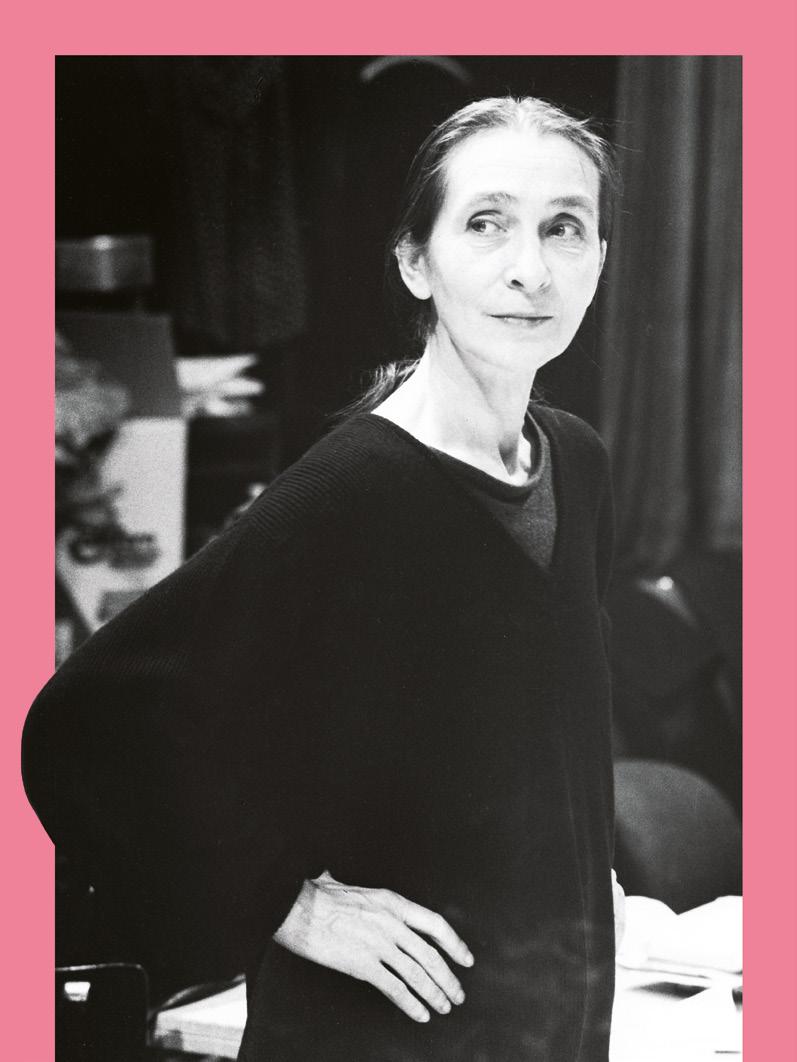
PINA BAUSCH: VOLLMOND

The touching, dizzying and enthralling solo and group scenes of the 2006 production Vollmond (Full Moon), which depicts loneliness and longing for love, laughter and tears, indifferent apathy and astonishing vitality, are set around the huge, moonlike rock created by Bausch’s constant and indispensable collaborator since 1980, set designer Peter Pabst. It was Pabst who also devised the stunning, rotating hillside of moss, grass and ferns that can be seen in Wiesenland (Green Earth), a production inspired by the company’s stay in Hungary.
Alongside stone, this performance also features another element in abundance, Bausch’s favourite medium of water: it ripples across the stage like a stream or lake in which someone floats, while others swim, struggle or frolic in the rain that sometimes pours, sometimes gently drizzles, or sometimes falls in large drops. Like a pagan ritual, the piece impresses the viewer with very powerful images. We can’t even pinpoint where we are: though the rock, the rain and the lake seem to refer to an external landscape, the characters regularly bring in everyday objects – chairs, bottles, buckets and basins – which suggest an internal environment.
Costume designer Marion Cito clothes the dancers in the iconic long dresses that mark Bausch’s works, and lets their hair down to create a contrast with the raw physicality of their movement. The balance of power between male and female performers is constantly shifting. This juxtaposition dissolves the notion of femininity and masculinity in the dance. The most daring form of dance theatre is able to combine elements of a production in a way that these not only support each other, but also play their own roles. Vollmond
masterfully integrates into movement the live sounds emitted by the props, absurdist lyrics and atmospheric music, which includes songs by Tom Waits, Amon Tobin, Alexander Balanescu, Cat Power and others. Everything is important, everything says something.
As is usually the case with Bausch’s works, Vollmond is a loose string of seemingly random episodes, rather than a single story moving in one direction. Instead, it offers fragments: scenes, gestures and emotions, all pieced together like a dream or perhaps a memory. Certain moments and elements keep recurring, including outstretched arms, bodies pressed against the rock, and dancers who seem to be struggling to keep their balance on the wet stage. The repetition is (seemingly) deliberate, reminding us, as viewers, that we often return to the same emotional landscapes, no matter how much we try to break away from them, trying to move forward, to break free from the cycle of hope and failure – but to no avail: hope and failure persist.
Twenty years after its première, Vollmond remains strikingly topical, with the incessant flow of water also referring to our current concerns: climate disasters, growing inequalities and our struggle to find our footing in an unstable world. The way the dancers navigate the chaos is eerily familiar.
10–12. April
TANZTHEATER WUPPERTAL
PINA BAUSCH: VOLLMOND
A PIECE BY PINA BAUSCH

5, 30 June 2026
WAGNER: PARSIFAL
12 June 2026
SONG RECITAL BY CAMILLA NYLUND AND HELMUT DEUTSCH
18, 25 June 2026
WAGNER: DAS RHEINGOLD
19, 26 June 2026
WAGNER: DIE WALKÜRE
20, 27 June 2026
WAGNER: SIEGFRIED
21, 28 June 2026
WAGNER: GÖTTERDÄMMERUNG
by Annamária Tari
“There is no complete spiritual life without music. There are regions of the soul that only music can illuminate.”
Zoltán Kodály
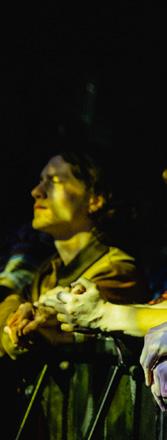
It is difficult to wrap your head around the cultural consumption habits of generations that were socialized differently. There is hardly any comprehensive research on the subject, so the picture we have of an aspect of life that has such a big impact on both society and the individual has to be pieced together little by little.
Older generations could still live a slower life, which was not as ensnared by information technology as today. There was time for theatre, concerts and cinema. Everyone read books, and if they couldn’t or didn’t want to buy one, they would go to the library. Visiting cultural institutions was not a challenge on a weekday evening, as people were usually home by around five. In psychological terms, there was much more time to develop a liking for intellectual experiences, for performances that required emotional involvement, and for family customs, the purchase of opera or concert tickets and theatre visits to become a matter of course.
Back then, “everything had its own time,” while now, in the age of multitasking and acceleration, “many things share the same time.” The 21st century –the period of the fourth industrial revolution – brings with it perhaps one of the most significant changes in the emotional and intellectual functioning of the human personality. With digitalisation, the rapid development of technology and the rise of artificial intelligence, an era has begun that formerly was the stuff solely of films and books.
An intelligent adult likes to think of themselves as uninfluenced by television and other media, but the effect of mass media is hard to ignore. We are all members of a consumer society, so we only have a limited

choice over the visual and other stimuli we want to be exposed to. Television and the internet are both elements of mass media, and one of their most salient characteristics is that they offer patterns – ones in which individuals can recognize themselves – and what they present concerns everyone. This is what makes it possible to identify with those cult objects or motives that are dictated by the scenarios of mass media, and for the individual to become both an external observer and an internal (identifying) participant. In this way, contemporary culture influences the patterns of relationships, human relations and lifestyles.
When you look around the auditorium in the Opera House or Müpa Budapest, it seems a cause for celebration when you see young faces. It’s not that younger generations don’t want to consume “slow culture”; it’s more a question of whether they can slow down enough to enjoy it. Those experiences of high culture that are available require time, attention and silence. All this is more difficult to produce for young generations that have long become accustomed to quick clicks. Ceaseless stimuli, whether off or online, have transformed the scope and focus of attention, and so have made it more difficult for a work that demands concentration to become a cultural experience that is enjoyed and desired.
This is not to say that high culture is no longer important. Perhaps we are better off looking at the 21st century as a time, albeit challenging, in which parents are still best positioned to pass on the enjoyment of contemporary and classical culture at the familial level. That is something we should strive for.
“Renaissance” polymaths who had the time and ambition to acquire all-round knowledge are a thing of the past. Let’s recall an anecdote: the mathematician Irving Kaplan was reading Albert Schweitzer’s book on organs when he glanced at a volume in his friend’s hand, which was entitled The Philosophy of Civilization, by the same author. There was also a biochemist present, who said: “This is the same Schweitzer whose studies on tropical diseases I use in my work.” Had there been an organist in the room, he could have pointed out that this man was also a famous colleague of his, one of the most compelling interpreters of Bach’s work, the renaissance of which he had instigated in Europe. A musicologist could have interjected that Schweitzer was also the author of a significant tome on Bach. He was known to philosophers as an expert on Kant, and as the originator of the idea of “reverence for life,” an absolute and universal principle of ethics. He was a respected theologian and the author of an interesting and contested work on Hindu philosophy. He was awarded the Nobel Peace Prize and is widely revered for his work in Africa, his efforts in medicine and for the eradication of colonialism...
These are different times, we have different goals and values, and the pace of our lives is different. But music is still there for us, however fast we live. In fact, the faster the tempo feels, the more we should make an effort to sit down and immerse ourselves in the act of listening to a piece of music.
by Katalin Teodóra Gáti

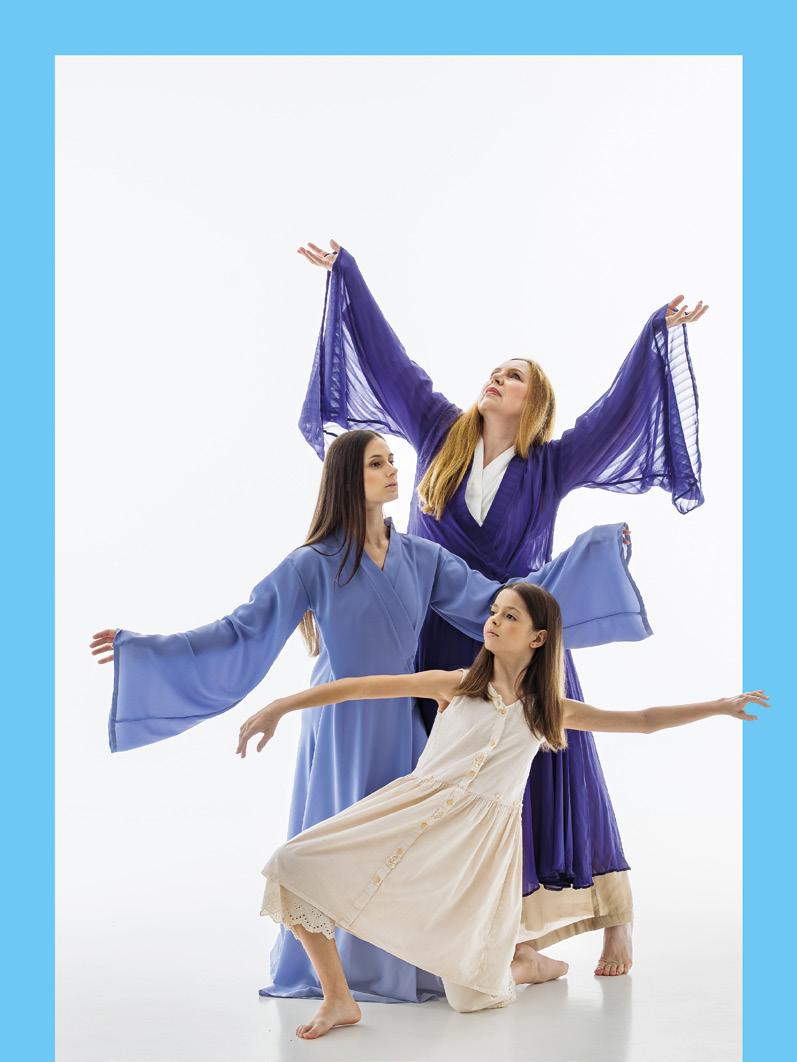
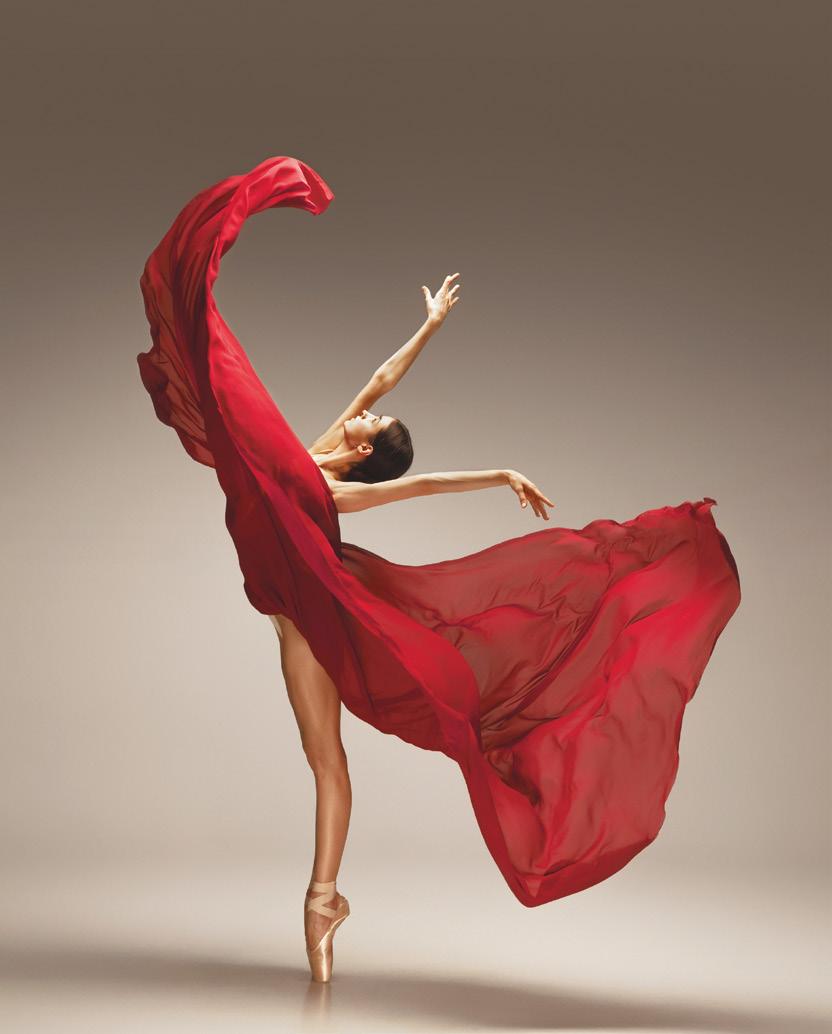
Three women, three generations – one life. The Inner Child, Yvette Bozsik’s latest work, takes the viewer from initial openness through the repressions of adulthood to the liberated playfulness of the ageing self. Patterns, joys and struggles, passed down through the generations, take shape on the stage of the National Dance Theatre.
In your description of The Inner Child, you wrote that the purpose of the work is to find the child within through the means of dance, by drawing on the unconscious. It’s extremely liberating to deal with the child within. I first got to know the shadow child that is hidden, and then the healthy, strong and happy sunshine child; I used them to work on myself and the piece. When we’re dancing or are in any state of flow, it is the sunshine child playing, who is particularly active and has a boundless imagination, and over whom school, parental models, expectations and inhibitions born out of shame later come to cast a shadow. When we perform our fairy-tale productions, it’s wonderful to hear the little ones laugh with delight! It’s very important that we let the children laugh. As adults, we need to understand what we didn’t get as children, and to make up for it so that we can function healthily. The search for the inner child leads inwards and requires trust, calm, joy and positive feelings. By contrast, the common mentality urges you to be angry and discontented, to blame others. Being a child is not like that. I still remember watching Chaplin’s films with my dad, and the way we laughed together keeps nourishing my soul. I have held on to this memory for fifty years.
You don’t keep the joys you experienced to yourself, but you pass them on in your works and as a university teacher. You created the concept of this three-part production and you are its director, but two young choreographers also contributed to it. I like to provide my students with opportunities. The middle section of The Inner Child, which represents adulthood, is created by Attila Tókos, whom I taught
at the choreography master’s programme of the Hungarian Dance University and whom I consider a very talented artist. Anna Bujdosó is a dancer in our company who has repeatedly proved her mettle as an assistant to the choreographer, so I asked her now to work on her own, entrusting her with the creation of the part that evokes childhood. The vicissitudes and liberation of childhood will be danced by Liza Gulyás and Mirkó Iványi, and they will later meet their adult and elderly selves. To portray the elderly, I invited the company’s former emblematic dancers Aliz Krausz, Tímea Fülöp and Szabolcs Vislóczky, who return to the stage specifically for this piece; I work with them both as a dancer and a choreographer. I think that as we grow older, the space within our souls keeps growing. There is no need to lie and pretend; everything becomes clear and the playfulness that characterizes childhood comes back, as does the attention to oneself and to others. Adulthood tends to be marked by the locking away of traumas, the unnecessary hoarding of things, constant struggles and often meaningless automatisms. Art can draw attention to such problems. It’s very important for me to create productions that not only entertain but also raise people’s consciousness and put things in a different light. Not because I’m so clever about anything, but because this is the subject that my life situation currently makes me most intrigued about, and the things you can talk about well are those in which you are present. We swapped ideas about the music with composer Jean-Philippe Héritier, and the set was created with Tamás Vati. The space we conceived for the stage changes only in its dimensions, depending on the viewpoint from which the world is seen. So the show spans three generations to reveal the secrets of my life as a woman.
So The Inner Child is about passing on the baton through generations. It is, but the generations are not opposed to one another, and the passing of the baton is presented as a single arc of development. However, this is not a linear arc because there are phases in your life when you cannot find a solution or a way out. As children, for example, we are often guided by illusions. I too imagined that I would be rich and famous, living in a beautiful house. This is what social norms make you believe you can be proud of. But real life is different. My grandparents were of peasant origin and lived simple lives in their village, yet they had amazing knowledge. I think what matters is not qualifications but humanity; how close I feel to God, nature, myself and my loved ones, and my capacity for empathy. The world we live in does not teach us to be empathetic; society swarms with lost souls; movies glorify serial killers. The value system that is popular is strange and upside down, and what surrounds us is a huge din. In order to understand the knowledge of the universe, which is readily accessible to all, we need humility
and silence, putting the ego to one side. The smaller the ego, the greater the understanding. Many people can’t understand each other because they shout so loudly that they can’t even hear themselves over the noise. That’s not how the inner child works.
How do you see this little child in yourself?
She’s everywhere in me. I can only rehearse, create and conceive a piece with her. The child is there in all my works, without exception. The girl who is creating today is the same 13-year-old who already saw images in her mind at music history classes. It’s the same child working in me; it’s just that back then I was driven by desire. There are still things in my life I need to do or finish, but the motivation for creating is no longer desire; I’m simply in it, and the flow takes me along. I’ve already grown to accept it when I can’t come up with something. I’ve become much better at letting things go. As it happens, the two significant events of our lives – birth and death – are experiences of letting go. As adults, we can barely let anything go because we insist on everything. I myself still need to work a lot on the issue of insistence. I’m surrounded by countless objects, and I’d like to get rid of them from time to time, but they often come back as props in my productions and become magical. Since I’m the director of The Inner Child, who knows, maybe an old object of personal significance will again appear on stage.

7 and 8 April | 7 pm

by János Mácsai
In the spring of 1978, a heated argument broke out in Classroom 10 at the Academy of Music, where more than one hundred people had gathered. The instrument of Malcolm Bilson’s master class, a copy of a dainty Walter fortepiano, stood on a diminutive podium. Balázs Szokolay, Péter Nagy and other curious students had the temerity to try out how Mozart sounded on an instrument he himself could have played. There was general surprise, as well as confusion and disbelief. When Ferenc Rados, the Academy’s piano teacher of unquestionable authority, rose to speak, he gave voice to his considerable scepticism and dismissed the idea of using a fortepiano. But then a few years passed, and he would give recitals on fortepiano and begin to encourage his students to learn as much as possible about the instruments of the periods in which the music they were playing originated. Not unique in itself, this story is illustrative of how the early music movement was received in Hungary. Hungarians only started to take an interest in historically informed performance practice some 15–20 years later than elsewhere – but then all the more intensely.
Fashion thrives on change. Otherwise, how would tailors make a living or how would today’s fashion designers make their fortunes? When it comes to art, the situation is similar, but change is a little slower. The old inevitably becomes boring. Curiously, people grew tired of old things much sooner in the 17th and 18th centuries than later. For music to be in demand, it had to be the latest. Compositions were not made for eternity, but were single-use, ad hoc pieces. Then again, the best works were made of good enough material and a cut so timeless that they could be presented in public again from time to time – at least with minor modifications and repurposed parts from elsewhere. Bach’s Passions were couture of this kind: you could wear them as many as three times, though no more.
Change came gradually in the first decades of the 19th century, when the beauty of old fashion was discovered; the “influencers,” and in their wake, the public, took an interest in old compositions, though they tended to be retailored to some degree. The trend became dominant by the 20th century, and musical life became inundated, in particular, by pieces from the preceding Romantic period. Contemporary music met with resistance, not independently of the breakdown of the European tonal ideal. The music of the time had a small audience, at least compared to the mass products of the music industry today. Music consumers were conservative and would not countenance anything other than traditional tonality and forms.
In the mid-20th century, something new emerged again, though not in composition, but in the field of performance, which soon began to be called authentic or historically informed performance. Its pioneer was, without doubt, Nikolaus Harnoncourt. He and his wife, Alice Harnoncourt, formed the Concentus Musicus Wien in 1953, but it was only after much experimentation that they began to perform to audiences in 1957. The ensemble, which continues to operate, made its international debut in the early 1960s, planting the seeds of change far and wide. The aim was to create a sound with scholarly underpinnings, and to establish a performing approach that was as close as possible to the ideals entertained at the time of composition. The first goal was easier to accomplish, using copies of historical instruments to replicate, with more or less authenticity, the soundscape in which the works were created and sustained; by contrast, it took a lot of research, receptiveness, experience and taste to get the articulation, tempos, dynamics and other details right.
Historically, no revolution is without precedents, and the roots sometimes run deep. Though Harnoncourt was the first to make a breakthrough, he was not the father of the early music movement. It is a cliché of music history that Mendelssohn’s 1829 performance of the St Matthew Passion was the one to spark an interest in music from earlier times – but even that is not entirely true. Bach was never forgotten; both Mozart and Beethoven knew his music well and thought highly of him. Although what they knew was primarily The WellTempered Clavier, and not Bach’s entire oeuvre, they could still discern his importance from this. Others, like Wagner, were interested in even older composers, particularly Palestrina. But it is indeed Mendelssohn who deserves the credit for drawing wider attention to the treasures of the past, with the Bach concert itself taking place in the context of a “historical” series. Performances of the music of other Baroque composers soon followed, as did the publication of a Bach omnibus, and from 1858, its Handel counterpart.
Mendelssohn made considerable modifications to Bach and used the instruments of his own time. However, still others had thought of using authentic instruments well before Harnoncourt. Arnold Dolmetsch, a Frenchman living in England, who as a musician was of a lesser stature but was fairly well known in his time, started to experiment in 1890. In the last years of the 19th century, he gave concerts on both original instruments and copies, and in 1896 made the first replica of a harpsichord. In the 1920s, he organized an early music festival, with principles similar to those accepted today. He was friends with George Bernard Shaw, who also wrote music reviews for some time and who promoted Dolmetsch’s initiatives. Gabriele D’Annunzio and Ezra Pound were also among his admirers.
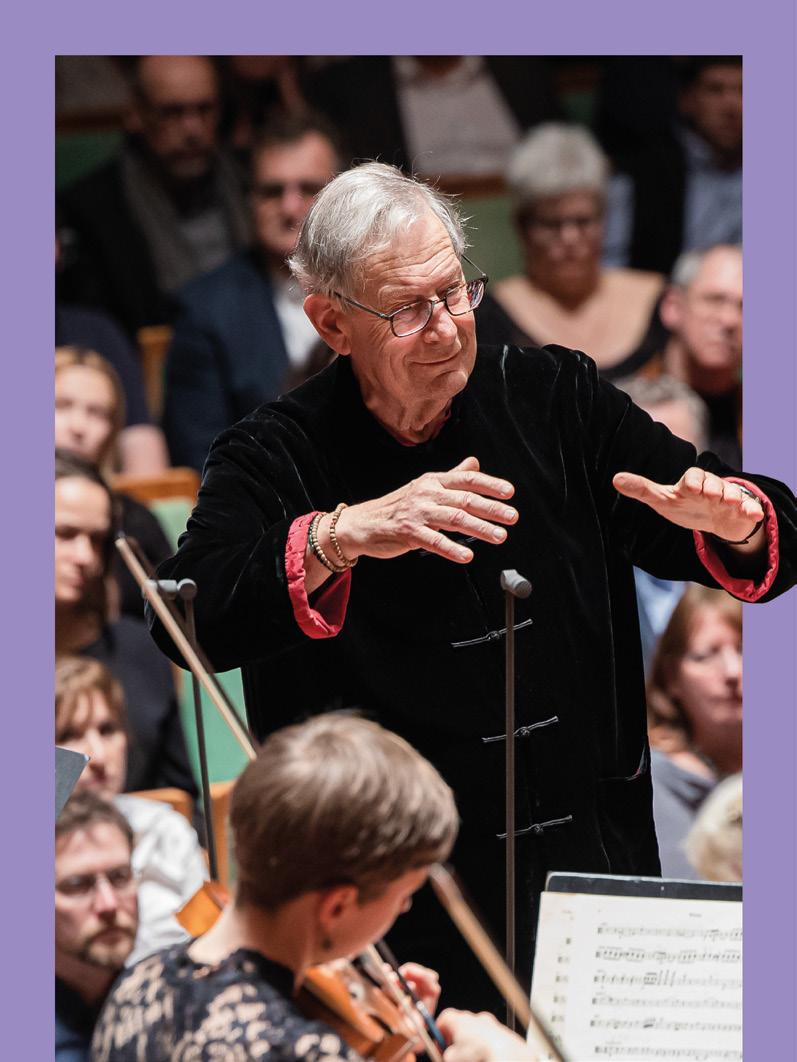
The conductor John Eliot Gardiner, Harnoncourt’s great colleague, who will perform at this year’s Bartók Spring, is of the opinion that authenticity is a misleading term in the context of early music. “My enthusiasm for period instruments is not antiquarian or in pursuit of a spurious and unattainable authenticity, but just simply as a refreshing alternative to the standard, monochrome qualities of the symphony orchestra.”
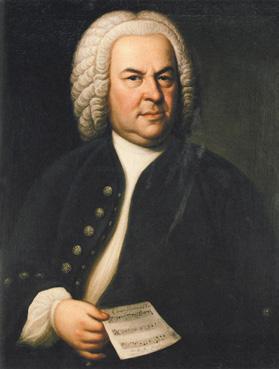
Interestingly, the only authentic portrait of Bach, the original oil painting, hung on a wall in Gardiner’s childhood home – the same where he holds a page of the "riddle canon" in his hand. Mendelssohn’s case was similar: he received the manuscript of the St Matthew Passion in which Bach wrote the part of Jesus in red ink as a childhood birthday present from an aunt. One had better be born into a good family, Goethe said of such occurrences.
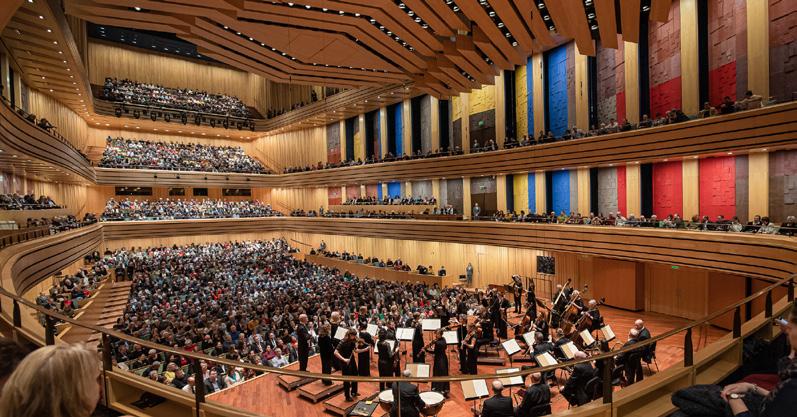
Another important figure was Christian Döbereiner, the undeservedly forgotten German cellist and viola da gamba player, conductor, composer and music writer, who was one of the most significant pioneers of historically informed performance in the early 20th century. Among the key institutions in the early days of rediscovery of old music was the German Association for Early Music, founded in Munich in 1905 with the intention of presenting the music of the 17th and 18th centuries in its original form, using period instruments such as the viola da gamba, viola d’amore and harpsichord. As early as 1924, its members performed the Brandenburg Concertos on instruments from Bach’s time, while Vivaldi’s Concerto for 4 Violins appeared in its repertoire in 1917.
By the middle of the 20th century, the sound of the world’s leading orchestras had indeed become quite general, almost identical, and this was only reinforced by the record industry, hi-fi radio, the pressure to be perfect and to follow in the footsteps of the most famous. Which is to say, Harnoncourt’s revolution paradoxically brought something new by means of something old, while trying to stay away from the “neo-“movements that periodically arise in history, which are more likely to bear the mark of their own time than of those they seek to resemble. This movement was genuinely interested in finding out what else was hidden in the scores of Bach, Handel, Vivaldi, Haydn, Mozart, Beethoven or Schubert, and behind these, in the minds and souls of the composers. A vast treasure trove was revealed, with very different values from those attributed to these compositions in previous decades.
When it became evident how fresh and intense these pieces of music could be, and how capable of revealing whole new faces of their composers, a vigorous interest arose in their contemporaries, and a myriad of forgotten composers and works were resurrected from the scores and manuscripts lying dormant in libraries. Musicians and musicologists reread the treatises, and brought out all the contemporary accounts and memoirs that could substitute for the non-existent recordings with relative accuracy.
The movement proved to be so vital that even Romantic symphony orchestras took a different approach to playing works written up to the end of the 19th century. The attitude of the early music movement has had a fundamental influence on how a Mozart piano concerto or a Beethoven symphony is performed, even when the instruments in use are modern. (Of course this comes with the caveat that modern wind instruments, and some of the strings, were developed in the first decades of the 19th century, while the design of the modern concert piano on which everyone plays their Bach, Haydn or Mozart has remained unchanged for 140 years.) Such great classics of the 20th century as Furtwängler and Toscanini are among today’s museum pieces, and a similar fate awaits Bernstein.
In sum, the early music movement, which has a long history, has come into its own by the 21st century, being now part of musical life with a weight that seemed impossible a few decades ago. Also, strange as it may seem, it is one of the most important inspirations for new fashions that will herald an as yet unknown form of modernity.

Interview by Kata Kondor
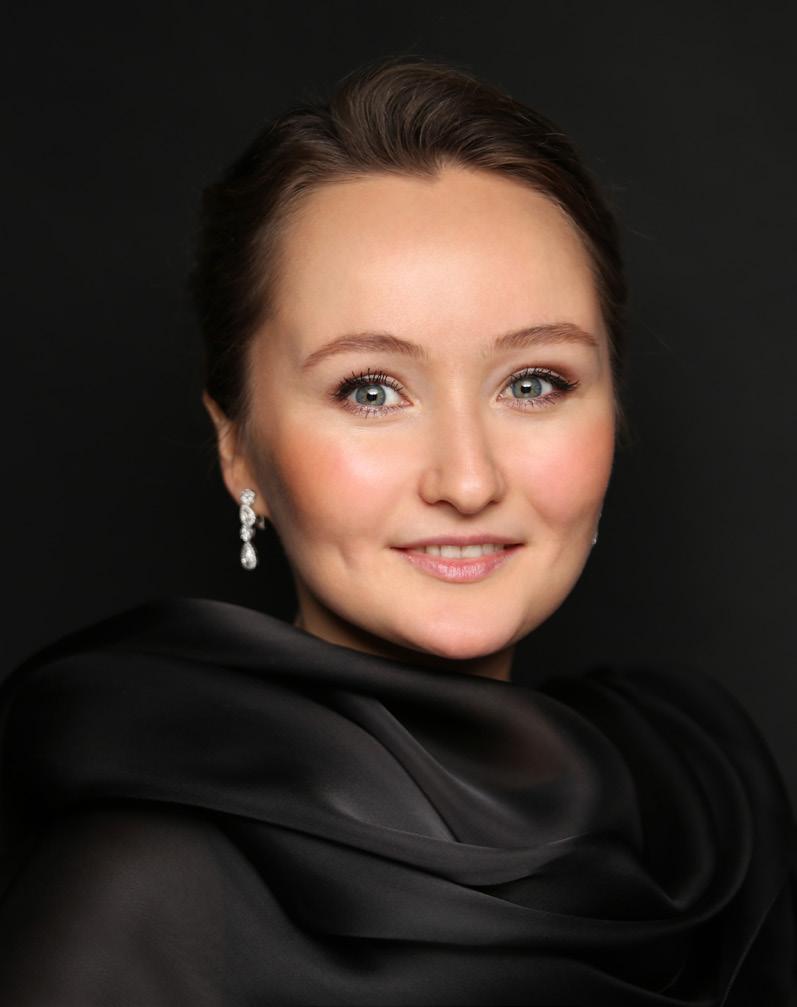
It has been more than ten years since Hungarian audiences first listened to a young coloratura soprano named Julia Lezhneva, whose every performance has since held a special place in the hearts of music lovers. The singer will soon appear at Müpa Budapest as the heroine of Vivaldi’s opera Il Tamerlano, and we took this occasion to ask her about the start of her career, her love of early music and her previous experiences in Budapest.
You come from a place very far from here, which is Sakhalin, an island off the Pacific coast of Russia. What memories do you have of the island? I was seven when my family decided to move out of Sakhalin, and I haven’t been there since. So I can mainly recall my experiences as a small child: I remember the winters, when the adults built tunnels in the huge snow for us children to play in. I spent a lot of time outdoors. I also loved to go sledging, and the weather never kept me from having adventures. I remember vividly how much fun we had with my friends and the children from the neighbourhood. Sakhalin is my childhood: free and untouched.
You showed great musical talent even as a child. When did you become interested in early music?
I have been inspired by Baroque music since I was eleven. I was introduced to it by my solfège teacher, who brought her records to classes so I could listen to beautiful recordings during my school years. I immediately fell in love with the style; it was so close to my taste and I found the way they sang the pieces very interesting. I immediately wanted to learn them and dreamed that one day I would be able to perform these wonderful pieces of music.
Did you have a favourite among these recordings? I did. A year later, my teacher gave me an album of Vivaldi with Cecilia Bartoli and Il Giardino Armonico with Giovanni Antonini. I was immediately captivated; I was listening to it non-stop. I still remember the magical feeling that always came over me when the music was played.
During your studies, you were mentored by one of the world’s greatest singers, Kiri Te Kanawa. Tell us about your relationship with her.
When I was studying singing in Cardiff, Kiri Te Kanawa visited my school twice. It was always an event when we had such famous artists visiting us; everyone got very excited. However, she was very kind and enchanting. She is one of the most amazing and powerful people I have ever met – yet very mysterious, as we only spoke a few times. Meeting her was a great influence on me and my career. I was honoured that she encouraged and supported me in my singing. In my third year in the UK, she helped me to get a last-minute place at the Guildhall School in London. She found a lady who sponsored my studies and I am grateful to this day for that opportunity.
You were still in your early twenties when you burst onto the international music scene. How do you feel your voice has changed since then?
As your personality changes and you know more and more, your voice changes along with you. New inspirations and experiences will help you on this journey. However, I enjoy both the busier and the calmer periods, because quiet times recharge me and then I can look forward to new thrills. And the opposite is also true.
At Bartók Spring, you’ll be singing in Vivaldi’s opera, Il Tamerlano. You must know the story really well because Handel also adapted it for an opera, Tamerlano, in which you have sung several times. What is it like to encounter it now through different music, from the point of view of a different character?
I have very fond memories of Handel’s opera, which I performed at the Salzburg Festival at the beginning of my career, under the baton of Marc Minkowski, with Plácido Domingo as Bajazet. It is a wonderful opportunity to explore the story from a different perspective. Irene, Tamerlano’s fiancée, is a strong yet amusing character. She goes out of her way to win back the love of her beloved; she has to be patient and cunning to succeed. I love the scene at the end of the opera when she achieves what she has longed for and fought for.
Is it necessary for a performer of early music to also look at the pieces they perform through the lens of a historian?
Absolutely. Especially when we rely on historical sources. In addition to your performing skills, you also need to draw on the in-depth knowledge you must have for a production. Having this is what makes singing a piece a complete experience; the music will also sound fresh and inspiring. This is always the attitude I adopt when I start to learn a new work.
You have visited Hungary many times. Do you have any fond memories you would like to share?
I love the diversity, beauty and hospitality of Budapest. I had visited it several times as a tourist. I like this audience, and they have held a special place in my heart since my first visit many years ago. I feel lucky to be able to return soon, sharing beautiful musical moments with my audience and fellow musicians.
2 April | 7.30 pm
by János Lackfi
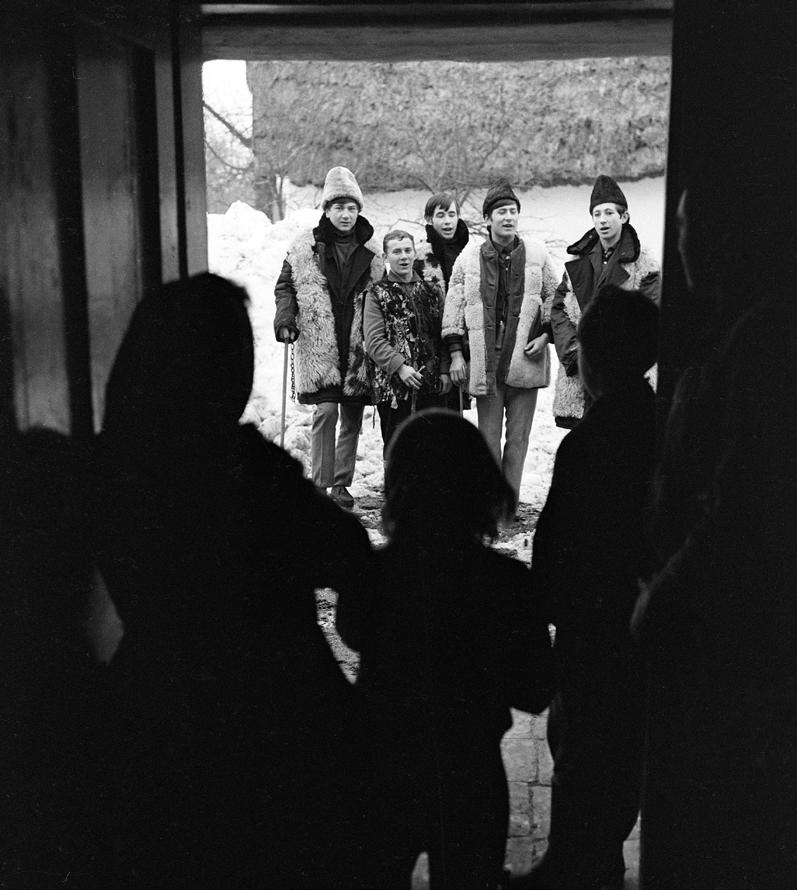
“We’re coming from the cold fields of the Nyakas Mountain, with chilblains on our hands or feet or you-know-what, ah well, regő-rejtem, the Good Lord has allowed it to pass.”
This was the nonsensical song we, poor carollers, roared with utter enthusiasm in the year of our Lord two thousand and seven-eight-nine, as we wandered around Zsámbék, which is too small for a town, too large for a village.
Our friend, Árpi, was an honest truck driver with artistic ambitions, sick and tired of his job with a multinational, and attracted by the lifestyle of his ancestors. He went down south to get a cobza, which he then learned to play, falling in love with minstrelsy. He visited us to show his skills because word had got around that we’d be in for a little local artistic roguery.
We had moved to the country with our five children from the big noisy city a few years back, and were hoping that what this young man would play would be good, because if it wasn’t, it would be torture to speak our minds. He struck up a tune and the Lord saw – and we saw and heard – that it was really good. Our living room was filled with throaty folk singing.
In the years that followed, we did a lot of cool things together. Juli, my wife, joined forces with Father Márton to stage an outdoor festival for St Martin’s day, with stage plays to get us in the mood for winter, a bonfire as tall as a man, and a giant goose puppet with my wife inside. With mulled wine, tea, candles and conversation. With whooping party games. Juli came up with some brilliant tasks. St Martin’s giant patchwork cloak was passed over the heads of the crowd... There was a goose-stuffing competition for schoolchildren... Our parish priest enacted his one-time namesake as he fled the authority of the bishop, and you had to catch him in the crowd. Árpád and I sang, and I provided running commentary on the games, with an eyeliner moustache and a hat on my head.
When it was time for the parish feast, we wobbled around the church, held folk dancing, arts and crafts workshops, a fair and a puppet theatre, and I did my damnedest as an emcee and raffle compère. Even the homeless congratulated me for my antics afterwards.
And then, taking up Árpi’s idea, at the end of each year we put together a list of friendly families from the parish who would be happy to receive well-wishers, who would not be basking in the sun in the Seychelles or gliding down from the Kreischberg like a dream, and would instead be at home, recuperating from the holidays.
We had about thirty or forty addresses, and we set to it. The less drunk of the two of us drove the car.
We were given cake, sandwiches, gingerbread, meringues, raisins, almonds, mayonnaise salad, casino
eggs or ham – depending on what was left over from the feast.
Unfortunately, you couldn’t refuse the shots and glasses that were on offer everywhere. Mostly because we didn’t try very hard to resist the offers.
“Ah, aaah really shouldn’t (hic!), but we’re not here to offend anyone (hic!), so cheers!”
I’m not very proud of this because anything stupid could have happened, and then these gallant carollers would have been put in jail, and there would have been stuff on our consciences we couldn’t come to terms with for the rest of our lives. Luckily, I’ve grown smarter (stupider) over time, and have become an alcoholic who happens not to drink today. I’ve become the permanent designated driver.
Each time it was good to step out of the raw cold into heated rooms, to see the faces of people we had met many times at parent-teacher conferences, on outings, birthdays, football matches, baby showers, performances, dances, felting workshops and at church, and now we were showering them with our bundled wishes, as we learned from our ancestors.
Of course, at the doctor’s and the vet’s we left out the “may the doctor and the chemist starve” clause. But then, whenever possible, we did include the host’s name or some fun fact about the house in our rhyme. It smacked of old times to give end-of-year wishes to a Premonstratensian monk in a snow-white habit, who clinked glasses with us at a long table.
The most moving moment came when we were least expecting it. A lovely family was just moving to Zsámbék and was busy building their home even between the two holidays. Only the husband was at home in the small house they were converting, in the company of a bricklayer. He was nonetheless happy to welcome us and receive our good wishes, which they could well use in those trying times.
He smiled as he listened to our boozy song and thanked us kindly for our good wishes. But then an elderly gentleman stumbled out of another room, with a bucket scoop in hand and tears in his eyes, thanking us for the experience. It was the bricklayer busying himself in the next room, and he said we had transported him back to his childhood. It had been forty years since he had last heard such carolling (regölés), in his small village. Everything was so different back then!
That was when we sobered up and realized what we were actually doing. In our hands, a dead tradition was suddenly truly transformed into life, overflowing with its joys and pains.
by Endre Dömötör
With a warm and playful sound, The Bad Plus is an avant-garde jazz band from Minneapolis. One of the most original ensembles of the 21st century has created an influential oeuvre based on jazz and classical music, while not spurning pop either. This will probably be the last time we will see them in this country, as they have announced they will disband at the end of 2026. And they’re back with an unusual lineup, to boot: the core duo of bassist Reid Anderson and drummer Dave King is now joined by tenor saxophonist Chris Potter and pianist Craig Taborn, and they’ll pay tribute to pianist-composer Keith Jarrett and his legendary American Quartet. What’s this, if not an unmissable opportunity?
Jarrett’s legendary American Quartet from the 1970s featured Paul Motian on drums, Charlie Haden on bass, and Dewey Redman on saxophone. Haden and Redman came from Ornette Coleman’s free jazz formation – playing in a genre Jarrett himself was not averse to – while Motian was an exceptional drummer. The four issued some seminal recordings together. For The Bad Plus and Potter, Jarrett’s quartet is more than an inspiration: it is a band that shaped the thinking of a whole generation of jazz musicians, and one they can be expected to pay homage to in their own original way. All the more so since Potter played for many years in Motian’s later band.
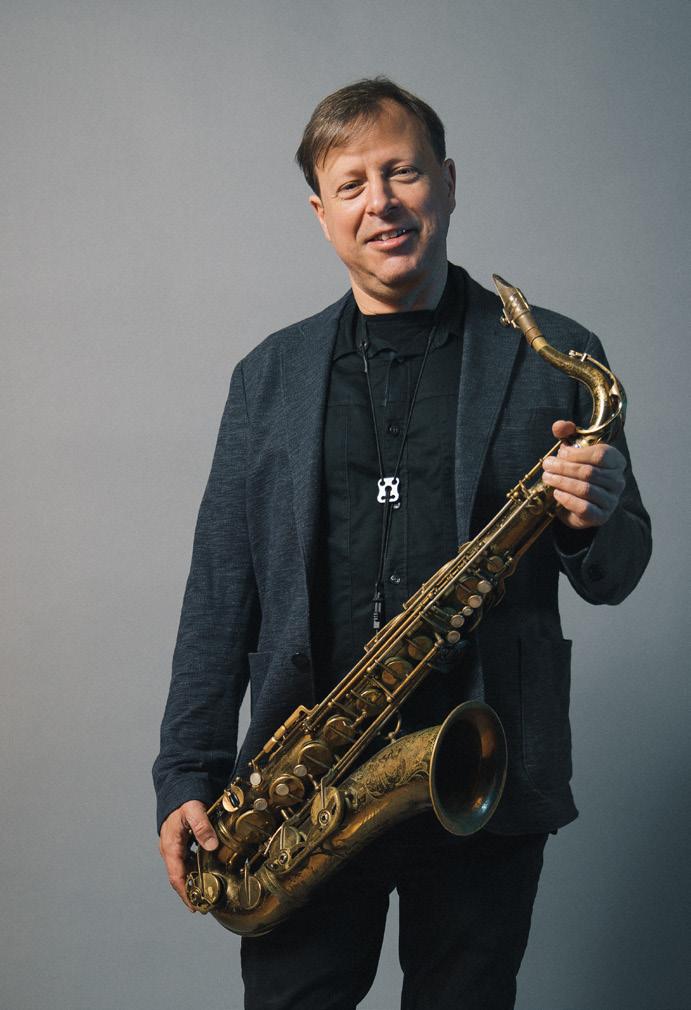
This is not the first time Potter has come to Budapest as part of a special production. He has appeared in concert with Hungarian musicians, has recorded albums here, and is a frequent guest on stages in this part of the world – all of which is hardly surprising, given that he is one of the leading saxophone players of the 21st century. Moreover, his wife is Hungarian.
One of Potter’s most memorable performances in Hungary was with Söndörgő, a band from Szentendre that plays South Slavic folk and world music. In 2024, he recorded an album with them, Gyezz, which went on to top all major world music charts. He has also played with the Dresch Quartet, an ethno-jazz ensemble, in at least five concerts, one of which was recorded and released in 2016 as Zea. Further back, Potter can be heard on a 2013 live album with Béla Szakcsi Lakatos, performing at Müpa Budapest in 2008. And believe it or not, there is yet another “Hungarian” Potter album, the 2010 release Contribution, recorded with the Dániel Szabó Trio. The saxophonist’s popularity in Hungary is barely surprising, given the frequency with which he gives concerts here. His performance with the SFJazz Collective, the San Francisco supergroup, was simply unforgettable. The quality of the groups Potter plays in is also an indication of how distinctive a musician he is. In the early 1990s, he appeared as a sideman with Red Rodney, and then played extensively with Paul Motian and Dave Holland. Pat Metheny, John Patitucci, Patricia Barber and Steely Dan are just a few more of those he has recorded with. Among the albums Potter has released under his own name, particularly notable are those he recorded with his groove quartet. But he remains keen on improvising with other musicians and loves to be involved in a wide variety of projects. We do not envy the completist collector of his work, who would need to get hold of almost two hundred records. Technical knowledge is one thing, but Potter’s collaborations are defined by what goes beyond that. ”I find myself being inspired so much by the people that I work with,” he said in an interview. “And I depend on this in a way to know which direction the music is gonna be, so when I plan a project, when I plan to put together a band, I am thinking of the sound of the band based on the people. Of course, the instruments matter, but what matters even more is the personality a person brings to the music.”

1 April | 8 pm
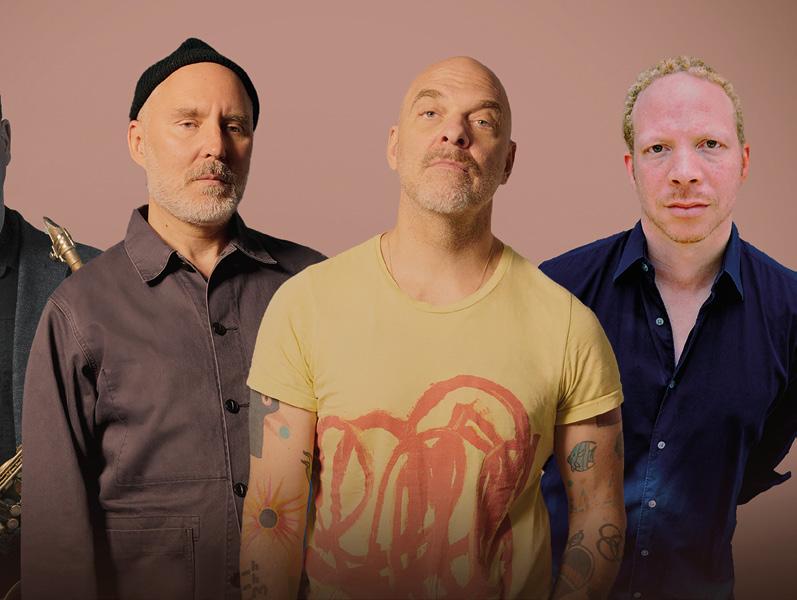
The Bad Plus: The Works
Formed in 2000, The Bad Plus is a jazz band that is exciting and popular in equal measure. In fact, it is one of the best-known jazz bands outside the jazz circuit, thanks in no small part to incredibly deft covers of pop and rock songs that everyone knows. If you’ve heard The Bad Plus’s take on Smells Like Teen Spirit (Nirvana), Karma Police (Radiohead) or Life on Mars? (David Bowie), you know what we’re talking about. For the band that started as a drum-bass-piano trio, nothing was off-limits: they embraced everything from Aphex Twin to the Bee Gees, Black Sabbath to ABBA, the Pixies to Pink Floyd, and Blondie to Yes, to show both pop-rock and jazz audiences that it’s worth their while to venture into each other’s territory. The trio went on to involve
a third genre of music in the game when they gave the jazz treatment to Stravinsky’s The Rite of Spring. All this while, their own compositions also pushed the bounds ingeniously, playfully and creatively, meaning they have now built a massive body of work that is worth exploring from multiple directions. After pianist Ethan Iverson left the band in 2017, the remaining two members enlisted a saxophonist and a guitarist in 2021 to expand to a quartet. In 2026, however, The Bad Plus announced they were finishing their journey, leaving music lovers with an oeuvre that is thankfully large enough to provide for many happy listening hours. And now there’s also this last opportunity to catch them live!
by Szabolcs Molnár
Fellow creators are often rivals, one moment admiring each other’s talent, the next being bitter about the other’s greater success. What might represent the foundation of a real, deep friendship between two artists? Is honesty essential, or is it precisely this that guarantees conflict in a relationship? We looked at the friendships of composers across the centuries to see how they might answer these questions.
Johann Sebastian Bach and Georg Philipp Telemann were not born in the same city, did not go to the same school, and were never colleagues – and there are many more external factors often leading to friendships that were absent from the two composers’ relationship. Telemann was born in Magdeburg in 1681, Bach four years later in Eisenach, some 250 km away. The two composers must have first met after 1708, when Telemann was employed by the Duke of Saxe-Eisenach and Bach found a job in Weimar. During this period, Telemann’s compositional idiom was enriched by the style and forms of Italian instrumental music, while Bach also began to study Italian music to satisfy the interest of the Duke of Weimar. These years saw Bach make copies and transcriptions not only of the Italian masters but also of Telemann’s works, some of which may have provided him with a model for his own compositions. Eisenach and Weimar lie at a distance of 80 km from each other, a proximity that allowed the two composers to pay visits to one another, and there is evidence they played music together.
It says much about the nature of their personal relationship that Bach asked Telemann to be the godfather of his son, Carl Philipp Emanuel, when he was born in 1714. Telemann was a conscientious, supportive godfather, and at the end of his life he ensured that his godson inherited his much-envied position of music director in Hamburg. Though some music historians question whether Telemann was present at the ceremony, others think Bach’s son was not speaking figuratively when he said, “Telemann raised me out of the baptismal font.” The year 1714, when Telemann
was a distinguished guest of the Weimar court, may well have been the period when the two composers met the most frequently. According to the family lore handed down to us by Carl Philipp Emanuel, “Bach often spent time with Telemann in his younger years.”
There is no documentary evidence on how their relationship evolved for the ensuing years until their career paths crossed again in 1722‒1723. As is well known, Telemann was the leading candidate of Leipzig’s city council for the vacant position of Thomaskantor (i.e. music director of the St. Thomas Choir), and he travelled to the city on several occasions, though it seems he used the interest of the people of Leipzig only to improve the terms of his contract back in Hamburg. At the time, Bach was Kapellmeister (director of music) in the court of the Prince of Anhalt-Köthen. Telemann is believed to have stopped at Köthen once, while travelling between Leipzig and Hamburg to visit his grandson, and while there, he suggested that Bach apply for the post in Leipzig. Though Bach’s path to the job was not all that straight, it is now evident that Telemann’s tip had historic consequences.
It is a little-known fact that Telemann was also a literary man, writing librettos and poems, among other things. In 1751, he commemorated his late colleague with a sonnet, which includes lines that proved prophetic: “The candle of your fame ne’er low will burn; / The pupils you have trained, and those they train in turn, / Prepare thy future crown of glory brightly glowing.” At the end of the sonnet, Telemann refers to his godson, who was serving at the Prussian royal court: “But what shall cause your true worth to be judged aright / Berlin, to us now in a worthy son is showing.”
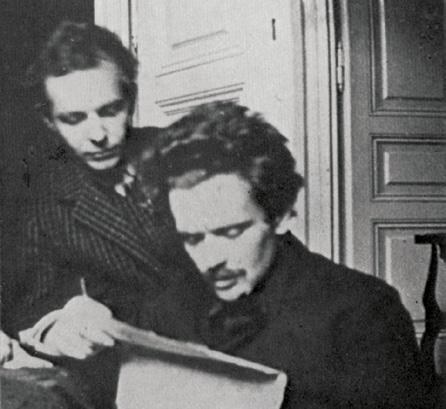
“I
ALWAYS AVOIDED COMPETING WITH HIM”: BARTÓK AND KODÁLY
Although Béla Bartók was barely older than Zoltán Kodály, they did not come into close contact during their time at the Academy of Music. After they met, Kodály, who was the younger of the two but a widely educated, very mature person with a diploma in philology, filled the role of an older brother for Bartók, introducing the latter to new developments in music and literature. In 1908, Bartók wrote in a letter to the violinist Stefi Geyer: “You got to meet the most valuable, the greatest, man I have ever known: Z[oltán] K[odály]. Did you sense that you were talking to a higher being? Did you sense the enormous superiority he had over the mob of Philistines? K[odály] is two years younger than me, yet he sees things with a wonderful sharpness.” Bartók could count on Kodály even when it came to issues of love and private matters. When Geyer broke off her relationship with Bartók, she wrote in her last letter: “I can offer you no consolation; but you have a friend. Turn to him, he may be the best person to comfort you a little. K[odály] knows us both well.”
Kodály was the one to suggest that they collect folk music, and he was more knowledgeable and experienced in the scholarly methods of research into folklore. Although their compositional styles and thinking were different, they always praised each other’s works, and as a pianist Bartók premiered several of Kodály’s compositions; indeed, he would perform his friend’s pieces to the very end of his performing career, during his American emigration. Of the shared roots and different characters of their respective music, Bartók wrote in 1921: “As a composer, Kodály is among the best today. The dual roots of his
music, just like those of mine, run back to Hungarian peasant music and new French music. But our arts, which sprang from this common ground, were completely dissimilar from the very beginning (and Kodály can be called an ‘imitator’ only in bad faith or ignorance). Some of his detractors complain that his music is less powerful, less original, etc. than mine. It is not for me to describe precisely the differences in style and content between our works. Kodály’s music may not be as ‘aggressive’; its form may be less distant from certain traditions, and what it expresses may be not so much unbridled revelries as calmer contemplations. But it is exactly this essential difference – which emerges in his music as a completely new, completely original way of musical thinking –that makes his musical message so valuable.”
It is a testament to the depth and complexity of the two composers’ friendship that Bartók – who, unlike Kodály, never taught composition – often consulted his friend on compositional matters and took his advice on a number of occasions. Kodály, for his part, was aware of how overwhelming Bartók’s talent was: “From the moment I recognized his genius, I felt it my duty to smooth his path and remove all obstacles as best I could. For the same reason, I always avoided competing with him, always tried to do something different.”
Interview by Gerda Seres
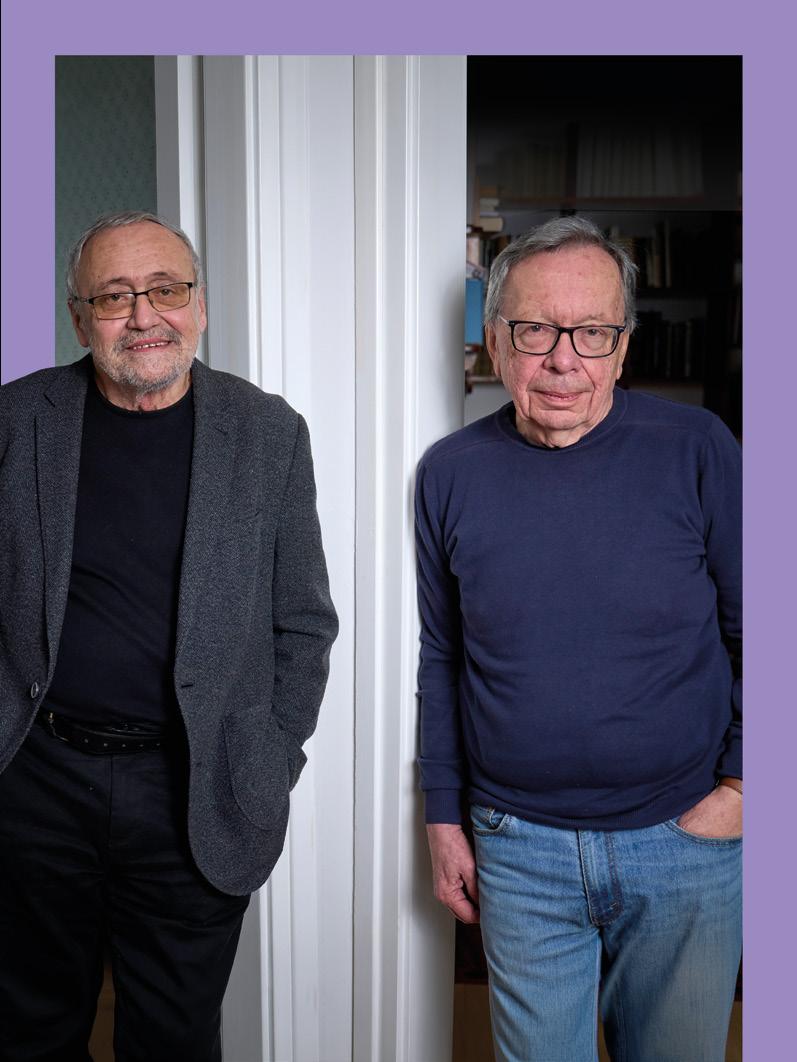
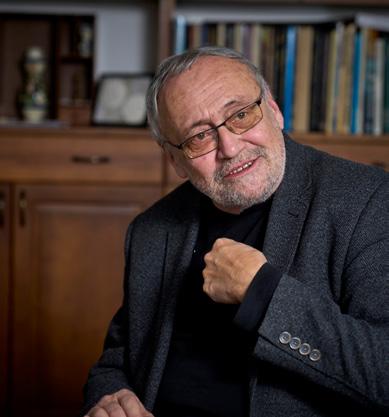
Two composers, whose professional relationship is “unconventional,” and who are also close friends. For decades, György Selmeczi and János Vajda – together with György Orbán and Miklós Csemiczky, who passed away recently – have been referred to as The Four, an association they themselves have come to accept, even though their musical languages are different in many respects. They share a house in Kisoroszi and regularly cook together, but when I ask them who is the better cook, their indignant response is that it’s like asking them who is the better composer. At this year’s Bartók Spring, their two one-act operas will be premièred on the same evening.
When you were young, you showed all your works to each other, and you continue to work together a lot. Do you remember any important advice or criticism that you’ve found helpful?
György Selmeczi: There must have been some. What connects us is a professional relationship that is completely unconventional. We recently had a Lied recital we call The Four and ritualistically hold every year. It was at this concert that I realized how different we four are. It’s undoubtedly true that our ideals connect us in a way, but stylistically and linguistically, each of us sticks to his guns, which ideally results in a style of one’s own. János Vajda: Friendship between four people is a nuanced system of relationships. The two Gyuris –Orbán and Selmeczi – bond over their Transylvanian roots, while Miklós had attachments to Upper Hungary. When we were young, we spent a lot of time together, went to workshops together, where we all jostled for the one upright piano. When we were together like that, we would fool each other – and I don’t mean that only figuratively – so we would all run our mouths, which naturally had an effect on the others.
What is that shared basis of ideals you mentioned?
J. V.: To write music you can listen to – music that brings joy not only to us, but also to others listening to it. To return to a certain kind of music took a certain kind of courage forty years ago; it did not seem comme il faut and fashionable. And it also set us apart from most of our colleagues. Of course, there were other things as well that caused these four people to

GYÖRGY
go in directions other than the mainstream, but the reasons are no longer important.
Gy. S.: All the more so because, interestingly, we’ve been proven somewhat right in the decision we made in the mid-1980s to go against the neo-avant-garde form of expression that was all but mandated by the pundits of the time. By the time we all decided, at different times, to refuse to abide by this and try to find our way back to the listeners – and more than that; try to find our way back to the performers – the world had become so extreme that even the performers were looking askance at the scores contemporary composers put in front of them. Although in the 1990s we were still considered eccentrics, the fact that we were proven right to some extent has also settled any sharp conflicts we may have had with composer colleagues.
J. V.: Our situation is different in that Gyuri Selmeczi is the only one among the four of us who is also an active performer, so he is confronted with the opinions of performers on a daily basis. If it’s not exactly an ivory tower, composers still live more secluded lives, and what they hear are usually not the performer’s first impressions, but their more sophisticated insights.
Where are the boundaries of a friendship drawn? Do you prefer to fully support each other’s ideas, or to be frank and critical when necessary, painful as it may be?
J. V.: As far as the human factor is concerned, patience, support and understanding are certainly the way to go. As for the professional side of it, our behaviour has changed a lot over the decades. And we are all different
“A self-respecting person will read Thomas Mann’s important works, but this early novel, Royal Highness, is not one of them,” says György Selmeczi.
“When later on in life I came to read it, I was enchanted. It’s hard to explain what makes you feel it’s meant for the opera stage, but I felt it straight away. It’s apparently a fairy tale, in which what interested me most was the motif of being chosen. In my operas, I usually write genre music, which can remind the listener stylistically of anything from Poulenc to Shostakovich. But the operatic tradition, which helps listeners connect what they hear to their own experiences, is essential for me.
characters. I have scores that Gyuri Orbán scribbled all over. He didn’t hold back, to put it mildly. Miklós acted similarly. I think we two are more permissive than that, and we try to see the good even in the bad.
Gy. S.: That’s right, and there is another overriding aspect as well: a kind of elegance that we insist on. If you’ve lived long enough, you will have put sufficient work into this elegance.
This was probably not the case when you were jostling by the upright piano.
Gy. S.: Something like this was at work even then. To be honest, we always had self-respect in this regard, and we refrained from tasteless or hurtful remarks.
J. V.: After Miklós died, he turned out to have reviewed a work of mine, now deservedly forgotten, and it was an utterly insightful and elegant piece of writing. It was incredibly entertaining, while it made you apoplectic. But I had to give credit where credit was due.
Do you compete with each other, however playfully? I remember you, János, citing such a motivation when you wrote your first piano concerto.
J. V.: Vanity was indeed part of it. Miklós kept saying that Orbán should write a piano concerto, and at one point I got so worked up that I took it upon myself to write one. Since I can’t play the piano, I at least took more liberties with the material.
Gy. S.: We have a photo in which János is conducting one of my pieces of film music in the once famous Lumumba Street studio. I was standing there by the György Selmeczi:
János Vajda:
“I chose Traps, Dürrenmatt’s story, partly because it was different from my earlier subjects in stylistic terms as well, and I was hoping it would move me a little away from my own clichés and stereotypes,” says János Vajda. “I think The Verdict is more continuous music, or rather more exciting instrumentally, than the previous one, although it has fewer of the stylistic games that marked my previous operas. The libretto was written by Szabolcs Várady, based on Diána Mátrai’s great dramaturgical work, and I’m convinced that it is frenetic.”

rostrum, with Orbán, who sometimes gave a hand and contributed the odd part. Such collaboration was necessary when I got into trouble with a missed deadline. Orbán, who took part in the orchestration of soundtracks as a “guest artist,” was helping me when we were recording Szerencsés Dániel (Daniel Takes a Train). The Hungarian National Philharmonic Orchestra was there and we had to start rehearsing. We thought we would have rehearsals for the strings only because I hadn’t completed the wind part. Palika Sándor, the director, was already screaming that we should get going, and as it happened, it sounded quite good even that way. The red light went on and the tape started rolling when Gyuri Orbán burst in: “I’ve written a beautiful horn counterpoint!”
Kodály said of Bartók that he always avoided competing with him, he always tried to do something different. Is that something you seek to do?
Gy. S.: No, we don’t, and, in fact, we’ve always pounced on each other’s hunting grounds with great appetite.
J. V.: To the extent of quoting each other. I have a choral work where I realized it was Orbán through and through; I wrote as much in the score. Selmeczi also told me what I had taken from him. You can absolutely do these things. How did the genre of opera become important? Earlier you said it was a chance meeting.
J. V.: For me, it was; but Gyuri grew up in the theatre, so it was easy for him. As for me, it began with a youthful commission. To exaggerate a bit, I wrote
my first opera before seeing one. So it was beginner’s luck and I fell in love with the genre. I find writing opera very, very entertaining.
Did music for the stage come to you entirely as a matter of course, Gyuri?
Gy. S.: No, it wasn’t a matter of course, and I’d say I would likely never have written an opera if it hadn’t been for János. He’s been a model for me since Mario and the Magician; I’ve had the privilege of conducting several premières of his works. He is the one I consider an opera composer, although, of course, my own inspiration was, in a sense, a matter of destiny. My father was an opera conductor, but I also had to find a way to be a valid opera composer. The courageous and open-minded programming policy of the Cluj-Napoca [Kolozsvár] Hungarian Opera played a major role in the careers of both of us – and of many of our contemporaries – by allowing these works to be staged. Back in the 1980s, I still wanted to be very unconventional, and so I did not find joy in it. I have since realized that if you’re going to write an opera, you have to acknowledge the operatic tradition.
11 April | 7 pm
by Tamás Jászay
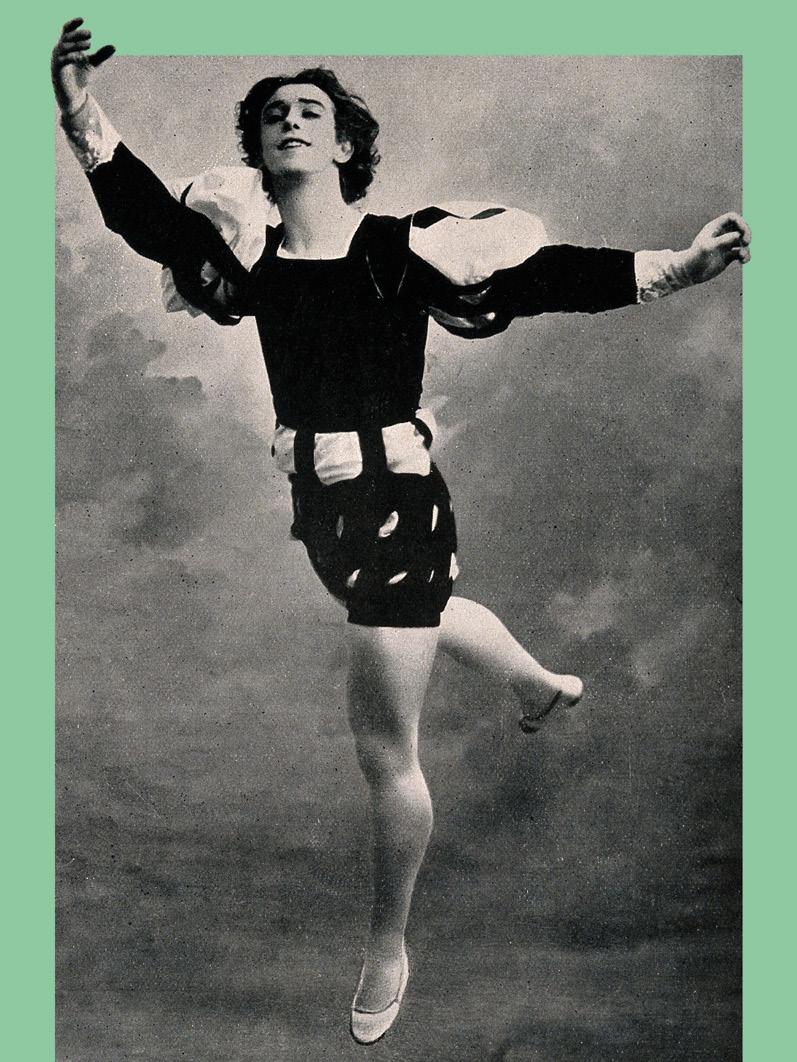
“He walked like a tiger. Instead of transferring the inactive burden from one position to another, he had some elastic relationship with weight, like an eagle does with air...” Paul Claudel was not the only one at the beginning of the 20th century to speak in superlatives about the greatest dancer of the period, Vaslav Nijinsky.
The private person, the dancer, the choreographer: three roles, but many more than three masks, constantly playing into each other, although apparently separable. Astonishingly, Vaslav Fomich Nijinsky, who died in London in 1950 at the age of sixty-one, had an active career that spanned barely a decade at the beginning of the last century. And yet, his works remain a reference and source of inspiration long after his death. While Nijinsky was the revolutionary father of modern dance, and of the genres that sprang from it, his biography and legacy hold some disturbing lessons.
Born in Kyiv to Polish ballet-dancing parents, Nijinsky’s exceptional talents were evident from an early age. Tamara Karsavina, a brilliant ballerina who later often partnered him on stage, first saw him at ballet school: “I could not believe my eyes; one boy in a leap rose far above the heads of the others and seemed to tarry in the air. ‘Who is this?’ I asked Michael Obouchoff, his master. ‘It is Nijinsky; the little devil never comes down with the music’.”
His contemporaries agreed that Nijinsky’s physique and temperament were a far cry from those of the traditional male dancer. Some people were incredulous at his performance: in her memoirs, his later wife Romola de Pulszky tells of an impresario in London who asked for Nijinsky’s shoes, “to see whether or not they had rubber soles. Many others inspected the stage for traps or other mechanical contrivances.”
In order for his mysterious stage persona to unfold in its fullness, Nijinsky had to meet a key figure in the Russian art world, Sergei Diaghilev. In one of his writings, the artistic director of the Ballets Russes, which quickly became legendary, described himself as a charlatan, a charmer and a brazen fellow, whose forte was patronage. In her memoir, Karsavina places the emphasis elsewhere: “There is no toxin of sentimentality in Diaghilev. Not only does he not regret yesterday, but all his mental attitude tends towards tomorrow.”
Everything is connected: all these qualities and traits must have attracted Nijinsky, an eccentric himself. When the brilliant dancer had to leave the Mariinsky Theatre because of the scandal caused by his costume in Giselle – which would be unlikely to raise eyebrows today – a new chapter began with the birth of Nijinsky, the choreographer.
To understand the puzzled, enthusiastic or even furious reactions to his works, it is worth recalling the words of dance historian Lívia Fuchs, who says that Nijinsky “always staged subjects for which he did not have the appropriate dance vocabulary, so he had to find and invent new forms of movement on his own.” Recollections of his rehearsals confirm that while Nijinsky did not really know what he was doing with the genre of ballet or with dancers accustomed to a very different dance language, his stubbornness and willpower helped him to overcome practical difficulties.
Based on Mallarmé’s poem and performed to music by Debussy, The Afternoon of a Faun, which premièred in Paris in 1912, became one of the most polarizing
works in dance history. Debussy was rumoured to have only asked: “Why?” Instead of a well-argued review, the next day an editorial condemned the work for being overly sexualized and representing animal eroticism, but no less an artist came to Nijinsky’s defence than the celebrated sculptor Auguste Rodin.
His next choreography, the 1913 production Jeux (Games), also adopted a framework that was surprising in the strictly regulated world of classical ballet: with their movements, young people flirting at a tennis match turned sport into a subject for dance theatre. The world première of Stravinsky’s The Rite of Spring also baffled its audience with music that many found to be merely “noise,” and with choreography by Nijinsky using a vocabulary they considered “primitive.”
It was around this time in Nijinsky’s life, which would soon be cast into darkness, that the Hungarian thread became important. Romola de Pulszky, the daughter of Emília Márkus, a celebrated actress of the time, managed to get close to the dancer and – to the surprise of his immediate entourage – even got him to marry her. This led to the end of the private and professional relationship between Nijinsky and Diaghilev.
Choreographing Till Eulenspiegel in the United States in 1916 could have offered Nijinsky a release from the oppressive burden of the First World War and his house arrest in Budapest, where he was classified as an “enemy Russian citizen,” but the reception was at best polite. As the war was nearing its end, Nijinsky’s always fragile mind broke, and he spent the last three and a half decades of his life at the gates or very depths of madness.
His diary, edited by his wife and published in several versions, is a sad and disturbing read – perhaps not even for the world to see. Published in Hungarian most recently in 1997 as Füzetek (Notebooks), this bizarre torrent of text is at best a psychological curiosity, but by no means a key to the personality of a legend of 20th-century dance. There are, of course, occasional flashes of light in the series of night-black thoughts, but you cannot shake off the feeling that you’re getting a glimpse of something you should not have seen.
Other things should be seen, however, such as the photographs taken at Nijinsky’s performances, which have intrigued historians, critics and philosophers for decades. In 1943, American poet Edwin Denby summarized his impressions: “He is never showing you himself, or an interpretation of himself. He is never vain of what he is showing you. The audience does not see him as a professional dancer, or as a professional charmer. He disappears completely, and instead there is an imaginary being in his place. Like a classic artist, he remains detached, unseen, unmoved, uninterested.”
2 and 3 April | 7 pm
BARTÓK
MEMORIAL HOUSE
29 Csalán Road
10 Kavics Street
4 Szilágyi Dezső Square
by Kinga Tittel
PESTI VIGADÓ 1 Vigadó Square
2 Minerva Street
Béla Bartók arrived in Budapest in 1899 as a student at the Academy of Music. While he studied, he rented accommodation mostly in the 7th District, but barely stayed anywhere for more than a few months. Beyond personal and family life, the home was also a place for creative work, but Bartók’s extremely sensitive hearing made it difficult for him to live in noisy environments. We invite you on a walk, in the footsteps of Bartók.
17 Teréz Boulevard
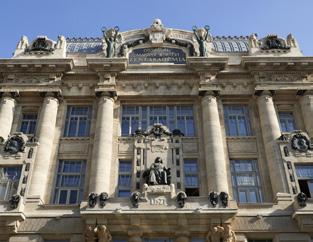
LISZT ACADEMY 8 Liszt Ferenc Square
Bartók moved into the first flat he could call his own in 1907, on the 4th floor of a tenement house on Teréz Boulevard. It was close to the Academy of Music and the Opera, locations that were important to him, and just a few stops from the Vigadó concert hall, where he had given his first solo concert in 1905.
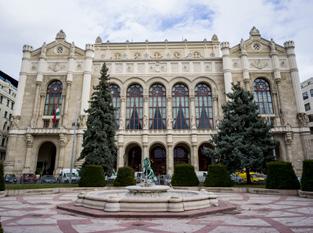
In 1909, Bartók married Márta Ziegler, and their son Béla was born in 1910. In 1911, they moved out of the Teréz Boulevard flat because it had proved unsuitable for work. Bartók’s homes were always his studios, in all his capacities as a composer, concert pianist and ethnomusicologist. His legendarily sensitive hearing often caused him great suffering: he was disturbed by sounds and rhythms coming from outside.
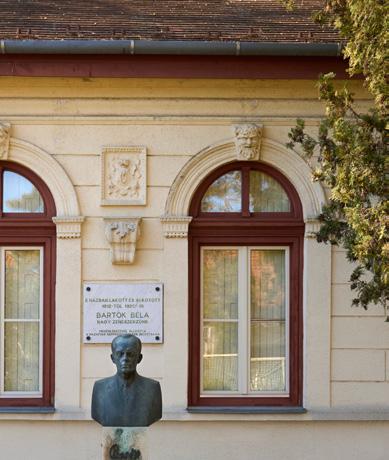
The family decided to move out of the heart of the city to a village then called Rákoskeresztúr-nyaraló, which later became part of Budapest as Rákoshegy. They lived there until 1920, and although the four-room house had no plumbing, electricity or gas, the composer could work undisturbed. This was where Béla Bartók Jr. was a small child, and where their friend Zoltán Kodály, also an excellent amateur photographer, visited and photographed them. The building is now the Bartók House of Music in Rákoshegy.
The Joy of Discovery, our series related to the events of the Bartók Spring, also explores Bartók’s life in Budapest.
Scan the QR code to watch the videos.

Photos: Gábor Valuska
The Bartóks suffered as much as others from the shortage of food and goods that marked the period after the First World War, when candles, paraffin and fuel were hard to come by. The train service between Budapest and Rákoshegy also became unreliable, and when a banker named József Lukács made an offer of a residence in the city, they accepted it. Between 1920 and 1922, they lived on Gellért Hill, in Lukács’s villa on Gyopár Street, enjoying the benefits of a green environment and fresh air, as well as the proximity of the city centre. (The building was completely destroyed during the siege of Budapest, and only the gate and part of the fence of the villa have been restored.)
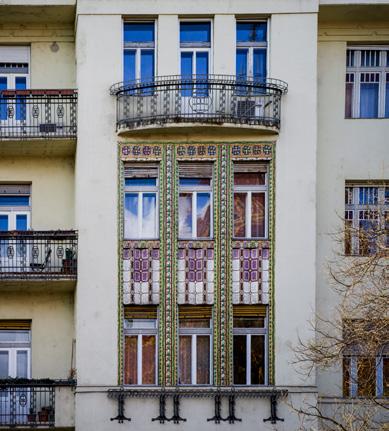
In 1922, an inheritance allowed the family to move into a home of their own again, in the Art Nouveau, pre-modernist Förster House at 4 Szilágyi Dezső Square. It had such conveniences, unique for its time prior to the Second World War, as separate lifts for residents and servants, a central vacuum cleaner and an entryphone. This period also saw great changes in Bartók’s personal life: in 1923, he divorced Márta Ziegler (with whom he continued to maintain an amicable relationship) and the same year married Ditta Pásztory, a student of his who was 22 years his junior. They were living in this flat when their son Péter Bartók was born in 1924.
The mosaics on the façade of the building were made in the workshop of Miksa Róth
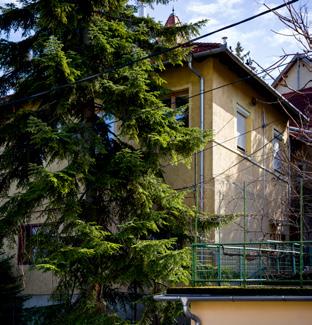
By 1928, the noise had made a quiet suburb desirable again, and the Bartóks moved to the eastern slope of Rózsadomb (Rose Hill), to the house at 10 Kavics Street.
“The tram stop is a five-minute walk, there is a great villa road leading almost to the house, we can see the Danube from Újpest to near Parliament, and beyond Pest, you can see almost as far as Gödöllő,” Bartók wrote to his mother on 4 May 1928. “The air is like in a village – calves moo, crickets chirp, sometimes a donkey brays. I’m so glad we have got out of that nasty flat,” he added on 4 June.
However, their initial peace was short-lived because Bartók was disturbed by the footsteps of their upstairs neighbours, and when the noise increased, they moved on.
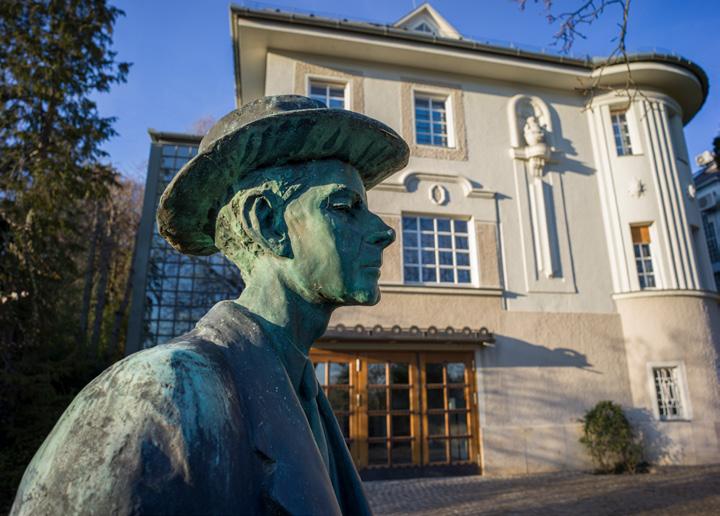
29 Csalán Road
In 1932, they found a multi-storey villa on Csalán Road, where they would live for eight years, until their emigration. The house met all their needs, including acoustics, and became a real family home for the artist couple and their children (both of whom lived with them). The ground floor was occupied by the caretaker, while the five rooms upstairs provided enough room for the four members of the family. There were two pianos in the house, each in its own room, so the couple could practise separately – or together, when they had joint concerts. Bartók’s study even had a padded door shielding him from outside noise, where the quiet allowed him to compose a number of masterpieces in the 1930s. The villa is now the Bartók Memorial House, a place of remembrance that holds some of the composer’s personal effects and regularly evokes his spirit through his music.
Imre Varga’s full-length statue of Bartók (1981) stands in the garden. A copy of it can be found in Paris and another in London.
Bartók, whose wife was of Jewish heritage, as were many of his friends and supporters, was averse to the country’s descent into fascism in the 1930s. In 1934, he asked to be relieved of his duties at the Academy of Music, and became a member of the Hungarian Academy of Sciences, devoting his time to scholarly work on the classification of folk music. The idea of emigrating with his family to the United States had been maturing for some time, and when his beloved mother died in 1939, he felt there was nothing left to keep him back.
”IF HE CANNOT FIND A FOOTHOLD IN HIS PRESENT, HE FALLS BACK ON WHAT HE HAS LIVED THROUGH”
by Zsuzsa Borbély
Sindbad is the mariner who has sailed to diamond-studded islands, the lands of giant birds and cannibal kings. A relative of Odysseus and an ancestor of Gulliver, he is the adventurous merchant of One Thousand and One Nights. But thanks to Gyula Krúdy and Zoltán Huszárik, his name also means something completely different to Hungarians.
A Thousand and One Tales – In as Many Versions King Shahryār, having been cuckolded, resolves to have his revenge on all the women in his kingdom. Every day he marries a virgin, who is then executed the next morning before she can deceive him. One of them, however, is a well-read girl who knows many stories; Scheherazade spins her yarns so cleverly that the king’s curiosity gets the better of his bloodlust, and he spares her morning after morning to be able to hear the end of the story from the previous night. Thus Scheherazade invented the cliffhanger. Her trick in keeping the king’s interest is the same as that used by the makers of Netflix series: she stops telling her story at the most exciting part, leaving the listener on tenterhooks for the continuation.
Thus begins the book of One Thousand and One Nights. This collection of stories from the mysterious East is so enigmatic that it does not have a single, definitive text. It has no tradition of manuscripts, and no early, reliable texts. The genesis of One Thousand and One Nights, as well as the story of its translations, is as eventful as the tales it contains.
Spread by oral tradition, the billowing collection includes tales of Mesopotamian, Greek, Persian, Arabic, Hebraic and Indian origin. Classicists of Arabic literature looked down on it because its language was not classical Arabic: it was full of Turkish and Persian loan words and its style was more casual. But European readers soon discovered the exotic creation.
Though the seven voyages of Sindbad were ”late” additions to the book of One Thousand and One Nights, first appearing in the 14th century (as did the bestknown tales, those of Aladdin and Ali Baba), they were the reason the other stories came to be known to European readers. French orientalist and archaeologist Antoine Galland came across a manuscript of The Tale of Sindbad the Sailor in the 1690s, in Constantinople. He published a French translation of the text in 1701, and when it became clear to him that it was part of a larger collection, he translated the rest, publishing the tales of One Thousand and One Nights in 12 volumes. He also significantly reworked it in the style of the French court of Louis XIV, leaving critics to this day debating whether he enhanced or harmed the original.
One could say that Galland’s licence with the source was in keeping with the workings of oral tradition –the original medium. But in light of today’s practice of honouring the source text, it may seem strange that the first translations augmented or shortened the tales, changed their endings, and were not particularly choosy about the authenticity of their multiple sources. Even publishers tampered with the texts.
Early readers already debated whether the work was recommended for children or adults. For young audiences, versions were made without the more violent or risqué parts, while other, sensation-seeking publishers went to the other extreme and spiced up their adult editions with pornographic details.
The story of the Hungarian translation of One Thousand and One Nights is also nebulous. Though the first volume appeared under the name of Mihály Vörösmarty, his authorship is hotly debated, with many believing the publisher used his name to increase its appeal. The most complete Hungarian translation came out in 1999; its translator Csilla Prileszky had worked on it for fifteen years, but did not live to see the publication of the seven volumes. The collection includes notes by Róbert Simon, whose foreword on the work and the history of its European reception this article draws on.annak európai recepciójáról írt előszava teszi teljessé, ez az írás is erre támaszkodik.
Sindbad, the Adrenalin Junkie Scheherazade starts Sindbad’s adventures on the 536th night. A poor porter, resting outside a palace, complains to Allah about the injustice of the world, which gives wealth to some and misery to others. The lord of the palace overhears him and invites him in so he can tell him about his own perilous adventures over seven seas, at the end of which he returned rich.
Sindbad is driven by a thirst for adventure and curiosity, with the wealth he acquires along the way being more of a by-product of the events. It is not riches he is chasing: after the first few voyages, he lives in comfort and free of care, yet he cannot resist the call of the sea. Today, we would call him an adrenaline junkie. All seven of his journeys are filled with horrors, with most of his companions perishing, yet he sets off again and again. The things that save him on his travels are his perseverance, ingenuity and luck.
Once he lands on an island that turns out to be a whale. He encounters birds with eggs the size of a house; he is almost served to a cannibal king; and he is buried alive. He often owes his life merely to chance or divine providence.
Sindbad is a cousin of Odysseus, of Swift’s Gulliver – or even of Tolkien’s hobbit. Which is no coincidence: elements of Homer’s epic can be found in Sindbad’s journeys, which in turn inform many of Gulliver’s adventures. Among writers and artists of the 18th and 19th centuries besides Swift, we also know that Voltaire, Goethe, Montesquieu, Pope and Laurence Sterne were greatly impressed by One Thousand and One Nights.
Though Sindbad was not modelled on a real person, his adventures reflect the reality of the time when they were invented. Arab and Muslim sailors of the Abbasid Caliphate reached distant corners of the world, bringing wealth to the empire with their trade. The new routes and goods discovered by the traders are echoed in Sindbad’s voyages.
“The tales incorporate fundamental information about the time in which they were created, a wealth of useful knowledge about human life and possible solutions to existential problems,” wrote fairy tale researcher Ildikó Boldizsár in her review of the new Hungarian translation in Élet és Irodalom. “Whether in symbolic form or expressly spelled out, there is a set of rules in every tale that can be used as a moral guide through the trials and tribulations of life.”
Sindbad’s Journey into Nostalgia
For us, Hungarians, Sindbad is not only the sailor roaming uncharted waters, but also the lyrical hero of Gyula Krúdy’s stories, an adventurer of the past and his own memories. “The Sindbad stories have brought me great enemies, unexpected readers. I came to know a great many pale, hateful faces,” said Krúdy, who found real recognition with the collection of short stories he published in 1911. Like his foreign colleagues, he was deeply impressed by the world of One Thousand and One Nights. What fascinated him was the restlessness of the character; however, his version revisits his own past, rather than the lands of exotic spices, exploring his memories, the women he loved, the amorous adventures he once had.
It was this mood, the overarching intent of the author, that Zoltán Huszárik sought to recreate with his filmic adaptation in 1971, rather than faithfully following Krúdy’s text.
”If it portrays an ephemeral world of nostalgia, Krúdy’s work also exemplifies a behaviour that persists to this day,” Huszárik told Filmvilág in 1966, when already interested in adapting Krúdy’s short stories. “The loneliness of the individual is an essential experience for Sindbad, who is nonetheless more humane than the lonely heroes of Western art because, rather than conserving this experience, he is always on the lookout, and takes action, fights against it; if he cannot find a foothold in his present, he falls back on what he has lived through. Sindbad is a positive figure because he cannot live in loneliness, without others.”
12 April | 7 pm

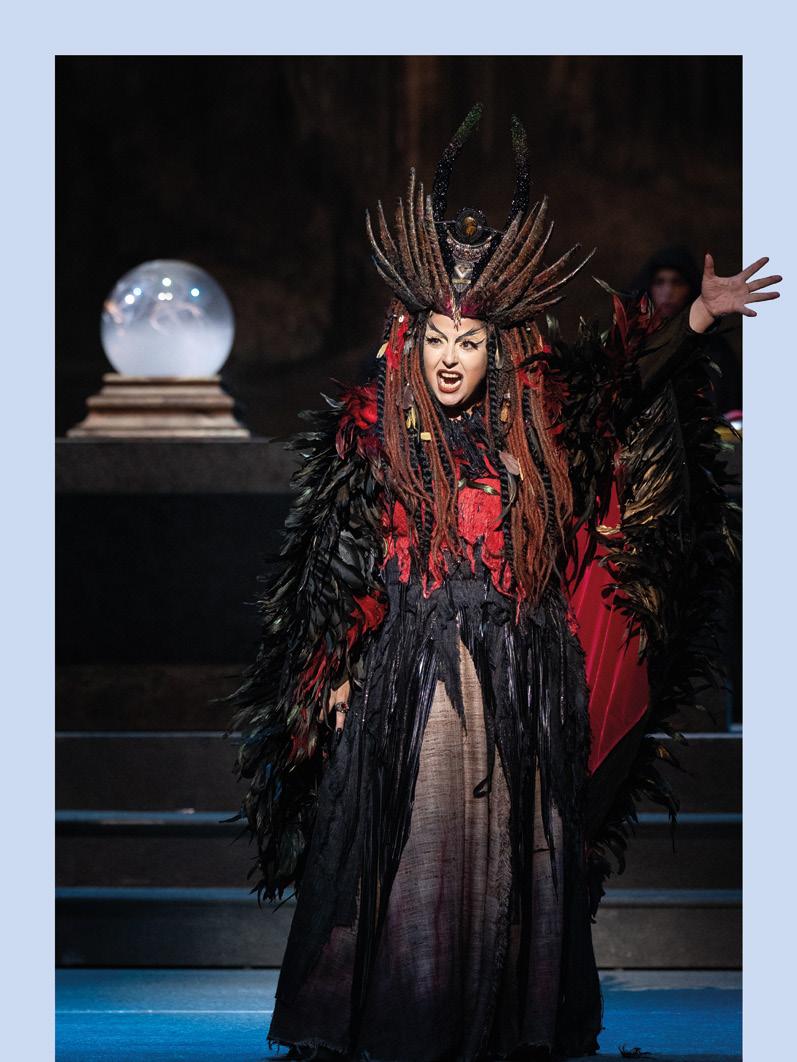
by Alexandra Csepi
At this year’s Bartók Spring, Sindbad, the well-known hero of Arabic culture and sailor of the seas of the imagination, casts his anchor on the stage of Müpa Budapest. A joint production of Oman’s Royal Opera House Muscat and Müpa Budapest provides an opportunity for dialogue between Eastern and Western cultures, which informs both the music and the visuals of the opera. Hisham Gabr’s music, which has Romantic inspirations but draws on Arabic traditions, together with Rita Velich’s costumes, treading the line between fantasy and tradition, present the worlds of East and West in a harmonious unity. Packed with fabulous elements and action, the production is directed by Csaba Káel.
This is not the first time composer Hisham Gabr has undertaken to build bridges between different cultures. He describes the character of Sindbad, whom he himself suggested as the hero of the first Arabic-language grand opera, as perfect for the purpose.
“Sindbad is a legendary figure: he is adventurous, brave, just and wise. He has all the emotional and human qualities that allow a composer to show their abilities,” says Gabr, who notes that while he enjoyed complete creative freedom, there were compositional challenges: “Arabic is very distinctive in that it requires more musical and tonal subtlety than other languages.” Accordingly, he took special care to ensure that the text sounded natural and clear.
The music of the piece is a unique blend of the late Romantic style and traditional Arabic elements, as Gabr wanted to appeal to both Arab and Western audiences. ”If I had composed in a contemporary style, I could have lost the Arab audience – and maybe even some of the Western listeners.” To avoid this, he found a delicate balance between musical worlds, so that the message of the piece can reach its audience on any stage on Earth: “What I hope, above all, is that Hungarian audiences will realize that people in different parts of the world are not all that different. We love the same way, fear the same things, as anyone else in the world. On the other hand, I hope that Hungarian audiences will find the musical language I used in the opera engaging – just as it managed to engage the Hungarian musicians as we worked.”
Along with its sound, this special opera will also transport its viewer to distant lands with its visuals. Sindbad’s adventures unfold not only in the plot, but also in the visual aesthetics: the costumes at once evoke authentic Omani dress and open the door to
the world of tales and the imagination. Rita Velich’s costume designs bear witness to a special artistic and cultural sensitivity, while the task also took her back to her childhood reading.
“As a child, I often imagined I was Scheherazade,” she recalls. While the fairytale world allowed her imagination to soar, the traditional costumes required historical fidelity. “There weren’t many original sources. There is barely any documentary evidence of authentic costumes. On occasion, even the Omani experts would argue over details. There were parts where I had to observe the tradition very closely, whereas elsewhere I had complete liberty.” This duality offered particularly exciting opportunities. In the episode set on the enchanted island, where the dancers of the Ballet Company of Győr portray carnivorous plants with expressive movements, the designer’s imagination was unfettered. “I used feathers and rich colours; I created a special visual world.”
One of Velich’s favourite costumes, straddling the border between the traditional and the fabulous, is that of the sorceress: “It really reflects my character as a designer. And though I can’t fully identify with the character in the story, I feel that if I could be one of the characters for a day, it would be her.”
Sindbad, the Omani Sailor had a very successful première at the Royal Opera House in Oman, and the Budapest performance will be the next stage on its international cultural adventure. It is a production in which the music and costumes are not just decorative elements, but inseparable parts: they tell a story, evoking both past and present, the principles of East and West – sometimes with sound, sometimes with colour. They are proof that art – whether music or visual art –can be a common language that connects worlds.
12 April | 7 pm HISHAM GABR: SINDBAD, THE OMANI SAILOR – HUNGARIAN PREMIÈRE
by Zoltán Farkas
“Wagner had solved his task so perfectly [...] that it seemed the only possibility left was to imitate him slavishly, as it were, and barely to get any inspiration from him for further growth,” Bartók said in his 1936 inaugural speech at the Hungarian Academy of Sciences. Since he himself “solved his task perfectly,” one might wonder whether the followers of Bartók’s style are not mere epigones. Though there have indeed been a number of works by Hungarian composers that are pale imitations of Bartók’s art, the overall picture is thankfully more nuanced. Bartók epigones abounded in Hungary in the 1960s and 1970s, because in the 1950s composing in Bartók’s style was a bold and progressive act. András Mihály, for instance, played a fairly ambivalent role in the reception of Bartók. In the early 1950s, during the infamous “Bartók Trial,” Mihály was at the forefront of the effort to divide Bartók’s oeuvre, with the most radical works branded as “decadent compositions born under bourgeois influence.”
A large number of his works were banned, including String Quartets No. 3, 4 and 5, Piano Concertos No. 1 and 2, two violin and piano sonatas and The Miraculous Mandarin. These pieces were not broadcast on radio and could not be included in concert programmes. At the same time, Mihály’s own Cello Concerto, which he wrote in 1953 (the year of Stalin’s death), could hardly have come into being without the magical orchestral palette of Bartók’s Piano Concerto No. 3
Sándor Veress (1907−1992), one of the most prominent members of the generation of composers who came after Bartók and who knew him personally, mourned his older colleague with Threnos, a profoundly moving work composed in the year of his death. Endre Szervánszky (1911–1977), a contemporary of Veress, considered Bartók a compass for life not only
in musical, but in moral and ethical terms. Musically, the influence of Bartók’s works is most evident in his third creative period. As the critic György Kroó said of Szervánszky’s Concerto in Memory of Attila József and String Quartet No. 2: “This is the first time that the music of his successors has continued Bartók’s lonely, midnight voice and the death music of the Mandarin.” Nor could the Bear Dance movement of the Concerto in Memory of Attila József have been written without Bartók’s models. While Bartók’s Bear Dance inspired József to write a poem of the same title, Szervánszky in turn paid tribute to the poem with a scherzo movement in Bartók’s style.
Of the foreign composers inspired by Bartók, Witold Lutosławski was the most distinguished. His Musique funèbre (Funeral Music in Memory of Béla Bartók), written for string orchestra in 1958, is the most profound funeral music ever composed in Bartók’s honour. Its gradually building string sonorities evoke both the tragic, splendid tone of Bartók’s Music for Strings, Percussion and Celesta and the slow movement of Divertimento
In September 1945, two young men were waiting for their entrance exam in the corridor of the Academy of Music in Budapest: György Ligeti and György Kurtág. Both had crossed the then still closed border between Romania and Hungary illegally, so that they could study with Bartók in the Hungarian capital. They were not alone in their hope that Bartók would soon return home, but by the end of September the Hungarian music scene was shocked by the news of his death. Even without meeting their model personally, Ligeti and Kurtág followed Bartók’s path. Ligeti’s Musica ricercata, a piano cycle that starts with a “clean slate” and builds its own world note by note,
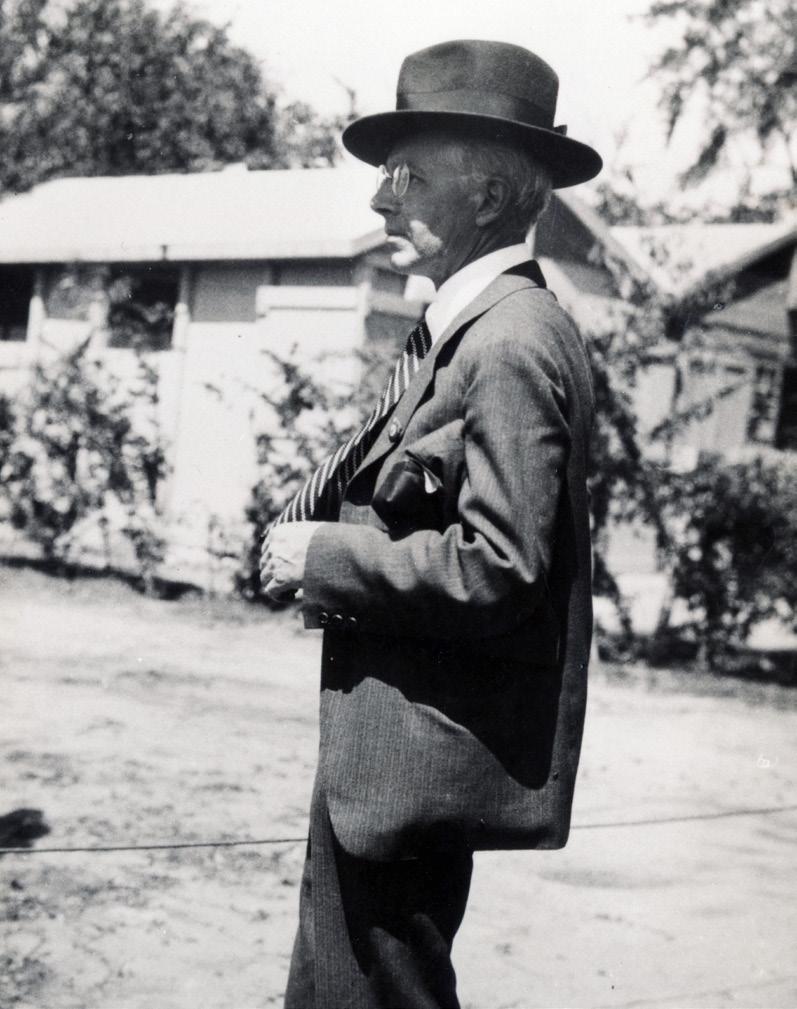
PÉTER EÖTVÖS, GYÖRGY KURTÁG AND GYÖRGY LIGETI IN SZOMBATHELY, 1990
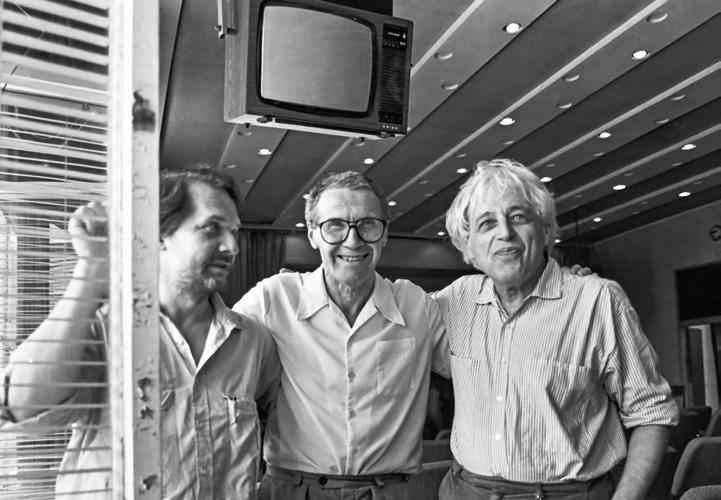
contains many Bartókian traits and mourns the Master in a moving homage. Even more radical than the piano cycle, Ligeti’s String Quartet No. 1 (Métamorphoses nocturnes) could well be regarded as Bartók’s seventh quartet. Bartók’s musical language permeates its style and sonic structure deeply, though Ligeti grows his own idiom on this fertile soil. Bartók’s likeness often appears in Ligeti’s oeuvre – in the Hungarian harpsichord pieces, the Piano Concerto and the Violin Concerto – but he never resorts to imitation.
Bartók’s influence is far more hidden in the music of Kurtág, whose words nonetheless provide this article its title: “Bartók is my mother tongue...” For Kurtág, Bartók became as constant a reference point as his mother tongue or the melodies he learned from his mother. The tender, lyrical and supple Klárisok (Beads), a youthful chorus written to a poem by Attila József, sounds like one of Bartók’s 27 Two- and ThreePart Choruses. At the turn of the 1940s and 1950s, Kurtág was the only accompanist who could play the orchestral parts of Bartók’s Violin Concerto, and often did so in the company of Péter Szervánszky, the composer Endre’s violinist brother. Lacking Ligeti’s extensive experience in collecting, Kurtág discovered folk music partly through Bartók. However, Romanian folk music, in particular the tradition of the colindă, was a childhood experience. Colindă-Baladă, a major late work with Romanian lyrics, is based on the melody and
lyrics of a colindă that Bartók had collected. It is like a continuation of the latter’s Cantata profana
Often, Ernő Lendvai’s analyses of Bartók and his theory of the axis system proved as stimulating for composers as the music of Bartók itself. Péter Eötvös is a case in point. He was seventeen when he composed Kosmos, a piano piece inspired by Gagarin’s space journey, and it was peppered with Bartók’s musical expressions – as catalogued by Lendvai. CAP-KO is a concerto he wrote for Bartók’s 125th birthday.
Neo-avant-garde composers like Zoltán Jeney also remained conscious of Bartók’s example. Mere mortals will not hear it, but it is a fact that the structure of his Thousand Years ‒ Quodlibet, a piece of tape music created for the Hungarian pavilion at the Seville Expo, is based on the twelve-note melody of Bartók’s Violin Concerto. Of the younger generation of Hungarian composers, Péter Tornyai maintains the closest and most consistent association with Bartók’s art. In his Initials, the composer, who is also active as a quartet player, unfolds his own voice through quotes from all six of Bartók’s string quartets, while in The Seventh, another work for string quartet, he combines Bartók’s notes for a planned seventh quartet with Attila József’s poem of the same title. Thus Bartók and József again served as joint inspiration for an exciting new work. How did Franz Kafka put it? “The good walk in step.”


Evi Filippou & Robert Lucaciu: Love at Last Sight


Dés András Quartet: Decisions We Make
Interview by Marcell Németh
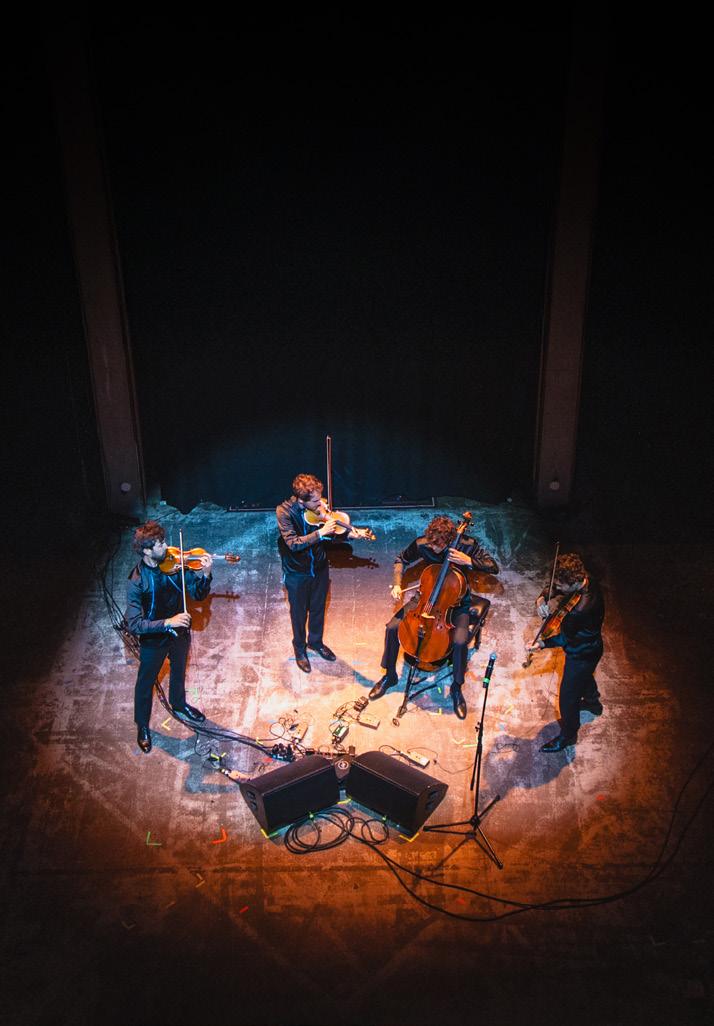
Don’t be surprised if you run into the think tanks of classical and contemporary music in the city centre in April, because after Berlin, in 2026 Budapest will be hosting Classical:NEXT, one of the most important professional events on the European classical music scene.
For three days, Millenáris and the Budapest Music Center (BMC) will host forward-thinking productions, lectures on the future of classical music and a professional expo. Hungarians again featured on the eight-member jury of Classical:NEXT in the persons of composer Samu Gryllus and Dávid Zsoldos, founding director of Papageno. We asked them how the performers and speakers were selected from the large number of applicants.
This, of course, is not the first time that Hungarians have been invited to sit on the jury of Classical:NEXT. ”If the location was one reason why we were invited, the other is that Hungary is an integral part of the European classical music scene,” says Gryllus, who also helped curate the musical segment of the programme. “We had some three hundred entries for concert hall performances, and about fifty projects for a smaller hall, like a jazz club. We were also at liberty to transfer productions between categories.” The time available is a very important criterion: each production has half an hour on stage. “The order of events in classical music is very much determined by the duration of concerts, which is usually one and a half to two hours, whereas a tighter structure is much more in keeping with the spirit of Classical:NEXT,” explains the composer. In this way, at Classical:NEXT, the usual length of a traditional concert can accommodate the presentation of three or four projects, as well as time for networking.
Since its inception, Classical:NEXT has been exploring new possibilities for the genre in a transparent way, so applicants are aware of the jury’s guidelines. “Supporting and including diverse creative communities from underrepresented groups, as well as those with different social, cultural and gender identities, was an important part of our work. Thanks to its cultural background, its ‘elitist’ past, classical music has a long ‘criminal record’.” As distant as the colonial past of Western Europe may seem, the burden of this legacy is still evident in how concert hall programmes are structured. “I know a lot of East Asian musicians who play Paganini or Beethoven brilliantly, but have little knowledge of their home traditions. A European composer from centuries ago will hardly bring us closer to
understanding indigenous classical music, especially when you are interested in its original form rather than a version adapted to the tastes of Western audiences.”
Art music was once kept alive by aristocracies around the world; the princely court of the Esterházys was as much a patron of the genre as the Maharajas in India. “With the democratization of the world, classical music also entered the market,” Gryllus points out. “We were looking for productions that could offer something new and were somehow connected to the past of concert hall music. In the words of Ferenc Kiss, a composer of folk and world music who died two years ago, the important thing is not to preserve tradition but to feel it.”
The jury also sought applications that questioned the immutability of the “rituals” of classical music. “We gave preference to productions that feature other genres or emphasize performance without simplifying it into a sensationalist spectacle,” explains Gryllus. Some applications fell into noticeably distinct categories, such as productions with clear folk influences or those presenting the classical music repertoire in new ways. “Classical music now has its own singer-songwriters, who perform their own compositions besides the classics such as Lieder by Schubert or Wolf.”
And what does the jury think about the current blockbusters of the genre, the representatives of “waiting-room music” or classical easy listening? “Music without contrasts and risks – which is when the audience leaves in the same state of mind as when they arrived – did not pass muster. In this respect, we are ‘cultural gatekeepers’ of a kind,” explains Gryllus, who compares Classical:NEXT to haute couture fashion shows. “What you see on the catwalk may not appear on the street, but may trickle down in some other form. We wanted to showcase these new trends.”
“My first impression? The staggering excess of applications,” says Dávid Zsoldos of his experience of delving into the proposals for professional lectures and presentations. The jury in the project pitching section made an important decision to set a quick pace for the series of presentations. ”We did away with the 90-minute format, but since we were able
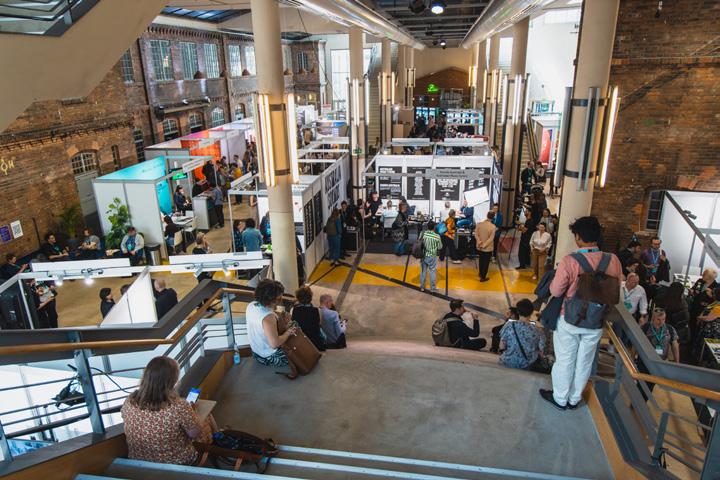
to bring together experts in similar subjects, we could often transform several individual presentation proposals into a panel discussion with some interesting topics.” These topics include new digital solutions, sustainability and audience building.
According to Papageno’s director, the standout feature that distinguishes Classical:NEXT from other music industry events of its calibre is its conference section, where the key issues and challenges facing the classical music industry today are discussed most extensively. The exhibitors, some fifty in all, include music export agencies and professional organizations, publishers and educational institutions – mostly from Europe, but also from other parts of the world, from South America to East Asia.
Zsoldos thinks it was timely to bring the conference to Budapest now, as the industry has taken note of the dynamic development of the East-Central European region. Last year a new concert hall was inaugurated in Cluj-Napoca, and when the new home of the Sinfonia Varsovia opens in the Polish capital in the near future, it will be the largest-capacity concert hall in a country with one of the largest economies in the European Union. “The reputation of East-Central European music, including that of Hungary, is good not only at home but internationally as well. Behind the reputation lies centuries of tradition
and the achievements of individuals and collectives,” Zsoldos says.
Zsoldos believes the conference will give voice to almost all important areas of classical music. If the growing demand to be visually entertained is an acute challenge, so is the underutilization of digital platforms because music – unlike the film industry – does not currently have a sustainable model in the digital ecosystem. “We can never stop looking for new formats, and the search can be the subject of deep discussions because, for every good idea, there are two dozen that don’t cut the mustard. Not to mention that a good method cannot be applied everywhere, because Swedish audiences won’t necessarily buy into the same things as their Hungarian counterparts,” elaborates Zsoldos, who adds in conclusion that he expects the exhibitors and presentations to make for a more varied and stronger programme in Budapest than at last year’s Classical:NEXT in Berlin.
8–10 April


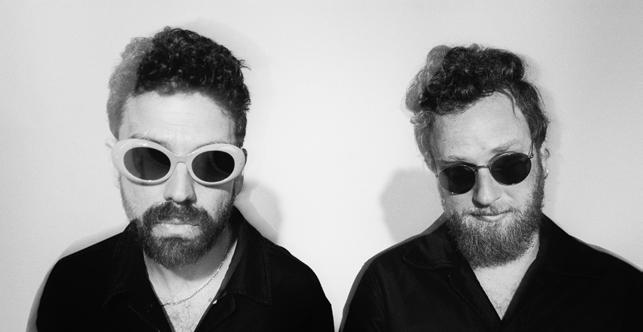
Red Axes, the Tel Aviv dance-rock duo, have taken an unbeaten path to the major record labels, to creating their own festival and presenting successful live concerts. Dori Sadovnik and Niv Arzi first played together in another psychedelic rock band, which took them as far as Amsterdam with their debut album in 2006. But they parted ways at this point, and immersed themselves in electronic music to build their individual careers, only to emerge together again in 2010 as Red Axes. Eclectic electronica, guitar-heavy post-punk and club music rendezvous in their songs, tech meets prog house, and disco is melded with folktronica. They have released songs on such labels as
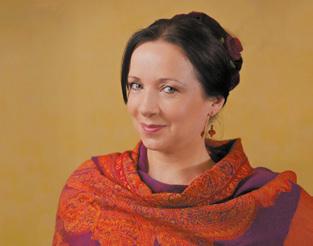
4 April | 7.30 pm
Pesti Vigadó – Ceremonial Hall
MÁRTA SEBESTYÉN
| JUDIT ANDREJSZKI
“On the loud day of Easter…”
Permanent Vacation, Dark Entries and Hivern Discs, and their sound keeps evolving, thanks in no small part to their own globe-trotting jamboree, the Garzen Festival. Instead of a DJ set or a live duo, they now bring an entire band to the Bartók Spring, promising to put everyone inside the Akvárium Club under a pulsating hypnotic spell.
11 April | 8 pm Akvárium Club
On Holy Saturday, Márta Sebestyén and Judit Andrejszki will give an Easter concert in the Ceremonial Hall of the Pesti Vigadó. Sebestyén, winner of the Kossuth and UNESCO Prizes, is a seminal figure in Hungarian folk music, while Andrejszki, the Liszt Prize-winning singer and harpsichordist, is a committed ambassador of early music. The two artists have been collaborating for nearly twenty years to bring to light the hidden connections between folk music and early music. This time, they evoke the various religious rituals associated with Easter and the colourful and varied folk customs of different regions, revealing their contexts and interconnectedness. The programme is built around the sacred nature of the holiday, and the accompanists are excellent performers of folk and early music.
Photo: Lili Chripkó

For its 2026 edition, Budapest Ritmo, one of Central Europe’s largest festivals of world music, will take up residence in the House of Music Hungary. Previously during the festival, the venue has hosted conferences that allow musicians, experts and others interested to network and expand their knowledge of the industry, as well as free showcase concerts highlighting new talent from Hungary and the region; now all five storeys of the building will be given over to a concert relay of some of the best world music has to
9–11 April House of Music Hungary
BUDAPEST RITMO
offer. The Serbian band Naked joins forces with the new Folk Trio of Kossuth Prize and WOMEX Awardwinning Mónika Lakatos; Ko Shin Moon is an electronic duo hailing from Paris; while Grupo Compay Segundo, who preserve the heritage of the legendary artist, come from Cuba. While the line-up is not yet complete, one thing is already certain: Ritmo will again be a festival of new experiences and encounters, new connections between people and different kinds of music.
Launched 15 years ago, the Margó Literary Festival and Book Fair has for some time now had spring, summer and autumn editions – each with a different emphasis, atmosphere and format. The 2026 Spring Margó Literary Festival will be held between 9 and 11 April, at the Kristály Színtér cultural and events centre on Margaret Island, with talks, book launches and events in the sister arts, mainly music. The festival, whose slogan is “You Must Read,” turns the spotlight on the prose of László Krasznahorkai, recent winner of the Nobel Prize in Literature, as well as on the oeuvres of the 80-year-old Géza Bereményi. Péter Bognár, Renátó Fehér, István Pion, Ádám Rényi, Rita Halász, Krisztián Szűcs, Anna Terék and Lili Hanna Seres will present their new books, while Ad Lib, the writers’ storytelling show, will make a return with anecdotes about writer’s block. The musical programme will include songs with lyrics by Bereményi, and the closing event will feature poets, slam artists, rappers and singer-songwriters.
9–11 April
Kristály Színtér SPRING MARGÓ LITERARY FESTIVAL

Black Mirror – The Long Shadow of the Future is the Ludwig Museum’s next major exhibition, opening on 8 April 2026 as part of Bartók Spring. Drawing mainly, but not exclusively, on the collection of the Museum of Contemporary Art, it presents contemporary creators’ dystopian artistic hypotheses about the future. With thought experiments by Hungarian artists and a few guests, the display looks at the social, environmental, political, economic, scientific or technological problems that are explored by the visual arts in some imagined future or the present, itself interpreted as a materialization of some past dystopia. Black mirrors were originally a means of divination, offering the user access to secret knowledge
and clairvoyance. Today, besides the popular TV series of the same name, the term is used in technology, meaning the “frozen” or dysfunctional screens of digital devices; contrary to the original sense of the expression, these black mirrors show us distorted images of our time.
8 April | 10 am Ludwig Museum – Museum of Contemporary Art BLACK MIRROR. THE LONG SHADOW OF THE FUTURE

11 April | 7.30 pm
Budapest Music Center – Concert Hall
HOMMAGE À TALLÉR ZSÓFIA
Closing concert of the 4th Zsófia
Tallér Contemporary International Composition Competition
Zsófia Tallér, an Erkel, Bartók-Pásztory and Artisjus Prize-winning composer, former professor at the Liszt Academy of Music, one of the founders of the applied composition programme of the University of Theatre and Film Arts, and the composer of numerous works for the stage and film, died in 2021 at the age of 51 after a long illness. As a committed educator, she considered it of the utmost importance to support and promote the professional development of new generations of composers, and the composition competition that celebrates her memory is informed by the same spirit. As at previous editions, entries to the fourth competition were required to reflect on a work by Tallér: this time, the inspiration was to be drawn from her intimate, emotionally rich chamber cantata, Anyuska régi képe (Mother’s Old Picture). The winning work for voice and piano will feature on the programme of the gala concert, Hommage à Zsófia Tallér.
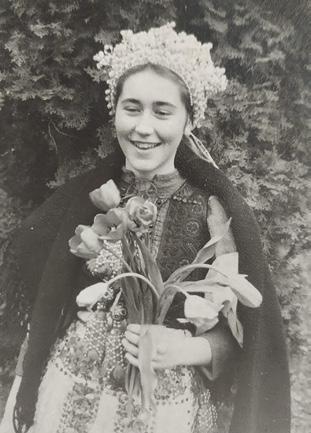
It was only after the loss of my mother that I understood why I became a collector in the second half of my life. For that to happen, I had to inherit her belongings. I opened her wardrobe: crisply ironed tablecloths, neatly folded towels and sheets were piled up inside, many of them homespun. Embroidered cushion covers, century-old tablecloths adorned with handmade lace. Most of them we never used, never even took out of the wardrobe. They included some old pillowcases with my great-grandmother’s initials and needlework by my grandmother, who was born into a peasant family. I took everything home, even though I knew I already had a lot; I only realized how much when I tried to incorporate the treasures I inherited from my family’s women into my own collection.
I was already middle-aged when I got hooked on buying bed and table linen: it was as if a switch was flipped in my head and I suddenly started buying sheets, collecting linen napkins and hoarding nightgowns – though formerly I looked down on collecting stuff as an unnecessary vanity, and was only willing to grow my library. I only began to wonder whether the passion for collection had reached the level of obsession when I stacked the new, inherited treasures on top of mine, and the tablecloths, quilts and pillows reached to the ceiling. So much starched sternness and fluffy warmness. I suddenly realized that I had seen this somewhere before. Childhood memories of Kalotaszeg came rushing back.
Memories of trips to Körösfő, where the women strung bracelets for me in those beautiful, colourful
by Anna Szabó T.
rooms and pampered me with chimney cake, and I could even try on their daughters’ headdresses (there’s a photo of it); of the summer when I slept over in my grandmother’s village, Magyarfenes, in the rigid order of the cold innermost room, under vast, swelling duvets, smothered by feather pillows. I finally understood that I am a Kalotaszeg girl on my mother’s side. And all this at an age when a woman begins to concern herself with her daughter’s trousseau. Trousseaus fell out of fashion in my family merely two generations ago. My grandmother moved to the city and the contents of the innermost room were transferred into wardrobes, but I still have the old reflex: a good housewife is prepared to provide everything, is ready to lay a nice table and make a warm bed, so that come what may, everybody is taken care of. I can’t weave, and failed at embroidery as a child, so I managed to deny this heritage even to myself for decades. I may have done so out of rebellion because my parents in Kolozsvár [Cluj-Napoca] fitted the kitchen with painted Transylvanian furniture and jugs, and the nursery with embroidered cushions, in the manner of the innermost rooms in Körösfő.
As I recognized my ancestors in myself, not only did my passion for collecting subside, but I also started using the embroidered cushions and tablecloths I had inherited: it’s a new adventure in my life. As I’m writing this, I look up and notice that I’ve also covered the stack of jumpers that were squeezed out of the wardrobe with a beautiful piece of handwoven cloth. This is the heritage of the innermost room.
AN EVENING OF ARTS BASED ON BARTÓK’S COLLECTIONS IN THE
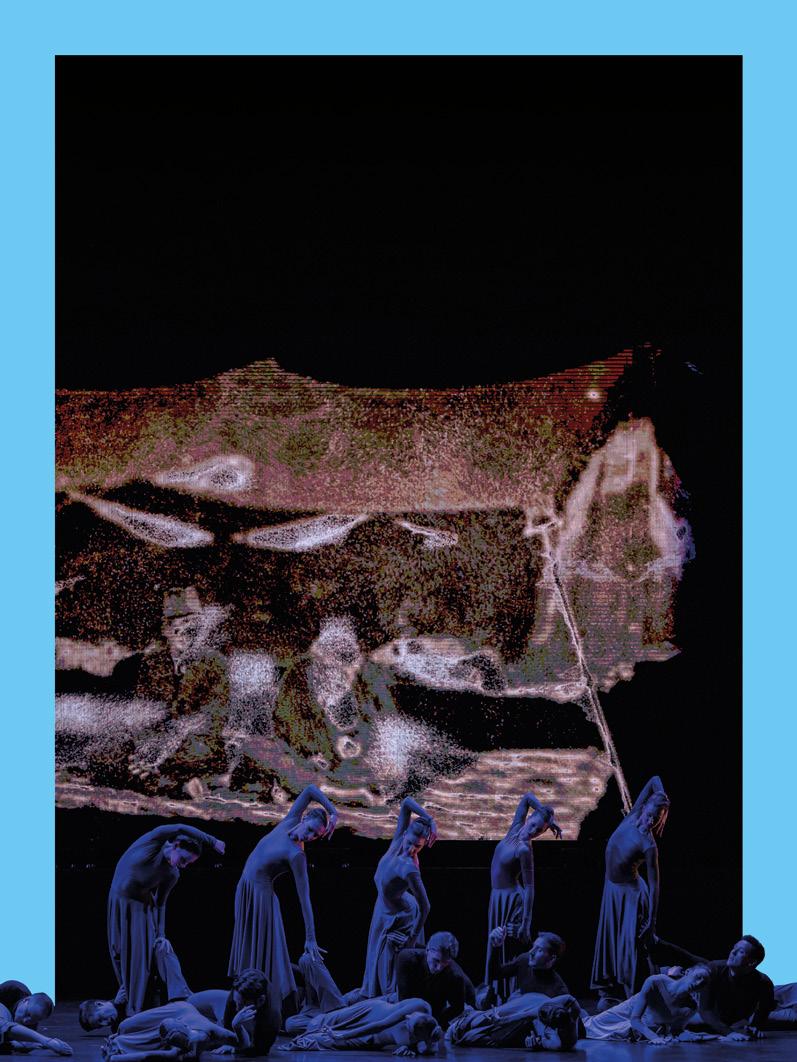
by József Nagygéci Kovács
“What is at issue is not grafting ‘folkloristic’ pieces of music onto foreign material, but much more than that: the emergence of a new musical spirit, on the basis of musical forces that have sprung from the soil,” wrote Béla Bartók, whose artistic credo – “From the purest source” – became a guiding principle for many. It was in this spirit that the Pure Source series was launched in 2022, with vibrant multi-arts productions over the years that have showcased the Turkish collection of Bartók, the musicologist; points of contact between peasant and Baroque music; and Bartók’s reflections on Arab music. The shows have revealed, above all, how Bartók’s collections of folk music have been critical for the work that subsequent generations have carried out for the preservation of the treasures of Hungarian and universal culture: the melodies he recorded continue to influence traditional folk art and classical music alike, as well as to provide inexhaustible inspiration for jazz and world music. Bartók delved particularly deeply into the folk music of Hungarians and the peoples that had lived with them for centuries – especially Slovaks, Romanians, Serbians and Croatians – and remained intrigued throughout his life by the distinctive foreignness of certain elements in the music of the Southern Slavs. This new production in the series draws on Bartók’s Balkan and Hungarian collections, with Serbian folk music at its focus. The Söndörgő ensemble, the Ballet Company of Győr and the dance troupe and orchestra of the Hungarian State Folk Ensemble will demonstrate what interactions and collaborations are possible in a space that is defined primarily by the musical genius of Bartók.
“Bartók is a lighthouse, from where we have looked at, and continue to look at, folk and contemporary music,” says Gábor Mihályi, director and co-choreographer of the show. The Kossuth Prize-winning artist, who has already worked on the previous productions in the series, believes that their chief undertaking is to showcase Bartók’s own interest, his committed curiosity, which included respect for the music and culture of Hungary and neighbouring peoples. It is not necessary for Bartók to be a direct presence in every moment of the performance, just as the folk music he collected need not appear in layers of his music that are far removed from the source; the figure of the great composer will nonetheless always be there in the background of the production. “Everyone will bring their own art; Söndörgő will come with the music of the Balkans, the ballet and folk dancers with their own creative power,” the director adds. “This is to say that if your reason for coming is not so much Bartók as being a dedicated fan of one of the featured groups, you still won’t be disappointed. And while the audience members get what they came for, they can also see and experience the intersections between different artistic sensibilities, and how these intersections fertilize, strengthen and elevate each other.” According to Mihályi, the power of the Pure Source series, following
the path of the great ethnomusicologist and composer, lies in the participants in the performance inspiring each other as they expand on the essence of Bartók’s music and collecting activity.
“Similarly mistaken are those who believe that the on-location study of these forces that have sprung from the soil – in common parlance, the collection of folk songs – was a terribly arduous task, necessitating self-denial and sacrifice,” Bartók wrote elsewhere in the credo cited above. “As for me, all I can say is that the time I have spent on this kind of work has been the most beautiful part of my life, and I wouldn’t trade it for anything else. It was the most beautiful, in the noblest sense of the word, because it allowed me to study closely the artistic manifestations of a social order that was still unified but was already on the brink of extinction. It is beautiful to the ear, beautiful to the eye!”
Benjamin Eredics, a member of Söndörgő and the composer of the music for the production, sees Bartók as the point of departure. “With Söndörgő, we have used Bartók’s music and collections as a source of inspiration for decades. What was a new, gratifying task for me as a composer was writing the overture and the finale. In addition to the largescale, classical symphony orchestra sound, I also aim to present more understated, intimate chamber music colours. Of course, as far as the essential components of the music are concerned, the focus is the Serbian collections of Bartók I have known since my childhood, thanks to the Vujicsics Ensemble. Bartók’s interpretation of the pure source is crucial for me as a composer and performer, because by presenting original, authentic folk music, we too become bearers of the pure source. Bartók’s collections are marked by an open-mindedness and diversity that derive from his respect for the various cultures of other peoples, and that is something I too seek to express in my compositions.” Eredics, who will also take to the stage as a musician of Söndörgő, agrees with Mihályi that the significance of the production lies in how the different artistic expressions and creative presences stimulate and reinforce each other. The music and dances – whether Hungarian or Serbian, ballet or folk dance – each employ their own intrinsic mode of expression, while every element of the evening will be informed by Bartók’s commitment to folk music, his idea of beauty for the ear and the eye.
8 April | 7.30 pm
SÖNDÖRGŐ | GYŐRI BALETT | MAGYAR ÁLLAMI NÉPI EGYÜTTES PURE SOURCE – AN EVENING OF ARTS BASED ON BARTÓK’S COLLECTIONS IN THE BALKANS AND HUNGARY

by Tünde Topor
Dolce Vita: It takes courage to stage an exhibition with this title because it cannot but bring to mind the film on nightlife in Rome at the end of the 1950s: the bars on Via Veneto, the house parties – and the ambivalence of the fake glamour, becoming cloyed with all the sweets, although everyone will tend to remember only the intoxication of Anita Ekberg and Marcello Mastroianni kissing in the Trevi Fountain. How could you, in other words, satisfy the desires aroused by the expression sweet life with dead objects, paintings and sculptures?


Emese Benczúr: Dolce vita, 2012 Property of Nóra Winkler
Life in Italy was probably sweeter in Fellini’s time, and remains sweeter today than anywhere else in the world: the fantastic geographical diversity of the Mediterranean is matched by the incredible density of monuments per square kilometre, many of which are still in use, the temperament of the people, the food… It’s probably pointless to go on with the list of commonplaces, true as they are, but if we did, we’d end up with another film, La Grande Bellezza (The Great Beauty), and a stacking of cultural layers of unmatched richness. It is this which has provided Hungarian art – itself comparatively very young, barely two hundred years old – with inspiration like no other.
István Ferenczy’s 1822 sculpture of a shepherdess, A szép mesterségek kezdete (The Beginning of Fine Arts), is considered the first manifestation of the Italian influence on Hungarian art. Then came Károly Markó, for years a professor of the Florence Academy of Fine Arts, and his children, both sons and daughters, who long supplied the Hungarian market with paintings of Italian landscapes, classical ruins and mythological scenes, serving as models for later Hungarian landscapists.
Even when this influence, which had set academic standards and long dominated art education in this country, began to fade, Italy and its classical heritage continued to attract painters. The best example of this is Archaeology, an 1896 study for an unrealized fresco by Károly Ferenczy – no relation to István above – which captured the experiences of a study trip to Italy and became one of the most beautiful reminders of Hungarian Art Nouveau’s longing for other landscapes and more ancient times.
But while we’re still dealing with only the monuments, i.e. dead things, when will sweet life make its appearance?
Interestingly, it was an art historian, Professor Tibor Gerevich, who made the enjoyment of Italian life almost compulsory for would-be artists, young painters and sculptors. Thanks to him, the Collegium Hungaricum (Hungarian Academy) took up residence in a very prestigious neighbourhood in Rome, in one of the most beautiful Baroque palaces on the Via Giulia, by the river Tiber. From 1928, artists who won a scholarship to Rome could spend months here or use it as a “base” for travels around Italy. In Hungarian art history, works by these scholarship holders, who followed Italian models under the spell of Italy’s landscapes and the life they lived there, are considered as products of the Roman School. They include a group portrait of fellow painters on the terrace of the palace that overlooks the river, a group of attractive boys and girls enjoying life and each other’s company, though the subjects and scenes they would paint varied widely, from locals making merry in trattorias and taverns, through showmen who seem to have stepped out of Pagliacci, to harbour scenes and small towns during siesta or the bustle of the night.
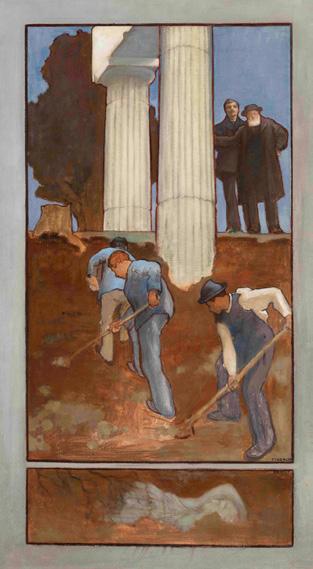
What the Italian experience meant for young artists is captured perhaps most successfully in a painting made after the war, when the scholarship continued to be offered. Especially after 1945 and until the fall of the Iron Curtain, it is very much a celebration of the chance to leave behind an increasingly oppressive Hungarian milieu. It is quite a special composition, no longer in the style of the Roman School, and its subject matter is also more modern, featuring three young people riding in the back of a flat-bed truck, gazing up at the night sky, gliding through the beautiful Italian scenery. That is, at least, what the picture suggests: the feeling of gliding under the Italian sky, when in reality they were being slowly jolted along. Their heads look as if they had rolled off some antique sarcophagi or the tombs along the Via Appia. Judit Reigl told me that there were no tourists immediately after the war, and Rome was almost empty. Although Rome had declared itself an open city to avoid the destruction of its population and built heritage, surrendering to the advancing enemy without a fight, it had
Ferenczy: Archaeology, 1896 Museum of Fine Arts –Hungarian National Gallery
Károly
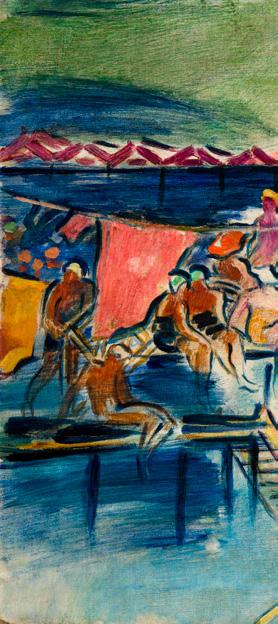
been bombed before its capture, causing artefacts to be unearthed. Reigl herself found the head of an antique sculpture, which she sold to an American, using the proceeds to buy train tickets.
By the way, if ten years ago you had cast your eyes from the roof terrace of the Hungarian Academy –designed by Borromini and decorated with Janus heads – to the opposite bank of the Tiber, you would have seen a wondrous sight. William Kentridge, an artist also known as a set designer and director of opera, covered 550 metres of the stone wall of the embankment with stencils and cleaned the uncovered parts in between with a high-pressure water jet. When the stencils were removed, what was left of the black deposit of exhaust fumes and other dirt was the work itself, a procession on the model of Trajan’s Column, with figures from the history of Rome passing before our eyes. It also featured the most famous scene from La Dolce Vita, the one at the Trevi Fountain. Fellini, who directed Ekberg and Mastroianni in a hat, coat and scarf in the Roman
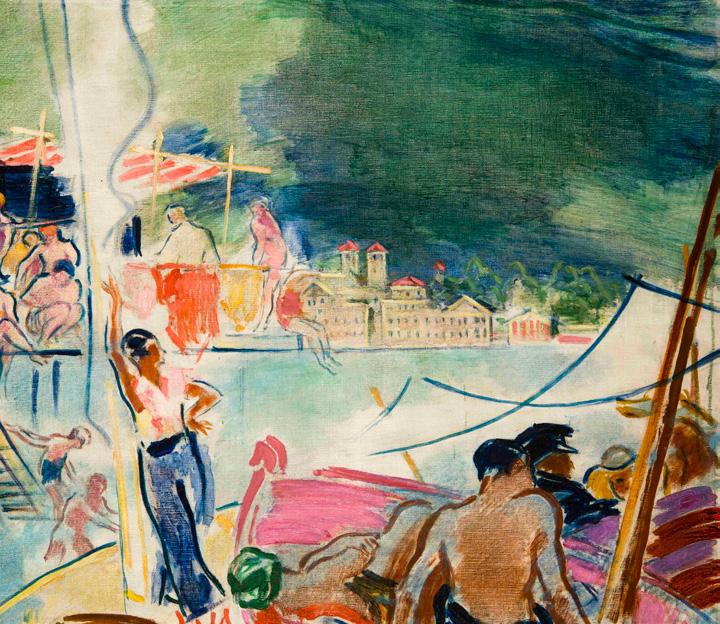
winter, was not included; we only have on-set stills to show what sometimes lies behind the sweet life.
As the Roman School gained currency in Hungarian painting as a trend in the vein of the classical tradition, even artists who subscribed to the more modern, French idiom of painting were likewise not left untouched by everything that Italy meant. János Vaszary was a case in point. A respectable academy professor, the nephew of Archbishop Kolos Vaszary and a former war painter, he was also curious about modern life. With pure colours applied with an economy of virtuosic brushstrokes, his canvases bustle with parasols, bathrobes, sails, the striped shirts of sailors, palm trees and cocktails with straws. Nor will his seaside scenes ever go out of fashion: the healthy tans, bathing suits and parasols look much the same today as they did one hundred years ago.
“Today I Didn't Go To The Beach Either,” is the phrase Emese Benczúr embroidered on the striped canvas of deckchairs hundreds of times. The artist, who makes invisible domestic work visible, is also the creator of the title piece of the National Gallery’s
exhibition. The work, sized 300 × 180 cm, is composed of shiny, colourful sweet wrappers; some, however, face the viewer with their uninteresting, plain insides, making up the inscription, Dolce Vita
Two answers may be proposed to our initial question; namely, how the sweetness of life can be experienced in a museum. One is that, for some, this is the good life itself: looking at works of art, unwrapping what they have inside. The other is longing for the things the images evoke. There’s nothing sweeter than looking back to better days. Or is this not the case? Be that as it may, whether you have been to Italy or are planning to go, life is sweet.
Április 8. | 10.00
DOLCE VITA
Volume 6, April 2026
A free publication of the Bartók Spring International Arts Weeks
Published by Papageno Consulting Ltd. on behalf of Müpa Budapest
Founded by:
Müpa Budapest Nonprofit Ltd.
Csaba Káel, ceo
Publisher:
Managing director of Papageno Consulting Ltd.
E-mail: szerkesztoseg@papageno.hu
Editor-in-chief: Gerda Seres
Publication manager: Zsuzsanna Oszip
Proofreader: Dóra Magyarszéky
With contributions from: Beáta Barda, Zsuzsa Borbély, Alexandra Csepi, Endre Dömötör, Zoltán Farkas, Katalin Teodóra Gál, Tamás Jászay, Kata Kondor, János Lackfi, János Mácsai, Szabolcs Molnár, József Nagygéci Kovács, Marcell Németh, Gerda Seres, Anna Szabó T., Annamária Tari, Kinga Tittel, Tünde Topor
English translation: Árpád Mihály
On the cover:
Yvette Bozsik, Anna Bujdosó, Liza Gulyás
Cover photo by: László Mudra
Submissions closed on: 9 March, 2026
The organizers reserve the right to make changes.
Bartók Spring International Arts Weeks 1–12 April 2026.
bartokspring.hu
E-mail: info@bartoktavasz.hu Telephone: +36 1 555 3000