Multistudio is a multidisciplinary architecture and design practice with five studios nationwide, each with the mission to enrich communities and the human experience through the built environment. Diversity of thought, people, and practice areas enables us to explore place and spark economic, social, and environmental change. And although we take on a variety of projects, neither size nor type dictates their importance—their impact does.
Founded 1974 Employee Owned
Our Studio Kansas City
Lawrence New Orleans
Phoenix San Francisco
Rooted in diverse landscapes, our practice is shaped by local knowledge and shared expertise nationwide.
Since its founding in 1974, Multistudio has grown into a socially engaged architecture, design, and planning studio that pushes the boundaries of a service-based practice. We draw on the expertise of our network to deliver sustainable, place-specific solutions, leveraging the connections that we maintain within the regions we serve.
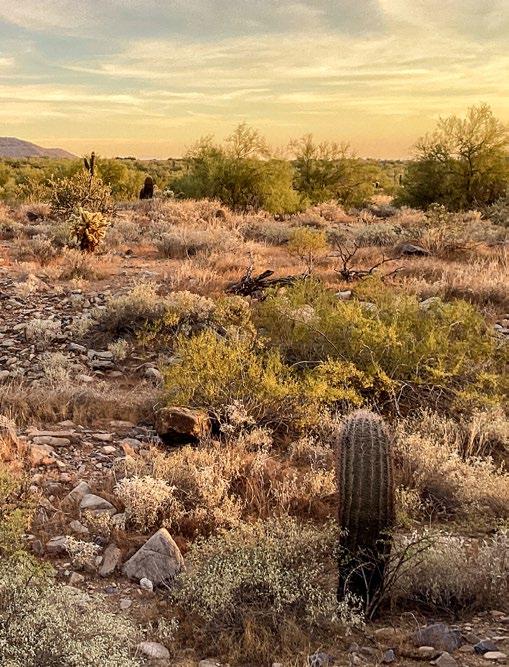
Our studios are embedded in communities across coastal, desert, and prairie landscapes throughout the United States. Over the years, we have developed an approach to sustainability that is shaped by our five diverse regions spanning climate zones and building vernaculars.
Phœnix
New Orleans
Lawrence
Kansas City
San Francisco
Approach
Our team combines technical expertise and placemaking experience to create spaces that engage communities, adhere to high standards, and endure over time, delivering spaces that thrive year-round.
Building With Communities: Fostering Culture, Identity, and Inclusion
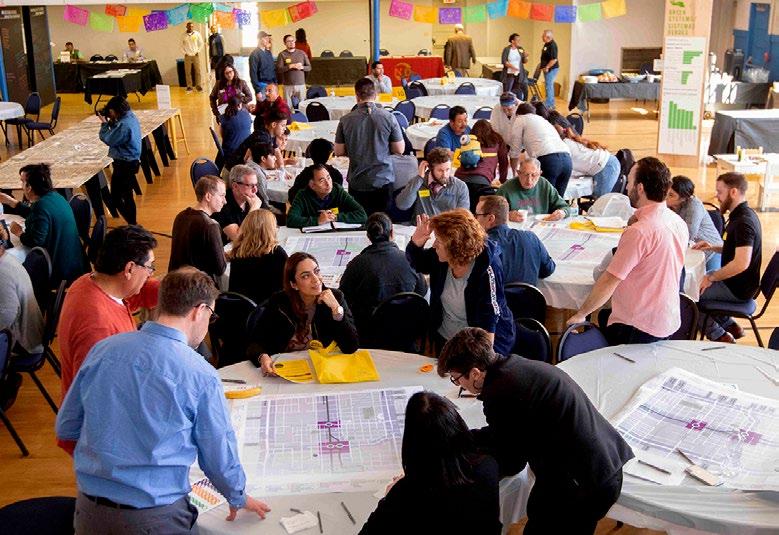
At Multistudio, we approach every project with a commitment to engagement. We recognize that buildings are more than physical structures; they are catalysts for connection, culture, and belonging. We believe every facet of design has the power to foster dialogue, inclusivity, and shared experiences across diverse communities.
Strengthened by Diverse Design Voices
Our “Multi” approach reflects both our name, Multistudio, and the range of disciplines we bring together. By uniting architecture, interiors, city design, brand experience, and education design, we create spaces that respond to their surroundings and reflect the communities they serve. This process draws from varied perspectives, resulting in designs that are built for lasting impact. Whether working with Fortune 500 companies, rural school districts, or cultural institutions, our team ensures that every project honors both heritage and future potential.
Weaving Regional Identity
Beyond aesthetics, we focus on fostering strong connections between people and place. With studios located in Kansas City, Lawrence, New Orleans, Phoenix, and San Francisco, our designers work closely with local municipalities, civic leaders, and community members to weave regional history and identity into every project. By thoughtfully integrating vernacular materials, forms, and cultural references unique to each location, we create spaces that foster belonging, pride, and a shared sense of ownership.
Rooted in Legacy, Motivated by Impact
For 50 years, our team has shaped environments that stand the test of time, both physically and culturally. We draw on decades of expertise to deliver projects that meet today’s needs and contribute to the evolving story of each community we live and serve.
Delivering Quality and Resilient Designs
As a trusted design collaborator, we are dedicated to delivering thoughtful, highperforming spaces. From early concept to construction, we integrate rigorous quality control measures, including reviews led by senior architects, collaborative page-turn sessions, and regular site visits. These steps ensure precision, code compliance, and design integrity.
We also prioritize fiscal responsibility. Our Cost Model process provides clarity throughout the design phases, helping clients make informed decisions that align with both their vision and budget. Through proactive value design and close collaboration with cost estimators and construction managers, we help prevent scope creep and deliver projects that achieve lasting results—on time and within budget.
How We Integrate
Design
is expansive—a dialogue across disciplines and scales. When these elements are in conversation, they form environments that are cohesive, intentional, and lasting.
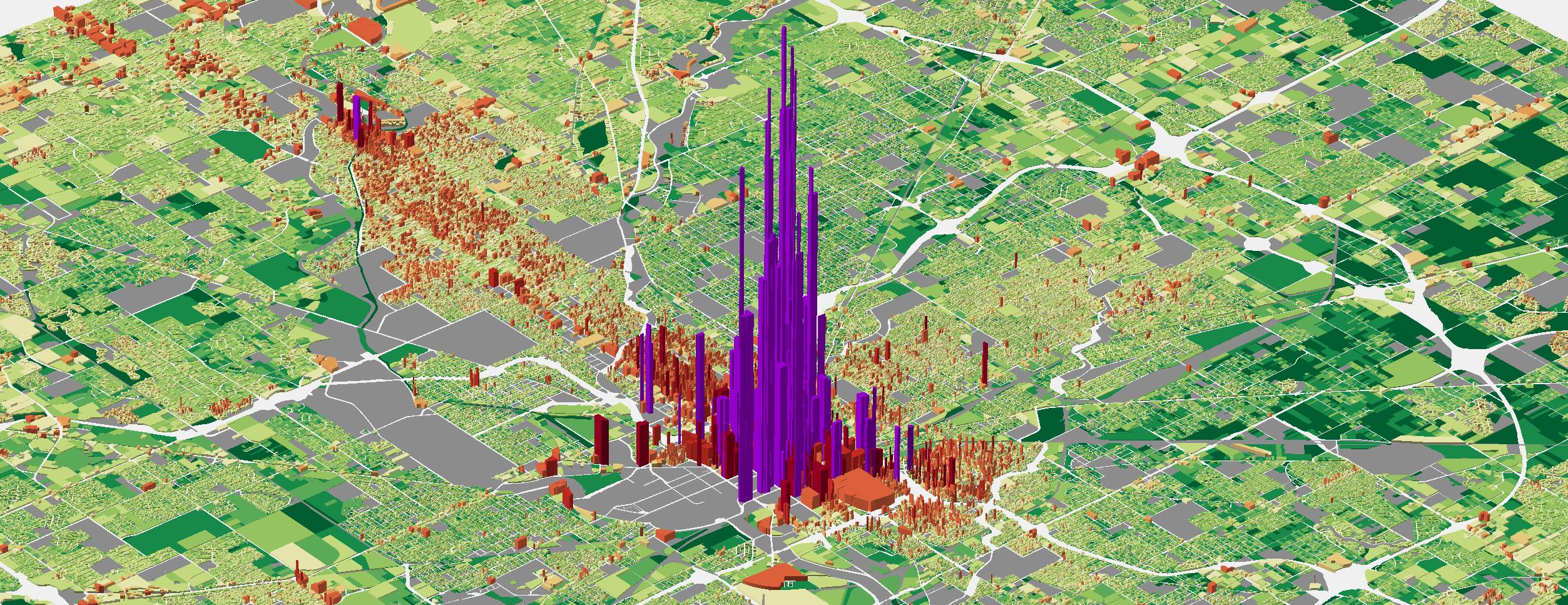
We think of design as a set of concentric circles, each reinforcing the next: at the largest scale is city design, followed by architecture, interiors, and finally, brand. Each discipline contributes to a greater whole—from the structure of a city block to the typography on a sign.
Every layer matters, and together they shape more than just a building—they define the identity, value, and lasting impact of a place. When these layers are in dialogue, design becomes more inclusive, more intentional, and more capable of serving the diverse communities it touches.
A Shared Vision
City Design, Architecture, Interiors, and Brand work as one—no silos, no delays.
Real-Time Partnering
Designers and strategists are in constant dialogue, making decisions as projects evolve.
Fluid Communication
Each of our teams stays in sync so decisions keep pace with your project.
Built-In Flexibility
We move fast—responding to change with clarity, creativity, and confidence.
Seamless Execution
Ideas that translate into action, with every discipline reinforcing the next.
Proactive Solutions
We anticipate needs and deliver integrated solutions before they're asked for.
Technical Expertise
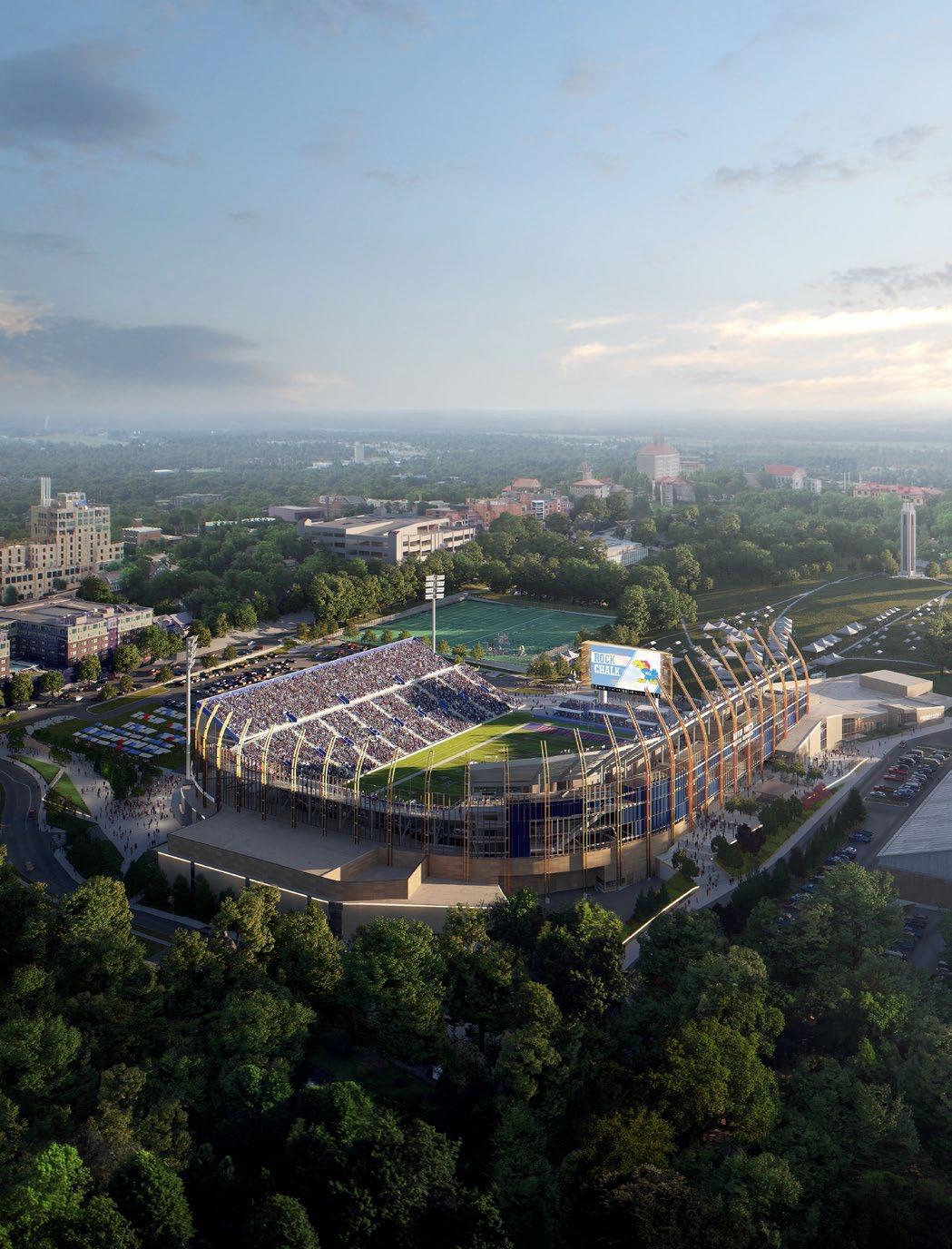
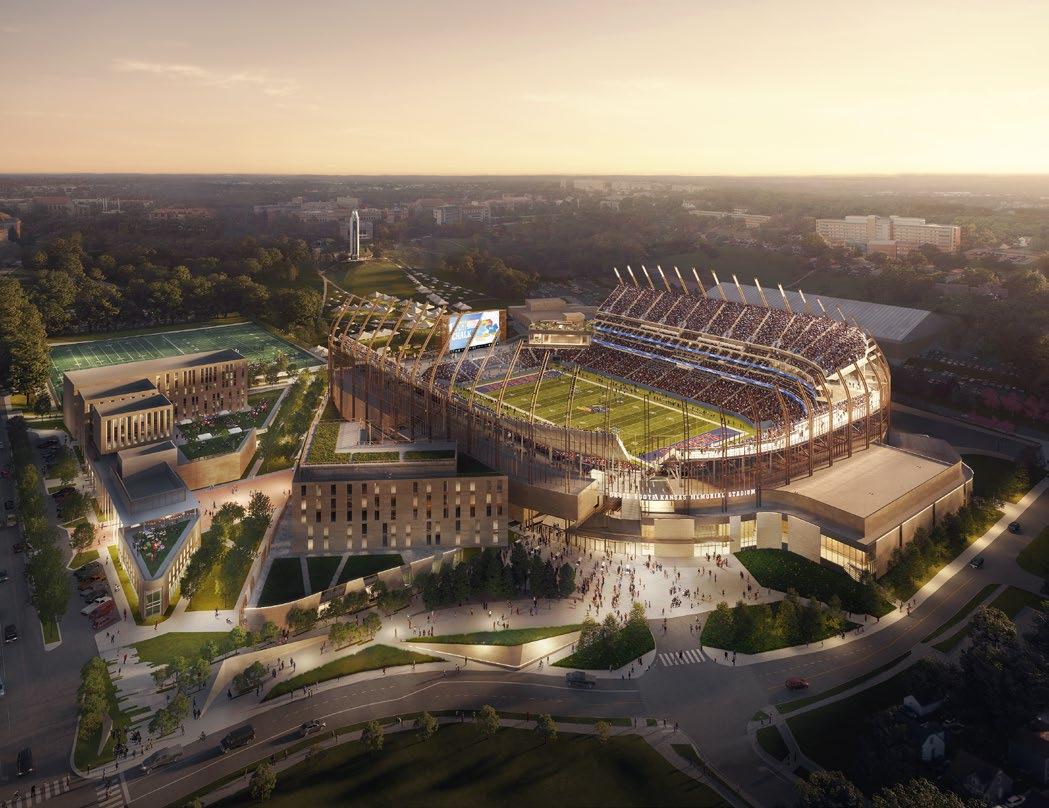
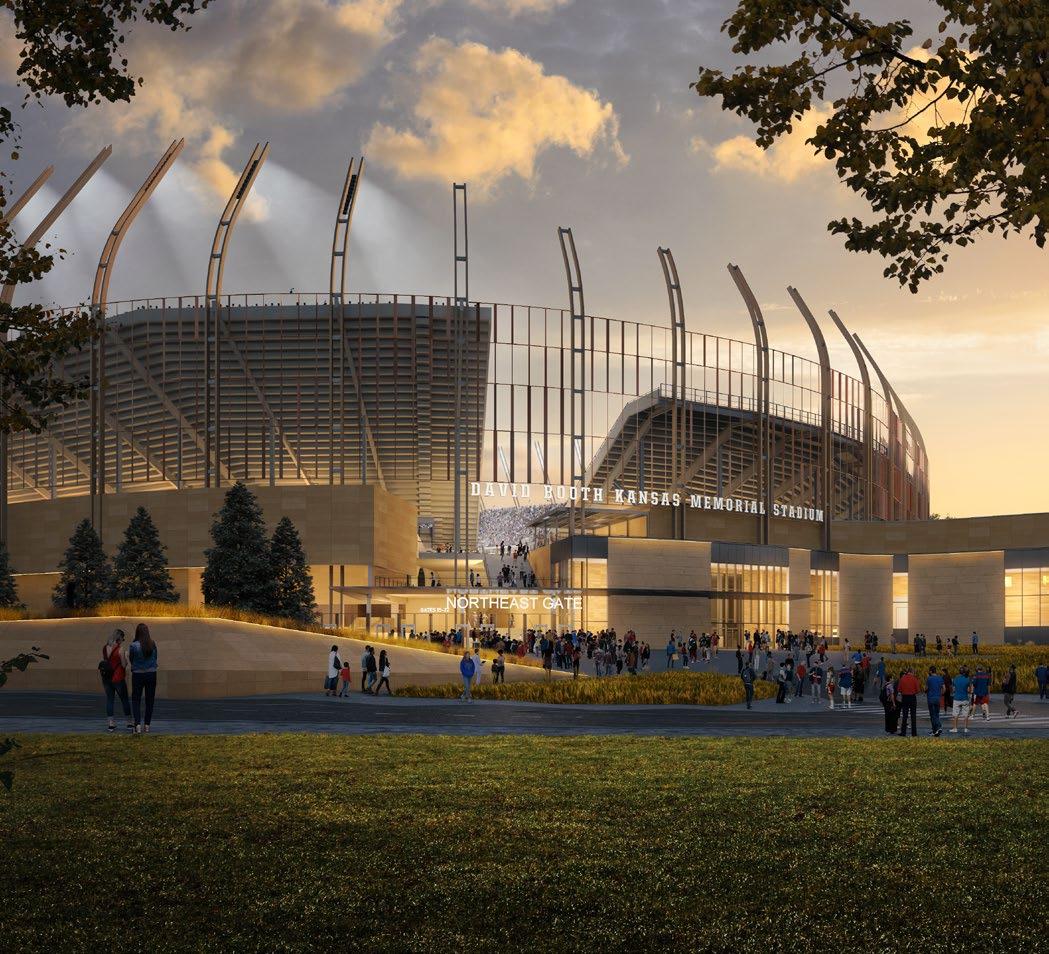
The David Booth Memorial Stadium & Gateway District University of Kansas
A visionary mixed-use district poised for profound economic and cultural impact.
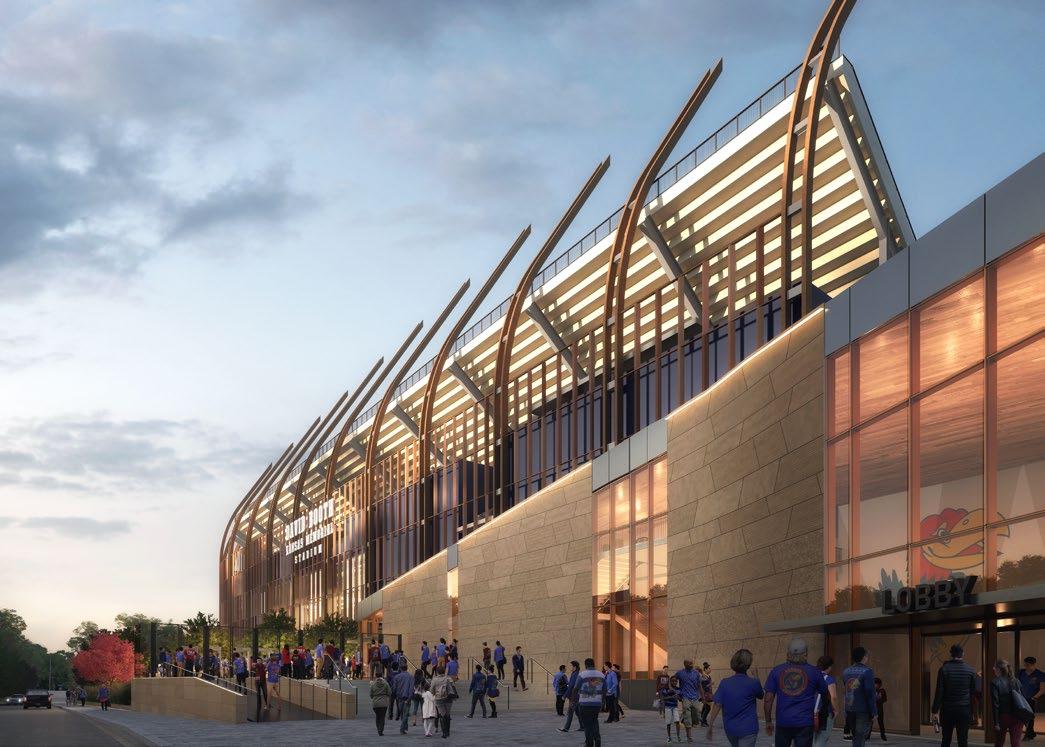
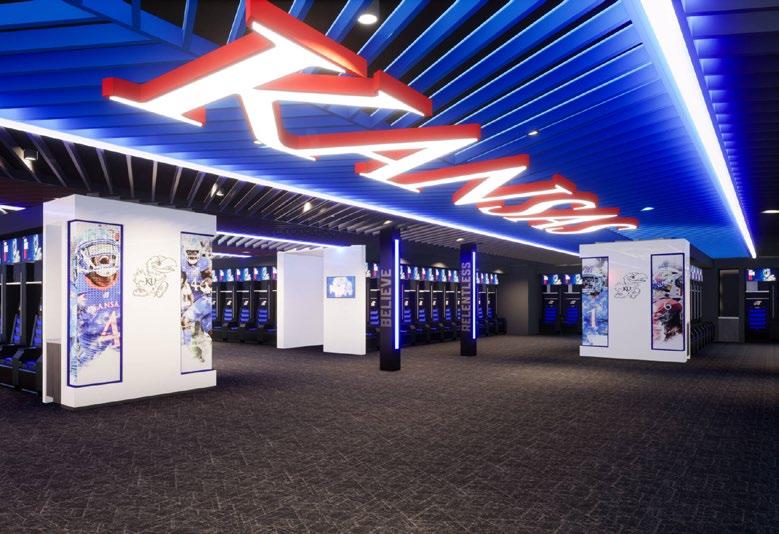
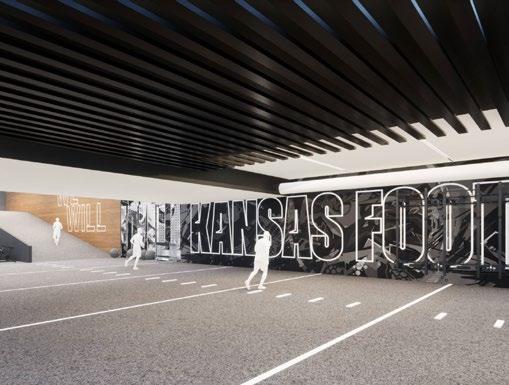
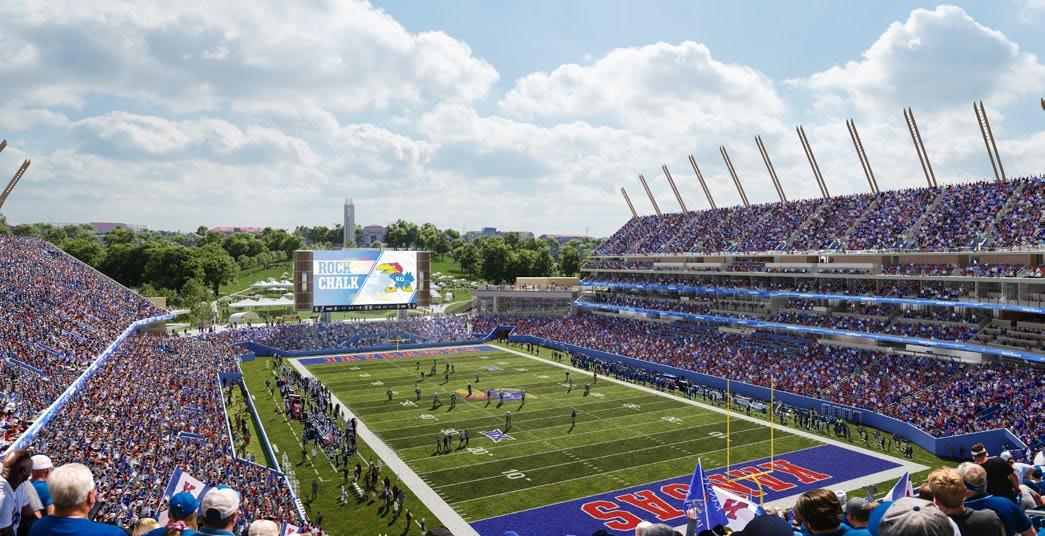
The University of Kansas unveiled a new vision for its transformational Gateway District in the heart of Lawrence, Kansas, which includes major upgrades to the David Booth Kansas Memorial Stadium and a remodel to the Anderson Family Football Complex.
In addition to the stadium updates, the project will transform the area near the intersection of 11th & Mississippi streets with new facilities that will include a mix of conference, entertainment space, retail, and other functions that will drive regional economic growth in Lawrence for decades to come.
The stadium will include multi-use spaces to augment conference facilities and bring the public together. Nestled into the landscape, the design of the stadium creates an indoor-outdoor interconnectedness that elevates the authenticity of the fan experience. The resultant design is reflective of the University and the region's values that will promote a sense of community for generations to come.
Phase one of Anderson Family Football Complex includes a brand new locker room and weight room. The second phase will feature a new entry lobby, expanded auditorium, expanded coaches' offices, and expanded team meeting rooms. There will be a state-of-the-art sports medicine, sports science and recovery area to enable KU student athletes to prepare and recover as effectively as possible. Additionally, one of the club lounges adjacent to the complex will serve as a training table for student-athletes.
Multistudio in partnership with HNTB.
Project Data
→ Lawrence, KS
→ 12 Acres; 376,000 SF
→ Renovation & New Build
More than a gateway—fueling community pride and lasting impact on and off the field.
In addition to the stadium updates, the project will transform the area near the intersection of 11th & Mississippi streets with new year-round facilities that will include a mix of conference, entertainment space, retail, and other functions that will drive regional economic growth in Lawrence and throughout Kansas.
Academic Excellence Center
Southeast Community College
A visionary academic center that is already making profound economic and cultural impact in Beatrice.
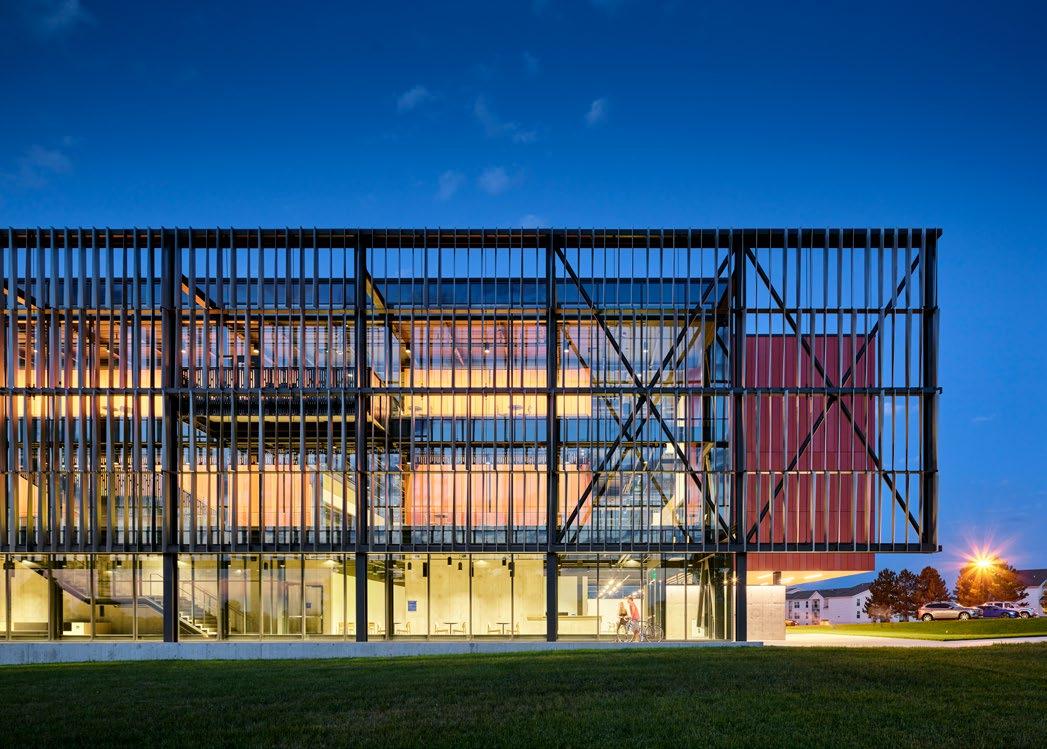
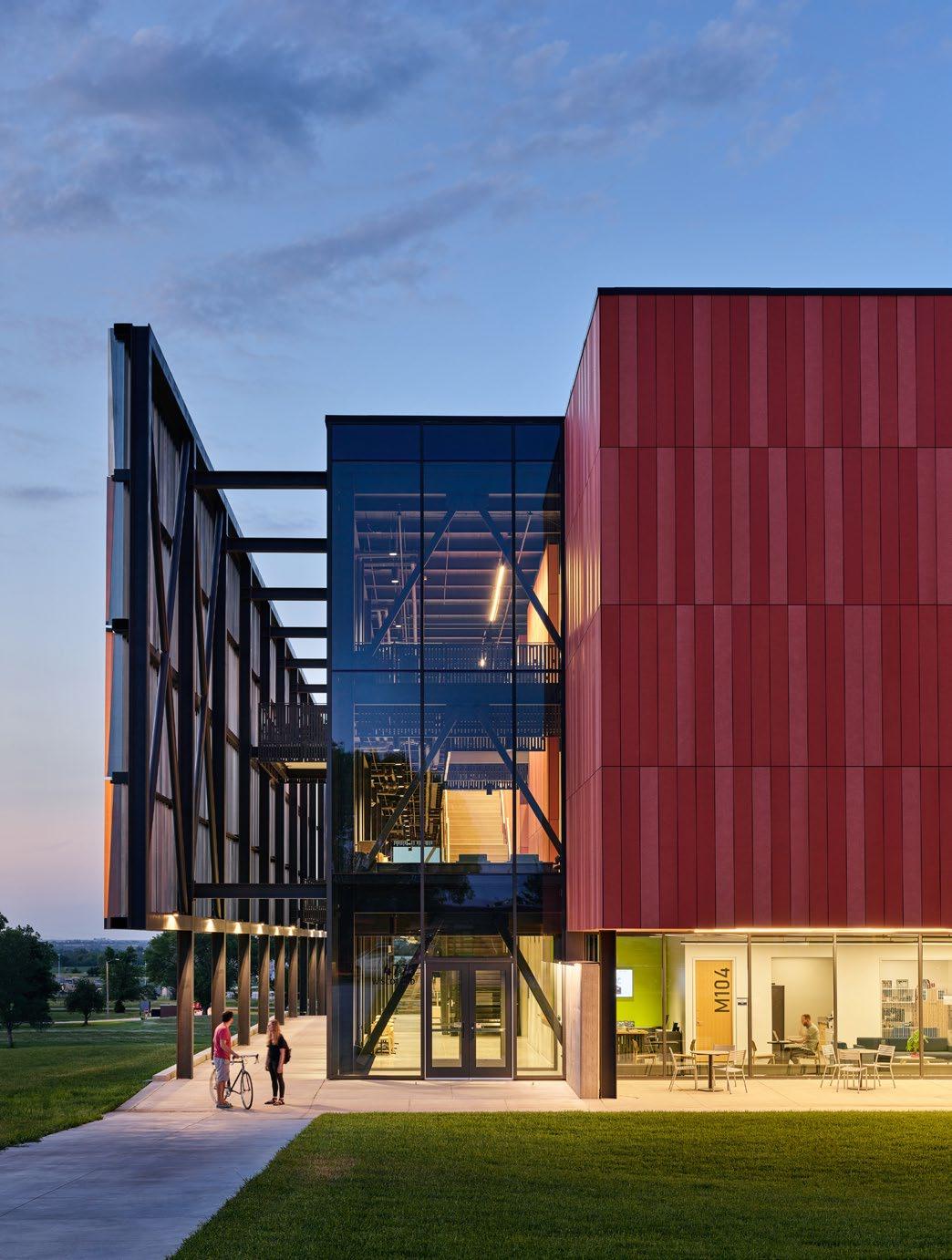
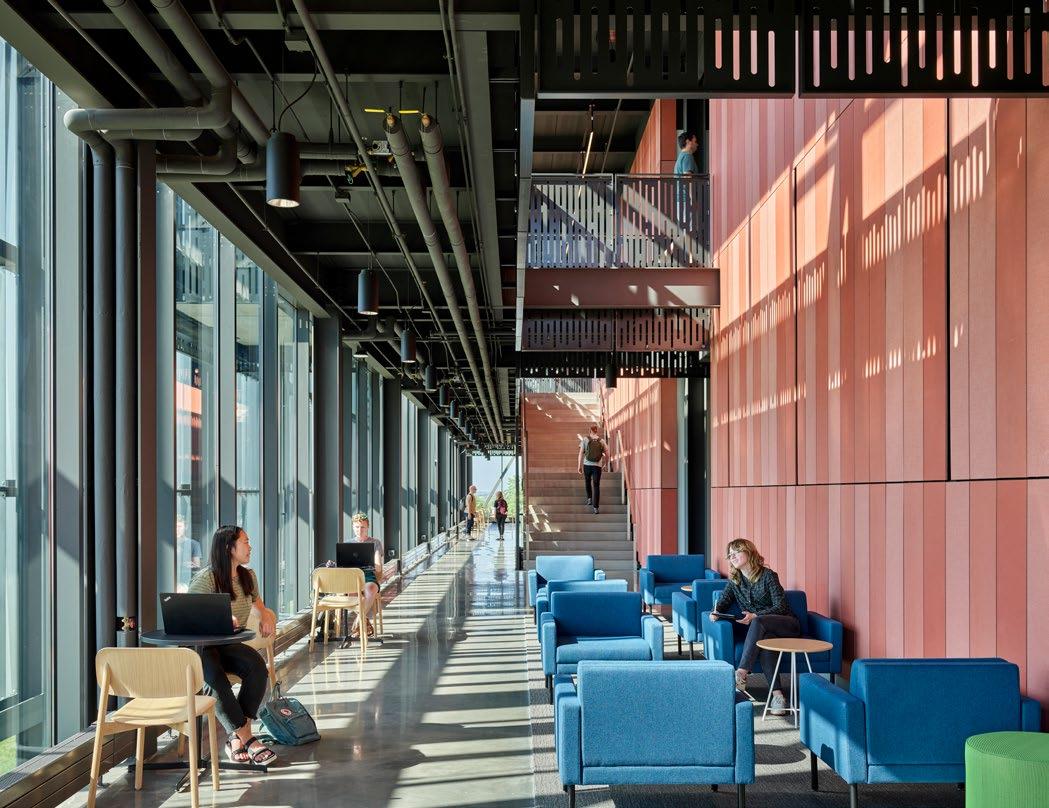
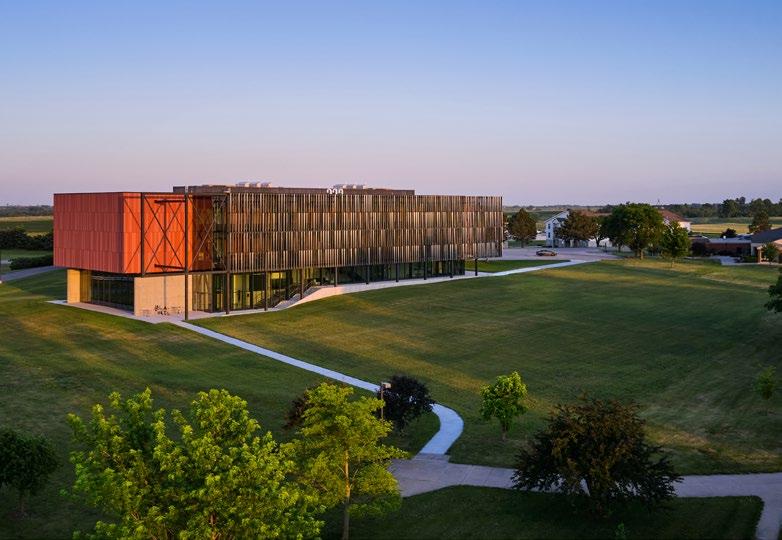
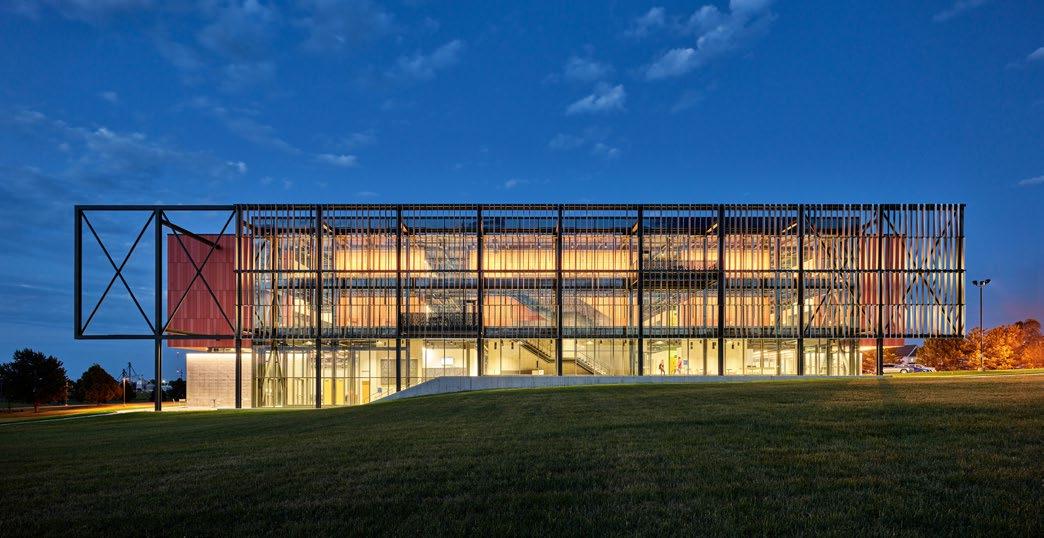
The new 52,000 SF STEM Academic Excellence Center is the first building constructed in a campus revitalization master plan for a small community college in rural Nebraska. The facility houses classrooms, labs, offices, a large multipurpose space, and outdoor learning areas, supporting a wide variety of disciplines spanning physics and health sciences to music and fine arts.
An interior circulation spine acts as a main "pedestrian street'" off of which "cul-de-sacs" connect classrooms, studios, and office program. The exterior fiber-reinforced concrete panels continue into the interior, defining the main street and providing a tactile separation between the interior and exterior experience. Interior transparencies place learning on display, connecting flexible learning spaces to open areas for student-teacher collaboration.
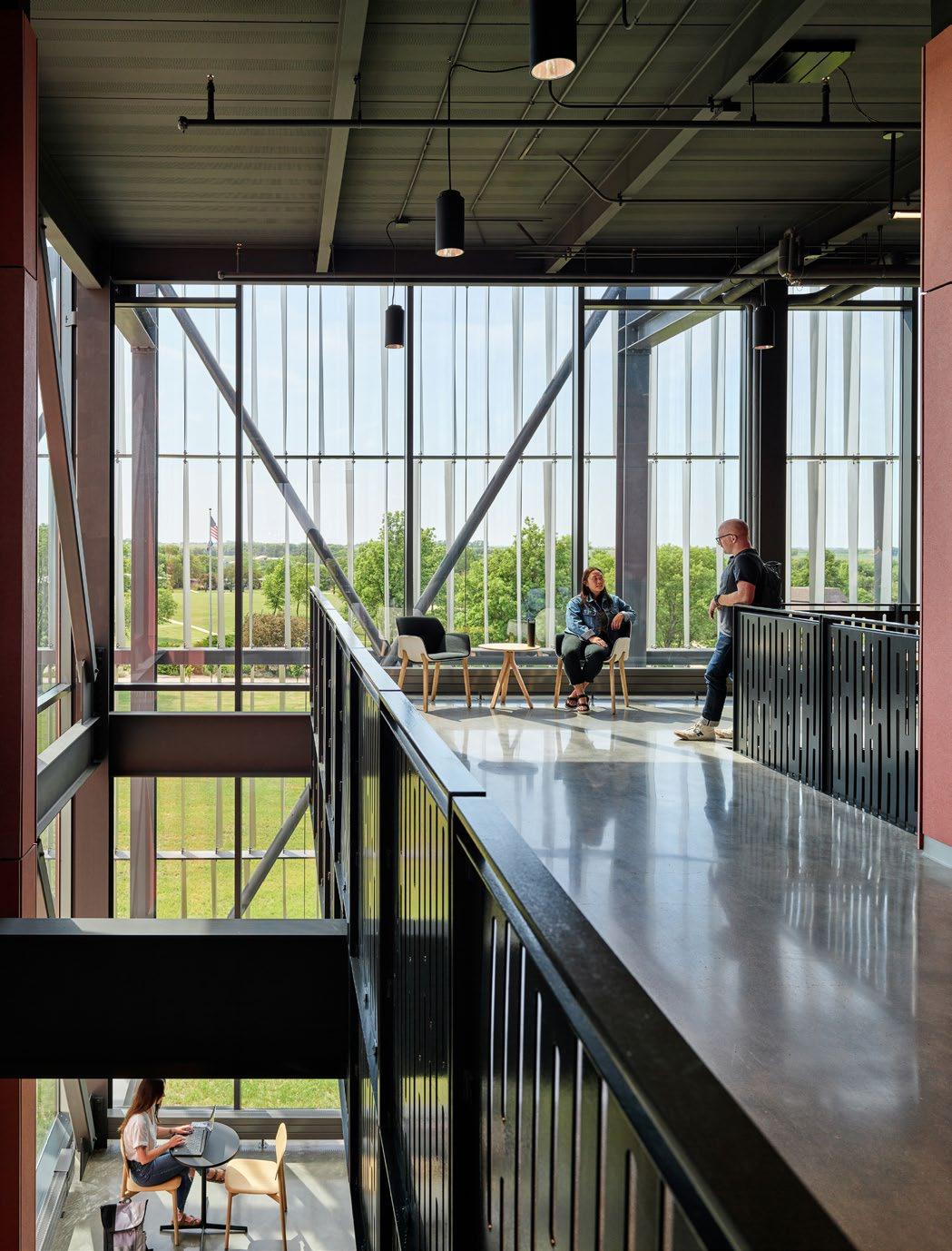
Giving a nod to its humble surroundings, the building celebrates and emphasizes the rural vernacular of Nebraska through color, texture, rhythm, and scale, both inside and out. Building organization further supports wellness through biophilia—providing panoramic views of the pastoral setting beyond and prioritizing daylighting to all program spaces.
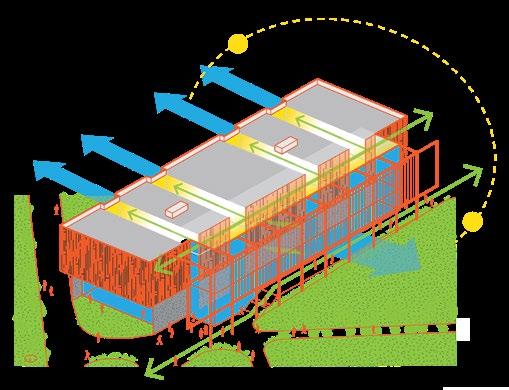
Energy conservation at the forefront, this project leveraged the 2030 Challenge to reach a 70% reduction in energy over similar buildings, contributing to more fiscally sustainable infrastructure and a significant reduction in carbon use—creating a model for new STEM facilities throughout the country.
Project Data
→ Beatrice, NE
→ 52,000 SF
→ New Construction
"Taking what I'm sure was a challenging budget and elevating the community college experience to this level is very impressive."
Southwest Fisheries Science Center
National Oceanic and Atmospheric Administration
NOAA sets a new benchmark for sustainable design, integrating with the coastal landscape while advancing marine ecosystem research.
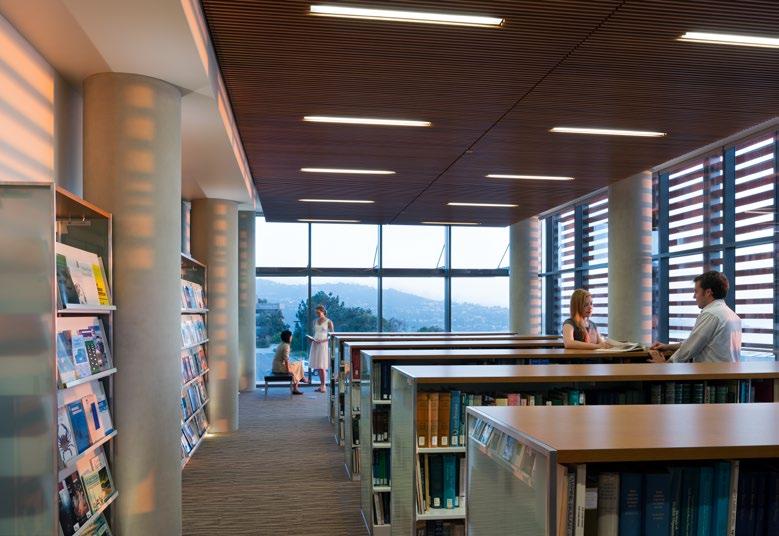
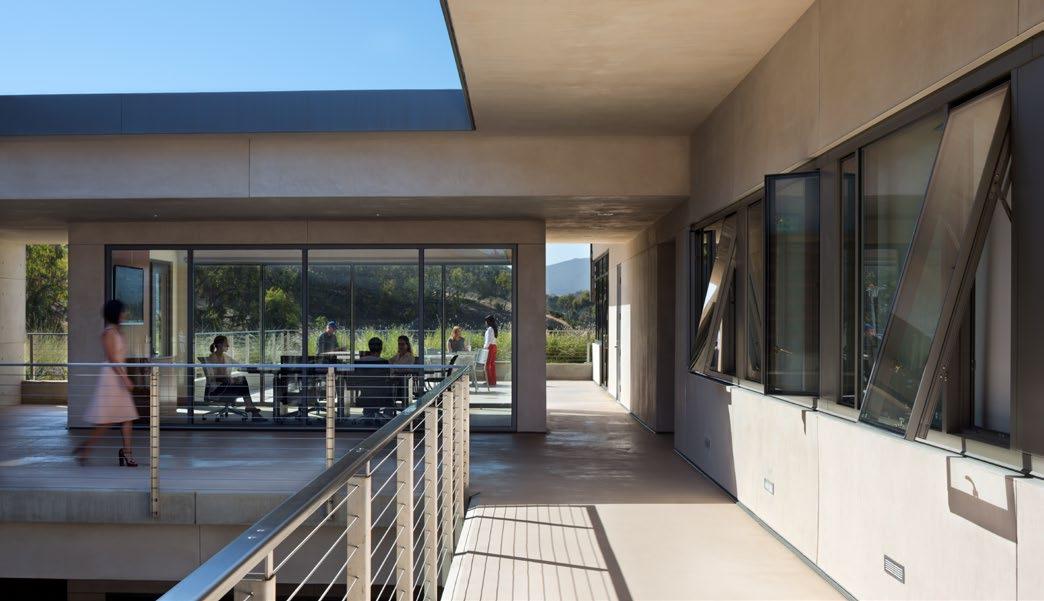
This world-class science research facility represents a site-specific approach to sustainable design, with architectural features that set a local benchmark for energy efficiency and connect scientists to the environment they are so dedicated to preserving.
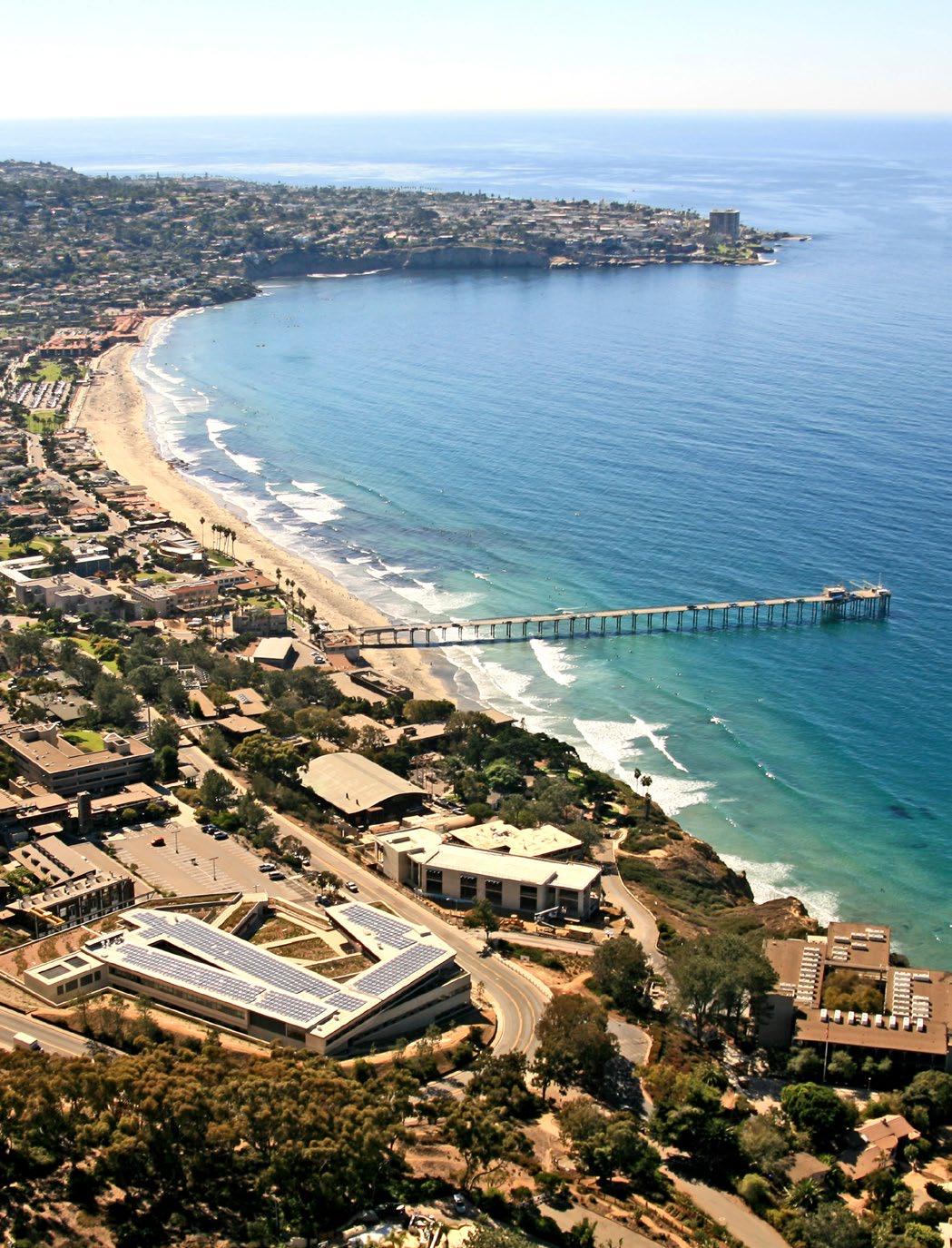
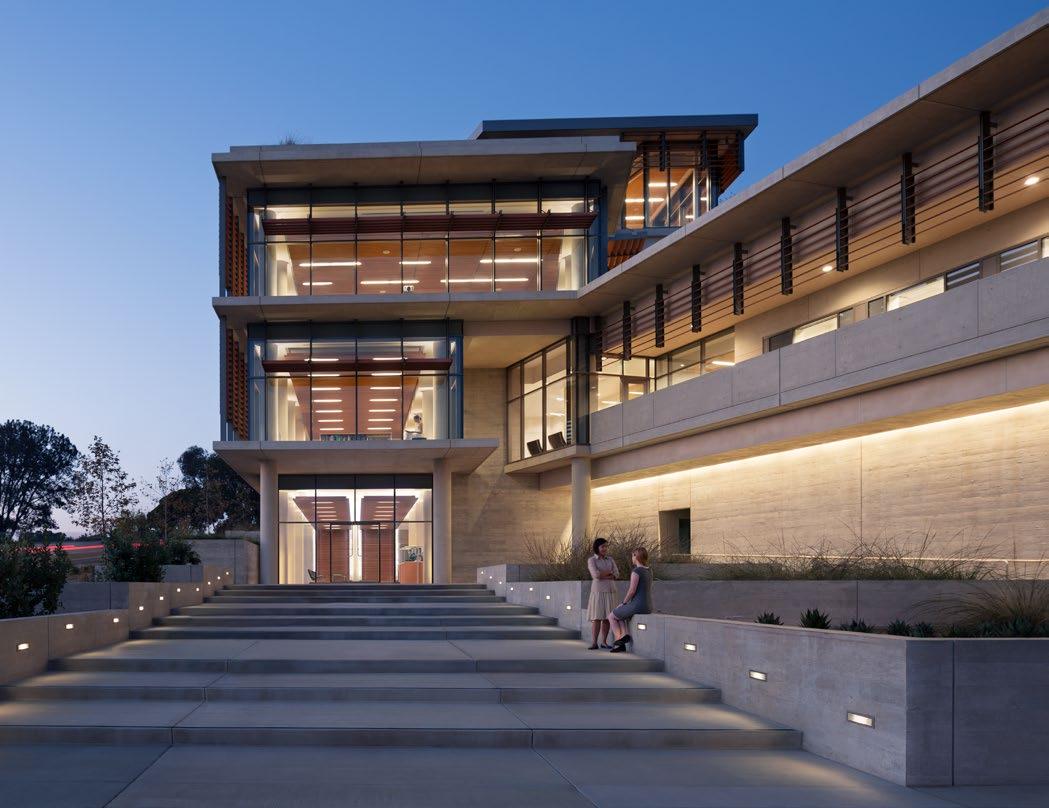
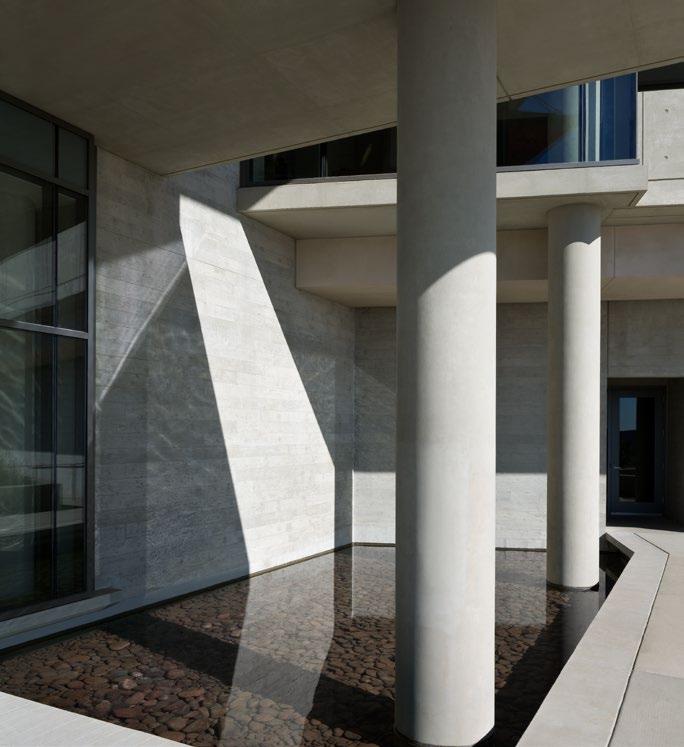
Challenged to relocate an existing facility threatened by coastal erosion, the team designed a stunning new research environment that appears to grow from the surrounding bluffs. The architecture reacts to the topography of La Jolla Canyon, utilizing massing anomalies to create outdoor gathering spaces, rooftop terraces, and courtyards that reinterpret the beloved “courtyard culture” of NOAA’s former facility.
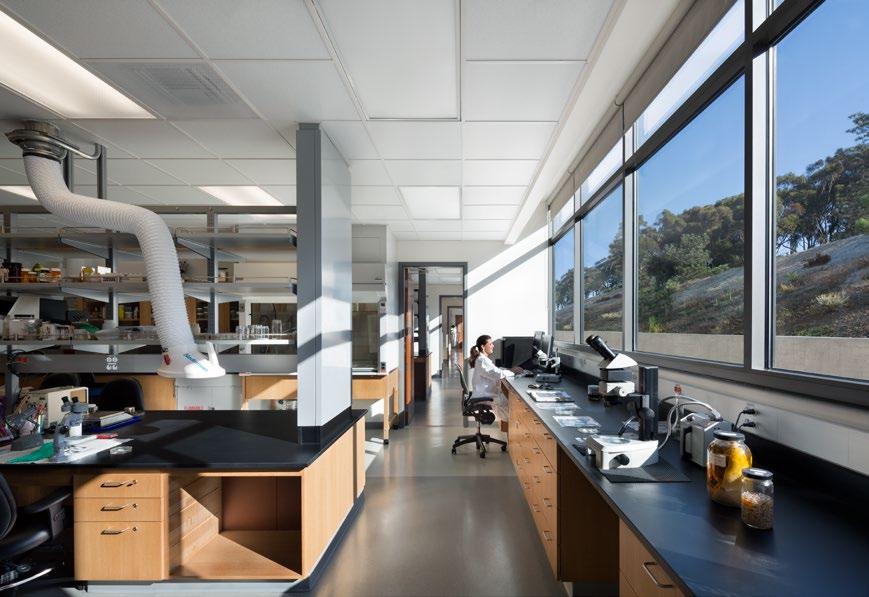
The 124,000 square foot building was inserted into a steep contour to maintain ocean views from the road above and efficiently accommodate a complex program of offices, laboratories, conference rooms, parking, a library, and a 528,000 gallon ocean technology development tank – the largest of its kind in the world. Through its siting, materiality and use of green space, the five-story building never appears larger than three stories from the exterior or to the scientists who work there, fostering a feeling of scientific community.
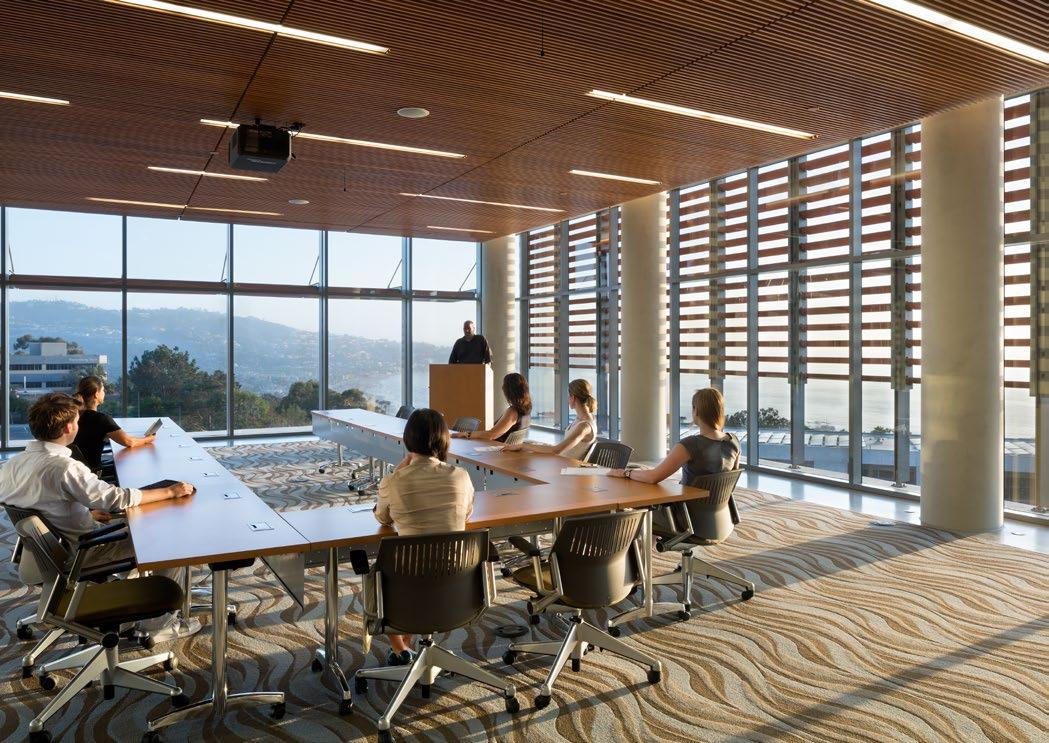
For a building dedicated to marine ecosystem health, sustainable design was critical. However, laboratories consume about five times more energy per square foot than a typical office building. To offset this, the LEED Gold Certified building has narrow floor plates that permit daylight to permeate the spaces, fan-assisted natural ventilation, and high-efficiency equipment and lighting.
The green roof features a variety of native species, including coastal chaparral and sage. Solar shading on the west- and south-facing windows contribute to reducing the building’s cooling loads to 69% less than that required by ASHRAE 90.1-2004 standard. A large photovoltaic array on the roof offsets 7% of the building's energy needs: equivalent to the energy that would power 40 typical houses in the region.
Altogether, these features reduce projected energy use by 33% compared to similar buildings.
Multistudio in partnership with Delawie
Project Data
→ La Jolla, CA
→ New Build
→ 90,000 SF
“
Our staff is thriving with the combination of fresh air and natural light in their offices, as well as the open spaces which promote interaction, creating both a wonderfully healthy and scientifically productive place to work.”
- Sarah Mesnick, Science Liaison at the NOAA
Southwest Fisheries Science Center
Chorus Tower
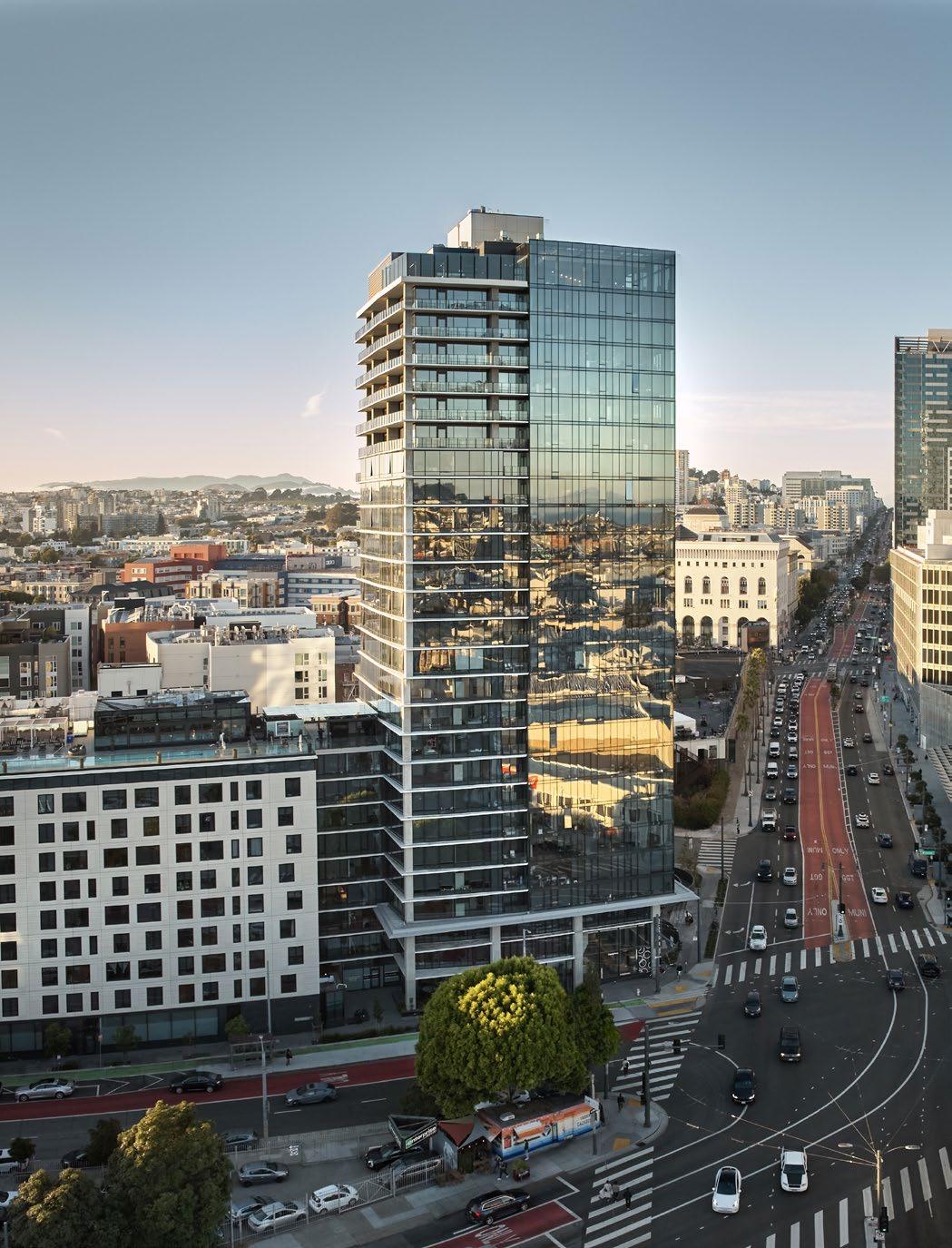
Multistudio served as the Design Architect of Chorus Tower and Architect of Record for Frida Escobedo + David Fletcher Studio's Chorus Plaza.
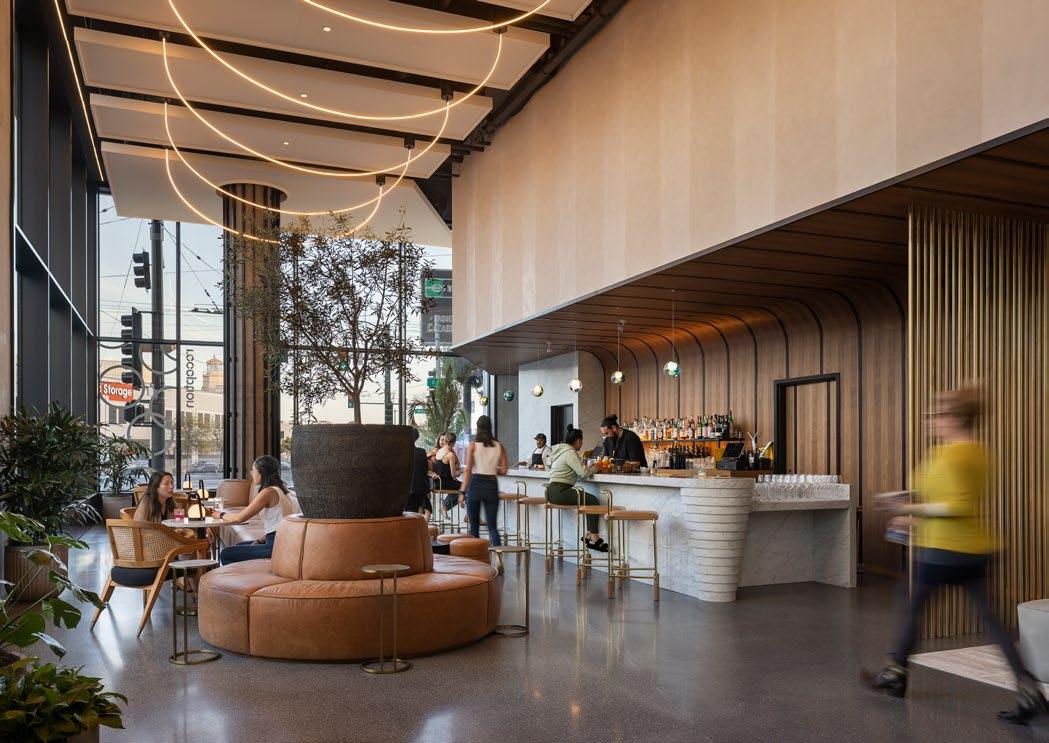
Chorus is a cultural catalyst for The Hub, blending housing, arts, and public life to create a vibrant destination where community thrives.
Despite its central location and transit-rich history, San Francisco’s Market Street Hub had become a place people hurried through. As the city revitalizes this underutilized neighborhood, the challenge is not only to provide housing but also to create an engaging, lasting sense of place.
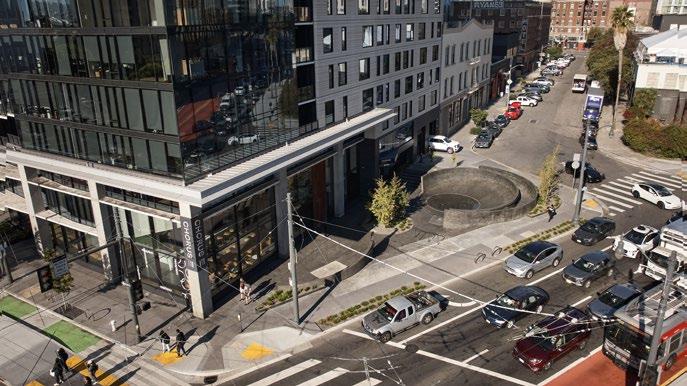
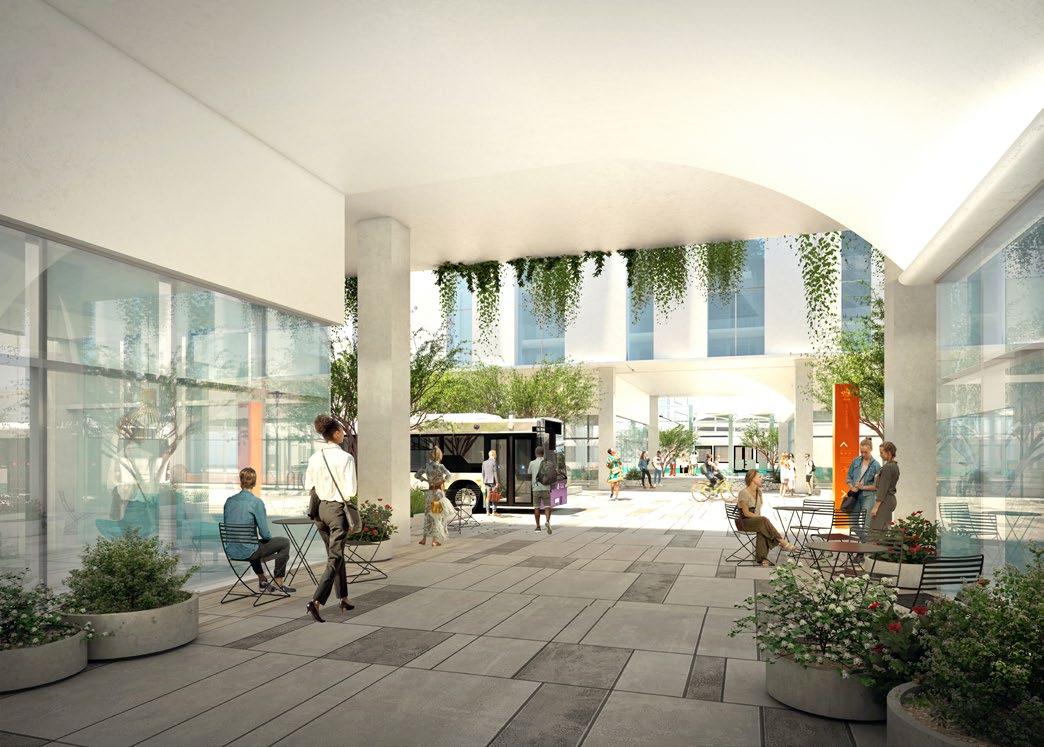
Multistudio, Align Real Estate, and Turner Construction designed Chorus, a residential tower and podium structure that integrates the City Ballet School and a new 224-seat theater, enriching the area’s cultural landscape. The public lobby bar, theater, and plaza—designed by Frida Escobedo with Fletcher Studio—activate the pedestrian realm, reinforcing the city's vision for a more vibrant, walkable Hub.
As the second of six planned towers, Chorus adds over 400 housing units in this transit-rich area. Overcoming complex zoning, alley constraints, and a severe grade change, the project transforms what would have been retail spaces into active cultural venues. The plaza extends this multi-audience approach, providing a welcoming space for theatergoers, residents, and the public to gather, relax, or experience outdoor performances—an essential addition to an area with limited public space.
Designed with sustainability in mind, Chorus aims for LEED Gold certification. It features a water purification system, wind wash mitigation, natural ventilation, and LBC Red List-free materials in 85% of finishes. Coworking spaces support a zero-commute lifestyle, and the location encourages public transit use. The tower’s porous ground floor and cultural integration redefine urban living, earning Planning Commission approval on its first try. By designing with the city as the client, Chorus sets a new precedent for how housing, arts, and public life can intersect to shape a thriving urban future.
Project Data
→ San Francisco, CA
→ 467,000 SF; 416 units
→ New Build
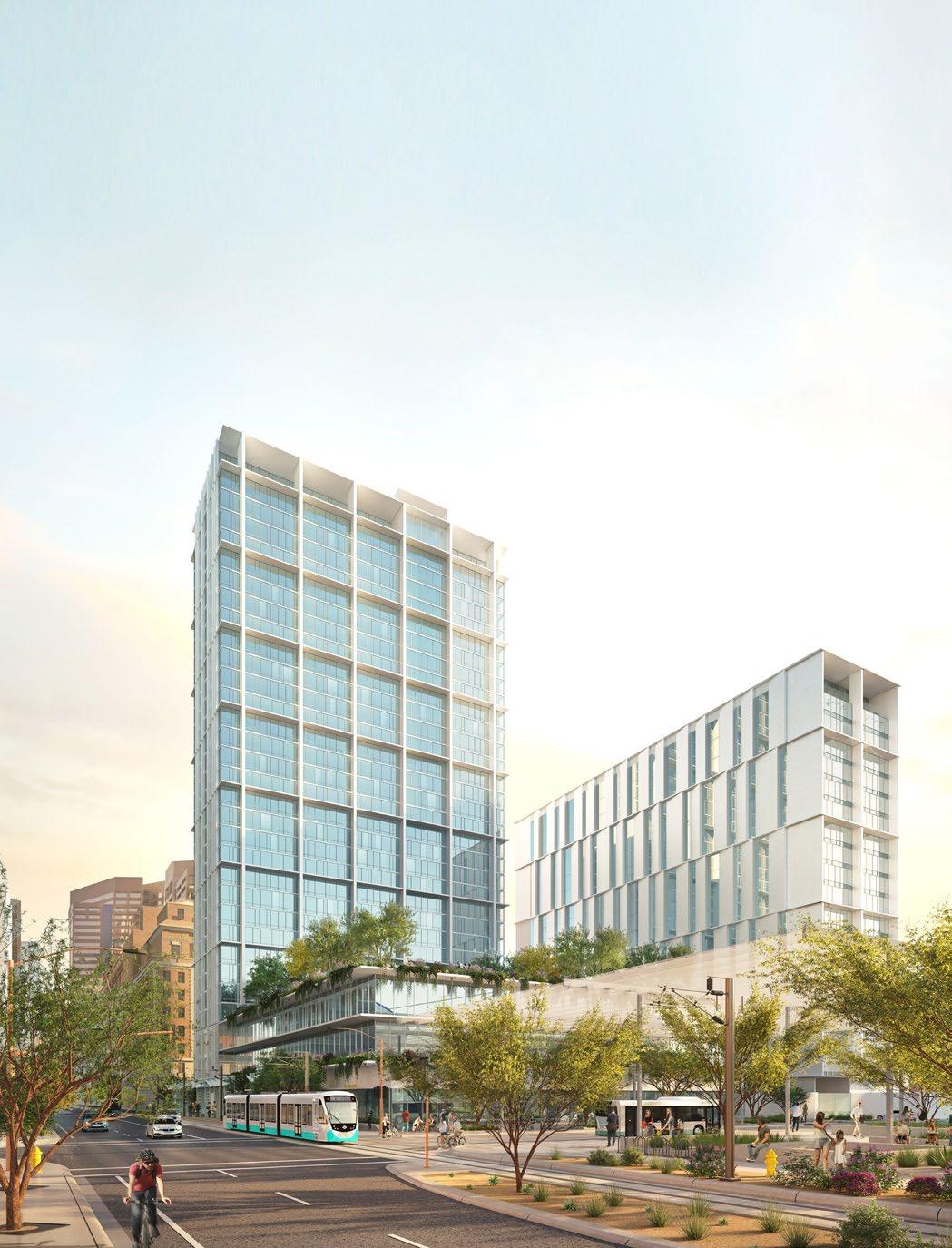
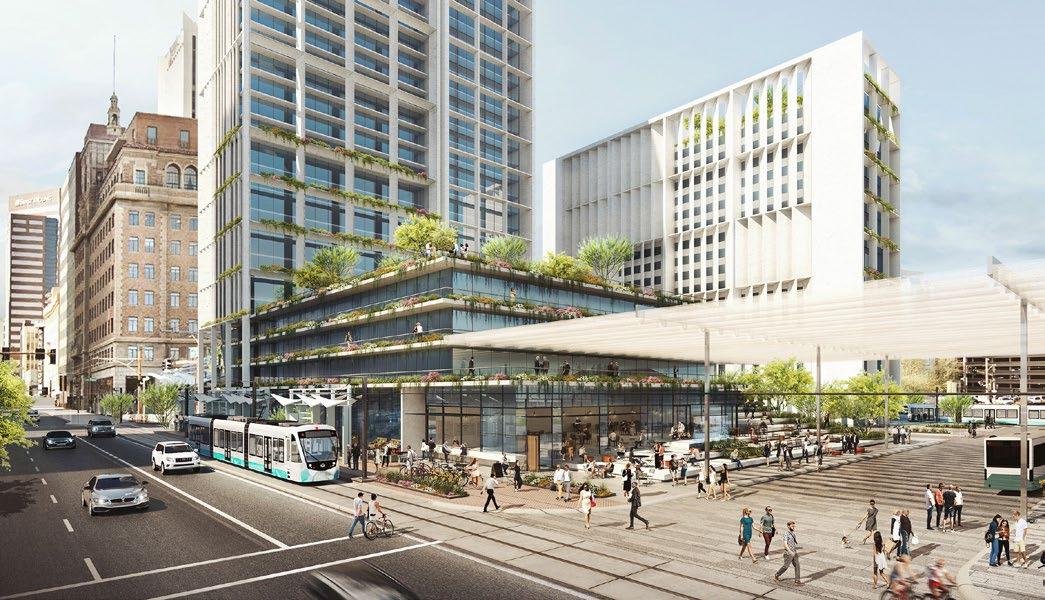
Central Station
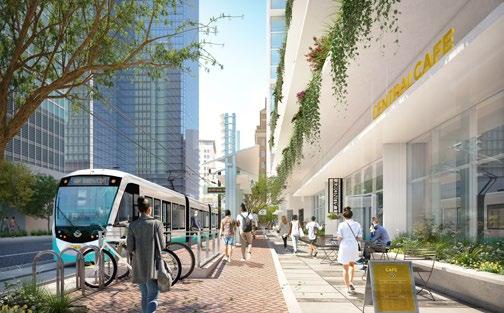
Central Station is a mixed-use development that responds to the unique challenges of its complex site. Integrating six key functions—transit, hotel, retail, office, multi-family residential, and student housing—the design fosters connectivity and enhances the urban experience.
The project connects directly to Civic Space Park, extending its northern edge with a multi-purpose venue at Polk Street. With below-grade parking, vehicular traffic is minimized, enhancing the pedestrian experience. The large office spaces with high ceilings cater to creative firms, offering flexibility, views, and wellness-focused amenities.
Located at one of the most challenging sites in Phoenix, Central Station stands as a civic extension, incorporating light rail platforms, a historic structure, and heavy utility corridors into its design. The building’s multiple entry points and secure vertical circulation create a safe, inviting environment for residents, office workers, and students, marking a new landmark at the heart of the city’s transit hub.
Project Data
→ Phoenix, AZ
→ 1,032,706 SF; 773 units
→ LEED Gold (Pursuing)
→ New Build
“ Downtown Phoenix is becoming a hub, and Central Station sets a new benchmark for transit-oriented development, enhancing the city's energy. Projects like Central Station are key reasons why more people are choosing Phoenix as their new home over any other city in the U.S."
- Mayor Kate Gallego, City of Phoenix, AZ
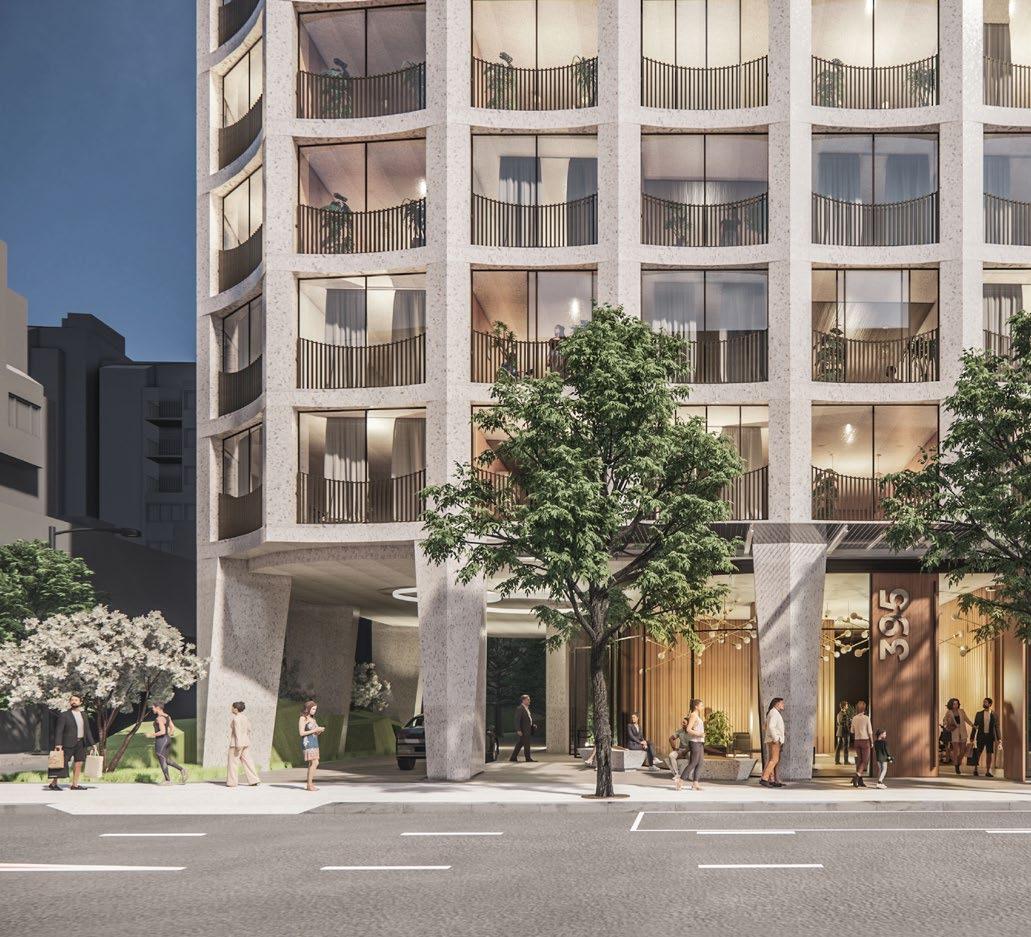
395 3rd Street
Multistudio served as the Architect of Record for Henning Larsen.
Rooted in San Francisco’s skyline, natureinspired design meets urban living to create a timeless landmark that enhances the city’s identity, fosters connection, and offers residents unparalleled views and spaces for well-being.
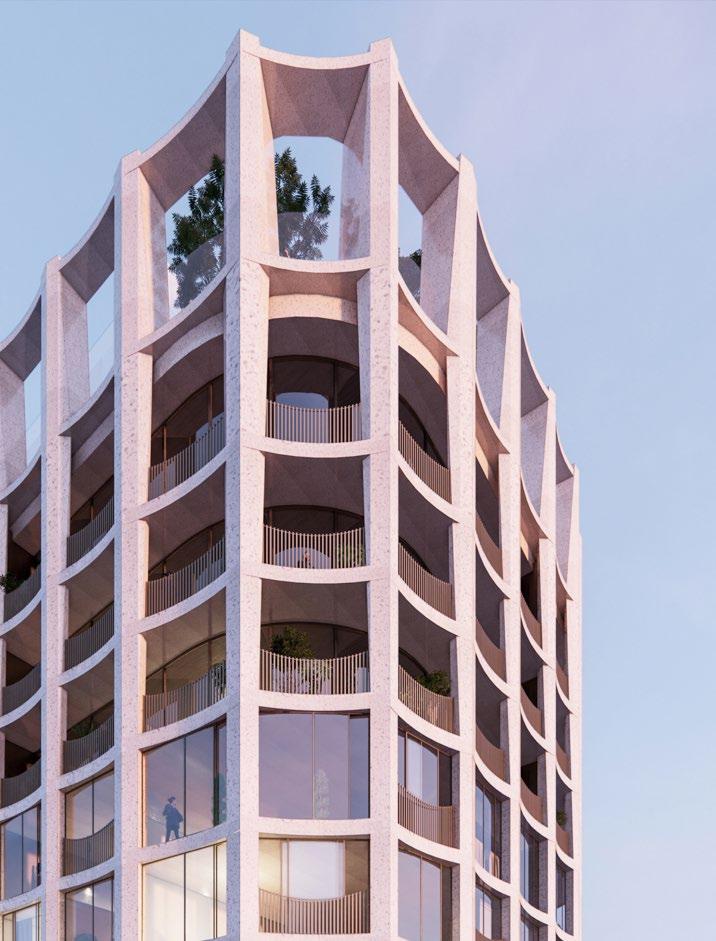
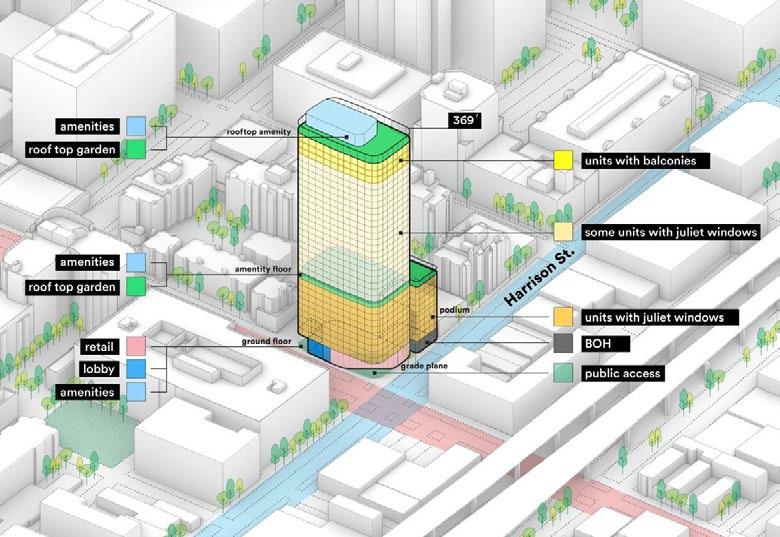
The project is a 34-story residential high rise building that will bring more than 500 units of housing to San Francisco’s South of Market neighborhood. Its columnar form is inspired by the California Redwood tree, creating a timeless icon rooted in its urban surroundings. At every scale, the building is being designed to reflect and amplify its place.
As Architect of Record, Multistudio is collaborating with Design Architect Henning Larsen Associates, employing our San Francisco high rise residential experience to translate the overall conceptual vision into the details of desirable unit types, inspiring layouts that capitalize on unparalleled views, and a distinctive façade design that is articulated for the human scale.
The building marks a threshold between the lower buildings of SOMA to the South and West, and the taller towers of the East Cut neighborhood to the North and East. The rhythm of storefronts on 3rd Street is continued by a lobby and retail space that are sculpted to create two new exterior plazas, encouraging pedestrian movement under the ground floor colonnade and along the street.
As the building rises, there are three bands of amenities that connect to three different scales of the city. The ground floor connects to the street, while the podium roof connects to the city and houses the communal kitchen, grilling patio and fitness. The rooftop connects to the bay, offering a Scandinavian spa experience with a Finnish sauna, pool and roof garden designed for thermal comfort and well-being.
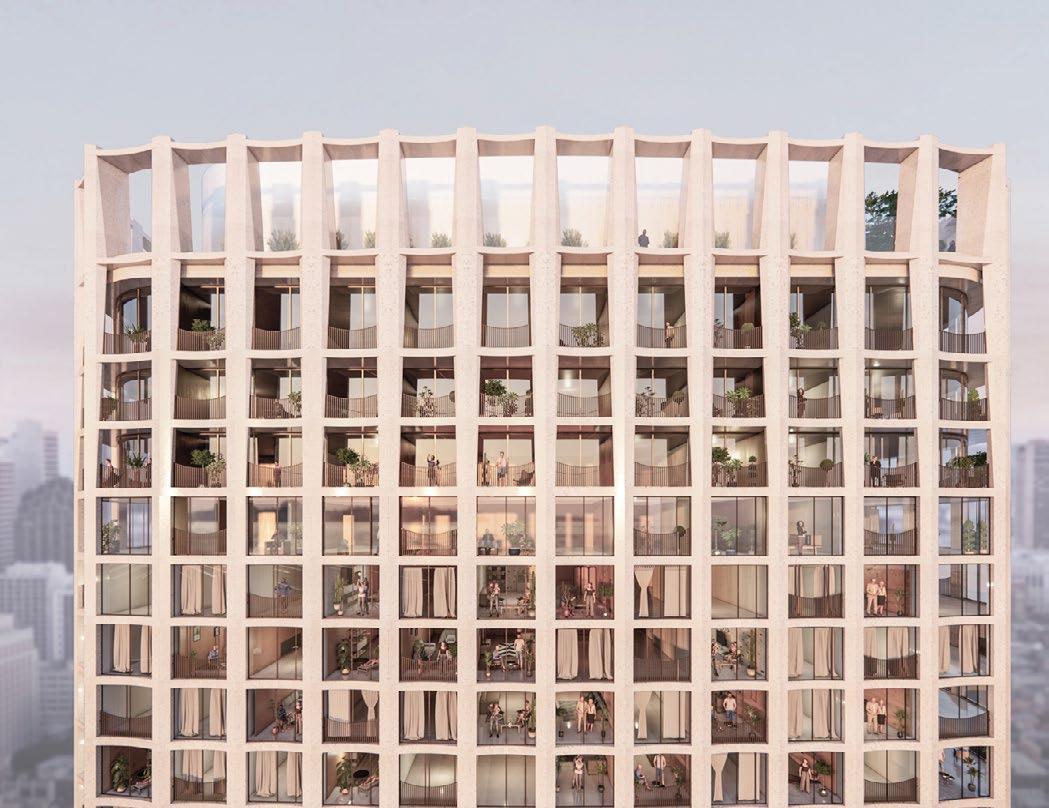
The façade is articulated to mitigate wind and increase energy efficiency, building on San Francisco’s rich architectural history of capturing light and depth with masonry. It incorporates a mix of juliet and habitable balconies as unique private outdoor spaces. The units incorporate generous living spaces with high ceilings that are oriented outwards to the striking views to reinforce a strong sense of place within the city.
Multistudio in association with Henning Larsen.
Project Data
→ San Francisco, CA
→ 553,800 SF; 500+ units
→ LEED Gold
→ New Build
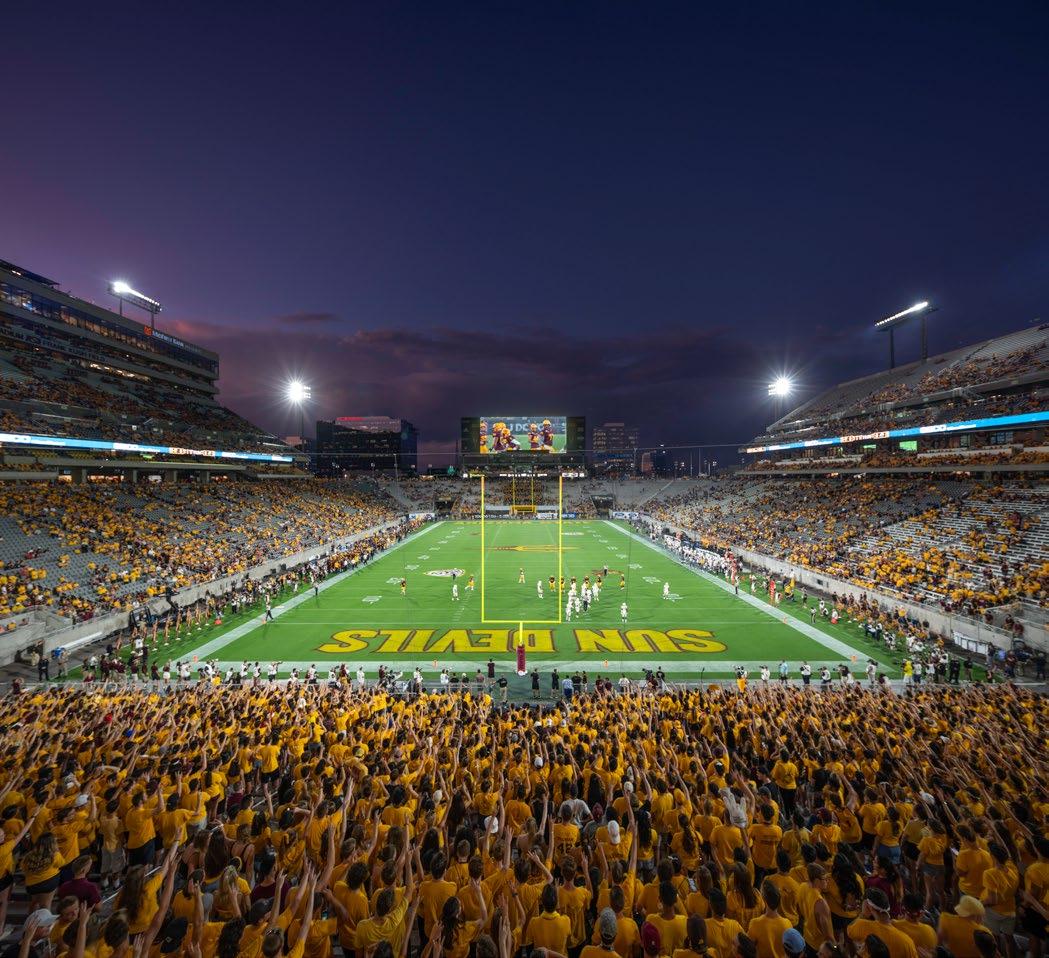
Mountain America Stadium
Arizona State University
Transforming Sun Devil Stadium into a fan-centric, accessible destination, where every detail enhances the experience—without missing a game.
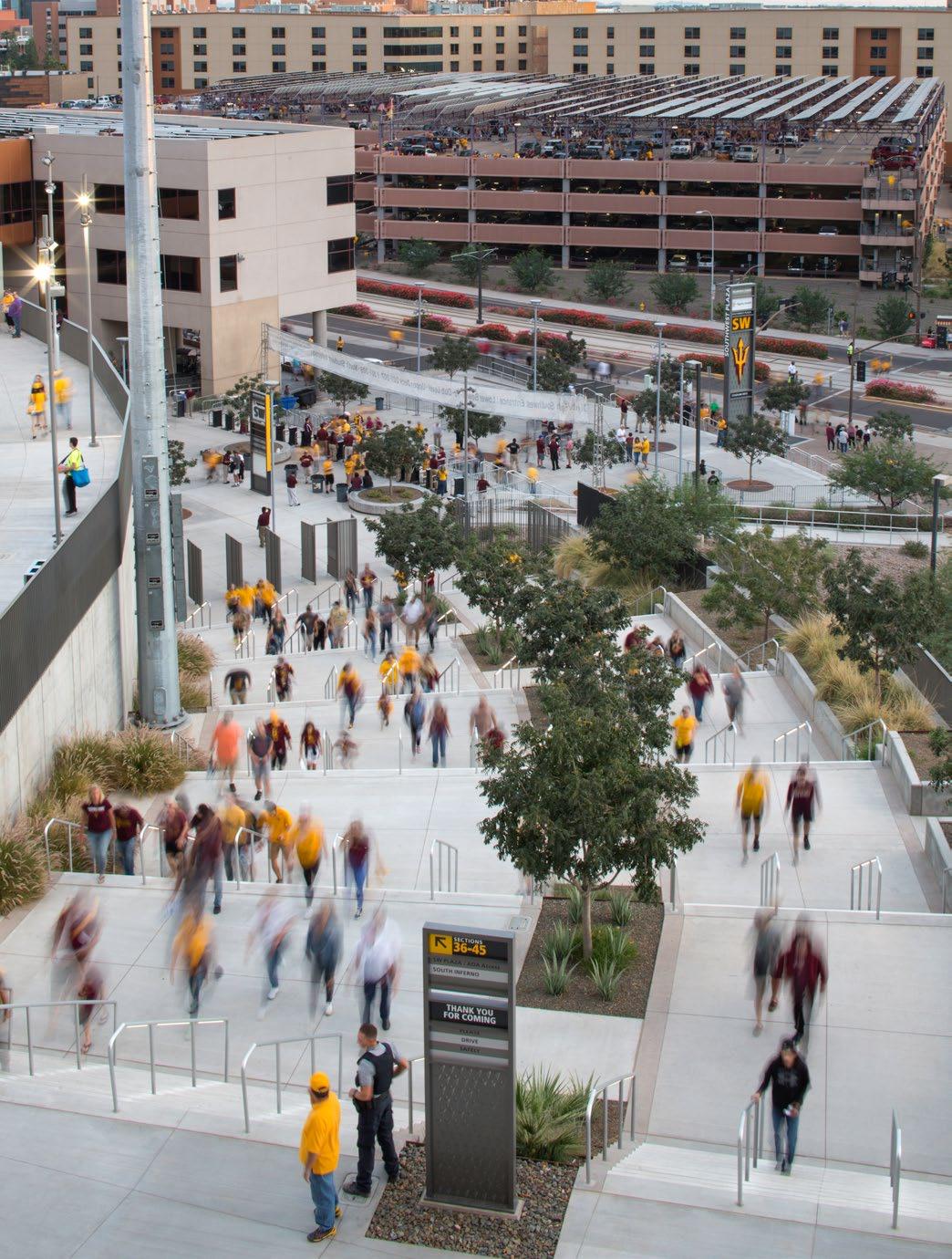
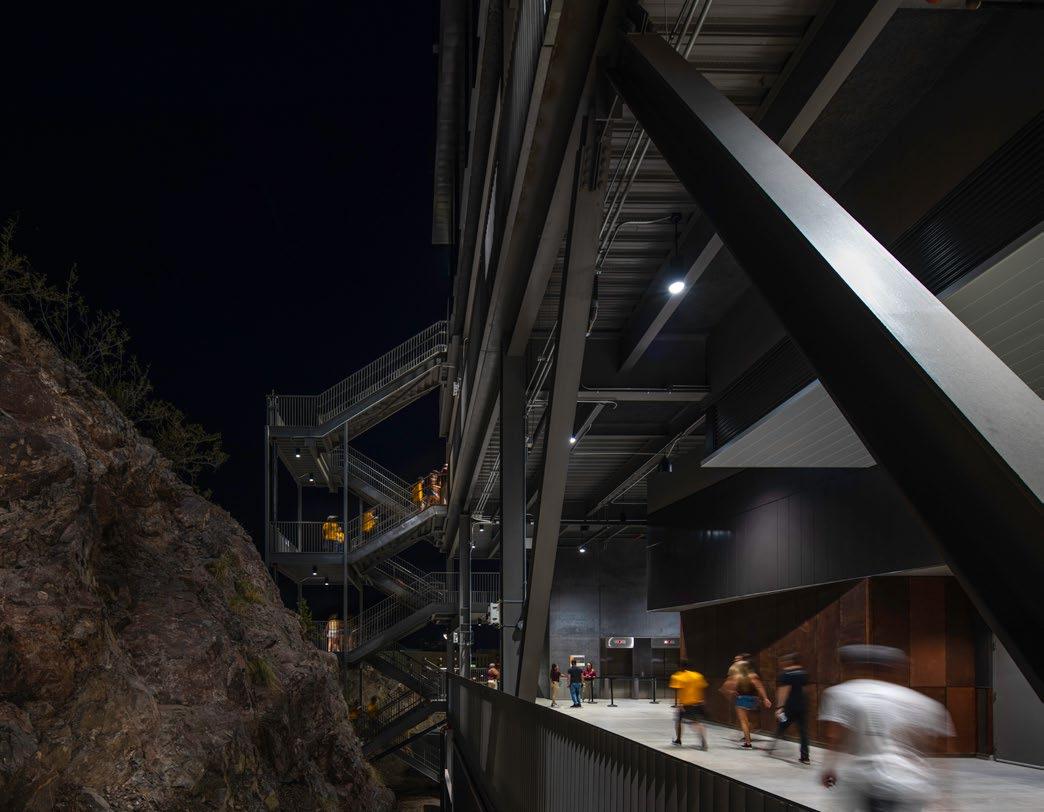
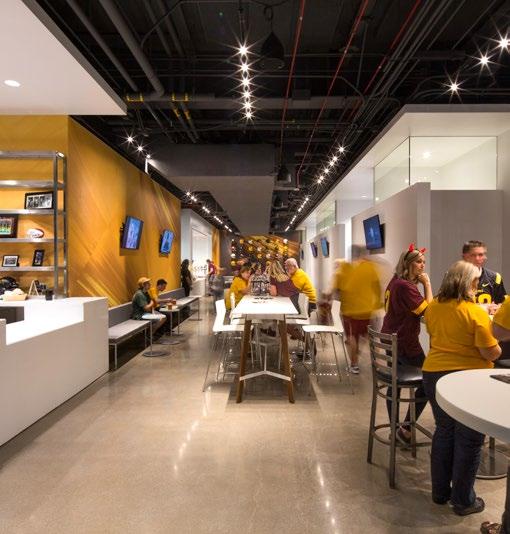
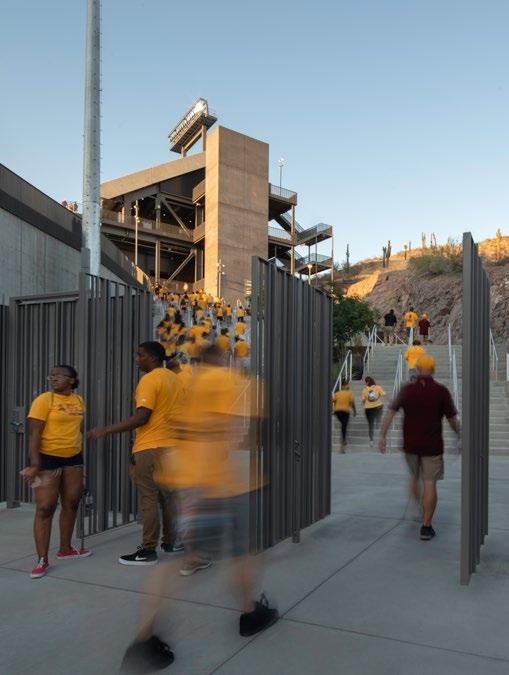
The primary goal of Arizona State University Mountain America Stadium (Sun Devil Stadium Reinvention) was to improve the overall fan experience. The original main concourse level constricted patron circulation, without clear views to the field or connection to the iconic butte. Major upgrades were made with all new concessions, restrooms, stadiumentries and elevator service. Permanent concessions were built in the south end zone to replace trailers and the number of POS devices were increased tenfold, speeding transaction times and reducing lines.
A major challenge to the reinvention project was the condition that all work be done only between football seasons. Those small windows proved to be both spectacle and spectacular, taking nearly three months in phase two to surgically demolish portions of the stadium, brace the existing structure and underpin footings. In order to allow the football seasons to go ahead uninterrupted, we had to control and deliver all of the massive components on a very rigid schedule.
Previously, special accommodations had to be made for disabled spectators to improve access and fan experience. Thanks to the improved circulation created by phase one and two modifications, Sun Devil Stadium is now accessible to all fans at all price points and every range of seating. Improved restrooms and concessions are also accessible to everyone.
Multistudio in partnership with HNTB.
Project Data
→ Tempe, AZ
→ 605,102 SF
→ LEED Gold
→ New Build
A maximization of investment through year-round programs.
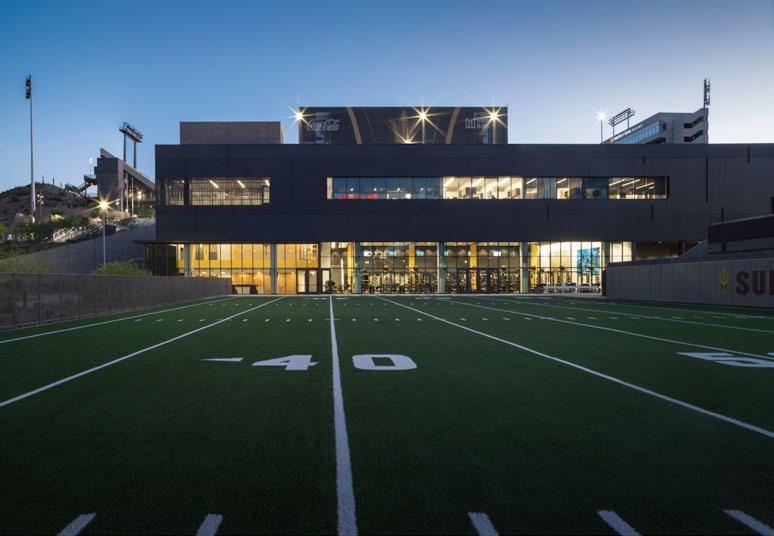
Beyond the football games, graduations and athletic events hosted each year, ASU’s reinvented stadium attracts major events and off-season community engagement opportunities and festivals.
The team worked with a dozen stakeholders as well as the City of Tempe to unpack programming opportunities without taking away from adjacent activities that already have momentum on campus. As such, the project program was expanded to create a new student hub of activity at the northern edge of campus. Site design and operational flows around access, security, and wayfinding were considered along with operational expenses of various scenarios for expanded use.
Recognition
→ USG National Association of Collegiate Director of Athletics, Sustainability Award
Allen Fieldhouse University of Kansas
Honoring tradition while reimagining the fan experience, Allen Fieldhouse blends legacy and innovation to create a vibrant, connected space for every generation of Jayhawk supporters.
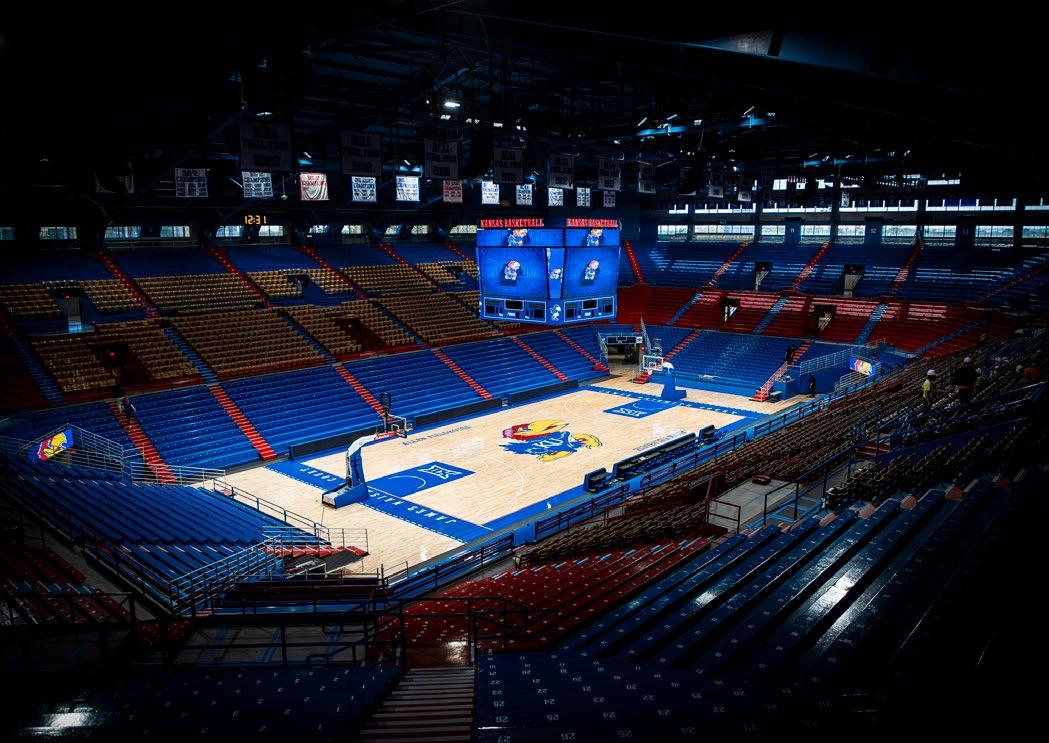
Known as the "Cathedral of College Basketball," the University of Kansas' Allen Fieldhouse is a storied arena that hast hosted unforgettable games and set records since its opening in 1955.
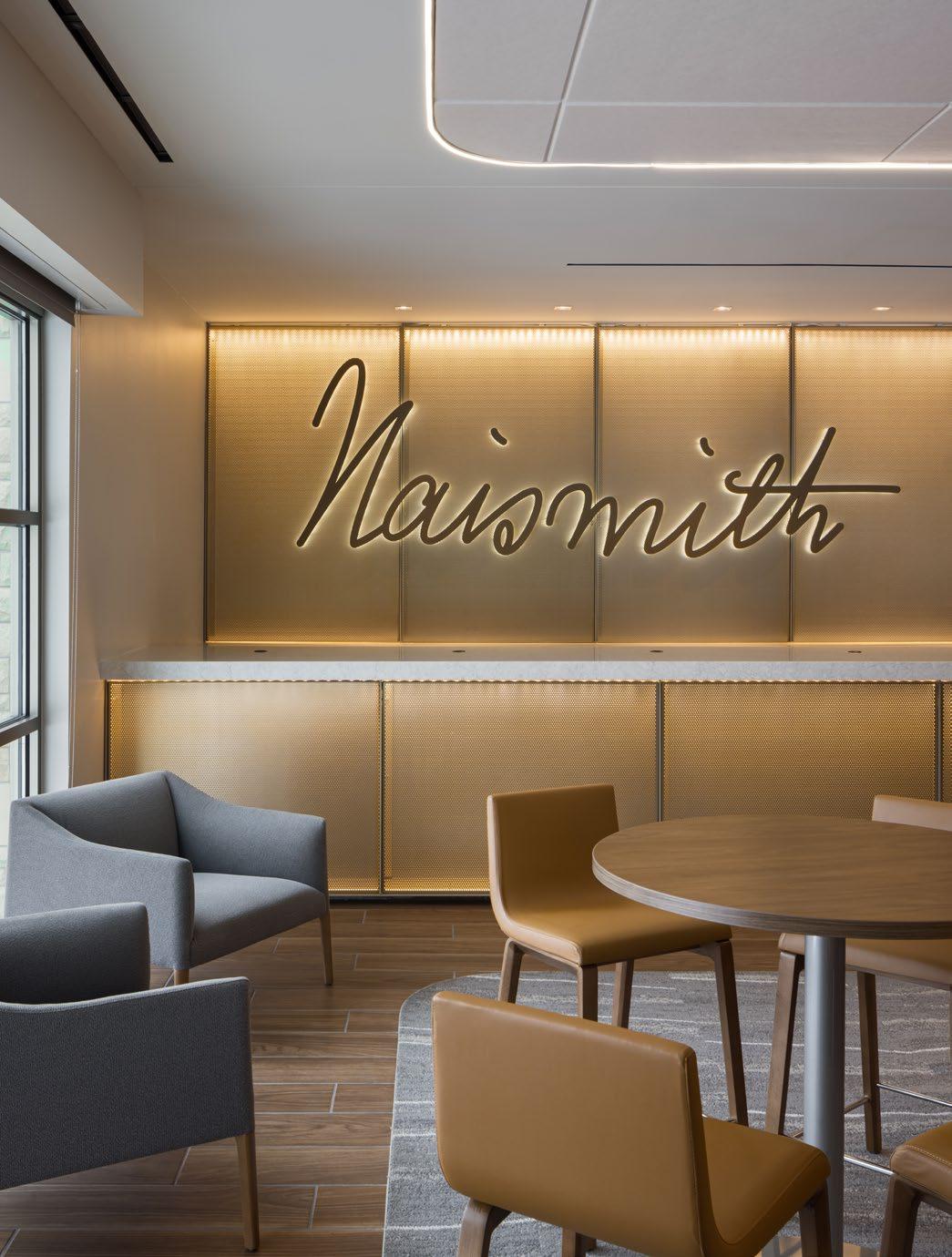
Allen Fieldhouse is named after Forrest C. "Phog" Allen, the notable KU basketball coach who played for and was trained by James Naismith, the game's founder, a longtime KU professor of physical culture, and its first basketball coach. Multistudio was tasked with preserving the building's legacy while delivering a recharged, fancentered experience that enhances every game.
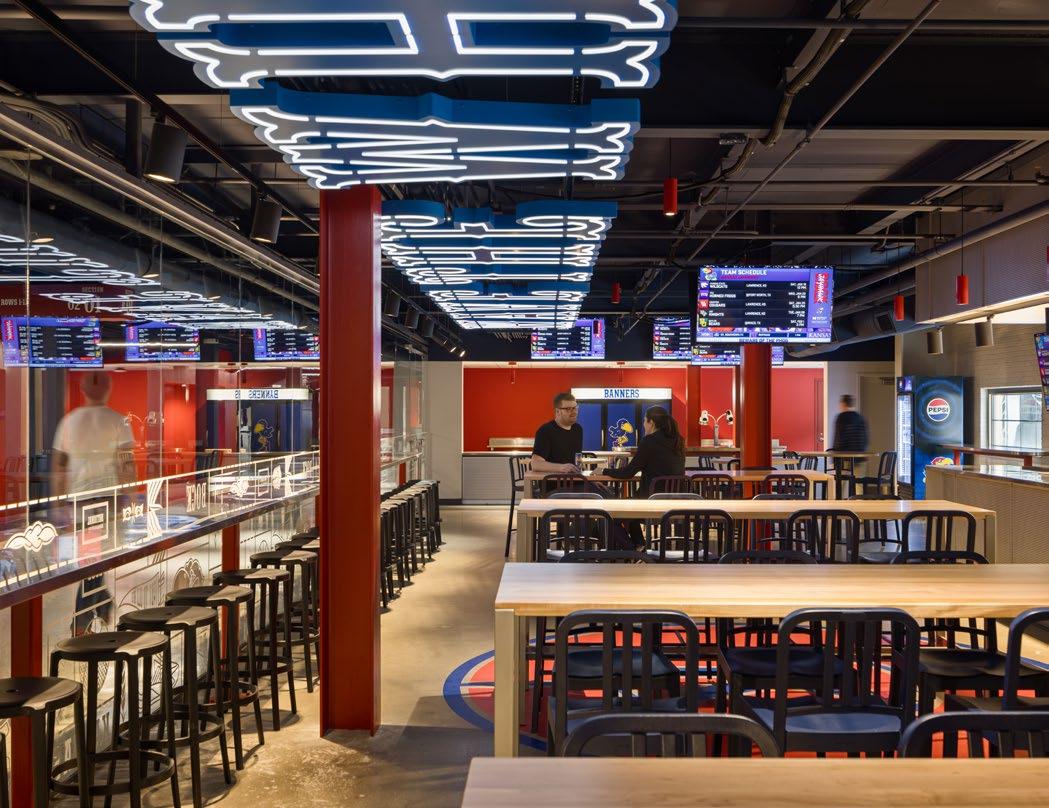
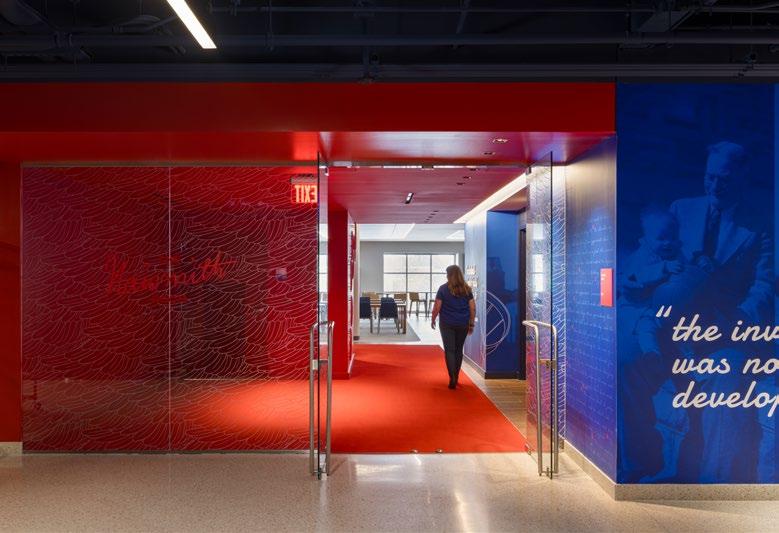
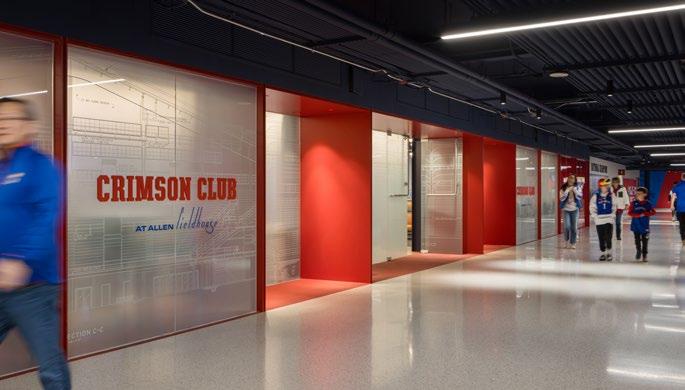
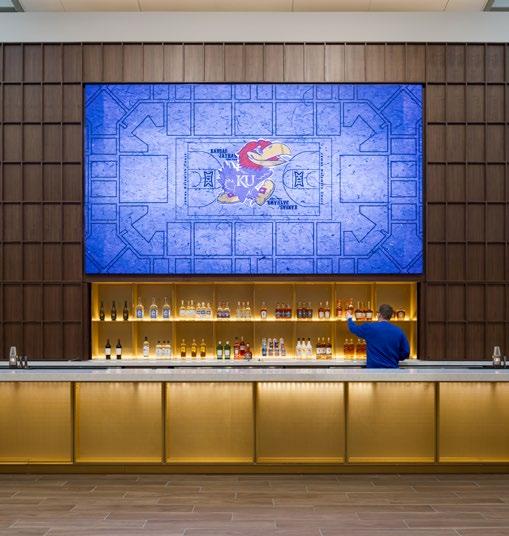
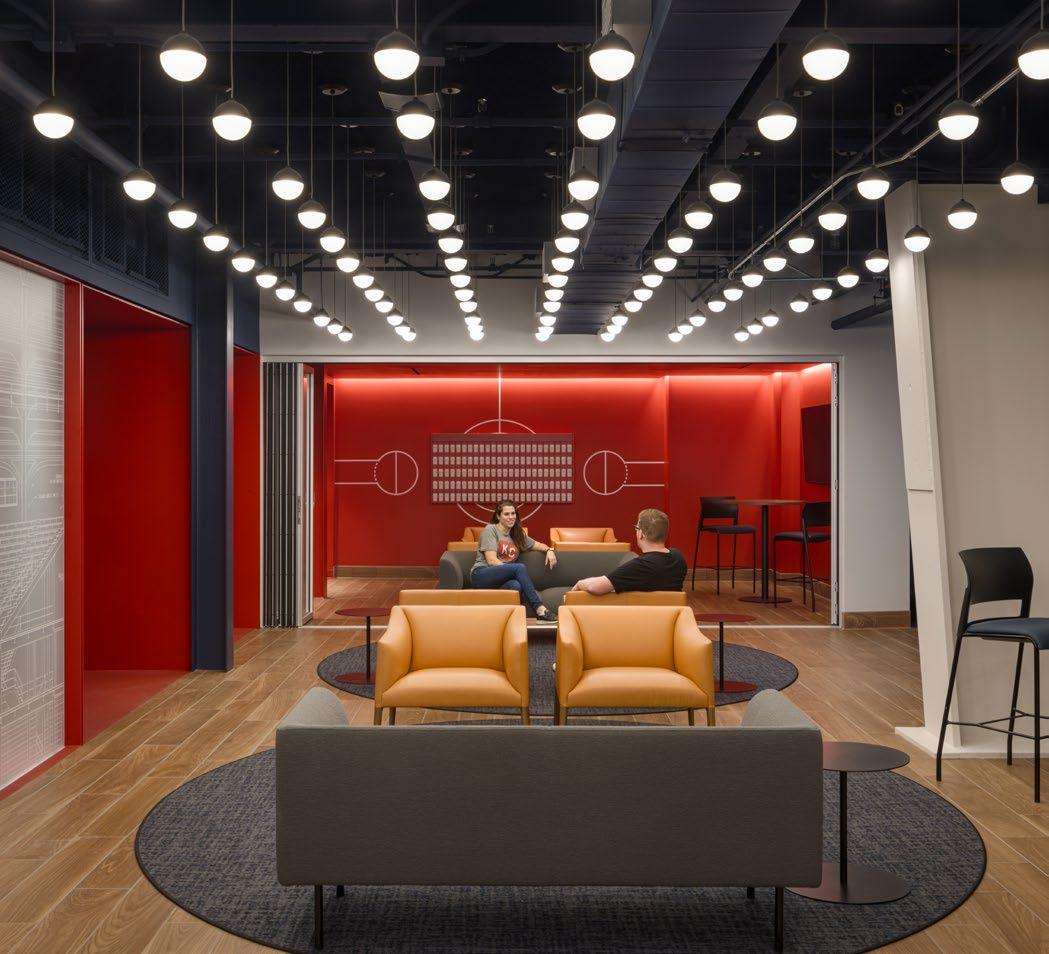
Multistudio transformed Allen Fieldhouse with new, high-touch areas like the "Banners Pub," an inclusive design recognizing both men's and women's programs, and a connected experience between concourses and concessions that celebrates KU's legacy. Interactive seating zones, donor spaces, and design touches—like etched blueprints and wheat field graphics—unite past and future, embracing every generation of Jayhawk supporters.
Project Data
→ Lawrence, KS → 325,000 SF
Renovation
Multistudio preserved the original James Naismith Court and created a seamless architectural connection to the nearby DeBruce Center, home to basketball's founding rules. Each new space honors KU's role in the sports' evolution and fosters a sense of belonging among all who gather within its walls.
An elevated experience rooted in tradition, where we carefully study our clients and stakeholders to create brand experiences that engage and inspire every visitor.
Community Integration
South Central TransitOriented Development Master Plan City of Phoenix
Rooted in the community’s voice, this Transit-Oriented Development plan enhances connectivity, honors history, and fosters inclusive, sustainable growth—creating a legacy for Phoenix and setting a national precedent for TOD planning.
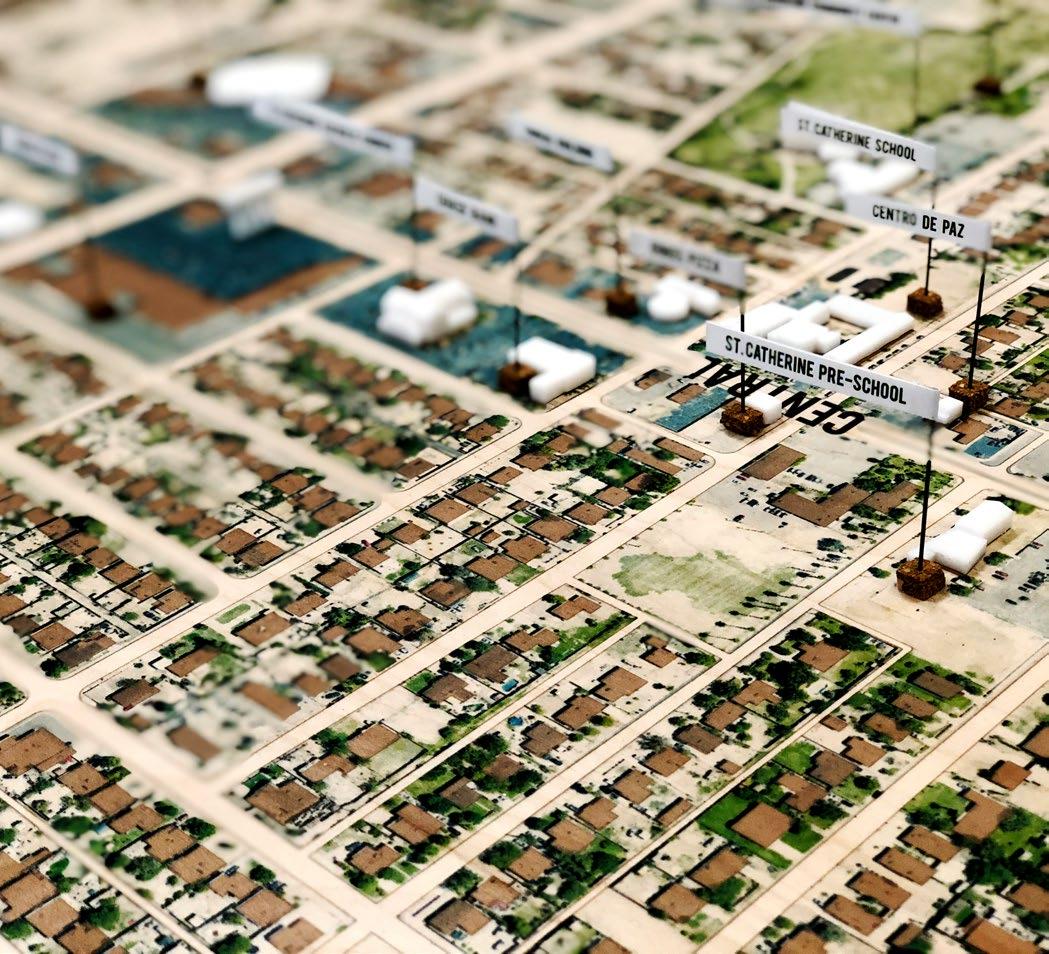
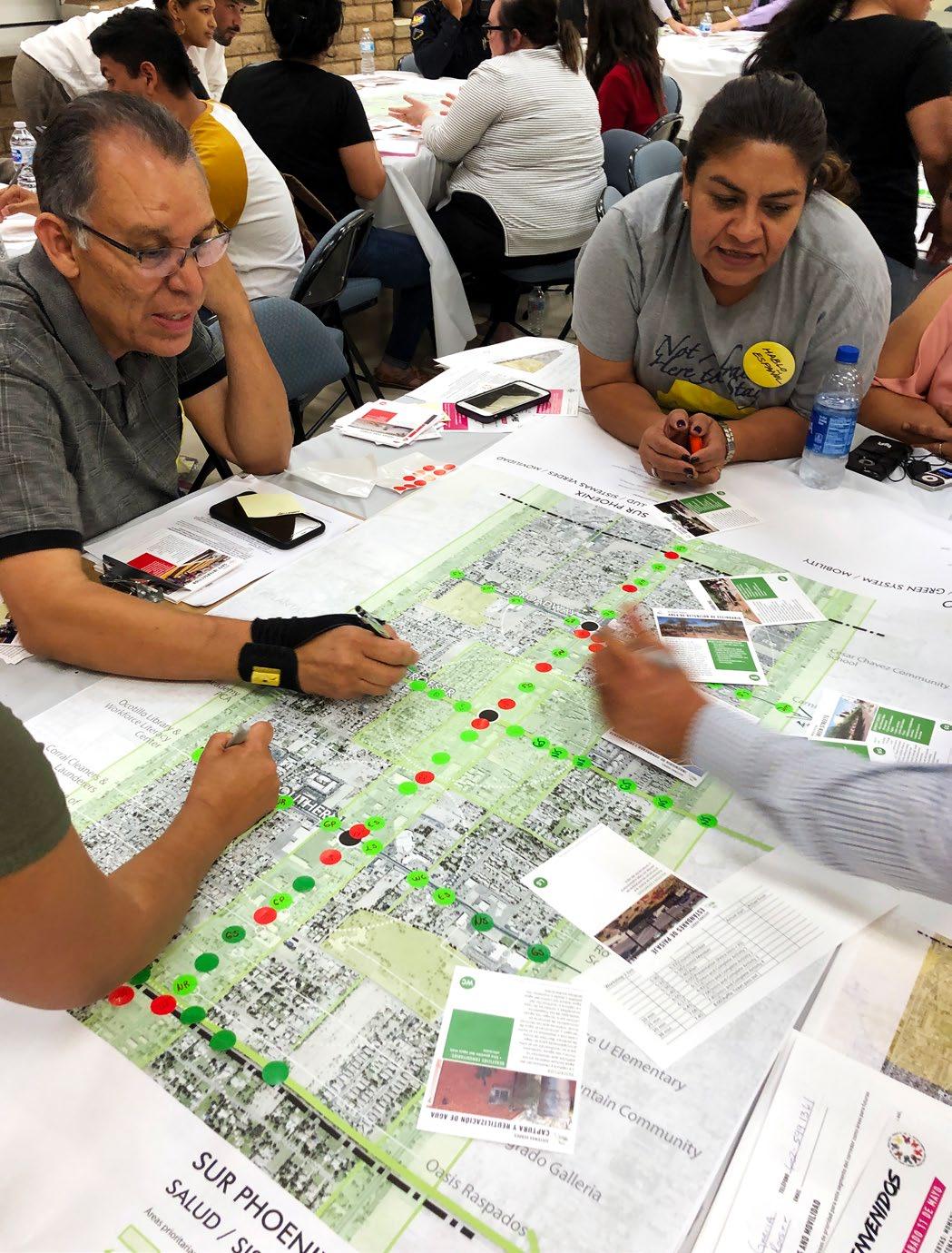
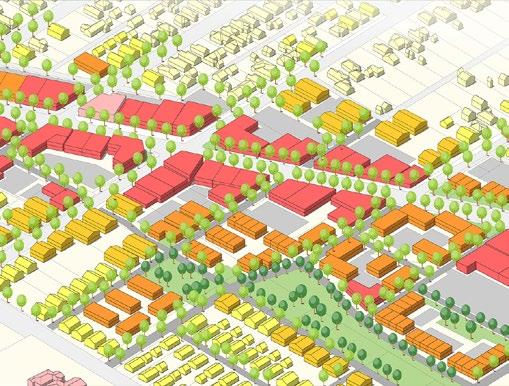
The City of Phoenix was awarded a Federal grant to engage the community and support local businesses along the South Central light rail extension. Multistudio was selected to lead this work. Transit-Oriented Development, also known as TOD, is the creation of compact, walkable, pedestrian-oriented, mixed-use communities centered around high-quality train systems. The product of this grant was a living document, inspired by the hearts and voices of the community.
Multistudio and Promise Arizona teamed with a variety of organizations to complete the grant work and divided the scope into three major tasks: community outreach, a business assistance plan, and a transit-oriented development land use plan. Focused on building trust through communication, consistency and accountability, the team embraced the opportunity to empower community voices through groundbreaking development strategies and innovation, building upon existing community values and providing a vibrant inclusive future.
The process focused on honoring the history and culture of South Central Phoenix and striving to envision the possibilities for the future with the community. The collective goal was to leave behind a legacy for the community and for the City of Phoenix, demonstrating a national precedent for TOD planning in support of its people.
The new South Central TOD Corridor Plan provides the policies, strategies, and actions necessary to allow the community to evolve in an authentic manner. Improvements include multimodal transportation investments that support local connectivity, shade and
storm-water improvements to green the corridor and neighborhoods to reduce the heat island affect, and enhancements to the park and open space system. Corridor development emphasizes compact, contextual, and diverse growth that serves the community and provides new opportunities. The Walkable Urban Code was also been proposed for the corridor to ensure that development occurs in an appropriate manner.
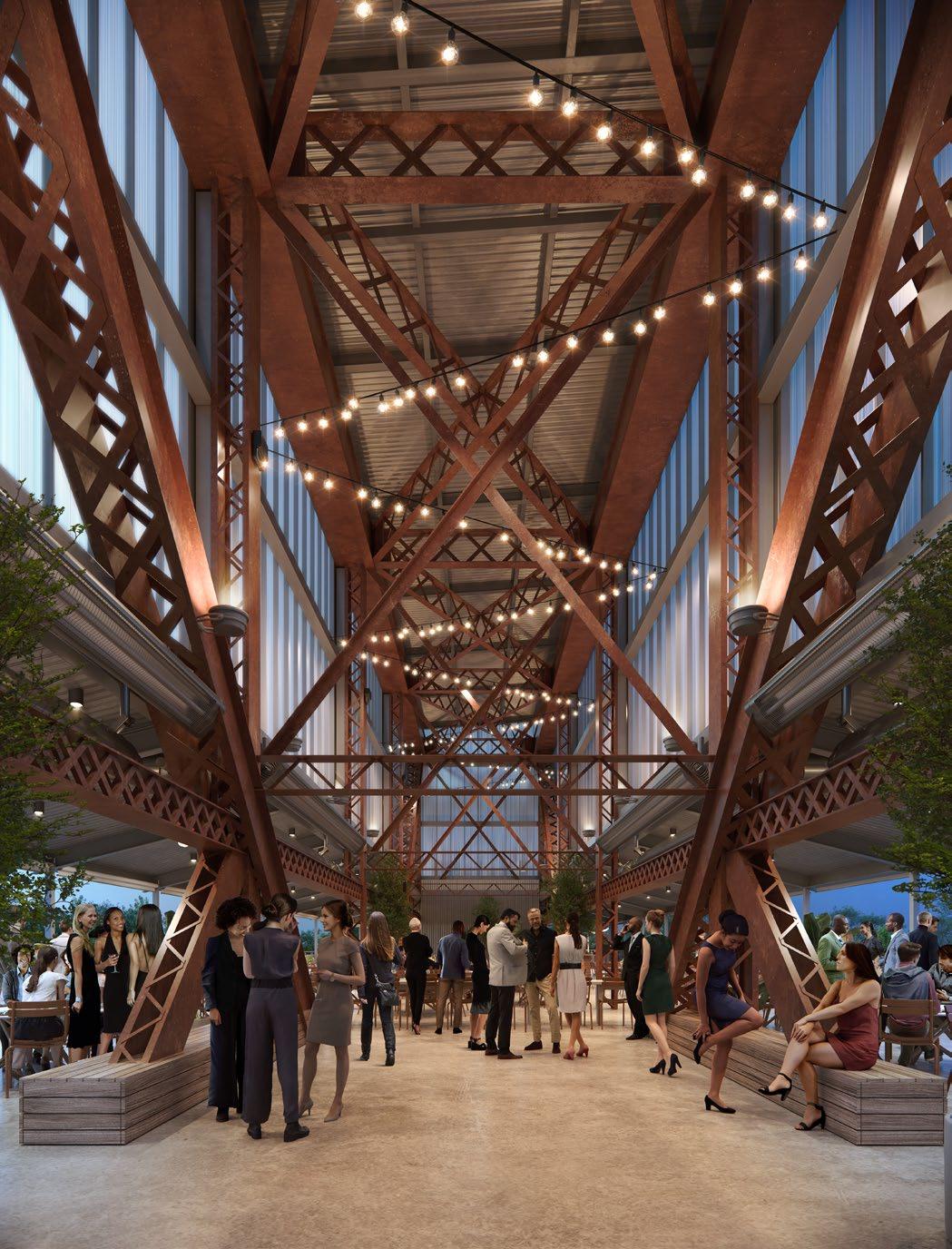
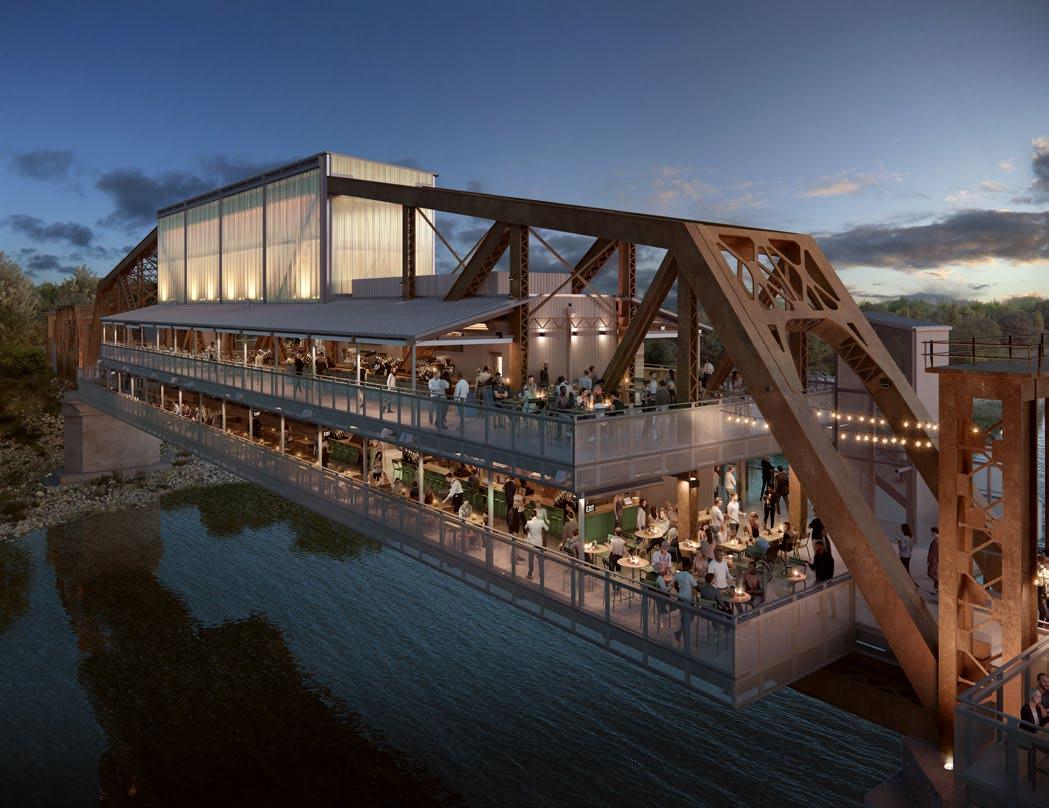
From Vacant Landmark to Vibrant Entertainment District: Breathing New Life into the Rock Island Bridge
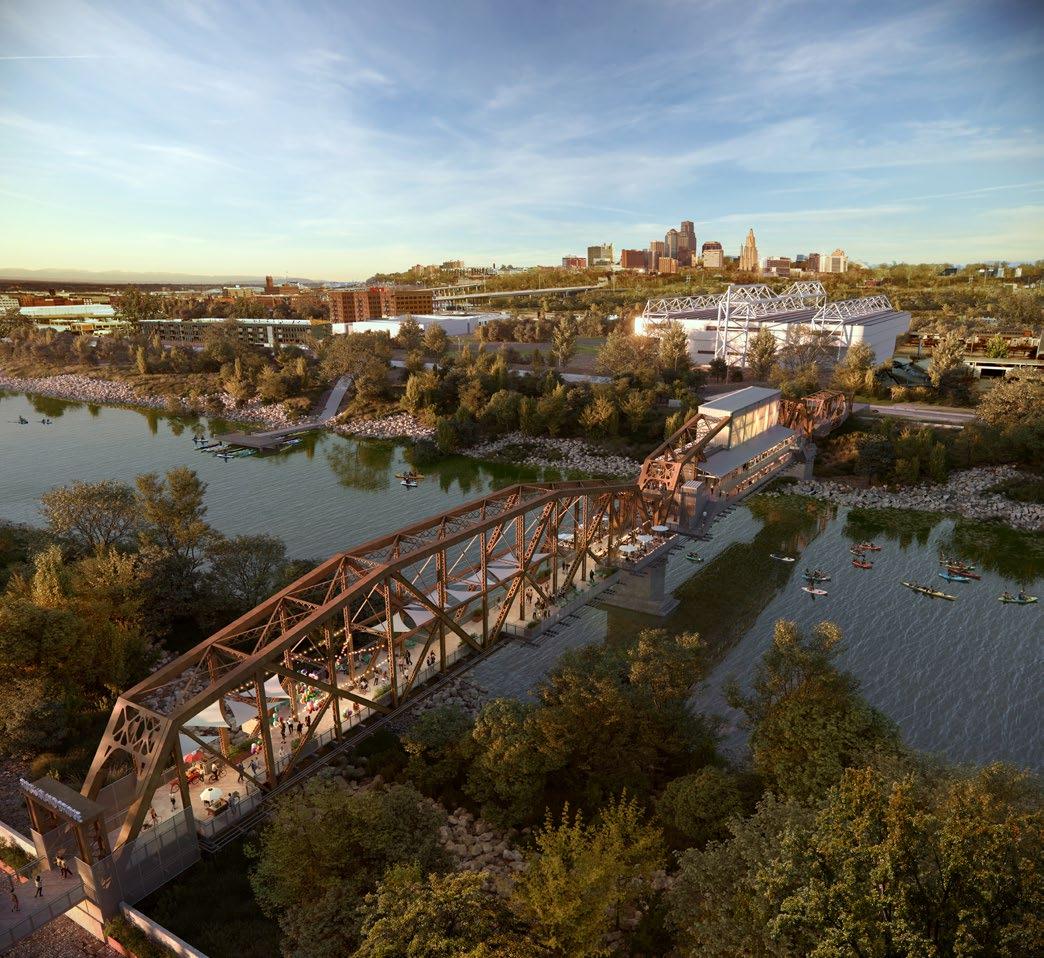
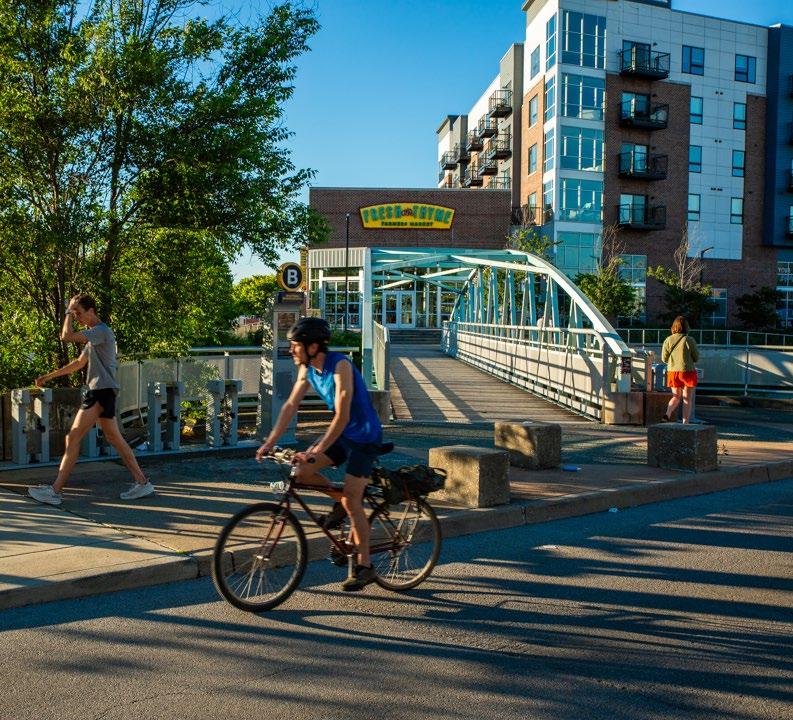
Completed in 1905 as a vital artery of railway transportation, the Rock Island Bridge had been vacant since the 1970s. Connecting Kansas City across the Kansas-Missouri state line, the structure is being repurposed and transformed into America’s first trailhead and entertainment district over a river.
The Rock Island Bridge is a proud member of the esteemed High Line Network, a high honor as it attains recognition as an infrastructure reuse project. Not only does the project salvage 1,200 tons of blighted steel, but this affiliation underscores its commitment to fostering vibrant public spaces, civic connections, promoting environmental resilience, and championing equitable community development.
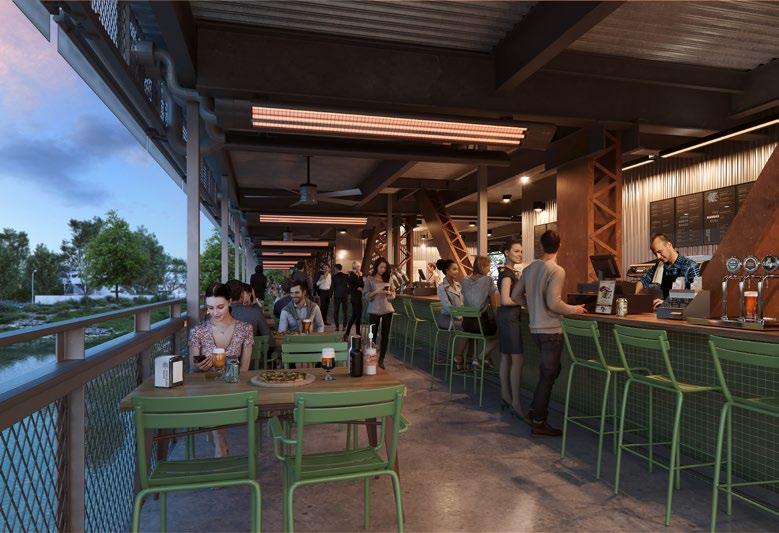
Spanning 750 feet long, the reimagined Rock Island Bridge is comprised of three trusses and two decks. The central truss is over 100 yards long and the primary Entertainment District, a hub of communal activity with plenty of seating, a wrap-around bar, and a variety of dining options. The south side of the central truss has a spacious walkway that interconnects with trailhead services, providing a public crossing for pedestrians and dismounted bicyclists that links levee trails on both sides of the bridge.
The approximately 8,000 sq.ft. deck resides 12 feet above the central truss, featuring a 50-foot bar with excellent views. This second level is programmed as an event space that can accommodate 250 people indoors and another 100 outdoors, acting as a venue for year-round entertainment and private events like corporate events, family and class reunions, community events, fundraisers, and weddings.
The west truss hosts the Community Zone, providing open-air community spaces with viewing platforms that can host local farmer’s markets, art fairs, nonprofits, fitness classes, or other community activities.
Project Data
→ Kansas City, KS
→ 35,000 SF
→ Adaptive Reuse
Satchel Paige House
Restoring History with Satchel Paige's Historic Home as a Living Tribute to Legacy and Community
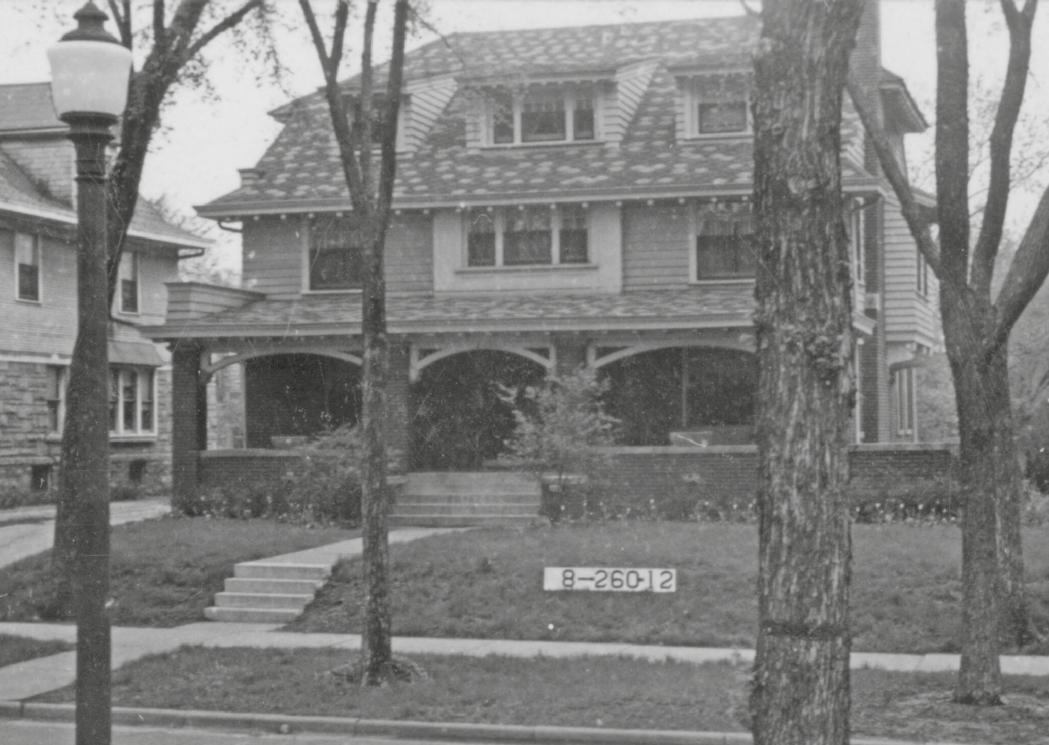
Leroy “Satchel” Paige, National Baseball Hall of Famer and Kansas City Monarch, was the first Black pitcher to play in the American League and is widely considered to be among the greatest baseball players of all time. Satchel Paige's legendary career spanned five decades, leading to his induction into the National Baseball Hall of Fame in 1971.
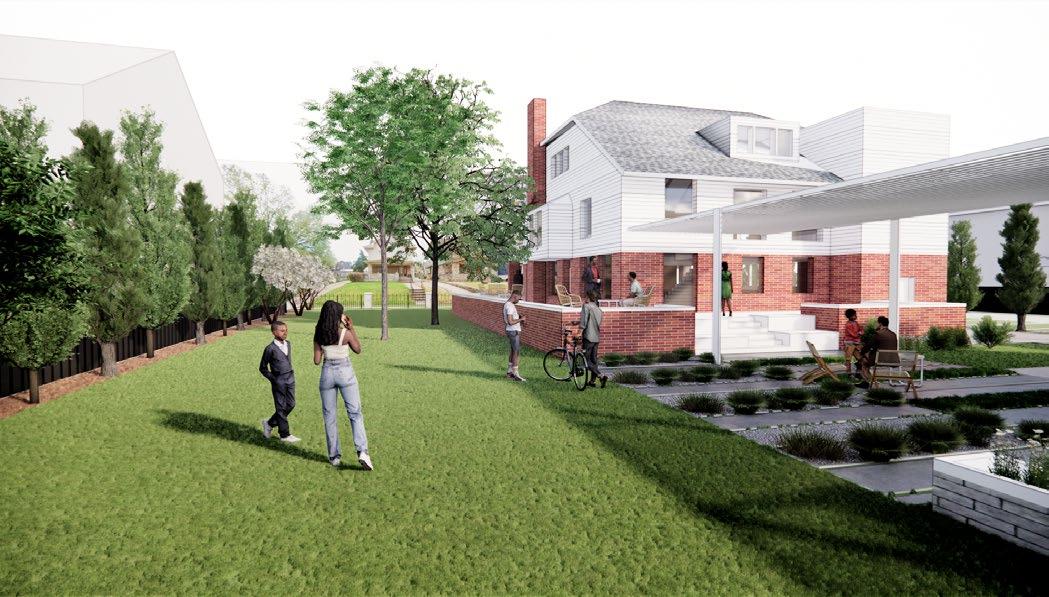
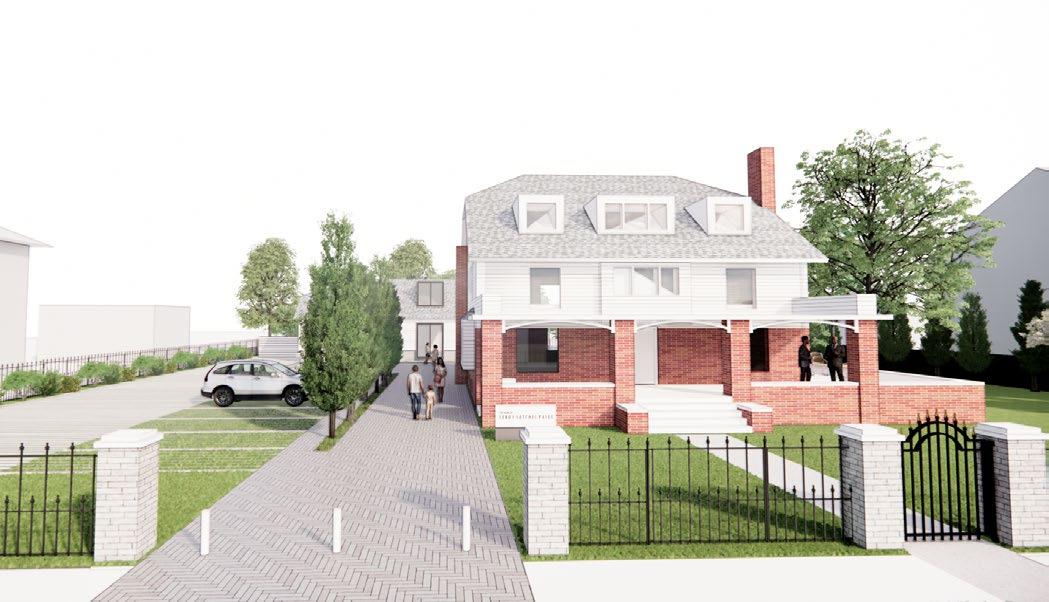
On May 29, 2018 Satchel Paige's former home went up in flames overnight near 28th and Benton Blvd. The house had been vacant for some time. Following that destructive fire, the city bought the property and pledged to restore the house to its historic beauty.
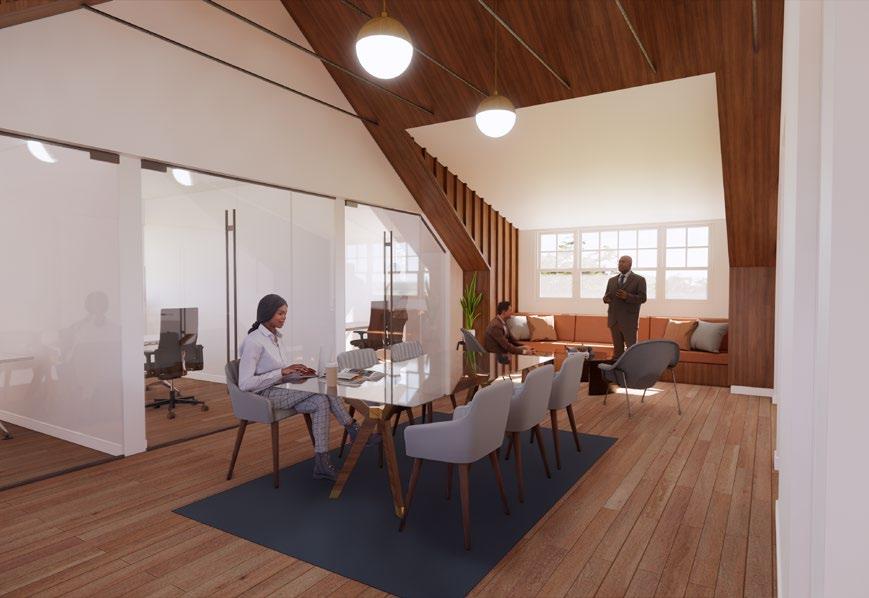
Our team helped ignite Pitch Perfect KC, a development team comprised of local professionals and stakeholders whose singular mission is the restoration of the historic Paige family home in Kansas City’s historic Santa Fe neighborhood. The adaptive reuse project is being designed to tell the story of Paige’s professional career and family life. Major supporting program spaces will include exhibition space, an office incubator, a neighborhood meeting room, a coffee and gift shop, and a covered outdoor event area.
The Satchel Paige House is currently in the planning stage and has received a huge boost in funding for the project through a grant from the National Trust for Historic Preservation. Paige's home will be a long lasting symbol of the legacy he left for baseball, African American history, and for Kansas City.
Project Data
→ Kansas City, MO
→ 325,000 SF
→ Renovation & Addition
Indianapolis Transit-Oriented Development Plan
Indianapolis and Marion County are expanding Bus Rapid Transit (BRT)
and updating zoning to foster vibrant, transit-oriented communities.
These changes enhance connectivity, support local economies, and improve urban livability.
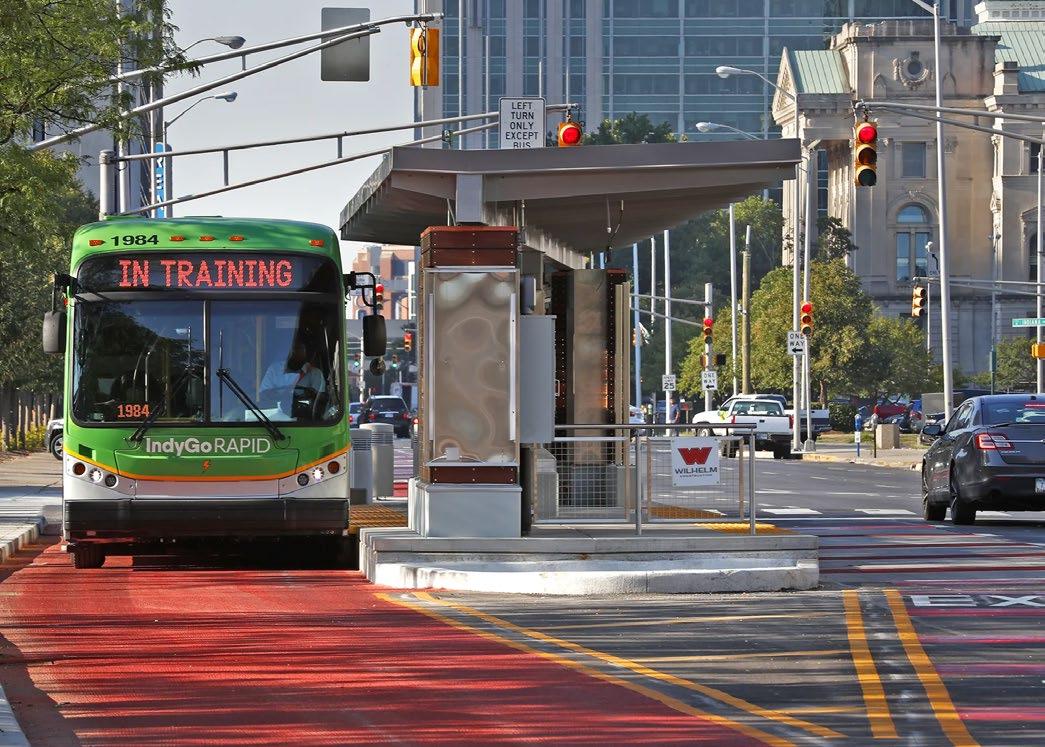
Indianapolis and Marion County are underway implementing a new Bus Rapid Transit (BRT) system. The system will improve transit connectivity throughout the City/County and provide improved access to a greater portion of the community population. The system intentionally connects people to destinations, jobs, healthcare, education and services, improving the quality of life for residents and patrons.
To ensure the transit investment is leveraged to the benefit of the community and currently under-served populations, the City of Indianapolis, IndyGo, the transit provider, and the Indianapolis Metropolitan Planning Organization are supporting an update to the development regulations. The update is focused on enabling and encouraging transit-oriented development in proximity to the current and future BRT lines.
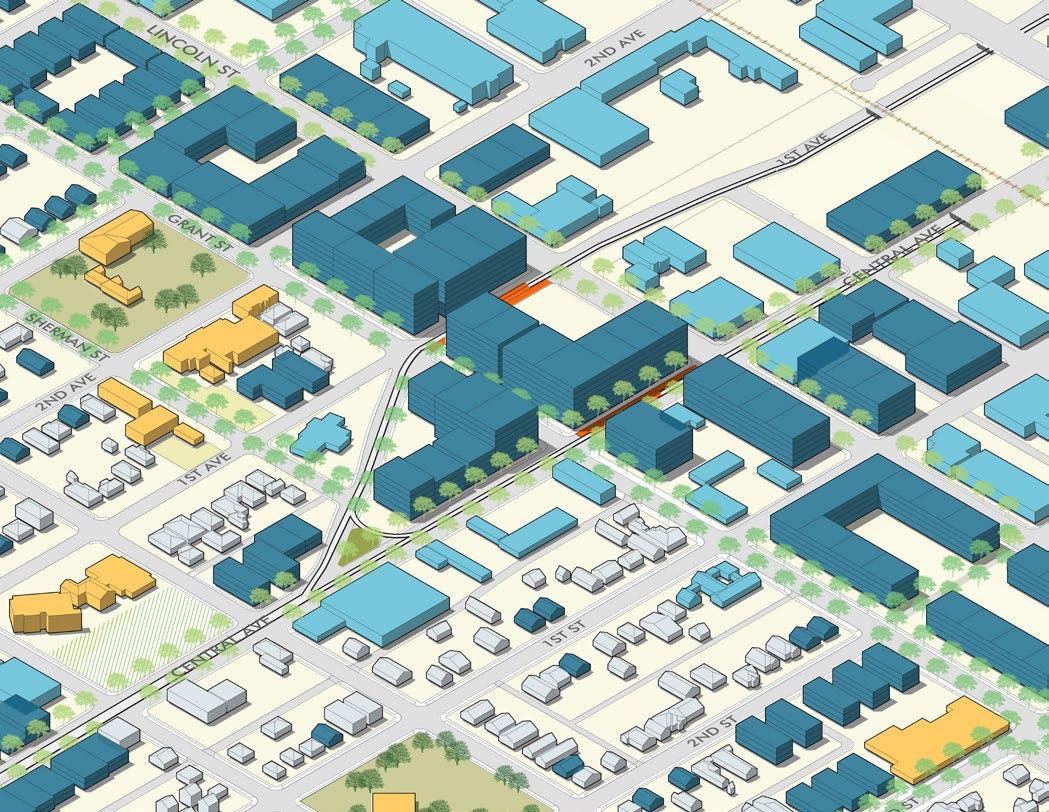
Delineated from station area master plan prototypes, regulatory updates have been designed to create compact, connected, and diverse development patterns to support the transit service, build the development and business markets, improve access locally and regionally, create place, and improve community value. Implementation of the transit-oriented development policies are being realized through form-based changes to the current zoning ordinance that focus on the design of specific community elements.
Project Data
→ Indianapolis, IN
→ 24 Miles
→ 18 Miles of Dedicated Transit Lanes & 20 Electric BatteryPowered Buses
Regulatory changes include:
→ Creation of pedestrian oriented public space through improved street design standards.
→ Support of compact development patterns
→ Improving station area and neighborhood place design standards
→ Addressing parking standards appropriate to support transit
Multistudio in association with Toole Design.
Laugh-O-Gram Studios
Laugh-O-Gram Studios, the birthplace of Walt Disney's animation legacy, is being reimagined as a hub for creativity, education, and digital media innovation.
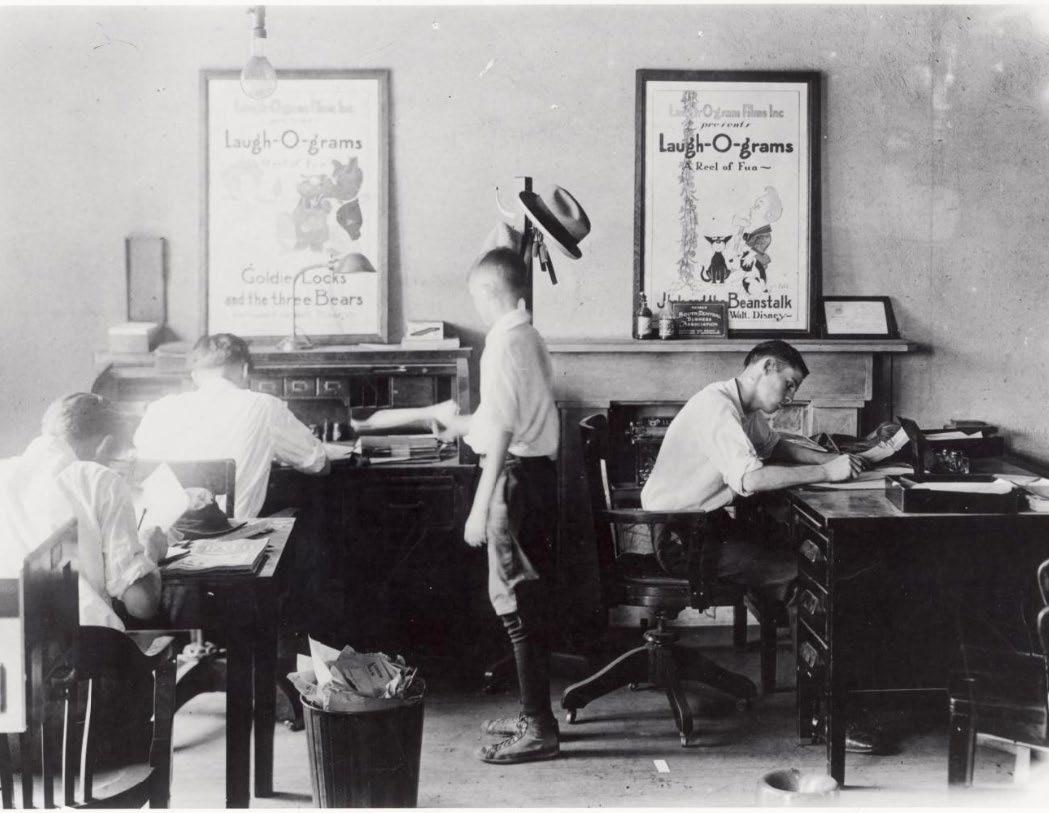
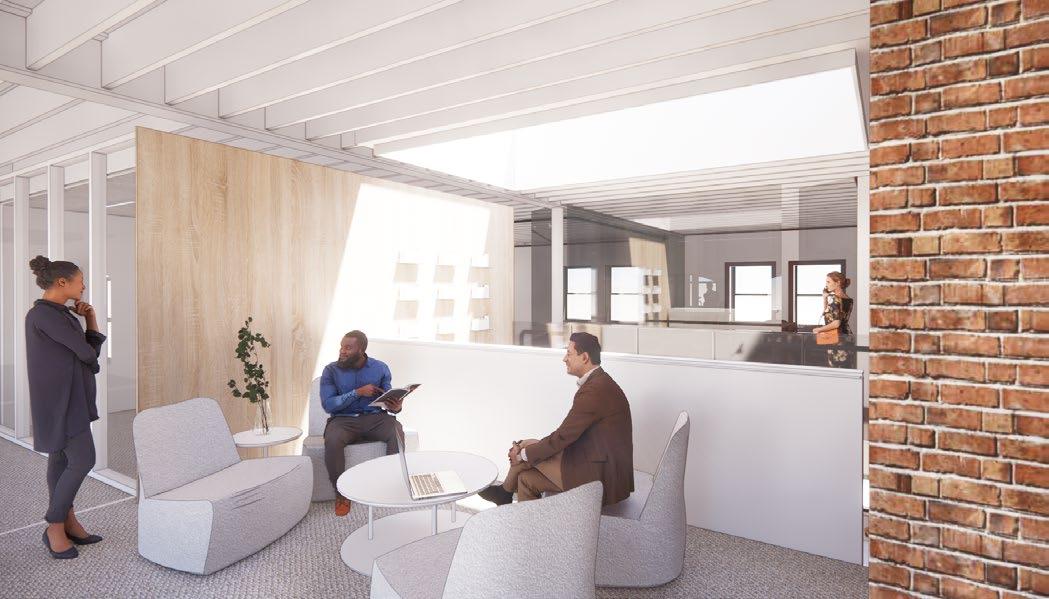
Walt Disney's animation journey began at Laugh-OGram Studios in Kansas City, where he, along with early collaborators like Ub Iwerks and Friz Freleng, developed iconic characters that would shape the entertainment industry. The century-old building, where Mickey Mouse and Alice in Wonderland were born, faced demolition until it was rescued by Thank You Walt Disney, Inc. Now, Multistudio is leading its transformation into an immersive museum and hub for digital media education and entrepreneurship, ensuring the studio’s legacy continues to inspire future generations.
Designed by pioneering female architect Nelle Peters in 1922, the McConahay Building, also known as LaughO-Gram Studios, played a crucial role in Disney's early career. The studio, which doubled as Disney's living space due to financial constraints, became the birthplace of the Disney empire. Despite its National Historic Building status in 1978, the structure fell into disrepair until it was rediscovered as a valuable resource for education and innovation in the Kansas City area.
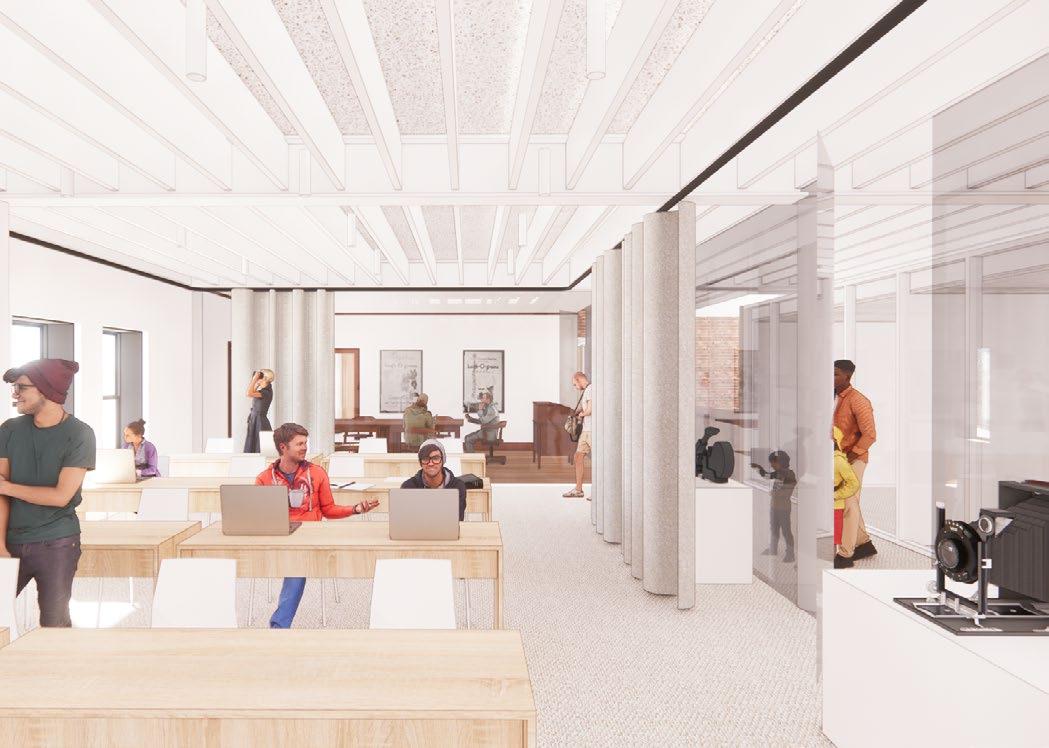
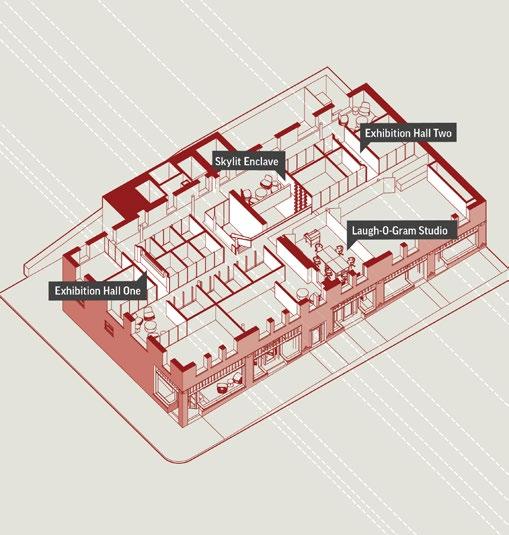
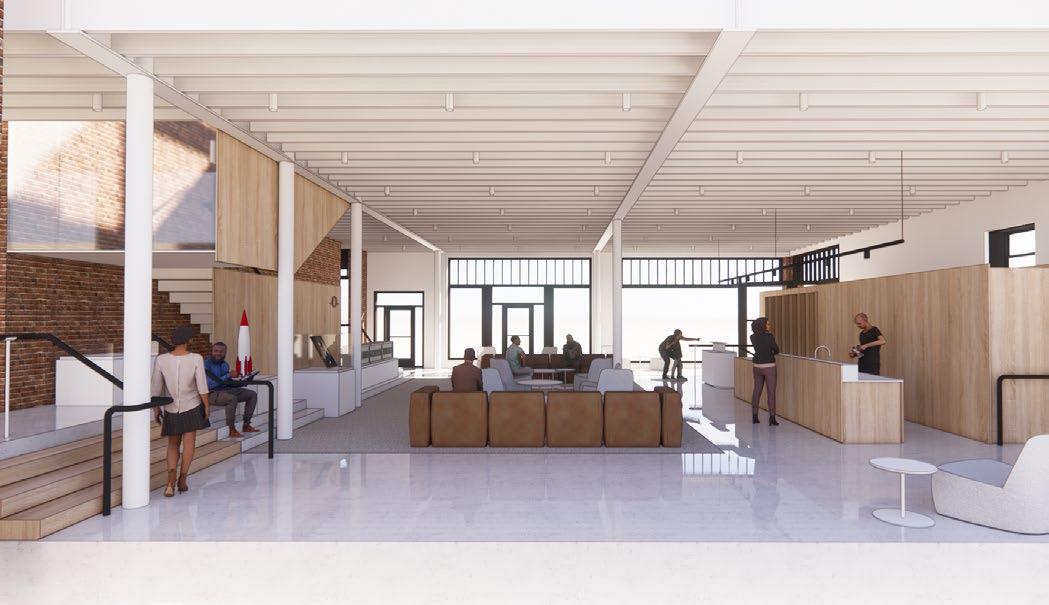
Multistudio’s redesign of the 10,000-square-foot space centers on community engagement and historical preservation. The Welcome Center, designed to be a vibrant and inviting hub, greets visitors with gallery-style walls and a coffee shop, setting the tone for an interactive experience. The Museum of Animation immerses guests in the world where Disney’s most iconic works were born, featuring recreated offices and a theater that showcases early animations from the Laugh-O-Gram era.
Project Data
→ Kansas City, MO
→ 10,000 SF
→ Adaptive Reuse
Beyond the museum, Laugh-O-Gram will offer a flexible studio space for educational programs and creative workshops, catering to all age groups. A coworking facility will provide aspiring animators and digital media entrepreneurs with access to state-of-the-art equipment and resources, fostering innovation and collaboration. This revitalization project honors Kansas City’s role in animation history while paving the way for the next generation of creatives in the city’s thriving digital media sector.
First
Civic & Cultural
Center for Missouri Studies
The State Historical Society of Missouri
State Historical Society of Missouri (SHSMO): A Confluence of
History, Art, and Community
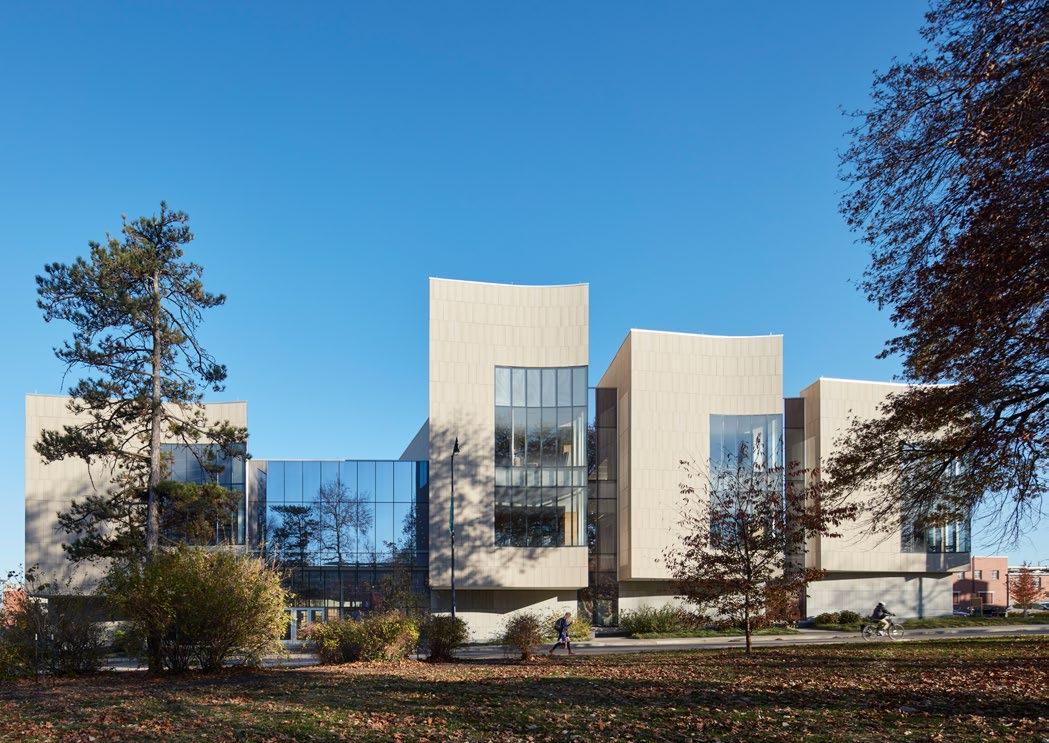
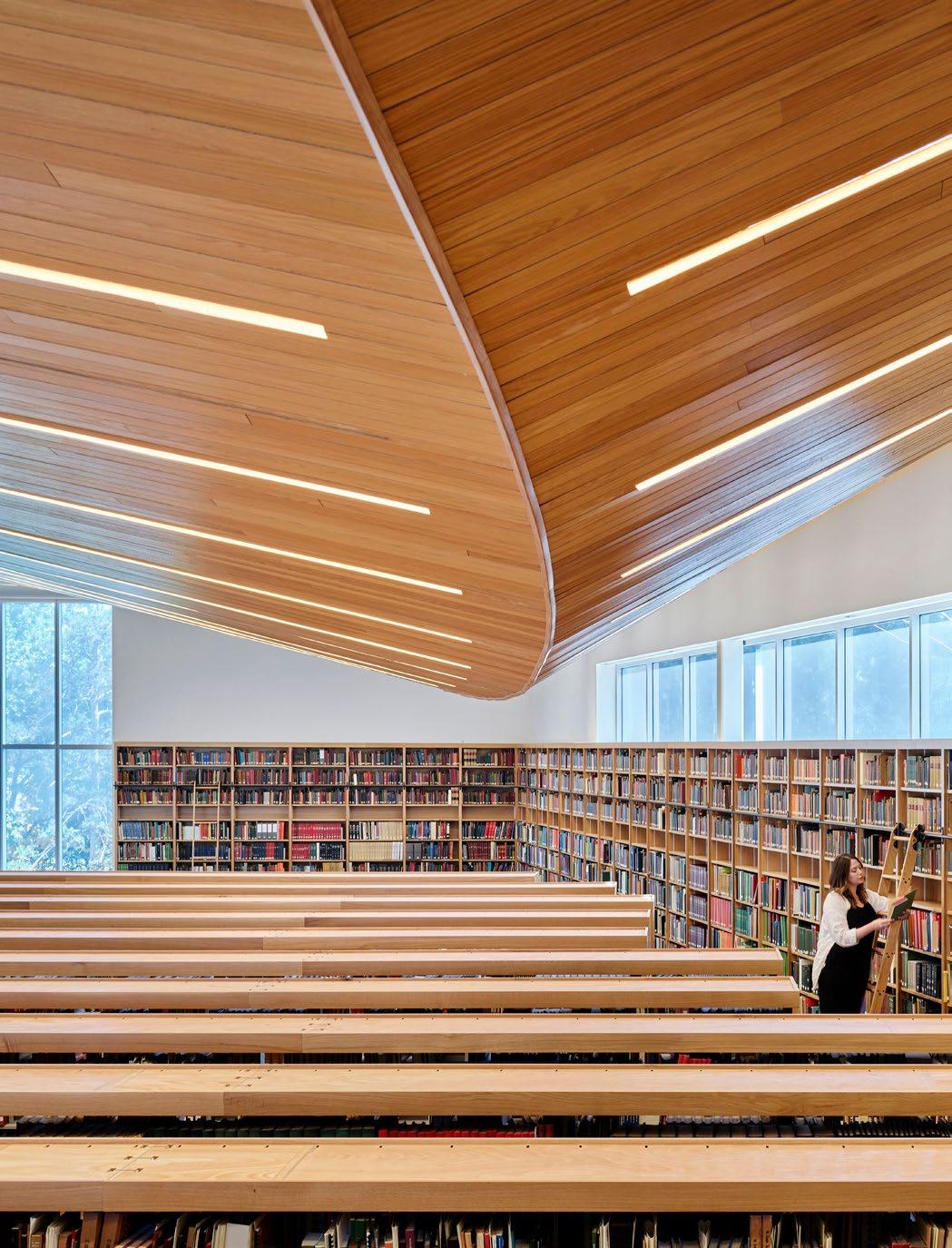
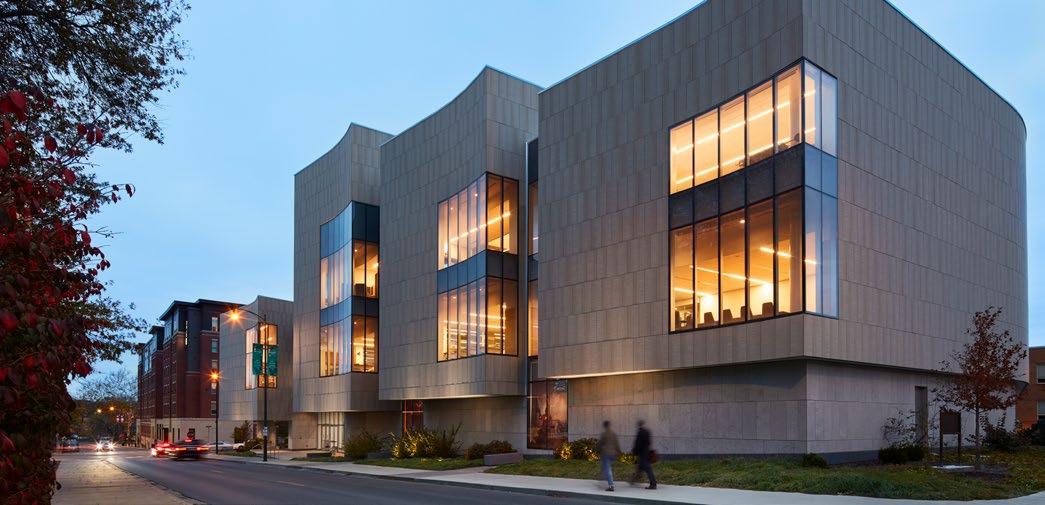
At the heart of Missouri, where major rivers converge, Columbia is home to the State Historical Society of Missouri (SHSMO). This landmark institution preserves and shares the state’s rich history through an unparalleled collection of newspapers, manuscripts, photographs, and oral histories. The new 76,000-squarefoot facility, situated at the edge of Peace Park, embodies the intersection of past and present, academia and community, art and scholarship.
Our design approach united three primary stakeholders— SHSMO, the University of Missouri, and the state—to create a library that not only safeguards history but redefines how it is experienced. The architecture reflects this confluence, with overlapping layers between city and campus, archives and exhibitions, and the broader cultural dialogue within Missouri. The building’s form echoes the limestone bluffs that define the region’s rivers, clad in locally sourced Ste. Genevieve Marble.
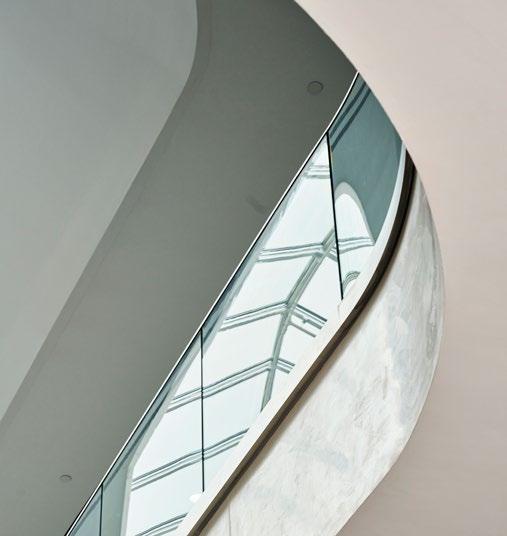
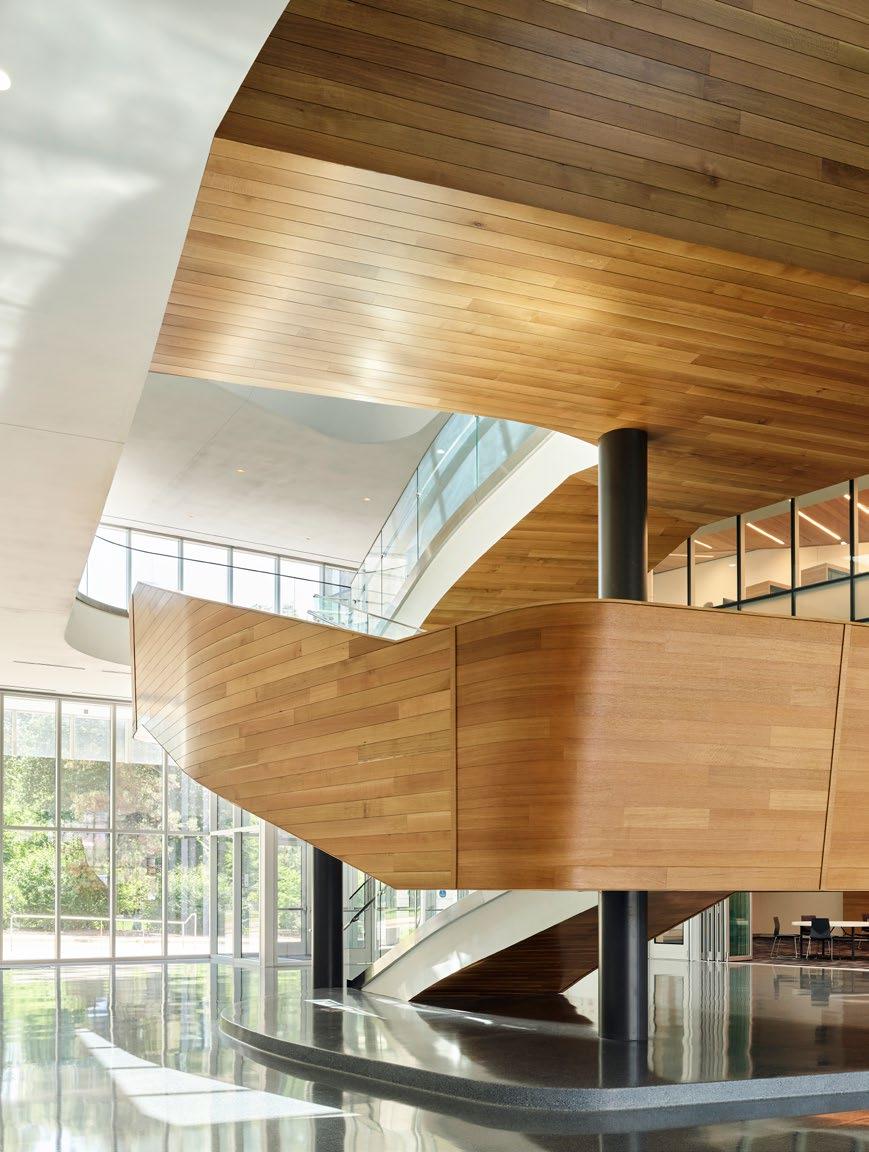
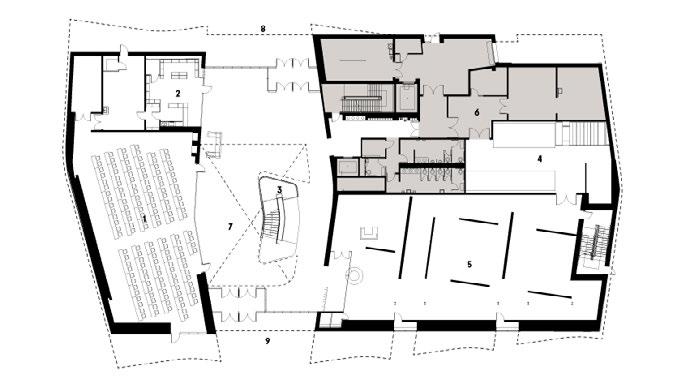
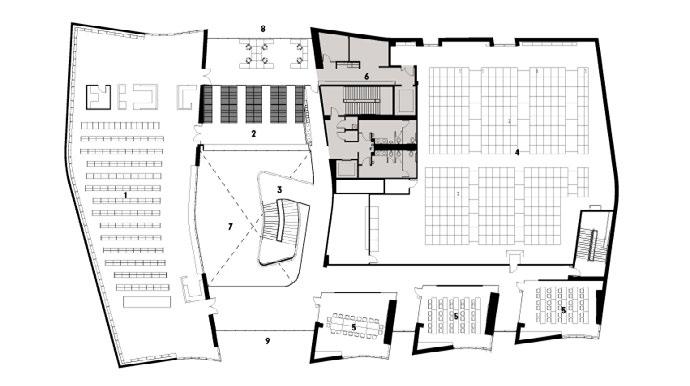
More than a library, SHSMO is a civic and cultural hub. Its program includes an auditorium, event space, classrooms, flexible galleries, a reading room, a café, and a bookstore. Central to the design is the art gallery, which houses a permanent collection of work by Missouri painter Thomas Hart Benton. Benton's expressive, fluid brushstrokes inspired the sculptural form of the monumental stair—a cantilevered podium for lectures and community gatherings.
Sustainability was a guiding principle, with the building achieving LEED Gold certification, just shy of Platinum. Designed to last over a century, it features a highperformance envelope, optimized glazing for daylighting, and passive solar strategies to manage seasonal light and temperature. The surrounding landscape was designed to capture rainwater runoff and improve site drainage.
Multistudio’s interdisciplinary collaboration extended beyond architecture. Our Brand Experience team crafted environmental graphics and launched SHSMO’s website, ensuring a unified identity for this historic nonprofit. The result is a future-forward institution that preserves Missouri’s past while fostering critical discourse on
Project Data
→ Columbia, MO
→ 76,000 SF
→ New Build
the present. Today, SHSMO serves as a vital forum for examining the African American experience, press history, and democracy, reinforcing the power of history to shape our understanding of the world.
This project embodies our commitment to designing with purpose, curiosity, and collective expertise—creating a lasting landmark for Columbia and the state of Missouri.
Justice Center
Salt River Pima-Maricopa Indian Community
SRP-MIC sites at the conceptual border mediating sovereign tribal land and the metropolitan area of Phoenix, Arizona.
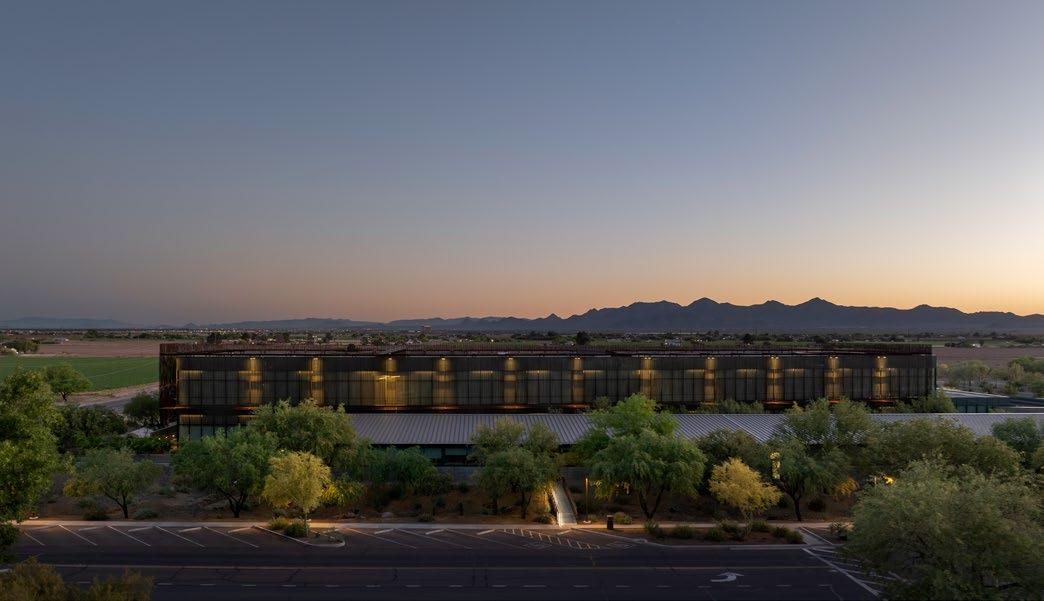
The Salt River Pima-Maricopa Indian Community (SRPMIC) Justice Center is a 93,000-sf tribal court and practitioners building located on 4.3 acres of SRP-MIC land. It sits at the conceptual border mediating sovereign tribal land and the metropolitan area of Phoenix, Arizona. The design of this project sought to enhance two uniquely SRPMIC goals:
1) Uphold the deeply-rooted traditions and respect for the land.
2) Embrace the Community’s sense of identity, beauty, and humanity, told through the voice of humility.
Working across the border involved establishing cross-cultural relationships, employing a variety of communications, and the empathetic work of
Project Data
→ Scottsdale, AZ
→ 93,000 SF
→ New Build
understanding history, place, and justice in an evolving tribal community.
The design team conducted more than 30 stakeholder meetings with judges and staff to understand user needs, which included increased efficiency, an improved court environment, reduced stress for visitors and staff, and service of future community growth. Our customized programming process engaged a broad constituent group in the question “What is the just use of your land?”
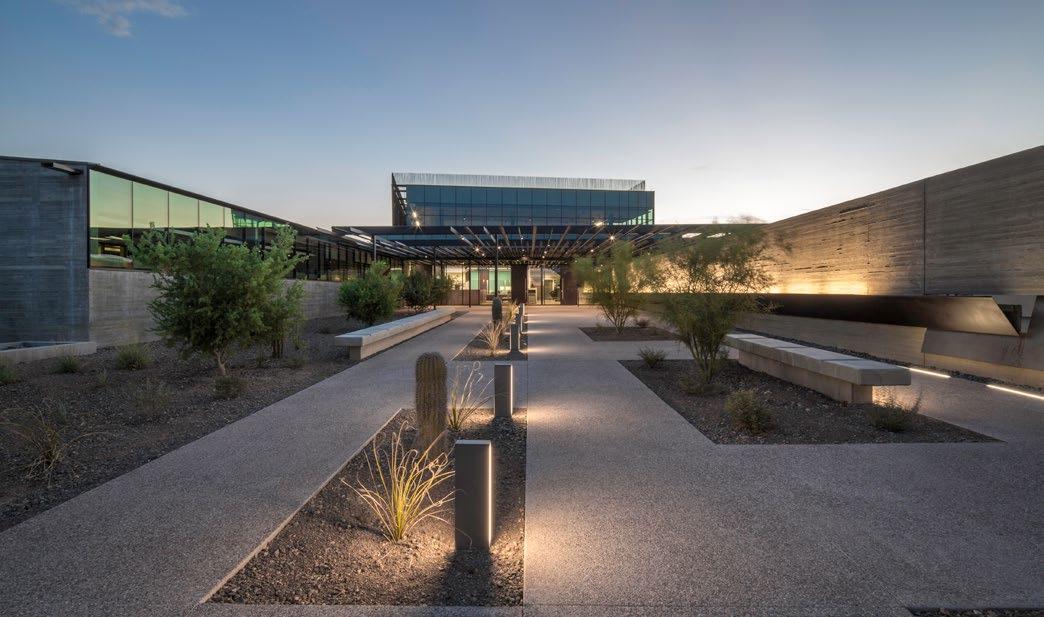
With the community, we explored a spectrum of ideas to merge western court design goals with indigenous sustainable systems. This approach transformed the "court" typology, resulting in a building with landscape at its center, connected to its context in lieu of the typical “fortress” court structure.
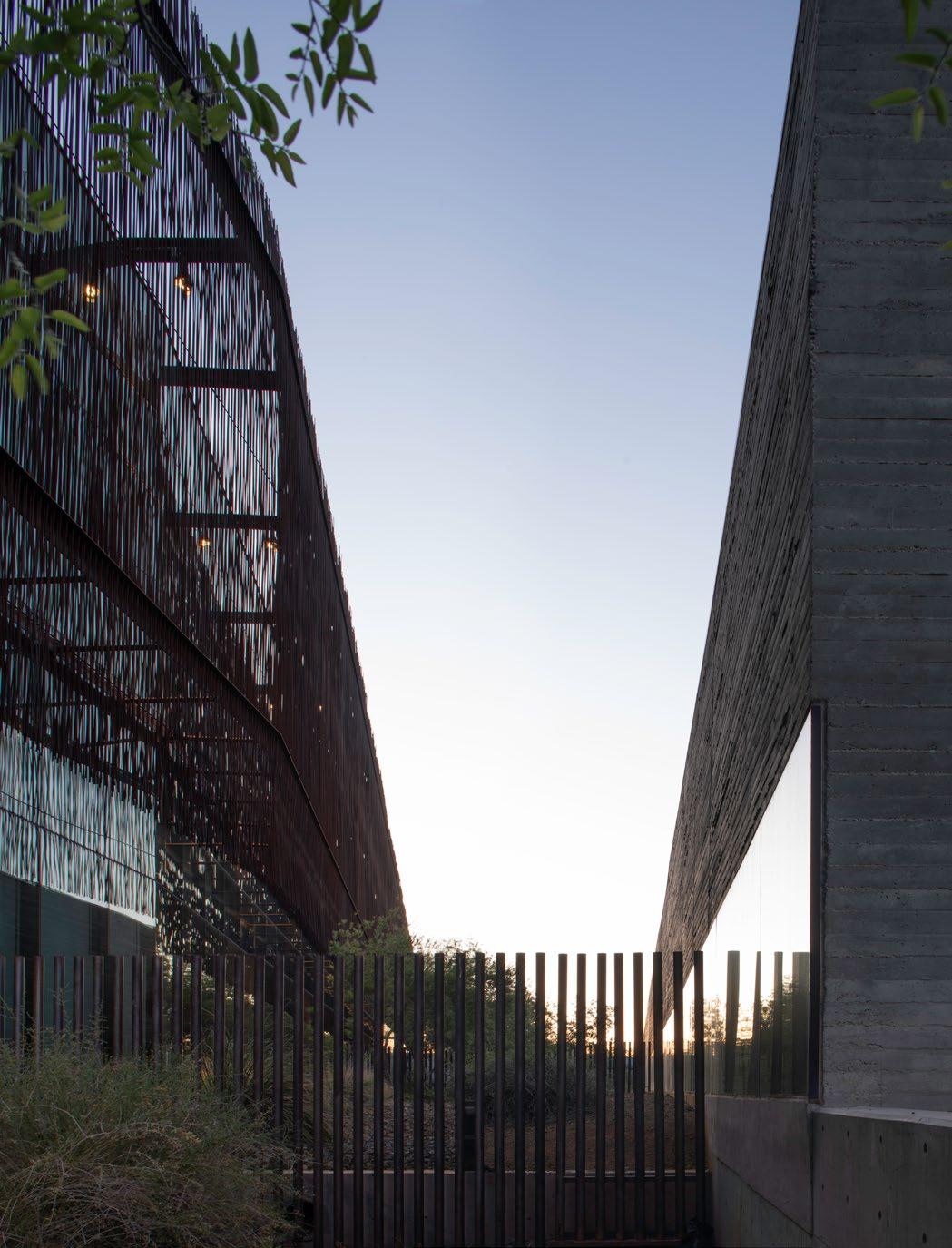
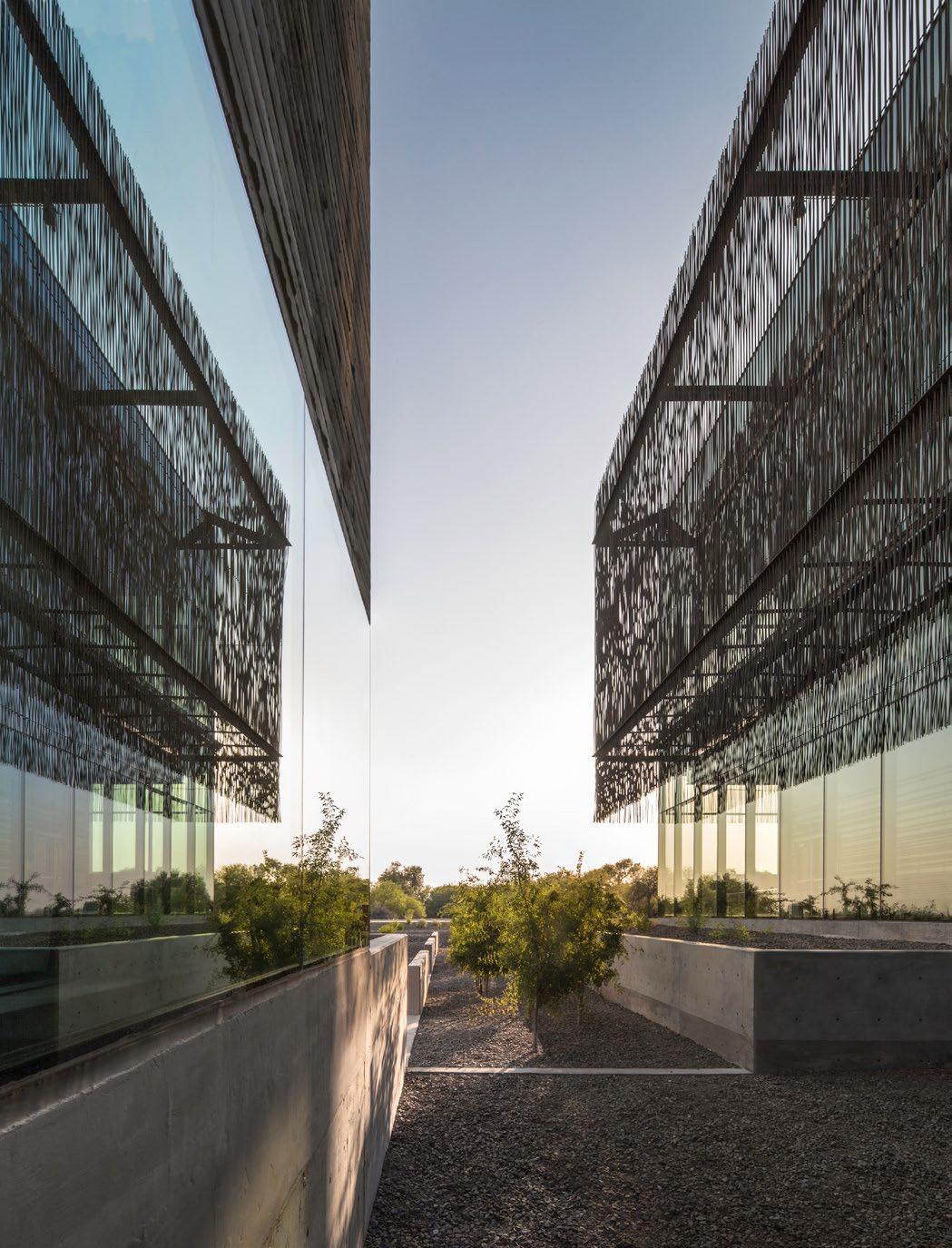
The organization of the Justice Center is orchestrated around exterior space. The building is conceived as a backdrop to a variety of outdoor rooms and "desertscapes" to represent tribal intimacy with native lands. The primary materials–glass, weathered steel and concrete–retain the vernacular of austere objects that are often all that remain after prolonged exposure in the desert.
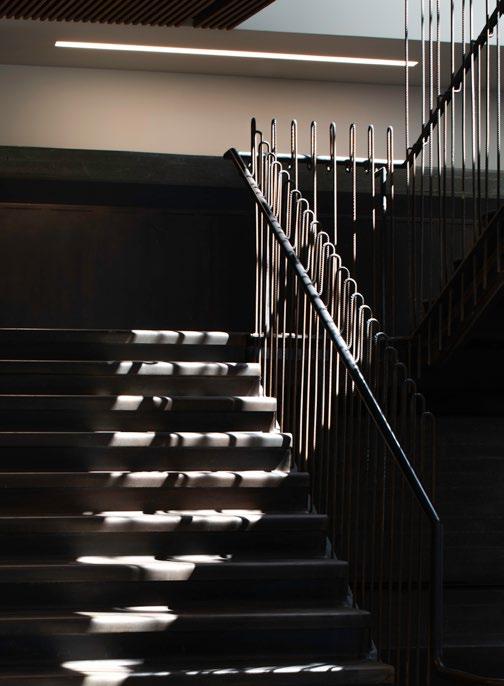
Dematerialized and textured, the building is an homage to the woven objects of tribal tradition and a visual thinning of building mass. The craft of the concrete work and custom rebar scrim demonstrate a deep care for the handmade and provide a glimpse into unique tribal sensibilities toward artistry, significance of place, and community.
National WWI Museum and Memorial
Expanding history’s reach: The National WWI
Museum’s latest transformations uncover hidden artifacts and create immersive exhibits, enhancing public engagement.
The National World War I Museum and Memorial (WWI Museum), stands as a significant testament to the memory and historical significance of World War I. The classical Egyptian Revival-style monument and Liberty Memorial was completed in 1926, and the 80,000 sq.ft. Museum underneath opened to national acclaim in 2006. This iconic Museum and Memorial is dedicated to preserving the history of World War I and honoring the sacrifices of those who served.
Over the past decade, Multistudio has forged a dynamic and lasting relationship with the WWI Museum, undertaking various projects to preserve and enhance the Museum's facilities and enrich visitor experiences. One such significant project was the 2018 transformation of an existing utility space into the innovative Wylie Gallery. Functioning as a "box within a box," the Wylie Gallery expanded the Museum's capabilities to host traveling exhibitions. This transformation also ingeniously resolved storm-water drainage challenges posed by the gallery's location beneath an open-air plaza, showcasing Multistudio's expertise of expanding the possibilities of a project while designing for both form and function.
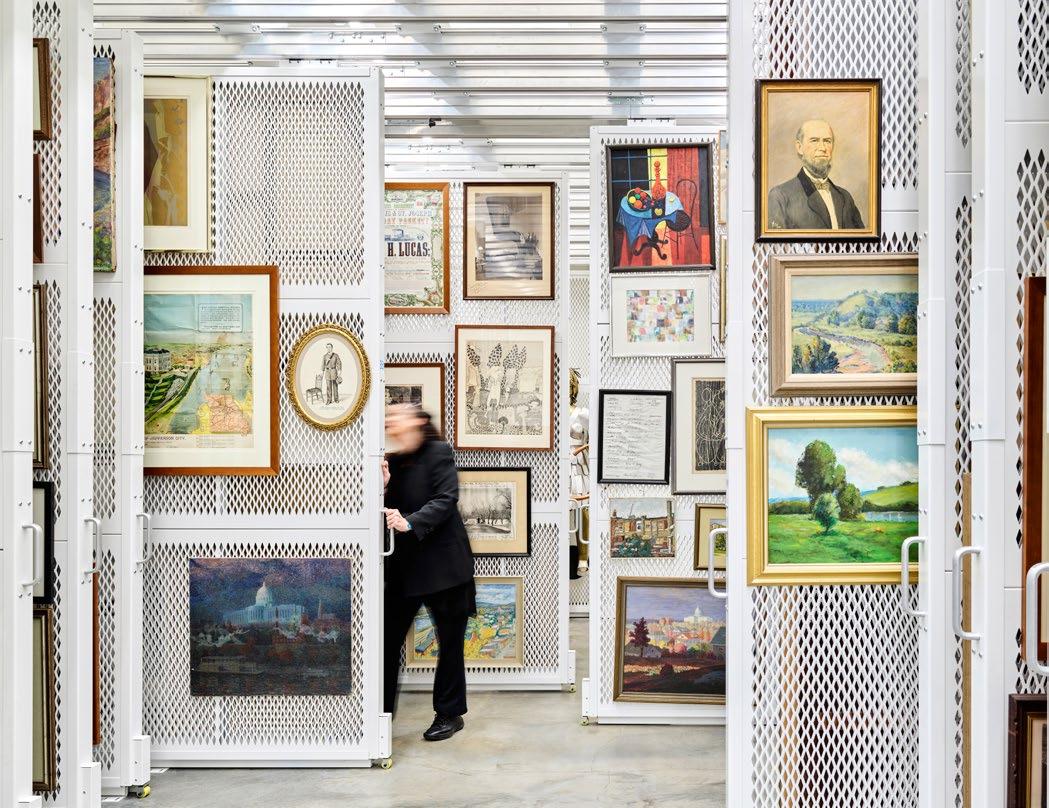
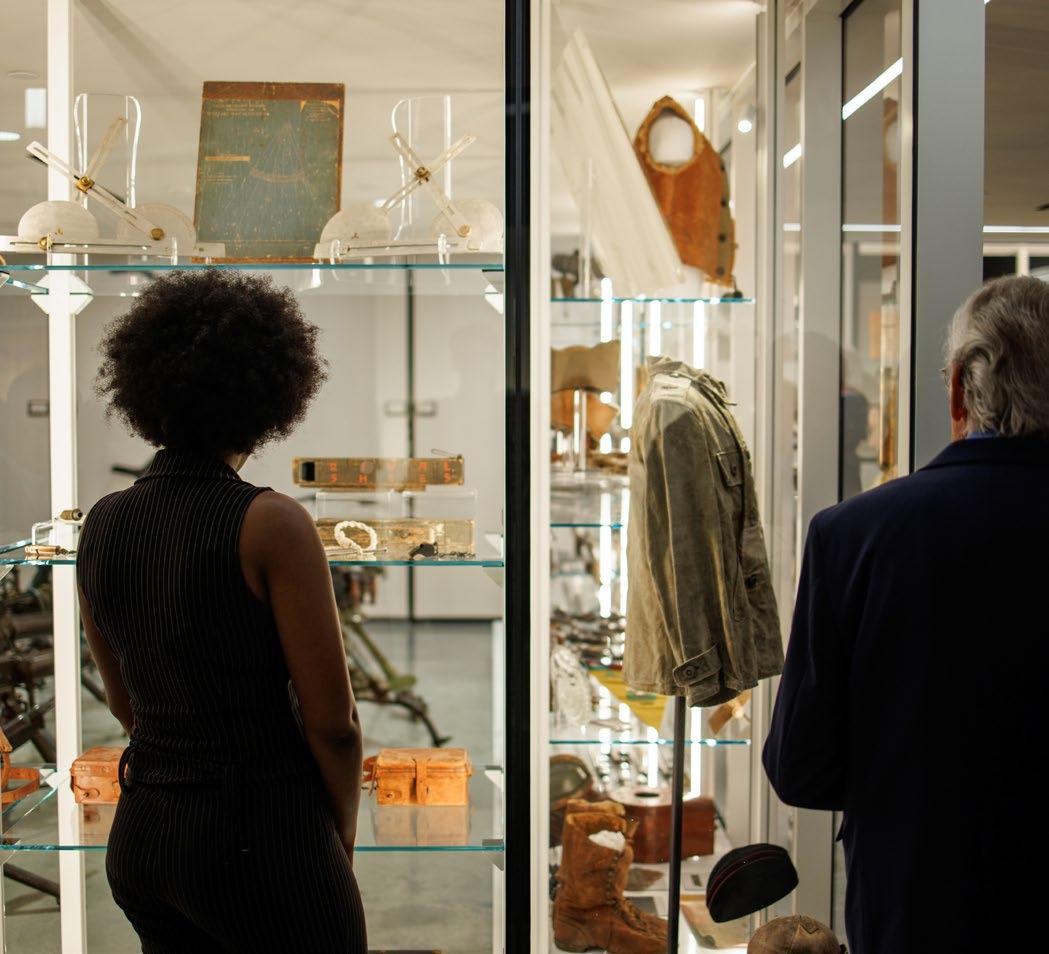
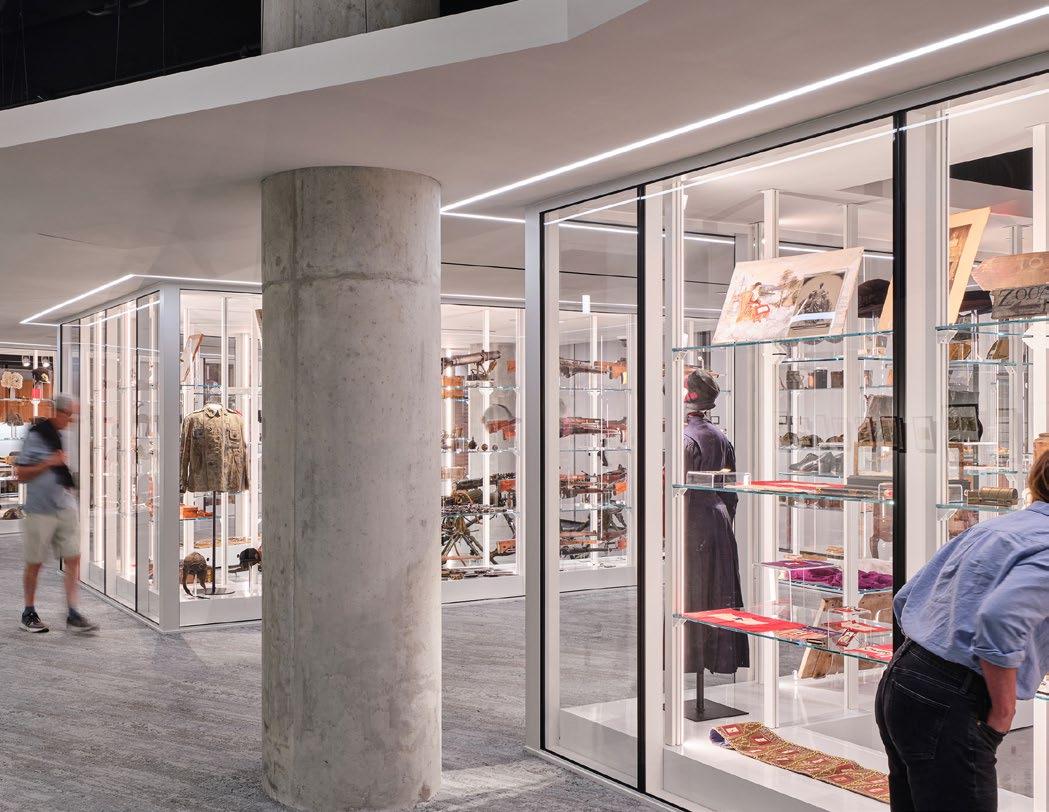
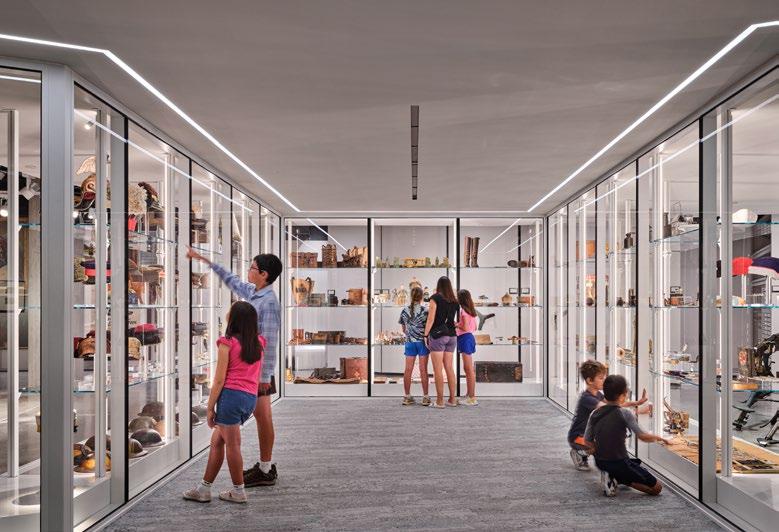
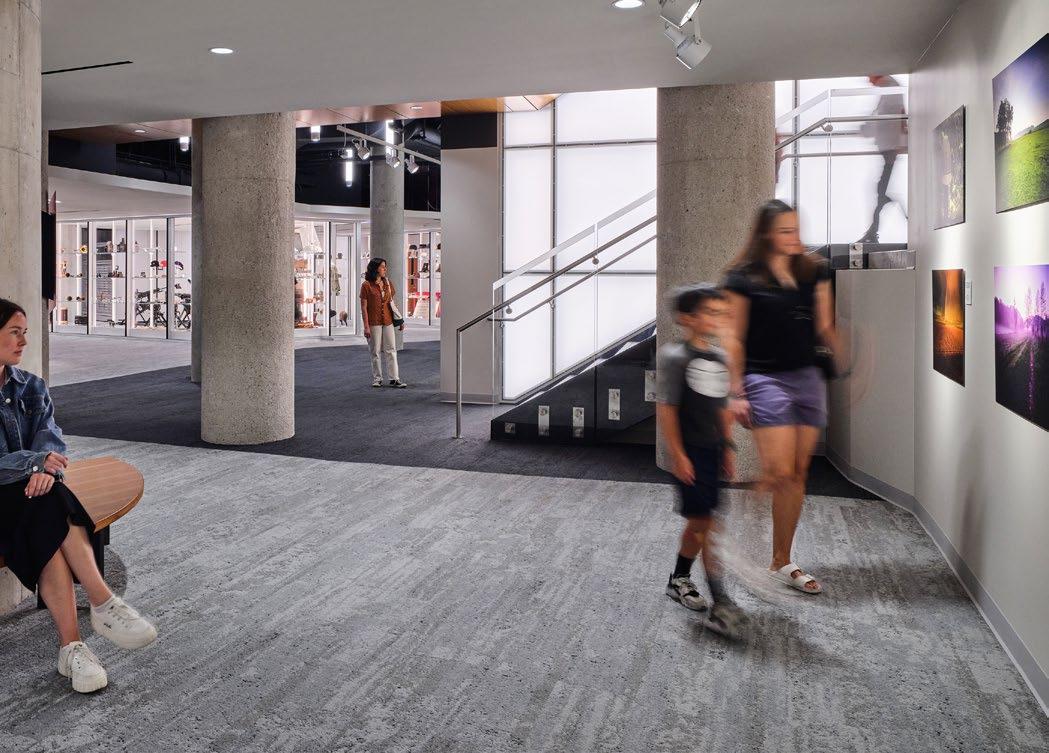
In another stride toward modernization and improved public engagement, Multistudio undertook the renovation and adaptive reuse of the Bergman Family Gallery and Open Storage Center, which opened in 2023. By repurposing an underused storage corridor and research room, this endeavor added approximately 4,000 sq.ft. of exhibition space by making artifacts that were previously hidden from view accessible to the public through an expansive 190-foot "coastline" of window cases. The new space fosters a sense of transparency and showcases the dedicated efforts of the museum's staff by providing clear site lines to an open storage center and work room.
Additional work conducted throughout this ongoing relationship has included restoration of the site and landscape design, new wayfinding signage, and the historic preservation of the exterior stone of the fountain and the Museum’s façade.
The collaboration between Multistudio and the National WWI Museum and Memorial stands as a testament to our shared commitment to preserving history and enhancing the museum's role as a premier destination for education, reflection, and commemoration.
Project Data
→ Kansas City, MO
→ 80,000 SF
→ LEED Gold
" The Bergman Family Gallery and Open Storage Center allow us to display objects and artifacts otherwise behind closed doors and unavailable for visitors to view."
- Matthew Naylor, President & CEO, National WWI Museum and Memorial.
Nerman Museum of Contemporary Art
Multistudio served as the Architect of Record for
Kyu Sung Woo Architects.
A Contemporary Beacon for Art, Education, and Community: The Nerman Museum Transforms Campus and Culture
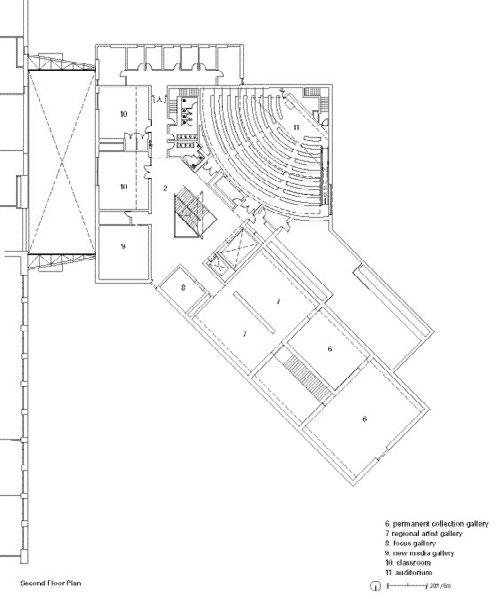
The Nerman Museum of Contemporary Art at Johnson County Community College is more than a museum— it is a dynamic intersection of art, education, and architecture. As the architect of record, Multistudio played a critical role in bringing Kyu Sung Woo’s vision to life, ensuring the museum’s integration with both the campus and the surrounding landscape.
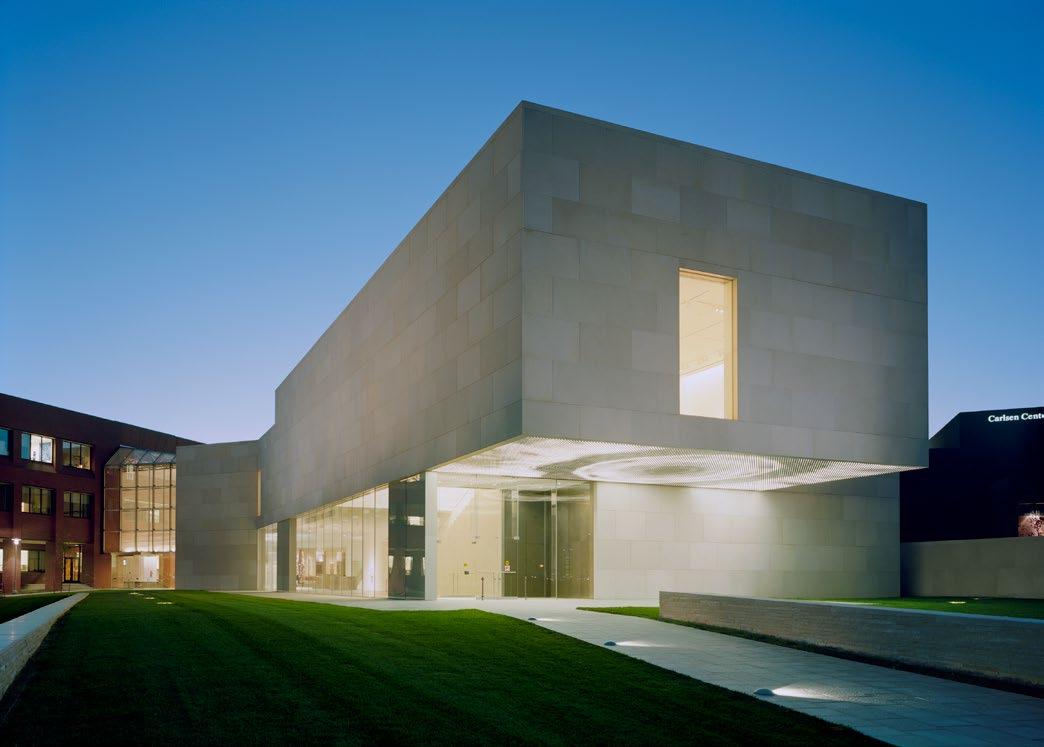
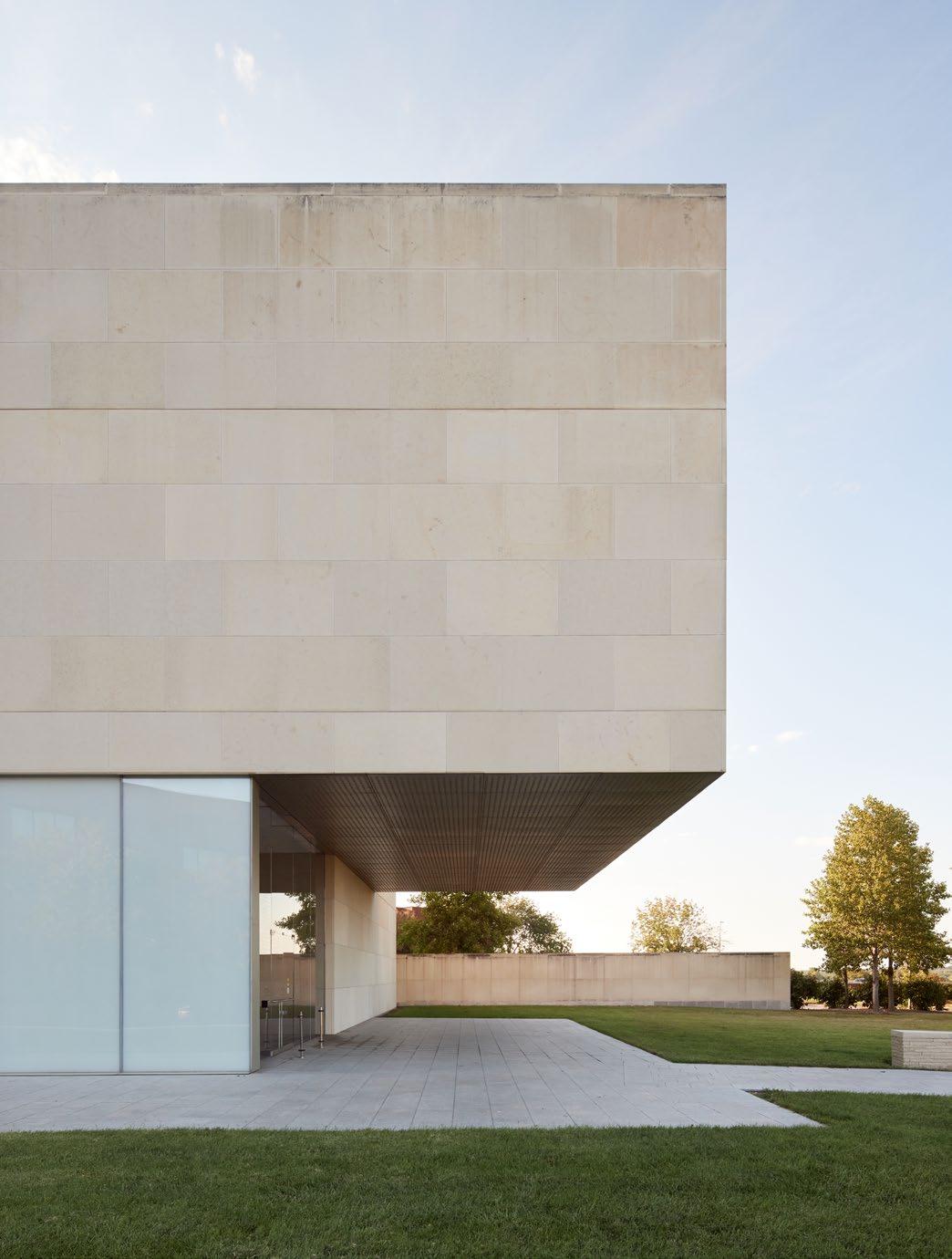
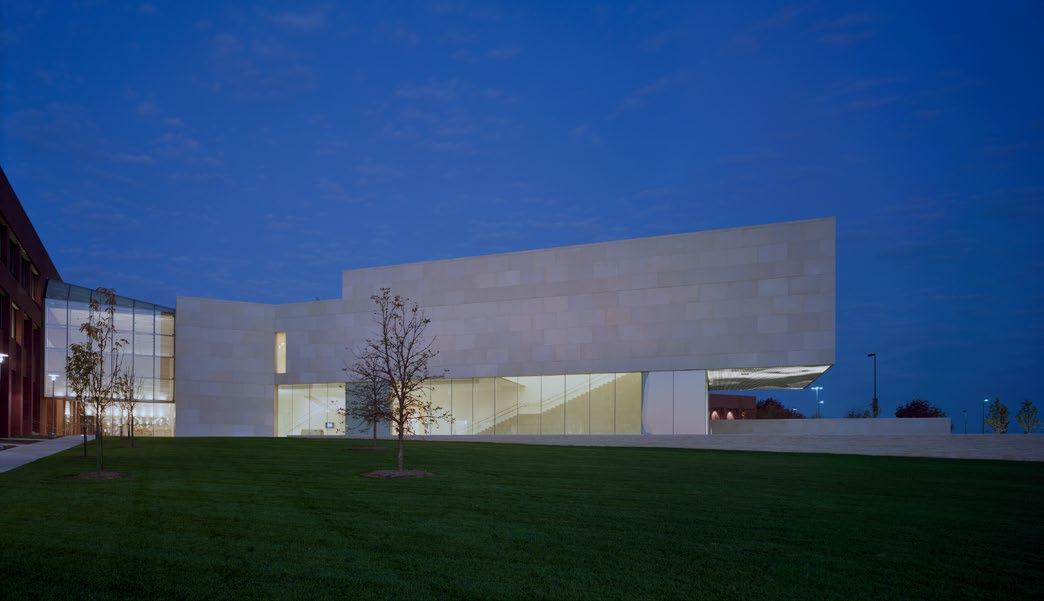
The museum’s design is rooted in material authenticity and bold structural expression. Clad in locally sourced Kansas limestone, the building establishes a strong connection to the region’s geological history. Expansive glass facades maximize transparency, creating a seamless dialogue between interior exhibition spaces and the surrounding campus.
A defining feature is the striking 22-foot cantilever that extends over the museum’s entrance, reinforcing the institution’s contemporary character. This bold architectural move is further elevated by Leo Villareal’s LED installation, Microcosm, which transforms the museum into a glowing beacon at night.
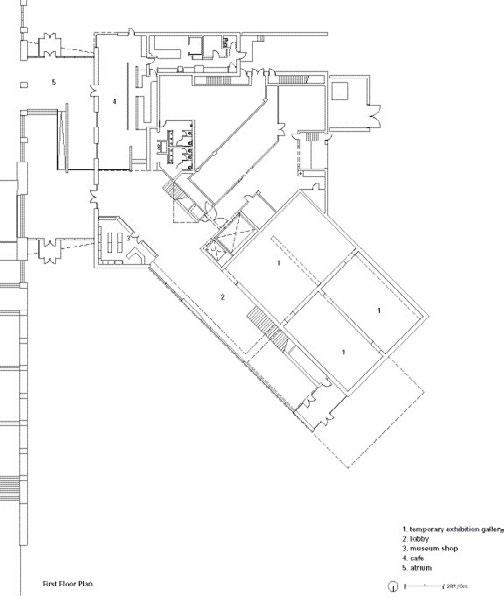
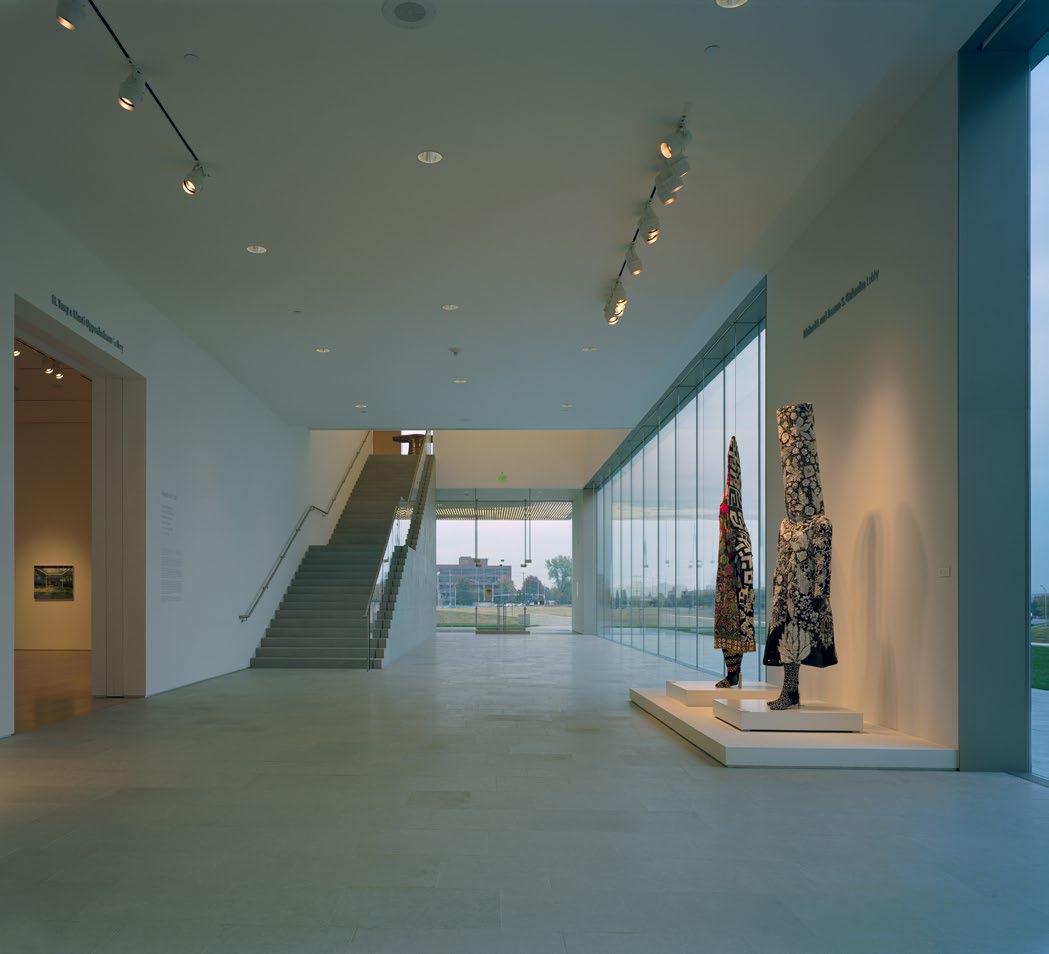
Positioned as a cultural gateway, the museum anchors the campus’s front lawn, extending its influence beyond the galleries. Retaining walls and carefully designed exterior spaces weave the building into the landscape, while a double-height atrium, wrapped in perforated metal, fosters a sense of openness and connection between the museum and the adjacent technology center.
Project Data
→ Overland Park, KS
→ 41,000 SF
→ Addition
More than a museum—stone and glass hold the light, drawing people in, shaping a place where art, learning, and community converge.
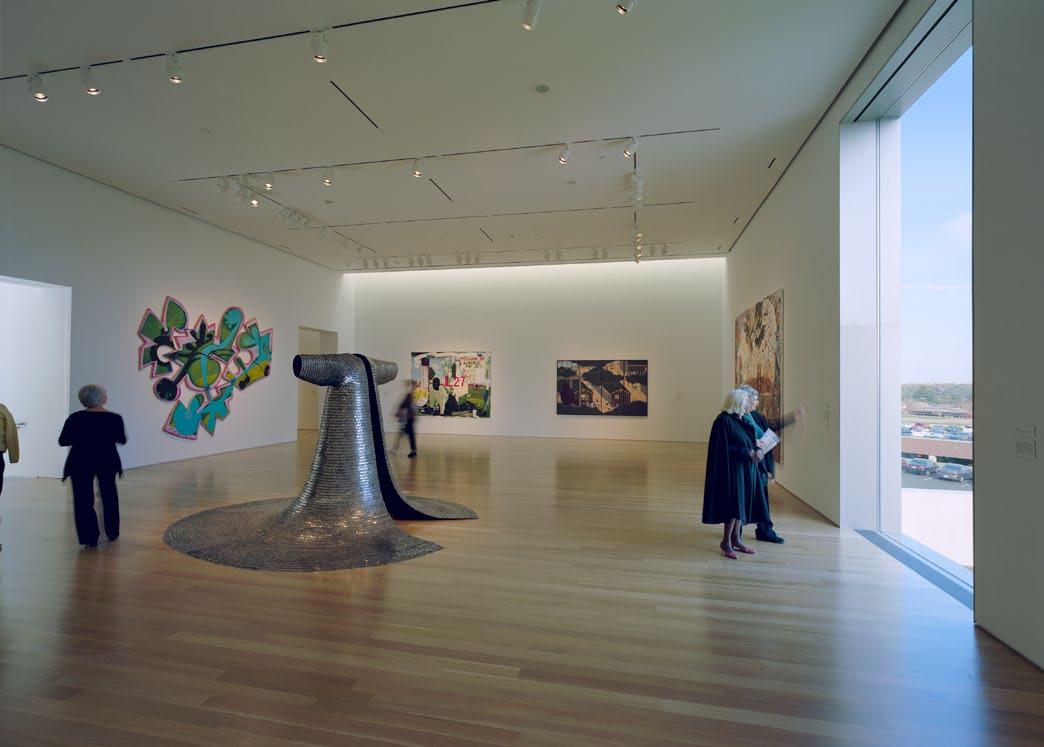
With 11,000 square feet of gallery space, the museum accommodates both permanent collections and temporary exhibitions. Clerestory windows bathe walls in natural light, enhancing the viewing experience while blurring the boundary between indoor and outdoor environments.
Beyond exhibition areas, the museum includes:
→ 200-seat auditorium, reinforcing its role as an academic and cultural hub.
→ Café at the entrance, providing a social space for visitors.
→ Art storage facilities, designed for long-term collection stewardship.
Multistudio worked closely with structural engineers to ensure the cantilever’s stability while maintaining the museum’s minimalist aesthetic. Sustainability was a key driver in material selection, with regional limestone reducing environmental impact and extensive glazing optimizing natural daylight. Collaborations with Zahner resulted in custom metalwork, from perforated ceilings to stainless steel entrance panels, adding refined craftsmanship to the space.
The Nerman Museum is a place of inspiration, education, and community engagement. With a design that balances bold architectural expression with functionality, the institution stands as a testament to how contemporary design can elevate cultural spaces. Through its role as AOR, our team ensured that this vision was not only realized but deeply embedded within the fabric of the campus community and region.
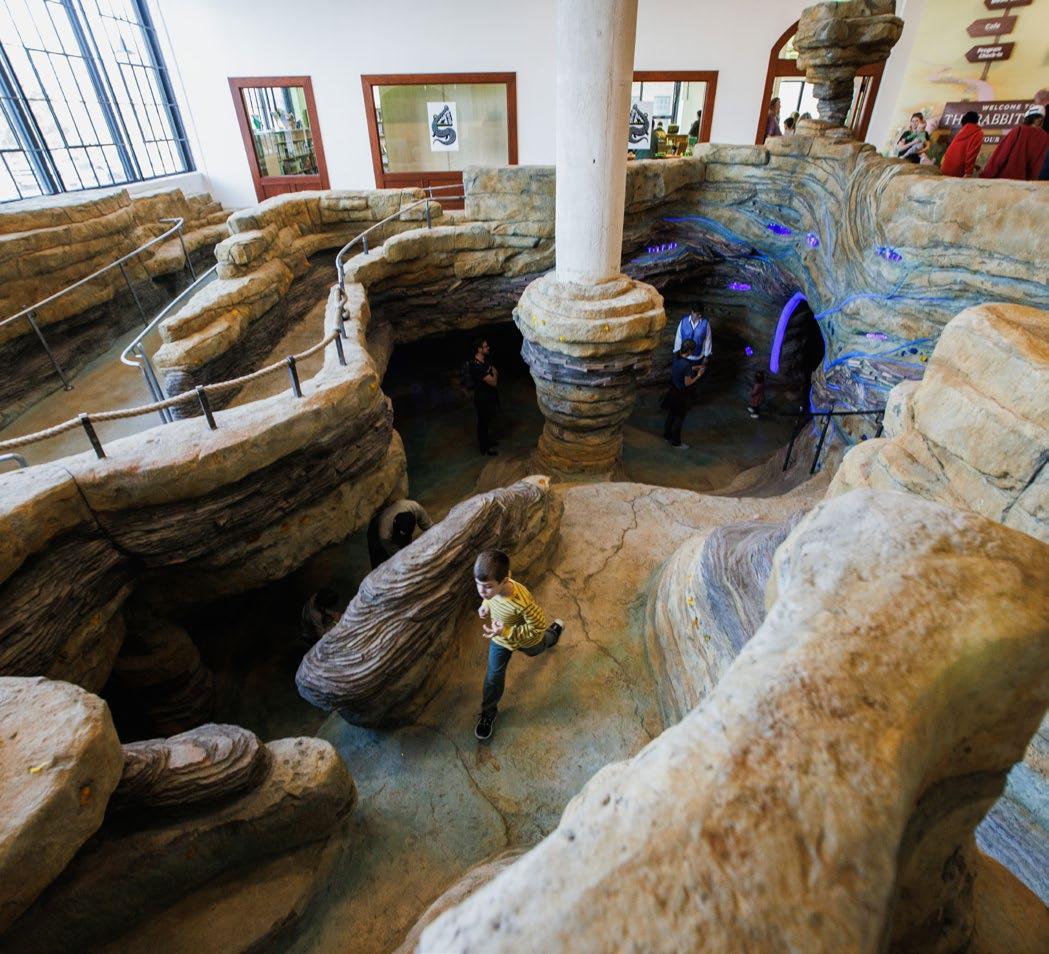
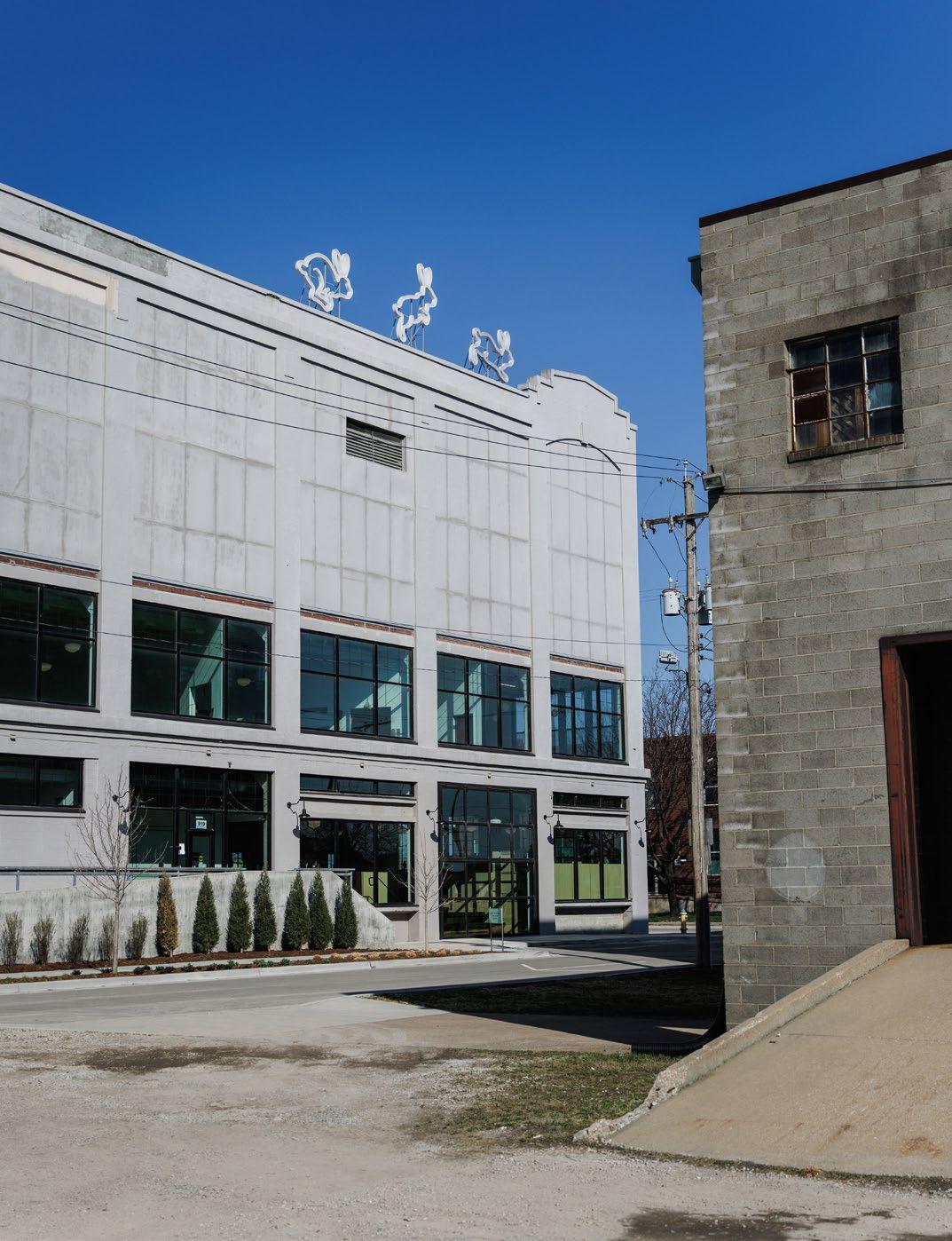
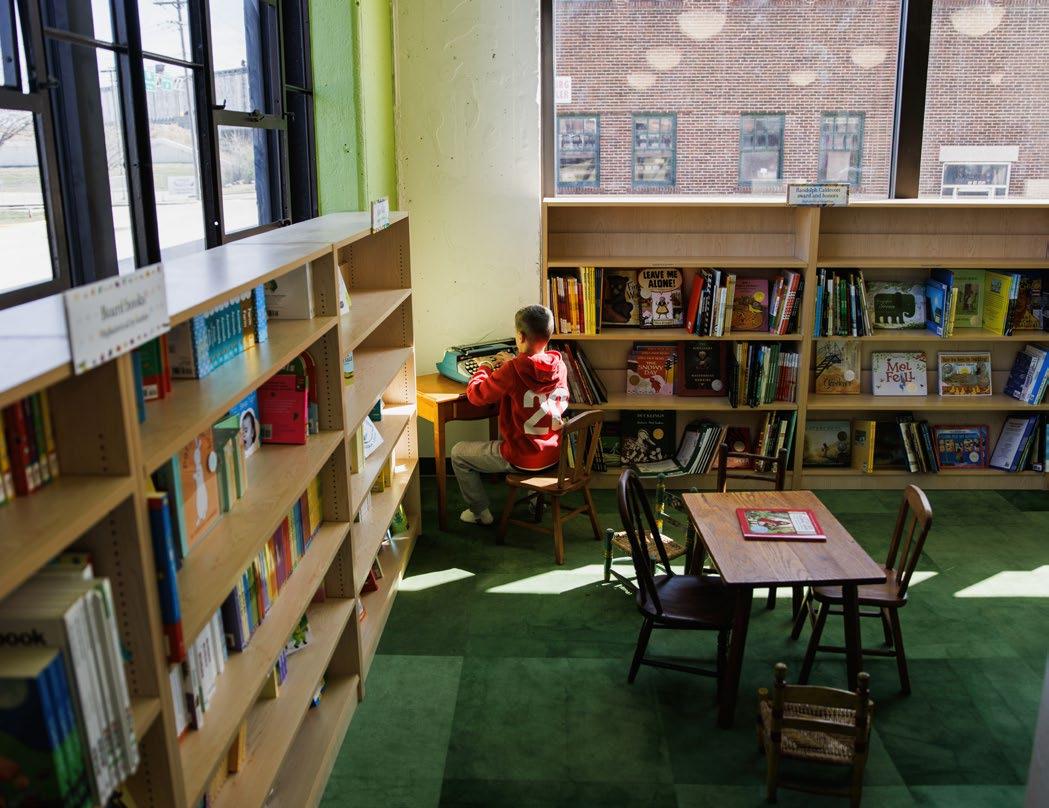
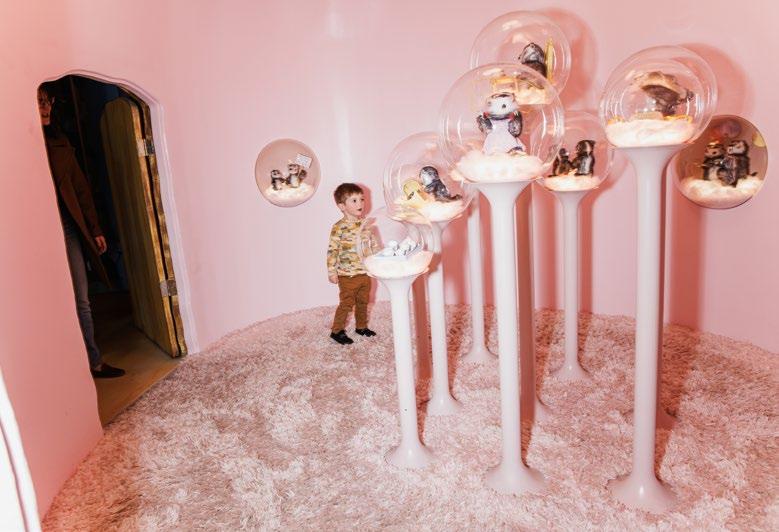
The Rabbit hOle KC
Multistudio served as the Architect of Record for the in-house exhibition and design team at the Rabbit hOle.
The Rabbit hOle is a transformative 150,000 SF museum that sparks imagination and fosters a love for storytelling, inspiring future generations to shape the stories of tomorrow.
The Rabbit hOle is a 150,000 sq. ft. immersive museum dedicated to the literature that influences young readers and their families.
Multistudio provided design assistance from programming through construction administration, and our team collaborated with the owner, the owner's artist and fabrication teams, and the contractor throughout the life of the project.
The project's interiors bring to life the settings of "Madeline," "Curious George," "Good Dog Carl," and countless others. Tasked with finding a shade of yellow that perfectly matches the "George and Martha" books or the red carpet from "Goodnight Moon," our team acted as design detectives, combing archives and identifying identical materials.
In addition to the Rabbit hOle's permanent exhibit is a 3,000 sq. ft. gallery space with storybook experiences planned to rotate every four to six months. The fourstory museum's other features include a maker space, bookstore, cafe, print shop, and a writing and story lab.
The 30 to 40 exhibits at the Rabbit hOle will spur an entire generation to expand their imaginations, think beyond the box, and prepare young people to tell the next great stories that shape our lives.
Project Data
→ Kansas City, MO
→ 150,000 SF
→ Adaptive Reuse
Harry S. Truman Presidential Library and Museum
Honoring the Past, Enhancing the Future: The Truman Library Renovation
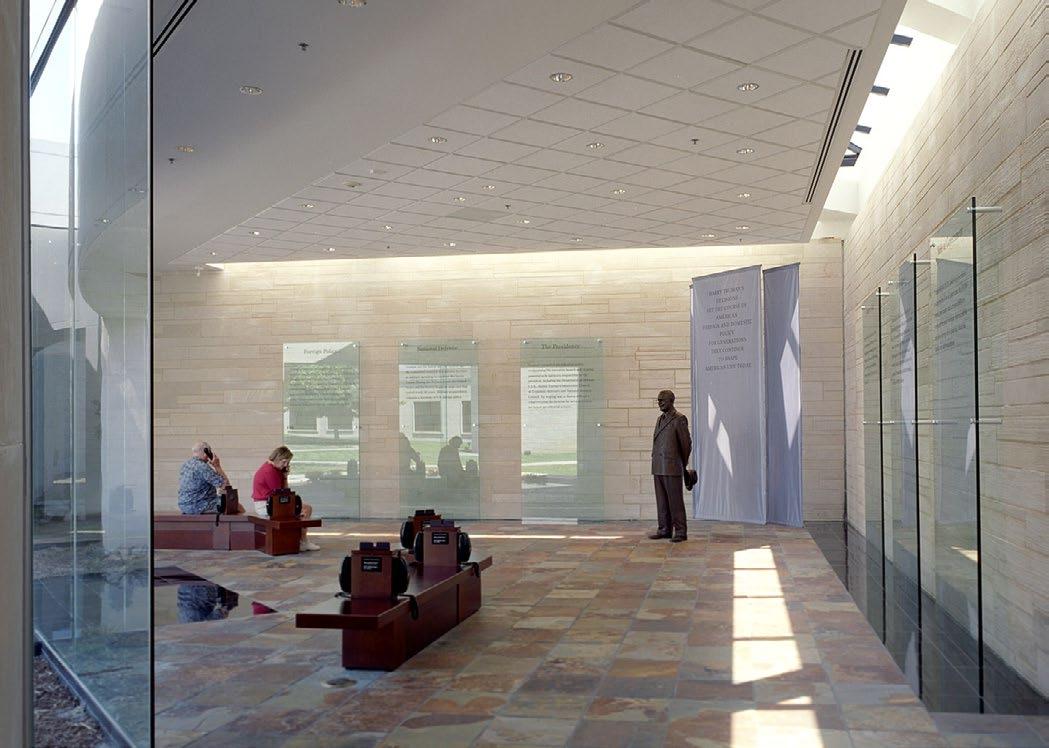
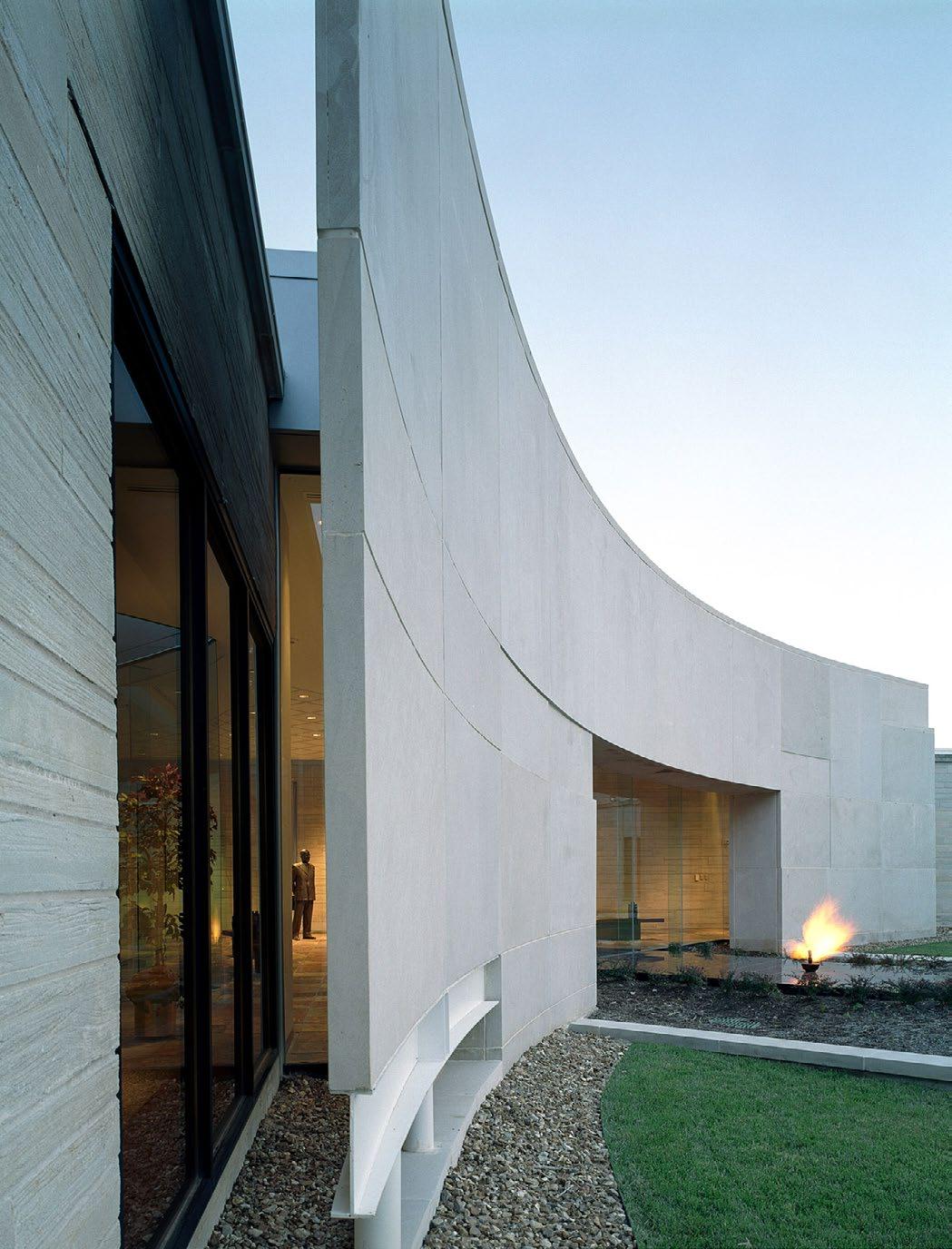
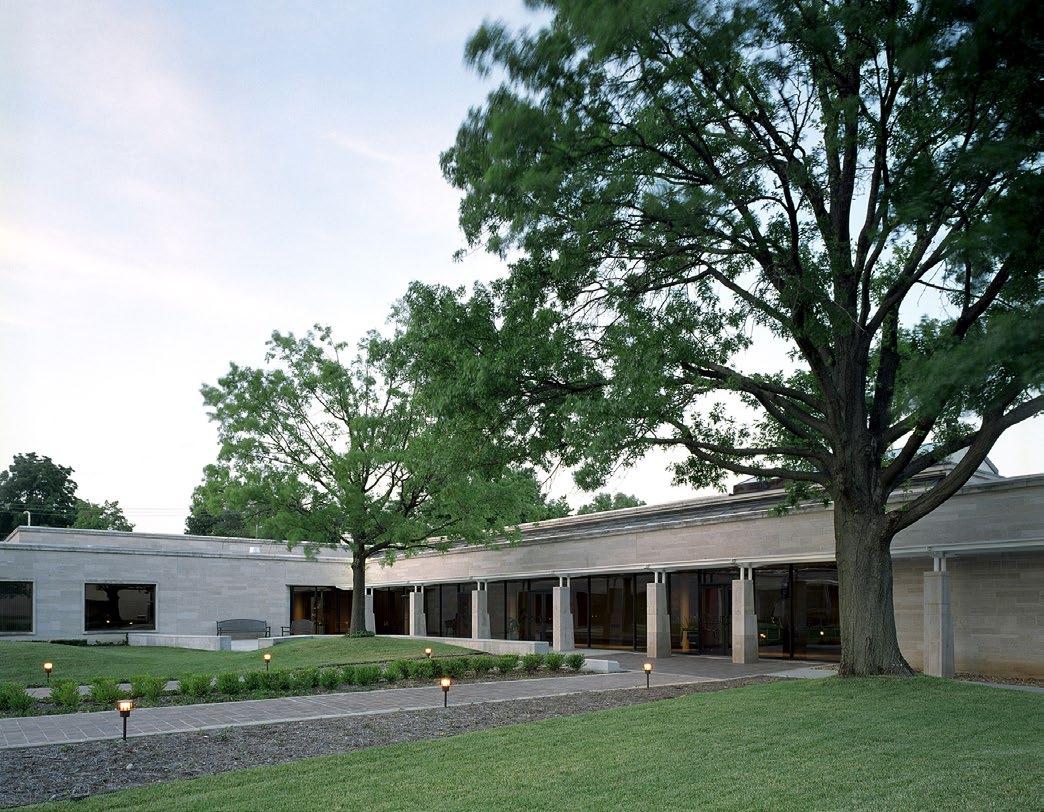
A renovation is often measured not by how much it changes a space, but by how seamlessly it enhances the experience within it. This principle guided the transformation of the Harry S. Truman Presidential Library and Museum in Independence, Missouri— a project that delicately balanced preservation with modernization. Designed by Multistudio (formerly Gould Evans), this renovation preserved the library’s historic integrity while significantly improving visitor circulation, accessibility, and educational outreach.
At first glance, the library’s iconic façade appears untouched, a deliberate decision to maintain its historical presence. However, beyond the stonework restoration, the impact of the renovation becomes clear upon entry. The upgraded lobby, illuminated by improved lighting and enhanced finishes, frames Thomas Hart Benton’s mural, Independence and the Opening of the West, offering a familiar yet revitalized welcome.
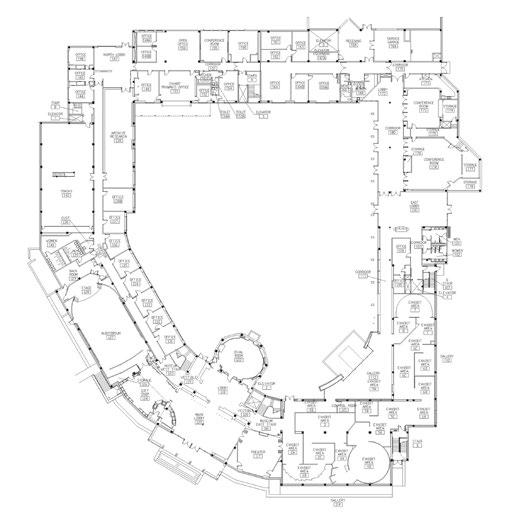
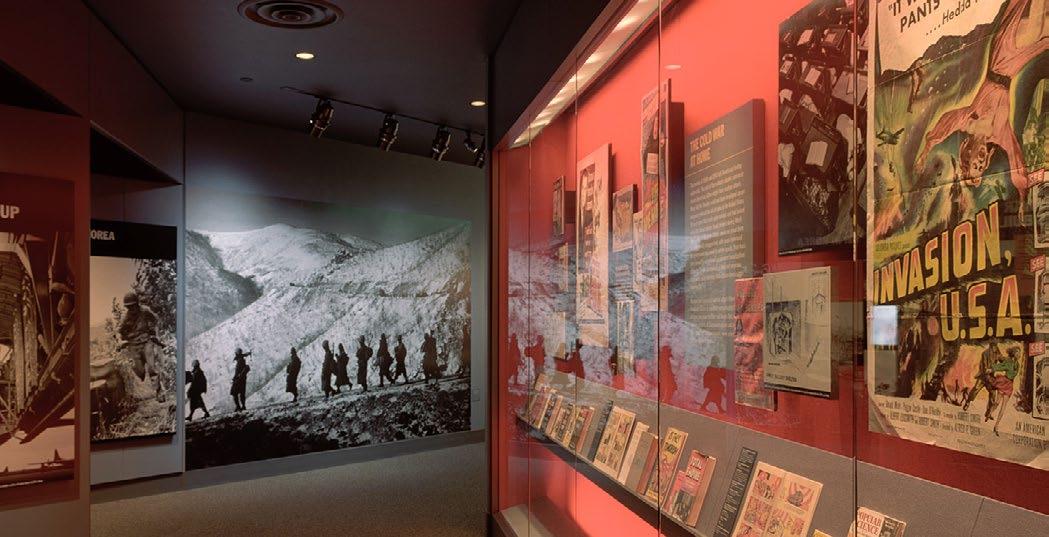
The museum’s flow and functionality were central to the renovation. The previous layout required visitors to backtrack through exhibits, disrupting the immersive experience. Now, a new corridor seamlessly connects the Presidential Gallery to the main lobby, ensuring a continuous journey through Truman’s life and legacy— akin to the natural flow of contemporary museums.
Though the project added only 4,365 square feet to the 46-year-old facility, the strategic expansion introduced key spaces that enriched the museum’s offerings:
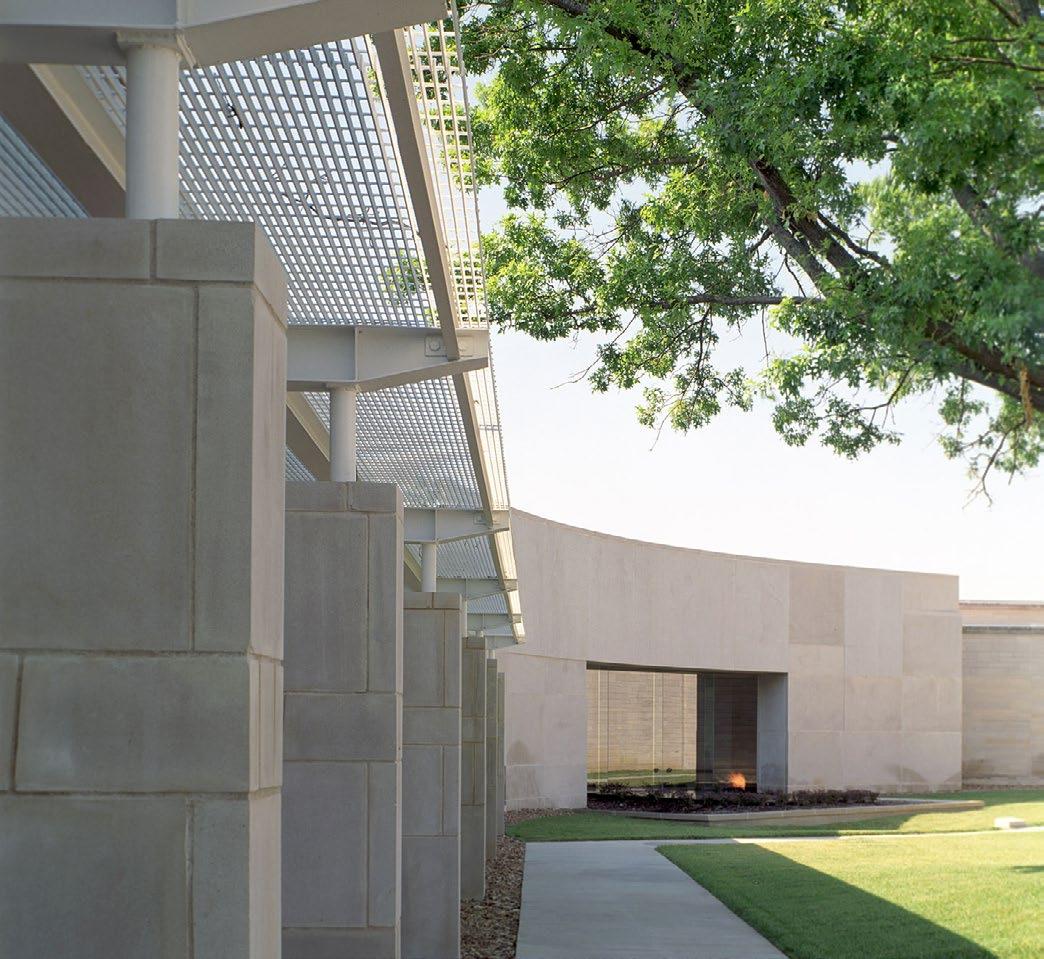
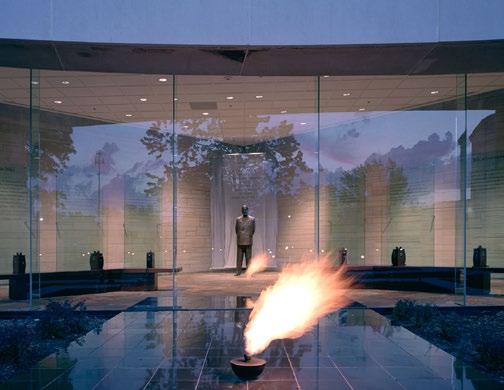
→ The Legacy Gallery, a 1,350-square-foot addition, serves as a contemplative space where visitors can reflect on Truman’s impact. A life-sized bronze statue of Truman gazes out onto the relocated Eternal Flame and the grave sites of the former president and First Lady Bess Truman, reinforcing the gallery’s role as a place of reverence and learning.
→ The Press Room, an equally sized expansion below, provides a dynamic educational hub for the White House Decision Center. Here, middle and high school students participate in simulated presidential decision-making, electing officials and debating historical policy choices before addressing the public in a press conference.
→ A 540-square-foot corridor now links the Legacy Gallery to the East Wing, improving circulation and connectivity within the museum.
→ A 900-square-foot pre-function area enhances the adjacent conference spaces, supporting larger events and community engagement.
→ A 225-square-foot stair tower expansion increases egress capacity, ensuring visitor safety while subtly integrating into the original structure.
Project Data
→ Independence, MO
→ 45,000 SF
→ Renovation & Addition
Beyond structural changes, the renovation refined key visitor touchpoints:
→ The auditorium now features new seating, carpeting, and wall treatments, offering an enhanced space for lectures and events.
→ The gift shop, previously constrained at 400 square feet, has more than doubled in size, allowing for a richer retail experience that supports the museum’s mission.
→ A new orientation theater welcomes visitors with a compelling film tracing Truman’s journey from his Missouri roots to the presidency, setting the stage for deeper engagement with the exhibits.
The Truman Library’s renovation transformed it from a static repository into a dynamic, interactive learning center.
The impact of these changes has been tangible. Since reopening in 2002, visitor attendance has increased by 20%, reflecting the library’s newfound ability to attract and engage the public. The renovation was funded through a combination of $8 million in federal funds and $15 million in private donations, a testament to the enduring significance of Truman’s legacy and the commitment to preserving his story for future generations.
Multistudio’s involvement in this project stemmed from its earlier work assessing needed repairs at various presidential libraries for the U.S. General Services Administration (GSA). That expertise informed a design strategy that balanced historical preservation with
modern accessibility, interactivity, and education. The result is a library that is not just a repository of documents but an immersive learning environment—a space that continues to shape civic understanding and historical appreciation.
Today, the Harry S. Truman Presidential Library and Museum stands as a model for how thoughtful renovation can honor history while making it more accessible, engaging, and relevant. By improving circulation, expanding educational spaces, and enhancing visitor experiences, Multistudio has helped ensure that Truman’s story remains as impactful today as it was during his presidency.
DeBruce Center University of Kansas
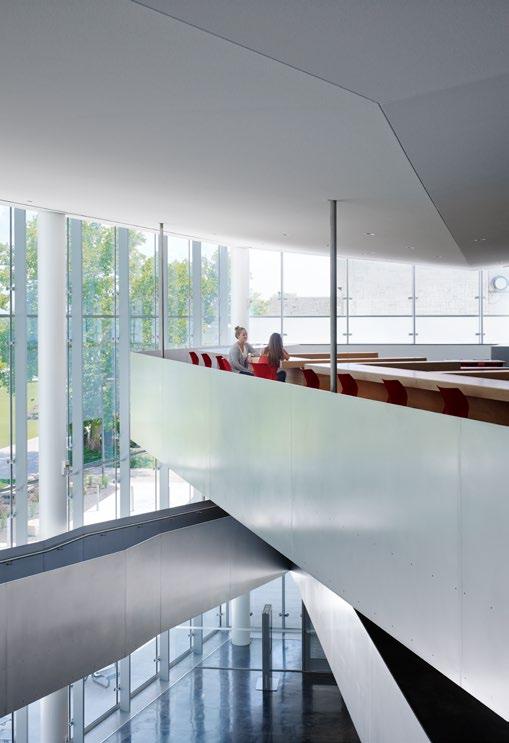
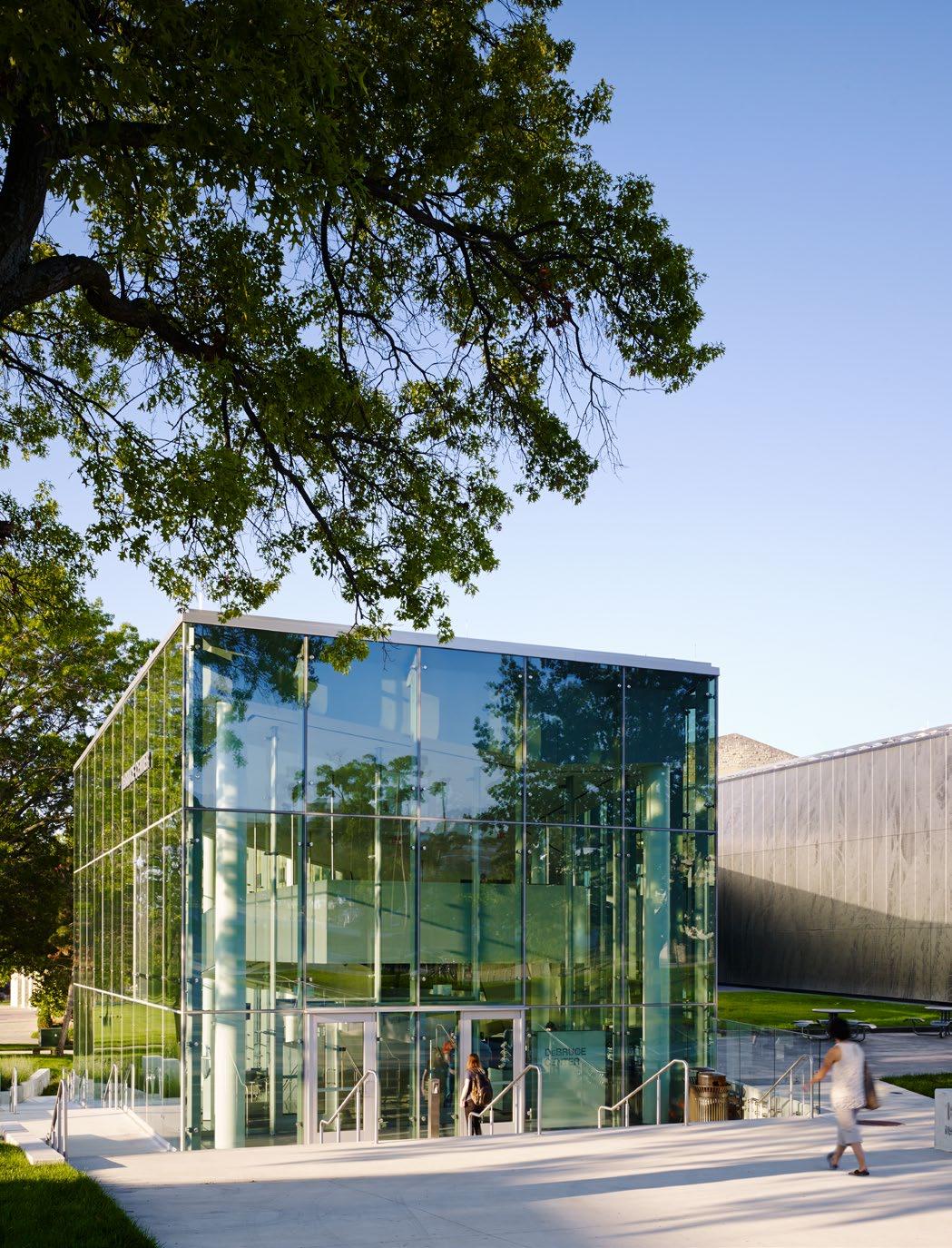
The DeBruce Center is an addition to Allen Fieldhouse that serves as a student activity center and exhibit space to house the original James Naismith "Rules of Basketball." The facility creates an active campus hub to attract and engage students, faculty/staff, visitors, and fans alike.
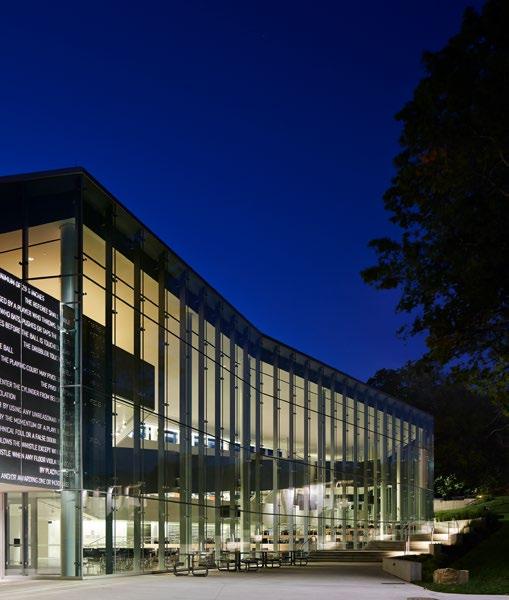
Constructed on the northeast corner of historic Allen Fieldhouse, the project establishes a museum addition alongside the Booth Family Hall of Athletics inside the Fieldhouse. Renovation of approximately 14,000 SF of existing concourse space in Allen Fieldhouse achieves a seamless flow between the two buildings.
The DeBruce Center includes a student activity/services wing that fits between an existing parking garage and Allen Fieldhouse, while reaching towards main campus and creating a pedestrian plaza facing Naismith Drive.
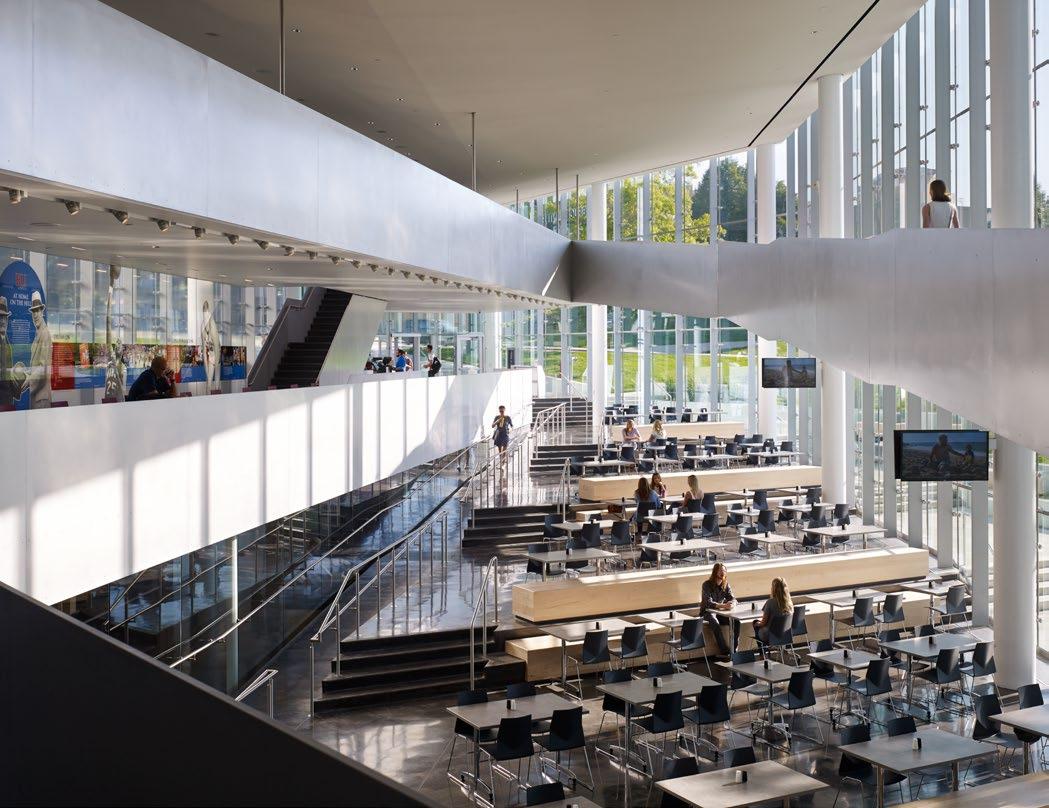
Multiple experiential layers surround visitors. The careful use of materials, unique combination of dining and exhibit space, and processional design create a memorable experience that bridges past and present.
A rich program of dining venues, exhibits, donor reception, gift shop, and training table for the basketball teams are all tied together with a sinuous path that appears to float through the three-story volume. This path engages students and visitors, inviting them to experience the various layers of the setting or en route to the rest of the campus. This layered connection provides the necessary transformation from daily student activity to game-day festivities—remaining constantly activated for a possibility realized.
Project Data
→ Lawrence, KS
→ 32,000 SF
→ New Build & Addition
Recognition
→ The Chicago Athenaeum, American Architecture Award, 2017
→ AIA Kansas Chapter, Honor Award, 2016
→ AIA Central States Chapter, Merit Award, 2016
→ AIA Kansas City Chapter, Merit Award, 2016
Tony Jones Studios for Animation & Illustration
Kansas
City Art Institute
An adaptive reuse project transformed student housing into a dynamic new home for a rapidly growing campus's animation and illustration programs.
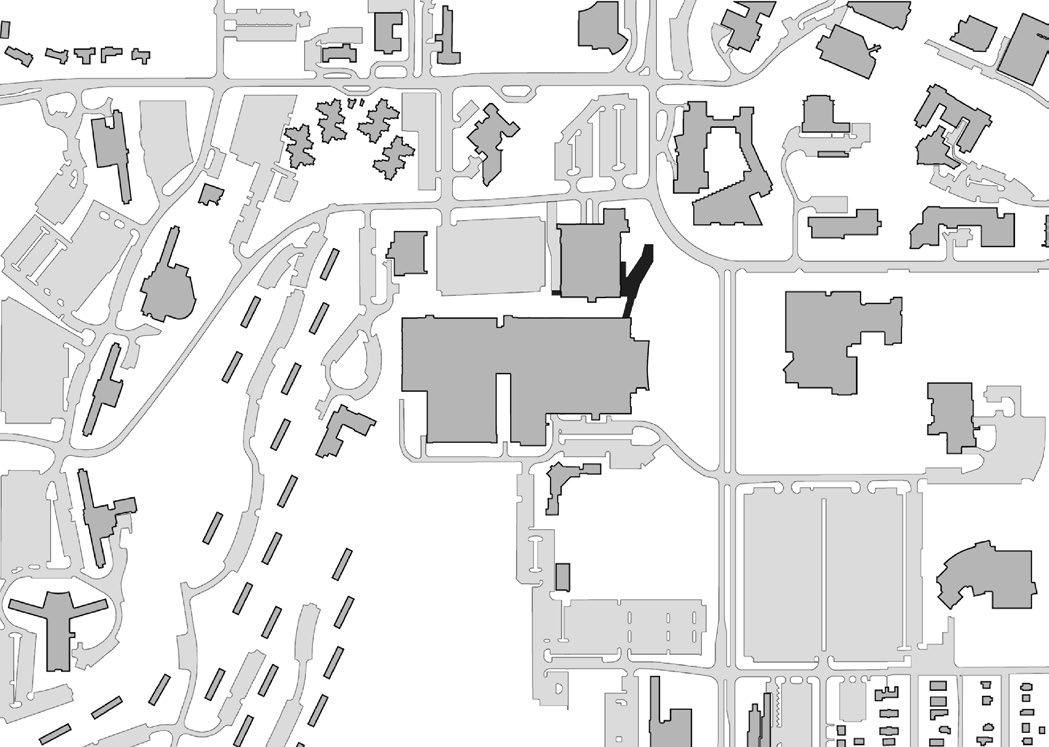
The Tony Jones Studios for Animation and Illustration transforms the Kansas City Art Institute's former student living center towers into a new home for the animation and illustration programs. It unites both departments while adding a print shop, art store, and the KCAI Gallery with direct access to the main quad.
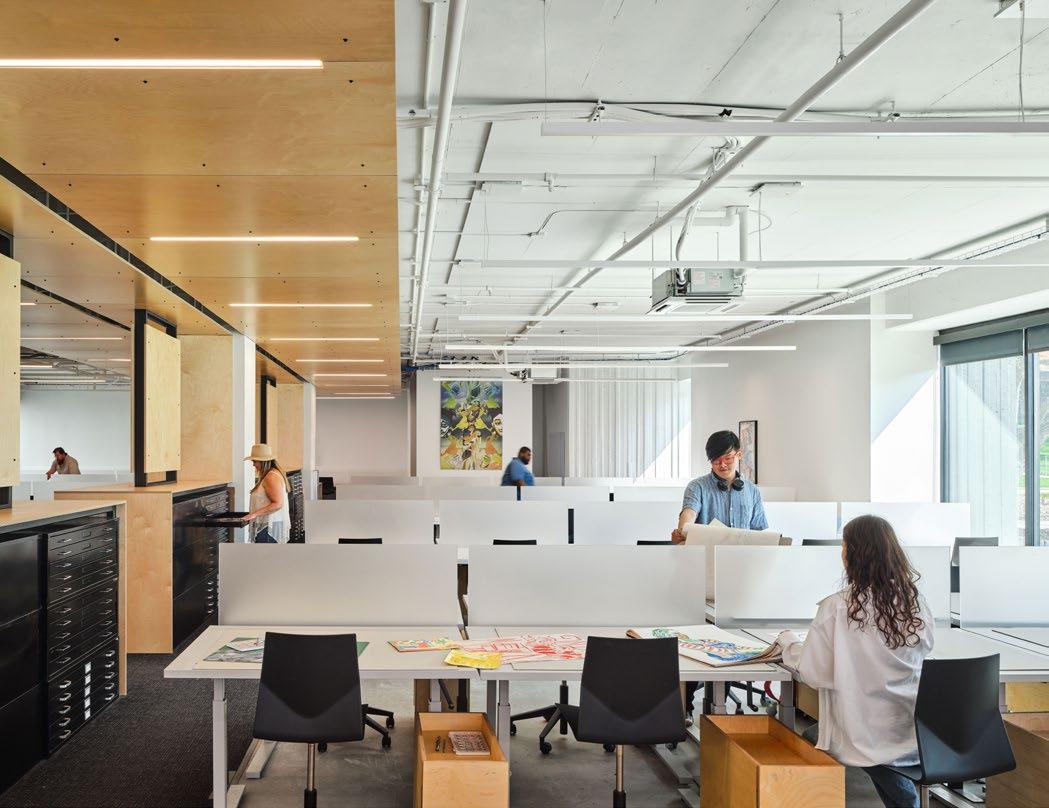
The Tony Jones Studios were collaboratively designed with KCAI faculty, catering to each department's unique requirements. Animation, in the north tower, features multimedia presentation walls and high-tech lighting controls to darken the spaces for student presentations. Illustration, in the south tower, boasts ample natural light and various gallery walls for showcasing student work. Private studio spaces are also provided to encourage exploration and creativity.
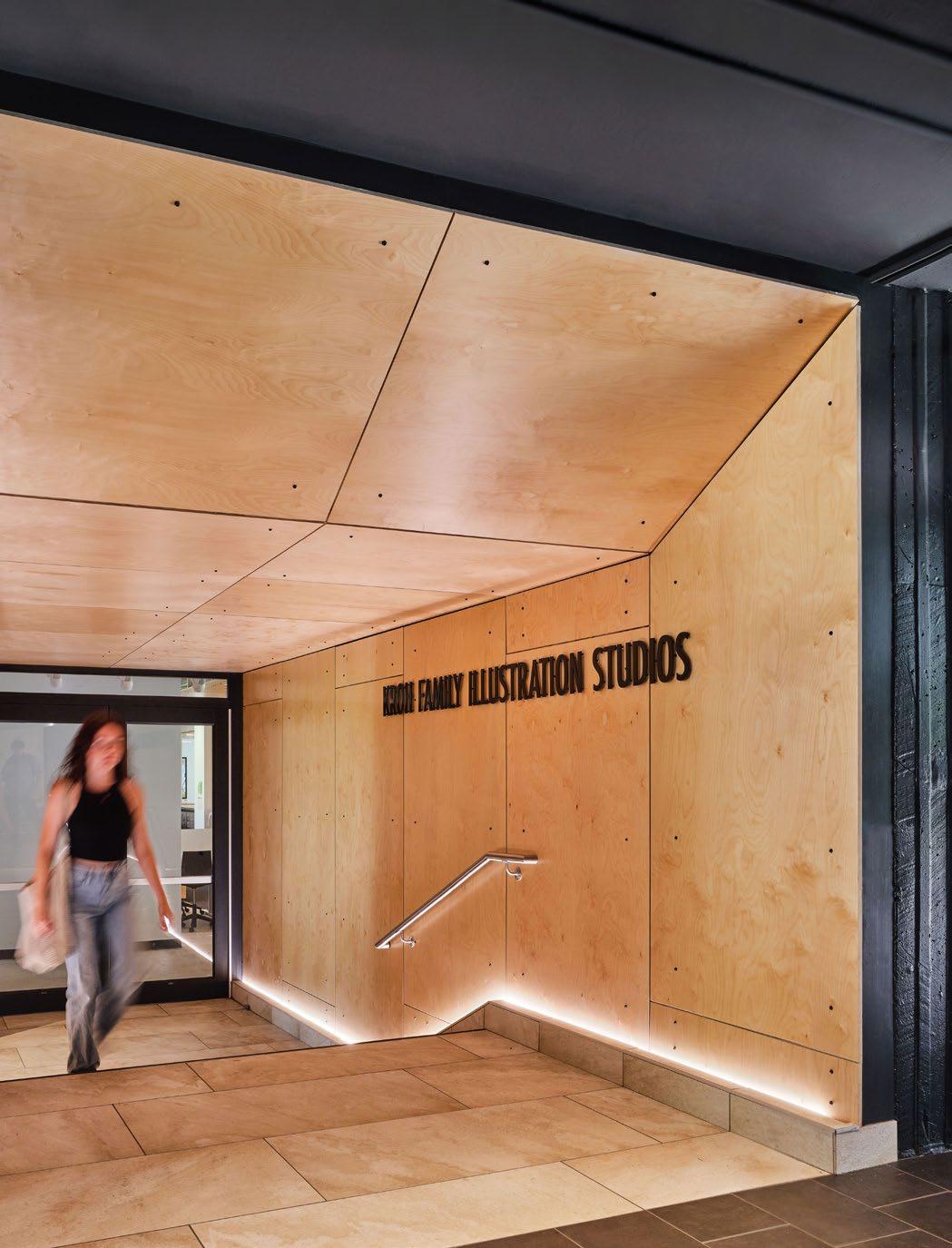
Common spaces are distinct for each department, allowing all faculty, staff and students to gather. Flexible, open studios foster collaboration across classes. The main lobby showcases both departments utilizing exposed structure and building systems combined with individual identities, a metal panel entry for the animation department and a birch panel entry for the illustration department, for an industrial yet warm ambiance. Multiple display options for student work, including a pin up space and digital media display boxes, are spread throughout the building.
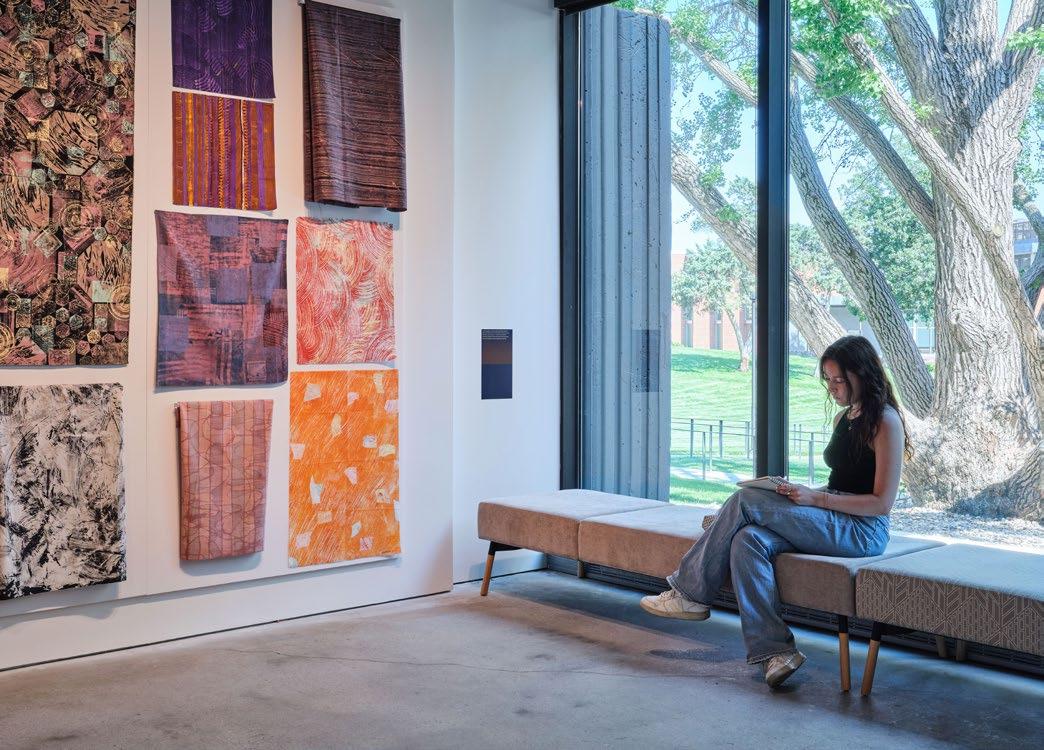
The KCAI Gallery, previously known as Crossroads Gallery, resides on the lower level of Tony Jones Studios. It offers flexible space with movable partitions and large pivot walls to transform from gallery to classroom to studio to black-box theater, accommodating various exhibitions. Situated between the Nelson-Atkins Museum of Art, Kemper Museum of Contemporary Art, and H&R Block Artspace, the KCAI Gallery becomes a new public art destination.
Project Data
→ Kansas City, MO
→ 48,600 SF
→ Adaptive Reuse
Learning Environments
Lee's Summit High School Addition and Renovation Lee’s Summit School District R-7
Lee’s Summit School District
R-7 directive was to “think big and lead the charge,” Multistudio stepped up to the challenge.
To ensure equitable access to future-ready learning environments, we engaged stakeholders in the development of the district’s Comprehensive Facility Master Plan, aligning fiscal resources and adjusting school boundaries to meet the instructional programming and facility needs of all pre-K through K-12 students. The result was a $100M+ bond to modernize and create innovative learning spaces with a focus on Real World Learning. At the heart of the comprehensive plan is Lee’s Summit High School.
With the school district’s directive to “think big and lead the charge,” Multistudio stepped up to the challenge.
Step one was to create a clearly defined spine that defines a hierarchy of circulation. Because students expressed appreciation for exterior circulation, this spine is an entwined symmetry of interior and exterior circulation we call the “Innovation Way” and “The Greenway.”
INNOVATION WAY ties together the campus through a new circulation route lined with educational space to support real-world learning. A greenway weaves through the campus, providing access to and circulation through outdoor space. To emphasize the hierarchy and promote collaboration, the future-ready learning program is stretched along this spine.
The second step was working with the educators to develop spaces that supported their efforts to provide students with the Kauffman Foundation’s Market Value Assets in their curriculum. Through this collaboration came the development of “innovation hubs” that allow for teachers and students to collaborate between different classes, departments, and with outside industry experts. Flexible spaces and a variety of collocated resources allow for evolution in the traditional curriculum.
This innovative approach to education is crucial to catch up with the industry demands that we are sending students out into, but what makes this work at Lee’s Summit High School particularly influential is that it has such a public image. Located within walking distance to downtown and being located at the intersection of the two primary highways in the city, what we do here will be on display. This can become a catalyst to change in schools across the area.
Project Data
→ Lee's Summit, MO
→ 390,000 SF
→ Addition & Renovation
Dining & Athletic Facilities Expansion & Renovation Pembroke Hill School
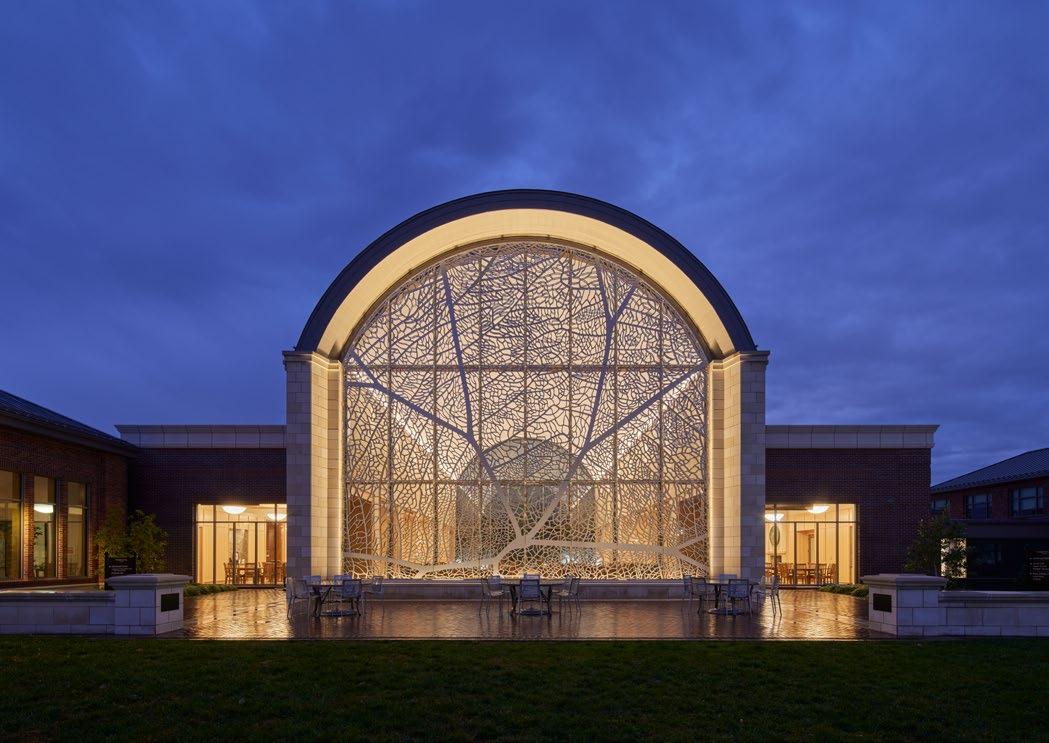
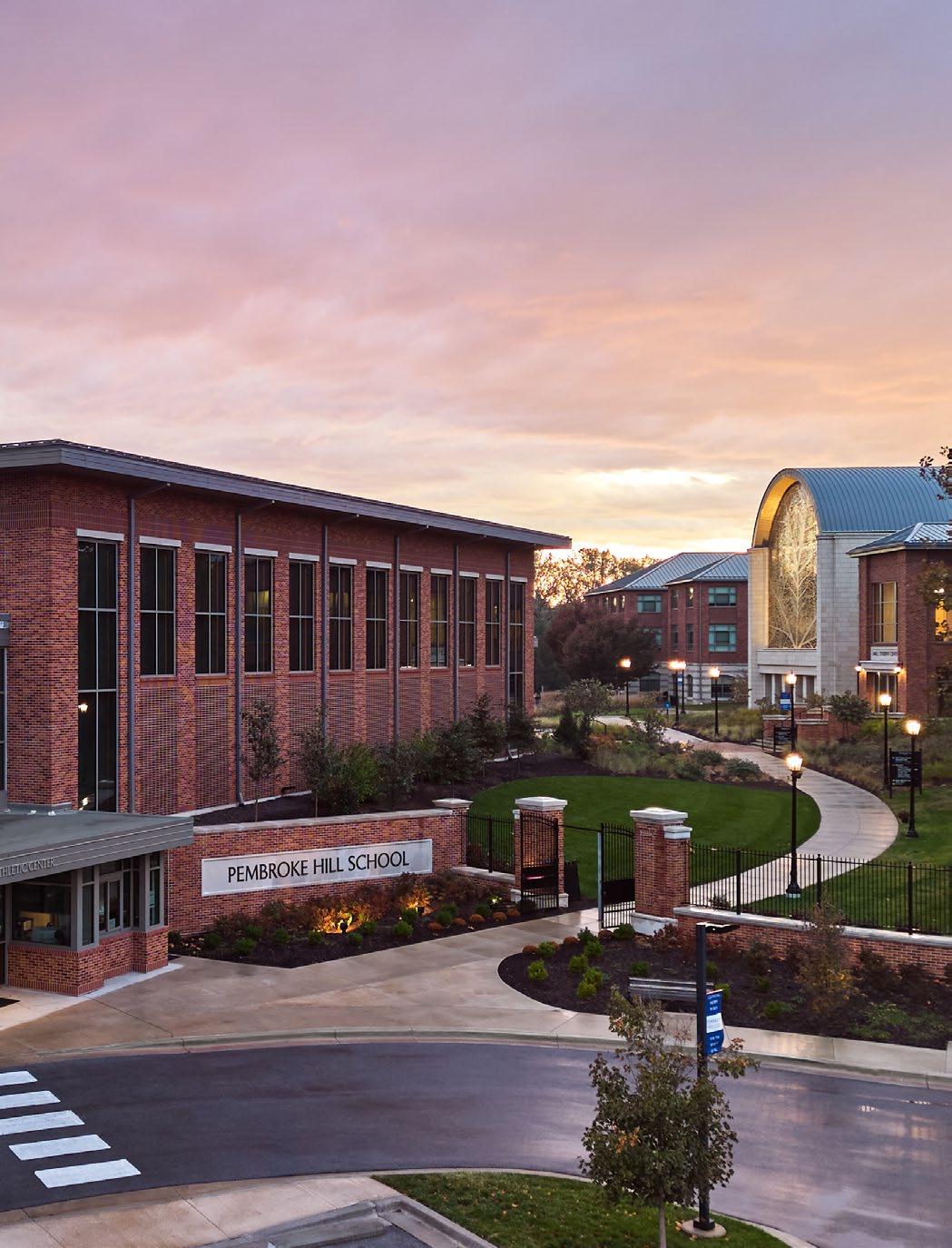
The renovated and expanded dining facility elements include raising the ceiling height, expanding the lobby, and enhancing the overall character of the facility.
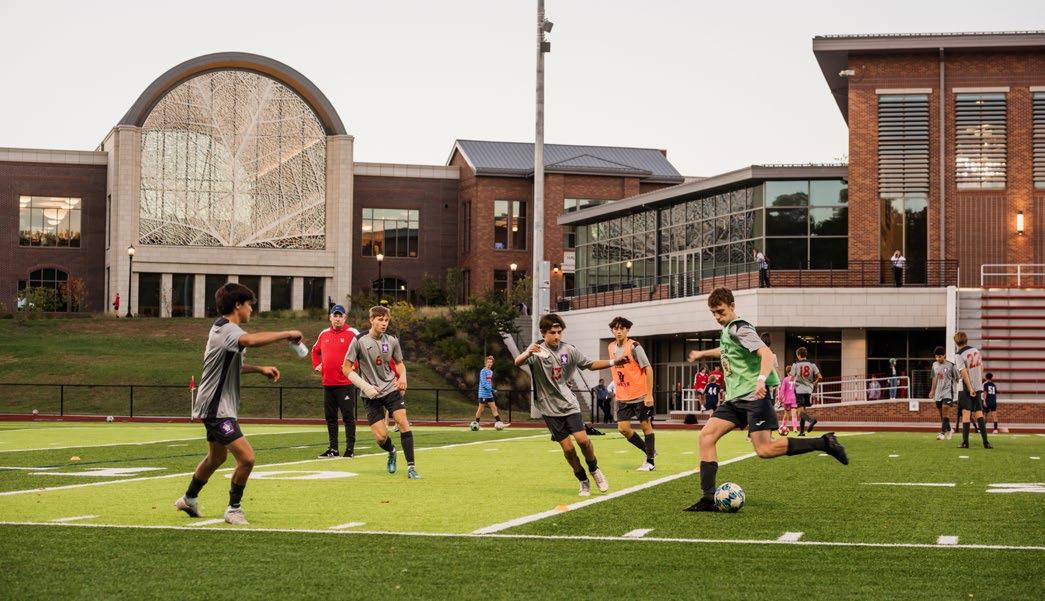
The replacement of the school’s gymnasium will include a game court, retractable bleachers to provide two crosscourts, a second practice court, miscellaneous support spaces, a dance room, a weight room, and a trainer room. We will also be enhancing the campus landscape architecture.
The mission of Pembroke Hill School is to enable all students to build character and to develop their intellectual, physical, and creative abilities to the highest level.
→ Children learn best by doing
→ Educate the whole child
→ Healthy relationships are essential
To that end, the planning and design team worked closely with school staff and administrators to gain a thorough understanding of the way the existing facilities were being used to inform the final design. Through this process, the following guiding principles were identified and are driving the design:
→ Increase opportunities for engagement and interaction to strengthen relationships across the entire PHS community
→ Design for flexibility and multiple usages to support stewardship of resources through the highest and best utilization of all spaces
→ Build to last, but build sensibly while allowing shortterm adaptability
→ Seek aesthetic unity and completeness among the buildings and grounds
Project Data
→ Kansas City, MO
→ 60,000 SF
→ Addition & Renovation
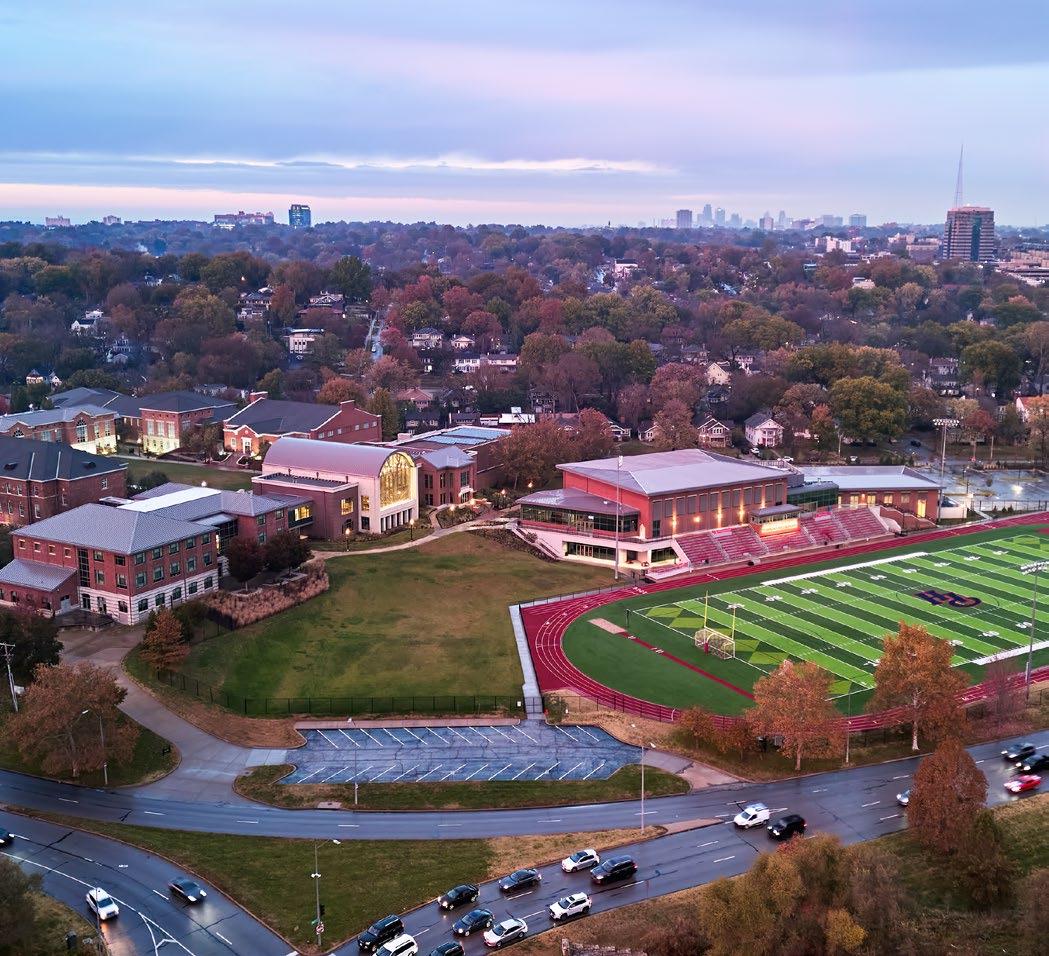
A renovation and expansion of the dining and athletic facilities at Pembroke Hill School's Ward Parkway campus in line with the school’s mission and values.
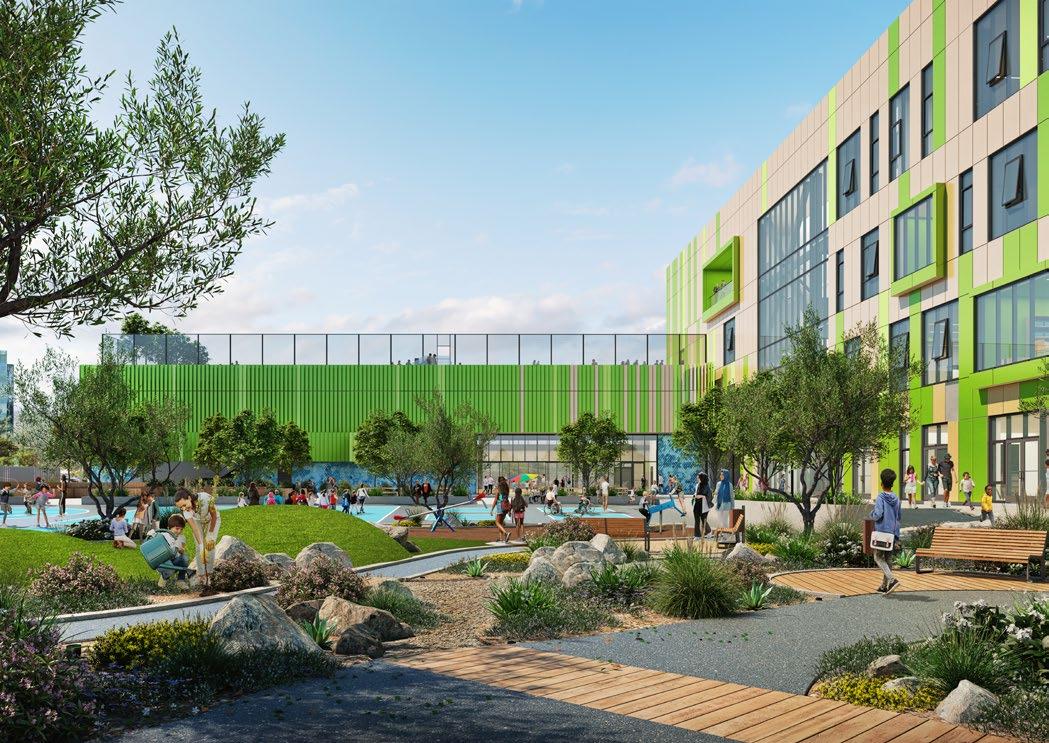
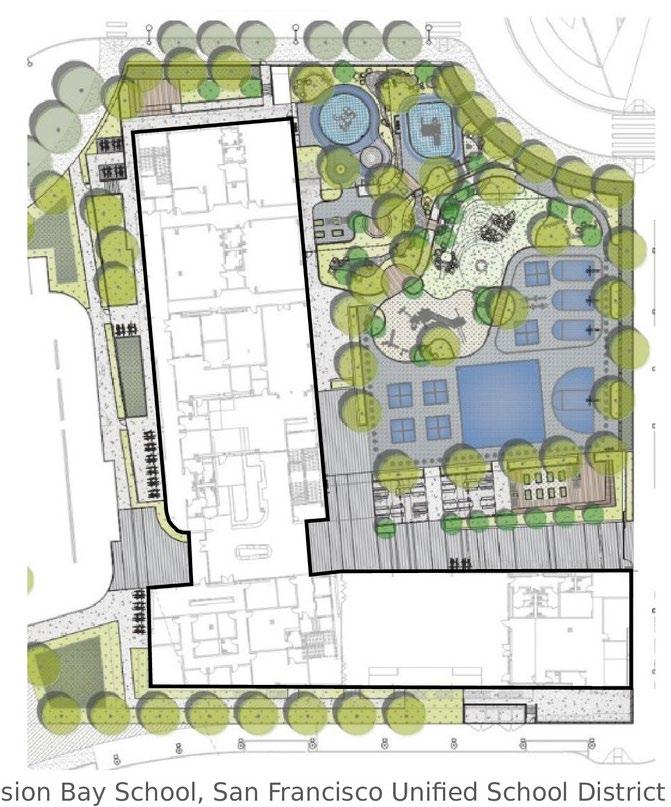
Mission Bay School San Francisco Unified School District
In 2019, San Francisco Unified School District engaged Multistudio to lead site analysis and programming for a visionary new school in the heart of the Mission Bay neighborhood. Located on Block 14 of the University of California, San Francisco's Mission Bay campus, the project presented both a unique opportunity and a complex urban context. Our work began with a deep exploration of the site’s physical, environmental, and infrastructural conditions, allowing the design team to assess its potential and shape a bold vision for the future of public education in San Francisco.
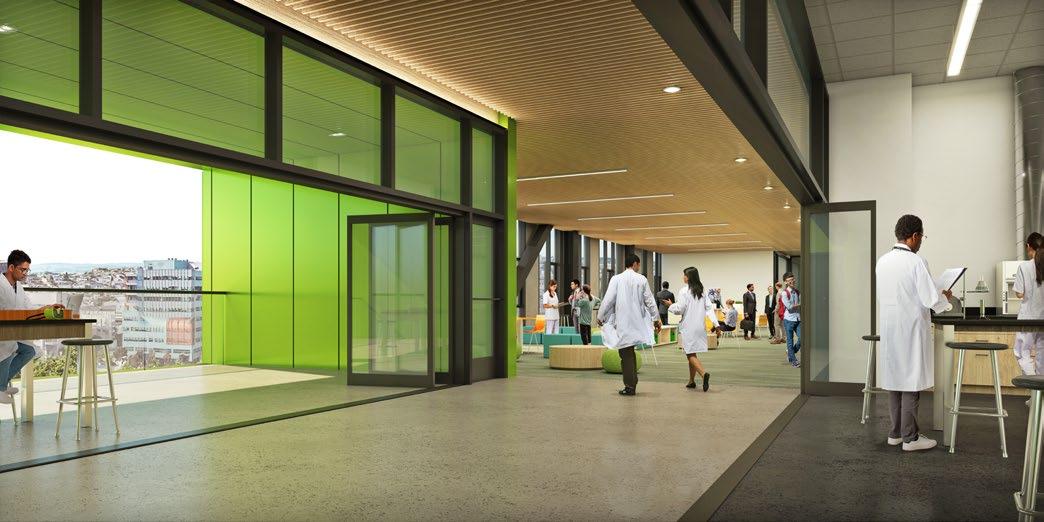
The project calls for a 95,000-square-foot facility on a 2.5-acre parcel donated by UCSF to SFUSD—an unprecedented collaboration between institutions that bridges higher education, public education, and the city itself. Within this new campus, three key programs converge: an early childhood center that includes preschool, transitional kindergarten, and elementary education through fifth grade; a linked learning hub designed to connect high school students from across the district with job training, internships, and industry partnerships; and a professional learning center for teacher development and training.
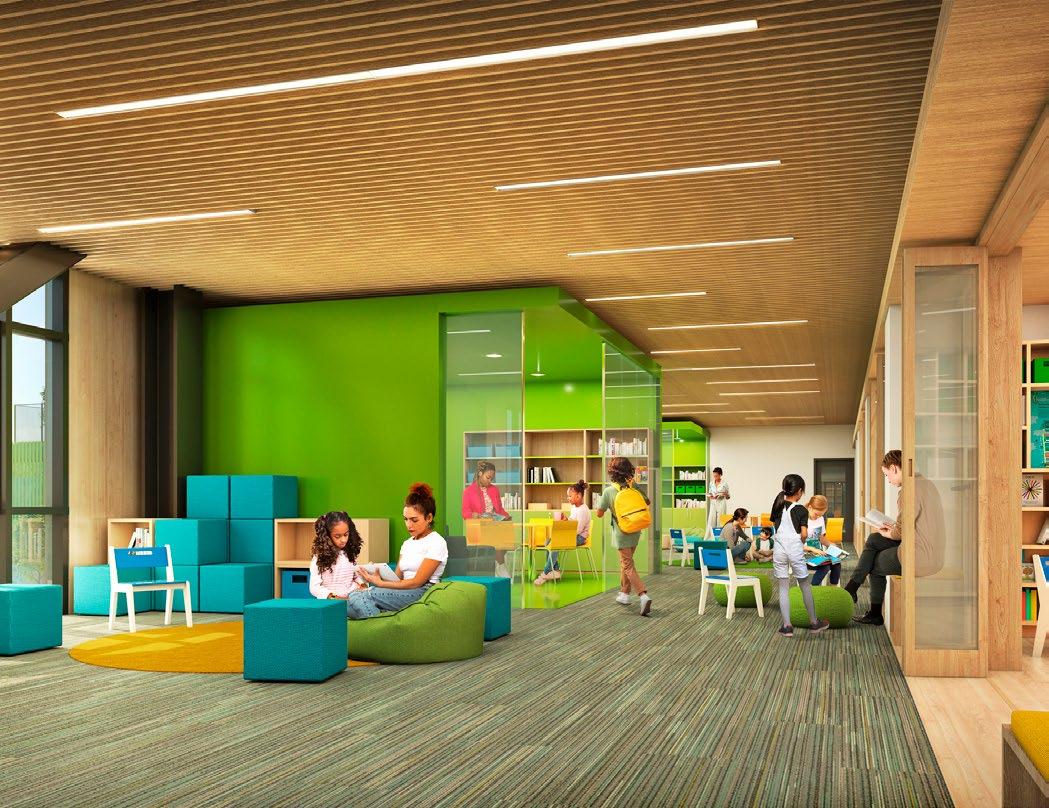
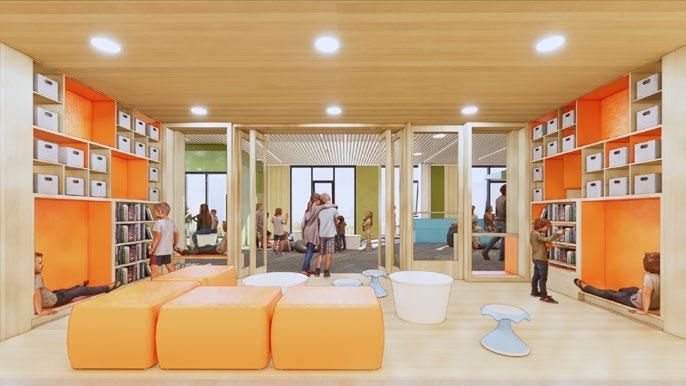
At its core, the Mission Bay School represents a profound shift toward equity and inclusivity. Designed as a model for Universal Design for Learning (UDL), the school will offer environments that adapt to the diverse needs of “each and every” learner. This commitment to personalization and access will position the school as a living laboratory—not only for students but for the district itself—as it evolves toward a more responsive, studentcentered educational model. The design aspires to do more than house programs; it seeks to embody the future of learning.
Project Data
→ San Francisco, CA
→ 95,000 SF
→ New Build
A new, inclusive public school in San Francisco’s Mission Bay neighborhood that unites early education, careerconnected learning, and professional development—advancing SFUSD’s commitment to equity and innovation.
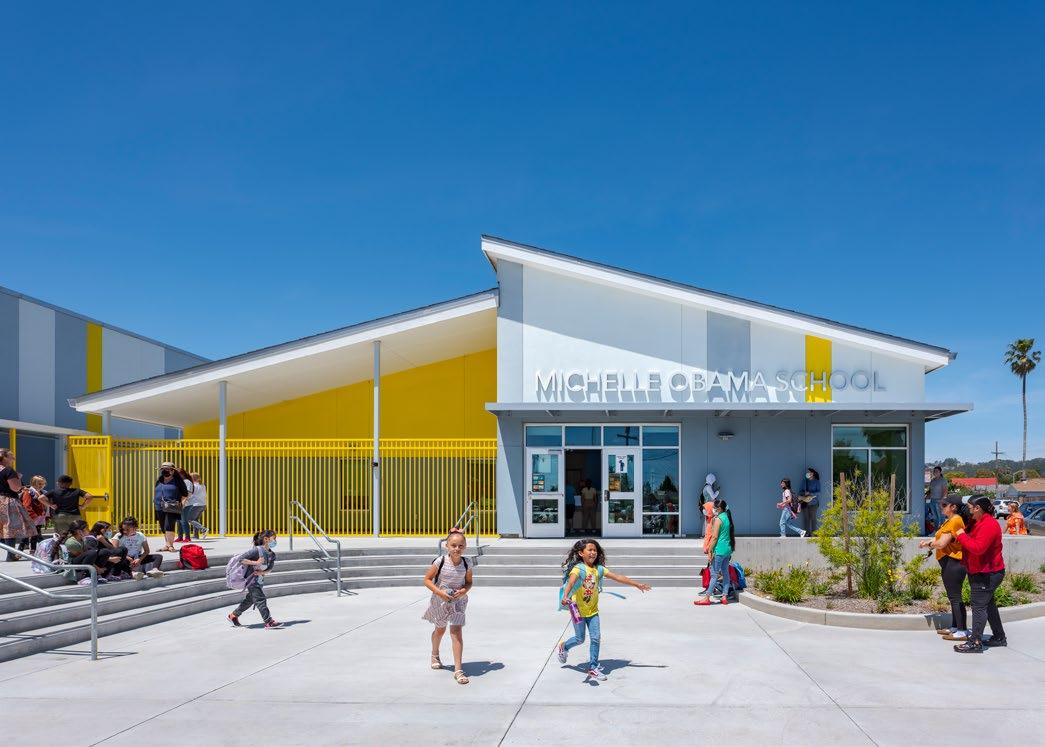
Michelle Obama School West Contra Costa Unified School District
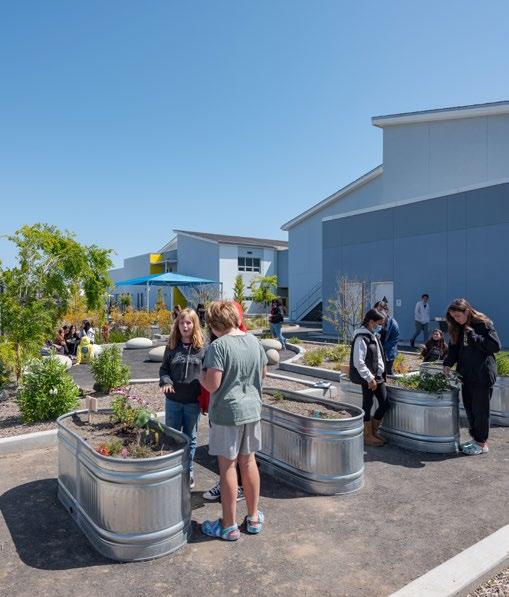
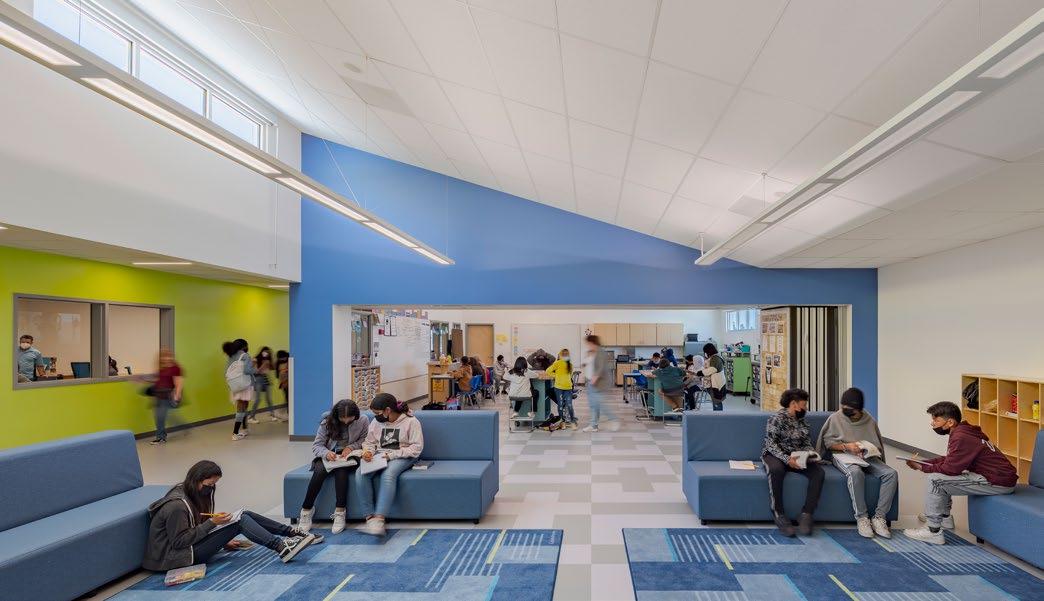
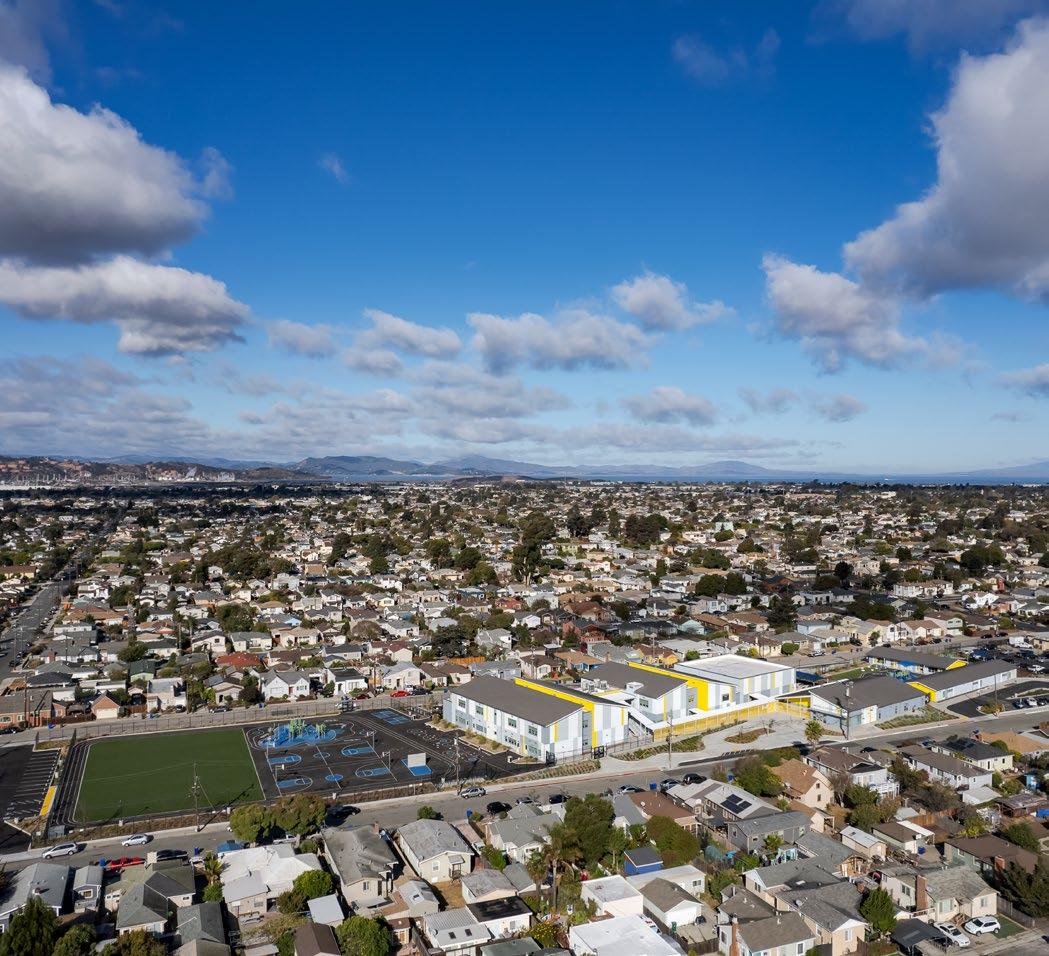
The design of Michelle Obama School reflects a deep commitment to student success and community connection. Conceived as more than just a place for learning, the campus supports a 21st century educational model—one that prioritizes critical thinking, collaboration, and hands-on experiences. Every space is crafted to empower students to thrive in a complex, rapidly evolving world, while also nurturing the well-being of educators and strengthening the ties between the school and the surrounding community.
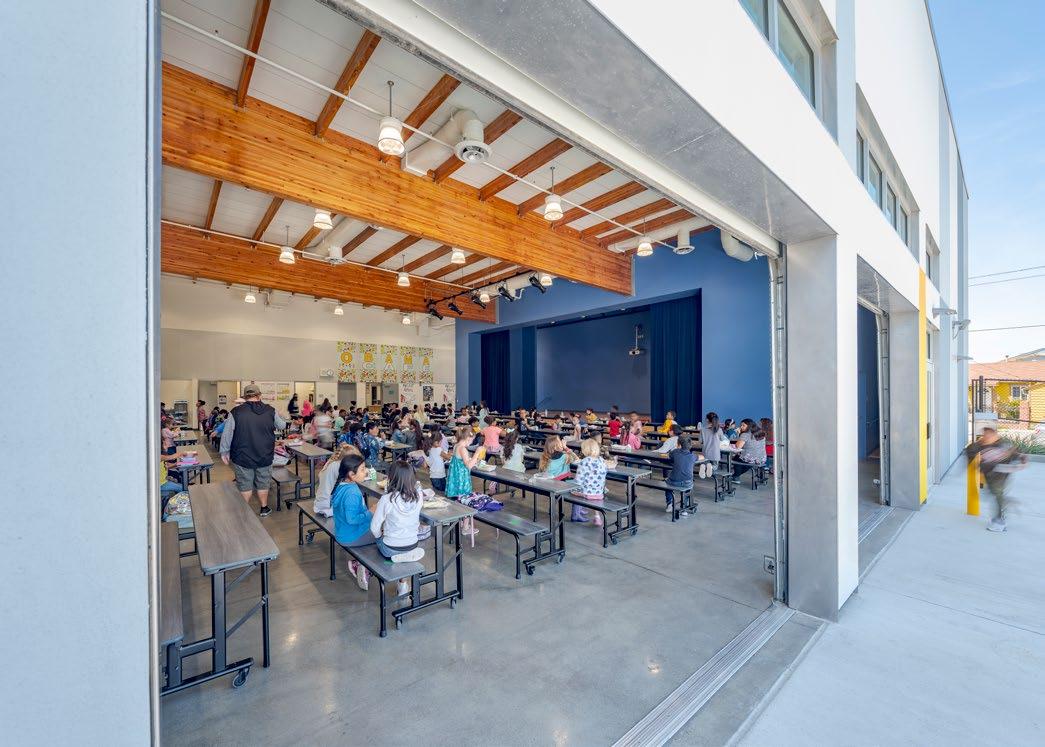
Sustainability and thoughtful site planning guide the campus design. Its single- and two-story Type-V buildings are carefully oriented to harness natural daylight and reduce glare, creating a calm, welcoming environment for learners and staff. The entry sequence, anchored by a bioswale plaza, offers a secure and intuitive arrival experience, while also serving as the heart of the school’s public life. Flanking this plaza are the community room and multipurpose room—spaces intentionally designed for joint use by families and neighborhood organizations during evenings and weekends. Whether hosting parent meetings, professional development workshops, or largescale events, the campus operates as an open and active civic resource.
Project Data
→ Richmond, CA
→ 47,500 SF
→ New Build
A 21st century learning environment that empowers students, supports educators, and strengthens the community it serves.
Kansas City
4200 Pennsylvania Avenue
Kansas City, MO 64111
816.931.6655
Lawrence
706 Massachusetts Street Lawrence, KS 66044
785.842.3800
New Orleans
1501 Religious Street, Suite A New Orleans, LA 70130
504.681.6303
Phoenix 521 South 3rd Street #100 Phoenix, AZ 85004