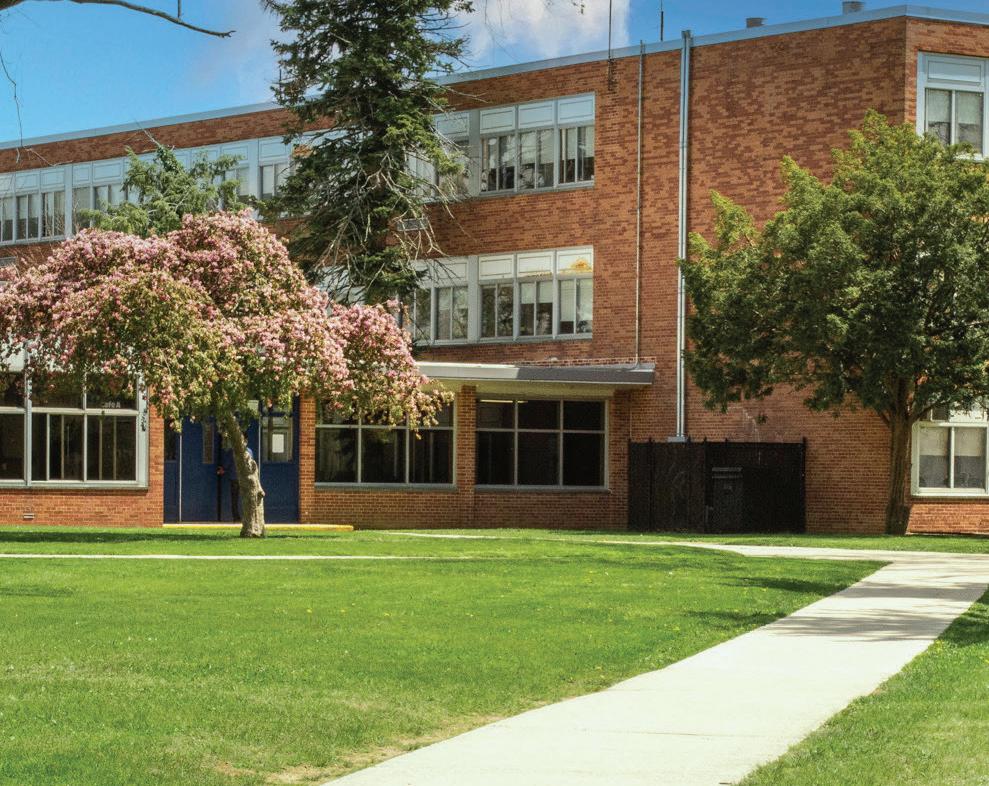
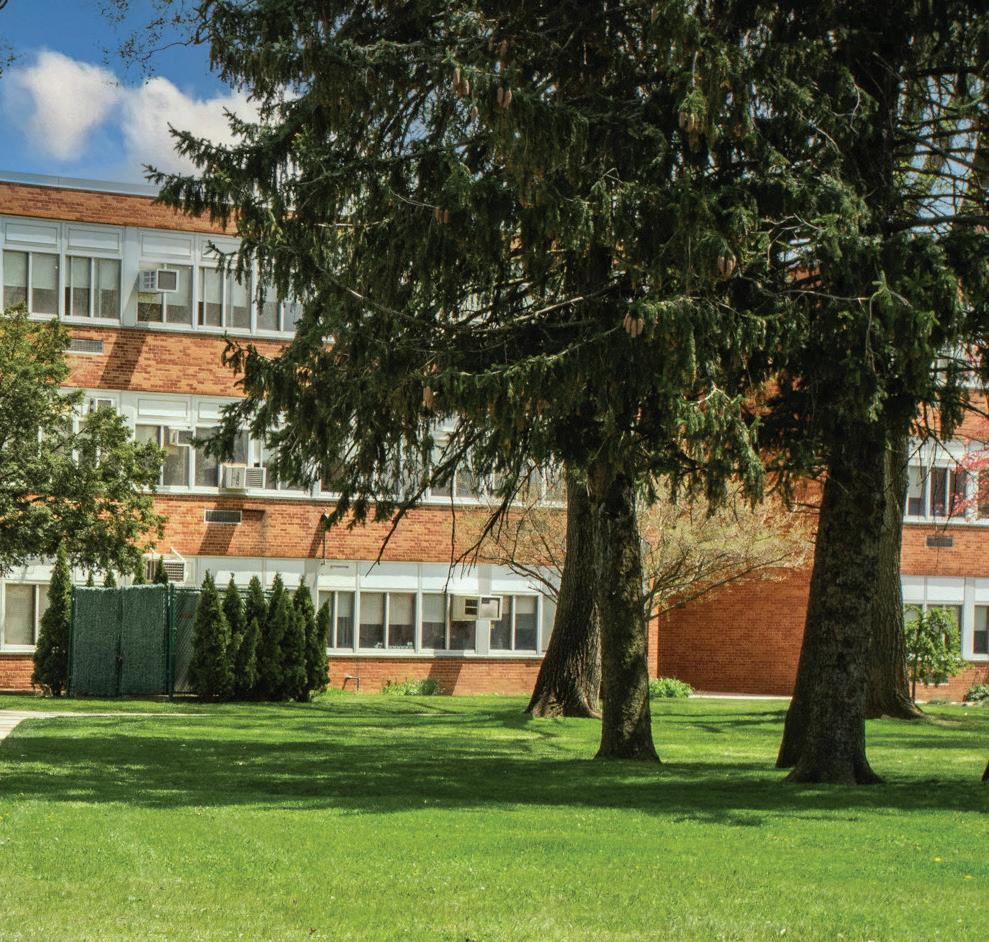
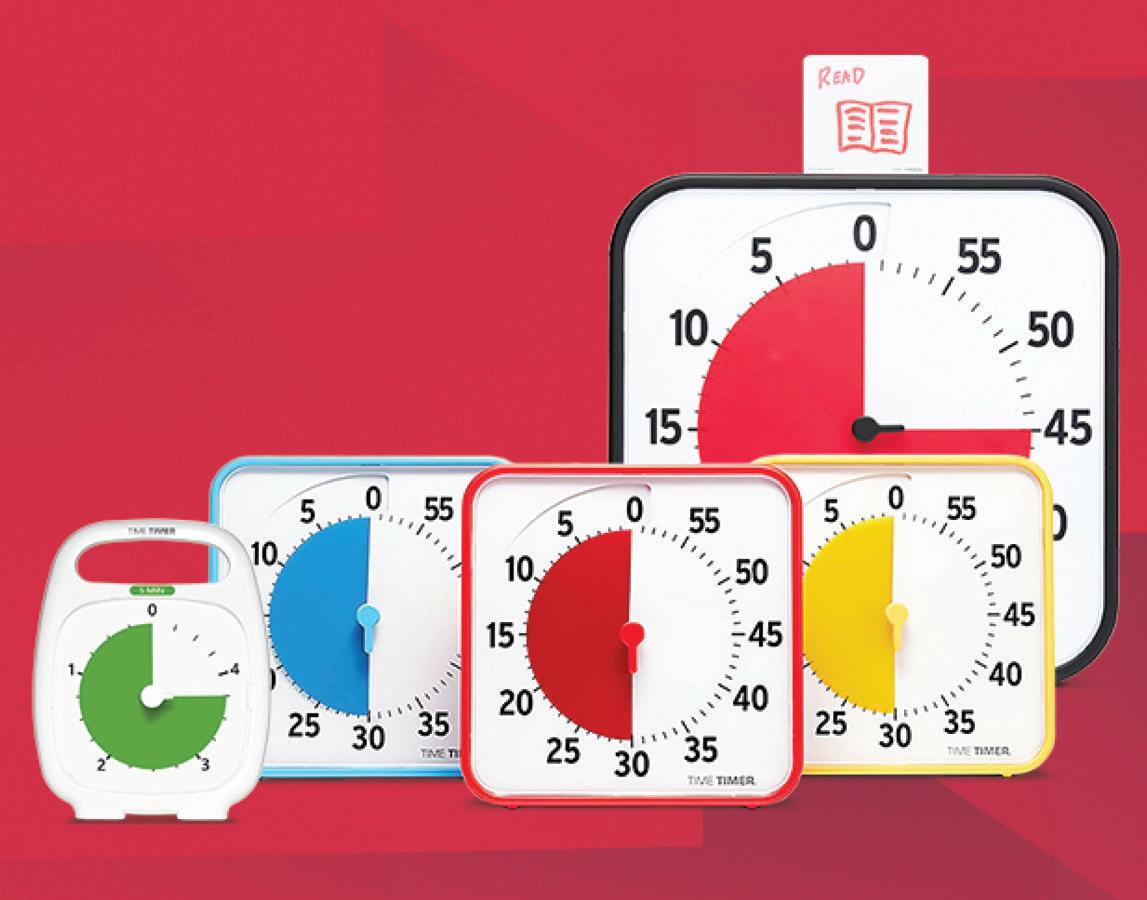
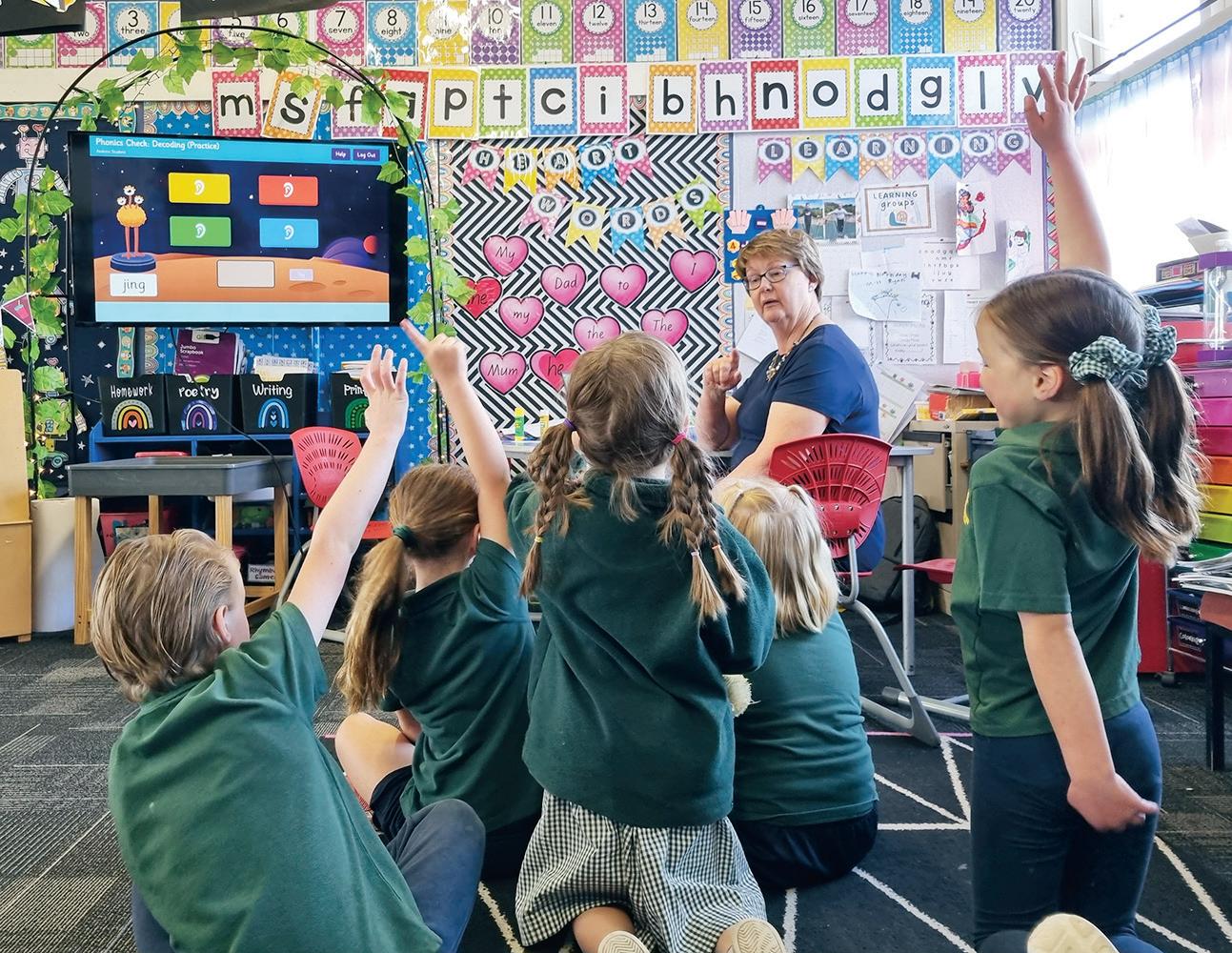
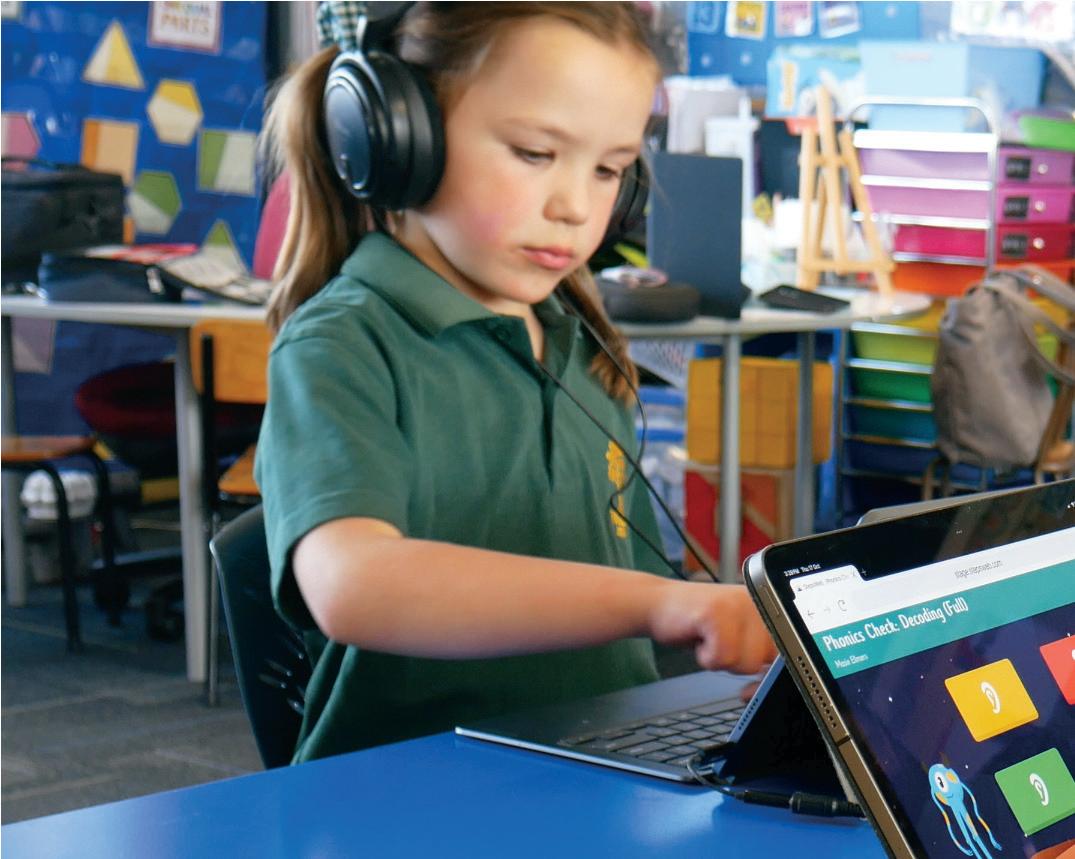
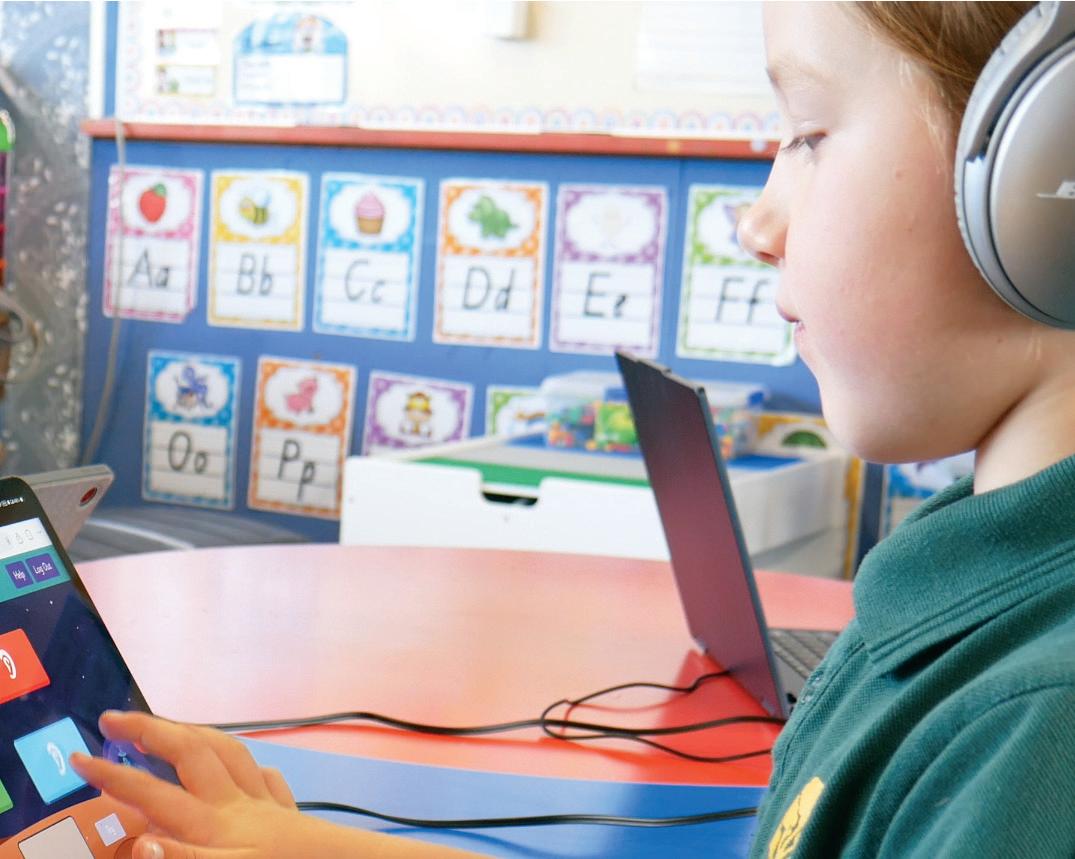
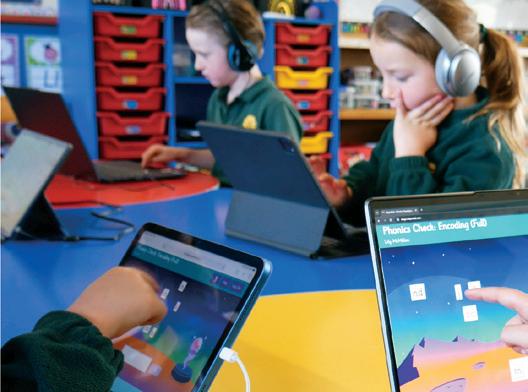
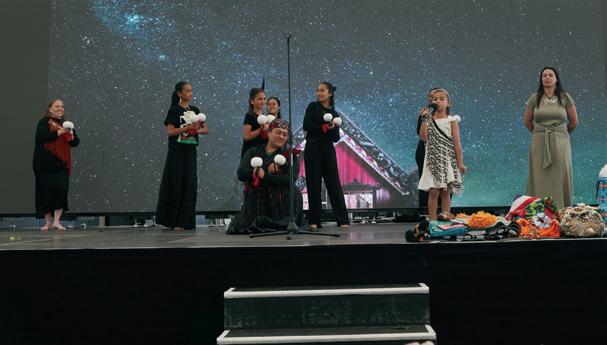
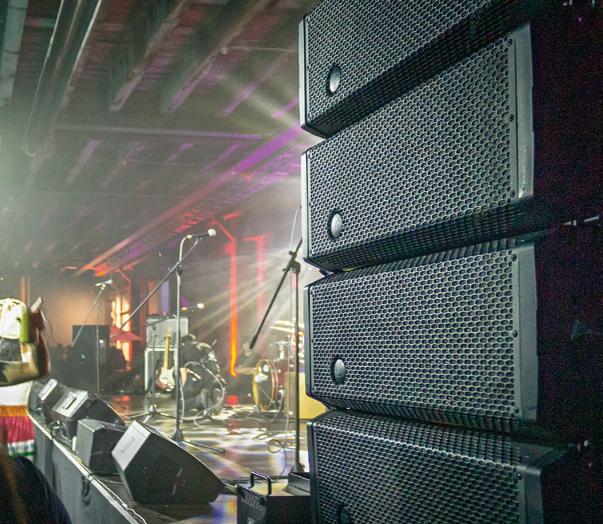
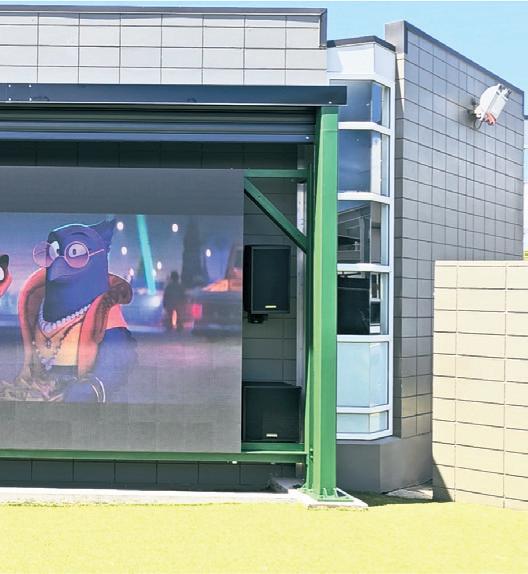
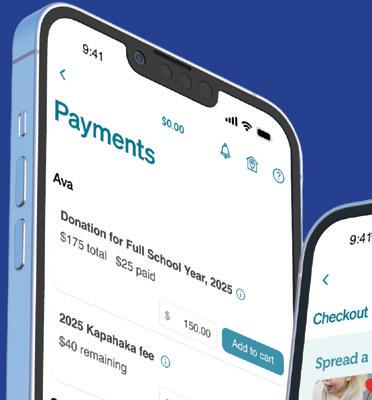
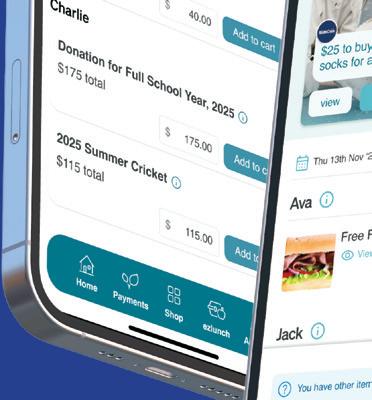
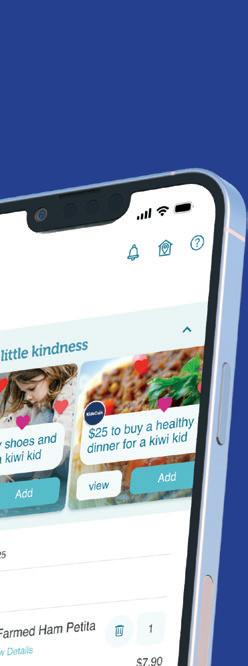
Consistent, coherent, and compliant visual and audio communications when and where they are needed.
Contact your local NAS Account Manager for details.
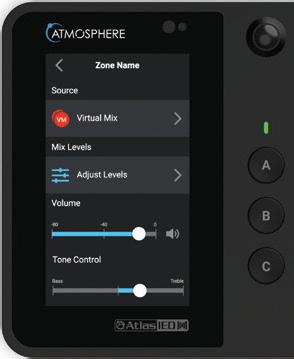
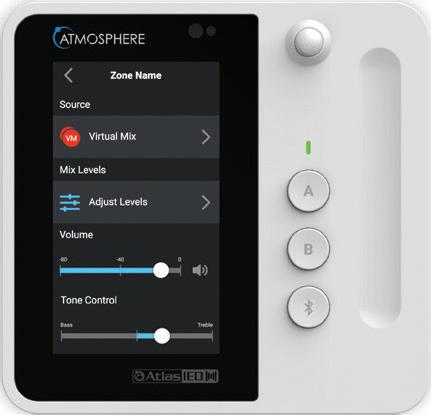
NEW Atmosphere™ Wall Controllers
If you can dream it, we can build it!
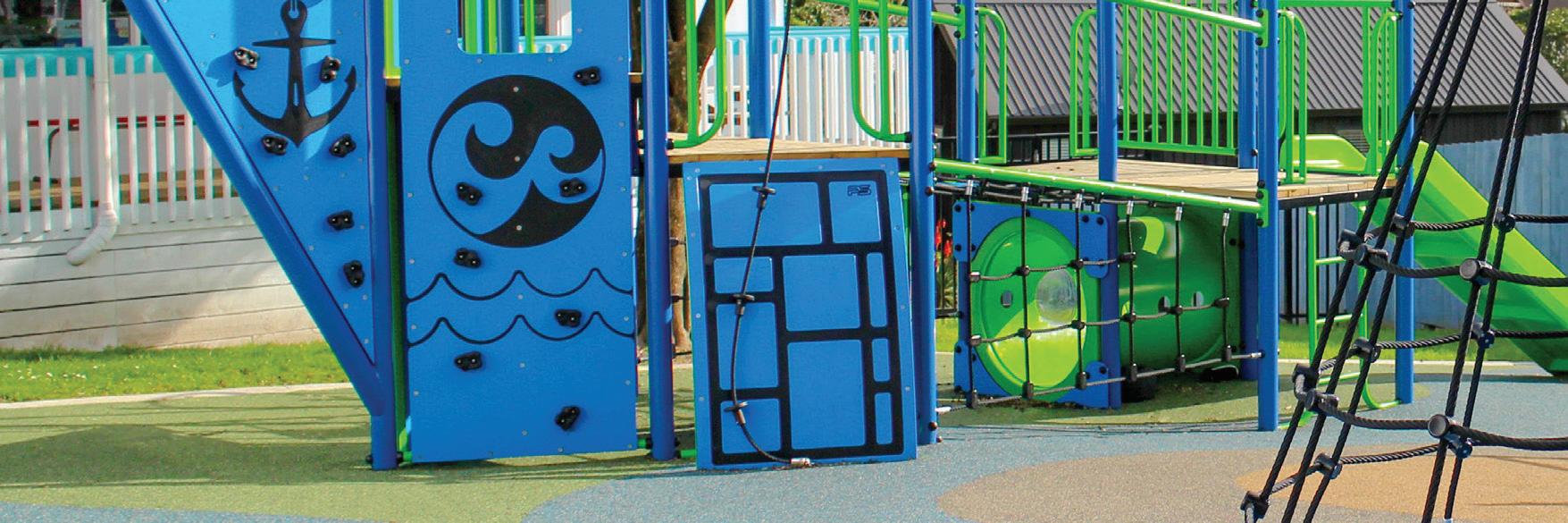
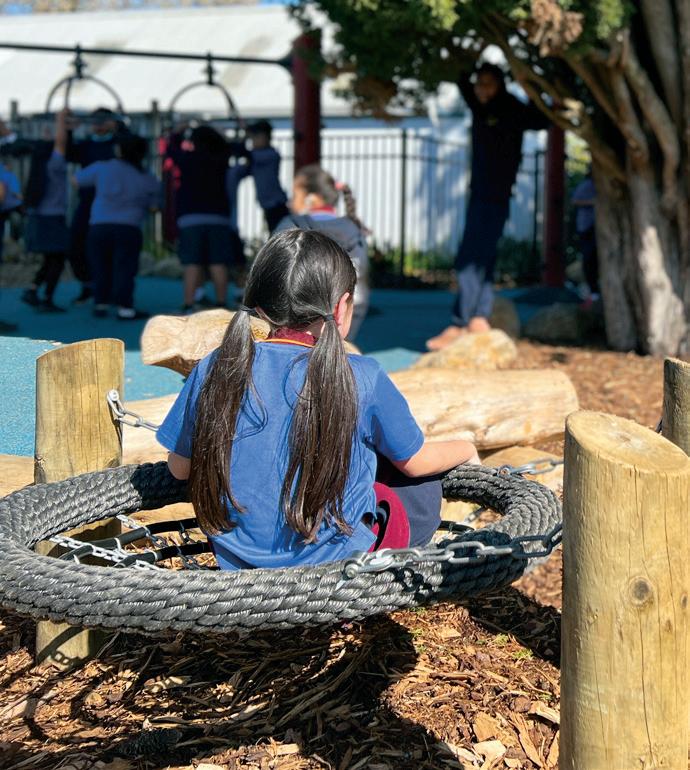
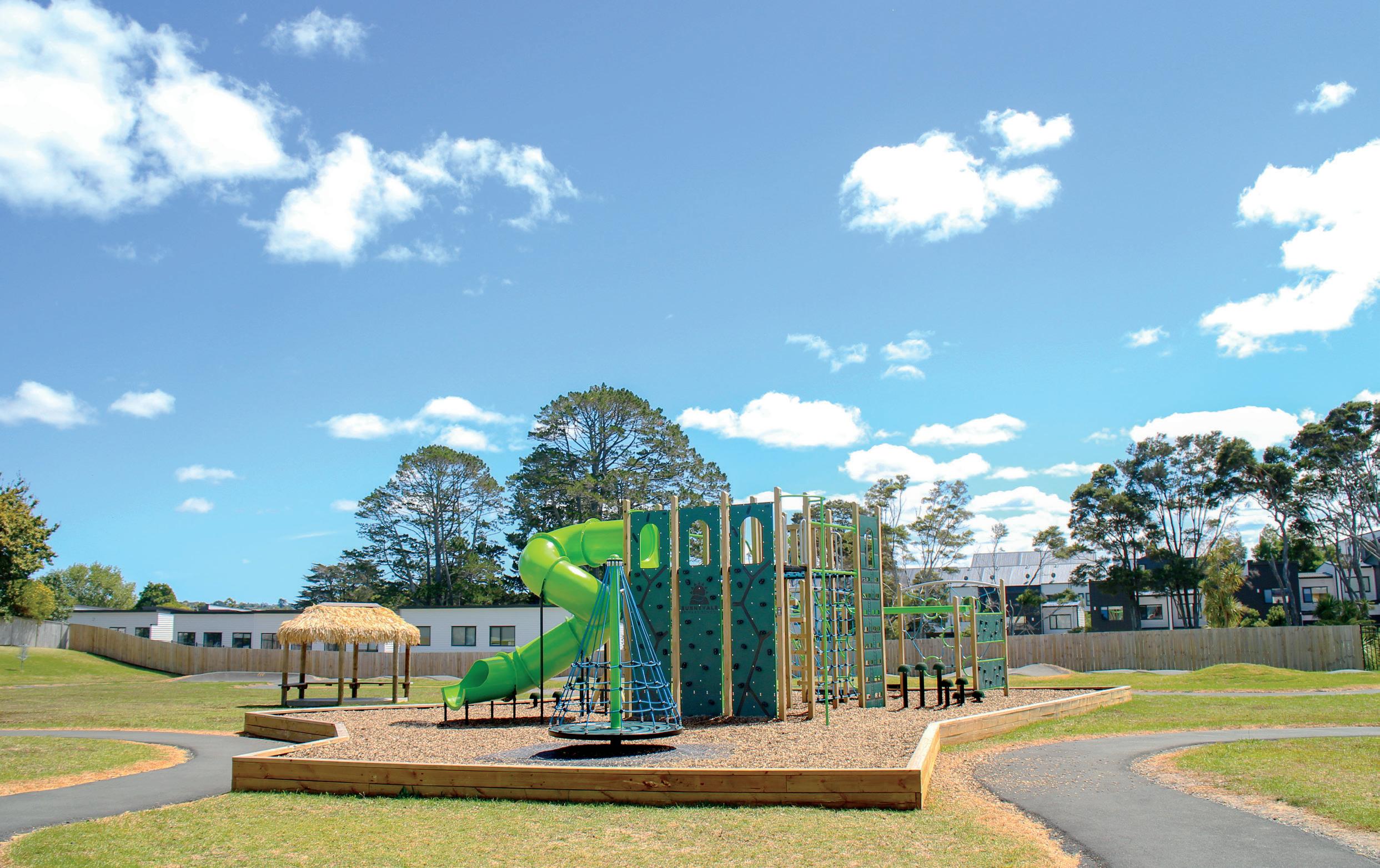
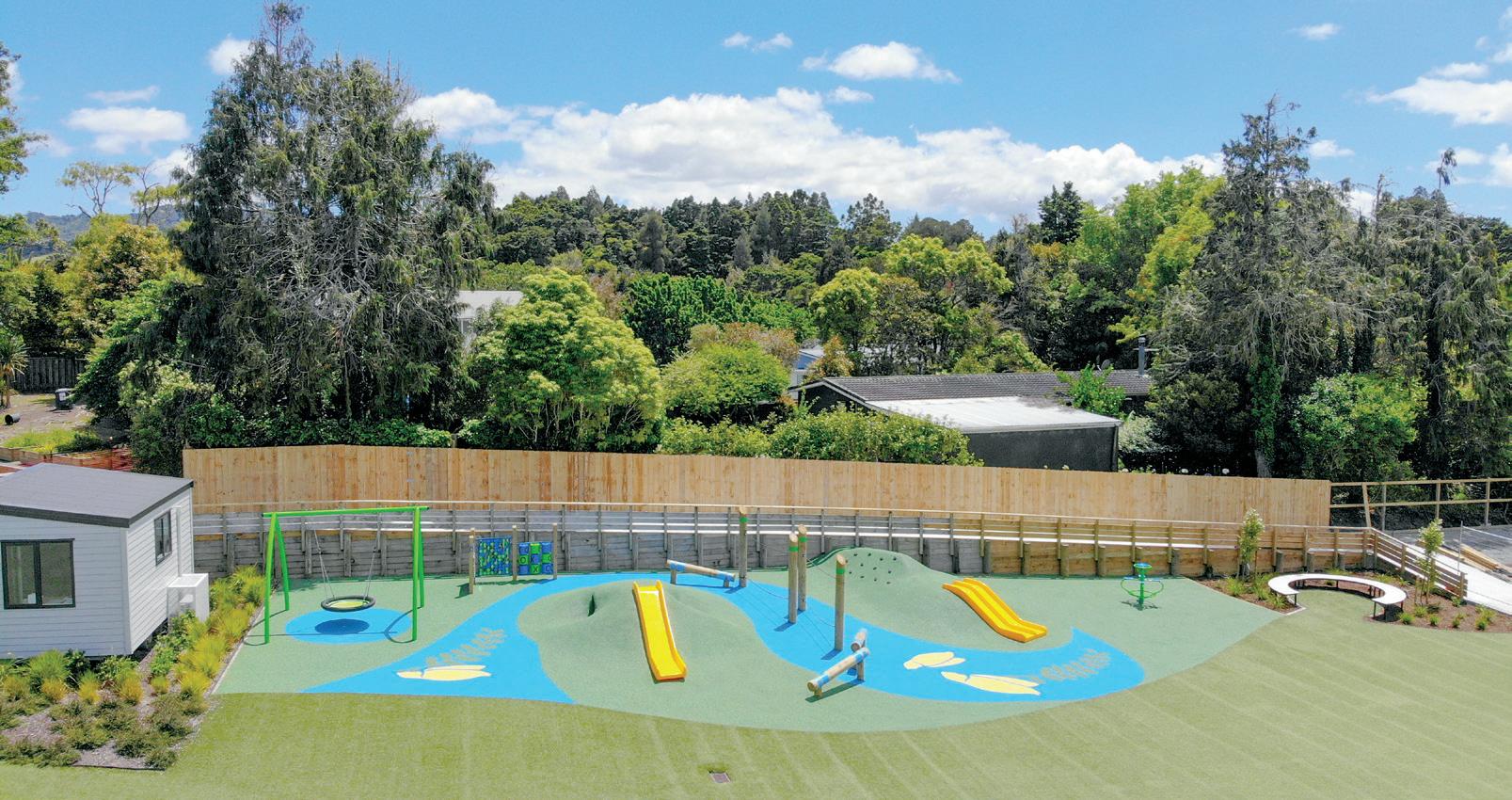
New Zealand-designed and made playgrounds for over 35 years. Our playgrounds are built with play value in mind, promoting fun, learning and development.
Your one-stop playground partner for design, installation, surfacing, and shade.
Custom playgrounds that fit perfectly into your school environment.
Contact the Park Supplies & Playgrounds team today on 0800 752 947 to discuss specific pricing for your project.
PARK SUPPLIES & PLAYGROUNDS
School News is distributed to primary, secondary and intermediate schools throughout New Zealand by Multimedia Publications New Zealand Limited.
The views and images expressed in School News do not necessarily reflect the views of the publisher. The information contained in School News is intended to act as a guide only, the publisher, authors and editors expressly disclaim all liability for the results of action taken or not taken on the basis of information contained herein. We recommend professional advice is sought before making important business decisions.
Advertising Conditions
The publisher reserves the right to refuse to publish or to republish without any explanation for such action. The publisher, its employees and agents will endeavour to place and reproduce advertisements as requested but takes no responsibility for omission, delay, error in transmission, production deficiency, alteration of misplacement.
The advertiser must notify the publisher of any errors as soon as they appear, otherwise the publisher accepts no responsibility for republishing such advertisements. If advertising copy does not arrive by the copy deadline the publisher reserves the right to repeat existing material.
Disclaimer
Any mention of a product, service or supplier in editorial is not indicative of any endorsement by the author, editor or publisher. Although the publisher, editor and authors do all they can to ensure accuracy in all editorial content, readers are advised to fact check for themselves, any opinion or statement made by a reporter, editor, columnist, contributor, interviewee, supplier or any other entity involved before making judgements or decisions based on the materials contained herein.
School News, its publisher, editor and staff, is not responsible for and does not accept liability for any damages, defamation or other consequences (including but not limited to revenue and/ or profit loss) claimed to have occurred as the result of anything contained within this publication, to the extent permitted by law.
Advertisers and Advertising Agents warrant to the publisher that any advertising material placed is in no way an infringement of any copyright or other right and does not breach confidence, is not defamatory, libellous or unlawful, does not slander title, does not contain anything obscene or indecent and does not infringe the Consumer Guarantees Act or other laws, regulations or statutes. Moreover, advertisers or advertising agents agree to indemnify the publisher and its agents against any claims, demands, proceedings, damages, costs including legal costs or other costs or expenses properly incurred, penalties, judgements, occasioned to the publisher in consequence of any breach of the above warranties.
Naomii Seah, Milly Fullick and Sarah Davison DESIGN & PRODUCTION
Richard McGill, production@schoolnews.co.nz
ADVERTISING
Dee Dawson, advertising@schoolnews.co.nz
CONTRIBUTORS
Mārama Stewart
KEY
Inside our Term 1 issue
Administration
05 Editor’s Note:
Education
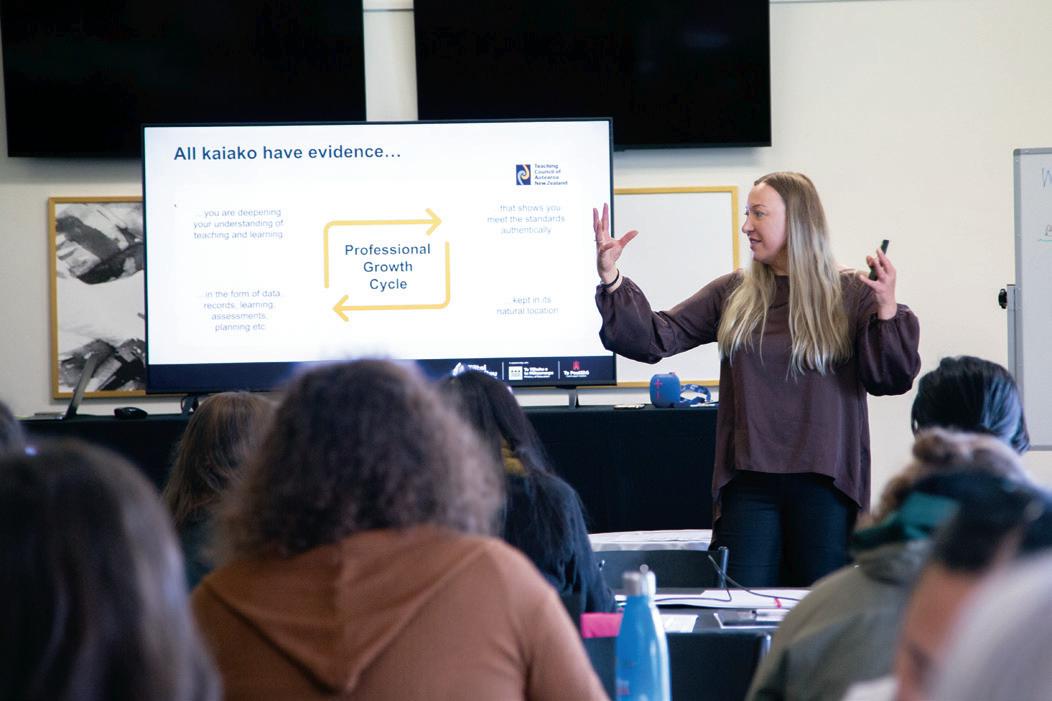
06 Special Report: Examining the evidence
10 Tumuaki Principal Speaks: Disruption, Te Tiriti, and doing the right thing
14 Profile: Leading real-life learning at Ormiston Junior College
17 Positive, inclusive, adaptive: Ensuring dyslexic students thrive in the classroom
Technology
24 Navigate New Zealand curriculum changes with confidence
26 Learning for the future: STEAM in schools
29 Case Study: Laser focused memories
30 STEM programme so fun it improves attendance
32 The power of immersive school productions
36 Simple, profitable, fundraising options
Teaching Resources
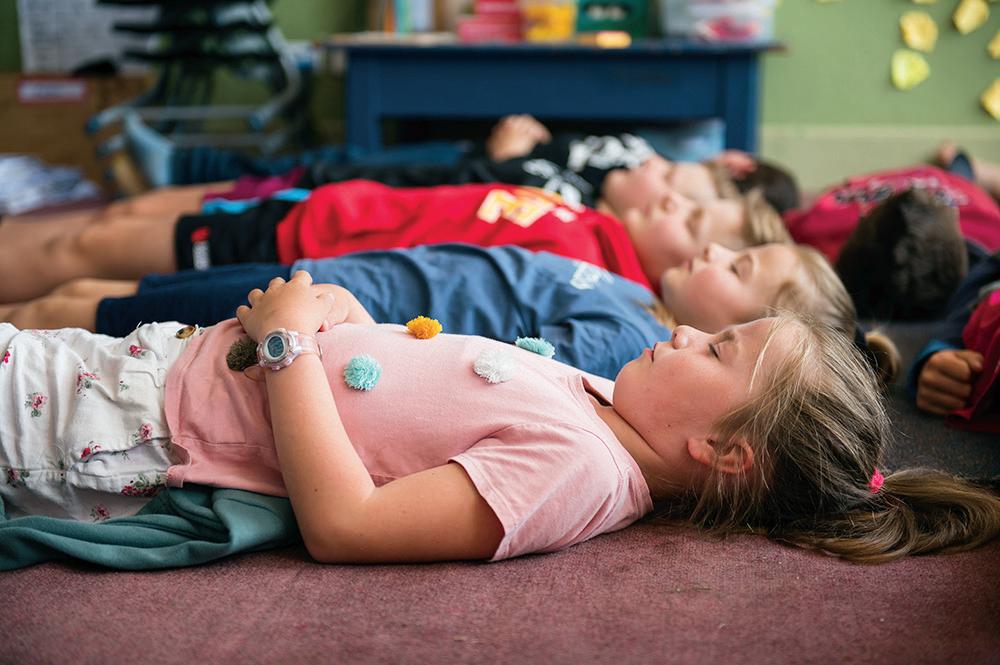
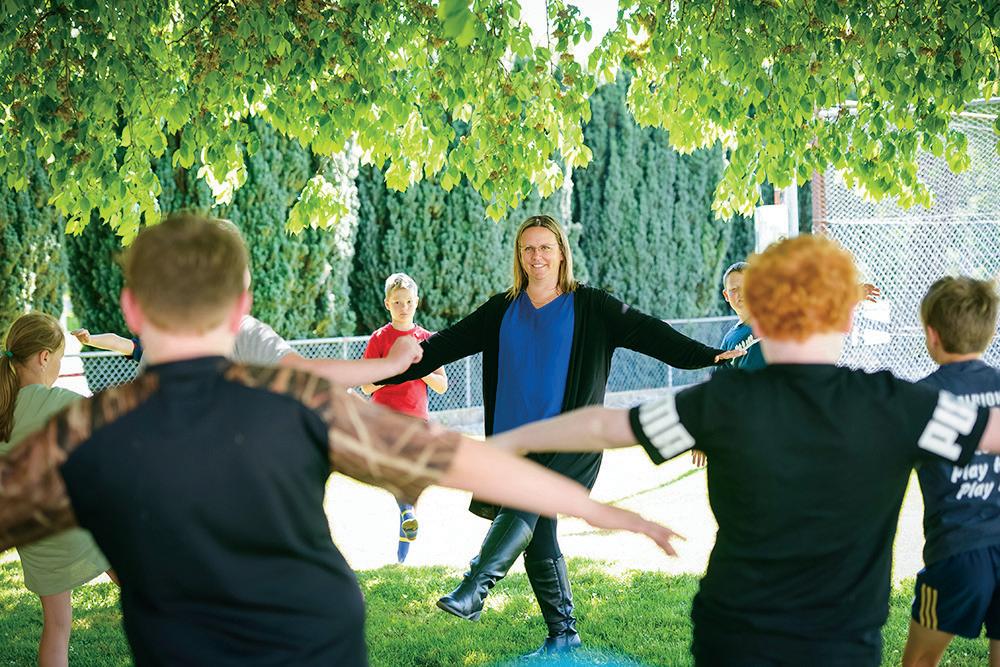
40 Fostering wellbeing: Practical strategies for supporting students and staff
44 New flexible mindfulness training launched to support time-pressured teachers
EOTC
46 Confidence, curiosity and connection: School camps and excursions
Sports & Recreation
56 Active bodies, active minds: Making school sports accessible and enjoyable for all
Property
58 Building better learning through acoustic design
60 Designing future-ready outdoor school spaces
Welcome to the new school year!
As this is our first edition for 2026, I feel like I should begin by saying Happy New Year.
Yet at the same time, it’s midFebruary, and for me at least, it feels like we are well into this year and the holiday sleepins are a distant memory. I hope the new school year has started smoothly for you.
For our Term 1 edition, Tumuaki Mārama Stewart from Apanui School has generously shared her thoughts and feelings on changes to Te Tiriti and Te Ao Māori in the updated New Zealand Curriculum. Discovering the changes deeply affected Mārama, and she voiced her frustrations in her school newsletter. The Apanui School community, as well as those of
neighbouring schools, shared Mārama’s views, and soon began showing their support.
She writes: “Our kura across the motu have taken a stand to disrupt the course of a government agenda. That is no small thing. They are disrupting the notion that
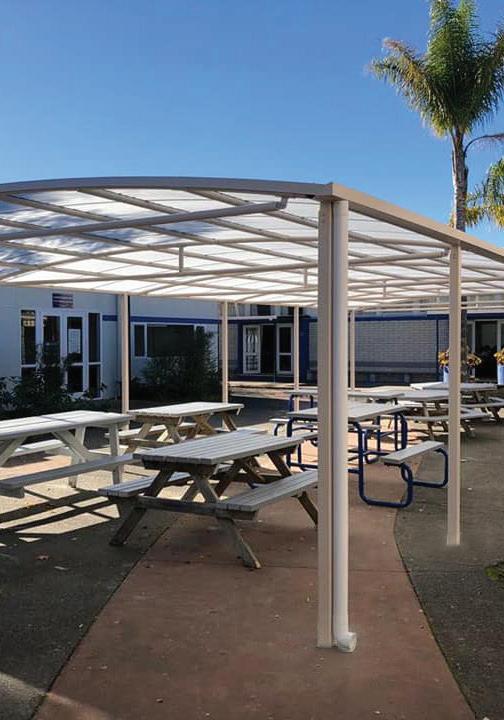
Archgola™ has an unbeatable reputation for o ering a quality all-inclusive package
Full-service o er includes a consultation, providing certi ed engineered designs, arranging council consents through to a quality installation.
Contact your local Archgola™ team to discuss your school shelter needs!
0508 272 446 / ARCHGOLA.CO.NZ
what is “legal” may not always be “right.”.” You can read the full Tumuaki Principal Speaks column on page 10.
As you dive into the new school year, there is always much to look forward to, with school trips, facility upgrades and the hope of new resources. With budgets pulled tighter and tighter, fundraising can be a great way to top up the coffers. In this edition we explore some simple, profitable fundraising ideas.
We also spotlight how to support literacy education for all learners, including those with dyslexia, and the importance of professional learning and development to ensure kaiako feel confident teaching with the Structured Literacy approach.
Curriculum changes, pay and working conditions, student
attendance, and funding and resourcing arrangements all continue to be big issues in Aotearoa New Zealand education. With the lightning speed at which things move in the digital-first world, though, let’s hope there are a few things we can leave behind in 2025— skibidi toilet, Italian brainrot, and those two numbers that, said one after the other with the accompanying hand actions, are truly one of the most irritating things ever said. Best wishes to all the teachers whose students will at some point in the next few weeks, turn to page 67 of a book, solve a maths problem with the answer 67, or decide that the quantitative value of literally anything is… six or seven.
Ngā mihi, Gemma, Editor, School News
Examining the evidence
By Milly Fullick and Naomii Seah , Industry Reporters
With curriculum changes in the spotlight, there is a renewed focus on the concept of evidencebased education.
But what does this mean, and does following the evidence really give Aotearoa students the best chance of success?
School News investigates the positives and shortcomings of the ‘evidence-based’ label.
There are many positives to considering the evidence, Milly Fullick writes.
The case for evidencebased practice
To begin, it’s worth defining the term ‘evidence-based practice’. Used in fields including medicine, aviation, social work and of course education, evidence-based practice simply means using the most up-todate information available to inform how professionals work.
This may just sound like common sense, but it’s a newer development than we might think. Although research in general is a much older field, the concept of evidence-based practice originated in medicine, with the term only coined in 1991.
Evidence in education can be a more complex area than healthcare, as there are social, economic, geographical and other factors that aff ect how students learn far beyond the literacy programme or maths resources they are using.
Additionally, children’s high levels of neuroplasticity—the ability to form connections and absorb new information— means that provided with just about any kind of stimulus, they’re likely to learn and make progress. This can make it challenging to prove that any one approach is more eff ective than another. High quality research, though, takes these
Many of the shortcomings of evidence-based education can be improved by collecting more, quality evidence
factors into account to draw a fair and balanced conclusion.
Not all evidence is equal
However, it’s important to note that ‘evidence-based’ is a broad term with no standard definition or protection. The evidence which any given product, policy or intervention is based on can vary widely in quality; it pays to know what kind of evidence has been found to determine how eff ective something is.
Research can be categorised using the Hierarchy of Evidence, which ranks diff erent types of studies by their quality and rigour. At the bottom, as the least rigorous form of evidence, is expert opinion and general background information. Then come smaller-scale studies using selected groups.
In education, this might be a study involving a small number of classes, or a year group at one or two schools.
Higher up the chain is research which has been reviewed and appraised by independent experts, then at the top are systematic reviews. Systematic reviews are considered the gold standard in research; they look at large bodies of trials and studies from multiple sources and use them to draw conclusions about what works best.
Although a controversial change for some, Structured Literacy (SL) is an example of a policy informed by strong evidence, including systematic reviews. The SL strategy, implemented in slightly diff erent forms
across the world, is backed by decades of practice in Englishspeaking countries and a substantial body of evidence suggesting its eff ectiveness. New Zealand’s previous method for teaching reading, based on the Balanced Literacy system, is not supported by a strong body of research or evidence of outcomes.
One analysis of 68 Balanced Literacy and Structured Literacy studies, for example, found that 20 years of evidence consistently backed SL as the substantially more eff ective approach.
The case for teachers
Using evidence-based teaching as the sole basis for practice has its drawbacks – more on those later – but as a starting point for teachers, it can provide a solid foundation to build on.
Most teachers would argue against the idea of every classroom in the country learning the same topics in the same way. Professional intuition, experience and expertise are teachers’ hard-won badges of honour, and can separate excellent teachers from good ones.
However, those excellent teachers are also likely to believe that every student in every classroom across the motu, and indeed the world, deserves a consistent, quality education that prepares them for life beyond school. Evidence-based practice can help signpost educators to strategies that can ensure their short time with each cohort of students has the best chance of being impactful.
Additionally, as teachers’ time is increasingly stretched, knowing which strategies and interventions have high chances of success can help to best utilise precious planning time by not having to reinvent the wheel.
In summary
It’s true that there are limitations on the evidencebased education approach; aside from those mentioned above, it’s crucial to note that research has often omitted indigenous and marginalised voices. Clearly, more needs to be done to ensure any approaches taken in research and education uplift our Māori and Pacific Island ākonga. There’s an argument to be made, though, that many of the shortcomings of evidence-based education can be improved by collecting more, quality evidence. Overall, evidence-based practice can, and should, form
an important tool in educators’ kete. While there’s no substitute for knowing students, contexts and communities, evidence can help elevate learning and help learners to be their best. However, evidence-based education is not without its critics, writes Naomii Seah.
Seeking quality assurance
Termed the evidence-based movement (EBM) in some academic literature, a push toward “high-quality” education and social research began at the turn of the last century in the OECD. In the New Zealand context, the EBM coincided with the advent of nationally developed professional learning and development, contrasting the fragmented approach in the decade prior following the introduction of Tomorrow’s Schools.
As Pat Bullen and other New Zealand education and social work academics note in their 2019 paper, at its core, the EBM model is intended to ensure quality investment of limited resources; that is, ensuring that public funds are spent on education initiatives that will have the intended impact.
In the post-pandemic context, as rises in the cost of living and a stalled economy create fiscal pressures, the government has framed education reforms as a way to boost economic growth.
When announcing the overhaul of our national secondary
Stanford again emphasised the link between education and the economy, saying: “a worldleading education system is a key driver to economic growth.”
Importantly, the connection between education and the economy is framed with the rhetoric of efficacy, or “value for money” in the context of a tight fiscal environment. This leads directly to a mandate for evidence to support the education practices and initiatives which will supposedly create the biggest difference for student achievement. In turn, this has led to system-wide reforms focused on mandating practices like explicit teaching, based on research findings which demonstrate a positive effect on student performance.
Lost in translation
qualification last year, Erica Stanford, Minister of Education called education “the great equaliser... If we want a strong, productive economy with high wages and standards of living, we educate our kids.”
As reforms became mandatory at the beginning of 2025,
Though on its face centring evidence in education is a sound strategy for improving the sector as a public good, the relationship between research findings, teaching practice, and student outcomes is not necessarily a straightforward one.
We teach people to save lives in a fun & interactive environment
First Aid for the School Environment - 4 Hour course held at your premises at a time to suit you. This is a cost-effective course designed to give teachers confidence to cope with medical emergencies and accidents at school or on surburban trips. This fits with staff development and is based on Ministry of Education guidelines.
In his 2005 paper, British sociologist Martyn Hammersley notes two critical underlying assumptions in the evidencebased education paradigm. The first is that good practice is based on research findings, and the second is that an evidencebased practice will always lead to better outcomes. He refutes the first assumption—that teaching practice must be informed by research findings— with fi ve key arguments:
• Research cannot provide all the answers for practitioners, who must use their own wisdom, judgement and other sources of information in their practice.
• Research cannot meet practitioners’ exact needs at the time they arise.
• Research is largely concerned with “technical” considerations whereas practitioners must account for other contextual factors.
• Research information may be too detailed or complex for straightforward practical implementation.
• Research findings cannot standalone as practice guides, they must be interpreted and evaluated, which could lead to diff ering practical conclusions.
As for the assumption that evidence-based practice always leads to better outcomes, Hammersley says:
• Research findings, especially in social fields like education, are fallible,
which means implementing research findings will not always have the desired eff ect and may cause unexpected outcomes.
• A factual basis does not necessarily guarantee success, in some cases practice or policy based on false ideas can be more eff ective for the target result(s).
• The impact(s) of a practice are always contingent on factors outside practitioners’ control.
• Definitions of desirable outcomes and their priority are highly contested.
The nuances outlined by Hammersley complicate the “common sense” rhetoric often used when discussing evidenceinformed practice and policy in education. Yet, the above issues are rarely raised in the public domain in favour of craft ing a compelling and straightforward narrative about education—
perceived failures of the system can be corrected if we only find the right teaching strategy.
Hammersley’s last point refers to what has become a central criticism of evidence-based practice; that it has narrowed the definition of “eff ective” teaching and learning to performing well in standardised tests, and obscures the broader philosophical debate about the purpose of education.
Evidence in practice
Another pitfall critics note is that a focus on “evidencebased practice” discourages innovation or deviation from a prescriptive model.
In a 2021 article in the Journal of Education Policy, academics Jessica Holloway and Maria Hedegaard examine the cultural consequences of evidence-based practice in Australia and Denmark. They found that teachers felt compelled to follow evidence-
based practices despite expressing doubts about their contextual appropriateness. This raises questions about how much education can be tailored to the individual needs of students under an evidence-based approach.
Yet, most educators and researchers would agree that evidence does have a role to play in teaching and learning. Often, that role is more complex, changing and varied than is usually presented in the rhetoric of evidence-based practice.
Modern practice guides often use the language of “evidenceinformed” practice rather than “evidence-based”. This is to denote a more nuanced relationship between evidence and practice, where a wide range of evidence is applied in a cycle or spiral of improving teaching and learning. Rather than an exclusive and narrow focus on research findings and quantifiable evidence, “evidence-informed” practices encourage including observational and contextual evidence to inform teaching and learning approaches.
No single conclusion
That educators and academics alike have strong opinions on evidence-based practice is perhaps not surprising; one of the great unifiers of teaching is a desire for the best possible outcomes for the young people of Aotearoa.
Like any strategy or theory, it is not a flawless approach, but use of evidence-based strategies could be an important part of lift ing students’ att ainment.
High School’s eCLIQ solution makes sharing spaces safe and simple
Eager to open their doors to the local community, Waitara High School wanted to make sharing spaces like the gym and hall simple and welcoming, while still keeping track of who was using them and when.
Installing ASSA ABLOY’s eCLIQ system gave the school peace of mind with time-based, auditable access control for both community users and staff, ensuring everyone could enjoy the facilities responsibly.
School
‘For the last five years, we’ve been searching for a solution to manage our community access more effectively,’ says principal Daryl Warbarton. ‘Like many small schools, we wanted to support community use of our facilities, but it became challenging to keep track of who had which keys.’
The traditional master ‘gold’ key system relied on unstructured, ad hoc processes, often leading to uncertainty and uncomfortable conversations when keys were shared or misplaced. ‘We needed a smarter, more reliable way to manage access and ensure responsible use of our facilities, especially high-demand spaces like the gym, hall, and our new commercial kitchen, which community groups use regularly.’
The school’s priorities were to welcome the community while safeguarding its valuable facilities.
‘We have a duty of care when managing government-owned buildings. The eCLIQ system means we know who is in charge of spaces after hours, and when they use them, leading to reduced damage and wear. It also means we can meet both our health and safety requirements and our insurance protocols. Before we changed over, untracked keys left us exposed to unnecessary risk.’
Challenge
For Daryl, the costs of a comprehensive electronic locking system had previously seemed out of reach.
When the school needed to replace its outdated master key system, he turned to ASSA ABLOY consultant Shane Berryman for help finding a smarter, more manageable solution. ‘The challenge with the old system was visibility,’ says Shane. ‘They relied on a simple spreadsheet showing who held which key, but there was no way to see when or how those keys were used.
If a key went missing, tracking it was difficult—and it was easy for mistakes to happen, like when someone left the school and unknowingly took a key with them.’
Solution
The eCLIQ system promised a solution that would not only provide better control but also offer the convenience of tracking keys, managing lost keys, and ensuring accountability for every user.
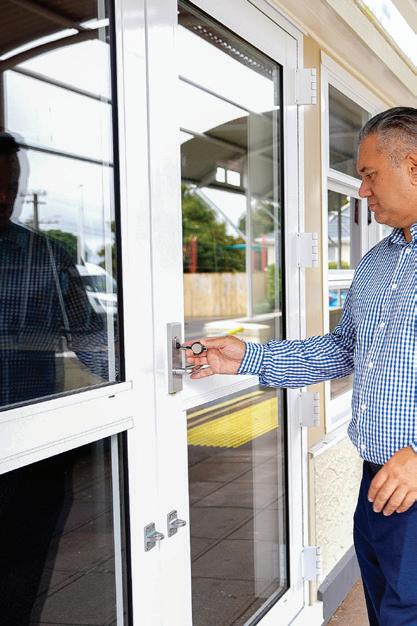
‘eCLIQ makes managing access simple and reassuring’, Shane explains. Teachers can easily update their keys at the wall programmer – they just plug in the key and wait a few seconds. Everything happens automatically, with changes and audit trails securely sent to the cloud.
‘This means administrators always know who’s accessing which areas and when, creating a sense of trust and security across the school. For community users, keys can be set to work only on scheduled days and times, so everyone feels supported and safe. It’s a smart, cloud-based system that offers visibility and control far beyond what traditional mechanical systems can provide.’
A scalable, wireless solution that’s simple and cost-effective. With the same access control advantages as a fully wired system, Waitara High School also benefited from eCLIQ’s simple, modular installation. With battery-powered keys and no door wiring, cylinder replacements and setup typically take one to two days.
‘We started with a modest programme,’ says Shane, ‘covering 39 doors and 60 keys. But the beauty of the eCLIQ system is that it’s scalable. Once the initial system was up and running, the school could expand it as needed, which for them was one of its main attractions.’
Now, community access to facilities can be easily controlled and monitored. Community keys are scheduled to the day and hour, with access
auto-expiring after the booking, giving administrators visibility over who is using the facilities and ensuring there are no surprises.
‘Looking back, we’re really glad we made the switch,’ says Daryl. ‘One of the things I really appreciate about this solution is its subtlety. Unlike bulky, hardwired access control systems, the eCLIQ system was minimally intrusive. The kids wouldn’t even have noticed anything different, and that’s exactly what we wanted – something efficient but unobtrusive.’
SCAN TO LEARN MORE
Waitara High School Principal, Daryl Warbarton
Disruption, Te Tiriti, and doing the right thing
By Mārama Stewart, Tumuaki Principal, Apanui School
Mārama Stewart, Tumuaki Principal at Apanui School, reflects on shared leadership and community responsibility through turbulent times in our Term 1 Tumuaki Speaks column.
The start of Term 4 2025 was a rough one.
This “new new curriculum” landed unannounced in our inboxes. I got into a grump, sent the Ministry a bill for my wasted printing costs of the “Final” hard copy, and then found the changes that had been made to Te Mātaiaho. The language that spoke to diversity, inclusion and belonging had been erased. Our commitment to Te Tiriti and Te Ao Māori had become the literal decorations on the page.
So I did what many principals do when we are trying to process something big. I wrote about it in our newsletter. On October 30, 2025, I said:
Last week was quite a ride for our teaching team, and we really appreciate your support on
Thursday as many of us in the public sector walked off the job. The media conversation since has, unsurprisingly, been full of mixed messages. It reminded me of our last newsletter about the complexity of teaching. Our communities are diverse, layered, and full of colour. That richness is what gives life to the tapestry of who we are. The complexity of those threads is incredibly important. The last thing we want to do is simplify those threads so much that we end up with a flat, two-tone checkerboard instead of something woven with depth, pattern, and meaning.
Unfortunately, there is a growing belief that if we simplify learning into tidy steps, all children will learn the same way. This idea is influencing the curriculum changes currently
being introduced. It is based on parts of neuroscience being taken without the cultural and developmental context needed to understand them. The two pieces of science the Minister refers to as the “Science of Reading” are how the brain moves information into long-term memory and orthographic mapping, which helps us store letter-sound patterns. These processes are real and important, but knowing how to sound out a word is not the same as understanding it.
Here is a simple example. The Minister recently celebrated “improved reading results” from a phonics test. But the test measured sound recognition and recall, not comprehension. Many of us can read this whakataukī from our New Zealand Curriculum | Te Mātaiaho aloud:
Mātai aho tāhūnui, Mātai aho tāhūroa, Hei takapau wānanga e hora nei.
Most of us can decode the words of the whakataukī, but not everyone will understand the meaning. Meaning-making is where true learning lives. It does not move in straight lines or tidy levels. It grows through our identity, our whānau, our reo, and our relationships. It is the richness and spice of learning that gives colour, texture, and life to the tapestry.
This is the part that has been removed from the newly released curriculum: the parts that honour diversity, inclusion, community, partnership, belonging, and the complexity of who we are. Those
In a moment like this, it is their duty to disrupt this process, because silence is agreement.
threads matter. They are what make learning real, human, and connected. The name Te Mātaiaho was gifted to our New Zealand Curriculum with purpose and intent. “Mātai” means to study deliberately, examine, and observe, and “aho” describes the many strands and threads of learning. When we remove those
rich threads we are no longer upholding the meaning of the name or the gift it represents. And so, no matter what changes at a national level, here in our kura we will continue to teach and lead in ways that honour the whole child, their culture, their identity, their voice, and their mana.
At the time, I was mad. So, I turned off my social media and decided to ignore the Ministry and ministers for a bit to calm down.
The next day they announced they would be removing Te Tiriti from the Act, and I had no idea until Tuesday, November 4, 2025 at 12:57pm, when my phone rang.
Images courtesy of Apanui School
It was my presiding member, and she was fuming. In her own words, with a little polite paraphrasing, the message was very clear: “They are not taking Te Tiriti away from us. I am going to write a statement from the Board.”
Surprisingly, hearing this news did not worsen my mood. I actually felt better, because I
was not alone. My PM, tangata tiriti, wāhine toa, was angry and I was not alone. She did not see Te Tiriti as my sole responsibility as Māori, but our shared solution as partners. While she was forcefully expressing herself, I just sat there smiling. What followed was a robust, respectful email conversation with the rest of the Board. We
talked about our responsibilities as a Crown entity. We talked about political neutrality. We talked about what it means to stay in our governance lane while still making a statement about our position and what we hold dear and sacred as Te Tiriti partners.
disrupting the notion that what is “legal” may not always be “right”.
Our history is littered with laws that were used by those in power to suppress and assimilate the wealth of others as their own.
The Tohunga Suppression Act 1907, the Education Ordinance Act 1847, the Native Schools Act 1867, the Foreshore and Seabed Act 2004 are just a few examples of law devastating us as Māori. Banning books, language suppression, discrimination, and abuse have been, and can be, legalised into existence.
Teachers beating my father for speaking te reo Māori in the playground was a legal right of teachers in the 1950s and 1960s.
Those were not accidents. They were deliberate choices about whose knowledge, language, and existence should dominate.
On Wednesday, November 5, 2025 we published, on our school Facebook page, a statement of ongoing commitment to Te Tiriti o Waitangi regardless of changes in legislation which ended with:
As an unforeseen consequence of the Tomorrow’s Schools reforms, Boards today have the power to publicly state their position when governments make decisions that affect their communities. They can choose to act as more than just Crown agents. They can choose to act as kaitiaki who keep the threads in the weaving, even when the pattern on the official template changes.
… Apanui School will continue to uphold Māori rights as tangata whenua and to enact Te Tiriti o Waitangi as a living, practical foundation of all we do. This is not only our legal responsibility but also our moral and educational one. We stand firmly in this position.
Ngā manaakitanga ki a koutou
Our Board members are aunties, uncles, parents, grandparents, community leaders. They coach the sports teams, run the raffles, sit at tangihanga, stand on the sideline in the rain. They are part of the same fabric as the kids they serve.
In a moment like this, it is their duty to disrupt this process, because silence is agreement.
Alexandra Pickles (Tangata Tiriti), Presiding Member – Apanui School Board
Silence says that we will adapt, we will go along, we will not rock the boat.
The next day, one of our parents, who is also a science teacher at Whakatāne High School, approached me to let me know that she was going to discuss publishing a similar statement with their Board.
Silence reassures those pulling out the threads that nobody really minds.
Silence tells our tamariki, especially those most affected, that their rights are negotiable.
Our other small-town schools quickly followed suit, and then the wonderful Tania Waikato reposted our high school’s statement and the Te Rārangi Rangatira movement exploded.
Our kura across the motu have taken a stand to disrupt the course of a government agenda. That is no small thing. They are
Disruption, when it is grounded in aroha and whakapapa, is the opposite of that. It is an act of care. It is saying:
We care too much about these tamariki to keep doing things that harm them, just because that is how it has always been.
We care too much about
Image courtesy of Apanui School
our staff to pretend that a flattened, compliance driven version of the curriculum will feed their professional souls.
We care too much about Te Tiriti to treat it as a slogan we dust off on Waitangi Day and ignore in our decision making the rest of the year.
When I disrupted early childhood norms by keeping my baby with me at school, it was because I cared deeply about my son and my whānau. When we disrupted behaviour systems by introducing Jiu Jitsu and focusing on relationships, it was because we cared about those kids’ futures.
Now, in speaking out about Te Tiriti, I am disrupting because I care about what kind of education system my mokopuna will inherit.
I want to finish where I always seem to finish these big kaupapa – with my Dad.
He was, without question, the biggest and most inspiring disrupter in my life. He pushed against the limits placed on him as a Māori boy who was punished for speaking his own language. He challenged the quiet, everyday racism of our systems simply by insisting on existing in them, fully himself.
I want to end by sharing with you a piece of advice he consistently gave me throughout my life,
and through all the times I told him various parts of my job as principal were feeling too hard.
He would just hold my hand and say,
“You know what to do my honey.”
Because I did. And you do too.
You know when something is not tika, even if it is technically allowed.
You know when a policy is pulling threads out of the cloak instead of strengthening them.
You know when your silence would feel like agreement.
So, my wero (challenge) to you is this:
• Disrupt your thinking. Just one little thought.
• Let that thought grow into a conversation, a question at your Board table, a brave sentence in your next newsletter.
• Follow your heart and your professional knowledge.
Ka pū te ruha, ka hao te rangatahi.
The old net is cast aside, while the new net goes a-catching.
We are the new net now. What we choose to catch, and what we refuse to let slip through, will shape the futures of our tamariki.
Smart school property management
New to the principal’s role and wondering who’s responsible for what when it comes to school property?
Learn what sits with you as a Principal versus the Ministry of Education, from day-to-day maintenance to compliance requirements, and what to do when things go wrong, including how insurance works for damage or loss. Get clarity on property funding streams, eligibility, and how to plan, prioritise, and use your 5YA budget e ectively to support your school’s needs.
By a ending the Development Forum for Senior Teachers, Deputy Principals, Deans and all Aspiring
Principals being held end of months March [AKL] and April [Chch]; you can also unpack the transition to the New Zealand School Property Agency, so you understand what’s changing, what’s not, and how it a ects your role.
Perfect to gain confidence, clarity, and practical takeaways, with this presentation from the Ministry of Education and more.
Images courtesy of Apanui School
Leading real-life learning at Ormiston Junior College
By Naomii Seah , Industry Reporter
New school Ormiston Junior College is doing things differently.
Flat Bush, home to Ormiston Junior College (OJC), is one of Tāmaki Makaurau Auckland’s newest and fastest-growing town centres. Located to the south-east of the CBD, Flat Bush lives up to its name. A newer residential area, the suburb is mostly comprised of medium density townhouses— three to six per lot—or slick new-builds raised neatly along flat, wide roads. Some lots are still under construction, steel scaffolding and plastic sheets creating a cocoon around future family homes and communities. Yet others are still vacant, overgrown with long grass, scrubby mānuka and elegant harakeke—reminders of the suburb’s planned growth.
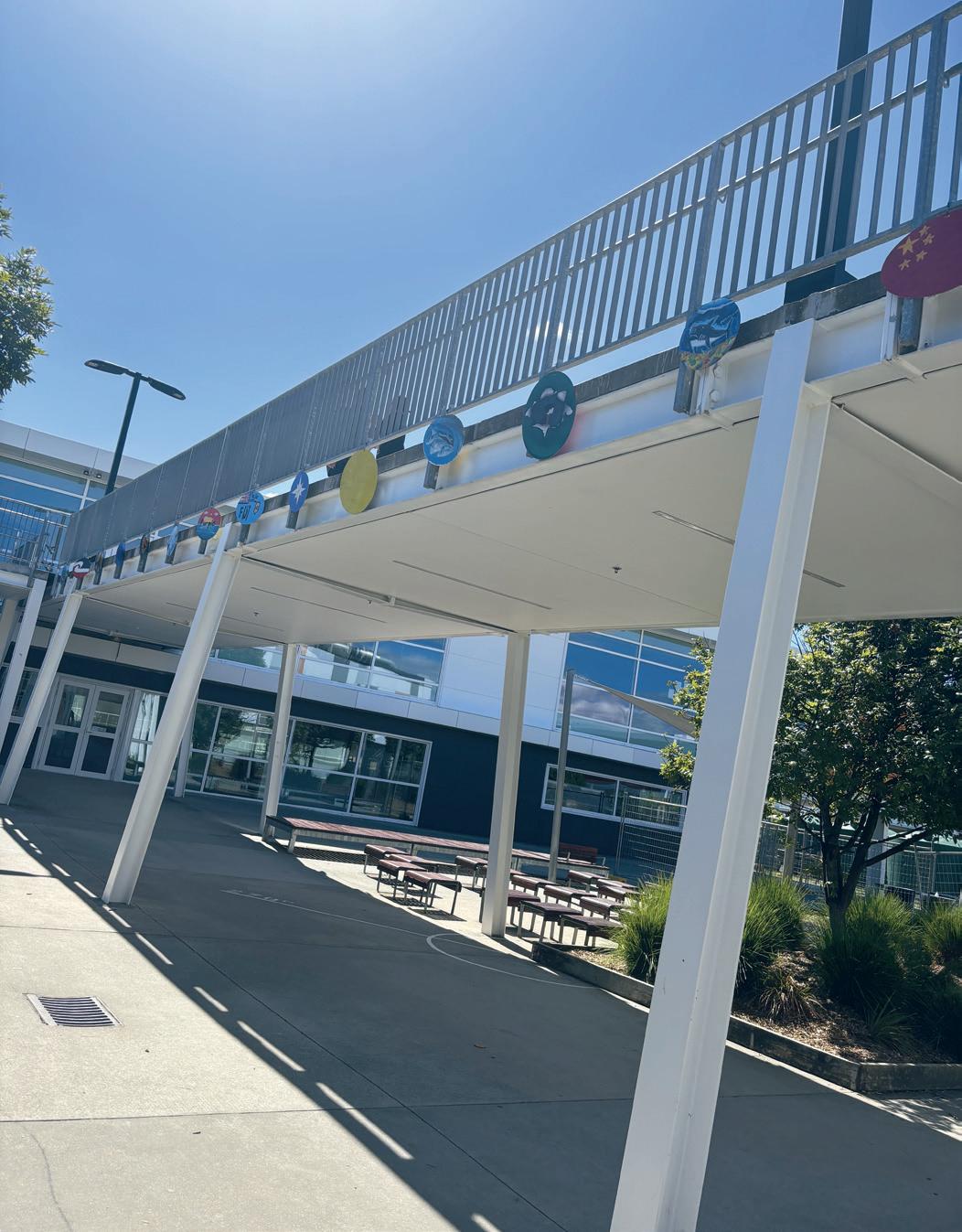
Just off the main road in the burgeoning town centre lies Ormiston Campus, home to three schools: Ormiston Primary School, OJC, and Ormiston Senior College. The primary and junior schools share one board, and though all three have separate buildings, the campus is connected by one long pathway:
Te Ara o Toitehuatahi. The name was gifted by mana whenua, Ngāi Tai ki Tāmaki, in reference to their tūpuna, the navigator Toi Te Huatahi, who came to the area from the East Coast.
Navigating uncharted waters
“Everyone’s navigated their way here somehow...some from across Auckland and the Pacific and some on a plane from Mumbai or Shanghai.
“We felt that navigating the self, navigating others, and navigating beyond was something we want our kids to learn at OJC, so we’ve aligned that with the names of the places on campus.”
Luke Sumich is the Leader of Learning (Tumuaki | Principal) at OJC, which opened its doors to students in 2017. Since opening with less than 200 students, the school has grown dramatically alongside the Flat Bush population.
Already a large school with a roll close to 1500, there are plans to increase capacity as the population grows, and a new wing is under construction.
Between 2023 and 2025, the wider suburb grew by around 11,000 people, or almost 20 percent. Much
of this growth comes from migrant populations.
Tāmaki Makaurau Auckland is ranked among the world’s “superdiverse” cities, a concept which describes urban centres shaped by successive waves of immigration. In Tāmaki, less than 50 percent of the population identifies as Pākehā, compared with almost 70 percent for wider New Zealand.
But there are variations in diversity even within Tāmaki, and Flat Bush has one of the highest migrant populations in the city. Here, only 14.7 percent identify as Pākehā; 5.7 percent identify as Māori, compared to 17.8 percent nationwide; 12 percent identify as Pasifika, compared to 8.9 percent nationwide; and 71.6 percent identify as Asian, compared to just 17.3 percent nationwide.
Luke Sumich, Tumuaki | Principal at OJC. Image Supplied.
Images courtesy of Ormiston Junior College
As demographers often note, however, Asian is a broad category which covers a whole continent. Vietnamese, Cambodian, Indian, Malaysian, Thai, Laotian—these are just some of the whānau that walk Te Ara o Toitehuatahi. The school finds strength in its diversity, and the staggering number of ethnicities and cultural heritages in Flat Bush combine at OJC to create a uniquely Aotearoa New Zealand community.
“A lot of people ask about our ethnic breakdown,” chuckles Sumich. “I say, look, go to your letterbox, look left , look right –that’s your ethnic breakdown. There aren’t a lot of blonde students...that’s life. It’s a great area of new New Zealanders from right around the world.
“People are very accepting of all things culturally responsive because they come with a strong cultural background already and understand the value of having depth in your own culture. It’s a beautiful community like that.”
New communities, new schools,
new approaches
Even before sett ing foot on campus, it’s evident that Ormiston Junior College departs from traditional models of school seen in New Zealand.
For one, the Junior College model, which serves students from Years 7 to 10, isn’t common across the motu. In addition, learners at Ormiston Junior College are not usually split by year-levels. Instead, most learning happens in small, mixed-level groups.
The most important of these is a student’s “mentor, advisor, coach”, or MAC group. Each group is led by a MAC teacher who acts as the student’s primary contact and guides the learner through their whole journey at OJC. In turn, these MAC groups are clustered into one of six Kāinga: large, open-plan spaces which act as a homebase. Each Kāinga was gifted a name by Ngāi Tai ki Tāmaki which honours indigenous navigational guides like Whetū (stars), Aumoana (ocean currents) and Manu (birds).
Learners attend their MAC classes for 40 minutes to an hour each day. The groups focus on monitoring students’
or “exemplary” badges in areas such as hauora, whanaungatanga (relationships), integrity, innovation, inspiration and excellence. Badges may cover academic subjects such as social studies, sciences or the arts, or soft skills like critical thinking and communication.
For instance, to earn an Inspiration-Wana 1 badge, senior students must “evaluate the characteristics, purpose and function of the arts by comparing and contrasting how they are made, viewed and valued in a range of contexts (social, historical, political, cultural etc)”. Junior students may earn the Relationships–Whanaungatanga 3 badge by “communicating actively with people from diff erent cultures.”
School is for every child, it’s not just for those that are going to do well academically
progress and achievement, sett ing goals, and selfmanagement and learning skills (metacognition). Progress is measured using a digital badging system. Each badge earned demonstrates a student’s proficiency in an area of the OJC graduate profile.
Sumich explains: “We wrote a list of things we thought
our students should, or could be able to achieve, and then we put some criteria to it. If you’re an 11-year-old, it would look like this, but if you were a 15-year-old, since it would be more complex, it would look like this. Then we turned them into badges.”
In 2025, learners at OJC could earn “emerging”, “eff ective”,
Though time is earmarked through the day for more traditional, or recognisably academic subjects like literacy and numeracy, the focus on personal characteristics and soft skills during MAC time is deliberate, and aligns with the school’s vision and values, says Sumich.
“If I said to you, what do you want your young person to leave school with, and you wrote a list of the characteristics and skills you wanted them to leave with—would they all be academic things? As a Dad, I want my son to be able to look someone in the eye, and make a promise and keep it,” says Sumich.
“I think New Zealand is unique enough to be able to say we care about a bit more than just your academic outcomes.”
That’s not to say OJC isn’t concerned about academic outcomes, but rather that student achievement isn’t always measured with standardised tests and exam scores.
To earn badges, students don’t write essays or answer multiple choice questions. Instead, they give a presentation, providing evidence and speaking in front of a panel of peer assessors and their MAC teacher. In many ways, it’s a more academically rigorous system than using standardised assessment, argues Sumich— after all, it mirrors the process of a PhD defence.
Images courtesy of Ormiston Junior College
“When you go for a PhD, you have to sit in front of a panel and defend it by explaining as the panel asks questions. You don’t just hand in a paper and ask for a PhD—the whole talk through and demonstrating understanding is the ultimate test. That’s the highest academic achievement, and in some ways, we’re replicating that for our kids.”
“Badge-bidding”, as it’s known, is designed to test deeper understanding, says Sumich. Students can use AI to write an essay, or fudge the multiple-choice questions through smart guesses.
Additionally, having a panel of mixed-level peer assessors ensures students are receiving and understanding feedback. Every student has the opportunity to both present and assess, and so each student develops the ability to evaluate their own, and others’ work while forming communication skills and working relationships.
“Being able to receive feedback instantly is valuable, and there’s an integrity built into the badgebidding system. Students can feel their assessment means something,” says Sumich.
Learning for the real world
Ormiston Junior College’s emphasis on soft skills and metacognition departs from traditional academic conventions of the school system. Sumich is aware of this fact, and of the eyebrows it may raise. But though wary of detractors, Sumich is ultimately uninterested in convention.
“School is for every child, it’s not just for those that are going to do well academically,” says Sumich.
He cites one of his favourite quotes as being said by Peter Fraser, the New Zealand Prime Minister in 1935:
“Every person, whatever his or her level of academic ability, whether they be rich or poor, whether they live in town or country, has a right, as a citizen, to a free education of the kind for which they are best fitted, and to the fullest extent of their powers.”
For the team at OJC, that means aiming to set students up with concrete, transferrable life
skills they will use no matter where they go, whether that’s senior college and higher learning, or the workforce and family life. This means learning at OJC is designed to be tailored to a variety of needs, contexts and outcomes, which is no small feat.
Though Sumich acknowledges there is always room for improvement, there is a sense of pride in what the school’s innovative approach has already achieved for many who come through OJC.
At the time of School News’ visit, OJC is preparing for the Year 10 trip up north, where students will stay on multiple marae and explore history and culture over four days as part of the social studies curriculum. Some students are hesitant to go due to time and/or cost. But Sumich is determined
socioemotional and relational skills that will remain salient no matter where the student goes after graduation.
Those skills are also the basis for citizenship and community building, which are difficult to assess, define and measure, but are no less important than literacy or numeracy, believes Sumich.
This is just one example of the “personalised world-class learning” at the heart of OJC’s vision statement, and it looks different for every student.
For that student, experiencing a school trip, engaging with his peers, and experiencing pride in his cultural heritage will stand him in good stead for the years ahead.
Meanwhile, we also pass a young lady finishing her presentation on the environment. The older students assessing the presentation award her an “effective” badge, because an “exemplary” would warrant more in-depth explanations. She nods at the award, happy with her assessment as she collects her things for morning tea.
“At the start of the year, she was so anxious she didn’t want to come to school. This term, her attendance is 100 percent,” says Lesley, her MAC teacher.
to get as many students on board as possible, especially those who are reluctant.
“You’re coming,” Sumich tells one student, who says he doesn’t want to take time off work. Sumich is undeterred.
“I need you on the marae, I need you playing cards in the wharenui, laughing. You bring the mana. The reason I’m doing this is for you; the reason I go on the road trip is for you.”
“Seriously?” The student asks, sitting up, responding to the urgency in Sumich’s tone.
Though a social studies trip may not seem entirely relevant to the young man, who is already employed in the trades, Sumich is deadly serious about needing him on the trip. It offers the sort of community and social experience that is vital to developing those
“Normally she’d have had a test and get a high percentage score—she’s a diligent student,” Sumich adds. “She could probably have done her spelling and reading tests and got a high result, but that’s not what it’s all about. Giving a presentation is really pushing her.
“Having to talk about her learning has given her so much confidence, especially for a student who, six months ago, couldn’t even get out of the car and take a step inside the building. That’s huge growth.”
And it’s that personal growth and achievement—developing the skills, strategies and abilities relevant to each individual young person’s life—that OJC believes school should be all about.
Image courtesy of Ormiston Junior College
Positive, inclusive, adaptive:
Ensuring dyslexic students thrive in the classroom
By Milly Fullick, Industry Reporter
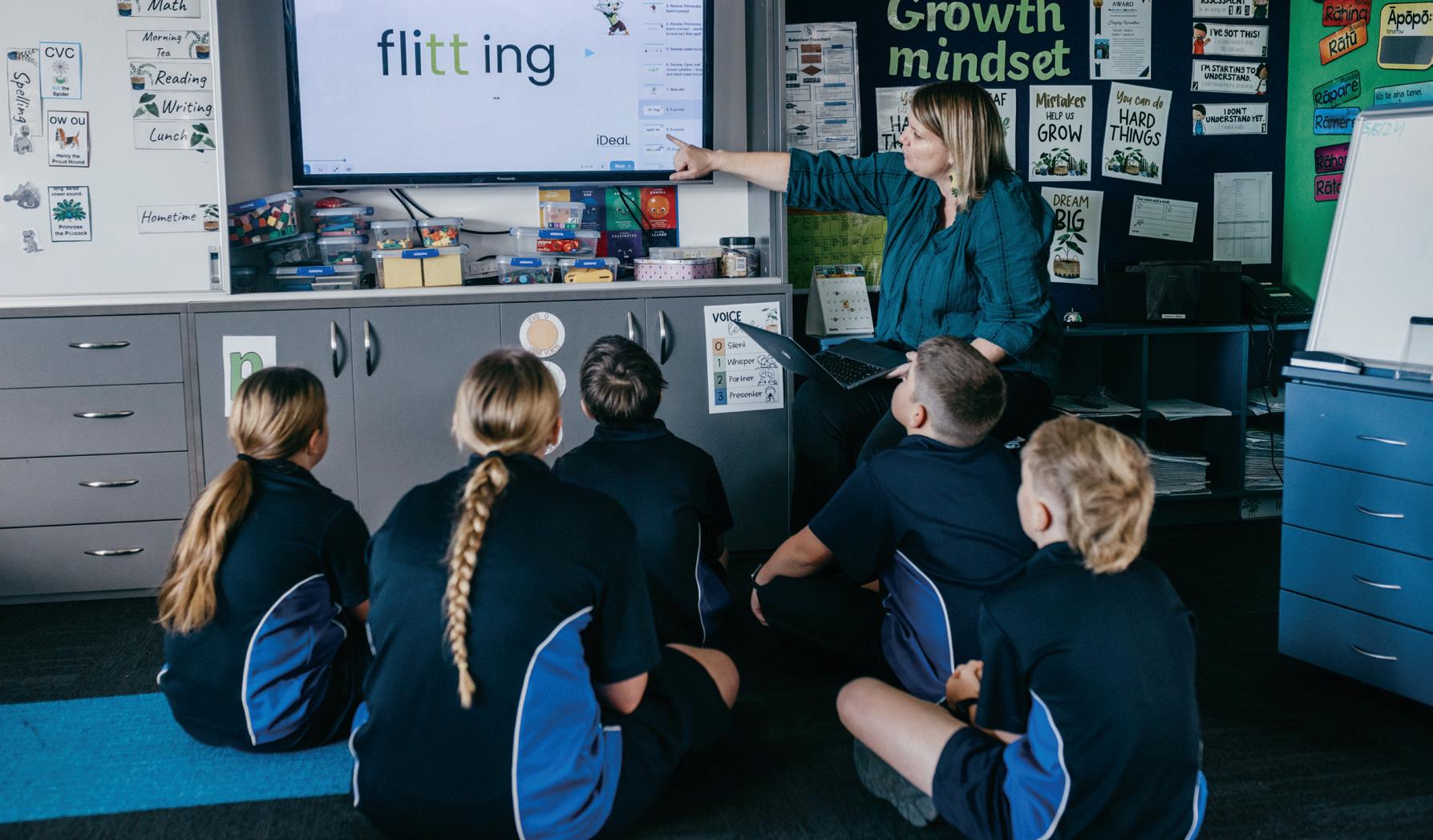
With anywhere between three and 20 percent of the population thought to have dyslexia, most classrooms in New Zealand are highly likely to have at least one student who requires additional support with reading and writing across the curriculum.
As understanding of dyslexia develops, an increasing suite of strategies are available to ensure barriers to learning are minimised. As well as teaching and assessment tools for day-to-day learning, there are opportunities for integrated learning practices and professional development courses to create a positive and inclusive classroom environment.
Tomas Roberts from DTSL Assistive Technology said that approaches to supporting dyslexic students are improving.
“Supporting dyslexic learners has evolved over the past two
decades, with schools now better equipped to recognise and respond to neurodiverse learners. Rather than viewing dyslexia as a barrier, many classrooms are shifting toward inclusive practices that allow all students to access learning in ways that work for them.”
Empowering learners through Structured Literacy
With Structured Literacy (SL) becoming a mandatory teaching approach, many kaiako will be considering how to support dyslexic students in literacy and across the curriculum.
Helpfully, the model works well for students with differing needs. The International Dyslexia Association recommends Structured Literacy as the most effective, evidence-based approach for teaching all students, including those with dyslexia, to read and write.
Carla McNeil, General Manager and Founder of Learning MATTERS said that SL is a proven approach for dyslexic students.
Individualised pathways for every student.
NZ-made online literacy program delivering structured literacy at each student’s level.
Scan to learn more
Images courtesy of Better Start Literacy Approach
“Structured Literacy aligns with what we know about how students with dyslexia learn. It is explicit, systematic, cumulative, and diagnostic, directly addressing the phonological and orthographic processing difficulties at the core of dyslexia.
“Skills are taught step by step, with sufficient practise and feedback, reducing cognitive load and supporting automaticity. This approach removes ambiguity and makes the structure of written language accessible.”
Ros Lugg, Founder of StepsWeb, agreed that SL works well for dyslexic learners. “Dyslexic students often face challenges with literacy, and this is largely due to difficulties with phonemic awareness, which is the ability to identify and manipulate individual sounds in words. This skill is critical for spelling unfamiliar words, which is why today’s emphasis on Structured Literacy is so valuable.
“By explicitly teaching encoding and decoding alongside developing phonemic awareness, teachers can give struggling learners the foundational tools they need. But decoding isn’t the whole story. Research shows that many dyslexic readers don’t automatically activate the brain’s Visual Word Form Area (VWFA). This area is the region responsible for instantly recognising words. Without using the VWFA, reading remains slow and effortful, with students reliant on conscious decoding,” Ms Lugg said.
Therefore, it is important that school staff understand the nature of dyslexia and the
potential challenges that come with it. Professor John Everatt, advisor to the Better Start Literacy Approach, said the key feature of dyslexia is that word reading and spelling are acquired with difficulty.
“There are additional features or consequences, but recognising foundational reading and spelling difficulties can lead to appropriate support. Teachers focusing on assessment and monitoring of reading and spelling should identify those who are struggling, leading to support that reduces challenges.
“Educators should look for Structured Literacy programmes specifically designed for our cultural context in New
Zealand,” Professor Everatt said. “This is really important when we consider other contributing factors to students’ literacy success such as students’ motivation and interest in literacy learning. Strength-based approaches to Structured Literacy teaching that are culturally relevant for learners are vital.”
Supplementing the Structured Literacy approach
However, the whole-class SL approach may need supplementing with additional tools and programmes to support individual learners.
Ms Lugg said that these tools are increasingly available.
“Luckily, technology is changing the game. Innovative tools can now detect whether a learner is engaging the VWFA and provide targeted activities to stimulate it.
“Even more importantly, these tools offer individualised reinforcement—and this is essential for dyslexic learners. Research shows that nondyslexic learners only need to see a word one to four times before it’s stored in the VWFA. But dyslexic learners may need hundreds of exposures to the same word. In a busy classroom, that level of repetition is nearly impossible for teachers to deliver alone.
“The Structured Literacy approach is certainly the right foundation. Technology reinforces this and helps to create genuine fluency. Together, they offer dyslexic learners the best chance to thrive,” Ms Lugg said.
Deb Grover from The IT Education Company New Zealand (ITECNZ) said that the types of support chosen should be informed by individual students’ needs.
“Targeted support based on valid and reliable identified needs and evidence-proven approaches and resources, can lead to significant progress for dyslexic learners. If one approach hasn’t worked, then schools must explore approaches and resources that have a strong foundation in evidence of efficacy rather than just relying on resources based on research.”
Creating a dyslexiainclusive classroom
As technology advances, there are more options than ever to provide assistance to dyslexic students in and away from the classroom.
Mr Roberts said that implementing technology in the classroom doesn’t have to be complicated.
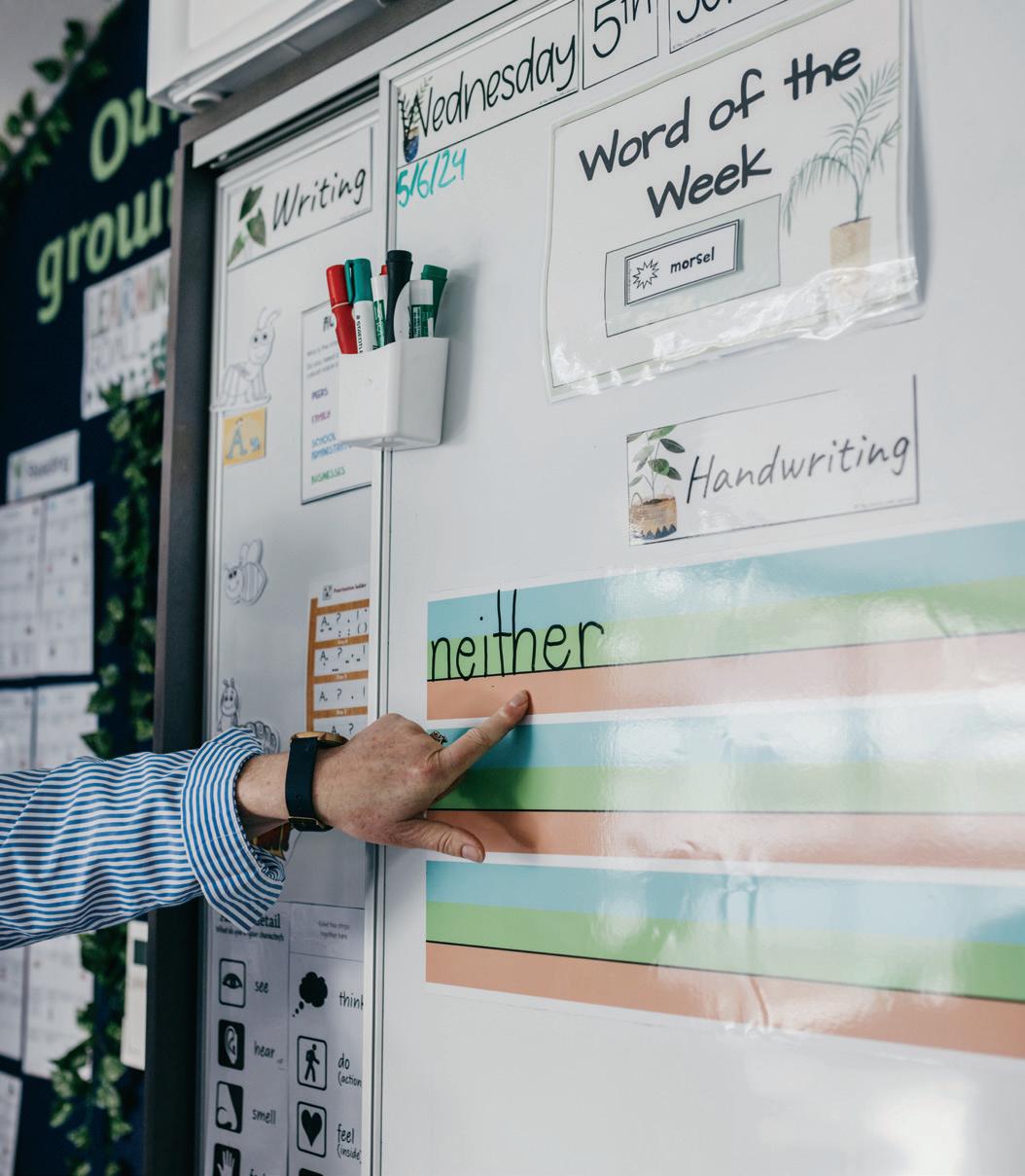
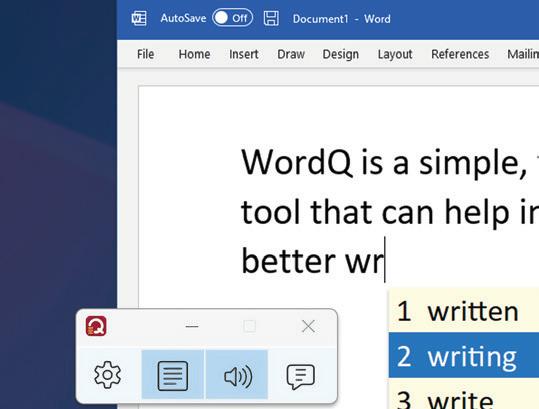
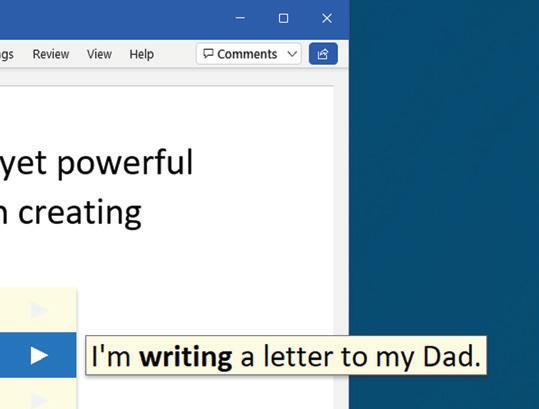
“Some of the most effective supports are also the simplest. Tools such as text-to-speech, speech-to-text, word prediction, word banks and phonics-based supports reduce the effort required to decode and write text, allowing students to focus on ideas and understanding.
Images courtesy of Learning MATTERS
“Reading pens and OCR technology are practical options to enable students to scan printed text, hear it read aloud, check definitions, and record spoken notes. These tools are becoming more commonly found in schools, helping dyslexic students work more independently and confidently.”
Choosing a combination of high-tech and traditional solutions could help achieve the best outcomes for tamariki, Mr Roberts said.
“The rapid growth of artificial intelligence is also changing how we all read, write and process information. Schools will increasingly need to adapt to a world where AI can draft, summarise and interpret text in seconds. For students with dyslexia, this offers powerful new ways to access content and express ideas. However, there will always be an important place for simple, reliable supports that strengthen core reading and writing skills, ensuring learners remain confident, capable and independent.”
The best tools for the job will depend on specific contexts, ages and learning levels in a classroom. Some simple strategies such as careful choice of fonts used on resources can benefit dyslexic and non-dyslexic learners alike by improving readability; research has found that Arial and Helvetica, standard fonts across many products, are potentially more
readable for dyslexic students even than specialty ones.
Ms Grover said that integrating dyslexia-friendly practices into the classroom was as important as one-to-one learning opportunities.
“Research has shown that dyslexic students need teaching strategies and accommodations in the classroom as well as 1:1 remediation. All dyslexic learners can learn to read and write as long as evidence-proven explicit, systematic, and direct instruction methods are used and delivered at least three times a week.
“Software programmes that are adaptive, systematic and follow a Structured Literacy protocol, with a strong background of independently peer-reviewed research and efficacy, can supplement explicit instruction
monitoring. Importantly, some digital tools are designed to support explicit instruction itself, such as supporting teachers to explicitly teach word recognition and language comprehension in structured, responsive ways.
“Used intentionally, digital tools can strengthen instruction without replacing the role of the teacher.”
Getting support right for every student
at school,” Ms Grover said.
“They also provide an excellent option for parents to collaborate with schools and to support their child at home. Appropriate software that places students at their appropriate level provide individualised supplementary instruction, especially when the teacher engages with the reporting aspects the software provides.”
Ms McNeil said digital tools are a great asset in the classroom. “Digital tools can support Structured Literacy by enhancing explicit teaching, guided practise, and feedback when they are aligned to a clear scope and sequence.
“Tools can be used to model skills, provide additional opportunities for practise and retrieval, and support progress
There are many reasons other than dyslexia that a student may have difficulties with reading and writing, so screening and diagnosis of students is a key part of the puzzle to ensure that they get appropriate, targeted support.
Dyslexia can present in many ways, but the Yale Centre for Dyslexia and Creativity suggests some common signs.
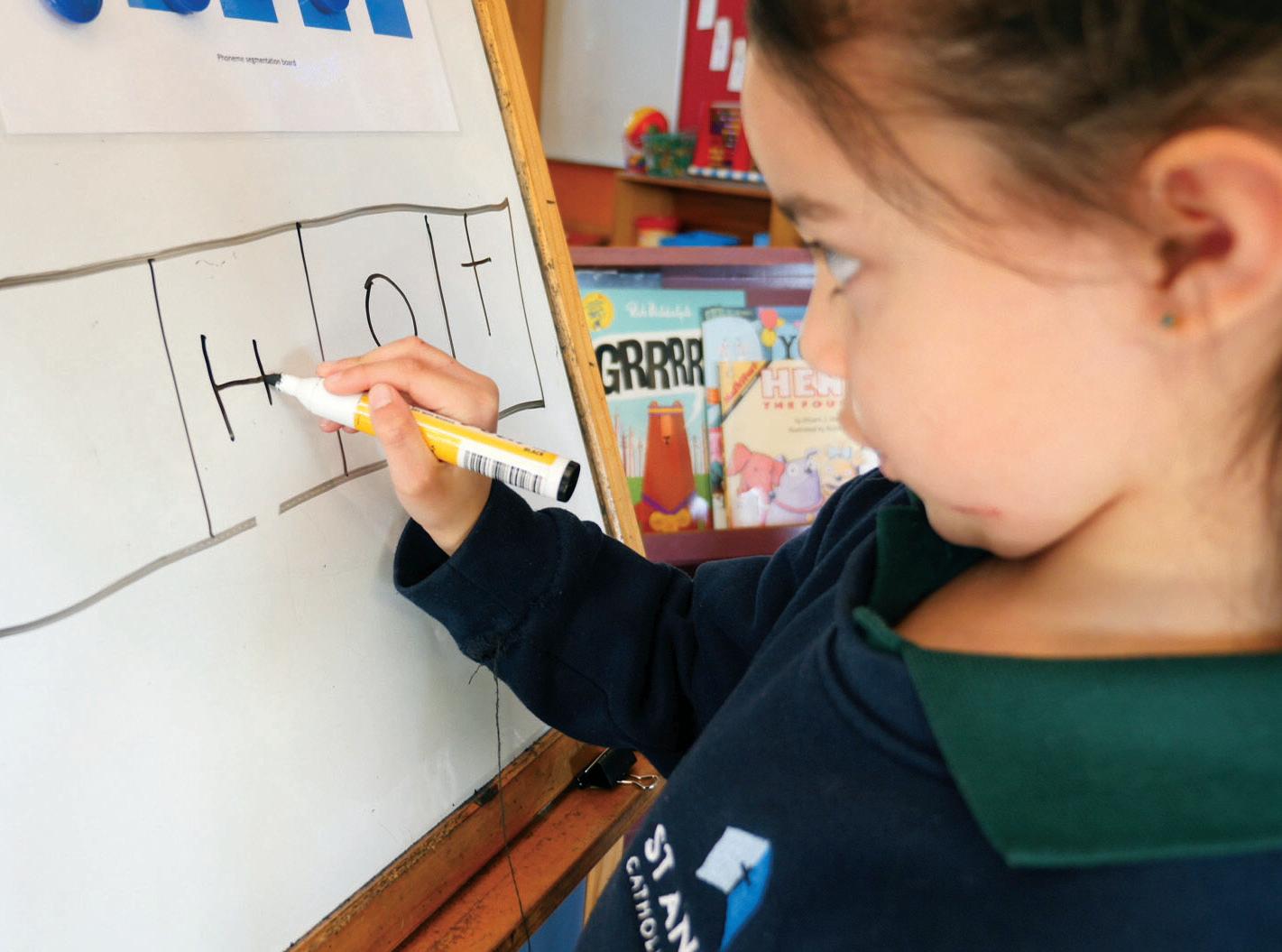
Very young students may have trouble with recognising rhyming words, be unable to sound out CVC words, and show a reluctance to read.
Older students may progress in reading more slowly than their peers, guess unknown words when reading and struggle to find appropriate words when speaking.
Some students may not display obvious signs, or only show strengths associated with dyslexia, including resilience, creativity and a high capacity to learn.
Images courtesy of StepsWeb
Universal screening can be used to identify students who may have dyslexia and need additional support, and carefully chosen assessment and screening tools can significantly streamline this process.
Ms Grover said that schools should be encouraged to use the Response to Intervention framework in selecting evidenceproven assessment tools to identify teaching and learning needs. This uses three tiers to target support: Tier 1 - Universal Screening, Tier 2 – Targeted Assessment, and Tier 3 –Individualised Assessment.
“Assessments that are delivered online and have standardised automated reporting, save significant time, and the knowledge required to appropriately identify learning difficulties, improving effective assessment practice,” Ms Grover said.
Ms McNeil said Tier 1 learning is an important foundation for dyslexic students. “Tier 1 Structured Literacy ensures that dyslexic students are taught in ways that align with the science
of how the brain learns to read. It provides the most effective and efficient foundation for literacy because it explicitly teaches the word recognition and language comprehension skills required for reading and writing.
“While some students with dyslexia will need additional and more intensive support, high-quality Tier 1 instruction gives them the strongest possible starting point.
“When implemented well, it ensures students are explicitly taught how to get words onto and off the page, while also developing vocabulary, background knowledge, inferencing, and verbal reasoning needed for comprehension across the curriculum.”
Giving teachers the tools for success
School staff must be well equipped to implement the Structured Literacy approach, as well as any specific interventions for dyslexic students, Professor Everatt said.
“Students with dyslexia typically
Empowering dyslexic students: Strategies for inclusive learning
Empowerment comes not from sameness, but from intentional support delivered well, early, and consistently.
For dyslexic students, empowerment is only possible when equity is clearly understood and enacted. You cannot be empowered if you do not know what you are dealing with. This is why identification and understanding are essential. Without them, action becomes inconsistent, delayed, or misdirected.
Inclusive learning requires intentional design. There are three key strategies educators should consider.
1. Have a clear process for early identification.
Robust screening and assessment enable teachers to move from assumptions to informed action. Early identification allows support to be timely, targeted, and e ective.
benefit from explicit and structured teaching of phonics/ decoding skills and the linking of these skills to word meaning/ reading practice. Professional development (PLD) that supports teachers in understanding how to teach these core skills to all students is vital.
“Identifying those with specific difficulties is easier when we know that all have been taught these foundational skills at Tier 1. Assessment tools linked to these core literacy skills should then identify those with difficulties. This can be used to provide group support (Tier 2) or individualised intervention (Tier 3). Good PLD will help teachers understand
what to do at each stage, and how the stages are interlinked.
“I would advise teachers to look for PLD that has proven effective in enhancing teachers’ knowledge and in accelerating students’ literacy learning within Aotearoa New Zealand.”
With the right combination of staff training, tools and classroom practices, schools can offer tamariki with dyslexia the chance to not only learn alongside their peers, but to thrive. While there is no ‘one size fits all’ approach, taking the time to help students with their needs and assist them with their strengths can yield huge rewards for everyone.
2. Include dyslexic students in classroom learning across the curriculum.
Dyslexia is not a measure of intelligence. Students must participate in authentic, knowledge building lessons alongside their peers, even when texts sit above their independent reading level. Access to ideas, discussion, and curriculum content should never be restricted.
3. Provide targeted, explicit instruction where it is required.
While knowledge and content can be accommodated, some skills must be explicitly taught. Word recognition, spelling, and decoding require structured, systematic instruction, o en delivered in small groups using decodable texts, alongside classroom learning.
When awareness leads to informed action, dyslexic students are far more likely to experience success and genuine empowerment.
Professional development workshops, webinars, school support, coaching
Image courtesy of StepsWeb
Strategies for inclusive learning with the Better Start Literacy Approach
Students with dyslexia often experience challenges with decoding words, comprehending text, and producing or following written information.
With the introduction of structured literacy into the English curriculum, these learners benefit from targeted support and tailored teaching approaches. Creating positive, inclusive classroom environments can significantly enhance confidence, engagement, and learning outcomes. Early identification and evidence-based intervention are critical to helping these students thrive academically and socially.
Evidence-based strategies aligned with the refreshed curriculum
Structured literacy is an evidencebased approach for supporting learners with dyslexia. A key feature of structured literacy is the explicit and systematic teaching of word decoding and word identification strategies. These approaches benefit all learners and are essential for students with dyslexia.
The Better Start Literacy Approach (BSLA) supports teachers to implement structured literacy through explicit, systematic instruction in oral language, phonological
awareness, reading, spelling, and writing. This instruction is closely aligned with the refreshed curriculum and supports teachers to respond effectively to diverse literacy needs in inclusive classroom contexts.
Targeted and tailored support for students struggling with reading and writing
High-quality classroom teaching is complemented by evidencebased targeted and tailored interventions for students who require additional support. Through BSLA’s Targeted and Tailored Professional Learning and Development (PLD), teachers develop the skills and confidence to plan, deliver, and monitor interventions that accelerate progress for students experiencing persistent difficulties with reading and writing. The PLD supports teachers to integrate intervention
alongside classroom instruction. Evidence from research led by Professor Gillon, Professor McNeill, and colleagues shows that children who receive BSLA targeted support achieve significantly stronger outcomes in word reading and spelling than peers who do not receive this additional support. Importantly, these positive outcomes have been demonstrated at scale across diverse New Zealand classroom contexts.
Early identification through effective tools and assessment
Effective screening and assessment are essential for identifying students at risk of ongoing literacy difficulties. BSLA provides guidance on the use of reliable screening tools, assessment practices, and datainformed decision-making. These approaches support accurate identification and ensure interventions are timely, targeted, and responsive to student needs
Building practical capability and confidence
BSLA supports schools across Aotearoa through PLD for teachers working with learners at Tier 2 and Tier 3 with reading, spelling and oral language difficulties.
The PLD is delivered through a flexible model that includes workshops, communities of practice, coaching and
mentoring. It is culturally responsive, strengths-based, and designed specifically for the New Zealand context.
Teachers engaging in this PLD learn from leading education researchers and practitioners including Professor Gail Gillon (phonological awareness), Professor John Everatt (dyslexia, including dyslexia across languages), and Professor Brigid McNeill (spelling). Teachers are also supported by experienced educators and speech-language therapists who provide practical coaching and guidance. Our evaluations from teachers around New Zealand who have engaged in our Targeted and Tailored Professional Learning and Development are outstanding:
“Thank you - so much new learning today, clarification and consolidation of my teaching practice.”
“Thanks for a well-run and engaging day of learning online. Definitely the best I’ve experienced and I have attended many.”
Supporting dyslexic learners at school and at home
Inclusive learning is strengthened when structured literacy teaching is supported by appropriate tools. Assistive technologies such as audiobooks, speech-to-text software, and visual supports can enhance accessibility and engagement when thoughtfully linked to teaching goals. Used alongside explicit instruction, these tools support practice, independence, and the generalisation of literacy skills across classroom and home contexts
By investing in evidence-based teaching, early identification, inclusive tools, and sustained professional learning, schools can empower dyslexic students to succeed, not only in literacy, but across their wider learning journey.
Lisa and Tilly. Image supplied.
Mark’s students. Image supplied.
UNLOCK LITERACY SUCCESS FOR EVERY LEARNER
Targeted (Tier 2) and Tailored (Tier 3)
professional development for teachers and literacy specialists with the Better Start Literacy Approach
Why enrol with the BSLA?
Based on the Better Start Literacy Approach (BSLA) and latest evidence on effective interventions for struggling readers
Designed for Aotearoa New Zealand classrooms and students
Gain deep knowledge through 12 months of PLD consisting of workshops, coaching and Communities of Practice
Includes lesson plans, online assessments, video demonstrations of teaching and online tools
Proven to boost reading, spelling and oral language outcomes for struggling students
Gain postgraduate credentials with the University of Canterbury
www.betterstartapproach.com
Navigate New Zealand curriculum changes with confidence
As Aotearoa schools navigate the refreshed New Zealand curriculum, educators face an unprecedented challenge: maintaining instructional quality while managing increased workload, staff turnover, and the demand for culturally responsive teaching.
You don’t have to do it alone. TeachAid is NZ’s solution.
The curriculum challenge
Across Aotearoa, the same pressures emerge. Teachers are developing curriculum-aligned units from scratch under time constraints. Relievers and new staff struggle with consistency. Professional development stays disconnected from daily practice. And there’s limited capacity to embed mana ōrite and culturally responsive practices reflecting each school’s unique kaupapa.
Traditional curriculum development cannot keep pace. Educators need a unified solution that reduces workload while elevating quality.
An end-to-end solution built for Aotearoa
TeachAid is the only AI curriculum platform designed specifically for New Zealand schools and kura. Already partnered with hundreds of schools and teachers nationwide, TeachAid transforms
how teams build, deliver, and sustain high-quality curriculum.
The platform generates complete, ready-to-teach units in minutes, fully aligned to the updated NZ curriculum. But this isn’t generic content. TeachAid personalises every unit to reflect your school’s kaupapa, local priorities, and community context, embedding culturally responsive practice and mana ōrite throughout.
Dr. Craig Hansen, Aotearoa’s leader in AI for education, calls this transformative: “AI is the biggest equity move we can make in our generation.” TeachAid gives every educator access to curriculumquality resources tailored to their learners, leveling the playing field for schools of all sizes.
For School Leaders
TeachAid addresses your most pressing operational challenges:
Curriculum Alignment: Build integrated plans across learning areas that align
seamlessly with refreshed NZ curriculum standards.
Workload Reduction: Teachers generate complete units in minutes, not hours, freeing time for direct student engagement.
Consistency: Maintain highquality delivery with relievers, new staff, or unexpected absences. Your curriculum becomes a living resource for your entire team.
Cultural Responsiveness: Tailor every unit to your school’s context and priorities. Embed te reo Māori, local histories, and culturally sustaining pedagogies naturally.
Professional Development: Unify curriculum development and PD on one platform, turning learning into immediately applicable classroom resources.
Differentiation: Support diverse learners with built-in tools ensuring every student accesses curriculum at the right challenge level.
For Teachers
TeachAid empowers you to:
Plan Faster: Generate curriculum-aligned units in minutes with personalised content reflecting your students’ needs and cultural contexts.
Teach Better: Spend less time on paperwork, more time with learners. Access ready-toteach resources that maintain quality and consistency.
Stay Agile: Easily adapt units for different learning levels, integrate across subjects, and respond to student needs in real time.
Get Started Today
School leaders: Pilot TeachAid at no cost with no commitment. Includes full team onboarding, platform personalisation, and comprehensive implementation support.
Secure a free school pilot at teachaid.ca/pilot
Teachers: Sign up free and experience how AI-powered curriculum development transforms your planning workflow while maintaining cultural responsiveness. Teachers sign-up free at teachaid.ca/nz
Hundreds of Aotearoa schools and kura have already discovered what’s possible. Join them.
For inquiries, contact Nadeem Aljaber, Founder, at nadeem@ teachaid.ca or reach our team at community@teachaid.ca.
Images courtesy of TeachAid.
An end-to-end AI curriculum platform for Aotearoa schools + kura
TeachAid creates high-quality, personalised units that reflect your kaupapa, culture, and local priorities – helping leaders and teaching teams navigate NZ curriculum change with confidence.
“AI is the biggest equity move we can make in our generation.”
– Dr. Craig Hansen PhD, Aotearoa’s Leader in AI for Education
★ Align to refreshed NZ curriculum
★ Generate complete units in minutes
★ Unify curriculum + PD on one platform
★ Localise to your kura, school context + priorities
★ Embed mana ōrite + culturally responsive practice
★ Maintain consistent delivery with relievers + new staff
★ Build agile, integrated plans across learning areas
★ Differentiate for diverse learners
Start a FREE school pilot!
STEAM in schools Learning for the future:
By Naomii Seah, Industry Reporter
STEAM learning (science, technology, engineering, arts and mathematics) has been a successful model in Aotearoa New Zealand for decades.
Through project-based learning, STEAM encourages active, student-led inquiry, developing students’ critical thinking, and strengthening engagement as students take charge of their learning.
These outcomes align with the 2007 New Zealand Curriculum, and now with the updated draft curriculum, which states the main purpose of school is “to support students to gain the knowledge and skills they need to be lifelong learners, experience success, and to fully participate in jobs and careers, society, and their communities.”
In the future, an estimated 80 percent of jobs in Aotearoa will require science, technology,
engineering and/or mathematics skills. Fostering our learners’ skills, confidence and curiosity through STEAM is crucial for building a future-proof workforce, and a thriving society.
STEAM empowers students to take charge of their learning, and encourages children’s natural curiosity by virtue of its project-delivery model. By investigating a real-world problem, finding their own angle of investigation and designing a solution, STEAM projects link the sometimes-abstract fields of science, technology, engineering and maths to the tangible, physical and material world.
Research shows students are more engaged in school when they feel learning is relevant to themselves and their community, and STEAM projects present the perfect opportunity to personalise learning, as projects can be taken from, or tailored to, a variety of local contexts.
With the right project and encouragement, STEAM learning can enhance learners’ sense of
self-efficacy and confidence, and foster positive social experiences that are carried forward into future learning. Additionally, as the world becomes increasingly complex, traditional siloed methods of teaching become inadequate—STEAM learning integrates many fields and skills, developing problem solving skills that will be needed in today’s job market.
Designing a STEAM project
Despite the huge potential for positive impact, teaching STEAM can be challenging. Firstly, designing a project often relies on teachers’ own understandings of each field and its applicability to specific contexts. Additionally,
identifying contexts that may interest learners can be challenging, especially when catering to diverse interests.
Designing a STEAM course may require more than one teacher’s input or oversight, and kaiako also have to consider the skills and outcomes the class is working toward, as well as what skills and knowledge the class already possesses.
Like any other course or programme, a good STEAM project should have elements like a clear statement of purpose, specified learning objectives, map of course content and sequence, an overview of the pedagogical process used, assessment framework, and a roadmap for ongoing learning.
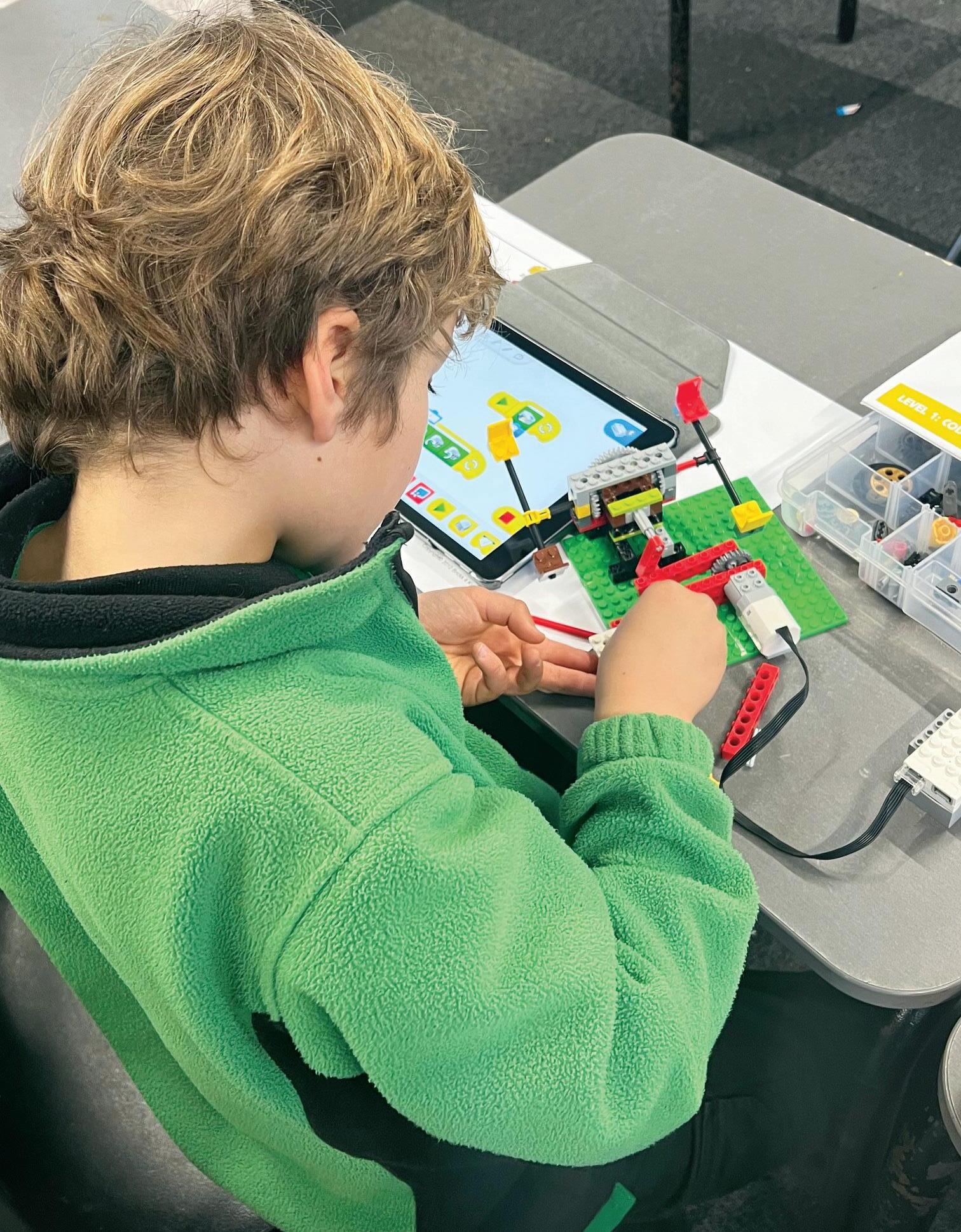
Image courtesy of Bricks 4 Kidz
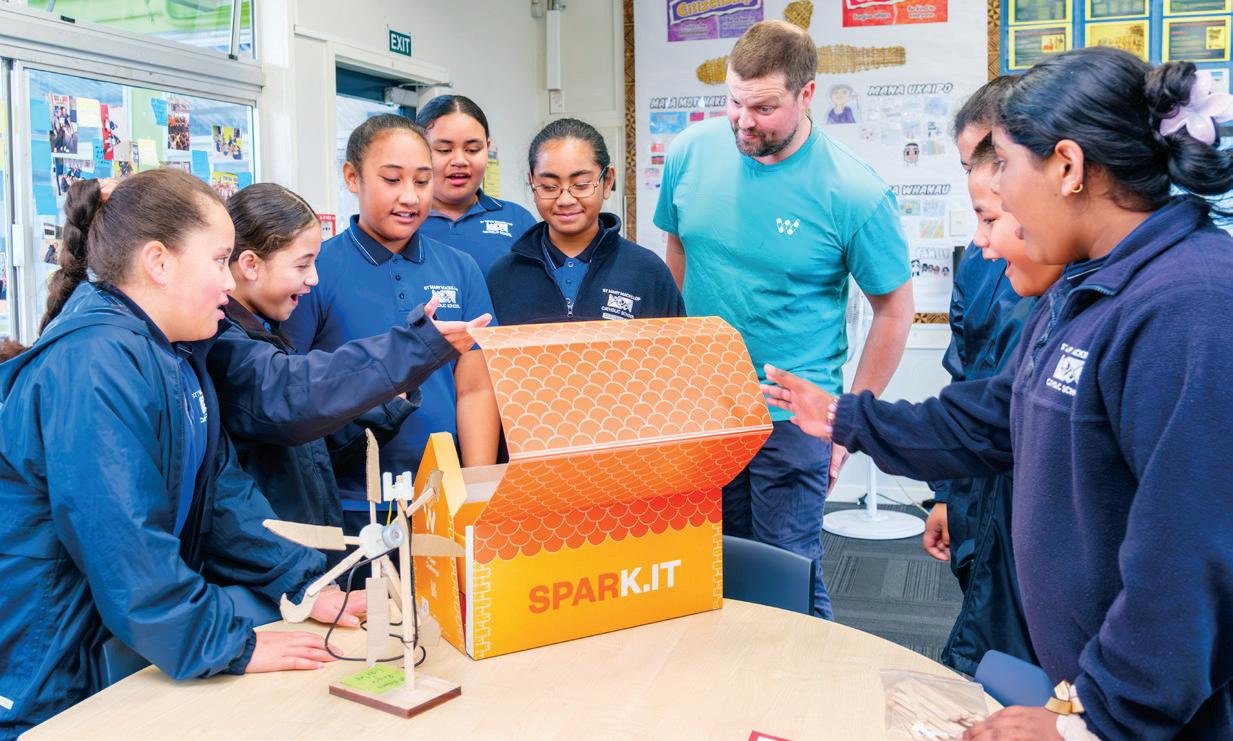
courtesy of The Wonder Project
When designing a STEAM project, it’s important to consider equity. Gender and ethnic minorities are less visible in STEM disciplines, so teachers should consider how STEAM might be tailored to engage different groups. One way to do this is by codesigning projects with students. This reinforces learner agency and takes advantage of students’ natural curiosity—what are your ākonga interested in, and how can they create, make, design or otherwise investigate the subject?
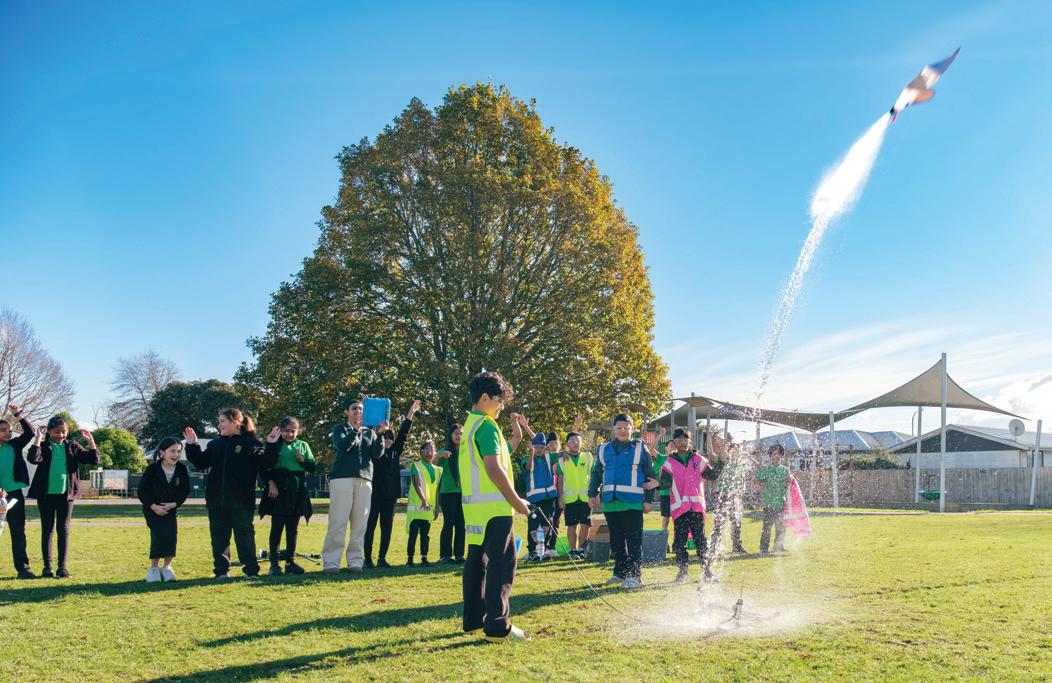
In Aotearoa New Zealand, STEAM practices range from lunchtime, student-led skills workshops to more structured, teacher-led term-long projects. The right fit for your students will depend on many factors like the school’s vision, values and available resources.
There are many free online resources available for teachers looking to design a STEAM programme.
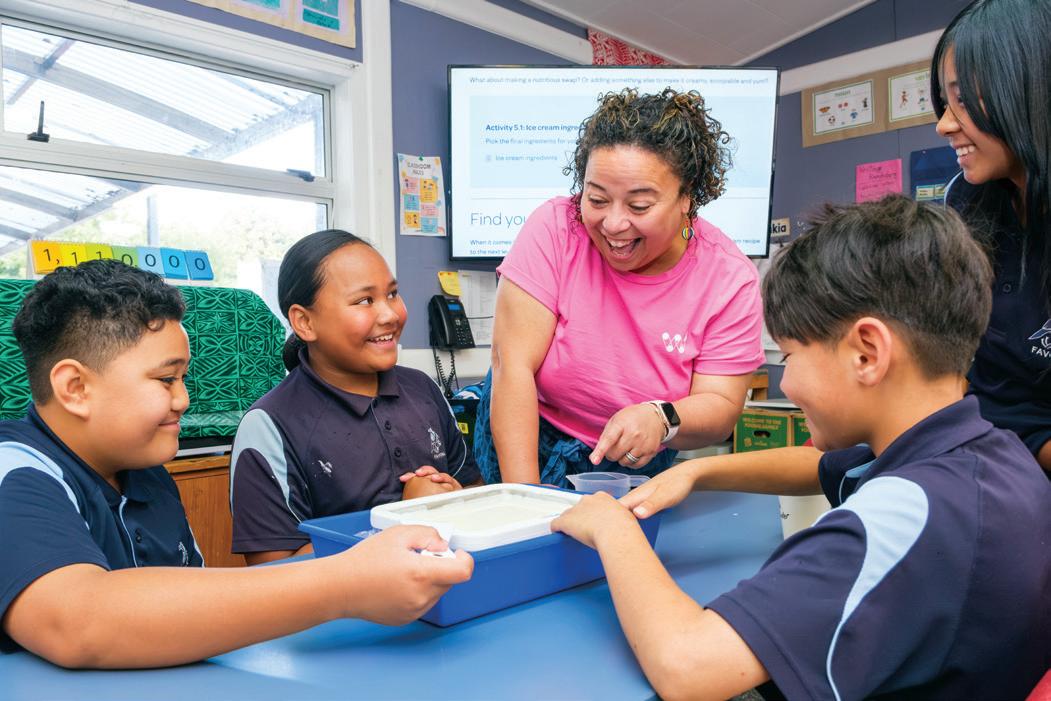
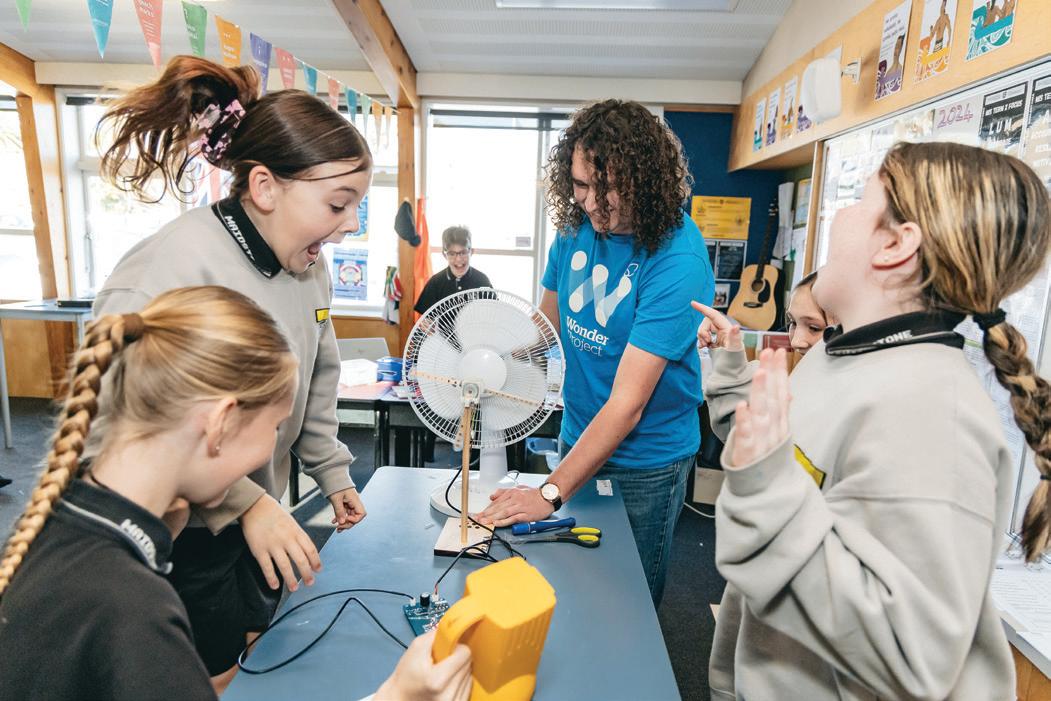
There are also many external providers who can help design and deliver STEAM learning with the help of experts, which can keep the content engaging.
Experimenting with technology
Another aspect of STEAM learning which can be very engaging for ākonga is utilising technology.
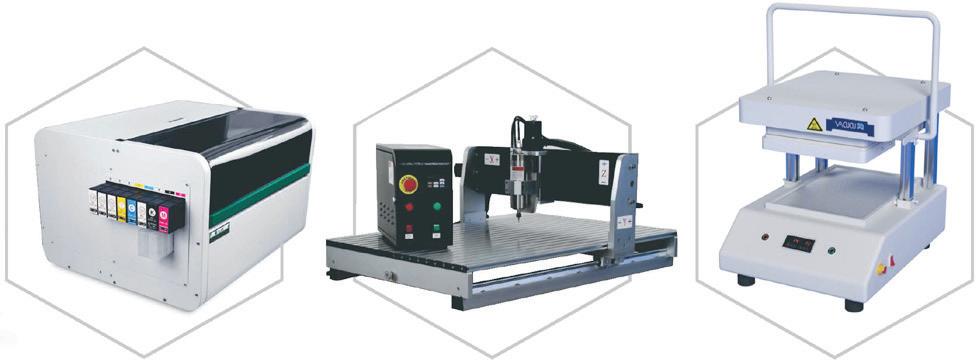
Robotics, laser-cutting, 3D printing, coding and computer programming are all technologies and skills that students can experience during their STEAM projects.
By gaining exposure to these technologies and skills, students are introduced to new possibilities and given permission to explore interests.
In keeping with the goals of STEAM learning, familiarity with these technologies can also present an advantage as students graduate and begin to explore the job market.
Images courtesy of Science in a Van
School News investigates some of the STEAM resources and providers available to educators and ākonga in Aotearoa.
Science in a Van delivers highquality, curriculum-aligned science shows. Schools benefit from the stress-free logistics, and no buses—Science in a Van brings everything they need.
With seven 45-minute shows to choose from, each blends humour, everyday objects and memorable demonstrations with clear scientific explanations, helping students deepen their understanding of different topics and the nature of science.
“We consistently hear that our shows boost science engagement for students and teachers. Humour definitely helps, and so do giant bubbles and rubber chickens flying on water rockets! We love mixing laughter with learning because it helps the science stick. I think we’re relatable too as we’re always asking questions alongside the students and we’re never afraid to say when we don’t know something. Instead, we talk about how we might figure it out together—and that’s what scientists do.” Emily Worman,
Science in a Van Co-founder & Science Communicator.
“Over the years, we have seen school science programmes go from strength to strength, and it’s always a joy to celebrate that journey with teachers, especially with the schools we visit every year. Teachers are the ones doing the deep-thinking mahi with their students week after week and we’re lucky enough to provide shows that enhance and celebrate the learning they’ve planned.” Alan Worman, Science in a Van Co-founder and Science Communicator.
With curriculum changes underway, the Science in a Van team remains committed
Celebrating 15 years of bringing science shows to schools! Science in a Van:
Since 2011, Science in a Van has been bringing high-energy, curriculumaligned science shows straight to primary and intermediate schools across Aotearoa.
Teachers love the easy logistics: just provide a hall or MLE and we bring everything else. Choose from seven unforge able shows, each packed with demonstrations that explore
key concepts and the scientifi c process. Expect giant bubbles, fl ying rubber chickens, water rockets and whip-cracking fun - inspiring gasps, giggles, and memorable learning - kaiako mā included!
Get in touch today as spots go fast. Don’t panic as booking is simple! Visit our website to see why schools keep rebooking us year a er year and fi nd out if our shows could spark a standout science unit at your school.
For more information email contact@scienceinavan.co.nz or visit www.scienceinavan.co.nz
to delivering joyful, relevant, accessible, high-impact learning experiences to primary and intermediate schools across Aotearoa.
Bricks 4 Kidz partners with schools to deliver immersive, hands-on STEAM experiences that help students build the skills needed for a world driven by innovation and technology. Through LEGO® engineering, robotics and coding, children learn by doing—exploring concepts that spark curiosity, creativity and deep engagement.
In-school programmes are fully aligned with each school’s term learning outcomes and are supported by comprehensive teaching materials that strengthen understanding of engineering principles, scientific thinking and new vocabulary. Every lesson links learning to real-world applications, showing students how the concepts they explore through play are used by engineers, designers and innovators every day.
Bricks 4 Kidz after-school programmes further extend students’ learning through play-based exploration of robotics and coding. As children design, build, test and refine their creations, they develop creativity, logical reasoning, perseverance and confidence in their ability to solve problems.
Across all partnerships, Bricks 4 Kidz aims to nurture imagination, encourage resilience and empower young minds to think like future innovators — all through hands-on, playful learning that makes STEAM meaningful, accessible and fun.
Makerspace NZ has become a key partner for schools seeking to strengthen STEAM learning by providing not only advanced fabrication equipment—such as laser cutters, CNC routers, and 3D printers—but also the training, support and ongoing technical service needed to embed these tools meaningfully
into teaching. Makerspace NZ emphasises long-term partnership rather than one-off supply: schools consistently highlight the value of comprehensive setup, staff training, responsive maintenance, and reliable access to parts and consumables.
These partnerships enable schools to shift from traditional, prescriptive technology programmes toward learning that integrates creativity, engineering, digital design and problem-solving. Schools report wide adoption across subjects, with projects ranging from prototyping and product design to environmental signage, leavers’ gifts, and whole-school initiatives.
Makerspace NZ also contributes to the wider “maker” ecosystem through user communities and social-media groups that support peer learning and idea-sharing. The result is a scalable and sustainable model for STEAM education; one that lowers barriers to advanced technology, builds teacher capability, and fosters a culture of innovation where students can design, create and iterate with real-world tools.
Making STEM engaging, accessible and easy to deliver is at the heart of the Wonder Project’s mahi.
Since 2018, it’s supported 160,000 ākonga across 5500 classes with free programmes that combine curriculum-aligned learning with hands-on activities like launching rockets or creating ice cream, taking the stress out of planning relevant STEM lessons that stick. Alongside scaffolded ākonga learning material and a challenge guide, the Wonder Project supplies kaiako with high-value STEM teaching equipment, free. Plus, everything sent to the school is theirs to keep and reuse to continue delivering impactful learning for years to come. Where possible, each class is paired with an industry professional who joins classrooms to build confidence along the learning journey, share their passion, and become a role model to rangatahi.
After their 2025 experience, 96 percent of kaiako reported their ākonga were engaged with the programme. All programmes are inclusive by design, ensuring all learners, especially girls, Māori and Pacific Peoples, see themselves represented in STEM, and believe they can do anything they set their mind to.
Image courtesy of Makerspace NZ
Laser focused memories
By Milly Fullick, Industry Reporter
Ngāruawāhia Primary School empowers its students by giving them hands-on experience using a laser cutter and engraver from Makerspace NZ.
Students work through the whole process from initial design to digitisation and creation of items, giving them a tangible outcome, Hard Materials
Teacher Peter Nolan said.
“The laser cutter allows us to work across a range of materials including plywood, MDF, acrylic (Perspex), leather, and stencil card.
“We have been using the machine for several years, and it has become central to delivering authentic, design-led technological learning experiences.”
The process provided engaging, practical learning for all students, Mr Nolan said.
“From a teaching and learning perspective, the impact has been substantial. Students who may find precision hand-tool work challenging can still achieve complex, high-quality outcomes.
“One particularly engaging application has been textile work, for our school sports camp tops. Students designed graphics which were then laser cut into stencil material—these stencils were used for screen printing.
“This project highlighted the versatility of the laser cutter beyond hard materials, extending its use into fabric and print technologies.”
Makerspace NZ’s Marcus Lund said working with schools goes far beyond selling them a product.
“Makerspace NZ worked closely with Ngāruawāhia Primary School to identify the most appropriate machine for their teaching needs while remaining within budget.
“As with all school partnerships, Makerspace NZ’s role was more than just equipment supply—we don’t just sell boxes. The team delivered and installed the machine onsite and provided comprehensive staff training, ensuring it was operational from day one and that teachers were confident using it in learning programmes.”
The support doesn’t stop once the equipment is installed, Mr Lund said.
“The relationship with Ngāruawāhia Primary School has continued well beyond installation through ongoing technical support, routine servicing, and access to spare parts provided nationwide. Makerspace NZ also supplies the plywood and acrylic materials used in the school’s laser cutter.”
Mr Nolan said the equipment and Makerspace’s support had provided much more than teaching opportunities. “The result is a learning environment where creativity, digital capability, and manufacturing precision intersect, empowering students to see their ideas realised in tangible, meaningful ways.”
Image courtesy of Ngāruawāhia Primary School
STEM programme so fun it improves school attendance
Registrations are now open for the free curriculum-aligned STEM programme that’s so fun, it gets feedback like this: “Wonder Project STEM activities engage challenging students and can help with improving attendance of students at school.” – Mark, Kaiako.
With its project-based, handson learning experiences, the Wonder Project is on a mission to inspire young Kiwis to love STEM. By supplying kaiako with NZ Curriculum-aligned learning material, a detailed challenge guide, and a high-value challenge kit, completely free, the schools programme takes the stress out of lesson planning and empowers kaiako to make STEM the most anticipated moment of the day.
Driven by strengths-based teamwork, Wonder Project challenges seamlessly blend aweinspiring activities like designing and launching rockets with STEM learning – increasing the amount of knowledge ākonga understand and retain, and helping disengaged rangatahi thrive.
“The buy-in from my kids was incredible. I discovered that kids who were disconnected with their learning in other areas found a new appreciation for school.” says Nichola from Paroa School.
Part of the programme’s magic is the relationship between ākonga
and the volunteer industry role models that support their class, Wonder Project Ambassadors. Ambassadors provide reallife context to the learning material and become a source of meaningful representation for rangatahi – uplifting the confidence of ākonga and kaiako
Register now for 2026
alike and showcasing the many possibilities of a STEM career.
“Our ambassador was fantastic. He took the time to ensure that all learners understood the concepts, and he did it in a fun and engaging way.” says Sarah from Tamatea Intermediate.
The Wonder Project’s 2026 programmes are now live for registrations. Register to be part of the wonder today at wonderproject.nz or contact hello@wonderproject.nz for a kōrero with our advisors.
• Rocket Challenge – Term 2, Year 5–6, Level 3, Phase 2
• Power Challenge – Term 2, Year 7–8. Level 4, Phase 3
• Ice Cream Challenge – Term 3, Year 5–6, Level 3, Phase 2
• Water Challenge – Term 3, Year 7–8, Level 4, Phase 3
The Wonder Project is Engineering New Zealand’s free programme for schools, designed to get young Kiwis excited about science, technology, engineering and maths (STEM).
Feedback on last year’s programmes not only highlighted high levels of ākonga engagement, but also the confidence kaiako got out of their experience – providing them with the tools and support they need to make STEM teaching easier and stress-free.
• 96% of kaiako increased their confidence teaching STEM
• 96% of kaiako said ākonga were engaged with the programme
• 98% of kaiako and 75% of ākonga said they would do it again
“This is the most successful and motivating kit I have ever had. It was packed with learning and challenging child-centred experiences.” says Heather from Clifton Terrace Primary.
To help bridge the gap of women, Māori and Pacific Peoples working in STEM fields, Wonder Project Challenges are designed to be accessible and inspiring for ākonga from all backgrounds. Everyone that signs up for the Rocket, Water or Power Challenge in 2026 will have the option of using ākonga activities in English, or te reo Māori, so all schools across Aotearoa can have a blast learning STEM.
Visit wonderproject.nz to find out more.
Images coutesy of The Wonder Project
There’s wonder in… an entire class engaged with their STEM lesson.
Make it happen with the Wonder Project
The Wonder Project is an inquiry-based, New Zealand Curriculum-aligned schools programme designed to inspire your ākonga and make STEM class their favourite part of the day.
We supply everything you need, free.
The power of immersive school productions
By Naomii Seah, Industry Reporter
School productions are about more than just putting on a show in the hall—they’re a means to bring together a community, boost wellbeing through engaging in creative outlets and expression, and to enrich learning through new experiences.
When ākonga engage in the arts through theatre, they are engaging in layers of multisensory communication and a rich cultural heritage passed down from our very earliest ancestors.
Though most tamariki are exposed to storytelling from the time they’re born, for most of our young ākonga, participating in a school production is their first time working at scale with others to create an immersive, personal and localised performance. The final impact is a show that will bring all their worlds together— peers, family and kaiako alike— creating a powerful experience and shared memories.
The power of performance and productions
Sally Sutton, writer at Hī Hā, understands the impact of school productions well.
“School productions are powerful. They don’t just help ākonga to learn and grow, they engage entire communities. Parents come to see their kids on stage. Grandparents come. Uncles and aunties come. If ever there was an opportunity to showcase not just your
learning, but your ideas, your values, the unique identity of your kura in Aotearoa, a homegrown school production is it.”
Musicals are a popular choice for school productions because of their multidisciplinary offering, bringing together music, dance and performance. Lleuarne Panoho, choreographer at Hī Hā said encouraging movement for students is an integral benefit of school productions.
“Theatre is physical,” said Ms Panoho. “Lots of action, and
well-choreographed dancing, is a must. Dancing is a great way to help tamariki celebrate what it means to be Kiwi, to learn, to connect, to move, to shine… and especially to have fun!”
Importantly, engagement is key to ensuring that students gain the full benefits of participating in a school production.
Ms Sutton said: “There’s increasing awareness that inclusive, culturally relevant productions deepen student engagement and learning. “We all know that New Zealand tamariki deserve to see themselves reflected on stage, but it’s not enough just to tell them. We need to show them.”
The right approach for your school
So how should schools choose the right production to engage their students and their communities?
For schools in need of guidance, there are plenty of local providers who can help. Professional partnerships with theatre companies can bring performance and production expertise directly to staff and students.
Images courtesy of Hī Hā
LIGHTING, SOUND AND AV FOR THE HALL, STAGE OR THEATRE
Don’t just put on a show — provide a learning opportunity. Upgrade your school’s Sound, Lighting, and AV to give every assembly and production a professional edge.
Expert installation for any space:
• LED Screens & Projection: Crystal-clear larger than life visuals for halls and gyms.
• Theatre Audio & Lighting: Tailored for drama studios and auditoriums.
• Student Training: Real-world skills with industrystandard tech.
Boost production quality and give your students the chance to master the technical side of theatre.
School-Wide Paging & Bell Systems
Scan the QR code for a FREE site survey and quotation
Apex Portable PA System Package
Paging and bell systems with built in bell scheduling that connect using your existing of traditional PA system installation.
Future proof
Unlimited range
Instant so ware-based zoning and bell system remains scalable and reliable for years to come.
Portable PA system with stand and wireless microphone.
• Fully featured, top quality and easy to use.
• Includes a weather cover for outdoor use.
• Built-in trolley and powerful rechargeable ba eries so you can take it anywhere.
It may help to consider the context of your school or kura and what your ākonga need. Will seeing a professional rendition of a scene excite and engage students? Will a musical offer opportunities for students who play instruments? How about the themes of the production— what messages would you like students to take away?
“So much depends on the script,” said Ms Sutton.
“Is there a curriculumfriendly theme? Is it written by a professional author? Is it funny, relevant, culturally appropriate? Is it well-paced, full of movement and fun, or does it drag? Does it roll off the tongue, or stay glued to the page? And most importantly: are kids going to love it?”
Lights, camera, action
Whether your performance is staged in the school hall, an outdoor amphitheatre, the oval or an offsite location, a range of equipment can take your performance to the next level.
Portable and permanent stage configurations can elevate the production to new heights by enabling the cast to interact with the audience in new ways and take full advantage of auditorium space.
Light, sound and images can also take your production to the next level, wowing the community while bringing them together and creating new learning opportunities for older students. Lighting and AV systems can be multipurpose, bringing added value to central spaces like auditoriums beyond school productions.
Namo Naicker from WiPath Communications Ltd said that modern AV systems can transform school productions from simple performances into polished, immersive experiences.
“High-quality audio ensures every line and lyric is heard clearly, while intelligent lighting and visual effects add depth, mood, and professionalism.
“Investing in improved AV also gives students opportunities to work with real-world technology used in theatre, broadcasting, and live events, and helps to build confidence both on stage and behind the scenes,” Mr Naicker said.
“Systems that adapt to different venues and event sizes offer the greatest value. Modular sound systems, wireless microphones, mobile control stations, and scalable lighting rigs allow staff and students to create high-quality productions without complexity.
“Flexible equipment ensures AV can be used throughout the year for assemblies, awards evenings, cultural events, and community functions— not just theatre shows.”
Jonathan Neil, General Manager at Edwards said quality audio visual systems transform school productions. “Prosound systems and wireless microphones ensure every student hears announcements clearly, while LED screens are visible even in well-lit halls.
“Modern systems include smart automation: screens automatically switch to the correct input when a laptop connects, eliminating those “technical difficulties” moments. Preset scenes allow staff to recall appropriate settings with a single button press, reducing operator stress considerably.
“When students work with industry-standard equipment such as professional mixing desks, DMX lighting controllers, and LED displays, they’re gaining exposure to the same tools used in professional theatres, broadcast studios, and corporate events worldwide. This hands-on experience can spark careers in technical theatre, live events, audio engineering, or video production,” Mr Neil said.
“Production work teaches invaluable skills, including problem solving under pressure, seamless team coordination, and genuine technical proficiency. These aren’t abstract lessons; the students learn to operate complex systems, troubleshoot equipment, and deliver under live performance conditions.”
Mr Neil said modern technology is improving systems. “AIassisted lighting controllers have revolutionised what’s possible. “These systems can generate quite sophisticated light shows automatically, making professional results achievable even for beginners while still offering depth for students who want to develop advanced skills.
“While more professional or prosumer equipment requires higher initial investment, it delivers substantial savings: LED PAR and theatre lights last 10 plus years, require minimal maintenance, and dramatically reduce power consumption compared to older technologies. Quality equipment also retains value and can be expanded rather than replaced entirely.
“Schools considering upgrades should start with solid foundations—quality speakers, essential lighting with DMX control, basic wireless microphones, and one
Image courtesy of Edwards
Images courtesy of NAS Solutions
display option—then expand capabilities as budget allows. This scalable approach ensures systems grow with your needs while maintaining professional standards and providing equipment that everyone should be happy using.”
Euan Mackenzie from NAS Solutions said that the right AV system for the school context is vital.
“Getting the basics right is the foundation of any successful school production. A well-designed and properly installed AV system ensures every word is heard clearly and consistently across the entire audience, allowing performers to be understood and confidently take the stage.
“Solid audio coverage, reliable microphones, and balanced sound create a professional baseline that lifts both the performance and the audience experience. Once these fundamentals are in place, schools can layer in lighting, video, and soundscapes to enhance storytelling without compromising clarity.
“Industry-leading audio software options offer an intuitive approach that allows young users to experiment, design, and shape audio experiences creatively, without being hindered by technical complexity—building skills directly aligned with modern industry practice.”
Schools may also consider utilising LED displays. These displays are often practical for multipurpose spaces as they can double as a presentation screen, or be programmed to display a myriad of images to enhance performances.
“Their brightness, colour accuracy, and customisable formats enable animated scenes, digital sets, and dynamic backdrops that instantly shift environments. Beyond productions, LED walls can showcase school branding or sponsorship messages, helping offset costs while strengthening community ties.”
Mr Mackenzie from NAS Solutions highlighted the
multifunctional nature of LED displays. “LED technology plays a dual role in schools: it supports day-to-day presentations with bright, high-visibility displays, and it can instantly transform a stage backdrop into a dynamic digital set for performances.
“Instead of building physical scenery, LED walls allow schools to switch between environments effortlessly—from forests and cityscapes to abstract atmospheres. With the rise of AI-powered content creation tools, generating tailored visuals, animations, and backgrounds is easier and faster than ever, expanding creative possibilities for students and staff alike.”
A lasting impact
Staging a successful school production involves a significant investment of time, energy and resources from everyone involved.
While the rehearsals might be tiring, and participation might seem scary to some students, the feeling once the production has been met with riotous applause from a cheering audience will long outlast any frustrations. All in your community will look back on the production as a treasured memory, and the learning outcomes—both intentional and unintentional—will endure.
Image courtesy of WiPath Communications
Simple, profitable, fundraising options
Turn fundraising on:
Without taking anything on
Schools are busy.
Fundraising shouldn’t feel like another job.
Kindo makes fundraising easy to launch because it’s built into the way families already pay for school life. Setup is straightforward, with support from the Kindo team, and schools can activate fundraising options quickly—without events, selling, or logistics.
Once live, families can contribute through everyday actions like ordering lunch, making payments, or joining a school fundraiser. Schools get digital payments, simple reporting, and fundraising that runs in the background.
If your school wants a fundraising approach that’s simple to start and easy to sustain, Kindo helps you get there quickly.
Learn how your school can get started at kindo.co.nz
By Gemma Easton, Editor
For many schools, regular, successful fundraisers are essential to top-up the school budget.
With resources under more and more strain, and pressure to make everything stretch just that bit further, fundraisers can help schools provide some nice-to-have extras for their students, as well as maintain vital services and facilities.
Fundraising can be wholeschool focused, with the aim of securing funding that would benefit the entire school, or might be undertaken by a particular year level, school team or club, or a group of students hoping to raise money for a specific project. Your school might need some extra cash for upgraded facilities, school excursions, more books for the library’s collection, instrumental music lessons for students, and much more.
Given its importance, careful planning is integral to the success of any fundraiser. In this feature, we look at how to ensure your fundraiser meets your targets without stress.
Plan for success
A winning fundraising venture relies on efficient organisation. For whole-school events, school parent communities, like the Parents and Friends Association often take the lead, and should work collaboratively with the school. Clear parameters should be established, including what the fundraiser is for, how and when details will be communicated with the school community and the wider community if appropriate, and the monetary goal.
Parent associations often contain many parents with expertise in a certain field, which can be drawn on to enhance fundraising efforts. A person skilled at making the most of social media platforms, for example, may be tasked with coordinating social media content to promote the fundraiser; someone with links to a local business may be asked to approach the business for support.
Involving parents, staff and students can help build a sense of community around your fundraiser, and your school or kura more broadly.
A fundraiser that works
You can run your fundraiser completely in house, or to relieve some of the organisation pressure, external providers can help to arrange your fundraiser. Some companies provide an all-inclusive service, facilitating online payments so schools don’t need to manage money and cash handling.
Organisations can provide a range of products to sell, including chocolates, first aid supplies, and wrapping paper. Baked goods like pies, lamingtons or hot cross buns for Easter are often a popular choice for schools.
Other special occasions can be linked to fundraising activities, for example wrapping paper
Image courtesy of Kindo
or baubles for Christmas, or keepsakes like photo keyrings or reuseable mugs for Mother’s Day. Keepsakes like plates, tea towels or mugs printed with students’ artwork or photos provide a lasting memento for families.
Regular fundraising events can help to fund larger projects, or establish a pool of funds for future use. Schools with a strong student alumnus, who are keen to give back to their school, are well suited for this.
Activities like giving days, sponsorship of a paver, bench seat, or classroom, or an annual gala dinner or long lunch, give the broad community a chance to offer their support. For auction items or raffle prizes, connect with local businesses for donations, particularly those run by the families of current or former students.
Many fundraising activities can tie to an educational outcome. A fun run, for example, teaches students the benefits of regular exercise; a reading challenge can encourage students to read regularly and often, and help to establish a love
of reading; selling items like reuseable tote bags and bees wax wraps can raise awareness about the environment and sustainable practices, while the sale of first aid essentials can be linked to basic first aid education and training.
Depending on the scale of the fundraiser, learning opportunities could also include designing and distributing information about
the fundraiser, building strong communication skills while selling items or tickets, and calculating profits. Through volunteering their time to assist in running the fundraiser, students learn the value of service to their school and the community.
Building community
School fundraising can be an opportunity to make more than just money. A well-executed
fundraiser can help to foster community within your school, with parent volunteers, staff and students working together to make a difference for the school at large.
Students may also feel pride in their school and community, and a sense of belonging. Importantly, make sure your fundraiser is appropriate for your school context.
Image courtesy of Custom Branded
Consider how much time and money families will be willing to give, and how often.
Once your fundraiser is over, share your successes with your school community. Celebrating how much money you have raised, recognising all that made the venture a success, and letting everyone know
how the money will help your school or kura will help motivate people to give again, the next time your school is in need.
Winning ideas for school fundraisers
Established in 1976 by James Crooks (Jim), Graphics on Shirts sourced a variety of
Fundraising made easy with unique keepsakes
Are you looking for a fundraising initiative that parents actually love? For years, New Zealand schools and centres have trusted us to turn their students’ artwork into quality, profitable keepsakes.
The concept is simple: students create selfportraits or artwork, which we professionally screen-print onto 100% co on tea towels. These are practical, eco-friendly mementos that families treasure for a lifetime - and are easily mailed overseas to loved ones!
With a large 400mm x 600mm printable area, the towel design is up to you and the children, so
every fundraiser is unique. Your school can make a significant profit on every item sold, making it an extremely e ective fundraiser.
With free shipping, now is the perfect time to get started designing.
Visit www.teatowels.co.nz today for inspiration, pricing and guides.
products. Tea towel fundraising was an idea Jim saw in the UK and set about doing it in New Zealand. It became quite popular, with teatowels.co.nz launching near the dawn of the internet. The company prints for corporates like ecostore and great causes like CCF. What makes water-based cotton tea towels a smart solution for fundraising is the student involvement. By placing children’s creativity at the heart of the design, the tea towel becomes a collaborative art piece that motivates parents to purchase a lasting keepsake. teatowels.co.nz stocks its own 100 percent cotton tea towels (soon to be organic) and the process is designed for transparency, with all pricing and guides, tips and survey results, available online. Practical, long-lasting, and easily mailed to loved ones, teatowels.co.nz tea towels turn an everyday household item into a meaningful snapshot of school history on an ecofriendly and useful item.
Schools using Kindo have fundraising tools built in, making raising money in your school community simple and stress-free. Kindo is designed to fit around what’s already happening at your school and not add to the workload.
Schools using Ezlunch can opt-in to automated fundraising from lunch orders. Once enabled, funds come in every time families order lunch—no events to run, no stock to manage. In Term 3 2025 alone, this brought in nearly $94,000 across participating schools. Checkout gifting can also be enabled across any school payment. When families are already paying for something, for example swimming lessons, uniforms, or camp fees, they can add a small voluntary contribution. That might be helping another child attend an activity, supporting KidsCan, or contributing to a cause your school community chooses. Last year, families gave more than $153,500 this way, including giving aroha and paying it forward.
If you want to run a campaign, Kindo has ready-to-go fundraisers set up with partners like Good Change Co, Magenta Backpacks, AwesoME Journals, and AWWA Period Care. No sourcing or logistics are required by the school —just choose your dates and Kindo handles the setup.
Kindo provides fundraising that works with how families regularly make payments, not against an already-full school calendar. The result is fundraising that’s easier to manage, more inclusive for families, and grounded in real parent behaviour.
Image courtesy of Custom Branded
Image courtesy of Custom Branded
What is 0800 What’s Up?
Barnardos’ counselling service
What’s Up is the only helpline and online chat service in Aotearoa for tamariki and rangatahi aged 5 to 19, giving them someone to talk to when they need it. The service is free, confidential, and available seven days a week from 11am to 11pm. Tamariki and rangatahi can connect with a counsellor by phone or online chat.
Why might a child or young person reach out?
Young people may call or chat with What’s Up about emotional and
psychological struggles like anxiety, grief, mental health issues, self-harm, or loneliness. They might also reach out for help with relationship issues or major life changes, such as starting a new school or losing confidence. The service supports both everyday struggles and serious crises, including situations where a young person’s safety is at risk. They can talk about anything on their mind – nothing is too big or too small.
What can they expect when they reach out?
When a young person contacts What’s Up, they will be listened to by a counsellor who will treat their
concerns seriously. They can choose to remain anonymous or share their name. The counsellor will help them explore strategies to manage their challenges, focusing on building resilience and empowering them to solve their own challenges. The service o ers flexible engagement, where young people can reach out as needed, with no pre-booking required.
What approach does What’s Up use to help children and young people?
What’s Up focuses on empowering children and young people by recognising them as experts in their own lives. Counsellors listen to understand their feelings and challenges, then help them find solutions that work for them. What makes the service unique is that children and young people can request for the same counsellor each time, so they don’t have to repeat their story to someone new when they reach out to What’s Up. They can also speak regularly with the same counsellor, helping to build resilience and learn strategies to manage challenges. What’s Up is an early intervention service, but it is also available for serious concerns, providing continuous support when needed.
How can parents or caregivers identify when a child might be struggling?
Parents and caregivers can look for signs like mood changes, withdrawal from others, or struggles with school and relationships. Emotional distress, such as anger, sadness, anxiety, or
self-harm, may also indicate that a child needs support. Major life transitions, such as moving to a new school or dealing with confidence issues, can be challenging, and young people might benefit from talking to someone outside their immediate circle.
How can parents or caregivers refer a young person to the line?
They can encourage a child or young person to reach out to What’s Up by sharing the contact details: 0800 942 8787 or visiting whatsup.co.nz for online chat. There’s no need to pre-book, and they can reach out whenever they feel ready from 11am-11pm, all year round. Parents or caregivers can also support them with their first initial call or chat so they feel comfortable talking to the counsellor. It’s important to reassure them that the service is confidential, safe, and available for any issue, big or small.
Adults or whānau can encourage children to reach out to 0800 What’s Up by sharing the contact details: 0800 942 8787 or visiting the website whatsup. co.nz for online chat. A child or youth can reach out whenever they feel ready. It’s important to reassure them that the service is confidential, safe, and available for any issue, big or small.
Fostering wellbeing:
Practical strategies for supporting students and staff
By Milly Fullick, Industry Reporter
Wellbeing: whether the word conjures yoga practice, nature walks or quiet reading time, it’s a topic that is gaining traction globally.
However wellbeing looks for each individual, research is increasingly showing its benefits, especially in young people; poor mental health in students is directly linked with poorer school performance and increased aggression and bullying.
Schools are well-placed to help young people navigate and take ownership of their wellbeing, but this is a potentially daunting task on top of school staff workloads. Luckily, there is more support than ever to help schools improve wellbeing for students, staff and teachers.
Choosing effective strategies
Perhaps unsurprisingly, a study from the New Zealand Council for Educational Research (NZCER) found that schools with policies, practices and dedicated teaching time centred around wellbeing had higher student wellbeing than those
without. Among the most successful interventions was teaching students strategies for managing their emotions.
There are many ways to build this into the school day, including partner and group talk sessions, as well as encouraging students to take some deep breaths and put words to how they are feeling.
For younger learners, classroom displays with key emotion words can be helpful, whereas
Tools and programmes for wellbeing
Another increasingly popular option is the use of wellbeing programmes and toolkits. These often have the advantage of being developed by experts in the field, and some are backed or used by organisations such as the Ministry of
Education, NZCER and Health New Zealand. An additional advantage of using pre-existing programmes is the decreased time spent on research and planning for teachers.
The time saved could be spent fostering staff wellbeing. UNICEF suggests teachers build wellbeing into their routines with simple steps such as spending one minute taking deep breaths as soon as students have left for the day.
a more complex emotions wheel would make a great secondary classroom resource.
Images courtesy of Tātai Aho Rau Core Education
Adopting a mindful approach
This short break approach can be useful in the classroom, too. Wellbeing practices can be quick, such as a few minutes of box breathing before transition times, or short movement breaks with a variety of stretches.
If there is more time available in the school day, then yoga routines, sharing a story about feelings in a primary classroom or a session on sensory grounding techniques in a secondary setting are good options. As with any practice, the key is consistency. Giving students
the opportunity to try a range of methods to boost their wellbeing will help them to develop a toolkit that works for them.
Building positive peer relationships and behaviours
As well as encouraging students to look inwards, it’s important to build positive relationships between peers. Maintaining friendships and peer networks can be crucial to young people’s mental health.
A 2023 study by the Ministry of Education found that, when asked about wellbeing,
secondary students reported that bullying and friendships were among their biggest concerns. That’s hardly surprising, given that students spend their weeks surrounded by their peers.
The Ministry of Education’s Inclusive Education initiative suggests buddy systems, along with promoting group and team work on a classroom and year group level can help empower students to build positive relationships.
Assessing wellbeing
A final consideration is how to measure improvement. Although wellbeing is hard
Te Poipoi Kaiako – Mentor support programme
Funded mentor support that strengthens wellbeing and teaching practice
Tātai Aho Rau Core Education delivers professional development through Te Poipoi Kaiako | Mentor Support Programme, fully funded by the Ministry of Education. It supports kura, schools, and early learning services with resources that build inclusive, responsive, and growthfocused mentoring relationships.
Waiora | wellbeing is a core kaupapa, supporting quality teaching and job satisfaction.
The nationwide programme provides practical tools for Mentor Teachers to support mentee wellbeing, including:
• Wellbeing check-in
• Breathing techniques
• Peer support networks
• Strength spotting
• Intentional listening
• Using feedback that increases confidence and motivation
to quantify, there are ways to gain insights from students.
Direct feedback is perhaps the most important of these; students can always give the best insights into their own feelings.
How this feedback is gathered will depend on the contexts and age groups involved, but all students should feel that their thoughts are valued and impactful.
Consider how the school’s approach will be informed by student feedback and make them aware of this; this will further help to develop students’ sense of ownership over their wellbeing.
Find out more and register at › core-ed.org/mentor-support
Images courtesy of Barnardos Aotearoa
Some organisations shared with us how they can help schools to plan and implement effective wellbeing strategies.
Many schools across Aotearoa are using Pause Breathe Smile, a free mindfulness programme designed specifically for education settings, to support a calm and settled start. The programme provides a shared language and simple, practical strategies to support mind health for both kaiako and ākonga.
The beginning of a new school year brings fresh energy alongside familiar challenges. New students, routines, and
expectations arrive all at once, often accompanied by big emotions and a need to rebuild a sense of safety and belonging. How teachers shape these first weeks plays a key role in setting classroom culture for the entire year.
Pause Breathe Smile is not about requiring silence or expecting perfect focus. Instead, it supports tamariki to notice what is happening in their bodies, thoughts, and emotions, and then practise ways to selfregulate and refocus. These vital mind health skills can support smoother transitions, reduce reactivity, and normalise
conversations about feelings and hauora (wellbeing).
The approach is designed to fit easily into the school day. Short breathing practices, mindful movement, and shared language can be introduced early, before beginning the structured hauora lesson content.
Over time, these small, consistent practices help create calmer classrooms where students feel supported to learn, and teachers are equipped with practical tools to support wellbeing throughout the school year.
Tātai Aho Rau Core Education provides professional development through Te Poipoi Kaiako | Mentor Support Programme. The programme is fully funded by the Ministry of Education for kura, schools, and early learning services. The programme includes videos, modules, workbooks, guidebooks, and templates to help develop a supportive, inclusive, responsive, and growth-focussed mentoring relationship.
Waiora | wellbeing is a foundational kaupapa in the programme, recognising that it contributes to quality teaching and job satisfaction.
Teaching is demanding. It can be overwhelming and rewarding in equal measure. Recognising stressors, triggers, needs, and achievements is a teaching super-power. Finding the fit that works requires guidance and practice. Regular, intentional actions contribute to long-term benefits.
Te Poipoi Kaiako explores a number of strategies and tools for Mentor Teachers
to support the wellbeing of their mentees including wellbeing check-ins, breathing techniques, peer support networks, strength spotting, intentional listening, and using feedback that increases confidence and motivation.
Te Rōpū Rongomau o Aotearoa has spent 50 years working alongside kaiako and ākonga to deliver peer mediation programmes to kura throughout New Zealand.
With facilitators based across the North and South Islands, The Peace Foundation delivers two core programmes for primary and secondary schools.
The Cool Schools Peer Mediation Programme supports primary kura by training kaiako to feel confident in teaching classroom conflict resolution skills and supporting the implementation of a studentled peer mediation service.
The secondary Leadership through Peer Mediation (LtPM) programme empowers rangatahi to lead mediation. Both programmes teach essential life skills, such as empathy and respectful communication to empower their peers to deal with conflict constructively.
Training is flexible and responsive to each school’s needs.
Additionally, Peace Foundation membership provides access to relevant and culturally appropriate support resources. By creating safer school environments, ākonga feel more connected and confident, leading to more positive learning engagement. With more respectful communication, kaiako and ākonga are able to focus on learning.
Images courtesy of Pause Breathe Smile
Image courtesy of Barnardos Aotearoa
Peace Foundation welcomes all enquiries from tumuaki/ school leaders so that they may understand your context and explore together how their programmes might support your school culture to thrive. Tamariki and rangatahi want to be at school when they feel safe and know they have the skills to engage with others successfully.
Barnardos Aotearoa collaborates with schools to support the wellbeing of rangatahi, staff, and the wider school community in various ways. Barnardos’ What’s Up helpline plays a key role in providing tamariki and rangatahi with confidential, accessible support, allowing them to reach out for counselling support
when they are facing challenges. Barnardos works closely with schools to ensure that students are aware of this service and feel encouraged to use it.
Barnardos also collaborates with the Life Education Trust’s programme and OfficeMax to raise awareness of What’s Up within the school community.
These partnerships help spread the message to students and staff, and wider whānau, ensuring that they have the information they need to access support when they need it.
By embedding these services and resources within schools, Barnardos aims to create a supportive, open environment where students feel safe seeking help. Schools can also refer students to Barnardos’ community and social services, providing full wraparound support that addresses mental health, wellbeing, and the wider challenges young people may face.
The life skills taught to me during the Peace Foundation’s training can be put into practice in conflict situations at school and at home. Very helpful in supporting my mental well being in particular. o
Images courtesy of The Peace Foundation
New flexible mindfulness training launched to support time-pressured teachers
Across Aotearoa, teachers are navigating an increasingly complex landscape. Rising workload demands, ongoing curriculum changes, staffing shortages, and growing wellbeing needs among students are placing significant pressure on schools. At the same time, expectations on teachers to support mental and emotional wellbeing in the classroom continue to grow.
In response to these realities, the Pause Breathe Smile Charitable Trust has launched a new flexible training pathway designed to better fit the schedules of today’s educators—without compromising the evidencebased foundations of this New Zealand mindfulness programme.
Since Pause Breathe Smile began in schools over a decade ago, one guiding question has remained constant: What do teachers need to confidently and sustainably bring mindfulness into their classrooms?
While the Pause Breathe Smile programme itself has stayed true to its purpose, the context in which teachers work has changed significantly.
Adapting to changing school realities
Before the Pause Breathe Smile Charitable Trust was established in 2020, teacher training was only delivered via in-person training days. As pressures on teacher time increased, the model evolved to include more online resources and fewer release days. During the Covid-19 disruptions of
2021, live Zoom-based training offered a practical way to continue supporting schools during extended lockdowns. Each of these approaches reflected what schools could realistically manage at the time. Now, as the sector continues to adapt to curriculum developments, workforce shortages, and rising levels of student anxiety and behavioural needs, one message has become clear: teacher time is tighter than ever.
A new training pathway for 2026
The new Pause Breathe Smile training option has been developed specifically with these pressures in mind. With training and resources already freely available to schools, this updated format focuses on removing the remaining
barrier—time—by offering a more flexible way for teachers to engage while still maintaining opportunities for connection and experiential learning.
The free training pathway now includes:
• A single 90-minute live online session, offered after school hours, to introduce core mindfulness practices and principles—removing the need for a full-day of teacher release time.
• Nine short, lesson-specific videos that teachers can watch at any time, making it easier to prepare for individual sessions or revisit content when needed.
• Ongoing access to a comprehensive suite of resources, supporting confident implementation across the year.
• Individual teacher training, whole schools are still eligible to train, but now access is extended for single teachers or a group of teachers from a school also to access training.
Supporting wellbeing in challenging times
The heart of Pause Breathe Smile remains unchanged. The programme continues to be grounded in research, designed for Aotearoa classrooms, and focused on supporting the wellbeing of both teachers and students.
This new training pathway is not about reducing content. Instead, it aims to remove time barriers so that more schools can access wellbeing support in a way that feels achievable alongside existing commitments.
Meeting teachers where they are
As the education sector continues to navigate change, Pause Breathe Smile remains committed to evolving alongside schools. Sometimes, supporting wellbeing means slowing down. At other times, it means rethinking how learning happens.
This new training option reflects that balance—meeting teachers where they are and helping make mindfulness more accessible in today’s classrooms.
Confidence, curiosity and
connection:
School camps and excursions
By Gemma Easton, Editor
School camps and excursions offer dynamic learning experiences.
Bringing concepts to life in ways that classroom activities can’t, camps and excursions help to cement and enrich learning. Offsite activities can help to develop students’ practical skills, encourage teamwork and exploration, and make abstract concepts real. Plus, camps and excursions are fun, which makes the learning even more memorable!
Hands-on, brains-on
Camps and excursions expose students to an exciting range of activities, inviting them to be active participants in their learning, rather than passive observers.
Hands-on learning has been shown to correlate with strong knowledge retention—up to 75 percent. In contrast, some learners retain only five percent of material presented through a lecture, and thirty percent when material is taught by demonstration.
Images courtesy of Auckland Zoo
Engaging multiple senses at once, hands-on learning caters to different learning styles, including auditory, visual and kinaesthetic learners. When we connect our senses—smell, sight, taste, touch, sound—in learning experiences, we make sensory memories, and form stronger neural connections to the subject.
Engagement too is boosted through hands-on activities. We know that tamariki can tune out when being talked at in the classroom, but hands-on activities offered at camps and
excursions keep them engaged.
The specific types of handson activities common on school camps and excursions offer extra benefits. Safe risk taking, like rock climbing or navigating a high ropes course, can help students push their limits and build selfconfidence and self-esteem.
While on a camp or excursion, students might be faced with obstacles or challenges they could encounter in the real world. Here, they will have the space to work through these
difficulties in a safe environment, developing their problem-solving skills. This will leave students better equipped to handle future problems both in the classroom and in their daily life.
Ask the experts
Teachers are very clever, but they might not always be the experts. Guiding students to canoe across a lake, demonstrating the wingspan of an albatross, or explaining the intricacies of historical artefacts might be better left to someone with specialised knowledge.
Images courtesy of Te Whatu Stardome Observatory and Planetarium
Camps and excursions will often have staff who are experts in their fields, with more extensive knowledge of a subject area than classroom teachers might have. This gives students the opportunity to ask questions and deepen their understanding on topics.
Particularly for senior students, seeing professionals work in unexpected fields—for example leading adventure activities at a school camp, conducting an orchestra, curating an art collection at a gallery, or caring for wildlife at a zoo—can help
tamariki imagine their own careers. With school providing limited exposure to the breadth of career paths students might take, witnessing these professions firsthand can help students expand their own goals and ambitions.
Some inspiration for your next school excursion
Whether it’s a trip to the museum or gallery, a visit to a wildlife park, or an excursion to see a historical site, student learning can be enhanced by EOTC.
Many students will be excited to
After 3 years in our temporary pop-up space, Te Whare Taonga O Te Awamutu Museum comes back home to Roche Street with a refreshed, exciting new space. Featuring significant taonga and pūrākau; Uenuku, Te Hokioi, waka tīwai, the Queen Victoria lithograph and costumes from the movie Ka Whawhai Tonu – Struggle Without End. Weaving multiple curriculum threads with unique hands-on learning experiences, here in Te Awamutu, at your Waikato place or camp, out at significant land war sites or natural areas in Waipā. Just $3 including gst per student. Your home for more than hands-on history!
leave the school grounds, and an excursion will give them the opportunity to practise listening to and following instructions, presenting themselves properly as representatives of their school. Learning to navigate public transport can also be an unintended benefit of an excursion.
Experiential learning is at the heart of Auckland Zoo’s conservation learning ethos.
As a world-renowned education provider for ākonga of all ages, its team of expert facilitators are
passionate about sharing their experience and knowledge and inspiring Aotearoa New Zealand’s future conservation scientists.
Interactive sessions are supported by pre-and post-visit learning resources and complement the New Zealand Curriculum, Te Marautanga o Aotearoa, and Te Whāriki. Learning outcomes are tailored to suit Years 0 to 13 curriculum requirements and sessions cover a wide range of topics— from sustainability, classification, and adaptations to Te Ao Māori themes of whakapapa and Matariki.
Enriching learning experiences at Auckland Museum
AM Learn at Auckland Museum offers unique and memorable learning experiences for learners of all ages.
Choose from over 20 curriculumlinked programmes covering natural science, history and culture with interactive workshops and gallerybased activities. Programmes can be tailored to specific learning objectives for onsite visits or delivered at your school. Māori and Pacific stories are brought to life by our educators and diverse
handling collection, connecting past to present in meaningful ways.
Our online learning collection supports in-class learning with a broad range of interactive, selfguided and teacher-led resources that encourage deeper engagement with core educational topics.
We also run professional development programmes for Year 7 to 13 educators with Collections to Classrooms, exploring the big ideas, context and practices of the Aotearoa New Zealand Histories curriculum.
Contact our AM Learn team for more on 09 306 7040, email: schools@aucklandmuseum.com, or visit learn.aucklandmuseum.com
Images courtesy of Te Awamutu Museum
As Te Pā Hono - a place of connection, Auckland Zoo is deeply committed to wildlife conservation and inspiring tamariki on the role we all play as kaitiakitanga and as part of te taiao (our natural world).
By connecting today’s tamariki with te taiao, an Auckland Zoo visit can foster passion and empathy for wildlife and wild places.
Term 1 (typically a quieter time for group bookings) is a great time for school groups to visit and enjoy an immersive
experience and engage deeply with the Zoo’s facilitators.
Conservation Learning visits are also available online with virtual sessions, and are a fantastic way to bring Auckland Zoo to you.
Te Whatu Stardome Observatory and Planetarium, based in Tāmaki Makaurau Auckland, is committed to ensuring that astronomy, mātauranga Māori and cosmological science are shared with integrity and honour. The team aim to inspire curiosity and inquiry in the minds of rangatahi and allow them to explore the
interconnections between people, Earth, and the cosmos.
From 2025, Stardome welcomed school groups to the brand new, future-focussed, tech-forward learning space, designed for accessibility and inclusivity.
The new kōkōrangi Māori programming became available in Term 1, 2025 with three session focuses: Te Wātimekeeping in te ao Māori; Whakapapa - our links to the stars; and Pacific navigation.
A new session focus for the Matariki programme will tie in to
local histories and landmarks, with a focus on conservation.
Stardome brings pūrākau to life, helping students to explore the connections between science and the stories of our lands. A trip to Stardome supports your class plan by showing ākonga the fundamental principles of astronomy, how amazing space is, and how precious our Earth is.
Te Awamutu Museum Education offers a wide range of EOTC experiences that connect to, enrich and strengthen work in the classroom.
Images courtesy of Orana Wildlife Park
Image courtesy of Te Whare Taonga o Waikato Museum and Gallery
Coming back home to Te Whare Taonga O Te Awamutu Museum
Roche Street building after three years in a temporary pop-up museum space, these hands-on sessions are held in updated multiuse exhibition gallery and education spaces to give ākonga a unique, genuine experience.
Designed for early childhood through to Year 13 and weaving multiple curriculum threads, utilising exhibitions and taonga, the education handling collection and hands-on activities, Te Awamutu Museum Education Programmes create engaging, meaningful experiences that make a real difference to learning outcomes.
Sessions can be held at significant sites and natural areas in Waipā, as standing in the footsteps of those gone before us helps to make concepts come to life.
Time and travel can be at a premium for excursions or camps, so for Te Awamutu Museum Education, flexibility is key; the team offer a wide range of delivery options, including coming to your Waikato based camp or school for a special hands-on history camp rotation (dependent on travel time).
While small in size, Te Whare Taonga O Te Awamutu
Museum is significant in experience and offerings.
Orana Wildlife Park is NZ’s only open range zoo making it the ultimate destination for unforgettable learning beyond the classroom.
Orana specialises in creating memorable learning adventures that build connection with nature in unique biodiverse
settings, inspiring visitors to care about the environment and conservation issues. A school visit to Orana provides an authentic, inclusive and enriching learning experience where students can observe and learn about a wide range of species.
Designed for Years 1 to 13, the experienced team tailor curriculum-linked sessions that create exceptional student experiences which cannot be replicated inside a classroom. Imagine your students handfeeding a majestic giraffe, coming face-to-face with NZ’s only gorillas, or laughing at the antics of cheeky kea.
Orana’s programmes support a diverse range of curriculum areas and key take-home conservation messages are incorporated to support learning and encourage discussion.
Images courtesy of MOTAT
Images courtesy of Auckland Museum
Teachers!
Let our Education Team support your learning goals with specially designed programmes at your place or here at MOTAT. With STEM Cells and Learnable kits that come straight to you, all supported by online resources, we’ve got you covered.
Let our education team support your learning intentions. Whether it’s at your school or at MOTAT, we work with you to create unique learning experiences that encourage problem solving, creativity and collaboration. With a diverse range of programmes aligned with the New Zealand Curriculum, we’ve got you covered.
Book a Zoo School session at Orana Wildlife Park today and empower your students to become confident, caring kaitiaki of the future.
AM Learn is Auckland Museum’s education offering, creating enriching, curriculum-linked learning experiences for school learners of all ages through flexible and adaptable programmes. With more than 20 programmes available, there are options to suit every age and stage of learning.
From exploring volcanoes and the natural world to engaging with Māori and Pacific histories, AM Learn makes learning active, hands-on and relevant. For schools and kura seeking a more personalised approach, AM Learn works closely with educators to design tailormade sessions aligned to specific learning objectives.
Auckland Museum is home to one of the largest Māori and Pacific collections. While galleries are being revitalised, educators continue to share Māori and Pacific stories through programmes delivered at the Museum or onsite at schools.
Ākonga can engage with a diverse handling collection, making meaningful connections between past and present.
Professional development for teachers is a cornerstone of the Museum’s educational offering, supporting intergenerational learning by providing tools, resources and inspiration to enhance teaching practice.
Whether a scheduled visit, a customised programme or a professional development workshop, Auckland Museum is a place where learning transcends the classroom.
The beginning of the year is an important time for class team building and MOTAT’s team of qualified educators can provide your students with engaging hands-on, minds-on EOTC STEAM experiences at their museum, and their STEAM Cell resource trailers provide exciting in-class experiences.
Whether you are looking for an out-of-school visit including rich experiences
and inspirational activities or an education programme delivered at your school, MOTAT can provide customised learning opportunities for you and your students.
Start Term 1 with teamwork and collaboration for your class with the new programme, MOTAT Mysteries—a forensics-based programme that provides opportunities for tamariki to develop leadership skills and
Images courtesy of Presbyterian Camps
core competencies while they’re solving a mysterious MOTATthemed machine malfunction.
With a range of programmes covering topics from Design Thinking and Digital Technologies to the Science of Sound and Electricity, MOTAT has something to suit all learning objectives.
School camps and adventure activities to challenge your tamariki
For many students, a school camp will be their first time away from home. School camps can help students build independence, and try new
things outside of their comfort zone. Adventure activities are an excellent way to encourage your students to be active, which will have a range of physical health and mental wellbeing benefits.
Hillary Outdoors provides transformative experiences that immerse students in the outdoors. Students are placed in real-world situations that encourage problemsolving, resilience and a genuine sense of capability.
From their Tongariro and Coromandel Centres, Hillary Outdoors delivers residential programmes that run from several days to several weeks.
Programme immerses students in meaningful and resilience.
With experienced, qualified instructors, we work alongside
remember long after they return
Images courtesy of Hillary Outdoors
Each programme is developed in collaboration with schools to reinforce specific goals. Whether your focus is on building student relationships, growing leadership, or fostering personal development, Hillary Outdoors work with you to create meaningful experiences that last beyond the trip itself.
Groups of 10 students, accompanied by a teacher or school adult, are guided by skilled, experienced instructors carrying qualifications for outdoor pursuits and facilitation. This small-group setting encourages meaningful engagement with peers and adults, enhancing social and emotional learning.
Many programmes offer opportunities for students to earn NCEA unit and achievement standards. This gives learners a sense of purpose and achievement as they take on new challenges.
When students return from Hillary Outdoors, teachers often notice a lift in enthusiasm, self-belief and readiness to engage in school life. The benefits to wellbeing are
significant, helping young people feel more grounded, motivated and connected.
Hillary Outdoors creates experiences that reveal strengths students often didn’t know they had and help them discover what they are truly capable of.
Enjoy the ultimate school camp experience at Hunua Falls Camp. Located just 50 minutes from Auckland city, the camp provides affordable, exclusive
use of the entire site, which can accommodate up to 118 people. The camp’s facilities include comfortable heated bunkrooms sleeping four, six or eight, separate shower/toilet blocks, a large hall and dining area, a chapel, and flexible meeting spaces for indoor programmes. Schools can self-cater using the commercial kitchen or hire caterers.
Amazing air: Let science blow you away!
Onsite and nearby activities support physical, social, and environmental learning goals aligned with the New Zealand curriculum. These include a confidence course, problemsolving challenges, orienteering, a nighttime Burma trail, open fields for team sports, playgrounds, and scenic bush walks in the adjacent Hunua Ranges Regional Park.
Experience nature and adventure at Houghton’s Bush Camp in Muriwai, the ideal retreat for school groups. Set in a stunning
bush landscape with numerous hiking trails, the camp sleeps up to 85 guests in heated bunkrooms. Your school can enjoy exclusive venue hire at affordable rates, perfect for educational and recreational activities and only 50 minutes from Auckland city. The camp features a fully-equipped commercial kitchen, a spacious hall/dining room, sports fields, and playgrounds to ensure a fun and engaging stay.
EcoZip Adventures delivers curriculum-based outdoor learning on Waiheke Island and in Kaikōura, with programmes designed for intermediate and secondary schools, and international student groups. Each visit combines the excitement of ziplining with a guided exploration of native forest, giving students the chance to apply classroom learning to real-world contexts across science, ecology, geography, tourism, business
At Air Playground, students will step into a world of fun and discovery to explore the science of aerodynamics through experimental play.
Float objects in mid-air, release material in a fast-fl owing airstream and design paper planes. Developed by a team of science
experts from Museums Victoria, this exhibition is jam packed with curriculum-aligned, hands-on interactive STEM experiences.
With half-day and full-day education programmes available, turn curiosity into discovery at Te Whare Taonga o Waikato Museum & Gallery in Kirikiriroa Hamilton.
Contact our education team and book your visit today. education@tewharetaonga.nz
Image courtesy of Te Whare Taonga o Waikato Museum and Gallery
Image courtesy of Te Whare Taonga o Waikato Museum and Gallery
studies, physical education and cultural studies.
Both locations cater for a wide range of group sizes, with discounted education rates and flexible scheduling to fit around timetables or broader itineraries. Programmes can be tailored to support specific learning outcomes, and EcoZip staff work with teachers to co-design content that complements desired learning outcomes or objectives.
On Waiheke, schools can select set packages or build bespoke programmes that may include native tree planting. In Kaikōura, programmes can
also highlight coastal ecology and marine conservation.
Experienced guides provide interpretation throughout both the adventure and forest-based elements, linking the physical experience with educational themes. All activities meet New Zealand safety standards, allowing staff and students to focus on learning outcomes.
EcoZip offers a practical balance of outdoor activity, environmental education and cultural context, with a handson way for students to learn, reflect and connect with the world beyond the classroom.
Images courtesy of EcoZip Adventures
Active bodies, active minds:
Making school sports accessible and enjoyable for all
By Milly Fullick, Industry Reporter
Sports form a huge part of the school experience for many students, and their value is well-recognised and researched.
As well as increased physical wellness and reduced risk of multiple health complications, sport impacts positively on mental health and overall wellbeing. Research has found that secondary students who participate in sports have higher attendance, academic performance and behaviour outcomes than their nonparticipating peers.
While the benefits of sport are universal, the barriers that many students face to accessing them are varied. Cost is, of course, a factor in an increasingly squeezed economy, especially where families may have multiple children. The combination of transport, equipment, uniforms and coaching fees can be prohibitive.
Accessibility is also an issue for many families, especially in rural areas; sports which pique students’ interests and are delivered at the right level for them may not always be available. This is particularly true for students with disabilities, where providers
offering accessible sports can struggle to find coaches and make up numbers for teams.
There are solutions to helping students get involved. To help with access to after-school sports, there are several organisations and charities that subsidise uniforms, equipment, coaching and even food for students in need.
Building physical activity into the school day is the most surefire way to ensure students are moving, whether it’s through short movement breaks or more frequent sports or exercise opportunities. Offering a range of opportunities can help students find new sports and sustain interest in more reluctant participants.
Options could vary from traditional team sports to more individual-focused sports such as running and athletics, as well as yoga, dance and taichi. Teachers and coaches sharing the sports and activities that they are passionate about outside of school can open up new possibilities to students, as well as providing a great bonding experience.
Engaging the experts
If navigating embedding more physical activity into and around the school day feels like a challenge, there are organisations that can work with schools to help them engage and excite students.
Aktive, alongside CLM Community Sport, Harbour Sport, Sport Auckland, and Sport Waitākere, partners with schools to create active environments through quality sport, play, and recreation opportunities. They also work with College Sport Auckland to strengthen secondary school sport and improve the quality of experiences and opportunities for young people.
Quality physical activity isn’t just about movement—it’s a proven driver of improved learning, engagement, and wellbeing for students.
As leaders shaping the future of education, the question is: how can schools harness this opportunity? Working with Aktive, schools can deliberately include play and movement-based learning to foster engagement, resilience, and achievement— outcomes every school strives for.
Image courtesy of Kelly Sports
The team at Aktive believe embedding wellbeing frameworks into strategic plans creates a strong foundation for success. From there, aligning policies and values with practical, communityfocused approaches ensures impact. With new strategic plans rolling out in 2026 and 2027, now is the time for senior leadership and boards to champion physical activity as a catalyst for better educational outcomes for tamariki and rangatahi.
Aktive encourages schools to commit to this with active pedagogies, dynamic environments, and teaching
and learning programme design that integrates movement.
The wider Aktive team provide expert guidance on participation strategies, quality experiences, community links, and funding support—helping schools turn physical activity into a strategic advantage for student success.
Kelly Sports works in partnership with schools to boost student engagement in sport and physical activity by delivering fun, inclusive, and high-quality programmes that align with each school’s values and curriculum goals. Their approach is centred on creating positive experiences
SUPPORTING ACTIVE
that build confidence, encourage participation, and foster a lifelong love of movement.
The team collaborate closely with school leadership and teachers to understand their needs, schedules, and student demographics. This allows the team to design flexible programmes that complement the school day, whether through curriculum-based physical education, after-school programmes, lunchtime activities, or whole-school events such as sports days and activity festivals. All sessions are structured yet fun, ensuring students
LEARNING ENVIRONMENTS
Physical activity does far more than support students’ physical skill development and health — it plays a vital role in boosting their engagement, achievement, and overall wellbeing.
Insights from Sport New Zealand’s 2025 Active Bodies, Active Minds report highlight that students who are regularly active learn more effectively, remain in school longer, and thrive both academically and emotionally.
of all abilities feel supported and motivated to take part.
Kelly Sports coaches are carefully recruited and trained to deliver age-appropriate, engaging sessions. Coaches act as positive role models, creating safe and encouraging environments where students feel comfortable trying new activities and developing their skills. Their programmes emphasise participation over performance, helping to engage students who may be less confident or less active.
Kelly Sports also supports schools by reducing the workload on teachers.
Programme planning, equipment, delivery, and health and safety requirements, are all handled by the Kelly Sports team, allowing teachers to focus on their core teaching responsibilities.
Through consistent delivery, strong communication, and a shared commitment to student wellbeing, Kelly Sports helps schools increase participation in physical activity, improve engagement in sport, and support the physical, social, and emotional development of their students.
Creating and sustaining active learning environments means:
• Embedding intentional planning and strategic documentation that recognises, values, and enables meaningful physical activity opportunities for every learner.
• Ensuring high quality Health and Physical Education (HPE) is prioritised within both curriculum design and school timetables.
• Developing and maintaining natural and built environments that actively encourage participation in play, active recreation, sport, and HPE.
• Providing a wide range of co-curricular sport opportunities that inspire and support strong student engagement.
• Strengthening partnerships with local clubs and community physical activity organisations to broaden opportunities beyond the classroom.
• Collaborating with tauira, staff, and whānau to understand their perspectives, aspirations, and experiences related to physical activity.
To find out how your school can be supported visit aktive.org.nz/participation/active-schools or email enquiries@aktive.org.nz
Image courtesy of Aktive
Building better learning through acoustic design
By Sarah Davison, Industry Reporter
Noise is part of everyday school life, but when it is not managed well, it can quietly undermine learning.
In primary schools especially, poor acoustics can make it harder for students to concentrate, follow instructions and feel settled in the classroom. For teachers, constantly competing with background noise can lead to vocal strain, fatigue and frustration. Over time, these pressures affect not only academic outcomes, but overall wellbeing.
Research shows that excessive noise increases cognitive load, meaning students are using mental energy simply to listen and decode speech rather than absorb new information. This can affect reading comprehension, short-term memory and sustained attention. When children are straining to hear, distraction increases and engagement declines.
The impact is even greater for students who are neurodivergent, have hearing impairments, are learning in a second language, or experience sensory processing differences. For these learners, unpredictable or overlapping sounds can feel overwhelming,
making it harder to distinguish speech, process instructions and participate confidently in classroom discussions.
Teachers are also affected. Large-scale research in Germany has found that more than 80 percent of teachers report stress linked to classroom noise, while other studies suggest that many experience vocal strain from repeatedly raising their voices. Prolonged exposure to high sound levels can contribute to burnout and long-term health concerns.
Many classrooms and learning spaces suffer from high reverberation times. This means that sounds echo around the room, often due to the presence of hard surfaces. With high reverberation times, background noises are amplified. During group work, as learners and kaiako try to hear one another, volume can gradually increase to unworkable levels. In areas with poor acoustics, this happens much faster and more often.
Softening hard surfaces with carpets and curtains can help with reverberation times, as can acoustic panelling. Covering hard items when not in use, and adding soft couches or pinboards which double as acoustic treatments can help to absorb some of the noise.
Beyond the classroom itself, sound also travels through
corridors, shared learning areas and adjoining spaces, creating a cumulative effect across the school day.
Heating and ventilation systems, playground activity and external traffic can all add to background noise levels. In busy learning environments, this competing soundscape can make it difficult to maintain consistent attention, particularly during tasks where clarity is essential.
While noise cannot be eliminated entirely, understanding its impact is the first step towards creating spaces that genuinely support teaching and learning.
To explore practical strategies and design solutions, School News spoke with Autex National Sales Manager, Ben Hutter.
How does effective acoustic treatment influence concentration and student wellbeing across different learning environments?
Effective acoustic treatment supports concentration and wellbeing across all types of learning environments, from traditional classrooms to open-plan areas and shared breakout spaces, by reducing reverberation and minimising background noise. When speech is clearer, lessons are easier to follow, collaboration feels more natural, and students of all abilities are better supported.
Large, multipurpose spaces such as halls and gymnasiums present unique acoustic challenges. What design approaches or solutions help these spaces function well for assemblies, performances and sporting events?
These large, multipurpose spaces often suffer from excessive reverberation due to their size, hard surfaces, and open layouts, so incorporating acoustics across walls and ceilings helps control noise and improve clarity. Using varied shapes, zones, or architectural features can break up sound reflections and support more balanced acoustics. These design approaches ensure speech, music and activity noise remain clear and comfortable for large groups.
Looking ahead, how can schools better integrate acoustic planning into new builds and refurbishments to create learning environments that meet evolving education standards?
Bringing acoustics into the planning stage, rather than treating it as a last minute add on, helps schools set clear goals for noise control, speech clarity and overall learning quality. Designing with modern, collaborative learning in mind ensures new builds and refurbishments support teachers, engage students, and meet the expectations of today’s education standards.
Images courtesy of Autex
Composition®
Supporting better learning environments
Composition® provides acoustic control, durability, and design flexibility in either a velour finish with a soft, velvety texture or a smooth finish for a sleek, refined look—supporting both focus and collaboration.
Designing future-ready outdoor school spaces
By Sarah Davison , Industry Reporter
Outdoor play is an important part of the school day, and playgrounds provide the perfect vehicle for students of all ages to learn and explore.
As schools continue to invest in their grounds, the focus is increasingly on creating outdoor areas that are practical, inclusive and able to be used year-round.
From playground design and age-appropriate equipment to shade structures, we’ve spoken to the experts about key considerations for schools planning new playgrounds or upgrading existing ones.
Playgrounds that support connection and inclusion
Reuben Maybury, Playground Designer at Playscape
In my experience, the most successful playgrounds begin with careful listening, understanding the principal’s vision, valuing the students’ ideas, and maintaining an open dialogue throughout both
Ultimately, a well-designed playground offers far more than enjoyment
the design and build process. Involving students in this way fosters a sense of pride and belonging, transforming a playground into a distinctive space that sits naturally within the school grounds.
When designing an inclusive playground, it is essential to
consider physical abilities, sensory needs, and the diverse ways children think and learn. This ensures every student can engage with the space safely and meaningfully. A thoughtful balance of energetic play, shared challenges, and quieter moments supports children’s social, emotional,
and physical development, while also encouraging curiosity and imagination.
New Zealand’s rich cultural heritage and varied landscapes also provide strong inspiration for design. By incorporating local stories, symbols, and natural elements, playgrounds
Images courtesy of Park Supplies
can foster a sense of place and identity, helping students feel connected to their environment. Nature itself is a powerful teacher; logs, rocks, planting, and varied terrain invite exploration, problemsolving, and resilience.
Ultimately, a well-designed playground offers far more than enjoyment. It nurtures friendships, confidence, creativity, and empathy. It is a place where students can play independently or together, safely test their limits, and create lasting memories. For me, the most rewarding aspect is seeing students take ownership of the space and watching it come to life through their curiosity, energy, and imagination.
Choosing equipment and surfaces that work long-term
The Park Supplies & Playgrounds design team
What factors guide playground equipment selection, and what design trends are emerging?
Equipment selection is primarily guided by the developmental capabilities of students across different age groups. For schools, this often involves balancing junior playgrounds that focus on lower deck
heights and foundational motor skills with senior playgrounds that introduce higher-energy equipment and more complex physical challenges that children can grow into over time.
Selection is also driven by the need to create a wellbalanced play environment. This includes incorporating a mix of play types, such as physical play through climbing, swinging and sliding, alongside social play that supports
unstructured, imaginative and cooperative interaction.
Sensory-rich and inclusive play options are increasingly important in ensuring the space engages a wide range of students with different needs, interests and energy levels.
Play value is another key consideration, with equipment assessed for its costeffectiveness relative to the variety of play experiences it offers and its ability to engage
a high volume of users at once. High play value ensures the investment benefits as many students as possible across diverse interests and abilities.
In terms of current trends, there is a noticeable shift away from traditional vertical tower structures towards horizontal play elements, such as low-level climbing circuits. This approach encourages movement across the playground rather than drawing children to a single high point, improving circulation, reducing congestion and supporting safer play.
Schools are also increasingly incorporating cultural personalisation into playground design, including Māori and Samoan language elements, to reflect local identity and community values.
How can playgrounds be designed to support inclusive play for diverse needs?
Inclusion goes well beyond the provision of wheelchair access. Playgrounds should be designed to respond to neurodiversity by creating sensory-rich environments with clearly defined zones.
This often involves balancing high-energy play areas with quieter observation points or sheltered spaces, allowing children who may feel overwhelmed to regulate their sensory experience while still feeling connected to the play environment.
Images courtesy of Playscape
We also encourage the inclusion of equipment that supports a variety of sensory inputs, such as music play stations, sand play areas and nature play elements that offer tactile and auditory stimulation. Social inclusivity is addressed by designing playgrounds that are not dominated by high-intensity sport or competitive play.
By incorporating equipment with varying levels of difficulty within the same play circuit, children of different abilities are able to play side-by-side, each engaging at a level that suits their confidence, capability and comfort.
What should schools consider when selecting playground safety surfaces?
When advising schools on safety surfacing, we encourage them to consider both play value and movement flow across the space. For example, certified woodchips are well suited to large areas with static play equipment, while wetpour rubber allows for the creation of vibrant designs, ground games and clearly defined safety zones around high-motion equipment.
Schools are also encouraged to take a low-maintenance approach to design by placing surfaces strategically to prevent wear paths and selecting materials that reduce the migration and cross-contamination of loose-fill safety surfaces.
Rubber tiles are particularly valued in high-wear areas due to their durability and ease of maintenance, as individual tiles can be replaced if damaged, reducing long-term upkeep costs.
Extending outdoor learning through shade and shelter solutions
Katrina Evans, Marketing Manager at Archgola
How can canopy and shade structures support outdoor learning and group activities year-round?
Canopies make outdoor learning practical in sun, wind and rain. When a covered area is set up for learning or study, with the shade protection from UV rays and shelter from rain showers, schools can confidently plan to use the space without the
worry of weather disruption. The semi-enclosed spaces are great for group breakout work, and the natural setting often encourages a relaxed environment for teamwork and communication.
Students who may feel restless or confined indoors may benefit from the change in scenery, potentially leading to improved concentration and better learning. The flexibility of this space can also be used for lunchtimes, parent meetings or small community events.
Schools are looking for adaptable infrastructure as they plan for the future, and this can be achieved with a shelter or canopy in a more cost-effective way than costly renovations.
What role do covered walkways play in supporting safe and efficient movement between classes?
Covered walkways provide consistent protection from the rain and sun, allowing students and staff to move between classrooms with ease, whatever the weather.
A defined walkway provides a smoother transition between classes. They can be especially beneficial for students with mobility challenges or injuries, as the pathways will be dry and easier to navigate yearround. These covered areas
also offer protection for school bags hung outside of the classroom, keeping the contents dry and lunches cool.
Are there some important considerations for schools when choosing shade solutions for year-round outdoor use?
When selecting shade solutions for your school, a combination of year-round usability, longterm durability and aesthetic design will be front of mind.
Shade solutions should be designed to block harmful UV radiation, particularly in areas where students spend extended periods of time, such as play spaces, outdoor classrooms and eating areas. Adding outdoor
blinds can also extend the use of the space—consider whether you primarily want extra shade from mesh blinds or extra wind and rain protection from clear PVC blinds. These can be added at a later stage if required to spread out the school budget.
Consideration of durability and weather performance is equally important. Schools need shade solutions that can withstand wind, rain, and ongoing daily use. Discuss the guttering, flashings and water flow management when planning your shelter. You may take the opportunity to capture rain from the canopy roof into a water tank for the school enviro-garden.