




Editor’s Note: Community, wellbeing and innovation in focus
Special Report – Fifty years of classroom
School News is distributed to primary, secondary and intermediate schools throughout Australia by Multimedia Publications Pty Limited.
The views and images expressed in School News do not necessarily reflect the views of the publisher. The information contained in School News is intended to act as a guide only, the publisher, authors and editors expressly disclaim all liability for the results of action taken or not taken on the basis of information contained herein. We recommend professional advice is sought before making important business decisions.
The publisher reserves the right to refuse to publish or to republish without any explanation for such action. The publisher, its employees and agents will endeavour to place and reproduce advertisements as requested but takes no responsibility for omission, delay, error in transmission, production deficiency, alteration of misplacement. The advertiser must notify the publisher of any errors as soon as they appear, otherwise the publisher accepts no responsibility for republishing such advertisements. If advertising copy does not arrive by the copy deadline the publisher reserves the right to repeat existing material.
Any mention of a product, service or supplier in editorial is not indicative of any endorsement by the author, editor or publisher. Although the publisher, editor and authors do all they can to ensure accuracy in all editorial content, readers are advised to fact check for themselves, any opinion or statement made by a reporter, editor, columnist, contributor, interviewee, supplier or any other entity involved before making judgements or decisions based on the materials contained herein.
School News its publisher, editor and staff, is not responsible for and does not accept liability for any damages, defamation or other consequences (including but not limited to revenue and/or profit loss) claimed to have occurred as the result of anything contained within this publication, to the extent permitted by law.
Advertisers and Advertising Agents warrant to the publisher that any advertising material placed is in no way an infringement of any copyright or other right and does not breach confidence, is not defamatory, libellous or unlawful, does not slander title, does not contain anything obscene or indecent and does not infringe the Consumer Guarantees Act or other laws, regulations or statutes. Moreover, advertisers or advertising agents agree to indemnify the publisher and its agents against any claims, demands, proceedings, damages, costs including legal costs or other costs or expenses properly incurred, penalties, judgements, occasioned to the publisher in consequence of any breach of the above warranties.
The Multimedia Publications Pty Limited team acknowledges Aboriginal and Torres Strait Islander peoples as the First Australians and Traditional Custodians of the lands upon which we gather, work, and publish. We want to pay our respects to Elders past, present, and future, who continue cultural, educational, and spiritual connections to Country. © 2026 Multimedia Publications Pty Ltd. It is an infringement of copyright to reproduce in any way all or part of this publication without the written consent of the publisher.
mail@school-news.com.au school-news.com.au
EDITOR Gemma Easton editor@school-news.com.au
INDUSTRY REPORTERS
Sarah Davison Shannon Meyerkort and Milly Fullick
PRODUCTION Richard McGill
ADVERTISING Dee Dawson advertising@school-news.com.au
CONTRIBUTORS
Heather Mclnerney, Daniela Falecki
As this is our first edition for 2026, I feel as though I should begin with Happy New Year.
Yet at the same time, it’s March, and for me at least, it feels like we are well into this year and the holiday sleep-ins are a distant memory. I hope the new school year has started smoothly for you.
In our first Principal Speaks column for this year, Heather McInerney from Southern Montessori School writes on the special connections students at the school have formed with residents of an aged-care facility, with which the school is colocated. Expanding enrolments and community demand to add

Gemma Easton, Editor, SchoolNews editor@school-news.com.au
more year levels led Heather and her team to embrace the unconventional solution of seeking to share land with Kalyra Residential Aged Care. Heather says the experiences students have with the Kalyra residents become opportunities to learn

patience, compassion, and how to navigate di icult interactions.
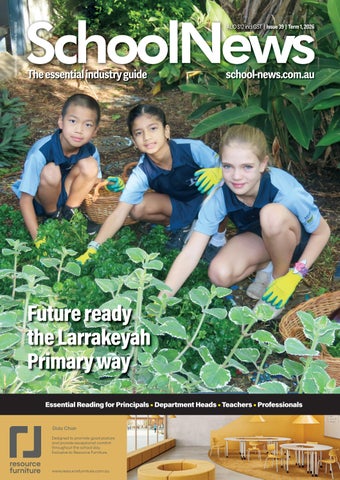
For our Profile this edition, we head up north to Larrakeyah Primary, where future-focused learning, a genuine concern for student wellbeing and a school culture of encouraging curiosity and inquiry have resulted in many accolades. Innovation isn’t a one-o idea, but is lived daily by Larrakeyah teachers, students and families.
Also this term, we investigate ways to support dyslexic learners in the classroom, explore simple, winning fundraising solutions for your school, and discover how handson resources are making a real di erence to student engagement and knowledge retention.
Pay and working conditions,

student attendance, and funding and resourcing arrangements all continue to be big issues in the Australian education sector. With the lightning speed things move in the digital-first world, though, let’s hope there are a few things we can leave behind in 2025—skibidi toilet, Italian brainrot, and those two numbers that, said one after the other with the accompanying hand actions, are truly one of the most irritating things ever said. Best wishes to all the teachers whose students will at some point in the next few weeks, turn to page 67 of a book, solve a maths problem with the answer 67, or decide that the quantitative value of literally anything is…six or seven.
Go gently, Gemma Editor, School News
By Shannon Meyerkort, Industry Reporter
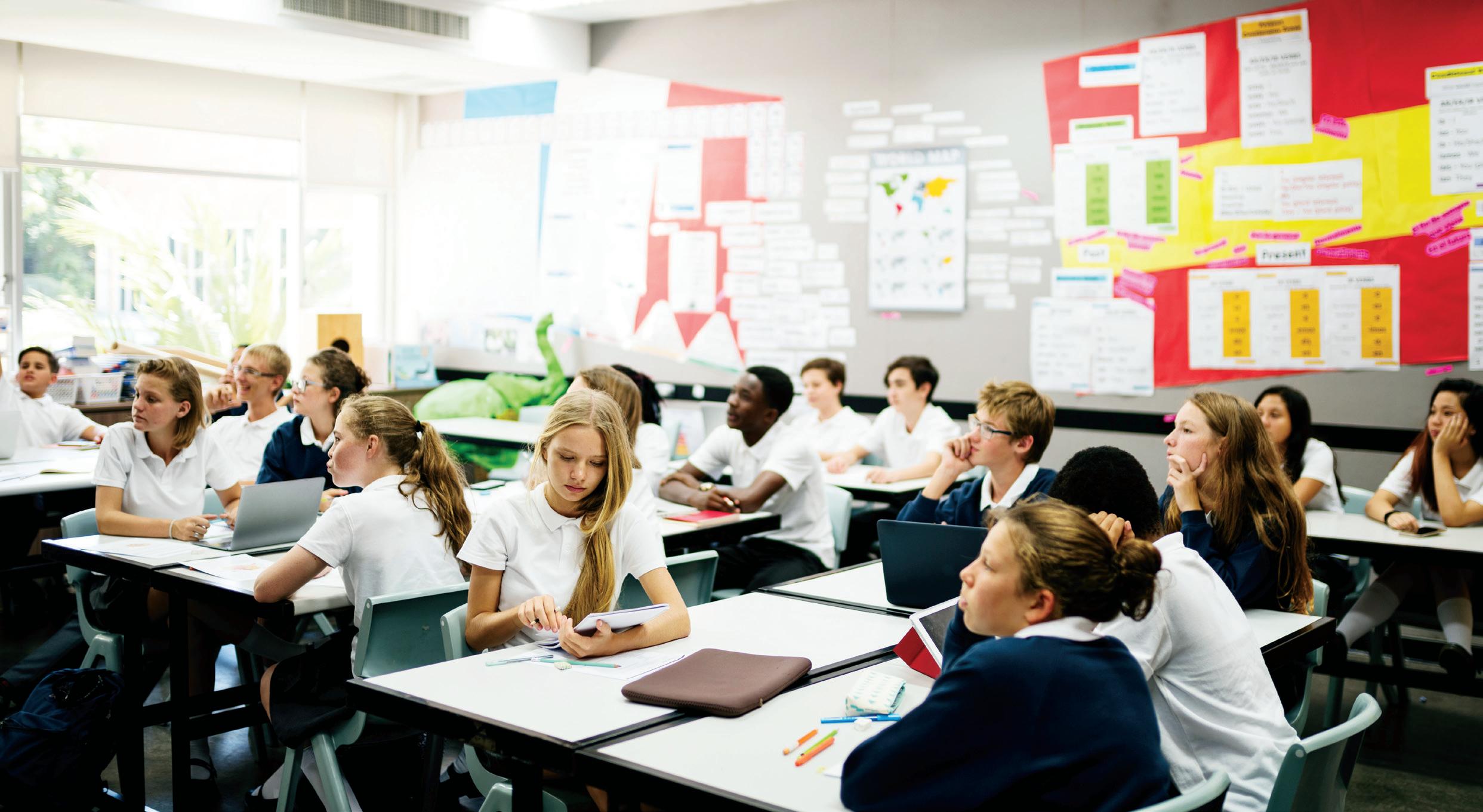
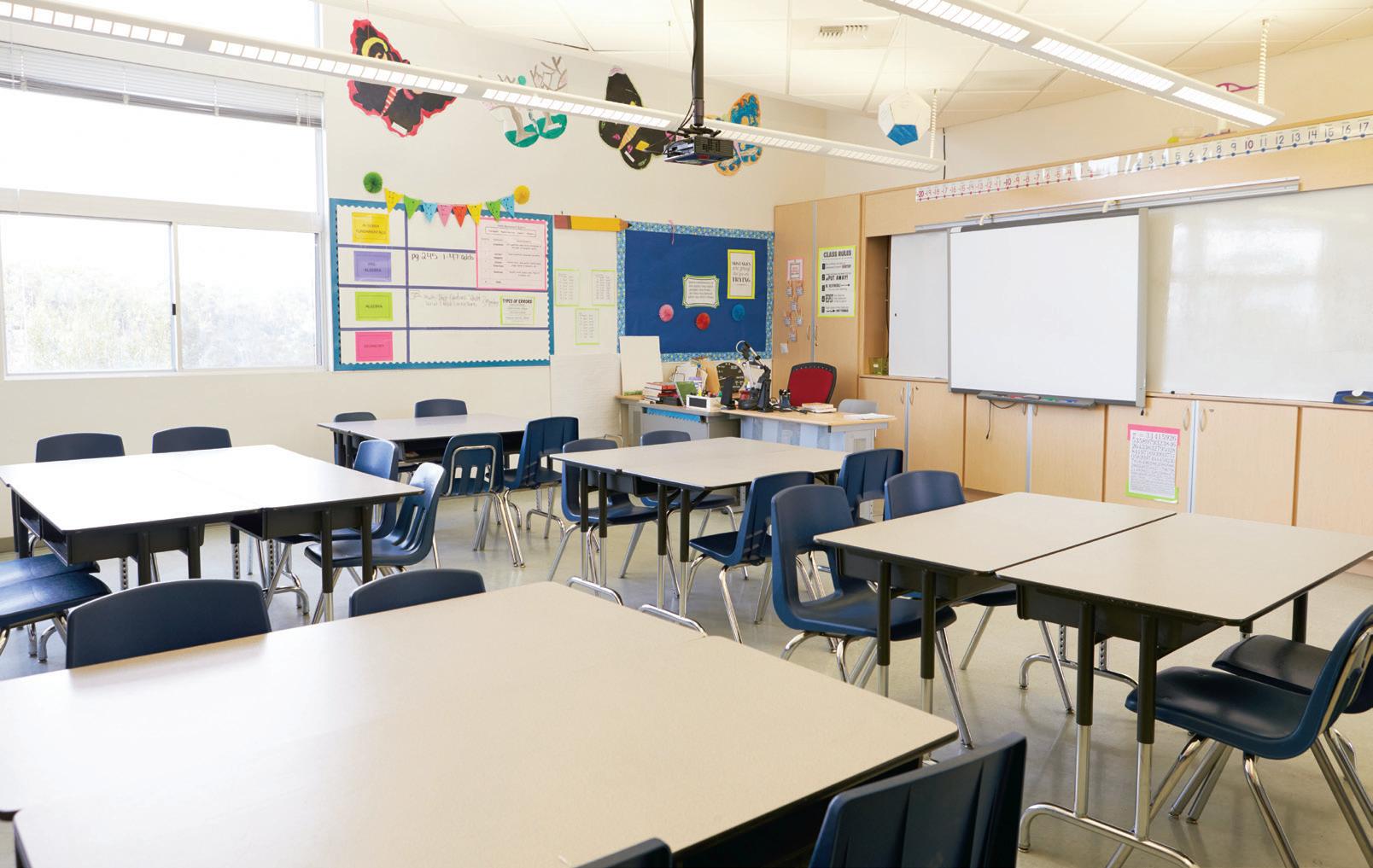
Over the past fifty years, classroom design has undergone dramatic shifts.
The rigid rows of traditional classrooms gave way in the 1970s and 80s to open-plan layouts with bright orange blinds and flexible seating, promising collaboration and innovation. More recently, classrooms have moved toward adaptable, multipurpose learning environments.
Yet, as Dr Ben Cleveland, Associate Professor in Learning Environments at the University of Melbourne, observes, not every trend has improved learning outcomes. “A lot of the open-plan activities of the 2010s were very similar to the 1970s. Unfortunately, a lot of the lessons regarding acoustics weren’t heeded. Acoustics has really been the breaking point for open-plan classrooms in the 70s and early 80s, as well as the last 15 years, but there have been subtle yet significant developments.”
Just as schools are no longer simply a collection of classrooms, modern classrooms are no longer defined just by their walls
and whiteboards, but by light, acoustics, air quality, connectivity, and access to outdoor or specialised learning spaces.
Cleveland notes, “Developments of the last five years have included breakout areas, small group areas, and places for students with regulatory needs to take time out to reset. Those additional spaces are important throughout the curriculum.
“There have been some important learnings, and that is not everything occurs in a classroom.
So, while we recognise that the integrity of the classroom and enclosed specialist learning spaces is important, having adjunct areas around them is also important…if you don’t have both, you’ll still be in a situation where you don’t have all of the activities that people want to have happen in schools.”
These spatial considerations are not just pedagogical, but are increasingly understood as matters of equity and access.
One of the most significant shifts in recent years has been inclusive design. Schools are increasingly expected to
accommodate students with diverse needs, including sensory sensitivities, neurodiversity, and physical or cognitive disabilities.
This shift has moved inclusive education beyond adjustments to curriculum and staffing, towards a deeper consideration of the environments in which learning takes place.
Dianne Hartley, a Teacher of the Deaf with the Department of Education Visiting Teacher Service in Victoria, has seen firsthand how classroom design impacts accessibility and participation for Deaf and Hard of Hearing (D/HoH) students. “Ask any Teacher of the Deaf which style of classroom they like best, and they will say, ‘one with four walls and doors!’” she explains.
The reason is simple, yet often underestimated: sound.
Background noise is not a minor inconvenience but a significant barrier to learning, contributing to listening fatigue, cognitive strain and disengagement. Even with hearing aids, students are not selectively hearing only the teacher’s voice; amplification increases all sounds.
As Hartley notes, thoughtful environmental interventions can make a measurable difference.
“Installation and use of a Phonak sound field system…acoustic treatment on walls and ceilings, and floors that are not too loud, can all make a huge difference.”
However, technology alone is not a cure-all. Its effectiveness is closely tied to the physical space in which it is used. Hartley recalls one school where 100 prep students were taught in a single open-plan area. “This is what we found at one of the schools in our region!” she says.
“Technology couldn’t improve the chaotic listening situation… Sometimes, the best solution is simply to select a different space where the child can access learning effectively.”
The example underscores a broader lesson: when environments are fundamentally unsuited to learning, assistive technologies can only compensate to a limited extent.
The need to design for a wider spectrum of learners is increasingly shaping how architects and education systems approach new builds and renovations.
As Dr Ben Cleveland observes, applying an inclusion lens has prompted deeper reflection.






By responding to students with additional needs, Cleveland argues, this inclusion lens is helping education systems and architects across the country think more carefully about who schools are really being designed for. This includes recognising that “acoustics and visual clutter and distractions need to be dealt with in really thoughtful ways.”
Cleveland notes that a significant proportion of students—perhaps as many as 20 percent—benefit from having spaces that allow them to step away from sensory overload. “Some kids need the capacity to be aside, to get out of the busyness and reset for periods of time and regulate,” he explains.
Importantly, these spaces do not only support students with diagnosed needs. “They are beneficial for everyone, so it’s good when you see things appearing in schools, allowing that to happen.”
For students on the autism spectrum, the design of space can be particularly influential. Cleveland points out that many autistic students struggle with transitions—moving from home to school, between classes, or from play to structured learning. Noise and sensory overload can heighten anxiety and lead to behaviours that are often managed socially or behaviourally. “But often, if you create better environmental conditions and provide options for those kids, help them with transitions, particularly with the primary school kids, they can arrive at class in a much calmer state—and that can only help everyone.”
Both Hartley’s work and Cleveland’s research point to the same conclusion: inclusive design is not about creating specialist spaces for a small minority. “It’s about optimal conditions for everyone to access the learning,” Cleveland says.
Historically, environmental factors such as acoustics, lighting and spatial regulation have not sat at the centre of inclusive education agendas. Yet their impact is increasingly difficult to ignore. As Cleveland notes, “The environmental considerations haven’t been at the forefront of inclusive education agendas, but they
really can make a difference and reduce staff stress and the need for as many support staff.”
When classrooms are designed to support regulation, clarity and access from the outset, both students and teachers benefit—and inclusion becomes embedded in the fabric of everyday schooling rather than treated as an add-on.
Perhaps surprisingly, some of the most effective solutions to the challenges of modern classroom design are not massive overhauls or expensive new builds—they can be subtle architectural details.
Cleveland highlights the power of glazing: “Really good, highquality interior glazing in schools is the thing that makes all of this work. It deals with acoustics but also with visual access. Glazing technologies and the acoustic properties of the glazing are the things that are allowing some of these spaces to work well. You don’t have sound distributed between spaces, but you can also see what kids are doing.”
The right glazing allows students to see activities in adjacent spaces without being disrupted by noise. This solution demonstrates that thoughtful design can preserve the flexibility of open-plan spaces while mitigating the downsides that have frustrated educators for decades. Cleveland emphasises that adaptable, “future-proof” buildings provide multiple alternatives, catering to diverse learning needs without requiring constant retrofitting.
Hartley adds that the placement of windows should also be considered when designing the layout of a classroom.
“No giant windows and no windows placed where bright sunshine streams in behind the teacher, so you only see their outlines and not their face.”
Cleveland cites the example of Footscray City Primary School in Victoria, a three-storey, 1970s concrete-and-brick building that was completely gutted and retrofitted. The impressive renovation was recognised in the 2025 Victorian School Design Awards.
“People talk about flexibility, but it’s really about providing adaptability,” concludes Cleveland. “A successful design can provide for different forms of pedagogy, different forms of enclosure, different forms of connection.
“There’s a lot of choice and that’s what’s important. Pedagogical systems are going to keep changing over time and you don’t want to have to keep retrofitting. Just building in that adaptive capacity is going to be important for future builds… the ability to respond to what staff and students wish to do.”
Classroom design is more than architecture—it is a platform for inclusion, accessibility, and wellbeing.
Cleveland notes, “After the failure of open-plan schools, people have seen it as a retreat to the traditional, but that’s not really what has been happening. It’s been the best of the open-plan,
plus the best of the traditional together, and we’re starting to see that as a platform that we’re going to take forward.”
Hartley adds, “even in the best set up classrooms, with the right equipment and a great teacher who is putting in all the necessary adjustments, students still get tired, they still have listening fatigue and cognitive fatigue.” But if you design with thought and evidence, you can reduce the environmental demands made on children, and make learning as easy as possible for all students.
Physical space does not just affect students. Poorly designed classrooms contribute to teacher fatigue, stress, and strain. Cleveland notes that thoughtful design reduces the need for constant remediation. “Environmental considerations can make a difference and reduce staff stress and the need for as many support staff.”
Flexible spaces, breakout zones, and sound management contribute not only to student accessibility but also to teacher wellbeing, allowing staff to teach more effectively and sustainably.
The classrooms of the future will be defined by evidence, not trends. When research, technology and humancentred design come together, schools can support the full spectrum of learners, as well as the educators who teach them. Designing spaces that prioritise acoustics, adaptability and regulation will ensure that every student not only has a place in the classroom, but the conditions they need to thrive.




By Heather Mclnerney, Principal, Southern Montessori School, SA
Southern Montessori School is situated across two campuses in Adelaide’s southern suburbs, providing education and care for children from babies through to Year 9.
As a small independent school, our capacity to grow has always

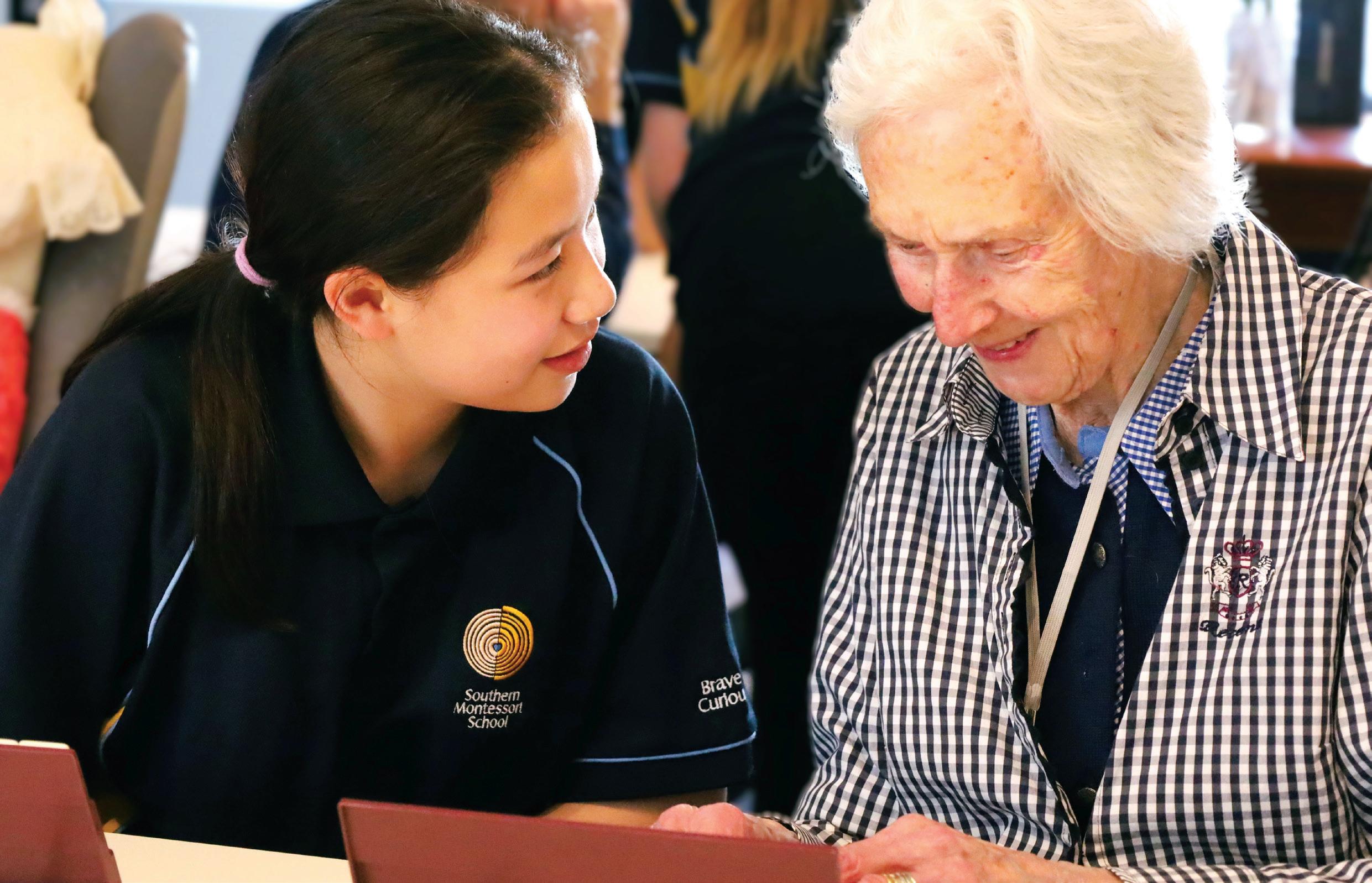
Experiences like this become opportunities to learn patience, compassion, and how to navigate di icult interactions
been limited by the size of our current sites and the challenge of finding affordable land.
In 2014, we opened a Year 7 classroom in our primary school in response to parent demand for a Montessori middle school experience. The following year, we leased a nearby council facility which offered some relief, but space remained tight. With a limited budget and little land available, the search for a permanent site was proving extremely challenging.
The turning point came in 2018. One of our board members, while searching for a care home for her father, toured Kalyra Residential Aged Care. At the time, Kalyra was undertaking a large building project, and she asked a simple but transformative question: “Would you have room to accommodate a small school?”
From this seed, the vision for an intergenerational partnership began to take shape. Both Kalyra and Southern Montessori quickly recognised the potential
for connection, mutual learning, and alignment with our Montessori philosophy.
Montessori education emphasises the importance of mixed-age communities for authentic social development and human connection. Maria Montessori herself wrote:
“The charm of social life is in the number of different types [of people] that one meets. Nothing is duller than a Home for the Aged. To segregate by age is one of the cruellest and most inhuman things one can do, and this is equally true for children. It breaks the bonds of social life, deprives it of nourishment.”
(The Absorbent Mind).
After extensive community consultation to address resident concerns about living alongside adolescents, our middle school moved to the Kalyra site in 2019. Just as the program was finding its rhythm, COVID-19 brought everything to a halt, pausing the intergenerational connection until 2024.
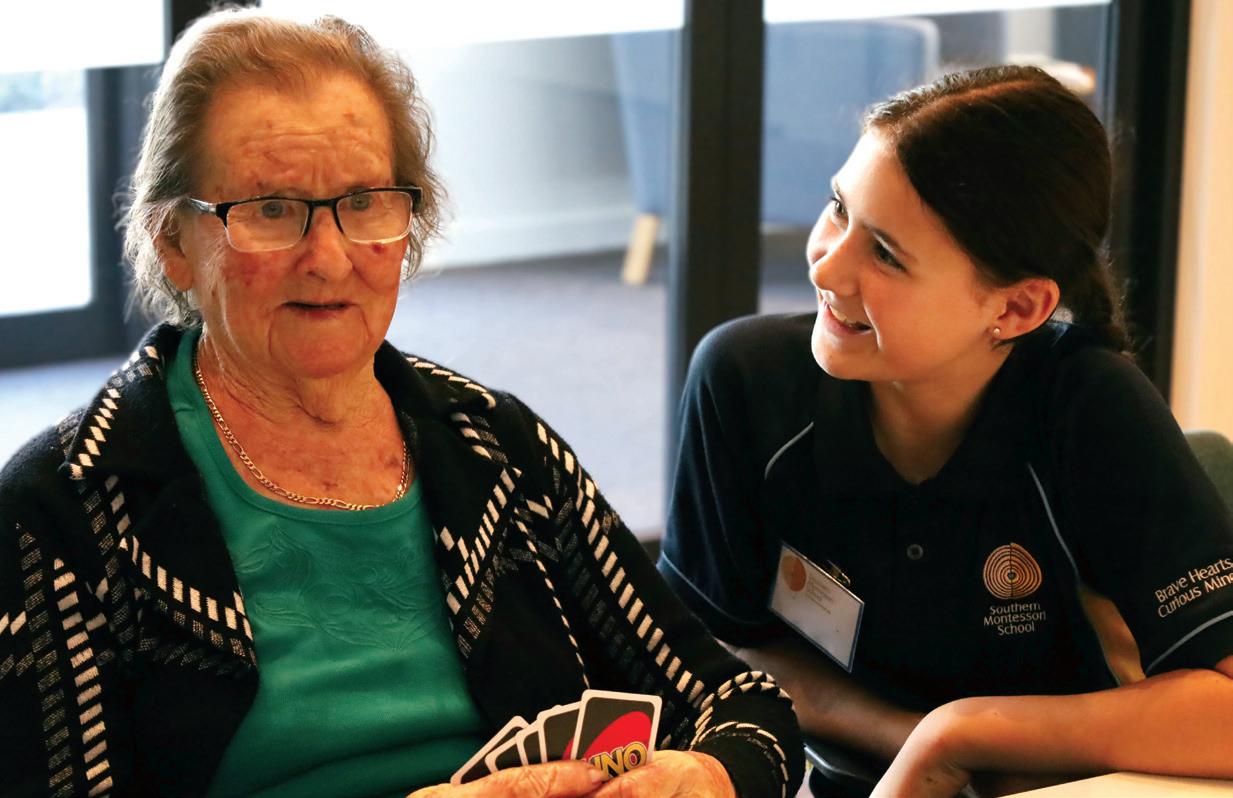
Today, our middle school is thriving, and we have plans for future growth. We honour early adolescence as a unique developmental phase and we intentionally address the needs of early adolescents, a time of immense change and growth, and recognise that the strength of relationships and community connections are paramount for wellbeing and learning.
Fifty students in Years 7 to 9 learn in small groups of 10 to 12, following highly personalised timetables that include core curriculum, inter-disciplinary inquiry-based projects, occupations (real-world learning integrating business and economics), creative expression, and service learning. Students are encouraged to develop independence, resilience, and respect for others.
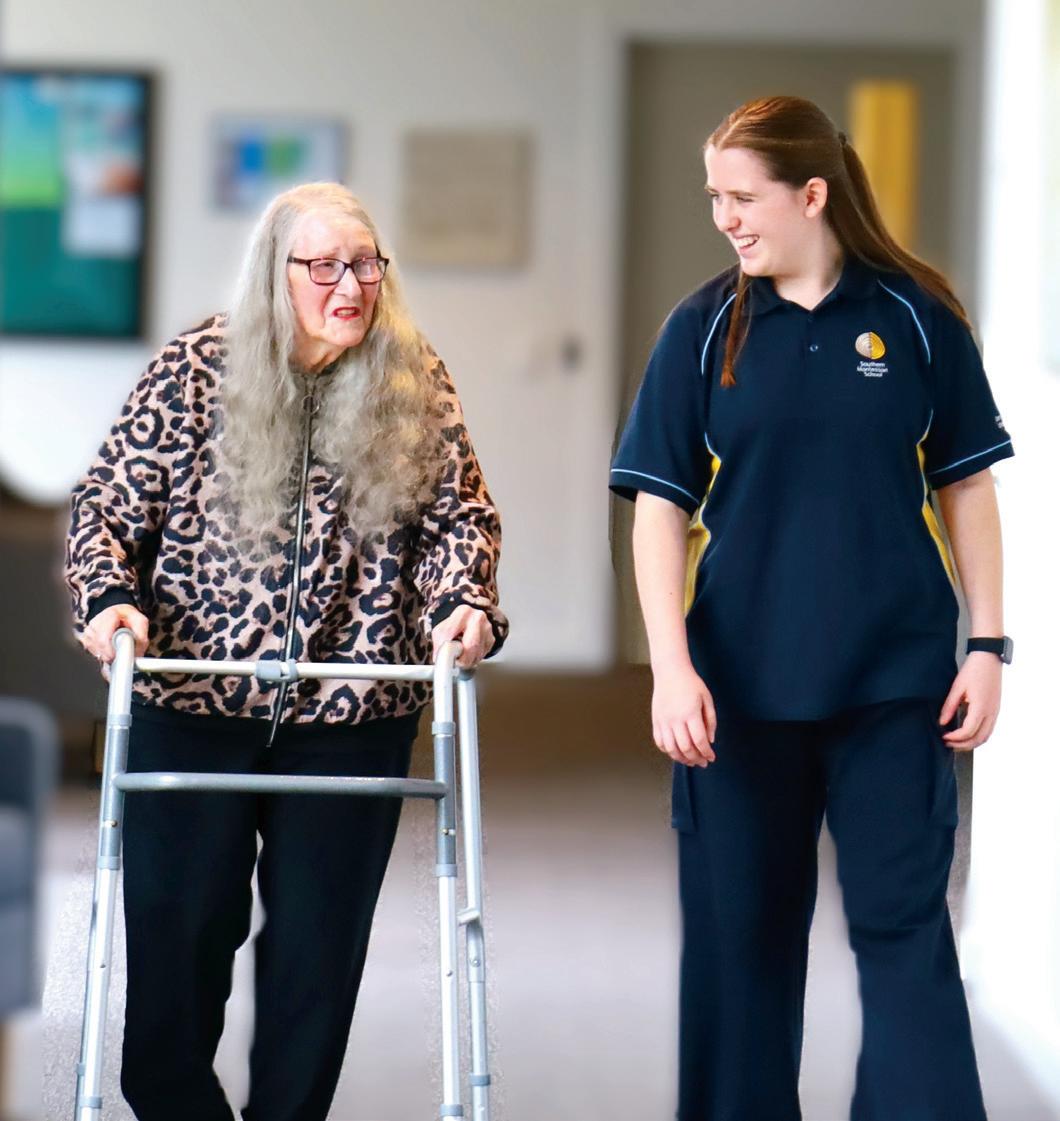
While participation in the intergenerational program is optional, many eagerly choose to include visits with Kalyra residents as part of their week.
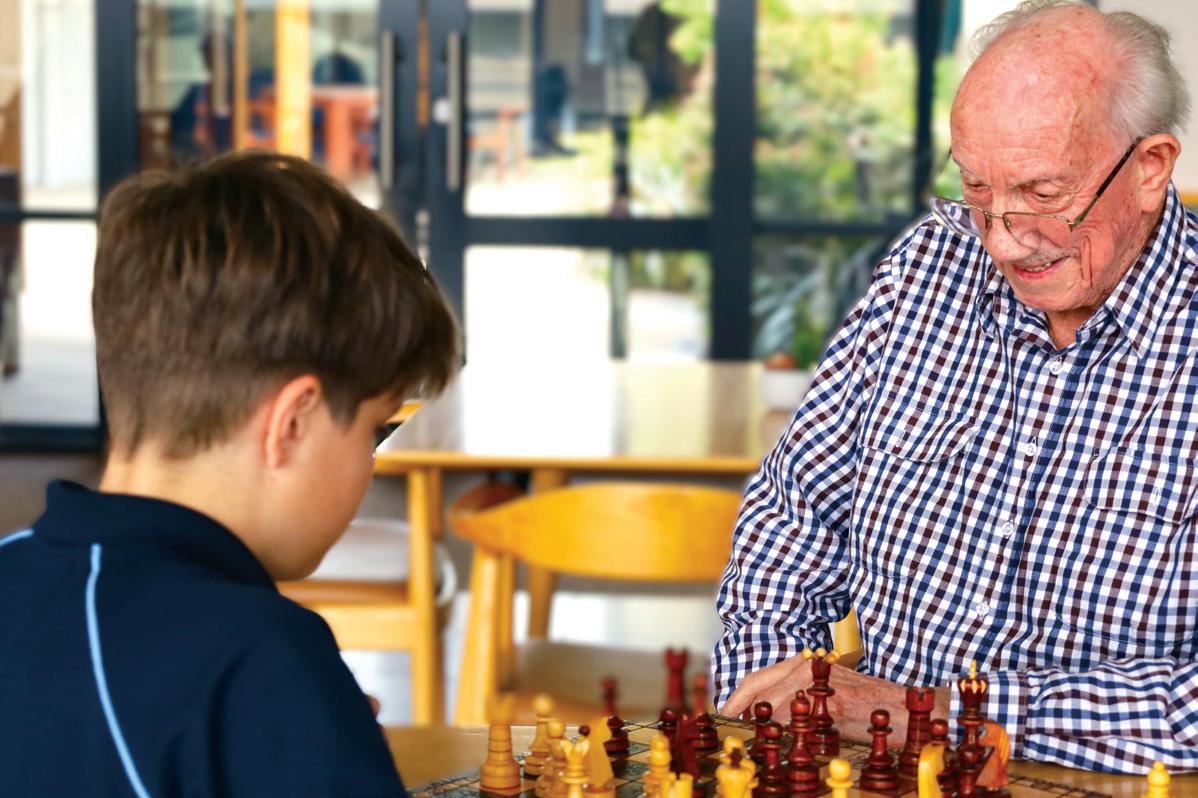
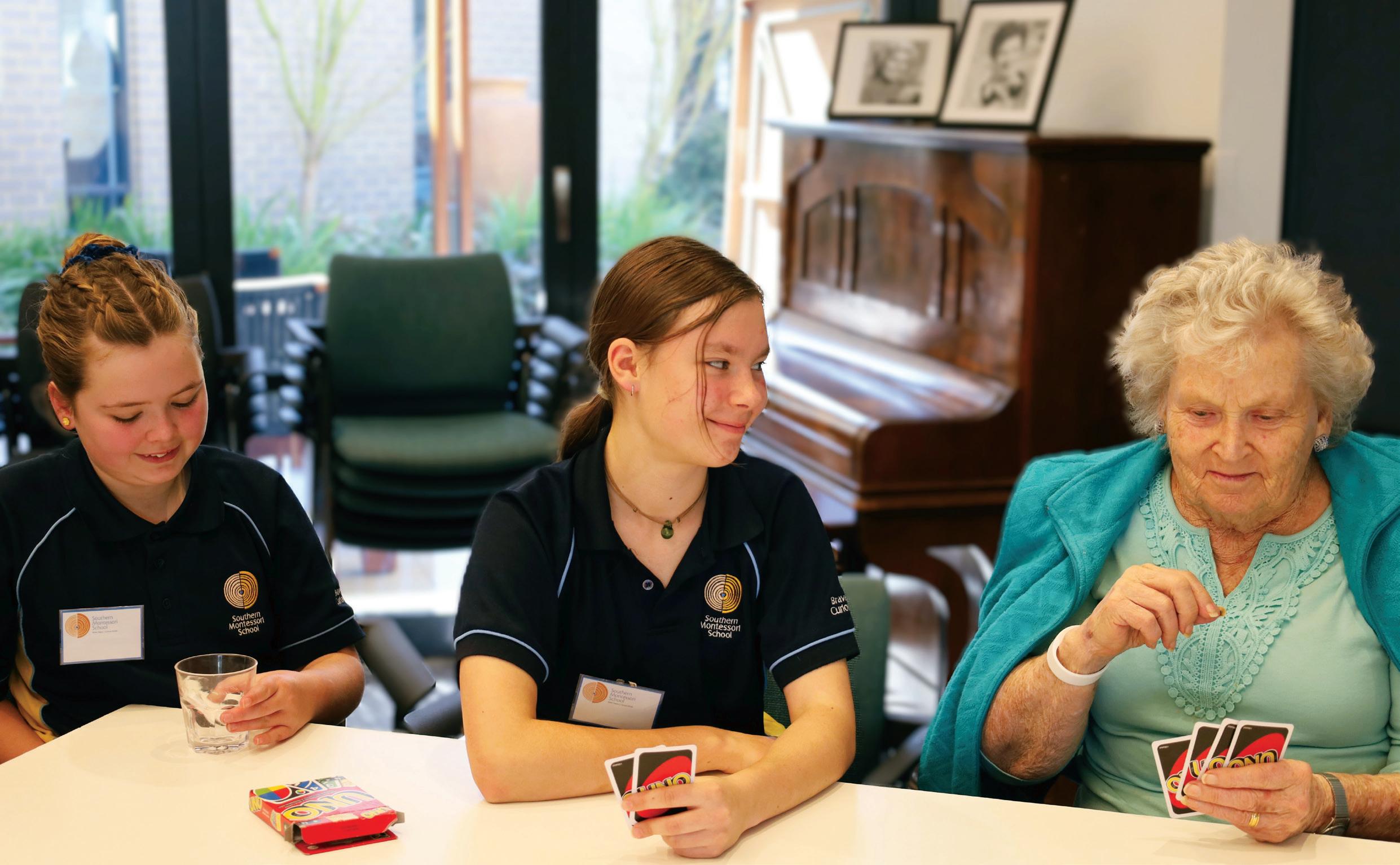
The intergenerational program now includes weekly carpet bowls, board games, and craft, with past activities ranging from drama and music performances to cooking, knitting, table tennis and even cake decorating. Special events such as Mother’s Day and Easter are also celebrated as a community.
Together, students and residents shape what they do, ensuring it remains purposeful and enjoyable. As all residents have either age-related physical or cognitive conditions that prevent them from being able to live independently, Kalyra staff prepare students each year by helping them understand
what to expect: residents may be in wheelchairs, need assistance with eating, or experience cognitive changes that sometimes result in unintentional rudeness. These realities provide powerful lessons in empathy and resilience.
One student recalled being told by a resident, “I can’t pronounce your name so I’m not going to talk to you.”
Rather than discouraging them, experiences like this become opportunities to learn patience, compassion, and how to navigate difficult interactions.
We are delighted that the intergenerational program has been the focus of a number of research projects and media attention including featuring on the Ageless Friendships series by the ABC. Kalyra has also won a number of awards
including the 2023 The Office for Ageing Well, Tackling Ageism Award, and the 2024 12th Asia Pacific Eldercare Innovation Awards: Innovation of the Year Award – Intergenerational Social Engagement.
The benefits are indeed profound. Residents experience reduced loneliness, improved mental health, and meaningful social engagement which aids memory retention, cognitive stimulation and helps keep stories and history alive within the greater community.
As one student reflected: “So one resident has Parkinson’s disease, and I have been working very closely reading to her to keep her ability to talk. So not only is it helping her to remember words but she reads aloud to me so she can remember how to pronounce words and have someone there
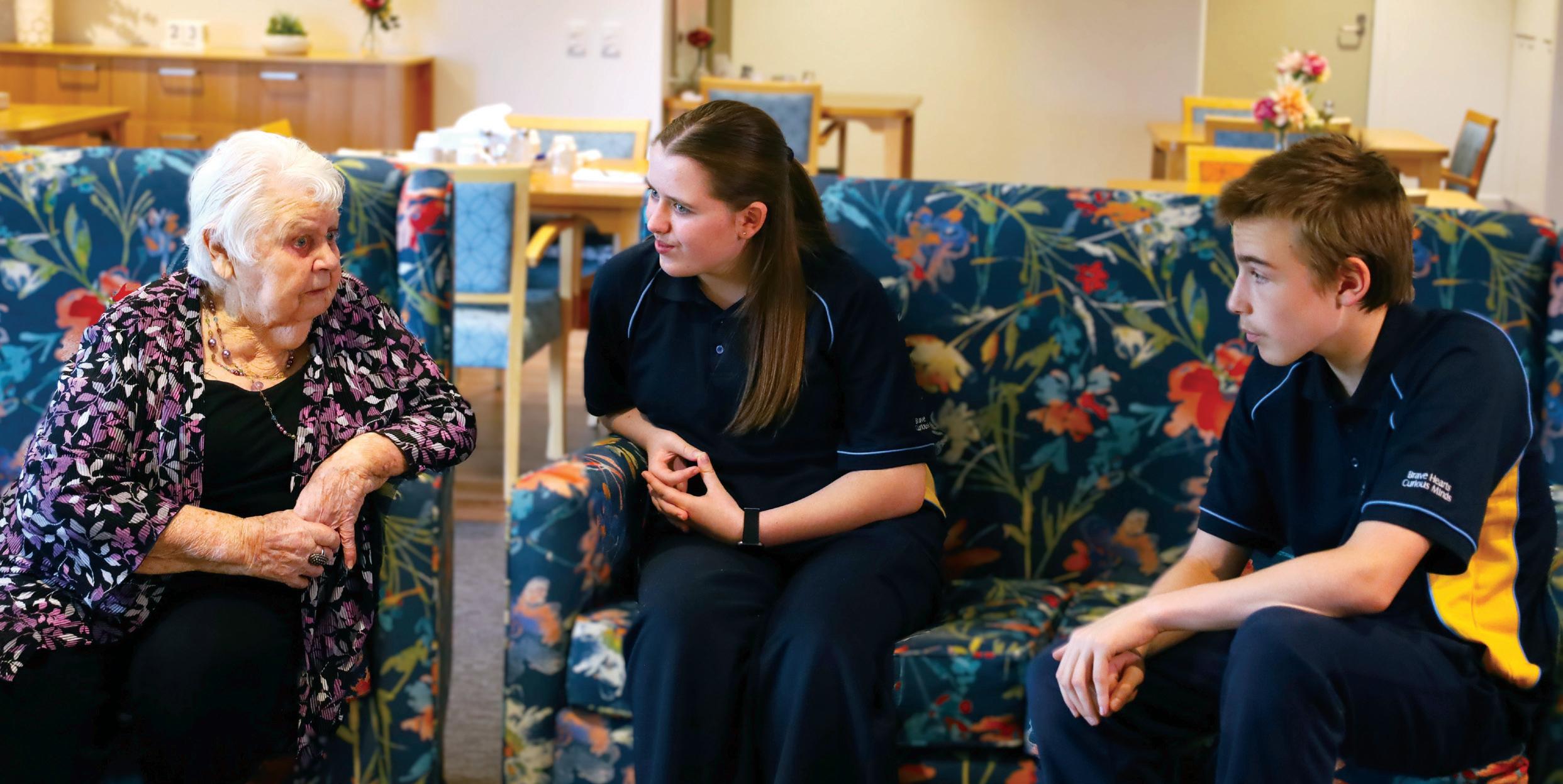
to help her.” How validating it is for a student to feel that they can make a significant difference in the life of another person!
Students, meanwhile, also gain empathy, gratitude, and confidence. Some students have formed close bonds with residents over weekly skill-sharing activities such as chess, computer lessons and biography writing. They are gentle and patient and have learnt to value older adults and appreciate hearing their life experiences, whether that might be migration to Australia as a child or fighting in Vietnam.
One resident reflected: “I really feel valued. I really do. This program has added value to me because I’m getting on and having the children here makes me feel younger. Engaging with these youngsters, I’ve felt really chuffed.”
For our young people, the impact is just as significant. As one student explained: “I gained a lot of gratitude and I guess humbleness through doing this.”
Another added: “Our school aims to tackle ageism between younger and older people. I really appreciate what we are trying to do. It should be very normal in our society that
older and younger people should have friendships.”
These friendships extend beyond school years, with some alumni continuing to visit residents after moving into senior school. Others have even been inspired to consider careers in aged care. As one alumna recently reflected, participation in the program gave her confidence to speak with people of all ages,
something she now sees as one of the most valuable outcomes of her Montessori education.
Beyond the middle school, we have also extended intergenerational learning to younger students. Year 6 children build relationships with older adults at Wakefield House Positive Ageing Centre attending the weekly Friendship Club, gradually moving from
initial apprehension to genuine enthusiasm as they play games, participate in fitness and craft activities, share stories, and connect across generations.
The depth of these connections was beautifully demonstrated at a recent milestone celebration, where six centenarians at Kalyra marked an incredible combined 600 years of life and wisdom.
Our middle schoolers presented histories of these residents’ lives, giving the audience a fascinating history of ordinary people’s lives in 20th-century Australia, including hopes and dreams and times of hardship.
Delivering their findings with warmth, empathy, and respect, the students showed not only their research skills but also the true friendships they had formed with their older partners.
While our students perform very well academically, we know academic success alone is not enough for them to flourish in a rapidly changing world.
Our partnership with Kalyra reminds them—and us—that learning is deeply human. It is about connection, empathy, and the ability to contribute meaningfully to community. And perhaps that is the greatest lesson of all.
“Can we learn like this every day?”:
By Shannon Meyerkort, Industry Reporter
When a group of Year 6 students at Larrakeyah Primary gathered around a scientist from a local marine research organisation, holding vials of brackish water and debating the health of Darwin’s mangrove ecosystems, something quietly remarkable was happening.
For many of these students— some from Defence families who had arrived only months earlier, others speaking English as a second language—this wasn’t just another science lesson. It was part of QUEST, the school’s signature inquiry-based program that connects children directly with industry experts.
As Principal Fathma Mauger explains, “Projects have included water sustainability, the textile industry, the pearling industry, sports medicine, home designs, hospitality, forensic
sciences, solar power, photography, media, VR technology and the fishing industry.”



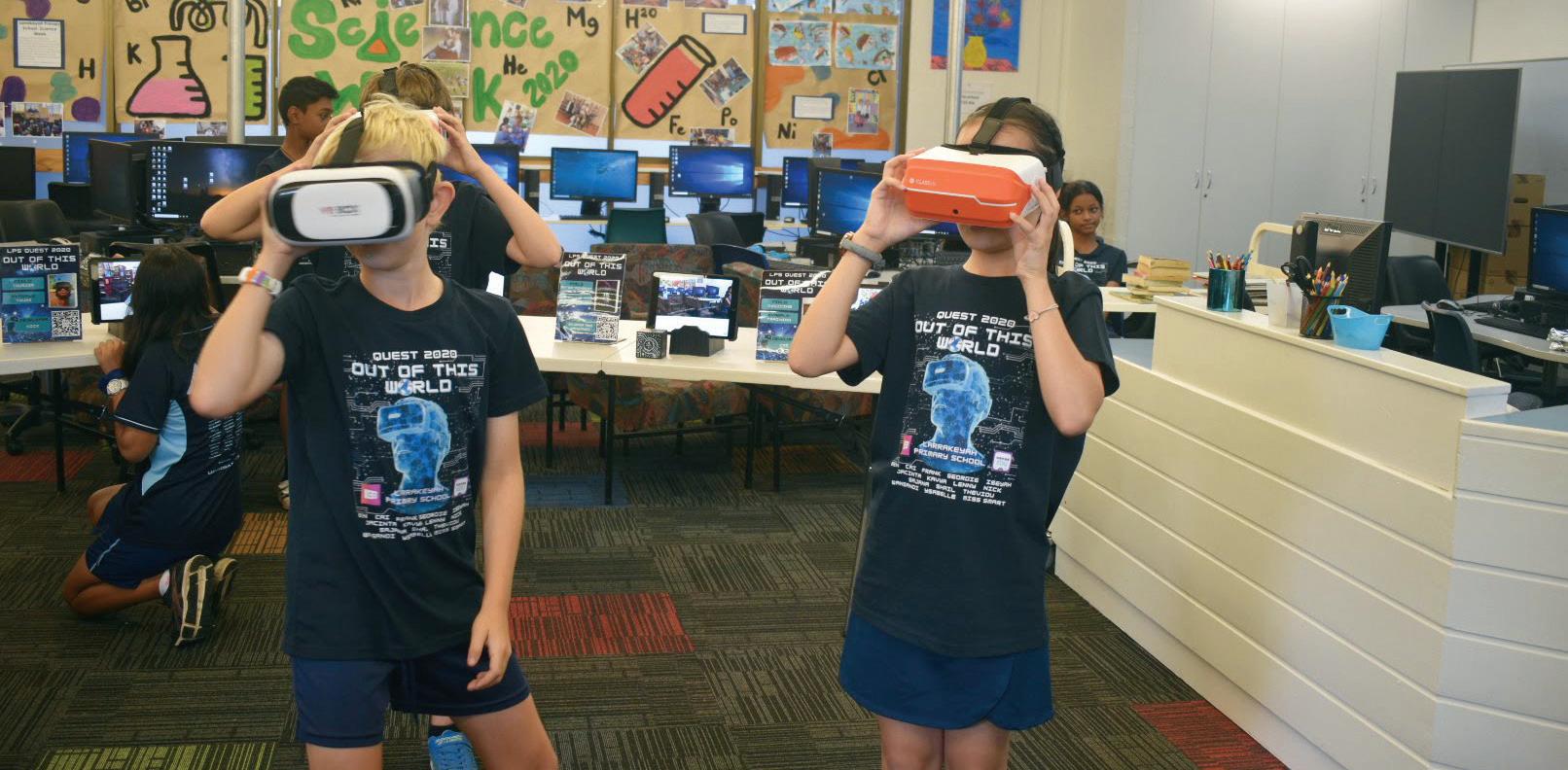
Students choose an inquiry question and then work with their teachers and real-world professionals to find the answers.
The projects culminate in the popular QUEST Expo, where students showcase their findings to families, industry partners, and representatives from the NT Department of Education. The initiative has been recognised internationally, with Larrakeyah shortlisted for the 2021 International School Awards and the 2022 World’s Best School prizes.








And yet, behind the accolades and achievements lies a deeper story—one about leadership, community, and a relentless commitment to “staying the course.”
Located in the heart of Darwin, Larrakeyah Primary serves a multicultural community of around 520 students from Preschool to Year 6. With 50 percent of the cohort speaking English as a second language, 20 percent from Defence families, and five percent Aboriginal, the school’s diversity is both a strength and a responsibility.
Principal Fathma Mauger has been at the helm for 13 years, drawing on four decades of NT education experience. “The school is recognised as a highperforming and innovative school that works to overcome the challenges of a transient student population,” she explains.
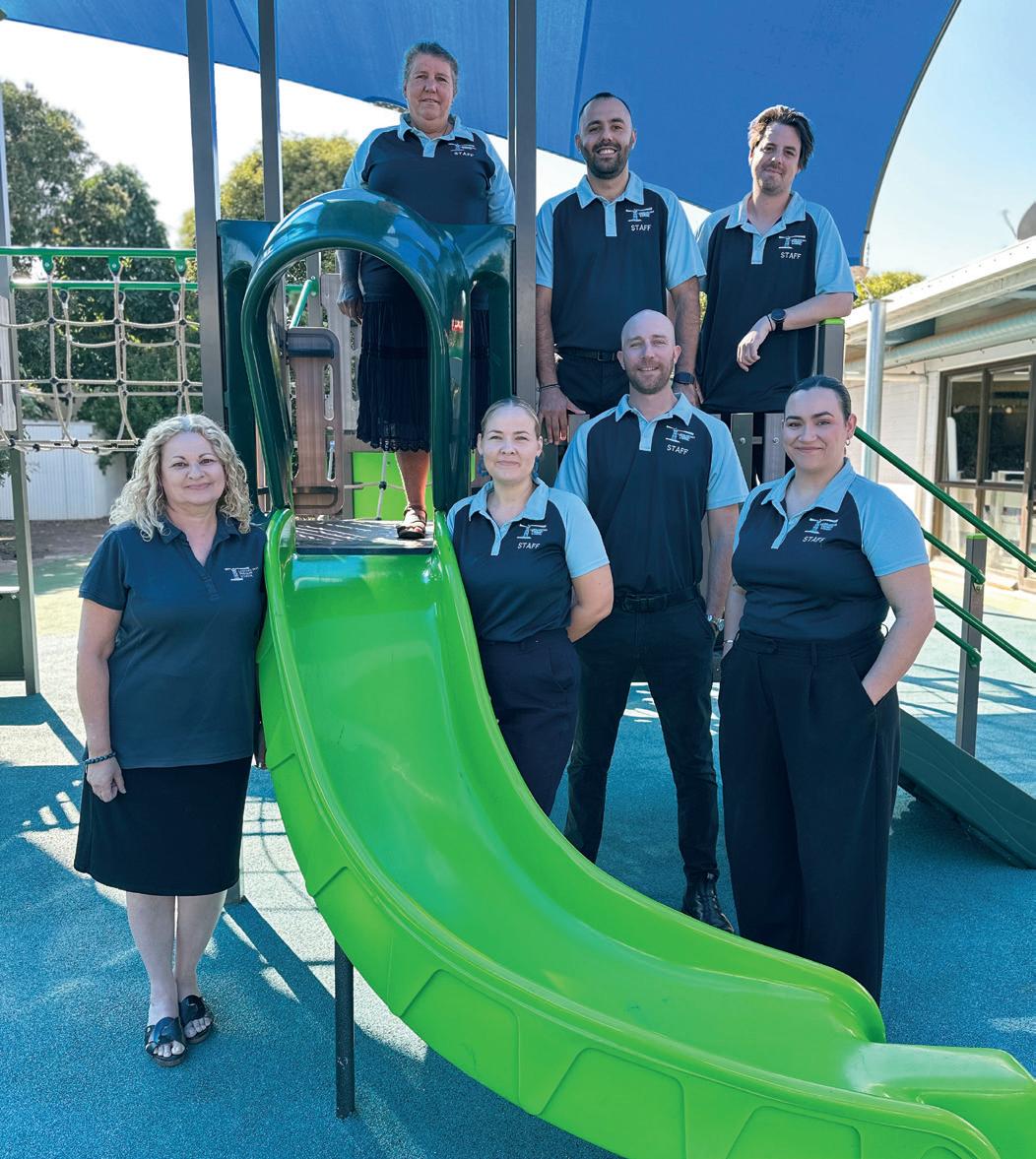
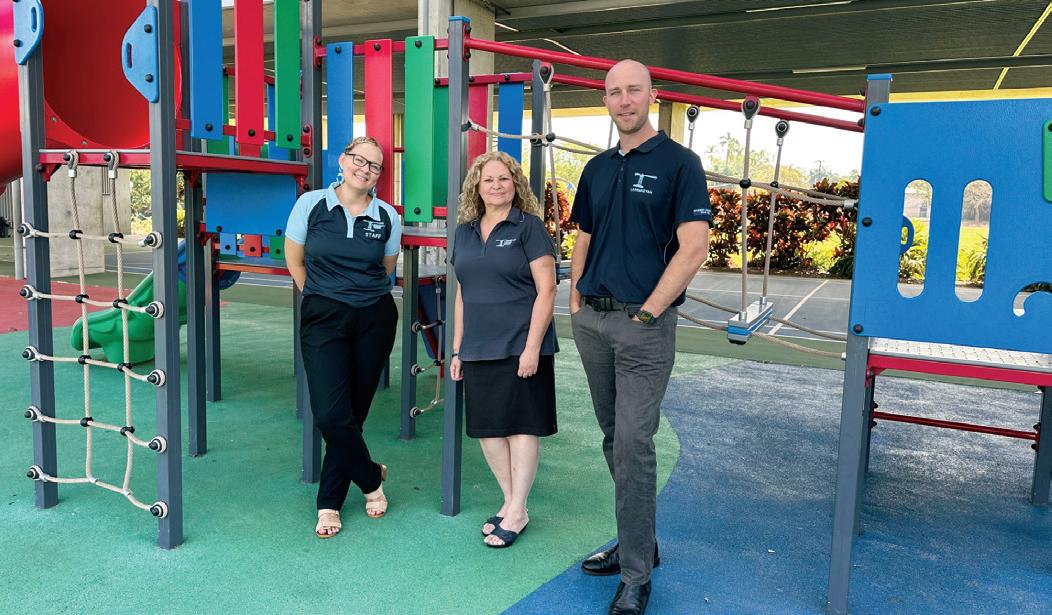
The leadership team—which includes Assistant Principals Danni Mattiazzo and Bradley
King—has intentionally built a future-focused approach that embraces 21st-century learning, STEAM, wellbeing and global connections. Their proximity to Asia has also been an asset.
“We have a sister-school relationship with Invictus International School in Singapore,” Mauger says. Each year, students participate in a study tour, collaborating on projects and engaging in crosscultural learning. “Singapore has provided students with unique learning opportunities that encourage their development as global citizens.”
One of the school’s standout strengths is its integration of technology to support student wellbeing.
Students use YouHue, a digital app that allows them to log their emotions daily using emojis. Teachers receive immediate alerts when the system detects concerning patterns.
“Teachers use the AI assistant in the app for a summary of student wellbeing in the class, trends and
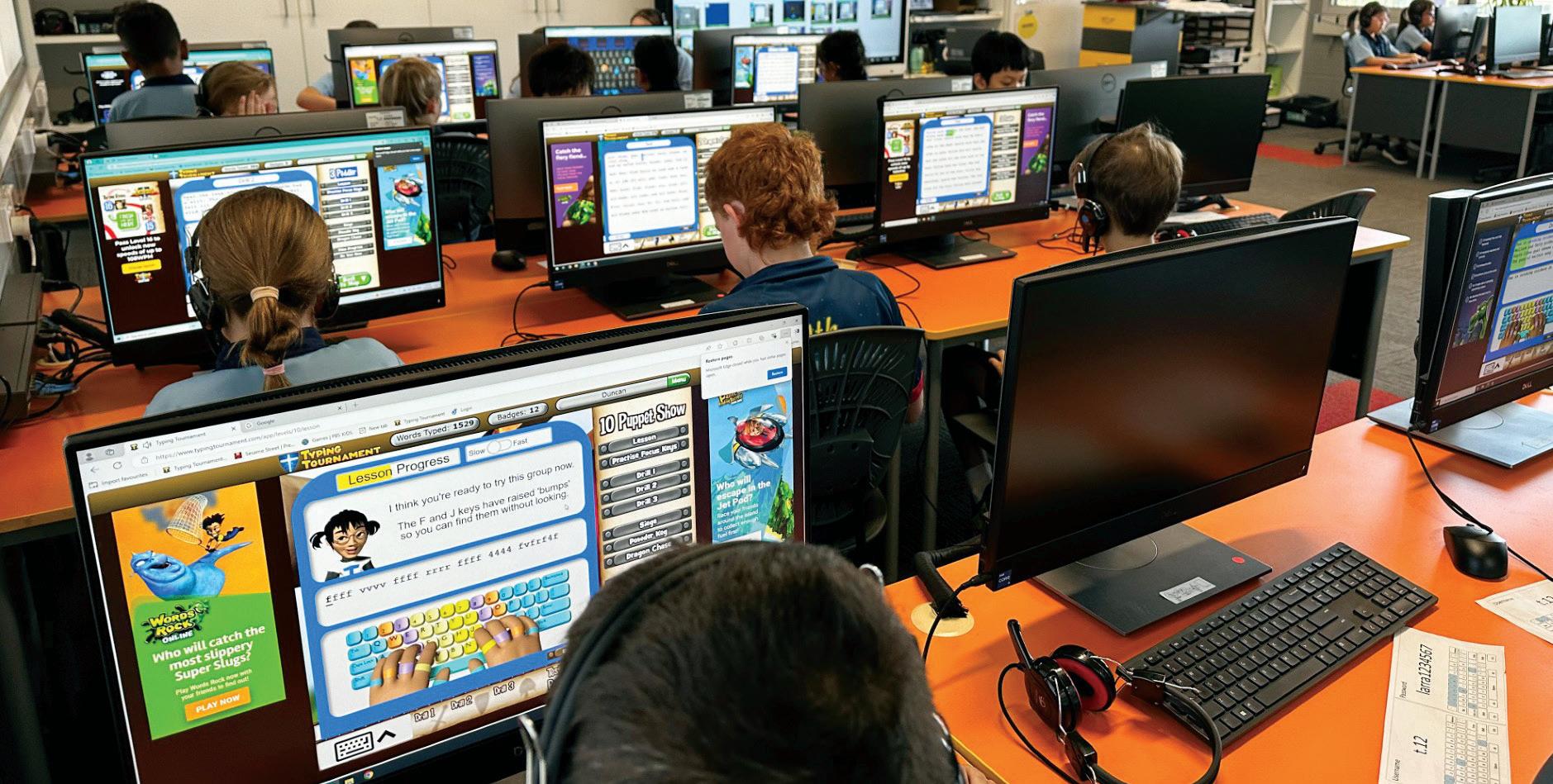
patterns and areas of concern,” Mattiazzo explains. The data helps staff decide when to offer targeted interventions, whether for individuals or whole cohorts.
This level of real-time wellbeing monitoring reflects a wider philosophy at Larrakeyah: “It is important that students are happy, confident and resilient as the way that students feel does impact on their learning,” Mattiazzo says.
The school pairs its highexpectation culture with robust wellbeing supports,
ensuring students are not only academically prepared but emotionally grounded.
Perhaps the most defining feature of Larrakeyah Primary’s approach is the QUEST program.
“QUEST is an innovative program aimed at connecting and inspiring upper primary students, bringing real-life contexts to the modern-day classroom by using industry professionals
and 21st-century learning skills through project-based inquiry learning,” explains King.
QUEST focuses on developing these important skills—creativity, collaboration, communication and critical thinking—while helping upper primary students grapple with complex, authentic questions such as:
• “Are mangroves important? How should we manage mangrove ecosystems in the Top End?”
• “What impact has cultural appropriation had on the textile industry in the Top End?”
• “How is news shared? Who or what decides what news and information we receive?”
• “How does a pearl make it from shell to shop?”
For some students, QUEST has provided clarity about their future pathways. School data shows that many choose high school subjects directly connected to their inquiry area.
“In preparation for high school, QUEST has given students an exposure to possible career choices,” King says. “It has reduced the anxiety for students who have been concerned about future careers and subject selection in high school.”
The program also builds capacity for transition by helping students manage work independently,
collaborate effectively, and understand industries that shape the NT economy.
One of the biggest challenges for schools is ensuring that special programs survive staff change and shifting priorities. At Larrakeyah, this work is intentional.
Programs “become embedded in the school culture due to effective leadership and the commitment to ‘stay the course,’” Mauger explains. “This means that the strategic goals are clear and programs are aligned to the strategic direction of the school.”
Teachers work in Focus Teams, taking ownership of specific programs and innovations based on their strengths. Leadership fosters a culture where “teachers are encouraged and supported to think outside the box.”
A good example is Larrakeyah’s desire to develop a whole-school approach to STEAM. “Fathma facilitated a collaborative approach to researching,” says Assistant Principal Danni Mattiazzo, “by supporting staff to visit other schools in Australia and Singapore… developing a whole school pedagogical approach, and encouraging teachers to share their learnings or to take the lead within their year levels to build an inquiry approach.”
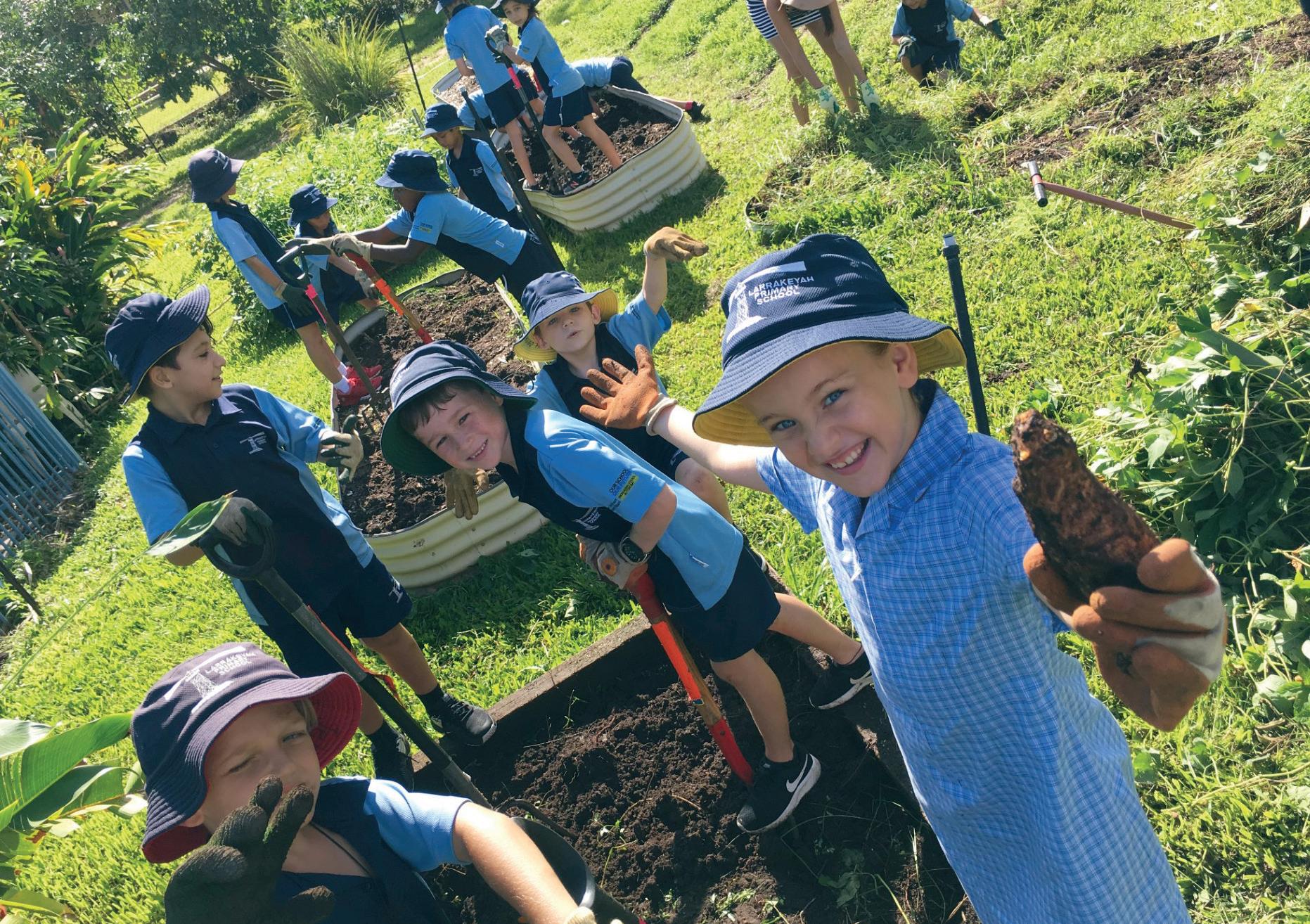
Mauger adds: “Teachers inspire others and are keen to share their learning and invigorate that innovative mindset in the school.”
Larrakeyah Primary is the first government school in the NT accredited as a Cambridge International School, offering students the opportunity to undertake the Cambridge Primary Checkpoint exam in Year 6.
Assistant Principal Bradley King explains: “The purpose of these exams is to test learners at the end of their primary schooling and provide an international benchmark of learner performance.”
Simultaneously, the school has mapped Cambridge curriculum codes to the Australian Curriculum achievement standards to ensure alignment. With such a high proportion of EALD students, the school also uses the Cambridge EALD curriculum for targeted interventions.
This “dual approach ensures students benefit from international academic rigour while remaining grounded in local educational priorities,” King says. It also helps cultivate “global competence and community relevance
in a culturally responsive learning environment.”
Transition to middle school can be daunting, particularly for students facing complex academic and social demands. Larrakeyah addresses this through a structured Transition to Middle School Program.
In Term 4, students operate on a timetable that mirrors high school routines. They rotate between classes, manage equipment independently and work with multiple teachers.
Survey data shows students report “greater confidence and readiness” as a result.
Coupled with QUEST, which develops independence, teamwork and real-world problem solving, students leave Larrakeyah equipped with more than academic skills;
The initiative has improved writing outcomes while helping teachers manage workload and target interventions more effectively.
Larrakeyah’s achievements have been validated through external review. In its 2024 ACER school review, the school received Outstanding across all nine domains and 23 commendations. One commendation noted “a learning culture predicated on high expectations and the commitment to working to achieve the exemplary standards evident in all facets of the school.”
Their NAPLAN results consistently exceed the Australian mean. And their awards list is extensive, including:
• Winner, Australian Education Awards, Best STEM Program (2022).
• Finalist, World’s Best School Prizes (2022).
• Winner, Australian Education Awards, Best Use of Technology (2025).
• Multiple Educator 5-Star Innovative School Awards (2023 to 2025).
• Finalist, Australian Education Awards, Primary School of the Year –Government (2025).
they carry a readiness for life.
As a result, Larrakeyah Primary has amassed an impressive list of accolades, from national STEM awards to international recognition. But one award stands apart for Mauger: the 2025 Australian Education Award for Best Use of Technology.
In 2025, the school launched IntelliLearn, a teacher-designed AI platform that provides individualised guidance to students as they write.
“IntelliLearn responds to the student as a tutor and supports each student with guidance as they are writing the text,” Mauger explains. “It asks questions, offers suggestions and gives feedback to make improvements and corrections.”
Importantly, the platform does not replace teachers. “It is a personal tutor for each student—a tutor that is directed by the teacher.”
Perhaps the most telling indicator of Larrakeyah Primary’s success is the consistency of its vision. As Mauger reflects, excellence comes from alignment—between strong leadership, innovative programs, and a belief that every child deserves the opportunities of a global, future-focused education.
“Our unwavering focus on excellence in teaching and learning,” she says, “and commitment to high standards and expectations, remain the foundation of everything the school does.”
At Larrakeyah Primary, innovation isn’t a one-off idea or a passing trend—it is a culture lived daily by teachers, students, and families. A culture that begins, quite simply, with questions like: Why are things this way? How can we do better? And what if we try something new?
By Sarah Davison , Industry Reporter
As schools continue to prioritise literacy outcomes, there is growing recognition of the scale of literacy challenges facing Australian students.
The Reading Guarantee report, released in February 2024, found that in a typical Australian classroom of 24 students, around eight are not reading proficiently. This reflects a broader national concern, with nearly half of Australian adults reported to have low or very low literacy.
While reading difficulties aff ect students across all contexts, for some learners these challenges are underpinned by specific learning diff erences such as dyslexia.
Dyslexia is estimated to aff ect around 10 percent of the Australian population, although this figure is widely considered to be conservative. In other English-speaking countries, prevalence rates are estimated
to be as high as 20 percent, suggesting that dyslexia may aff ect up to one in fi ve people.
Dyslexia is often understood as difficulties with reading and writing, which can extend to numeracy and musical notation. It is characterised by challenges with accurate and/or fluent single word decoding and word recognition. Students with dyslexia tend to think in pictures rather than words, and process information in a diff erent part of the brain to word-based, neurotypical thinkers. It occurs across a range of intellectual abilities, and aff ects each individual diff erently.
Rather than understanding specifics first, dyslexic thinkers learn by developing a big picture or the overall idea of a concept, and then filling in the details. This means dyslexics are often credited as out-of-the-box thinkers, with the ability to come up with new strategies and solutions to problems. Dyslexia can impact skills including planning and organising, short-term memory and concentration, and information processing. This can make the classroom a particularly challenging environment.
Not every student who struggles with reading and writing is dyslexic, so it is important to check for other learning or sensory needs which may be impacting a student’s ability to concentrate and focus. Of course, students can have more than one additional learning need, so a dyslexic profile alone may not explain a student’s struggles in the classroom.
It is also important to provide accurate information to parents about what dyslexia is and how their child can be supported. With some learning adjustments and supports, dyslexic students can thrive in the classroom and will achieve on par with their classmates.
Conversely, without appropriate support, students with dyslexia are at greater risk of falling behind their peers, disengaging from learning and experiencing reduced confidence. At the same time, research shows that reading plays a critical role in both academic success and wellbeing, with regular reading linked to improved self-esteem, reduced stress and stronger empathy.
Structured literacy, which is grounded in the science of reading, is becoming a central component of the school curriculum. This approach involves explicit, systematic and cumulative instruction in phonological awareness, phonics, vocabulary, fluency and comprehension. Rather than expecting students to infer patterns in language, structured literacy provides clear, direct teaching that helps students build strong foundational skills over time.
For students with dyslexia, this approach can be particularly beneficial. Explicit instruction, regular revision and carefully sequenced learning can reduce cognitive load and support the development of automaticity. When combined with multisensory teaching strategies, such as engaging visual, auditory and kinaesthetic pathways, structured literacy can improve both confidence and learning outcomes.
This approach is echoed by practitioners working directly with students and schools.
Fraser Milne from Smart Kids Education said empowering dyslexic students begins with recognising that dyslexia is a difference in learning, not a lack of ability.
“With the right strategies in place, schools can create
inclusive environments where dyslexic learners feel confident, capable, and supported to achieve their full potential.”
Mr Milne said one of the most effective ways to support dyslexic learners is through structured literacy approaches. “ Explicit,
systematic teaching of phonics, spelling, and word structure helps dyslexic students make sense of how written language works. Lessons that follow a clear sequence, revisiting skills regularly, linking sounds to letters in a cumulative way reduce cognitive overload and build automaticity over time.
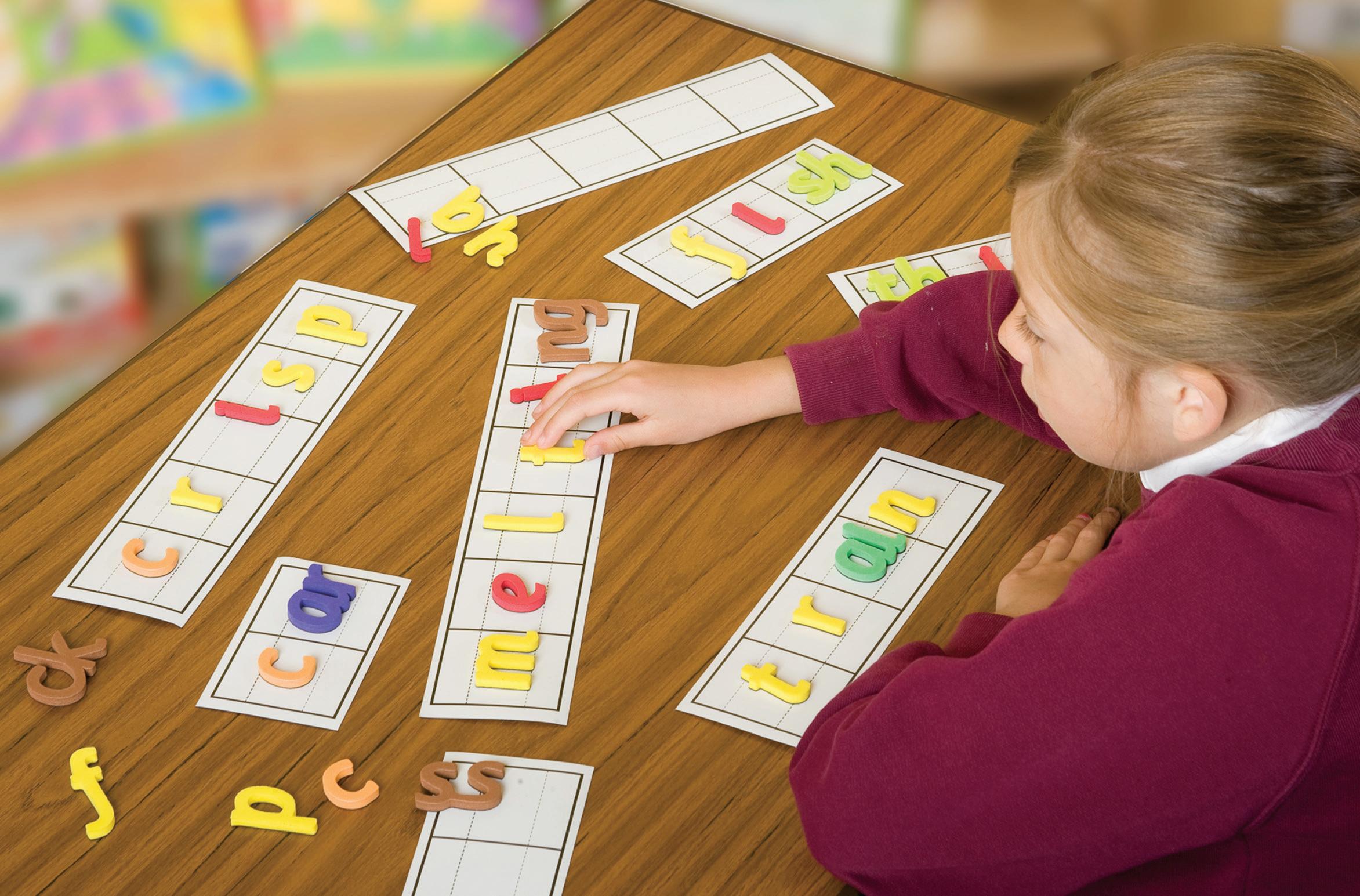
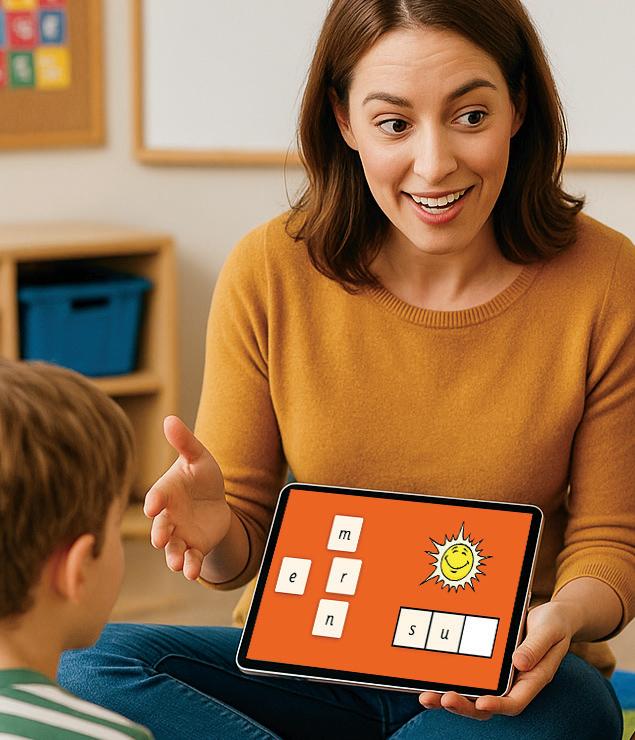
“Inclusive classrooms prioritise multi-sensory teaching and learning materials. Engaging sight, sound, movement, and touch—such as saying sounds aloud, writing them, and manipulating letter tiles— strengthens neural connections and supports memory.”
Mr Milne said building confidence is equally important, with a focus on recognising and valuing student strengths.
“Empowering dyslexic students means fostering a strengthsbased mindset. Celebrating creativity, problem-solving, and oral language skills builds self-esteem and resilience. When teachers understand dyslexia and adapt their practice accordingly, they create learning spaces where dyslexic students
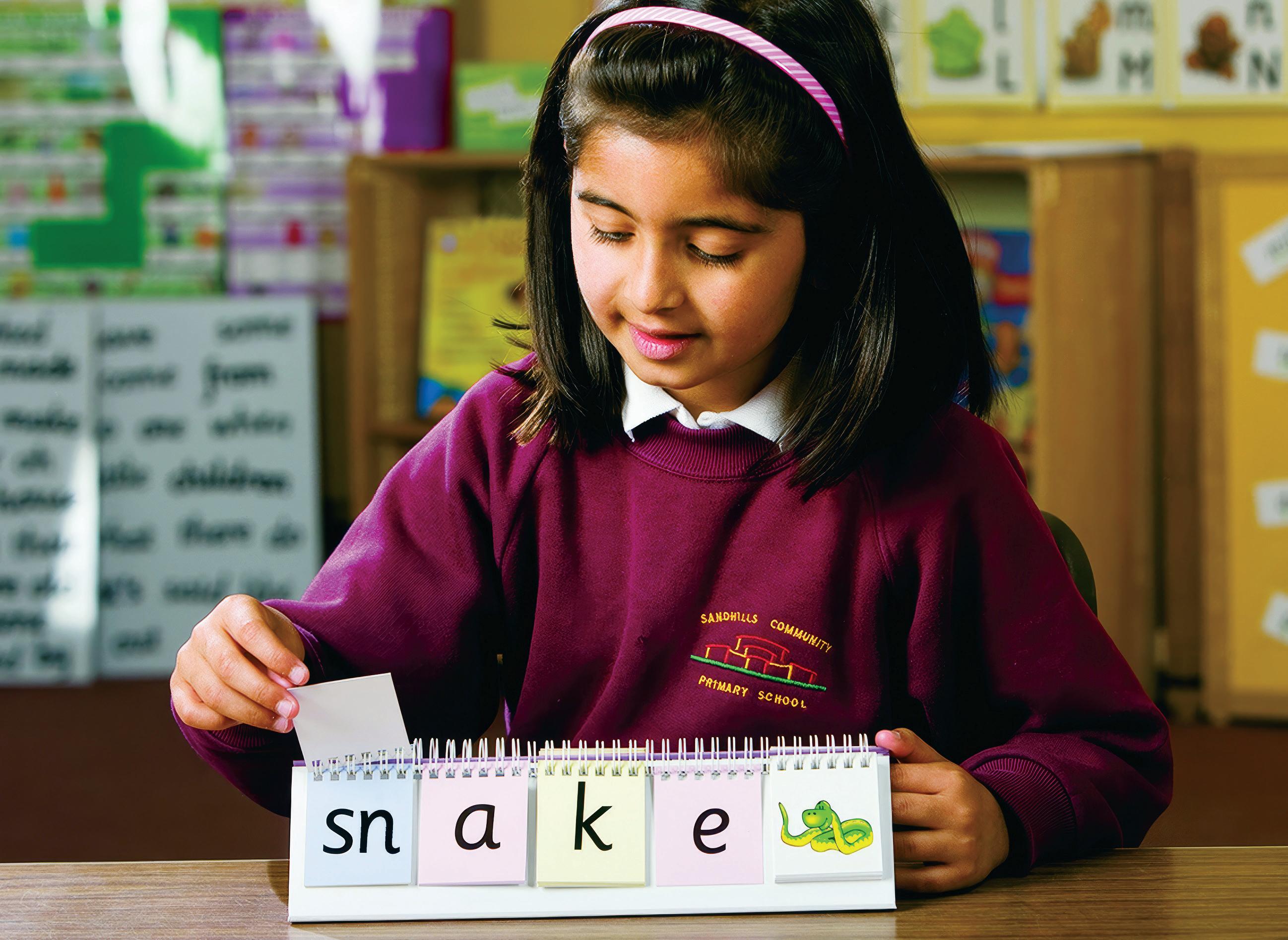
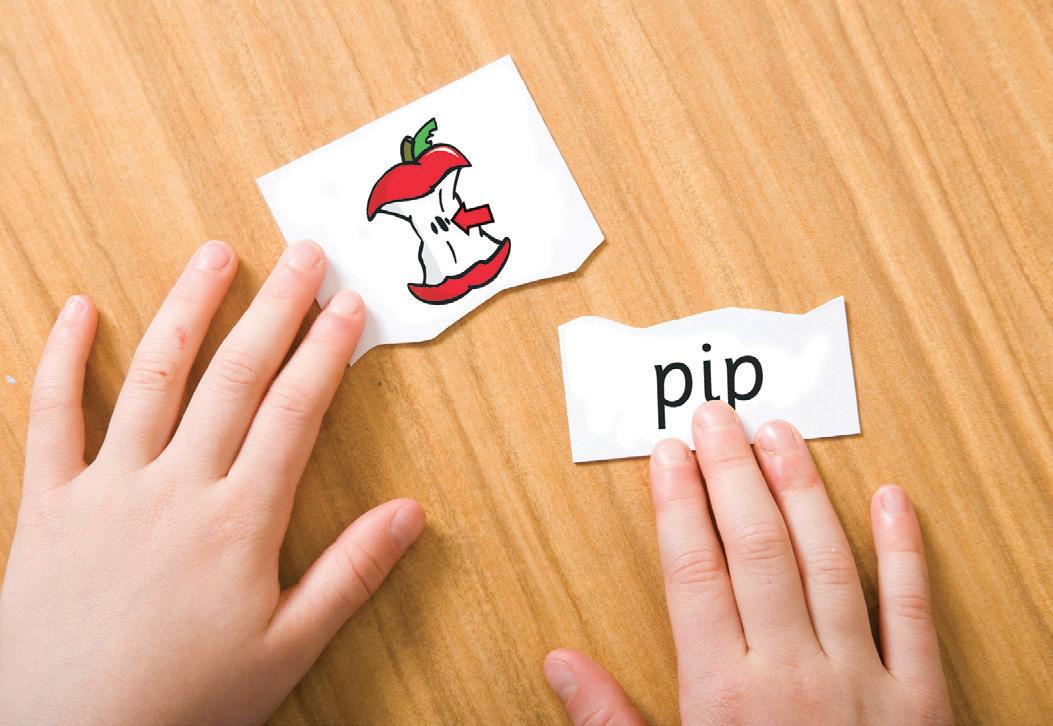
are not just included—but truly empowered to succeed.”
Beyond these teaching approaches, creating an inclusive classroom environment plays a critical role in supporting learners with dyslexia.
Classrooms that recognise and value different ways of learning help to reduce stigma and promote student engagement.
Assistive technologies, including audiobooks, text-to-speech and speech-to-text software, as well as visual supports and graphic organisers, can further enhance accessibility, enabling students to engage with content in ways that align with their strengths.
Early identification and ongoing support are also essential.
Whole-class screening, classroom observations and targeted assessments can help identify students with dyslexia, allowing for timely intervention. Ongoing professional learning and development also plays a critical role, equipping teachers with the knowledge and confidence to implement structured literacy approaches.
As schools continue to prioritise literacy outcomes, there is an opportunity to better support students with dyslexia to achieve their full potential, while creating learning environments where all students can succeed.
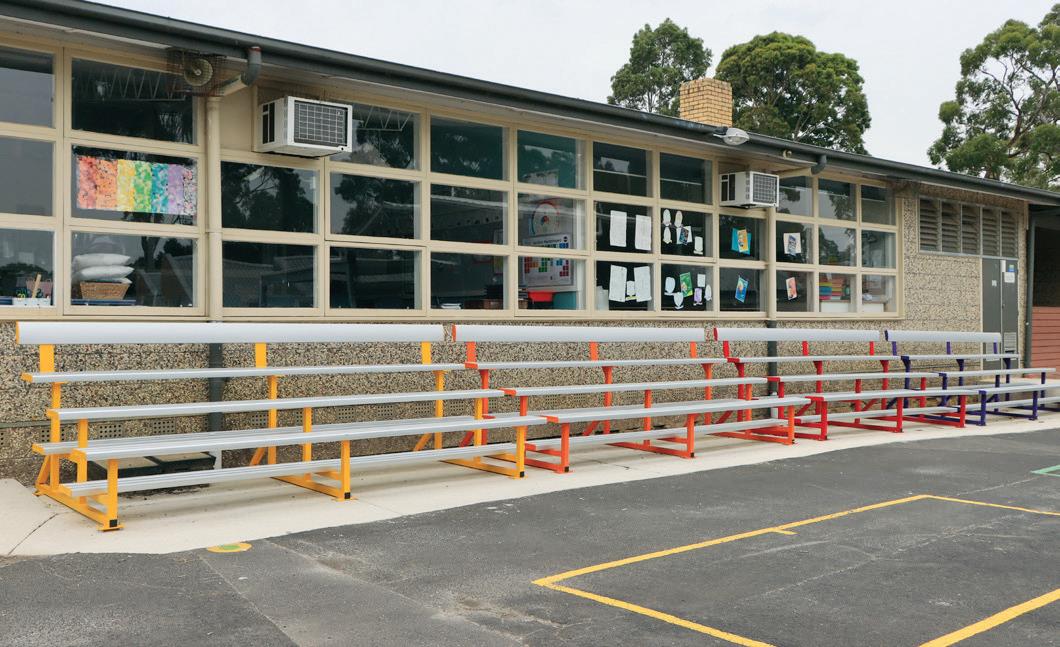
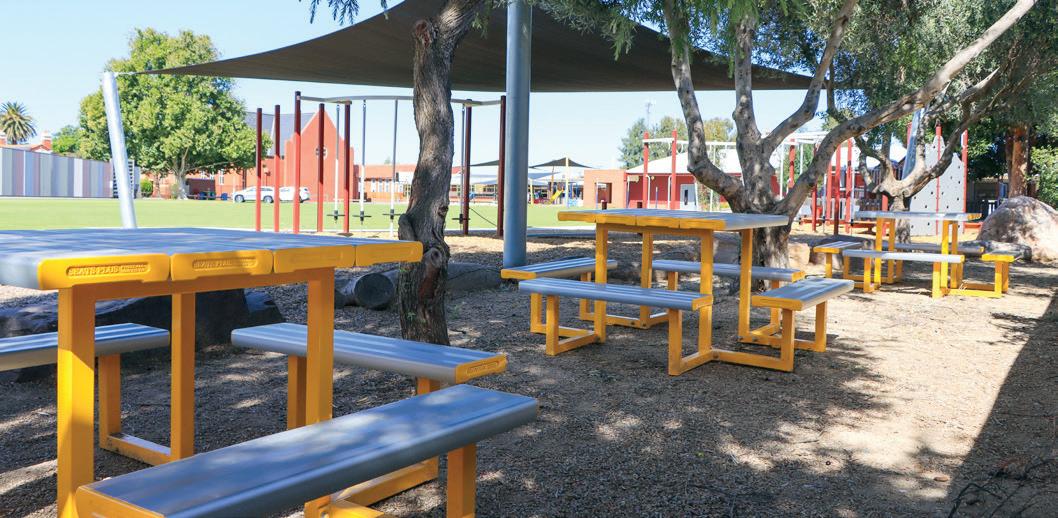
With over 10 years’ experience, we create inspiring outdoor learning spaces that last.
Transform your school grounds today, contact us to explore our solutions!


































By Milly Fullick, Industry Reporter
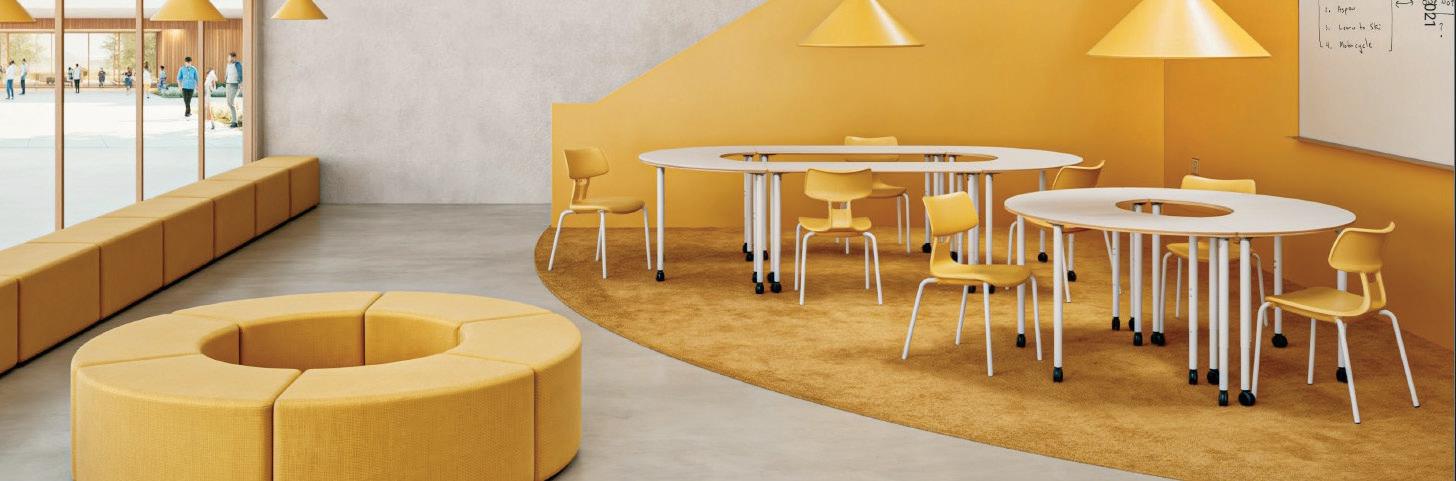
Classroom furniture design has come a long way since the days of single, wooden desks in uniform lines.
So too has the way classrooms are used; today, collaborative learning spaces, breakaway group areas and a range of furniture types are the norm to help students flourish regardless of their learning styles.
Annabel Parletta, Design Manager at Resource Furniture, said that classroom design has come a long way.
“Classrooms today have evolved far beyond traditional rows of desks. Today’s learning environments are designed to be dynamic, inclusive, and adaptable, supporting a wide range of teaching methods and student needs.
“Furniture plays a critical role in shaping how students engage, collaborate, and learn.”
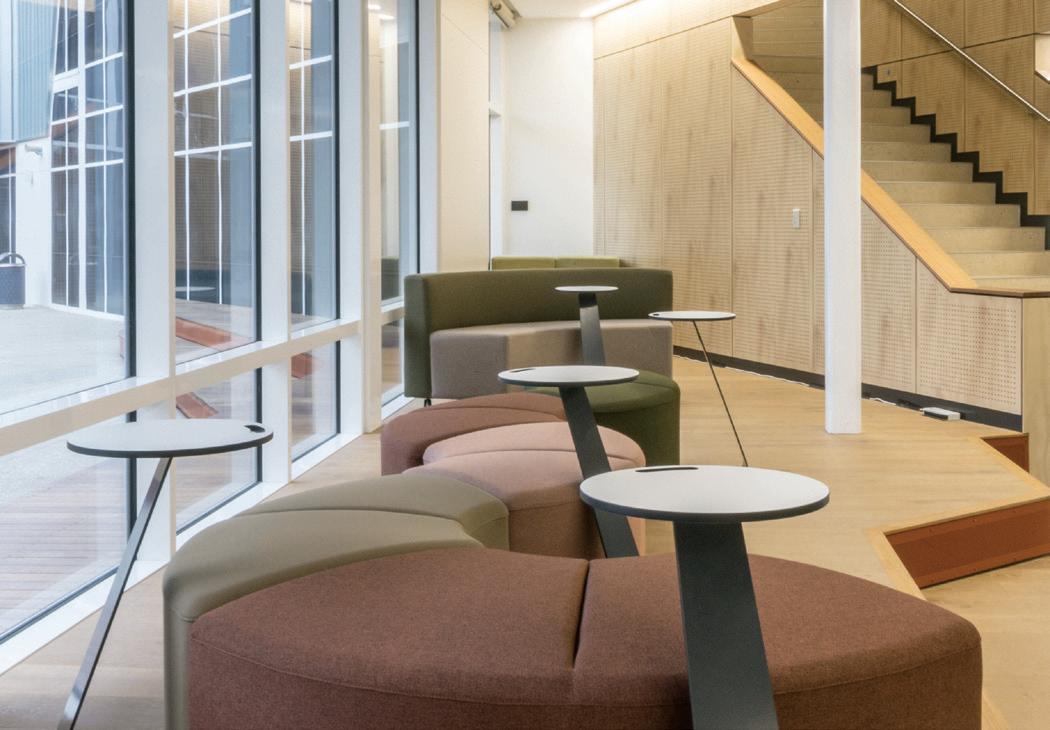
Intentional classroom design can provide an atmosphere where students thrive through thoughtful use of colour, furniture choices and storage.
When choosing furniture for a classroom, thought should be given to the different ways that the room is used and who will be using it. Ms Parletta said “One of the most

important considerations for schools is flexibility and adjustability. Classrooms must support multiple learning modes throughout the day, from independent focus work to group-based activities.”
Furniture should help to enable flexibility rather than being a barrier to it. Lightweight options and modular furniture can make changing layouts quick and easy. Pieces that serve multiple
purposes can also make the most of different learning styles.
“Modular and mobile furniture allows educators to easily reconfigure layouts, while ergonomic and adjustable options help accommodate students of different ages, sizes, and learning preferences,” Ms Parletta said.
How furniture fits into the space and allows for circulation should also be considered, said Len Hyde, Director at Safehook
“Moveable or modular furniture helps because it allows teachers to quickly reconfigure layouts without turning the room into chaos.
“The biggest enabler of this flexibility is clear floor space. If clutter is controlled and circulation areas are open, the room feels larger, and it becomes easier to change how the space is used. Moveable or modular furniture also supports inclusive learning needs and teaching practices.”






























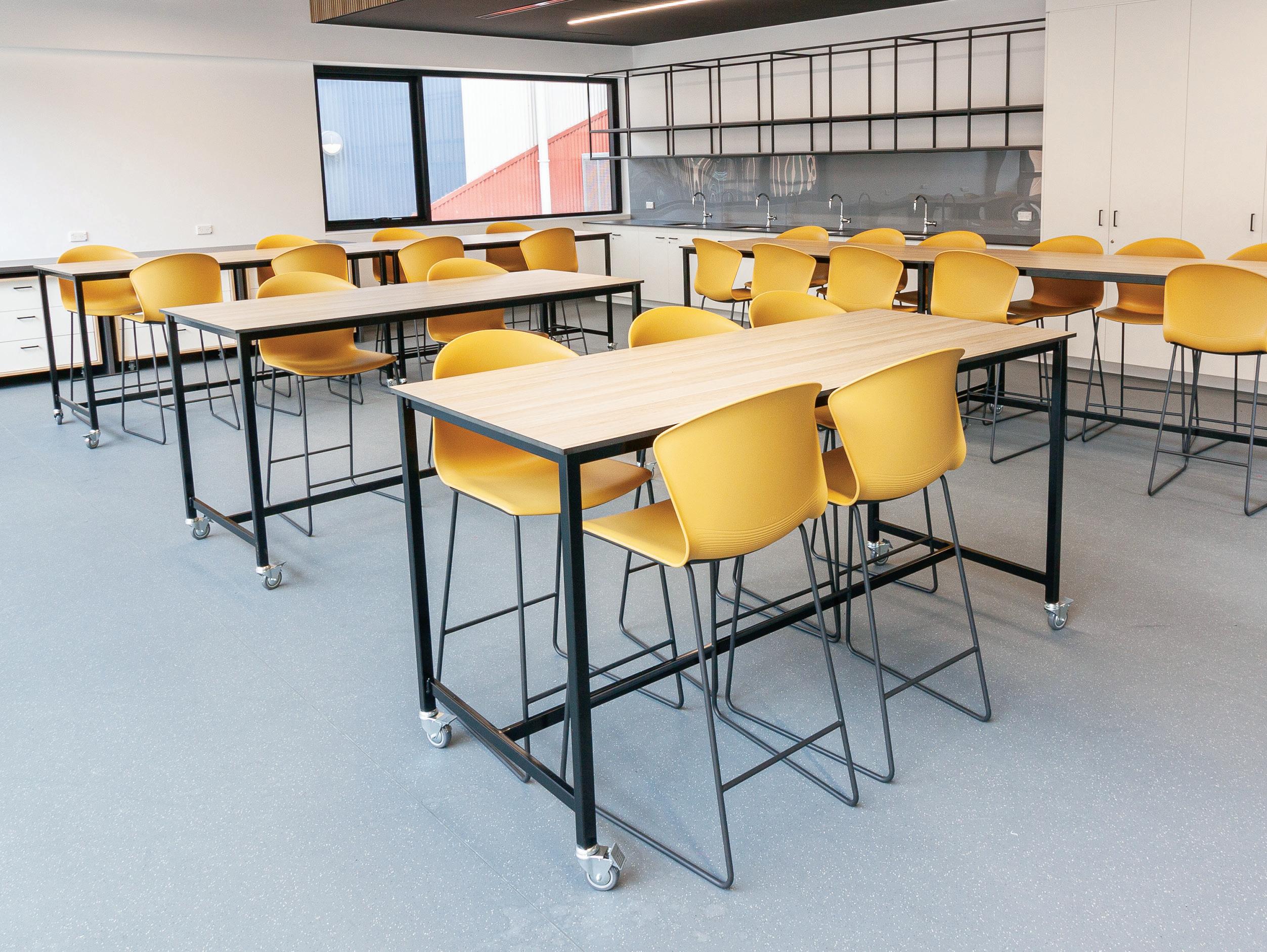
Furniture that can be adjusted, such as height-changing desks and chairs, can be utilised in classrooms used by students of different ages or physical needs. They are also useful for switching between computer and writing work for optimal ergonomics, and sit-to-stand desks can help students who find sitting still for long periods challenging.
The layout of a classroom can have a substantial impact on how students learn. A space which can be adapted to group work and collaborative learning can help to advance students’ teamwork, communication and social skills. Small group work with an adult also gives students a chance to explore new ideas with immediate feedback in a structured setting where focus and listening may be easier.
Furniture choice is crucial to group work, Ms Parletta said.
“Furniture significantly impacts
Furniture is more than a functional requirement
the creation of collaborative learning areas. Collaboration is central to contemporary education, encouraging students to share ideas, problemsolve, and work together.
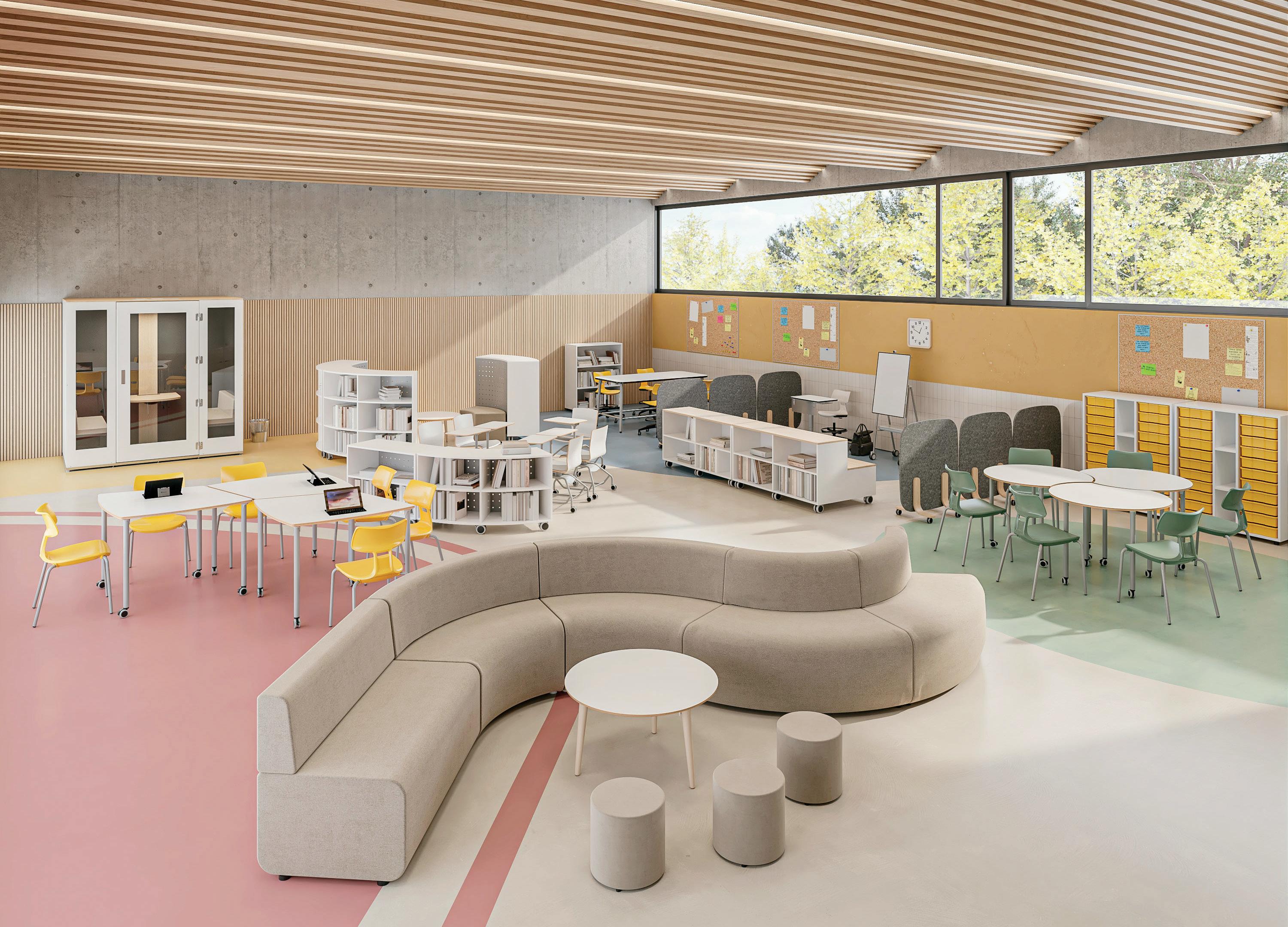
“Flexible table groupings, soft seating zones, and informal breakout spaces help foster communication and teamwork.
In open-plan environments, furniture can also define learning zones without the need for permanent walls, creating structure while maintaining openness.”
Colour in the classroom can have many functions; the right combination of tones can create an inviting, calming atmosphere where students feel motivated to learn. A 2022 study found that students taught in a classroom painted grey were bored and disengaged compared to their peers learning in more colourful spaces.
Many teachers prefer to cultivate a sense of calm in their classrooms, so blues and greens are often favourite choices,
especially for learning spaces for older students. To create a sense of harmony, furniture and displays should complement walls and floors as well as one another. If colours are all too similar, the effect can be drab, as well as causing potential issues for students with vision impairment who may struggle to differentiate between the different elements in a room.
If too many colours are present, though, the room can appear chaotic and overstimulating. However, intentional use of different colours to create zones, such as collaborative working areas and quiet reading spaces, can help a classroom’s flow.
Mr Hyde said colour can be a neglected element when designing a classroom.
“Colour is often treated as decoration, but in a classroom it’s also a practical tool. The way a space looks affects how it feels, and how it feels affects behaviour.
“If the visual environment is noisy, clashing, or chaotic, it tends to elevate stress and distraction. If it’s coordinated and intentional, it can help the room feel calmer and more in control.
“A simple point that I think matters: in a typical classroom, the student belongings (bags, hats, lunchboxes) bring far more colour into the room than the storage hardware does,” Mr Hyde said. “This means functional items shouldn’t compete for attention. They should sit comfortably within the room’s overall colour scheme, acting more like an accessory than the feature.”
Bags can be an unexpected but substantial source of clutter in the classroom. Students can bring a combination of school bags, kit bags, lunch bags and laptop bags on any given day, meaning that a dedicated space is needed, but may not always be fully utilised. Mr Hyde said bag storage options should be considered in classroom design.
“Clutter is one of the biggest hidden problems in classrooms, and bags are a major contributor. A pile of bags on the floor is unorganised clutter. It blocks circulation, creates trip hazards, and makes the room feel smaller and more chaotic. Safety and durability should take into consideration the need for rounded edges, robust materials, and secure fixings especially in high traffic environments.
“Good storage should keep the floor clear (safety and traffic flow), be easy for students to use (so it actually gets used), withstand daily wear (schools are tough environments), reduce workload for staff (storage shouldn’t become another cleaning problem), and preserve flexibility of the room (don’t permanently consume valuable floor area),” Mr Hyde said. However, it’s not enough to simply put bags and other items out of sight in a cupboard, Ms Parletta said. “Another key element in effective classroom design is storage. Well-planned storage supports organisation, reduces clutter, and improves classroom flow. Schools
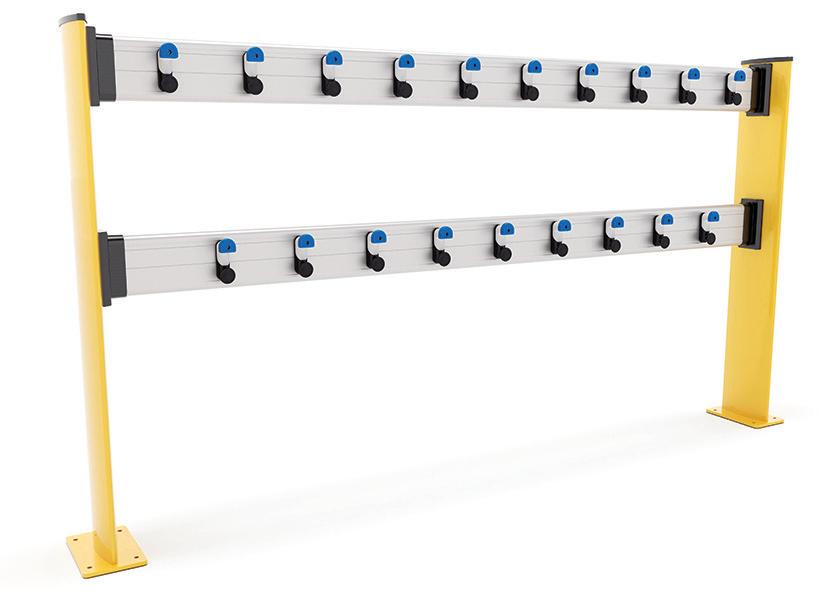
Image courtesy of Safehook
should prioritise accessible storage that encourages student independence, as well as durable solutions built for daily use. Mobile storage units can further enhance flexibility by keeping resources close at hand while allowing spaces to be easily adapted.”
Making intentional choices for furniture and classroom design
can enhance learning, and save teachers’ headaches by allowing a seamless flow through the learning environment.
Ms Parletta said that the power of classroom furniture should not be underestimated.
“Ultimately, furniture is more than a functional requirement; it is a powerful tool that influences student wellbeing, engagement, and learning outcomes.”
design@resourcefurniture.com.au www.resourcefurniture.com.au

By Gemma Easton, Editor
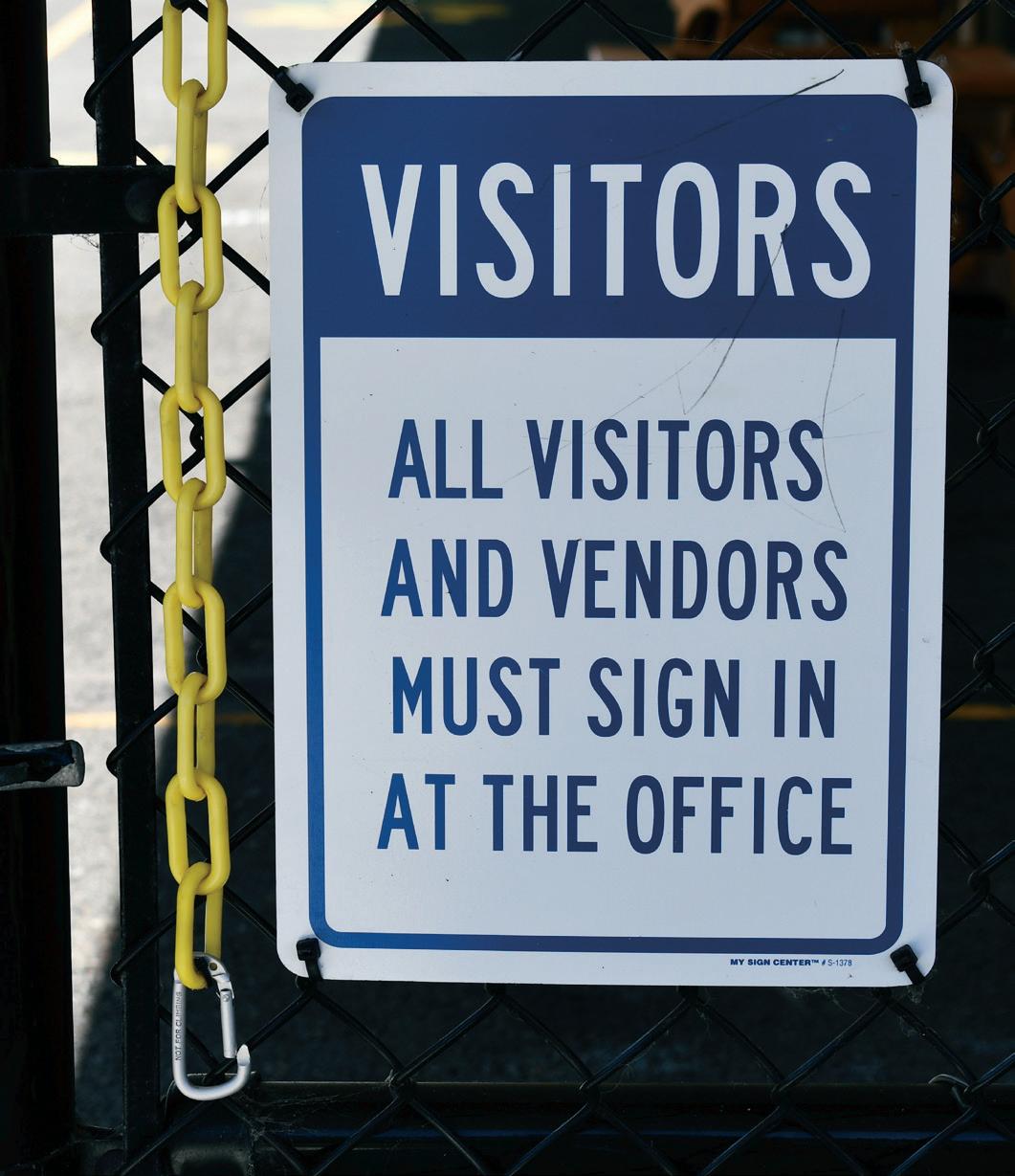
Every day, your school is full to the brim with staff and students. Add parent helpers, contractors, volunteers and other visitors, and keeping track of who’s where and when becomes a challenge.
Visitor management systems can simplify this for schools, making sure everyone who enters your school grounds is authorised, safe, and properly accounted for. Modern systems prioritise efficiency, security and compliance, simplifying and streamlining many tasks traditionally performed by administration staff.
Many schools still rely on outdated reception logs or paper sign-in sheets. These systems have obvious flaws. They can be forged or forgotten altogether, don’t verify ID unless a member of staff physically checks it, and offer no real way to identify if someone is a risk. In the worst case, these documents can be lost, leaving staff with no accurate information about who is on school grounds.
School safety is a key concern for principals and school leaders, and visitor management systems can provide some peace of mind. More than just signing visitors in and out, visitor management systems can keep track of exactly where

Visitor management is now evolving into a deeper awareness of broader operational responsibilities

people are across your school campus. In an emergency such as a fire, lockdown, or severe weather event, this real-time location data can help ensure everyone is accounted for. Some systems offer an app which staff can download to their phone, tablet or laptop, allowing this data to be accessed remotely.

Some visitor management systems offer ID scanning. This will ensure that visitors to your site have the necessary clearances, for example Working With Children Check or White Card. Systems can then print an adhesive nametag for the visitor to wear, which includes their photo. Staff and students can then be confident that the person is who they say they are, and that they are allowed to be on school grounds. Nametags can also be colour coded to help staff and students easily identify guests.
Cloud-based storage of data and information means your school won’t need to keep paper records, and data will always be easily to hand. This will assist with reporting and compliance requirements.
Recent upgrades to visitor management system technology include QR code check-in, and facial recognition for fasttracked entry. Many systems now offer touch-free sign in, to help keep staff, students and visitors safe and healthy.
To get the most out of your visitor management system, staff need to be properly trained in how to use it. Make sure new staff members are shown the system features relevant to them, and feel confident using the system. You may already have a visitor management system at your school. Technology, however, is constantly evolving and new features and upgrades are regularly added to visitor management systems. Consider whether your current system
is still fit for purpose, or if an upgrade is needed. Speak with your current system provider to understand if you are using your system to its full potential— are there features that you’re not using that could replace manual processes, for example. Investigate too if you’re paying for features that you don’t need. As regulatory environments tighten and the duty of care expands, the focus for school leadership is shifting. It is no longer enough to simply know who is onsite; the priority has moved toward understanding exactly what they are doing and ensuring they are doing it safely.
Laura Hunt, General Manager at Passtab, said there has been a progressive maturity in how schools approach induction and compliance. “While every school's foundation is built on child safety and protection, visitor management is now evolving into a deeper awareness of broader operational responsibilities, specifically regarding worker inductions and complex compliance documentation.”
Ms Hunt noted that the landscape of school safety is becoming increasingly sophisticated. “Schools have become far more aware in recent years of the processes required to properly manage worker inductions and compliance requirements. The general sentiment is that this is now
a non-negotiable piece that must be absolutely correct and audit-ready at any time.”
However, Ms Hunt pointed out that certain gaps remain. “There are still areas of the safety process that are only just emerging for schools in terms of their ability to demonstrate compliance,
specifically regarding those undertaking high-risk work.”
Traditionally, managing Safe Work Method Statements (SWMS) and Job Safety Analyses (JSAs) has been a significant pain point. Often relegated to paper forms or disparate spreadsheets, these critical safety documents are frequently misunderstood or poorly executed. The reality is that manual tools often make "doing it right" nearly impossible.
Ms Hunt explained that this need for clarity extends beyond the initial check-in. “We’re also seeing the need for more detailed reporting about movements. It’s no longer enough to simply mark people as ‘onsite’, we need to know where they are and why. This applies to contractors, but increasingly to students and staff as well.”
Against this backdrop, it’s imperative that visitors to your school are correctly managed, with relevant data trails securely stored. A new or upgraded visitor management system could simplify this, and provide a range of other time-saving and security benefits to your school.
Induction and Compliance and Safe Work Permits are add-on modules to your Passtab Visitor Management that manage all contractor documentation with ease.
Induction and Compliance Module:
• Manages documentation for contractors, staff, and volunteers, ensuring legal compliance.
• Automated notifications and expiry date reminders.
• Online induction completion and document management (licenses, insurances) via the Passtab Compliance portal.
• Live verification of Working With Children Checks at the point of entry. Available in VIC, WA, QLD.
• Prohibits entry for expired documents until updated.
Safe Work Permits Module:
• Manages Safe Work Method Statements (SWMS) and other permits for high-risk work.
• Streamlines the process of recording permits during sign-in.
• Allows linking SWMS to specific projects for multi-visit utility.
• Workers can easily upload SWMS via the Passtab iPad App or QR code scan.
Additional fees apply for Passtab add-on modules. Contact us for more information
Phone: 03 9800 1489
Email: support@invision.net.au Website: passtab.com
By Gemma Easton , Editor
For many schools, regular, successful fundraisers are essential to top-up the school budget.
With resources under more and more strain, and pressure to make everything stretch just that bit further, fundraisers can help schools provide some nice-to-have extras for their students, as well as maintain vital services and facilities.
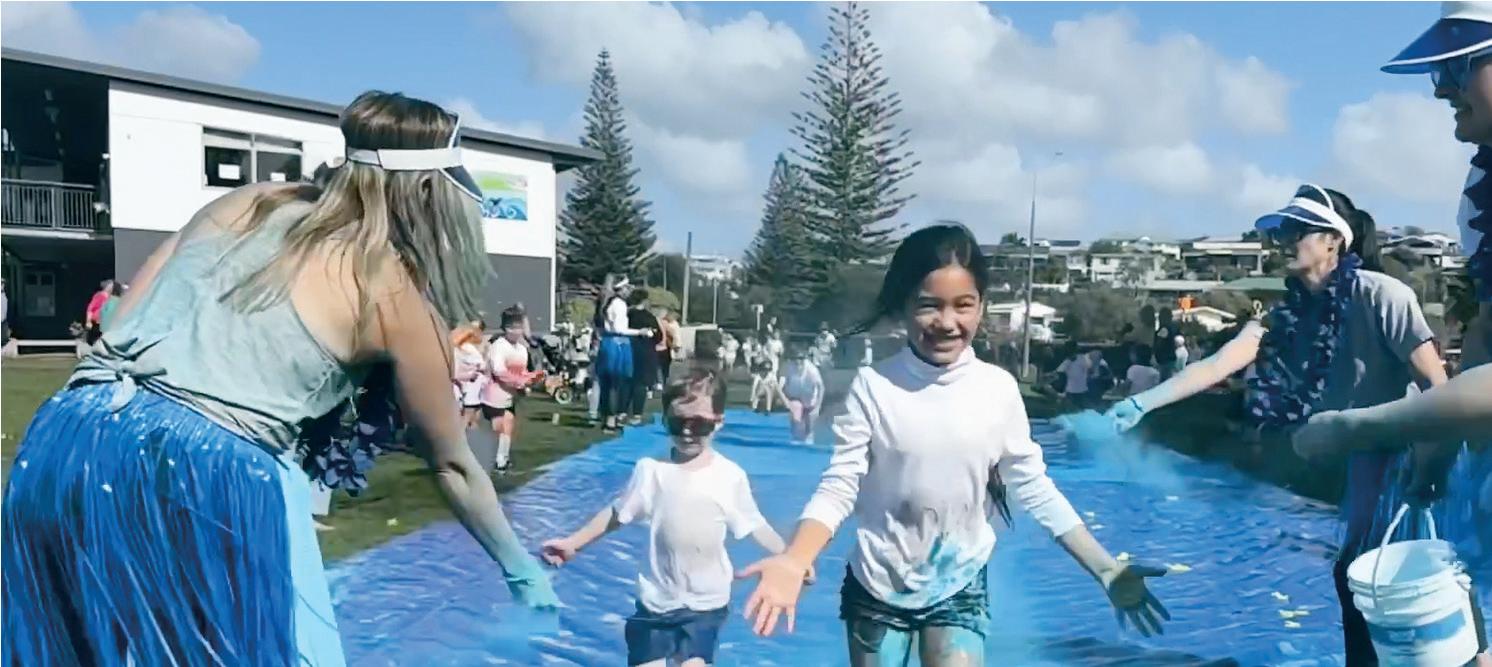
Fundraising can be wholeschool focused, with the aim of securing funding that would benefi t the entire school, or might be undertaken by a particular year level, school team or club, or a group of students hoping to raise money for a specific project. Your school might need some extra cash for upgraded facilities, school excursions, more books for the library’s collection, instrumental music lessons for students, and much more.
Given its importance, careful planning is integral to the success of any fundraiser. In this feature, we look at how to ensure your fundraiser meets your targets without stress.
A winning fundraising venture relies on efficient organisation. For whole-school events, school parent communities, like the Parents and Friends Association often take the lead, and should work collaboratively with the school. Clear parameters should be established, including what the fundraiser is for, how and when details will be communicated with the school community and the wider community if appropriate, and the monetary goal.
Parent associations often contain many parents with expertise in a certain field, which can be drawn on to enhance fundraising eff orts. A person skilled at making the most of social media platforms, for example, may be tasked with coordinating social

media content to promote the fundraiser; someone with links to a local business may be asked to approach the business for support.
Involving parents, staff and students can help build a sense of community around your fundraiser, and your school more broadly.
You can run your fundraiser completely in house, or to relieve some of the organisation pressure, external providers can help to arrange your fundraiser. Some companies provide an all-inclusive service, facilitating online payments so schools don’t need to manage money and cash handling.
Organisations can provide a range of products to sell, including chocolates, first aid supplies, and wrapping paper. Baked goods like pies, lamingtons or hot cross buns for Easter are often a popular choice for schools. Other special occasions
can be linked to fundraising activities, for example wrapping paper or baubles for Christmas, or keepsakes like photo keyrings or reuseable mugs for Mother’s Day.
Keepsakes like plates, tea towels or mugs printed with students' artwork or photos provide a lasting memento for families.
Regular fundraising events can help to fund larger projects, or establish a pool of funds for future use. Schools with a strong student alumnus, who are keen to give back to their school, are well suited for this.
Activities like giving days, sponsorship of a paver, bench seat, or classroom, or an annual gala dinner or long lunch, give the broad community a chance to off er their support.
For auction items or raffle prizes, connect with local businesses for donations, particularly those run by the families of current or former students.


Many fundraising activities can tie to an educational outcome. A fun run, for example, teaches students the benefi ts of regular exercise; a reading challenge can encourage students to read regularly and often, and help to establish a love of reading; selling items like reuseable tote bags and bees wax wraps can raise awareness about the environment and sustainable practices, while the sale of first aid essentials can be linked to basic first aid education and training.
Depending on the scale of the fundraiser, learning opportunities could also include designing and distributing information about the fundraiser, building strong communication skills while selling items or tickets, and calculating profi ts. Through volunteering their time to assist in running the fundraiser, students learn the value of service to their school and the community.







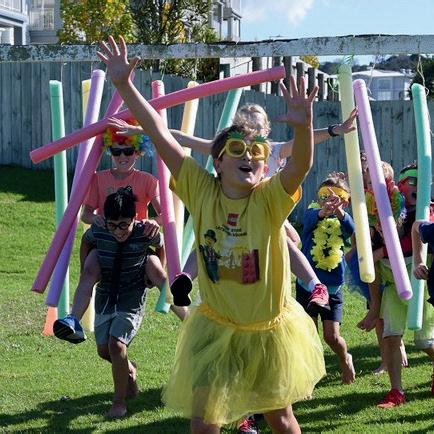








School fundraising can be an opportunity to make more than just money.
A well-executed fundraiser can help to foster community within your school, with parent volunteers, staff and students working together to make a diff erence for the school at large. Students may also feel pride in their school and community, and a sense of belonging.
Importantly, make sure your fundraiser is appropriate for your school context. Consider how much time and
money families will be willing to give, and how often.
Once your fundraiser is over, share your successes with your school community. Celebrating how much money you have raised, recognising all that made the venture a success, and lett ing everyone know how the money will help your school will help motivate people to give again, the next time your school is in need.
Go Raise It Fundraising off ers Australian schools a modern, flexible, and high-impact
Expressions group projects are the perfect feel-good fundraiser for your school, just like a yearbook on a tea towel.
The most popular designs feature hand drawn portraits from students and sta .
The pictures are compiled all together then printed onto tea towels which you can on sell to families. As well as being great for drying the dishes, the tea towels look fantastic and make a long-lasting memento of friends and teachers.

approach to fundraising, designed to maximise results while minimising workload.
Schools can run any event or athon with Go Raise It, including readathons, fun runs, colour runs, lapathons, or fully customised campaigns that best suit their community.
The fundraising websites are built to be low administration and easy to use, removing the need to handle cash or count coins and replacing it with simple, secure online systems. Each campaign can also be customised to match the school’s branding, helping it feel familiar, professional, and community-owned.

Everything you need is provided, the projects are easy to run and everybody loves the final product.
These cherished keepsakes embrace community, are eco-friendly and practical, plus all of the inclusions make it so simple for volunteers.
Other popular options include designs to commemorate special events like anniversaries, art shows or school celebrations.
Go to expressions.com.au to find out why their tea towels have become an annual tradition for schools right across Australia for over 25 years.
For more information phone: 1300 855 509, email: info@expressions.com.au or visit: expressions.com.au
Behind the scenes, schools gain access to the custombuilt Your Go Raise It portal, providing real-time visibility of fundraising progress, performance tracking, and campaign management through one convenient dashboard. This makes it easy to monitor results, celebrate milestones, and keep families engaged throughout the campaign.
To maintain momentum, Go Raise It includes fun and inclusive incentive features, such as a live Spin the Wheel spot prize tool, designed to motivate students, encourage participation, and keep fundraising exciting and accessible for everyone.
By combining low fees, flexible event options, smart digital tools, and engaging incentive features, Go Raise It Fundraising delivers an efficient, fully supported solution that helps Australian schools supercharge their fundraising outcomes.
Expressions tea towels are a fundraiser that brings your school community together, and have become an annual tradition for schools in every corner of Australia. For over 26 years Expressions has worked hand-in-hand with schools to turn children’s artwork into beautiful, practical tea towels that families truly love.
From the very beginning, the team supports your school with a clear, stressfree process. Everything is supplied, children create their own self-portraits, then Expressions carefully scan and combine each child’s drawing to create a professionally finished group design, like a yearbook on a tea towel.
Commemorative designs are also a great alternative to celebrate special events such as a school anniversary. If you have an idea Expressions will help bring it to life.
Expressions provides all materials and manages production and ordering, reducing the administrative burden on school volunteers. The tea towels even arrive folded with eco order bags so precious mementos get home safely. As well as tea towels Expressions also supply tote bags and aprons. All of their products are printed in Australia on organic cotton, using environmentally friendly inks. An Expressions fundraiser is easy to run for volunteers, the kids love seeing their artwork in print, the parents adore receiving gorgeous yet practical mementos and the school makes money—everyone wins.


Creating supportive school environments starts with nurturing wellbeing through thoughtful programs and the everyday essentials that make a difference.
As schools look ahead to 2026, we’re heartened to see wellbeing evolve from a separate effort into the very heart of learning. It’s no longer just about specific programs or policies—it’s about gently weaving care into every corner of school life, from welcoming spaces and daily routines to the simple resources we rely on each day.
In the background, tissue and hygiene products quietly uplift wellbeing in ways that truly matter. Washrooms are bustling hubs where students and staff feel most vulnerable, so we prioritise solutions crafted for dependable comfort, smooth efficiency, and effortless use.
High-quality hand towels, thoughtful tissue options, and intuitive dispensers help keep spaces clean and inviting, while cutting down on mess, waste, and upkeep. For students, this fosters a sense of ease and confidence. For dedicated staff, it eases daily pressures, letting them focus on what they do best—supporting our kids.
We’re inspired by how sustainability and wellbeing naturally intertwine. Schools today thoughtfully choose paper-based hygiene products that are responsibly sourced, delivering reliable strength and absorbency without compromising our planet. By opting for washroom essentials that honor performance, people, and the environment, we nurture lasting wellbeing for students, staff, and the whole school family. Sorbent Professional and Livi are here to partner with school communities, offering caring washroom solutions that blend excellence, compassion, and sustainability.

By Milly Fullick, Industry Reporter
School productions hold special memories for many people.
Whether a one-off taste of the limelight or the initial bite of the acting bug, those who have performed on stage at school can recall the long hours of rehearsals, the teamwork of creating a full production and the rush of finally stepping out onto the big stage.
Helping students to create those memories can have many advantages, from developing teamwork skills and communication to increasing confidence and creativity.

Putting on a successful show begins with good organisation. Begin by assessing what is available in terms of budget, number of performers likely to
be involved, ability to create or adapt costumes, sets and props, and any particular resources or strengths of the school. With this information, choosing a suitable production is much easier.
It’s also important that students are on board and enthused about the project, so choosing a production that resonates with them because of its themes, plot or characters is key.
Schools are likely to need a licence to perform a musical; these can come with strict provisions around number of performances, filming and recording, and even ticket prices. Fees may apply for plays, novels, films and musicals that are still within their licensing period, so whatever kind of performance is being staged, permissions will need to be carefully sought. Rights also extend to characters from existing media and plots of other works, so even original works by students need to be carefully checked for these.
Songs, including pop and musical tracks, can often be used outside of fully-staged performances, but it’s important to check with the Australasian Performing Right Association and Australasian Mechanical Copyright Owners Society (APRA AMCOS).
The type of production will influence how long is needed to prepare; a multi-act musical will likely need more rehearsals than a series of comedy skits. Consider the age of the cast and crew, too, when deciding how much rehearsal time is needed, when they will take place and how they will be structured.
Students can also be given the opportunity to see how creative and technical elements work together to make a successful production. A visit to a theatre is one way to do this—as well as performances, some theatres and performing arts schools offer students the chance to sit in on classes and rehearsals and even take part in workshops to get hands on experience from the experts. There are also options without travel, including touring theatre companies who offer incursions




and workshops. This can help students to see what can be achieved with the space they will be performing in.
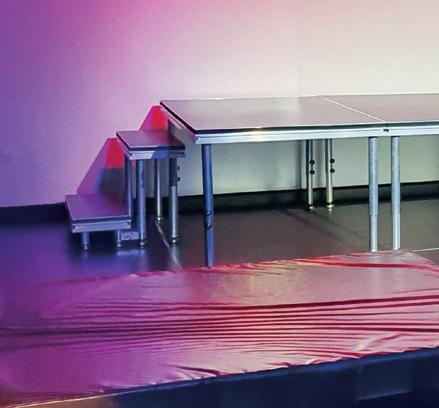
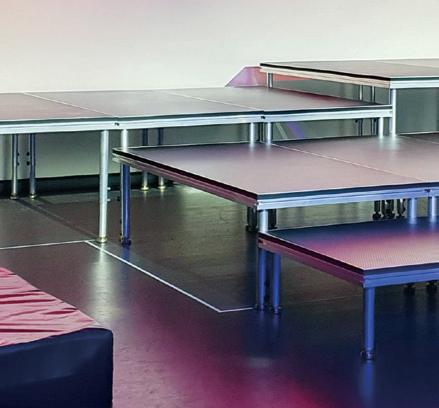
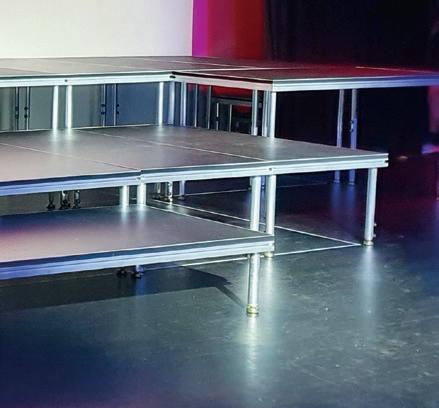
Once the details are decided, it’s time to think about staging. If the performance space looks ready for a refresh, there are several things to consider.
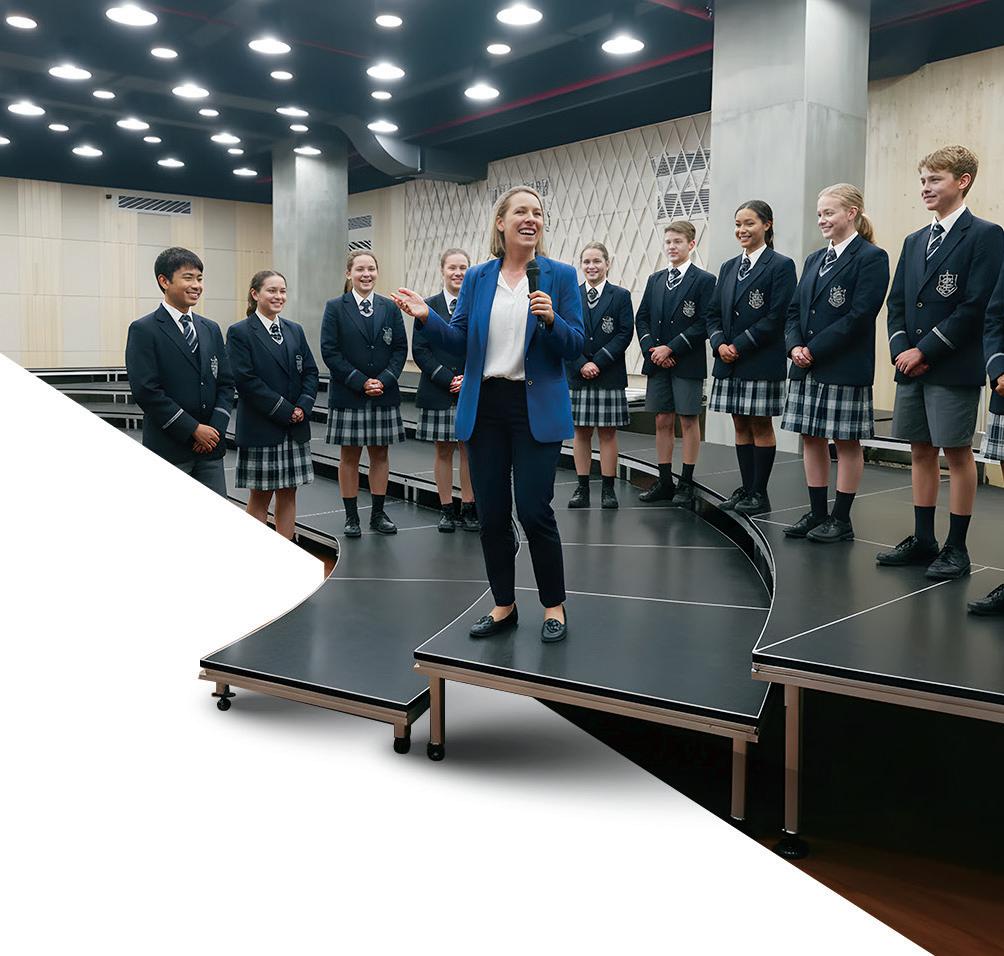
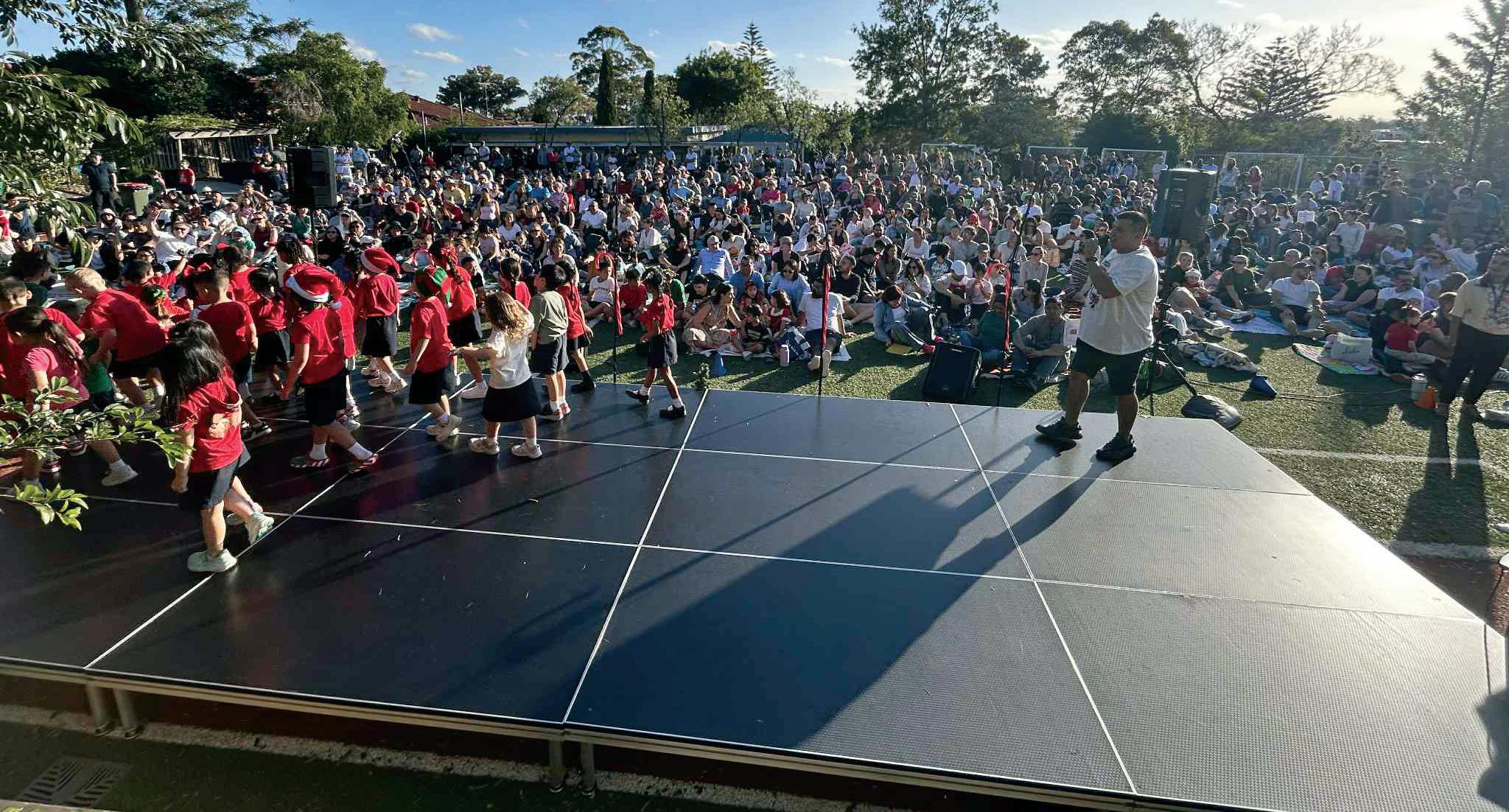
Kevin Liu, Managing Director of Transtage, said one of the greatest advantages of a portable stage is its ability to

be reconfigured to suit the size and nature of any event. “A fullsized stage can be assembled for major productions and concerts, while a smaller setup can be created for intimate gatherings, quick assemblies, or student presentations. Instead of relying on a fixed, one-size-fits-all stage, schools gain the freedom to customise their setup whenever needed.
“The portability of these systems also means events can be held anywhere on campus—indoors
or outdoors. Whether the school hall is fully booked or an outdoor celebration is preferred, portable staging allows staff to choose the most suitable location for each occasion without limitation.
“Once the event is over, the stage can be packed away compactly, freeing up valuable space for sports, rehearsals, classes, or other activities,” Mr Liu said. “This space efficiency is especially important for schools where every square metre counts.”

Mr Liu said schools should consider ease of operation, and lightweight construction when selecting portable staging.
“Most schools do not have a professional production crew, so it’s important that ground staff, teachers, or even senior students can assemble the stage confidently and safely. A truly school-friendly stage system should be intuitive, manageable, and quick to set up.
“Safety and durability should never be overlooked. Schools should ensure that the supplier has conducted proper load testing and meets relevant safety standards. A welltested, robust stage ensures long-term reliability and peace of mind for both staff and students,” Mr Liu said.
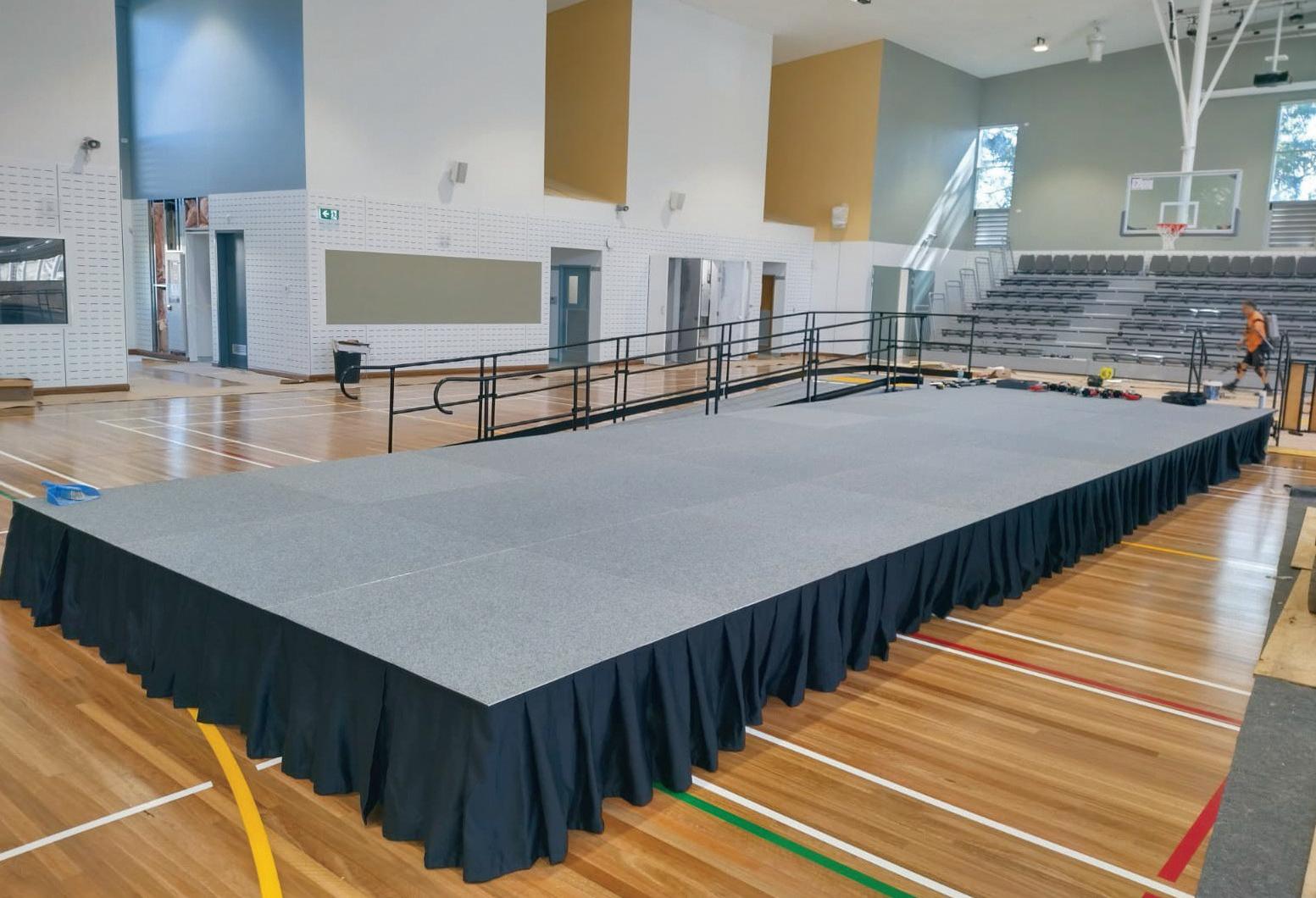
Ron Sangster from Select Staging Concepts said when schools plan permanent staging, the design phase is crucial to ensuring the space performs well for decades. “The starting point is understanding how the stage will be used—assemblies, productions, graduations, community events—and futureproofing the design so it remains adaptable as needs evolve.
“Durability should be a priority, with materials and construction methods chosen to withstand heavy use in an educational environment. Equally important is accessibility: DDA-compliant ramps, handrails and circulation spaces must be integrated from the outset so every student can participate.”
Putting on a successful show begins with good organisation
Mr Sangster said stages can be custom built to almost any size or configuration. “Working with Australian-made, certified manufacturers gives schools far greater confidence in both quality and compliance. Local manufacturers can tailor stage dimensions to suit the unique footprint of a school hall or performance space, ensuring seamless integration with existing flooring levels, acoustics, lighting infrastructure and access points.”
Where space is a concern, or where areas big enough for a stage need to be multi-purpose, portable staging can offer the best of both worlds. “Portable staging offers schools a level of flexibility that permanent structures simply can’t match,” Mr Sangster said. “The most obvious benefit is adaptability: platforms can be configured in countless ways to suit assemblies, music performances, exams, presentations or community events, then packed
away to return the space to its everyday function.
“Another advantage is scalability. Portable stages can grow with the school—additional modules can be added over time as enrolments rise, or performance programs expand. They’re also a cost-effective solution, eliminating the need for major construction works while still delivering professional-grade performance capability.
“Crucially, portable stages still meet strict safety and compliance standards, with many Australian-made options offering certified load ratings, non-slip surfaces and compatible access ramps.”
No matter the scale of the production, audiovisual equipment is likely to be necessary. Needs will vary widely depending on the size of the space and type of performance, but is likely to include sound and lighting, with larger productions also potentially needing microphones, power distribution, communication equipment and recording or live streaming equipment. Decisions around buying or renting, as well as the need for portability and power will also need to be made.
There are many considerations when planning a school production, but taking it one step at a time can make the process enjoyable and rewarding for all involved.




By Daniela Falecki, Educator, Speaker, Coach, Teacher Wellbeing


Wellbeing in schools has come into focus in recent years, with research increasingly suggesting a link between students’ happiness and sense of belonging, and their academic achievement.
We invest heavily in knowledge intelligence—curriculum planning, explicit instruction, data analysis, pedagogical frameworks, quality assessment. We spend hours in professional learning improving how we teach, assess and differentiate. Some educators have also strengthened their emotional intelligence—learning how to communicate effectively, navigate conflict, and manage relationships. And of course, right now the profession is flooded with conversations about artificial intelligence— what it means, how to use it, how to stay ahead of it.
But here’s the question we rarely ask:
Because wellbeing isn’t just something you either “have” or “don’t have”. And it’s not something we should leave up to chance, personality, or the occasional school wellness day.
Wellbeing intelligence is the skill of managing your internal world while navigating an increasingly demanding external one.
It’s the ability to recognise what’s happening in your thoughts, emotions and sense of self-worth, and respond with intention, not survival mode.
This matters because teacher wellbeing is not simply an individual experience—it has direct implications for the quality and sustainability of education systems. Research continues to show strong links between educator wellbeing and outcomes such as teacher effectiveness, retention, student learning conditions and school culture (e.g., OECD, 2020).
And the best part?
Wellbeing intelligence is a free resource we all have access to.
Not in a fluffy way. In a practical, real-world way. It’s a capability we can build, and the payoff is enormous.
Let’s be clear: the system absolutely has responsibilities here. Workload, staffing, compliance, unrealistic expectations, resourcing…these are not individual problems that can be solved with bubble baths and gratitude journals.
But we also can’t wait for the system to save us.
As individuals, we still have power. We have choices. We can learn strategies. We can build inner skills that protect our energy, restore our hope, and increase our capacity to stay in the profession without losing ourselves.
Wellbeing intelligence rests on three foundations:
1. Mindset
Mindset is the voice in your head—the meaning you attach to what’s happening. Without mindset skills, teachers can get stuck in cycles of self-
criticism, perfectionism, and the belief that they’re “never doing enough.” With mindset intelligence, teachers build selfcompassion, reframe setbacks, and learn to challenge the inner critic that fuels burnout.
2. Mood
Mood is your nervous system in action. Without mood regulation skills, teachers run on adrenaline, snap more easily, feel constantly overwhelmed, and struggle to recover. With mood intelligence, teachers learn how to reset, not only through rest, but through small daily practices that calm the body and restore emotional balance.
3. Mattering
Mattering is the belief that what you do—and who you are—genuinely counts.
Without mattering, teachers feel invisible, undervalued, and emotionally disconnected from their purpose. With mattering, teachers strengthen their sense of contribution, connection, and professional worth.
When teachers build wellbeing intelligence, something shifts. They don’t just cope—they lead. They don’t just survive termby-term—they sustain.
They don’t just “get through”— they reconnect with meaning.
Because teacher wellbeing isn’t a luxury.
It’s the foundation of sustainable teaching. And the time has come to prioritise the intelligence that protects the people doing the work.





By Milly Fullick, Industry Reporter
Wellbeing in schools has come into focus in recent years, with research increasingly suggesting a link between students’ happiness and sense of belonging, and their academic achievement.
The National School Reform Agreement unequivocally declares that “the wellbeing of all students is fundamental to successful education outcomes”. The reverse is also true; poor mental health in students is linked to increased aggression and bullying, along with worsening school performance. Given the amount of time students spend at school, it is already naturally a place of great social and emotional development opportunities for students. Likewise, with the average Australian teacher
working 46.5 hours per week, managing wellbeing in the workplace has the potential to significantly positively impact the school environment. Happily, there is more support than ever to help schools improve wellbeing for students and staff.
Research from the Australian Education Research Organisation (AERO) found that interventions promoting strong, positive teacher-student relationships were among the most effective strategies in promoting student wellbeing; students who felt that they had authentic, caring teachers who were calm, warm and culturally inclusive were likely to report higher overall wellbeing.
Another impactful intervention is the promotion of strong peer relationships among students. This is best achieved through a holistic, integrated approach, so games, peer mentoring and modelling conflict resolution can all contribute to a peer-positivity culture.
Similarly, a sense of belonging at school and in the classroom is strongly linked to higher wellbeing and improved outcomes. Encouraging, safe environments with tailored support can foster students’ feelings of belonging.
AERO notes that students who require additional learning support are more likely to have low self-esteem, so efforts to boost their wellbeing can be especially important. Buddy systems, robust support and encouragement strategies are among strategies that could support these students. The integration of students with additional needs should also be considered, as marking students out as ‘different’ can have negative wellbeing effects that linger.
In interviews with international charity Made By Dyslexia, celebrities with additional learning needs still recalled the embarrassment of feeling segregated from their peers at school.
Implementing wellbeing strategies takes time and consideration, but toolkits and programs are increasingly available to help lighten the load. Many of these are developed by experts and backed by evidence. Tailored tools are available to suit primary and secondary students, dealing with themes such as managing emotions and friendships in age-appropriate ways. Another advantage of using professionally developed programs is the time saved on research and planning for teachers, which could potentially create opportunities for improving staff wellbeing. UNICEF emphasises the daily stresses teachers face and advocates for placing importance on teacher wellbeing, suggesting practices such as deep breathing exercises and making lists of things that have gone well each day.
Building mindfulness programs into the school day can also have positive effects on staff and students. These can be short, bite-sized practices such as a few minutes of box breathing, brief body scanning exercises and stretch and movement breaks scattered throughout the day. It can also be useful to add some longer wellness sessions into the school timetable. These could have a social and emotional focus, such as discussing a story about feelings in a primary setting, or a group discussion about emotional management
techniques in secondary schools. More practical-focused activities could include yoga or meditation sessions.
Where possible, students should be given opportunities to try and practice a range of mindfulness techniques in different situations. This ensures consistency, which can yield bigger impacts, and gives students a toolbox of options to help them manage and improve their own wellbeing in and beyond the classroom.
With any new changes, including an increased focus on wellbeing, it’s important to consider how success will be assessed. Measuring progress in wellbeing, however, is more challenging than in academic subjects such as English or maths.
Many schools use a state- or territory-produced survey for students from Years 4 to 12 to collect data about relationships, belonging and sense of safety.
However schools choose to tackle student and staff wellbeing, it is a worthwhile cause that can have big impacts in and beyond the classroom.
School News spoke to Black Dog Institute about how they can work with schools to develop and enhance wellbeing practices.
For school leaders, creating a sustainable and meaningful wellbeing approach is critical. Black Dog Institute offers evidence-based programs that strengthen teacher confidence, equip students with life-ready skills, and support whole-school wellbeing.
Black Dog Institute is a trusted partner for schools navigating the challenge of supporting students beyond delivering the curriculum. As a global leader in youth mental health research and innovation, the Institute works closely with secondary schools to translate clinical science into classroom-ready practice. Its programs strengthen whole-school wellbeing systems while supporting educators, students, and families.
Launched in 2019, the Future Proofing Study is a landmark national initiative focused on preventing anxiety and depression in adolescents. By working with thousands of secondary school students across Australia over several years, the study helps identify when mental health challenges



first emerge and how schools can respond early. For teachers, this research provides confidence that schoolbased strategies are practical, effective, and evidence-based. Teachers are often the first to notice changes in student behaviour, yet many feel uncertain about how best to respond. BEAM mental health training offers flexible, online professional learning designed for busy secondary staffrooms. The program builds practical skills in recognising early warning signs, responding with confidence, and understanding referral pathways.
Student-facing programs such as Mental Fitness and Teens and Screens help adolescents build coping skills, resilience, and healthier digital habits. The Teen Mental Health Matters presentation extends this support to parents and carers, aligning wellbeing approaches at school and at home. Schools can also refer students to selfguided apps like ClearlyMe® to help them manage low mood, worry, and stress.

Support your students’ wellbeing beyond the classroom.
ClearlyMe helps teens manage stress, emotions and tough moments.
It offers practical coping skills taught through short, engaging activities – accessible whenever support is needed.
Share with your students for free.




By Sarah Davison, Industry Reporter
STEM education (science, technology, engineering and mathematics) is reshaping the way students learn, shifting classrooms from passive instruction to places of active discovery.
Rather than simply memorising facts, students become problemsolvers, designers and innovators, engaging with concepts in ways that feel meaningful and relevant. STEM brings these disciplines together instead of teaching them in isolation, helping learners understand how ideas connect and how they apply in the real world.
At its core, STEM develops essential skills such as problem solving, creativity and digital literacy. These capabilities form a strong foundation not only for academic success, but for life beyond school. In an age where digital technology touches nearly every aspect of daily life, these skills are more important than ever for navigating new tools, analysing information and adapting to change.
Across Australian schools, STEM approaches are inspiring students to explore big ideas through hands-on investigation. Whether designing solutions for environmental challenges, programming robots to complete specific tasks, or using 3D printers to prototype ideas, learners benefit from learning by doing. Practical technologies including robotics kits, coding platforms, hands-on construction and engineering sets, and laser cutters allow students to visualise and test ideas in tangible ways, bridging abstract concepts with concrete outcomes.

Effective STEM education also relies on empowering teachers with the confidence and resources to deliver these lessons. When educators are supported with high-quality tools and professional learning opportunities, they can create richer learning experiences that spark curiosity, deepen
understanding and help students make meaningful connections across disciplines.
• Employment in STEM occupations in Australia has grown by nearly 20 percent over the past five years, almost twice as fast as non-STEM jobs.
• The national projection shows that STEM jobs are expected to grow by about 14.2 percent in coming years, roughly twice the growth rate of non-STEM jobs.
• According to the Australian Academy of Technology and Engineering (ATSE), three-quarters of Australia’s fastest-growing occupations now require significant STEM skills and knowledge.
• A survey of Australian employers found that more than 82 percent agreed that people with STEM qualifications are valuable to the workplace, even when a STEM qualification is not strictly required for the role.
These figures highlight a clear and growing demand for STEM-literate workers and a strong need for educational programs that build those skills early. Yet the challenge is real.
The importance of STEM goes beyond preparing students for technical careers. The world of work is evolving rapidly. Advances in automation, artificial intelligence and globalisation are transforming industries. Many current jobs are disappearing, while new roles are emerging. As the workforce shifts, the skills nurtured through STEM are set to become just as valuable as technical knowledge.
That is why hands-on, practical STEM education is so critical now. It helps bridge the gap between the theory taught in classrooms and the realworld demands of employers. It also nurtures the creativity, resilience and critical thinking that students will rely on across multiple careers, and in their everyday life.

Educators tell us that when students are involved in tactile, physical experiences, they are more engaged, focused and connected to the learning. This new initiative is all about putting the spotlight back on hands-on learning, and the power of connection and engagement it unlocks.
We Support Hands-On Learning is a passionate and committed group of educational organisations and individuals who are keen to re-ignite the power of connection that comes through hands-on learning. Our mission is to advocate for physical, tactile experiences in the classroom to drive engagement and enhance quality learning.
Join us! Visit supporthandsonlearning.com.au to enjoy resources, inspiration and more.
92% of teachers say student engagement is a key driver of success.
Educators also point to attendance and student learning satisfaction as important for academic success.
Source: State of Teaching & Learning in K-12 Education
Our proud platinum partners
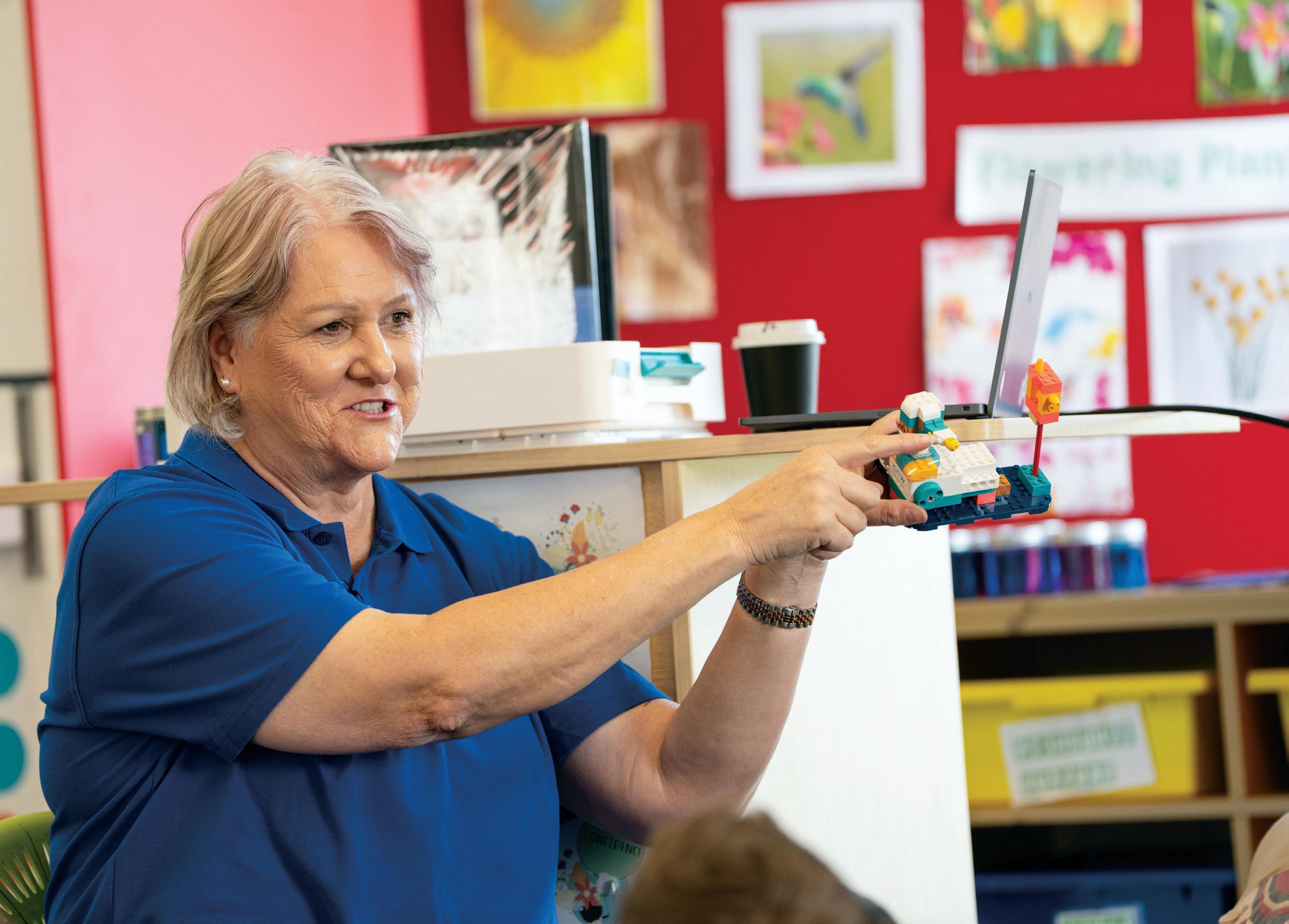
Across Australia, We Support Hands-On Learning (WESHOL) is helping to advance STEM education in schools by helping them reimagine learning by doing.
In collaboration with professional associations and STEM leaders such as LEGO® Education and
Modern Teaching Aids (MTA), WESHOL is driving a national movement to bring tactile, interactive learning experiences back into classrooms.
Led by Chair Ian Holden, a former principal with over forty years in education, WESHOL connects schools with the ideas, tools and partners needed to reintroduce active, hands-on approaches across the curriculum. Working
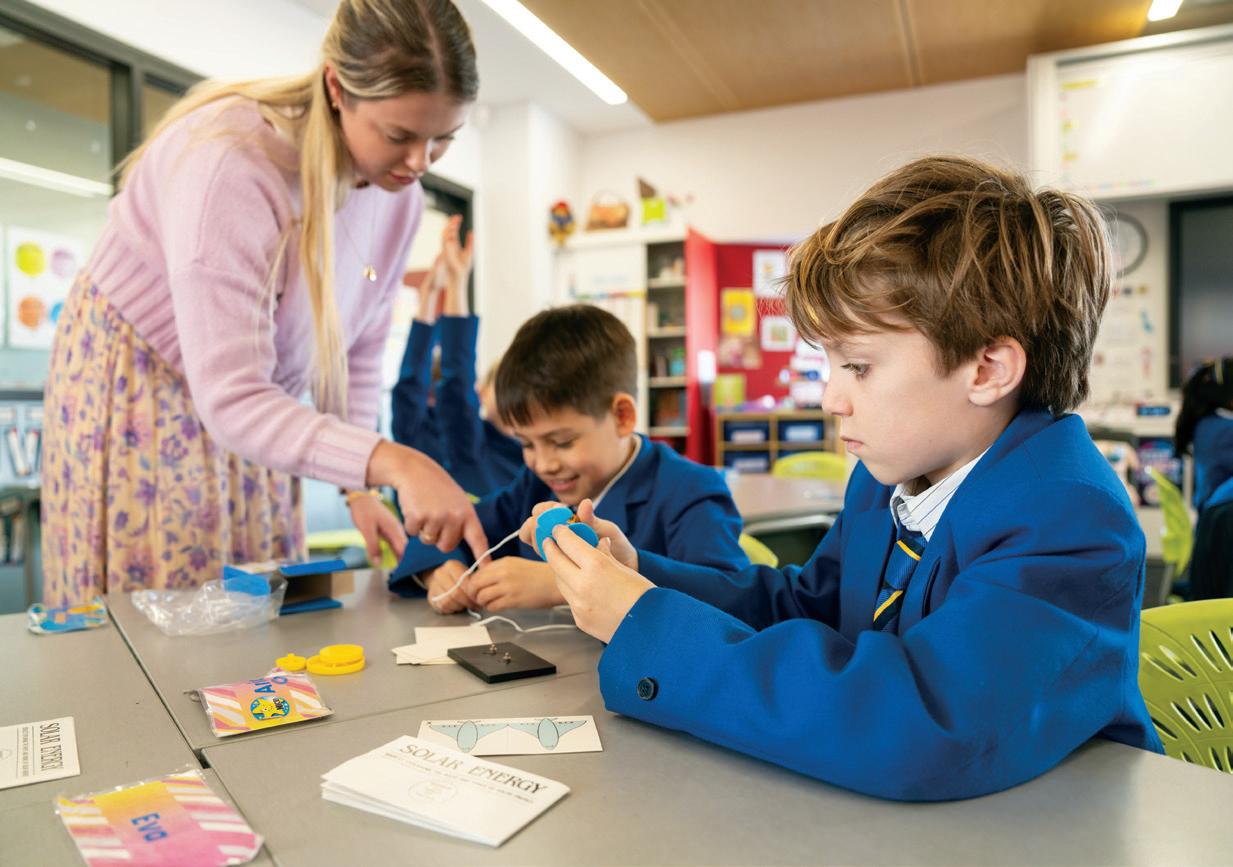
with teacher associations and industry innovators, the organisation showcases best-practice strategies that blend explicit instruction with rich, practical engagement.
Through its focus on experimentation, discovery and collaboration, educators have long seen that a handson approach sits at the heart of STEM learning. Whether
through robotics, engineering kits or interactive science resources from partners like LEGO® Education and MTA, practical engagement helps students explore, test and problem-solve in meaningful ways. These experiences reinforce what teachers already know: that active participation boosts curiosity and deepens understanding.
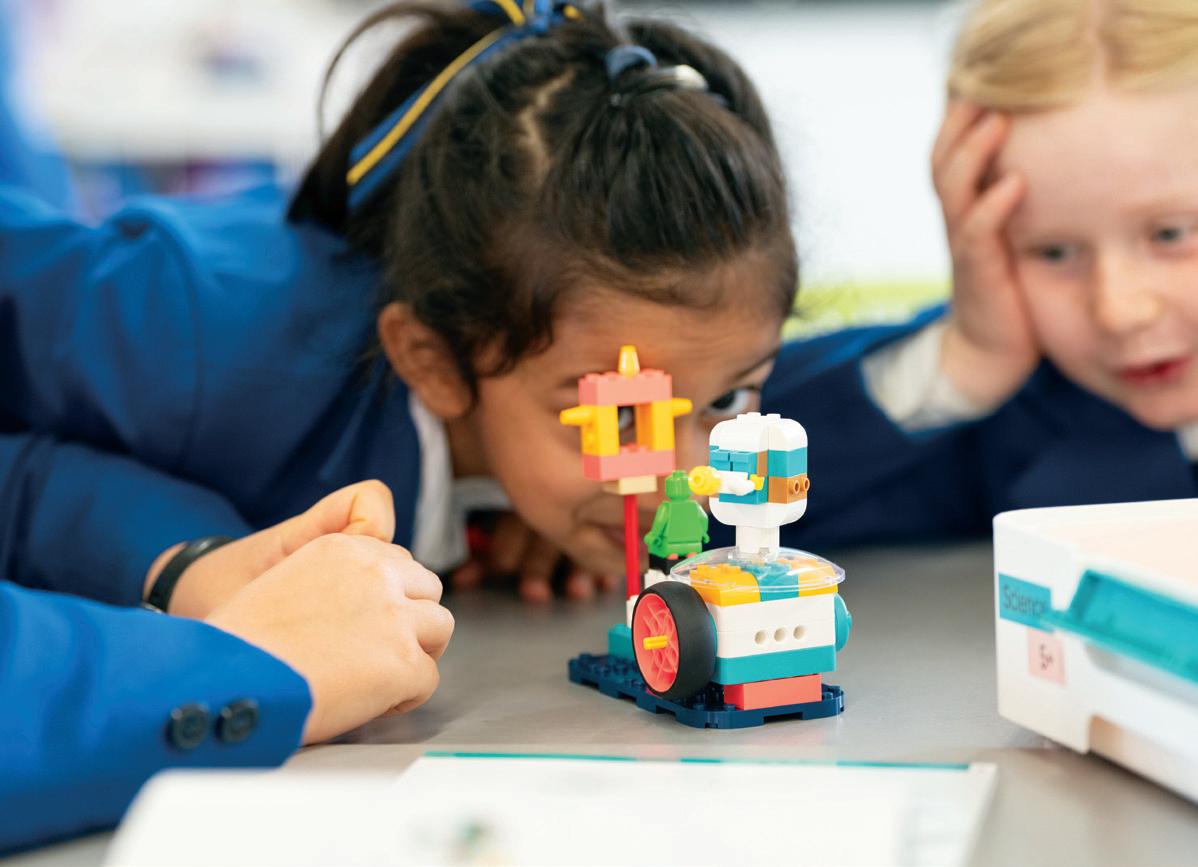
By Gemma Easton, Editor
At St Luke’s Grammar School, Dee Why, hands-on learning has long been part of the school culture. A recent case study with We Support Hands On-Learning (WESHOL) provided an opportunity for the school to be even more intentional –embedding tactile resources and explicit, hands-on lesson design across selected units and tracking the shift in student and teacher experience.
Melanie Bryden, Head of Junior School, St Luke’s Grammar School, Dee Why, said like many schools, teachers at St Luke’s had observed that student engagement was harder to sustain. “Attention spans were shorter, confidence varied widely and some students struggled to connect abstract concepts to real-world meaning.”
Student sentiment surveys conducted before the project reflected these challenges, with mixed responses around enjoyment, understanding and confidence in science and maths lessons.
Ian Holden, Chairman of We Support Hands-On Learning, said there are many benefits to hands-on learning. “Handson learning supports deeper understanding because it moves students from passive reception of information to active participation in the learning process. When students manipulate objects, build models, test ideas
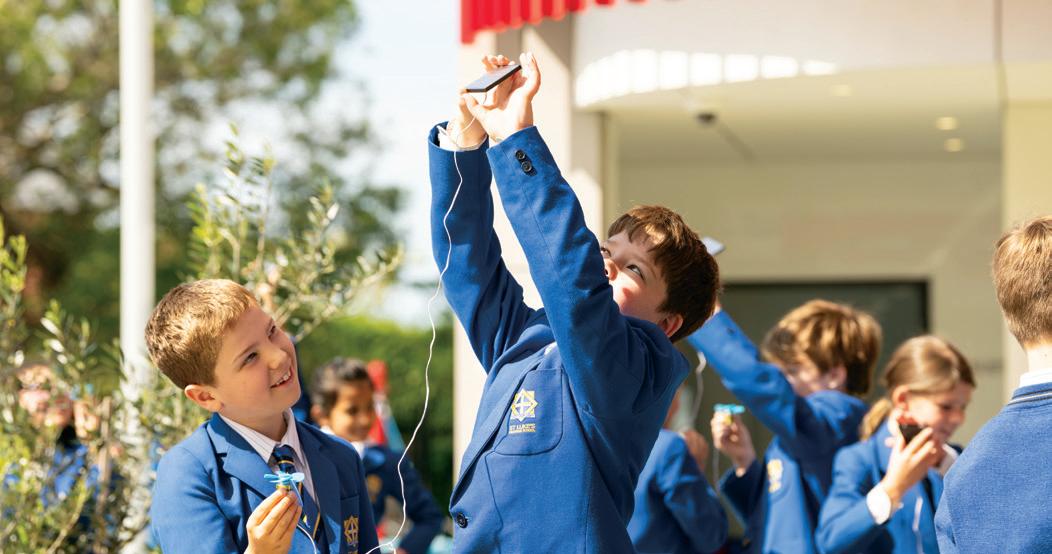
and collaborate with peers, they are engaging multiple cognitive pathways. This strengthens retention, improves conceptual understanding and builds confidence.”
Many classrooms today are now dominated by screens and external distractions. Tangible, tactile resources can help students to refocus, and anchor their attention. Hands-on resources create opportunities for students to slow down, think deeply and connect abstract concepts to real-world experiences.
“Research consistently shows that students are more likely to remember what they have physically experienced than what they have simply read or heard,” Mr Holden said. “Handson learning also supports diverse learning needs and provides alternative entry
points for students who may not always succeed through traditional approaches.
“Beyond academic outcomes, hands-on learning supports social and emotional development,” Mr Holden said. “It encourages collaboration, problem-solving and communication. It can also foster a stronger sense of belonging, particularly for students who thrive when learning is interactive and purposeful.
Across Term 3, 2025, teachers at St Luke’s were supported by WESHOL with curriculumaligned, hands-on resources, including LEGO® Education Science kits and maths manipulatives. Professional learning and in-class support helped teachers design lessons where students could explore concepts physically – building models, testing ideas and
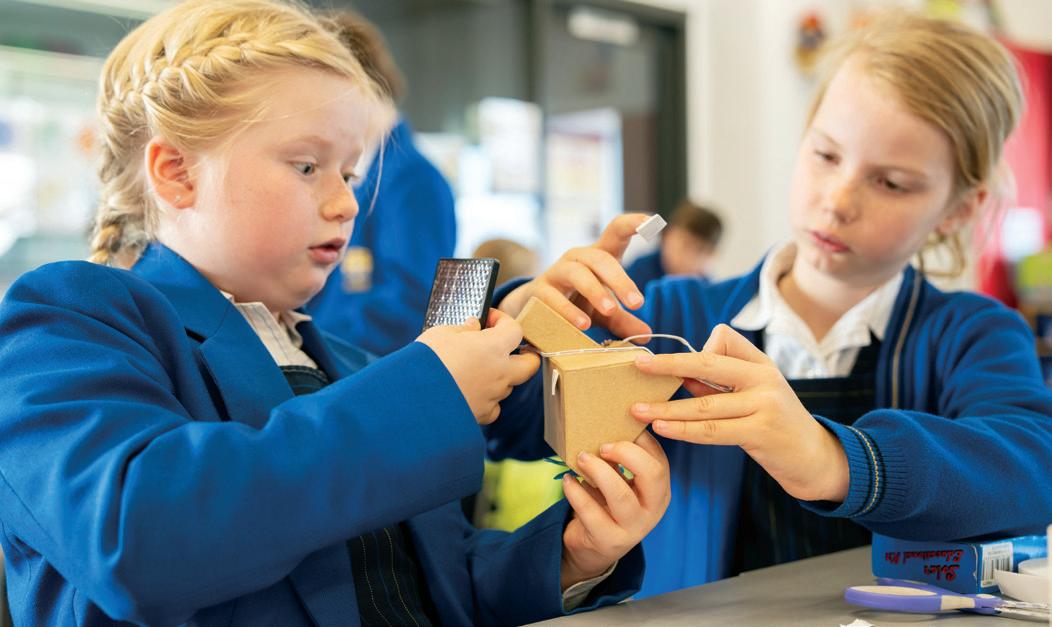
working collaboratively. “The focus was not on doing more, but on doing things differently – shifting lessons from passive consumption to active participation,” Ms Bryden said.
Mr Holden said the response from both staff and students has been overwhelmingly positive. “Teachers have reported noticeable shifts in classroom dynamics. Students who were previously quieter or less confident have been more willing to participate when given physical materials to work with. Teachers have also found it easier to identify misconceptions when students are modelling their thinking using concrete resources.”
In Year 6 Mathematics, for example, reintroducing manipulatives helped students articulate their reasoning more clearly and build confidence in problem-solving. In Year 3 Science, students described lessons as more enjoyable and said they found it easier to understand concepts when they could build and experiment rather than simply listen.
For Ms Bryden, the project has reinforced the importance of maintaining hands-on opportunities throughout primary school, not just in the early years. The evidence from St Luke’s suggests that even as learning becomes more abstract in the upper years, students continue to benefit from tangible, collaborative and experiential learning approaches.
For St Luke’s, the project validated the value of intentional, well-supported hands-on learning – not as an add-on, but as a foundation for meaningful classroom experiences.
Learn more about the WESHOL initiative at supporthandsonleaning.com.au
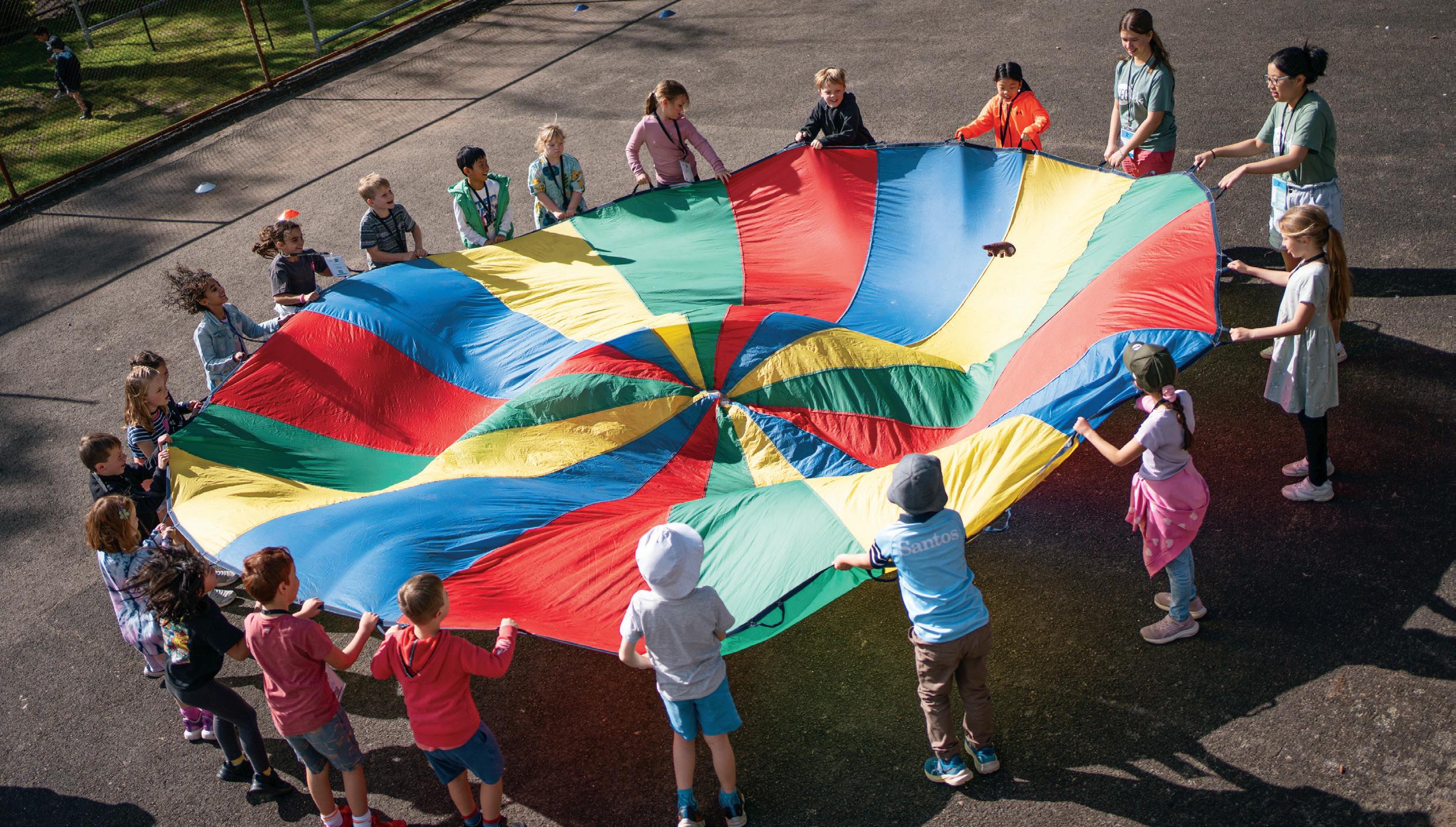
By Gemma Easton, Editor
School camps, excursions and incursions offer dynamic learning experiences.
Bringing concepts to life in ways that classroom activities can’t, camps, excursions and incursions help to cement and enrich learning. Offsite activities can help to develop students’ practical skills, encourage teamwork and exploration, and make abstract concepts real. Plus, camps and excursions are fun, which makes the learning even more memorable!
External learning activities like camps, excursions and incursions expose students to an exciting range of activities, inviting them to be active participants in their learning, rather than passive observers. Hands-on learning has been shown to correlate with
strong knowledge retention, significantly more than when lessons are delivered via lecture or demonstration.
Engaging multiple senses at once, hands-on activities commonly experienced during school camps and excursions, cater to different learning styles, including auditory, visual and kinaesthetic leaners. When we connect our senses—smell, sight, taste, touch, sound—in learning experiences, we make sensory memories, and form stronger neural connections to the subject. Engagement too is boosted through hands-on activities. We know that students can tune out when being talked at in the classroom, but hands on activities offered at camps and excursions keep them engaged in what they are learning.
For some students, regular classroom learning doesn’t provide opportunities to regularly excel. Activities on camps and excursions, though, can present new ways for
students to recognise and celebrate achievement.
Camping, or the activity your class is participating in, might be something a student is confident in and feels comfortable with. Or, it might allow them to showcase skills not regularly on-show in the classroom. Whatever the reason, it's always wonderful when students are confident, capable, and proud of their achievements.
Camps, excursions and incursions are excellent forums for students to refine soft, transferable skills.
Safe risk taking, like rock climbing or navigating a high ropes course, can help students push their limits and build selfconfidence and self-esteem.
While on a camp or excursion, students might be faced with obstacles or challenges they could encounter in the real world. Here, they will have the space to work through these
difficulties in a safe environment, developing their problem-solving skills. This will leave students better equipped to handle future problems both in the classroom and in their daily life.
Particularly for younger students, turn-taking can be mastered while on school camps or excursions. Waiting in line to be served a meal, or to interact with an exhibit at a museum, helps students develop patience and respect.
Leadership qualities can also be revealed and refined during external learning activities. Not all students are comfortable leading in conventional ways, however camps and excursions may give them the opportunity to volunteer for a job, or take the lead in a group challenge. Students on camps or excursions must also act as ambassadors for their school. Presenting themselves with pride, listening with respect, and acting with integrity can all be built-in to preparations for an external learning activity.
Teachers are very clever, but they might not always be the experts. Guiding students to canoe across a lake, demonstrating the wingspan of an albatross, or explaining the intricacies of historical artefacts might be better left to someone with specialised knowledge.
Camps and excursions will often have staff who are experts in their fields, with more extensive knowledge on a subject area than classroom teachers might have. This gives students the opportunity to ask questions and deepen their understanding of topics. Particularly for senior students, seeing professionals work in unexpected fields, for example leading adventure activities at a school camp, conducting an orchestra, curating an art collection at a gallery, or caring for wildlife at a zoo, can help students imagine their own careers. With school providing limited exposure to the breadth of career paths students might take, witnessing these professions first-hand can
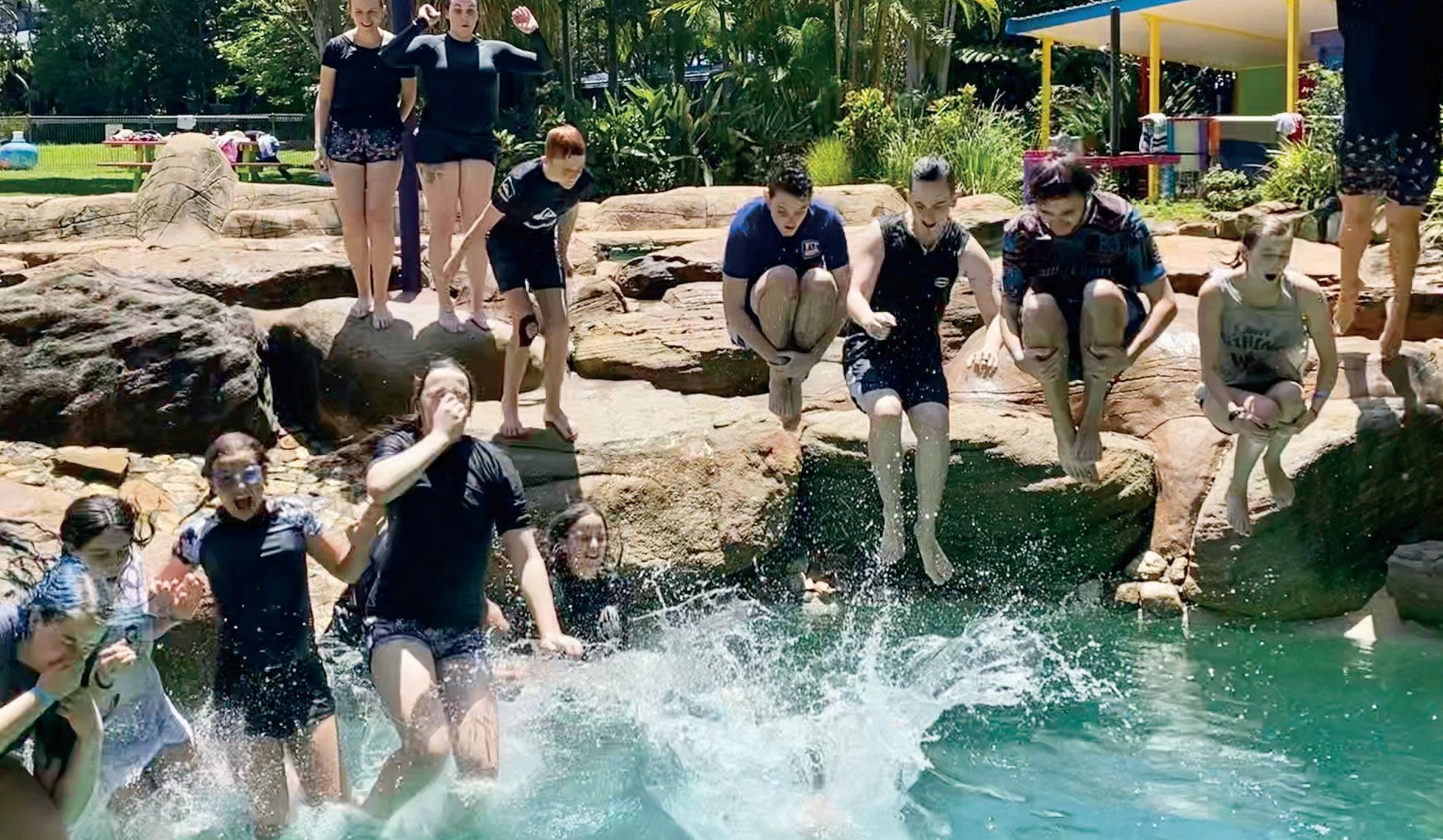
help students expand their own goals and ambitions.
Whether it’s adventure activities, team building, a rest and reset or intensive focus on a learning area, there is a school camp to suit your students' needs. More than just a trip away, school camps can help students to focus without the
Queensland Conference & Camping Centres (QCCC) has been delivering camp experiences for Queenslanders for 99 years, with the past five decades focused on partnering with schools to provide purposeful outdoor education. That history gives us both depth of experience and a clear understanding of how school camps need to work today.
Across our sites at Brisbane, Tamborine and Mapleton - including the award-winning Triballink Cultural Activities Centre at Mapleton - and with the recent addition of Cobb and Co Nine Mile Camping Grounds, QCCC off ers schools a range of environments designed to support learning beyond the classroom.
Our programs are intentionally structured to build resilience, teamwork and leadership, while
aligning with curriculum outcomes and student wellbeing priorities. Drawing on decades of feedback from teachers and principals, QCCC continues to innovate carefully, delivering outdoor education that is well-led, safe, and genuinely supports learning long after students return to school.
For more information visit: www.qccc.org.au.
outside distractions of home life, after-school commitments, and digital distractions.
Set in the stunning World Heritage-listed Blue Mountains, StayKCC offers school groups an unforgettable blend of education, adventure and connection. Programs are designed to complement curriculum outcomes while fostering teamwork, resilience and a love for the outdoors.
From multi-day camps packed with bushwalking, team challenges and nature-based learning to the new Day Activities Packages, schools can now enjoy a full day of immersive experiences in the Blue Mountains without an overnight stay. Perfect for day excursions, this program includes hands-on activities that engage students physically and mentally, making learning come alive in the great outdoors.
StayKCC is excited to introduce a range of new programs designed to support students through key stages of their school journey.
Our Life Ready Camps provide Year 11 students with meaningful, practical learning experiences that help prepare them for life beyond school, blending teamwork, resilience and personal growth.
For senior students, our Year 12 Study Groups o er a focused environment ideal for revision, collaboration and exam preparation, supported by
comfortable accommodation and dedicated study spaces.
We’re delighted to welcome Band Camps to StayKCC, giving school and community music groups the space to rehearse, connect and refi ne their performance goals in a peaceful bushland se ing in the heart of the World Heritage listed Blue Mountainsculminating in a memorable fi nal performance at The Lookout.
With fl exible packages, onsite catering and access to wide open spaces, StayKCC is commi ed to delivering enriching, memorable and well supported programs for education, youth and community groups.
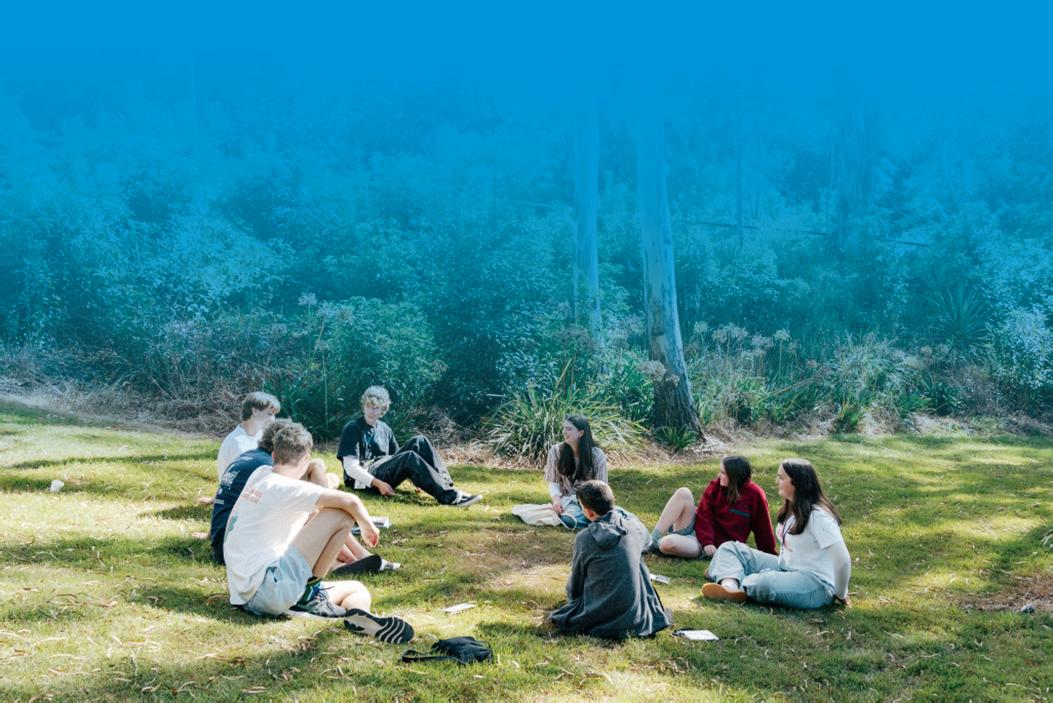
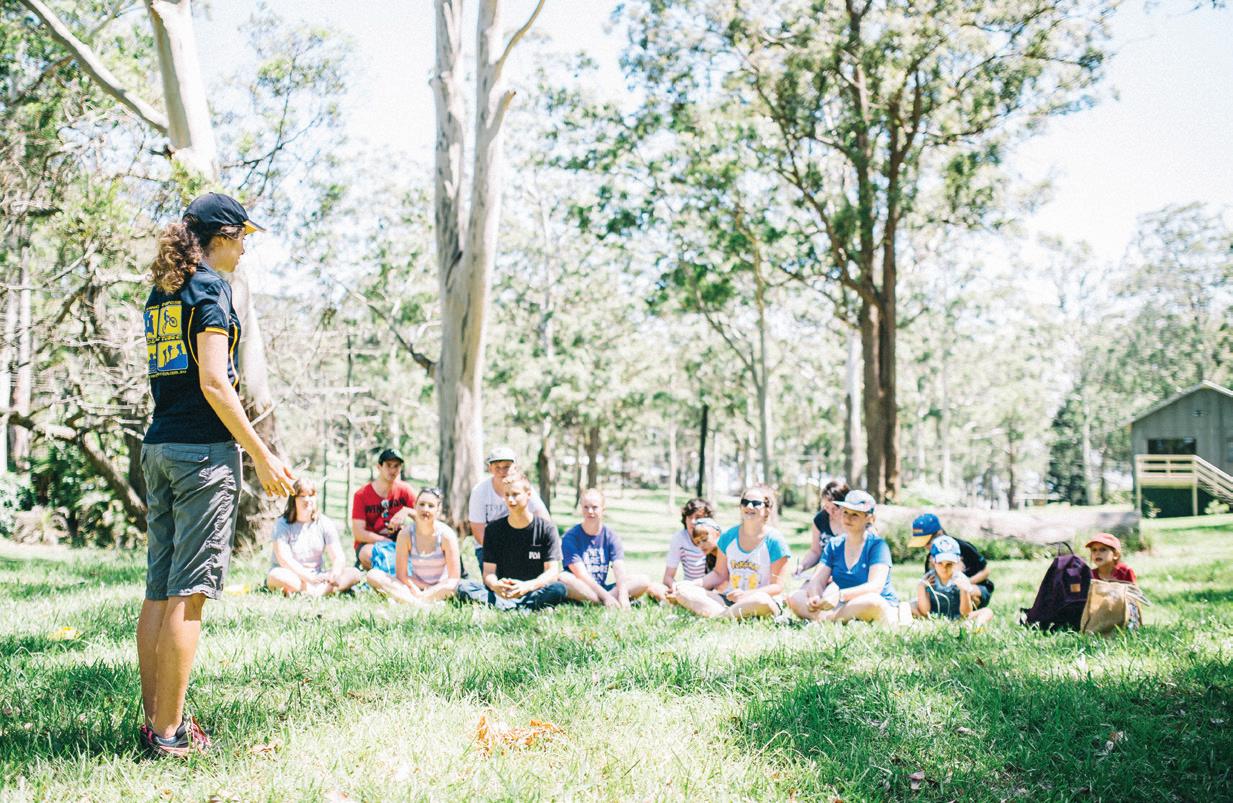

For Stage 3 students, StayKCC is excited to introduce the three-day, two-night Bathurst Goldfields Packages. These programs combine the rich history of the Australian gold rush with interactive experiences that meet the requirements of the History syllabus.
Students will explore Bathurst’s heritage sites, connecting the past to the present through engaging, curriculum-aligned experiences. Complementing a day of fun-filled learning, groups can choose from a comprehensive selection of activities-adding adventure
and exploration to their time with StayKCC.
With comfortable dorm-style accommodation, nutritious catering and a dedicated team to support your group, StayKCC is more than a camp - it’s a place where students grow, discover and thrive.
Queensland Conference and Camping Centres (QCCC) is one of Queensland’s largest and most established providers of school camps and Outdoor Education, with an enviable reputation built over almost 100 years of operation.
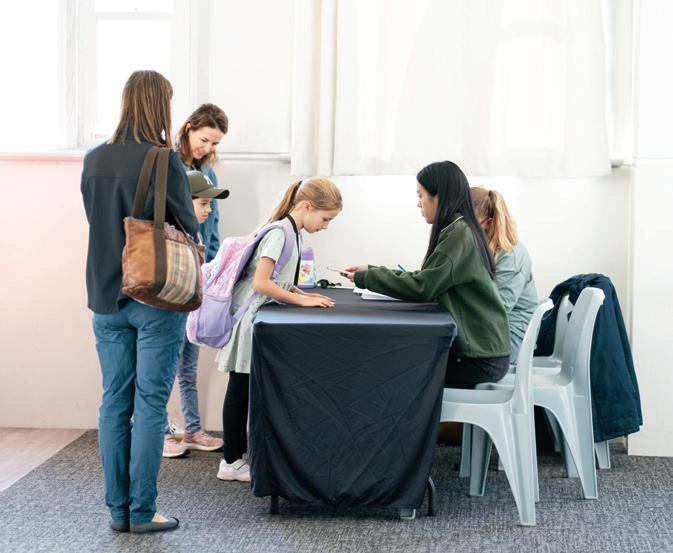


QCCC operates three purposebuilt venues across South East Queensland: QCCC Brisbane in Brookfield, QCCC Mapleton in the Sunshine Coast hinterland, and QCCC Tamborine on Tamborine Mountain. Each site offers quality accommodation, catering, and dedicated program spaces, with the capacity, flexibility, and experience to host some of the largest school cohorts in Queensland.
Beyond venue-based camps, QCCC also delivers expeditionstyle and journey-based programs, allowing many schools to engage in sequential
StayKCC provides a wonderful learning environment and an unforgettable experience for school groups and camps, offering an unmatched and diverse range of facilities, surrounded by the natural beauty of the World Heritage-listed Blue Mountains.
Flexible accommodation options.
Indoor and outdoor programs that are designed to inspire and engage.
Variety of event spaces and on-site catering. We also welcome: Day Excursions, Life Ready Camps, Year 12 Study Groups and Band Camps.


Outdoor Education experiences across multiple year levels. This approach enables students to progressively build resilience, leadership, teamwork, and personal responsibility, rather than viewing camp as a one-off experience.
Outdoor Education programs are delivered by qualified, experienced staff and aligned with curriculum outcomes, while prioritising student wellbeing, safety, and challenge by choice. Programs range from introductory camps through to advanced expedition and

Our programs are thoughtfully designed to provide a safe, supportive and inspiring environment for growth and connection.


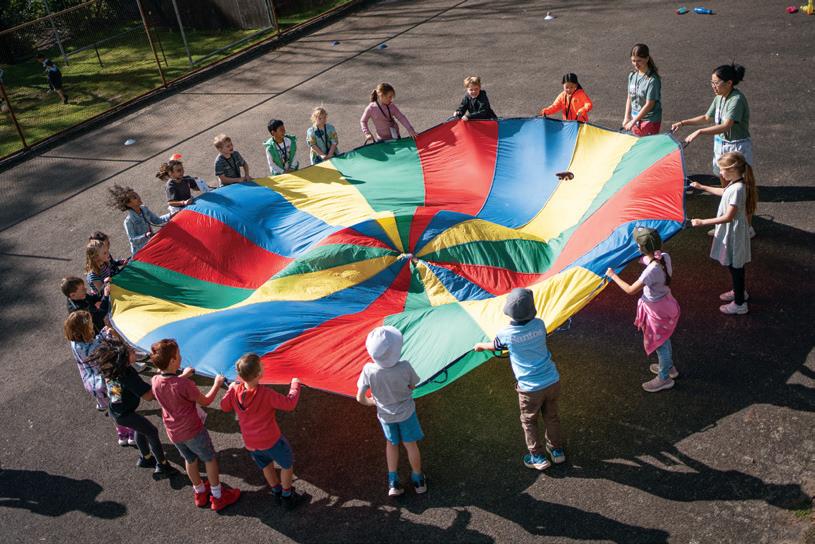





survival-based experiences for older students.
QCCC has recently strengthened its long-standing Survival Camp program through the use of a dedicated bush-based environment at Cobb and Co Nine Mile Campgrounds, reinforcing its commitment to authentic, immersive outdoor learning.
Canberra Accommodation Centre (CAC) is a large facility located minutes from the city centre. The central location is perfectly suited for groups who seek to visit Canberra’s landmarks. Put simply, less travelling means more exploring.
The building has a number of floors dedicated to the ever-growing demands of group accommodation. Security is important, so floors can only be accessed by the groups using them.
Food service is also important and is a specialty of CAC. The fully qualified chef takes pride in his craft and is eager to show his skills. The large dining hall can accommodate over 100 people to allow groups to get in, eat, then
go out to enjoy their activities.
The CAC team know the effort teachers and drivers make to provide a positive experience for their kids, so work hard to keep them comfortable and happy with extra attention such as dedicated apartments for drivers and single nonshared rooms for teachers.
If you’re looking to bring a group to Canberra and need experienced accommodation and food services, the team at Canberra Accommodation Centre will help reduce your burden so you can focus on planning the fun parts of the trip.
Set amongst 170 acres of natural bushland, Kiah Ridge Christian Conference Centre offers competitively priced stays to schools, churches, ministry organisations and community groups of up to 140 guests. The venue is located centrally to Sydney, Canberra and the Illawarra and includes quality bunk bedded accommodation rooms with internal bathrooms, excellent food service, all day refreshment station and a range of recreational and sporting facilities.

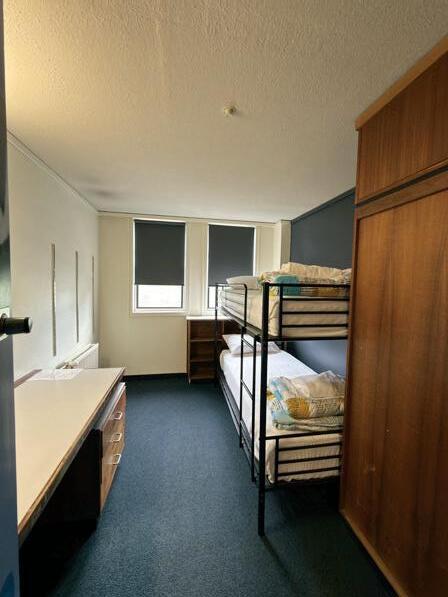
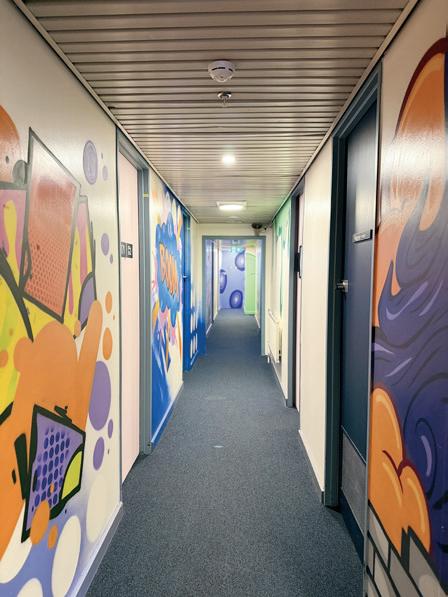
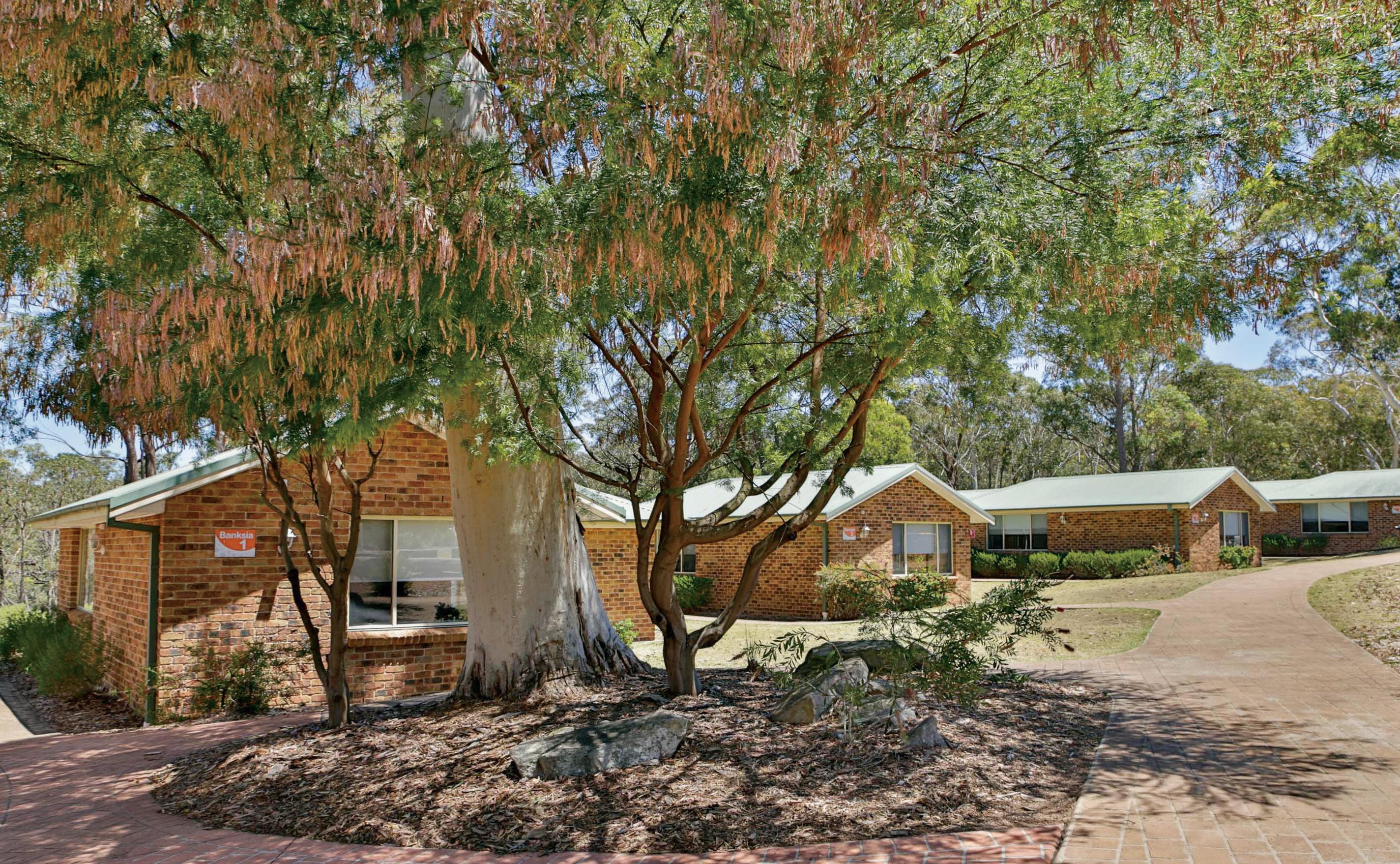
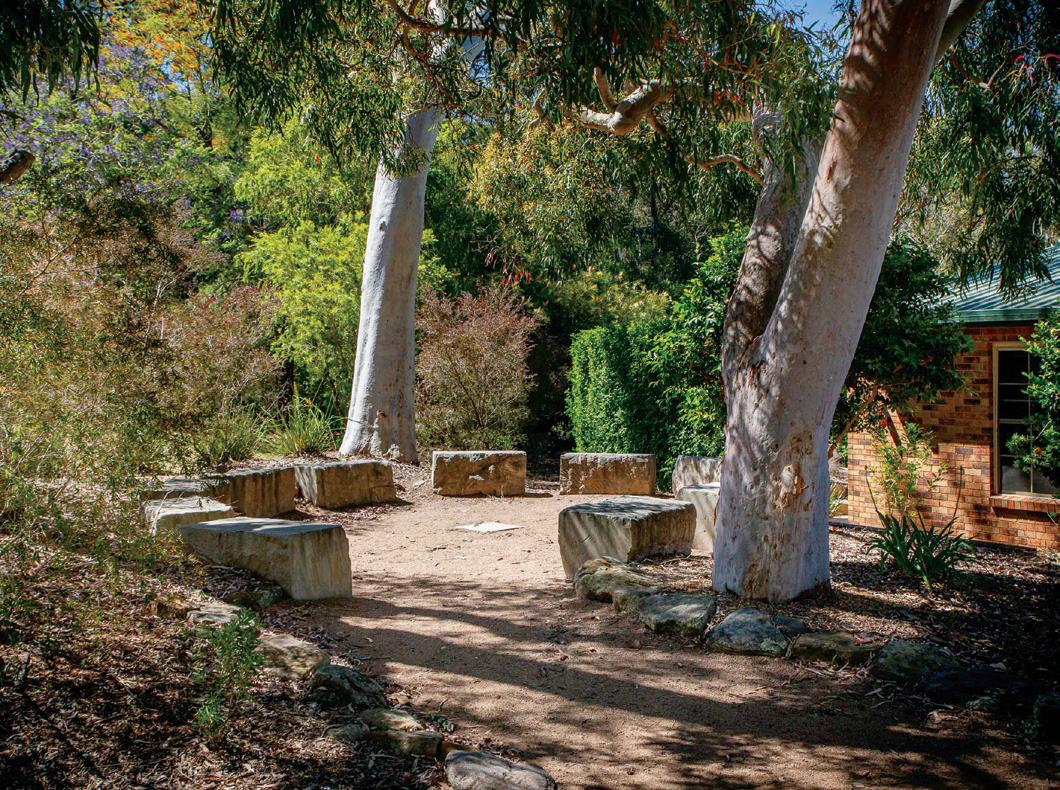
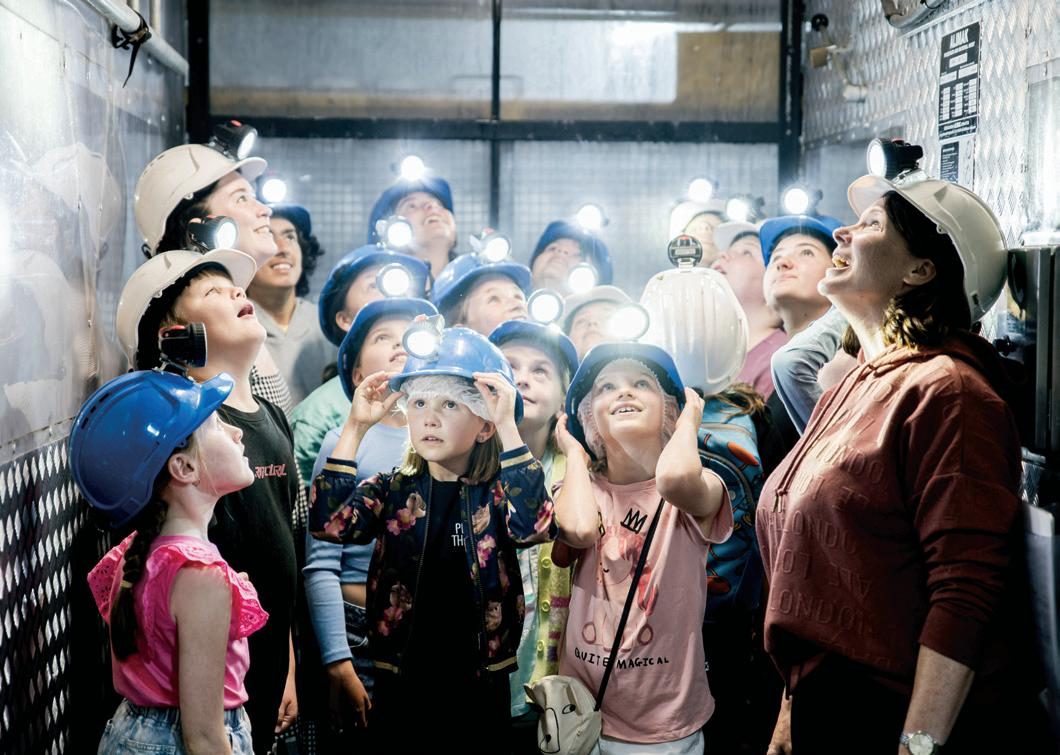
Multiple well-equipped conference and meeting spaces provide for a variety of school stay formats including spiritual and self discovery programs, study or creative camps.
The friendly team provide booking and organisation support during the lead up to your booking and a dedicated group host is available throughout your stay.
School excursions might involve a whole year level or cohort, or a specific group or team. Many opportunities will arise across the year to take your students
offsite, so make sure excursions best align with your learning outcomes. Visiting a museum or gallery, exploring cultural sites and historical buildings, enjoying a live theatre or musical performance, or touring an iconic sporting facility can all provide worthwhile learning experiences.
Bring Victoria’s golden heritage to life with an excursion to Bendigo, once the richest gold-producing city in the world. This remarkable legacy lives on, and students can experience it first-hand through Bendigo Heritage’s immersive and educational excursions.
Bendigo Heritage coordinates school group visits to both the iconic Central Deborah Gold Mine and Bendigo Tramways.
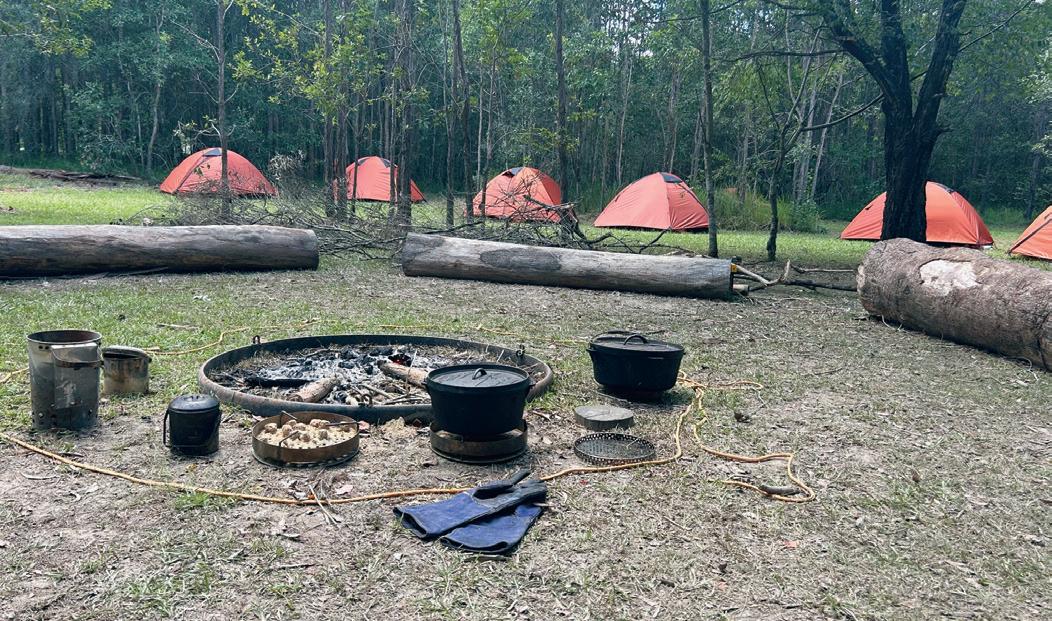
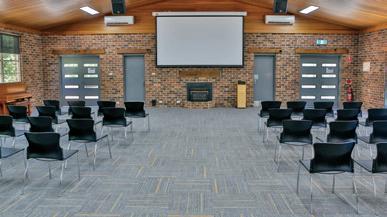
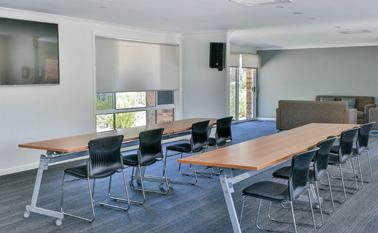
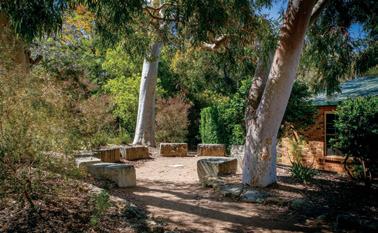


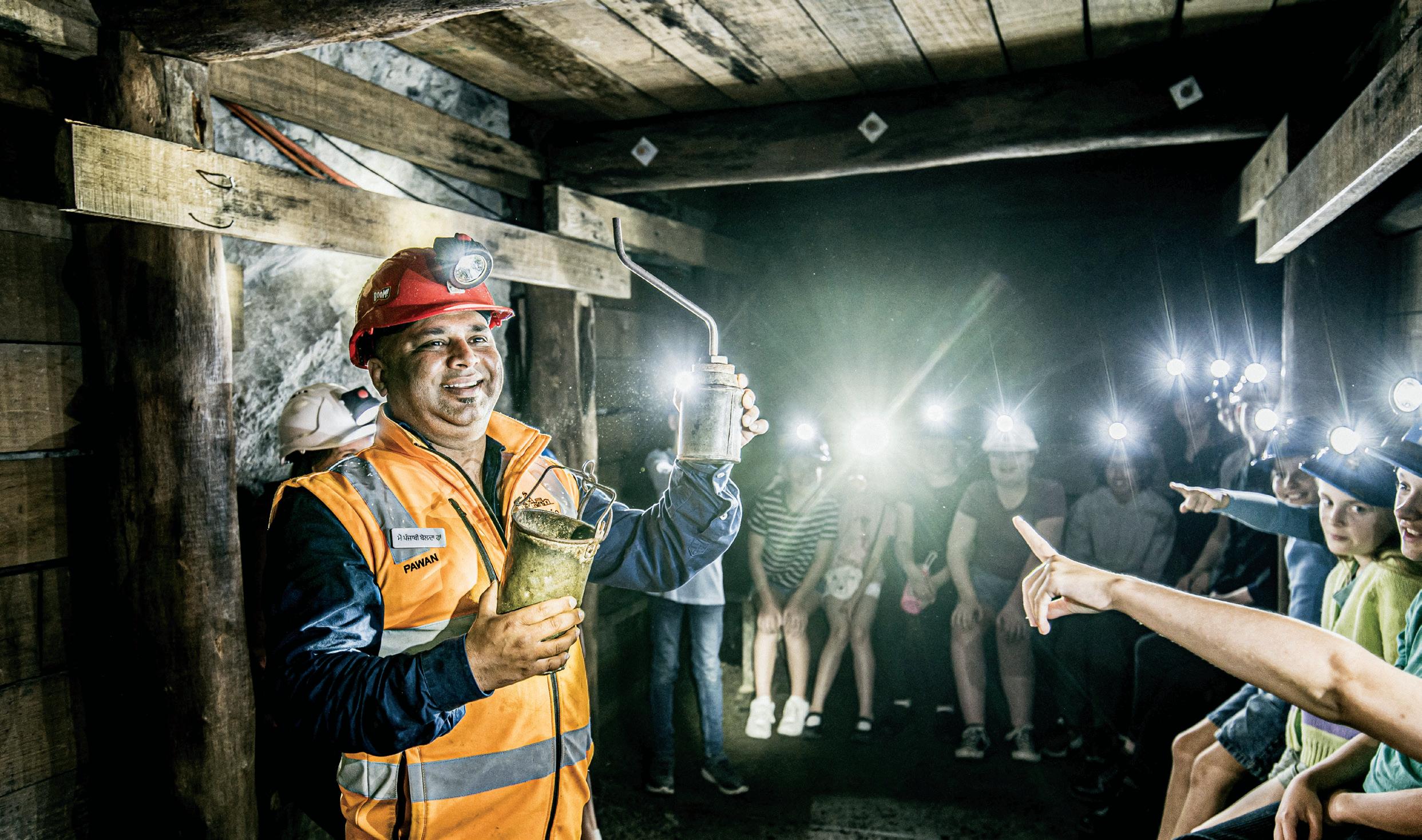
At Central Deborah Gold Mine, students descend 61 metres underground, stepping into the shoes of past miners to see how 929kg of gold was extracted. Above ground, they’ll explore the original buildings and machinery essential to the mine’s operation, including the Blacksmith’s Shop, First Aid Quarters, Carbide Lamp Room, Engine Room, and Gold Treatment Area. Afterwards, students can try their hand at panning for real gold.
At Bendigo Tramways, students board a Vintage Talking Tram to uncover Bendigo’s fascinating history and discover the city’s key landmarks and monuments.
Together, these experiences provide rich cultural and
historical context that connects directly to classroom learning.
Bring history to life with immersive, curriculumaligned programs designed to captivate and educate. With custom itineraries, Bendigo Heritage offers a safe, engaging, and unforgettable learning adventure for school groups.
Sometimes, leaving school for a camp or excursion isn’t possible. Incursions, where providers bring shows, exhibitions and other learning experiences to your school, offer many of the benefits of an offsite adventure without the organisational logistics.

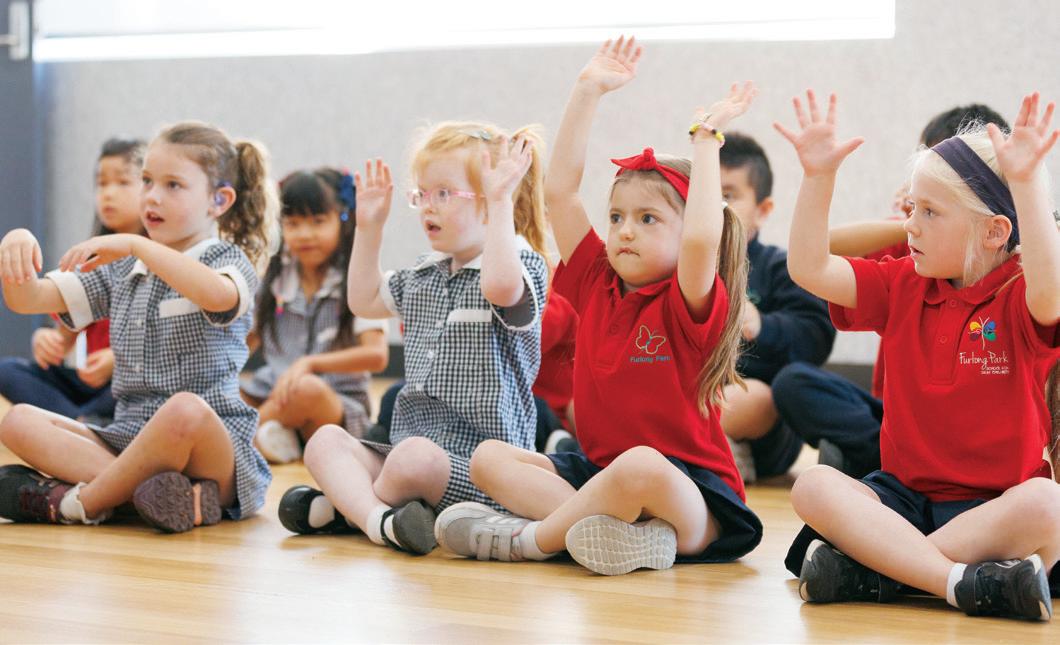
Like camps and excursions, incursions can be tailored to suit a range of different age groups or subject areas. Often, an incursion can be enjoyed by many groups in one day, extending the learning benefits to more students.
Bring the thrill of live performance directly into your school with Musica Viva Australia In Schools, an all-inclusive touring program offering 14 culturally and musically diverse shows featuring Australia’s finest performers, available nationally in 2026. Each booking includes at least 12 weeks of curriculumaligned lesson activities, as well as comprehensive teaching resources designed to enrich classroom music and
cross-curricular engagement. Teachers also benefit from online professional development webinars, where musical specialists guide you through learning activities and tools, and introduce you to your touring ensemble.
With financial assistance available for small, low-ICSEA, or remote schools via the Equal Music program, MVAIS ensures that access to quality music education is equitable and inspiring for all students.
Whether it's telling stories, creating songs, learning new languages or making new friends, Musica Viva Australia In Schools 2026 has something for all schools.

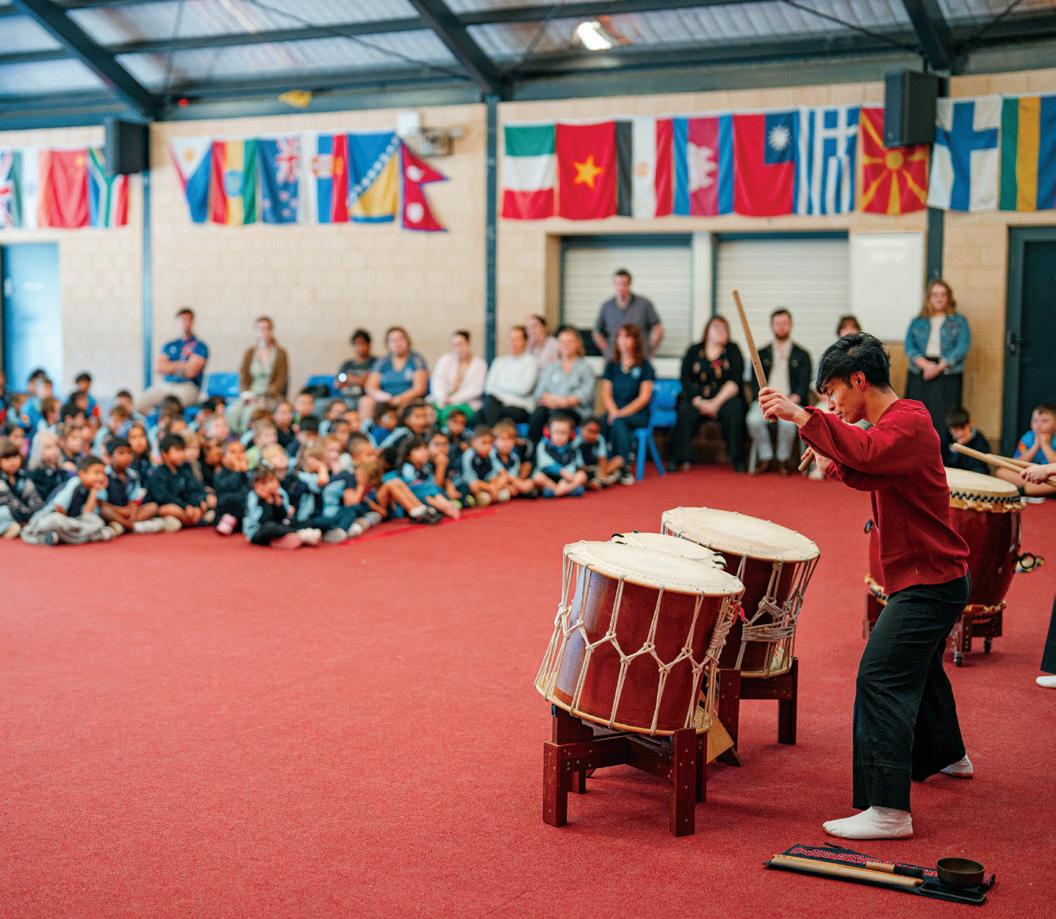
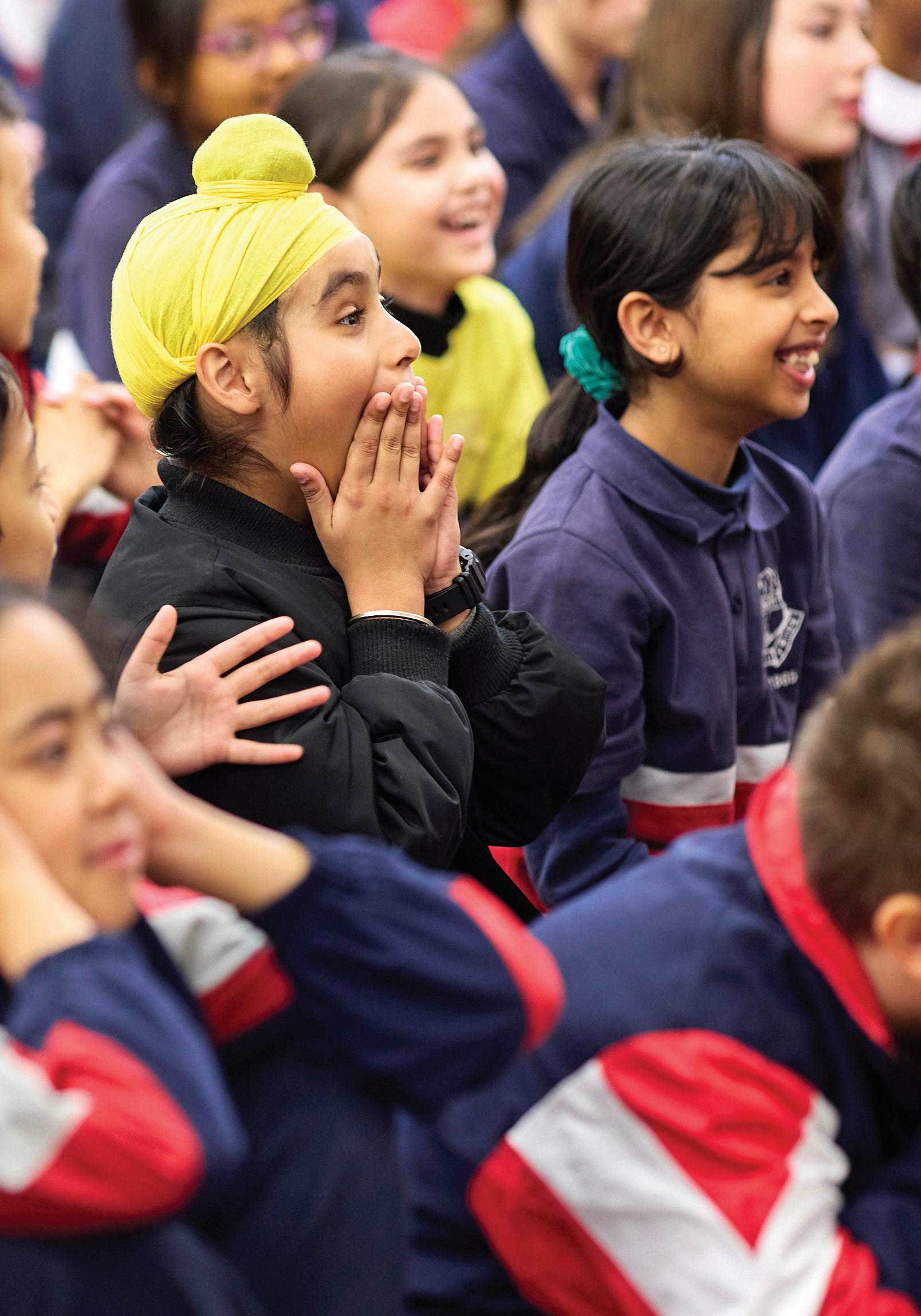
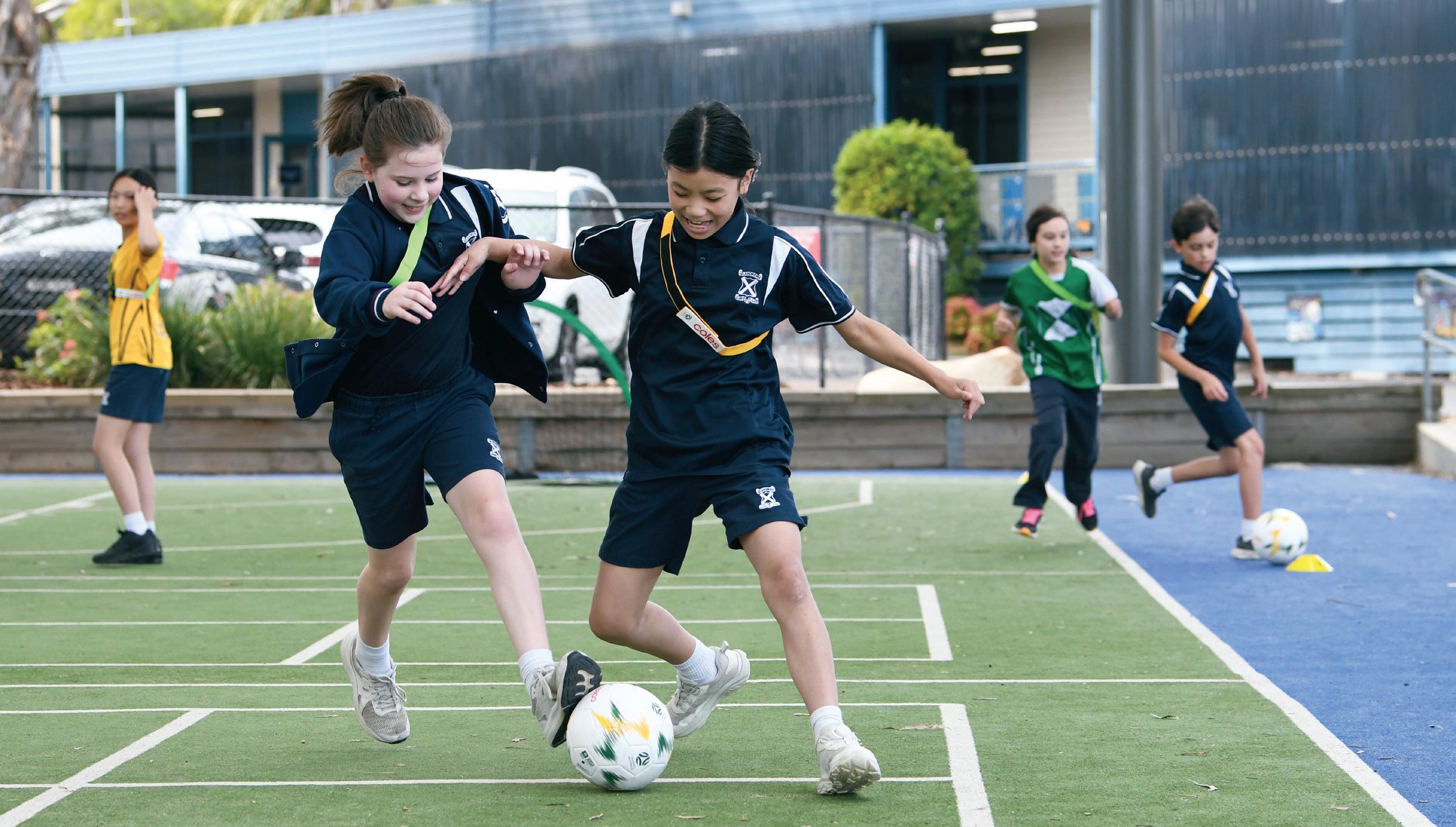
By Milly Fullick, Industry Reporter
School sports have many tangible benefits for students, from increased physical wellness and reduced risk of health complications to better mental health and wellbeing.
Studies have found that secondary school students who participate in sports have improved attendance, behaviour outcomes and academic performance than their non-participating peers. Of course, school sports also provide valuable opportunities to advance skills; athletes like Michael Jordan, Adam Goodes and Alyssa Healy started or developed their sports at school.
But some students are held back from participating through no fault of their own. Research
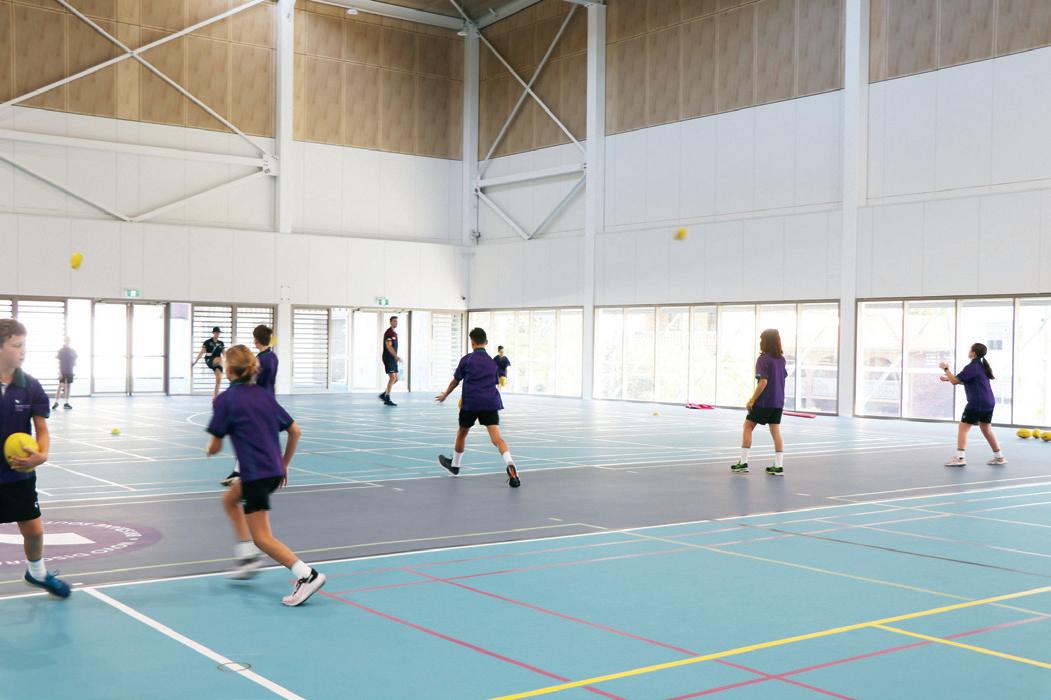
has shown that three of the biggest reported barriers in sport participation are cost, lack of opportunity and negative previous experiences.
Cost is a factor for many Australian families; the average 15- to 17-year-old participating in extracurricular sport spends around $1000 per year in fees including equipment, coaching and transportation. Costs can be mitigated for
students by providing schoolfunded transportation and equipment, and signposting students to vouchers and schemes where available.
The Australian Sports Commission (ASC) Sporting Schools program also provides schools with targeted funding to increase participation for students in Years 7 and 8.
Providing students with plenty of opportunities to get involved
in school sports can help them to find physical activity they enjoy. While providing a wide range of activities at different ability levels can be challenging, it’s possible to give students options for different sports at a beginner level.
Alongside more traditional offerings like swimming, soccer, netball and tennis, students may enjoy trying dance, disc golf, archery and yoga as alternatives. Providing a range of competitive and non-competitive options gives the best odds of finding something for everyone.
Coaches and teachers also play a significant role in students’ attitudes to physical activity. Teachers across the curriculum can model positive attitudes to health, exercise and teamwork; the messages that students hear from adults on these topics can impact their own perceptions. All staff can do their part by showing students that physical activity can be enjoyable and rewarding for everyone.



At the core of Football Australia’s school offerings is the Sporting Schools program. Programs are structured with a strong focus on participation over competition to ensure every student can take part, regardless of ability, background, or previous experience. Small-sided games, flexible rules, and skill-based activities create welcoming environments where students feel safe to try, learn, and succeed.


Delivered in partnership with Member Federations nationwide, Sporting Schools programs support the development of fundamental movement skills such as balance, coordination, and agility.
An exciting new initiative designed to strengthen connections with school communities while supporting and rewarding schools that foster a love of football.
Recognising the demands on teachers, Football Australia provides curriculum-aligned lesson plans, practical delivery guides, and digital resources that are easy to use. These materials allow teachers to confidently deliver football sessions without needing specialist coaching knowledge, reducing preparation time while maintaining quality learning experiences.


CELEBRATE THE AFC WOMEN’S ASIAN CUP AT YOUR SCHOOL
Perfect to use in the classroom, at home or for independent learning, the AFC Women’s Asian Cup School Activity Book explores the diverse cultures of Asia and the growing global impact of women’s football.
























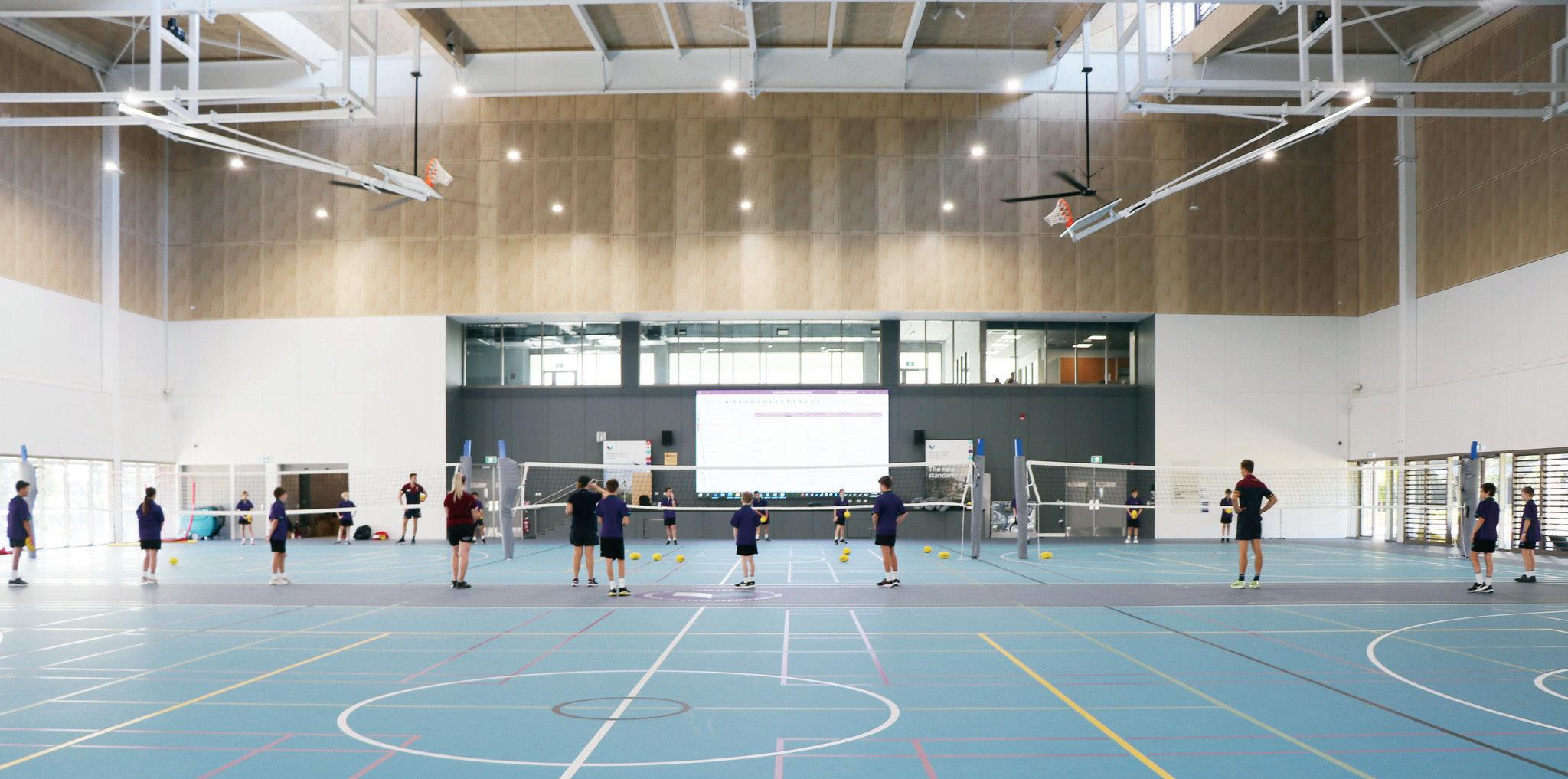
Coaches can help boost participation through their own understanding of inclusivity, especially with regard to Culturally and Linguistically Diverse (CALD) students. Creating a safe, happy, and inclusive culture within lessons or coaching sessions begins with laying out the basics in an accepting, open-minded way. CALD and other students may not have experienced sporting environments
before, so a focus on basics including teamwork and communication skills ensures all players can give their best.
For inspiration on where to go next, School News spoke to some sporting organisations about what they can offer schools.
With a 37-year history and over 1.5 million square metres of sports flooring installed in Australia, Aura Sport is
recognised for its longstanding commitment to quality, safety and innovation. Aura has built a reputation for delivering trusted solutions that support active school communities and inspire confidence among educators and students.
Aura collaborates closely with education departments in all Australian states and territories. Their flooring products are widely installed in a diverse range of schools,
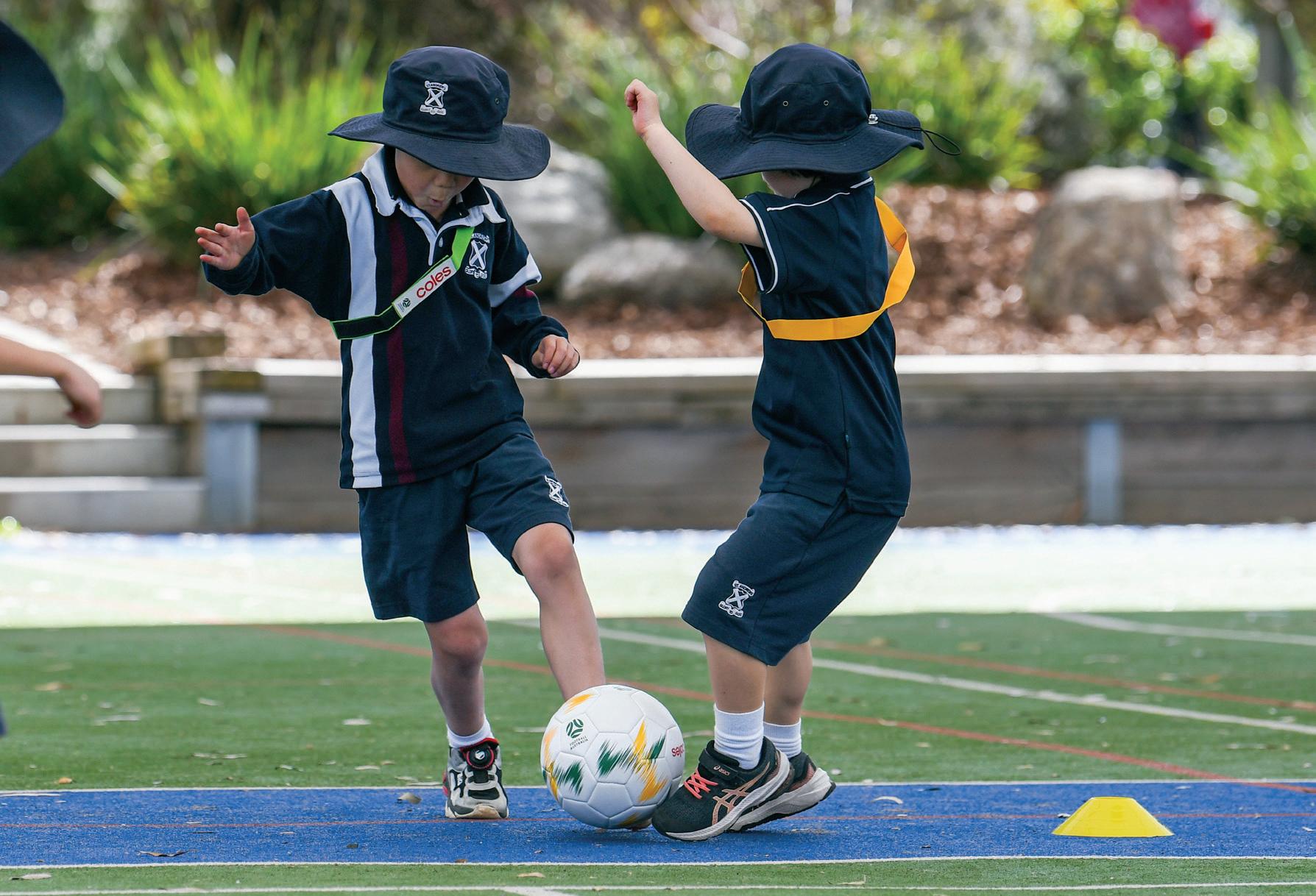
from metropolitan vertical schools to regional community settings, reflecting Aura’s strong national presence and reliability. These partnerships ensure that schools benefit from consistent standards in safety and performance, wherever they are located.
As industry innovators, Aura Sport is committed to moving beyond conventional solutions. They continually invest in new materials, technologies and design concepts to provide schools with environments that adapt to modern educational needs and sporting demands.
Aura’s forward-thinking mindset drives the sector towards higher standards of excellence. Most recently Aura is leading the way integrating neuroaffirming design principles into every project, ensuring that school spaces support student wellbeing and promote inclusive participation. Their approach creates environments where all students can thrive physically, emotionally and socially, contributing to a positive school culture and enhanced learning outcomes.
Through its rich legacy, national partnerships, innovative practices and neuro-affirming design, Aura Sport plays a vital role in boosting engagement in sport and physical activity. Schools partnering with Aura benefit from environments that inspire every student to participate, succeed and flourish.
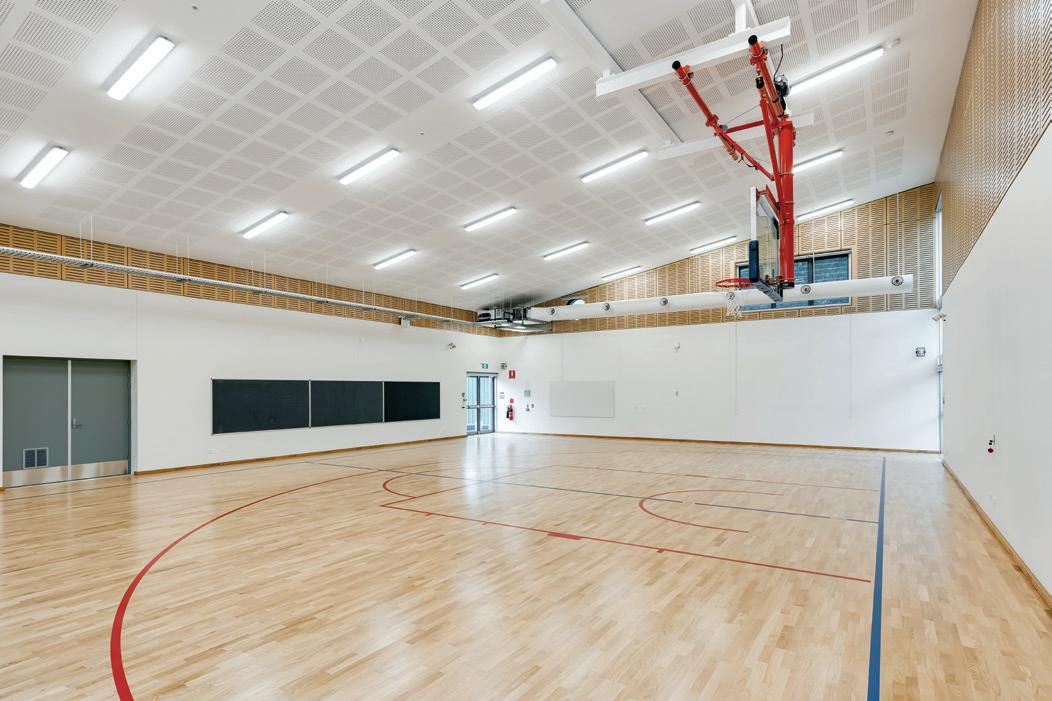
Football Australia, in partnership with its Member Federations, recognises schools as the perfect place to spark a lifelong love of football. By working with teachers nationwide, the goal is to make football a safe, inclusive, and fun part of everyday school life.
School-based programs focus on participation rather than competition, helping students develop basic skills, enjoy regular game time, and build confidence—especially for those new to the sport. Teachers are supported with
curriculum-aligned lesson plans, practical tips, and digital resources, making it easy to bring football into Health and Physical Education lessons, even without specialist knowledge.
With the CommBank Matildas set to play on home soil at the AFC Women’s Asian Cup 2026™ and the CommBank Socceroos heading to the FIFA World Cup 2026™, the year ahead is also full of learning opportunities inside the classroom. These tournaments provide a real-world context for teaching geography, history, and cultural diversity.

School sports provide valuable opportunities to advance skills
Students can explore continents, climates, and time zones, while also learning about different cultures, flags, and traditions.
By linking football to the world beyond the classroom, teachers
can help students see how sport connects people, places, and history. These tournaments become more than a game—it’s a gateway to understanding our interconnected world while inspiring lifelong curiosity.


















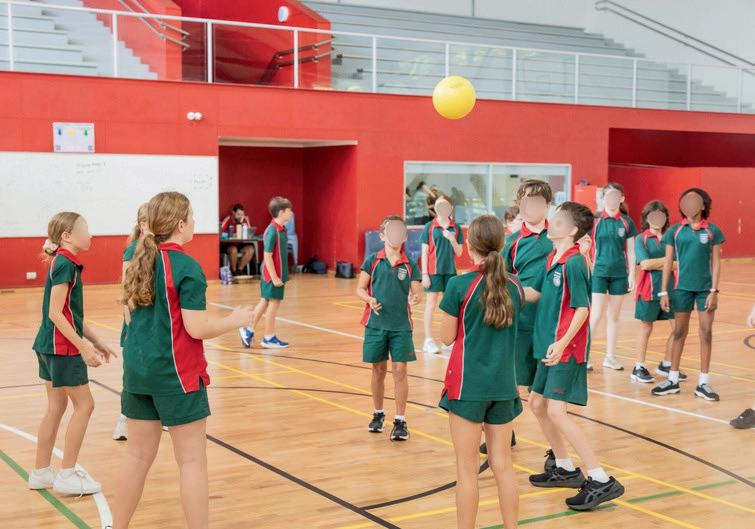
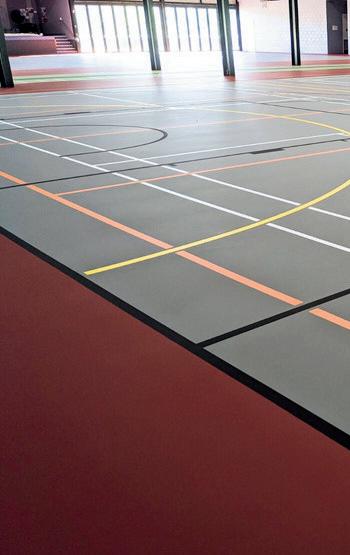
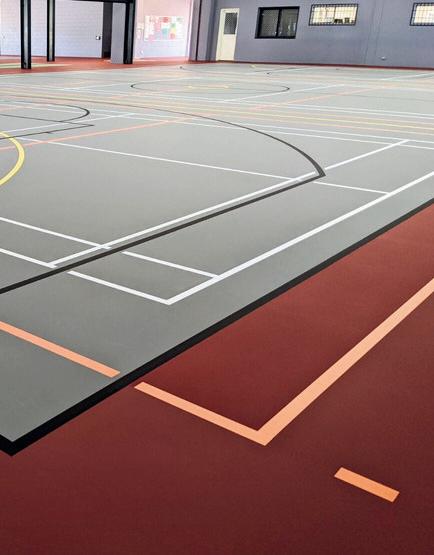
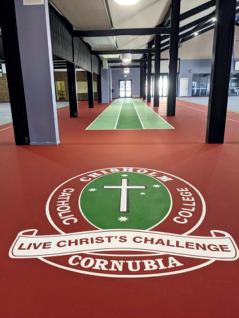







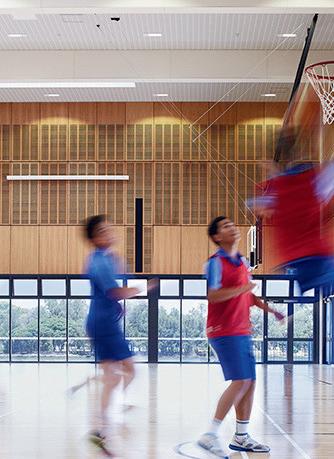


“Brain breaks” have become a familiar feature in primary classrooms. A quick stretch, a dance video, a moment to reset before returning to learning.
While well intentioned, these breaks often miss a powerful opportunity. If schools are going to pause learning for movement, that movement should be purposeful.
Movement breaks can do far more than help students refocus. When designed intentionally, they can reinforce Fundamental Movement Skills (FMS): the building blocks of physical literacy that underpin sport, physical activity and active play throughout life.
Fundamental Movement Skills such as running, hopping, balancing, throwing, catching and striking, form the foundation for how children move, play and participate. These skills don’t develop automatically for all children.
Students need repeated, highquality opportunities to practise and refine movement skills over time. Without explicit teaching, many children fail to develop the competence or confidence needed to participate fully. This can limit engagement, wellbeing and physical activity across their lives.
Quality movement experiences don’t happen by chance. Like any area of learning, movement skills require:
• clear modelling,
• structured practice,
• feedback that supports improvement,
• inclusive activities where all students can experience success.
When these elements are missing, movement becomes activity without learning. When they are present, even short bursts of movement can make a meaningful difference.
A movement break is not just about “getting the wiggles out”. It is a short, focused opportunity (one to five minutes) to practise a specific movement skill or component. Instead of:
“Let’s take a quick break.”
It becomes:
“We’re practising controlled landings.”
“We’re focusing on balance and stability.”
“We’re refining how we throw and strike.”
This shift transforms movement breaks from a pause in learning into part of the learning itself.
Movement skills can be
taught explicitly, even in brief classroom breaks:
• model the skill,
• practise together,
• refine through simple feedback.
Effective movement breaks don’t require specialised equipment. Classrooms already contain everything needed: masking tape, post-it notes, scrap paper, rolled socks, balloons, tubs, baskets, floor dots and pencils. Creativity, not cost, makes the difference.
• Vertical jump: Jump to tap a wall target, focusing on soft, controlled landings.
• Hop and collect: Hop to collect objects and return them, emphasising balance and control.
• Balance challenge: Hold a balance position and track personal improvement.
• Strike and aim: Strike paper balls into a bin using rolled paper bats.
• Leap and measure: Leap from a line, measure distance and aim to improve technique.
• Twist and transfer: Twist across the body to move objects from one side to the other.
Five minutes a day = 25 minutes a week!
By choosing purposeful movement, schools support physical development, confidence, wellbeing and learning readiness not just in PE lessons, but across the entire school day. Primary PE matters. And so does how children move in the moments between learning.

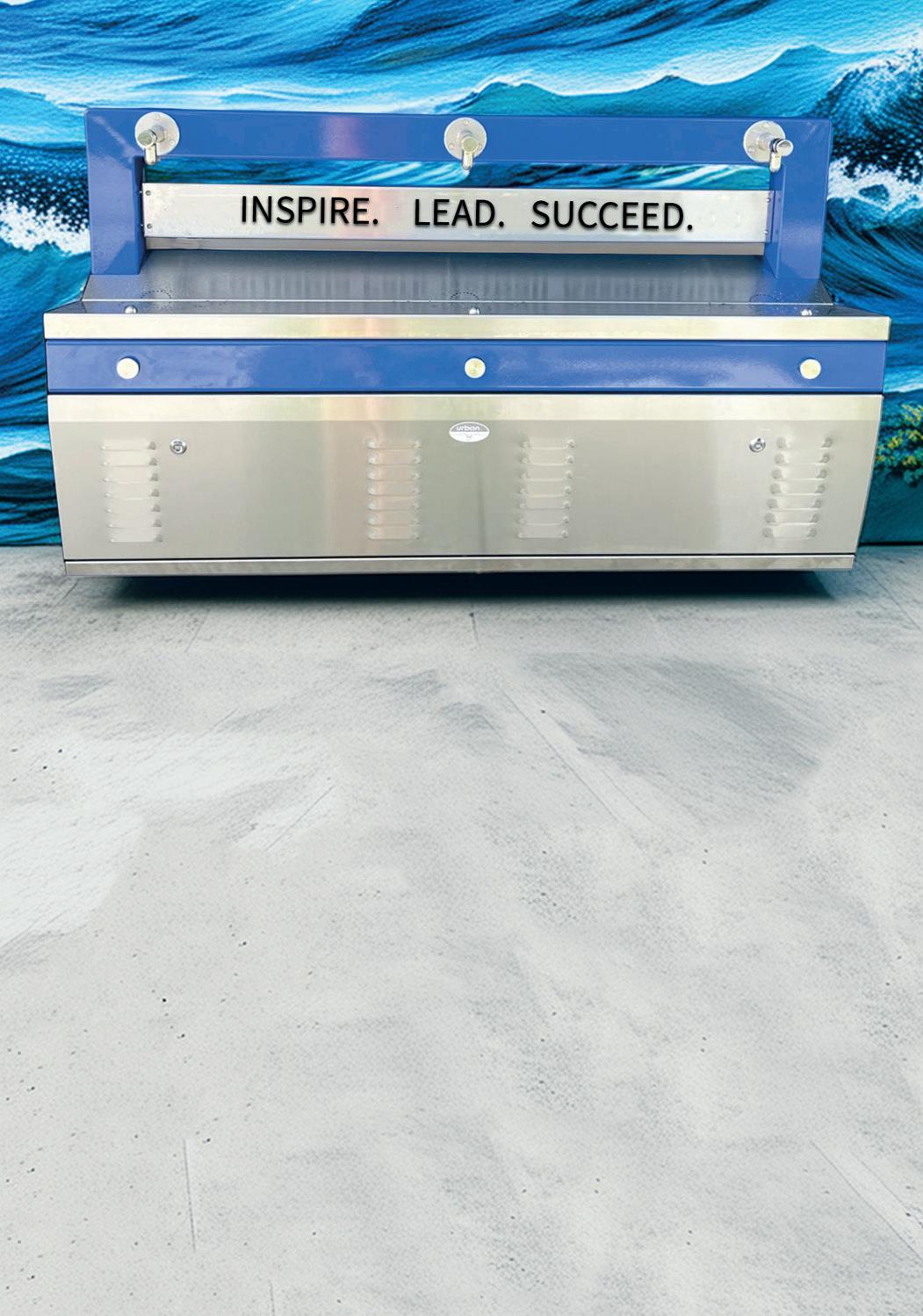
Meet the CF400 by Urban+ — Australia’s go-to school hydration station. This all-in-one bubbler and bottle refill unit is built to handle the daily demands of busy school environments. Choose from wall or floor-mounted options; 1, 2, or 3 tap configurations to suit any space or a DDA-compliant basin. Customise with school logos, student artwork, and over 100 Dulux powder coat colours. With a built-in chiller unit, filtration, and a vandalresistant design — it’s a no-brainer for schools looking to upgrade.
C Urban+ - making life be er P 07 3382 7372 E o ce@urban .com.au W urban .com.au
To complement Nature’s Playground, Astra Street Furniture designs natural timber shelters in hardwood spotted gum or treated pine, that can be stained after installation to suit your campus. Picnic settings, benches and outdoor classroom seating are available in real timber or woodgrain aluminium, offering the warmth of timber with the added strength and low maintenance of aluminium. One-week lead time, durable, accessible, modular and built for everyday school life, our ranges support shaded learning, play, outdoor classrooms and gathering spaces. These products are designed to blend seamlessly into outdoor environments and natures playground.
C Astra Street Furniture P 1300 509 589
E sales@astrastreetfurniture.com.au W astrastreetfurniture.com.au
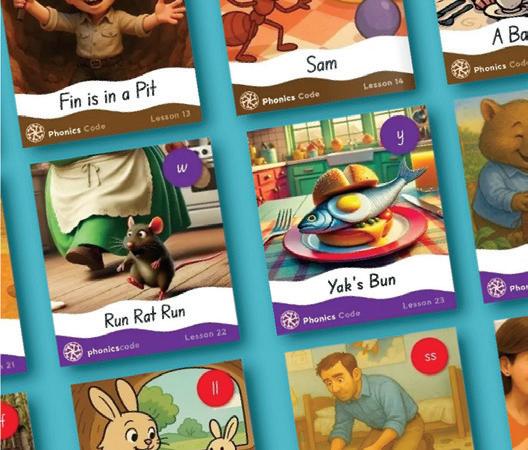




The Phonics Code Series brings structured literacy instruction to life with carefully crafted readers designed for Australian students. These books combine evidence-based phonics instruction with engaging narratives and vibrant illustrations that captivate young readers. Each story is thoughtfully written to spark discussion and critical thinking, while humorous elements keep learning enjoyable. Buy the full set of 79 books and save $52 on the individual price of $4.20 per book.
C Smart Kids P 02 9415 4080 E sales@smartkids.com.au W smartkids.com.au















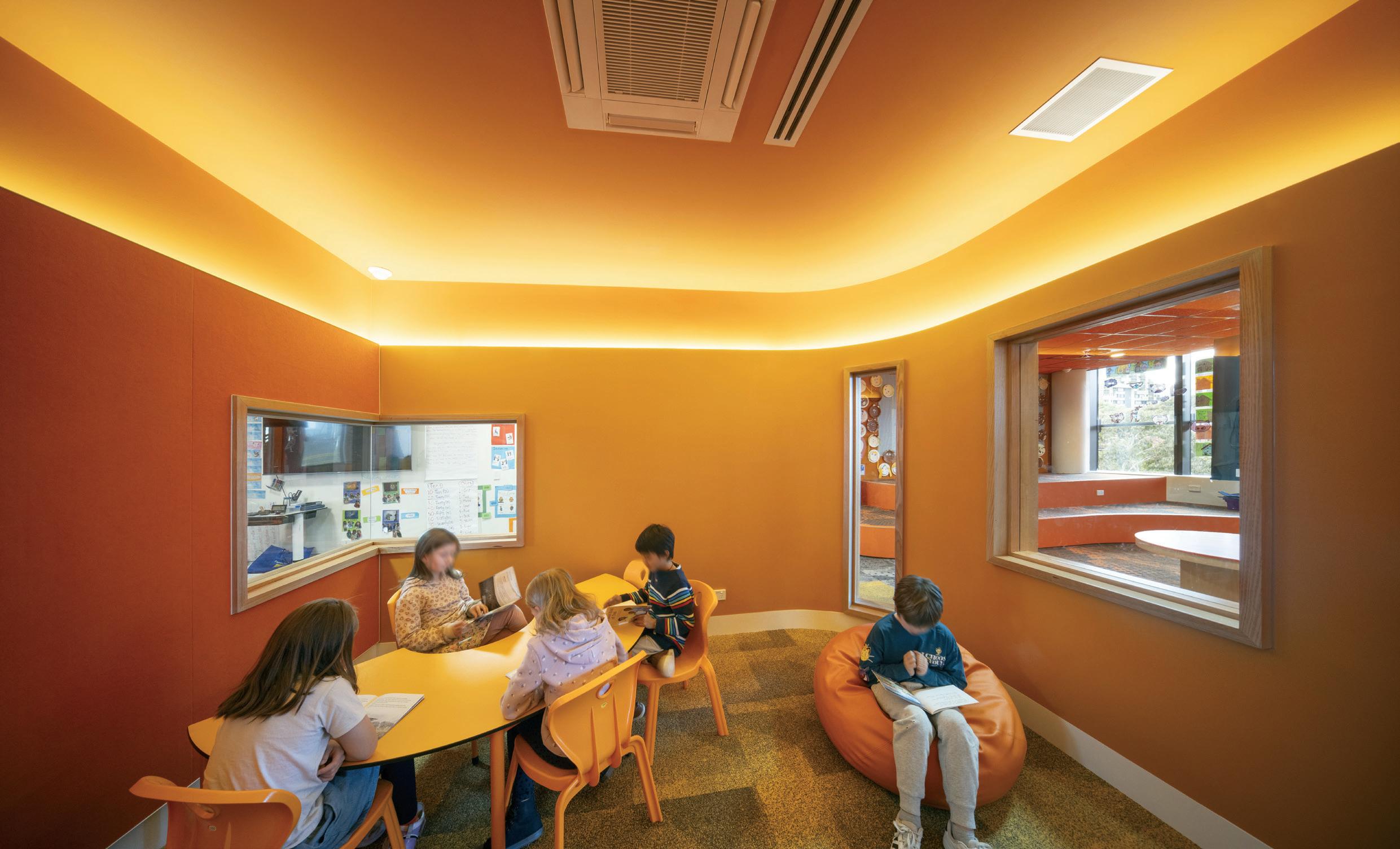
By Milly Fullick, Industry Reporter
The idea of acoustics might conjure stadium concerts or recording sessions, but clarity of sound is just as important in day-to-day life as it is in sell-out gigs.
At school, students’ learning and safety are dependent on being able to hear staff members and peers. Excess background levels of sound can disadvantage all students, especially those with hearing or verbal processing difficulties.
Addressing the source of sounds in the classroom allows for targeted interventions where needed. Naturally, students are usually the number one source of noise in a classroom, but other elements may be contributing a surprising amount to the soundscape. By listening for a few minutes while the room is full and bustling, the main problem areas can be established. Issues are likely to include reverberation or echoes, sound from furniture such as scraping chairs, and noise from lights and other electrical equipment.
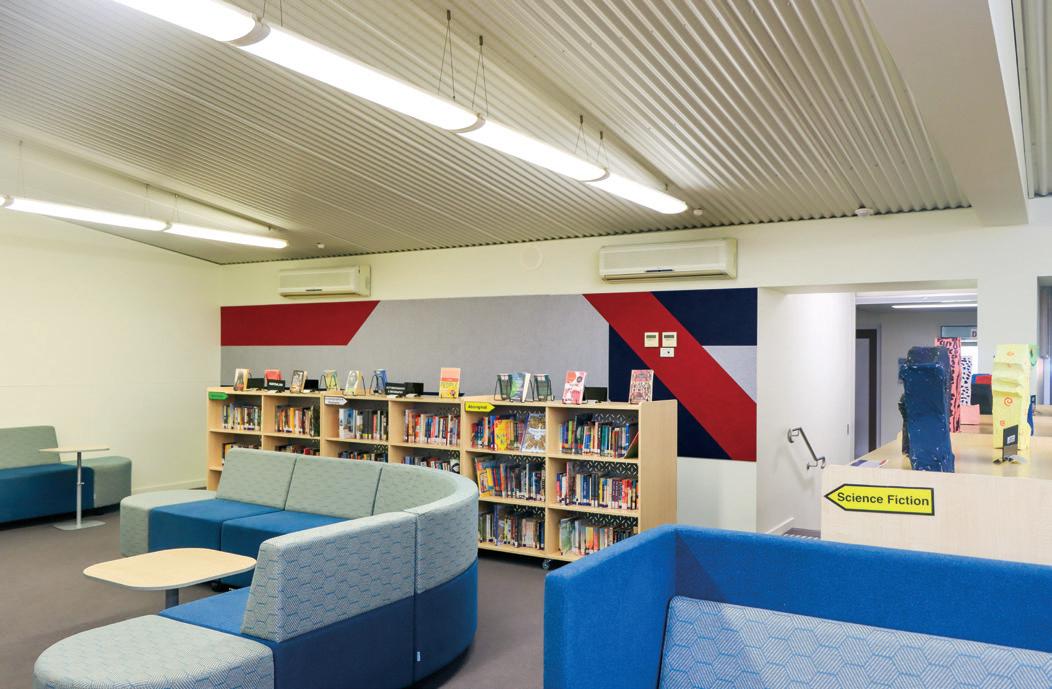
Solutions will depend on the sources of excess sound, but could include changes or repairs to noisy lighting, adding soft pads or plastic ends to table and chair legs, or ensuring equipment is switched off when not in use.
As classrooms are generally large, open spaces without many soft furnishings, sound reverberation is a common issue. A simple solution for improving background noise levels is adding textile elements like rugs and blinds to help absorb sound. Using felt or corkboard backing on display boards can also help to muffle excess sound.
More permanent solutions require thoughtful design.
There are options for retrofitting classrooms, as well as for newbuild spaces. Marcus Pederick from All Storage Systems said that the goal of sound design is minimising the impact of unnecessary noise while boosting communication.
“In the classroom, practical strategies centre on managing reverberation and improving speech clarity. Installing acoustic panels on walls and ceilings helps control echo and ensures teachers’ voices carry clearly across the room.
“Acoustic screens and dividers can be used to define learning zones and reduce distractions, particularly in open or collaborative settings. Layering
solutions, rather than relying on a single product, delivers the best outcomes, creating calmer, more focused learning spaces.”
Choosing purposeful solutions is the best way to get positive outcomes, Mr Pederick said.
“Materials and design strategies that perform best for sound control focus on absorption rather than reflection. Acoustic wall panels, ceiling panels, and freestanding acoustic screens are particularly effective, as they reduce reverberation and limit the spread of background noise.”
These can be integrated into the classroom environment in a functional but appealing way.
“Many acoustic wall panels can also be manufactured with pinnable surfaces, allowing schools to display posters, student work, and visual learning aids. This dualpurpose approach not only improves acoustic performance but also helps create an inviting, vibrant learning environment that supports engagement and creativity.
“Zoning spaces using acoustic elements further helps manage noise transfer between learning areas without compromising flexibility.”
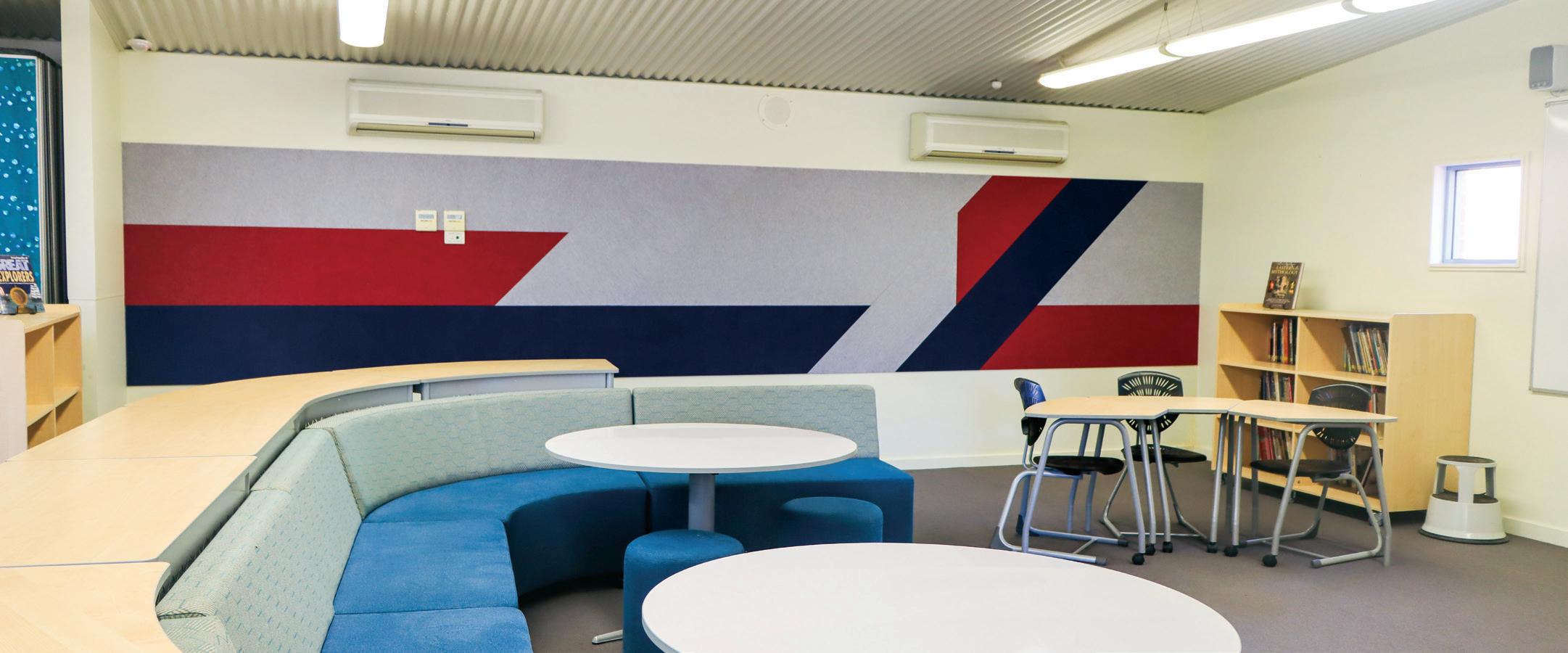
Mr Pederick said sound management in large spaces needed a considered approach.
“For large spaces such as school halls and auditoriums, sound quality depends on scale, layout, and intended use. Key considerations include reverberation time and even sound distribution.
“Ceiling mounted acoustic treatments and strategically placed wall panels help manage echo while maintaining clarity for both speech and performances.
“Importantly, acoustic solutions should integrate seamlessly with the space’s design and support multi use functionality.”
Rob Jones, Technical and Development Manager at Autex Acoustics said balanced acoustics in learning spaces are vital for creating environments where students and teachers can thrive.
“Key considerations include understanding the specific needs of the space, such as speech clarity, noise control,
and flexibility for different activities. Acoustics must address noise reverberation, absorb sound effectively, and enhance the overall soundscape without compromising aesthetics. In some instances, acoustic treatments can even enhance existing design elements and work to complement a room's features.
“Improving acoustics in large spaces like gyms and auditoriums requires addressing challenges such as excessive reverberation, echo, and poor sound clarity,” Mr Jones said.
“These spaces often feature hard, reflective surfaces, which amplify noise and hinder speech intelligibility. Effective measures include incorporating high-performance acoustic treatments on walls, ceilings, and even structural elements.
“Optimising acoustics during the design phase of learning spaces ensures a foundation for effective teaching and learning. Early design integration
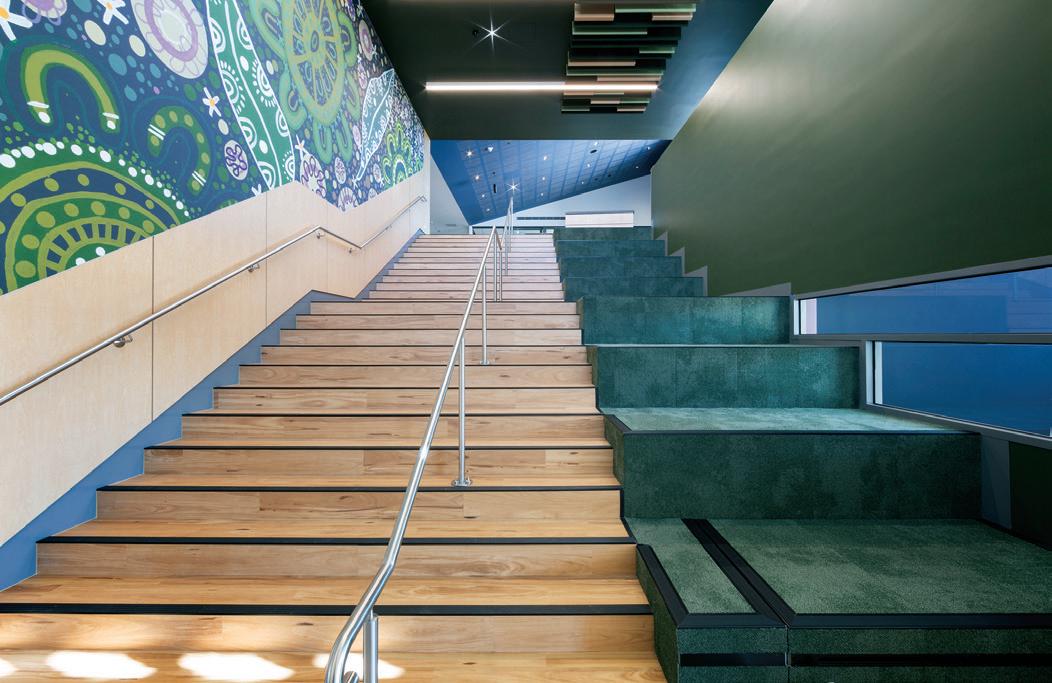
ensures seamless application, avoiding costly retrofitting later,” Mr Jones said.
“Schools should first consider the purpose and activities of each space—classrooms, libraries, auditoriums, and collaborative zones all have distinct acoustic requirements. Key factors include controlling reverberation, minimising noise transfer between spaces, and enhancing speech intelligibility.
Collaborating with acoustic consultants during planning can identify potential challenges and tailor solutions.
“By investing in tailored acoustic solutions, schools can transform their gymnasiums into multipurpose spaces making them suitable for events, performances, and sports through promoting clarity, functionality, and overall acoustic balance.”
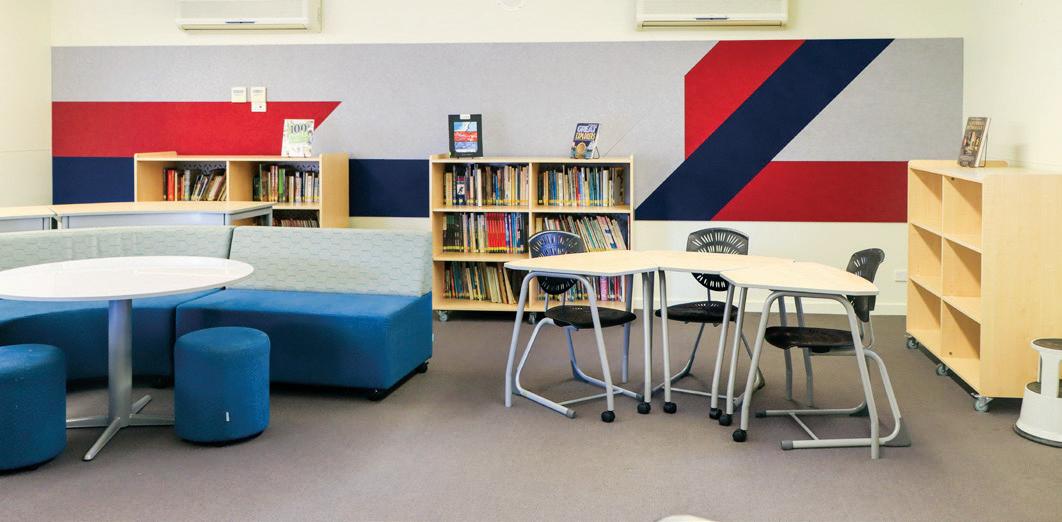
Modern education spaces need more than desks and chairs. Well designed acoustic solutions reduce noise, improve focus and support student wellbeing.
With over 35 yearsʼ experience, we deliver proven acoustic, seating and storage solutions that help create calmer, more productive learning environments.
At All Storage Systems we design education spaces that support learning today and into the future.
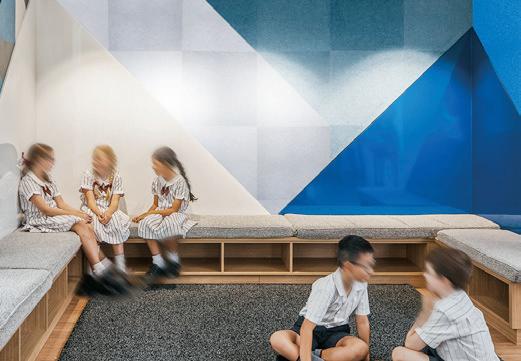

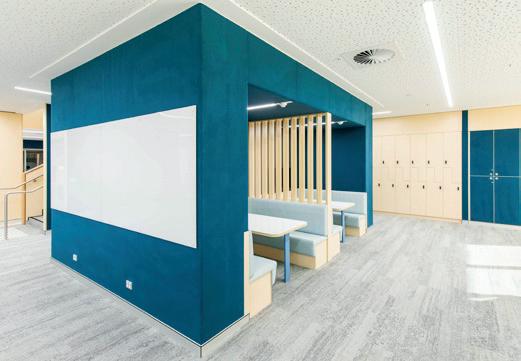
By Sarah Davison, Industry Reporter
Maintaining healthy green spaces is about far more than presentation.
Access to well-designed outdoor environments has been shown to support children’s physical, social and emotional wellbeing, with research linking green spaces to reduced anxiety and enhanced learning outcomes. Time spent outdoors also helps improve focus and attention, giving students the opportunity to reset mentally and return to the classroom more engaged and receptive to learning.
In fact, a study of 851 Melbourne schools found that students achieved higher results in reading, writing, spelling, grammar, punctuation and numeracy when learning in schools surrounded by higher levels of greenery.
To keep these spaces safe and inviting, consistent grounds maintenance is critical. Across
sports fields and outdoor learning zones, selecting the right mower plays a key role in maintaining areas where students can move, play and engage with nature. Wellmaintained grounds also reduce safety risks, improve usability and help preserve turf quality throughout the year.
For advice on how best to maintain green spaces, School News spoke to Steve Wright, Chief Executive Officer of Cox Industries. Steve shared his insights on what schools should consider when selecting mowing equipment to meet their site and maintenance needs.
Schools can vary greatly in size, from small campuses to large grounds with multiple playing fields. What key factors should facility managers consider when selecting a mower to suit their site and maintenance needs?
The first step is to determine what the mower, or mowers, need to achieve. Schools should consider several site-specific factors, including the type of terrain being maintained.
Whether the surface is flat, undulating, steep, or includes soft or damp areas will strongly influence the type of machine required.
The desired finish is another important consideration. Facility managers should decide whether they require a mower capable of side discharge, mulching, or catching.
The layout of the grounds also plays an important role. Obstacles may determine whether a stand-on mower or a traditional sit-down ZTR is more appropriate. Maintenance access and servicing requirements should also be factored in.
Finally, budget plays a major role. Some schools may be able to invest in multiple machines suited to different areas, while others may be limited to a single mower for all grounds.
If only one mower is feasible, accessibility becomes crucial, for example selecting a smaller deck size if the mower needs to pass through gates or along narrow pathways. If the budget
allows, specialised mowers can be purchased for each field or mowing scenario.
Autonomous mowers are playing an increasingly significant role in schools and universities, particularly as grounds teams look for smarter, more efficient ways to manage large outdoor spaces. These machines can operate independently within set boundaries, allowing staff to focus on other tasks such as edging, blowing or hedging.
With consistent cutting schedules, autonomous mowers help maintain a high-quality turf finish while reducing fuel consumption, labour costs and machine wear. For educational environments where time and resources are often limited, autonomous solutions offer a reliable and cost-effective way to keep sports fields and lawns in top condition with minimal supervision.
For smaller common areas or lighter maintenance, what should schools look for in a reliable push mower? Are there features that offer benefits in a school setting?
Yes, there are several key features worth considering. The type of wheel bearings used is important; dualrow bearings, for example, offer improved durability and smoother operation.
Schools should also look for a mower fitted with a blade-brake system. This is particularly useful around classrooms, as it prevents debris from being thrown and allows the catcher to be emptied safely while the engine continues to run.
Weight is another practical factor. The mower should be solidly built but not so heavy that it causes strain for the operator. A selfpropelled model is a significant advantage, as it reduces physical effort and makes the mower easier to handle.
Engine power is also important to ensure the mower can handle thick or overgrown grass while still delivering a clean finish. Blade and airflow design play a major role as well, as they influence both cut quality and how efficiently clippings are packed into the catcher.
How important is locally designed and built equipment when it comes to servicing, durability, and performance in Australian conditions?
It is extremely important. Australian conditions differ greatly from those in many other regions. Our grass types, preferred cutting heights, and dry, dusty conditions during hotter months place unique demands on mowing equipment.
Machines designed and tested in the US or Europe often struggle to cope with the conditions experienced here. In Australia, machinery regularly operates under sustained stress that truly tests its capabilities.
This is why locally engineered equipment is so valuable, ensuring machines are designed and built specifically to handle Australian environments.
Budget constraints are a reality for many schools. Are there any funding or leasing options that can help schools access high-quality mowing equipment without overextending their resources?
Yes, there are several options available. Many finance and equipment loan providers in Australia offer structured solutions to help schools secure the machinery they need. This may include low-interest loans or increasingly popular rent-tobuy programs, which reduce the upfront financial impact of purchasing equipment. These options make it more accessible for schools to invest in reliable, long-lasting machinery without placing excessive strain on their budgets.




































































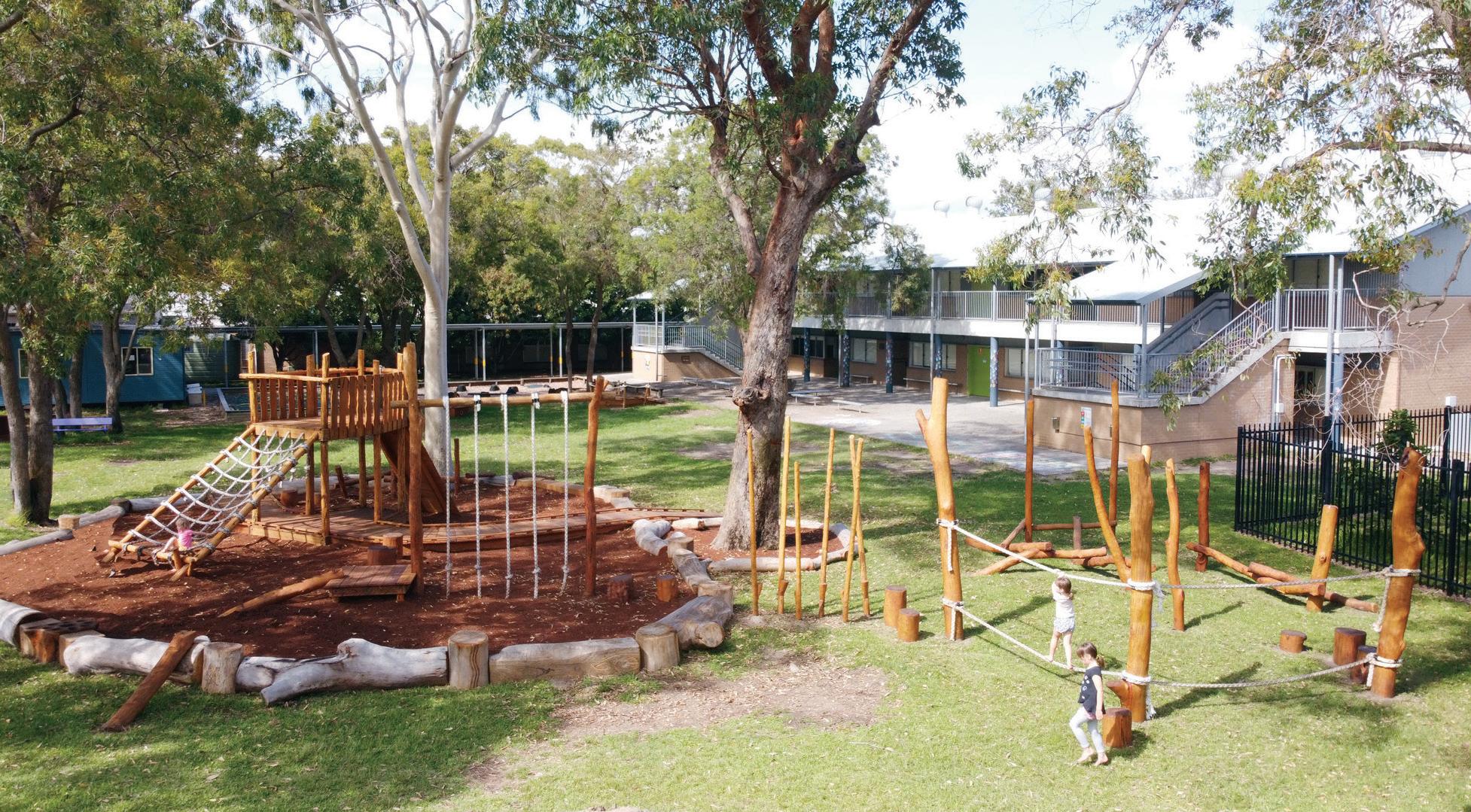
By Sarah Davison, Industry Reporter
As schools expand the use of outdoor spaces for learning, play and recreation, there is growing recognition of the role that well-designed environments play in supporting educational outcomes.
Unlike traditional playgrounds, play spaces built using natural elements such as logs, timber features and loose natural materials don’t dictate how children should play. Instead, they encourage exploration, creativity and managed risk, allowing children to shape their own experiences, while supporting both social and independent play.
While the benefits of nature play are well understood, delivering these spaces requires careful planning and design. For some design and planning advice, School News spoke with two experts in nature play design about how these spaces support both learning and wellbeing.
Glenn Williams, Owner of Austek Play, said successful nature play spaces rely on thoughtful design that balances play value with practical considerations.
“A good nature play space usually has a mix of active zones with climbing structures, boulders, balance trails, open lawns; quiet or retreat zones such as cubbies, teepees, timber pods, shaded seating nooks; messy or exploratory zones including sand, mud kitchens, digging patches, water play, loose branches, and natural construction materials.”
Mr Williams said that site conditions and local flora also need to be carefully considered: “Practical considerations include trees and shade structures to manage heat and UV while still allowing dappled light, good drainage around sand, water and mud areas so they’re usable year-round, and wind and noise buffers using planting, earth mounds or fencing where the school is near busy roads or hard courts.
“Choose plants that are local and hardy, so they cope with high use and local climate,” Mr Williams said. “Plants should also be multisensory, using different textures, colours, scents and seasonal changes, for example, grasses that rustle, flowers that attract birds and insects, and aromatic shrubs. This turns the playground into a living science lab where children can see seasonal cycles, biodiversity and ecological relationships up close.”
Mr Williams also shared that nature play can support
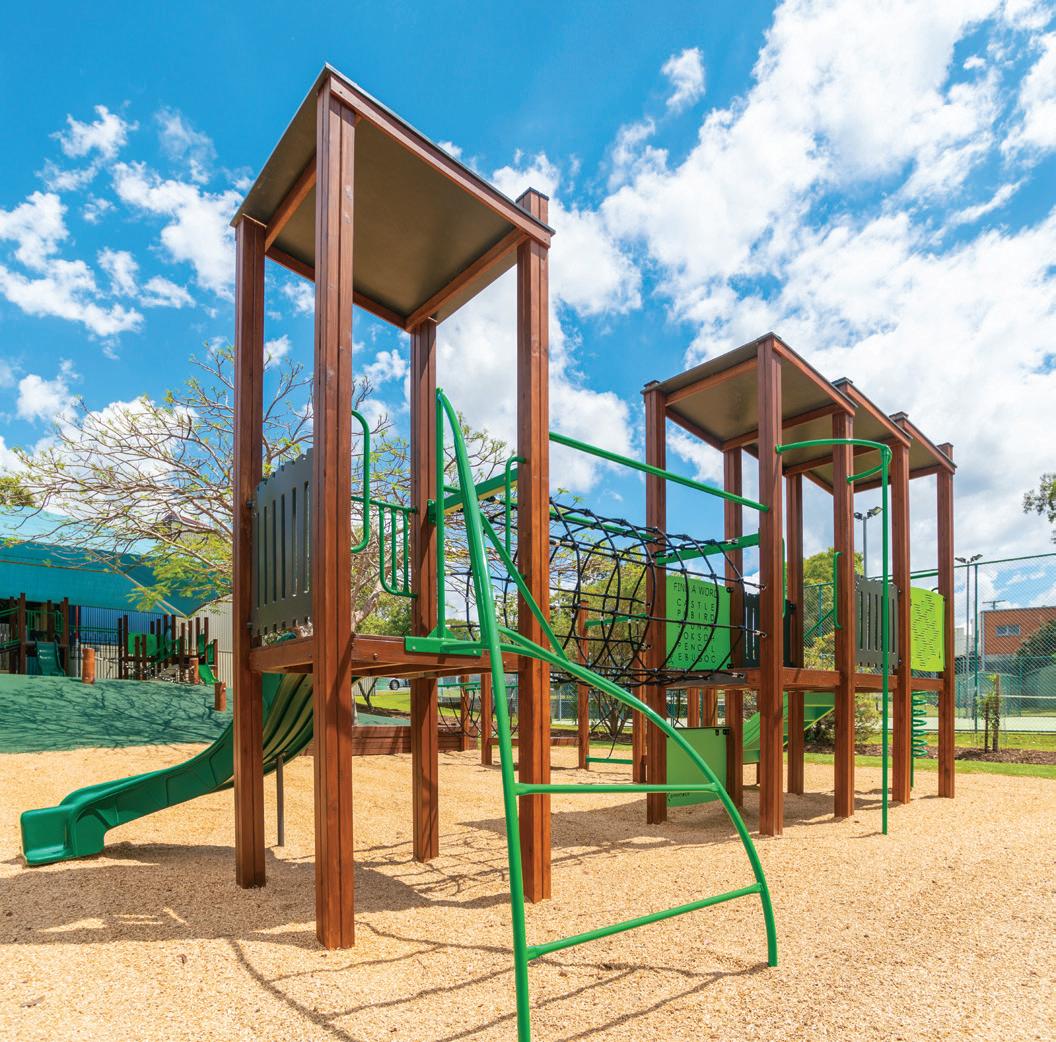
inclusive outcomes when designed intentionally.
“It still needs to be planned deliberately, though, so every child can genuinely participate, not just be present,” he said.
“Inclusive nature play should offer multiple levels of challenge from low logs and gentle slopes to higher nets and boulders, so children of different ages, abilities and confidence levels can all find ‘just-right’ risks. Activities at different heights such as raised sand or mud tables, elevated
garden beds, and hanging sensory panels, accessible from seated or standing positions are some good options.
“Sensory diversity can be accommodated with rough and smooth textures, quiet and busy areas, open and enclosed spaces, sunny and shady spots, with escape routes to calmer corners. Social and solo options, with spaces that support group projects, and spots where a child can play alongside others without being in the centre of the action are also important.”
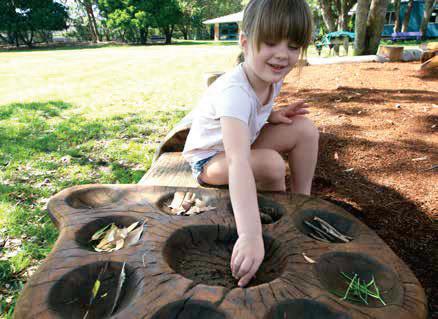
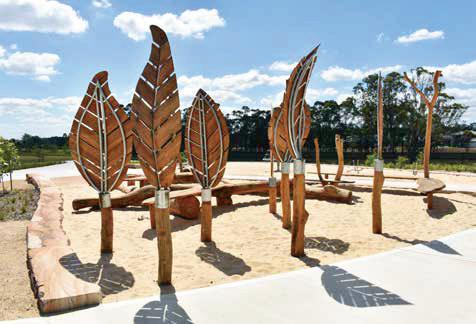
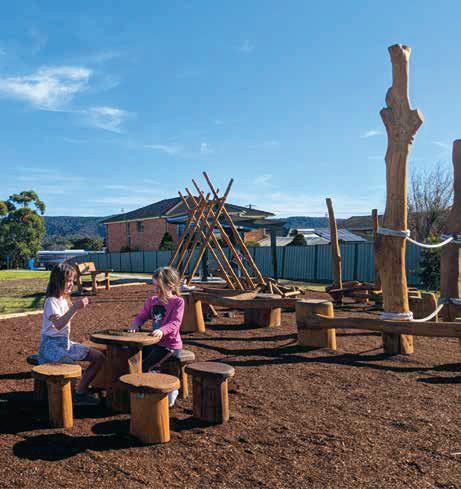
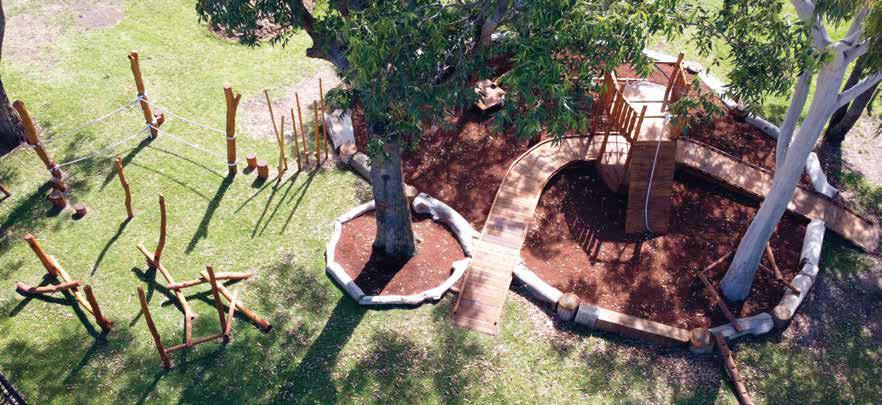
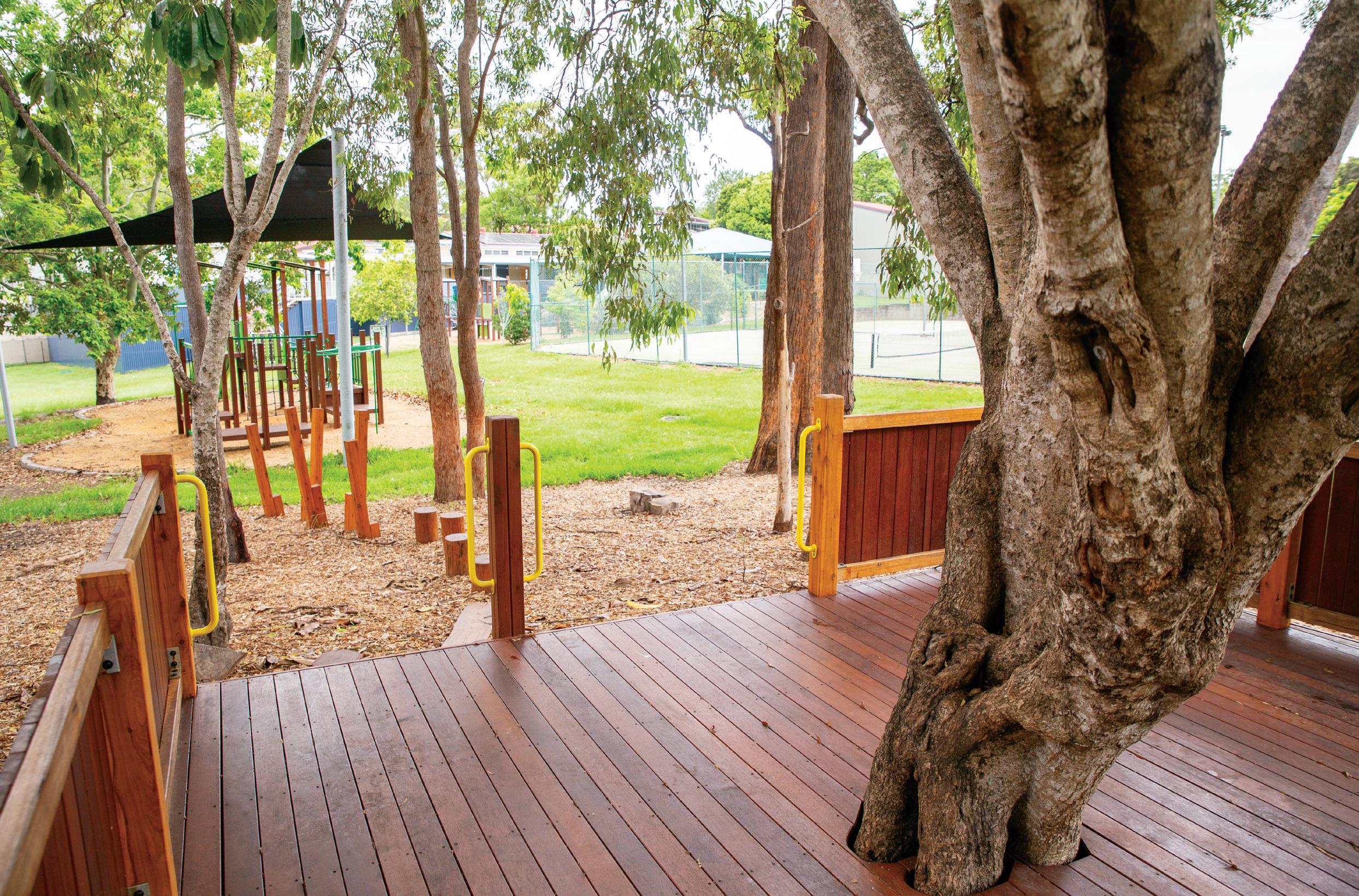
Finally, Mr Williams implores educators to consider accessibility across the entire site. “Continuous accessible paths, connecting classrooms, main circulation routes and key nature play zones are vital. Gentle gradients and resting points should be incorporated, so children using mobility aids, or who fatigue easily, can move
independently. Play spaces should also have accessible entry points: ramps instead of steps where possible, firm pads adjacent to sand, water and loose-parts areas.”
Timber Creations Director Andrew Smith shared his insights into how nature play supports student development and wellbeing.
“Australian research shows that nature play spaces positively impact children's academic, social, emotional, and physical development through their non-prescriptive design. Natural elements like logs don't dictate use, allowing children to define play creatively, which fosters problem-solving skills that manufactured equipment
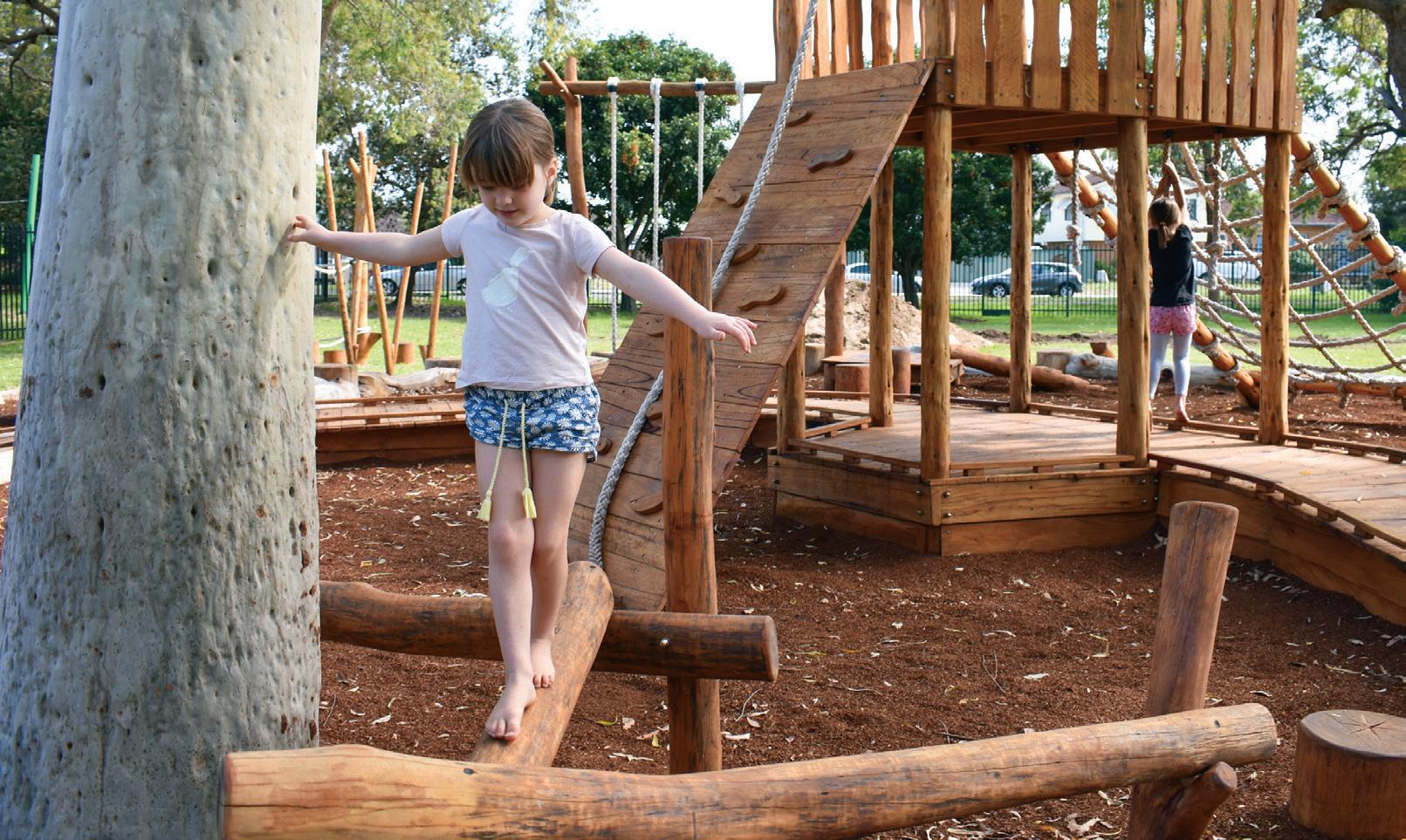
cannot match. Unstructured environments, like those found in nature play, also promote social skills through collaborative activities that teach teamwork, communication, and conflict resolution, while encouraging healthy risktaking. Navigating challenges like uneven logs builds both confidence through success and resilience through failure.”
Mr Smith said effective nature play spaces incorporate loose parts. “Elements like mud kitchens, water play tables, and sorting bowls that encourage creative exploration with natural materials are popular choices.
“Australian hardwoods provide essential sensory richness through varied textures, natural warmth, scents, and seasonal changes that manufactured materials cannot replicate, creating authentic developmental learning experiences,” Mr Smith said.
“The best designs balance controlled risk-taking with varied challenge levels for all abilities, while offering both communal gathering areas for collaborative play and quieter zones for solitary discovery.
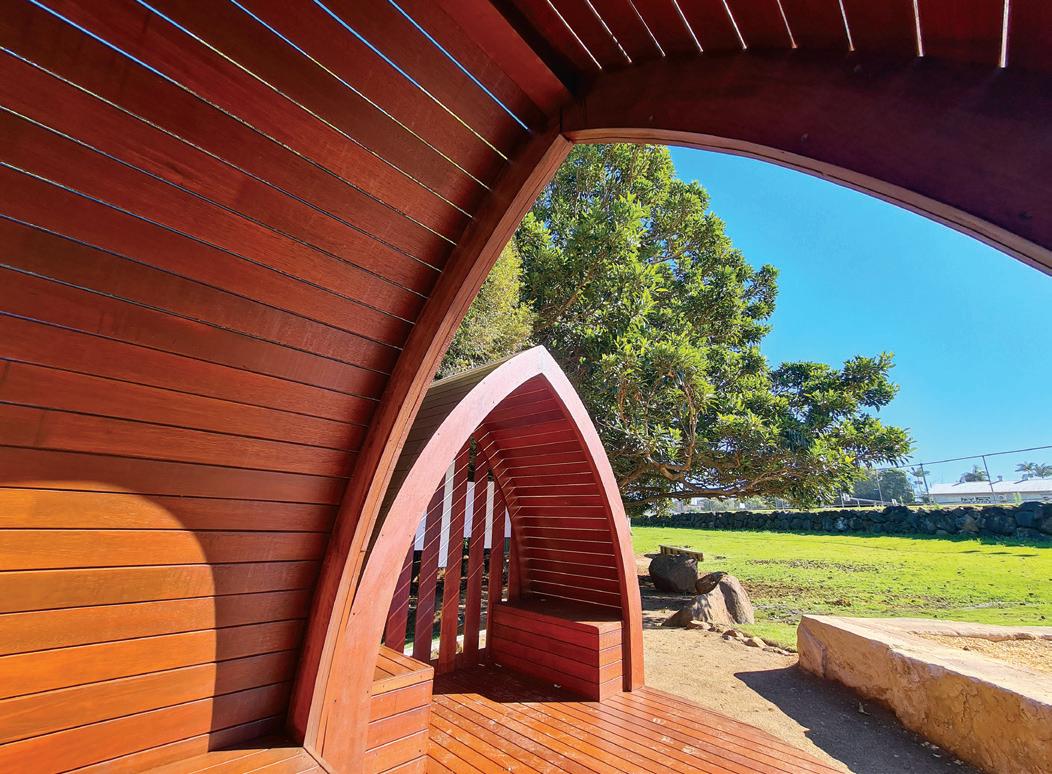
“This allows children to develop teamwork skills and navigate disagreements naturally.”
Drawing on his nearly 20 years of experience designing nature play spaces, Mr Smith said successful nature play spaces require intentional design across five key elements: sensory variety through rich textures and scents; accessibility with multiple entry points and neurodivergentfriendly features; challenge levels that build confidence through controlled risk; social spaces
accommodating both communal and solitary play preferences; and natural integration that preserves existing landscape features rather than imposing upon them.
“Maintaining the type of evolving variety that holds children's interest as they grow is incredibly important, so our philosophy extends beyond initial installation. We regularly update and modify playgrounds after 10 years, creating spaces kids want to return to repeatedly.”
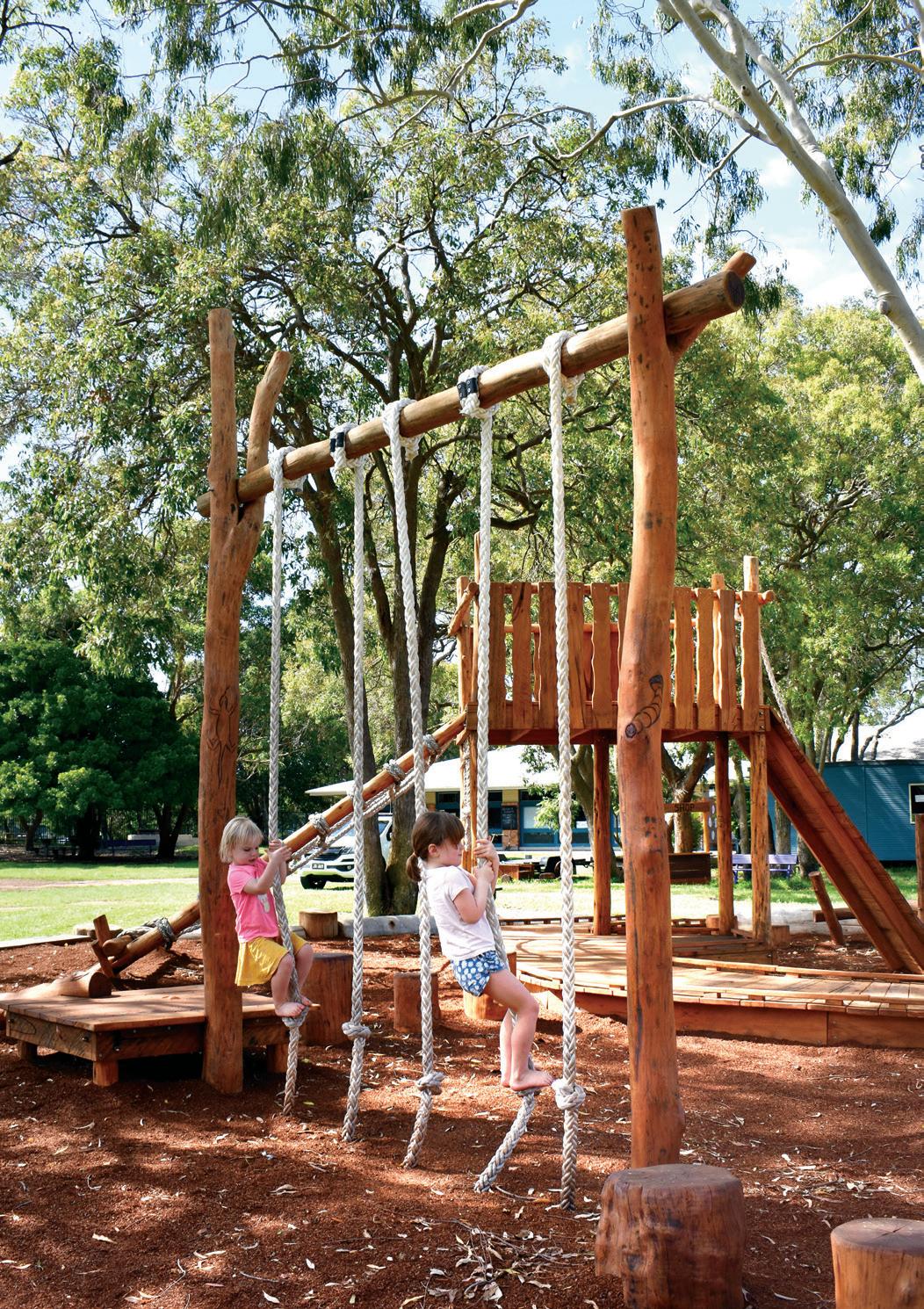
Designing or upgrading your school play space is more than choosing equipment, it’s about creating an environment where students can learn, play, connect, and thrive.
If you’re planning a new play space for 2026, here are some key steps to guide you:
Every great play space begins with a vision. Ask yourself:
• What’s missing in your current play space?
• Who will use it? Younger students, seniors, or mixed ages?
• Do you have a theme or specific goals in mind?
• What inclusive features do you need?
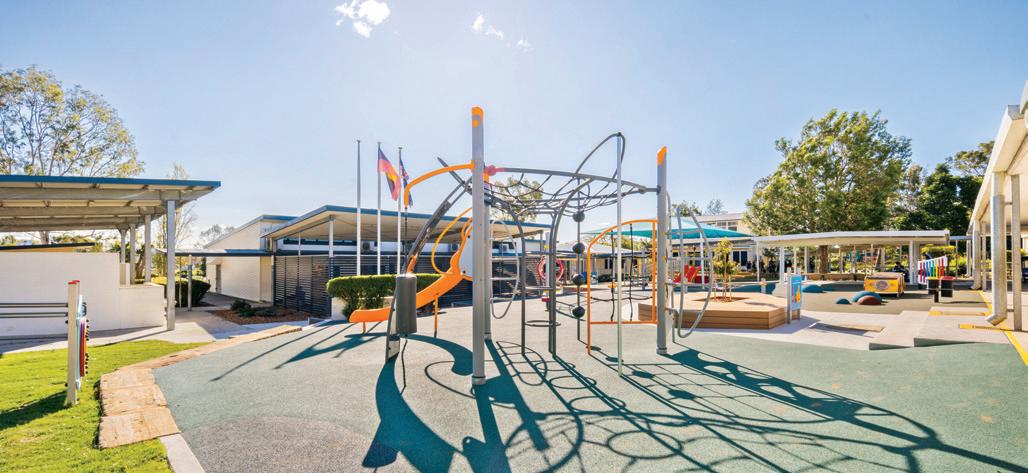
If you need help or ideas, Austek Play’s Open Space Consultants work closely with staff, students, and P&C committees to turn ideas into plans that work with your space and budget.
No two schools are the same. Austek Play conducts detailed free site assessments, reviewing space, access, shade, drainage, and compliance with Australian Standards, ensuring your play space is safe, functional, and future-ready.
Austek Play provides realistic cost estimates to support grant applications, staged build options, and overall guidance on funding and grants to keep your project achievable.
See your vision come to life with 3D renders and layout plans that show how your new space will look. From natural play zones
to adventure structures, Austek Play’s inhouse design team blends creativity with compliance.
Austek Play’s durable equipment, spare parts and maintenance support ensures your play space will stay vibrant and safe for years to come.
With over 25 years’ experience working with Schools across NSW, QLD and NT, Austek Play designs play spaces that inspire movement, imagination, learning and connection. For a free play space consultation, contact: enquiries@austekplay.com.au or call 1300 433 364. Visit austekplay.com.au to explore Australia’s largest range of outdoor play and fitness equipment.
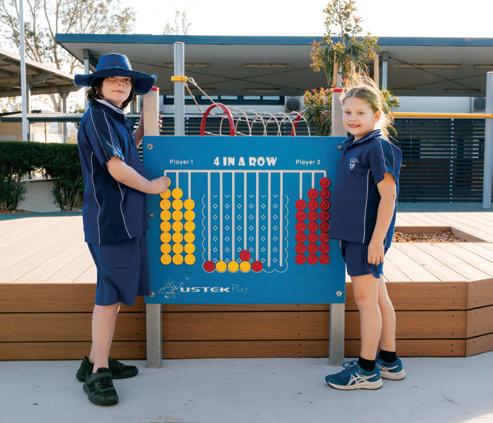
By Sarah Davison, Industry Reporter
As schools expand the use of outdoor spaces for learning, play and recreation, there is growing recognition of the role that welldesigned environments play in supporting educational outcomes.
Outdoor learning offers opportunities for students to engage in hands-on, meaningful experiences connected to both the curriculum and the natural world, supporting the development of critical thinking, social skills and wellbeing.
The Australian Curriculum recognises outdoor learning as an important context for developing knowledge, skills and dispositions across areas such as personal and social capability and intercultural understanding. Additionally, helping students to spend time in the natural environment can encourage exploration, creativity and collaboration, while also fostering environmental awareness and a connection to place.
Despite these benefits, outdoor spaces are not always fully utilised. Many schools spend limited time learning outside the classroom, often due to a lack of suitable facilities or infrastructure. As a result, there is a new focus on how outdoor spaces in schools can be better designed to support a wider range of teaching and learning activities.
This shift is also prompting schools to think more carefully about how outdoor spaces are designed and used throughout the day. Well-planned environments can support everything from whole-class instruction to small group work and independent learning, while also providing spaces for social interaction and quiet reflection.
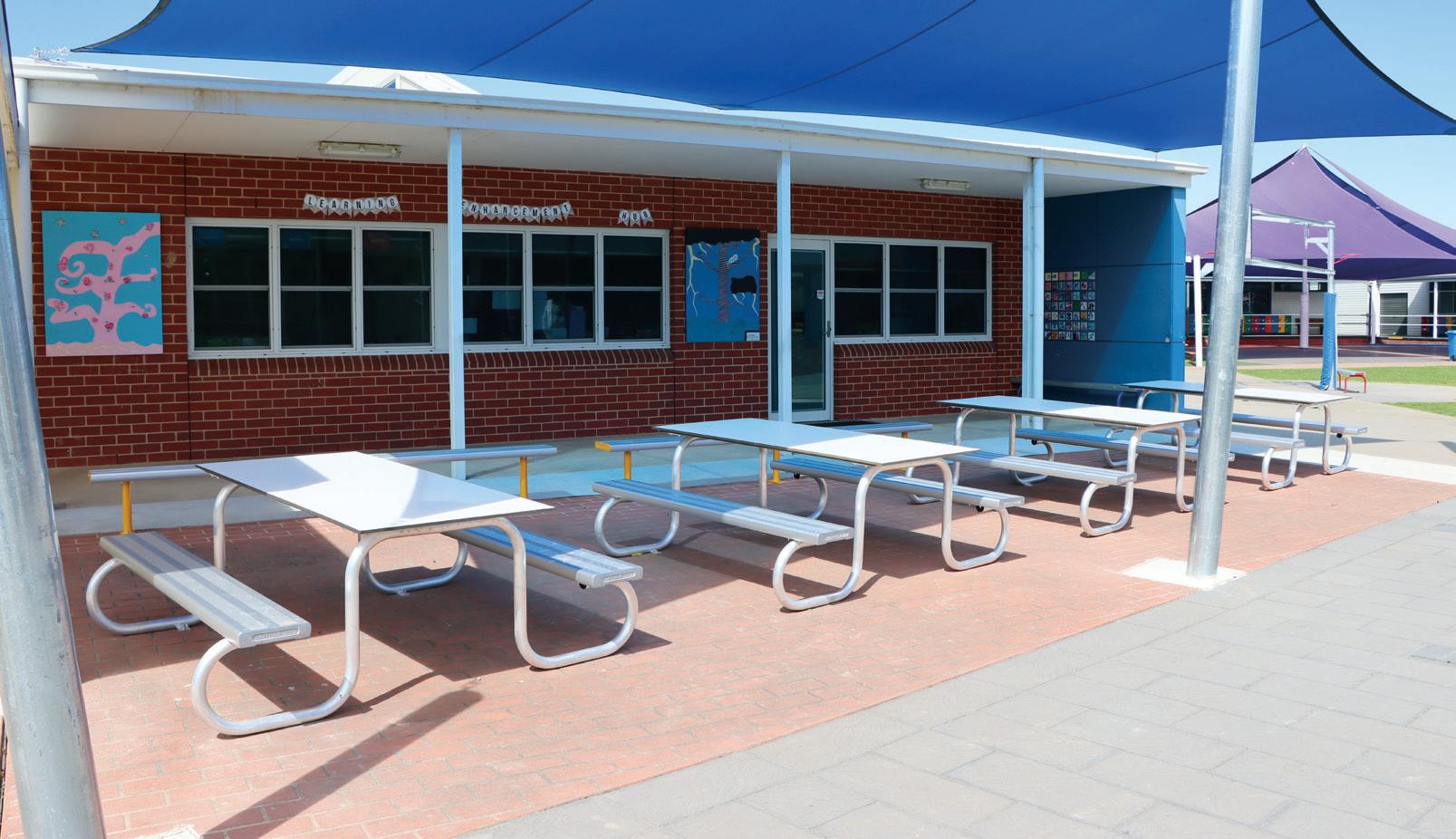
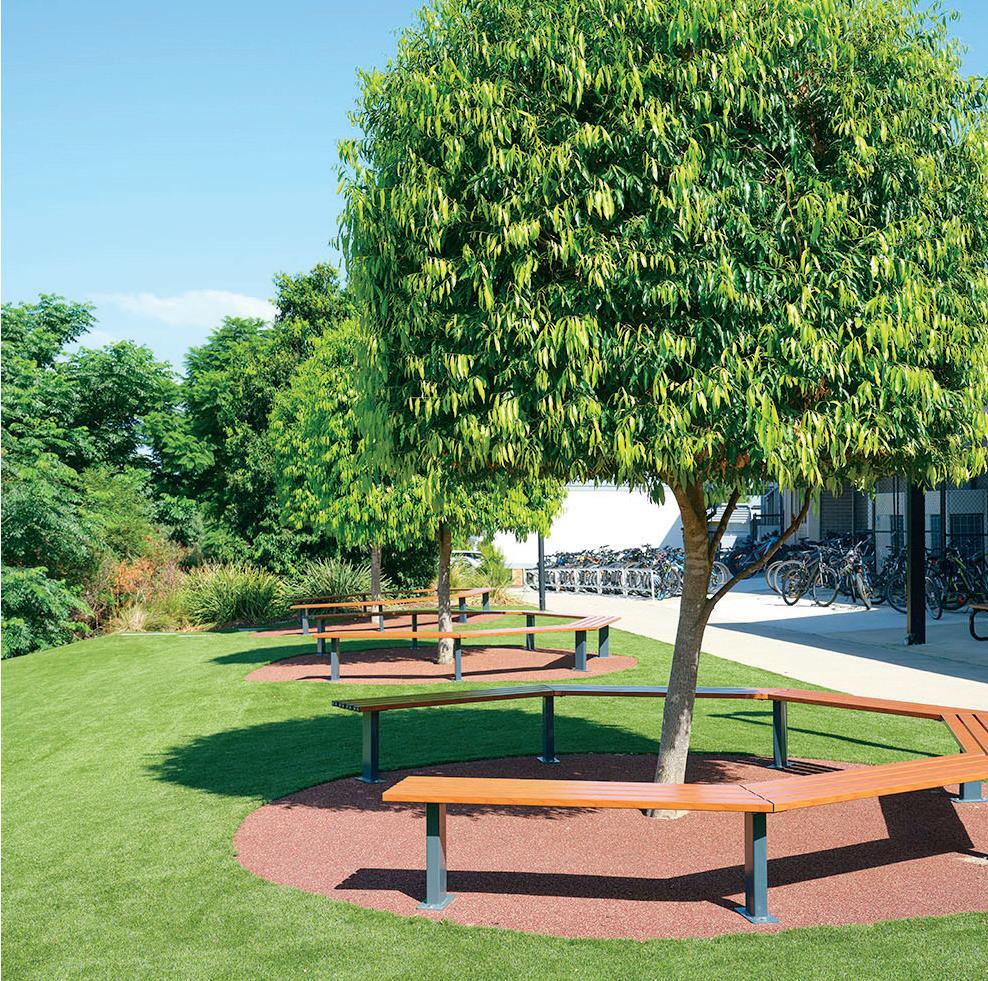
Layout, accessibility and durability all play an important role in ensuring these areas are practical for both students and staff. As outdoor learning becomes more embedded in everyday teaching, there is more emphasis on creating spaces that are not only engaging, but also functional and able to withstand the harsh Australian climate.
Lindsay Stead,
Business Development Manager at Astra
Street Furniture, said outdoor learning spaces in

schools are evolving to better support a range of learning and social outcomes.
“Outdoor learning spaces are increasingly being viewed as environments that support collaboration, wellbeing, and flexible teaching, rather than simply extensions of the classroom,” Mr Stead said.
Material selection is also becoming an important consideration for schools seeking both visual appeal and long-term performance.
With outdoor areas being used more frequently, furniture must balance aesthetics with durability.
“Alongside layout, material selection is becoming an important consideration for schools seeking both visual warmth and long-term performance,” Mr Stead said.
“Wood-grain aluminium slats are being specified more frequently in outdoor furniture, as they offer the appearance of timber while providing the durability, low maintenance, and weather resistance required in high-use educational settings. This allows schools to create welcoming outdoor areas without the ongoing upkeep traditionally associated with natural timber.”
Flexibility remains a key priority in outdoor design, particularly as schools seek to create spaces that can adapt to a range of uses and student needs. Furniture that can support different age groups, teaching styles and learning activities helps ensure outdoor areas remain relevant over time.
“From our experience working with schools across Australia, the most effective outdoor learning environments are those designed with flexibility in mind,” Mr Stead explained.
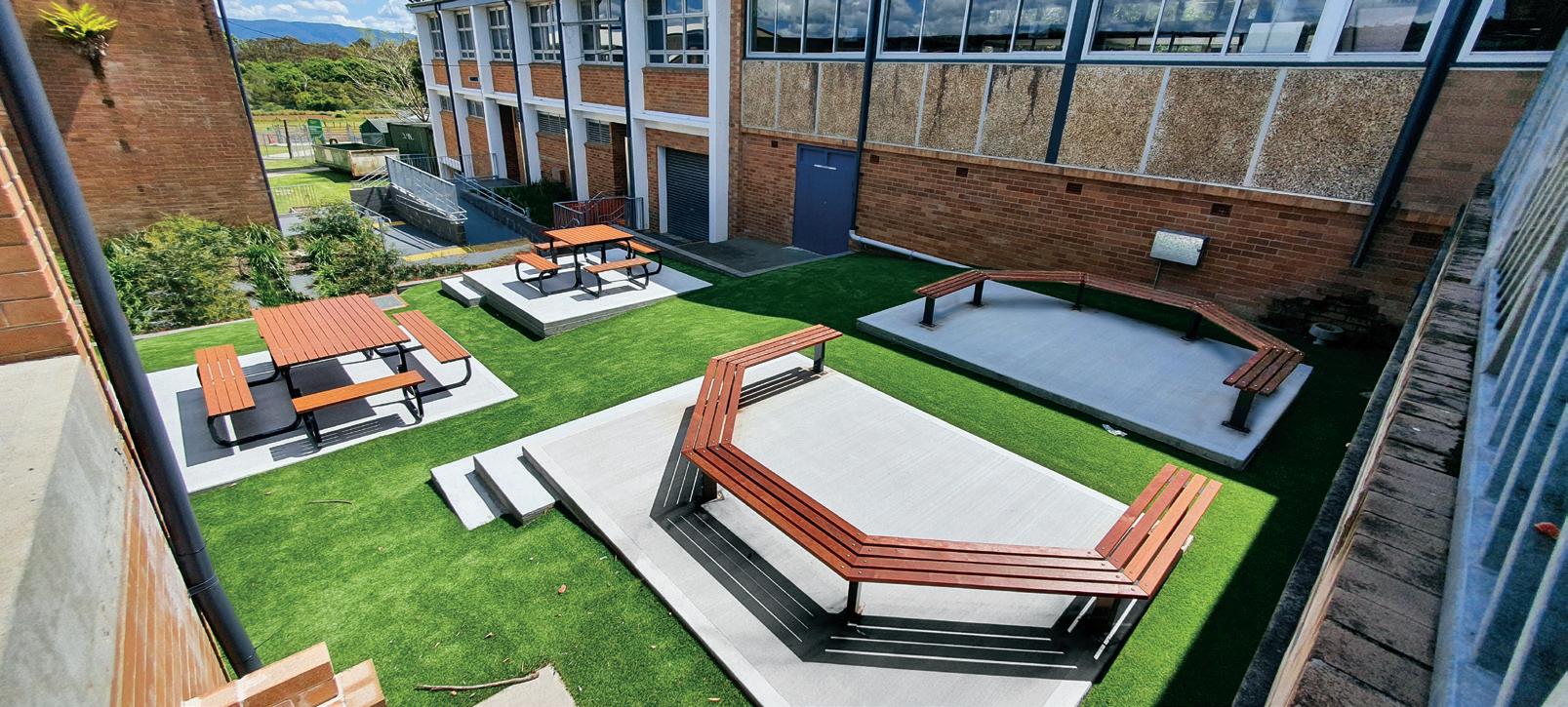
“Furniture that can support different age groups, teaching styles, and learning activities helps ensure these spaces remain relevant as school needs evolve. Thoughtful seating configurations also assist with supervision and accessibility, enabling students of all abilities to feel comfortable and included.”
As with all learning spaces, inclusive design must be extended to outdoor learning environments. Furniture that accommodates a range of physical abilities, heights and mobility needs helps ensure all students can participate in outdoor learning and social interaction. Features such as varied seating heights, accessible table settings and clear pathways support the creation of spaces where all students feel welcome and supported.
“As active and collaborative learning continues to be prioritised, outdoor furniture plays a subtle but influential role in how students engage with their surroundings,” Mr Stead said.
“When design, layout, and materials are considered holistically, outdoor spaces can become some of the most
adaptable and engaging learning environments on campus.”
Marcus Pederick, Sales Manager at SeatsPlus, said outdoor seating solutions should support a wide range of teaching and learning activities.
“Outdoor seating plays a vital role in shaping flexible outdoor learning spaces that support a wide range of teaching and learning moments,” Mr Pederick explained. “It boosts children's motivation, creativity, and critical thinking while enhancing their health, social skills, and behaviour.
“The most effective seating solutions are those that allow schools to easily adapt spaces for different activities. Bench seating and park settings are particularly valuable, as they support group discussions, outdoor lessons, quiet reflection, and social interaction.
“When seating is thoughtfully positioned, outdoor areas can function as extensions of the classroom, encouraging collaboration, movement, and engagement in a more relaxed environment.
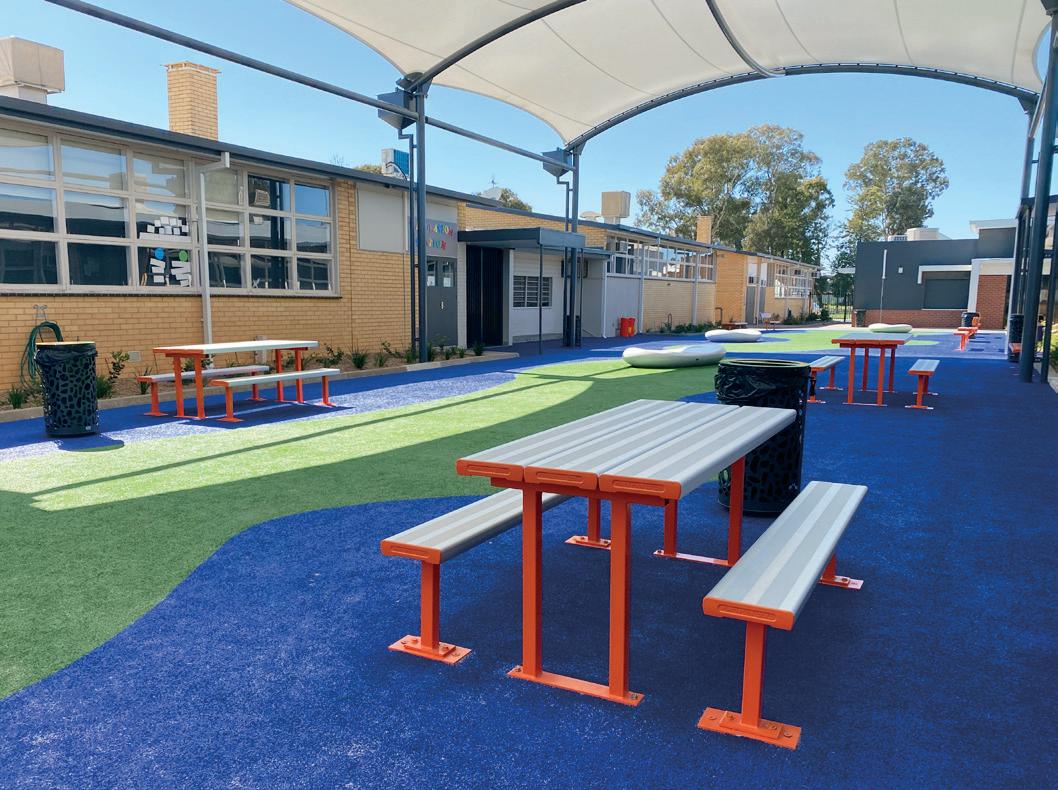
Mr Pederick said sustainability is also becoming an important consideration for schools when selecting outdoor furniture.
“Sustainability is influencing how outdoor furniture is designed and selected for schools. Across the industry, there is growing interest in recycled materials, long life products, and low impact manufacturing processes.
“Durable materials such as aluminium, steel, and quality timbers help extend product lifespan and reduce replacement cycles, supporting more responsible resource use over time, plus they look fantastic.”
When selecting outdoor furniture for high-traffic environments, schools need to consider how products will perform over time, particularly in spaces that are used daily by a large cohort of students and exposed to the elements.
“When purchasing outdoor furniture for high traffic school environments, several factors should be carefully considered,” Mr Pederick said. “Durability is essential, particularly for furniture exposed to heavy use and harsh Australian weather conditions. Safety and comfort, low maintenance requirements, and accessibility for students of all ages and abilities are equally important. Finally, selecting well designed seating that complements the school’s outdoor spaces ensures long term value and encourages regular, positive use by students and staff alike.”
As schools make greater use of outdoor spaces, the right furniture can make a real difference, helping to create environments that are easy to use and suited to everyday learning.
We are a local, family-owned business, specialising in durable aluminium seating and outdoor furniture for schools.
With over 10 years’ experience, we create inspiring outdoor learning spaces that last.
your school grounds today, contact us to explore our solutions!
By Gemma Easton, Editor
Events in recent years have brought airflow, circulation, and quality into sharp focus.
Particularly in spaces where large groups regularly gather, the air around us can be a concern.
Shannon Bowden, National Commercial Manager at Mammoth Fans shared her insights on choosing fans to keep the air moving and staff and students happy at your school.
Commercial fans for large spaces aren't the same as ceiling fans we might find in our living rooms at home. What are some key differences, and why are industrial fans better suited to large spaces like school halls and gyms?
There are a few simple key differences between residential fans and HVLS (High Volume, Low Speed) fans. Size in particular. The average residential fan is approximately 152cm in diameter. HVLS fans can range from 2.5m diameter to 7.3m in diameter.
The next is air movement. Residential fans circulate in the vicinity of 200m3/ min whilst a 4.2m fan can circulate around 7550m3/min (37 times more air movement!).
Finally, is blade speed. Using the residential model as a reference, the highest blade speed could vary from 250 RPM up to 350RPM. The HVLS 4.2m blade speed is only 72RPM. This makes for a pleasant, subtle breeze without blowing everyone or everything away.
The sheer volume of air movement and physical


size with HVLS fans lend themselves perfectly to larger spaces, particularly in school halls and gyms.
What considerations should schools make before installing a fan? Will the type of space and its use impact fan choice?
With the sheer size and volume of these units, there are some important considerations. Clearances for starters. To achieve optimum airflow and safety precautions, a minimum clearance level of 3.5m from blades to the floor is required.
Mounting and structural support are also important. The weight and size of these fans require something like a steel I-beam or suitable roof truss for safe mounting. Depending on the size, these fans can weigh from 40kg to 130kg. If unsure of where to mount your fan to bear the weight, it’s best to consult with a structural engineer.
Height, size and location of the space is also part of the evaluation process. You don’t want too big a fan that won’t be used or too small that it makes little to no impact.
Rising energy prices and pressure to commit to green goals are impacting schools' decisions regarding electricity use. How has fan technology developed in recent years to support schools in lowering energy costs and consumption, and meeting sustainability targets?
With unique technology such as PMSM (permanent, magnetic, synchronous motors) provides the ability to produce maximum output for minimum energy use. Power consumption of the
4.2m unit is as little as 400watts on a 240v power supply. For reference, a small fan heater under a desk draws 2000watts.
In addition, combining HVLS fans with existing HVAC systems could provide as much as 30 percent in overall cost savings. When looking at larger areas, introducing HVLS fan can be the perfect addition to your overall cooling plans.
Safety is a key concern for schools, and ensuring all equipment is working at its best is paramount. Are there any ongoing maintenance or upkeep requirements for fans that schools should be aware of?
Almost all HVLS fans in Australia comply with Australian Standard safety requirements as a minimum. Additionally, support wires are included as part of a standard installation, and some controllers have cut-out features should something interfere in their operation.

From a maintenance perspective, fans with PMSM motors require little to no maintenance as opposed to units with gearboxes and drives. A basic dust removal regime and periodic check of support wires and structural elements is all that’s required.
Beyond lowering the temperature and keeping staff and students cool, do commercial fans provide other benefits?
Absolutely, the fans aren’t just for cooling. Running units at half speed in winter can aid in circulating the warmer air gathering at roof level. Also, fans can help with the circulation of air in humid areas or where moisture and condensation gather, which will aid in dissipating the moisture build up. Finally, as previously noted, when used in conjunction with HVAC system fans can provide greater circulation and potential energy cost reductions.

Mammoth Fans are built to tackle the toughest challenges in airflow. With sizes spanning 2.5 to 7.3 metres, we’ve got the perfect fit for every project.
Our high-volume, low-speed fans combine cutting-edge technology with sleek design, delivering energy-e cient performance for large-scale, commercial, and industrial spaces. Whether you need to cool a logistics centre, a gym, or even a livestock area, we’re here to help you find the right solution.
SIZES
Need expert advice?
Contact our specialist team today at info@mammothfans.com.au or visit mammothfans.com.au. We’ll make your space a Mammoth success.
WAREHOUSES FACTORIES LOGISTICS CENTRES
GYMS STADIUMS
LIVESTOCK AREAS
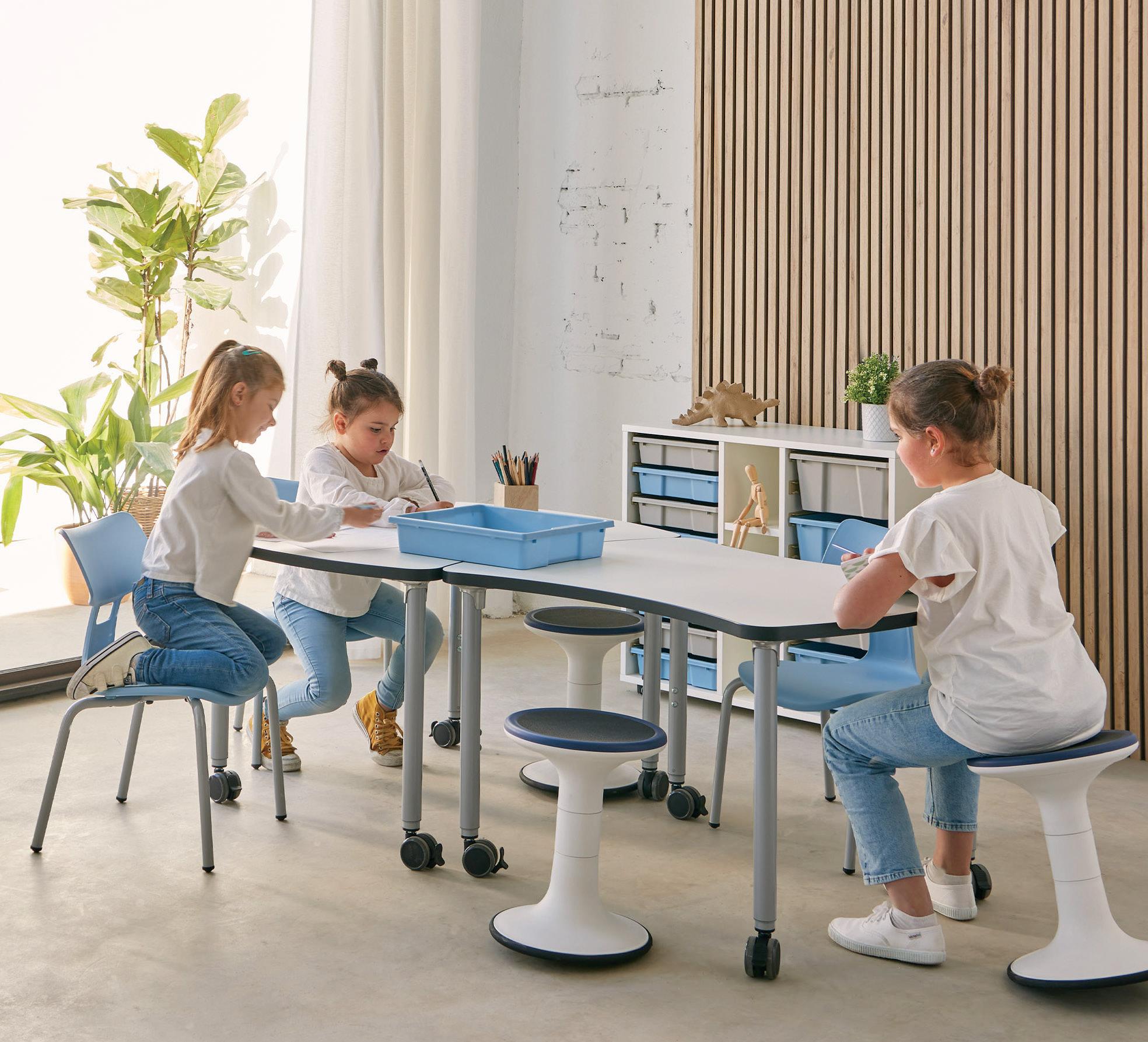
Your imagination is the limit with Actiflex tables…
The Actiflex range is a set of modular tables that can be, mobile or fixed, and are available in various shapes and configurations to personalise your educational space.
e design@resourcefurniture.com.au p 1300 577 267 | resourcefurniture.com.au