






















Guest expectations are changing, the benefits of upgrading your building’s internet:
Tourism Impact: Discerning visitors now view fast and reliable internet as a key factor when choosing accommodation.
Online Reviews: Guest feedback increasingly reflects internet performance, which can influence future bookings.
Real Estate Appeal: Buyers and tenants are seeking homes that support remote work — high-speed internet is now essential.
Holiday Letting Performance: Buildings with excellent internet tend to enjoy be er reviews, stronger brand recognition, and increased occupancy and revenue.



Option A: New CAT cabling to each room. Improves speed over traditional lines but doesn’t support gigabit performance. Installation is costly.
Option B: Wireless distribution across the building. Cost-e ective but unreliable due to interference from building materials and layout.
Option C: Fibre optic cabling to each apartment.
O ers excellent performance but comes with high installation costs and device upgrade requirements.
Option D – Recommended: Gigabit fibre delivered via existing TV coaxial cables. This solution:
o Delivers speeds up to 1.5 Gbps (1,500 Mbps).
o Involves minimal disruption and cost.
o Is fully managed and warranted.
o Has proven success with existing installations.
…with the flick of a switch our internet services moved to world class Gigabit capable internet. Resident and guest satisfaction has skyrocketed with the availability of fast, reliable industry leading internet, which allows our resort to include phone, video and streaming services never before offered. Absolutely Brilliant!”
– Eric van Meurs, Manager Atlantis Marcoola Beachfront Resort and past ARAMA President (Australian Resident Accommodation Managers Association.)











The views and images expressed in Resort News do not necessarily refl ect the views of the publisher. The information contained in Resort News is intended to act as a guide only, the publisher, authors and editors expressly disclaim all liability for the results of action taken or not taken on the basis of information contained herein. We recommend professional advice is sought before making important business decisions.
The publisher reserves the right to refuse to publish or to republish without any explanation for such action. The publisher, its employees and agents will endeavour to place and reproduce advertisements as requested but takes no responsibility for omission, delay, error in transmission, production defi ciency, alteration of misplacement. The advertiser must notify the publisher of any errors as soon as they appear, otherwise the publisher accepts no responsibility for republishing such advertisements. If advertising copy does not arrive by the copy deadline the publisher reserves the right to repeat existing material.
Any mention of a product, service or supplier in editorial is not indicative of any endorsement by the author, editor or publisher. Although the publisher, editor and authors do all they can to ensure accuracy in all editorial content, readers are advised to fact check for themselves, any opinion or statement made by a reporter, editor, columnist, contributor, interviewee, supplier or any other entity involved before making judgements or decisions based on the materials contained herein.
Resort News, its publisher, editor and sta , is not responsible for and does not accept liability for any damages, defamation or other consequences (including but not limited to revenue and/ or profi t loss) claimed to have occurred as the result of anything contained within this publication, to the extent permi ed by law.




Advertisers and Advertising Agents warrant to the publisher that any advertising material placed is in no way an infringement of any copyright or other right and does not breach confi dence, is not defamatory, libellous or unlawful, does not slander title, does not contain anything obscene or indecent and does not infringe the Consumer Guarantees Act or other laws, regulations or statutes. Moreover, advertisers or advertising agents agree to indemnify the publisher and its agents against any claims, demands, proceedings, damages, costs including legal costs or other costs or expenses properly incurred, penalties, judgements, occasioned to the publisher in consequence of any breach of the above warranties. It is an infringement of copyright to reproduce in any way all or part of this publication without the wri en consent of the publisher.
2025-2026, Multimedia Publications Pty Ltd
Well, here we are. The tinsel is up, the resorts are full, and onsite managers everywhere are bracing for that magical time of year.
Merry Christmas, everyone. We made it! As we wrap up another year in the wonderfully unpredictable world of management rights, I cannot help but marvel at how much this industry manages to pack into twelve months. If multitasking was a sport, MLR operators would have gold medals, sponsorship deals, and their own Netflix documentary.
This year brought record-breaking sales, new faces entering the industry, long-timers levelling up their businesses, and a healthy dose of legislation debate keeping everyone on their toes. ARAMA











Mandy Clarke, Editor editor@resortnews.com.au
was everywhere, pushing for safer, more harmonious strata communities and reminding everyone that respect is nonnegotiable. They earned even more national-level political recognition this year, cementing their status as the steady adult in



the room when the rest of strata occasionally behaves like a family Christmas lunch gone sideways.
It was a special year for us at Resort News as we celebrated our anniversary. For the November edition I had the joy of diving back through three decades of stories, insights, laughter and lessons, and the privilege of retelling some of the industry’s most meaningful moments.
2025 also delivered a standout awards season, with operators and suppliers recognised for excellence and innovation. It’s clear the sector is in very good hands.
From me, a heartfelt thank you to all the columnists and contributors who keep these pages sharp, relevant, informed and occasionally deliciously
provocative (cough… Mike Phipps)! It's your insights that guide this industry through chaos, change, celebration, and everything in between.
And finally, a warm goodbye (for now) to the wonderful Kelley Rigby, who is stepping back from her regular column. Kelley has been a trusted voice, a fierce advocate and a favourite among our readers. We will miss her monthly wisdom, but the door is always open for her return.
Here’s to a joyful Christmas. May your committees be calm, your agreements run smoothly, your holiday guests arrive in good spirits and depart without complaints.
See you in 2026.
Warm regards, Mandy Clarke, Editor, Resort News

















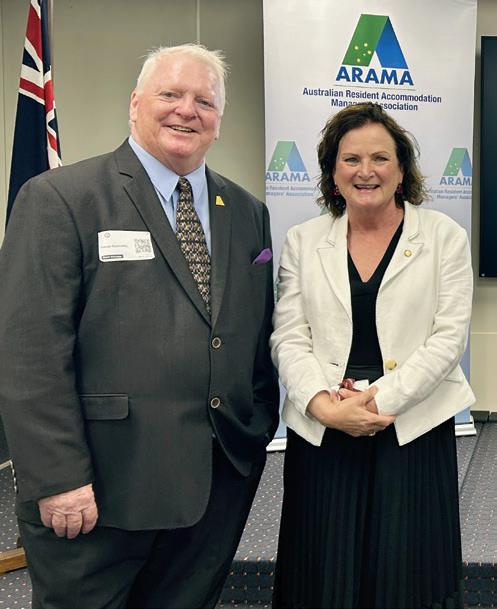
By Trevor Rawnsley, CEO, ARAMA
‘A VERY MERRY
Christmas, and a happy New Year,’ John Lennon wrote 54 years ago, ‘Let's hope it's a good one without any fear.’
While the holiday period should be one of fun, frivolity and goodwill to all, it often becomes extremely stressful with traffic snarls, large crowds and hot tempers in the summer sizzle.
More than ever, our resident managers have to be Santa Claus for weeks on end to ease tensions and maintain a peaceful community. It’s essential that managers do everything they can to avoid conflict at a time when bullying and harassment are on the rise everywhere in society.
You only have to turn on the TV news to see that things are a little crazy these days.
Politics, social media, entertainment and even retail shopping have become increasingly confrontational.
The world has become more and more angry, and in strata schemes—where we have neighbours not just on either side but above and below us— tensions can often be magnified.
It would be rare for a week to go by without a manager ringing ARAMA in a stressed state. Often they claim they are being bullied and harassed in their complex.
The angst and unkindness in the world has become worse
Resident managers have to be Santa Claus for weeks on end to ease tensions and maintain a peaceful community.
since COVID. Consumers everywhere are more aggressive to retail and hospitality staff—and it’s no different for our managers. Shelter is a basic human need, and any disagreements over it can make residents feel threatened and trigger them emotionally.
That’s what is peculiar about Management and Letting Rights (MLR) and why there is often so much antagonism towards resident managers: some unit owners feel their shelter is being threatened in some way and they feel entitled to criticise a resident manager, often quite aggressively.
The manager is human, and so they tend to react to defend their integrity; then you have arguments that can escalate.
Bullying and harassment is one of the most pressing
issues in strata, but ARAMA advises responding with politeness and respect.
Many schemes have their general meetings over the holiday period, and it’s a good idea to remember that ARAMA has designed an opening statement for strata meetings to nip bullying and harassment in the bud.
At the request of the Queensland Government, which is looking into psychologically safe strata communities, I put together a special interest group consisting of three unit-owner representatives, two practising body corporate managers, a practising residential manager, Guy Elliott, our National President and myself.
All of us live, work or invest in strata, and we developed what we call a statement
of intent designed to help create psychologically safe communities.
Most of the time, bullying and harassment is evident in a committee meeting or general meeting when owners come together. They often disagree over something… anything.
Most of the time it's a unit owner in dispute with another unit owner. They’ll disagree, and that disagreement erupts and it’s on for young and old. And then it continues after the meeting and spills into the broader strata community.
That’s no way to spend the Christmas and New Year holidays, and it’s no way to live and work in a strata community.
The special interest group decided to distil everything down into an opening statement to
set the scene. Our intention is that at a strata meeting, the chairperson opens the meeting, welcomes everyone and reads out the statement of intent.
The statement declares: “We the attendees at this meeting understand and agree that Respect is our Common Ground. We agree to listen to each other and not engage in personal attacks, even when we don’t agree. We commit to respectful interactions with each other and to leave any disagreements behind in the meeting room.”
It is becoming more commonplace for the chair to ask for the meeting to endorse the statement and have it entered into the minutes, assuming the meeting agrees. It can also be distributed with the agenda as the first item of business if that is the will of the committee.
It sets the ground rules for a harmonious meeting.
We deliberately haven't said “this is what you should do”. We deliberately haven't said “these are the only words you can use”. But we have said, “please consider it”.
We’ve taken a light-touch approach. It's a gentle step in our mission to create psychologically safe strata communities — and it certainly identifies potential troublemakers who don't belong in that meeting. If they won’t even agree with the basic element of respect, what are they doing there?
Others at the meeting may have the power to vote the troublemaker out of the meeting if the meeting agrees.
If we can at least get people to respect each other and avoid personal attacks, we go a long way towards creating psychologically safe communities, and a community where anger is diffused by commonsense.
Because the opposite of that (and what we’ve been hearing much too often) is that we have members who are severely affected by bullying and harassment to the point where they can't think properly.
Of course, we do have measures to counter that.
A couple of years ago, ARAMA introduced our Member Assistance Program, A-MAP, which is a reactive measure against bullying and harassment.
We have also been running our ARM program, the ARAMA Relationship Masterclass, which shows resident managers that they have a responsibility to do all they can to nip bullying and harassment before it starts, and what to do if they can’t.
But our statement of intent is there as a preventative measure, because prevention is always better than cure. It is designed to stop bullying before it even starts.
If you have a problem where people are yelling at you in a meeting, managers should take this statement along and ask the committee, “Hey, will you agree to this?”
There is nothing in this statement of intent other than identifying the fact that respect must be the common ground for everyone to benefit.
Resident managers and their contractors are protected by legal provisions against bullying and harassment in the workplace.
Our scheme is a workplace. The committee meeting room is our workplace. The common area is our workplace. Our office is our workplace.
And workers like our members have protections under Workplace Health and Safety laws. Workplace bullying is defined as “repeated and unreasonable behaviour directed towards a worker or a group of workers that creates a risk to health and safety.”
“Unreasonable behaviour” means “behaviour that a reasonable person, having considered the circumstances, would see as unreasonable, including behaviour that is victimising, humiliating, intimidating or threatening.”
Bullying and harassment in strata is not just directed at caretaking service providers and resident managers; it often involves unit owners bullying and harassing other unit owners. There is far too much aggressive behaviour that may be interpreted as bullying and harassment directed from unit owners towards committee members or chairpersons.
As a result, many good people who would otherwise serve on a committee are repelled by the negative behaviours they see. It often pushes capable volunteers away from community leadership roles, leaving committees vulnerable to being dominated by bullies who have pushed others out.
The same goes for body corporate managers, and we hear many stories about bullying and harassment directed towards them too.
Caretaking service providers, committee volunteers, body corporate managers and contractors all have strong protections under Workplace Health and Safety legislation.
If you worked at any large company, it would be unacceptable to be screamed at or threatened, coerced or extorted.
It is just as unacceptable for those things to happen in our workplace too.
Our statement of intent should go a long way to diffusing anger.
But let’s also realise that resident managers are in a service industry, and good service is the essence of harmony in a community scheme.
Sometimes doing just a little bit extra for the community can reap enormous benefits by promoting peace and goodwill, even when it’s not Christmas.
Bullying and harassment is not someone just wanting you to do your job properly.
Resident managers must do all they can to promote good relationships at a scheme. If people want you to open the pool at 7 am and you prefer 7.30, would it really hurt to open it half an hour earlier to keep everyone happy?
When resident managers go above and beyond to provide great service (and when the community sees that effort) it makes for a harmonious community.
Great service should go a long way towards ensuring that everyone in the strata community has a very merry Christmas and a happy New Year.





By Jane Wilson , Commissioner for Body Corporate and Community Management
Often, residents in community titles schemes are unsure whether a body corporate can ratify (approve after the fact) decisions that are made by a committee without proper authority.
In some circumstances, the body corporate can ratify those decisions at a general meeting, and this article will explain the concept of ratification and some common misconceptions.
Ratification is a legal term that allows a body corporate to approve an action carried out on its behalf by the committee, even if the committee did not originally have authority to act.
In a Queensland District Court case, it was confirmed that this principle applies to bodies corporate.
Although the owners together make up the body corporate, most day-to-day decisions are typically made by the committee or a body corporate manager. In this context:
• The body corporate at a general meeting is the principal.
• The committee is the agent.
Case law confirms that the following conditions are essential for ratification:
• The body corporate (as principal) must have full knowledge of all the material facts and circumstances relating to the committee’s irregular decision.
• Ratification must occur within a reasonable time (though, there is no fixed rule about what is a reasonable time).
• The committee must have claimed to act on behalf of the body corporate.
• The body corporate must have the power to make the decision.
• The body corporate must have existed when the committee acted.
Situations sometimes arise, where a committee votes on an issue that it doesn’t have the authority to decide (called ‘restricted issues’ under the regulations).
If the conditions are met, ratification can ‘cure’ or ‘fix’ the defect in the committee’s decision.
The District Court explained the effect of ratification as follows:
When an act has been done by one person assuming to act on behalf of another, though without authority, and the other subsequently ratifies what has been done on their behalf, this operates retrospectively to give the first-person authority to do what has been done as agent.
For example, in Kings Cove [2025] QBCCMCmr 90, the adjudicator observed that ratification “rectifies the defect” in the committee’s decision.
A common example is the committee authorising spending that exceeds the legislated ‘committee spending limit’.
The regulations only allow the committee to approve spending above this limit in specific circumstances.
If the committee exceeds its limit without authority, the body corporate can later ratify the spending at a general meeting, provided they meet the conditions for ratification.
Calling a general meeting takes time and money, especially in larger schemes.
Committees, therefore, play a significant role in keeping the body corporate running smoothly.
The Queensland Civil and Administrative Tribunal (QCAT) recognised this when it said committees cannot realistically be expected to be “masters of community management.”
QCAT also observed that:
The direction that a ‘body corporate must act reasonably’ in the performance of its ‘general functions’ does not suggest that every minor irregularity should be pounced on to impede or paralyse the normal conduct of business.
If you are thinking about challenging an irregular committee decision, first consider:
• Are you concerned about the substance of the decision itself?
• Or are you only concerned about the fact that the committee acted without authority?
For example, if the committee approves urgent repairs above its spending limit and the body corporate later ratifies that decision at a general meeting, it may be difficult to dispute the matter if your only concern is the original defect in authority.
• Ratification should not be viewed as a “green light” for committees to contravene the legislation at will—committees must act reasonably when making any decision on behalf of the body corporate.
• Ratification allows the body corporate to fix certain unauthorised committee decisions.
• The body corporate may choose not to ratify a decision.
• Any matter being considered by an adjudicator will depend on its specific circumstances.












By Ben Ashworth, Small Myers Hughes Lawyers
Every caretaking agreement I can think of requires the building manager to supervise something.
For example, the building manager must supervise the plumber when they are fi xing a tap on common property. The amount of time and eff ort required to supervise a task — and the nature of the actual supervision can vary significantly, especially when the task being performed aff ects the common property on a grand scale. Supervising a single light switch being fi xed is one thing, but supervising the replacement of all the wiring in the building is another. Unfortunately, most caretaking agreements do not distinguish between these situations, and building
Deciding what is or isn’t implied in an agreement can be a minefield of arguments
managers are simply required to “supervise” everything.
This lack of clarity often leads to disputes between the building manager and the body corporate. When there isn’t clear guidance in the caretaking agreement, people cannot agree on how to interpret the building manager’s duties. It raises questions about what happens after a storm or when the body corporate decides to undertake major capital works. If the agreement doesn’t clearly state what kind of supervision is required in each circumstance, you are left looking at what is implied in the agreement.
If you are trying to work out what is implied in an agreement, you will need to consider things like context, capabilities, reasonableness and overall expectations.

Context: If all the caretaking duties that refer to supervision describe only small, one-off tasks, it might be implied that those are the only circumstances in which supervision is required.

Capabilities: If the level of supervision required is within the capabilities of the building manager and no special skill or qualification is needed, it might be implied that it is a task the building manager must perform.
Reasonableness: If the time and resources needed to provide supervision are not reasonable compared to the remuneration being paid for the building manager’s services, it might be implied that supervision in those circumstances is extra work and not included in the caretaking agreement.
Expectations: If the caretaking agreement never refers to tasks being performed by other service providers at the body corporate’s expense, or to services for which the building manager may charge extra, owners may expect that the caretaking agreement is a one-stop shop and may assume it is implied that the building manager is engaged to do everything, including supervising all works in the complex.
Deciding what is or isn’t implied in an agreement can be a minefield of arguments. Unfortunately, these disputes are often unavoidable when unusual or unforeseen circumstances arise. If you are a building manager and find yourself unsure about the kind of supervision you need to provide, or whether you can charge extra for your supervision services, it is better to have a conversation with the body corporate before it becomes a dispute. Being proactive and having the difficult conversations before bridges get burnt is the healthiest choice for you and your business. And remember, there are a variety of people who can help you with this. Liability limited by a scheme approved under Professional Standards Legislation
Disclaimer – This article is provided for information purposes only and should not be regarded as legal advice.

By Mandy Clarke, Editor
When you meet Livia Szikora, you quickly sense the energy of someone who has built everything from scratch. Not just a business, but a belief system around what management rights really means. Her journey from a small Hungarian village to becoming one of Australia’s most passionate advocates for onsite managers is the stuff of inspiration.
I caught up with Livia to talk about her remarkable story, her new book Not Just Caretakers: We Run the Whole Show, and her mission to reframe how the industry sees itself.
Mandy: Tell us a little about your background. Where did your career journey begin?
Livia: I grew up in a small village in Hungary and moved to Australia in 2008 with big dreams, no English, and no safety net. My background wasn’t in real estate at all. I started out as a hairdresser, but I’ve always loved property and taking on new challenges.
How did you first discover the management rights industry?
It actually started through one of my clients at the salon. At the time, I had three young kids, was renovating, and had no family support. When I first heard about management rights, I had never come across the term. The more I researched, the more I thought this could work for us. It offered balance, purpose, and flexibility all in one.
What motivated you to start AILI Realty, and what vision drives it today?
Starting AILI Realty was about creating a life that worked for our blended family of four children. I wanted to be present, to go to school concerts, be there when they were sick, and still do what I love. Management rights gave us that opportunity. Over time, I realised it wasn’t just about letting units or maintaining common property; it was about people and community.
Our vision now is to redefine how people see onsite managers. They’re often underestimated, but most are licensed professionals and business owners who hold everything together. We want to bring pride, professionalism, and visibility to this role and empower managers with the tools and confidence to succeed.
Management rights is uniquely Australian
How has your personal experience shaped your understanding of what makes this model so Australian?
Coming from Europe, I had never heard of it before. What makes it unique is how it combines lifestyle, business, and community. You can live where you work, grow a business, and build long-term equity. It’s ownership and contribution rolled into one. But it’s the people side that truly makes it special, that trust between owners, tenants, and committees. Onsite managers are community builders, and that sense of pride is very Australian.
What first sparked your writing ambitions?
Frustration and love for the industry at the same time. I am tired of how misunderstood caretakers are, even by people living in their buildings. Outside agents undercut commissions, owners go elsewhere thinking they are getting a better deal, and no one sees how much we
do behind the scenes. I wanted to tell the truth and make new managers feel less alone.
Not Just Caretakers is part memoir, part “how-to,” and completely real. Who did you have in mind when writing it?
I wrote it for the industry, for managers juggling business, family, and community with little recognition. But I also wrote it for outsiders, so they could finally understand what this business really is. If even one person feels seen, supported, or inspired to take the leap after reading it, I’ve done my job.
What are some key themes you explore?
Honesty, resilience, and self-care. It’s about surviving the chaos of running a business where your home and work are the same space, and still keeping your sense of humour. There’s a strong focus on respect and recognition too. Once you understand how this business really works, it can offer incredible freedom and stability.
Did writing the book change your view of the industry?
Completely. Writing made me stop and see how much we actually do, and how little others understand it. It gave me renewed respect for onsite managers, including myself. It reminded me why I love it, flaws and all, and made me even more determined to educate and support others entering the field.
What are the biggest challenges and opportunities for operators right now?
The workload and increasing regulations are one thing, but the emotional pressure from owners, residents or even committee members can be just as tough. Bullying and unrealistic expectations still happen. New managers often don’t know where to turn. They need real guidance, not just seminars.
That’s why I’m passionate about mentoring, giving newcomers the right start so they never feel lost or alone. When caretakers are empowered, the whole industry thrives.
How do you see the relationship between managers, investors, and bodies corporate evolving?

Slowly improving, but there’s still a long way to go. We’re all on the same team, yet there’s so much misunderstanding about roles and responsibilities. When everyone communicates and respects each other’s contribution, everything runs smoother. It’s not about power, it’s about partnership.
What makes a great manageroperator in 2025?
Adaptability, calmness under pressure, and genuine care for people. This isn’t a “mow the lawns and collect the rent” kind of job. It’s about communication, fairness, and resilience. You need self-awareness, boundaries, and balance, because you can’t pour from an empty cup. The best managers lead with heart and just enough humour to stay sane.
What’s been a defining moment in your career?
Learning to respect my own time. For years, I said yes to everything and everyone. I thought being available 24/7 made me good at my job, but it only burned me out.
We’re building Australia’s first dedicated Management Rights Buyers Advocacy, working exclusively with buyers from start to finish. We’ll guide them through understanding, purchasing, and settling in. It’s the kind of help I wish I had at the start.
We’re also expanding our training programs, so managers don’t have to learn everything the hard way. Between that, the book, and mentoring, this really feels like the start of something bigger, a more connected, confident industry.
How do you unwind?
My family keeps me grounded. Beach days, movie nights, gardening, or just doing nothing together. I love a good renovation project, but I also value the quiet moments: coffee, music, and space to breathe. Those are the moments that keep me balanced.
If you could make one change for the future of management rights, what would it be?
Real growth came when I stopped trying to please everyone and started running my business on my terms. That’s when I found confidence and peace, and built a life that truly worked for me.
What advice would you give to women entering management rights or property investment?
Back yourself. You’re capable of more than you think. Don’t wait for perfect timing or permission. Take the leap and learn along the way. Set boundaries early and protect your energy. You can be strong and kind at the same time, professional and feminine, successful and still true to yourself. Those things don’t cancel each other out, they’re your edge. And surround yourself with other women who get it. There’s plenty of room for all of us at the top.
road ahead
Between brokerage, mentoring, and authorship, what’s next for you and AILI Realty?
Changing public perception. I’d love to see onsite managers recognised as professionals who hold communities together. Greater awareness would attract new people and help others appreciate how vital this role really is. This industry changed my life, and I want others to see its potential too.
How did you celebrate the launch of your book, and where can people find it?
The book launched in November, which still feels surreal. I celebrated quietly with my family—they’re my reason for everything. But I can’t wait to connect with readers and hear their stories.
Not Just Caretakers: We Run the Whole Show is available at www.notjustcaretakers.com. au and through Amazon.
Livia’s story is one of grit, grace, and a little bit of rebellion, the kind of voice this industry needs more of. She’s proof that management rights isn’t just about caretaking; it’s about community, courage, and creating a life that works on your own terms.


By Will Kenny, Senior Associate, Mahoneys

Imagine this—you’re doing your job well, the committee is happy with you and you’ve built up a solid business.
All of that hard work is then under threat by one motion approved at a general meeting. If you are a manager and your agreements are administered under the accommodation module, please pay attention to this article. We are seeing an increasing number of managers facing the risk of their scheme being changed from the accommodation module to the standard module and the consequent eff ect on their management rights agreements.
Yes, it is true that this has always been a risk since the regulation modules were put into place. As lawyers, we have seen more occurrences of bodies corporate changing the module in recent years for various reasons. This is largely due to the term of caretaking and lett ing agreements coming under intense scrutiny from a number of stakeholders in the strata industry. Bodies corporate are now more regularly exercising their statutory right to change the scheme from the accommodation module to the standard module. This article explains the requirements for a module change and what you can do to prevent it.
can a
corporate
the scheme from the accommodation to the standard module?
Any owner or the committee can put forward a motion to change the module at a general meeting of the body corporate. The procedural requirements for a module change include a special resolution (i.e. a two-thirds vote in favour from those actually voting, and no more than 25 percent of all eligible voters voting against) and a BCCM Form 19 circulated with the meeting agenda. This statutory form explains the diff erences between the regulation modules.
The accommodation module applies where the lots in the scheme are “predominantly accommodation lots” (i.e. lots used for short-term or long-term accommodation). Regardless of whether a scheme qualifies for the accommodation module, a body corporate can still approve a change to the standard module at any time.
While there might be a slim argument that a body corporate cannot change the module if the scheme has always qualified under the accommodation module, that does not prevent a body corporate from approving the change — leaving the manager to deal with the consequences. Where a scheme previously qualified under the accommodation module and no longer qualifies, or where the accommodation module should not have been applied in the first place, a body corporate has considerable justification to argue for a change.
A scheme can, however, remain in the accommodation module even if lots are no longer predominantly accommodation lots, provided the CMS at the relevant time (and all subsequent CMSs) has always identified the
accommodation module as applying to the scheme.
If you are facing the risk of a module change, you need to act quickly. It is best to seek legal advice regarding any proposals from the body corporate and to obtain strategic guidance on preventing the change. We often see bodies corporate making representations about a module change that are misleading, inaccurate or simply untrue. As a manager, your best option is to combat any false statements by contacting owners directly and rebutt ing those claims.
At times, the motion may not be compliant, giving you grounds to question its validity. However, invalidating a motion comes with its own complexities. The best advice we can give a manager is simple: lobbying. A special resolution is a difficult threshold to achieve. The more owners you can rally to support you, the more likely the motion will fail. Follow up with as many owners as possible—particularly those who support you—and ensure they vote against it. The strongest argument you have is that the change makes virtually no diff erence to owners but significantly harms the manager’s business.
A change of module does not automatically limit the possible maximum term of 25 years for agreements under the accommodation module. Despite a change from the accommodation module, the provisions of that module continue to apply to existing agreements—including any renewal or extension—until they come to an end. However, based on the current state of judicial law, if agreements are
assigned or terminated, any current or new agreement will then be subject to a 10-year term limitation.
This means that changing to the standard module has a significant impact on the saleability of the business. Any buyer who is aware of the change will treat the agreements as 10-year agreements and will value the business accordingly. Unfortunately, we have seen instances where managers have been caught by a module change. Interestingly, we were involved in one case where the body corporate approved the change unanimously, only for our client to later convince the body corporate to revert the scheme back to the accommodation module.
In that situation, the body corporate was seemingly unaware of the detrimental impact the change had on the management rights business. After extensive lobbying and negotiations with the committee, our client was able to demonstrate the importance of long-term agreements. In most cases, managers are vigilant in responding to these issues and will make every eff ort to ensure the motion is not approved.
Although this trend might seem worrying, managers should not be overly concerned. The reality is that management rights is a people business. If you are not performing well, your body corporate will have more incentive to push for a module change. If you are performing well and maintaining strong relationships with your committee and owners, the risk of a module change occurring is significantly reduced.

By Julie Jacobson, Senior Accountant, Holmans
Dual cab utes are a popular business vehicle option in the property management industry, and for good reason.
They’re handy for trips to the hardware store, transporting gardening and other equipment, and stocking up on all manner of supplies. Aside from being practical for work purposes, they are also comfortable for passenger transport, making them prevalent among businesses that need a vehicle for both work and personal use.
This dual functionality, however, can complicate their tax classification.
Whether you currently own or are looking to purchase a dual cab ute for business purposes, it's important to have a clear picture of how tax rules, particularly Fringe Benefits Tax (FBT), apply.
FBT is a tax paid by employers (or businesses) on certain benefits provided to employees or associates (including business owners), such as private use of a business vehicle. If a vehicle is used for personal trips, commuting, or other private purposes, FBT applies.
The tax is calculated based on the vehicle's value, the extent of private use, and any applicable exemptions. The current FBT rate is 47 percent, and businesses are responsible for paying this to the Australian Taxation Office (ATO).
Recent updates from the ATO help clarify some common questions and misconceptions about dual cab utes. The primary concern revolves around whether a dual cab ute is classified as a car or a commercial vehicle for FBT purposes. The distinction is significant because it determines the FBT treatment and potential exemptions available. The ATO clarifies that the key factor is how the vehicle is actually used and its features. If it is used predominantly for workrelated activities and is not primarily for private use, it may be exempt from FBT. Conversely, if private use is significant, FBT obligations are likely to apply.
The ATO emphasises that simply being a dual cab does not automatically exempt a vehicle from FBT.
To qualify for an exemption, two conditions must be met.
The dual cab ute must be:
1. An eligible vehicle: Designed to carry a load of one tonne or more, or more than eight passengers (including the driver), or a load under one tonne and not primarily designed for carrying passengers.
2. Used only for limited private use: Minor, infrequent and irregular private travel such as an occasional trip to the tip or helping a friend move house.
To determine FBT liability accurately, business owners and employers should maintain detailed records showing how much the vehicle is used for private versus business purposes. The ATO’s logbook requirements include keeping detailed logs of vehicle use— dates, purposes and distances— for at least a continuous 12-week period during the income year. These records can be kept for up to five years if use patterns remain consistent.
To manage FBT effectively for dual cab utes or other vehicles, some practical tips for businesses are:
• Assess whether the vehicle is mainly used for work or private purposes to identify possible exemptions.
• Understand that classifying dual cab utes can be complex — avoid assumptions without proper documentation.
• Evaluate the most appropriate method for calculating FBT— statutory formula or operating cost—based on vehicle use patterns.
• Consider vehicle selection carefully, particularly luxury or high-value cars, as these can attract higher FBT costs and diminish initial tax benefits.
• Consult with tax professionals regularly to stay compliant and optimise tax outcomes.
• Explore alternative arrangements such as salary packaging or novated leases, which may offer more tax-effective solutions.
In conclusion, the way dual cab utes are classified for FBT purposes largely depends on their specific usage and features. Maintaining accurate records, staying informed about the latest ATO guidance and consulting with tax professionals are essential strategies for managing tax responsibilities effectively. Taking a proactive approach not only helps ensure compliance but also maximises potential tax advantages and minimises the risk of penalties.

By Andrew Morgan, Motel Broker/Partner, Qld Tourism & Hospitality Brokers
Another interesting and exciting year is done, and it has gone by in a flash. It certainly doesn’t feel like a year since the last motel market wrap-up. So how did the motel and accommodation industry perform throughout 2025?
If I had to sum up the year in one word, I would go with constant. There was a constant stream of enquiries and interested buyers wanting to acquire motels, and a constant low level of new quality listings coming onto the market. The only factor holding the market back has been the lack of quality product available to meet such elevated demand. Motel owners and potential sellers continued to take a hold position rather than sell and take the gain, creating a buying market that remains truly unsatisfied.
The dynamics of the motel market generally mirror the overall health of the motel industry. Elevated occupancies and sustained demand for accommodation typically align with high demand to acquire motels. Throughout 2025, market activity consistently demonstrated resilience.


Strong to high occupancy rates were achieved, supporting increases in room tariff s, often implemented multiple times throughout the year. Regional variations did appear, driven by local economic conditions, but overall demand was substantially bolstered by ongoing strength in the resources sector, corporate expansion requiring labour, and widespread government investment at all levels.
Looking back, the close of 2024 was exceptionally busy. Enter 2025, and while significant buyer enquiry continued, the available stock of quality motels remained an issue. Supply diminished further as the year progressed. High enquiry levels were driven by serious buyers seeking quality motel investment opportunities, as well as newcomers wanting to enter the industry.
The second quarter saw steady activity, with earlier enquiries converting into transactions. Many deals faced delays due to complex finance approvals and other unforeseen issues. Demand for leasehold properties strengthened, with many contracts att racting “back-up” buyers ready to move should primary contracts fall over. Continuing a trend from 2024, when finance hurdles were common, investors increasingly self-financed their acquisitions. This dynamic marginalised financially sensitive buyers, allowing stronger, well-capitalised investors to dominate the market. While most interest remained focused on freehold tenure, demand for leasehold properties continued to rise.


The third quarter maintained this momentum, with constant enquiry levels. Investor migration from the southern states into Queensland continued, with strong interest in motels, resorts and caravan parks. Transactions ranged from smaller leasehold agreements starting around $200,000 to substantial freehold properties. Significantly,
assets that had been on the market for extended periods for various reasons began to att ract renewed engagement.
The final quarter of 2025 was marked by sustained activity and strong enquiry. Properties that had been listed for longer periods finally moved under contract. Combined with owners choosing to retain assets due to strong trading results, this led to a further depletion of available accommodation businesses. New quality listings did not replenish the market, generating significant pent-up demand. Buyers who had previously delayed their decisions found it increasingly difficult to source suitable assets. As seen in late 2023 and 2024, transactions were often competitive, with multiple investors pursuing the same asset. The old saying “when it rains, it pours” rang true in our office this year — as soon as a listing drew interest, more buyers appeared. As a result, buyer demand was not fully absorbed, and investors continue to seek new opportunities.
Looking ahead to 2026, the industry outlook is highly optimistic. We expect sustained strong demand for accommodation assets, supported by continued strong trading performance across the sector. Existing owners are anticipated to maintain or increase their level of investment, and we foresee a growing inflow of capital from non-industry sources moving into the accommodation market.
We at Queensland Tourism and Hospitality Brokers (QTHB), along with our partners and staff, are grateful for the support received from the industry this year. We wish everyone in the accommodation sector a safe, prosperous and enjoyable 2026.















By Lynda Kypriadakis, The Diverse Group of Companies & DPX Projects
Transitioning into a new caretaking role within a residential or mixed-use community can be both exciting and overwhelming, particularly for those without prior experience or formal facilities management qualifications. Whether it’s a small complex or a master-planned community with landscaped grounds, pools, lifts and plant rooms, the scope of responsibility is often broader than anticipated.
A smooth transition benefits not only the incoming caretaker but also the body corporate, residents and the long-term health of the property. This is where a structured approach to handover and training — aligned with recognised industry and Australian Standards such as those outlined in the ABMA Building Management Code makes all the difference.
The challenge of informal handovers
In many schemes across Australia, caretaking rights still change hands with little more than a walk-through and a box of keys. The outgoing caretaker
A smooth transition benefits not only the incoming caretaker but also the body corporate, residents and the long-term health of the property

may offer a few verbal pointers, a contractor contact list and some invoices, and that is often the extent of the exchange.
While this may seem efficient in the short term, informal handovers can quickly lead to confusion, missed maintenance and disputes. Critical information—such as shut-off points for water and gas, warranty documents or compliance obligations—can easily be lost or misunderstood.
Without a structured system in place, the new caretaker is left to “learn on the job”, which is stressful, inefficient and risky. The consequences may not appear immediately, but over time they manifest in deteriorating assets, increased risk exposure, rising repair costs and strained relationships between caretakers and committees.
Best practice in building management sets out a clear framework for caretaker handovers, with the Facilities Management Plan (FMP) at its core.
An FMP is a living document capturing essential information about the common property assets and their maintenance needs. It includes:
• A photographic register of all maintainable assets and infrastructure.
• A regulatory compliance schedule detailing statutory inspection and service requirements (elevators, fire systems, pools, air conditioning, termite barriers, backflow devices, etc).
• Preventative maintenance calendars to plan and record maintenance throughout the year.
• A contractor database to ensure consistency and accountability.
• Operational checklists for cleaning, gardening and routine inspections.
• Work health and safety (WHS) procedures and records.
More than just an administrative tool, the FMP forms the foundation of a professional caretaking operation. For new caretakers, it serves as both a training manual and a compliance record, outlining what needs to be done, when it must be done and how it should be done.
Even the most capable caretaker can feel uncertain when stepping into a new and complex environment. Each site is unique—equipment ages differently, service providers vary and resident expectations differ. Structured induction and training help bridge this gap by providing practical, site-specific learning. A structured handover program typically includes:
Initial site familiarisation: Understanding the layout, emergency systems and key access points.
Regulatory and compliance overview: Learning statutory maintenance obligations and record-keeping requirements.
Hands-on demonstrations: Daily routines such as waste management, gardening standards, pool testing and plant operation.
Mentored follow-up: Scheduled check-ins during the first few months to build confidence and ensure compliance.
This staged approach builds both skill and confidence. Caretakers who clearly understand their responsibilities are less likely to feel overwhelmed or reactive when issues arise.
A structured handover offers immediate and long-term advantages:
Confidence and clarity: Understanding expectations from the outset reduces stress and prevents mistakes.
Professional reputation: Adherence to industry standards enhances credibility with committees and residents.
Efficiency: Clear procedures and schedules minimise wasted time and reactive maintenance.
Safety and compliance:
Documented WHS and maintenance records protect caretakers in the event of incidents or audits.
Career development: Training aligned with accredited industry qualifications supports longterm professional growth.
Caretakers who receive
structured induction and training often report higher job satisfaction. They feel supported, capable and empowered— qualities that directly improve property outcomes.
For bodies corporate and committees, a structured caretaker handover is an investment in stability and risk reduction.
When a caretaker is trained using the FMP and recognised industry standards, schemes benefit through:
• Reduced disputes due to clearly defined roles and responsibilities.
• Stronger compliance with statutory maintenance and WHS requirements.
• Better communication through consistent reporting.
• Longer asset lifespans thanks to preventative maintenance.
• Seamless operational
continuity when caretakers change.
A professional, structured handover protects the property and the long-term investment of everyone involved.
The building management and caretaking industry has evolved significantly in recent years. Committees, owners and managers increasingly expect professional service, transparency and compliance. The ABMA Building Management Code helps formalise what was once loosely defined into a nationally recognised discipline.
Caretakers who embrace this structured, best-practice approach—supported by a site-specific FMP and accredited training—position themselves as leaders. They are not simply maintaining a property; they are managing a community’s long-term asset with care, diligence and accountability.
For new entrants to the industry, particularly those purchasing management
rights, investing time in professional induction and understanding the FMP system is one of the smartest steps they can take. It demonstrates professionalism from day one and sets the tone for a positive working relationship with the body corporate.
At its core, caretaking is about stewardship—looking after a property as though it were your own. A structured handover process, supported by industry best practice, empowers caretakers to do exactly that.
It transforms the handover period from a confusing hand-off into a professional induction that sets everyone up for success.
For caretakers, it builds pride, confidence and recognition as essential professionals in community management.
For the properties they maintain, it lays the foundation for sustainable, compliant and highquality building management for years to come.






By Roland Franz, General Manager, Body Corporate Headquarters Strata Consulting Services (Qld)
The festive season is a time of joy, community and celebration. For many owners and residents in bodies corporate, decorating with Christmas lights is a cherished tradition. Yet within a body corporate, the rules around installing lights are not always straightforward.
This article provides a guide for owners and committees. Drawing on the Body Corporate and Community Management Act 1997 (BCCM Act), the regulation modules and typical scheme by-laws, we explore the do’s and don’ts, when consent is required, and practical examples of when approval may be granted or withheld.
Owners generally have wide discretion to decorate within their lot. Lights inside windows, on internal walls or within private courtyards usually do not require approval.
Any installation on common property—including balconies, external walls, gardens, foyers, roofs or shared spaces, requires body corporate consent. These areas are owned collectively, and alterations must be authorised.
Each scheme has its own by-laws, which may regulate decorations, nuisance or alterations to common property or the external appearance of a lot. For example, a by-law may prohibit altering the external appearance of a lot without approval or attaching items to external walls or require removal of decorations within a set timeframe.
Under the BCCM Act, committees must act reasonably. Consent cannot be withheld arbitrarily, but may be refused if the installation breaches safety, appearance or nuisance provisions.
f Keep decorations within your lot: Lights inside windows or on internal walls generally require no approval.
f Use safe equipment: Ensure lights comply with Australian electrical standards and avoid overloading circuits.
f Respect neighbours: Keep lights modest in brightness and duration to avoid nuisance.
f Seek approval for common property or external decorations: Lodge a written request before attaching lights to balconies, external walls or gardens.
f Follow the by-laws: Check if your scheme has rules about decorations, duration or removal dates.
f Remove promptly: Decorations should be taken down soon after the festive season.
g Don’t drill or damage common property: Permanent fixtures (hooks, screws) require formal approval and may be refused, or allowed only with “make good” conditions.
g Don’t obstruct safety equipment: Never cover fire exits, sprinklers or emergency lighting.
g Don’t create hazards: Avoid trailing cords across walkways or attaching lights to unsafe structures.
g Don’t assume consent: Even if “everyone does it”, approval is still required for common property.
g Don’t cause a nuisance: Excessive flashing lights or loud musical displays may breach by-laws.
Example 1: Balcony fairy lights
An owner requests permission to hang solar-powered fairy lights on the balcony railing.
Outcome: Approved with conditions — no drilling into common property, lights removed by 10 January, brightness modest.
Example 2: Foyer Christmas tree
The committee agrees to place a communal tree in the foyer, funded by the sinking fund.
Outcome: Approved as it enhances community spirit and does not obstruct access.
Example 3: Courtyard decorations
An owner seeks to place a small illuminated reindeer in their exclusive-use courtyard.
Outcome: Approved as decorations are temporary, illuminated only during set hours and removed by a specified date.
Example 1: Roof installation
An owner proposes large illuminated figures on the roof, requiring drilling into common property.
Outcome: Declined due to safety and structural concerns.
Example 2: Excessive display
An owner proposes a musical light show with speakers in a courtyard.
Outcome: Declined as it would cause a nuisance and breach noise by-laws.
Example 3: Unsafe wiring
An owner requests to run extension cords across common walkways.
Outcome: Declined due to trip hazards and electrical risks.
Can consent be withheld?
Reasonableness test: Committees must act reasonably. Refusal must be based on legitimate concerns—safety, nuisance, damage or by-law breaches. Unreasonable refusal: If consent is withheld without
valid reason (e.g. “we don’t like Christmas”), owners may challenge the decision through the Commissioner’s Office for Body Corporate and Community Management.
• Review by-laws: Check if decorations or displays are regulated.
• Assess safety: Electrical compliance, trip hazards, fire safety.
• Consider aesthetics: Ensure decorations don’t detract from building appearance.
• Apply conditions: Limit duration, removal date, attachment method.
• Record decisions: Document approvals/ refusals in the minutes.
• Communicate clearly: Provide written reasons for decisions.
Christmas lights can foster community spirit, but committees must balance this with safety, compliance and fairness. Owners should respect the shared nature of strata living, while committees should avoid being overly restrictive or unreasonable.
By-laws are enforceable provided they are not oppressive or inconsistent with the BCCM Act or regulation modules. The Act requires committees to act reasonably, balancing individual enjoyment with collective responsibility. If disagreements arise, owners may lodge conciliation or mediation applications with the Commissioner’s Office.
• Check your scheme’s by-laws.
• Identify whether decorations are within your lot or on common property.
• If on common property, lodge a written request.
• Use safe, compliant equipment.
• Avoid nuisance to neighbours.
• Follow any approval conditions.
• Remove decorations promptly.
In Queensland bodies corporate, Christmas lights are welcome when installed safely, respectfully and lawfully. Owners may decorate within their lot freely, but installations on common property require committee
consent. Consent cannot be unreasonably withheld, but may be refused where safety, nuisance or by-law breaches arise.
By following the do’s and don’ts and applying sensible conditions, committees can enable festive cheer without compromising governance. The festive season should be a time of joy, not disputes—so let’s work together to balance celebration with compliance.
Remember: it is better to ask permission than forgiveness, and it might just keep you on the nice list.
Merry Christmas, and may everyone enjoy the season with family and friends in safety while enhancing the community living experience for all.
Suggested topics for future comment are welcome contact via editor@resortnews.com.au


By Mike Phipps, Mike Phipps Finance
I find modern society highly amusing. I think it's because I take some twisted pleasure in observing demonstrable stupidity. I have developed this aspect of my personality to avoid the temptation to grab a bottle of gin, a sharp implement and a warm bath. Better to have a giggle and live another day, I reckon. Call it a personal philosophy, a Zen-like state, an attempt to avoid my karma running over your dogma.

I used to be offended by much that I encountered in these enlightened times, but now I have a laugh and move on. Speed restrictions in roadworks where there are no works. Signs telling us that speed cameras are for road safety. Businesses telling us we are important before putting us in hour-long call centre queues. Those same businesses treating us like crap while asking us to respect their staff. Politicians addressing the public with a cast of goons looking uncomfortable in the background. All grist to the mill in my quest for entertainment.
The managing director thinks I've lost the plot, and she may be right. Hell, do we even know what the plot is anymore? Like some B-grade horror movie, I think it's best to maintain a sense of humour, accept that the plot is farcical and enjoy the ride. The positive energy my newfound demeanour has unleashed has motivated me to actively seek new comical inspiration. I didn't have to look far. In fact, my latest laugh-outloud moment came courtesy of my bank. Yeah, I know. Seek help, Mike—there is no humour in banking. But there is.

It all started when the MD and I were out for a weekend drive. Like most of the population, we can't go past an Open for Inspection sign, so when one loomed into view off we went. Talk about an error of judgement. A very cute house in a great spot we’d forgotten existed had been styled to hook unsuspecting punters like us. I'm no fan of the supernatural, but this joint had good karma seeping out of the walls. We returned a few weeks later for the auction, where it quickly became apparent there were lots of lookers but few real buyers. The MD found the bidding process fun, albeit in her excitement she started bidding in $100K jumps when the trend was most certainly $10K at a time. I am told catastrophe was averted via one highly amused auctioneer, and the property was ours. I'd like to be able to recall the final bidding, but as I had succumbed to heart failure when the MD launched the $100K increases, my memory's a little sketchy. Next stop: the bank, and the stress of signing an unconditional contract when you've got no dough. The MD did the borrowing; I did the promising to pay back. At last count our bank had sent us over 500 pages of information— much of it duplicated.

The torrent of communication included sending us everything we had sent them in support of our application. Did they want to? Of course not. They did it because some bureaucrat thought that by forcing the bank to send us hundreds of pages, we'd be protected from their evil schemes. It also seemed that as a guarantor it was the bank's duty to protect me from the MD. Good luck with that. I laughed. I cried. I read the summary and threw the rest in the bin.
The best way to mislead and deceive is to give the average punter so much information that they are overwhelmed and read none of it. It's also the best way to hide any unpleasant terms and conditions. To be clear, I'm not for one minute suggesting any bank is up to no good, but you get the point.
Then the bank compelled me to seek independent legal advice as to my obligations. They didn't
want to, but the lawmakers insist, and it's a classic case of walking as slow as our slowest person. Despite over 45 years in finance, I must be treated as if I don't understand my obligations as a guarantor. So I visited a lawyer of my acquaintance who laughed a lot, signed off on my declaration and charged me for the pleasure. To be honest, we both laughed, and I reckon I got my money’s worth in sheer amusement.
It's all so silly you gotta laugh, and I did.
You see, regulators believe that more and more rules are required in order to protect us citizens from… ourselves. The race to the bottom is kinda funny and kinda sad. You can educate yourself, have a desire to take responsibility for your decisions and live via a sense of moral obligation, but the banks are forced to treat you like an idiot. As a result, people at times lose their sense of humour

and get angry at the lenders. Better to point the blame at the lawmakers and those who seek to avoid their obligations by playing the victimhood card. In a situation that must surely be in a Seinfeld episode, some regulators seem to think that by increasing compliance rules the rent seekers and victims will somehow miraculously be saved. More likely, the minefield so created will provide
ever-increasing avenues for the less sincere among us to escape their obligations.
Given that I struggle to convince anyone that I am a victim of anything, I tend to cut to the chase when reading bank documents. I'm not for a moment suggesting anyone should do likewise, but frankly life is short and reading hundreds of pages of stuff seems like such a waste.
If I can be serious for a moment, this is not a beat-up on banks. They are simply caught in a sitcom situation that has developed over many years and is not unique to the finance sector. For the record, our bank delivered despite the horrible compliance processes they must go through, and we settled on time.
I'll sign off with some personal advice. If you are driving around the ’burbs this weekend and see an ‘Open for Inspection’ sign, keep driving. Otherwise, it might turn out to be the most expensive Saturday morning of your life.
You gotta laugh.
No AI or ChatGPT was used in the writing of this article!







I believe our industry needs a social and networking group for smaller operators.
In an industry built on people, it’s easy to forget that the people behind the smiles, the managers, staff, caretakers, suppliers, and cleaners need connection and care too. Across Queensland and beyond, hundreds of smaller management rights operators quietly keep their buildings running, being the juggler, negotiator, and tightrope walker, responsible for everything from maintenance and guest relations to marketing and accounting. Yet, many of us are doing it in isolation, a scary and often troublesome place to be.
Is there a way to change this, and is now the time to do it?
Imagine a community, both online and in-person, where operators of buildings with fewer than 150 keys, along with our trusted suppliers, contractors, and team members, can connect, share, learn, and laugh. A place where the questions are real, the advice is shared, and the support is genuine. That’s the vision behind creating a social and networking group for the smaller side of our management rights industry.
Not about creating another association or splinter group, it’s about complementing what already exists
Running a smaller building comes with its own unique challenges. The margins are tighter, the teams are leaner, and the hats are many. One day you’re handling check-ins and guest requests, the next you’re fi xing a leaking tap or chasing down a linen delivery.
For smaller operators, networking and awards events often feel geared towards the “bigger end” of town, the resorts with more than 200 apartments, multiple departments, and marketing budgets that make your eyes water. But what about the rest of us? What about those of us who bid each day farewell in isolation, knowing that despite the challenges we have truly given it our best.
A dedicated social group could bridge that gap. It could bring together the collective wisdom of people who’ve “been there and done that,” where shared experience replaces solitude. Instead of competing, we collaborate. We celebrate wins, laugh over missteps, and swap practical solutions that only someone living the role truly understands.
A social and networking community for smaller operators isn’t just about friendship, though that’s a big part of it. It’s about strengthening the entire management rights ecosystem.
A major goal is knowledge sharing. Think of it as a living library. Operators can discuss
everything from soft ware choices and marketing tactics to handling guest complaints or negotiating with bodies corporate. One idea from a peer can save another operator hours of frustration, thousands of dollars, and a ton of stress and anxiety.
Suppliers and contractors who understand the smaller-building model are worth their weight in gold. A networking group could make introductions easier and help form trusted partnerships. Imagine a shared list of reliable cleaners, maintenance teams, or digital marketers who know our niche and understands the complexity of our industry.
“Knowing which workshops, conferences, CPD sessions or even casual ‘coff ee and chat’ meet-ups on off er could help smaller operators keep learning and adapting often without needing to travel interstate or spend thousands on big-ticket events.
Even the occasional ‘BBQ & Brainstorm’ could do wonders for morale and professional growth.
Let’s face it this job can be lonely. You’re everyone’s problem solver but rarely have someone to talk to about your challenges. A social network could off er us space to share frustrations, get advice, and realise we’re not alone. Sometimes, that’s all it takes to turn a bad day around. The ability to pick up the phone
and chat to someone who understands the quirks of the industry, who can off er that much-needed shoulder and ear.
Of course, every idea comes with hurdles. The biggest concerns people raise are time, engagement, and inclusivity.
We’re all busy. Between checkouts, cleaning, emails, and maintenance calls, finding an extra hour or two feels impossible. That’s why the format needs to be light and flexible: informal catchups, optional attendance, short online sessions, and an active social media hub for quick exchanges. More organised get-togethers to meet and reconnect.
Many small operators might hesitate to join, unsure if they’ll get real-time value, as there would be no membership fee. The key is purpose. Each meeting or online post should leave members with something tangible, a new contact, a tip, or even just a laugh.
The group would be open to everyone who plays a role in making our industry work: managers, partners, receptionists, cleaners, caretakers, contractors, and suppliers. Everyone adds a piece to the puzzle and is as important as the next.
By starting small and building trust, the group can evolve naturally, not as a formal association, but as a genuine community with heart.
This is not about creating another association or splinter group, it’s about complementing what already exists by giving smaller operators a voice and a sense of belonging. When we unite, we lift the whole industry, raising service standards, improving collaboration, and helping each other succeed.
The truth is, we’re all ambassadors for the management rights model. Whether you manage 15 keys






By Sam Steel, Co-Founder, Resly
The festive season is one of the busiest times of year. Guests are arriving in droves, staff are stretched thin, and every little task seems to take twice as long. But it doesn’t have to be stressful. A few simple, low-cost tech tweaks can make a big difference, helping things run more smoothly, keeping guests happy, and saving your team a few headaches along the way.
Here are some easy wins to help your property get through the holidays with less chaos and more calm.
One of the easiest ways to reduce pressure at reception is to collect guest details before they arrive. An online check-in portal lets you gather information such as IDs, payment details, and estimated arrival times ahead of time, so your team isn’t tied up chasing paperwork at the desk.
or 150, every positive guest experience, every well-kept property, every smiling check-in reflects on all of us and brings professionalism and respect for us smaller operators.
Beyond Management Rights is ready to champion this idea, bringing together operators,
Resly’s free online check-in portal is quick to set up and makes the whole process easier for everyone. Guests love the convenience, and it gives your staff a clearer picture of who’s arriving and when. That little bit of preparation can make check-in day feel much calmer and more controlled.
Pro Tip: Send your checkin link a few days before arrival. It gives guests time to complete it and helps your team plan arrivals properly.
If you’re offering remote or after-hours check-ins, it’s worth taking a few minutes to screen guests in advance. It’s one of those small steps that can prevent a lot of trouble later on.
Good To Book makes it simple to verify guests before they arrive, checking key details in a compliant, privacy-conscious way. It helps reduce the risk of problem stays or last-minute cancellations and gives you confidence that every booking is legitimate. Even better, Good To Book is included free with Resly, so you can add this extra layer of security without any additional cost or effort. It’s a small safeguard that helps protect your property, your reputation, and your team’s time during the busiest weeks of the year.
suppliers, and friends of the industry who believe that connection is the key to growth. We don’t need another committee or association but rather a caring community.
If you believe in that too, let’s get together. Because when we share knowledge, experiences,
If you know you’ll be running a smaller team over Christmas or New Year, it’s worth setting a few simple booking restrictions to make life easier. Using your property management system, you can apply ‘Closed to Arrival’ or ‘Closed to Departure’ settings on certain dates. This means you won’t have check-ins or checkouts on days when staffing is light, such as Christmas Day or New Year’s Day. It’s a small adjustment that can make a huge difference to the workload, allowing your team to focus on the guests already on site instead of juggling tight turnarounds.
When you’re flat out, every saved minute counts. Automated messages are among the simplest ways to reduce repetitive tasks. Things like access codes, wifi details, parking instructions, or directions can all be sent automatically.
Most modern systems, including Resly, let you set up message templates that send themselves at the right time. Guests get the information they need, when they need it,
and a few good laughs, everyone wins. So, what’s next? If you believe that the above idea is something you would like to be a part of, drop me an email. You will be added to the email list and invited to attend any get-togethers or events that are planned.
and your staff spend less time replying to the same questions. It’s an easy way to improve communication while freeing up time for more important tasks.
Technology isn’t here to replace hospitality; it’s here to make it easier. By setting up a few smart systems before the rush begins, you’ll spend less time buried in admin and more time focusing on guests. Whether it’s using online checkin to cut queues, screening bookings for peace of mind, or scheduling arrivals around your staffing levels, these simple tools can transform the way your team handles the busiest weeks of the year.
A calm, well-prepared team creates a better experience for everyone. Your guests will feel it, your staff will thank you for it, and you’ll head into the new year with smoother operations and far less stress.
In a busy season, simplicity wins.
With the right tools and a little forward planning, you can keep things running efficiently, protect your staff ’s time, and give guests the festive experience they’re looking for.
After all, this industry isn’t just about apartments and running a business, it’s about people. Please feel free to reach out: marion@boulevardnorth. com.au with any topics you would like researched, discussed, or written about.










By Chris de Closey, Director, Switch Hotel Solutions
For years, resorts treated social media like a digital brochure: prett y, lightly curated and occasionally updated when someone remembered the login password. But the game has changed. Today’s travellers don’t trust polished ads the way they trust real people showing real experiences. And that’s where the gold lies: User Generated Content.
We’re entering an era where
Give guests a reason to take a pic, then ask them to share it.
the smartest resorts aren’t just posting content, they’re building a revenue loop. Guests become creators, creators become reach, and reach converts into direct bookings. Done well, UGC becomes one of the most cost-eff ective, authentic and influential marketing engines a resort can have.
We’ve been running with UGC creators for a while now.
Here’s what we’ve learned: It converts better. Research shows UGC lift s conversion rates compared to brandcreated imagery.
1. It builds trust instantly.
Seeing someone “like me” enjoying a resort is more convincing than any ad.
2. It’s infinite. Every guest is a potential camera crew. You’re no longer limited by your marketing department.
3. It feeds every channel. TikTok, Instagram, YouTube Shorts, your website, emails — UGC lives everywhere.
This isn’t just a trend; it’s an expectation. Travellers trust what other travellers show them, especially their favourite creators.
Here are our tips on how to capitalise:
1. Make your resort “camera ready” at all times
This isn’t about perfection; it’s about creating moments guests want to share.
Small touches work:
• A signature cocktail that looks great.
• A feature wall designed as an Instagram hotspot.
• Sunset or goldenhour vantage points promoted to guests.
• Fun props by the pool or in reception.
• Neon signage with resort logos or slogans.
• Surprises such as towel animals, welcome boards or themed mini setups.
People post when you give them something worth posting. It’s that simple.

Subtle prompts go a long way:
• Branded hashtags on room keys, menus or amenities.
• QR codes leading to a “Share your moment” page.
• “Best sunset photo” weekly competitions.
• Social handles included on wifi login screens.
• A welcome text inviting guests to tag you.
Make it fun and easy. Guests love being recognised and people love feeling like a micro-influencer.
Most resorts miss this step. They get tagged daily but don’t organise, request rights or repurpose the content.
Build a simple workflow:
Collect: Use tools to capture every tagged photo, story and reel.
Request usage rights: A quick automated DM
covers you legally.
Categorise: Sort content into: rooms, pool, dining, families, couples, activities, wellness, nightlife, weddings.
• Website galleries.
• Email campaigns.
• Digital ads.
• OTA listings.
• In-room TV.
• Instagram and TikTok reels.
• Guest review responses. Suddenly, you don’t need new content because guests are doing the work for you.
Micro influencers (5k to 50k engaged followers) in your niche drive far more relevant traffic. For example, a mum-blogger for your family resort. We’ve partnered with one from our source demographic and it’s translating to thousands of dollars in bookings with no cost.
Why micro creators work:
• They’re more trusted.
• Their followers are niche and loyal.
• The content feels personal.
• They’re cost effective (or even free with a contra).
• They produce content guests replicate
UGC warms the audience; your job is to convert them.
Use tactics like:
• “As seen on TikTok” landing pages.
• QR codes on social ads leading to exclusive direct offers.
• UGC-based retargeting ads.
• TikTok Spark Ads (boosting the creator’s original post).
• Instagram story highlights dedicated to guest experiences.
• A website UGC gallery linking directly to booking categories.
If a traveller sees ten people enjoying your villa and can book it instantly, they will.
Skip vanity metrics like likes. Track:
• Referral traffic from social platforms.
• Direct booking uplift during high-UGC periods.
• ROAS on UGCpowered ads.
• Engagement-tobooking conversion.
• Influencer stay ROI.
• Which content types drive the most visits.
Pro tip: Use promo codes to track production from each influencer.
Build a repeatable UGC content library and you will see the longterm impact. Don’t know where to start? Just take the leap. Give guests a reason to take a pic, then ask them to share it.
You’ll learn from there. It’s hard to get this wrong. Some content might not be appropriate (I have some stories, let me tell you!) but you’ll work this out quickly.


By Kelley Rigby, Unit and Townhouse Sales Specialist , Rigby Property Group
A final article and a very heartfelt thank you.
If you had told me five years ago that I’d sit down to write my final Resort News article with a lump in my throat, I probably wouldn’t have believed you. Yet here I am, feeling a mix of gratitude, disbelief and a little sadness as I type this. This magazine has been part of my life for half a decade—but this industry has been part of my heart for more than twelve years. Forty-eight articles, thousands of conversations, countless phone calls from managers in tears, in triumph, in frustration, in confusion—and often just needing someone to listen.
If you take one thing from this article, let it be this: lean on your village, it’s there for a reason
Writing these articles has been one of the greatest privileges of my professional life. And while this might be my last column for now, it certainly isn’t goodbye. It’s just the closing of one beautiful chapter. Today, I wanted to leave you with something special—the biggest lessons I’ve learned from five years of listening to you, supporting you and walking beside you in this wild, wonderful management rights journey.
I know, I know—you’ve heard me say this a thousand times. But after five years, one thing has never changed: relationships will always be the strongest
currency in this industry.
Not reports.
Not systems.
Not technology.
Not contracts… It’s relationships.
Every phone call you make, every owner you reassure, every tenant you help, every committee member you educate, it all matters. And it all compounds.
I’ve spoken with hundreds of managers, and the ones thriving are not always the most experienced or the most knowledgeable. They’re the ones who genuinely care. They show up, they communicate, they build trust. And trust, in this industry, is everything.
Across these five years I have seen tears, heartbreak, harassment, exhaustion, frustration and sometimes… pure burnout. This work can take a toll—mentally, physically, emotionally.
But I’ve also seen extraordinary resilience. Managers who keep going.
Managers who fight for what’s right.
Managers who show kindness even when it isn’t returned.
Managers who still care deeply for their communities, even when those communities don’t always understand the weight they carry.
I’ll never forget one manager who called me and said, “Kelley, I just don’t think I can do this anymore.” After a long talk, a lot of tears and a reminder of her own strength, she got back up and kept going. That’s the spirit I’ve seen again and again.
If no one has told you lately: You are doing an incredible job in

one
One thing that’s been consistent across disputes, complaints, conflict and confusion is this:
Most issues come from a lack of understanding.
Owners misunderstand your role.
Committees misunderstand legislation.
Tenants misunderstand responsibilities.
Investors misunderstand expectations.
When people don’t understand something, they resist it.
When they resist it, conflict follows.
Education (not punishment) is always the solution. Whether it’s webinars, newsletters, blogs or conversations, every bit helps.
Educated communities are calmer communities.
Whether it was sharing a drink at an event, laughing through a workshop, meeting managers for the first time or being added to yet another Facebook group… one thing has become clear: You are never alone— even when it feels like it.
I’ve watched managers rally around each other like family.
I’ve seen strangers become support systems.
I’ve seen people jump in to help with caretaking, sales, software, legislation, tenant issues, mental health struggles—you name it.
If you take one thing from this article, let it be this: lean on your village, it’s there for a reason.
In a world where technology is exploding, where AI is everywhere, where systems are getting smarter, faster and more automated, relationships matter more than ever.
The fluffy stuff isn’t fluff. It’s your competitive edge. It’s the heartbeat of your business. And it is absolutely essential. No AI can replace a genuine conversation. No software can replace empathy. No system can replace your human ability to connect, reassure and build trust.
Your humanity is your superpower. Never forget that.
Thank you for reading my words over the years.
Thank you for emailing, calling, waving me down at events, trusting me with your stories, your worries, your frustrations and your wins.
Thank you for letting me be part of your world.
A very special thank you to Resort News, and to Mandy, Patrick and Stewart, for your trust, support, encouragement and belief in me over the past five years. You have given me a platform to share my heart with this industry, and I am endlessly grateful. This community is special.
You are special.
Although this is my last Resort News article for now, I’m not disappearing. I’m still here, still cheering you on, still offering support and still deeply passionate about this industry.
Keep showing up.
Keep educating.
Keep building relationships.
Keep leaning on your village.
Keep choosing kindness— even when it’s hard.
And remember:
Management rights is not just a business. It’s a community. It’s a family. And you are an essential part of it.
With love from The Rigbys
We wish you all the success, strength, resilience and joy this industry has to offer.
Keep creating memories, keep building communities and keep looking after yourselves and each other.
With love, gratitude and a very full heart, Kelley.


New research from Booking.com’s ‘Taste of Home Asia Pacific’ report reveals that food is now a major driver of holiday home bookings, with travellers seeking accommodation that allows them to cook, dine and connect in more flexible and authentic ways.
Surveying more than 8000 travellers across the region, the study found that 97 percent of food-motivated travellers change their cooking and eating habits while on holiday. They shop at local markets (85 percent), try new recipes (34 percent), experiment with unfamiliar appliances (33 percent) and cook local dishes (34 percent).
Food significantly shapes Australian travel choices: 79 percent say cuisine influences their trip, and 82 percent have selected destinations specifically for standout dining spots. Holiday homes appeal because they offer flexibility (46 percent), privacy (44 percent), kitchen access (41 percent), and the freedom to eat at any time (40 percent).
Dining out also remains a priority, with 62 percent of travellers regularly eating at local restaurants and more than a third booking holiday homes for better access to local food experiences.
The research identified four trends driving this shift: younger travellers taking charge in the kitchen, the rise of distinct “kitchen personas,” a surge in “trolley tourism” to local

markets, and the growing “portable pantry” habit, with 80 percent of Australians packing food or cooking items such as sauces, tea, coffee machines and barbecue tools.
Holiday homes continue to support a wide range of getaway styles—from beach escapes (48 percent) and city stays (38 percent) to wellness breaks, family travel and celebrations.
“Food is becoming the
centrepiece of holiday home travel,” says Laura Houldsworth, Managing Director for Asia Pacific at Booking.com.
“Travellers are exploring local flavours, experimenting with cooking and connecting over shared meals.”
The findings highlight the growing role of holiday homes in supporting personalised, food-focused travel across the region.


Nature-based tourism booms as Gold Coast backs 10 major new projects
Australia’s appetite for naturebased tourism is soaring, with Tourism Research Australia data showing a 47 percent surge in participation between 2014 and 2023. Activities such as botanic garden visits (+85 percent), bushwalking (+81 percent), national park trips (+73 percent) and cycling (+53 percent) have seen some of the strongest growth, signalling a widespread shift toward sustainable, outdoor-focused travel.
Even long-time favourites are rising sharply, with beach visitation up 44 percent and caravanning and camping growing 40 percent.
Reflecting this national trend, the City of Gold Coast has approved funding for 10 major nature-based tourism projects through its Opportunity Response Program. The grants, each $100,000 or more, were unanimously endorsed by councillors this week.
Economy, Tourism and Events Chairperson Cr Bob La Castra said the projects will “increase visitation and encourage sustainable tourism resulting in strong economic outcomes for our city.”
The 10 initiatives represent a combined project value of $19.7 million and are expected to generate an estimated $58 million in economic impact.



Projects moving to delivery include:
• Numinbah Escape: A 300acre adventure precinct featuring what will become Australia’s longest zipline, along with abseiling, buggies, mountain biking and a holiday park with cabins and glamping.
• The Bower Estate Woodlands Precinct: Eco-cabins, wellness facilities and curated nature and Indigenous cultural experiences between Springbrook and Lamington National Parks.
• Sea World Foundation Wildlife Hospital: New interactive displays and

education programs for the marine wildlife hospital.
• Pandana, Moreton Bay Marine Park: Critical access infrastructure at Horizon Shores Marina to support a regenerative eco-tourism precinct on South Stradbroke Island.
Seed funding has also been awarded for feasibility and planning work on:
Eco stays, Indigenous cultural centres, river cruises, walking camps, farm-gate tourism experiences, off-grid glamping and arts-and-nature retreats.
The grants follow an earlier round supporting smaller projects under $100,000 announced in September.
PROFILES ARE A FANTASTIC OPPORTUNITY TO:
• Impress your unit owners
• Receive recognition for your hard work (and that of your sta )
• Lift the awareness of your property within the industry
• Help build relationships with other managers
• Lift the profile of your property for when you are ready to sell WHAT DOES IT COST TO HAVE AN INDUSTRY PROFILE?
It doesn't cost anything to have a profile in Resort News apart from a little time when helping to coordinate the profile material.
WHO WRITES THE ARTICLE?
The article will be written by one of our qualified journalists.


Date: 18 November 2025
Venue: Broadbeach Surf Life Saving Club 92 Attendees | 17 Exhibitors
The inaugural Beyond Management Rights event brought 92 managers, caretakers, relief staff, suppliers and industry supporters together at the Broadbeach Surf Life Saving Club for an evening of connection, collaboration and community.
The Honourable Rob Borbidge opened the event with a grounded reminder of the essential role onsite managers play in Queensland’s tourism and residential sectors, reinforcing the need for strong advocacy and representation.
With 17 exhibitors showcasing the tools, technologies, and services that support the day-to-day running of resorts and apartment complexes, the exhibition floor buzzed from start to finish. A special thank you went to major sponsor Greg Matthews (Hard Surface Cleaners), who generously provided hospitality for the afternoon.
A standout panel featured Karen McMichael Cross, Elaine Harvey and James Mulvaney, who shared real-world insights into the rewards and challenges of operating in today’s management rights environment.
Attendees were also encouraged to join ARAMA, with ongoing changes in agreements, legislation and short-stay management keeping advocacy front and centre.
The sentiment across the room was clear: this event filled a long-standing gap, and there is strong appetite for more. Beyond Management Rights aims to create a supportive, connected community for operators who often work in isolation — and after this successful launch, all eyes are on what comes next.
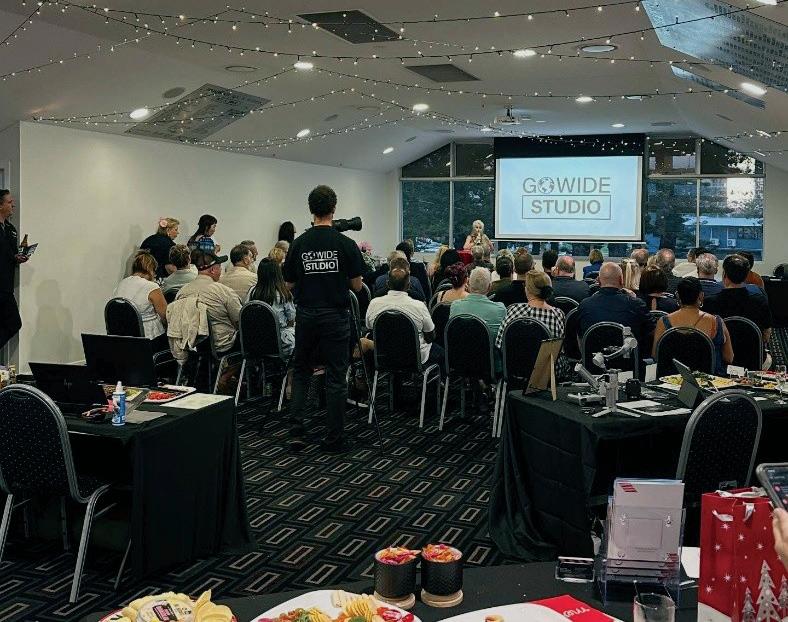


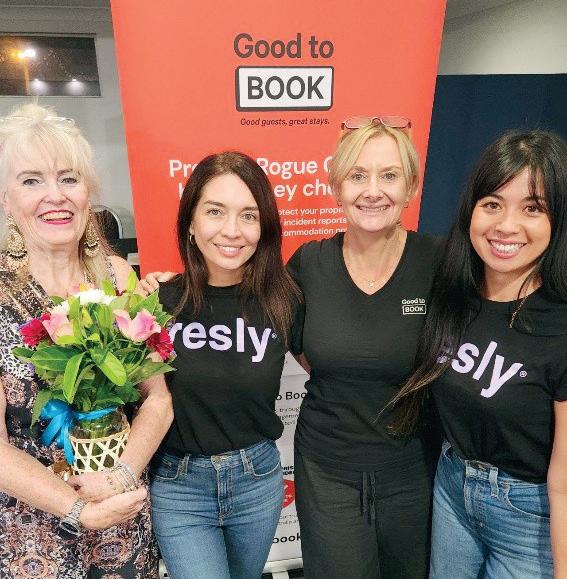
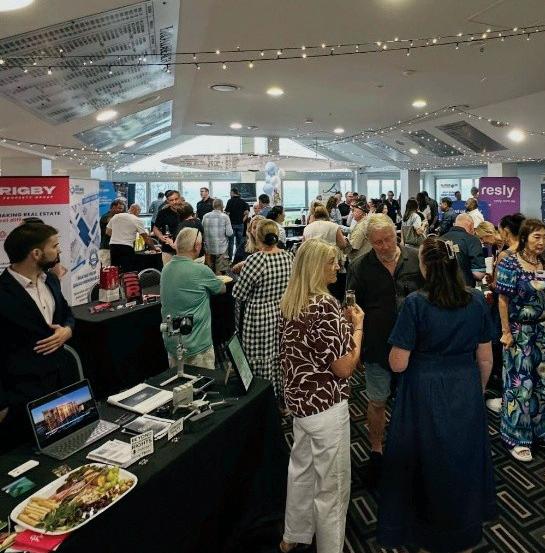
Our final Women In luncheon for 2025 wrapped up the year with an incredible burst of energy. The room was buzzing with positivity, connection, and genuine support, and we’re so grateful to everyone who joined us and helped make the day such a standout.
A huge thank you to Metered Energy for hosting, and to Kathy and Katherine for their outstanding support and contribution to this event.
What a year it’s been. 2025 absolutely flew, and we’re incredibly proud of the space this community continues to build together. Our industry is truly something special, and it’s a privilege to be part of such a strong, passionate and connected network of women.
Wishing everyone a safe, happy and joyfilled festive season. Here’s to even more growth, collaboration and momentum in 2026. Cheers to what’s ahead!







ResortBrokers welcomed a full house of 130 attendees at Victoria Park for last month’s launch of RB Research’s annual Management Rights Report.
Now in its fourth year, the Management Rights Report has become the sector’s definitive benchmark, and its launch event a major highlight on the industry calendar.
A standout finding in this year’s report is the strong presence of hands-on owneroperators, who account for roughly two-thirds of management rights businesses nationally.
“This demonstrates the management rights industry is still at its core a family industry,” says ResortBrokers Director and report co-author Alex Cook.
“Although we’ve increasingly seen a corporatisation of the sector by way of recognised national brands and operators, as well as an array of private operators, the industry largely remains a family concern of thousands of small operators.
“In general, the management rights model encourages onsite living, ensuring operators are always present and have a vested interest in the strata community. This differentiates it from other accommodation models where the manager generally lives offsite.”
The 2025 report also shows that around onethird of management rights businesses are operated under management, with owners employing property managers, receptionists and caretakers to carry out day-to-day duties.
In the family end of the market, the report found returns on investment remained steady for properties with a unit, and increased for those without a unit, despite lower multipliers.
“We’re finding that multipliers are often being tweaked down to allow for increasing real estate values. Even though multipliers may be lower, the overall value is similar or higher, particularly in the sub-$600,000 net profit brackets,” says Josh Mangleson, report co-author and head of RB Research, ResortBrokers’ research arm.
“This is arguably the strongest emerging industry trend in 2025 — that the overall return on investment of management rights assets is becoming a stronger barometer of value than multipliers.
“This appears to be confirmed by the qualitative part of our analysis — the operators survey. Only 15 percent of survey responders believe the value of their business has declined over the last year, while over 60 percent of managers believe the value has increased.”



Event: Tuesday November 18, 2025
ARAMA was proud to recently host a lunch at Queensland’s Parliament House, bringing together Ministers and key stakeholders for an open discussion about building safer, stronger strata communities.
The event highlighted ARAMA’s ongoing antibullying campaign, which aims to protect the estimated 1.2 million Queenslanders living in strata schemes. This initiative forms part of ARAMA’s broader commitment to fostering psychologically safe environments for everyone who lives and works within strata. Attendees also heard about the vital role onsite residential managers play in both the tourism and residential sectors.
ARAMA also outlined the important groundwork already achieved by the Special Interest Group, formed by ARAMA, with particular focus on the development of the “Opening Statement”. This statement encourages respectful communication, fair treatment, and safe interactions within strata schemes.
ARAMA extends sincere thanks to all who attended. We look forward to continuing this collaboration and driving positive change that benefits the strata industry.

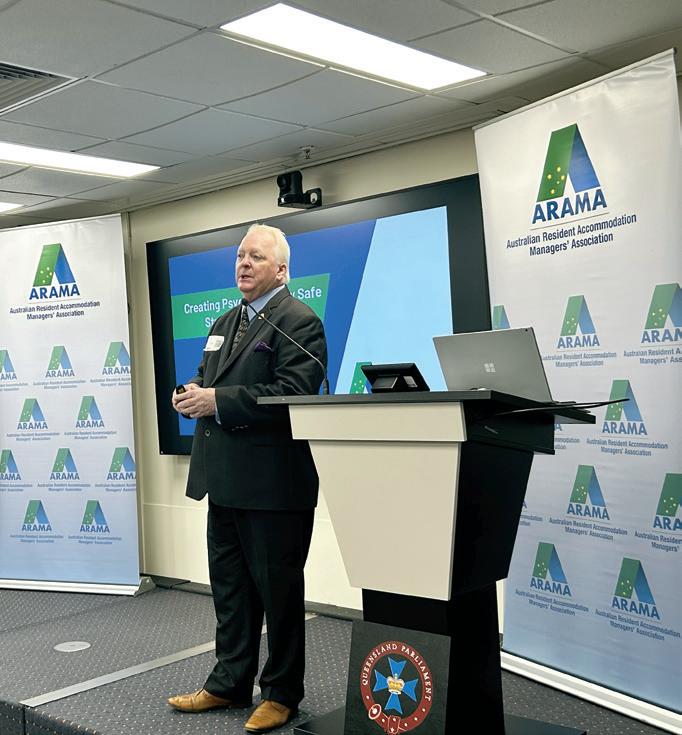

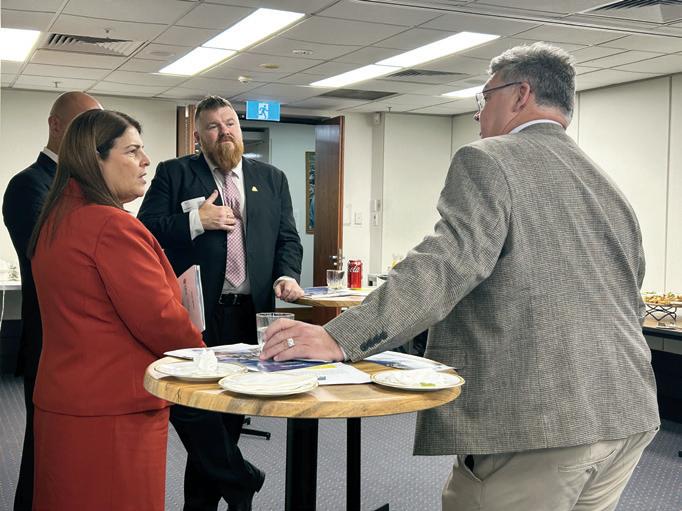
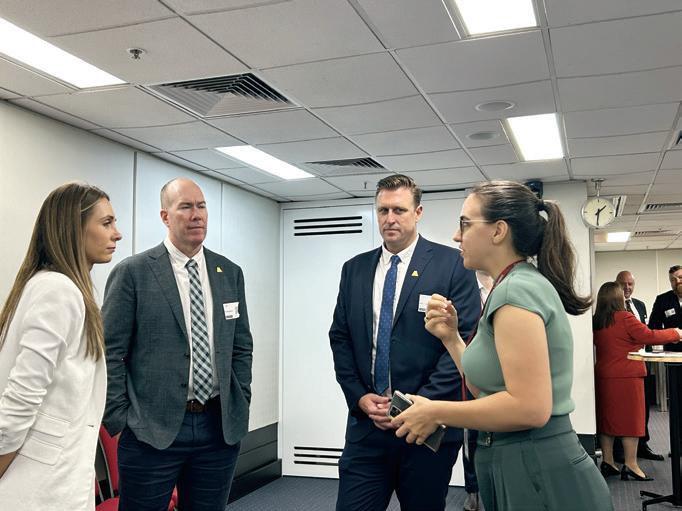
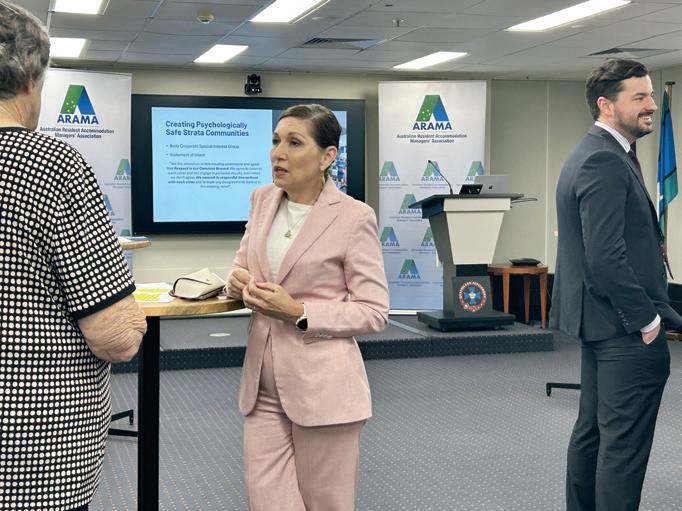
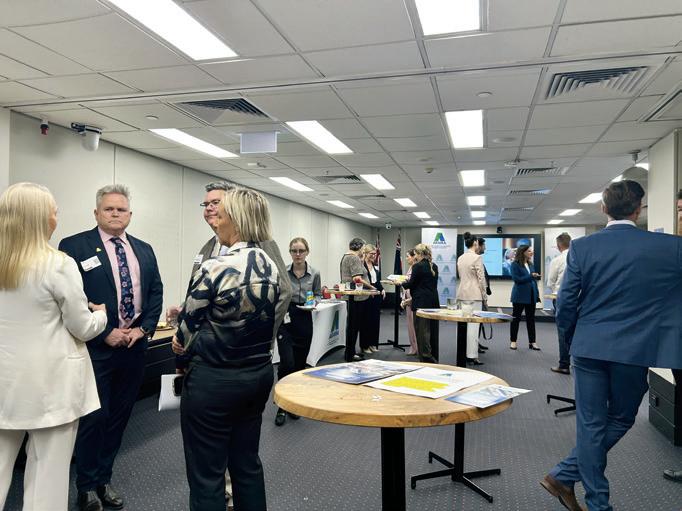
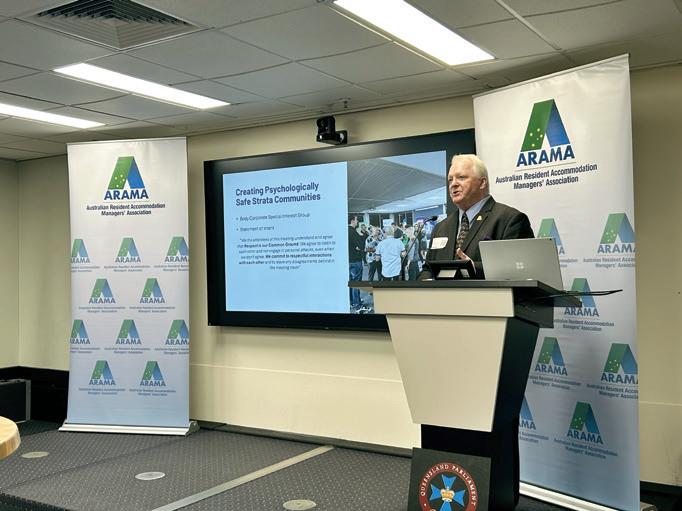
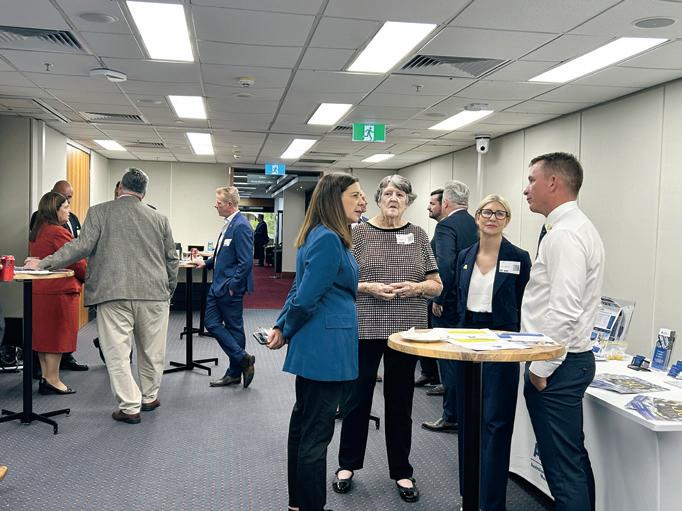
The Gold Coast’s second buyers event for the year powered by brokerage team behind Ras360iQ, Discover Management Rights: 360° Insights for Every Buyer pulled together a panel of leading experts to unpack the full process of purchasing a management rights business.
From legal and financial due diligence to licensing, valuation, and training, our management rights experts delivered practical, real-world insights, pitched straight to what potential buyers really need to know.
The atmosphere was lively, and the quality of questions and feedback afterwards demonstrated a deeper understanding of the process. Those who braved the recent storms and steamy humidity, engaged wholeheartedly left feeling truly encouraged and prepped!
All in all, it was a highly successful evening that strengthened trust within the management rights buying community.
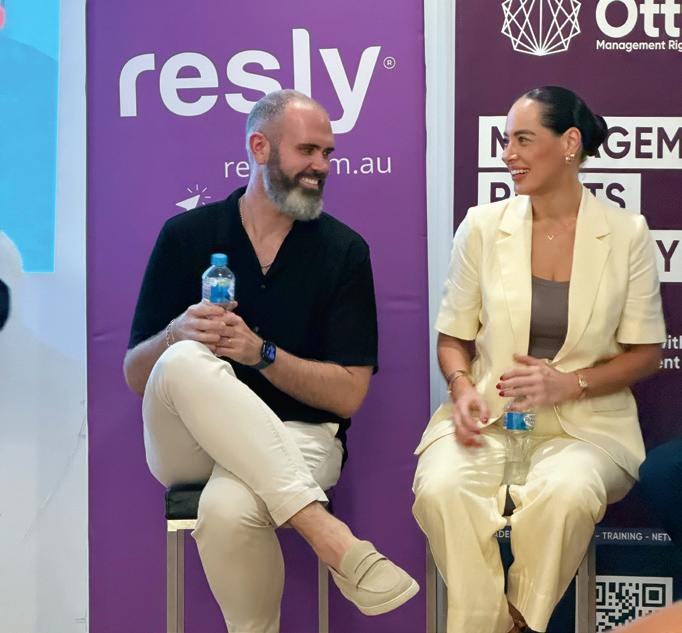
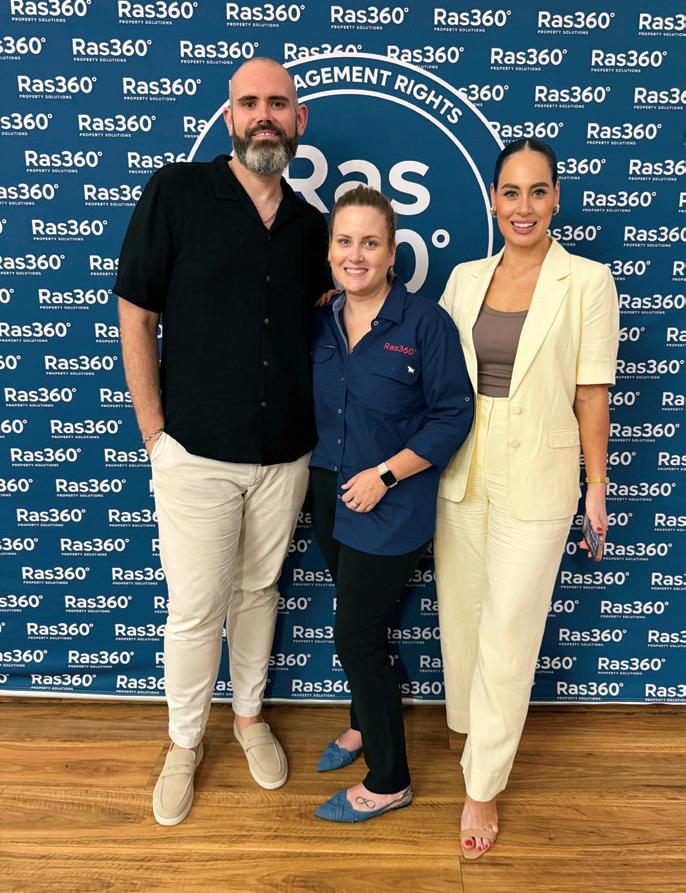





Permanent Management Rights ID: 9207
Asking Price: $1,630,000 Net Profit: $201,948
Gerard Dixon 0433 617 515


Permanent Letting Management ID: 8941
Asking Price: $2,516,000
Net Profit: $330,880
Bill He 0439 288 960




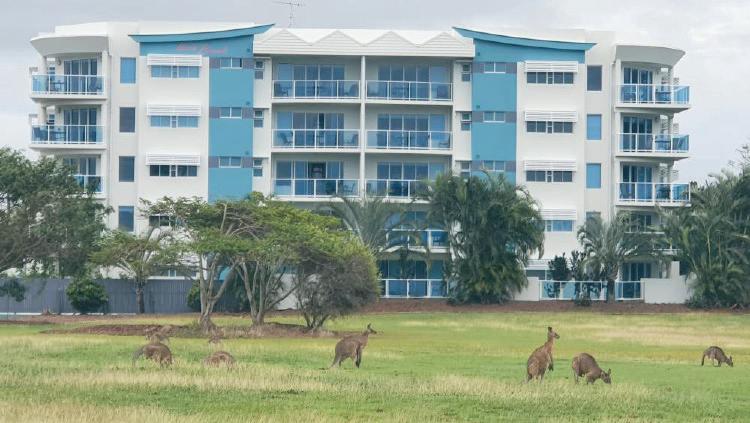

Holiday Management Rights ID: 9186
Asking Price: $1,395,000 Net Profit: $222,325
Richard O’Connell 0477 013 006


Mixed Management Rights ID: 8047
Asking Price: $1,450,000 Net Profit: $200,372
Phil Trimble 0418 478 966



Hotel Resort Sales follows up with a successive major sale to Meriton for another three management rights towers in Newstead.
Hotel Resort Sales has once again demonstrated its leading position in the management rights industry, completing a second significant multi-tower transaction with the Meriton Group. Following the high-profile sale earlier this year, Hotel Resort Sales has successfully facilitated the acquisition of another three premium management rights businesses in Brisbane’s vibrant inner-city suburb of Newstead.
The latest transaction, acquired from Apax Realty Pty Ltd, includes the prestigious Newstead Central – St Tropez & Laguna, as well as Capri complexes. This acquisition builds upon Meriton’s expanding footprint in Brisbane’s thriving residential and investment market and complements its previous three-tower purchase in July, also brokered by Hotel Resort Sales.

“This acquisition strengthens Meriton’s growing presence in Brisbane’s vibrant residential market and complements our recent three-tower management rights purchase in Newstead. We’re committed to delivering long-term value for both investors and residents at Newstead Central and remain actively focused on securing similar
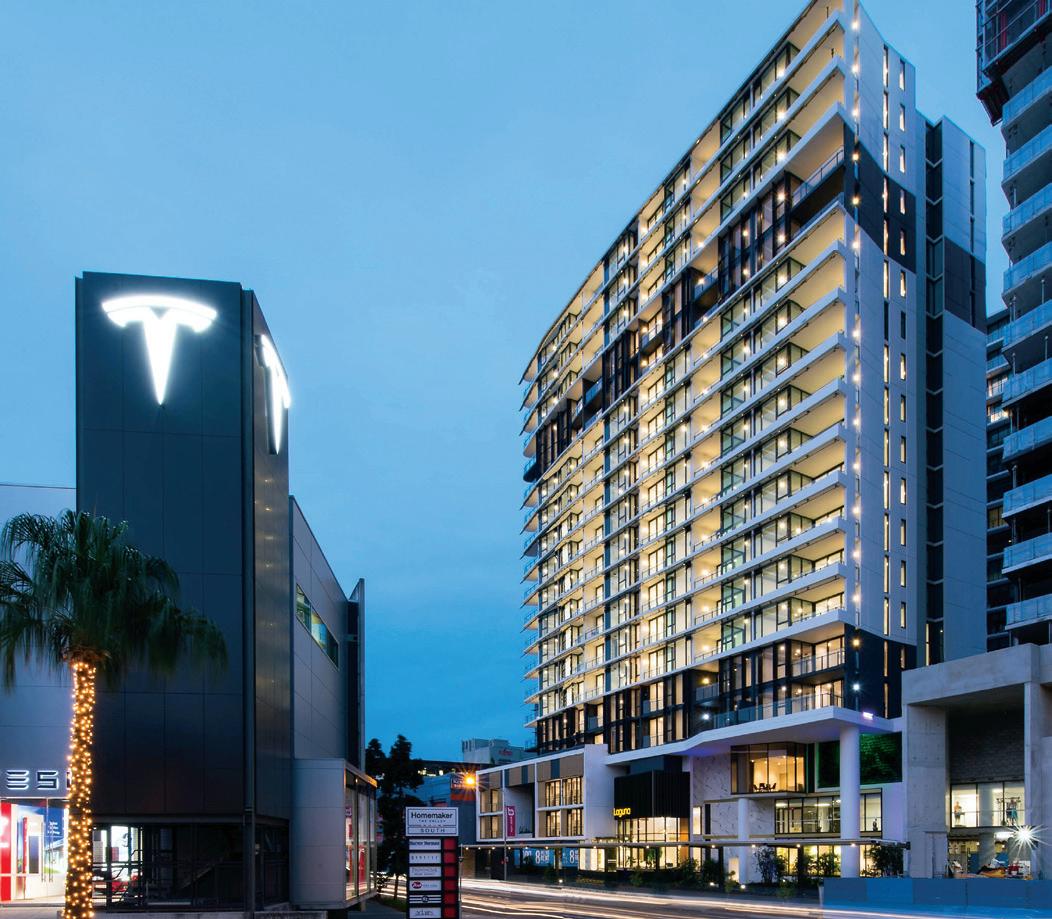
high-quality opportunities across Queensland,” said Jon Elliott of Meriton.
In total, this represents six major inner-city Brisbane management rights businesses purchased by Meriton through Hotel Resort Sales within just the past four months, a clear indication of the group’s strong confidence
in the Brisbane market and in the management rights model.
Hotel Resort Sales Owner Craig Johnson commented, “We’re proud to once again partner with Meriton on another landmark transaction. The demand for largescale, high-quality management rights opportunities continues to remain exceptionally strong, particularly from institutional and high-net-worth investors seeking secure, long-term income streams and exposure to premium assets.”
For management rights owners considering selling, now could be an opportune time. Market demand for substantial permanent and holiday complexes remains robust, particularly among large-scale buyers actively seeking quality assets in key metropolitan and coastal locations.
Hotel Resort Sales is perfectly positioned to assist you in achieving outstanding results. If you are contemplating the sale of your management rights business, contact the team at Hotel Resort Sales today.
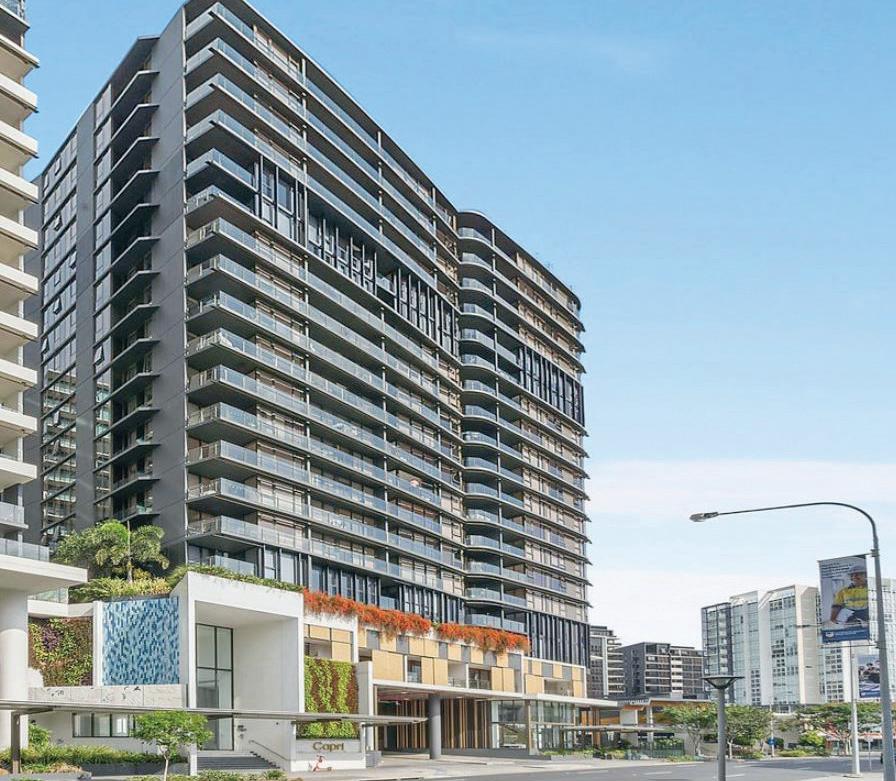
At Hotel Resort Sales, we specialise exclusively in management rights sales. With years of industry experience, we know what it takes to achieve premium results. Whether you’re selling a single complex or acquiring a large portfolio call us today to have a chat.
Proven track record in permanent, holiday, and mixed-use management rights, in-depth market knowledge and personalised service. Strong network of qualified buyers and industry professionals. Confidential, strategic, and results-driven approach. When you’re entering the industry or ready to sell, Hotel Resort Sales is the partner you can rely on.











Contact: Sam Saunders, 0447 419 950 sam@premiersales.com.au

Contact: Andrew Hansen, 0477 622 122 andrew@lifestyle-realty.com.au

Antonio Curulli, 0488 030 853

Contact: Craig Johnson, 0493 108 073 craig@hotelresortsales.com.au

Contact: Geoff Hatchman, 0427 938 444 geoff@ras360.com.au

By Mandy Clarke, Editor
For Lea and Ross Andrews, life by the sea was always part of the plan, though not quite like this. What began as a dream of a seaside retirement has evolved into a full-scale family adventure.
Together with their three children, Alivia, Mason and Ryan, they own and manage
The Boathouse Apartments in beautiful Airlie Beach, a 4.5-star property that now embodies everything they value: family, community and coastal living.
“We’d always loved the idea of owning a place by the water,” Lea says. “Somewhere we could escape for holidays and
eventually retire. But once we started looking into management rights, we realised it could be so much more — a way to combine business with lifestyle and build something for our family’s future.”
The journey to The Boathouse began during the COVID lockdowns. Like many

Australians, the Andrewses were reassessing life and work and spent late nights scrolling through property listings. “The Boathouse kept catching our eye,” Ross recalls. “We did our research, learned everything we could about the management rights model and decided to go for it.”
They made their offer sight unseen, an audacious move that even their broker called one of the boldest he’d seen. What followed was a six-month marathon of paperwork, due diligence and legal complexities.
“The Boathouse was a unique sale,” Lea explains. “The management rights were being sold separately from the retail section of the complex, which meant extra contracts, multiple parties and countless moving parts.”
The property itself had been operated by the same company for over a decade and the transition required careful planning and collaboration.
“It wasn’t just a purchase; it was a handover of trust,” says Ross. “We wanted to honour the history of the business while making it our own.”
Fortunately, Ross had grown up around hospitality. His parents ran and managed a small country motel for 35 years, giving him
a deep understanding of what it takes to create a successful accommodation business. “I knew from an early age how much work goes into making guests feel welcome,” he says. “It’s long hours, constant attention to detail and genuine care for people—that’s what makes a great operator.”
That experience gave the couple an invaluable foundation.
“Ross’s background meant he understood the business side straight away,” Lea adds. “It made our learning curve a little less steep.”
Despite the obstacles, including delays, negotiations and plenty of late nights, the Andrews family remained determined.
“We had a few moments where we wondered what on earth we’d signed up for,” Lea laughs, “but we never doubted that this was the right move for us.”
Finally, in June 2022, after months of persistence and a lot of patience, the sale settled. The family packed up their Queensland home and relocated north, ready to start a new chapter in Airlie Beach. “The kids were hesitant at first,” Lea admits. “But the minute they saw the marina, the boats and the pool, they were all in.”
Since taking over, The Boathouse has become a true family business. Ross oversees maintenance, compliance and capital projects, while Lea manages guest relations, marketing and administration. “Ross is steady and practical, and I’m the creative one,” Lea smiles. “It works because we balance each other perfectly.”

The couple also credit their loyal staff, many of whom have been with the property for years. “They’re the heartbeat of The Boathouse,” says Lea.
“We have a small, experienced team who know the property inside out. Their dedication shows in everything they do.”
With 35 apartment owners and a close relationship with the body corporate, the Andrews’ management style is defined by transparency and care.
“We treat every apartment as if it were our own,” Lea says.
“When you do that, everyone wins — the guests, the owners and the business.”
Lea’s advice for new operators is simple: “Go in with your eyes open, be adaptable and be ready to learn every single day. It’s more than a business; it’s a lifestyle.”
Airlie Beach has proved the perfect fit for the Andrews family.

“It’s a small community with a big heart,” says Ross. “Everyone looks out for each other, and there’s a real sense of connection.”
Ross now serves as president of the local AFL Masters Football Club, while both he and Lea are actively involved in supporting local schools, events and sponsorships. “We try to give back wherever we
can,” Lea says. “Whether it’s supporting community sport or hiring local contractors, it’s important to keep things local.”
The family’s “Tennis Thursdays” have also become a fixture at The Boathouse, bringing guests and locals together for friendly games followed by sunset drinks overlooking the marina.




“It’s about creating moments,” Lea says. “That’s what makes hospitality special.”
From the beginning, Lea and Ross made it a priority to modernise and futureproof the property. They’ve renovated the reception and several apartments, upgraded the air-conditioning systems and introduced sustainable initiatives such as recycling programs, the removal of single-use plastics and energyefficient smart lighting.
Their efforts have already earned The Boathouse Apartments both Sustainable Tourism and Accessible Tourism accreditation, something they’re particularly proud of. “It’s about protecting this incredible environment,” Lea says. “We’re lucky to live in such a beautiful
Image courtesy of The Boathouse Apartments
We get to live where people come to holiday
part of the world and we want to do our part to look after it.”
At The Boathouse, hospitality is personal. “We’re not a faceless corporation,” Lea explains. “We’re a family and guests feel that. We make a point of being present and approachable and we take every piece of feedback seriously.”
Of course, not every review is glowing, but Lea takes it in stride.
“You learn to spot the occasional discount hunter,” she laughs, “but the genuine feedback helps us improve. You can’t change the
walls or the view, but you can always improve the experience.”
For the Andrews family, success isn’t measured purely in occupancy rates or revenue. “It’s about creating a place where people feel welcome, our team feels valued and our kids can grow up surrounded by community and nature,” Lea says.
The Boathouse Apartments has become more than a business; it’s a way of life. “Someone once told us to block out time off and actually take it,” Lea says. “That’s been the best advice. It
keeps us grounded and reminds us why we chose this path.”
Days off are spent boating, fishing, gardening or tackling DIY projects, and occasionally skiing at the dam, anything that lets them enjoy the outdoors and recharge. “We’re not the kind of people who sit still for long,” Lea laughs. “But we make sure to take time to appreciate how lucky we are to live here.”
Walking the dog along the boardwalk has become a favourite routine, a quiet reminder of why they chose this life. “We pinch ourselves sometimes,” Ross says. “We get to live where people come to holiday.”
Lea wholeheartedly agrees: “This journey has taught us so much about resilience, teamwork and community. The Boathouse isn’t just where we work. It’s our home, our story and our greatest adventure yet.”
By Mandy Clarke
Perched on the waterfront at Airlie Beach, The Boathouse Apartments is a 4.5-star resort managed by Lea and Ross Andrews, who have built their family-run business around hospitality, community and smart technology.
When they took over management in 2022, they knew they needed a system that could keep up with the demands of a modern resort while remaining simple enough for their small team to master.
“At The Boathouse Apartments, we’ve used Resly as the backbone of our operations since taking over management,” says Lea. “The system has streamlined everything from bookings and owner statements to guest communication and reporting.”
Resly — short for Reservations Easily — lives up to its name. The all-in-one platform combines a powerful property management system, channel manager and commission-free direct booking engine into one intuitive interface.
It’s also a true cloud-based system, meaning the team at The Boathouse can manage their property from anywhere, at any time, on any device.
For Lea, that flexibility has been a game-changer. “Having an intuitive, all-in-one platform has been amazing for our small team,” she says. “It reduces admin time, integrates easily with Xero, and lets us manage multiple distribution channels confidently.”
Resly’s trust-account compliance and direct bank feeds from over 30 Australian banks have simplified financial reconciliation too — a big plus for a family business that values precision. “It just makes sense,” Lea adds. “No more manual statements or double handling.”
“The biggest benefit has been real-time visibility,” Lea explains. “Whether we’re updating rates, reviewing performance or checking occupancy, we can make informed decisions instantly. Resly’s responsive support team and continuous improvements have made operations seamless.”
Behind every polished guest experience at The Boathouse is a system working quietly but powerfully in the background. “In a resort environment where service and efficiency are everything,” Lea says, “Resly helps us stay focused on what matters most — delivering a great guest experience and strong returns for our owners.”





























•
5446
sales@themattresscompany.com.au www.themattresscompany.com.au






















































• Buying and Selling
• Off-the-plan Procurements
• Assignments
• Preparing/Negotiating Agreements
• Varying Agreements incl. Top-ups
• Unlinking Manager’s