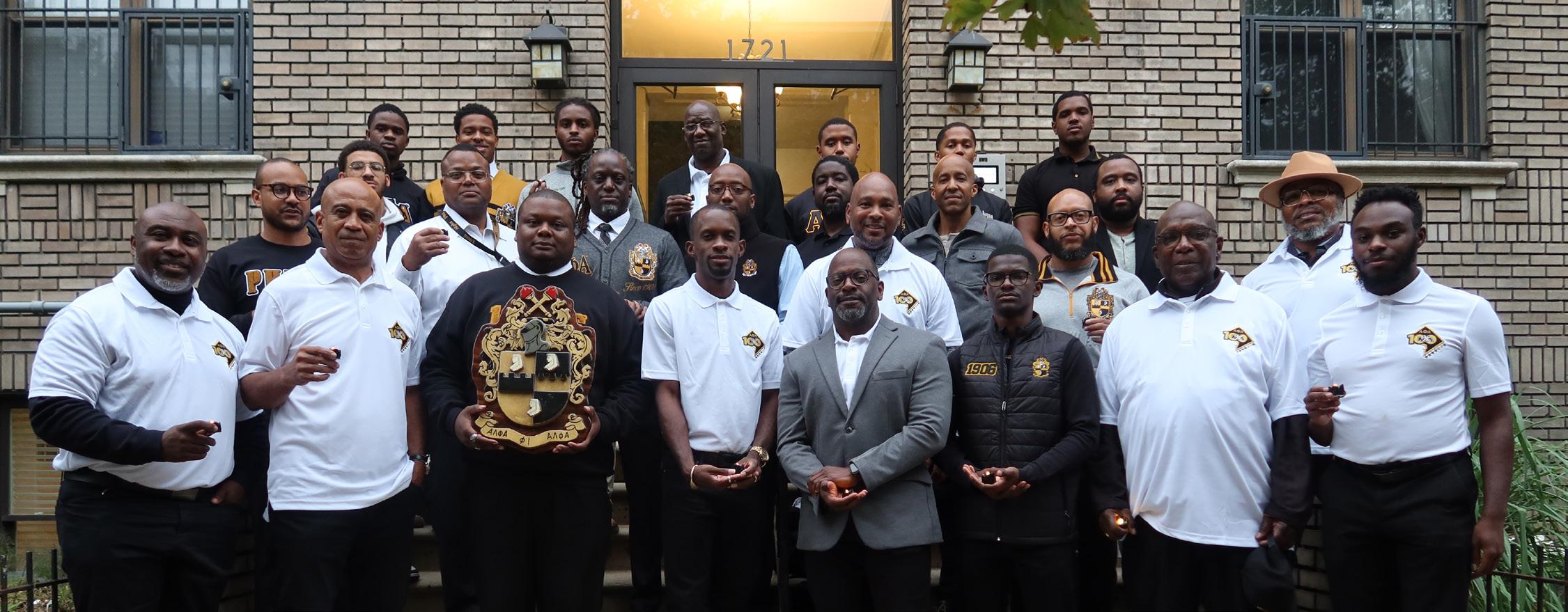
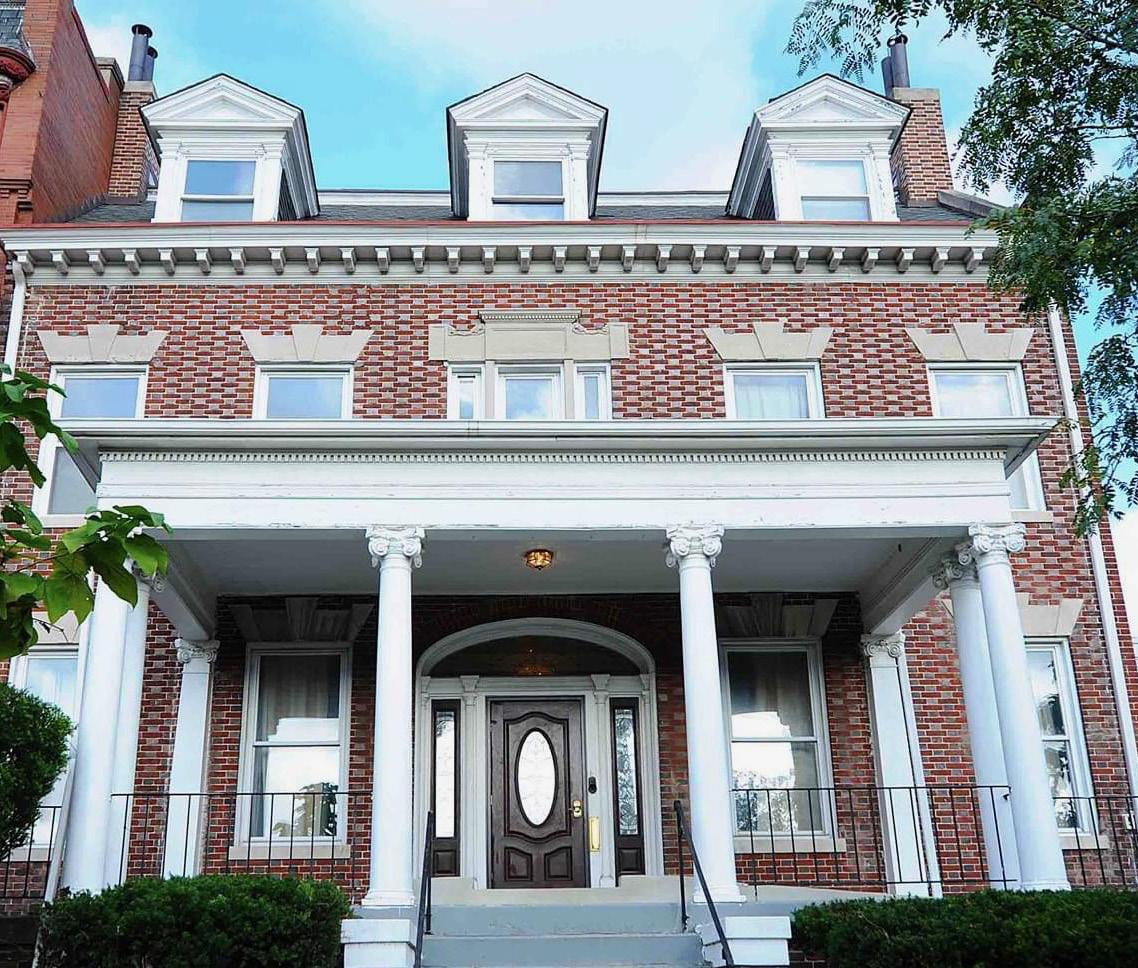
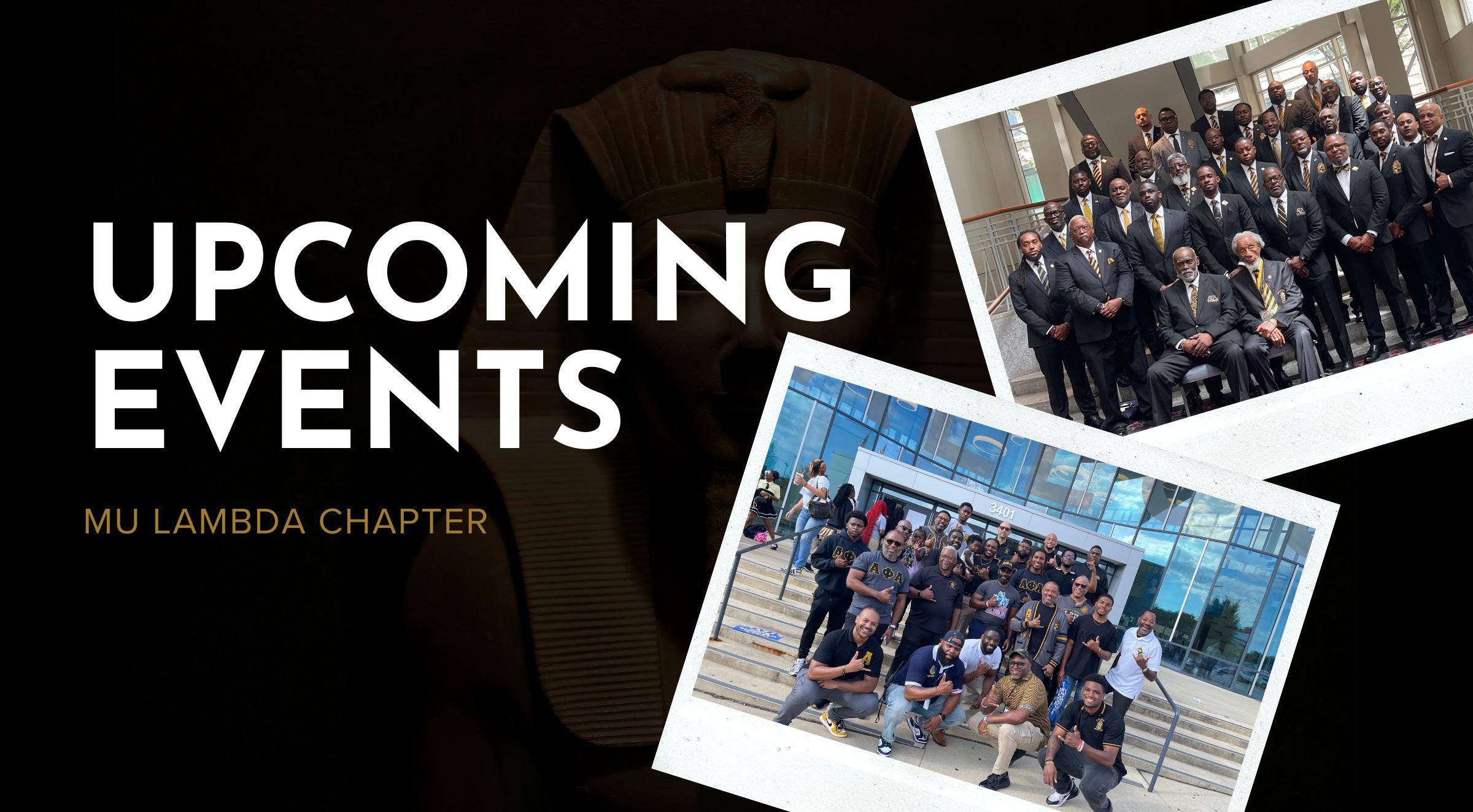
Mu Lambda is Alpha's eleventh alumni chapter, chartered October 1, 1923, in Washington D.C. The chapter was established, in part, in response to the desire of graduate brothers, many whom were initiated into Beta Chapter at Howard University, to give aid to the undergraduate brothers and continue the work of Alpha. Chartered by 22 distingushed men of Alpha which included Jewel Nathaniel Allison Murray and Jewel Robert Harold Ogle.
There has been six members who served as the General President of Alpha Phi Alpha Fraternity, Inc. and two whom served as the Eastern Region Vice President. Mu Lambda is equally proud of our current brothers making their mark in the Washington D.C. community and beyond. Our chapter has many entrepreneurs, activists, political leaders, philanthropists, academicians, ministers and so much more. Our diverse brotherhood age range is between the ages of 25 and 98. We all work together to maximize the brotherhood of Alpha by following the Objective, Mission and AIMS of our Fraternity.
The officers elected at the first meeting were Brother Harold StrattonPresident, Brother John Lowery-Vice President, Brother Victor DalySecretary, Brother Daniel W. EdmondsTreasurer, and Brother Nathaniel Allison Murray (Jewel)-Chaplain. Mu Lambda was thus established and was on its way into history!
www.mulambda.org
1. Torch Cover - May 2026
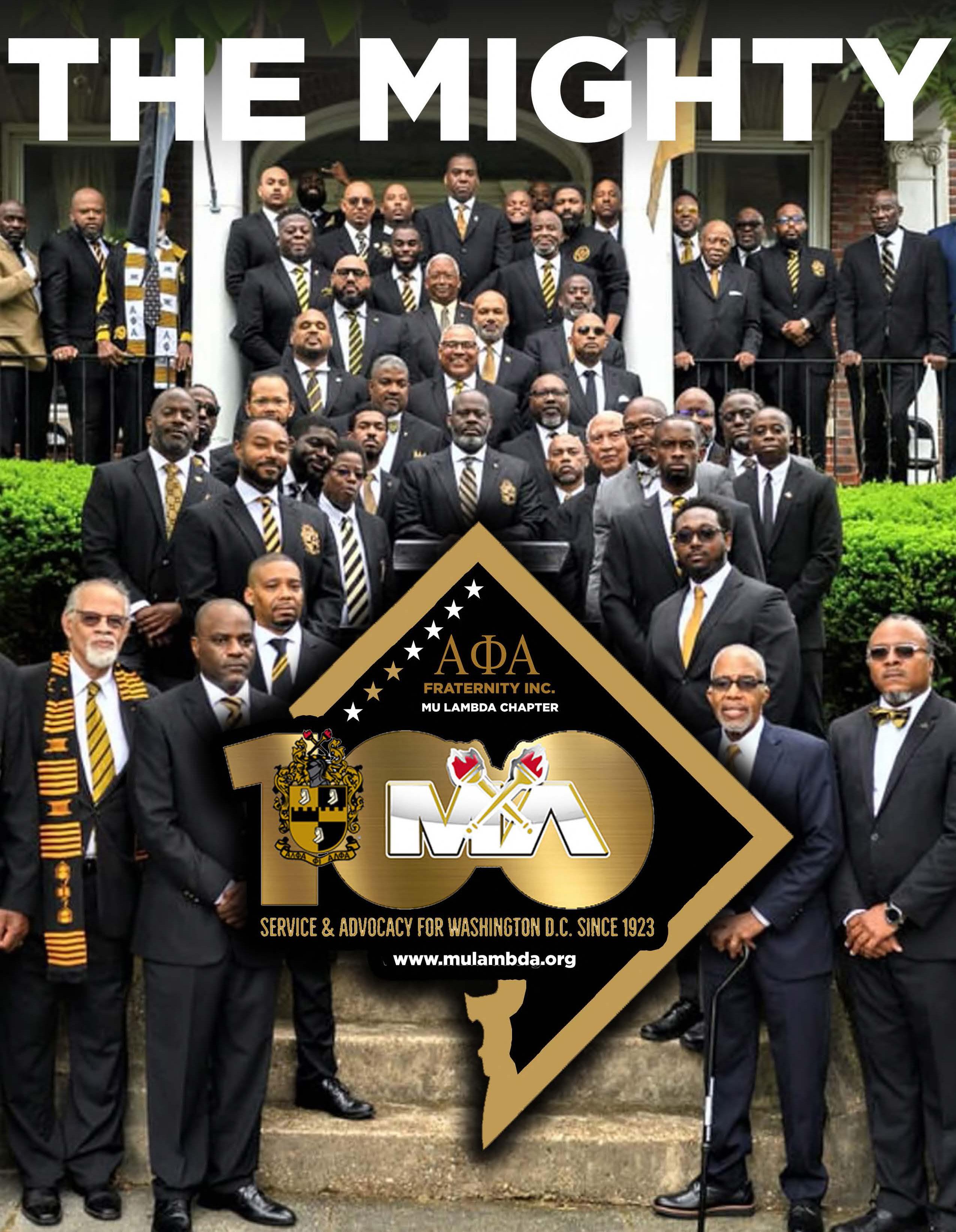
2. Chapter Cover Image - The MIGHTY
3. In this Issue
4. Executive Board, Committee Chairs, Charter Members, Past Presidents
5. The Presidents’ Message
6. The Vice-Presidents’ Message
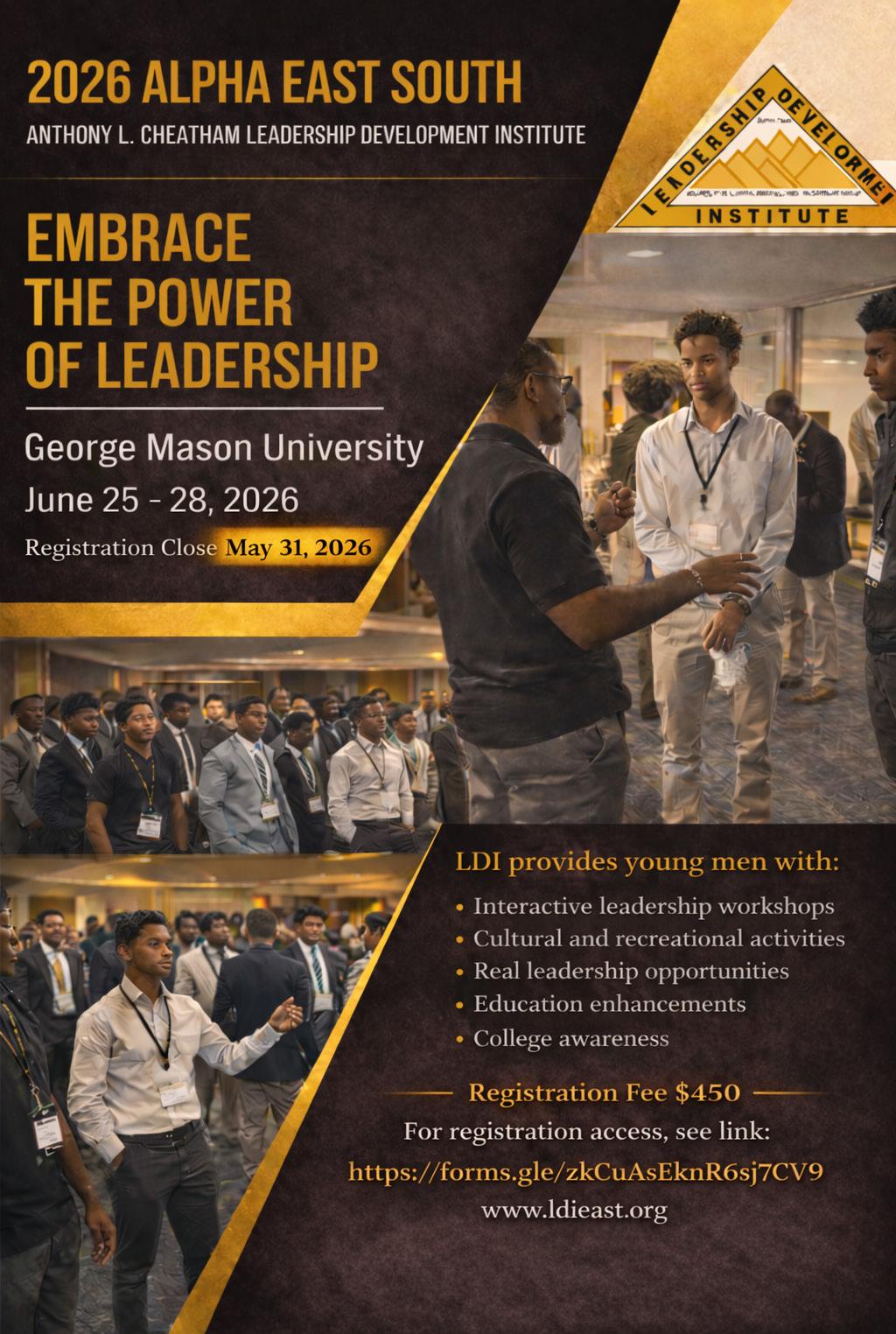
7. Leadership Development Institute
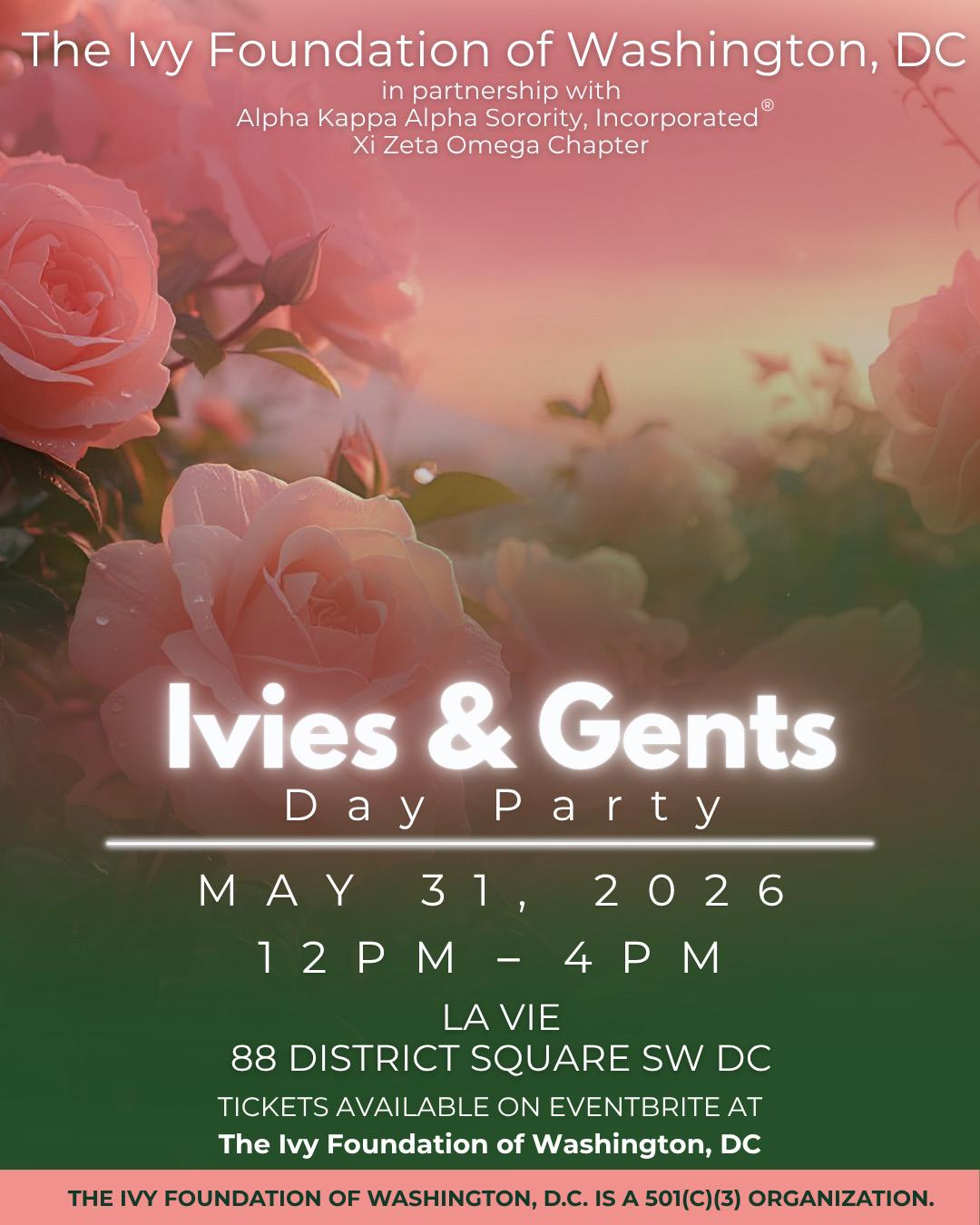
8. Ivies and Gents Day Party
9. Mu Lambda Brother’s Birthdays
10. Fatherhood Reflections
11. Scholarship in Motion
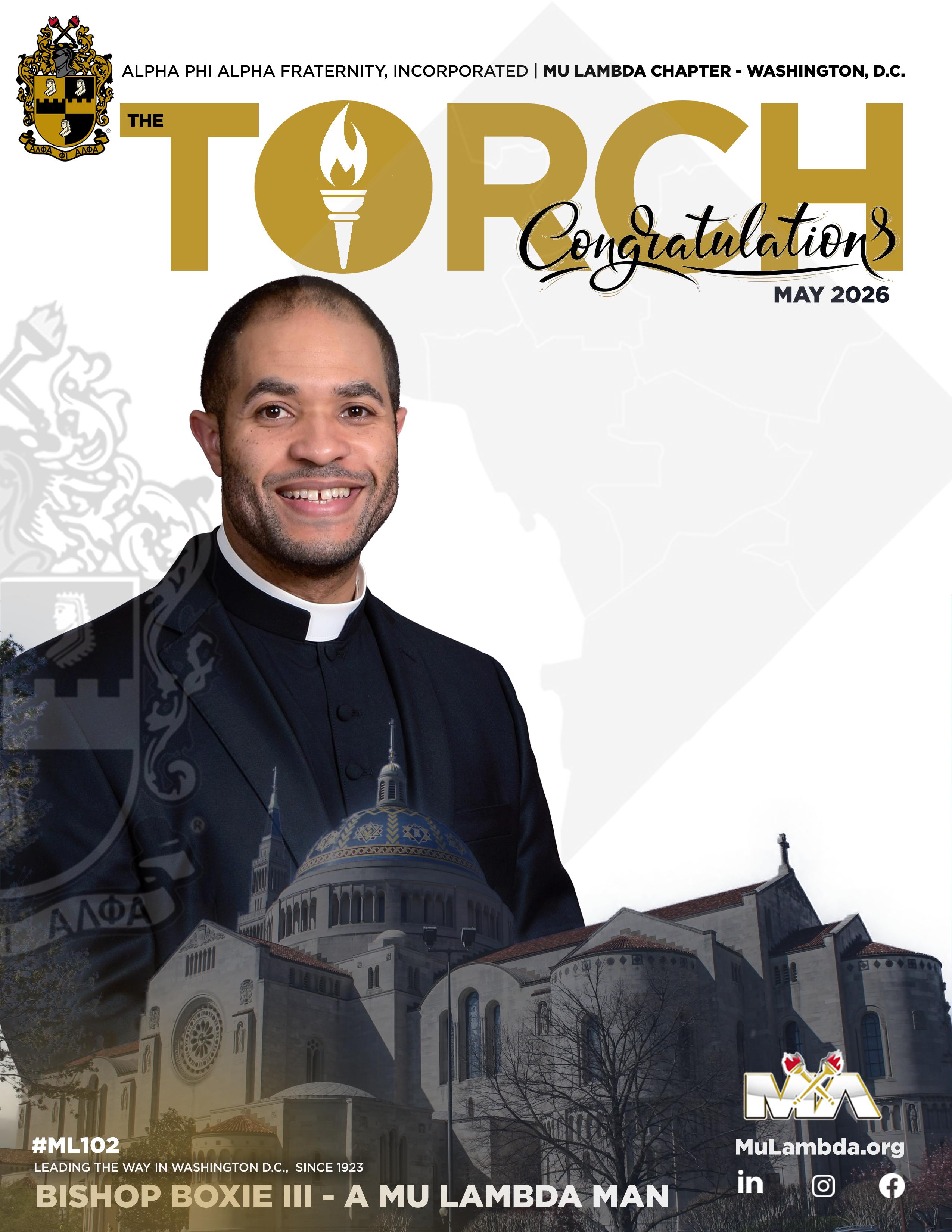
12. Crowned in Calling: Brother Father Robert P. Boxie, III
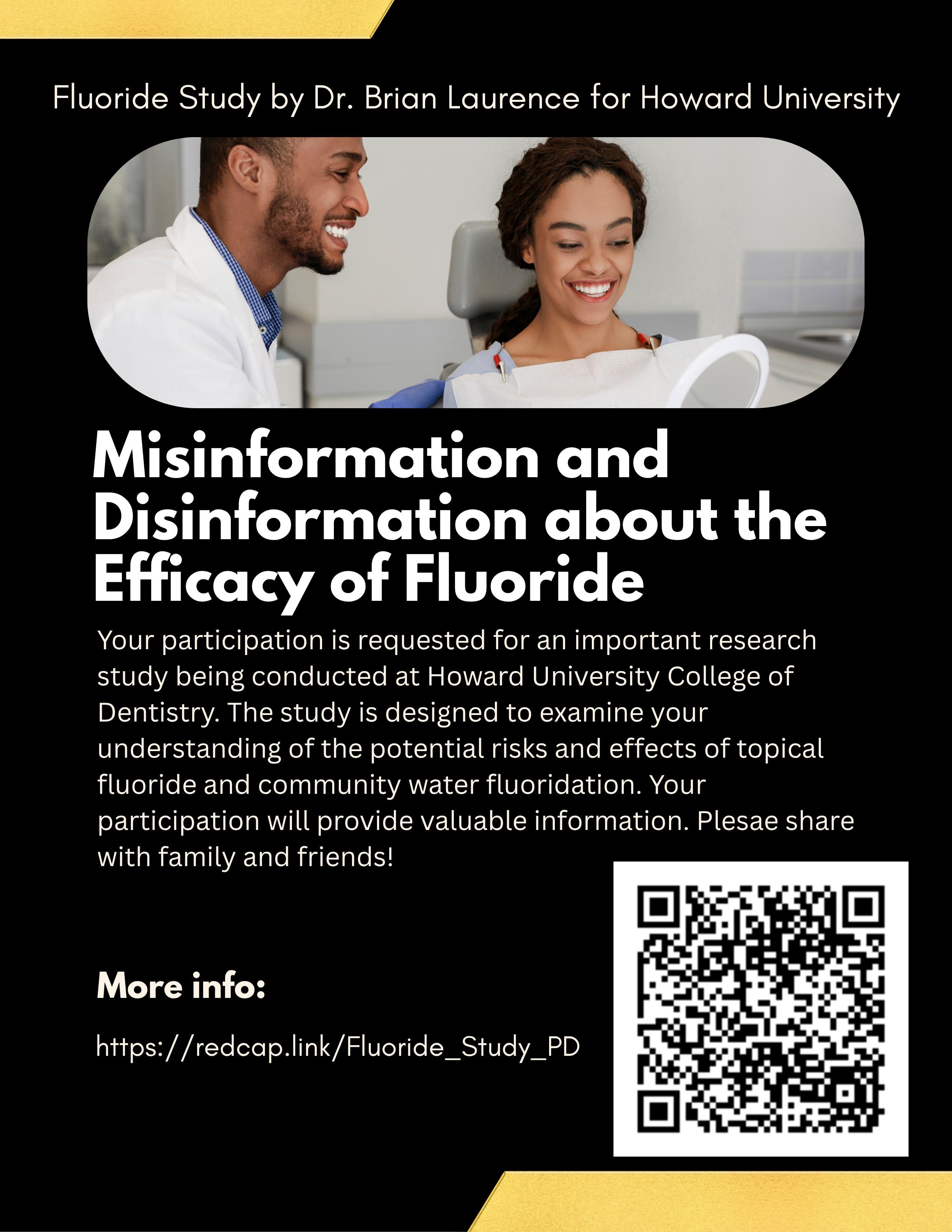
15. Fluoride Study
16. First Year, Full Presence: My Experience at ERC as a NEO
20. Side by Side: The Making of a Man Who Leads Among Men
24. Mu Lambda Brothers Set the Standard for Scholarship
25. Golden Hour End of the Year Karaoke Party
26. Bloom Where You Are Planted
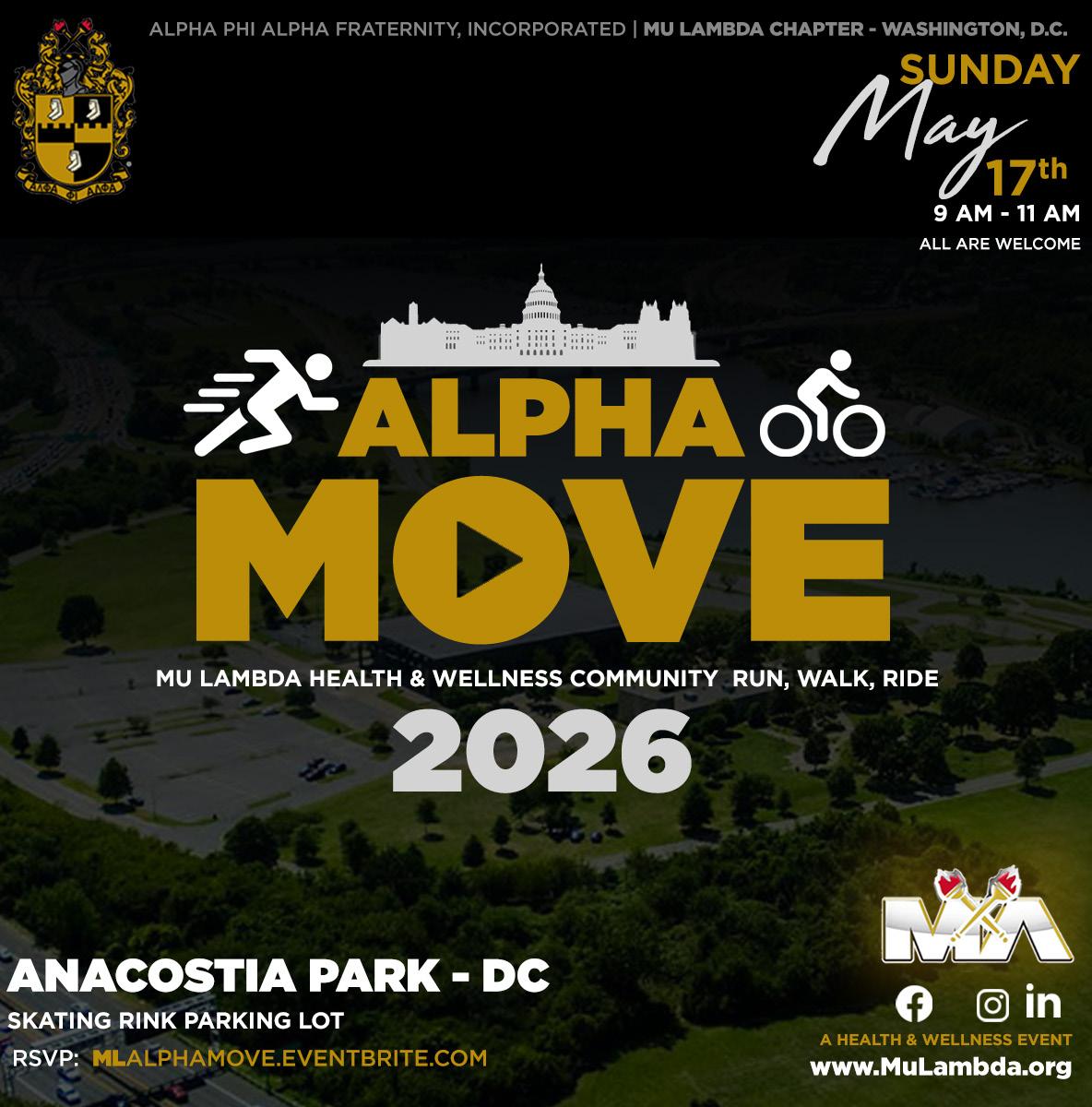
32. Alpha Move
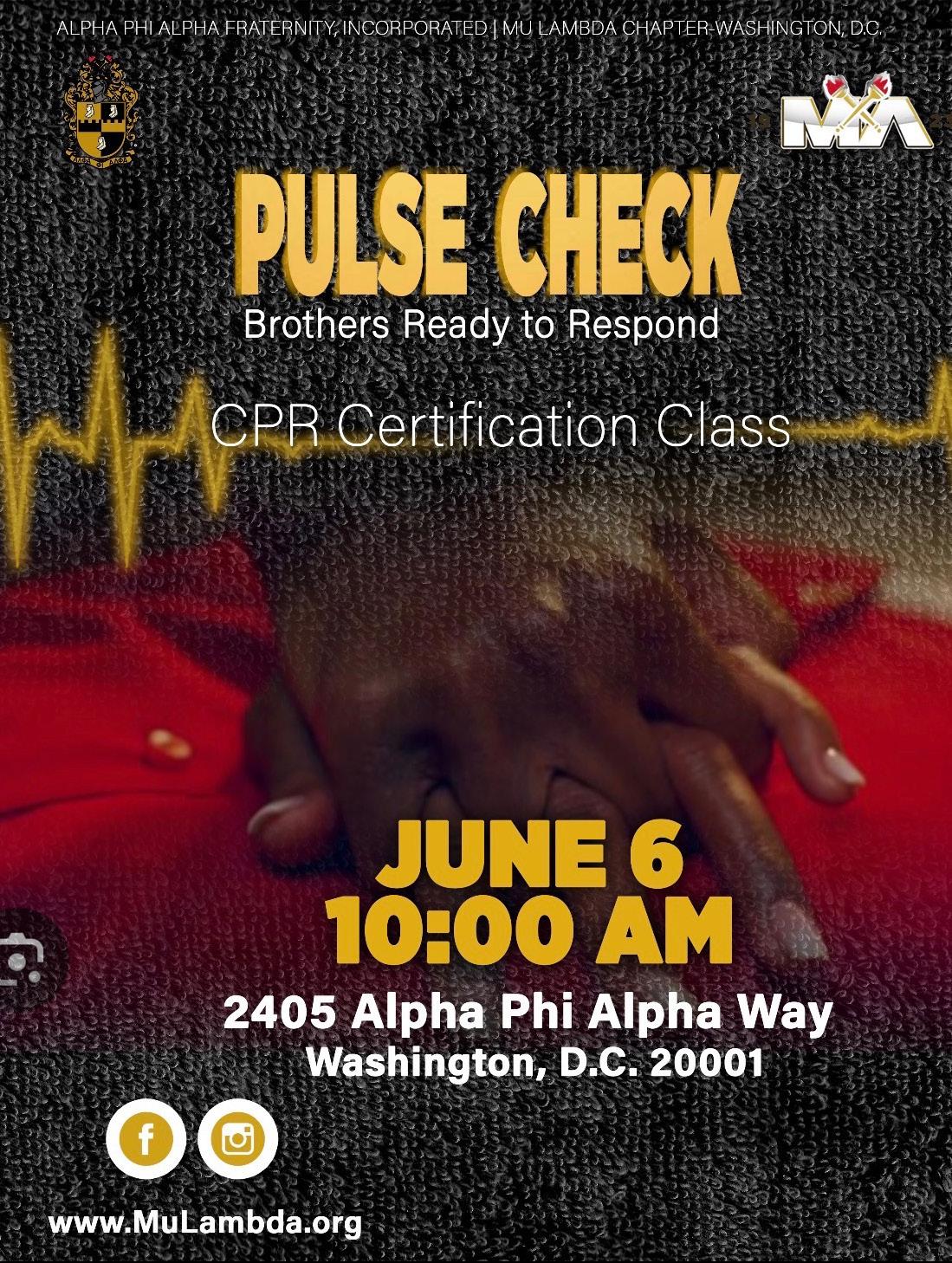
33. Pulse Check - CPR Class for Brothers Only
34. This Is Beta - End of the Year Update
35. The Measue of a Man is Not His Voice, But His Service
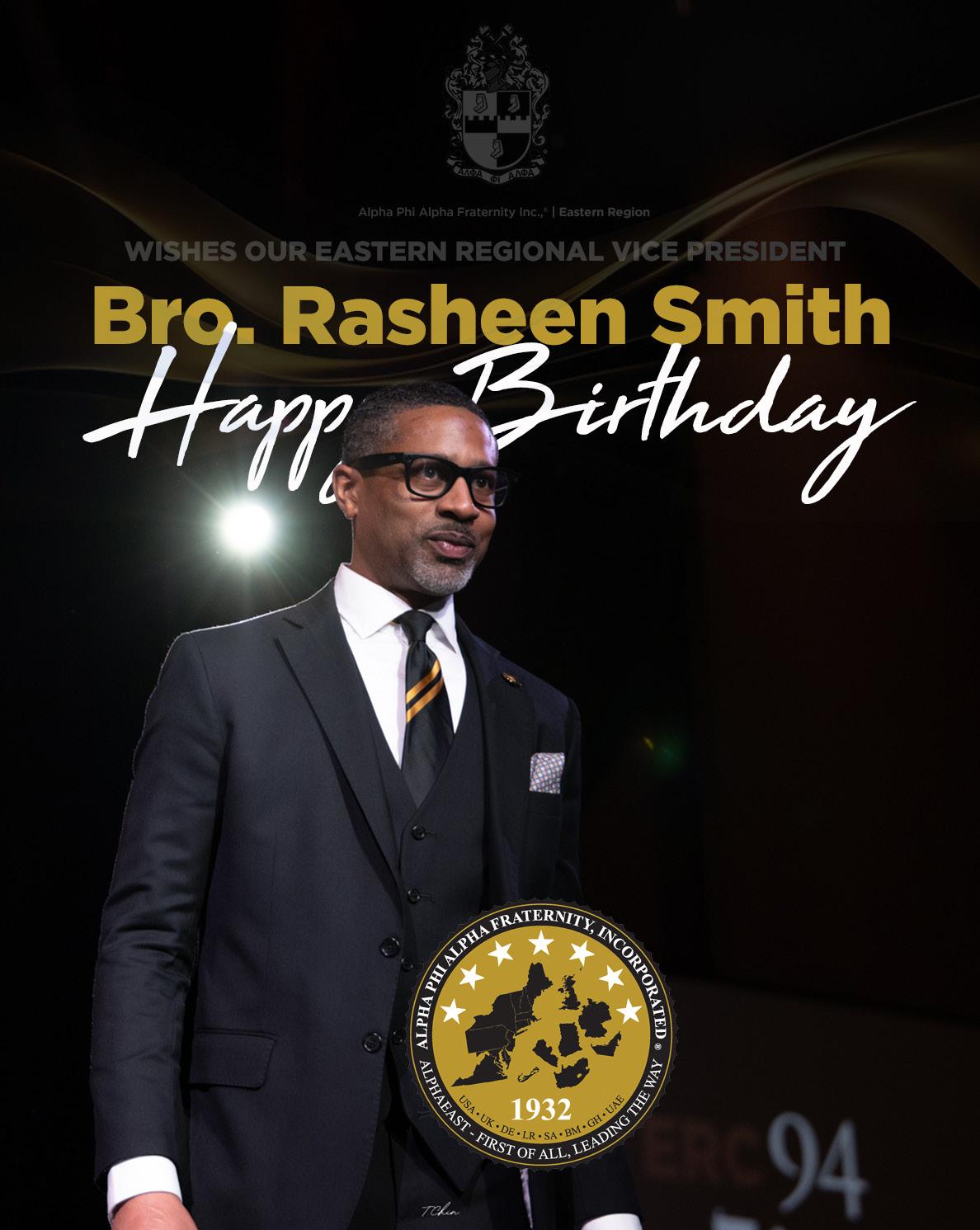
43. Bro. Rasheen Smith - Happy Birthday
44. Mu Lambda Mixtape
45. Next On Your Reading List
46. Chapter Brother Business Advertisements
58. Message from the Editor
59. Espirt De. Fraternite

President
Mikael E. LaRoche
Vice President
Karl Bruce
Recording Secretary
Marcus Spells
Corresponding Secretary
Swain Riley
Financial Secretary
Lloyd Ross
Treasurer Michael Young
Chaplain
William “Tony” Hawkins
Historian
Ameer Baker
Archivist
James Heck
Intake Coordinator
Mark Jones
Assoc. Editor/Sphinx
Randall Clarke
Dir. Ed. Activities
Sean Perkins
Sergeant-at-Arms
Frank King
Parliamentarian
Pierre Boynton
Director of Technology
Garrett Miller
Editor of the Torch
Christopher Butts
Member at Large
Jason Jefferson
Risk Management Officer
Joseph Gibbs
General Council
Vacant
Immediate Past President
John “Tony” Wilson
Brother’s Keeper
Joseph Housey III
Budget and Finance
Ross Lloyd
Communications
Randell Clarke
Technology
Garrett Miller
Constitution
Jason Jefferson
DC National Pan Hellenic Council
James Morgan III
Auditing
Juan Powell
Health & Wellness
Ted Darlington
Membership
Timothy Fitzgerald / Jonathan Brown
Hospitality/Men Who Cook
Swain Riley
Beta Chapter Advisor
James Harmon III
Ritual
Ryle Bell / Garrett Miller
Nominating
Samuel Armstrong
Programs/Chapter of the Year
Christopher Butts
Public Policy
George Walker
Social
Xavier Thompson
Community Service
Jeffery Taylor
Fundraising
Antonio King
Archival and History
James Heck / Ameer Baker
Intake
Mark Jones
Arthur Curtis*
Merrill H. Curtis*
Victor R. Daly*
Eugene L. C. Davidson*
Arnold Donawa*
Walter Garvin*
William L. Hansberry*
Charles H. Houston*
Edward Howard*
Joseph R. Jones*
R. Frank Jones*
J Edward Lowery*
Clarence H. Mills*
Jewel Nathaniel Allison Murray*
Norman L. McGhee* FN4
Jewel Robert Harold Ogle*
Louis H. Russell*
James N. Saunders*
Emory B. Smith*
Harold C. Stratton*
J.H.N. Waring*
Charles H. Wesley* FN3
CHARTERED ON MONDAY OCTOBER 1, 1923
WASHINGTON, D.C.
FN1
6th General President 1915-1916
FN2
General Secretary 1915-1916
7th General President 1916-1917
FN3
14th General President 1931-1940
FN4 General Secretary 1920-1926
FN5
8th Eastern Regional Vice-President 1950-1953
FN6
23rd Eastern Regional Vice-President 2000-2001
Executive Director MLK Memorial
1. Harold Stratton* 1923 - 1924
2. Howard H. Long* FN2
3. Charles H. Wesley* 1926 - 1928
4. Frank Adams*
5. R. Frank Jones*
6. James B. Browning*
7. Jewel Henry Arthur Callis* FN1
8. U. Simpson Tate*
9. Claude Ferebee*
10. George O. Butler*
11. C.C. House* 1938 - 1940
12. Verdie L. Robinson*
13. Walter M. Booker* FN5
14. Jack Bond*
15. Millard R. Dean*
16. Frank Davis*
17. Clifton Hardy*
18. Herman Johnson*
19. Howard Jenkins*
20. C.C. House* 1952 - 1954
21. William F. Nelson*
22. Aubrey E. Robinson*
23. Joseph Waddy*
24. Edward J. Austin*
25. Elgy Johnson* 1964 - 1965
26. George H. Windsor* 1965 - 1967
27. James T. Speight* 1967 - 1969
28. Harold Sims* 1969 - 1970
29. Eddie L. Madison* 1970 - 1972
30. Wilbur Sewell* 1972 - 1974
31. Charles Walker Thomas* 1974 - 1976
32. Theodore Taylor* 1976 - 1978
33. Elmer Moore* 1978 - 1981
34. William E. Calbert* 1981 - 1983
35. Osmond Brown* 1983 - 1986
36. Vernon Gill 1986 - 1988
37. LeRoy Lowery, III 1988 - 1990
38. Morris Hawkins* 1990 - 1992
39. C.C. Jones 1992 - 1995
40. Vincent Orange 1995 - 1997
41. Melvin White 1997 - 1999
42. LeRoy Lowery, III FN6 1999 - 2001
43. James Haynes 2001 - 2002
44. Rudolph Harris* 2002 - 2004
45. Edwin Norwood 2004 - 2006
46. James McDonald 2006 - 2008
47. Timothy Fitzgerald 2008 - 2010
48. Kwame Ulmer 2010 - 2011
49. LeRoy Lowery, III 2011 - 2013
50. Eddie Neal 2013 - 2015
51. LeRoy Lowery, III 2015 - 2017
52. Joel Grey 2017 - 2018
53. Eddie Neal 2018 - 2020
54. John “Tony” Wilson 2020 - 2023
* Omega Chapter Brothers Footnote (FN)
Brothers of Mu Lambda,
I greet you all as we enter the month of May, a time that reflects both the culmination of hard work and the continued promise of our collective impact. I write today with a deep sense of pride in the accomplishments of this great chapter.
First and foremost, I extend my sincere gratitude to all the brothers who participated in this year’s March of Dimes campaign, helping Mu Lambda raise a record-breaking $16,000 in donations. This extraordinary effort has positioned our chapter as the second-highest donor in the Fraternity internationally for 2026, a remarkable achievement that speaks to the strength of our commitment to service. This initiative, led by Brother Jeffery Taylor, continues to grow in tremendous leaps and bounds; I commend both his leadership and the dedication of every brother who contributed to this success. Your efforts have brought a shining light to Mu Lambda and reaffirmed our role as leaders in community impact.
I would also like to thank the many brothers who made the annual pilgrimage to the Eastern Regional Convention in Atlantic City, New Jersey. As always, Mu Lambda showed up in strong numbers. We were engaged in the business of Alpha Phi Alpha, participating in impactful sessions, fellowshipping with brothers from across the region, and playing an active role in the election of new leadership, including our Eastern Regional Vice President. Your presence ensured that our chapter’s voice and influence were both seen and felt.
Lastly, it is my honor to extend heartfelt congratulations to Brother Father Robert P. Boxie III on his historic appointment as Auxiliary Bishop of Washington, D.C. This achievement marks a significant milestone, as he becomes the first brother to attain this position within the Catholic Diocese. Brother Boxie continues to serve faithfully as the Catholic Chaplain at Howard University and resides at Immaculate Conception Parish. Initiated into the Kappa Theta Chapter at Vanderbilt University in the Spring of 2000 and now a dedicated member of Mu Lambda, his journey is a testament to faith, leadership, and service at the highest level. We celebrate this moment with immense pride.
Brothers, as we continue forward, let us remain committed to excellence in all that we do: service to our community, engagement within our Fraternity, and the uplift of one another. The work we are doing matters, and together, we will continue to build upon this strong foundation.
Fraternally,
Brother Mikael E. LaRoche, (10-Mu Lambda-13)
President 2024 - 2026
Alpha Phi Alpha Fraternity, Inc.- Mu Lambda Chapter

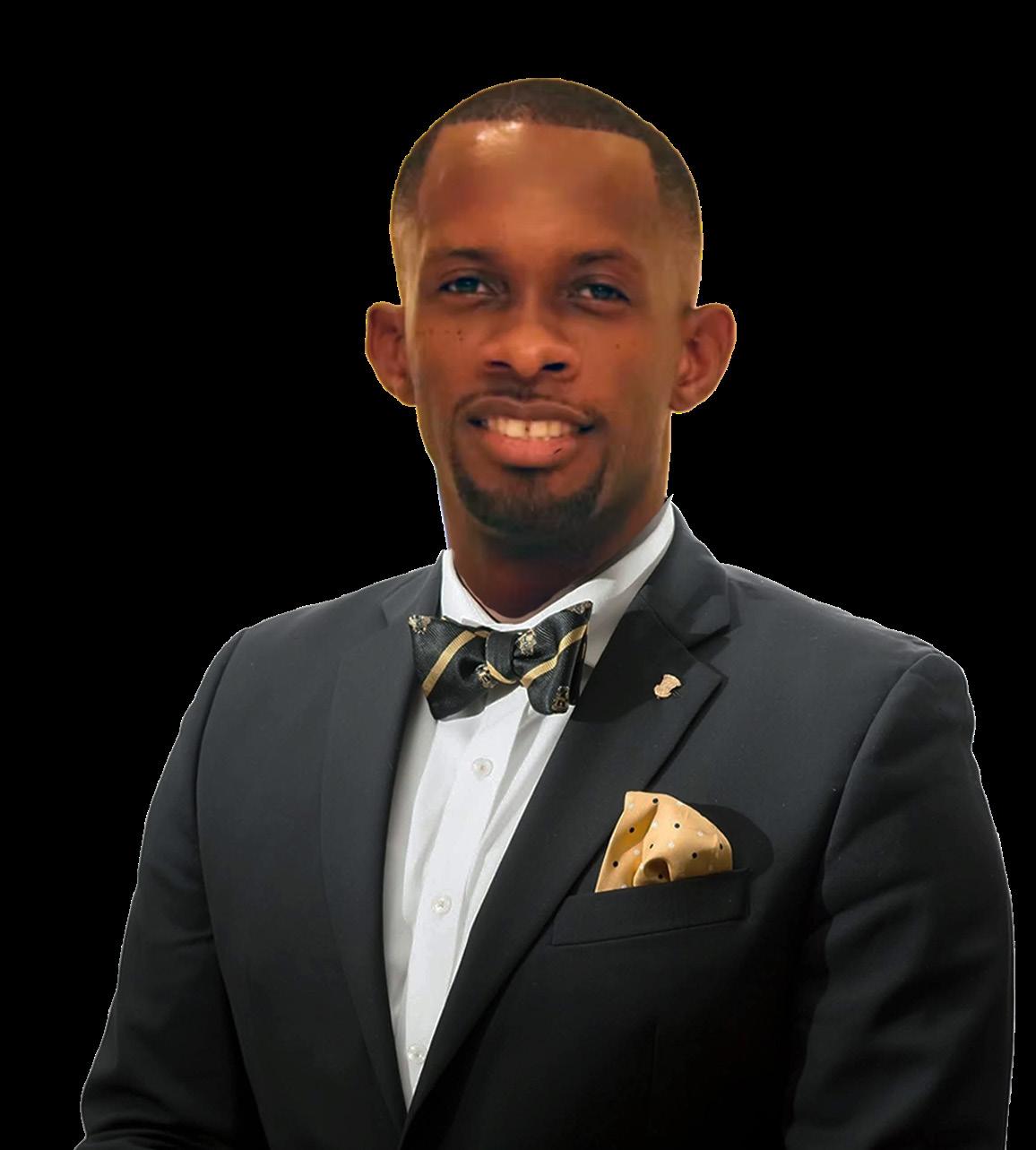
Greetings Brothers,
Leadership is a drink best served neat. Pure and true with nothing added to dilute its flavor, and no fuss or frills to mask what should be appreciated. It is sometimes hard to swallow for the faint at heart, but smooth and palatable to those who have acquired its taste. Many times, it’s subtle in its approach but bold in its results. Most of all the best of them are crafted with care and with the aim of producing a product that can be shared with pride.
As we approach the home stretch of this fraternal year with elections looming, my hope is that brothers are looking to elect leaders with the care and consideration exercised. That we look to those men who will take up the mantle of leadership with the desire to see good works become great and great works become extraordinary. I applaud how great we have been and hope for higher heights in the days, weeks, and years ahead.
And so it goes without saying that we are in unprecedented times; that threats to our rights, our votes, and our ability to shape the landscape of our communities have resurged with a vengeance. The leadership of our chapter must be willing to take on the causes that don’t just affect our fraternal efforts, but our civic and social justice engagement. We must be visionaries in our respective roles and stand on the frontlines, arms interlocked, and at the ready for what is to come. We must sit at the roundtable making decisions that will shape the minds of our next generation and mentor the youth, so they are able to stand up against the powers that seek to relegate them to second class citizenship. I am reminded of the saying to whom much is given, must is expected and to whom much is expected, much will be tested. I pray for our leaders both now and next that we guard the house with carefulness and give all the hell that we can muster those that threaten the quietude within.
06 to fighting the good fight!
Fraternally,
Brother Karl Bruce
Vice President (12-Mu Lambda-13)
2025 - 2026
Alpha Phi Alpha Fraternity, Inc.
Mu Lambda Chapter


Bro. Lucius Brown - 5th
Bro. Daniel Ghisolf-Astacio - 7th
Bro. Khama Sharp - 9th
Bro. Eathen Gums - 10th
Bro. Fernando Porter - 11th
Bro. Reginald Salter - 13th
Bro. Rexrian Jarrett - 16th
Bro. Corey Ponder - 23rd
Bro. Anthony Goliday - 24th
Bro. Xavier Thompson - 25th
Bro. Stanley Smith - 28th
Bro. Kelvin McClinton - 29th
Bro. Robert Shepherd - 29th
Bro. Todd Valentine - 29th
Bro. Byron Williams - 30th

There comes a moment in fatherhood when the world stops being abstract. It’s no longer just headlines. No longer just court decisions. No longer just something happening “out there.” It becomes personal. Because now, you’re not just living in this world, you’re preparing someone else to inherit it.
Recently, the United States Supreme Court issued a decision that weakens a key provision of the Voting Rights Act. A law born out of struggle, sacrifice, and an unrelenting demand for fairness. A law that stood as both shield and signal, protecting the rights of those too often pushed to the margins and affirming that their voices mattered. And now, that protection has been narrowed.
As a father, that doesn’t just register as policy. It registers as responsibility. Because one day, my children will ask me about the world they’re stepping into. They will ask what it means to have a voice. They will ask what it means to be heard. And they will ask, whether directly or through their experiences, what it means when systems shift in ways that don’t always feel just.
And in that moment, I won’t have the luxury of speaking in theory. I will have to speak in truth.
The truth is, rights have never been static. They have always required vigilance. They have
always required participation. They have always required people who were willing to stand up, speak out, and ensure that what was promised was actually delivered.
Fatherhood teaches you that you cannot control everything your child will face. But you can shape how they face it. You can teach them to think critically, not just accept what is given. You can teach them to ask questions, especially when something doesn’t feel right. You can teach them that their voice has value, even in moments when systems make it feel otherwise.
And maybe most importantly, you can show them what it looks like to stay engaged. Not just when it’s easy. Not just when it’s convenient. But especially when it’s necessary. Because the lesson here isn’t just about a court decision. It’s about continuity.
The same courage that built the Voting Rights Act must live on in how we raise our children. The same commitment to justice must show up in our conversations at the dinner table, in how we explain the world, and in how we encourage them to see themselves as participants in it, not spectators.
One day, my children will come into their own understanding of this country. They will form their own opinions. Make their own choices. Chart their own path. But my responsibility is to make sure that when they get there, they are equipped with knowledge, awareness. and the confidence to stand firm in who they are and what they believe.
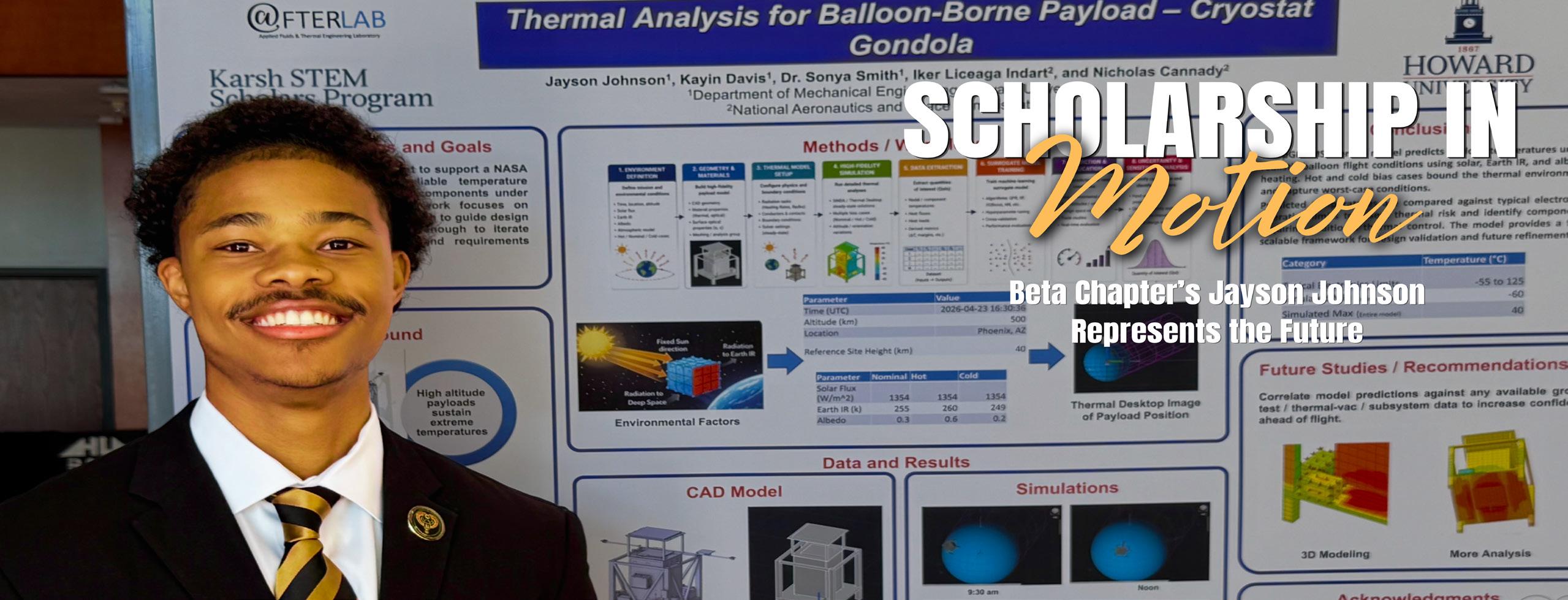
Excellence continues to rise within the Brotherhood, and it is on full display through the work of Beta Chapter Brother Jayson Johnson (2-B-25).
A senior mechanical engineering major, Brother Johnson recently presented his research at Howard University, marking an important milestone in his academic journey and reinforcing the standard of scholarship that has long defined Alpha Phi Alpha Fraternity, Inc. His presentation was not simply an academic exercise. It was a demonstration of discipline, preparation, and intellectual curiosity coming together in a way that reflects both personal commitment and collective investment.
In attendance was Brother Reginald Salter, Associate Professor at Howard University, whose presence served as a powerful reminder of the role mentorship plays in shaping outcomes. The moment captured more than a presentation. It reflected a continuum of excellence where experienced Brothers guide, support, and affirm the next generation as they step into their purpose.
This intersection of scholarship and mentorship is central to the Alpha experience. It is how knowledge is passed forward. It is how standards are maintained. And it is how young Brothers like Jayson Johnson are positioned not only to succeed, but to lead.
Brother Johnson’s research and academic focus represent more than individual achievement. They point to the broader impact that emerging leaders will have across industries that shape
our everyday lives. From advancing technology to influencing infrastructure and design, his work signals the kind of forward thinking that will be required to meet the demands of a rapidly evolving world.
Equally important is what his journey represents for those coming behind him.
It shows what is possible when preparation meets opportunity. It reflects the value of being surrounded by a Brotherhood that expects excellence and provides the support to achieve it. And it reinforces the idea that scholarship is not just a pillar of Alpha, but a lived experience that continues to evolve through each generation.
As we recognize Brother Johnson’s accomplishment, we do so with both pride and perspective. Pride in the work he has already done, and perspective in understanding that this is only the beginning of what promises to be a meaningful and impactful career.
The strength of Alpha Phi Alpha is not only rooted in its legacy, but in the men who continue to build upon it. Brother Jayson Johnson stands among those who are carrying that legacy forward with intention, intellect, and purpose.
The future is not something we wait for. Through Brothers like him, it is something we actively create.
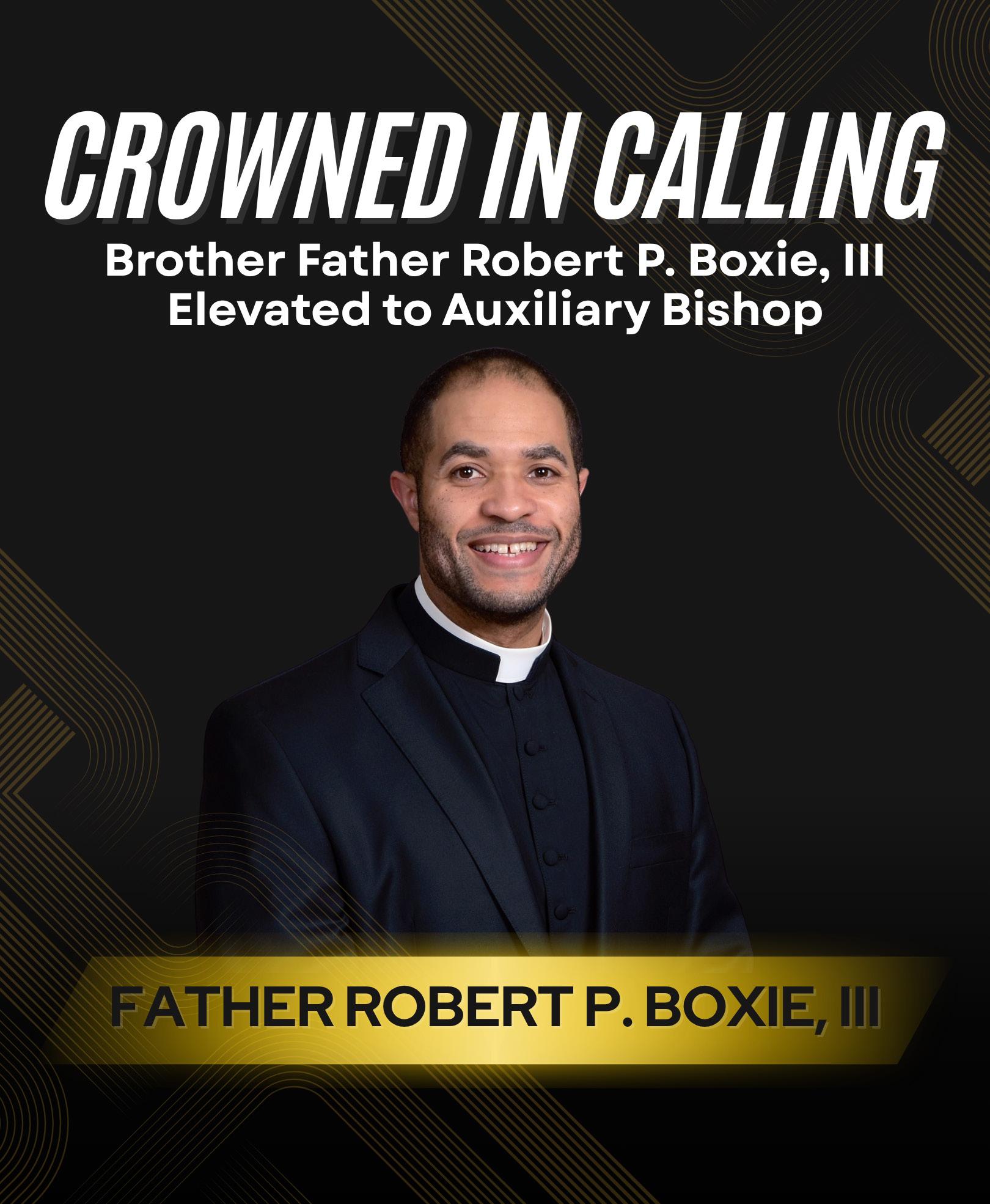
There are moments when a man’s journey converges so seamlessly with his purpose that the elevation feels less like a promotion and more like a confirmation. For Mu Lambda Chapter Brother, Reverend Robert P. Boxie, III, that moment has arrived.
With the appointment by Pope Leo XIV as Auxiliary Bishop of the Archdiocese of Washington, Bishop-elect Boxie steps into a sacred responsibility. One that reflects not only years of disciplined preparation, but a life anchored in service, intellect, and unwavering faith. For the brothers of Alpha Phi Alpha Fraternity, Inc., and particularly those within Mu Lambda, this is not simply an announcement, it is a point of pride, a reflection of legacy, and a reminder of what it means to live a life of purpose.
Born on September 18, 1980, in Lake Charles, Louisiana, Bishop-elect Boxie’s journey has always been marked by excellence across disciplines. His academic path alone tells a story of range and rigor, earning a Bachelor of Engineering from Vanderbilt University, followed by a Juris Doctor from Harvard University. Yet, even with such formidable credentials, his calling extended beyond traditional measures of success.
Answering a higher call, he continued his formation in Rome at the Pontifical North American College, where he deepened his theological grounding. There, he earned both a Bachelor of Sacred Theology and a Licentiate in Sacred Theology from the Pontifical Gregorian University, credentials that reflect not just scholarship, but spiritual commitment.
Ordained to the priesthood on June 25, 2016, Father Boxie entered ministry with a clarity of purpose that would quickly define his pastoral impact.
From his early assignments as parochial vicar at St. Francis of Assisi in Derwood, Maryland, and later at St. Joseph in Largo, Maryland, Father Boxie demonstrated a pastoral presence grounded in accessibility, compassion, and thoughtful leadership.
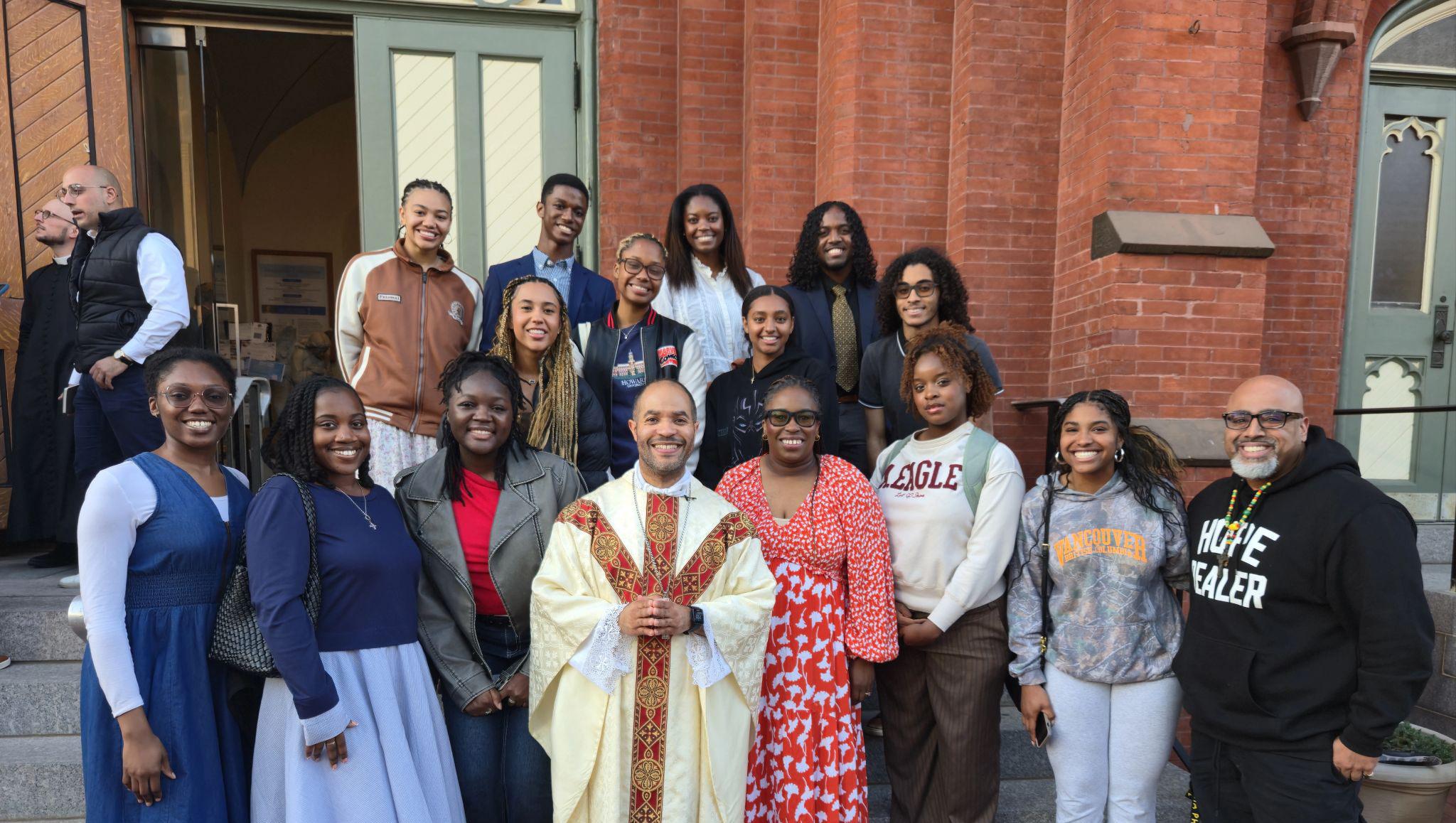
Since 2020, he has served as chaplain at Howard University, a role that places him at the intersection of faith, intellect, and cultural identity. In that space, he has guided students not only in spiritual matters, but in navigating purpose, responsibility, and the weight of legacy. His presence on Howard’s campus is not incidental, it is intentional. Reflecting a commitment to shaping leaders who think critically and live faithfully.
Beyond campus ministry, Bishop-elect Boxie has contributed to the broader formation of the Church, serving as a professor in the Archdiocese of Washington’s permanent diaconate program and as an assistant vocations director. In these roles, he has helped cultivate the next generation of spiritual leaders, ensuring that the work continues long after any one appointment.
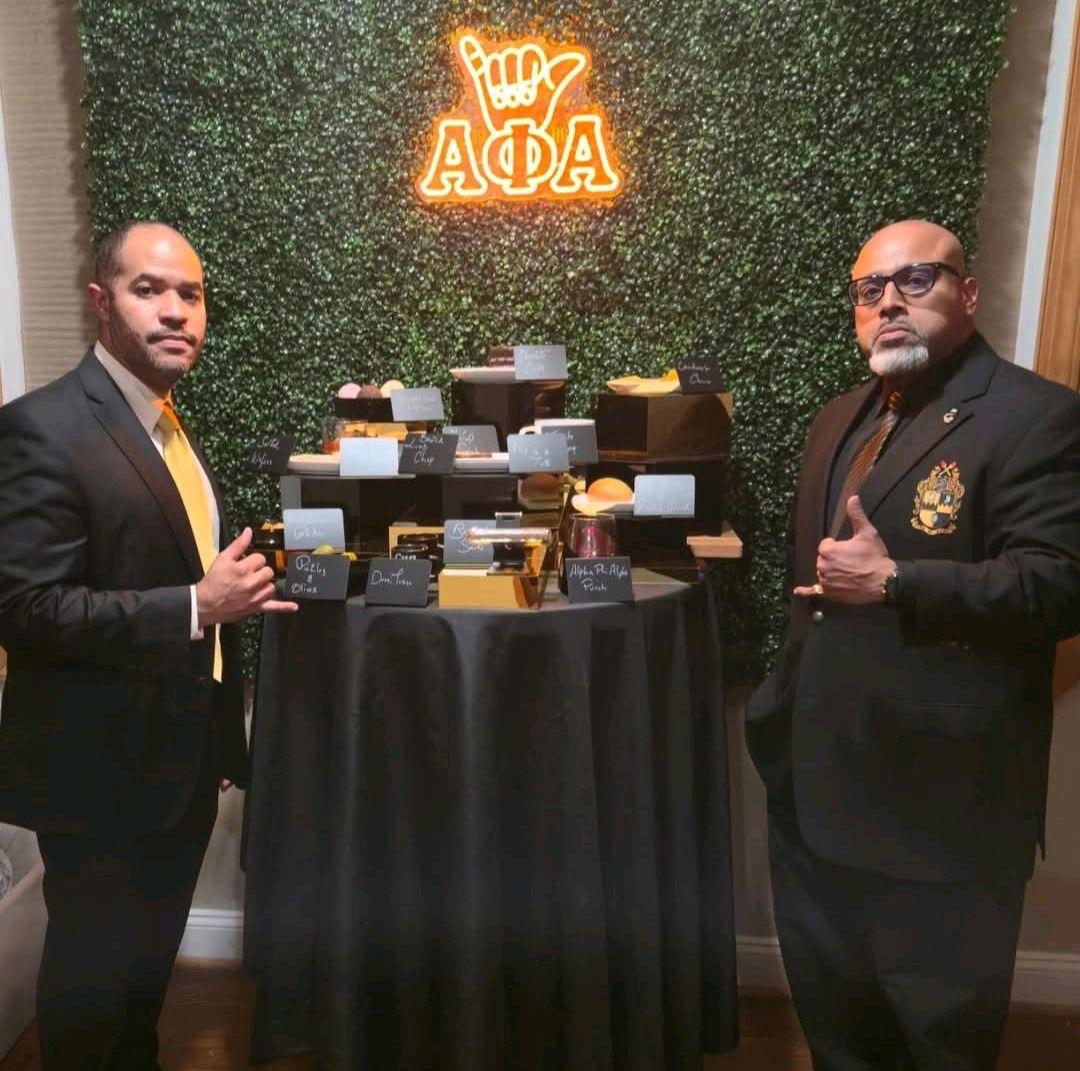
For Mu Lambda, this moment resonates deeply. Alpha Phi Alpha Fraternity, Inc. has long stood at the intersection of scholarship, leadership, and service, values that Bishop-elect Boxie embodies with distinction. His elevation is not only a personal milestone, but a reflection of the very ideals the fraternity seeks to instill in its members.
To see a brother rise in this way, grounded in faith, sharpened by education, and committed to service, is to witness the living expression of Alpha’s mission. it is influenced. And influence is built through consistent, credible engagement.
As Auxiliary Bishop of the Archdiocese of Washington, Bishop-elect Boxie will help shepherd a region spanning over 2,100 square miles across the District of Columbia and
Maryland. The scope is vast, but so is the opportunity to lead, to guide, and to serve a diverse and dynamic community.
Yet, those who know his journey understand this: the title may be new, but the work remains the same. It is the work of presence. The work of listening. The work of lifting others toward something greater.
In every generation, there are individuals who remind us what it looks like to align preparation with purpose. Bishop-elect Robert P. Boxie, III is one of those individuals.
His story calls each of us, especially within Mu Lambda, to reflect on our own commitments. To ask where we are being called. To consider how we are using our gifts. And to remember that leadership, at its highest level, is always rooted in service.
As he steps into this new role, we celebrate not just the appointment, but the example. Because when one brother rises in purpose, the entire House of Alpha stands taller.
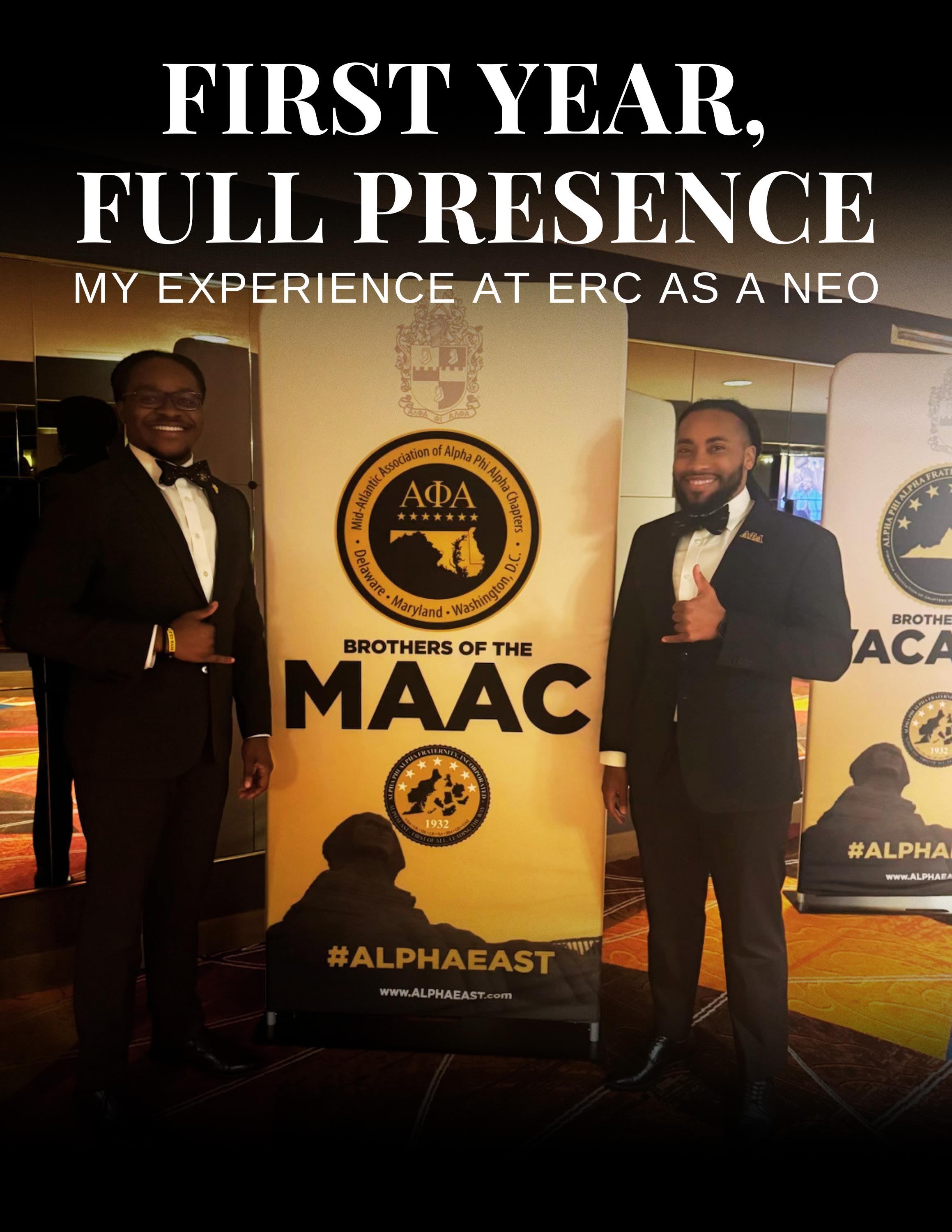
There is a particular kind of stillness you can find in Atlantic City if you know where to look. Not inside the casinos, but out on the boardwalk, where the Atlantic stretches farther than the eye can follow. It was the perfect backdrop for the Eastern Regional Conference of Alpha Phi Alpha Fraternity, Inc. because brothers competing for your attention, pulling at your purpose, reminding you of why you crossed, is exactly what ERC is supposed to do. This year, it did all of that, and then some.
This was my second Eastern Regional Conference, but my first as an elected delegate representing the Mu Lambda Chapter. That distinction matters more than I initially appreciated. Last year, when ERC was held in Bethesda, close enough that I did not even need a hotel, I attended without fully knowing what to expect. I took it in. I watched. I listened. I got a feel for the scale of the brotherhood in this region. This year was a different assignment entirely.
The Eastern Region is the First and one of the most expansive in the Fraternity. It comprises seven districts spanning eleven states, Connecticut, Delaware, Maine, Maryland, Massachusetts, New Hampshire, New Jersey, New York, Rhode Island, Vermont, and Virginia, along with Washington, D.C. What I did not fully know until this conference, is that the Eastern Region also includes international chapters in Bermuda, Germany, Liberia, South Africa, Ghana and the United Kingdom. Brothers from all of those areas converge at ERC, and when you walk into that convention space and begin to understand the full geography of who is in that room, the weight of the organization becomes tangible in a way it simply cannot from a normal chapter meeting.
A delegate is not simply an attendee with a different name tag. A delegate is a vessel for the chapter’s values, its positions, its voice. That framing shaped how I approached every moment of this conference. From the time I left
D.C. to the time I returned, I was not there as Jarrius Adams the individual. I was there as Mu Lambda, and I took that seriously. The weight of that responsibility hit me most concretely in the plenary sessions. Delegates were required to sit at the front of the auditorium, in the center of the room. Every time I walked in and took my seat, I felt it. There was something about being placed in that position, physically set apart from the broader brotherhood, center facing the dais, that made the duty feel real. Preparation had to happen before I arrived. I could not walk into those sessions unprepared and claim to be representing my chapter faithfully. So, I came ready.
One of the most notable things about this year’s ERC was that the regional leadership made a deliberate effort to restructure the conference experience. Brothers have raised concerns in the past about whether programming at regional conventions is actually delivering value, whether people are walking away with something they can use. The leadership heard that feedback, and the result was a public program that genuinely rose to the moment.
Marc Morial of the National Urban League was on that stage. Mayor Ras Baraka of Newark was there. Tamika Mallory, one of the most recognizable civil rights organizers in the country, brought energy that the room
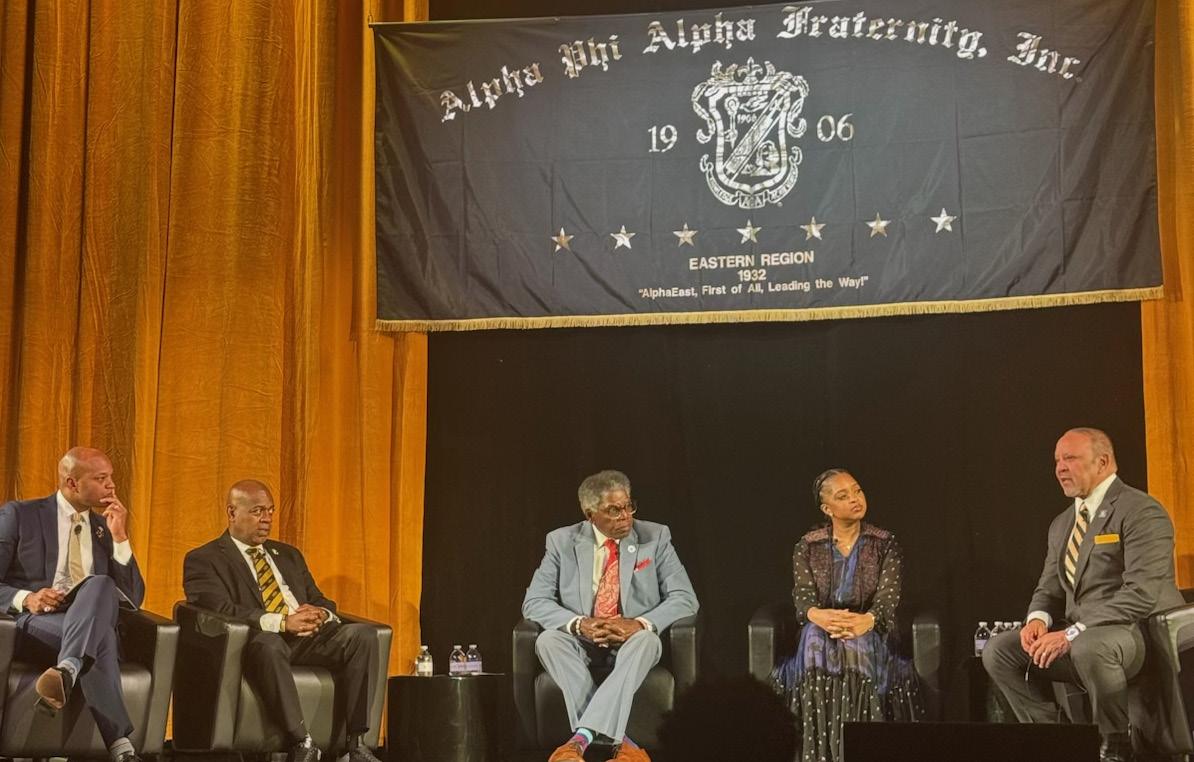
absorbed immediately. A local Atlantic City councilman spoke to the work being done at the community level. And then, in what was genuinely a surprise moment, Maryland Governor Brother Wes Moore walked into that space. The public program was well-attended not just by brothers, but by members of the community, which is exactly what that kind of programming should draw.
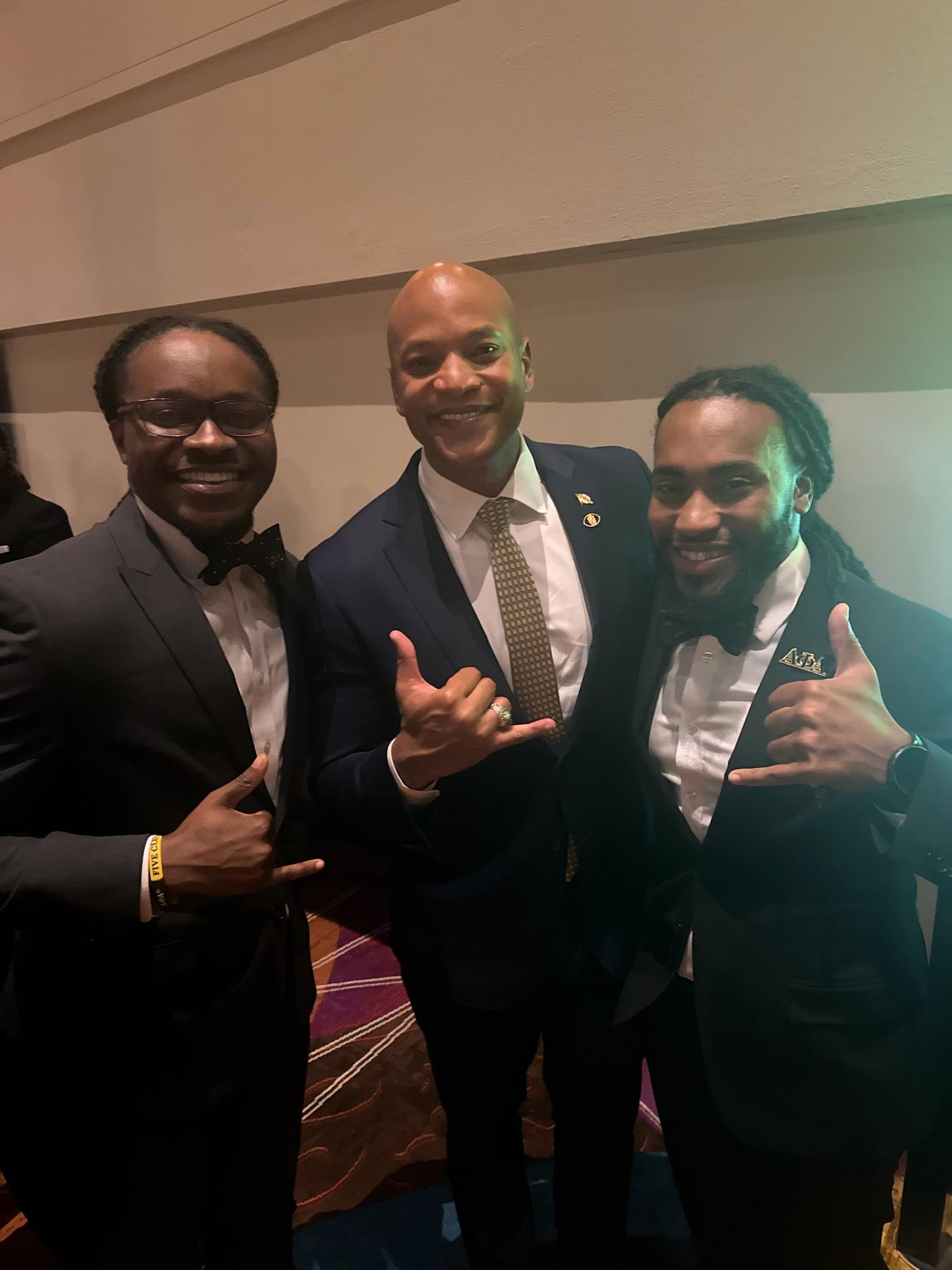
The conversation that threaded through those presentations centered on developing a national 100-day action plan, modeled after the work that has already been done in New Jersey to prepare for the incoming administration of newly elected Governor Mikie Sherrill. The idea is straightforward: if we know change is coming, we should not be reactive. We should have a plan in hand before the first day, ready to push, ready to hold people accountable, ready to move. That framing landed. It was the kind of strategic thinking that reminds you Alpha is not just a social organization, it is a political and civic force when it operates at full capacity.
The central voting item before the delegate body this year was the election of the new Assistant Eastern Regional Vice President. After the process concluded, Brother Theodore Young, currently serving as Assistant District Director of the New Jersey-Atlantic Area Council and a member of Nu Iota Chapter at Rowan University, was elected to fill that role. It was a significant moment of organizational governance, and being present for it as a voting delegate was a reminder that the decisions made at conferences like this have real consequences for the direction of the region.
The General President’s address to the brotherhood also stood out. It was not a ceremonial speech. It was substantive, the kind of address that covers ground across multiple areas and holds the organization accountable to itself. He spoke about brothers living up to the oath we swore. Not as a platitude, but as a direct challenge. It stayed with me, because it is easy to invoke the oath during intake and let it recede into the background afterward. Being reminded of what we committed to, in a room full of brothers from across an entire region and beyond, carries a different kind of weight.
If there was one feeling that defined the collective energy of this conference, it was urgency. Not panic, urgency. The kind that comes from clear-eyed people who understand what is at stake and have decided they are no longer willing to operate at half speed. Fight back and do more. Scale up our programs. Get into the streets. The conversation around protecting Black families and specifically, protecting Black women, was present and direct. It was not couched in vague language. Brothers are expected to be on the front lines of that work, and the expectation was stated plainly.
I came to Atlantic City as a neo with something to prove, mostly to myself. I leave with something more valuable than credentials: clarity. Clarity about the kind of Alpha I intend to be, the kind of work I intend to do, and the kind of brother Mu Lambda deserves to have representing them.
That clarity was sharpened by what I heard in that room. The direct, unambiguous charge to
protect Black families, to protect Black women, to get into the streets and scale up the work. Our General President reminded us that we swore an oath. For a long time, those words lived mostly in my memory. ERC put them back in my chest.
I am grateful to Mu Lambda for the trust of this role. I did not take it lightly before I left, and I do not intend to take it lightly now that I am back. I am a neo. I am still learning. But I know enough now to know that learning without acting is its own kind of failure. My first year is over but after ERC, I know exactly how I want to start year two.
Brothers, we have our marching orders. The question is what we do with them.
Alpha. Always.
~ Bro. Jarrius Adams Alpha Phi Alpha Fraternity, Inc. Mu Lambda Chapter 5-Mu Lambda-25
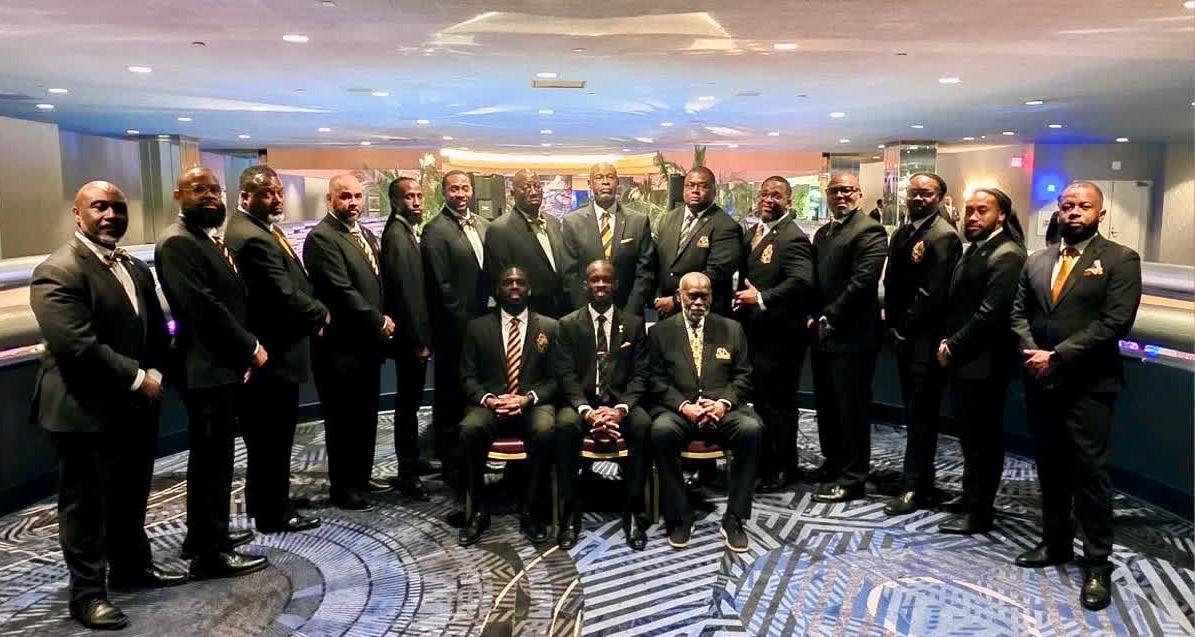
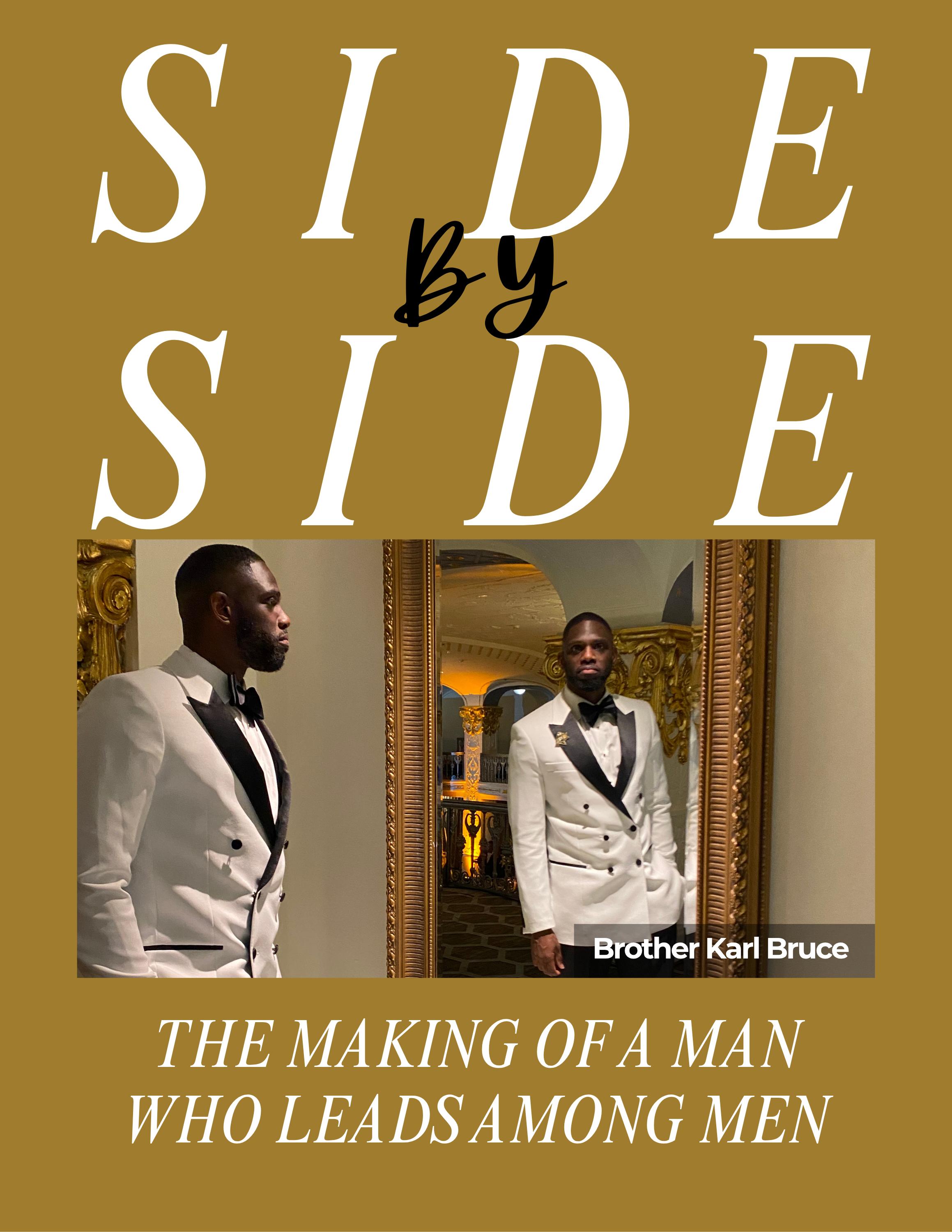
There’s something about presence that can’t be taught. You either recognize it, or you don’t. And when you do, it stops you in your tracks, not because it’s loud, but because it’s undeniable. At Stillman College, a small liberal arts institution tucked away in Tuscaloosa, Alabama, that presence had a name: Alpha Phi Alpha. On a campus where community was tight and visibility meant everything, the brothers of Alpha didn’t just participate in campus life, they defined it. They were the standard others measured themselves against. They were the ones who looked like they had somewhere to be, even when they didn’t. The ones whose steps felt intentional, whose conversations carried weight. They didn’t chase attention. Attention followed them.
And for a young man trying to figure out what excellence looked like, that kind of visibility leaves an impression. But what Brother Karl Bruce didn’t yet know was this: what you see on the outside is only a fraction of what Alpha really is. Because real Alpha doesn’t live in the spotlight. It lives in what happens when nobody’s watching.
Life has a way of deepening your understanding if you’re paying attention. When Brother Bruce transitioned to Alabama A&M University, Alpha stopped being a visual experience and became something far more personal. It wasn’t about step shows or campus recognition anymore. It was about relationships. It was about impact. It was about who shows up when it matters most.
And over time, a pattern began to emerge. The men who guided him academically, Alphas. The mentor who poured into his spiritual growth, Alpha. The leader who opened the door to his first professional opportunity, Alpha. It wasn’t coincidence. It was culture.
That’s when he realized something powerful: Alpha wasn’t just an organization; it was a network of men committed to shaping lives. Not through speeches, but through presence. Not
through obligation, but through investment.
“They raised me,” he reflects. Not in a literal sense, but in the way that matters most. They helped shape his understanding of manhood, responsibility, and purpose. And that’s when the shift happened. Alpha moved from admiration to alignment. From observation to obligation. From something he saw, to something he carried.
In a world that celebrates titles, it’s easy to mistake position for power. But Brother Bruce doesn’t lead that way. As Vice President of Mu Lambda, he understands that leadership isn’t proven by where you sit, it’s proven by how you serve. And for him, the most honest form of leadership is the kind that doesn’t separate you from the people, it connects you to them.
That means showing up in the work. That means listening before speaking. That means being willing to do what you ask others to do and sometimes even more.
“I can’t ask you to do something I haven’t done,” he lives by that principle.
So, whether it’s shaping strategy or stacking chairs after an event, he approaches it the same way: with humility, with intention, and with a clear understanding that leadership is not about being above, it’s about being among. Because when people trust you, they don’t just follow your direction. They follow your example.
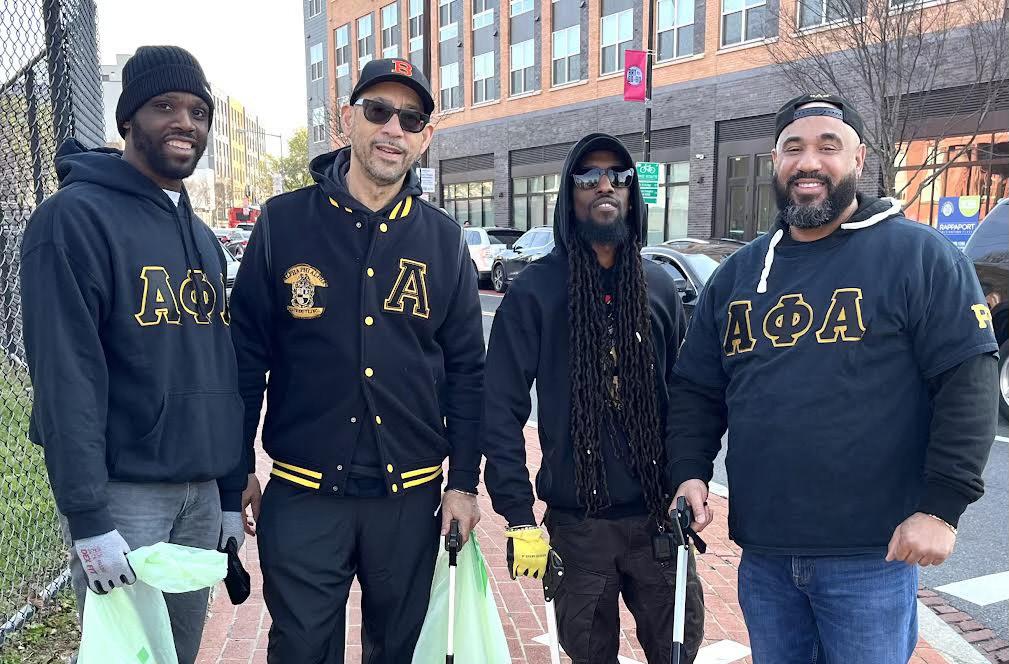
Let’s not romanticize it, leadership in a room full of strong men is heavy. Mu Lambda is a chapter filled with accomplished individuals. Men with their own experiences, their own perspectives, and their own understanding of what Alpha means. And while that diversity is a strength, it also introduces complexity.
Because not every brother sees the mission the same way. Not every brother interprets tradition the same way. Not every brother moves at the same pace. And when you’re responsible for helping guide that collective forward, the challenge isn’t just direction, it’s alignment. Brother Bruce has had to navigate personalities, bridge perspectives, and find ways to communicate a shared vision that resonates across differences. It’s not always clean. It’s not always quick.
But it’s necessary.
Because leadership isn’t about avoiding friction. It’s about managing it in a way that keeps the mission intact. And that takes patience. That takes awareness. That takes discipline.
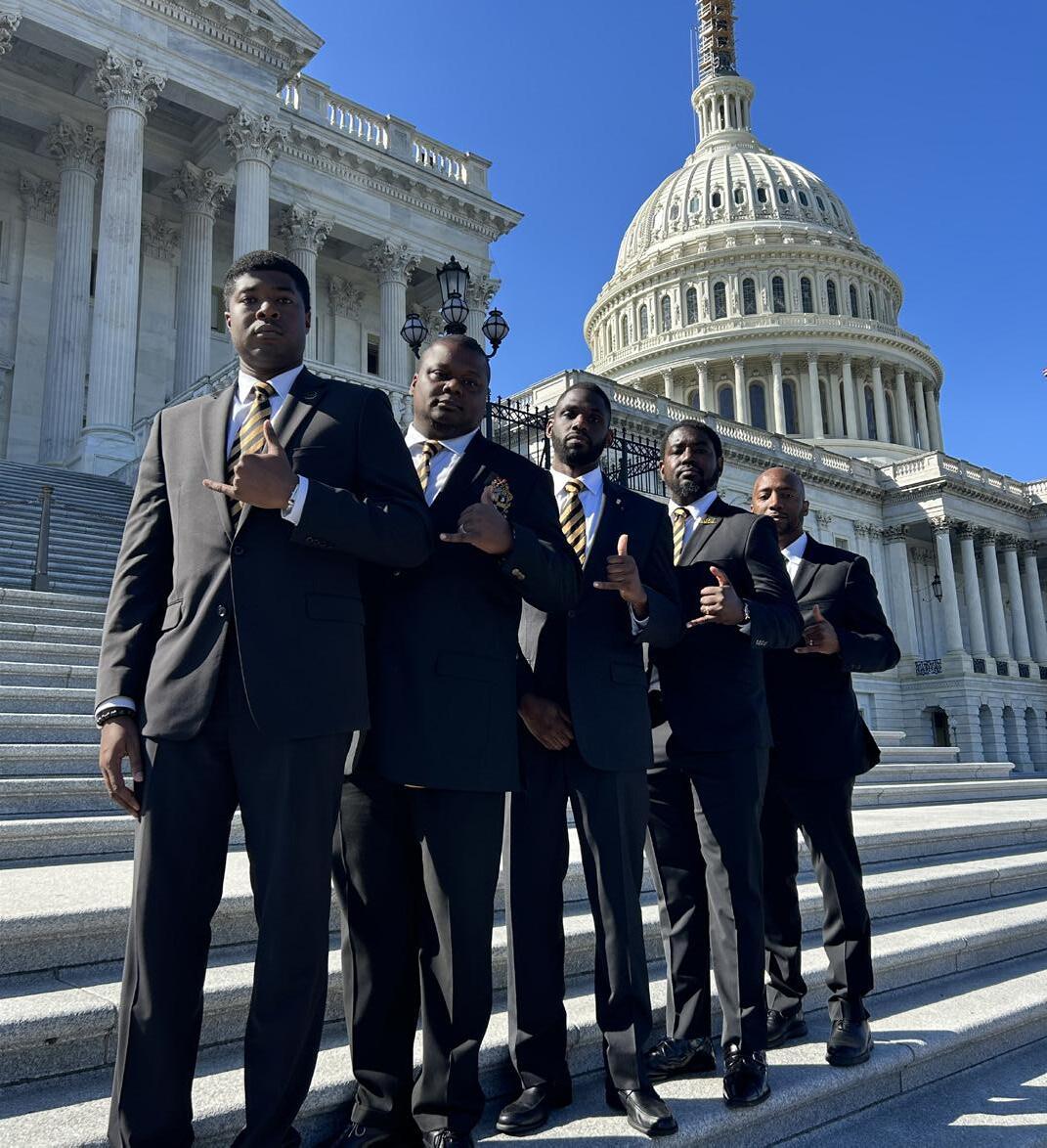
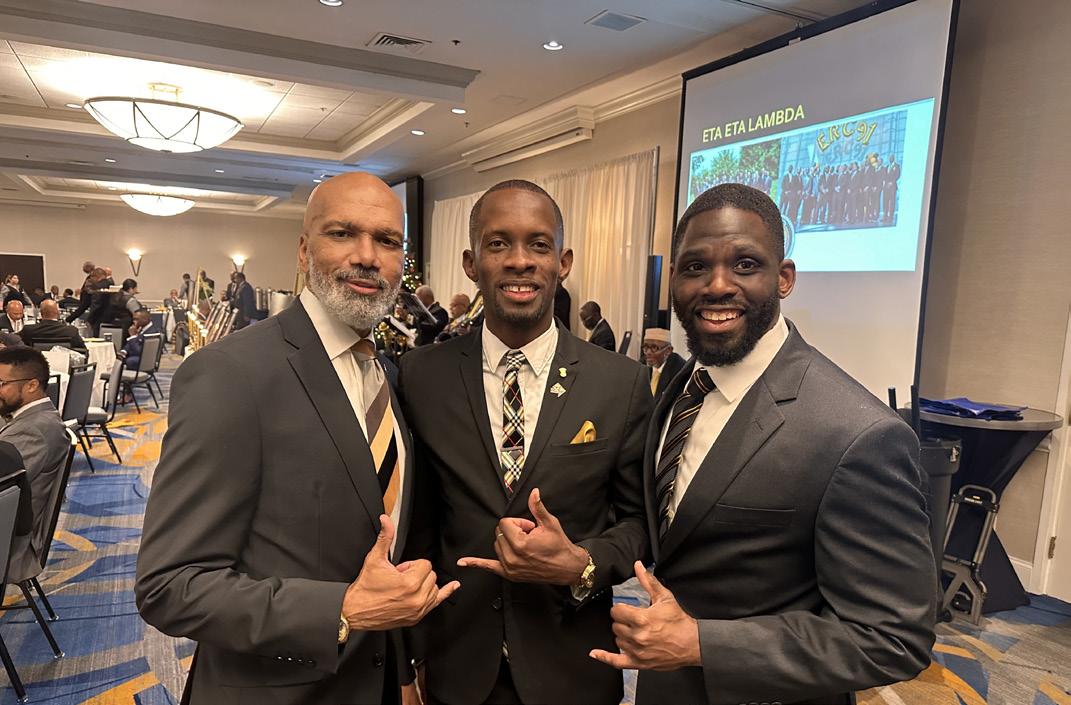
If you want to understand a man’s leadership, don’t just look at what he’s done, look at who he’s empowered. Brother Bruce measures success by impact, not recognition. And for him, one of the greatest accomplishments of his time as Vice President has been placing the right brothers in positions to thrive. Not just filling roles, but fueling purpose.
He speaks with pride about brothers stepping into leadership spaces with passion and clarity, particularly in areas that had previously been underdeveloped. Programs that once operated in the background are now gaining momentum because someone believed enough to invest in the right people. That’s leadership. Not doing everything yourself. But building a system where excellence can sustain itself. And when you get that right, the results don’t just show up in the present, they echo into the future.
Mu Lambda doesn’t lack potential. It never has. The name carries weight. The history commands respect. The expectations are already written into the legacy of the chapter. But legacy alone isn’t enough.
Brother Bruce sees a moment, an opportunity, for the chapter to fully align with its reputation.
To not just be known for greatness, but to actively live it out in every space, every program, every interaction.
That means building a deeper bench of leadership. That means creating a culture where brothers don’t wait to be called, they prepare themselves to lead. That means embracing succession planning as a responsibility, not an afterthought. Because the strength of a chapter isn’t measured by its loudest voices. It’s measured by how many men are ready when it’s their turn to speak.
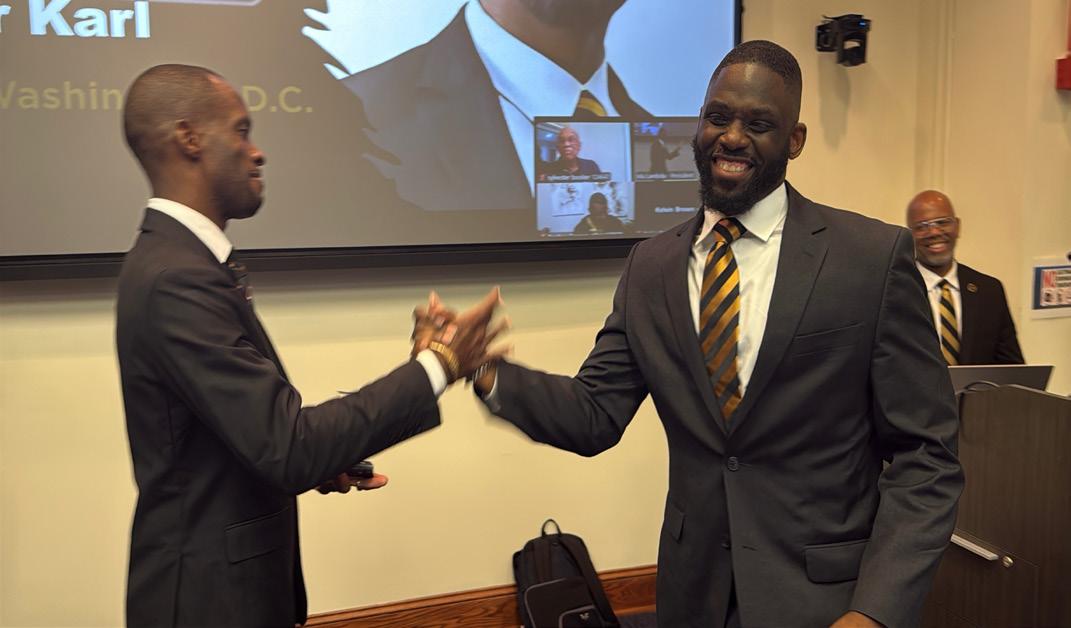
Three words. That’s all it takes to understand his approach. Side by side. It’s simple, but it’s powerful. Because when you lead side by side, you eliminate distance. You remove hierarchy. You replace authority with connection. You see your brothers clearly. You understand their needs. You respond in real time. And when they fall, you’re close enough to lift them up. That’s leadership. Not distant. Not detached. But present.
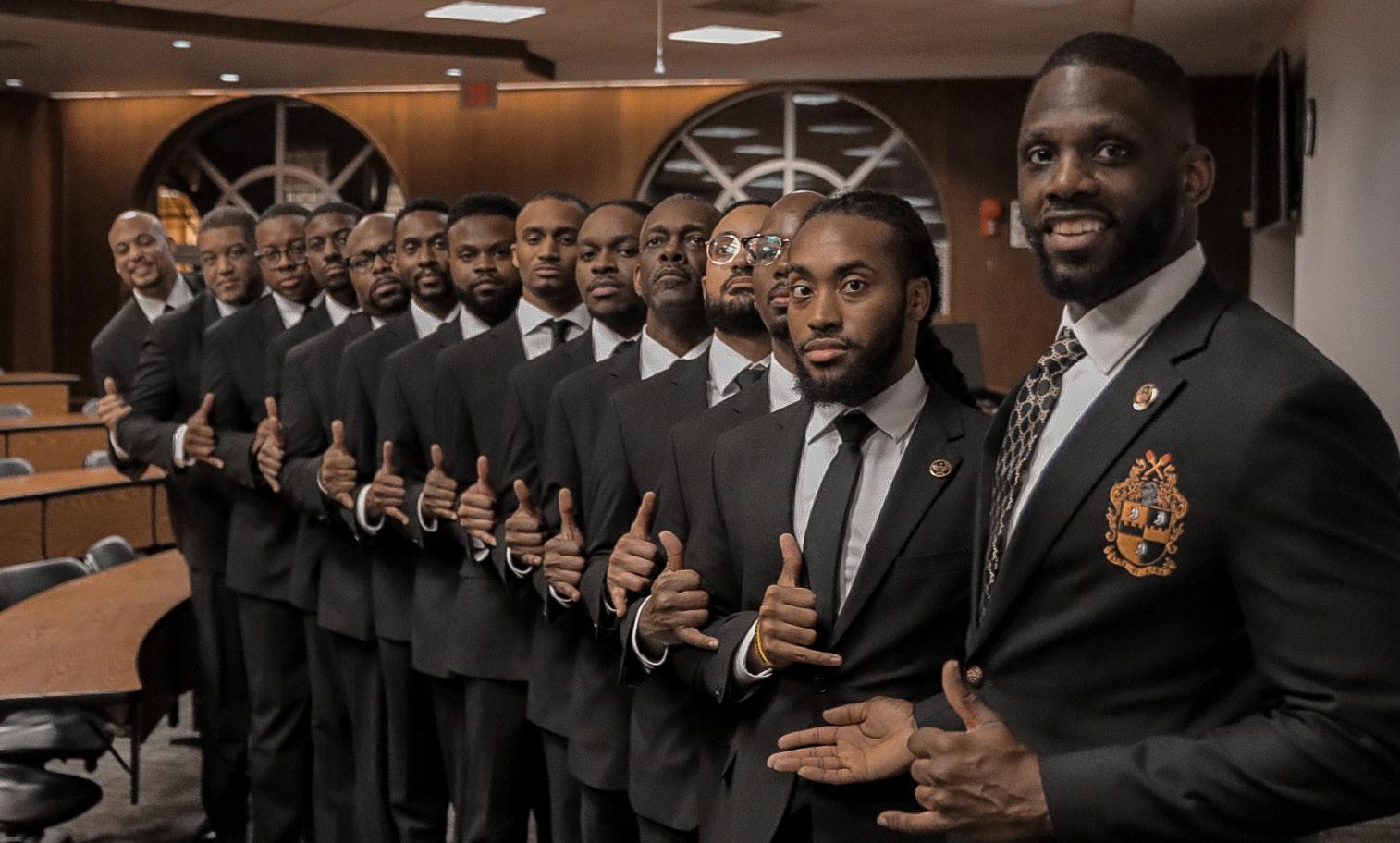
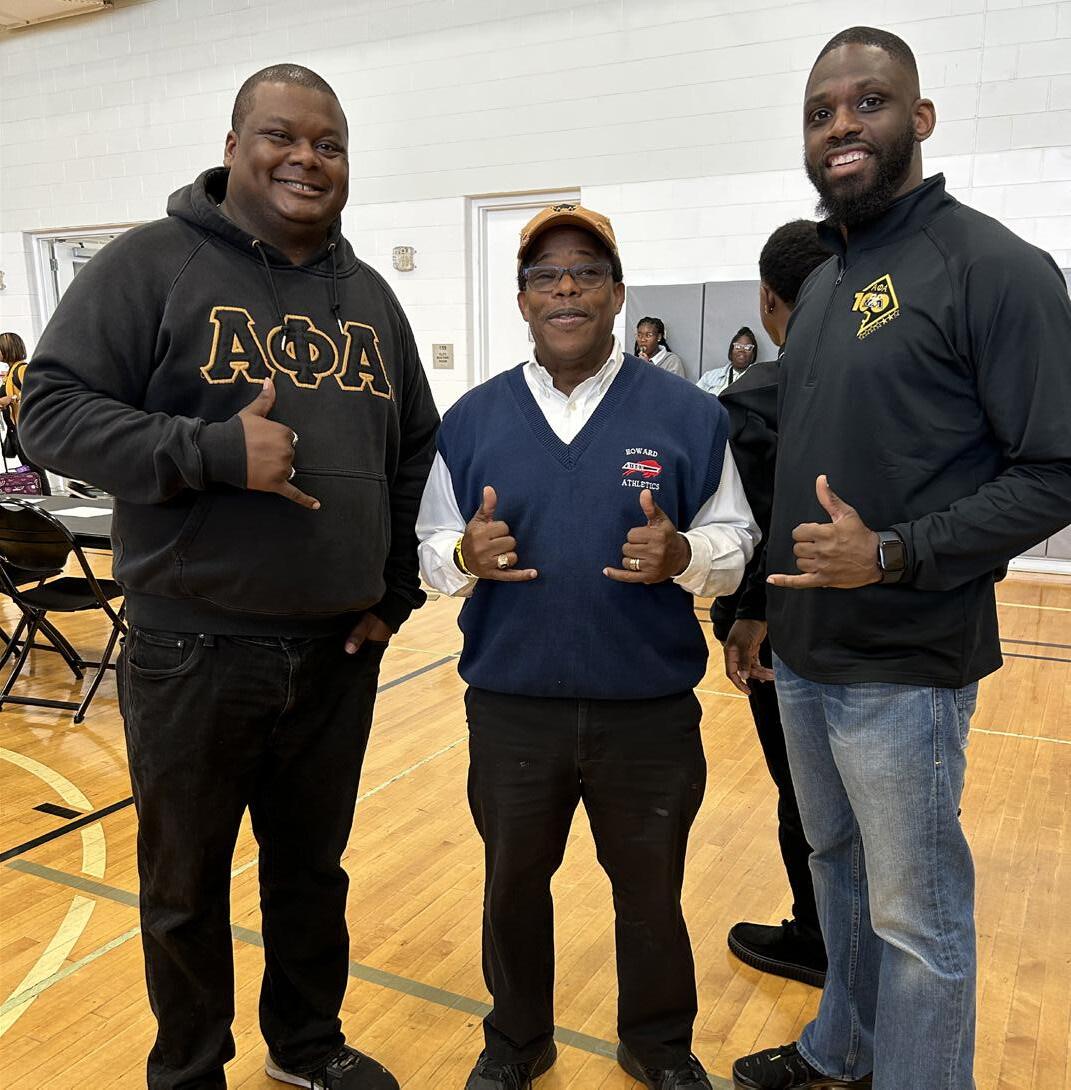
In the end, what Brother Karl Bruce is building isn’t just a resume of service. It’s a standard. A standard where brotherhood is felt, not just spoken. Where service is visible, not just scheduled. Where excellence is expected, not optional.
He wants Mu Lambda to be a chapter that doesn’t just carry a reputation, but honors it. A place where membership means something. A place where preparation matters. A place where, when the name “Mu Lambda” is spoken, it commands attention, not because of ego, but because of consistency.
And maybe that’s what makes his leadership different. He’s not trying to stand out. He’s trying to make sure the chapter stands taller. Side by side. Together. As it was always meant to be.
~ Bro. Christopher Butts Alpha Phi Alpha Fraternity, Inc. Mu Lambda Chapter 4-Xi Iota-99
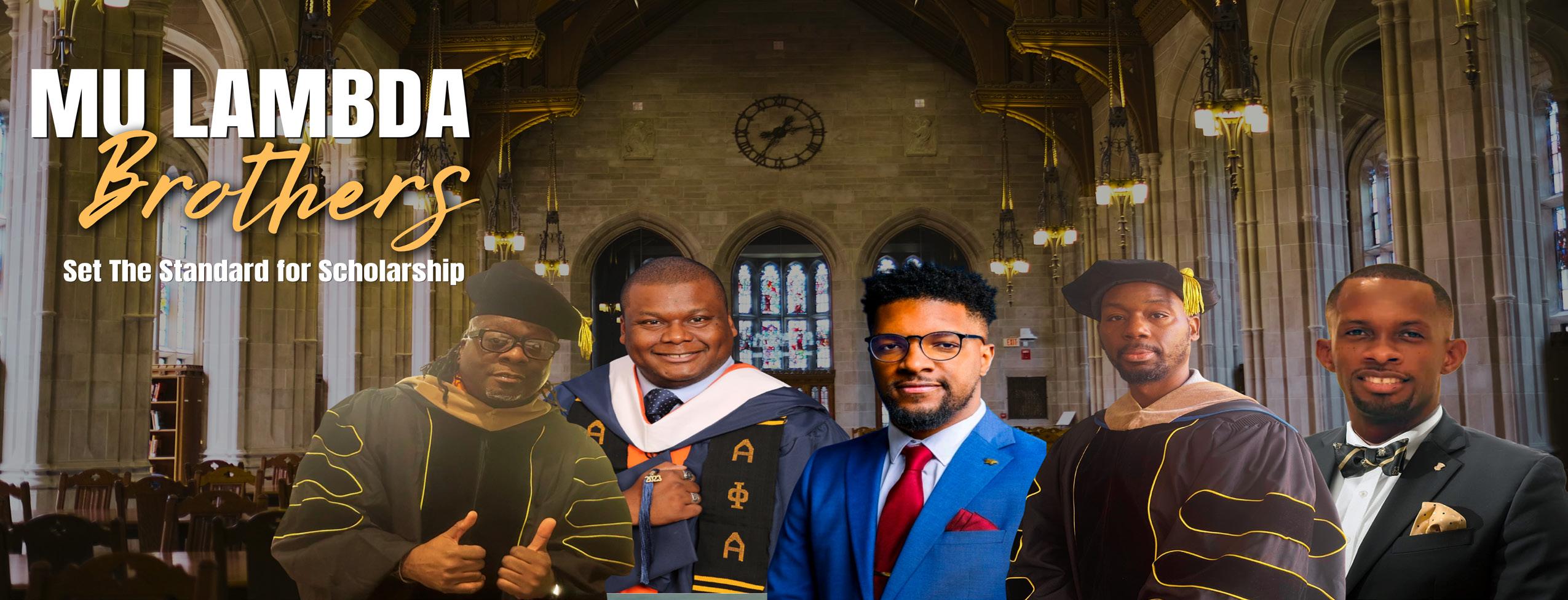
Despite an underrepresentation of African American men in the doctoral degree attainment numbers at the national level, we celebrate the aims of our dear fraternity, Alpha Phi Alpha Fraternity, Inc., Mu Lambda Chapter proudly celebrates an exceptional group of Brothers who are dedicated to ongoing scholarship.
This year, five Brothers graduate in various disciplines, and together, their excellence lies in intellectual and professional development to the pinnacle. Bro. Arsene Frederic defended his dissertation, “Policy Advocacy, Institutional Power, and Political Engagement: A 3-Article Study of State Legislative Black Caucuses and College Affordability at Public HBCUs,” to receive the Doctor of Philosophy (PhD) in Higher Education from Howard University.
Bro. James Morgan will earn the Doctor of Philosophy (PhD) in History from Morgan State University. His dissertation, “To Live and Act as Mason: Prince Hall Masons and the Black Archivist Tradition,” is a vital scholarly perspective on the preservation of Black history and the intellectual legacy of fraternal institutions in documenting and safeguarding community narratives.
Bro. Swain Riley will receive a Doctor of Business Administration (DBA) from Walden University. His dissertation, “Successful Strategies Business Leaders Use to Implement Artificial Intelligence for Achieving Benefits,” is a timely investigation into how to harness today’s advanced technologies to benefit business in the digital age.
Bro. Oraine Edwards will graduate from American Military University with a Doctor of Global Security degree. His dissertation, “A Comparative Analysis of Military Readiness in the Context of Global Outbreaks: Strategic Resilience and Institutional Response,” speaks to the crucial overlap of global health emergencies and military preparedness, and provides strategic insight into resilience and an institutional response.
Bro. Mikael LeRoche is also a graduate of Howard University with the Executive MBA. His academic career was based on strategy and resulted in an executive-driven project to develop risk-mitigation strategies for organizations.
Taken together, these brothers are a powerful mix of academics, scholars and organizers in education, history, industry, international security, and management work. Their accomplishments are collective achievements that are helping to eliminate disparities and allow African American men to be on par in academic and professional spheres.
We honor Brothers Frederic, Morgan, Riley, Edwards, and LaRoche with pride and purpose. Congratulations Brothers! Your accomplishments raise up not just yourselves, but also the entire Brotherhood and the communities that we are called to serve.
~ Bro. Reginald O. Salter Alpha Phi Alpha Fraternity, Inc. Mu Lambda Chapter 1-Mu Lambda-98

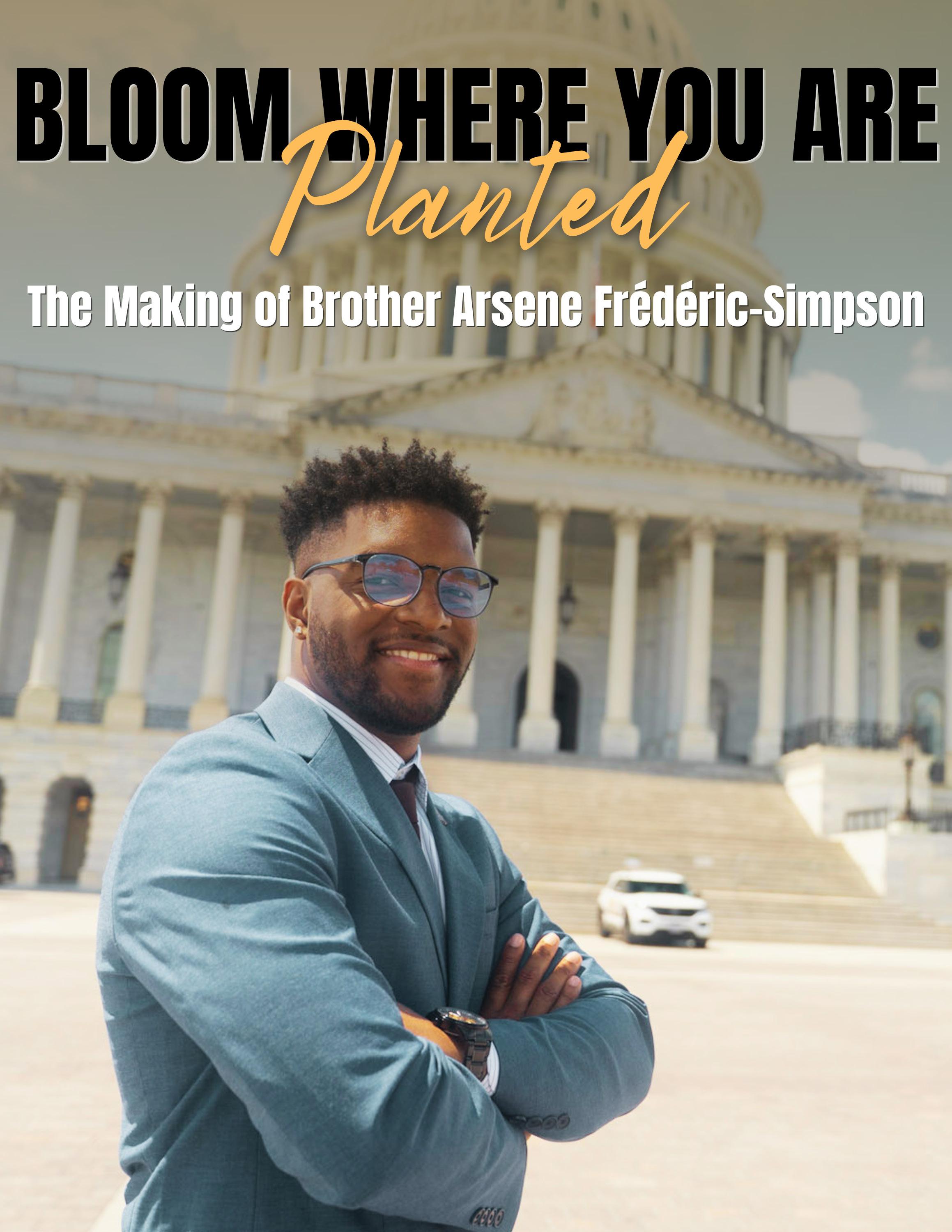
There is a particular kind of American story we like to tell ourselves. One where success is clean, linear, and credentialed. A story where degrees are ladders and institutions are gateways, and if you follow the map precisely, you arrive exactly where you are supposed to be.
But then there are stories like that of Mu Lambda Brother Arsene Frédérick-Simpson Stories that disrupt that tidy mythology and replace it with something far more honest, far more complicated, and ultimately, far more powerful.
Because Arsene’s journey does not begin in a lecture hall. It begins in motion. In instability. In observation. In survival. And most importantly, in watching.
What unfolds is not a story of luck or even simply of perseverance. It is a story of formation. Of how a young man, shaped by circumstance but not confined by it, learned to interpret the world long before he had the language to describe it. And once he found that language, he refused to use it quietly.
If you listen closely to Arsene, you realize that his first classroom was not a university, it was his mother.
A woman without an MBA. Without a formal business degree. Without the institutional validation society insists is necessary. And yet, she possessed something far more potent: instinct, resilience, and an unshakable will to provide.
She sold clothes out of the back of a truck but not as a side hustle, as a lifeline. She built a business ecosystem rooted in relationships, not algorithms. Customers didn’t just buy from her, they sought her out. They trusted her eye, her honesty, her consistency. She understood supply chains without ever naming them as
such. She understood pricing, demand, and customer experience without a single case study.
And more than that, she understood dignity.
“I don’t know how she did it,” Arsene reflects. “But she did.”
And that refrain, I don’t know how she did it, is not confusion. It is reverence.
In a household shaped by absence, his father incarcerated when he was four, and by economic instability that could have easily fractured a family, she became both shield and architect. She absorbed the weight of uncertainty and translated it into stability for her children. Even when the home was lost to foreclosure, even when the ground beneath them shifted, she created a sense of normalcy that defied the chaos around them.
She didn’t just raise children. She raised expectation. She didn’t just survive. She modeled what it meant to, endure with intention.
And in watching her, Arsene learned something no institution could fully teach: You do not wait for systems to validate you. You build anyway.
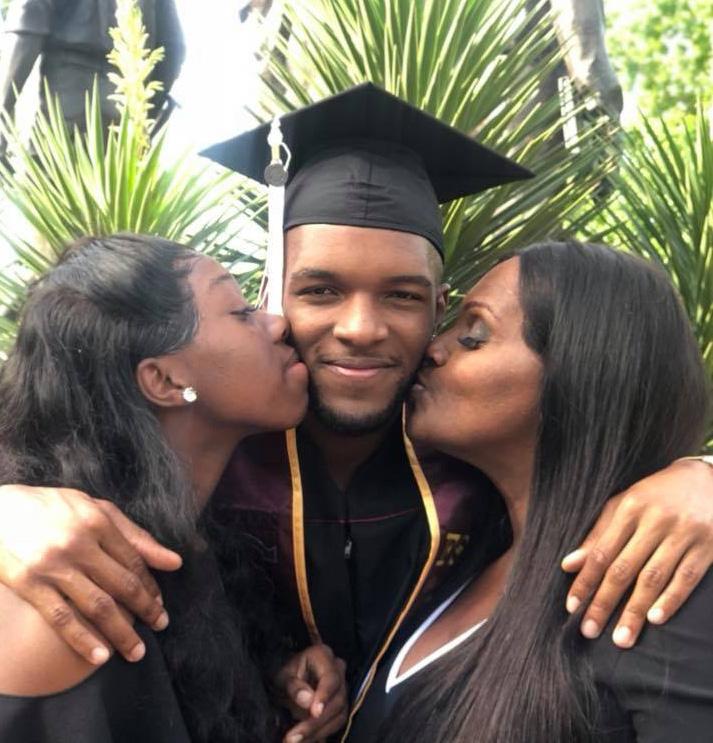
Arsene learned early that idle time was not neutral, it was dangerous. So, he filled his life not with distraction, but with direction. Track meets. Student government. National Art Society. Marching band, where he rose to drum major. Leadership councils. Community programs. Each space became both outlet and proving ground. Not because he was chasing accolades, but because he understood something instinctively: structure creates opportunity.
“If you have too much time on your hands, you’ll get into trouble,” he recalls.
But what is striking is not just his participation, it is his presence. He wasn’t simply in these spaces; he was engaged in them. Observing dynamics. Learning how groups function. Understanding leadership not as authority, but as influence. And perhaps most importantly, he learned how to navigate multiple worlds simultaneously.
The discipline of being “everywhere” wasn’t about busyness, it was about preparation. It was about building the capacity to move fluidly between spaces, a skill that would later define his work in policy, academia, and community engagement.
Because when you grow up in environments where opportunity is not guaranteed, you don’t specialize early. You adapt broadly
By the time Arsene entered spaces like Capitol Hill and Howard University, he had already developed something many spend years trying to acquire: clarity.
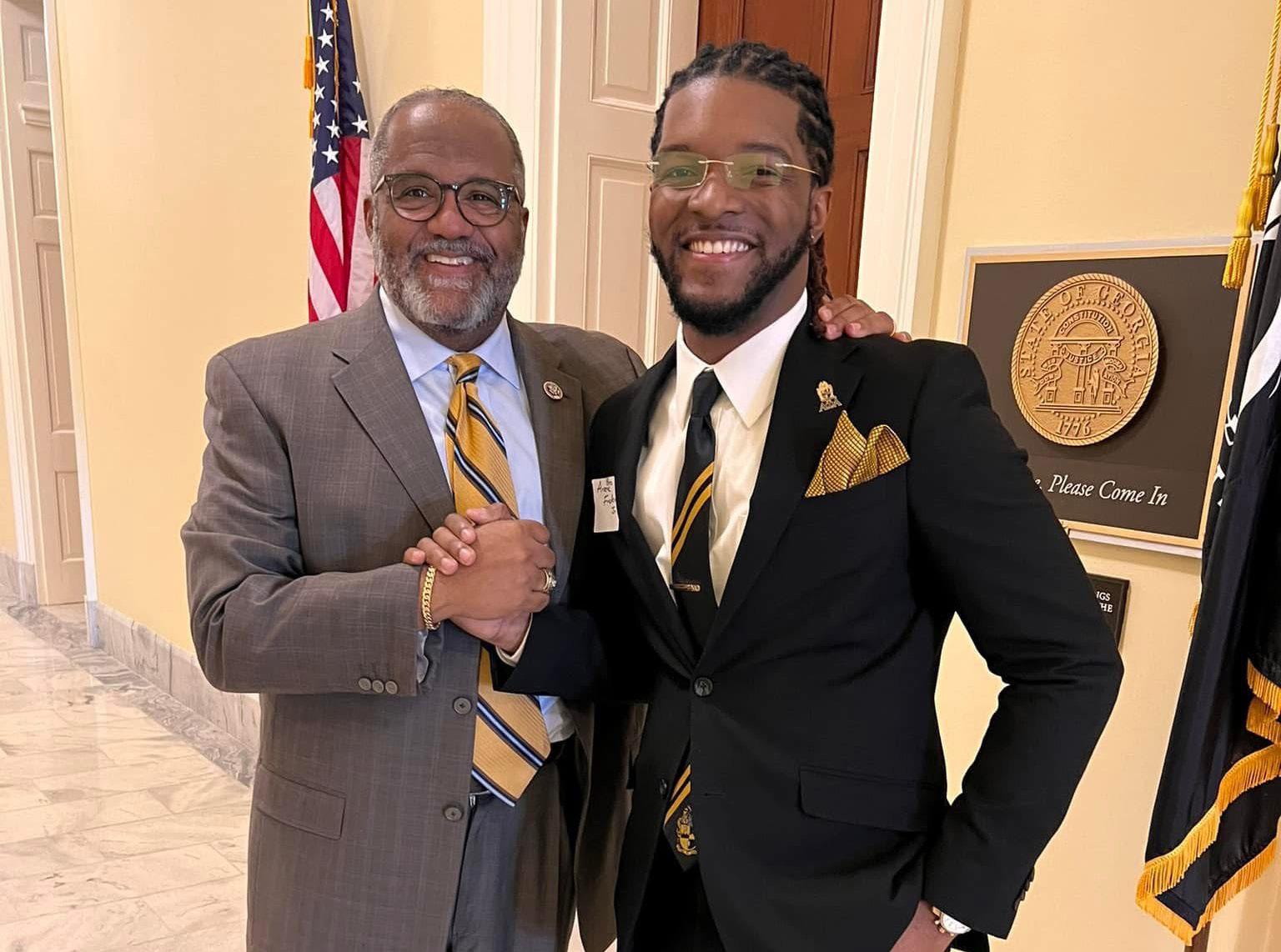
He could see the gaps. Not abstractly. Not academically. But concretely. He saw how policy conversations often existed in isolation from the communities they claimed to serve. He saw how resources flowed unevenly, predictably, and often unjustly. He saw how institutions with similar missions could exist under vastly different conditions.
Nowhere was this more evident than in the contrast between Florida State University and Florida A&M University, two institutions separated by geography, but divided by access to funding, infrastructure, and opportunity. That contrast became more than observation, it became interrogation.
His doctoral work, centered on policy advocacy, institutional power, and affordability at public HBCUs, was not born from curiosity alone. It was born from lived contradiction.
“HBCUs are doing more with less,” he explains. “But imagine what they could do if they had more.”
That statement carries weight because it is grounded in both data and experience. It challenges not only policymakers, but the broader public narrative around higher education. It forces a reckoning with the idea that inequity is not accidental, it is structured.
And once you see that clearly, neutrality is no longer an option.
Arsene resists the temptation to intellectualize purpose. For him, purpose is not something you write about, it is something you build.
“We need to build the building. We need to create the opportunity. People need resources in their hands.”
This insistence is not anti-intellectual, it is corrective. It is a response to spaces that often confuse analysis with action. He values theory, but he refuses to let it become the endpoint. And so, he translates thought into movement.
He launches a scholarship initiative, raising thousands of dollars to support students navigating the very systems he studies. He creates a consulting practice aimed at bridging gaps between stakeholders who should be aligned but often are not. He steps into spaces where coordination is lacking and offers connection as a solution.
Each of these actions reflects a deeper philosophy: If your work does not touch people, it is incomplete. Purpose, in his worldview, must leave evidence.
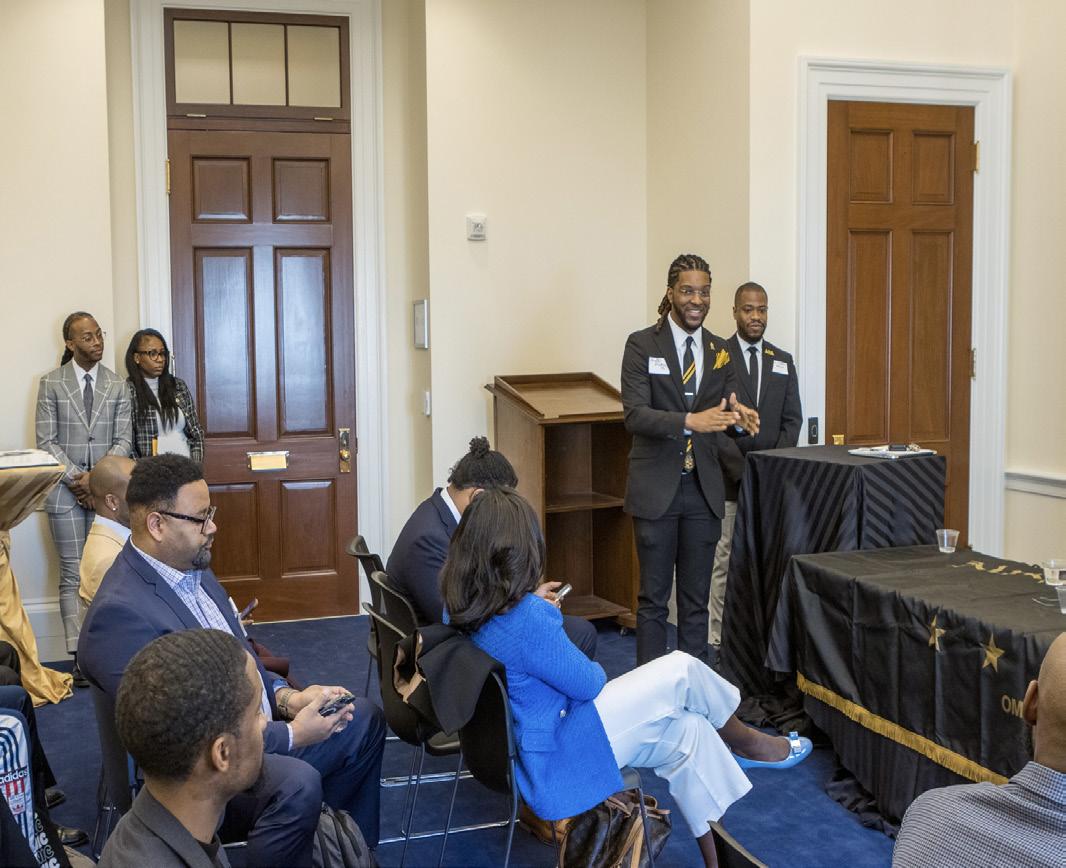
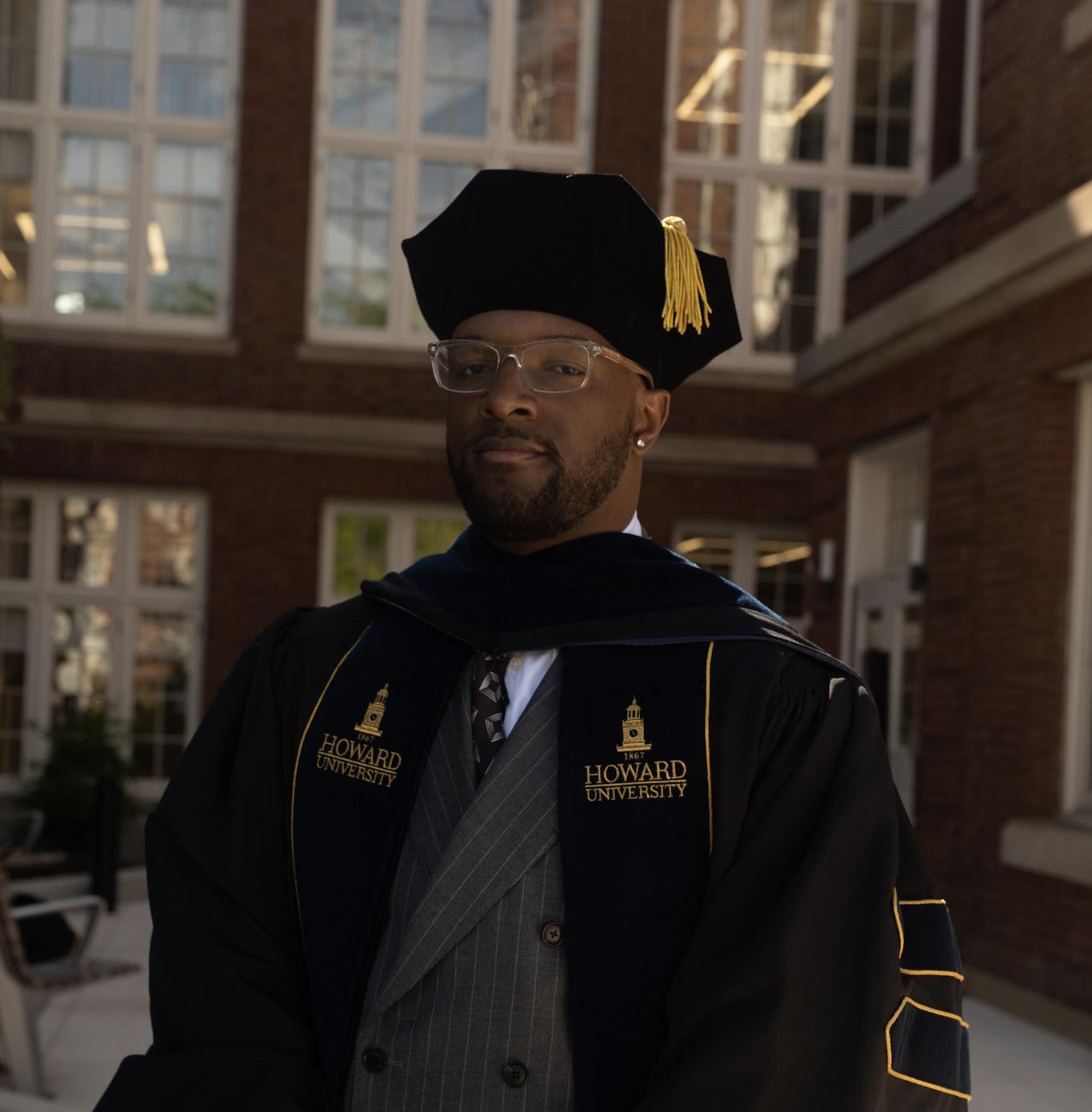
There is a refreshing honesty in Arsene’s articulation of ambition.
“I am here for the bag.”
It is a statement that cuts through the performative humility often expected in spaces of service. But more importantly, it reframes the conversation. Because what Arsene is rejecting is the false narrative that financial success and social impact exist in opposition.
He understands the reality of the world he inhabits. One where sustainability matters, where resources enable reach, and where impact often requires infrastructure. He refuses to romanticize struggle or glorify sacrifice for its own sake. Instead, he embraces a more integrated vision:
You can build wealth and build community. You can pursue excellence and pursue equity. You can demand compensation and still serve with purpose.
This is not contradiction. It is alignment.
If there is a defining trait in Arsene’s journey, it is his ability to connect. He moves between worlds (policy, academia, community) with a fluency that is both rare and necessary. He understands that many of the barriers we face are not due to lack of resources, but lack of coordination.
“I think there are a lot of silos,” he says. “People who should be talking to each other aren’t.”
And so, he positions himself as the intermediary. The translator. The bridge. This work is not glamorous. It requires patience, emotional intelligence, and the ability to navigate competing interests without losing sight of the larger goal. It requires humility, knowing when to listen and conviction, knowing when to lead.
In many ways, it mirrors the role he played within his own family: mediator, connector, steady voice in moments of tension. And in a society increasingly defined by fragmentation, that role is not just valuable, it is transformative.
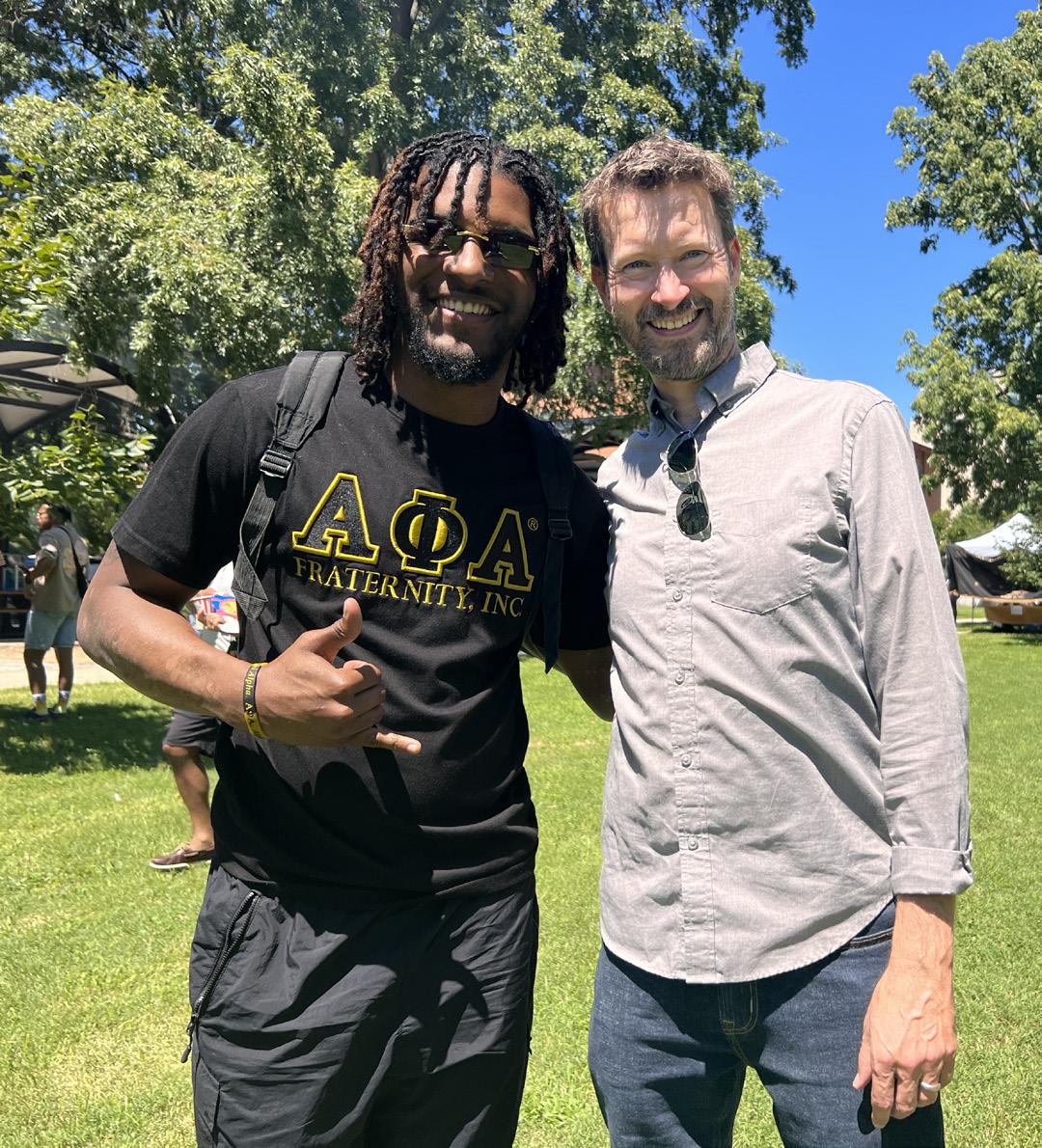
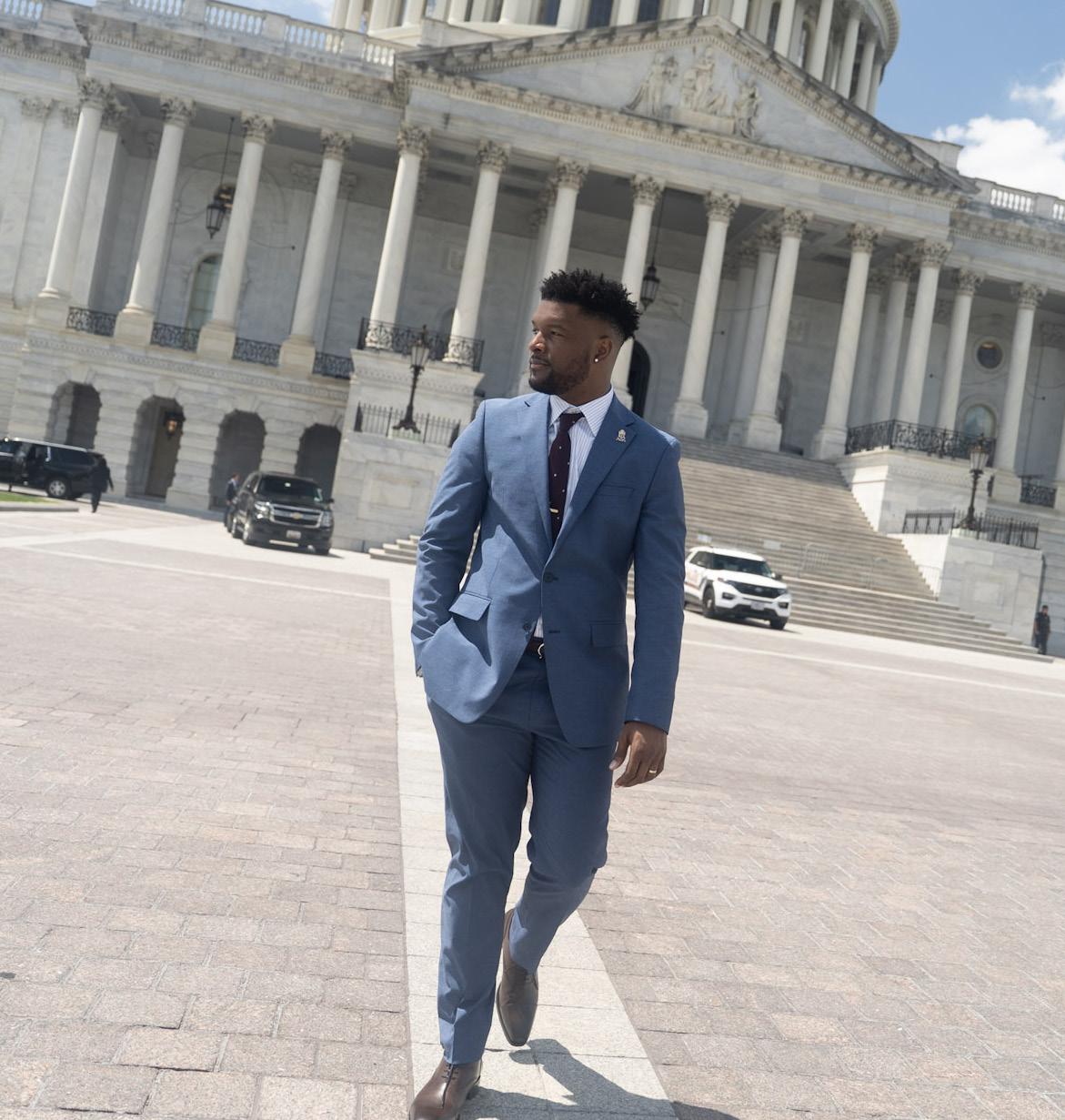
“HE
When Arsene reflects on how he wants to be remembered, his answer is immediate:
“He didn’t come to play.”
It is a declaration, but also a commitment. It speaks to urgency. The understanding that time is finite and opportunity must be seized. It reflects a mindset shaped not by entitlement, but by awareness. Awareness of what it took to get here. Awareness of what is at stake moving forward.
But beneath the confidence is also growth.
He acknowledges the need to refine his voice, to balance intensity with accessibility, to ensure that his presence invites collaboration rather than resistance. He is learning, in real time, how to wield both knowledge and influence effectively.
Because impact is not just about being right. It is about being heard.
Within Mu Lambda, Arsene has found something that echoes the foundation laid by his mother: support, accountability, and affirmation. This is not passive belonging; it is active engagement. Brothers who challenge him to sharpen his thinking. Brothers who recognize his contributions publicly. Brothers who create space for him to lead and expect him to rise to the occasion.
And in those moments, standing before rooms filled with men who look to him for direction, he experiences something profound: the weight of responsibility, matched by the strength of community. It is in these spaces that leadership is not theoretical. It is lived.
Each of these actions reflects a deeper philosophy: If your work does not touch people, it is incomplete. Purpose, in his worldview, must leave evidence.
There is a line that lingers long after the conversation ends:
“Bloom where you are planted.”
It sounds simple. Almost gentle. But in Arsene Frédéric-Simpson’s life, it is anything but. It is an act of defiance in the face of instability. It is a refusal to wait for perfect conditions. It is a commitment to growth, even when the soil is uncertain. Because sometimes, the most powerful blooms are the ones that were never supposed to survive.
And yet, they do. And when they do, they don’t just grow. They change the landscape for everything around them.
~ Bro. Christopher Butts Alpha Phi Alpha Fraternity, Inc. Mu Lambda Chapter 4-Xi Iota-99


Bro. James Harmon
Alpha Advisor to Beta,
Bro. Dezmond Evans
Assistant Alpha Advisor to Beta,
Bro. Fabien Holder
Assistant Alpha Advisor to Beta,
Bro. Mario Beatty
On-Campus Advisor to Beta,
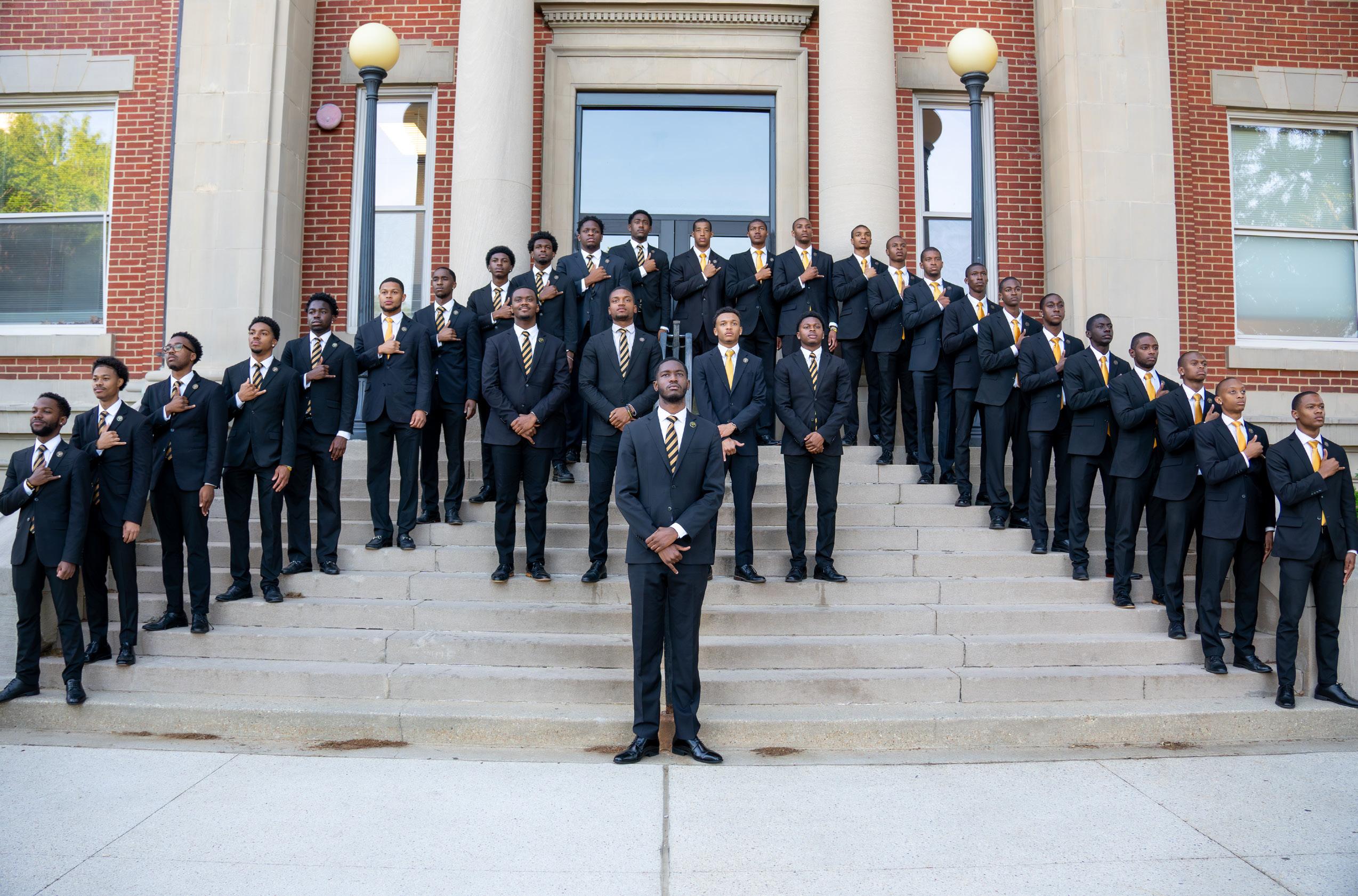
We wanted to take this time to congratulate the undergraduate brothers on another successful year and send out our annual end of the year update and graduation announcements to everyone. Once again, the brothers (who started with 20 bros at the beginning of the year and ended with 34 after spring intake currently on the yard) held the light high as they always do for this 20252026 HU school year.
On the Alpha Awards level, in our Area (Area 6) the chapter received:
• Charles H. Wesley Brotherhood Award (with Mu Lambda Chapter)
On the national level at General Convention last summer:
• Beta Chapter’s Ms. Amber Carter became National Ms. Black and Old Gold for the 2025-2026 fraternal year. Something I don’t think has been accomplished before in recent memory.
We have 12 Brothers graduating this year, of the brothers graduating:
Bro. LB Towns, Jr. (1-B-24) (BBA, Management)
Will be pursuing his Masters degree at Howard University in Economics while also taking up employment by the University in an administrative role.
Bro. Chase Cubia (2-B-24)
(BBA, Finance – Magna Cum Laude)
Has accepted a position as a Full-Time Investor Relations analyst at RLJ Lodging Trust in DC.
Bro. Jahmere Hargraves (3-B-24) (BBA, Management - Cum Laude)
Was accepted to and will be attending Columbia University to pursue his Masters degree In Non-Profit Management and Urban Development.
Bro. Jamari Robinson (10-B-24) (BA, Criminology – Magna Cum Laude)
Will be deploying with the U.S. Army as a Logistics Officer. After Serving 4 years he plans to be pursuing a career with the secret service.
Bro. Hamid Jalloh (11-B-24)
(BS, Health Science – Magna Cum Laude)
In the process of relocating to Philadelphia, PA Area for Cigna Healthcare as he enters their Operations Leadership Development Program for the next 3 years.
Bro. Jayson Johnson (2-B-25)
(BSE, Mechanical Engineering – Summa Cum Laude) In the process of relocating to Stanford, CA to pursue his PhD in Aero Space Engineering at Stanford University. Also his company, Tree Technologies, was just made an offer from Howard University in becoming an equity partner in his business.
Bro. Robert Russum, Jr. (4-B-25)
(BSE, Chemical Engineering - Summa Cum Laude) Named Valedictorian for his Major and Class, will be moving to Austin, TX to pursue his PhD at UT Austin in Chemical engineering.
Bro. Gary McCall, Jr. (6-B-25)
(BA, Economics - Magna Cum Laude)
Moving back to the Boston, MA area and has accepted a position with the City of Boston as he starts the process of applying for Law School.
Bro. Dhasan McComb, Jr. (8-B-25)
(BBA, Management - Cum Laude)
Moving to Dallas, TX and has accepted a position with Otis Elevators in their Sales Division.
Bro. Bry Daunte Evans (9-B-25) (BA, Economics – Summa Cum Laude)
After graduation will be relocating to the NYC area to begin work at a consulting firm while he prepares to apply for Business school.
Bro. Somtochukwu “Somto” Agbasi (13-B-25) (BS, Biology – Magna Cum Laude)
Will be in the DC Area as a medical researcher for an office while going through the process of applying to Pharmacy School.
Bro. Shawn-Michael Samuels (2-B-26) (BBA, Marketing - Cum Laude)
Will be staying in the DC area and will be working in Life insurance sales as well as doing Real Estate rental arbitrage.
The cumulative GPA of the entire chapter is: 3.63
The Chapter held over 50 Programs and Events this school year on Howard University’s campus along with amassing over 640 hours of community service.
On the HU Elections Student Government Front:
Bro. Michael Cobbins (12-B-25) was elected President of the College of Engineering and Architecture
Bro. Darren Wallace (3-B-25) was elected Vice President of the College of Nursing and Allied Health Sciences
Bro. Miles Francisque (4-B-26) won and was elected Mr. Howard University for the 20262027 School Year (Nowadays students vote on this position as well. Also, if you’re keeping count out of the last 7 Mr. Howards, 5 have been brothers of Alpha Phi Alpha.)

In addition to all of this, the chapter found the time and energy to bring in another exceptional group of young men in Spring 2026. We are certain these new brothers will continue the task to develop leaders, promote brotherhood and academic excellence, while providing service and advocacy for our communities.
We also would just like to highlight the high scholastic standards that this new line continues to raise the bar of the chapter (The cumulative GPA for SP26 neophyte line was: 3.71)
We wanted to thank outgoing Beta President, Bro. Mason Bligen (14-B-24), on the amazing job he did this year leading the chapter and to wish good luck, to the new incoming Beta President, Bro. Mason Daniels (7-B-25), as he takes the reins for the 2026-2027 school year.
Also wanted to highlight other alumni Beta Brothers accepted to, graduating from Graduate schools and some accomplishments achieved this year :
Bro. Jaha Howard (2-B-01) was elected State Senator in Georgia’s 35th District
Bro. Brandon McCalla (11-B-01) was promoted to the rank of Lieutenant Colonel in the United States Army.
Bro. Lamar Lockridge (1-B-07) graduated with his Master’s of Science Degree earlier this year.
Bro. Alex Oludele (2-B-11) graduated from University of Rhode Island with his Master’s in Healthcare Administration and Medication.
Bro. Duclas Charles (10-B-11) was accepted into Goldman Sachs 10KSB Program Cohort 48.
Bro. Patrick Oseni (12-B-11) was accepted to and will be attending NYU’s Stern Business School MBA program in the fall.
Bro. Odunjo Copeland (13-B-11) was appointed Growth and Development Director at Northwestern Mutual in Washington, DC.
Bro. Brandon Palm (10-B-15) will be Graduating with his MBA from Tuck School of Business at Dartmouth University. Afterwards he will be starting at Visa as a Consulting Manager.
Bro. Derek Oliver (16-B-15) will be Graduating with his MBA from Columbia Business School at Columbia University. Afterwards he will be starting at Vista Equity Partners in Chicago, IL.
Bro. James Walker III (15-B-15) will be Graduating with his MBA from The Wharton School at University of Pennsylvania. Afterwards he will be an Operating Executive at GenNx360 Capital Partners, a Private Equity Fund.
Bro. Jamal Washington (23-B-15) currently concluding a Counseling and Therapy Graduate School program. Also recently passed his Maryland State Exam to be a Life Insurance Producer.
Bro. Thomas Coleman (25-B-15) matched and will start his Cardiothoracic Surgery Fellowship located in Milwaukee, WI at The Medical College of Wisconsin.
Bro. Quentin Brown Harris (18-B-16) passed the Bar Examination with a score high enough for any UBE jurisdiction and started as an Associate at Jones Day Law Firm.
Bro. Eromosele “Romo” Oboite (19-B-16) graduating with his MD from St. George’s University School of Medicine. Will be relocating to Philadelphia, PA after he matched at Temple University for the Residency program.
Bro. Jonathan Legier (2-B-17) will be relocating to the DC Area as he starts as a second year resident in the Saint Elizabeth’s Hospital psychiatric residency program.
Bro. Clifton Kinnie, II (3-B-17) graduating from Saint Louis University with his Ed.D. in Educational Leadership with Superintendent/ Principal certification from Saint Louis University.
Bro. Nile Hodges (7-B-17) graduating with his MD from University of Pennsylvania Perelman School of Medicine and continuing his residency
in Oral and Maxillofacial Surgery.
Bro. Charles Rice, III (1-B-18) will be graduating with his JD from Tulane University School of Law in New Orleans, LA.
Bro. Jonathan Willard (3-B-18) currently finishing his research fellowship at Ochsner Andrews Sports Medicine Institute and recently just matched into a Orthopedic Surgery Residency Program at Howard University Hospital.
Bro. Roland Ridgeway, IV (4-B-18) graduating with his MBA from Harvard Business School at Harvard University.
Bro. Cameron Hodges (1-B-20) was accepted to and will be attending NYU’s Steinhardt School of Culture, Education, and Human Development to pursue his MA in Childhood Education.
Bro. Warren Fuselier (4-B-20) graduating with his MBA from Harvard Business School at Harvard University.
Bro. Nasir Bakare (5-B-20) while he was accepted to Harvard Law, UPenn Law, Georgetown Law, GW Law, Emory Law, USC Law, and Cal Berkley Law, has chosen to pursue his JD and attend Stanford Law school at Stanford University in the fall.
Bro. Chandler Bursey-Reece (10-B-22) was accepted to and will be attending Georgia Tech in the Fall to pursue his Masters of Science in Computer Science.
Bro. Mahlon West (16-B-22) graduating with his Masters in Public Health from Howard University.
Bro. Melvin Crenshaw, III (5-B-23) graduating with his Masters of Health Sciences from Meharry Medical College. Is now in the process of preparing to apply for Medical School.
“IN FACT, I AM THE COLLEGE OF FRIENDSHIP; THE UNIVERSITY OF BROTHERLY LOVE; THE SCHOOL FOR THE BETTER MAKING OF MEN” ‘06
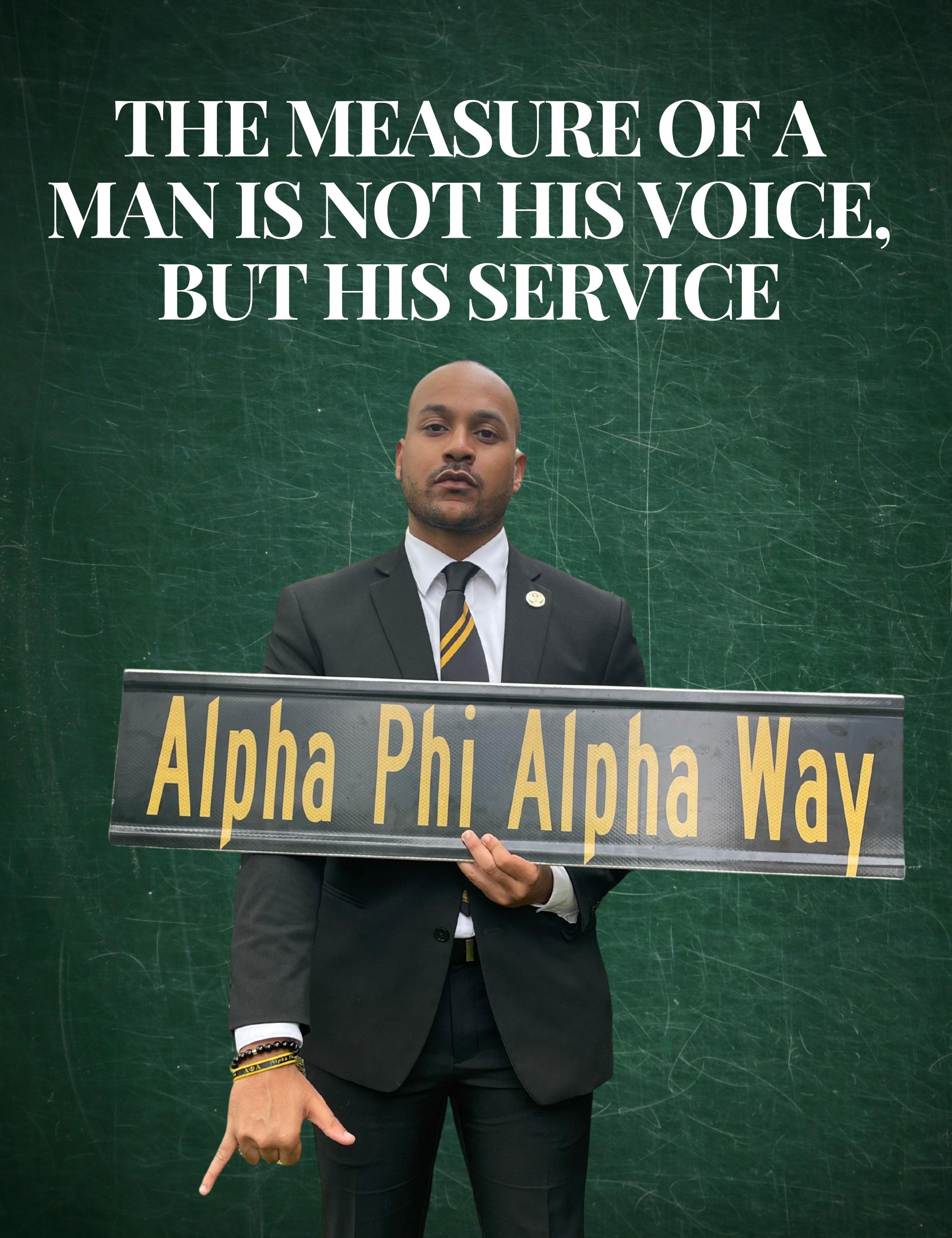
There is a peculiar kind of inheritance that does not pass through blood, nor through deed alone, but through witness. It is the kind that settles quietly into a boy’s spirit long before he has language for it. It is learned in the rhythm of footsteps leaving the house early on a Saturday morning, in the quiet authority of a man who does not announce himself, but whose presence rearranges the room. Brother Jeffery Taylor did not arrive at Alpha Phi Alpha Fraternity, Inc. as one who was searching blindly. He arrived as one who had already been watching.
He speaks of a household shaped by women, strong, present, and unwavering. And yet, even within that strength, there was an understanding that no one grows alone. There was a village. And in that village stood a man, his cousin, Brother Joseph Housey, who embodied something that could not be easily explained but could be deeply felt. A man who moved with intention. A man who dressed not for appearance, but for purpose. A man who left the house not simply to go somewhere, but to do something.
It is important to understand this: what drew Brother Taylor was not spectacle. It was consistency. It was the repetition of discipline. It was the visible manifestation of a code lived out daily.
And when he later encountered Alpha again at Howard University, when he saw the Beta Chapter in motion, when he witnessed young men carrying themselves with that same quiet gravity, it was not a revelation. It was a recognition. Alpha had not entered his life in that moment. It had always been there, waiting for him to name it.
Alpha, then, was not a destination. It was a return.
There are men who believe leadership is something earned over time, bestowed after years of proving oneself worthy. And there are others, often fewer, who understand that leadership is not granted, but expected. Brother Taylor entered Mu Lambda at a time when expectation did not whisper, it demanded.
The world itself had just emerged from isolation. The rhythms of community had been disrupted. And into that fragile moment came a line of men who were not given the luxury of gradual immersion. They were told, plainly and without apology: you are here to lead.
It would have been easy to retreat. To observe. To wait for permission. But Brother Taylor did not wait.
And yet, what is striking is not that he stepped into leadership, it is how he defines it. In an age where titles are currency and authority is often mistaken for impact, he chose a role that offers neither power nor final say. As Chairman of the Community Service Committee, he holds no vote. He does not control outcomes. He does not determine policy.
He has only his voice.
And in that limitation, he has found freedom. Because to lead without power is to lead without ego. It is to serve without the illusion of control. It is to understand that influence, when rooted in sincerity, does not require a ballot. For Brother Taylor, leadership is not about being heard. It is about being useful.
We live in a world enamored with motion. We celebrate busyness. We applaud activity. We mistake the noise of movement for the substance of change. But Brother Taylor challenges this illusion with a clarity that is both simple and unsettling.
To him, meaningful service is not defined by how often you act, but by how deeply you engage. “Meaningful service,” he says, “is physically showing up in the communities that need us the most.”
There is no abstraction in this philosophy. No room for distance. No comfort in delegation. To show up means to be seen. To be accountable. To be present in ways that cannot be simulated or replaced.
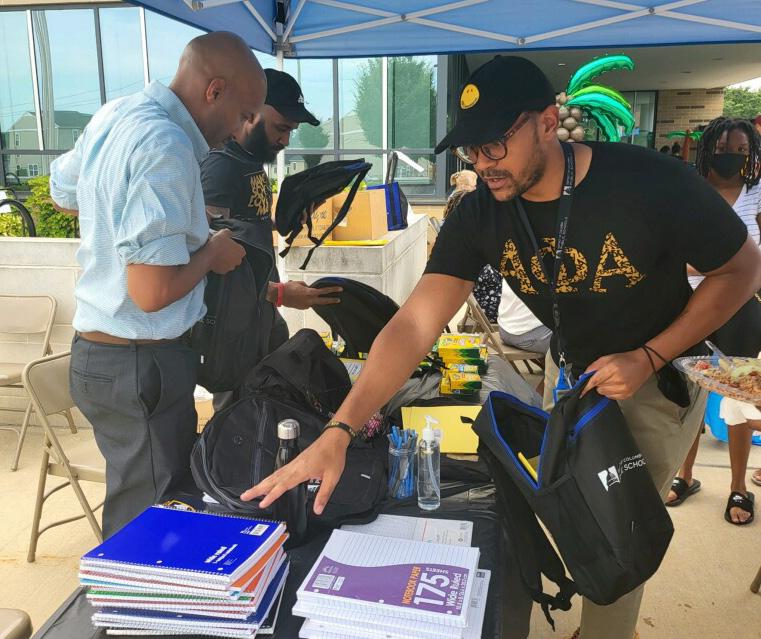
He speaks of working alongside youth in Washington, D.C., of supporting families through the DC Child and Family Services Agency, of maintaining visible commitments in neighborhoods like Anacostia not as symbolic gestures, but as sustained relationships.
But perhaps more importantly, he understands that service must evolve. Communities are not static. Needs shift. What was once essential may become obsolete. And so, he listens. He observes. He allows himself to be corrected by the very people he seeks to serve.
This is the difference between motion and movement: one is about doing; the other is about becoming.
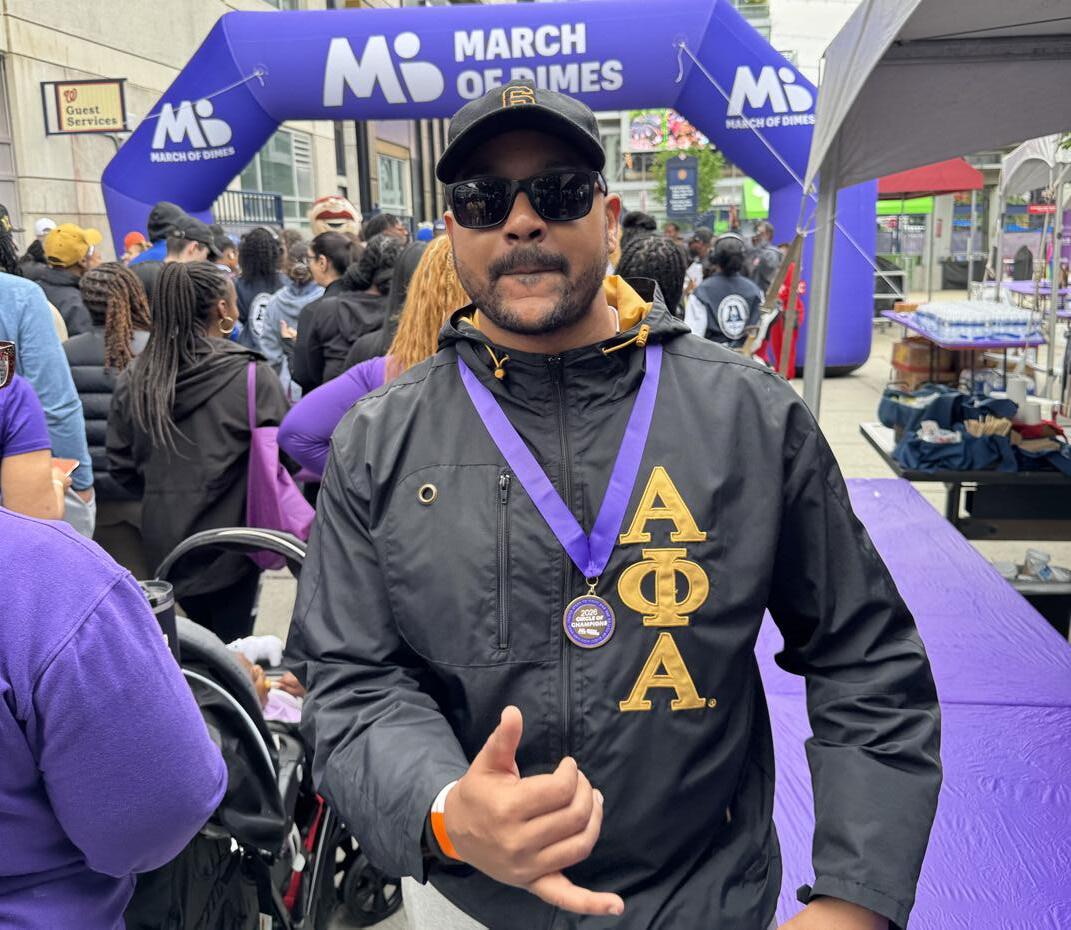
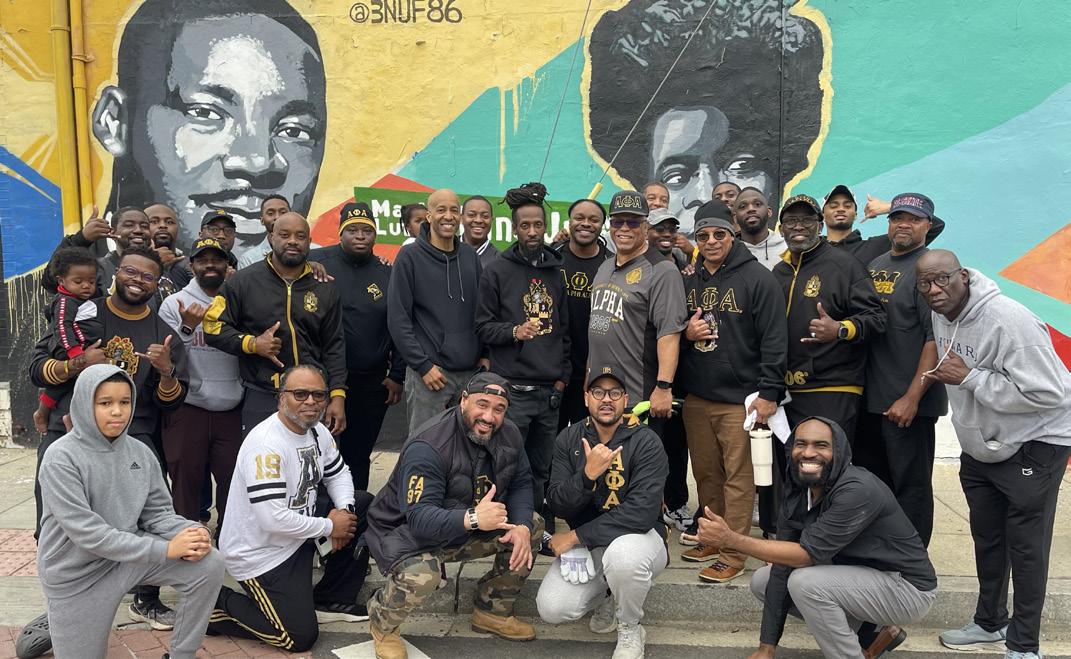
If you wish to understand a man, do not ask him what he says he values. Watch what he returns to, again and again, even when no one is watching. For Brother Taylor, that return often leads him to spaces like March for Babies, spaces where effort meets impact in tangible ways.
Yes, there are numbers. Yes, there are records, over $16,000 raised in a single year. But numbers, while impressive, are insufficient to capture the meaning of the work. Because the true measure lies in the gathering.
It lies in the brothers who show up not out of obligation, but out of belief. It lies in the families who join them, in the children who witness what collective action looks like. It lies in the quiet realization that for one day, at least, the world feels aligned.
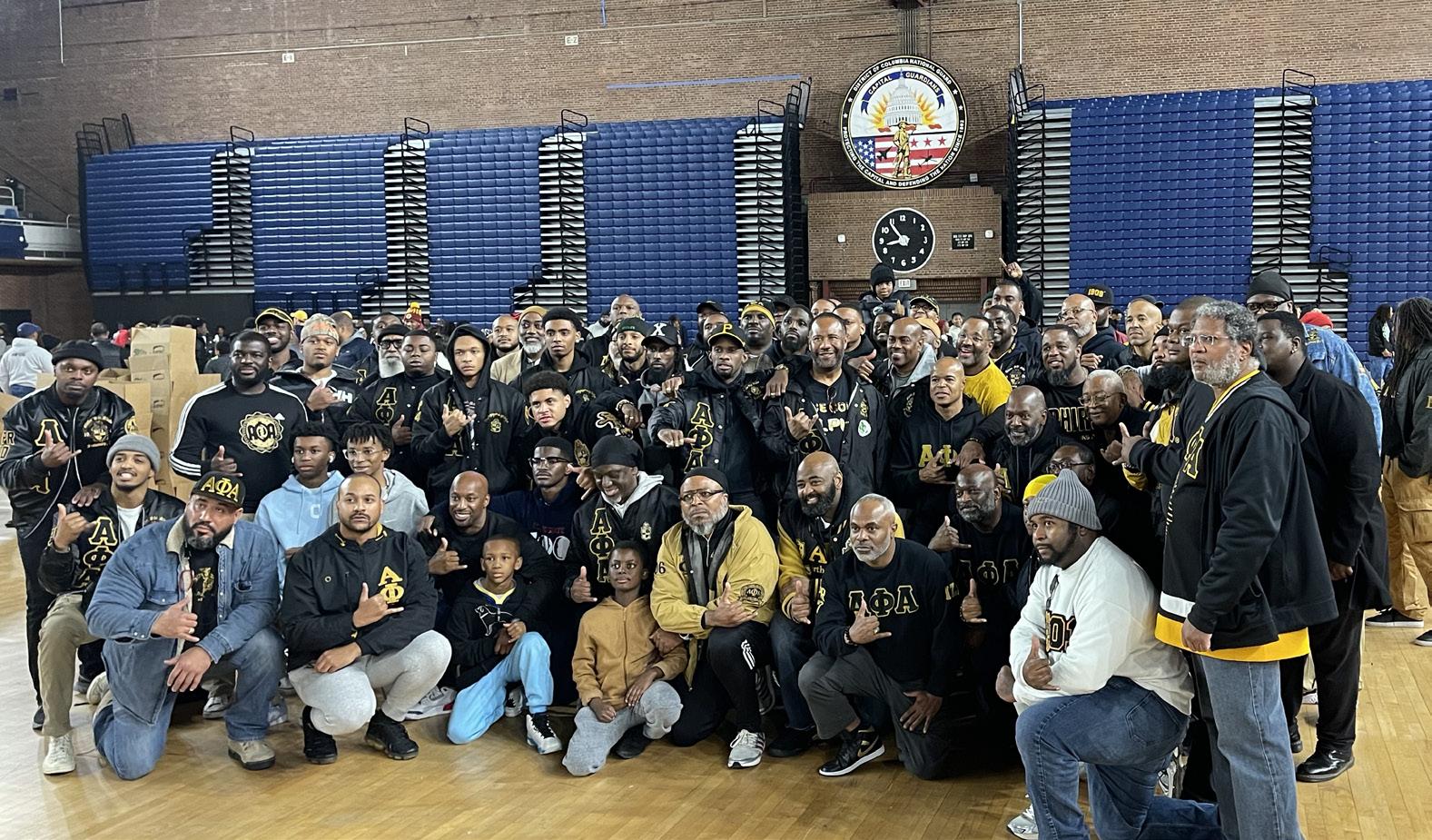
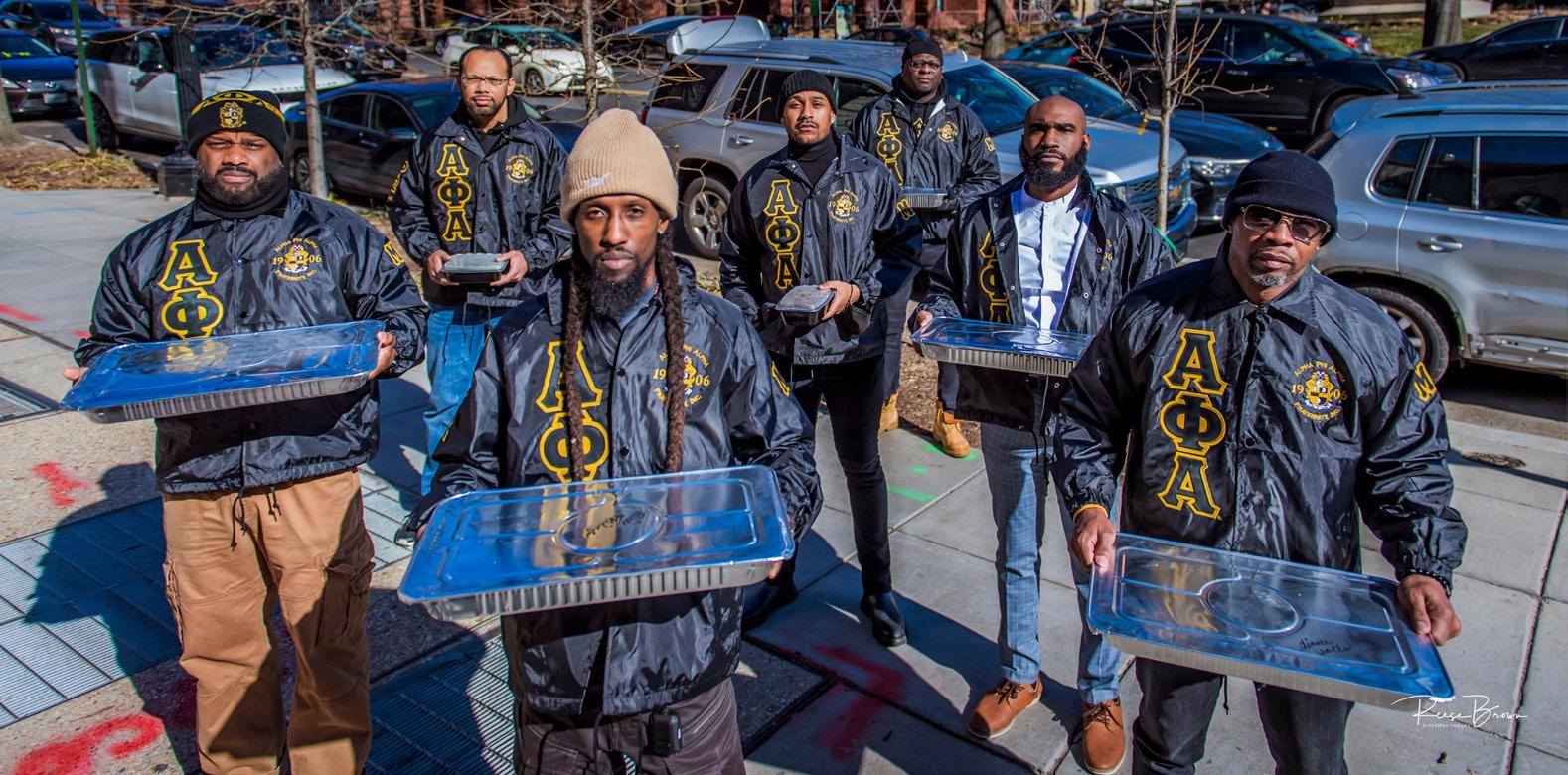
He speaks, too, of Thanksgiving mornings, of rising early, of assembling care packages, of knowing that what is built with one’s hands will travel across the region to reach those who may never know your name.
This is the work that builds men. Not because it is grand, but because it is necessary. Not because it is celebrated, but because it is sustained.
To walk into Mu Lambda as a young man is to walk into history already in motion. It is to inherit not only achievements, but expectations. Brother Taylor understands this with a seriousness that borders on reverence. He does not speak of legacy as something abstract. For him, it is deeply personal. It is the memory of men who knew him before he knew himself. Men who watched him grow, who invested in him, who stood in proximity to his life long before he wore the letters. And so, his sense of obligation is not performative, it is rooted in gratitude.
He recognizes, too, that legacy is not without flaw. That even great institutions carry moments of fracture, of misstep, of darkness. But rather than deny these truths, he holds them alongside the good, understanding that integrity requires honesty.
Legacy, then, is not about preserving perfection. It is about protecting purpose. And in that protection, he finds his role not as a guardian of the past, but as a bridge to the future.
Every generation believes it is new. Every generation believes it must disrupt what came before. And yet, the wisdom of institutions like Alpha lies in their ability to hold tension without breaking. Brother Taylor embodies this tension.
He is a man of questions. A man who challenges norms, who pushes for more. More service, more engagement, more possibility. He is unafraid to ask why, even when the answer is tradition. And yet, when an elder pulls him aside and offers counsel, he listens. Not because he must, but because he understands the weight of lived experience.
Respect, in this context, is not submission. It is
recognition. It is the acknowledgment that while innovation is necessary, it must be anchored. That energy, without direction, can burn as quickly as it ignites. And so, he walks the line. Pushing forward while reaching back, ensuring that in his pursuit of progress, he does not sever the roots that sustain it.
There is a quiet honesty in Brother Taylor that refuses to romanticize the journey. He does not pretend that involvement is easy, or that enthusiasm is always welcomed. He speaks plainly of resistance, of silence, of moments when the door does not open as quickly as one might hope. And still, he offers this: “Don’t be afraid to fail.”
This is not a casual statement. It is a hardearned truth. Because to fail within a space you care about is to risk rejection. To risk misunderstanding. To risk being seen in your imperfection. And yet, he insists that it is necessary.
More than that, he insists that persistence is non-negotiable. “Don’t let them run you out.”
There is a defiance in that statement. A refusal to surrender one’s place, one’s purpose, one’s voice. It is the kind of defiance that has sustained generations before him, and will sustain generations after.
Because belonging, in its truest form, is not granted. It is claimed.
In the end, when the titles fade, when the years pass, when the specifics of meetings and milestones blur into memory, what remains is not what a man held, but what he gave. Brother Taylor does not speak of legacy in terms of recognition. He does not seek to be remembered as a leader, or a fundraiser, or even a changemaker.
He says, simply: He was for the community. And perhaps that is the highest aspiration of all. Because to be for the community is to live beyond oneself. It is to understand that the measure of a man is not found in his voice, but in his willingness to use it for others.
And in that willingness, quiet though it may be, a legacy is not only built, it is lived.

Tickets are limited! Scan the QR code to secure your spot and join us as we celebrate 119 years of brotherhood, brilliance, and Black excellence.

This month’s Mu Lambda Mixtape is curated for those who appreciate music with intention, The Chill Playlist. These are top shelf vibes, crafted for discerning listeners who understand that not all sound is created equal. Smooth transitions, rich textures, and timeless energy define this selection, offering the perfect backdrop whether you’re unwinding, reflecting, or simply moving through your day with purpose. Press play and settle into a sound that doesn’t just fill the space, it elevates it.

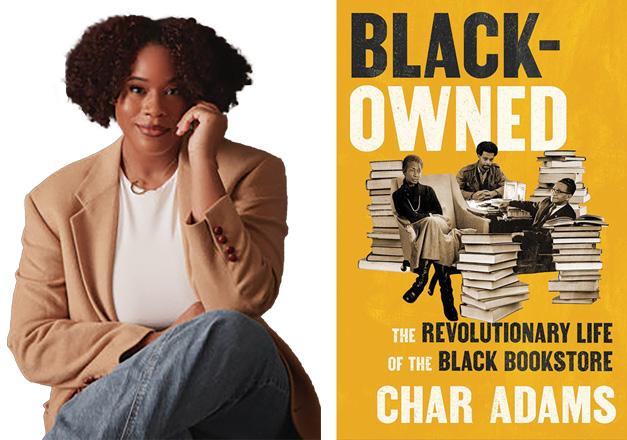
Black-Owned: The Revolutionary Life of the Black Bookstore by Char Adams
Publisher: Tiny Reparations Books
Publication year: 2025
Black-owned bookstores have long been more than places to buy books. They have served as spaces for learning, organizing, and community building across generations. This book traces their history from the 1800s to the present day. It highlights how these spaces supported movements from abolition to Civil Rights to Black Lives Matter. The stories show both the challenges these owners faced and the impact they made. Together, it reveals how Black bookstores continue to shape culture, preserve knowledge, and strengthen community.

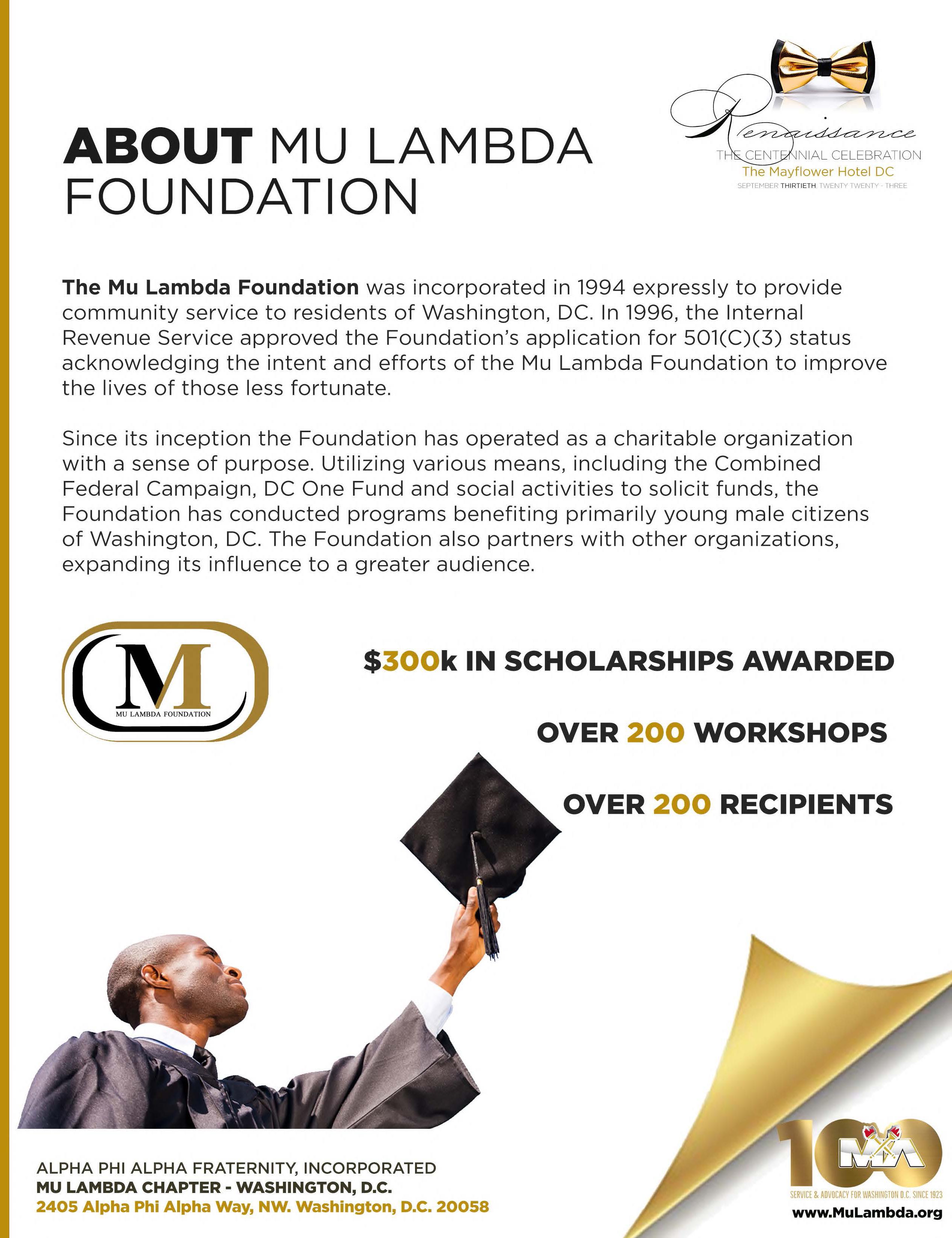

Brothers, it is that time of year when we begin to think in the spirit of giving and giving thanks. In that spirit, the Mu Lambda Foundation participates in two key funding programs through which federal and District of Columbia employees can share the gift of the giving.
The Combined Federal Campaign - CFC (https://www.opm.gov/combined-federal-campaign) is a resource that allows U.S. government employees to make regular payroll deductions in support of the Mu Lambda Foundation and its charitable and community service programs.
The DC One Fund (https://os.dc.gov/page/dc-one-fund-each-one-give-one) provides an opportunity for employees of the District of Columbia to do the same. All donations through these funds are tax deductible and deducted from your paycheck regularly. What could be an easier or better way to support the programs you care about?
As open season begins for 2023, you may plan your weekly, biweekly, or monthly contributions to the Mu Lambda Foundation by contributing to charity number 66770 in the CFC, and number 9556 in the DC One Fund.
Let’s make 2023 the best year yet for supporting youth and abused women in the DC area. Thank you for your continued support.
Bro. Kent Benjamin



The Mu Lambda Foundation meetings are monthly on the third Thursday of the month.
meeting is August 20, 2026
Thursday, January 8
Saturday, January 10
Wednesday, January 21
Thursday, February 5
Saturday, February 7
Wednesday, February 18
Chapter Meeting
Alpha Wives Meeting
Eboard Meeting
Chapter Meeting
Alpha Wives Meeting
Eboard Meeting
Thursday, February 19 Foundation Meeting
Thursday, March 5
Saturday, March 7
Wednesday, March 18
Thursday, April 2
Saturday, April 4
Wednesday, April 15
Thursday,April 16
Chapter Meeting
Alpha Wives Meeting
Eboard Meeting
Chapter Meeting
Alpha Wives Meeting
Eboard Meeting
Foundation Meeting
Wednesday, April 15 -19 Eastern Region Convention
Thursday, May 7
Saturday, May 9
Wednesday, May 20
Thursday, May 21
Thursday, June 4
Saturday, June 6
Friday, June 19
Sunday, June 21
July 2026
Chapter Meeting
Alpha Wives Meeting
Eboard Meeting
Foundation Meeting
Chapter Meeting
Alpha Wives Meeting
Juneteenth Day
Father’s Day
Chapter Vacation
Saturday, August 15
Thursday, September 4
Chapter Retreat
Chapter Meeting
Friday, September 5 ICED or Neat
Saturday, September 6
Alpha Wives Meeting
Wednesday, September 17 Eboard Meeting
Thursday, September 18 Foundation Meeting
Thursday, September 25
Wednesday, October 1
Thursday, October 2
Saturday, October 11
The F1RST Breakfast
102nd Charter Day
Chapter Meeting
Chapter Cookout
Wednesday, October 15 Eboard Meeting
Thursday, October 16 Foundation Meeting
Thursday, November 6
Chapter Meeting
Fri-Sat, Novembr 7-8 Annual District Conference
Saturday, November 8
Alpha Wives Meeting
Wednesday, November 19 E-board Meeting
Thursday, November 20 Foundation Meeting
Thursday, November 27 Thanksgiving Day
Thursday, December 4
Thursday,December 4
Saturday , December 6
Saturday , December 6
Founders’ Day
Chapter Meeting
Founder’s Day Breakfast

Karaoke Fundraiser
Wednesday, December 17 E-Board Meeting
Thursday, December 18 Foundation Meeting
Thurssday, December 25 Christmas









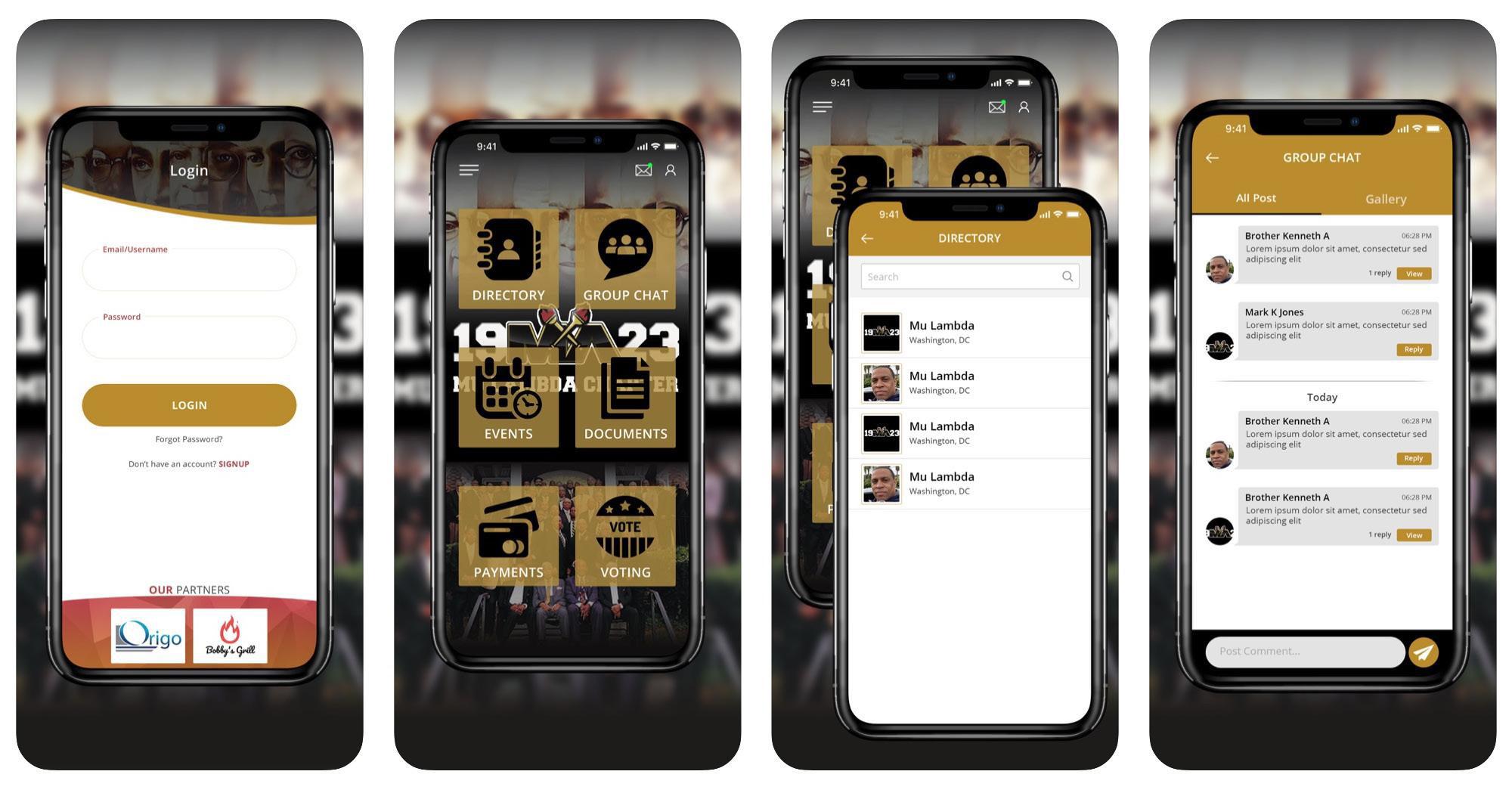
This official Mu Lambda Chapter App is for members of the chapter to find out about our events, chat with Chapter members, View Chapter Documents, View Chapter Directory, View our monthly magazine (The Torch) Pay Chapter Dues and much more. The ability to effectively communicate with Chapter members will help us continue to develop leaders, promote brotherhood and academic excellence while providing service and advocacy for our community.

Founded in 1976, House of Ruth empowers women, children and families to rebuild their lives and heal from trauma, abuse and houselessness. Our continuum of services encompasses enriched housing for families and single women, trauma-informed childcare, and free counseling to empower anyone who is a survivor of trauma and abuse.
Mission: House of Ruth empowers women, children and families to rebuild their lives and heal from trauma, abuse and houselessness.
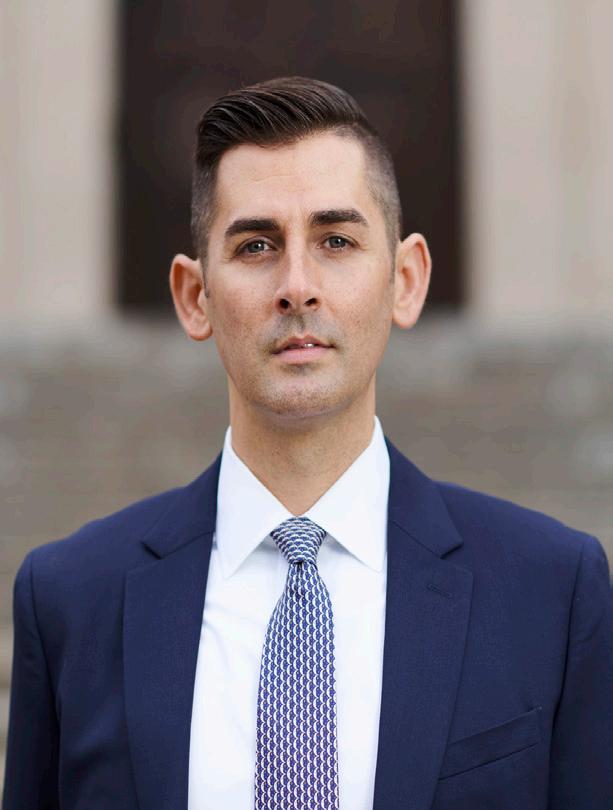
BRO. CHRISTOPHER BUTTS EDITOR OF THE TORCH TORCH@MULAMBDA.ORG
There is something powerful about a season where multiple stories come together to tell one unified truth. This edition of The Torch is one of those moments.
As I reflect on the articles this month, I am reminded that the strength of Mu Lambda is not found in any single accomplishment, but in the collective example of Brothers who continue to live out the principles of Alpha Phi Alpha Fraternity, Inc. in meaningful and lasting ways.
We celebrate the elevation of Bishop Robert P. Boxie, III, a moment that reflects both personal calling and a life committed to service beyond self. His journey reminds us that leadership, when rooted in purpose, has the power to reach far beyond what we can see.
We explore growth and self-discovery in Bloom Where Planted, a reflection that challenges us to maximize where we are while preparing for where we are called to go. In The Measure of Service, we are reminded that impact is not always defined by scale, but by intention and consistency. And in Side by Side, we see the importance of partnership, brotherhood, and walking in alignment with those who help sharpen and strengthen us along the way.
ALPHA QUOTE TO SERVE BY...
“Now is the accepted time, not tomorrow, not some more convenient season. It is today that our best work can be done and not some future day or future year.”
Brother W.E.B. DuBois,
This issue also makes space for reflection in a more personal way. In Fatherhood Reflections, we are reminded that leadership begins at home. That the lessons we teach and the example we set shape not only our families, but the future they will inherit.
And we take time to celebrate our Brothers who are graduating, milestones that represent discipline, perseverance, and the continued pursuit of excellence. These moments are not just achievements; they are affirmations of what is possible through focus, sacrifice, and belief.
What ties all of these stories together is a shared commitment to growth, service, and purpose.
As you read through this month’s edition, I encourage you to not only celebrate these moments, but to reflect on your own journey. Where are you growing? Where are you being called to serve? And how are you continuing to carry the legacy forward in your own way?
Because the story of Mu Lambda is still being written. And each of us holds the pen.

Brothers,
It is that time of year again.
The fraternity’s fraternal year runs January 1st to December 31st.
Mu Lambda’s 2025-2026 fraternal year runs September 1, 2025 to June 30, 2026. The chapter does not meet during July and August.
It is now time to pay your 2025-2026 dues which will cover you from January 1, 2026 to December 31, 2026.
Ways to make payment:
1. You can pay your dues on mulambda.org by clicking the dues tab at the bottom left of every web page.
2. Bring a check to the chapter meeting.
3. You can pay on the Mu Lambda App
4. Mail it to:
Financial Team
Alpha Phi Alpha Fraternity, Inc.
Mu Lambda Chapter 2405 First Street, NW Washington, DC 20001

An Alpha Phi Alpha man’s attitude should not be “how much can I derive from the Fraternity” but “how much can I do for the Fraternity?” In proportion to what he does for his Chapter and for Alpha Phi Alpha will a member receive lasting benefits from the Fraternity to himself in the way of self-development by duty well done, and the respect of the Brothers well served.
A member’s duties should be:
1. Prompt payment of all financial obligations, the prime requisite for successful fraternal life.
2. The doing of good scholastic work in his chosen vocation, thereby accomplishing the real end of a college course.
3. The reasonable endeavor to participate in general college activities and social service and to excel therein.
4. The proper consideration of all things with appropriate attention to the high moral standard of Alpha Phi Alpha.