

EXEMPLARS 2021/2022 PROJECT LIVE ProjectLive@mu ie | www maynoothuniversity ie/experiential-learning
2021-22 Project Live Participants Project Live Impact Live Projects School of Business and Accenture Ireland School of Education, Mathematics and Statistics Department and Kildare Libraries Biology Department and the National Office for Research Ethics Committees Computer Science Department and Climate Response Ireland Electronic Engineering Department and Climate Response Ireland Chemistry Department and Climate Response Ireland Froebel Department of Primary and Early Childhood Education, Geography Department and Kildare County Council The Academic Experience 2 PAGE 5 7 1 1 1 4 1 7 2 0 2 3 2 6 2 9 CONTENTS
THANK YOU
toourAcademicand ExternalPartnerParticipantsof ProjectLive2021/22:
The School of Business (Marian Crowley Henry, Jon Gruda, Julius Nyiawung,OrlaGranville,DerryAkin)andAccentureIreland
Electronic Engineering Department (Andrew Meehan) and Climate ResponseIreland
Biology Department (Mark Robinson) and the National Office for ResearchEthicsCommittee
ChemistryDepartment(CarmelBreslin,KarenHerdman,SteffiThomas) andClimateResponseIreland
Mathematics and Statistics Department (Ann O'Shea, Judi Mills),
DepartmentofEducation(MajellaDempsey)andKildareLibraryService
ComputerScience Department(DapengDong)andClimateResponse Ireland
FroebelDepartmentofPrimaryandEarlyChildhoodEducation(LaoiseNí Chleirigh, Máire Nic an Bhaird, Bernadette Wrynn, Deirdre Forde),
Geography Department(RonanFoley)andKildareCountyCouncil
P A G E 2 |
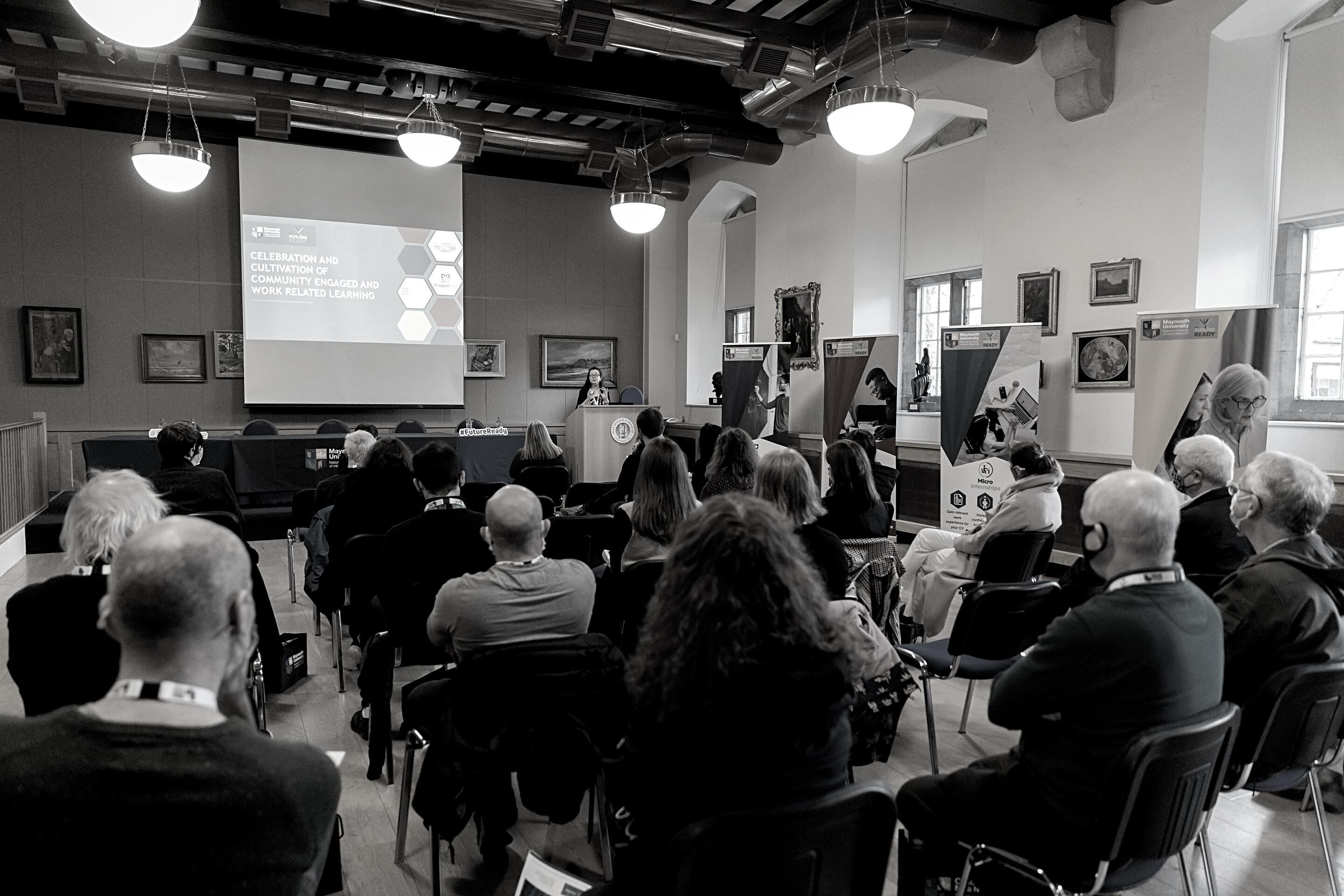
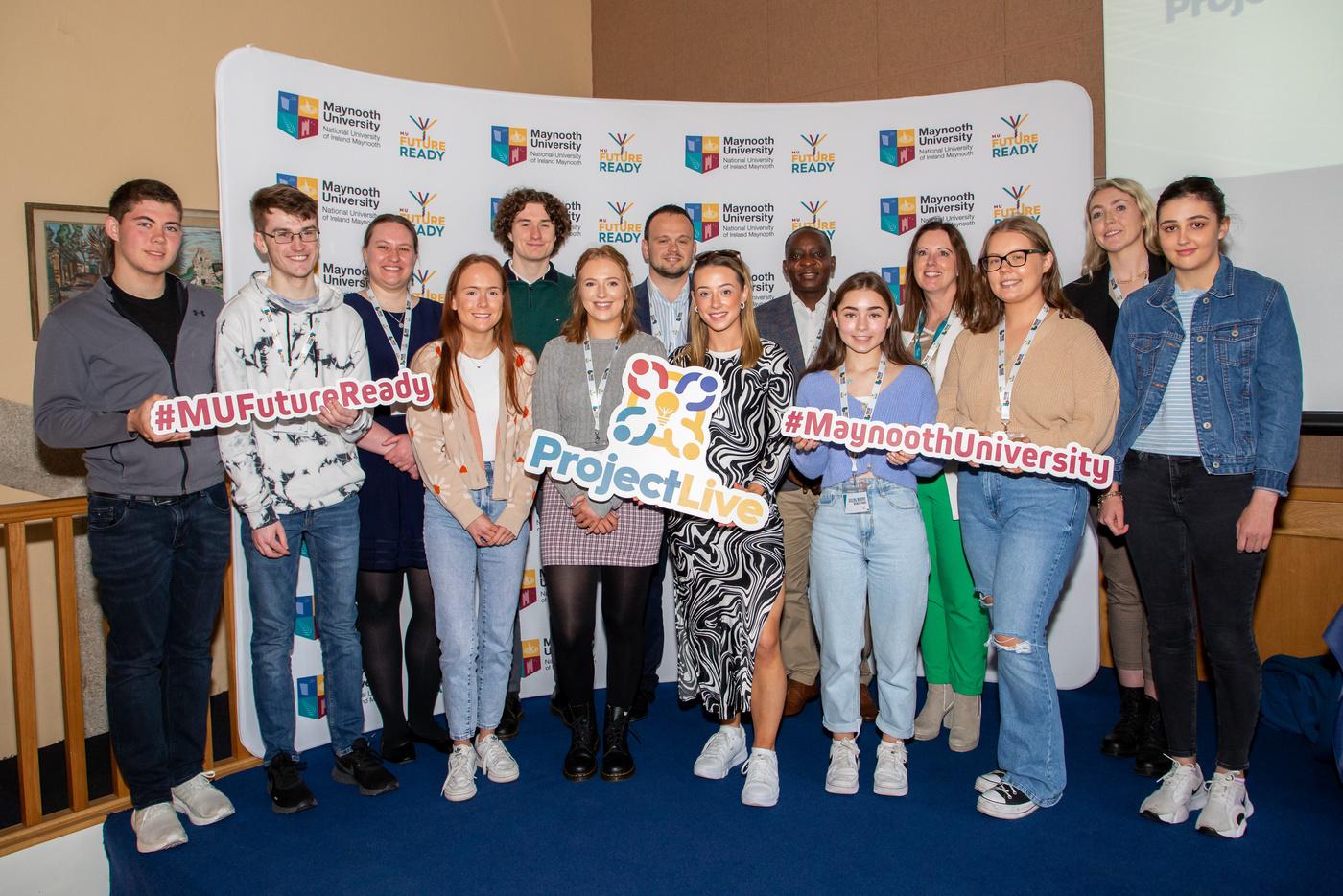
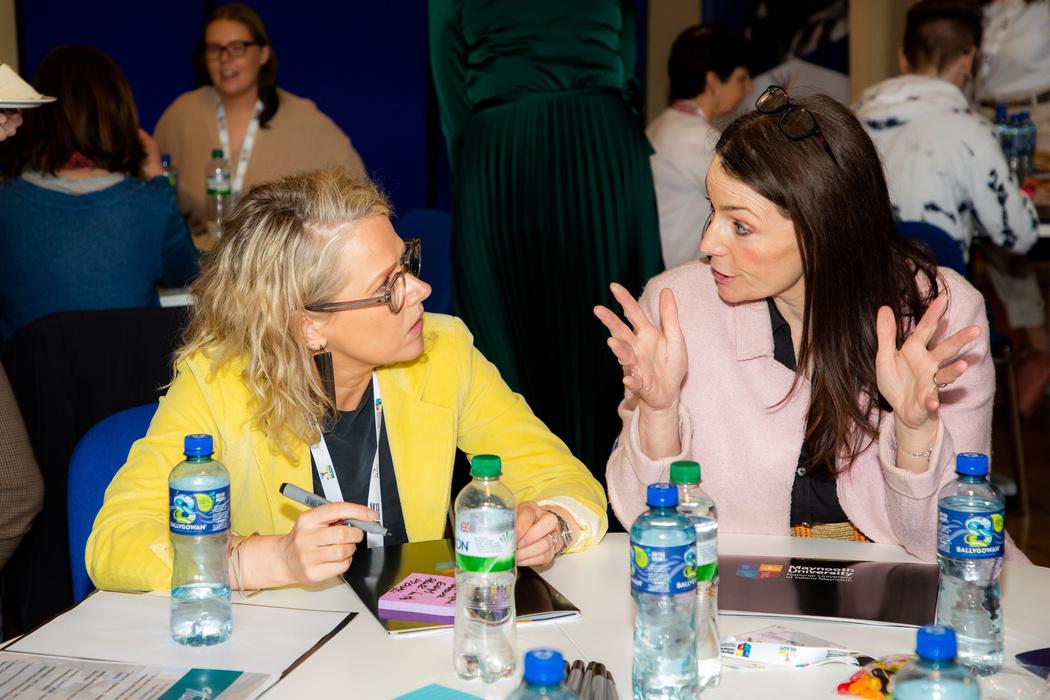
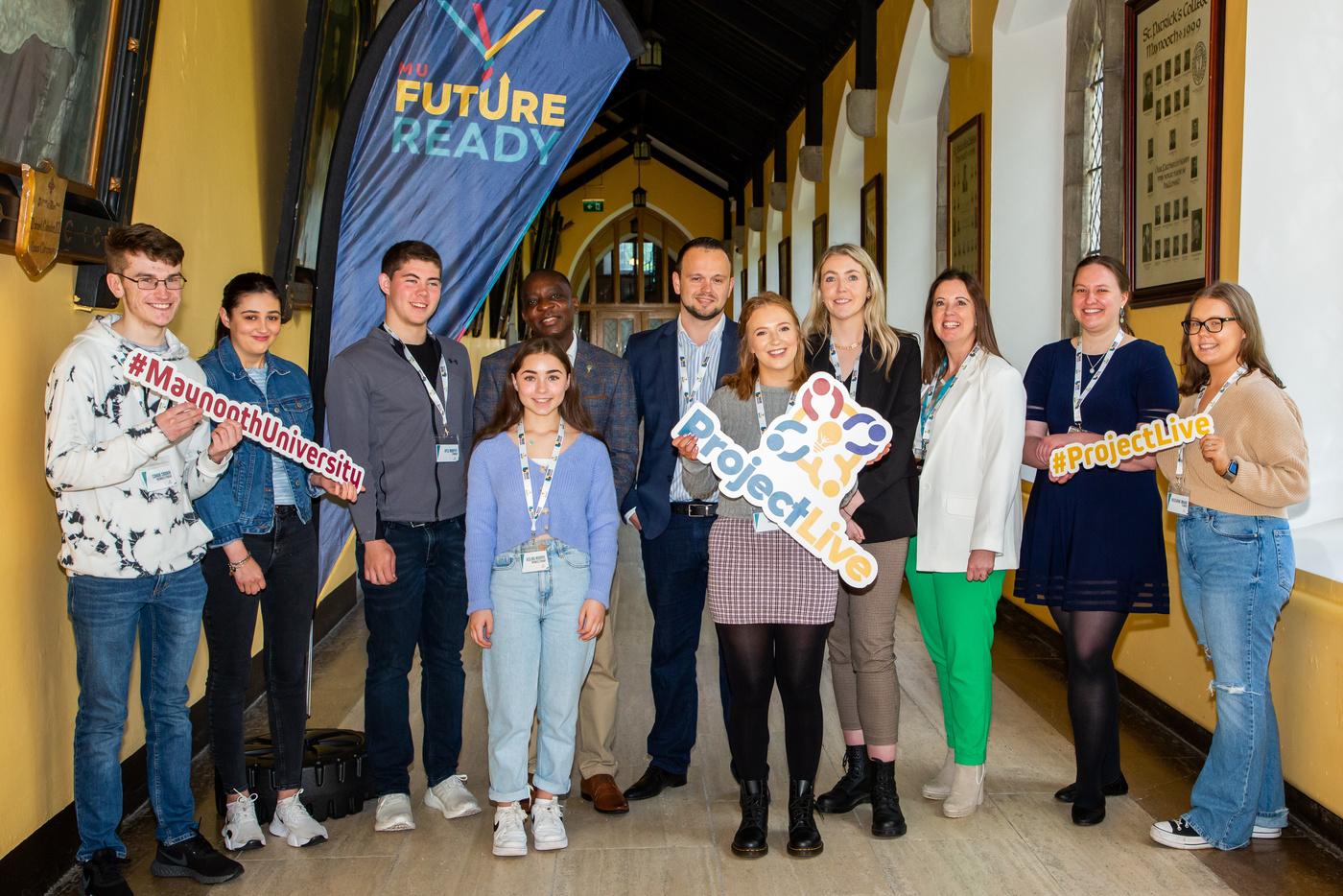
PROJECT LIVE EXPO2022
PRO
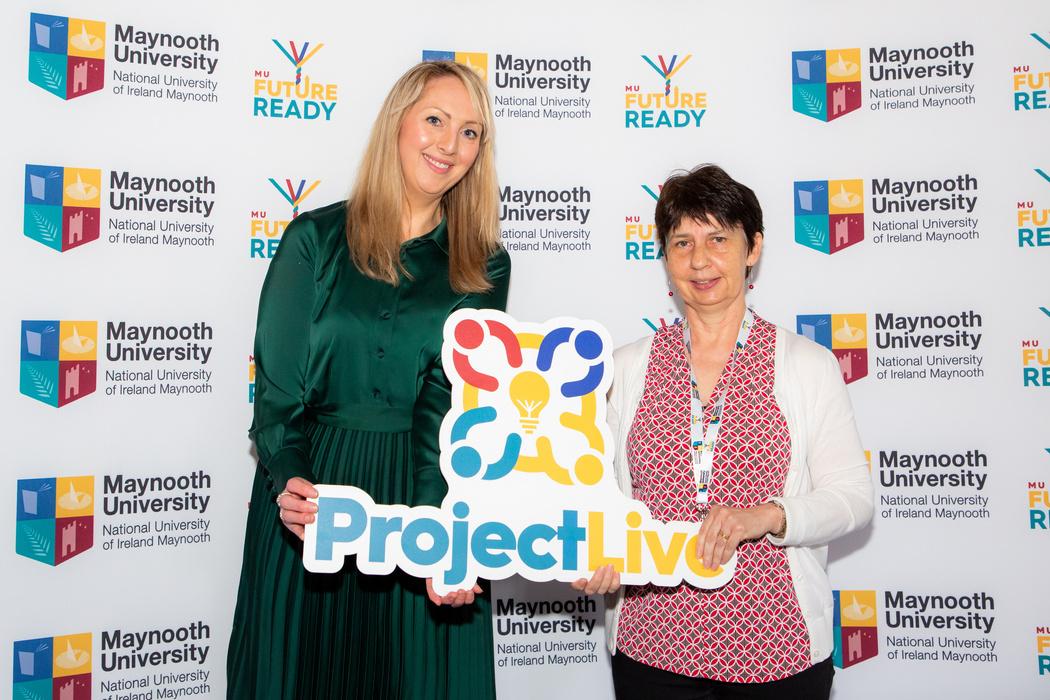
2021/22
StudentFeedback: benefittedfrom anengaged learning experiencethat helpedthem preparefor work,lifeand engaged citizenship.
1,260 STUDENTS
"Itteachesyoubetterhow toworkoutsideofuniversity intherealworldandgives youmoreexperience"
"It’suniqueandgenerally makesstudentswantto engagemorebecauseit’s newanddifferent"
"Ithinkitisveryinteresting anditinvolvesputting theoryintopracticewhich makesyoubetter understandit"
"Itwasaveryeffective wayof gettingareal insighttohowthesethings work"
"Itgavemerealworld experienceand credentialsIcanaddto myCVforwhenI graduate"

THE
IMPACT ATAGLANCE
P A G E 5 |
7 CLIMATERESPONSEIRELAND LIVE PROJECTS TheExperientialLearning Officeweredelightedto support Formore informationplease visit www. maynoothuniversity.ie/ experiential-learning ORGANISATIONS HADTHEIRNEEDS METTHROUGH PROJECTLIVE 5 ExternalPartners2021/22: 2021/22 Undergraduate and Postgraduate ThisinitiativewasestablishedbytheExperiential LearningOfficein2020andisfundedbytheHEA InnovationandTransformationproject"Future Ready". P A G E 6 | andexplore engagement opportunities availabletoyou. NATIONALOFFICEFORRESEARCH ETHICSCOMMITTEES ACCENTUREIRELAND KILDARECOUNTYCOUNCIL KILDARELIBRARIES
SCHOOLOFBUSINESSAND ACCENTUREIRELAND

Group poster relating Organisational Behaviour Theory to Accenture Practices
PURPOSE OF LIVE PROJECT AT A GLANCE
7.5 credit module Undergraduate Class 926 students
"This live project provided students with the tools and information in relation to a reallive organisation, from which they were able to consider theories and concepts covered on the module, and to connect these. This allowed them to critique theories and their usability in real life, as well as to consider a live organisation and how theory/best practice could be enhanced there to improve the organization's processes and/or to critique theory."
DR MARIAN CROWLEY HENRY Module lead

The purpose was to have a living case study (Accenture) for this first year undergraduate class which all Business students in the university take, so that students could take theory and concepts from Organisational Behaviour (OB) and Management and relate this to business practice.
In collaboration with Accenture, we focused on three topics: Personality, Motivation and Communication Students were randomly assigned into groups of 6-7 to complete a project on one topic Accenture provided lots of company information to support the work and also agreed the winning poster per topic
The topic posters were submitted at different periods over the semester, typically 2-3 weeks following the time the theory was covered in class
LEARNING OUTCOMES
The learning outcomes for the module were enhanced and attained as follows:
LO 2. Apply classic and contemporary OB and management theories andconceptstodifferentworkplacecontexts/topracticalscenarios
This was attained by students collaboratively (in groups) applying theories/concepts to a real live organisationalcontext,Accenture
LO 3 Critically assess if/how different OB and management theories and concepts may improve individual, group and organisational outcomes.
This was attained as the students had to consider and include on their poster submissions if the theory they had selected appropriately addressed the practical concerns, or to highlight recommendations and best practiceforotherorganisations
LO 5 Compare and contrast different OB theories/concepts/tools and theirapplicationindifferentorganisationalsettings.
This was attained as students gained deep knowledge of Accenture as an organisation and its processes, which they were then able to compare to organisations whichtheywereinvolvedinaswellindividually(suchas sports organisations, religious organisations, voluntary organisations, commercial organisations where they had part-time jobs/previously worked or where family members/friendswork(ed))
PROJECT LIVE 2021-22
P A G E 7 |
MODULE FIT
Theme
Pre-Module Start Stakeholder Engagement
WeekOne Introduction
WeekTwo SummarisingContent
WeekThree Theory
WeekFour Stakeholder Engagement
WeekFive Stakeholder Engagement
WeekSix Stakeholder Engagement
WeekSeven Assessment
WeekEight Theory
WeekNine Stakeholder Engagement
WeekTen Theory
WeekEleven Theory
WeekTwelve Assessment
Post-Module Reflection
PROJECT LIVE 2021-22
Detail
OnlinemeetingsbetweenModuleTeachingTeamandExternalPartnerto discussthecontentoftheassessmentandAccenturesroleandprovisionof informationforstudents
Introductiontothestudentsregardingthemodule ProjectLivegroup assessment,toHannahfromAccenture(onlineintroductionrecording)
TutorialswithMN155studentsinrelationtothegroupassignments,random groupingofstudentsontopics,informationsessionsonrequirementsof groupsassessment
TheoryinrelationtoPersonalitytopiccovered VideosfromAccenturein relationtothetopicofPersonalityweresharedwiththeclass
OnlineofficehourswithHannahfromAccentureandMN155teammember
OnlineofficehourswithHannahfromAccentureandMN155teammember ThetopicofMotivationwasalsocoveredinlecturesandtutorialsthisweek VideosfromAccentureinrelationtothetopicofMotivationweresharedwith theclass
OnlineofficehourswithHannahfromAccentureandMN155teammember ThetopicofMotivationwascompletedinlecturesandtutorialsthisweek ThePersonalitygroupassignmentwasdueupthisweek
TheMotivationgroupassignmentwasdueupthisweek(endofweek; studentsalsohadthepreviousweek-reviewweek-toworkonposterfor Motivation)
[notetheorywascoveredinweeklylecturesthroughoutthesemester]
VideomaterialfromAccentureinrelationtothetopicofCommunication wassharedwiththeMN155classthisweek ThetopicofCommunicationwas coveredwiththeclassinlecturesandtutorialsthisweek
TheCommunicationsprojectwassubmittedattheendofthisweek
Studentshadtoindividuallyreflectonthegroupprocessinrelationtotheory
P A G E 8 |
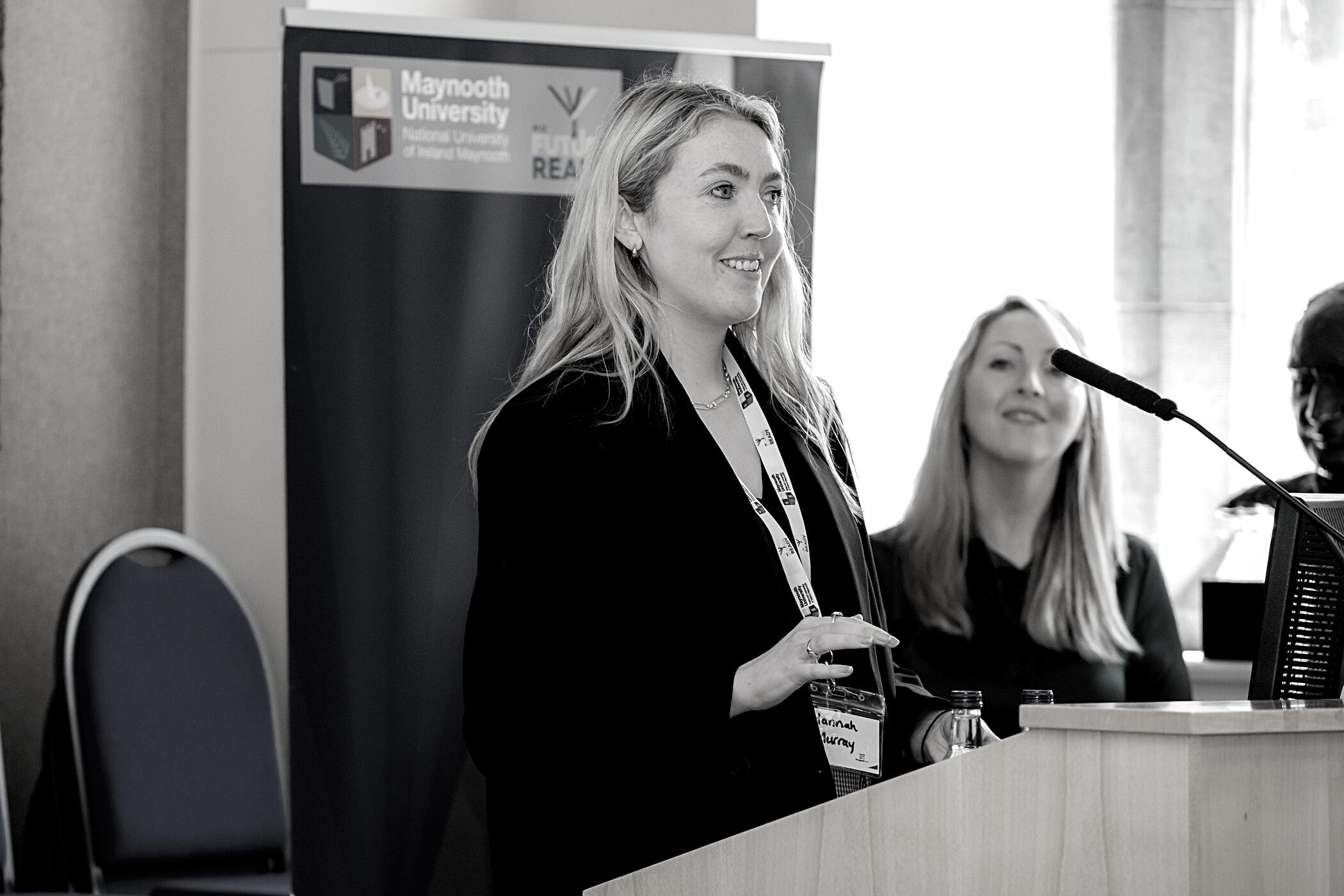
“Ithas providedus foodfor thoughton howwe understand studentsand howwe providefor themintheir futurework”
Hannah Murray Accenture Ireland
Early Talent/Student Recruitment Lead
SCHOOLOFBUSINESSAND ACCENTUREIRELAND
TOP TIP
Depending on your resources, if you do have a large class, I would recommend using some of the budget to pay for administrative support, which we did Without this, it would not have worked as well/would have been too much administration work
I would recommend you just do it! The worst thing that can happen is that it was a learning experience and you would learn from any negative outcomes you would have For us, it was a very positive experience in building a relationship with the Accenture early talent lead, and in introducing first year undergraduate Business students to real life organisations and their processes and operations, where they were able to see first hand how to connect theoretical concepts covered on the module to the Accenture case
BENEFITS TO THE PARTNER
The external partner got to communicate directly with students on the module through online office hours (5 hours provided over the semester)
They got to share organisational information with the large class, promoting Accenture to the class group, who may seek internships/placements or graduate work there in the future
They also got to consider the shortlisted 9 posters (3 posters per topic) and to collaboratively agree with the lecturers which poster they deemed to be the best per topic They could see first hand how students considered Accenture through the lenses of Personality (what type of personality suits what roles), Motivation (what motivates people to apply to work/to remain as employees at Accenture), and Communication (what are the best channels/forms of communication that Accenture should use to enhance interaction/engagement and information flow among its current and future workforce)
ASSESSMENT AT A GLANCE
Worth 40% of overall grade for the module
Students delivered a poster for the external partner
Interested? Scan the QR Code to find out more about the MN155 Project Live Journey!
Group poster relating Organisational Behaviour Theory to Accenture Practices
PROJECT LIVE 2021-22
P A G E 1 0 |
DEPARTMENT OF MATHEMATICS AND STATISTICS, DEPARTMENT OF EDUCATION AND KILDARE LIBRARIES
Mathematics Support for Secondary Schools
PURPOSE OF LIVE PROJECT
7.5 credit module Postgraduate Class 7 students
"The project helped the preservice teachers with their curriculum design skills. They had to create new materials based on what the schools asked for. They also had to decide on the best way to deliver the workshops. They did not have experience of teaching Leaving Certificate
Higher Level mathematics, so they had to draw on their knowledge of pedagogy and of mathematics to design their materials and implement their plans. One of the student teachers said: “I gained valuable experience in teaching leaving cert higher level maths, which I didn’t get the opportunity to teach during my two years of placement.”
PROF ANN O'SHEA
Kildare Library Service have extensive links with secondary schools throughout the county, these links are further strengthened via their Support to Secondary Schools programme This programme provides a series of enhanced learning workshops in the areas of drama, creative writing, literacy and STEAM subjects In this project we aimed to create and deliver workshops and online resources on Mathematics and Statistics in order to provide extra support for Leaving Certificate students
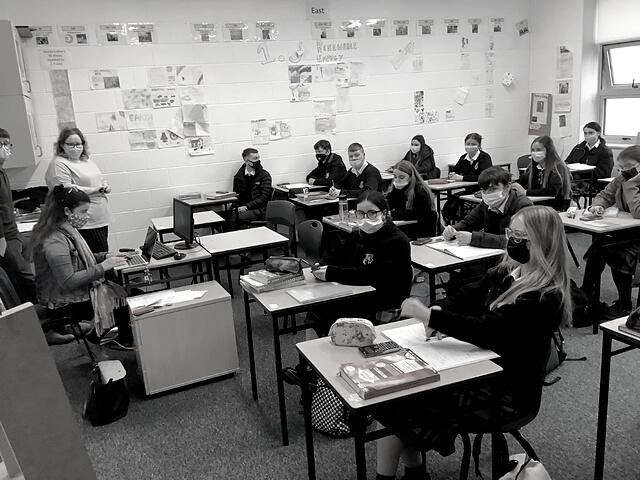
In an effort to address the curricular learning shortfall amongst senior cycle secondary school students in Mathematics in more socially disadvantaged communities in Kildare (due to the Covid-19 lockdown), we designed a series of small group interactive webinars based on core learning topics These were developed in conjunction with two schools and the teaching staff there using the links already existing with the Kildare Library Service The webinars were delivered as an interactive extra curricular activity
LEARNING OUTCOMES
The learning outcomes were:
To understand the dynamic processes by which curriculum is designed, implemented and evaluated; Develop skills in communication, working with others, and being personally effective using a range of media resources; Critically integrate theory and practice in real settings
The students in this project worked in groups to develop four workshops on four topics requested by teachers in two schools The topics came from areas of the Higher Level Leaving Certificate Mathematics course that students usually find difficult The MU students were able to gain experience of designing their own curriculum materials, while making decisions on how these should best be delivered in a classroom setting They worked closely together in their groups and with Judi Mills on developing both materials and pedagogical techniques that would enhance the understanding of the school pupils They used technology as well as manipulatives in order to help students visualize difficult concepts In doing all of this, they were able to put the educational theories that they have been exposed to over the course of the PME programme into practice Thus this project enhanced the learning objectives of this module considerably
Module lead
P A G E 1 1 |
AT A GLANCE PROJECT LIVE 2021-22
"The second workshop has just finished, I just wanted to send you a quick email to say that the students found both revision workshops incredibly helpful. It would be great to keep the lines of communication between Maynooth University and our school open, I can only imagine the benefits it would have for our students here in Rathangan but hopefully it also offers valuable experience to your tutors" -
Feedback received from one of the cooperating schools who benefitted from the work completed by students in the Department of Mathematics and Statistics and Department of Education as part of Project Live
MODULE FIT
Theme
ROJECT LIVE 2021-22
DEPARTMENT OF MATHEMATICS AND STATISTICS, DEPARTMENT OF EDUCATION AND KILDARE LIBRARIES
Mathematics Support for Secondary Schools
Detail
Pre-Module
Start
Week One Introduction General introduction to the project
Week Two Other Design Workshop
Week Three Other Design Workshop
Week Four Stakeholder Engagement Workshop Delivered
Week Five Stakeholder Engagement Workshop Delivered
Week Six Reflection
Week Seven Other Design workshop
Week Eight Other Design workshop
Week Nine Stakeholder Engagement Workshop delivered
Week Ten Stakeholder Engagement Workshop delivered
Week Eleven Reflection
Week Twelve Other Write up of student reflections
TOP TIP
Plan carefully
ASSESSMENT AT A GLANCE
Worth 100% of grade for the module Students delivered a presentation for the external partner
BENEFITS TO THE PARTNER
The schools involved benefitted from having workshops designed and delivered to their students on topics that are traditionally seen as difficult The schools were very happy with the work of the MU students
P A G E 1 3 |
BIOLOGYDEPARTMENTAND THENATIONALOFFICEFOR RESEARCHETHICS COMMITTEES
Education and outreach materials for public stakeholders of the National Office for Research Ethics Committees
PURPOSE OF LIVE PROJECT AT A GLANCE

The National Office is an independent public office with a new statutory role in the regulation of health research, specifically in research ethics review Appointed by the Minister for Health, National Research Ethics Committees (NRECs) will be established in specific health research areas of national strategic importance, the initial priorities being clinical trials of investigational medicinal products and clinical investigations of medical devices Education & Outreach falls within the remit of the National Office, with a view to improving the ethical decision-making across the spectrum of health research, fostering understanding of the role of research ethics within the research community and beyond, and contributing to a ‘scientifically and ethics conscious’ society
The purpose of this project was to co-develop educational and outreach materials to be used by the National Office and at the same time to give students a thorough understanding of research ethics in Ireland

"This live project gave the students a chance to reflect on their understanding of bioethics and confront a number of their own misconceptions or biases.
LEARNING OUTCOMES
This project was ran as part of the postgraduate module "BI604 Bioethics, Biopharmaceuticals & Clinical Trials" The learning students gained through the project is directly applicable to the taught content of this module and aligns with the three main learning objectives:
1) Contrast differing ethical perspectives on medical research;
2) Connect the regulatory frameworks associated with human medicines; and
3) Evaluate the suitability of clinical trial designs.
Following project completion students were asked to submit a reflective writing piece examining their changing understanding of research ethics
Student feedback was positive and indicated the students felt they benefited from the experience
The feedback from the external partner was essential for putting student learning into a real-world context and the self-reflective writing assignment gave students the opportunity to reflect on their learning process and development."
DR MARK ROBINSON Module lead
5 credit module Postgraduate Class 14 students
2021-22 P A G E 1 4 |
PROJECT LIVE
"Idefinitely learnedmore effectivelyby doingProject Live. Theassessment wasreasonable andprovided theopportunity toexpandour knowledgeand howtowork effectivelyin teamsinthe future."
-
Feedback from a student who was involved in the live project between the Biology Department and the National Office for Research Ethics Committees
BIOLOGYDEPARTMENTAND THENATIONALOFFICEFOR RESEARCHETHICS COMMITTEES
Education and outreach materials for public stakeholders of the National Office for Research Ethics Committees
MODULE FIT
Theme
Week One Introduction
Week Two Stakeholder Engagement
Week Three
Week Four Stakeholder Engagement
Week Five
Week Six
Week Seven Assessment
Week Eight
Week Nine Assessment
TOP TIP
Planning of the assessment and content for students takes a significant amount of time
Detail
Introduction to Project Live from lecturer
Initial project brief from external partner
Feedback from external partner
Final report and presentation to external partner
Self-reflective writing
ASSESSMENT AT A GLANCE
Worth 60% of overall grade for the module
Students delivered a presentation and product for the external partner
BENEFITS TO THE PARTNER
The external partner got a number of new ideas regarding communication with the public
In particular they highlighted a misunderstanding amongst the students in regard to the role of the National Office and the NRECs as an area where they need to develop their outreach material
PROJECT LIVE 2021-22
P A G E 1 6 |
"Software engineering team project is a highly application-oriented subject Software project development covers virtually all aspects of software development, such as requirements engineering, architectural design, software testing, configuration management and project management. Depending on the industry needs, the development of methodologies in software development evolves rapidly.
This evolution has made software engineering topics fluid and dynamic that continuously challenges the effective teaching of software engineering courses. In addition, software development methods taught in the classroom are often abstract models, generalized guidelines, best practice and frameworks This abstraction is another dimension that challenges many lecturers and creates gaps for students to perceive the connection between abstract models and their applications in real-world software project development
This live project is a good opportunity for students to experience real-world development and to apply knowledge learned from the classroom to practice "
DR DAPENG DONG
COMPUTERSCIENCE DEPARTMENTANDCLIMATE RESPONSEIRELAND
A Pollution Intensity Monitoring System for Residential Heating
PURPOSE OF LIVE PROJECT
The project was introduced to the classroom with the main intention to bridge the gap between theory and practice
This 100% Continuous-Assessment based module is designed for students to practice software engineering processes as a team; to apply project management techniques, to develop meeting skills with project stakeholders; to combine new knowledge and knowledge from previous modules to the design, development and deployment of a software system using Scrum and DevOps methods

For students to experience the real need for software engineering methods, the project needed to be complex enough that surpasses the comprehension of any single person With some preliminary study on the perimeter of the need of Climate Response Ireland the level of complexity and size of the project were deemend suitable for the module
LEARNING OUTCOMES
Throughout the semester, stakeholders from Climate Response Ireland were invited to the classroom to introduce their business context, to explain the project goal and scope, to join discussions, and to give feedback on the students’ work
The students were required to provide solutions to the project based on the knowledge learned from the class and apply the software development methodologies to the development of the project The students were also required to write design documents and project development journals on a biweekly basis These written works plus the implementation of the project reflect the academic performance of the students
The students also presented their work to the stakeholders on a regular basis, and improved their work based on the feedback received
The organisation of the activities simulated a real-world software development environment
Module lead
5 credit module Undergraduate Class 148 students
AT
GLANCE PROJECT LIVE 2021-22 P A G E 1 7 |
A
"The Computer Science students, under Dr Dapeng Dong, were professional and provided all the required skillsets. The variety of technological challenges solved by the teams was impressive."
Kevin Mullen
Climate Response Ireland
-
COMPUTERSCIENCE DEPARTMENTANDCLIMATE RESPONSEIRELAND
A Pollution Intensity Monitoring System for Residential Heating
Theme
Pre-ModuleStart Introduction
WeekOne Theory
WeekTwo Theory
WeekThree StakeholderEngagement
WeekFour Reflection
WeekFive StakeholderEngagement
WeekSix Reflection
WeekSeven StakeholderEngagement
WeekEight Reflection
WeekNine StakeholderEngagement
WeekTen Reflection
WeekEleven StakeholderEngagement
WeekTwelve SummarisingContent
Post-Module Postdevelopment(micro-internships)
TOP TIP
Provide alternatives to the students
MODULE FIT ASSESSMENT AT A GLANCE
Worth 100% of overall grade for the module
Students delivered a presentation, prototype, video, report and product for the external partner
BENEFITS TO THE PARTNER
Our students are creative
The external stakeholders have received many interesting and novel ideas that can be used to improve other parts of the design of their project
All teams are skillful in using Web technologies Their implementations (frontend, middleware and backend) demonstrate a complete skeleton of the software system All required functional components have been developed
The external stakeholder might have found that collaborating with academics was an effective and efficient way for creating prototypes of business ideas
JECT LIVE 2021-22 P A G E 1 9 |
ELECTRONICENGINEERING DEPARTMENTANDCLIMATE RESPONSEIRELAND
PURPOSE OF LIVE PROJECT AT A GLANCE
The purpose of this live project was to develop a system that monitors the air quality pre, post and during the burning cycle of a standard domestic oil burner This was with a view towards looking at a future potential carbon capture project
The system would, ideally, be able to sample the surrounding air quality and then switch to exhaust monitoring once a temperature threshold had been exceeded The current work has indicated design issues that have to be addressed in order to do this work safely and without damaging the current equipment setup
Separate work has gone on to ensure that the ability to capture this data to the cloud for analysis and monitoring.

"This live project contributed to the student understanding of key theoretical frameworks associated with this module because the student had to frame their explanations in a manner and language that non technical partners could understand.
This forces deeper thinking on the students behalf and tests if they really understand the material."
LEARNING OUTCOMES
The learning outcomes of this module were enhanced by this live project because of the following:
The practical application of knowledge and the explanation of progress to an outside party.
The system design experience, particularly learning how to develop the above within sensor constraints
The problem solving skills, developed during software and hardware interactions
ANDREW MEEHAN Module lead
5 credit module Undergraduate Class
Oil burner exhaust air quality monitoring system
PROJECT LIVE 2021-22 P A G E 2 0 |
MODULE
FIT
Theme
PROJECT LIVE 2021-22
ELECTRONICENGINEERING DEPARTMENTANDCLIMATE RESPONSEIRELAND
Detail
Pre-ModuleStart Introduction Ageneralintroductiontothetopic focusedon studentsreadingand understandingthetopic
WeekOne Theory Lookingathowthevariouscomponentswork/someprojectplanning
WeekTwo Other SomeSWandHWtestingtoseehowthingswork
WeekThree Other Moretesting
WeekFour Reflection Initialreviewoftheprojectplanvsprogressmade
WeekFive SummarisingContent Shortreport/Presentationcreatedontheworktodate
WeekSix StakeholderEngagement Report/Presentationdeliveredtothestakeholder afterwhich stakeholderfeedbackwasreceived
WeekSeven Theory ProjectPlanrevisited
WeekEight Other MoreSW&HWtesting
WeekNine Other MoreSW&HWtesting
WeekTen Other MoreSW&HWtesting
WeekEleven StakeholderEngagement EngagedwiththeStakeholderagain,toreviewprogressmade
WeekTwelve Assessment PresentationandPrototypereview
Post-Module Assessment FinalReportandPresentationGrading
TOP TIP
First thing to do is to have a chat to the Project Live Team, they are very approachable and supportive
Secondly I'd consider the benefits of exposing your students to life outside of the college, the opinions of non college personnel weigh heavily on students
ASSESSMENT AT A GLANCE
Worth 60% of overall grade for the module
Students delivered a presentation, prototype, report and product for the external partner
BENEFITS TO THE PARTNER
Exposure of their ideas to a new audience
The ability to engage, in a formal manner, with students that they might otherwise have never seen
P A G E 2 1 |
Oil burner exhaust air quality monitoring system
"Thank you - it was a very enjoyable experience. Project Live is a wonderful opportunity to co-operate with MU and be involved"
External Partner 2022 -
CHEMISTRYDEPARTMENTAND CLIMATERESPONSEIRELAND
Testing and monitoring the quality of water in North Kildare
PURPOSE OF LIVE PROJECT
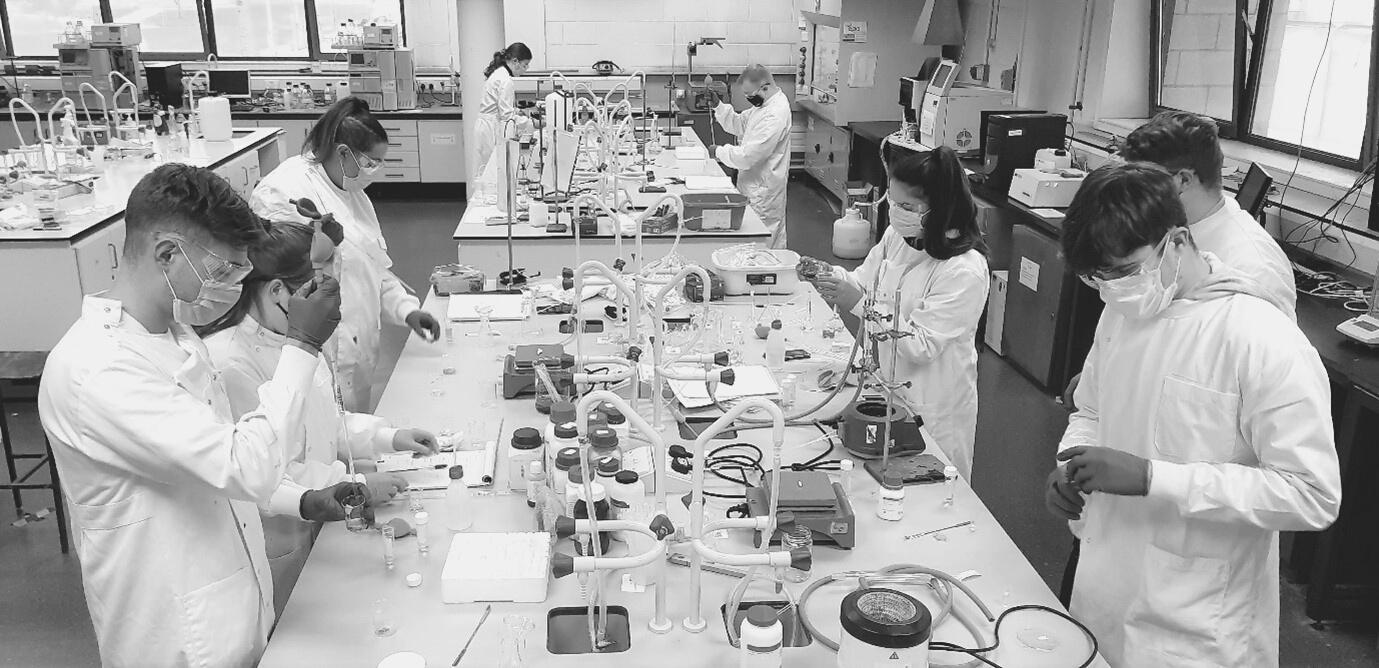
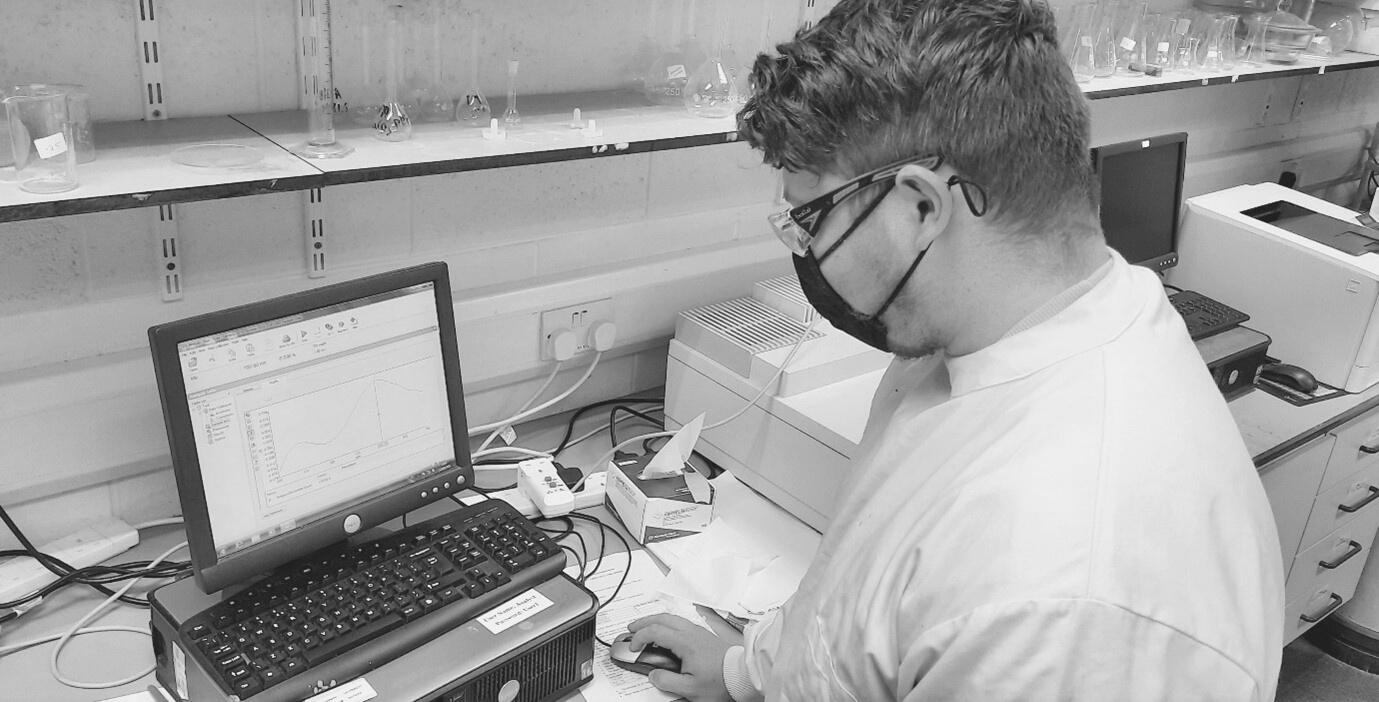
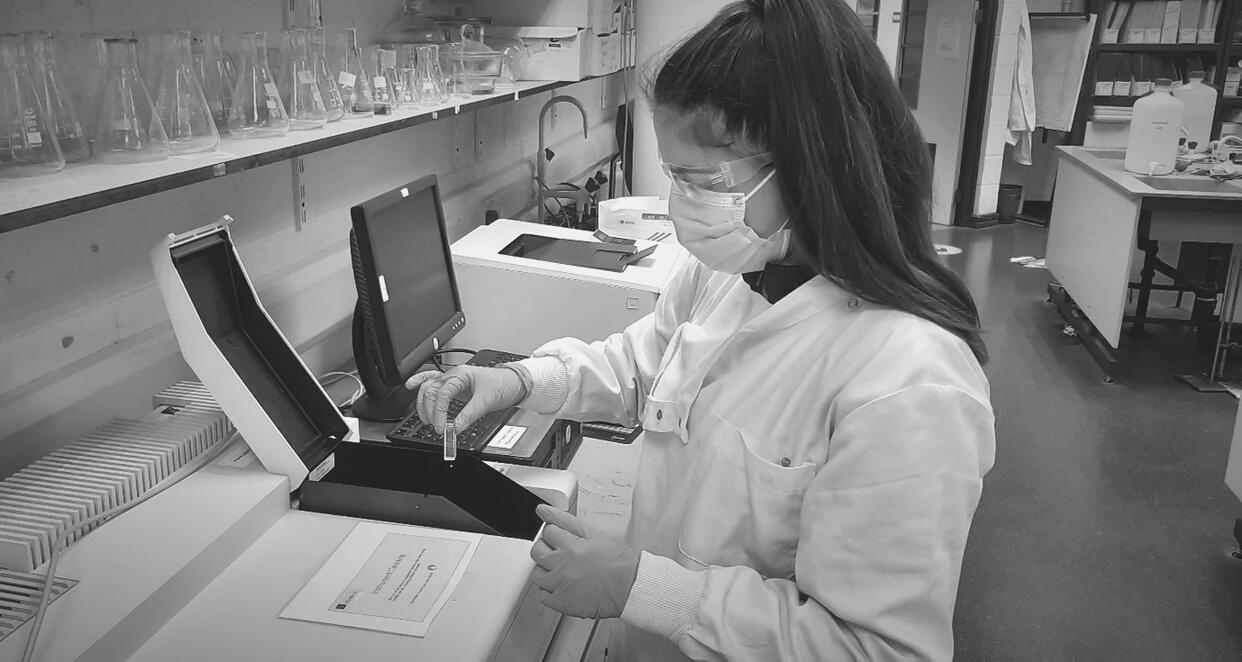
The purpose of this project was two-fold Firstly, it was designed to give the students experience in problem solving, teamwork and to enhance their confidence in performing laboratory work, and to enhance their communication skills while working on a project that was relevant to the community
5 credit module Undergraduate Class 9 students
"This project contributed significantly to the key theoretical frameworks of the Module. It involved training the students in analytical techniques and equipment, data analysis, fitting of data to models. The students’ analytical skills, their laboratory skills and ability to reproducibly collect data, perform serial dilutions and work on a microscale was greatly enhanced. They spent full days in the lab and consequently became very confident in their work."

PROF CARMEL BRESLIN Module lead
Secondly, the students were introduced to an important topic on water quality and analysis and this is also very relevant to the people of North Kildare and the Partner Organisation, Climate Response Ireland Although the EPA perform water testing it tends to only occur when there is clear evidence of water contamination, such as fish kills In this project water samples were collected across North Kildare and the students developed methodologies for the testing of several contaminants, including nitrates, nitrites, phosphates, salinity, including some heavy metal ions, and more persistent contaminants, such as pesticides
LEARNING OUTCOMES
This module is designed to train students in practical chemistry relevant to working in industry The learning outcomes were greatly enhanced through a number of activities
Initially, the students completed a series of virtual labs that were relevant to the water analysis tasks so that they were more informed about the tests before the laboratory component started As a result the students were more prepared and had revised the analytical methods and consequently had a much greater understanding of how to proceed with the chemical analysis, fostering more independence and problem solving
The students completed Standard Operating Procedures (SOP) for each water test and this was done as a team task Through this activity the students gained insight into how industry approaches analytical tests, while learning valuable teamworking skills They learned how to write SOPs (a workshop was provided) They gained hands-on experience in using techniques that are widely used in industry, including spectroscopy and chromatography
In teams, students prepared a report on water analysis and consequently learned how to write concisely and in a scientific manner
The students gave a group presentation followed by questions Through this activity, their learning and ability to communicate their work was enhanced
P A G E 2 3 |
AT A GLANCE PROJECT LIVE 2021-22
MODULE FIT
PreModule Start Introduction
WeekOne Other
CHEMISTRYDEPARTMENTAND CLIMATERESPONSEIRELAND
Testing and monitoring the quality of water in North Kildare
Arrangedaninitialmeetingwiththestudentstoexplainthedifferentelementsofthe project Thiswasfollowedbyameetingtoassignteams,roleswithintheteamand resourcestousetofacilitatethesharingofdataanddocuments
Inweek1,thestudentsstartedontheirlabwork,developingtheteststhatwouldbe usedinthewateranalysis Thisinvolvedtrainingintechniquesandmethodologies At theendofthefirstweek,meetingswereheldwitheachteamtoreflectontheirwork, assesswhatmethodologieswereworkingandtodiscusshowothertaskswouldbe approached
WeekTwo Other
Week Three Stakeholder Engagement
WeekFour Stakeholder Engagement
WeekFive Assessment
WeekSix Reflection
TOP TIP
Week2wasfocussedonoptimisationofthelaboratorytests,againattheendofthe week,meetingswereheldwitheachgrouptoreflectontheoptimisedmethodologies
Inweek3,ClimateResponseIrelanddeliveredwatersamplesfortestingandthe studentsdevisedaplanthatcouldbeusedtotraceeachwatersampleandcarried outthefirstsetoftests
InWeek4,furtherwatertestingwascarriedout Meetingswereheldwiththestudents duringtheweektoreflectontheprogressbeingmadewiththewatersamples
Inweek5,thestudentspreparedagrouppresentation,submittedtheirSOPs (standardoperatingprocedure)andsubmittedawaterreporttoClimateResponse Ireland
Week6markedtheendoftheprojectandattheendofthisweekweorganiseda FocusGroup,withanindependentfacilitatortohearthestudentsviewsoftheproject andalsotoseewhatcouldbeimproved
ASSESSMENT AT A GLANCE
It takes time to set things up, so make plans early
BENEFITS TO THE PARTNER
Worth 90% of overall grade for the module
Students delivered a presentation, report and case study for the external partner
Through this module the External Partner visited and talked with the students during their laboratory work and found this interesting and useful
The External Partner also collected a number of water samples across North Kildare and at points along the Liffey, over the course of the project Consequently, the water analysis for samples collected on different days and at different times gave a more complete picture of the quality of water in North Kildare.
JECT LIVE 2021-22
Theme Detail
P A G E 2 5 |
FROEBELDEPARTMENTOF PRIMARYANDEARLY CHILDHOODEDUCATION, GEOGRAPHYDEPARTMENTAND KILDARECOUNTYCOUNCIL
Athy Sensory Trails
PURPOSE OF LIVE PROJECT AT A GLANCE
Two 5 credit modules and one 25 credit modules
Undergraduate and Postgraduate Classes

155 students across 3 modules
"From a Froebelian perspective, it provided an opportunity to deepen the understanding of the importance of outdoor learning, a key principle of Froebelian philosophy The principle ' an ecological perspective of humankind' is a key principle in our theoretical frameworks when working with future teachers Through engagement with a community-engaged learning experience where the voices of all participants are welcomed and embraced, contributed greatly to the understanding of our theoretical foundations "
LAOISE NÍ CHLEIRIGH Module leader

To create Sensory Trails for and with the community of Athy including a GIS for digital access and also education packs for each trail for all ages
This is an opportunity for the community of Athy to connect with the outdoor environment of Athy and to engage in community activities together at various points in the area There are sensory activities, historical facts, further literature links and more, within the education packs for use by all stakeholders in the area
The GIS locates the trails which can be accessed by any smart phone and stakeholders can access this GIS as they move through the trails
LEARNING OUTCOMES
The learning outcomes were enhanced through engagement with Project Live, because it gave solid focus to assessment within all modules connected to the project
It highlighted the need to emphasize inclusivity and accessibility for all It helped to ensure a very high level of attendance on the module as we worked together on content for the trails and the students worked collaboratively in class
It gave an opportunity to the students to work as a learning community together and to discuss content that may or may not be suitable for the trails
It encouraged attendance which was highlighted - reaching the learning outcomes was assisted by a high level of attendance
PROJECT LIVE 2021-22 P A G E 2 6 |
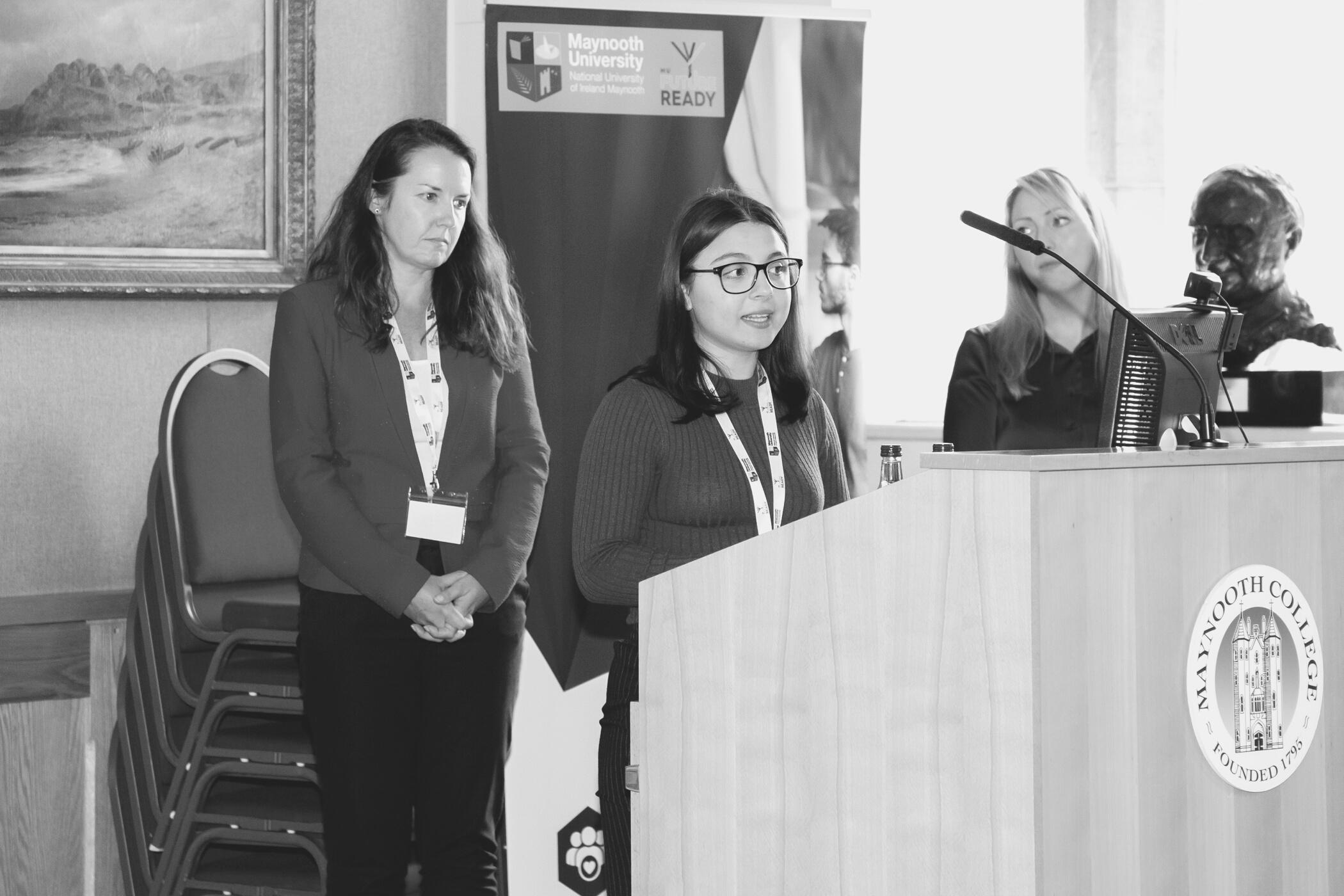
"When this opportunity came up I ran towards it because I actually live in Athy and thought what a way to give back to the community that I grew up in"
Student Participant -
PROJECT LIVE 2021-22
FROEBELDEPARTMENTOF PRIMARYANDEARLY CHILDHOODEDUCATION, GEOGRAPHYDEPARTMENTAND KILDARECOUNTYCOUNCIL
Athy Sensory Trails
MODULE FIT
Theme
Pre-ModuleStart Assessment
WeekOne Introduction
WeekTwo Introduction
WeekThree Reflection
WeekFour SummarisingContent
WeekFive Theory
TOP TIP
Have regular meetings and be assured that it will be easier now that the pandemic has shifted It was difficult as we were on and off campus due to Covid-19 closures etc so that made it tricky at times Our timetable changed due to Covid-19 also
ASSESSMENT AT A GLANCE
Worth 50% of overall grade for the modules
Students delivered a report and product for the external partner, as well as completing a reflection about the experience
Go for it! It is a wonderful experience to delve into areas that otherwise may not have come your way! Tapaigh an deis! P A G E 2 8 |
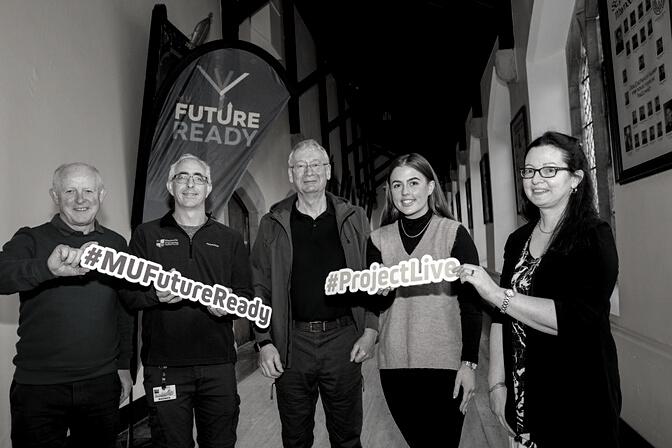
THE ACADEMIC EXPERIENCE
"I found it to be a great experiential
opportunity for students. I do feel we were challenged in the large class size and due to the lectures still being online and only voluntary tutorials in person. Attendance at tutorials was extremely low. Attendance at the online office hours with the Accenture partner were also extremely low, with no students attending 3 out of 5 of these. It was difficult therefore to gauge engagement from students. However, module feedback throughout the semester and feedback from students were very positive. For instance, one student commented:
JECT LIVE 2021-22
"It was useful to make connections with external stakeholders."
ANN O'SHEA
learning
"The group project was a great opportunity to work with our course material and use it in practice. I thoroughly enjoyed myself!"
MARIAN CROWLEY HENRY
"Once again a great experience!"
P A G E 2 9 |
ANDREW MEEHAN
"It was good and is something I will continue in the future."
MARK ROBINSON
"Overall, it was a great experience working with the Experiential Learning Office and the external partner. I think Project Live plays a very important role in establishing connections between academic staff and community organisations/SMEs. It is very good practice that the Project Live Team provides a list of projects for academic staff to select and vice versa allows the external partners to identify suitable academic staff, through initial meetings.
I think the pairing mechanism is very effective."
DAPENG DONG
"It enhanced our teaching and the experience of the students. It gave us the opportunity to reflect and to work closely with a SPUR student also who we brought on board to work with us on the trails. She is developing the ed packs with us for the trails, the content of which was enhanced greatly by the content provided by the many students on the SEN module and Teanga an Ghrá module."
LAOISE NÍ CHLEIRIGH
"I found this experience excellent, by engaging with an external partner, the students develop skills (communication, learn more about their communities and develop work readiness skills) that cannot be enhanced through normal teaching activities. Furthermore, this type of experience fosters more independence in the students and enhances their ability to problem solve. From a teaching perspective, it is very rewarding."
CARMEL BRESLIN
PROJECT LIVE 2021-22
P A G E 3 0 |
Ollscoil Mhá Nuad
Maynooth University
Oifig um Fhoghlaim ó Thaithí
Experiential Learning Office
Experiential Learning Office
Office of the Dean of Teaching and Learning
Rowan House, Maynooth University, Maynooth, Co Kildare.
www.maynoothuniversity.ie/experiential-learning