Middle Tennessee State University library.mtsu.edu
Spring 2026 | Volume 12, No. 1
DEAN
Kathleen L. Schmand
MARKETING AND COMMUNICATIONS COORDINATOR
Clay V. Trainum
SENIOR EDITOR
Drew Ruble
ASSOCIATE EDITOR
Carol Stuart DESIGNER
Brian Evans
DIRECTOR
Kristy D. O'Neal
UNIVERSITY PHOTOGRAPHERS
Cat Curtis Murphy, James Cessna, Andy Heidt, J. Intintoli
CONTRIBUTING EDITOR
Nancy Broden
CONTRIBUTING WRITER
Nancy DeGennaro UNIVERSITY
Sidney A. McPhee
UNIVERSITY
Andrew Oppmann
MT
From
From the desk of
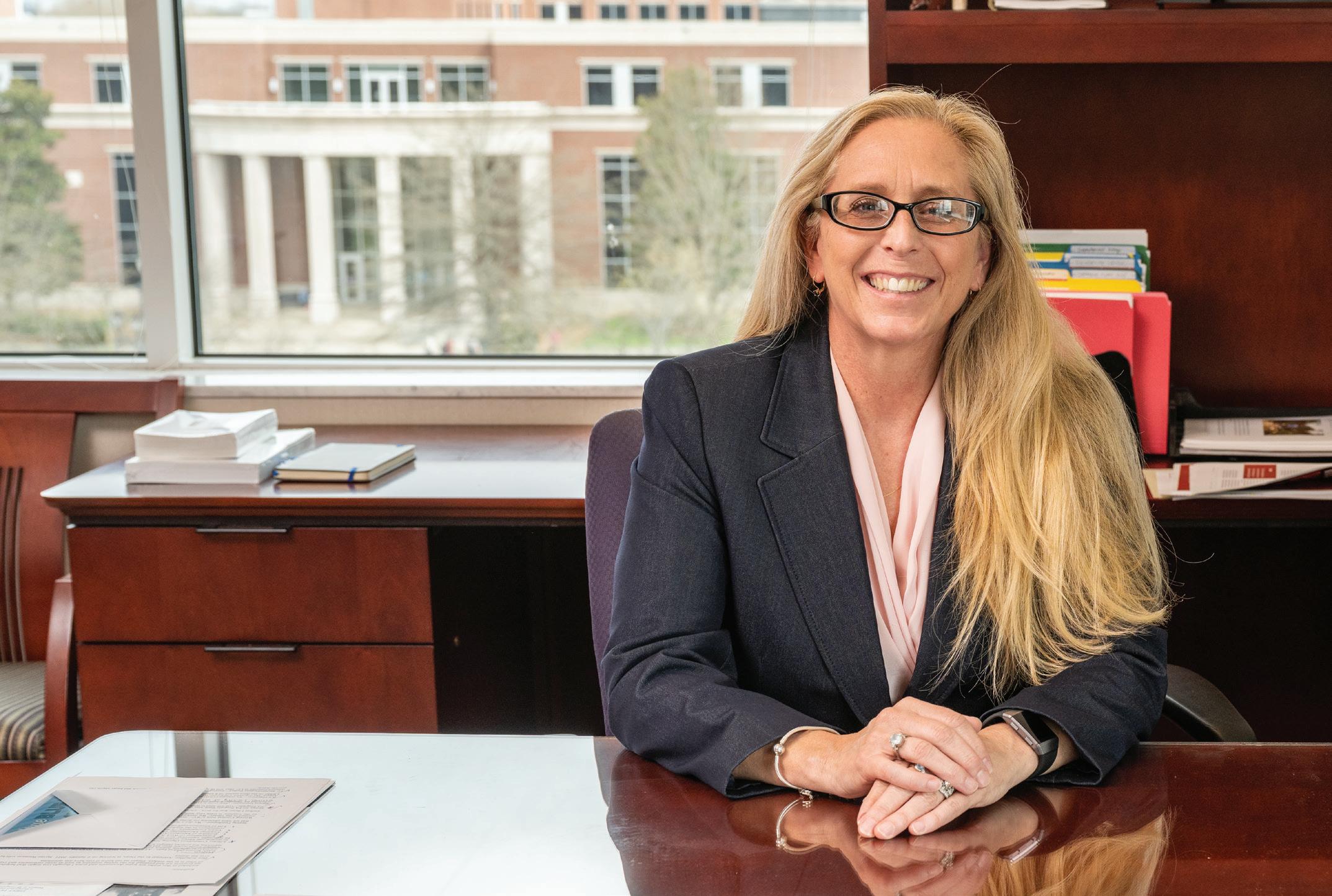
DEAN SCHMAND
As we enjoy another spring season, I’m thrilled to share some of the exciting initiatives underway in our library. We navigated some challenging times in the library recently, and we embarked on a new year marked by greater innovation, collaboration, and deeper engagement with our campus community.
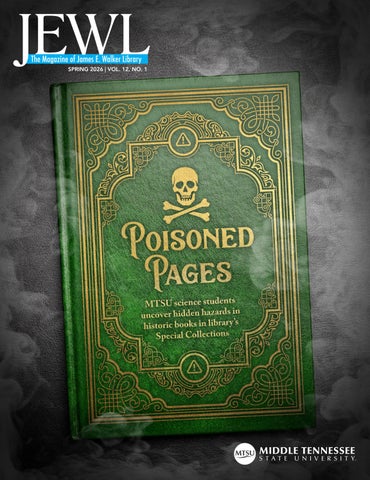
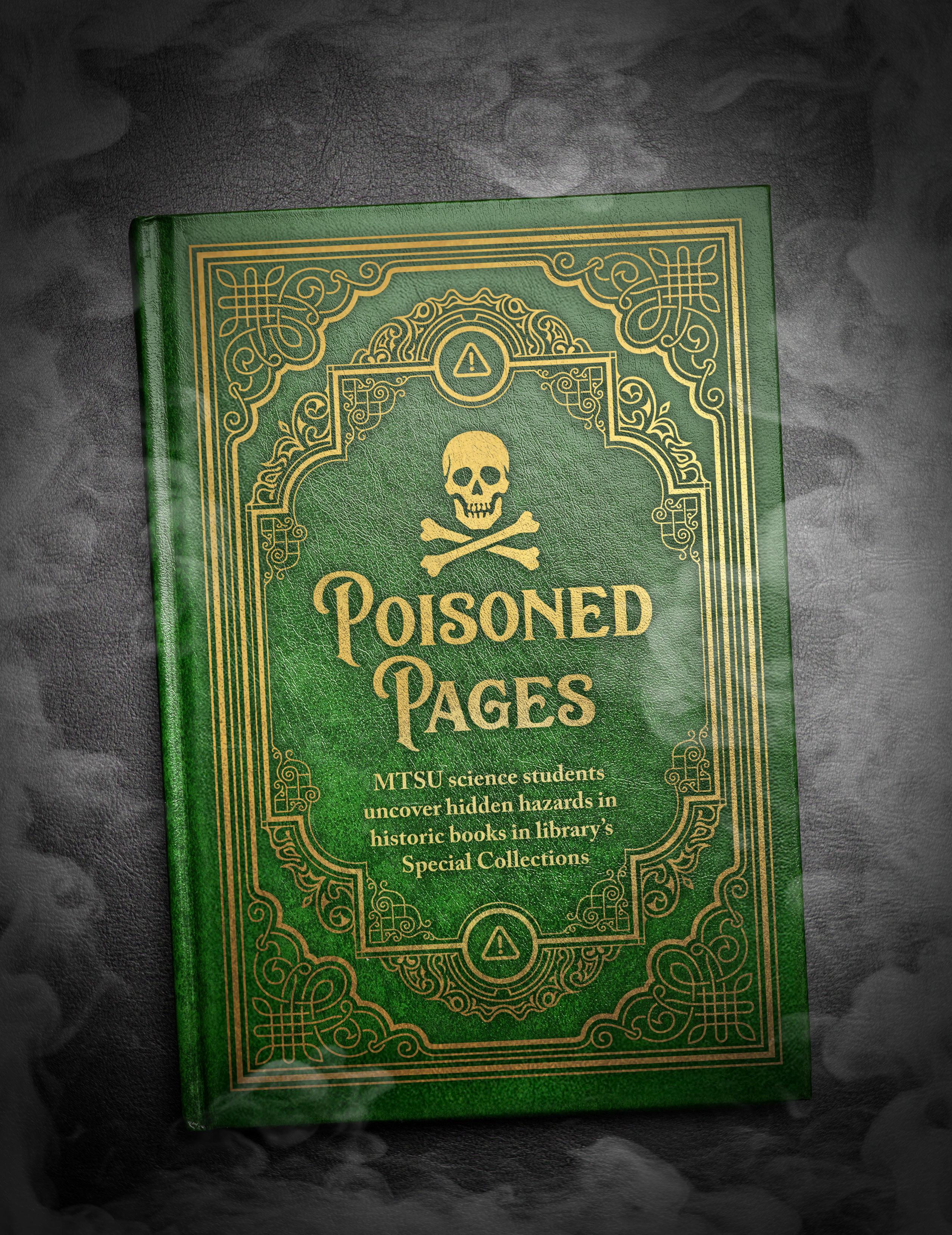
One of our most compelling projects is a cross-disciplinary partnership with Special Collections, led by Susan Martin, and the Chemistry Department focused on “poison books.”
This initiative not only highlights the historical and chemical significance of certain materials in our collections but also demonstrates the value of collaboration across academic units.
We’ve also continued to evaluate and enhance our study spaces to better meet the evolving needs of our students. Creating environments that support both focused study and collaborative and experiential learning remains a top priority.
In the realm of digital learning, two of our librarians in User Services have developed a new digital badge for students focused on becoming digital lifelong learners. This tool empowers students to develop essential research skills and navigate online information effectively.
Student engagement continues to be a cornerstone of our work. Events like the Stress-Free Zone offer students a chance to recharge and connect, and we’re proud to have recently welcomed a student engagement librarian to further support these efforts.
As you read this issue of our JEWL magazine, you will discover even more about the work that James E. Walker Library does in support of Middle Tennessee State University and our students, faculty, and staff.
It’s truly an exciting time to be in libraries. These initiatives underscore our commitment to providing student-centered services and promoting academic success across campus, aligning with the library’s strategic priorities for innovation and engagement. I look forward to all we will accomplish together.
Warm regards,
Kathleen L. Schmand, Dean of James
E. Walker Library
STUDENT WORKERS NEED YOUR BACKING
Give to the David Robinson or James E. Walker scholarship funds to assist student workers with college costs
Photos by James Cessna
A new librarian focuses on events and encounters to encourage student connection by
Year in and year out, students have cited MTSU’s Walker Library as one of their favorite places on campus. Given the resources available within the building, as well as its location, the library serves as a perfect hub for students to get work done, socialize, and maybe take a coffee break. The library’s constant presence in a student’s life is due in no small part to the idea that, regardless of an individual’s major or concentration, every Blue Raider graduates from the library.
With this in mind, Walker Library has renewed its emphasis on student engagement to play a more active role in student life on campus. Due to the foot traffic and extended hours of the building, students are more likely to have interactions with librarians and staff than perhaps any other group of people on campus. Studies have shown that students who regularly engage with the library are more likely to attain higher grades and graduate.
But it’s deeper than that, explains new student engagement librarian Shelly Salo.
“A lot of the research backs up the academic reasons, and while that is important, it’s just as important to me to improve their overall student experience,” said Salo, who joined the library last May. “Engaging on campus is a quintessential part of attending college. When you think back to your time in college, you’re probably not always thinking about classes, but instead, your first thoughts are about your experiences and the memories you made. I want the library to be a part of that.”
Salo is a vital part of the library’s student engagement initiative, as she was hired specifically to increase all engagement activities across the board. In her first few months on the job, she hosted multiple successful events,
Clay V. Trainum
Party Time in the Library
Examples of some library student engagement activities:
Stress-Free Zone
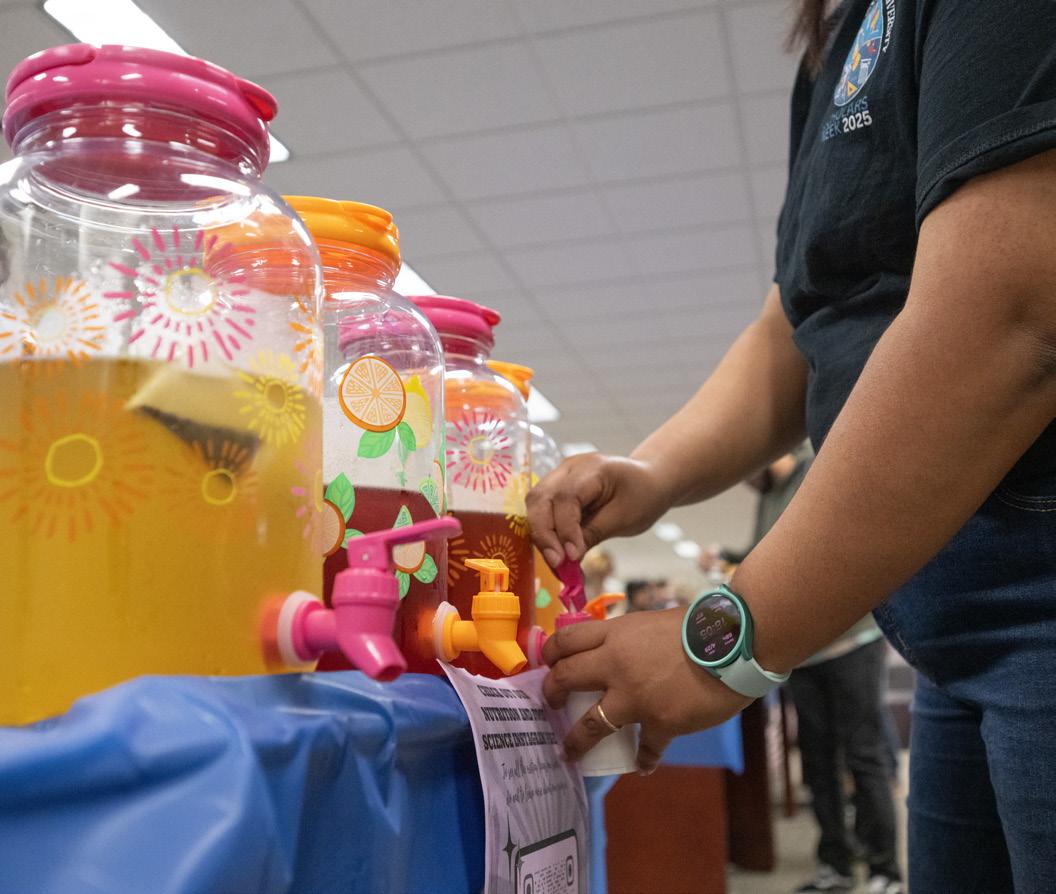
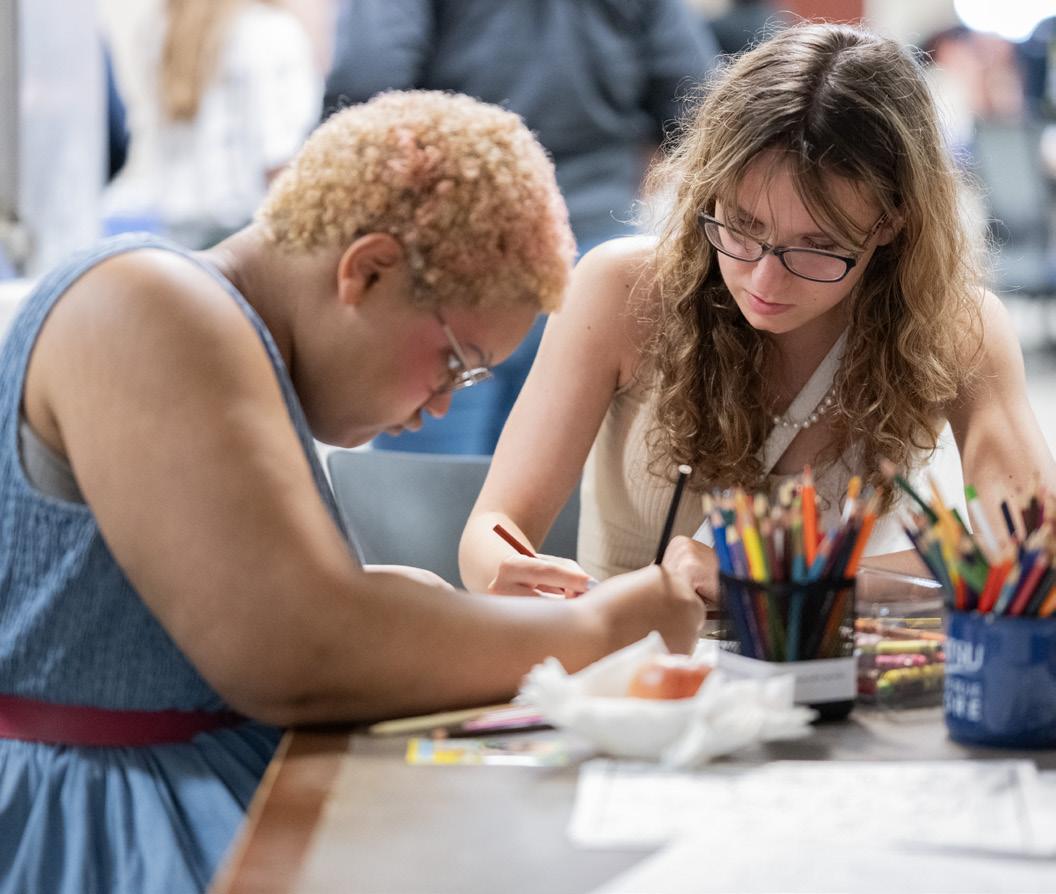
Introduced in 2022, the library’s semiannual Stress-Free Zone is far and away the most popular student event that the library puts on. On the Tuesday evening before finals begin, hundreds of students flock to the first floor for a free meal, stress-relief activities, and therapy dogs from Music City Pet Partners. The library has cultivated partnerships all across campus to support the event, and students arrive early to make the most of their last hurrah before finals.
Trivia Night
Since its 2023 debut, Walker Library’s trivia night has become a staple of the calendar. Using an online interactive scoring system, hundreds of students have participated in the event over the years. The most recent edition featured pop culture categories as well as trivia specific to MTSU and the state of Tennessee.
Board Game Night
Board games are enjoying renewed interest, and in that spirit, Walker Library has partnered with the MTSU Tabletop Club to organize a series of board game events within the library. The night has proven popular as the space the building provides is more than enough for students to break into groups to play games that range from the simple ones that everyone grew up playing to the very complex.
RPG Jam
With the popularity of Stranger Things and a revival in role-playing games (RPGs), the library hosted its first-ever Tabletop Role-Playing Game Jam in October. Teams of students from across multiple majors came together to design their own RPG modules around the theme of Lost and Found. While some of the brainstorming took place on the night of the event, submissions continued into November.
Zine-Making!
Partnering with MTSU’s Center for Popular Music (CPM), the library hosted a Zine-Making night within the Makerspace. Students were encouraged to create their own while drawing inspiration from some of the items archived within CPM, which included the iconic early punk rock zine Sniffin’ Glue. De-Stress for Midterms
Shelly Salo organized her first De-Stress for Midterms event, a mini version of the library’s popular Stress-Free Zone, just days before the school’s 2025 fall break. It proved popular as more than 100 students made their way to the library’s first floor to interact with therapy dogs and pick up a snack.
such as a board game night with the MTSU Tabletop Club and a de-stress event as students prepared for midterms. She has big plans in the works, from partnering with the Makerspace to working on a book club with the Margaret H. Ordoubadian University Writing Center, which is on the third floor of the library.
“Yes, the library is a hub for student learning, and we want all of MTSU’s students to be academically successful. We want them to grow as people as well,” Salo said. “The library should be a safe third place for students to go. They don’t have to pay to be here, and they can be here more than any other building on campus.
“They can come here, feel safe, study, hang out, whatever. I just want them to be here and be happy to be here.”
The library serves as an important cog in community-building for the MTSU campus as well, and Salo’s efforts are a key part of that. Those familiar with the day-to-day happenings of Walker Library can see these communities getting built all over, whether it be through one of the aforementioned events or when students work with each other, such as trying to resolve a tricky 3D print job in the Makerspace.
Even if the library isn’t directly involved, the environment of the building makes for a place where ideas can be easily exchanged. It’s not just about building a connection with the library and campus, but also with fellow students.
That is the core of this engagement mission. The library wants students to feel comfortable working and interacting within the building. On the surface, some of these events may not seem immediately related to library services, but they offer an outlet for students to grow into more well-rounded people as they prepare for life after college. And for Salo, it offers a return to a time when she interacted with students every day.
“I used to be a full-time classroom teacher. I loved so much of that job and working so closely with students,” she said. “The opportunity to come here and interact with students to help them enjoy college a little bit more was too good of an opportunity to pass up. Now that I’ve seen the types of things that we can do here, I’m only excited to do more.”
MT
Open Press continues publishing free books for campus community
Walker Library is committed to advancing faculty work and amplifying community voices, and a key tool for this is the library’s publishing arm, MT Open Press.
The imprint, a part of the library’s Digital Scholarship Initiatives (DSI), works collaboratively with authors and editors to help take their manuscripts from idea to completion. There are no author-facing charges for a book that is selected, and MT Open Press will shepherd the book through peer-review, if necessary, and index the work in databases and search engines to make it discoverable by readers worldwide.
Additionally, DSI provides the technical infrastructure and long-term preservation services, which can include things like server space and basic web design.
All books published are available to read online for free, and print copies are available for a modest fee through a print-on-demand service.
In the past year, MT Open Press has published two books and is currently working on another.
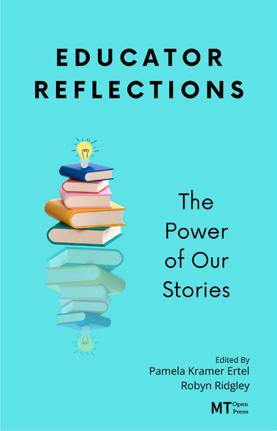
Educator Reflections: The Power of Our Stories
Published in February 2025, this book highlights the diverse professional journeys of various educators within MTSU and their partner schools as they share experiences in the teaching profession. Contributors to the book represent all educational levels, from preschool through higher education. For those who have ever considered a career in education, the book highlights the profound impact of teaching and can inspire those wishing to embark on a journey within the field.
Devil’s Oak: Waking the Feminine Wound
Published last October, this book is the first of MT Open Press’ Blue Crescent series, which serves as the
creative and community imprint for the publisher. Mary Carroll Leoson’s Devil’s Oak is a collection of short stories that feature strong female characters against a backdrop of ghosts, fairy tales, and urban legends. The 13 stories subvert the historical narrative of women in fairy tales, positioning them as bold and willing to step into the face of danger.
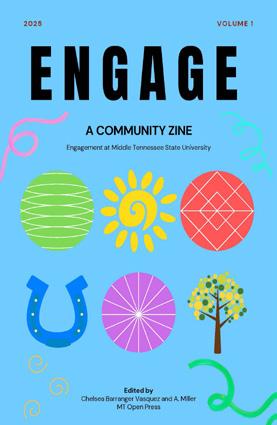
Community Zine
Developed in partnership with the University’s Engage program, the MT Open Press community zine encompasses creative work from students, staff, and faculty with an engagement theme. Prospective participants were invited to participate by creating their own mini zines to be a part of the book or by submitting an individual written or artistic design. Some of the ideas that were accepted include essays, poems, short stories, images, art pieces, comics, or puzzles, and every participant selected received a free print paperback copy of the final product. Student participants were also entered into a drawing for a free PlayStation 5.
Learn more
• Access these books—as well as previous MT Open Press titles like Private and Safety in Online Learning and Intercultural Engagement Through Short-Term Faculty-Led Study Abroad —at openpress.mtsu.edu
• Visit dsi.mtsu.edu to learn more about the library’s Digital Scholarship Initiatives.
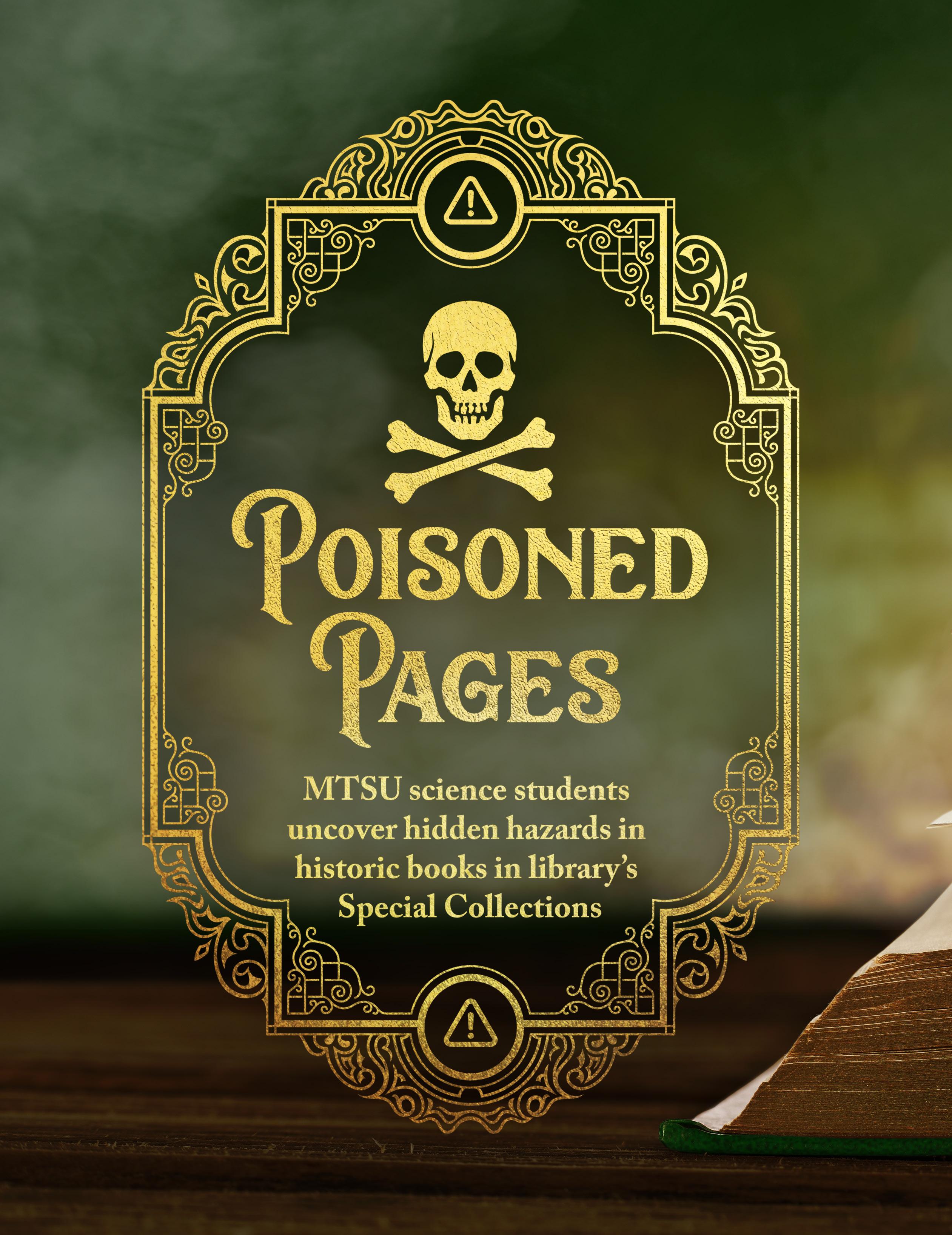
Some of the beautifully bound Victorian-era books in the Special Collections at Middle Tennessee State University’s James E. Walker Library may hide a dangerous secret.
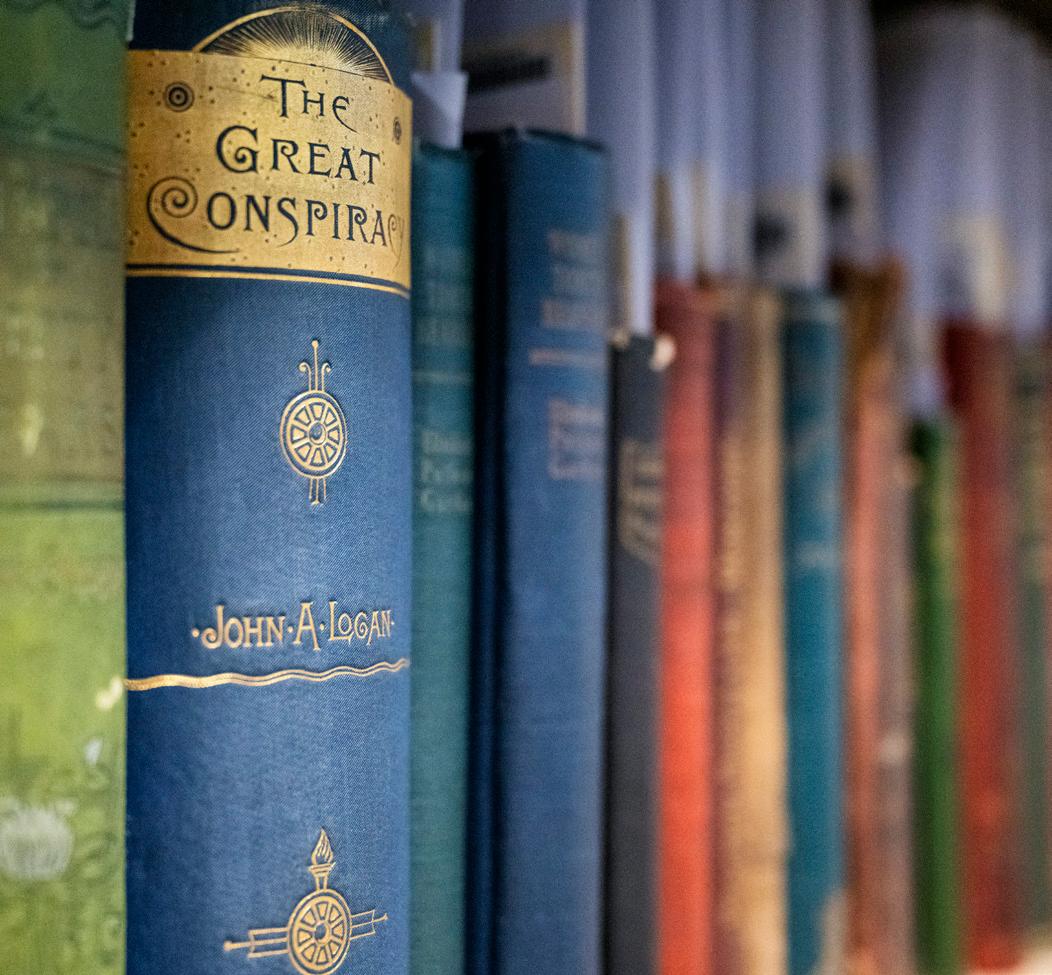
Around 1,200 of these elegantly crafted books from the 1800s—once prized for their vivid colors—could contain pigments made with toxic compounds and heavy metals, explained Special Collections librarian Susan Martin.
“A good portion of our collection—about 14%—are 19thcentury books,” said Martin, who heads up the library’s repository for rare, unique, and fragile materials.
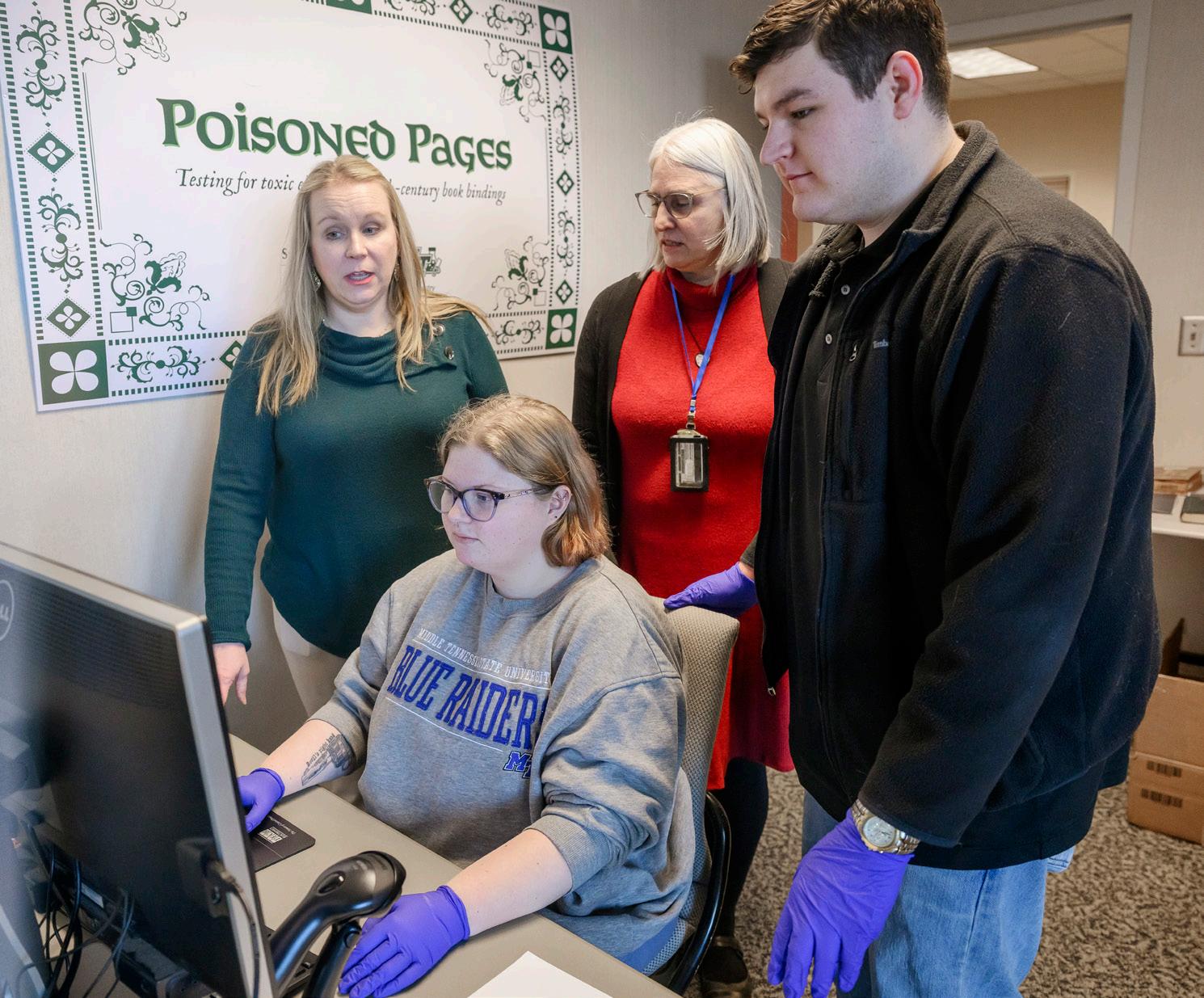
Through an Undergraduate Research Experience and Creative Activity (URECA) grant, a team of MTSU students in a Fall 2025 undergraduate research course with Chemistry instructor Sarah Pierce and laboratory specialist Jessie Weatherly used modern technology to test over 30 books that are preserved in Special Collections.
Martin served as primary investigator on the URECA grant— the first one awarded to Walker Library.
“It’s been lovely partnering with the Chemistry Department, and the students have been great to work with,” Martin said. “We loved being able to collaborate with them.”
Testing for Toxins
To identify potential hazards, students painstakingly investigated whether historic books in the MTSU Walker Library collection contained materials such as arsenic, lead, mercury, and chromium—advancing both campus safety and hands-on undergraduate research.
“They try to test different pieces of each book, from the spines and covers to inside where there can be pigments in the marbled endpapers of the inside of the book,” Martin
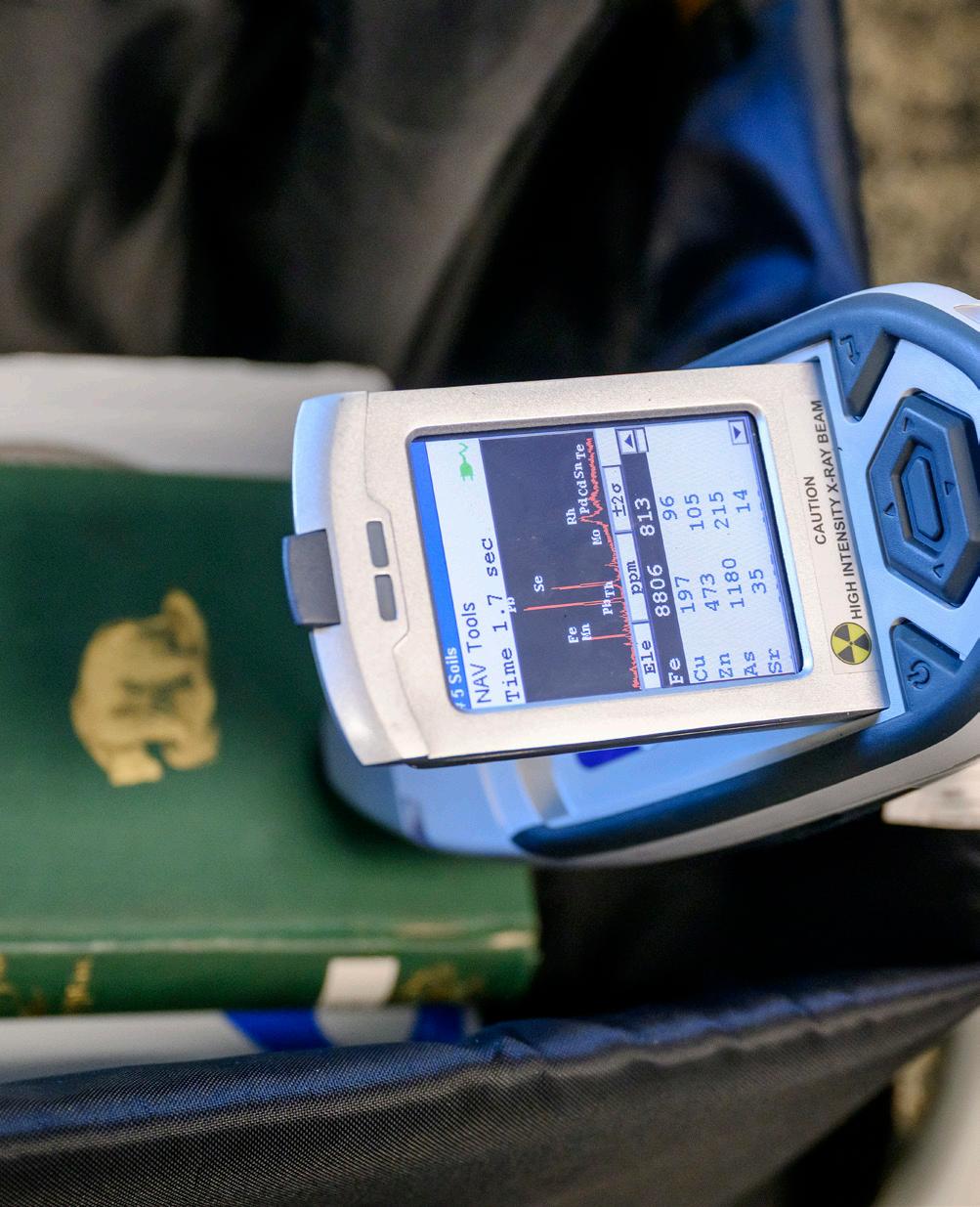
Testing on a Special Collections book using X-ray fluorescence (XRF) spectroscopy
said. “It takes a while to scan each book because there are multiple portions they are testing.”
Martin and Special Collections curator Susan Hanson were inspired to find answers after learning about “The Poison Book Project,” a collaboration between the Winterthur Museum, Garden, and Library in Delaware and the University of Delaware to identify and catalog books known to contain these dangerous pigments.
“If it’s contained, it’s OK. But once it begins to degrade, it can get into the air, which could happen,” Hanson said, comparing the risk to asbestos, which can be harmful if the particles are inhaled or ingested.
Collaboration with Chemistry
Pierce’s work teaching chemistry through art and color led her to Special Collections to find Interaction of Colo r, the 1960s landmark textbook by Josef Albers. As conversations turned toward pigments, the librarians raised concerns about some of the collection’s “poison books.”
“Everything actually started with Engage, a program that requires an out-of-the-classroom experience,” Pierce said. “I love getting students out of the classroom and helping them make connections to other parts of their lives and across campus.”
Pierce then approached Weatherly, an instrument support engineer in the Department of Chemistry, to explore whether MTSU had the tools needed to analyze rare books safely.
“I told him that Special Collections is asking if we can test books for heavy metals. I think we could do it using XRF, but I’m not sure,’” Pierce recalled. “He immediately said, ‘Yes, we have three,’ and that’s how the project got started.”
Chemistry instructor Sarah Pierce (l–r), Special Collections librarian Susan Martin, and student Ethan Coyle look over the shoulders of Brittney Cupp as they examine incoming data from the XRF spectrometer.
X-ray fluorescence (XRF) spectroscopy is a nondestructive analytical technique that identifies and quantifies the elemental composition of a wide range of materials by bombarding them with high-energy X-rays to create an elemental “fingerprint.”
“When we expose certain atoms to high-energy X-rays, they are excited. As they return to their ground state, they release that energy as a photon, which the XRF can detect,” Weatherly explained. “Fortunately, each atom has its own unique spectrum, which can be used to identify it.”
Not Just Book Learning
Weatherly recruited three undergraduate students— Chemistry majors Ethan Coyle and Brantley Harriman and Forensic Science major Brittney Cupp—who volunteered soon after the project was announced.
“I’m a big fan of history, so when I learned I could explore lesser-known history through a chemistry perspective, I was really intrigued,” Coyle said. “After learning about the project, I went to Special Collections that same day to understand the overall goal.”
After researching pigments historically used in bookbinding, Coyle said, he was eager to join the project. A Murfreesboro resident who is now a Chemistry master’s student at MTSU, Coyle took the course and participated in the research in his final semester as an undergraduate.
“Once I got home and started looking into the pigments and chemicals used in these books, it became clear that this was something I wanted to work on,” Coyle said.
Funded by the URECA grant, the student team tested 34 books from Special Collections, and 33 showed the presence of toxic elements.
“We’re mostly finding chromium and lead, which is interesting,” Pierce said.
Special Collections has not changed its practices but has gloves and masks available for any patron who wishes to use them when handling materials.
Harriman, who hails from Powell, Tennessee, served as colead during his final semester at MTSU and said the project closely aligned with his coursework and career path. He now is employed as a clinical lab specialist at Thermo Fisher Scientific in Wisconsin, working with instrumentation he learned to use while taking a class under Weatherly.
“A lot of the chemistry and biochemistry I use now is what I learned in school,” Harriman said.
Because the project involved rare books, Harriman said, care and accuracy were essential.
“There’s a big responsibility to make sure we’re scanning things correctly and getting the right results,” he said.
A Real Page-Turner
Cupp supported data collection and reviewed results while also creating educational posters explaining pigment chemistry and research methods. She is continuing on the project this spring.
Cupp, who is from Seymour, Tennessee, said the project gave her valuable laboratory experience and helped clarify her career interests.
“It definitely gives me a lot more experience than I had, especially in different fields,” Cupp said. “Any type of lab experience—especially for DNA—is what a lot of people are looking for.”
Cupp also said her interest in the project was personal.
“I love books, and I love learning history of these pigments,” Cupp said. “Every single one of them has a different history.”
The interdisciplinary team met weekly and worked closely with Special Collections staff to ensure safe handling of materials. At the end of the semester, Coyle and Harriman gave a PowerPoint presentation, “Poisoned Pages: Testing for toxic elements in 19th-century book bindings,” at Special Collections as their final project before graduating in December 2025.
The research continued in the Spring 2026 semester with Cupp and newly recruited students Olivia Sanders and Laurel Thompson, with plans to test more books in the coming years and look at how the heavy metals could transfer to skin.
“Not only has this project been beneficial for the library, but this project has been real work for the students and will look great on their résumés,” Martin said.
Students add online “self-defense” competency through library badge program
With the entirety of human knowledge only a few keystrokes away, digital literacy has become even more important, and Walker Library is here to help students at MTSU bolster their skills with its newly established Empowered Lifelong Digital Learner badge program.
Digital badges, issued to students upon the completion of a set of courses or a program, are designed to highlight skills and achievements to potential future employers or colleagues. Similar to a certification, the badges are awarded through campus partner Parchment, and they may be included on a résumé or attached to a transcript.
The goal of the program is to equip students with a “digital self-defense” toolkit, fostering a sense of empowerment and confidence as they become informed and responsible information consumers. Additionally, it will help students prepare to meet employer expectations for skills in communication, critical thinking, and self-development.
“The online information world is so volatile, and everything changes so quickly, and all of us, whether we’re students or not, could benefit from learning skills to better manage it,” said Kristen West, chair of the library’s User Services department.
Graduating students are entering a world where trust is eroding and misinformation sometimes spreads faster than truth. Students today are digital natives, having grown up in a world that is wholly online, but they often lack digital wisdom. The badge program strives to help them progress from merely possessing technical skills to developing the ability to use technology responsibly, wisely, and critically. Knowledge alone is not enough—what truly matters is being able to apply that knowledge effectively in real-life contexts.
Students who complete the course can expect to improve their ability to make informed decisions while developing digital wellness skills to help with managing information overload and stress. This badge can be especially useful for functioning in workplaces that rely heavily on data-driven decision-making and literacy.
Spearheaded by librarian Karen Dearing, the badge program was developed in tandem with fellow librarian Ashley Shealy. Over the course of 12 weeks, students complete self-paced modules focusing on several key competencies:
• Apply critical evaluation techniques
• Detect and mitigate digital misinformation and common persuasive traps
• Implement information management strategies and critical ignoring skills
• Cultivate digital well-being and conflict resolution skills
• Embrace digital citizenship
“I think libraries are well-suited to talk about this content because we are in the information business. We can talk about it outside of any specific discipline,” West added. “We’ve been fortunate to receive support from faculty across campus in developing this badge, and several have already planned to use some of this within their courses.”
The badge program was piloted during Fall 2025 and rolled out fully in 2026. It is open to all students, without regard to their major or academic rank. It is a free, value-added service, and enrollment will be limited to 100 for the first semester. The badge is one of 21 current programs offered at the University, each awarded by a specific center or department. To learn more, visit mtsu.edu/badges
The Empowered Lifelong Digital Learner badge is composed of eight modules. Each module helps students relate the content to their personal values and offers opportunities for self-discovery through assessments and reflections.
Module 1: Digital Lies and Legacies – Owning our choices
Module 2: Decision Traps – Recognizing the hidden enemies within fallacies, biases, and heuristics
Module 3: Digital Blunders – Seeing past algorithms, filter bubbles, and echo chambers
Module 4: Building a Weapons Arsenal – Protecting yourself with evaluation skills
Module 5: Digital Drama – Coping with dishonesty and conflict
Module 6: Critical Ignoring – Calming information chaos
Module 7: Digital Wellness – Living better in a digital world
Module 8: Digital Empowerment–Becoming a better digital citizen and information consumer
Study Buddies
From new single pods to a family room, library offers plenty of dedicated spaces
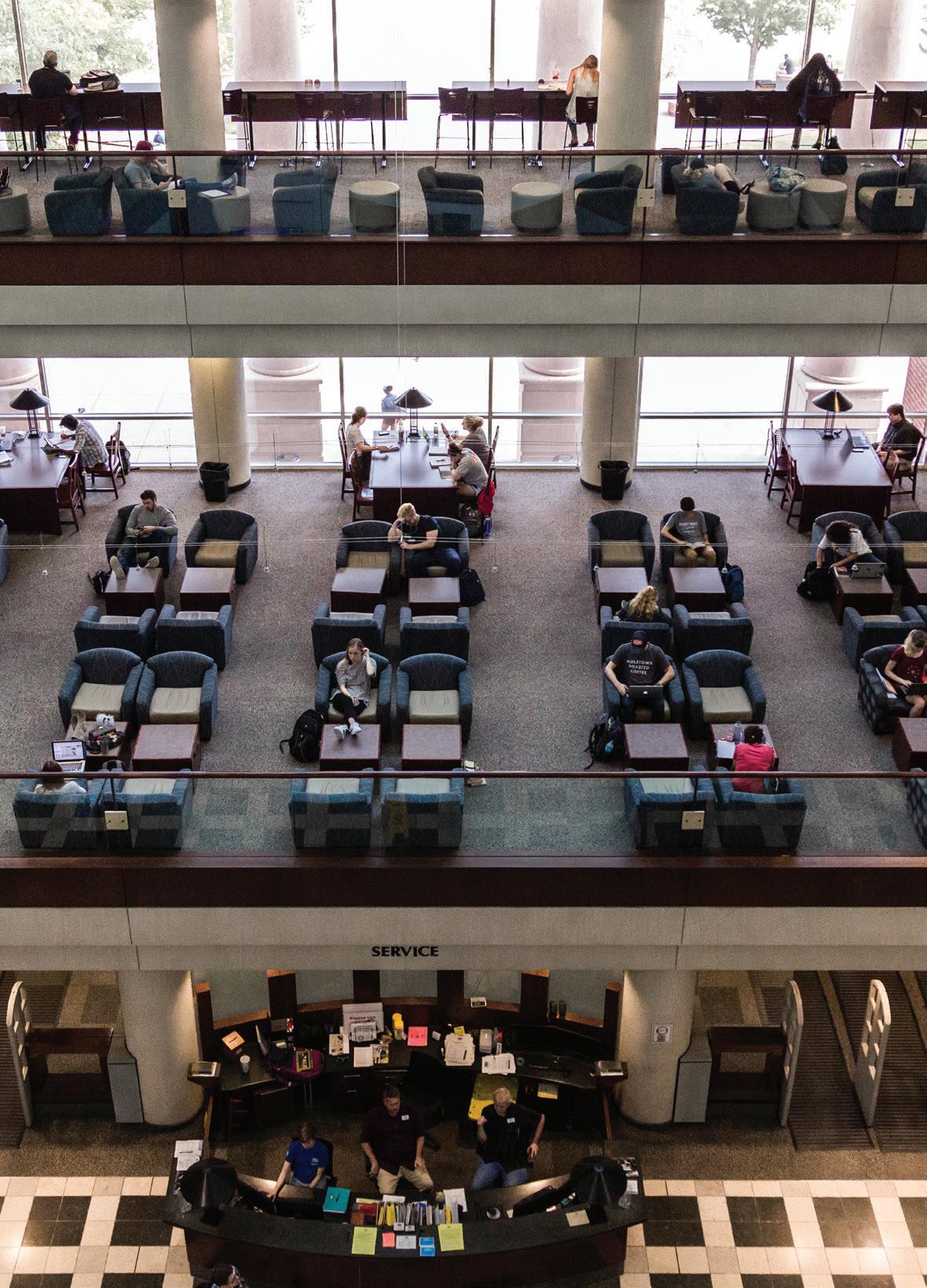
Thousands of students walk through the library’s busy atrium on any given day, many headed to locations across the building’s four floors to get to work on papers, studying, and everything that goes into being a successful college student. However, it’s not always as simple as a finding a table and beginning to study.
The work of a college student is varied, and students tend to work in their own unique ways. Walker Library will always strive to provide the best setting possible for each student to be successful, and that starts with the evolution of the study spaces throughout the building.
The library is large, with 250,000 square feet spread over four floors, and has hundreds upon hundreds of chairs, tables, and other furniture for visitors to use. For most students, this is all they need. Whether they’re hanging out in the open lounge on the second floor that overlooks the quad or huddled away at a quiet corner table on the third floor, they have the space to complete their schoolwork.
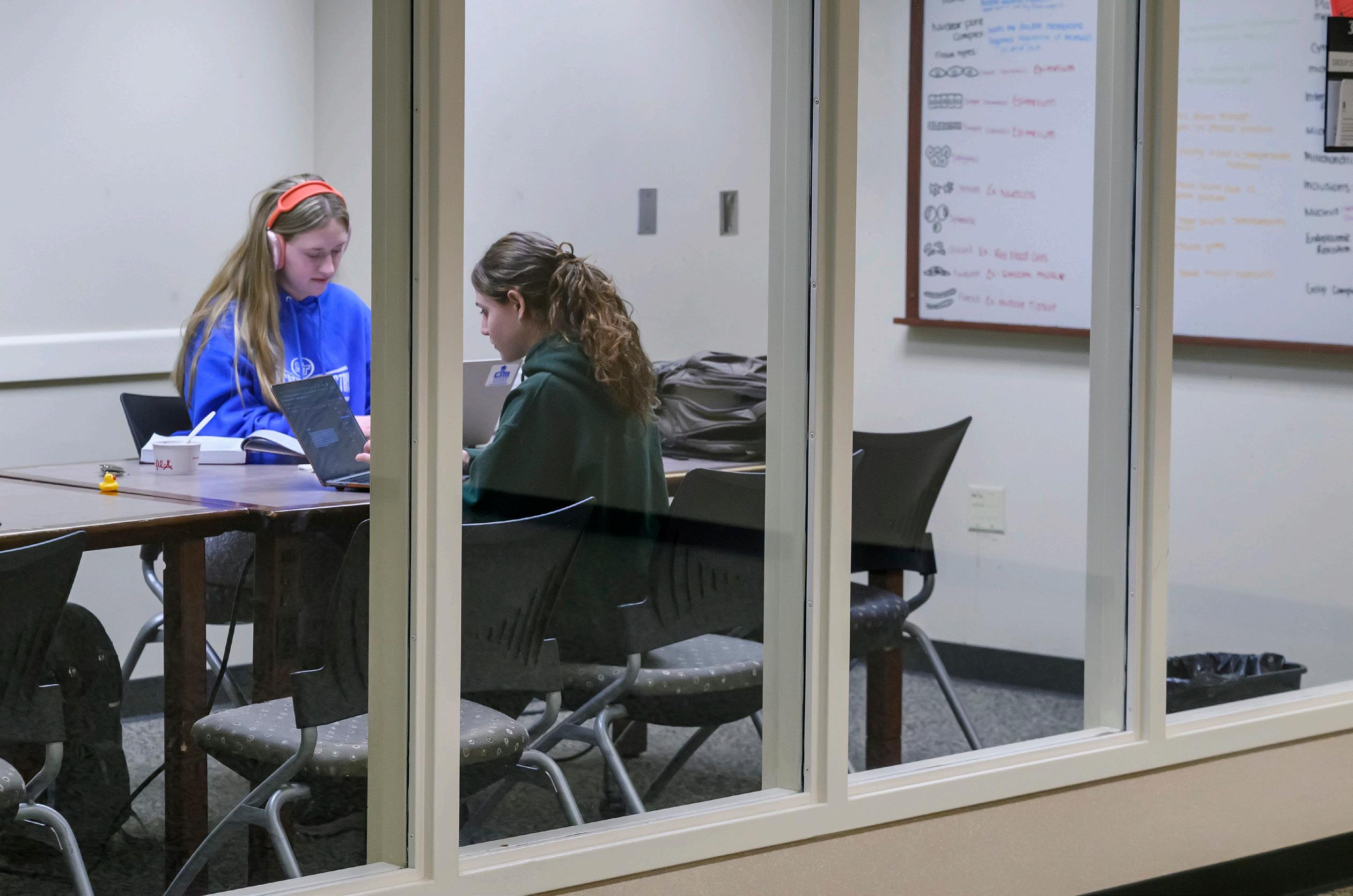
For others, the library has a number of specialized offerings. The most popular spaces are the group study rooms. Dozens of them are spread across the building, with varying sizes for groups big and small. All are equipped with computers and dry-erase boards. These rooms are so popular that during the high-traffic times, around finals and midterms, students will schedule their time a week in advance.
Due to the popularity of these rooms, there’s been an even greater focus on adapting other spaces in the library to create more study rooms. Initially, this began with individual study rooms, designed for just one patron who might want a quiet space or a place to work on an online course.
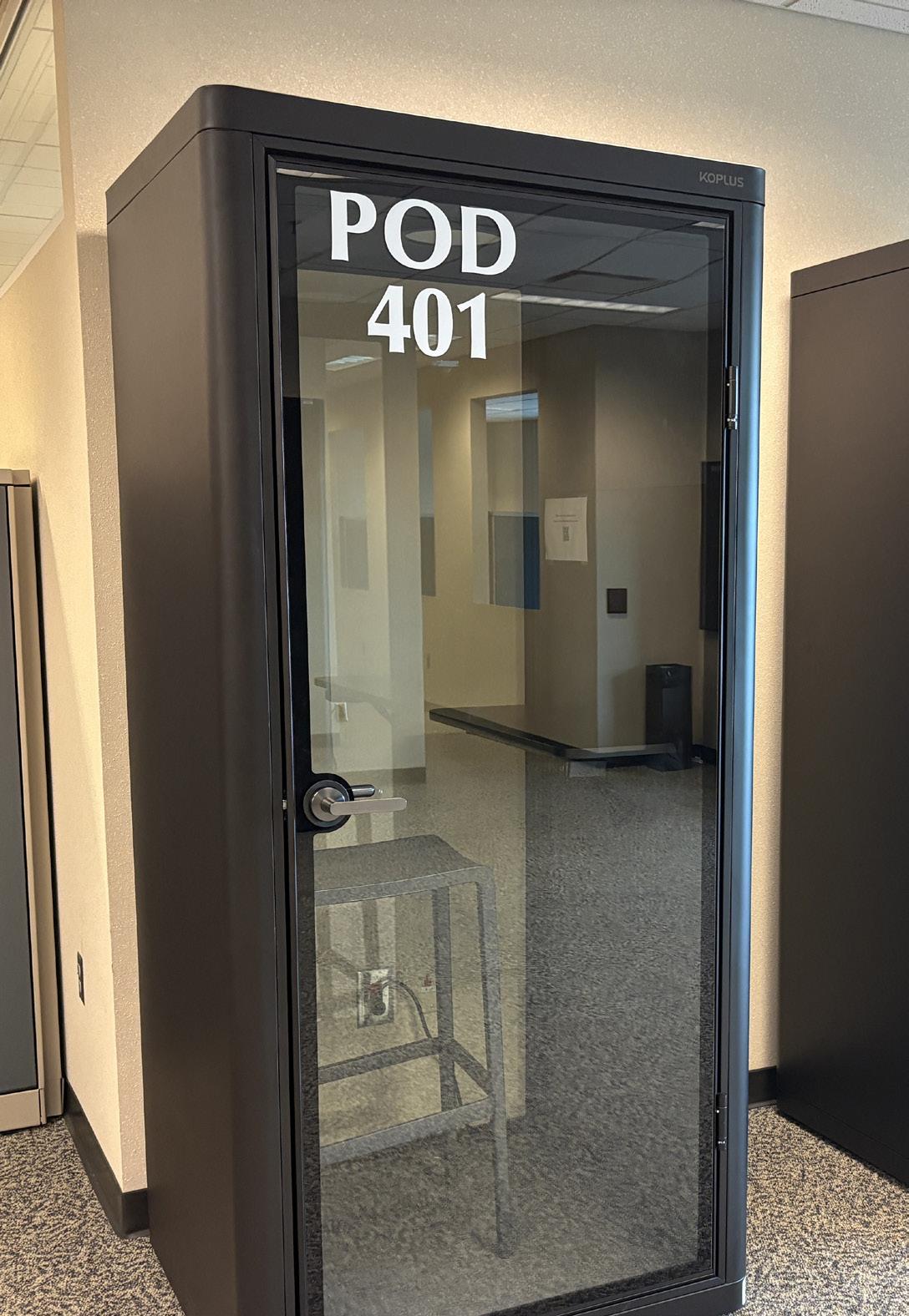
The success of these rooms led directly to the installation of five study pods. These standalone structures resemble large telephone booths, and they’ve proven quite popular. Each pod is equipped with its own lighting as well as a countertop and chair.
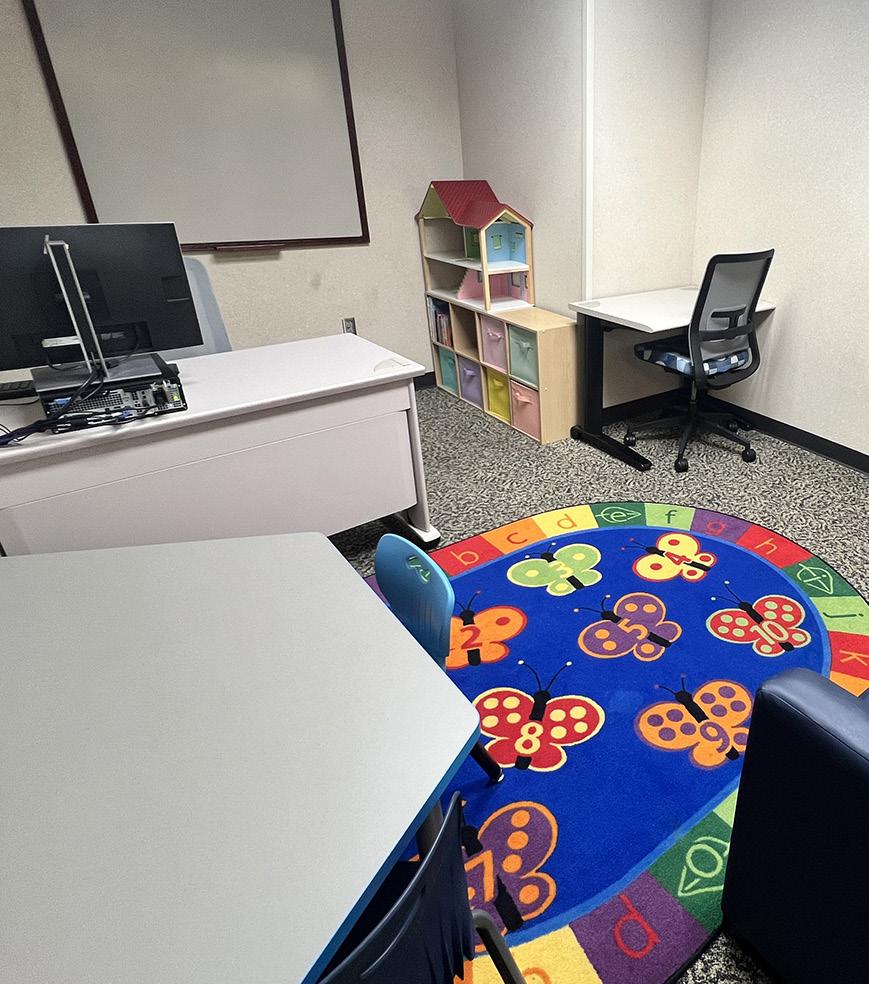
While the number of individual spaces grew, other students needed study space that could accommodate a young family. This led to the creation of the Family Study Room on the third floor inside the Curriculum Collection. The room, which opened in Spring 2025, is set up with two independent workstations as well as child-sized furniture, children’s toys, books, and a whiteboard.
For those working on long-term projects, the library also offers student research carrels, which feature a work surface with lockable storage area, as well as a limited number of research offices.
There are also two reading rooms in the building for dedicated student populations: The second-floor Graduate Reading Room is accessible only to graduate students, while the fourth-floor Buchanan Room is designed with Honors College students in mind. The latter room is named for MTSU graduate and Nobel laureate James M. Buchanan.
Study
Room Stats
15,664 reservations
528,051 gate count
38,855 items checked out
2024–25 academic year
A select number of study rooms have been named in honor of University friends and alumni. To learn more about giving to the library, please visit library.mtsu.edu/give.
Inside Walker Library
RETURN OF ARTS IN THE ATRIUM
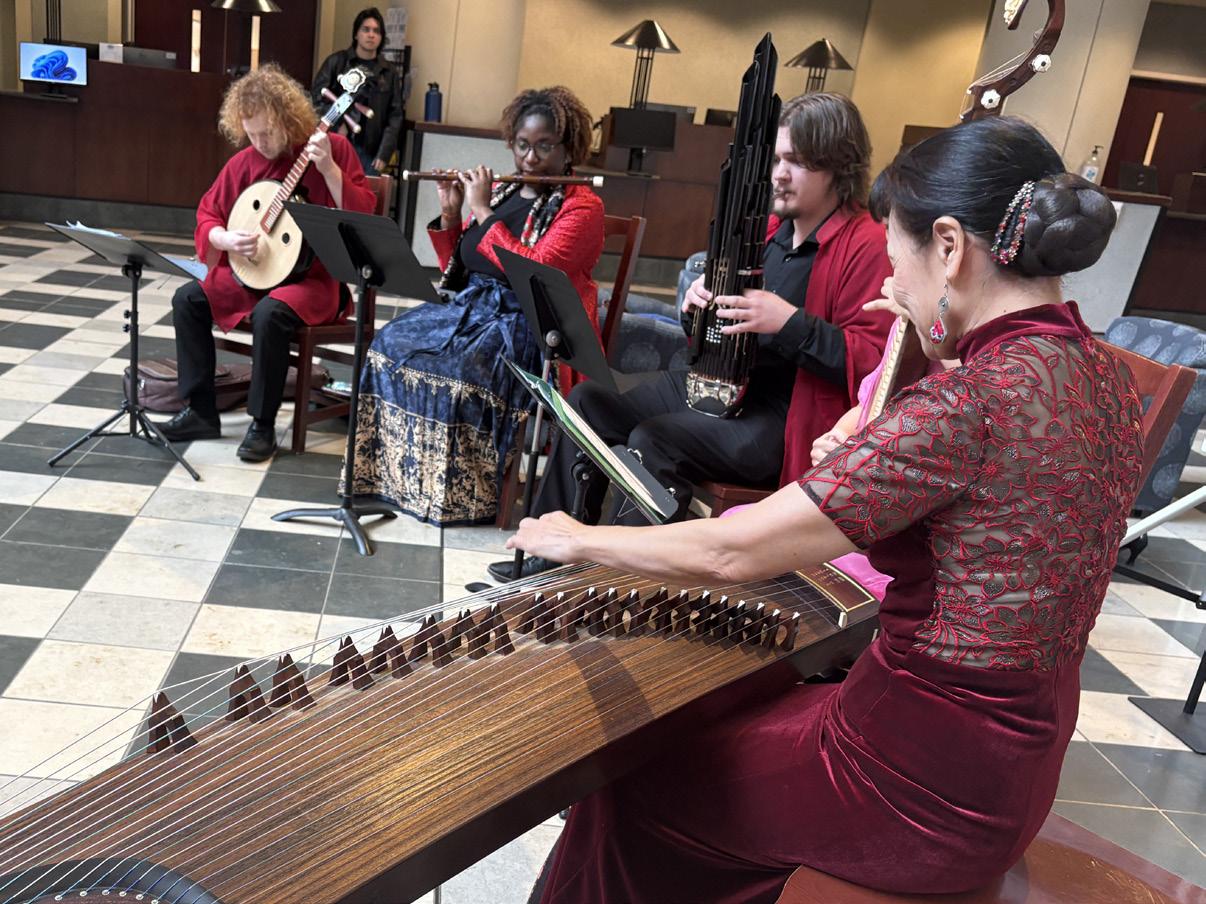
Walker Library’s impressive main entrance has been spotlighted all across campus since the building opened more than 25 years ago, and coupled with the enormous amount of traffic the building regularly receives, it can offer the perfect place for students and faculty to showcase their talent in front of their peers. That’s where visual and performing arts librarian Grover Baker steps in with the Arts in the Atrium series that regularly welcomes performers from the School of Music and Theatre programs to perform brief noontime concerts on the library’s first floor. This past year featured concerts from the Blue Bones Quartet, MTSU Flute Choir, and Chinese Music Ensemble as well as a performance from the musical The Pirates of Penzance
TEXTBOOK SAVINGS
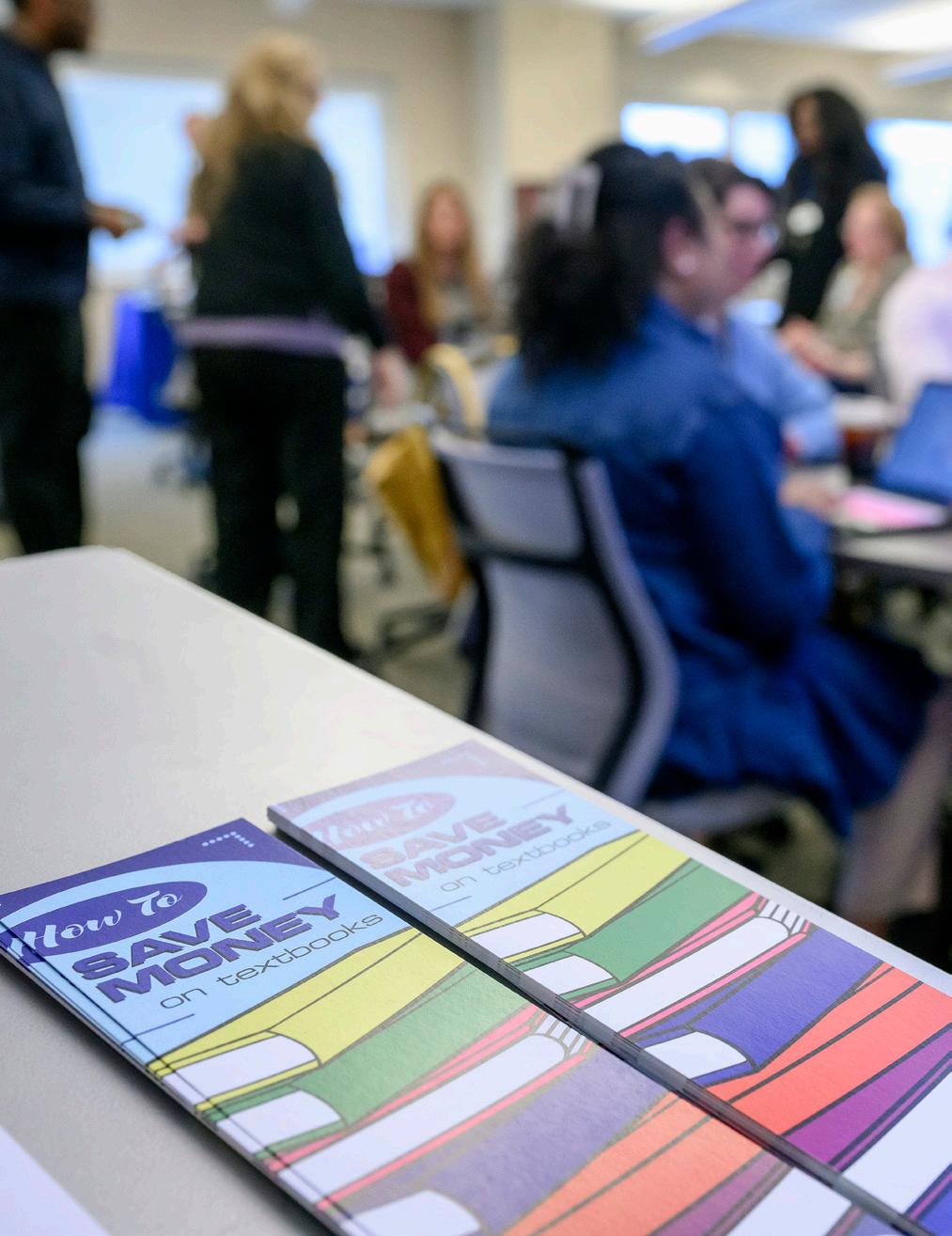
Committed to lowering the cost of attending MTSU, Walker Library continues promoting the use of open educational resources (OER). Spearheaded by Giselle Baskin, the OER initiative at Walker Library supports educators in identifying, using, customizing, creating, and publishing free resources. The library has taken the leadership role in this initiative across campus, and in the process, students have saved more than $3 million on the cost of textbooks since implementation began in 2022.
The library also awarded a number of grants to help MTSU faculty create and use OER in their classes. The winners of the grants are listed below, and these projects are expected to save students a further $203,000 each school year.
Grant recipients
Scott Coble (Social Work)
Janet Colson (Human Sciences)
Carmelita Dotson (Social Work)
Stacy Fields (Education)
Andrea Georgiou (Aerospace)
Kim Godwin (Education)
Sarah Harris (Human Sciences)
Nour Kattih (Economics and Finance)
Scott McDaniel (University Studies)
Katherine Mangione (Education)
Amy Sayward (History)
Additionally, the library hosts a collection of general education course textbooks that students can check out and use for free within the building, further saving students some of the costs of college.
SEED LIBRARY
One of the unique initiatives put together at the library is the new Walker Library Seed Library. Hosted on the first floor, this resource provides the MTSU community with free vegetable, flower, and herb seeds to promote sustainability and healthy eating. Users may select up to five packets per week. Last fall, the library partnered with the Rutherford County Master Gardeners to host an event to help beginners become successful growers.
MAKERSPACE NEWBIES
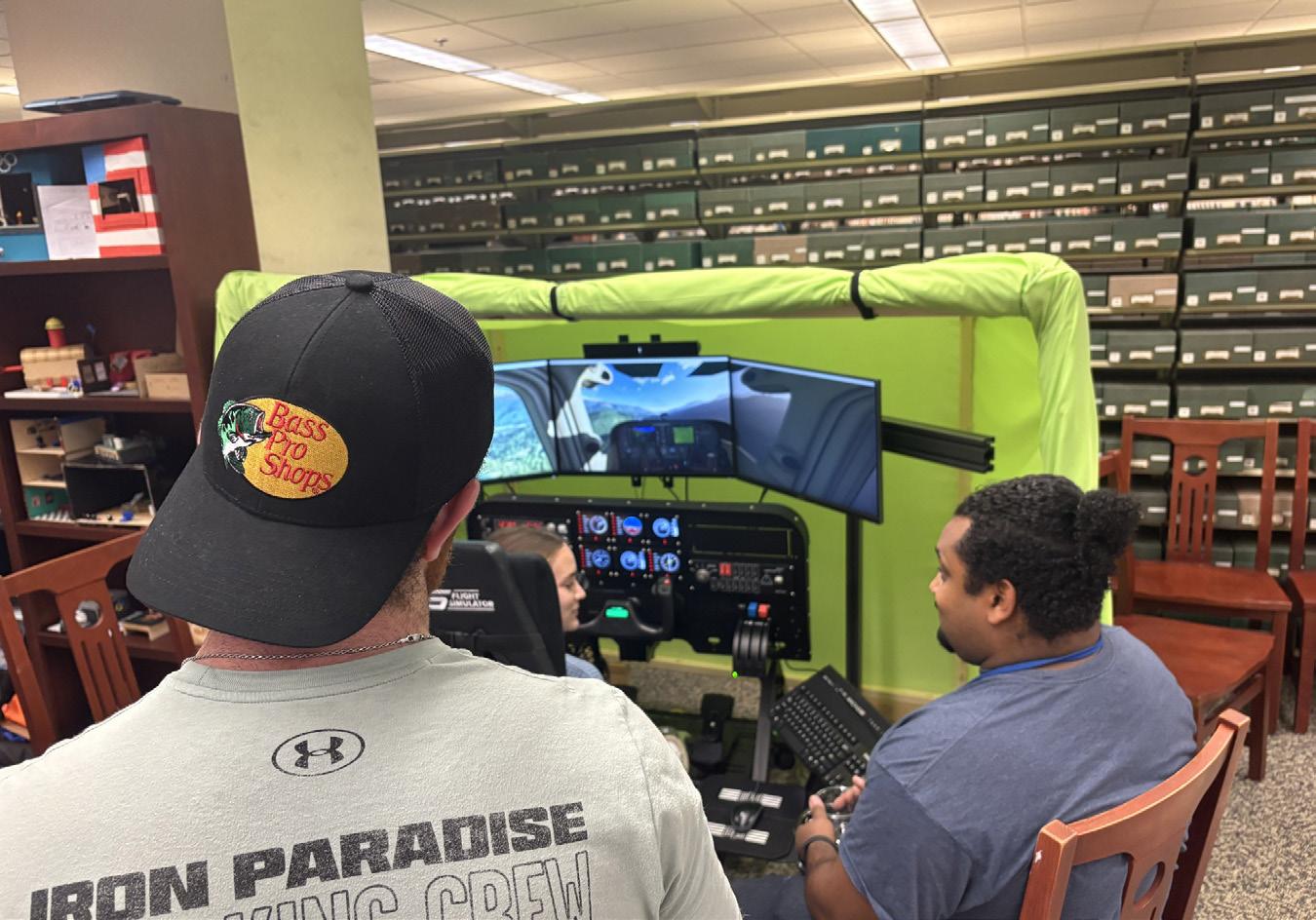
One of the longest-running successful events at Walker Library continues to be the Makerspace Open House, sponsored by Engage. More than 100 students crammed into the second-floor space for an evening last fall to learn more about all the things it offers. From learning how to land an aircraft on the flight simulator to working within virtual reality to 3D printing to podcasting, there was something for everyone, which is core to the ethos of the Makerspace. Whether students are beginners or experts, the Makerspace is there to help them in their creation journeys.
FABRICATION ACADEMY FOR CADETS
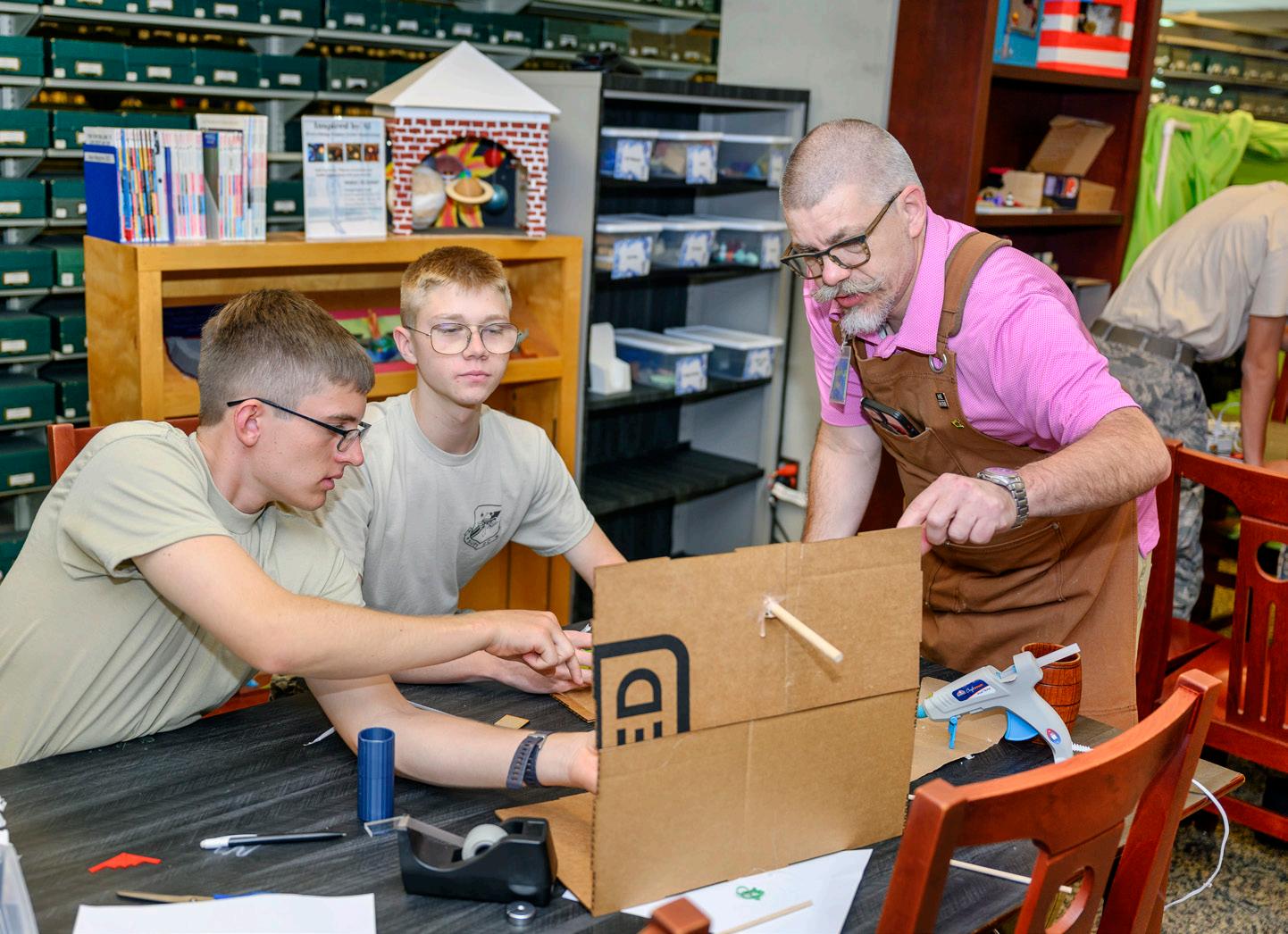
The Civil Air Patrol’s National Engineering Technology Academy returned to MTSU in July, and once again, Walker Library’s Makerspace was happy to be involved. In total, 40 cadets representing more than 20 states made the trek to MTSU for the academy, which has taken place on campus since 2017. While in the Makerspace, the cadets used the technology available to create Rube Goldberg machines, an activity that helps students get a better understanding of the different types of fabrication that can take place in a creation hub as expansive as the Makerspace.
CREATING WITH CARDBOARD
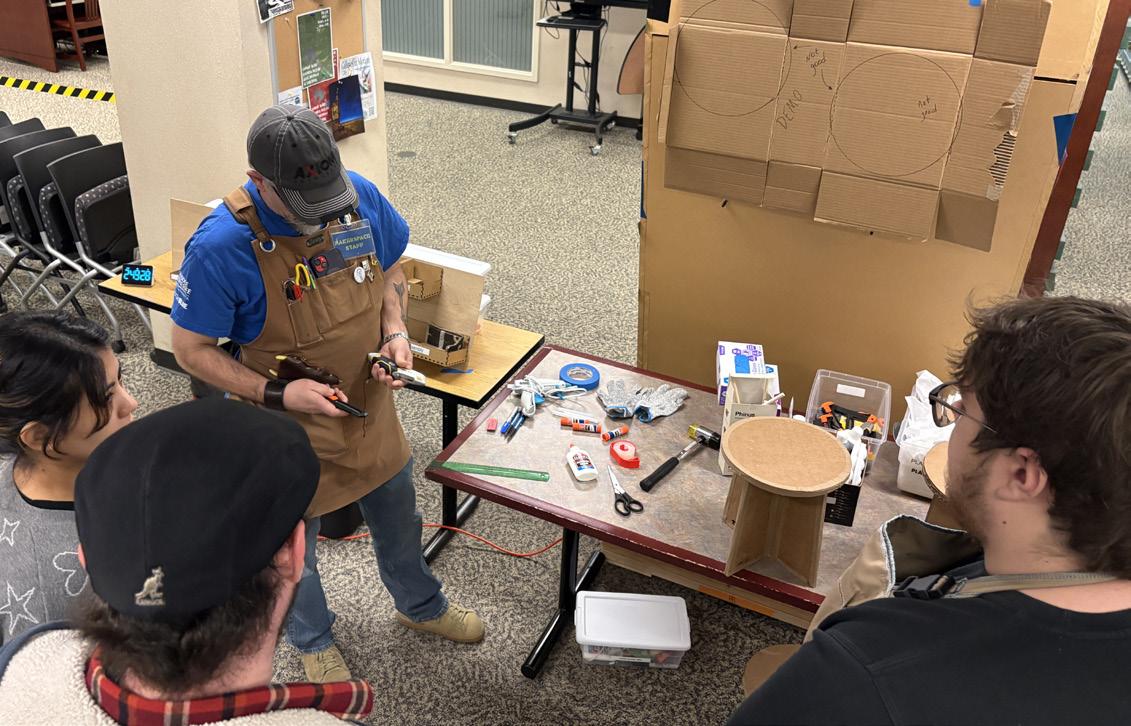
It’s understandable that the 3D printers and virtual reality grab students’ attention, but Walker Library’s Makerspace is a full-fledged creation space—a fact highlighted in the spring by the Creating with Cardboard workshop. Led by Makerspace specialist Joey Brown, this workshop highlighted ways that students could use something as simple as cardboard to make sturdy elements that can last. One example was a few boxes resembling Lego blocks that could stack together and work well as a chair. Additionally, the event highlighted that cardboard makes a good material for prototyping ideas before committing more expensive resources to a project.
LIBRARY SAVING LIVES
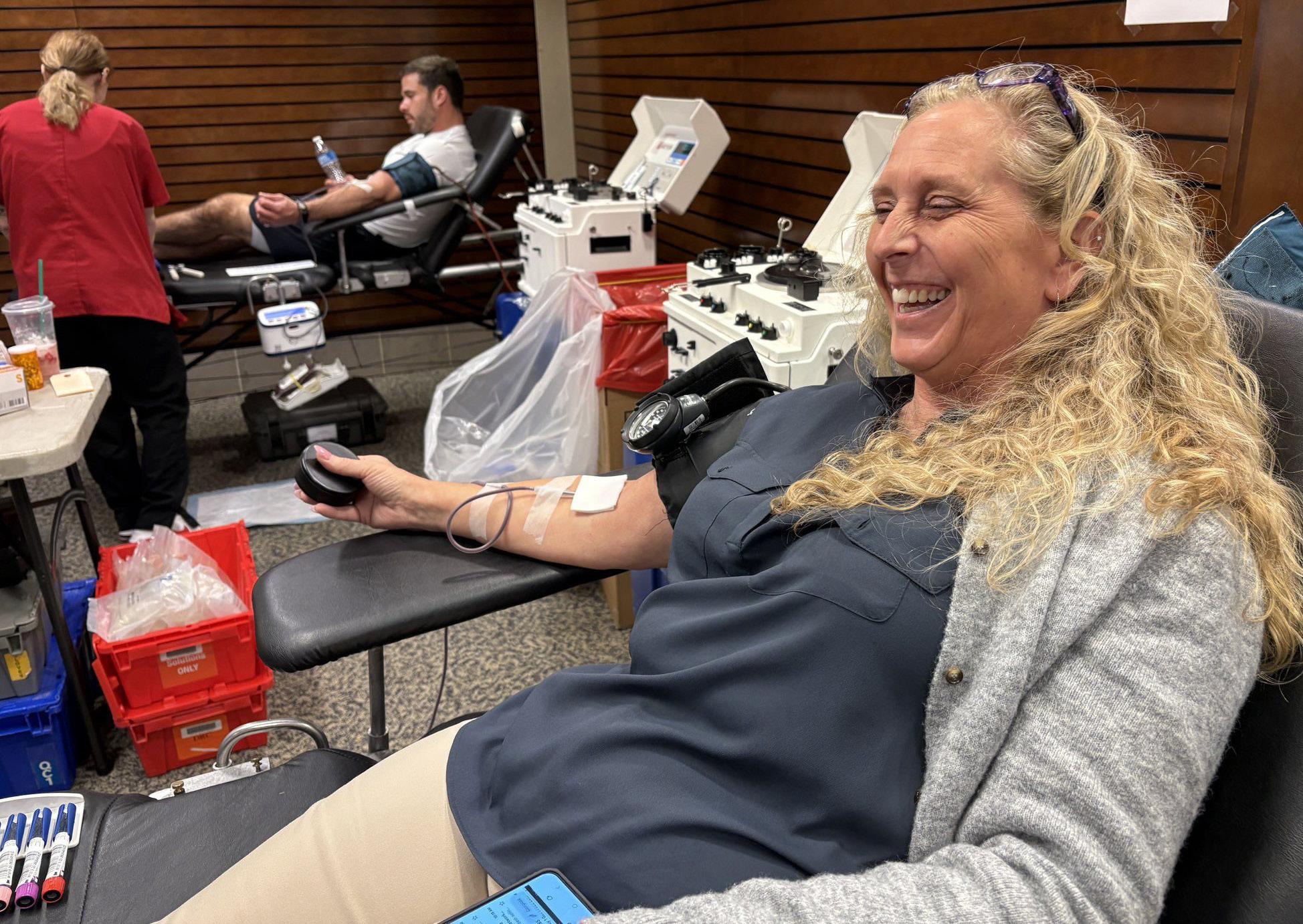
In 2024, Walker Library began partnering with the American Red Cross for semiannual blood drives, and the returns have been impressive. An effort that works in conjunction with similar drives on campus, the library’s first floor was targeted for its visibility and location. Technicians roll in first thing in the morning to set up a half-dozen tables and equipment and stay all day before breaking down in the late afternoon. Over the course of four drives so far, this partnership has yielded more than 200 donors, including 61 who donated for the very first time. The Red Cross estimates that this is enough blood to save 477 lives!
SUMMER ORIENTATION AND INITIATIVES
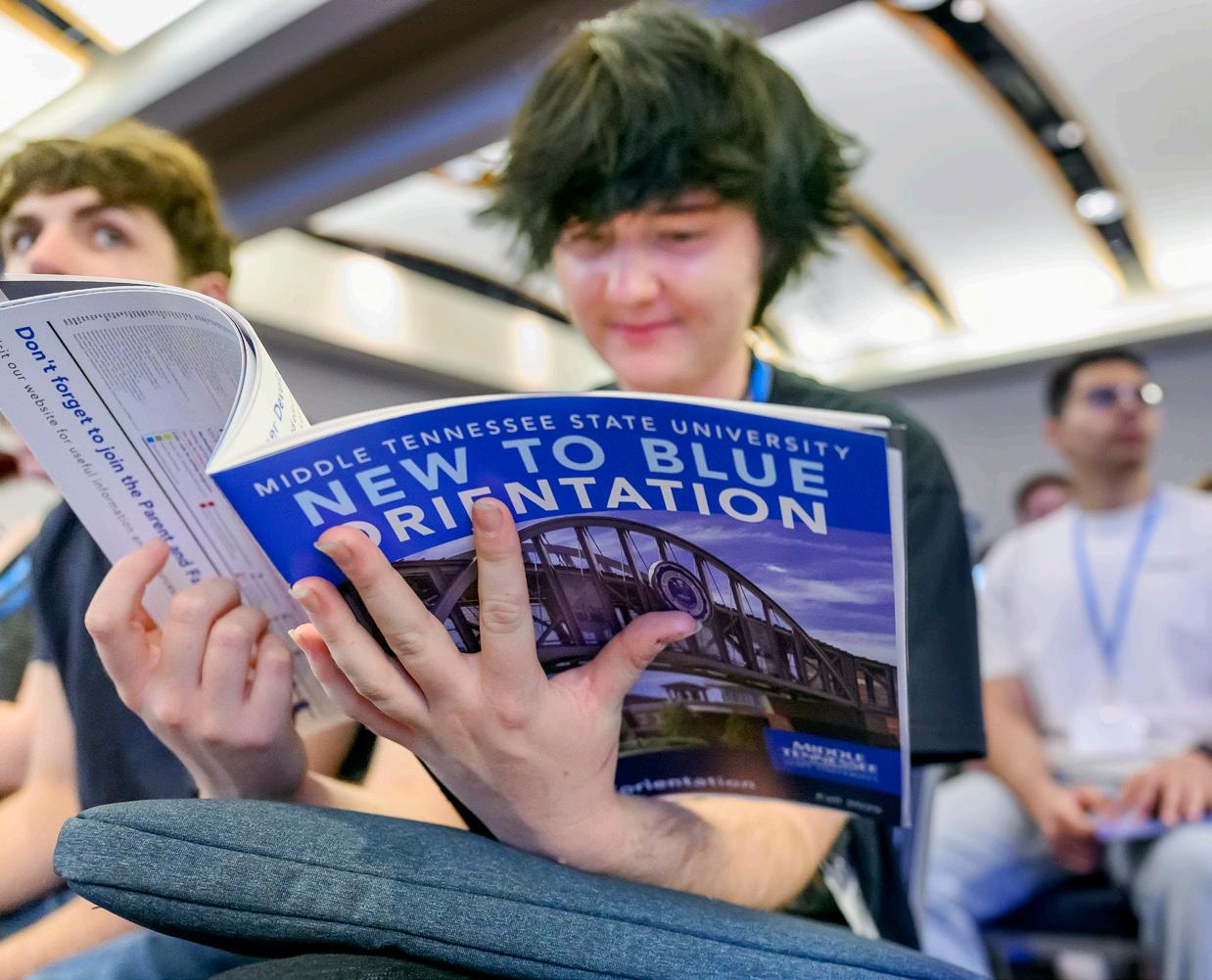
A staple of every summer for Walker Library is welcoming in new Blue Raiders. Library staffers participate in dozens of events from the end of the spring semester through the start of the fall, all designed to help new students feel welcome when they set foot on campus. For most students, that means making a stop at the library’s table during New to Blue Orientation, but activity does not end there. The library is very involved in events like the Scholars Academy’s Summer Institute, Newcomer Briefing for the Charlie and Hazel Daniels Veterans and Military Family Center, and International Student Orientation. These events are vital in making sure that incoming students feel supported from Day 1.
INFO LITERACY GRANTS
Walker Library annually awards Information Literacy Curriculum Integration Grants to MTSU faculty. The recipients partner with MTSU librarians over the course of a year to integrate library and information literacy skills into one of their courses. For this 10th year of grants, the winners were Lando Carter (Educational Leadership) and Kate Pantelides (English). Carter is working with librarian Jordan Nielsen to introduce doctoral education students to the strategy of lateral reading as a means to combat disinformation. Pantelides is partnering with Jason Vance to redesign ENGL 6821/7821 to better prepare English master’s and doctoral students to teach introductory research skills in undergraduate writing classes.
EMPLOYEE OF THE YEAR
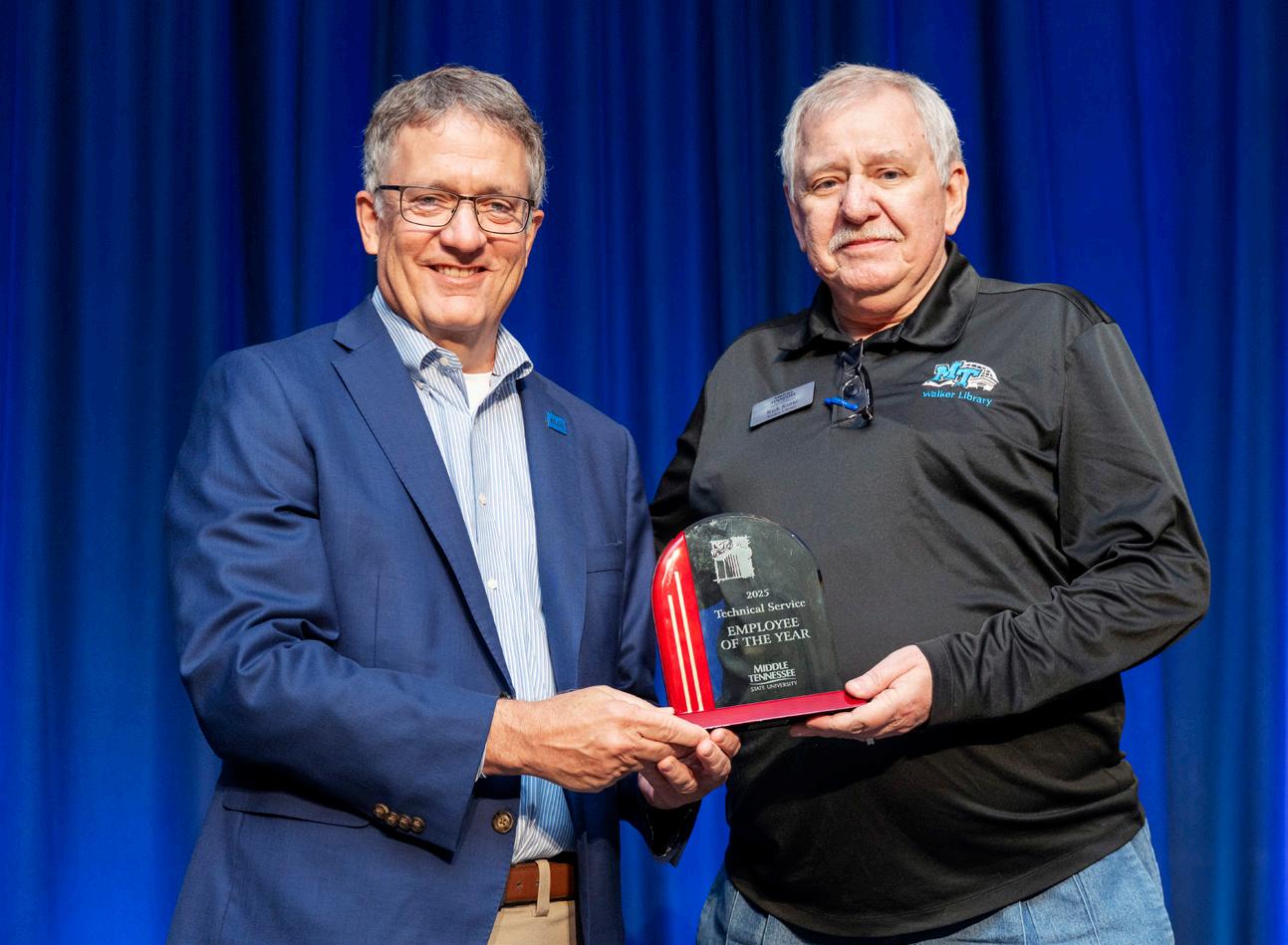
Everyone who has walked into Walker Library over the past 25-plus years, as well as the former Todd Library before that, will recognize the face of longtime Service Desk worker Rick Kurtz ( pictured right ). His loyalty and service to the University was formally honored by MTSU last spring when he was named Technical/Service Employee of the Year. Coworkers and patrons alike have admired his poise and compassion when faced with emergencies. Kurtz, who retired in January, referred to himself as the “old man of the library,” and his institutional knowledge was second to none.
CELEBRATING STUDENT WORKERS
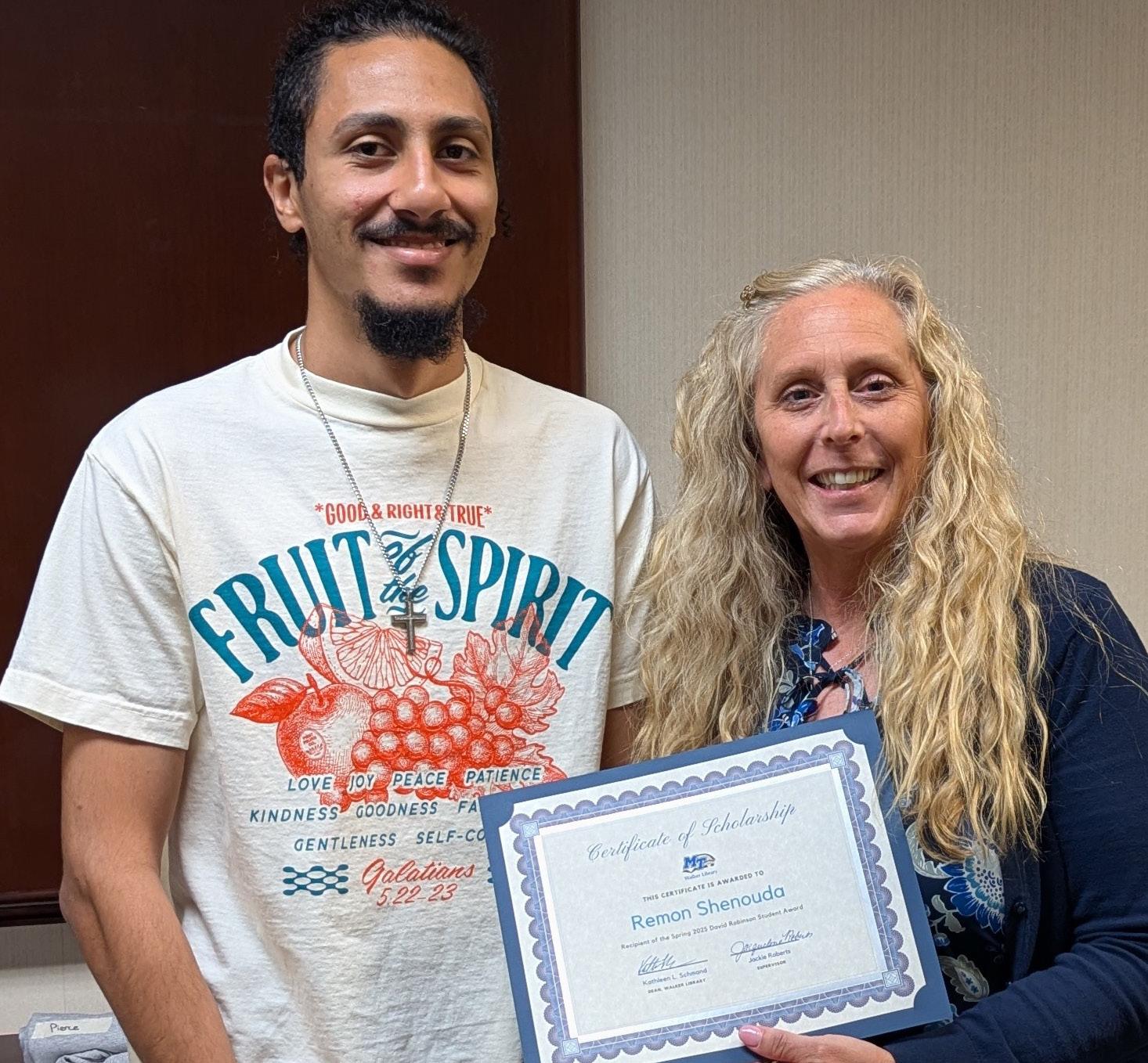
Every Study Day, Walker Library takes a moment to honor its student workers. The library is one of the busiest buildings on campus, and due to its long hours over the course of the week, the students who make up a huge part of the staff are the ones that keep operations running. This is not something that is lost on any of the full-time staff. In the winter, the admin suite on the fourth floor often plays host for a daylong holiday party for any and every student worker on campus, and in the spring, the library celebrates its graduating seniors with a ceremony as well as awards a pair of scholarships. Last May, Library Technology’s Remon Shenouda ( pictured left ) won the David Robinson Award, and Curriculum’s Cloee Case took home the student assistant scholarship.
HONORING HITS AND BREAKING BARRIERS
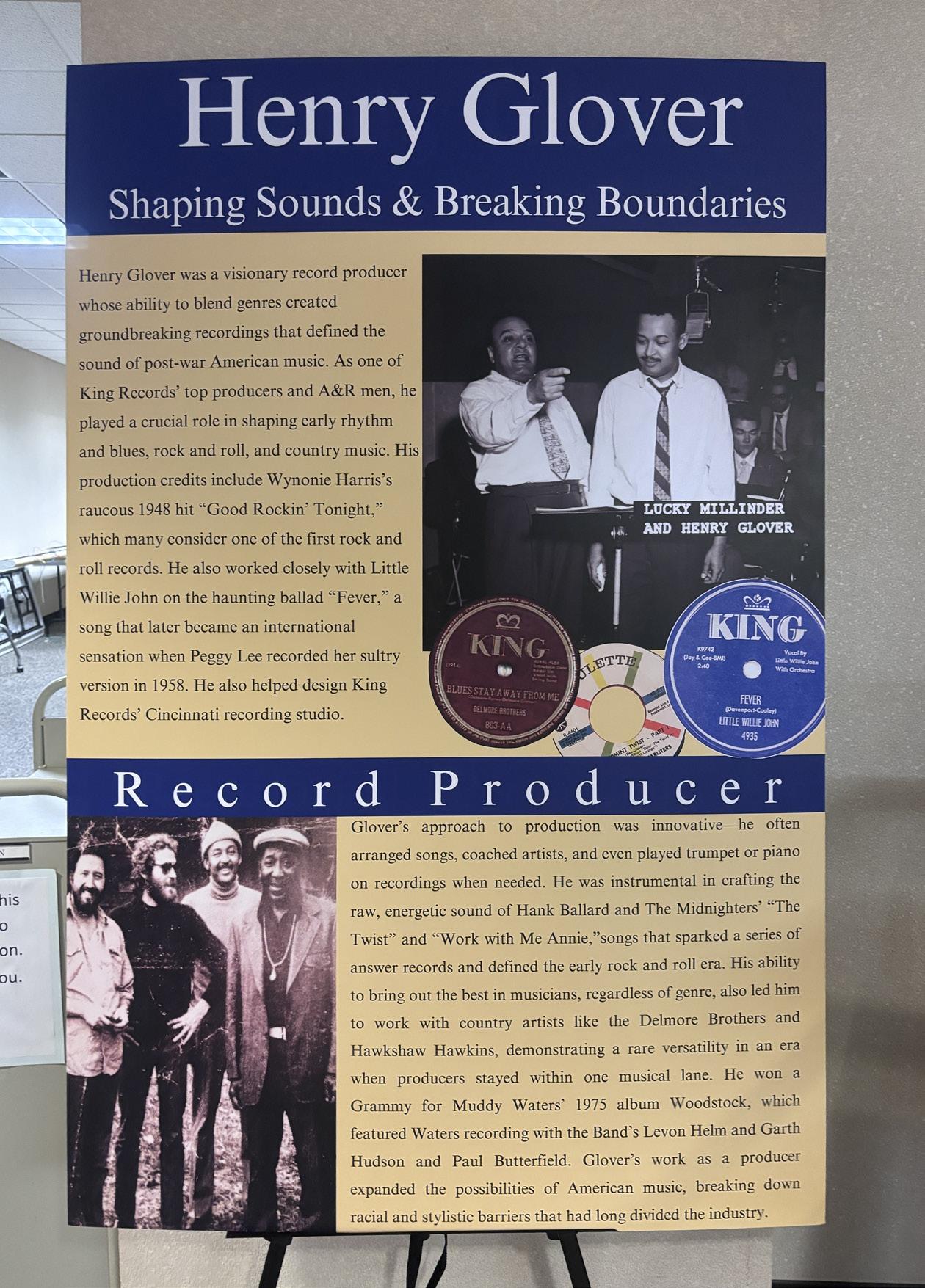
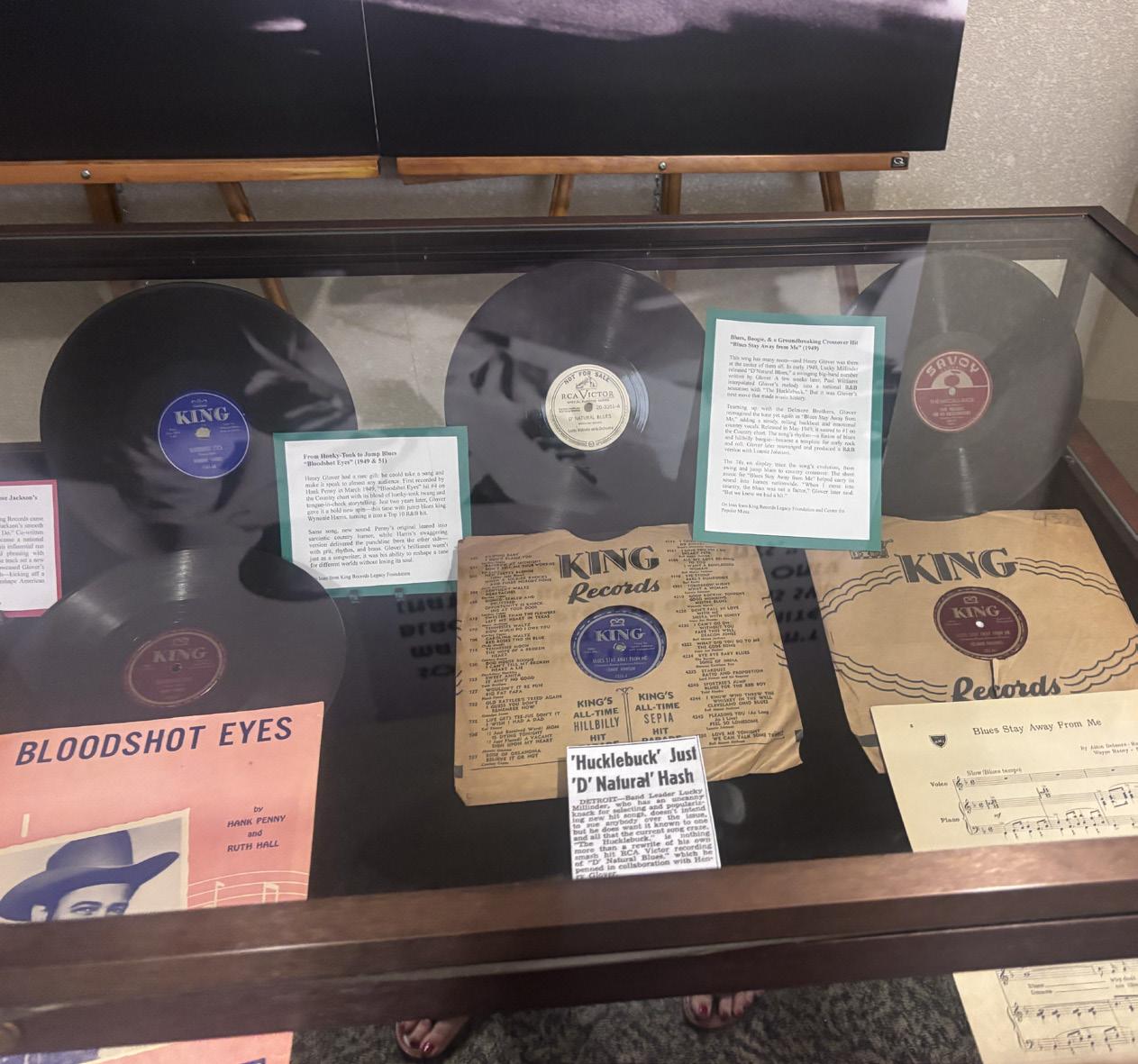
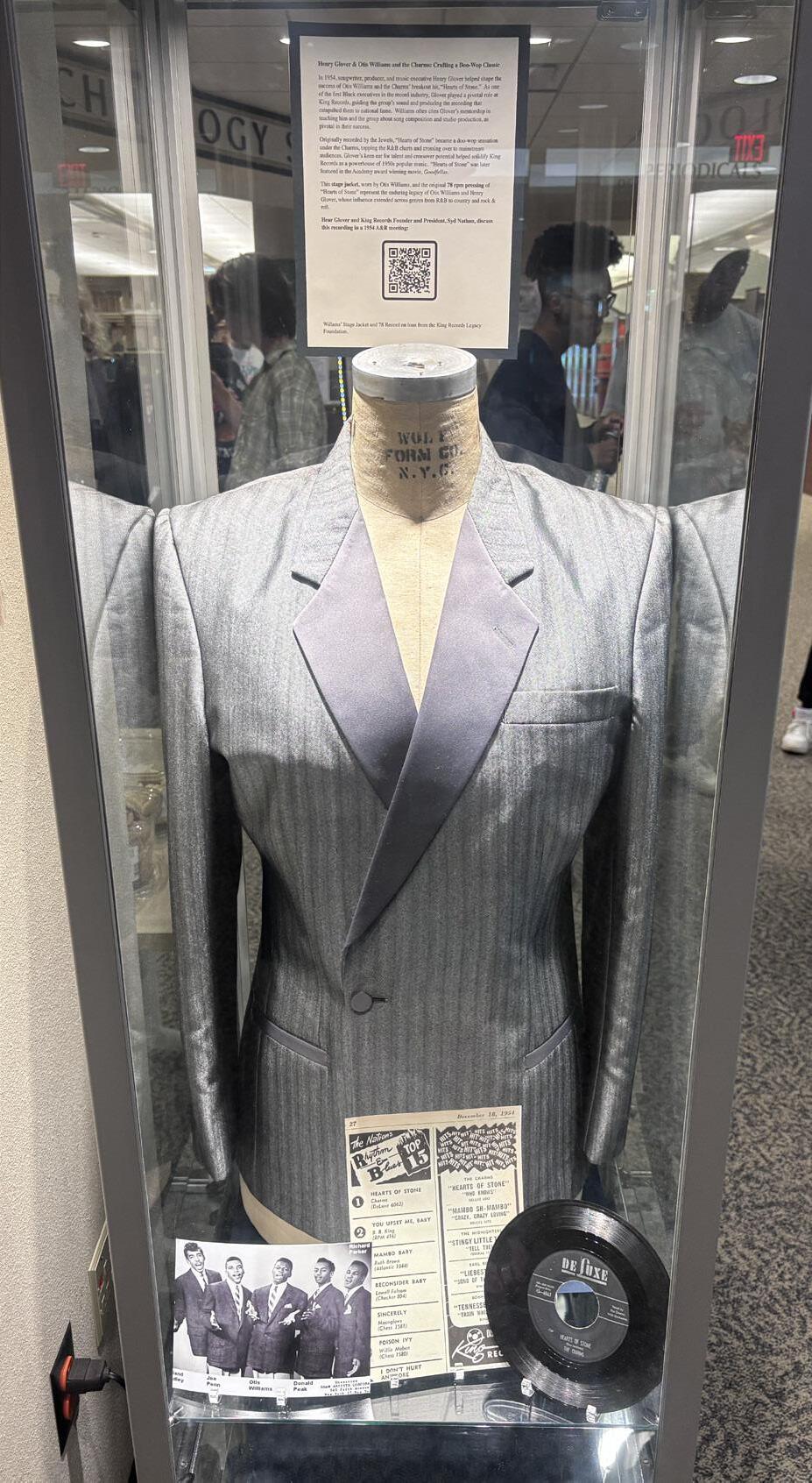
MTSU’s Department of Recording Industry partnered with Walker Library last year to showcase the story of Henry Glover. The “Breaking Barriers and Making Hits” exhibit honored the legacy of Glover, a pioneering Black record producer, songwriter, musician, music executive, and music publisher who helped shape the sound of American music. Glover was the first Black producer to cross genre lines, leaving an indelible mark on R&B, country, rock, jazz, gospel, and more. He worked with legends like James Brown, Ray Charles, Peggy Lee, Elvis Presley, Madonna, Tina Turner, and Sarah Vaughan on the way to producing more than 1,000 songs across four decades.
The exhibit, developed by students in Charlie Dayan’s RIM 3000 Honors class, featured a number of rare items, photos, and interactive elements that allowed patrons to hear some of the music Glover helped create as well as a 1950s interview with the man himself.
BLUEGRASS STAMP-MAKING PRESENTATION
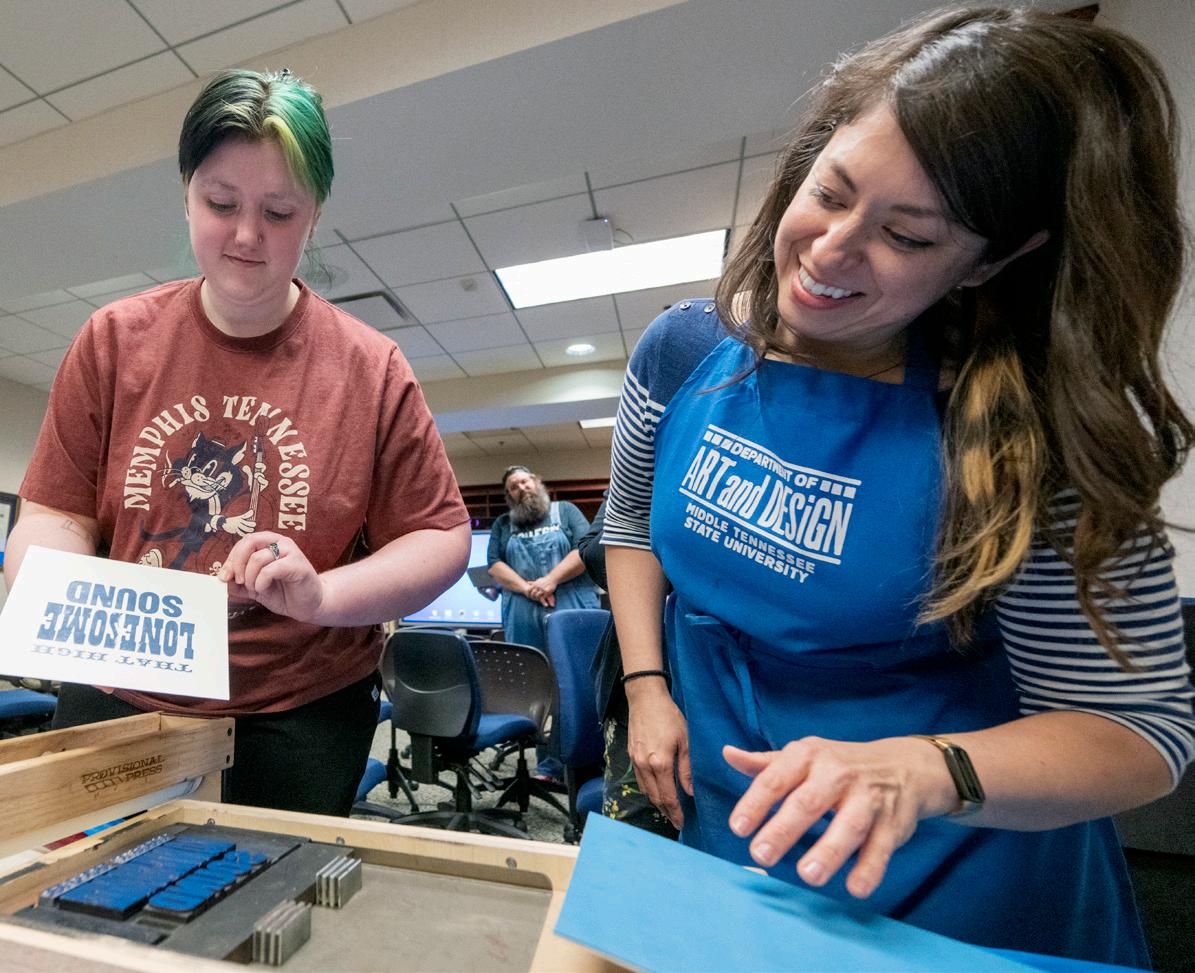
Walker Library’s Special Collections linked up with the Department of Art and Design and the Center for Popular Music to host a special engagement featuring artist and MTSU grad Heather Moulder (pictured right). The event, titled “Bluegrass Forever: The Making of a First Class Stamp,” showcased Moulder’s instantly iconic U.S. stamp that celebrated bluegrass music. The stamp featured a five-string banjo, guitar, mandolin, and bass on a multicolored background. Moulder, who also works for the legendary Hatch Show Print in Nashville, used a letterpress in designing the artwork, and it was unveiled for the first time outside the post office in nearby Readyville.
SPECIAL COLLECTIONS EXHIBITS
VISIT BY FERMENTATION “GODFATHER”
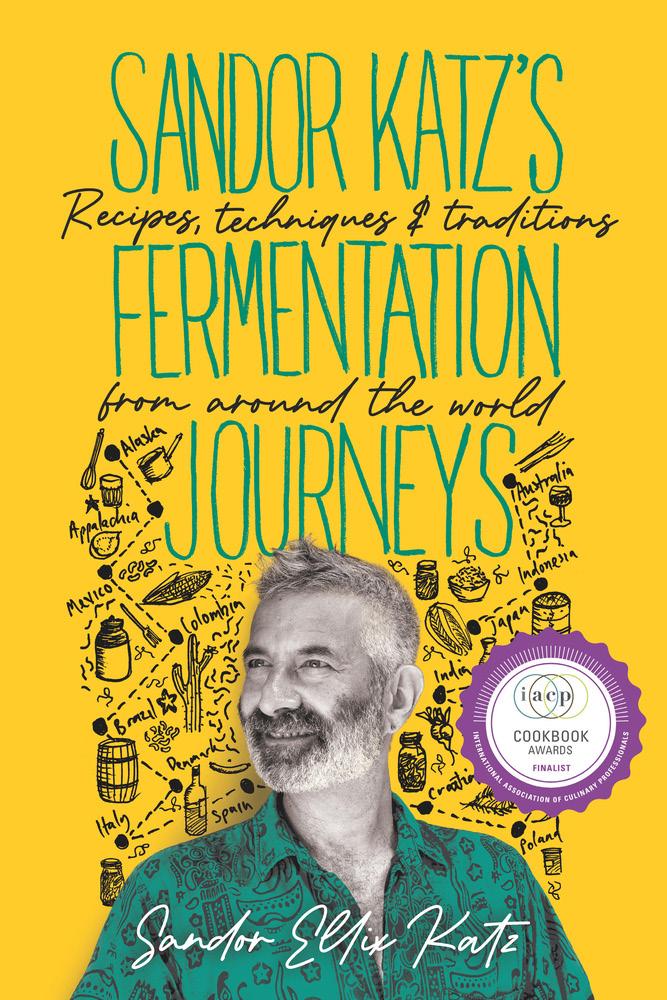
After receiving a grant from MTSU’s Distinguished Lecture Fund, Walker Library’s Special Collections hosted “Godfather of Fermentation” Sandor Katz for a special event highlighting fermentation in food science. A resident of nearby Woodbury, Katz is an internationally renowned author who has traveled the world to teach about fermentation. His book The Art of Fermentation was a New York Times Bestseller and voted as one of the 25 Most Influential Cookbooks of the Last 100 Years by a Times panel of experts in 2024. The library, which boasts a growing Distilling, Fermenting, and Brewing Collection, wanted to draw attention to the growth of fermented foods around the world. Following the panel, the library hosted a reception on its fourth floor that featured fermented foods from Katz as well as from Cannon County’s Short Mountain Cultures. MTSU offers both undergraduate and graduate programs in Fermentation Science.
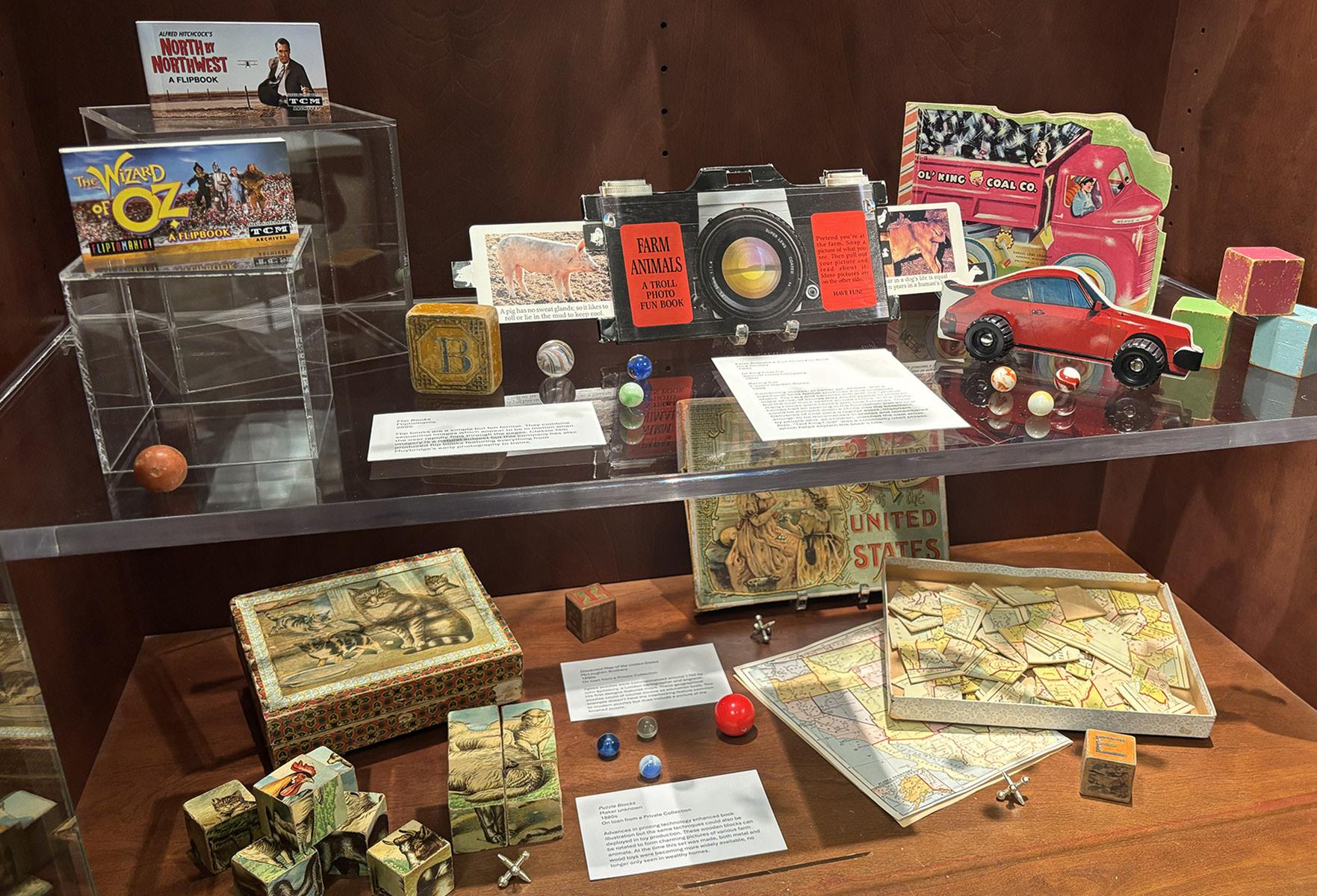
The library’s Special Collections, in addition to the events it hosted, also featured two exhibits in the space on the fourth floor. Last spring showcased “Greetings from Tennessee,” which offered an expansive look at the library’s collections specific to the state. This past fall it hosted “Playful Paper,” which brought together some of the more creative art books in the collection as well as board and card games that are being preserved by the library.
JEWL Magazine
James E. Walker Library
1301 E. Main St.
MTSU Box 13
Murfreesboro, TN 37132
A LIBRARY FOR TODAY AND TOMORROW
James E. Walker Library delivers exceptional services in an environment that inspires learning and interaction, uniting the intellectual and social aspects of our University.
Support from alumni and friends helps us to provide exceptional experiences for our students through the incorporation of technologically rich study spaces, an interactive writing center, about 700,000 physical volumes, a Makerspace, and almost 600 carefully selected databases and millions of full-text articles, e-books, streaming audio and video, and many more online resources for research.
Visit library.mtsu.edu/give to make your online gift, or email devofc@mtsu.edu or call 615-898-2502 for more information.