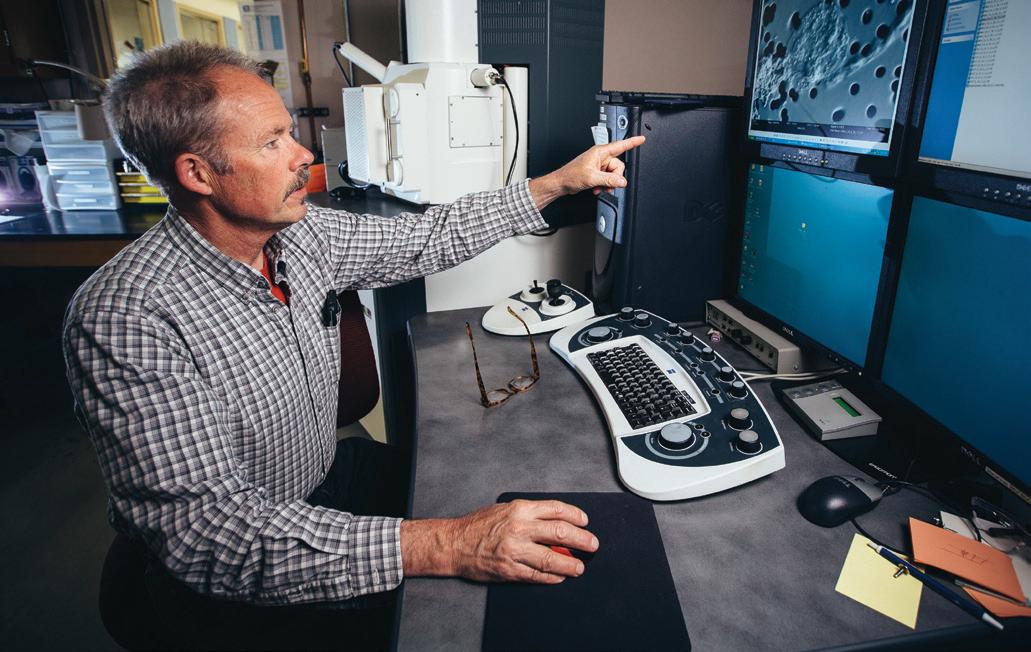
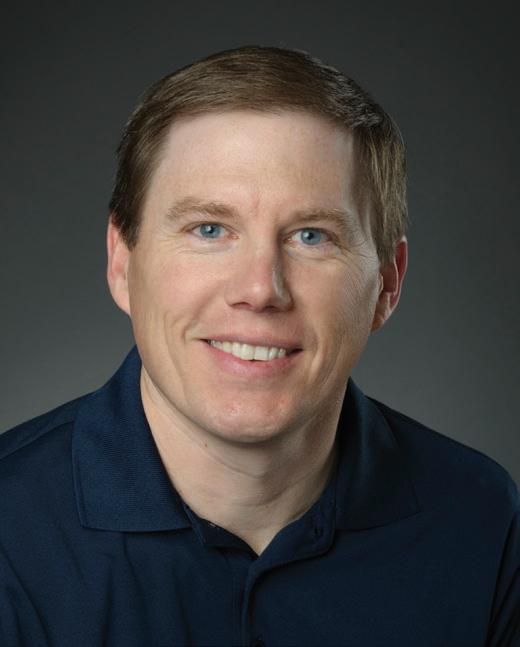
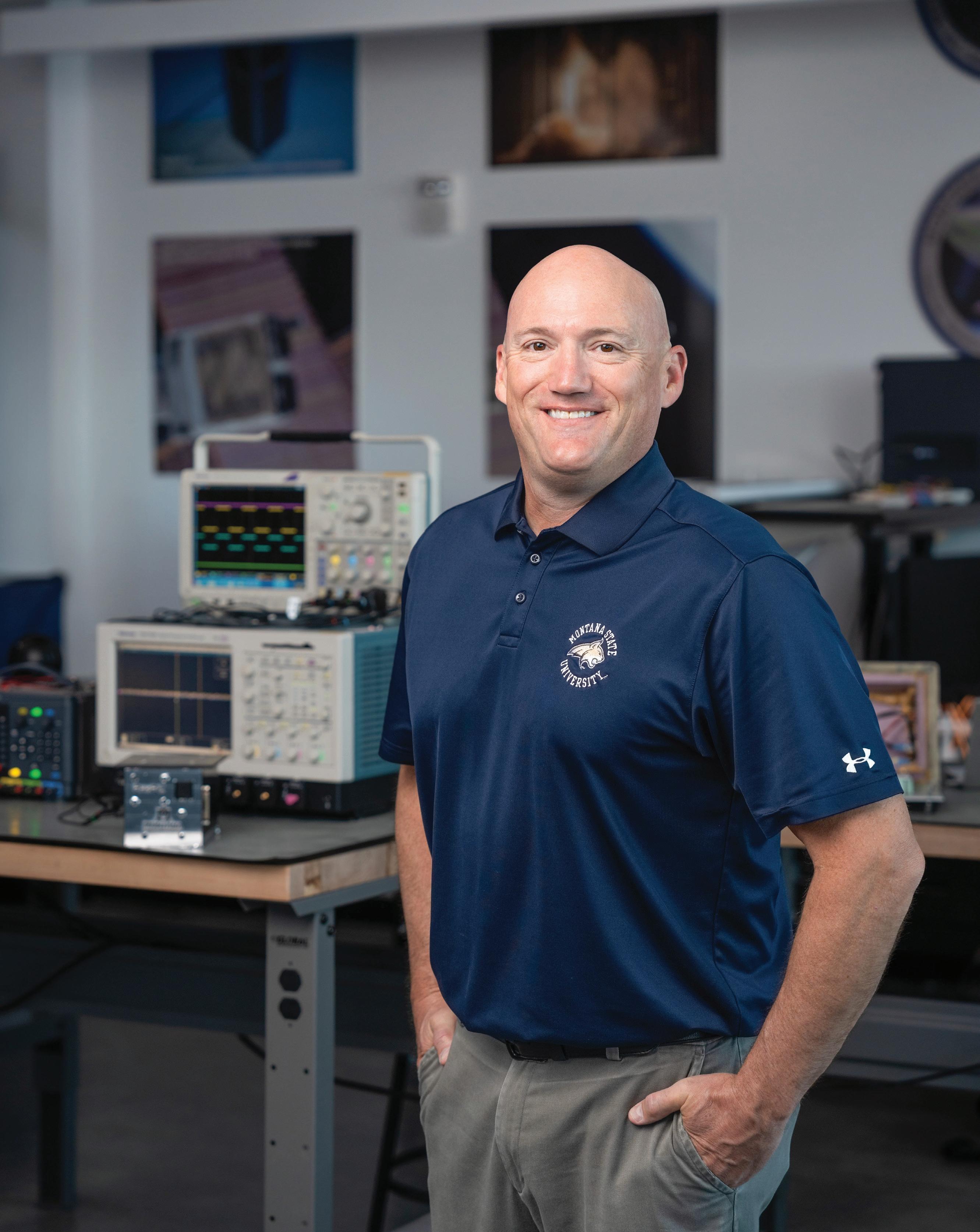
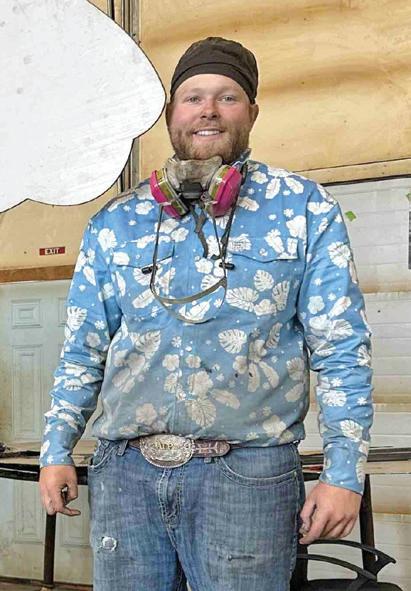
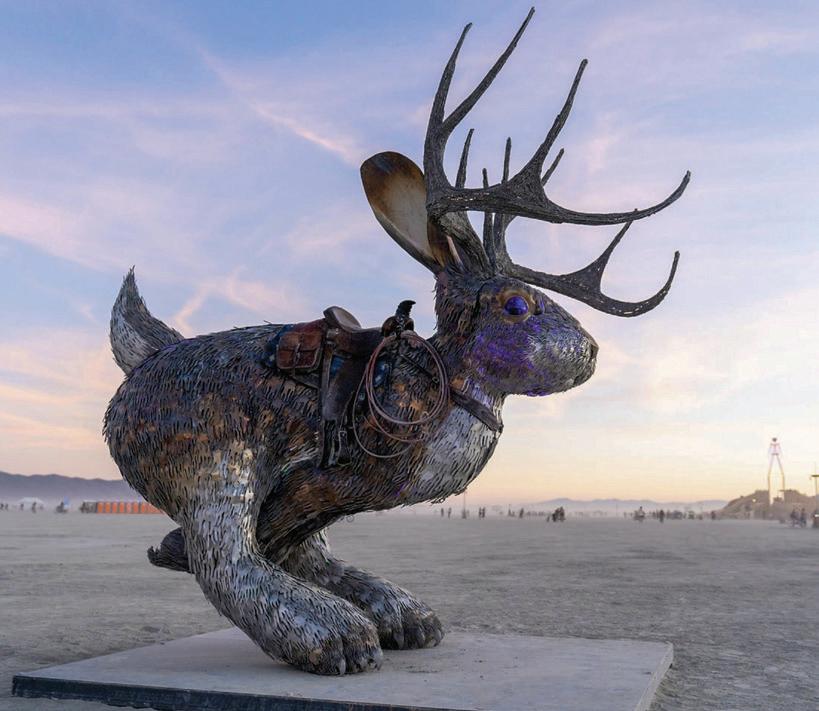
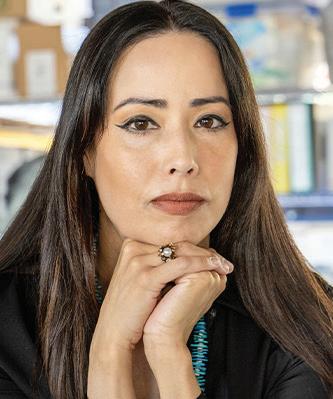
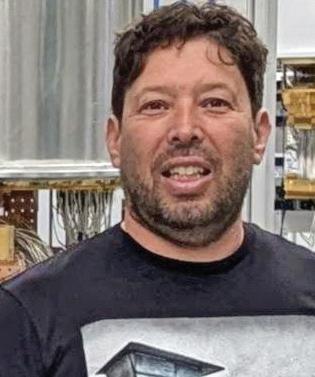
MSU professor and alum Brock LaMeres and his students sent a radiation-resistant computer to the moon, proving Bobcats can compete and shine on a global stage.
Whether on a fly fishing stream or in a research laboratory, this worldrenowned scientist applies the same ambition to all he
After a long and bumpy road, author Devney Perry found her niche, and a loyal following, in a world of romance and intrigue
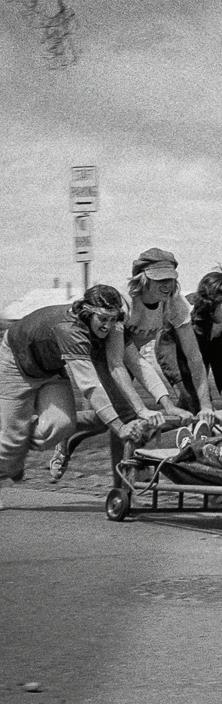
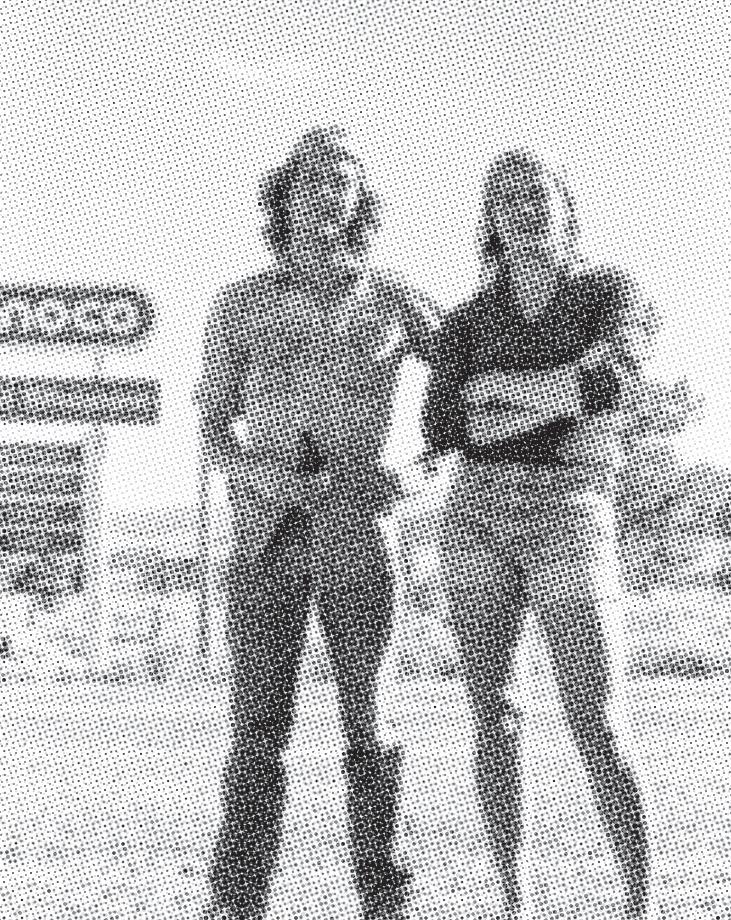
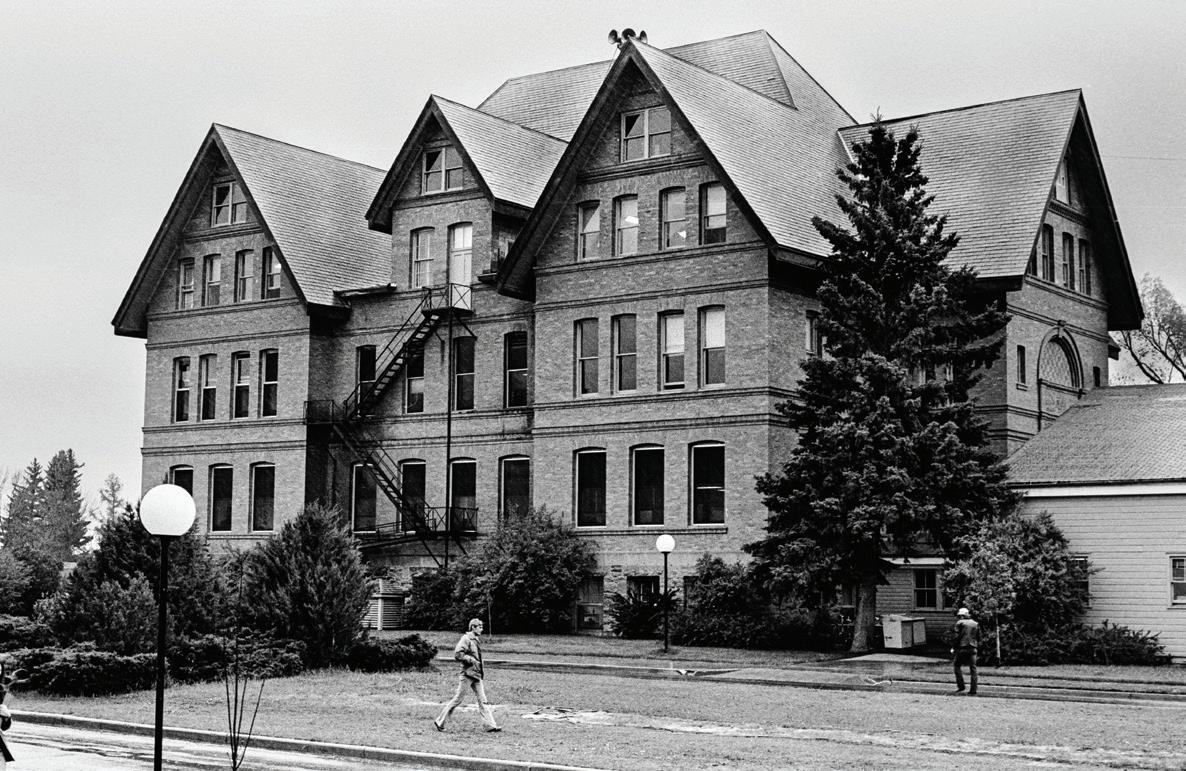
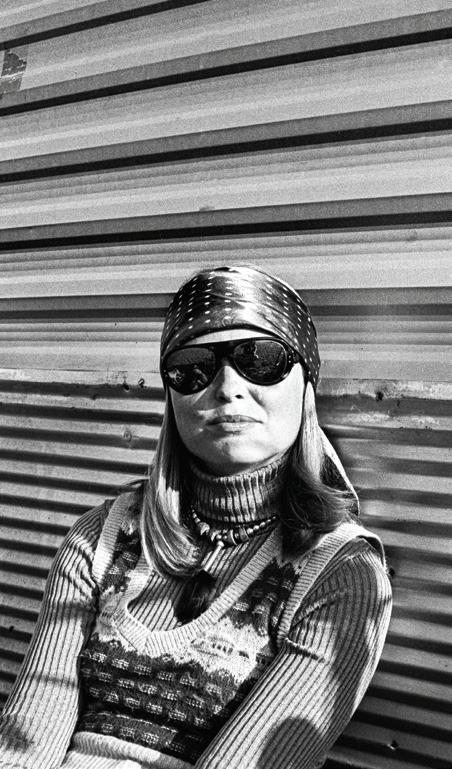
Bartz Englishoe’s Instagram account serves as a treasure trove of vintage photos of MSU and Bozeman from 50 years ago
Montana State University Alumni Foundation
MSUAF President & CEO
Fran Albrecht
MSUAF Vice President of Engagement
Kerry Hanson ’93, ’08 M
MSUAF Vice President of Strategic Communications
Nancy Korizek Hines ’87
Editor
Drew Van Fossen
Creative Director & Production
Drew Van Fossen
Photography
Kelly Gorham ’95, Colter Peterson ’18, Marcus “Doc” Cravens ’17, all of MSU University
Communications Visual Media (unless otherwise noted)
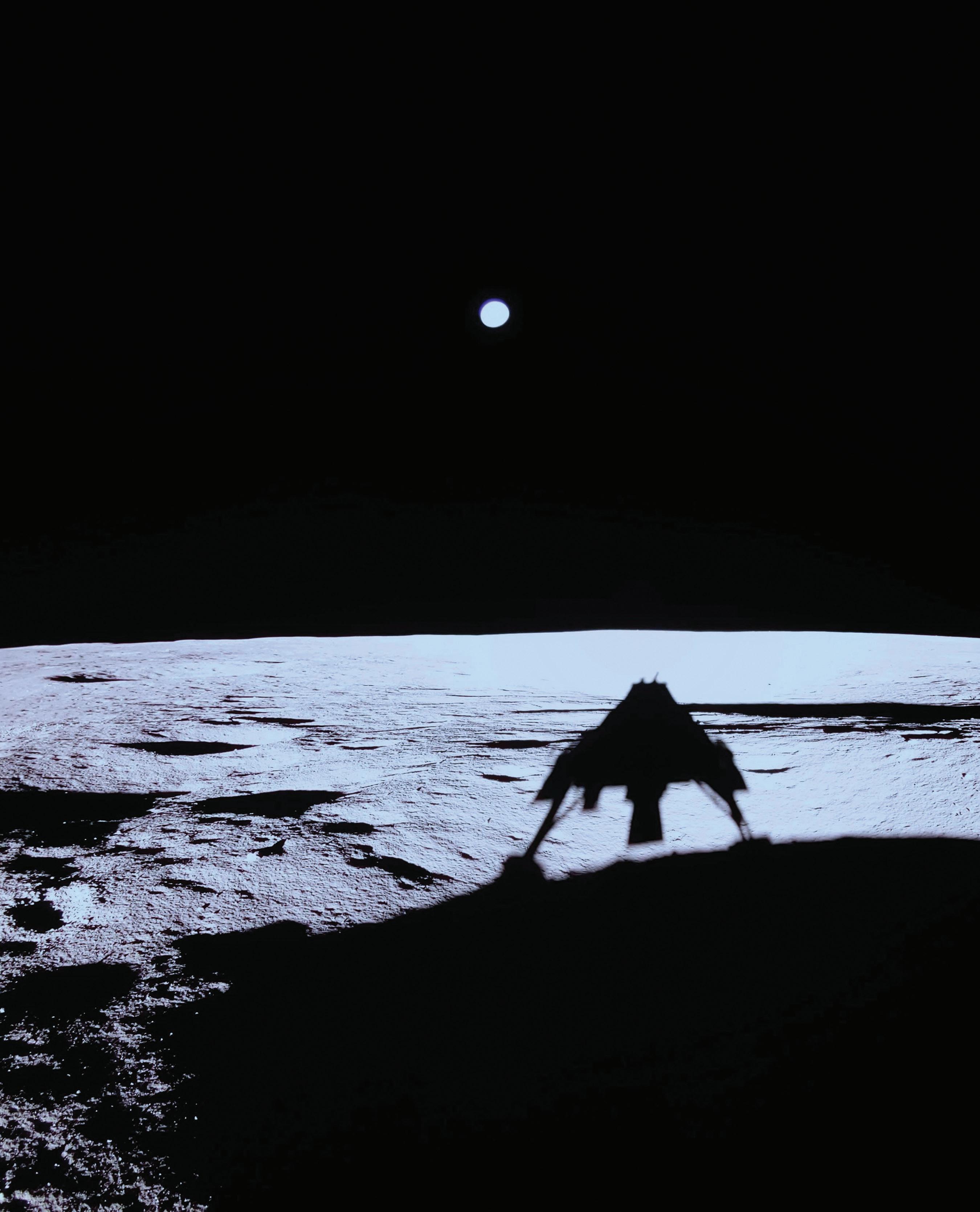
Cover photo: The shadow of Firefly Aerospace’s Blue Ghost lunar lander on the surface of the moon, with the earth in view. See story on page 22. Photo courtesy Firefly Aerospace.
The Collegian is published annually by: Montana State University Alumni Foundation P.O. Box 172750, Bozeman, MT 59717–2750
Past Chair: JoMarie (Phelan) Bliss ’95, Billings, Montana
Ron Aasheim ’71, ’73 M, Helena, Montana
Thomas Allen ’88, ’09 M, Great Falls, Montana
Mary Bough ’96, Bozeman, Montana
Todd Casey ’92, Liberty Lake, Washington
Leighanne (Sletten) Daily ’87, Great Falls, Montana
Michael “Fuzz” Feeney ’87, San Francisco, California
Staci (Kniepkamp) Hammell ’03, Bozeman, Montana
John Keil ’96, Bothell, Washington
Maureen “Mo” (Toner) Maddio ’88, Helena, Montana
Dale Mahugh ’73, Butte, Montana
Bert Rice ’59, Yuma, Arizona
Risa Scott ’82, Villa Park, California
Retiree Representative: Jeff Sipes ’86, Bozeman, Montana
The mission of the Montana State University Alumni Foundation is to “cultivate lifelong relationships and secure private support to advance Montana State University.”
Higher education
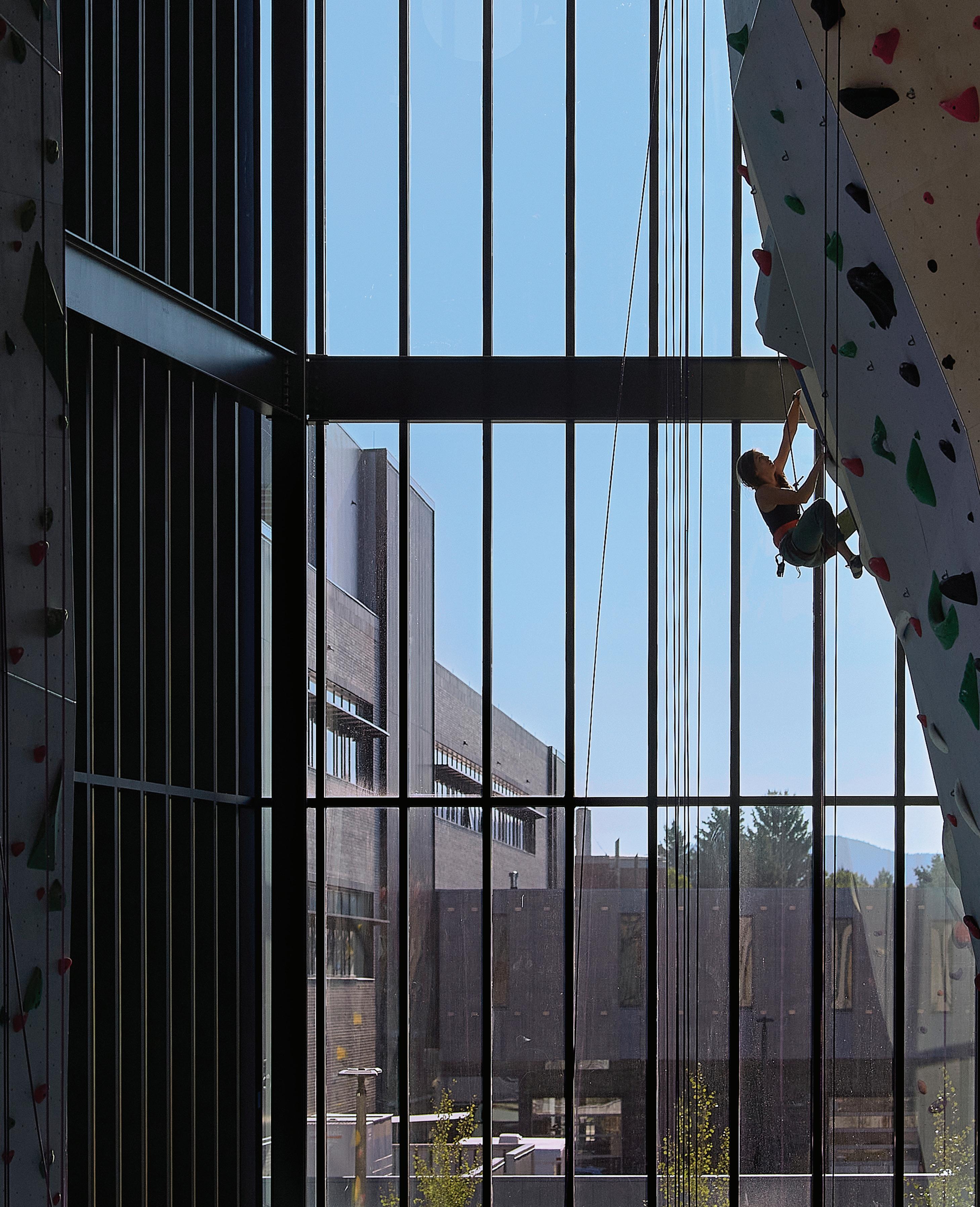
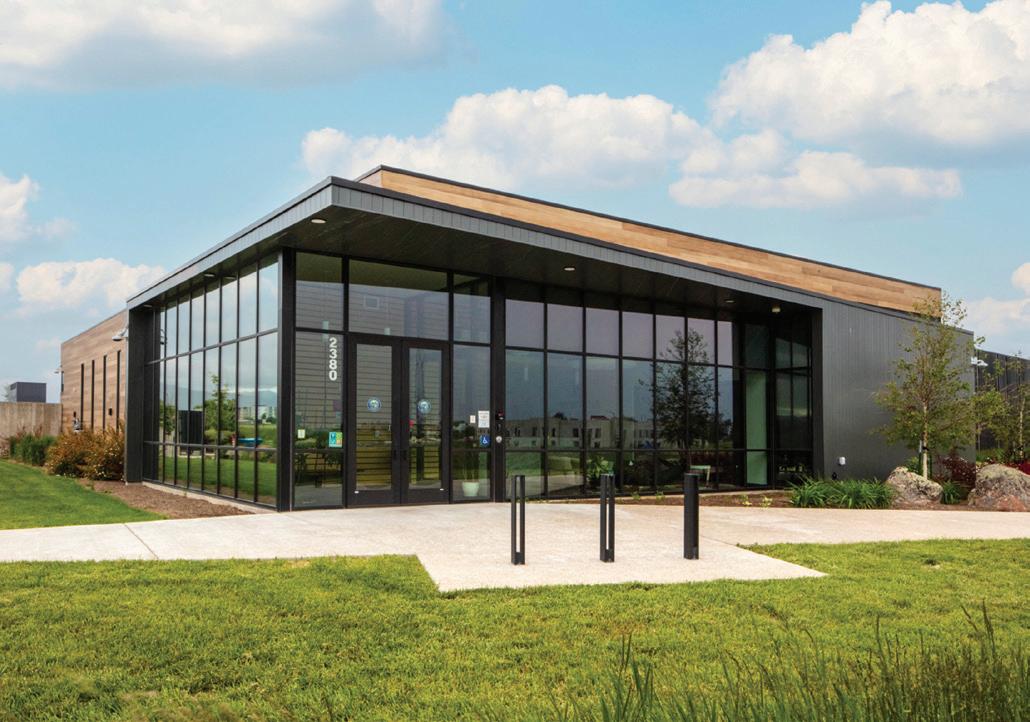
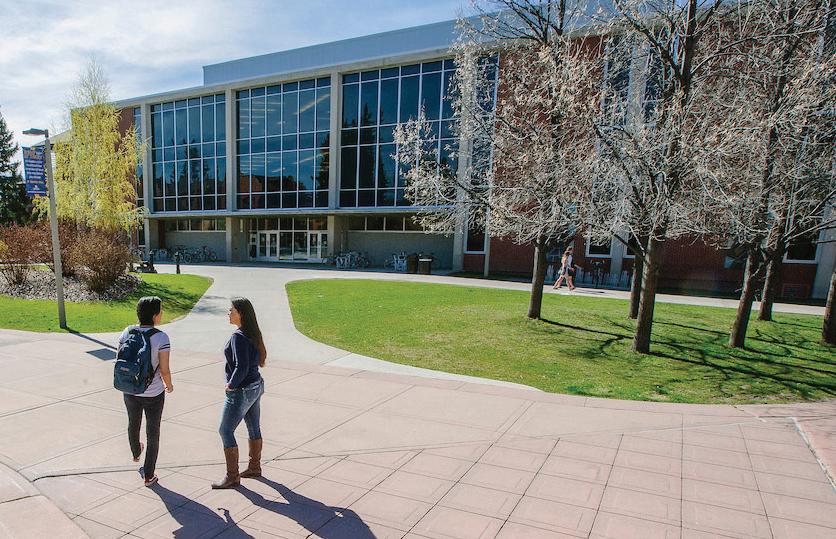
A new Student Wellness Center is one of many stateof-the-art improvements on the MSU campus. The facility offers an array of services that bring together Campus Recreation, Counseling and Psychological Services and Student Health Services. It also features a three-story climbing wall that provides multiple routes, training and instruction.
A message from the President & CEO
Dear Bobcat alumni and friends,
Every day, I’m reminded of how special our Montana State community is — and how deeply the MSU Alumni Foundation connects the heart of our university to the roots of Montana and beyond. Whether it’s sending an experimental computer to the moon (yes, really — see the story on Professor Brock LaMeres ’98, Page 22) or opening new doors for tribal students like Dr. Janine Pease ’87 M, ’94 PhD, our Bobcat alumni are helping to create opportunity, expand access and shape the future for generations of students.
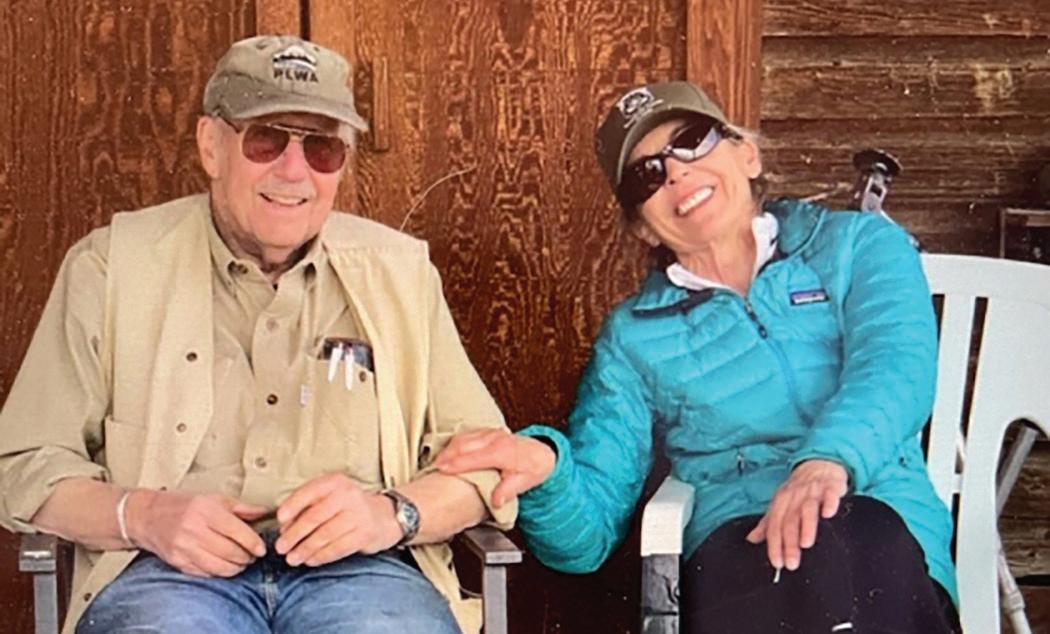
We’re especially grateful for dedicated supporters like Dr. Robert Marley, former Dean of Engineering, and Margaret Maben ’94, who are giving back to MSU in ways that will have a lasting impact. They shared, “We want to offer students something that will always be there for them — a permanent part of what MSU has to offer now and in the future.” Their generosity and vision truly capture what it means to be part of the Bobcat family.
One story that stood out to me this year is that of Professor Al Deibert ’88, ’90 M. Like many, Al didn’t have a clear path early on, but through the support and mentorship he found at MSU, he discovered direction, purpose and a meaningful career. His journey is a powerful reminder of what’s possible when students find a place where they truly belong.
It’s been a year of remarkable milestones at MSU. We welcomed 17,144 students in Fall 2024, reached a recordbreaking $258 million in research expenditures, and launched new scholarship programs like the Crawford Wildlife Habitat Endowment. The momentum is real — and it’s inspiring.
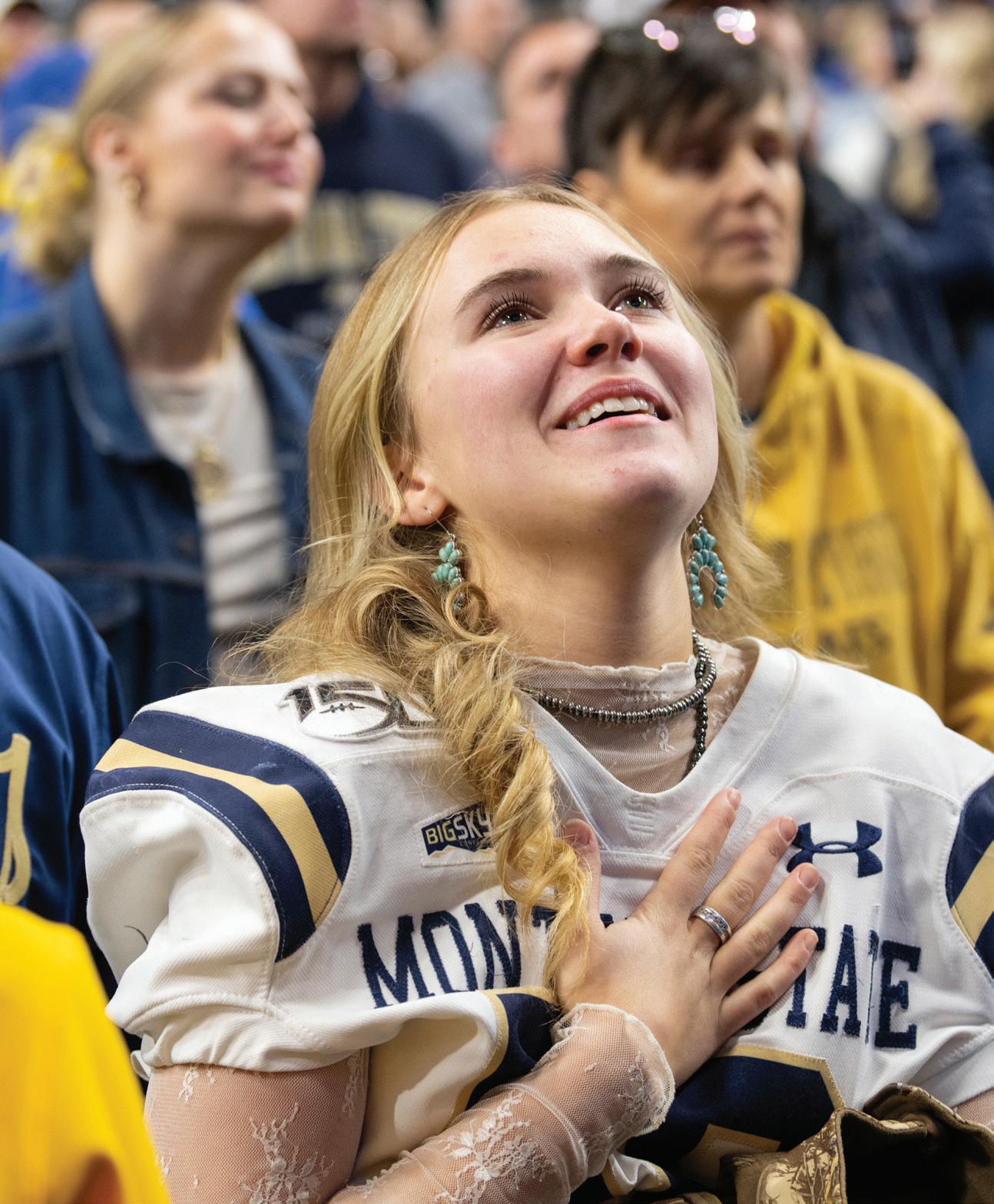
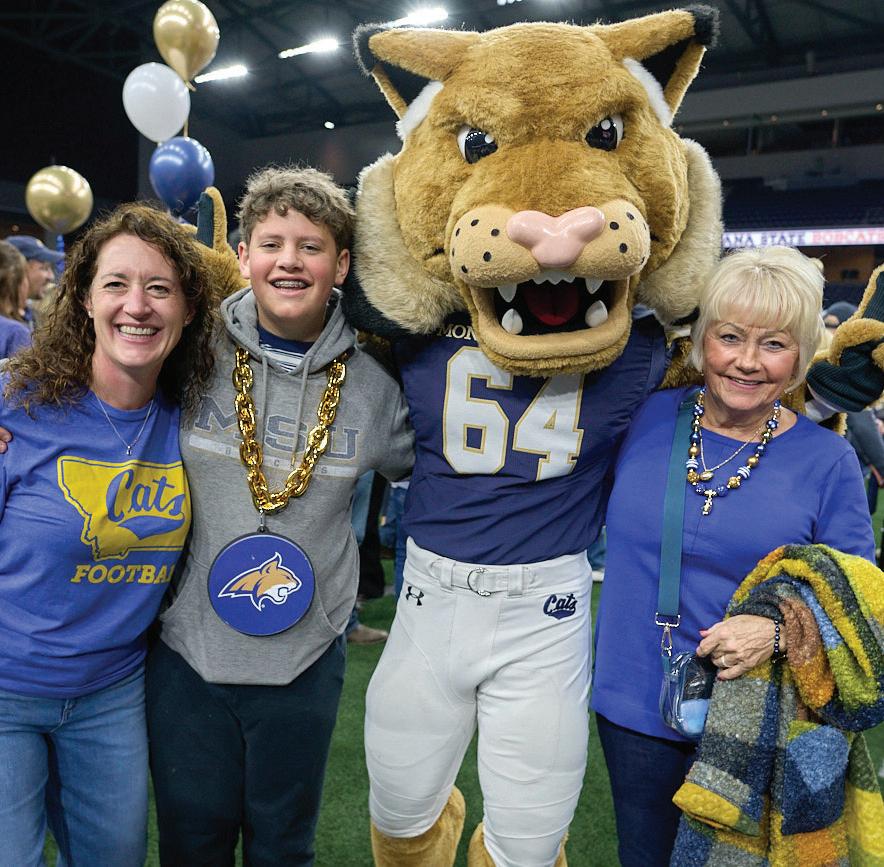
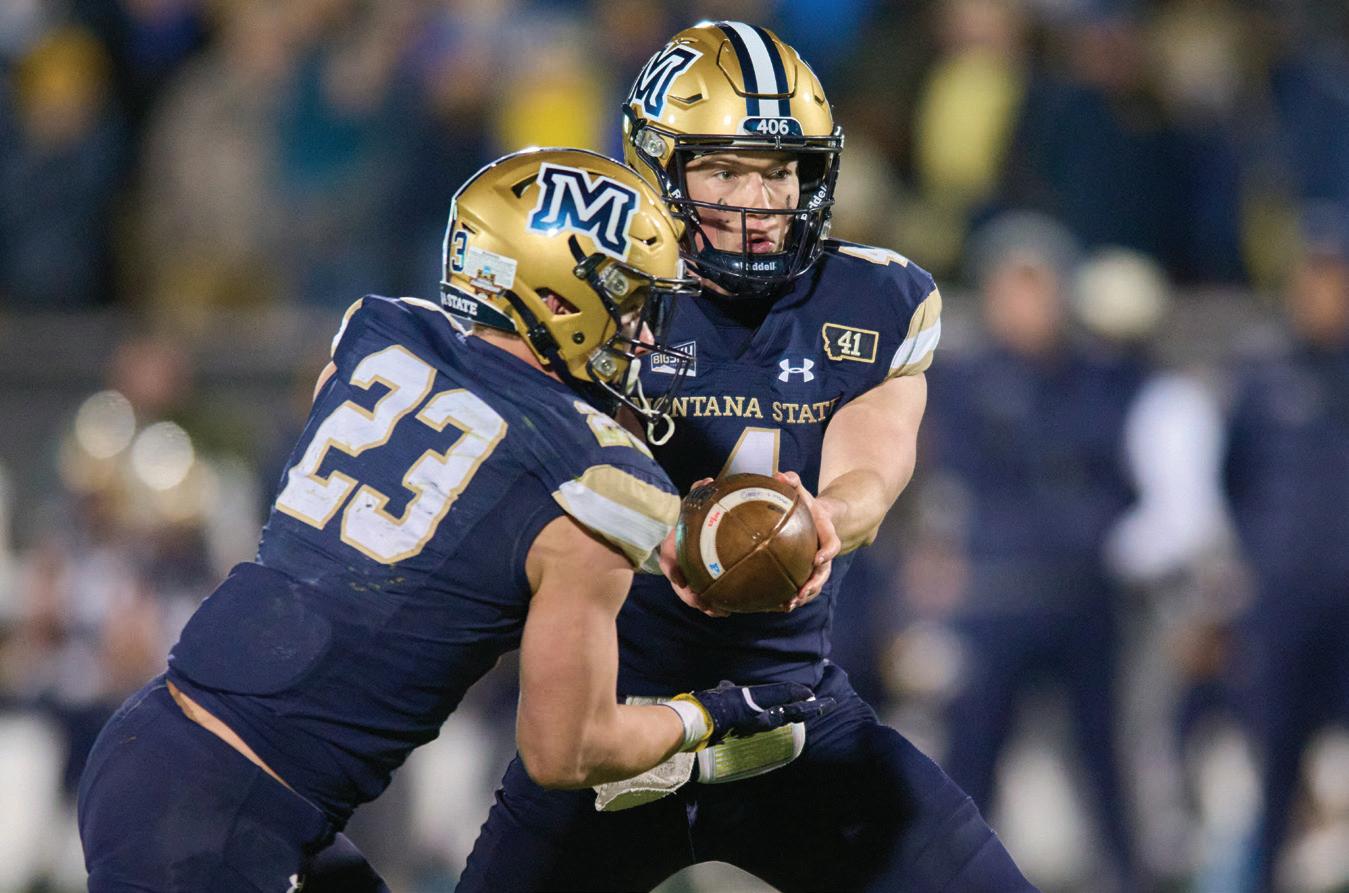
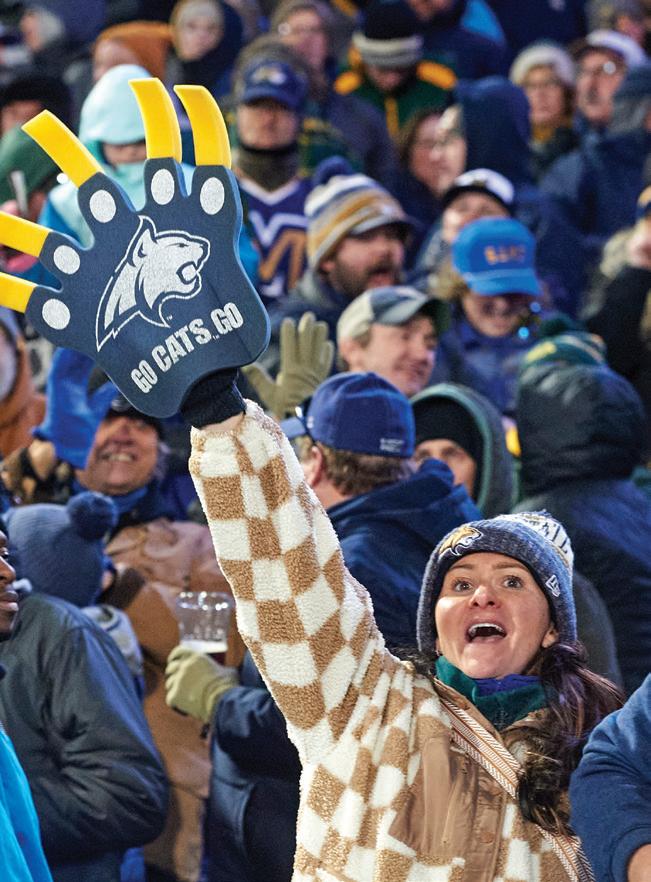
And how about those Bobcats? What an unforgettable, undefeated season that led us all the way to the national championship in Frisco, Texas! The sea of blue and gold was captured beautifully by MSU University Communications’ own Kelly Gorham ’95 and Colter Peterson ’18.
As we look ahead with excitement and anticipation to a new academic year, we’re thrilled to welcome Dr. Brock Tessman as MSU’s next president. We know he will build on former President Waded Cruzado’s incredible legacy while forging his own vision to Go Bobcat Big!
Go ’Cats!
Fran M. Albrecht President and Chief Executive Officer, MSU Alumni Foundation
New dean
William Thomas was selected as the new dean of the College of Letters and Science. He previously served as an administrator and longtime faculty member at the University of Nebraska-Lincoln.
New knowledge of old life
In the journal Nature Communications, MSU scientists presented fresh knowledge of how ancient microorganisms adapted from a lowoxygen prehistoric environment to that of today. The work builds on decades of scientific research in Yellowstone National Park by MSU.
INSRE
The Montana Board of Regents approved the establishment of the Institute for National Security Research and Education (INSRE) to serve as a hub, connecting existing national security work with other related research.
Since 1893
A look back at our 131st year
New international programs dean
Sally Mudiamu was selected as the new dean of Global Engagement and International Programs. She was previously deputy executive director of Global Engagement and Initiatives at Portland State University.
FALL 2024 ENROLLMENT
17,144
A new record that included 15,053 undergraduate students (of whom 3,611 were new, first-time students) and 2,091 graduate students.
MSU also set a new all-time record for spring enrollment with 16,237 students, marking the fifth straight record year.
Undefeated
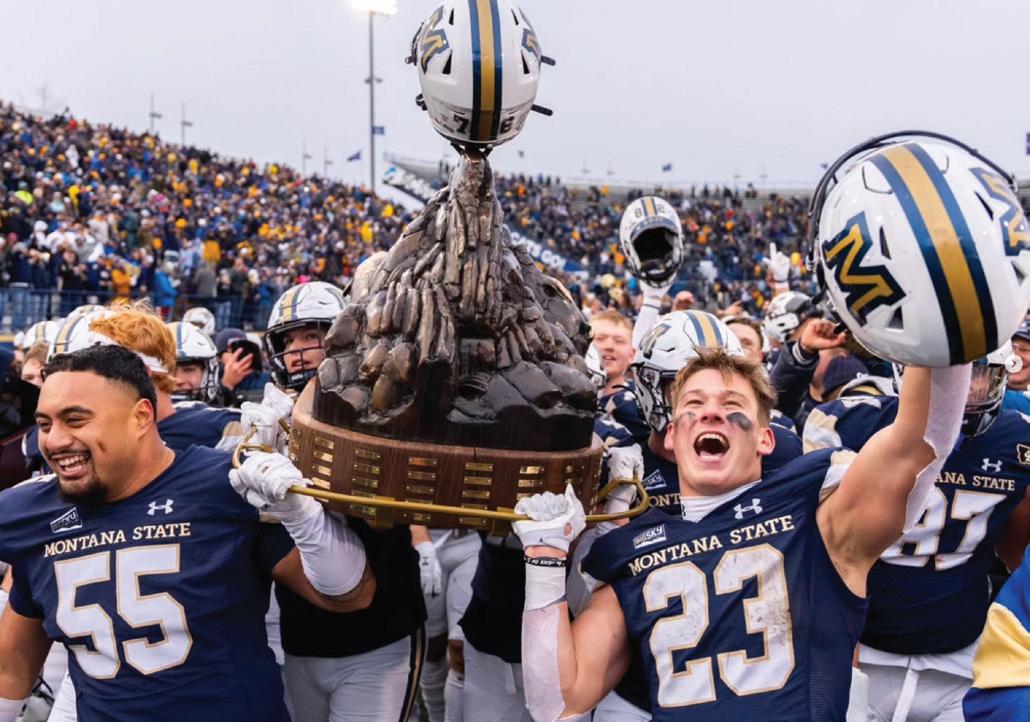
Bobcat Football claimed the Brawl of the Wild trophy with a 34-11 win over the Montana Grizzlies, capping off the 2024 regular season with an undefeated 12-0 record for the first time in program history.
MSU RESEARCH EXPENDITURES
$258M
a record for the 6th consecutive year and up 12% from the previous year
Vigen named FCS coach of the year
After leading Montana State Bobcat Football to a historic 12-0 regular season and Big Sky title, Brent Vigen became the first Bobcat to win the Stats Perform Eddie Robinson FCS Coach of the Year Award. Vigen called the honor a team award, crediting players, staff and university support. In four seasons, Vigen has led MSU to a 44-9 record, three 12-win seasons, four straight playoff berths and two trips to the national title game in Frisco, Texas. Vigen is MSU’s fourth national coach of the year honoree.
Touchdown
Tommy
Senior quarterback
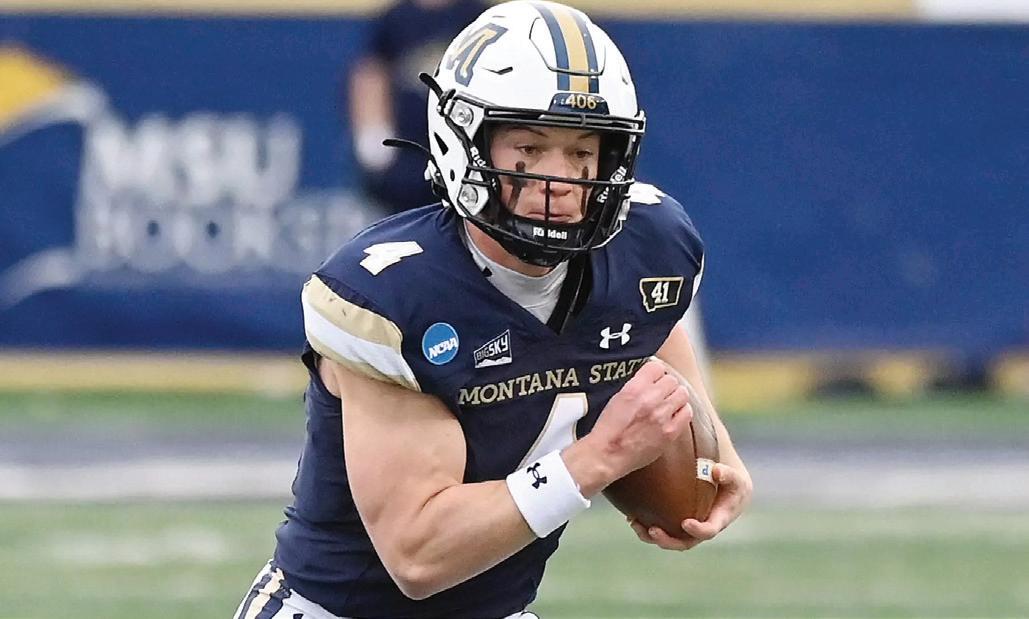
Tommy Mellot made Montana State history in January, capturing the Bobcat football program’s first Walter Payton Football Championship Subdivision (FCS) Offensive Player of the Year Award. Other awards also received by the Butte native included the Walter Camp FCS Player of the Year and FCS Athletics Directors Association National Offensive Player of the Year honors. In the NFL draft last spring, Mellot was chosen by the Las Vegas Raiders in the sixth round.
Retired
Patrik Callis began his retirement process in 2008, but didn’t complete it until last fall, 56 years after joining the faculty of the Department of Chemistry and Biochemistry and surpassing the record as the longest-tenured professor in MSU’s history.
Library anniversary
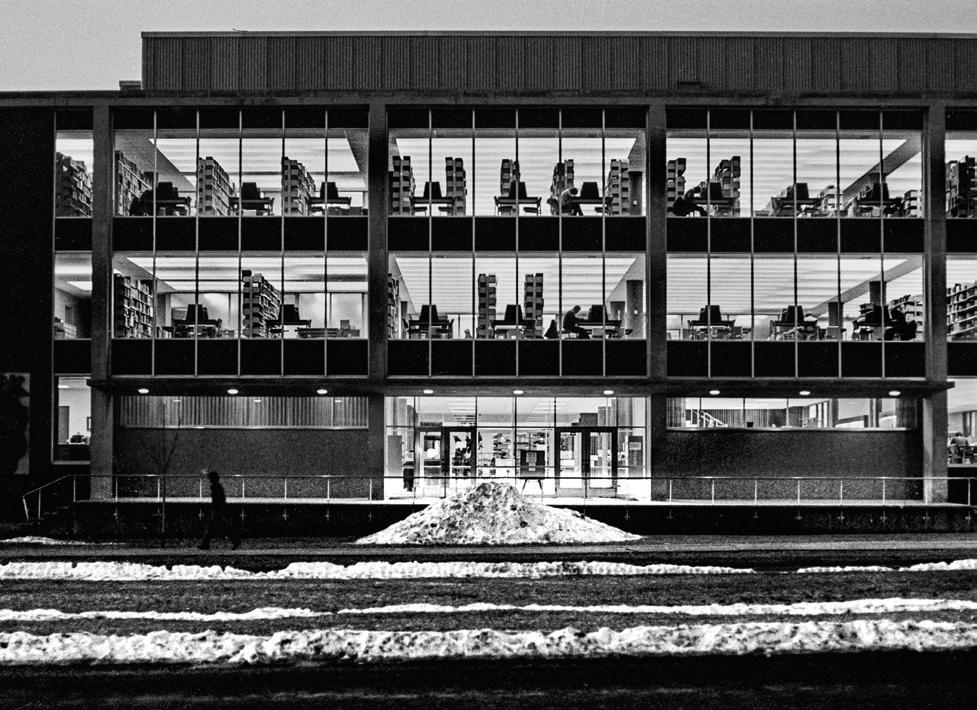
The Renne Library is celebrating its 75th anniversary in 2025. The facility sees about 4,000 visitors daily during the school year, making it one of the university’s most used buildings.
Cruzado new APLU president
The Association of Public and Land-Grant Universities (APLU) announced that Waded Cruzado, former president of Montana State University and a champion of the public and land-grant university mission, would become its next president.
New chair
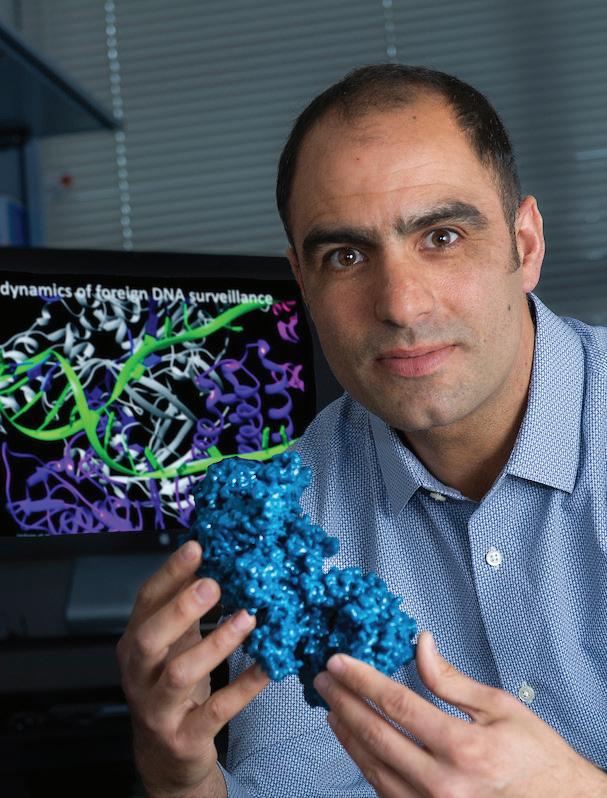
Blake Wiedenheft, a longtime faculty member in the Department of Microbiology and Cell Biology, has been named the next Winifred Asbjornson Plant Sciences Chair. Known for his work on bacterial immune systems and CRISPR-Cas genome editing, Wiedenheft’s research has earned national recognition and supports advances in biotechnology.
Geoheritage site
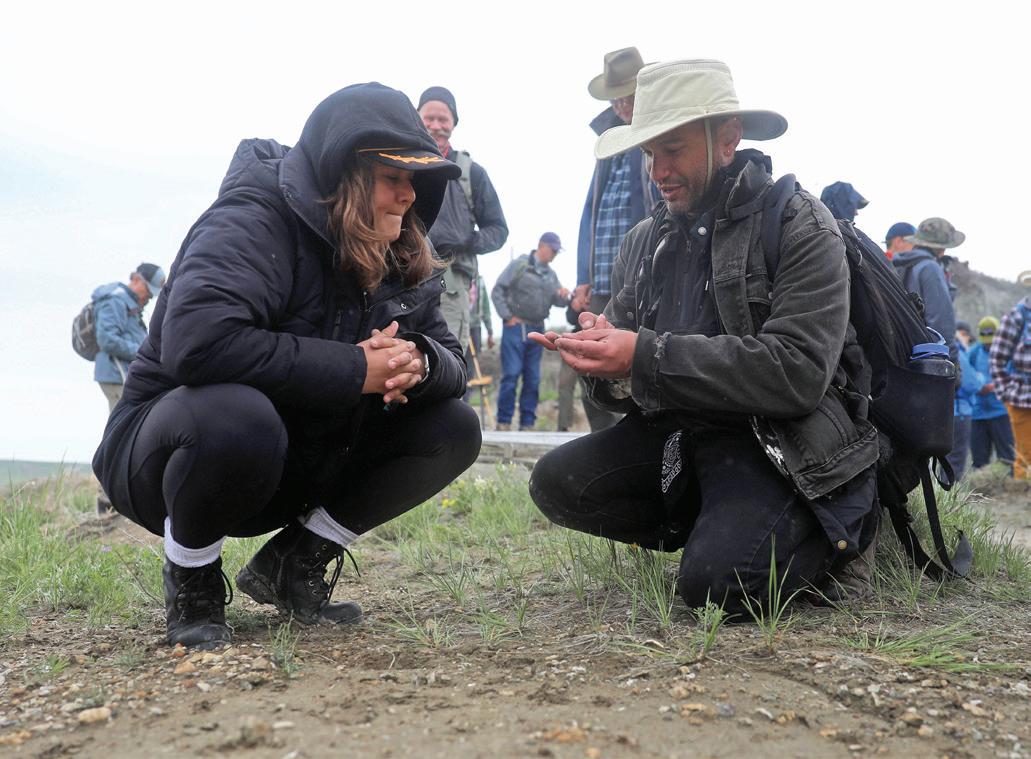
A Cretaceous rock site in Teton County, Montana, known for major fossil discoveries, has been named an International Geoheritage Site. The “Cretaceous Dinosaur Nesting Grounds of the Willow Creek Anticline” earned the designation for its high scientific value and importance to the early history of geology, according to the International Commission on Geoheritage.
Grad school dean
Deborah Haynes, who previously headed MSU’s Department of Health and Human Development and served as interim vice provost for global engagement, was named dean of the Graduate School.
Research award
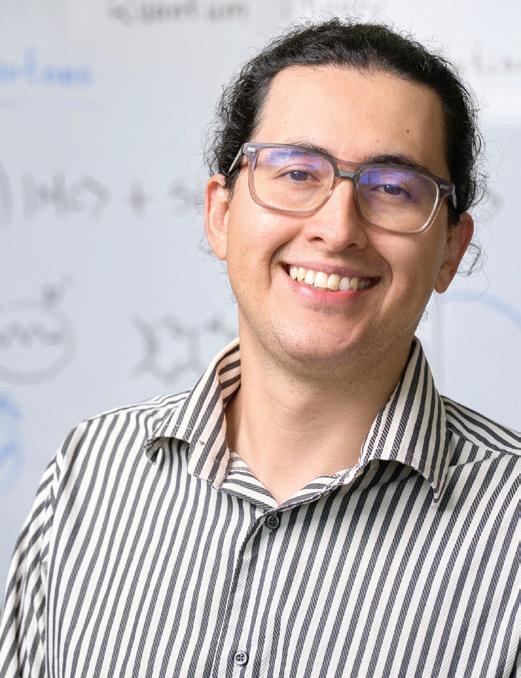
MSU assistant professor Martin Mosquera has been named a 2025 Camille Dreyfus TeacherScholar for his discovery that photons can be manipulated to probe molecules. The award honors early-career excellence and includes a $100,000 research grant.
Record endowment
Fifty-seven graduate students at Montana State have been awarded inaugural Crawford Wildlife Habitat Scholarships. At $30 million, the gift from former Earth Sciences professor Kathy Hansen Crawford and her late husband, Thomas. H. “Tim” Crawford is the largest scholarship endowment in university history. It was designed to advance innovative thinking about wildlife habitat protection and is expected to generate $1.2 million annually in scholarship funds for both undergraduate and graduate students.
Big Sky record
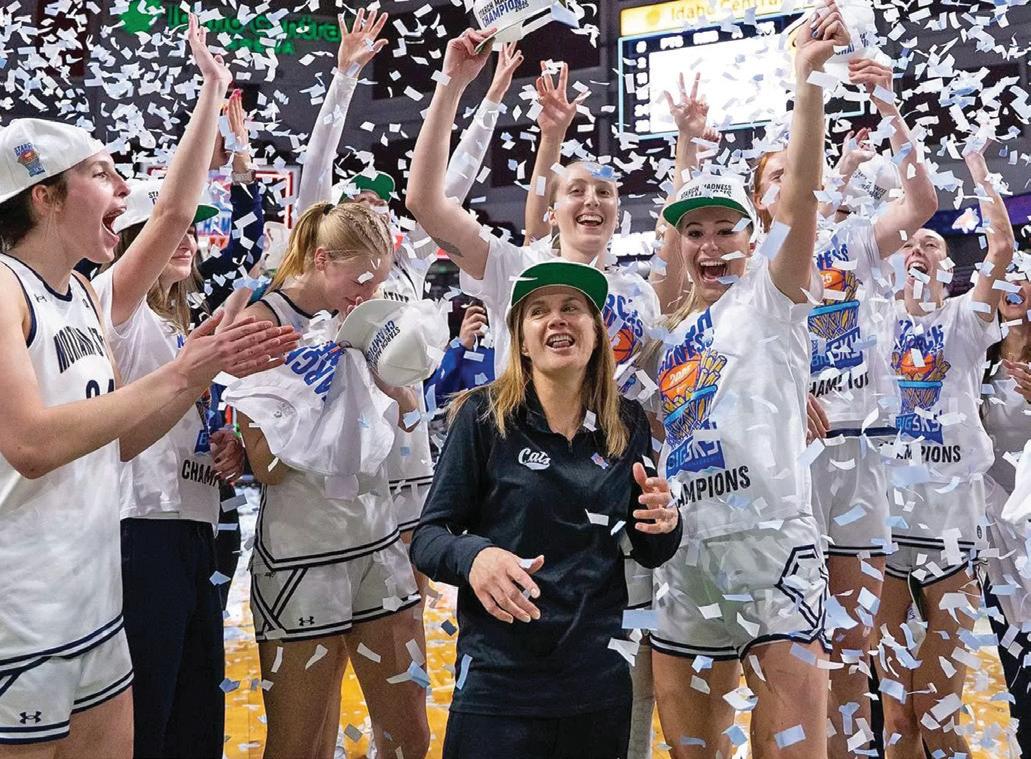
Bobcat Women’s Basketball made its fourth NCAA Tournament appearance after capturing the Big Sky Conference title in Boise, Idaho, with a win over the University of Montana Grizzlies. With a 30-3 overall season, the team’s 30 victories are the most ever recorded by a Big Sky institution.
Fleming honored
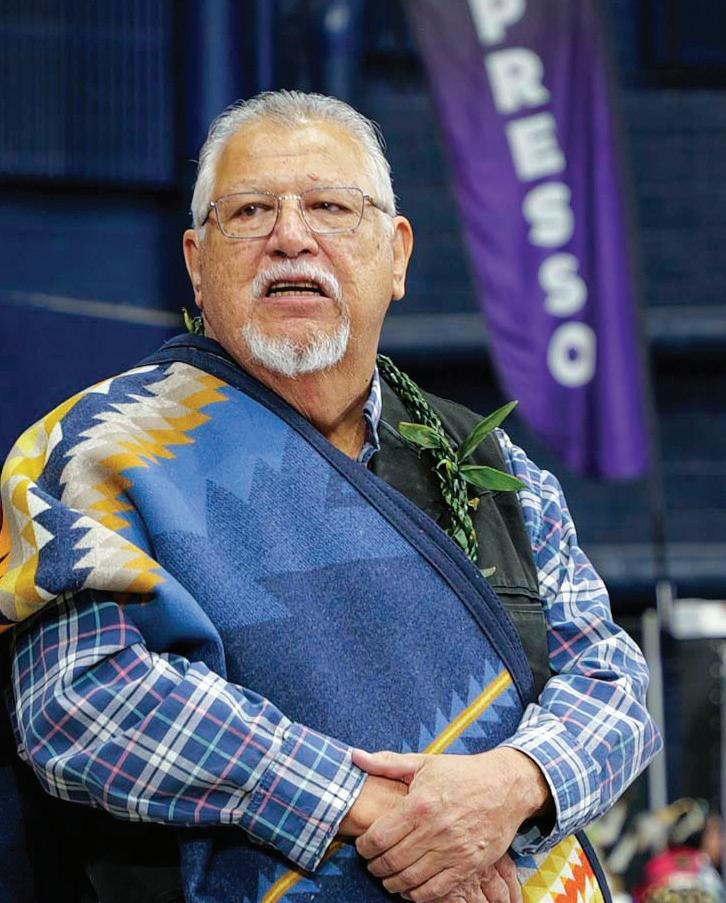
Water Fleming, professor and head of MSU’s Department of Native American Studies, was recognized at the 49th annual American Indian Council (AIC) Powwow in celebration of his retirement. The AIC celebrated Fleming’s long teaching career, which began in 1979, with a traditional Native American dance circle.
Goldwater Scholars
Anna Erickson (left), a junior from Dalton, Minnesota, majoring in psychology and cell biology and neuroscience, and Derek Jollie (right), a junior from Butte majoring in mathematical sciences and physics, are MSU’s two newest winners of Goldwater Scholarships. Montana State University has produced 92 Goldwater Scholars since the scholarship’s founding in 1989.
Montana State’s efforts to support student veterans were recognized with a designation as a top-10 military-friendly school for the fifth year in a row in a nationwide survey through Militaryfriendly.com.
New Honors dean
Richard Badenhausen was selected as the new dean of the MSU Honors College and assumed his new position on July 1. He had previously served at Westminster University in Salt Lake City since 2001 in positions including dean of the Honors College and interim provost. Spring commencement
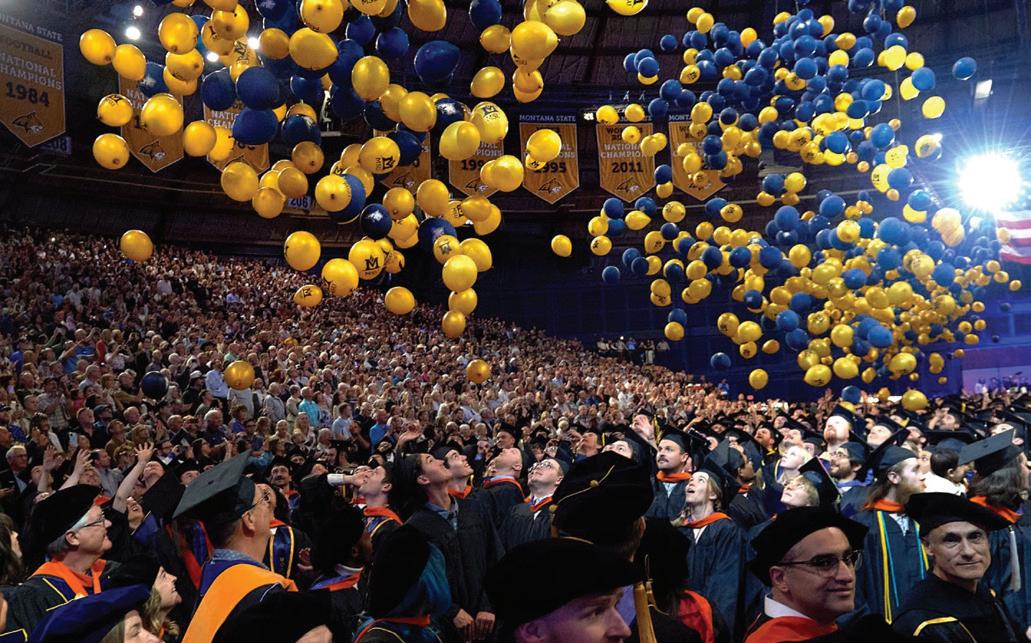
Montana State University conferred 2,465 degrees during its 142nd spring commencement ceremonies in May. Degrees were awarded to 1,888 undergraduate students and 401 graduate students. Associate degrees and certificates were also presented to 176 Gallatin College MSU students.
New master’s
Kevin Amende, associate professor of mechanical and industrial engineering, has been named the inaugural holder of the Asbjornson Manufacturing Chair and will oversee a new master’s degree program dedicated to manufacturing.
PBS expansion
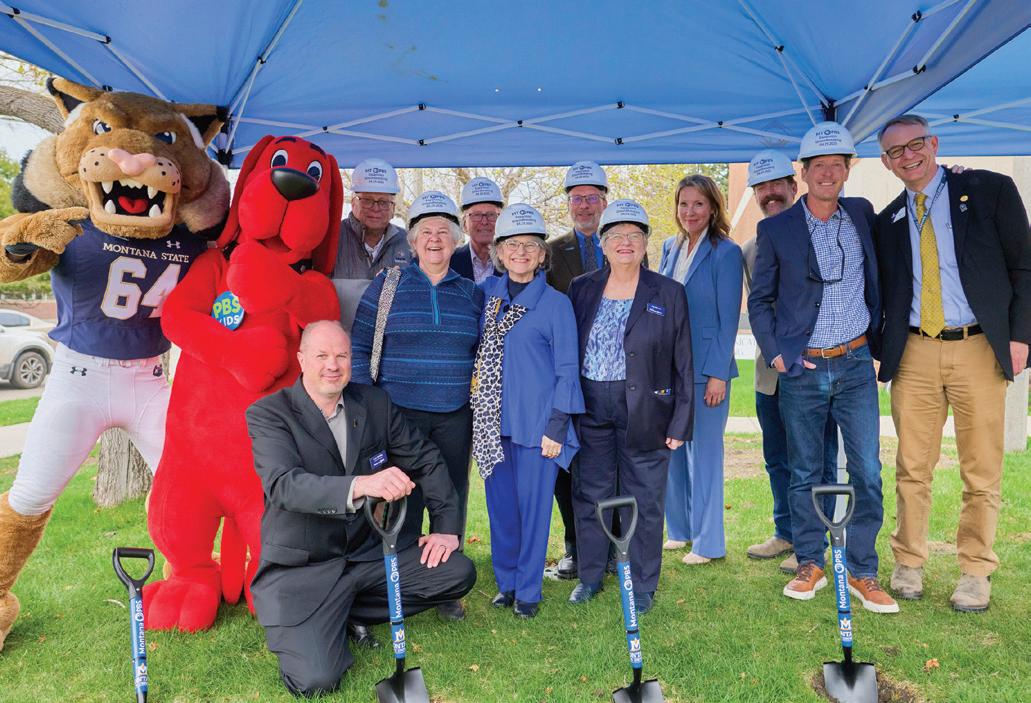
In a spring groundbreaking ceremony, MSU celebrated the longawaited expansion of Montana PBS on campus. The renovation of MSU’s Visual Communications Building will add 32,000 square feet.
Rodeo title
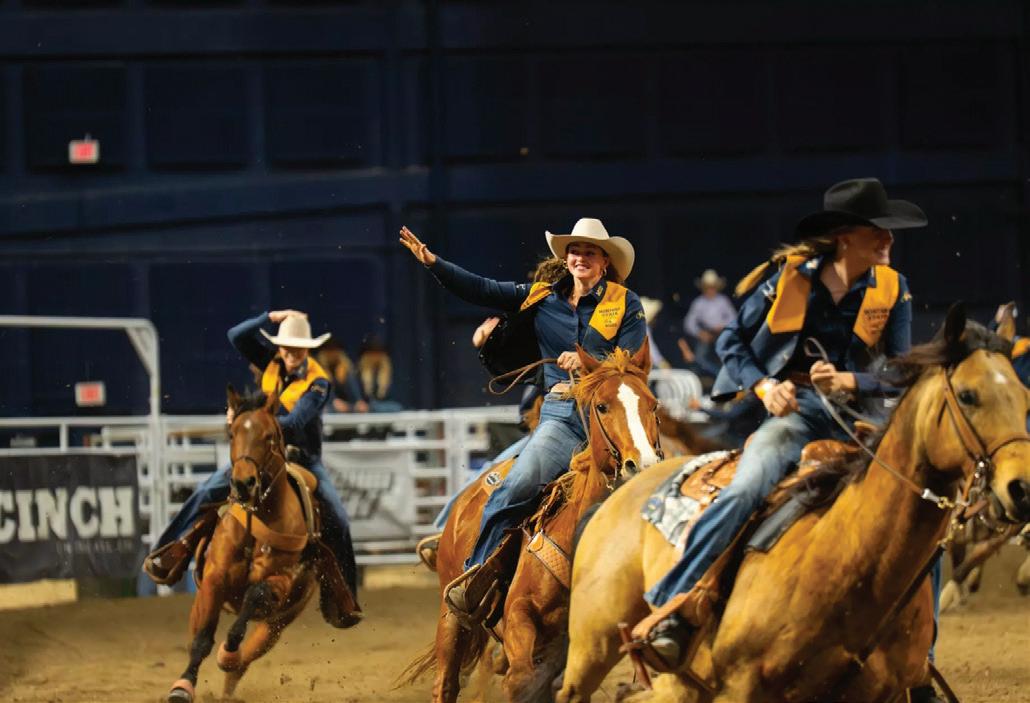
MSU Bobcat Rodeo capped its dominant 2024-25 college season, taking the men’s and women’s team titles at the University of Montana Rodeo while clinching Big Sky Region Championships in both.
Stock honored
Wendy Stock, economics professor at MSU, received the American Economic Association’s Distinguished Economic Education Award for sustained excellence in teaching, curriculum development, scholarship and mentorship.
PECASE winner
Brittany Fasy, an associate professor in the Montana State University Department of Computer Science, has been selected as a Presidential Early Career Award in Science and Engineering recipient.
The fundraising campaign to construct a dedicated oncampus facility for Gallatin College MSU has met its goal. Lead gifts included $11.25 million from the Arthur M. Blank Family Foundation, $4.8 million from the Dennis and Phyllis Washington Foundation and $4 million from Lone Mountain Land Co.
Fulbright Scholar
Elizabeth Shanahan, a professor of political science, has received a Fulbright U.S. Scholar Program award to Australia, where she will investigate Australian public responses and policy related to the prevention of emerging infectious disease.
Udall Scholars
Three MSU students, Damaris Addy, Grace Epperson and Brookelynn Conti have been named Udall Undergraduate Scholarship winners. The scholarship recognizes students who demonstrate exceptional leadership, community service and involvement in the fields of health care, environment or public policy related to American Indian and Alaska Native communities and issues.
Highest honor
MSU professor Brock LaMeres ’98 received the 2025 National Outstanding Teaching Award from the American Society for Engineering Education for modernizing MSU’s computer engineering curriculum and advancing instructional innovation.
MSU among best
Montana State University has ranked among some of the top schools in the Center for World University Rankings for 2025, based on factors including education, employability, faculty and research. MSU ranked in the top 3.7% of the 21,462 universities reviewed worldwide for the rankings, which were published on June 2.
HOT ON THE ICE
The MSU men’s hockey club reached its first-ever national title game, falling 6-1 to Lindenwood University at the American Collegiate Hockey Association (ACHA) Division II national tournament in St. Louis. The team qualified for its fourth-straight tournament appearance after a 37-3-2 record.
AD of the year
Leon Costello, Montana State University’s Director of Athletics since 2016, was recognized as a National Association of Collegiate Directors of Athletics AD of the Year Award for 2023–24.
Top AMA chapter
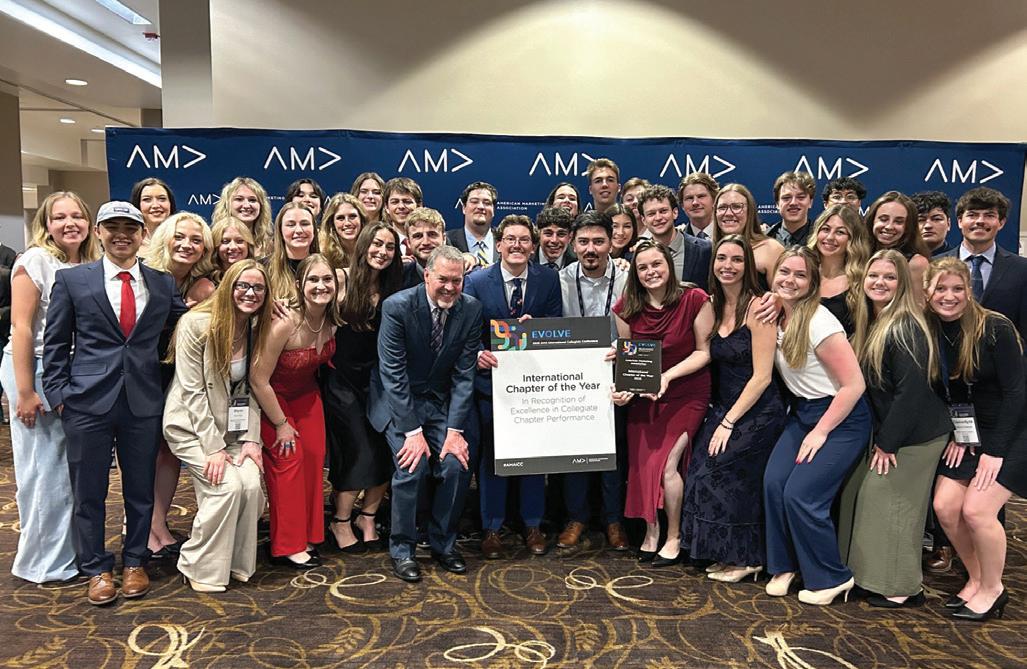
The student chapter of the American Marketing Association at MSU was named the Chapter of the Year at the AMA International Collegiate Conference in New Orleans, Louisiana. The MSU chapter has been named a top-10 chapter in each of the past five years, but this is the first time it earned the top designation out of more than 330 other chapters.
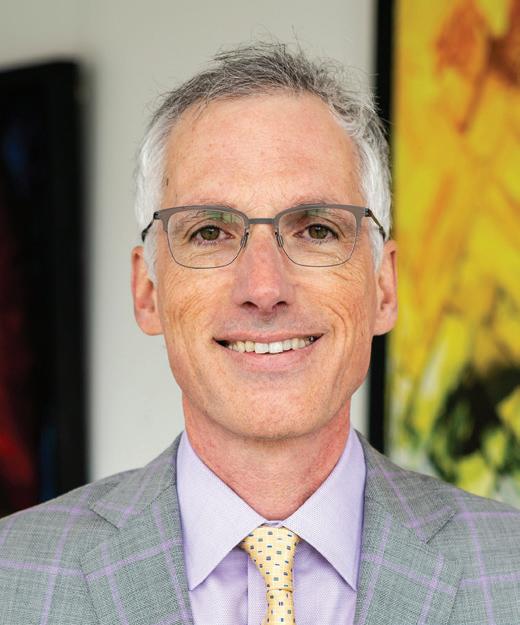
Brock Tessman
13th president of Montana State University
Dear Alumni and Friends,
Welcome to a new year at Montana State University, and let me say, it is a great time to be a Bobcat! My family and I are thrilled to be joining the MSU community. The Tessmans — including my wife, Kristin, and our daughters, Frances and Leona — have been out exploring the Bozeman community and our beautiful campus — enjoying time in the SUB, exploring the MSU Library, visiting Spirit and strolling the Malone Centennial Mall. Watching them settle in and make this special place home has me thinking of fresh beginnings and the promise of this new year.
Students are already filling our classrooms, studios, laboratories and residence halls on campus. Fresh faces and returning students alike are already writing their stories here as part of the Bobcat family. One of the things that drew me to MSU is our impressive track record of supporting students, and I am deeply committed to ensuring our students have the resources to be successful, both in the classroom and beyond.
Montana State has a strong tradition of excellence in teaching, outreach, and research and creative activity, and I look forward to continuing this important work. In addition, I am extraordinarily proud of our university’s commitment to ensuring that all who seek an education have access to it, and we will continue to uphold the responsibilities of our land-grant mission and work to make sure the transformative power of education is available to anyone and everyone.
Over the coming months, Kristin and I look forward to meeting you and learning more about your connections to Montana State. MSU is strong because of the extraordinary people who help us achieve our mission of education, research and outreach to communities. As alumni, you are a big part of this! If you’re in Bozeman, I hope you’ll be able to stop by and visit my office in Montana Hall. We can’t wait to talk with you about how we can work together to build an even brighter future for Montana State University.
Addressing the pressing challenges of our time through higher education, supporting our students and broadening access to college is meaningful work. It will not always be easy, but it is crucial. Together, I know we will accomplish great things.
It’s an honor to serve this community. I look forward to getting to know you in the years to come.
Sincerely,
Brock Tessman President, Montana State University
Montana way Irving Weissman’s
Whether on his favorite fly fishing stream or in his medical research laboratory, this world-renowned scientist applies energy, desire and ambition to all he does
BY CAROL SCHMIDT
It is likely that as you read this, Dr. Irving Weissman ’61, a pioneer in cancer biology and major instigator of the use of bone marrow stem cells for transplants, is waderdeep in his favorite Big Sky trout stream. Even at age 85, he returns to Montana every summer, rod in hand, carefully and creatively controlling the looping of the line as it skims over dark waters until a fish — hidden until now — takes the fly in a beautiful and sinuous movement.
It is probably not surprising that fly fishing is the favorite leisure pastime of the Montana State University graduate who has spent more than 65 years at Stanford University. In many ways, the creativity and persistence required in fly fishing mirrors his approach to research that has led to discoveries that have laid the foundation for possible cures for cancer and other fatal diseases. And it helps that his favorite fishing hole takes him back to the Treasure State.
“Montana is not hierarchical,” said Weissman. “The only thing that limits you in Montana is energy, desire and what you do.”
And Weissman has certainly done a great deal. Born in Great Falls, Weissman admits that even as a child he was not the best of students. He was curious, and interested in what he was interested in. When he was about 10, he encountered “The Microbe Hunters,” by Paul de Kruif, a book given to him by his teacher. He was mesmerized.
“I knew then that I wanted to do medicine and research,” Weissman said. “I didn’t want to go into business.”
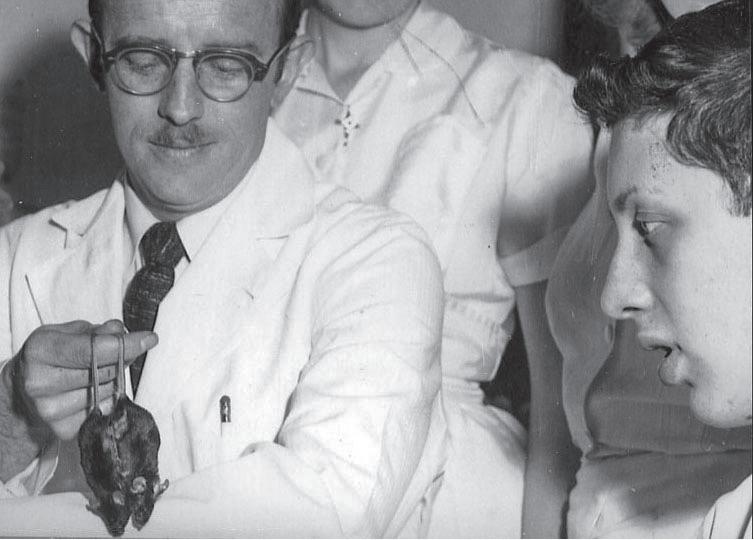
The descendent of businessmen — his grandfather was an immigrant Russian fur and hide trader and his father a local hardware store owner and entrepreneur — Weissman had his first taste of the life of a scientist in 1956, when he was just 16. He talked his way into a job with Dr. Ernst Eichwald, then the chair of the transplantation committee of the National Academy of Scientists who serendipitously had become the pathologist at Great Falls Deaconess Hospital. Disillusioned with academia, Eichwald had agreed to come to Great Falls from the University of Utah if he could do his research into skin transplantation in his spare time and if a portion of the institution’s profits could be dedicated to research. In 1954, Eichwald established the Laboratory for Experimental Medicine in Great Falls, which later became the McLaughlin Research Institute. The facility was visited by any number of giants in the scientific field as they drove across Montana, which contributed to the depth of Weissman’s early scientific education. Eichwald paid young Weissman $25 a month to care for the rats and mice in the lab, and along the way he mentored the budding scientist in the process.
Weissman credits Eichwald with teaching him the fundamentals of scientific research as well as how to think. Eichwald allowed Weissman to conduct his own experiments, and by his senior year Weissman was copublisher of a scientific paper about transplantation biology.
It was about that time that Weissman bumped into a another young man at Buttrey’s Department Store in
“I love the science. I feel like I still have a lot more science in me, and a lot more that I want to do.”
– Dr. Irving Weissman
Great Falls who was wearing a Caltech jacket. Weissman introduced himself to Leroy Hood, a Caltech student who was brought up in Shelby but was visiting his father in Great Falls. The two became fast friends. Hood later went on to develop ground-breaking scientific instruments that made possible major scientific advances including the sequencing of DNA. Hood, who has served on the faculties at the California Institute of Technology and the University of Washington, remains one of Weissman’s closest friends.
“Montana is not hierarchical. The only thing that limits you in Montana is energy, desire and what you do.”
– Dr. Irving Weissman
Weissman started his college education at Dartmouth College but quickly soured on the eastern lifestyle.
“First of all, there were no women at the college at all at the time,” Weissman said. “It was also the first time in my life that I faced antisemitism. But the clincher was my zoology course. I knew more about the subject matter than the professor.”
Weissman transferred to Montana State College, which he called “spectacular.” He primarily took graduate level science courses as an undergraduate and studied under Palmer D. “Dave” Skaar, who had launched a genetics institute at MSC. Weissman said he asked Skaar, a world-
Goober McClure, Salish. Photos by Clark
Dunbar
class geneticist, why he was in Bozeman and Skaar told him, “I just love this life.”
Weissman graduated early from MSC and went straight to Stanford Medical School, drawn by a curriculum that would allow him the freedom he valued and time to continue his research.
“Stanford Medical School was non-hierarchical in the same way Montana was,” Weissman said.
During medical school, Weissman studied with scientists at both Stanford and Oxford and discovered that T cells were made in the thymus. That discovery, in part, convinced Weissman to forgo an internship and residency once he earned his medical degree, resulting in a complete dedication to medical research.
Over the next 20 years, Weissman identified where many cell types in the immune system were made and how they worked. His work evolved and included many scientific firsts. He was part of a team that identified antibodies that could be used to isolate blood-forming stem cells first in mice, and then in humans. He was the first to identify and isolate human blood-forming stem cells responsible for the immune system, research that laid the foundation for possible new treatments for cancer, blood diseases and organ rejection.
“Irv is one of the major instigators of the use of bone marrow stem cells for transplants, and he defined their lineage and much of their biology,” Hood said.
Hood also points out that Weissman, who as a child didn’t want to be a businessman, “has also been effective in creating companies that bring clinical therapies for cancer and immune diseases.”
In 2004, Weissman was named the founding director
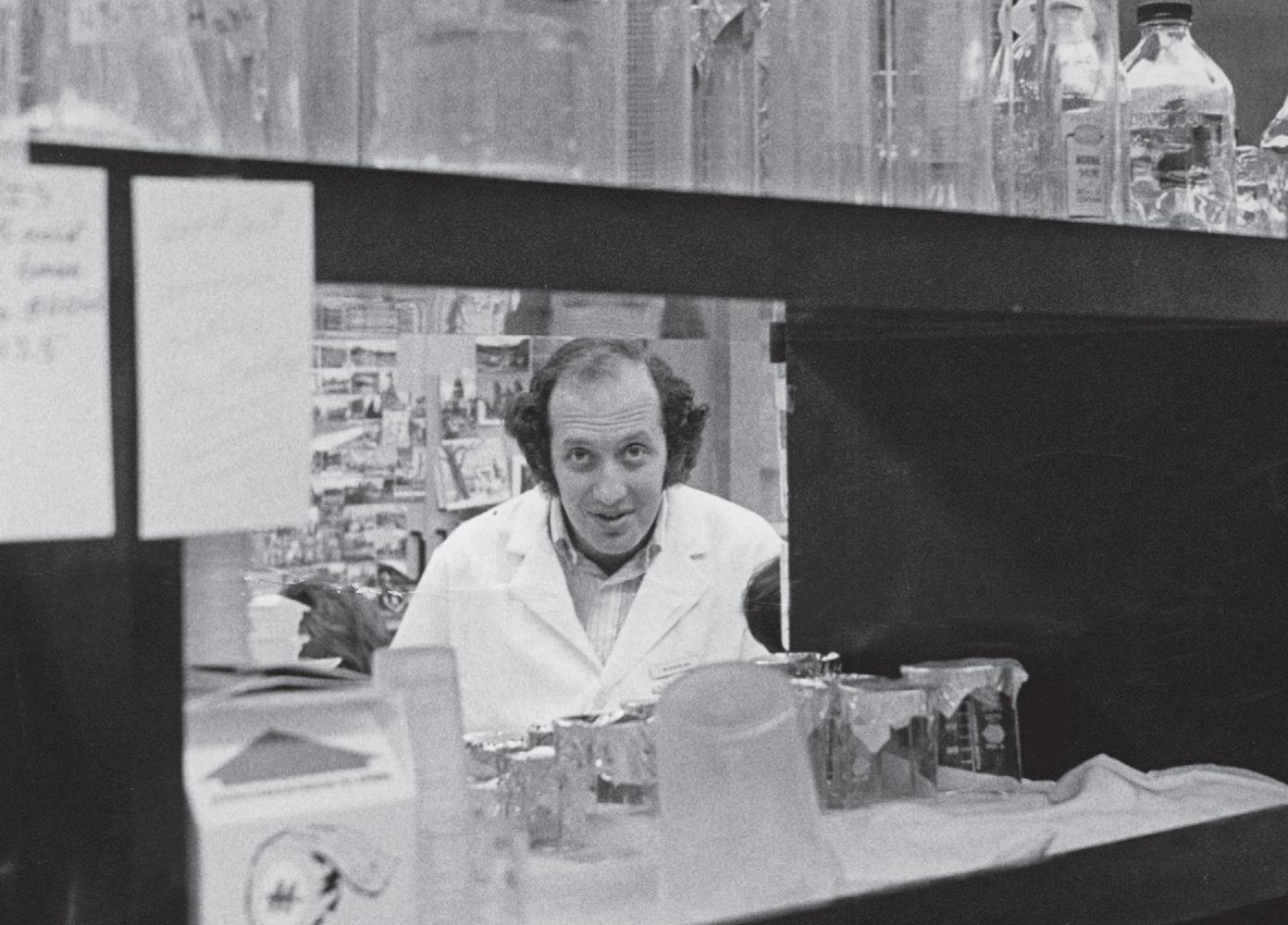
Dr. Weissman in his research lab at Stanford Medical School, where he identified where many cell types in the immune system were made and how they worked.
As a high school student, Irving Weismann, right, got his start as a research scientist under the guidance of Dr. Ernst Eichwald, left.
of the Stanford Institute for Stem Cell Biology and Regenerative Medicine. In the same year, he became the cofounder of the successful Proposition 71, a California ballot initiative that established a constitutional right in the state to conduct stem cell research. The proposition overturned the 2001 Bush policy banning stem cell research in the U.S. In 2008, President Barack Obama overturned the national ban. Proposition 71 also authorized California to issue $3 billion in bonds to fund stem cell research, which sustained and supported important medical research funding rather than allowing science to be affected by the foibles of private investors. Throughout all those years he remained active in the workings of the McLaughlin Institute in Great Falls.
By the time Weissman had stepped down as the director of the Institute for Stem Cell Biology and Regenerative Medicine in 2017, he was recognized internationally for his leadership in the support of outstanding scientists who have performed stem cell transplantation, gene editing and treatment of precancerous clonal stem cell diseases. One of those scientists was Dr. Renee Reijo Pera, former vice president of research at Montana State and now chair of the Weissman Hood Institute.
During his career Weissman has received the Robert Koch Prize, the Rosenstiel Award, the Max Delbruck Medal, the Charles Rodolphe Brupbacher Prize, the Albany Medical Center Prize, the Wallace H. Coulter Award for Lifetime Achievement in Hematology and the American Computer and Robotics Museum Stibitz-Wilson Award.
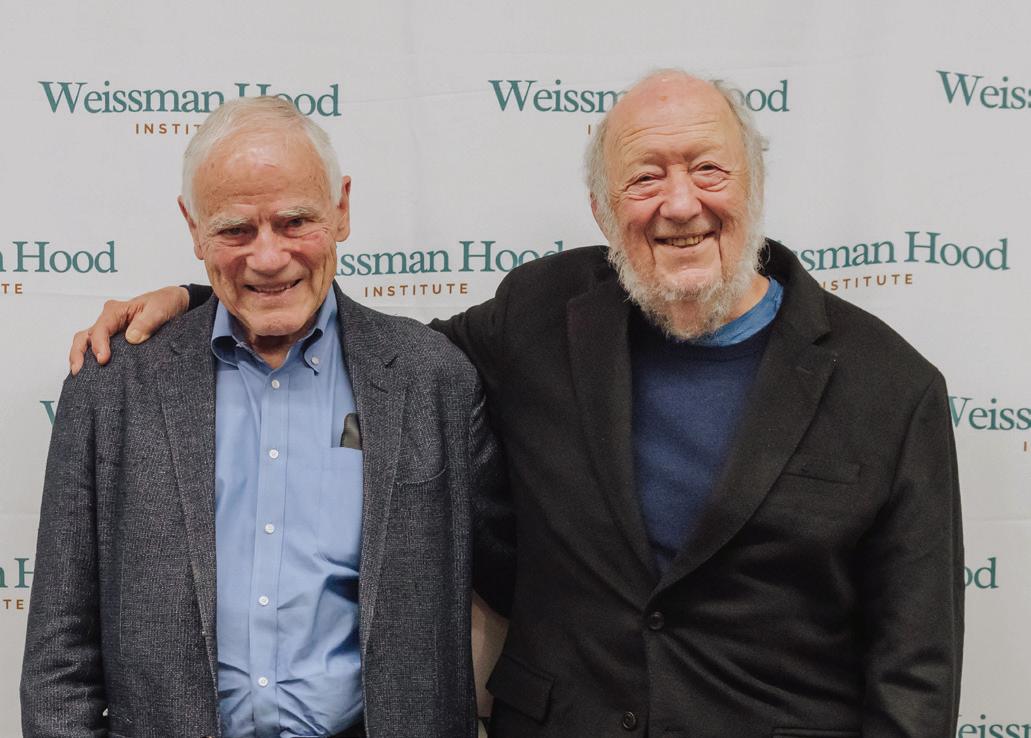
Last November, Reijo Pera announced that the McLaughlin Institute would be renamed the Weissman Hood Institute at Touro University (a national medical
school opening a branch at the institute) in honor of Weissman and Hood.
“Each of them has individually changed the face of medical science for the better, and together they have generated innovations that are valued at greater than $75 billion while also focusing on improving our overall health and our health in the face of devastating diseases,” Reijo Pera said in making the announcement. “They have traveled the world over, been in the most elite circles, but they have never forgotten their roots.”
Even though he is now at an age when some are happy to decamp to their recliner, Weissman is daily at his research bench in Stanford, working on science that may have applications in curing metastatic breast cancer and macular eye disease.
“I love the science,” Weissman said. “I feel like I still have a lot more science in me, and a lot more that I want to do.”
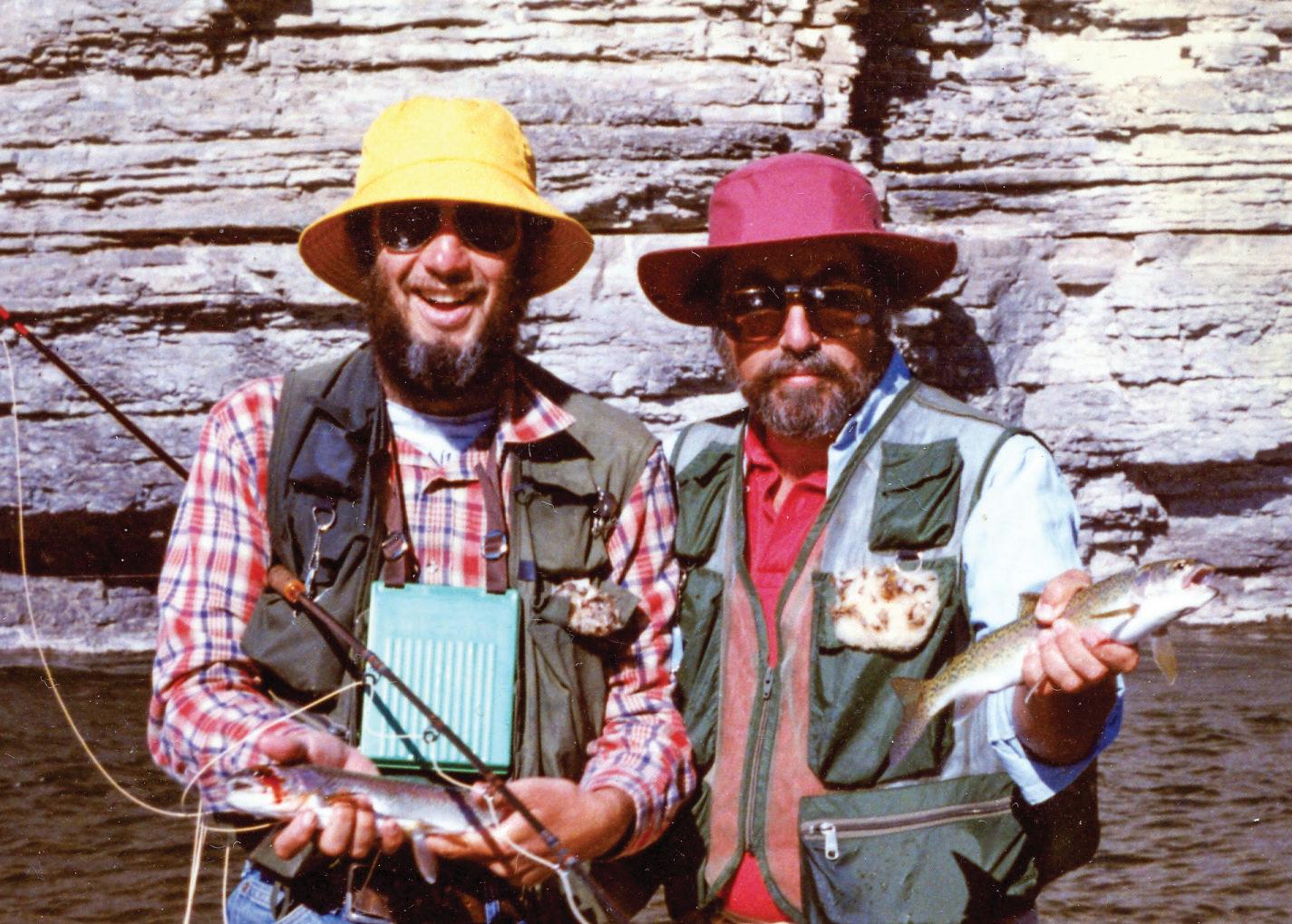
Weissman does find time to retreat to the ranch in the Bitterroot that he bought in 1991 with Hood and David Baltimore, the past president of Caltech and a Nobel Prize winner for his work in virology. Weissman has proudly taught Baltimore to fly fish. The three scientists and their families spend time there recharging, eating good food and, of course, talking about science.
“Irv and I both attribute our determined optimism, our innovation and creativity and our ability to get a remarkable amount of science done over the last 60 years to the roots, freedoms of action and wonderful communities that we experienced in Montana,” Hood said of his life-long friend. “Irv is a world leader in the stem cell field, and I expect one of these days he will win a Nobel Prize.”
Longtime friends Dr. Leroy Hood, left, and Dr. Weissman at the 70th anniversary of the McLaughlin Research Institute in Great Falls. The institute has been renamed the Weissman Hood Institute in honor of the two.
Dr. Weissman, left, taught close friend David Baltimore, the past president of Caltech and a Nobel Prize winner for his work in virology, to fly fish.
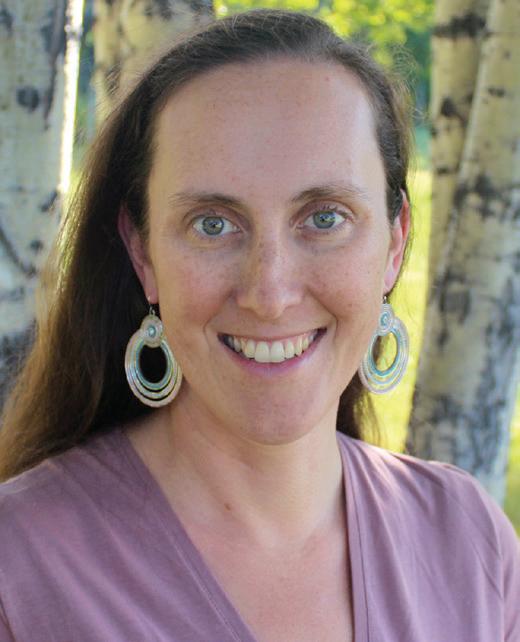
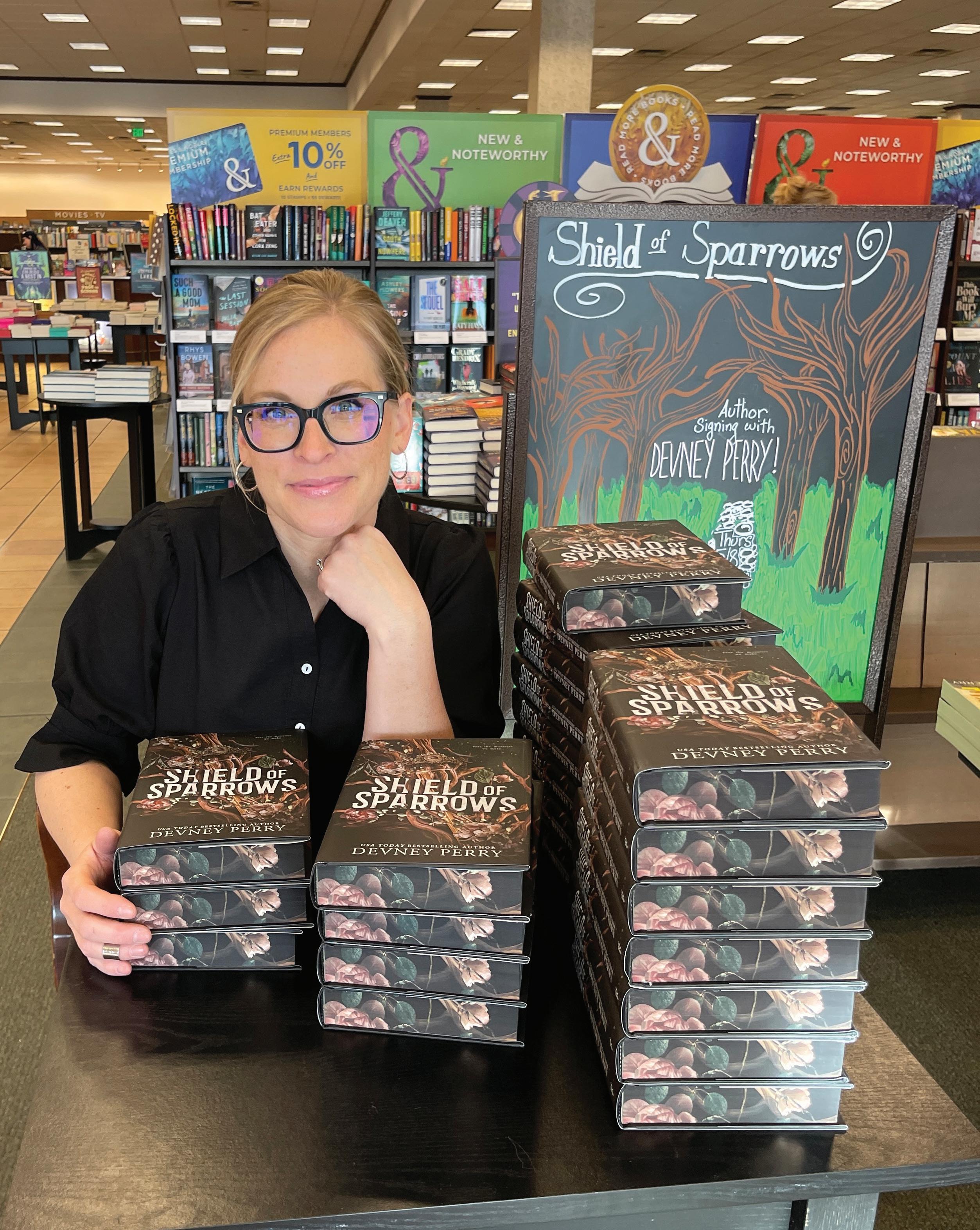
Devney Perry at a book signing of a recent title, Shield of Sparrows, recently named as a New York Times bestseller.
Happily ever after
After what was a long and bumpy road, author Devney Perry found her niche, and a loyal following, in a world of romance and intrigue
BY NICK EHLI
Devney (Black) Perry ’04 remembers a Wednesday in 2016 as one might recall an anniversary or a birthday. She’d had a varied and successful career but at the time was staying at home to raise her two sons. Her oldest was at day care; her youngest, just 6 months old, was napping.
During that time, Perry was reading a lot, mostly romance novels, often more than a book a day.
“I went from having a career with a lot of responsibility, long work hours, to where I didn’t have that external challenge,” the Montana State alumna recalled recently. “My house had never been cleaner. You could have eaten off the floors.”
And while she adored being a typical stay-at-home mom and respects those parents who choose to fill that role, she also realized that it wasn’t, at least for her, a long-term solution. Legos and Disney films had lost some of their charm.
“I needed something that was mentally challenging,” she said.
Her voracious reading was helping to fill that gap, Perry said, but the problem with reading that many books was that she was running out of books that she found worthy of her limited time.
“I was talking to a good friend of mine, and I was like, ‘I think I’m just going to try to write a book,’” she said. “That day, I sat down and pulled out my laptop, and I wrote a chapter. And that was it. It was not a great chapter, but we fixed it later.”
Nine years later, Perry has written hundreds of chapters in more than 50 novels, all in the romance genre and often with her home state of Montana as a backdrop. Her books have landed on the bestseller lists of Amazon, USA Today
and the Wall Street Journal. Her most recent book, “Shield of Sparrows,” was recognized in May as a New York Times bestseller.
While Perry takes great satisfaction in the career she has carved out in an ultra-competitive profession, writing was not what she envisioned for herself. Born in Lewistown and raised from the age of 8 in Great Falls, Perry had sought to follow in the footsteps of her mother — a nurse — and entered the pre-med track when she enrolled at Montana State in 2000.
“That was always my path,” she said. “I wanted to go into the medical field.”
During her freshman year, however, Perry concluded that “I didn’t want to go to school for another decade,” and she began exploring other possibilities. Elected as a senator to the Associated Students of Montana State University and later as vice president of the student government, she took some political science courses and considered going into the legal profession.
Ultimately, though, she decided to pursue a degree in agricultural business, which she saw as a way to combine her interests in science and business with her Montana roots. Not long after earning that degree, Perry married her now-husband Bill ’02 — they met while both were serving with ASMSU — and moved to Havre where Bill took a job with Northwest Farm Credit Services, now known as AgWest.
Perry saw Havre as “a great little town,” although there weren’t many opportunities in her chosen field. Instead, she worked for a while for a finance company and later managed the city’s shopping mall. When Bill’s company transferred him to Bozeman, Perry landed a job with Zoot Enterprises, a surging tech company, followed by a stint at
Printing For Less in Livingston.
Roughly two years later, Perry took a job at AgWest when Bill was again transferred, this time to its headquarters in Spokane, Washington. Perry recalled working her way up at the company during the next four to five years, but when another transfer meant another move to Bozeman, she decided to jump off her career path. At the time, she was pregnant with the couple’s second child.
“I knew that finding another job was going to be difficult because I was going to need maternity leave right away,” Perry remembered. “We decided that I would stay home and hold down the fort for a while.”
While Perry has found success as a novelist — publishing at least four to five books a year — she stressed that the road has been long and often bumpy.
“There has been a lot of learning over the years, finding my own voice, finding my style and embracing that over time,” she said. “It has been this wonderful slow build. There are some authors who will have that lightning strike on their first book, and it goes gangbusters, and everyone knows who they are. But I think it can also be such a cool thing for all the writers who just keep churning out words, year after year.”
“Montana is so special to me. Where’s home? It’s always Montana.”
– Devney Perry
A key for her, Perry said, has been treating her writing as a job — “especially since I didn’t have one when I started” — with strict daily goals. While she didn’t set such expectations when she first started, now, 50-plus books into her career, she insists on writing between 2,000 and 4,000 words each working day.
“If it takes me three hours, great,” she said. “Sometimes it takes me eight; sometimes it takes me ten. It depends on the number of distractions.”
When her kids were toddlers, those distractions were plentiful, she remembered, and she would sneak her writing in mostly around naptime. Now, after another move back to Spokane, “They leave for school for the day, and I jump right into whatever it is that I have to accomplish,” she said. Without a track record as a writer, getting the attention of an agent or a publisher was at first challenging, and Perry, as most romance novelists do, has independently published most of her books. That route has required that she learn
all the facets of getting her words in front of her readers, everything from branding to hiring editors, cover designers and narrators for her audiobooks.
“It has been a great balance for me,” Perry said. “Not just the writing, but I also enjoy the marketing side of it and the business management side of it. It has been a really great fit for me personally because there are a lot of hats that you have to wear.”
For Perry, with so many novels, keeping her stories fresh and unique is part of the enjoyment that she finds in her writing. Some romance novelists, she noted, will lean into tried-and-true formulas that have worked for them, book after book.
“That’s not ever been super exciting for me to write like that,” she said. “So, I try to mix it up. At the same time, you want to have that same voice so when people pick it up, they know that it’s my book.”
She does require, however, that each of her books ends with a “happily ever after.”
“If you call it a romance novel, it’s got a happily ever after,” Perry said. “It’s a requirement. I don’t like the feeling at the end of a book if you are sad and it’s unsatisfying, so that is something that I not only need to have for my readers but for myself, too.”
Another constant in her books has been Montana, and the state, in both real and imagined places, often plays a key role, much like a central character would, Perry said.
“For me, it’s very fulfilling to write about a state and a place that I know, that I can see in my head, like it’s a movie,” Perry said. “And I think that comes across on the page.”
“Montana is so special to me. Where’s home? It’s always Montana.”
Landing on bestseller lists has brought a special satisfaction, Perry said, although loving what she does and cultivating a loyal following of readers has been the real reward.
“That validation, that great feeling of knowing that all the hard work that you put in, all the writing, year after year, that it does pay off. At the end of the day, I write because I love it. If I didn’t get paid to write, I would still write. This is my dream job.”
Still, even with all that success, the book that gives her the most satisfaction is “Coppersmith Farmhouse,” the one she started with a single chapter after a conversation with a friend back in 2016.
“That book will always, always be the one that I am most proud of,” she said, “because it was the start of now, the start of what my career has become.”
Follow Perry on Instagram @devneyperry or on the web at devneyperry.com
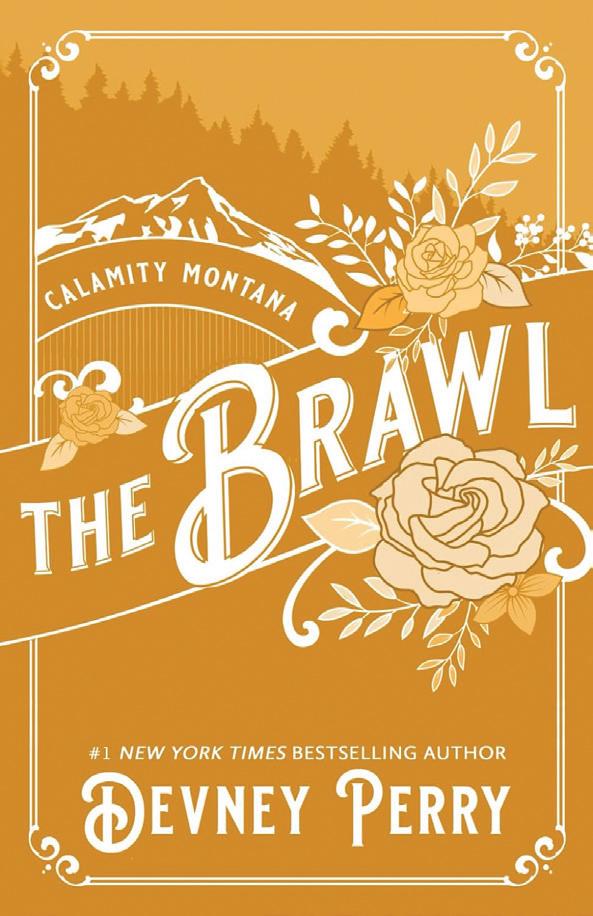
Devney Perry is a #1 New York Times, USA Today and Amazon bestselling author of romance novels. Shown here are but a few of her 50-plus titles, many of which take place in her home state of Montana.
Perry often writes her books in collections. Merit, pictured above, is one in a four-book series called Treasure State Wildcats, and features sports romance stories set around the fictional college of Treasure State University. Each book tells a complete story of a specific couple’s journey, exploring their individual challenges and their path to love and happiness.
BY HANNAH STIFF
“My name is Brock LaMeres and I’m writing to you from the year 2022. I live in the beautiful town of Bozeman, Montana, located on the North American continent of planet Earth. I am the fortunate one in charge of the project that built this computer that you just opened. This computer was built by students and faculty from Montana State University. We call this computer ‘RadPC’ because it can operate in the presence of space radiation. More about that later…”
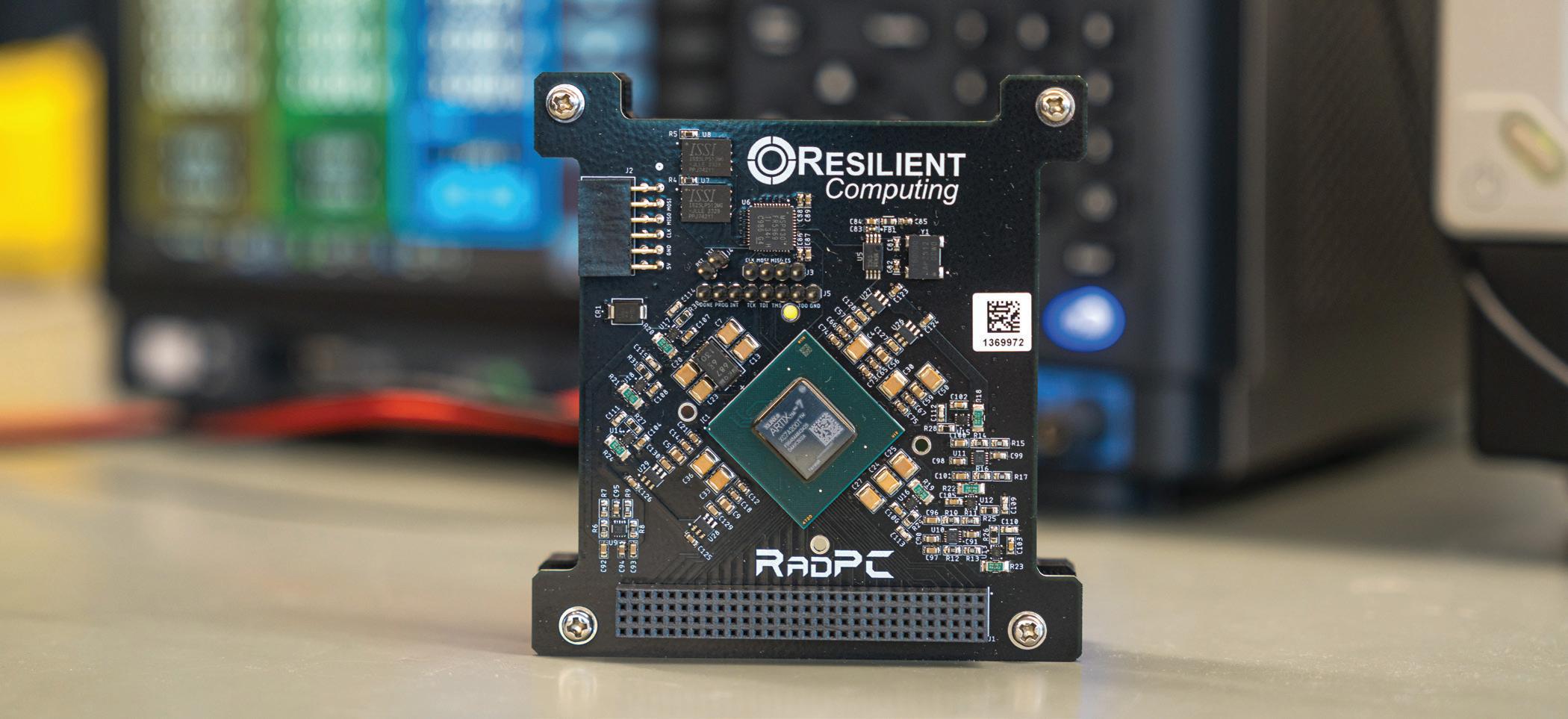
Those were the words MSU electrical and computer engineering professor Brock LaMeres ’98, recorded and saved on the computer he sent to space earlier this year. The RadPC he mentioned is a small, radiationresistant computer LaMeres created and refined over several decades with the help of many MSU students and professors. RadPC not only made it to outer space, it was part of a NASA mission to deliver a lander to the moon and leave behind remnants of life on earth.
The mission that carried RadPC and other payloads to the moon was named Blue Ghost and was conducted by the Texas-based company Firefly Aerospace. Commissioned by NASA, the landing is historic for several reasons. The March 2, 2025, touchdown was the first fully successful commercial moon landing. Once on the moon’s surface, Blue Ghost then completed more than 14 days of surface operations, maximizing 346 hours of daylight and 5 hours of operations that ran into the lunar night. The multi-day endeavor marks the longest commercial operations on the moon to date.
The program that sent RadPC to space is part of NASA’s Commercial Lunar Payload Services (CLPS) initiative
and Artemis campaign. Blue Ghost carried cargo from renowned educational institutions like Johns Hopkins University and Boston University, inventive companies like Aegis Aerospace, and from NASA.
That a computer created by MSU staff and students also made the historic voyage to the moon is a source of pride for the entire state of Montana and Bobcats young and old. But LaMeres said he wasn’t surprised his students were able to deliver on such a huge project.
“It’s awesome to see that we pulled it off,” LaMeres said. “MSU students did this. Of course they did.”
Long before the lunar landing, LaMeres and his students completed rigorous testing of the RadPC over several years. First they tested it on a dozen balloon flights, then they moved to rockets before RadPC flew aboard multiple satellites and eventually earned entry to the International Space Station three different times.
“Then we got the big call,” LaMeres said.
The call was from NASA, informing LaMeres that RadPC was one of 10 NASA payloads headed to the moon. LaMeres and his students were elated, and ready. In the preparation leading up to the January 2025 mission,
The RadPC was developed over a number of years with rigorous testing that included three trips to the International Space Station, and eventually, the moon. Photo by Tyson Krinke
LaMeres remembers his students needed to shake off the nervousness of joining calls with NASA personnel. While RadPC was made in Montana, a state some likely still can’t place on a map, LaMeres knew all along that his students could compete on a national level.
“We’re teaching the same stuff they’re teaching at the big schools,” LaMeres said. “Our students are just as good as their students. Our students are hardworking and hands on and companies love that.”
So when they prepared alongside juggernaut institutions, MSU shone bright.
“When they got on a design review call with NASA and it was their time to talk, they talked like an equal,” LaMeres said. “I was really proud of them.”
RadPC and the time capsule information it contains will remain on the moon. Hypothetically, if someone lands on the moon in 100, 1,000, or even more years and they find the small computer, they will have access to rich information about what life was like in Montana in 2022, when LaMeres first penned his letter. LaMeres and team loaded the computer with messages from then President Waded Cruzado, school children (who shared messages like, “Say hi to my dog!”), Montana elected officials, students, and of course, LaMeres himself. In his 1,764-word missive that lives on the moon, LaMeres paints a picture of life in current times as both challenging and filled with promise. He talks about how technology has made life easier for humans while also creating new problems to tackle.
Though the moon landing is a standout moment of LaMeres’ career, he is excited for what’s ahead. When he’s not teaching or researching or home with his two daughters and wife JoAnn ’17, LaMeres is building his fledgling company, Resilient Computing. The company, focused
on providing ultra-reliable computer architecture, is a spinout from his work at MSU. LaMeres was able to transfer his research and inventions to his company so he could commercialize the academic work he completed over his decades at MSU. LaMeres calls Resilient Computing proof that “research at MSU can be rapidly translated” to new products and services for the private sector.
His first company employees are both former MSU Ph.D. students, which is a point of pride for LaMeres.
“I’d love to be a company that employs MSU grads so they can stay here in Montana and not have to leave the state,” he said.
While continuing to juggle endless priorities, LaMeres is clear about his most important career contribution.
“My real contribution is that I can help people become great engineers,” he said. “All I do is mentor the students and show them how to do it.”
It’s a contribution that others are noticing as well. The American Society for Engineering Education awarded LaMeres the society’s prestigious National Outstanding Teaching Award for 2025. Todd Kaiser, head of the Department of Electrical and Computer Engineering at MSU, nominated LaMeres for the award because of his work to modernize the university’s computer engineering curriculum.
Former MSU President Waded Cruzado described LaMeres as “an outstanding educator and most deserving of this recognition.” Kaiser said he “couldn’t think of anyone more deserving” of national recognition than LaMeres. Brett Gunnink, Dean of the Norm Asbjornson College of Engineering said, “when it comes to instruction, LaMeres is among MSU’s finest.” From his chair, LaMeres said he’s grateful for the award because teaching has always meant
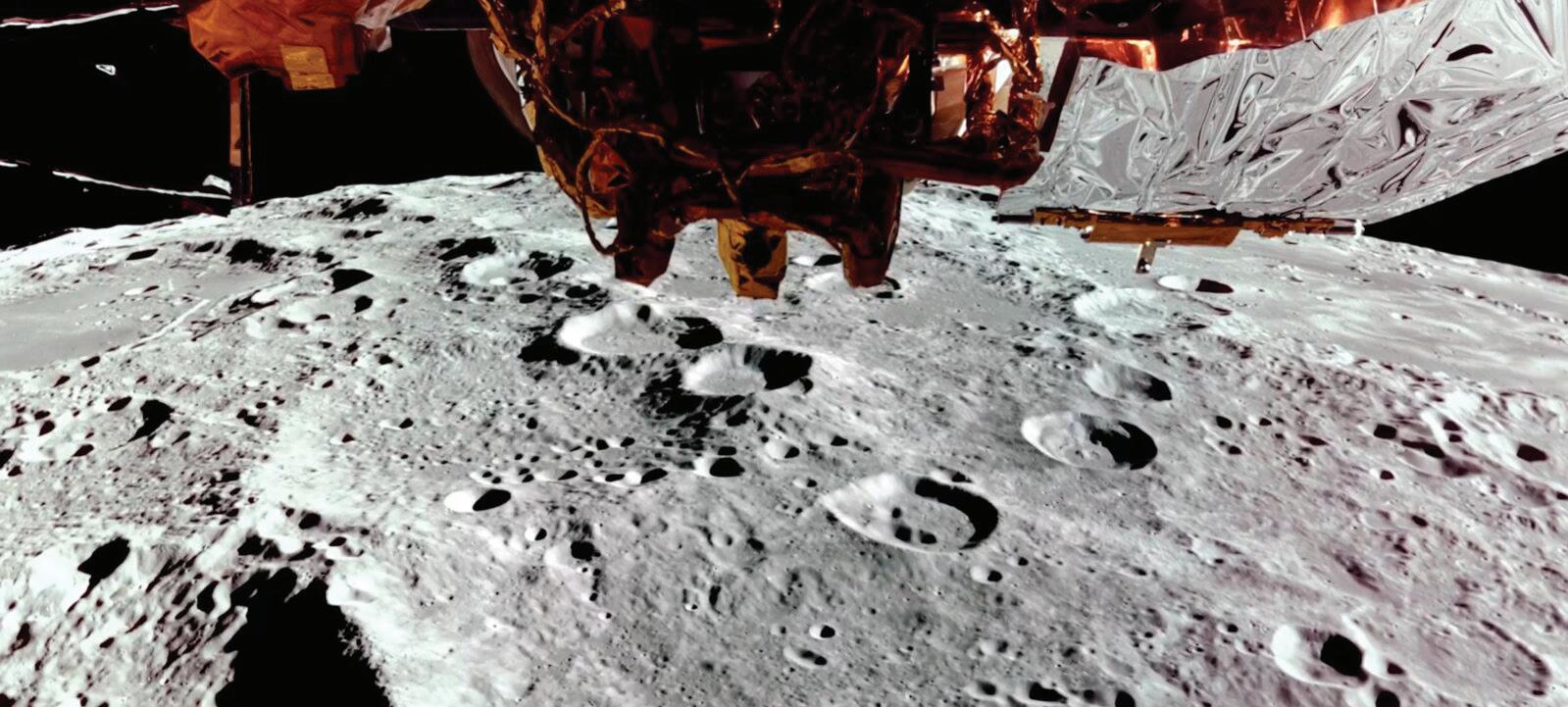
Firefly Aerospace’s Blue Ghost lander, with RadPC on board, captured footage of the Moon during its third lunar orbit on February 24, 2025. The photo was captured about 100 km above the lunar surface, showing the far side of the Moon and a topdown view of Blue Ghost’s thrusters. Photo courtesy Firefly Aerospace
“The magic really happens when students come through my classes to learn about computers and then work in my research lab and figure out how to actually ‘use’ them to do cutting-edge stuff. That’s how my team was able to put a computer on the moon.”
– Brock LaMeres
Photo by Tyson Krinke
more to him than talking in front of a whiteboard to students who are required to take his class.
“This award is a huge honor for me because it is meant to recognize teaching in all forms at a university,” LaMeres said. “When we think about teaching, we usually think about a professor lecturing in a classroom. But I spend as much time working with students in my research lab as I do lecturing in the classroom. The magic really happens when students come through my classes to learn about computers and then work in my research lab and figure out how to actually ‘use’ them to do cutting-edge stuff. That’s how my team was able to put a computer on the moon.”
In addition to teaching, authoring five textbooks and running a startup, LaMeres has published over 100 papers on digital systems and been granted 16 U.S. patents related to computer technology, including three for RadPC. He also has a growing YouTube channel where he shares his expertise on everything from how to change a fuse in your car to how to build a robot. Today, four core classes in the electrical and computer engineering department at MSU use textbooks authored by LaMeres.
While LaMeres may get to share his knowledge with students on campus, he’s especially proud of the students in his life: his daughters Alexis and Kylie. LaMeres boasts about both daughters being 4.0 students at Bozeman High School. On MSU’s campus, Alexis is studying computer science, which obviously makes LaMeres beam. Kylie is considering nursing and LaMeres is pushing hard for her to choose MSU. In the fall, as Alexis enters her sophomore
year at MSU and Kylie begins her senior year at Bozeman High, LaMeres will begin his 20th year of teaching at MSU. Even with his new company, LaMeres said he’s committed to his students.
“I have no plans to stop teaching,” he said. “I always tell everyone, ‘There’s amazing stuff going on at MSU and most of the time it’s people from Montana doing it.’”
Amazing stuff like building a space-worthy computer in MSU classrooms and laboratories and the students who are educated at Montana’s land-grant university that will go on to solve challenging problems and work with worldchanging institutions. LaMeres has no doubt that the days ahead are bright. It’s a message he believes so deeply, he memorialized it.
“As you look at the beautiful blue ball called Earth from the surface of the moon, you should also know that I for one believe that we will ‘make it,’” LaMeres’ wrote. “I believe this because at our core, humans are good. Our race has a builtin instinct to protect and nurture those that are in need. Even the toughest among us will drop everything they are doing if they see a child or elderly person that needs help.”
LaMeres’ final sentences in his time capsule letter that lives on the moon’s surface are reflective of how he lives his life. If there is hope for humankind, it’s thanks to the kind of humans that dedicate their lives to others — at home, in the workplace, in the classroom and beyond. LaMeres closes out his moon message with something he’s known to say regularly in his classes, “Life is good.”
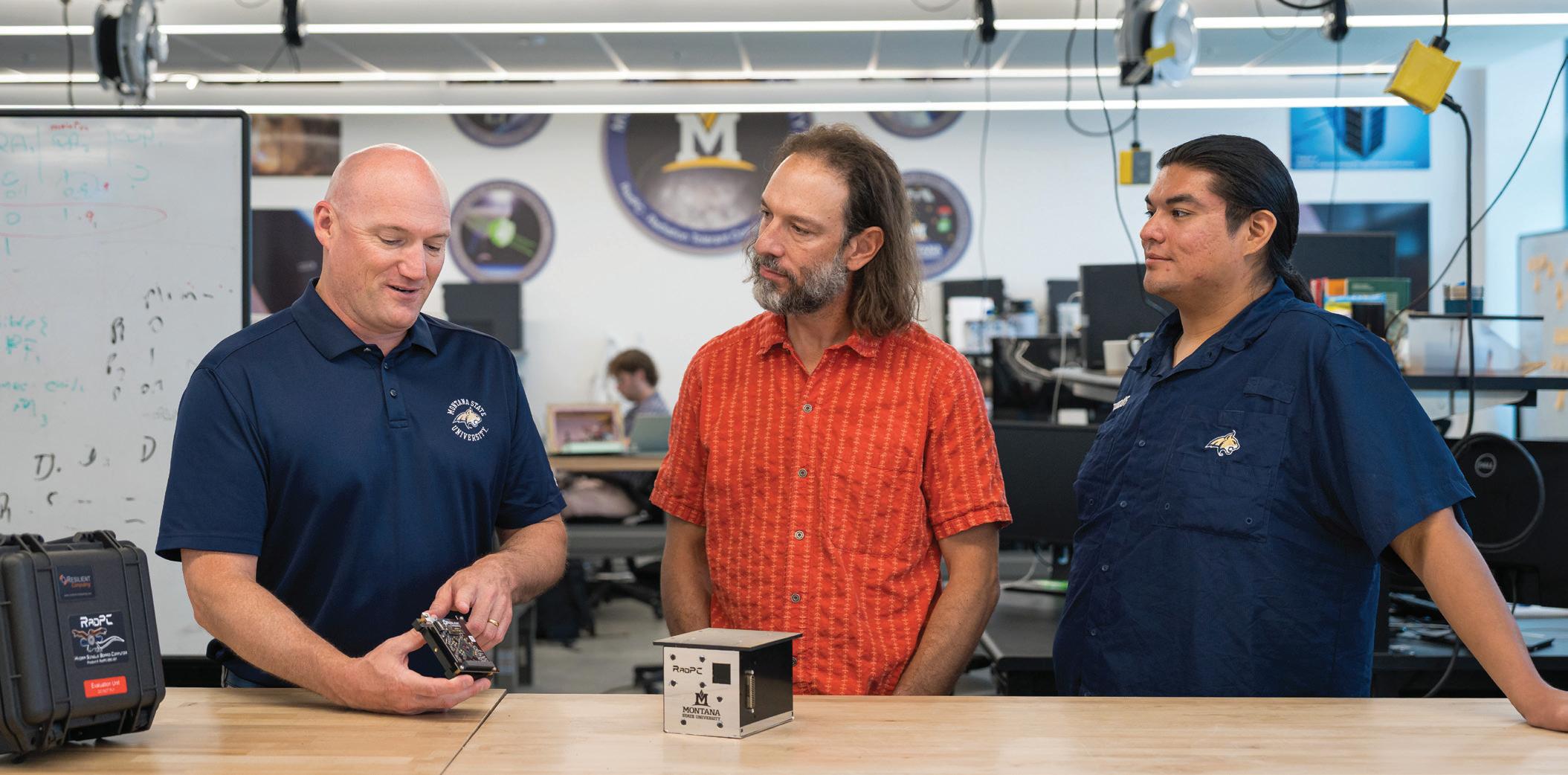
Brock LaMeres discusses components of the RadPC with electrical engineering master’s student Ben Macht ’24 and doctoral candidate Tristan Running Crane ’21. Photo by Tyson Krinke
Throughtime the lens of
Bartz Englishoe curates images and memories of MSU from five decades ago
BY MEAGHAN MACDONALD-POOL / PHOTOS BY BARTZ ENGLISHOE
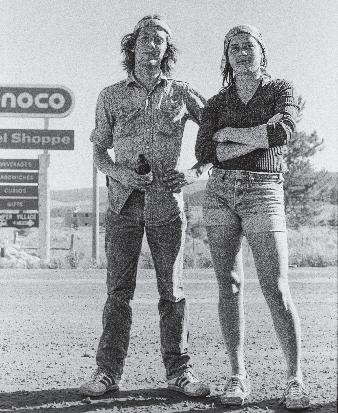
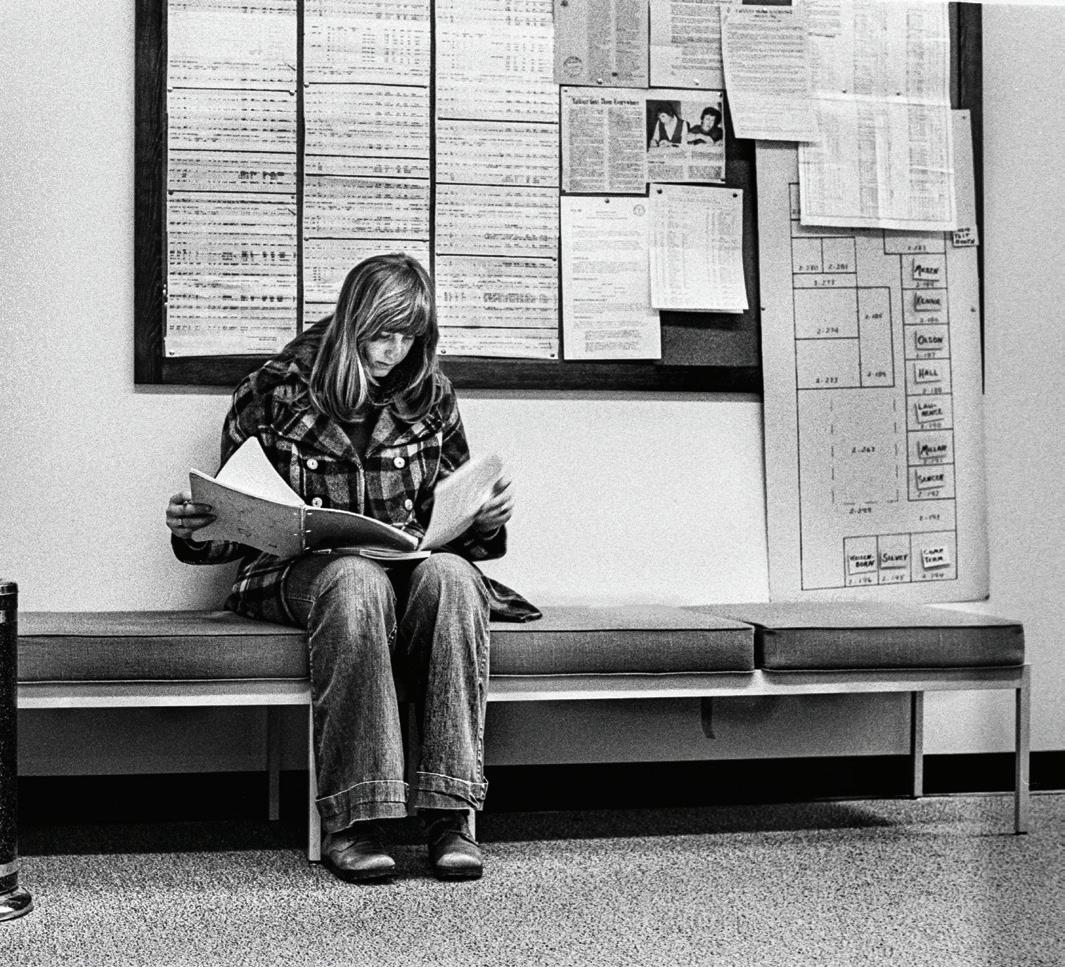
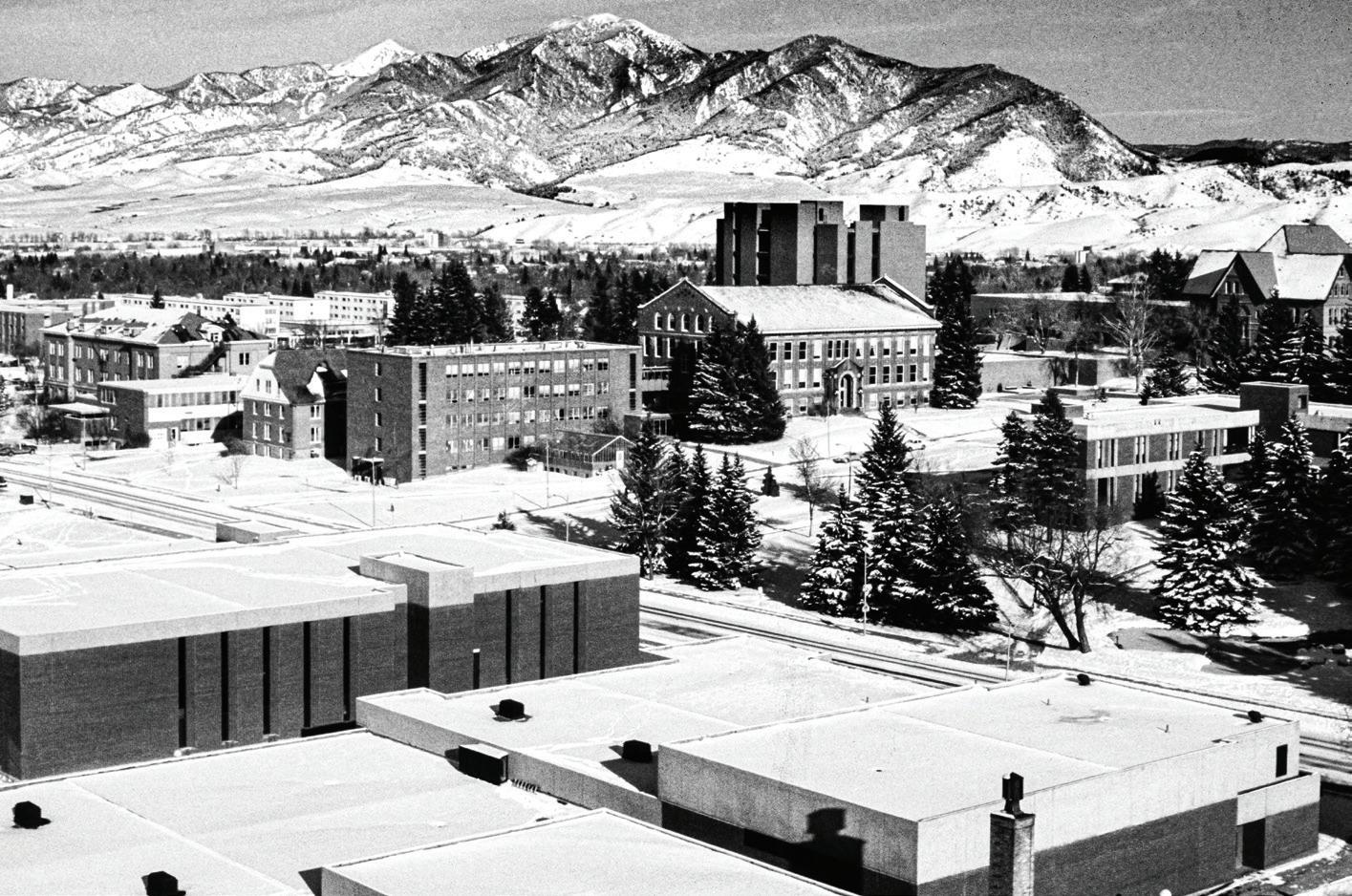
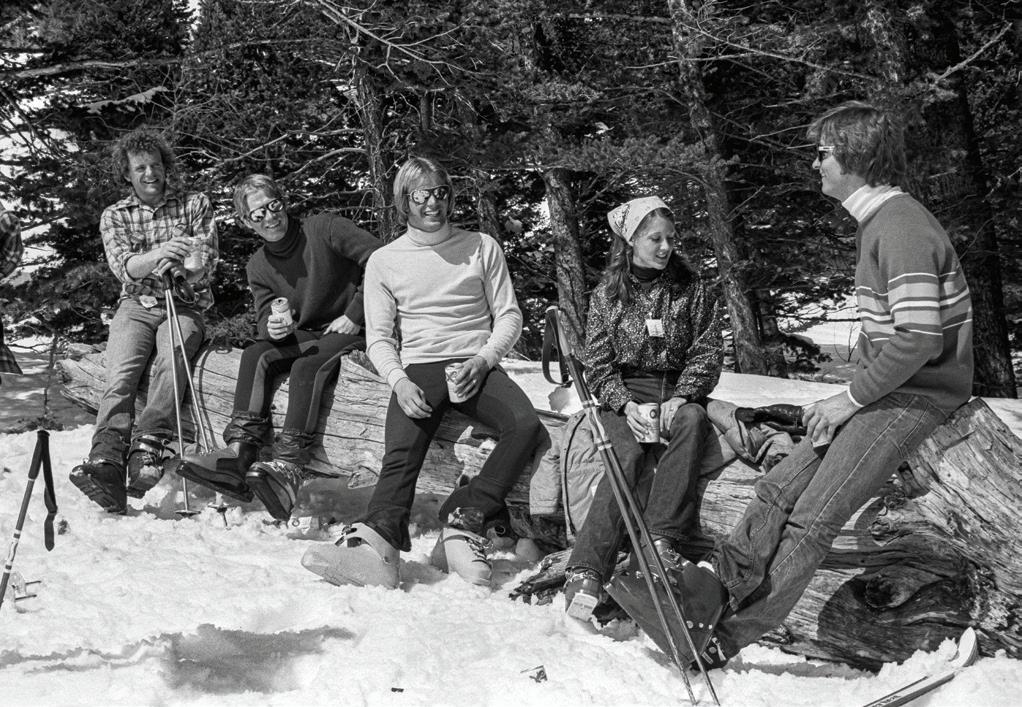
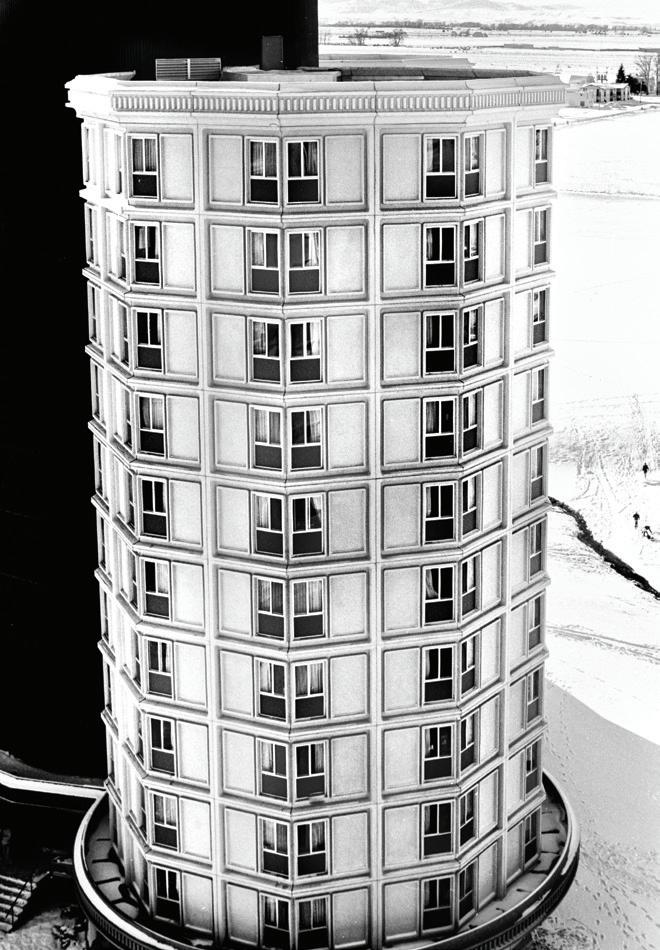
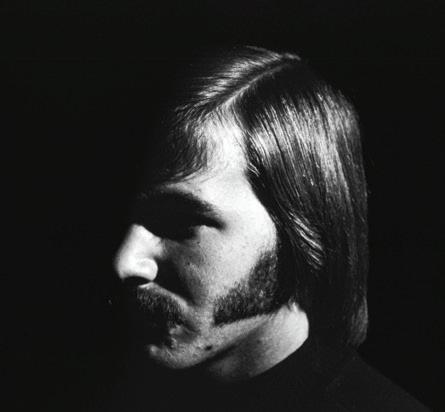
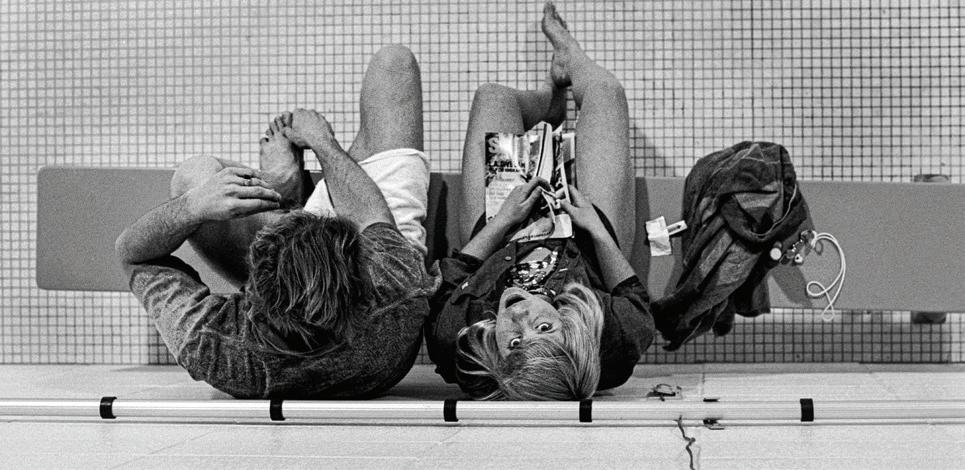
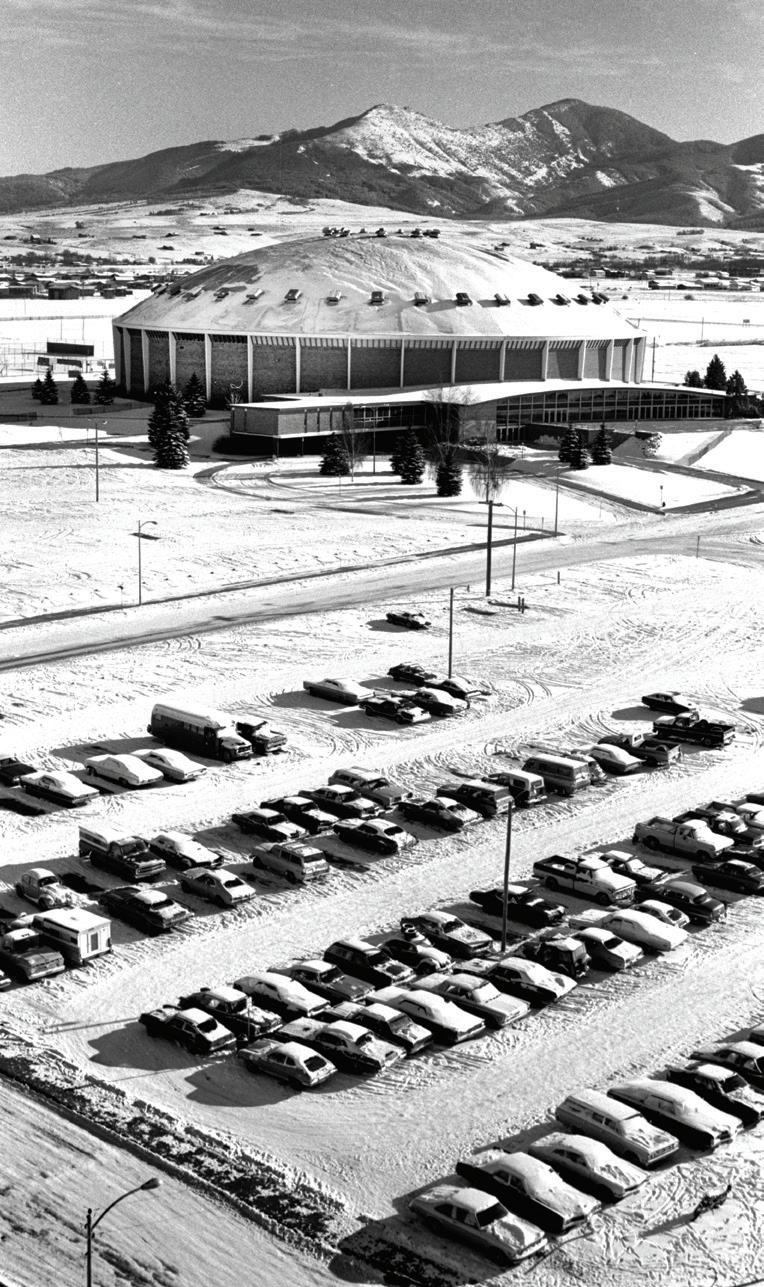
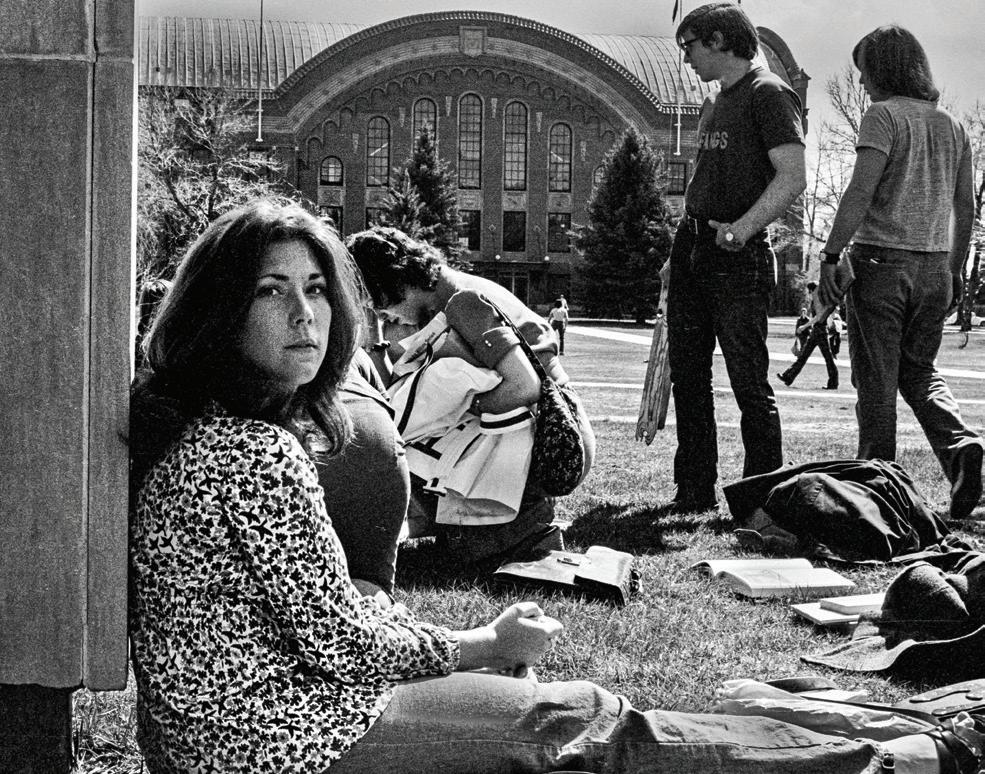
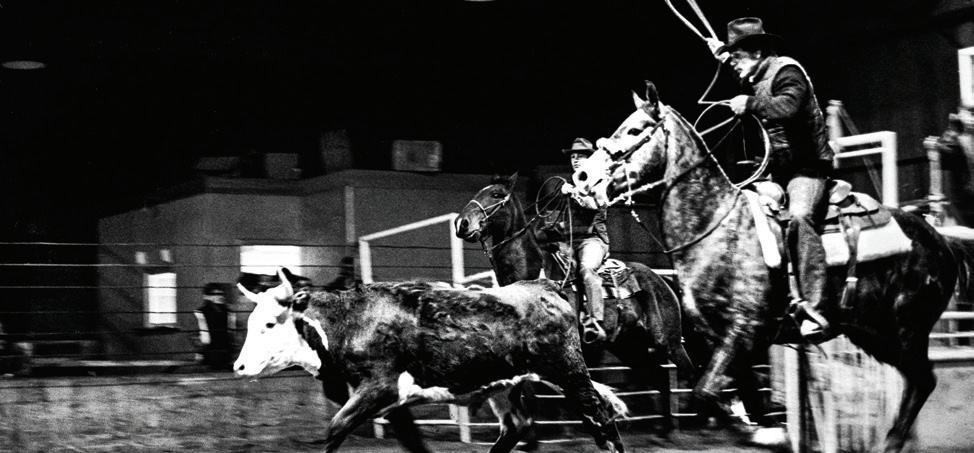
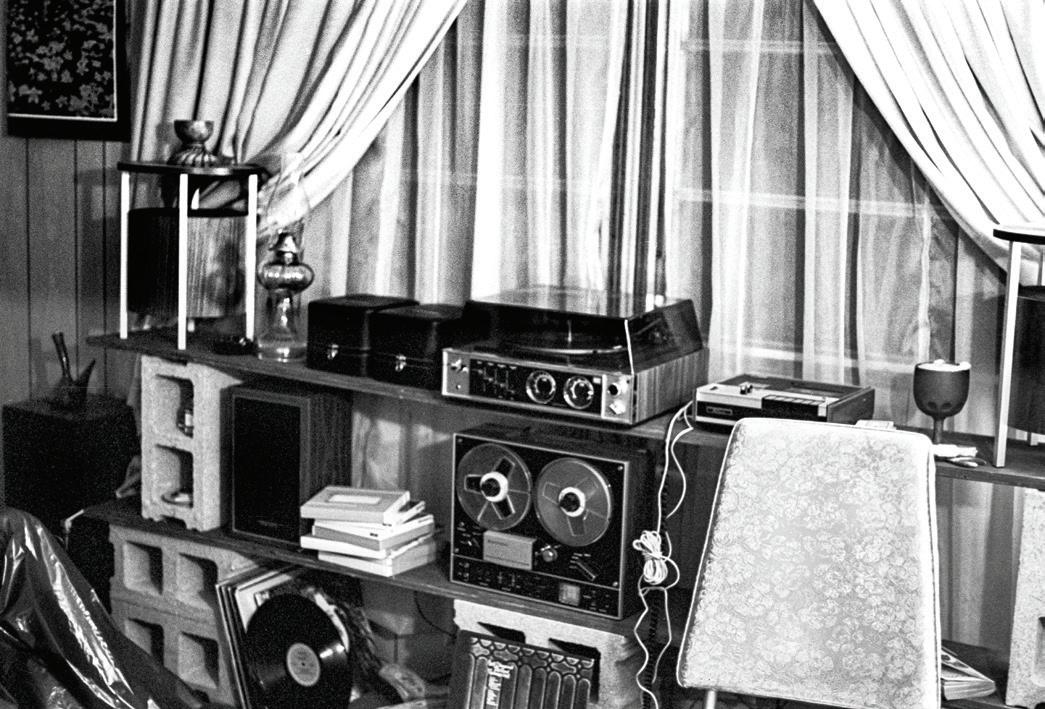
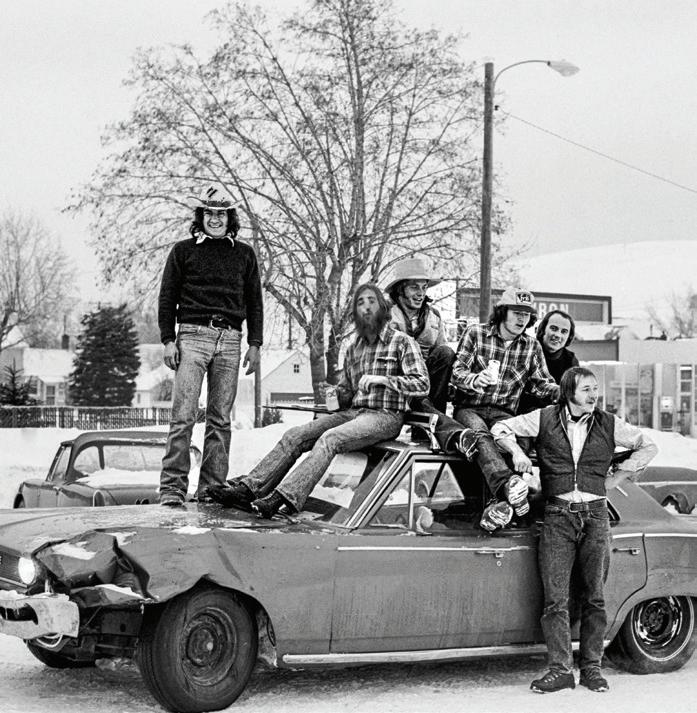
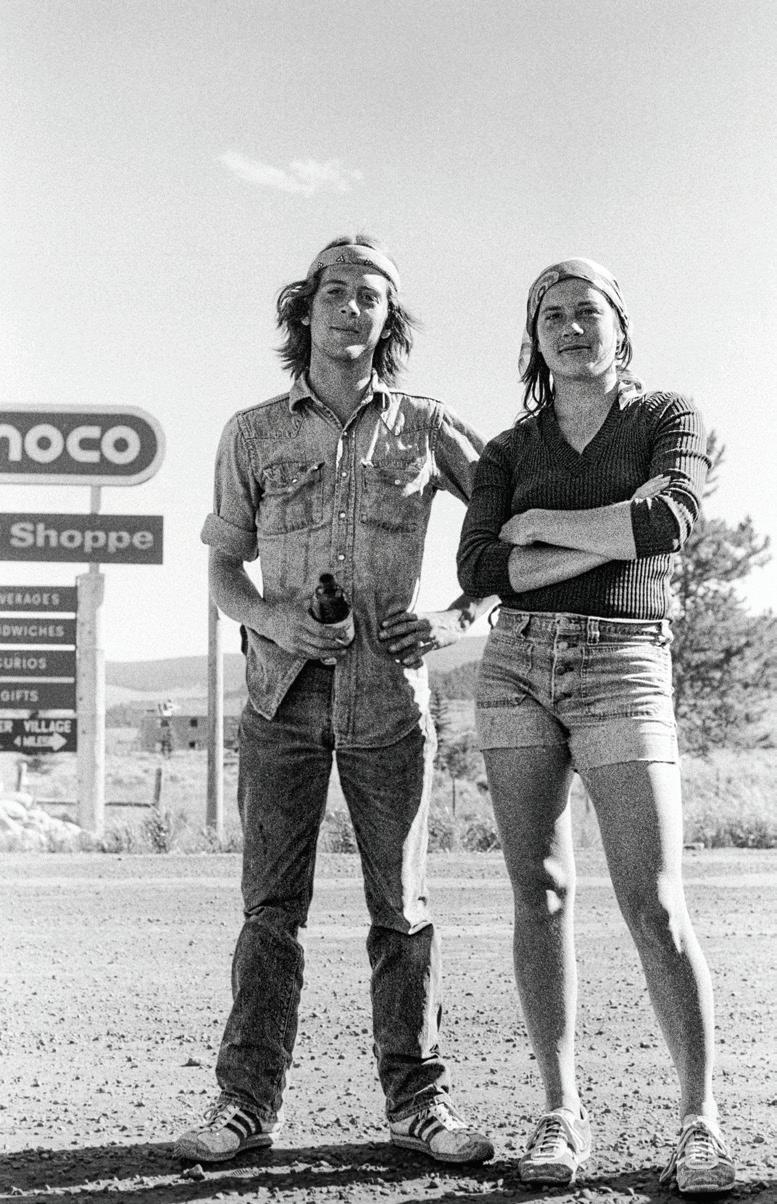
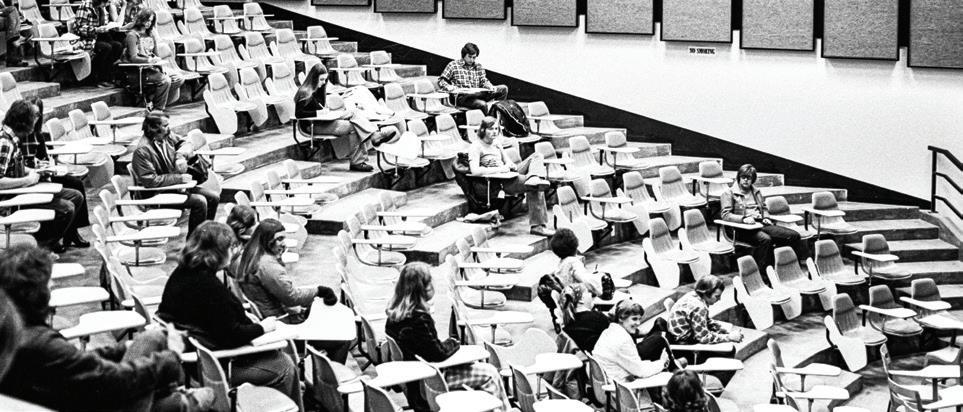
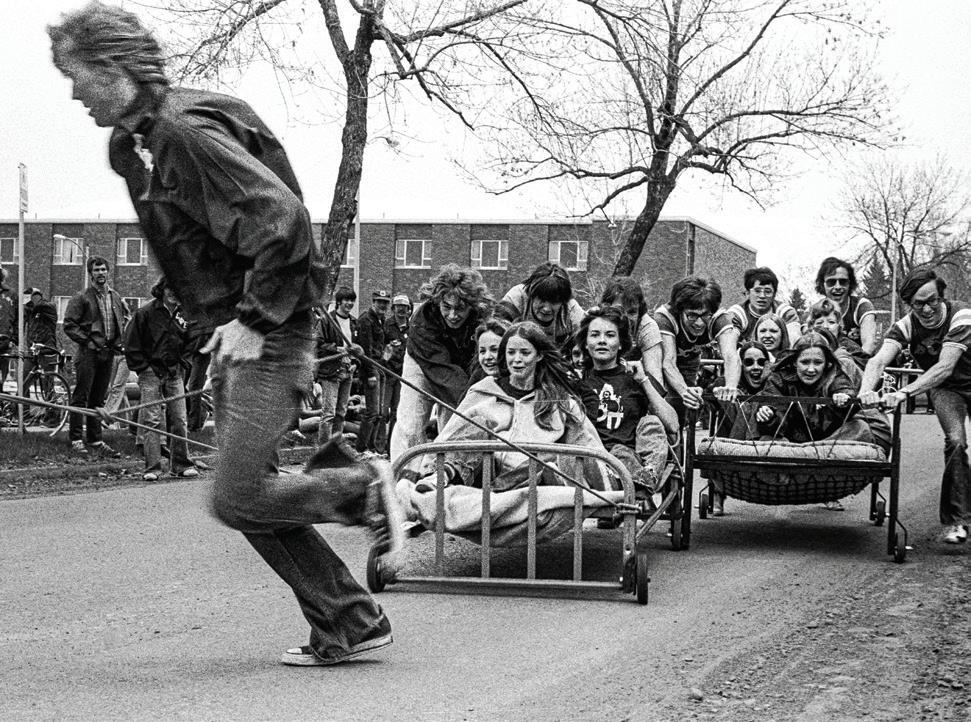
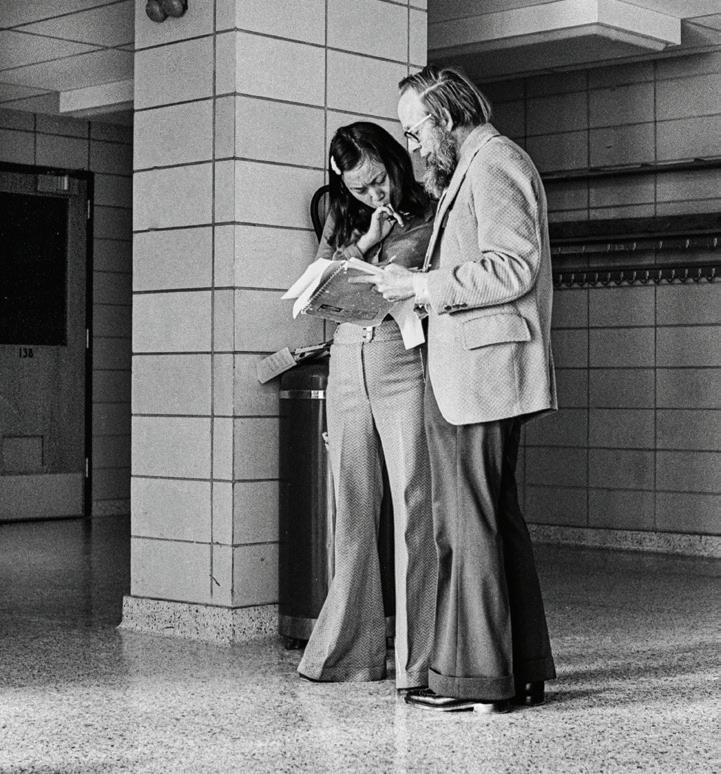
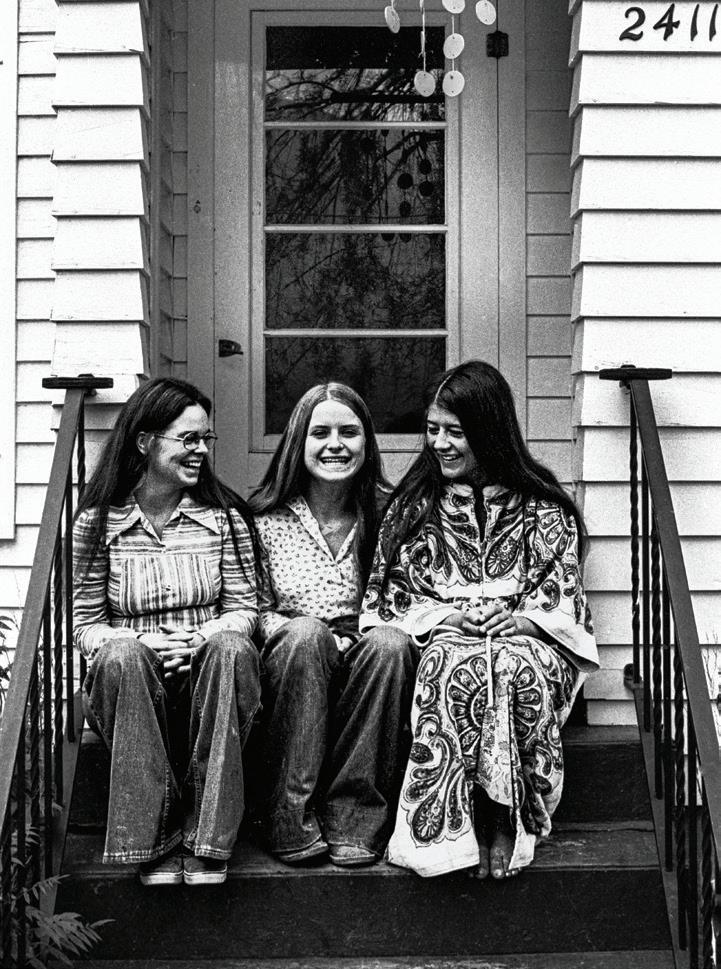
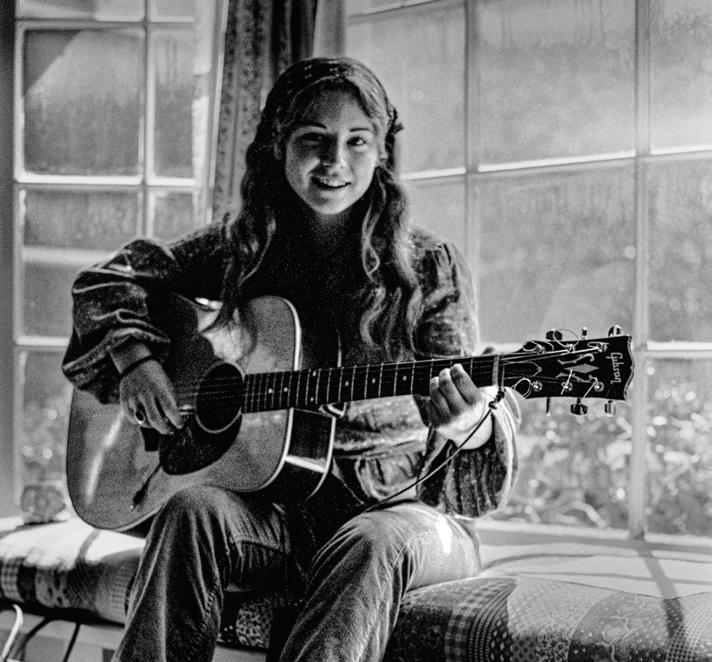
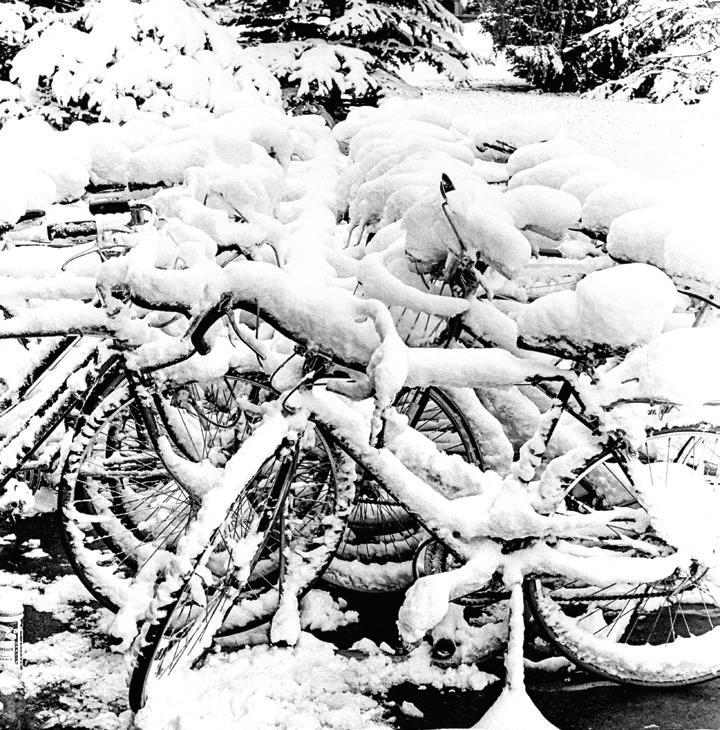
Asmall Instagram account with just 270 followers serves as a treasure trove of vintage photos of Montana State University and Bozeman. Bartz Englishoe ’76 operates the account vintage_msu_bozeman to showcase his black and white photographs taken in Bozeman during the 1970s.
“I scanned over 10,000 film images that I captured in Montana, Alaska and Vietnam,” Englishoe said. “Seeing the film images brought back many good memories. Sharing the images with family, friends, high school and college classmates and Army buddies was very rewarding.
So I decided to publicly share my 35mm photography on Instagram when it was a simple photo sharing site.”
Englishoe’s path to MSU and a career in photography was nontraditional and unexpected.
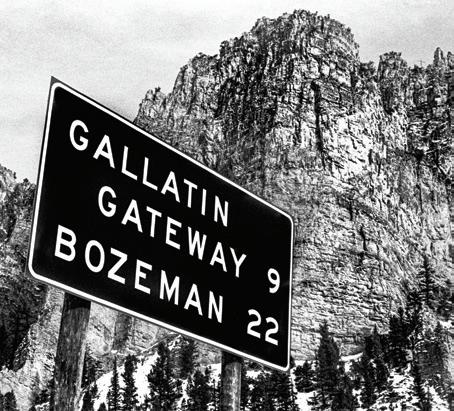
Born in Fort Yukon, Alaska, Englishoe moved to Montana in the ninth grade. His family lived on the Flying D Ranch in Gallatin Gateway, and he began college at MSU in the fall of 1968, majoring in civil engineering. In 1969, his college career was disrupted by the Vietnam War, and he volunteered before being drafted.
During his Vietnam tour, Englishoe purchased a Nikkormat 35mm film camera and took photos of fellow squadron members.
“Documenting troop activities struck my interest in photography,” he said.
After returning stateside and utilizing the GI Bill benefits, Englishoe enrolled in MSU’s still photography option within the then Film and Television Department.
Under the mentorship of esteemed photographer and professor emeritus Rudy Dietrich, Englishoe graduated with a Bachelor of Science in film and television. He returned to Alaska after graduation to start a freelance photography career. Englishoe worked for newspapers, magazines, corporate clients, non-profits and government agencies.
To this day, photography continues to keep Englishoe busy. He manages his Instagram account showcasing his vintage Bozeman film shots, makes fine art prints and custom frames and produces photo books for his grandchildren detailing his family’s history.
“I hope readers will enjoy my vintage black and white images that show campus life 50 years ago,” Englishoe said. “I have fond memories of college in a less complicated era.”
To see more vintage images of Bozeman and MSU, follow Englishoe on Instagram at: instagram.com /vintage_msu_bozeman
A world care
of
48 years of nursing, 53 countries visited, countless lives touched
Thailand
BY HANNAH STIFF
At 69 years old, Diane (McClurg) Sanders ’79 has visited 53 countries and looks forward to adding more stamps to her passport. Through her travels, she’s seen the iconic rock-cut architecture in Petra, Jordan. She has marveled at the pyramids in Egypt and the Acropolis in Athens. She’s witnessed police officers riding camels in Qatar and a firework show on a military base in Saudi Arabia. She watched dancing dragons ring in the Chinese New Year in Malaysia. She lived in New Zealand for three years and India for one. She gave birth and raised young children overseas.
From Turkey to Thailand, Sanders has visited corners of the world many will only ever see on TV or social media. All of her globetrotting adventures were made possible by her job as a nurse. Sanders never thought her career would take her around the world to hospitals in places she’d only dreamed of, if she’d heard of them at all.
“I am incredibly lucky I get to travel the world for my job,” she said.
Before her globetrotting career, Sanders had been on exactly one domestic plane ride. Growing up in Indiana, she thought the biggest, bravest move she would make was attending college in Bozeman, Montana. Though she had never visited the Treasure State, she wanted to take a risk and try living somewhere new. What Sanders didn’t know was that after she completed her nursing degree at MSU and married her college sweetheart, Montana would be just the beginning of her life’s adventures.
One thing she knew for certain: she was going to be a nurse.
“Most of my life, really, I just knew it,” Sanders said. “Early on, I was actually a candy striper. But I knew I ultimately wanted to be a maternal child nurse.”
After high school, Sanders completed a two-year nursing
program in Indianapolis and honed her skills working in a newborn intensive care unit. Then she decided she wanted more — she wanted a bachelor’s degree.
In Montana, Sanders quickly fell in love with MSU and Bozeman. She learned how to ski and enjoyed the hallowed tradition of spending good powder days at Bridger Bowl. While earning her nursing degree, Sanders met her husband, Joe ’79. Raised in Troy, Montana, Joe was a small town kid with big dreams of his own. After Sanders finished her degree in nursing and Joe his degree in Film and Television Production, the couple married in 1981. That summer, they both quit their jobs, put all their belongings in storage, and bought one way tickets to Europe to go backpacking.
“That was one thing Joe and I really bonded over, our love of travel,” Sanders said. “Sometimes our parents thought we were crazy.”
Eventually the couple bought their return tickets to Montana. Sanders got a job working in the labor and delivery department at Bozeman Deaconess Hospital, a position she held for two years before she and Joe decided to move to Seattle and pursue big city opportunities.
In Seattle, Sanders earned a master’s degree in maternal child nursing from the University of Washington. With an advanced degree in hand, Sanders found work as a perinatal clinical nurse specialist. After several years on the job, she got her big break for international work.
The opportunity found her while she was reading the American Journal of Nursing. The journal was advertising a role that fit Sanders’ skillset, just not her geographic location. The job was in New Zealand. Though it would be a big move, Sanders thought she might as well throw her hat in the ring.
“I’ve always had this philosophy, ‘If you don’t apply,
“I have had so many opportunities that nursing has given me to do different things, and grow and make a difference and get to travel. Nursing is an incredible field. I just don’t know of any other field that gives you these opportunities.”
– Diane Sanders
nothing will happen,’” Sanders said. “I asked myself, ‘What’s the worst that can happen?’”
She got the job.
This time, her international adventure would be for a family of three. In Seattle, the Sanders welcomed their first child, a daughter. By the time they decided to move to New Zealand in 1990, it was with a toddler in tow.
The family loved New Zealand immediately — the rugged beauty, the people and the culture. Sanders found she loved her job, too. While in New Zealand, Sanders gave birth to a second child, a boy, bringing the family roster to four. Sanders said that when her daughter attended pre-school, kindergarten and first grade in New Zealand, she developed a thick “kiwi accent” that made her and Joe laugh.
“It was pretty amazing living in New Zealand,” Sanders said. “In the early 90s, it was like going back into the U.S. to the early 1960s. Most women stayed home, which I didn’t.”
Raising a family and managing a busy nursing career made time fly. And after three years, the Sanders had to make a decision: hunker in and raise their children in New Zealand or return to the United States, nearer to family. Both Sanders and her husband are only children and wanted to be close to each of their parents as they got older.
Sanders and her husband decided they wouldn’t move back to Seattle — the city had gotten too big and busy for the young family. They instead decided on the Tri-Cities area in Washington, where they remained for the next 23 years. Sanders found work again as a nurse. Though she always saw herself as a charge nurse, she was quickly promoted through the ranks until she was promoted to chief nursing officer. The role was demanding, but she did find time for non-work trips to keep her love of travel alive. She took her daughter to Morocco and Spain before her daughter took off on her own adventures throughout Asia and beyond.
As life continued to speed along, Sanders remembers the moment she saw another job posting that would alter her life. This time it was from the Joint Commission International (JCI), an organization devoted to driving excellence in healthcare through adherence to bestpractices. Seen as the gold standard for international hospital accreditation, the commission sets standards for different types of healthcare organizations including hospitals, academic medical centers, primary care, ambulatory and home health care centers.
“Joint Commission International is really about trying to focus hospitals on having higher standards for quality and
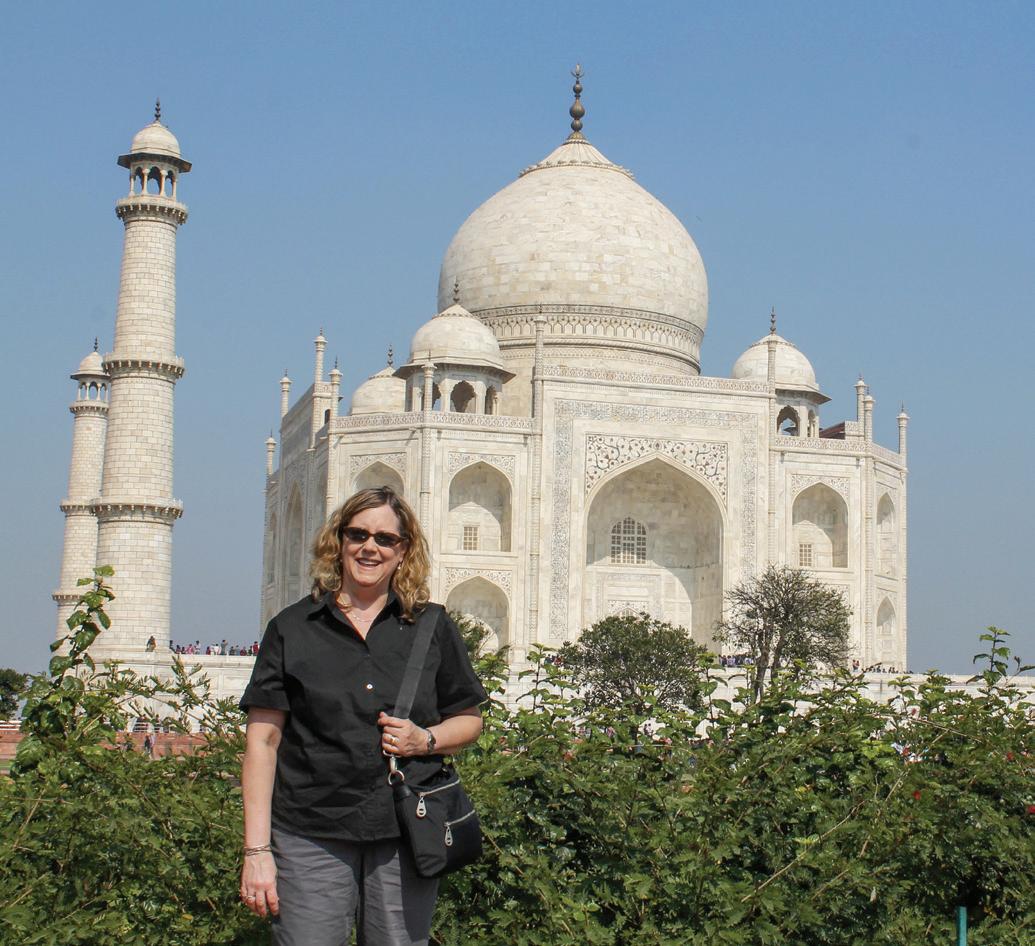
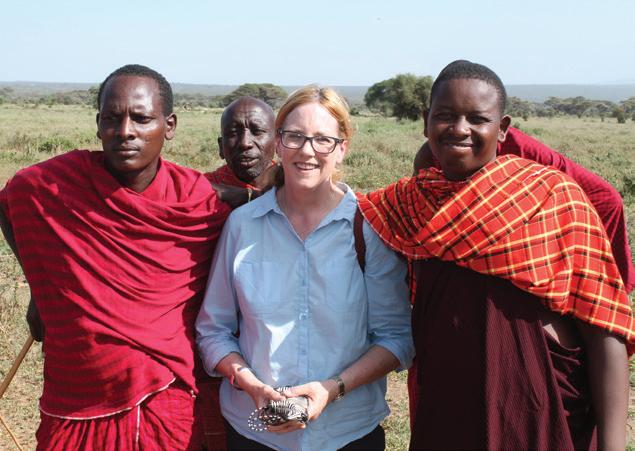
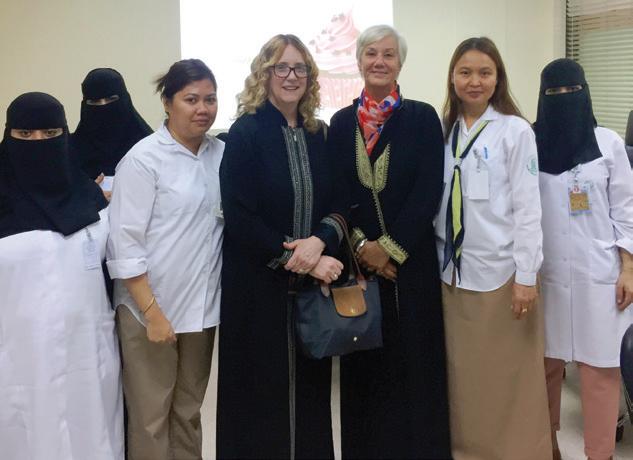
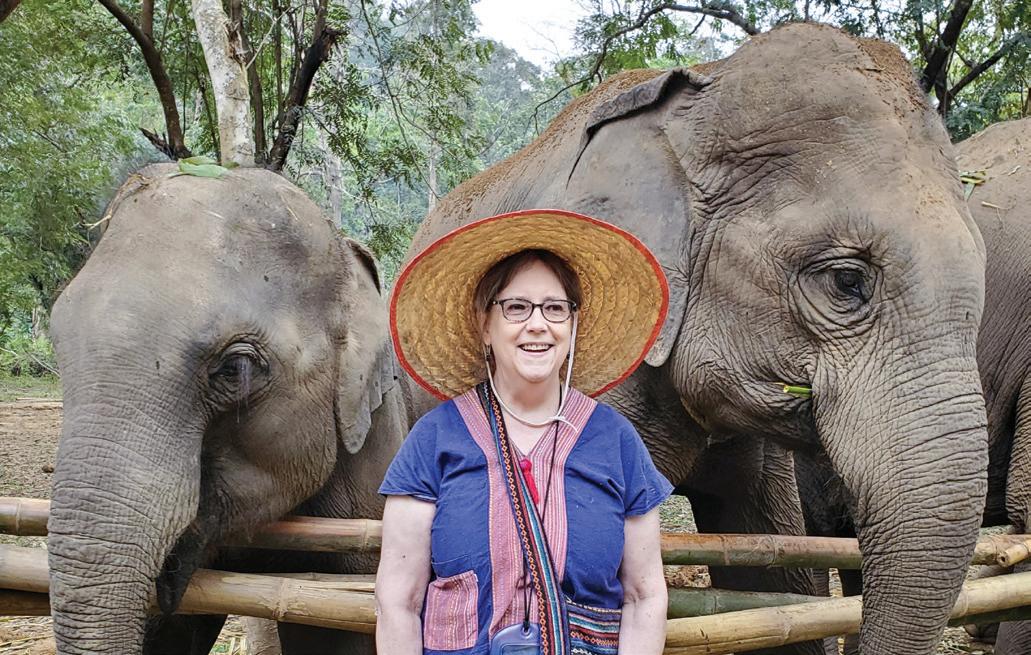
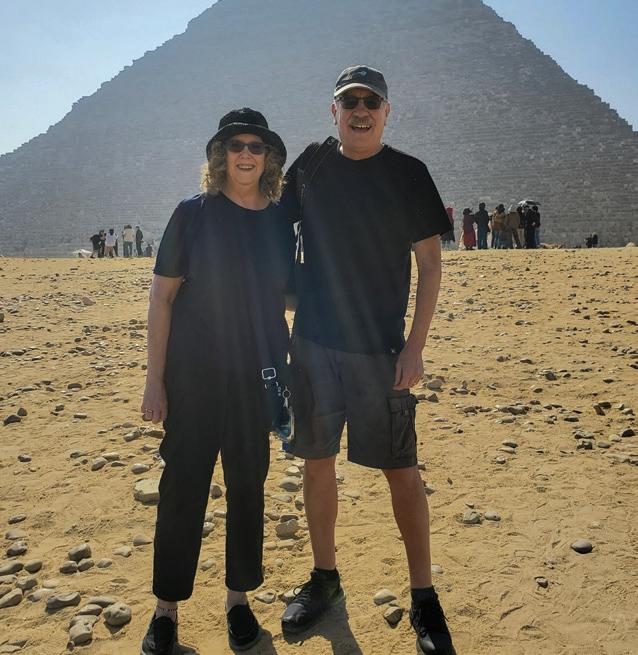
Although these photos may give an impression that Diane’s travels are those of a tourist, hospital privacy restrictions prohibit her from sharing images of the medical facilities she visits.
Left, Taj Mahal in India.
Top right, with the Masaai Mara tribe in Kenya.
Bottom right, in Saudi Arabia.
patient safety,” Sanders explained. “Different countries tend to have different issues and standards.”
The job listing was for a surveyor. In the role, Sanders would travel abroad to monitor a hospital and its staff and then make recommendations to improve patient outcomes and hospital efficacy. The position was listed as an intermittent commitment, meaning Sanders would travel six times per year for up to a week at a time. The rest of the year, she hoped to keep her job as chief nursing officer. That meant telling her stateside boss about her sporadic overseas roles. She said, “Somehow I managed to convince my boss it was worth it and we made it work.”
That was nearly 15 years ago. Sanders found a way to juggle her busy domestic job and look forward to her JCI appointments that would take her around the world for up to a week at a time.
In 2015, Sanders was recruited to work as a chief nursing officer at a busy hospital in Mumbai, India. With her children grown and gone, Sanders decided she was ready for another international adventure. In India, there were many unique cultural norms to which Sanders and her husband had to adjust. For one, Sanders’ schedule looked a little different.
“We lived really well in India, because it was a very wealthy hospital I worked at,” Sanders said. “But I also worked six days a week.”
Sanders found she was able to build strong relationships with the nurse managers she worked with and was able to help them grow in their careers, which she says was one of the most impactful parts of living in India for a year.
“I still keep in touch with them,” Sanders said. “And when I go back to India, we have a reunion. I spent about two months in Qatar two years ago, and so we had a reunion there, also.”
After their year abroad, Sanders and Joe moved back to Washington, but this time to Olympia, to be closer to their daughter and put down roots in a new city. But Sanders kept traveling. She took in the stunning island of Barbados
Diane with elephants in Thailand.
Right, at the pyramids in Egypt with husband Joe, who sometimes accompanies her on her travels and has graciously shared his photos.
as she drove herself around the island in a little rental car. She met a herd of elephants in Thailand and rode a camel in Morocco. She spent time with the Masaai Mara tribe in Kenya. She marveled at Turkish architecture and took in incredible views and food on Lake Como in Italy. Sometimes she traveled solo, other times Joe would join her. Though many people find traveling alone daunting, Sanders looked forward to each new adventure.
“You have to take some risk if you’re gonna travel,” Sanders said. “If you’re gonna play it safe, then you’re not gonna travel.”
Some of that risk, she admits, was mitigated by the fact that she traveled for work, which gave her a sense of purpose and a way to meet local people.
“I have had so many opportunities that nursing has given me to do different things, and grow and make a difference and get to travel,” Sanders said. “Nursing is an incredible field. I just don’t know of any other field that gives you these opportunities.”
Though she’s closing in on 70 years old, Sanders said her plans don’t include retirement. Though she may consider decreasing her workload to half time, she says.
“I’ve been a registered nurse for 48 years,” Sanders said. “I feel like I have a lot to offer these different hospitals. As long as I’m making a difference and enjoying the travel, I could go on for years. Some of my colleagues have worked into their 80s!”
Sanders said that her time at MSU so many years ago instilled a belief in herself and “the ability to uproot to make a difference,” she said. From rural community health projects that taught her about working in new environments to having first-time adventures in Bozeman, Sanders credits MSU as a great launching pad for her life of adventure.
“If you would have told me at 20 I would be traveling the world, I would have said, ‘Really?’,” Sanders said with a laugh. “I’d only been on a plane one time and it was to California. But being lucky enough to live in Bozeman, it set the bar pretty high for the rest of my travels.”
Left,
Texas Takeover
Montana State fans travel to Frisco, Texas, for football national championship
After finishing undefeated and ranked No. 1 in the nation, the Montana State University Bobcats football team punched its ticket for the 2025 NCAA DI Football Championship. The energy in Bobcat Stadium was electric on December 21, 2024, as MSU defeated No. 7-ranked South Dakota in the semifinals. People stormed the field to celebrate and were already talking about securing their tickets to the big game.
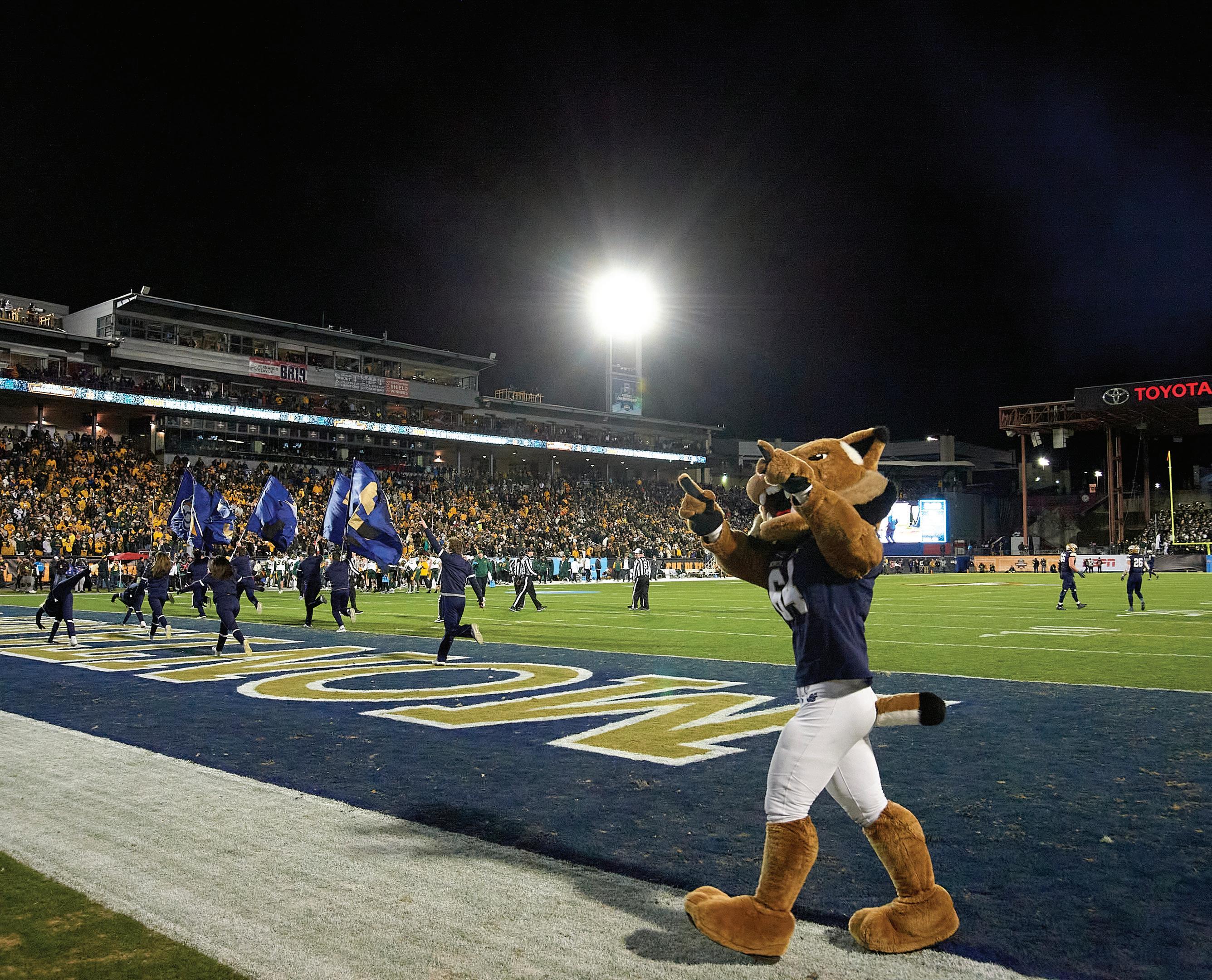
The national title game was held at Toyota Stadium in Frisco, Texas, on January 6, 2025. With such a quick turnaround, Bobcat fans from across the nation organized themselves to get to Texas to back their Bobcats as they
battled North Dakota State. Sadly, the Bison edged the Bobcats 35-32 to take the FCS (Football Championship Subdivision) title for the 10th time.
The MSU Alumni Foundation hosted a series of events to get fans hyped leading up to the big game.
Saturday night was a Caturday party at the Concrete Cowboy Bar where over 500 people showed up. Sunday night was a Sunday Funday event held at The Ford Center at The Star. A total of 4,875 people attended. Monday morning more than 1,000 people came to brunch at Legacy Hall ahead of that afternoon’s tailgate.
PHOTOGRAPHY BY KELLY GORHAM ’95, COLTER PETERSON ’18
Choosing promise
BY NICK EHLI /
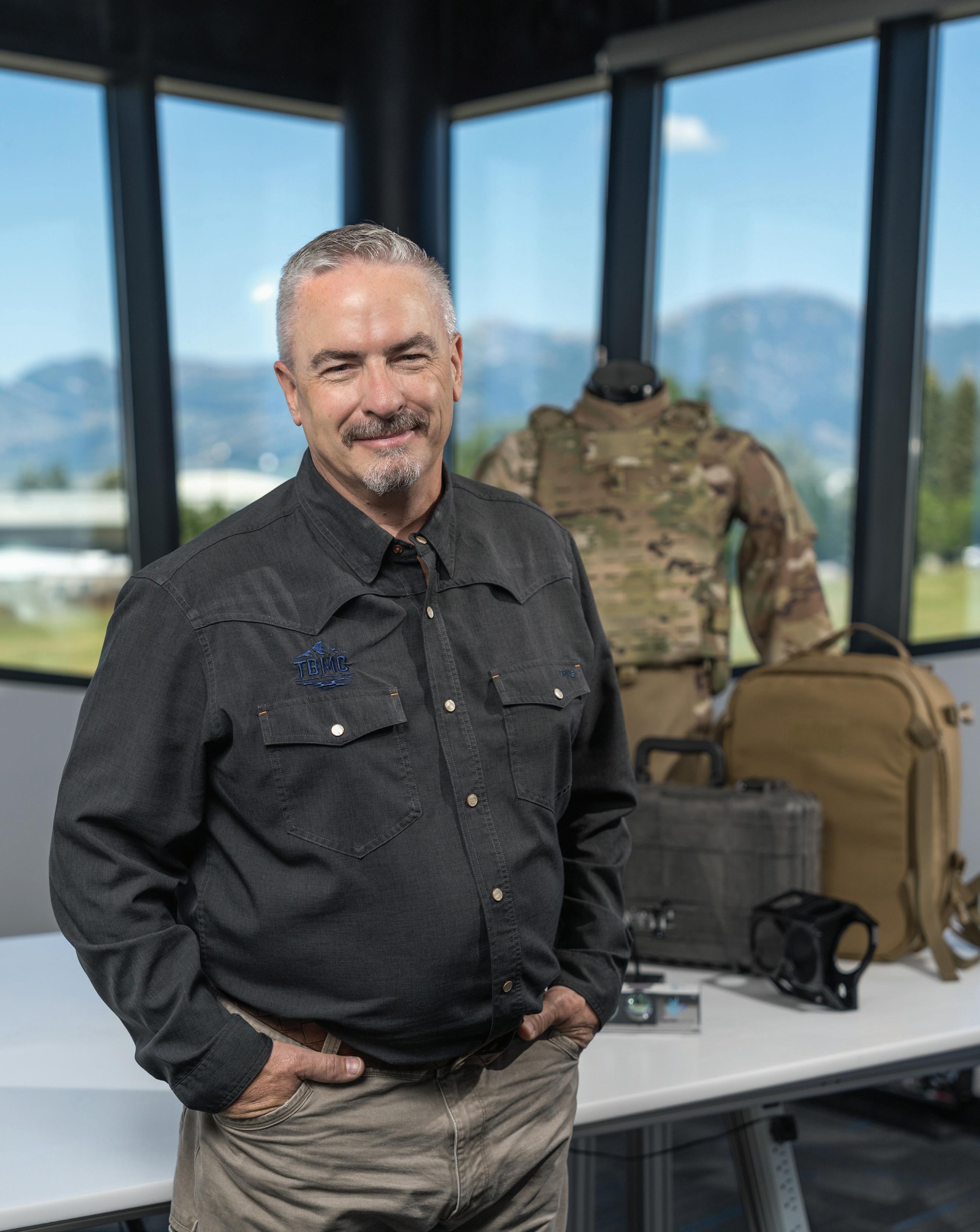
Al Deibert ’88, ’90 M loathes attention.
Ask him about his own personal successes — and there are many — and he’s likely to grimace as if he has stepped on a tack. Ask Deibert about MilTech, the research program he leads at Montana State University that contracts with the U.S. Department of Defense and the Department of Homeland Security, and he is certain to heap praise on his co-workers or, more likely, the soldiers they strive to support.
Take a look at news articles about some of MilTech’s more notable achievements — work on a lightweight vest that doubles as body armor worn by the nation’s military or a high-tech gadget that helps stabilize battlefield wounds, for example — and you’ll note that those articles, strangely enough, seldom mention MilTech.
You’ll also find that in its 21 years of existence, MilTech, now with some 100 employees working in 14 different states, has issued just three press releases, “two more than were really necessary,” as Deibert tells it.
For an organization that this fiscal year will bring into the university somewhere between $50 and $60 million in research funding, among the most at MSU, the lack of recognition may seem like an oversight. Deibert, though, wouldn’t have it any other way.
“It’s dishonorable to toot our own horn when we are working for people deployed and in danger,” the MSU alumnus said. “For us to take credit, that’s just not how we do things.”
Deibert maintains that his humble approach came naturally, mostly because, at least growing up, he didn’t have a lot to brag about. Born in the Boston area to Ivy League-educated parents, Deibert and his family moved to Billings when he was 10. His dad, Deibert said, wanted for his kids an experience different from what the East Coast
Al Deibert is a big fan of Montana State University and how it changes lives, from his own to those of soldiers on the field of battle
would offer.
Despite his parents’ educational achievements, Deibert said he wasn’t much of a student. Some of his closest friends were high-achievers, but Deibert said he lacked the necessary direction.
“I had no idea, no plans, no future,” he said.
His parents and a patient guidance counselor at Billings West High School persuaded him to enroll in the industrial engineering program at MSU, at least in part because, as an in-state student, the university had to accept him. Deibert remembered being told clearly that his chances of attending another, perhaps more high-brow, school were, at best, limited.
Deibert’s academic indifference continued at MSU. He recalled earning a C-minus in a chemistry class that had he failed, he saw himself “going back to swinging a hammer” or any number of manual labor jobs that kept him employed during college. While working toward his undergraduate degree, he washed dishes at a sorority, worked construction, was a welder’s assistant and gutted fish in Alaska. It took him five years to earn his bachelor’s degree.
“I was exceptional at digging ditches,” Deibert said.
Despite those hurdles, Deibert credits MSU with “choosing promise” — in this case, choosing to see his promise — a credo set out in the university’s strategic plan.
“I am a ‘choosing promise’ human,” he said.
After graduating, and with Suzan (Strejc) Deibert ’89, his now-wife of 36 years, still finishing her degree at MSU, Deibert enrolled in the university’s technical assistance program that paid him to earn his master’s degree in engineering while also working for various area businesses. At the time, the Industrial and Management Engineering Department at MSU was led by Dr. William “Bob” Taylor, a
PHOTOGRAPHY BY TYSON KRINKE
man Deibert credits with changing his life.
He paused as he explained the significance of the relationship.
“If he were to walk in right now, I would start crying,” Deibert said of Taylor. “He made a big impact on my life. He made a big impact on a lot of lives. I never thought I would earn an engineering degree, let alone a master’s in engineering.”
Taylor took him under his wing, Deibert said, and played a key role in guiding his transition into a professional career that leveraged his strengths in problem-solving and relationship-building. He recalled learning from Taylor that his value was no longer measured by the length of ditches he dug or the number of welds he ground.
“That’s what Montana State is amazing at,” Deibert said. “They take unique human material, that promise in people, wherever it comes from, and turn out amazing professionals.”
While earning that master’s degree, Deibert worked primarily at two Bozeman companies, the outdoor gear company Dana Designs and Cindy Ownings Designs, which produced high-end wool coats, and, upon graduation, he secured jobs at both.
“Back then, in Montana, if you wanted a job in engineering, it wasn’t easy,” he recalled. “So, I got two parttime jobs instead.”
Deibert stayed at Dana Designs for six years until 1996 when the renowned backpack manufacturer was sold to K2, the international sporting goods company. About that time, MSU was launching the Montana Manufacturing Extension Center (MMEC) to help Montana companies innovate and grow. When it needed its first field engineer, Dr. Taylor
hired Deibert.
A few years later, former Montana Sen. Conrad Burns secured the initial federal funding that established MilTech, which looked to build on the work being done at MSU by MMEC in manufacturing and by TechLink that focused on advancing technology companies. Deibert was hired as its first executive director, a position that he has held ever since.
The Morrill Act, also known as the Land-Grant College Act, was enacted in 1862 and provided land to states for the development of colleges and universities, including Montana State. The act, instrumental in development of higher education in the United States, held that those colleges should primarily focus on agricultural and mechanical arts. It also spelled out that those schools should concentrate on “military tactics.”
MilTech’s work with the military and on national security, then, has made perfect sense, Deibert said, and the research center has during its tenure completed more than 600 projects for more than 200 unique military programs through the Department of Defense and the Department of Homeland Security.
“It’s in MSU’s DNA to do work like this,” he said. “The university has been overtly supportive of national security research.”
Deibert, 59, is also the executive director of the recently established Institute for National Security Research and Education (INSRE) at MSU. The program, he said, strives to provide MilTech’s infrastructure to other campus researchers so “they can focus on the relationships and the research, and we will handle the rest.”
From its headquarters on the MSU Innovation Campus
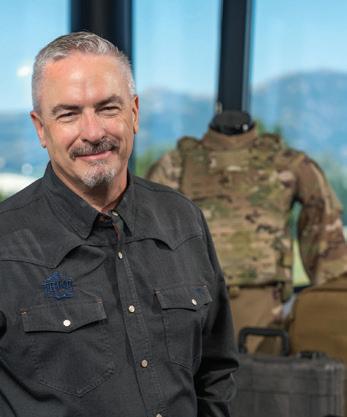
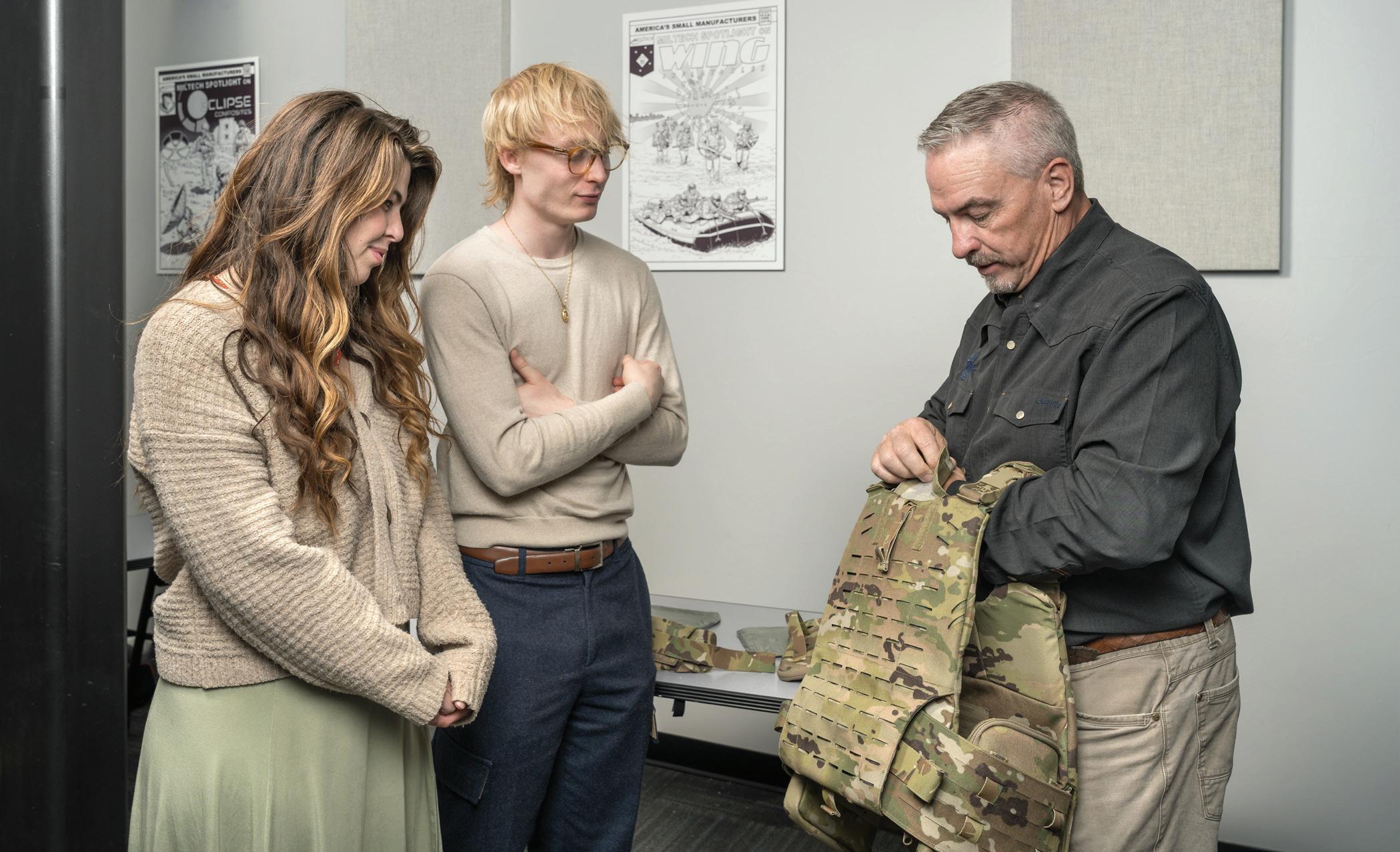
With student Gabe Ibsen and MilTech staffer Kat McDonough looking on, Deibert demonstrates the features of a body armor vest developed at MilTech and worn by U.S. soldiers in the field.
west of the main MSU campus, MilTech employs a variety of specialists: engineers, researchers, designers and overall problem-solvers among them. About a quarter of its employees are MSU graduates, and several more are current students. Roughly a third of its workforce are military veterans.
While MilTech certainly provides some engineering for the projects it works on, the organization primarily focuses on the needs of its military clients and facilitates the completion of those projects with the assistance of outside contractors that handle the end-of-the-line production.
“One of our claims is the allegiance to the customer’s solution,” Deibert said. “It’s not economic development for Montana; it’s not promoting MSU. Our clients will tell us, ‘This is what success looks like, this is the job that needs to be done,’ and we just work backwards to meet that definition.”
A large part of meeting those expectations, Deibert said, is collaborating with soldiers to better understand their needs. He said that MilTech has conducted hundreds of “field tests” since its inception.
“We have never, ever succeeded without asking the enduser, ‘What do you want? How do you deploy? Where is this thing stored? Who maintains it?’” Deibert said. “How would you know what a Marine needs unless you asked them?”
Seeing those results is the reward, he added.
“From a person from Montana who is a civilian — the fact that we are supporting the military from the middle of nowhere is crazy in the first place — the best payment is the delight on a Marine or a soldier’s face when they knew that they were being listened to and that the details were brought to bear,” Deibert said.
A prime example is the “plate-carrier” vest that MilTech helped design and develop with the aid of several other “industry partners,” as Deibert described them, at the request of the Department of Defense. The vest’s primary purpose is to protect its wearer, but the military also wanted it to be lightweight, easy to maintain and easy to put on and take off. Deibert estimates that more than a million of the vests have been put into use.
“Every MSU alumni should be proud that their university facilitated the design of the plate-carriers worn by our soldiers and Marines,” said Deibert, who recently served on the committee to select MSU’s next president.
The work being done at MilTech would seem a model for other universities. There are, after all, more than a hundred land-grant universities in the U.S., all with the same mandate to support the military. Deibert, though, said that MSU is unique in both its leadership and culture.
“The support we get at MSU,” he said, “wouldn’t exist at most universities.”
For example, he noted that MilTech this spring got
university approval to send an employee to Okinawa, Japan, to oversee repairs to one of its latest projects, a “narco-boat,” an autonomous, drone-like vessel modeled after boats used by traffickers of illegal drugs. The Marines are using the low-profile boat to, among other things, safely and covertly transport supplies and other technology.
The project has received a lot of attention, and military publications have sought to include MilTech’s work, Deibert said. Montana, after all, is not known as a maritime hotspot.
“They say, ‘Don’t you want to be talked about?’ And we say, ‘actually, no,’” Deibert said. “We ask them to keep us out. And they tell us, ‘That’s why we come back to [MSU]. You’re not like any other university.’”
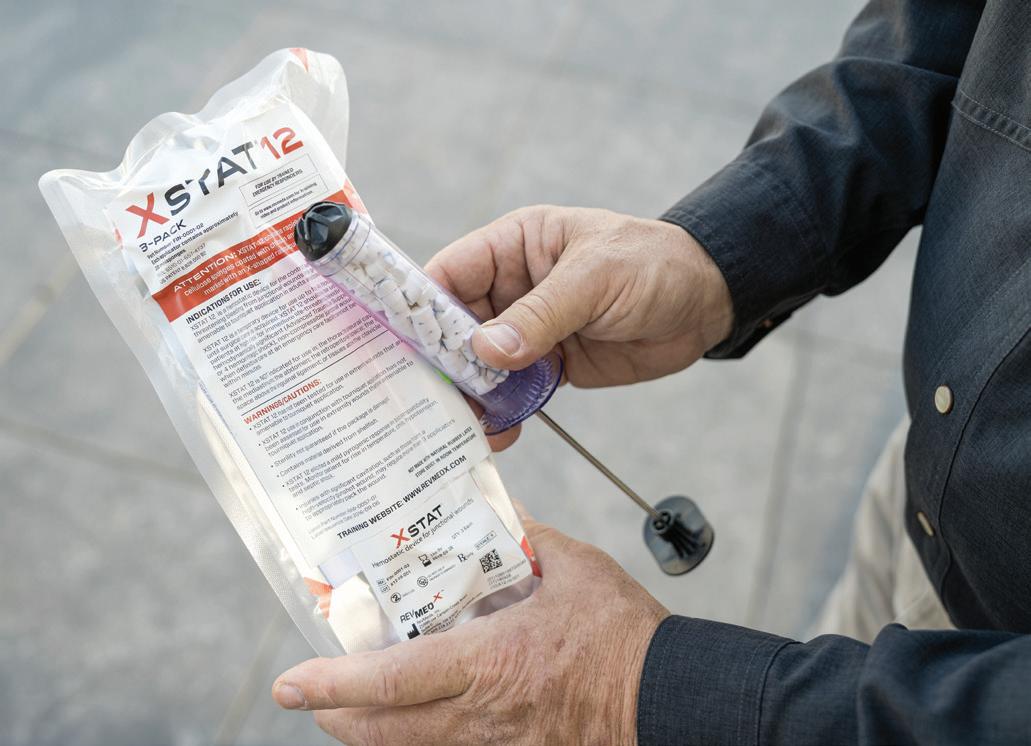
Above, Deibert holds the RevMedX XSTAT, which controls hemorrhaging in areas where a tourniquet can’t be applied. MilTech was contracted by the Air Force Medical Support Agency to work with RevMedX to help them establish an FDAcompliant manufacturing process to produce the XStat.
Below, samples of ultraviolet and infrared optical lenses with unique coatings, produced by Hardin Optical of Bandon, Oregon, with support and assistance from MilTech, acting as a mentor partner.
Educator and Native American advocate Janine Pease follows in her family’s footsteps of caring deeply and changing lives through teaching
BY MEAGHAN MACDONALD-POOL PHOTOGRAPHY BY MIKE CLARK
For more than 50 years, Janine Pease ’87 M, ’94 PhD, has been all in. She has dedicated her life to education.
Pease has served on several boards, consortia and councils at the local, state and federal levels, aiming to better educate and advocate for tribal students. Now 76 years old, she continues to teach as an adjunct professor at Little Big Horn College on the Crow Indian Reservation in Crow Agency, Montana.
According to Pease, education is not for the faint of heart. Either you are all in on the mission or you’re not.
“You have to be an activist, you have to care deeply
about these things or you’re not going to do it,” said Pease, an enrolled member of the Crow Indian Tribe. “It’s not a profession for people who are laissez-faire. It means a great deal, and if you’re not ready to give it your all, then you need to step out of the kitchen.”
However, for someone as dedicated to her profession, education was not the path she envisioned for herself. She earned two bachelor’s degrees in anthropology and sociology with the intent to be a social worker. But as life would have it, Pease ended up just like other members of her family: a teacher.
“In a way, it’s the family guild,” Pease said.
Her mother, father, auntie and uncle were among the very first college-educated people in their tribal nation, and all became teachers. So it was very much a part of her upbringing.
“We grew up as a family in schools,” she said. “The people that we knew best in the little schools, we saw them as close as family.”
Pease’s father always said that his family and he would not have gotten anywhere without education and athletics, so a college education was the expectation for her. After earning undergraduate degrees from Central Washington University, Pease found herself among a surplus of graduates in the state attempting to be social workers. With that door closed, Pease began working as a tutor counselor in the special student services program at Big Bend Community College in Moses Lake, Washington.
It was there that the spark of teaching ignited for Pease. She recalled working with a student who was Mexican American, a mother of six studying to pass the GED test. During the nine-month academic year, the student earned her diploma, learning to read and write in English, as Spanish was her predominant language.
“To me, that was an amazing feat, and I completely respected her ability to make such amazing progress,” Pease said. “But I also became impressed with the community college, the students who came into the learning lab and the teachers who worked with them. I never looked back on social work after that.”
As members of the Crow tribe, Pease and her family spent a lot of time in Montana and loved what she called her “home base.” While working at Big Bend Community College, a tribal councilman for Crow Nation reached out to Pease to recruit her to build higher education opportunities for tribal members. As just the 35th member of the Crow Nation to become a college graduate, Pease remembers the call as one she needed to answer.
While in Montana, Pease has played a crucial role in the state’s understanding of American Indian tribal colleges, Native American education and Native language restoration. After serving as the director of the Crow tribe’s Adult and Continuing Education Program, Pease founded Little Big Horn College, a public tribal community college on the Crow Indian Reservation in Crow Agency, Montana. She advocated for the college’s funding and served as the college’s first president from 1982-2000. Under her leadership, Little Big Horn College grew from a oneroom school with 32 students into an accredited two-year community college with facilities across a campus that serves over 300 students per term.
When Little Big Horn College was looking for accreditation, it became apparent to Pease that having two bachelor’s degrees as a college president was not enough.
She was personally encouraged by former Montana State University President Emeritus William Tietz to pursue graduate degrees in Bozeman. With scholarship access for people at tribal colleges, Pease joined a small cohort of about 20 tribal students working toward her master’s degree and an eventual doctorate. She completed her degrees while still maintaining her full-time job at Little Big Horn College and raising her children.
“Of course, we’re a tribal college, so we have tribal studies at the heart of every degree. And yet everything I learned at MSU from finance to instruction and assessments, all of that was essential. It really helped me as a leader, certainly as a leader of a higher education institution,” Pease said.
During the 1990s, Pease’s dedication to tribal higher education became more federally focused, as she tried to help secure funding for tribal colleges as part of several consortia and committees in Washington, D.C.
While president of Little Big Horn College, Pease served on the Board of the American Indian Higher Education Consortium and the American Indian College Fund. U.S. Secretary of Education Lauro Cavazos appointed her to the Indian Nations At Risk Task Force from 1989-91. Her work earned her appointments from former President Bill Clinton to the National Advisory Council on Indian Education and the White House Initiative on Tribal Colleges and Universities Advisory Council. Additionally, Pease was on the Museum of the American Indian Board of Directors.
Pease is the recipient of several prestigious awards and honors, including the MacArthur Fellowship and the ACLU Jeannette Rankin Award, as well as being chosen as the National Indian Educator of the Year in 1990. She was also named “one of the 100 Most Influential Montanans of the Century” by the Missoulian. She is the recipient of several honorary doctorates and was appointed to the Montana Board of Regents of Higher Education in 2006 by Governor Brian Schweitzer.
With 50 years of achievements to look back on, Pease finds meeting with early graduates of Little Big Horn College to be the most valuable aspect of her career. Going all in on her life in education has been rewarding in many ways, but it has also been life-changing for the hundreds of thousands of people who have been impacted by Pease’s work and that of her colleagues locally and nationally.
“When you see your hometown and its people are better off by education, that’s the whole point right there,” she said. “Education can make a life. You can see people having families, owning homes and being a part of the entire community. All of that to me is the reward, to know that my community, our tribal nation, is much better off on account of education.”
Deep roots, solid foundations
Kevin Chapin ’04, of Quattrocchi Kwok Architects in Santa Rosa, California, and a member of the MSU School of Architecture Advisory Council, confers with MSU architecture student Lexi Sparrow about a project.
Through the MSU School of Architecture Advisory Council, alumni pay it forward to help today’s students become tomorrow’s mentors
BY CAROL SCHMIDT
Barry Long ’87 came from Ithaca, New York, to study architecture at Montana State in the 1980s, attracted to both the quality of the program and Bozeman’s outdoor lifestyle.
Like most architecture students, Long spent most of his waking hours in Cheever Hall, home to the School of Architecture.
“Architecture education is studio-based, meaning spending afternoons, nights and weekends with classmates, focused on designing and modeling, in a uniquely collaborative environment,” Long said of his years studying architecture at MSU. “We built habitats together, ran our little coffee shop, and often slept under our desks. It was like creating our own community within Cheever Hall, and it reflects the demands of professional practice. Deep friendships were forged that will last a lifetime.”
Lynn McBride ’97 came to MSU from Casper and Riverton, Wyoming, where, as a child watching episodes of “This Old House” with her brother, she had known she wanted to be an architect. She said from her first day at MSU, when a classmate, and now a lifetime friend, helped her with a project, to her last day at MSU taking graduation pictures with her thesis adviser, “I felt supported, challenged, offered opportunities to grow and learn in ways that I had not imagined.” Now a partner at Mithun in Seattle and the current president of the MSU School of Architecture Advisory Council, McBride said the SOA faculty provided her with the foundation to “explore ideas in new ways we had not contemplated” and “pushed us to give more than we really thought we had for our projects.”
“That foundation that was given to us as students to go out and thrive in our professions is the motivation for me to give back to the school now,” McBride said. “The Advisory Council provides that opportunity.”
The common lifestyle, supportive faculty and resulting lifelong friendships are a few of the reasons why the School of Architecture boasts one of the most active alumni groups at Montana State. Now 61 members strong, the School of Architecture’s Advisory Council is a hands-on, dues-based organization.
The group includes members like Long, who is now the principal and president of Urban Design Associates in Pittsburgh, Pennsylvania, a leading international
urban design firm specializing in master planning, design guidelines and architecture services. It also includes McBride and many other principals at top-ranked firms. Twice a year they leave the demands of busy firms and travel back to MSU to meet and mentor MSU students. Other months they meet on Zoom.
“It’s really unusual to have that many alumni actively engaged with current students and supporting the school,” said Michael Everts, director of the School of Architecture. He said the group not only provides mentoring but also supports student scholarships — having established twothirds of all scholarship gifts through the MSU Alumni Foundation, totaling $106,000 — and funds an endowment that brings visiting scholars to campus. The group also helps students get jobs and internships and support the school’s needs. The group’s passion and commitment are a real asset for the school and are part of providing a quality education, Everts said.
The Advisory Council was formed after the school had gone through some rollercoaster years. In 1987, a statewide grassroots campaign narrowly kept the school from being completely cut during a huge system-wide budget deficit. The support was well-earned. The MSU School of Architecture has long maintained a national reputation for excellence that continues to be bolstered by the fact that MSU students pass the national architectural registration exams at rates higher than nearly every program in the country, including those at Cornell, Harvard, Yale and the Rhode Island School of Design.
Then, in 1997 the Montana Board of Regents approved a plan that made MSU only the second accredited school in the country to grant a five-year master’s degree in architecture. Clark Llewellyn, then the director, formed the Advisory Council in 1998 to garner support from some of the school’s successful alumni. The first meeting included six alumni: Wayne Berg ’69, Warren Dean ’69, Bill Hoy ’81, Larry Hurlbert ’76, Jerrily Kress ’71 and Keith Rupert ’66. Dean, now of Houston and a retired vice president at Jacobs, the number one project management firm in the world, still attends the meetings faithfully.
“Even though I’m now retired, I still find returning to SOA enriching,” said Dean. “To see what students are doing, have dialogue with the director and staff, and catch up with what the AC practicing architects are doing in their
practices as well as the challenges they face. Being involved continues to be a rewarding experience.”
In the early years, the advisory council established the Endowment for Excellence, creating a sustainable future for the school. In addition, alumni on the council have been leaders in fundraising for the Visiting Professorship Endowment that was initiated when approval was given by the Montana University System Board of Regents for MSU to retroactively award Master of Architecture degrees to graduates who received a Bachelor of Architecture degree prior to 1997. The Visiting Professor Endowment, which is nearly $1 million, allows the school to invite a visiting scholar to teach in the school every year.
McBride, who was a recent graduate during those formative years, said that Llewellyn’s vision was extraordinary.
“(Llewellyn) was a firecracker who had a tremendous amount of energy and knew how to get people involved and engaged in meaningful ways,” she said. The Advisory Council has grown steadily, recently in both age and gender diversity, she said. A tiered dues system supports this, with younger professionals starting their careers paying less than established professionals.
One of the younger members of the advisory council is Nicole Andersson, a 2021 master’s in architecture graduate whose design in her graduate year at MSU won an award from the American Institute’s COTE Top Ten for Students designs in the country. Now with Henneberry Eddy Architects in Bozeman, Andersson said she joined the
Advisory Council last fall to reconnect with the school and give back.
“The Advisory Council is a good way to become involved with the school and become involved with students and help support them,” Andersson said. Andersson is a mentor to two architecture students and finds working with them especially satisfying.
“There is a culture of leadership in the council,” Andersson said. “That leadership translates over to the meetings, where we are surrounded by principals in their firms, which is kind of fantastic. The people who are involved really care about MSU and the school. It’s their alma mater and they want to see the SOA do well.”
Andersson said the firms represented by members of the council focus on hiring MSU students. “We want to give back; we want to enhance the field of architecture and the quality of MSU students.”
The Advisory Council’s mentoring program, which had been informal until 2022, when it was formalized with the establishment of an official mentoring program led by faculty member Zuzanna Karczewska. Students can become a mentee as soon as they are officially admitted to the professional program after their second year. About 60 percent of undergraduates, or 115 students, and 65 professionals are involved in the voluntary program, with mentors coming from 12 states across the country.
“Our students who are in the mentorship program really appreciate having a relationship with a professional who is outside of the school, directly involved in the profession, and who has a different outlook on things than the
MSU School of Architecture Advisory Council members Lauri Moffet-Fehlberg and Barry Long shared their experience with current architecture students last spring when the advisory council met in Bozeman.
architecture faculty,” Karczewska said. “It is refreshing.”
Karczewska said some mentors who are working with multiple students in different years meet with all of their students together, which creates additional strong bonds and relationships among students across different levels.
“The program lasts through the student’s education, but the hope is the mentor-mentee relationship will last further than that — through graduate school and beyond,” Karczewska said.
Lauri Moffet-Fehlberg, who graduated from Montana State School of Architecture in 1983, said the mentorship program builds important personal and professional bonds early on.
“The architectural community is fairly small, and the mentor program builds important connections and is a springboard that will, for many, open doors for internships and jobs,” said Moffet-Fehlberg, who is senior vice president of architecture for the Dahlin Group in Pleasanton, California. She met her husband Kurt Fehlberg ’83, director of architecture for Dahlin, at MSU. Both are active in the Advisory Council and both are mentors who see the importance of the connections between mentors and mentees. “The (program) builds lasting relationships,” she said.
Octavia Fisher ’25, a student from Bozeman who is going into her first year of her master’s program, said that having a mentor from the Advisory Council has been inspiring. Her mentor would share his projects with his mentees and discuss his presentations to clients.
“Being able to see how that communication process
works was one of the most helpful things for me,” Fisher said. “He also would critique our studio projects. It is inspiring to have an outside prospect directly from the industry give you feedback.”
But perhaps the largest challenge to the council in many decades now looms. Two years ago, MSU’s master of architecture professional degree program received an eight-year term of continuing accreditation from the National Architectural Accrediting Board, the highest level of accreditation available through NAAB, the National Architectural Accrediting Board. The accreditation was enthusiastic with one exception. It warned that MSU would have to grow its footprint to accommodate the number of students in the school or risk failing accreditation in the future. Everts said because architects cannot be hired without graduating from an accredited school, a future lack of accreditation could doom the program.
Everts said officials from the School of Architecture and the College of Arts and Architecture have already begun the first steps in a long and difficult journey to expand Cheever Hall. The effort would require substantial private donations. The Advisory Council is already deeply involved in finding solutions to meet the challenge to increase the space needed, McBride said.
After all, the 61 members of the group are professionals who work every day to find elegant solutions to solving problems, large and small.
“We care,” McBride said. “This is a special place. We have deep, collective roots that we hope only to grow deeper with future generations of architecture students.”
School of Architecture students are eager to take advantage of the presence of the advisory council members on campus.
Recognizing student financial challenges, impacting Native American students and supporting Bobcat athletes are the goals of a transformative estate gift
BY SARAH LUDIN
Dr. Robert Marley and Margaret Maben ’94 came to Bozeman, Montana, in 1990, when Robert accepted an assistant professor position in engineering at Montana State University. The winter of 1990-91 was one of the worst on record, and Margaret remembers thinking, “What have we done?!” Margaret and Robert grew up in Kansas. As well as Montana State’s reputation, the couple was also drawn to Bozeman because Robert had fond memories of the state from his childhood when his father worked for a time in Eastern Montana.
It didn’t take long — despite the feet of snow in October that first year — for both Robert and Margaret to fall in love with Bozeman, MSU and Montana in general. Bozeman is home; Montana State is home. And Margaret and Robert are giving back, leaving their own indelible mark on the place that holds such a special space in their hearts.
Robert and Margaret are creating a permanent legacy at Montana State through giving, including a gift in their will. “It was important to give from our estate so that each of our areas of giving could be made into endowments,” Robert said. “Buildings come and go, but we want to offer students something that is always going to be there for them, a permanent part of what MSU has to offer both now and in the future.”
For 25 years, Robert taught at MSU and also served for 12 years as the dean of what is now the Norm Asbjornson College of Engineering. Margaret earned a bachelor’s degree in microbiology at MSU and had a subsequent career as a microbiologist.
Margaret was very impressed with the microbiology department and its professors at MSU. “It was so fascinating,” she reminisced. “I remember Dr. Norman Reed teaching his class out of journals. Things were
changing so quickly in the field that textbooks were obsolete as soon as they came out.” Margaret had previously earned a graphic design degree from Wichita State University, where her art illustrations and attention to detail had caused her to be recommended to pursue a medical art degree. But she fell in love with growing bacteria and worked for SGM Biotech in Bozeman.
Robert had come to Bozeman when he decided to pursue an academic career in industrial engineering instead of one in the corporate world. During college, where he started in general studies and contemplated many careers, including law, Robert worked part-time as a rehabilitation engineering technician at the Cerebral Palsy Research Foundation, where he helped design adaptive technologies for severely disabled adults. “I fell in love with the industrial engineering side of how people use technology in their lives and work,” Robert said. He completed both his master’s and doctorate degrees in industrial engineering at Wichita State.
After 25 years, they left Bozeman temporarily as Robert pursued his administrative career, including serving as provost at Missouri University of Science and Technology and helping to set up a new engineering school in Kuwait. The couple looks forward to returning to Bozeman permanently in the next year or two, after retirement. They also look forward to furthering their impact at Montana State.
Robert and Margaret have an acute understanding of the financial challenges students face, the importance of recognizing faculty and staff at the university whose work positively impacts Native American people and lands, as well as the important role and the impact that Bobcat Athletics has on the university. Through the enduring legacy created by their funds, Margaret and Robert celebrate
the university’s land-grant mission of education, research and outreach and hope to bring favorable national recognition to the university for providing access to life-changing higher education that has the potential to transform lives and communities.
“Fundamentally, we recognize and appreciate what Montana State represents to the state and beyond, and we wanted to help perpetuate that,” Robert explained. “Our goal is to help MSU achieve more and serve more communities, especially the Indigenous communities.” Robert is a citizen of the Cherokee Nation of Oklahoma.
The first Marley-Maben Native and Indigenous Peoples Leadership Award — to recognize faculty at Montana State University who have demonstrated distinguished research, teaching and outreach that benefits Native People and Lands across the country — was awarded in February to Verna Billedeaux
“We were also both student-athletes when we were in college and have a special heart there,” Robert said. “I taught a lot of student-athletes at MSU, and we are big Bobcat fans. To promote student-athletes’ academic success is important to us, and part of our estate gift will be used for athletic academic excellence center support.”
The estate gift will also establish the Marley-Maben Native American STEM Scholarship, the Marley-Maben Native American EHHD Scholarship, the MarleyMaben Native American STEM Fellowship, the Marley-Maben Native American EHHD Fellowship, and the Marley-Maben Microbiology Scholarship.
“The undergraduate scholarships and graduate school fellowships in STEM that will be established are in memory of our parents who were educators. The breadth of the programs, especially in STEM, serves students and MSU continues to rise nationally and internationally. Having been dean at MSU for many years, I want to continue making a difference for students and the university,” Robert said.
Montana State University’s 1893 Society honors and recognizes Robert and Margaret’s transformative gifts, and all those who have made a planned gift commitment to Montana State University with a gift in their will or other estate planning mechanism, such as annuities, trusts, retirement plans, real estate or life insurance policies.
2025 award winner Verna Billedeaux
The recipient of the 2025 Marley-Maben Native and Indigenous Peoples Leadership Award is Verna Billedeaux, MSU Extension agent on the Blackfeet Indian Reservation.
Billedeaux helped to develop the Blackfeet Natural Resources Conservation District, which supports tribal agriculture and conservation from water rights and weed management to grazing. She also worked to establish a USDA Farm Service Agency and Natural Resource Conservation Service satellite office in Cut Bank.
Billedeaux also helped to found the Blackfeet 4-H program in Browning and, according to nominators, works to ensure that MSU Extension resources and information are available across the large areas of Glacier County and the Blackfeet Indian Reservation.
You, too, can plan well
To learn how planned giving can help you give smarter and transform lives, visit: plannedgiving.msuaf.org
Dr. Robert Marley and Margaret Maben
Impact Report
The Montana State University Alumni Foundation works to keep graduates and friends of our university connected to one another and to their alma mater, all while raising significant private financial support and providing stewardship of invested resources.
This annual Impact Report reflects our mission to “cultivate lifelong relationships and secure private support to advance Montana State University.” Here we highlight our engagement and fundraising efforts and the resulting impact made possible by so many generous donors.
Ninety-five percent of each dollar raised goes directly to MSU projects and programs. Five percent is reinvested to support additional fundraising, alumni engagement and MSU priorities.
FUNDRAISING
FY25 Gifts & Pledges
$112,222,621
FY 2025 includes the period from July 1, 2024 to June 30, 2025
STUDENT
SUPPORT
Total support to students
$12.3M
Academic Year 2024–25, includes scholarships, employment and other forms of support
Scholarship award total $9.9M
Total MSU alumni of record
159,522
Students receiving scholarships
3,338
ALUMNI & FRIENDS
Types of events 24
Watch parties, Bobcat Friday Nights, tailgates, chapter and regional events, class reunions, Presidential events, Cat-Griz, groundbreakings, CatTreks travel, retirees and associates lifelong learning, Homecoming, awards events, affinity reunions and events, graduating senior events, parent events, professional affiliation events, happy hour events, athleticcentric events, advocacy, hybrid/electronic opportunities and Bobcat football national title game
Total endowment $287M As of June 30, 2024
Scholarships awarded
4,251
Total engagement events
312
Total gifts to endowed funds
$27,123,862 FY 2025
Gallatin College
Montana State University reached its goal of raising $22.5 million in private donations needed to construct an on-campus facility for its fast-growing Gallatin College MSU. This was in addition to $23.5 million in funding support from the Montana Legislature and Governor Greg Gianforte.
Gallatin College MSU offers professional and workforce trades certificates and associate degrees, and its 29 programs have operated out of leased and donated space in five locations spread across Bozeman.
Gallatin College MSU collaborates with Montana industries and employers to build academic and training programs to meet the state’s workforce needs. Its classes fill quickly, and several of its programs routinely need to maintain waiting lists due to limited capacity — a circumstance exacerbated by the lack of space and which will be eliminated with a dedicated building.
The goal was met thanks to $11.25 million from the Arthur M. Blank Family Foundation, $4.8 million from the Dennis and Phyllis Washington Foundation and $4 million from the Lone Mountain Land Co. Numerous other contributions brought the effort forward, including $1 million from an anonymous local industry partner, $1 million from Gene Haas Foundation and over 200 additional donors.
Montana Wool Lab Completion
The Montana Wool Lab, constructed in 1947, offers testing (15,000+ samples annually), expertise and outreach — and has been a vital partner for wool growers in the region, ensuring they can remain competitive and maximize wool quality.
In cooperation with MSU’s College of Agriculture and wool industry partners, the MSU Alumni Foundation reached the fundraising goal in March 2025, supplementing funding from the Montana legislature, to build a new Wool Lab facility. Construction of the new facility is underway on the west side of campus, in collaboration with the State of Montana’s Vet Diagnostics Lab. Moving into a new facility will provide many benefits, including better climate control, more space, the ability to process more samples and a higher profile for the incredible work the lab does for producers and the wool industry in our region.
Fundraising for the new facility was a team effort. The Montana Wool Growers Association invested and mobilized their members to give, moved by leaders like John ’71 and Nina (Craig) Baucus as well as the steadfast dedication of Brent Roeder, MSU Extension Sheep Specialist. Additional gifts from partners, including AgWest Farm Credit and Duckworth, brought the project to life.
Mitchell Professorship
Flynn Murray, an assistant teaching and research professor of civil engineering at Montana State University, has been named the first Mitchell Professor. The newly created endowed professorship was made possible by a $1 million gift from Sue Mitchell in honor of her late husband, Timothy Mitchell.
The Mitchell Professorship is a teaching, mentoring and research faculty position with a preference for a faculty member whose research is focused on dismantling barriers that hinder individuals with disabilities from pursuing a degree in the fields of Science, Technology, Engineering and Mathematics (STEM). The Professorship is to be awarded to an outstanding faculty member demonstrating leadership, professionalism and impact on the success of the university.
Tim and Sue believe that diversity of experience and perspective strengthens the STEM community, and they hope that this professorship will help foster that diversity for generations to come.
Murray is an inspirational teacher and mentor to many MSU students. Her research is focused on expanding access to STEM education, especially for those students with disabilities. Murray’s research and presence at MSU helps it better fulfill its land-grant mission of educating the sons and daughters of working class America.
Asbjornson Manufacturing Chair
The Asbjornson Manufacturing Chair at Montana State University was created to further strengthen the university and support the advancement of Montana manufacturers, leading to greater economic growth and development.
Academic chairs enable the university to recruit and retain faculty of national and international prominence, recognizing their knowledge, expertise and groundbreaking work. The mission of the Asbjornson Manufacturing Chair is to conduct impactful research, deliver high-quality educational experiences to students and provide meaningful service.
Kevin Amende, associate professor of mechanical and industrial engineering, has been named the inaugural holder of the chair, which is part of the Mechanical Engineering Technology program in MSU’s Norm Asbjornson College of Engineering. The namesake of the college donated $8.5 million to endow the faculty position.
Norm Asbjornson ‘60, ‘04 Hon. PhD, who graduated from Montana State with a degree in mechanical engineering, established AAON, a successful HVAC manufacturing company. He has given back to the university with many transformational gifts over the years, honoring Montana State as one of the places that helped shape him.
Crawford Wildlife Habitat Scholarships
The largest scholarship endowment in Montana State University history was made to the university by Gallatin Valley residents Kathy (Hansen) Crawford and her late husband, Thomas H. “Tim” Crawford.
The $30 million endowment, which will support the Crawford Wildlife Habitat Scholarships fund, will help students from multiple disciplines advance innovative thinking about wildlife habitat protection.
A transformational characteristic of the Crawfords’ gift is that it will create and bring together students from traditional wildlife and land resources disciplines, as well as new and unexpected areas, such as engineering, nursing, business, education, art, architecture and history. The scholarships are intended to fuel interdisciplinary dialogue and the crosspollination of ideas that will inspire fresh, innovative solutions. The endowed fund will support MSU undergraduate and graduate students who are engaged or interested in conducting research and educational or creative activities that focus on conserving wildlife habitat.
Central to the Crawfords’ ethos is the belief that scholarships can give students a crucial added boost during their impressionable time in college, and with their gift they aim to foster thinking that can be applied to realworld challenges.
Postdoctoral Research Fellowship
David Klumpar, a retired MSU research professor of physics and founding director of the Space Science and Engineering Lab (SSEL) at Montana State, recently documented a deferred gift to endow a Postdoctoral Research Fellowship in the Space Science and Engineering Laboratory (SSEL) through his estate.
The Klumpar Postdoctoral Research Fellowship in Experimental Space Science will recognize promising earlycareer scientists, particularly those in in the space science subdiscipline of heliophysics, defined by NASA as “the study of the Sun, its influence on the solar system and how that affects space, planets and technology.”
The intent of the Klumpar Postdoctoral Research Fellowship in Experimental Space Science is to provide opportunities for highly qualified, recent doctoral recipients via a three-year, one-time renewable appointment in an appropriate academic department at the university to conduct experimental space-based research.
Enabled by collaborations with fellow university researchers, the fellowship will allow recipients to perform research in a robust scientific research and development environment, present and publish research, advance knowledge in space science research and space technologies, and serve as a catalyst for a successful career in space research and space technologies.
A message from the Vice President
Dear MSU alumni, friends and fans,
This last year has been quite a ride! Remember that last-minute win in football at New Mexico, kicking off a run to the natty? Celebrating Homecoming at MSU? Volunteering at a chapter event? FRISCO!? Tour de Fran events? Your reunion back on campus?
It has been a BIG year, fulfilling ambitions and rolling our sleeves up to get the work done, all to bring the Montana State faithful together. YOU, the Bobcat faithful! Together, we have had so much fun and the size of our spirit — our VIM — continues to grow.
When you show up to join MSU events, volunteer for programs that matter to you in your area and talk to your neighbors’ kids about attending MSU, you are elevating your university. When you give your hard-earned treasure to a department at MSU that you care about, cheer on the ’Cats at a watch party, fly cross-country to return to campus or see competition on the road, and when you read our print and online publications and emails, you add to our monumental force in the world — and the world looks great in Bobcat Blue & Gold.
Thank you for helping make this last year an incredible Bobcat Big year. Check our calendars for watch schedules and events, and continue to soak up the MSU experiences that bring us together, lifting up our dear Montana State. We look forward to seeing you back on campus and on the road somewhere near you.
In Blue & Gold,
Kerry Hanson ’93, ’08 M Vice President for Engagement
Tailgates
and Bobcat Friday Nights
Where the Bobcats go, they go big. Every away game weekend, Montana State fans take over with blueand-gold pride. It kicks off with Bobcat Friday Nights at local hotspots, followed by tailgates full of food, friends and fun. Whether alum or first-time fan, you’re family. Join us this fall — Bobcat Football is more than a game; it’s a weekend-long celebration! For more information visit: msuaf.org/tailgate
August
Aug. 30
Montana State at Oregon
September
Sept. 6
Sept. 13
Sept. 20
Sept. 27
October
Oct. 4
Oct. 11
Oct. 25
November
Nov. 1
Nov. 8
Nov. 15
Nov. 22
Montana State vs. South Dakota State Gold Rush
Montana State vs. San Diego Pack the Place in Pink
Montana State vs. Mercyhurst Band Day
Montana State vs. Eastern Washington Homecoming
Montana State at Northern Arizona
Montana State vs. Idaho State Parent & Family Weekend
Montana State at Cal Poly
Montana State at Northern Colorado
Montana State vs. Weber State
Celebrate Ag/Military Appreciation
Montana State vs. UC Davis
Native American Heritage/Senior Day
Montana State at University of Montana
Homecoming Week
Come home Sept. 22–27
It’s that time again — Homecoming is right around the corner, and we can’t wait to welcome you back to Bozeman! Whether it’s been a year or a few decades since you last strolled across campus, this is your chance to reconnect, celebrate and show off your Bobcat pride.
Get ready for a week packed with energy and excitement! From the Pep Rally to the roar of the crowd at Bobcat Stadium, there’s something for everyone. Catch up with fellow alumni, meet today’s students and see how Montana State University continues to grow and evolve.
So, throw on your blue and gold, round up your crew and prepare to make new memories while honoring the old. For the full schedule and latest updates, head to msuaf.org/homecoming. Let’s make this Homecoming one for the books!
Monday, Sept. 22
’Cats Inside the Lines: Virtual Coloring
Thursday, Sept. 25
Alumni Bookstore Open House & Discount
Friday, Sept. 26
Photos with Spirit
Hike the ‘M’
Alumni Friday at the Rocking R Bar
Homecoming Awards Ceremony
Downtown Pep Rally
Fraternity and Sorority Alumni Social
Saturday, Sept. 27
Serenade Before the Parade
ASMSU Homecoming Parade
Homecoming Tailgate
Montana State vs. Eastern Washington Football Game
If you have questions, please contact the MSU Alumni Engagement Team at: rsvp@msuaf.org
124th Brawl of the Wild
Saturday, Nov. 22, 12 p.m. MST
Washington Grizzly Stadium, Missoula
(broadcast information to be announced)
The annual Cat-Griz football showdown — fondly called the Brawl of the Wild — is one of the fiercest and most celebrated rivalries in the country! No matter where you are, you can be part of the excitement. For the latest updates, events and watch parties, and to see how you can join in the tradition, visit: msuaf.org/ catgriz
Bobcat Brawl Bingo
Play #BobcatBrawlBingo25 from your couch, a watch party or even in the stands! Bobcat swag prizes will be awarded! For rules and more information visit: msuaf.org/brawlbingo
Can the Griz
Can the Griz is a spirited, off-the-field challenge between MSU and UM to see which school can rally the most support for their local food bank. In the month of November, help us make a difference and show your Bobcat pride. For more information visit: canthegriz.org
Annual Brawl of the Wild lecture
The MSU Retirees & Associates (MSURA), the Osher Lifelong Learning Institute at MSU (OLLI) and The Osher Lifelong Learning Institute of Missoula (MOLLI) will host the annual Cat-Griz partnership lecture event during the week of the Brawl. Both in-person and virtual participation is offered. For the most updated information visit: montana.edu/olli
Watch Parties
The Brawl of the Wild rivalry isn’t just played on the field — it’s felt across the nation! Over 10,000 Bobcat and Griz fans unite at more than 90 watch parties to back their team and out-cheer the other side. No matter where you call home — from the mountains of Montana to the beaches of Florida — Bobcat pride brings us together! Find your nearest celebration at: msuaf.org/catgrizwatchparty
Kialua, Hawaii Watch Party 2024
124th Meeting Missoula Saturday Nov. 22, 2025
Watch Party Locations by State
Indicates coordinator needed
Don’t see your city listed? Contact: bailey.jones@msuaf.org
ALASKA
Anchorage
Juneau
Kenai
ARIZONA
Flagstaff
Mesa
Scottsdale
Tucson Yuma
CALIFORNIA
Los Angeles (Culver City)
Orange County (Rancho
Santa Margarita)
Palm Desert (La Quinta)
Rancho Santa Margarita
Sacramento (Fair Oaks)
San Diego
San Francisco (East Bay)
San Francisco (Proper)
Santa Rosa
COLORADO
Colorado Springs
Denver Fort Collins
Grand Junction (Fruita)
FLORIDA The Villages
GEORGIA
Atlanta
HAWAII Big Island Maui O’ahu
IDAHO Boise Idaho Falls Twin Falls
ILLINOIS
Chicago (Proper)
Chicago (Schaumburg)
INDIANA
Indianapolis
IOWA
Des Moines
KANSAS
Overland Park
MASSACHUSETTS
Boston
Springfield
Michigan
Detroit (Waterford Township)
MINNESOTA
Minneapolis (Mendota)
MONTANA
Belgrade
Billings
Bozeman
Colstrip
Florence
Glendive
Great Falls
Helena
Livingston
Missoula
Poplar
Proctor
Sidney
Whitefish
Winnett
NEBRASKA
Omaha
NEVADA
Las Vegas
Mesquite
Reno
NEW MEXICO
Albuquerque
Santa Fe
NEW YORK
NYC Midtown Manhattan
NORTH CAROLINA
Charlotte
Raleigh (Cary)
NORTH DAKOTA
Bismarck
Fargo
OHIO
Cincinnati
OREGON
Bend
Portland
PENNSYLVANIA
Philadelphia
Pittsburgh (Monroeville)
SOUTH CAROLINA
Greenville
SOUTH DAKOTA
Sioux Falls
TENNESSEE
Nashville
TEXAS
Austin
Dallas (Richardson)
Houston
San Antonio
UTAH
Salt Lake City
VIRGINIA
Arlington (D.C.)
WASHINGTON
Bellingham
Clarkston
Olympia
Redmond
Renton
Shoreline
Spokane
Tri-Cities
Wenatchee
Yakima
WISCONSIN
Green Bay
Madison
WYOMING
Casper
Cody
Sheridan
Class Reunions
This past May, we celebrated the Montana State classes of 1955, 1965 and 1975 during Commencement week. There are no words to describe the memories that were made during the weekend. Class members shared stories, attended building tours, received their anniversary diplomas, dined in the dining hall and enjoyed a wonderful week. A special thank you to this year’s reunion committee, who helped rally the classmates to attend the reunion.
Class of 1965
Kay (Seitz) Gannon
Linda (Wenz) Holden
Art Linden
Shirley Nash
Lois (Fulker) Norby
Robert Peccia
Class of 1975
Brian Fuhrman
Deneen (Krause) Fuhrman
Connie (Evans) Griffith
Dave Kelsey
Mike Ketterling
Nomie (Wells) Ketterling
Terri (Kiemele) Krohn
Steve Rovig
Jim Swanson
Classes
of 1956, 1966, 1976 | Save the date for June 11–12, 2026
Over the next several years, we’re turning up the fun and finetuning our class reunion program based on feedback from our outstanding alumni! The first big change? We’re moving reunions to sunny June — because nothing says “Montana memories” like blue skies and summer vibes. Imagine catching up with friends while soaking up the sun instead of dodging unpredictable spring weather. But that’s just the beginning! We’ll continue to listen, laugh and adapt — adding more class reunions, events and maybe even a few surprise traditions — so every reunion feels like a celebration tailor-made for you.
Stay tuned for more detailed information, including registration details and a full schedule of events. More information can be found at: msuaf.org/reunions
Affinity Reunions
For more information regarding Affinity Reunions visit: msuaf.org/reuniongroups
Alpha Gamma Rho Centennial Reunion
Oct. 3–5, 2025
Kappa Delta Reunion
July 18–19, 2025
Bobcat Tennis Reunion
Aug. 29–31, 2025
Spurs and Fangs (1975 Inductees) Reunion
Sept. 18–20, 2025
Renne Library
75-Year Anniversary Celebration
Sept. 26, 2025
Delta Gamma Open House
Sept. 27, 2025
CatTreks
CatTreks Travel — Experience the World. Live Bobcat Big.
Unforgettable journeys designed for MSU alumni and friends who seek adventure, culture and exploration! For detailed descriptions of trips, scan the QR code at right or visit: msuaf.org/cattreks
Indonesian & Malaysian Joy
Jan. 11–25, 2026 | From $4,229 per person, double occupancy. Airfare not included.
Spain and Douro River Voyage
March 22 — April 1, 2026 | From $6,495 per person, double occupancy. Airfare not included.
Classic Panama Canal & Tropics
April 4–14, 2026 | From $2,879 per person, double occupancy. Airfare not included.
Village Life Cotswolds’ Castles & Countryside of England (Land tour)
April 26 — May 4, 2026 | From $5,495 per person, double occupancy. Airfare not included. Book by Aug. 17, 2025, for savings.
New Graduate Tour of Europe: London to Rome
May 15–26, 2026 | From $4,396 per person, double occupancy. Airfare not included.
Danube Delights
May 15–22, 2026 | From $2,795 per person, double occupancy. Airfare not included.
European Coastal Cruise: Lisbon to London
May 23 — June 1, 2026 | From $8,495 per person, double occupancy. Airfare not included. Book by Sept. 25, 2025, for savings.
British Isles Immersion
May 31 — June 12, 2026 | From $5,299 per person, double occupancy. Airfare not included.
Young Alumni Trip: Portugal Adventure
June 27–July 5, 2026 | From $2,495 per person, double occupancy. Airfare not included.
Scandinavia and Baltic Sea
June 29 — July 10, 2026 | From $9,495 per person, double occupancy. Airfare not included. Book by Oct. 30, 2025, for savings.
Majestic Vistas & Wildlife of Alaska
July 28 — Aug. 6, 2026 | From $3,399 per person, double occupancy. Airfare not included.
Visions of the Solar Eclipse: Copenhagen to Reykjavik
July 30 — Aug. 13, 2026 | From $5,699 per person, double occupancy. Airfare not included.
Artifacts & Antiquities: Rome to Istanbul
Sept. 14–26, 2026 | From $5,499 per person, double occupancy. Airfare not included.
Cambodia, Vietnam and Mekong River
Sept. 14–28, 2026 | From $8,495 per person, double occupancy. Airfare not included. Book by Dec. 31, 2025, for savings.
Southern European Gems: Venice to Barcelona
Oct. 23 — Nov. 2, 2026 | From $2,999 per person, double occupancy. Airfare not included.
Young Alumni Trip – Iceland Escape
Nov. 25–29, 2026 | From $1,789 per person, double occupancy. Airfare not included.
Montana State University Chapters
The MSU Chapter Program invites you to connect with fellow Montana Staters — alumni, friends and fans — right where you live and work. Chapters are based in areas with a strong MSU presence, and anyone within a 50-mile radius is automatically part of the local chapter. With support from the MSU Alumni Foundation and dedicated regional volunteers, these chapters host social events and activities that bring the spirit of Montana State to your community. It’s a great way to build friendships, share your Blue & Gold pride and stay connected to all things MSU.
Chapter locations Volunteers!
Thank you to the 87 Chapter Volunteers who help bring Bobcats together in their areas. We are so very appreciative of their time and efforts, organizing events and gatherings, all in the spirit of celebrating our connections rooted in Montana State.
Out-of-State Chapters
Boise Valley: Boise, ID
Columbia River: Portland, OR
Twin Cities: Minneapolis, MN
Houston Area: Houston, TX
Inland Northwest: Spokane, WA
Mile High: Denver, CO
Puget Sound: Seattle, WA
Montana Chapters
Five Valleys: Missoula
Flathead Valley: Kalispell
Gallatin Valley: Bozeman
Greater Billings Area: Billings
Sleeping Giant: Helena
For a complete list of upcoming events visit: msuaf.org/events
Meet President Tessman
We loved bringing you Tour de Fran! This past year’s chapter-wide adventure introduced Fran Albrecht, President and CEO of the MSU Alumni Foundation, to Bobcats across the country — with stops in Minneapolis, Seattle, Spokane, Bozeman, Denver and Portland.
This year, we’re hitting the road again — this time with MSU’s 13th President, Dr. Brock Tessman. Keep an eye on the events calendar at msuaf.org/events for opportunities to meet President Tessman and connect with fellow Bobcats in your area. We can’t wait to see you there!
Have you moved recently?
Don’t miss out on Chapter event invites! Invitations are sent to all MSUaffiliated individuals (alumni, friends, parents, families, students and fans) within a 50-mile radius of the geographically-located Chapters. Invite lists are generated based on your zip code so be sure your contact information is current. You can update your mailing address and email online at: msuaf.org/update
Hike the ‘M’ — Gallatin Valley Chapter
Mile High Chapter picnic
Tour de Fran, Inland Northwest Chapter
Alumni Scholarships
Each year, the MSU Alumni Foundation proudly awards these scholarships to students who are the children or grandchildren of Montana State University alumni. These recipients are selected for their outstanding academic achievement, exceptional involvement in campus life and meaningful contributions to their communities. Their dedication and excellence embody the values and spirit of Montana State University.
Alumni Legacy Scholarship
Brooke Binando
Major: Microbiology
Legacy: James Binando ’99
Paige LePard
Major: Business
Legacy: Mary L. Birgenheier ’49, Todd Lepard ’85, Heidi Lepard ’89
Kendra Lien
Major: Food and Nutrition
Legacy: Raymond Lien ’69, Eric Lien ’99, Maragaret Garcia Lien ’87
Colton Noyes
Major: Plant Science
Legacy: Karen (Lambott) Noyes ’96, Jason Noyes ’97
Carley Trefts
Major: Kinesiology
Legacy: Geraldine Walter ’58, Fred Walter ’58, Timothy Trefts ’88, Valerie Trefts ’88
Joseph Triem
Major: Microbiology, Music
Legacy: Carol (Johnson) White ’58, Norman Rognlie ’60, Randi Rognlie ’86
Jaynee Drange Groseth Scholarship
Dakota Dallman
Major: Elementary Education K-8
Legacy: Kathleen Ann Hiller ’61, Dallas Ann Dallman ’15, ’20 M
Emelia Schairer
Major: Cell Biology and Neuroscience
Legacy: Julie Moeller ’97
Houston Area Alumni Chapter Legacy
Caroline Kemner
Major: Biological Engineering
Legacy: Janet (Dockins) Isola ’78
MSU Boeing Employee Alumni Scholarship
Alexander Pullman
Major: Mechanical Engineering
Boeing & Alumni Legacy: Clint Pullman ’97
For specific criteria, application or donation information about these Alumni Scholarships visit: msuaf.org/scholarships
The Blue and Gold Award is the most prestigious award granted by Montana State University. It honors individuals who have rendered great lifetime service or brought national or international distinction to MSU or the state of Montana. The awardees will be honored during Montana State University’s 2025 homecoming festivities.
2025 Awardees
Richard “Dick” Harte ’70
Dick Harte, along with Larry Aasheim ’69, started Universal Athletic out of the back of a car in 1971, with a dream of providing Montana’s young athletes with high-quality, specialty sporting goods. Today, Universal Athletic has become the largest independent team dealer in the country, operating in 12+ U.S. states. Dick is the owner/partner of numerous other companies, including AROD Management, Land Holding Company, Skeeter LLC and Jackpot Casino.
Jake Jabs ’52
A self-taught businessman from rural Montana, Jake Jabs is the CEO of American Furniture Warehouse. Under his leadership AFW became one of the top retail furniture companies in the U.S. and one of the largest privately-held businesses in Colorado. Jake previously served as an officer in the U.S. Air Force and is an active philanthropist, serving many non-profit organizations especially in his communities of Montana and Colorado.
Cory ’82 & Diane (Knapp) ’83 Pulfrey
Cory Pulfrey is a partner, portfolio manager, and one of the founders of Cloverlay Investment Management LLC. Cory served as a Managing Director with Morgan Stanley Alternative Investment Partners and also with the Weyerhaeuser Company Pension Fund Group. Diane Pulfrey’s professional background includes significant contributions to community and philanthropic efforts, particularly in education, animal welfare and support of Montana youth. She currently serves on the advisory board for the MSU College of Education, Health and Human Development.
Flint Rasmussen
Flint Rasmussen is an American former professional rodeo barrelman — one of the most famous barrelman in the history of bull riding. A former high school coach, math and history teacher, he had a long career with the Professional Bull Riders (PBR) and the Professional Rodeo Cowboys Association (PRCA), earning the title of PRCA Clown of the Year for eight consecutive years.
MSU Advocate Network
Advancing higher education through policy
The MSU Advocate Network started in 2016 as a grassroots legislative advocacy effort led by devoted Bobcats, who are passionate about ensuring that MSU and the wider Montana University System (MUS) receive the resources needed to support higher education in Montana.
This past May, the 69th Montana Legislative session concluded. We extend our sincere gratitude to the dedicated members of the House and Senate for their service to the Treasure State and the people who call it home. We also thank the MSU advocates whose volunteer efforts helped elevate the priorities of the Montana University System throughout the session.
Please continue reading to learn about the higher education-related bills signed into law and those passed and awaiting the Governor’s signature.
House Bill 13 — Signed into law March 27
HB 13 revised laws governing state employee and legislator compensation, providing wage increases.
Senate Bill 134 — Signed into law April 17
SB 134 enhances legal protections for donors contributing to charitable organizations through endowment funds.
Senate Bill 271 — Signed into law May 5
Montana institutions can now directly compensate student-athletes for use of their name, image or likeness (NIL), aligning the state with national trends in collegiate athletics.
House Bill 10 — Signed into law May 13
Long-range information technology appropriations.
House Bill 2 — Signed into law June 19 with line-item vetos by the Governor. General Appropriations Act.
House Bill 5 — Signed into law June 19
Long-range building appropriations.
What you can do
Activities: Help develop and implement outreach strategies in your community.
Advocate by reaffirming the importance of higher education among neighbors, community members, legislators and other elected officials.
You are qualified:
If you consider yourself a Bobcat.
If you value what higher education brings to your family and community.
If you are willing to speak up for Montana State.
Join us!
Are you interested in joining our cause to support higher education in Montana? You can find more information about the Advocate Network or apply to be a volunteer at: msuaf.org/advocate
Students who participated in ASMSU Rotunda Day traveled to the state capitol in Helena to meet with legislators and advocate for student interests. The event was organized by ASMSU and the MSU Alumni Foundation.
Class Notes are compiled from public information and notices received from our alumni and friends. To submit information, please email us at: collegian@msuaf.org
An asterisk* next to the year denotes the last year of attendance of non-degreed alumni.
1970s
Pamela (Strobel) Bilyeu ’74, Ballantine, Montana, celebrated her 50th wedding anniversary with husband Dale in October 2024. Bilyeu is retired from a 43-year nursing career, and she and her husband raise hay and Black Angus cattle on their ranch.
Barbara Lange ‘77, Houston, Texas, has retired as Professor of Ethnomusicology from the
University of Houston Moores School of Music. After some decades spent teaching and writing, she now devotes time to folksinging, opera going and enjoying the outdoors. A move back to the Rocky Mountains is planned.
Edward Gannon ’78 M, Polson, Montana, is co-founder of an organic phosphate fertilizer company, PhoSul, which was recently awarded a 2024 Green Chemistry Challenge Award from the U.S. Environmental Protection Agency. PhoSul LLC, of Sugar City, Idaho, received the Green Chemistry Challenge Award for making phosphate fertilizer that avoids hazardous chemicals and waste emissions associated with traditional phosphate fertilizer production, such as strong acids, heavy metals and radioactive materials. An independent panel of technical experts convened by the American Chemical Society Green Chemistry Institute formally judged the 2024 submissions and made recommendations to EPA.
1980s
Mark Pérès ’81, Greer, South Carolina, was recently appointed as vice president of engineering at Deep Fission Inc., a nuclear energy company transforming the industry by placing small modular reactors (SMRs) a mile underground. Pérès brings over four decades of industry experience. Before joining Deep Fission, Pérès held prominent engineering, design and project management roles across the sector. He previously served as Vice President of Engineering at Kairos Power, where he led the engineering and project management teams designing the Hermes Test Reactor. Kathrine (Luft) Swanson ’86 M, Parkville, Missouri, was appointed interim president at Park University. Swanson previously served as president of the Metropolitan Community College Longview Campus in Lee’s
Slinging poetry and prose
Summit, Missouri. She has served on the boards for Saint Luke’s East Hospital, Lee’s Summit Creates, Lee’s Summit Chamber of Commerce, Lee’s Summit Workforce Alliance, Lee’s Summit Civic Roundtable and Raytown Chamber of Commerce and is a member of the Parkville Rotary Club. She also recently completed a term on the Executive Women’s Leadership Council with the Greater Kansas City Chamber of Commerce. Swanson, who joined Park University’s board of trustees in July 2024, stepped down from the board to assume the interim president role.
Stacy (Seitz) Lemelin ’89, ’96 M, Billings, Montana, was recognized as the National Distinguished Principal of the Year for Montana Association of Elementary and Middle School Principals. She is the principal at Meadowlark Elementary in Billings and has dedicated over 30 years in education, 17 of those years as a principal and 12 years serving at Meadowlark. Lemelin has worked to
Allen Reel ‘66, Portland, Oregon, is a lawyer-poet. Reel practiced law for 40+ years, with 16 of those years as a sitting judge. He is the author of seven books on poetry and awardwinning prose, much of which is inspired by his travels and his beloved West. Reel was born in Sheridan, Montana, and has lived in Montana, Arizona and Central Oregon.
His most recent book is “Slingers of the West,” published in 2024. It includes a selection of Western poems and a true and compelling murder story from his days at Montana State. Reel has performed his cowboy poetry at the Montana Cowboy Poetry Gathering and Western Music Rendezvous in Lewistown, Montana, for several years.
Reel and his “sidekick” Georgann (Lindvig) Reel ’66 were together for over 60 years and raised five children. Georgann passed away in 2025.
transform teaching practices in both reading and math at Meadowlark, taking a systematic approach to professional learning and evaluation.
1990s
Vince Cole ’93, Houston, Texas, was recently named one of Houston Business Journal’s Most admired CEOs. Honorees were chosen based on their achievements and leadership skills as well as their commitment and dedication to the community. Cole is CEO of Ontellus, the nation’s largest, privately-held records retrieval provider.
John Bognar ’93, Belgrade, Montana, joined Montana Technological University as its inaugural director of technology transfer to spearhead a growing number of projects that seek to commercialize technological discoveries made at Montana Tech that have the potential to revolutionize a number of industries and spur economic growth. Dr. Bognar spent 26 years as a founder and leader in high-tech small businesses. He has served as president and founder of Anasphere since 2002 and previously served as vice president and founder of Glacigen Materials, was active in the Montana Space Grant Consortium as BOREALIS flight director, and was an assistant research professor at Montana State University. Dr. Bognar has five U.S. patents on gas and hydrogen generators.
Jenny (Koterba) Combs ’94, ’99 M, Billings, Montana, is currently the executive director of ACE, an organization dedicated to helping teachers and schools align with the Montana Standards and supporting them in their efforts.
Amber (Cockrell) Braden ’99, Rio Rancho, New Mexico, has joined the Central Region Educational Cooperative (CREC) as a structured literacy coach for the State of New Mexico. Braden will be coaching educators at Rudolfo Anaya Elementary School in Albuquerque, New Mexico. Andreia Nebel ’99, Thurman, Iowa, was recently selected as the President of Clarkson College, a private non-profit health sciences, health professions college in Omaha, Nebraska. Nebel joined the faculty of Clarkson College in 2003 and continues to serve as an associate professor. She served previously as the director of the PTA program and as Vice President of Academic Affairs.
2000s
Hannah (Travis) Nieskens ’00, Cardwell, Montana, was appointed by Governor Gianforte to the Board of Public Education.
Jane E. Gatewood ’01 M, Phenix City, Alabama, was named Emory University’s vice provost for global engagement and services. Gatewood previously served as vice provost for global engagement at the University of Rochester. In her new position, Gatewood oversees the Office of Global Strategy and initiatives
Metal sculpting Montanan
Clinton Lesh ’21, Belgrade, Montana, is a fulltime sculptor who was born and raised on a ranch near Ekalaka, Montana. He has adapted the tools and materials once used to build barb-wire fences into a new form, creating metal sculptures inspired by Montana ranching and wildlife. His upbringing is a key factor in the inspiration and the subject of his artwork.
Lesh received a grant for Burning Man 2024, an annual art festival in the desert of Nevada. There he showcased a 1-ton, 12-foot tall Jackalope sculpture complete with saddle for “riding.”
The Jackalope, titled “Tall Tails,” was a hit at Burning Man; folks were lining up to ride the sculpture and, in fact, his sculpture made the front page of the San Francisco News.
Lesh received a grant from Burning Man for 2025 as well, and he is working on a 12’ tall stainless steel Wooly Mammoth for the upcoming festival.
Tall Tails
Notes
In Memory Of
We dedicate these pages to members of the Montana State University family who have recently passed away. For alumni who did not graduate, an asterisk denotes their last year of attendance.
Sharon Hapner, Bozeman, Montana
James “Jim” Sargent ’50, Bozeman, Montana
John Smarz ’51, Slate Belt, Pennsylvania
Dorothy June (Elliott) Blake ’51, Pittsburgh, Pennsylvania
Robert Nickelson ’51, ’52 M, Bozeman, Montana
Barbara Joan (Sheldon) Elser ’52, Billings, Montana
Karna (Sundsted) Town ‘52, Shoreline, Washington
John “Jack” Asbridge ’53, Castle Pines, Colorado
Stella (Kittams) Hein ’53, Meridian, Idaho
Joseph Barnett ’53, ’59 M, Belgrade, Montana
Marilyn (Milburn) Asbridge ’54, Castle Pines, Colorado
Lawrence Matson ’55, Eugene, Oregon
Harry Mitchell ’55, Great Falls, Montana
Kenneth Tait ’56, ’91 Hon. PhD, Villa Park, California
Robert Willard Donaldson, III ’76, Billings, Montana
Dennis “Denny” Klewin ’76*, Bozeman, Montana
Daniel Trent ’77, Hayden, Idaho
John B. Nicolson ’78, Butte, Montana
Kimberly Keating ’78, ’82 M, Bozeman, Montana
Gloria (Hazlett) Spadora ’79, Lowville, New York
John McArthur ’79, ’83, Spartanburg, South Carolina
Susan (Linnell) Cunningham ’80, Billings, Montana
Brent K. Wepprecht ’81, Lewistown, Montana
Robert Culbertson ’81, Billings, Montana
Timothy (Tim) Papich ’84, Denver, Colorado
Eric Auer ’84 M, Aspen, Colorado
Michael Wieck ’85, Ellensburg, Washington
Dennis Alan Iverson ’86, Yachats, Oregon
Thomas E. Wells ’86, Gig Harbor, Washington
Richard B. Freeman ’88, Longmont, Colorado
Pauline (Alvarez) Gless ’88, Whitehall, Montana
Stefne (Jackson) Tahta ’88, Missoula, Montana
Deborah Solum ’88, ’90 M, Rudyard, Montana
Diane Schroeder ’90 M, Littleton, Colorado
Samuel Vigneri ’91, Casper, Wyoming
John Mackin ’91, Enterprise, Oregon
Geoffrey Harcourt ’92, Great Falls, Montana
Tobias Erickson ’92, Billings, Montana
Gregory Reinemer ’97 M, ’03 PhD, Rochester, Washington
Jozie Hrenchir ’99, Bozeman, Montana
Theresa (Welty) Northway ’01 M, San Antonio, Texas
Aaron Hjelt ’04 M, Lander, Wyoming
John Langenheim ’06, Edmonds, Washington
Sara (Ewald) Baker ’07, Bozeman, Montana
David Dunbar ’08, Billings, Montana
Samantha (Van Horn) Vaira ’13, Sidney, Montana
Logan Barnard Cain ’16, Helena, Montana
Former Faculty/Staff
Rexford Halvorson, former staff
Stuart Starner, former staff
Robert Moore, former faculty
Ralph Zimmer, former faculty
Richard Gillette, former faculty
Neta (Bond) Eckenweiler, former staff
William Morris Kinnersley, III, former faculty
Sue Rosa Mueller, former faculty
Reed Howald, former faculty
Dick Warner, former staff
John “Jack” E. Taylor, professor emeritus
Lloyd Maher, former staff
Shelley (Mann) Thomas, former staff
Donald Mathre, former faculty
William Larsen, former faculty
Marla (Kensmoe) Wesen, former staff
If you know someone who was a part of the MSU family and would like to remember them here, please provide their name; class year, last year of attendance, or university job title; date and place of death to: collegian@msuaf.org
and is responsible for advancing the university’s international programming at the institutional level, fostering global partnerships and supporting faculty, staff and students with international education and research opportunities.
Kendra (Offerdahl) Puckett ’02 , Great Falls, Montana, was appointed vice president of medical group operations at Great Falls Clinic. Over the course of her career, Puckett has held numerous leadership roles at Benefis Hospital and Great Falls Clinic. She most recently served as senior director of clinical operations at the Great Falls Clinic.
Deanna (Hastings) Thompson ’04, ’18 M, Helena, Montana, recently earned her PhD in nursing from the University of Arizona and was awarded the Outstanding Dissertation Award for her dissertation titled: “Human Trafficking Assessment: A Descriptive Qualitative Study.” Thompson is currently an associate professor of nursing at Carroll College in Helena.
Wendy Red Star ’04, ’25 Hon. PhD, Portland, Oregon, has been named a 2024 MacArthur Fellow for her visual art “engaging with archival materials in works that challenge colonial historical narratives.”
The John D. and Catherine T. MacArthur Foundation fellowship, or “genius grant,” recognizes “exceptional originality and dedication” to creative pursuits, and it comes with an $800,000 stipend over five years. Wendy is an enrolled member of the Apsáalooke (Crow) Tribe.
David Snow ’05, Berkely, California, is a cryogenic engineer with Rigetti Computing, a company based in Berkeley that designs and builds quantum computers that run at near absolute zero — roughly minus 460 degrees Fahrenheit — a temperature colder than outer space. A member of the Lac du Flambeau Band of Lake Superior Chippewa Indians, Snow became an AISES Sequoyah Fellow at Montana State to help other Native students build a campus community, a role he continues to play today by supporting the AISES College Chapter at MSU. AISES is a national, nonprofit organization focused on substantially increasing the representation of Native peoples in STEM studies and careers.
Joshua Bonde ’06 M, a citizen of the Te-Moak Tribe of
Western Shoshone, was named director of the Stewart Indian School Cultural Center and Museum in Carson City, Nevada. Bonde’s career spans leadership roles in Nevada museums, nonprofits and academia.
Brooke Forsythe ’06, Billings, Montana, published her memoir “Dispensing Pills, Popping Pills: My Life as a Nurse and Psychiatric Patient.” In the memoir, Forsythe documents the mental health challenges of the health care profession, sharing the highs and lows of nursing while battling her own demons of anxiety and depression. Forsythe is a registered nurse at St. Vincent Regional Hospital and the owner of Forsythe Wellness Coaching, coaching for nurses.
James Carroll ’07 M, an adjunct instructor at Montana State University, was named a Teacher of Excellence by ADTSEA and the National Road Safety Foundation. Carroll recently completed his 39th year teaching traffic education in Conrad, Montana, following
five years in Moore. The national honor includes a cash stipend and recognizes outstanding driver education teachers.
Carah Ronan ’07 M, Laurel, Montana, was selected to serve as the Next Generation Advisory Representative to the National Farmers Union (NFU) board of directors. Ronan runs Rodi Farm, a family farm producing sustainably and organically grown heirloom cut flowers, garlic, vegetables, and poultry. In addition to her new role with NFU, which lasts three years, she also is an associate board member with Montana Farmers Union.
Stephanie Cole ’09, Bozeman, Montana, is the new CEO of Red Ants Pants. Red Ants Pants, based in White Sulphur Springs, sells workwear for
women and is known for its summer music festival.
Cole has served as a mentor in the Red Ants Pants Foundation Girls Leadership Program, was selected for the “20 Under 40” award by the Bozeman Daily Chronicle’s Business Journal in 2015 and was named Montana State University’s Young Alumni of the year in 2016 for coaching and mentoring MSU students.
2010s
Audra (Cornwell) Ortega ’11, Glasgow, Montana, was appointed to the Grass Conservation Commission by Governor Gianforte. Ortega is a fourth-generation rancher in northeast Montana and participated in the 2023 M Bar program at the Montana Stockgrowers Association.
Maria Munro-Schuster ’12 M, ’22 M, Bozeman, Montana, recently published a book for
Honoring Nana through books
Dennis J. Dulniak ’81 PhD, Oviedo, Florida, founded a nonprofit in memory of his wife Nancy (Downey) Dulniak, who died several years ago. Dennis and Nancy’s sons, Mark and Craig Dulniak are co-founders.
Nana’s Books Foundation was officially founded in 2020 as Nancy Dulniak was suffering in her final stages of Alzheimer’s. The idea was inspired by her love of books as well as her professional career as a librarian. In 2018, books were donated to several classrooms of underprivileged youth in Nancy’s name as Christmas gifts. Each year since, children were provided Christmas gifts of books in honor of Nancy.
Nana’s Books Foundation’s vision is to continue to provide children with books, which will also include books about Alzheimer’s and dementia. The mission is to continue to spread the love of reading to youth and introduce them to a disease that may have some effect on them in their lifetime, whether it be a family member or friend.
teachers focusing on holistic mindsets and strategies that support mental health in K–12 teachers and their students alike, “The Empathetic Classroom: How a Mental Health Mindset Supports Your Students — and You.” Munro-Schuster is a licensed clinical professional counselor in Bozeman. She was previously a teacher before deciding to get her counseling degree after seeing the need for more mental health support for her students in the classroom.
Ollie the engineer
Lisa (Woerlein) Schleuter ’14, Everett, Washington, wrote and published “Ollie the Civil Engineer,” a book to inspire young readers to explore the world of engineering. Schleuter works at Boeing as a production engineering manager. She also serves on MSU’s Civil Engineering Advisory Board representing Boeing. Her husband, Markus Schleuter ’14, also works at the Boeing Everett Factory in the Seattle area.
John Stiles ’15, Bozeman, Montana, was reelected to the DECA Inc. board of directors. The International Board of
Directors governs DECA Inc. High School and Collegiate programs and policy in all fifty states and nine countries, spanning membership of over 234,000 members in 5,000 classrooms in 3,500 schools across the world who are preparing for careers in marketing, finance, hospitality, management and entrepreneurship.
Hanna Mackie ’16, Helena, Montana, joined St. Peter’s Health Medical Group’s North Clinic in Family Medicine as a physician. Mackie earned her medical degree at Pacific Northwest University of Health Sciences and completed her residency at Peak Vista Community Health Center in Colorado Springs. She is a member of American Medical Women’s Association, American Osteopathic Association, American Association of Family Physicians and American Academy of Developmental Medicine and Dentistry.
Tyson Reese ’16, Missoula, Montana, was appointed to the Montana Agriculture Development Program by Governor Gianforte. An AgVision Ambassador with AgWest Farm Credit, Reese brings experience working on a cowcalf and yearling operations.
Kaitlin “Kit” Cunningham ’17, Juneau, Alaska, was selected for the 2024 Sea Grant Knauss Marine Policy Fellowship program, one of the most prestigious marine policy fellowships in the country. Kit joins a class of 85 early career professionals from around the country to spend a year working with the government in Washington, D.C., on marine and coastal science, public administration and policy issues.
True crime on the Hi-Line
Clem C. Pellett ’75, Mill Creek, Washington, recently authored a true crime book about the 1951 murder of his grandfather Clarence C. Pellett and his role in tracking down his grandfather’s killer. “Murder on Montana’s Hi-Line” was published this spring and the feature film “Pellett” is scheduled to be released later in 2025.
On April 4, 1951, Clarence Pellett picked up a hitchhiker near Shelby, Montana. The hitchhiker was Frank Dryman, then a 19-year-old drifter who was carrying a loaded gun that, according to the state, he used to shoot and kill Clarence Pellett on the side of the windswept Montana road.
After several trials and appeals, Dryman was convicted in Montana and sentenced to life in prison, then paroled in 1969. Less than two years after his parole, Dryman was listed by the Montana Department of Corrections as “absconded.” He had disappeared into thin air.
In 2010, with the help of several researchers and investigators, Clem tracked down and found Dryman living as a notary public and operating a wedding chapel in Arizona City, Arizona. After 38 years on the run, Dryman was returned to prison in Montana for the remainder of his life sentence.
“Pellett,” the movie, is the true story of Clem C. Pellett’s quest to understand the circumstances of his grandfather’s 1951 murder, and to help Clarence Pellett be remembered. Filmed in Shelby, Montana, where events took place 70 years ago, this feature movie is authentic throughout, including using the actual murder weapon.
Sisters, authors, educators
Sisters Edith “Edie” Vogel ’20 M, Livingston, Montana, and Sarah (Walker) Broesder ’01, Fort Benton, Montana,
recently published their second book, “Blake the Bear,” in their children’s book series, “Montana’s Captivating Characters.”
In “Blake the Bear,” Vogal brings to life a cast of endearing characters — each one loosely inspired by people, stories and experiences from her own journey. Every book in her series follows a central character navigating a personal challenge, echoing the everyday struggles we all face.
An educator for 18 years and a mother of two, Vogel understands the power of stories to teach and inspire. Collaborating with her sister, illustrator Sarah Broesder, brought an added layer of magic to the project.
“Blake the Bear” follows the success of “Abby the Antelope,” another beloved character drawn from the sisters’ shared experiences growing up in Montana.
Author Edie Vogel works as a teacher-librarian and lives with her husband and two children on their farm in eastern Montana. Sarah Broesder is an artist, sign language interpreter and mother of five, raising her family with her husband in north-central Montana.
Baby Bobcat
Austin ’17 and Skyla (Mollenhoff) Stonnell ’17, Granite Falls, Washington, welcomed Mabelle Stonnell this past year.
Jesse Niemeir ’18*, Sheridan, Wyoming, became the Sheridan District game warden. Niemeir served in the Marine Corps for four years and has held wildlife technician positions for the U.S. Forest Service and Montana Fish, Wildlife and Parks. He graduated from the Wyoming Law Enforcement Academy in 2022, earning the award for the highest cumulative score on the fitness test.
2020s
Dominick Vanderlip ’21, Los Angeles, California, was featured in a solo exhibit titled “11th Place” by ARCANE Space. The exhibit featured large-scale paintings and ceramic vessels. Vanderlip’s work explores themes of rebellion, survival and introspection. Vanderlip divides his time between working as a fishing and hunting guide in Wyoming and creating art in Los Angeles. He is a member of the artist collective Stone Age.
Sisters Hannah Rosanova ’22 and Cora Rosanova ’23,
Bozeman, Montana, recently expanded their company to Europe. New Rose Consulting — a translation of their Italian last name, helps companies with their accounting, marketing and human resources needs.
Chloe Senn ’23, Sidney, Montana, joined Sidney Health Center as a family nurse practitioner. Chloe joins the team to offer both urology and primary care services in the clinic setting. Senn began her career at Sidney Health Center in 2017 as a registered nurse before earning her doctor of nursing practice from MSU. Senn previously served the Trenton Indian Services Area, where she provided comprehensive care across the lifespan, including chronic disease management, wellness visits and treatment for acute illnesses.
Daniel Occhipinti ’24, Bozeman, Montana, joined the team at Allied Engineering Services, a multidisciplinary civil, geotechnical, water resources, construction services and land surveying firm.
Robert Ford III ’24 M, Germany, signed to play professional basketball with the Wurzburg Baskets. The team plays in Basketball Bundesliga (BBL), the top division in Germany and one of the top leagues in all of Europe.
To submit a Class Note or In Memory Of item for the next issue of the Collegian, please email us at: collegian@msuaf.org
Hedges residence halls turn 60
THEN:
The twin residence halls, North and South Hedges, were built in 1964–65 and named for Cornelius Hedges, who served four terms as territorial superintendent of schools and is sometimes called “the father of education in Montana.” The 1965 state legislature canceled the moratorium on university construction and even established a prioritized plan for the construction of state buildings. Roskie Hall, North and South Hedges, Nelson Story Tower, and Peter Koch Tower residence halls were constructed. Throughout the 1960s, enrollment at MSU increased exponentially, at an average annual rate of 8 percent, reaching 7,200 in 1968 when the population of Montana was approximately 700,000.
During the 1970s, on-campus living at Montana State continued to reflect the liberalizing impact of the previous decade. In 1972–73, the Associated Women Students and Men’s Residents Association cooperated in instituting a plan for co-ed dorms. Both North and South Hedges were among the first residence halls to provide co-ed living, along with Roskie and Johnstone/Mullan.
NOW:
North and South Hedges provide vibrant social scenes and study environments for MSU students. Both residence halls feature updated amenities such as WiFi and high speed internet, study rooms, floor lounges with TV, fitness/ weight room, ski/snowboard services, community kitchens, direct connection to Miller Dining Hall and more.
North Hedges is the largest residence hall on campus and can accommodate 664 students, while South Hedges can house 605 residents.
Above: A new South Hedges with Hedges North under construction in 1965.
Center: movein day at South Hedges in 2001.
Below: South Hedges lit up for Homecoming in the fall of 2018.
We want to hear your big news!
Do you have a story to tell or news you want to share? We’re always on the lookout for class notes and feature stories for the Collegian. Did you land a new job? Publish a book? Get promoted? Win an award? Or maybe you want to remember a classmate who has passed. We want to know! Email your news items and story suggestions to: collegian@msuaf.org