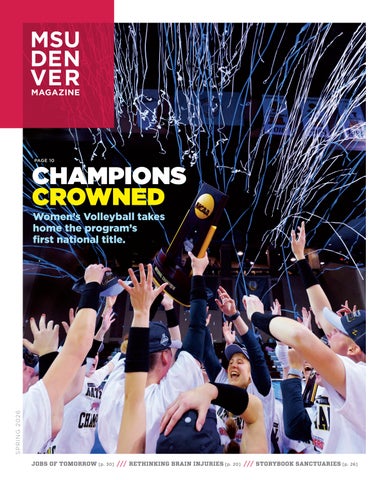
CHAMPIONS CROWNED
Women’s Volleyball takes home the program’s first national title.

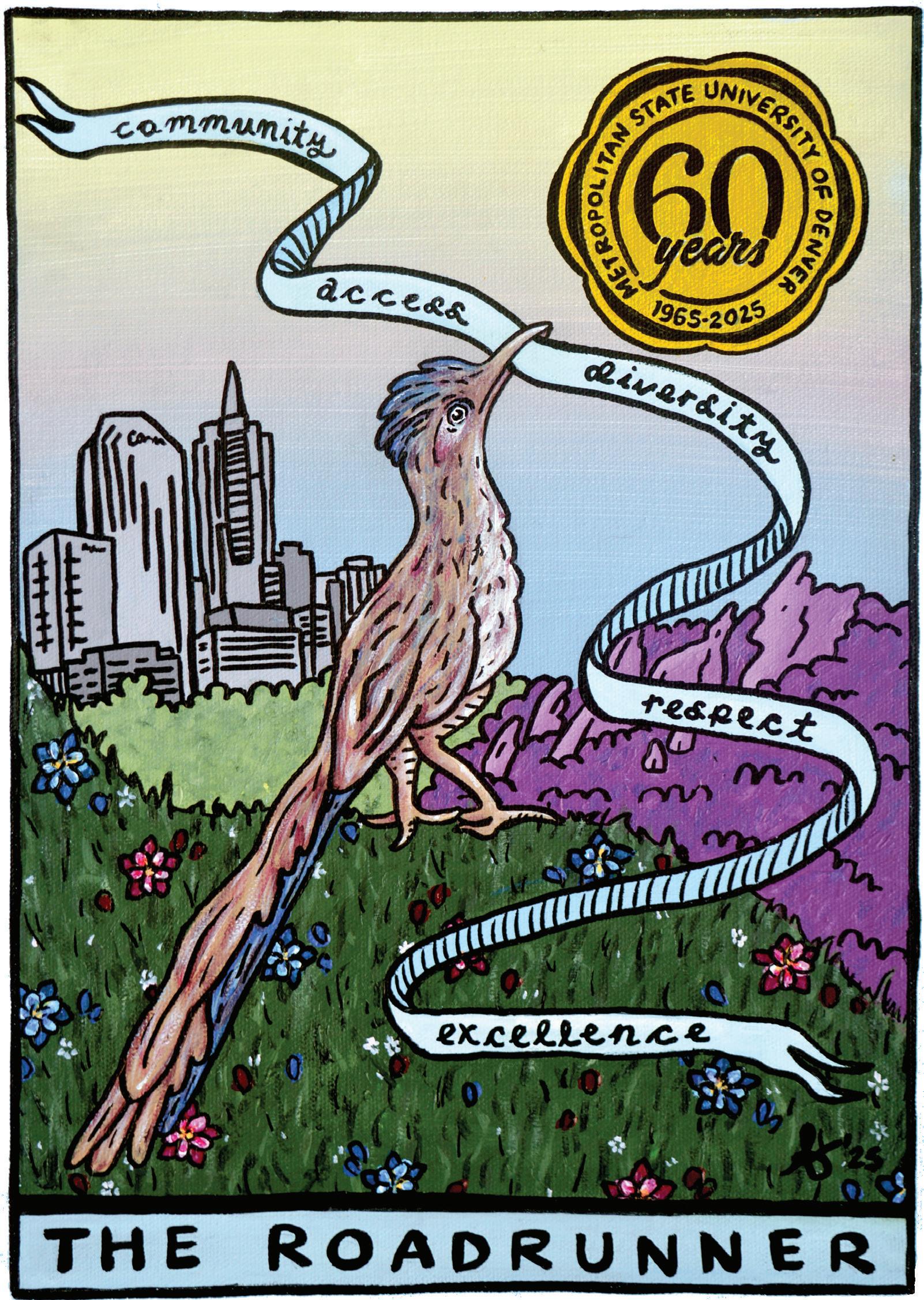

“The Roadrunner” by alumna Alysha Rowzee (B.A. Theatre, ’21) was commissioned in honor of MSU Denver’s 60th anniversary. Follow the QR code to donate and receive limited-edition merchandise.
from the president
For 60 years, Metropolitan State University of Denver has opened doors of opportunity for students who balance work, family and long commutes in pursuit of a degree. Now we’re building on that legacy in a new way by creating a true campus home in the heart of downtown Denver — the first on-campus student housing in the University’s history.
In September,
WE BROKE GROUND ON SUMMIT
HOUSE, the 12-story residence hall opening in 2027 that will provide 550 student beds, a new home for our Classroom to Career Hub, and vibrant dining and retail spaces that bring Roadrunners, employers and community partners together under one roof.
More than 115,000 MSU Denver alumni — 77% of whom live in Colorado — know firsthand how education can transform lives and communities. Summit House will help the next generation share in that promise by keeping the dream of living and learning on campus within reach for more students.
— Janine Davidson, Ph.D., PRESIDENT


Turning passion into careers Scholarships support cutting-edge training.
Classes you love We asked, you answered.
Building bridges Brain injury care gets a facelift.
Future-proof
Working with, not against, AI.
Serving
the
Engel/NCAA
the
Sculpture grad Rudi Monterroso makes bespoke playhouses reminiscent of fairy tales.
AMANDA SCHWENGEL
On
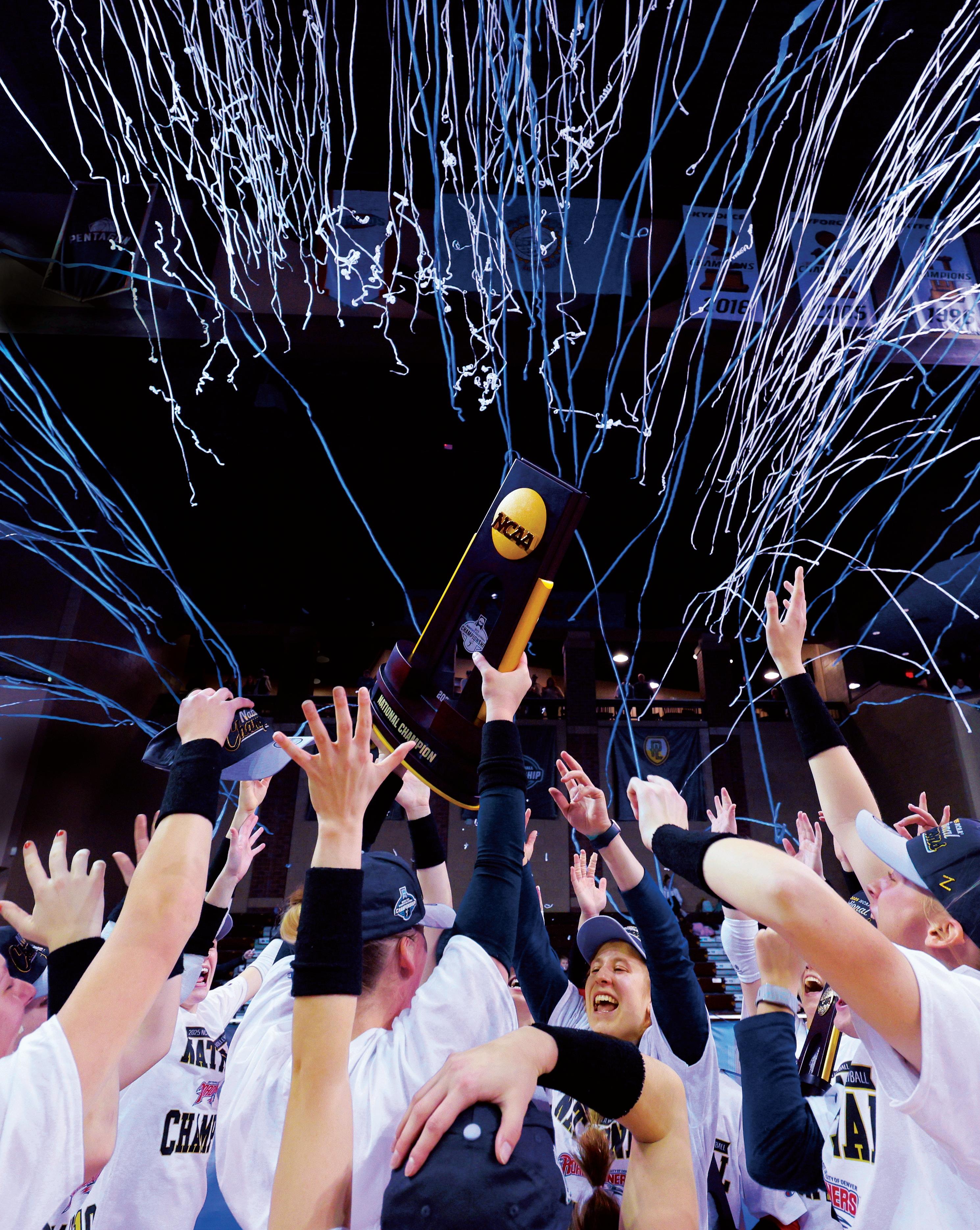
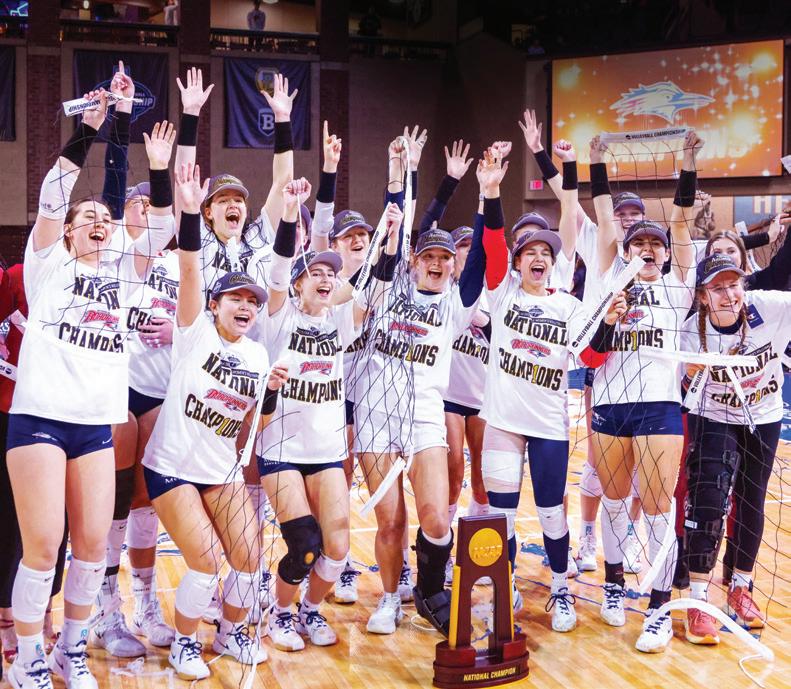
cover: MSU Denver’s Women’s Volleyball Team celebrates
big “W” at the NCAA Division II Women’s Volleyball Championship in Sioux Falls, South Dakota. Photo by C. Morgan
Photos via Getty Images
30
Future-proof: Amid growing concerns about AI disrupting the workforce, MSU Denver prepares students for the jobs of tomorrow.

18 10
‘ I’m just so proud of who these women are, and that they know who they are.’
— JENNY GLENN, Women’s Volleyball head coach
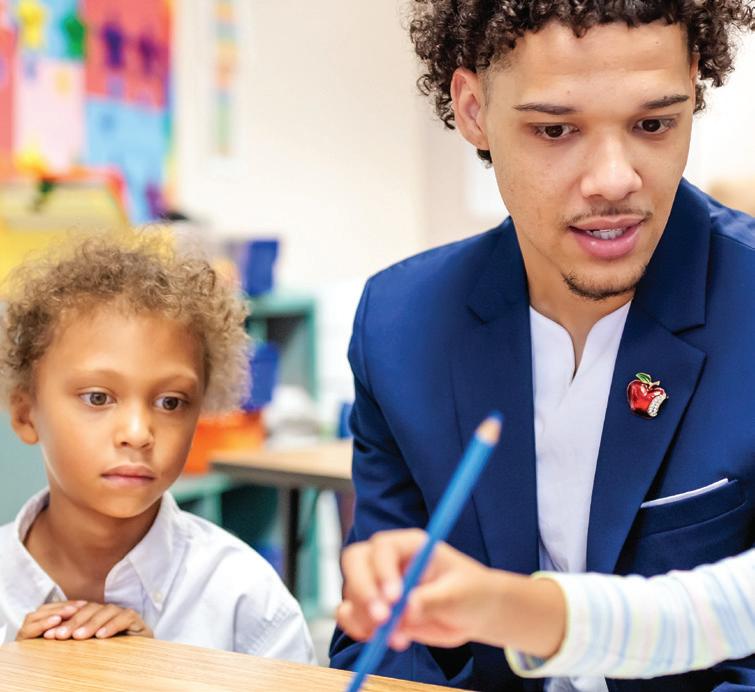
‘ I want to be the teacher I needed as a child.’
— JORDAN PUCH, Elementary Education alumnus
EDITOR-IN-CHIEF
John Arnold
MANAGING EDITOR
Laura Miller
CONTRIBUTING EDITORS
Paul Beique
Cliff Foster
Karen Garvey
PUBLICATION DESIGNER
Aldrich Design
EDITORIAL ADVISORY BOARD
Karen Garvey, senior writer/ content manager, Communications and Marketing
Debora Gilliard, professor of Management, College of Business
Brian Gunther, technical process and communications manager, School of Education
Jamie Hurst, associate vice president for strategic engagement, University Advancement
Steve Juliff, communications specialist, School of Hospitality
Laura Miller, associate director of editorial and content operations, Communications and Marketing
Sam Ng, professor of Meteorology, College of Letters, Arts and Sciences
Cory Phare, marketing and communication strategist/ senior copywriter, College of Health and Human Sciences
Nicole Predki, senior lecturer, Department of Theatre and Dance
Ted Shin, interim dean of the College of Aerospace, Engineering and Design
Andrea Smith, associate vice president of strategic communications, Communications and Marketing
Lynne Winter, associate director of Advancement communications, University Advancement
MSU Denver Magazine is published by the Metropolitan State University of Denver Office of University Communications and Marketing. © 2026 Metropolitan State University of Denver. All rights reserved. Send correspondence and address updates to magazine@msudenver.edu.
The opinions expressed in this magazine do not necessarily reflect the policies and opinions of Metropolitan State University of Denver or imply endorsement by its officers or by the MSU Denver Alumni Association. MSU Denver does not discriminate on the basis of race, color, creed, national origin, sex, age, sexual orientation or disability in admissions or access to, or treatment or employment in, its educational programs or activities.

JOIN US
JOIN US JUNE
JUNE 4
JOIN US JUNE
4
4
JOIN US JUNE
4
Celebrate our impact as we raise a glass to the conclusion of MSU Denver’s $100 million campaign, Roadrunners Rise.
Celebrate our impact as we raise a glass to the conclusion of MSU Denver’s $100 million campaign, Roadrunners Rise.
Celebrate our impact as we raise a glass to the conclusion of MSU Denver’s $100 million campaign, Roadrunners Rise.
Celebrate our impact as we raise a glass to the conclusion of MSU Denver’s $100 million campaign, Roadrunners Rise.

Learn more and RSVP at msudenver.me/ campaign-events
Learn more and RSVP at msudenver.me/ campaign-events
Learn more and RSVP at msudenver.me/ campaign-events
Learn more and RSVP at msudenver.me/ campaign-events
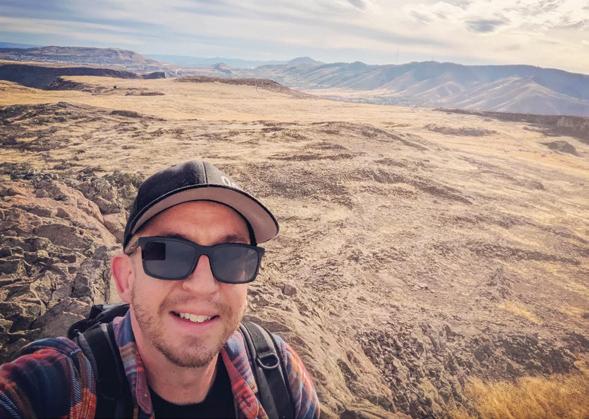
Karen Auge Garvey
“Serving those who’ve served time,” p. 36
Pulitzer Prize-winner Karen Auge Garvey, senior writer and content manager at MSU Denver, was a newspaper journalist for more than two decades, including 14 years at The Denver Post. She lives in Denver with her husband and maniac dog Larry.
Mark Cox
“Future-proof,” p. 30
Mark Cox is a former MSU Denver staff writer and longtime freelance contributor with a keen interest in writing about people, culture and all things academic. He lives in London, 10 minutes from the Greenwich Meridian Line (0° longitude), so he can always reliably tell you the time.
Michael Haederle
“Future-proof,” p. 30
Michael Haederle is a longtime journalist, editor and Zen monk whose work has appeared in People, the Los Angeles Times, American Archaeology, Pacific Standard and Tricycle: The Buddhist Review.
Alyson McClaran
“Lighting the Way Forward,” p. 38
The award-winning photographs of Alyson McClaran, an MSU Denver photojournalism alumna, have appeared in The New York Times, The Washington Post, Time and more. She loves traveling, especially to Japan, as well as meeting and connecting with others through photography.
Cory Phare
“Building bridges,” p. 20
Whether telling Roadrunner stories or touring the country in a punk band, Cory Phare has always played with words. In addition to leading marketing and communications for the University’s College of Health and Human Sciences, he enjoys being outdoors with his trusty pup, Waffle.
Amanda Schwengel
“The magic of imagination,” p. 26
Amanda Schwengel is the assistant director of photo/ video at MSU Denver. Her award-winning photographs are shaped by her experiences as a photojournalist in Chicago, the Twin Cities and her travels around the globe. She’s drawn to visual storytelling through the thoughtful use of light, rich color and meaningful moments.
We’re sorry to see you go! Visit the link below to opt out of this print magazine, which is mailed twice a year.
UNSUBSCRIBE

Send me the monthly RED newsletter, featuring the latest MSU Denver stories, via email instead.
SUBSCRIBE TO THE EMAIL

Students produce a rapid test for HPV
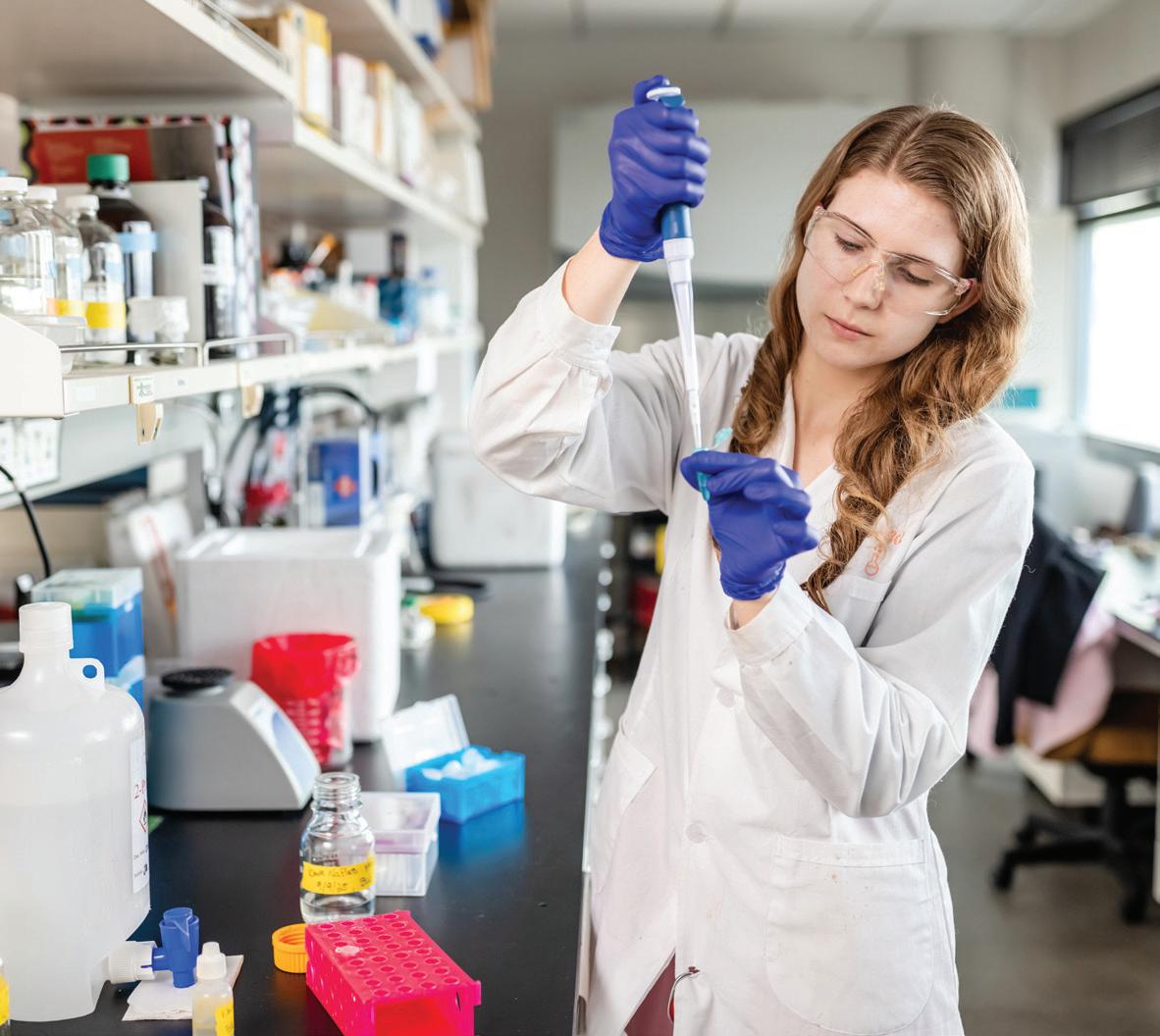
Metropolitan State University of Denver Biochemistry student Zoe Ward, Chemistry Professor Andrew J. Bonham, Ph.D., and fellow student Gage Leach have developed a quicker, less-invasive test to screen for a type of human papillomavirus linked to cancer.
The test will be a finger stick to draw drops of blood for analysis, Bonham said. Results would be instantaneous — and early detection could possibly prevent cancers, including cervical cancer, that result from HPV infection.
“We could take a sample of blood and say, ‘OK, this indicates you may have HPV and need further testing,’” Bonham said. More than confirming the presence of HPV, the test, which has not yet been approved for widespread use, detects a protein linked to cancer.
After a year of long hours in the lab several days a week, Leach and Ward, who graduated in December, are completing a paper on their findings and expect to submit it to peer-reviewed journals. That’s the first step toward wide use of the test.
Ward expects to be in the lab, tweaking the blood test and finishing the research paper, until around July. After that, she said, she plans to earn a Ph.D. and work to find treatments and cures for diseases, including cancer.
In the meantime, she’s understandably proud of her work, she said. “Honestly, this could save a lot of people.” <
MSU Denver recognized for connection to careers and community
Metropolitan State University of Denver has received two prestigious recognitions that spotlight the University’s systemic efforts to prepare students for Colorado’s evolving workforce and years of sustained, campuswide work to serve the public good.
MSU Denver has been awarded the Career Connected Campus designation by the Colorado Department of Higher Education and the Carnegie Elective Classification for Community Engagement by the American Council on Education and the Carnegie Foundation for the Advancement of Teaching.
The Career Connected Campus designation is based on four pillars: curricular integration, experiential learning, employer partnerships and student outcomes. MSU Denver demonstrated strength in all areas, highlighting initiatives such as flight simulators in Aviation and Aerospace; cyber ranges in Computer Science; a health simulation lab in Health Professions; hotel and brewing facilities in Hospitality, Art and Design studios; and applied research labs in Social and Behavioral Sciences. Each environment replicates realworld industry settings.
“It validates our shared commitment to aligning academic pathways with real-world opportunity.”
— ADRIENNE MARTIN EZ, ASSOCIATE VP OF CLASSROOM TO CAREER INITIATIVES
“This designation is a direct result of years of collaborative work between faculty, staff and the Classroom to Career Hub,” said Adrienne Martinez, associate vice president of Classroom to Career Initiatives. “It validates our shared commitment to aligning academic pathways with real-world opportunity, especially for students who’ve historically faced barriers to career access.”
Meanwhile, the University’s Carnegie application process was a monthslong, institution-wide effort. A task force compiled hundreds of examples of programs, research, partnerships and practices that embody MSU Denver’s commitment to civic responsibility.
“This (Carnegie Classification) is a significant recognition,” said Elizabeth Parmelee, Ph.D., associate vice president of Undergraduate Studies. “It reflects how deeply community engagement is woven into the fabric of MSU Denver — in our values, our curriculum and our partnerships.” <
Biochemistry student Zoe Ward pipettes solution for testing.
ALYSON
M c CLARAN
“Once mass timber begins, construction will really start to fly.”
— MARTHA NELSON, DIRECTOR OF PLANNING, DESIGN AND CONSTRUCTION

Summit House on the rise
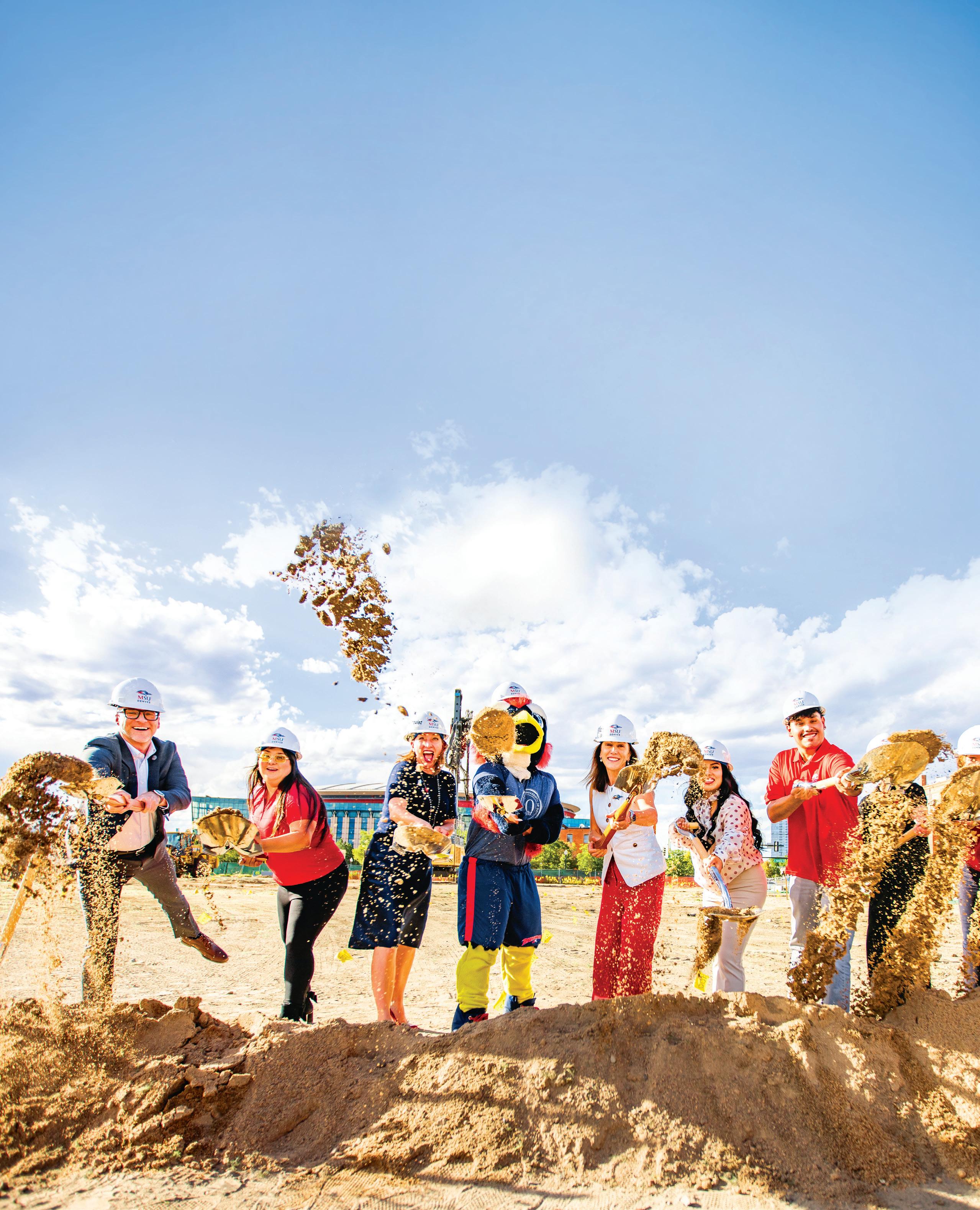
Metropolitan State University of Denver leaders, students, faculty and staff gathered to celebrate groundbreaking for the University’s first on-campus student housing complex in early September.
“This is really the beginning of a transformation,” said MSU Denver President Janine Davidson, Ph.D. “This is a huge step for this University.”
Located on the north side of campus across from Ball Arena, the 12-story Summit House is scheduled to open in 2027 and will provide 550 student beds, a new home for the University’s Classroom to Career Hub, and dining and retail space.
By February, construction had been completed on the foundations, underground facilities and the first two floors of the building. Mass-timber construction of the rest of the structure is underway.
“Once mass timber begins, construction will really start to fly,” said Martha Nelson, director of Planning, Design and Construction at MSU Denver. She added that topping out — a milestone marked by placement of the structural beam — is on track for May and that “we’re poised to reach substantial completion by July 2027.”
“We have an incredibly great project team, including Auraria Campus, Columbia Ventures, Poole Construction Limited, Shears Adkins Rockmore (SAR+), as well as internal partners,” Nelson said. “Everyone continues to come together really well to support the success of the project.” <
AT MSU DENVER
Sustainability Hub streamlines climate research
Daniel Pittman, Ph.D., assistant professor of Computer Sciences at Metropolitan State University of Denver, has overseen development of the Sustainability Hub, which launched in January. The website and database provide one-stop shopping for Coloradans seeking access to publicly available economic, ecological and social data tied to responsible environmental stewardship.
The Hub includes an AI chatbot known as Bili (derived from “sustainability”). Bili supports the primary purpose of the Sustainability Hub, to be useful for people who want to learn more about natural resources and the environment, Pittman said. “The software we’re building for the Sustainability Hub can facilitate research in those areas. We’ve been adding additional capability and refining our thought process to be able to answer the user’s question efficiently.”
Alyssa Williams, the Sustainability Hub’s project manager at MSU Denver, has seen the tool evolve since its inception. “We’ve really been able to focus on specific deliverables, which has been really cool, the chatbot being one of them,” she said. “Another one is this feature we’re calling Sustainability Spotlights to be able to highlight different aspects of sustainability. The first one that we’re going to be hopefully rolling out close to the beta launch is around water scarcity in Colorado.”
The project includes partners at the University of Northern Colorado, CSU Fort Collins, CSU Pueblo and the University of Denver, Pittman said, adding that the website makes it easier for people to find the great research already being done in Colorado. The key, Pittman emphasized, is making the site approachable.
“That’s the part I’m really excited about,” he said. “(The site) gives people not only the visualization but natural language: ‘You are seeing air quality and water quality in Denver overlaid. These are the points that we found. This is what’s interesting about the data. Is this what you’re looking for?’ If the user answers, ‘No, I didn’t quite mean that,’ the system will help them further refine the results.” <


Gina and Frank Day Health Institute Tower breaks ground
The College of Health and Human Sciences broke ground on the new 70,000 square-foot state-of-the-art facility in February. The DHI Tower enables the college to support an anticipated average enrollment growth of 25% across all Day Health Institute departments and will provide simulation technology, interprofessional education and community-serving clinics.
In addition, the five-story building will allow Metropolitan State University of Denver to bring programming for 10 academic departments focused on health and wellness, known as the Gina and Frank Day Health Institute, under one roof.
“Historically, we’ve seen a siloed approach to both higher education and health-related fields,” said Emily Matuszewicz, D.C., the Health Institute’s director of Development and Partnerships.
“We’re working not just to build capacity for more students in health fields, but to provide those students a better academic experience across multiple disciplines so that they can become problem-solvers and leaders in the health care industry.”
With the building slated to open in fall 2027, the work couldn’t come at a more critical juncture. Colorado expects a potential shortfall of more than 10,000 registered nurses and 54,000 allied health positions by 2026, according to the latest U.S. Healthcare Labor Market report from Mercer. The gap is among the direst in the nation.
“The DHI Tower will bring improved training spaces and more skilled health, allied health and behavioral health professionals into the state’s workforce,” said Jess Retrum, Ph.D., interim dean of the College of Health and Human Sciences. “CHHS students largely come from Colorado, and now many more of them will graduate and return to serve communities they love.”<

REIMAGINING HEALTH EDUCATION>> Support a one-of-a-kind initiative to meet the demand for highly skilled health professionals by making your gift today.
Early bird or night owl
LinkedIn or TikTok
Phone call or email
Introvert or extrovert
“Ted Lasso” or “The Last Dance”
Classic rock or classical music
Coffee or tea
Optimist or realist
Team huddle or one-on-one
Books or podcasts
Mountains or oceans
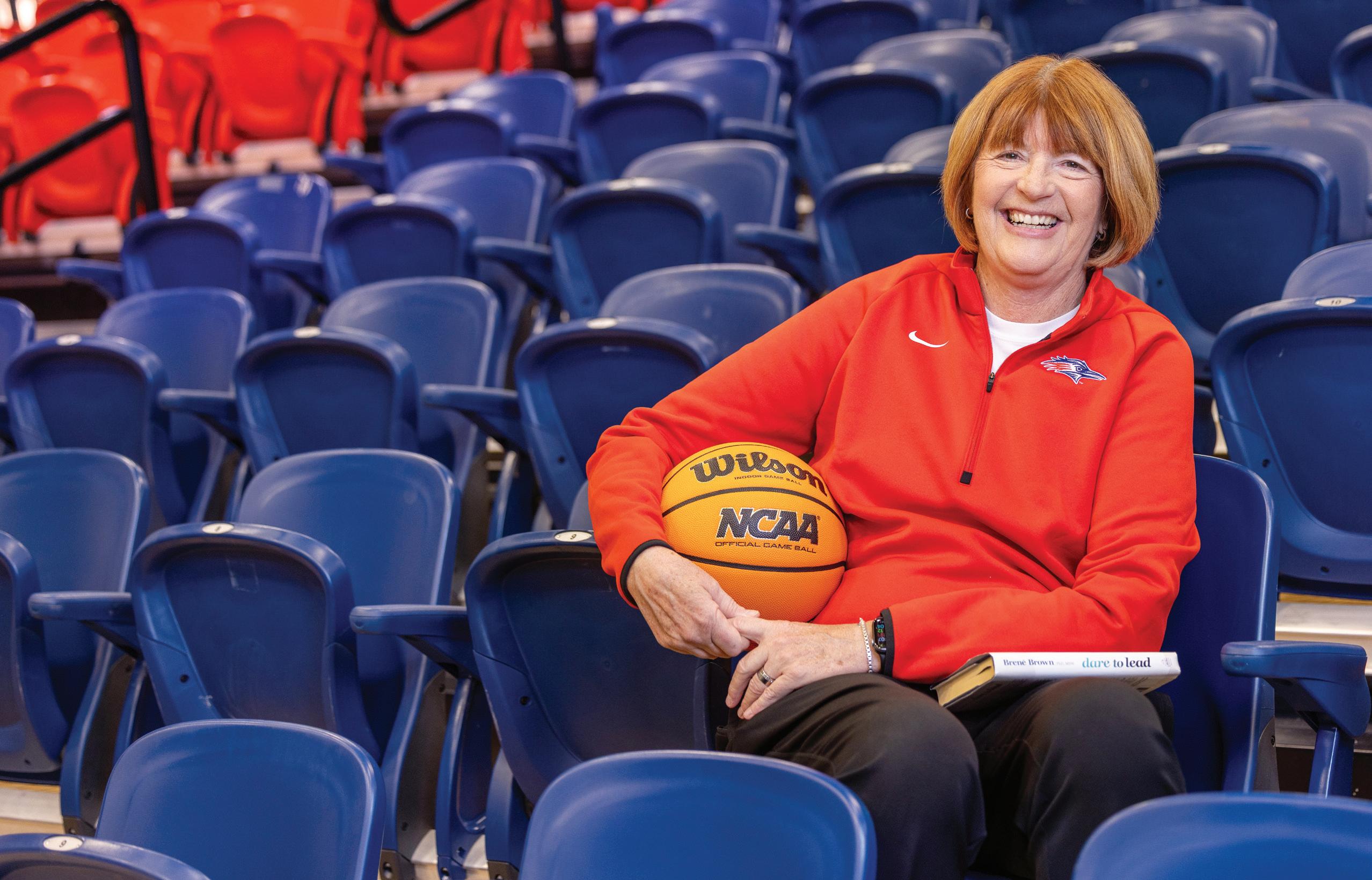
Get to know Tanya Haave
DIRECTOR OF ATHLETIC DEVELOPMENT IN UNIVERSITY ADVANCEMENT
Tanya Haave has long been a trailblazer in women’s basketball. She first made her mark as an All-American player under the legendary Pat Summitt at the University of Tennessee and then built her own distinguished coaching career. During 14 seasons as head coach of Metropolitan State University of Denver’s Women’s Basketball team, she became the program’s winningest leader and guided her teams to multiple championships and NCAA tournament appearances.
After stepping away from coaching in March 2025, Haave embraced a new chapter at MSU Denver as director of athletic development, where she now channels the same passion, mentorship and leadership into advancing the University’s Athletics programs and student-athlete experiences.
NIGHT OWL > Since hanging up my coaching whistle last March, I’ve happily retired from the 5 a.m. wake-up club. These days, I’ve fully embraced my inner night owl.
EXTROVERTED INTROVERT > My MyersBriggs test revealed that I am exactly 50/50 on the introvert/extrovert continuum. So I like to call myself an extroverted introvert, which means I’ll show up at your party — and leave early.
“THE LAST DANCE” > I’ve been obsessed and intrigued with Michael Jordan and all his accomplishments. Each time I watch “The Last Dance” (which is many), I keep hoping that Michael doesn’t retire!
COFFEE > To start every day, a grande Americano with extra heavy cream is a must — because showing up to meetings fully caffeinated is more socially acceptable than screaming into the void.
OPTIMISTIC > I see adversity the way some people see kale — unpleasant at first, but apparently good for you. I like to say I’m cautiously optimistic, which basically means I bring snacks to the apocalypse, just in case.
MOUNTAIN > As one of the elusive native Coloradans, I learned a long time ago that I’m a mountain girl through and through. The mountains aren’t just my happy place — they’re my natural habitat. If it’s the weekend and I’m not in the high country, check for a pulse. <
WITH TANYA HAAVE
AMANDA SCHWENGEL
H M P C A
MSU Denver
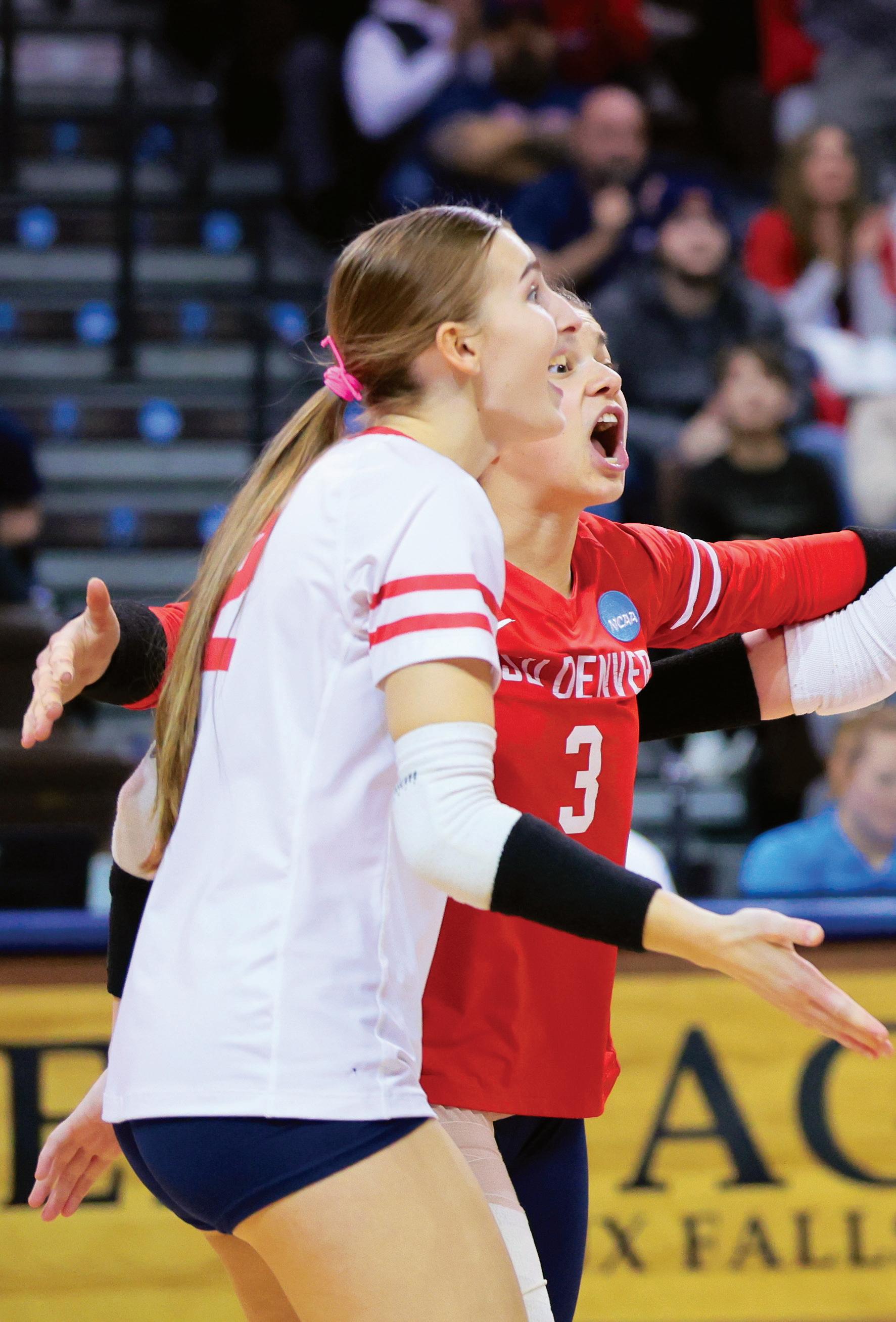
Volleyball completes a historic postseason run to capture its first NCAA Division II national title.
By John Arnold
R O W
O N S I
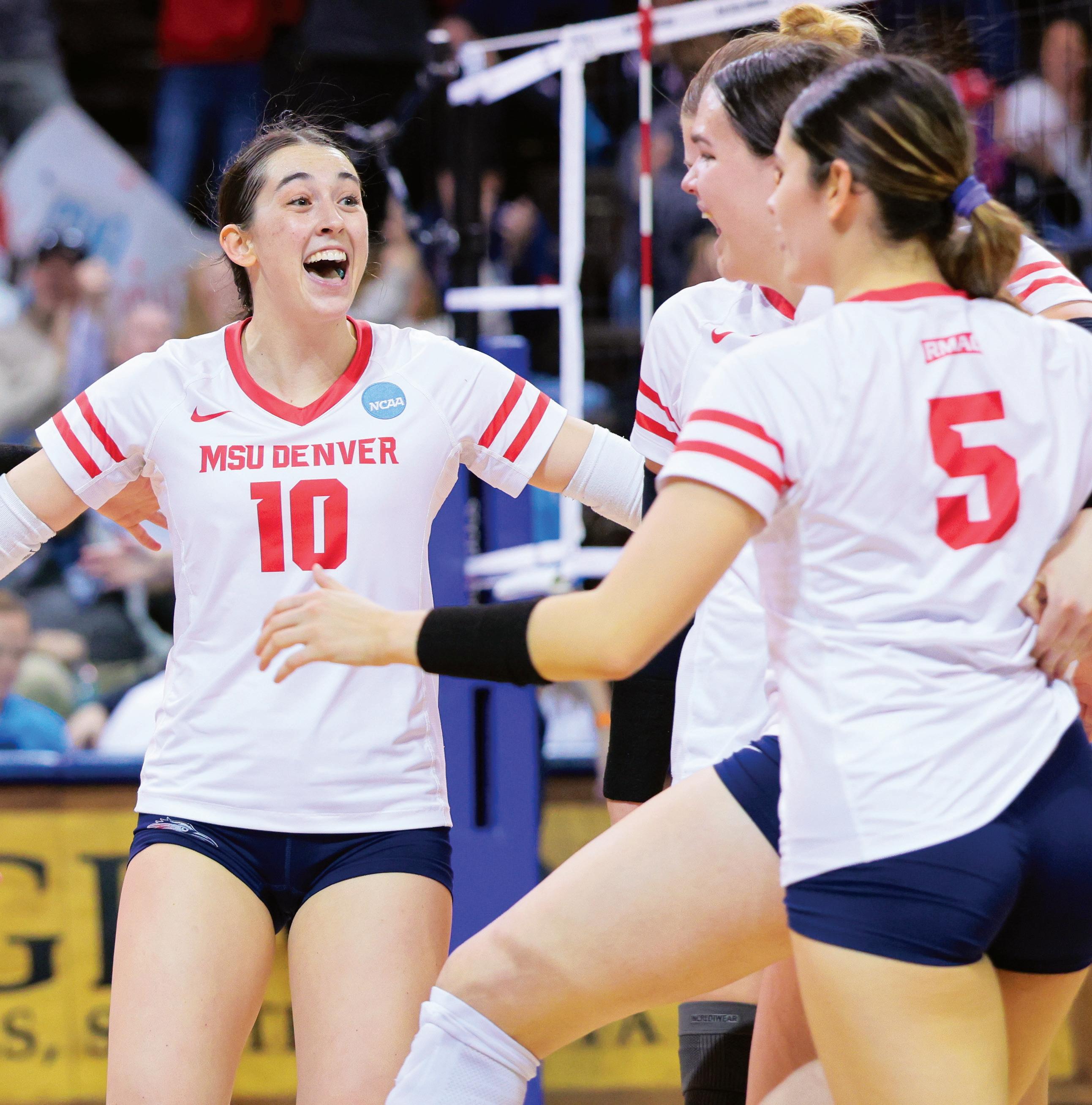
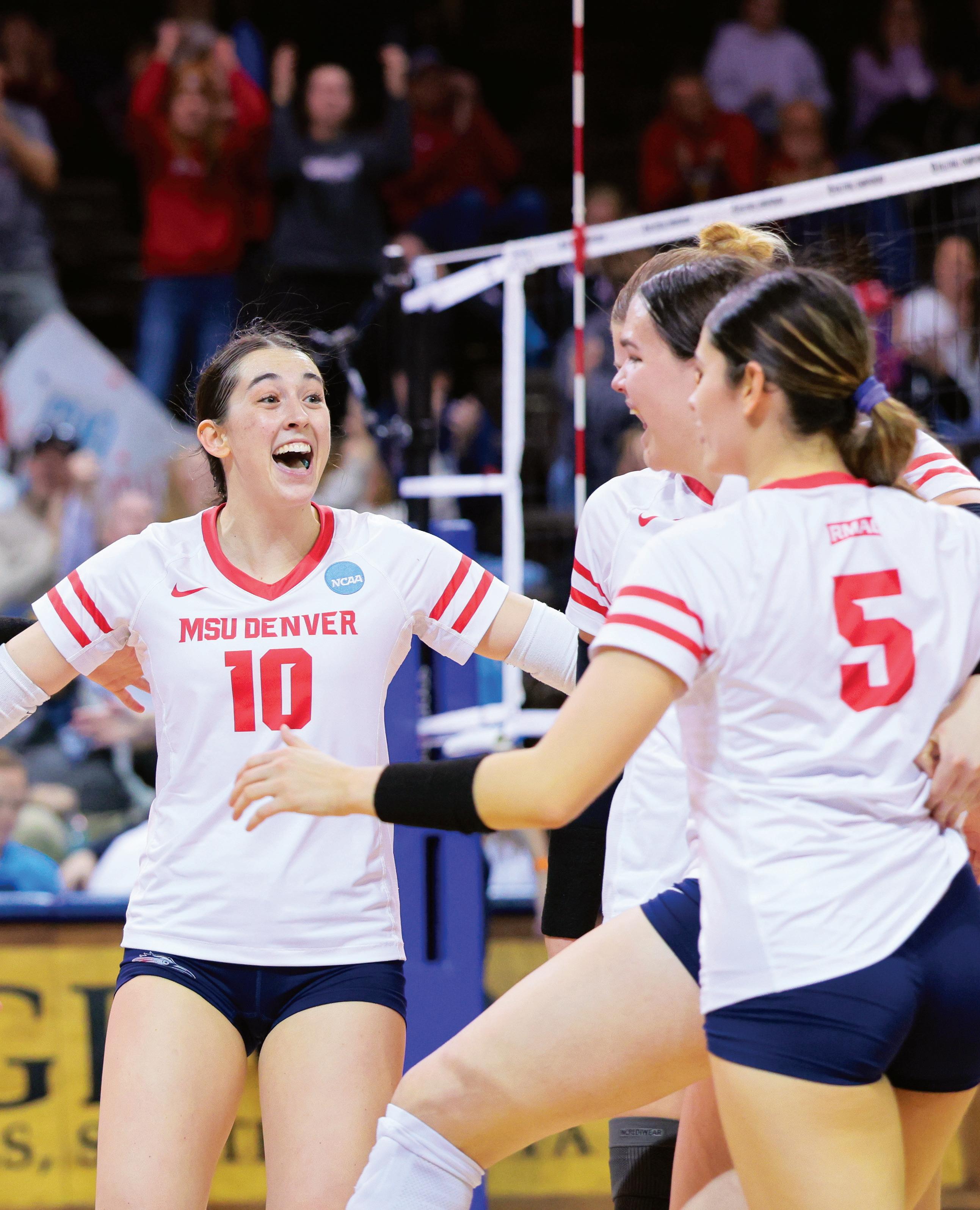
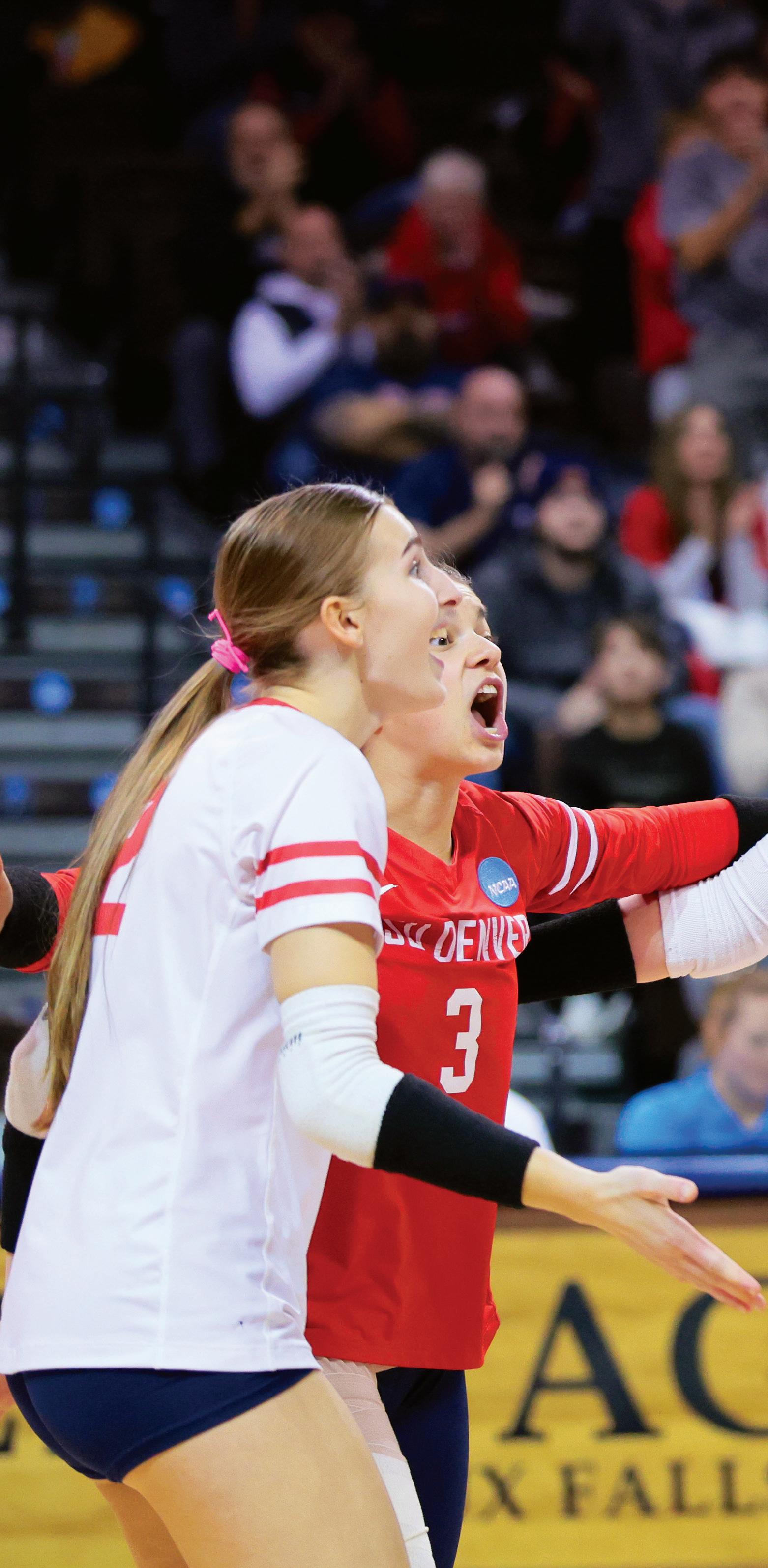
TThe Metropolitan State University of Denver Women’s Volleyball team made history Dec. 13, capturing the NCAA Division II national championship and completing the most remarkable postseason run in program history.
With a 3–1 victory over Concordia–St. Paul in Sioux Falls, South Dakota, the Roadrunners claimed their first national title — the culmination of a season defined by belief, resilience and a growing sense that this team was capable of something special.
“I’m just really proud of our team,” head coach Jenny Glenn said shortly after her squad hoisted the championship trophy.
“This is a goal we set as a program — to win a national championship. We’ve been really unashamed of that goal for the last 10 years, and we set it and set it and set it and didn’t quite get it.”
Until 2025.
The team entered the national tournament with another stellar résumé, including a 17-match winning streak and conference championship. But despite 25 straight years of NCAA Tournament appearances, the Roadrunners had never made it beyond the regional finals.
After sweeping Angelo State in December to win the South Central Regional Championship, the Roadrunners advanced to the NCAA Division II Elite Eight for the first time in program history.
“It’s just a different year,” Glenn said. “Even though we’ve tried other times, this year just felt so different.”
“To have a coach that is focused on making us good human beings and knowing who we are — it’s just amazing.”
— ANNIKA HELF, SENIOR OUTSIDE HITTER
Show Roadrunner pride with Women’s Volleyball championship gear.

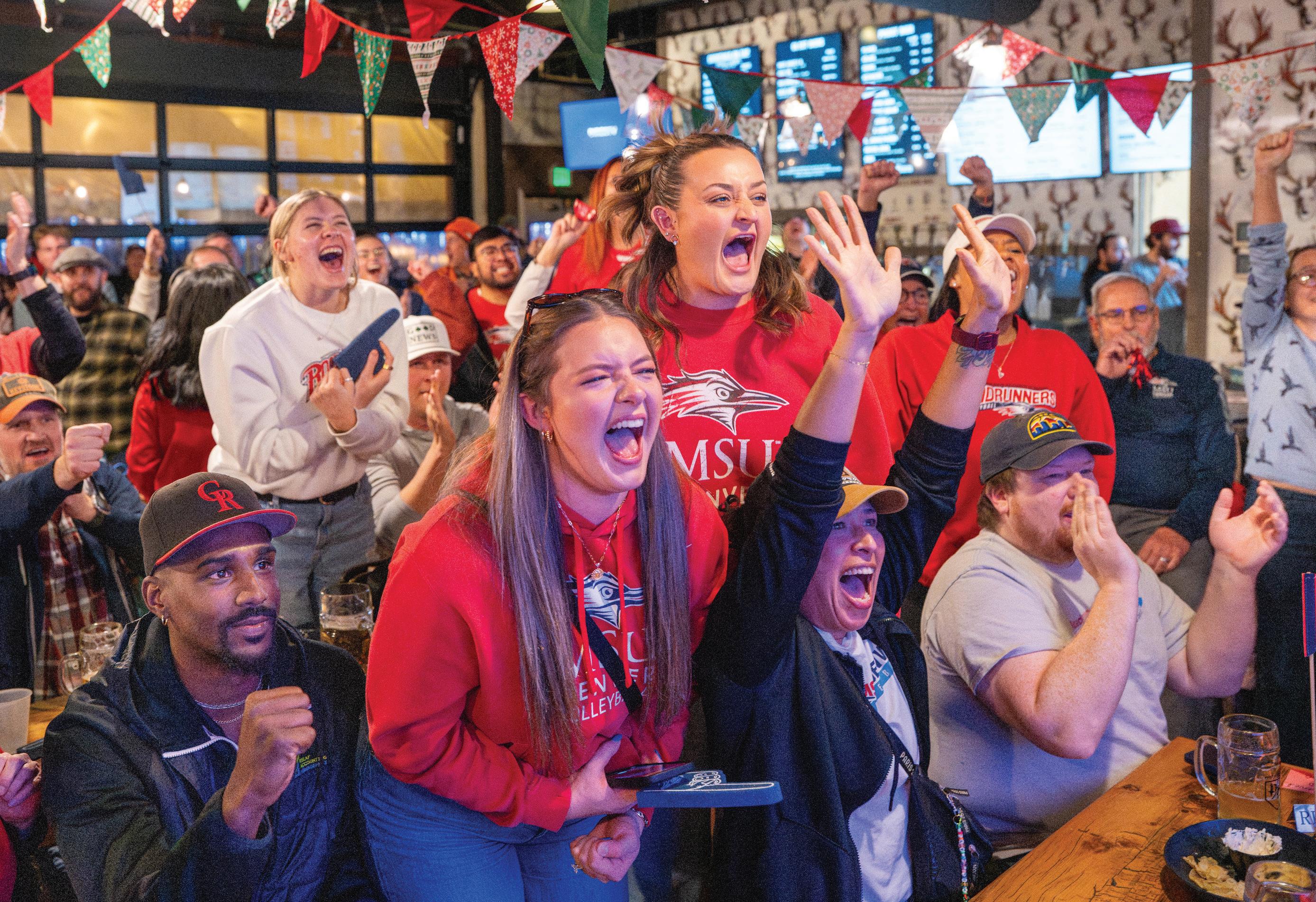
Former MSU Denver Women’s Volleyball team members Mikaela Kubiak, left, and Alexis Benda cheer on the Roadrunners at a watch party at Prost Brewing in Denver. facing page : MSU Denver team members spray water bottles in the locker room following their 3-1 victory.
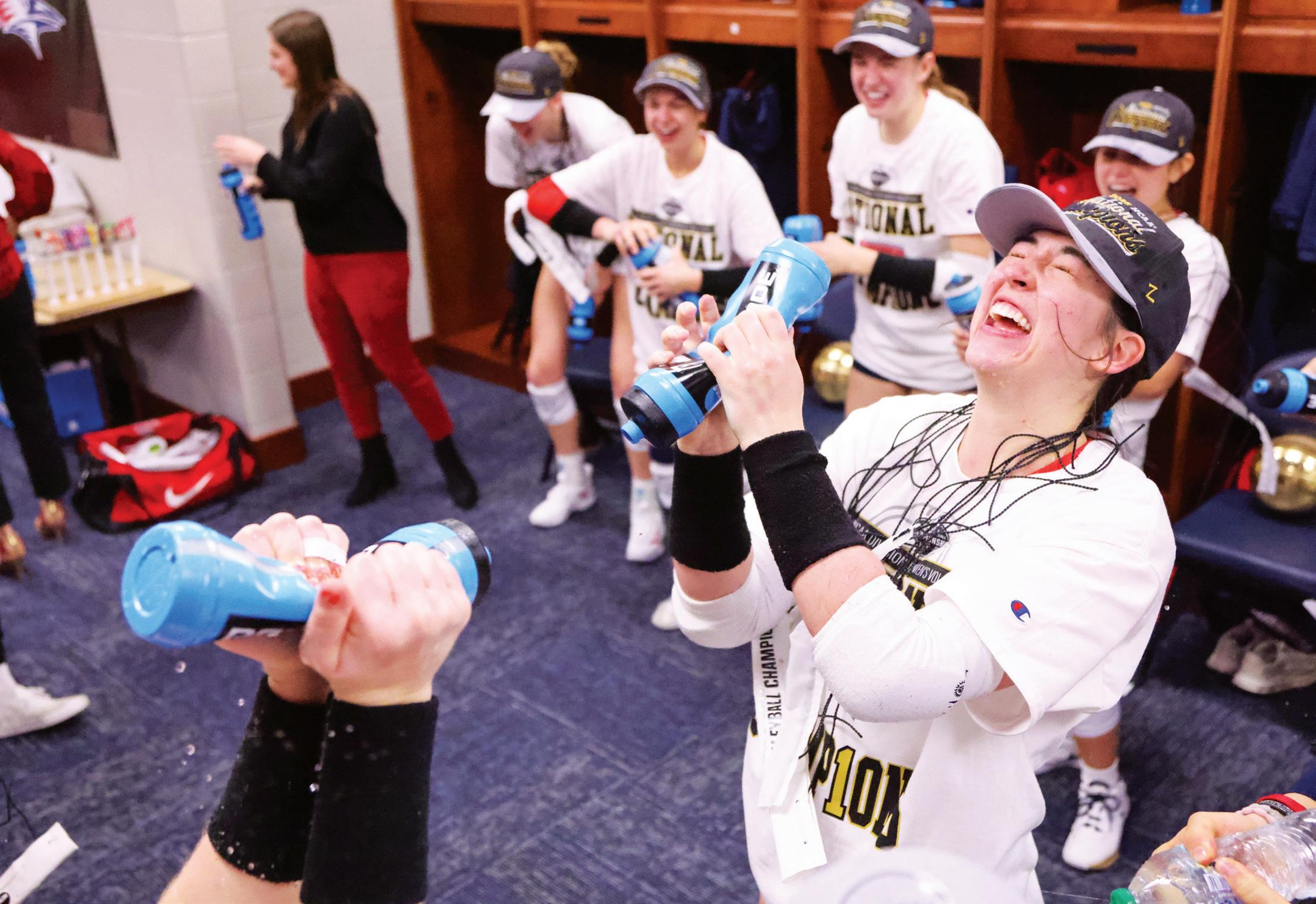
Glenn sensed that difference from the season’s outset with a squad that leaned into her coaching philosophy: Learn and live your “true identity” and success will follow.
“A lot of coaches, they are just focusing on performance, and to have a coach that is focused on making us good human beings and knowing who we are — it’s just amazing,” said senior outside hitter Annika Helf.
In the Elite Eight, MSU Denver faced Wingate in a dramatic five-set match that stretched late into the evening. After trading momentum throughout the contest, the Roadrunners prevailed 15–13 in the final set, securing a victory that propelled them into the Final Four.
The next night, they delivered one of the biggest upsets of the tournament, sweeping top-ranked and previously undefeated Tampa in the national semifinal and advancing to the national championship match at the Sanford Pentagon. There, MSU Denver faced Concordia–St. Paul, a perennial power with nine national titles to its name. The Roadrunners set the tone early in the match, controlling the first two sets with disciplined defense and balanced offense. After Concordia–St. Paul responded in the third set, MSU Denver regrouped and closed the match in four sets, sealing the title with a final-point kill that sent players and coaches into celebration.
It was a historic season in every sense.
MSU Denver finished 32-3 overall, setting a program record for wins and closing the year on a 23-match winning streak. The championship marked the fifth NCAA team title in MSU Denver Athletics history and the first since Women’s Soccer captured its second national crown in 2006.
The team excelled in the classroom as well. Sophomore middle blocker Alyssa Boyte was named a first-team Academic All-American, and Helf was named a third-team Academic All-American.
MSU Denver placed a league-best five student-athletes on the First Team Academic All-RMAC this year, while adding 10 more to the conference’s Academic Honor Roll. It marked a milestone academic haul for the program and was the first time since 2021 that MSU Denver has featured both the conference’s Summit Award winner, Mia Accomazzo, and Academic Player of the Year, Boyte, in the same season.
All of that success — on and off the court — culminated in the ultimate prize.
“We just had to go in (to the championship match) believing in ourselves and trusting in our abilities, trusting that everything that we’ve done throughout the season built us for this moment,” Boyte said. “And we went in fearless.” <
TURNING PASSION INTO
CAREERS
A recent gift from the Dimond Family Foundation expands opportunities for paid internships, scholarships and workforce-ready training.
By Lynne Winter and
Laura Miller
Navin Dimond
“... challenges are your opportunity.”
AS THE FOUNDER and chairman of Stonebridge Companies, a national hotel ownership and management firm, Navin Dimond is a celebrated figure in the hospitality industry. But for the Roadrunner community, he’s something more: a mentor, a benefactor and a believer in what Metropolitan State University of Denver stands for.
Born and raised in the U.K. by parents who emigrated from India, Dimond credits his achievements to the opportunities he received through education. That belief in education, and in the potential of hardworking students, is what brought him to MSU Denver.
“I have a core belief that every human being has the innate mental capacity to do anything,” Dimond said. “It doesn’t matter what your socioeconomic class is, where you came from, where your parents are, whether they had education or not. It doesn’t matter. You matter.”
That core belief led Dimond and his wife, Rita, to establish the Dimond Fellows Program to provide hands-on experience for students in MSU Denver’s School of Hospitality. Fellows engage with every level of hotel operations, bridging the gap between classroom learning and real-world leadership.
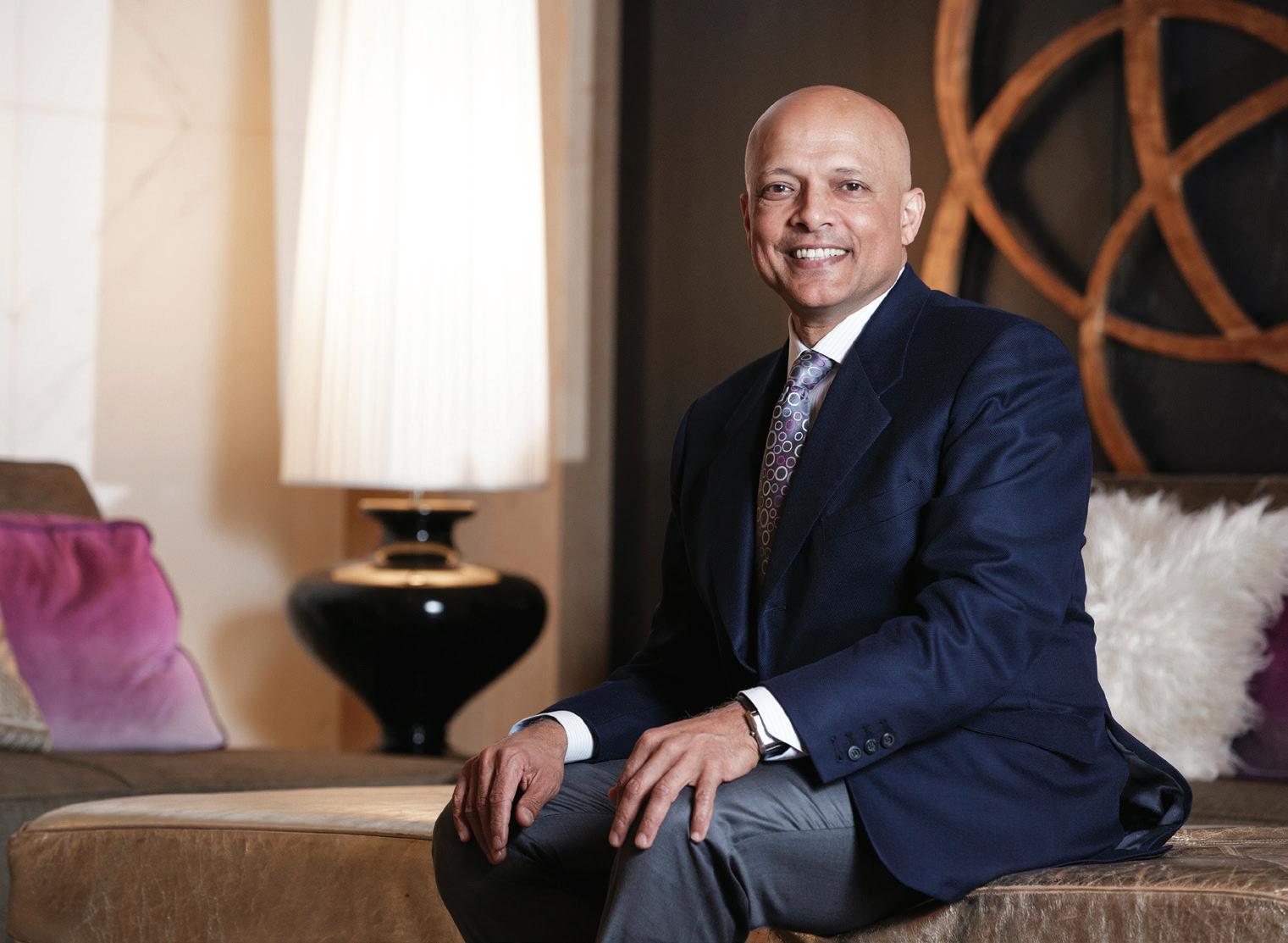
“It’s a prestigious opportunity,” said MSU Denver President Janine Davidson, Ph.D. “(The Dimonds) created it, they run it, and they mentor students every year. Navin is a role model — not just because of the company he’s built but how he models it with his family. They all tell an amazing story about what can be done if you really care about your community.”
For Dimond, the students are the real winners. His advice to them is to “stay focused; do not compromise your foundation … your honesty, your integrity, your ethics.
“You will get to where you want to go,” he said. “And you know there’s always going to be challenges along the journey, but the challenges are your opportunity.”

Learn how to make an impact at msudenver.edu/giving
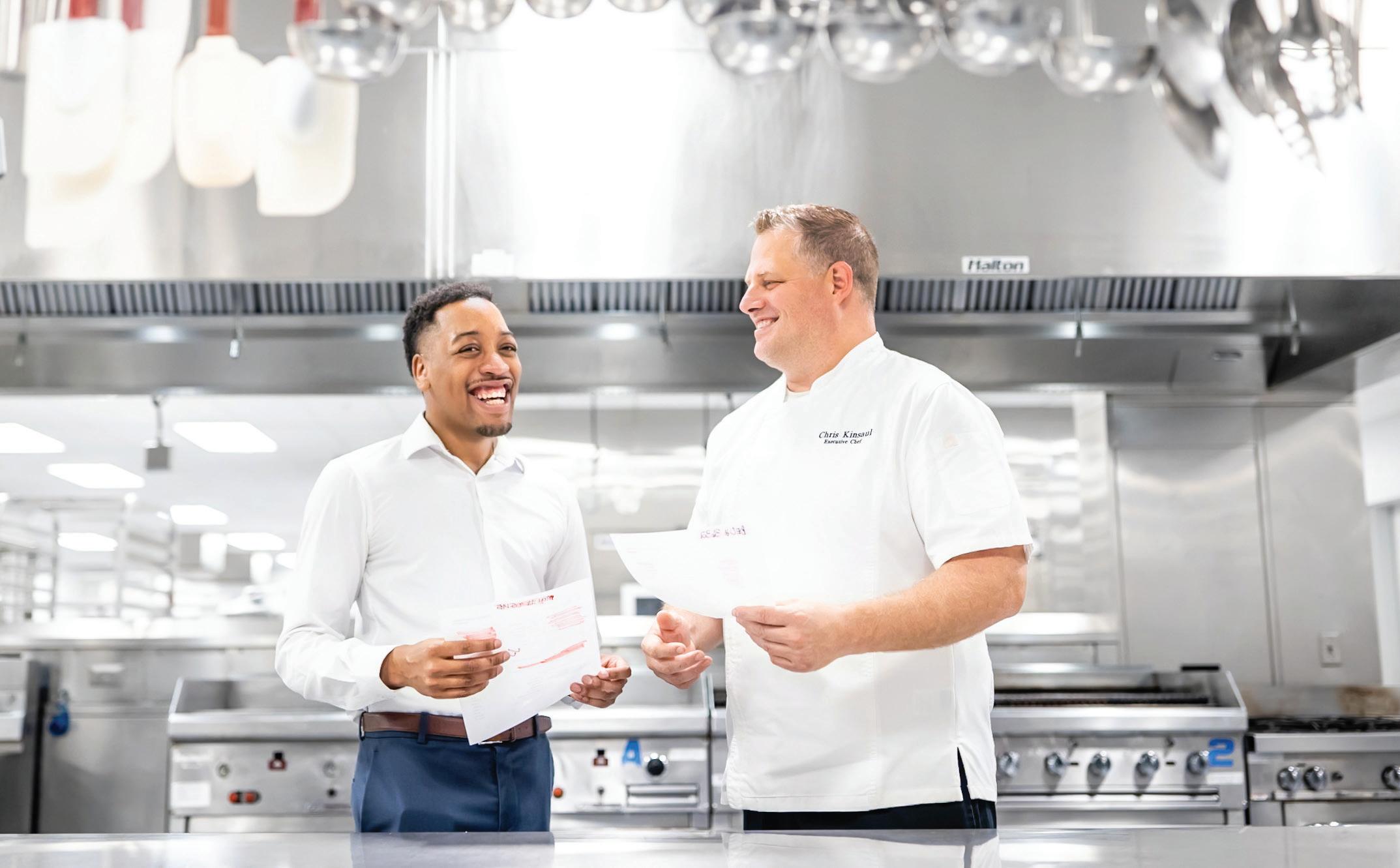
Hospitality Leadership student Tyrin Register, sales coordinator at the Colorado Convention Center, discusses event plans with Executive Chef Chris Kinsaul.
Tyrin Register
HOSPITALITY LEADERSHIP MAJOR
Tyrin Register, a Dimond Scholarship recipient in his senior year at MSU Denver, says the industry has always been a natural fit for him.
“It’s a dynamic, people-driven (field) and full of opportunities to lead and learn,” Register said.
Dimond Fellows are selected twice a year to receive specialized education and training, including a paid, hands-on internship at Stonebridge Properties.
According to Rita and Navin’s daughter Ashley Dimond, MSU Denver Foundation Board secretary and principal at Copford Capital Management — the private investment office for the Dimond family — a passion for education is the foundation of her family’s story, a value they proudly share with the University.
“Education is the great equalizer,” she said. “Having an undergraduate degree opens doors. It gives you choices and longevity in whatever career you choose.”
The latest gift will continue to advance the family’s goals of recruiting and retaining students through fellowships and
“The Dimonds’ investment has helped me turn passion into purpose and given me the tools to shape the future of hospitality.”
scholarship support, encouraging them to persist, even when the payoff isn’t immediate.
“It takes grit for people to finish their education — and MSU Denver students have grit,” Ashley Dimond said. “That’s not always rewarded, and it’s something we wanted to acknowledge and reward.”
Encouraged by School of Hospitality faculty and staff members to apply for the scholarship, Register says the funds allow him to focus on the real-world experience he’s gaining in his full-time position as sales coordinator at the Colorado Convention Center instead of worrying about how to pay his tuition balance for the six classes he’s taking this semester.
“I am ambitious by nature and have always loved a challenge,” Register said. “MSU Denver is where I’ve been able to channel that drive, sharpen my skills and grow into the kind of leader I want to become.
“The Dimonds’ investment has helped me turn passion into purpose and given me the tools to shape the future of hospitality.” <
Abnormal Psychology
This course examines and evaluates the major theories of abnormal behavior: biological, behavioral, cognitive and sociocultural. Students examine classification, etiology and treatment using case studies.
“This class with Dr. [Jovan] Hernandez was part of my first semester at MSU Denver after a year in community college. It was not only an engaging and interesting course, but
Advanced Manufacturing
Offered through the Advanced Manufacturing Sciences Institute at MSU Denver, the course takes students beyond traditional lectures and into immersive, high-tech environments. Students wear virtual reality headsets, manipulate 3D models and practice precision measurement, all skills that are in high demand in the era of smart manufacturing and Industry 4.0.
WHERE I MADE MY FIRST FRIENDS AT MSU DENVER,”
said Johanna Zimberoff (B.S. Psychology, ’21). IT’S
Classes you love
Whether these courses sparked lifelong hobbies or opened unexpected doors, they’re proof that one great class can change everything.
Neuroanatomy
“They handed me a human brain
In the Neuroanatomy course, students engaged directly with the structure and function of the human brain — preparing them to understand complex systems and often prompting deeper self-reflection about their future. and said I had to dissect it. It was more than I could manage. If I had never taken that Neuroanatomy class, I never would have learned that I wasn’t on the right path for me,” said Leslie Chenaille (B.S. Biology, ’06).
“The headsets were super helpful
in showing me techniques for precise measurements, something that is harder to do in person. Another advantage is that virtual reality gives you the answer right away,” said Noah Hodges (B.S. Advanced Manufacturing Sciences, current student).
Digital Marketing Fundamentals
An introduction to digital marketing, this course includes an overview of the process, platforms and technologies used to build long-term customer relationships, emphasizing legal and ethical implications, as well as the importance of planning, measurement and actionable insights.
“When the class professor, Sally Baalbaki, noticed I was trying to get done as fast as possible, we had a separate meeting where she talked me down and had me lock into the major. I always thought I could fast-pass my classes, but this shaped my mentality of taking the time to figure out what I wanted to do with my life.
She became my advisor and even to this day is still my mentor,”
said Abel Salinas (B.S. Marketing, ’22).
Social Documentary
Part of the Journalism and Media Production major, the class features a hands-on component, allowing students to travel to complete their photo and video projects. The professors place an emphasis on producing stories and images that contribute to social change.
“ Our class took a trip to San Francisco, where our goal was to go out and find stories. I filmed over five stories and learned so much in just a few days,” said Polina Sarana (B.A. Journalism and Media Production, ’19).

Concepts of Authorship
This course examines Western concepts of authorship and originality, including copyright and intellectual property law, collaborative authorship, theories of invention and contemporary challenges to the idea of solitary authorship.
“This class was mind-blowing
because it forced me to confront the idea that who has authorial ownership of a given text is not a straightforward question,” said Maty Candelaria (B.A. English, ’20). “The outcome of Dr. Kleinfeld’s class, for me, was a renewed and radical excitement about authorship that informs my thinking every day.”
Drama Writing
The Drama Writing workshop immerses students in the craft of dialogue and character creation. From day one, students are encouraged to find inspiration in the world around them, even by simply listening to conversations on campus. What starts as an exercise in eavesdropping often evolves into a passion for storytelling across stage and screen.
“Professor Gorman created an intense and engaging learning environment. Her first assignment was to sit in a public space and write down what we overheard —
writing dialogue soon became my obsession.
I left her class dreaming of writing a play, a sitcom and maybe even a movie one day,” said Kassie (Tibbott) Hull (B.A. Spanish Language & Literature, Creative Writing minor, ’13).
Women of Color
Cross-listed in the social sciences and humanities, this course focuses on the narratives, practices and everyday life experiences of women of color in the U.S. Students gain a better understanding of the systems of privilege and oppression and acquire new tools to analyze social and cultural experiences.
“This class was transformative due to the professor’s open and blunt teaching style,”
said Valeria Quiroz (B.A. Broadcast Journalism, ’22). “She effectively exposed me to the patriarchal systems we live in, sparking a deep desire to learn more about how racism, misogyny, colorism and discrimination impact individuals and society. The course helped me grow personally and shift my understanding of feminism toward a more intersectional lens.”
Creative Writing
For students looking to discover their voice, Creative Writing classes prove that inspiration can come from the most unexpected places.
“I hated poetry and wrote a piece about just that — how much I hated poetry. To my surprise, Dr. McClard selected it as one of her favorites and told me it was very good.
THAT MOMENT CHANGED EVERYTHING.”
said Lisa Dayley (B.A. Technical Communications and Creative Writing, ’95). “That poem led me to become editor-in-chief of Metrosphere, and years later, I turned a story from her class into my first published novel, ‘The Frozen Trail.’ It’s all because of Dr. McClard’s class that my life changed significantly and dramatically.”
Environmental Communication
Toggling between historical and contemporary examples and local and global contexts, this class helps students see how environmental communication takes root and fails to take root, grows and fails to effect change, as it spreads around the world.
“This class completely changed the way I viewed the role of communication in creating a more sustainable and just world. Dr. Foust didn’t just teach concepts — she challenged me to think deeply, ask harder questions and
FIND MY OWN VOICE
as a communicator,” said Tiffany Nguyen, B.S. Communication Studies, ’25). “Dr. Foust’s class helped me see education as a way to think critically, advocate for others and effect change. Her belief in me gave me the confidence to see grad school as something possible for myself.”
Women in World History
This course explores the roles, experiences and contributions of women across cultures and centuries — from family life and religion to politics and the economy. Through comparative study and firsthand accounts, students discover how women’s voices reshape our understanding of global history.
“Dr. Klimek created a thoughtful and engaging environment that encouraged us to frame today’s issues in their historical context and to recognize deep connections between our lives and those who came before us. It was an inspiring reminder of how women have shaped, and continue to shape, the world,” said McKenna Stevens (B.S. History, ’21). <
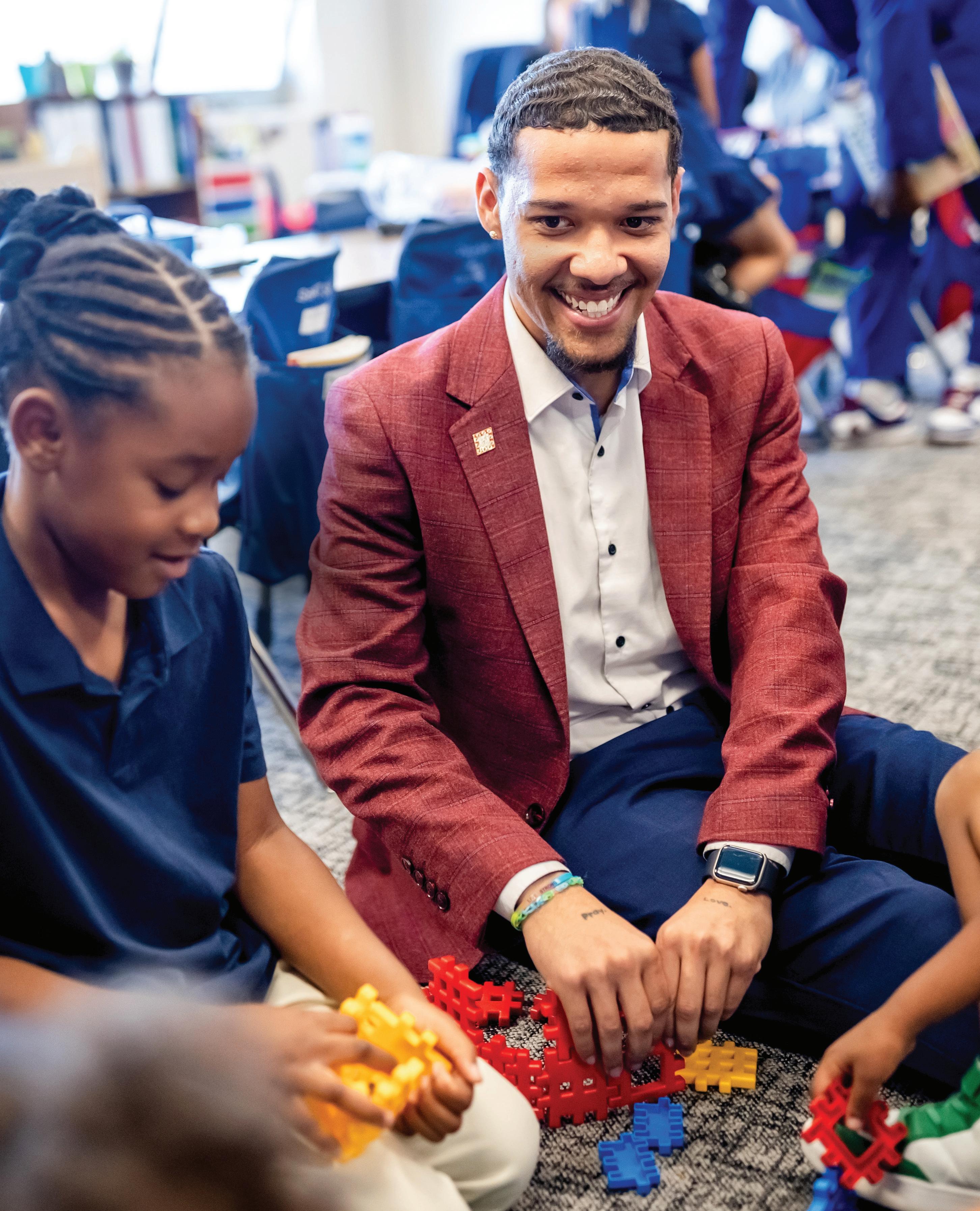
Alumnus Jordan Puch is redefining leadership in the classroom.
By Monica Parpal Stockbridge
From MiSTER to Mister P
Jordan Puch isn’t your average 24-year-old. The Green Valley Elementary School teacher is a 2024 graduate of Metropolitan State University of Denver’s inaugural Call Me MiSTER program, and he’s on a mission to educate, serve and inspire young students. “I want to be the teacher I needed when I was a child,” he said.
JP Jordan Puch
Launched in South Carolina in 2000, CMM is a nationwide undergraduate teacher leadership program that recruits, trains and places Black male teachers in classrooms. Puch began his teaching career under renowned author, speaker and education consultant Rashad Anderson, Ph.D., at South Carolina State University. In 2023, Puch accompanied Anderson to MSU Denver to help start the Mile High MiSTER program.
Throughout a cross-country move, the launch of a new program and his graduation with a teaching degree, Puch leaned on his spirituality. “The true test of a man is not where he stands during times of comfort and leisure, but during times of conflict and controversy,” he said. “And those are the times that really made me who I am.”
Today, Puch is “Mister P.” His students connect with his youthful energy and TikTok savvy, and also because he’s a Black man leading a classroom. Even the Educational Leader Award, which he earned from the Colorado Men of Color Collaborative, isn’t his primary motivator. “I’m truly grateful, blessed and humbled to have that award,” he said, “but I operate as if I need to be the teacher of the year every year, regardless of whether I get the award or not.”
“I just remember back to the child that I was,” he said. “And I think that if (students) can see that a Black man can lead their classroom with love, love them and give them everything they need, it can have a huge impact on them down the line and for the rest of their lives.” <
Photo by Alyson McClaran profile
BUILDING BRIDGES

MSU Denver students get empathy-based training and a firsthand look at the future of brain-injury treatment.
BY CORY PHARE | PHOTOS BY ALYSON M c CLARAN
WWhen Catrina Harrell, a student in Metropolitan State University of Denver’s Speech-Language Pathology program, began working with Associate Professor Kathy Hardin, Ph.D., the experience sparked an unexpected transformation — not just for her studies, but also her sense of self.
“I’ve always been drawn to helping people communicate,” Harrell said. “But through this project, I realized I was also helping myself heal.”
Harrell joined Hardin’s VOICES ABI (Visions of Improving Collegiate Educational Success After Brain Injury) project as a research apprentice. Funded by a grant from the Colorado Department of Human Services’ MINDSOURCE Brain Injury Network, the program uses immersive simulation to help health care and justice professionals develop empathy for people living with traumatic brain injuries.
TBIs are common. About 18.2% of U.S. adults report having sustained a brain injury. In Colorado, more than 500,000 people are estimated to have experienced one.
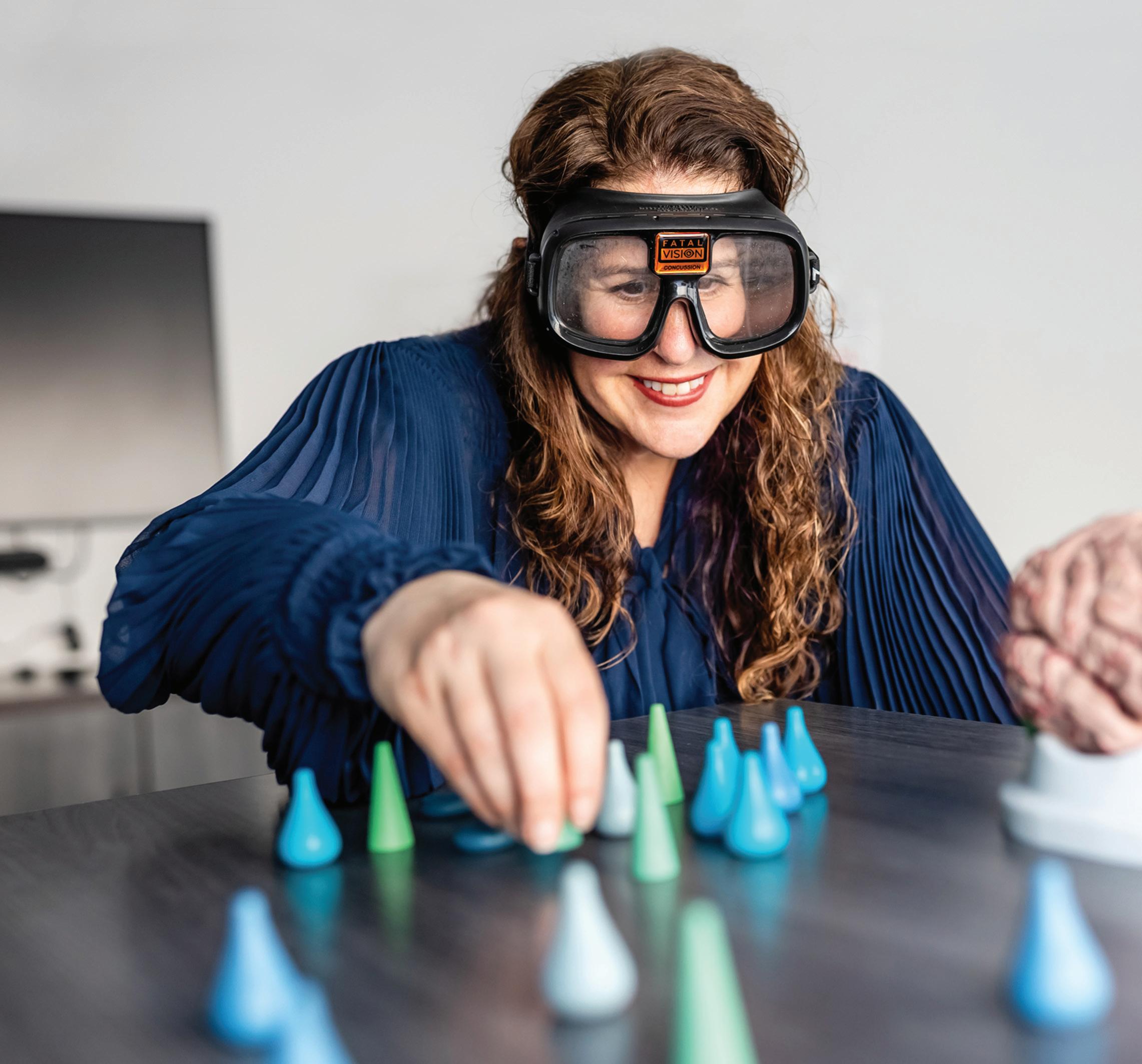
That’s where the work of people like Hardin and Harrell comes in. They use equipment such as concussion goggles and sound generators that create ringing or buzzing sounds to construct simulated environments. Participants complete everyday tasks — reading, texting, listening to lectures — while experiencing conditions that mimic the sensory and cognitive effects of a TBI.
Joe Hoover, an MSU Denver graduate research assistant, lives with TBI. He has seen the impact simulations can have.
“Noise, light, even conversations can feel like too much when you have a TBI,” he said. “When students take off the goggles
MSU Denver Associate Professor Kathryn Hardin, Ph.D., uses concussion goggles to simulate conditions that mimic the sensory and cognitive effects of a traumatic brain injury.
after the simulation, you can see it click — the look of ‘Oh, wow, this is real.’”
The goal of creating those experiences, Hardin said, is to close a gap that too often defines patient care.
“Health care providers don’t automatically imagine the world from a patient’s perspective,” she said. “Empathy takes intentional effort and training.”
The Empathy Bridge
Hardin calls the framework developed from her research the TBI Empathy Bridge, a conceptual model that acknowledges that providers can never truly know what patients experience but can meet them halfway through reflection, humility and active listening.
It’s effective, too: A 2023 review of published research
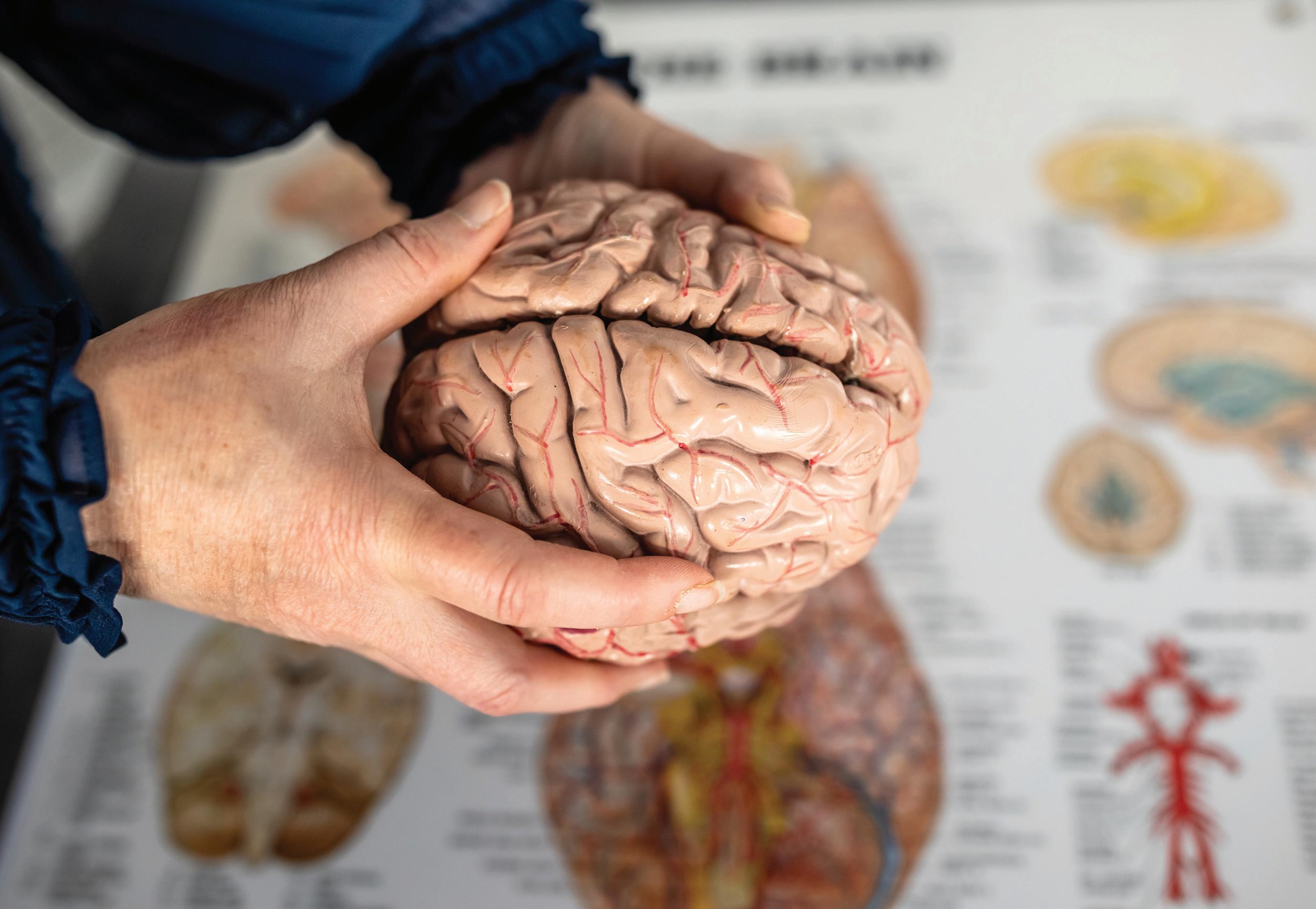
What started as a small research grant has expanded statewide, said Professor Hardin, who holds a model of the human brain.
ACCORDING TO THE BRAIN INJURY ASSOCIATION OF COLORADO
EMPATHY CAN BE TAUGHT
“Health care providers don’t automatically imagine the world from a patient’s perspective. Empathy takes intentional effort and training.” — KATHY HARDIN, P h .D.
found that higher empathy among clinicians is associated with better patient experiences and clinical outcomes.
“This work is about improving care by improving understanding,” Hardin said.
Initially piloted with MSU Denver graduate students in the Department of Speech, Language, Hearing Sciences and undergraduates in Criminal Justice and Criminology, the simulation has expanded to include partners such as the Colorado State Public Defender’s Denver office and the Colorado Department of Education. The project’s success has led to additional funding, articles in multiple peer-reviewed publications and national conference presentations — all pointing to a simple but profound truth: Empathy can be taught.
Walking in someone else’s shoes
For Harrell, that principle became personal.
“When we’re trying to teach cognitive empathy, that’s like walking in somebody’s shoes,” she said. “You can read about it, but without lived experience, there’s still a disconnect.”
Harrell helped facilitate simulation sessions, and the experience led her down her own path of self-discovery. While working with a Canadian researcher on the University of Toronto’s ABI Toolkit, designed to help women experiencing intimate-partner violence, Harrell began recognizing herself in the very stories she was helping to document.
“I actually found out through working on the ABI Toolkit something about myself that I didn’t even realize,” she said. “I’d never been diagnosed with a brain injury, but as I was reading these women’s stories, it hit me: I’d lived it, too.”
Years earlier, Harrell had survived intimate-partner violence while she was six months pregnant. “When it happened, I was rushed to the ER, but no one ever asked me
about me,” she said. “The focus was on the baby. No one asked how long I was unconscious or whether I could even stand. It went under the radar, and I didn’t understand why I hadn’t felt the same since that day until I saw it reflected in the research.”
The revelation was both healing and motivating. “It was mind-changing,” Harrell said. “If I could help myself through this work, imagine how many other women have never been diagnosed or even asked those questions.”
Becoming the change
Hardin said these insights underscore why student involvement is critical. Their own experiences help expand empathy training into justice settings and education systems, where misunderstanding brain injury can have devastating consequences.
According to the Brain Injury Association of Colorado, up to 60% of people in the legal system and more than half of unhoused people report a history of brain injury.
For Harrell, a first-generation college student and single mom of four, the experience has ignited a passion that will extend far beyond graduation.
Her next stop is a prestigious learning opportunity at the Rocky Mountain Regional VA Medical Center, one of only two students in the nation selected for the placement. There, she hopes to apply what she’s learned to veterans experiencing TBI and related neurological conditions.
Hardin sees that kind of advocacy as the project’s ultimate goal.
“This started as a small $10,000 grant,” she said. “Now it’s grown into something statewide. But more importantly, it’s changing how students think, how providers listen and how survivors are seen.” <
By Lynne Winter
questions with Theodore DeWeese, M.D., 2025 Distinguished Alum of the Year
TD
For most college students, General Studies courses are the classes they have to take before getting to the ones they want to take.
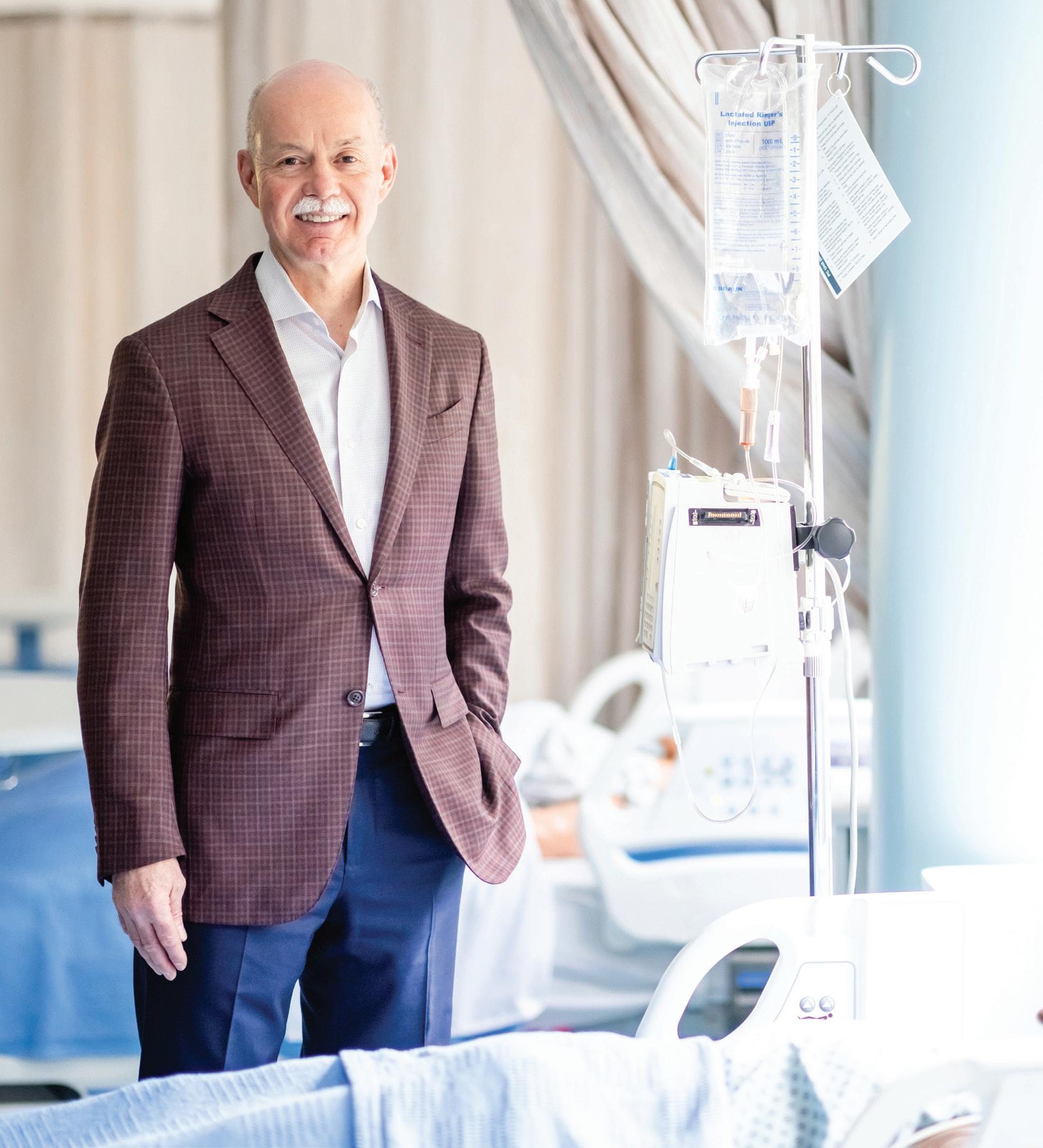
For Theodore DeWeese, M.D., dean of the Johns Hopkins University School of Medicine, CEO of Johns Hopkins Medicine and a Metropolitan State University of Denver alumnus, a required science class was the launching pad to a remarkable career in medicine.
DeWeese earned his bachelor’s degree in Chemistry at MSU Denver in 1986 and his M.D. from the University of Colorado Health Sciences Center. Later, the professor of Oncology, Radiation Oncology and Urology joined The Johns Hopkins Hospital as a radiation-oncology resident, later becoming founding director of the School of Medicine’s Department of Radiation Oncology and Molecular Radiation Sciences. In this interview, DeWeese, MSU Denver Alumni Association’s Distinguished Alum of the Year for 2025, spoke about how his childhood desire for a chemistry set led to a career on the cutting edge of modern medicine.
Photo by Alyson McClaran profile
1What was your MSU Denver experience like? After graduating from high school, I entered the workforce as a parts person and light mechanic for a local car dealership in Denver. When I decided to pursue higher education, I knew I wasn’t wellprepared. I needed somewhere accessible and willing to give me a real chance. MSU Denver was that place.
Initially, I took some Business classes; I didn’t enjoy them. Fortunately, the University required a science credit to graduate. As a kid, I’d always wanted a chemistry set, but my mother never allowed me to have one. I may have signed up for Chemistry 101 purely out of spite!
I loved everything about that class. My instructor, Dr. Fred Dewey, was wonderful, making the material accessible for someone like me with essentially no background in science. After that one course, I knew I wanted to major in Chemistry, which provided a strong foundation for medical school and a career in medicine, and eventually led to running a cancerbiology lab.
2
What inspired you to pursue a career in medicine, and specifically in radiation oncology? My newfound love of chemistry led to a volunteer research opportunity with biochemist Dr. Clive Solomon at the University of Colorado School of Medicine. He introduced me to translational research: laboratory-based research that seeks to solve a known medical problem, often using human cells or tissues.
Dr. Solomon and I discovered a way to test for a complicated disease by using a simple blood test; that experience changed my life. He encouraged me to pursue medical school, believing I had both the passion for medical science and the compassion for people needed to thrive as a physicianscientist. His faith in me helped shape the rest of my career.
3
Which advancement do you believe transformed the field of medicine? Great question! I’d pick the discovery of X-rays and radioactivity as the most important medical advancement of the past 100+ years. They have shaped the way we diagnose, treat and understand diseases, allowing us to see inside the body without surgery. Modern medicine would look completely different and be far less effective without these discoveries.
4
What challenges do you see looming on the horizon? Arguably, one of the biggest challenges we face nationally and globally is access to health care and access to high-quality health care. We simply can’t train enough physicians and nurses to meet the growing demand. A system that leverages technology and (artificial intelligence) could dramatically expand access to care and lower costs. Without innovative changes, I fear for the health of many people worldwide.
5
What role will higher education play in shaping medical innovation and advancements? Higher education will be the engine that powers the future of medicine. It’s where we shape the thinkers and leaders who design health policies and models of care; educate front-line health care workers; and train the innovators and researchers who will discover the next breakthroughs to ease suffering, relieve the burden of disease and improve health in our country and around the world. And with better health outcomes come greater productivity, stability and safety, allowing communities and citizens to thrive.
6
Nominate
Every year, the MSU Denver Alumni Association honors alumni with awards and a luncheon celebration. Nominate yourself or someone you know by June 30.

10 UNDER 10 AWARD
Recognizes the top 10 alumni who have graduated in the past 10 years (2016–present).

DISTINGUISHED ALUMNI OF THE YEAR
Presented to alumni for their service to the institution and for achieving outstanding professional success.
What makes you hopeful for the future of medicine? Students entering medicine and biomedical-research fields today are incredibly talented, focused and deeply motivated to make a real difference in the world. I am inspired by their passion for humanity and willingness to spend an enormous amount of time studying, training and learning in the pursuit of improving the human condition through medicine and research. Their relentless dedication makes me hopeful for the future. <

THE MAGIC OF
imagination
Sculpture grad Rudi Monterroso makes bespoke playhouses reminiscent of fairy tales.
BY LYNNE WINTER
PHOTOS BY AMANDA SCHWENGEL
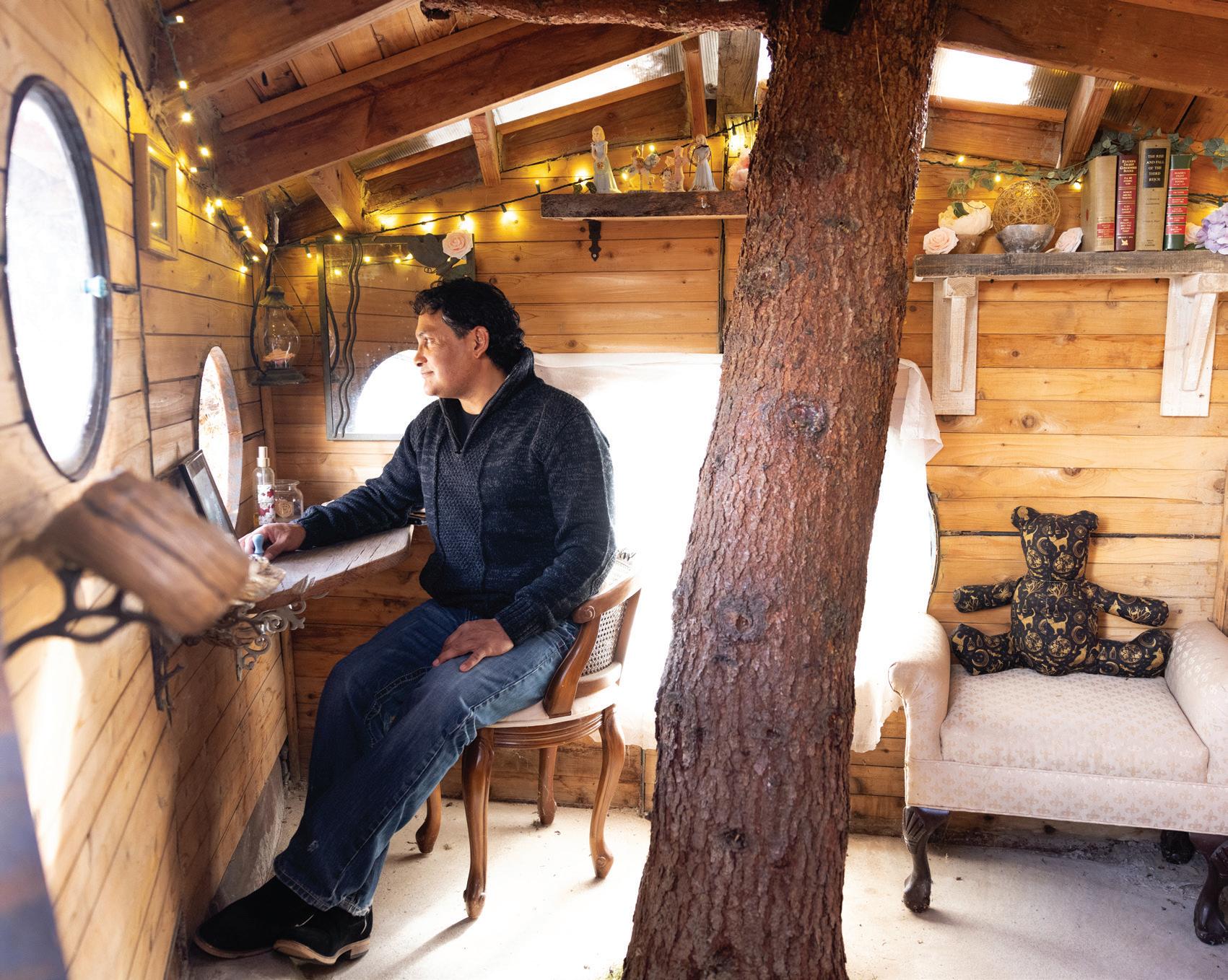
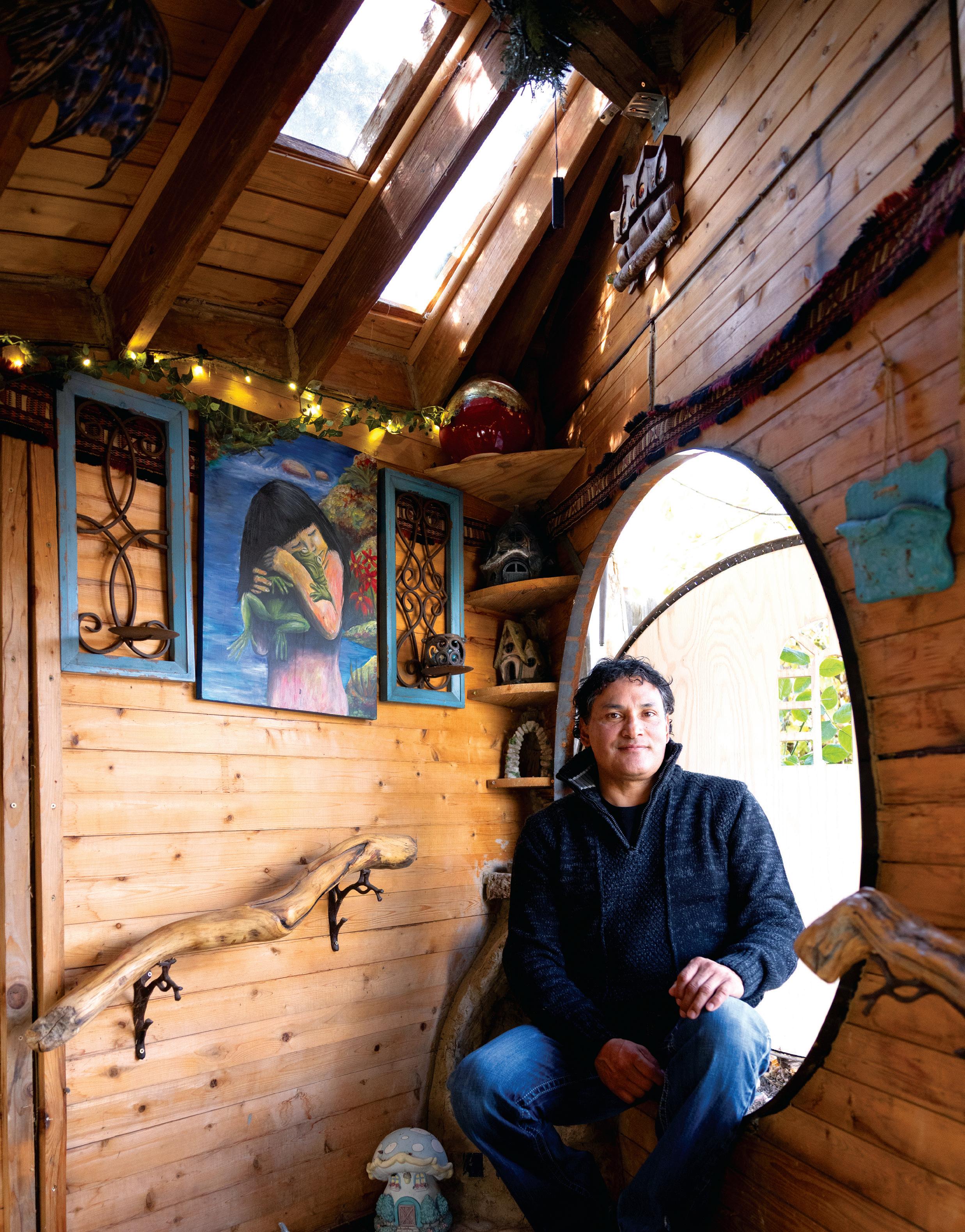
the whimsical, shire-esque structures Rudi Monterroso builds are straight out of a fairy tale. They are the type of playhouses kids (and adults) dream of stepping into and escaping the real world in favor of an afternoon of make-believe.
Turns out, his enthusiasm for the magic of the imagination is as contagious as its origins are unexpected.
In the 1980s, amid the Guatemalan Civil War, Monterroso’s family was incredibly poor. Lacking toys, and with the danger of being recruited by the army or guerrillas limiting neighborhood play,
Monterroso and his friends found refuge in the structures they built with found materials behind their homes.
“We’d play in them for hours. The younger kids were convinced those spaces were safe because they felt so alive,” said the 2013 Metropolitan State University of Denver graduate. “Unconsciously, we created a haven for them to use their imaginations.”
In 1992, Monterroso headed to the U.S. to escape the persecution of war. He was deported seven times, spent a month and a half at the border and, at one point, got lost in the desert for four
days and three nights, nearly dying. “All of those experiences taught me perseverance,” he said.
After earning a degree in Criminal Justice in Boston, Monterroso moved to Colorado in 2004 with his wife and enrolled at Metropolitan State University of Denver. Driven by the belief that he could positively influence children’s future and change people’s perception of Latinos by setting a positive example as an immigrant, he majored in Art Education and taught Art and Spanish at the Auraria Campus Early Learning Center.

Fast-forward to 2020, when Monterroso had a thriving career as an artist and teacher with more than 20 art shows and presentations. Then, the pandemic hit, canceling everything; he lost his job and gallery. Depressed, Monterroso returned to a childhood love of building; he sold everything to make one-of-a-kind playhouses, starting with one for his kids.
“I wanted them to have a space where they can use their imagination and feel free and play — those memories are priceless,” said Monterroso, who builds the playhouses big enough that parents can join their kids. “Now that they’re older, they use the space for doing homework or hanging out with friends.”
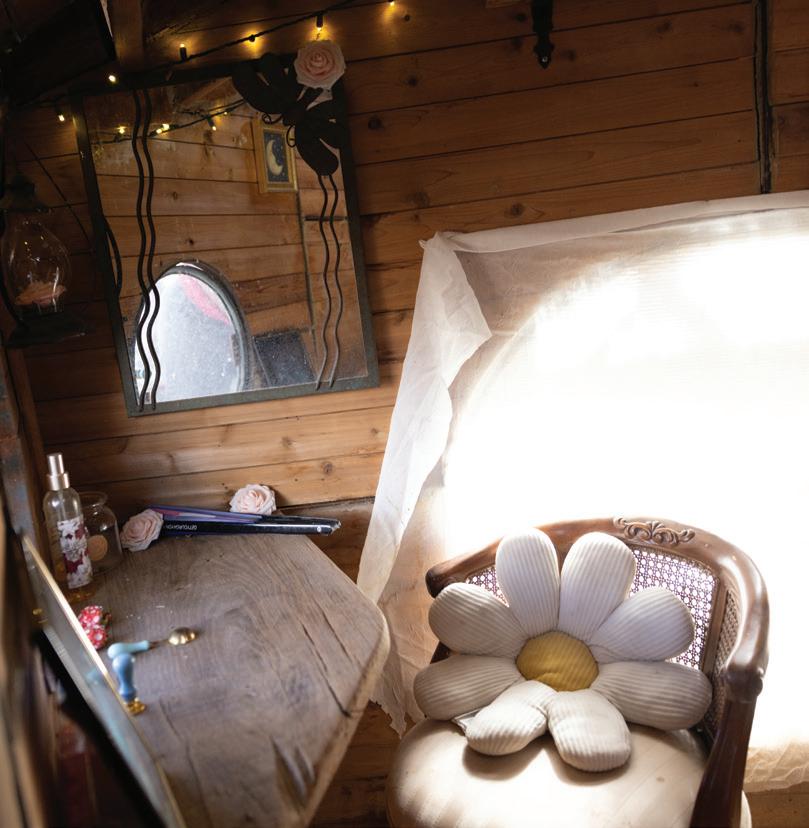

Monterroso is unsure what the future holds. He teaches in two schools and continues building playhouses, ensuring future generations stay connected to the magic of their imaginations. He’s also addressing the cost of housing in Colorado by creating campers and micro- living spaces, allowing people to focus on living simply and connecting to what matters.
One thing Monterroso is certain of is the importance of always moving forward and learning by welcoming different techniques, skills and mediums.
“If you don’t embrace your perseverance, you get stuck at being good,” he said. “But you don’t want to be good. You want to be amazing at what you do.
“Talent is absolutely nothing if you don’t do anything with it — if you don’t take it to the limit.” <

(future-proof)
Amid growing concerns about AI disrupting the workforce,
MSU Denver prepares students for the jobs of tomorrow.

Artificial intelligence may be coming for all of us.
But a recent study by Microsoft Corp. tried to shed light on which professions will be the first casualties of the technology. The answers surprisingly fell outside of the tech industry: Translators, journalists and writers, and historians were listed as the “most vulnerable to AI disruption.”
Overall, the findings seem to imply that human brains will become obsolete. As frightening as that may be for those who enjoy using theirs, Christopher T. Jennings, Ed.D., Metropolitan State University of Denver professor and chair of the Journalism and Media Production Department, said don’t panic just yet.
“The jury is still out” on many aspects of AI, Jennings said, especially when it comes to journalism and creative material. Legal issues abound, he said, particularly around copyrighted material, matters of fair use (the right to use limited amounts of copyrighted content without permission) and how much of someone else’s content AI can legally use and distribute, Jennings said.
Last year, Colorado became the first state in the country to take a stab at regulating AI. The Colorado Artificial Intelligence Act, which has not yet gone into effect, is intended to protect people in certain sectors from bias that results from AI’s sometimes-discriminatory algorithms. It also requires developers of AI content to document and disclose sources. Around the country, half a dozen states are considering laws to rein in some of AI’s most worrisome traits.
In the meantime, Jennings finds plenty to be hopeful about when it comes to his profession and AI. “The old way of doing journalism is changing in a way that is more conducive to the environment we live in now,” he said. It’s possible that the technology “will allow us to do even more,” he said. “We have to find ways to utilize it for the good.”
Jennings isn’t alone in his assessment. While some professions will be more vulnerable to an AI takeover, most will adapt AI as a partner while keeping humans centered. MSU Denver is preparing its students for the shift in more ways than just introducing them to the technology.
Creating critical thinkers through the liberal arts
/// BY KAREN GARVEY
Technical skills may get you in the door. But many who study employment trends say lacking what employers call “soft skills” can get you pushed right back out. Business authority Forbes magazine says soft skills “have become crucial success factors.”
“Soft skills” typically include areas that liberal arts stress: communication, creativity, critical thinking, problem-solving and emotional intelligence. Employers complain that those things can’t be easily taught in the workplace if they haven’t been learned in college.
John Masserini, DMA, dean of MSU Denver’s College of Letters, Arts and Sciences, has complaints about soft skills, too — mainly the term itself. “These are not ‘soft’ skills,” he said. “These are essential human skills. Period.”
At MSU Denver, the College of Letters, Arts and Sciences includes three divisions that together house 20 departments, including Art, Music, Biology, History, Sociology and Anthropology, World Languages, and Physics.
Masserini likens studying liberal arts to building muscles. “You may not see immediate results,” he said,
MEDIAN EARNINGS OF BACHELOR’S DEGREE HOLDERS ARE 75% HIGHER THAN HIGH SCHOOL GRADUATES, ACCORDING TO U.S. BUREAU OF LABOR STATISTICS .
“There’s a misconception that a college degree is not that important,” said Kishore Kulkarni, professor of Economics at MSU Denver.
“Obviously, that is the wrong argument when you look at the benefits you see in the long term. Our students get not only skills to get a job but skills to be critical thinkers, which is something that sets them apart from high-schoolers seeking jobs.”
but over time, the effort pays off. As with physical exercise, critical thinking takes effort and isn’t always easy.
“Human nature is to want immediate answers,” and we tend to want those answers in black and white, he said. “But most things in the world aren’t black and white. Most things are more nuanced.”
Weighing those nuances, evaluating others’ arguments and developing empathy for opposing points of view can be exhausting, Masserini said. “It’s much easier to just shut down,” he said, “instead of saying to someone you disagree with, ‘OK, you have a point there.’”
That more difficult kind of exchange is what Christina Foust, Ph.D., professor and associate chair of Communication Studies at MSU Denver, teaches. She uses dialogue in an exercise where students agree to rules such as “listening to understand, asking questions of another person with genuine curiosity” — not trying to trap or embarrass but seeking information. Such skills, she said, are useful no matter what career her students choose.
She teaches something else, too, something she said applies to everyone, in every profession and pretty much every situation: “You cannot not communicate.”
Care remains at the core of nursing
/// BY CORY PHARE
As the population ages and health care demands expand, nursing is positioned to remain among the most sought-after professions in the country. This combination of rising demand and persistent shortages means job security and opportunity for nursing graduates will remain strong — even as technology reshapes other sectors of the economy.
“Nursing is about people, relationships, teaching and clinical judgment — things AI simply cannot do,” said Jenny Allert, DNP, professor and chair of the MSU Denver Department of Nursing. She views AI as a powerful tool, one that can streamline data and reduce mundane tasks, but not as a replacement for the core human skills nurses bring to care.
Allert emphasized that no matter how smart machines get, nurses are indispensable for interpreting meaning, responding to nuance and building trust with patients.
“You can’t count on AI data without evaluating it,” she said, noting that oversight is crucial in cases where algorithms might misread critical information.
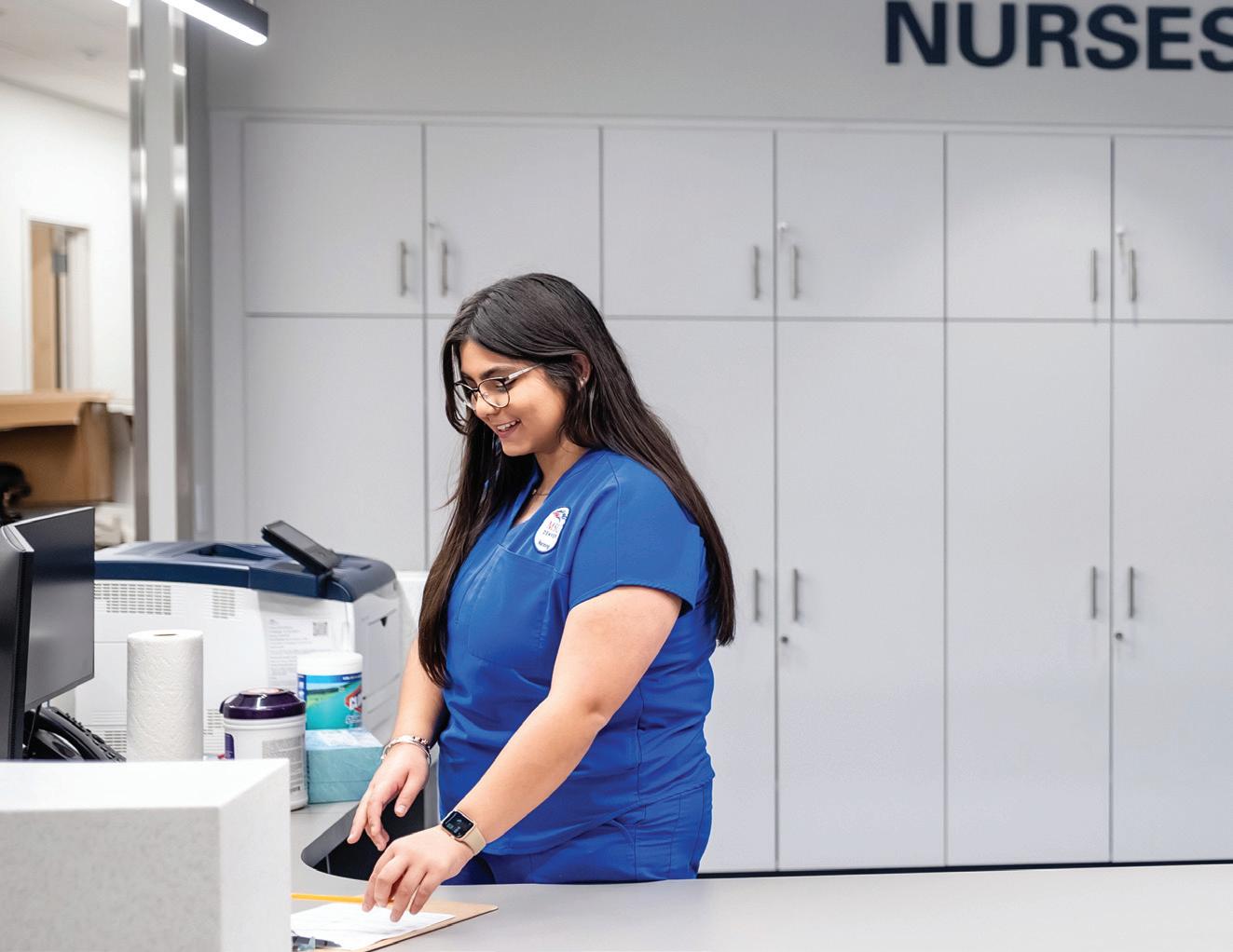
Marisa Schreiner, president of the MSU Denver Student Nurses Association, who plans to work in the NICU after graduation this spring, is confident about the future. Her blend of technical savvy and interpersonal strength is what employers increasingly value and what public universities such as MSU Denver are uniquely positioned to foster.
“It can be overwhelming to research a specific scenario, but AI can help narrow results down to the most evidence-based and reliable sources,” Schreiner said.
And with access to the Gina and Frank Day Health Institute Simulation and Skills Laboratory, students gain hands-on experience with tomorrow’s tools, today.
The result is building Colorado’s workforce with clinical proficiency and adaptability, giving future nurses the agency to evolve their practice in instances they may not have encountered in school, becoming leaders in the field.
In the coming years, the University is investing in a core principle: In a world of rapid change, health care systems will lean on nurses with strong critical thinking and communication skills, whether they’re using
AI to spot trends or sitting with a family at the bedside.
“There’s an opportunity (with AI) here, if the real goal is to decrease burnout,” Allert said. “New technologies could take mundane work away so nurses can do what they really want: Be fully present with their patients.”
Computer Science majors collaborate with AI
/// BY MICHAEL HAEDERLE
Angela Fleenor mastered the art of accurately capturing and captioning spoken language in court reporting school, only to have her career plans disrupted by the advent of new automated technology.
“I initially went into it because I wanted to do captioning,” she said, “but AI and voice recognition software have mostly replaced live captioners.”
These days, Fleenor, a senior majoring in Computer Science at MSU Denver, is feeling a sense of déjà vu as business leaders lay off staff and turn to artificial intelligence tools to write code, diminishing the need for new programmer hires.
“I feel apprehensive,” she said, regarding her job prospects after graduation next spring.
A labor market report from the Federal Reserve Bank of New York lends weight to Fleenor’s concern. Recent computer science graduates face a higher unemployment rate, about 6%, than those entering other professions.
While the days when Computer Science majors were assured of well-paying entry-level positions coding software could soon be a distant memory, there’s no reason to jump ship, said Daniel Pittman, Ph.D., associate professor in MSU Denver’s Department of Computer Sciences.
“We can do more with fewer people now in intro-level programming jobs because AI can automate, but that doesn’t eliminate the profession of software development,” he said. “It doesn’t eliminate the human, but it does make the humans that remain more efficient.”
When AI is used to write code, it draws on a vast trove of online data, essentially predicting what the next element in a set of instructions should be. While the speed with which it generates content may accelerate completion, it isn’t always accurate, Pittman said, and that means that there will always be a demand for people trained in computer science who can spot the errors.
ALYSON
MSU Denver Nursing student Marisa Schreiner in the Simulation and Skills Laboratory.
Annual Openings 2024 to
“First and foremost, I’d say computer scientists are trained to be problem solvers,” Pittman said. “That’s really what we try to make our students understand. It’s not about learning one programming language. It’s not about learning one tool because tools do change, especially in software.”
That same problem-solving ability will be essential in the future, he said. “It’s just instead of you handwriting everything, it might be more in collaboration with an AI, generating something together and then assessing its correctness for what you’re trying to do.”
Construction booms in downtown Denver
/// BY MARK COX
From the new Broncos Stadium to the $100 million downtown redevelopment plan to MSU Denver’s own Summit House, it’s safe to say construction managers are going to be in high demand.
In Colorado, the construction sector is expected to grow by 26% between 2020 and 2030, according to the Construction Education Foundation. Nationally, about 46,800 new construction manager openings are projected each year over the decade. And the median pay for the role — $106,980 — only looks set to grow.
One person watching all this new investment with enthusiasm is Bill Canterbury, affiliate professor in the Engineering and Engineering Technology Department at MSU Denver. Canterbury teaches in the
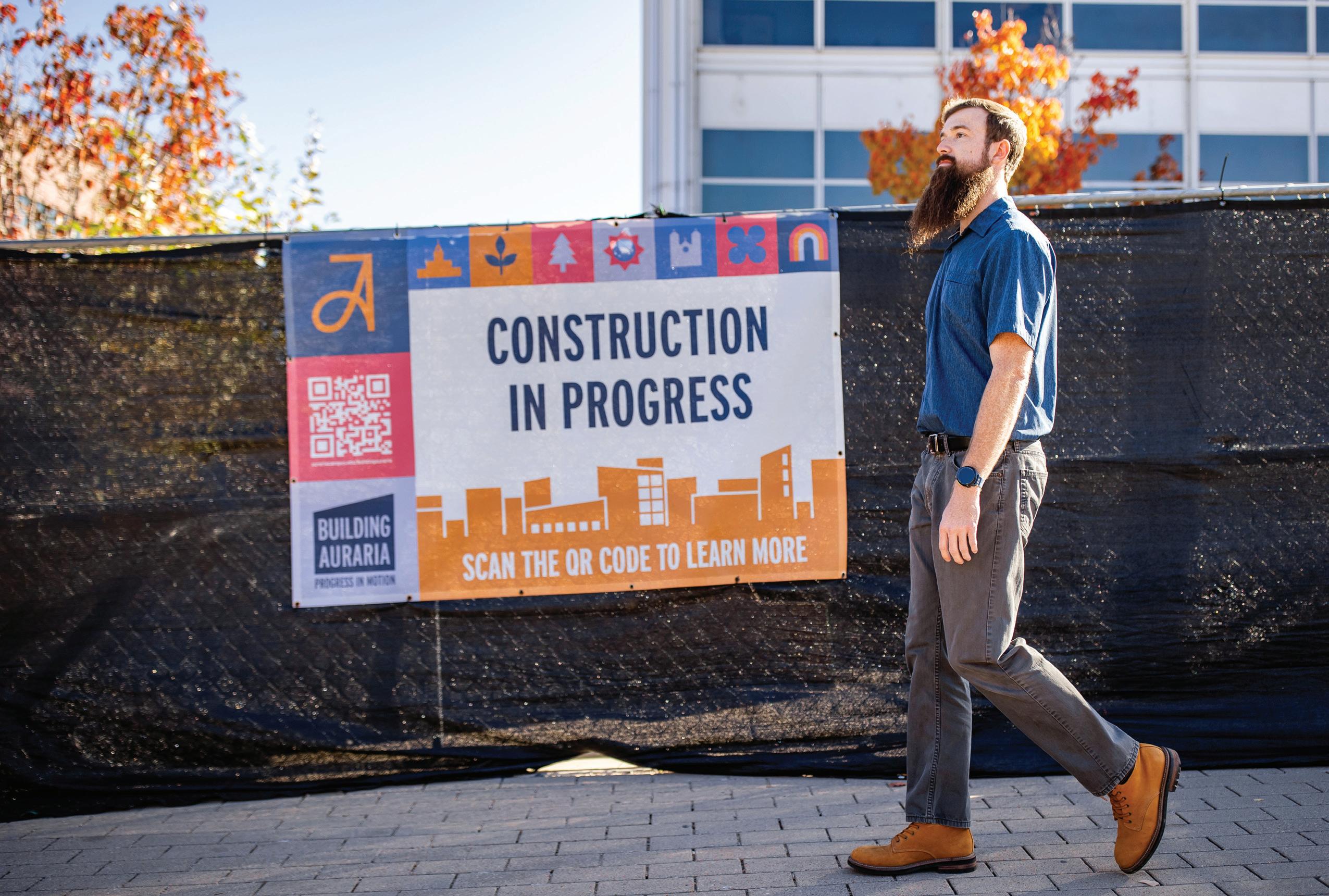
Matt Molloy, alumnus, walks past Summit House construction on campus.
Construction Project Management program and knows these massive projects are good news for his students, especially because the degree program’s focus on live, in-the-field experience makes them eminently employable.
“While the construction degree provides a great classroom introduction to the whole toolbox of management skills, MSU Denver also benefits from being located close to many leading engineer, architect and contractor headquarters,” he said.
“That creates incredible internship opportunities for our students, who get to work on some of the largest projects in the area, some of them incorporating billions of dollars.”
Matt Molloy, a Construction Management alumnus who graduated in December, says his classroom studies have given him a “great foundation of knowledge” but said the internship opportunities are the secret sauce of the degree.
He recently spent three months as a project engineer intern with Bristlecone Construction, which is building a 128-room hotel in Denver’s RiNo Art District.
“It gave me so much insight into construction operations, plus the roles and responsibilities of each member of a project team,” Molloy said. “I’m much more confident now speaking to recruiters and industry professionals, because I’ve already developed this valuable set of skills that will serve me throughout my career.”
Entrepreneurs are transforming the workplace
/// BY MARK COX
As technology and global trends reshape the job market, employers are increasingly looking for candidates who think like entrepreneurs — proactive problem-solvers who can jump into any role and add value immediately.
“The fact is that more companies are looking for employees with particular mindsets, rather than skill sets, and that’s an important distinction,” said Adam Melnick, J.D., director of the Center for Entrepreneurship at MSU Denver.
That’s why the Entrepreneurship program sets out to foster an entrepreneurial mindset in students.
Student Luis Toscano, winner of the program’s annual Pitch and Poster Competition, is emblematic of the program’s can-do ethos. Although still studying for his degree, he’s already the owner of a growing business: Mobile Glow Automotive Detailing.
“The program has significantly helped me to run my business,” he said. “Besides introducing me to a useful network of people, it has sparked ideas that have inspired me to keep pushing, despite challenges.”
Business Management major Luis Toscano runs his own business, Mobile Glow Automotive Detailing.
About 170 million new jobs (future-proof)
WILL BE CREATED THIS DECADE, ACCORDING TO THE WORLD ECONOMIC FORUM’S FUTURE OF JOBS REPORT 2025.
Follow
along with the Future-proof series:

“The program has significantly helped me to run my business.”
—Luis Toscano, student

As much as anything else, the program has given Toscano a confidence boost: “All the teachers have helped me recognize that my business is a real company with genuine potential, and not just a side hustle.”
Melnick fosters this kind of confidence in his students by pushing them into unfamiliar situations — like switching an in-person pitch to a video presentation at the last minute. “Entrepreneurs operate under resource constraints all the time,” he said. “You need to be able to overcome those constraints under pressure.”
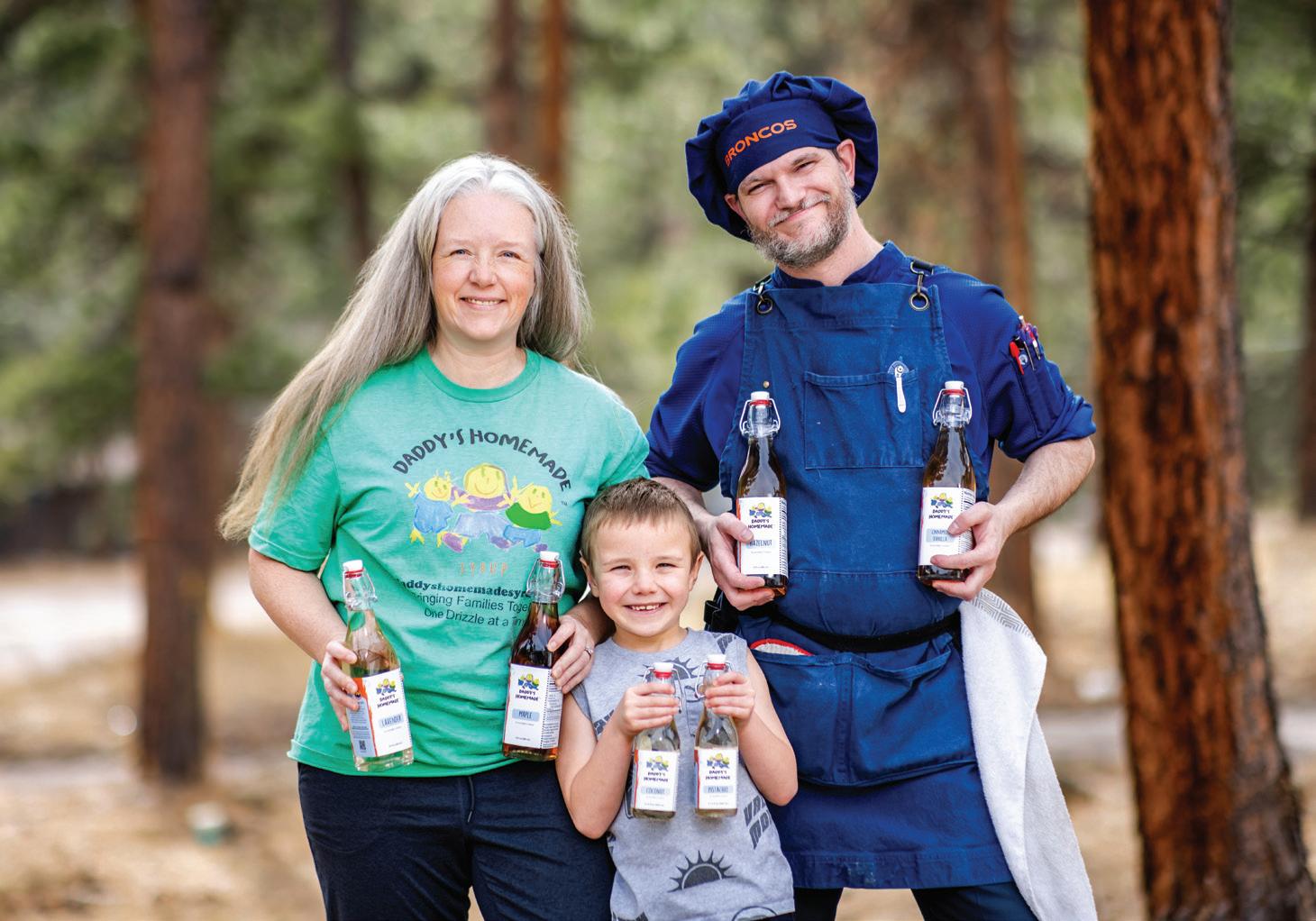
Amber Burr — business owner and MSU Denver alumna (B.S. Management, ’05) — would argue that it’s a hugely valuable learning experience. Burr heads up Daddy’s Homemade Syrup, an award-winning company whose product sells in local markets, coffee shops and restaurants.
Burr has also stayed connected to her roots, attending University events and participating in the Launch Denver program. She knows the importance of being taught hard lessons and having the right support.
“I used to believe that grit was enough, but real growth only happened after I allowed myself to lean on mentors, community and partners,” she said.
Toscano couldn’t agree more about the value of a support network. He’ll be set up for success when he graduates, Melnick said, especially considering shifts in the working environment.
“We’re seeing a lot more of the word ‘intrapreneurship’, which refers to being an entrepreneur within an organization,” Melnick said. “With our graduates’ capacity to innovate, adapt and unpack problems, they could apply themselves to pretty much any work situation.”
Our teachers are irreplaceable
/// BY KAREN GARVEY
Ask any education expert what makes a great teacher, and — along with preparation, content knowledge and organization — you’ll probably hear words like empathy, patience and flexibility.
Ask any technology expert what artificial intelligence excels at, and you’ll hear about data analysis, critical thinking and infallible logic, but not much about empathy or patience. At least not yet.
Nevertheless, a recent Pew Research Center study found that more than 30% of AI experts— those who work with or research artificial intelligence — believe the technology will put teaching jobs at risk. Bill Gates has predicted that within 10 years, AI will provide “great tutoring.”
But Aaron S. Richmond, Ph.D., MSU Denver professor of Psychological Sciences, sees AI not replacing teachers so much as assisting them. Richmond, faculty director of MSU Denver’s Learning Assistant Program, said at least for now, AI cannot compete with caring human educators who know how to engage learners and build rapport.
What’s more, Richmond said, “In all my classes, I specifically attempt to move beyond rote memory of course material,” to encourage active learning and critical thinking.
That’s not to say that Richmond is antiAI. On the contrary, he sees it as a useful tool. “A lot of schools are using AI now to help with lesson plans and grading,” he said. Those nonteaching tasks can be timeconsuming. A recent article in Education Week said teachers typically spend nearly 10 hours a week on lesson plans and grading. That same article stated that “Competent, research-driven teachers are not going to be replaced by AI.”
Richmond said teachers also use AI to deal with behavioral situations, though he acknowledged the tool isn’t perfect in that case. For instance, it’s not going to pick up on bullying. “It may someday, but we’re not there yet.”
The bottom line, Richmond said, is teachers must educate themselves on AI and its potential uses, because most of their students already are using it. He compared AI to a rising tide. “You have to learn to roll with the tide, not fight the tide.” <
ALYSON M c CLARAN
MSU Denver alumna Amber Burr with her husband and son. Burr founded Daddy’s Homemade Syrup, specializing in small-batch, all-natural products.
Serving those who’ve served time
MSU Denver’s JustIS program provides connection, services and hope for students impacted by the justice system.
By Karen Garvey
When Adam Nakamura enrolled in classes
at Metropolitan State University of Denver, he was eager, enthusiastic and in a hurry. But within days, that bumped up against a hard reality: He didn’t know the first thing about being a college student.
“I took four summer-school classes. I had no idea that in summer everything was condensed,” Nakamura said. There were a lot of other things he didn’t know, too, like how to use a smartphone, the correct protocol for responding to email, how to get a bus pass. But his biggest problem was that, after seven years in prison, he didn’t know what he didn’t know.
That he stuck with it is a testament to Nakamura’s tenacity. Not everyone in his situation is so determined. According to a Prison Policy Initiative report, the odds of a formerly incarcerated person earning a college degree are less than 1 in 20, compared with 1 in 3 for the general public.
Nakamura is determined to defy those odds. And J. Renee Trombley, Ph.D., associate professor of Criminal Justice and Criminology, is determined to help him and others like him succeed.
Nakamura is far from the only person to try to adjust to life after prison. J. also is part of that demographic.
As a child in foster care, she developed a habit of taking things out of other people’s mailboxes. “I just wanted something to read,” she said. But law enforcement “thought I was part of some organized crime ring stealing people’s checks.”
That “was the beginning of many years on the run and in the streets and dealing with the system.” By the time her legal troubles ended, she had three kids and no clue what to do next.
It was a call from a caring instructor, urging her to come back, that changed her life.
In 2022, Trombley, who prefers to be called J., launched the Justice Impacted Scholar Alliance, or JustIS Alliance, at MSU Denver to offer support, resources and community for students who’ve been impacted by the justice system. That includes those who’ve been adjudicated as juveniles or adults — or both — and the loved ones of those who have been, J. said.
The JustIS website lists employers willing to hire formerly incarcerated people. And, in addition to regular meetings and outreach on campus, the program provides connections to organizations that offer everything from housing services and child care to GED prep and testing.
For Nakamura, the program did something else. “I saw a flyer for JustIS on campus. And I thought, ‘What?! I’m not the only one?’”
When she discovered that community colleges didn’t screen out people with criminal records, she enrolled. “I was excited but struggling. I dropped out.”
It was a call from a caring instructor, urging her to come back, that changed her life, she said. That and financial aid.
Not that the rest was easy. “I’ve been shunned and talked about and told never to tell the truth about my story,” she said.
Despite all that, she became a doctor after all, earning a Ph.D. in juvenile justice.
Like J., Nakamura considers himself fortunate to have gotten help. In four years at MSU Denver, the Business Management major has started a home maintenance business, become president of JustIS, kept a 3.0 GPA and been able to be a parent to his four kids. He won a $500 check from the Launch Denver business startup program for his concept — providing backpacks filled with essentials to newly released former prisoners.
Now, he’s considering a second major, Psychology, so he can counsel others coming out of prison. And he has another goal: being the role model for his own kids that he never had growing up. <
JMZ
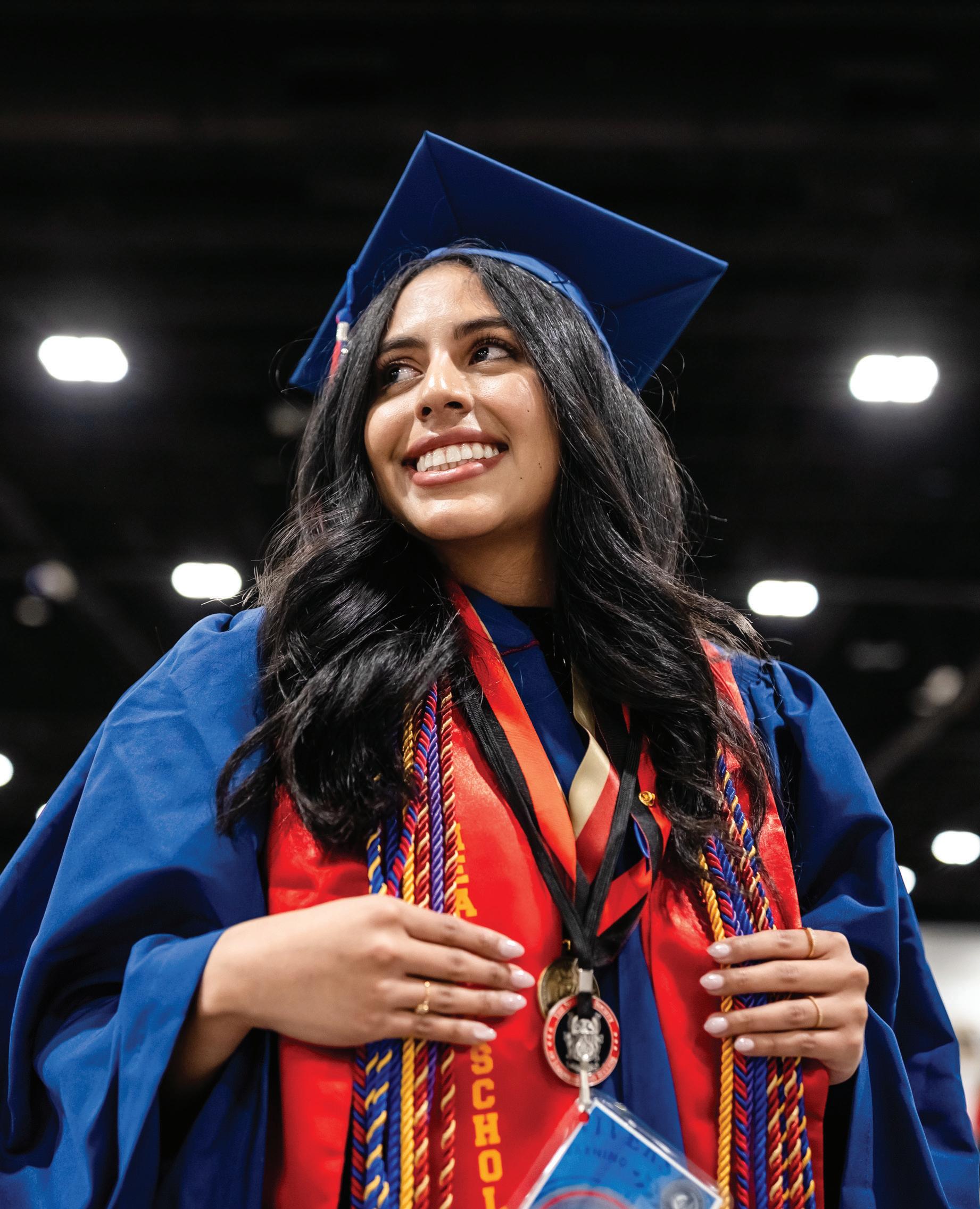
In 2020, Jimena Malta Zuniga was given three months to live. Five years later, she’s a Nursing graduate and helping others.
Jimena Malta Zuniga
By Cory Phare
Lighting the way forward
Jimena Malta Zuniga started at Metropolitan State University of Denver in fall 2020, in the middle of the Covid-19 pandemic. It was already a topsy-turvy time for the 17-year-old, originally from Honduras, who was trying to build connections as a first-generation student forced by Covid to learn in a virtual environment. Then came the diagnosis: terminal cancer. She was given three months to live.
“It was like having a bucket of ice dumped on me,” she said. “I wasn’t sick before that; it was nothing I’d expected.”
In many ways, however, her story was just beginning. In December, Malta graduated with a Bachelor of Science in Nursing and a 3.9 GPA, choosing to live each day to its fullest and maximizing the goodness in each.
It proved not only to be an effective approach to overcoming the odds of her initial prognosis, but also a calling that connected her to a larger mission.
“I remember my nurse just grabbing my hand after they told me,” Malta said. “I think that’s all I needed at that moment. She didn’t have to say anything — just being there was enough.”
That flash of compassion ignited a spark. Malta threw herself into nursing studies to better understand what was going on within her own body and to be that rock for others.
“School became my pause from hospital life. Studying gave me space to think, reminding me that I’m doing this to heal.” And Malta is not done yet. Inspired by the resilience of children she’s worked with during her studies, she has her eyes on becoming a pediatric oncology nurse.
“I just love kids,” she said. “They have special superpowers.”
Malta would know. The heart she’s demonstrated is nothing short of extraordinary. And her commitment to heal herself while helping her community is at the core of what it means to be a Roadrunner.
“Life can be hard for everyone in different ways,” Malta said. “But it’s our choice to be mad or sad about it. I just decided to choose a happy life and not to let that diagnosis define me.” <
Photo by Alyson McClaran profile

Are you celebrating a new job, degree, publication, marriage, birth, retirement or other milestone? Scan the QR code or email magazine@msudenver.edu and let us know!
class notes
1970s
JOHN GURZO (B.A. History, ’70) is an award-winning member of the Outdoor Writers Association of America and has received recognition for developing housing rehabilitation programs. The former long-standing head baseball coach at Stockton University earned an MSW from Rutgers University. Gurzo is most proud of his four successful children, 16 grandchildren and four great-grandchildren.
SCOTT ROLLER (B.S. Professional Pilot, ’76) traveled to all 50 states, two U.S. territories and 98 countries as a flight engineer on DC-8 and Boeing 747 aircraft, earning airman and seaplane certifications. Post-airline industry jobs include being a truck driver, railroad conductor and water treatment operator. Retired, Roller is enjoying life with his wife of 40 years. He credits MSU Denver for instilling within him a quest for knowledge and adventure.
CLINT BRADY (B.S. Land Use, ’77) had a long career in land development and real estate. He has been teaching geography part time at the college level for over 20 years and is married with two grown sons and three granddaughters.
1980s
VINCENT NEWTON (B.S. Physical Education, ’86) had a private practice as a personal
fitness trainer before earning a master’s degree in Buddhist and Western Psychology. Newton worked with children and families in Colorado and North Carolina community mental health programs for 30 years as a psychotherapist and mental health program director. In December 2024, he received a kidney transplant and now mentors other transplant candidates.
SUZETTE D. BROKER (B.S. Criminal Justice and Criminology, ’88) attempted to semiretire several years ago before being pulled back into law enforcement. Her favorite job in the world is being a grandma, and thanks to her fun part-time job with United Airlines, she can travel the world and see her out-of-state kids and grandkids. Broker is grateful to have two amazing jobs that allow her to make a difference.
1990s
CHAD MORRIS (B.A. Journalism, ’90) worked for several Denver metro area public relations firms following graduation. After freelancing for many years, he moved to Washington, D.C., to work in corporate communications for the technology and defense industries. In 2009, Morris joined the U.S. State Department as a foreign service officer. He has served in Burkina Faso, the Dominican Republic, Germany, Somalia, Papua New Guinea and Tanzania, and is currently posted to Islamabad, Pakistan.
1 After completing her master’s degree in Curriculum and Instruction-Literacy,
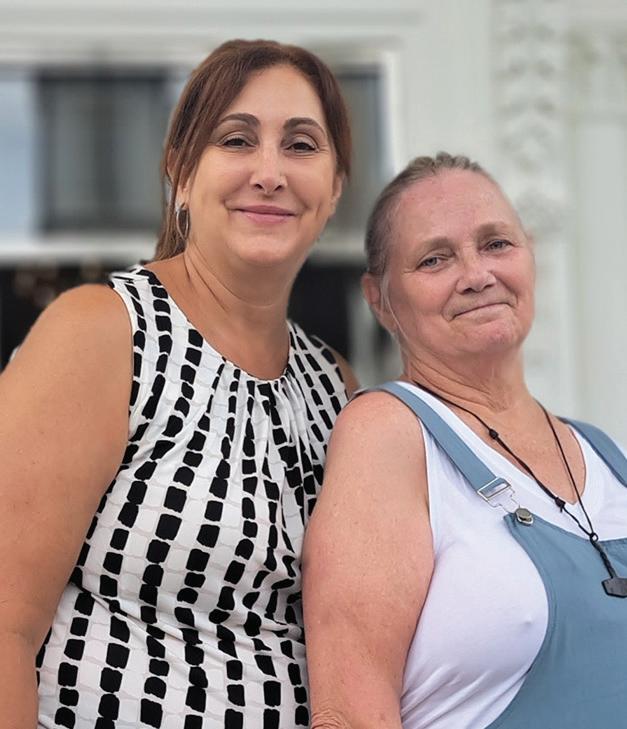
BARBARA CHAVEZ (B.A. English, ’95) taught literacy and English in three high schools for nine years and English writing at MSU Denver for seven years. Retired since 2013, Chavez enjoys spending her time with family, traveling and reading literature and history, and is proud to have worked as a poll worker for the last five years.
ROBERT ZARLING (B.S. Finance, ’95) is enjoying retirement after working for a Fortune 500 company as a global strategic supply chain executive. During the past 30 years, he’s traveled to over 35 countries, including Mexico and South Africa, and throughout the U.S., doing volunteer work to better communities by feeding families and providing medical assistance.
2 After graduating in 1997, ERIC BATES (B.S. Criminal Justice and Criminology, ’97; B.S. Computer Information Systems, ’03) worked in Jefferson County corrections until the Y2K era sparked his interest in computers. His technology career began at JD Edwards, followed by joining the information technology division of West Metro Fire in
Barbara Chavez (right)
2003, where he advanced to his current position as director of IT.
VERNA HAYNES (B.S. Social Work, ’98) retired in June 2025 after 24 years in Child Protective Services in Denver, Boulder and Arapahoe counties, and Washington state as an investigator and with the hotline. She also worked with local tribes as a supervisor in the Office of Indian Child Welfare in Seattle.
TASHA BUETTENBACK (B.S. Criminal Justice and Criminology, ’99) pursued a career with the Colorado Judicial Branch, working in the state court system as a family court facilitator and later as a problem-solving court coordinator. Buettenback retired from state government in 2024 after 24 years of public service. She now works for a nonprofit organization in Boulder.
60TH ANNIVERSARY
Crossword
After graduation, PATRICK
O’REILLY (B.S. Meteorology, ’00) finished his internship with COMET (Cooperative Program for Operational Meteorology, Education and Training) at the University Corporation for Atmospheric Research. O’Reilly became a decision-support meteorologist at the University of Northern Iowa
ACROSS
1. The campus that Metropolitan State College moved to for its “gamechanging” new home
4. Preserved historic homes like this area of the Auraria Campus
6. First teacher at Metropolitan State College
10. Name of MSU Denver’s soon-to-open first residence hall
12. First graduate of Metropolitan State College
14. One-time home of this former Israeli prime minister is located on campus
15. Sport for which MSU Denver claimed its first national championship in 1995
17. High-flying team that has won five national championships since 2017
DOWN
2. Students who darted across downtown Denver streets to get to class inspired this mascot
3. This downtown building housed physical education classes in MSC’s early years
5. Former Colorado legislator and governor known as the “Father of MSU Denver”
7. First president of Metropolitan State College
8. MSU Denver’s first mascot
9. Historic brewery that now houses student union
11. Colfax bar known as unofficial student union in MSC’s earliest days
13. Metropolitan State College’s first newspaper
16. MSU Denver won its most recent national championship in this sport
Eric Bates
Faulhaber, MBA, CFP® Director, Business Development at First Command Experience: 21-30 years Colorado, USA



Your MSU Denver experience doesn’t end at graduation — it grows through connection.
Upnotch is the University’s mentorship and networking platform where alumni can share their expertise, seek guidance and strengthen the Roadrunner community.
Be a mentor. Find a mentor. Expand your network. JOIN THE MSU DENVER

and had a short stint as an air quality forecaster. In 2005, he was hired by the National Weather Service at the National Centers for Environmental Prediction Central Operations, where he is chief of the Operational Monitoring Branch.
3 KELLIE McCLURE (B.S. Computer Information Systems, ’01) is a proud second-generation MSU Denver graduate and the fourth member of her family to attend the University. McClure earned an MBA in Healthcare Management from Regis University, leading to a path in health care leadership, and her current role as director of research operations, compliance and strategy at Des Moines University. She is grateful to MSU Denver for laying the foundation for her success and instilling values and confidence that guided her through life.
After graduating, CHRISTINE RAMSAY-SPANGLER (B.S. Behavioral Science, ’02) attended graduate school for mental health counseling and spent several years working in the education and community mental health fields in the Denver area. Her older son graduated from MSU Denver in fall 2025; she is proud of him and their continued Roadrunner legacy.
KRISTINA DAVIS (B.S. History, ‘08) lives in Georgia with her husband, a Marine Corps veteran, and their four children. Since graduating, she has worked in three museums as a tour guide and curatorial assistant. Davis is a cataloger for her local library’s regional system.
2010s
DAY CORSO (B.F.A. Communication Design, ’17) moved to Denver from a small Rust Belt town in Ohio looking for a future that was inclusive and supportive. They found a better life in MSU Denver’s Communication Design program, working alongside classmates and professors to learn about the impact of intentional design created with a strong foundation. As a queer trans Latinx person, they are proud to have led HSI awareness campaigns to help build momentum for the University’s becoming a Hispanic Serving Institution.
4 TODD MATUSZEWICZ (B.S. Chemistry, ’17) is completing a master’s degree in Historic Preservation from the University of Colorado Denver. In addition to working two jobs, Matuszewicz co-founded Save the Signs Colorado LLC, restoring neon signs and getting them placed on the State Register of Historic Places. He received the Harrison Goodall Preservation Fellowship, which, alongside Discover Denver, is creating an AI agent to perform architectural surveys of all 160,000 buildings in Denver.
Kellie McClure
Mike
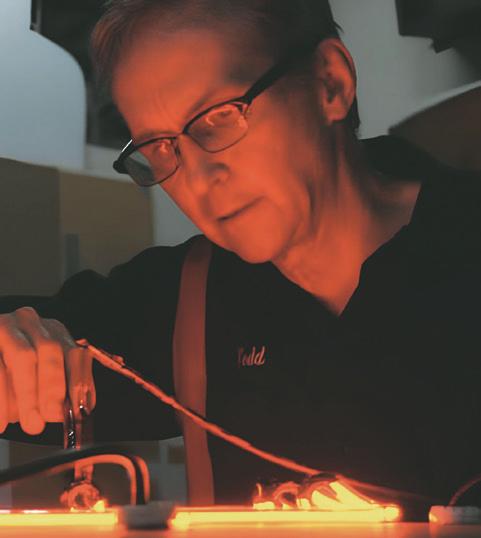
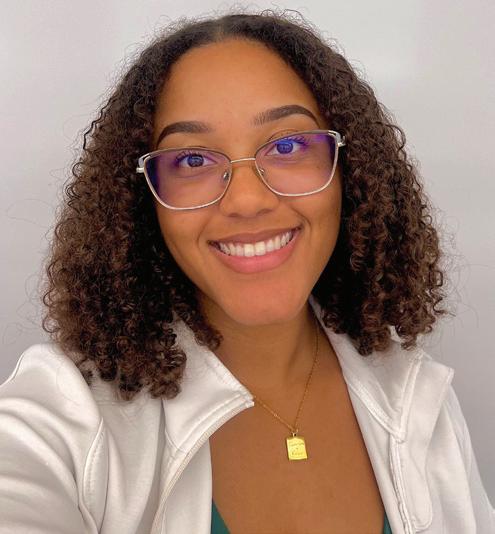
2020s
5 COREE MORGAN (B.S. Psychology, ’21) moved to Texas to be closer to family and started an M.Ed. in Counseling program at the University of Houston. Working as a graduate research assistant in the Department of Curriculum and Instruction, Morgan found her passion for blending research, literacy, youth support and multicultural counseling, and hopes to join a doctoral program focused on qualitative research methodologies in the social sciences or literacy.
Within a year of graduation,
MAKALA SCHNABLEGGER (B.S. Restaurant Management, ’21) was promoted to a garde-manger position with the catering company she had been working for since starting her degree. No longer in the hospitality industry, Schnablegger is looking for an opportunity to return after spending several months in Europe.
CARLOS HERNANDEZ-CARREON (B.S. Industrial Design, ’23) has always loved making things and exploring design creativity, and at MSU Denver he found the
in memory
opportunity to develop those skills and collaborate with people who shared his passion for building, problem-solving and creating. He works for Kimley-Horn, channeling his love for design and teamwork into meaningful projects. Hernandez-Carreon is proud of his perseverance and encourages others to believe in themselves, even when challenges feel insurmountable, you can carve a path forward.
LISA THERIOT (Associate of General Studies, ’23) spends her time with family and friends, traveling and encouraging her grandchildren to focus on school and understand the importance of education for their future.
MONA CEDILLO (B.A. Journalism, ’24) works as an assistant in Library Services at Mohave College’s Bullhead City Campus and recently decided to pursue a master’s degree in Library Services.
JOSH WAGLEY (B.S. Mechanical Engineering Technology, ’24) began working as a product engineer supporting Class 8 cryogenic gas storage and transportation delivery trucks and bought a house in the year after graduating. Wagley says returning to school in his late 20s was the best decision of his life.
Faculty, staff and MSU Denver community members
FRANK DAY, a pioneering Colorado restaurateur whose generous support of Metropolitan State University of Denver will help shape the state’s hospitality and health care industries for generations, died Aug. 13 at age 93.
Born in Colorado but raised in Chicago, Day started a series of hot dog stands and doughnut shops in the Midwest before returning to his home state in 1970. Over more than five decades, he became a hospitality stalwart, founding Concept Restaurants and operating more than 80 properties, including nationally recognized brands such as Rock Bottom Brewery and Old Chicago Pizza & Taproom. He also restored historic properties such as the Hotel Boulderado and Table Mountain Inn, cementing his reputation as one of Colorado’s most visionary hospitality leaders.
In 2024, Day and his wife, Gina, pledged a transformative $10 million gift to support the Gina and Frank Day Health Institute at MSU Denver. The largest philanthropic contribution ever made to the University will help fund the construction of a new five-story health education facility on campus, advancing interprofessional education for the next generation of health care professionals.
The Days’ philanthropy built on earlier support for
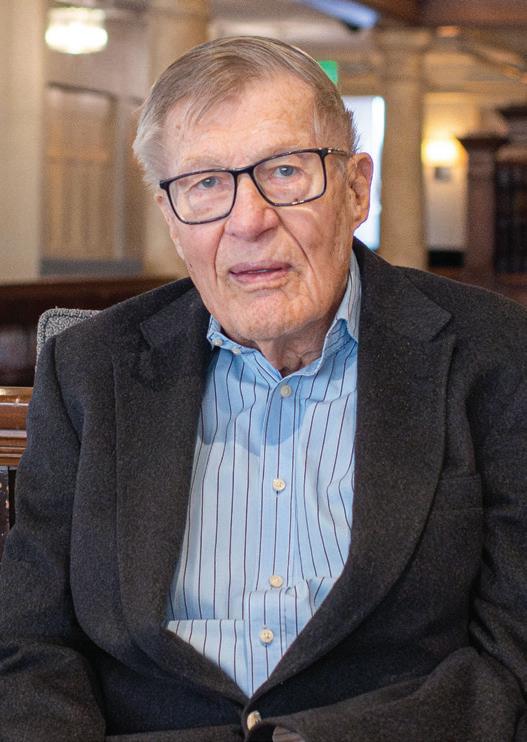
MSU Denver’s School of Hospitality, where a $1.5 million gift in 2019 created the Day Leadership Academy and a new Hospitality Industry Leadership major. Lynn Minnaert, Ph.D., dean of the MSU Denver School of Hospitality, remembered Frank Day as “an industry giant who had a profound impact on MSU Denver students.”
“He was a visionary leader whose wit, candor and sharp insights were legendary,” she said. “He had a passion for nurturing emerging talent, and we will continue his legacy in the Day Leadership Academy, which provides pathways for success in an industry he held so dear.”
Former MSU Denver Philosophy professor and chair TIMOTHY GOULD, PH.D., died July 24 at age 77. After
Frank Day
Coree Morgan
Todd Matuszewicz
in memory
graduating from high school at 16, Gould earned bachelor’s and doctoral degrees in Philosophy at Harvard University. He lived a life devoted to philosophy, literature and family, and in service to social justice.
Gould enjoyed a distinguished career as a philosophy professor, teaching for over 40 years at institutions that include Middlebury College, UC Santa Barbara and MSU Denver, where he led the local branch of the American Federation of Teachers. He was also an active member of the American Philosophical Society and the American Society for Aesthetics for 50 years. Gould wrote extensively on philosophy, film and literature, and was a strong supporter of feminism in philosophy and aesthetics.
A gifted conversationalist with a remarkable sense of humor, he had many interests outside of academia, including a love of books and films. Gould leaves behind a legacy of intellectual contributions and warmth that lives on through generations of scholars, students and family.
Former MSU Denver professor, longtime scholar and advocate for preparing teachers to meet the needs of young children, ORALIE MCAFEE, ED.D. died Sept. 27 at age 97. McAfee taught at MSU Denver from 1975 to 1989. She served on the team that created “Sesame Street” and led teacher trainings for Head Start. During her career, McAfee wrote prolifically about early childhood education, publishing books, professional journal articles and newspaper columns. Her first book, “The New
Nursery School,” holds an important place in the history of early childhood curriculum. Published when Head Start was still in its infancy, it helped shift preschool programs away from passive play and narrow “readiness” drills toward intentionally designed environments that promoted children’s autonomy, social-emotional development, concept formation, and linguistic and cognitive growth.
Born in Jones, Oklahoma, McAfee attended Oklahoma A&M, earning her bachelor’s degree in English in 1950. She held a master’s degree from Colorado State College and earned her doctorate from the University of Colorado. McAfee’s husband, John A. McAfee, died in 2002. She is survived by her three children, four grandchildren and two great-grandchildren.
JON PLACHY, PH.D., professor emeritus and former chair of the Department of Mathematics, died Nov. 9 at age 92. Born in Barranquilla, Colombia, he earned a bachelor’s degree in Mathematics from Adams State University, a master’s degree in Mathematics from Louisiana State University and a Ph.D. from Oklahoma State University. Plachy served as a specialist 4 in the U.S. Army, studying at the Army Language School at the Presidio of Monterey in California. During the Cold War, he worked as a German translator for the Army Security Agency in Frankfurt, Germany. Plachy married Sondra Jo Self in 1962 and moved to Denver in 1965, joining Metropolitan State College as
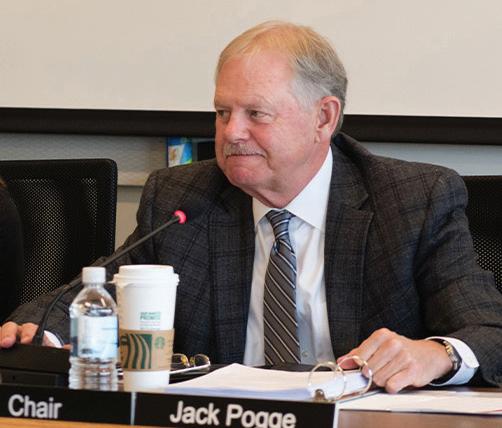
a Mathematics professor. He helped establish the University’s intercollegiate athletic program, coaching basketball and tennis for several years. After 37 years of service, Plachy retired in 2002 as professor emeritus of Mathematics and Computer Science.
Former MSU Denver Board of Trustees Chair JACK POGGE died Aug. 30 at age 72. Pogge served on the University’s governing board from 2012 to 2019, a period of growth and transformation that included bringing President Janine Davidson, Ph.D., to the University in 2017.
Born in Council Bluffs, Iowa, Pogge earned a bachelor’s degree in Finance from the University of Houston and a Juris Doctor degree from Creighton University School of Law. Admitted to both the Nebraska and Iowa bars, he held leadership roles with USWEST and Applied Communications Inc. In 1997, Pogge became president and chief operating officer of CSG Systems International Inc., a position he held until his retirement in 2004. During retirement, Pogge focused on promoting youth and education, including through his service to
MSU Denver. Pogge treasured his family and friends, and embraced the simple joys of golfing, hunting, fishing, traveling, watching sports, sharing laughter and Glenlivet.
VINCENT ORLANDO, PH.D., former MSU Denver professor and award-winning chair of the former Reading and Teaching Education departments, died Dec. 18 at the age of 77. Orlando taught at MSU Denver from 1979 until 2003. He served as president of the College Reading and Learning Association in 1996–97 and was a member of the MSU Denver Athletic Hall of Fame Committee. He received the MSU Denver Distinguished Service Award in 1995 and a Special Recognition Award from the College Reading and Learning Association in 1993. An avid outdoorsman and traveler, Orlando enjoyed mountain trips with MSU Denver students, leading hikes and 14er summits as a mentor to the basketball team. He guided an MSU Denver archaeological dig in northern Peru in the early 2000s and taught English classes to college students to teach in China, which he visited twice during his University tenure.
Born in Carbondale, Pennsylvania, on Jan. 25, 1948, Orlando grew up in the nearby town of Mayfield. After graduating from St. Rose High School, he earned a Bachelor of Science from the University of Scranton, a Master of Education from Bloomsburg State College and
Jack Pogge
a Doctor of Philosophy from Pennsylvania State University.
He is survived by his wife, Viola Catherine Raveczky, and a son, a brother and sisterin-law, a niece, a nephew, two step-daughters and three step-grandchildren.
Alumni & Students
1970s
GORDON MOORE (B.S. Law Enforcement, ’73)
SUSAN POOR (B.S. Business, ’73)
BRUCE HEDQUIST (B.S. Mathematics, ’74)
RALPH FREEHLING (B.S. Business Management, ’75)
BRUCE STROM (B.S. Biology, ’76)
EARL AYLESWORTH (B.S. Electrical Engineering Technology, ’77)
PHILLIP McCLEAN (B.S. Biology, ’77)
VICTOR MINNOTTE II (B.S. Law Enforcement, ’77)
JAMES JOHNSON (B.S. Psychology, ’79)
1980s
SUANNE PARRO (B.S. Accounting, ’80)
LINDA ROOK (B.S. Law Enforcement, ’80)
LOIS DEYO (B.A. Elementary Education, ’81)
JUANITA GALLEGOS (B.A. Elementary Education, ’81)
DENNIS NIELSEN (B.S. Accounting, ’82)
CURTIS BROWN (B.S. Accounting, ’83)
DARRYL SEARUGGS (B.S. Meteorology, ’84)
KAREN SHANDER (B.S. Health Care Management, ’84)
GREGORY BLOOMFIELD (B.A. Contract, ’85)
ROBERT ROBERSON (B.S. Recreation, ’86)
MARGARET MCCASKILL (B.A. Early Childhood Education, ’87)
SUE MORROW (B.S. Accounting, ’88)
SARA CAHILL (B.S. Social Welfare, ’89)
1990s
MICHELE BLUMENSCHEIN-WING (B.S. Chemistry, ’92)
JULIE RUBIN (B.A. Speech Communication, ’93)
SUSAN BRUNNER (Computer Information System and Management Sciences, ’98)
2000s
DAVID MARTIN (B.A. Individualized Degree Program, ’07)
2010s
RALONDA SIMMONS (B.A. English, ’14)
DANIEL DUANE STRAWN (B.S. Aerospace Systems Engineering, ’14)
SHADOW APPLEHANS (B.S. Human Services, ’17)
JAVIER MARISCAL, JR. (B.S. Computer Information Systems, ’17)
MIRIAM MADRID (B.A. Journalism, ’18)
CHRISTINE POWELL (B.A. History, ’09; M.A. Teaching, ’19)
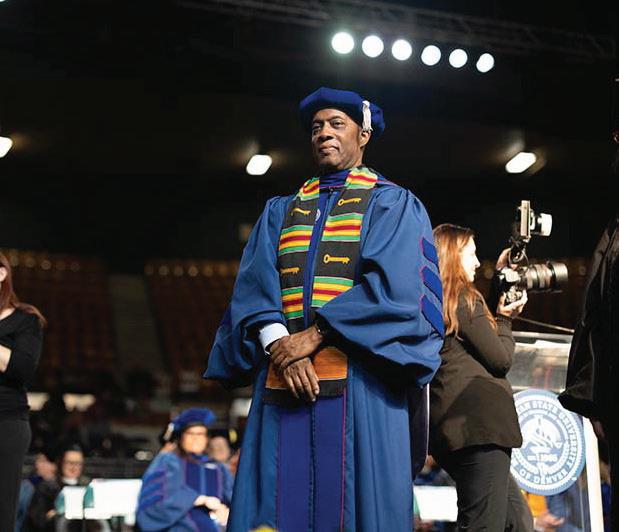
“A
charitable gift annuity allows me to make an immediate impact while experiencing long-term connectivity through a commitment that unfolds over time.” —Russell Noles ’81
C HA NG E M AK ING DOES N’T STOP AT G RA DU AT ION
A gift annuity lets you create reliable income and a lasting legacy, all while helping MSU Denver continue its mission to transform lives through accessible, high-quality education.

roadrunner roosts
DANIEL PITTMAN, Ph.D. Associate professor of Computer Sciences
BY KAREN GARVEY | PHOTO BY AMANDA SCHWENGEL
1 Spiderman.
On a visit to Universal Studios in Florida, Pittman had enough Spidey sense to get an autograph from the late, great Stan Lee and have that framed as part of his Spiderman tribute collage.
2 Lanyards.
From a cybersecurity conference nametag to a VIP pass to a Weird Al concert, Pittman’s collection of lanyard- strung identification badges is a reminder, he said, “of places I’ve been and things I’ve done.”
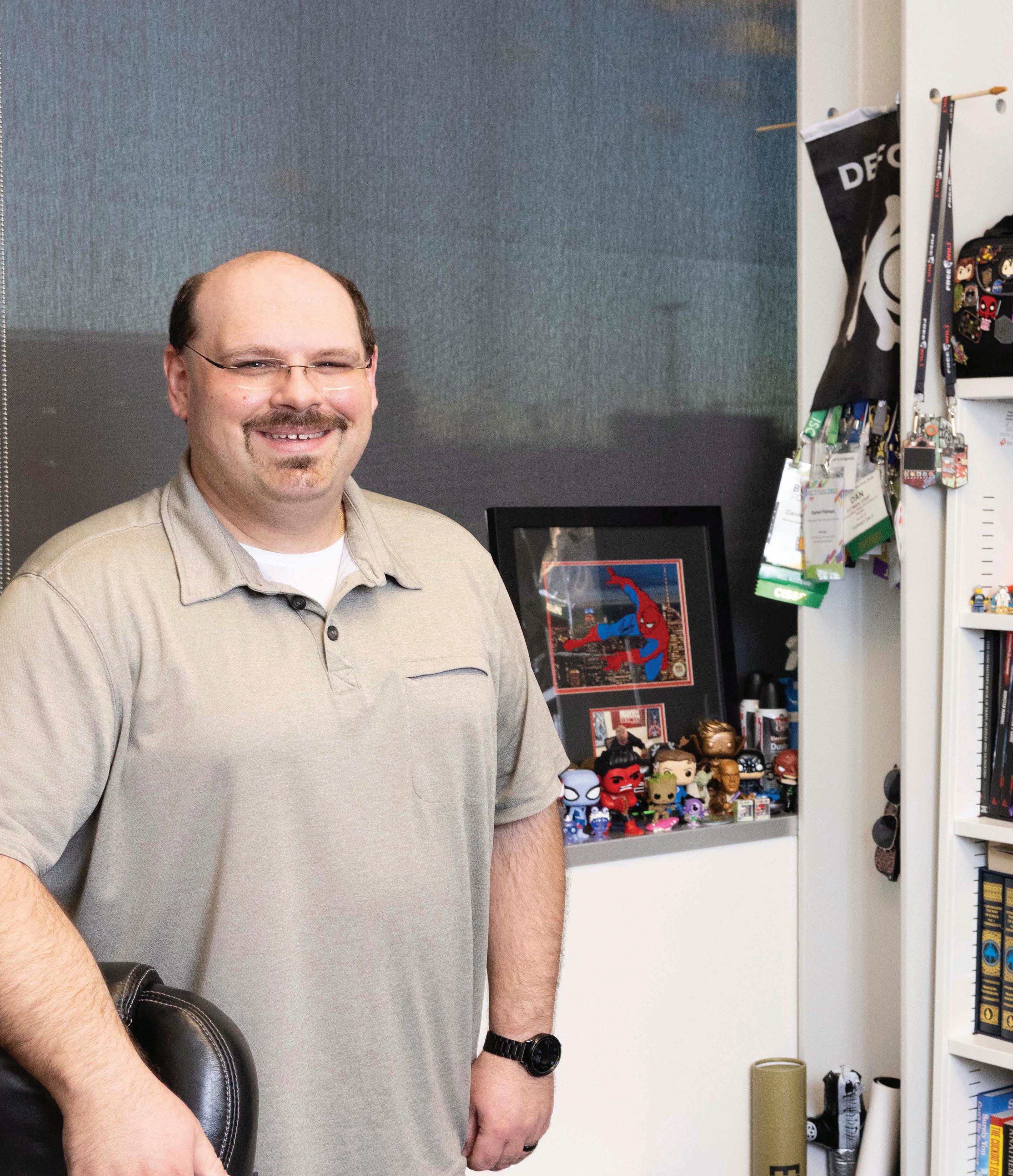
1
2
When Daniel Pittman, Ph.D., associate professor of Computer Sciences, came to MSU Denver in 2022, he had to rent a U-Haul to transfer everything from his previous office to his new one in the Aerospace and Engineering Sciences Building. Then, “It took a month to unbox and organize everything,” Pittman said. His vast collection showcases his interests, from “Star Wars” and sci-fi to enough Funko Pop! collectibles to rival Amazon. It’s all carefully arranged in a small office in which every inch is seemingly covered yet still manages to be tidy and welcoming. Maybe that’s thanks to the color-changing lights surrounding his desk.
3 Dungeons and Dragons books. Pittman credits his love of the famously nerdy pastime with launching his academic career. As they played one night, his former Ph.D. advisor suggested he apply for a faculty opening at his alma mater. And the rest is academic history.
4 Fantasy books. Pittman discovered fantasy and sci-fi as an undergraduate. He recalled reading “The Annotated Chronicles” at lunch between classes, thinking that was cool. Now, he hopes his collection will inspire more young readers.
3 5 4
5 Magic cards. As a young software engineer — a career of 15 years — Pittman lived in Washington, D.C., with colleagues. “We were single nerdy guys making a lot of money, which we spent on video games and Magic cards,” and devoted countless hours to playing both.
6 Candy canes. He saw them in a Five Below one day and grabbed them. “I think I just liked the colors,” he said.

Freekeh Pilaf with Roasted Carrots
Recipe from chef Anders Benson, featured in the “Let Them Cook” cookbook by the School of Hospitality at MSU Denver

INGREDIENTS
• 3-4 tbsp. olive oil
• ¼ cup finely chopped onion
• 1 cup freekeh grain
• 2 bay leaves
• 2½ cups water or stock
• 4 large carrots
• ¼ cup minced parsley leaves
• 3 tbsp. lemon juice, fresh
• 1 tsp. salt and pepper (more to taste)
DIRECTIONS
1. Preheat oven to 375°F. Peel and slice carrots into desired shapes (¼-inch oblique slices look nice) and dress with oil, salt and pepper. Place the carrots on a sheet pan with parchment and roast until browning and tender, about 15-20 minutes. Hold warm or store in the fridge and reheat for service.
2. Wash the dry freekeh under cold running water to remove dust and debris. In a medium pot over medium-low heat, use the olive oil to sweat the onion for 3-5 minutes. Add the freekeh and stir for about 30 seconds; add the bay leaf, a pinch of salt and water/stock and cover. Set to a gentle simmer until the liquid has been fully absorbed and the freekeh is just tender.
3. Pull from the heat and carefully mix in the minced herbs, lemon juice and any more salt to taste. Serve at room temp or store in the fridge and reheat for service.
4. Serve a portion of freekeh, topped with carrots and a protein of choice; any protein will work, ideally seasoned with Mediterranean spices.
Download the School of Hospitality’s cookbook, compiled for the University’s 60th anniversary.

ANDERS BENSON
Benson’s freekeh pilaf with roasted carrots is pictured here, topped with a salmon recipe by Jackson Lamb. Both are featured in the cookbook.
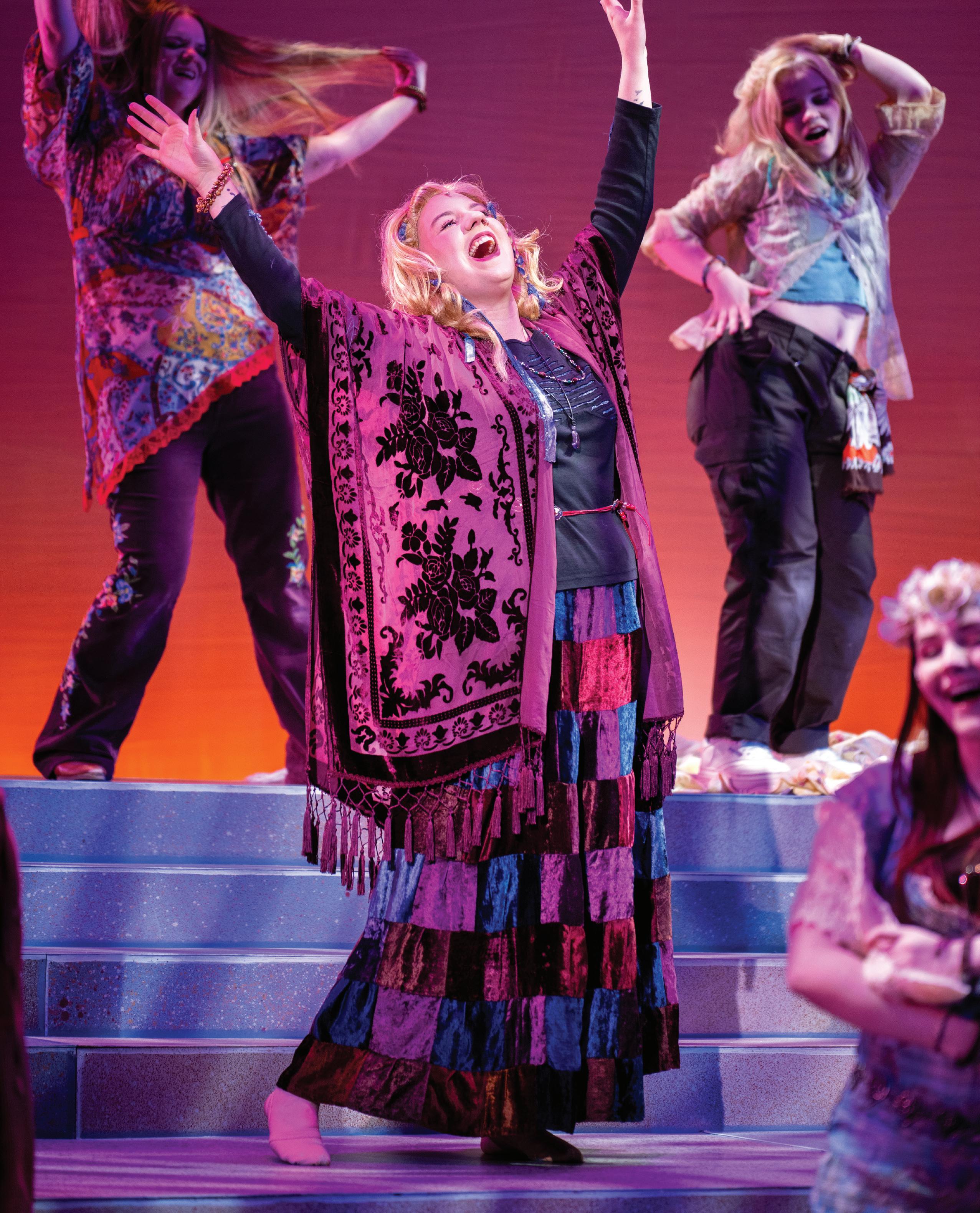
MSU Denver student Josie Furst (center) performs in the Department of Theatre and Dance’s spring production of “Hair,” an American tribal love rock musical celebrating ’60s counterculture.