Newsletter V56 I4 In this issue: 2024 Conference Information President’s Message President-elect’s Note Professional Development Opportunities Teaching Tips
MSTA
It’s time to get the paperwork together for the MSTA 2024 conference. Go to our website to find all the information you will need. https://www.msscienceteachers.org/
Also, consider being a presenter. You have the skills to share that may inspire your peers! According to evaluations, we are looking for presenters in the areas of Special Education, Elementary Science, and Testing. This could be you! Please remember, presenters must register for the conference.

Calling all exhibitors!
If your nonprofit or commercial organization would like to be an exhibitor at our Fall Conference, be sure to fill out the Exhibitor Form:
https://forms.gle/8msbxg2Dd3HzxVS27
Deadline for exhibitors to register is September 23, 2024.
As always, we thank the sponsors! Below are the last conference’s sponsors. Encourage a local business to become as sponsor of the 2024 MSTA Conference.

“Rooted in Science” has been chosen for the theme of the 2024 MSTA Fall Conference. Our Keynote Speaker will be NSTA President-Elect, Dr. Alicia Conerly. Dr. Conerly is a Mississippi native and has presented at MSTA for many years. There will be a few changes this year in the arrangement of the conference. We look forward to sharing this with you at a later date. You may begin registering for the conference NOW through the MSTA website. You may want to share this information with your districts before federal funds are allocated for the 20242025 school year.
We need to talk about the 2023 Fall Conference. Based on the 2023 Fall Conference Survey, overall, the majority of the attendees were very happy with the conference. However, if the survey were to be conducted today, the results might be very different due to the way that CEUs were handled. Let’s address the elephant at the conference. CEUs were not handled appropriately. I cannot go into all of the details that led to these problems but please know that we too were kept in the dark and it was only after the Facebook posts started that the MSTA Board learned of the problems and that CEUs had not been received. Apologies can be offered, but that doesn’t solve the problems that arose. I can only say that MSTA regrets these problems. A committee has been formed to find a better way to award CEUs.
A decision will be made this summer as to what entity will be responsible for awarding CEUs and how and what you will need to do in order to earn those CEUs. Your Facebook remarks concerning switching attendance to an NSTA conference is understandable. However, by the time you factor in travel costs, hotel costs, and conference costs, you are looking at a more expensive conference than the MSTA Conference. The MSTA conference is a better value for you and your school districts.
We also read your comments concerning the program. We realize that our program needs work. Our presenters are strictly volunteers and also pay to attend the conference. We cannot afford to pay presenters, so we are limited to those who are willing to present. We would love to find presenters that can address topics such as Special Education, Elementary Science, and Testing. If you or someone you know are qualified in these areas, please invite them to share at the conference. We strive to meet the needs of the Conference Attendees. We welcome your suggestions at all times. MSTA can only be as strong as our members. You are a vital part of our professional organization. We need you! We hope that we can build into a stronger alliance of those who love science.
I recently was privileged to judge some amazing science fair projects. I was so impressed with some of the great projects and processes that these young minds worked on. Let me tell you about one amazing project. A group of young ladies worked together to test out characteristics of quesadillas. They used several brands of cheese to make their samples and then ranked their samples on stretchability, taste, and meltability. It was one of those projects where you can tell that there was very little interference from adults and the children had a lot of fun. Of particular note, I saw that the many samples were rated in taste on a scale of 0 to 5 and , noticeably, each type of quesadilla had a very high score. Not one of the samples had a score lower than 4. I asked one young lady if she noticed that her data was not spread out or that the data was strongly grouped together on one end of her scale. I pointed out that everything was ranked 4 or higher. The young lady smiled and gave a memorable response as she said, “We just really love Quesadillas”. The project was simple.
As a science enthusiast, here are some reasons why I think this was a great project:
These kids felt like the science fair was a safe place to try a silly idea. They were not terrified by any scary judges. They were not worried about getting a bad grade. The event was friendly enough for them to keep the quesadillas on the menu.
They had fun! The presentation was cheerful, and they wanted to tell me about all the work they had to put in to get the samples prepared. I hope all children think of science as being this fun.
They gathered data. This was not filling out a worksheet and answering questions. This was not a lab that the kids tried to rush through just to get finished. This was taking measurements of length and discussions of what other measurements are appropriate for this queso-filled goodness. They discussed different ways to describe how well you could pull the samples apart and what was considered ideal attributes of “pullability”. I have seen some great science projects over the years as I’ve judged the science fair, but I’ve never seen more cheerful scientists as this group of queso conquerors. As these young ladies progress through school, I hope they keep their enthusiasm for learning. There is nothing more powerful than a positive attitude about learning.
Science teachers, keep up the good work. Thank you for inspiring the next generation of problem-solvers and quesadilla creators.
Cheerfully,
Carl
For the elementary classroom, the arrival of spring brings both the eagerly anticipated (outdoor recess), and the annually dreaded (MAAP test review). Often test preparation is monotonous and boring, but there are ways teachers can make test prep more fun and engaging. Much of my MAAP test review centers around task cards.
I make task cards using released test items, as well as items of my own. I color-code these by content strand, printing questions from each strand on different colored paper, then keep the cards in clear pencil boxes so they can be easily identified. Be sure to include a card with the answer key for self-checking. Here are some ideas of how the task cards can be used:
1. ¨Scoot¨ and ¨Shoot¨: You may have played Scoot, a game in which a task card is placed on each desk, and on a signal, students move from seat to seat, answering questions. The ¨Shoot¨ portion holds students more accountable for their answers. After all the questions have been worked, I call on a student to check the answer to a certain question. If the student is correct, he or she gets the opportunity to take a basketball shot from a one-, two-, or three-point line. If the student misses, I get an opportunity to take a shot. Keep score of the teacher versus the class. If the class wins, they receive a small reward. I keep a small toddler basketball goal in my room for this game, but a trashcan will work!
2. Board Games: Set up any board games you may have, Jenga, Connect 4, KerPlunk, for example. Students work in pairs using the task cards. To make a move in the game, the student must answer the question correctly.
3. Scavenger Hunt: Hide the task cards throughout the room and provide a blank answer sheet. Students work with partners to find and answer the questions. For Easter, this activity can be done as an egg hunt.
4. Down the Line: Divide students into two groups and line them up facing each other. Give each student in Line 1 a task card. Students in Line 2 answer the question and then move down the line to the next student with a question in Line 1.
5. Switch Roles: Let students ask you questions from the task cards. Model your thinking aloud while answering. Students enjoy this role reversal!
Task cards are versatile, easy to differentiate, and much more engaging than a worksheet. I hope you find them easy to integrate into your test review!
The SWAPS group exhibited this year at the MSTA Conference in October 2023 in Biloxi, MS. SWAPS, which is “Sustainability With Awareness and Prevention Solutions,” is a program offered by the Mississippi State University Extension Service. The SWAPS program is a four-module learning series that provides students with a broad understanding of the litter and waste issues facing individuals, schools, and communities, as well as prevention solutions. This program is available at no cost to schools and groups within Mississippi and the gulf states region. The team members will teach a different module each month for four months, or they can teach individual modules and workshops. The team can adapt the content to meet your school or group needs. Each of the modules includes an online component containing pre-recorded presentations, quizzes, and DIY videos. The four modules are: Microplastic and the MS Coastal Watershed, Reducing Food Waste, Eliminating Single-use Plastic, and Getting involved in Litter Prevention and Removal Programs. Each module has hands-on components which include analyzing water samples for microplastics, building vermicomposting bins, and creating alternatives to plastic wraps. Contact e.englebretson@msstate.edu or 413-695-9407 for more information.
If you are thinking about starting a school garden, there are two funding opportunities being offered in Mississippi. The Blue Cross & Blue Shield of Mississippi Foundation is partnering with K-12 schools across the state to provide school gardens for healthy handson learning experiences. The Foundation’s school garden program uses the schoolyard as a classroom fully integrated into the fabric of participating schools and the academic experience of every student. In a school garden, students become farmers, scientists, mathematicians, historians, poets, chefs and horticulturists, making the full l earning experience more relevant and engaging. Learn more about eligibility requirements and start the application process at https://www.healthiermississippi.org/school-gardens under the How to Apply tab. Additionally, the MS Department of Agriculture and Commerce has a Garden Grant. Growing Lunch is a school garden grant program administered through the Mississippi Department of Agriculture and Commerce with the USDA Specialty Crop Block Grant Program. Eligible schools can receive a grant up to $500 to purchase supplies needed to plant a school garden. This program will act as an educational tool to enhance the knowledge of school-aged children on agriculture, healthy eating, and how food arrives on their plate three times a day. As society becomes increasingly further away from agricultural practices and the farm, it remains pertinent to educate students on the origin of their food. All schools, K-12, and pre-schools in the State of Mississippi are eligible to apply. Schools that already have a school garden may apply to further their production. It is encouraged that schools applying have support from their local extension office or Master Gardeners. This program is on a first come, first serve basis. Only one grant can be awarded per school. Schools must fill out the application and have a dedicated coordinator. Schools that have received a Growing Lunch grant from MDAC in the past are not eligible to apply for more funds at this time. According to their website, “funds for the Garden Grant programs have been allocated at this time and MDAC is not currently accepting applications. Please check back in the future”. If you have questions regarding the garden grant programs, please contact Susan Lawrence, 601-213-7542 or Susan@mdac.ms.gov . Hopefully the program will be renewed next year.
The object itself is an improvised electroscope, easily made from materials commonly found in households across the United States. An electroscope is a simple device that has been used for centuries in classrooms and laboratories to demonstrate the nature of static electricity. As ionizing radiation dispels static electricity, a properly constructed electroscope can be used to measure this radiation. Ionizing radiation is the type that you may find emanating from an X-Ray machine, or emitting from sources used in nuclear energy, such as uranium.
When properly constructed and used in the right conditions, the KFM has proven time and time again to function well and can be made by unskilled persons of nearly any age in a matter of hours using common materials such as aluminum cans, fishing line, aluminum foil, and other easily obtainable objects. As the design of the KFM was funded by the federal government, the plans for the object have been in the public domain since 1978, removing any restrictions that may exist with other projects and designs of interest to educators.
The object itself has seen classroom usage in the past. Dr. Paul S. Lombardi, who later made his own design modifications to the device, used the KFM while teaching at a Utah high school in the early 2000s to educate his students on the nature of ionizing radiation. He even authored a teacher's guide on the topic for other educators who may want to pursue the matter. While his site has since gone down, his work can still be accessed via the Internet Archive's Wayback Machine.
While sources of ionizing radiation may not be something that is available to educators to demonstrate the KFM, easily obtainable and far safer ultraviolet light dispels static electricity as well and can be used as a substitute to show students how the KFM may work.
The KFM is not only a time efficient, fascinating, and cost-effective way to show students a unique scientific topic, but it also offers educators an opportunity to show students a unique time in American history that necessitated the development of objects like this and others.
While the original 1978 plans for the KFM are easy to find, there have been subsequent developments on the topic such as updates to what newer materials may work best for construction, and at least one scientific study on the topic. I have amassed a small collection of KFM-related materials, so if any educator is interested in researching this matter further, feel free to contact me at any time, and I will be more than happy to help.
Thank you very much for your time.
-Thomas Peterson thomas.albert.peterson@gmail.com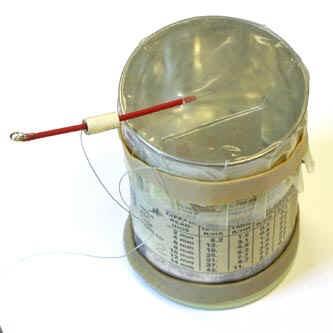
(https://creativeeducator.tech4learning.com/2016/articles/passion-projects)
“Every great teacher wants their students to find joy in the learning process. How do we as educators provide students an environment to discover who they are, help them unlock the passions they hold, and guide their journey of self-discovery while also teaching our mandated curriculum? The answer is simpler than you might imagine: provide time for students to explore their passions.”
“If you can’t figure out your purpose, figure out your passion. For your passion will lead you right into your purpose.” -- Bishop T. D. Jakes
“Last year, a first grade teacher and I decided to jump in and try “Passion Projects” to help her students find joy by exploring topics that intrigued them. We mapped out a reasonable timeline to ensure we still had time for the required curriculum. We made sure we set reasonable expectations and planned for explicit time to help students narrow down the scope of their project. Since Passion Projects would be completed during the school day, we worked to anticipate any challenges, such as non-readers doing research, and plan for support before we began. While we wanted students to show their learning in whichever ways they found most effective, we quickly discovered that six- and seven-year-olds need a bit more structure than older students. Since this was the first “project” many students had every attempted, we decided all students would make a multimedia project using Pixie, a software program installed on every computer which many students had used before. Each child would research their passion and use Pixie to create a digital background image, complete with voice narration, to share their learning. Once our planning was done, it was set our students loose on their Passion Projects! Following are the five steps we used to guide our students’ work.”
Interested? Follow the link above for more information!
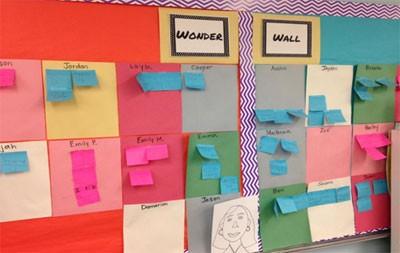 Image from https://creative educator.tech4learning.com
Grenada School District launched Balloon Quest in February 2023 and has hosted several public, private, and home school groups at its hands-on, science-based, escape-roomstyle museum focusing on science standards in K-8.
Balloon Quest welcomes visitors in grades two through eight from any school to experience the fun. Contact museum director Tammie Cavanaugh at balloonquest2022@gmail.com to schedule a field trip.
The museum is FREE to all and made available by reservation. For more details on Balloon Quest, go to https://www.grenadak12.com/programs/balloon-quest.

MSTA offers the R.C. Roberts Grant for teachers interested in developing outdoor classrooms, nature centers, or nature trails at their schools. Maximum funding that can be obtained by one teacher from one school at a particular time is $100. Applications for funding must show that additional funds from sources other than R. C. Roberts have been obtained to support the proposed project. This may be “in kind” support as well as monetary. Individuals who receive support from the R. C. Roberts Funds may apply for additional funding provided a period of three years has elapsed since the original funding was granted. Guidelines for the R. C. Roberts Fund Individuals interested in applying for funding should get an application form the Newsletter or request an application form from the Executive Officer or President of the Mississippi Science Teaching Association. The completed application must be attached to the proposal and returned to the Executive Officer. The Executive Officer will assemble a committee of at least three individuals involved in science education who will examine the proposal and recommend funding status. The decision of the review committee to fund or reject the proposal is final. The R. C. Roberts Fund was initiated to honor Mr. Roberts, a long-time science supervisor in the Mississippi Department of Education.

Are you ready to elevate your STEM teaching skills to the next level? Join us for the PLUTO-STEM program at Jackson State University, where you'll engage in innovative professional development designed to enhance your science teaching practices.
As a participant, you'll benefit from:
• Two weeks of immersive training on campus
• Five Saturdays of professional development throughout the school year
• Cutting-edge STEM resources and tools
• Collaborative learning with fellow educators
• Ongoing support and mentorship
• 10 CEUs
• Stipend
Apply now to secure your spot and take your STEM teaching to new heights! #PLUTOSTEM #STEMeducation #TeacherPD
More information can be found here
https://sites.google.com/jsums.edu/pluto-stem/events/pluto-stem-coho rt-2