Welcome to our Spring/Summer edition of Intouch magazine.
It has been another busy year for MS Plus.
As we look to 2026, I am excited about all the possibilities for growth and change that will help us to remain a strong source of support for our MS community. We released our Strategic Directions 2025–2027 a few months ago, a strategy which will enable us to advance and continue the delivery of life-changing services, and fund critical MS research into a cure. In recent years we have delivered new wellbeing centres, accommodation facilities and services, and expanded our service reach to support people living with other neurological conditions while growing our presence in the aged care space.
Over the next three years, we’ll focus on three strategic pillars: Leveraging our Foundations ensuring financial sustainability, improving the way we work, and strengthening our learning culture.
Increasing our Impact consolidating and integrating our services so you our clients experience real results at every stage of life.
Activating our Community connecting with more people, partners and supporters to extend our reach and strengthen our value.
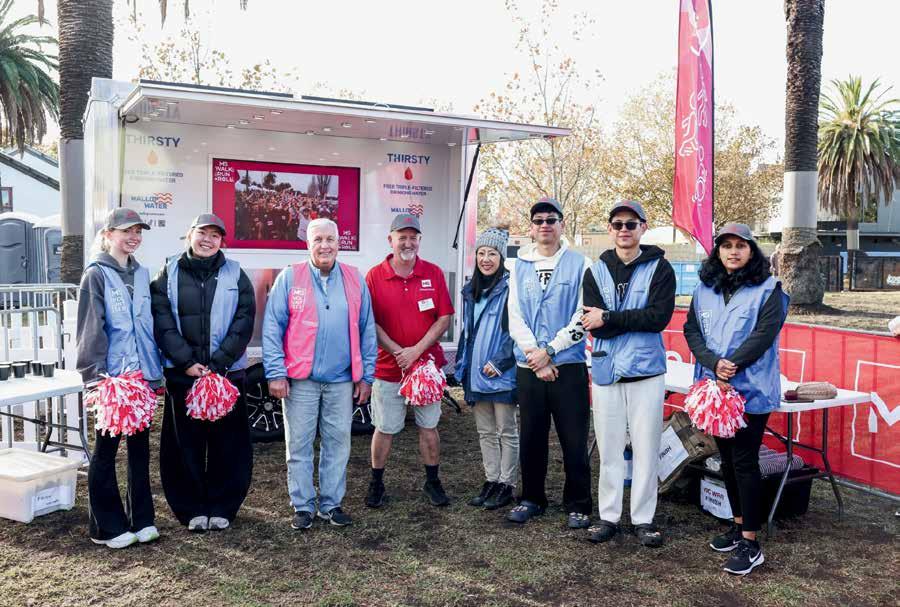
Of course, one way we continue to provide vital services and supports to our MS community, as well as helping to fund research, is through our fundraising and events. Our flagship event, the MS Gong Ride, was held on Sunday 3 November and we were fortunate to have another beautiful day to run what was one of our strongest events since the pandemic — raising an incredible $1.25 million. My sincere thanks to all involved in making this day such a success.
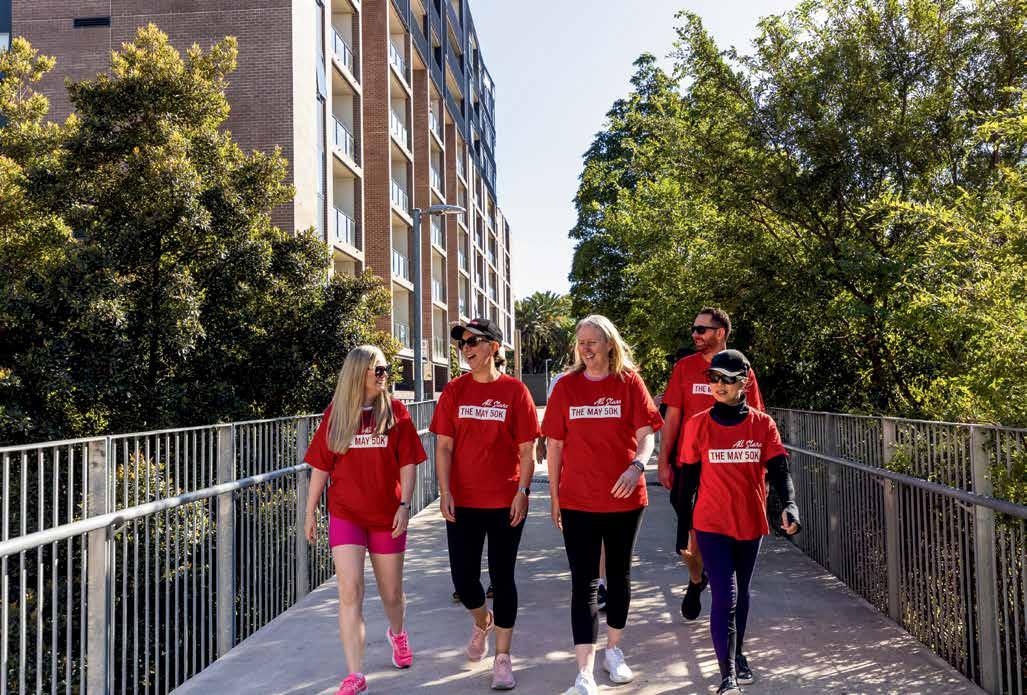
Our Walk, Run + Roll events will also be back again in 2026, across Sydney, Melbourne, Canberra, as well as our ongoing MS Mega Challenge events. Whether you are joining in with family and friends or cheering on someone who is, we are grateful for your incredible support. To get involved visit msplus.org.au/events
On behalf of everyone at MS Plus I wish you all a safe and happy holiday season.
Disclaimer: Information and articles contained in Intouch are intended to provide useful and accurate information of a general nature for the reader but are not intended to be a substitute for legal or medical advice. MS Plus is not recommending medical or legal advice and readers must seek their own as may be appropriate.
Advertising disclaimer: MS Plus does not endorse any one product or service over another, nor do we receive any commission on sale of items. Consumers are encouraged to discuss the options for exchange or return at the time of purchase with a specific supplier because MS Plus is not liable in the event the product is not satisfactory.
Publisher: MS Plus
ABN: 66 004 942 287
Editor: Sarah Pye
Advertising enquiries: intouch@msplus.org.au
Privacy policy: msplus.org.au/privacy
ISSN: 1833-8941
ACT
117 Denison Street, Deakin ACT 2600
NSW
80 Betty Cuthbert Drive, Lidcombe NSW 2141
TAS
246 Murray Street, Hobart 7000
VIC
54 Railway Road, Blackburn VIC 3130
Plus Connect: 1800 042 138 (free call) 8:00am – 5:00pm
If you need an interpreter, you can call the Telephone Interpreter Service (TIS) on 131
or visit tisnational.gov.au
from MS Plus Dietitian Julie Orr
Living with a neurological condition means every healthy habit counts – including what’s on your plate. Calcium helps build and maintain strong bones that support better balance, strength and mobility. Calcium is also an essential mineral that aids in the health and functioning of nerves. Adults aged 19–50 need on average 1,000mg per day, this increases to 1,200–1,300mg per day for over 50s.
Try adding these calcium-rich foods to your daily routine: milk or calcium enriched plant milk
cheese
yogurt
fortified cereals
tofu
sardines
rye or wholegrain bread
broccoli, spinach, kale, fennel mineral water
nuts
fish with edible bones such as sardines and tinned salmon.
Want to learn more diet and nutrition-related tips? Book an appointment with MS Plus Dietitian Julie today!
Phone 1800 042 138 or email connect@msplus.org.au
“When I’m home, it’s always playing on my wife’s mind whether I’m safe, so when she found Lidcombe Home respite, it was a no brainer.”
Learning that Lidcombe Home exists was a huge weight off the shoulders of Nathan’s loved ones.
“My wife discovered it because she needed to go away with the kids, and I can’t fly. She did the homework and tried to find a place that I could come to. When I’m staying home, it’s always playing on my wife’s mind wondering if I am safe, so when she found Lidcombe Home and knew I was going to be safe here, it was a no brainer.”
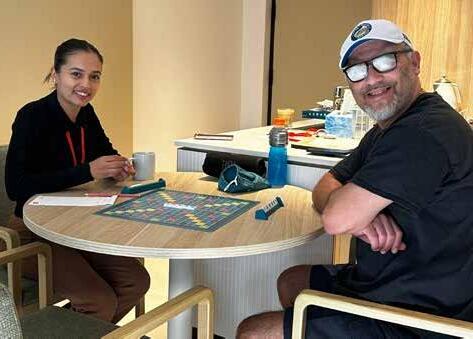
Nathan, recently spent five weeks at MS Plus’ brand new, hotel-style supported independent living facility in Sydney’s west, close to public transport and Westfield Parramatta.
“It’s been a fantastic experience – the facility, the staff and having easy access to MS physios and other professionals has been really good,” he says.
Lidcombe Home, which provides short-term respite and longerterm living, features fully furnished
“It’s been a fantastic experience – the facility, the staff and having easy access to MS physios and other professionals has been really good”
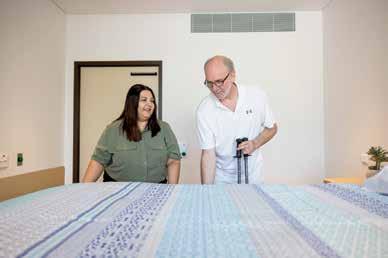
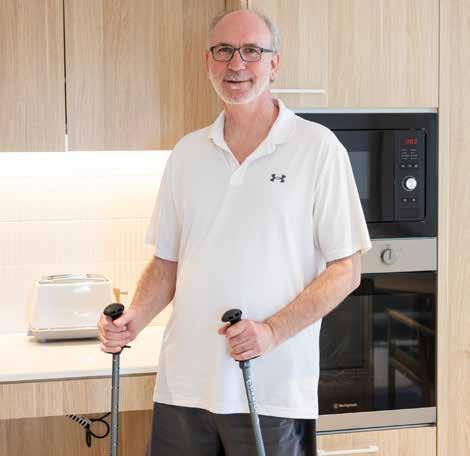
The facility has been built with accessibility as the priority, with features including accessible beds and height-adjustable kitchen workbenches. Each apartment has an ensuite and a separate bathroom for guests.
“All of the doors are automatic and there’s no handles, which is really good for somebody like me who has low fine motor skills,” says Nathan.
“It’s a beautiful place, it has been great having a fully equipped kitchen with a dishwasher and oven, air-conditioning and an intercom buzzer system, it’s super modern.”
Nathan has previously engaged with MS Plus’ peer support groups and has found his experience connecting with others who have MS beneficial to his own journey.
“I meet with a few other guys online once a month and have gotten to know them, which has been really helpful. I actually met one of the people here, because she works here, and I was so happy to put a face to a name.
apartments and is staffed seven days a week including overnight.
Located next door to the Lidcombe Wellbeing Centre, residents have easy access to its therapy areas, gym, sensory garden and specialist services, including physiotherapy, occupational therapy, employment support NDIS support coordination and plan management.
“I’ve been able to do a lot of physio since I’ve been here, and all of the staff from the cleaners that come in and keep the place clean all the time to the managers look out for you and are there when you need them,” says Nathan.
“I’m a very positive person and I always say, ‘I have MS, MS doesn’t have me’. I will do everything I can until the day I can’t, and Lidcombe Home has been such a great experience in giving me the support I need while living independently.”
When Nathan thinks about his time at Lidcombe Home, he says with a laugh “the only fault is that I have to leave!”
Lidcombe Home has no waitlists for either respite or long-term accommodation. To enquire, phone 1800 042 138 or email home@msplus.org.au
Q: What resources or support services are available for people with MS in Australia?
A: Your state-based MS organisation is an excellent starting point. In TAS, VIC, NSW, and ACT, it’s MS Plus and other states have their own equivalent. MS Plus offers general information, support, guidance on NDIS, Centrelink, My Aged Care, and health services. We provide peer support, employment assistance, and allied health services, including physiotherapy and dietetics.
Additionally, there are MS peer organisations and online support groups, and the MS community is very supportive, with many willing to share information and help. MS Plus is often mistaken for MS Australia, whose primary goal is to support research and advocacy for people with MS, as well as provide some educational resources, however they are not a service provider.
To chat to a Nurse Advisor phone 1800 042 138 or email connect@msplus.org.au
Understanding depression in MS
Associate Professor Litza Kiropoulos is researching the connections between MS and mental health, and developing targeted treatments to improve the overall wellbeing of people who live with MS.
Q: Are depression and anxiety in MS caused by the disease itself, or are they separate issues?
A: Based on my clinical experience and research, it’s likely a combination of factors. There’s evidence suggesting that depression shares the same underlying inflammatory pathway as MS, so when that inflammatory pathway is activated, mood can also be affected. Some research even suggests that depressive symptoms might be prodromal – meaning they show up before other MS symptoms.
But there’s also the psychological impact to consider. MS often affects people aged between 20 and 40 – which are crucial years for career development and a focus on family. An MS diagnosis can disrupt these major life events, lead to losses, and an impact on a person’s sense of identity – which can have a negative impact on mental health.
Q: Why do people with MS need specialised mental health treatment rather than standard depression therapy?
A: People with MS face a unique constellation of symptoms that seem to interconnect. Depression in MS often occurs alongside changes in mood, anxiety, sleep problems, pain, fatigue, and difficulties with sexual function. These symptoms don’t exist in isolation – they influence each other significantly. What makes this particularly complex is that many MS symptoms overlap with
depressive symptoms. For instance, fatigue, sleep disturbances, and eating problems are symptoms of both depression and MS. For psychological treatment to be truly effective for people with MS, you need to address all these interconnected issues simultaneously, not just focus on mood alone.
Q: Can you tell us about your research findings so far?
A: I received a grant from MS Australia in 2016-17 to conduct the ACTION-MS trial. We developed and tested a tailored cognitive behavioural therapy (CBT) intervention specifically for people newly diagnosed with MS who had mild to moderate depression. This eight-week program didn’t just focus on mood, it also incorporated strategies for managing anxiety, pain, fatigue, and sleep issues. We compared this tailored CBT to a supportive listening intervention and found that our specialised CBT was significantly more effective in reducing depression levels. What’s particularly exciting is that we also saw improvements in cognition – that is, attention and memory improved along with the mood and anxiety symptoms.
Q: What’s next for this research?
A: We’ve since developed ACTIONMS-online, a self-guided version of this therapy that people can access remotely. This will make the treatment much more accessible, especially for people who can’t easily travel to hospital appointments due to fatigue or other MS symptoms. My ultimate goal is to make this type of mental health support part of routine care for everyone newly diagnosed with MS, and to roll it out through MS Plus Wellbeing Centres across Australia and internationally. I’m
also working on developing a structured clinical interview that’s MS-specific, covering all the mental health areas that commonly arise – and how MS interacts with life stages like menopause.
Q: You’re also researching biomarkers of depression in MS. Why is this important?
A: Currently, clinicians rely on questionnaires and clinical interviews to assess depression. These are subjective measures. But biomarkers, which can include specific proteins found in blood and saliva, could provide objective measures to help with diagnosis and track treatment progress. If we can identify patterns of markers of inflammation that correlate with depression in MS, we might be able to say, “when this protein is elevated, there’s a higher likelihood of depression.” This could help with early detection and monitoring treatment effectiveness.
We are currently analysing data collected, which included saliva samples at multiple time points, to see how these biomarkers change in response to psychological treatment.
Q: What’s your ultimate vision for this work?
A: I want to transform how we approach mental health care in MS. People shouldn’t have to suffer in silence. I can’t tell you how many times I’ve heard clients say, “I didn’t realise this was an issue for others,” or “this has been life-changing because now I can manage my fatigue, maintain relationships, even plan for children.”
My ultimate goal is a day when we have evidence-based psychological care that helps people with MS live whole, fulfilling lives. This isn’t just about quality of life, although of course that’s crucial. It also has broader implications for treatment
adherence, healthcare costs, and preventing hospital admissions. Associate Professor Litza Kiropoulos is based at The University of Melbourne and provides clinical psychology services through the Neuroimmunology Centre at Royal Melbourne Hospital. Her research is supported by MS Australia.
Last year, MS Plus was proud to donate almost $2 million to support important MS research. If you or a loved one is struggling help is available. Reach out to Lifeline 24 hours 7 days 13 11 14 or visit healthdirect. gov.au/mental-health-helplines
More information on how you can support vital MS research.
Are you looking for more fatigue management strategies?
Great news! The next FACETS Fatigue Management Program starts February. online
6.30pm–8pm 6-week program
$150 group-based
Specifically designed and tailored for people living with MS. Hurry spots are limited. See page 19 for more information.
Fatigue
Tips from MS Plus Physiotherapist Jack Wong #1 Practice pacing
Break up activities into blocks with scheduled rest periods #2 Time block activities
Spread activities out throughout the day or week
#3 Rest and recover
Get enough restful, uninterrupted sleep to restore your energy
#4 Learn to say no!
It’s okay to prioritise yourself and your health by letting others know you aren’t available.
Find out how a physio can help you to manage your symptoms.
SPOTLIGHT
How do I know when I need to seek help with my bladder and bowel health?
If you have a neurological condition, certain changes in your bladder or bowel function can signal it’s time to see a continence professional. These symptoms can be subtle at first, but early help can make management much easier. You should seek professional advice if you notice any of the following:
Bladder-related signs needing to pass urine more often than usual (day or night)
sudden, strong urges to urinate that are hard to control
leaking urine when you cough, sneeze, laugh, lift, or exercise
difficulty starting urination or a weak stream
feeling your bladder isn’t empty after going pain, burning, or discomfort when urinating blood in the urine.
Bowel-related signs constipation or needing to strain often loose stools or bowel accidents
urgency — needing to rush to the toilet for a bowel motion
feeling that your bowel isn’t completely empty.
Where to get help
MS Plus offers FREE continence support, with appointments available in person, virtually or over the phone.
In person appointments are available at our Wellbeing Centres in: Lidcombe, NSW Blackburn, VIC Footscray, VIC Hobart, TAS and at the Coloplast clinic in Kingston, ACT
This is a FREE service delivered in partnership with Coloplast Australia. To book phone 1800 042 138 or email connect@ msplus.org.au
abdominal bloating or discomfort linked to bowel changes
Other red flags
sudden changes in bladder or bowel habits
frequent urinary tract infections (UTIs)
any new loss of bladder or bowel control.
Just one cup of tea can change someone’s life
Every visit you make can bring light into someone’s life. The Aged Care Volunteer Visitors Scheme, funded by the Australian Government, connects caring individuals with older Australians who would benefit from regular social visits.
Your presence, stories, and simple acts of kindness can help ease loneliness and build meaningful friendships. You don’t need special skills—just a compassionate spirit and a little time to give. To start your volunteer journey visit msplus.org.au/acvvs
“Michelle is full of information – and I soak up her conversation very readily! She helped me big time when I turned 80, with my birthday celebrations. It was a fun day – I floated for about three weeks after that.”
ACVVS recipient, Jacqueline
Benefits of strength training for MS
Are you looking to improve your strength and protect your bones and joints?
Strength training, also known as resistance training, is a great training method that comes with many benefits. It can help to:
Reduce the risk of heart-related conditions. Strength training can assist in managing metabolic health factors such as obesity, diabetes, high blood pressure, and high cholesterol, which are all cardiovascular disease risk factors.
Reduce the risk of osteoporosis. It can assist in improving and maintaining the health of your bones and joints, aiding in greater joint function and mobility.
Aid in managing joint conditions. Strength training can build muscle to support joints which improves joint stability, reduces pain, and enhances range of motion.
Reduce the risk of falls. Not only can it improve your balance but also your coordination which supports in reducing falls risk.
Boost your confidence, self-esteem and mental wellbeing. Strength training can positively impact your mood, and energy levels and is therefore especially beneficial for individuals who live with mental health conditions such as depression and anxiety.
Regardless of what the primary reason for you to start your strength training journey, you will benefit in all aspects of your health with the right program. Find out more.
“To have been on a set career path and doing really well and then have to put the brakes on was so hard.”
Naomi was in her early 20s and just establishing her career as a workplace trainer and facilitator when she was diagnosed with MS in 2005. Although she had experienced years of debilitating fatigue, the diagnosis still came as a shock.
“At some point I just decided that this job wasn’t for me anymore. I loved my work so much but adrenaline is such a huge part of a high-pressure role like training, and afterwards I would feel utterly wiped out for days.”
Naomi spoke with her manager, who agreed to let her take on an administrative role while she worked out her next move.
“It was a big shock because my whole life, it was all I ever aspired to be and I loved it.
“I stepped back into an admin role and that was a big deal for me career wise. To have been on a set career path and doing really well and then have to put the brakes on was so hard. Then there was that feeling of not knowing how to do things and having to learn things over again, and of not being what I always wanted to be.”
Reaching out for support
Naomi first learned about the MS Plus Employment Support Service (ESS) while waiting for an appointment with her neurologist. A fellow patient encouraged her to reach out for support, leading her to connect with Jeff, dedicated support worker and Occupational Therapist at MS Plus.
“Working with ESS has been amazing,” Naomi shares. “Jeff is someone who understands my challenges but doesn’t have MS himself. He holds me accountable for managing my energy and time, which has been crucial for my success.”
“I had reached a point where I just wasn’t coping with life,” Naomi recalls. “I had to rebuild and do something different. I had no aspirations of being a manager or CEO at the time, I just wanted to train.”
Through her collaboration with Jeff, Naomi gained the confidence to navigate her career path.
“Sometimes I’ll say to Jeff, ‘I’m not good enough’ or ‘I’m not this or that, I’m not performing at work, I can’t do this’, and Jeff will calmly say, ‘that’s not an MS thing, that’s an everyone thing’
“Because it’s easy when you have MS to blame everything going on in your life on your condition and Jeff is great at reminding me when, sometimes, that’s just life,” Naomi says.
A new challenge
Naomi’s hard work and determination paid off with a recent promotion to CEO where she oversees a new subsidiary, reporting directly to the Board and managing a large team.
“Running the company is a big
job, but it has been so exciting and rewarding,” she says.
“I was lucky enough when I was first diagnosed to work for a company that allowed me to step sideways into an administration role.
“From there I could build up to managing a team and so on – and my confidence grew as I took on new responsibilities that better fit around my symptoms.”
Reflecting on her journey, Naomi acknowledges that her experience with MS has shaped her into the leader she is today.
“Interestingly, it was MS that got me here. I might still be facilitating if it weren’t for my diagnosis,” she admits. “I was forced to step out of my comfort zone, and that led to incredible growth.”
Did you know
91 per cent of people who accessed our Employment Support Service secured employment within 3months? and we have helped many people with neurological conditions to stay at work as well. Reach out today 1800 042 138 or connect@msplus.org.au
‘Grumpy
old man’ shows
people a thing or two
David doesn’t know where his MS will take him, but he’s determined not to let it define him. And through his leadership of an MS Plus Peer Support group, he’s encouraging others to stay positive and socially active.
David has loved cricket since he was a kid and continued to play long into his adulthood. But by his mid 40’s, odd things were happening to his body. His left leg fatigued quickly and would drag behind him at times. Running was difficult. To David’s annoyance, other blokes seemed to be going strong, but he had to stop playing.
“I thought I was just getting old”, he explains. But bladder issues appeared, and he went through two lots of surgery (probably needlessly). David’s job involved complex mathematics, and he found himself lagging cognitively.
“I didn’t know why, so I got frustrated,” he says. “The youngsters at work started calling me ‘a grumpy old man’.”
Losing one team and finding another
David’s experience highlights the importance of specialist MS care and getting the right kind of support. After years of generic exercise programs that weren’t meeting his needs, he made the decision to seek help from an exercise physiologist at an MS Plus Wellbeing Centre. The difference was immediately apparent.
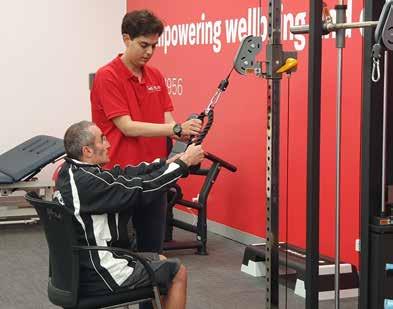
“When I saw the physio and he saw what I was going through – the drop foot, not walking properly, my knee hyperextending all the time – he got me on all these contraptions to help with that,” David explains. His ankle flexibility has improved from 60 degrees to
nearly 90 degrees, and he walks more comfortably now.
David played his part too. He put in the work at the gym and made modifications to his diet.
It’s not the same as playing cricket, but today David is still part of a team. He has a neurologist, exercise physios, a dietitian and access to other specialists through MS Plus – and it’s made a difference to his enjoyment and participation in life.
New connections
Rather unexpectedly, David found himself drawn into the Peer Support Program with MS Plus. He was told about the groups by his MS Plus physio, and went along to some catchups. He enjoyed himself, and before he knew it, David was training to lead a Peer Support group.
Today, David runs a highly engaged group that meets once a month. They’ve found a great venue that’s comfortable and fully accessible, and people come for the connection, a laugh or two, and the opportunity to be around others who ‘get it’.
“For some people, it’s not necessarily talking about our disease, it’s more the friendly face and conversation and getting out of the house,” David observes. He likes to move around the group to chat with everyone, and make sure new members feel welcome. People in the group have formed friendships, and others appreciate the advice or tips they pick up.
Some Peer Support groups connect online, but David loves catching up with people in person.
“It brings something out in you, helps distract you a little bit from your own stuff.”
Visit msplus.org.au/PeerSupport
Grand designs: a builder’s legacy for people with MS
Luigi Mazzotti was a familiar sight in the Melbourne suburb of Lilydale. No matter the weather, he’d set off on his motorised scooter, navigating the footpath to his favourite spot—the Degani Café in the Lilydale Marketplace. Along the way, he’d greet everyone with a smile and a warm hello, and the community would respond in kind, embracing him as one of their own.
Yet, despite his local fame, few people truly knew Luigi’s story. And at MS Plus, his name was completely unknown—until a surprising letter arrived after his passing. This quiet, humble man had left an extraordinary gift in his Will to support people living with multiple sclerosis (MS).
“Many people have a connection to MS, but sometimes we receive beautiful, unexpected gifts like Luigi’s,” shared Laura from MS Plus. “It’s a reminder that generosity often comes from the most unassuming places.”
A life of hard work and heart
Born in 1932 in the picturesque mountain town of Coreglia Antelminelli, Tuscany, Luigi was the only child of Mario and Gida Mazzotti. In 1952, with courage and ambition, he set sail for Australia to build a new life.
A skilled cabinet maker, Luigi first found work crafting and repairing furniture. Later, he became a payroll escort at Victorian Railways before carving out a lasting career in the building industry. Though he never married or had children, he was never alone—his friendships were many, and he even brought his parents to Australia to share in his new life.
A legacy that builds hope Luigi passed away during Melbourne’s prolonged COVID-19 lockdown. At his funeral, his friend Marlon delivered a eulogy that captured his essence: “humble and kind.”
Luigi wanted his legacy to be one that made a difference. Through his generous bequest to MS Plus, he ensured that people living with multiple sclerosis would receive the support they need to live fuller, more independent lives.
Luigi was a builder in every sense — a craftsman who shaped homes and a visionary who constructed a future of hope for others.
Write a FREE Will with Gathered Here
We have partnered with Gathered Here, an online service that simplifies the process of writing a Will. If you need a fairly simple Will, the Gathered Here online service is free and can take as little as 10 minutes to create a Will. The service also allows you to include a charitable bequest to MS Plus and make a lasting difference in the lives of people living with MS.
Have you ever felt the afternoon slump?
Here is one simple way to avoid it, and ensure your body is functioning well throughout the day!
Don’t skip meals.
To ensure your energy levels remain optimal, eat meals based on slowly digested carbohydrates, frequently throughout the day.
Eat a decent breakfast: an avocado on wholegrain toast can help set you up for the day. Add an egg for protein. Protein also helps satisfy appetites.
Incorporating healthy snacks such as nuts throughout the day can also keep hunger at bay!
Follow @wearemsplus on Facebook and Instagram for more tips and tricks to maintain a healthy lifestyle.
DIET TIP
New MS diagnosis guidelines aim to deliver treatment earlier and improve care
Living with MS can be challenging, especially when it takes a long time to get a diagnosis. In MS, time is brain. The longer it takes to confirm a diagnosis, the greater the risk of irreversible damage to the brain and spinal cord, leading to accumulating disability that can significantly affect a person’s quality of life. Delays also mean missing the opportunity to start treatment early, when it can be most effective.
The updated McDonald Diagnostic Criteria, developed in 2001 and last updated in 2017, aims to change that, making it easier for clinicians to confirm MS and start treatment sooner. For many, receiving a diagnosis brings clarity and relief. Now, in 2025, a new round of updates builds on that foundation, introducing improvements that make diagnosis faster, easier, and more accurate, such as:
Recognising MS earlier through MRI findings
Radiologically Isolated Syndrome (RIS) – MS-like damage seen on MRI scans, even without symptoms, can now be diagnosed as MS if other tests support it.
Easier diagnosis
Clinicians no longer need to see signs of MS damage occurring over different dates (called dissemination in time).
A single episode of symptoms may be enough for an MS diagnosis if other signs are present.
The optic nerve is now included as a key area to check for MSrelated damage.
Optical Coherence Tomography (OCT), which is a simple eye scan, can help detect damage to the optic nerve.
A new unified framework helps clinicians diagnose all types of MS, including primary progressive MS.
A newer test that looks for certain proteins in spinal fluid (called kappa free light chains or kLFCs) can help confirm an MS diagnosis, sometimes without needing the older test for oligoclonal bands. This makes it easier and faster for some people to get diagnosed
More accurate diagnosis
MRI scans remain the most important tool.
New signs seen on MRI scans, like a small vein in the centre of a lesion (called central vein sign or CVS), or a dark rim around it (known as paramagnetic rim lesions or PRLs), can help clinicians feel more confident that what they’re seeing is MS and not something else. For people over 50 with other health risks (like vascular risk factors or headache disorders), extra checks like spinal cord scans and fluid tests are recommended to confirm a diagnosis.
Additional laboratory tests should be used for confirming diagnosis in children and adolescents.
Clinicians can begin using the updated McDonald Diagnostic Criteria right away, as they have now been peer-reviewed and published. To support this transition, the National MS Society and ECTRIMS are developing a range of educational resources. These resources are designed to help clinicians understand and apply the new criteria confidently and consistently, ensuring people with MS receive timely and accurate diagnoses. For more of the latest research news, visit msaustralia.org.au
Take the stress out of managing your NDIS funding
Keeping track of invoices, budgets and NDIS paperwork can be overwhelming — but it doesn’t have to be.
With MS Plus Plan Management, we handle the financial side of your NDIS plan, so you can focus on what really matters: your health and wellbeing.
Our friendly Plan Managers take care of: processing invoices quickly and accurately keeping track of your budget, so you always know what’s available dealing with providers and the NDIS on your behalf providing regular statements for your peace of mind.
It can be funded through your NDIS plan and it means you stay in control, without the stress of managing the admin yourself.
Let us make navigating the NDIS easier for you. Visit msplus.org.au/ PlanManagement or phone 1800 042 138
What to expect at your first physio or EP appointment
Your first appointment with a Physiotherapist (Physio) or Exercise Physiologist (EP) is all about understanding your current health, movement, and goals.
Here’s what you can expect:
Discussion of your health history – We’ll talk about your medical conditions, past injuries, current symptoms, and lifestyle factors such as work, hobbies, and physical activity levels.
Physical assessment and outcome measures – This may include testing your strength, balance, flexibility, endurance, or mobility to get a baseline. Common tests include grip strength, sit-to-stand, or walking assessments.
Goal setting – We’ll work with you to set achievable goals— whether it’s reducing pain, improving fitness, or returning to a specific activity.
Education & treatment plan – You’ll receive guidance on exercises, strategies to manage symptoms, and a plan for ongoing sessions or home-based exercises.
We’ll support you through your plan step by step – and help you reach your goals.
Contact our Plus Connect team to book an appointment. 1800 042 138 email connect@msplus.org.au
Peer Links: learning through shared experiences
Sharing experiences with peers in similar situations can bring about a deep sense of understanding and connection that’s hard to find elsewhere.
Peer Links are an opportunity to gain practical insights and strategies from those who truly understand your challenges. A variety of online facilitated programs are offered, involving 90 minute sessions held over three or four weeks.. Guest speakers join throughout the program to share tips and strategies.
The types of topics covered can include: women’s health men’s health working with MS and more.
To find out more about Peer Links, and for other peer support options, visit msplus.org.au/PeerSupport
JOIN US IN 2026
Eating for good brain health
Start with omega-3 fatty acids, found in salmon, sardines, flaxseeds, and walnuts. These healthy fats help build brain cell membranes and may slow cognitive decline. Add plenty of colorful fruits and vegetables, especially berries and leafy greens, which are rich in antioxidants that fight damage from free radicals.
Whole grains such as oats, quinoa, and brown rice supply a steady stream of glucose, the brain’s preferred energy source. Pair them with lean proteins like eggs, legumes, or chicken to help produce neurotransmitters—the chemicals that carry messages between brain cells.
Don’t forget hydration: even mild dehydration can affect concentration and memory. Aim for plenty of water throughout the day. Limit processed foods, refined sugars and trans fats, which can promote inflammation and harm blood flow to the brain.
Your brain is one of your body’s hungriest organs — it needs a steady supply of nutrients to stay sharp, focussed, and resilient. The key to maintaining good brain health lies in eating foods that protect nerve cells, support circulation, and reduce inflammation.
Finally, moderate caffeine and alcohol intake. A cup of coffee or tea can enhance alertness, but too much may disrupt sleep—an essential part of brain repair.
Make a difference!
Sign up to be a volunteer today!
From uncertain to advocate: Connie’s mission to transform the MS diagnostic journey
For Connie, MS isn’t just a diagnosis, it’s a thread that has been quietly woven through her life since childhood.
“I first had symptoms at 12, blurry vision, fatigue, pain. It was so hard to explain what was happening,” she says. “It wasn’t until years later that I finally got answers.”
Diagnosed MS in her early 20s, her journey has transformed personal hardship into professional purpose. Now 26, Connie’s world is a balance of ambition and awareness. She recently began a PhD exploring the diagnostic experiences of others with MS, work deeply informed by her own story.
“My diagnosis gave me insight into the mental toll of medical uncertainty,” she explains. “It inspired me to shift my academic focus toward better understanding the diagnostic delays people face and how that impacts their wellbeing.”
“I’m researching the prolonged time to diagnosis because I lived that. The uncertainty nearly broke me. But I want to turn that into something constructive.”
Her early symptoms were misattributed to things like chronic fatigue. Even after taking a year off school, her concerns were often overlooked. It wasn’t until numbness crept into her arms and legs that she pushed harder for answers, eventually leading to a diagnosis confirmed by MRI scans.
While the diagnosis came as a shock, it also brought clarity. “It made sense of everything,”
Connie says. “I remember reading a quote from Selma Blair about her own diagnosis. She said it wasn’t panic, but a kind of knowing. That’s exactly how I felt.”
Even with that understanding, Connie struggled to accept her new reality. “I didn’t tell my friends for a while. I was afraid they’d see me differently. I felt embarrassed, even though I knew I shouldn’t.”
MS can be an invisible illness, and Connie still experiences days when fatigue takes over or heat triggers nerve pain. “Some days I feel like I can do anything,” she laughs. “Others, the smallest task feels like climbing a mountain. I’ve learned to be kind to myself.”
Her connection to MS Plus began before her diagnosis was official.
“I called an MS nurse during that agonising waiting period. I didn’t expect much, but it was amazing. They validated my symptoms and helped me understand what I was experiencing. That made a big difference to my self-esteem.”
Connie’s resilience comes from her supportive family, her partner, and her own inner strength.
“I used to think asking for help was weakness,” she says. “Now I know it’s one of the bravest things you can do.”
With the help of a Go for Gold Scholarship, Connie is investing in a laptop to power her studies. But her greatest resource might be her unwavering hope. “I’ve learned that MS doesn’t have to define or limit you. It’s part of my life, but it hasn’t stopped me chasing my dreams.”
“I hope this work can help future patients feel less alone, and less uncertain.”
Connie’s message for others newly diagnosed with MS is about empowerment. “Learn to advocate for, and be gentle with, yourself. Learn to speak up, but also let others lift you when you need it. You’re not alone.”
To reach out for a free chat with an MS Nurse Advisor or find out what other supports are available to you, phone 1800 042 138 or email connect@msplus.org.au
To help to support MS Plus to continue providing FREE services like our Nurse Advisors, visit donate. donate.msplus.org.au/christmasappeal-2025-connie
Left: Connie with her MS Go for Gold Scholarship funded laptop
What’s On
Register for an upcoming program today msplus.org.au/programs NSW
Upcoming programs
MS Plus Navigate Series: Family & Friends
Over one 60-minute session, an MS expert will guide discussions, provide information, links to resources and answer any questions you may have. The sessions will be facilitated by an MS Nurse and cover topics such as understanding MS, navigating the health system, where to access support and how to look after yourself while supporting someone else.
Dates:
Various dates available.
Navigate Series: Newly Diagnosed
Two online sessions of 60 minutes each will include expert content, an opportunity to learn from others’ experiences and a chance to ask questions. The sessions will be facilitated by our nurse advisor team.
Dates:
Various dates available.
FACETS Fatigue management for MS
6 x 90-minute weekly sessions. Whether you’re trying to keep up with the kids, ease fatigue at work or want to get more out of your day, FACETS provides practical strategies and approaches. Participants must have a MS diagnosis and a minimum level of mobility.
Stay Active
Exercise Physiologist-led online group program
6-week program, various dates, online.
Stay active, independent and healthy with our Exercise physiologist-led online group classes. These sessions will help you stay active and build confidence for daily life, whether that’s being able to enjoy activities, keeping up with the kids or being more confident moving around at home. Keeping active can also help with managing fatigue and promote pain management.
Boxing
Fridays 9-10am
80 Betty Cuthbert Dr, Lidcombe
Lidcombe Yoga (Chair based) Wednesdays 10.30am
80 Betty Cuthbert Dr, Lidcombe
Dance for Health (independent and chair based) Mondays 10.30am
80 Betty Cuthbert Dr, Lidcombe
East Gosford Exercise Group (independent)
Wednesdays 10.30am (school term only)
East Gosford Lions Hall
Marrickville Yoga (independent)
Tuesdays 9am
Addison Road Community Centre, 142 Addison Road, Marrickville
138
Be better balanced
Tuesdays 9.30am (circuit-based class)
Thursdays 10am (chair-based class)
Gloria McKerrow House 117 Denison St, Deakin
Wheels in motion (chair-based class)
Thursdays 11.00am
Gloria McKerrow House, 117 Denison St, Deakin
VIC
For queries relating to exercise groups in Blackburn, phone 1800 042 138