ARCHITECTURAL
MRUNMAI BAILKE SCHOOL OF ENVIRONMENT AND ARCHITECTURE 2023
PORTFOLIO
EDUCATION :
2004 - 2007 I SCHOLARS POINT ENGLISH SCHOOL, MORSHI, MAHARASHTRA. GRADE KG
2008 - 2018 I ST. FRANCIS HIGH SCHOOL, AMRAVATI, MAHARASHTRA
Grade 1st to 10th
2018 - 2020 I VIDHYABHARTI MAHAVIDYALAYA JUNIOR COLLEGE, AMRAVATI
Grade 11th and 12th
2020 I SCHOOL OF ENVIRONMENT AND ARCHITECTURE, MUMBAI PERSUING
WORKSHOPS :
2021- DIGITAL ANATOMIES AND MATERIAL ANATOMIES
Dushyant Asher
2021- READING RHYTHMS
Shivani Shah and Eloise Maltby Maland
2022- WHAT IS AI?
Sujay Kumarji
2022- NETWORK LITRACY
Liubouv T. Bauer
2022- LANDSCAPE URBANISM
Rhea Shah
I AM AN ARCHITECTURE STUDENT. PERSUING FORTH YEAR. I HAVE BEEN DOING THE INTICATE DETAILS IN MY ARTWORK. TALKING ABOUT THE ARCHITECTURE, FOR ME, IT IS A TECHNICAL ART THAT IS PRESENT IN EVERY ASPECT OF OUR DAILY LIVES. ARCHITECTURE ALSO EXEMPLIFIES THE PLANNING, DESIGNING, AND CONSTRUCTING BUILDINGS OR STRUCTURES, AS WELL AS ENGAGING INHABITANTS IN THE DESIGN PROCESS
PERSONAL DETAILS :
D.O.B : 28/05/2002
Contact no. : +919561299524
Email : a20mrunmai@sea.edu.in
mrunmaibailke12@gmail.com
SKILLS : AUTOCAD
ILLUSTRATOR
PHOTOSHOP
INDESIGN
RHINOCEROUS
SKETCHUP
ENSCAPE
MICROSOFT EXCEL
GOOGLE SITES
HAND DRAFTING
BASIC CARPENTRY
BASIC MASONRY
MODEL MAKING
2022- HUMAN ECOLOGY
Malak Singh Gill
2023- PRINT MAKING
Sanjana Shelat
2023- MAKING A PROTOTYPE
Dushyant Asher and Milind Mahale
2023- STREET ENVIRONMENT DESIGN STUDIOURBAN DESIGN CENTER
Urmi Kenia
LANGUAGE :
ENGLISH
HINDI
MARATHI
GUJARATI
PERSONAL INTREST : ART GUITAR
TRAVEL
MUSIC DANCE
 Mentors - Rupali Gupte, Samir Raut
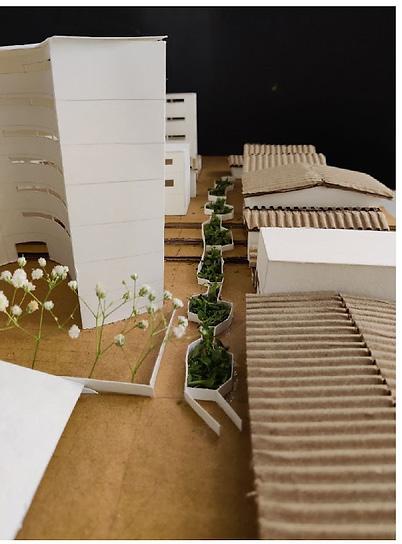
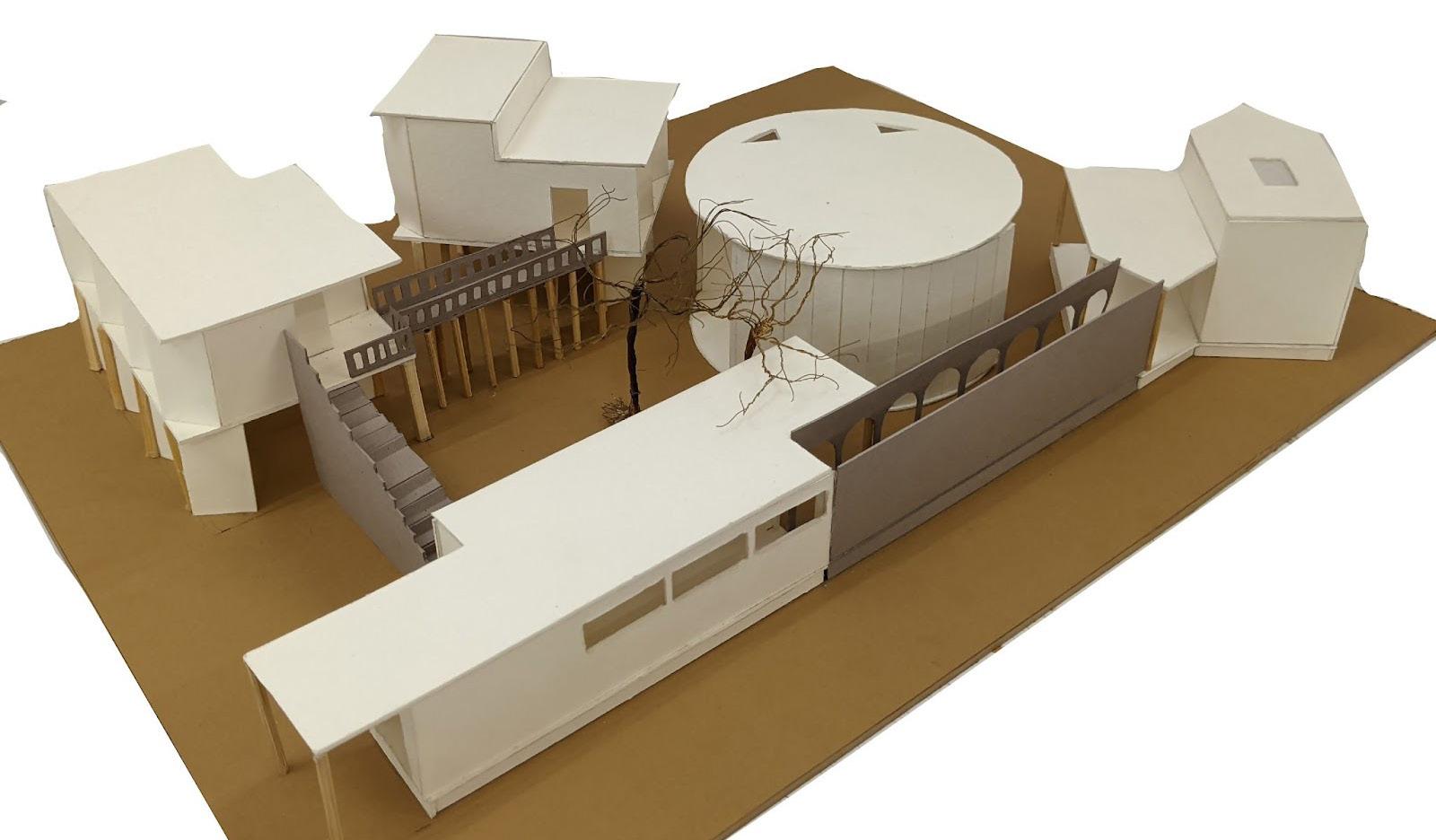
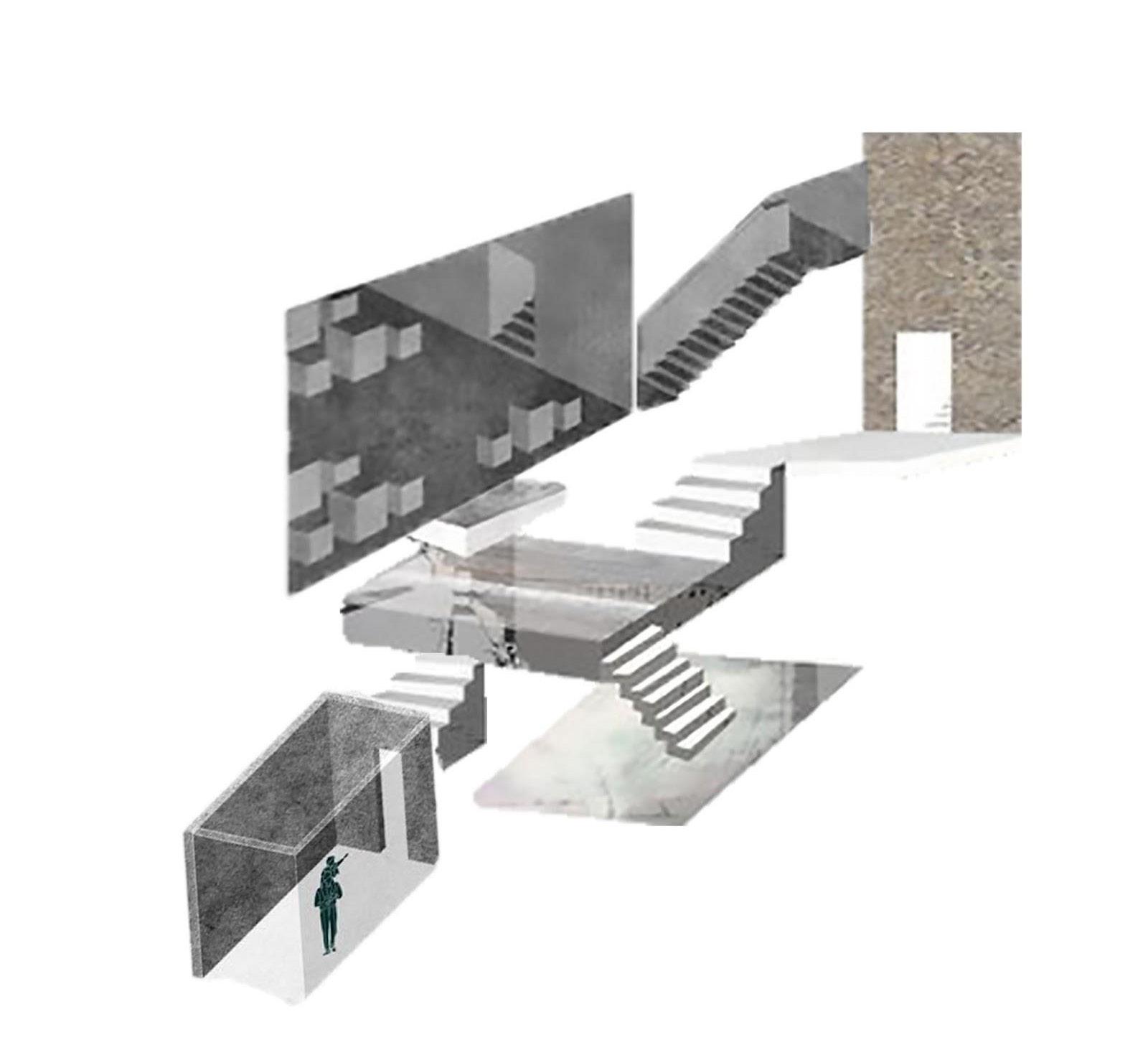
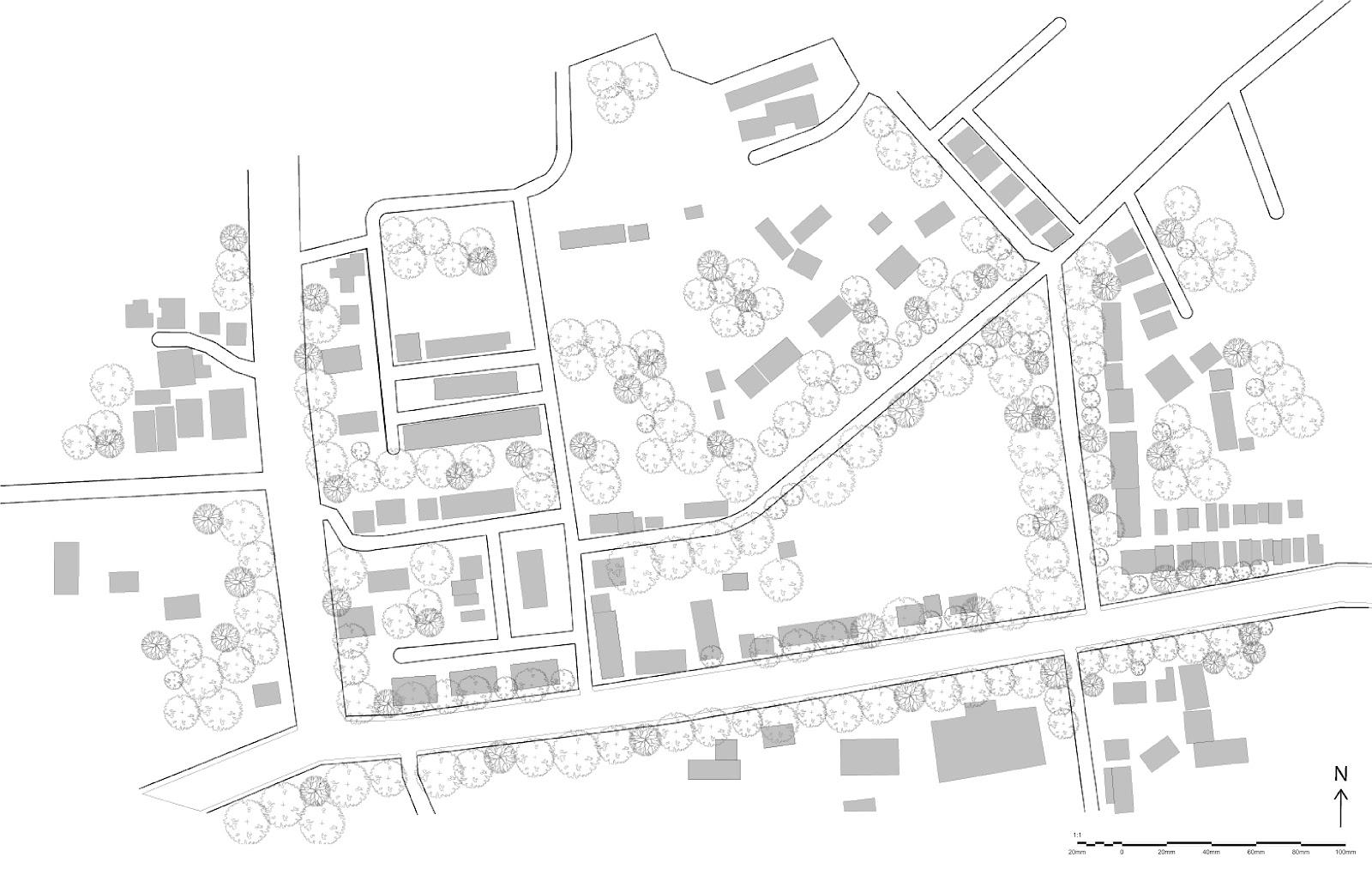
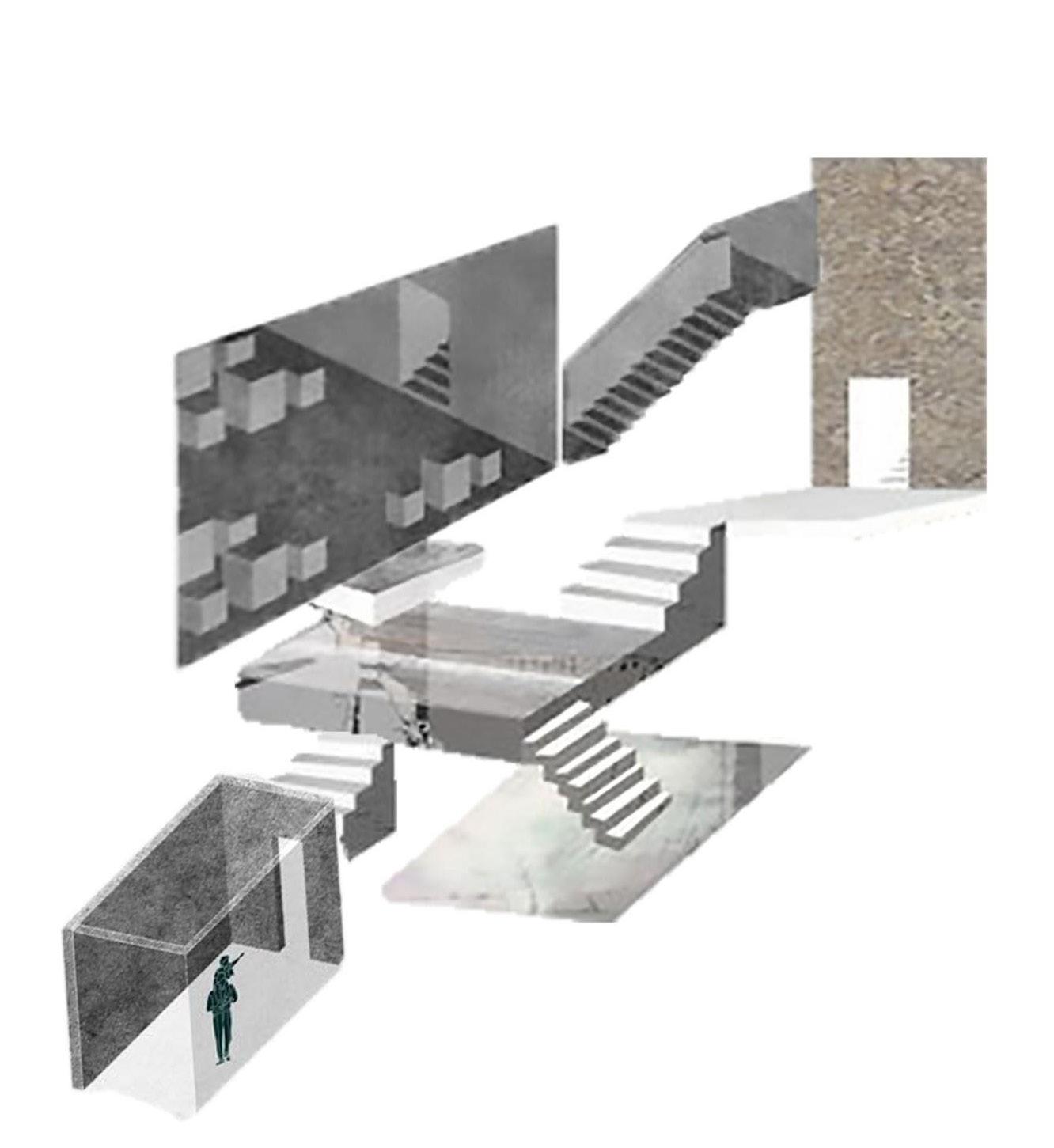
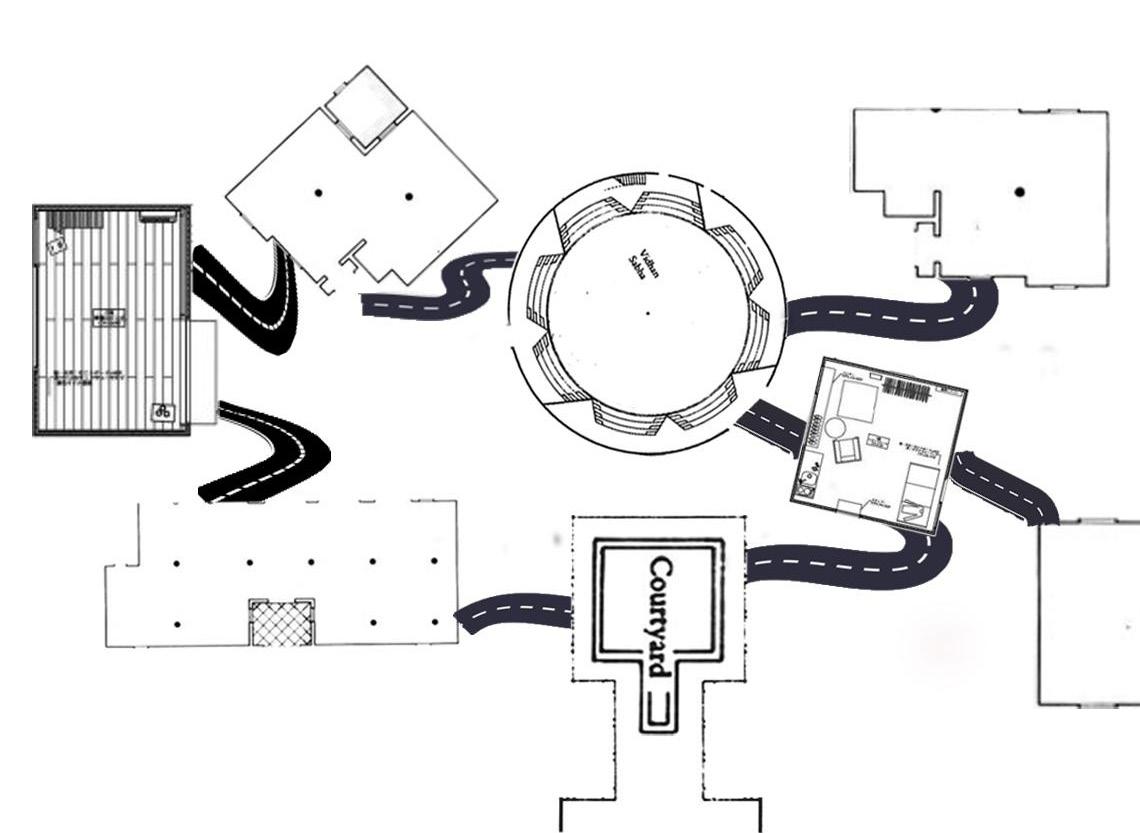
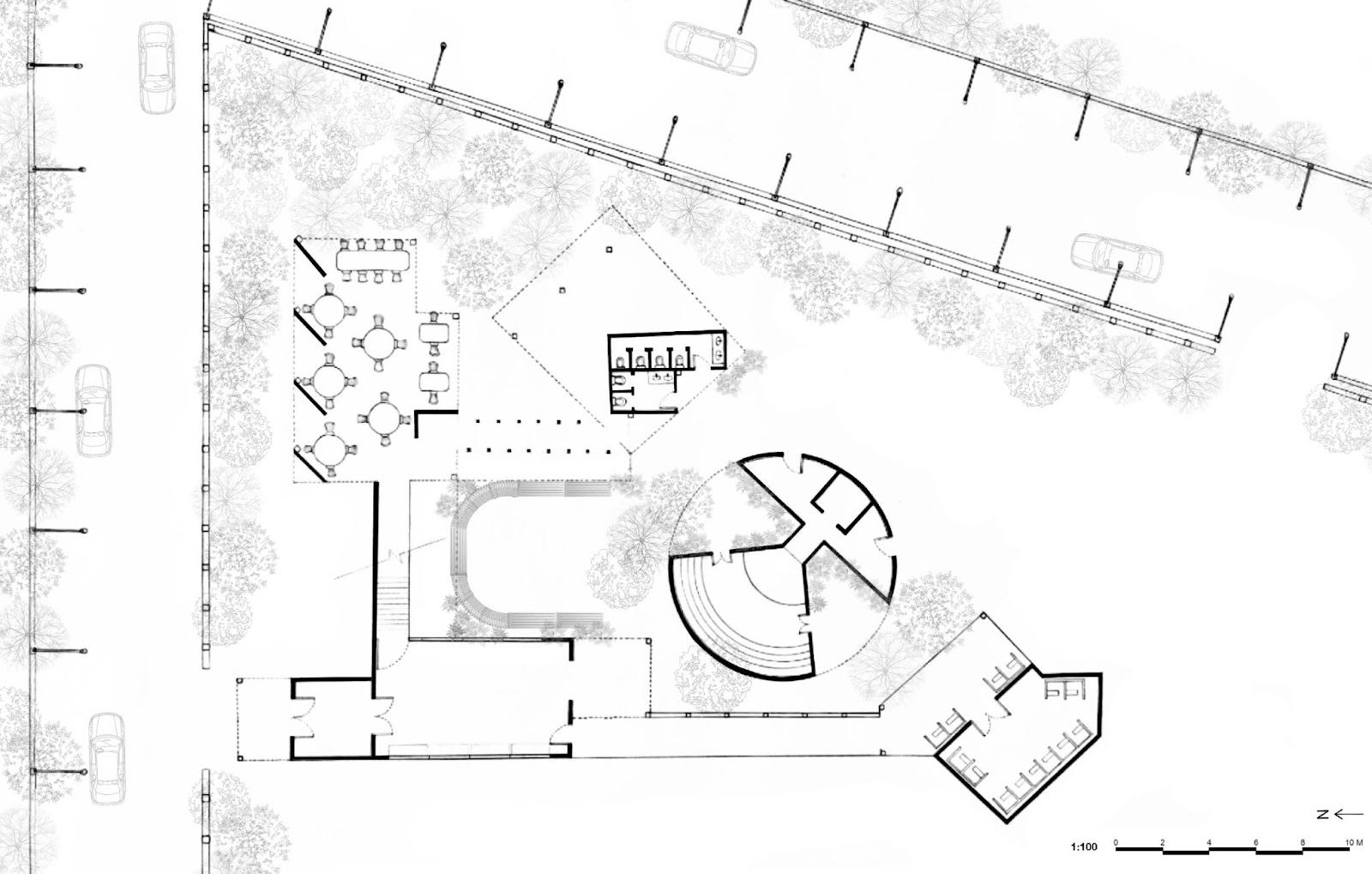
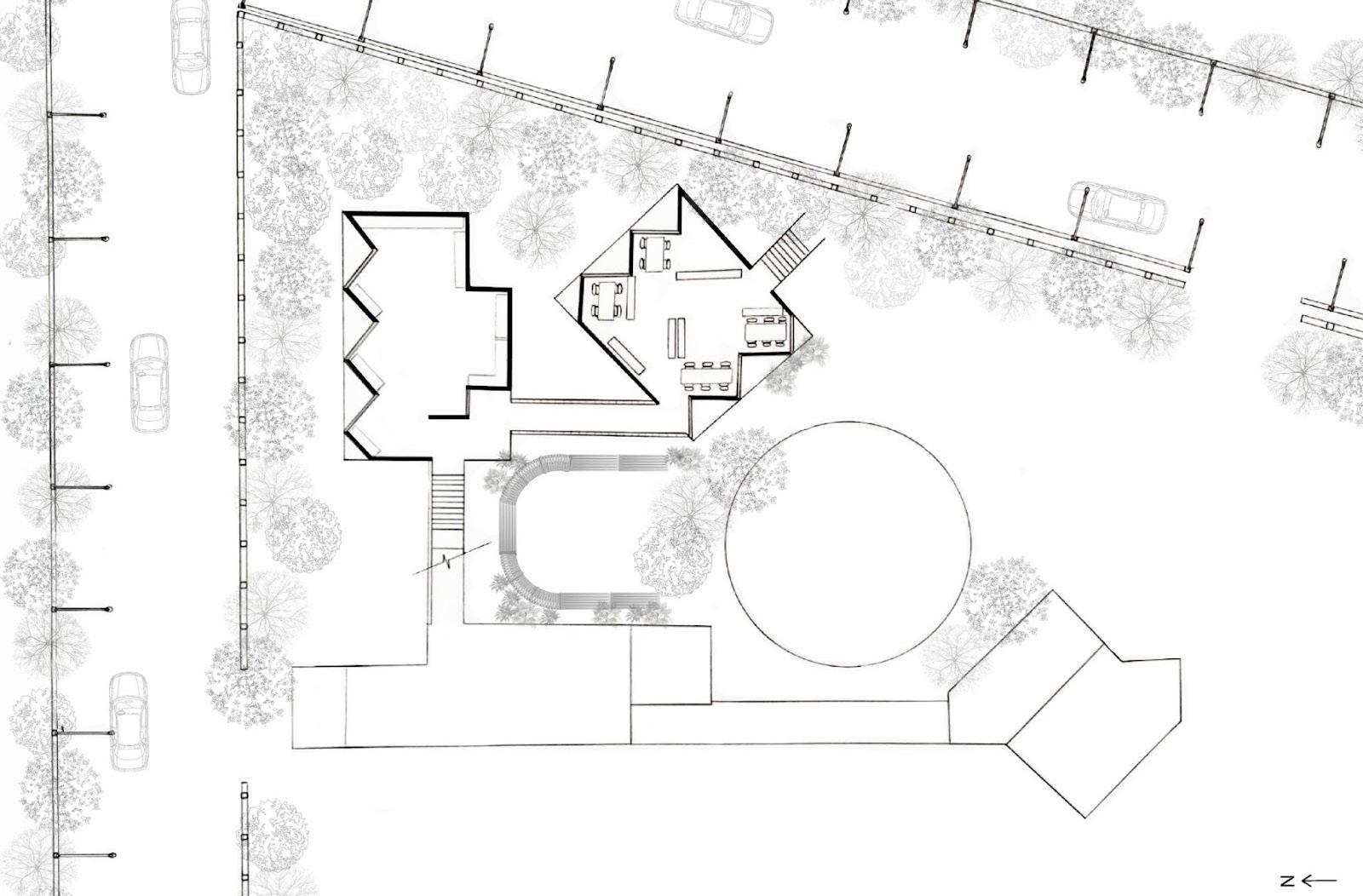
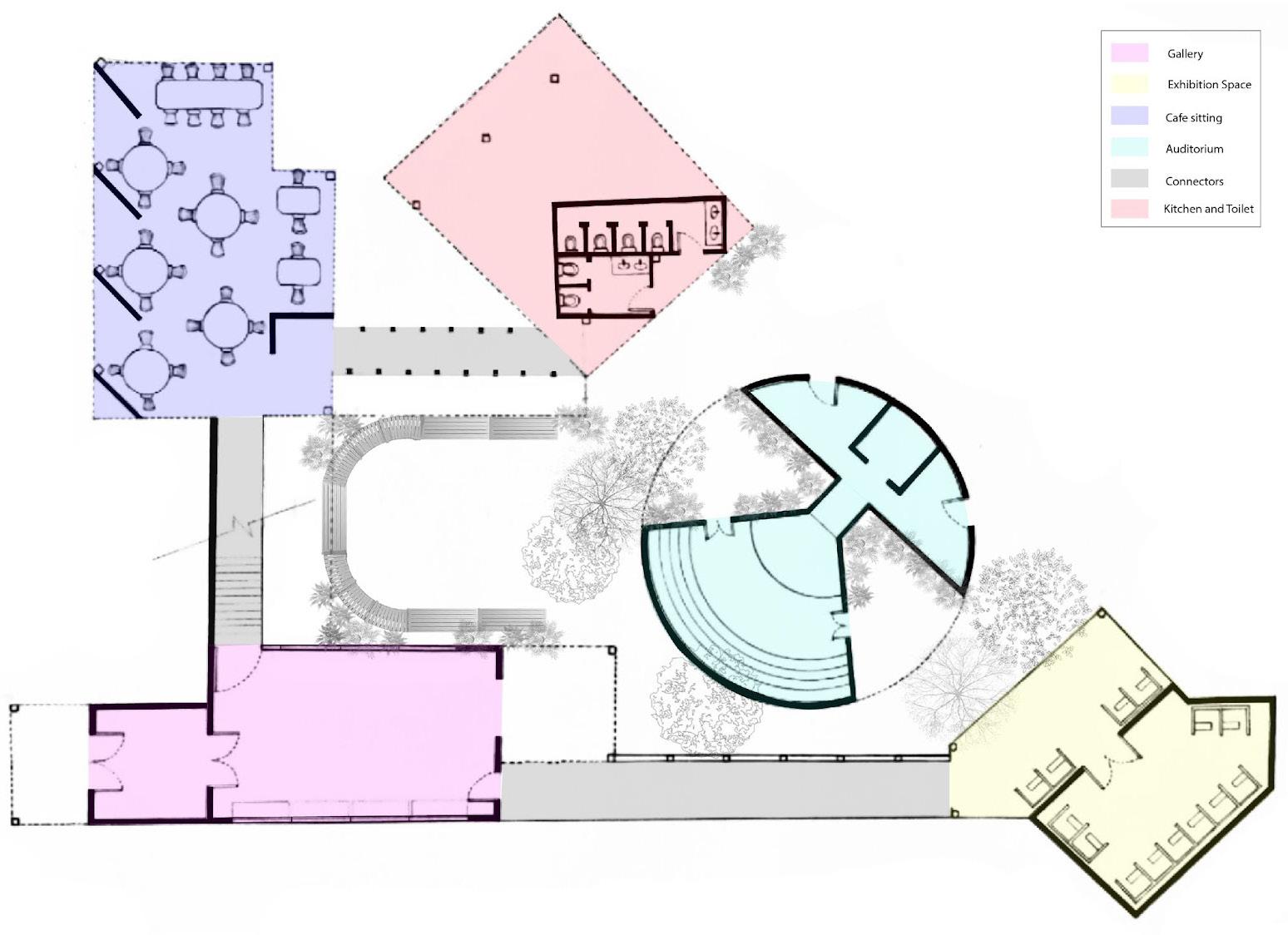
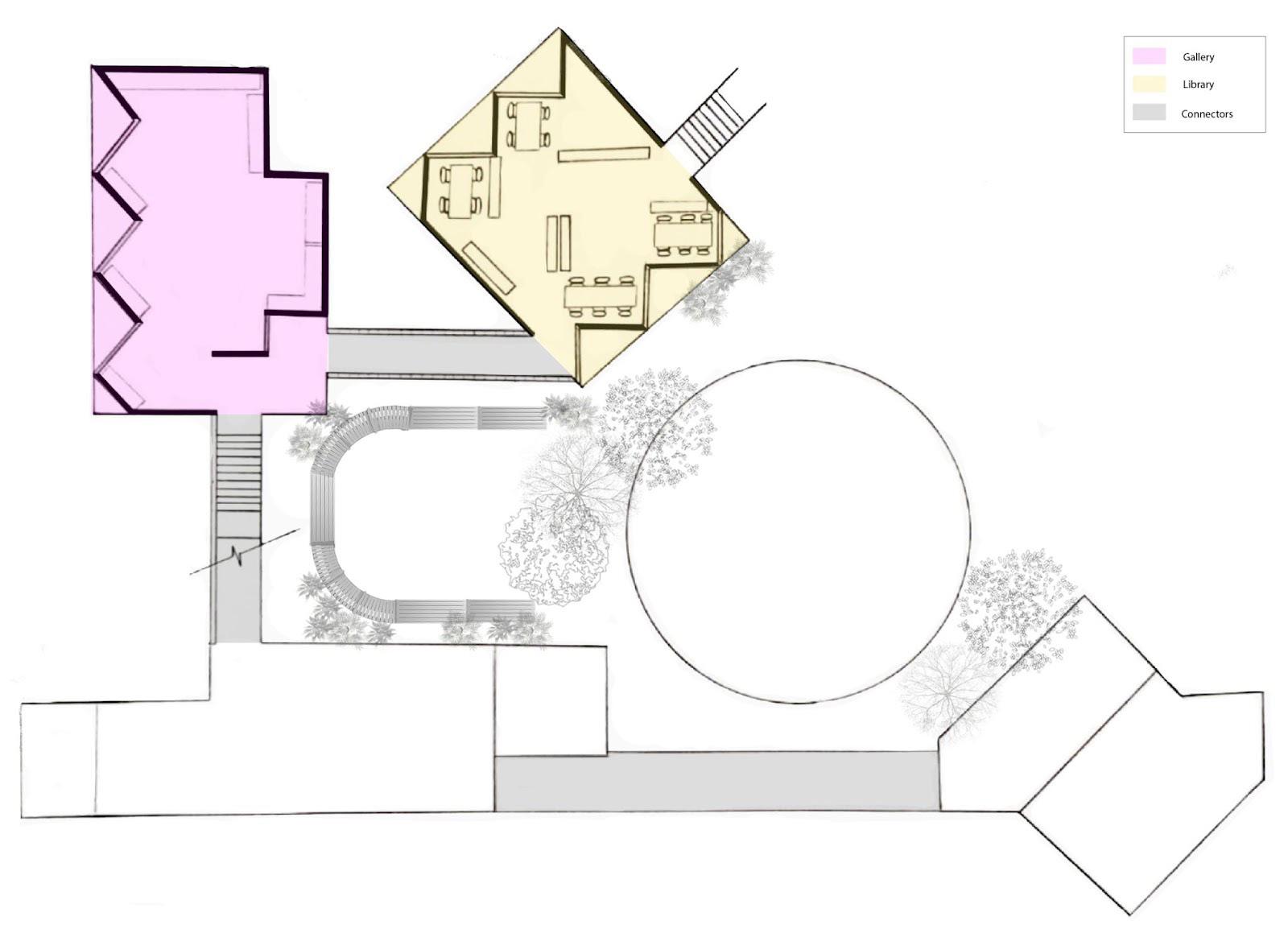
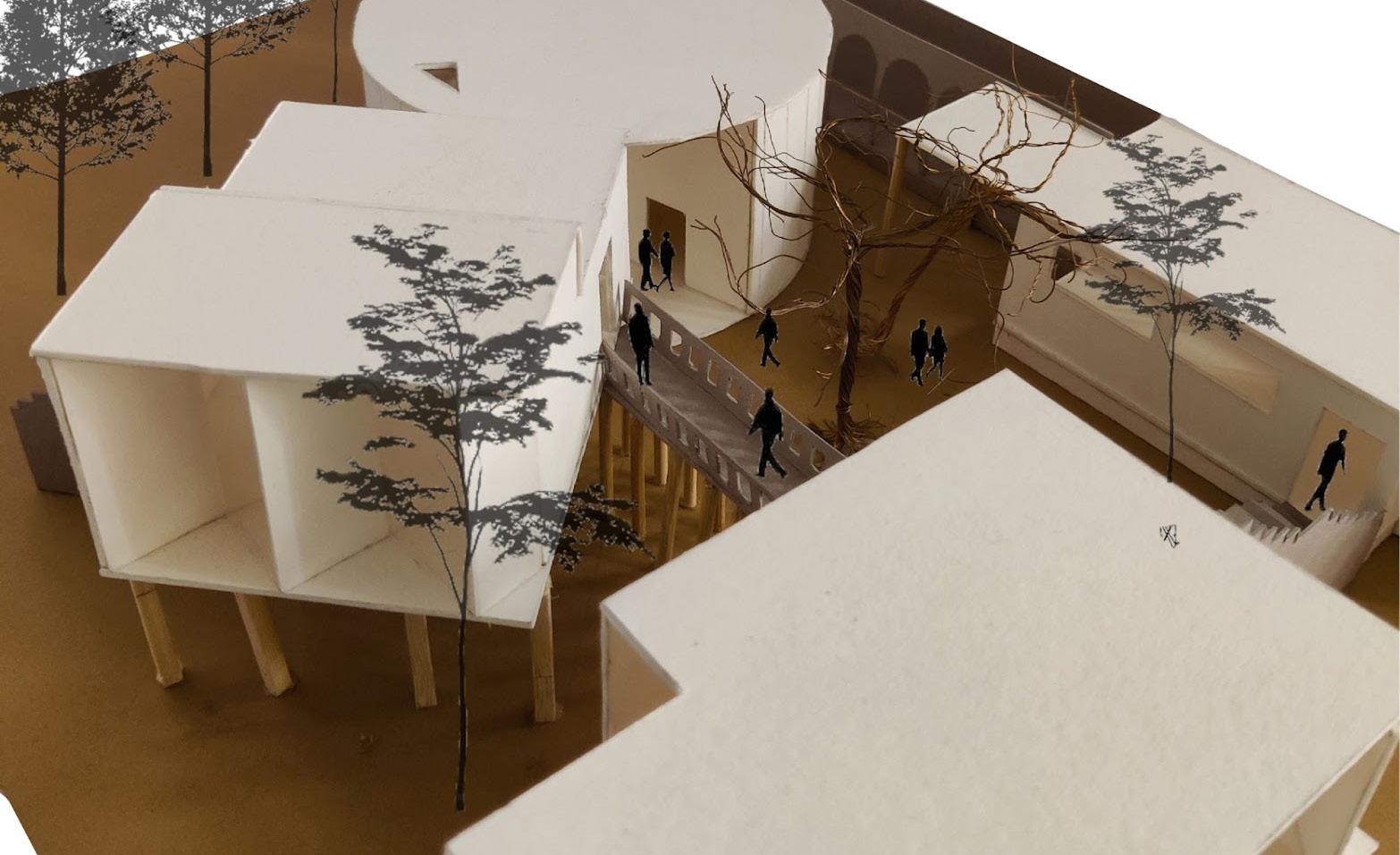
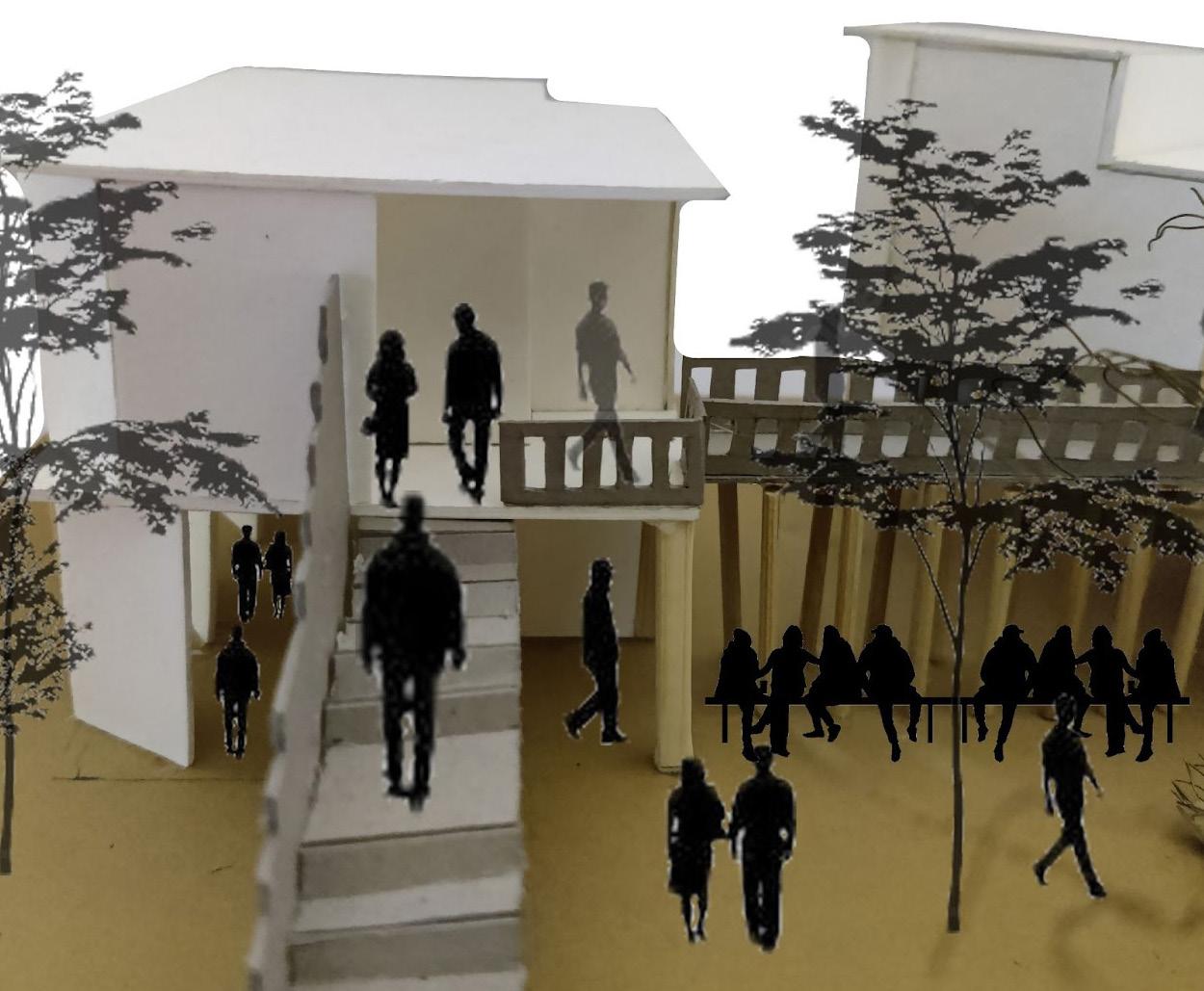
The course questioned the idea of museum through the study of different types of museums, its genealogy, and its ontology. For this, we have asked you to select the site in the neighborhood. My site of intervention was in Amravati, which is an open ground that is used for cultural programs like Ganpati, Navratri, etc. So questioning the idea of the museum, keeping in mind that the site is used for cultural activity, the questions are: Can a museum convey the principles of different religions in one building? Can the museum convey oral narratives? How can a static space become dynamic?
How can museums encourage cultural exchange amongst users, who vary in age and socio-economic backgrounds? From these questions, the intent was to build a museum, which is based on religious history and teachings through theological texts as a series of fragments in the landscape. The aim is to provide spaces through which the The public can engage with various forms of communication like storytelling plays, etc. The program would be to build a religion-based museum to allow interaction and exchange of different religious knowledge. A base to appreciate and understand an array of traditions, beliefs, languages, and so on. A place where information is relayed in multiple languages through theological texts To facilitate public plays and performances and exchange stories through various media.
Existing site sections:
Collages:

Ground Floor plan:
First Floor plan:
Design section:


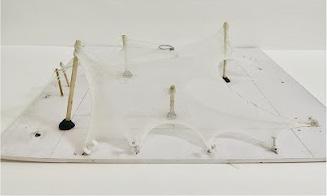
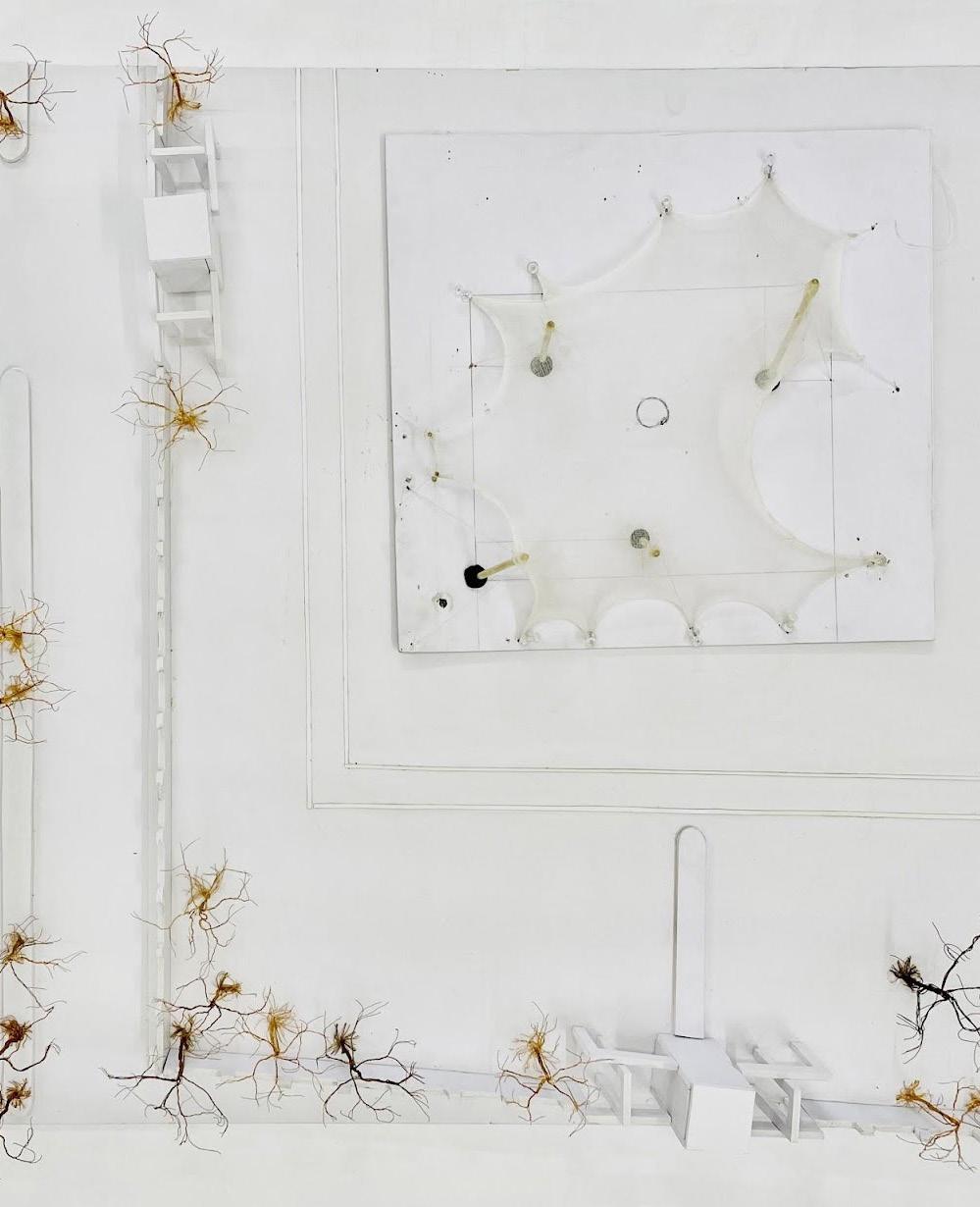
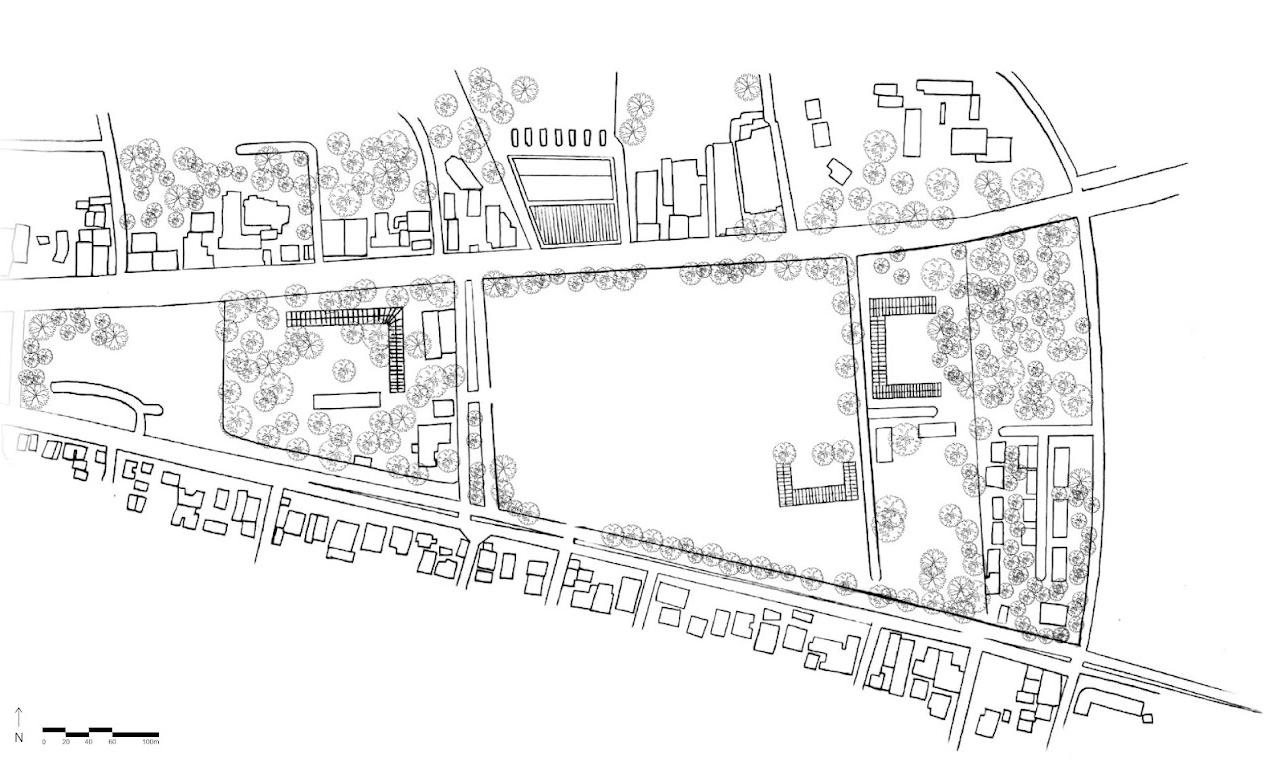
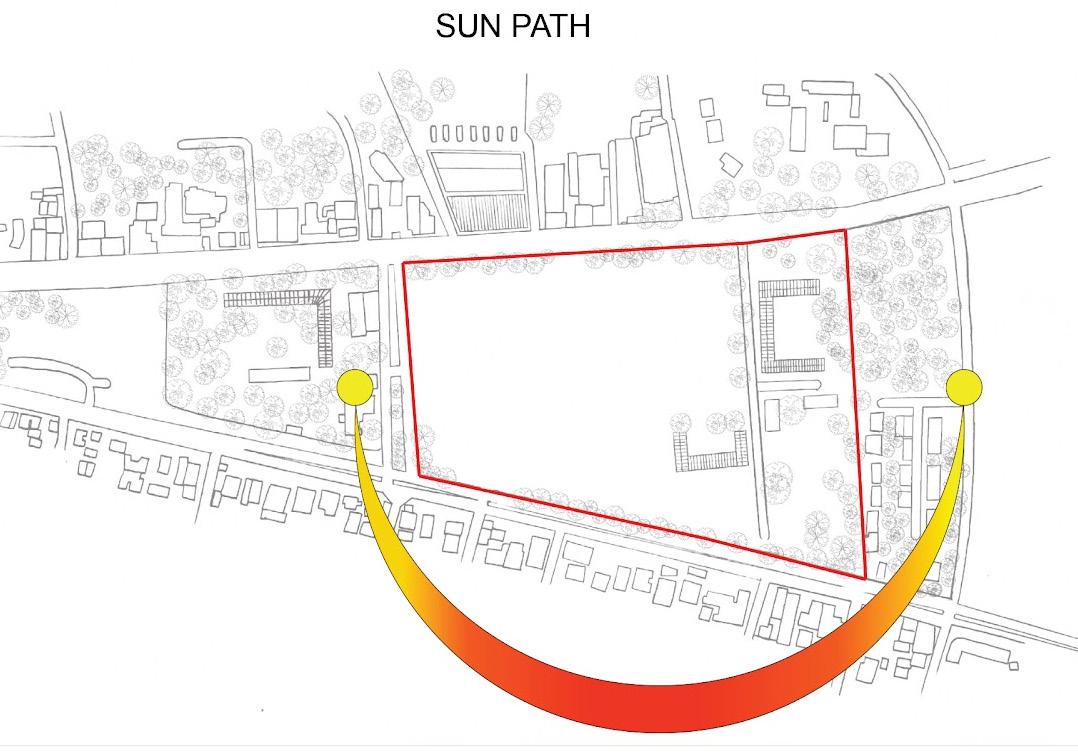
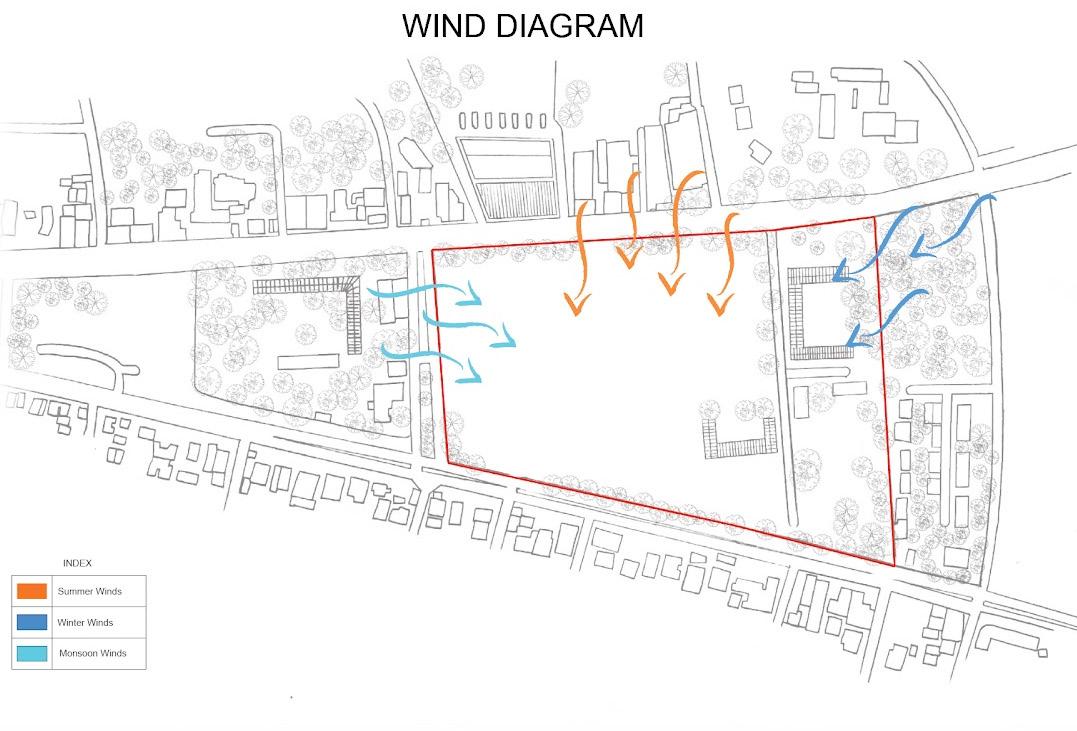
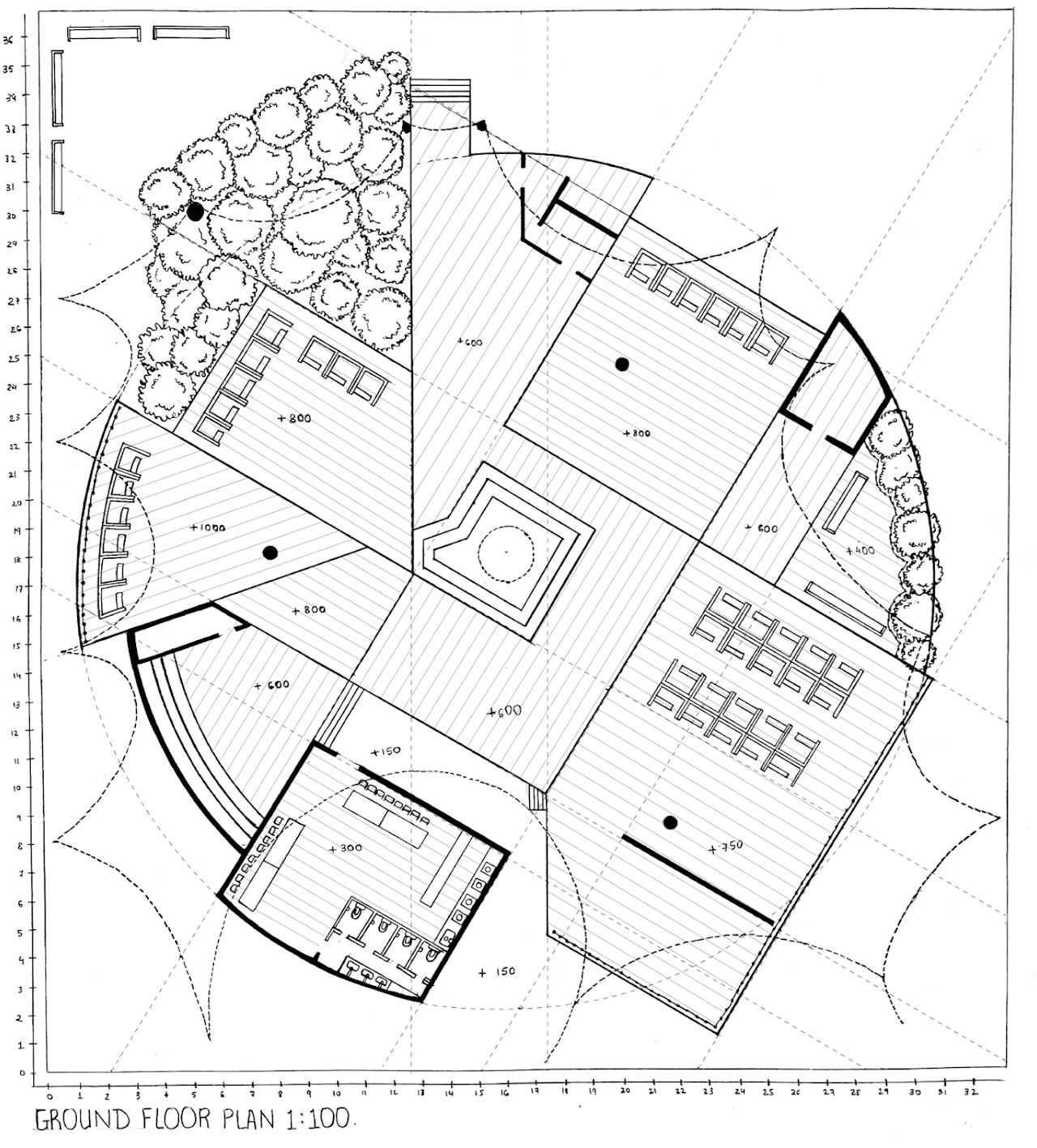
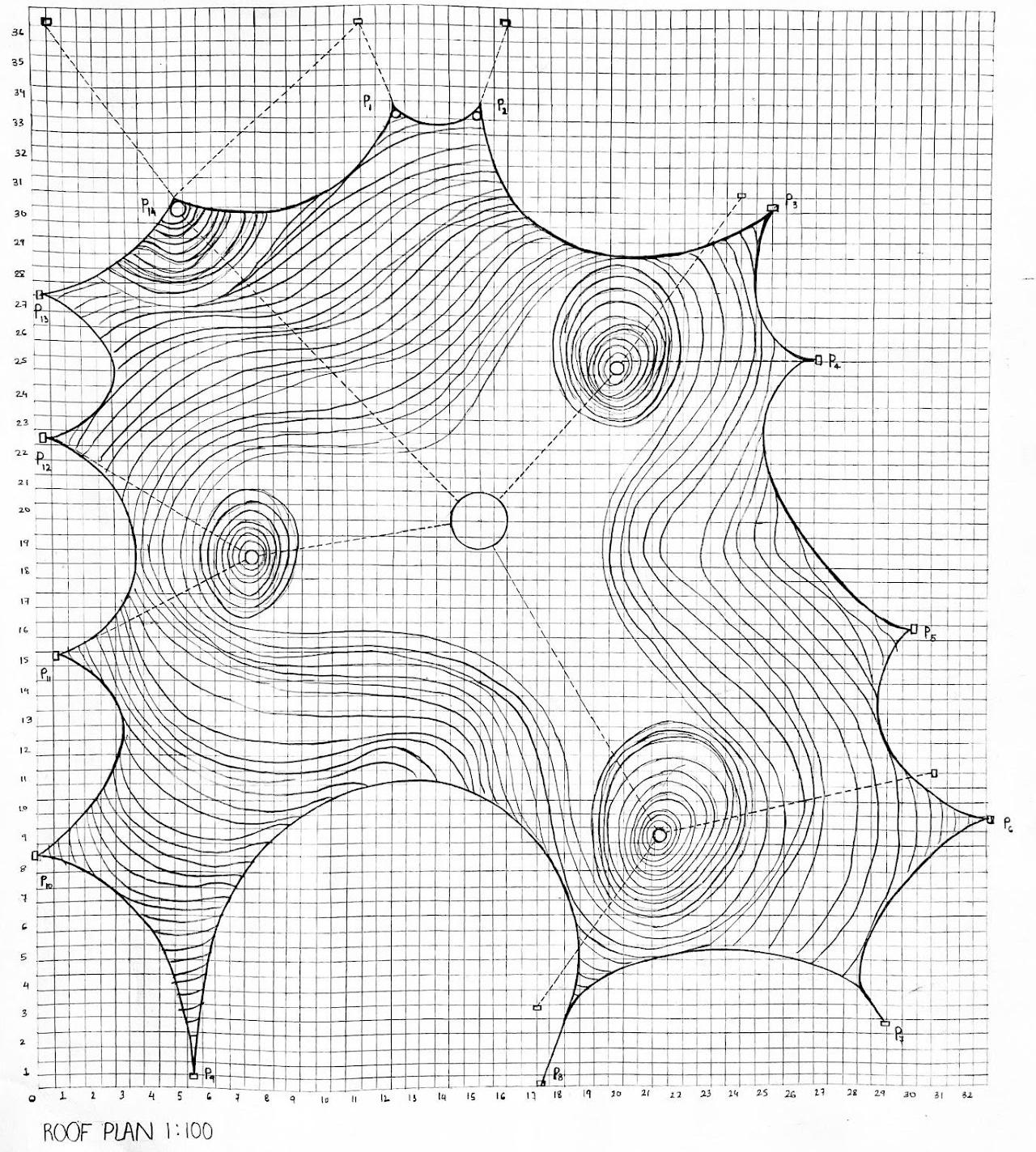
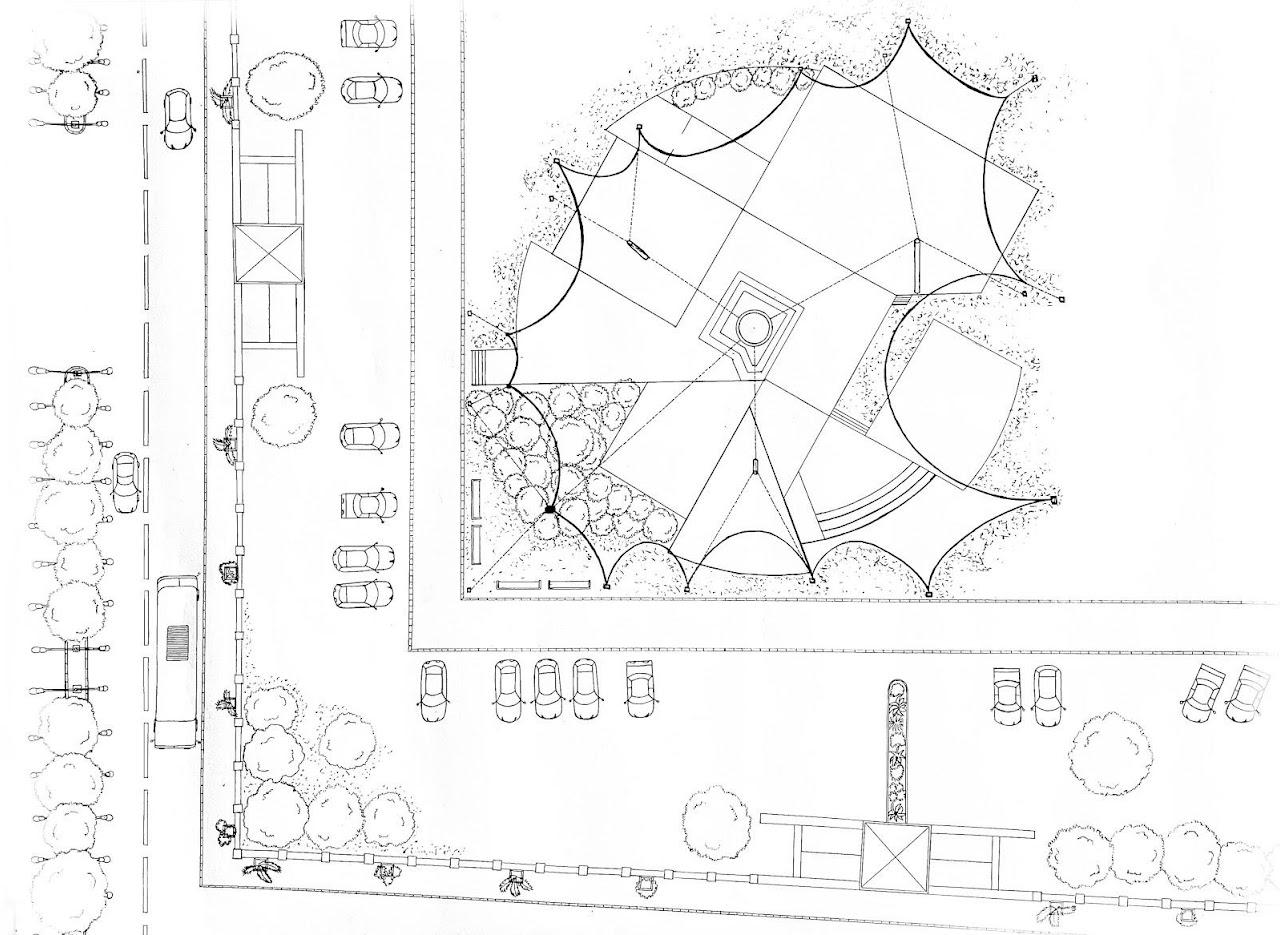
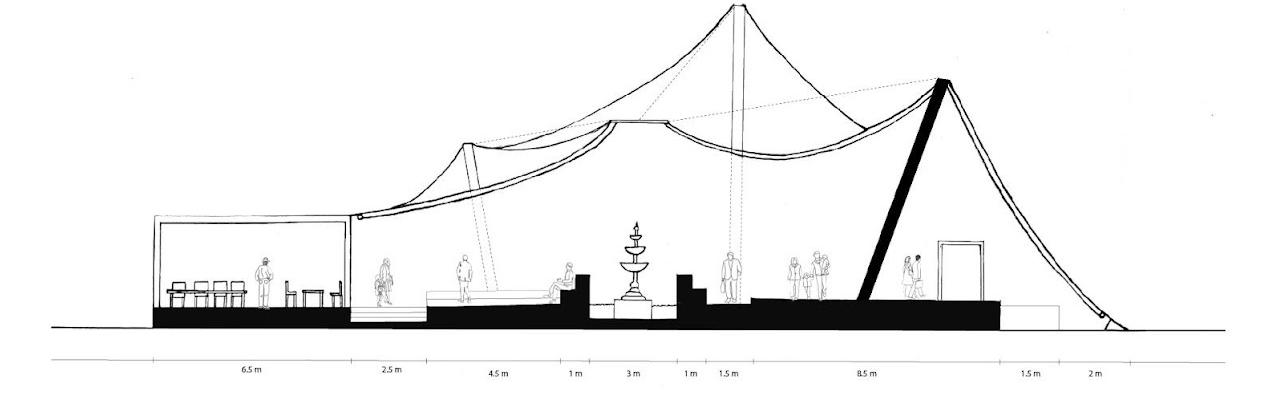
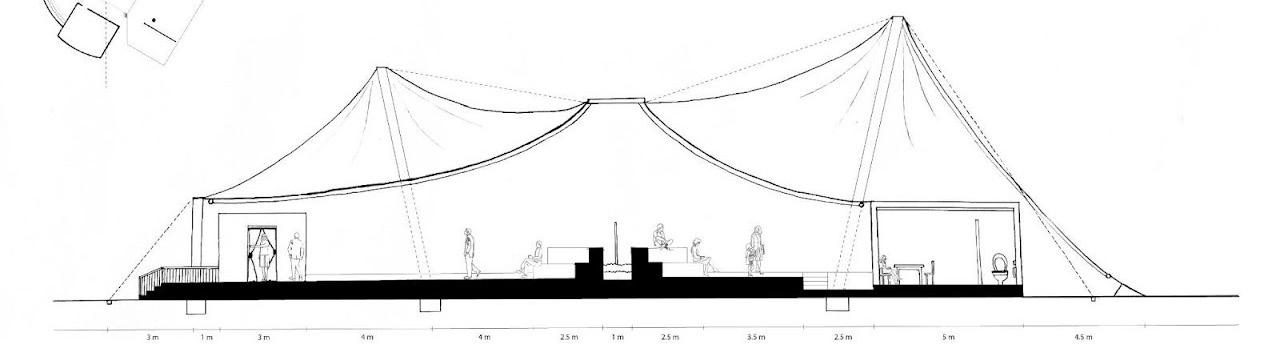
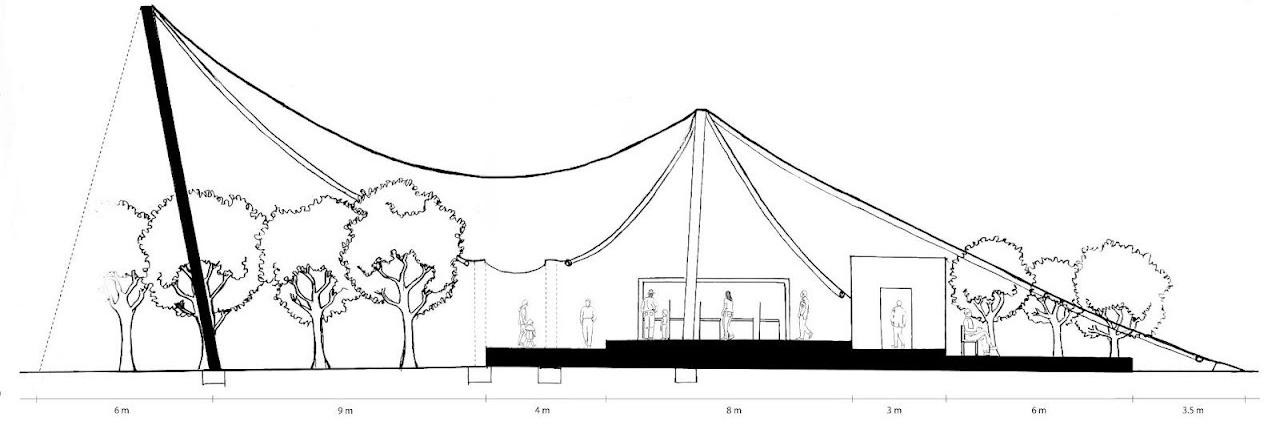
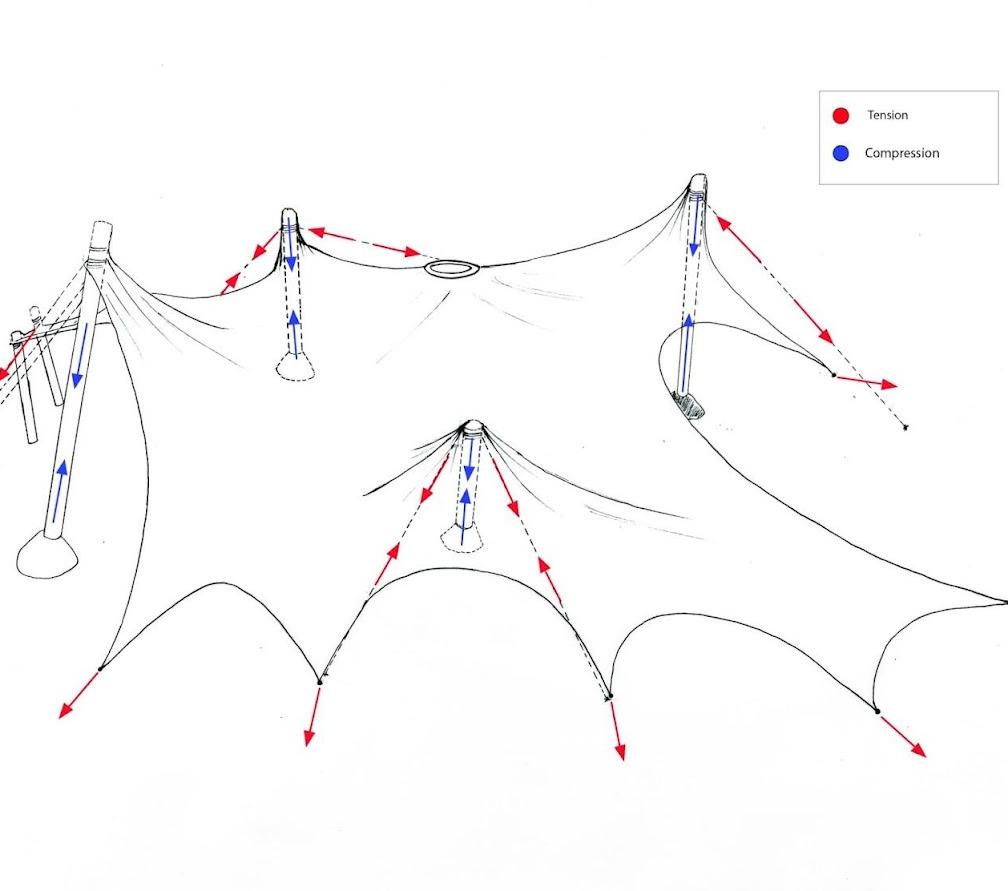
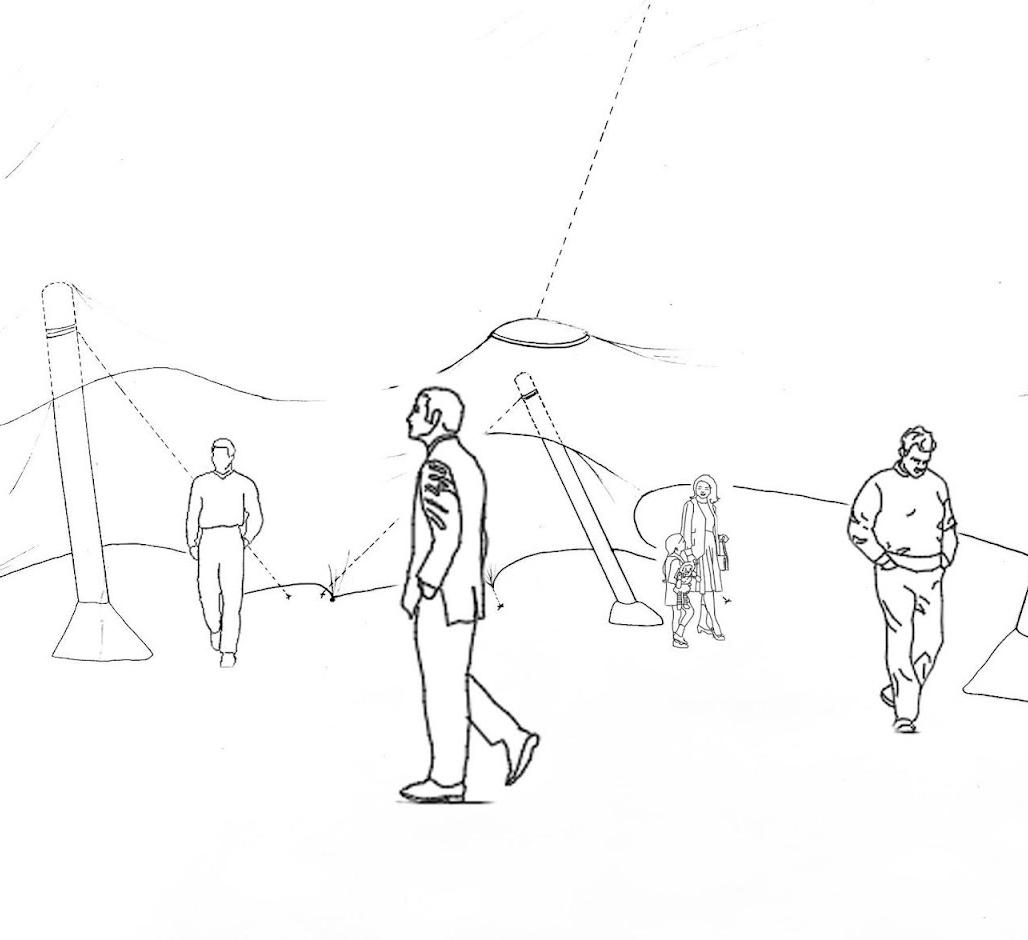
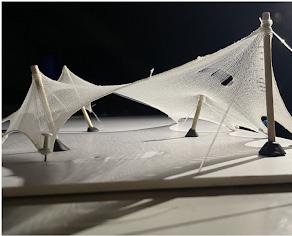
The studio enables us to develop a systemic and material response for specific spatial engagements. The key objective of the studio is to enable us to understand relationships. between systems or materials and life (behavior, experience, and relationships) via the idea of space. The premise here is that form articulates space, and hence the structure of form is instrumental in this articulation. The main intent of the course is to thoroughly understand structurality and its materiality. My site of intervention was Science Score Ground, which is in Amravati. The ground is used for arranging the different types of exhibitions, cultural activities, etc., which is a collapsible or temporary structure for some time period. Taking forward the idea of the collapsible. The program is to build a collapsible tensile structure, which includes activities like Exhibitions, workshops, open theater, cafeteria, and garden area The strategy is to moderate the plinth to avoid a chaotic movement. To break down the linear circulation. The spaces will be continuous but separated by different levels of plinths.
Existing site section:

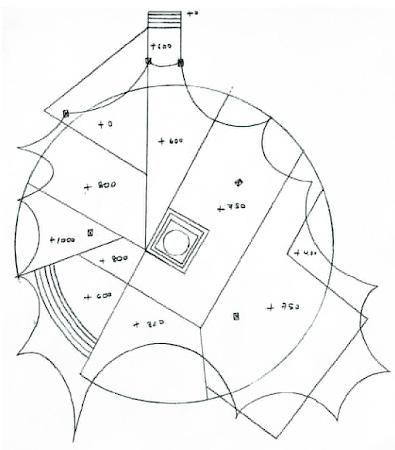
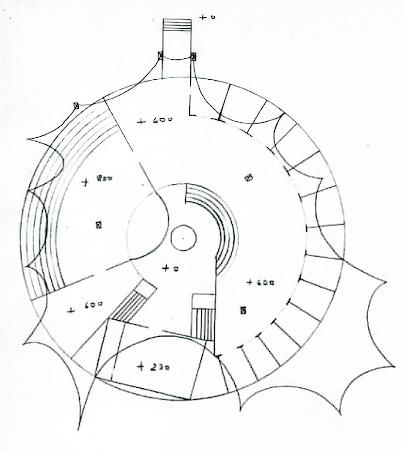
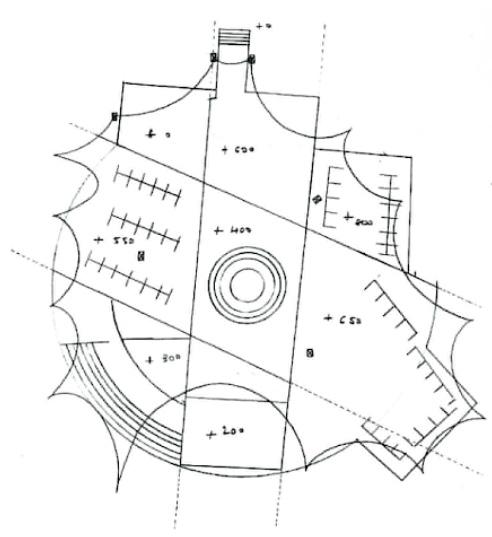
Contour plan: Ground floor plan:
After intervention on existing site:
Design section:
Force Diagram:
Experiantial drawing:
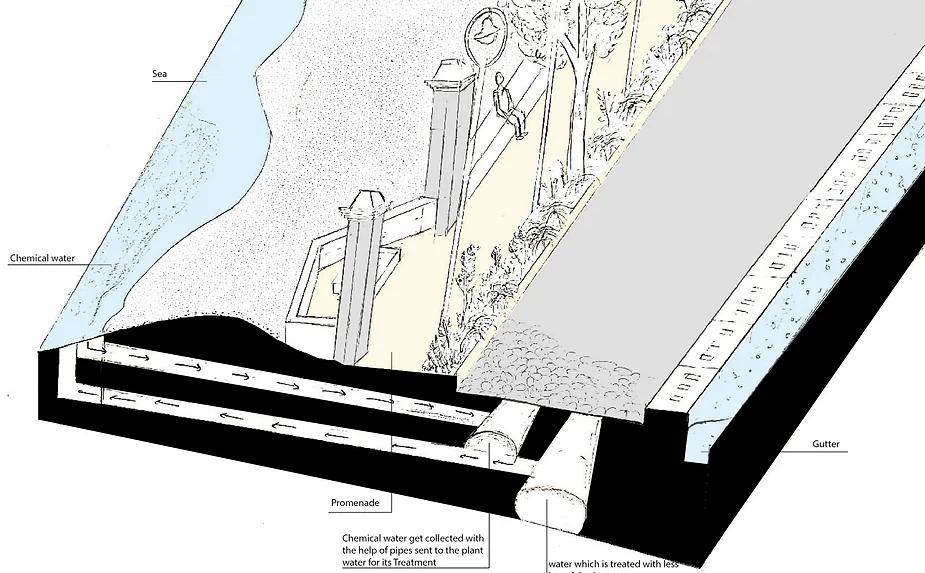
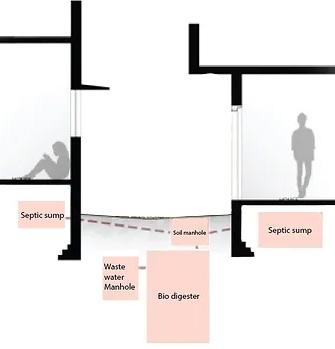
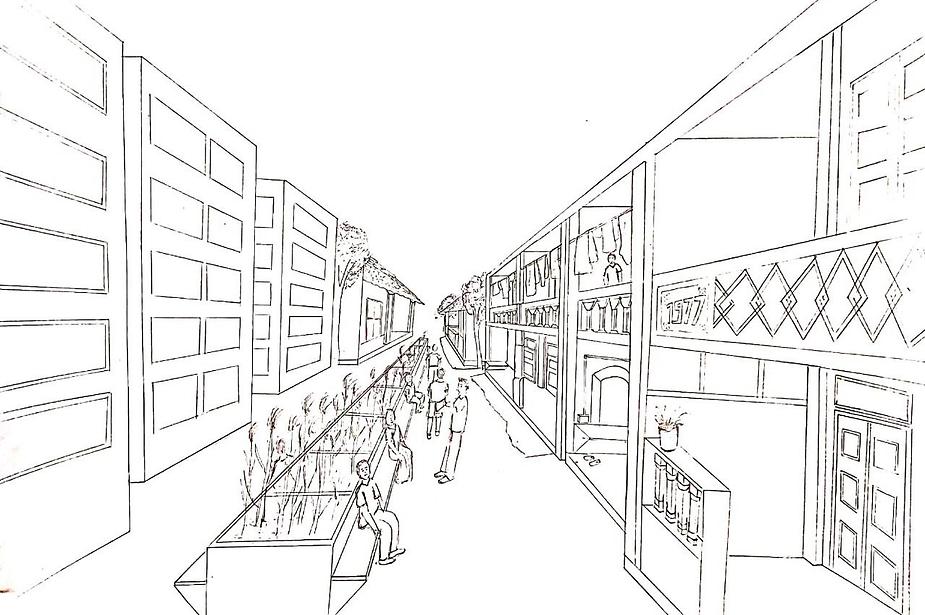
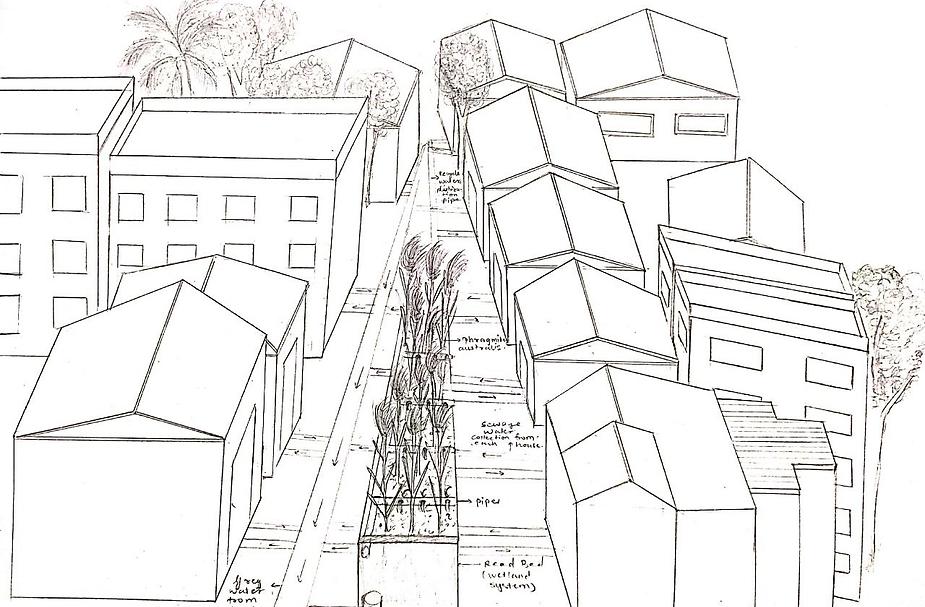
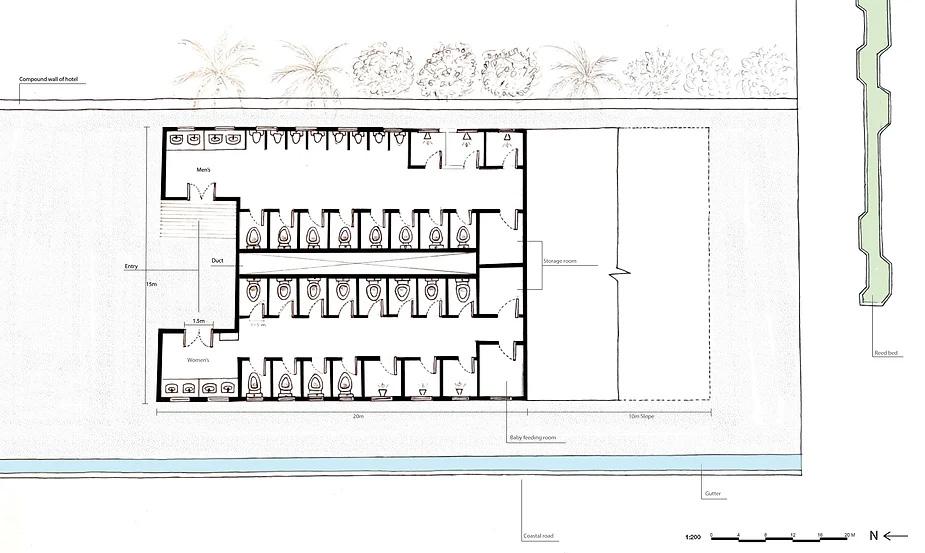
This course aims to experience the environment as a set of interconnected networks that balance each other to constantly generate rhythmic flows of resources. These networks include the negotiations between the human, nonhuman, socioeconomic, sociocultural, and sociopolitical flows that are dynamic in nature. Being in Nani Daman, studying sheri’s, there are a total of 18 sheri’s by which we are studying Parkota and Master Sheri. Basically, it’s a settlement. Due to the construction of the coastal road, the sewage coming from the settlement seeps into the gutter, and the main gutter line is connected to the water body, which contains chemical waste, so because of this, it harms the ecosystem. Also toward the seaface road, there are the small stalls where people used to sell photographs, food, etc. Before that, it was a part of the beach, but now it separates due to the coastal road. The argumentative question arises on the basis of observation: What if the sewage water gets purified and gets reused in this settlement? so that the ecosystem will not be harmed. How can an intervention hold the public’s interest in the information? center? The program is to build a water purification plant to facilitate public and settlement access to purified and freshwater. Based on the water purification process, provide a community toilet.
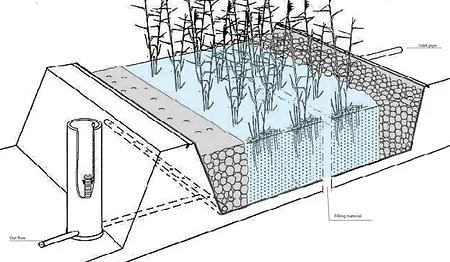
Process:
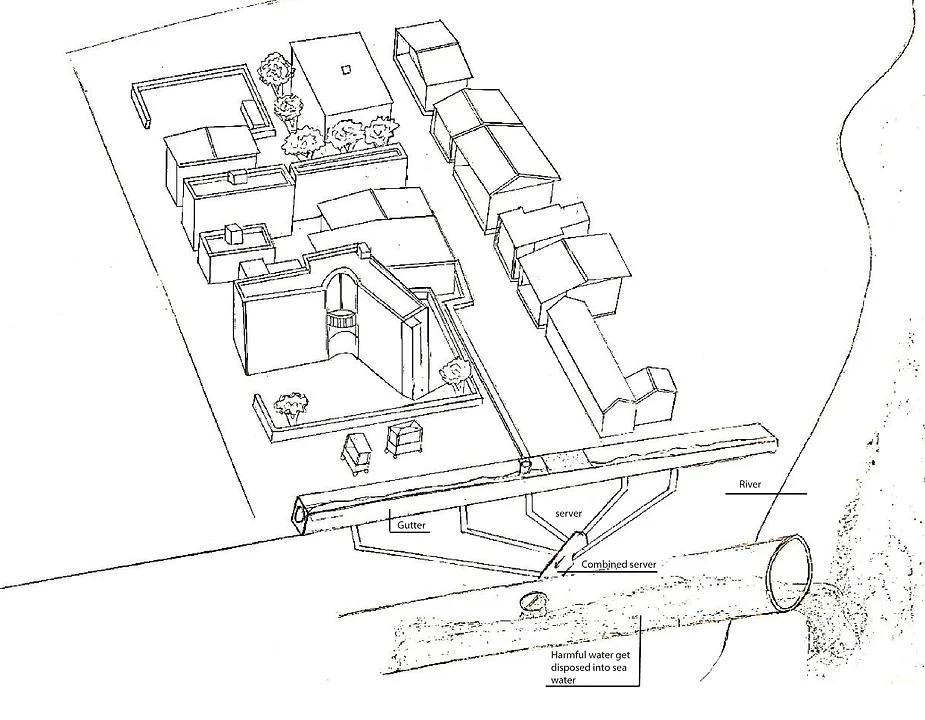
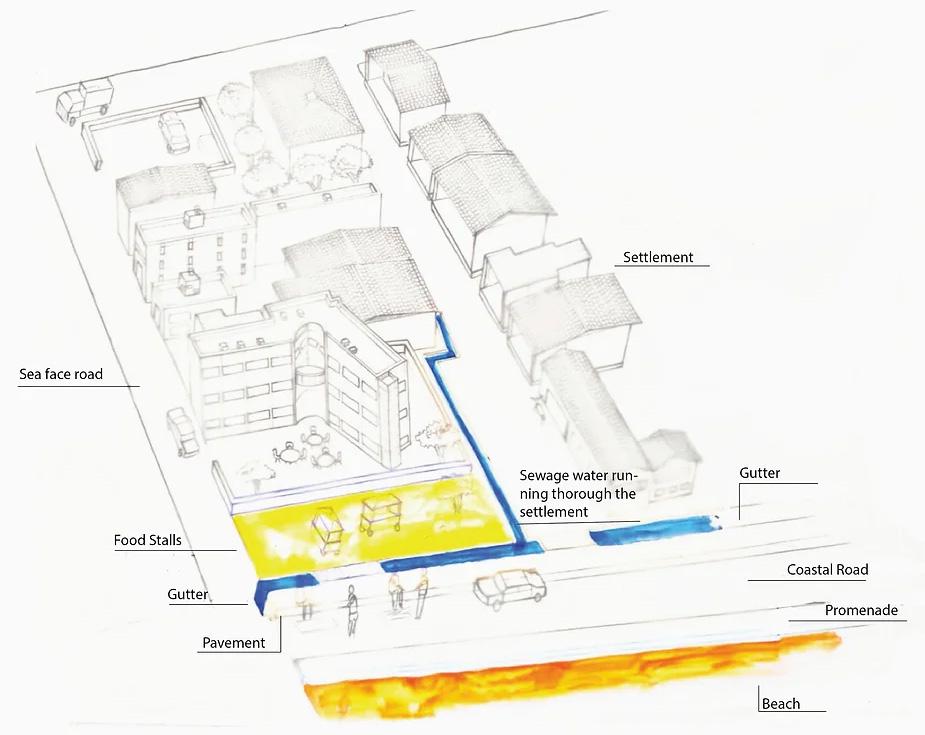
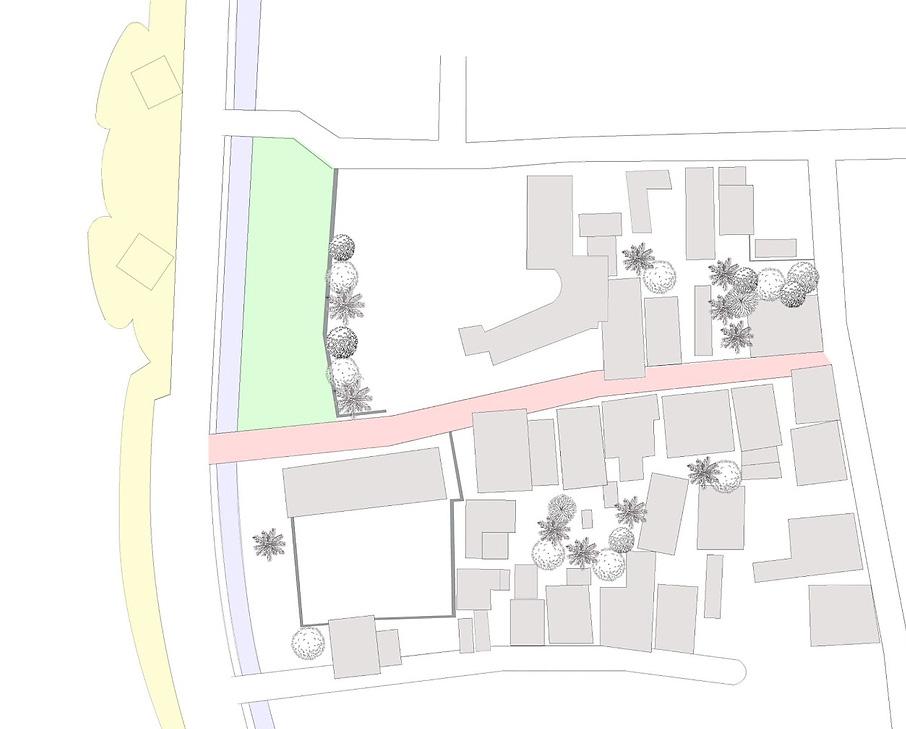
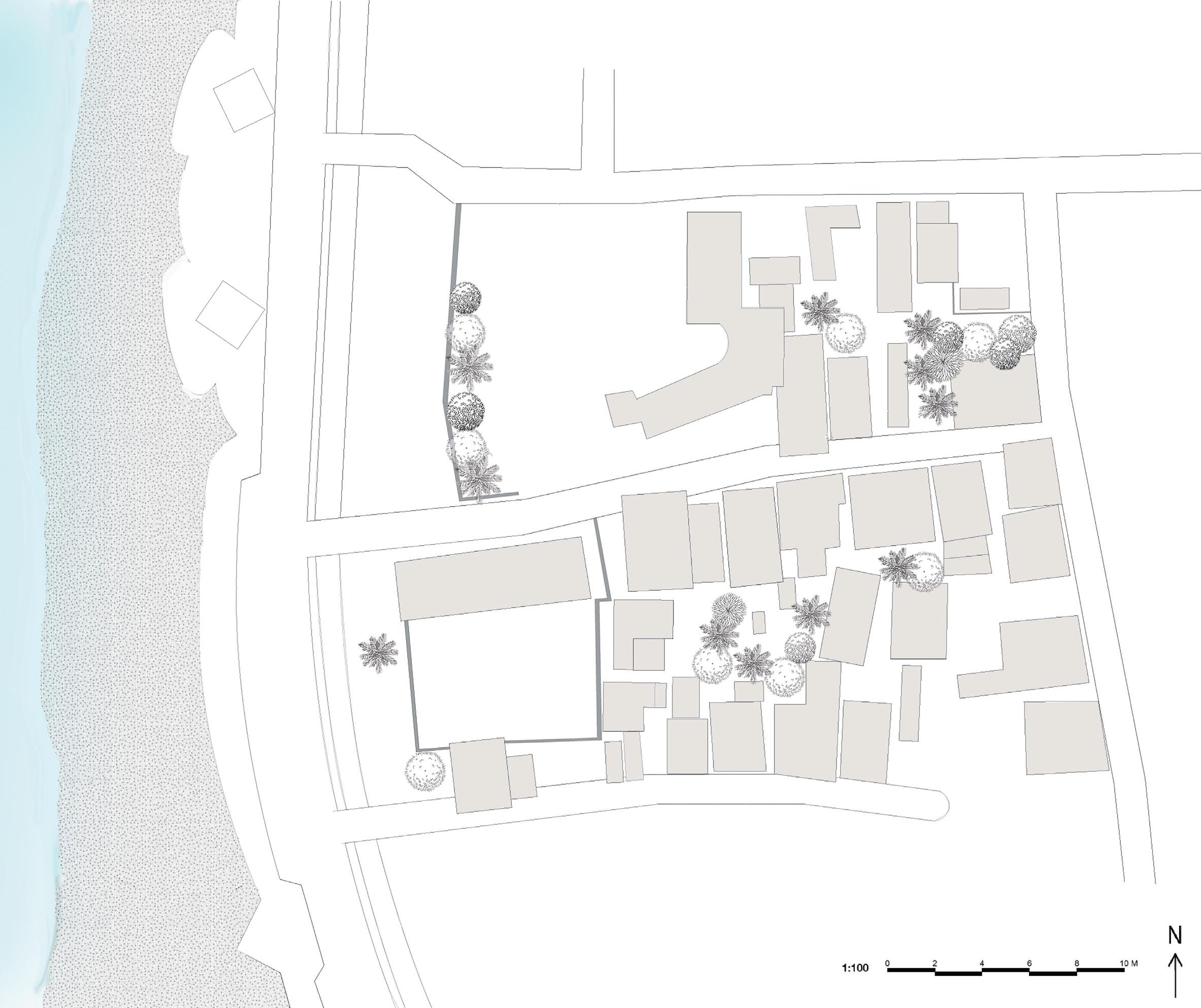
The argumentative question arises on the basis of observation: What if the sewage Water gets purified and reused in this settlement. so that the ecosystem will not be harmed. How can an intervention hold the public’s interest in the information? center? The program is to build a water purification plant to facilitate public and settlement to get purified and freshwater. Based on the water purification process, provide a community toilet.
Design Section:

Design details:
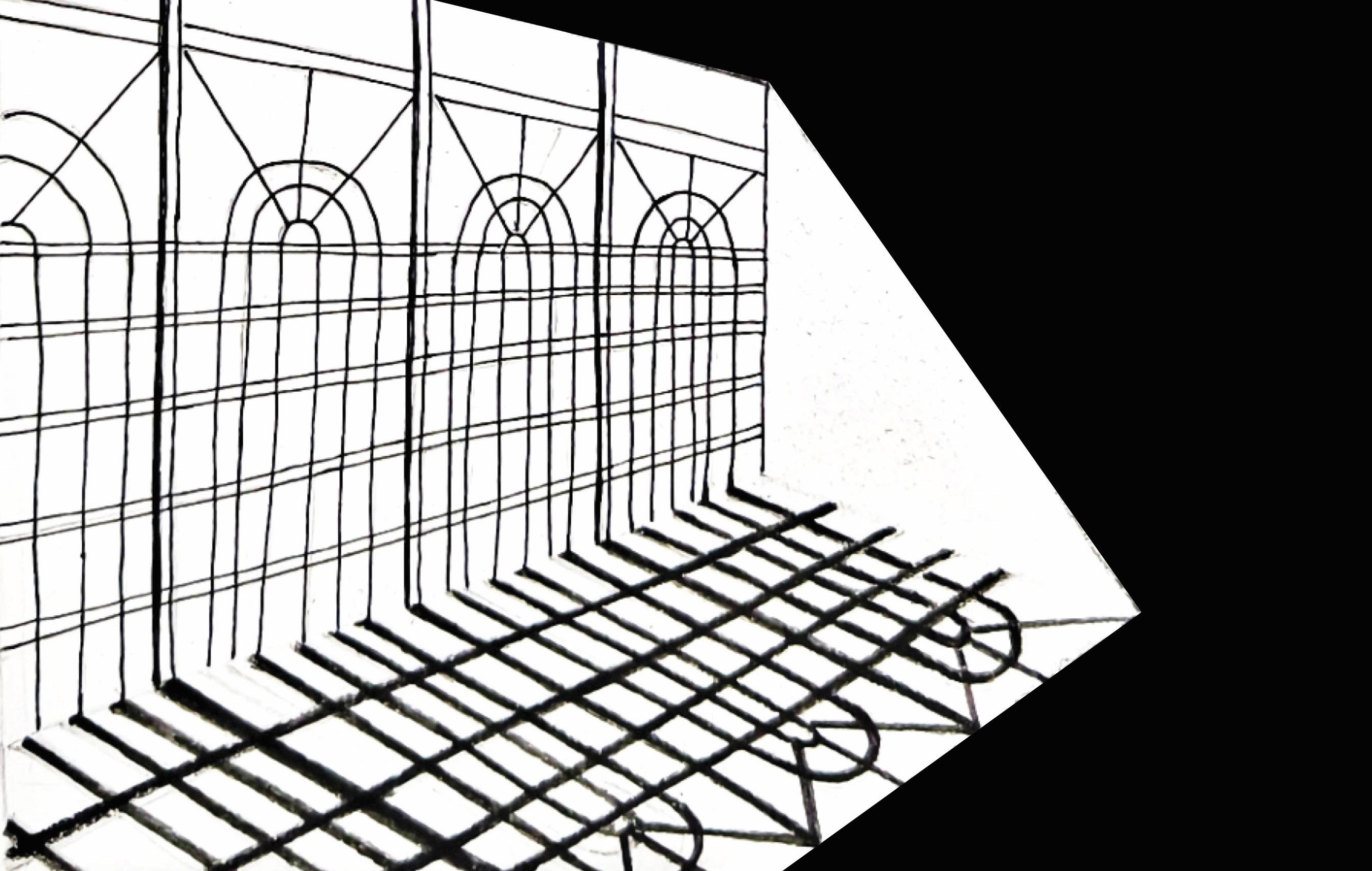
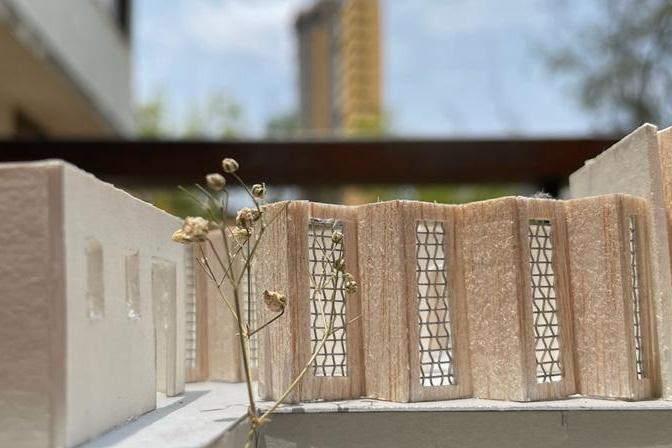
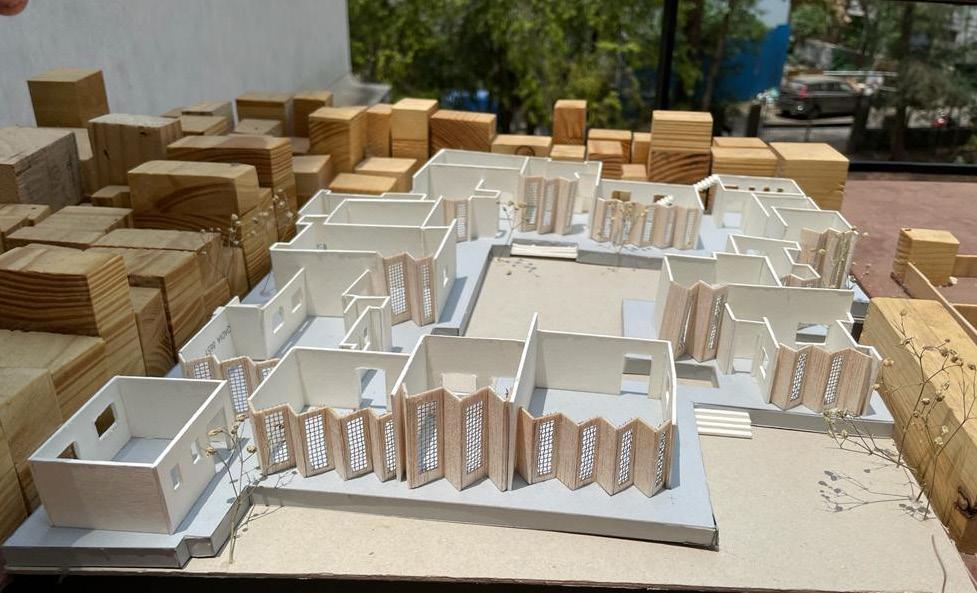
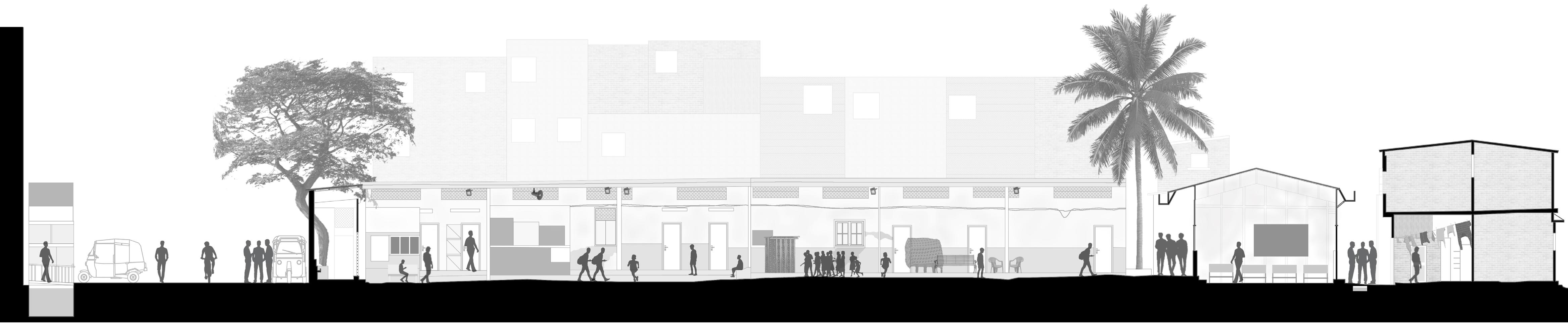
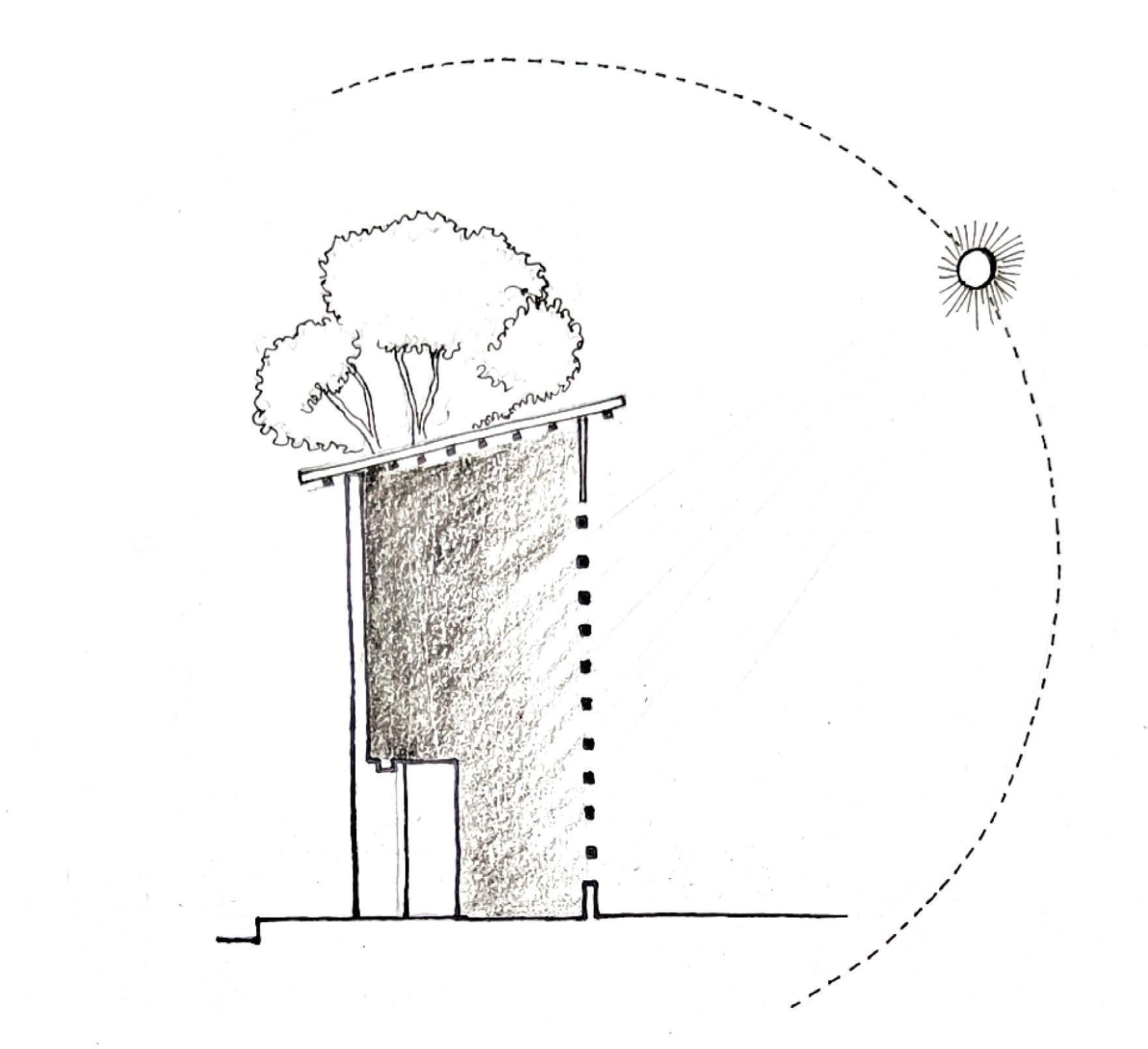
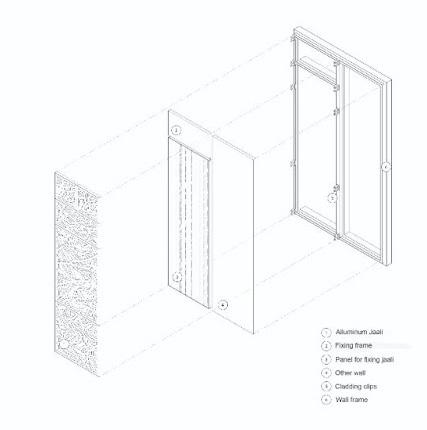
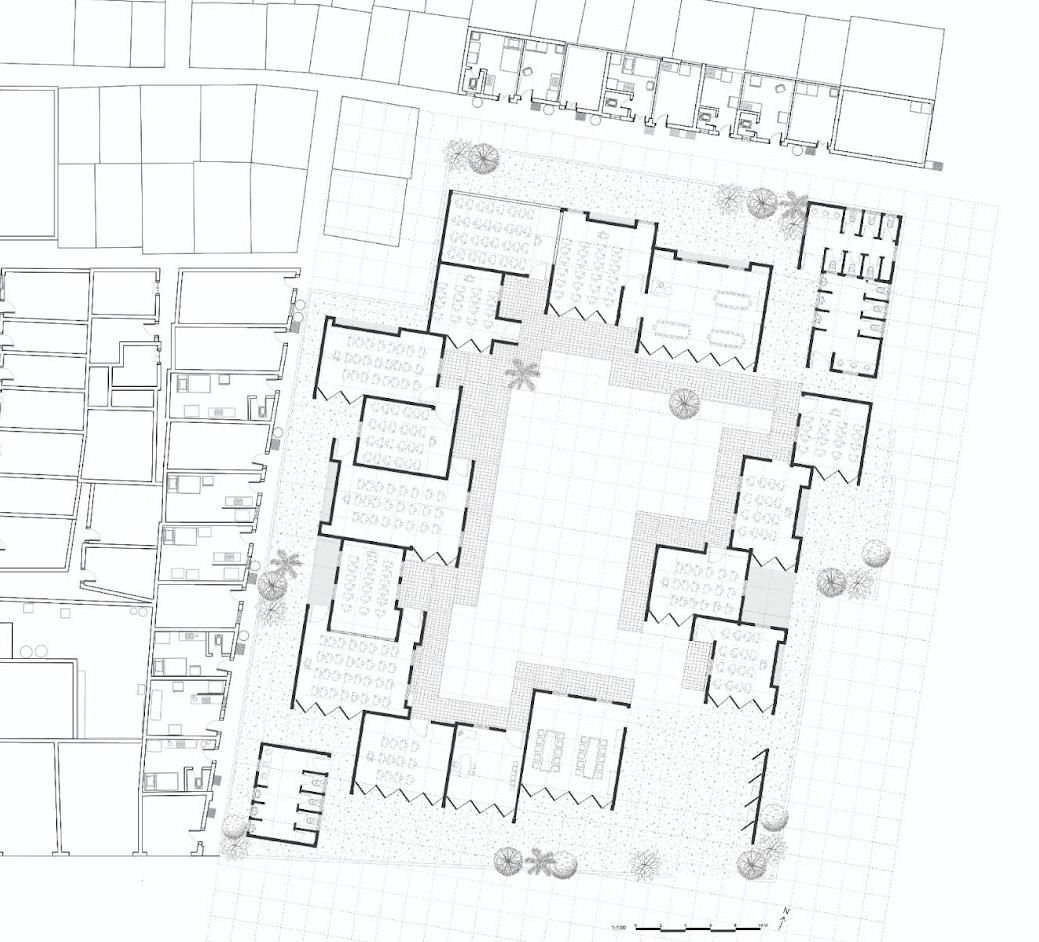
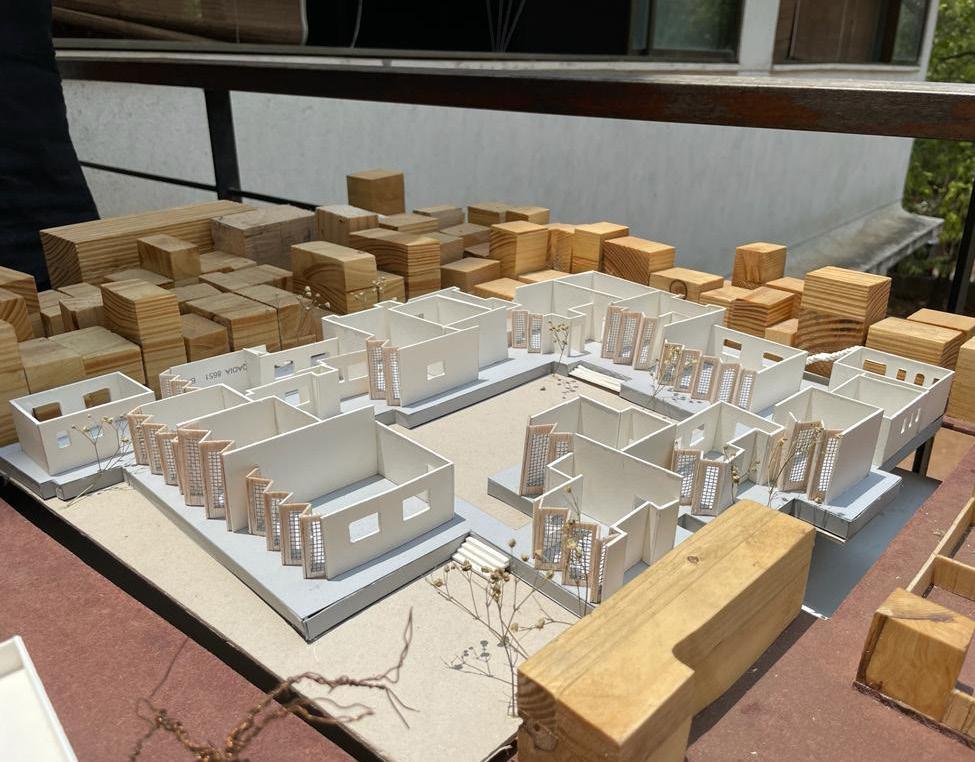
The site is located in Trombay, Mumbai, which consists of Trombay Public School, and its three sides are surrounded by 2 to 3-story houses. This studio emphasizes opening up the modernist logic of the understanding of “public,” which often reduces subjects within a space into objective entities. It works through the hypothesis that “public” is not a singular lump or “mass.” within which each body has equal aspirations and behavior; rather, it is a heterogeneous entity with contesting claims and occupations in space. The aim of the studio is to provide proper facilities at the school that were not there. There is a lack of light and ventilation in the school. The program is to use the existing material on the site, so I provided Jalis, which is fixed, and with the help of this, the light gets easily entered into classes.
Existing Section:
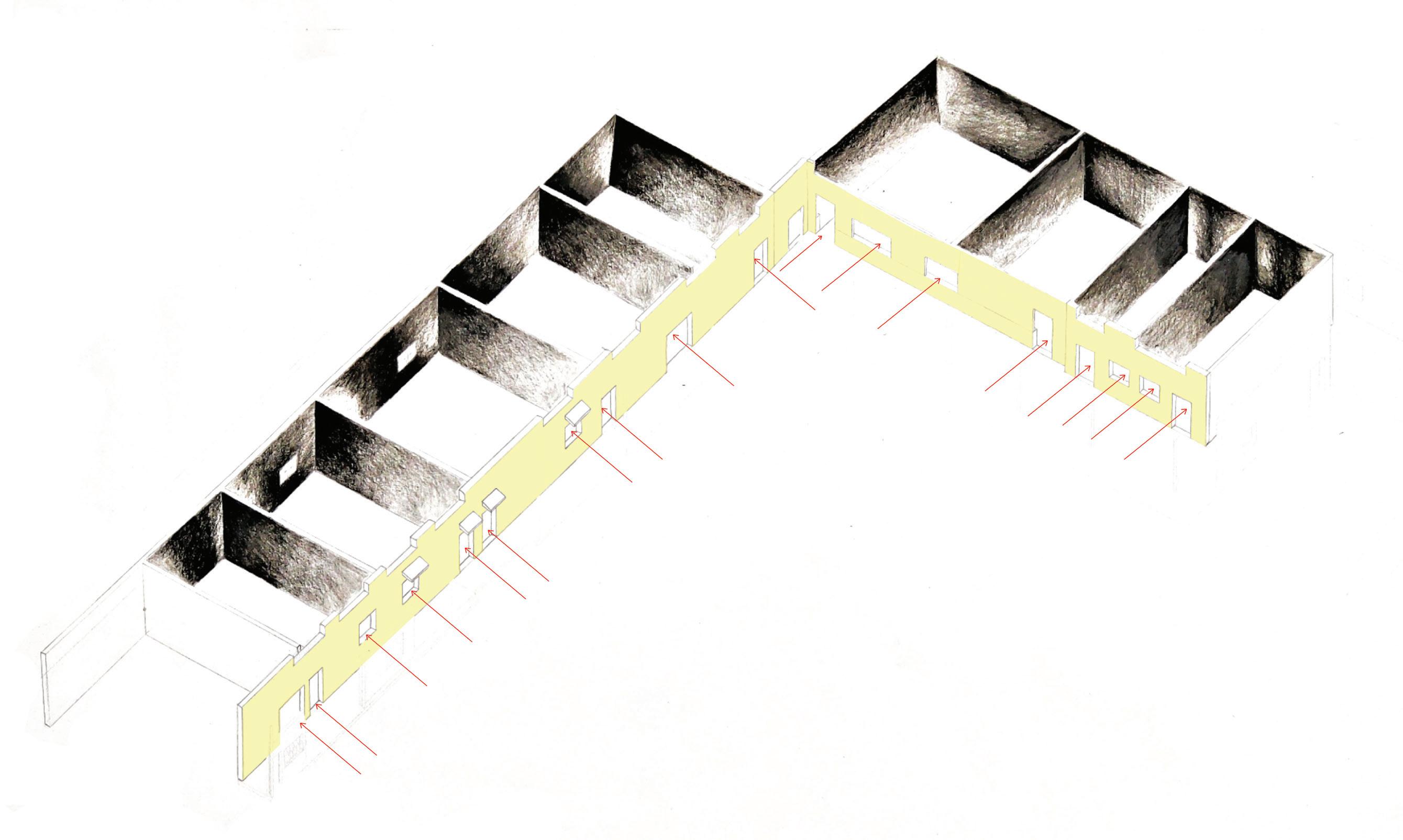
Ground floor plan:
Design section:

The studio is focused on the detailed development and refinement of building design through technical resolution of structural systems, material performance and experience, member assembly, threshold enclosure details, and the process of construction. For this, the above intervention by the school was used to explore the technicalities of designing. The studio is intricately carved from structural details, materiality, and the BOQ of the project. This project is built in RCC, where columns and beams are also cast in RCC. The height of each classroom varies from 3m to 4 m, so to get proper ventilation with respect to the capacity of the class. Talking about the passage, it is a semi-open passage that is covered with a cantilevered roof, and also for tiles, I have added paver blocks throughout the passage area and Kota tiles of 600mm x 600mm to each of the classrooms. For the foundation, a cellular raft foundation and eccentric columns were used due to space restrictions.
KOTA TILES 20MM
SCREED 25MM
CEMENT SLURRY 25MM
PCC COPING FLUSHING WITH DRIP EDGE
PARAPET WALL 210MM THICK
EXTERNALWALL PLASTER 18MM THICK
WATER PROOFING 150MM THICK
CANTILEVER SLAB DETAIL A EXTERNALWALL PLASTER 18MM THICK
RCC SLAB 150MM THICK
INTERNALWALL PLASTER 12MM THICK
INTERNALWALL PLASTER 12MM THICK SLIDING WINDOW
NUT AND BOLT TO ANCHOR WOODEN PLANK
WOODEN PLANKS
METAL JOINTS 10MM THICK
NUT AND BOLT TO ATTACH METAL FRAME INTO WALL
PLINTH BEAM
IS IN THE RATIO OF 1:3:6 (CEMENT SAND COARSE AGGREGATE). ALL LEVELS SPECIFIED IN METERS. ALL DECISIONS REINFORCEMENT CALCULATIONS NEED TO BE TAKEN BY STRUCTURAL ENGINEER. DO NOT SCALE THE DRAWING. ALL DISCREPANCIES SHALL BE BROUGHT TO NOTICE TO THE ARCHITECT BEFORE THE COMMENCEMENT OF ANY WORK. RICHER CONCRETE MIX TO BE USED FOR THE FOUNDATION AND M:30 MIX TO BE USED FOR THE SUPER STRUCTURE, ALL MIXES SHALL BE SUGGESTED, EXAMINED AND APPROVED BY THE STRUCTURAL ENGINEER.VERIFY FIELD CONDITIONS AND COORDINATION WITH THE PROJECT DOCUMENTS PRIOR TO PROCEEDING WITH THE WORK. WORK WITHIN THE FIELD BOUNDARIES AS SPECIFIED IN THE PROJECT DOCUMENT AND COMPLY WITH ALL THE APPLICABLE BUILDING CODES, REGULATIONS AND ORDINANCE REQUIREMENTS.OCCUPANTS ON THE ADJACENCIES TO THE PROJECT AREA SHALL CONTINUE UNINTERRUPTED/UNDISTURBED OCCUPANCY DURING THE CONSTRUCTION OF THE PROJECT. SR. NO. DATE REVISION DESCRIPTION ISSUED BY CHECKED BY KEY PLAN MRUNMAI BAILKE SCHOOL OF ENVIRONMENT THIRD YEAR B.ARCH ROLL NO A20 - 04 AND ARCHITECTURE 2022 - 2023 PUBLIC SCHOOL AT TROMBAY, MUMBAI GENERAL NOTES
STAMP &
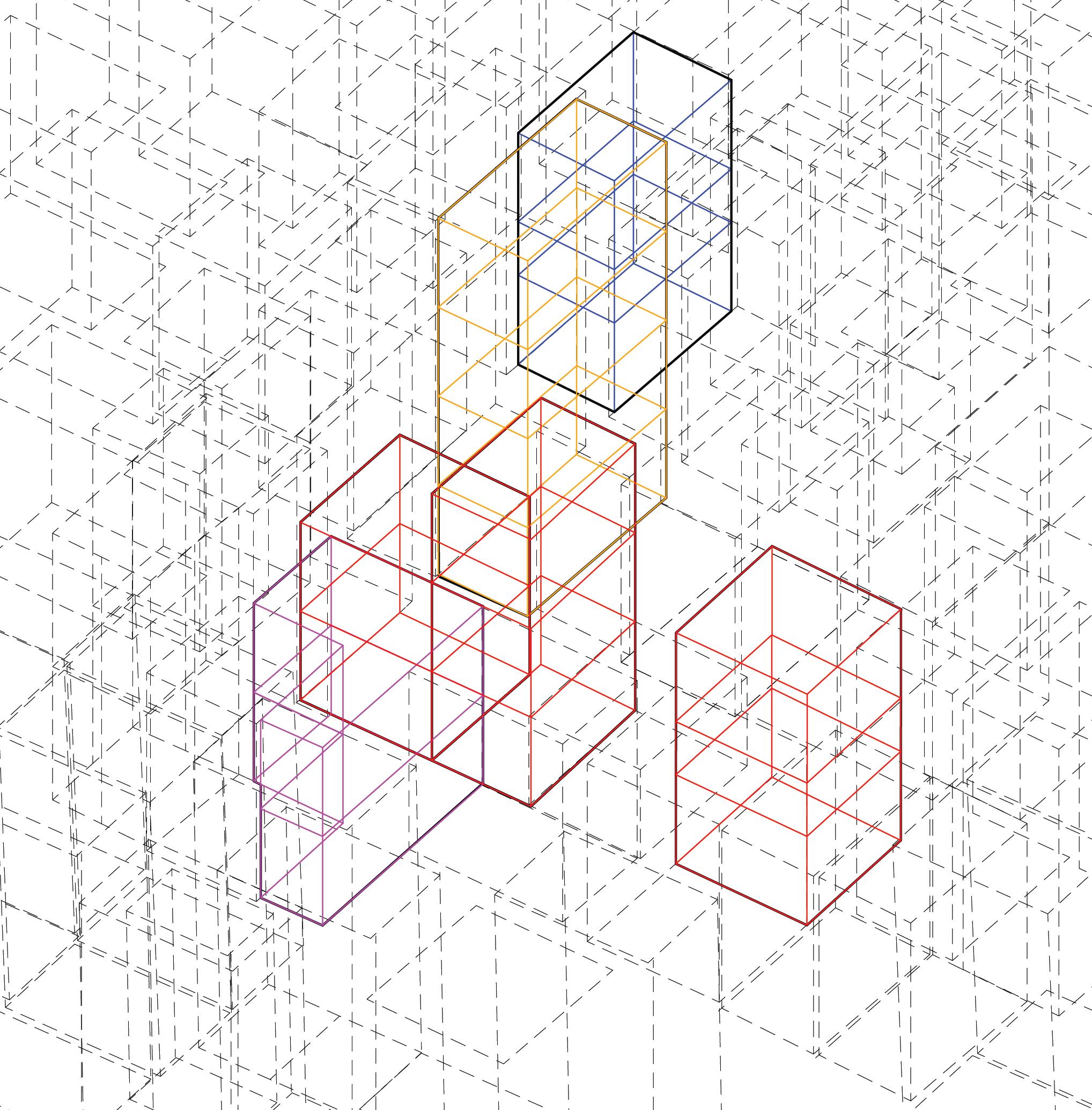
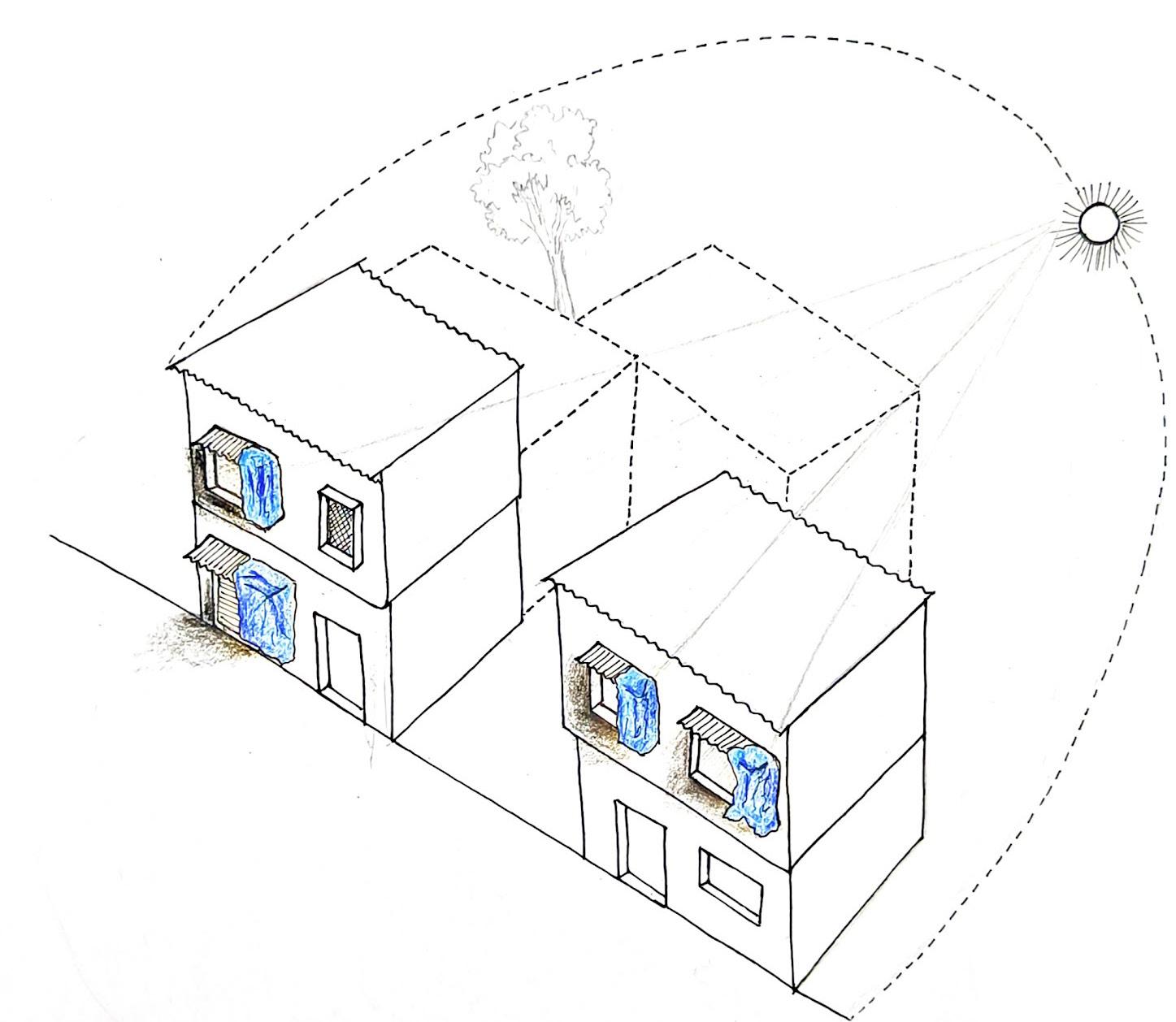
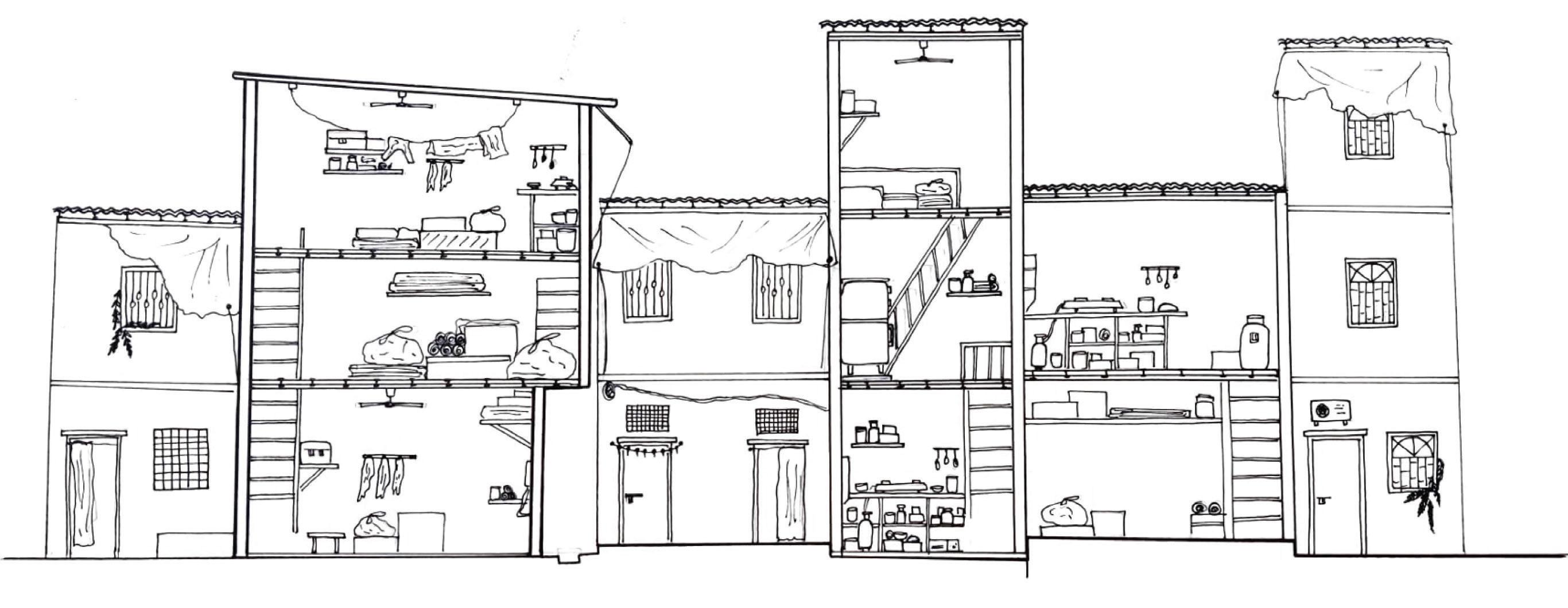
The site is located in the eastern suburb of Mumbai is in Kurla, which consists of Thakkar Bappa Colony. It is an informal and migrant settlement where most of the people are from Rajasthan and the primary occupation is shoemaking. The studio is mainly focused on repairs and retrofitting on the basis of the living conditions of the migrant For this, we have to study six houses and their living conditions. The houses that I studied were 2 to 3 storeys high, 2.5 to 5m long, and whose width is about 3m. There is a lack of space as well as a lack of light and ventilation. In the project, the strategy was that after 10 years, how will the living conditions of the people’s as people living here since the 1960’s be? So I started stacking up the houses and retrofitting and scoped out some areas and extending towards the courtyard area so the issue they are facing currently of light and ventilation gets resolved. Also, give them the retractable staircase so there will be more space for the accommodation.
Ground floor plan: Existing section:
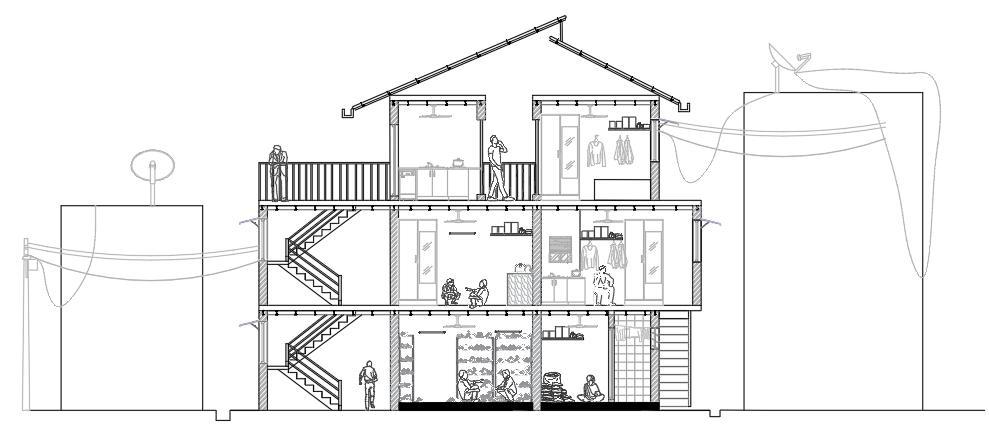
Design section:
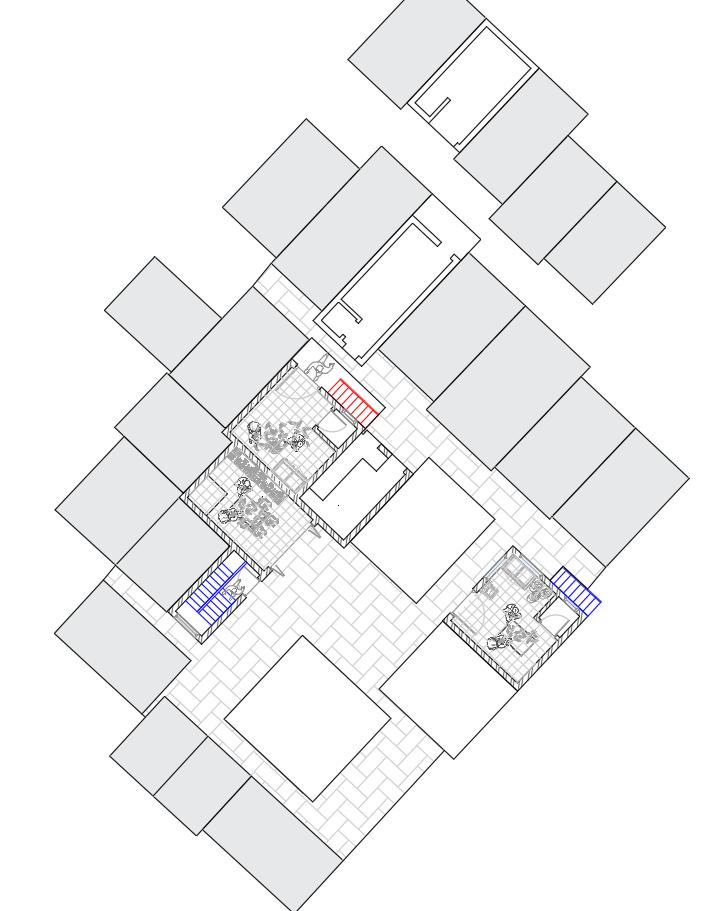
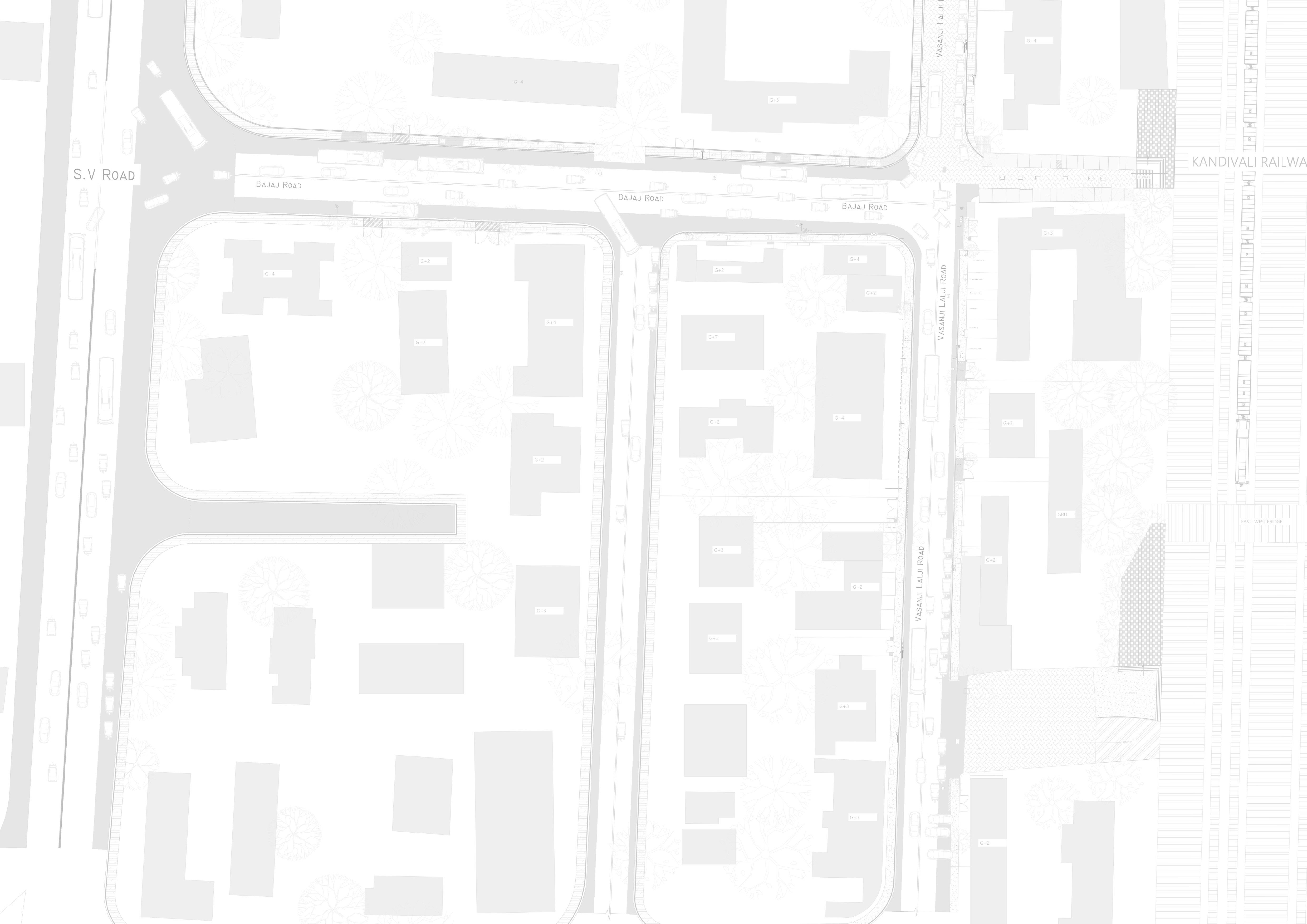
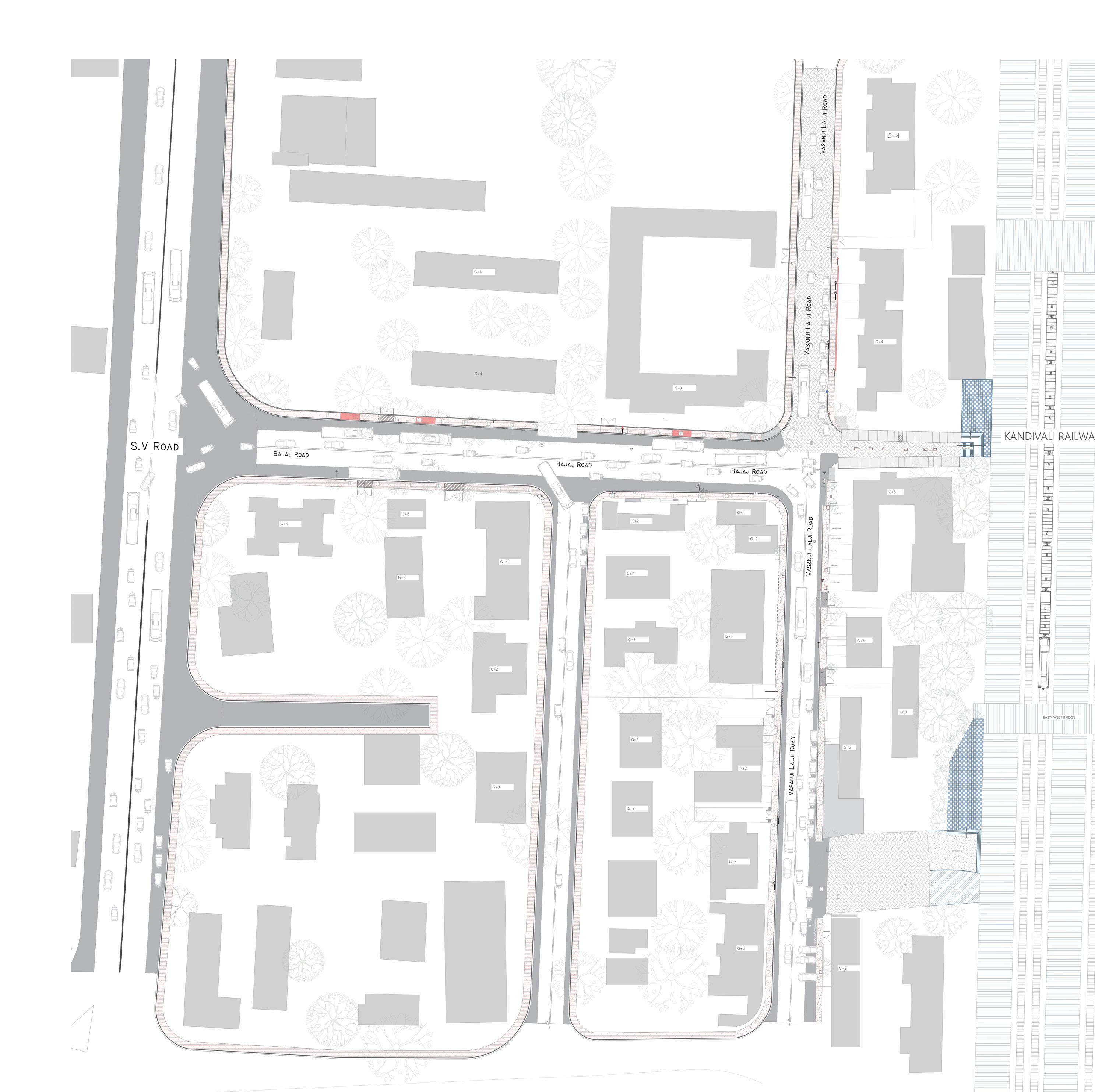
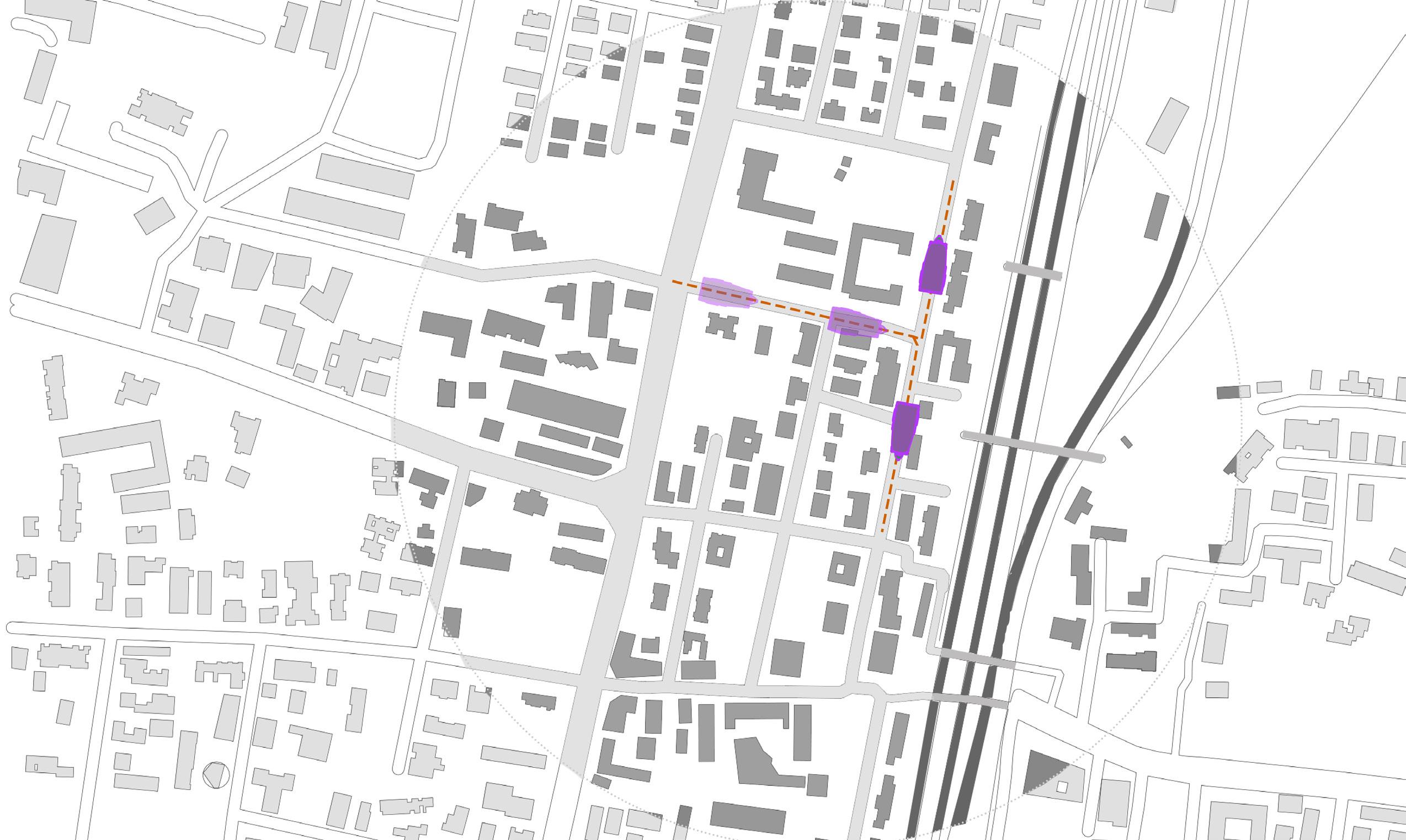
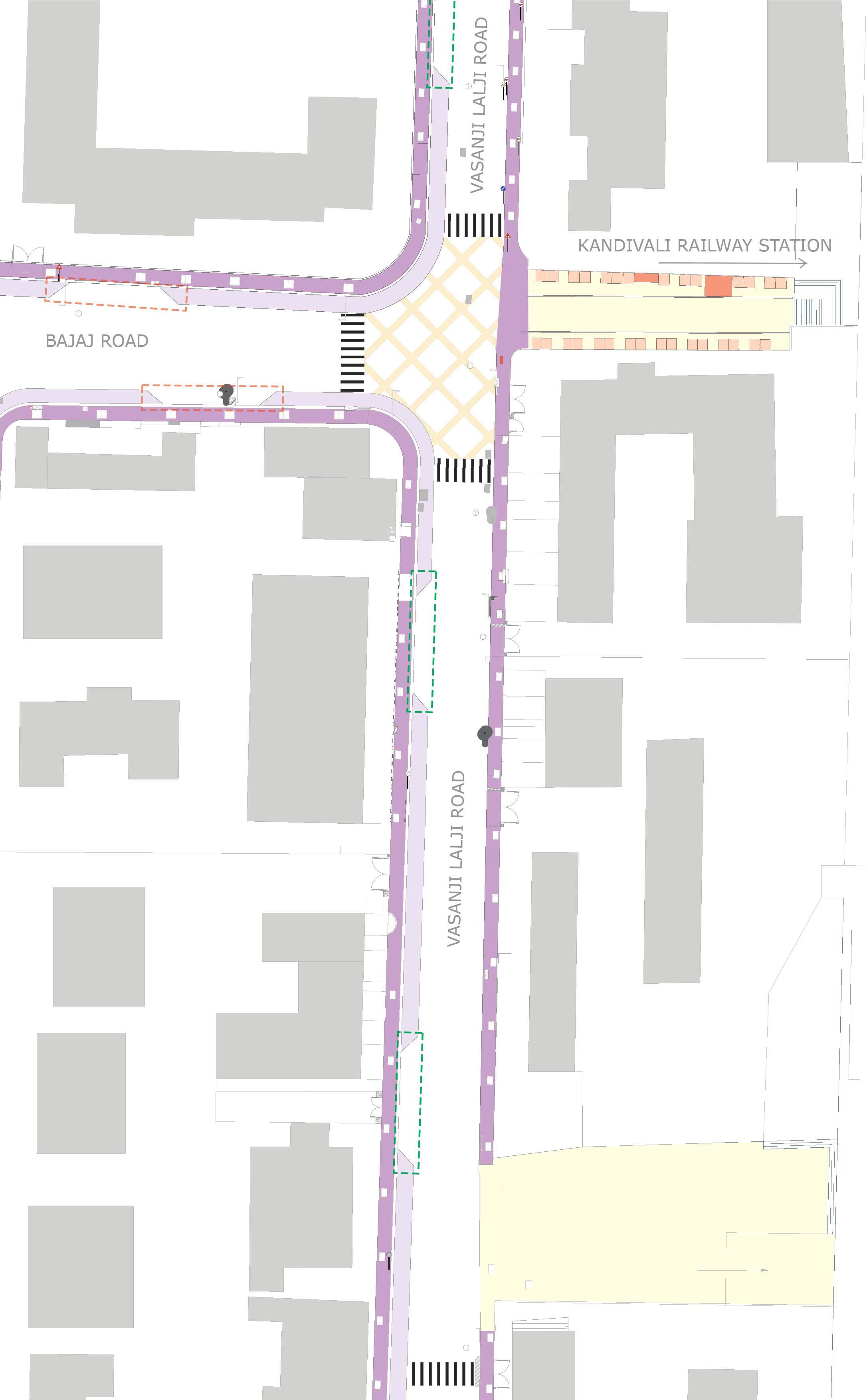
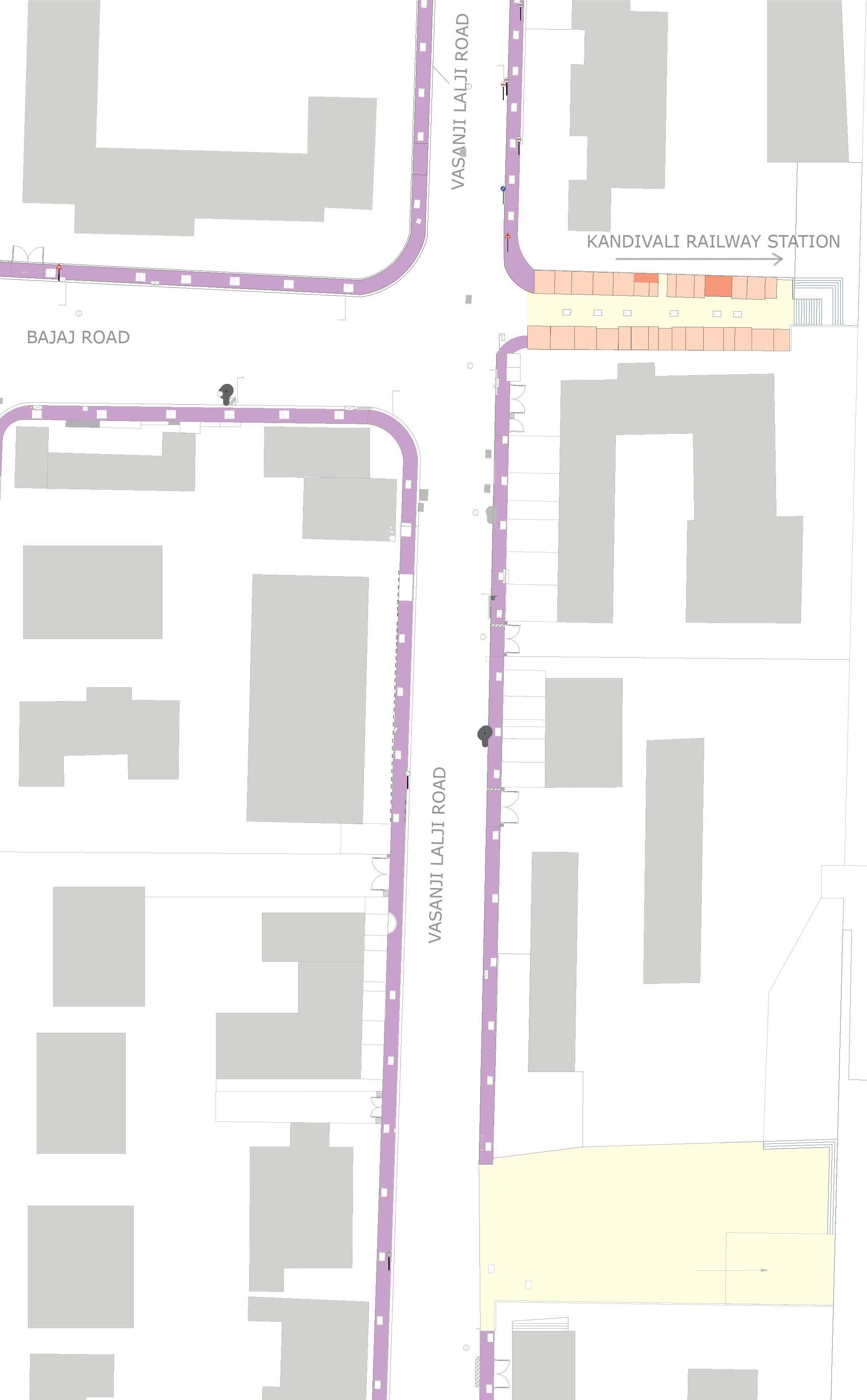
Streets are significant to the well-being of a city and urban areas; they are important. public corridors for moving people through various modes of transport and on foot. Hence, street networks are integral to urban planning, and the design of street environments is a vital part of urban design. The studio is mainly focused on the larger picture of street networks connectivity and hone in on the street and footpath design as one element of an urban plan. The site of intervention is Kandivali. Station West, where the footpaths are too narrow and the footpath space was accommodated by the wenders, so the people coming and going to the station had to walk from the road, and there were too many crowds on the street. The autorickshaws also get more crowded. In the project, the aim is to improve the suburban train. commuters’ experience by reducing the pedestrian-vehicular conflict in station areas, using Kandivali Railway Station (W) area as a case study
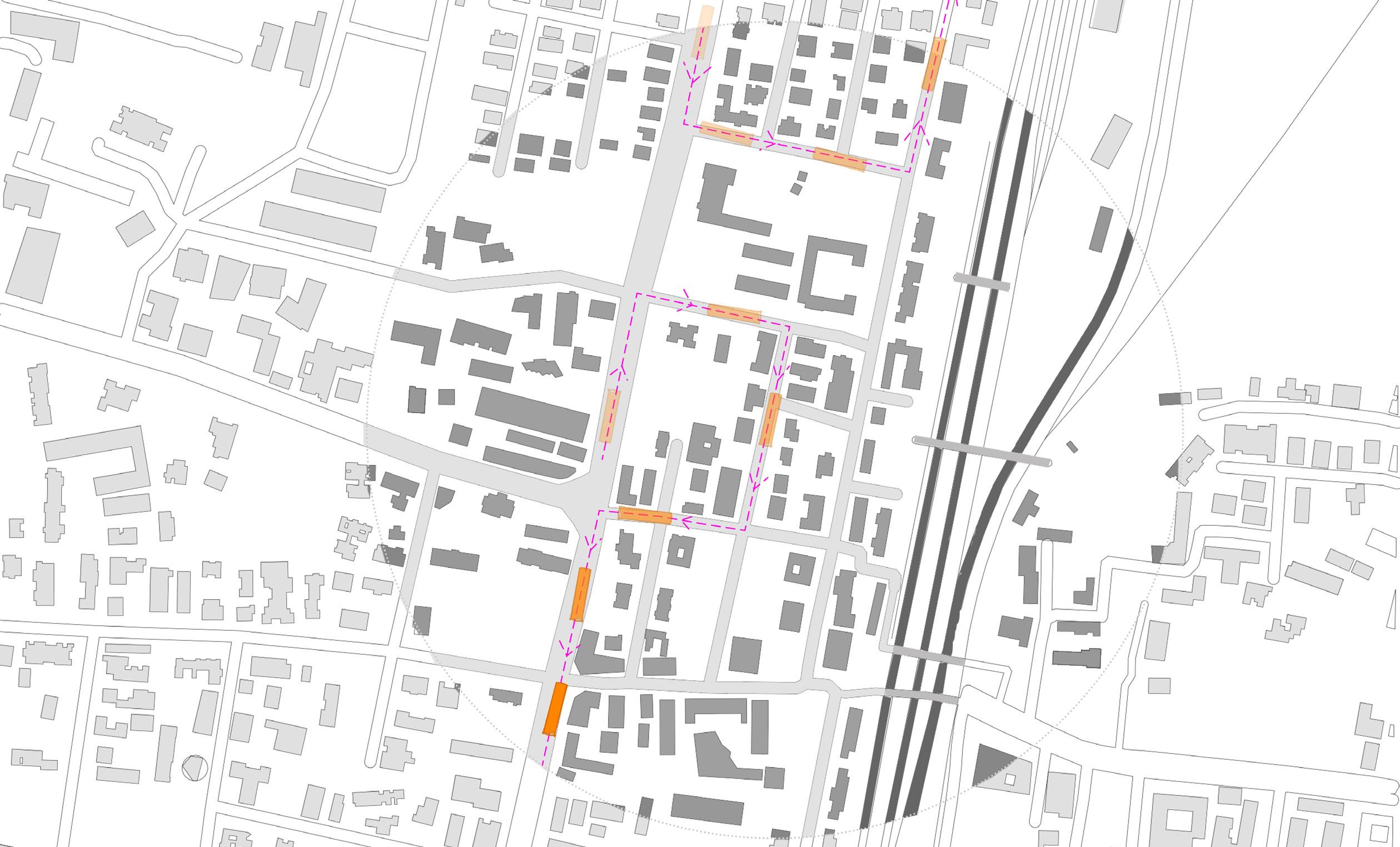
Existing route of auto:
Objectives:
1. To frame guidelines which can be applied to various other station areas in the Mumbai suburban region
2. To provide universal accessibility
3. To improve vehicular flows by reorganizing the traffic movement and drop-off / pick-up points of passengers.
4. To improve pedestrian flows and reduce overcrowding in station areas
5. To increase walkable space for pedestrians
6. To regulate vendors through designating vending zones / pitch sizes
Existing route of bus:
Interventions:
Road and junction:
1. Marking the junctions as ‘no stop zones’ to reduce overcrowding at those places.
2. Introducing a traffic signal at the junction to manage the vehicular traffic.
3. Increasing walkable areas on the roads by 1.8 meters through road painting.
4. Designating specific locations for auto rickshaw stand, as pick up and drop off points.
5. Reorganizing the bus routes to disperse vehicular traffic.
6. Using M30 concrete panels for footpaths and maintaining a kerb height of 150mm throughout.
7. Adding signage’s and informative banners at specific spots for way finding.
8. Adding ramps and tactile tiles for universal accessibility.
Existing:
Proposed:
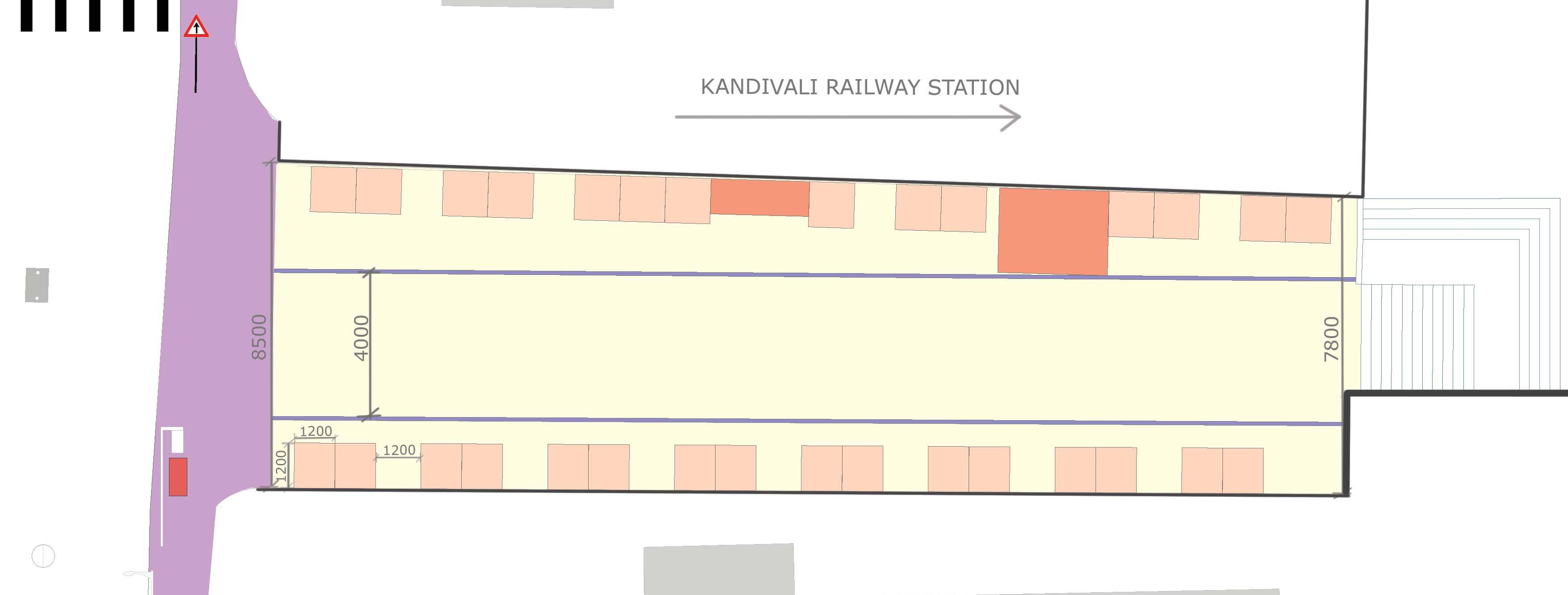
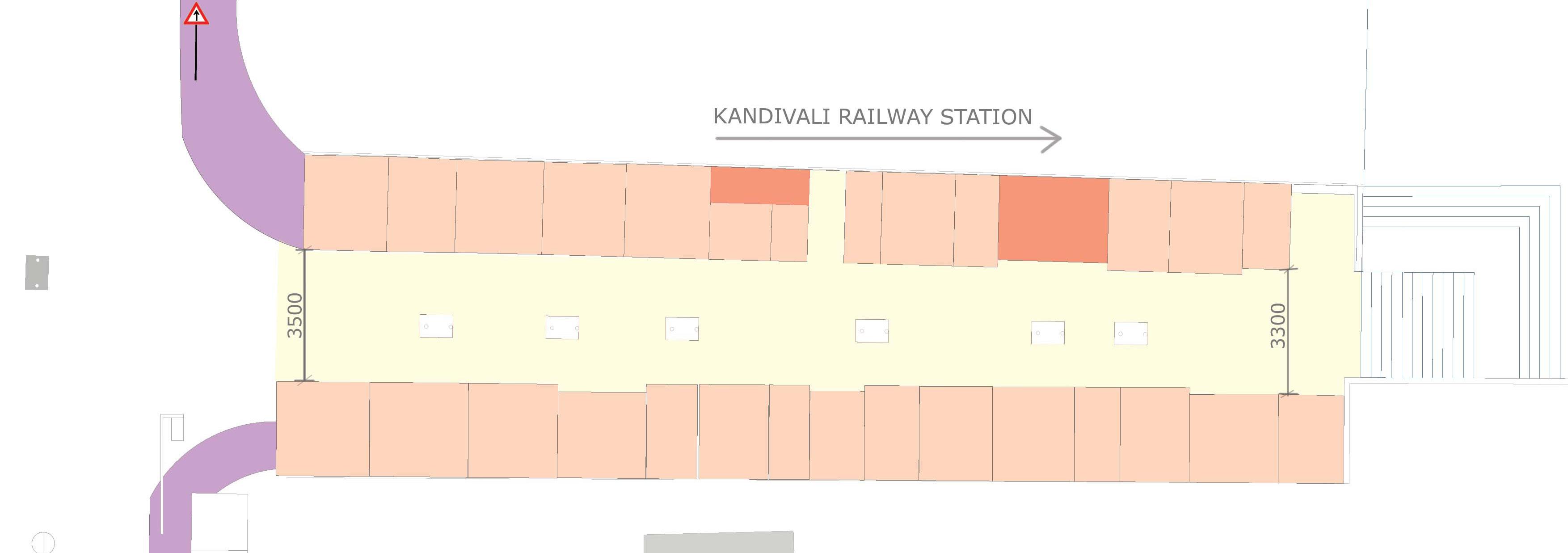
Existing: Proposed:
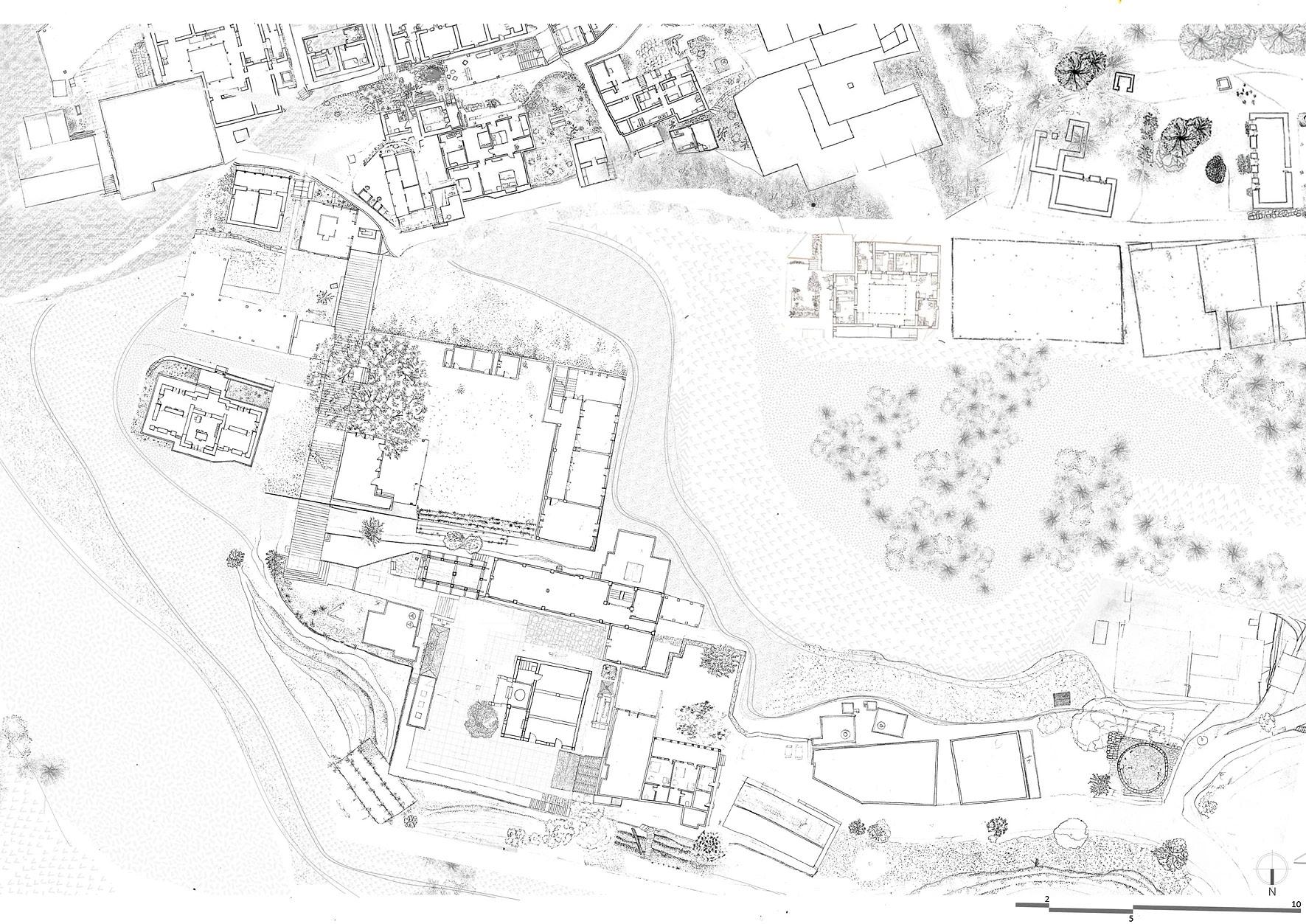
Pangna is located in Mandi district in Himachal Pradesh. It is a small village that has 3000 houses currently. At the edge of the village, a small stream runs named Pangna Kund. The core of the studio is to understand the relationship between the tangible physicality of space and form, the context that produces them and the life that they afford. For this, we have studied the cluster of houses that contains the ancient fort of Pangna and is at the peak of the settlement. Through the process of measuring and drawing this site, the spatial logic, materiality, and construction techniques were identified and documented. Along with the measured drawing, we also documented the older and existing practices with the help of interviews and routine studies. Earlier, the king of Pangna used to live in the fort, and now there is a temple that also includes a fire temple where folk songs were performed.
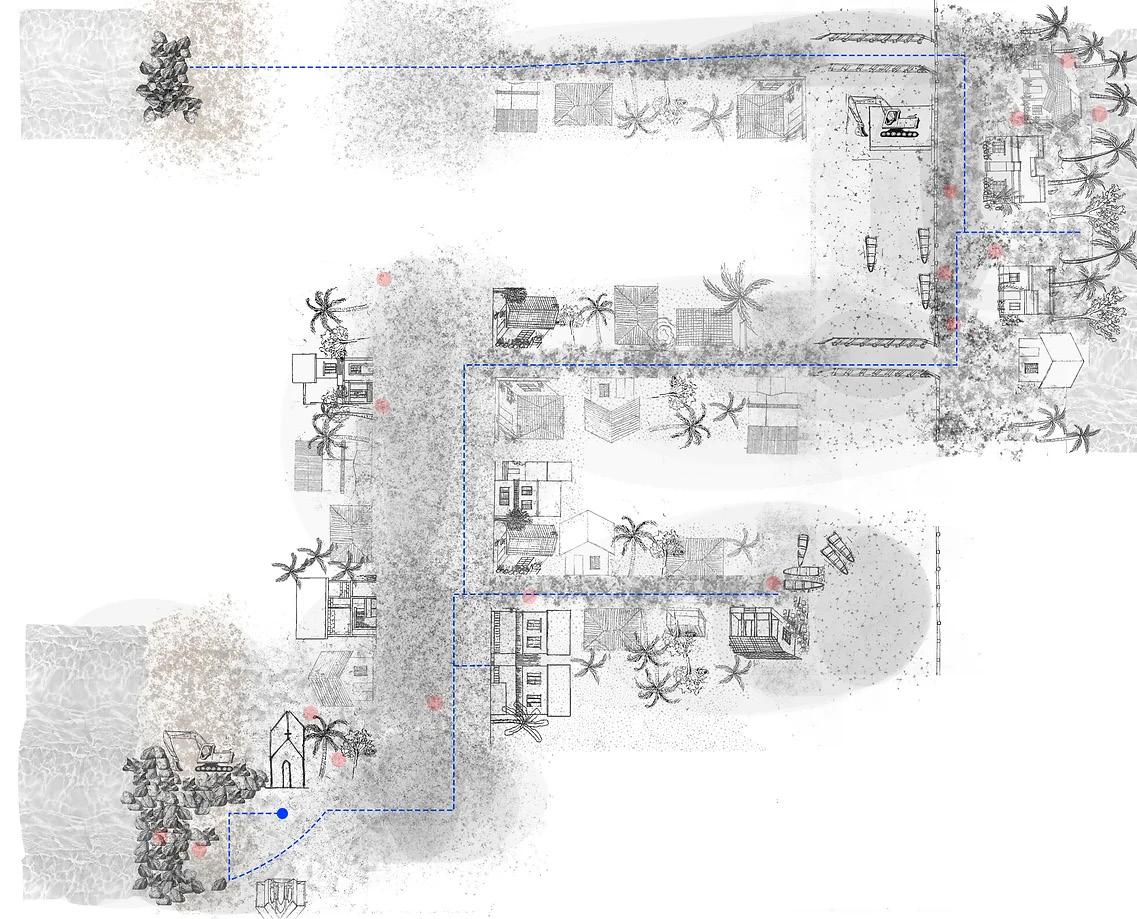
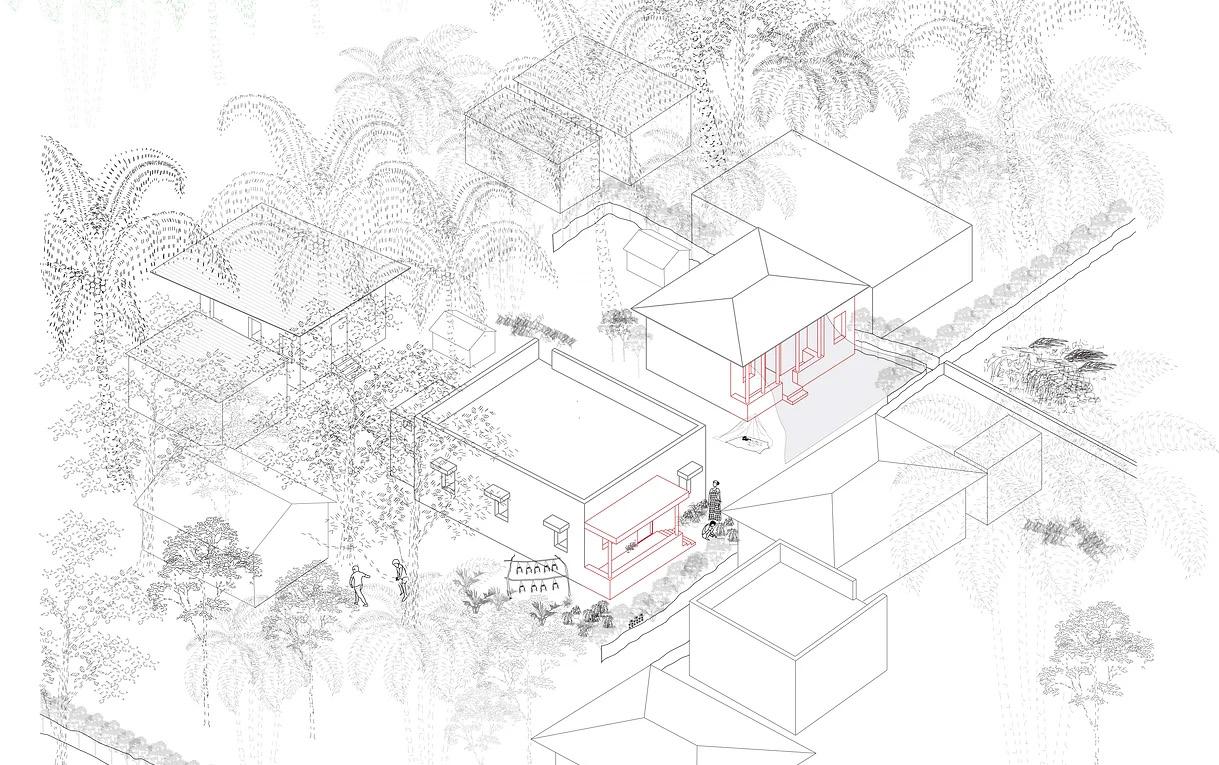
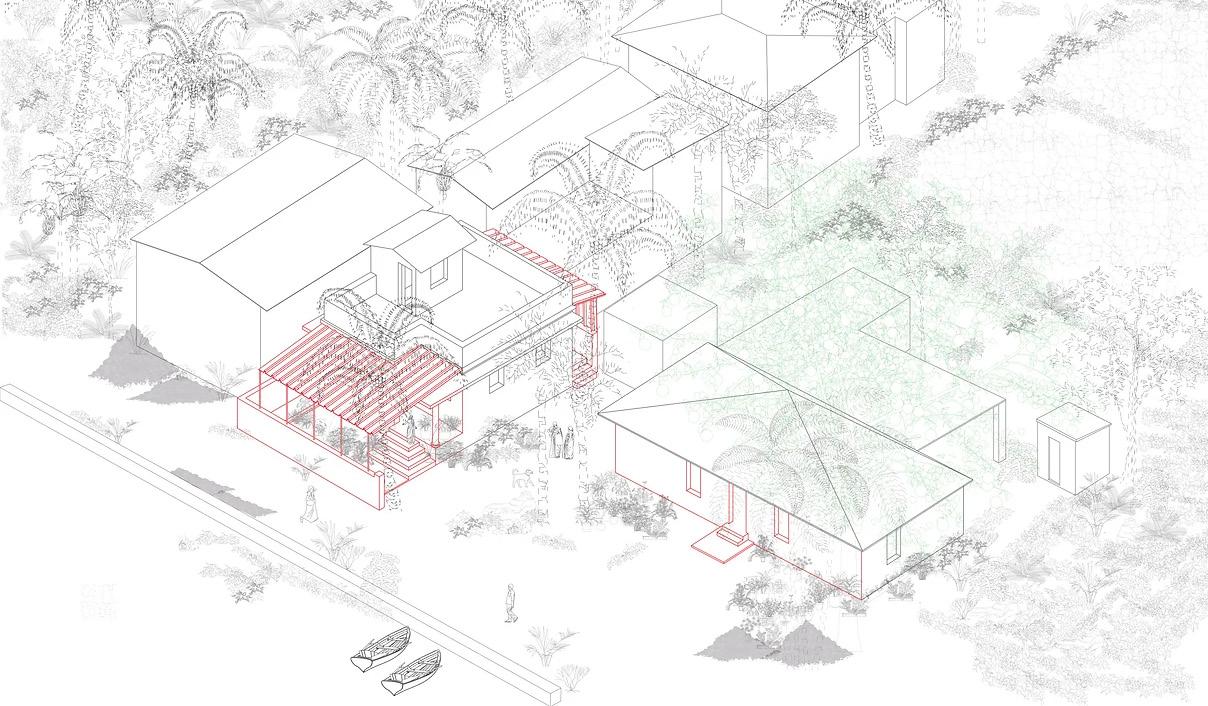
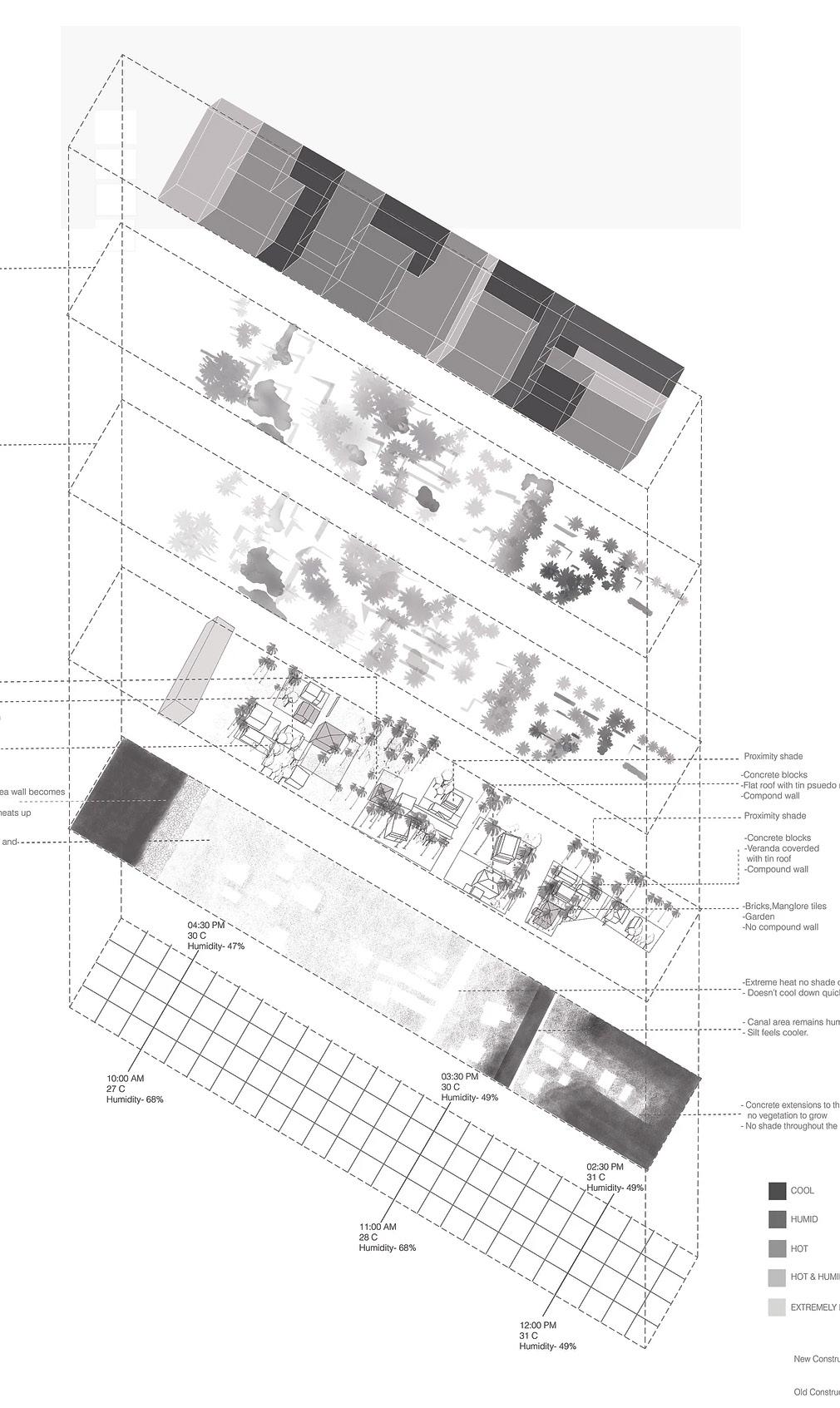
The site is situated in Chellanam, Ernakulam, which is a thin strip of land between the Arabian Sea and the backwaters of Vembanad Lake. Our process was walking as a mapping method through the idea of derive. We were to identify the everyday practices of urban life within our given sites. The first instinct was to head towards the sea, only to encounter an eyesore of a sea wall in the scorching tropical sun. Heading towards the main road, looking for some shade, I encountered a cast of tetrapods. I walked on the main road, still in search of shade. Turned towards a narrow lane, which was shaded with the casting shadows of the houses and the dense vegetation. During our field study in Chellanam, we were completely oblivious to the weather data. Our constant instinct was to find a place of shade. We would look for shade in small shops along the road, under coconut trees, in between houses, and on verandahs. As we worked along the course, we realized that these conditions of’shade’ are microclimatic conditions formed by a configuration of elements like soil condition, porosity and wetness, the type of built-form, its materiality, and the configuration of foliage around it. These microclimates work in volumes. The volumes are perceived through experiences, assumptions, and intuition.
Derive drawing:
Configuration of macro climate:
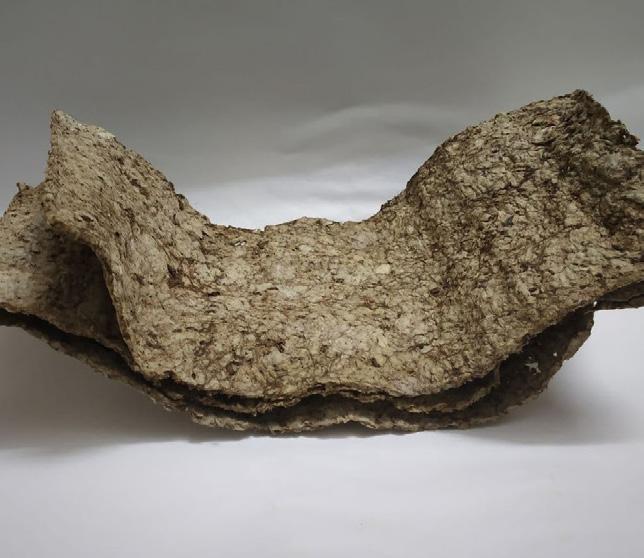
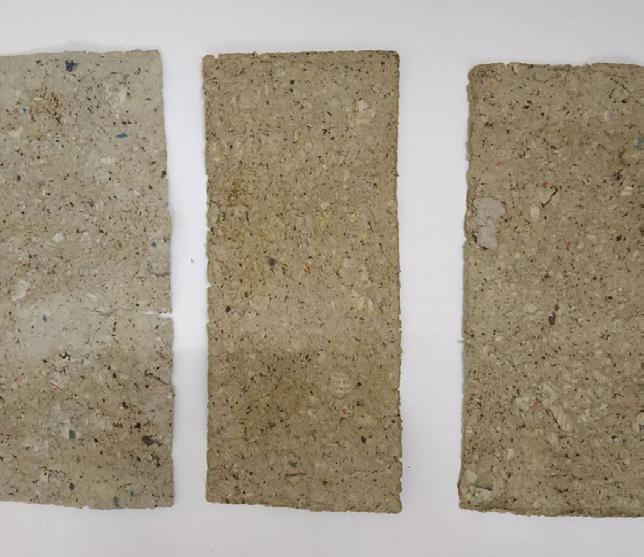
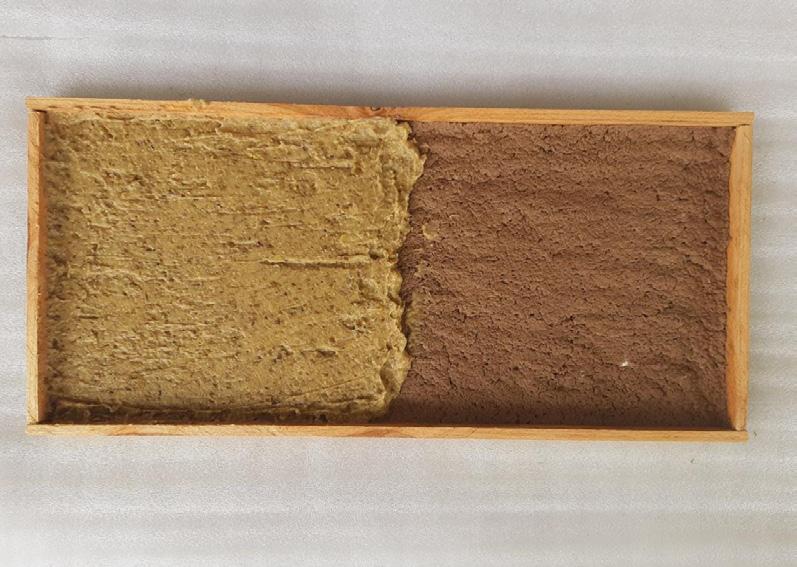
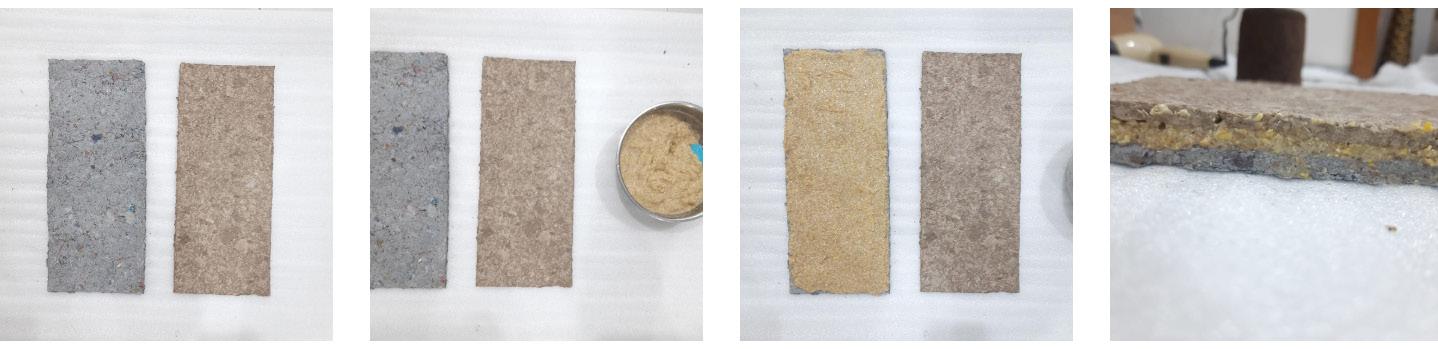
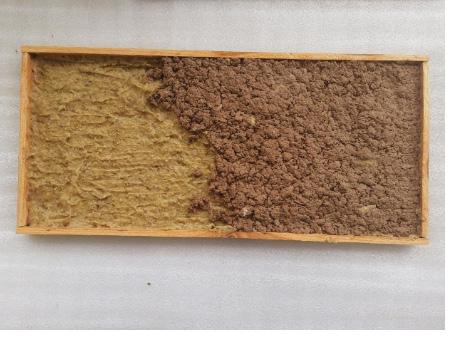
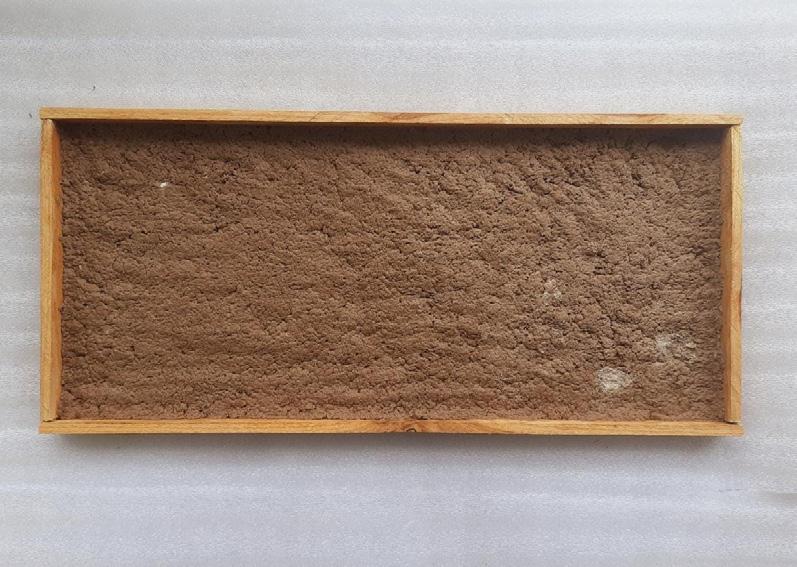
Materials have different properties, and how these different properties come together and form a composite material When a composite material goes through different techniques and processes, it results in a different form, texture, and properties. At the start of my exploration, corn starch was the main material used with different materials, like newspaper (soak) and moong dal.
Mentor-
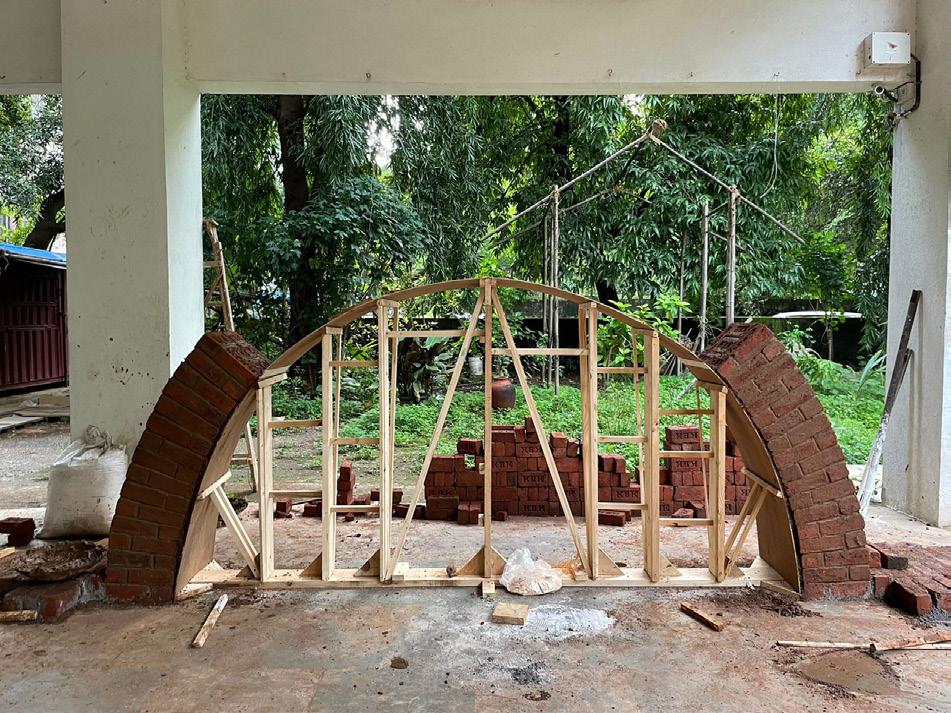
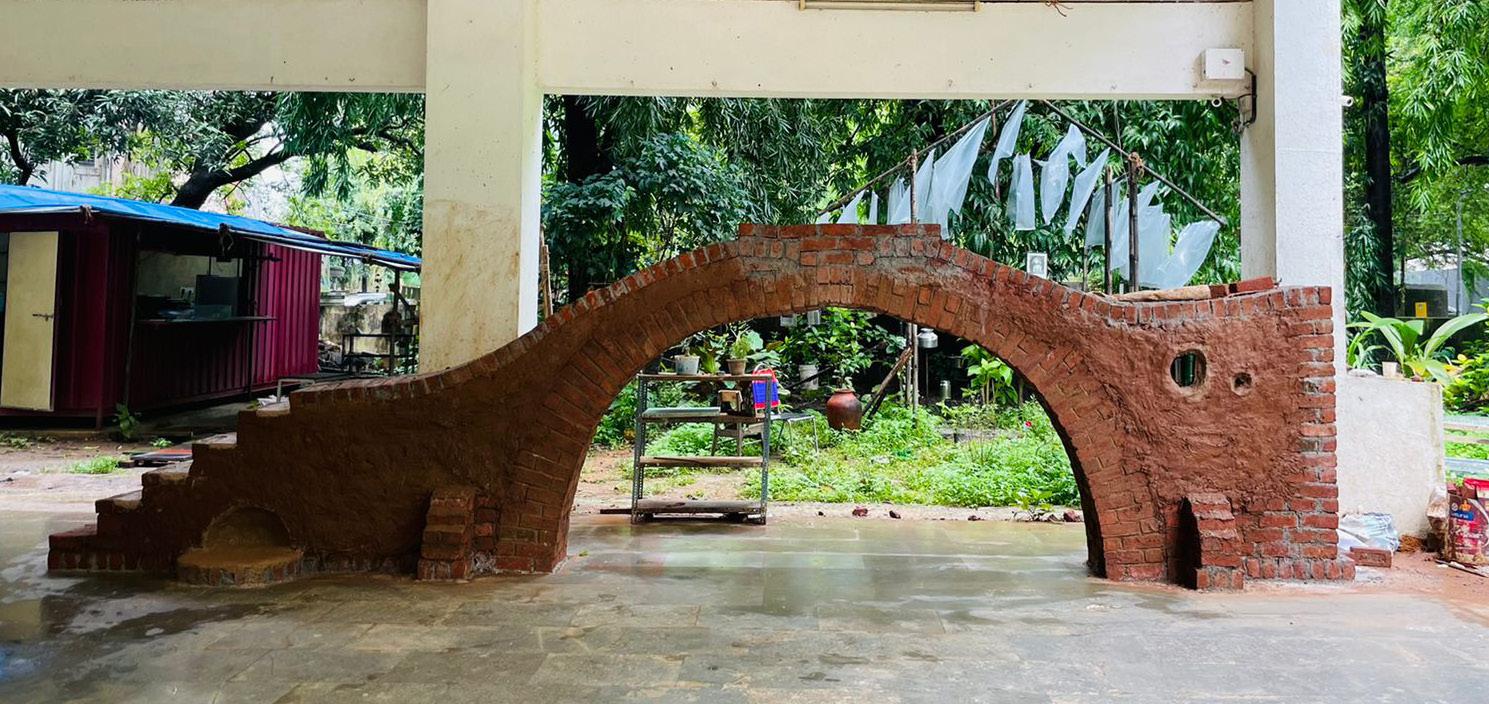
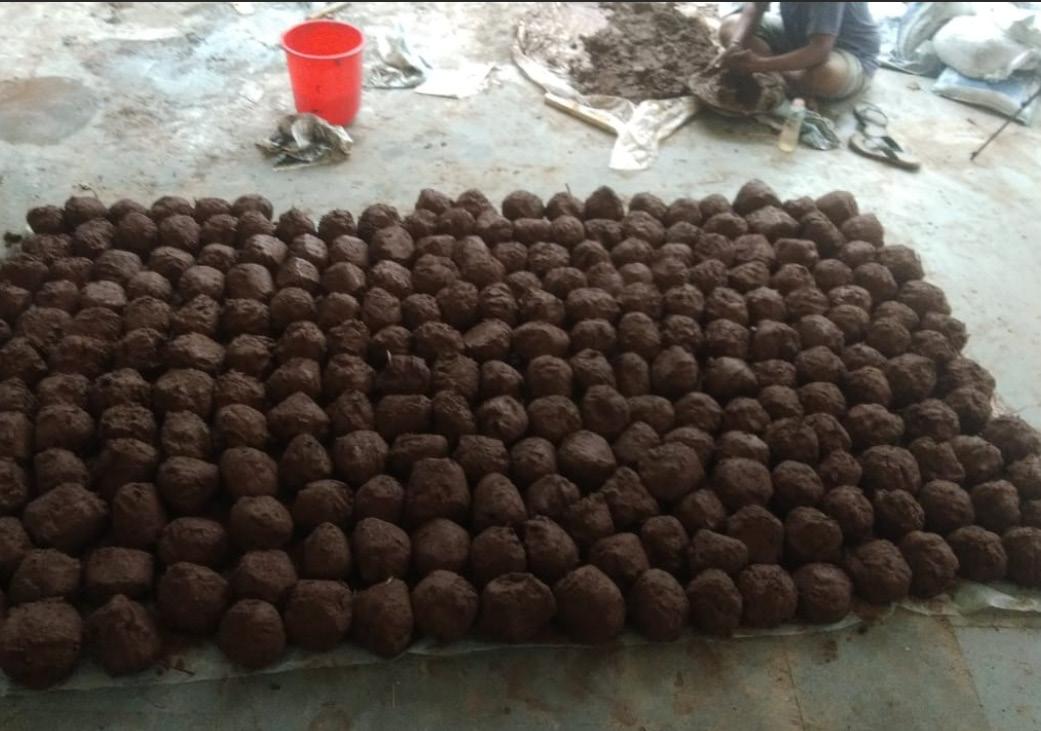
The course was intended to help us generate a framework for design through an ecological understanding of cultures. The studio focused on making an arch with the help of brick, lime, straw, sand, and mud. The process starts by making a framework for an arch using plywood, and then mixing the mud and the straw to make a cob wall. The construction of the wall was linear to both sides of the arch, and at the end, the key stone was placed by chamfering the bricks.
Intent :
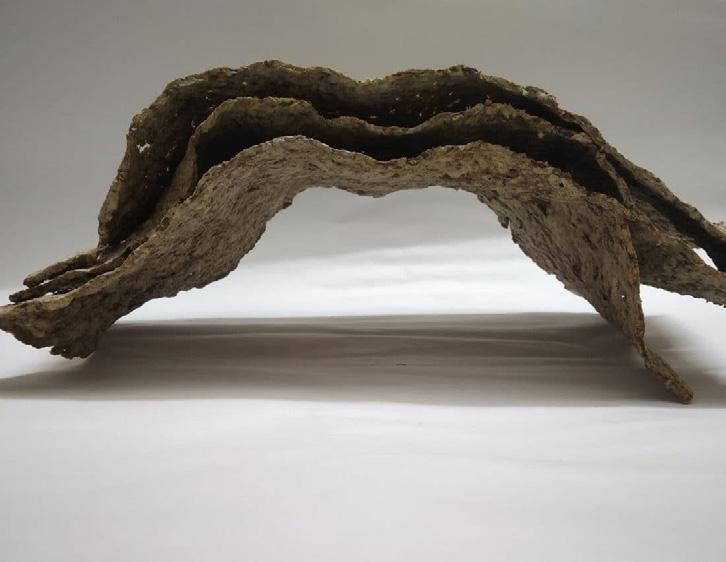
This research intends to achieve different forms with the viscosity of the materials. In this process, the main materials used were paper and moong daal. Different processes were used, like heating, baking, drying, etc.
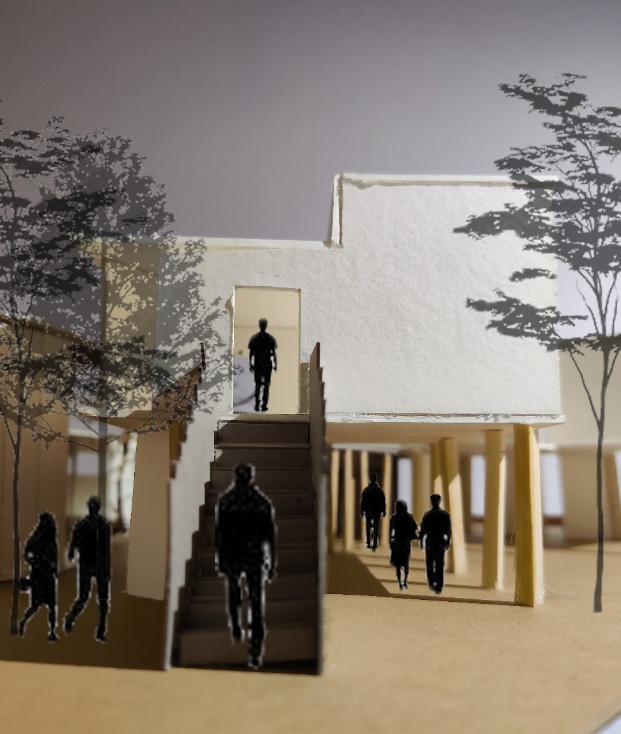
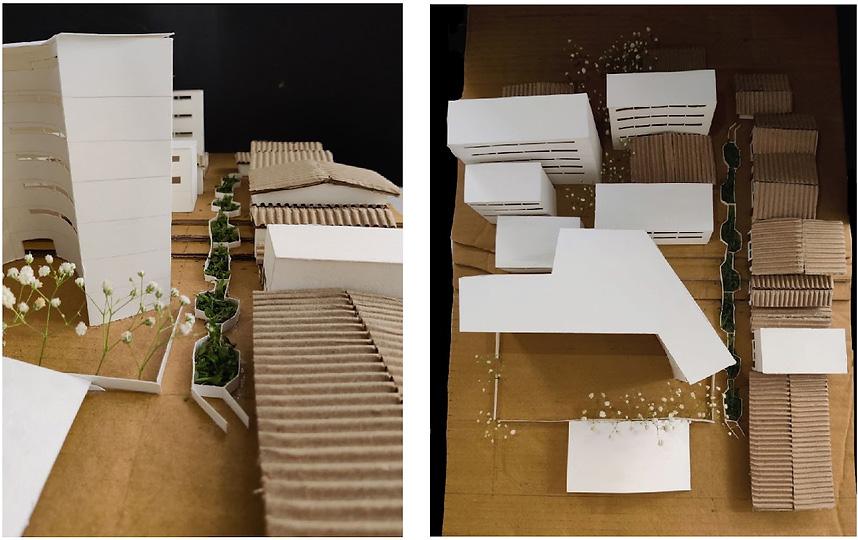
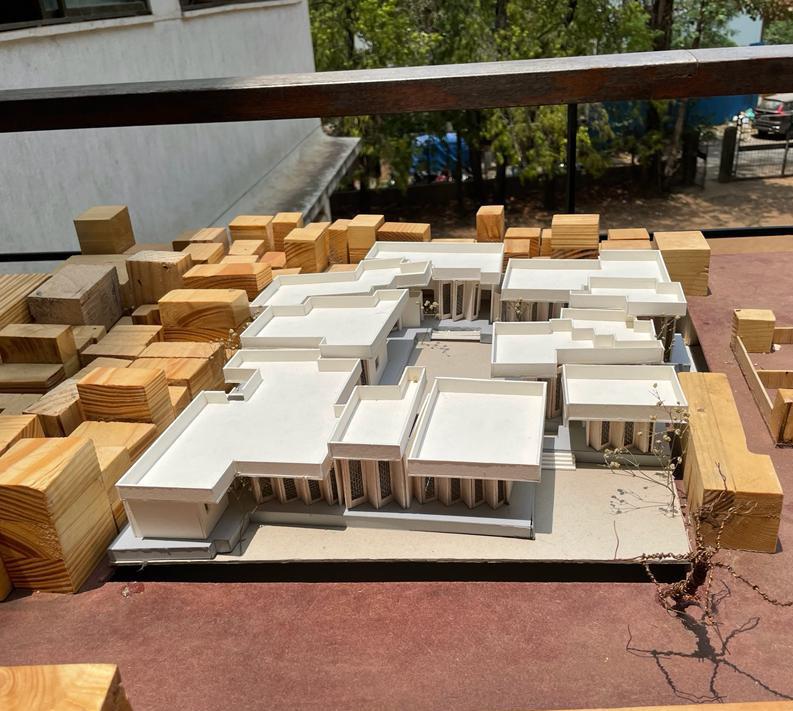
The design model is of a school, which shows the playful moment. It also shows the intricate details of the jalis, which is fixed in the wooden frame and allows light and ventilation to enter each area. The height of the rooms also varies with respect to the accommodations.