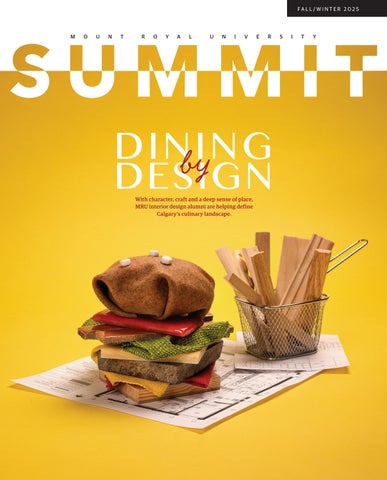
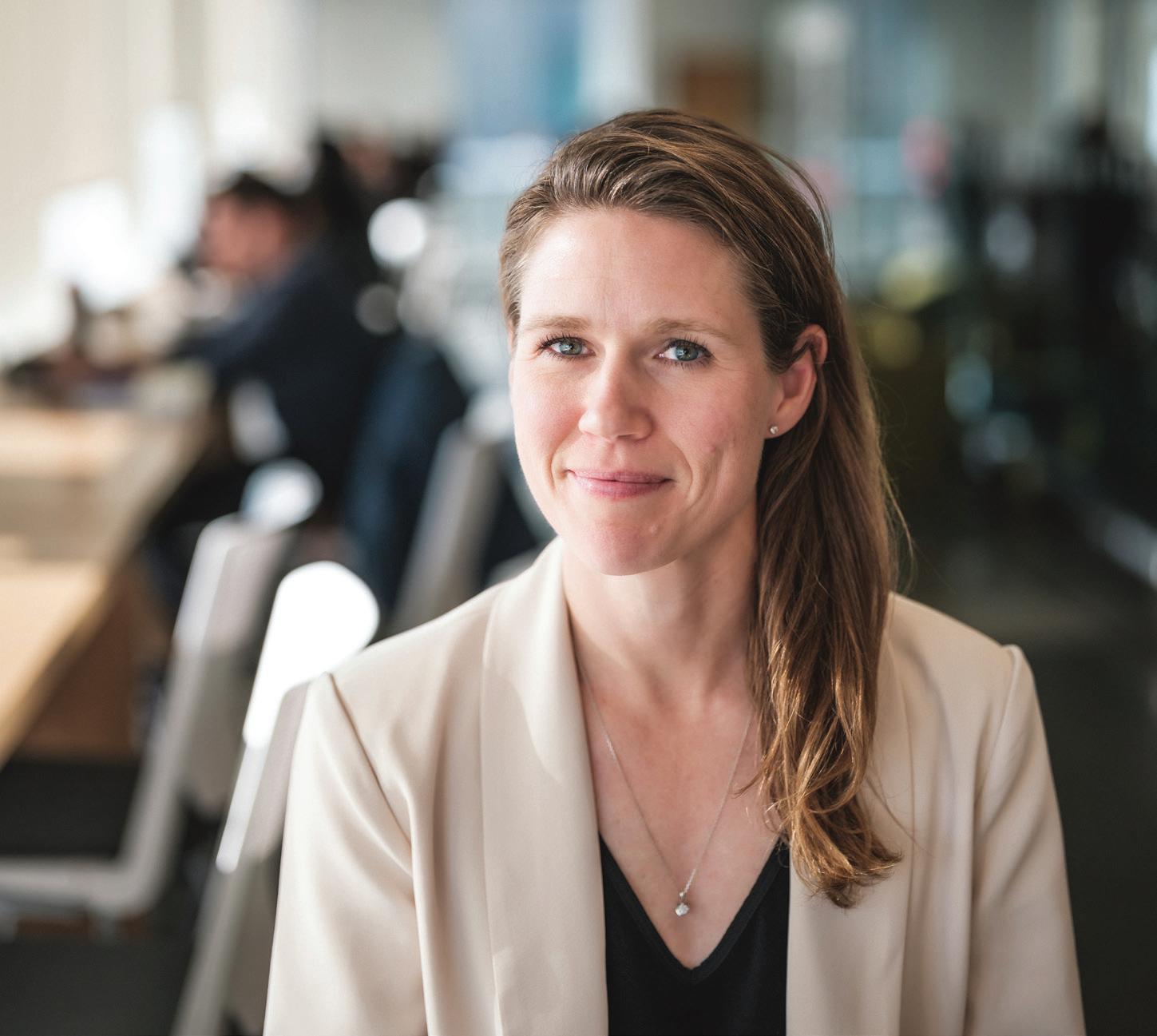
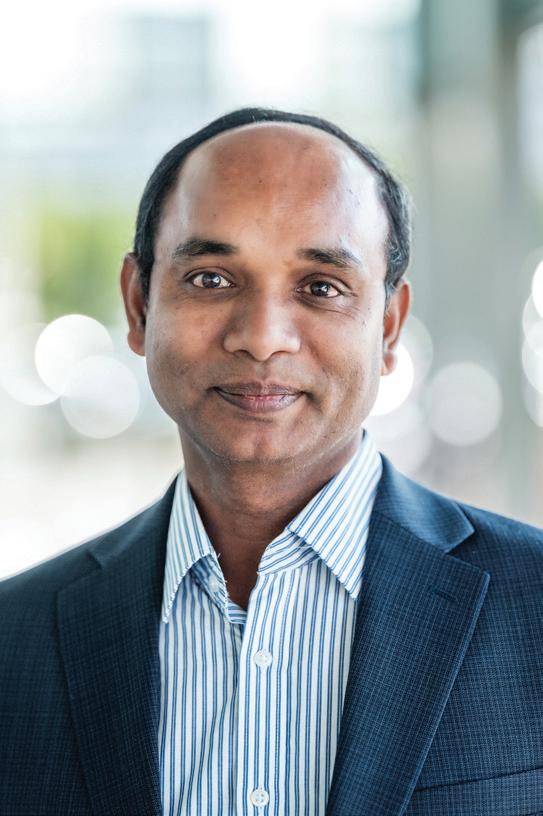
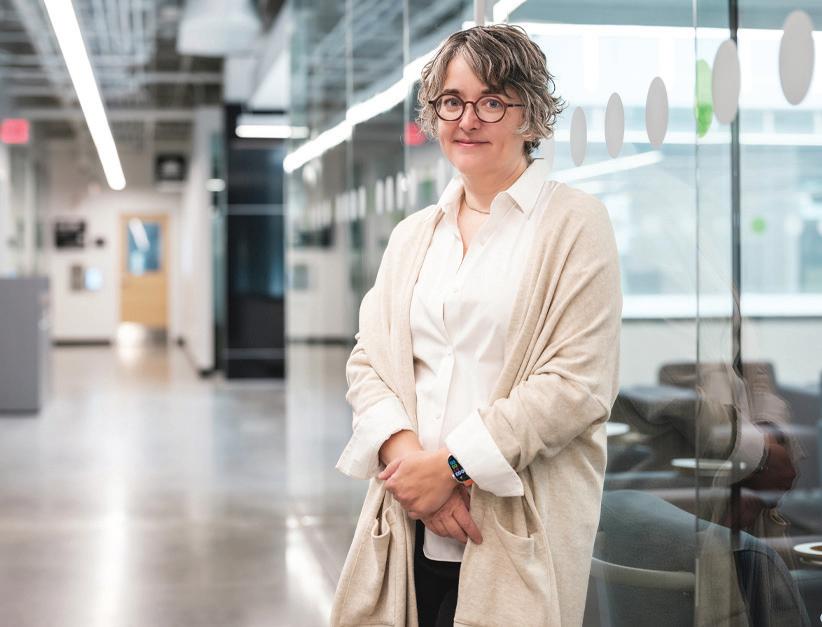
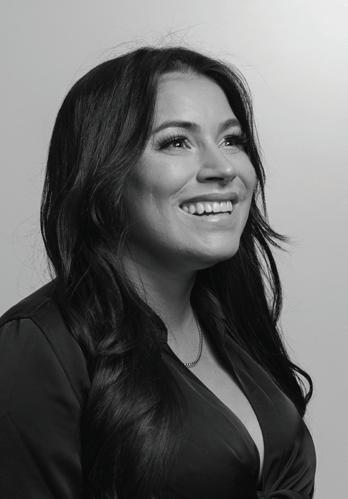
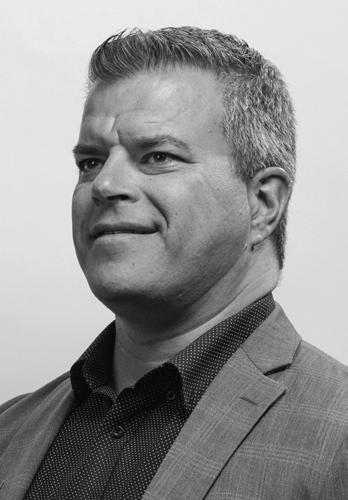
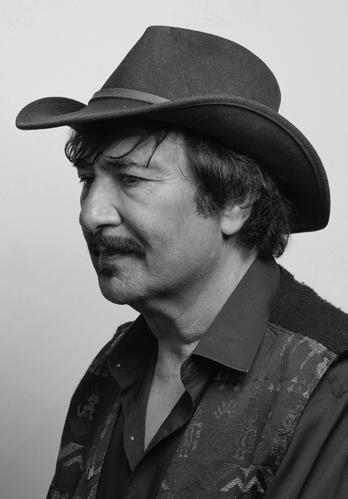
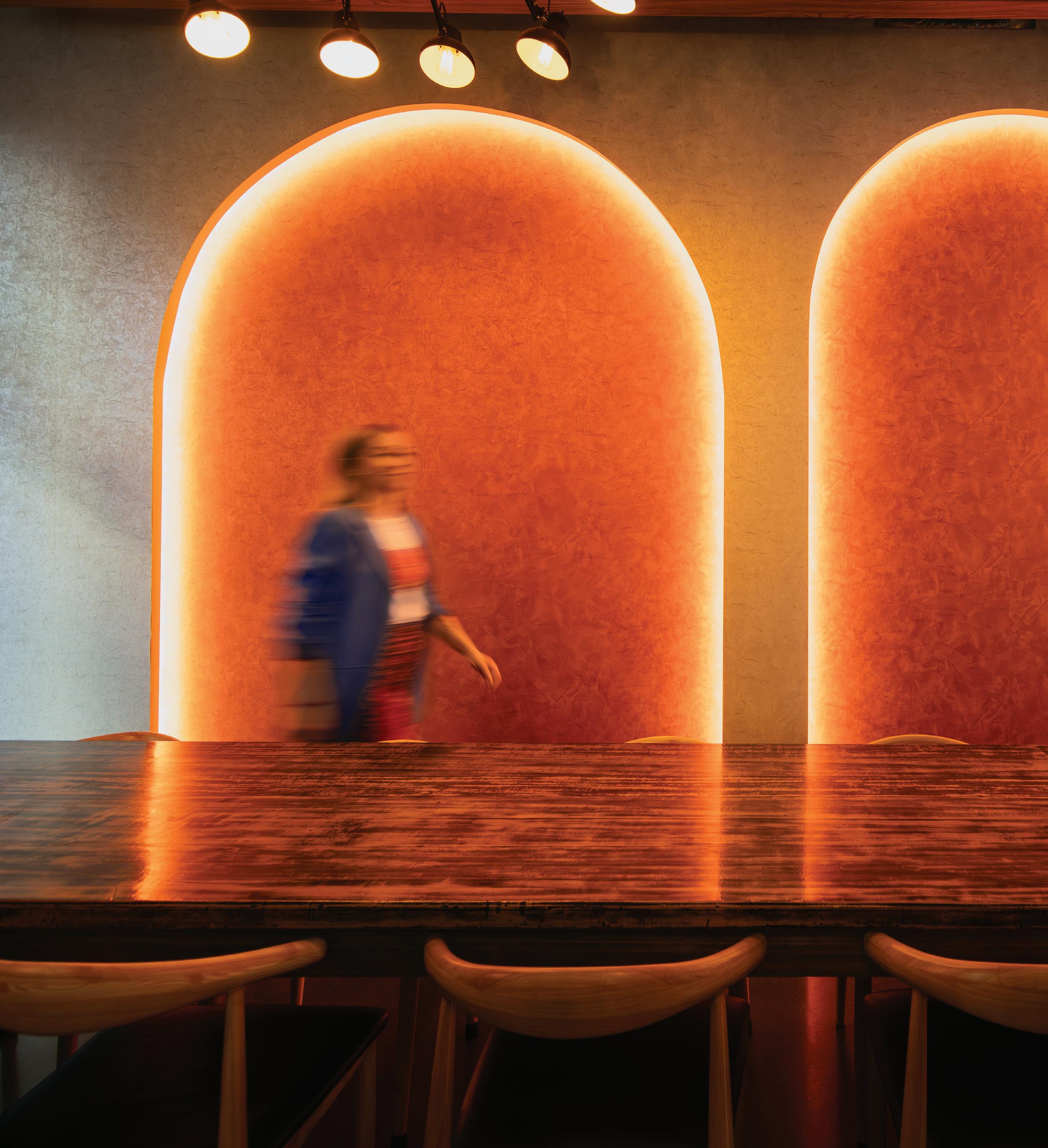
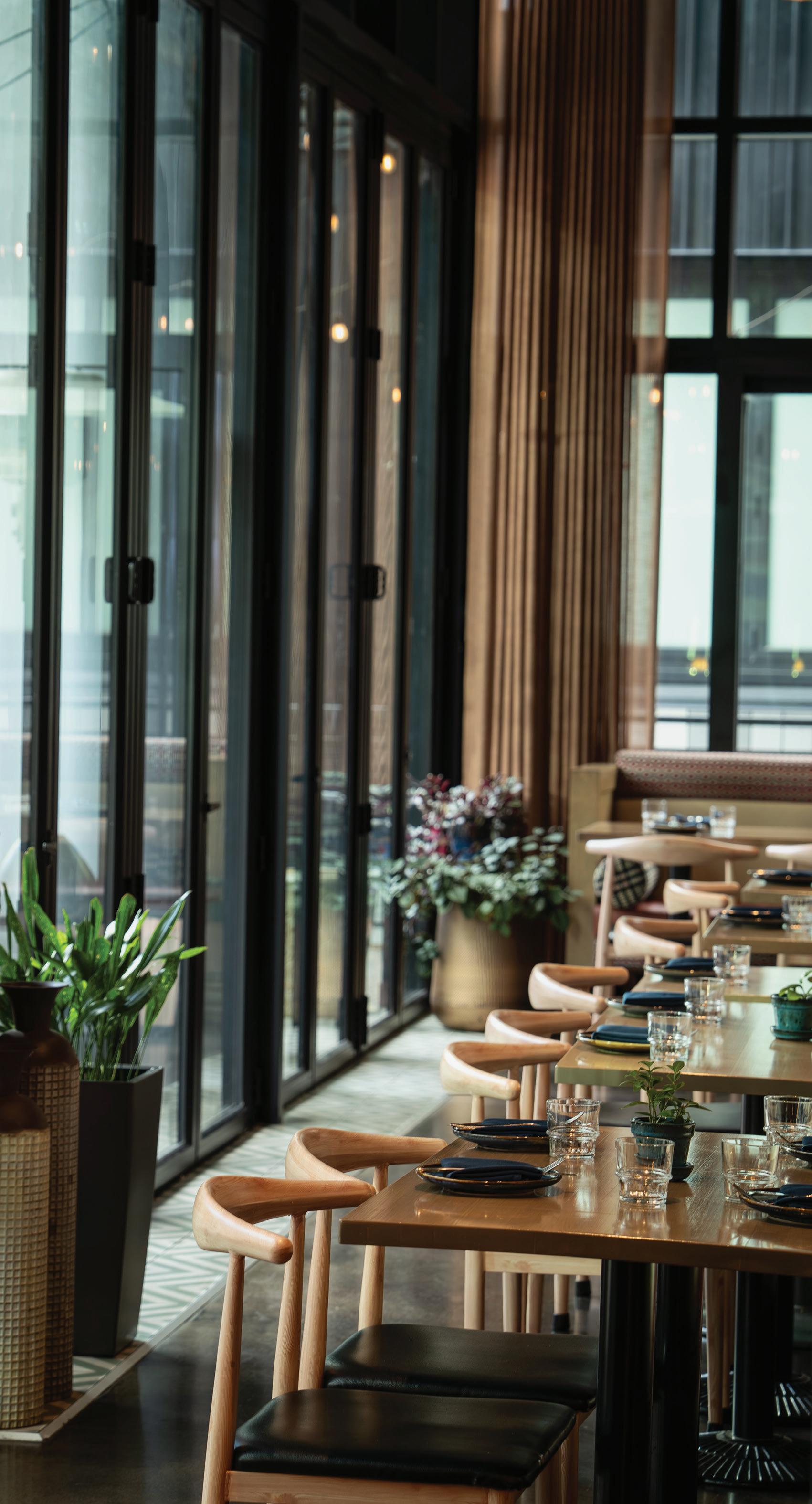
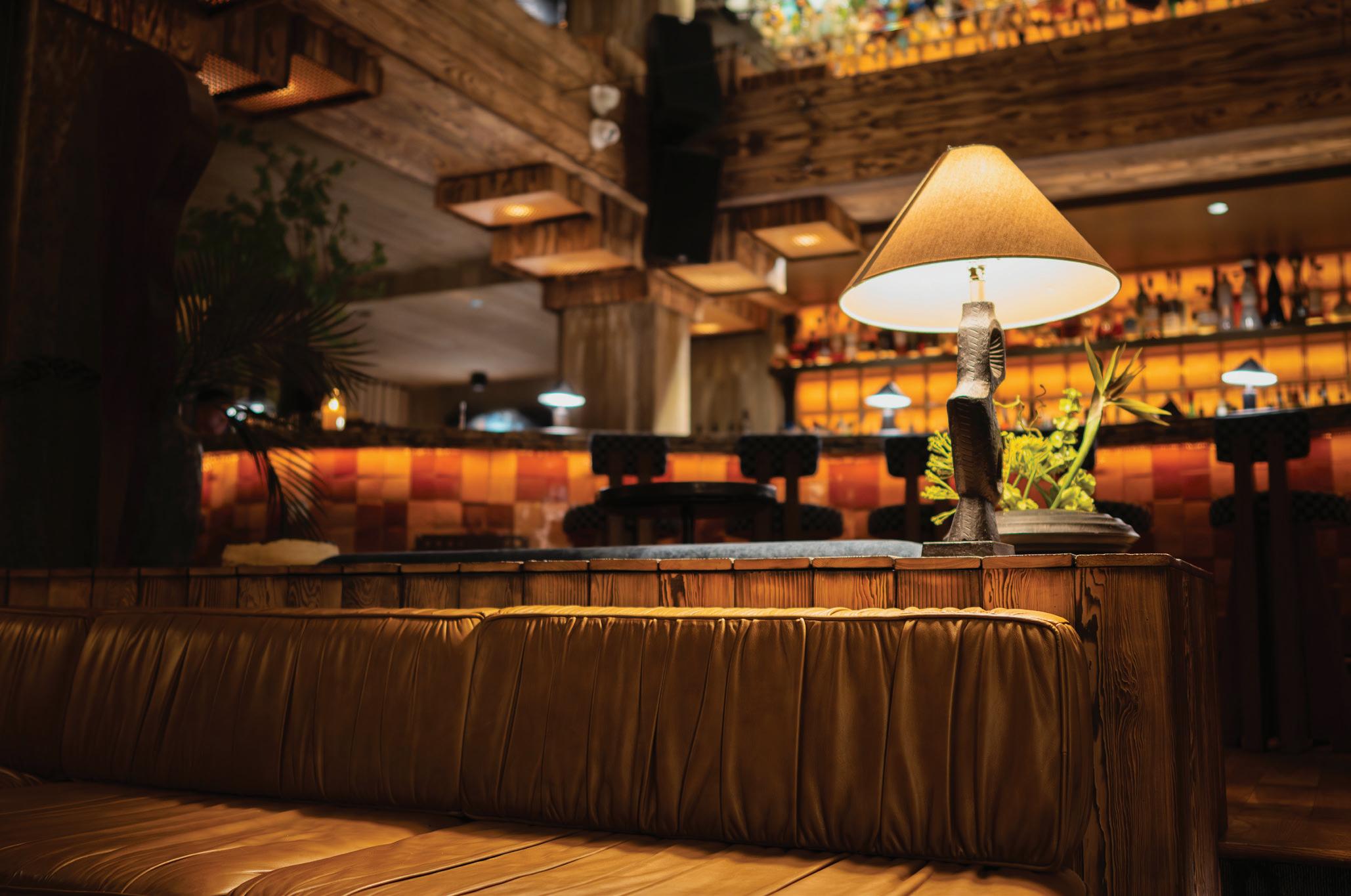
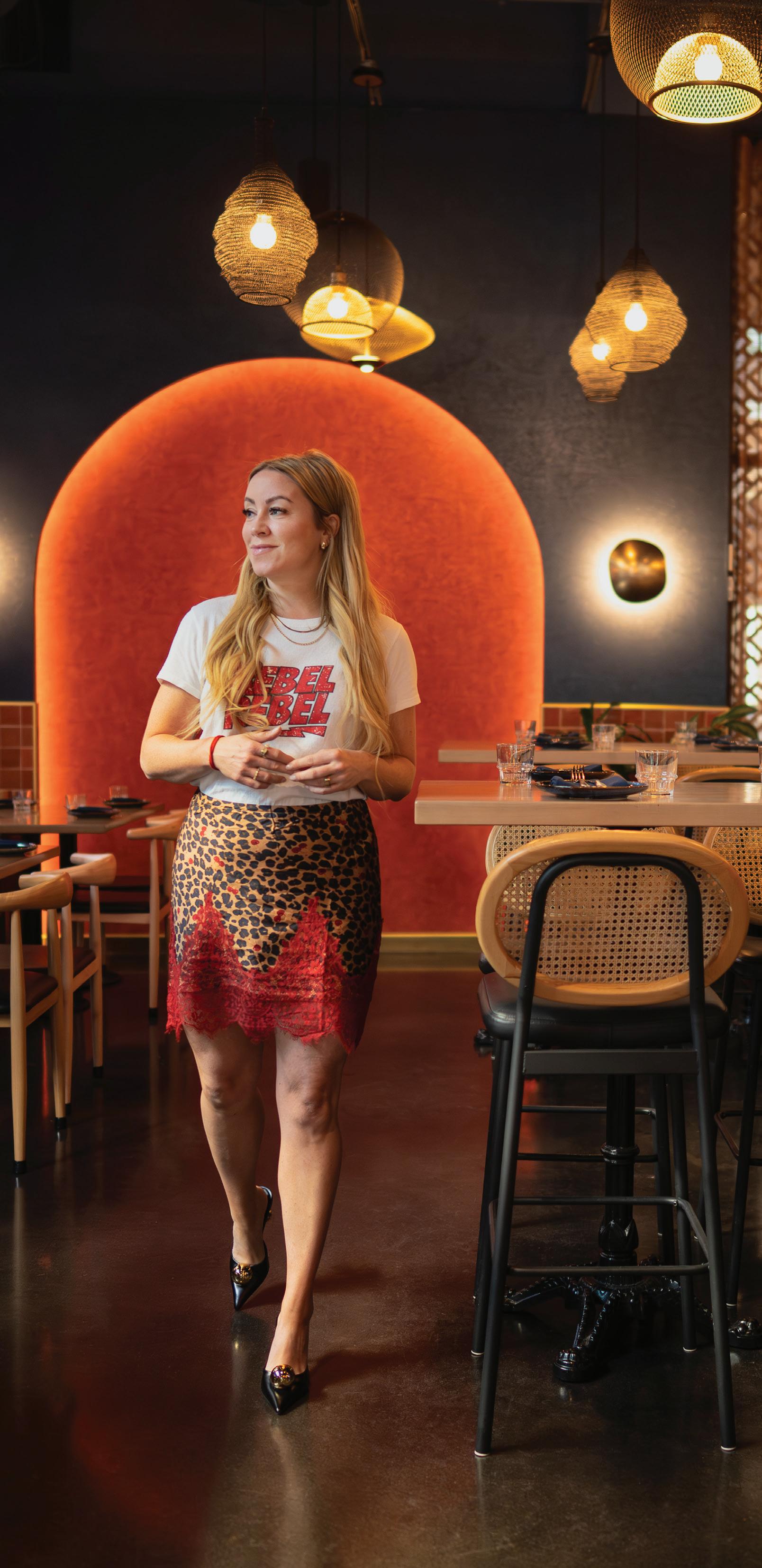
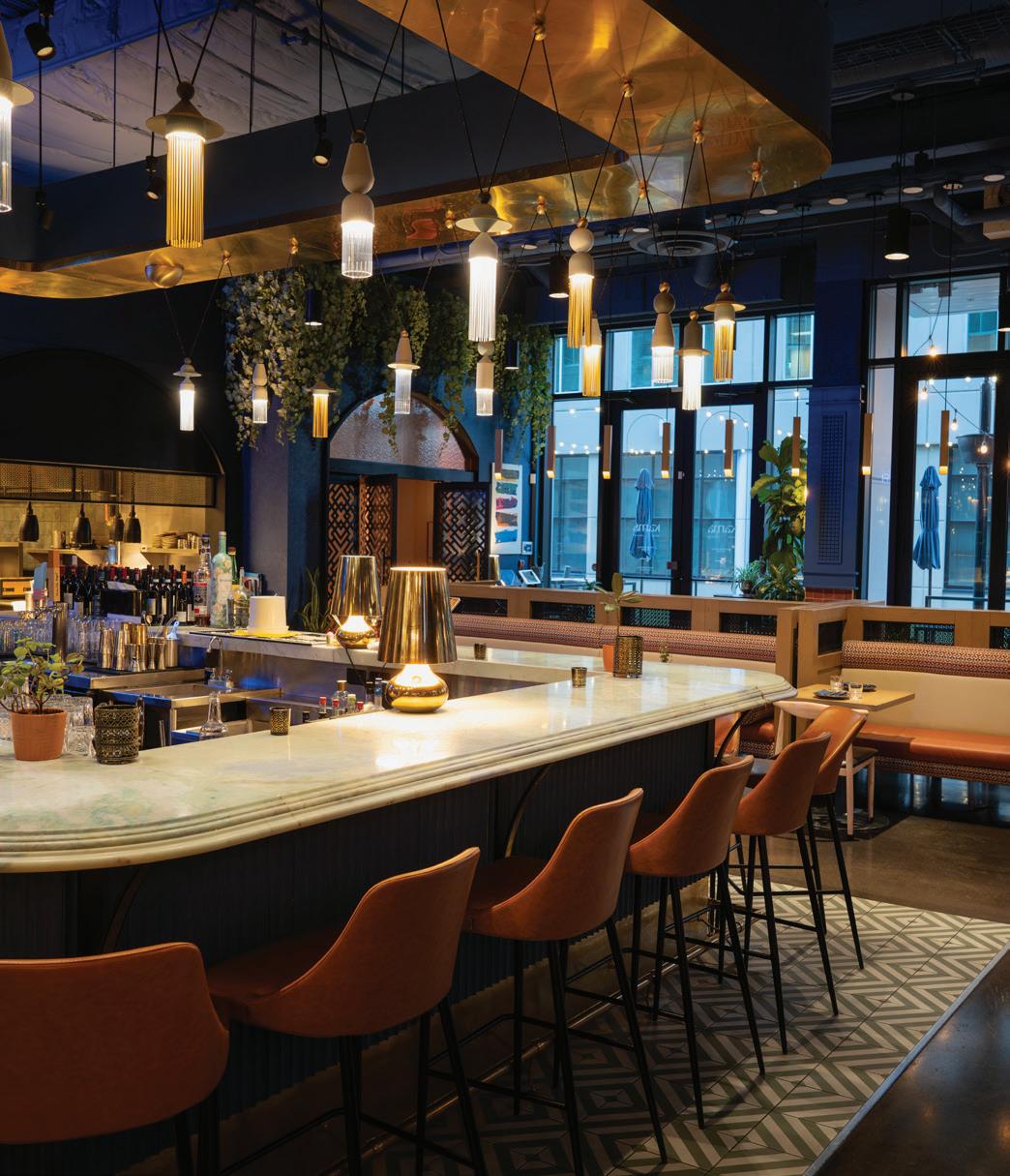
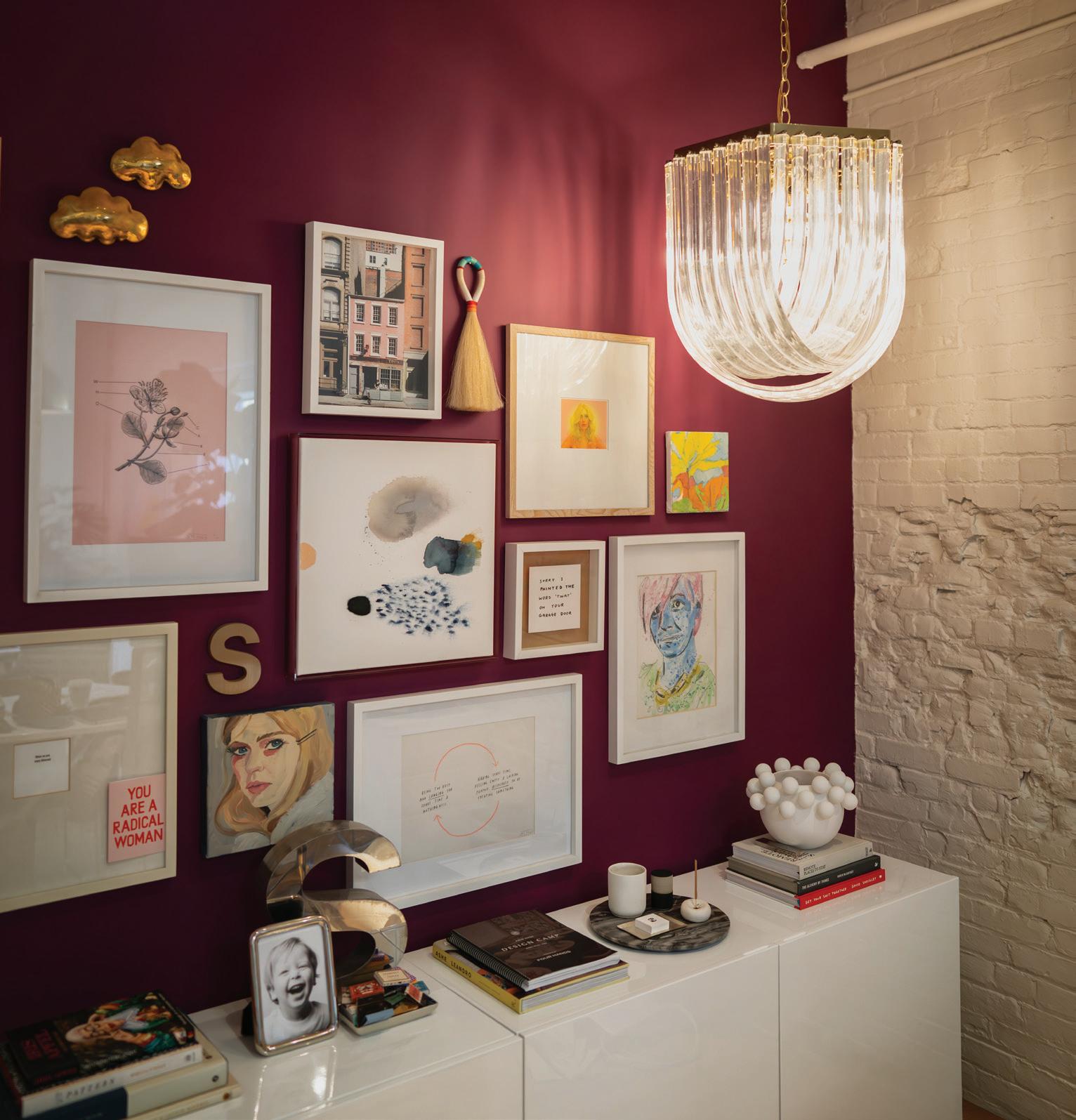
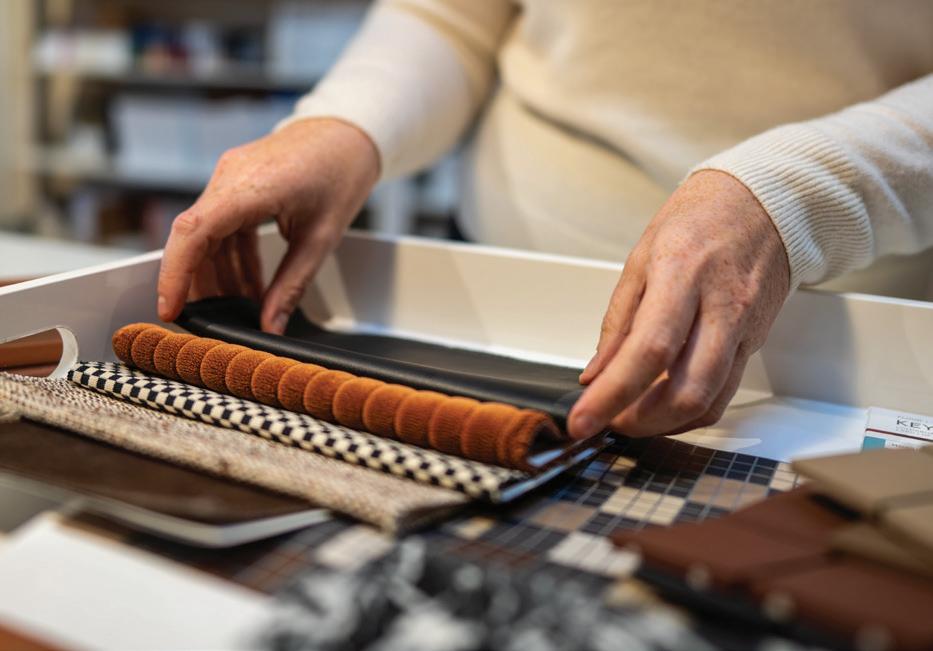
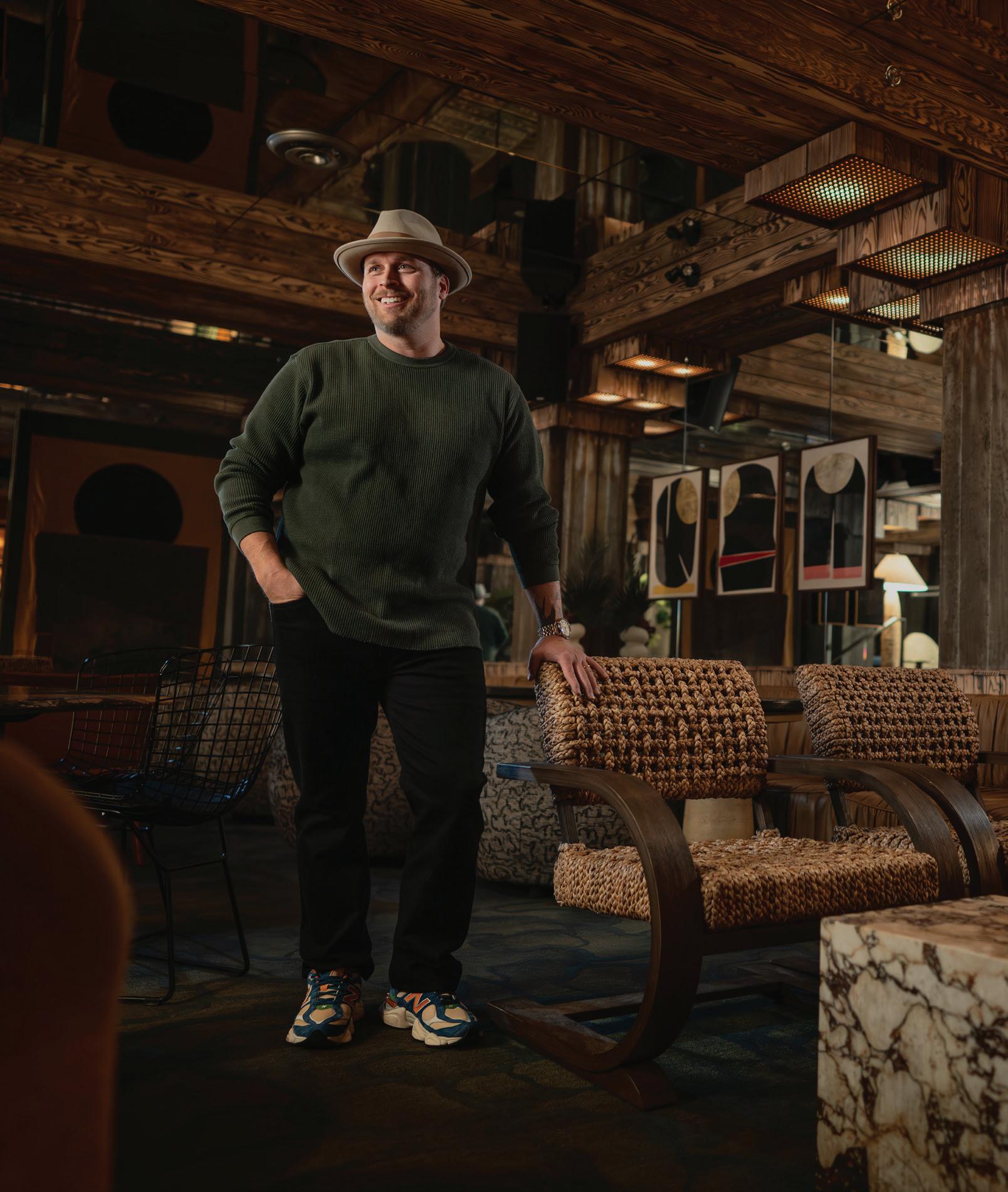
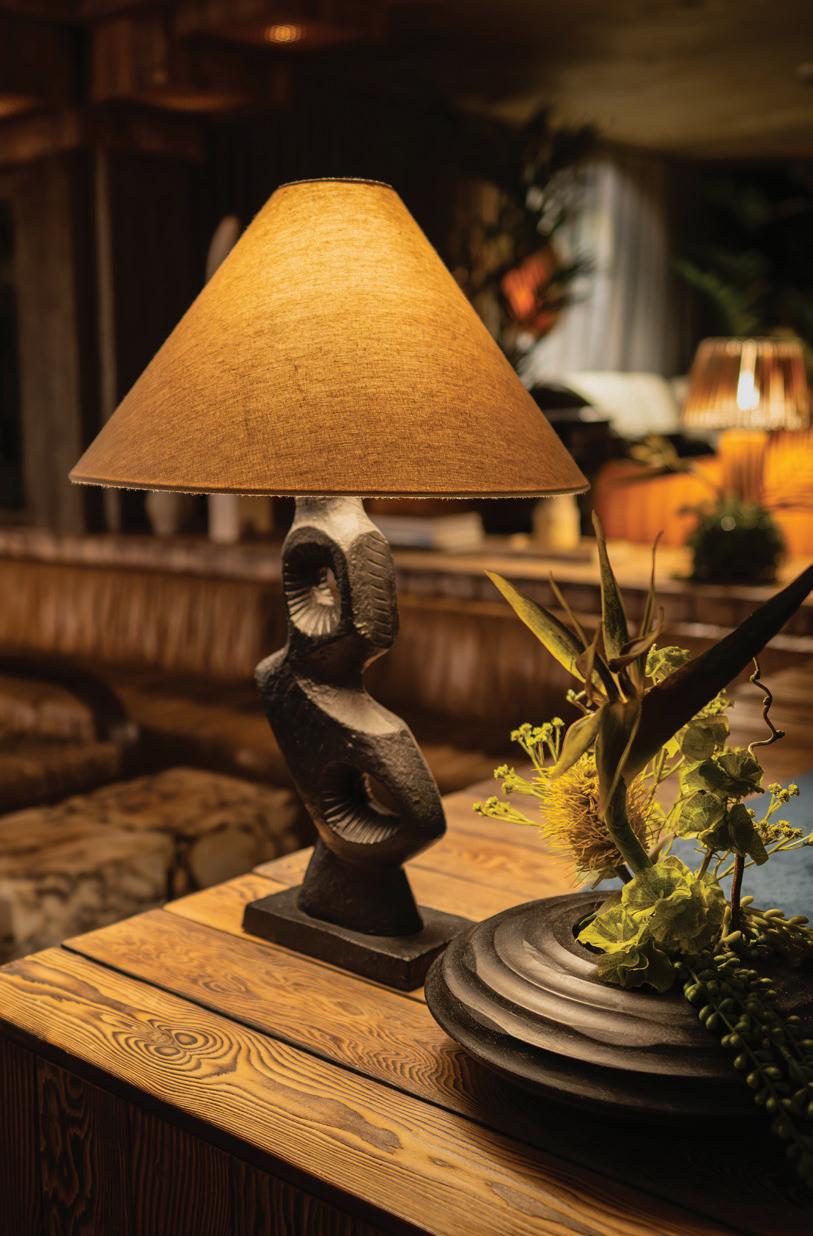
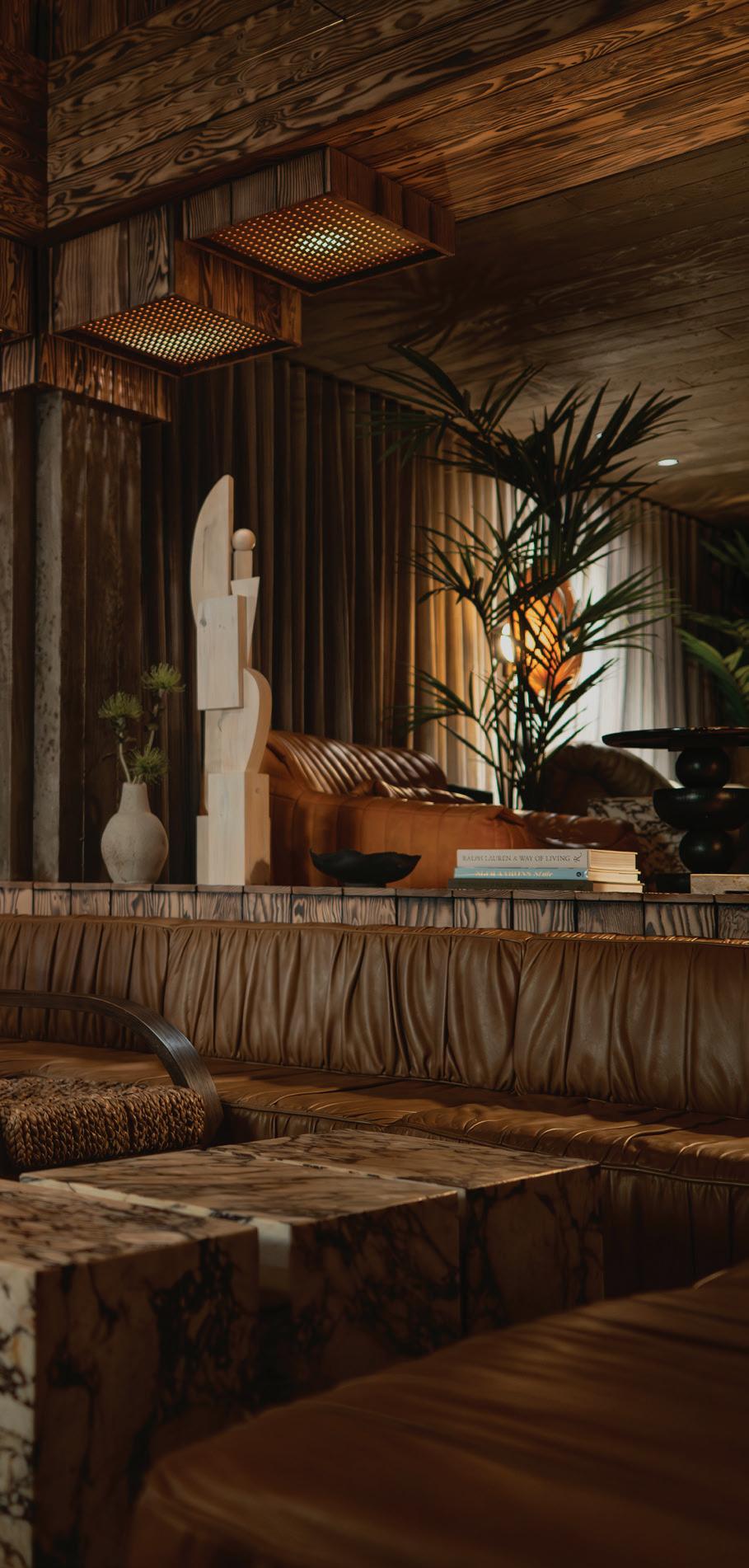
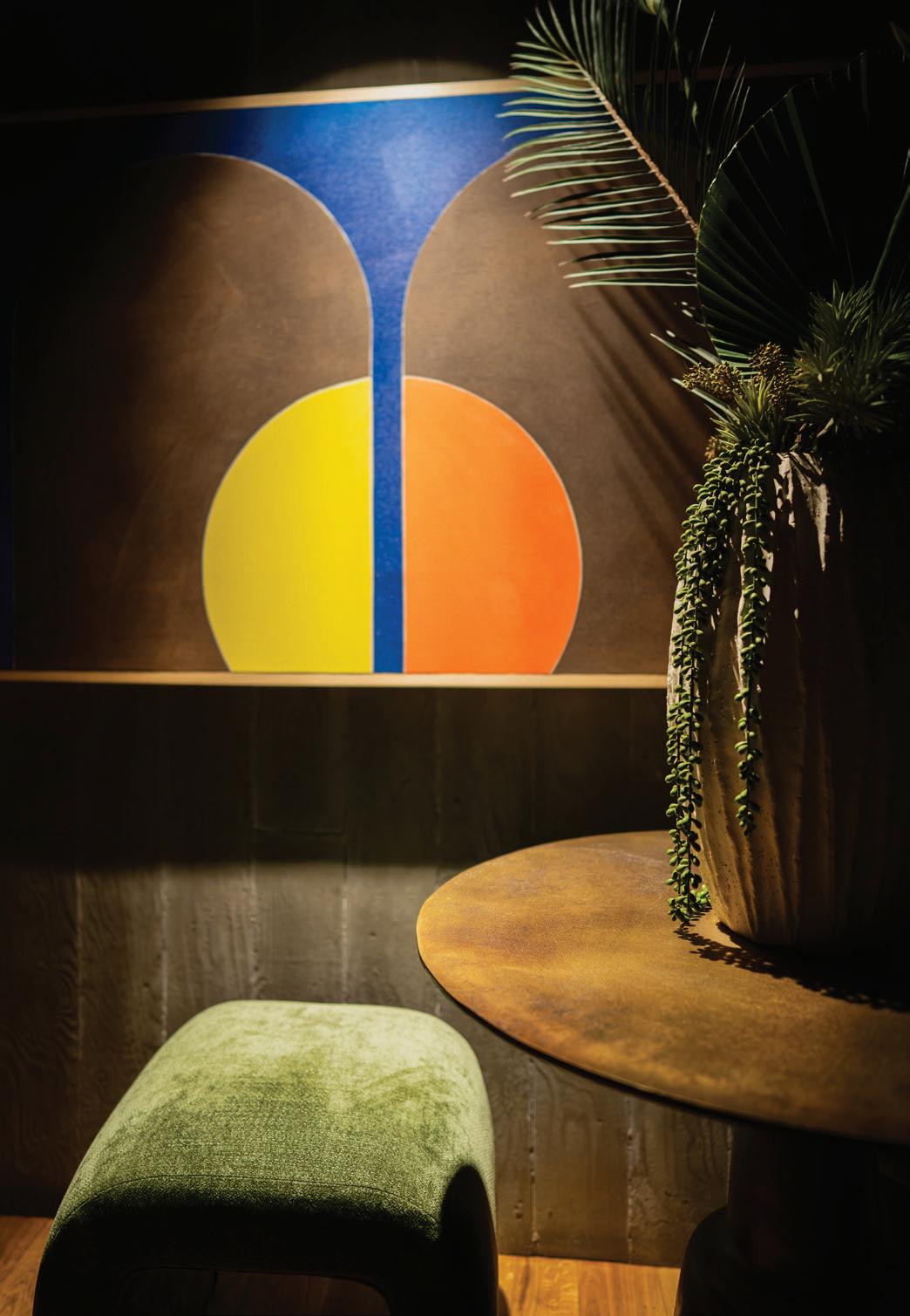
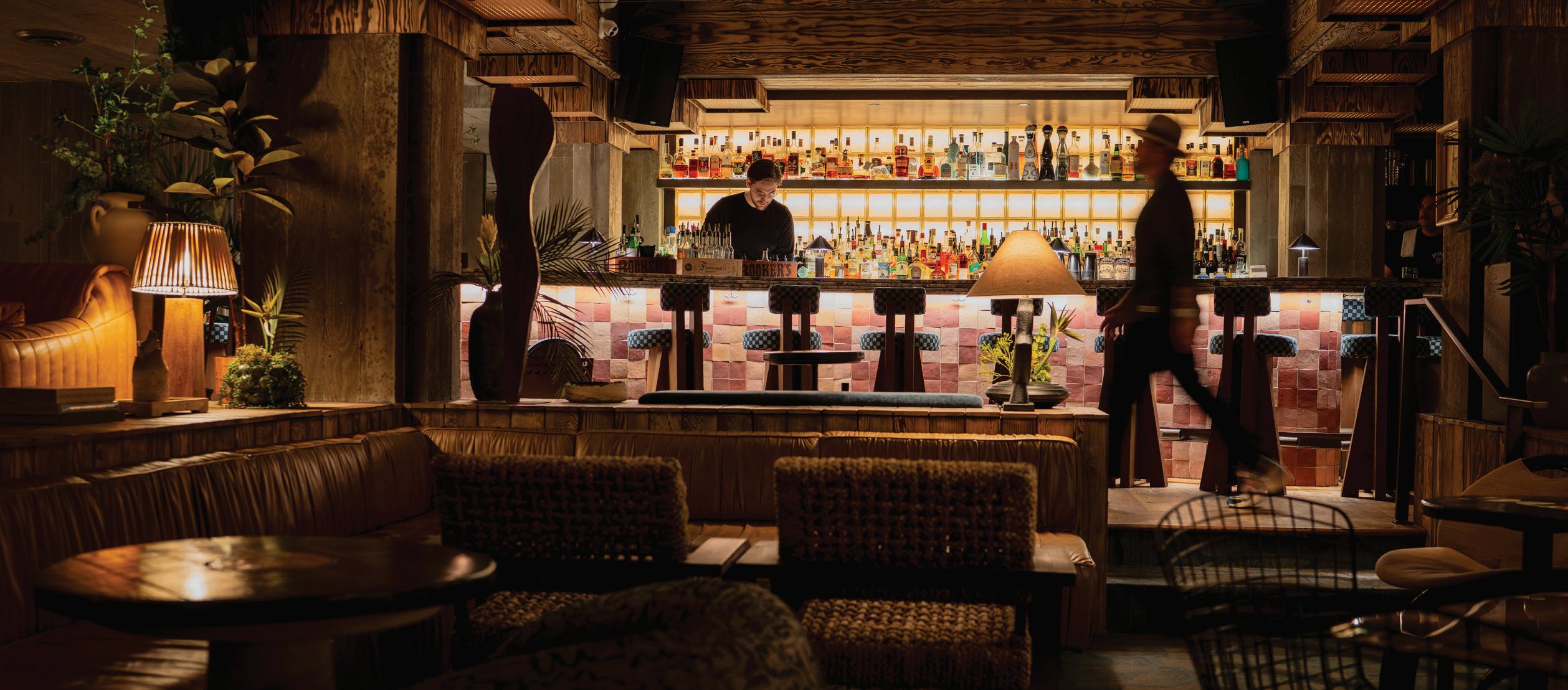
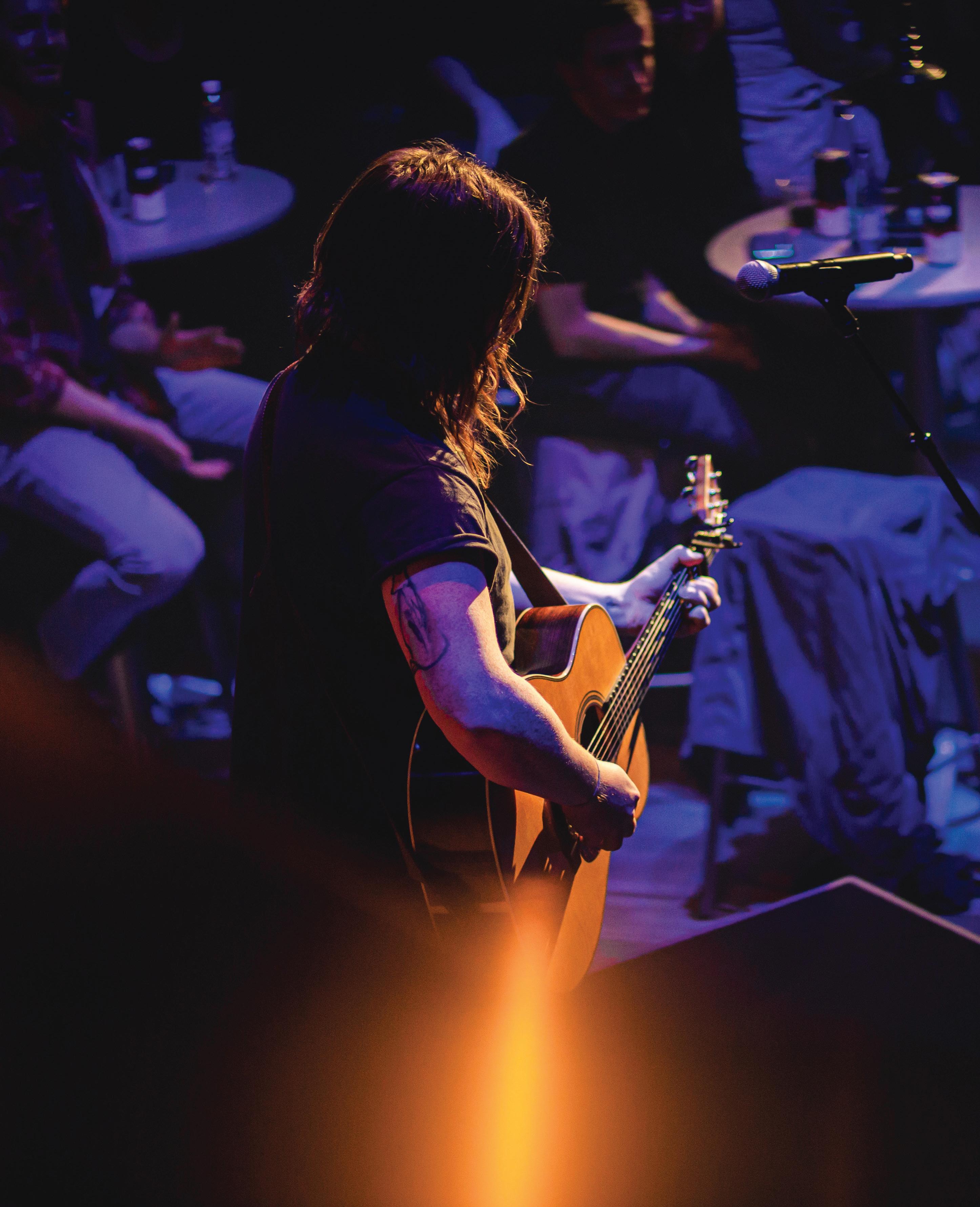
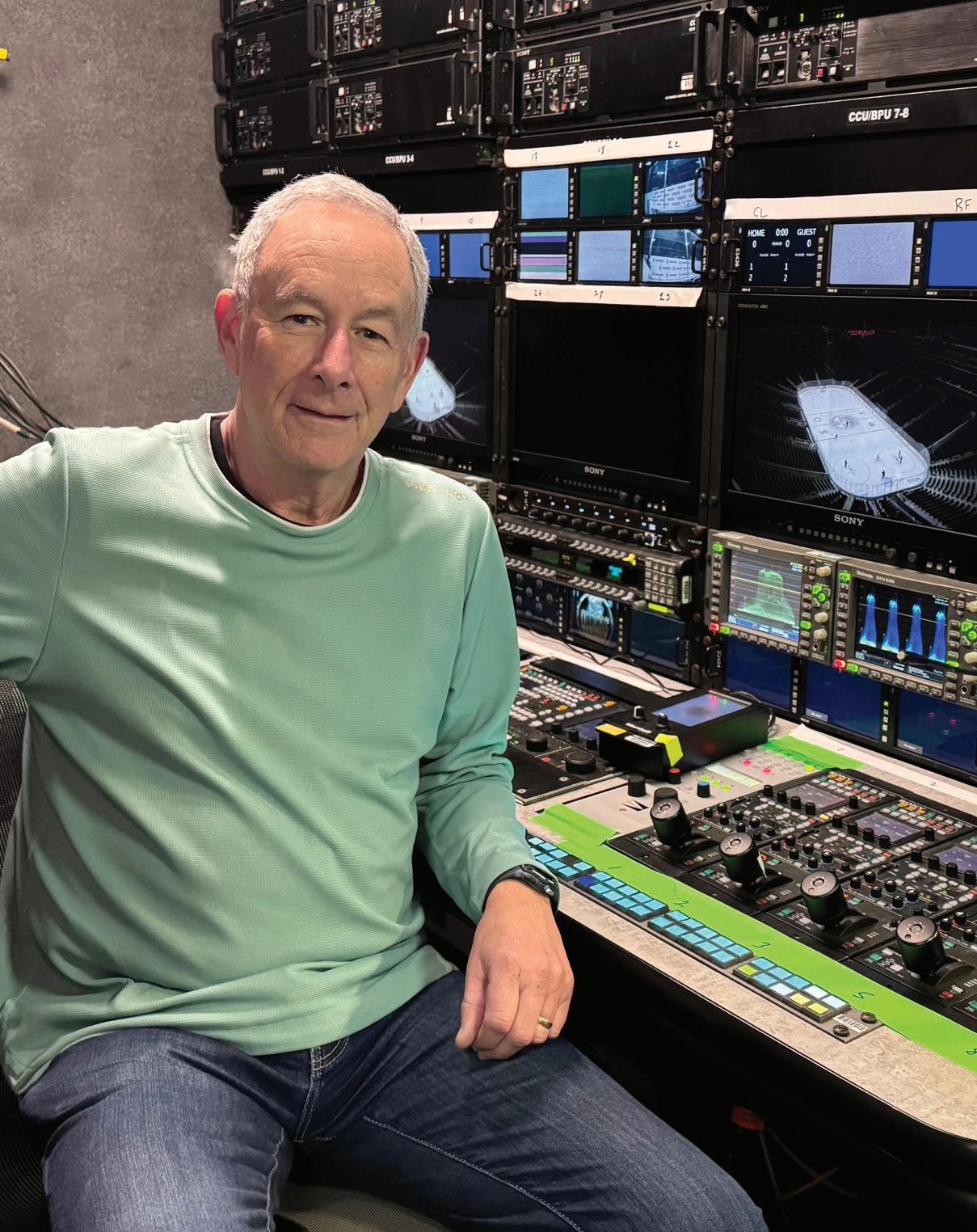
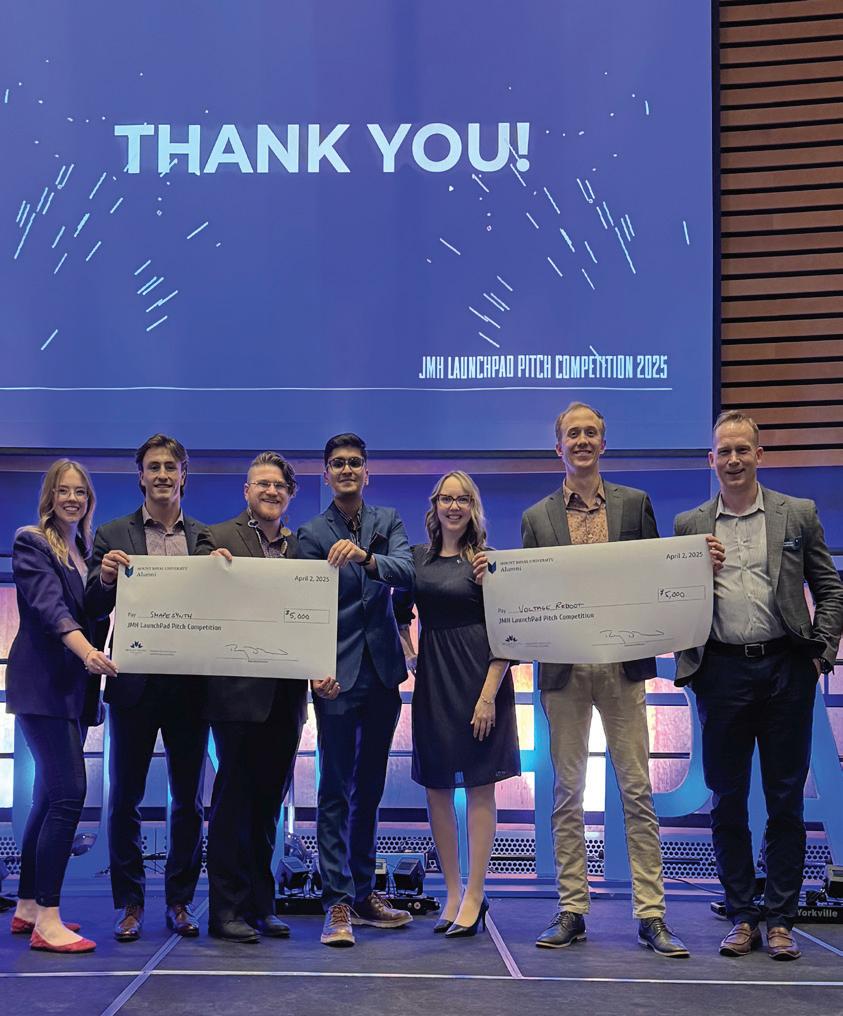
With character, craft and a deep sense of place, MRU interior design alumni are helping define Calgary’s culinary landscape.
Help a student grow beyond what they ever thought possible. Your gift elevates every student — turning possibility into opportunity, one story at a time.
It only takes one person to lift someone higher.
Will it be you?
Join the MRU community on Dec. 2 (Giving Tuesday) for MRU’s fifth–annual Giving Day. Discover powerful stories from students and alumni whose lives have been changed by donor support. Your gift helps open doors to scholarships, bursaries, mental-health services and food security. You give, they grow. That’s the power of Giving Day. Learn more and make your gift at mru.ca/GivingDay
Now appearing Alumni in this issue
Landon Anholt
BACHELOR OF APPLIED INTERIOR DESIGN, 2010
Neepin Auger
BACHELOR OF EDUCATION — ELEMENTARY, 2015
Ashid Bahl
ASSOCIATE DIPLOMA — POLICE SCIENCE, 1979
Orin Bailey-Davies
BACHELOR OF BUSINESS ADMINISTRATION — GENERAL MANAGEMENT, 2025
Cam Bawol
BACHELOR OF APPLIED BUSINESS ADMINISTRATION — ACCOUNTING, 2007
Katilin Berlinguette
BACHELOR OF ARTS — PSYCHOLOGY (HONOURS), 2025
Joel Conley
BACHELOR OF COMPUTER INFORMATION SYSTEMS, 2024
Grace Dafoe
BACHELOR OF HEALTH AND PHYSICAL EDUCATION — PHYSICAL LITERACY, 2016
Haley Daniels
BACHELOR OF BUSINESS ADMINISTRATION — MARKETING
Geordie Day
BROADCASTING DIPLOMA, 2011
Racha El-Dib
BACHELOR OF ARTS –SOCIOLOGY, 2018
Cody Foggin
BACHELOR OF ARTS — CRIMINAL JUSTICE
Candice Goudie
BACHELOR OF APPLIED BUSINESS AND ENTREPRENEURSHIP — SPORT AND RECREATION
Mackenzie Gill
BACHELOR OF EDUCATION — ELEMENTARY, 2023
Aislinn Grant
BACHELOR OF BUSINESS ADMINISTRATION — GENERAL MANAGEMENT, 2016
Tia Hagen
BACHELOR OF COMMUNICATIONS — PUBLIC RELATIONS, 2014
Amanda Hamilton
BACHELOR OF APPLIED INTERIOR DESIGN, 2005
Lloyd Jessup
BROADCASTING DIPLOMA, 1976
Ashley King
BACHELOR OF COMMUNICATION — JOURNALISM, 2018
David Nicholson
EMPLOYMENT PREPARATION CERTIFICATE, 2020
Sarah Omar
BACHELOR OF ARTS — PSYCHOLOGY, 2025
Craig O’Neill AVIATION DIPLOMA, 2002
Dustin Paisley
BACHELOR OF BUSINESS
ADMINISTRATION — GENERAL MANAGEMENT, 2015
Stanley Peake
BACHELOR OF PHYSICAL EDUCATION, 2001 (UT
Shannon Pestun
BUSINESS ADMINISTRATION DIPLOMA — MARKETING MANAGEMENT, 1999
Christopher Lee Primeau GENERAL ARTS AND SCIENCE
Stefan Radeta
BACHELOR OF COMPUTER INFORMATION SYSTEMS, 2019
Kaitlyn Ross
BACHELOR OF ARTS — PSYCHOLOGY, 2024
David Routledge GENERAL STUDIES, 1981
Katie Samoil
ADVANCED STUDIES IN CRITICAL CARE NURSING — EMERGENCY NURSING, 2011
Alexandra (Daignault) Sangster
BACHELOR OF ARTS — ENGLISH (HONOURS), 2018
Elder Bruce Starlight
HONORARY DOCTOR OF LAWS, 2023
Ian Stewart AVIATION DIPLOMA, 2010
Maren Walker
BACHELOR OF COMMUNICATION — INFORMATION DESIGN, 2025
Sarah Ward
BACHELOR OF APPLIED INTERIOR DESIGN, 2004
Dr. Maryam Yaqoob
BACHELOR OF SCIENCE — CELLULAR AND MOLECULAR BIOLOGY, 2017
What’s new at MRU!
At Mount Royal University, we often talk about the power of community, and for good reason. Whether you’re on campus, across the city or around the world, MRU’s strength comes from the people who believe in what we do, who contribute to our shared purpose and who continue to shape what is possible.
This issue of Summit highlights the many ways our community brings that belief to life. You will meet alumni who are transforming industries and creating inclusive spaces, each reflecting MRU’s values of curiosity, connection and integrity. Our Outstanding Alumni Award recipients are making a difference in their fields and communities, and we are proud to share their stories.
We are also marking 55 years of aviation education at MRU. This milestone includes the opening of an impressive new Springbank campus and a look back at key moments in the program’s history.
In addition, you will find stories about the role of our interior design graduates in Calgary’s restaurant and bar scene, and the impressive career of an alumnus who has helped bring some of the world’s most iconic sporting events to screens everywhere.
As our community continues to grow, we are exploring new ways to stay connected. One of these efforts is called Blue Crew. This new initiative celebrates MRU pride and strengthens the bonds that bring our community together. As a part of the MRU community, I hope you’ll join us by wearing blue or MRU-branded apparel on Fridays.
My sincere thanks for being part of the MRU story. Your connection to this university helps move us forward.
Please stay close to MRU and remember you are always part of our community.
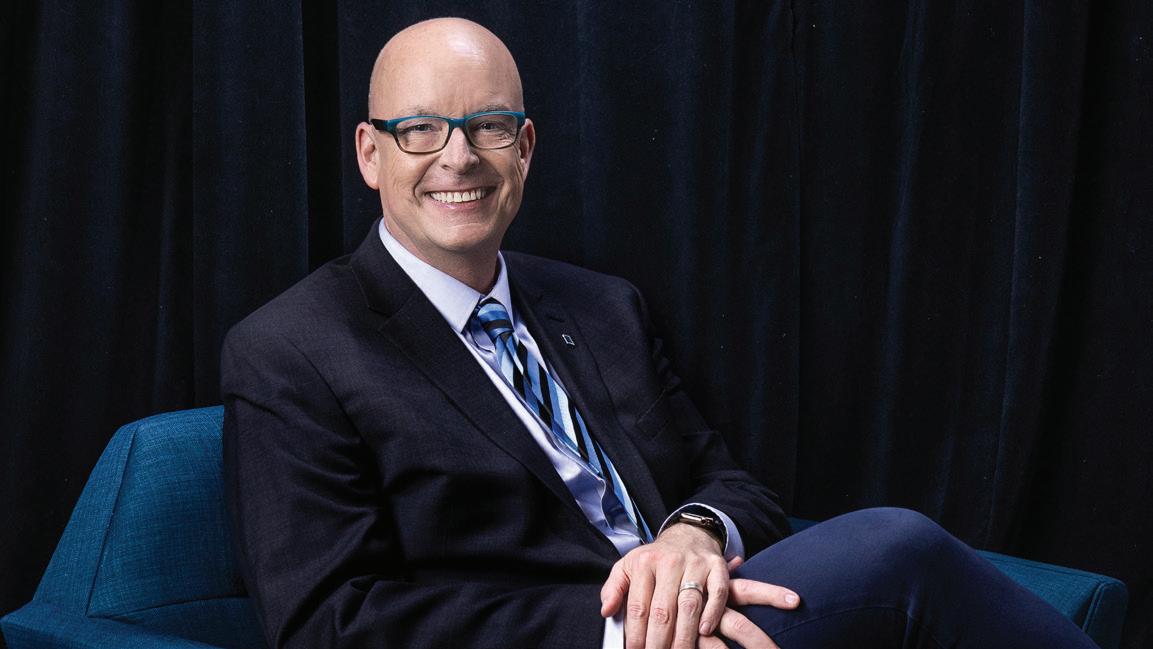
Tim Rahilly, PhD, president and vice-chancellor
Mount Royal University
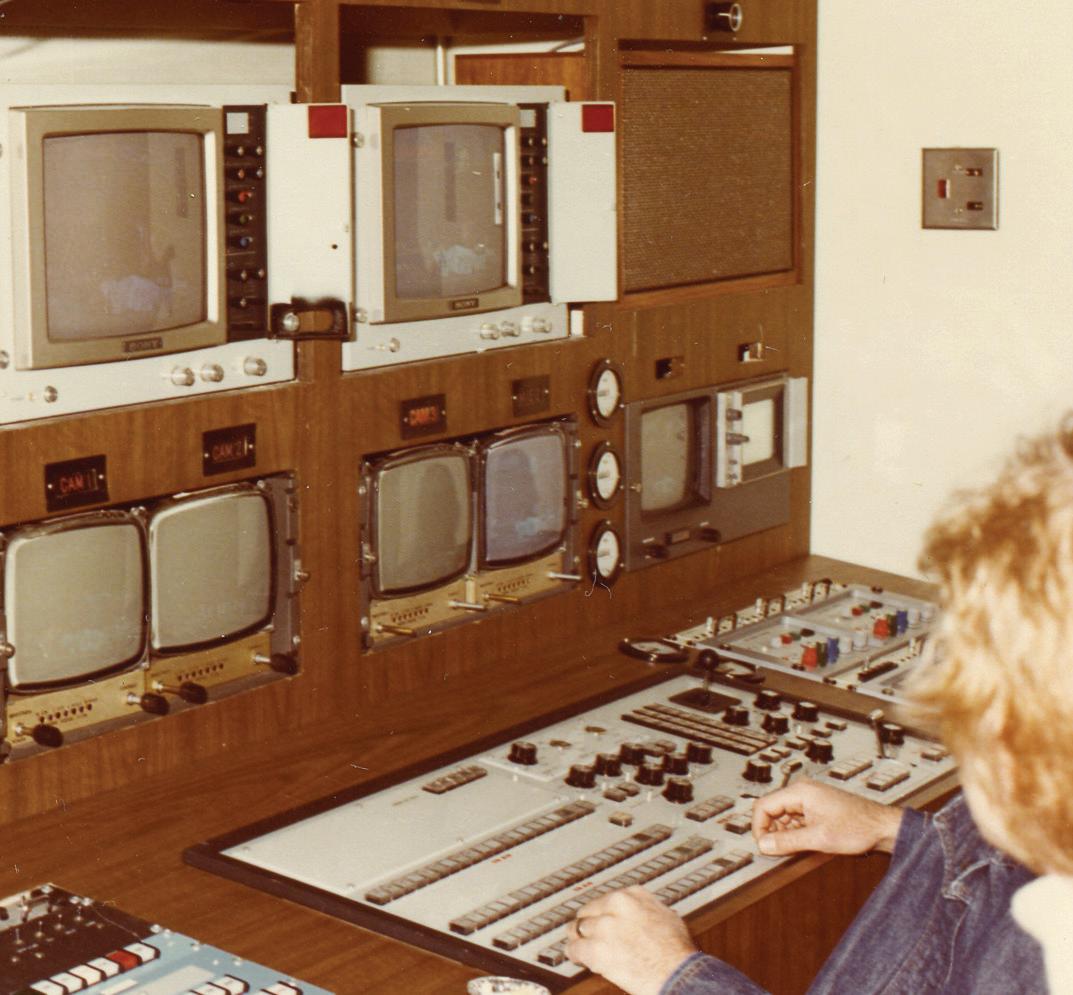
Switch to camera three!
This classic piece of broadcasting equipment is a Richmond Hill Switcher. It was used by Mount Royal broadcasting students in the 1970s and early 1980s, including Lloyd Jessup, the subject of this issue’s Last Word, found on page 42.
Meet the team
EDITOR-IN-CHIEF
Melanie Rogers
EDITOR
Michelle Bodnar
BCMM (APPLIED) ’05
DEPUTY EDITOR
Rachel von Hahn
ART DIRECTOR
Michal Waissmann
BCMM (APPLIED) ’07
PRODUCTION MANAGEMENT
Deb Abramson JOURNALISM DIPLOMA ’77
MARKETING AND COMMUNICATIONS COORDINATOR
Chase Goods
BCMM ’24
DESIGN
Leslie Blondahl
BCMM ’14
Astri Do Rego
Mike Poon
Chao Zhang
COPY EDITOR
Matthew Fox
PHOTOGRAPHY
Cary Schatz
Chao Zhang
Roth and Ramberg
COVER PHOTO
Chao Zhang
ILLUSTRATIONS
Astri Do Rego
Willis Jameson
Mike Poon
Chidera Uzoka
BCMM ’26
CONTRIBUTORS
Matthew Fox
Lloyd Jessup
BROADCASTING DIPLOMA ’76
Nadia Moharib
Annemarie Potyondi BBA ’21
Rachel von Hahn
Ethan Ward BCMM ’22
VICE-PRESIDENT, COMMUNITY ENGAGEMENT
Melanie Rogers
ASSOCIATE VICE-PRESIDENT, MARKETING AND COMMUNICATIONS
Dave McLean
DIRECTOR, COMMUNICATIONS
Peter Glenn
DIRECTOR, MARKETING
Katie Cabaret
DIRECTOR, ALUMNI RELATIONS
Jonathan Anderson
Summit is published in the spring and fall of each year. With a circulation of approximately 64,000, each issue features the exceptional alumni, students, faculty and supporters who make up the Mount Royal community. Summit tells the University’s ongoing story of the provision of an outstanding undergraduate education through personalized learning opportunities, a commitment to quality teaching, a focus on practical outcomes and a true dedication to communities. Celebrate yourself through Summit
ISSN 1929-8757 Summit Publications Mail Agreement #40064310
Return undeliverables to: Mount Royal University 4825 Mount Royal Gate SW Calgary, AB, Canada T3E 6K6
Enjoy Summit online by visiting mru.ca/Summit.
If you would like a print copy delivered to your home or office, simply email summit@mtroyal.ca.
With gratitude and reciprocity, Mount Royal University acknowledges the relationships to the land and all beings, and the songs, stories and teachings of the Siksika Nation, the Piikani Nation, the Kainai Nation, the Îethka Stoney Nakoda Nation (consisting of the Chiniki, Bearspaw and Goodstoney Nations), the people of the Tsuut’ina Nation and the Métis.
Photo courtesy of MRU’s Archives and Special Collections.
Outstanding Alumni Awards
This
Bye Bye, Bay
The Bay’s closing has sparked nostalgia in many and triggered the worry that in-person shopping is on the way out.
Page 5 What rare bird visited the Mount Royal campus last summer?
Page 6 What Mount Royal luminary has recently been featured on a stamp?
Page 19 Which Outstanding Alumni Award recipient has been recognized by the Dalai Lama?
Just how much Canadian shopping is done online?
How much of Calgarians’ food budget is spent on dining in restaurants?
CELEBRATING RESEARCH AND LEADERSHIP
Rising scholar
Dr. Lisa Taylor, PhD, an assistant professor in the Faculty of Health, Community and Education, has received the Research Council Emerging Scholar Award — Doctoral Level from Physical and Health Education (PHE) Canada. Presented to just one recipient each year, the award recognizes exceptional contributions to teaching, research and leadership in physical and health education. Taylor was also chair of this year’s PHE Canada Research Forum.
ENVIRONMENTAL HERITAGE WORK
Global recognition
Dr. Ranjan Datta, PhD, a Canada Research Chair in Community Disaster Research in the Faculty of Arts, has received the Blaze O’Connor Memorial Award from the World Archaeological Congress (WAC) for his leadership in environmental heritage research. Presented at WAC-10 in Darwin, Australia, the award highlights transformative, community-rooted and decolonial approaches to archeology. The international gathering brought together more than 2,000 scholars from over 30 countries.
DECADES OF EXCELLENCE
Shaping academia
Dr. Faith-Michael Uzoka, PhD, a professor in the Faculty of Science and Technology, has been recognized by Black People Making History in Calgary 2025 with the Academia award. A respected scholar and mentor, Uzoka is known for innovation in healthcare technology, championing inclusive education and empowering Black communities through decades of leadership in Calgary and beyond.
VIRAL CLASSROOM MOMENT
Teacher inspires late-night host
Mackenzie Gill, a Bachelor of Education — Elementary alumna currently teaching in Medicine Hat, went viral with a video showing her correctly identifying all 19 of her students by voice alone. The heartwarming clip, now with millions of views and likes, even caught the attention of Jimmy Kimmel, who gave a shout-out on Jimmy Kimmel Live before trying the challenge himself.
Watch the clip here ›
Photo courtesy of YouTube and jimmykimmellive on Instagram
FEATHERED PHENOMENON
Rare ghost magpie on campus
Mount Royal’s campus is no stranger to wildlife — deer, bobcats and famously feisty geese all make appearances. But this spring brought something truly rare: a ghost magpie. Spotted by an employee in May and reported to CBC’s The Eyeopener, these palefeathered birds have a genetic mutation called leucism that causes partial pigment loss.
TRACKING ANIMALS TO BUILD SAFER CROSSINGS
Wildlife on the move
Mount Royal’s Miistakis Institute is playing a leading role in a major conservation effort along Highway 3 in southwest Alberta — a crucial wildlife corridor and collision hotspot. Through the Reconnecting the Rockies project, Miistakis researchers are tracking grizzlies, elk and deer using satellite collars and motion-triggered cameras. Their work is key to designing wildlife crossings that reduce crashes and keep ecosystems connected, a win for both public safety and biodiversity.
MRU EXPERTS IN THE SPOTLIGHT
Media watch
“Alberta’s population is aging”
CBC News
Jocelyn Rempel — Nursing
“Gen Z is struggling to find work: 4 strategies to move forward”
The Conversation & Brandon Sun
Dr. Leda Stawnychko, PhD — General Management
“Did you know people can tell how old you are by how you end texts?”
CBC Radio
Dr. Gilbert Wilkes, PhD — Information Design
“Have you ever moved for work?”
CBC Radio Alberta at Noon
Dr. David Finch, PhD — Marketing
“Pronghorns are stymied by prairie fences. Meet the volunteers trying to help them run free”
Canadian Geographic
Tracy Lee — Miistakis Institute
“Youth unemployment continues to climb in Alberta”
CHED Edmonton & QR Calgary
Dr. Christian Cook, PhD — Human Resources
“No wait too long — Calgarians’ weird love for lineups”
CBC News
Dr. Neil Brigden, PhD — Marketing
“Climate change is speeding up polar bear aging”
The Wildlife Society
Dr. Levi Newediuk, PhD — Biology
“Innovation in Calgary: AI, learning and media”
Calgary Herald
Dr. Tim Rahilly, PhD — president and vice-chancellor
“Inside Canada’s Borders: Ex-CBSA Officer Reveals the New Security Frontier”
iHeart Radio stations across Canada
Dr. Kelly Sundberg, PhD — Criminal Justice
See more at mru.ca/MRUMedia
Photo courtesy of Peter Houston
Lundbreck Rock Creek Underpass at Crowsnest Pass, AB. Photo courtesy of the Miistakis Institute
NET GAINS
Star goaltender gets PWHL invite
After a record-setting Cougars career, Kaitlyn Ross (Bachelor of Arts — Psychology, 2024) is taking her game to the next level. The all-time program leader in wins, saves and shutouts has been invited to training camp with the Boston Fleet of the Professional Women’s Hockey League. A key figure in Mount Royal’s 2023 national title win, Ross now sets her sights on the pro stage.
Hill returns to Canada’s U21 team
Business student Grant Hill has been named to Canada’s U21 men’s volleyball team for the second year in a row. The Cougars setter will compete in upcoming international tournaments in Alberta and China, building on previous appearances at the U21 World Continental qualifiers and the TeamUp Cup in Paraguay.
COMPANY CULTURE
Recognized by Forbes
Mount Royal University has earned a spot on Forbes ’ inaugural list of Canada’s Best Employers for Company Culture. MRU is one of nine Calgary-based organizations recognized for fostering a workplace where values, vision and community thrive.
STAMP OF APPROVAL
Canada Post honours
Bruce Starlight
This past June, Canada Post unveiled a new stamp featuring Tsuut’ina Elder Bruce Starlight, recognizing his lifelong work to preserve his language and culture. One of the last fluent speakers of Tsuut’ina, Starlight has founded a language institute, developed dictionaries and instructional materials, and served in multiple leadership roles within his community. In 2023, he was awarded an Honorary Doctor of Laws from Mount Royal.
Starlight’s stamp is available at CanadaPost.ca
EL-HUSSEIN NAMED AGECARE RESEARCH CHAIR
Reimagining aging
Mohamed El-Hussein has been appointed the AgeCare Research Chair in Aging for Mount Royal’s Centre for Health and Innovation in Aging. A professor in the School of Nursing and Midwifery, El-Hussein brings international expertise in gerontology and cardiology. Over a three-year term, he will lead research and collaboration that reimagines aging as a phase of strength, connection and potential. FLYING
EXPLORING SOVEREIGNTY, HISTORY AND ARCHIVES
Treaty Law School
Leader in Canadian aviation
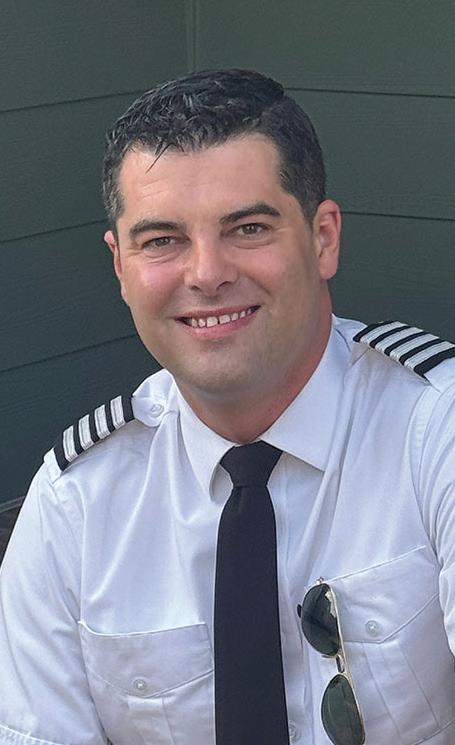
Ian Stewart, an Aviation diploma alumnus, has been named one of Wings magazine’s Top 20 Under 40 in Canadian aviation. A captain with AirSprint Private Aviation, Stewart’s career has spanned air ambulances, business charters, flight instruction and international flights.
In August, Mount Royal hosted a four-day Treaty Law School that brought together national leaders and advocates to examine treaties as law and their ongoing role in sovereignty. Directed by Dr. Evelyn Poitras, PhD, Ptarmigan Chair of Indigenous Business and Economic Development, the event initiated research and preservation for treaty leadership and governance archives.
RESEARCH EXPLORES HIDDEN IMPACTS ON STUDENTS
Stress in simulation
Can simulated nursing scenarios trigger real psychological stress? Dr. Giuliana Harvey, PhD, associate professor of nursing, Dr. Cathy Carter-Snell, PhD, professor of nursing, and psychology alumna Katilin Berlinguette conducted research into psychological harm in nursing simulations. Published in Nurse Education Today and shared at the INACSL conference in Denver, their work is gaining international attention and will guide MRU’s nursing program in applying trauma-informed practices to better support students in training.
ALBERTA MAGAZINE AWARDS CELEBRATE STORYTELLING
Silvers
for Summit
MRU’s Summit magazine was recognized with two Alberta Magazine Awards from the Alberta Magazine Publishers Association. Michal Waissmann was awarded a silver for Art Direction for the Fall/Winter 2024 issue while Chao Zhang earned a silver for Photographs: People and Portraiture for “The Mascot Chronicles” in the same issue. As always, we are honoured to be recognized alongside Alberta’s many amazing publications. Congratulations to all recipients!
Photo courtesy of Wings magazine
TEN TRI-AGENCY GRANTS AWARDED
Advancing knowledge and discovery
Tri-Agency Grants are major funding opportunities for Canadian research provided by the three federal research councils: the Natural Sciences and Engineering Research Council (NSERC), the Social Sciences and Humanities Research Council (SSHRC), and the Canadian Institutes of Health Research (CIHR). These are Mount Royal’s recipients for 2025.
NSERC Discovery Grants
• Dr. Trevor King, PhD Faculty of Health, Community and Education
• Dr. Nausheen Sadiq, PhD Faculty of Science and Technology
SSHRC Insight Grant
• Dr. Hadi Fariborzi, PhD, and Dr. Simon Raby, PhD Faculty of Business, Communication Studies and Aviation
SSHRC Insight Development Grants
• Dr. Shelley Boulianne, PhD Faculty of Business, Communication Studies and Aviation
• Dr. Celeste Pang, PhD Faculty of Arts
• Dr. Leah Hamilton, PhD, and Dr. Corinne Mason, PhD Faculty of Business, Communication Studies and Aviation
• Dr. Kristen Schaffer, PhD Faculty of Health, Community and Education
• Dr. Gloria Perez-Rivera, PhD Faculty of Arts
SSHRC Partnership Engage Grants
• Dr. Ranjan Datta, PhD (Principal Investigator) Faculty of Arts
SSHRC Connection Grant
• Dr. Celeste Pang, PhD Faculty of Arts
Read more at mru.ca/Tri-Agency2025
PROFESSOR FEATURED IN MENTAL-HEALTH PODCAST
‘I Survived Mania at 30,000 ft’
Dr. Adrienne Benediktsson, PhD, shared her journey with bipolar I disorder on the talkBD podcast, from a terrifying in-flight manic episode to rebuilding memories after psychosis. Drawing on nearly two decades of research into brain cells called astrocytes, she reveals how lived experience fuels her science and advocacy. The conversation offers an unflinching look at mental illness, resilience and hope.
RESEARCH AIMS TO PREVENT WORKPLACE TRAGEDIES
Safety in focus
Following a fatal 2022 oilsands incident, $1.24 million in fines is being put towards new research into the psychology of workplace safety. MRU’s Dr. Matthew McLarnon, PhD, is part of a team studying factors like risk tolerance and supervisor relationships, with the goal of improving safety standards. The project will also convene experts to create a unified rigging and hoisting competency standard for Alberta, paving the way for national adoption.
Top 40 under 40
Six Mount Royal alumni were named to Avenue Calgary’s 2025 Top 40 Under 40, celebrating outstanding achievements and community impact. The annual list honours Calgarians who are shaping the city’s future through innovation, leadership and service. A special congratulations to Neepin Auger, Haley Daniels, Geordie Day, Ashley King, Christopher Lee Primeau, Katie Samoil and Alexandra (Daignault) Sangster.
AVENUE MAGAZINE CELEBRATES MRU ALUMNI
Build the future of MRU
The current Campus Master Plan for MRU’s Lincoln Park campus was finalized in July 2016. Having served the University well, the plan needs to evolve into a 30- to 50-year vision in the form of a Long-Range Development Plan (LRDP). This vision is about more than buildings — it encompasses how our community will engage on campus, what work-integrated learning might look like for students, energy use, open spaces and many more considerations. Attend an Open House in early 2026 to learn more and share your thoughts, or get involved online.
Learn more at mru.ca/LRDP
ALUMNI SPEAKERS SHARE WORDS OF WISDOM AT SPRING 2025 CONVOCATION
Inspiring the next generation
Cam Bawol
Bachelor of Applied Business Administration — Accounting
From building companies to leading MNP’s national business development team, Bawol has spent his career turning ideas into growth. Passionate about Calgary’s startup scene, he mentors founders, fuels innovation and champions the city’s most promising entrepreneurs.
“What you have invested ... has given you a strong foundation. Aim to do good things with it. And when you can, pay it forward.”
Grace Dafoe
Bachelor of Health and Physical Education — Physical Literacy
A decorated Canadian skeleton athlete, Dafoe races for Canada while promoting safe sport and youth mentorship. Through Classroom Champions and KidSport Calgary, she breaks down barriers to sport and inspires leadership, confidence and courage both on and off the ice.
“Who you have become while studying at Mount Royal sets you on a path for what’s next. Feel proud of yourself. And thank those who have helped get you here.”
Racha El-Dib
Bachelor of Arts — Sociology
After losing her sister Nadia to domestic homicide, El-Dib founded Nadia’s Hope Foundation to raise awareness and provide support, education and advocacy to those affected by intimate partner abuse. A 2024 Outstanding Alumni Award recipient, she also established a bursary in Nadia’s name to help students pursuing legal careers.
“I want you to know, despite any doubts you have now and will have in the future, YOU are possible. Your voice, your presence, your story, they matter.”
Cody Foggin
Bachelor of Applied Business Administration — Accounting
A proud member of Frog Lake First Nation, Foggin earned his criminal justice degree from MRU and a Juris Doctor from the University of Alberta. He now practises corporate and securities law at Miller Thomson LLP in Calgary, focusing on mergers and acquisitions, corporate finance and emerging technologies.
“It’s okay not to know exactly where you’re going, as long as you’re moving forward with purpose, and staying true to who you are.”
Candice Goudie
Bachelor of Applied Business and Entrepreneurship — Sport and Recreation
Goudie got her start at Mount Royal, where studying sport and recreation management led to her first role with the Calgary Flames. Now executive director of the Calgary Flames Foundation and Community Investment, she leads the team’s charitable efforts and continues to set the standard for community impact in professional sport.
“Get serious about your goals. But never take yourself too seriously.”
Dr. Maryam Yaqoob
Bachelor of Science — Cellular and Molecular Biology
Forced to flee Iraq at 16, Yaqoob lived in Syria before arriving in Canada as a refugee. After earning her MRU degree, she completed a doctorate of medicine at UCalgary and is now a resident in internal medicine. She founded Calgary’s Stem Cell Chapter to recruit donors and was named a Top 25 Immigrant Youth in 2020.
“After today, you can continue to build and create this university’s story. In the world, wherever you go, you are Mount Royal’s best ambassadors.”
2025 Canada Research Chairs announced
Two MRU researchers are at the forefront of incorporating Indigenous ways of knowing into further understanding disasters and environmental changes.
Words by Ethan Ward
Ranjan Datta, PhD Department
Dr. Ranjan Datta, PhD, has been conducting communitybased disaster research with Indigenous, land-based local and racialized immigrant communities for 17 years. Since his appointment as Canada Research Chair in Community Disaster Research, his work has risen to new heights.
After having received his first CRC appointment in 2020, Datta is now entering his second CRC term. He works with Indigenous communities across the globe, performing community-based research to create community-led disaster and climate crisis adaptivity solutions that utilize the land-based knowledge of the Peoples he works with.
Over the past five years, Datta’s primary fieldwork has been conducted in northern communities across Alberta and Saskatchewan in Canada, plus Bangladesh and beyond. He has also worked with Indigenous communities in Nepal, India, Ghana and Scandinavia.
Since receiving his CRC position, Datta says he has led his most impactful research projects yet. He has been part of several large federal research agency grants as both co-applicant and principal investigator, collaborating with universities across Canada and contributing to projects that secured funding totalling upwards of $12 million.
“The CRC position has provided me with the time, resources and recognition necessary to grow my research in ways that would not have been possible otherwise,” Datta says.
Datta’s community-based research methods centre the landbased knowledge that has sustained Indigenous communities
of Humanities
for thousands of years. It prioritizes community science and community needs, focusing on how Indigenous communities co-exist with the land to produce climate adaptability solutions.
In summer 2024, Datta travelled to Inuvik, NT, with fellow MRU CRC appointee, Dr. Felix Nwaishi, PhD to work with the Inuit community as a co-researcher. Activities with the community involved land-based cultural camps and Elder-led science stories to connect researchers and community members. In the midst of the positive interactions and learnings, the alarming consequences of a deteriorating climate were made apparent.
Temperatures in Inuvik reached plus-35°C for four days that summer. These extreme temperatures hasten the melting of permafrost and contribute to food scarcity as native animals that the community relies on disappear. This leads to a reliance on store-bought food, which is prohibitively expensive and deteriorates traditional food sovereignty. Altogether, this is contributing to a mental-health crisis in the community.
“Through my research, the communities repeat again and again, ‘The disasters we are facing are not natural disasters, they are human-caused disasters.’ Indigenous and racialized communities are the victims of human-caused disasters,” Datta says.
In the next five years, Datta hopes to continue expanding his research, aiming to bring together international communities of Indigenous Peoples, land-based minorities, and Black, racialized, immigrant and refugee groups to co-create community-led strategies for disaster response and climate adaptation.
The Canada Research Chairs (CRC) Program invests as much as $311 million a year to attract and keep some of the world’s most talented and promising researchers. These researchers, known as chairholders, are selected from universities across the country and lead the drive for excellence in four main areas: engineering and natural sciences, health sciences, humanities and social sciences.
Felix Nwaishi, PhD Department of Earth and Environmental Sciences
Since arriving at MRU seven years ago, Dr. Felix Nwaishi, PhD, has set his sights on becoming a Canada Research Chair. This year, he was appointed the Tier 2 Canada Research Chair in Ecosystem Science.
Ecosystem science revolves around three fundamental resources that support life: air, land and water. They are the three core elements of the ecosystem that all lives rely on.
Nwaishi’s research projects involve the boreal, subarctic and arctic ecosystems found in Northern Canada, with the boreal forests of special interest. It is one of the largest and busiest Canadian eco-regions, with a vast wealth of natural resources, making it an attractive region for development and resource exploration.
This intersection of nearly limitless wilderness combined with human expansion and the numerous resulting disturbances makes these ecosystems vital for research.
Nwaishi points to forest fires as an example. Fire is part of the natural cycle of the boreal forest ecosystems and allows for renewal. However, the anthropogenic pressures of the climate crisis are causing fires to last longer and occur with greater frequency and severity.
Industrial and commercial development also affect the boreal forest landscape by fragmenting it with roads and development infrastructure. These disturbances impact aspects of the environment such as hydrology, which has cascading effects on how fires behave.
While human development and climate crisis pressures create and further exacerbate ecological disasters, the human cost is becoming more visible. This is especially true for Indigenous communities, which are often the hardest hit.
Nwaishi strives to centre Indigenous communities in his research, not just as participants but as co-creators. In one of his latest projects in the Arctic he took a different research approach.
“As a scientist, rather than doing a literature review and reading papers to inform our research questions,, we listened to the stories of the people who live on the land and interact with the environment, hearing what their perspective is.”
Nwaishi intertwines oral histories with his own scientific background to quantify what effect human disturbances have on the land and water of Indigenous communities.
“We collect consistent data and can leverage that data to connect the dots. We can determine what communities mean when they say, ‘Our water has gone bad.’ Does it mean high heavy metal content? We find the environmental indicators and quantify them, so when we hear community concerns based on their traditional knowledge, we can connect it to data.”
A recent Canada Foundation for Innovation grant to Nwaishi will aid in that data quantification, funding the development of an ultra-modern ecosystem science lab focusing on analyzing soil and water samples taken from impacted communities.
55 years of flight
Words by Rachel von Hahn
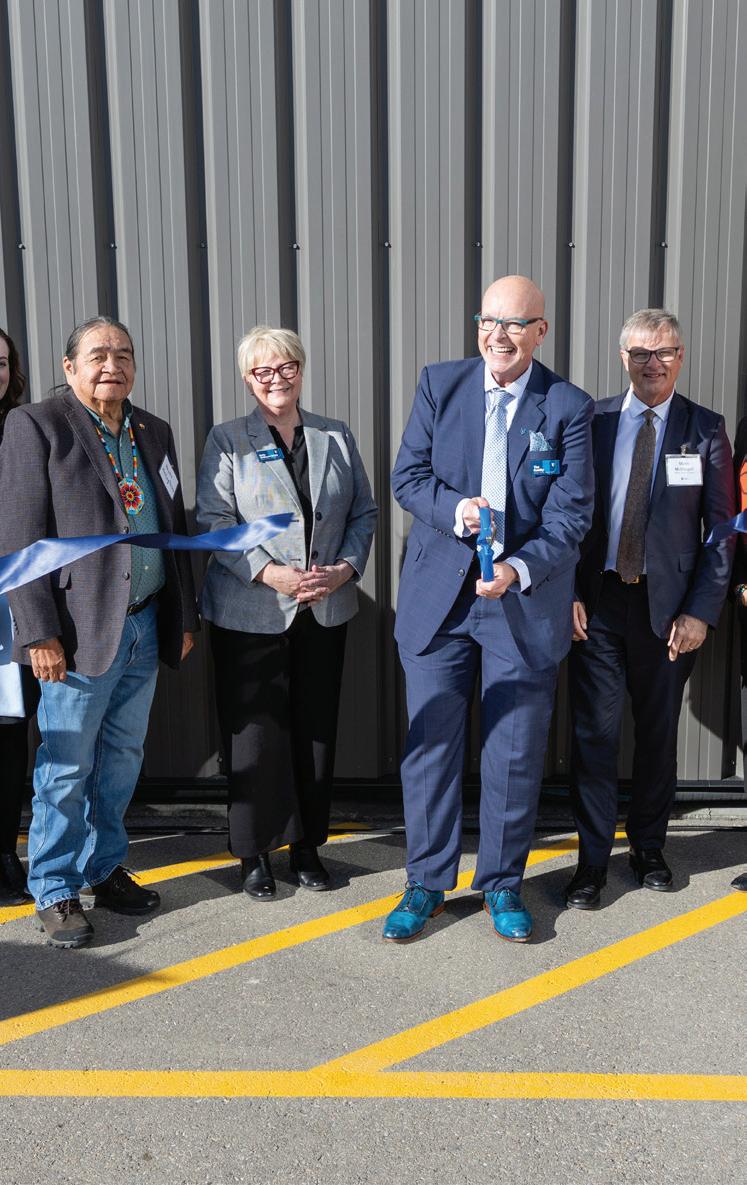
This fall, Mount Royal celebrated 55 years of aviation education with the opening of a new 3,400-square-metre facility at Springbank Airport. Officially opened on Oct. 3, the new campus is the result of a collaborative vision between government, private philanthropy, the aviation industry and the Mount Royal community, all coming together to meet industry demand and shape the future of aviation education.
“The new campus is an investment in the future of Alberta’s aviation industry,” says Dr. Tim Rahilly, PhD, MRU’s president and vicechancellor. “It provides our students with a learning environment that matches their ambition and positions Mount Royal to meet the growing demand for skilled pilots in Canada.”
The opening links a modern facility with a long tradition of flight education in Calgary, building on a legacy that has been growing for more than five decades.
FROM TRAINING BASE TO CLASSROOM
Long before Mount Royal offered a diploma in aviation, the land the University now occupies already had wings. During the Second World War, the area that would become MRU’s Lincoln Park campus hosted the Currie Barracks Airport, home to the No. 3 Service Flying Training School, part of the British Commonwealth Air Training Plan.
From 1940 to 1945, the school trained thousands of pilots for the war effort. With six facilities and three runways forming a triangle, it was one of the largest training schools in Canada. Alberta’s vast skies and relative isolation made it ideal for the purpose, and the program’s disciplined, high-stakes approach helped shape the province’s aviation culture.
Decades later, in 1970, Mount Royal launched its Aviation Diploma in direct response to a national pilot shortage. Backed by Calgary’s aviation community and instructors steeped in Royal Canadian Air Force tradition, the program quickly earned a reputation for excellence. Academic courses were housed in the Department of Math and Physics, while flight operations ran out of Springbank Airport.
In 1972, the downtown college relocated to the Lincoln Park campus, bringing aviation education full circle to its historic roots.
THE LEGEND OF PADDY GRAHAM
One of the program’s most influential early figures was Francis (Paddy) Graham, a pilot and instructor whose energy and passion helped shape Mount Royal’s aviation identity. He passed away in Ireland in 1982, after which the Springbank hangar was renamed in his honour and a scholarship was also created.
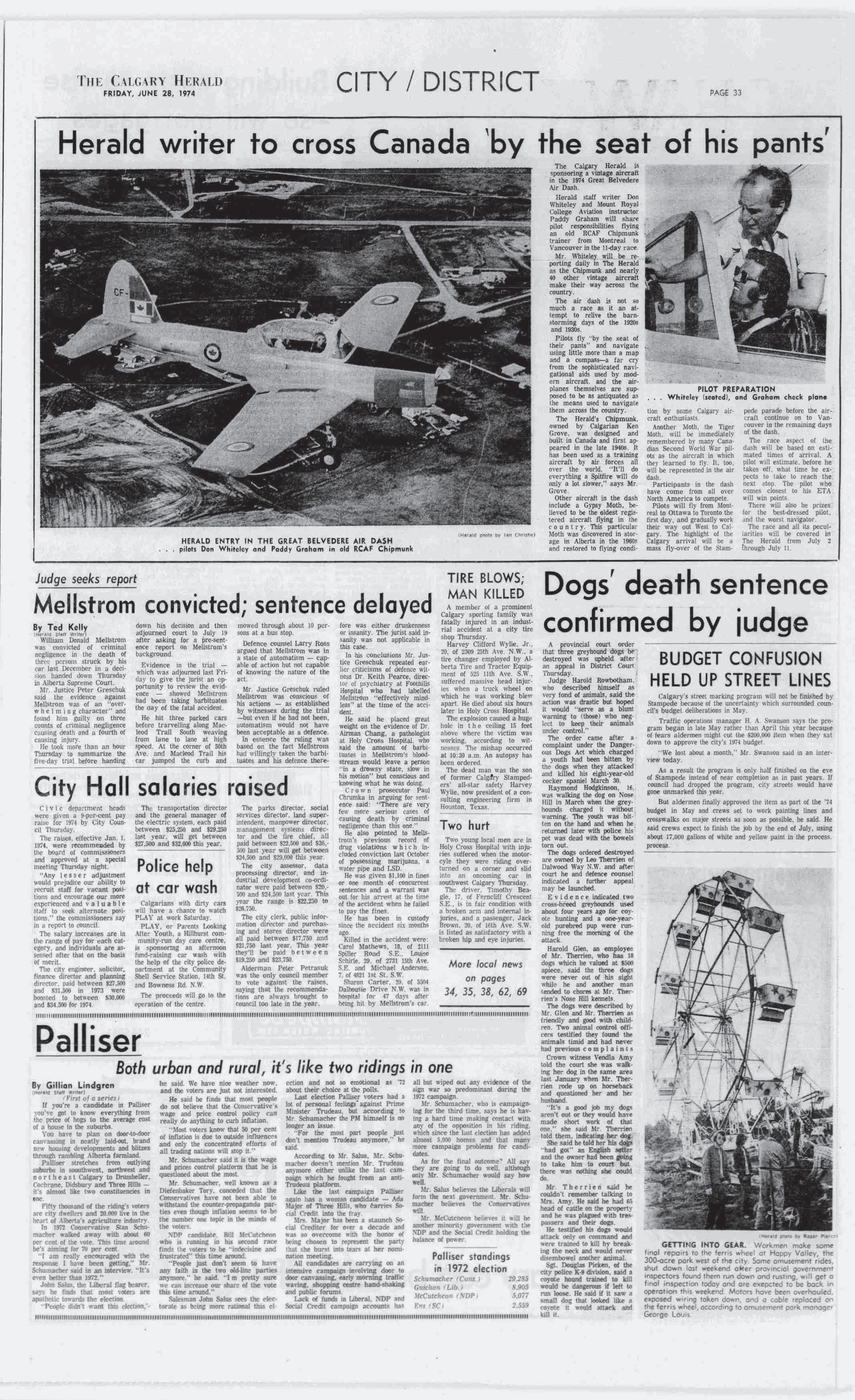
Graham’s adventurous spirit lives on in stories such as the 1974 Great Belvedere Air Dash, a coast-to-coast vintage aircraft race meant to revive the barnstorming spirit of the 1920s and ’30s. Flying an old RCAF Chipmunk trainer with Calgary Herald journalist Don Whiteley, Graham navigated across Canada using only paper maps, a compass and a keen sense of direction. They finished second overall.
“It was quite an experience,” Graham told the Herald at the time. “There is much to be learned in this type of event.”
1974 1978
STEADY CLIMB
Over the decades, Mount Royal’s aviation program continually modernized its fleet and curriculum. By the early 2000s, it was training a new generation of commercial pilots on more advanced aircraft and systems.
The college’s transition to a university in 2009 was a major turning point, offering expanded academic scope and resources. MRU’s
current fleet consists of eight Cessna 172s, three Piper Senecas and an ALSIM advanced flight training device.
Growth also opened doors to new partnerships. In 2023, Mount Royal joined forces with Canadian North to help train the next generation of Indigenous pilots. The collaboration includes a nomination program allowing Canadian North to recommend up to 10 per cent of annual aviation admissions, conditional job offers for successful graduates and financial support to reduce barriers for Inuit students.
1980
FUTURE-FOCUSED
Another milestone came in 2024 with the launch of MRU’s Bachelor of Aviation Management. The four-year degree blends business theory, leadership training and policy education with flight training. It was a strategic addition that recognizes the growing complexity of aviation careers and the value of preparing students for a range of roles across the industry.
“Launching the degree was an important step because it builds on Mount Royal’s strong reputation and alumni network while opening pathways to leadership roles across the sector,” says Dr. Kelly Williams-Whitt, PhD, Transport Canada accountable executive and dean of the Faculty of Business, Communication Studies and Aviation.
That same future-focused spirit drives the University’s latest partnership. On Sept. 10, the Government of Alberta, WestJet, CAE and Calgary Economic Development announced the creation of the Alberta Training Centre of Excellence for Aviation and Aerospace — a 15year, multimillion-dollar agreement that names MRU as the post-secondary partner. The first of its kind in Canada, the facility will be built in Calgary and combine advanced professional training equipment with collaborative research and development activity.
This partnership strengthens Alberta’s aviation ecosystem while ensuring MRU students have access to industry-leading opportunities for training and innovation.
ANCHORED IN LEGACY
Since 1970, more than 1,000 students have earned their wings through Mount Royal, with 210 actively flying in the fall 2025 semester. Alumni now fly for carriers across Canada and around the world, with many returning as instructors or mentors to guide the next generation with the same standards and sense of community they experienced themselves.
professionalism and leadership training I’ll need, and it’s connected me directly with industry professionals who can help me get there.”
Her words echo what the new campus represents: not just a place to learn, but a launchpad for future careers.
More than a modern teaching space, it is a statement of intent, built on partnership. Made possible through government funding, private philanthropy, industry support and the dedication of the MRU community, the facility advances simulation-based learning, strengthens safety practices and supports a growing student body.
It is a modern home for a legacy that began with runways laid in wartime and a program shaped by air force veterans and barnstormers alike. Because in aviation, as in education, where you’re going matters. But so does where you came from.
2020 2025
“Looking ahead, I’m most excited about the day I become an airline pilot,” says Kacy Cameron, a current Aviation Diploma student. “Mount Royal’s program has given me the flying skills,
DID YOU KNOW
The Cessna 172 is the most-produced aircraft in history. More than 45,000 have been built since it was introduced in 1956.
One question — multiple viewpoints
What recent development or movement is impacting your field of study?
Portrait illustrations by Chidera Uzoka
SLOW TRAVEL
Joe Pavelka, PhD Department of Health and Physical Education
For the past 70 years the impulse governing travel has been to see as much as possible in the two weeks that is our vacation time. But 10 cities in two weeks can be an exhausting way to collect pictures and souvenirs.
All that is changing. The biggest movement to come upon tourism in recent years is slow travel. Slow travel is many things. It means staying in one location longer. Taking trains and ferries instead of flying. Giving yourself permission to get lost in a new city. Experiencing China on a bicycle or Spain’s white villages, hiking hut to hut. The benefit of this trend is immersion in the places we visit.
If you want to know how we travel just look at how we live at home. Well, a lot of us, students included, are busy and stressed, increasingly so. Mount Royal’s Italy Slow Culture field school is designed to demonstrate differences in how we live. It’s based on the idea that there are a million ways to live a life and most of them are very good; one can only see that if you travel with the purpose of learning about the world, and mostly about ourselves.
Stephen Jeans, PhD
Faculty of Science and Technology and Bissett School of Business
People care about nature; some serve as citizen scientists. However, research also finds that younger generations are at risk of having a nature deficit disorder, a disconnection brought about by urbanization, the pandemic or technological advances.
Higher education provides this connection, for those taking a science degree and especially those who engage in fieldwork, or a general course for learners of other disciplines. But there are many more people beyond campus with an interest in the physical world and who prefer shorter, interactive, science-based experiences with us scientists and researchers.
This public interest is growing, and business interest as well, for Sustainability Day and Earth Day events, exploring nature-based approaches supporting ecosystems and human health and happiness. Star Parties are also a big request, counteracting the disconnect with the daytime or nighttime sky. This matters; we hear wonderful “ah-ha” moments from people, when abstract concepts of the Universe become real through a telescope.
For the public to participate, we are learning to collaborate among departments, with campus services and local organizations. Undergraduates benefit by volunteering, sharing knowledge that can also enhance their resumé. In embracing this trend, rewards are new questions, energy and skills.
MEDICAL ASSISTANCE IN DYING’S IMPACT ON NURSING
Tracy Powell, PhD School of Nursing and Midwifery
The legalization of Medical Assistance in Dying (MAiD) in Canada has impacted nursing by centring ethical reflection, particularly around conscience, at the forefront of practice. Nurses, as moral agents in relational roles, can face tension when a patient’s legal request for MAiD conflicts with their own moral beliefs. This has underscored the need for nurses to reflect on and navigate their conscience while supporting patient autonomy.
MAiD has also brought death and dying to the forefront of care in settings that may not have typically had such a focus, demanding greater knowledge of end-of-life processes and sensitivity to patients’ and families’ experiences. Nurses’ ability to provide compassionate, informed and relational care is pivotal in shaping the patient and family journey through MAiD. Their communication, presence and empathy are not just tools, but invaluable assets that can foster dignity, or, conversely, contribute to distress.
In this evolving context, nurses play an essential role in ensuring that care surrounding MAiD remains grounded in professional knowledge, ethical integrity and human connection. All of which can be essential in supporting patients and families through this approach to death and into bereavement.
ORDERING UP PERSONALIZED NUTRITION ADVICE
Jill Parnell,
PhD
Department of Health Physical Education
Personalized nutrition is transforming the way we make dietary recommendations. Once limited to factors such as a person’s age and sex, research now explores how DNA and gut microbiome testing could make nutrition advice far more precise.
One emerging field is nutrigenomics, the study of how our genes interact with the foods we eat. A person’s DNA can provide valuable information ranging from risk of disease to the ability to digest foods. For example, how quickly a person can break down caffeine is dependent on their genetics. The ultimate goal is to use an individual’s genetic information to identify the foods that will best match their physiology.
Another promising approach is to use the microbiome — the community of microorganisms living in the gut. The microbiome can affect digestion, immunity and even the brain. While it is known that fermented foods like yogurt and probiotic supplements contain beneficial bacteria, research is moving towards a truly personalized diet based on an individual’s unique microbiome.
Despite the exciting potential, personalized nutrition faces challenges. Protecting health data, the cost of testing and the complexity of the results are all barriers. While promising, more research is needed before personalized nutrition is ready for mainstream use.
PUBLIC INTEREST IN SCIENCE-BASED NATURE EXPLORATION
Mount Royal University celebrates alumni who are authentic, bold and inquisitive; who create belonging, transform systems, open minds and change lives. This year’s recipients show up in their professions and communities, living MRU’s vision and values, making a difference.
2025
Bahl’s film, The Compassionate One, was awarded the Angel Trophy Award at the Monaco International Film Festival’s Angel Film Awards in November 2024.
Peake has been a dedicated alumni volunteer for over a decade, providing guidance and inspiration to Mount Royal students in the Department of Health and Physical Education, in collaboration with professors Julie Booke, PhD, David Legg, PhD, and Lisa Daroux-Cole, PhD.
In 2025, Mount Royal’s Office of Alumni Relations established the $10,000 Future Alumni Founders Prize to support the dreams and aspirations of Mount Royal students (and future alumni) and to build on the contributions and legacy of alumni entrepreneurs such as Grant.
The Outstanding Alumni Awards are proudly supported by TD Insurance.
Words by Matthew Fox
Photos by Chao Zhang
Stanley Peake
Ashid Bahl
Aislinn Grant
Nicholson’s Alumni Speaker address at Mount Royal’s convocation in June 2024 inspired a standing ovation from the audience of thousands.
Sangster started Sarjesa as part of a university project, pitched it at JMH LaunchPad in 2017 (to become a finalist) and this year, she earned her place in Avenue Magazine’s Top 40 Under 40.
Avenue Magazine celebrated King as part of this year’s Top 40 Under 40 while her alma mater recognized her story and impact through a Grow Beyond campaign feature.
O’Neill established the O’Neill Indigenous Aviator Award, championing the endowment of a legacy scholarship in honour of MRU aviation’s 55th anniversary this year.
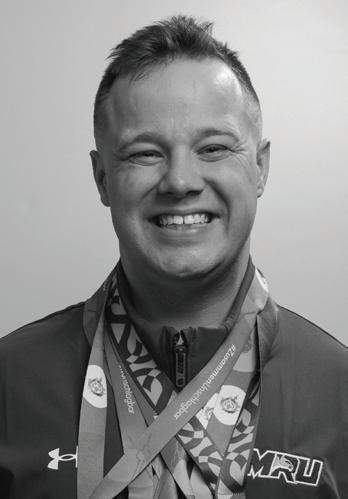
David Nicholson
Ashley King
Alexandra Sangster
Craig O’Neill
Craig O’Neill
Aviation Diploma, 2002
CHARTING A FLIGHT PATH FOR INDIGENOUS AVIATORS
Since earning his wings, Craig O’Neill has flown short- and longhaul routes on De Havilland, Boeing and Airbus aircraft, and today is a training captain with Air Canada. A proud member of the Otipemisiwak Métis Nation, O’Neill co-chairs Air Canada’s Indigenous Employee Resource Group, supporting colleagues and guiding the airline’s work with Indigenous communities across Canada. Despite a demanding career, O’Neill has never strayed far from Mount Royal. Since 2024 he has volunteered on MRU’s Aviation Partnership Council, advising on industry trends and futureproofing the aviation curriculum. O’Neill further supports the next generation of aviators as a mentor through the Iniskim Centre, the aviation program and informally with many students. “Craig has routinely provided his time in aviation classes to mentor students on subjects such as professionalism, good citizenship, leadership, volunteerism and navigating professional pilot training,” says Chris Gillanders, associate professor of aviation.
Aislinn
Grant
Bachelor of Business Administration — General Management, 2016
LEADERSHIP FOR FEMALE FOUNDERS TO BUILD BETTER BRANDS
Aislinn Grant’s contributions benefit many, including rising entrepreneurs taking part in MRU’s Institute for Innovation and Entrepreneurship’s JMH LaunchPad competition. The founder of the Calgary-based Grant Design Branding boutique studio was the first female student to compete in LaunchPad in 2013 and has since served as a judge and mentor. She was also the first LaunchPad alumni to provide an award, to date contributing $75,000 in branding services to winners. The self-taught graphic designer is a vital communitybuilder; she co-founded Play Big & Jam, a group of entrepreneurial women who meet for advice, support and to celebrate each other’s wins, and she’s a vocal advocate for underrepresented groups such as those with disabilities and the 2SLGBTQIA+ community. “I’m humbled to watch Aislinn elegantly juggle motherhood, business ownership and community service,” says Ray DePaul, the Institute’s executive director. “We have quietly shifted from a mentor-mentee relationship to a mentor-mentor relationship and I’m very thankful for her contribution to MRU.”
Ashley King
Bachelor of Communication — Journalism, 2018
FACILITATING GREATER INCLUSION IN THE ARTS
In 2011, Ashley King was on a gap year, travelling the world, unaware she’d one day become a leading voice for accessibility in the arts. At 19, King lost her eyesight after unknowingly drinking methanoltainted alcohol at a Bali bar. Years later, MRU’s journalism program gave her the foundation to tell her story, which culminated in Static: A Party Girl’s Memoir, a play about loss, resilience and methanol poisoning awareness that premiered in Calgary in 2024. Collaborating with Mount Royal journalism associate professor Meg Wilcox (whom she hadn’t met until after graduating), they adapted Static into a podcast. “While Ashley had never made a podcast, she embraced the project with her usual energy, grace and humour, committing significant time to developing the concept, conducting interviews, hosting and adapting the actor performances for podcast,” Wilcox says. “Through this work, she’s learned another way to produce and tell stories beyond reporting and theatre.” The four-part series topped Apple’s “Personal Journeys” chart in Canada in December, 2024. An artistic associate at Inside Out Theatre, King champions inclusive performances and works with theatre companies to increase accessibility across Calgary’s arts scene.
David Nicholson
Employment Preparation Certificate, 2020
LIFTING SPIRITS WITH DETERMINATION, INTEGRITY AND KINDNESS
David Nicholson’s story is more than the sum of his athletic achievements. It’s a testament to his efforts to better the world around him. A fall as a toddler led to devastating seizures that affected his speech and development, but his determination to fully participate in this world through education, athletics and volunteerism is palpable. Graduating from MRU’s Inclusive Post-Secondary Education program, Nicholson remains connected to campus, speaking at a June 2024 Convocation ceremony and timekeeping at Cougars basketball games. His dedication and camaraderie in powerlifting earned him the honour of leading Team Canada’s 2023 powerlifting squad in Berlin, where he won three golds and a silver medal. Nicholson volunteers at the Trico Centre and with the Calgary Police Service, and also works at Bells of Steel and the Saddledome. “I want to challenge stereotypes by showing what’s possible when someone is empowered to grow,” Nicholson says. “My biggest goal is to inspire others to focus on inclusion, character and positive connection. I lead by example, proving that a positive attitude and consistent effort are just as important as medals.”
Alexandra (Daignault) Sangster
Bachelor of Arts — English (Honours), 2018
BREWING SOCIAL IMPACT WITH BUSINESS INNOVATION
Sparked by an MRU Indigenous studies course emphasizing everyday activism, Alexandra Sangster launched Sarjesa Tea with bold questions. “What if a cup of tea could carry a message? A purpose? A call to action?” Sangster envisioned Sarjesa as more than a tea company from its inception. It would be a vehicle for change rooted in ethical sourcing, quality products and deep social responsibility. From supplier relationships to social-impact experiments, Sarjesa is committed to supporting the prevention of violence against women through every level of its operations. The company crafts premium tea blends using intentionally sourced ingredients, with a focus on supporting women through its supply chain. “Alexandra’s impact is not confined to the product she sells; it is embedded in the way she leads, hires, mentors, collaborates and advocates,” says Paul Shumlich, Deepwater Farms co-founder and a 2023 Outstanding Alumni Award recipient. “She has built a company with strong principles and an unwavering commitment to making a difference.”
Stanley Peake
Bachelor of Physical Education, 2001 (UT)
FOSTERING LEADERSHIP, PERSONAL GROWTH AND VALUES-DRIVEN DECISION-MAKING
Stan Peake has a goal to help a million people discover their potential, and he’s well on his way. As a leadership coach, speaker and author of nine books, he’s shared hard-won wisdom with 120,000 to date, leaning on his candour shaped by 25 years of entrepreneurial highs and lows. Just three months after launching his coaching business, Peake broke his back, but took the stage a month later to deliver a seminar to 150 people on, appropriately, overcoming adversity and finding opportunities among challenges. Peake’s commitment to service shines through in countless volunteer hours with Earth Day, local not-for-profits, job seekers and early-stage startups in need of mentorship. He’s a regular alumni volunteer at MRU, sharing practical insight on entrepreneurship and personal growth. “Stan openly shares his personal experiences — both triumphs and challenges — providing students with valuable life lessons,” says Dr. Julie Booke, PhD, associate professor of health and physical education. “Rather than sugar-coating his struggles, he embraces them as learning opportunities, demonstrating resilience and the power of perseverance.”
Ashid Bahl
Associate Diploma — Police Science, 1979
SHOWING THAT LIVING A LIFE FOR OTHERS IS A LIFE WORTHWHILE
Ashid Bahl’s legacy far exceeds his career as a customs inspector. For nearly 45 years, in his “free time” he has led the For the Love of Children Society, a charity that supports 101 orphanages and schools globally and has helped more than one million underprivileged children affected by war, famine and natural disasters in countries like Afghanistan, where 30,000 children are under his care. Many graduates of these schools affectionately call him “Dad,” a reflection of the commitment they each sense from Bahl. From food, clothing and housing to medical supplies and school fees, Bahl provides what’s most needed in each community. His work has earned him honorary recognition from Africa’s Maasai tribe, the Dalai Lama and, more locally, the Piikani Nation. Not seeking a comfortable retirement, Bahl continues to travel the globe — recently visiting Gaza, Peru and Brazil — to fulfill his mission of hope and transformation. “It’s rare to encounter a trailblazer who not only dreams of a better world but actively builds it,” says Wes Beiko of 528 Evenings Media. “Ashid’s courage, compassion and transformative impact are unparalleled.”
Bye bye, Bay
The stream of Canadian department stores closing, culminating with the Bay, has sparked nostalgia in many and triggered the worry that in-person shopping is on the way out.
Words by Michelle Bodnar
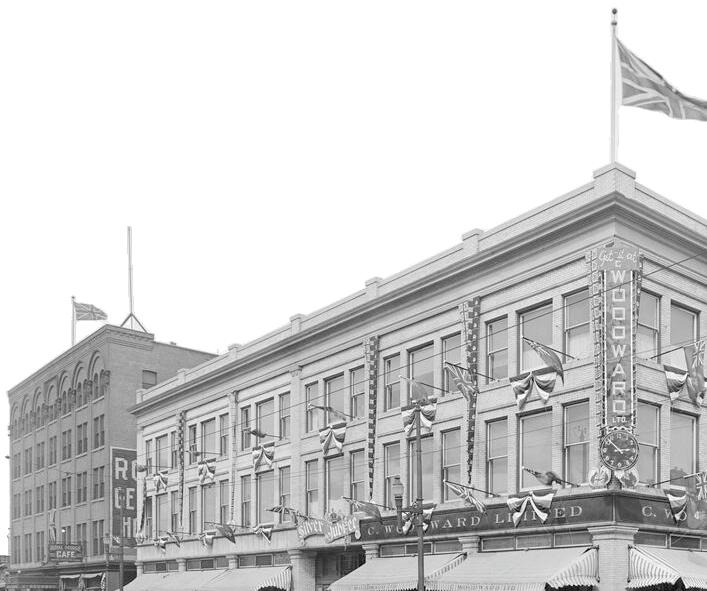
Canadian shoppers were stunned this spring when Canada’s iconic Hudson’s Bay Co. suddenly shuttered every location after 355 years. It’s the latest of a long line of Canadian-owned department stores that have come and gone, with the exodus beginning at the end of the last century.
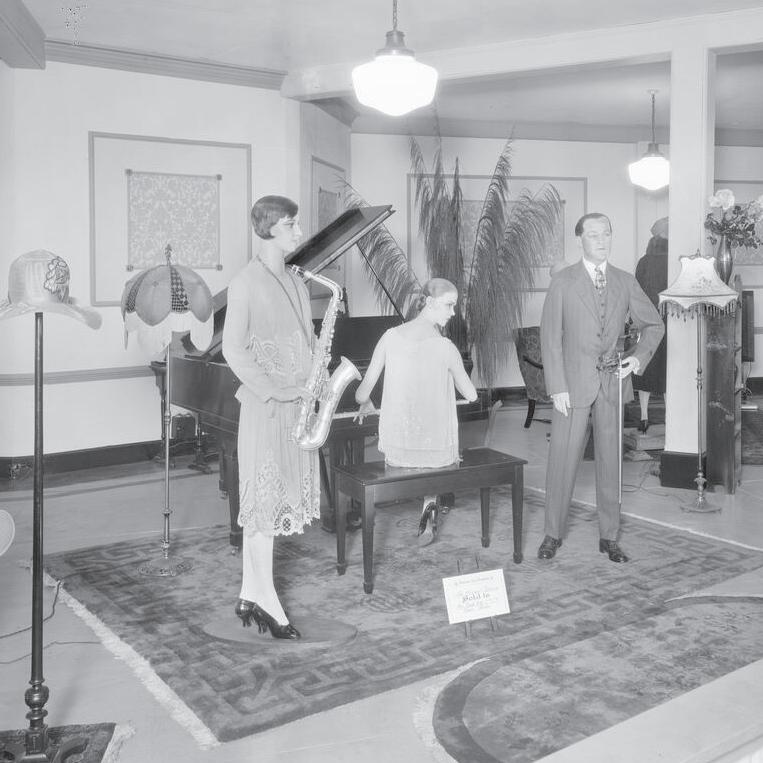
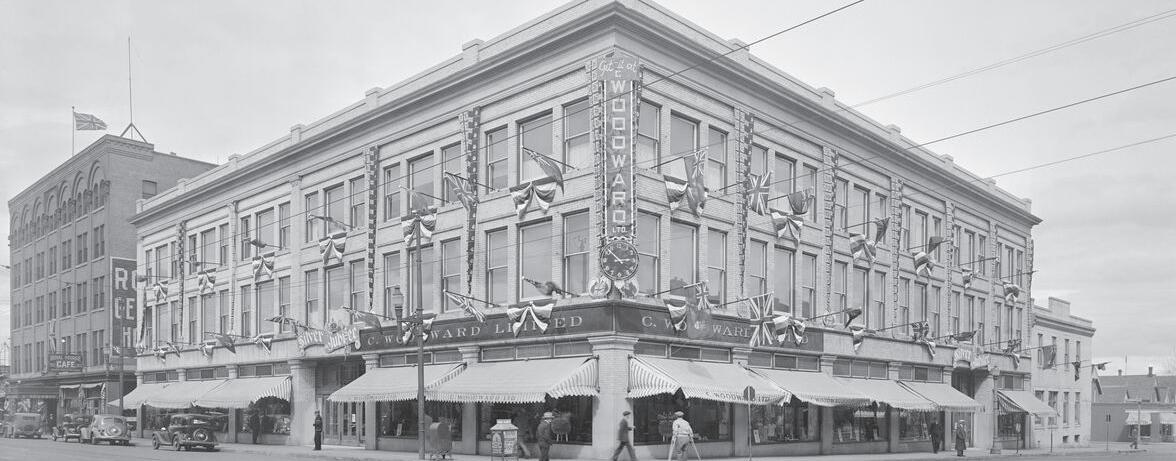
Woodward’s declared bankruptcy in 1992. Eaton’s, once the largest department store chain in the country, folded in 1999 after 130 years. Zellers collapsed in the early 2010s. Sears Canada shut down in 2018. And then there are the numerous other outlets, such as SAAN, Consumers Distributing, A&A Records, Beaver Lumber and Future Shop, that have disappeared from what seems to be the scorched landscape that is Canadian retail.
The Bay’s closing hit many the hardest due to its long and storied history in Canada. It started as primarily a fur trader from 1670 to 1870 and developed into a higherend department store with locations in some of Canada’s most beautiful and well-known downtown buildings.
Many formed a personal connection with the Bay, says Dr. Neil Brigden, PhD, an assistant professor of marketing in the Bissett School of Business, where he studies consumer decision-making.
“I think a lot of us have memories of going to shop for important items at the Bay. I remember when I got my first suit for my high-school graduation we went to the Bay, and so I think a lot of Canadians have stories like that. We have this emotional attachment to the brand.”
The Bay’s downfall has been attributed to declining sales and rising debt, the struggle to adapt to online shopping, slow downtown foot traffic post-pandemic and its focus on leveraging real-estate assets rather than investing in the retail business.
“Unfortunately with any business, once you start to run into financial trouble it becomes difficult to invest in the things that are going to result in great consumer experiences. So, my experience being in the Bay in the last two years, it seemed like there wasn’t as much stock on the shelves. It was hard to find customer service. I noticed an escalator that wasn’t fixed for what seemed like a long time. The cracks were starting to show, and consumers don’t love those little frictions.”
Brick-and-mortar retail has been declared dead (or at least dying) many times over the last three decades, and the failure of the Bay seems to fully support the narrative that online shopping is now king. However, Brigden says, “It’s important to remember that online sales are still less than a quarter of total retail sales.”
It’s difficult to ascertain exact numbers due to the way statistics are calculated, Brigden says. A Statistics Canada report from 2023 (just after the pandemic) breaks shopping habits down by types
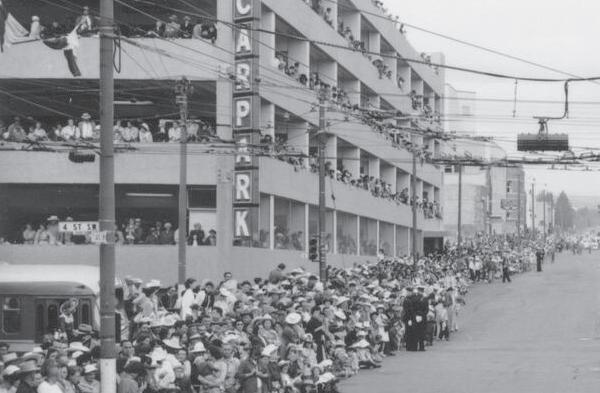
Woodward’s, Edmonton, AB, 1931
of stores and reports an overall percentage of online sales in Canada of only around six per cent, but their research excludes non-Canadian entities, leaving out Amazon.
A U.S. Federal Reserve report from this year that includes Amazon and other major U.S. e-commerce players provides data suggesting that only about 16 per cent of U.S. retail sales are online. Another global report from SOAX in June found that about 19 per cent of all sales are online.
An April 2025 survey by KPMG revealed that 61 per cent of 1,522 Canadians asked say they mostly shop at brick-and-mortar stores and 57 per cent say they are frustrated with the online shopping experience.
So, it’s not retail as a whole that is suffering, but the major department store chain certainly is. Big “anchor tenants,” such as the department stores found at each end of a mall, have generally disappeared except for a precious few.
To click or to tap
Brick-and-mortar stores that continue to be successful are those that have both strong online and offline offerings.
The Canadian Tire Corporation, which announced in May that it had entered into an agreement with the Hudson’s Bay Company to become the home of the HBC’s Canadian brands and other intellectual property, including the HBC Stripes, continues to chug along thanks to a helpful website.
“You can check to see if they have what you need available at a particular store near you. You can even figure out what aisle it’s in. And if something’s out of stock, you can order it online and have it shipped to you or to a store,” Brigden says. “Those options really complement the in-store experience.”
That could also be where the Bay went wrong. Their website was decidedly inaccessible, which led to low usage. Without use, no user experience data could be collected, leaving the Bay with little idea of what their customers were looking for.
Department stores are also ideal for browsing, where shoppers are happy to hunt around for great deals. Mission shopping, where people do their research online first, figure out what products they want and then go to the store for that item, has largely replaced browsing, however.
“I think the Bay depended on impulse buys or unplanned purchases,” Brigden says. As part of a group of companies drawing on some of the same inventory, Canadian Tire has built-in efficiencies that allows them more flexibility to pivot, he explains.
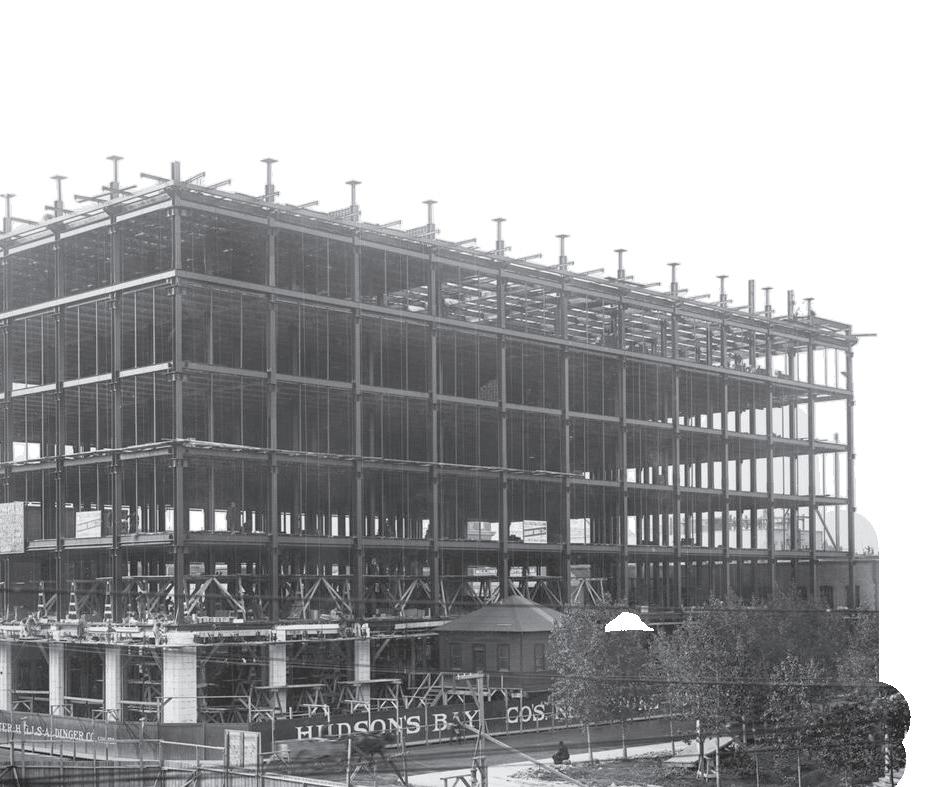
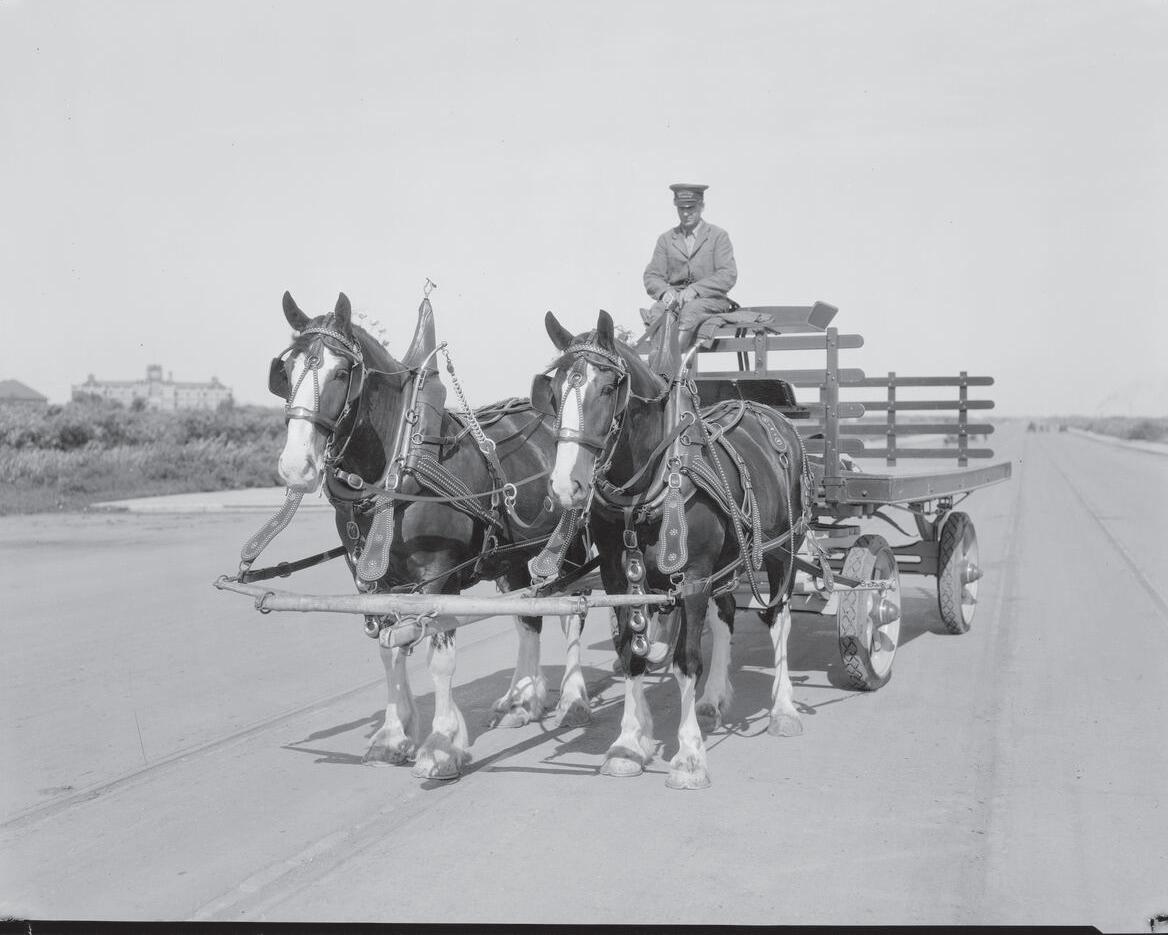
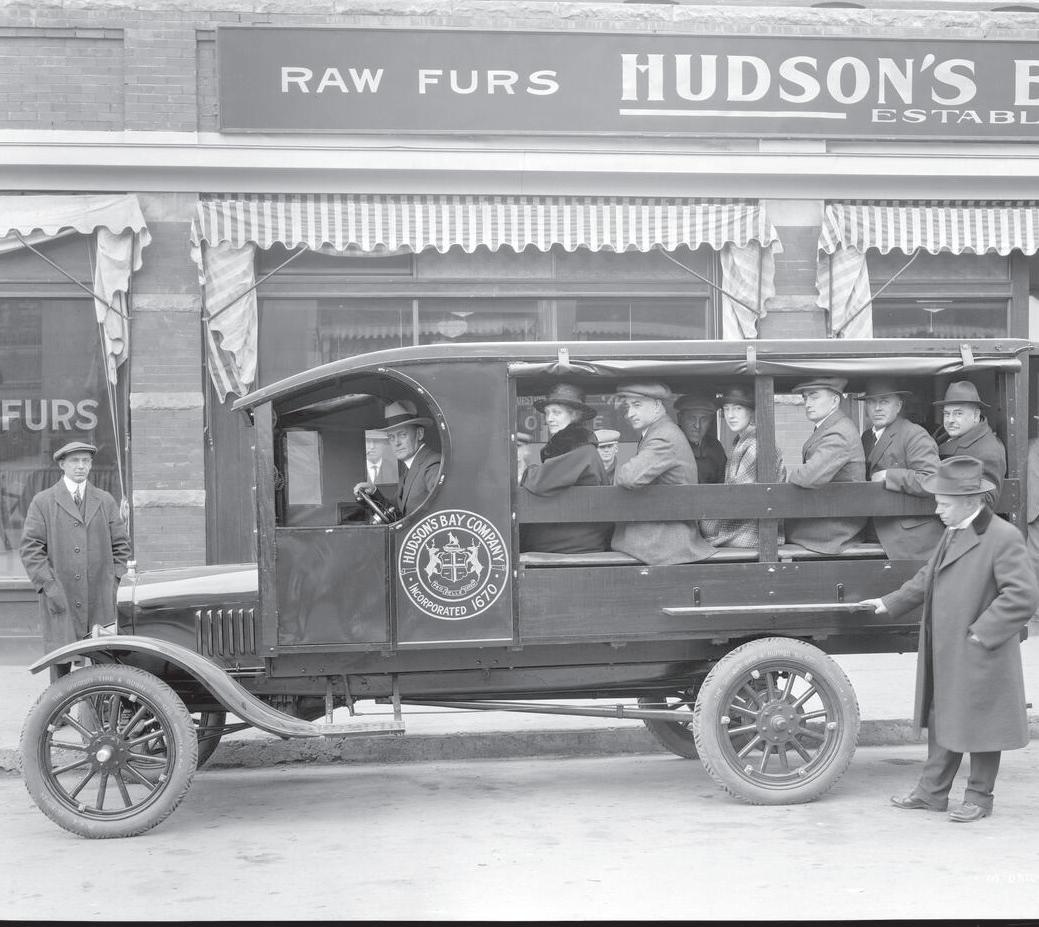
Top right Hudson’s Bay Company booth, Edmonton, AB, 1927
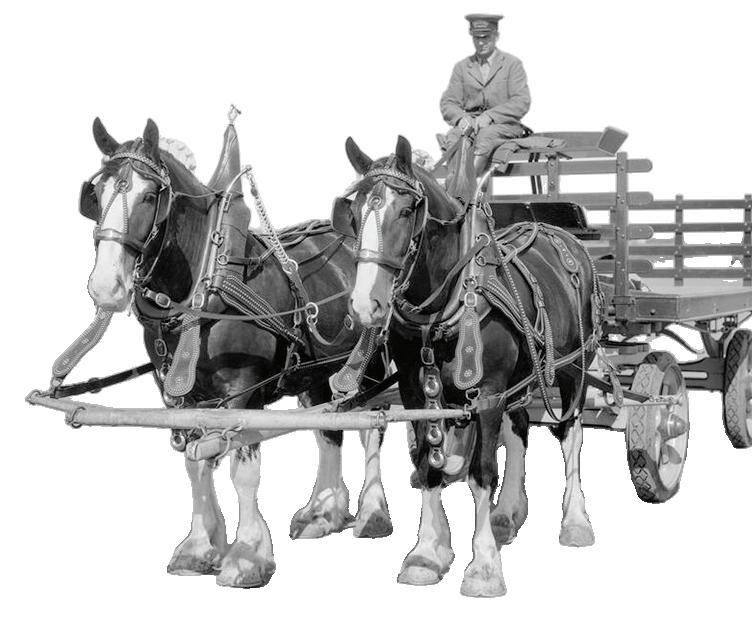
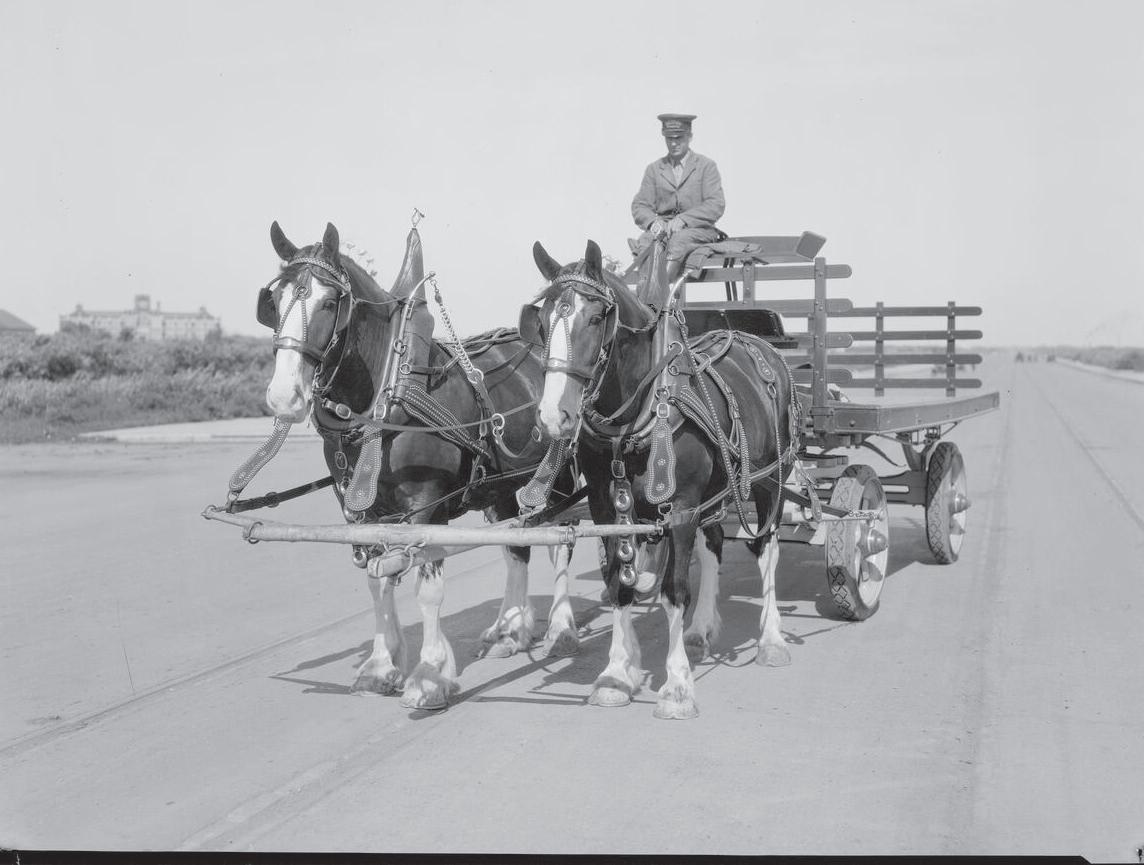
Bottom Hudson’s Bay Company cart team, Edmonton, AB, 1928
The evolution of the mall
Calgary’s largest mall, CF Chinook Centre, is also widely considered to be the city’s busiest. It’s often packed at all times of year, but it’s structure has subtly changed.
“Historically you’d have your two big anchor tenants at opposite ends of the mall, and those were likely big department stores, like the Bay and Sears. And those big department stores got good deals on their rent because the idea was they were bringing in all the traffic that was then going to walk between the two anchor tenants and stop and shop at all the smaller shops along the way. The mall generated a lot of its rent revenue from those smaller stores that weren’t big enough to pull in their own traffic.”
Chinook has been through a litany of anchors, including the Bay, Woodward’s and Zellers, which is making a recent comeback with a smaller-store concept, and now has H&M, the Scotiabank Theatre Chinook and Sport Chek as its de facto anchors. Smaller stores are getting much more effective at bringing in their own clientele, and so the old model is not as necessary. But the room those anchor areas provide is creating interesting opportunities for businesses. Brigden says they offer large retail spaces that are relatively affordable for potentially more retail, gyms, health-care facilities (as has happened in Newfoundland) and even pickleball courts.
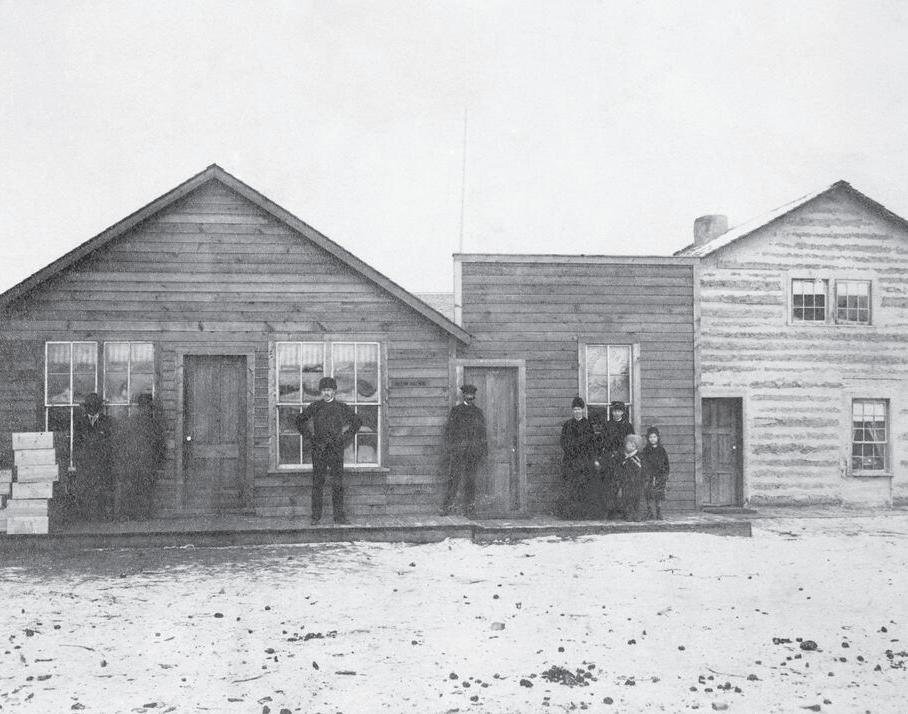
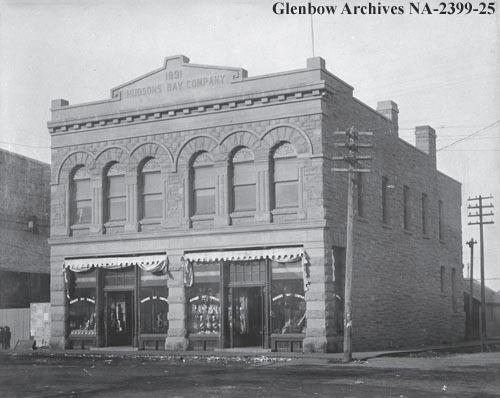
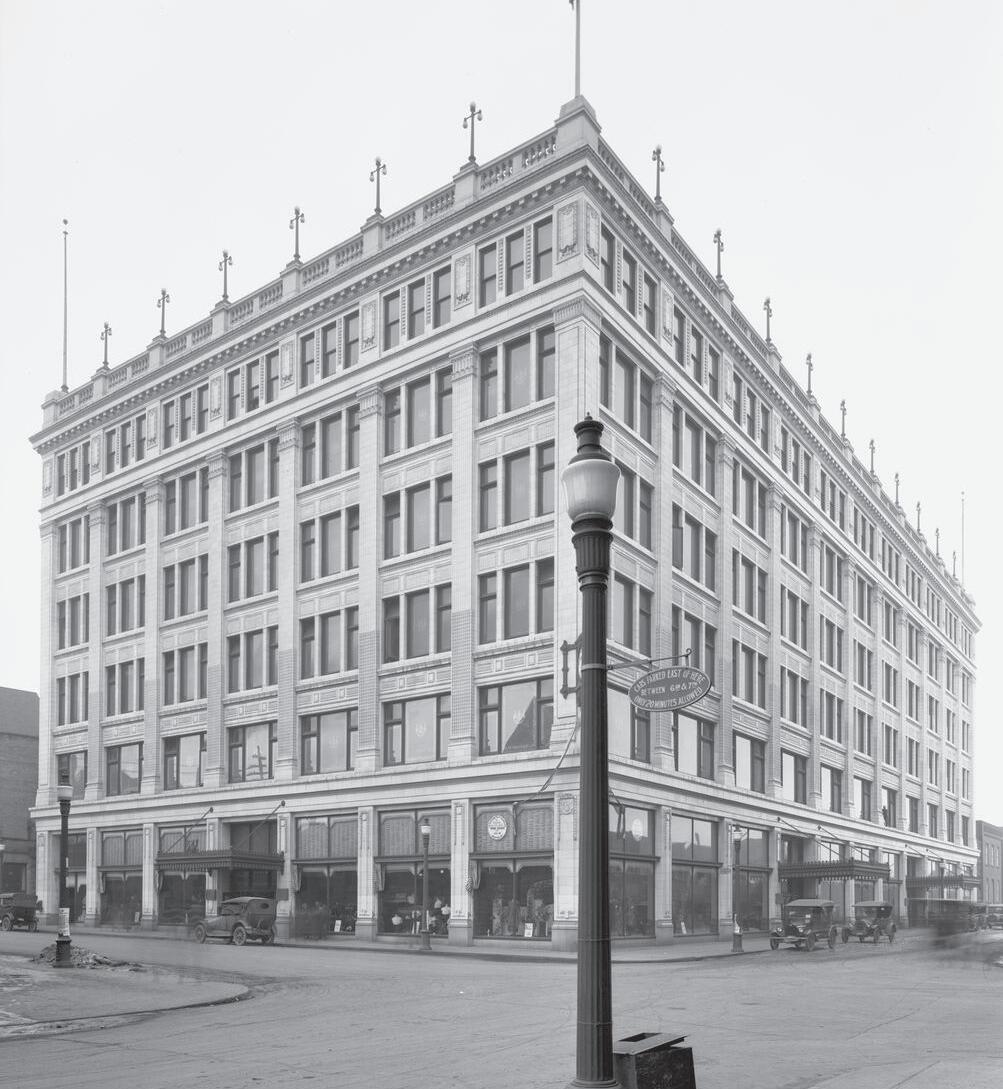
Top Hudson’s Bay company post, Calgary, taken on the east side of Elbow River prior to 1884
Second from the top Original Hudson’s Bay Company store, Calgary, AB, circa 1890s
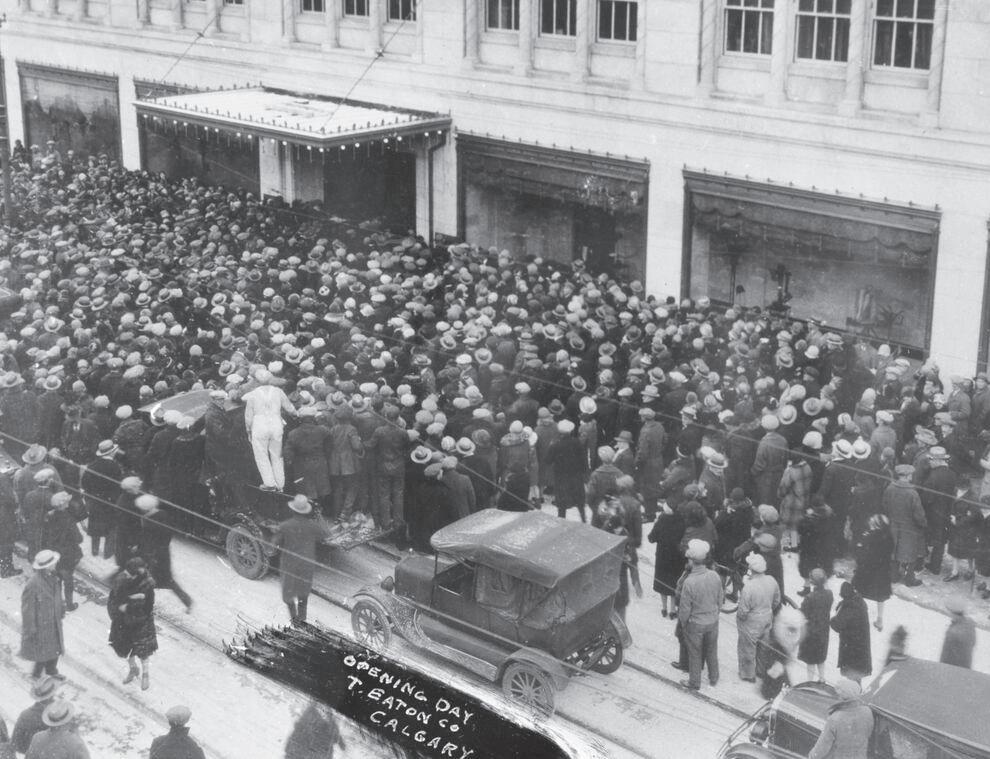
Third from the top Opening of Eaton’s store, Calgary, AB, 1929
Bottom
Hudson’s Bay Company, Calgary, AB, sign on window saying “Calgary’s new slogan, ‘A Home for the Boys who fought for our homes,’ “ 1918 to 1919
While the departure of the Bay might be an unhappy reality, the good news is that retail is not dead. In fact, it is thriving in spite of the convenience of online options as people still enjoy the social interactions and sense of
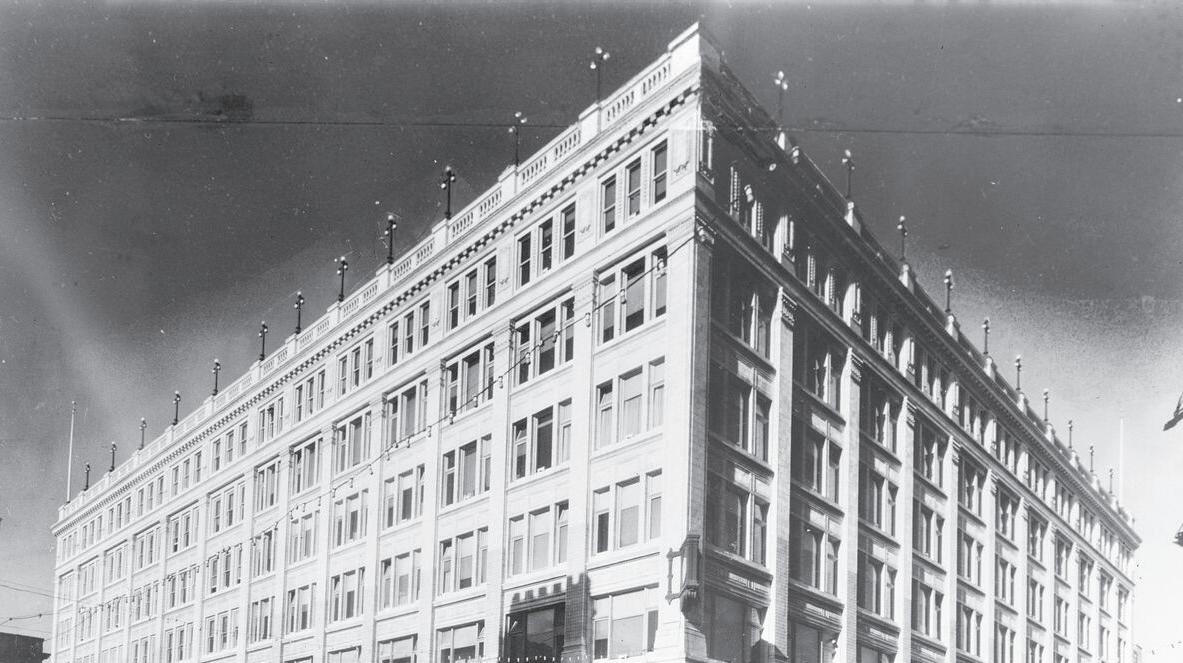
Extension to Hudson’s Bay Company store, Calgary, AB, 1929
Photos sourced from the Glenbow Library and Archives and UCalgary digital collections
“My parents immigrated to Calgary from England, and all of my extended family was in England, and so on Christmas, we would usually get sent money from our relatives rather than gifts, because it was expensive to send parcels. For my brother and I, Boxing Day was huge, because that was when we could go and spend this Christmas
“Epic back-to-school shopping sprees with my mom always made me feel very special and grown up, especially when we stopped for lunch at any of the amazing department store cafeterias that existed. My mom would let me get fries and gravy and a piece of pecan pie and she would always get a BLT. Core memories of the very best kind.”
“We were a Sears family and would often shop for back-to-school clothes at the Marlborough Mall location. As a young, bored kid I remember playing hide-and seek-with my sister in the endless racks of clothing, popping our heads out to scare Mom while she sifted through summer blouses. In the early days of home video we couldn’t afford our own VCR, so I also have memories of renting both the machine and some movies for the weekend. This was long before Blockbuster and Netflix.”
Dave McLean
AVP, Marketing and Communications
(Applied),Journalism 2005
Michelle Bodnar Summit editor Bachelor of Communication —
“My first real job, between high school and university, was at Kmart in Brentwood Mall. Long before Walmart, Kmart was the original discount department store in Canada, with a number of locations in Calgary. My core memory is of the leadup to Christmas and the madness that ensued as shoppers flocked to take advantage of the store’s famed ‘blue light specials’ and turned to quirky ‘As seen on TV’ offerings like the Abdominizer and Chia Pets as last-minute gifts. I walked off the sales floor Christmas Eve feeling exhausted, but pleased I’d helped some late shoppers find something for under the tree.”
Peter Glenn Director, Communications or the catalogue, even the appliances, which lasted for decades.”
Deb
Summitproduction manager Journalism Diploma, 1977
Abramson
“Every summer, on the way to the cabin, my dad and I stopped at Beaver Lumber, where the sawdust clung to your clothes like a souvenir you never asked for. He scooped nails into a paper bag stamped with the familiar green-and-yellow beaver, then strolled the aisles with a bag of free popcorn. I followed along, marvelling that anyone needed 15 kinds of hammers, while my dad seemed perfectly at home. What lingers in my memory isn’t the tools or the popcorn, but how a simple stop for supplies became stitched into our summers, like another tradition we didn’t know we were keeping.”
Katie Cabaret Director, Marketing
order form and then went to the counter to hand it to the employee. Then it was an agonizing wait while they went to the back and searched for the item, and quite often they sadly came out empty-handed. It was a roller-coaster of emotions.”
Michal Waissmann
Summit art director Bachelor of Communication — Information Design (Applied), 2007
Do you have a long-gone shopping story you would like to share? Please send your department-store memories to summit@mtroyal.ca. We would love to hear them!
An intelligent choice:
Learning
to think in the age of LLMs
Words by Michelle Bodnar and Nadia Moharib
Illustrations by Willis Jameson
ARTIFICIAL INTELLIGENCE COULD REVOLUTIONIZE HOW WE SOLVE PROBLEMS. BUT SIGNIFICANT RISKS REMAIN.
Since it was first visualized in the mid-20th century, the emergence of artificial intelligence (AI) has rapidly accelerated and is now an integral part of modern life. However, as has been the case with any number of technological innovations, many are split on its implications.
Proponents see AI as a tool for progress, citing its potential to revolutionize health care, enhance productivity and help solve complex problems. Critics warn of significant risks, including job displacement, algorithmic bias, privacy invasion and even the threat of uncontrolled superintelligence.
Many see it as a tool, others a crutch and some warn that AI can be treacherous for those who use it blindly.
The idea that machines could potentially learn to think on their own has been around since the late 1940s, when Alan Turing hypothetically mused about whether a human carrying on a text conversation with a computer and another person could tell the difference between the two. Back then, it was only a thought, but today, Large Language Model (LLM) tools such as ChatGPT, Microsoft Copilot and Google Gemini carry on realistic, human-like conversations, to the point where millions of people turn to them for advice, and answers to questions can be found in milliseconds.
LLMs are a type of AI, which creates systems that can perform tasks typically requiring human intelligence, such as problem-solving, comprehension and pattern recognition. LLMs fall under this definition and can understand and create human language through deep learning models. They then process massive amounts of text data, learning patterns and context.
Vendors constantly “retrain” their LLMs, and products incorporate user feedback, leading to their continuous improvement. That causes some to worry that LLMs will begin to make many careers, such as research and writing, obsolete. Joel Conley, an MRU Bachelor of Computer Information Systems graduate who now works as a web software developer, says AI is here to stay and people who want to remain professionally relevant need to learn how to best navigate a world with it.
“New, publicly available technologies have always been controversially received. Social media, the internet itself, television and radio all received similar pushback,” he says. “And while the criticisms and warnings often turned out to be valid, the benefits to society were overwhelming while turning out to have been less predictable than the drawbacks.”
Conley is optimistic that LLMs could be beneficial … if used correctly. It’s self-protective to proceed with some skepticism, Conley says, while stressing that information gleaned from an LLM, Wikipedia or the internet should always be double-checked.
Educators are in a unique position right now, as they are perfectly placed to assist in teaching ways to use LLMs that will be most advantageous. The problem is, however, that the tools are so good already that it’s tempting to keep falling into an ease-of-use trap.
MRU computer science professor Randy Connolly says he has noticed a trend towards fast internet searching for basic research. Assigning an actual paper book to read is “scary” for some students, and that, as he explains, is a problem.
ENTER THE ECHO CHAMBER
Human-crafted blogs and websites have predictably lost popularity to other channels such as vlogs and social-media platforms. Now, many sites such as Medium and Tumblr simply republish content created by people elsewhere instead. Automated agents take it from there, reproducing those republished efforts many times over.
“Google has become almost completely reliant on Reddit for actual novel human responses to human questions,” Connolly says.
All of this creates an endless feedback loop where searches continuously “refind” the most popular search material, which often comes from the same sources or sponsored content.
“Over the past 20 years, one of the most replicable findings in user experience research is that users almost never go to the second page of the search engine results,” Connolly explains. “About 60 per cent will click the first entry, which is often a sponsored result, and 25 per cent will click the second entry.”
This generates Google’s parent company Alphabet a lot of revenue for directing traffic to the sponsoring website.
For context, Google represents 90 per cent of search traffic in Canada.
Connolly says the monetization of content comes with two costs. The first is obvious: sponsored information might not be reliable or accurate.
Conley agrees, saying, “The fact that some people blindly trust LLMs is a general skepticism-training problem. For the people who are overly trusting of this generated content, I’d be willing to bet their lack of skepticism is not limited to LLMs. It highlights a much broader problem that is, in my opinion, not unique or novel to this technology.”
The second challenge posed by the monetization of internet content is less obvious, but more alarming. Google may now be railroading users into an increasingly narrowed offering of ideas and information.
In an online environment “where almost everyone thinks alike because they are reliant on an information infrastructure that regurgitates a small subset of profitable (online ideas), valuable innovation and creativity struggle to find air,” Connolly says. “AI is exacerbating this problem.”
This environment promoting a curated set of ideas is counter to the traditional notion of the pursuit of knowledge and education.
“Higher education should be a time for young people to be exposed to unfamiliar, unconventional and demanding ways of thinking. University courses that asked students to engage with texts and ideas that were different from ‘normal’ were what made innovation and creativity possible.”
While LLMs can make research easier, there is something to be said for the classic angst of trying and failing, the effort necessary for the learning and creative processes.
“A key aspect of education has been struggle. The learning happens, in a sense, with the struggle, that’s the dialectic of knowledge. You feel constrained by your ignorance, by lack of capability, lack of experience and have to try to overcome that,” Connolly says. “That’s where learning happens. In that space.”
Learning is not passive, but an experience. And while a student might use LLMs as an assistant or a shortcut, Connolly cautions they (and others) risk short-changing themselves if they are overly reliant on them.
And there ought to be a lesson in that.
Kris Hans, a lecturer with the Bissett School of Business, was among the first at MRU to publish a transparent classroom policy on student use of AI writing tools. In Hans’ courses, students can use AI only under documented guardrails (disclosure, process evidence, fact-checking), with reflective work and strategic choices kept strictly human.
Students who use AI must follow Hans’ policy. For his Business Communication course, he says, “I use a math analogy: if the final answer is wrong, it is wrong. If they show their work and reasoning, they may earn partial credit. They must show their process, cite use, fact-check and revise into their own voice.”
Hans also teaches a course on Creativity in the Workplace, where “students start with their own ideas first, then can use AI for prompts, summaries or grammar. AI cannot write reflections or pick strategies.”
Most students are open to using LLMs and see value when they document their process and critique the output against course concepts, Hans says.
“When students copy and paste instructions without thinking critically, they are not applying the course concepts,” he cautions. “The result is weaker work and, often, lower grades.”
ONLINE TRAVELS — FROM ARPANET TO HOTMAIL
1957
USSR launches Sputnik into space. In response, the USA creates the Defence Advanced Research Project Agency (DARPA) to become the leading nation of science and technological discoveries.
1961
Leonard Kleinrock at MIT writes Information Flow in Large Communication Nets, outlining his theories and concept of packet switching, the technology underpinning internet connections.
1965
The first wide-area computer network is created. A TX-2 computer in Massachusetts connects to another in California using a low-speed, dialup telephone line.
Late 1960s
The U.S. Department of Defence’s ARPANET is designed for communication in the event of an attack. Its groundbreaking packetswitching network allows computers to talk to one another.
1969
Four nodes linked: ARPANET is wired together via 50 kbps circuits. The first message sent? It was supposed to be “login” but crashed when the letter ‘g’ was entered, resulting in the first message simply reading, “lo”.
ADAPTIVE LEARNING A CRUCIAL SKILL
It is instructive to consider other advances that portended massive change. The introduction of the microwave brought high expectations it would transform cooking, with early ads touting it as capable of roasting a turkey — clearly not a thing.
“Ultimately, the microwave became just something for doing a very narrow range of cooking tasks, quick-and-easy meals, heating stuff already cooked. So, it has its niche and that’s it,” Connolly says.
But worry over the risks microwaves posed as people incorporated them into daily life was real. Some culinary schools briefly figured there was no point in teaching basic skills because people would just be microwaving meals.
Those skills, once lost, are hard to gain back.
Canadian philosopher Marshall McLuhan’s auto amputation theory speaks of how certain capabilities are lost when new technologies are adopted.
For example, once a phone number is stored in “Contacts”, there’s no reason to remember it.
“When we adopt a calculator, we lose the ability to do arithmetic. When we increase vehicle use, we lose our ability to walk places. It absolutely happens,” Connolly explains. “The question is, ‘What’s being amputated with this particular technology?’ Maybe I can live with a loss of ability to do arithmetic or remembering phone numbers. But what about education?”
Conley agrees that a lot of landmines in life and online can be avoided through being adaptive learners.
He says a tutor-at-your-fingertips can be valuable. And whether an LLM “results in brain-rot or brain-flex really depends on how it is used, whether the user’s prompts are ‘Can you do this for me?’ versus ‘Can you help me understand this?’
“Was something lost for the first generation that was taught math using calculators as opposed to doing everything by hand?” Conley asks. “Almost certainly — but I think you’d be hard-pressed to find modern people who think we need to reverse course on this, given the ubiquity and availability of calculators. In fact, how to use more advanced calculators is itself a skill that is now taught so we should expect this to become the case for LLMs as they continue to evolve as well.”
Hans says, “I do worry some students may lose fluency if they stop writing and outsource thinking. The students also worry about skill erosion and authenticity alongside rising use, and privacy plus accuracy remain concerns.”
1970
Network Control Protocol is designed to allow connections and flow control between processes running on different computer hosts.
1972
You’ve got mail! The standard internet email address format is created using the @ sign to separate user names from the host.
1977
The first PC model is developed and initially sold to computer hobbyists.
1982
A name change — from ARPANET to the Internet. The first emoticons are out: =) and =(.
1984
Domain Name System (DNS) moves from cumbersome numerical IP addresses to easy-toremember domain names.
...the internet as a research source is not so much dead, but it may be becoming a little bit comatose.”
— Randy Connolly, PhD Department of Mathematics and Computing “
AN AFFLICTED INTERNET
Connolly warns users must be diligent enough to make their way past the first page of search-engine results and work to find unique and expansive content.
In fact, the dead internet theory, which has been around for more than a decade, suggests that much of the activity and content on the internet, including social media, is being generated and automated by AI agents.
In reality, nobody really knows just how much content on the internet is artificially created, although there are estimates of up to 50 per cent and potentially higher on platforms such as X.
It seems the internet isn’t quite dead, but could be dying.
“The idea of the internet was to have the world’s information at your fingertips. It allowed people access to information about anything,” Connolly says. “They could go far and wide and, of course, aspects of that are still true. Given attention tends to be narrow and short rather than deep, the internet as a research source is not so much dead, but it may be becoming a little bit comatose.”
It’s basically what “enshittification” alludes to, a term coined by Canadian tech and science-fiction writer Cory Doctorow.
“It’s a fantastic little word meant to capture how software platforms degrade and essentially become more and more awful over time. The process of monetization around platforms leads to this,” Connolly says.
Connolly’s objective is to teach students to lessen reliance on internetrelated research and revisit good, old-fashioned literature. That way they are not substituting, but supporting human thinking, creativity and curiosity.
1988
Internet Relay Chat is developed, paving the way to real-time chat and instant messaging.
1989
AOL is launched and a proposal for the world wide web is written.
1989
First commercial dial-up internet provider, the World, is launched by Software Tool & Die.
1991
First website is created and explains what the world wide web is. It is all text with highlighted links embedded in the text taking users to other addresses and pages.
1993
Mosaic, the first graphical web browser, is introduced to the public.
I always remind myself that Socrates opposed the concept of the written word in favour of memory and oratory communication.”
— Joel Conley Bachelor of Computer Information Systems
BACK TO THE BASICS
Universities need to arm students with the understanding of how to approach internet-related research, while at the same time preparing them for a world of work that is simultaneously embracing and apprehensive of AI at all levels.
“Sure, use Google Scholar to help you find relevant literature but then go and read actual journal articles and go read books,” Conley says. “Complement the internet with some traditional forms of knowledge.”
Overall, he is hopeful. Conley says, “I always remind myself that Socrates opposed the concept of the written word in favour of memory and oratory communication. But I think his concern was more rooted in the desire to preserve the world that he knew. I think it’s best that we cautiously consider a world that could be instead.” 1995
Show me the money! Commercialization of the internet and Javascript are introduced. eBay and Amazon arrive.
The first webmail service, Hotmail, arrives.
Wikipedia is launched.
Source — Behance.net History of the Internet Graphic
NEW GROUP TO STEER THE FUTURE OF AI ON CAMPUS
Mount Royal has established an AI Steering Group to draft an institutional framework and set of principles for responsible and effective use of AI on campus. The group will build upon and co-ordinate work already happening on campus, including the establishment of the Generative AI in Teaching and Learning Working Group, two Communities of Practice and a researchfocused working group. Recognizing that AI touches all areas of the University, the Steering Group will ensure MRU’s approach is coordinated and aligns with its mission and values. ”Every decision we make about AI should be grounded in the benefit and well-being of people. The framework will encourage innovation and responsibility, while allowing us to actively address risks like bias, privacy and misinformation,” says Meagan Bowler, chair of the steering group and dean, University Library.
Skype and MySpace launch.
Facebook launches.
YouTube launched.
Twitter, which was originally to be called Twittr, launched. 2007
The first-generation iPhone is released.
DINING DESIGN by
How smart spaces and bold ideas from MRU interior design alumni are changing the way Calgary eats, drinks and connects.
Words by Rachel von Hahn
Calgary is hungry. Not just for food, but for environments that draw you in and make you want to stay awhile.
With nearly 3,800 restaurants across the city (about 2.9 for every 1,000 people), Calgarians are showing up and dining out. On average, 44 per cent of Calgarians’ food budgets are spent on meals outside the home, helping local restaurant spending increase by 7.5 per cent annually over the past five years. That’s the fastest growth rate among Canada’s major cities, outpacing Toronto, Vancouver and Montreal.
But behind the boom lies a fragile industry.
Industry association Restaurants Canada reported that in early 2024, more than 60 per cent of restaurants were losing money or barely breaking even.
Photos by Roth and Ramberg
In a climate of fierce competition and tight margins, what’s on the plate is only part of the story. Increasingly, a restaurant’s staying power depends on what surrounds the meal: lighting, layout, acoustics and how staff and guests move through the space.
That’s where design comes in. More than just décor, it’s the invisible architect of experience.
Some of Calgary’s most talked-about hospitality spaces come from the studios of three MRU interior design alumni: Sarah Ward (2004), Amanda Hamilton (2005) and Landon Anholt (2010). Their styles may vary, but the throughline is unmistakable: each designer creates spaces that feel good and function beautifully.
Together, they’re shaping how Calgary eats, drinks and connects, one intentional design choice at a time.
Left
The walls of Kama reflect the colours found in Mediterranean cuisine.
Bottom
Kama’s Mezze Platter is designed for patrons to “break bread and be social”
Experience at the core
“My mom still thinks I just pick things like paint colours,” laughs Anholt, co-founder and principal designer at Way of Normal, a Calgary studio specializing in food and beverage design.
It’s a common misconception. Interior design is far more than decorating — it’s a technical profession that bridges architecture, spatial planning, construction and human psychology. In restaurants, that expertise comes alive. Designers don’t just select finishes. They map how people move, how the back-of-house connects to the front and how a kitchen functions efficiently.
“Restaurants are one of the most complex projects an interior designer can take on,” says Ward, who launched Sarah Ward Interiors in 2013. “You have to make sure the kitchen works, the staff can move efficiently and that the whole guest experience flows.”
Anholt estimates about 80 per cent of the work comes down to co-ordination. “Plumbing, structure, mechanical, audio-visual … It’s an intricate dance. If you don’t do it right, you can tell right away.”
Hamilton, who started Amanda Hamilton Interior Design in 2009, likens the process to a puzzle, one that balances practical constraints with creative intent. “I love figuring out how to best use space. How to make it both aesthetically beautiful and super functional? It’s incredibly intellectually challenging.”
It’s part science, part performance, with creativity woven throughout. When it’s done well, the result feels seamless, and Calgary’s top designers know this better than anyone.
Left
Every detail of Kama was chosen to be both functional and beautiful.
Below
Blue Rock Swim Club plays into the narrative of an abandoned boathouse transformed into a bar.
Designing with drama
With a background in art and musical theatre, Hamilton brings a flair for storytelling and performance to every project. “I’m less interested in transactional relationships and more in the client’s vision. If a client is thoughtful, collaborative and open, that’s when projects come alive,” she says.
The process begins with understanding the people who will inhabit the space. “I don’t want to be presumptuous about what somebody wants,” she says. “I want to understand who the end user is. Who are the people coming in, and what feeling do we want the space to embody?”
While her studio works across sectors, hospitality holds special appeal “It’s where you can be the most theatrical and concept-driven,” she says. “Residential projects lean toward timelessness and practicality. But in hospitality, you can take more risks. You can be bold, even a little provocative.”
That might mean a massive wall mural or a washroom done top-to-bottom in bright pink, like Hamilton’s playful strawberry cream cheese walls at Booyah Bagels in Red Deer. Those stand-out loos have become a signature. “It’s kind of our calling card. I love when someone comes back to the dining table and says, ‘The washrooms are so cool. You need to check them out. Bring your phone.’ ”
But it’s not about flash for flash’s sake. “Clients are investing in the emotion someone else is going to feel when they go into a space,” she notes. “It might be someone’s only night out that month. So it has to feel special. It has to feel like an experience.”
Even when a project is more technically complex, that same philosophy applies. Rodney’s Oyster House, located in a historical building, required a careful balance between code compliance and honouring the original character. “Figuring out how to make it flow beautifully while maintaining the heritage details was incredibly satisfying,” she says. “I really loved thinking about how we could respect the building’s roots while also making it functional for today.”
Hamilton’s approach of blending narrative, drama and careful spatial planning forms the backbone for every project. Her philosophy is clear: a space should tell a story, delight the senses and serve its function with ease.
— Amanda Hamilton “ “
But in hospitality, you can take more risks. You can be bold, even a little provocative.
Visions worth investing in
What makes a restaurant design truly memorable? For Hamilton, it starts with the food.
“The best restaurants are those where chefs or restaurateurs have a strong idea of the menu,” she says. “Without that, food and design can feel disconnected.”
At Kama, a modern rustic Mediterranean restaurant, chef Kenny Kaechele was engaged from the beginning — a collaboration Hamilton relishes. “It’s my favourite when the chef is involved. It makes our process of developing the concept so much easier.”
The space draws on the vivid colours, textures and energy of Moroccan marketplaces and the broader Mediterranean region. Lighting, finishes and furnishings echo the menu’s global flavours, and both the bar and kitchen are featured as focal points. “It creates energy and a symbiotic relationship between food and beverage, perfectly aligned with the concept,” Hamilton says.
In 2022, Kama earned a masi Design Award for its flawless integration of concept, function and atmosphere.
Native Tongues Taqueria in Victoria Park presented a different challenge: making a commercial space feel like it had always belonged. The 1,950-squarefoot restaurant pulls from Mexico’s colourful culture, blending locally reclaimed materials with new pieces for a sense of history.
“We didn’t want it to feel like a designer was involved,” Hamilton explains. “We kept the finishes raw, rustic, nothing that would feel too trendy or overdesigned.” The goal was a space that felt like it had evolved over time at the hands of the owner, and nearly a decade later it remains a favourite in the city.
The lighting, textures and architectural elements embody Mediterranean charm.
“People are seeing the value in working with interior designers to create something special,” Hamilton says, adding that she’s noticed restaurateurs becoming more willing to embrace bold design. “They’re stepping outside their comfort zones and imagining what’s possible beyond the expected.”
Kama
Built for the long haul
Designing for longevity, not just opening night, is always top of mind for Ward. “The way I view sustainability is really in how we build the business for the client,” she says. “We want a restaurant
to have at least a 10-year runway before anyone needs to think about major updates.”
That means being mindful of trends and deliberate about materials that won’t date or deteriorate quickly. “Wherever possible, we work with local millworkers and Canadian manufacturers. That’s part of the sustainability story, too,” she adds.
It’s a mindset that guided her work on The Nash, which opened in 2014 inside Inglewood’s historic National Hotel. For the client, a seasoned restaurateur, this was going to be his final project. “It had to encapsulate everything he’d learned in his 40-year career,” Ward explains.
“ “
Wherever possible, we work with local millworkers and Canadian manufacturers. That’s part of the sustainability story, too.
— Sarah Ward
To capture that sense of permanence, Ward and her team spent months defining what “legacy” meant for the client. The palette drew from the building’s history: natural wood, marble and reclaimed materials, including boxcar planks from the nearby railway.
In the Offcut Bar — the Nash’s speakeasy-style counterpart — old radiators were repurposed as table bases, while archival mug shots of Calgary criminals, discovered through a British Museum research project, now line the walls. “That project had such a strong narrative,” she says. “We loved uncovering those stories and weaving them into the space.”
Details that matter
Another of Ward’s enduring designs, Alumni Sandwiches on 17 Avenue S.W., proves that even small spaces can have a big impact. Completed in 2018 in an old Subway location, the project transformed a generic fast-food shell into a fastcasual spot with a splash of cocktail culture. The narrow floor plan is used with precision: a raised diner-inspired bar, custom wood-slat seating and retro tile flooring that nods to nostalgia.
“I loved working on Alumni because the concept was simple, but also something the city really needed,” Ward says. “When owners come to us with ideas like that, instantly we know it’s going to be a hit.”
Nearly eight years later, Alumni still pulls a steady crowd and continues to land on Avenue Magazine’s best sandwich lists. “People feel comfortable in that room,” Ward says. “They love going there, and they go back again and again. That’s really rewarding for me as a designer — knowing we helped build something lasting for the client.”
Ward says much of the magic in hospitality design comes down to the things people never notice — and that’s intentional.
Cleanability is one often-overlooked priority that influences everything from material choices to lighting. “As beautiful as a space is, you have to be able to scrub it down,” she says. “People love a moody, ambient space at 9 p.m., but when the cleaning staff arrive at 5 a.m., it needs to be fully lit.”
Thoughtful lighting, she admits, is her non-negotiable. “It’s the hill I’ll die on for every project,” Ward laughs. She approaches it like choreography, ensuring light glows where it should, bounces softly where it needs to and transitions throughout the day. A well-placed dining light can cast a warm, contained pool that lets guests read menus and admire their food without flooding the room. But she’s equally focused on maintenance. “If you’ve installed this beautiful fixture that’s 20 feet in the air and full of bulbs that go out all the time, that’s an operational problem,” she says.
“It has to work beautifully and function day to day.”
Sound is another invisible but essential ingredient. “You want the energy of conversation and music, but too much can be exhausting,” she says. At Offcut Bar, Ward used velvet curtains and upholstered banquettes and chairs to absorb sound while maintaining atmosphere. “You can still have a space that’s buzzy and ambient without shouting across the table.”
Even the way staff move through a space is mapped with precision. “If a server has to walk 20 steps to punch in an order, that’s a lot of wasted time in a busy service,” Ward says. “We try to build in seamless service touchpoints so things happen faster and feel more natural.”
When those details are done well, the space simply works. Guests don’t think about where their server disappears to, why the room feels comfortable or how the light shifts across the evening. And that, Ward says, is the mark of great hospitality design. It just feels right.
Sarah Ward Interiors
A look into the mind and inspiration of Ward’s studio.
Pushing boundaries
Anholt isn’t afraid to disrupt Calgary’s restaurant scene with concepts that go beyond the familiar.
Blue Rock Swim Club, designed by Anholt and his team at Way of Normal, opened in 2023 in the “pool level” (basement) of South Block Barbecue. With no exterior signage and a long corridor leading to the entrance, the project challenges expectations and invites discovery.
“Blue Rock is probably the project that pushed boundaries the most,” Anholt says. “It’s a hospitality narrative we haven’t really seen in Calgary.”
The studio drew inspiration from cities like London, New York and Los Angeles, where lounges are often tucked below street level and don’t rely on visibility or walk-by traffic. In Calgary, convincing people to descend a long, unmarked hallway is a bigger psychological leap.
The corridor itself, repurposed from a service passage, becomes a kind of tension-building prelude. Once inside, the abandoned-bathhouse aesthetic continues: a dramatic pool cutout echoes sunken living rooms and ghostly basins, while all seating is low and lounge-level.
“Normally, if you sit at a coffee table, people complain, ‘I can’t eat like this.’ But when that’s all there is, it reframes expectations,” Anholt explains. “Maybe you spill a little more, maybe it’s not the most practical, but you’re just grateful to be in the space.”
That willingness to push past the status quo is a defining trait of Way of Normal. “We don’t have a signature style,” Anholt says. “We hope people know it’s us because it feels different.”
We definitely have our finger on the trends. We know what’s going on, we have no reason to ignore it. But we also have no reason to follow it.
— Landon Anholt
‘Human behaviour over trends’
Anholt often looks to large cities where smaller spaces, tighter layouts and unconventional formats thrive. It’s not about replicating, but studying why it works and where the rules can be broken.
“Those spaces that organically happen are inspiring to us. In New York, a tiny little bar might have 90 people in it,” Anholt explains. “Why is it so tight? And why are people okay with it being tight? It’s understanding human behaviour over trends.”
While Calgary’s design scene may lean toward the familiar, Anholt sees that as an opportunity. “We’re trying to expand culture in this city, even if it’s only in small ways,” he says. It’s a careful balance of understanding what fits here while also introducing what’s possible.
A prime example is OB Sound Room, a small, Japanese-inspired listening lounge tucked below Calcutta Cricket Club. Built in the former Tea House, the space isn’t just a bar, it’s an intimate, vinyl-only venue designed around sound. Sixty seats, cozy couches, low tables and carefully curated records draw people in, while acoustic panelling and retro-inspired details ensure the music can shine without drowning conversation. It’s an extension of Way of Normal’s ethos: crafting spaces that feel alive, intentional and unique to Calgary.
“We definitely have our finger on the trends,” Anholt says. “We know what’s going on, we have no reason to ignore it. But we also have no reason to follow it.”
Blue Rock Swimclub Moments from the immersive and transformed world of an abandoned bathhouse.
The final course
At its core, great restaurant design is a balance of aesthetics and operations, beauty and blueprint.
“We don’t want you to walk in and think, ‘Wow, this is the trendiest bar,’ because it’s only going to be busy for the first year, then it will be dead,” Anholt says. “But if you go in and you just feel good, that’s a big win.”
That feeling doesn’t come by accident. It’s built on trust from restaurateurs, clients and collaborators.
“When someone believes in you, you do your best work,” he says.
Hamilton shares the sentiment. “We’ll push clients past their comfort zone, because that’s really where the magic happens.”
The reward isn’t just in the design, it’s also in what comes after. “Restaurants are one of the few spaces we design that everyone gets to share,” Ward says. “You create this thing for the community, and then you get to experience it with your friends and your family. That’s pretty special.”
As Calgary’s food scene continues to grow, and competition grows with it, the restaurants that thrive will be the ones that understand that great food pairs best with a great atmosphere.
Because in a city that eats out this often, how it feels might just matter as much as how it tastes.
Right Scenes from Kama Bottom
The bar takes centre stage at the Blue Rock Swim Club.
Fifty years of bringing us ‘the big game’
If it’s an iconic sporting event such as the Stanley Cup, Grey Cup, the Olympics, track and field championships, a curling tournament or an equestrian event, chances are Mount Royal broadcasting diploma alumnus Lloyd Jessup was there to see it in his professional capacities as a cameraman or video operator.
Lloyd Jessup — Broadcasting Diploma, 1976 As told to Kathy Jessup
If you’re a fan of sports television — be it the NHL, CFL, curling or Spruce Meadows equestrian events, chances are you can name many of the announcers who bring you the coverage. They are familiar faces and voices, integral to your entertainment experience. Back in 1974, when I first entered Mount Royal’s broadcasting program, I was eager to join their ranks. At that time, the two-year diploma program offered one year of radio and another of television instruction. Students rapidly experienced many roles: announcing, script and commercial writing, producing and directing. We also learned the technical side including lighting, audio/video recording, editing and basic camera operator skills.
Looking back on my Mount Royal experience, I really value that wide-ranging approach, which gave us opportunities to try out many career possibilities in broadcasting. However, for all the perceived glamour and fame of onair work, it didn’t take me long to realize I was much better suited to the technical side of things. I was extremely fortunate to have Dennis Genereux as a TV lab instructor in our Mount Royal studios, and he quickly became a key mentor in the early days of my career.
Several years later, I was hired on as a TV technician at CBC Calgary, and crossed paths with Dennis again. He was a career cameraman, and one of many great people I learned and worked with in my 30 years at the CBC. Eventually, I opted to become a freelancer, and for the past 15 years I’ve had the privilege of picking and choosing the work I do. My job title is video operator, and it’s not an easy role to explain. Basically, we are responsible for the quality of the picture you see on your TV, tablet or smartphone screen when you’re watching your favourite game. Video operators adjust the balance of colours and light in a camera’s image, and, with some sports events requiring up to 40 cameras, things get very busy! Video operators work closely with the entire technical team, and on a typical game day, that can be about 30 people. My job has changed tremendously with the advent of HD TV and fibre optic cables, and it continues to change as broadcast technologies evolve.
Some of my professional milestones include being on the crews for 15 Olympic games, 45 years of Hockey Night in Canada , 40 years of CFL football, 30 years of Spruce Meadows equestrian events, 30 years of Canadian
curling championships and assorted other sporting competitions such as triathlons, world track and field championships and the Pan American Games. But even after working many Grey Cups, Stanley Cup playoffs and Olympic venues, there are still new things to learn and challenges to master.
As a person who loves to travel, my work has taken me to every Canadian province and territory, 15 U.S. states, and 15 countries in the Americas, Europe and Asia. My passport definitely gets a workout!
Next year, 2026, will mark 50 years since I graduated from Mount Royal College, and I still find my career in television incredibly rewarding. A few students I met during my time in the broadcasting program remain good friends to this day, and I appreciate the high calibre of instructors who led us through the program. Following graduation, they encouraged us to stay in touch and offered a sounding board as we navigated our first career steps.
Now, all these years later, seeing how the broadcasting program has matured and grown under the MRU banner makes me proud to be a small part of its history.
Alumni Connect
Future Alumni Founders Prize
The Office of Alumni Relations stepped up for future alumni entrepreneurs with the new $10,000 Future Alumni Founders Prize, to be presented each year at the annual JMH LaunchPad Pitch Competition. This prize was awarded in collaboration with the Institute for Innovation and Entrepreneurship. Congratulations to: Jared Cappon (Bachelor of Business Administration student) of Voltage Reboot and Maren Walker (Bachelor of Communication — Information Design, 2025) and Orin Bailey-Davies (Bachelor of Business Administration — General Management, 2025)of Shapesynth, whose businesses each took home $5,000.
REGISTER NOW
Alumni Business Directory
Mount Royal alumni are making their mark as entrepreneurs, creating businesses that deliver exceptional products and services to our community and across Canada. If you own a business — or know of one — run by an MRU alum, help us showcase it by adding it to our Alumni Business Directory.
Baking Up Success
Dec. 4 is National Cookie Day, and we’re celebrating by spotlighting 2025 graduate Sarah Omar, founder of Sarah’s Cookie Jar — Calgary’s sweetest startup. Omar walked the convocation stage in June to receive a bachelor’s in psychology and credits MRU’s professors and her peers for shaping her journey and helping her grow into both an entrepreneur and a communityminded leader. You can read Omar’s story from MRU student to founder online at mru.ca/SarahsCookies
Alumni Perks
As an MRU alumni you have access to exclusive perks to help you stay active, grow your career and save money. From 20 per cent off MRU Recreation to alumni pricing on health services, you’ll want to make sure you don’t miss out on these benefits!
MRU alumni volunteers step up
A heartfelt thank you to Shannon Pestun (Business Administration Diploma — Marketing Management, 1999) and David Routledge (General Studies, 1981), who concluded their two three-year terms as alumni representatives on Mount Royal University’s Board of Governors in August 2025. We are deeply grateful for their dedication, leadership and service to the MRU community.
We are excited to welcome Stefan Radeta (Bachelor of Computer Information Systems, 2019) and Dustin Paisley (Bachelor of Business Administration — General Management, 2015), who will be stepping into these volunteer leadership roles.
In the first half of 2025, 135 incredible alumni volunteers gave their time, talent and passion to support MRU. We are so grateful to our amazing community for their unwavering commitment to making a difference!
Interested in volunteer opportunities? mru.ca/AlumniVolunteering
MRU alumni you are invited to share your story ideas with us at summit@mtroyal.ca Use the same email address to let us know if you are receiving Summit in error, to stop receiving Summit or to update your contact information. All alumni are sent MRU’s Always Blue newsletter, which will contain a link to Summit’s digital copy when it comes out twice a year.
Left to right
Maren Walker, Alaister Standen, Orin Bailey-Davies, Dev Bhatt, Tia Hagen (Alumni Council chair), Jared Cappon, Jonathan Anderson (director, Office of Alumni Relations)