Alice Holtham-Pargin, Anshika Yadav, Joy Chakravarty, Lindsay Judge, Marie Meyer, Mark Mathew, Rob Chilton, Vaarunya Bhalla
HEAD OFFICE
Media One Tower, Dubai Media City, PO Box 2331, Dubai, UAE, Tel: (+971) 4 4273000, Fax: (+971) 4 4282261, E-mail: motivate@motivate.ae
DUBAI MEDIA CITY SD 2-94, 2nd Floor, Building 2, Dubai, UAE, Tel: (+971) 4 390 3550, Fax: (+971) 4 390 4845
ABU DHABI PO Box 43072, UAE, Tel: (+971) 2 677 2005, Fax: (+971) 2 677 0124, E-mail: motivate-adh@motivate.ae
SAUDI ARABIA Regus Offices No. 455 - 456, 4th Floor, Hamad Tower, King Fahad Road, Al Olaya, Riyadh, Kingdom of Saudi Arabia, Tel: (+966) 11 834 3595 / (+966) 11 834 3596, E-mail: motivate@motivate.ae LONDON Acre House, 11/15 William Road, London NW1 3ER, UK, E-mail: motivateuk@motivate.ae
EDITOR’S LETTER
Renaissance Man
In putting together this issue I was thinking about what it takes to be a modern Renaissance man. Someone whose talents, instead of being laser focused on one area of expertise, span to many fields of knowledge and interests. Men who have crafted careers defined by a limitless mindset and, yes, have a certain level of self-confidence to dare to try new things, pivot and persevere.
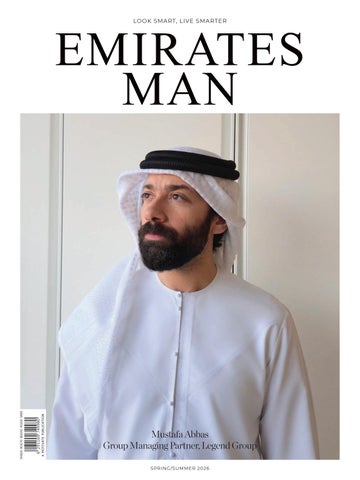
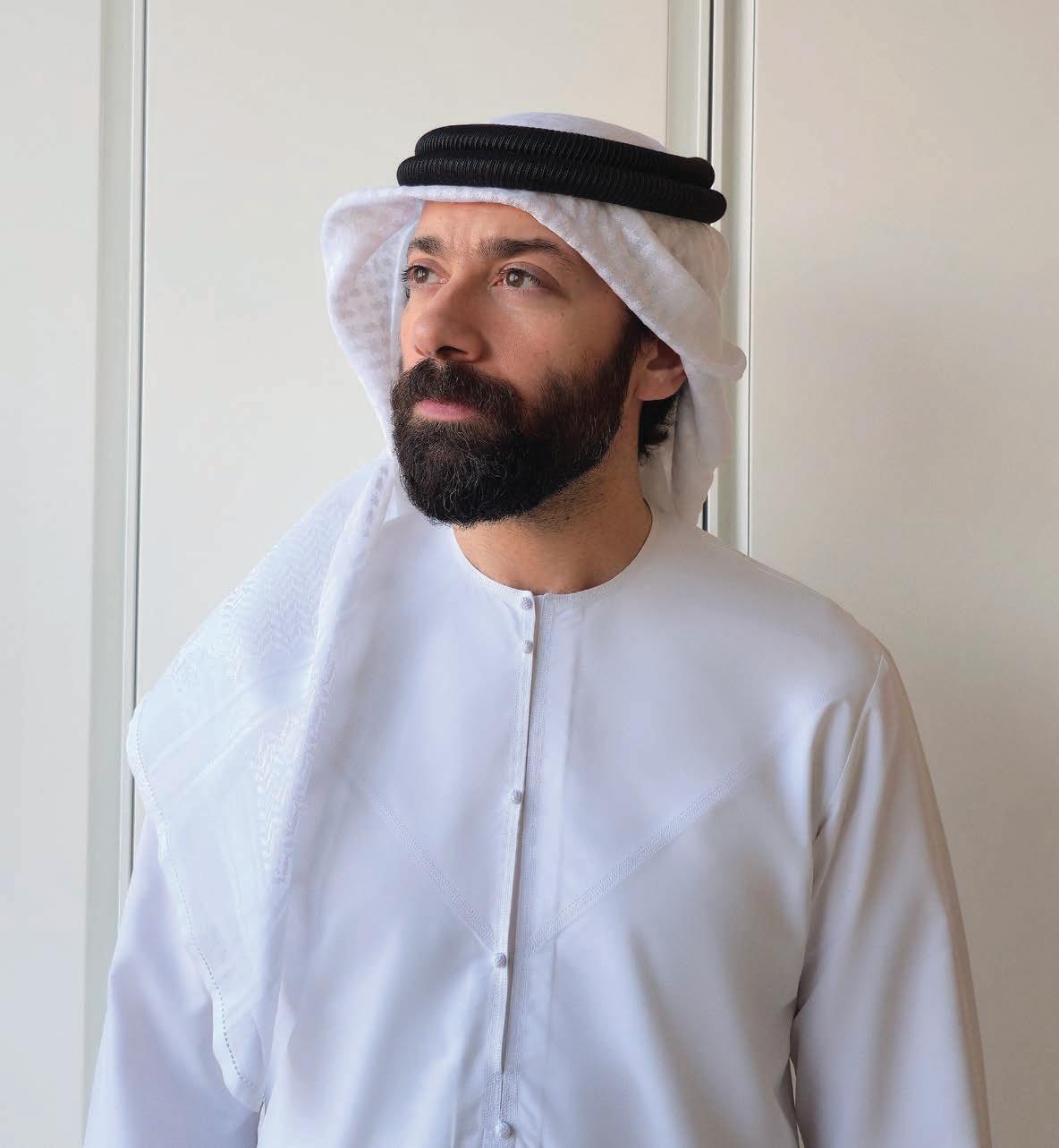
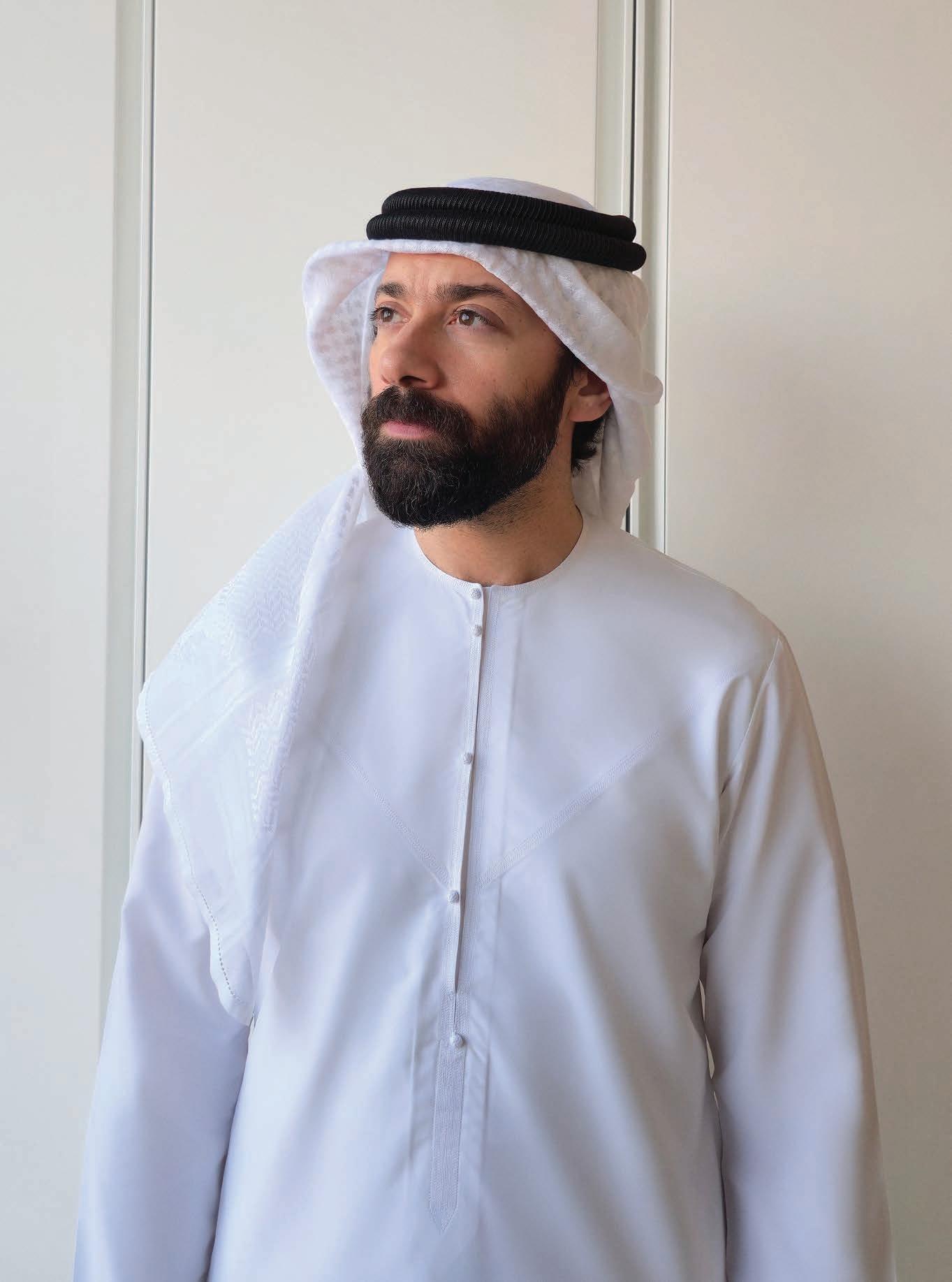
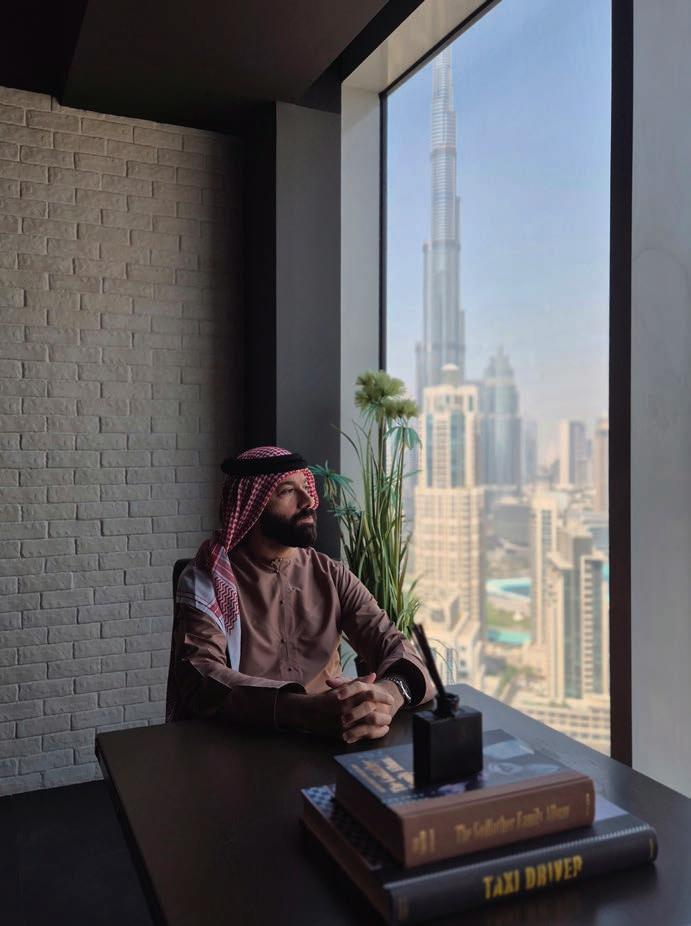
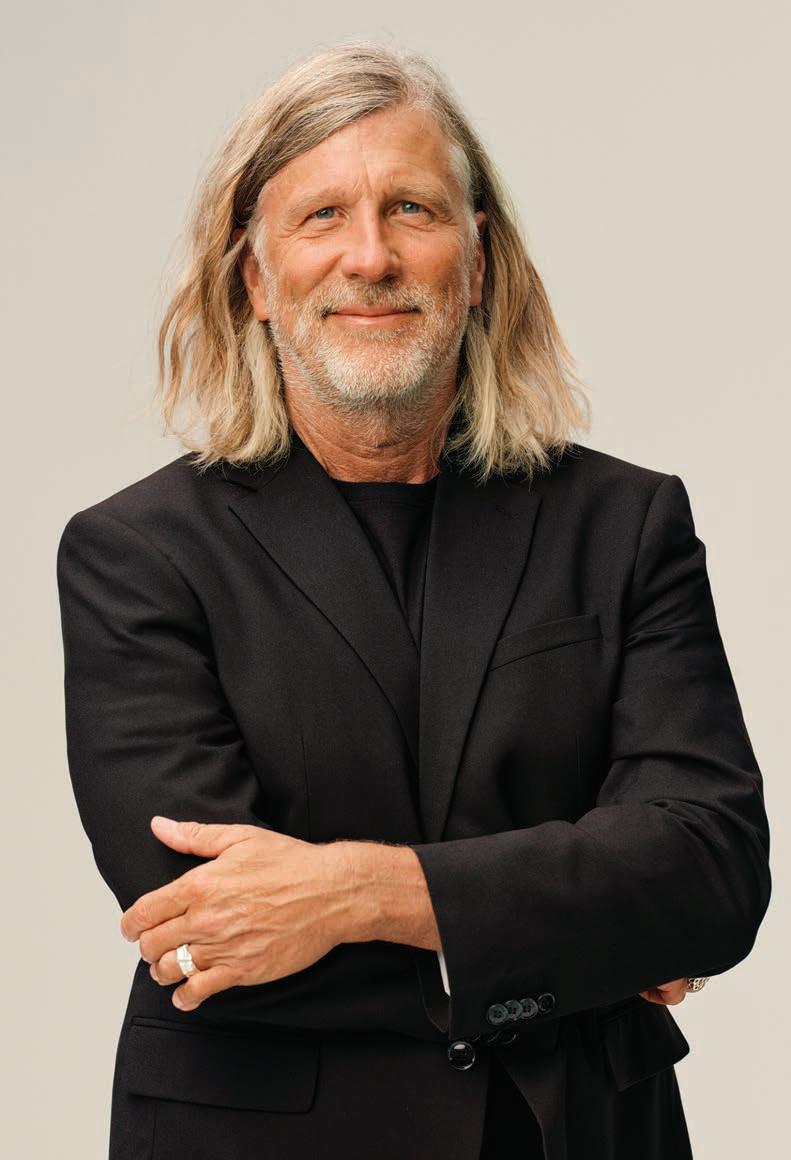
I think our coverstar, Mustafa Abbas, is the perfect embodiment of this idea. As the group managing partner of the Dubaibased conglomerate Legend Group, he spearheads a company that operates in a number of different arenas, from real estate (Property Portfolios International) and consumer products (Bang & Olufsen) to lifestyle (Chivalry: Gentlemen’s Salon) and design (35 Burgundy). In his cover profile Building Beyond Legacy (page 22) Abbas talks about his love of the art of craftsmanship, creativity and innovation. Three things that are also at the heart of another passion of his – film making. All of which is to say, Abbas personifies the dynamic can-do attitude that the region is known for.
But he is not the only man in this issue that has multiple arrows in his
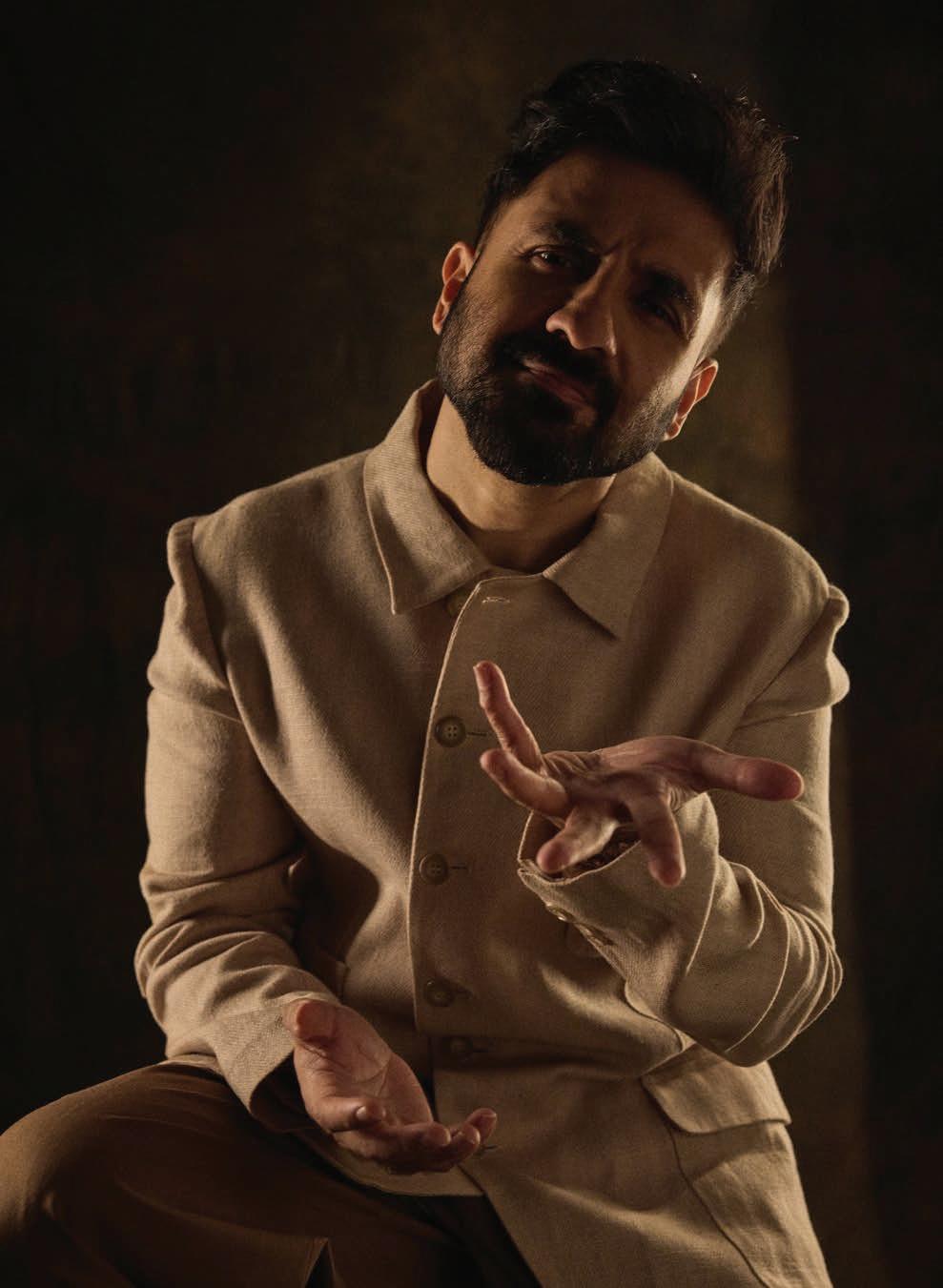
quiver. In A Monochrome Master (page 66) Bastiaan Woudt might be renowned as a photographer, but he is also an accomplished DJ, artist, and book publisher who is fearless about following his passions. The Emmy-winning Indian comedian Vir Das also has that sort of mindset. He opens up in This Must Be the Place (page 72) about becoming an author, as well as finding success as an actor and musician.
This is an issue rich with profiles of men who are thriving across disciplines and showing the world that they are not going to let their lives be defined by one thing. They contain multitudes and are more than willing to explore them all.
Enjoy the issue,
jessica.michault@motivate.ae
HAT’S OFF
I will be headed to the 30th edition of the Dubai World Cup, the pinnacle of the UAE horse racing season at the end of March. Now all I need to do is make a final decision on which fascinator will make the biggest impact at the Meydan Racecourse.
SHIP-SHAPE
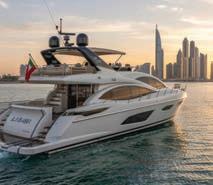
The Dubai International Boat Show returns in April, bigger and bolder than ever. Yacht lovers from around the world will gather to discover the latest innovations in the superyachts space, cutting-edge marine technology and eye-catching watersport demonstrations.
FEEL THE RHYTHM
For one night only (May 8th) let the rhythms of the Gipsy Kings by André Reyes Symphonic move you at Dubai Opera. The performance will be the first time the group presents a symphonic production on a theatre stage. Just try to stay in your seat when the band starts to play Bamboleo.
CONTENTS
p.08
Monitor News
p.10
The Boys Toys
p.12
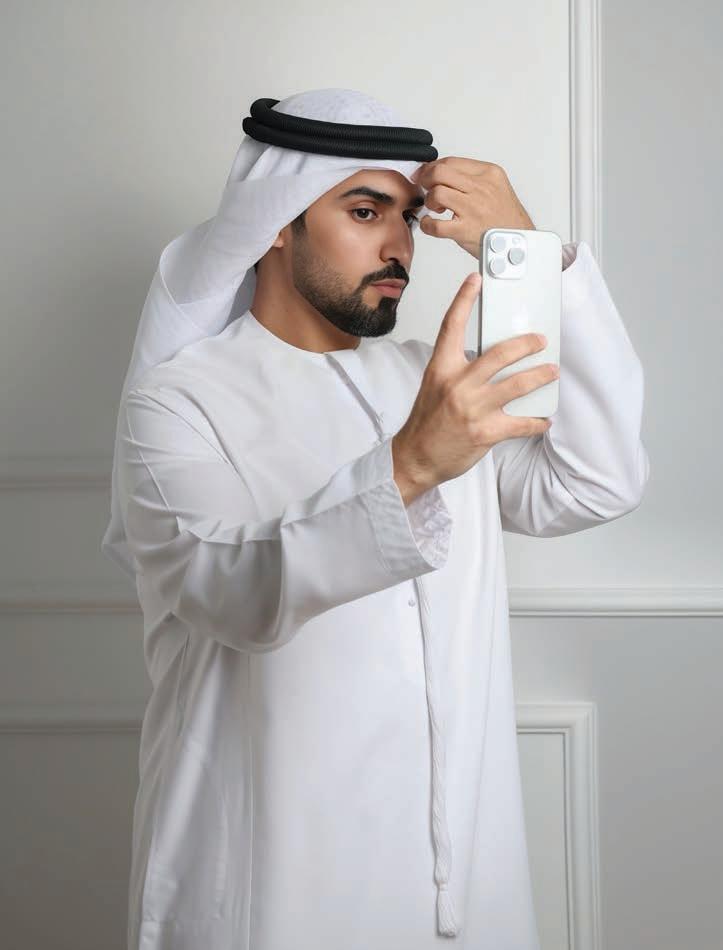
The Kandura Code –Is the kandura getting modernised?
p.14
Well Groomed
p.26
p.16
The Edit – Refreshed classic silhouettes to ease into a new season
p.18
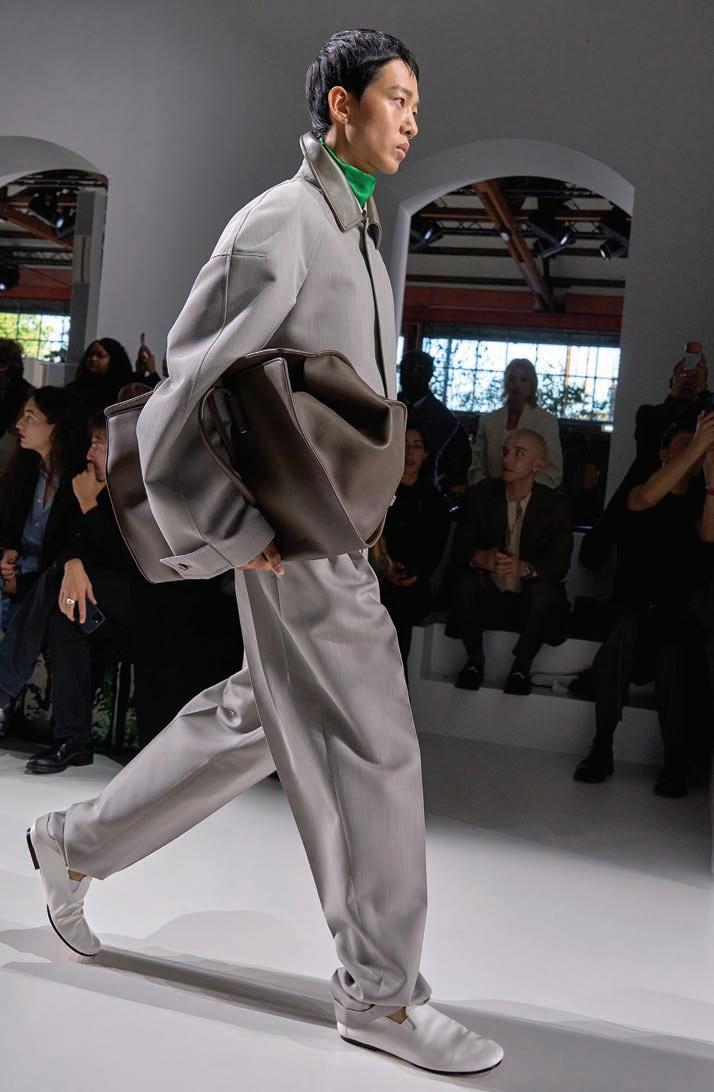
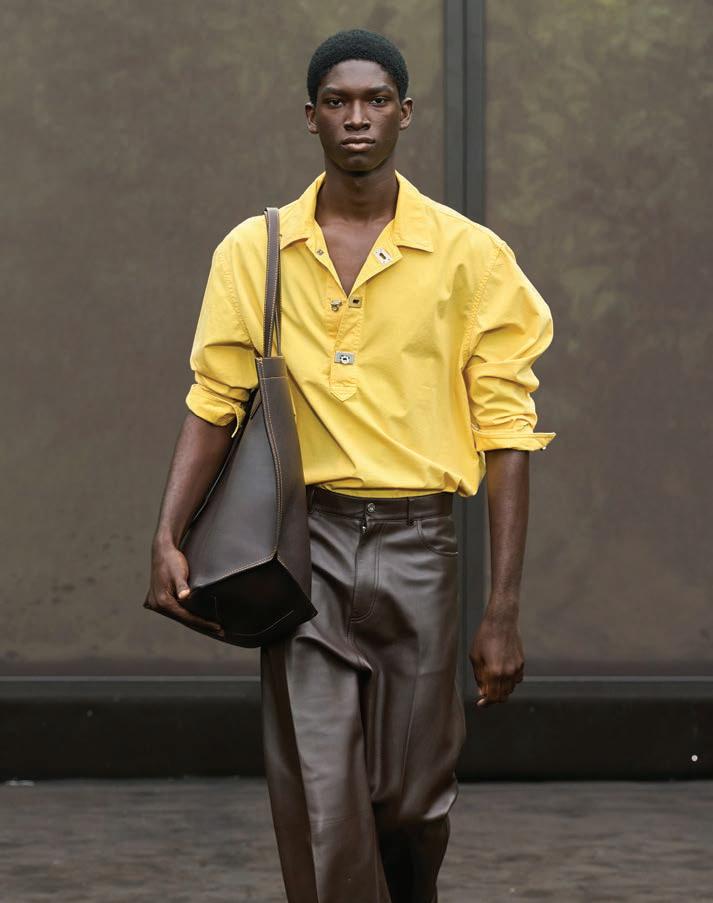
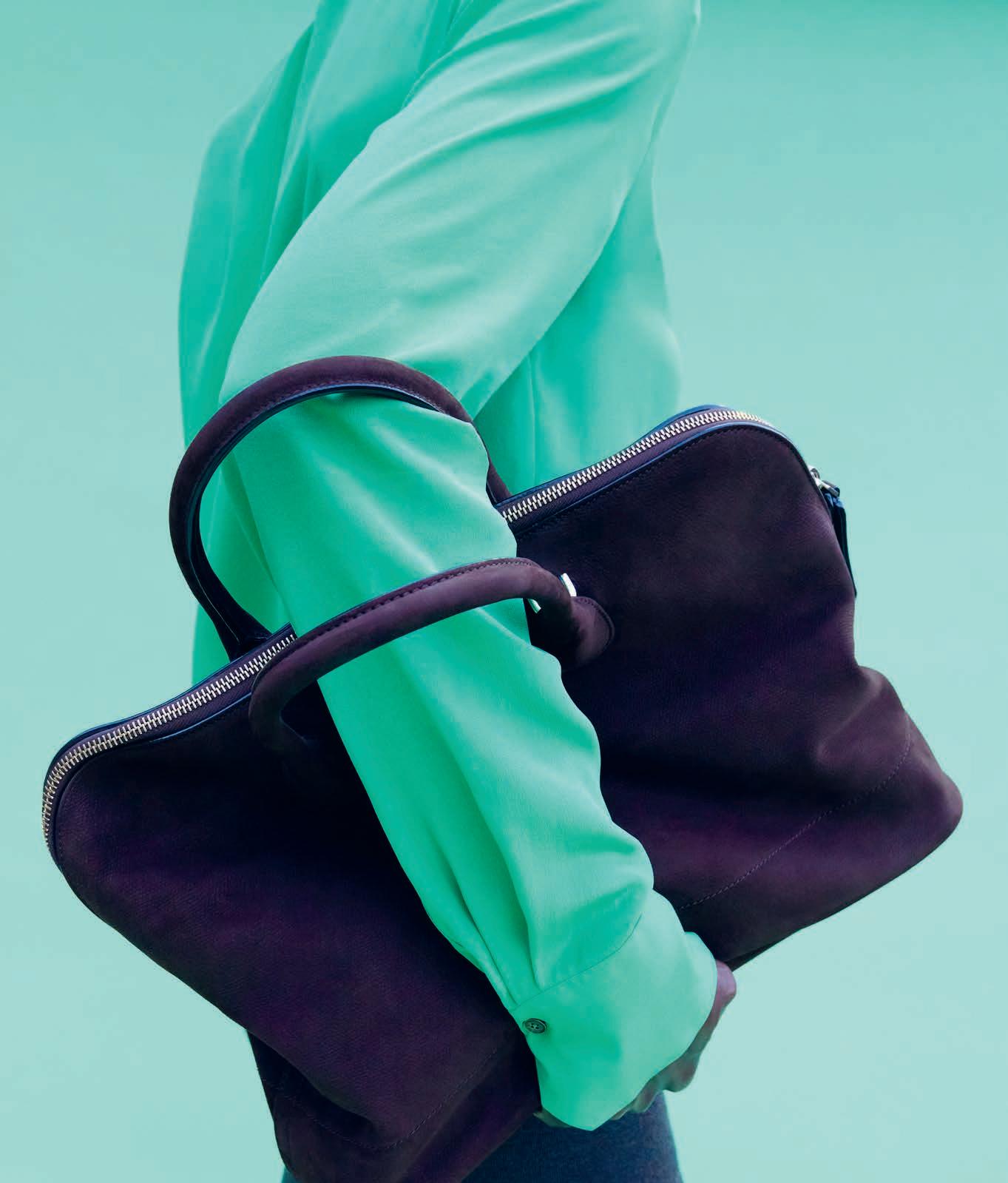
Strong Solids – It’s the season to embrace colour – just take your styling cues from Bottega Veneta and Ferragamo SS26 for foolproof combinations
p.20
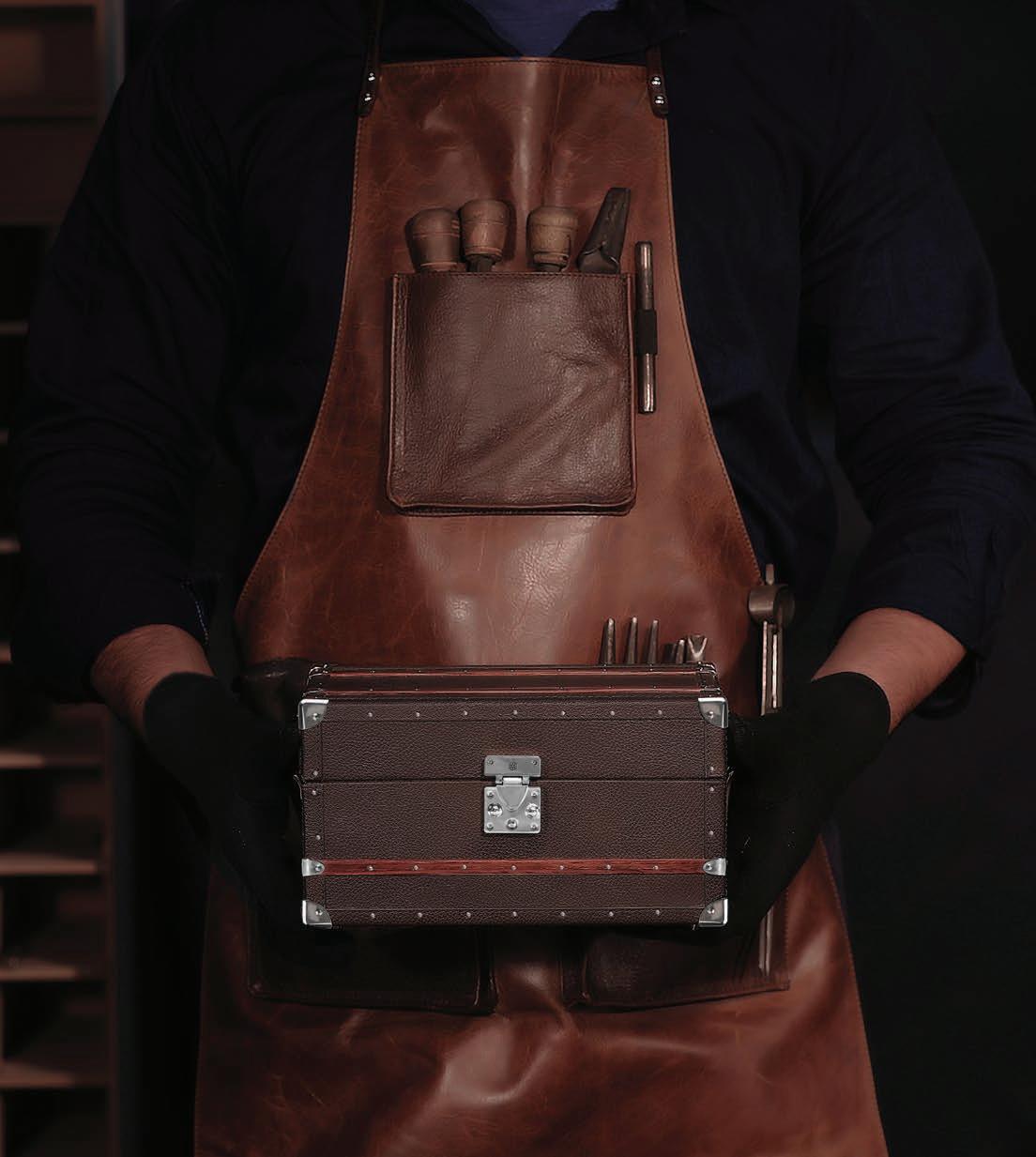
Trunk Calling – Paritosh Mehta is on a mission to champion Jaipur’s craftsmanship, one trunk at a time
p.22
Building Beyond Legacy – Mustafa Abbas, Group Managing Partner of Legend Group, on expanding a family enterprise into a modern luxury group
In Harmony with H&M –As the Swedish retail giant opens its massive flagship store at the Dubai Mall, its Creative Director Jörgen Andersson discusses how he is shaping the brand’s new narrative
p.28
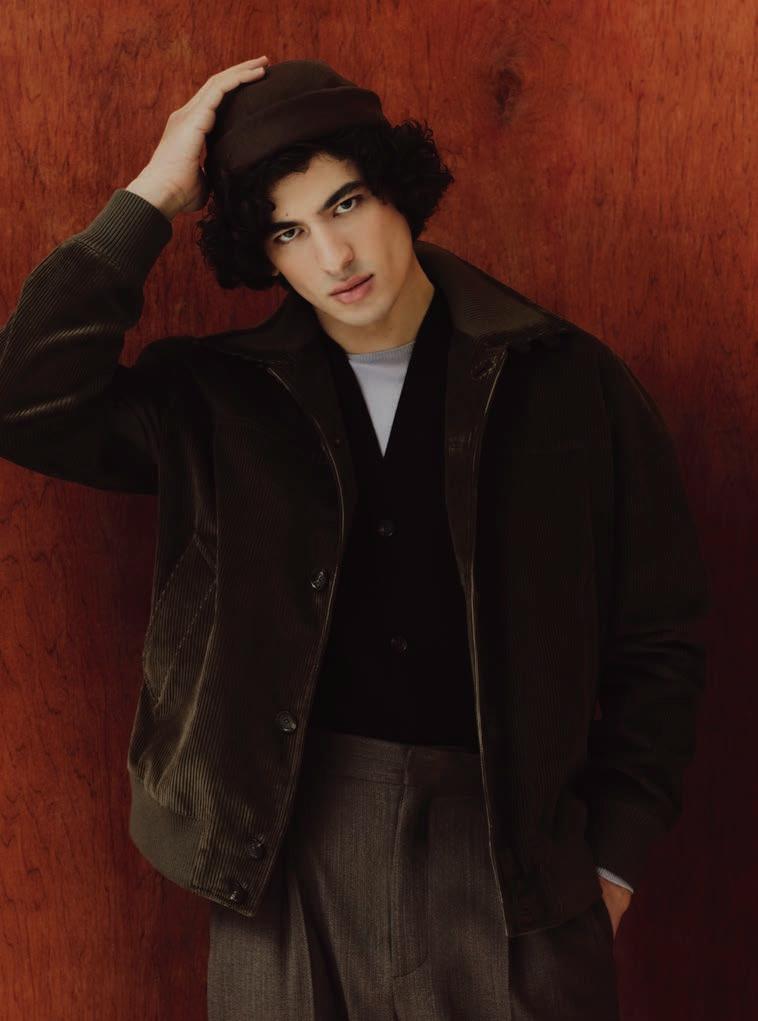
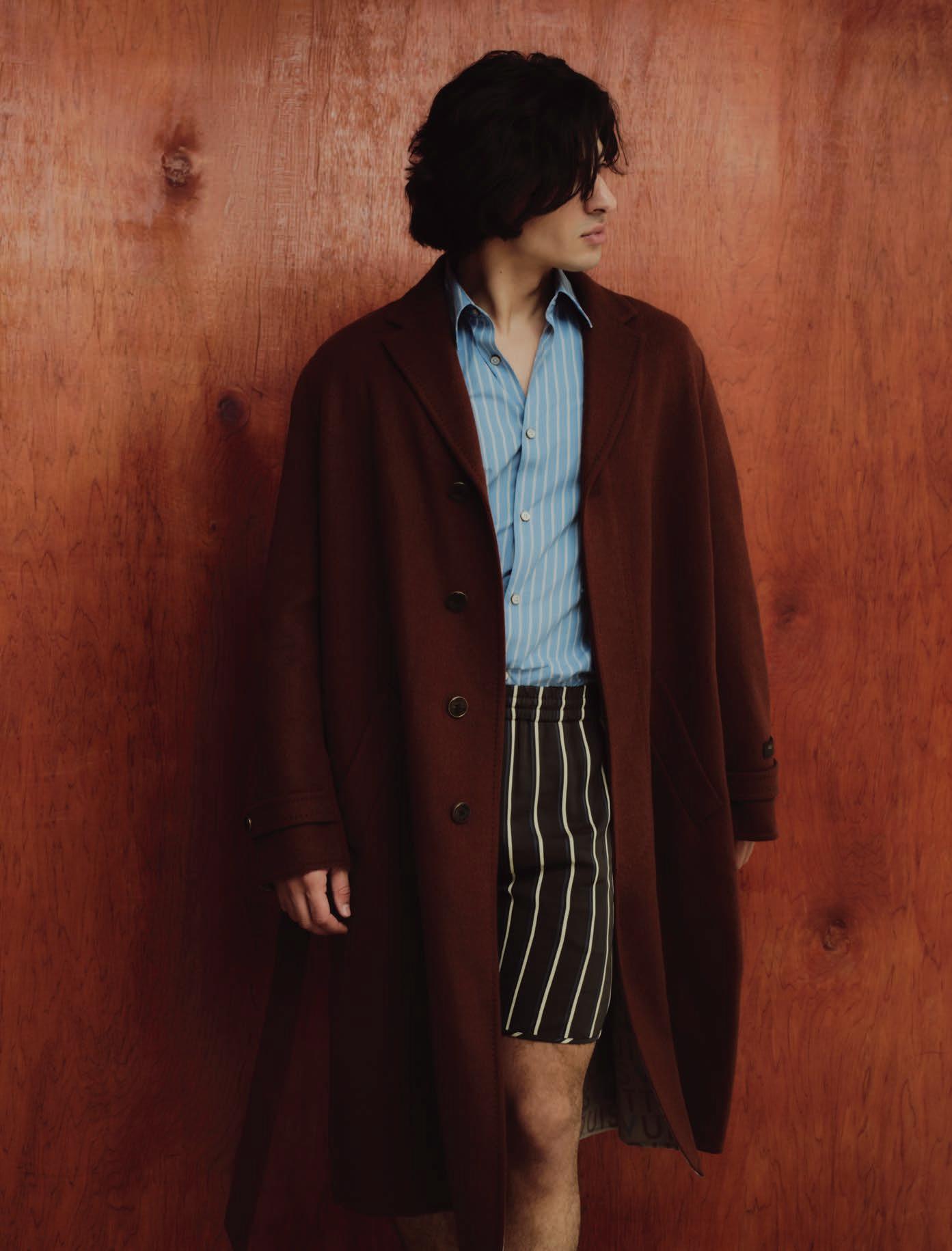
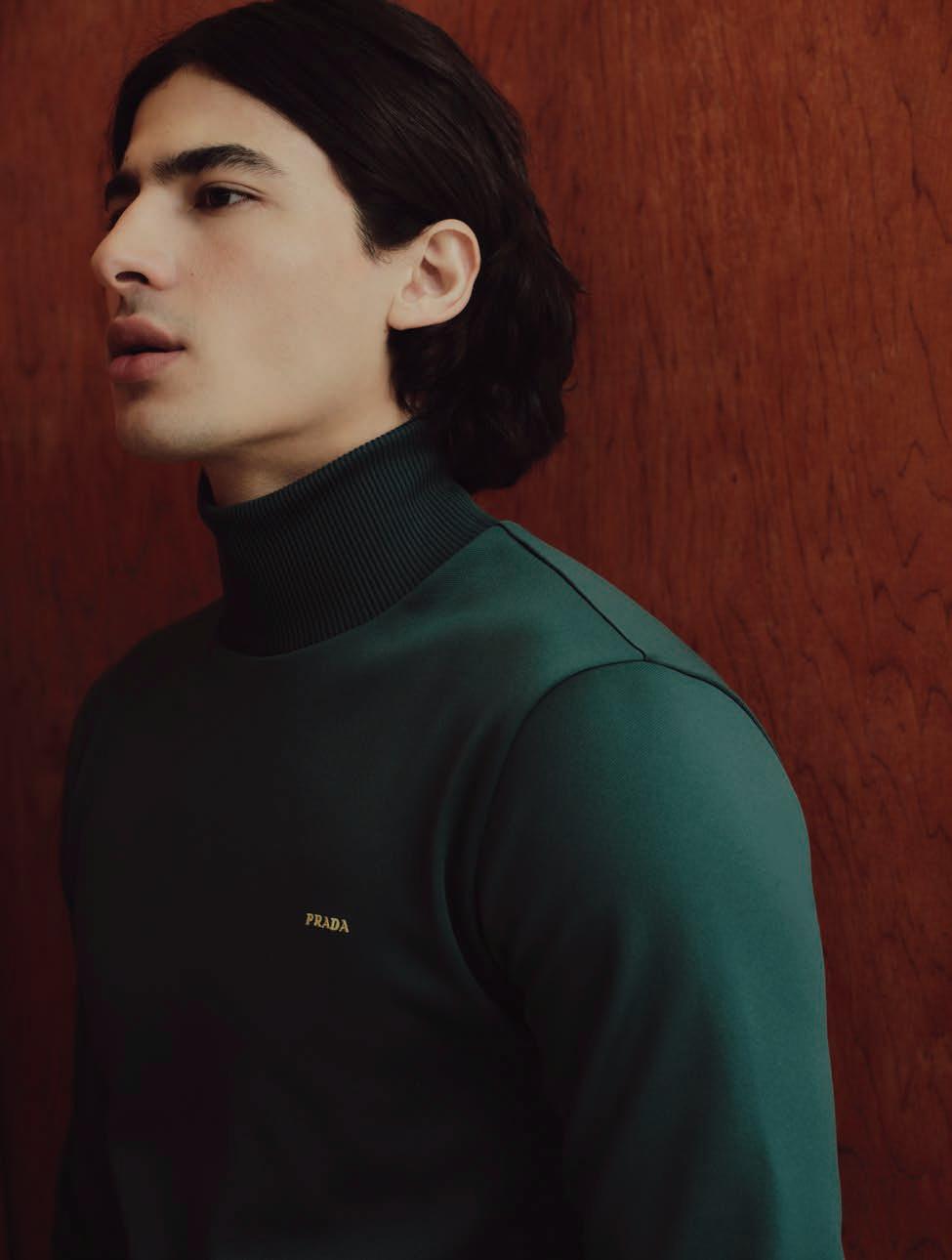
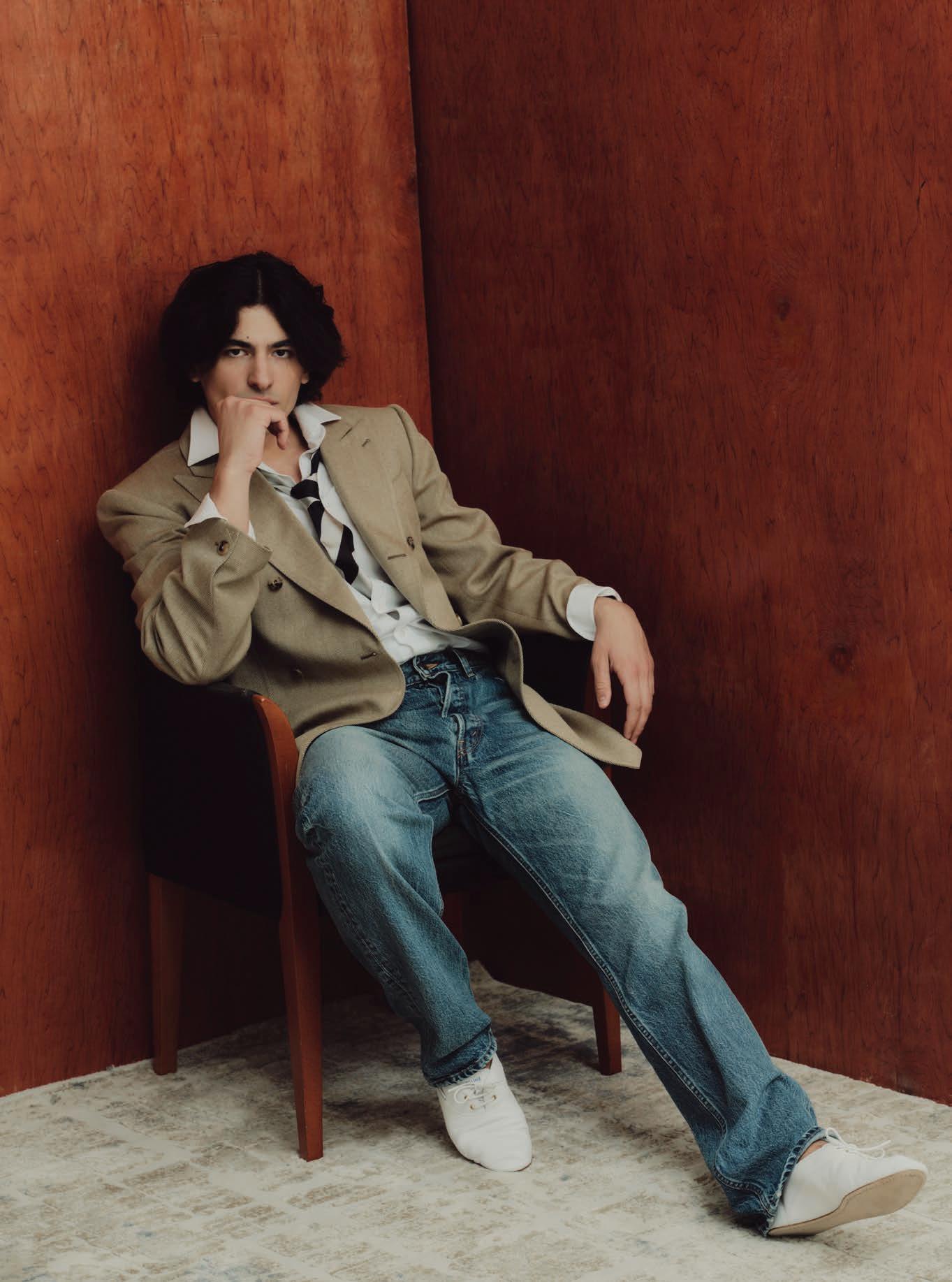
Outside the Box – The codes of menswear have fallen away. What remains is a new sartorial expression where style is personal and taste is about having a unique point of view
p.40
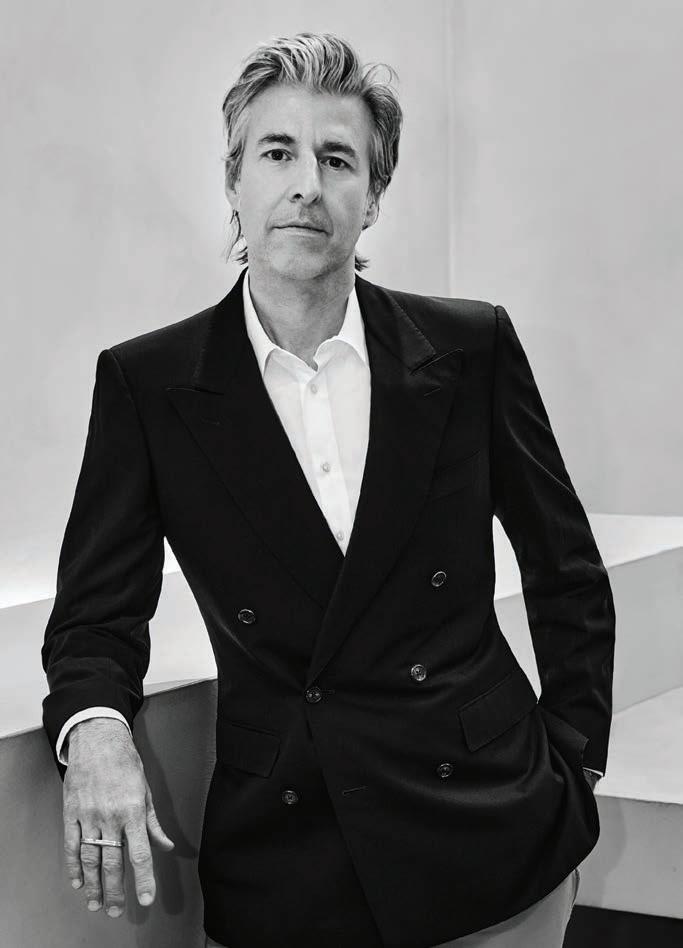
Discerning Designs –Valextra CEO Xavier
Rougeaux on utility, craftsmanship, and why a bag should never define the person carrying it
p.43
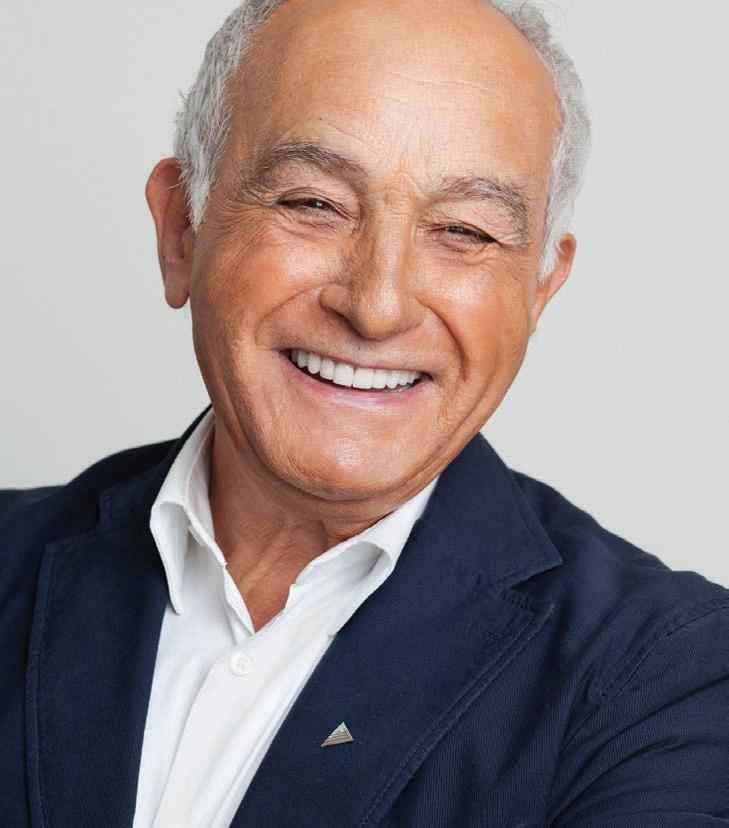
Ebb & Flow – Even with more then 50 years at the sharp end of retail, footwear titan Aldo Bensadoun still has huge enthusiasm for visiting
p.60
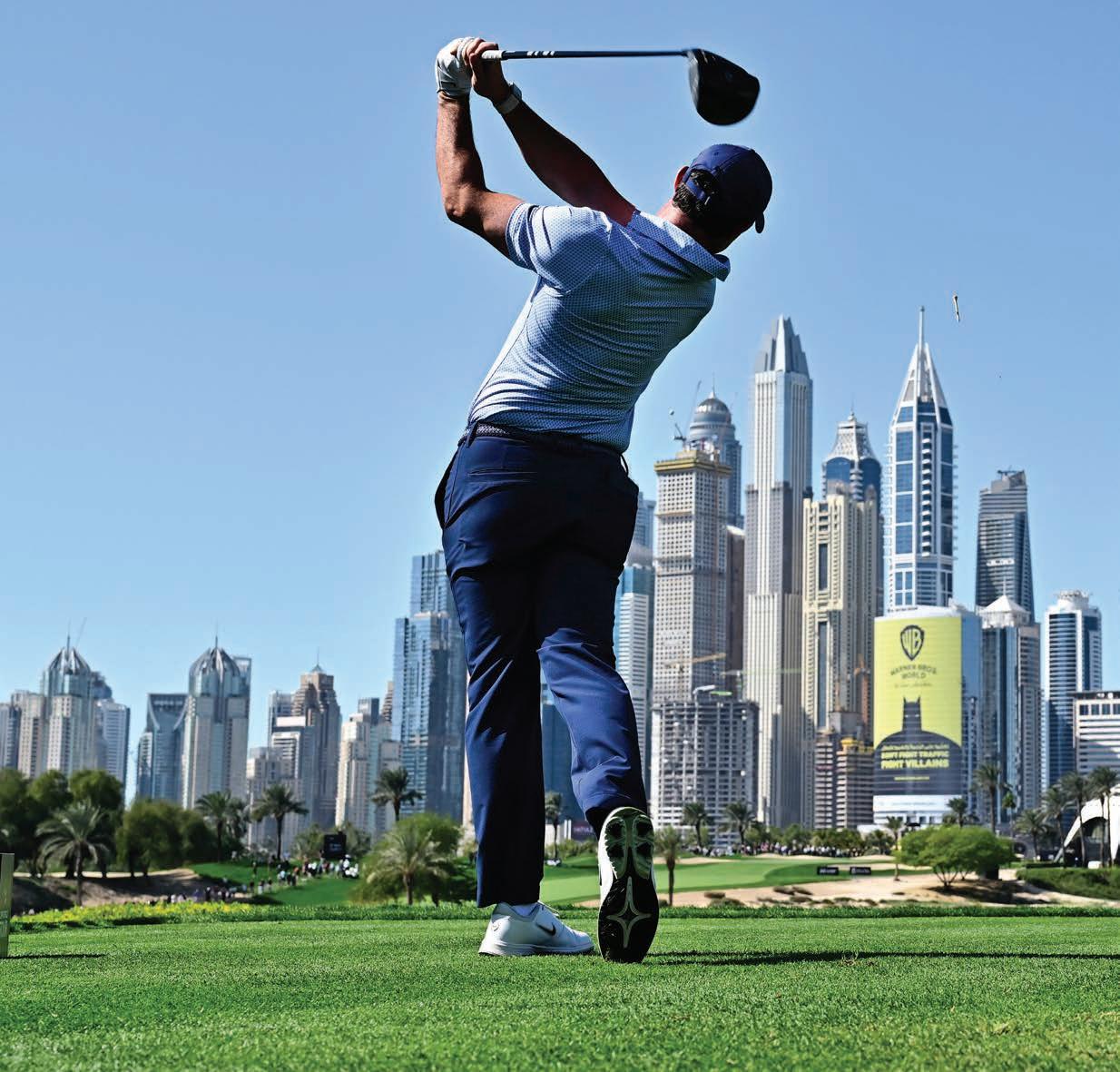
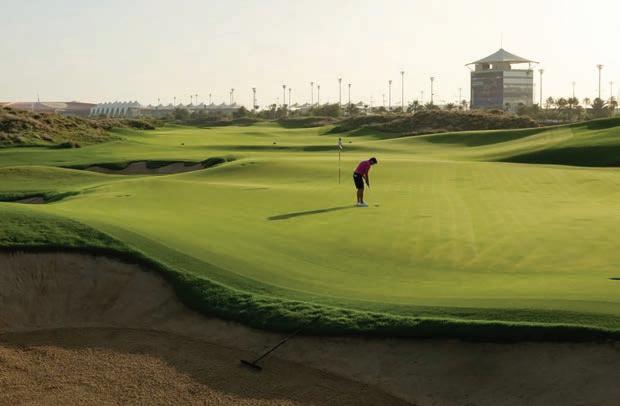
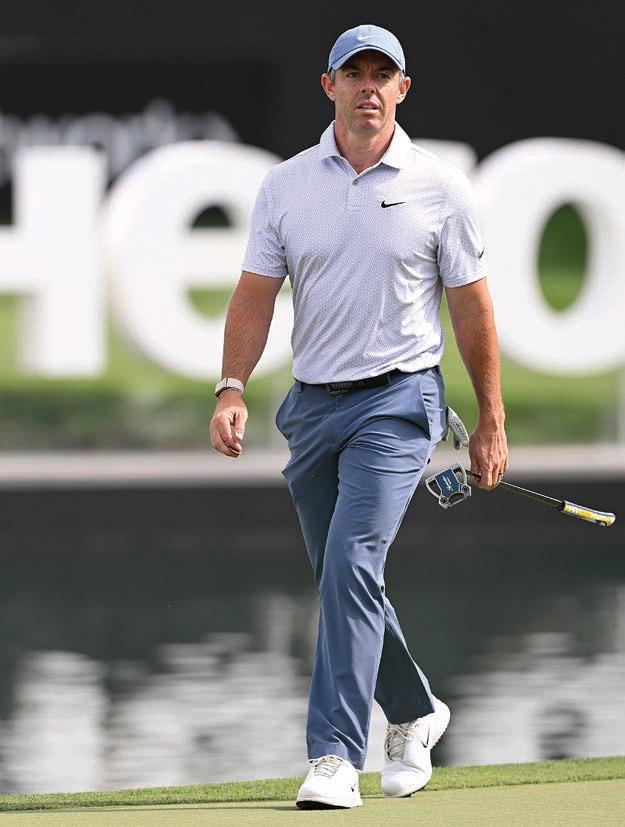
Par for the Course –Emirates Man asks the experts about the best golf courses in the Middle East
p.64
Plus Size Driving – Power, pace – and a fair amount of panache – can be found in the Hummer EV pickup
p.66
A Monochrome Master –Bastiaan Woudt brings his
his stores, meeting his customers and the constant evolution of his industry
p.44
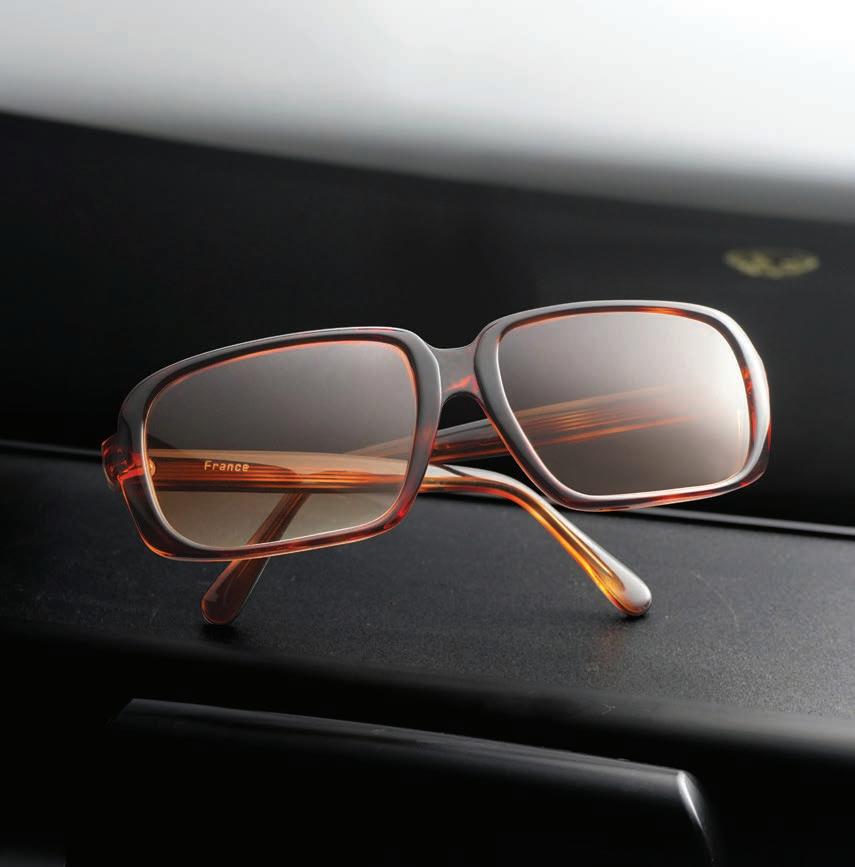
Freeze Frames –How the Founder of Vintage Eyewear, Andre Montana, turned a lifelong obsession with retro eyewear into a cult brand favored by Beyoncé
p.46
Dialled In – Emirates Man shines a spotlight on a selection of watches that have been designed to stand the test of time
p.52
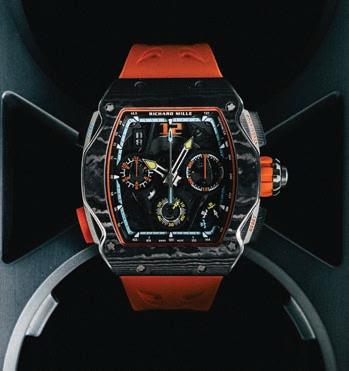
Driven by Intent – A decade into their partnership, Richard Mille and McLaren remain united by an engineering mindset where performance serves purpose, lightness carries meaning, and mechanical craft still resonates
p.54
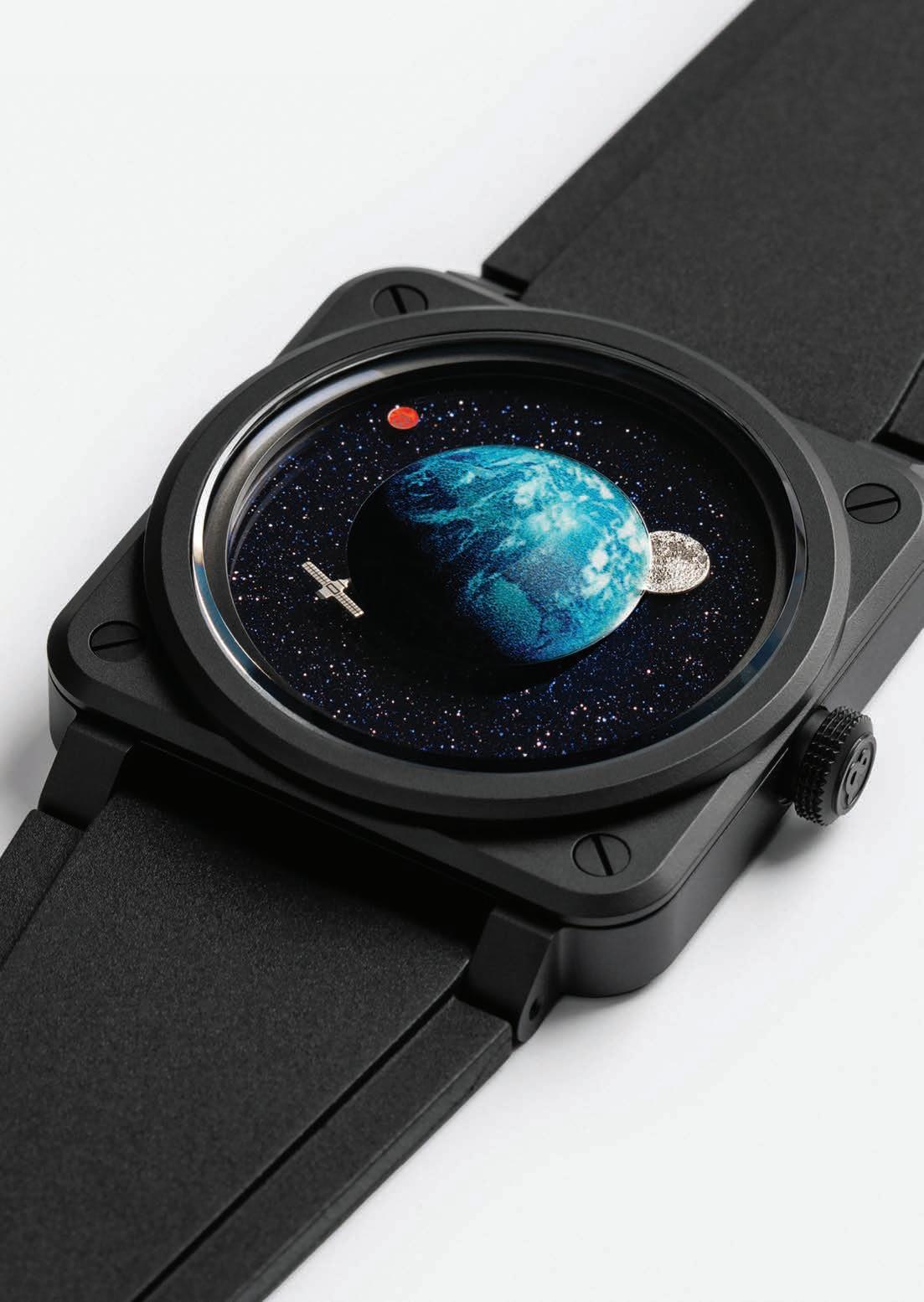
World View – Vaarunya Bhalla breaks down his visceral reaction to the new Bell & Ross BR-03 Astro timepiece
p.56
A Century of Craft –Guido Damiani, President and CEO of the Damiani Group, discusses the company’s big plans for the Middle East and beyond
black and white vision to the Middle East
p.70
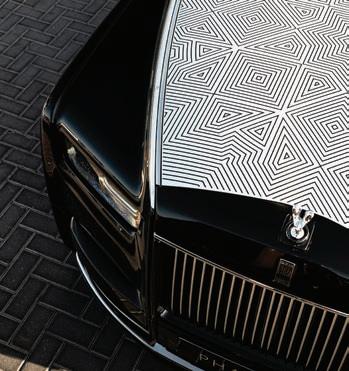
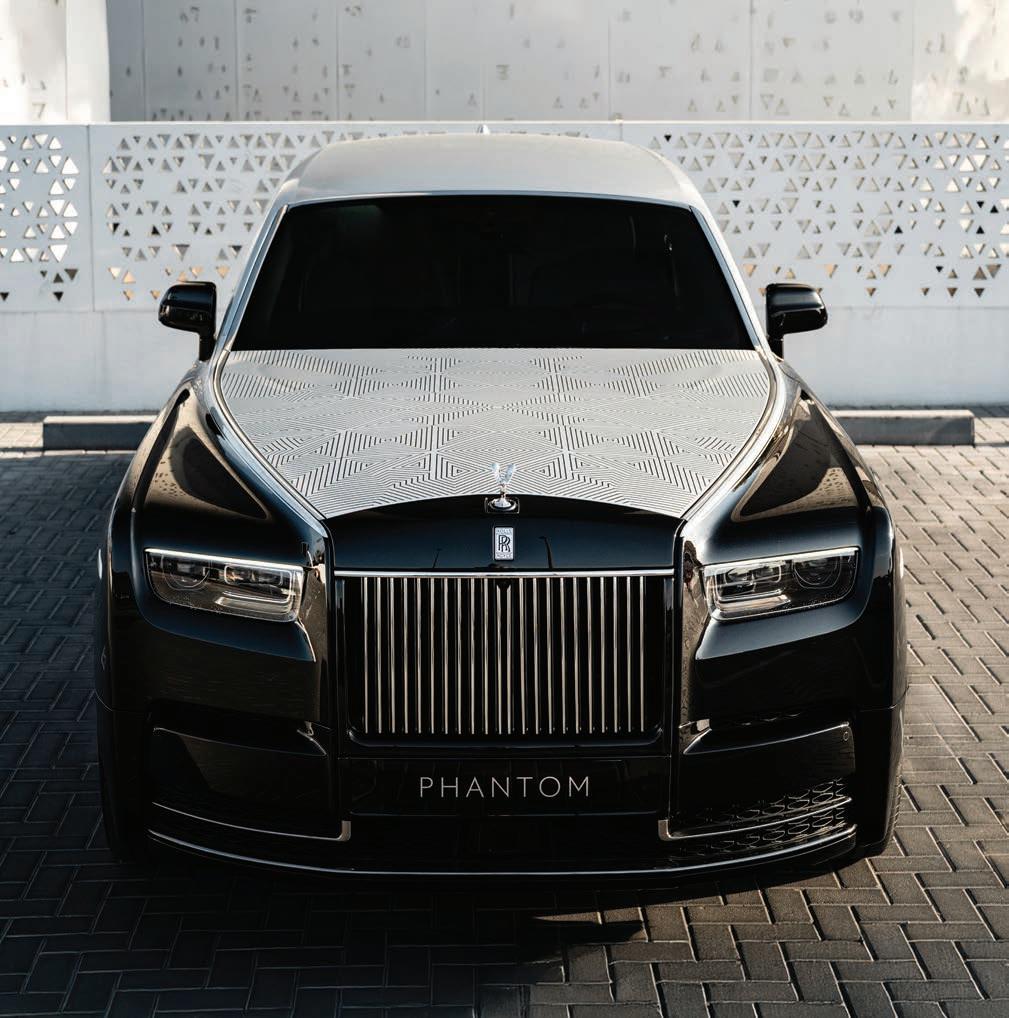
Driven by a Calling –Domagoj Dukec, the director of design at Rolls-Royce, is sculpting the future of the brand
p.72
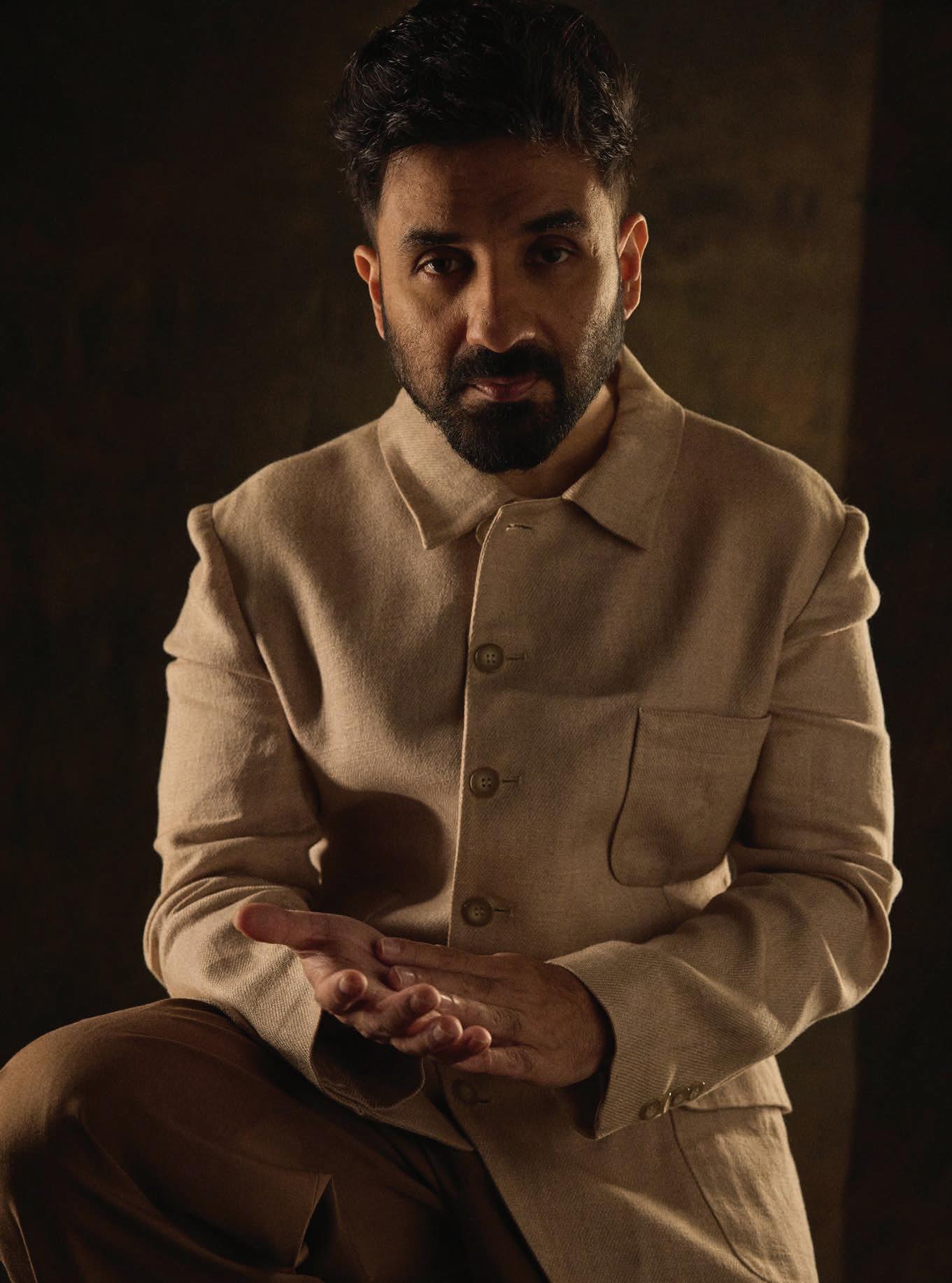
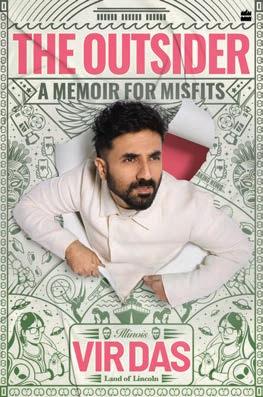
This Must Be the Place –Comedian Vir Das talks to Emirates Man about his best-selling new memoir
p.76
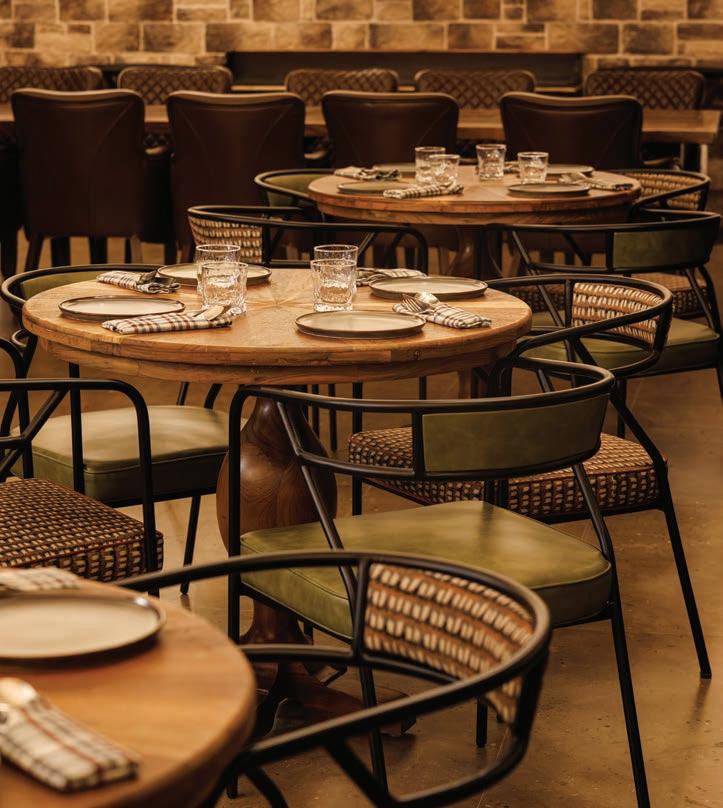
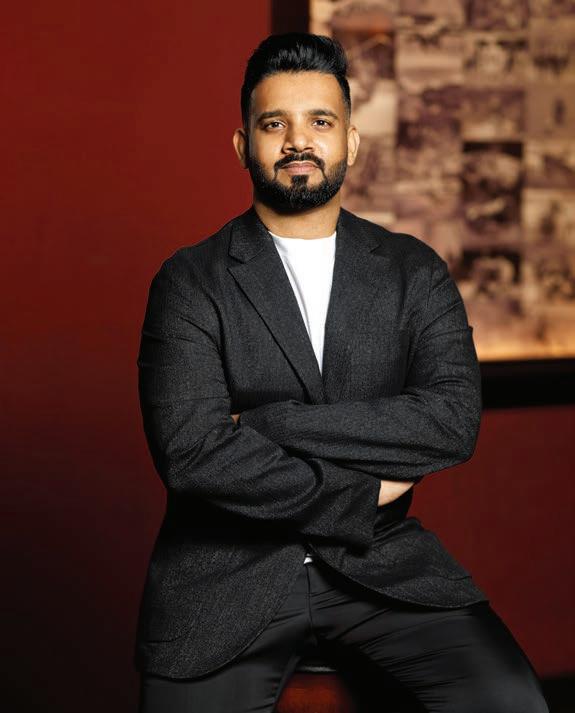
Service with a Smile –Rahul Shetty discusses what it takes to scale a modern hospitality business
p.78
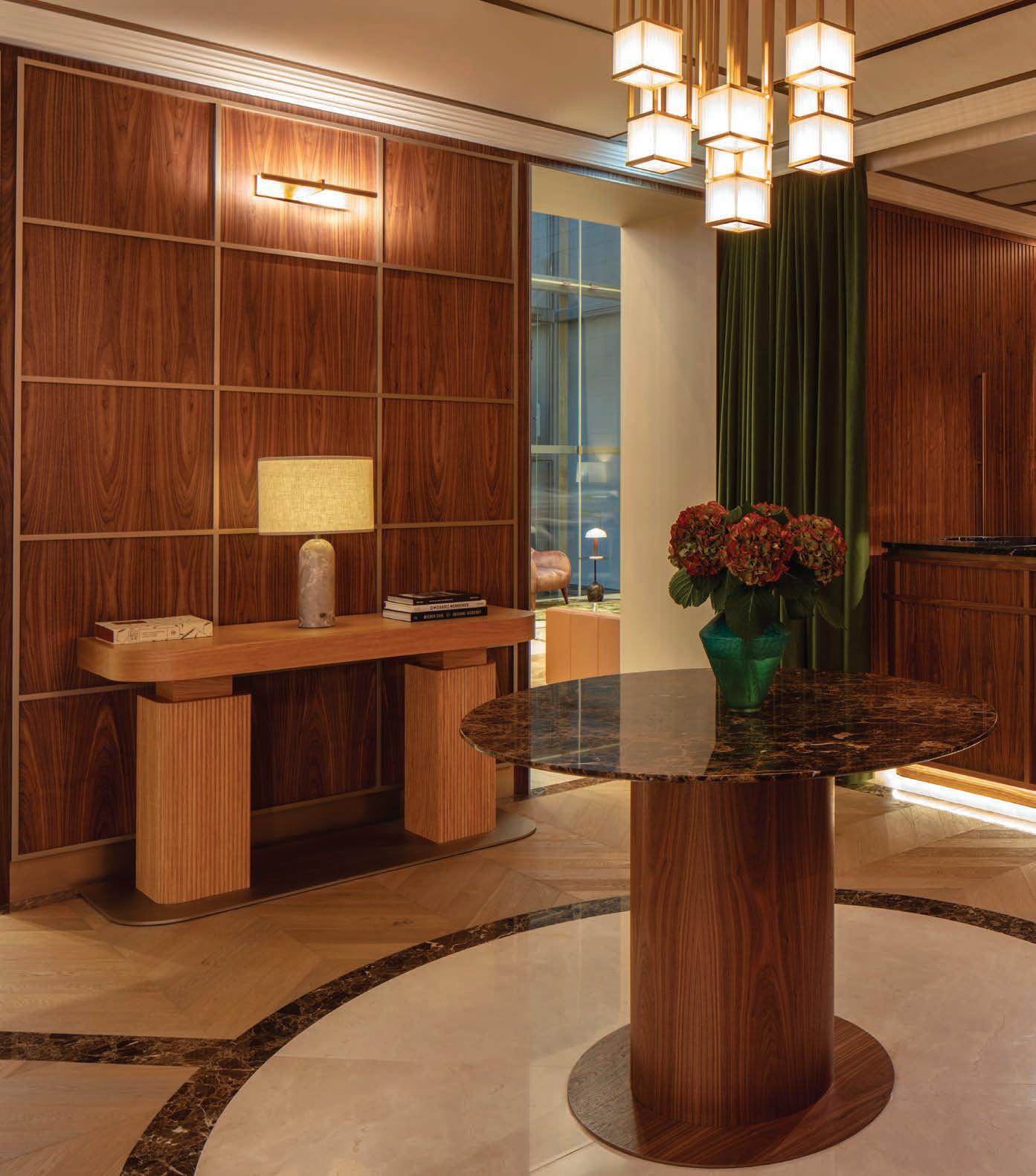
Souvenirs to Savour – The Anantara Palais Hansen Vienna shows guests a new way to see the city
The New Modern Man
Directional pieces defining modern luxury while tastefully standing the test of time
WORDS: ANSHIKA YADAV
REFINED STANDARD
Luxury footwear and accessories retailer Level Shoes presents a curated edit of limited-edition exclusives, featuring polished loafers, refined sandals, and functional accessories for elegant Eid gatherings and beyond
THREE TO OWN
THE HERO BUYS
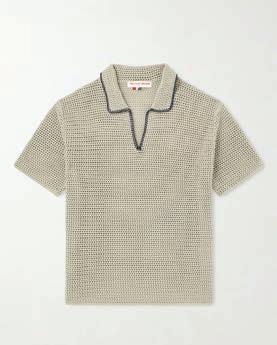
Crocheted Polo Shirt Dhs2,249 Orlebar Brown available at Mr. Porter
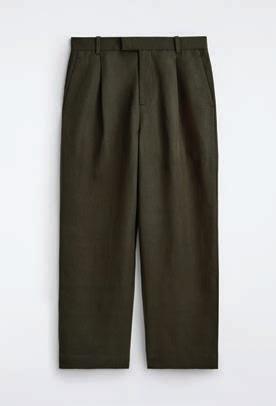
Linen Wide-Leg Trousers Dhs545 COS
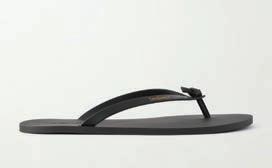
San Maine Logo Leather Sandals
Dhs2,892 Saint Laurent
Classic Cabin in Titanium Dhs5,700 Rimowa
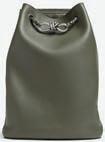
Andiamo Backpack Dhs18,150 Bottega Veneta
Orpheon Eau de Parfum Dhs1,750 Diptyque
Ray Ban x A$AP Rocky Rimless Sunglasses Dhs1,000 Ray Ban available at Kith
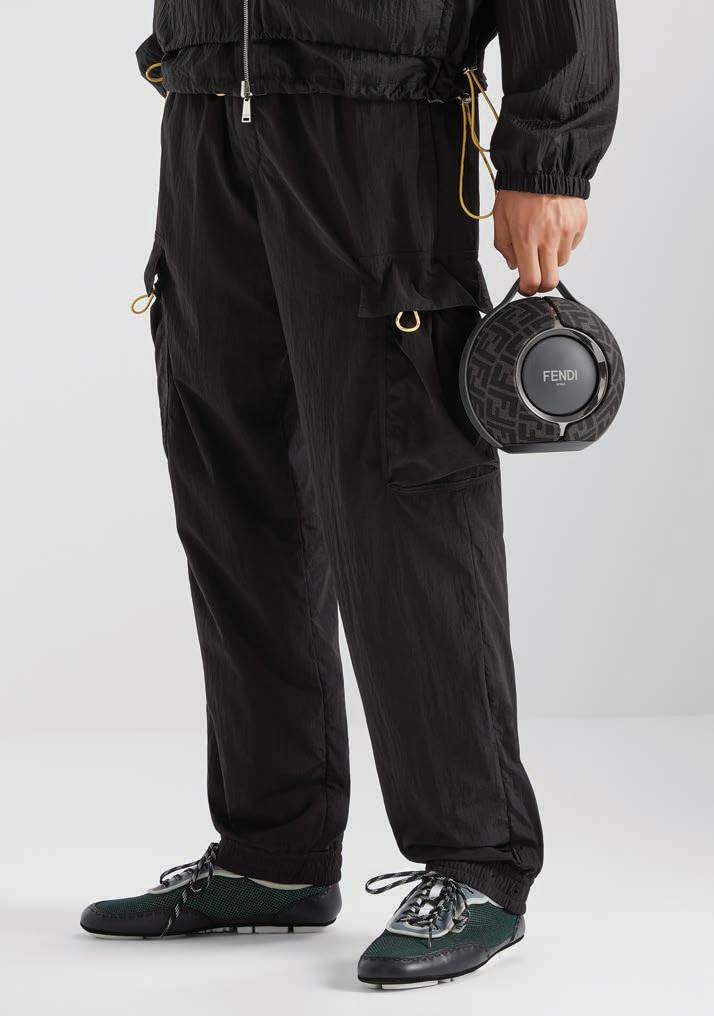
MANIA BLACK & GREY EDITION SPEAKER
Fendi and French acoustic expert Devialet renew their creative partnership with a new version of the Devialet Mania. Adorned in Fendi’s iconic FF monogram codes that wrap the speakers and enhanced with chrome accents, it gives this exceptional sound piece a bold character. Dhs11,385 Fendi x Devialet
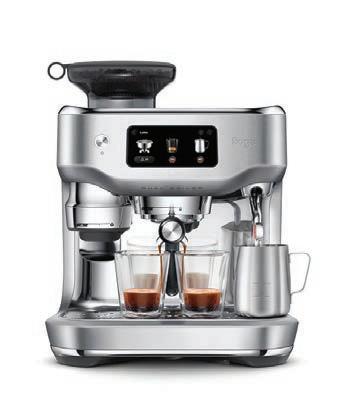
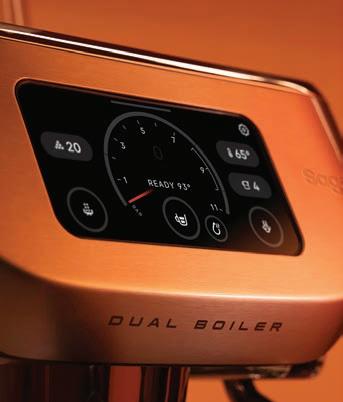
ORACLE DUAL BOILER
A high-quality machine that delivers cafélevel coffee consistently in the comforts of your home. Designed with precision automation where you can simplify or fine-tune the grind, extraction and milk texturising preference yourself. The dual boilers support simultaneous brewing and steaming while 15 preset beverages and the large touchscreen guide each coffee-crafting step, reducing guesswork or prompts experimentation to suit your taste. Dhs9,999 Sage Appliances
THE BOYS TOYS
The latest design-led objects and gadgets that balance ritual and performance
WORDS: CAMILLE MACAWILI
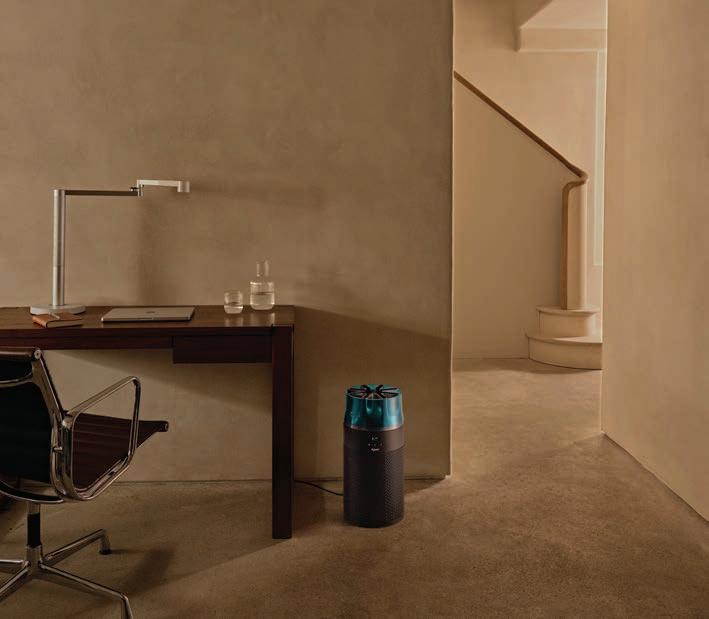
HUSHJET PURIFIER COMPACT
For long evenings of hosting or at-home moments, the latest Dyson purifier prioritises air quality quietly without disrupting the room. Its powerful sealed filtration system captures the finest of particles common in enclosed spaces at near-whisper levels and features intelligent sensors that adjust performance settings in real time – all in a sleek and compact form that blends in with modern interiors. Dhs1,599 Dyson
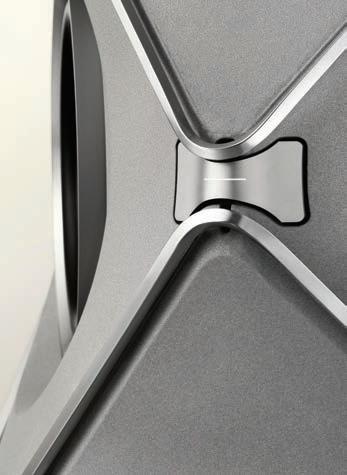
BEOLAB 90 TITAN EDITION
Crafted to celebrate the brand’s 100-year anniversary, this sculptural piece is a tribute to pure sound and industrial beauty that any serious audiophile will swoon
over. Showcasing a sleek exposed aluminum and engineered for pinpoint acoustic performance, the finish feels architectural and elevated, whether for solitary sessions or social nights. POA Bang & Olufsen
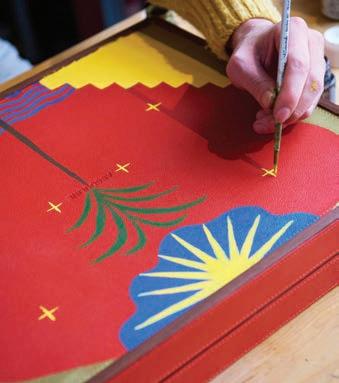
HANDPAINTED LEATHER BACKGAMMON SET
Designed with the discerning aesthete in mind, this set treats game night as a cultural theatre. Housed in a walnut case that opens to reveal a leather-inlaid board and leather pieces with brass accents, it delivers an exceptional playing experience.
Part of a limited-edition release of library objects for Ramadan 2026, the collection features hand-painted artwork by George Greaves, the same artist behind the covers of Assouline’s iconic titles like Saudi Dates: A Portrait of the Sacred Fruit, Saudi Coffee: The Culture of Hospitality, and Mystic Mist: The Rituals of HuqqA, making it as display worthy as it is playable. Dhs12,800 Assouline
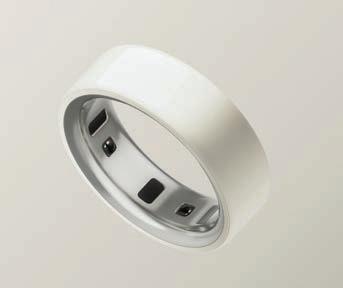
OURA RING 4 CERAMIC
A ceramic exterior gives this wellness ring a jewellery-grade presence that you actually want to wear daily while housing advanced biometric sensors that monitor sleep, recovery, and rhythmic activity with clinical precision. You wake up with daily actionable insights that inform how you pace your day – the date is captured discreetly, with no screen to manage or disrupt you throughout the day. Dhs1,599 OURA
The Kandura Code
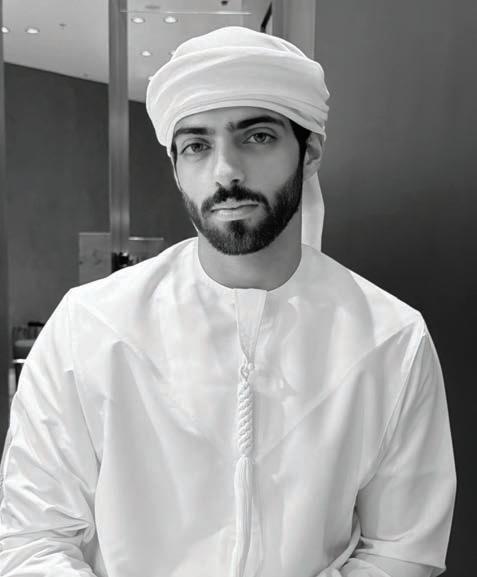
Is the kandura getting modernised? Two cultural voices – Khaled Alhemeiri and Sultan Musaed – on caps versus ghutras, spotting an Emirati from across the room, and where tradition bends without breaking
WORDS: AMINATH IFASA
There is a game some Gulf men play when they gather, one that involves spotting nationality from across the room based solely on the fall of a kandura. The Omani is easily identified by his tassel, the Saudi by his crisp formality, the
Qatari by cuffs designed to catch the light in a particular way, and the Emirati? He is there too, collarless and clean-lined, carrying something that those in the know recognise without quite being able to name – something that resides in the shoulders perhaps, or the way the fabric settles, or
something older still, absorbed rather than taught. For generations, the kandura has been more than clothing; dignity has been stitched into its seams and identity draped across the shoulders in a manner that requires no explanation to those who belong to this part of the world. But dignity, it turns out, is not static. Walk through any majlis in Abu Dhabi or mall in Dubai and the evidence is there: silhouettes sharpening, ghutras occasionally absent, the whole garment engaged in a quiet conversation with a generation that honours the past while making room for the present. To understand where this conversation is headed, we sat down with Khaled Alhemeiri, a cultural programmer who reads tradition like a text, and Sultan Musaed, a content creator with his finger on the pulse of how young Emiratis move through the world.
The matter of the cap has become a subject of considerable discussion, with more and more men stepping out in kandura and nothing on their heads but a simple cap, the ghutra left behind entirely. Musaed sees practicality at work here, noting that many men have worn a cap under the kandura for years and that while it can sometimes be read as a subtle style choice, it does not give the same formal look as wearing a ghutra. Alhemeiri, however, detects something more layered. Having grown up in a time when the ghutra and agal – the thick black cord used to secure it – were not considered accessories but essentials that finished the silhouette the way punctuation finishes a sentence, he recalls the “La Tatla’ Haser” campaign, a quiet reminder from the Ministry of Community Development that men should not go out bareheaded. “I never saw it as an imposition,” he reflects. “It felt like a pause, a reminder that the ghutra and agal have long shaped the full presence of the kandura. What we are seeing now is not rebellion. It is a generation quietly redefining what ‘complete’ means on its own terms.”
When the question of distinction is raised – whether an Emirati kandura can be reliably picked out from, say, a Bahraini
Khaled Alhemeiri
one – different kinds of attention are brought to bear. Musaed points to the details: colour tones, shoulder cuts, design elements that vary from country to country. “Someone familiar with Gulf styles would notice,” he says. Alhemeiri reaches for something more elusive. “An Emirati kandura carries a certain calm, clean lines and a precise cut, a composed presence. A Bahraini kandura might fall differently, the cuffs or collar introducing a softer rhythm. It is like hearing two accents that sound similar until you listen closely. The distinctions are subtle, yet each reflects how dignity is expressed in its place.”
The matter of fit has become perhaps the most visible site of change. The Emirati silhouette has been tightening and sharpening, moving closer to the body than it once
did, prompting some to see a cool evolution while others wonder if something is being lost. Musaed falls into the latter camp. “The kandura is meant to have a loose and elegant flow,” he argues. “Going too fitted can take away from its cultural identity.” Alhemeiri situates this shift in a broader context. He remembers the older cuts, how they moved in the wind, how they seemed to belong to the landscape. But life has changed, he notes, and we spend more time in climatecontrolled spaces than open desert, so tailoring responds to that reality. “Some days I prefer a looser cut and other days something more defined. Both exist around us. Neither cancels the other.” The agal (the black cord worn with the traditional head gear) too has its own language, though neither man reads too much personality into it. Musaed sees it
“IT IS TRADITIONAL WEAR CONNECTED TO CULTURE AND IDENTITY. SMALL DETAILS MAY EVOLVE, BUT THE ESSENCE WILL STAY TRUE.”
as a marker of background rather than self, thicker in Bahrain and Qatar, slimmer in the UAE, tradition speaking through cord and placement. Alhemeiri pulls out old photographs to make his point. “There was never just one way of wearing the ghutra and agal. In some images, the ghutra is fully draped and formal. In others, it is layered practically to allow movement. Originally those choices were practical. Over time, they became personal. Today, how a man fixes his agal reflects habit, something absorbed from older generations. It becomes a quiet visual language understood before a word is spoken.”
Pet peeves unite them. Both men flinch at a kandura that tries too hard. Musaed locates the beauty in simplicity and elegance, warning that overdoing it takes away from traditional charm. Alhemeiri agrees, adding that when too many details are added, when it feels like it is trying too hard, something of its calm disappears. “Our attire has always carried strength through balance. It does not need exaggeration to command presence.” The ghutra (the traditional headscarf worn by men), though, is where individuality quietly lives. Musaed sees the fold as signature, distinct enough that within the UAE a man can sometimes be placed to his city – Abu Dhabi, Dubai, Sharjah – just by how he wears it. Alhemeiri lingers on the Hamdaneya fold, having watched young men adjust it carefully before stepping into a majlis. “It frames the face differently. It shifts posture. There is confidence in it without stepping outside tradition. A simple square of fabric becomes personal.”
Neither man is insular. Asked about styles from beyond their borders, apprecia-
“WHAT WE ARE SEEING NOW IS NOT REBELLION. IT IS A GENERATION QUIETLY REDEFINING WHAT ‘COMPLETE’ MEANS ON ITS OWN TERMS”
tion flows freely. Musaed admits to curiosity about the Omani kandura, its tailoring distinctive and elegant. Alhemeiri stays consistent in his own wardrobe but treasures the diversity around him. “The Omani tassel carries heritage. The Qatari collar has presence. The Saudi sleeves bring firmness. The Gulf feels richer when those differences remain visible.” During the summer months, the heat becomes a determining factor in how men choose their kanduras. Musaed notes the shift to lighter colours and breathable materials, with beige and soft green replacing darker fabrics that absorb heat. Alhemeiri adds that fabric technology has improved significantly, allowing for materials that breathe better while maintaining a refined appearance. “There was a time when darker colours belonged to winter and heavier fabrics were chosen against the cold. Now linen appears. Comfort and elegance are no longer positioned as opposites. They move together.”
Can one kandura carry a man from morning errands to an evening wedding? Musaed thinks so, mostly, noting that a fresh one is preferred for the wedding, but the same garment can carry you through an ordinary day. Alhemeiri is more precise. “On the surface it may look the same, but the difference can be noticed. Fabric weight, brightness of white, the precision of pressing – those details matter for a wedding. Daily wear is lighter, built for movement. We have become more conscious of context.”
Looking ahead ten years, both men are asked whether the Emirati kandura will have transformed. Musaed doubts it. “It is traditional wear connected to culture and identity. Small details may evolve, but the essence will stay true.” Alhemeiri agrees, though his emphasis is on the pace of change. “What I see is gradual refinement. The kandura’s strength is its continuity. It does not shift dramatically. Fabrics will grow smarter. Details will sharpen. But the garment matures slowly, and that measured pace is what keeps it relevant.”
Revolution, then, is not the word. Evolution, slow and respectful, carrying heritage forward without announcing itself, is the more likely path. The kandura keeps flowing, and men like Alhemeiri and Musaed keep wearing it, as a way of carrying traditions and heritage to the next generations.
Sultan Musaed
COMPILED BY: CAMILLE MACAWILI
WELL GROOMED
Essentials to
up your self-care and grooming game
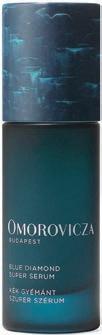
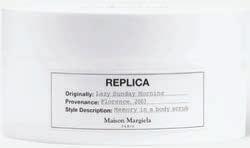
From top left: Revitilise Body Gel-Cream 200ml Dhs266 Jo Malone London; Titan Eau de Parfum 80ml Dhs390 Lootah Perfumes available at Ounass; Blue Diamond Super Serum 30ml Dhs1,700 Omorovicza; PassionFroudh Body Wash 250ml Dhs159 Fugazzi available at Bloomingdales; Homme Shave Cream Dhs110 Rituals; Cologne 352 Hand Cream Dhs237 Ex Nihilo; Replica Lazy Sunday Morning Body Scrub 200ml Dhs220 Maison Margiela Beauty; The Body Exfoliator Dhs128 Necessairé; Energy Channeling Charcoal Body Bar Dhs81 Humanrace
THE EDIT
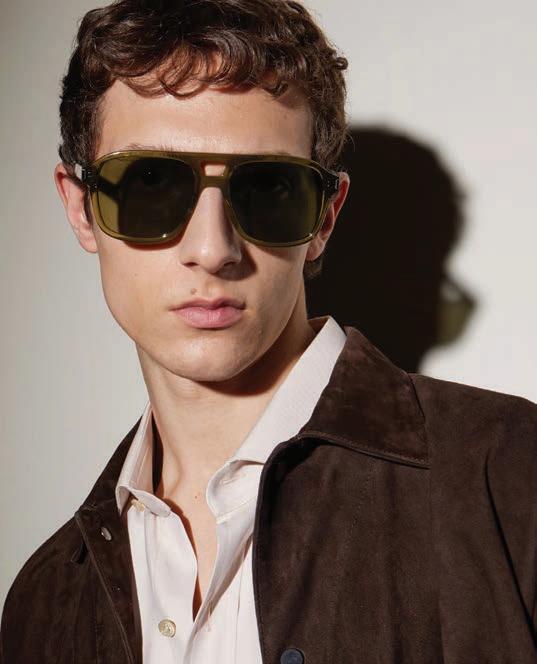
Aviator Sunglasses
Dhs2,092 Saint Laurent Eyewear
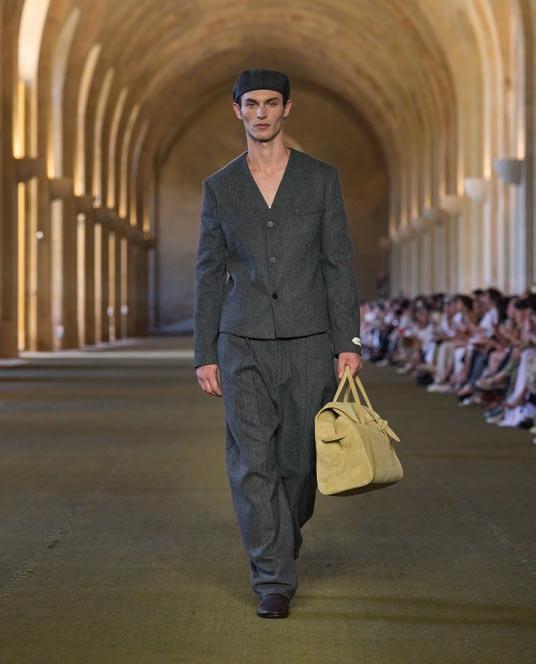
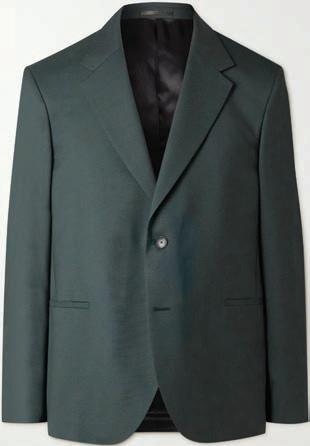
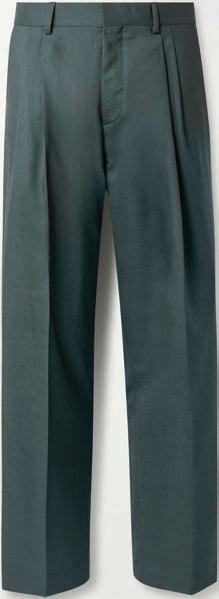
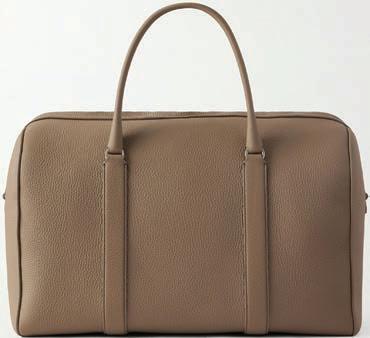
From left: Wool Blazer Dhs1,967
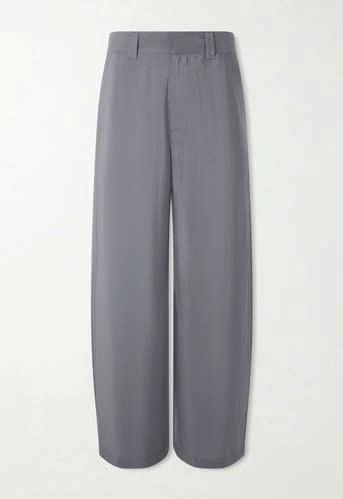
Mr. P available at Mr. Porter; Wide-Leg Wool Trousers Dhs1,121
Mr. P available at Mr. Porter; Iowa Leather Weekend Bag Dhs17,907 The Row; Leather Slides Dhs3,910 Dries Van Noten
JACQUEMUS
COMPILED BY CAMILLE MACAWILI
Refreshed silhouettes to ease into a new season
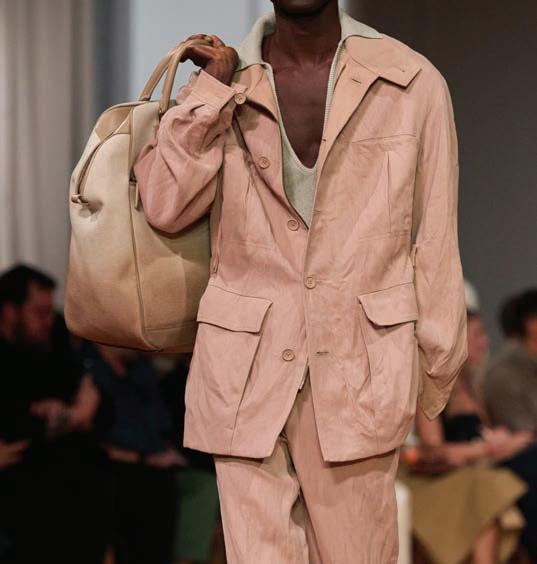
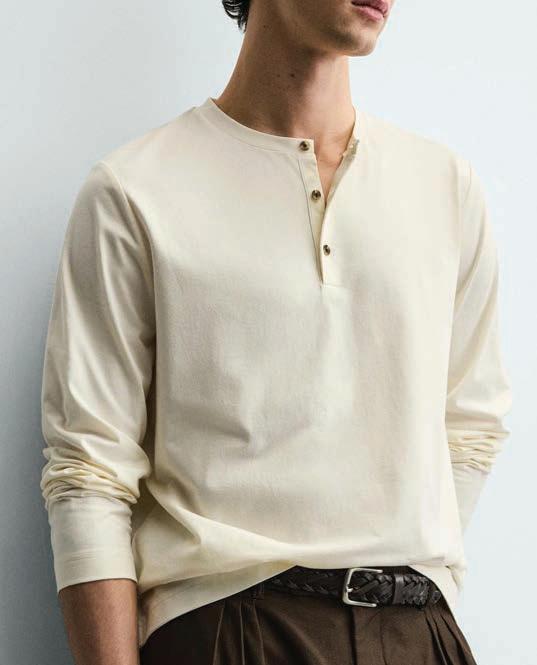
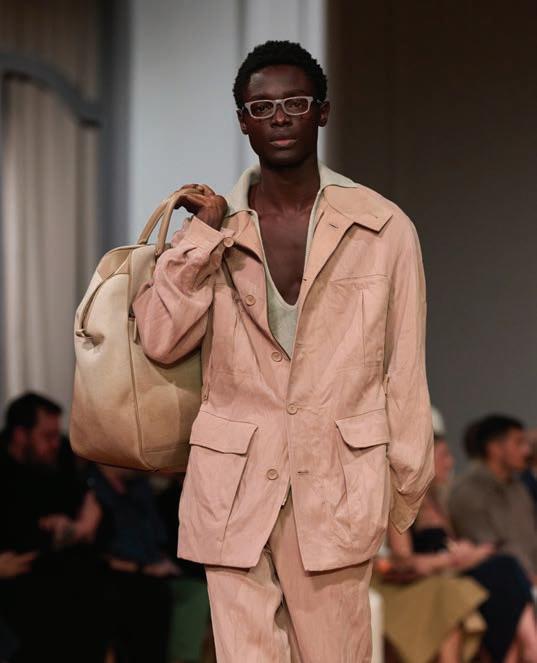
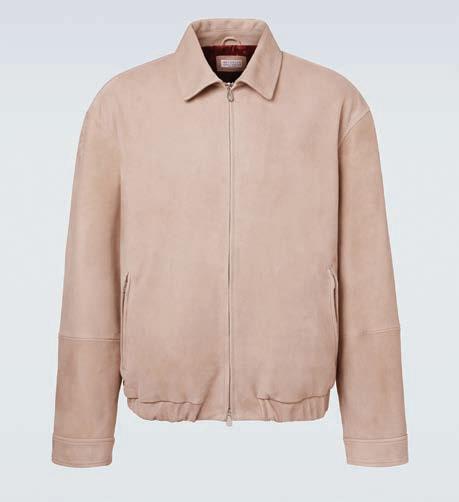
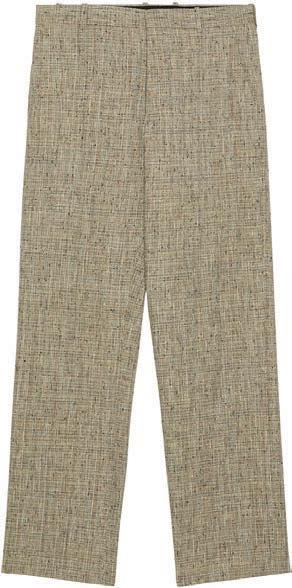
From left: Clash De Cartier Oval Sunglasses Dhs6,499 Cartier; Fleck Shirt Dhs5,142 Bottega Veneta; Suede Jacket Dhs28,646 Brunello Cucinelli available at Mytheresa; Fleck Straight Trousers Dhs5,142 Bottega Veneta
Henley T-Shirt Dhs189 Zara
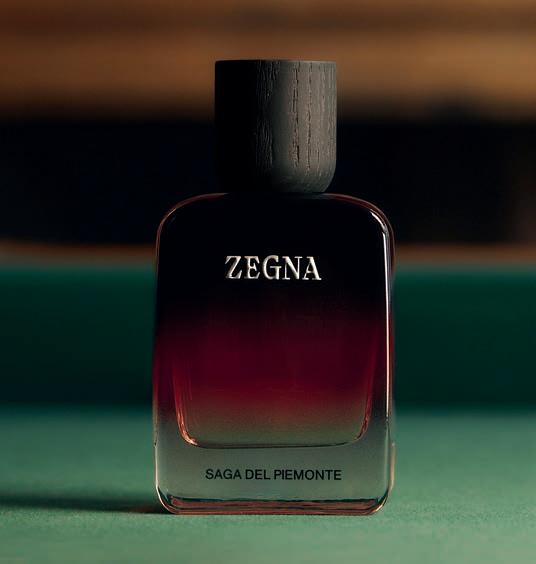
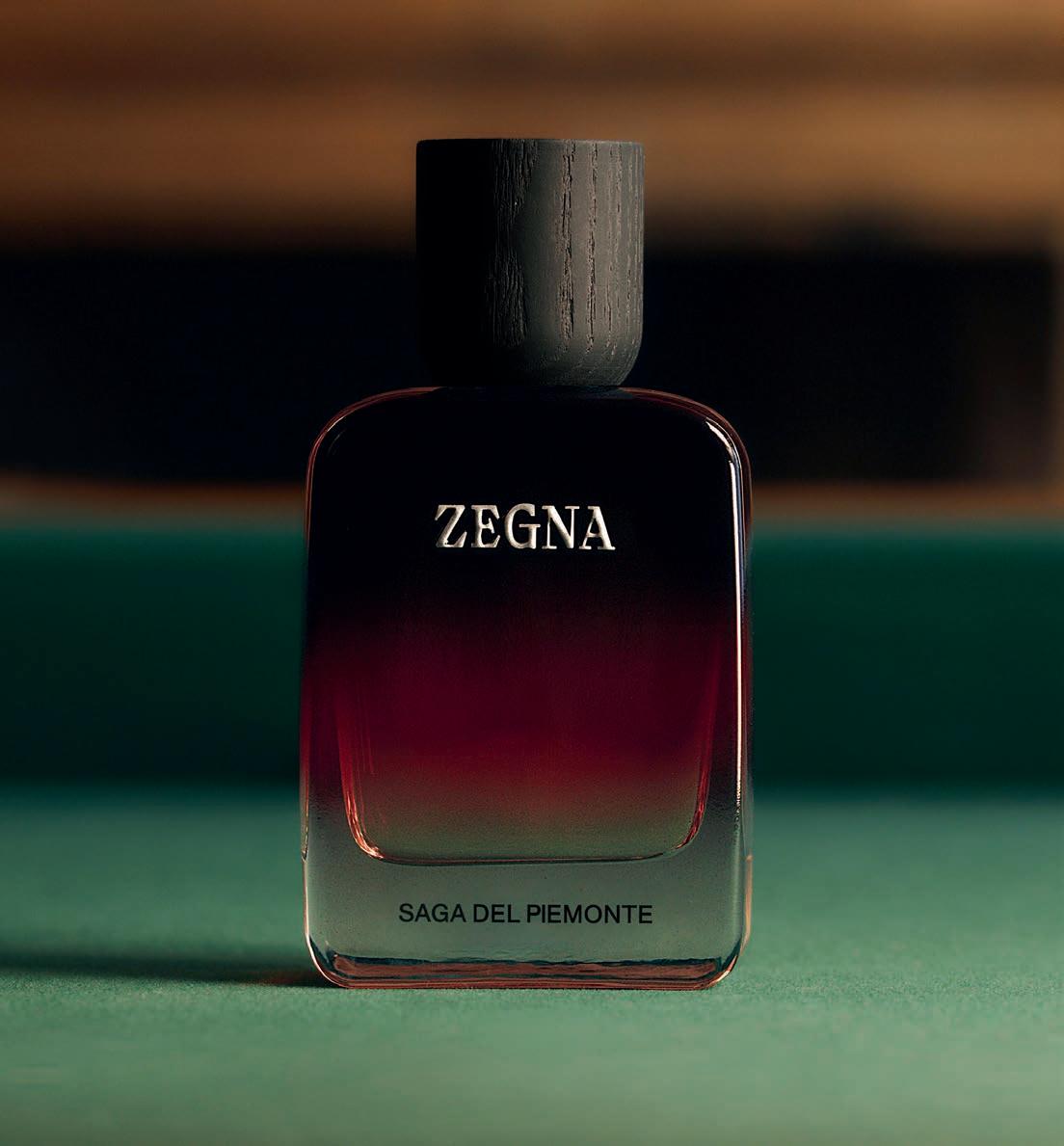
ZEGNA
COMPILED BY CAMILLE MACAWILI
STRONG SOLIDS
It’s the season to embrace colour –just take your styling cues from Bottega Veneta and Ferragamo SS26 for foolproof combinations
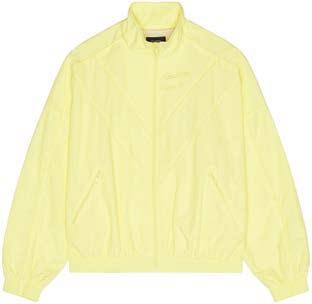
Below: Silk-Blend Trousers Dhs3,537 Lemaire; Bad Boy Track Jacket
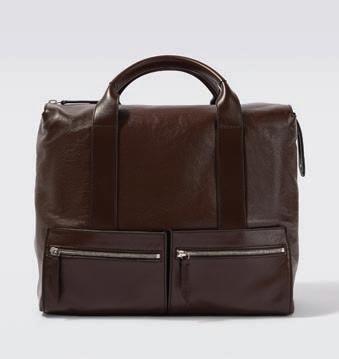
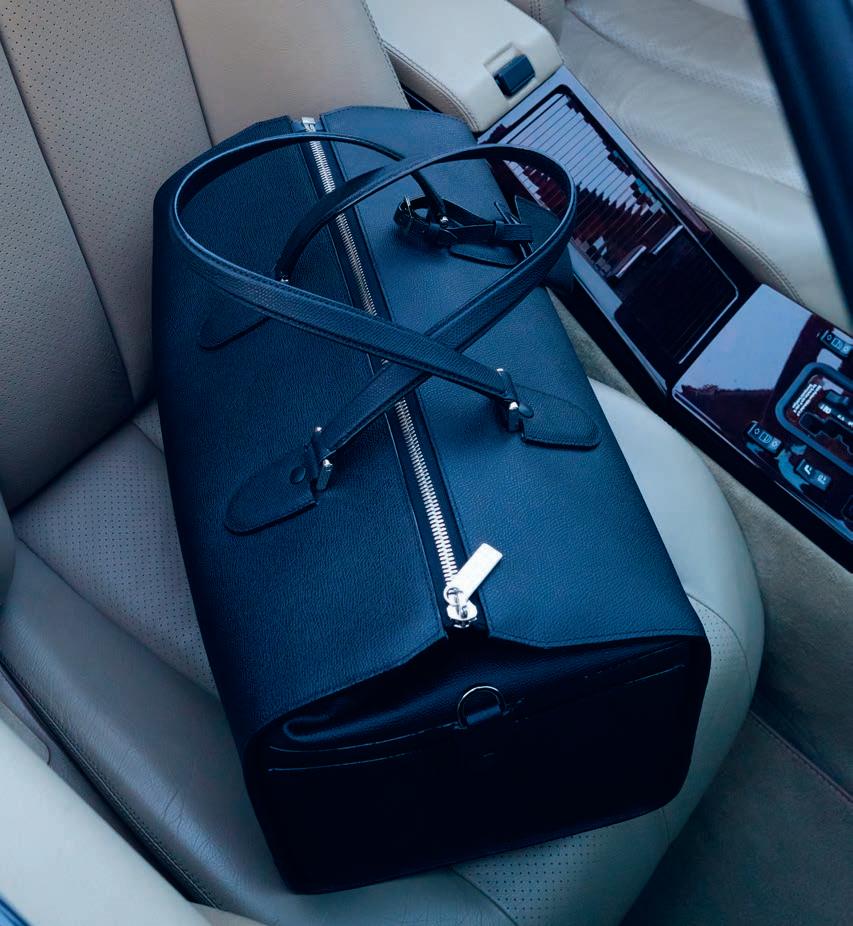
Dhs3,122 Willy Chavarria; Racer 40 Leather Duffel Bag Dhs15,400 Métier
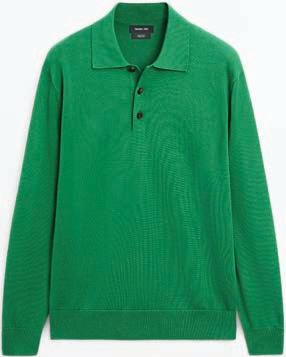
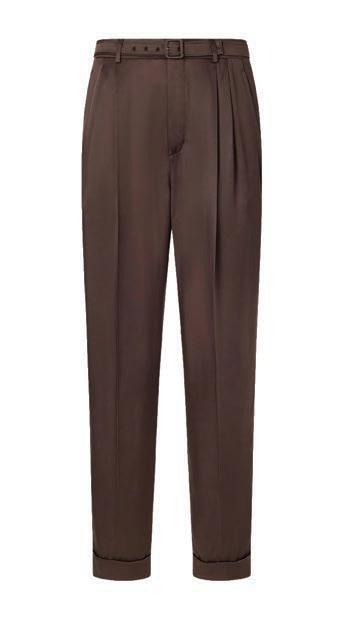
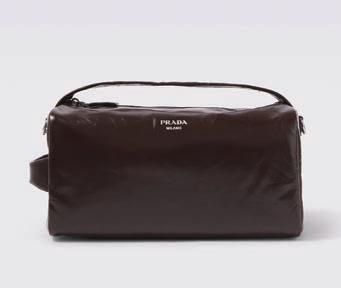
Left from top: 35mm Digital Watch Ring Dhs1,141 MM6 Maison Margiela available at Farfetch; Polo Sweater Dhs380 Massimo Dutti; Silk-Satin Trousers Dhs12,228 Saint Laurent; Right from top: Leather Shoulder Bag Dhs13,650 Prada; Suede and Nylon Sneakers Dhs2,665 Rick Owens
Trunk Calling
Fiercely proud of his home city Jaipur, Paritosh Mehta is on a mission to champion the city’s craftsmanship, one trunk at a time
WORDS: ROB CHILTON
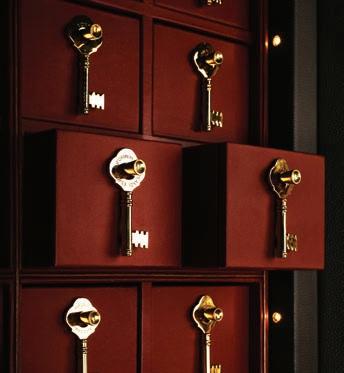
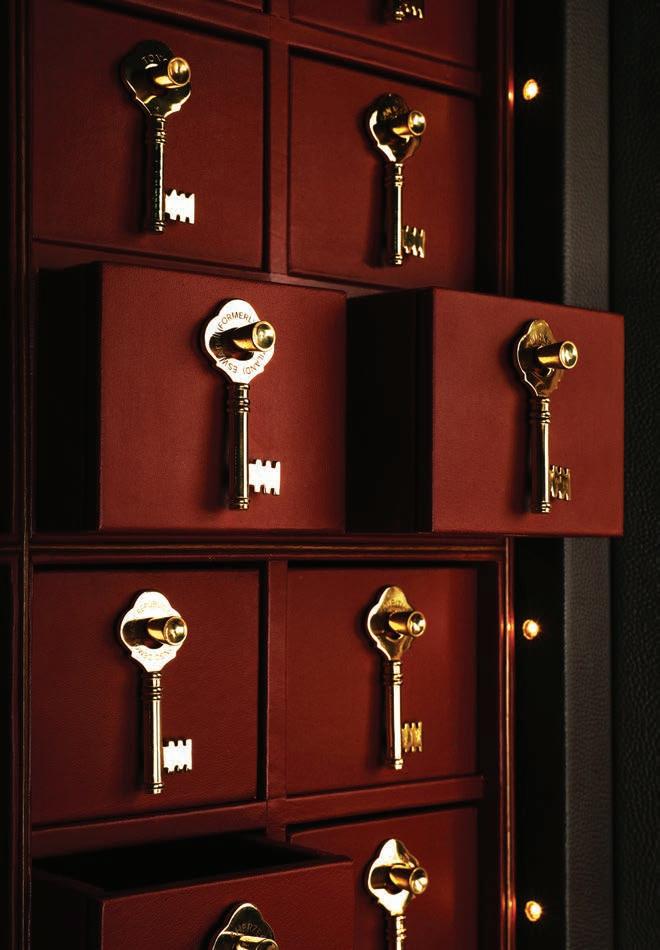
Aman sits and reflects on his lifetime of travels, which have seen him visit 109 countries, each of which has given him precious memories and unforgettable moments. As well as an experienced traveller, this man is also a collector and keeps a memento of each country. Now in possession of 109 small objects, he wants to store them carefully and artfully. So he contacts Trunks Company Jaipur in India, the masters of contemporary leather trunk making. Founder Paritosh Mehta listens to the man’s request and works with his team of 35 artisans in Jaipur to craft a bespoke trunk.
“The client wanted to treasure these pieces he had collected so we envisioned a trunk that could hold all his emotions, passions and experiences,” smiles Paritosh. Measuring seven feet high and three feet wide, the trunk had 109 compartments, each of which displayed a key and a nameplate engraved with the country where the artefact was acquired. “We also designed a crest for him and placed it on the top of the trunk. Eighty per cent of our clients become emotional when they receive their trunk.”
As well as pleasing his vast number of global customers, many of whom are Middle Eastern royalty, Paritosh is passionate about three things: looking after his team, preserving craftsmanship, and his home city of Jaipur. Money means nothing to him. “I’ve lost the charm of making money,” he says. “My love for this work is like a bond between a mother and a son, it’s not for putting money in my pocket.”
Born in Jaipur to a father who worked for the government and a mother who dabbled in jewellery making, Paritosh founded Trunks Company Jaipur in 2012. “There’s a lot of nostalgia, intrigue and mystery around trunks,” he says. “Jaipur was built and developed around crafts. It was divided into nine blocks and every block was dedicated to a craft such as jewellery, textiles, block printing, embroidery and stonework. Some of these crafts have been lost and I have a mission to try and preserve and also evolve these crafts.”
HAND CRAFTED
The atelier in Jaipur comprises five micro workshops specialising in wood, metal, leather, stone, and LED lighting. A medium sized trunk takes more than 2,500 man hours but some trunks require more than 4,000 hours of painstaking skill. “We are pushing our limits and improving ourselves every day,” says Paritosh, 42. “We are on a quest to show the world the best of what we can do.” Cricket heroes, Bollywood stars and major industrialists have ordered bespoke trunks from Paritosh in the past and the waiting list stands at around 18 months. Right now, the team is working on a $165,000 trunk commission by a member of an important royal family in the Middle East. Measuring seven feet high and four feet wide when closed, it will be the company’s biggest ever trunk.
Paritosh cannot complete his mission without his team. He ensures they work in good conditions and insists on paying excellent salaries. “Last year we started a conscious effort to not only touch the lives of the people who are working with us, but also the lives of their families,” he explains. “Work is underway on a new 100,000 square foot facility, which will open in 2027. But it’s not a workshop, it’s a cultural space.” Jaipur was founded in 1797 and will soon celebrate its 300th birthday. “The city has awakened,” says Paritosh proudly. “I see Jaipur becoming the cultural capital of the world in the next five years because the city has enormous heritage and a story. Jaipur’s culture and heritage are part of my DNA and I want to glorify the city’s incredible crafts.”
“WE ARE PUSHING OUR LIMITS AND IMPROVING OURSELVES EVERY DAY. WE ARE ON A QUEST TO SHOW THE WORLD THE BEST OF WHAT WE CAN DO.”
BUILDING BEYOND LEGACY
Mustafa Abbas, Group Managing Partner of Legend Group, on expanding a homegrown family enterprise into a modern luxury group
WORDS: LINDSAY JUDGE
Over the past few decades, the United Arab Emirates has emerged as one of the world’s most dynamic environments for modern entrepreneurship, creating space not only for new ventures to take shape but also for established companies to evolve, expand, and diversify. As the business landscape continues to mature, this growth is opening pathways for both emerging founders and legacy enterprises to scale in response to shifting markets and global demand. Among those helping to shape this next chapter is Mustafa Abbas, Group Managing
Partner of Legend Group, a Dubai-based conglomerate that has steadily grown from its origins in general trading into a diversified portfolio spanning luxury retail, real estate, lifestyle, and design.
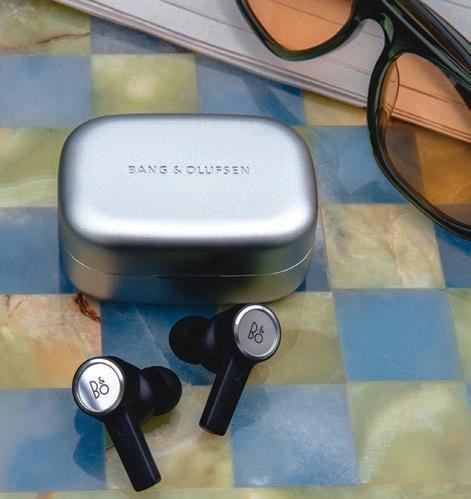
Originally founded in 1990 by Riadh Abbas, Mustafa’s father, Legend began as a trading company with a clear focus on premium consumer products. Under Abbas’ leadership, the business evolved from a trading company into a group. Today, it represents one of the region’s most enduring partnerships with Bang & Olufsen, as the exclusive distributor in the UAE, a luxury brand within the family that he later
consolidated under Legend Group; while also encompassing Property Portfolios International (PPI), a real estate brokerage and property management firm operating across Dubai and London, alongside Abbas’ lifestyle ventures Chivalry: Gentlemen’s Salon; and the premium leather brand, 35 Burgundy. Abbas’ entry into the business in 2005 marked the beginning of a new chapter, as his father prepared to hand over the baton to a new generation. Eight years later, upon assuming the role of CEO, he restructured the company into a group of businesses aligned with changing consumer lifestyles and evolving regional
market demands. For Abbas, growing up within a family enterprise did not mean he would automatically inherit the privileges of running the company.
“You still have to do the work. It’s not handed to you. You still need to develop your character, and you most certainly need to develop your skill. Honestly, it’s what you introduce to it, in order to honour the hard work that was done before you. What I mean by that is how to grow the business,
make it relevant and valuable to the present and the future, and continuously observe and mould it. It was time to expand. The most important thing is to have a growth mindset and continue to learn and grow.”
It is clear that Abbas holds deep respect for the business his elders built, yet he is equally aware of the need to diversify and evolve the company to ensure its continued growth. This emphasis on evolution has become central to the Group’s trajec-
tory. “For me, it’s keeping up with the times. This is crucial. Businesses are alive and continue to shapeshift. Technology is the same. Lifestyles are also changing. If a business sticks to one model and doesn’t evolve, it will be left behind. If you had a successful business 20 years ago and didn’t bit by bit adapt as time shifted, you would not succeed long-term.”
Leadership, in this context, becomes focused on versatility, with the ability to adapt and reframe when necessary. As Legend expanded into new sectors, Abbas recognised the importance of building structures capable of supporting scale. “The more a company grows, the more delegation is required. In doing so, trust must also be given. It’s important to hire the right people and trust them to make the right decisions. However, it is equally important not to stop exercising your own decision-making muscle.”
Alongside business strategy, Abbas shares his thoughts on the role discipline has played in shaping his approach to entrepreneurship. In an environment that often rewards speed and short-term wins, his perspective leans towards consistency and the ability to remain focused even when immediate results are not guaranteed. “I believe our characters, along with our skills, have a lot to do with the kind of business we run, or any product we may create. Discipline means waiting when it’s hard, trusting without evidence, and holding on to a vision that no one else can see at the time. And this is not the default human response, in my opinion. Discipline is the opposite of impulse.”
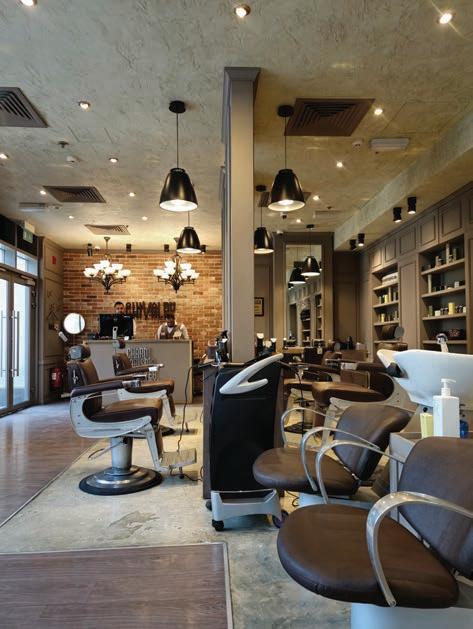
This was the driving force behind the launch of Chivalry: Gentlemen’s Salon in 2013, a venture that extended the Group’s footprint into lifestyle and hospitality and reflected an area of particular interest for Abbas. “We wanted a place where gentlemen could hang out, socialise, and get together while providing them with quality grooming services. An added value to their lifestyle. Along with their favourite restaurants, or cigar lounges, enter Chivalry.” Today, the Downtown Dubai salon has become a regular go-to for men seeking an elevated approach to grooming, as well as a space to connect and unwind.
Beyond grooming, Abbas’s interest in craftsmanship and luxury goods materialised
“IF A BUSINESS STICKS TO ONE MODEL AND DOESN’T EVOLVE, IT WILL BE LEFT BEHIND. IF YOU HAD A SUCCESSFUL BUSINESS 20 YEARS AGO AND DIDN’T BIT BY BIT ADAPT AS TIME SHIFTED, YOU WOULD NOT SUCCEED LONG-TERM.”
through 35 Burgundy, a luxury leather goods label built on a philosophy of simplicity and material integrity. The brand’s products are crafted from the finest natural exotic leathers. “We believe in quality, we believe in simplicity, and most importantly, we believe in seeing our customers satisfied. The brand will be 10 years old in 2027, and we have big plans for it,” he adds.
For Abbas, navigating the tension between heritage and innovation is an ongoing process. Not only does he need to honour the business built by his father, but he must also remain aware of what comes next and stay ahead of the curve. “You have to keep your eyes open. You have to listen to the signs, and you have to see every hurdle as an opportunity, as challenging as that
may be. Any discomfort could be a sign to enter a new area. Sometimes feeling like your back is up against the wall might just mean the universe wants you to turn around and see that it’s actually a door.”
This glass-half-full perspective is perhaps a significant factor in the company’s success to date. As the UAE’s entrepreneurial ecosystem matures, Abbas remains committed to fostering long-term thinking among the next generation of founders. “Find your path. When I say path, I don’t mean journey, and I certainly don’t mean passion. I mean, find the track that is suitable for you, and stay on it. Don’t derail from it. Once you’re on the right track for you, you’ll recognise it. Because this will flow. This doesn’t mean there won’t be ob-
“SOMETIMES FEELING LIKE YOUR BACK IS UP AGAINST THE WALL MIGHT JUST MEAN THE UNIVERSE WANTS YOU TO TURN AROUND AND SEE THAT IT’S ACTUALLY A DOOR.”
stacles or hardships, but you’ll know you’re on your path. Listen to the signs.”
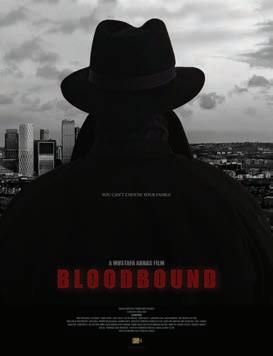
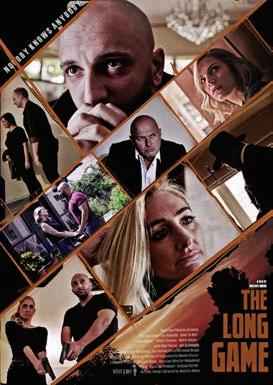
Alongside his corporate career, the businessman has also established himself as an award-winning filmmaker, with a creative practice that has run in parallel to his entrepreneurial journey for over two decades. His short film Sunset State (2013) premiered at the Dubai International Film Festival before screening internationally, while his 2020 release The Long Game (2020) went on to secure more than fifteen awards worldwide across the festival circuit. His most recent project Bloodbound (2025) is currently making its rounds in the international film circuit. Reflecting on his creative pursuit and what inspired him to enter this world, he says, “I would say it was my love for movies, observing them and studying them from a young age while watching. Meaning, it was all fascinating, creating characters, what they say, how they behave, how their stories and journeys evolve. You are literally creating lives on paper and then watching them come to life.”
Abbas’ approach to business continues to evolve alongside the Group’s growth. “I learnt that there is a psychology to money, and that there is a science to business. Much of the credit goes to the 100+ books I read on this subject. That being said, I am still learning.” Looking ahead, expansion remains firmly on the agenda, with new sectors under consideration.
“The restaurant business is something I’m very interested in. My team is very passionate about this and believes we can do something great. But it’s still early to seriously think about this, as we have some other major things to focus on at the moment.” As the company enters its next phase, his focus remains on building a business that can continue to adapt to changing markets while maintaining the foundations on which it was built.
“WE ARE NOT LIKE MANY BRANDS WHO HAVE A DISTINCT STYLE. WE’RE MORE LIKE A PLATFORM, MORE LIKE SPOTIFY, WHERE WE CAN CURATE DIFFERENT THINGS”
In Harmony with H&M
As
the Swedish retail giant opens its massive flagship store at the Dubai Mall, its Creative Director Jörgen Andersson discusses how he is shaping the brand’s new narrative
WORDS: JESSICA MICHAULT
Standing inside H&M’s vast new flagship in the Dubai Mall feels a little like stepping into a well-tuned orchestra. There is a clear flow and sartorial crescendos on each floor, and there are even state-of-the-art dressing rooms that offer up a selection of music and accompanying rhythmic lighting across their 360-degree mirrored interiors. Harmonising it all is a Creative Director intent on bringing every note, every instrument, every local inflection into perfect balance. For Jörgen Andersson, who first opened a H&M store in Dubai nearly twenty years ago, returning now to unveil this nextgeneration space is more than déjà vu. As he puts it, “It feels amazing. I was actually here 20 years ago… and now coming back… presenting ourselves in the best possible way again feels so good. I’m super excited.”
The flagship, with its expansive footprint, curated edits, and experimental retail technologies, marks a pivotal moment for the brand in the Middle East. Dubai has officially been designated a global key city for H&M, a status typically reserved for cultural powerhouses like Paris, London, and New York. But as Andersson points out, the UAE has evolved into something rare: a creative crossroads where
influences meet and multiply. “Dubai is kind of growing as some sort of melting pot of everything that is happening in the world. Something new is happening every time I come here,” he explains. “Twenty years ago, it was big, but now it’s massive.”
For Andersson, who began his H&M journey in 1990 as a budget controller before becoming one of the architects behind the company’s now-legendary designer collaborations, which he famously kicked off with Karl Lagerfeld; this flagship is a culmination of decades spent exploring how a democratic fashion brand can evolve without losing its soul. His philosophy has always been about making fashion accessible but never generic, rooted in a belief that H&M must adapt to its surroundings without losing its global rhythm. “The time has passed where global companies can find one recipe and just roll that out,” he says. “People are tired of these global brands that don’t pay attention to being locally relevant.”
Local relevance has become one of the brand’s most important instruments. Case in point: the store’s exclusive beauty collaboration with Mina Al Sheikhly. It’s exactly the kind of regional touchpoint the creative director believes is essential to the brand’s future. “You have to have respect for where you are when you show up,” he notes. “You need to make sure you connect with what will resonate with the local customers.”
This is where music enters the metaphor. When Andersson talks about H&M, he describes it not as a fashion monolith but as a platform, an ever-expanding playlist meant to be remixed by whoever steps into the brand’s world. “We are not like many brands who have a distinct style,” he says. “We’re more like a platform, more like Spotify, where we can curate different things.”
The Dubai flagship, then, becomes a kind of concert hall, vast, layered, ever evolving and designed for discovery. And in a city built on the interplay of cultures, Andersson finds that H&M’s multivocal approach resonates. “Typically Dubai is the baseline of everything,” he says with a smile. “Everything is just mixed… and I think that as the world evolves much more towards that, which is much more interesting for us.”
What Andersson finds most energising is the way customers now compose their own aesthetic soundtracks. “You can mix a luxury piece with a vintage piece… no one owns the customer anymore,” he explains. “The customer is much more fluid and much more used to creation.” Fashion, for him, is no longer a top-down performance but a crowd-sourced symphony, one that H&M must keep pace with if it hopes to remain culturally relevant. Part of this means inviting disruption. “It’s inviting people to break our algorithm,” he says. “Fashion is created by the consumer… the creativity is in how you create stuff.” This ethos appears throughout the new store, from curated regional edits to experimental visual merchandising to interactive fitting rooms enhanced with AI.
Artificial intelligence in particular has become one of the most powerful instruments in Andersson’s creative repertoire, not for replacing human creativity, but for refining the mechanics that bog the fashion world down. “The most exciting aspect of AI for me is in regards to sustainability. The fashion business is overproducing 20% of the demand,” he explains. “With AI, we can get that number down… because that 20% is seriously destroying the
planet.” For Andersson, AI isn’t a threat but a tool to free human imagination from operational noise. “It’s not man or machine. It’s man and machine,” he insists.
He also sees AI opening a new chapter in representation through what he calls “digital twins.” Hyper-realistic digital models that can reduce the industry’s environmental footprint while ensuring fair compensation to the talent behind them. “The important thing is that the girls own their own data,” he explains. “If someone is using the avatar, they get compensated.” This use of digital twins is just one more small revolution in an industry historically resistant to such change. Still, for all his emphasis on future-facing tools, Andersson is the first to argue that creativity needs silence, too. “I love music. I get a lot of inspiration from music, from museums, from art… or simply going out into nature and breathing,” he says. The creative director’s most
honest admission arrives quietly: “Being creative is not this ‘okay, now I’m going to be creative.’ You have to prepare. You have to be in the right mood for it.”
It’s a philosophy shaped by decades inside the brand. Andersson’s career at H&M spans everything from menswear management to launching new markets to co-creating some of the most cultureshifting moments in high-low fashion history. For example, the legendary capsule collection collaboration with the designer Karl Lagerfeld was seen as a risky gamble at the time. “In one month’s time, people would physically fight to get their hands on a product made by us,” he recalls. “People said, ‘You’re crazy, that will never happen.’” But Andersson knew better: “Karl had the credibility and the courage to break the mold.”
Today, he sees the same spark not just in marquee designers like Glenn Martens, but in emerging talents across the Middle East. “With size comes a responsibility, and opportunities,” he says. “The question is how do we support and help emerging talents, give them exposure, and get their name out?” Dubai, with its energetic youth culture, its fusion of expat, regional, and global influences, and its quickly transforming fashion identity, has become a fertile landscape for this mission.
But beneath the innovation, the collaborations, the global flagship rollouts, Andersson is driven by something more classical, a belief in long-term composition. After years working with brands shaped by private equity timelines, coming back into the fold of H&M’s familydriven environment felt like a return to a steadier tempo. “When you build brands that are going to last for 100 years, you start to think differently,” he reflects. “I see myself as the conductor of the orchestra. Telling them what tune to play. Turning noise into music.”
Dubai gives H&M something invaluable: a new place to listen, as well as new rhythms to learn. And under Andersson’s direction, the brand sounds more in tune with the world than ever.
“YOU CAN MIX A LUXURY PIECE WITH A VINTAGE PIECE… NO ONE OWNS THE CUSTOMER ANYMORE. THE CUSTOMER IS MUCH MORE FLUID AND MUCH MORE USED TO CREATION”
OUTSIDE
THE BOX
PHOTOGRAPHER: LESHA LICH
FASHION EDITOR: CAMILLE MACAWILI
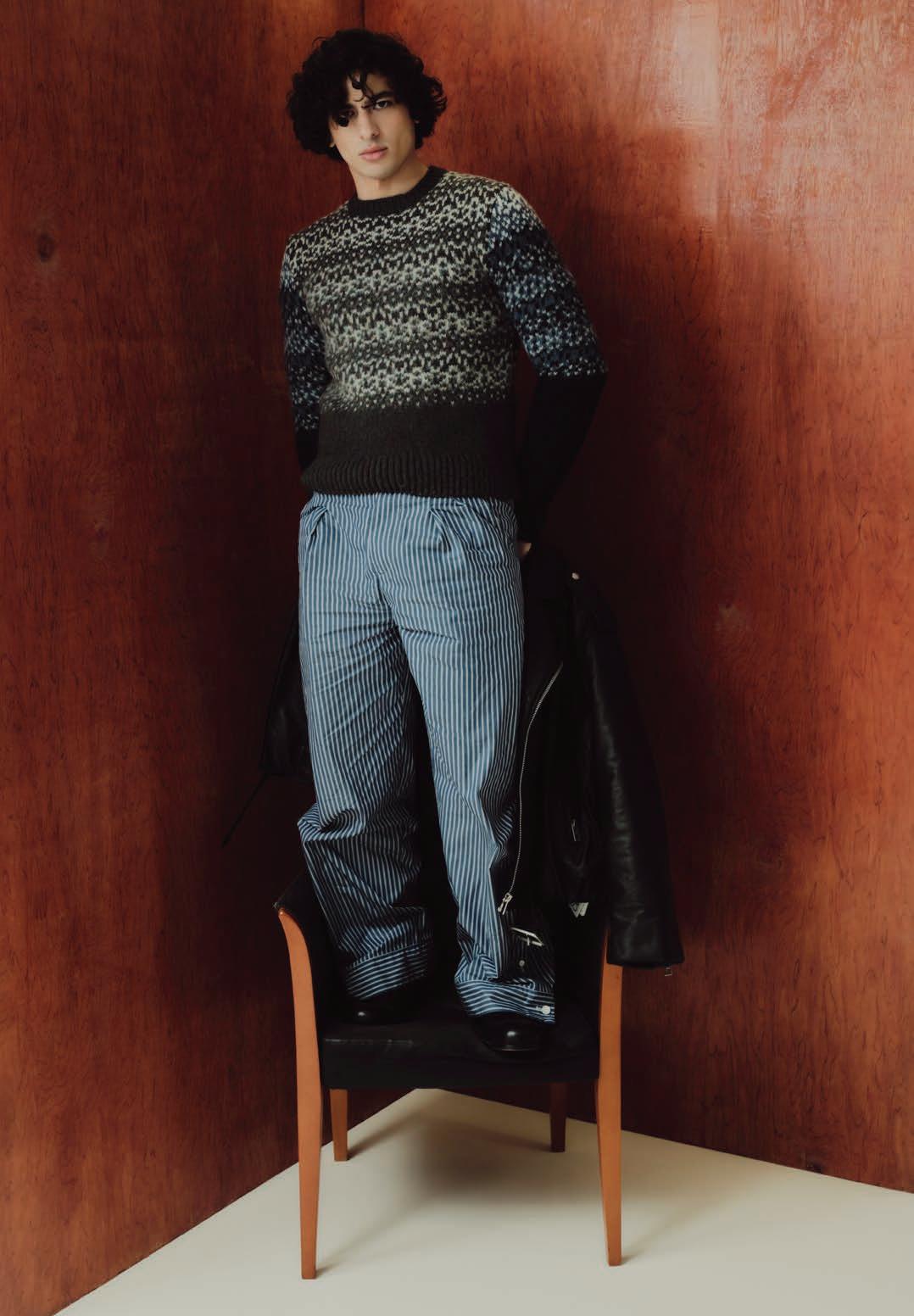
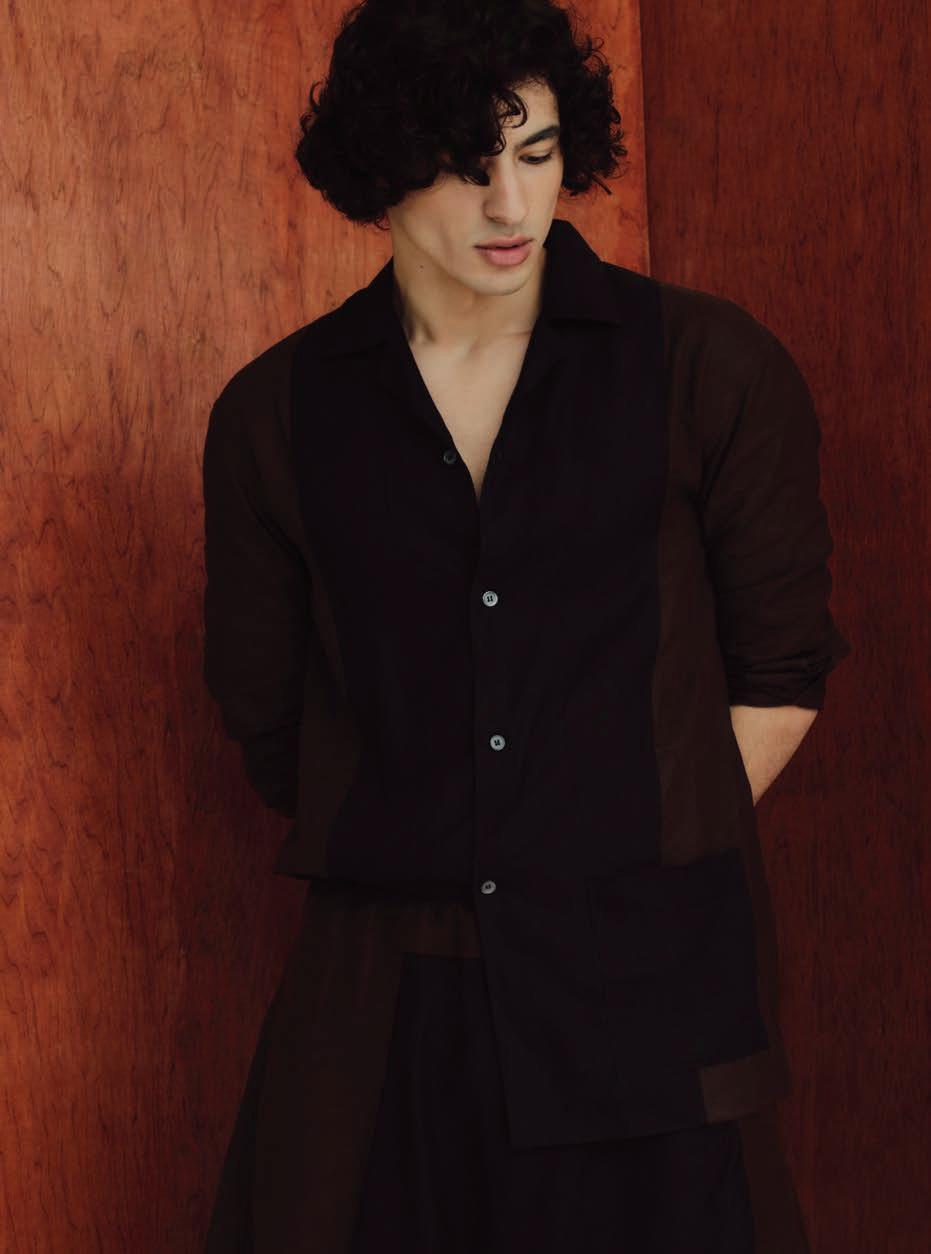
The classic codes of menswear have fallen away. Now, we're in a new era of sartorial expression where style is personal and taste is all about having a unique point of view
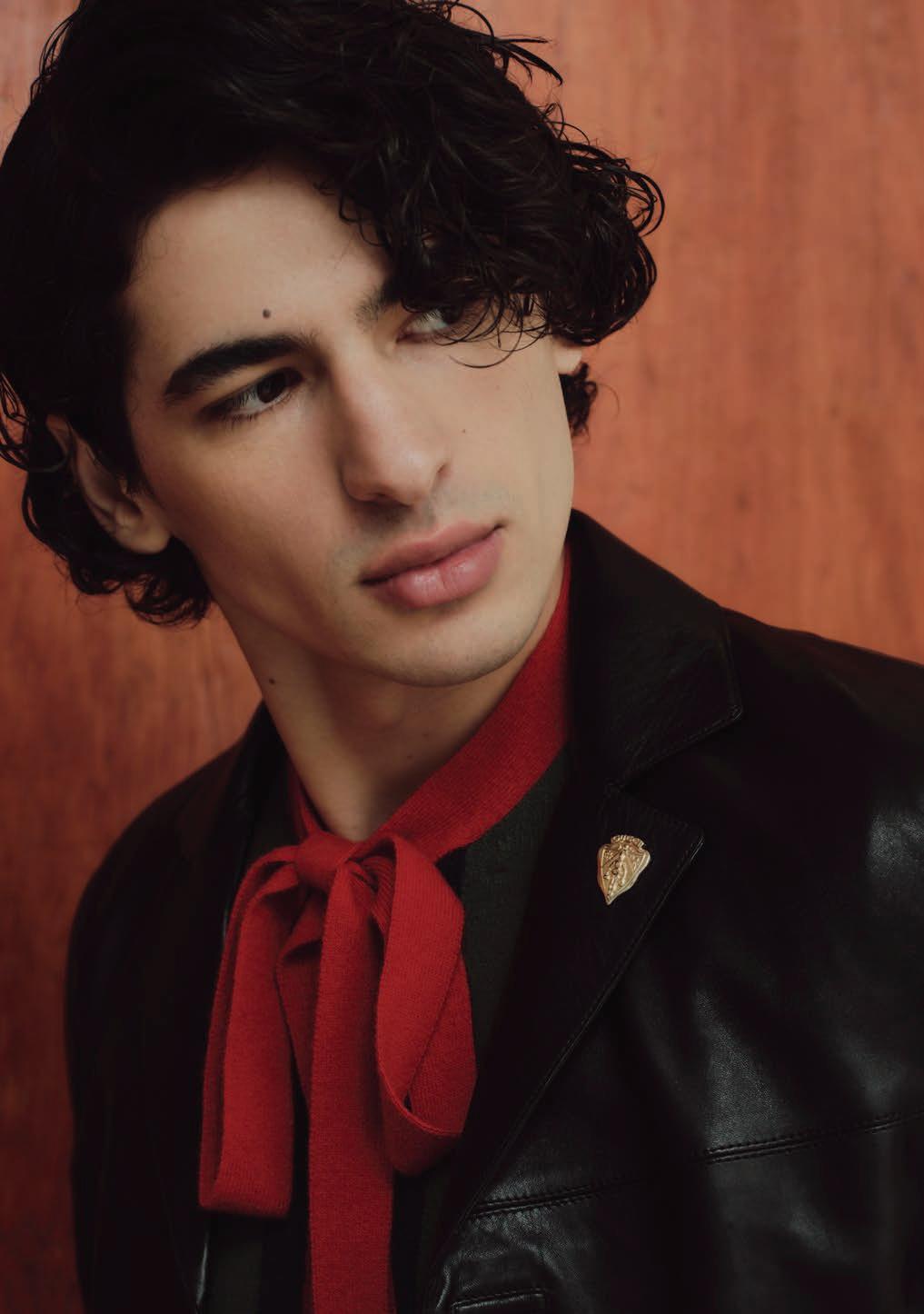
This page: Outfit: Loro Piana; Right page: Outfit: Louis Vuitton
This page: Outfit: Prada; Right page: Outfit: Celine
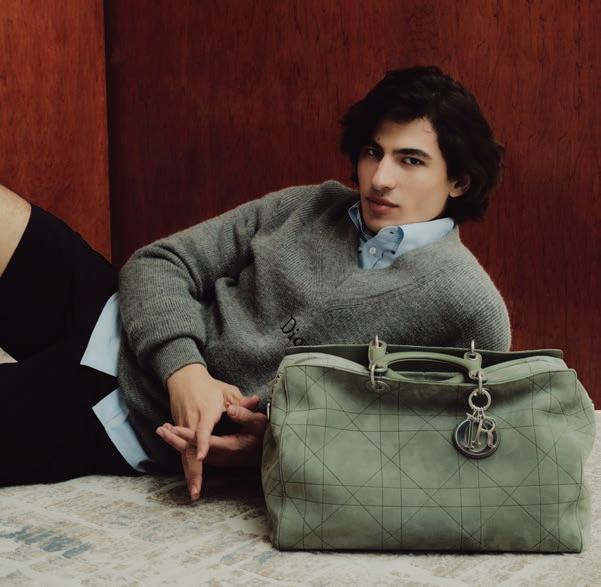
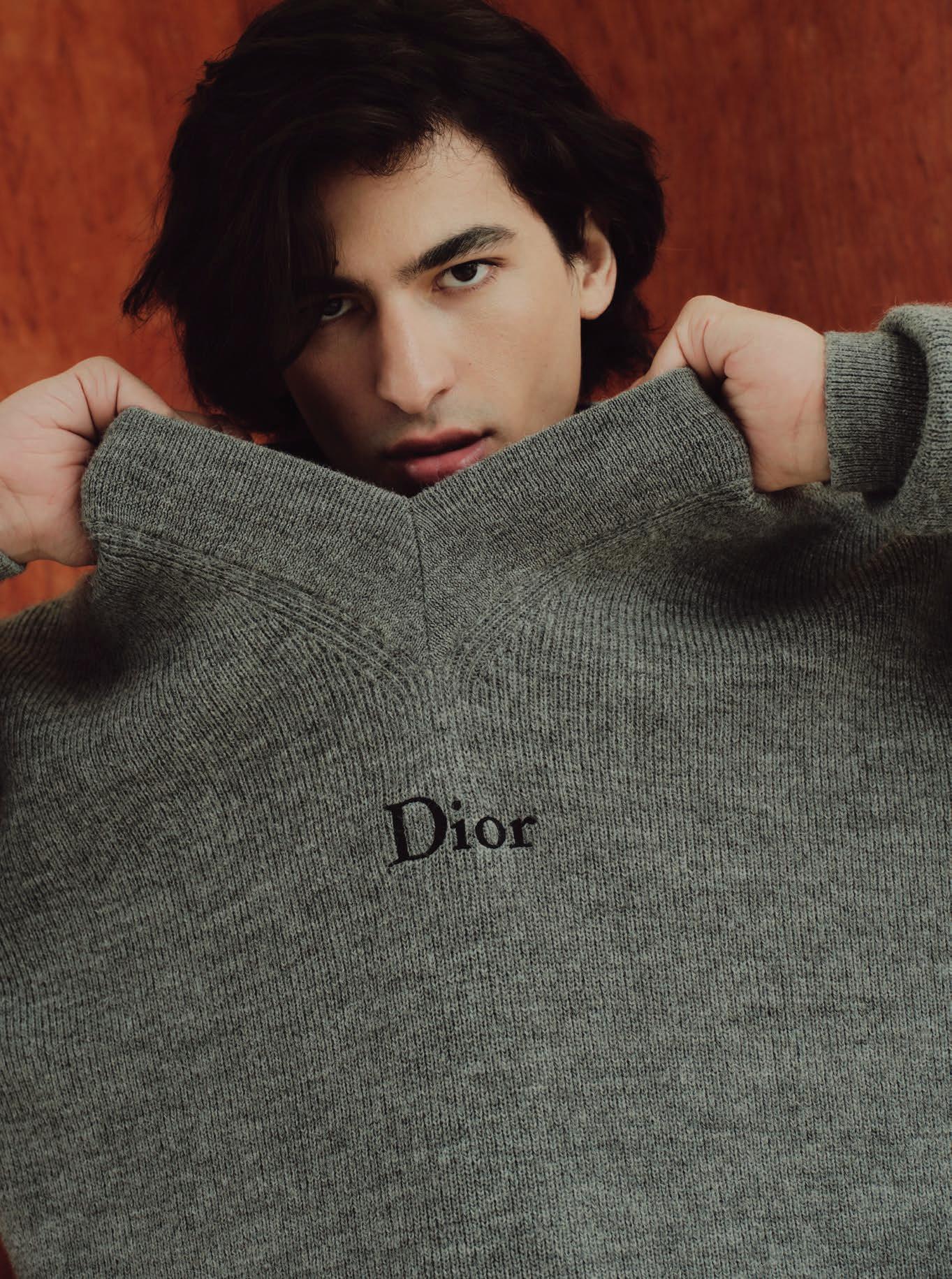
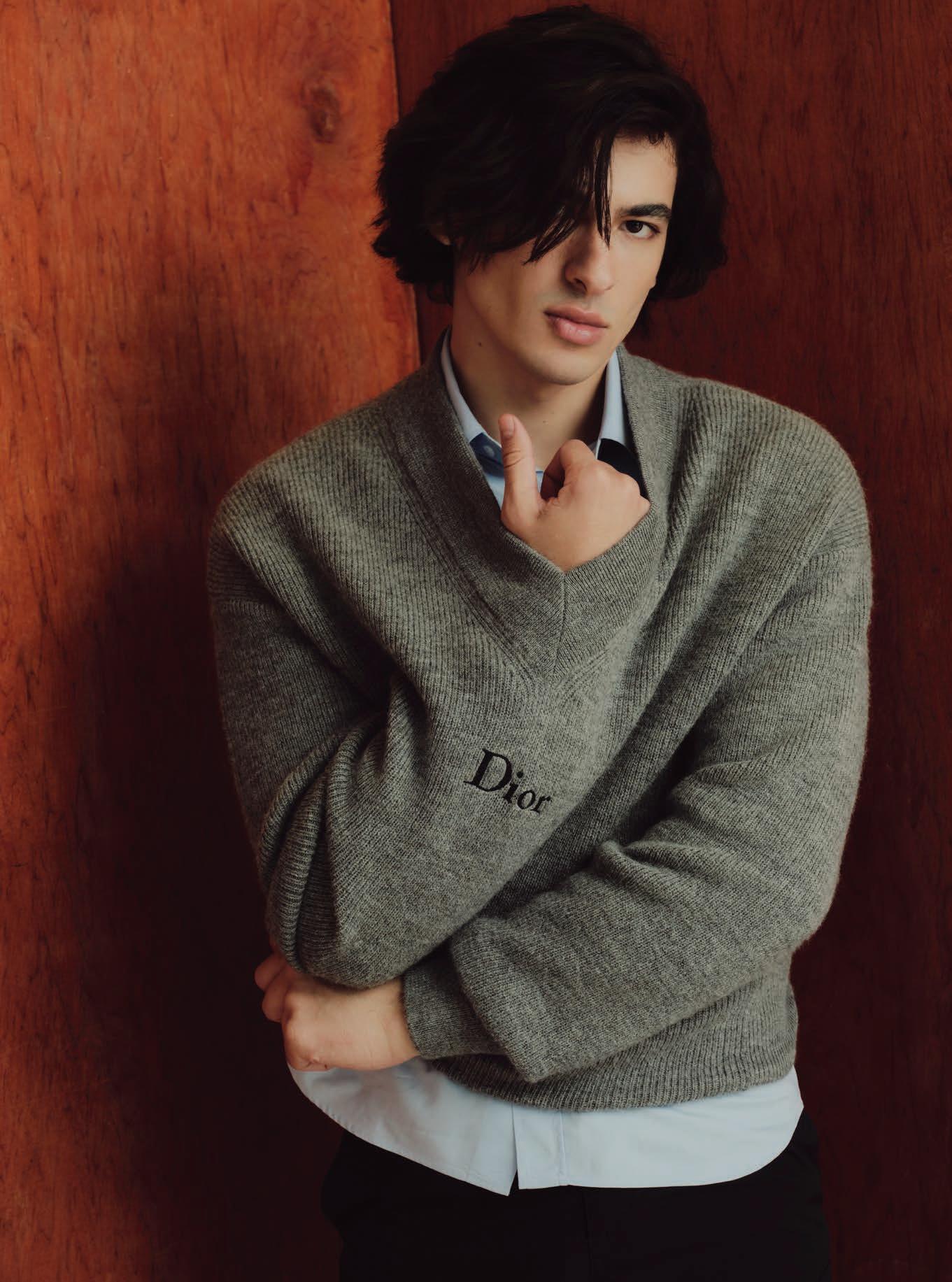
Both pages: Outfit: Dior
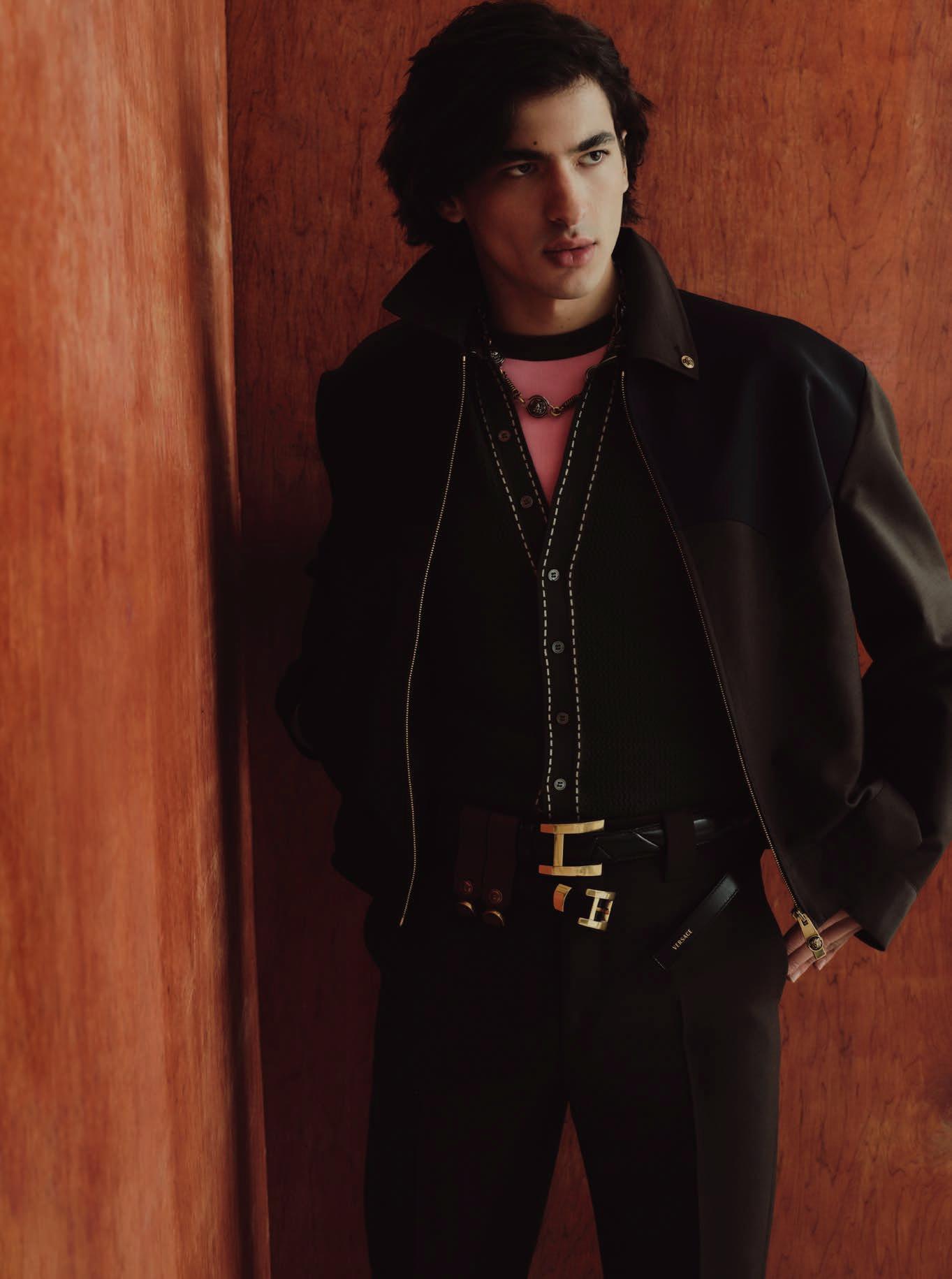
This page: Outfit: Loewe; Right page: Outfit: Versace
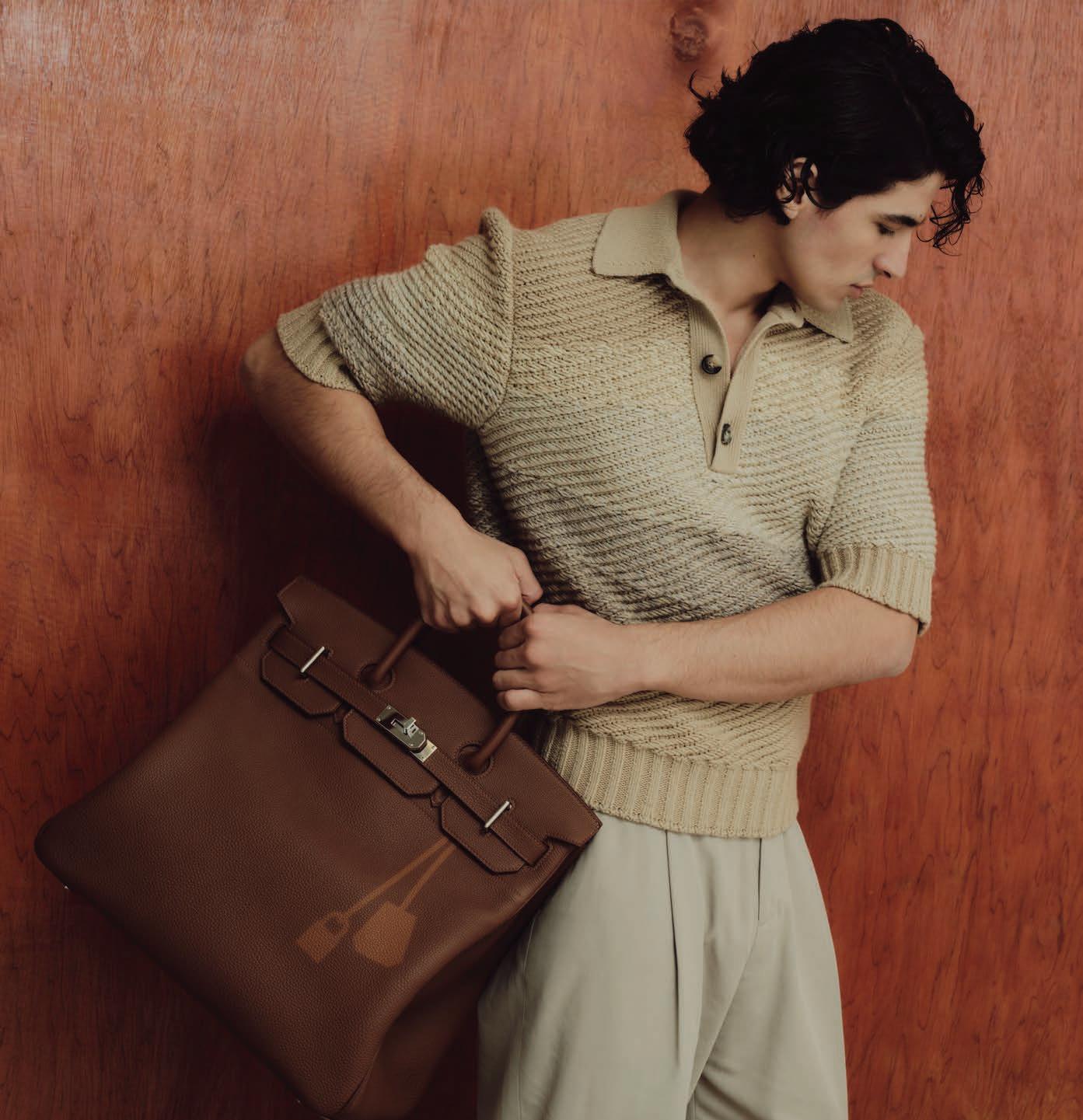
Left page: Outfit: Gucci; This page: Outfit: Hermès
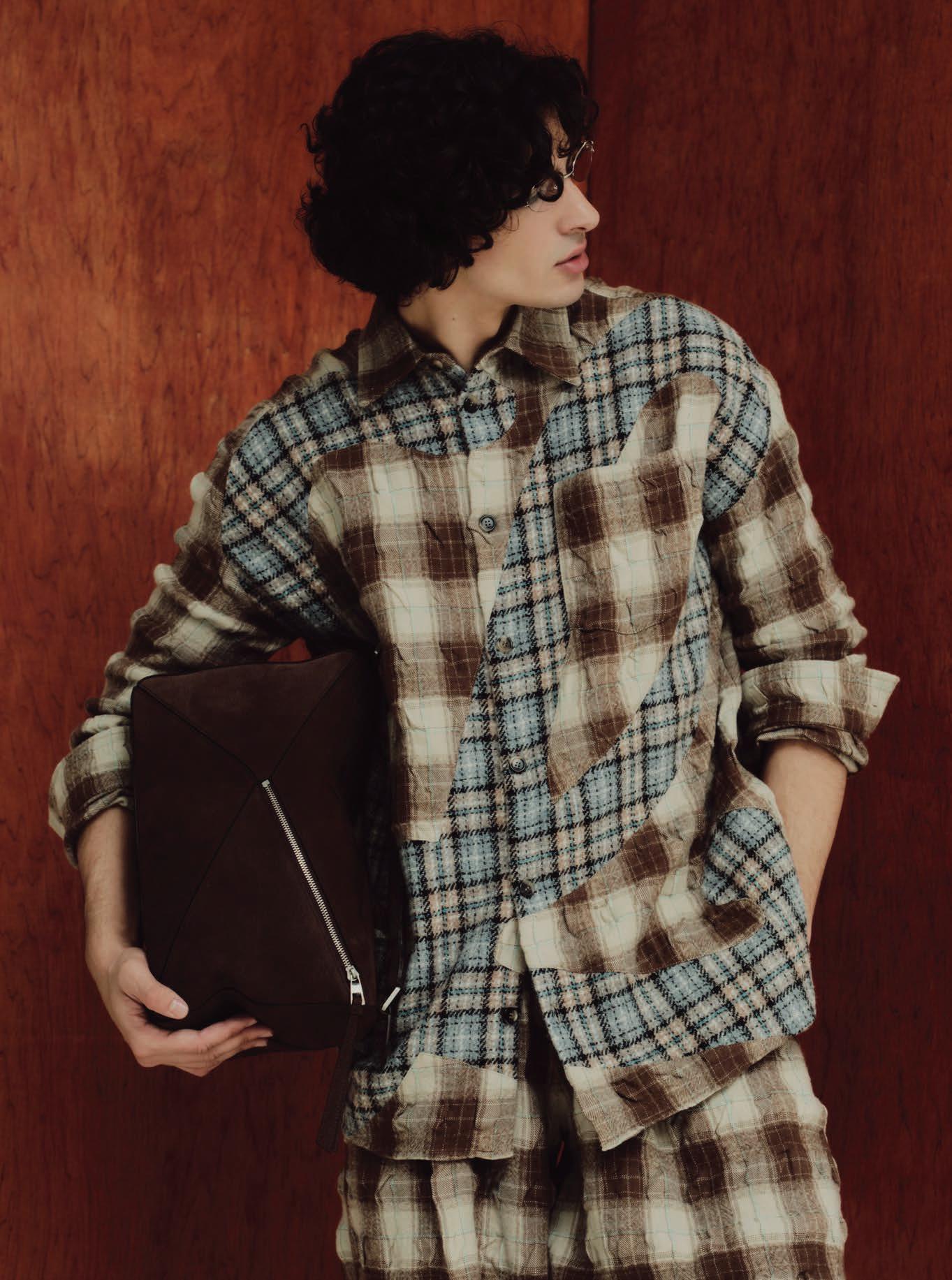
Left page: Outfit: Loewe; Accessories: Loewe Bag, Gentle Monster Glasses; Right page: Outfit: Loro Piana
Hair & Makeup: Mauro Hernan
Model: Davit Zhorzholiani
Videographer: Katerina Shirshova
Fashion Assistant: Anishka Yadav
DISCERNING DESIGNS
Valextra CEO Xavier Rougeaux on utility, craftsmanship, and why a bag should never define the person carrying it
WORDS: AMINATH IFASA
There is a quiet confidence to Valextra. The Milanese luxury house, under the guidance of CEO Xavier Rougeaux since 2021, doesn’t shout for attention in a world that increasingly rewards those who do. Instead, it communicates through a legacy of architectural design and exceptional craftsmanship, operating with a deeply held philosophy that an accessory should serve the individual rather than the other way around.
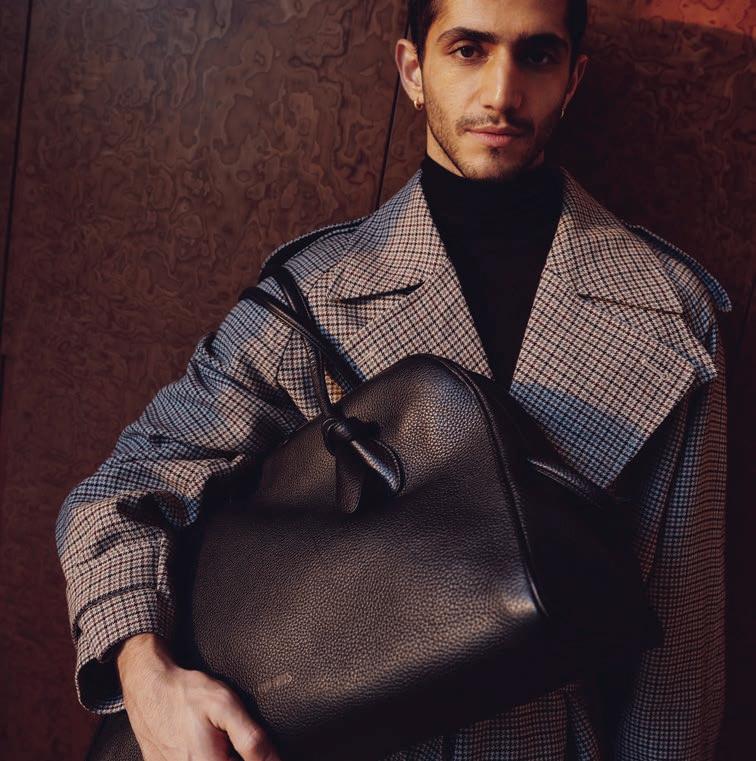
Sitting down with Rougeaux at their flagship store in Dubai Mall during a recent visit to the city, the conversation moves from the brand’s approach to menswear to the intimate relationship between a person and the bag they carry. He is wearing a sample of a new piece that wasn’t even meant for him when it was first conceived. Originally shown during women’s fashion week, the response from men in the industry was so overwhelmingly positive that the brand quietly reconsidered how they thought about gender. “That bag you mentioned, the one I’m carrying,” Rougeaux comments, gesturing to the piece slung across his shoulder, “we initially presented it as a woman’s bag. But the reaction was so positive with men that we realised it’s something that can work for whomever you are.”
That fluidity feels entirely natural for a brand that has always operated slightly left of centre. Valextra was born in Milan, a city that takes its design heritage seriously, though not necessarily in the way the fashion world understands it. This is a city of industrial design, of architecture, of engineering. That heritage runs through everything they make – bags that function like well-designed buildings, and practical objects, but with a sense of pleasure somehow baked into their construction.
Rougeaux calls it ‘utilitarian luxury,’ and the men’s line embodies this completely. He showcases a sleek, technical backpack that bears little resemblance to what passes for luxury luggage these days. It was engineered for the modern man navigating a world that demands mobility. The material is a sustainable nylon recycled from fishing nets collected off the Ligurian coast. It is lightweight and rainproof, with a padded computer compartment and pockets designed by craftsmen who confidently understand how people move through their days. The signature black piping that defines the house’s leather goods has been reinterpreted here as a protective element on the zips. Function meeting form, as the CEO puts it, without one sacrificing the other.
Another piece he returns to repeatedly is the ‘Tric Trac’, a quirky snap-shut bag with origins in the 1960s. Its recent evolution tells you something about how Rougeaux approaches this brand. He was meeting with clients in Asia a few years ago when one of them made an observation so simple it almost seems obvious in retrospect. “Xavier, today we need to wear things crossbody.”
So, the team cut the leather handle, added a piece of hardware, and created a double option that left the original design intact while allowing for a strap, and as expected its sales went through the roof. And they believe that it was because they had listened to how people actually live. “We are an accessory brand,” affirms Rougeaux, and the way he says it suggests this is not a limitation but a liberation. “We
don’t pretend to define style. We’re here to support you. To help you work your days and express your own personality.”
That philosophy extends to the brand’s new women’s collection, called The Study of Softness. At first glance, it might seem like something of a departure for a house so closely identified with rigid structure and architectural precision. Rougeaux explains it as a response to something they were hearing from the women who buy their bags.
“We felt that women today need softness,” he says. “We have a lot of bags that are quite structured, quite formal. It’s part of the DNA. But a woman’s life is 24/7. Depending on the moment, you need something practical. Something you
“WE INITIALLY PRESENTED IT AS A WOMAN’S BAG. BUT THE REACTION WAS SO POSITIVE WITH MEN THAT WE REALISED IT’S SOMETHING THAT CAN WORK FOR WHOMEVER YOU ARE.”
Xavier Rougeaux, CEO of Valextra
can throw everything into.” The challenge, it turned out, just like with the brand’s mens designs, was technical. Their signature Millepunte calfskin leather has a specific grain and a specific rigidity that defines the house aesthetic. To soften it without losing what makes it unmistakably Valextra took a year and a half of work with their artisans in Italy. The result is leather that drapes differently, that invites touch in a way the more structured pieces don’t, and feels almost alive in the hand, as he demonstrates with a bag sitting nearby.
The word ‘artisan’ comes up constantly in conversation, and with Rougeaux it’s clear that this is not marketing speak deployed for effect. Inside the Milan workshop, they have created an academy to train the next generation. Four young artisans have been recruited from local Italian design schools to work alongside masters who have been with the house for decades, and a fifth is on the way.
“We needed to make sure we were continuing the craftsmanship,” Rougeaux says. “Not just looking at 50 years ago, but making it relevant today.” This thinking spawned a project called The Journey of Craft, through which Valextra has been seeking out master artisans globally, not to copy their techniques but to create a genuine dialogue. An indigo master in Kyoto. A fifth-generation bamboo weaver in a small village outside Shanghai. An embroiderer in India who normally works with haute couture houses. A satin bag hand-embroidered with thousands of sequins by Indian artisans, sits on a nearby surface. The results are limited edition pieces that tend to sell out almost immediately.
Rougeaux is now looking for someone in the Middle East. He hasn’t found the right partner yet, but he is clear on what he is looking for. He touches upon aspects like authenticity, shared values and genuine appreciation for craft. A limited-edition glasses case is placed on the table between us, and Rougeaux picks it up to explain the thinking behind it. It was produced to mark UAE National Day, with the colours of the flag worked into a pattern that remains – despite this specific nod to the region – unmistakably Valextra in its execution. Only fifty-four pieces were made, which feels entirely consistent with a house that has always preferred scarcity to saturation. It is a tribute, he says, or perhaps more accurately a nod to a customer base that has demonstrated, time and again, an understanding of the difference between something made by hand and something run through a machine.
“There is a sense of secret pleasure,” Rougeaux says, and you get the feeling that this is something he has thought about considerably, this idea that luxury functions on a private level as much as a public one. “When a woman puts her hand into a bag looking for a lipstick or a diary with her most intimate thoughts, there needs to be that pleasure. Something for yourself.”
The vision for the brand going forward is relatively straightforward in its objectives if not in its execution. It involves preserving the craft traditions that have defined the house for decades. It means looking to the archives for inspiration rather than reproduction, treating the past as a resource to be built upon rather than a catalog to be mined. And it requires creating things that feel relevant for tomorrow without chasing whatever tomorrow might bring in terms of trends or momentary preoccupations. “The philosophy is to have products that are meaningful,” he says, choosing his words with the same care the house applies to its materials. “The right combination of functionality and aesthetic. As the custodian today of the brand, we are perpetuating it for the next generations.”
“THE RIGHT COMBINATION OF FUNCTIONALITY AND AESTHETIC. AS THE CUSTODIAN TODAY OF THE BRAND, WE ARE PERPETUATING IT FOR THE NEXT GENERATIONS.”
Ebb & Flow
Even with more then 50 years at the sharp end of retail, footwear titan Aldo Bensadoun still has huge enthusiasm for visiting his stores, meeting his customers and the constant evolution of his industry
WORDS: ROB CHILTON
Many people who work in retail liken it to a rollercoaster. Surge and slump, profits and losses, ups and downs.
Soaring success is often followed by perplexing failure in an infuriatingly fickle environment. But for Aldo Bensadoun, the Canadian founder and chairman of the shoe empire that shares his first name, he describes his five decades in retail as something a little more gentle than a rollercoaster. “I look at retail the same way I look at a river,” he smiles. “It flows and moves all the time. It rushes down the mountain and has to find its way around rocks and trees. It’s hard to keep up and we never sit still.”
Now in his mid 80s, Aldo spoke to Emirates Man on a recent visit to his boutique in a cacophonous Dubai Mall. Far from feeling jaded, Aldo embraces the hurly burly of both the shop floor and the retail industry. “Honestly, I love it, I find it gives me energy,” he explains. “You have to constantly evolve because you don’t want to be yesterday’s brand, you want to be today’s brand.”
The Moroccan-born son of a footwear merchant and grandson of a cobbler opened his first outlet in 1972 as a concession in the Canadian department store Le Chateau. Towards the late 1970s Aldo went solo and began to open stand-alone stores, eventually cutting the ribbon on his inaugural US boutique in 1993. Today the Aldo empire has more than 1,600 stores in almost 100 countries and employs 15,000 people.
Anybody who started in retail in the 1970s has seen extraordinary change, not all of it positive. Reflecting on the turning points he’s witnessed, Bensadoun unsurprisingly cites online shopping as the most significant. He looks around the Dubai Mall boutique and says, “Retail changes with society but the store is the anchor of the brand.
It’s the place where you give an experience to the customer and make them feel good.”
Happily posing for photos with shoppers, Bensadoun laughs, “People call me a shoe dog. I love talking with customers and hearing what they have to say. I love looking at the way they shop, the way they touch the product, the way they interact with the staff. I’m the founder of the company but I still love going into the store, it’s fun.”
As well as online shopping, another crucial shift Bensadoun identifies in the retail world is the increase in competition. “I think competition makes our work more interesting,” he says. “People have more choice, so you want to be the one they choose.” Naturally, competition creates struggle. “It can be very hard, but hard times make us more resilient and determined,” he says. “They also make us wiser and humble.”
PERSONAL TOUCH
Despite the intense competition and exhausting evolution, Bensadoun insists on doing business the right way. Renowned for his philanthropy and affable demeanour,
of the company, are guided in their work by a set of moral guidelines. “Our values are love, respect and integrity and they do not change,” Bensadoun states. “Those were the values that helped us grow. Our goal was to make the world better and help less privileged people in society.”
Still present in the company’s Montreal HQ every day, Bensadoun believes surrounding himself with a strong team is essential. “I remember my mother once saying to me, 'Tell me who your friends are and I will tell you who you are,’” he says. “It’s the same in business: show me the people you have in your team, and I will tell you what kind of company you are.” Clearly enjoying his time in his Dubai Mall store opposite the blue wall of Dubai Aquarium and its menacing sharks, Bensadoun grins, “If you want to recharge your battery, you come to Dubai. The vigour in this city is incredible.” As our time draws to a close, we have one final question. Maintaining your company’s position in a competitive market is one thing, but does having your name above the door turn the screw even more?
Bensadoun pauses. “No, I don’t feel pressure, but I do feel pride,” he says. “I also feel a duty to make sure the name carries those values and practices them on a daily basis. Of course, you always have fear that it might not work out. So you have to add more wood to the fire and keep it burning.”
Aldo Bensadoun, founder and chairman of Aldo
Freeze Frames
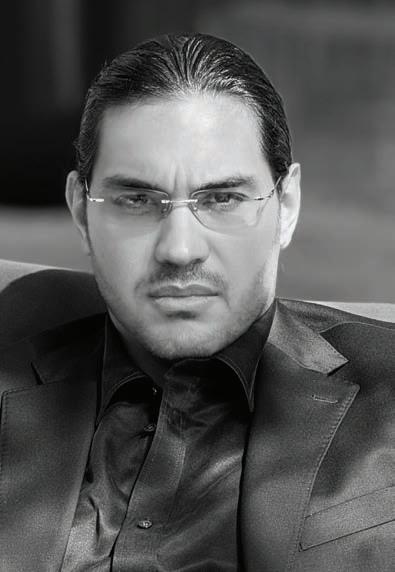
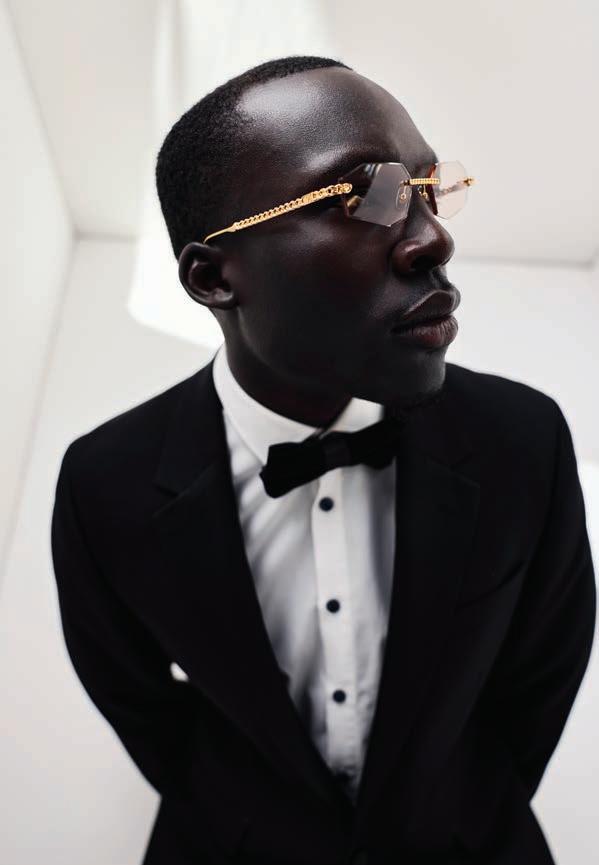
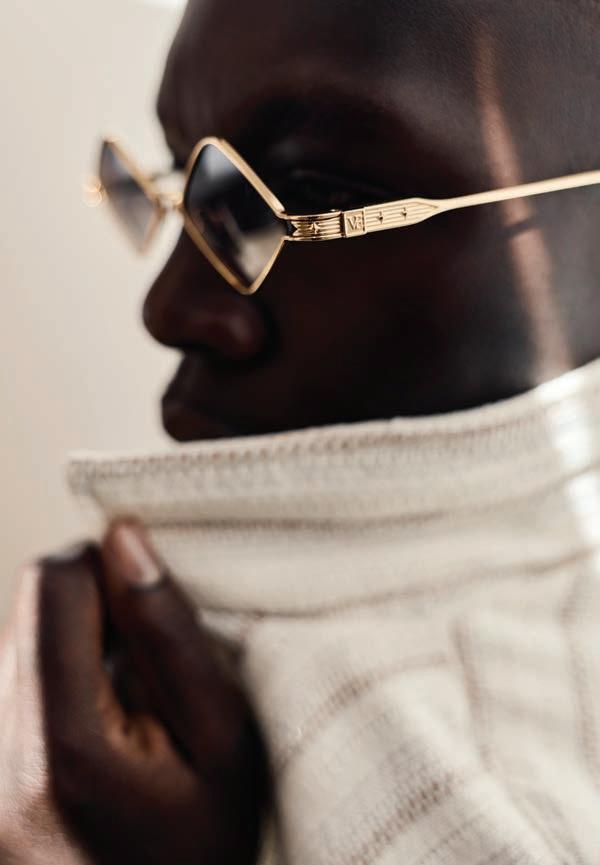
How the Founder of Vintage Eyewear, Andre Montana, turned a lifelong obsession with retro eyewear into a cult brand favoured by Beyoncé
WORDS: AMINATH IFASA
There is a moment in every collector’s life when the accumulation of beautiful things stops being enough. For Andre Montana, that moment arrived about five years ago. He doesn’t remember the exact date, though he can tell you precisely which pair started everything: the Maestro, the first prototype he ever made in Japan. Before that, there were decades of hunting. French frames from the 1950s stamped only with “Made in France.” Téd Fannie from the 80s. Cartier and Hilton from the same era. Christian Dior, Jean Franco Ferret, Fendi, Mugler. A warehouse full of optical history, amassed one piece at a time. “Someone told me: make your own design, why you don’t make your collection?” Montana recalls. The question
lodged itself in his mind and stayed there for months. Slowly, he began sketching.Today, Montana sits at an unusual intersection. He runs Vintage Eyewear, a private collection of authentic vintage frames spanning decades and continents, while simultaneously designing new pieces inspired by everything he’s seen. The two businesses feed each other. Collectors who come for a rare 80s Dior often leave with an Andre Montana original. “I had a private sale for a VIP on Saturday,” he says. “She wanted to try one pair of glasses. She finished by buying five glasses. And they want to see me again on Wednesday, because after I told them the story about vintage glasses, they found out I have also the vintage brand collections. They came for one pair, but now they’re going to finish with so many of them.”
Montana’s path to eyewear was never a straight line. He trained in industrial design and engineering, spending years in automotive and aerospace, where he worked extensively with titanium. When the time came to create his own collection, he knew exactly what material he wanted. “Titanium is hypoallergenic, very strong, very light, very easy to plate with gold, very difficult to rust,” he explains. He pulls off the frame he’s wearing (not his own design) and points to corrosion on the stainless steel. “I have to clean this in ultrasonic water with soap to remove the rust. This is why my first thought was to use titanium. And the best titanium is in Japan.”
There is another reason. Montana’s designs are complicated. The kind of intricate patterns and precise engineering that most factories won’t touch. “Only Japanese factories can handle this design,” he shares. “They don’t like to make a lot. They are not like Chinese factories doing mass production. They do small quantities, that’s it.”
When Montana says small, he means small. His vintage-inspired Andre Montana line is limited to 200 pieces per colour. When they’re gone, they’re gone. “I like to design and make different glasses,” he says. “I want to give to my customer a privilege to earn one of the 200. I can do this. A lot of brands will never do that, maybe 0.01 percent of the industry. I love to design, I love to manufacture, and I love to see dif-
Andre Montana, founder of Vintage Eyewear
ferent designs every year.” Inspiration, for Montana, is everywhere. He just returned from Japan, where he was preparing the next collection. Walking through a garden near the factory, he noticed a pattern on the roof of a traditional Japanese house. Out came a pen and paper. He sketched it immediately, snapped a photo, and returned to his studio to refine the drawing. Another time in France, a flower caught his eye. He photographed it, and today he’s developing a rimless sunglass with that flower’s pattern worked into the design. “Basically, it starts anywhere,” he says. “I can be in France, I can be in Japan. I see something interesting, a flower, a bird, an animal, and straight away I can imagine a design in my head.”
From paper, the design moves to his computer. Montana does all his own technical drawings and measurements, a skill from his engineering days. He knows immediately, from the size of the frame, whether it will require crystal or gemstones, which materials will complement which details. Then comes 3D modeling, then the factory. A prototype takes between six and nine months.
The lenses, too, initially went through a rigorous selection process. He tested French, German, Chinese, and Korean lenses before settling on Japanese. “I try everything first on myself,” he says. “If I’m comfortable, if I feel good, if I like the weight, then I will make it for my customer.
If it doesn’t feel good for me, I will never sell anything.” The Japanese lenses he chose are not so dark that they dull your vision, but they protect the eyes completely. “You don’t feel tired after a long day wearing them,” he explains. “They block all the glare without interfering with your visual.” In May 2022, Montana moved to Dubai – the week of his birthday. Before that, he was between Paris and Australia, travelling constantly to Hong Kong, America, Morocco, Italy. But Dubai offered something different. “I like Dubai. I like the UAE. I like to be in the middle of the Middle East,” he says. “Dubai is the centre of the world. It’s so easy to go to Paris or to go to Asia.” In the last three weeks alone, he’s travelled between Paris, Dubai, and Tokyo, Paris for an optical show, then back to Dubai for a morning, then on a flight to Tokyo by evening. “It’s so convenient,” he says. “And the Middle East basically needs sunglasses. People here love new design, new trends, new concepts. This is why, for me, Dubai is the best place to be.” He handles the Middle East market himself while looking for distributors in Europe, America, and Asia. Saudi Arabia is launching immi-
nently and Kuwait and Qatar are already in the works. Montana describes his customers as individualists. “It’s not about vanity,” he says. “It’s about identity. People want to be seen as individuals. It’s like people who customise their suits. When you wear a nice suit or a nice handbag, you feel confident. Andre Montana gives that. Vintage eyewear gives that. But it’s more versatile. Everyone can feel good in these glasses,” he shares. Montana then mentions a customer who that very morning purchased a pair from the Ornette collection online. She received them in Dubai and immediately messaged him: “I never saw quality like this. I love them so much. I want to see the full collection.” Montana knows what comes next. She’ll book an appointment. She’ll try on more. She’ll likely buy more than one. His style icon, he says, is already a client. Beyoncé wore his Coral, Aminath, and Miami frames this summer, along with several vintage pieces from his collection. “She’s not scared to try something new, something different, something crazy,” Montana says. “Which I like.” He’s designed pieces with Rihanna in mind, too. A woman known for her love of vintage Chanel, Versace and Dior shades – so he hopes she’ll wear his one day. For a man who’s built a career on understanding what makes people feel like themselves in a pair of frames, it’s perhaps the ultimate compliment.
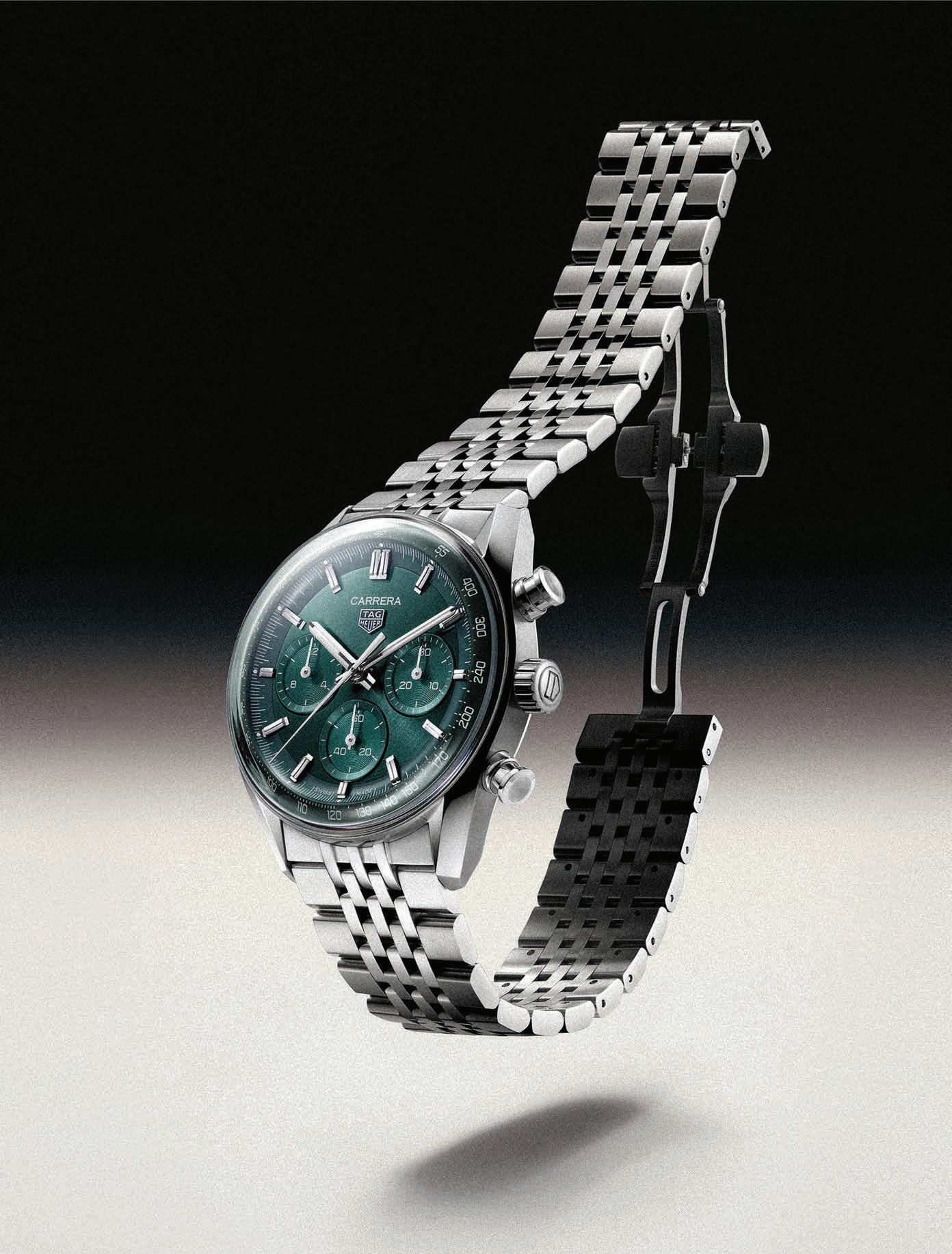
TAG HEUER CARRERA GLASSBOX CHRONOGRAPH
TAG Heuer expands its glassbox legacy with a new 41mm Carrera Chronograph, reinterpreting Jack Heuer’s racing-born design for 2026. Powered by the in-house TH20-01 movement with 80-hour reserve, it pairs sculptural sapphire curves with refined legibility in blue, teal and black executions, reaffirming its status as a modern chronograph icon.
Emirates Man shines a spotlight on a selection of watches that have been designed to stand the test of time DIALLED
WORDS:JESSICA MICHAULT
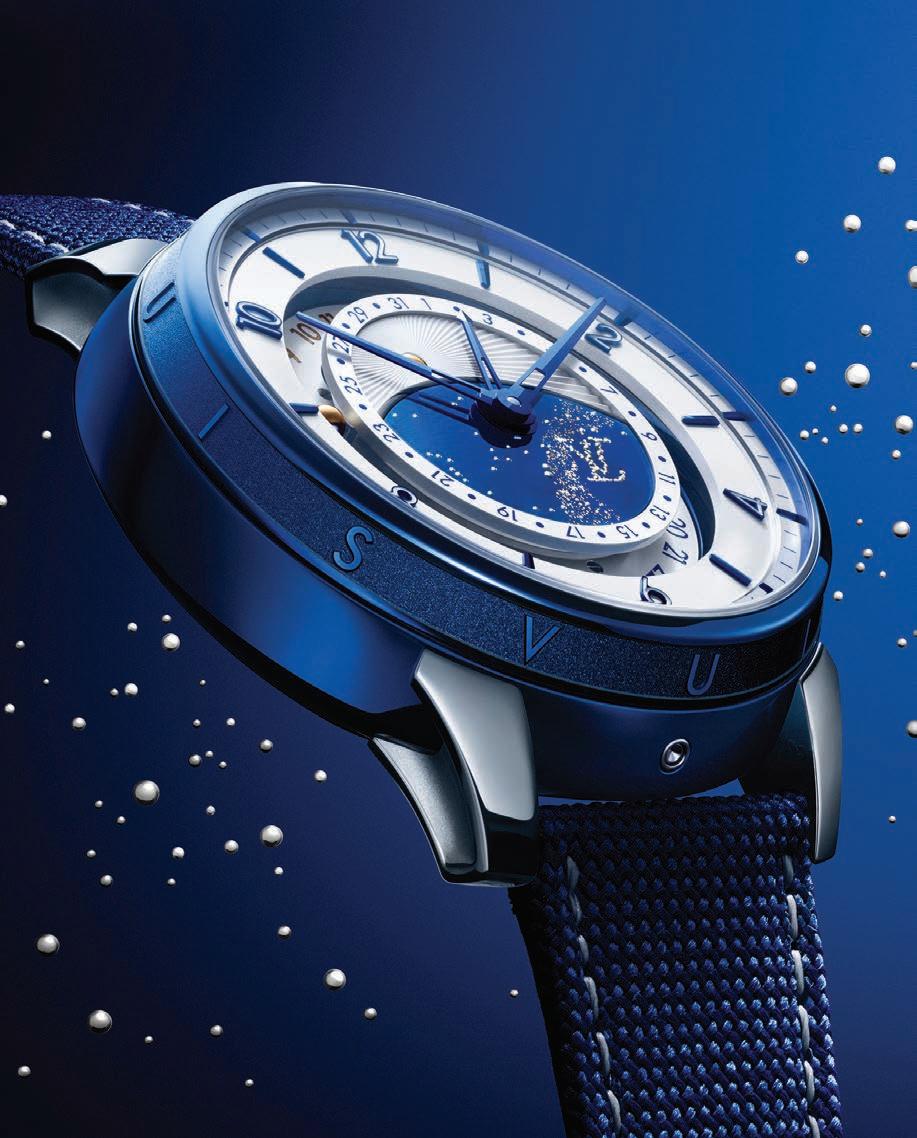
LOUIS VUITTON × DE BETHUNE LVDB-03 GMT LOUIS VARIUS
Louis Vuitton and De Bethune unite high horology and travel heritage in the LVDB-03 GMT Louis Varius. Powered by the DB2507LV calibre with twin barrels and a five-day reserve, it displays dual time via multi-disc and rotating day-night sphere. A heat-blued titanium case and celestial dial seal this poetic technical collaboration.
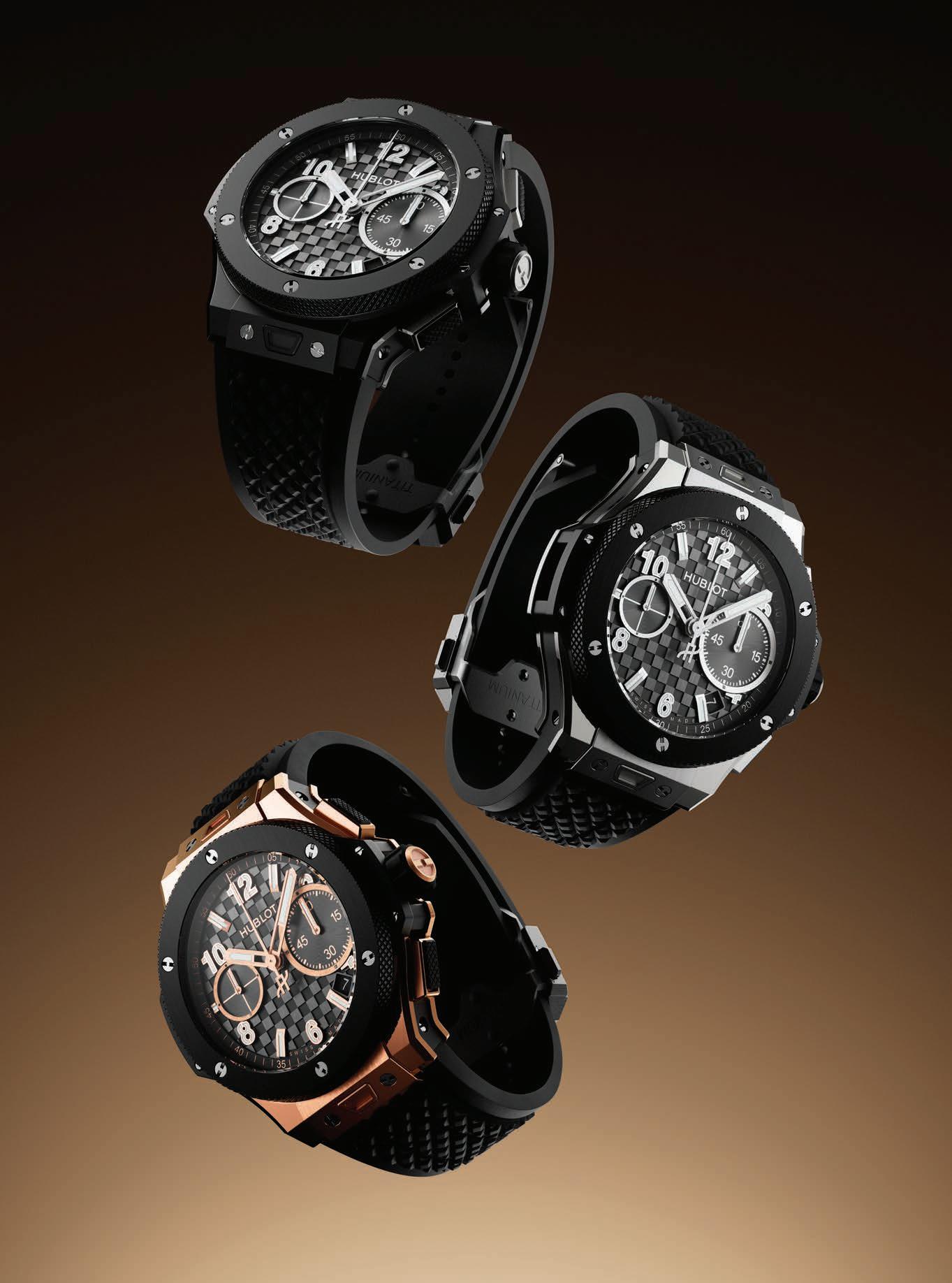
HUBLOT BIG BANG ORIGINAL UNICO
Hublot marks two decades of its icon with the Big Bang Original Unico, a refined 43mm evolution powered by the brand’s in-house Unico flyback chronograph movement. Available in titanium, ceramic and King Gold, it sharpens the silhouette while doubling down on fusion, performance and unmistakable presence.
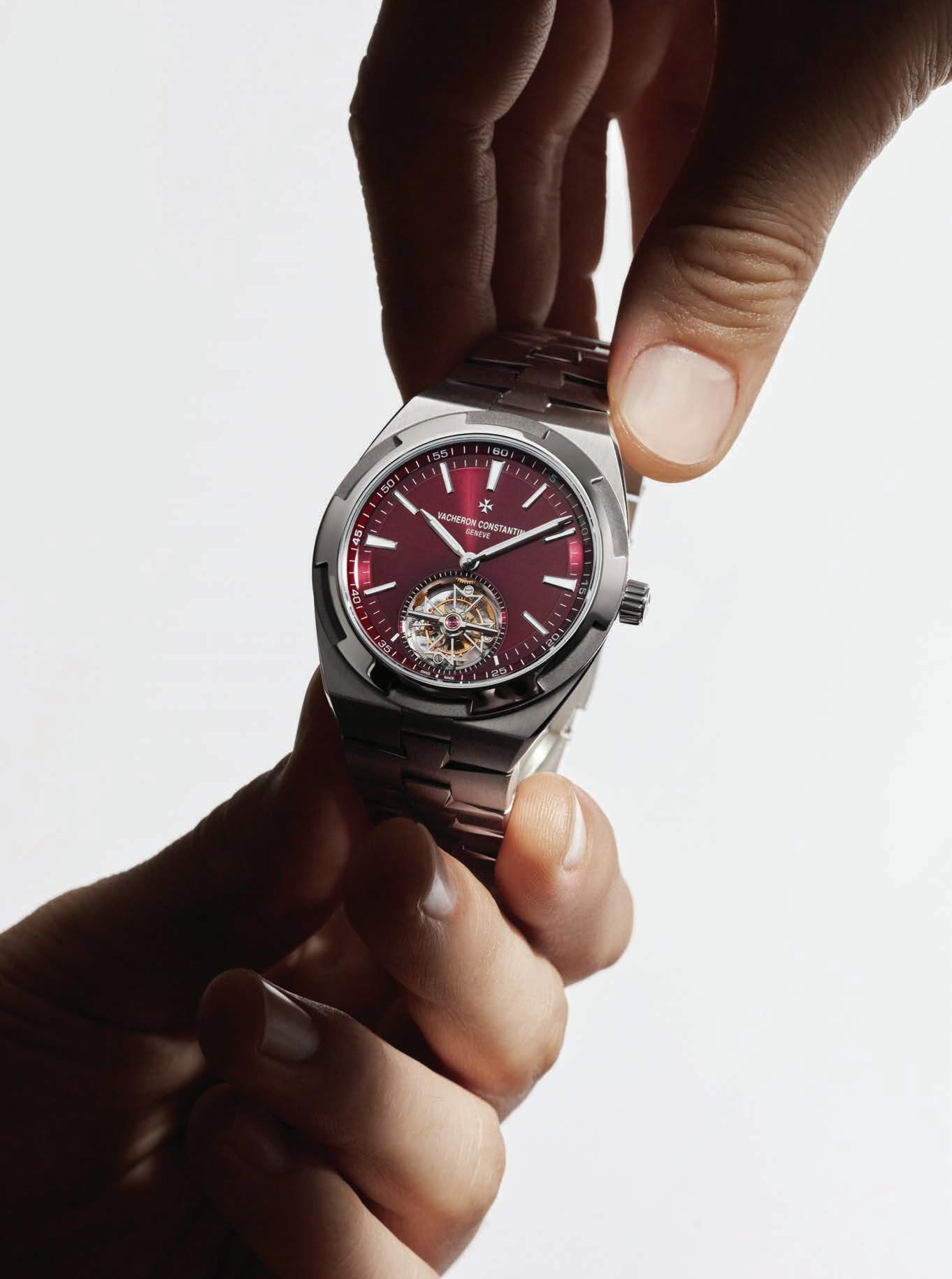
VACHERON CONSTANTIN OVERSEAS TOURBILLON
Vacheron Constantin’s latest Overseas Tourbillon pairs technical mastery with bold aesthetic flair, introducing a striking deep red dial to its titanium-clad sports icon. Powered by the ultra-thin, Hallmark of Geneva-certified calibre 2160 with peripheral rotor and 80-hour power reserve, the 42.5mm model blends lightness, robustness and haute horlogerie sophistication, complete with interchangeable titanium and rubber straps.
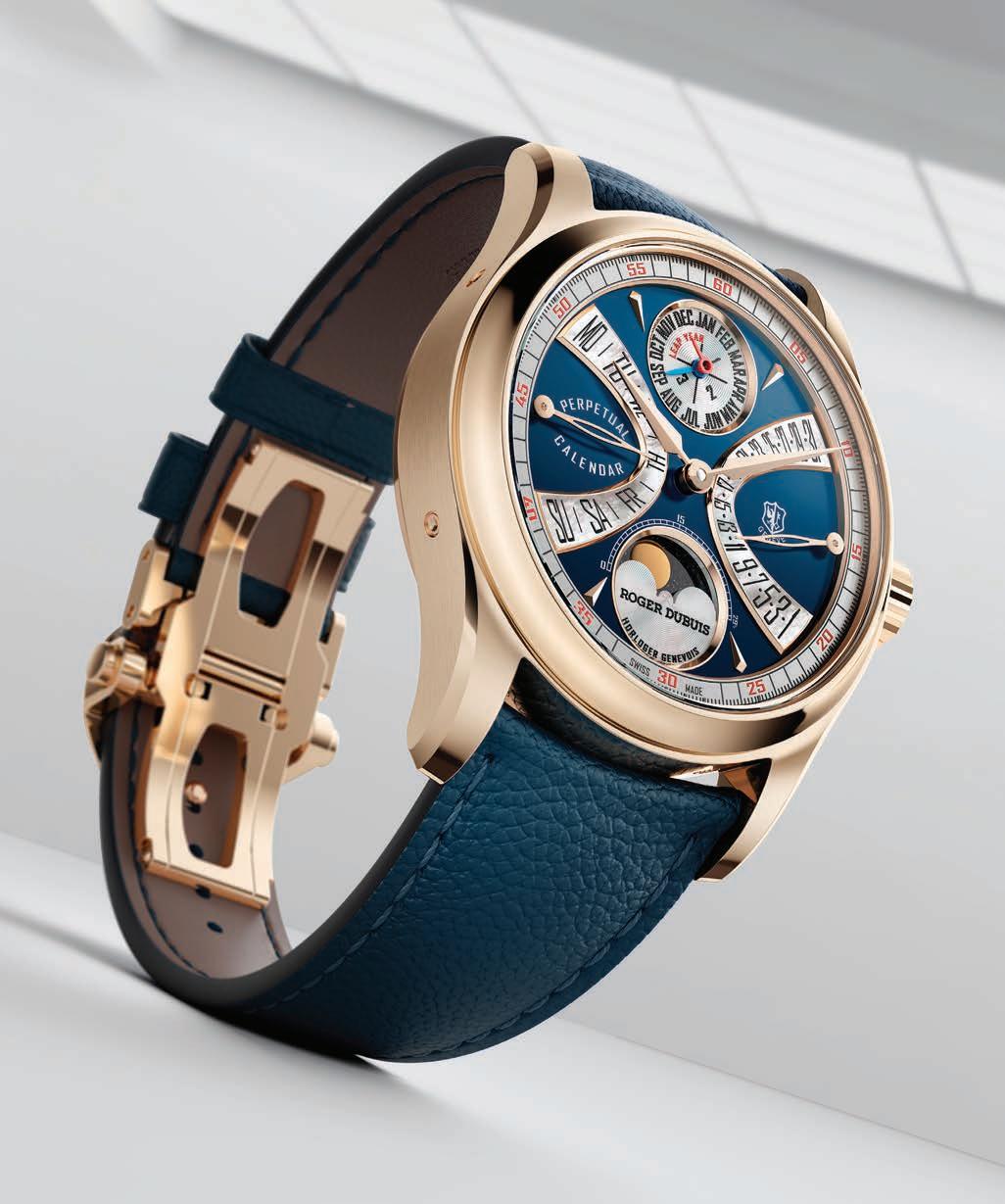
ROGER DUBUIS HOMMAGE LA PLACIDE
Roger Dubuis revisits its legacy with the Hommage La Placide, a 30th anniversary limited edition of 28 pieces crafted in-house to Poinçon de Genève standards. Showcasing the founder’s beloved biretrograde display and perpetual calendar, the layered pink-gold timepiece bridges restoration, innovation and contemporary Genevan virtuosity.
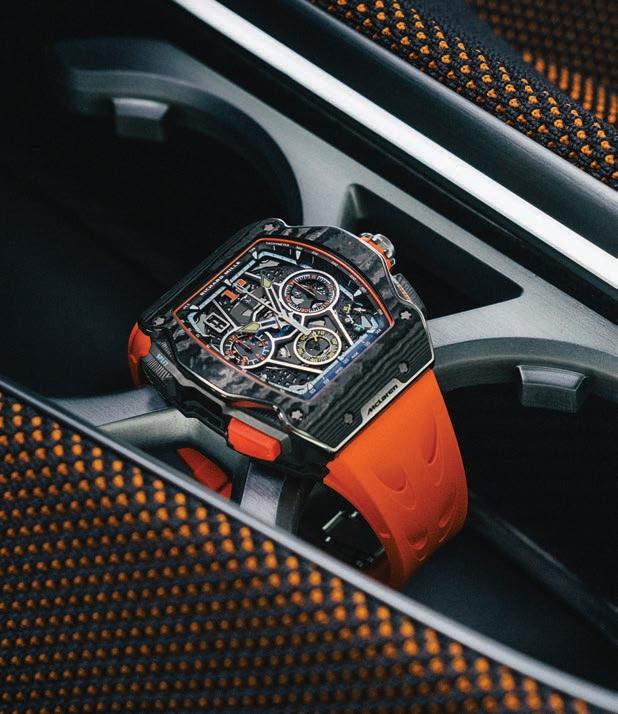
Driven by Intent
A decade into their partnership, Richard Mille and McLaren remain united by an engineering mindset where performance
serves purpose, lightness carries meaning, and mechanical craft still resonates
WORDS: VAARUNYA BHALLA
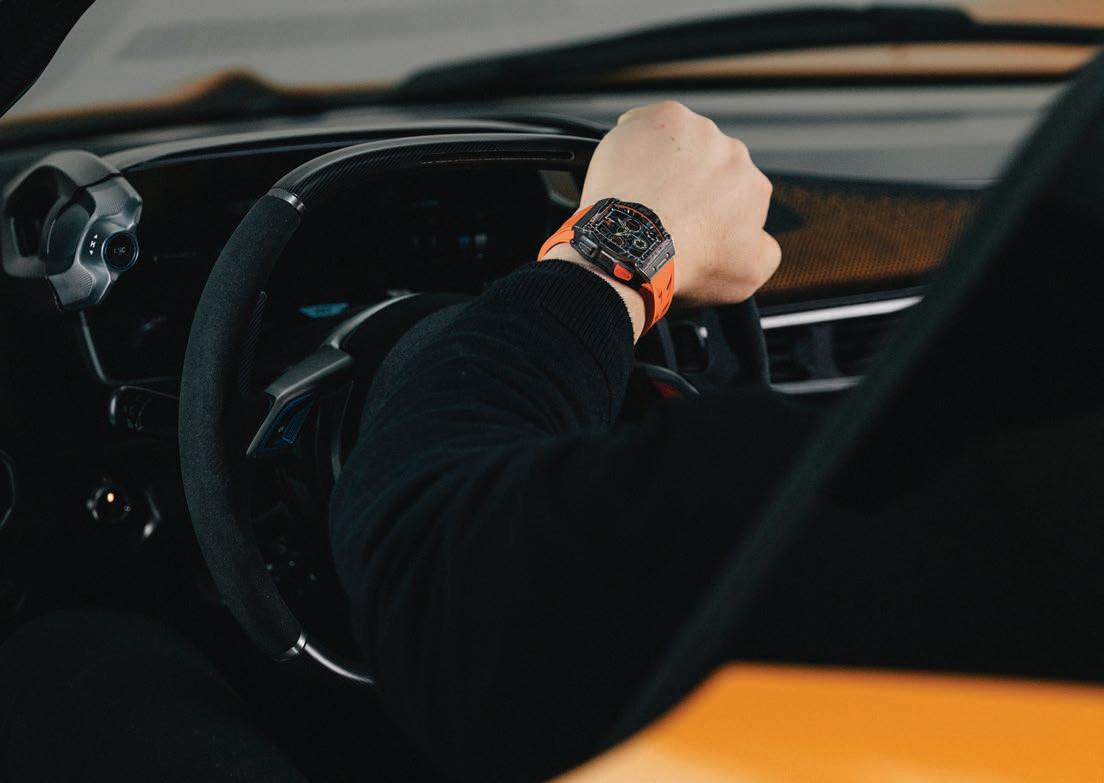
Since 2016 Richard Mille and McLaren have shared a partnership defined by a rare creative symmetry. One operates at the frontier of contemporary watchmaking; the other, at the cutting edge of automotive engineering. Yet both brands are driven by the same conviction: performance must serve purpose. Their latest (and fourth) collaboration, the RM 65-01 Automatic Split-Seconds Chronograph McLaren W1, reflects this synergy, merging precision, purpose, and bold material innovation. The partnership is rooted in an engineering mindset; one where every gram, every component, and every
aesthetic decision must justify its existence. Reflecting on their shared values, the emotional power of mechanical craft, and the mindset that drives both brands forward, Alexandre Mille, Global Commercial Director at Richard Mille says, “From the very beginning, what really brought Richard Mille and McLaren together was this shared obsession with performance and innovation. In both our worlds, we are constantly challenging ourselves in terms of technicality, materials and design. Every gram, every detail, every component must have a purpose; that is something we both strive for. Our teams speak the same language: pushing boundaries without
compromise.” This desire to improve and move beyond the ordinary is echoed at McLaren. According to Andrea Bermudez, Global Marketing Director at McLaren Automotive, their partnership was anchored in a mutual refusal to compromise. “Performance should be purposeful and uncompromising,” she explains. “Both brands are driven by a desire to push and rethink boundaries. From the start, we recognised a natural compatibility in how we approach materials, innovation, and the idea of creating products that speak to a mindset, not just a market,” she adds.
A SHARED LANGUAGE OF PERFORMANCE
When Richard Mille and McLaren formalised their partnership in 2016, they committed to a ten-year horizon. This is an unusually long view in an industry often driven by short-term collaborations. Yet the reason it persevered was simple: both teams spoke the same technical language. From McLaren’s work with advanced composites and structural optimisation to Richard Mille’s radical approach to skeletonisation and material science, the collaboration was built on a mutual respect for engineering discipline. “Our teams now understand each other instinctively,” Mille notes. “Over the years, each project has taught us something new.”
Earlier creations, such as the ultralight RM 50-03 McLaren F1, were exercises in extremity. Crafted using Graph TPT®, a carbon composite reinforced with graphene, the watch weighed just around 40 grams – including the strap. This incredible technical achievement mirrored McLaren’s own relentless pursuit of lightweight strength. Those lessons directly informed the RM 65-01 McLaren W1. Rather than simply referencing McLaren’s aesthetic codes, the watch embodies the engineering values found in the brand’s most advanced supercars.
LIGHTNESS WITH INTENT
In both high-performance cars and haute horlogerie, weight reduction is often misunderstood as minimalism. For both Richard Mille and McLaren, it is about maximising capability. “Lightness can never come at the expense of feeling,” says Mille. “When you hold a Richard Mille watch, just like when you sit in a McLaren, you need to feel the substance behind the lightness. Every gram that is saved has to make sense, technically and aesthetically.”
At McLaren, the philosophy is identical. Bermudez says that, “weight reduction
is never about minimalism, it’s about maximising capability. We use advanced composites and detail-devoted engineering to reduce mass while enhancing strength and responsiveness. The challenge is to make lightness feel meaningful. Done right, it’s not about what’s been taken away, but what’s revealed – a purer connection between driver and road and a truly engaging driving experience.” This balance of extreme technicality paired with tactile presence is precisely what collectors and drivers respond to.
BEYOND PERFORMANCE: THE EMOTIONAL DIMENSION
While chronographs can accurately measure fractions of a second and cars can quantify acceleration figures, neither brand believes that performance alone is
enough. Alexandre Mille reflects, “craftsmanship is a powerful emotional vector… a mechanical object that demanded a clear vision followed by hundreds, if not more of man hours will always speak to our inner soul.” Similarly, at McLaren, emotion is born from meaning. As Bermudez explains it, “Every element of a McLaren exists for a reason – nothing is superfluous. When form follows function, the result isn’t just performance, it’s purpose you can feel. Our customers sense that integrity.”
It is this shared emotional intelligence that has transformed the partnership from a brand collaboration into what she describes as a ‘creative alliance.’ After nearly a decade, the process has become intuitive, familial even; a rare alignment across two different disciplines. As the automotive field has now become dominated by digital interfaces and instant gratification, both
brands continue to champion mechanical artistry, not as nostalgia, but as a statement about the future. “In the digital age, defending mechanical art is a way of reminding [people] that innovation is not confined to screens,” Mille says. “I believe the future of innovation lies in the ability to combine both digital and mechanical side by side, by applying science and craftsmanship whilst preserving the beauty of human skills.”
McLaren’s clients seem to agree. Many are willing to wait months, even years, for a car engineered to their exact specifications. That level of care can’t be rushed. In that sense, the RM 65-01 McLaren W1 is not simply a watch inspired by a car, but a conversation between time and speed; shaped by two brands that believe engineering should be felt as much as it is measured and that, when guided by intent, can still move us.
“BOTH BRANDS ARE DRIVEN BY A DESIRE TO PUSH AND RETHINK BOUNDARIES. FROM THE START, WE RECOGNISED A NATURAL COMPATIBILITY IN HOW WE APPROACH MATERIALS, INNOVATION, AND THE IDEA OF CREATING PRODUCTS THAT SPEAK TO A MINDSET, NOT JUST A MARKET”
THE WATCH ADDICT
WORLD VIEW
Vaarunya Bhalla breaks down his visceral reaction to the new Bell & Ross BR-03 Astro timepiece
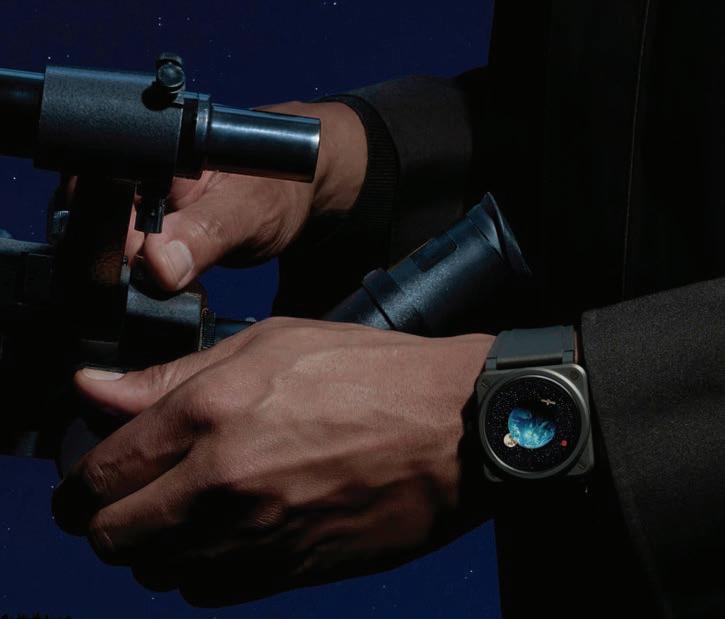
The Bell & Ross BR-03 Astro knocked the wind out of me the moment I laid eyes on it for the first time. It is a stunning timepiece; poetic and inspired, a mechanical ode to our improbable, beautiful existence on this planet. Seeing it felt like I was going on a spacewalk, untethered. One moment, I was grounded; the next, I was floating in sheer weightless disbelief.
Even now, long after, it continues to linger in my memory and imagination. Encased in Bell & Ross’s signature BR square silhouette, refined and rendered in black ceramic, the BR-03 Astro is a celestial
poem in motion. The 41mm case, crafted from micro-blasted black ceramic, exudes a sleek, modern aesthetic. Though its form echoes familiar models, the similarities end there. It has an aventurine dial as its backdrop, intended to mirror the vast darkness of space, flecked with stars. At its centre, a raised Earth, accentuated by a subtly hollowed sapphire crystal, adds striking dimensionality. The Moon, etched with cratered detail, marks the minutes, while Mars, fiery red and ghostly on a transparent disc, traces the hours. A small metallic satellite circles the Earth in a measured 60-second orbit, an exquisite homage to
human curiosity and cosmic wonder. This is timekeeping transformed into an astronomical ballet, where the passage of hours, minutes, and seconds takes on an almost mystical quality.
This is not a watch for the pragmatic collector, nor for the historian of horology. This is for the dreamers and thinkers; the ones who stare up into the night sky and feel something stir deep within them. If you are drawn to this watch, practicality has already ceded its place to the part of your brain that responds to music, poetry, and art. The part that stands in defiance of the odds and looks up into the night sky, whispering its old brag: “I am, I am, I am.”
Its a watch that will make you look to your wrist with the intention of checking the time only to forget why. You glance down at it, but then you linger, forgetting the numbers entirely, swallowed whole by the dark shimmer of aventurine and the slow, deliberate motion of celestial bodies. It is a paean to the gorgeousness of the planet we inhabit and to the human urge to create something artistic.
Beyond its artistry, the BR-03 Astro is powered by the self-winding BR-CAL.327 movement, based on the Sellita SW300-1. It offers a 54-hour power reserve and operates at 28,800 vibrations per hour. Despite its intricate display, it maintains a respectable 100-metre water resistance. Yet, this watch is not just about precision or dependability. It is about transcendence. A tribute to the sheer audacity of our species, for looking up, for dreaming, and for creating.
The BR-03 Astro is a watch for those who refuse to let practicality dictate every decision, and for those who understand that beauty, in all its ineffable forms, is reason enough.
Limited Edition of 999 pieces, worldwide.
A CENTURY OF CRAFT
Guido Damiani, President and CEO of the Damiani Group, discusses the company’s big plans for the Middle East and beyond
WORDS: LINDSAY JUDGE
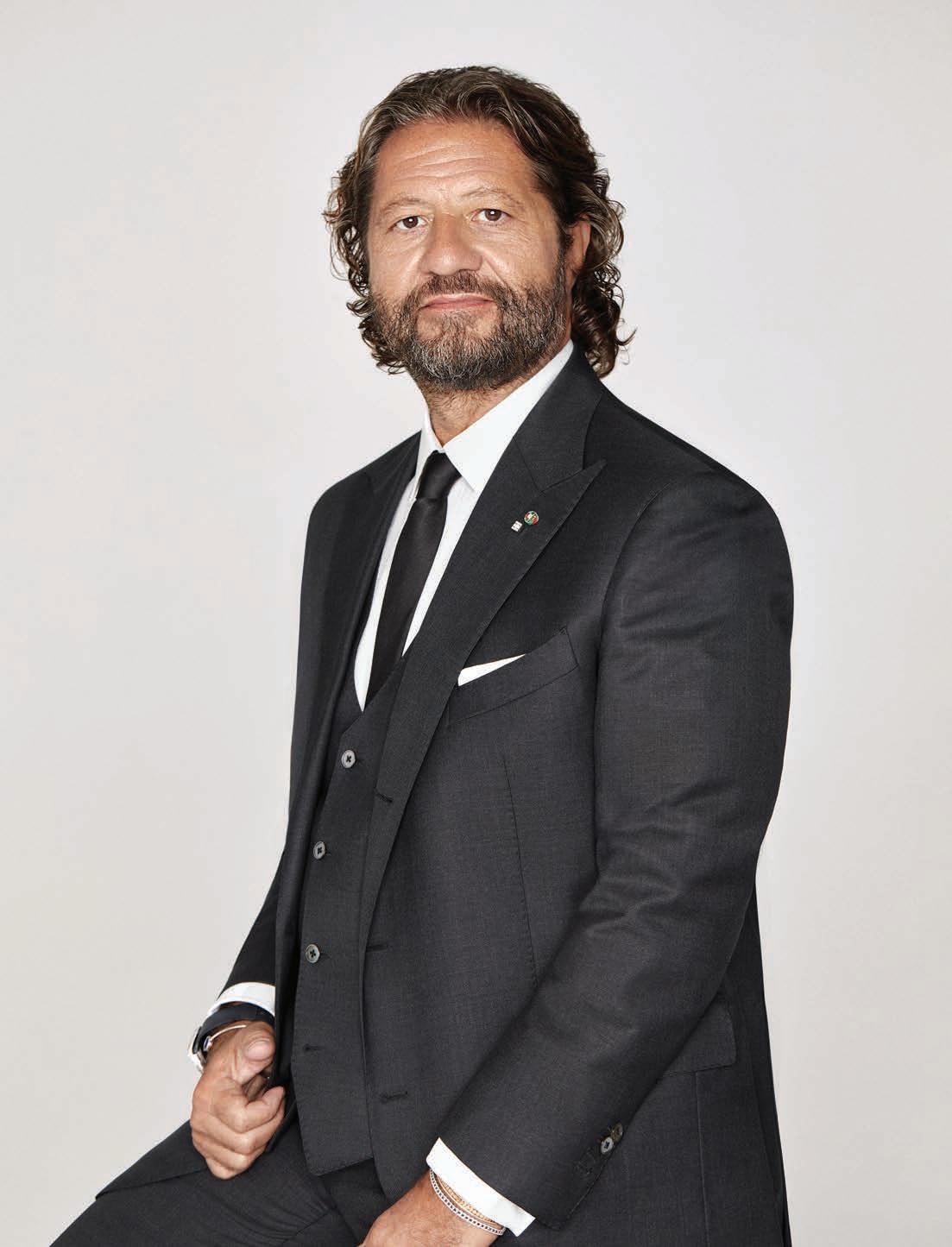
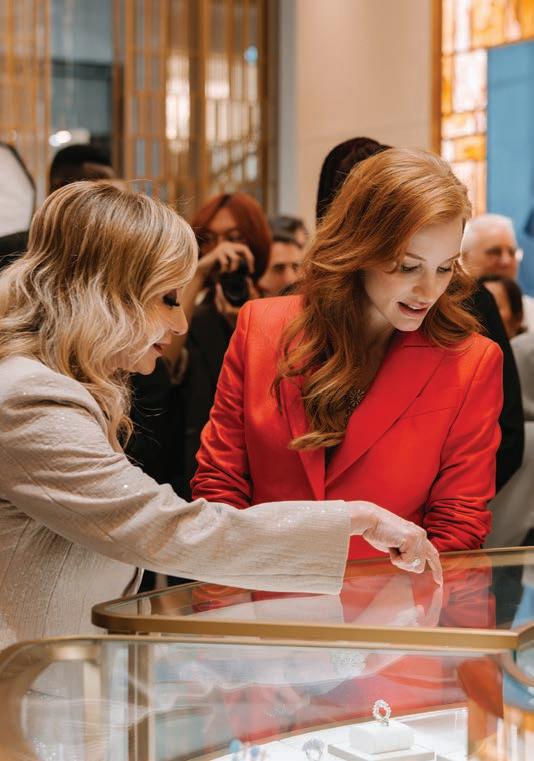
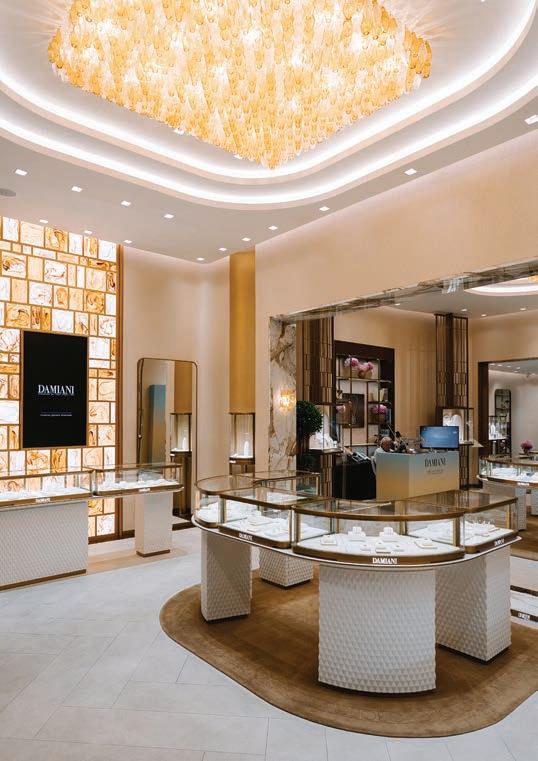
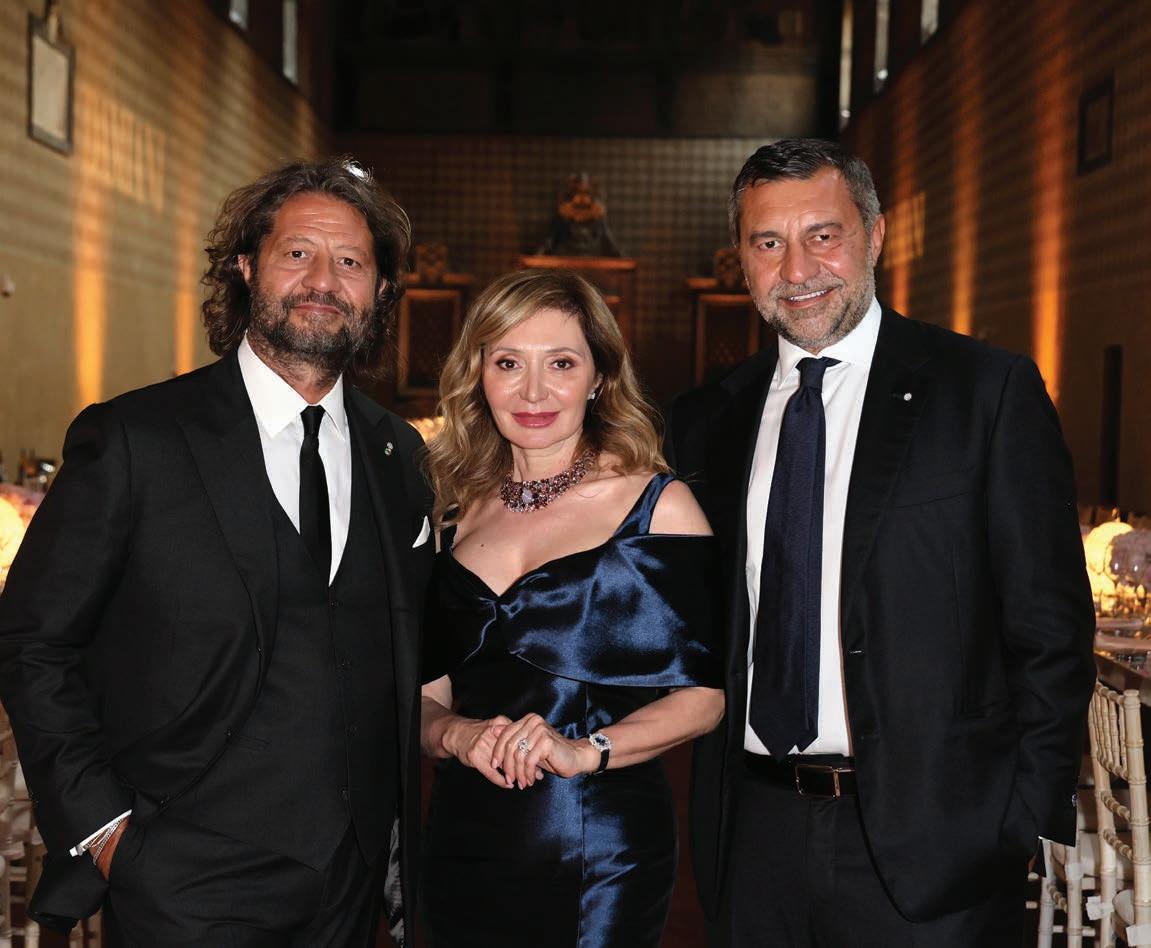
Italian jewellery brand Damiani is one of the few globally to reach a century of uninterrupted craftsmanship, and, in an even greater feat, it has remained in the hands of its founding family throughout. Founded in Valenza, Italy, in 1924 by master goldsmith Enrico Damiani, the house has built its reputation with a legacy rooted in artisanal excellence and a deep respect for heritage. Today, under the leadership of the third-generation siblings, Guido, Silvia and Giorgio Damiani, the brand is focused on further expanding its global footprint while remaining firmly rooted in its origins. The region of Valenza, which is still regarded as one of the most important jewellery districts in the world, shaped Damiani’s DNA from the very beginning. Enrico Damiani began by creating bespoke pieces for noble families, distinguished by meticulous handwork and an intuitive understanding of precious materials. His son, Damiano, later transformed the workshop into an internationally recognised Maison, introducing innovative design language and marketing strategies while safeguarding the craftsmanship that defined the brand. By the time Damiani celebrated its centenary in 2024, it had become synonymous with Italian excellence and authenticity. Now the brand is beginning a new chapter in the Middle East with a recently opened boutique in Dubai Mall; a milestone moment marked by a celebration attended by long-time brand ambassador Jessica Chastain. For Guido Damiani, the mission was clear: “We want to share a strong message that we are Italian,” he explains. “The store follows
our new concept, with Italian furniture and the feeling of an Italian living room. We’ve also included Murano glass details from Venini, the glass brand in our group, to give a strong Italian touch,” says the CEO.
As the brand significantly grows in the region with recent store openings in Kuwait City, Bahrain, Riyadh, and Dubai, Damiani says Dubai holds particular strategic importance. “Dubai is the centre of the Middle East. It’s an increasingly international city, not just for tourists, but because many people are moving here.”
The Middle East may be a newer market for Damiani compared to Europe, but growth plans are already well underway. A second Saudi boutique is set to follow later this year, alongside an upcoming Abu Dhabi opening and plans for a second Dubai location. “We are moving forward with our plan and making investments,” he says. “We believe it’s the right moment.”
“OUR ASSET IS HIGHQUALITY MATERIALS AND VERY HIGH MANUFACTURING STANDARDS. WE ARE A COMPANY THAT HAS BEEN DOING THIS FOR MORE THAN 100 YEARS.”
Part of that confidence stems from the evolution of consumer tastes in the region. “The Middle East has always been a big fan of jewellery,” Damiani observes. “But in recent years, consumers have become more educated and sophisticated.” This, he believes, aligns naturally with Damiani’s strengths. “Our asset is high-quality materials and very high manufacturing standards,” he explains. “We are a company that has been doing this for more than 100 years.”
Jessica Chastain’s presence at the Dubai opening underlined the brand’s global profile, but Damiani is
quick to emphasise that the brand’s ambassadors are chosen for their connection, not for visibility alone. “We were one of the first jewellery brands to work with ambassadors. “Years ago, jewellery advertising was just still life. We believed people needed to see how jewellery is worn, because we want it to be worn often.” Their relationship with Chastain grew organically. “She first contacted us because she wanted to visit and buy Venini glass for her house. She visited our furnace in Murano and met my sister. From there, the relationship grew. We love her as a person. She’s humble, warm and very available,” he shares.
Much of Damiani’s longevity is due to its commitment to its heritage while not being afraid of what’s to come. “We respect the past and tradition, but we always look
forward,” Damiani says. Growing up immersed in the business shaped that outlook. “We lived in the same building as the offices. After school, we would go and say hello to our parents. We were always immersed in that world,” explains the CEO. That close connection to the brand is something he hopes to extend into the future, particularly the fourth-generation children. “Our goal is to give a bigger and healthier company to the next generation,” he says.
Preserving craftsmanship in an era where artisanal skills are increasingly rare is another priority, and Damiani invests heavily in education, running its own school in Valenza where young artisans are trained free of charge. “Our best workers teach them directly,” Damiani explains. “We also keep the older generation involved. We
have craftsmen who have been with us for 60 years and there is one particular family whose granddaughter now works with us too. We have three generations!”
Looking ahead, the group’s ambitions stretch beyond jewellery alone. Alongside Damiani, Venini is also expanding across the Middle East. Globally, there are plans for further developments, including entering India and making inroads into Asia as well. For Damiani, growth is always anchored in the brand’s identity. “We want people to understand the difference,” he says. “We are the real Italian jewellers. We are 100 per cent family-owned, everything is made in Italy.” It is this balance of heritage and ambition that continues to define Damiani’s quiet success, now unfolding confidently on a global stage.
Left page: Silvia Damiani and Jessica Chastain; Damiani boutique in Dubai Mall; Above: Guido, Silvia and Giorgio Damiani
WORDS: JOY CHAKRAVARTY
Par for the Course
Emirates Man asks the experts about the best golf courses in the Middle East
Rory McIlroy knows a thing or two about golf courses. The current world number two has membership in 18 of the most exclusive golf clubs in the world, including the Augusta National Golf Club in Georgia, US where he earned his honorary membership by winning the Masters last year. In his early years as a professional, the Northern Irishman resided in Dubai for nearly three years and has intimate knowledge of most golf courses in the region. So, it seemed like a good idea to pose a couple of burning golf question to one of the
“IT IS EASY TO LOVE A GOLF COURSE WHERE YOU HAVE PLAYED WELL, AND I SEEM TO HAVE DONE THAT EVERY TIME I HAVE PLAYED THE MAJLIS”
finest players to have ever played the sport –what’s special about golf in the Middle East, and which is his favourite golf course here?
McIlroy did not even have to ponder the questions for a moment.
“Of course, it would be the Majlis course of Emirates Golf Club. It is easy to love a golf course where you have played well, and I seem to have done that every time I have played the Majlis,” said the four-time Hero Dubai Desert Classic champion. “But really, it is a great golf course that has this habit of producing dramatic finishes almost every time we play here. There are so many risk-reward holes, including that finish from the 15th hole onwards. I have played it so many times, and it is never in anything but fantastic condition. The other course that seems to have grown [on me] over the years is Yas Links in Abu Dhabi. I wasn’t a very big fan when I played it for the first time, more than a decade ago, but I like how it gives you several options to play the holes, and again, how it is in such great shape. The conditioning of the golf courses in Middle East, by the way, is something that you now take for granted.”
The Majlis course was the first ‘green’ golf course in the Middle East, built in 1988. David Feherty, the renowned golf commentator who also played in the inaugural Dubai Desert Classic in 1989, said: “When we were told that the European Tour would be playing a tournament in Dubai, I thought it was some kind of a joke. Less than 40 years later, you see what the Middle East means to global golf, and what amazing facilities have come up, you just got to tip your cap to their vision.”
The UAE set the trend with the Majlis course, followed by Dubai Creek Golf & Yacht Club in 1995 and Abu Dhabi Golf Club soon after in 1998. Qatar also opened the Doha Golf Club in 1998.
More recently Saudi Arabia has embraced the sport as part of its Vision 2030 and currently has about a dozen courses under construction. It had only two before 2018 – the Riyadh Golf Club, and the Rolling Hills Golf Club in Dhahran.
Keen to perfect your own swing? These great greens are the Middle East’s must-experience golf courses:
Majlis course at Emirates Golf Club, Dubai
Just 38 years old, but one that boasts a real history in that short timeframe. Some of the greatest players, including Tiger Woods and Seve Ballesteros, have played and praised architect
Below and opposite: Rory McIlroy at the Hero Dubai Desert Classic 2026 at Emirates Golf Club
Yas Links, Abu Dhabi
Karl Litten’s timeless design. The severe dogleg holes and matured trees around the bend makes for serious risk-reward decisions. And the eighth tee experience, with the majestic skyline of Dubai Marina, has become an icon in itself.
Dubai Creek Golf & Yacht Club, Dubai
One of the most remarkable clubhouses in the world (if you don’t believe, just take out a 20 dirham note and see for yourself), and a challenging golf course that turned 30 last year and has already been redesigned once. The 18th hole – hugging the picturesque Creek on the left and a water feature to the front and left of the green – is consistently rated the toughest hole in the region.
Yas Links, Abu Dhabi
Designed by Kyle Phillips, considered one of the finest in contemporary golf course
architecture, the course is just as fantastical as everything else on Yas Island like Ferrari World and Warner Bros. World Abu Dhabi. The Links course will make you feel as if a piece of Scotland has been transplanted in the desert. The bunkers are deep, and the green complexes created in a manner that gives you several options, including bump-and-run, if you miss them.
Al Mouj Golf, Muscat
Built on a narrow tract of windswept and rugged land between the Gulf of Oman and the Muscat International Airport, legendary Australian Greg Norman created a masterpiece that many Tour players say is one of the toughest in the region. With most holes parallel to each other, players face crosswinds on them, which requires your shot-shaping abilities to be of the highest level.
Ayla Golf Club, Aqaba
In Jordan, close to the stunning ruins of Petra and the magical splendour of Wadi Rum, is the city of Aqaba, with an equally remarkable golf course – the Greg Normandesigned Ayla Golf Club. Opened in 2018, the only championship-size grass golf course in the country is a links-style course with beautiful views of the surrounding mountains and the shimmering water of the Gulf of Aqaba. From this prime position, you can see Saudi Arabia and Egypt on a clear day across the Gulf. The wind, usually coming from the mountains, is the biggest defense of the golf course, which has several spectacular holes. The par-4 fourth, which plays slightly uphill to 446 yards, is the designated signature hole with the Red Sea and mountains forming a sensational backdrop to the green. The ninth, a long par-5, and the 18th, a long par-4, are challenging with a water
Ayla Golf Club, Aqaba
Al Zorah, Ajman
Al Mouj Golf, Muscat
body separating them and forming a formidable hazard for both holes, which also have amphitheatre-like greens.
Royal Greens Golf & Country Club, King Abdulla Economic City
It’s one of Saudi’s new courses. A par-72 for the members, it’s a lot tougher when set up for the pros as a par-70. The signature hole is the par-3 16th, where the turquoise water of the Red Sea hugs the terrain all the way from the tee to the green. The 17th – a drivable par-4 – is also interesting. Located nearly 100 kilometres from Jeddah, golfers will also appreciate the wall-to-wall Dynasty Paspalum grass.
Discovery Dunes, Dubai
The newest golf course in Dubai, Discover Dunes has been, designed by the legendary American architect Tom Fazio. Given a flat piece of land in South Dubai and a hefty budget, Fazio moved the tonnes of sand and created plenty of elevation changes that fit around dramatic bunkering. And because land wasn’t an issue, the golf course stretches a humongous 7,955 yards from the black ‘Falcon’ tees. Positioned as Dubai's first private golf facility, it's for members only.
Al Zorah, Ajman
This Jack Nicklaus-designed course is built on a stunning mangrove, and has probably got some of the most breathtaking tee boxes in the region. The undulating fairways are very Nicklaus. You also get some of the most amazing sunrise and sunset pictures, so try and book your tee times accordingly. The 18th hole is a brilliant par-5, with the mangroves skirting the fairways.
Dubai Creek Golf & Yacht Club, Dubai
Discovery Dunes, Dubai
Plus Size Driving
Power, pace – and a fair amount of panache – can be found in the Hummer EV pickup truck, as Rob Chilton and his kids found out firsthand
Dwayne Johnson drew a new legion of adoring fans when he revealed that he was able to braid his daughter’s hair. From playing a real-life MMA fighter in The Smashing Machine to voicing the loveable Maui in the Moana franchise, the 6’5” Johnson switches between tough guy and gentle giant. Which leads us to the Hummer EV pickup truck. Tough on the outside but gentle on the inside is an accurate way to describe this remarkable, muscular beast from GMC, the American masters of the robust road vehicle. While perfectly capable of tackling inhospitable off-road terrain, we chose to see how the Hummer EV behaved in an urban environment, with the most demanding of passengers: young children.
Getting into a regular SUV is an everyday activity for kids, but when they have to literally climb into the Hummer EV using its chunky grab handles, they feel like they’re in an adventure playground and instantly fall in love. “It’s massive!” they shriek happily from the back seats, which are bigger than our bathroom. Sitting up so high is a genuine thrill for young eyeballs as they survey Dubai from their lofty – and reassuringly safe – position. Large SUVs are de rigeur on the Dubai school run, but when we glide silently into the school car park after a smooth and effortless ride along the
busy Meydan Road (during which everyone gets out of our way, pronto), parents and their children stop and stare. Literally. Backpacks and cuddly toys are dropped in amazement. Children who were having a tantrum about going to school suddenly stop crying and gawp at a vehicle that has seemingly appeared from outer space. Measuring more than two metres tall and 5.5 metres long, it’s safe to say that the Hummer EV has presence. After the initial shock come smiles, giggles, and the inevitable questions which, generally speaking,
are along the lines of, “What on earth is that?” followed by open-mouthed statements of, “It’s huge!”. The Hummer EV pickup attracts a lot of attention and is not a truck for shy drivers. The children clamber carefully out of the rear and land back on terra firmer, thoroughly thrilled with their silent electric school run.
ELECTRIC DREAMS
While imposing from the outside, the Hummer EV pickup truck is surprisingly cosy,
luxurious and comfortable inside. Seats hug passengers, the gearstick fits snugly in the hand, arm rests are squidgy, and interior panels are beautifully tactile. One noteworthy feature are the 14 Bose speakers which pump out crystal clear fairytale stories for the children in the back. Grilles of the door speakers are engraved with a map of the Sea of Tranquility where Neil Armstrong’s Apollo 11 landed on the Moon, which is a cosmic touch. With the school run ticked off, we head to the Mövenpick Resort Al Marjan Island in Ras Al Khaimah
for a staycation and a chance to push the Hummer on a wide-open road. Capable of reaching 100kmh in just 3.5 seconds, the Hummer EV has a monstrous 830 horsepower and is weirdly silent, even at high speeds. Only a faint whirring and a gentle wind sound can be heard as we race towards RAK. Despite its gargantuan proportions, it is sensationally easy to drive and requires only a feather touch on both the pedals and steering wheel. A 13.4-inch infotainment touchscreen has military fonts as does the 11-inch driver instruments screen, both of
which are excellently legible. Access to the rear boot is simple with the MultiPro Tailgate, which drops down swiftly. Equally handy is the electric boot in the front bonnet, which is spacious enough for two medium suitcases and easily reached. Fully charged, the Hummer EV informs us it has a range of almost 600km. Over four days covering approximately 350km, the battery drops to only 42 per cent. Brawn, stamina, style, and plenty of fun for young and old, the GMC Hummer EV pickup truck is a truly memorable drive.
A MONOCHROME MASTER
Photographer Bastiaan Woudt brings his black and white vision to the Middle East
Dutch photographer Bastiaan Woudt’s work is unmistakable. Stark and striking, the allure of his images comes from how he pares back a visual narrative to its essential beauty. Now, with The Collectional, Dubai’s highly regarded design gallery representing him across the GCC, Woudt’s distinctive vision is finally coming to the region. Better yet, he is preparing to embark on a multi-year artistic exploration of the Middle East, capturing its spirit, architecture, and traditions through the distilled purity of his beloved black and white.
Woudt’s unique visual style has seen his work featured in renowned venues like the Rijksmuseum, the Getty, and galleries from Zurich to Los Angeles. But it is perhaps this new exploration of the Middle East that will dovetail best with his visual aesthetic. It feels like a natural convergence: an artist devoted to the purity of contrast arriving in a part of the world where light, architecture, and cultural dualities create their own rhythm of shadow and illumination. “Working with The Collectional, who are doing incredible things in the region, is an extra motivation to start exploring the opportunities that lie ahead in the Middle East,” Woudt confirms.
WORDS: JESSICA MICHAULT
The photographer admits that his first trip to Dubai left an imprint strong enough to draw him back with purpose. “I loved it,” he confesses with a kind of surprised delight. “I love the vibe. I love the mentality and the mindset. And the architecture, it’s amazing.”
For an artist whose eye is trained to strip away noise, who believes that reducing an image to its essence reveals its truth, the region’s interplay of innovation and tradition feels instantly compelling. So it is no wonder that his next major multi-year art project will be shaped by the Middle East, eventually culminating in a book. “I just want to make this dream-like world, but have it very much influenced by the Middle East,” he says. “With all the respect for the traditions and cultures, making this magical new project.”
To understand why Woudt’s arrival in the region matters, it’s crucial to understand what black and white means to him. It is not an aesthetic choice so much as a philosophical one. “If you take away colour, then what you end up with is lines and textures and character,” he explains. “Taking away the colour is taking away a bit of reality, and I’m not documenting the world. I’m making art.” In his hands, monochrome becomes a language of precision and an attempt to reveal something unspoken about a subject, liberated from the distractions of colour.
His images, whether portraits, landscapes, or abstractions, feel both timeless and startlingly modern, echoing the purity of Richard Avedon or Irving Penn while existing entirely in the present. It is almost impossible to imagine that he only began photographing in earnest just over a decade ago and that the catalyst was something both deeply personal and also universally relatable: the birth of his first child. “I fell in love with photography,” he says about how the notion to pick up a camera to document the arrival and childhood of his son turned into something more profound.
That ‘new father’ obsession to chronicle each childhood milestone quickly transformed into creation. Woudt remembers clearly the moment his artistic voice snapped into focus, a studio portrait he shot of a young man named Carlos, produced through experimentation
“IF YOU TAKE AWAY COLOUR, THEN WHAT YOU END UP WITH IS LINES AND TEXTURES AND CHARACTER”
rather than intention, which to date is one of his most reconisable images. “I remember that I was like, ‘Okay, let’s manipulate this image so it becomes something a little bit more interesting, more mysterious’. So I asked him to turn his head back and forth, and I just photographed him with slow shutter speed. And then it became a blur and one of those images was just so perfect,” he recalls. “I think that’s the moment where I found my sweet spot.”
From that point, black and white photography was no longer just a technique; it was a calling.
But his chosen colour palette isn’t the only thing that sets Woudt apart. Without any formal photography training or academic constraints, he developed a style by trusting instinct. “YouTube was my mentor,” he says with a smile about how he onboarded the basics of photography. He learned by observing, imitating, experimenting, and eventually discarding anything that felt inauthentic. “If you don’t have a background in art history or these kinds of education, it’s so much more pure. You really make the things that interest you.”
This purity extends into his process. His studio is a place of movement, music, and intuition. Techno, his editing soundtrack of choice, drives the rhythm of his post-production. “Techno is constantly playing when I’m editing,” he admits, adding “I’ve been DJing for over 25 years.” And on set, energy also profoundly matters to the photographer. So does comfort. “If the model is feeling really comfortable, they will give me the best performance,” he explains, adding “I like bustling energy on set.”
The collaborative nature of photography is also something that calls to Woudt. That unquantifiable tension between direction and surrender. It’s a tension that becomes even more pronounced in his commercial assignments for brands like Dior. Many artists brace against the pus h and pull of commerce; but Woudt seems to thrive in this space. “I really love doing commissioned work, because for me, I am coming to it from the world of art, not the other way around. They come to me because they
like my art and as long as they give me the creative freedom to do it, then I love these projects.” Working with top-tier teams is another reason he loves exploring commercial commissions. “Working with great teams is the number one benefit,” he shares. “I get to collaborate with some of the top creatives working today. Because for me, the creation of these pieces is not a single thing. It’s not a single person. It’s something you create with a whole team.”
Woudt’s entrepreneurial instinct, another defining contrast against the quiet purity of his images, also led him to found 1605 Collective, his publishing house and creative platform. What began as a frustration with traditional book publishing has evolved into a multi-faceted creative ecosystem of books, magazines, collaborations, and even product design. “It’s literally a playground of anything I like to do,” he says.
And then there is Echo From Beyond, his experimental AI-based project that has already sparked fascination in Europe. “For the first time, I felt like a painter with a blank canvas,” he says. “Photography is always photographing the world outside of me, but never the world that lives inside of me,” he says about what AI is offering him creatively. These works, printed as one-of-one pieces on Japanese paper, extend his fascination with contrast into a new dimension, the interplay between technology and tradition.
But even as he explores the edges of digital imagination, Woudt’s creative compass currently points firmly toward the Middle East. “I do these projects once in a while… Nepal, Morocco, Zambia, Japan,” he says. “And now I know the Middle East is the next thing that I’m going to photograph.”
There is an elegance in this convergence: a region defined by bold contrasts becoming the canvas for an artist who has built his career on finding clarity within them. As Woudt begins this new chapter, it’s a smart bet to believe that his work here will not simply depict the Middle East, it will reflect it back in its purest form, revealed in shadows, light, and all the spaces in between.
Driven by a Calling
Since he was a teen Domagoj Dukec, the director of design at Rolls-Royce Motor Cars, was passionate about automobiles. Today he finds himself sculpting the future of the prestigious luxury brand
WORDS: JESSICA MICHAULT
As director of design at RollsRoyce Motor Cars, Domagoj Dukec stands at the helm of one of the most revered luxury automobile brands in the world. For over a hundred years the company has put craftsmanship, bespoke artistry and discretion at the heart of every automobile that rolls out of its state-of-the-art manufacturing facility in Goodwood, England. But Dukec journey to Goodwood was neither accidental nor impulsive. It was deliberate. Manifested, even. Born in Germany to Croatian parents, Dukec was, by his own admission, “this free atom. I could never imagine working in an office,” he says. Growing up he spent hours upon hours obsessively sketching. “As a boy, it was not just cars. I was drawing everything,” he admits. But in a country known for its love of
automobiles it wasn’t long before a young Dukec was poring over car magazines, absorbing every curve and line of each new vehicle displayed in their pages. “At the age of 13, I found out that there was this profession – car design,” he recalls. “I went home and I said, ‘Mama, hey, I can earn money by drawing cars.’ And that was it.”
That early conviction shaped a singular ambition: BMW. “I always thought it was my goal, to become the chief designer at BMW,” confesses Dukec. For years worked strategically toward his goal, building experience in Barcelona and Paris before finally joining the German giant in 2010. And by 2017, he had achieved the childhood dream.
However, once Dukec attained his long sought after dream he realised that it wasn’t actually the fulfillment of his deepest wish. This was because at BMW he oversaw up
to 40 models at a time. He spent endless hours and energy returning time and again to the BMW board to get design confirmations, sometimes 80 times in a year. “What you always want to do as a designer is to really make everything you touch into something special, something timeless.
But that is actually only possible in the ultra luxury space,” That realisation brought him to Rolls-Royce in 2024. “It was my own wish to join Rolls-Royce,” he says about his decision to leave his “dream job” at BMW. “Being so close to clients. Being able to focus much more on excellence, that’s heaven,” says Dukec with a laugh. At Rolls-Royce, excellence is not an abstract concept. It is operationalised – through the brand’s bespoke division at its headquarters in Goodwood and through its global Private Offices, including the newly ex-
panded Dubai outpost. “When clients come to Rolls-Royce, they want to become part of the history and the heritage of what this brand represents,” Dukec explains. “But it is nice that we are also able to incorporate the design dreams of the regional clients.” That balance between brand integrity and personal expression is the essence of the bespoke service at Rolls-Royce.
“When they come to us, clients want an extension of their own personality through the codes of the brand,” says Dukec. He likens it to a Hermès Kelly bag. “It’s clearly a Kelly bag. They don’t want to change the bag. But they want it to become a one-off version for them.”
The UAE is one of the most active bespoke markets globally and the appetite for individuality is insatiable in the region. At the Dubai office alone the brand sees on average about 300 commissions per year. And clients have learned that having patience is part of the process of owning a RollsRoyce. For example just the choice to go with a two-tone paintwork option can triple production time. “The paint shop takes three times the amount of time to do a twotone versus a single tone,” confirms Dukec.
To cater to the growing demand of custom commissions and coachbuild cars, Rolls-Royce announced at the start of last year an investment of over $376 million dollars to extend its manufacturing facility at Goodwood. It was the largest investment
since the headquarters opened in 2003 and a direct reflection of 2024’s banner year (the third-best sales result in the company’s century-long history). “But not to do more volume,” explains Dukec, “just to be able to have a bigger kitchen to work in.”
The analogy is apt. Rolls-Royce does not serve from a fixed menu. “When you have a wedding and you book a restaurant
for a certain amount of people it’s not possible to create a dinner à la carte. We are offering à la carte,” Dukec says, elaborating on the analogy. At Rolls-Royce, he feels completely creatively aligned.“It’s the best job – from my perspective – on that planet,” he says with a smile. It's the smile of a man who has achieved a childhood dream, redefined it, and found something deeper.
Having recently celebrated his 50th birthday Dukec is no longer chasing ambition. He sees his work at Rolls-Royce with the perspective of someone looking to craft a lasting legacy. “At 50 you can’t help but think ‘what do you give back? How do you use your talent? How do you use your time?’” he reflects.
Dukec is clear-eyed about the shifting landscape of luxury. And he is mindful of how the luxury segment is changing with the advent of electric cars, global digitalisation and the generational shift that is on the horizon. “Before it was higher, faster, bigger. Now it’s more about guilt-free consumption,” he says. Noting that a company like Rolls-Royce, even after a hundred years, can’t just coast on its heritage and past successes. “You can’t be like Kodak, who said, ‘We will never do digital photography.’ Then you die,” affirms Dukec about the critical need to always be innovative.
But his ambitions for the brand look to be about finding balance. Balance between heritage and innovation. He wants to show with each bespoke car that glides down the highways and byways of the world that true luxury is not louder, faster or bigger. It is disciplined, deliberate and built to endure.
Domagoj Dukec, director of design at Rolls-Royce Motor Cars
Superstar Indian comedian and actor Vir Das talk to Emirates Man about his best-selling new memoir, failure and his ongoing quest to fit in
WORDS:ROB CHILTON
THIS MUST BE THE PLACE
Every time I go to a literature festival I lower the average intelligence.” Vir Das seems almost embarrassed to be at the Emirates Airline Festival of Literature in Dubai as he slides into a chair to meet Emirates Man. “I’m happy to be here, but under no circumstances do I think I belong here,” grins the Indian comedian. “The nice thing about having comedy as your core occupation is that, if this thing goes well, it’s five minutes of material, and if it doesn’t go well, it’s still five minutes of material.”
Das is in Dubai to promote his new autobiography The Outsider –A Memoir for Misfits, a candid and unconventionally told account of his 46 years. In the book’s preface Das explains, “If you’re a winner, this may not be your book. This book is for fellow wanderers, complete vagabonds, utter idiots, committed clowns, and lonely people looking to belong. Always looking, never knowing.”
Written by transcribing and editing his own voice notes, the dyslexic Das explores growing up between India and Africa and the feeling that he has always felt a little lost in the world. “The central theme of the book is: how did I get here?” he says. “Honestly, I didn’t want to write a book, I was terrified. But I won an Emmy, and my American agent told me to do it. I agreed, but only if I could write about failure and looking for a place to belong. I wanted to write a memoir for somebody who has no clue who I am. That’s a weird pitch for a publisher.”
A stand-up comedian can write a joke at breakfast and tell it on stage at dinner, but writing a book requires patience. “To sit down and confront this thing for one year, three days a week, six hours a day… you learn some things about yourself, good and bad,” says Das. Seeing his memoir on bookshelves and being told by his publishers that sales are booming quietly pleases the modest Das. “It feels good for my wife to have a document of our love story, and my parents are very proud,” he smiles. “My father read the book and said to me, ‘What a coloured life you have lived, that I really had very little idea about’. My mother read three chapters and then stopped at the point where I get bullied at school, which is fair enough.” Das graphically describes one particular episode when he was beaten by a fellow pupil with a hockey stick while at an upmarket boarding school in India. “What I remember viscerally is blood trickling down my leg onto my grey woollen school socks,” he says. “If I were writing a stand-up routine about that I’d say I got hit with a hockey stick 12 times and I had Nike signs [embossed on me] … blah, blah, blah, punchline, punchline, punchline. But in the book, I tried really hard to describe everything. The stand-up bit is easy, you can skip stuff and get to the point quickly, but with the book I wanted to take my time.”
STRANGERS IN A ROOM
Das is one of the most unique voices in comedy today, dissecting themes such as cultural identity, family, society and India’s endless idiosyncrasies in his elegantly delivered and erudite routines. Since 2017 his stage shows have been turned into successful Netflix specials such as Abroad Understanding (the first Netflix comedy special by an Indian comedian), Losing It, and Landing which won him a 2023 International Emmy Award. In July 2025 his Netflix special, Fool Volume, featured two gigs filmed in Mumbai and London. Six weeks before the shows, Das lost his voice. Rather than cancel, he mined his enforced silence for material.
Das has played Dubai Opera, New York’s iconic Carnegie Hall and this April will appear at the Royal Albert Hall in London. Two Indias, a monologue Das performed at the Kennedy Center in Washington DC in 2021, examined the country’s contrasting attitudes to women’s rights and other sensitive issues. It went viral, causing international controversy and outrage. Das defended Two Indias, calling it a “satire about the duality of two very separate Indias… good and evil.” He has acted in several Bollywood movies and recently released his directorial debut Happy Patel: Khatarnak Jasoos, in which he also stars, describing it as “an outrageous, Monty Python-esque comedy.”
“I’ve spent 90 per cent of my life in rooms with people I do not know, which is a weird existence to have led,” says the comic. “Stand-up is about temperature. When we start the show, I’m a different temperature, the audience is a different temperature, and the room is a different temperature. But when we hit flow state, you, me and the room are the same temperature and in that moment, I feel it come together.”
Impressively, Das studied acting with the Stanislavsky School at Moscow Arts Theatre and Harvard, an experience that he believes has stood him in good stead for a life telling jokes. “The benefit of my acting training is that I don’t have to tell a story, I can access it,” he explains. “The most powerful kind of storytelling is watching somebody remember a story. Look at Dave Chappelle, he sits down, smokes a cigarette and remembers a story – it’s incredibly compelling.”
SHOT IN THE DARK
Fighting fatigue from his 4am flight from Mumbai to Dubai, Das must gather himself for an interview on stage that night at the literature festival. The next two years are booked with dates around the world for his new stand-up shows Hey Stranger and Sounds of India. The job security, he says, feels nice. “Somehow, I’ve managed to find this global niche. I found my people and the nice thing about Indian people is that there are a lot of us.”
There’s just time for one final moment of reflection from the thoughtful Das. “Writing this book made me remember that between 18 and 24 my life was about taking unapologetic shots in the dark,” he begins. “I snuck into Bollywood by using my life savings to make a stand-up DVD with a front cover that I designed to look foreign. I went to every DVD library in a 10-kilometre radius and gave each of them 10 free copies because I knew Bollywood directors rented foreign DVDs from those libraries.”
He pauses and, with wonder in his voice, adds, “When I look back at that kid, I’m like, wow. I admire him. I need to be that guy more often. I need to do more things without knowing what the outcome will be and throw caution to the wind.”
“IF YOU’RE A WINNER, THIS MAY NOT BE YOUR BOOK. THIS BOOK IS FOR FELLOW WANDERERS, COMPLETE VAGABONDS, UTTER IDIOTS, COMMITTED CLOWNS, AND LONELY PEOPLE LOOKING TO BELONG. ALWAYS LOOKING, NEVER KNOWING”
Service with a Smile
Rahul Shetty, Director at Peninsula Hospitality Group,
discusses what it takes to scale a modern hospitality business
WORDS: ANSHIKA YADAV
From neighbourhood pubs with unmistakable character to award-winning entertainment destinations that pulse with energy, Rahul Shetty has quietly become one of the most influential forces shaping the region’s hospitality landscape. As Director at Peninsula Hospitality Group, his portfolio stretches between Dubai and Mumbai – two cities with vastly different rhythms yet equally demanding in their expectations. What unites his growing collection of concepts is a rare balance: scale with soul, instinct with structure, and ambition anchored in authenticity. Sitting down with
Emirates Man, Shetty speaks candidly about building brands that go beyond footfall and headlines, to become places where communities are formed and memories are made.
For Shetty, everything begins with identifying what’s missing. When he first arrived in Dubai, he saw a clear opening between high-energy sports bars that lacked depth and nightclubs that felt slick but impersonal. “I wanted to create something that blended the buzz of a sports bar with the warmth of a neighbourhood pub,” he says. That idea became The Stables, an equestrian-inspired concept that has since become a Dubai institution. The theme, he
explains, was instinctive. A lifelong fascination with horses and horse racing, combined with their strong cultural resonance among British expats and local audiences, created a natural bridge. What started as a response to a market gap evolved into something with soul – a venue with character, familiarity, and a powerful sense of belonging.
This intuitive approach runs through Shetty’s entire portfolio, which spans American bars, Mediterranean cafés, and full-scale hotel experiences. Knowing when a concept is right, he says, comes down to three essentials: identifying a genuine gap, creating an emotional or cultural connection, and building adaptability into the DNA. “Hospitality doesn’t stand still. Menus change, design evolves, entertainment shifts. But if the core identity is strong, a concept can grow without losing itself,” he explains. Authenticity and flexibility, he believes, are what turn an idea into something enduring. At the heart of that longevity is people. He speaks passionately about investing in talent and nurturing what he calls a “can-do” culture. Skills can always be taught, but mindset is harder to shape. Exceptional teams, in his view, are defined by ownership, curiosity, and emotional intelligence. “When people feel trusted and empowered, they don’t just deliver service, they create moments. And those moments define the soul of a brand,” he says. It’s this philosophy that allows large-scale operations to still feel intimate and personal, even as the group continues to expand.
Operating in Dubai means moving at the speed of a city that constantly reinvents itself. Trends, Shetty acknowledges, are essential – they bring people through the door. But timeless service is what keeps them coming back. While menus, interiors, and entertainment are refreshed regularly, fundamentals such as warmth, consistency, attention to detail, and a sense of belonging
“TRENDS ADD SPARK. TIMELESS HOSPITALITY GIVES A VENUE ITS SOUL. THE BALANCE BETWEEN THE TWO IS WHERE THE MAGIC HAPPENS”
remain non-negotiable. “Trends add spark. Timeless hospitality gives a venue its soul. The balance between the two is where the magic happens,” shares Shetty.
Working between Dubai and Mumbai has also given the entrepreneur a nuanced understanding of what guests seek today. Dubai, he says, teaches cultural agility. It’s global, experience-driven, and fastmoving, with guests who expect innovation and energy. Mumbai, on the other hand, reinforces the importance of emotional authenticity, where flavour, heritage, and storytelling carry immense weight. Despite these differences, both markets point to the same truth: people everywhere want to feel understood, not just entertained.
Recognition such as Rodeo Drive’s Best in Bar Entertainment award and accolades from Restaurant Guru underscore Shetty’s ability to create venues that consistently draw crowds. But he’s quick to downplay the idea of a single “secret.” For him, it’s about harmony – the way atmosphere, service, music, food, and narrative come together to make a place feel alive. “When a venue has personality and evolves without losing its
essence, guests stop seeing it as just another place. It becomes their place,” he says.
Shetty’s leadership style is shaped by a diverse educational background that includes hotel management, finance, and corporate law. Each discipline adds a layer: service and operations from hospitality training, sustainable growth from finance, and clarity around risk and negotiation from law. Yet his greatest influence, he says, remains his father, K. R. Shetty, founder of Peninsula Hospitality Group. Values such as integrity, resilience, and an unwavering commitment to excellence continue to guide how Rahul leads and how he futureproofs the brands under his stewardship.
Today, the group operates 21 brands, six hotels, and 25 restaurants, a scale that could easily diminish individuality. But Shetty insists that it doesn’t have to. Each concept he actions has dedicated custodians who understand its DNA and are empowered to protect it. Leadership is built from within, ownership is encouraged, and personality is treated as something sacred.
“Scale doesn’t have to dilute character, if the right people are protecting it,” he says.
Inspiration, for Shetty, comes from many places. Travel and culture play a major role, but so does quiet observation – watching how teams interact, how guests respond, and how spaces make people feel. Sometimes it’s a bustling city, sometimes a moment in nature, and sometimes it’s simply stepping back and asking, “What if we reimagined this?” That question often becomes the starting point for the next idea.
Shetty sees Dubai’s hospitality future shaped by personalisation, immersive experiences, and technology that enhances rather than replaces the human touch. Guests will increasingly seek spaces that feel authentic, emotionally engaging, and thoughtfully curated, not just visually impressive. Within his own portfolio, the focus will remain on evolving without erasing identity – refining concepts through smarter design, sustainable choices, and experiences that surprise and resonate. Ultimately, his goal is simple: to create destinations that feel fresh yet familiar, where innovation and warmth coexist, and where guests return not just because the venue looks good, but because it feels like home.
SOUVENIRS TO SAVOUR
The Anantara Palais Hansen
Vienna shows guests a new way to see the city
WORDS: MARIE MEYER
When travelling, indulging oneself has almost become a reflex. Before even arriving, social media serves as a silent guide, dictating which attractions are unmissable, and where the most photogenic angles can be found. Travel increasingly turns into an exercise in confirmation rather than discovery – a way of reproducing images already consumed. What gets lost in the process is subtle but essential. We arrive already knowing what we are supposed to see, feel and post. And when reality does not quite align with the images we have absorbed, disappointment quietly settles in – not because the place lacks beauty, but because it refuses to behave like content.
Vienna is particularly resistant to this logic. It does not disclose itself immediately, nor does it reward speed. Its beauty is structured, disciplined and cumulative. It grows through details that only appear once you stop trying to capture them. This is also why the former imperial capital can feel disarming at first.
For those willing to adjust their pace, it offers something increasingly rare: the possibility of genuine enchantment.
This approach naturally reframes what luxury can mean. Depth over spectacle. It is within this ethos that Anantara Palais Hansen Vienna finds its place. Rather than competing with the city’s grandeur, the building acts as an interpreter, an intermediary between visitor and environment. A space that gently redirects attention away from how things look and back toward how they are lived.
The Palais Hansen carries its history with assurance. Built in 1873 by Theophil Edvard von Hansen, the building was originally commissioned as a high-end hotel for the Vienna World Exhibition. Hospitality was never a secondary function, but its founding purpo se. Today, mirroring the metropolis’ UNESCO-protected historic centre, the building stands as a protected monument in its own right. Neo-Renaissance in style, balanced in proportion, dignified without excess, it anchors the Ringstrasse – once its financial artery – with enduring relevance.
Over time, the property’s function evolved: residential use followed, then administrative offices. Its original vocation paused, but was never erased. In 2011, it returned to its roots. And in March 2024, under the Anantara flag and the direction of General Manager Jürgen Ammerstorfer, the residence entered a new chapter – one guided not by reinvention, but by understanding over disruption. Understanding the building, its rhythm and its constraints. Understanding Vienna – not as a postcard, but as a lived environment. And understanding contemporary travellers, often arriving overstimulated, seeking something slower, more grounded. Awarded a Condé Nast Traveler Readers’ Choice Award later that year, the transformation reflects this perspective: a careful modernisation that privileges coherence over contrast.
The heritage-listed staircases still navigate movement through the building, their original handrails, wedge steps and Ionic columns carefully restored. These stairs lead, among other places, to the spa.
Spanning 800 square metres, the space offers a pause from life’s endless demands. Six treatment rooms, a Finnish sauna – including one reserved for women – a hammaminspired steam bath and a sanarium form a sequence designed for a deceleration. Anantara’s award-winning wellness philosophy is present, but never imposed. Advanced medi-spa treatments – intense pulsed light therapy, Tesla Former body sculpting, highperformance facials using MBR and EviDens – coexist naturally with traditional rituals.
Therapists work with precision and restraint. Silence is respected; tea is poured as continuation. Upstairs, the Technogymequipped fitness centre complements the spa’s hydro pool with jacuzzi jets. For those who prefer movement outdoors, the professional team suggests routes along the Danube Canal or tracing the curve of the Ringstrasse, paths that unveil the heart of the Habsburg realm in motion.
Another renewal unfolded as the Thai hospitality group took over the former inner courtyards, once arrival points for horsedrawn carriages. The North Wing now houses a ballroom accommodating up to 265 guests. Despite its scale, the area retains a human dimension. Framed by an Ionic-columned foyer designed by Hansen himself, it forms part of the hotel’s dedicated meetings and events offering. With a separate entrance on the Ringstrasse, the wing functions almost
independently, allowing gatherings to take shape with clarity and focus.
The guest experiences lies at the centre of the South wing side of the property. Serving as both a luxurious lobby and an all-day dining destination, THEO’s Lounge & Bar flows beneath a natural skylight. Morning coffee and homemade pastries give way to Viennese cakes, including the iconic Apfelstrudel, followed by afternoon tea. By night, cocktails take centre stage beneath the Art Nouveau bar’s arch. Local brandies paired with seasonal ingredients polishes the menu, while live piano performances and collaborations with local creatives anchor the interior firmly in the present.
If hosting is a core human art, its clearest expression emerges at the table in this hotel. Brasserie Sophie offers an all-day dining discovery shaped by balance. Guests are welcomed with a curated and generous breakfast buffet, complemented by à la carte brunch dishes arranged under the attentive eye of the staff. The hotel’s gastronomic heart, however, beats at Edvard. Named after the architect’s middle name, the restaurant was awarded its first Michelin star in 2025, alongside a fourth Gault&Millau toque.
Within its intimate, light-filled volumes, Chef Paul Gamauf approaches seasonality and provenance with instinctive respect. Menus evolve continuously, anchored by an unwavering commitment to local and region-
al sourcing. At times, this dedication borders on obsession – whether driving personally to secure the last rare beet from a regional producer or transforming overlooked ingredients through preservation and fermentation. All with one goal in mind: to waste nothing. Even the non-alcoholic pairing follows a zero-waste philosophy, crafted from produce with seriousness and creativity. Service is seamless, choreographed into a frictionless flow. The same restraint shapes the viennese Anantara’s 152 rooms and suites. Oversized windows rise toward 3.5-metre ceilings,
Previous pages: Anantara Palais Hansen Vienna Hotel reception desk and concierge; Left: THEO’s Lounge & Bar; Right: Presidential Suite Dining Room; Spa Sauna; Below: Edvard Restaurant and Chef Paul Gamauf
allowing daylight to rush in and shape the space organically. Curtains frame views rather than dominating them, whether note the Ringstrasse or the inner courtyards. The palette remains calm: warm neutrals, muted tones and textures that absorb distracting noise. Suites expand gradually, with seating areas suggesting conversation rather than work meetings. The classic architecture coexists with contemporary comfort, from the bounty bedding to the bespoke bathroom amenities. At the apex of the hotel lies the Presidential Suite, the largest suite in the capital at 280 square metres. French balconies frame the city, while interiors are arranged like a private residence rather than a hotel room. A grand lounge opens onto a piano on one side and a private bar on the other. A games room with pool table adjoins the dining room, fully modular by design. The bedroom emerges through twin walk-in closets into a magnificent bathroom.
Ultimately, the Anantara team understands that guests visiting Vienna do not n ecessarily need more recommendations, already saturated with pre-packaged itineraries and algorithm-approved must-sees. T hey require perspective, a way back to curiosity. Someone to reconnect places with meaning, like architectural trivia becoming a thread through proposed guided tours.
The walks curated by the hotel honour Theophil Edvard von Hansen, tracing the life and legacy of his buildings, habits, even his fondness for sweet treats woven into the narrative. His imprint drew Vienna’s visual
coherence. From the Austrian Parliament to the Musikverein, the Academy of Fine Arts and the Stock Exchange, his work structures the centre with clarity and restraint. The visits evolves through a tour of the Atelier Köchert, jewellers to the imperial court and creators of Empress Sissi’s star brooches, into a perfectly executed Wiener Schnitzel at
Schwarzes Kameel, the itinerary follows intuition rather than optimisation. From these intimate encounters, the perspective widens. One morning may begin at the Spanish Riding School, set within the Hofburg Winter Palace, where the Lipizzaner stallions rehearse in near silence. Another day leads beyond the disciplined city to the imperial stables, where the horses return to a slower, less choreographed beat. And when the pace calls for something altogether different, the architectural capital of the Danube brings to light yet another layer – its vineyards. Within the town’s limits, visits are offered by the hotel’s team for an unforgettable moment.
What emerges, almost without notice, at Anantara Palais Hansen Vienna is a new definition of service. Service that feels like emotional intelligence personified. Sta ff anticipate without intruding, accompanying without directing. They make you feel as though the city of palaces is being opened for you, rather than delivered as a highlight reel. And that may be the most unexpected outcome of staying in a building designed for a world exhibition: it does not make you want to perform your trip – it makes you want to live it, again and again.
MAKE YOUR MARK
In a breathtaking first, Rolls-Royce has introduced a stunning new way to customise its iconic cars. The renowned automobile company has just introduced Phantom Arabesque, the first Rolls-Royce in history to be graced with a fully laser-engraved bonnet. This new bespoke option can be commissioned through the Private Office in Dubai and makes it possible for every client to reimagine the very skin of their custom automobile with a laseretched motif that has been in development at the company for the past five years.