




There is a widespread epidemic spreading, and no, it is not the flu: it is cyberbullying. Nearly half of teens in America say they have experienced some form of cyberbullying, yet schools, parents and students are doing little to promote strong media literacy to teach teens of the real-world consequences of harmful online behavior. The solution to stopping this epidemic of online bullying starts with media literacy
Media literacy is the ability to recognize how online messages are created, shared and interpreted, and it gives students the tools to understand the impact of what they post online. Rumors are often the most harmful part of cyber bullying because of how quickly they can spread. They move faster than any virus: an overhead whisper in the hallway can turn into an uproar in the next class and then a hateful post on Instagram. Even though we are an all-girls school, we are not immune to this epidemic; in fact, we are statistically more vulnerable to it. Female teens in the United States are 60% more likely to experience cyber bullying than males. This shocking statistic should be a call to action to us as an all-girls school to stop the epidemic of online bullying.
But just simply acknowledging the problem exists isn’t enough to stop the spread; we need to learn how media literacy skills will teach us the implications of cyber bullying.
I believe that, oftentimes, students don't fully realize how much harm their online actions can
Everything you see online is a negative hole that uses comparison culture and hate to cast a haze on society. This is why media literacy is so important
cause. This is where we see a lack of media literacy; we do not fully understand the impact online behavior. Strong media literacy programs can give students access to tools they need to protect themselves and others online. These programs teach us how to recognize harmful online behavior, how to respond to it
and how to avoid participating in it. Many students don’t realize that one mean text or comment online can spread and damage someone’s mental and emotional well-being. In our all-girls school environment—where many students are drawn in because of the welcoming community built on friendship— our small online choices have an even greater impact. Social media distorts reality and is fueled by insecurity from unrealistic beauty standards to deepfake AI videos. Everything you see online is a negative hole that uses comparison culture and hate to cast a haze on society. This is why media literacy is so important: it teaches the dangers of this distorted reality and how to navigate everything from group chats to social media posts responsibly
Cyberbullying will not just disappear on its own; it demands not only awareness but also action. Media literacy will give us the power to break this cycle. We need to remember to think before we post, remind ourselves how our online presence affects each other and how to recognize when a post crosses the line.
Co-Editor-In-Chief
Co-Editor-In-Chief
Copy
Mac
News
Student Life
Opinion
Columnist
Science
Sports
Arts & Entertainment Editor
Staff Reporter
Staff Reporter
Staff
Advisor
Magen Connolly
Rylee Dombro
Luna Munoz-Diaz
Kruz Smith
Adilene Urbina
Julianna Rodriguez
Mary Marley
Imani Griffin
Kayleigh Barrett
Elizabeth Storrie
Simone Whitt
Emmerson Sliwka
Mireya Gomez de la Casa
Kelly Quirk
Fiona Stanek
Thomas Bochenczak
Abigail Sheahan ‘16
Editorial Policy: The opinions expressed in this magazine are the views of the individual writers, and not of the Inscape staff or Mother McAuley High School Liberal Arts High School. Inscape is an open forum that welcomes letters to the editors, comments and feedback from all readers. All letters to the editors must be signed in order to be printed.

Mother McAuley Liberal Arts High School
3737 W. 99 Street th Chicago, IL 60655 (773) 881-6500 www.mothermcauley.org
Principal Dr. Kathryn Baal
Vice Principal Mrs. Sandra Smycz
Vice Principal Mrs. Sarah Kolkmeyer ‘06
Most students unwind with typical after–school hobbies, but senior Ian Peterson’s hobby is anything but ordinary. While many head to sports practices or club meetings, Peterson spends afternoons inside a rolling steel wheel called the German wheel, a circus sport that mixes strength, balance and plenty of determination.
Peterson’s circus journey began in elementary school when a youth circus visited and introduced students to plate spinning and clowning. The experience led to training in silks and trapeze at CircEsteem and currently goes to Cirques Experience The German wheel stood out from the start, but Peterson was too small to fit into the equipment at the time. After taking a break, Peterson returned in 2021 and began learning simple tricks. By September 2024, training shifted into competitive classes.
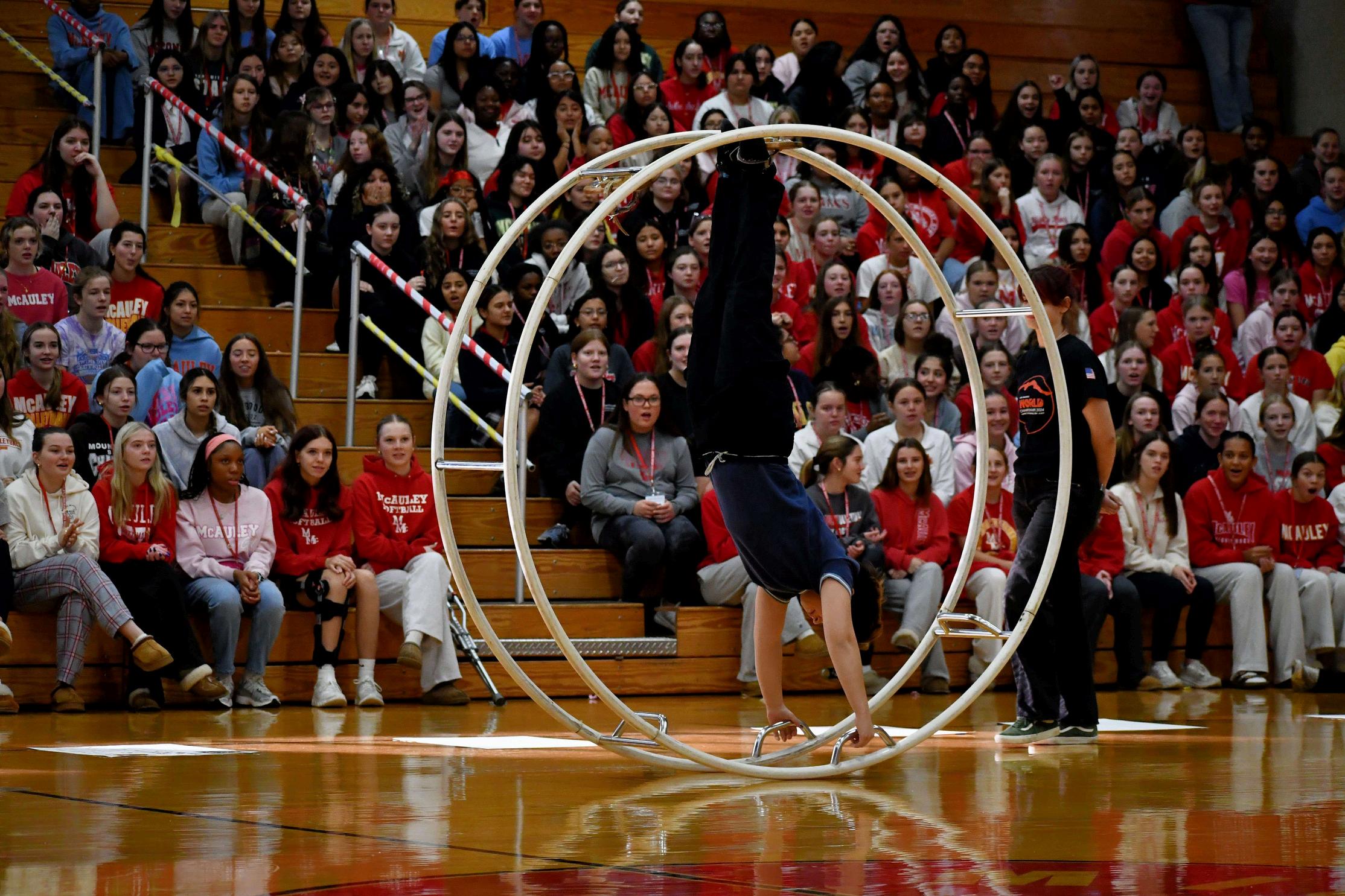
“I saw people perform with the German wheel and thought it was so cool and wanted to try it,” they said.
The sport requires physical strength and the confidence to keep going even when it is challenging. According to Peterson, progress comes from pushing past fear and trusting the process.
“You have to have muscle and not be scared,” they said. “If you’re too scared, you won’t learn anything.”
With so many exciting events happening in the drama wing, from Christmas concerts to the fall musical “Joseph and the Amazing Technicolor Dreamcoat,” it is inspiring to see the magic these talented performers share with our community. But it’s also important to remember where that magic began. At the heart of the Music department is an amazing and influential woman: Sister Ellen Marie Ryan.
Mrs. Julie McKee ‘93, director of the Mother McAuley musical and a cappella, said, “Sister Ellen was truly the backbone of this department. She was the head of the department, director of a cappella and Advanced Chorus, conductor of orchestra and so much more.”
Sister Ellen not only directed many parts of the department; she also oversaw its funding. Her unwavering ambition and determination for the program’s future are key reasons for DWing’s success today “She could just see problems before they became one, and she often headed off a challenge before it even become a problem,”
McKee said when asked about fundraising challenges Sister Ellen faced.
When asked about a refining moment that Sister Ellen promoted, McKee said, “In 1993, when the new gym was being fundraised for and built, Sister Ellen told the principal and her close friend, Sister Corinne Ryan, that if they were going to build a new gym, they needed to build a music center. So while they were fundraising for the new gym, they started doing the same for a new music center, which is the beautiful music room we have now.”
Her vision for the future of the program wasn’t just based on a properly funded program; it was about staying focused on a mission rooted in mercy Her directing was never only about conducting or pitch accuracy; it was also about reminding students of the importance of service.
“We would often sing at hospitals, retirement homes and funerals,” McKee said. “And every time, she would remind us that music was a ministry; it is a service and a prayer.”
McKee still works to remain in that mission of mercy through upholding tradition from
One of the toughest skills Peterson has learned is the split spiral. In this move, the wheel spins on one rim while Peterson balances with one foot behind on the back rim and the other on the handle in front. Once high enough, both feet shift onto the same rim. It is a move that demands focus, balance and precision.
Peterson both competes and performs, and each brings a different kind of excitement. Performing is especially meaningful because of the reactions from the crowd.
“It brings so much joy to people that watch me perform,” they said. “Both competing and performing are exhilarating. There is so much adrenaline.”
Peterson says the best part of training is the moment when something finally clicks.
“My favorite part of training is getting a trick that you have been working on all by yourself,” they said. “After many falls, knowing you can do it without a spot is an amazing feeling.”
With big goals ahead and a commitment to growing in the sport, Peterson hopes to keep improving and show more people just how exciting the German wheel can be.
service trips such as the a capella overnight trip to the tradition of singing the parting blessing. Sister Ellen’s mission remains deeply rooted in D-Wing. The entire Performing Arts department feels like they are truly standing on her shoulders.
When asked about her vision to inspire young musicians and artists, McKee said, “I want this department to feel like home to students, and for me, Sister Ellen was that home. I can only hope to continue making this a safe space for young artists to grow in creativity, create meaningful friendships and be accepted.”

The United States federal government shutdown started on Oct. 1 and is now the longest shutdown in U.S. history, lasting 43 days. President Donald Trump signed a funding bill into law ending the shutdown. Both political parties disagreed on funding levels, and the negotiations stalled for weeks before the shutdown. When Congress did not pass the necessary spending bills, the government had to stop many nonessential operations. This left hundreds of thousands of federal workers either unemployed or working without immediate pay, which caused very hard times and serious financial stress for many families.
Mary Marley
The point of ending the shutdown was because some senators did not want to see citizens feel more unnecessary pain. Airports are improving, but it will likely take some time before everything fully returns to normal. Sean Duffey, the U.S. Secretary of Transportation, noted that more air traffic controllers are returning back to work but in the very short term. The U.S is scrambling to hire more air traffic controllers. During the shutdown, some had taken second jobs to make ends meet since the lack of regular pay had added to their stress. The shutdown had impacts far beyond the government. The BBC explained that national parks, public agencies and online government services experienced major delays.
Cost of the Government Shutdown
left. graph showcasing the estimated costs of the six week shutdown. source: Congressional Budget Office and Visual Capatalist
People felt the effects in many ways, including longer wait times for paperwork and reduced access to some programs. J.P Morgan Global Research also reported that the shutdown affected the economy by slowing down spending and disrupting financial markets. Businesses grew more cautious, and economic growth temporarily weakened as the shutdown continued for over a month.
After weeks of debate, BBC News wrote that lawmakers were finally able to reach a temporary funding agreement that reopened the government. This deal allowed federal employees to return to work and restored many services that had been paused. However, the agreement only funds the government for a limited amount of time. Congress will still need to come up with a longer-term solution to avoid another shutdown in the near future.
The shutdown is a reminder that disagreements between lawmakers can have real consequences for millions of Americans. Many hope that government leaders will find a way to prevent similar shutdowns in the future by reaching agreements earlier so people can still live their everyday lives without worrying about the future.
Pick up those pennies and soak in the luck while you can; we’ve arrived at the end of their era. On Nov. 12, 2025, the U.S. Mint in Philadelphia minted the last penny after an order to conclude its production due to rising costs.
“For far too long the United States has minted pennies which literally cost us more than 2 cents. This is so wasteful! I have instructed my Secretary of the U.S. Treasury to stop producing new pennies," said President Donald Trump in a tweet from February 2025. Production of the one cent coin slowed down over the summer before it came to an official halt on Nov 12, 2025, though these last pennies were meant to be auctioned off to collectors.The last pennies produced for public use were minted in July. As Trump referenced, the United States penny reportedly cost 3.69 cents to mint in 2024, according to the U.S. Mint. Other arguments for the eradication of the penny include decreased demand, quicker checkout lines and similar trends in other countries. The decision has already created issues for businesses.
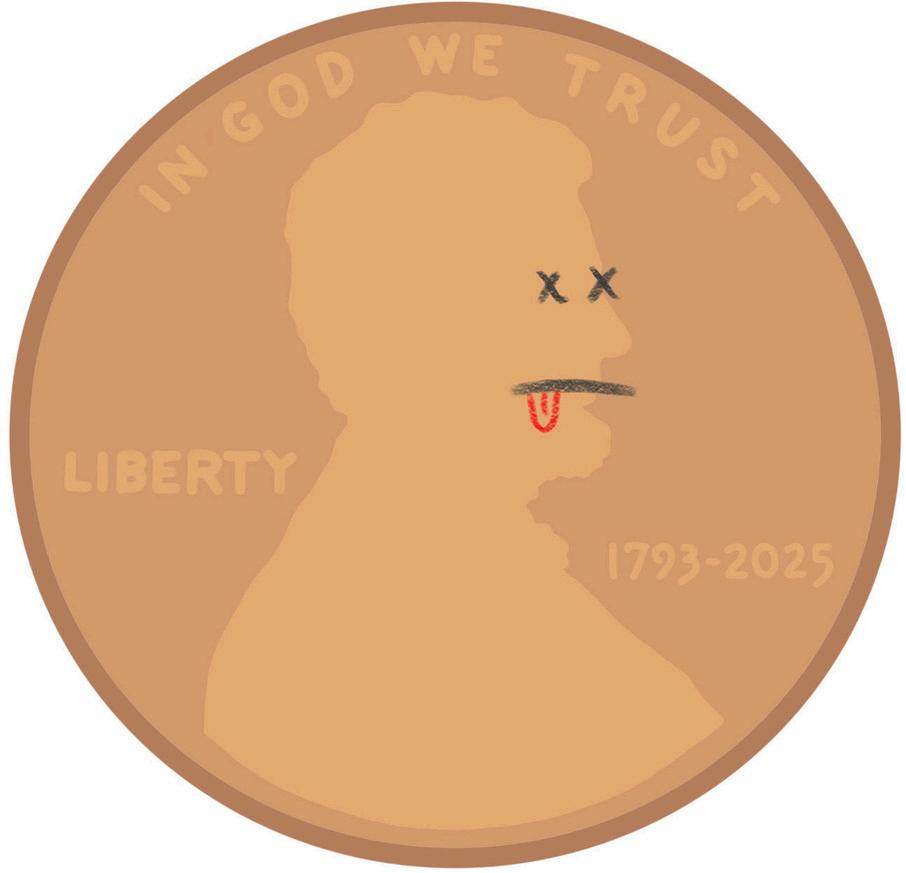
above. R.I.P. to the penny. Cents-cerely, the Inscape Staff digital illustration by Magen Connolly
“At least 10 states and localities have cash laws intended to ensure cash customers are not disadvantaged compared to those using electronic payment methods, which would essentially prevent businesses from rounding cash transactions up or down,” according to the article “What the end of the penny means for consumers” from Forbes. “Earlier this year, the
National Association of Convenience Stores sent a letter to the Senate Banking and House Financial Services Committees calling on lawmakers to establish a national law to allow rounding so that businesses aren’t breaking laws. That hasn’t happened.”
So even though rounding transactions seems to be the solution to any impacts of the elimination of the penny, it’s just not that simple. The move also complicates sales tax calculations because of the difference between applying sales tax to customers who round transactions because of cash and those who don’t because they use a debit or credit card.
So, what now? The penny’s luck hasn’t totally run out, as they won’t actually disappear any time soon. There are an estimated 250 billion pennies in circulation and they continue to be legal tender, so it will be years before their luck runs out. And even then, they will live on in collections, piggy banks and between our couch cushions.
Fiona Stanek
On Nov. 18, 2025, Congress approved the bill mandating the release of the Justice Department’s files on Jeffrey Epstein. The Senate sent the bill to President Donald Trump’s desk to sign into law, a day after the House of Representatives approved it in a 427-1 vote.
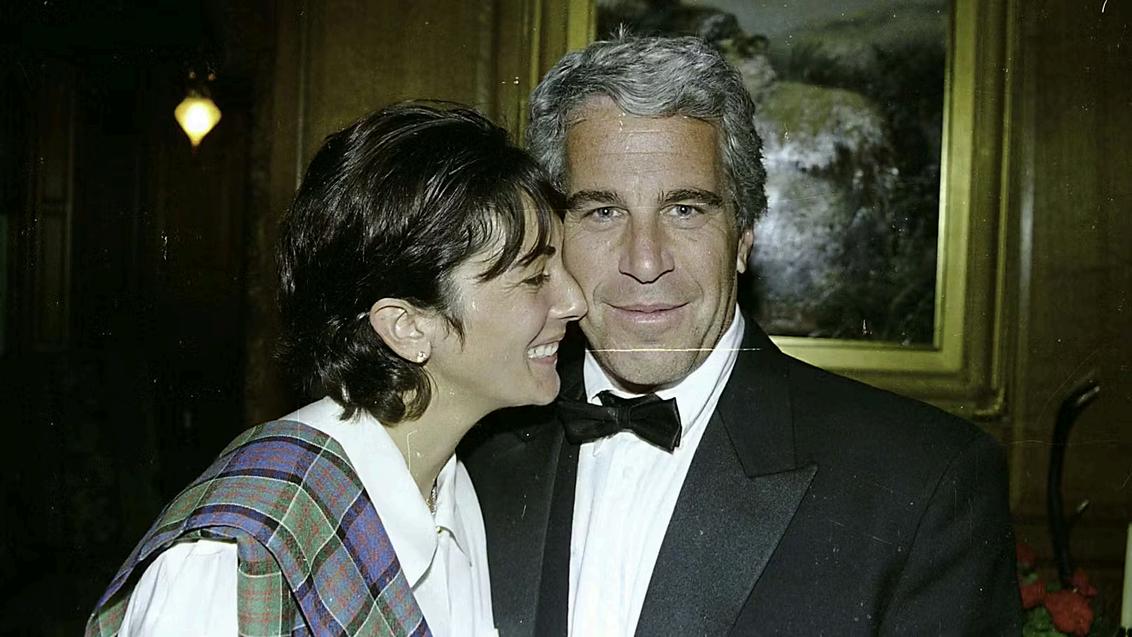
The name Jeffrey Epstein has been in headlines for years, attached to one of the most talked about criminal cases of the past 20 years. Though Epstein died in his New York City jail cell in 2019 at 66 while facing federal charges, interest in his case has only intensified. Now, as long-sealed court documents– often referred to as the "Epstein files”--are being released, a familiar question is being echoed: What's going on, and why do these files matter?
The attention is not about the scandal itself. It is about serious questions of justice, accountability and how someone with wealth and influence was able to commit crimes for so long without facing the full consequences. Epstein survivor Haley Robison said in a press conference on Capitol Hill that this is a “human issue” and called for political agenda to be put aside.
Epstein was a financier who took part in numerous crimes that involved the exploitation of underage girls. His actions entailed the recruitment of minors, manipulating them and taking advantage of his powerful position to exploit them. These were illegal acts that caused harm to the young people whose lives would never be the same again.
During his arrest in the year 2019, people expected the full truth to come out. Unfortunately, he died by suicide in jail shortly after the arrest, leaving the case incomplete and many questions unanswered. The public was left to piece the story from documents, testimonies and legal records.
That is where the “Epstein files” come in. These are documents comprising depositions, court statements, witness interviews and records from years of continuous legal battles involving Epstein and those connected to him. For a long period, many of these records were sealed, meaning the public could not see them. Survivors, activists and journalists pushed for their release, arguing that transparency was crucial both for justice and for public trust. Their message was clear: if wrongdoing occurred, people deserved to know who was involved, how it was allowed to continue and what steps could prevent it in the future.
So why are the files being released now? It follows an extraordinary effort by a multitude of survivors who have battled for years for their stories to be heard. Many believed keeping the
documents under seal protected the powerful who may have turned a blind eye, or worse, enabled Epstein.
The goal is not to spread rumors or make accusations of guilt without proof, but to demonstrate how much the legal system was aware of, which witnesses came forward, and what patterns existed. The release of the files lets the public decide whether law enforcement and institutions acted responsibly, or failed to act where they should have.
As the records begin to surface, the public learns more about the world that Epstein built and the network around him. Most importantly, simply finding someone's name in a document does not necessarily amount to evidence of committing a crime; some were merely witnesses, acquaintances, employees or people with no knowledge of Epstein's crimes. But releasing the names and statements gives a better idea of how Epstein operated and how his network worked.
These documents shine a light on a story bigger than Epstein's actions: the systems that had enabled him to act with immunity for so long.
The impact, though, can be mighty, even when the details get complex. Public acknowledgement of the truth, in the words of survivors, “lets them be seen and heard,” proof that their experiences count.
Wendy Avis, an Epstein survivor who was 14 when she met Epstein, said in an interview to NBC News, “… Not everybody is getting justice, and that’s not right. The everyday person is out there, and that's me, and we're victims. Your neighbor could be a victim, and you don't know it.”
Journalists underscore that the files serve as a reminder of why transparency in the justice system is important. Sealing records in cases featuring influential individuals often undermines public confidence in justice. Simultaneously, the Epstein files had unleashed crucially important debates around the protection of youth, the enhancement of reporting mechanisms and accountability for all, regardless of income or position. Schools and organizations are using the case to illustrate how prevention, awareness and truthfulness serve to address exploitation or abuse issues.

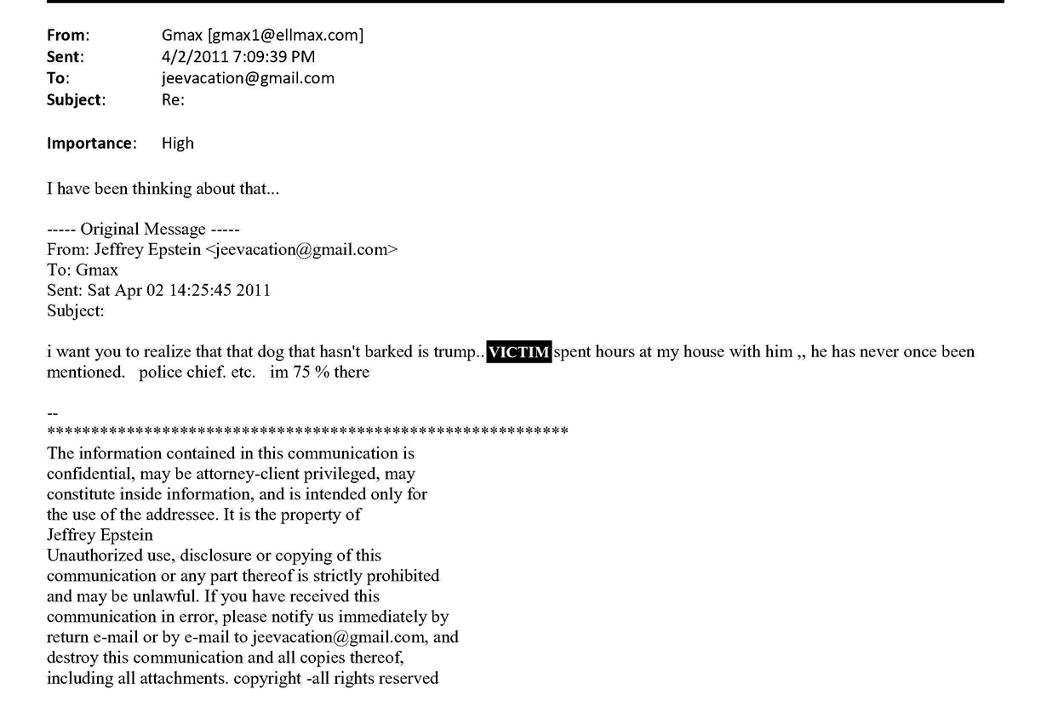
above. Document excerpt from ‘Epstein Files’ source from FBI Records
The Epstein files will not answer every question, and they may never provide a complete picture. However, their release represents an important turning point toward openness and not a cover-up; it also represents the willingness to confront uncomfortable truths, rather than obscure them.
As the documents keep rolling out, one thing is clear: society is intent on understanding what went wrong so that those lapses are never replicated again. In many ways, the story of the Epstein files is no longer about the crimes of one man alone, but it is about what society does when finally the truth comes out.
While “Stranger Things” is widely known for its ’80s nostalgia, “Dungeons & Dragons” influence and supernatural storyline, science plays a much larger role in the series than it may appear at first. Beyond the monsters and mystery, many of the show’s central ideas are tied to real government experiments and complex physics theories that give the fictional world a surprisingly grounded foundation.
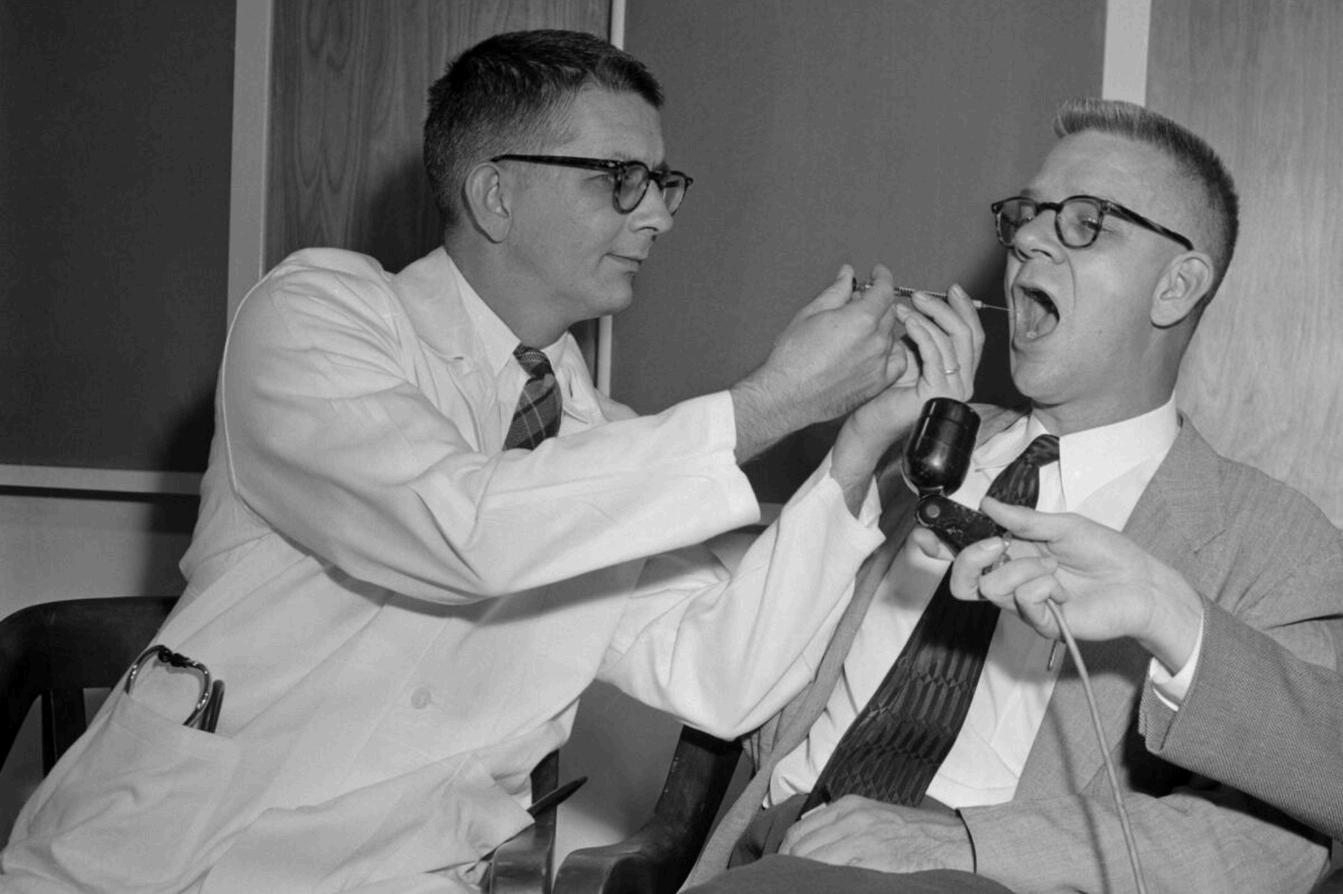
In the early 1950s through the early 1970s, the CIA conducted a top-secret research program called MKUltra. During the Cold War, the United States feared other nations had discovered ways to control the human mind or extract information against someone’s will. In response, MKUltra set out to test whether psychological, chemical or biological methods could influence someone’s thoughts, behavior or memories.

In “Stranger Things,” this government fear is reflected through Dr. Brenner, who hoped the children’s psychic abilities would give America an edge against the Soviet Union.
MKUltra wasn’t a single experiment. It was a network of more than 149 subprojects spread across universities, hospitals, prisons and military bases. Researchers used LSD and other hallucinogens to weaken defenses, heighten vulnerability, cause confusion, erase memories or force cooperation. Some CIA agents even dosed each other without warning “just to see what would happen.”
The program also relied heavily on sensory deprivation. Patients—sometimes drugged— were placed in tanks or rooms with no sound, no light and no sense of time. The CIA believed removing all external stimulation would disorient the brain and create a “mental blank slate,” making people easier to manipulate. When deprived of sensory input, the brain starts generating its own imagery, sensations and sounds. The agency wanted to know whether these hallucinations could be shaped by an external influence or used to push people into trance-like states.
Griffin
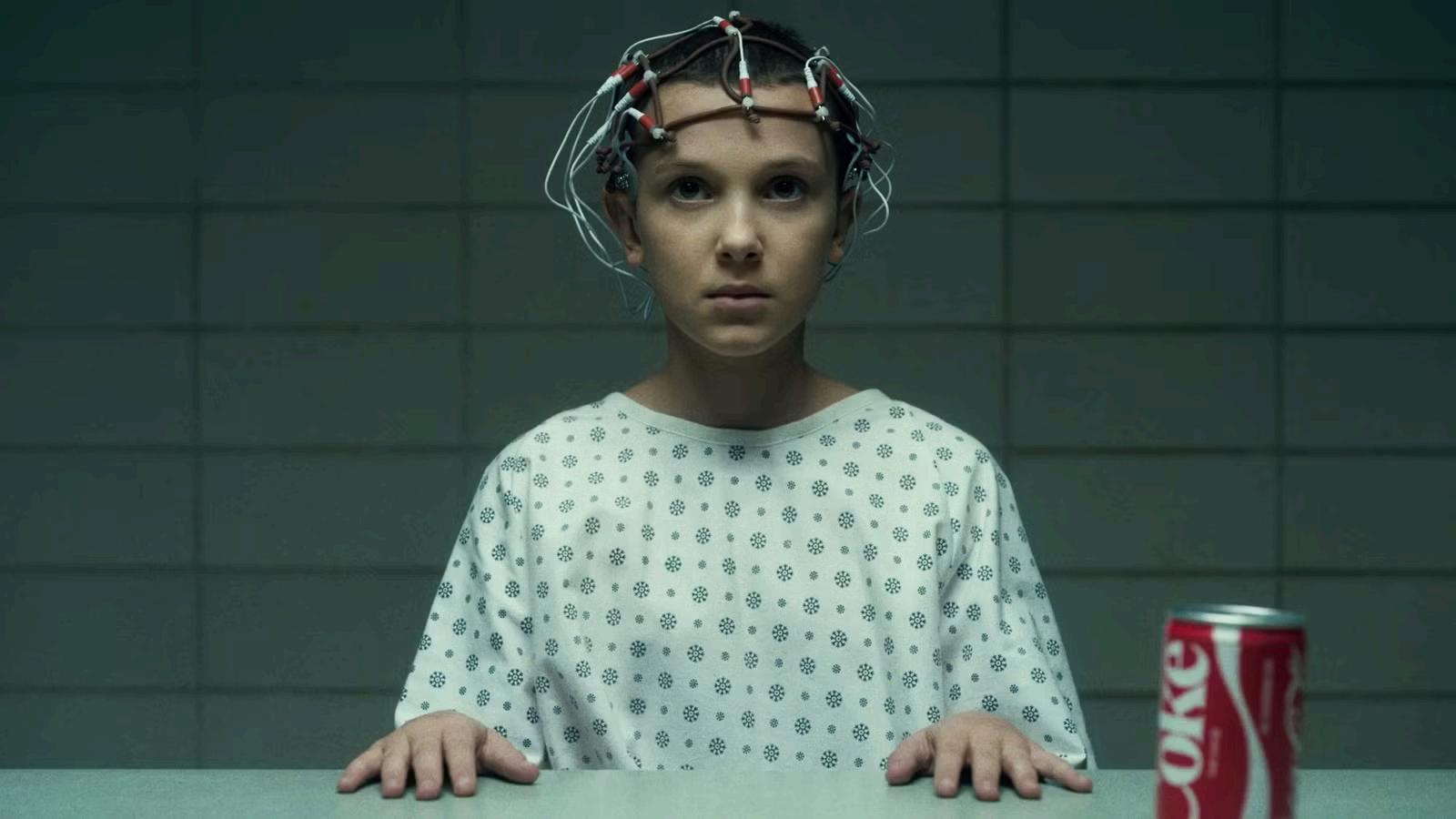
In “Stranger Things,” this becomes one of the clearest parallels. Eleven is placed in sensory deprivation tanks where her powers intensify, allowing her to tap into psychic connections under Brenner’s direction. The show exaggerates the outcome MKUltra hoped for, turning failed government experiments into supernatural abilities, but the inspiration is clear.
MKUltra did not rely on true consent. Many subjects were prisoners offered shorter sentences or “better jobs” in exchange for participation, though these offers were rarely honest. Vulnerable psychiatric patients were given massive doses of LSD or placed in sensory deprivation without consent. Hospital doctors involved in the project secretly injected regular patients with psychoactive substances to observe reactions. Soldiers were told they were participating in routine training only to be dosed with hallucinogens.
Perhaps the most disturbing experiments involved unsuspecting civilians. CIA agents secretly drugged people in bars or safehouses. These operations became known as Operation Midnight Climax. The CIA rented apartments, hired sex workers to bring men inside and, through a two-way mirror, watched as the men were unknowingly dosed. While “Stranger Things” dramatizes the idea of secret labs and psychic children, the real history reveals a government willing to push extreme boundaries far outside what is ethical.
MKUltra also involved minors, though not in the kidnapping and raising-in-governmentcaptivity way the show portrays. Some subprojects experimented on children with developmental disabilities, teens in juvenile facilities and foster children whose guardians weren’t properly informed. These minors were considered “accessible” because informed consent requirements were nonexistent. While
this doesn’t match the show’s portrayal, it echoes the uncomfortable truth that vulnerable kids were still targeted.
Even though MKUltra never produced anything close to psychic powers, “Stranger Things” draws from modern physics to build the rest of its world—especially the idea of the Upside Down. The parallel dimension resembles what physicists call a wormhole: a theoretical tunnel connecting two distant points in spacetime. Wormholes aren’t proven to exist, but the math behind them is substantial. The energy required to create or hold one open is almost unimaginable. Physicists estimate it would take the power of a star or black hole. So when Eleven tears open gates or demogorgons slip between worlds, the show is channeling a theory that, if real, would demand more power than humanity could ever generate.
The idea of multiple dimensions, too, isn’t pure fiction. Physicists studying quantum mechanics and string theory often discuss the possibility of parallel universes. The Upside Down acts as a visual representation of these theories—unsettling, familiar and warped by outside forces.
One of the things that makes “Stranger Things” so vastly successful is its blend of fact and fiction. It takes pieces of unsettling history and mixes them with the extreme edges of modern physics and storytelling, creating this really striking balance that wakes up your imagination. It guides us through the unknown using concepts we already recognize—“watering it down,” as, the paranoid conspiracy theorist from “Stranger Things”, Murray Bauman said. When you introduce a world full of demogorgons and mind flayers, sure, it’s completely fantasy But when the show ties those creatures to real Cold War fears and scientific theories, when it moves back and forth between our world and the Upside Down, that’s where it becomes cinematic gold.
JuliannaRodriguez
Test yourself and see what you know: pick your topic and write down everything you can remember off top of your head, then look back at your notes and fill in missing information.
You can also make a Quizlet or Kahoot and review a little bit each day, ensuring you KNOW the material instead of just memorizing for the time being.
Use AI to help! ChatGPT can be a useful helper in making study guides, giving practice questions and creating study plans.


Make sure to take breaks–if you
can’t focus or figure something out, put it down and come back to it.
Find a place that makes you feel productive to study. Maybe instead of your bed, go to Starbucks or a library to stay focused and motivated
Ask for help! You have Math
centers and tutors for every subject right here for you to use any time you need!
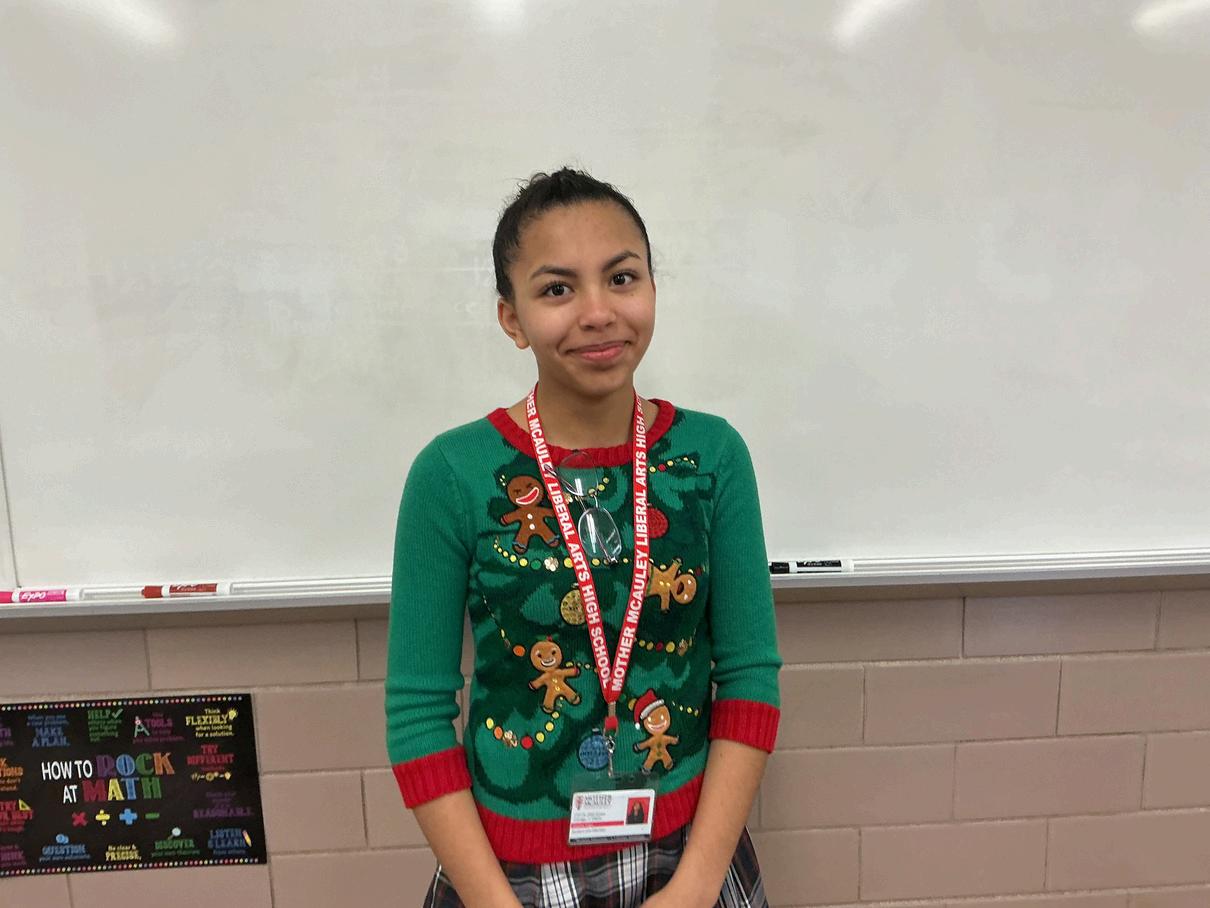
“‘National Lampoon’s Christmas Vacation!’” -Sophia Vega 9
“’Home Alone!’” - Julianna Garcia 10
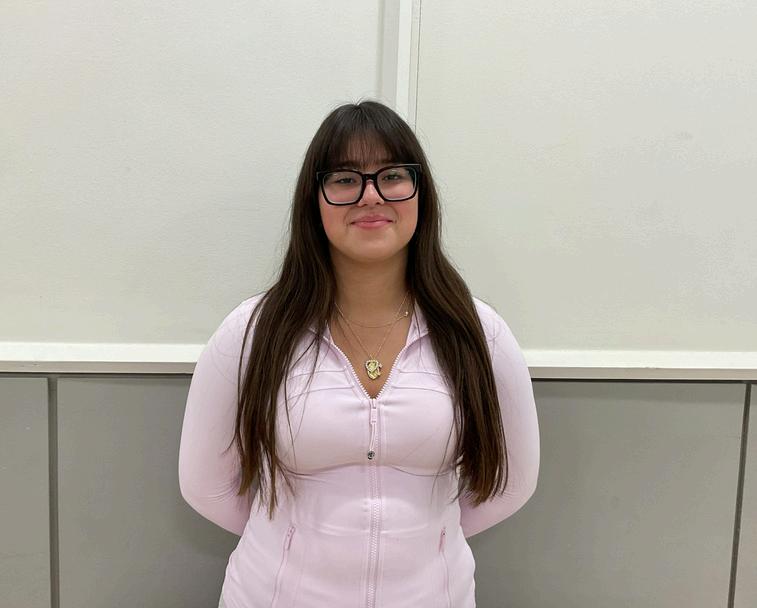
“‘White Christmas!’” -Nora Nagle 12
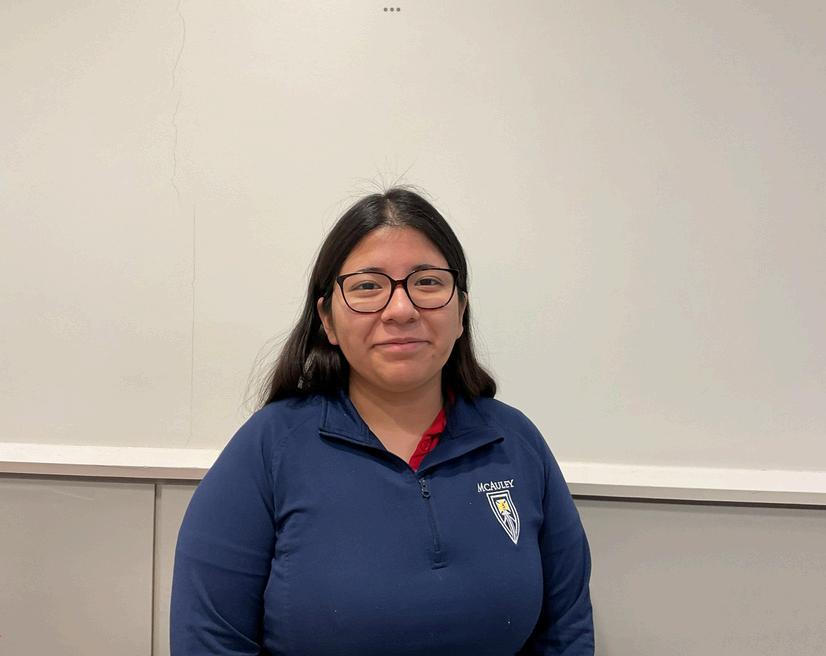
“‘A Charlie Brown Christmas!’” -Vanessa Linares 11

Try switching out those sugary energy drinks for some healthier options like “Bloom Energy”, “V8 Energy”, or even “Bai Boost”, which use natural caffeine, no added sugars and vitamins.
Matcha can also be a healthy alternative, as it improves focus and provides “calm alertness.”
Exercise is also proven to help improve focus, memory and reduce stress. Physical activity boosts brain function, and short exercises before studying can give you the extra boost of energy and focus you need. Exercising a few hours after studying can improve your ability to retain what you just studied!
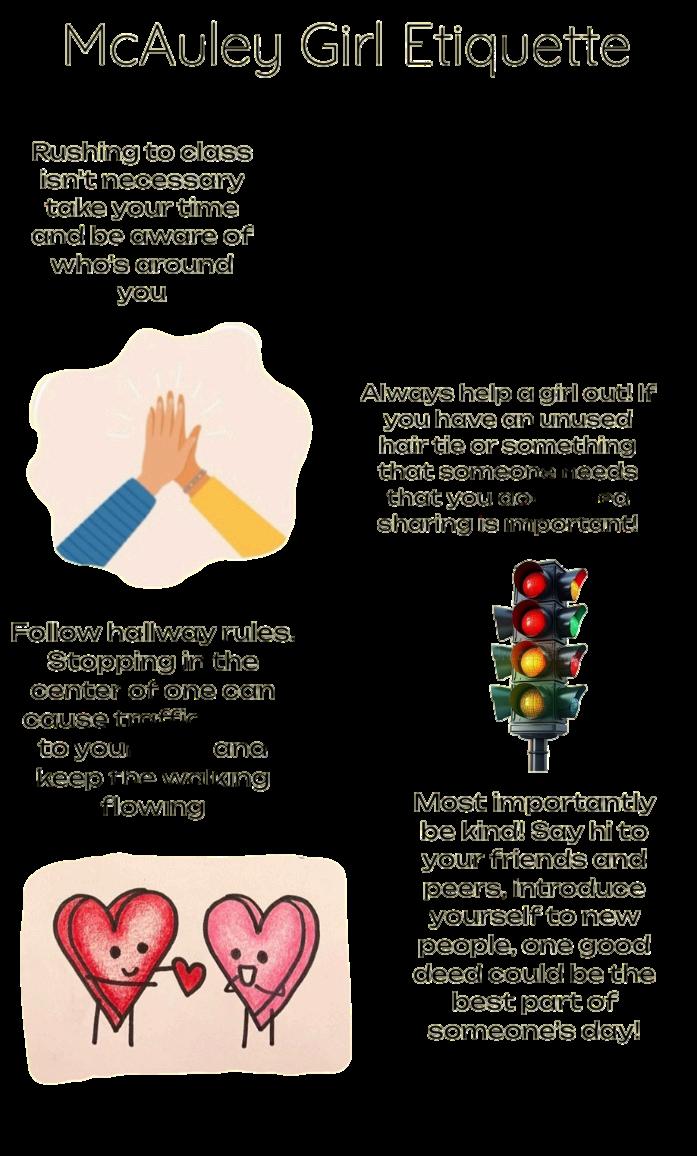
Don’t rush!
Rushing to class isn’t necessary. Take your time and be aware of who’s around you.
Always help a girl out!
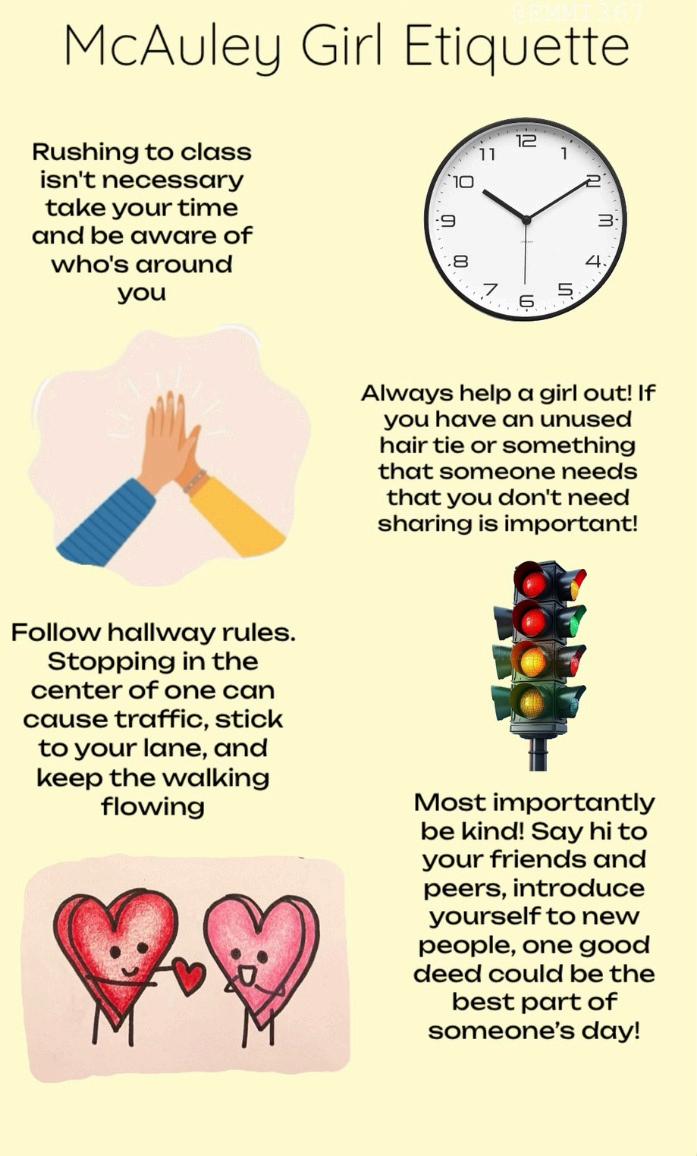
If you have an unused hair tie or something that you don’t need, give them to someone in need! Sharing is important!
Follow hallway rules!
Stopping in the center of the hallway can cause traffic Stay in your lane and follow the hallway flow!
Be kind!
Say hi to your friends, peers and teachers. Make sure to introduce yourself to new people! One good dead could be the best part of someone ’ s day!
Magen Connolly and Emmerson Sliwka
Can’t stand the chaos:
I’m certainly not anti-Christmas. Nostalgia just doesn’t overpower the stress of the season enough to make it feel very magical anymore. Let’s start with the most obvious reality check we got as we began making Christmas magical for others: it’s so expensive! It’s daunting to see the prices stack up as you shop. Not to mention how hard it is to keep track of deals and compare prices on the same products between stores.
Then come the parties. Sure, there’s great food and it’s fun to see your family, but the running around and the questions make my head spin! Getting to the parties is a hassle itself - find the right clothes, don’t forget any presents or food and leave early enough to beat traffic. Then when you finally get there, the interrogations begin. Having to tell three different aunts, “No, I don’t have a boyfriend yet!” makes me want to take the car and drive myself home. Five uncles and cousins separately asking me where I’m going to college makes me reconsider if I’m even going at all. Unfortunately, it’s just a difficult time of year for some people. It’s supposed to be about family, but not everyone’s family is as complete as it used to be. People move away, leave our lives or pass away. Grief or longing can hit hard during a season about joy and togetherness.
Christmas shifts as you get older. I hope I move on from this awkward in-between stage of the magical childhood version of it and the enjoyable adult version of it very soon.
For the longest time, I took Christmas for granted. Of course, I loved the parties, gifts and getting out of school, but I have come to realize how little all of this, especially the presents, mean.
As the youngest of three and the only one who lives at home, seeing my sisters is a rare occasion. We are all busy and even something as simple as going out seems nearly impossible, but we have never spent a Christmas apart. I love my family and the traditions we have are incredibly special, but there is something about the unspoken implemented rituals my sisters and I share. Every Christmas Eve, my oldest sister drives us to our uncle’s house. We scream Christmas songs and predict what crazy things our family members will say this year. Despite the mundaneness of it, those car rides are one of my favorite parts of the night.
However, as much as I treasure those moments, I wouldn't say that this is the core of the holiday. For as long as it has been a holiday, Christmas has been a time that everyone comes together to support others to the best of their ability. Organizations like Angel Tree that have community members donate gifts to children, seniors, and families in need, or the hundreds of homeless shelters that provide essentials, food, and even community to those who don't have it. The giving season unites people like no other, everyone coming together to try to make their friends, family, and total strangers feel special. Christmas isn't just about the gifts but the thought and care that brings everyone together.
Imani Griffin
One of the best pieces of advice I’ve ever been given at McAuley—and honestly in life —is: “Remember: I get to do this.” It was said in the middle of me complaining about all the work I had to do and how stressed I was. The point was that not everyone has the opportunities we’re given—to have the education we have and to pursue our dreams the way we can. Still, this piece of advice is the hardest for me to remember in moments of stress. When I feel overwhelmed, I feel it in every sense of the word—completely swamped, submerged, buried under everything I have to do or at least everything I believe I have to do. For me, the heart of this comes from my lack of motivation, which comes from the stress, which creates this awful and seemingly endless cycle. A lack of motivation is all it takes to derail any of my big plans.
People who don’t know the feeling might say, “Get started,” or “Well, it won’t get done if you aren’t working on it.” And with that, I know they don’t understand— or at least not well. They don’t know the feeling of forgetting why anything you do has meaning at all, that moment when all you can do is look at the work around you and sigh.
I’m not going to sit here and say this lack of motivation and procrastination is bad, because that would make me a hypocrite—and I would have to admit that I’m wrong, which obviously is out of the question. What I will say is: have your moment. Take what you need. Sometimes that bit of mental clarity—whether it’s in a nap, listening to music or mindless scrolling—is all you need to, well, lock back in. So much of our lives as students is consumed by the same monotonous routine: wake up, go to school, do your homework, go to sleep, repeat. Taking the time to recenter and find your peace matters.
Maybe then you can remember: I get to do this. I get to do my work, and it will get done. I get to succeed in the pursuit of a great future. I get to see myself become the woman I get to be proud of.
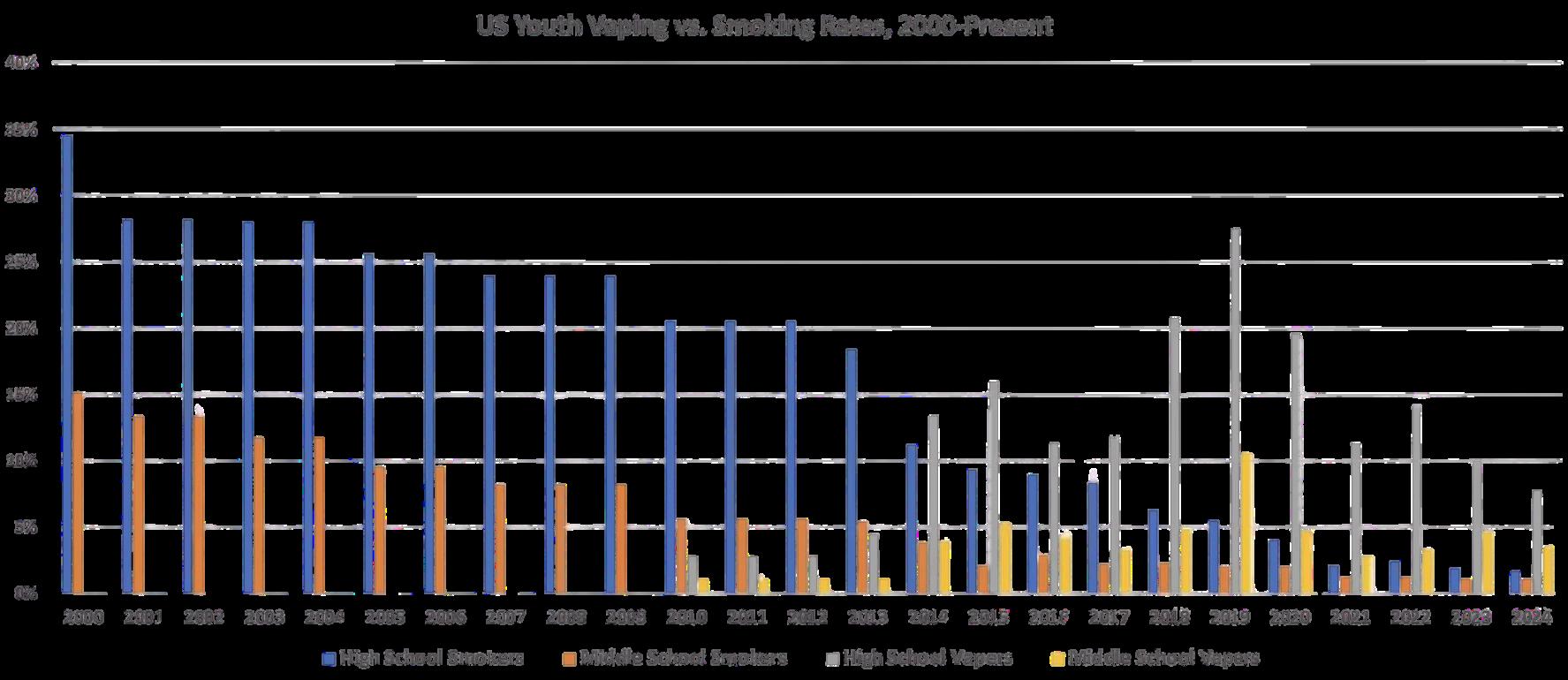
With the rise of vapes in today’s society, it’s no wonder that someday they’d become just as addictive as any other substance. The biggest issue is the amount of teens that have access to it. There are some differences between vapes and cigarettes, with the most obvious one being their designs, but another thing people mention is their target audience. Most vapes, Juuls and geek bars have fun colors and cool designs, making people question if it’s meant to get the attention of young kids. With modern day cigarettes and cigars, they have more of a minimalist design…one that has gone through small changes but remains similar since the first introduction in 1847.
Now, vapes aren’t outright illegal; however, the FDA has only recognized 34 e-cigarette products, which is about 13.7% of the market! Out of all vapes, Juuls, geek bars other electric nicotine products, 86% are illegally. This is a huge issue, and the fighting to increase enforcement effects e-cigarettes as they appeal more and more the youth. Statistics show that 1.63 middle and high schoolers report the of e-cigarettes.
Kayleigh Barrett
“Nicotine addiction is harmful to developing brains and high rates of daily and frequent use could put young users at risk for nicotine addiction,” said the Truth Initiative, an organization meant to combat nicotine addiction. 56.9% of underage users obtain their devices from peers or family, while 43.1% get their devices from retail outlets. Within that 43.1%, 22% get their vapes from actual vape shops and 15.9% get their devices from gas stations.
Some people wonder where these illegal vapes are coming from, and the answer was shared by the Department of Justice: China. “These dangerous and unauthorized vapes are often
smuggled in from China to be sold near schools and military bases, putting our kids and service members directly at risk,” said Attorney General Pamela Bondi. The DOJ and FDA are working tirelessly to prevent these illegal vapes from getting into the hands of children and the military by seizing the e-cigarettes from markets. The U.S marshals reported more than 2 million non-FDA approved vapes, Juuls and other electronic products. All this is in accordance with Making America Healthy Again, a commission established by the US government to focus on healthier food. which would protect the youth from developing a reliance on flavored air.
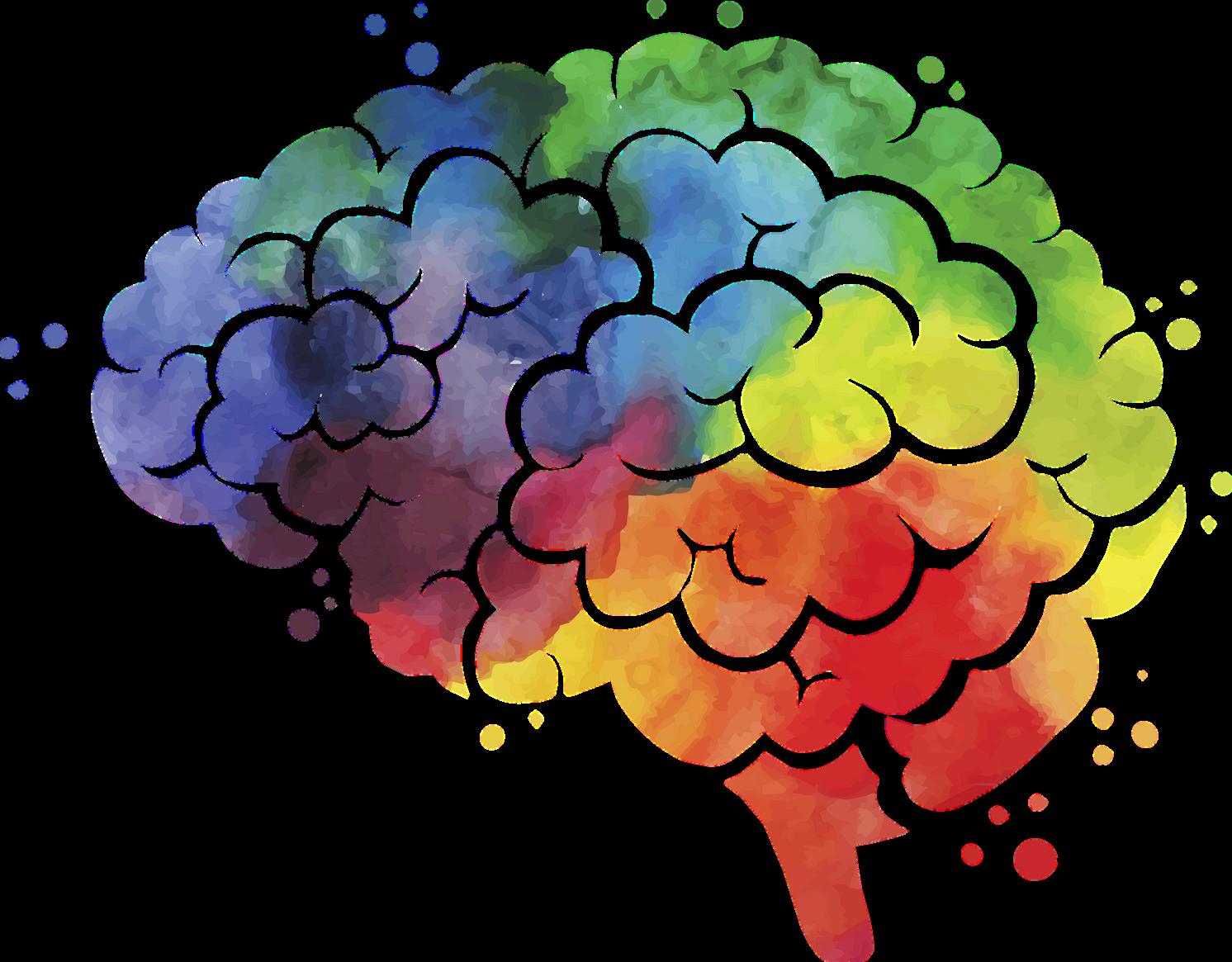
Color perception is a complex process begins with light, which is composed different wavelengths that strike an object. The object’s chemical structure determines which wavelengths are absorbed and which are reflected back into the person’s eye. The reflected light enters the eye and stimulates three types of specialized cone cells: short (blue), medium (green) and long (red) wavelengths, a system known as trichromacy. The brain then understands the combined signals from these cones through the opponent process theory to create the final experience of color. A color’s source is determined by whether the object uses pigments, which absorb light chemically, or structural colors, which rely on microscopic structures to scatter
cells, making perception subjective in conditions such as color blindness. Perception of color affects people more than they think. You might be scrolling through your phone at 1 a.m., unable to sleep, or you might be staring at a blank page in a beige classroom, unable to focus. These feelings may feel random, but they aren’t. According to neuroscientists, these reactions are the result of the brain processing color, which can influence hormones, attention span and stress levels.
graph from eCig One showcases the amount of youths who vape and smoke over the years. graphbyJasonArtman.SourceFDA/CDC
For high school students, the most significant impact comes from the blue spectrum. Blue light, which is seen from smartphones, iPads and laptops, signals the brain to be alert. It suppresses melatonin, the hormone responsible toned thinking it isn’t time to go to sleep. This is a leading cause of sleep deprivation among teenagers, which can lead to less focus and increased anxiety the next day.
While blue light keeps people awake, green light may help them focus. Research suggests that cool colors, in particular green, are the most effective for concentration and reading comprehension. This is proven by the “biophilia hypothesis,” or the idea that humans are naturally calmer and more focused when surrounded by colors found in nature. Unlike red or orange, green is easy for retinal cells to process, allowing the brain to focus.
On the opposite end of the spectrum is red. Red is the color with the longest wavelength and the most energy. When people see red, the brain’s amygdala activates, causing a temporary spike in heart rate and adrenaline. It is a fight-or-flight color. This is why many sports teams wear red; it signals aggression and power to opponents. However, studies show that seeing red before a test can lower performance because it triggers subconscious anxiety and avoidance behavior. Colors are a lot more complicated than you think and shape your daily life a lot more than you might realize. Understanding colors might help your brain in ways you wouldn’t imagine. Blue:
Kruz Smith
The Chicago Bears have come out of hibernation, but they’re not looking for honey; they’re fighting for a spot in the playoffs.
So far this season they have a good record, and a couple things have contributed to that The Bears have what looks to be good coaching and leadership Many consider the last successful coach they had was Lovey Smith, and that's when they went to the Super Bowl in 2007. The coaches since Smith weren’t too hot; but at last, the Bears are making a comeback. According to the Bears website, quarterback Caleb Williams, who was the 2024 first pick in the NFL draft, has been leading the Bears to victory after victory The Bears also have an offensive play-caller, Ben Johnson, who is also doing well The defense still needs some work, but they're playing much better than what they did last year They currently lead the league in defensive takeaways, so they make the other team turn the ball over a lot more.
A few weeks ago, the Bears beat the Philadelphia Eagles, who were the Super Bowl champions of 2024; however, many of the teams they’ve played this year are below 500 Teams who are above 500 have more victories, and teams that are below 500 have less victories
A lot of the teams that the Bears have defeated may not be great teams. There's also a saying around the NFL that many should be thinking about: “Any given Sunday.” On any given Sunday, any team can be great or any team can be terrible; but if you only go off record, the Bears are looking great, but once again: any given Sunday Some sports analysts think the Bears just caught the Eagles at the right time.
The NFL creates the overall matchups for each team’s season, so you can't base the Bears upward climb on just matchups alone. But don't be mistaken: a win is a win, and no matter which way you flip it, the Bears are coming out on top!

Puerto Rican singer and rapper Bad Bunny is headlining Super Bowl LX’s halftime show, which is due to air on February 8, 2026. Bad Bunny has over 77 million monthly listeners on Spotify, and he has had at least five albums reach the top spot of the Billboard 200 chart. He has also helped Spanish-focused music achieve mainstream popularity, also garnering millions of streams to his own songs
The announcement sparked immediate backlash and prompted many mixed reactions online People who have outspokenly opposed the NFL’s choice have stated that recent halftime shows are beginning to stray from “traditional, family-friendly roots.” Bad Bunny has said that he intends to perform his halftime show in Spanish, which has just added more fuel to the backlash parade
Within the opposition, a petition was formed to have country music icon George Strait replace the Latin music star’s performance The petition itself has surpassed over 100,000 signatures, greatly signifying oppositioners’
want for a change However, the NFL is firm on their choice to have Bad Bunny perform The artist himself has stated, “What I’m feeling goes beyond myself: it’s for those who came before me and ran countless yards so I could come in and score a touchdown…this is for my people, my culture, and our history.”
Amongst the chaos, conservative movement and platform Turning Point USA (TPUSA), founded by the late Charlie Kirk, has created their own halftime show Dubbing it the “All American Halftime Show”, it’s set to oppose the NFL’s performance on the day of the Super Bowl itself.
With the many mixed reactions online, people are standing with either the NFL’s performance or TPUSA’s performance. Many Americans have stated that they’ve seen football as a means for us to come together as a country, but they are seeing a bigger divide now than there ever has been
Senior Wyndel Ellis has made waves in her final high school swim season. She qualified for the State Finals in both 100 and 200-yard freestyle events. However, this isn’t the first time she has competed at this level. This marks her second consecutive year of qualifying for state. “I never would’ve imagined being at this level two years ago,” Ellis said.
Swimming has always been a big factor of her life ever since her parents enrolled her in swim classes after witnessing her passion for it. She’s had swimming experiences with Bear Paddle School and Richard’s Area Swim Club; however, at McAuley, her hard work has certainly paid off as she has broken multiple school records, including the longstanding 100 freestyle record.
As countless as all her achievements may be, there’s also been challenges interfering with her passion: late-night practices, schoolwork and time management. Despite all the obstacles, she gives credit to her coaches, teammates and especially her family for always being here for her through the toughest times and supporting her. “They have been my ride to and from meets and practices, my biggest cheerleaders and the people I can turn to in times of frustration.”
When preparing for tough meets like State Finals, it takes more than just physical training—her focus also relies on faith. ”By the time the meet comes, there’s not much you can physically do to make yourself faster. I trust God and I tell myself that it’s all going to be okay. I remind myself that this is why I have been training for the past 10 years,” Ellis said.
Nonetheless, Ellis has proven with her hard work and passion that both dedication and heart can make the difference.

Jadah James 11 has been deeply immersed in both theatre and visual art for as long as she can remember. As a freshman, she took on the role of Oberon in “A Midsummer Night’s Dream,” an experience that first fueled her passion for the stage and gave her confidence to work alongside her older and more experienced castmates. Now a junior, she played the role of Potiphar in the musical “Joseph and the Amazing Technicolor Dreamcoat,” a production full of energy, color and fast-paced choreography which pushed her even more as a performer.
Beyond acting, James has learned to balance her time on stage and her passion for art. She contributed artwork to the children’s novel “Messy Melissa,” written by Jennifer Upshaw and Patricia Upshaw
“The illustrations were just recently completed, and I started them in May. While it was certainly challenging to manage this, school work and extracurriculars, I had a blast working with the authors and enjoyed seeing their reactions to what I drew for them,” said James.
Along with the book, James also creates handmade bookmarks with her own design for her local library, which blends her creativity with her involvement in the community When asked about her admiration for both pursuits, James said, “Both bring out such different parts of me that nothing else ever could. Through my drawing endeavors, I find such peace and self-worth that I could never put into words. Through acting on stage, I find my confidence growing and my sense of accomplishment in remembering lines and songs expanding.”
As for James' future, she has big aspirations to become both a writer and director. As a writer, she aims to write with a purpose, passion, and ambition. As a director, she wants to inspire others to see her vision unfold with every scene and detail. Overall, with everything that she has already accomplished, James is just getting started.

“Dancing with the Stars” hit a milestone this season, delivering the most-watched and most-voted-on episodes in its 20-year history. The long-running reality competition, known for pairing celebrities with professional ballroom dancers, once again blended pop culture and performance as contestants tackled ballroom and Latin styles in front of a panel of judges and millions of voting viewers.
The season opened with 14 celebrity competitors and narrowed down to five finalists: social media personality Alix Earle, reality star and content creator Dylan Efron, actress Elaine Hendrix, Olympic gold medalist Jordan Chiles and wildlife conservationist Robert Irwin After a threehour finale packed with high-energy routines and emotional goodbyes, Irwin claimed the Len Goodman Mirrorball Trophy, becoming the second member of his family to do so. His sister Bindi Irwin won the title in 2015, making them the first siblings in show history to each take home the trophy.
However, the fans were split. While Irwin’s supporters celebrated, others were disappointed to see their favorites leave empty-handed. What many did agree on was the influence of the show’s voting system. “Dancing with the Stars” relies on a 50/50 split between judges’ scores and viewer votes, a formula that can favor popularity over technical ability Judges reward precision and improvement; voters reward personality, relatability and a strong social-media presence. That tension has sparked growing conversation about whether the show will revisit its rulebook next season, especially as some contestants arrive with prior dance training, making the competition feel unbalanced to viewers
Still, this season ’ s outcome proved that charm and storytelling can be just as powerful as technique Irwin, the zookeeper from Australia, not only won the competition but also won the hearts of audiences across the country.
Vine was the most popular social media app from the years 2012-2017 It was an app known for its amusing and iconic usage of having a duration of six-second looped videos. Its simplicity in only having videos six-seconds long is what made it enticing for users in the first place. The app ’ s popularity ended up making a platform for viral comedy, internet celebrities and creative short-form content that eventually went on to influence many of its successors like Musical ly and TikTok
It was developed by creators Dom Hofmann, Rus Tusupov and Colin Kroll. Eventually it went on to be acquired by Twitter in 2012 for 30 million dollars and officially launched on iOS in January of 2013. It met its demise on January 12, 2017 when it got shut down because it was unprofitable and struggled with competition from the latest apps that came out at the time like Instagram and Snapchat Its replacement, Musical.ly, took its place from the years 2014-2018, where it was replaced by the app we now know as TikTok. Now Vine is making a resurgence just eight years later.
Jack Dorsey, co-founder of Twitter, is allegedly planning to resurrect Vine claiming, “The resurrection comes courtesy of ‘And Other Stuff,’ Dorsey’s non-profit organization focused on experimental open source projects”, according to a Creative Bloq article by Daniel John . The only difference is that it’s now going to be known as diVine.
The app itself is supposed to come with over 150,000 archived Vine clips and–perhaps the most important aspect–AI usage will be banned in the app The creators said that they wanted to rid the app of any AI as a way to evoke a feeling of nostalgia in users –to take them back to a time where they had control over their algorithms. To make sure clips aren’t AI generated, diVine is going to feature technology to confirm content is in fact recorded on a smartphone. Hopefully the app will be just as iconic as Vine was!

H A V E A S T R A N G E R
C H R I S T M A S

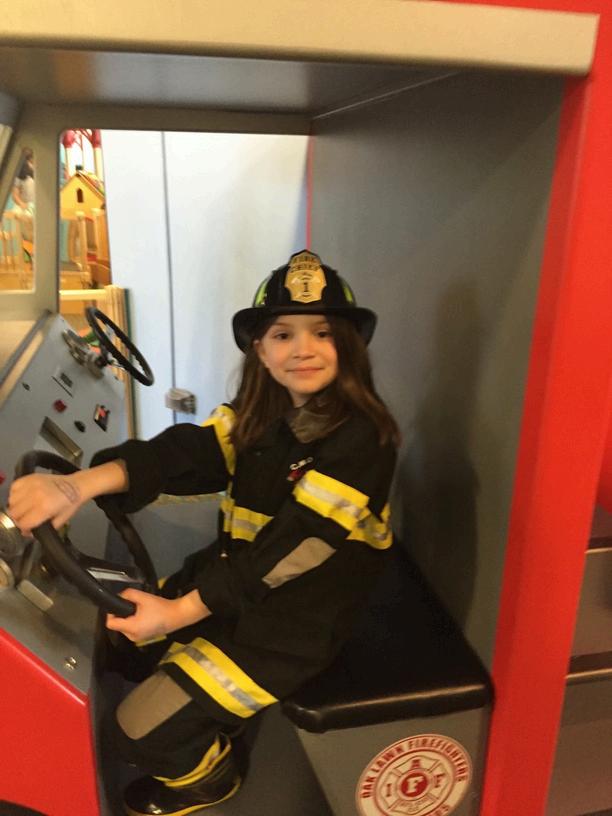
Figureoutwhothese strangersarefrom2016!