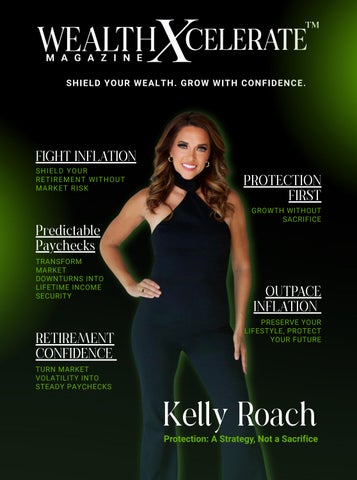
TRANSFORM MARKET DOWNTURNS INTO LIFETIME INCOME SECURITY
RETIREMENT CONFIDENCE
TURN MARKET VOLATILITY INTO STEADY PAYCHECKS
FIRST GROWTH WITHOUT SACRIFICE
PRESERVE YOUR LIFESTYLE, PROTECT YOUR FUTURE
Editor’s Letter
Welcome to this issue o g
Kelly Roach sets the tone for this edition with a message that feels especially relevant in this moment: true financial confidence begins with protection In her featured article and through this issue’s cover theme, she speaks to the importance of shielding wealth, navigating inflation with intention, and pursuing growth from a position of strength. It is a perspective that not only anchors her contribution, but also informs the broader conversation woven throughout these pages. Kelly’s theme for the issue centers on “Shield Your Wealth. Grow With Confidence,” alongside protection-first planning, inflation, and preserving retirement lifestyle and future security.
This month, we examine what it means to build enduring financial confidence in an environment defined by volatility, rising costs, and accelerating change From protected retirement growth and dependable income strategies to estate planning, tax efficiency, and the expanding role of AI in wealth-building, each feature reflects a more elevated view of success one rooted not only in accumulation, but in stewardship, resilience, and long-term clarity The issue’s editorial lineup includes features on inflation protection, AI and personal finance, estate planning, annuities for predictable income, bucket-based retirement planning, and tax-smart wealth strategies
Thank you for spending time with us. I hope this issue offers not only insight, but a renewed perspective on how to protect what you have built while preparing thoughtfully for what lies ahead
Dennis M Postema Founding Editor/CEO
DennisM Postema
Inflation’s Silent Raid: How FIA’s Are Your Shield for Protected Retirement Growth - Page 4
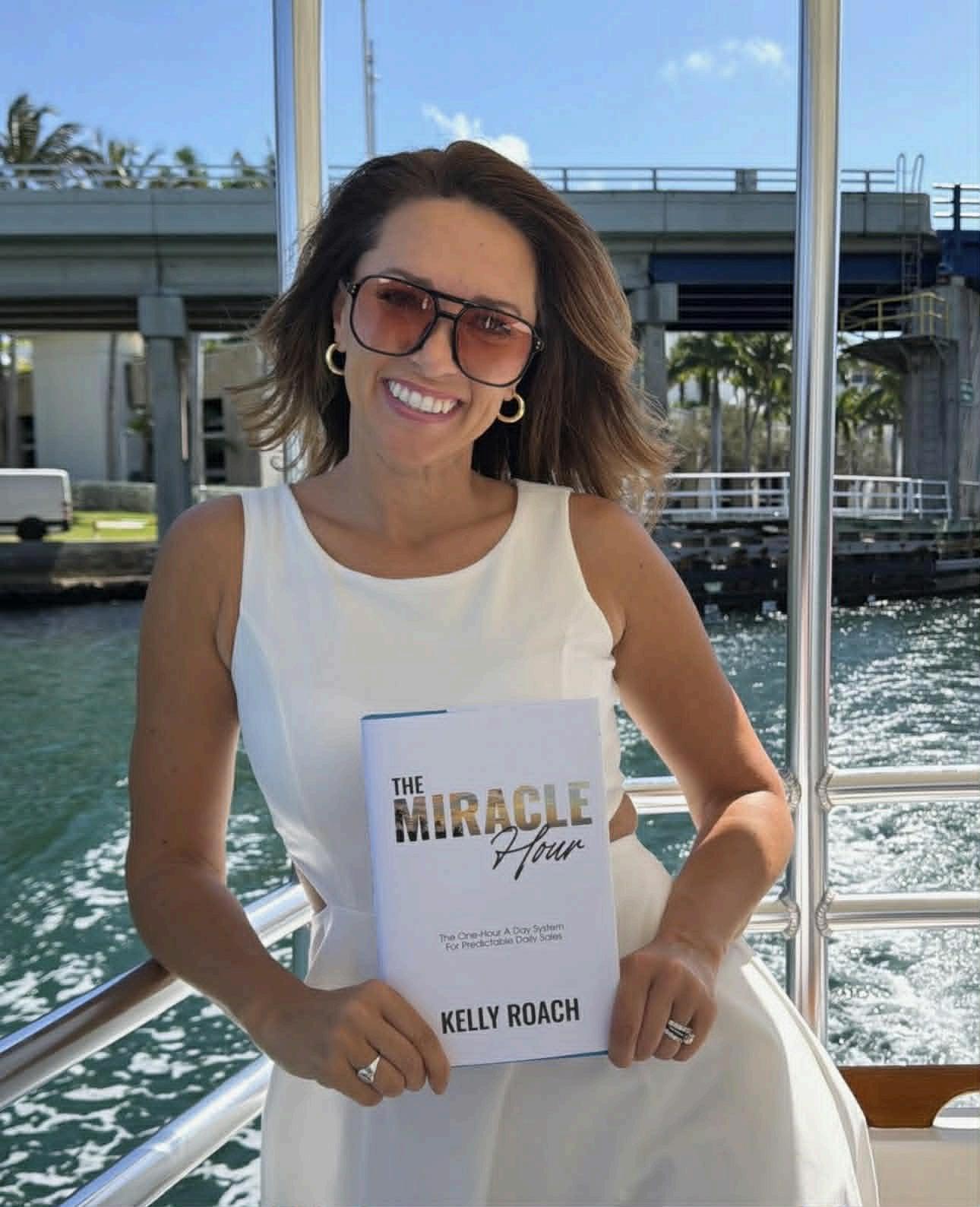
WealthXcelerate Magazine Exclusive Interview - Kelly Roach: The Miracle Hour - Page 10
Turn Market Downturns into Steady Paychecks: Using Annuities for Predictable Retirement Income - Page 20
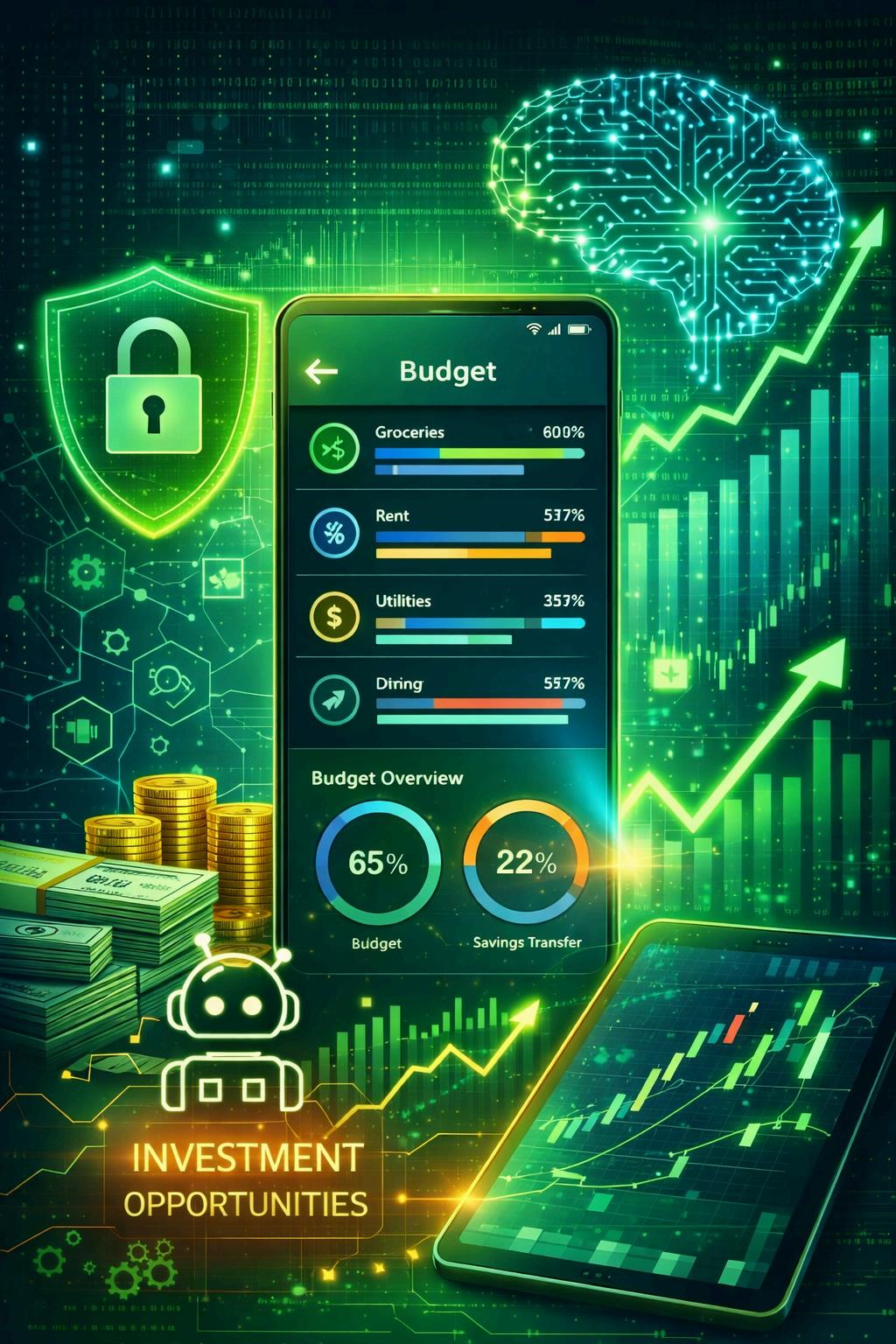
Unlock Your Financial Potential: Practical Ways AI is Already Helping You Grow and Protect Your MoneyPage 28
How to Know What You Actually Need in an Estate Plan - Page 34
Realizing Your Retirement Dreams: Building Your Future with the 5-Bucket Income Blueprint - Page 38
Slash Your Tax Bill This Season: A Guide to Qualified Plans for Maximum Write-Offs and Future Wealth - Page 44
Maximize Your Returns, Minimize Your Taxes: How AI is Revolutionizing Tax-Efficient Wealth Building - Page 52
The content in WealthXCelerate Magazine is made available on the terms and conditions that the publisher, editors, contributors and related parties, shall have no responsibility for any action or omission by any other contributor, consultant, editor or related party; disclaim any and all liability and responsibility to any party for any loss, damage, or disruption caused by errors or omissions, whether such errors or omissions result from negligence, accident or any other cause; are not responsible in any way for the actions or results taken by any person, organization or any party on basis of reading information, or contributions in this publication, website or related product
Inflation’sSilentRaid:
HowFIA’sAreYourShieldforProtectedRetirementGrowth
Dennis
M. Postema, RFC
In today's unpredictable economy, securing your retirement means more than just saving; it means protecting your purchasing power Discover how Fixed Index Annuities can offer the best of both worlds: principal safety and the potential for market-linked gains.
Retiring used to feel like reaching a well-earned finish line. Decades of diligent saving, strategic investing, and disciplined spending were meant to culminate in a period of comfortable security. But as many retirees are discovering the hard way in the 2020s, the finish line can quickly morph into a precarious tightrope. The modern retirement challenge isn't just about accumulating enough; it’s about staying retired, safeguarding your nest egg against a relentless barrage of economic headwinds Among the most insidious of these is inflation, a silent thief that systematically erodes the purchasing power of your hard-earned money with every passing year.
For too long, retirees have been implicitly or explicitly told to choose: safety or growth. The traditional approach often involved shifting from aggressive, growth-oriented investments to ultra-conservative options like Certificates of Deposit (CDs) or bonds once retirement neared While these offer a perceived sense of security, they rarely keep pace with inflation, especially in periods of sustain
sustained price increases. Conversely, staying heavily invested in the stock market carries the inherent risk of significant losses, particularly in the early years of retirement – a phenomenon known as "sequence of returns risk" – which can devastate a carefully crafted savings plan.
This is where a powerful, yet often misunderstood, financial tool enters the conversation: the Fixed Index Annuity (FIA) Designed to offer a middle ground, FIAs have surged in popularity and sales because they promise a unique combination that traditional products struggle to deliver This isn't about choosing between a rock and a hard place; it's about finding a strategic solution that provides principal protection, preventing catastrophic losses, while also offering the potential to grow your retirement income in lockstep with market performance This article will delve into the modern dangers inflation poses to your retirement and explore precisely how Fixed Index Annuities act as a robust shield, ensuring your money not only lasts but thrives, safeguarding your future and your peace of mind
The Silent Raid: Understanding the Modern Threat of Inflation
You’ve felt it at the grocery store, at the gas pump, and when the utility bills arrive Prices are simply going up, and for many, they're going up faster than incomes or fixed retirement payments The
The period from 2020 to 2024, in particular, saw the highest sustained inflation rate in the United States in four decades This isn't merely an inconvenience; for retirees living on fixed incomes whether from pensions, Social Security alone, or a rigid withdrawal strategy it's an existential threat.
Consider the stark reality presented by historical data: Over a 20-year retirement, assuming an average inflation rate of just 3%, the purchasing power of $1,000 today could shrink to as little as $550.
That’s a loss of nearly half your buying power If inflation surges to 4% consistently, that $1,000 dwindles to approximately $450. This erosion is not gradual and imperceptible; it’s a quantifiable loss that directly impacts your ability to afford the essentials and enjoy the lifestyle you've worked so hard to attain Medicines, groceries, utilities, transportation these costs don't wait for inflation to subside While your fixed income remains stagnant, your expenses march steadily upward.
This is why smart retirees, and those planning for retirement, are increasingly looking beyond the first five years of their retirement They are planning for the last ten, the stretch of life where their accumulated assets will be most heavily relied upon The challenge is to ensure that the money you’ve saved today will retain its value and, ideally, grow enough to meet the rising costs of the future Relying solely on interest from savings accounts or fixed-rate bonds, which may yield 3-5% in favorable interest rate environments, is often insufficient to combat inflation rates that can spike to 5-7% or higher This gap between your income growth and the rising cost of living is where retirement plans falter, leading to difficult choices, increased financial stress, and a diminished quality of life.
What "Principal Protection" Really Means in Volatile Markets
The term "principal protection" within the context of financial products can sometimes sound like a marketing buzzword, but for retirees, it represents a fundamental layer of security that can be life-changing
When we talk about principal protection in a Fixed Index Annuity (FIA), we're
we're referring to a guarantee that your initial investment will not be lost due to market downturns This is a critical distinction from how many other investment vehicles work.
Traditional brokerage accounts, mutual funds, and exchange-traded funds (ETFs) are subject to market volatility If the stock market or bond market experiences a significant va dro
investments can drop, sometimes dramatically. For someone in retirement, or nearing it, who is relying on those assets for income, a substantial market loss can be catastrophic Imagine a market crash in your first few years of retirement; if you need to withdraw funds, you're forced to sell assets at a steep discount, permanently shrinking your overall retirement principal and its future earning potential. This is the essence of "sequence of returns risk" a bad sequence of market returns early in retirement can derail your financial plan more effectively than a lower average return over a longer period
Fixed Index Annuities, through their contractual structure, aim to eliminate this risk of principal loss. While the interest crediting is linked to the performance of a market index (like the S&P 500), the annuity
However, FIAs do not directly invest in the index itself Instead, the insurance company uses the index's performance as a benchmark for calculating the interest credited to your annuity This calculation typically happens over a specific period, often one year. There are several common methods insurers use to determine how much interest you earn, and understanding these is key to grasping the potential upside of an FIA:
accounts, FIAs use a portion of the annuity's interest crediting to track the performance of a chosen market index, such as the S&P 500 contract itself ensures that even if the index experiences negative returns for a given crediting period, the annuity's value will not decrease Your principal remains intact. This does not mean the annuity grows every year; if the index has a negative return, you simply receive 0% interest for that period. But importantly, you do not lose money. This guarantee provides a critical buffer, offering retirees a sense of financial security that allows them to sleep at night, knowing that a market crash won't wipe out their life savings This "lose-sleep risk" reduction is a primary driver for many individuals seeking stable foundations for their retirement income
The Mechanics of Growth: How FIAs Capture Market Upside
While principal protection is a cornerstone of FIAs, their appeal is significantly enhanced by their ability to offer growth linked to market indexes This is where the "index" part of "Fixed Index Annuity" comes into play Unlike fixed annuities that offer a set interest rate (which might be lower and struggle against inflation), or variable annuities that directly invest in market subefsbsrgg
Caps: A cap sets the maximum rate of interest you can earn in a crediting period. For example, if the S&P 500 is up 15% and the annuity has a 10% cap, you would earn 10% interest for that period, not the full 15%. Caps are often more generous when interest rates are lower, and can be higher when interest rates are higher
Participation Rates (Pars): A participation rate determines the percentage of the index's gain that you will receive If the S&P 500 gains 10% and the annuity has a 70% participation rate, you would earn 7% interest (70% of 10%) Pars are often used when there is no cap or a much higher cap, but they typically apply to a lower percentage of the index's growth.
Spreads (or Index
This method involv percentage (the "sp index's gain to credited interest I gains 10% and the annuity has a 2% spread,
spread, you would earn 8% interest. Spreads are less common now than caps and pars
Index Blended Strategies: Some annuities offer more complex strategies that combine elements of these methods or use different indexing approaches (e g , point-topoint over a longer term, or averaging over the year)
It's crucial to understand these crediting methods because they directly influence your potential returns The annuity contract will clearly define the crediting method, the index (or indexes) used, the crediting period (e g , annual, monthly), and any associated caps, participation rates, or spreads Insurance companies choose these methods to balance the guarantee of principal protection with the desire to offer competitive growth potential that aims to outpace inflation This sophisticated mechanism allows FIAs to participate in market gains without exposing your principal to market losses.
Beyond Growth: Real-World Scenarios and the "Dennis' Real Talk" Perspective
To truly appreciate the value of FIAs, let's look at how they work in practice, drawing on common retirement challenges and the core philosophy you champion, Dennis.
Consider a hypothetical couple, John and Mary, retiring at 65 They've saved diligently and have a significant portion of their retirement portfolio in a brokerage account
Scenario A: Early Retirement, Bad Market. In their first year of retirement, the stock market drops by 15% If their retirement assets were entirely in a mutual fund, their portfolio value would plunge. If they need to withdraw $60,000 for living expenses, they're now withdrawing from a shrunken base, and their long-term plan is jeopardized.
Scenario B: Using a Fixed Index Annuity. Now, imagine a significant portion of their portfolio is in an FIA In that same down market year, the underlying index might have fallen 15%. However, due to the FIA's principal protection feature, John and Mary's annuity value remains unchange
unchanged They still earn 0% for that crediting period, but their principal is safe. When they need their $60,000 withdrawal, they take it from their safe principal, and their long-term retirement security is preserved.
This scenario highlights the critical difference: FIAs mitigate the devastating impact of sequence of returns risk.
Dennis' Real Talk: "A dollar today won’t go nearly as far in 10 years If your retirement income doesn’t grow with you or protect against inflation you’re not retiring safe You’re retiring broke slowly Many people think they have to choose between keeping their money safe and making it grow That's a false choice in retirement You need a plan that does both. With an FIA, you get that built-in protection against market storms, and you still have the opportunity to capture market gains This isn't about gambling; it's about strategic planning to ensure your money is there for you, no matter what the market does "
Another common challenge is unexpected expenses. A leak in the roof, a sudden need for dental work not
not covered by Medicare, or helping an adult child can create significant, unplanned drawdowns. While an FIA doesn't directly provide funds for these immediate needs (unless specifically designed with income riders), its stability ensures that these unexpected expenses don't force a panic sale of investments during a market downturn.
The security offered by the FIA means that other liquid assets can be used for emergencies without jeopardizing the core retirement plan. The appeal of FIAs extends beyond just accumulating wealth safely during volatile times They can be structured to provide benefits across different phases of retirement:
Accumulation: As discussed, FIAs offer a way to grow retirement assets with principal protection For those still accumulating or in the early years of retirement, this allows for continued participation in market upside while hedging against downside risk This is crucial for outmaneuvering inflation over the long term
Distribution: Many FIAs come with optional income riders These riders can be activated at a future date to provide a guaranteed stream of income for life, regardless of how the underlying index performs or how long the annuitant lives This dependable income stream is invaluable for covering essential expenses and providing financial certainty The growth accrued in the account can increase the amount of this guaranteed income, essentially allowing the rider to benefit from accumulated gains
Legacy/Growth: While the primary focus for many in retirement is income and protection, FIAs can also include a legacy component Upon the annuitant's death, any remaining principal and accumulated interest (less any withdrawals or fees) can be passed on to beneficiaries Some FIAs are designed with this in mind, offering growth potential that can benefit heirs, or specific death benefit provisions that ensure a certain amount is passed on.
potential legacy creation makes FIAs a versatile tool for a comprehensive retirement plan
Conclusion: Securing Your FinancialFuture
The landscape of retirement planning has fundamentally changed The old paradigms of simple accumulation and guaranteed income streams are no longer sufficient for the challenges of today's economy, particularly the pervasive threat of inflation. Simply relying on market growth carries too much risk for those who can least afford it – retirees. Conservative investments, while safe, often fail to keep pace with rising costs, leading to a silent depletion of purchasing power.
This ability to serve multiple needs growth, guaranteed income, and potential
Fixed Index Annuities present a compelling solution by offering a structured approach that directly addresses these dual concerns They are not a one-size-fits-all product, and understanding the specific crediting methods, caps, and riders is paramount However, for the prudent individual seeking to protect their principal from market losses while still participating in potential market gains to combat inflation, the FIA offers a robust pathway. It provides a foundation of security, a mechanism for growth, and the potential for a reliable income stream, empowering you to retire not just securely, but with confidence and peace of mind By understanding and strategically implementing FIAs, you can fortify your retirement plan against the silent raid of inflation and ensure your financial future truly lives up to the dreams you’ve worked a lifetime to achieve
ImportantDisclaimer:
This article is intended for educational and informational purposes only It is not intended as, and should not be construed as, tax, legal, or financial advice. The information provided is general in nature and may not be applicable to your specific circumstances. Tax laws are complex and subject to change You should consult with a qualified tax professional, accountant, or financial advisor before making any decisions based on the information presented here. The author and publisher are not accountants or tax advisors and do not provide tax advice
KELLY
OPENING—SettingtheStage
1 Kelly, welcome to WealthXcelerate The Miracle Hour is creating a lot of buzz right now. Before we dive into the book take me back to the moment, the exact season of life, where this concept was born. What were you going through personally and professionally that made you realize you needed a completely different approach to how you started your day?
When I was at the peak of my success in the Fortune 500 world, and had achieved all of the “ on paper” career success that I was striving for, I realized that no amount of material success could make up for the craving of your soul to contribute I knew that I wanted to find a way to not just make money, but also to do good, and have those things support one another I knew it was time to start my own business –but I was also the breadwinner for my family and we had a newborn daughter at home I basically had one hour on my lunch break to figure out how I was going to build my bridge to freedom, and the Miracle Hour pretty much started with me figuring out how I was going to do in one hour what most people normally do in 8
It turns out that although the average entrepreneur works more, they get paid less than those who work in corporate jobs I quickly learned that you can, in fact, build a wildly successful business with high intent in just a few hours, if you have the right focus
the frameworks for how we assess value look completely different now, because AI can collapse time and achieve in an instant what the average person was typically spending hours to achieve. This means that production, hustle, and volume can no longer be measurements for success or contribution. We are literally moving into a completely new era that is one of consciousness, value being created through nuance and wisdom, complex problem solving, and depth of relationships – while AI will do most of the tactical, operational, and repetitive elements of any business going forward
For me, the Miracle Hour was about the bridge to freedom, it was about fulfilling on my goals and dreams for my family and the ability to be home with my daughter, but also to impact thousands of people and make a difference while making millions, and all of that is what I get to live out today, which is why I want to share this book with as many entrepreneurs as possible, because I believe that every entrepreneur starts their business to fulfill on their purpose, but also work less, earn more, and be able to have time for the people and things that they love And that's not what most entrepreneurs are experiencing
For me, the Miracle Hour was about the bridge to freedom, it was about fulfilling on my goals and dreams for my family and the ability to be home with my daughter, but also to impact thousands of people and make a difference while making millions, and all of that is what I get to live out today, which is why I want to share this book with as many entrepreneurs as possible, because I believe that every entrepreneur starts their business to fulfill on their purpose, but also work less, earn more, and be able to have time for the people and things that they love. And that's not what most entrepreneurs are experiencing
What this means is that there are now two very distinct paths forward: the first is competing in the social media and content game, but to do that effectively, you have to be willing to fully leverage AI for duplication, distribution, and output. To me, this defeats the purpose of showing up as a human being with God-given gifts, meant to be of service to the world.
The reason why this is so poignant and important now in particular is that with the integration of AI, all of dc
2. You've built multiple seven- and eight-figure businesses, led NFL cheerleaders, climbed the corporate ladder at Fortune 500 companies and yet this book isn't about strategy or tactics It's about the first hour of your day Why did you feel the business world needed this message right now, in 2025, more than ever?
The second path, and the one I deeply believe in, is in building your relationship rolodex Going deep with fewer people, but in a more intentional and meaningful way The data supports this: 94% of high-ticket buying decisions are now happening offline and through referral. People are moving away from short form consu
The Miracle Hour is a foundation for that second path It is how you grow systemically and consistently through the quality of the relationships you're building every single day, regardless of how big your following online is
THECOREFRAMEWORK
3 Let's get into the framework itself You lay out a very specific structure for this "Miracle Hour " Walk our readers through it what does the hour actually look like, step by step, and why is the order of those steps so important?
The steps for the Miracle Hour will actually look different for each person and each company, depending on what the specific goals are. We have clients using the Miracle Hour to secure licensing deals, corporate deals, joint venture deals, we have clients using the Miracle Hour to fill events, sell products, programs, and services, fill masterminds, book VIP days –everything that you can imagine can be accomplished using the Miracle Hour, including online and offline activities It's more important to understand
understand how to do a miracle hour successfully than it is to define the activities, because they may look different depending on what the objectives in your business and life are
First and foremost, you have to get clear on what your goals are Second, commit to the hour that is going to be your miracle hour, consistently and no matter what, every single day Third, identify the top 5 to 7 activities that will bring you the highest, fastest and most efficient return. Fourth, break down the number of activities that you will implement on a daily basis to move forward towards that goal. And then, of course, define the list of people that are going to be included in your outbound outreach in order to build, nurture and ultimately convert these relationships into millions of dollars in sales
Once you have that list, break it down into cycles, and rotate through them on a 10-day cycle so that each person on the list is going to hear from either yourself or someone from your team at least twice each month.
If you do this with any area of your business – renewals, referrals, relationships, activations, upsells, reactivations – you will see consistent and predictable, daily results Of course, once you get up and running with the method, then you have to test, refine and iterate until you get the right quantity, quality, and focus of activities that will get you to the goal
4 One of the things that struck me reading this book is that you're not just talking about productivity you're talking about identity transformation You write about becoming the person who can hold the success you're building. Can you unpack that? Because I think a lot of high earners reading this magazine have hit a ceiling, and they don't realize the ceiling is internal.
This is an absolute identity transformation, and the whole reason that the Miracle Hour worked for me was that I was able to uplevel my identity to see that the value and intent of the time that I was putting in was more important than the number of hours.
I obviously had a disadvantage starting my business being that I really only had about an hour a day to make those outbound connection points. So, initially, my perspective was that as someone who was constantly first in and last out, promoted 7 times in 8 years, had achieved all of this success, there's obviously an association with how hard you work, your input vs output, and the amount of hours that you put in to get to a goal.
I had to completely reframe that and take on this new identity that I could continually uplevel the impact of my work and consolidate those highimpact activities into my only focus during that hour.
I quickly saw that my business was growing faster than people that were putting in 50-60 hours a week A lot of entrepreneurs hustled their way to the level of success that they're having today, but will need an identity upgrade to see themselves as a person who understands that when you execute with high intent, it's no longer a game of how many hours you put in or how much production, but instead, what the quality and effectiveness of those interactions actually are
A big reason why entrepreneurs never make it beyond 7-figures is because you can hustle your way to 7-figures, but you need to have a completely new operating system to go beyond that, which is why an identity upgrade is so important You will run out of time You will run out of hours. There has to be something that ultimately upgrades the value you're getting from those hours in order to make bigger leaps even faster and easier in your business.
5 You talk about the difference between being busy and being productive and honestly, Kelly, I think that's where most entrepreneurs are lying to themselves. They're exhausted, they're grinding, but they're not actually moving the needle How does The Miracle Hour specifically break that cycle?
So many business owners are in perpetual burnout because they've been told to take massive action, so they do But there's a big difference between activity and activation, and that difference is what separates living your dream from your business feeling like a jail cell you’ve created for yourself.
Activity is busy work. It might move the needle incrementally, but not in a meaningful way Activation is direct interface with your market, your clients, and your best buyers, where you are continuously leading and inviting people to take the next step, which drives significantly faster revenue growth and stronger profit margins than trying to do everything with little intent Think about it: your inner circle of loyal clients cost less to maintain, refer more often, stay longer, and multiply far more quickly
Your time would be better spent activating the people in your circle versus chasing the masses.
The problem is that many entrepreneurs equate visibility with success Yes it’s important, but in a world where over 50% of online activity is bots, visibility no longer equals success You need a more effective way to activate people, and that comes down to removing the barriers between you and the people you actually want to work with
FAITH,MINDSET&WEALTH
6. You don't shy away from faith in this book. In a business and wealthbuilding space where people often separate the spiritual from the financial you combine them unapologetically Why? And what would you say to the reader who respects the hustle but hasn't considered that their spiritual life might be the missing piece in their financial life?
So many entrepreneurs have completely lost the meaning and purpose of being “service oriented.” They're trying to keep up and have lost the vision for why they started in the first place When you lose purpose and vision, it becomes impossible to overcome the challenges we face on a daily basis
Faith is the core reason I've been able to overcome many significant challenges and obstacles in my own business and life I believe that being in tune with your relationship with God and your spiritual gifts, and building a business that uses those gifts to be of service and glorify God is what it’s about
Faith and financial freedom go hand in hand, because you need to believe in something bigger than yourself, rely on someone bigger than yourself, and have an anchor that reminds you why you're doing this when things get hard When people ask me how I keep going, the number one thing I tell them is: invest in growing your faith and your relationship with God.
It's the number one recommendation I can make
7 There's a powerful section in the book about gratitude as a wealthbuilding tool not just a feel-good exercise. As someone who advises high-performers and covers wealth strategy every day in this magazine, I found that compelling Can you connect those dots for our readers how does gratitude literally change your financial trajectory?
Anyone who is in a state of gratitude is going to attract more to be grateful for And, anyone in a perpetual state of pessimism is going to attract more to be pessimistic about Managing your state and your energy will impact your financial trajectory in more ways than you can count.
count It starts with being genuinely grateful for what you have Every person who has entrusted you with their money, their time, and their trust, and then letting that gratitude inform everything you do in your business
People also want to work with people who are grateful to work with them
When a client or past client feels genuinely appreciated, that relationship stays alive. And yet most small businesses have no real strategy for staying in front of their current clients consistently, let alone their past ones. That's a massive missed opportunity, because we know that with top-of-mind awareness, people tend to buy from one of the last three people who were in front of them. If you're not continually expressing to past customers that you'd love to work with them again, that you value them, why would they choose you over someone else who is reaching out and saying exactly that?
These are basic human principles that we sometimes forget to apply to our businesses
8. You write about the danger of building your identity around your business results I've seen this firsthand with financial professionals, entrepreneurs, even retirees who lose their sense of self when the title or the income changes How does The Miracle Hour help someone anchor their identity in something that can't be taken away by a market crash or a business downturn?
During the hustle era, so much of the entrepreneurial identity became tied to production, busyness, and results And then when the downturn came, the economic contraction, shrinking middle class, stagnant wages, compounding inflation, many business owners lost their confidence and self-belief, because when the business went backwards, they went backwards with it, and didn't know how to re-anchor
The Miracle Hour gives them a clear process for getting back into a rhythm not just for sales and business growth, but relationship building and strengthening connections with dream makers
When you have a system to follow and aren’t lost in what to do, it makes it easier to jump back into action and action is what creates confidence.
This is also why faith matters so much, and why having a clear sense of who you are as a person is so critical If you are a business owner who ties your whole identity to your business, you will not have a great life, because 99% of the time in business, we are facing real challenges. There will always be circumstances that could cause unhappiness if you let them define you
But if you anchor your identity in something greater, in your faith, in your family, in the life you are building outside of the business, then the business becomes something that enhances your life rather than cannibalizes it
PRACTICAL APPLICATION — For theHighAchiever
9 Let's get tactical for a moment
Our WealthXcelerate readers are busy they're running businesses, managing portfolios, leading teams Some of them are going to read this and say, "I don't have an extra hour " What's your answer to that person? And is there a scaled-down version for someone just getting started? Ultimately, the business has two functions: serving existing clients and acquiring new ones
A lot of business owners don't think that they have a spare hour a day to dedicate to these activities, but in reality, all of us have an hour a day to dedicate to this, because it's the most important thing we can possibly do to make sure that our businesses stay healthy, strong, profitable, and growing
They're often doing a ton of activity in their businesses, but most of it is not translating into material, profitable growth
What I would challenge all business owners to do is to look at every hour of where your time is going and ask yourself: is this materially generating more revenue in the short term for my company?
If the answer is no, obviously you will find more than one hour a day that can be dedicated to direct moneymaking activities that actually translate into real and lasting profitable growth.
10 You've coached thousands of entrepreneurs and business owners. When someone actually commits to The Miracle Hour consistently what's the first thing that changes? Is it their revenue? Their clarity? Their relationships? What do you see shift first?
The first thing that changes when people commit to the Miracle Hour is that they realize that there is literally opportunity everywhere. They realize that there's actually nothing standing in the way of them growing their business, and they realize that the goals and dreams that they have are still completely achievable and attainable A lot of business owners today are so busy working so hard in the quicksand trap of the online world and all of the things coming up with AI, that it feels impossible to grow.
And the first thing that people feel when they start doing the Miracle Hour and connecting directly with people on a daily basis is that it can be simple, it can be fast, and it can be enjoyable to generate new sales in your business every single day
All of a sudden, all those big goals and dreams are feeling achievable again
11 I love that you address the concept of protecting your morning from the world's agenda In our digital age phones buzzing, emails pulling, news headlines screaming how do you practically defend that first hour? What boundaries have you personally set that you'd recommend to our readers?
Most people are starting to realize that the digital experiment of the last decade has not delivered on its promise Mentally, physically, spiritually, emotionally, the results are not good. The people who truly understand the cost of being connected 24/7 are making dramatic changes Digital detoxes, spending less time online, and some even ditching smartphones altogether
For entrepreneurs specifically, if you cannot protect one focused hour each day, not responding to your team, not putting out fires, not reacting to anyone else's agenda, but instead completely focused on moving your business forward, you are going to struggle to grow.
We keep getting sold the idea that the next tool or technology will save us time. But most business owners are losing anywhere from one to 7+ hours a week on tools that were supposed to do the opposite A recent MIT report found that 95% of AI projects produced zero net productive impact on the business. Entrepreneurs are constantly being pulled into distraction, FOMO, and pressure to chase things that aren't actually moving the needle
The Miracle Hour pulls you back to the one thing that never changes: there is a relationship on the other side of every single dream When you do the work of building what I call your $100 million Relationship Rolodex, you never have to wonder where the next sale is coming from You never have to scramble to figure out how to grow The answer is always the same.
WEALTH,LEGACY&LEADERSHIP
12 At WealthXcelerate, we talk a lot about building wealth that outlasts you generational impact, legacy, purpose-driven success. How does The Miracle Hour connect to legacy? Because I have a feeling this isn't just about making more money it's about becoming the kind of person who stewards wealth differently
When we talk about legacy, most people immediately think about the financial piece, meaning what you leave behind The Miracle Hour will absolutely position your business to produce that kind of wealth But financial legacy alone is not enough, and I think deep down, most entrepreneurs already know that.
What I see constantly is business owners sacrificing their living legacy, their time, their presence, their relationships with the people they love most, in exchange for longer hours and harder work. And the painful irony is that much of the financial legacy they're grinding to build will disappear anyway, because they never spent the time teaching the people they love how to steward it
Your children are not going to grow up wishing you left them more money They're going to wish they had more time with you.
That's why one of the core goals of The Miracle Hour is helping entrepreneurs build a daily sales system that produces results every single day, and one their team can run without them. Because when your business can grow without you being consumed by it, you get your life back. You get to show up for the people and the things that actually matter That is the living legacy And it's the one that no market crash, no economic shift, no inheritance dispute can ever take away.
Becoming the kind of person who stewards wealth differently starts with becoming the kind of person who values time differently. The Miracle Hour is where that transformation begins
13. You're a mother, a CEO, an author, a coach you wear a lot of hats How has this practice specifically impacted your ability to lead your family and your business without sacrificing one for the other? Because I think that tension is real for a lot of our readers, and nobody talks about it honestly enough.
This practice has genuinely changed my life It's what has allowed me to homeschool my daughter, be present in my marriage, stay active in my church and community, take dance classes, and be at every competition and moment that matters to her
I think that tension you're naming is the tension that nobody talks about enough, which is that most entrepreneurs feel like they're constantly choosing: either the family gets what they need and the business stalls, or the business gets what it needs and the family gets whatever is left over. That is not a sustainable way to live, and it's not the life most of us got into entrepreneurship to build
What I've found is that you have to have a different system entirely You can't just work harder and hope it balances out You have to be intentional about how your business runs so that it doesn't require you to sacrifice everything else to keep it alive
I'd also say to be very careful about whose model you're replicating A lot of the voices teaching success online don't have children, or they're not married, or they're on their second marriage, or they're living in a way that doesn't actually reflect the values most everyday entrepreneurs are trying to build their lives around Success that costs you your family, your health, or your faith is not success worth replicating The Miracle Hour gave me a framework for protecting what matters most, not just in my business, but in my actual life
14 Kelly, if someone reading this interview is at a crossroads maybe they've built something successful but they feel empty, or they're chasing the next level but they're running on fumes what would you say to them? Not as a coach, but as someone who's been in that exact place What's the one truth from this book you'd want them to walk away with today?
The truth I want you to walk away with is this: one focused hour is the equivalent of eight scattered, distracted ones. That means every person who reads this book could reclaim 20+ hours of their life every single week, and still have their business growing faster than it is right now You don't have to burn yourself out You don't have to compromise your values You just need a different strategy.
And as we move into the AI era, it's also time for a radical identity upgrade The things that made you valuable in the hustle era won't be what
what makes you valuable now. What will matter is relationships, managed well, nurtured consistently, and activated with intention That is the methodology at the heart of The Miracle Hour.
More than anything, this book is about helping business owners reclaim their time, lower their stress, and step into true sovereignty so that the vision you had when you started your business actually matches the life you're living every day.
15. Final question and I ask every guest this What does wealth that you can't outlive look like to you? Not just financially, but holistically when you close your eyes and picture a life of true, lasting abundance what do you see?
When I picture a life of real, lasting abundance, I see my daughter going out into the world confident in her gifts, focused on the difference she can make. I see my clients and students with time for their faith, their families, and a business they genuinely love. That is the legacy I'm after
after. And The Miracle Hour is the tool that gets you there, because the transformation you've been working so hard to achieve has been waiting for you on the other side of one hour.
Are you worried that market downturns will derail your retirement income? Discover how the strategic use of annuity income riders can transform uncertainty into a lifetime of dependable payments, ensuring your essential needs are always met
Retirement is often envisioned as a time of freedom freedom from the daily grind, freedom to travel, freedom to spend time with loved ones However, for many, the specter of financial insecurity casts a long shadow over these golden years The ability to generate a consistent, reliable income stream is paramount The traditional pillars Social Security and pensions are either insufficient on their own or are becoming increasingly rare Relying solely on investment portfolios means constantly navigating the treacherous waters of market volatility, where a significant downturn in your early retirement years can have a devastating, longlasting impact on your ability to fund your lifestyle This is especially true when facing an uncertain future with rising healthcare costs and the everpresent specter of inflation
The desire for a predictable income is universal, yet the solutions often feel limited You might be tempted by the perceived safety of CDs or fixed savings accounts, but their returns rarely outpace inflation, slowly diminishing your purchasing power Or, you might stick with stock market investments, hoping for growth but risking catastrophic losses precisely when you need your money the most What if there was a way to bridge this gap, to secure a predictable income floor while still allowing your assets to participate in market upside?
The desire for a predictable income is universal, yet the solutions often feel limited You might be tempted by the perceived safety of CDs or fixed savings accounts, but their returns rarely outpace inflation, slowly diminishing your purchasing power Or, you might stick with stock market investments, hoping for growth but risking catastrophic losses precisely when you need your money the most What if there was a way to bridge this gap, to secure a predictable income floor while still allowing your assets to participate in market upside?
This is where annuity income riders emerge as a powerful, often overlooked, solution Far beyond simple savings vehicles, annuities, when equipped with the right riders, can transform your accumulated assets into a guaranteed stream of income that lasts for life. This article will explore how these sophisticated features work, how they can shield your retirement income from market downturns, and how they can provide the profound peace of mind that comes with knowing your essential expenses
The
Unpredictable Retirement Reality: Why a Guaranteed IncomeFloorMatters
Let’s face a harsh truth about retirement today: the landscape has shifted dramatically Decades ago, a stable pension, predictable Social Security, and a conservative investment approach might have been sufficient Today, that picture is far more complex. Many traditional pension plans have vanished, replaced by 401(k)s and other defined contribution plans that place the entire burden of investment management and longevity risk squarely on the individual Social Security, while a vital piece of the puzzle, is projected to face solvency issues, and its benefits alone are often not enough to cover a comfortable retirement lifestyle.
This leaves retirees dependent on their investment portfolios to generate income And this is where the real challenge begins Consider the concept of "sequence of returns risk." If you retire and experience significant market losses in your first few years, you are forced to withdraw funds from a diminished principal. This isn't just a temporary setback; it can permanently cripple your portfolio's ability to recover and generate income for the remainder of your retirement.
Imagine this: You retire at 65 In your first year, the market drops 20% You need to withdraw $50,000 to live on. Your portfolio shrank, and you just pulled a significant chunk out of a smaller base In year two, the market only recovers slightly, but you need another $50,000 By year five, your portfolio looks like a shadow of its former self, and the fear of running out of money becomes a constant companion
This anxiety is compounded by other retirement expenses that aren't always predictable:
Healthcare Costs: Medicare covers much, but not all, healthcare expenses Dental, vision, hearing aids, prescription drugs, and longterm care can add hundreds of thousands of dollars to your retirement needs Fidelity estimates a couple retiring today might need $315,000 for healthcare expenses by age 65.
Inflation: As we’ve discussed, inflation silently erodes purchasing power What seems adequate today may not be in 10 or 20 years Without income that can grow, your lifestyle will inevitably shrink
Unexpected Life Events: Helping children or grandchildren, home and auto repairs, or even a sudden personal health crisis can strain even well-managed budgets
In this environment, a guaranteed income floor an income source that you can absolutely count on, regardless of market performance or your longevity is not a luxury; it is a fundamental necessity for true retirement security
Annuity Income Riders: Your Personal Paycheck Protection Plan
This is where annuity income riders shine Think of an income rider as a sophisticated optional feature you can add to certain annuities (like Fixed Index Annuities or Variable Annuities) that transforms your accumulated account value at a future date into a guaranteed stream of income for life, or for the lives of you and your spouse These riders are designed to:
Provide a Guaranteed Lifetime Income: At a specified age, the rider converts your account value into a guaranteed income stream This income is paid for as long as you (or your joint annuitant) live, irrespective of market performance. This is the ultimate buffer against longevity risk the risk of outliving your money
Offer Protection from Market Downturns: Crucially, these riders often provide a "guaranteed minimum income benefit" (GMIB) or a similar concept, often referred to as a "benefit base " This benefit base typically grows over time, often at a guaranteed minimum rate (e g , 7-8% per year) even if your actual account value fluctuates or declines
When you decide to s income, the amount guaranteed payment is based on this benefit solely on the unpredicta value of your accoun moment If the ma performed poorly, you calculation will be base higher, guaranteed ben effectively shielding you payments from market vo
Allow for Potential Incom
While the benefit base minimum guarantee, m also allow for "step-ups" o of your account value P (e.g., annually), the rider w the highest value your ac reached over the contrac This means that even account value subseque your future income calc be based on that highe value This feature al potential income stream
ability to generate income
Growing Income Potential: Through features like annual benefit base roll-ups (guaranteed growth of the base) and market value lock-ins, your potential income stream can increase over time, offering a hedge against inflation and allowing you to benefit from market upturns
Flexibility and Choice: Most riders allow you to choose when to start taking income (often between ages 50-90). You can also choose your payout option, including single-life or joint-life options, which continue payments to your spouse after your passing. Some riders also allow you to take a lump-sum withdrawal of a small percentage of your account value annually, even while income payments continue.
The combination of these points creates a formidable tool for securing retirement income. It allows you to maintain some exposure to market growth through the annuity's general account, but with a safety net that ensures your income needs are met Dennis’ Real Talk: Protecting Your Lifestyle, Not Just Your Principal
you can count on Think of it this way: the market can do what it wants, but your bills still need to be paid An income rider is your shield, ensuring that predictability when the world around you seems anything but."
It's crucial to acknowledge that these powerful features come with costs Annuity income riders are optional benefits, and the insurance company charges a fee for them. This fee is typically deducted annually from your account
typically an annual rider fee, often expressed as a percentage of the benefit base or the account value. Unlike variable annuities, FIAs don't have M&E fees in the same way, but the crediting methods (caps, pars, spreads) are also part of the equation that affects your growth potential, and these are chosen by the insurer to manage their risk and offer the rider benefit.
The "All-In" Fee: This is the most important concept for consumers You need to ask your advisor not just about the rider fee, but to disclose the total all-in fee percentage This should include the rider charge, plus any administrative fees, product fees, or impact of the crediting method on your potential returns A rider might offer great benefits, but if the total cost eats up all the potential growth and then some, it may not be the right solution
Dennis' Real Talk: "Don't let advisors hand you a list of fees without explaining them clearly
"Too many people in retirement focus only on not losing their principal. That’s important, yes, but it's only half the battle What good is keeping your principal if you can't afford to live? Your retirement plan needs to focus on income It needs to answer the fundamental question: 'Will I have enough money to cover my essential expenses for the rest of my life?' That’s where these income riders are so powerful. They take the guesswork out of it. They give you a paycheck you
account value or benefit base It's essential to understand these costs and how they impact your overall returns.
Income Rider Fee vs. M&E Fees: In variable annuities, there are often separate fees for the income rider (the "benefit charge") and for the underlying investments and insurance guarantees (referred to as "Mortality and Expense" or M&E fees). These can add up significantly
Fixed Index Annuities: FIAs with income riders also have fees. These are
Ask them to show you, in black and white, what your total annual cost is not just for the rider, but for the entire product A good advisor will break it down so you understand what you're paying for and why Transparency is key, and you deserve to know the full price of your protection "
To truly understand how an annuity income rider can benefit you, it's essential to quantify your needs
This is why a tool like the "What's My Income Gap?" worksheet is so vital. It helps you see precisely where guaranteed
guaranteed income can fill the void.
What's My Income Gap? Workshop
Target Monthly Need: What is the essential monthly income you need in retirement to cover all your bills and lifestyle costs? Be honest and comprehensive $
Guaranteed Income Sources:
Social Security (Your estimated monthly benefit): $
Pension (Your estimated monthly benefit): $
Other Guaranteed Income (e.g., spousal pension, certain investments): $
Total Guaranteed Monthly Income: $
Your Income Gap: Subtract your Total Guaranteed Income from your Target Monthly Need. This represents the shortfall your investments must cover
Target Monthly Need - Total Guaranteed Monthly Income = Income Gap
$ - $ = $
This gap is the critical amount that annuity income riders can help provide. If your target monthly need is $7,000, and your Social Security and pension provide $4,500, you have a $2,500 monthly income gap. An income rider on a suitable annuity could be designed to provide that guaranteed $2,500 per month, or a significant portion of it, for the rest of your life.
In the complex tapestry of retirement planning, the thread of a predictable income stream is perhaps the most critical for ensuring peace of mind and financial stability. While market investments offer the potential for growth, they also carry the inherent risk of loss, a risk that can be magnified with devastating consequences in the early years of retirement Social Security and pensions are valuable but often insufficient
Annuity income riders offer a profound solution: a way to convert a portion of your accumulated assets into a lifetime income guarantee By combining the security of a principal-protected annuity with the potential for growth (which can bolster future income payments) and the certainty of a lifetime payout, these riders provide a powerful defense against market volatility, inflation, and the risk of outliving your savings
While it is essential to understand the associated fees and choose wisely, the value proposition of a guaranteed paycheck one that is impervious to market crashes and lasts as long as you do is undeniable For those looking to build a truly resilient retirement plan, one where essential expenses are always covered, exploring the strategic implementation of annuity income riders is not just an option; it's a necessity for achieving true financial freedom in retirement
ImportantDisclaimer:
This article is intended f and informational purpo not intended as, and s construed as, tax, lega advice The information general in nature and applicable to you circumstances Tax laws and subject to change consult with a qualified ta accountant, or financial a making any decisions b information presented he and publisher are not a tax advisors and do no advice.
UnlockYourFinancialPotential:
Dennis M. Postema, RFC
Forget science fiction – Artificial Intelligence isn't just for the tech giants anymore Discover how AIpowered tools and smart strategies are making wealth building more accessible, personalized, and effective for everyday investors today
Artificial Intelligence (AI) has rapidly moved from the realm of futuristic concepts into our daily lives While headlines often conjure images of sentient robots or complex algorithms managing global markets, the reality for most of us is far more practical, and far more helpful. AI is quietly, but effectively, revolutionizing how we manage, grow, and protect our money Forget needing a personal Wall Street
analyst; AI is democratizing sophisticated financial tools, making them accessible to anyone with a smartphone or a computer
For individuals aiming to build wealth, especially in today’s complex economic environment marked by inflation, market volatility, and evolving financial landscapes, AI offers a powerful ally It's not about handing over your entire financial future to a machine without understanding Instead, it's about leveraging AI's capabilities to enhance your own decision-making, automate tedious tasks, identify opportunities you might miss, and ultimately, build a more robust and resilient financial plan.
This article will demystify the role of AI in personal finance. We’ll explore concrete, everyday applications of AI that are already transforming wealthbuilding strategies From intelligently automating your savings and optimizing your investments to providing personalized financial guidance and helping you stay disciplined, AI is becoming an indispensable partner in achieving your financial goals. Whether you're just starting your wealth-building journey or looking to optimize your existing strategy, understanding how to harness the power of AI can give you a significant edge in growing and protecting your money for the future
AI as Your Personal Financial Assistant: From Basic Budgeting toSmartSavings
One of the most immediate and impactful ways AI is assisting in wealth building is through enhanced personal finance management Gone are the days of manually tracking every expense in a spreadsheet Modern AI-powered budgeting apps and financial dashboards do the heavy lifting for you, providing insights and automation that were once only available to the ultra-wealthy
Intelligent
Budgeting
and Spending Analysis:
Many popular budgeting apps now use AI to categorize your transactions automatically, identify spending patterns, and flag potential overspending. They can learn your habits and provide personalized recommendations for where you can cut back or reallocate funds to savings. Some even predict upcoming bills and potential cash flow shortages, giving you advance warning to adjust your spending or find ways to generate extra income.
required for consistent saving, ensuring your wealth-building efforts gain momentum automatically.
Personalized
Financial Coaching and Nudges: AI-driven platforms can act as virtual financial coaches They can analyze your financial health, set personalized goals, and send timely reminders or "nudges" to help you stay on track For instance, if you're trying to save for a down payment, an AI coach might alert you when you're nearing your target, or gently remind you of your goal when you’re about to make a discretionary purchase This continuous, personalized engagement can be incredibly effective in fostering good financial habits.
By automating and optimizing these fundamental financial tasks, AI frees up your mental energy and time, allowing you to focus on more strategic wealth-building activities while ensuring the foundational elements of your financial plan are consistently being addressed
Robo-Advisors: These platforms are perhaps the most well-known application of AI in investing Roboadvisors use algorithms to create and fg Goal ency. ases t the nt are ed AI come timal (e.g., ouse, und), nsfer cking ment oach pline
Where AI truly starts to shine in wealth building is in the realm of investing While AI algorithms have been used by institutional investors for years, sophisticated AI tools are now trickling down to individual investors, offering enhanced capabilities for portfolio management and identifying investment opportunities.
and manage diversified investment portfolios tailored to an individual's risk tolerance, financial goals, and time horizon They automatically rebalance your portfolio, reinvest dividends, and can even tax-loss harvest, all at a significantly lower cost than traditional human advisors AI enhances these platforms by continuously analyzing market data to refine portfolio construction and optimize asset allocation strategies
Predictive Analytics and Trend
Identification: AI can process vast amounts of data news articles, social media sentiment, economic indicators, company reports at speeds and scales impossible for humans This allows AI to identify emerging trends, predict market movements, or flag anomalies that might signal investment opportunities or risks While not a crystal ball, these insights can inform more strategic investment decisions For example, AI might spot a sector poised for growth based on subtle shifts in global supply chains or consumer demand, offering a heads-up for investors or their advisors
Enhanced Risk Management: AI can continuously monitor your portfolio for potential risks, not just market fluctuations, but also sector-specific downturns or individual stock volatility It can alert you to diversifiable losses or suggest adjustments to mitigate your overall risk exposure, helping to preserve the wealth you've built
Personalized Portfolio
Recommendations: Beyond generic robo-advising, advanced AI can offer highly personalized investment advice By analyzing your entire financial picture your existing assets, income sources, risk tolerance, and even your spending habits AI can recommend specific investments, asset allocations, or adjustments to your portfolio that are uniquely suited to your situation This level of personalization can lead to more efficient capital deployment and better alignment with your longterm financial objectives
The power of AI in investing lies in its ability to process more data, recognize subtler patterns, and act with greater speed and consistency than humans, ultimately leading to potentially more optimized, riskmanaged, and growth-oriented portfolios.
AI for Smarter, Tax-Efficient WealthBuilding
Tax efficiency is a critical, often overlooked, component of long-term wealth building. Even small improvements in tax efficiency over decades can significantly impact your total returns AI is increasingly being used to navigate the complexities of tax codes and optimize investment strategies for tax advantages
Tax-Loss Harvesting: This is a technique where investors sell investments that have lost value to offset capital gains taxes on investments that have appreciated AI algorithms can identify optimal times to execute tax-loss harvesting trades within a portfolio, maximizing the tax benefits while minimizing disruption to your overall investment strategy Robo-advisors often incorporate this automatically.
Tax-Aware Investment Allocation: Advanced AI can consider the tax implications of different investment vehicles and asset classes when constructing a portfolio For example, it might favor tax-efficient ETFs in taxable accounts or strategically place certain assets in tax-advantaged accounts (like IRAs or 401(k)s) to minimize tax drag over time.
Predicting
Tax Law Changes: AI can monitor legislative proposals and analyze the potential impact of upcoming tax law changes on different investment strategies his predictive capability allows investors and their advisors to proactively adjust their portfolios and tax planning well in advance of any enacted changes.
adjust their portfolios and tax planning well in advance of any enacted changes
Optimizing Retirement Account Withdrawals: As individuals enter retirement and begin drawing down assets, AI can help optimize the sequence of withdrawals from different types of accounts (taxable, tax-deferred, tax-free) to minimize their annual tax liability This involves sophisticated modeling that considers RMDs, tax brackets, and the longevity of withdrawals.
Dennis’ Real Talk: Trusting the Machine, But Not Blindly
"We hear a lot about AI these days, and it sounds incredibly sophisticated, almost magical. And in many ways, it is Tools powered by AI can do things for us that were impossible just a few years ago –manage our savings, pick our investments, even help us be more tax-efficient But here's the catch: AI is a tool, a powerful one, but still a tool. It’s designed by humans, and it operates based on the data and parameters we give it You should absolutely leverage
absolutely leverage AI to make your wealth-building journey easier and more effective But never forget that you are the ultimate driver. Understand what the AI is doing, question the recommendations, and always ensure it aligns with your personal values and long-term vision Don't abdicate your financial responsibility; amplify it with AI "
A Starter Playbook for Readers: 3 AI-Enabled Habits to Start This Quarter
Automate Your Savings: Download a reputable budgeting app or use your bank's tools to set up automatic transfers from your checking account to savings and investment accounts Even small, consistent amounts add up faster than many realize.
Explore a Robo-Advisor: If you're currently managing your investments manually or feel overwhelmed, consider opening an account with a well-regarded roboadvisor Start with a small amount to get comfortable with the platform and its automated rebalancing.
Use AI for Financial Literacy: Follow reputable financial influencers or news outlets that are discussing AI in finance Many AI-powered tools can also simplify complex financial concepts, helping you learn as you manage your money
Conclusion: The Future of Wealth BuildingisHere
The integration of Artificial Intelligence into personal finance is not a distant future prospect; it is a present-day reality that offers unprecedented opportunities for individuals to enhance their wealthbuilding strategies From streamlining daily financial management and automating savings to optimizing investment portfolios for growth and tax efficiency, AI is making sophisticated financial planning more accessible, effective, and personalized than ever before
While the technology is powerful, its true value lies in empowering individuals By embracing AI-driven tools, understanding their capabilities, and using them as partners rather than replacements for our own judgment, we can build more resilient financial futures The key is to start small, get comfortable with the technology, and continuously learn The future of wealth building is intelligent, personalized, and within your reach By harnessing the power of AI today, you can take significant steps towards growing and protecting your money for a more secure and prosperous tomorrow. This article is designed to be approachable and practical, making AI feel less intimidating and more like a helpful tool for everyday wealth-building I've included a "Dennis' Real Talk" segment and a sidebar with actionable steps.
ImportantDisclaimer:
This article is intended for educational and informational purposes only It is not intended as, and should not be construed as, tax, legal, or financial advice The information provided is general in nature and may not be applicable to your specific circumstances Tax laws are complex and subject to change You should consult with a qualified tax professional, accountant, or financial advisor before making any decisions based on the information presented here. The author and publisher are not accountants or tax advisors and do not provide tax advice.
Most people know they should have an estate plan… but they’re not sure what they need, why they need it, or whether what they’ve heard applies to them.
Wills? Trusts? Powers of attorney? Something about probate? It can feel overwhelming fast
Here’s the truth: the right estate plan isn’t about documents it’s about decisions. Once the decisions are clear, the documents become obvious
Let’s walk through how to know what you actually need
1. Start With the Two Big QuestionsMostPeopleAvoid
Before talking about paperwork, answer these:
If something happens to me…
1 Who do I trust to make decisions if I can’t?
2. Who do I want to benefit from what I’ve built and how?
Everything in an estate plan exists to answer one of those two questions.
If you don’t answer them intentionally, the court system will do it for you
2.
Your
Family Situation Determines More Than Your Net Worth
Estate planning is less about how much money you have and more about who is involved.
Ask yourself:
Are you married, single, divorced, or remarried?
Do you have minor children, adult children, or blended family dynamics?
Is anyone financially dependent on you?
Is there anyone you would not want making decisions?
If you have:
Minor children → You need guardianship planning. Adult children with different levels of responsibility → You need structured distributions Blended families or second marriages → You need clarity and protection for everyone involved
No close family → You still need to choose decision-makers and beneficiaries intentionally
Family complexity usually means your plan needs more than a simple will.
3. Understand What You’re Really TryingtoProtect
Most people think estate planning is about assets. It’s actually about risk.
Consider:
Do you own real estate?
Do you own a business or professional practice?
Are you concerned about probate delays, court costs, or privacy?
Do you want to protect assets from creditors, lawsuits, or future relationships?
Do you want your beneficiaries to receive money responsibly over time?
If you care about:
Avoiding probate
Keeping your affairs private
Protecting assets
Controlling how and when beneficiaries inherit
…then a trust-based plan is usually appropriate.
4. Incapacity Planning Is Just as ImportantasDeathPlanning
Estate plans don’t just activate when someone passes away They matter while you’re alive
Ask yourself:
Who should handle finances if I’m temporarily or permanently incapacitated?
Who should make medical decisions if I can’t speak for myself?
Do I want someone I trust or a random judge to make those calls?
If you don’t put this in writing:
Banks may freeze accounts
Loved ones may need court approval
Medical decisions may default to people you wouldn’t choose
Every adult regardless of age or wealth needs incapacity planning
5. A Will Alone Is Often Not Enough
A will is important, but it has limits A will:
Only works after death
Must go through probate
Becomes public record
Does not help during incapacity
Many people think they’re “covered” with a will, only to discover their family still faces court involvement, delays, and stress
For many families, a will is just one piece of a complete plan not the plan itself
This is the part people skip and regret later
Ask:
What do I want my legacy to reflect?
Do I want to encourage education, responsibility, generosity, or entrepreneurship? Are there charitable causes I care about?
What lessons do I want my family to remember me for?
Your estate plan can:
Include written guidance and values-based instructions
Protect beneficiaries from poor timing or bad advice
Create structure without control Leave clarity instead of confusion
A good plan doesn’t just transfer wealth it transfers peace of mind.
7. The Right Plan Feels Clear, Not Complicated
When your estate plan is done correctly: You understand what each document does
You know who is in charge and why
Your loved ones aren’t left guessing
Your wishes are clear, enforceable, and organized
If your current plan feels confusing, outdated, or incomplete it probably is
FinalThought
Estate planning isn’t about preparing for the end. It’s about protecting the life you’ve built and the people you love
Your retirement isn't just about money; it's about living your best life
Discover how a clear, purpose-driven vision, coupled with a structured financial blueprint like the 5-Bucket System, can turn your retirement dreams into reality
Retirement It's a word that conjures images of relaxation, freedom, and the culmination of a lifetime’s work For decades, the focus has been on accumulating wealth – the numbers in your investment accounts, the size of your nest egg. But as we navigate the complexities of modern retirement, from longer lifespans and inflation risks to healthcare uncertainties and the desire for continued purpose, it's clear that a satisfying retirement is about much more than just money. It’s about connection, contribution, and living a life aligned with your values.
The challenge, however, is translating those aspirations into a concrete financial plan How do you ensure your money not only lasts but supports the retirement lifestyle you envision? How do you balance the need for security and growth with the desire for experiences, legacy, and perhaps even continued contribution? This is where a clear vision, combined with a strategic financial framework, becomes indispensable
In this article, we'll move beyond just tracking financial metrics We'll explore how to define your personal retirement dreams and, more importantly, how to build a robust, purpose-driven financial blueprint to achieve them Drawing inspiration from established frameworks like the 5-Bucket System, we'll demonstrate how to categorize your assets, align them with your retirement goals, and create a plan that provides both the certainty you need and the flexibility to live the retirement you’ve always imagined It’s time to move from dreaming about retirement to actively designing it
Step 1: Vision and Goals – The Heart of Your Retirement Blueprint
Before diving into any financial strategy, the indispensable first step is articulating your retirement vision What does your ideal retirement look like? This isn't about listing account balances; it's about envisioning your days, your experiences, and your purpose.
Ask yourself these questions:
What do you want to do? Travel? Pursue hobbies? Spend more time with family? Volunteer?
Start a new project or business?
Where do you want to live? Stay in your current home? Downsize? Move closer to family?
Relocate to a new climate or city?
What is your ideal lifestyle? Will it involve frequent dining out, supporting adult children or grandchildren, continuing education, or simply enjoying quiet evenings at home?
What is your ideal lifestyle? Will it involve frequent dining out, supporting adult children or grandchildren, continuing education, or simply enjoying quiet evenings at home?
What legacy do you wish to leave? Are there specific goals for your family, charitable contributions, or passing on certain assets?
What brings you purpose and fulfillment? How can your retirement actively incorporate these elements?
The answers to these questions form the bedrock of your retirement blueprint They provide clarity and direction, ensuring your financial plan is a tool to achieve a life well-lived, not an end in itself This process can be incredibly rewarding, helping you rediscover passions and set meaningful goals for this significant new chapter When you know why you’re saving and investing, the financial journey becomes far more motivating and less abstract.
Introducing the 5-Bucket System: A Framework for Purposeful RetirementIncome
Once you have a clear vision, you need a practical system to manage your assets and ensure they can meet your diverse retirement needs
The 5-Bucket System, a concept often integrated with products like annuities
and used in comprehensive financial planning, provides an excellent framework It categorizes your assets based on liquidity, growth potential, and the specific purpose they serve in your retirement plan
The five buckets are generally defined as follows:
Income Now Bucket: This is your core liquidity pool, designed to cover your essential living expenses for the next 1-3 years Think of it as your immediate, guaranteed paycheck
Purpose: To fund daily living costs (housing, food, utilities, transportation, healthcare co-pays) without needing to sell investments or worry about market fluctuations.
Typical Assets: Cash in savings accounts, money market funds, short-term CDs, and potentially the income stream from annuities or pensions that have already begun The focus here is on safety and immediate access.
Income Later Bucket: This bucket is for funding your income needs for years 3-10 of your retirement It’s designed for steady growth and principal protection, providing reliable income as your "Income Now" bucket is depleted
Purpose: To provide a consistent, predictable income stream in the medium term, often with moderate growth potential to combat inflation
Typical Assets: Fixed Index Annuities (FIAs) with income riders, bonds, fixed annuities, bond funds, and potentially dividend-paying stocks within a carefully managed portfolio The emphasis is on stability and reliable income generation
Flex/Legacy Bucket: This bucket covers expenses that are less predictable or for longer-term flexible spending, including larger discretionary purchases, travel, or leaving a legacy It also serves as an emergency fund for significant unexpected expenses.
Purpose: To cover non-essential or discretionary spending, provide a buffer for unexpected needs, fund legacy goals, and potentially offer growth beyond inflation.
Typical Assets: Investments with more growth potential, such as stock market index funds, ETFs, individual stocks, or annuities designed for accumulation with longer-term growth potential (e g , accumulationfocused FIAs or indexed universal life insurance).
Healthcare Buffer Bucket: Given the significant and often unpredictable costs of healthcare in retirement (including long-term care), a dedicated bucket ensures these expenses are covered without depleting other critical buckets
Purpose: To specifically fund healthcare needs, including premiums, deductibles, prescriptions, and potential long-term care expenses.
Typical Assets: Dedicated health insurance policies, long-term care insurance, or a portion of an annuity with a specific healthcare rider, or a separate, conservatively invested fund earmarked for healthcare.
Long-Term Stretch or Roth Bucket: This bucket is for your "hopes and dreams" assets – funds you may not need for essential living expenses, but want to grow for your enjoyment, legacy, or to outpace inflation significantly over the very long term. It also includes funds designated for heirs
Purpose: To provide for significant future discretionary spending, estate planning, or to leave a substantial legacy This bucket can afford to take on more growth-oriented risk if liquidity is not an immediate concern. Typical Assets: Potentially aggressive growth-oriented investments, annuities with strong accumulation focus, life insurance policies intended for heirs, or assets intended for charitable giving
Aligning Assets to Buckets: A WorksheetforAction
The real power of the 5-Bucket System comes from actively assigning your existing assets to these buckets This exercise provides incredible clarity on where your money is working for you and where adjustments might be needed
Your 5-Bucket Income Blueprint Worksheet&AssetAssignment
Instructions: List your current assets below and assign each to the bucket that best fits its purpose and risk profile For FIAs and annuities, consider their crediting methods, available riders, and liquidity.
Bucket 1: Income Now (1-3 Years of Essential Expenses)
Liquidity Focus: High Risk Focus: Minimal Assets Assigned:
Bucket 4: Healthcare Buffer (Dedicated for Medical/LTC Expenses)
Liquidity Focus: Moderate
Risk Focus: Low to Moderate Assets Assigned:
[List assets here, e.g., HSA Account: $G, Long-Term Care Insurance (if applicable): $H, Separate Investment Fund for LTC: $I]
Total in Bucket 4: $
Bucket 5: Long-Term Stretch / Roth / Pure Growth
Liquidity Focus: Low Risk Focus: High (Long-term growth) Assets Assigned:
[List assets here, e.g., Growth Stocks: $J,
Aggressive Growth ETFs: $K, Life Insurance Policy for Heirs: $L, Roth IRA (if not needed for immediate income): $M]
Total in Bucket 5: $
Total Assets Assigned: $
Once you complete this, you get a clear picture of your current financial picture and how it aligns with your retirement vision You can see if you have enough in "Income Now" for immediate needs, if your "Income Later" bucket is robust enough to hedge against inflation and market risk, and if your growth buckets are truly aligned with your long-term legacy or discretionary spending goals
Dennis’ Real Talk: Your Plan Should Match Your Life, Not Just Your Calculator
"Too often, people get bogged down in financial jargon and complex charts, and they forget the why behind their money Your retirement isn't a spreadsheet; it's your life The 5-Bucket System helps you connect your money to your actual life goals your desire to travel, see your grandkids, have peace of mind, or leave a lasting legacy If your 'Income Now' bucket is too small, you're going to be stressed every month If your 'Growth' bucket is too conservative because you're afraid of risk, you might not have the funds for those once-in-a-lifetime experiences you dreamed of And if you ignore healthcare, it can derail everything This isn't about picking stocks; it's about building a plan that literally supports your vision for retirement. That's the real goal "
Bridging the Gap: How Specific Products, Like FIAs, Fit into Buckets
Fixed Index Annuities (FIAs), and annuities in general, can play a pivotal role in several buckets, particularly the "Income Later" and "Flex/Legacy" buckets, and with specific riders, even "Healthcare."
Income Later Bucket: This is a prime home for FIAs designed for guaranteed lifetime income By allocating a portion of your assets to an FIA with an income rider, you're effectively pre-funding your income stream for years 3-10 and beyond. The principal protection ensures this fund isn't eroded by market downturns, while indexing allows for growth that can increase your future income payments, hedging against inflation
Flex/Legacy Bucket: FIAs can also be used for their accumulation potential. If your primary goal for this bucket is growth with downside protection, an FIA with strong indexing features and caps could be a suitable choice, allowing your assets to grow more than traditional fixed-income products, while still offering principal safety.
Healthcare Buffer Bucket: Certain annuities offer healthcare-specific riders or features that can help meet rising medical costs, distinguishing them from general growth or income strategies
The key is to choose the right type of annuity and specific crediting strategies or riders that align with the goals of the bucket you're funding. For instance, an FIA focused on immediate income will be different from one focused on long-term accumulation This is where personalized advice and understanding your specific product features become critical
Conclusion:DesigningYourPurposeDrivenRetirement
The transition to retirement is one of life's most significant changes It’s an opportunity to shift focus from earning a living to living a life. But this transition requires more than just wealth; it demands a well-designed plan that aligns financial resources with personal aspirations The 5Bucket System provides a clear, actionable framework to organize your assets according to your retirement vision whether that’s guaranteed income for essentials, funds for travel and hobbies, robust healthcare coverage, or leaving a lasting legacy.
By first defining your dreams and then strategically housing your assets within the appropriate buckets, you create a financial roadmap that is both secure and purpose-driven. This system helps turn abstract goals into tangible financial objectives, ensuring that your money works effectively to support the retirement you’ve always envisioned It's about building a future where financial certainty meets personal fulfillment, allowing you to enjoy every season of your retirement with confidence and joy
ImportantDisclaimer:
This article is intended for educational and informational purposes only It is not intended as, and should not be construed as, tax, legal, or financial advice The information provided is general in nature and may not be applicable to your specific circumstances. Tax laws are complex and subject to change You should consult with a qualified tax professional, accountant, or financial advisor before making any decisions based on the information presented here The author and publisher are not accountants or tax advisors and do not provide tax advice
SlashYourTaxBillThisSeason:
A Guide to Qualified Plans for Maximum Write-Offs and Future Wealth
Dennis M Postema, RFC
Tax season is here Don't miss the opportunity to reduce your current tax liability and supercharge your future by understanding and maximizing contributions to IRAs, 401(k)s, SEPs, SIMPLEs, and HSAs
Tax season can often feel like a dreaded annual obligation, a time when we face the often unpleasant task of tallying up our income and calculating how much we owe to Uncle Sam However, this period also presents a golden opportunity: a chance to strategically reduce your current tax burden while simultaneously building a more secure financial future The key lies in understanding and utilizing the power of qualified retirement plans and other tax-advantaged accounts
These aren't just places to stash money; they are powerful tools that offer immediate tax benefits today and significant long-term growth potential, often tax-deferred or taxfree Whether you are an employee, self-employed, or an employer, there’s a qualified plan designed to help you save for retirement, cover healthcare costs, and ultimately, keep more of your hard-earned money.
In this guide, we’ll demystify the most common and effective taxadvantaged accounts available: Traditional IRAs and Roth IRAs, employer-sponsored 401(k)s and similar plans, SEP IRAs and SIMPLE IRAs for the self-employed and small business owners, and Health Savings Accounts (HSAs) We'll break down who qualifies, how contributions work, and – most importantly for this tax season – how they can translate into valuable tax deductions or taxfree growth By the end of this article, you'll be equipped with the knowledge to make smarter decisions about your savings and potentially lower your tax bill before the deadline WhyContributetoaQualifiedPlan Now? The Immediate Tax Benefits
The primary allure of qualified plans, especially as tax season approaches, is their ability to provide immediate tax relief These contributions are designed to incentivize long-term savings by either reducing your current taxable income or offering tax-free growth and withdrawals later
The Core Tax Advantages:
Tax Deductions: Contributions to certain qualified plans, such as Traditional IRAs, 401(k)s (pre-tax), SEP IRAs, and SIMPLE IRAs, are often tax-deductible This means the amount you contribute is subtracted directly from your gross income, lowering your taxable income and, consequently, your tax liability for the current year. For example, if you contribute $5,000 to a Traditional IRA and are in the 22% tax bracket, you could save $1,100 in taxes
Tax-Deferred Growth: Once money is in most qualified retirement accounts, it grows without being taxed annually This allows your earnings to compound more aggressively because you're not losing a portion to taxes each year The taxes are typically deferred until you withdraw the money in retirement
Tax-Free Growth and Withdrawals: Accounts like Roth IRAs and Health Savings Accounts (HSAs) offer a 'triple tax advantage' or 'tax-free exit.'
Contributions are made with after-tax dollars, but all growth and qualified withdrawals in retirement are completely tax-free This is incredibly powerful for long-term wealth building, especially if you anticipate being in a higher tax bracket in retirement
Understanding Eligibility and Limits:
It's crucial to note that contribution limits and eligibility rules vary significantly between plans For taxdeducting contributions in the current tax year, you generally have until the tax filing deadline (usually April 15th) Awareness of these rules empowers you to make the maximum contribution allowed, optimizing both your tax savings and long-term retirement security
Traditional IRA and Roth IRA: Your Personal Retirement Accounts (Approx 300 words)
Individual Retirement Arrangements
offer a way to save for retirement independent of an employer.
Traditional IRA:
Tax Treatment: Contributions may be tax-deductible, reducing your current taxable income This deduction is subject to income limitations if you are covered by a retirement plan at work
Growth: Earnings grow tax-deferred
Withdrawals: Qualified withdrawals in retirement (typically starting at age 59½) are taxed as ordinary income
Contribution Deadline: You can contribute for the previous tax year up to the federal tax filing deadline (typically April 15th)
RMDs: Required Minimum Distributions begin at age 73
Roth IRA:
Tax Treatment: Contributions are made with after-tax dollars and are not tax-deductible in the current year.
Growth: Earnings grow tax-free
Withdrawals: Qualified withdrawals in retirement (after age 59½, and the account must have been open for at least five years) are completely taxfree
Contribution Deadline: Same as Traditional IRA – up to the tax filing deadline
**RMDs:**Roth IRAs do not have RMDs for the original owner
Income Limitations: There are income phase-outs for contributing directly to a Roth IRA. High earners may need to consider a "Backdoor Roth IRA" strategy
When to Consider a Roth IRA Conversion: If you expect to be in a higher tax bracket in retirement than you are now, converting some or all of your Traditional IRA to a Roth IRA can be a wise move. You’ll pay taxes on the converted amount today, but all future growth and qualified withdrawals will be tax-free This is a significant decision to discuss with a tax professional
401(k) and Other Employer Plans:
TheWorkplaceAdvantage
If you are employed by a company that offers a retirement plan, it's often your best first step for saving and getting tax benefits.
Pre-Tax 401(k):
Tax Treatment: Contributions are made from your paycheck before federal and most state income taxes are calculated This directly reduces your current taxable income, often more significantly than an IRA deduction because contribution limits are much higher
Growth: Earnings grow tax-deferred
Withdrawals: Qualified withdrawals in retirement are taxed as ordinary income
Employer Match: This is the "free money" component Many employers match a percentage of your contributions. Always contribute enough to get the full match – it’s an immediate return on your investment.
Catch-Up Contributions: If you are age 50 or older, you can make additional "catch-up" contributions above the standard limit
Roth 401(k): Some employers offer a Roth 401(k) option Contributions are made with after-tax dollars, but earnings and qualified withdrawals in retirement are tax-free, similar to a Roth IRA
Key Employer Plans: Other employersponsored plans include 403(b)s (for non-profits and public schools), TSP (Thrift Savings Plans for federal employees), and various governmental 457(b) plans The principles of tax-deferred growth and often pre-tax contributions apply
SEP IRA (Simplified Employee Pension) and SIMPLE IRA: For the Entrepreneur and Small Business Owner (Approx 300 words)
If you are self-employed, a freelancer, or own a small business, SEP IRAs and SIMPLE IRAs offer powerful ways to save for retirement and gain significant tax write-offs
SEP IRA:
Eligibility: Primarily for self-employed individuals and small business owners with few or no employees If you have employees, you must contribute the same percentage of their salary as you contribute for yourself
Contribution Limit: You can contribute up to 25% of your net adjusted self-employment income, up to a maximum of $69,000 for 2024
Tax Treatment: Contributions are tax-deductible for the employer (which is you, if self-employed), reducing your current taxable income
Tax Treatment: Employee contributions are pre-tax. Employer contributions are tax-deductible
Growth: Earnings grow tax-deferred
Withdrawals: Taxed as ordinary income in retirement.
Early Withdrawal Penalty: A higher early withdrawal penalty (25% instead of 10%) generally applies if funds are withdrawn within the first two years of participation
Health Savings Accounts (HSAs): The Triple Tax Advantage (Approx 200 words)
While primarily designed for healthcare expenses, HSAs have emerged as a potent long-term savings and investment vehicle due to their unique triple tax advantage:
Tax-Deductible Contributions: Contributions made to an HSA are tax-deductible, reducing your current taxable income.
Growth: Earnings grow tax-deferred.
Withdrawals: Taxed as ordinary income in retirement.
Flexibility: Contributions can be made for the previous tax year up to the federal tax filing deadline (including extensions). This makes them attractive for those with fluctuating income, as contributions can be adjusted.
SIMPLE IRA (Savings Incentive Match Plan for Employees):
Eligibility: For businesses with 100 or fewer employees that do not currently have another qualified retirement plan.
Contribution Limit: Employees can contribute up to $16,000 for 2024, with a $3,500 catch-up contribution for those age 50+
Employer Contribution: Employers are required to make a contribution, either matching employee contributions dollar-for-dollar up to 3% of compensation, or making a flat 2% non-elective contribution for all eligible employees.
Tax-Free Growth: Any earnings within the HSA grow tax-free, similar to an IRA or 401(k).
Tax-Free Withdrawals: Withdrawals are completely tax-free if used for qualified medical expenses. This means you pay no taxes on the money, ever, as long as it's used for healthcare
The Retirement Bonus: What makes HSAs exceptionally powerful for wealth building is that after age 65, you can withdraw funds for any reason without penalty. While you'll pay ordinary income tax on nonmedical withdrawals (just like a Traditional IRA), the fact that growth was tax-free and contributions were deductible still provides a significant advantage Many people use HSAs as a supplemental retirement fund, using the tax-free growth for medical costs and then utilizing it as a flexible, tax-advantaged source of funds in retirement
Practical Tax-Season Tips and Coordination
Max Out Your Contributions: If you haven't already, aim to maximize your contributions to your employer's 401(k), IRA, SEP, or HSA before the deadline. The immediate tax savings can more than offset the effort
Consult a Professional: Given the complexity of eligibility rules, contribution limits, and tax implications, consulting with a qualified tax advisor or financial planner is highly recommended They can help you navigate plan choices, contribution strategies, and potential tax implications like RMDs and Roth conversions.
Backdoor Roth IRA: If your income exceeds the direct Roth IRA contribution limits, ask your advisor about the Backdoor Roth IRA strategy It involves contributing to a non-deductible Traditional IRA and then converting it to a Roth IRA Coordinate Across Accounts: Work with your advisor to ensure your contributions across all accounts are coordinated to maximize your overall tax deduction and long-term growth potential
Conclusion: Your Tax Write-Offs Are a Wealth-Building Opportunity (Approx 150 words)
Tax season doesn't have to be a drain on your finances. By understanding and strategically utilizing qualified retirement plans and HSAs, you can transform your tax obligations into powerful wealthbuilding opportunities. These accounts offer immediate tax deductions that reduce your current tax bill, tax-deferred or tax-free growth that accelerates compounding, and secure futures for your retirement and healthcare needs
Whether you’re an employee benefiting from an employer match, a seasoned professional utilizing IRAs, or a small business owner leveraging SEPs or SIMPLEs, the principle remains the same: act strategically. Don't let these valuable tax advantages pass you by By taking proactive steps now maximizing contributions, understanding the rules, and seeking expert advice you can significantly improve your financial standing, both for the present tax year and for the decades to come.
ImportantDisclaimer:
This article is intended for educational and informational purposes only It is not intended as, and should not be construed as, tax, legal, or financial advice. The information provided is general in nature and may not be applicable to your specific circumstances. Tax laws are complex and subject to change You should consult with a qualified tax professional, accountant, or financial advisor before making any decisions based on the information presented here. The author and publisher are not accountants or tax advisors and do not provide tax advice
How AI is Revolutionizing Tax-Efficient Wealth Building
Dennis M. Postema, RFC
In the pursuit of financial growth, taxes can be your biggest silent drain Discover how Artificial Intelligence is transforming the landscape, offering smarter strategies and personalized insights to help you build wealth more effectively while keeping more of your hard-earned money.
For many investors and wealth builders, taxes represent the elephant in the room – a significant, unavoidable expense that can gnaw away at hard-earned investment gains. While the goal is typically to grow wealth, a substantial portion of that growth is often siphoned off by taxes, diminishing overall returns and slowing progress towards financial independence Traditional approaches to tax optimization have often been reactive, complex, and limited to broad strategies available to high-net-worth individuals
However, the financial world is on the cusp of a revolution, powered by Artificial Intelligence (AI) AI's inherent ability to process vast amounts of data, identify subtle patterns, and provide personalized recommendations is now being harnessed to bring unprecedented levels of sophistication to taxefficient wealth building This isn't about finding loopholes; it's about leveraging cutting-edge technology to make smarter, more strategic decisions that minimize tax drag and maximize the net wealth you accumulate over time.
This article will explore the tangible ways AI is transforming tax-efficient wealth building. We'll move beyond generic advice to discuss how AI can power personalized tax-loss harvesting, optimize investment allocation
allocation across different account types, predict the impact of tax law changes, and even streamline retirement withdrawal strategies to minimize tax burdens. Whether you’re a seasoned investor or just beginning your wealth-building journey, understanding how AI can serve as your intelligent co-pilot in navigating tax complexities can lead to significantly greater accumulation and preservation of your wealth.
The Hidden Cost of Taxes: Why TaxEfficiencyMattersMost
It’s a fundamental principle of wealth building: the more of your investment returns you keep, the faster your wealth grows. Taxes are arguably the single largest expense for many investors, and their impact can be profoundly underestimated Consider two hypothetical investors, both earning an average annual return of 7%.
Investor A relies on a traditional, untaxed-efficient strategy Over 30 years, a 20% tax rate on capital gains and investment income could significantly erode their total accumulated wealth For example, if taxes were paid annually on gains, the effective return would be lower, compounding at a slower rate.
Investor B employs tax-efficient strategies, aided by AI By strategically managing tax liabilities, they minimize the annual tax drag. This allows their investments to compound more aggressively year after year
The difference over several decades can be staggering – potentially hundreds of thousands, or even millions, of dollars This compounding effect means that even small improvements in tax efficiency can lead to massive gains over the long term.
Key areas where taxes impact wealth building include:
Capital Gains Tax: When you sell an investment for more than you paid for it, you incur capital gains tax Long-term capital gains (on assets held over a year) generally have lower rates than short-term gains, but they still represent a direct reduction in your profit
Dividend and Interest Taxation: Income generated from dividends and interest earned on investments held in taxable accounts is typically taxed annually, reducing the amount available for reinvestment and compounding
Ordinary Income Tax: For more active traders or those with specific investment structures, investment income might be taxed at higher ordinary income rates.
Retirement Account Management:
Even within retirement accounts, the timing and nature of withdrawals can have significant tax consequences, particularly with Required Minimum Distributions (RMDs) from traditional IRAs and 401(k)s
Recognizing that taxes are not a fixed outcome but a variable that can be strategically managed is the first step. The second is understanding how AI is making this management more powerful and accessible than ever before
Tax-loss harvesting is a cornerstone strategy for improving tax efficiency in taxable investment accounts The goal is to strategically sell investments that have experienced a loss to offset capital gains realized from selling other profitable investments The IRS allows you to use capital losses to offset capital gains dollar-for-dollar If your losses exceed your gains, you can use up to $3,000 of net capital loss per year to offset ordinary income, and any remaining losses can be carried forward indefinitely to of gains
Traditionally, tax-loss harv a manual, labor-intensive required constant mon market prices, meticulou keeping, and careful adh IRS wash-sale rules (whi you from immediately bu the same or a "substantiall security to avoid the tax be
This is where AI has become transformative:
Automated Monitoring and Identification: AI algorithms can continuously monitor your portfolio and the broader market, identifying specific securities that have declined in value and are suitable candidates for tax-loss harvesting They can scan a vast universe of potential trades far more efficiently than a human can
Strategic Execution and Wash-Sale Avoidance:
Advanced AI can not only identify potential tax-loss opportunities but can also execute trades at optimal times to maximize the benefit while adhering strictly to wash-sale rules. It can identify replacement securities that are similar but not substantially identical, allowing you to maintain exposure to the market while achieving the tax benefit. For example, instead of selling an S&P 500 ETF and immediately buying the exact same ETF, AI can identify a different S&P 500 ETF with a similar investment objective but a different composition, thus avoiding the wash-sale rule
"Tax Alpha" Generation: By consistently implementing tax-loss harvesting, AI can help generate "tax alpha" an additional return that comes not from market appreciation, but from tax savings This effectively increases your net return over time, compounding your wealth more powerfully
Robo-advisors, which heavily leverage AI, commonly offer automated tax-loss harvesting as a standard feature for taxable accounts
Optimizing Investment Allocation Across Account Types with AI (Approx 300 words)
The modern investor typically holds assets across multiple account types: taxable brokerage accounts, tax-deferred retirement accounts (like Traditional IRAs and 401(k)s), and tax-free accounts (like Roth IRAs and HSAs).
The AI advantage here is its ability to model and optimize the placement of assets across these accounts to minimize overall tax liability and maximize after-tax returns
Strategic Asset Location: AI can analyze the tax implications associated with different asset classes. For example, investments that generate high income or frequent capital gains (like bonds or actively traded equity funds) are often best held in tax-deferred or taxfree accounts to avoid annual taxation Growth-oriented assets with lower turnover might be more effectively held in taxable accounts, taking advantage of lower long-term capital gains rates and tax-loss harvesting opportunities AI can recommend the optimal "asset location" strategy based on your specific holdings, tax bracket, and future withdrawal plans.
Balancing Tax-Advantaged Contributions: AI can help determine the most tax-advantageous way to contribute to your various retirement plans throughout the year, considering contribution limits, eligibility requirements (like income phase-outs for IRA contributions or conversions), and your current marginal tax rate It can guide decisions on whether to prioritize pre-tax contributions to a 401(k) or Roth contributions, based on predictions of your future tax situation
Managing Account Maturities and Withdrawals: As accounts mature or you approach retirement, AI can project the tax impact of withdrawals from different account types. It can suggest optimal withdrawal sequences – for instance, taking funds first from taxable accounts during low-income years, then taxdeferred, and lastly tax-free accounts – to achieve the lowest possible lifetime tax burden.
AI for Predicting Tax Law ChangesandTheirImpact
Tax laws are not static Changes in legislation can significantly alter investment strategies and tax liabilities. AI can provide a proactive edge by analyzing legislative proposals and predicting their potential impact.
Legislative Trend Analysis: AI systems can scan government reports, legislative databases, and financial news to identify proposed tax law changes and assess their likelihood of enactment
Scenario Modeling: Once potential changes are identified, AI can run sophisticated models to forecast how these changes might affect specific investment strategies, asset classes, or your personal tax situation For instance, if a proposal suggests increasing capital gains tax rates, AI could model the benefit of shifting investment strategies or accelerating certain sales before the change takes effect.
Proactive
Strategy Adjustments: By providing these early insights, AI enables investors and their advisors to make timely adjustments to their portfolios and tax planning. This proactive approach can safeguard investments from adverse tax changes and capitalize on anticipatory planning opportunities
Dennis’ Real Talk: "Don't Let Taxes Be an Afterthought"
"I’ve seen too many people focus intensely on investment performance – chasing the best returns – only to be blindsided by taxes They're so focused on the gross number that they forget to look at the net. Taxes, especially on investments, are not just a cost of doing business; they can be the biggest drag on your longterm wealth AI is making tax efficiency practical and accessible for everyone, not just the ultra-rich. Use these tools to your advantage. Understand where your money is going, and make sure you're not unnecessarily giving it to the government when smart strategies could keep it in your pocket, compounding for your future. Let AI help you make your wealth building as after-tax efficient as possible ” Conclusion: Commanding Your Wealth Through Intelligent Tax Strategy
The relationship between wealth building and taxation is profound. While aggressive investment growth is crucial, its ultimate impact is often determined by how effectively tax liabilities are managed Historically, sophisticated tax optimization strategies were often complex, expensive, and out of reach for the average investor Today, Artificial Intelligence is levelling the playing field, bringing powerful, data-driven insights to tax-efficient wealth building.
From automating the intricate process of tax-loss harvesting and strategically allocating assets across different account types to predicting legislative changes and optimizing withdrawal strategies, AI offers a comprehensive suite of tools to minimize tax drag. By embracing these advancements, individuals can unlock greater net returns, accelerate their journey towards financial independence, and ensure that more of their hardearned money stays where it belongs – working for them. As AI continues to evolve, its role in making wealth building smarter, more efficient, and more tax-advantaged will only grow, empowering individuals to take greater control of their financial destinies
This article focuses on how AI specifically helps with tax efficiency in wealth building, drawing connections to practical strategies rather than just abstract concepts It also carries the "Dennis' Real Talk" message about proactive tax management
ImportantDisclaimer:
This article is intended for educational and informational purposes only It is not intended as, and should not be construed as, tax, legal, or financial advice. The information provided is general in nature and may not be applicable to your specific circumstances. Tax laws are complex and subject to change You should consult with a qualified tax professional, accountant, or financial advisor before making any decisions based on the information presented here. The author and publisher are not accountants or tax advisors and do not provide tax advice