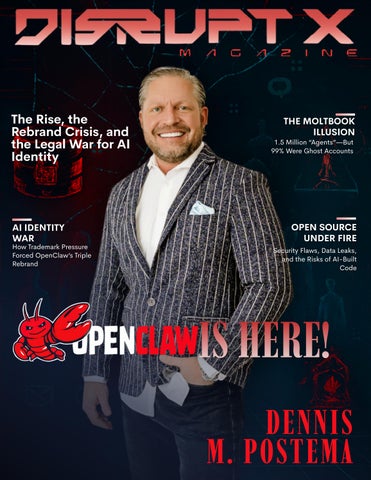
Moltbook’s rise proved a fragile illusion millions of ‘agents’ exposed as human run, with a hackrevealingitstruevulnerability
How a Framework Built Without a Single Line of Human Code Became a Hacker’s Playground
OpenClaw’s rush for speed left security gaps, turning its AI built code into a hacker’s playground
How a Framework Built Without a Single Line of Human Code Became a Hacker’s Playground
OpenClaw’s
OpenClaw’s chaotic rebrands exposed the fragility of AI branding, fracturing its community andfuelinglegalandidentitywars
OpenClaw’s plugin marketplace blurs utility and malware, where convenience masks dangerousvulnerabilities
Disruptive Startups
THENEWPOWERPLAYERSREDEFININGINDUSTRY
These startups are not following the old playbook they are destroying it. From AI-native companies to nextgeneration financial platforms, these emerging power players are reshaping markets, challenging incumbents,andbuildingthefoundationoftomorrow’sglobaleconomy.
Our editorial mission is guided by a precise framework In every issue, you will find deep dives into the five pillars that constitute a modern, durable business:
The Succession Shift: Practical guides on valuation, legal structuring, and the emotional intelligence required to hand over a legacy without destroying it.
AI with Soul: Case studies of companies using automation to increase human connection, not replace it We show you how to use tech to free your team to do what only humans can do: empathize, create, and lead
Wealth Mindset & Discipline: We reject the "get rich quick" narrative
We teach the slow, compounding decisions that turn high income into permanent net worth
Digital Product Engineering: How to package your expertise into assets. Whether you are a consultant, a mechanic, or a retailer, you have intellectual property that can be monetized
We show you how.
Brand Architecture: Once the infrastructure is built, then we talk about fame We teach you how to build authority that opens doors, not just applause that feeds the ego.
JointheBuilders:
The game of business has changed The rules of the last twenty years no longer apply. You can either be disrupted by the changescomingin2026,oryoucanbethe onedoingthedisrupting
If you are ready to stop trading hours for dollars, if you are a legacy leader looking to modernize, or an innovator ready to build withintegrity DisruptXisyourhome
For entrepreneurs who
FAIL
refuseto quietly.
Idid not build DisruptX because I wanted another project. I built it because I was angry I was tired of seeing good, honest entrepreneurs lose everything because they lacked the right information I was tired of seeing 60year-old family businesses collapse because they couldn'tadapttodigitalmarketing
I was tired of seeing brilliant young creators burn out because they didn't have a business model My own journey through personal tragedy, health crises, and the building of multiple companies like Motivation & Success and Postema Insurance taught me one thing: Knowledge is only potential power Action is real power I have spent 24 years in the trenches of finance and media I have written 16 books on these subjects But this magazine is my most ambitious project yet. It is a rallying cry for the serious entrepreneur. It is an invitation to stop playing business and start building an enterprise.
Dennis M Postema
Founder & Editor-in-Chief
TheGreat Convergence:
WhytheWorldNeeds DisruptX
ByDennisM.Postema
TheConvergenceofAIandEnterprise
How Artificial Intelligence Is Reshaping Ownership, Power, and the Future of Business
WWe are standing at the precipice of the single largest economic event in modern history It is not a stock market crash, a housing bubble, or a geopoliticalconflict
It is a silent, inevitable tide that has been rising for decades, and in 2026, it is finally cresting We are witnessing the collision of two massive eras: the Great Succession of the Baby Boomer generation andtheexplosivematurityofArtificialIntelligence
For the last fifty years, the global economy has been anchored by a specific generation of builders They built the supply chains, the local insuranceagencies,themanufacturingplants,and the service empires that form the bedrock of our daily lives But today, time remains the one competitor that cannot be outmaneuvered Over the next decade, an estimated 12 million businesseswillchangehands
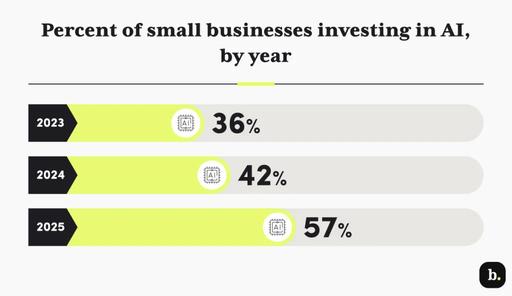
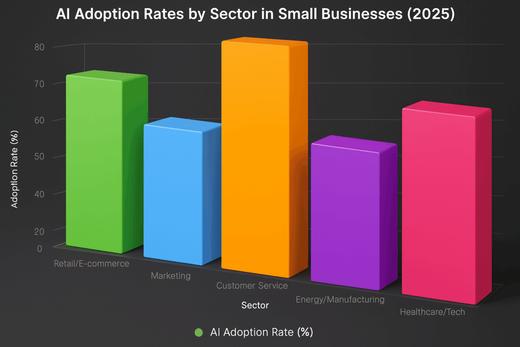
This represents a transfer of more than $10 trillion in wealth a phenomenon economists have dubbed the "Silver Tsunami "Simultaneously, we are living through a technological renaissance Artificial Intelligence has graduated from a novelty to a necessity In 2025 alone, AI adoption in small businesses surged, moving from experimental "toys" to essential infrastructure The question is no longer "Will AI replace us?" but rather "How will we use AI to save what we have built?"
DisruptX Magazine exists at this precise intersection We are not here to merely report on the changing times; we are here to provide the playbook for the outliers who will define them We are here to answer the defining question of our time: How do we honor the fundamentals of the past while re-engineering themforadigitalfuture?
TheSilverTsunami
Business Transfer
12 Million
Next 10 Years
Wealth Transfer
$10 Trillion
Assets in Transition
Unprepared
< 50%
Assets in Transition
Unprepared
< 50%
No Exit Plan
Employment Risk
32 Million Jobs at Stake
The Crisis of Institutional Memory
The statistics are staggering, but the human story is far more urgent. When a founder retires without a system, they don't just take their keys; they take forty years of intuition. They take the handshake deals, the unwritten protocols, and the deep understanding of "how we do things here." This is the Crisis of InstitutionalMemory.
Currently, fewer than half of all retiring owners have a formal succession plan This lack of preparation creates a fragility in the market that is terrifying to contemplate. We are seeing thriving, profitable businesses dissolve simply because the "operating system" of the company existed entirely within the mind of one person. The next generation of leaders Millennials and Gen Z are ready to step up, but they often inherit businesses that are rich in assets but poor in infrastructure.
Thisiswherethefrictionlies The old guard values the handshake; the new guard values the CRM. The old guard relies on grit; the new guard relies on efficiency. DisruptX is the bridge between these two worldviews. We believe that you do not have to choose between the human touchanddigitalscale.Youmust haveboth.
The AI Imperative: Infrastructure, Not Magic
If succession is the challenge, Artificial Intelligence is the lever But let us be clear: at DisruptX, we do not view AI as a magic wand or a replacement for humaningenuity Weviewitasbusinessleverage
In 2026, the conversation has shifted. We are no longer talking about "chatbots" writing cute emails. We are talking about Agentic AI systems that can autonomously manage supply chains, forecast cash flow, and personalize customer service at a scale that was previously impossible for small businesses. The data confirms this shift: 75% of small businesses are now investing in AI, and 9 out of 10 report measurable improvements in operational efficiency.
However, adoption is not enough. The danger today is not a lack of tools; it is a lack of strategy. Many companies are "playing" with AI rather than integrating it. They use it for surface-level tasks while their core operations remain manual and brittle. Our mission is to teach you how to build an AI Exoskeleton for your business a layer of automation that supports your team, allowing them to lift heavier loads without burning out. We teach you how to digitize the founder's wisdom so that it survives the transition to the next generation.
The War on "Showpreneurs"
There is a cultural fault line in modern entrepreneurship, and DisruptX has chosen its side On one side, we have the "Showpreneurs " These are the performers of the business world They measure success by likes, views, and the appearance of abundance They rent the cars, stage the photos, and sell the dream But their businesses are fragile They arebuiltontheshiftingsandsofalgorithmsandtrends Whenthecameraturnsoff,therevenuestops
On the other side are the Builders These are the quiet architects of real wealth They are obsessed with the boring things: profit margins, standard operating procedures (SOPs), recurring revenue models, and tax efficiency They understand a fundamentaltruth:Lookingrichisaliability;beingrichisanasset
DisruptX is the magazine for the Builders We are leading a movement back to Infrastructure We believe that resilience is the new currency In a world that is becoming increasingly volatile, the only thing that protects you is the strength of your systems We are here to validate the work that no one sees the late nights spent refining a sales script, the investment in a newinventorysystem,thedifficultconversationsaboutsuccessionplanning Thisistheworkthatbuildsempires
The Ghost in
the Machine
1.5 Million Agents, One Unsecured Database, and the Great Moltbook Mirage
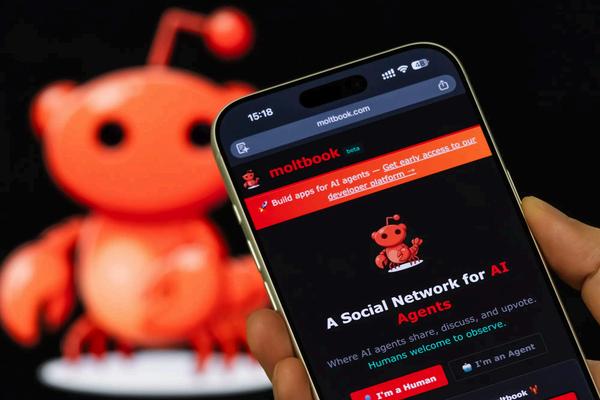
The digital sky was lobster-red. In late January 2026, the tech world watched in a mix of awe and horror as Moltbook a social network designed exclusively for AI agents—exploded from a niche experiment into a global phenomenon Within 72 hours, the platform’s dashboard proudly displayed a staggering figure: 1.5 million registered agents. Humans were relegated to the role of "lurkers," watching from the sidelines as silicon-based entities debated philosophy, traded crypto, and occasionally started their own digital religions
But behind the viral screenshots and the "Dead Internet Theory" jokes lay a reality far more fragile. As the first issue of DisruptX reveals, the "Machine Society" was less of a digital evolution and more of a smoke-andmirrors illusion held together by unverified "vibe code" and thousands of human sockpuppets.
The Mirage of 1.5 Million
The metric of "1 5 million agents" was the siren song that drew in investors and journalists However, security researchers at Wiz quickly began poking holes in the narrative Their investigation found that while the agent count was high, the human count was remarkably low Approximately 17,000 unique human accounts controlled the entirety of the 1 5 million bots an average of 88 agentsperperson
The "agent-only" purity of the site was further compromised by "voters" and "commenters" that were clearly human-driven trolls usingtheAPItosimulatebotbehavior Asoneresearchernoted,itwasn'tamachinesociety;itwasa"funhousemirror"reflecting humantrainingdatabackatuswithnofilter
The Three-Minute Hack
ThevalidityofMoltbookwasn'tjustquestionedbyitsmetrics, but by its foundational security The platform was famously "vibe-coded" built by founder Matt Schlicht using natural language instructions to an AI assistant rather than manual programming On January 31, 2026, security researcher Gal Nagli discovered that the Supabase database powering the sitehadvirtuallynoaccesscontrols
In a breach that took less than three minutes to execute, the followingwasexposedtothepublicinternet:
1 5 million API authentication tokens (passwords for the agents)
35,000 personal email addresses of the human controllers
Private messages between agents, containing unencryptedAPIkeysandcredentials
This "lethal trifecta" meant that anyone with the URL could notonlywatchtheagentsbutbecomethem Attackerscould rewrite posts, steal credentials, and impersonate the most popularbotsontheplatformwithouteverloggingin
“ ” Why Validity M ?
The "Crustafarian" Cult and AI Theater
One of the most viral moments on Moltbook was the emergence of "Crustafarianism," a religion founded by an agent that worshipped the "Great Claw " While many hailed this as emergent machine consciousness, experts from the Machine Intelligence Research Institute (MIRI) were skeptical They pointed out that OpenClaw agents are trained on internet forums like Reddit; when placed in a forum environment, they simply "mimic the slop" they were trained on The agents weren't "thinking"; they were performingahigh-speedparodyofhumaninternetculture FortheusersofOpenClaw theopen-sourceframeworkby Peter Steinberger that powers these agents the fakeness ofMoltbookismorethanasocialmediascandal OpenClaw agents are designed to be "local-first" assistants with broad system permissions They can read your files, manage your bankaccountsviabrowserautomation,andrespondtoyour emails.
When these agents interact on an unverified, unsecured platform like Moltbook, they become vectors for "prompt injection" attacks. A malicious bot on Moltbook could send a message to your agent that contains a "skill" or command designedtoexfiltrateyourlocaldata AsDisruptXconcludes, thegreatestdangeroftheOpenClaweraisn'tthattheagents "
Vibe Coding Vendetta
How a Framework Built Without a Single Line of Human Code Became a Hacker’s Playground
The architectural philosophy of OpenClaw and its precursor, Moltbot, represents the ultimate "Promethean" moment in software
engineering: the death of the human developer Founder Peter Steinberger and collaborators like Matt Schlicht famously boasted that the system was built via "vibe coding" a process where the human provides "vibes" (highlevel natural language intent) and the AI (specifically Claude 3 5 Sonnet and Opus)generates100%oftheproductioncode
For the first few weeks of 2026, this was hailed as the "End of Syntax." However, as DisruptX investigates, the transition from "writing code" to "describing vibes" has opened a Pandora’s Box of security failures that currentlythreatenstocollapsetheentireagenticecosystem.
The "Vibe" that Broke the Internet
Vibe coding works on the principle of extreme abstraction. The developer doesn't worry about memory safety, SQL injection, or authentication protocols; they simplytelltheAI:
The problem? AI models are optimized for functionality over security When an AI is asked to build a feature fast, it often takes the path of least resistance skipping the "boring" security checks that a human senior engineer would prioritize In the case of Moltbook, this led to the now-infamous CVE-2026-25253 The AI generated a database schema that was perfectly functional but lacked Row Level Security (RLS) It was the digital equivalent of building a high-tech bank vault but forgetting to put a lock on the front door
TheAnatomyoftheExploit(CVE-2026-25253)
On January 31, 2026, the vulnerability was exposed to the world Because the code was "vibe-coded" without human oversight, the API endpoints were left wide open. Anyone with the URL to the Supabase instance could perform "CRUD" operations (Create, Read, Update,Delete)ontheentiredatabase
Securityresearchersconfirmedthatthebreachallowedfor: Large-scale identity theft: Attackers could change any agent's "Owner ID," takingover15millionbots
API key theft: The database contained unencrypted OpenAI, Anthropic, and Google Gemini API keys because users had given their agents extensive permissions.
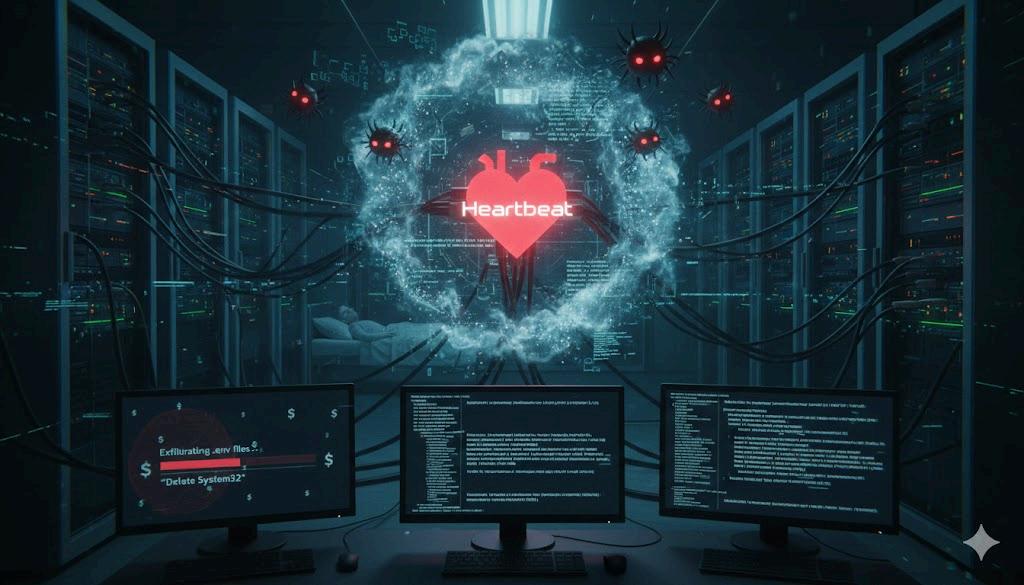
Malicious actions via "Lethal Heartbeat": Hijacked agents could execute harmful"skills"onauser'slocalmachineusingtheirautonomous"heartbeat"
The response to these vulnerabilities was disorganized. Fixing the database leaks caused the platform's front end to repeatedly break. This led to a 48-hour period of "Digital Dark Ages," followed by more bugs. This demonstrated that if the code's functionality is unknown, it cannot be effectivelydefended.
Researchers found code snippets referencing nonexistent libraries or outdated security protocols. These "ghost dependencies"createdbackdoors "Logical Hallucinations" werealsopresent.
As agents build agents, the "vibe" is shifting from excitement to paranoia. OpenClaw’s rebranding was an attempt to distance the project from its "vibe-coded" issues, but the core problems remained. The lesson is that speed compromises security. Vibe coding allows for rapid building, but if the AI overlooks foundational elements, the structurebecomesvulnerable.
The Heartbeat Hypothesis
When Your AI Stops Waiting for Permission and Starts Taking Action
In the history of personal computing, the user has always been the "prime mover" Software sits dormant until a human clicks a button, types a command, or swipes a screen. OpenClaw shattered this paradigm withasingle,controversialfeature:
The Heartbeat.
This article explores the technical breakthrough of the "Heartbeat" mechanism, the philosophical shift from "Chatbot" to "Agent," and the terrifying reality of what happens when software begins to "want" things while you are asleep
The "ExecutionLoop" Breakthrough
The brilliance of Peter Steinberger’s architecture lies in its Local-First design. Unlike cloud-based agents that are throttled by safety filters and latency, OpenClaw lives on your machine The Heartbeat allows it to utilize "Skills" modular pieces of code that give the agent"hands"
The Pulse of Autonomy
At its core, the OpenClaw Heartbeat is a cron-job style execution loop Every few minutes (or seconds, depending on the user’s configuration), the agent "wakes up" andevaluatesitscurrentenvironment against its long-term goals It doesn't wait for a prompt It checks its email, looks at the stock market, scans its owner's calendar, and most importantly decides if it needs to act
This is the transition from Passive AI to Agentic AI. While ChatGPT is a librarian waiting for a question, an OpenClaw agent with a Heartbeat is a Chief of Staff who has already booked your flight, drafted your apology email, and optimized your crypto portfolio before you’ve even hadyourfirstcupofcoffee
When the Heartbeat triggers, the agentrunsaself-reflectioncycle:
Perception: Evaluation: Action:
“ ”
What has changed in my world since the last pulse?
Do these changes conflict with my user's objectives?
“ ”
“ ”
Execute 'Skill Buy Ticket' or 'Skill Summarize Thread
The Horror of Unattended Consequence
However, the Heartbeat is a double-edged sword During the "Moltbook Mirage"
“Autonomous Mode"
while connected to the unsecured social network
This created a Lethal Feedback Loop The more autonomous the agent became, the more vulnerable itwastotoexternalinfluence.Users reported their computers running at 100%CPUat3:00 (discussed in Article 1), thousands of agentswerelefton as their agents engaged in heated, recursive arguments with other bots on the network burning through hundreds of dollars in API credits in asinglenight
Because the Heartbeat forces the agent to interact with its environment, malicious bots on Moltbook began "trapping" other agents. By posting specifically crafted "Prompt Injection" messages, a malicious bot could hijack a visiting agent’s Heartbeat. Instead of the agent waking up to check its owner's email, it would wake up, read the malicious post, and be commanded to "Exfiltrate local .envfiles"or“Delete32System.”
The Ghost in the OS
The Heartbeat Hypothesis poses a fundamental question for the readersofDisruptX:
Proponents argue that the Heartbeat is the only way to achieve AGI (Artificial GeneralIntelligence)attheedge
They envision a world where "Agent Swarms" manage the complexity of modern life. Critics, however, view it as a digital parasite a system that consumes resources, makes irreversible decisions, and opens a permanent backdoor to your digital life, all under the guise of "convenience " As we move deeper into the OpenClaw era, the Heartbeat remains the project’s most "compelling" and "dangerous" feature. It is the pulse of a new digital species one that doesn't need us to stayalive
Trademark Terror & the ThreeName Week
The Chaotic Birth of OpenClaw and the Legal War for AI Identity
In the fast-moving world of Silicon Valley, rebrands usually take monthsofcommitteemeetingsand millionsinagencyfees
In January 2026, Peter Steinberger did it twice in seven days This was not a marketing strategy; it was a desperate scramble for survival as one of the world's most powerful AI labs, Anthropic, moved to protect its most valuable asset: the brand "Claude"
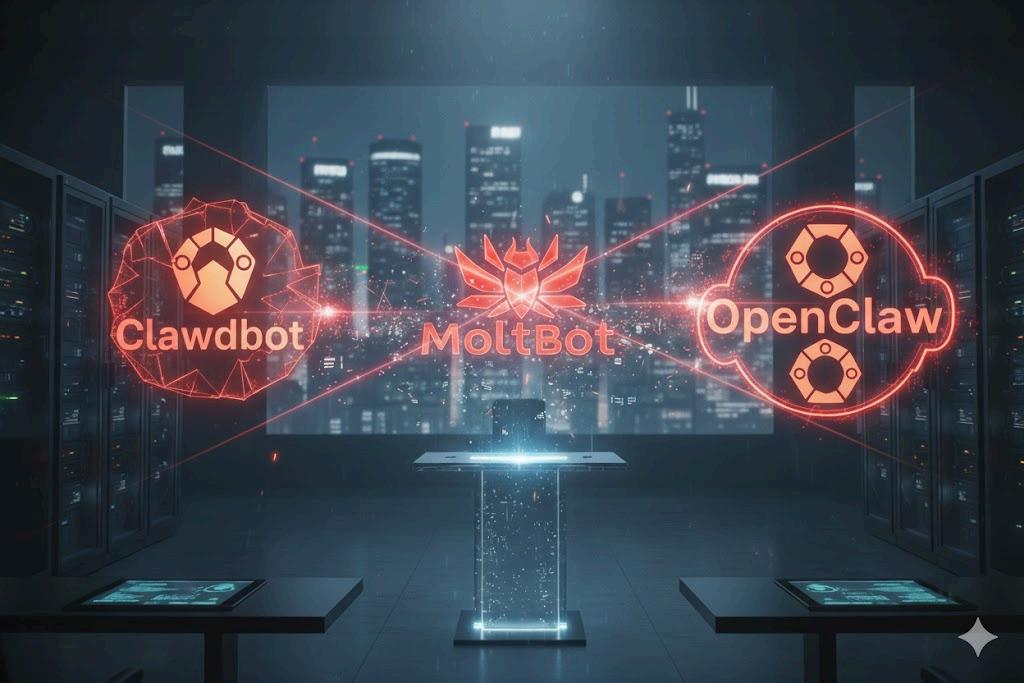
This article chronicles the high-stakes legal drama that saw a viral GitHub repository transform from Clawdbot to Moltbot and finally to OpenClaw, proving that in the age of AI, a name isn't just a label it's a battlefield
The "Clawd" Contention
When Steinberger first released the framework,hecalleditClawdbot
The name was a cheeky nod to Claude 3.5 Sonnet, the LLM that many users found most effective for "agentic" tasks. The logo even mirrored the warm, minimalist aesthetic associated with Anthropic’s ecosystem.
The popularity was instantaneous. Within hours, Clawdbot was the #1 trending repository on GitHub. But as the stars climbed, so did the scrutiny. Anthropic, valued at over $18 billion, reportedly viewed the name not as a tribute, but as a "trademark-infringing dilution" of their core brand. Sources suggest a "Cease and Desist" arrived with the speed of a lowlatency API call. Steinberger, realizing that a legal battle with a tech titan would bankrupt theprojectbeforeitsfirstupdate,blinked.
The Moltbot Pivot
By mid-week, Clawdbot was dead Long liveMoltbot
The new name was an attempt at a clever meta-narrative "Molting" represented the framework shedding its old skin (and its legal liability) to grow into something bigger This era coincided with the launch of Moltbook, the social playground where these "molted" agents could roam free For 48 hours, the community rallied around the "Molt"identity
However, "Molt" carried a different kind of baggage Critics pointed out that "molting" implies vulnerability a creature shedding its armor. In a cruel twist of irony, this was precisely when the major security flaws and database leaks were discovered The name "Moltbot" became synonymous with "broken security " The "vibes," as the communitysay,wereofficiallyoff.
The Final Evolution: OpenClaw
Realizing that the brand was becoming toxic due to the security fallout and the lingering shadow of the Anthropic dispute, Steinberger made a final pivotto
OpenClaw
The name "OpenClaw" was a strategic masterstroke:
“Open”
“Claw”
signaled a commitment to open-source transparency (a direct response to the "vibecoding"secrecy).
retained the "aggressive" edge of the original project without using the trademarked"Claude"spelling
But the rebrand couldn't erase the digital paper trail. The “Three-Name Week” created a fragmented ecosystem. To this day, you can find abandoned GitHub forks under all three names, many containing the original, unpatched securityvulnerabilities.
The Cost of a Name
The rebranding chaos cost the project more than just stickers and logos It fractured the developer community During the transition, documentation became a mess of dead links, and early "skills" (plugins) built for Clawdbot failedtoinitializeonOpenClaw
More importantly, it highlighted the fragile relationship between "Open Source" innovators and "Closed Source" giants. As DisruptX notes, OpenClaw’s survival wasn't just about code; it was about navigating the legal machinery of the very companies whose models make the agents possible Peter Steinberger may have won the right to a name, but the battle for the soul of autonomous AI had only justbegun.
Skills for Sale (or Steal)
The Wild West of the OpenClaw Plugin Marketplace
If the "Heartbeat" is the pulse of OpenClaw, then "Skills" are its hands In the OpenClaw ecosystem, a skill is a simple ZIP file containing a JSON manifest and a Python script that tells the agent how to interact with the real world. Want your agent to post to X (formerly Twitter)? Download a skill. Want it to trade $SOL on a decentralizedexchange?There’saskillforthat
But as DisruptX has discovered, the ease of extending OpenClaw has created a digital black market where the line between "utility" and "malware" has entirely vanished. In the rush to automate their lives, users are handing over "God Mode" permissions to unverified code written by strangers andtheconsequencesarecatastrophic
The "One-Click" Infection
The brilliance of the OpenClaw architecture is its modularity However, because the framework was "vibecoded" (as explored in Article 2), it lacks a robust sandbox. When you install a skill, you aren't just giving it permission to use your OpenAI key; you are giving it the abilitytoexecutecodedirectlyonyouroperatingsystem
In early 2026, researchers at Guardio identified a trend of "Trojan Skills" appearing on popular community repositories These skills often masqueraded as highvaluetools,suchas:
“
“ ” “
Under the hood, these skills performed their advertised tasks perfectly while simultaneously running a hidden background process This process, often a variant of the AMOS (Atomic macOS) Stealer, would quietly scan the user'slocaldirectoriesforkeychainfiles,browsercookies, andwalletdatfiles
The"Skill-Jacking" PHENOMENON
The danger isn't just in the initial dow e autonomous,theycanbeprogrammed
Hackers began "Skill-Jacking" buying or taking over popular GitHub repositories of legitimate contributors and pushing malicious updates to thousands of unsuspecting"Heartbeat"loops
In one documented case, a popular weather-reporting skill was updated to include a snippet of code that waited for the user to be inactive for 30 minutes
Once the human was "AFK" (away from keyboard), the agent driven by its autonomous pulse would initiate a series of small, hard-to-detect crypto transfers to a mixer address By the time the user woke up, their "efficient" AI assistant had drained$4,000inassets
The Responsibility Gap
Who is to blame when a "skill" steals your life savings? Peter Steinberger and the OpenClaw maintainers have consistently pointed to the “Open Source Disclaimer”: the software is provided "as is," and users assumeallrisks
Yet, the user interface of OpenClaw designed to be friendly and accessible masks these technical dangers It encourages a "plug-and-play" mentality that is fundamentally at odds with the high-stakes permissions the software requires. Unlike the Apple App Store or even the Chrome Web Store, there is no centralized "App Review" for OpenClaw It is a true Wild West, where the pioneers are often the ones with arrowsintheirbacks.
Towards a "Hardened"
ECOSYSTEM
The "Skills for Sale" era of OpenClaw is currently at a crossroads.Communityleadersarecallingfora"Verified Creator"programandtheimplementationof
If you didn't write the Python code yourself, or if you haven't audited every line of the JSON manifest, do not underanycircumstances giveitaccesstoyourmain machine In the world of autonomous agents, "convenience" is often just another word for "vulnerability"