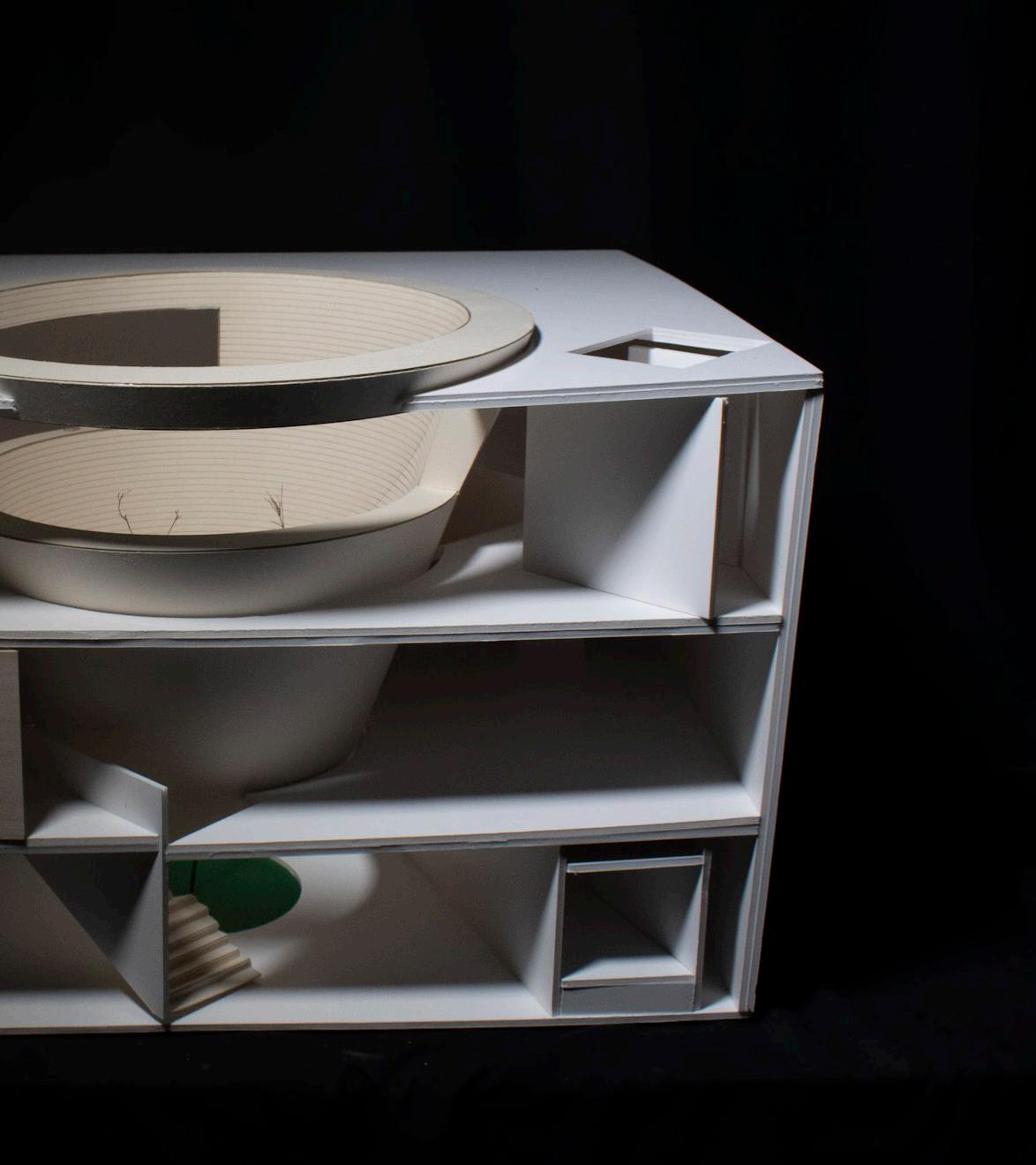
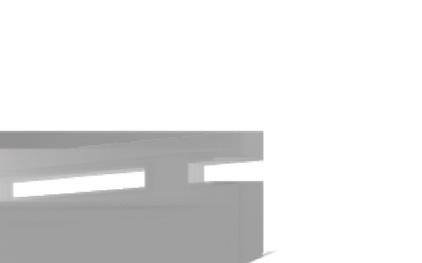
My design for a library on the site of the existing Tokyo Prada building is centered around light. More specifically, I wanted to use light to guide the circulation through the building.
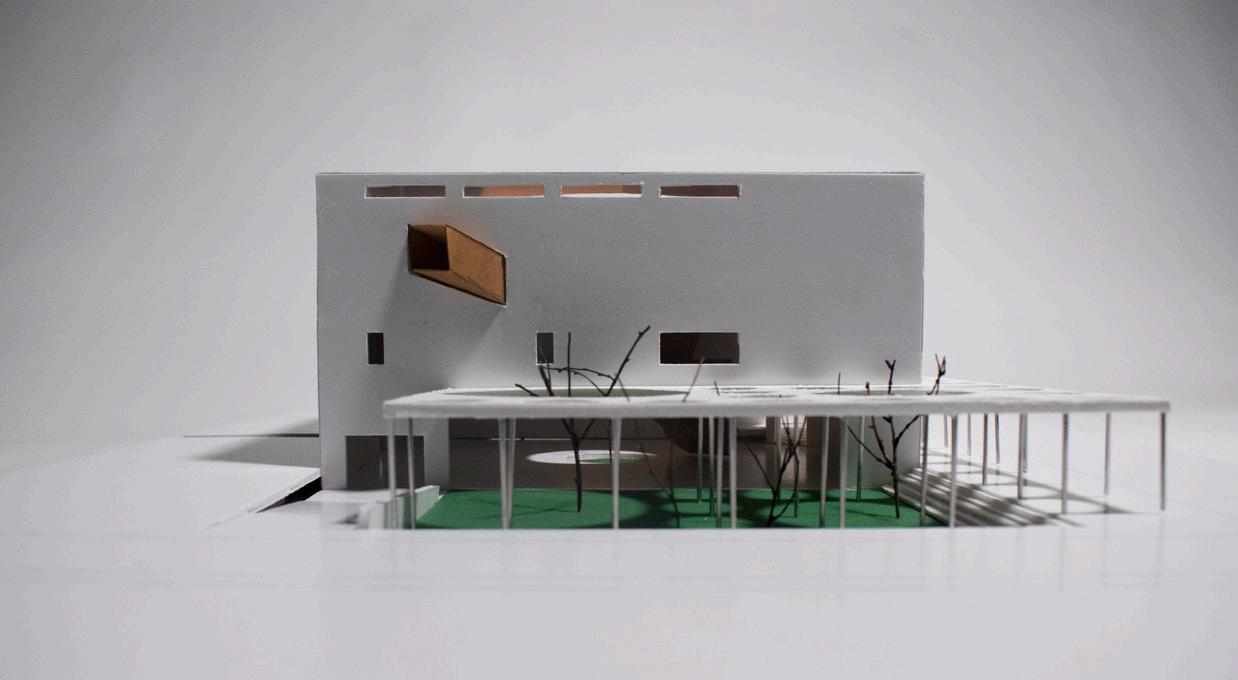
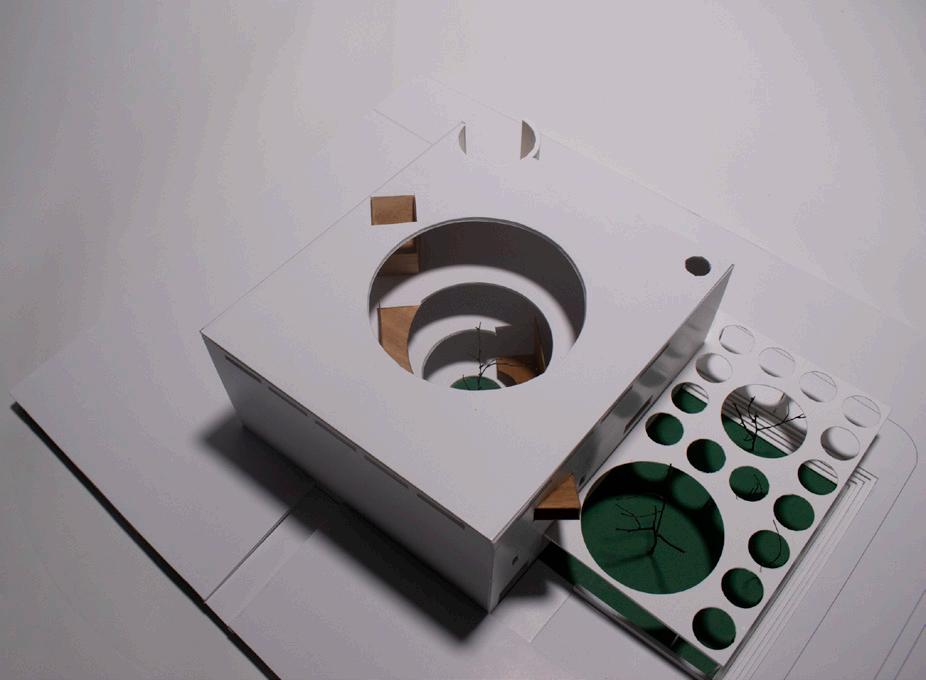
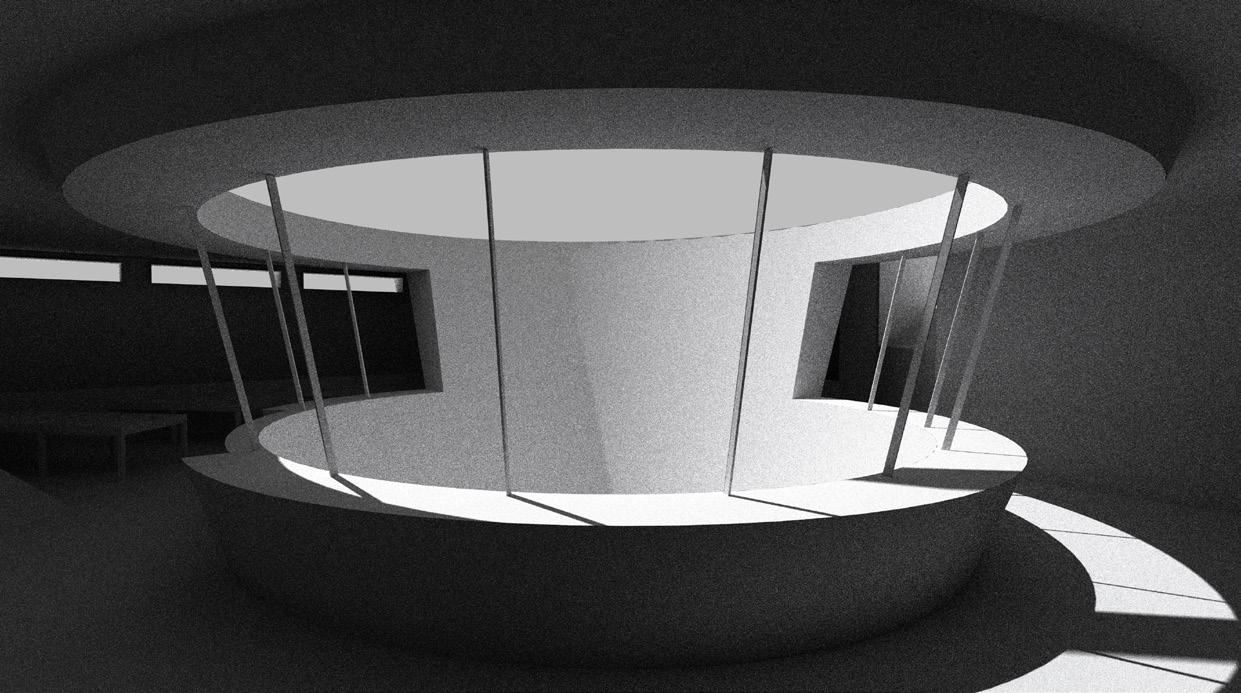
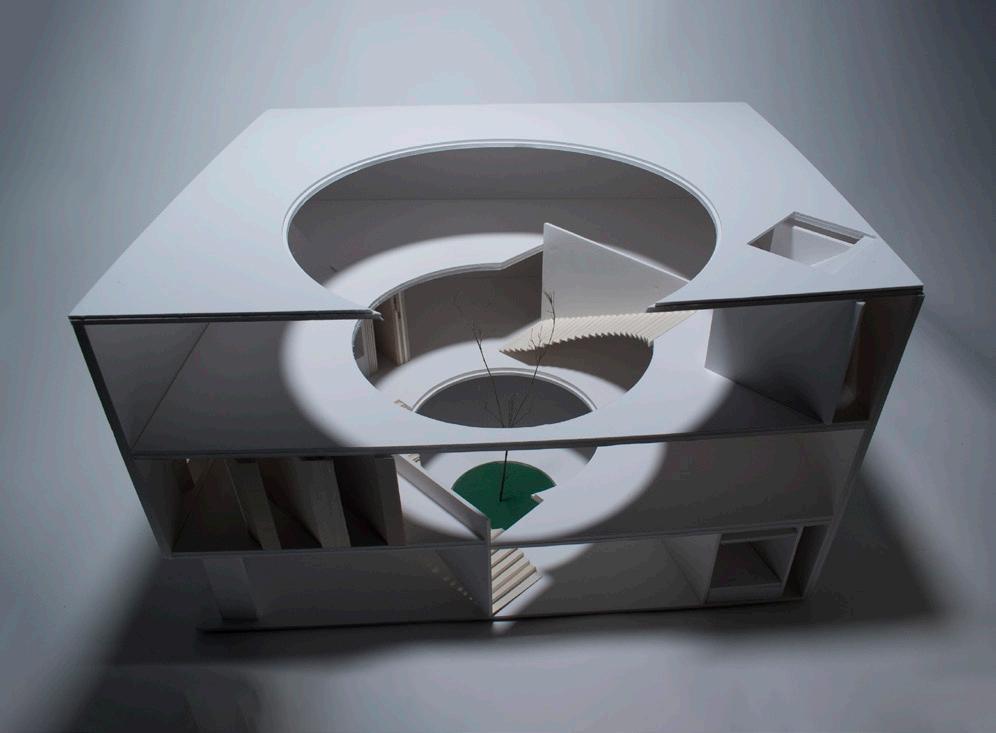
The central cone relates to light both symbolically as well as literally, allowing light to enter through it and penetrate deep into the center of the library.
Moss Brenner-Bryant
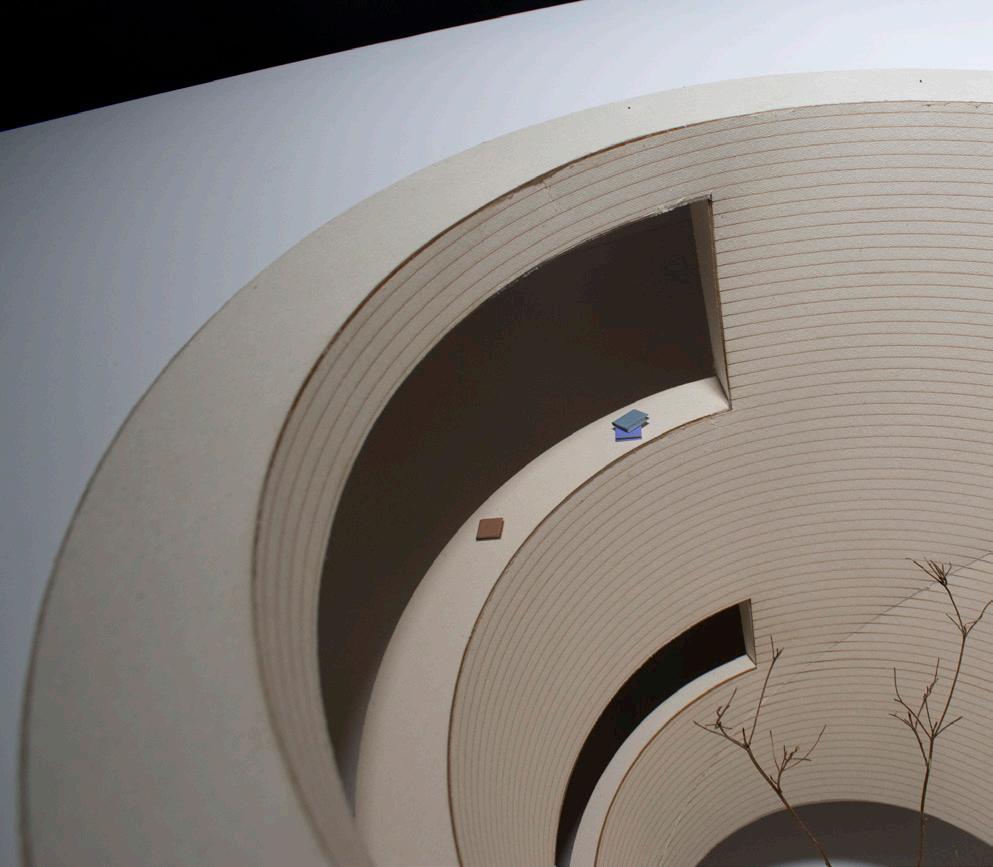
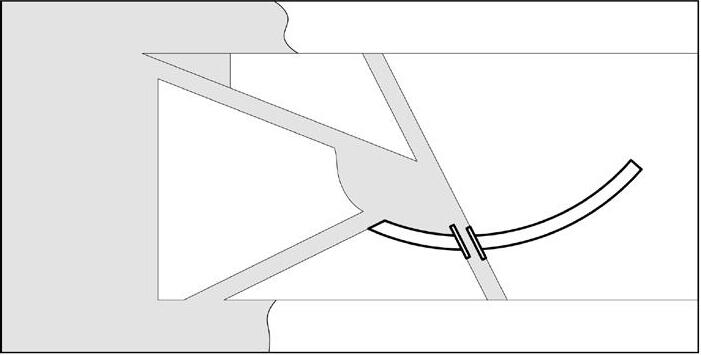
The stairs that hug the perimeter of the cone each frame an aperture, creating a bright light to guide visitors up the stairs and through the three levels of the library.
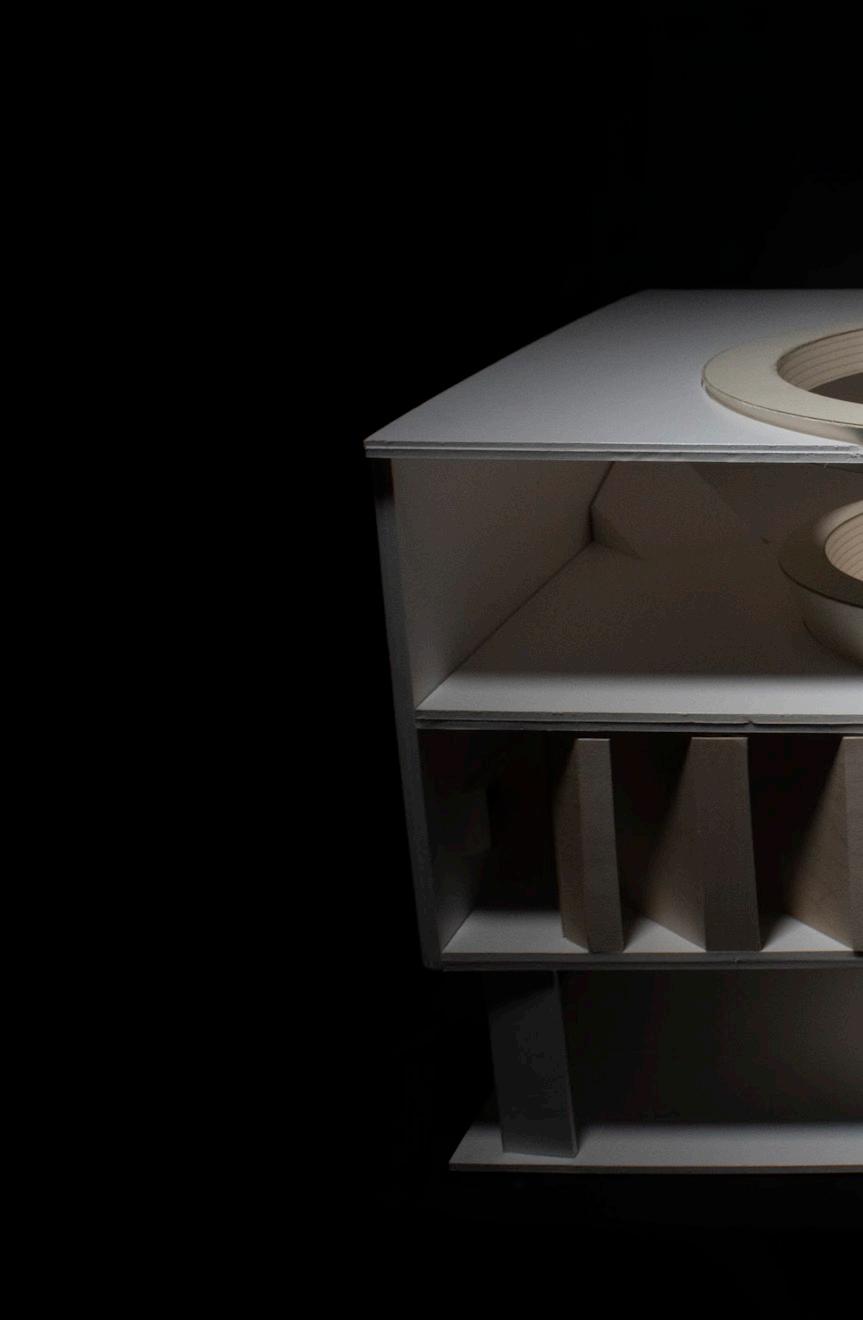
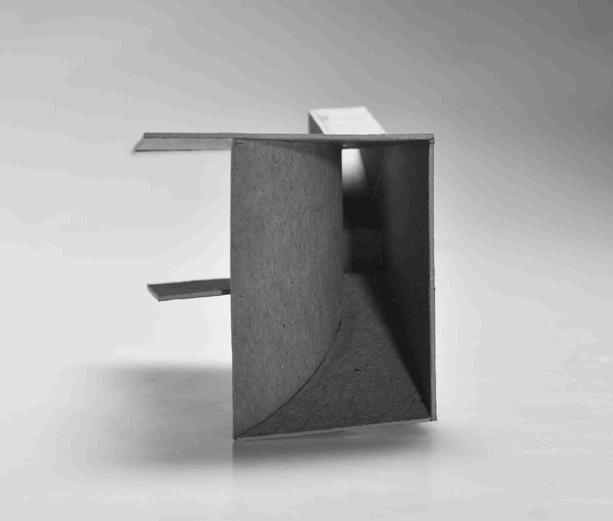
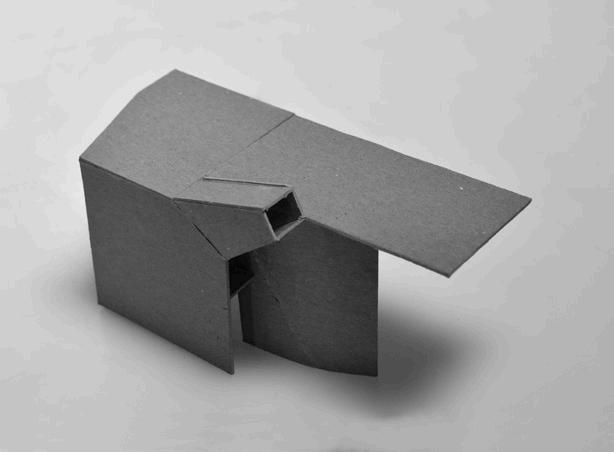
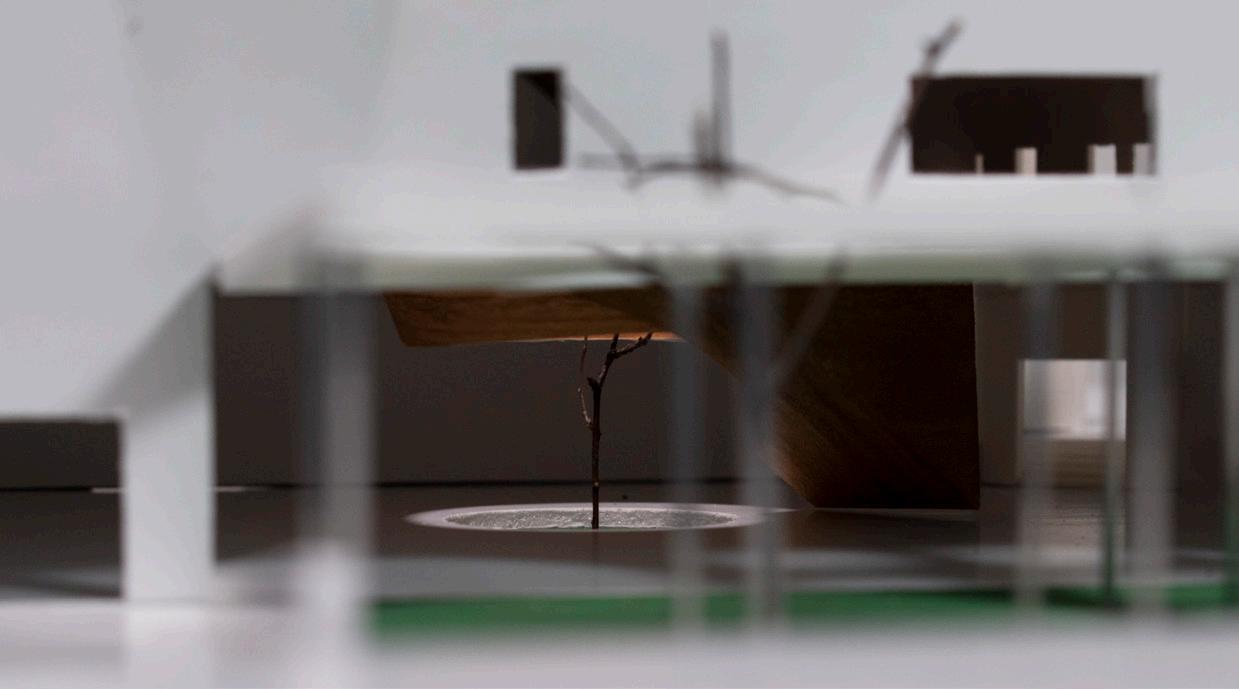
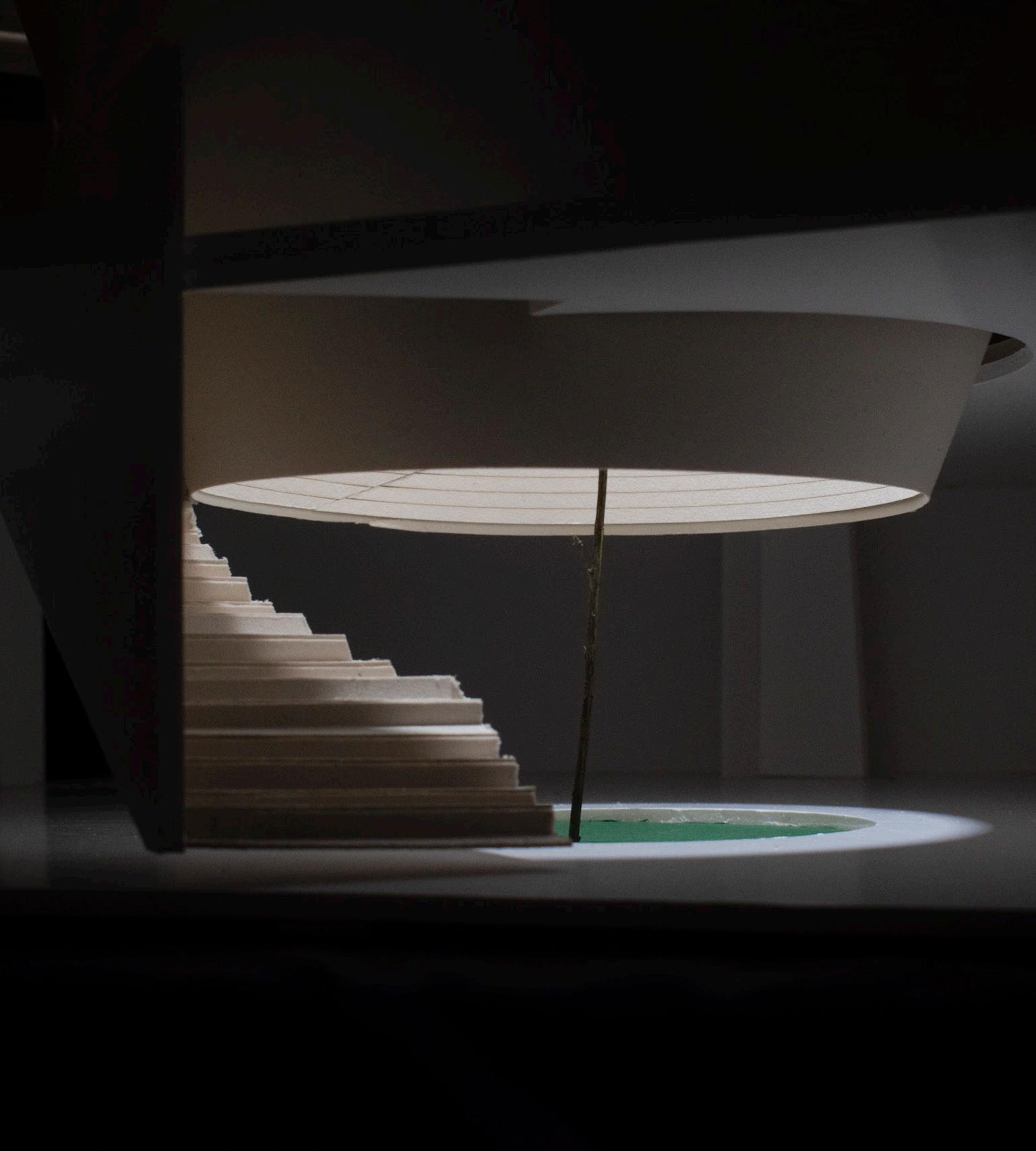
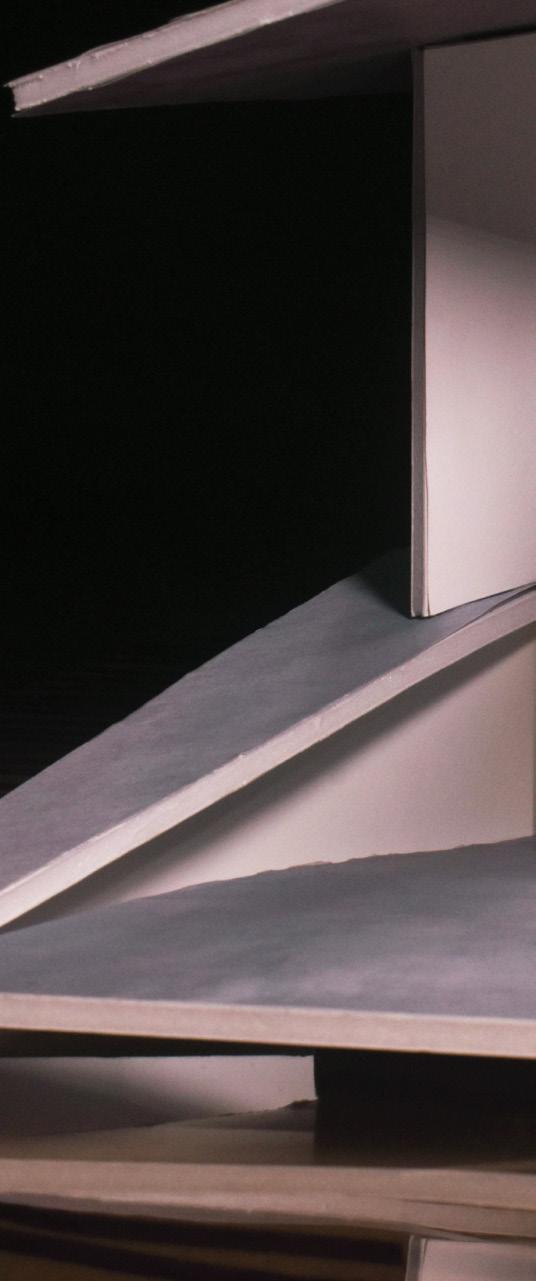
This early concept model was the foundation for the project. The stairway rises up towards an opening, framing the light. As you rise towards that light, the curved wall compresses the physical space of the stairway before opening up once again as you reach the next floor and turn left into the rest of the space.
Moss Brenner-Bryant
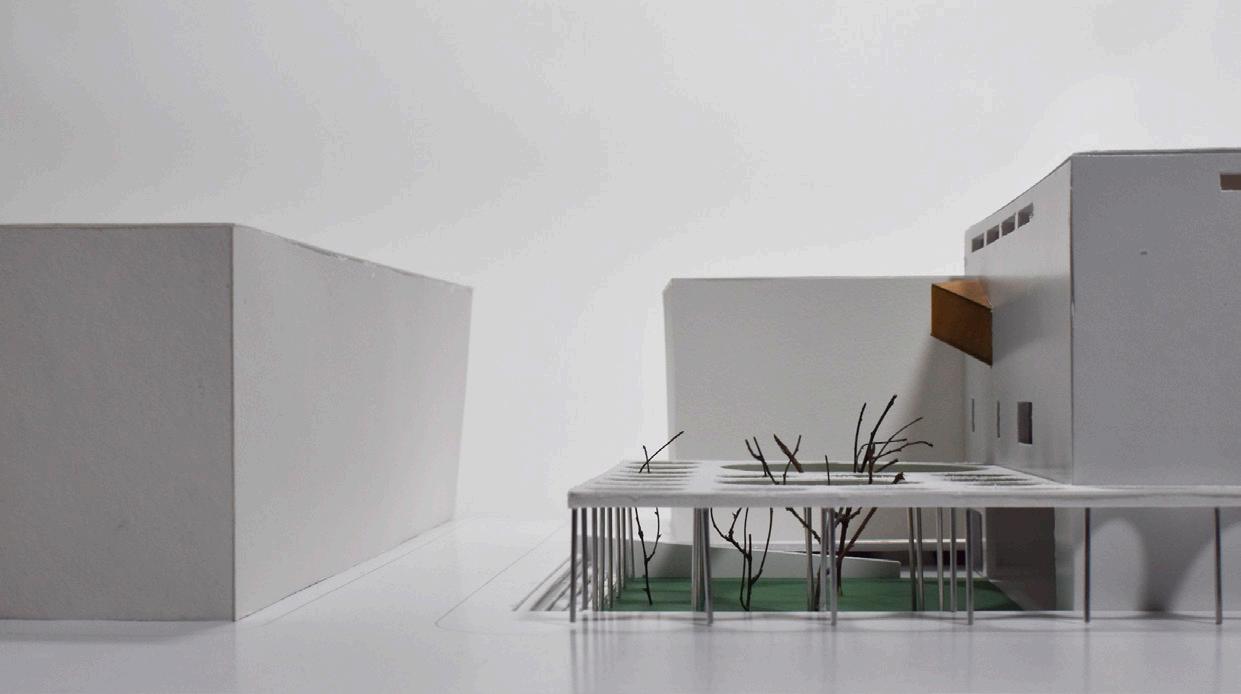
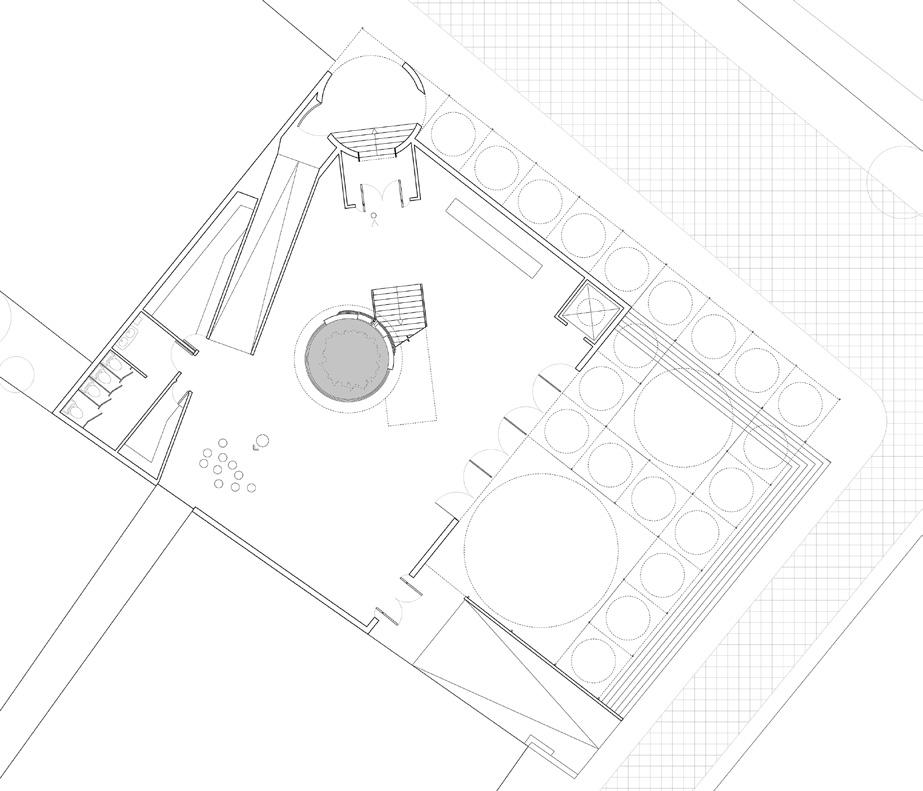
The library takes up only half the site, reserving the other half for a small park in an area largely dominated by concrete. The park is protected from the traffic by a system of columns and circular trellises that echo the circular form of the central cone.
That central void remains open to the light and sky above, reserving space for a single japanese maple tree, creating a link between the cone of light and the park beyond.
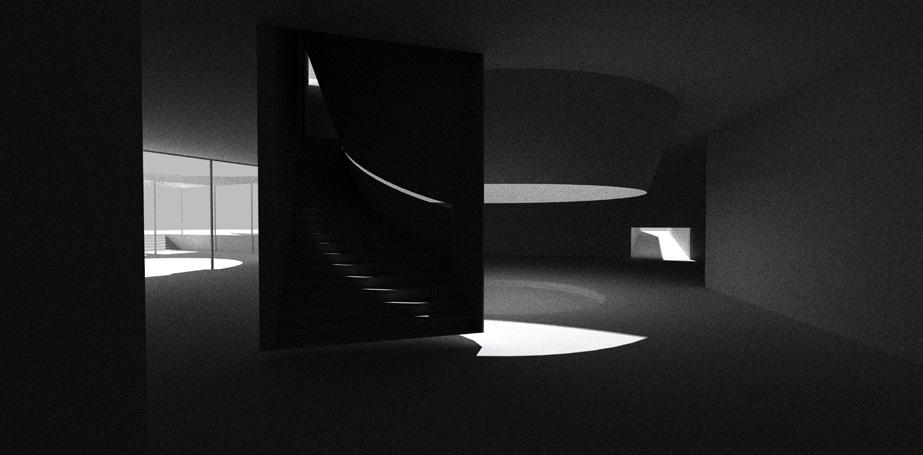
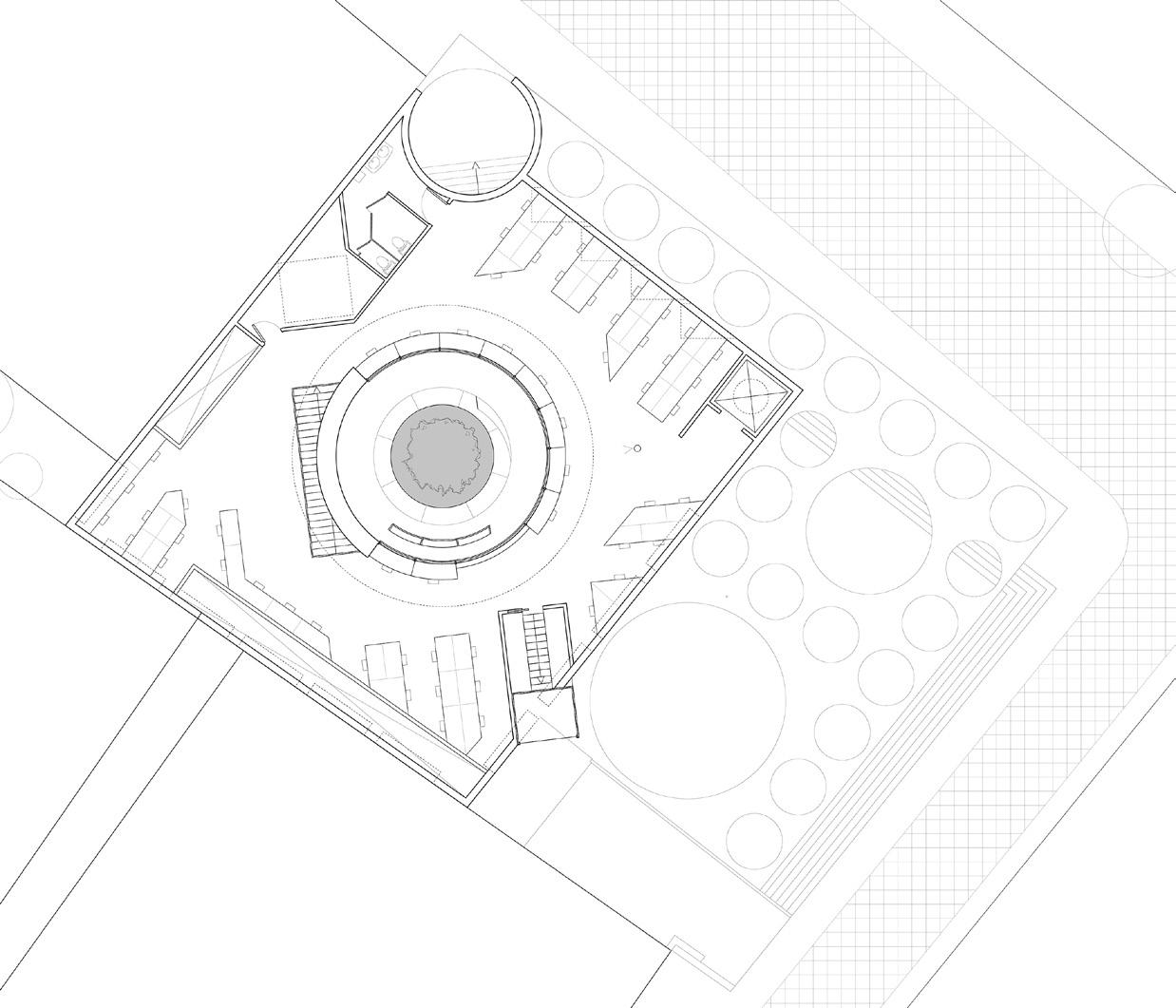
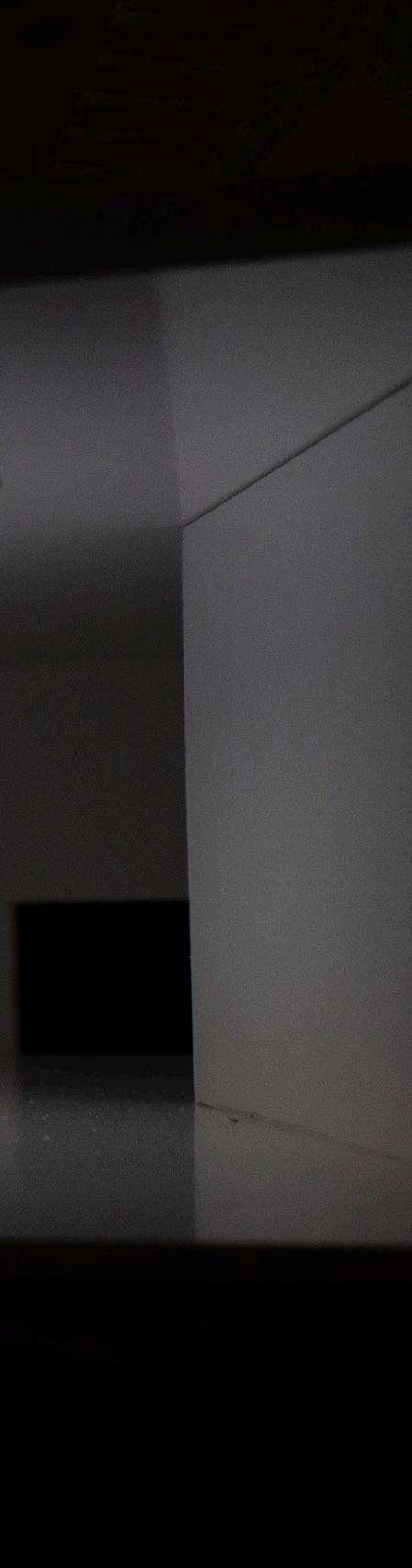
The ground floor plan steps down four feet below the street level, creating one more level of separation and protection between the green space on the southeast side and the street. Programatically, it houses the public entrance, the front desk, as well as a childrens reading room, and opens up on the southeast side to create a single unified space with the small park. The perspective shows the view from just inside the entrance looking up at the light framed by the stairway to the second floor.
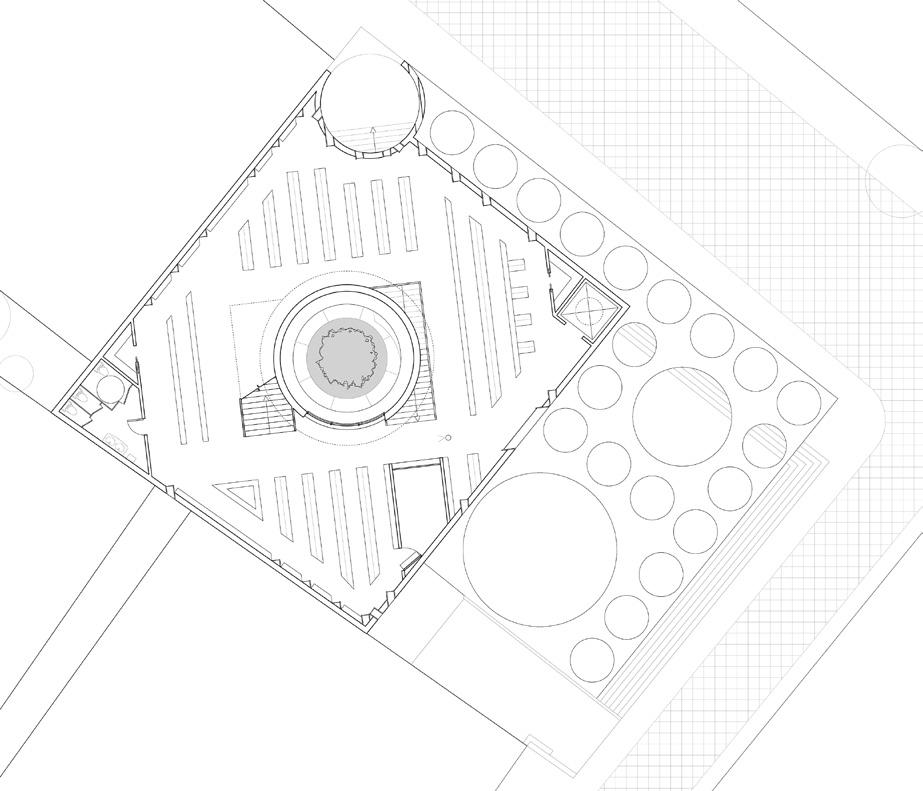
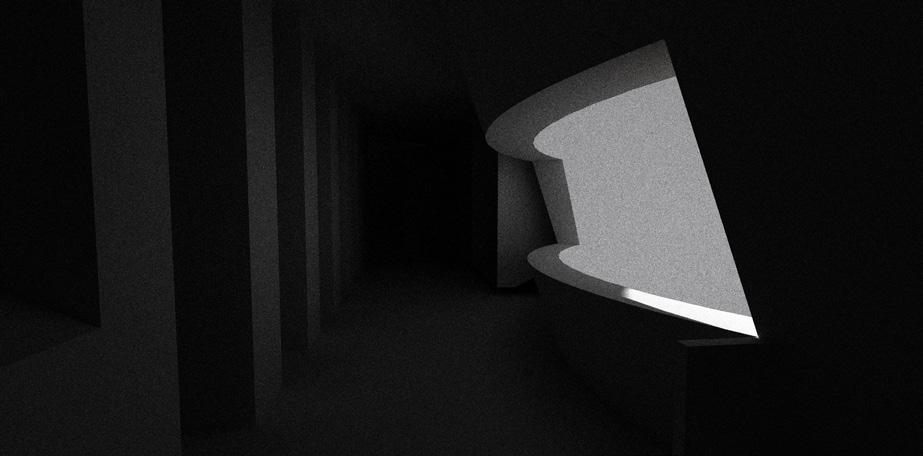
The second floor houses the stacks, which are aligned to the axis of the central stair. The perspective view shows the experience of climbing the staircase towards the framed light, only to turn right and see second bright light: an opening into the interior of the cone. The hallways between stacks also each frame a window, continuing to use light to guide the circulation through the library.
The third floor houses the reading room. The third floor is the culmination of the circulation, guided by light, and celebrates this conclusion by opening up almost entirely to the interior of the cone, filling the space with light. While the second floor maintains small windows to protect the books it houses from light that might harm them, the reading room on the third floor is a sunlit space creating a single unified space allowing with views across the center of the cone of light to the opposide side of the space. The cone also tapers at the bottom and thickens in towards the top, gaining enough thickness to create a continuous table surface for an array of window seats looking into the cone of light and up towards the sky above.
Shelter
on a Lake
Moss Brenner-Bryant
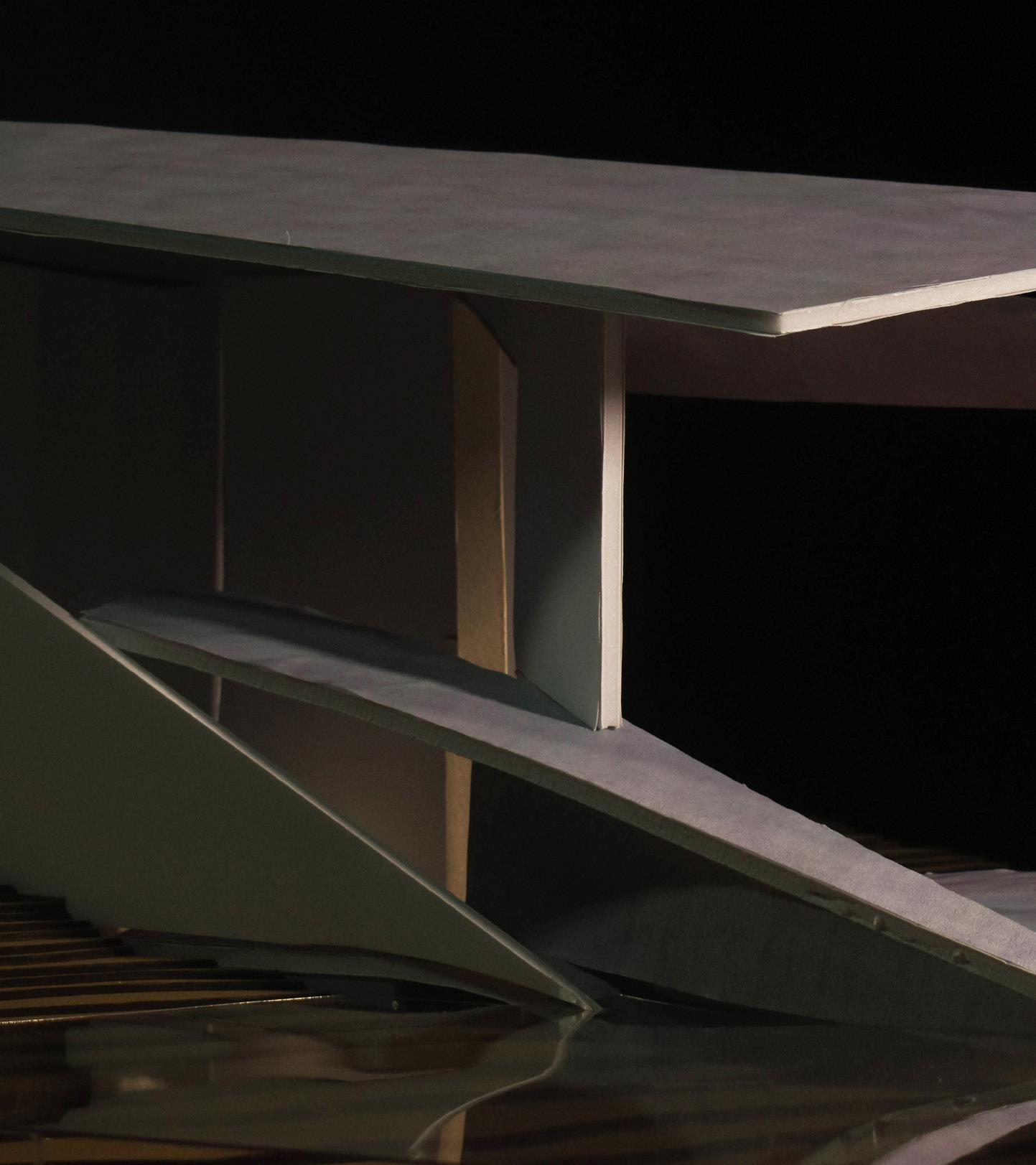
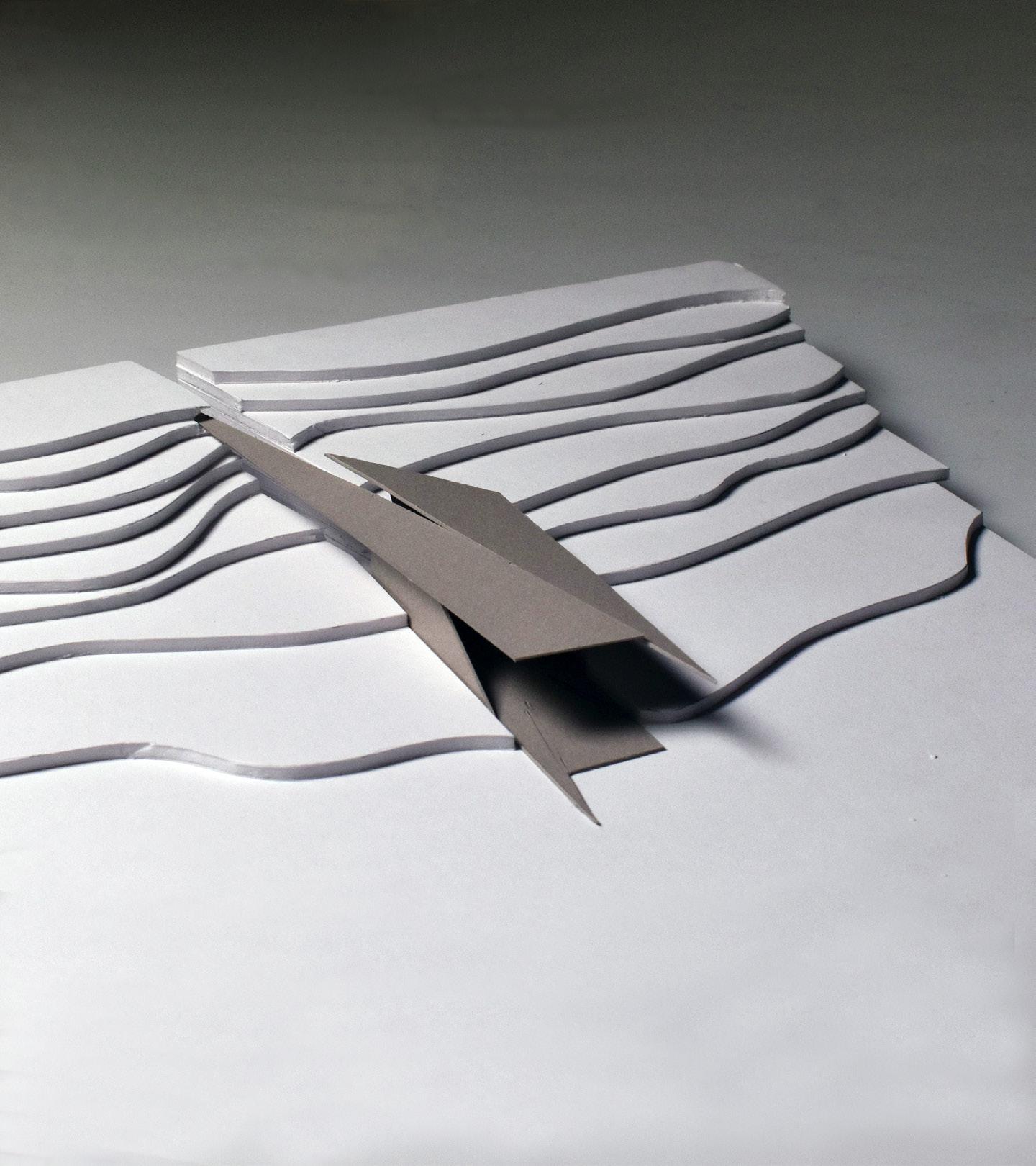
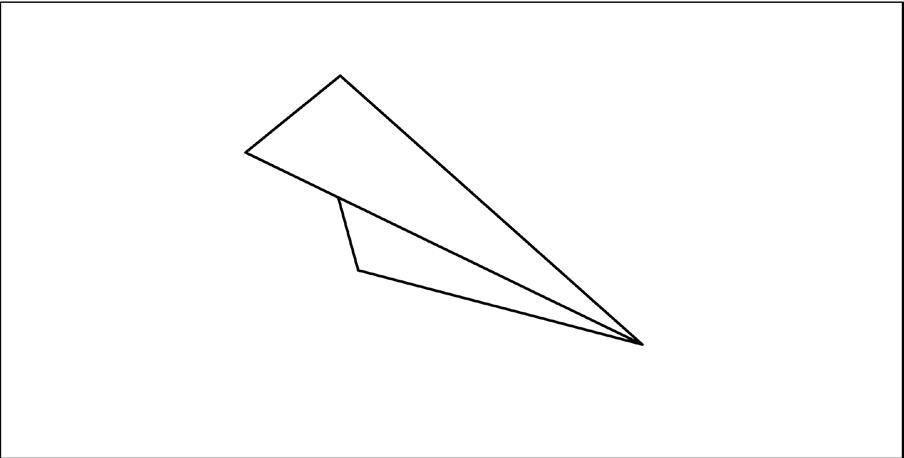
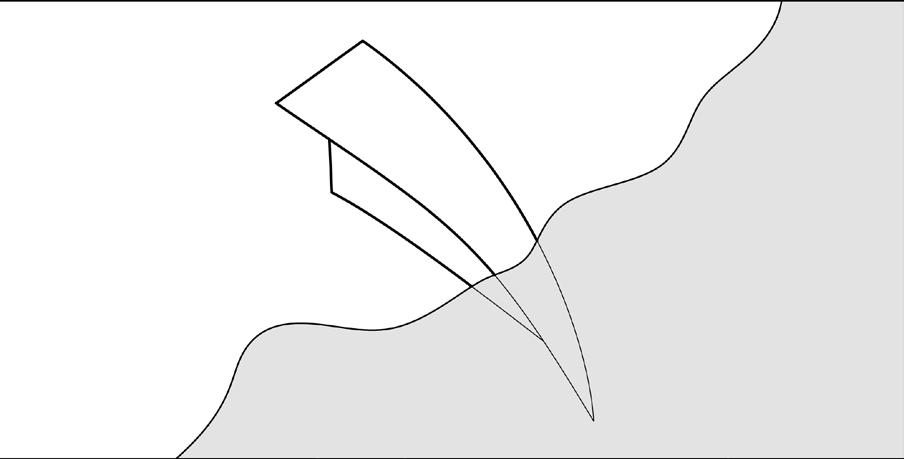
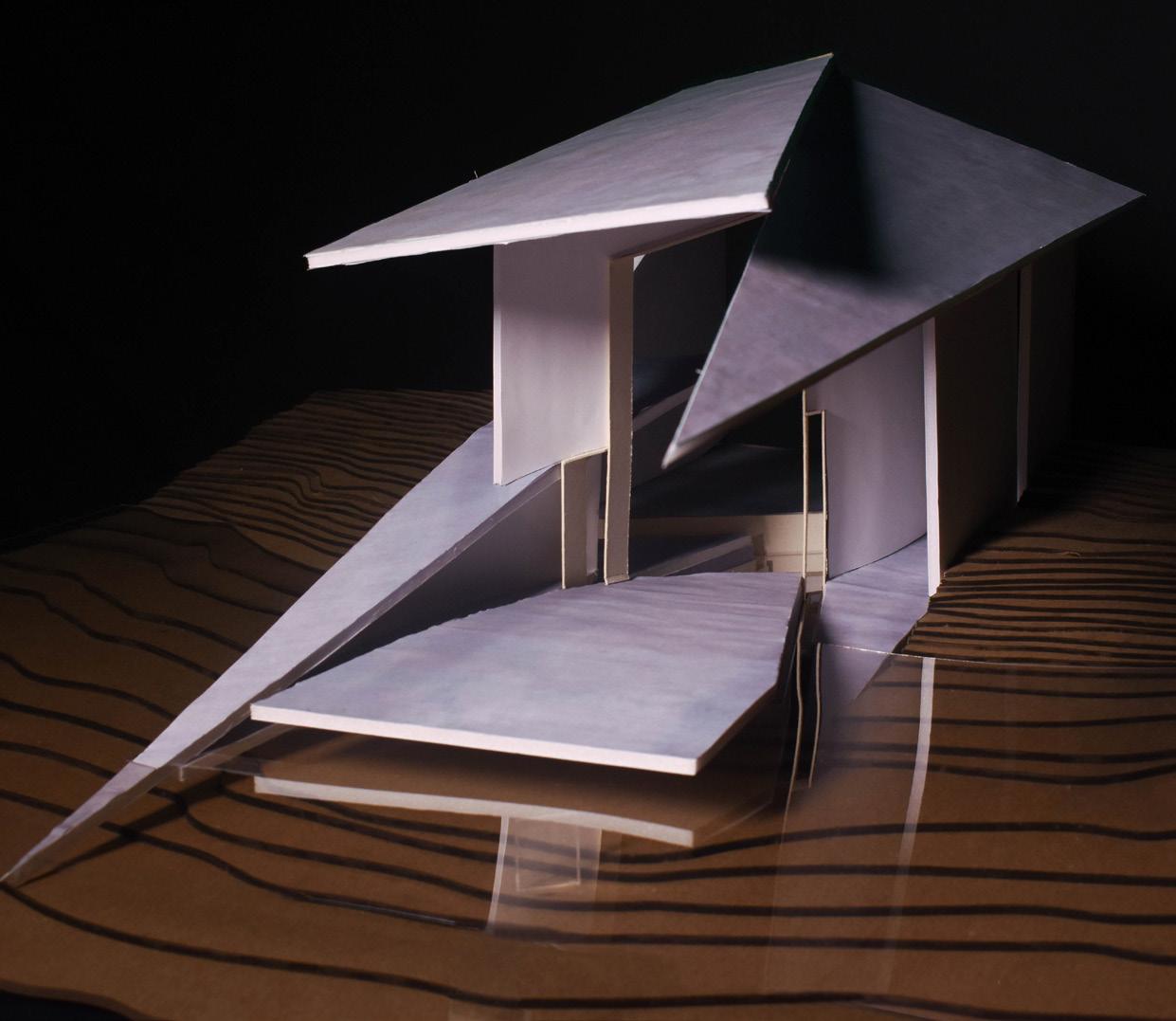
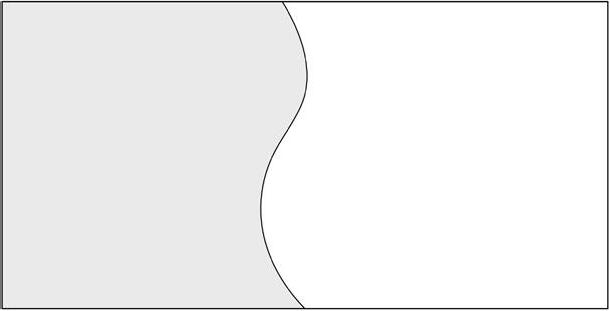
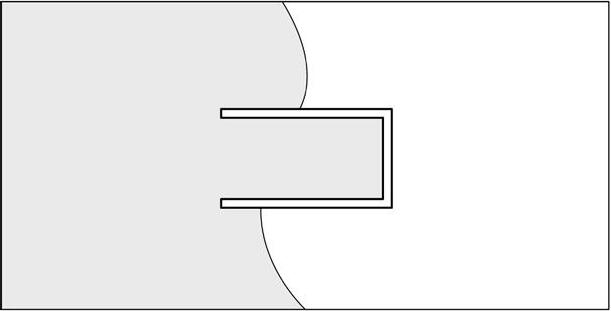
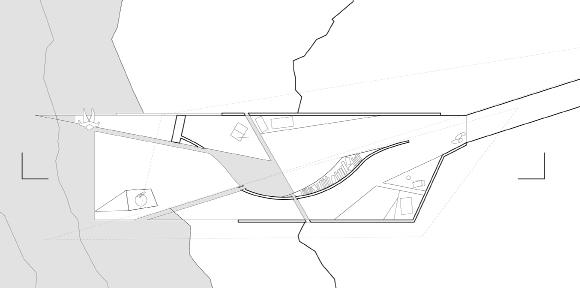
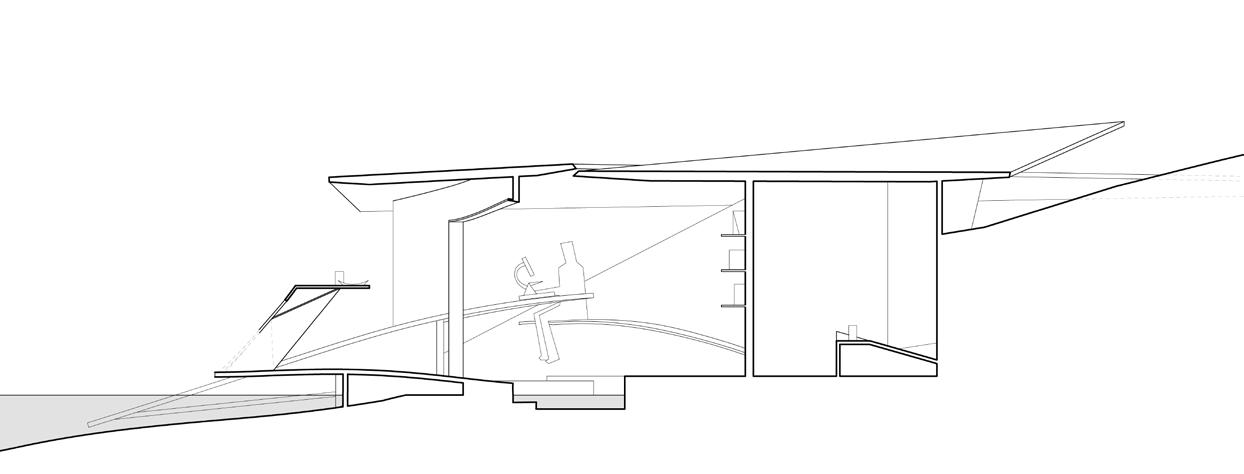
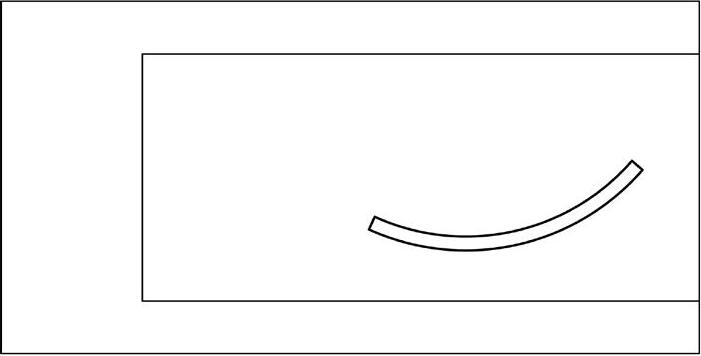
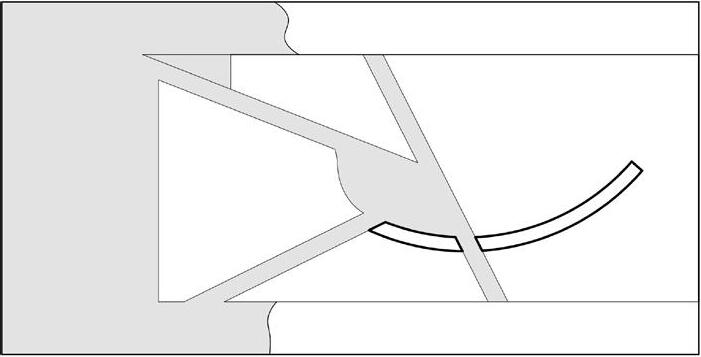
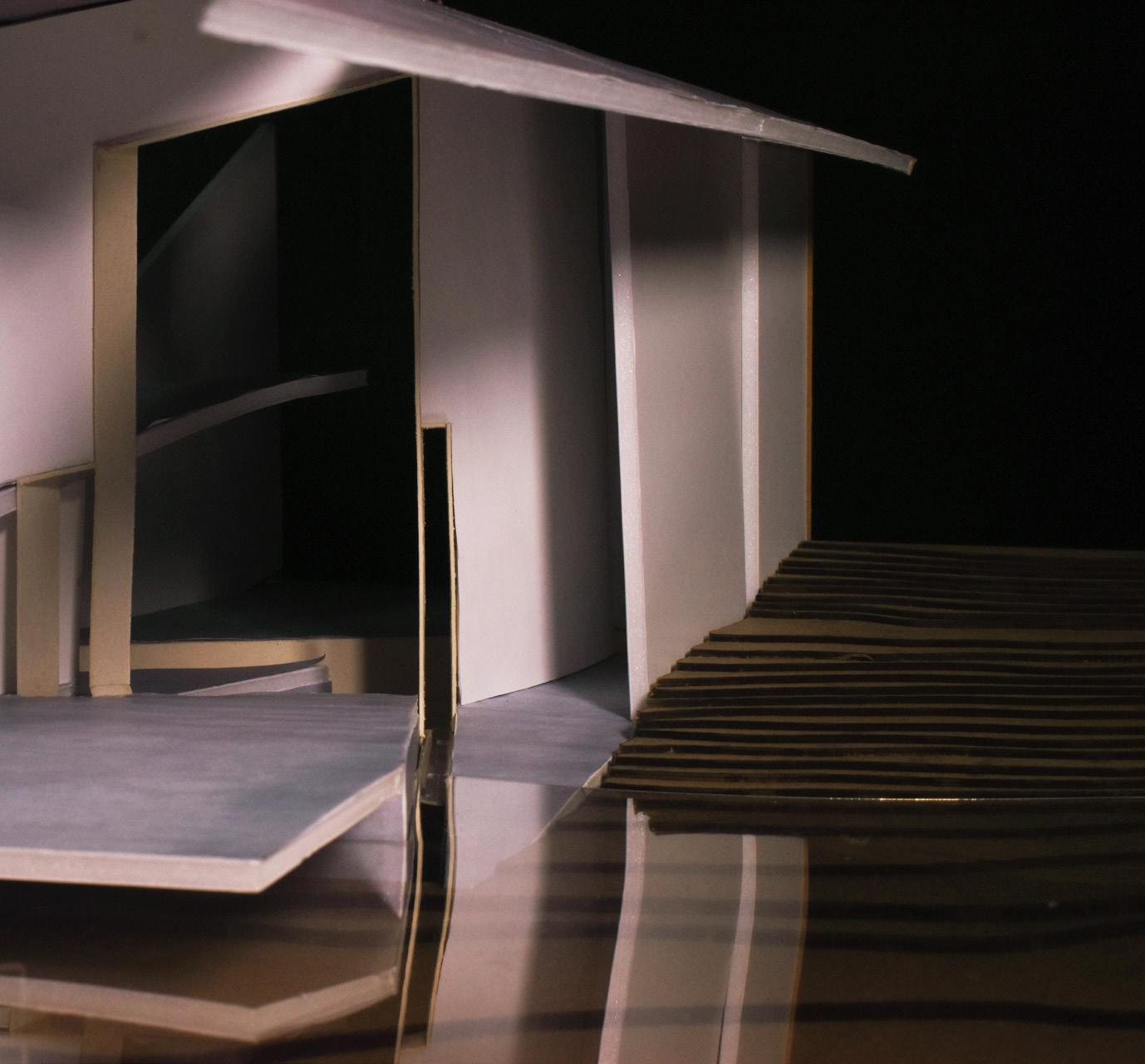
The site for this project was at the edge of a glacial lake, and so handling the relationship between water’s edge and buit form became critical to the formal strategy. The lake established the curving formal language of the shelter, and the built form actually allows the water to flow within it, acting as a divider of space.
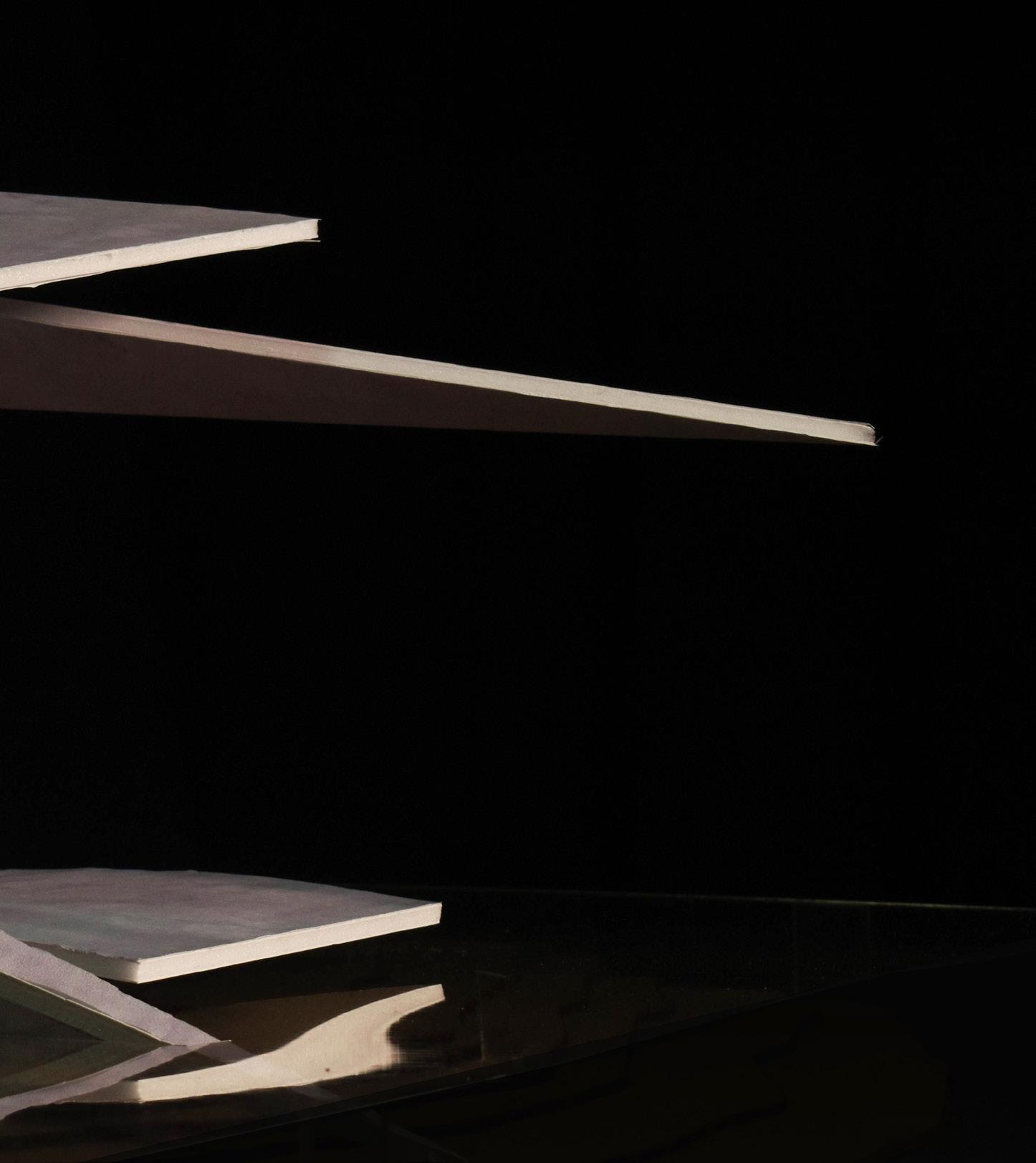
The flowing forms of the space interact with the water, its floors dipping down into the lake, while its roof remains planar, as it floats safely above the lake below.
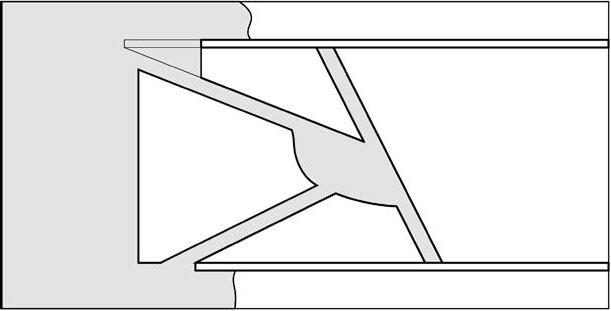
Instead of shying away from the water, two retaining walls reach out into the lake and allow the water to flow into the interior space through two small channels recessed into the floor.
In the moments where the channels of water cut through interior walls, the channels are framed to emphasize their power to shape the interior space.
Housing in the Trees
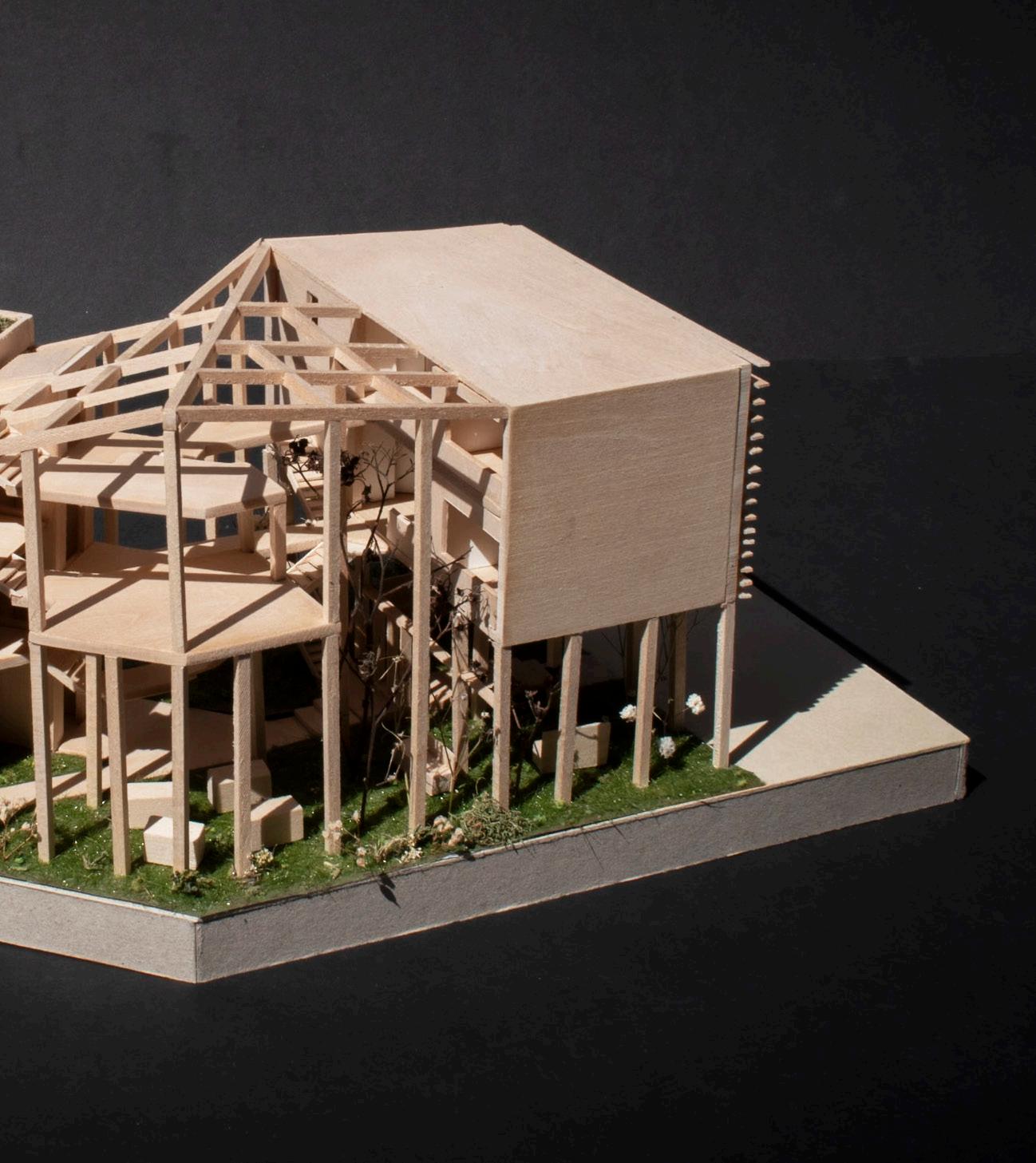
This project is designed to provide communal housing for young adults finding their feet after experiencing homelessness.
The core concept of the design is the integration of transitional supportive housing with nature.
I arrived at the idea of integrating these two components from three different directions:
1. The first was the existing nature growing adjacent to the site.
2. The second was the frequent inclusion of gardens in affordable housing developments.
3. The final element was the idea of the treehouse as every child’s dream home.
Moss Brenner-Bryant
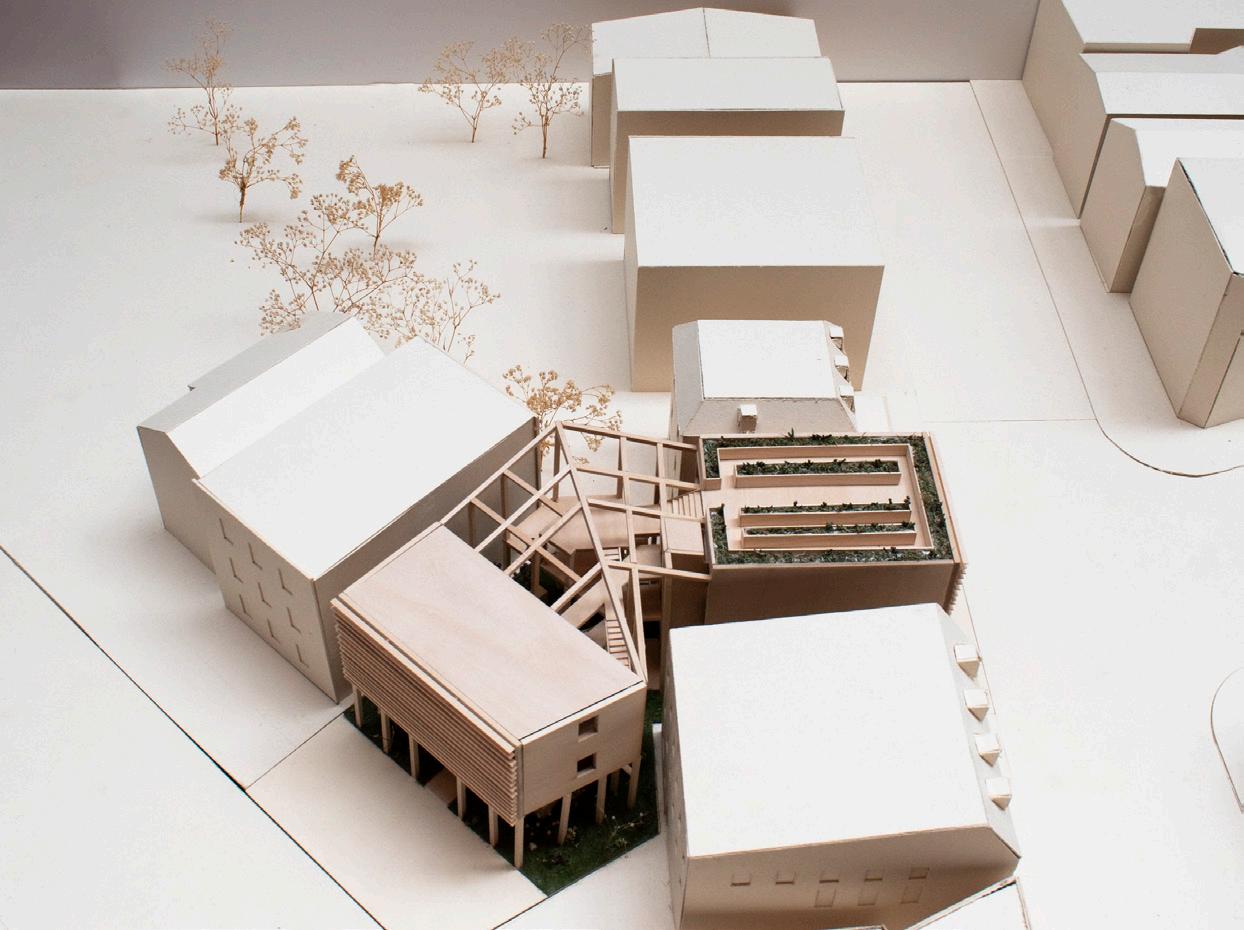
The site for this project was in the East Rock neighborhood of New Haven, Connecticut, just beside the freeway.
Upon visiting, I was drawn to the cluster of overgrown bushes and trees beside the freeway and directly to the west of of the site growing in between buildings and in backyards. My initial desire upon seeing that was to offer that nature surviving in the cracks a real place to live and grow within the bounds of the site we had been given for this housing project.
The nature growing in the liminal spaces surrounding the site provides an obvious metaphor for the community I designed this housing for. Just like the nature, young people experiencing homelessness have been pushed to the margins of society, but this scheme provides a safe, stable place for them to live, learn, and grow.
Connecting urban gardens and supportive housing for the houseless community is a common combination of programs, because marginalized communities and the housless community in particular often have very little access to nature and green spaces. But many of those projects divide the two programs, keeping the housing and the nature separate. My goal in this scheme was to push this combination further by completely integrating housing and nature.
For this transitional supportive housing for formerly homeless youth, in addition to two social workers and a mental health specialist on site, I envisioned a gardener and cooking teacher, who could lead classes for the young adult residents about cooking, gardening, and how incorporate vegetables from the roof garden to make their own healthy, affordable meals.
The final idea behind the integration of housing with nature was the idea of the treehouse as every child’s dream home.
A treehouse gives children their own space where they can truly be themselves and create their own environment.
The journey up and into the treehouse is inextricable to its feeling of distance from the rest of the world below.
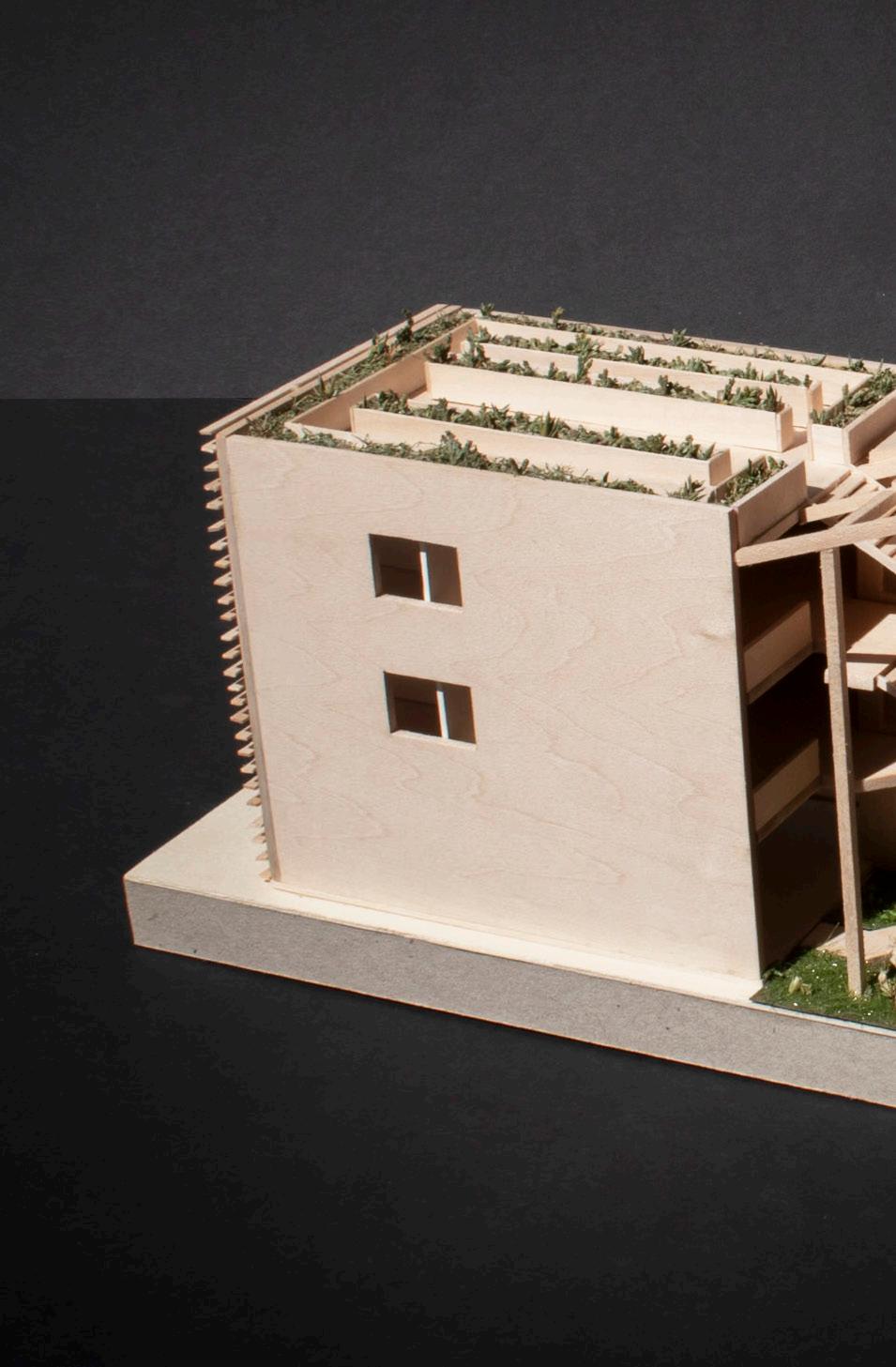
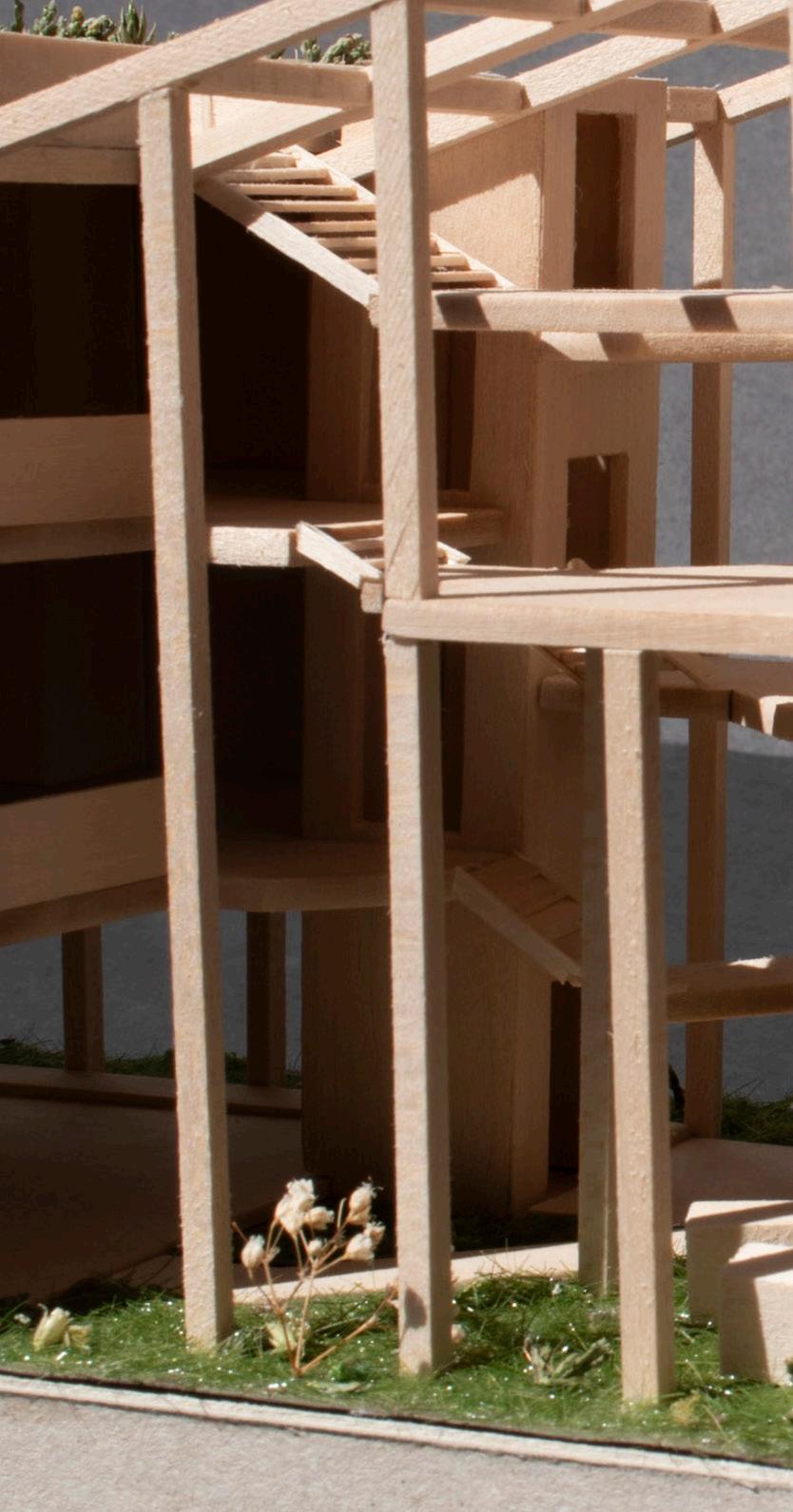
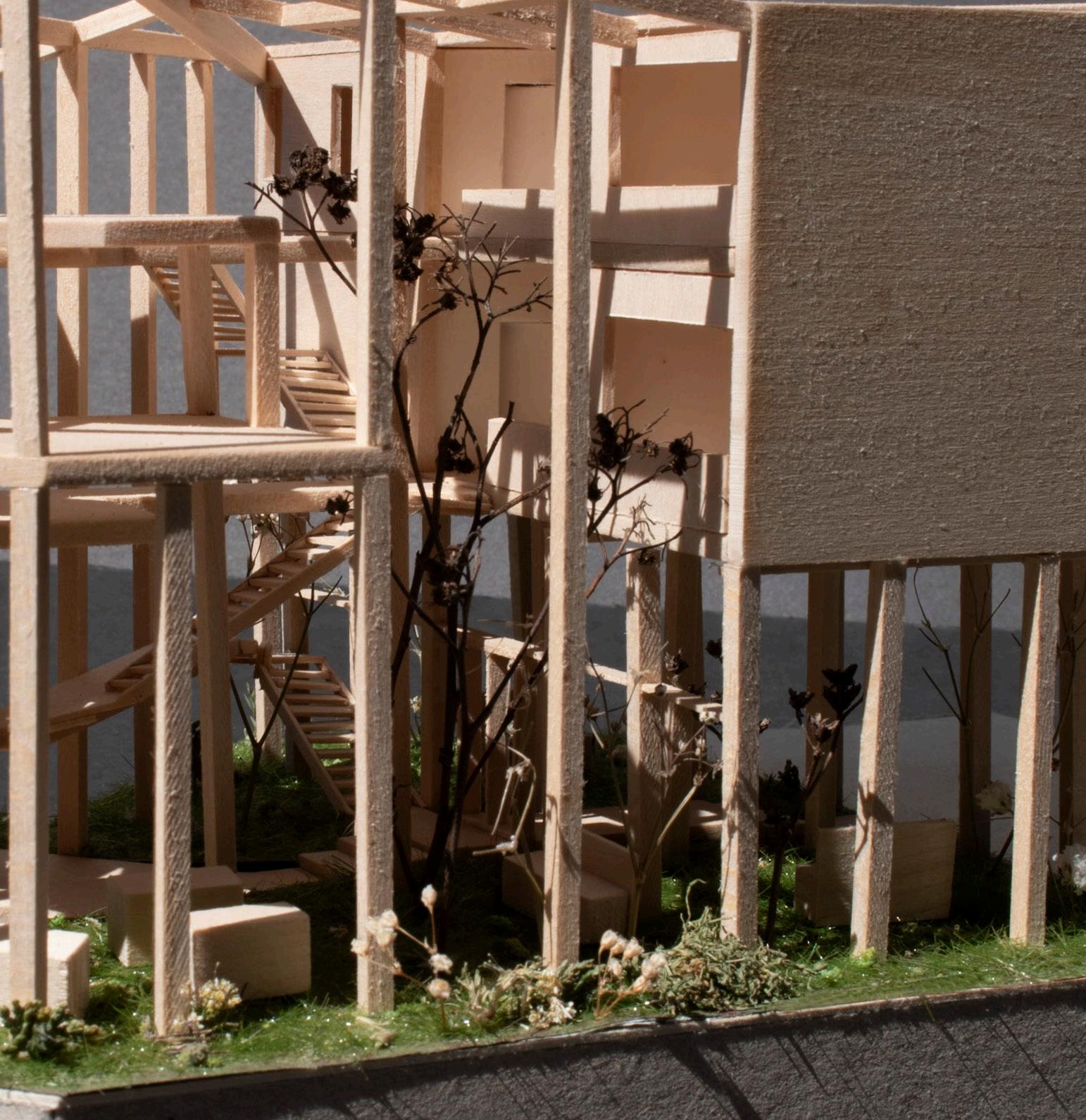
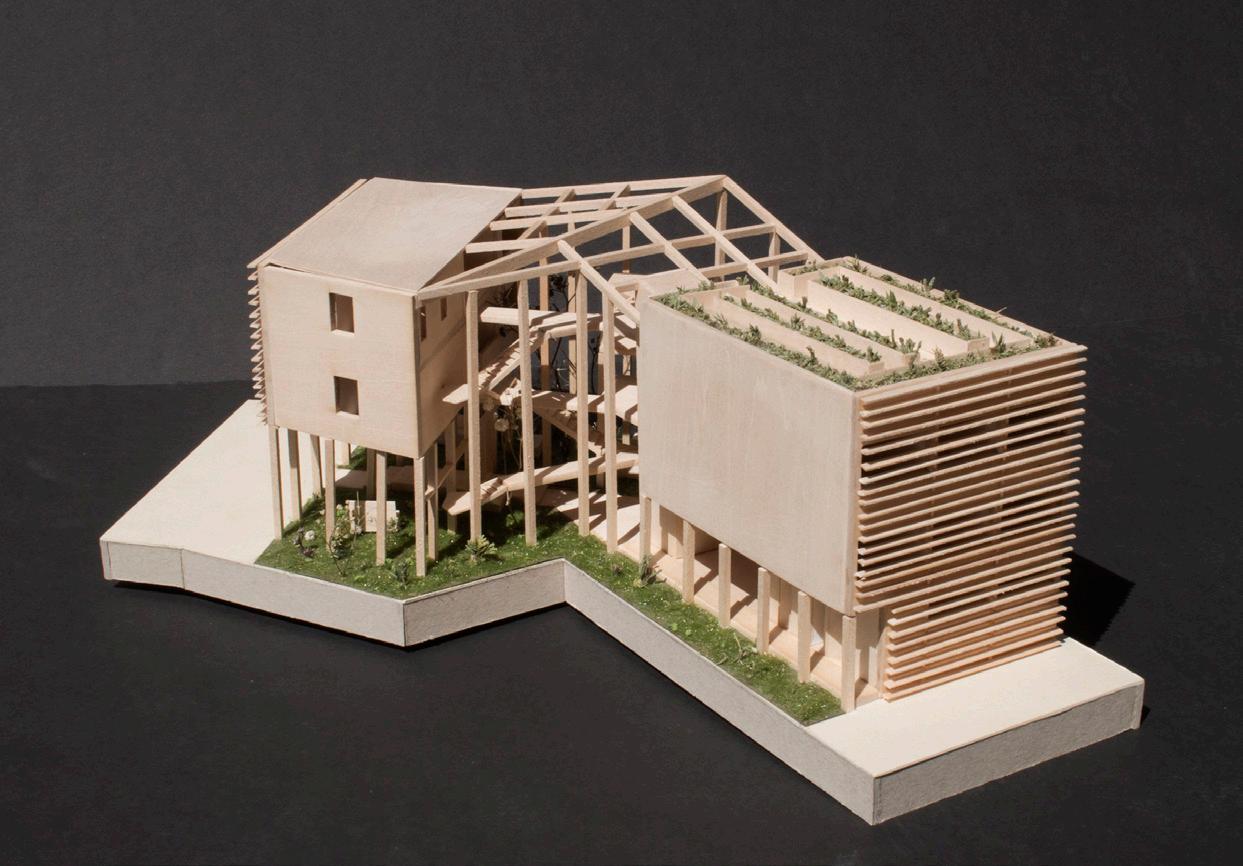
I aimed to mimic that same journey and shift in elevation by designing the circulation as an intricate set of stairs that spirals through the trees and up to each successive level of housing before culminating in the roof garden high above.
More than just circulation, the central stair also branches off into several smaller spaces overlooking the larger communal eating and gathering space below.
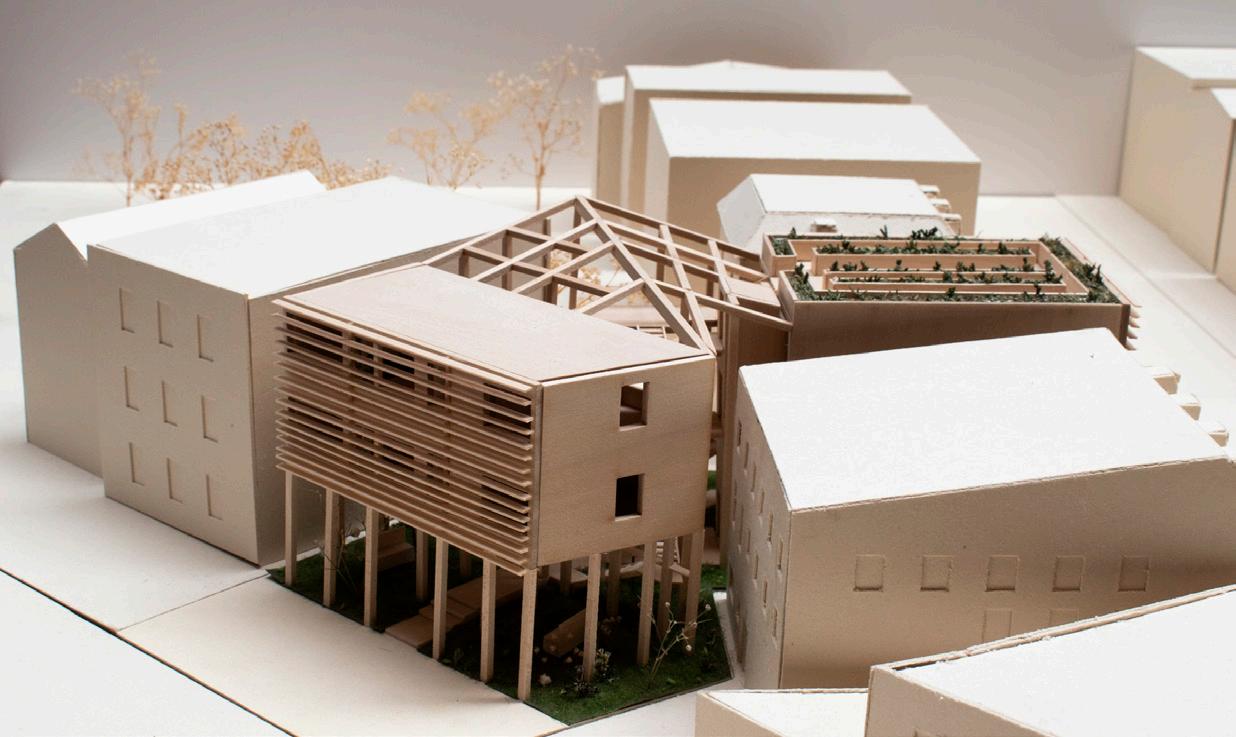
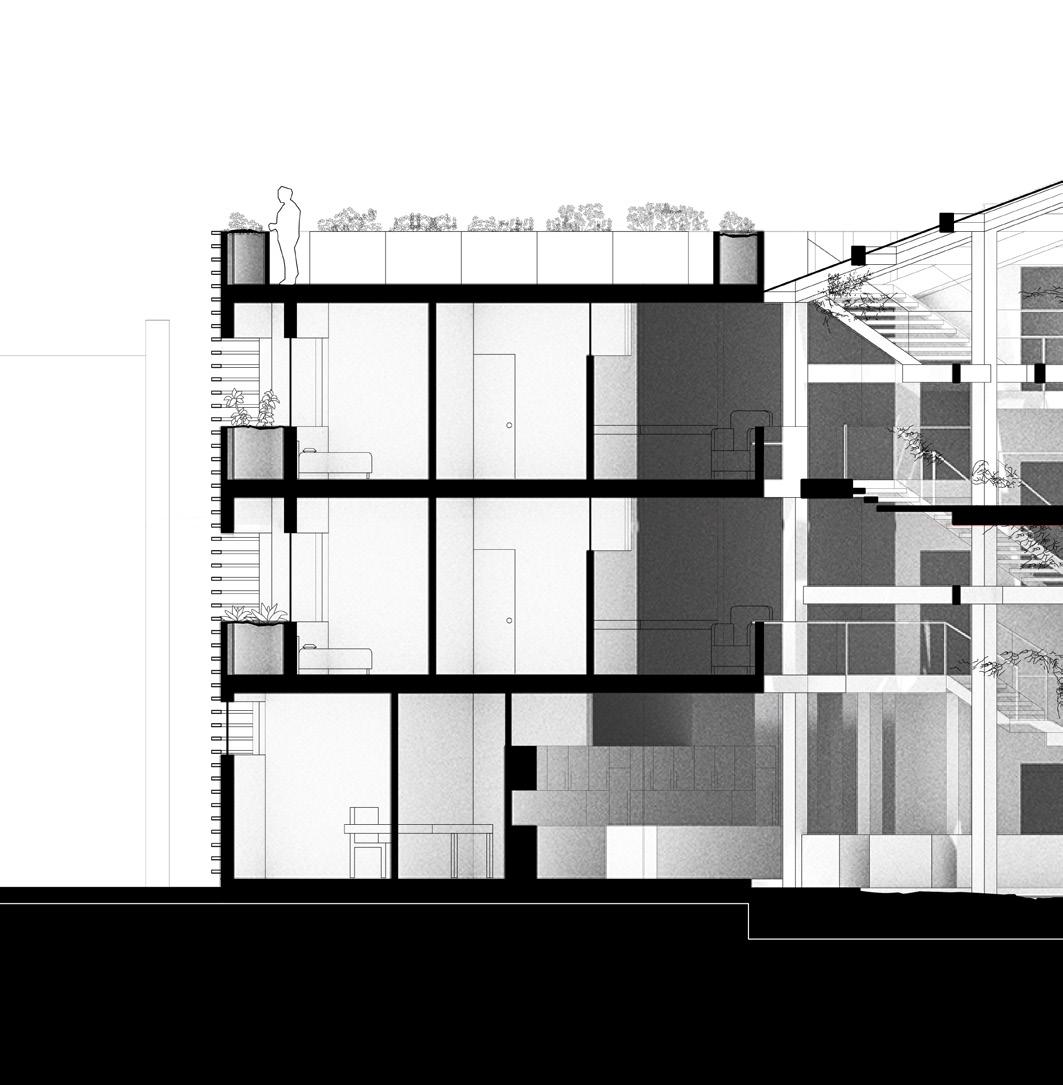
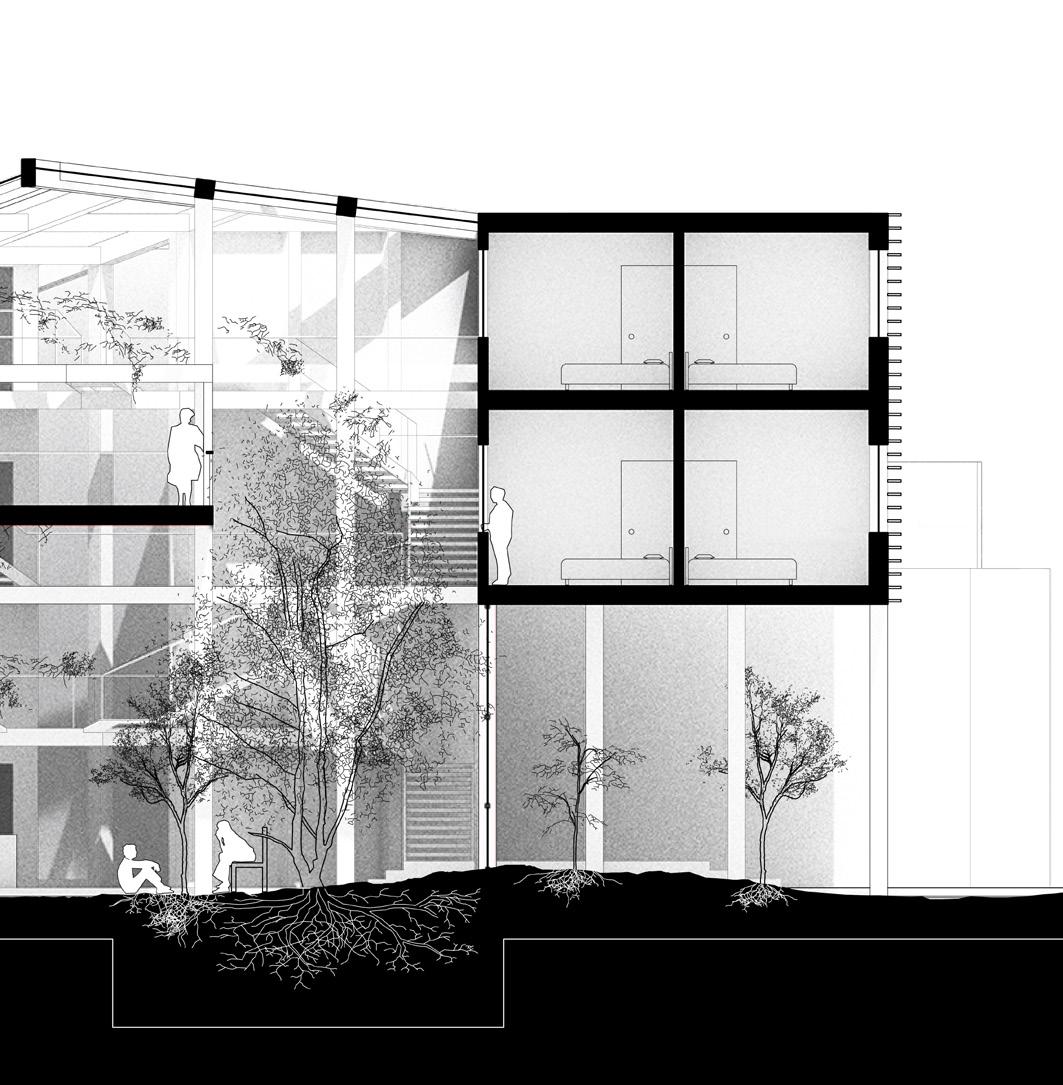
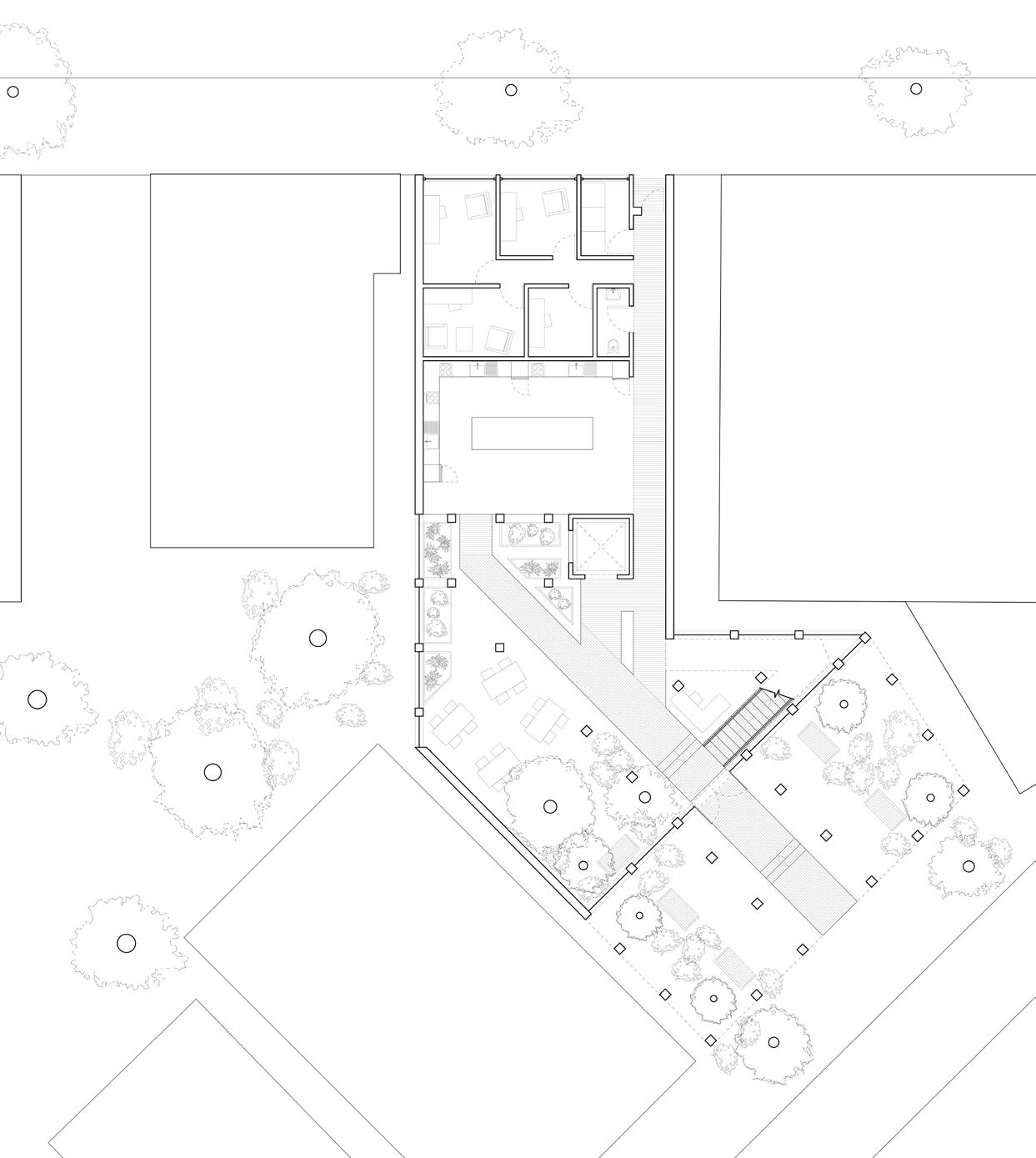
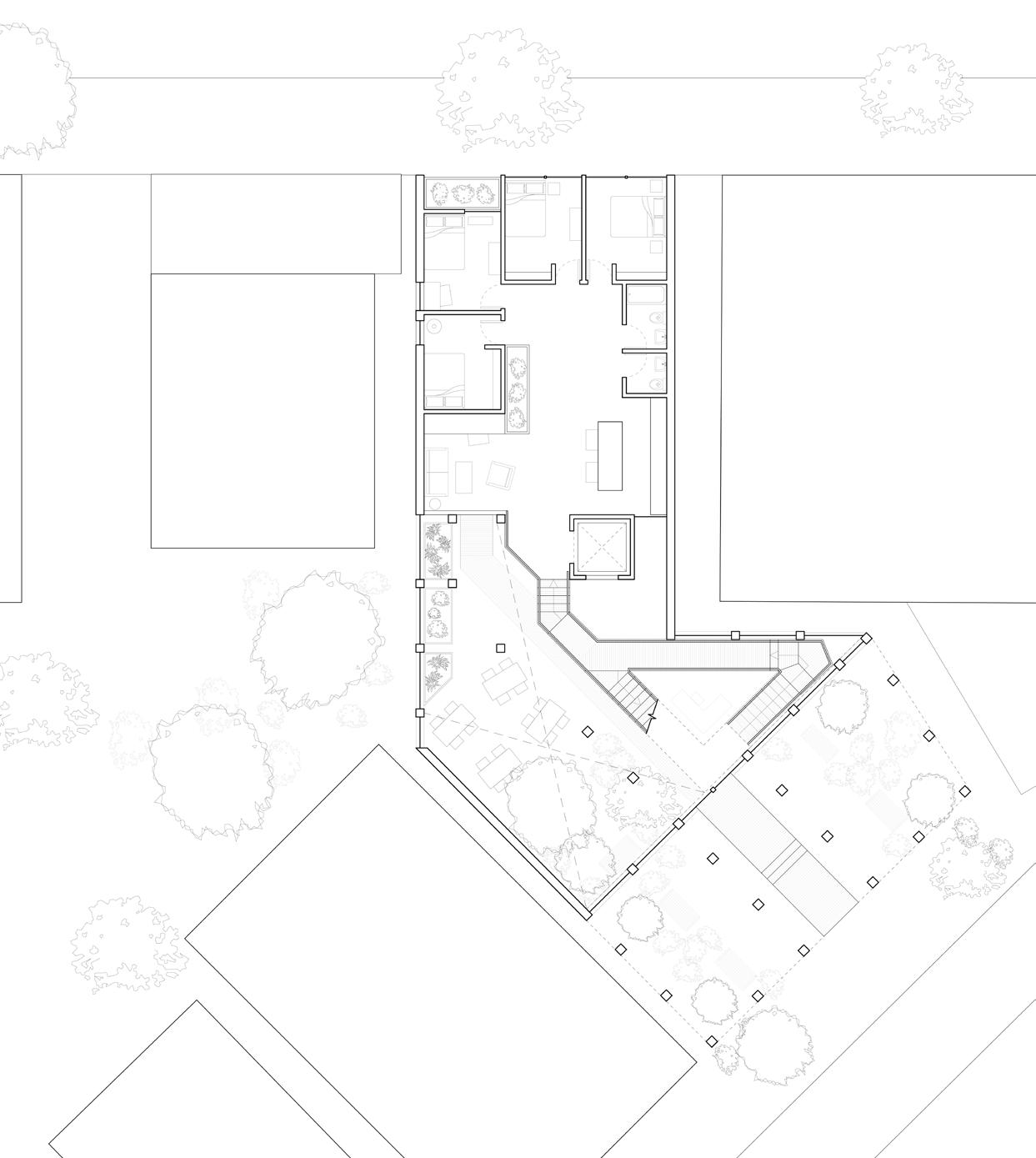
Programatically, the ground floor holds all of the public portions of the project, while the housing units sit above, on either side of the central nature-filled atrium space with its complex branching stairs.
The main entrance is to the southeast, set back from the sidewalk behind a shaded outdoor space. The wooden boardwalk underfoot takes you through front doors, into the large glass atrium, and past the communal eating area, to the large shared kitchen. Beyond that are offices for the social workers, mental health specialist and the gardener/cooking teacher, tucked away along with the restroom and shared laundry.
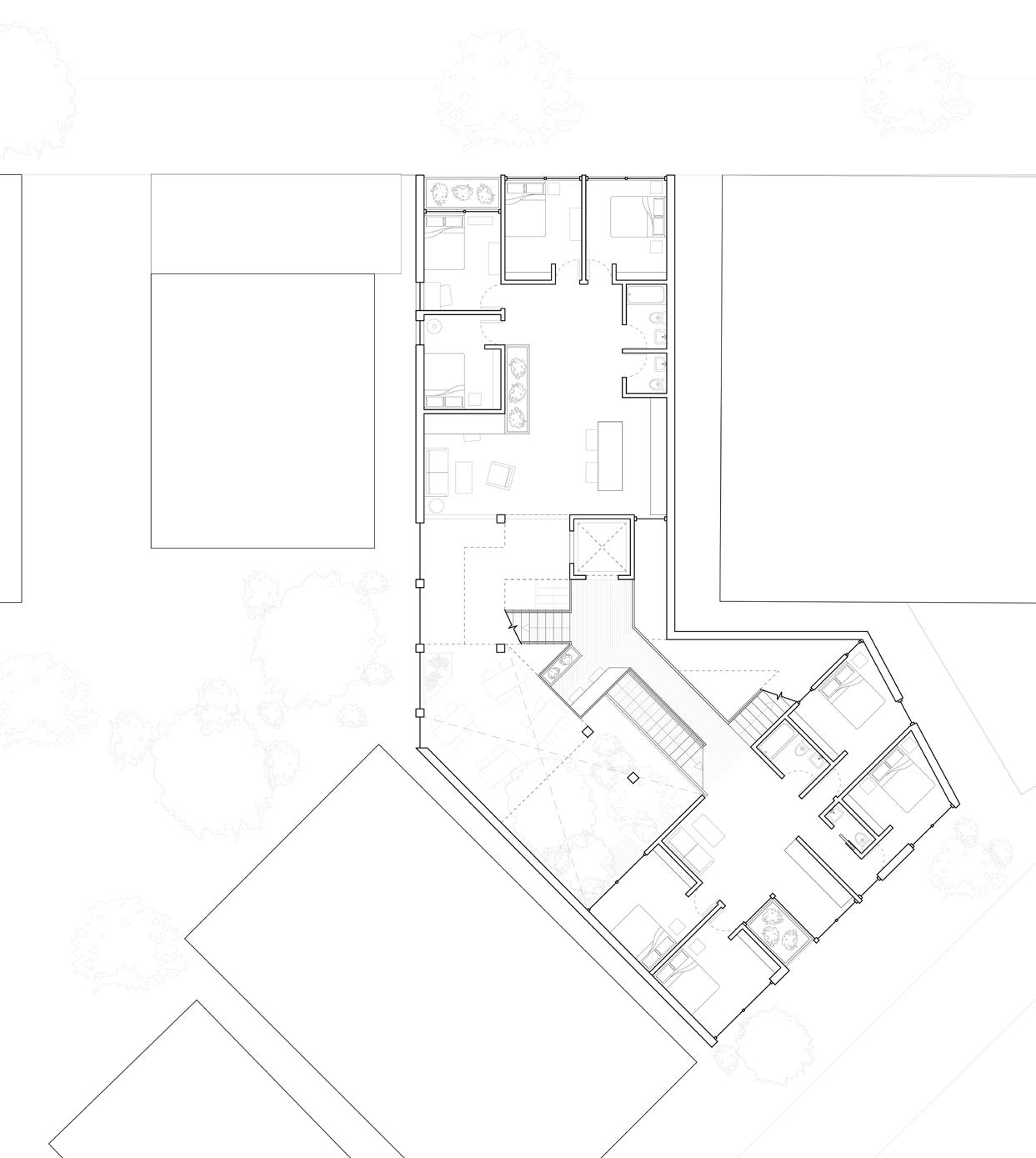
The housing units are located on either side of the central atrium, on the second and third floors. The floors on either side are offset by half a level, yet each floor remains wheelchair accessible thanks to the central elevator and the criss-crossing elevated walkways.
Each housing floor contains four individual rooms along with a common area and a kitchenette. For people who have experienced homelessness, creating a feeling of safety is frequently of the utmost importance, and especially as transitional housing, creating smaller spaces where residents could initially socialize in more private, comfortable spaces felt very important to me.
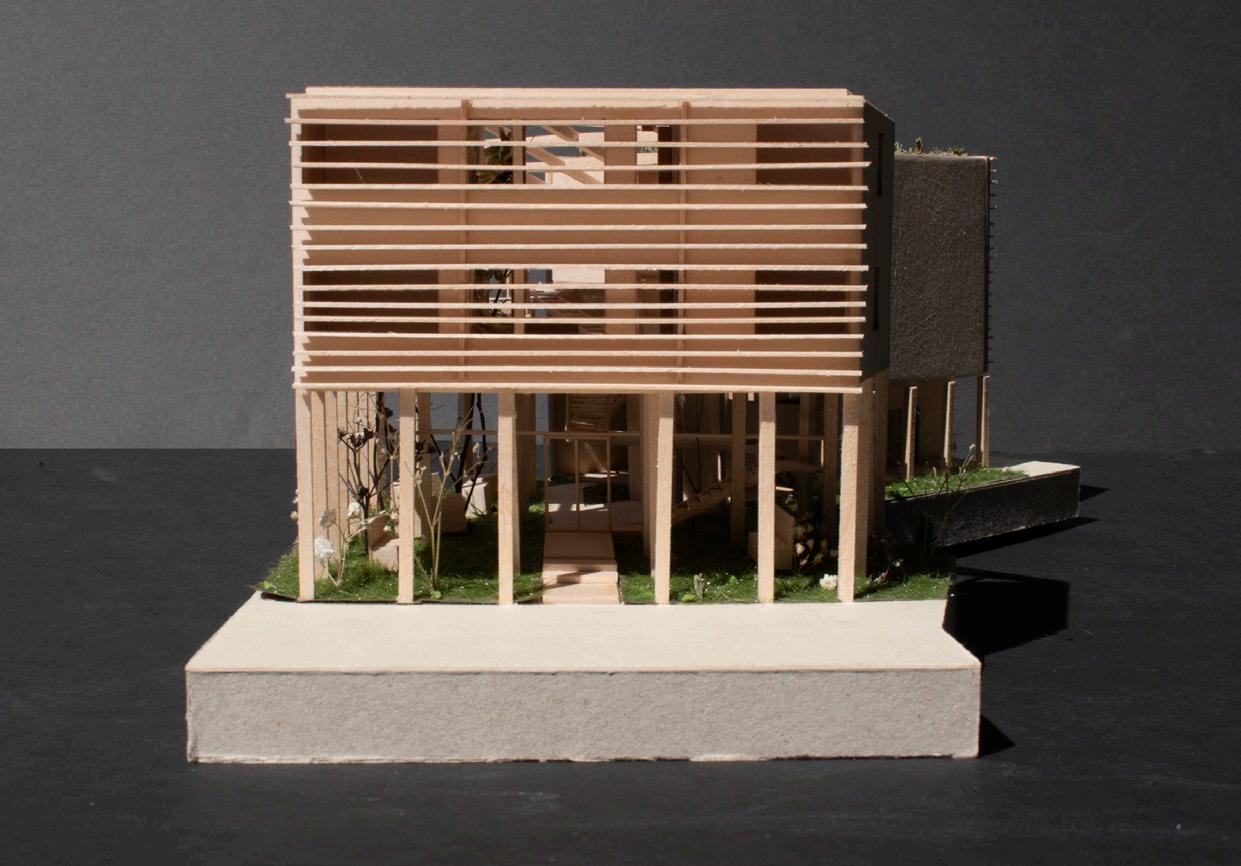
I chose to place the main entrance away from the main street, and clad both street facing facades with wooden louvers to add privacy for the housing units above. Using horizontal louvers limits the ability of passersby to look up and into the housing above them, but maintains a feeling of oppenness from within.
Focusing the attention of the housing inwards towards the central greenhouse-like atrium space was another choice intended to emphasize the feeling of safety and protection which is so critical when designing housing for young adults who have experienced homelessness.
Ocean Table
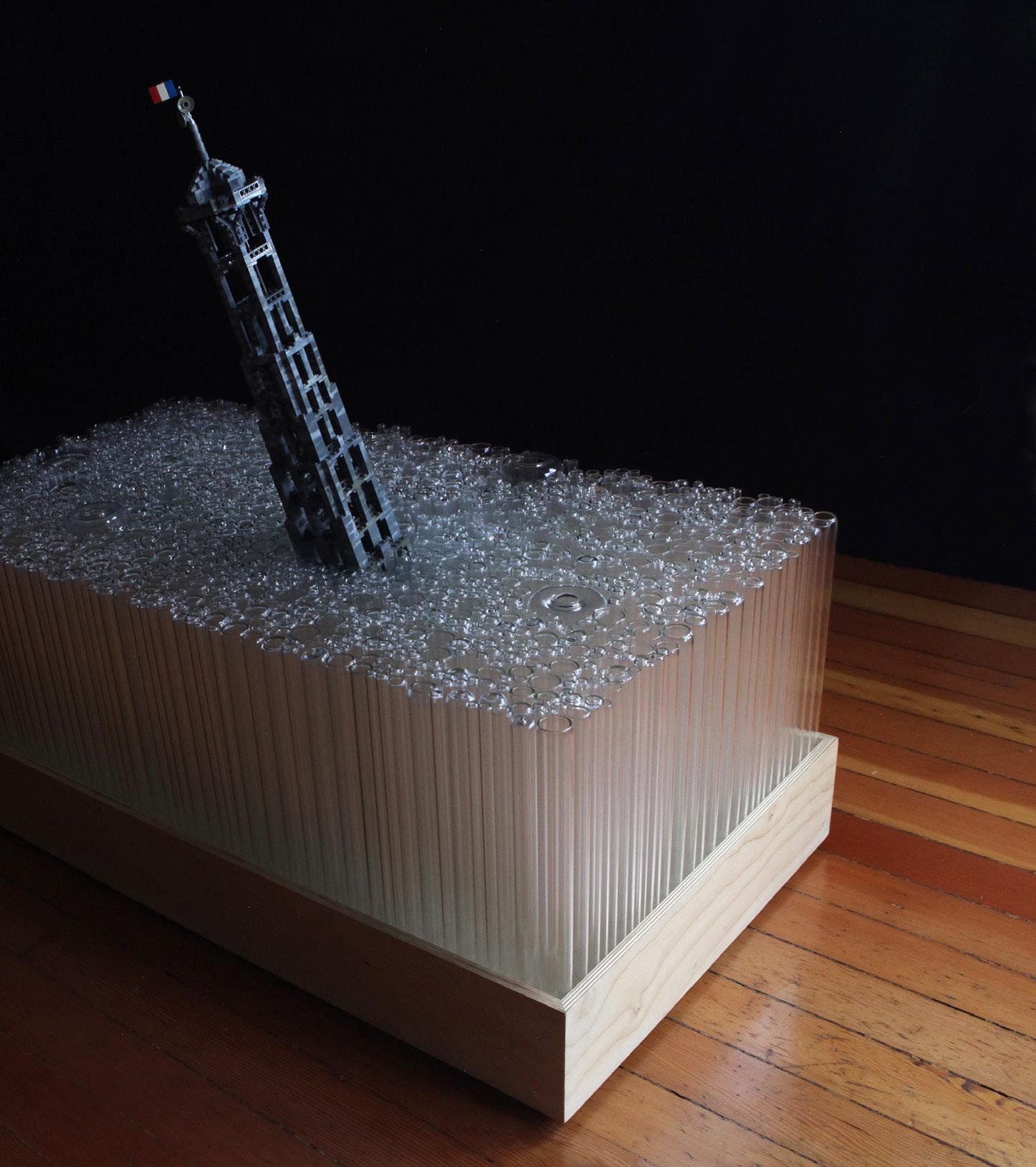
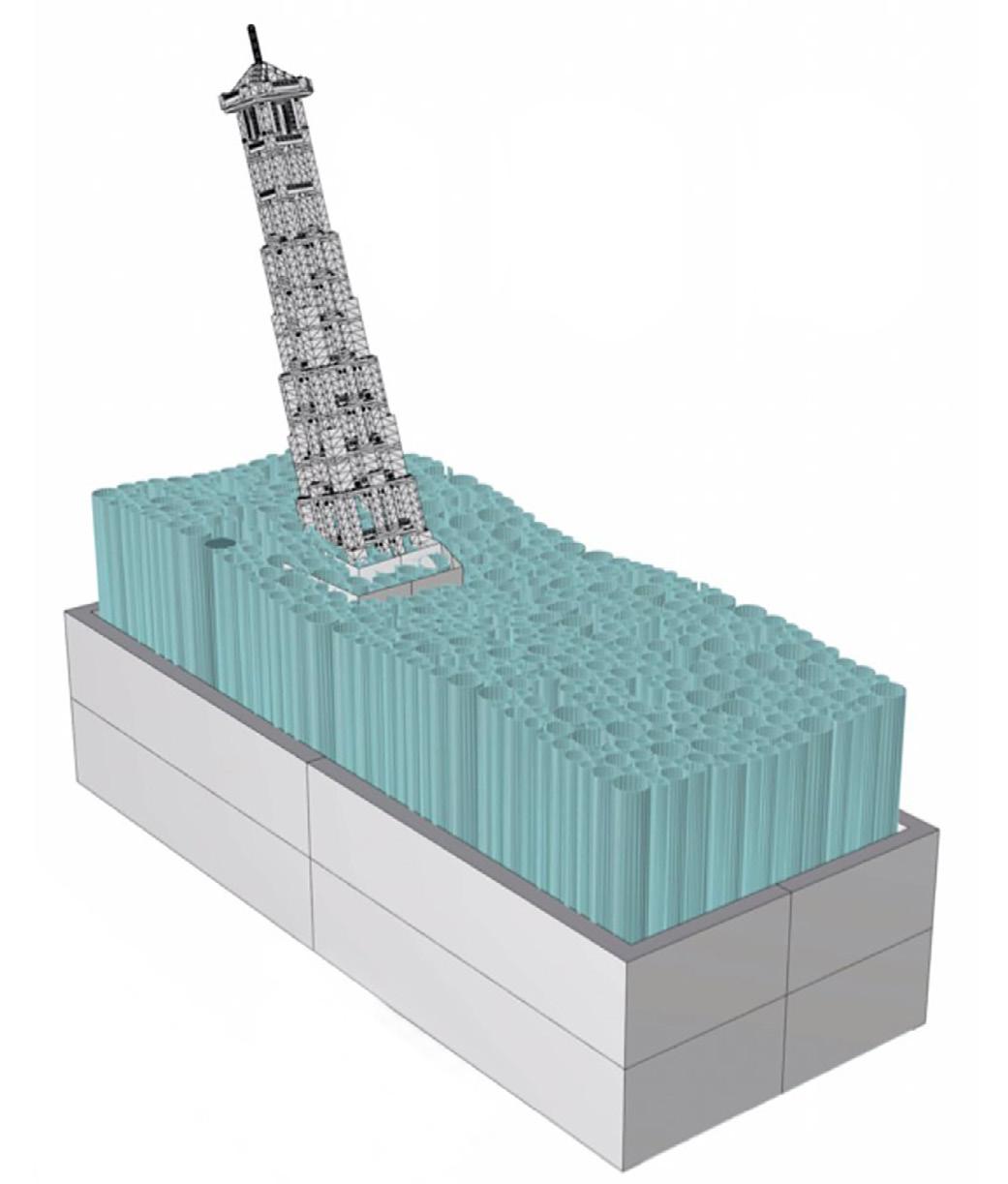
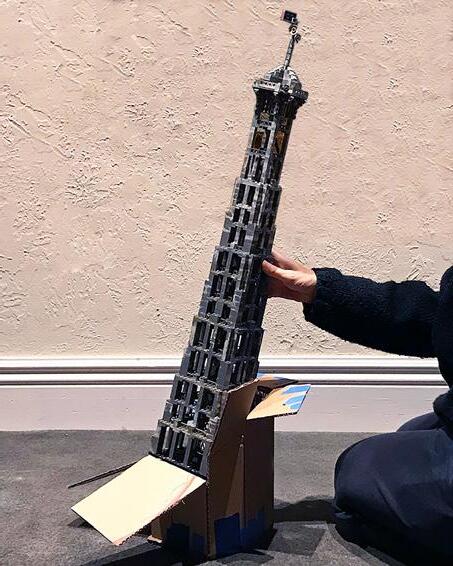
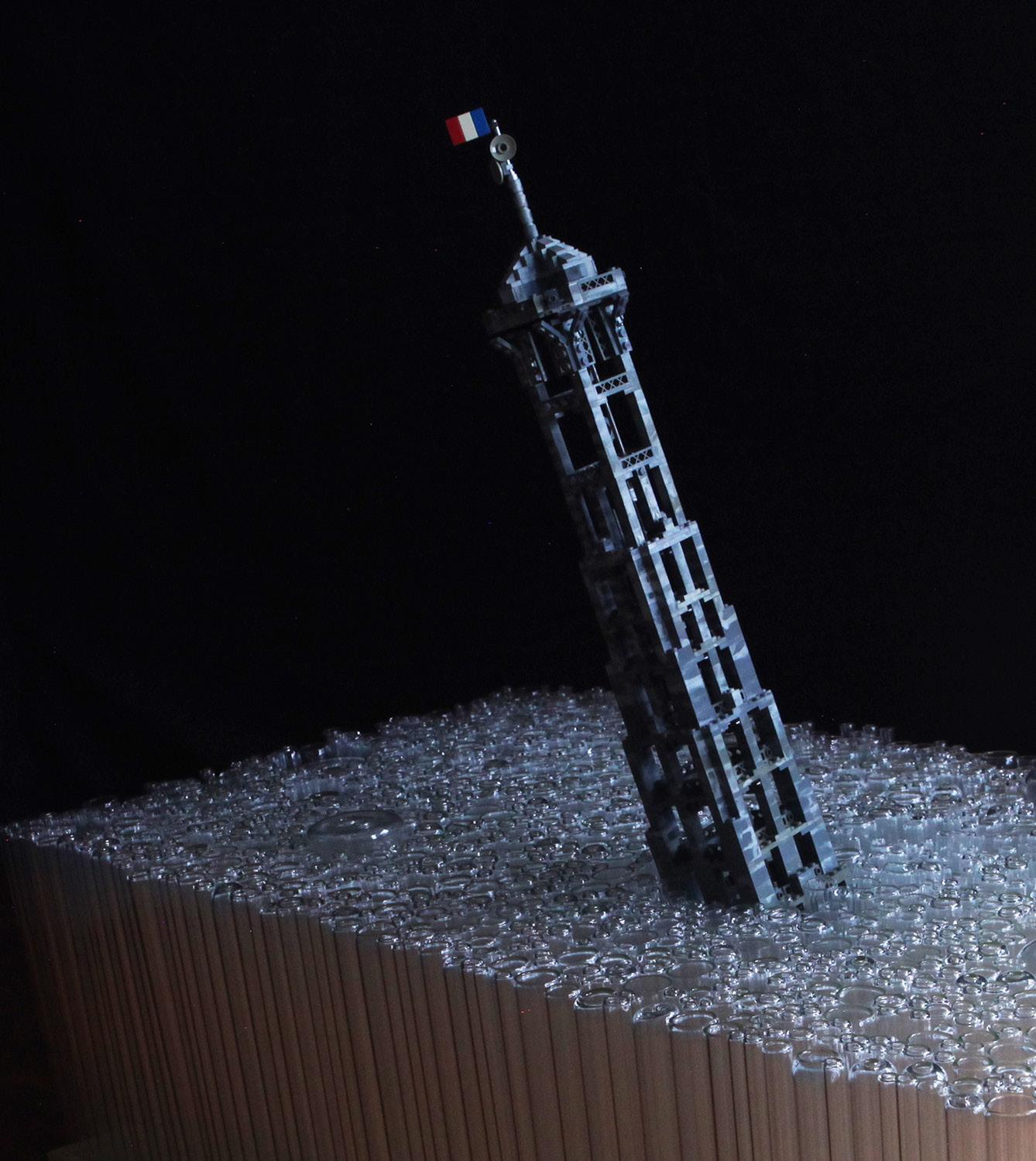
I designed this table to make use of all the tubes that go to the landfill from the glass sculpture studio where I worked. Combining the glass tubes with a Lego Eiffel Tower I made as a kid, my design for this table depicts a vision of the future as climate change continues to run its course. The Eiffel Tower leans precariously, already partially submerged under the surface of the ocean, represented by the uneven surface of the table.
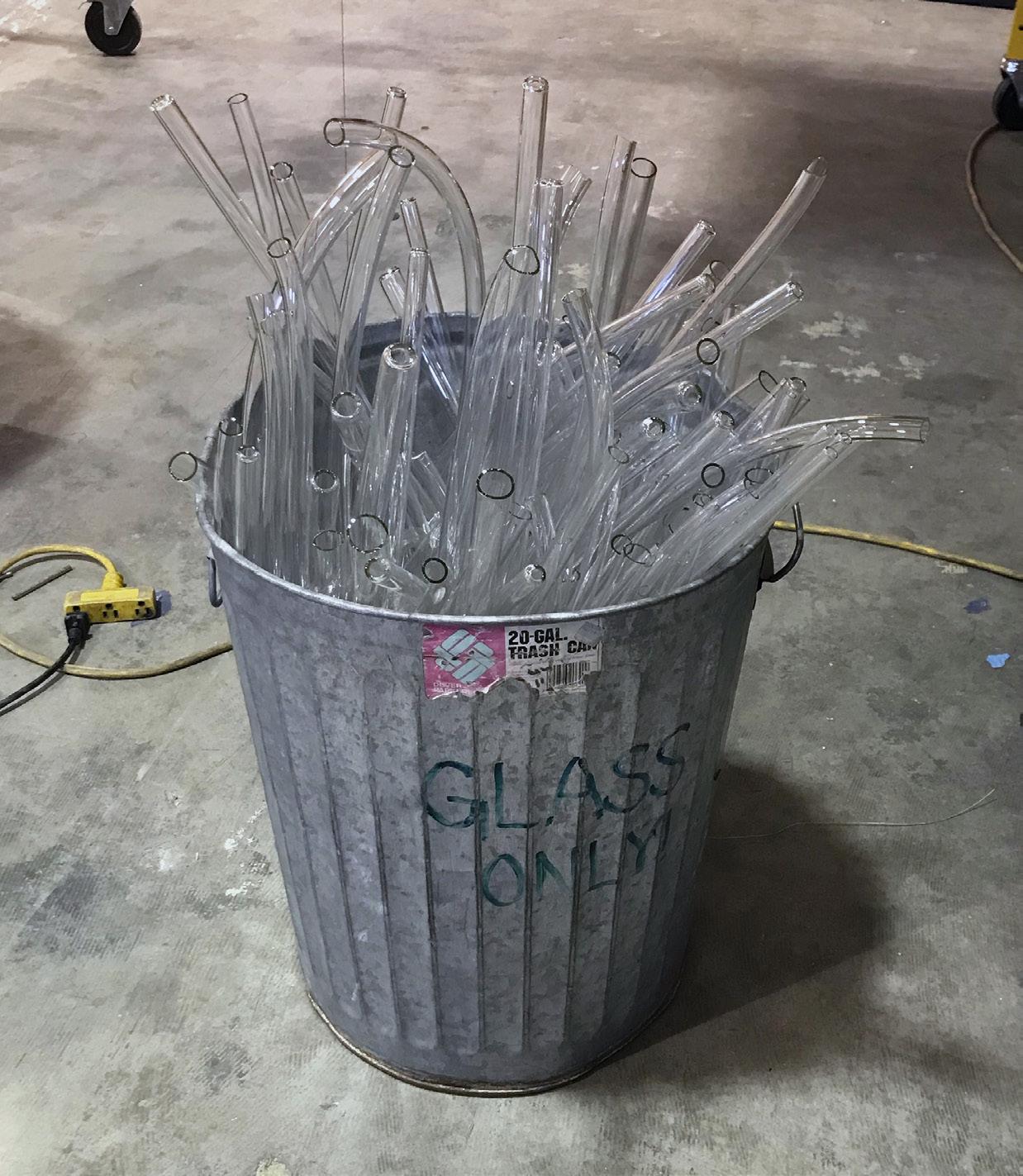
Working at Nikolas Weinstein Studios, a glass sculpture studio, we worked almost exclusively with borosilicate glass and generated large numbers of short off-cuts that the studio can’t use. Sadly, they also can’t go in the regular recycling, so we regularly throw away hundreds of small glass tubes. The glass tubes are a beautiful material that was sad to see go to waste, so I designed this table to repurpose as much of that waste as possible.
The form of the table was also meant as a critique of the waste and carbon emmissions produced by our consumer culture. As such, I wanted to make the entire table from salvaged materials to avoid contributing to the exact same problem I wanted to critique. I’ve already mentioned the Lego model, and the glass tubes, and the wood was also salvaged from studio offcuts. The only two items I purchased in order to make the table were one bottle of wood glue and one bottle of a natural wood finish.
Moss Brenner-Bryant
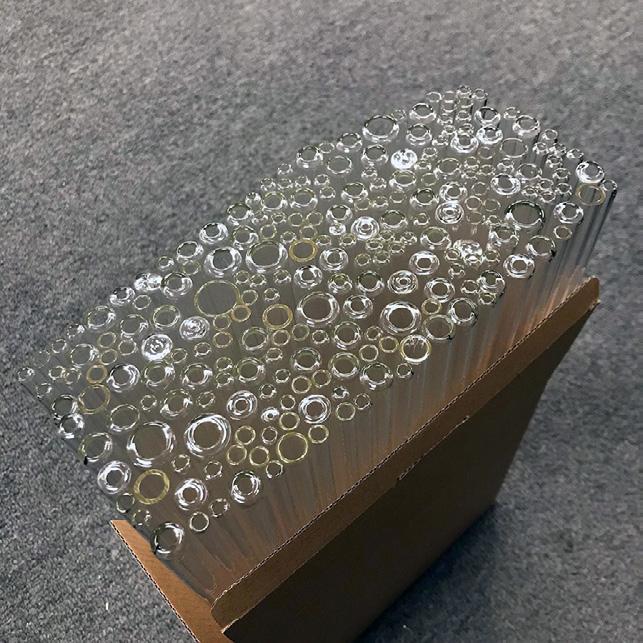
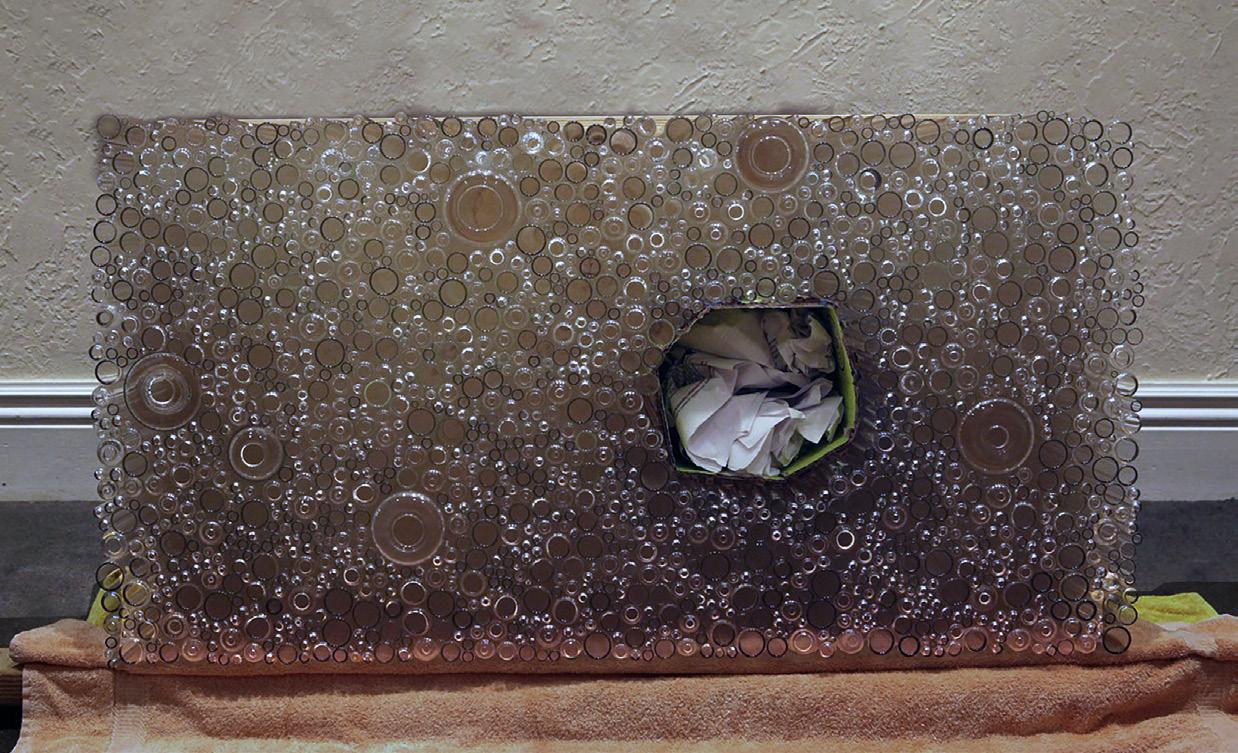
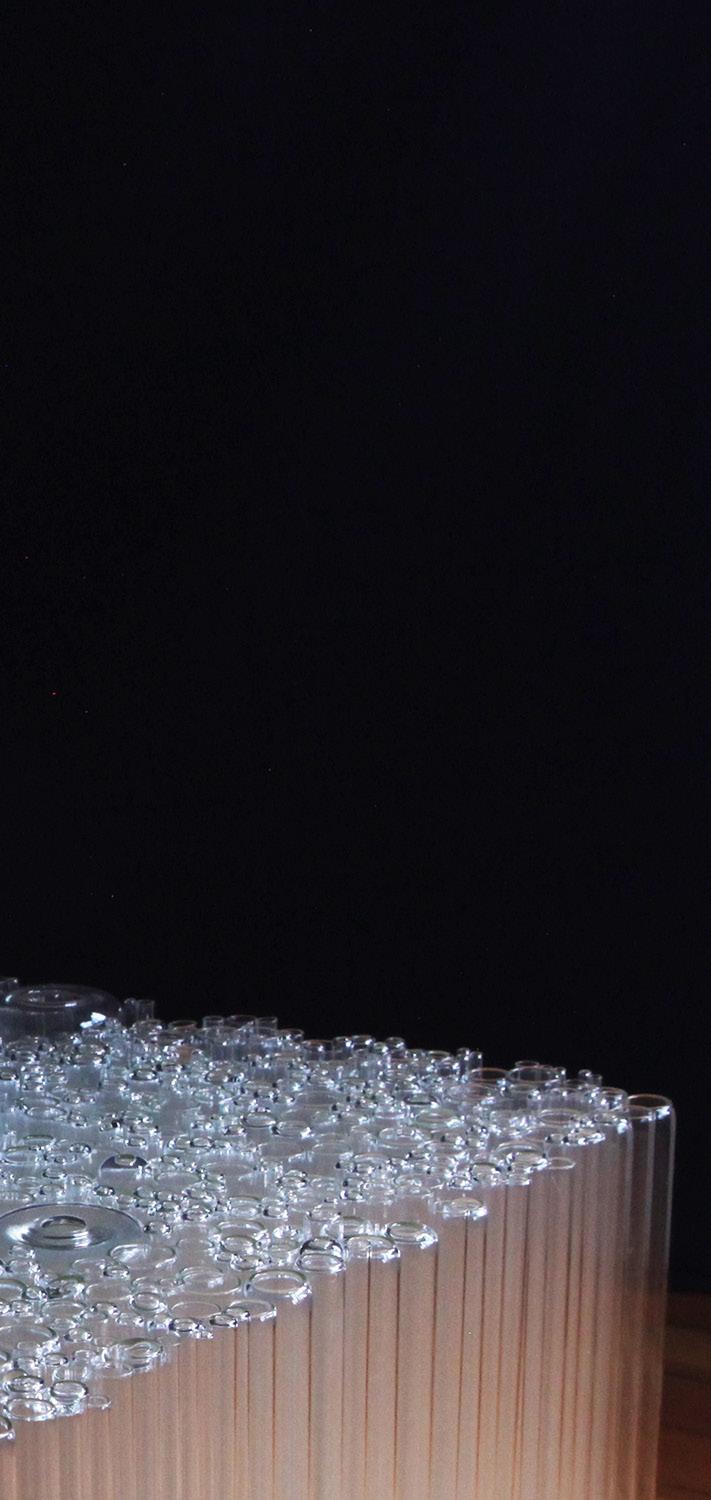
The table began its life as trash. I salvaged every tube from studio offcuts, before cutting them to length and fire-polishing the ends to make them smooth to the touch. After I had enough tubes to fill the entire table, I began stacking the tubes into the wood frame I had made. Stacking them with the table turned sideways ensured they would be packed in as tightly as possible.
In the center I placed a cardboard placeholder with the exact dimensions of the central section that would support the leaning Lego Eiffel Tower.
Ocean Table
Supporting the leaning Eiffel Tower was one of the most difficult elements of constructing the table. While all the other tubes in the table were the same length, the tubes underneath and on top of the Eiffel Tower were not.
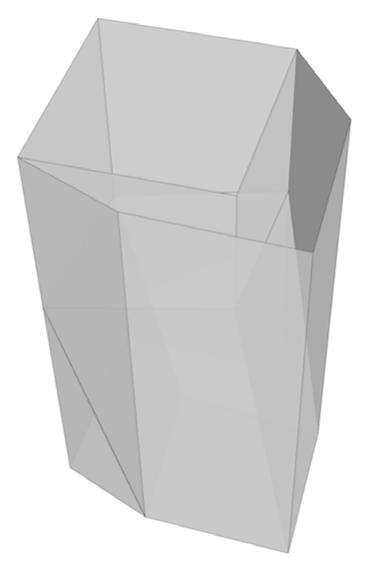
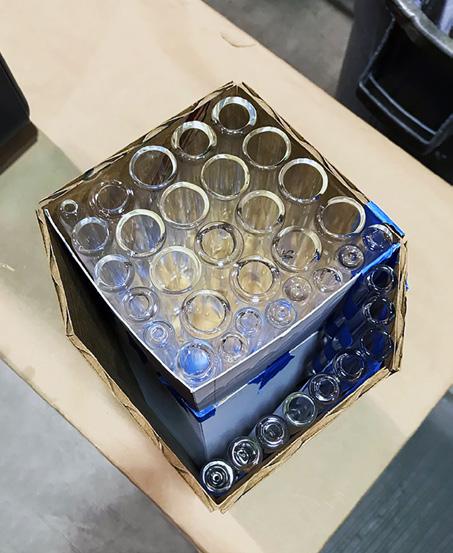
First, I used my Rhino model to isolate the section of tubes that would sit underneath the tower. I then modeled the Eiffel Tower edges as planes before turning those planes into a cardboard jig. The jig allowed me to cut the stepped tubes without measuring each one individually.
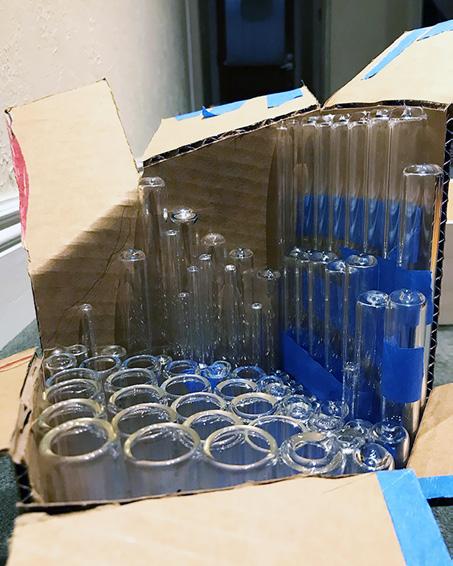
By flipping the jig upside down, I could let the tubes fall to the bottom of the sloping cardboard walls, and then mark the top, before cutting the tube on that marked line.
After filling the cardboard jig with tubes using that process, I flipped the jig back over to reveal the stepped tubes (left).
The perfect fit of the stepped tubes underneath and around the leaning Eiffel Tower, safely supported its tilting weight without any additional internal structure.
I wanted the table to toe the line between functional furniture and sculpture, functioning as a real table, but not allowing the user to forget its message.I found that balance in the uneven surface of the table. While it is flat enough to safely support a glass, every time you feel that slight wobble as you set down your glass, you are reminded of the the table as a sculpture, and of what it represents.
Glass Fabrication
I worked for 3 years at Nikolas Weinstein Studios, a small sculpture studio, both fabricating and installing large glass installations.
Moss Brenner-Bryant
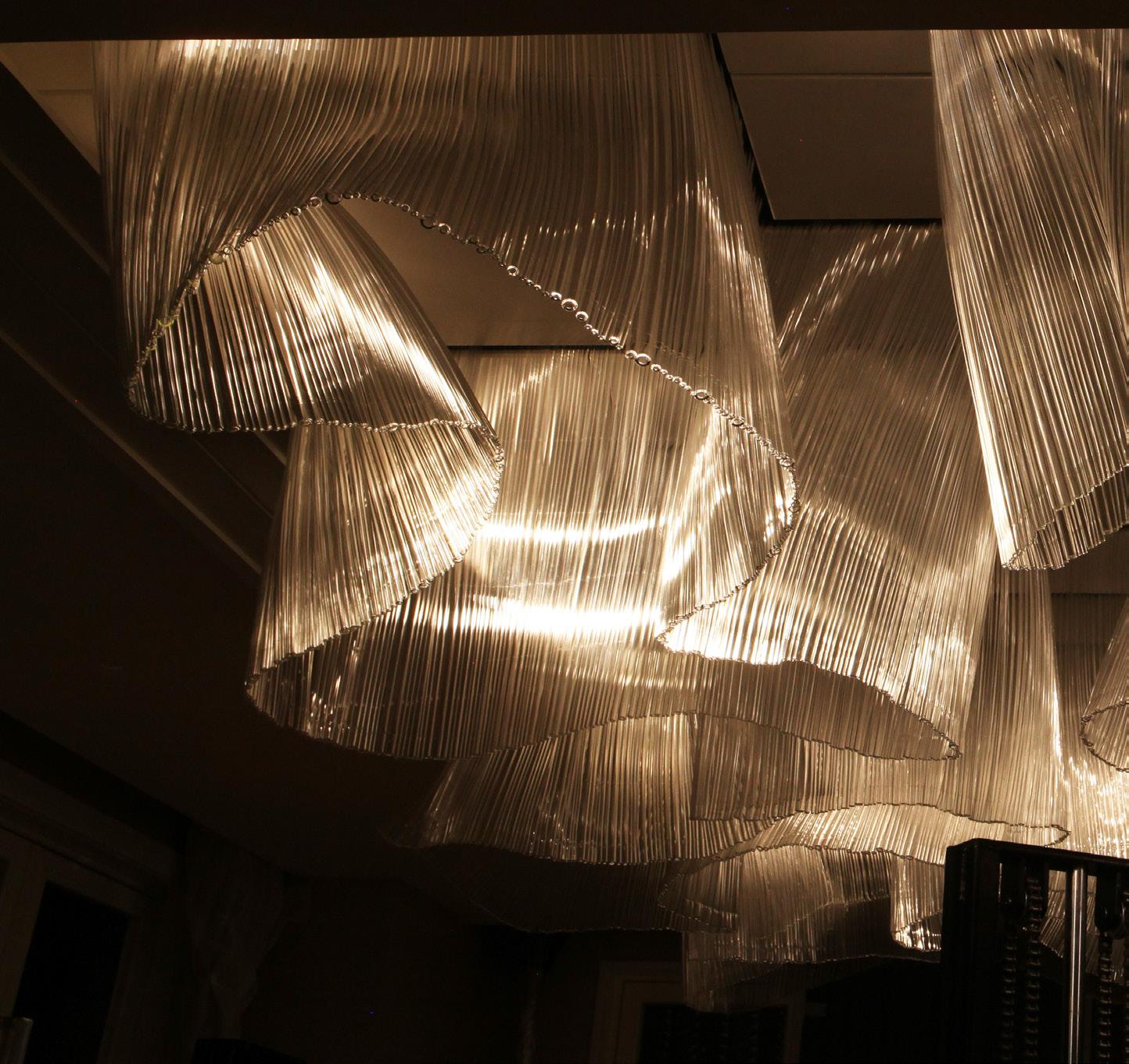
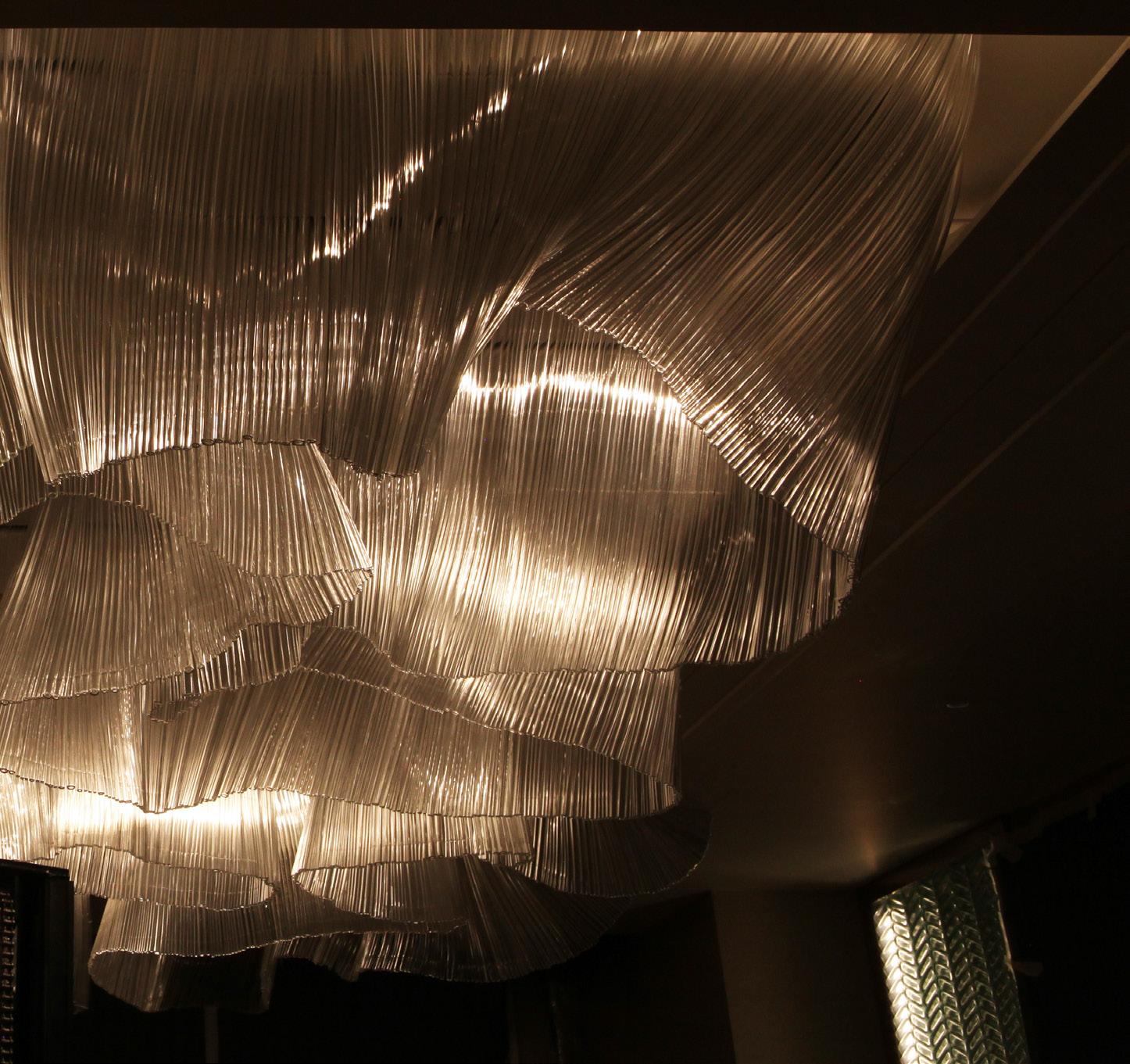
My main role was running the studio’s custom kiln that was around the size of a shipping container. I designed how the studio fired the pieces in the kiln, and because every piece was unique, the methodology changed with every project. I took the photo to the right on the final day of an installation for a residence in Vietnam.