Portfolio
Phoebe Morrill
email: morrillphoebes@gmail.com
cell: 412-313-1012
linkedin: www.linkedin.com/in/phoebe-morrill
instagram: phoebe.morrill
Hello! My name is Phoebe Morrill and I am currently a fifth year student working toward a Bachelors of Architecture at Penn State University. My interest in the built world began in high school when I started participating in my local ACE mentorship chapter. While I have learned a lot in the past 7 years, the most important lesson I have learned is that everyone experiences the world differently. Architecture to me is a way for communities to communicate with each other. Similar to the fine arts, architecture is interpreted by the way it makes a person feel. If a space makes people feel something that it can be successful. In my journey through architecture, I aim to create spaces with other people for their communities that allow them to thrive.
Table of Contents
Green Gathering Space
Phased City Block Planning
Copenhagen, Denmark
Apartments for the Arts
Local Theater / Apartments
Baltimore, MD
Coexisting Communities
Fire Station #44
Pittsburgh, PA
Regulating Lines Photography
Addition to the Neue Galerie
New York City, NY
Various Projects
32-33
Green Gathering Space
Phased Plan (City Block)
Nørrebro, Copenhagen, Denmark
Fourth year undergraduate studio
10 weeks
The main intent for this project was to refocus public and private spaces on an integral block of Rovsingsgade in Nørrebro. The first steps consisted of a large amount of demographic and cultural research. On-site interviews were conducted alongside initial analysis. These comments informed the phase planning for the site in its entirety. Program for this space required two open plazas for the local community in addition to multiple new housing sites. A major influence in this project was a respect for Danish community culture. Neighborhoods in Copenhagen have spaces that are inclusive for every person in that community. Outdoor space is also treasured through all seasons which entails a closer attention to detail when planning vegetation and the overall space between buildings.
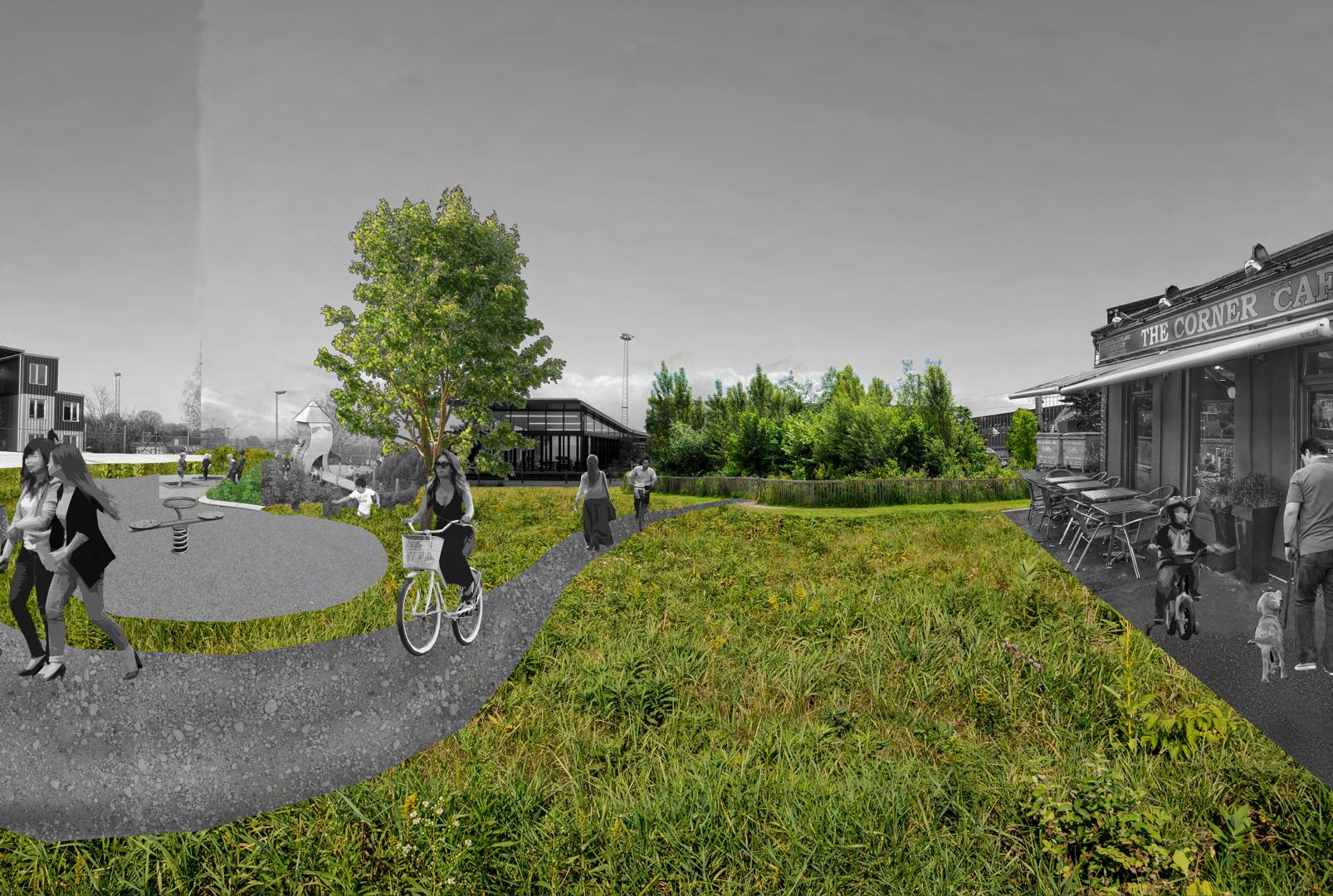
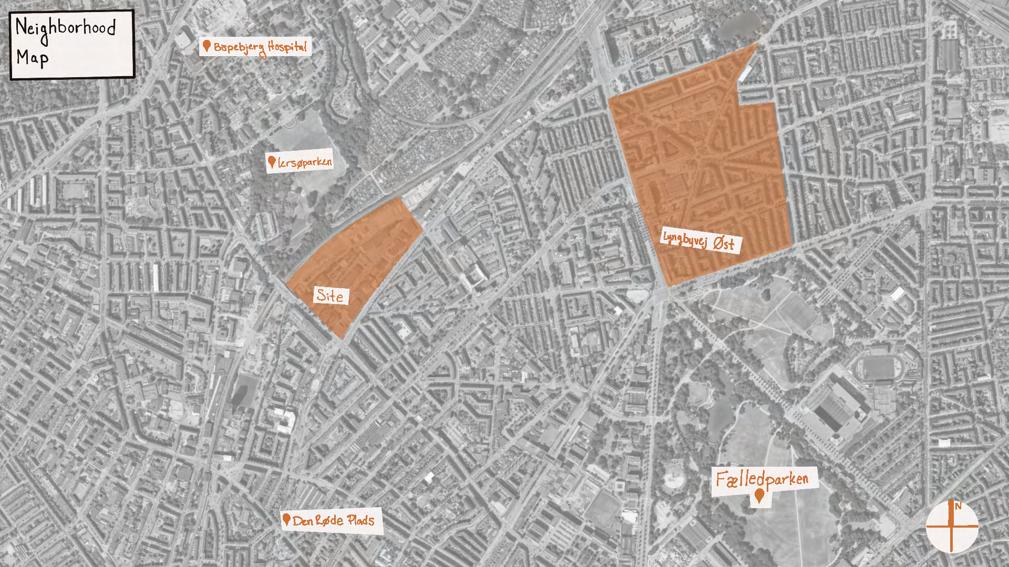
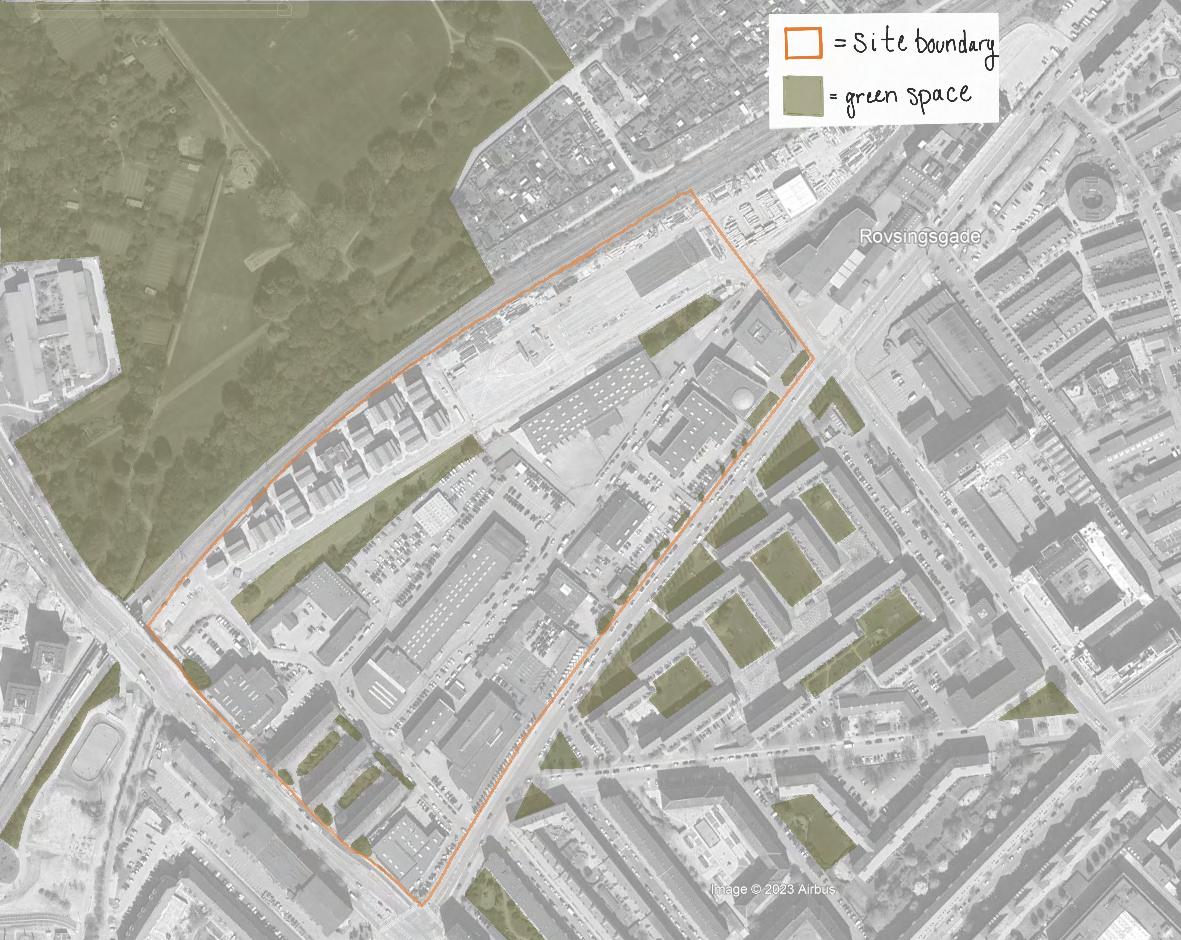
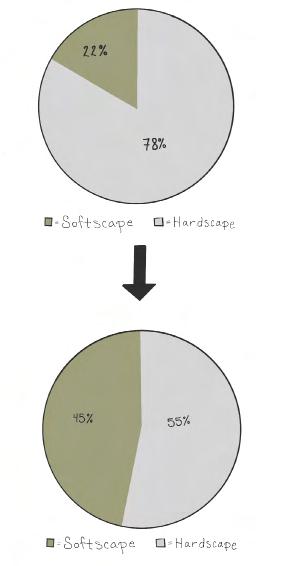
The existing conditions of the site showed an overall lack of green space. In on-site interviews this issue came up as a shared issue across all demographics. While there is a large park northwest of the site, the access to this space is entirely limited to the road along the southern edge of the site. The intent in the design was to not only connect the existing green space, but to give this site it’s own vegetation.
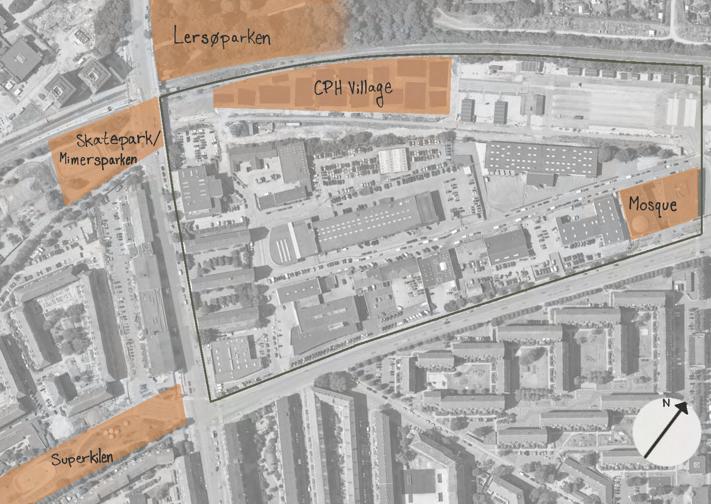
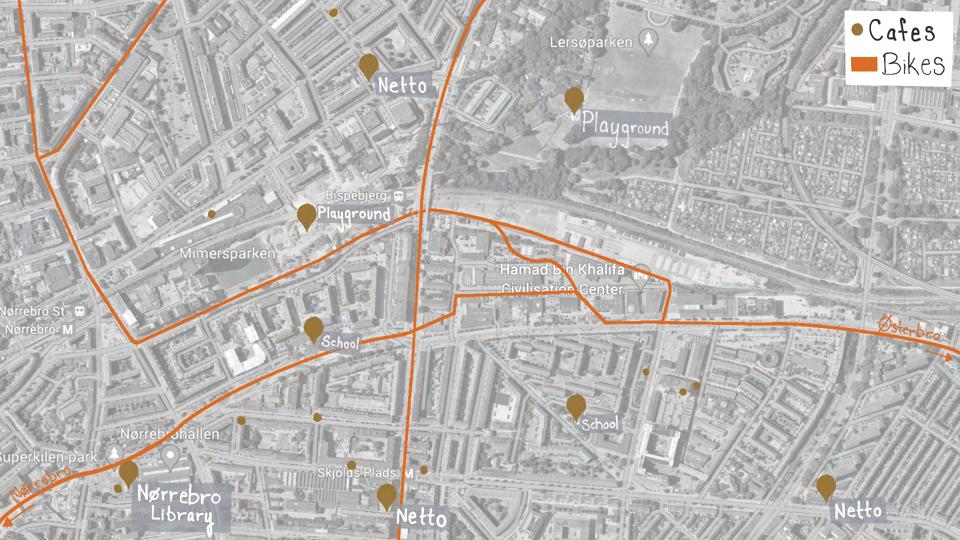
Analysis of the surrounding area showed neighborhood landmarks. Further analysis of the immediate surroundings brought valuable information about the program for the site itself. While a small cafe on site would be useful for the those living in the new housing, there is no need to have more than one new cafe on site.
Another large consideration for this site was a connection to the greater biking infrastructure. The site is situated at a major intersection and hinge point between two larger neighborhoods. Connection to the larger grid called for multiple bike paths winding through the site.
Established Community Spaces
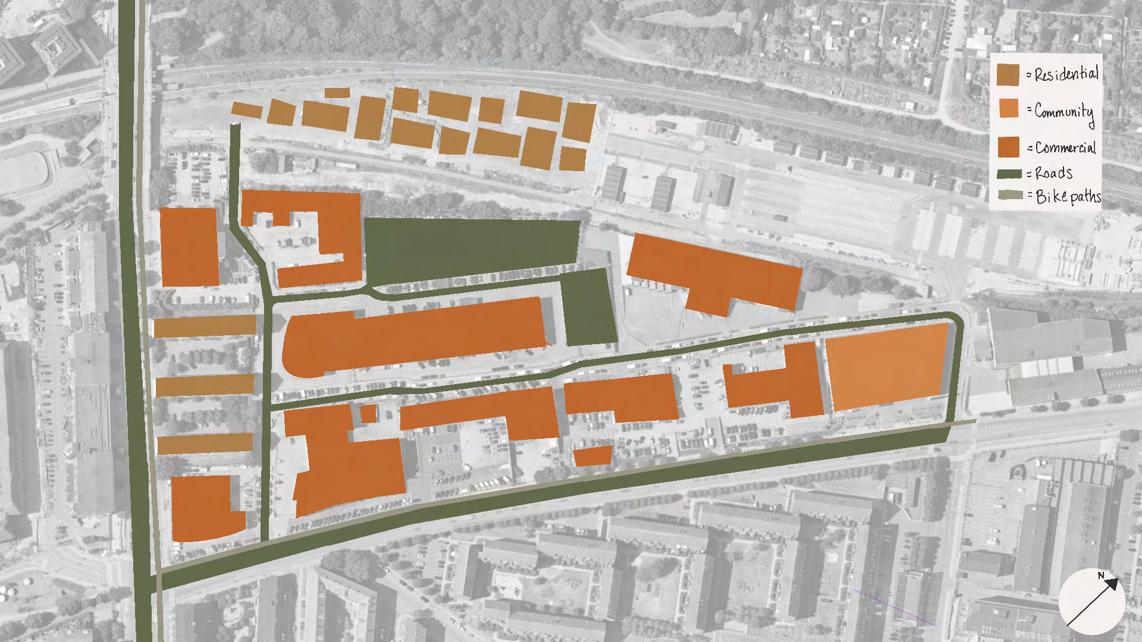
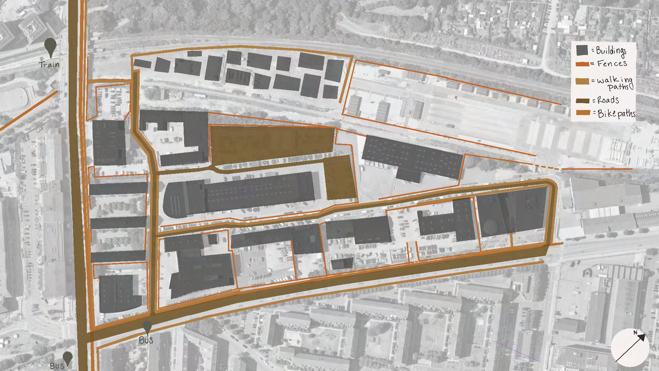
Current Conditions
Existing Functions
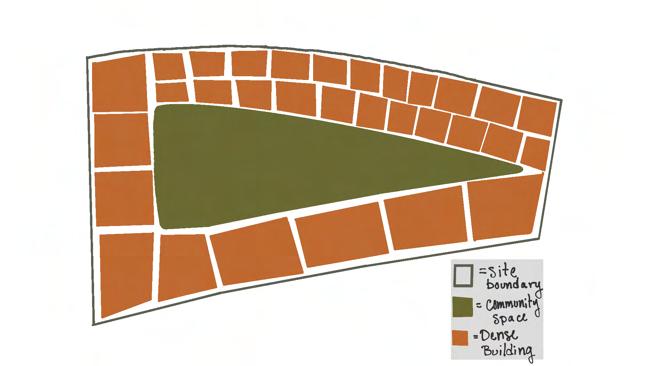
Proposed Functions
Personas:
A paraphrase of quotes from in person interviews on site
This is Natalie, a 22 year old college student who lives in CPH village on the site. She wishes to see more nature and colorful decoration along the rail and her housing complex. She thinks the area feels very industrial and it needs more things to make it feel more playful. Natalie travels by bike and would like to see more bike paths so she can get to work without having to bike on the major car roads in the area.
Aske and Erik are a young couple that want to start a family. A park with a playground is an element they would support. They also want to be able to run out quickly for groceries so they don’t have to worry about going far with a young child.
Mette and her son Alfred have lived in this neighborhood for a couple of years. They heard there was going to be a mall put in but it hasn’t happened yet. They were really looking forward to it because they don’t like going out of the area to get small necessities. Mette also wants her son to be able to go more places without having to cross busy streets so the interconnected bike paths are something that interests her. She doesn’t have any attachment to this space and neither does Alfred.
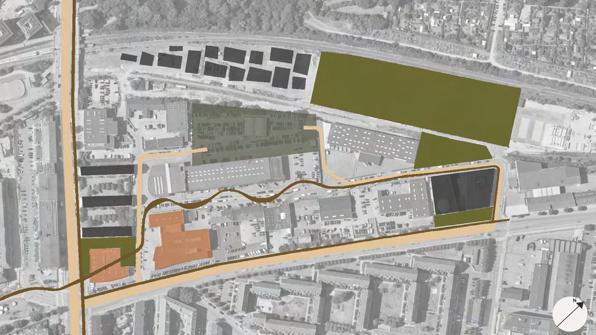
Phase 1 2023
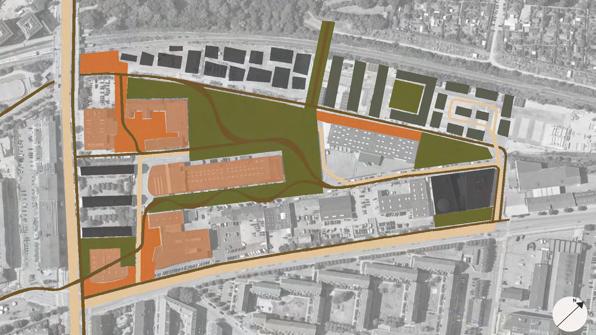
Phase one focuses on bringing people back to the site. A single bike path added allows people to begin using the site as a commuter path so they can see the change happening. The main corner of the site will also be worked on in this stage. The renovations will provide a creative space for the local residents as well as a gym.
Phase 2 2025
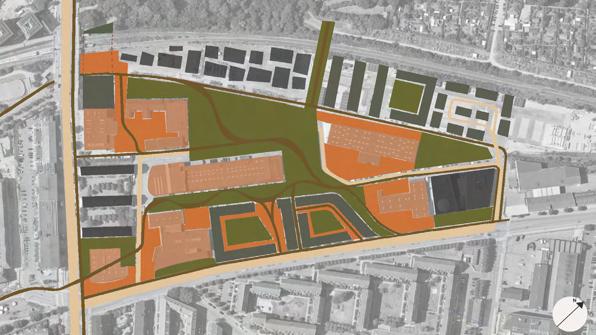
Phase two adds housing in the back in addition to the existing CPH village student housing. The large park is also added over the underground parking in this phase so the vegetation has time to grow in. Other buildings renovated in this phase include a local library, office space, and a large shopping center with a grocery store.
Phase 3 2030
Phase three shows a completed plan for the area. Development along Rovsignsgade densifies the urban edge bringing more permanent residents to the site. Other auxiliary buildings are added in this phase to support.
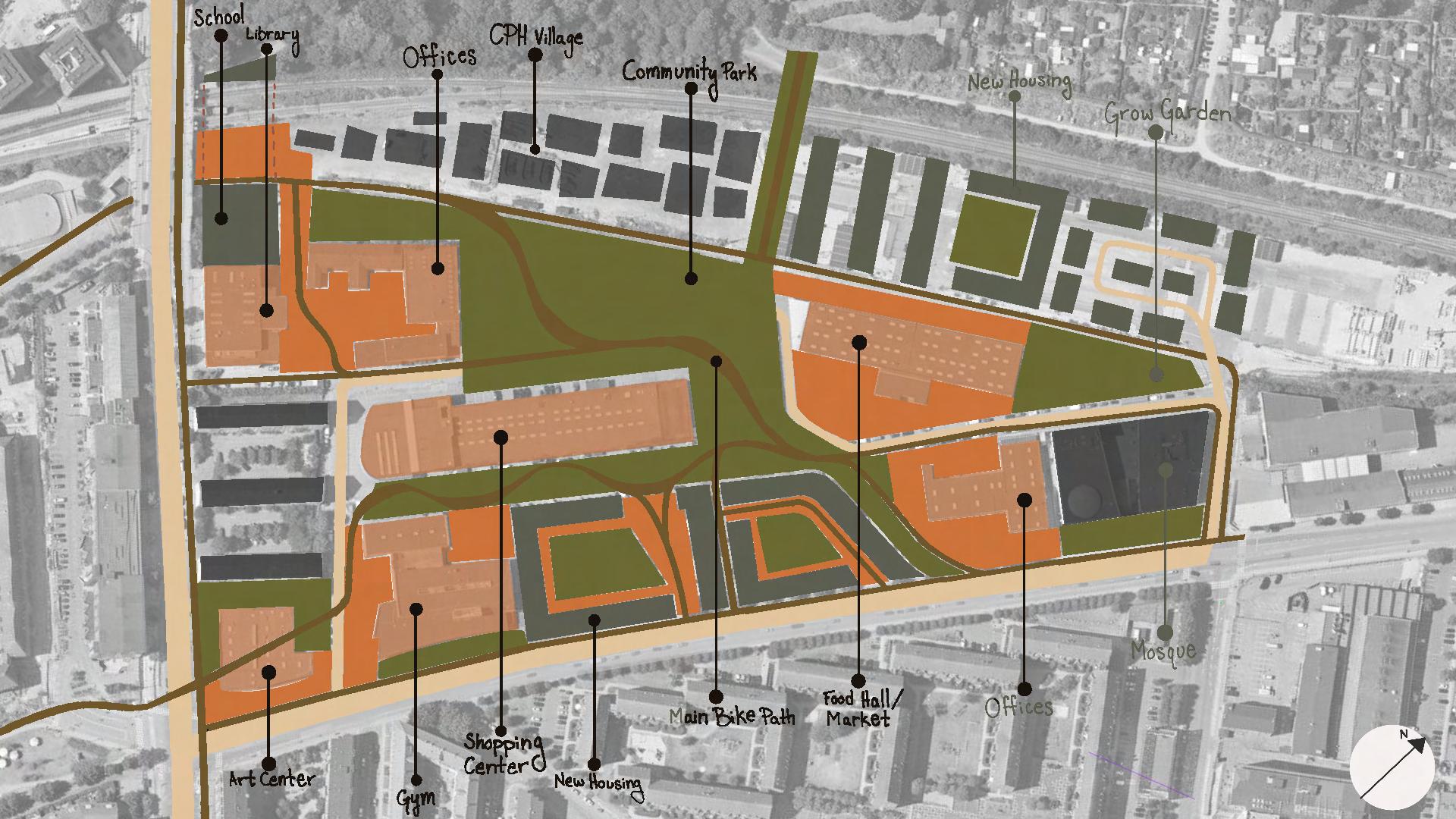
An adaptive reuse tactic is used for many buildings on this site. Most of the preexisting buildings will be adapted to hold community resources and meeting spaces. New housing will be purpose built.
Apartments for the Arts
6 Story Multi-Use Construction Baltimore, MD
Third year undergraduate studio 15 weeks
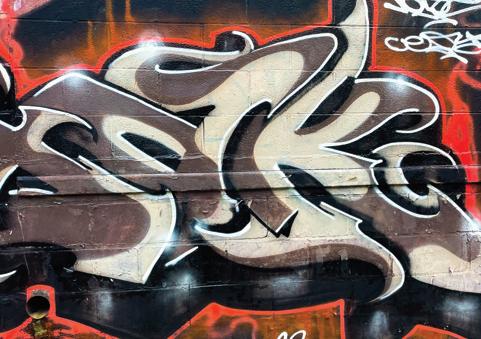
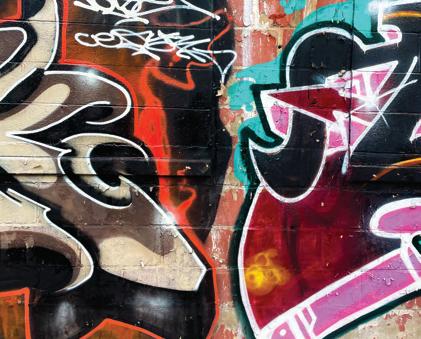
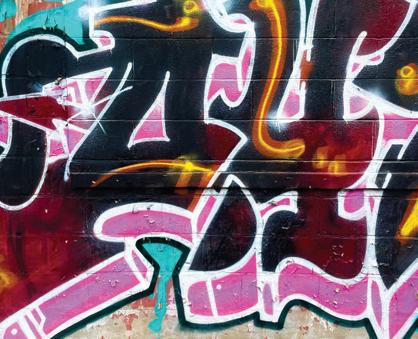
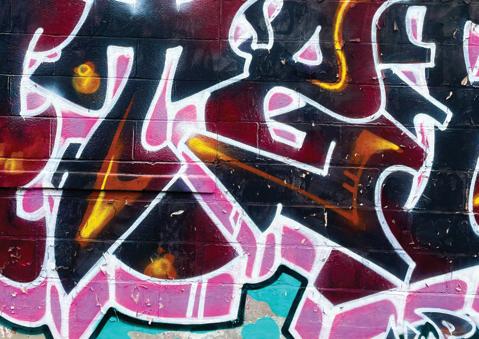
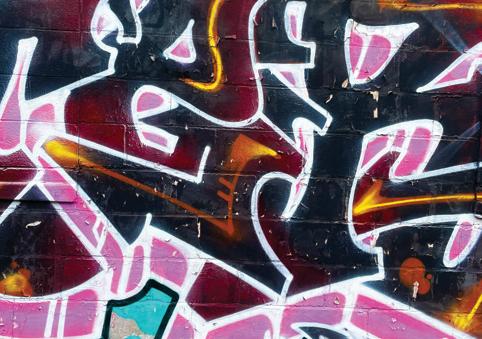
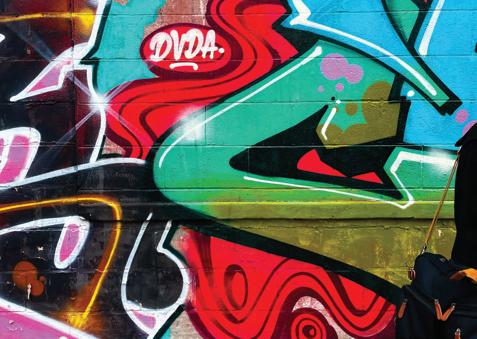
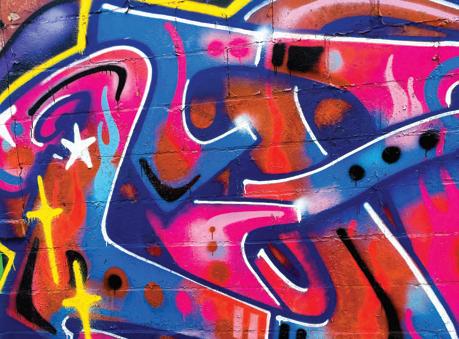
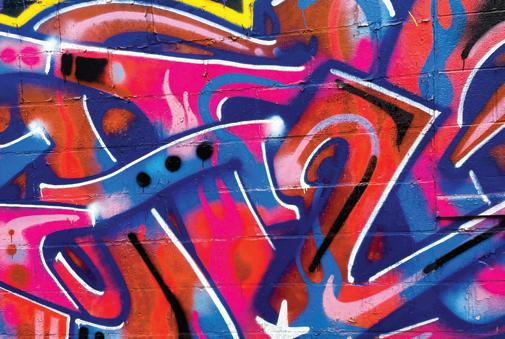
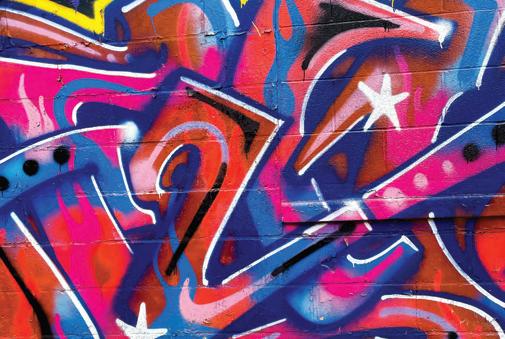
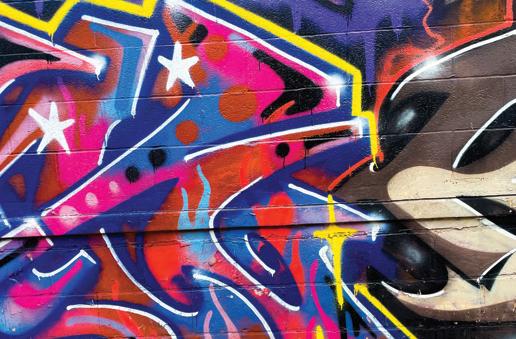
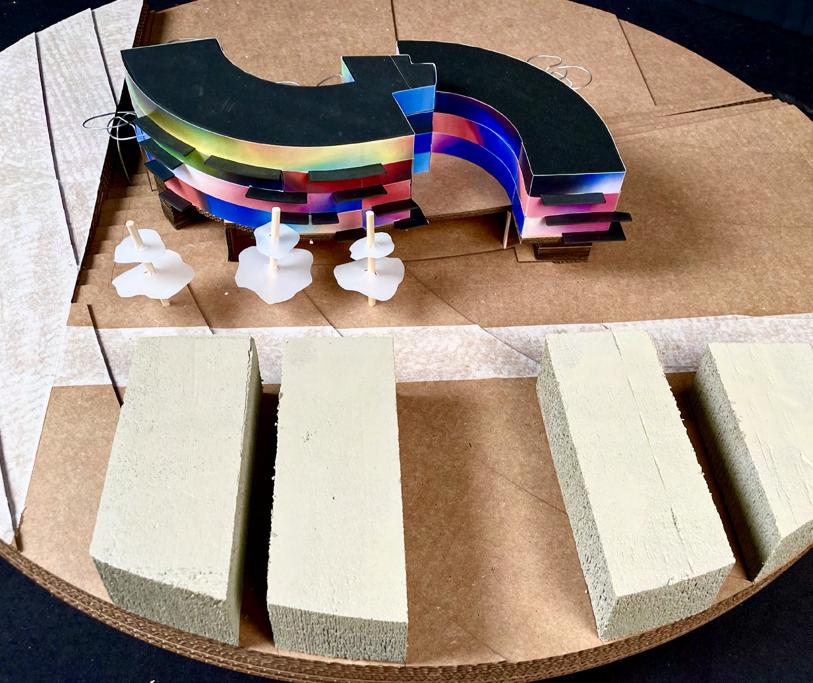
Set in Baltimore, the semester long project focused on diving into details. The overall program included an acoustically well built performance space as well as other amenities for local performance artists. Above the ground floor housing those amenities were a required 38 housing units. Overall the building was 45,000 square feet while the entire site is 36,000 square feet on the corner of a major road and a side alley. The site slopes down significantly from the corner of those streets creating a challenging topography to work with. Street art in this part of Baltimore was a dominant method for expression and the design tries to honor that commitment to self identity through the use of color and form in the style of local street art. This project also focused heavily on meeting code requirements for fire safety and circulation as well as thinking critically about other building systems and more details required in real world designs.
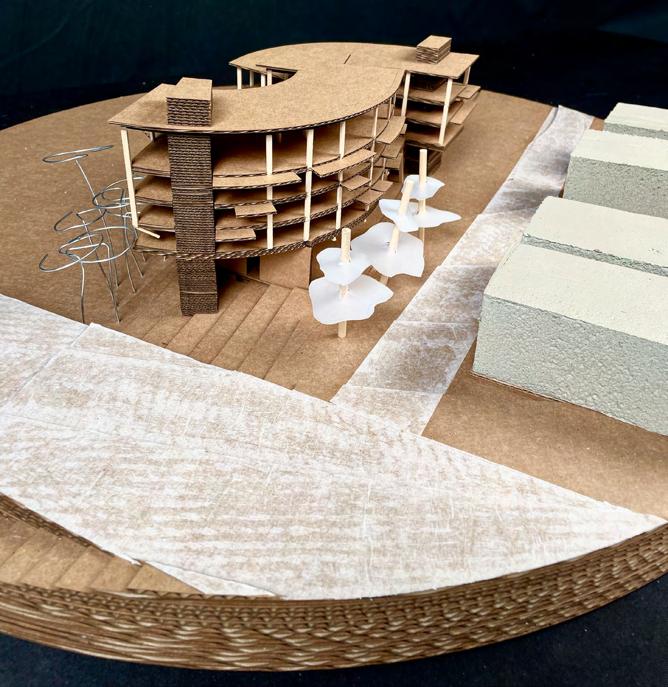
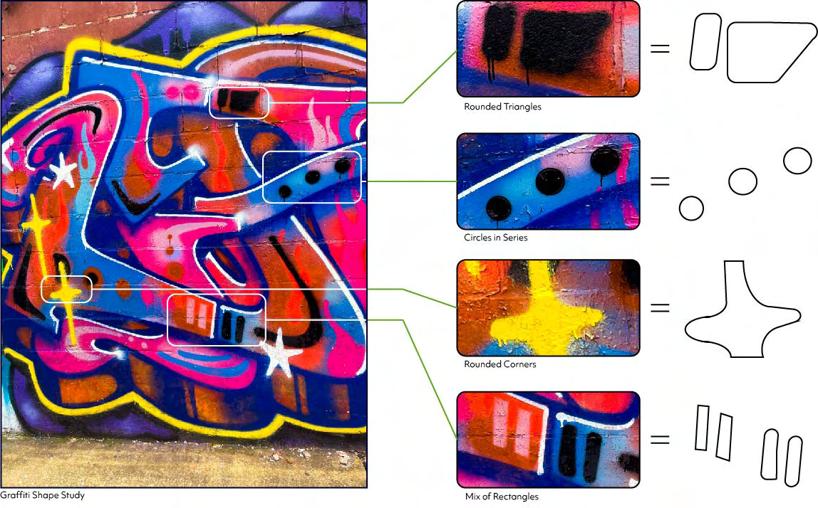
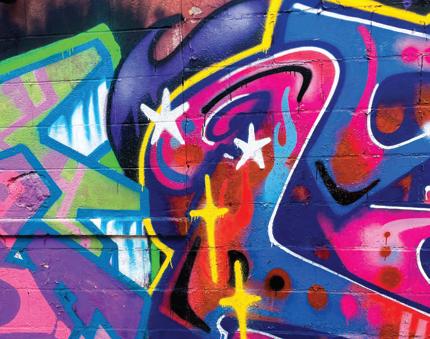
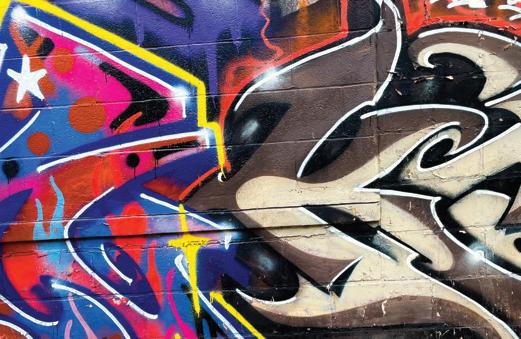
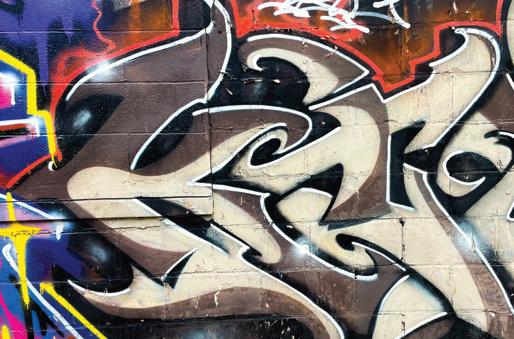
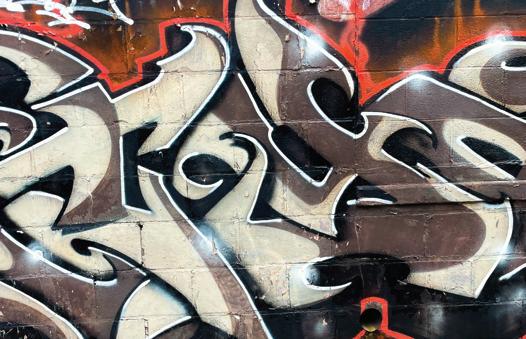
The shapes in this project came from street art in the surrounding areas. The site had many street art pieces within eye shot as well as many more in a short walking distance. The design plays off one piece in particular that was found in a series of connected pieces in an alley directly across from the site. Windows on the facade as well as the overall floor plan of the building was inspired by curves and shapes from the art.
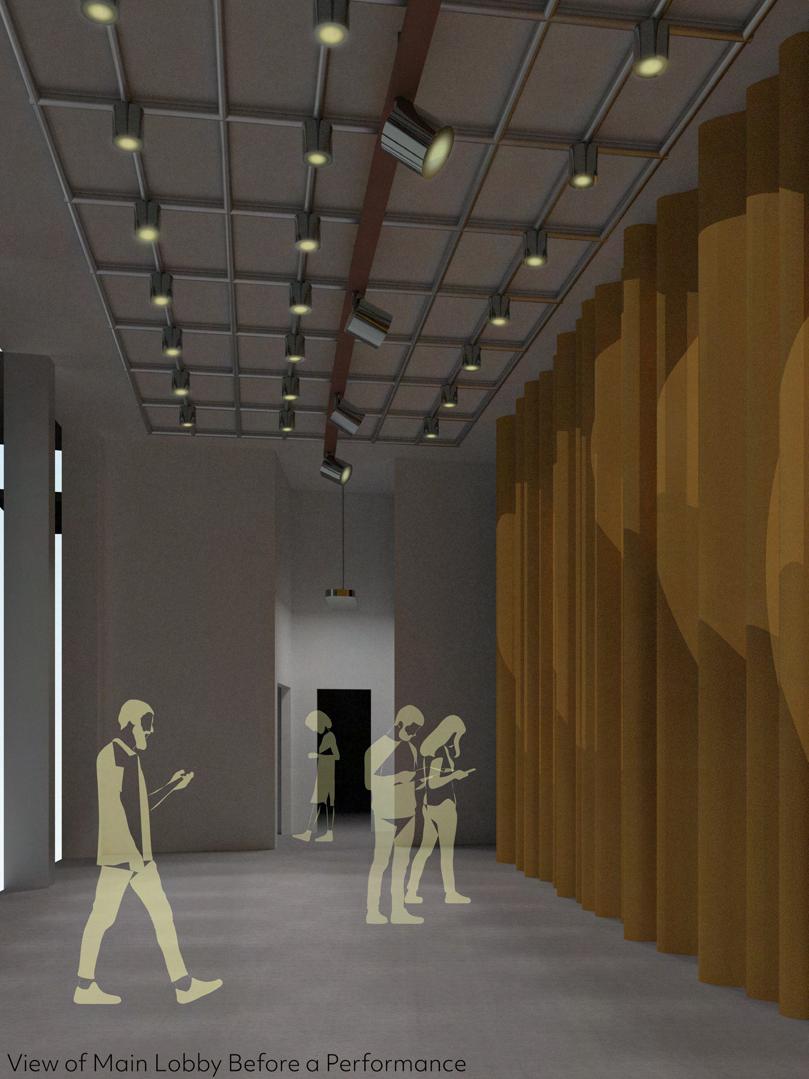
Another design element that had special consideration was the program layout on the first floor. This space acts as not only a theater/performance space that should be open and visible to the public, but as a lobby for patrons living in the apartments above. The security for both entrances was paramount and the shape and positioning of vertical circulation created a unique circumstance for separating the two.
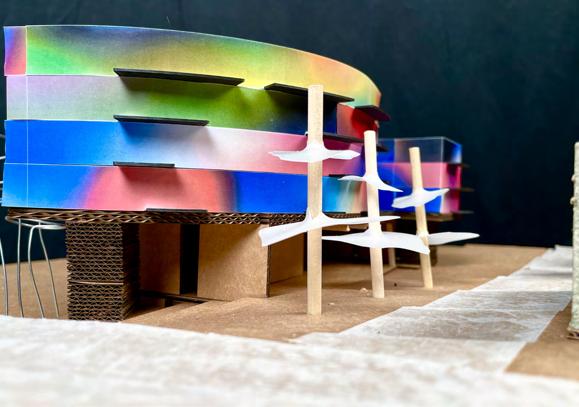
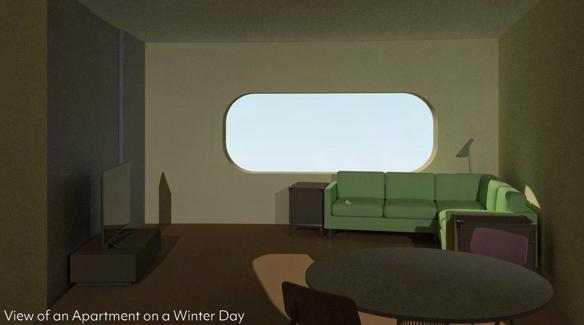
Rendering, both physical and digital, was a large part of this project as details such as lighting and facade materials were introduced into the design. Most of the rendering was done in Rhino with touch ups and fine details finished in Adobe Photoshop. Natural lighting (pictured below) was rendered based on location, month, time of day, and orientation to the cardinal directions.
Structural Model
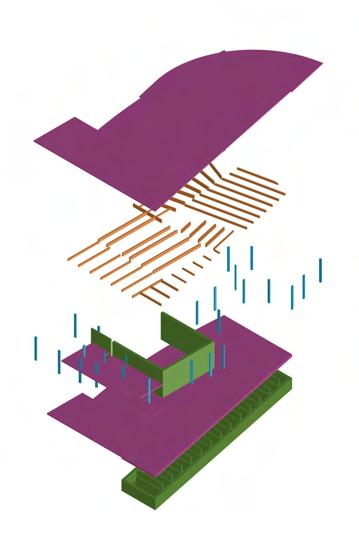
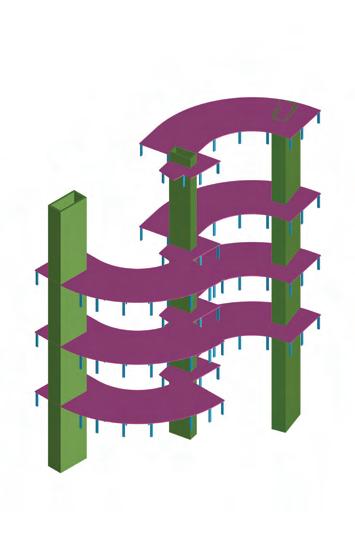
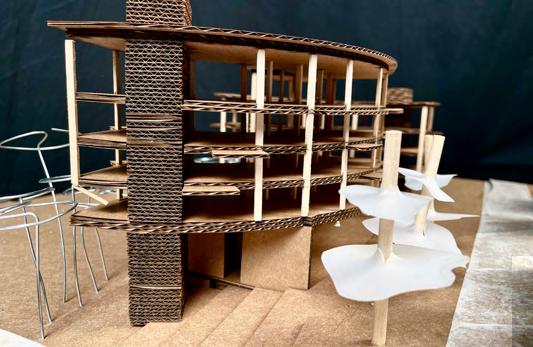
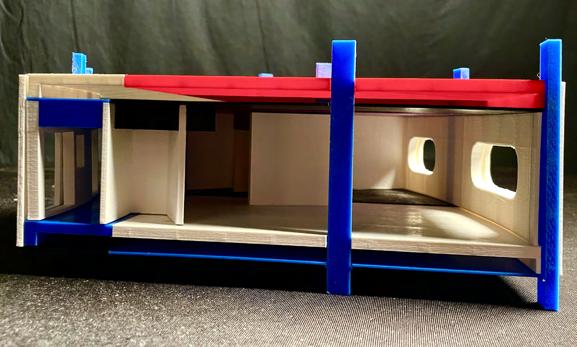
This project was far more rigorous than previous projects as a concurrent class required eight projects focusing on details in a building. These side projects included fire code analysis, passive energy strategies, HVAC design, and lighting design among other things. To the left is the structural analysis. The design was imagined as a podium building with concrete structural members on all levels.
Apartment Model
The drawings on the right offer an explanation of the acoustic design for the main theater space which was designed as a black box.
Coexisting Communities
Fire Station #44 Pittsburgh, PA
Third year undergraduate studio 15 weeks
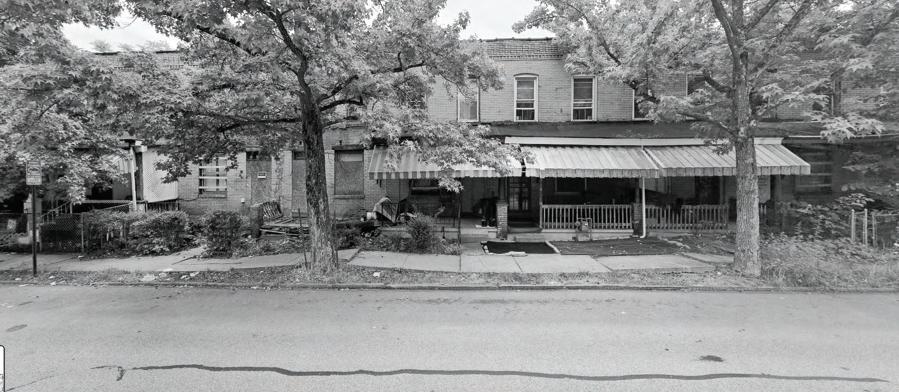
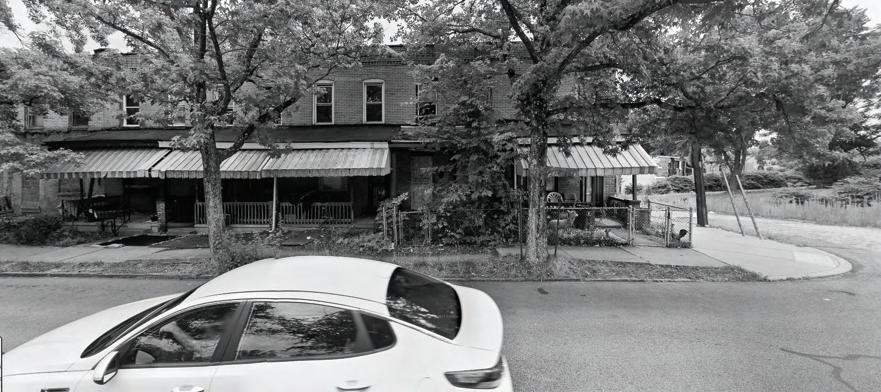
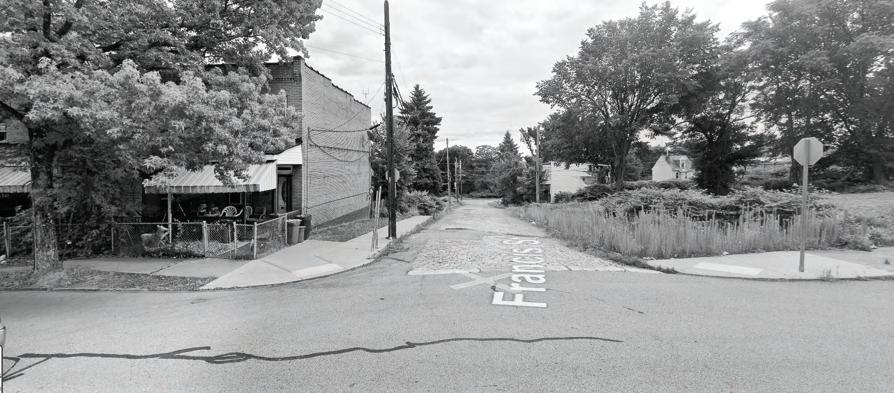
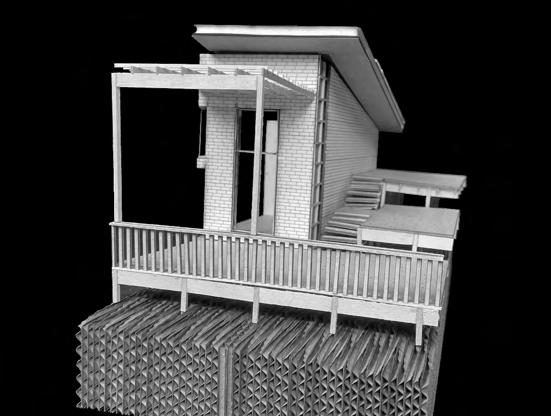
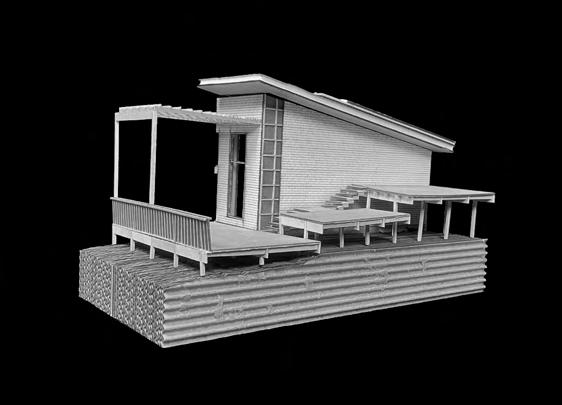
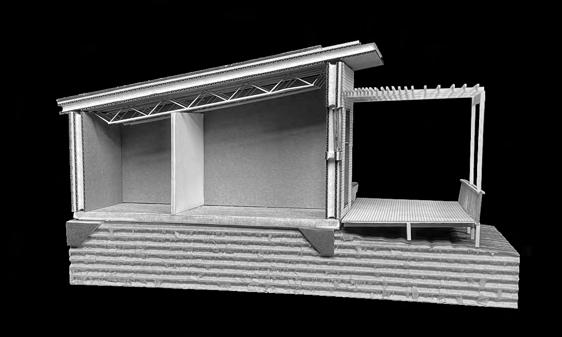
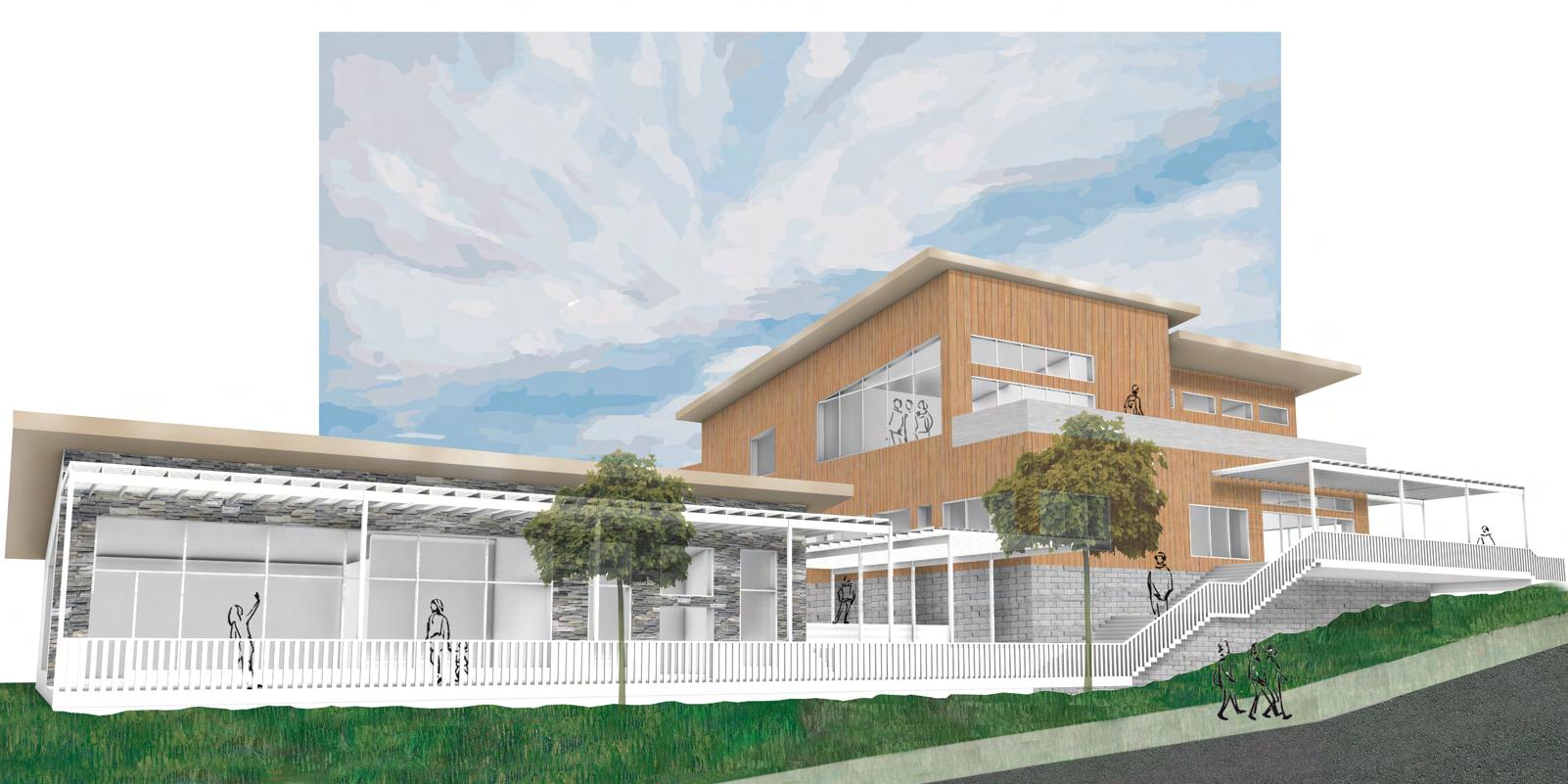
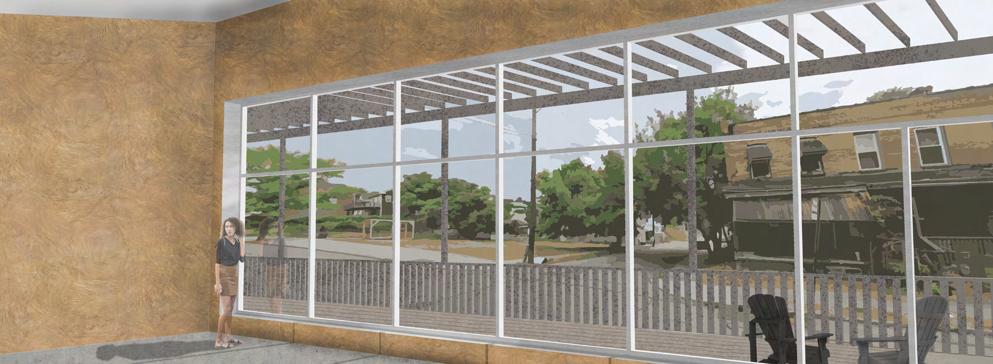
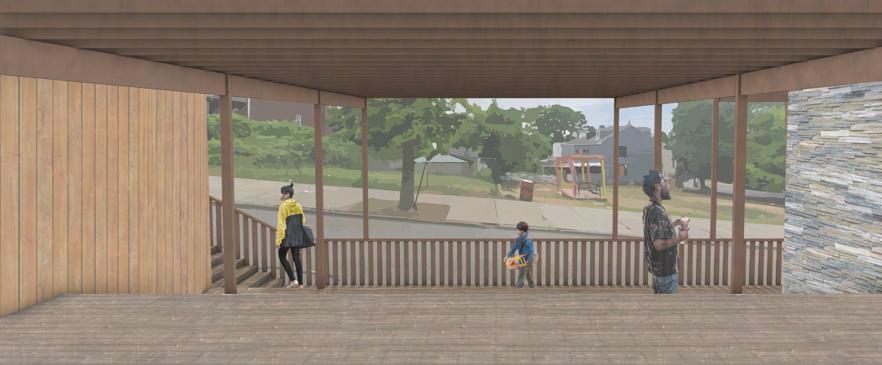
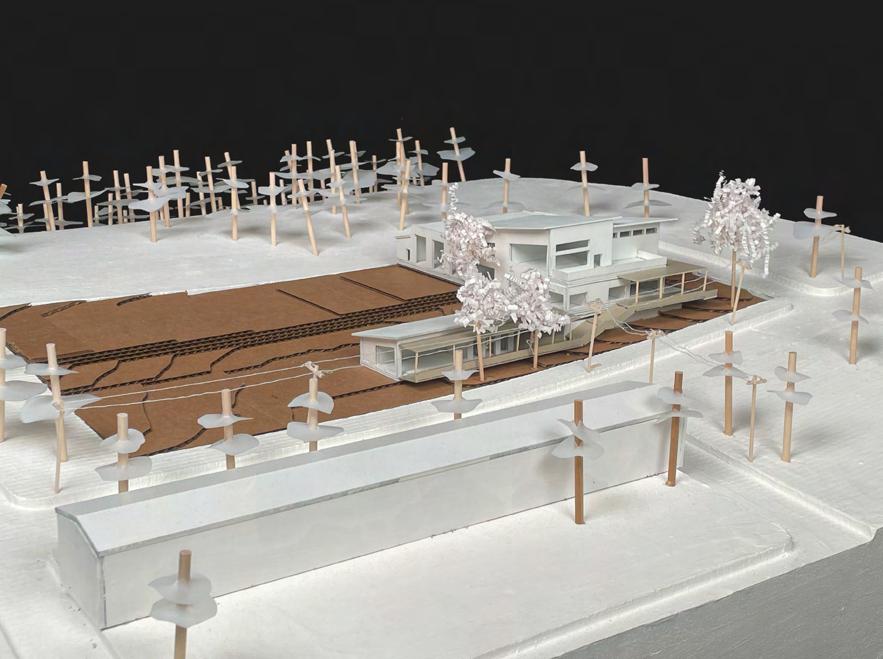
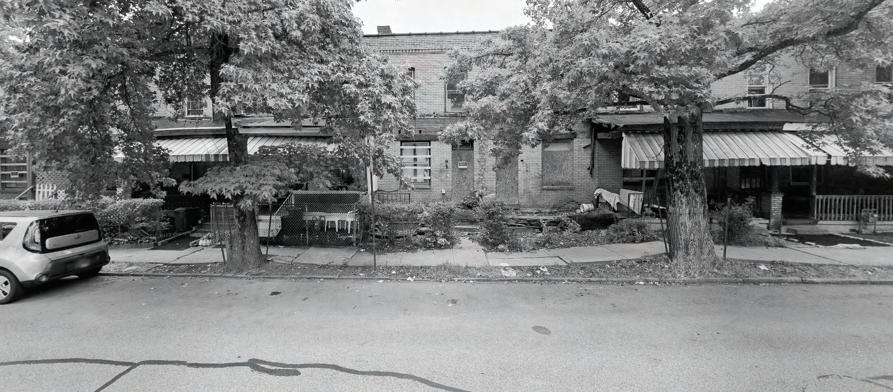
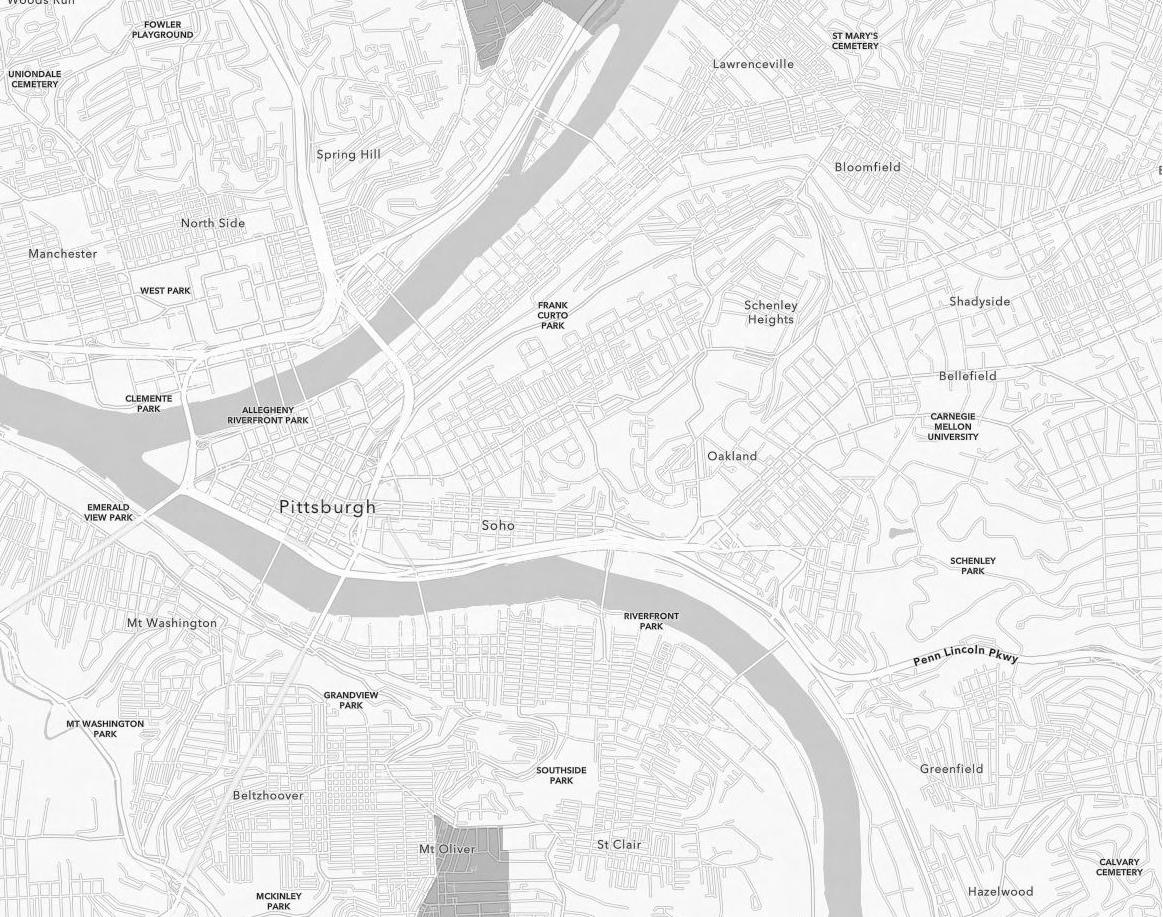
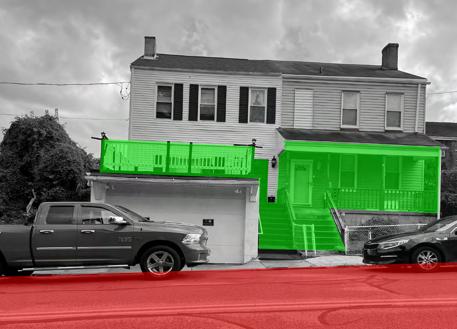
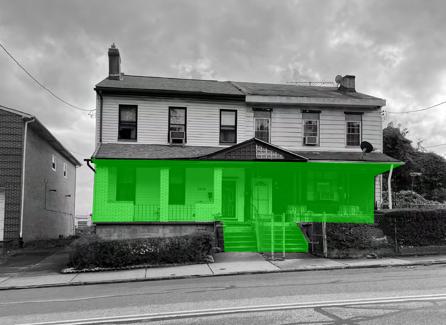
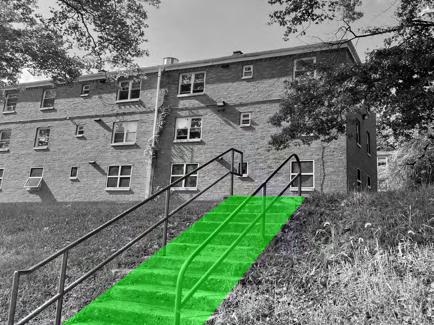
The objective of this project was to build a community space and fire station in the Hill District of Pittsburgh. Adding a large porch across the front of the two buildings connected the two communities physically and symbolically as porches are a large part of community culture in Pittsburgh. The site was a sloped site which proved difficult to shape as the site had to accommodate the movement of the fire apparatus. The other issue that came up in the project was fitting this anomalous building into the existing neighborhood fabric In order to accomplish this with the scale of the building, the program was split between two buildings. The materials for these designs also reflect a more residential look rather than the industrial style that dominates the surrounding areas including downtown Pittsburgh.
People’s Interaction with the Street
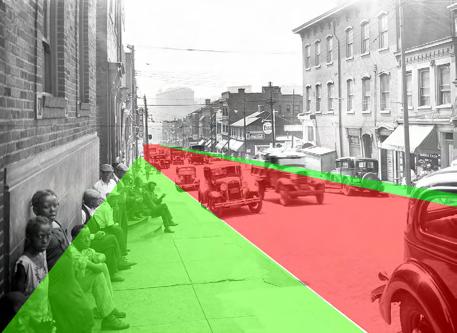
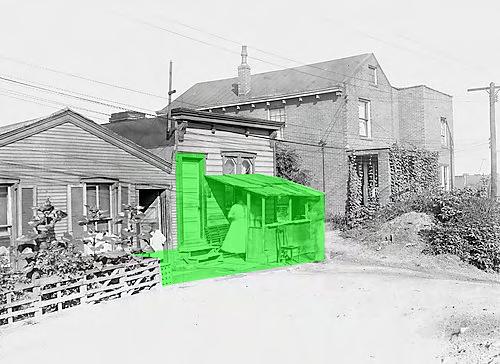
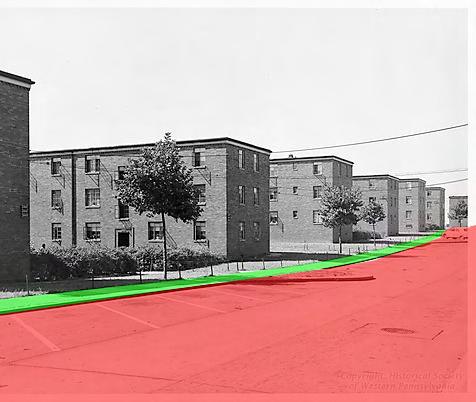
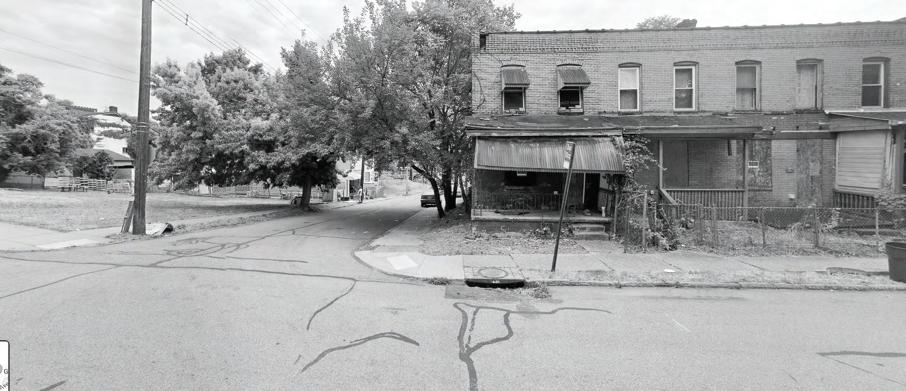
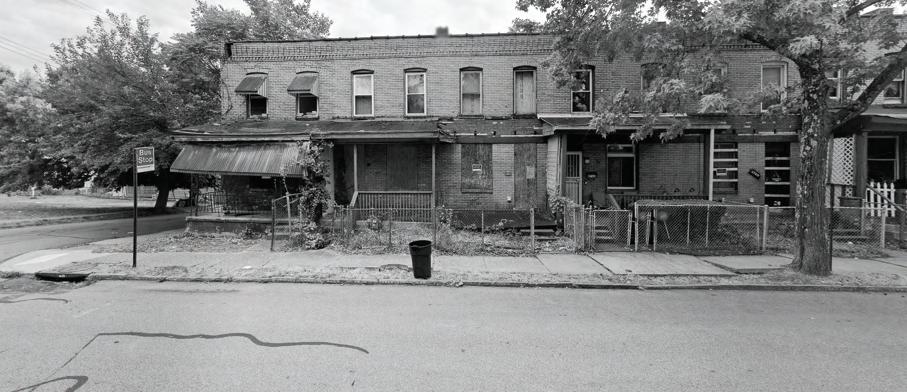
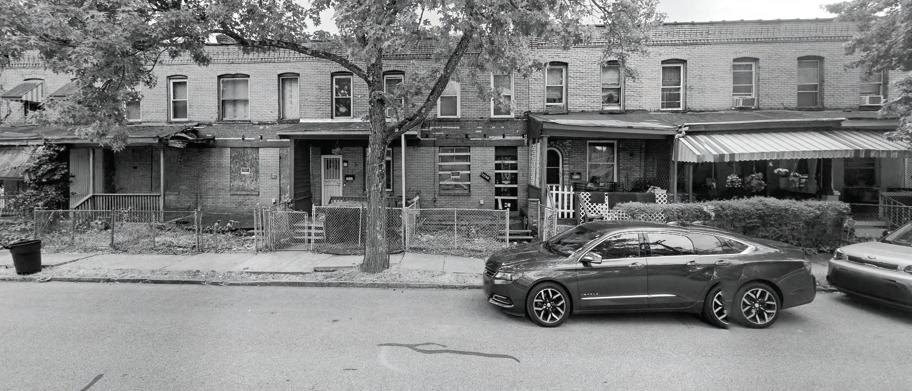
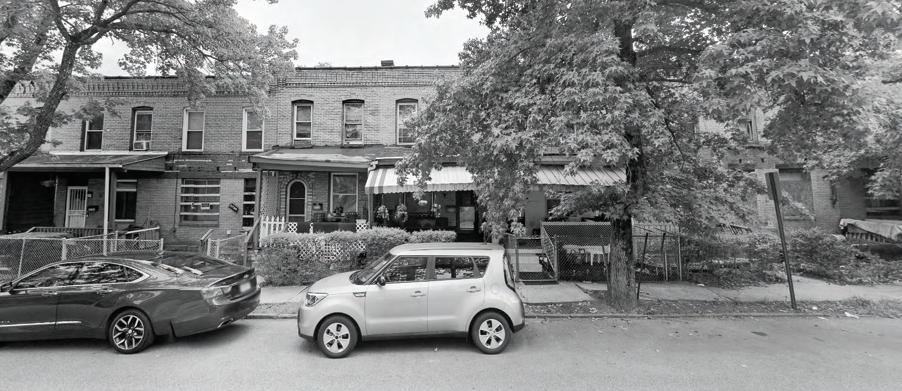
By analyzing photos from an archive on Pittsburgh and comparing them to captures from the site at the time of the project, it was apparent that the redevelopment plan introduced to the Hill in the late 1960s was not fulfilled. The goal of the design was to being adding the community elements back into the streetscape. The inspiration for the community space was pulled from the archive of photos as well as a research document detailing the community needs as voiced by member of the community.



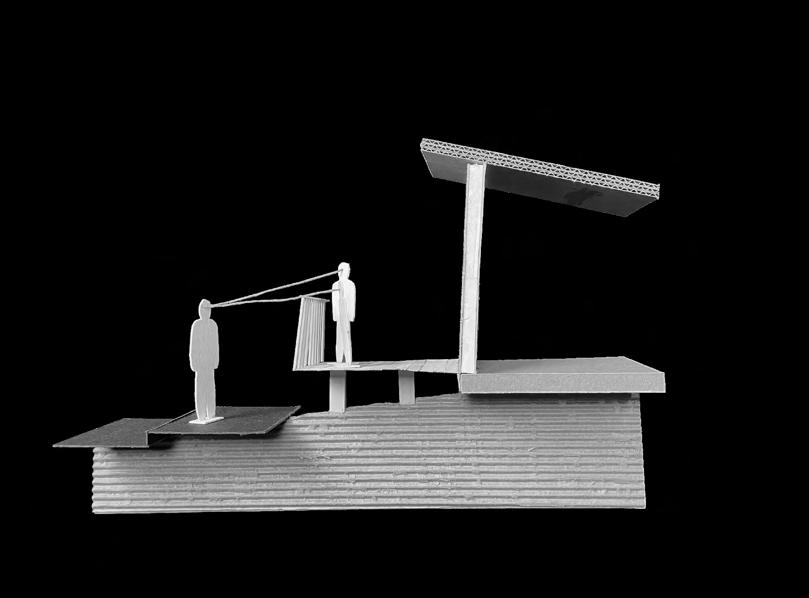
Physical Model of Porch/Street Relationship
Pre-1950s Razed
of Porch Space on Site