Mouth of the River Publication of Oyster River High School
Meet the Nurses pg. 10
Blurred Out pg. 12
Major Choice pg. 14
Clicktivism pg. 16
Book Podcast pg. 18
NeeDoh or NeeDon’t pg. 20
Sleep Deprivation pg. 22
Virtual Insanity pg. 24
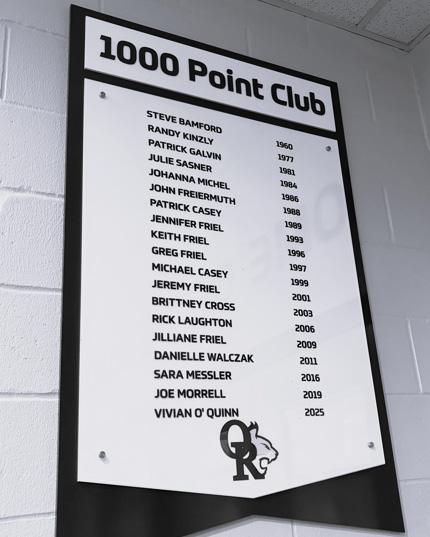
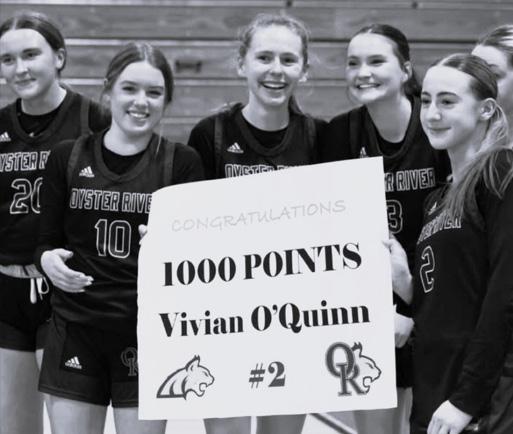
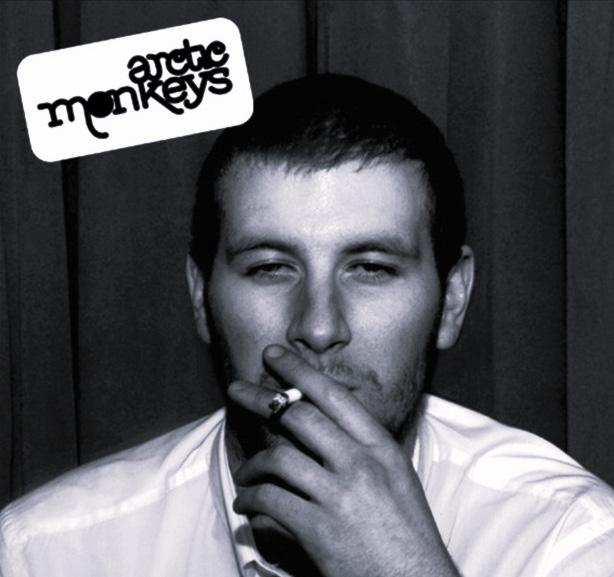
Just Ask Chat pg. 26 1000 Point Club pg. 28 Music Review pg. 30 Picking Just One pg. 33
Mouth of the River Mission Statement
Mouth of the River seeks to reliably inform the student body, as well as the surrounding community, of interesting and newsworthy content in a modern, compelling format. Our goal as a staff is to give voice to the students of Oyster River, and have it heard by all our students. The opinions expressed in Mouth of the River represent those of the writers and staff.
Meet the Staff
Creative Director
Lumiere - Organizes everything
Bel
Hei-hei - Loyal and always screamingaboutsomething
Annie Graff (she/her) (‘26)
Co-Editor in Chief
Sebastian - Puts people to work
Content Manager
Timon - Iconic duo, always talking
Olaf-Radiatespositivity
Abu - You
Jahrie Houle (she/her) (‘26) Co-Editor in Chief
Mushu - Always exasperated because someone is doing somethingstupid
Business
Maximus - Always beefing with someone
Bella Jackman
Tinkerbell - Sassy but makes goodjudgments
Pumba - Iconic duo, always storytelling
Byline photos by Elise Bacon
Sven - Good friend and reliable
Opinion Editor
Baymax-Helpful,alwayscares
Genie - Works her magic on ourmagazine
Question and response curated by Sadie Goldberg, Thea Smith, and Bella Jackman.
Emily Taylor (she/her) (‘27) Layout + Cover Editor
Sadie Goldberg (she/her) (‘26) Digital Editor
Thea Smith (she/her) (‘27)
Marketing Director
can’t take her anywhere
Jimmy Kim (he/him) (‘26) Archive Manager Stitch - Occasional crashouts
Levi Clapp (he/him) (‘27)
Manager
Media Permissions at ORHS
written by JAHRIE HOULE
CWe Will Miss Ms. Cassamas
ORHS says goodbye to beloved counselor Kimberly Cassamas.
written by RILEY DUGGAN visuals by HEATHER MACHANOFF
ounselor Kimberly Cassamas watches the seniors walk across the stage at graduation, remembering a moment she shared with each one of them. What makes her special is that she cares so deeply about every student and wants to be the positive impact in their lives.
Oyster River High School (ORHS) counselor, Kimberly Cassamas, made a lasting impact on students and staff alike during her time working at the school. She has shaped the high school experiences of many students, leaving them grateful for the past and pre-
pared for what’s next. After nearly two decades of service to ORHS, she has stepped down from her role, leaving behind a legacy of advocacy, connection, and kindness.
Cassamas began working as a counselor at ORHS in 2013, after previously working as a special education case manager at the school, a job which she started in 2006. One of Cassamas’ traits others constantly noticed was her passion for student advocacy. She always put her students first and fought for what was their best interest. Kim Sekera, a counselor at ORHS,
who formed a strong bond working with Cassamas, said “she was a vocal student advocate. She would work tirelessly with kids no matter how hard that was.”
Jason Baker, one of the ORHS counselors who began working with Cassamas in 2013, shared the same view, saying Cassamas was “not afraid to question decisions that weren’t in the best interest of students.”
According to Baker, her ability to challenge decisions allowed her to create positive change within ORHS. “She’s really good at getting kids to grow.”
Cassamas also loved spending her time at ORHS doing fun activities with her colleagues and students. “I enjoyed teacher versus students spirit days [...] I will forever love the senior walk. I’m very happy that I was part of making that a tradition at Oyster River. I spent a lot of time at many proms, and I would say that was always my favorite chaperone duty. I was very honored to be able to spend so much time with students.”
During her time at ORHS, she was always a constant person to see walking around the halls. Many students will remember how she always stopped to check in and say hello, or smile and wave as she walked past. Hadley Carlson (‘26), said “she’ll stop you in the hallway to talk to you [...] she’s a really friendly person.”
More than just a friendly face to see in the halls, Cassamas’ support was incredibly meaningful to students, whether it was socially and emotionally, academically, or anything in between. Carlson added, “she really cares about all of her students. I want to thank her for being so kind and for helping me over the years. I’m going to miss her a lot.”
That sense of care and kindness was put into every one of her interactions with the students she worked with. No matter how a student needed help, Cassamas would be prepared.
For students preparing for the future, Cassamas provided all of the support they needed. Maddy Cook (‘27), a cross-country and track and field athlete, said “with NCAA requirements, she helped me pick courses that we knew would align with the NCAA, in case I want to compete in college. She was super aware of that.”
Cook also described Cassamas’ office as a special place. “When you went in there, she immediately welcomed you. It was definitely a safe space, and I felt like I could just go there anytime.”
Cassamas’ impact on ORHS extended beyond students, to her colleagues as well. Sekera noted that Cassamas was known for her energy, forward thinking, and problem-solving. “She
was really good at meeting kids where they’re at and getting them where they want to be,” Sekera said. She also added that Cassamas “was a great puzzle completer, or starter, or when you have that spot where you don’t know where it is.”
Like Sekera, Baker also felt Cassamas’ influence. “The room changes when Ms. Cassamas is in it, and that’s a good thing.”
Counselor Heather Machanoff first knew Cassamas as a case manager, and later as a colleague in the counseling office. Machanoff said, “there were some really difficult times. And [Cassmas] is a doer. So, in those moments, she’s the person who is like, ‘OK, this is the worst. How do we get through it? And what are the things we can do to kind of keep us moving?’”
Although Cassamas will no longer be walking the halls of ORHS, her impact will stay for years to come. Students will remember her help for many years after they graduate, and staff will remember her support and her ideas.
“The faculty made that place a second home for me,” Cassamas said. “There are some people that I’ve been there all 20 years with [...] I will miss them all tremendously. And I’m grateful for the students and the families I was able to work with. Every year at graduation when I would see students walk across that stage, I felt like I had a moment with each of them at some point in their four years.” As students have said, it seems like Cassamas did make the space to have moments with everyone, and that’s how people will remember her.
As for the future of ORHS counseling, Baker reflects, saying, “when somebody leaves, to have that feeling of ‘good luck replacing them,’ that’s a big compliment. We have a really big challenge ahead of us. I don’t know who the next person is. They could be amazing, and we’re going to do the best we can to bring them on board. But, it’s not going to be Ms. Cassamas,” he says. “We’re not going to be able to replace that.”
Advice From Cassamas
“Ifyou’reeverfeelingoverwhelmed with all you have to do, just write it down. Once you get it on paper, it’s usually going to make you feel a lot better and you’ll be able to create a plan. So that’s always my number one advice. When that overwhelmed feeling takes over, justwriteeverythingdown.”
“Time might not always heal, but itwillmakeitabiteasiereachday. Get through each day and you will bereadyforthenext.”
“Take chances now. you don’t have to get it right in high school to succeed [...] it’s just the time to explore.”
“I just want everyone to know I wisheveryonethebest.Iamthankfulforbeingpartofthecommunity forsolong.AndIhopetoseepeoplearound.Finishtheyearstrong.”
IMM IGRA TION:
New Hampshire and the Oyster River community’s response to the nationwide crackdown on immigrantion.
written by JAHRIE HOULE
visuals by ELISE BACON
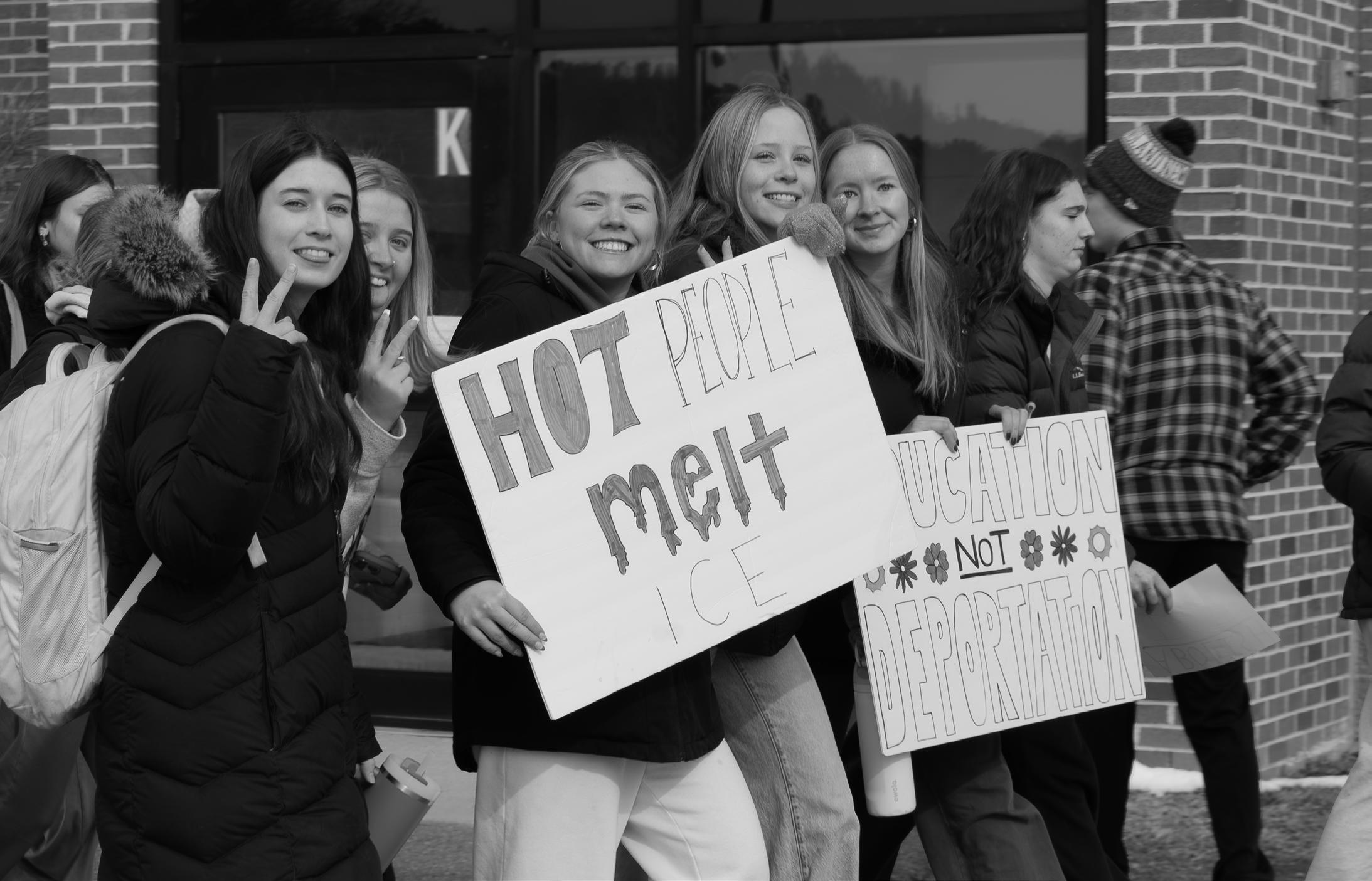
As the clock struck noon on February 6th 2026, hundreds of students filed out of their classes and into the Oyster River High School (ORHS) courtyard. This walkout was a result of a student led protest against the increased presence of Immigration & Customs Enforcement (ICE) officers in communities across the country, including Minneapolis, Minnesota. This protest was one of hundreds happen-
ing across the United States of America in recent weeks, emphasizing one of the most pressing and controversial issues currently sweeping across the country as the U.S. struggles to balance citizen security, human rights and immigration reform under a new administration.
In Durham, New Hampshire (NH), a town nearly as far north possible from the southern border, it’s easy to feel far
A New Administration
removed from these types of issues. However, these national scale topics often extend far beyond what we see on social media and the echo chambers in which we live. If ORHS’s recent display of student activism shows one thing, it’s that people are being affected right here in our community whether we realize it or not.
On January 5th 2025, President Donald Trump was sworn into office for the second time. One of his first presidential actions in his second term was the
issuing of the first of hundreds of executive orders regarding immigration, titled “Protecting the American People Against Invasion.” This 23-section
order outlines the strict crackdown on immigrantion and increased funding for the removal of undocumented immigrants in the United States. This
includes the revocation of all immigration laws instated under the Biden administration, and the abolishment of sanctuary jurisdictions.
A year later, on the morning of January 7th 2026 — nearly a month prior to the ORHS walkout — 37-year-old Minneapolis resident Renee Good was shot and killed by an ICE agent, just blocks from her home. Described by friends and family as a mother, wife and poet, Good’s untimely death is reported by President Trump’s administration as an act of self-defense, although this narrative is disputed by local officials according to the Associ-
ated Press story, “What to know about the fatal shooting of a woman by an ICE officer in Minneapolis.”
As the article states, this is the fifth such casualty resulting from the aggressive U.S immigration crackdown enforced by the Trump administration starting in 2025 and since it was published, there have been eight more ICE related deaths in 2026 on top of the 32 from 2025.
“[ICE is] governed by the Department of Homeland Security (DHS). So, in their viewpoint, they’re getting rid of people that shouldn’t be here anyways. [Undocumented immigrants]
Our Immigrant Neighbors
Since the country’sfounding, immigration has been the lifeblood of America. Many industries rely heavily on immigrant labor and “the melting pot nation” — a diverse mix of culture and history — would be simply unattainable without the influx of foreigners. Furthermore, the country itself is entirely built upon immigration — all the way back to when the first pilgrims set foot on what would later be American soil. However, now more than in recent years, the future for immigrants and their families is uncertain and fear runs rampant in immigrant communities nation-wide.
“It’s a very unique country because a lot of people come from all over the world and become citizens,” says Itchiko Harju, a paraeducator at ORHS. “When we say we are American, we are saying we are [in some way connected to] an immigrant.”
Born and raised in Japan, Harju moved to the United States following her marriage to an American citizen. Harju remembers her initial fascination with the country, viewing it as a fantasy-like place of great diversity and freedom throughout her childhood. However, for immigrants today, many of those freedoms are at jeopardy.
“For me, I grew up with a bunch of
immigrants. I grew up near Lawrence, Massachusetts, [which is] 75% Hispanic,” says Nicolosi. “Now, that place is a ghost town. There’s not a lot of people walking around because they’re afraid they’re going to get picked up and taken away.”
Under new immigration policies, it is becoming increasingly difficult for immigrants and refugees to obtain legal status and citizenship in the U.S.
“A lot of people I’ve worked with in my previous jobs were [immigrants]. They weren’t here legally, but to watch them go through that process of fighting really hard to stay here. And they were paying taxes. They weren’t working under the table and were still contributing to society there. These people were working three, four jobs, just trying to make a better life for their family,” says Nicolosi.
Saarika Arthanat (‘26) echoes these statements. “A lot of people have the misconception that all illegal immigrants are violent,” she says. “The reality is that most immigrants are just trying to live an honest life and have better opportunities for themselves and their family.”
Arthanat is second-generation immigrant from India. While she was granted automatic citizenship at birth,
are breaking the law according to the [DHS],” says Sergeant Mike Nicolosi, ORHS’s school resources officer and member of the Durham Police Department. However, Nicolosi argues that the methods ICE has been using to capture and detain individuals are stepping beyond their responsibilities stated by current legislation. “We need to have laws. If there are no guidelines, there’s chaos. But I think there’s a way to go about [carrying out those guidelines] — it needs to be lawful and it needs to be legal.”
her parents came to the U.S. on an H-1B visa — a nonimmigrant work visa that allows companies to hire foreign workers. These workers can later attain citizenship through naturalization, a process in which immigrants apply for citizenship after a certain number of years of residency. According to the U.S. Citizen and Immigration Services website, drastic measures have been taken since to reform the H-1B visa program with President Trump’s signing of the “Restriction on Entry of Certain Nonimmigrant Workers” proclamation on September 19th, 2025.
As Harju highlights, while the immigration crackdown is designed to control the population of undocumented immigrants in the country, it is also significantly limiting opportunities for immigrants to enter the country legally. This not only limits work opportunities for immigrants seeking asylum from their home countres but also makes the process of family reunification far lengthier and more difficult. “Many people who are waiting to come to the United States are waiting for up to 20 years. They’re waiting in line to be with their family,” says Harju.
Despite a smaller ICE presence and far less national news coverage, these issues are still very prevalent in the state of New Hampshire and even the ORHS community.
Heather Totty, Deputy Director of Philanthropy of the American Civil Liberty Union of NH, describes the organization’s relatively recent involvement with the topic of immigration starting in 2018 under the first Trump Administration. “There were a large number of people being detained in the Strafford County jail and the reason that federal immigration enforcement authorities were using that facility had a large part to do with the fact that there was no legal infrastructure in New Hampshire to support immigrants,” she says.
This is largely due to the fact that the population of immigrants in New Hampshire is quite small compared to the rest of the country. However, as Totty states, this does not diminish their presence in the state or eliminate the need for legal protection.
Arthanat says, “It can be difficult to
The ORHS walkout on February 6th was organized by a diverse array of passionate students. Among them was senior class president Deems Brant (‘26). Due to the overwhelming demand for action from ORHS students, Brant worked with other student leaders to plan the event and ensure everyone had an opportunity to let their voice be heard. “It isn’t about projecting my own opinions, it’s about giving the opportunity to students who are passionate,” he says.
While the walkout was not condoned by administration at ORHS, it was a demonstration of the first amendment
The Local Picture
navigate being an immigrant in such a homogenous community.” However, while a minority, she is far from alone. Arthanat explains that several of her friends share the same struggle, with many of them also being children of immigrants. She notes that fear has become an increasing trend in her friend group, with some choosing not to participate in the ORHS walkout not because they didn’t want to, but because they feared for their own safety or that of their families.
“I’m more scared for my parents,” states Victoria Zlotosch (‘27). As a second-generation immigrant, Zlotosch also shares that the current tensions in the United States are making it more difficult to accept and celebrate her Polish roots. “Right now, it can be a struggle to appreciate my culture,” she says.
Beyond the walls of ORHS, the crackdown is affecting people and communities across the entire state. A major recent update for the state of New Hampshire is the decision to halt forward progress in the plan to
Students Take Action
rights students have as American citizens. Many students left their classes to protest the violence and intense political tensions currently present in the country, at the expense of their own education.
Nicolosi says, “It’s gotten to this point where there is so much disassociation with groups in the United States. It breaks my heart because I don’t feel like we’re as united as we used to be. I’m hoping that there’ll be a time when we all become united again and work together and look at issues from different perspectives, but I think we still have a long way to go.”
build an ICE detention center in Merrimack, NH – less than an hour drive from Durham. Governor Kelly Ayotte's announcement has concluded a two month long local debate according to WMUR’s news brief titled “Plan for ICE Detention Center in Merrimack has Been Scrapped, Governor Says.”
This decision has been met with mixed reactions from local residents. While many view this as a win for Merrimack and the state of New Hampshire, others criticize Ayotte’s methods or argue for the detention center’s necessity to contribute to the objective of recent legislation.
While this culmination concludes an important chapter of New Hampshire’s involvement in the larger national picture of immigration rights, conversations between NH residents and lawmakers are far from over as New Hampshire continues to fight to maintain its self-governance.
To quote Brant in his opening speech: “If people are ever to reach their full potential, we must have tolerance for differing views, and the courage to look beyond the labels that are so easily thrown around. Behind every label is a human being with ideas, fears, and experiences worth understanding. We cannot live on small islands in congregation with only those in assent with ourselves. Recent events have shown that when voices are silenced, when dialogue disappears, violence fills the space left behind... this is not the world we want to inherit or create.”
Want to read more?
ORHS Walkout
Students walk out in protest of the incresed ICE precesnce across the United States.
written by ELISE BACON
“Mypolicyisto allow all voices to be heard.” -Nathan Grove
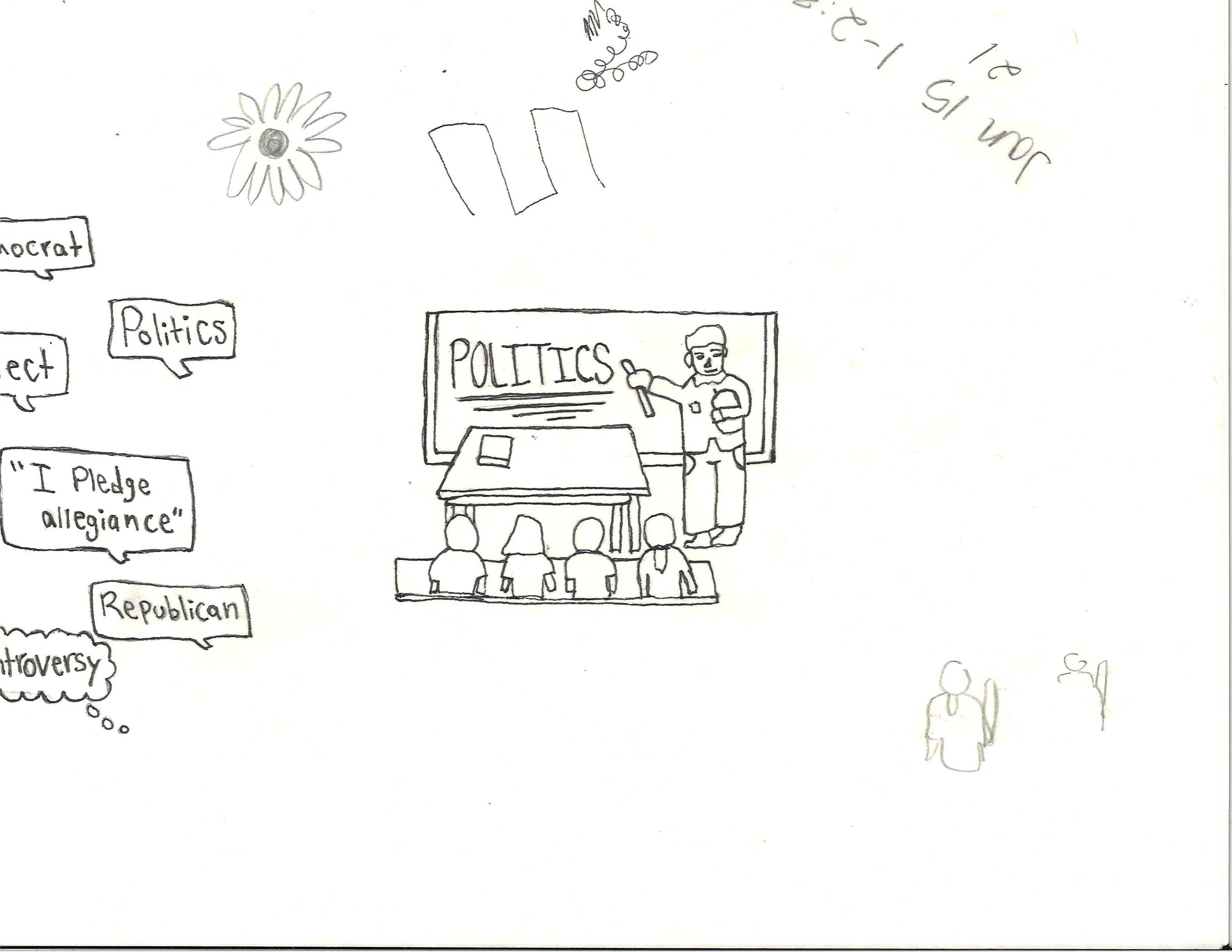
At the district level, the Oyster River Cooperative School District (ORCSD) has a specific policy called “Controversial Topics, Speakers, and Programs.”
The policy states that as long as the
that the teacher sets is how the students talk about politics,” Nield says. “they never discourage anyone’s opinion, but if the teacher makes it feel uncomfortable, the students don’t talk
educators and students. As political issues increase, the classroom remains a space where facts, opinions, and neutrality must coexist.
In Case You Missed It...
2025 Scholastic Award Winners
written by RILEY DUGGAN
visuals by ANYA SHUBA
Meet the Nurses
Who’s behind the door in the nurse’s office?
writing and visuals by BEL EJARQUE
From sudden headaches to stressful school days, it’s a guarantee you’ll feel better on your way out than when you walked in. The friendly faces behind the door to the nurse’s office will make sure of that.
Often a place where you can get more than just an ice pack or Band-Aid, the nurses’ office is a space where students (and even teachers) can find care and comfort within the building when they need it most. I have recently spent more time with the Oyster River High School (ORHS) school nurses, seeing as my mom is one of the two long-term substitute school nurses this year.
I have noticed that students in the building don’t really know the nurses, and some altogether avoid it because they don’t know what to expect in the room behind the closed door. It is an overlooked community within the building that has more to offer than the exceptional healthcare that’s provided. ORHS school nurses play an important role in keeping a safe, healthy environment within the building. So, let’s meet them!
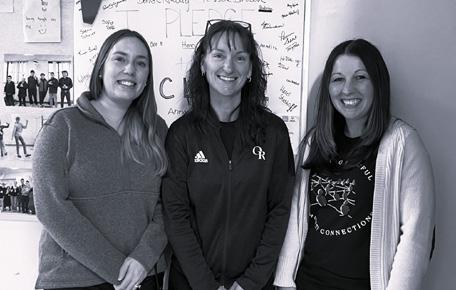
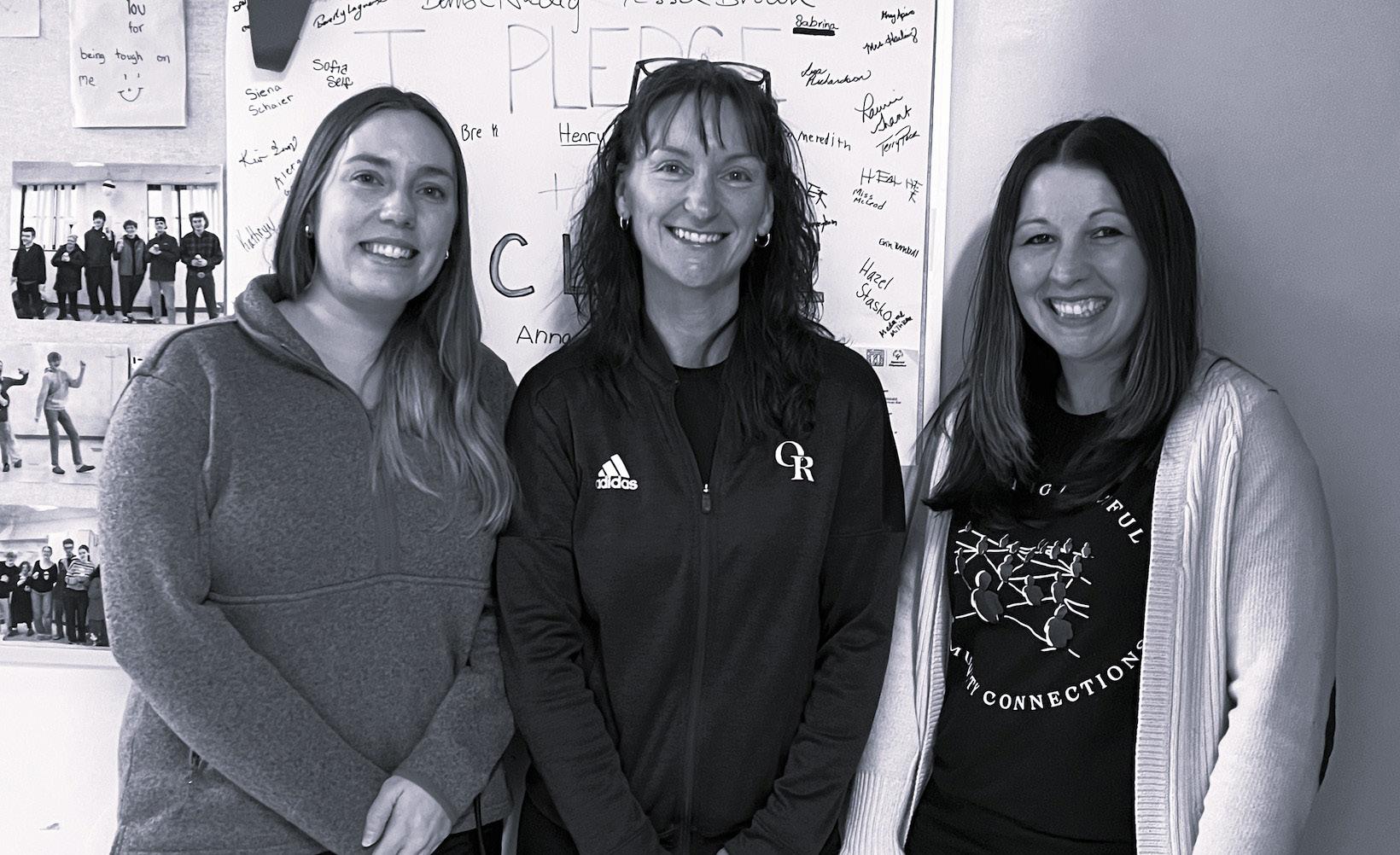
Lefttoright:SamanthaDay,KimWolph,KimLanglois
Kim Wolph:
Kim Wolph has been the ORHS school nurse for the last ten years. Wolph was interested in the job after finding out it was an opportunity to work in pediatrics while utilizing her clinical skillset in a different setting than the typical hospital. As a nurse, Wolph enjoys being able to attend field trips throughout NH, making every workday look a little bit different. She is responsible for implementing and monitoring Individual Health Plans (IHP), along with helping families feel confident their students will stay safe while receiving their education. The student’s confidentiality is of the utmost importance to the nursing staff. When Wolph isn’t dispensing medicine, checking vital signs, and responding to the numerous emergencies around the building, you can probably catch her watching musical theater somewhere, no matter how big or small the production is! Wolph says, “Whatever it takes to assist anyone in need is our highest priority.”
Kim Langlois:
Kim Langlois has been a school nurse for eight years, previously working at a family healthcare practice, which led her to enjoy working with kids and families. Langlois enjoys acting as a key resource for the students and their families and being seen as a trusted adult amongst students from different age groups. From the three-year-olds in the Preschool Education Program (PEP) all the way up to the seniors in the building, Langlois and the other nurses have a wide range of who they are helping day-to-day. From first timers in the nurse's office to students who are there every day, Langlois is ready to help. Langlois says, “The most rewarding thing is when students come for a follow-up visit to share good news or simply a social visit because I got to be part of a challenging healing time in their life. To see the smiles on their faces brings me so much joy.”
Samantha Day:
Samantha Day has been a district substitute registered nurse at ORHS since November of 2025. Day found working in a school setting as a nurse is different than other settings. Day says her long-term substitute school nurse position is flexible for her schedule, less stressful while still fast-paced, and extremely fulfilling. From new faces to new situations, she highlights how different each day is. On her days off, you can find her spending her time with family and friends, walking her dog, doing yoga, and cooking. Day says, “I hope that all students know that the health office is a judgement-free zone. We are truly happy to assist in any way we can here.”
“Whatever it takes to assistanyoneinneed isourhighestpriority.”
-KimWolph
Jaye Ejarque:
Jaye Ejarque is a substitute nurse for the Oyster River School District (ORCSD), and has taken a long-term substitute position at ORHS this year. Ejarque works at Portsmouth Regional Hospital and teaches at the University of New Hampshire (UNH) on her days off. Ejarque says, “being a school nurse is so different from other nursing jobs, it’s fun and I get to meet new staff and students every day.” She loves to spend time with her family, and says, “working at the same school my daughter goes to is pretty fun too!” You can expect to see Ejarque in the nurse’s office on Tuesday’s and Thursday’s.
Although being a school nurse is not an easy task, it is rewarding for these three. Wolph explains, “Nurses wear many hats! While we are here to manage physical health, many don’t see the background work we are doing.” The background work mentioned includes working with families in the community who need assistance. Aiding with End 68 Hours of Hunger, the nurses help give clothes and winter gear to families. They work closely with Oyster River Womenade, who assists with fuel and rent for community members in times of need.
Don’t feel nervous to go to the nurse’s office, whether it’s for a serious health concern, a place to lay down, or a sympathetic ear. The nurses are always looking to help in whatever way possible.
Blurred Out
Our desensitization to graphic content online.
writing and visuals by EMILY TAYLOR
Content Warning: This article covers sensitive topics
his video may contain graphic or violent content,” is one of the first things that can greet someone when they click on Instagram reels. It’s easy to come across uncensored car crashes, accidents, and gun violence. There are whole accounts dedicated to this type of content, and the comments are flooded with joking reaction photos to scenarios people could’ve easily died from. I’ve been seeing content like this for so long, that I don’t react nearly as strongly as I might have a few years ago, and most people I know don’t either.
Being desensitized to graphic media seems to have numerous effects on us as a younger generation. We don’t care nearly as much about violence that we might have only a few decades ago. The language we’re using and the joking approach we often take to sharing graphic media is undoubtedly influencing this mindset. This made me wonder if we’re starting to lack empathy towards victims because of our unserious nature.
educational sense that works with the context of the class. On social media, it’s often unmoderated. According to The Wall Street Journal’s “The Corpse Bride Diet’: How TikTok Inundates Teens With Eating-Disorder Vid-
“There’s so much out there... you can say or post anything,” Derek Cangello, a social studies teacher at Oyster River High School (ORHS) said. He himself chooses to show what may be considered graphic content in class, like videos from 9/11, but he uses it in an
eos,” only 1% of videos uploaded and reported by users actually get taken down by TikTok.
Gavin Kenoyer (‘27) brought up the December 22nd, 2022 incident on TikTok when moderation went entire-
ly down. Users took advantage of the system and were posting extremely violent or sexually explicit content that took TikTok two to three days to remove. It’s a constant battle of 40,000 moderators versus 1.59 billon users as of 2025, with other platforms having similar numbers. With the increased use of AI, it seems like it’s become easier for violations to occur and for apps not to pick up on them. Lucy Milutinovich (‘27) has recently noticed an influx of violent videos being covered up or labelled as AI. “Because it’s AI, TikTok is fine with keeping it up because it’s not ‘real’ people, even though the video is still really descriptive.” Milutinovich says it’s often obvious what’s going on in the videos, even with the AI filters.
However, Kenoyer argues that some content is important to keep up for awareness with proper warnings, like the reality of the Palestine and Israel conflict. “We need moderation but not to the point where it’s censorship,” he says. This disagreement has spread to conversations around topics like political violence. Some claim that easily accessible videos of people being killed is insensitive, like the video of the political commentator Charlie Kirk being shot. Others are on the same side as people like Kenoyer, arguing that it’s necessary for some to see and be aware of. It’s clear there’s
conflicting opinions on this topic.
Despite this, censorship is still extremely prevalent, especially with the language we use. Words like “unalived” in place of murder and “graped” in place of raped are commonly used amongst users discussing sensitive topics. There are two possible explanations for this that I’ve been told about. The first is that this kind of wording gets around TikTok’s censors, but I’ve seen numerous videos still up with hundreds of thousands of likes that use language that hasn’t been censored. The second may be the taboo in our culture around these topics. It’s true that there’s two things coexisting here. It’s difficult to discuss murder and sexual assault, even if we’re being constantly exposed to this sort of graphic
Controversy,” “Exposure to graphic or disturbing content, especially when paired with pleasurable stimuli like food consumption, may dull emotional responses over time.” This could also be applicable to social media, as most people now know how social media content can trigger dopamine and addiction, no matter what they’re seeing. It has come down to us becoming used to and comfortable with graphic content. In my forensics class this year, we discussed multiple cases involving sensitive content in an educational manner, much as Cangello does for his students. It was noticeable, though, that a lot of people weren’t fully processing how severe some of these cases really were. As I feel the need to be honest, I myself was included in this
comfortable joking about these topics. Dramatic edits and AI generated videos of Jeffrey Epstein with millions of likes have been created even before the official unsealing of the Epstein Files at the end of January, and an influx occurred after. Almost the entire American public knows about the heinous and despicable crimes committed by the numerous names mentioned in the files, yet many people have no problem with making a mocking of it and the victims involved. “... it’s often just dismissed or joked about,” Kenoyer adds. This behavior makes it even easier for us not to take crimes and tragic events seriously.
Cangello also highlighted how we as a culture perceive violence in comparison to not even inherently sexual
material. It’s becoming apparent to me as I’ve conducted these interviews and research that we’re desensitized to witnessing it online, but not when having in-person discussions about it.
“By using nicknames... it lessens the impact of the story,” Milutinovich argues. This sort of behavior is most often observed in the true crime community. They often share stories of real cases while eating or doing makeup, using censored language to describe terrible crimes. Milutinovich continues with, “There are a lot of true crime podcasts where they’ll be talking about an extremely sensitive topic and will be laughing about it, obviously not taking the case seriously at all.”
Dr. David Tizzard told publication, TastingTable in the article, “Here’s Why Mukbang Videos Attract So Much
sort of behavior. It feels easy to disconnect myself, as I wasn’t or didn’t know anyone involved.
According to the Sky News’ article, “Teenagers exposed to ‘horrific’ content online – and this survey reveals the scale of the problem,” over 50% of teenagers report that this sort of content comes up without them even searching for it. This means the algorithm is the one pushing graphic posts onto For You Page’s. There’s also been an increase of even posting these sorts of videos, meaning it’s flooding people’s feeds more and more, despite social media platforms who swear they’re working to remove it. “... [the content is] like going from drips from a faucet to a flood... it’s unhealthy,” Kenoyer says in relation to this influx. It’s also evident that people feel
nudity. “We think we’re so progressive, but have no problem showing violence in media. But when it comes to nudity it’s like ‘oh no’... but instead you can see someone’s head get blown off,” he says. Our normalization to violence even applies to real-life sexual experiences. This circles back to the language we use, like common terms being that you “cracked” or “banged” someone if you were intimate with them.
Overall, it’s now obvious that we have a long way to go with our exposure to graphic media online. From the language we use, to the humor we make out of it. If we work to better sympathize and understand how to take the content we consume earnestly, we can become more understanding towards the serious matters these posts often contain.
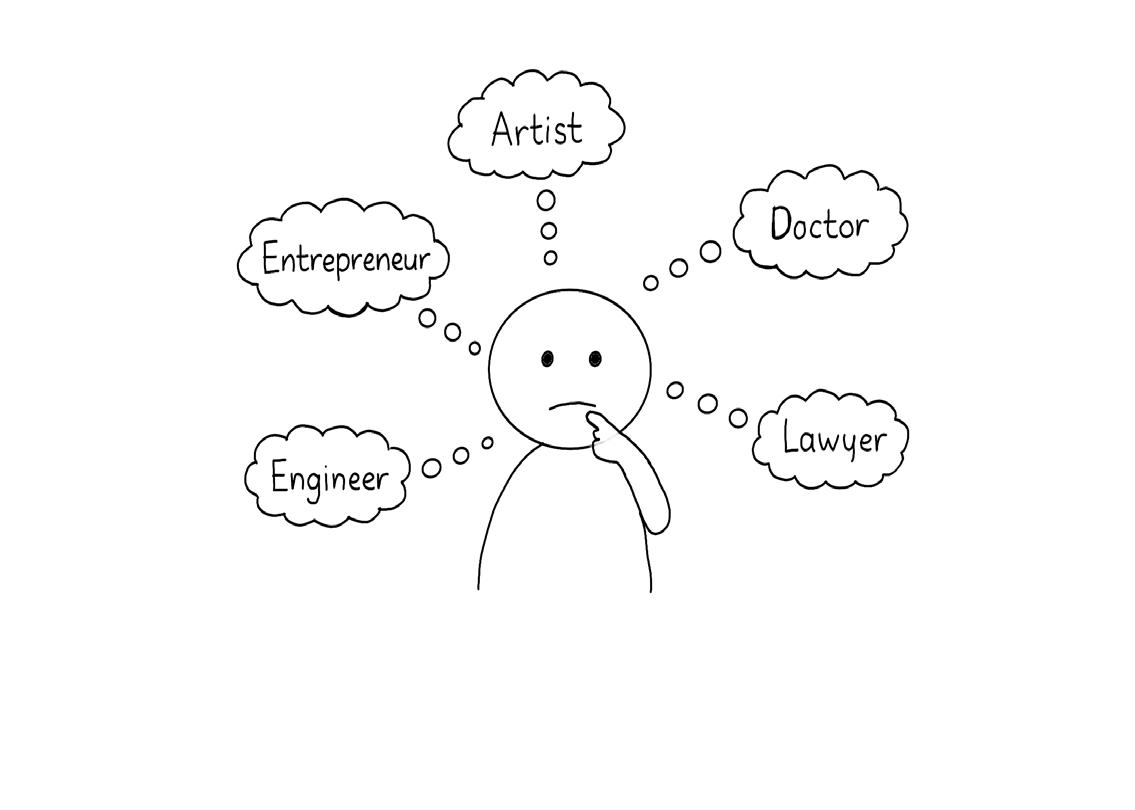
You Have a Major Choice
Do you feel pressured to know what you want to do in your future? I did too.
visuals and writing by ISABELLE JACKMAN
Do you get overwhelming fear when you think about your future career? Or even college in general? That exactly how I felt a year ago. Practically everyone I knew was asking me what I wanted to do, or where I wanted to go, but I didn’t have a clue what I wanted to do, and that terrified me.
While trying to find my career, I wondered if everyone felt this way. For Gracy Spirito (‘26) it was as easy as talking it out with someone close to her who has a degree in something she is interested in “my dad majored in business, and I would use the degree to get a good job,” said Spirito. This proves that the program is not for everyone, which is what the interview process in the beginning of the program is for as everyone has their own ways of finding their passion.
I had heard of the program Major Choice through my family, and at first, I didn’t think it would help me come to a conclusion on my future. How would it be different from the career tests online? But with my senior year slowly creeping up on me, I caved and reached out to the pro-
gram.
The first thing I had to do was be interviewed to see if I was a good fit for them. In the interview I told them how I always thought I had an idea of what I wanted to do. But when I thought about spend ing thousands of dollars and four plus years of my life on an education for something I wasn’t a hundred percent sure I loved, I wasn’t so sure about my choice. After the interview, they said that I was a perfect match for the program.
I was then paired with my mentor; I was lucky enough to get paired with someone I knew, the co-founder, Bradley Duquette.
Duquette had been working in higher education since his 20’s and has visited close to 400 college campuses and mentored at some as well. But he noticed something every time he would ask a certain question, ”as I would talk to students, the natural question was what are you going to do after you graduate... and it was a deer in headlights, and a root to a lot of anxiety.”
The same feeling I had when I was asked questions about my future post high school, and one of the reasons Duquette created the program.
There are other resources you can use in school,
with your decision. But the national average for high school counselor to students is approximately 372to-1 according to American School Counselor Association (ASCA), so most high schools do not have the resources to help every student figure out what they want to do. At Oyster River High School, the ratio is roughly 200-to-1.
ORHS student Brady Kenoyer (‘27) doesn’t think it is the counselor’s responsibility to guide students to the career they want. “[Guidance counselors] have a big workload, so it would be hard for them to get to everyone,” said Kenoyer. But he does think he could use help when it comes to his future. “I’m not sure what I want to do yet. But having some guidance from people would make it a lot easier for me,” explained Kenoyer.
Once you have your mentor, you start the first of your three Missions of the program.
The first mission, self-exploration, is all about the student. You go
through different assignments in these Missions to figure out more about yourself. Things like defining important people and moments in your life will help you later in the program.
Once I had my mentor, I started the first of my three missions of the pro-
searched them. At the start of mission two I had 75 careers to choose from that the Major Choice system had picked out for me based on the details in Mission one. At the end of this Mission, I slimmed my choices down to a few different careers including sports
lifted off of my chest.
Once I had my career, I researched the paths I could take to get to it. For me, that path was college. The program’s software made a list of possible college choices for me and laid out every aspect of each choice including,
gram. The first mission, self-exploration, was all about me. I went through different assignments to figure out more about myself, things like important people in my life or defining moments.
For my self-exploration assignment, I biasedly picked out the defining moments, so the Major Choice software would suggest a career I was already thinking about, photography. Looking back, that is the opposite of what the program is for. This specific mission only works if you are not only honest with your mentor but also with yourself. I eventually went back and changed those defining moments. Before Major Choice, I didn’t realize just how important people and memories
management, sports photography, and sports analytics. To ensure one of these careers would be the right one for me, I did some real-world research.
Which lead to the last Mission I had to complete, which was Mission three, outreach. In this Mission, I had to indulge in the three careers I chose by interviewing three professionals in each of the fields I was interested in. However, by the last interview I had really lost the interest I thought I had in the three careers, especially after hearing professionals talk about them.
I knew the right career was out there for me somewhere, so I reached out to my mentor. He made it clear to me that we can go back as many steps as I need to feel comfortable with finding a
price, location, best programs, and many other helpful factors to consider when making a big decision such as where I will be spending the next four years of my life.
“School is so expensive, it impacts life decisions. It’s inevitable to be scared rolling the roulette table hoping it lands on black,” said Duquette. Which is why looking at everything about the college in an unbiased way is so helpful, compared to visiting a college campus or website where they are naturally biased to say every amazing thing about themselves as a school and name none of their cons.
Duquette described the feeling of educational uncertainty as, “Walking blindfolded underwater trying to find
After I completed the first Mission, I reflected on my work so far, and I then moved on to my next Mission, career exploration. In this Mission, I identified possible career paths and re-
career. So, I went back to a career that had stuck out in the list of 75 careers, a lawyer. After talking with my mentor and completing the interview process for that career I was absolutely positive that I had found MY career. It felt like the weight I had felt for years had been
you way to air- trying to find what you want to do lots of pressure.” For me it now feels as though the blindfold has been taken off, and I’ve found the surface.
Clicktivism
How student activism has changed in the digital age.
writing and visuals by KRISTINA JAKOBS
he only thing more powerful than hate is love.” “Make America Great Again.” “No one is illegal on stolen land.”
These are a few of the notable phrases that are shared by teens on social media daily, including students at Oyster River High School (ORHS).
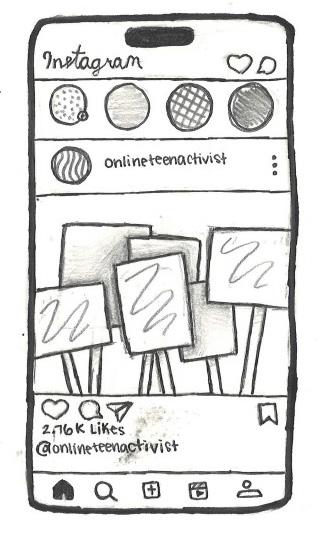
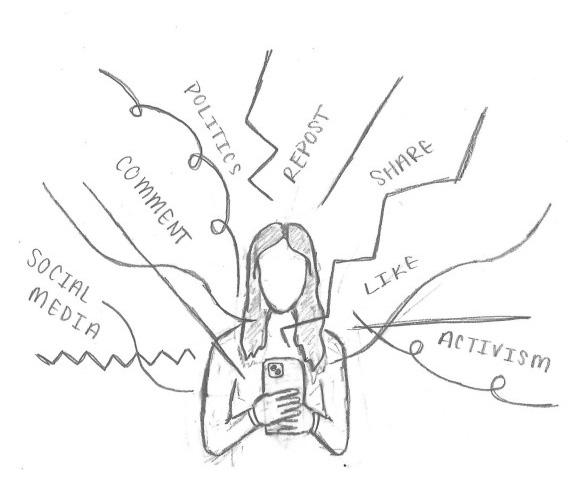
For many teenagers and young adults, reposting, commenting, and sharing things on social media is a way to take action. But why do so many teenagers decide to be activists online?
The pandemic changed how teenagers participate in activism, shifting from in-person to online. In wake of this change, more students at ORHS are becoming online activists, showing a trend in youth activism.
Current teenagers spend hundreds of hours online, and many of those are spent sharing their thoughts and beliefs in relation to current events or politics. However, this type of online activity has ramped up in recent months. Online activism makes it easier for people to speak up about current events or politics, only needing to press a few buttons in order to contribute.
Current event movements can be amplified by social media in the form of hashtags and trends like #MeToo or #BlackLivesMatter. Online activism has allowed movements like these to gain more traction than what would be possible without the internet. This brings up a pro of online activism; it lowers the barrier of youth being able to participate in activism. With the ability to add a hashtag, image, post, or repost, online activism is a simpler way for students to act compared to other forms of activism.
Lab reports that 66% of teens believe social media helps them show their support for issues and causes that are important to them. Support is the key word in that statistic because online activism has risen in popularity for one main reason: there are many ways to show your support.
The highest level of online activism is for those who are ready to commit considerable time and effort, but also risk. This could be organizing a large-scale protest online or creating campaign websites, taking the risk of having your name solidly connected to your actions.
The middle level of online activism is typical for most involved in current events issues. Signing an online petition, donating to an organization, or writing a short post about an issue are all great middle level commitments. Websites like Change.org create great opportunities for online activism, even at ORHS, where the petition Stop the Firing of Math Lab Teacher, Miss Jeong was created for the math lab teacher Sarah Jeong in 2025.
On the lower level, anyone can give a like or repost, use a hashtag, or change their profile picture to represent their beliefs. This lower level of activism still contributes to making a change but requires less involvement if that’s what’s right for you.
Boston Children’s Digital Wellness
Many students at ORHS fall under this category, like Ilona Wolfson (‘28) who is an avid online activist. Wolfson chooses to post or repost about politics and current events online mainly because it is important to her, but she also aims to spread awareness. “It’s not about politics, it’s about human rights.” said Wolfson, explaining why she believes everyone should
participate in some kind of activism. Wolfson posts about a range of topics, from legislation changes in Sudan to recent U.S. political statements.
Amalie Trump (‘26) has similar online tendencies as Wolfson does and often reposts messages from Associated Press News, the New York Times, and American Civil Liberties Union (ACLU). However, Trump takes caution when it comes to posting things that aren’t from other people or sources. Trump said, “I try to avoid saying my own words and instead I usually just repost.”
On the other hand, Gavin Kenoyer (‘27) prefers not to post at all. Kenoyer values face-to-face conversations when talking about current events or
his own beliefs. “I used to be a repost warrior but now I choose to do it in person,” said Kenoyer, referring to the switch in his online activity. Kenoyer finds in-person conversations can be more effective and sincere than posting online. “It comes out as watered down or like someone’s doing it for clout,” he said.
over to today and is now a main mode of activism for high school students.
However, this shift creates more risk for students. Unlike the privacy of calling a state representative or attending a protest, online activism directly at-
post their beliefs online because of what others will think of them,” said Wolfson, synonymous with Van Dyke. But, as Wolfson pointed out earlier, she doesn’t think that is a valid reason to not get involved, and said, “People should know about [current events] and that’s all the reason I need to post.”
“It’snotaboutpolitics,it’sabouthumanrights.”
- Ilona Wolfson
And though Kenoyer’s approach is valid, online activism has undoubtedly become the more common choice for talking about politics and current events. So, why is online activism more common than in person?
Prior to the pandemic, student-organized activism wasn’t uncommon at ORHS. There were several walkouts in the years before the shutdown, but since 2020 there has only been the recent walkout against Immigration and Customs Enforcement (ICE) on February 6th, 2026 and a walkout against gun violence in 2023. But besides occasional forms of protest, post-pandemic high schoolers seem to have turned towards this newer method of activism—social media. The pandemic certainly didn’t stop student activism; it simply changed it. Without the option to go out and make a difference in person, pandemic teenagers turned towards their phones. This shift in student action has carried
taches the name of the activist to the content. Once posted, your message will exist forever. ORHS Social Studies teacher Karen VanDyke said, “[Posting
on social media] could come back and get you,” pointing out one of the major flaws of online activism. Once posted, your message lives forever and is subject to judgement from anyone.
Students are cognizant of the potential negatives posting online may create. “Some people are scared to
Trump brings up another part of the risk with online activism, the potential of backlash. Trump used to be more conscious of her follower count online, but changed her approach in the recent years, saying, “Ok, who cares if you lose a follower or two, the issues are more important than that.”
Trump mentioned the irony of her last name as well, saying it has played a role in how people respond to her online.
For any students who want to act, the digital age certainly makes it easier to become an activist. This rise in online activism is notable at ORHS, as students like Trump and Kenoyer show different levels of involvement. With the division in current political landscapes, online activism among students will likely persevere. “I’ll keep speaking up,” said Wolfson, “these issues are bigger than any one person.”
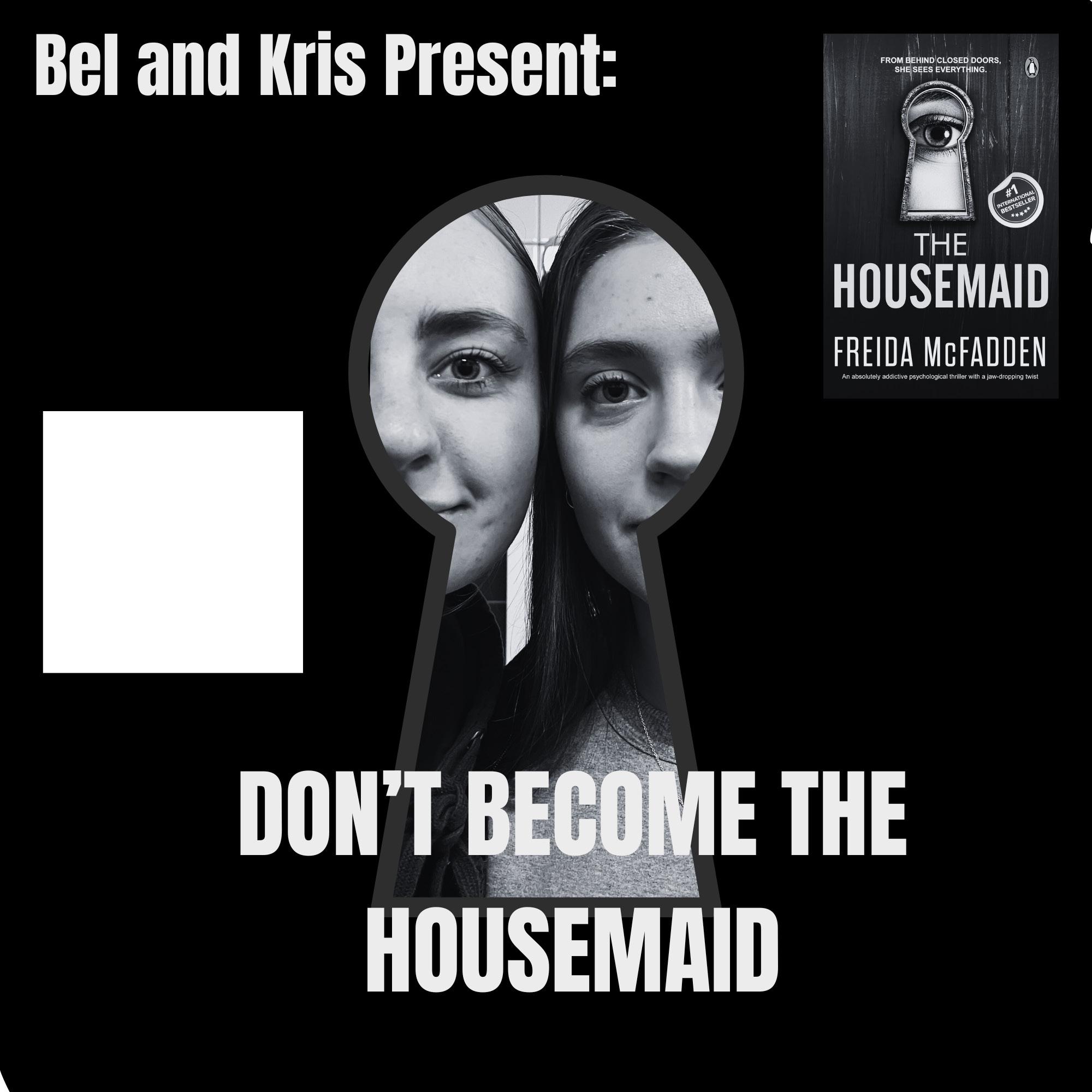
The Book Podcast: Don’t Become the Housemaid
writing and visuals by KRISTINA JAKOBS and BEL EJARQUE
Our Book Reccomendations
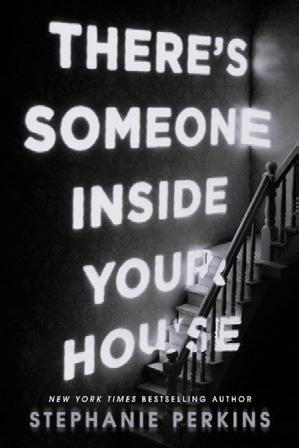
There’s Someone Inside Your House by Stephanie Perkins
If you read this book, anticipate looking over your shoulder at least once to make sure there isn’t someone inside your house. There’s Someone Inside Your House is an incredible thriller that made me shout “He’s right behind you!” at the characters too many times to count. Following various teenagers attending the same high school, this book features a serial killer that stalks his prey in a unique way—by being inside their houses. If you’re in the mood for a good jump scare, look no further; this book is for you. However, if you choose to read it, I suggest having all the lights on, at least one other person in the room, and a Disney movie queued for when you’re done reading. - Kris
I am typically not the person who chooses to read historical fiction, but after both my parents recommended this book to me, I felt I had no choice. And I am so glad I felt that way. The Book of Lost Names by Kristin Harmel is about a Jewish girl during the reign of the Nazis. Eva Traube Abrams takes her future and the future of others running from the Nazis into her own hands. This book had me in a chokehold. The accuracy and her writing about a time that is unfamiliar to most people nowadays was so beautifully portrayed, yet heart wrenching at times. If you like Kristin Hannah or other historical fiction books, this one’s for you. - Bel
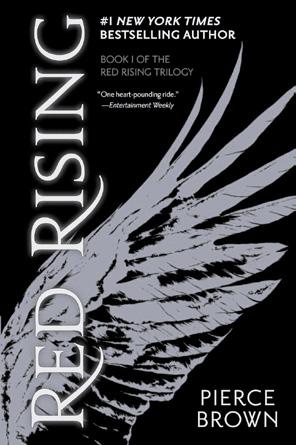
In a mix of the Hunger Games and Game of Thrones, Red Rising is a staple in the world of fiction. In a society built on a hierarchy of social classes, the book follows the journey of a lower-class boy named Darrow. Throughout the book, Darrow transforms himself into an upper-class citizen in an aim to take over the world. I simply could not put this book down, feeling like I was one of the characters in each thrilling scene. With the intense revolution, genius battle strategy, and moving character developments, I finished this book reeling and feeling like I had the power to win a war. -
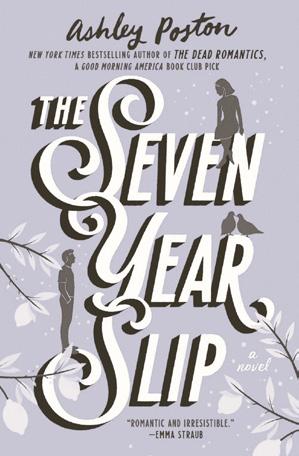
The Seven Year Slip is a relatable, heart-warming book that will make you rethink your big decisions in life. Clementine works hard to get what she wants, or at least what she thinks she wants in life, until a magical twist in time lets her see things from a different perspective. I loved how this book portrayed the effect other people can have on your life, and every now and then I caught myself fighting off tears. This book has gotten mixed reviews, but for me it was a unique and beautiful take on romance, real life, and loss, while still being extremely lighthearted and comforting. -Bel
The Seven Year Slip by Ashley Poston
Kris
Red Rising by Pierce Brown
The Book of Lost Names by Kristin Harmel
NeeDoh or NeeDon’t
Do NeeDohs actually release stress?
writing and visuals by THEA SMITH
Life is built to be stressful; work, family, friends, and don’t even get me started about school. I swear only yesterday I was a freshman, and now I am going to graduate next year. Every day I feel more stressed. I have colleges swarming with emails and mail, math tests that don’t make any sense, the SAT to start studying for, essays due where every sentence sounds clunky, and classes to pick for next year. I thought that I was doomed, every path I took being filled with stress.
topic of conversation. “I have noticed that kids will have them during tests; some teachers have bins of them on their desks,” said Celeste Best, ORHS science teacher.
I never saw the hype about NeeDohs. I thought they were just propaganda put out by a company, stating that they reduced stress and calmed the mind. I said that I would never buy
a stress ball, the sensory receptors in the hands are triggered, helping redirect anxious energy and improve alertness and blood flow, according to a paper published by Hubei Institue of Fine Arts called “The Rise of Sensory Fidget Toys: Origins, Psychological Principles, and Their Role in Stress Relief and Mental Health.”
“AnytimeIneedtofocus,IneedaNeeDoh.”
-LucyMilutinovich(‘27)
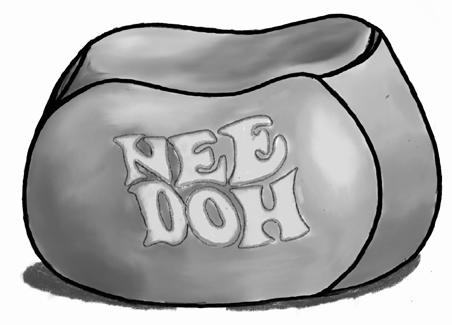
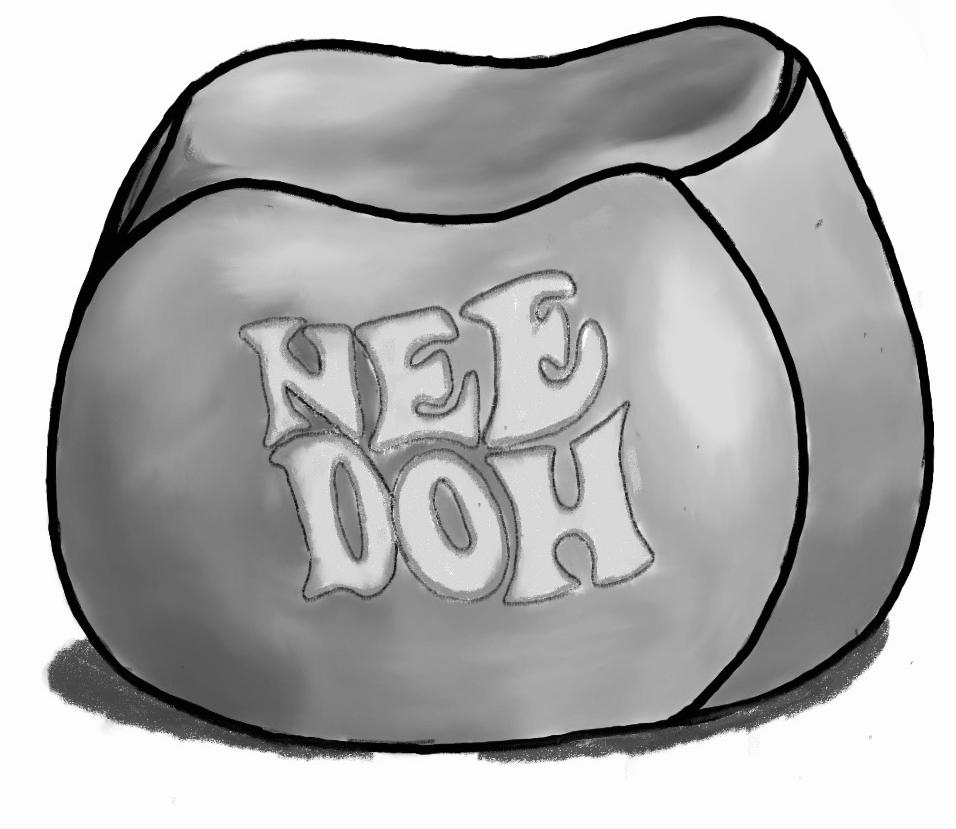
That was until these tiny colorful cubes started to appear in my friends’ hands, then in other classes, and now in mine. What once I saw as a stupid toy, became an Oyster River High School (ORHS) sensation. Many colors, shapes, and textures but only one name: NeeDoh.
I often hear stress toys dismissed as childish distractions; something to fidget with during class or toss aside as a trend. I have heard that stress toys, like NeeDohs, serve a purpose beyond novelty. In a world where anxiety is rising among students and adults alike, these small, squishy objects are supposed to offer a simple, accessible way for us to manage stress and improve focus. For many students, having something to squeeze can ground the body and calm the mind.
As each one of my friends got a new NeeDoh, my curiosity grew. The small, purple, blue, and pink cubes would be passed around during flex; sometimes you would even see them flying through the air. As time went on, I wanted one more and more. I would see them being squished in nearly all of my classes and being the popular
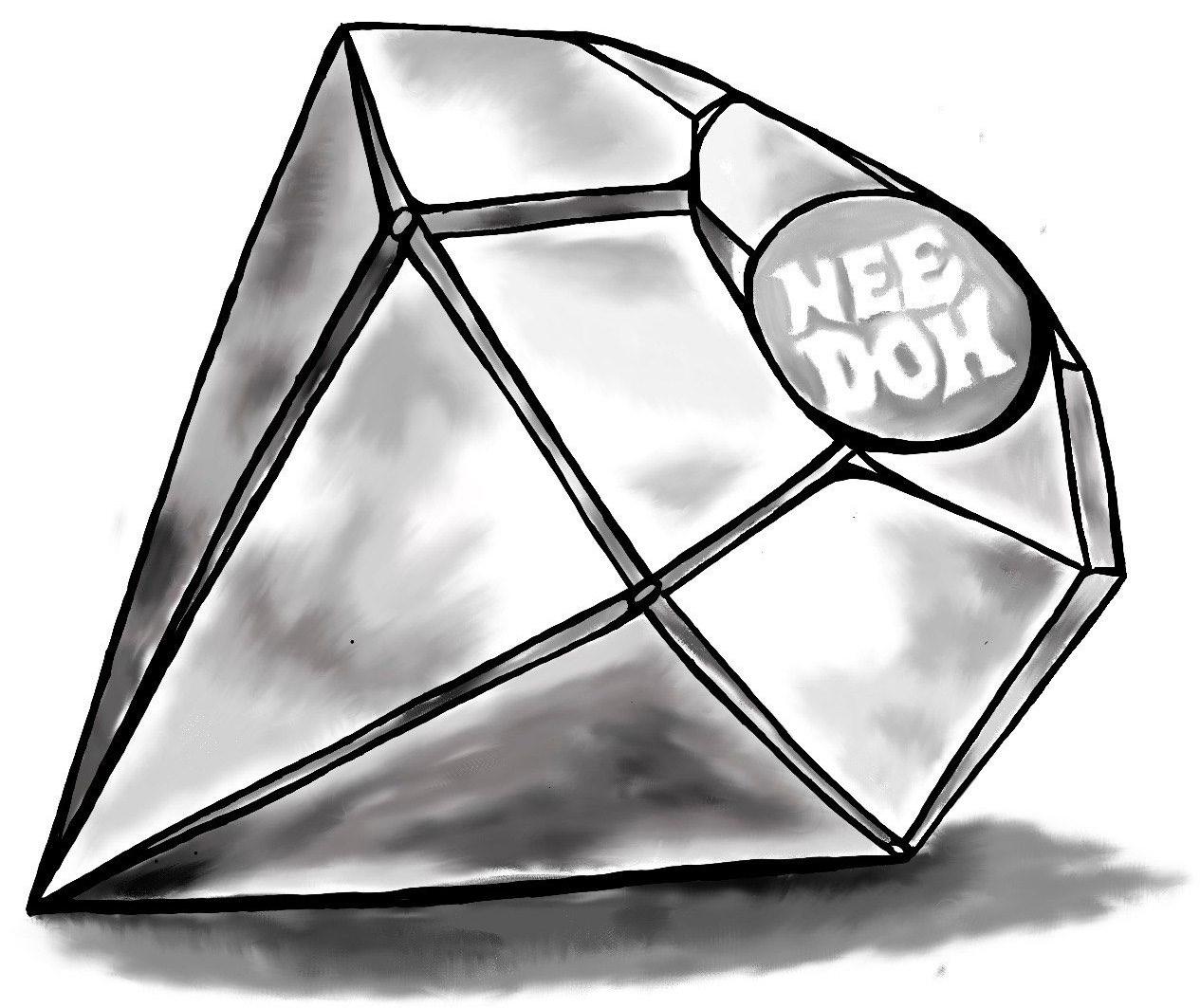
one, but Christmas came early, and I was gifted three: two NeeDoh cubes, and one purple diamond filled with water. I didn’t realize how important they would become until midterms were around the corner.
Stress affects focus, mood, and even physical health. For students especially, pressure from exams, teachers, parents and even social media can feel overwhelming. Playing with fidget toys, like NeeDohs, can open certain parts of the brain, like the prefrontal cortex. This area is connected to neural pathways responsible for motivation, impulse control, emotional processing, and focus. When someone squeezes
I have often seen these stress relievers in my math and science classes, anytime we need to focus and especially during tests. Lucy Milutinovich (‘27) said, “every test I have taken this year, I have had a NeeDoh by my side, doesn’t matter shape or size, it’s there.” Addie Dillon (’27) adds, “it helps me to focus, especially when I’m doing my homework, or I’m studying for tests. It gives my hands something to do while my brain is thinking.”
Sometimes, especially in math class, I often find myself looking around the
room or at the ceiling when I am stuck on a question. I look at other students in the hope that the lightbulb above my head finally goes off. Luckily, I have my NeeDoh by my side to calm me down, but there is also another purpose. When stuck on a question, squeezing the NeeDoh can help clear the mental fog.
An article posted by HinesLead, “Anxiety Relief Fidget Toys: How They Work on the Brain,” quotes research from the UC Davis MIND Institute (2024) that shows that fidget gadgets during stressful situations can reduce intrusive thoughts by about 32%. Also taken from the article, similar studies from the University of Illinois suggest that brief sensory stimulation helps refresh mental focus without disrupting attention.
“I do notice in class, you’ll see someone staring at a question that they’re stuck on, and you can see the stress, and then anything in your brain becomes that much harder to access. So, they’ll stop and play for a minute…It’s like that calibration of, hey, it’s going to be okay,” says Best.
ment, she went to CVS with her teammate Elizabeth Piller (’28). There she found a four-inch cheese squish ball: Squeezy Cheese. Gompert purchased it for her team. The next day, while they were playing, the cheese sat on the bench. When players came off the court, or before subbing in, they would squeeze the cheese to release the stress. Gompert says, “I felt that I was channeling my negative energy into the cheese…It’s a coping mechanism to get my brain to think about something else
Even if you are able to unclog the brain, many students jump to the conclusion that they will fail. Fortunately, it has been proven by the National Library of Medicine in an article, “Impact of fidget devices on anxiety and physiological responses in adults with ADHD” that stress toys also support cognitive redirection by shifting attention away from negative thoughts and promoting more positive, task-focused thinking.
Stress isn’t just found in the classroom but also on the court, or field. For Audrey Gompert (’28), a club volleyball player, she mentions the stress she feels during her games. She says, “sometimes I start to spiral when my team is down or we keep making mistakes.” Gompert isn’t the only athlete that struggles with stress, infact 91% of high school students report experiencing some level of stress related to sports, according to ISNation, a mental fitness website.
After the first day of her tourna-
rather than what is happening in front of me.”
There is always the argument that even though these toys do help one to focus, it might distract everyone else around them. Best says, “I haven’t found an issue with these types of stress toys, but I used to have to say if it’s going to light up, flash and make noise, we need to find a different option.” Especially with the 2016 fidget spinner, or the 2020 pop-its, the sound of these fidgets are often more distracting than stress relieving. Luckily, most NeeDohs are silent, allowing for a distraction free environment.
A quote taken from the NeeDoh website states that “NEEDOH toys provide a perfect balance of play and relaxation, helping to relieve stress through soothing, squeezable fun.” I can say that this is true. Since I was gifted the NeeDohs, I have taken
them with me when I know I will be in a stressful situation. I like to have my NeeDohs with me when studying or during a test. Even if I don’t use them, their presence calms me as I know that they are something I can use to stop the mental fog. I have also taken them on the plane, or to doctors’ appointments to hopefully calm my nerves a little. While I am not doing anything stressful and I am just waiting for something to happen, I like to play with my NeeDoh and focus my mind on something else.
Originally, I thought that these cubes were just toys. Then I got invested and thought I fell into the propaganda trap. Then I started to love them. I started to notice small benefits to them; helping me to focus and retain information better or calming me during a test. I wanted to see if these benefits were actually real, or if it was just the placebo effect. After writing this article, I can conclude that stress toys really do positively impact high school students; whether it’s with help fighting stress, or focusing in class. So, if you are looking for something to help you refocus or fight those bad thoughts then I recommend getting a NeeDoh. A NeeDoh isn’t just a toy but a weapon to combat stress. Milutinovich says, “anytime I need to focus, I need a NeeDoh.”
A deeper dive into the long and short term affects of the average highschoolers sleep schedule, along with new relevent research regarding sleep.
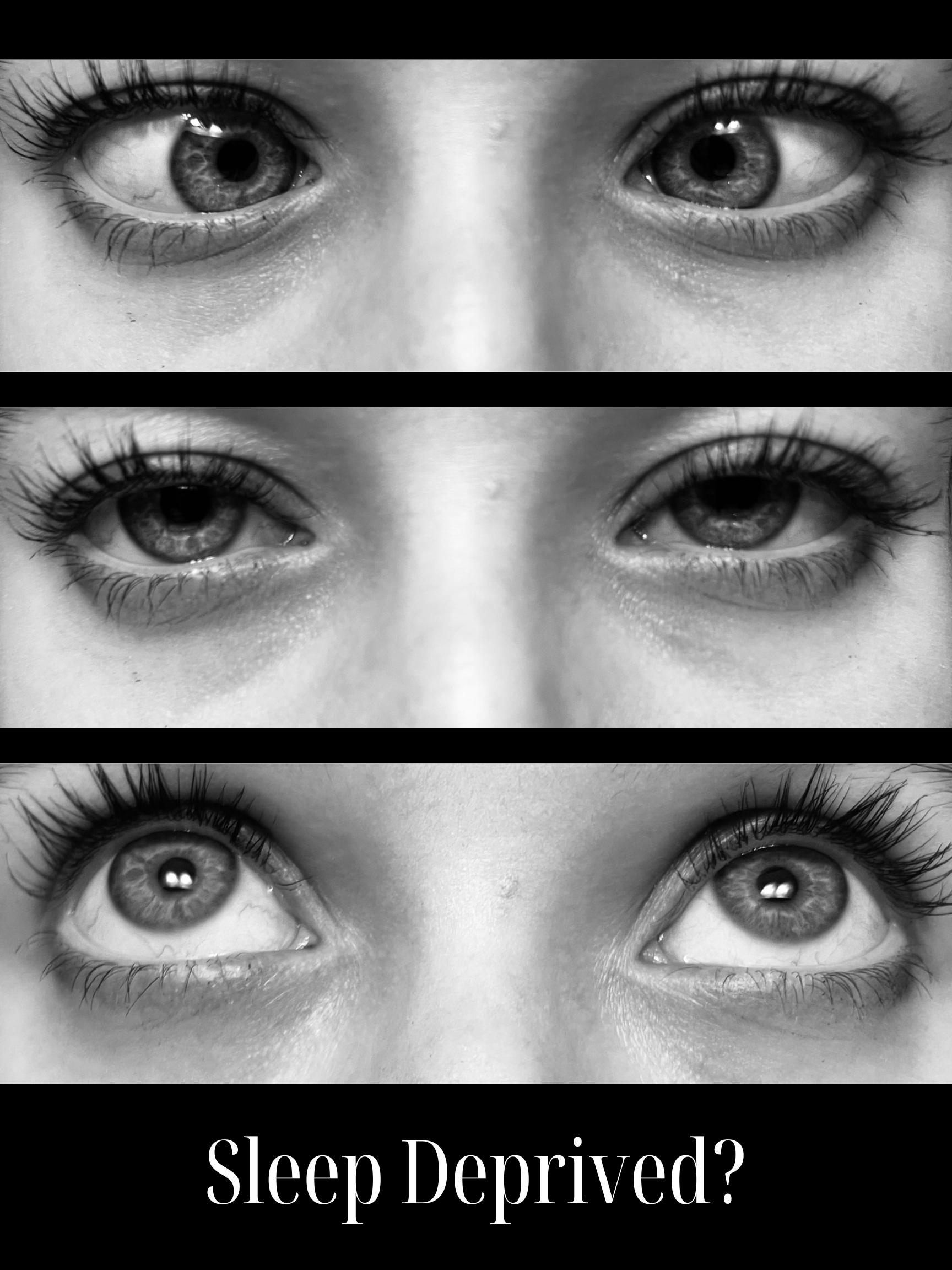
All too often I find myself in my first period class with my eyes unfocused, and my head drooping. I know that every morning I will wake up to my alarm, hit snooze five or six times, and eventually pull myself out of bed.
The issue of sleep deprivation has increased in prevalence over the past decade, and according to The Center of Disease Control Prevention (CDC) in a FastStats article: Sleep in High School Students, 84% of 12th grade students in America are getting insufficient sleep as of 2021, compared to 2011 when it was around 69%. The issue of teenagers being night owls is an age old one, however it seems that the issue has become worse since the 2010’s.
It’s clear that the long-standing habit of sleepless nights has stayed prevalent at Oyster River High School (ORHS). Even local coffee shops such as Breaking New Grounds have recently added ORHS Student discounts due to the massive popularity of their energy
visuals and writing by ANNIE GRAFF
There are several reasons why teens and young adults stay up late; the simplest one is that it is a biological mechanism. According to an article published in the National Library of Medicine titled: Impact of sleep and circadian rhythms on addiction vulnerability in adolescents, at the time of transition to adulthood, there are large hormones fluctuations, brain reorganization, and rapid growth. Consistent and sufficient sleep is a pillar that supports all these occurrences.
Sleep patterns are influenced by two internal biological components, a daily circadian rhythm, which is an internal clock that regulates the sleepwake cycle, and a homeostatic drive to sleep that builds up while awake, also called “sleep pressure.” Both components are affected by sex hormones such as estrogen and testosterone.
Although it’s widely believed that the late nights that teens are commonly subjected to are the results of workload, academics, media, and so-
of cultures and governments. This delayed sleep means that the release of the sleep-regulating hormone melatonin does not typically release until 11:00 PM. This modern data overwhelmingly points to the conclusion that delayed sleep in teenagers is a natural occurrence internally influenced by hormones. This would also lead to the conclusion that the loss of sleep occurs in the morning, when teenagers wake up early for school.
There are other obvious influences over teenagers’ sleep patterns, such as a large academic workload. At ORHS there is quite a bit of academic pressure, especially considering the school’s standing as being in the top ten percent of schools in New Hampshire (NH) according to Public School Review.
However, this is not isolated to ORHS by any means, as any academically motivated student at any school often sacrifices sleep for the sake of their work. It’s reported by Biology
drinks. The underlying causes of this issue, as well as the long- and shortterm ramifications, are extremely important for our generation’s adolescence to understand.
Hayden MacNeil (‘27) chronically struggles with sleep issues. According to Macneil, she will experience weeks or months where she consistently cannot sleep. “I’ll go to bed and I won’t be able to fall asleep. I’ll be staring at the ceiling for hours on end trying to get myself to [fall asleep], and a lot of time I just can’t. It definitely affects me during the day... it shows up in my schoolwork and athletic abilities.”
cializing, it’s more likely that the baseline cause is a biological shift in sleep structure through puberty.
According to the National Library of Medicine, in a study conducted in 2011 titled: A cross-cultural comparison of sleep duration between US And Australian adolescents: the effect of school start time, parent-set bedtimes, and extracurricular load, the existence of “evening-type” behavior has been observed worldwide as early as the 20th century. A delay in the timing of sleep in adolescents from 12 years old to 20 has been observed in 20 countries and six continents across a range
Insights that the average academically motivated high school student is spending 15 hours a week on homework, very often cutting into time that would be spent sleeping.
The other obvious external factor is social media addiction, which can often make it hard to choose to go to sleep. In recent developments it’s been observed that a unique combination of social media addiction, and a term coined as “revenge bedtime procrastination” can lead to even more intense sleep deprivation.
“Revenge bedtime procrastination” is a term for the concept of trying to
reclaim personal time that a large majority of people may lack due to being busy. After a long day without much time for yourself, you may find yourself collapsing on your bed exhausted, but you won’t go to sleep. Instead, you spend time watching your favorite show, or more likely mindlessly scrolling for hours to de-stress.
These external and internal factors affect many young adults and almost all teenagers, but the lack of sleep among our youth does not come without consequences. When you fall asleep, your brain is essentially resetting and restoring your body, giving you energy and making you ready for the next day. Sleep is the time that several biological mechanisms are occurring.
According to the Cleveland Clinic in an article titled Here’s What Happens When You Don’t Get Enough Sleep, sleep conserves and restores energy, repairs and recovers daily activities and injuries, and rests, reorganizes, and re-catalogs the brain. The
but teens who don’t get enough sleep usually report symptoms of that anxiety, depression, emotional dysregulation, things like that.”
average teen needs a minimum of eight hours, but the recommended amount is nine to ten hours. Even missing out on as little as an hour and a half of sleep has an immediate effect the next day.
Rob Quagileri, a health teacher at ORHS, comments, “If you don’t get enough sleep, your brain can’t process all the stuff you have done each day, and you’re going to be losing things as you go through. Your brain is like a computer; it needs to reorganize itself; it needs to structure itself, and we do that when we sleep. You can be cramming all you want, but if you don’t have it organized in easy places to recall, it’s harder to use.”
On the more concerning end of things, the long-term effects of adolescent sleep deprivation can be much more dangerous. To cope with sleeplessness, it’s incredibly common to consume highly caffeinated drinks. At ORHS Red Bull Wednesday and the popularity of the Red Bull Lemonade drink served at Breaking New Grounds is its own indicator of the high consumption of caffeine and stimulants to keep the alertness throughout the day. Russell states, “[Energy drinks] give you a short little stimulant to feel better for a few hours, but then you’re probably tanking worse than you [would be] if you didn’t have it.” An overuse of caffeine stimulants can further interrupt sleep cycles and have physical consequences, Russell continues, “a lot of caffeine will raise your heart rate, which can lead to anxiety. It will interfere with your sleep cycles, so if you’re drinking it too late in the day, you’re not falling asleep, you’re sleeping later, you’re not getting enough sleep, you want an energy drink, it’s just a bad cycle.”
Skylar Delage (‘26), comments on her energy drink consumption, “I love an Aroma Joes rush; I get one at least three times a week.” Companies like Red Bull and Aroma Joes can easily commodify the sleeplessness of high schoolers and college students, as it’s a large an easy market to pander too.
school career, as the workload gets heavier and the hours of sleep every night decrease, the insufficient sleep that might have been manageable as a younger student becomes chronic. According to the Child Mind Institute in an article titled Teens and Sleep: The Cost of Sleep Deprivation, you would begin to lack emotional regulation, upsetting easily and experiencing exaggerated mood swings, you would be fatigued so often that feeling sleepy would be the default, you would be at risk for symptoms of anxiety and depression, and any underlying mental illnesses could be triggered to a greater extent than they would be.
All of this can culminate into permanent damage; this type of chronic sleeplessness can seriously affect a teenager’s memory and ability to retain information; it can also cause disorders, such as depression or insomnia.
It’s unfortunate that many of the situations and symptoms affiliated with sleep
However, all it takes is one night’s sleep to get back on track. Hannah Russell, one of ORHS’s psychologists’ comments, “A lot of students struggle with anxiety, depression, [and] stress. I think sometimes that can be related to sleep. [It’s] kind of a chicken or the egg type situation; the two are definitely closely connected. Everyone needs a different amount of sleep to feel their best,
Walking into Breaking New Grounds on any Wednesday of the school year I see at least a dozen familiar faces (myself included) getting their three-dollar Red Bull Lemonade. The correlation between drug usage and sleep deprivation goes deeper. Chronic sleep loss and circadian misalignment have the potential to enhance developmental tendencies toward reward seeking behavior and impulsivity, according to the previously mentioned study: Impact of sleep and circadian rhythms on addiction vulnerability in adolescents. Reward sensitivity and impulsivity leave teens vulnerable to substance abuse.
Over the course of any one student’s high
deprivation are likely relatable to any teenager reading this. It’s incredibly normal for teens to have very little sleep, and many teens are convinced that the lack of sleep is necessary and without much long-term consequence.
However, it’s important that our adolescents are made aware of just how serious sleep deprivation can be. In a study about the consequences of adolescent sleep deprivation, a quote from the National Library of Medicine states, “Sleep deprivation during adolescence may permanently alter the developmental trajectory of the brain and behavior. Despite this possibility, many modern social and technological features compel teenagers in developed countries to be overwhelmingly and chronically sleep deprived.”
So next time you find yourself up in the late hours of the night, or early hours of the morning, for any reason at all, remember that the health of your mind and body are important. So, remember to take a breath, close your eyes, and go to bed.
Virtual Insanity
Students and staff share their thoughts on the coming integration of an AI tool for teachers, and eventually students.
written by ELISE BACON
visuals by AMALIE TRUMP
Just Ask Chat
How Chat GPT is becoming an addiction at ORHS.
writing and visuals by ELSA SVENSON
hen my teacher finally finishes his lecture, I join my friends in the back of the classroom to complete the assignment that was handed out. It’s later in the day and we’re almost free to go home, which causes the double-sided paper of problems to look especially unappetizing where it lies at our elbows on the table.
As we attempt to tackle the first couple of questions, my friend drops their pencil, sighs, and concludes, “I just cannot do this right now, I’ll finish it tonight.” To which my other group member pokes jokingly, “Will you do it tonight, or will Chat?”
I used to cringe at the mention of using artificial intelligence (AI) in schoolwork. In younger grades, it had a heavy correlation with seemingly forbidden ideas like cheating, plagiarism, and ultimately, a mark on your record-giving AI an ominous and almost scandalous connation. However, I have been rapidly desensitized to any negative feeling towards the use of AI in academic environments. Using ChatGPT was quickly normalized as classes became increasingly overwhelming, and the workload became heavier. The platform gives quick solutions to upcoming homework problems, instant personalized essays, and libraries of knowledge in just a few clicks.
crease in behavior trending towards the side most severe. The addicted. Today, I’ve found that it’s probably rarer to find someone who isn’t using ChatGPT or other artificial intelligence domains than to find someone who is.
In a community of high schoolers, AI has become so common to talk about that we’ve nicknamed it for ease in our conversations. Phrases like, “Ask Chat,” or “Just use Chat,” are so frequently used that an untrained ear could believe “Chat”, was actually just a brainy friend that you sit with at lunch and visit for help in Trigonometry.
Although I have yet to see the use of artificial intelligence classified as an actual addiction, I have seen my peers exhibit similar and intense dependencies on ChatGPT. Like any other addictive substance, the cycle is gradual, but
I quickly understood during our conversation that it didn’t matter what kind of assignment was being handled, or even its difficulty, ChatGPT was going to be used. What surprised me most was their demeanor about what would happen if they could not longer use AI.
“My work habits wouldn’t change. I just wouldn’t do the assignments, and my grades would be a lot worse,” K continued.
For some students, ChatGPT isn’t just a supplement to the work ethic; it’s the entire thing. K later told me that with their use of AI, they have maintained almost completely straight A’s, even in advanced classes. All without completing assignments naturally, nor the desire to.
The academic persona ChatGPT created for K was one that completely did not exist outside of the browser.
almost certainly vicious. As your use increases, your dependency does too.
I sat down with K (‘27) after asking my friends if they knew anyone that was exhibiting this alarming behavior. I asked them to tell me about it.
K explained that they never found value in the classes they were taking or the assignments they had needed to complete. To them, school was a chore that could easily be handed off to the digital assistant. K decided that if they didn’t care about the work, there was no good reason to complete it themselves.
As we’ve gotten over the curve of fear, either because the risks were outweighed, or simply through desperation, ChatGPT has made itself a significant part of our lives. I’ve found that there is a broad spectrum of users ranging from light to heavy reliance, and additionally, many people use it in different ways. However, recently I’ve noticed a noticeable in-
“I’d say I use AI in every class, probably for every assignment.”
“Every assignment?” I peppered.
“Every one” It wasn’t exactly shocking to hear that K was not completing their work organically. After all, it was why I landed the interview with them in the first place. I knew that some of my peers were using AI heavily, but I didn’t realize to what extent it was ranging.
Before AI, students similar to K still had the same habits. Either little to no academic drive, or fraudulent tendencies. They would scrape by in their classes and if they got lucky, not get caught cheating. However, after the introduction of artificial intelligence, they didn’t have to worry about flunking out. Their work could be perfect every time with the same amount of dwindling effort. I understood after my next conversation that this wasn’t the
case for every student using AI.
“I didn’t do my own piece of writing until the last week of semester two,” said C (’27) referring to their sophomore year. “Everything before that was ChatGPT, in some way.”
C is infamous for their abusive behavior of AI between my friends, and possibly greater crowds, and often finds themself at the end of constant banter teasing them about it. (From a good place though.) Afterall, C is one of the smartest people we know. With this thought in mind, I confronted them. “You’re a smart kid, so why don’t you just do the work yourself,” I questioned.
C agreed but continued to explain that even if he could, it wasn’t as effi cient as using ChatGPT. Gener ating an assignment at their fingertips was much quick er than working on it for hours. After their re peated use, this process became even easier.
“It got to a point where I would upload past writings so it would learn to write like me. Then it would take even less time to go through and polish up,” C commented.
The application learned C’s grammatical habits, tendencies and preferences to compute work that resembled previous submissions. In seconds, C could have an A plus essay, using language that passed as theirs, and go undetected under examination.
there were two types of individuals exploiting AI. Students like C, who were capable of doing the tasks but weren’t willing. Or students like K, who were not going to do the work either way.
Although their motives contradicted, they still fell into dependency equivalently. C and K similarly described how their use grew, beginning as a helpful tool and then becoming a vital crutch. “I used it a little bit freshman year, then more and more. Then it just became a habit,” explained C.
Overtime, their use of AI slowly evolved from suggestions of new ideas to suffocating organic ones. As time went by, they be-
2025, MIT released the results from a study showing significant differences in the brain functioning between ChatGPT users, participants who used search engines, and those who only used their own creative skills to write essays. According to this study, EEG measurements across the brain showed that over four months, the ChatGPT users displayed the lowest brain activity and performed worse than their counterparts at all neural, linguistic, and behavioral levels.”
As C explained their habitual return to AI, I could not help but think of the detrimental effect it was likely causing. I asked C honestly if they thought that eventually, it was going to come back to bite them. C thought for a moment before responding, their answer was mixed, “I think on the off chance I eventually do need these very niche skills we learn in school, then yes it will come back to bite me,” C paused then concluded. “But overall, what I am going to need isn’t only from school, it’s also the outside experiences that I can only do with the time I get from using Chat.”
came accustomed to their own minds being on the back burner.
Instead of spending time writing or solving, C could enjoy time with their friends and family.
“My parents wouldn’t let me go out if I have bad grades,” C continued, “So I use chat to get the work done in less time and go do the things I want to do.”
K and C simultaneously found reason to not want to do their work, and the thing is, they didn’t have to. They could do what they wanted and continue to get better grades than their laboring peers.
K had nearly perfect scores, and C had joined our friends for dinner the weekend before. Evidently, they were making out pretty well.
After further evaluating my conversations with C and K, I recognized that
“There have been a couple tricky prompts I’ve been given to by teachers where I’ve actually had to think about the assignment. It was kind of a drag,” K described. “It’s hard to actually sit down and do it.” Even if K wanted to do the assignment, they werent conditioned to complete it like he once was. Like any other muscle, the brain stops growing and adapting when it stops being exercised. If there are no problems to overcome, problem solving skills are not necessary to build. This is incredibly dangerous for high school students who currently are at a crucial point for brain development. Laziness sprouted by ChatGPT has become an increasing issue since the domain’s debut in 2022, especially in schools. Forbes said, “In June of
For C’s sake, I hope they were right. Undeniably, education is not just what is being taught in classrooms; it is also real-world exposure. On the other hand, the struggle we go through learning and working on these seemingly random concepts is what is contributing to building our integrity and determination as people.
Assignments that can appear unimportant can act as smaller metaphors to challenges we will face and must overcome later. How we respond and adapt to these problems is preparing us for how we apply ourselves to issues in our futures.
ChatGPT can seem like an easy way out of academic stress, but in reality, it’s an unsustainable quick fix to a much larger issue. By using AI to complete our work, we’re not just cheating our assignments; we’re cheating our minds.
1000 Point Club
Oyster River’s Basketball 1000 points alumni.
written by EVA BEBBINGTON
The 1000-point club is a distinguished record that is held by 19 Oyster River High School (ORHS) alumni. Every point scored throughout all four seasons playing on varsity counts towards their record and receiving the 1000-point title.
Steve Bamford was the first player in Oyster River history to accomplish this achievement in 1960. Having 1000 points in a high school career and being the first player in school history, is already an amazing accomplishment. In addition to that, he did this before the 3-point shot was implemented into the game.
When looking at the board, it’s hard not to notice the last name Friel comes up a lot, five times to be specific. Jennifer Friel was the first to claim the title in 1993, followed by Keith Friel and a year later Greg Friel, most commonly referred to as the “Friel Brothers.” In 2001 Jeremey Friel landed himself on the board and finally finishing with Jilliane Friel in 2009. Not only is it an amazing title in itself, but the fact that all five siblings were all able to reach that milestone is astounding.
images by KELLY ANDERSEN
(25’) just last year. The most amazing part about this is the timing of it. The Bobcats had just faced Laconia, the number one seed, and won against all odds. At the end of the game, the team turned around, greeted with cameras and a 1000-point sign with O’Quinn’s
Keith Friel has been the most significant player to graduate from ORHS. Not only because of the successful decade of basketball that was influenced by Friel, but the fact that he reached the milestone so early in his high school career (middle of junior year.) Lathrop explained that, “reaching 1000 points is one of the hardest personal milestones. The fact that he reached that when his third year had barely begun, well, you know that he was extremely talented.”
If you know him, it’s obvious Friel was a threat from every aspect of the game, but the thing that can be appreciated most is his selflessness. Friel explains that, “when you look back at it, it’s a nice accomplishment, but obviously, the state championships resonate more than just scoring points.”
Furthering that by saying, “to win was the ultimate goal so even if I had 35 or 40 points, I still had an empty feeling because at the end of the day, the 35 points weren’t enough for the team to win.”
The most recent player to reach the milestone was Vivian O’Quinn
name in bold letters. The timing perfect, but for O’Quinn to be a pointguard and still manage 1000-points is really something to appreciate.
While many talented players have come out of ORHS, Andy Lathrop, ORHS’ athletic director, noted that
One aspect that is important to note is the influence of the media. This has only increased the significance of scoring 1000 points. Before, you could hear about other’s successes through word of mouth or even see it in the news, but now everyone’s accomplishments are plastered everywhere. If someone from
a neighboring school has an outstanding game or their stats are through the roof, there is always a buzz within the New Hampshire press and media.
Friel touched on this when he mentioned, “Ball 603 is awesome coming to your games and individual highlights, but it definitely puts an emphasis on the individual parts of the game like player’s stats.”
It’s hard to remember with all the
media and focus on games with an individualistic eye, that everyone is performing at different paces. O’Quinn explained that, “I think it’s cool to look back on. If my season isn’t going well, it’s a little reminder to keep my head up because it’s a process. It’s not like I scored 1000 points my freshman year and it takes time.”
As an athlete in high school, it can be hard to get recognized and get your
name out there at such a young age. Such an achievement is amazing, and it should call for praise and celebration. While many of the athletes on the 1000-point club have gone on to do great things and compete at higher levels, the 1000-point club will always be something that stands tall in the Oyster River gym, recognizing its very own talented athletes.
What you should and shouldn’t add to your playlist.
Owritten by LEVI CLAPP visuals taken from Spotify
ne of my favorite things to do when I’m bored is listening to music. It can calm me down, or hype me up, depending on the type of music I listen to. I like to have a wide variety of music in my catalog, so that I can just click on a playlist on Spotify for whatever vibe I’m feeling at the time. Since coming into high school, I have been exposed to many types of music, including rap, r&b, soul, indie and pop. I have different feelings about all genres, so I wanted to explore these genres to better understand them. I asked a few people I know, who have a more expansive music taste to suggest an album for me to listen to. I will then judge them and give them a rating.
Whatever People Say I Am, That’s what I’m Not - Arctic Monkeys
My Rating: 4/10
Run Length: 41 Minutes
The first album that was suggested to me was by Amanda Sellers (‘27). Sellers likes to listen to a lot of alternative rock music, as well as indie. She suggested to me Whatever People Say I Am, That’s what I’m Not by Arctic Monkeys. Sellers described it as “indie garage rock”. Whatever People Say I Am, That’s What I’m Not (WPSIATWIN) is Arctic Monkey’s debut album, released in January 2006.
As an Arctic Monkeys fan, Sellers likes all of the band’s work, but it stood out specifically to her as it was their debut album. She discovered it when going through Arctic Monkeys’ discography on Spotify. “I listened to their most popular album, which is AM, but I wanted to kind of you know see the history of the band where they started and so then I went to their debut.”
In my opinion, it’s a decent album, but it all sounds the same. Most of the songs follow the same tempo, have the same guitar riff, and the singer uses the same voice in every song. The songs sound so similar that the songs literally blend together, and I can’t tell the difference between each of them. Sometimes, that makes a good album, but in WPSIATWIN it takes away from it for me. One song that was a bit better was the 4th track on the album, “Dancing Shoes”. I liked this song because of the faster tempo, and the abrasive and loud guitar and drums. Something about it stands out a bit more to me than the other songs. Seller’s favorite song, “A Certain Romance” was also pretty good. It has a fast-paced guitar riff that transitions into a calmer section early in the song that was pretty seamless.
Mellon Collie and The Infinite Sadness - The Smashing Pumpkins
My Rating: 8/10
Run Length: 121 Minutes
The next album I listened to was suggested by Cian Elly (’27). Being a primarily hip-hop listener, Elly really branched out with this one. This album is an alt rock/ grunge mix as described by Elly. It was released by the Smashing Pumpkins in October 1995. It features some of their most popular songs, like “1979” and “Bullet with Butterfly Wings”.
Elly discovered the album through Instagram. “I was on Instagram reels, and I heard a song called 1979 by The Smashing Pumpkins. 1979 was off of Mellon Collie and the Infinite Sadness and I really liked the instrumental in 1979, and I was like I might as well just listen to this album with the song that I like.” Elly then spoke about his desire to expand his knowledge of different genres than his reliable hip-hop, and this was a good place to do that.
To me, the album was excellent. When I listen to music in the full album, I know that there will be good songs and bad songs, especially with a 2-hour album like this one. However, none of the songs stuck out to me as especially bad and there were several songs that stood out to me as especially good. Their hit song, “1979” was definitely a highlight, but I also liked “Zero”, “Here is No Why” and “We Only Come Out at Night”. One of my favorite parts about the album was the variety of the style of songs. For example, “We Only Come Out at Night” was a lot more of screaming singing, while “Zero” is more of a traditional rock style. When he suggested it, Elly said that I should listen to the album in one sitting. I didn’t really have time for that, so I listened to it in short bursts when I drove to and from school. I can imagine however, that it is probably better to listen to all at once. So, if you have a 2-hour gap in your day, give it a listen.
Luv(sic) Hexalogy - Nujabes
My Rating: 4.5/10
Run Length: 132 Minutes
This album was an interesting listen. I listened to the entirety of it on a car ride with my dad, and it was a bit of a mixed bag. It was suggested to me in particularly high regard by Ian Johnson (‘27). Johnson, an avid music listener discovered the album through research about Nujabes catalog of music after listening to another album of theirs called Metaphorical Music. “I think that for me it’s just a very well-produced album. It has a great story behind it. All of the tracks that are centered around the theme of like relationships with a lot of the songs being centered off of love letters.” He described it as a “chill lo-fi type of beat, especially in the instrumental version.”
My main issue with this song was similar to my thoughts on the first album. The songs all sound literally the exact same to me, and it’s a bit of a hard listen. The first 5 songs are meant to flow as they are labeled parts 1 through 5.
Then there were a few remixes of these songs, which were fine. The only song that sounded different from the other songs was the 13th track on disc 1, “Perfect Circle”. It has a very unique sound, making it a more interesting listen. It has a solemn piano which complements the jazz rap style very well. The “second side” of the album is purely instrumental versions of all the songs on the album. I didn’t fully listen to these, but they definitely have a relaxing feeling. It brings out the lo-fi feeling that Johnson described.
The instrumental part is definitely worth a listen if you’re into jazzy hip-hop and are doing something that requires focus. The rest of the album was pretty good, but I could only listen to those songs with lyrics in a playlist where there’s a gap between them. This will stop them from blending together so much.
Promises - Floating Points & Pharoah
Sanders
My Rating: 9/10
Run Length: 47 Minutes
A collaboration album between British electronic music producer Floating Points and saxophonist Pharoah Sanders, Promises is a purely instrumental album. It was suggested to me by Eden Suoth, an english teacher at ORHS. Suoth is known by students for his expansive and somewhat excentric music taste. He described this album to me as “Life Changing” and couldn’t even find the words to give me a genre. My description would be as a general jazzy instrumental, but I agree that it’s hard to describe.
There are just 9 songs on this album, all named “Movement” and a following number similarly to Luv(Sic) Hexalogy. Suoth said that his favorite song was Movement 6. Personally, my favorite song was Movement 4. There is a part in the middle of the song, where Pharoah Sanders (I’m assuming) stops playing the saxophone and starts humming. It’s a nice change in an otherwise continuous string of saxophone and electric noises.
Similarly to “Luv(Sic) Hexalogy” and “Whatever People Say About Me, That’s What I’m Not”, this song flows into itself, blurring the start and end of each song. However, unlike those albums, it ultimately makes the album much more complete in my opinion. The lack of lyrics definitely helps with this. There is no “Final Line” of any kind. It’s just the continuous sounds of calming saxophone and a slow, lazy beat. This album singlehandedly got me hooked on lo-fi beats while I work.
When I was making this article, I wasn’t really sure what to expect. The only album that I had a vague notion of before listening to it was the one by Arctic Monkeys, and the others were completely unknown to me. Despite this, I learned a lot of things listening to these albums, about music composition, genre, and I learned what kind of music I like. The bottom line is, listening to types of music you don’t typically listen to is good for you. It opens your mind, expanding your horizons so to speak. You can have your friends suggest them to you or find them yourself. A few albums that I suggest listening to that I found are as follows. These albums span all different genres from reggae to alternative hip-hop.
Suggested Albums: Unity – Big Mountain, Mellow Gold – Beck, The Joshua Tree – U2
Picking Just One
Outside pressures are reshaping high school athletics, causing many ORHS athletes to prioritize one sport.
written by XANDER AHN
At Oyster River High School (ORHS), the sight of seeing a three-sport athlete is becoming increasingly more rare. Kids who might have been able to jump between basketball, soccer, and baseball seasons now find themselves zeroing on only one of the sports they grew up loving. The pressure to specialize in one sport has quietly crept into high school athletes lives, pushed by college recruiters, club programs, and even our own high school coaches who are trying to pull young athletes toward a single sport before many of them are even old enough to drive.
According to “Sports Specialization in Young Athletes” by the National Library of Medicine, “A majority (77.7%) of high school athletic directors reported an increasing trend in sports specialization.” Further, showing how many schools are seeing the same issue. While some students embrace specialization, others feel pushed into difficult decisions that overall change their relationship with sports.
visuals by LINDSEY PAQUETTE
ORHS Athletic Director. “I think in the Division 1 and Division 2 levels, you can see it encouraged a little bit more from college coaches.” Sports specialization is not just a recent concern, in previous years, former MOR writer Delaney Nadeau (’24) wrote about how deciding to play one sport
drop soccer. “I stopped playing soccer this year to try and be healthy for baseball this year,” he explained. With recruiters keeping a close eye on Saunder’s baseball progress the last thing he could afford was to throw away all of his hard work by getting injured and derailing his chances in the sport that matters most to him.
“I think colleges want kids that are specializing in sports, but it depends on the level,” said Andy Lathrop,
too early can leave students feeling stressed and burnt out in her story “A Lesson Against Specializing in Sports”. College recruitment may just be the biggest culprit of all. James Saunders (’27) grew up playing just about every sport there is to play, baseball, soccer, basketball, and flag football. Recently, the reality of being recruited started narrowing down his options fast. “Junior year is a really big year for recruiting,” Saunders said, and with that he had to make a tough call, having to
Beyond college coaches, club sports programs have built their own cultures of pressure around specialization. Lathrop called out outside clubs as a major culprit, saying that they “encourage it, probably sometimes from a selfish reason.” He also mentioned that the selfishness, he suggested, comes down to the money aspect. It makes sense when you think about it because year-round club teams only work financially if kids are locked into one sport. Once that model takes hold, playing multiple sports almost doesn’t seem like a feasible option anymore for a lot of athletes.
Lathrop saw this pressure firsthand with his own daughter, who played both volleyball and basketball. “She played volleyball in her freshman and sophomore year and decided ‘hey, if I
want to keep up with the rest of the kids trying to play college basketball, I need to play AAU in the fall’ and she did,” he said. “That was her choice, and I think it probably didn’t end up in the long run helping her.”
Sometimes the pressure doesn’t even come from any grand agenda, but rather sometimes just creeps in through offhand comments. Addie Bower (’27), grew up playing three sports but now focuses solely on volleyball, and she
feel burnout with baseball especially over the summer.” Kavi Weber (’26), who plays both soccer and lacrosse and has committed to play lacrosse in college, has found that bouncing between two sports is what keeps him sane. “It’s good that I have soccer so that I don’t burnout from lacrosse,” Weber said. Even still, he knows the feeling Saunders is talking about where by the tail end of the summer the long grind catches up with both of them.
programs we have and he remembers being in utter shock when one of the most talented soccer players to come through ORHS walked away from the game entirely after his senior year. He can’t say for certain why, but burnout from years of early specialization is hard for him to rule out.
Despite the downsides, the pressure to specialize shows no signs of stopping. The college recruitment continues to push decisions earlier, club
still remembers overhearing her volleyball and basketball coaches casually debating her future, half joking about whether she was really “their” athlete. It stuck with her. Lathrop recognized the pattern as he was once a coach. “I think as coaches, they get that kind of [possessive tendency] sometimes when they’re like focus on this, focus on this.” Nobody means any harm, but those little moments add up.
The consequence of this pressure extends beyond current high school students but also affected those from past years. In Nadeau’s article, she wrote about her experience specializing in golf. “At the beginning of freshman year, I decided to quit basketball and running to focus on golf. That was one of the worst decisions I’ve ever made,” she wrote. She also described how losing the variety of multiple sports affected her mental health. “As I transitioned to specializing in golf, I felt like my teammates, coaches, and entire school needed me to play well, and there wasn’t any room for me to be less than perfect.”
Lathrop has seen what happens to kids if they push themselves too hard, too soon. “If you start too early and specialize in a sport, you can burn
sports demanding yearlong commitment, and high school coaches who desire better players all lead to sports specialization. It’s so much that Bower said, “I don’t know how people can manage playing so many sports.”
However, students also recognize what they are giving up. Bower admitted, “I miss the variety of having all three sports,” remembering the different connections she had with people across sports. Owen Jacques (’26) reflected a similar point saying, “I made most of my friends from sports and I wouldn’t have met a lot of them without playing lots of sports.”
Burnout kept coming up in discussion about specialization. Saunders admitted he feels it himself. “I sometimes
out,” he warned. “You can get sick of it by the time you’re a senior, you’re like, ‘do I really want to play in college?’” It’s not just a theory for him. Over the years he’s watched countless amounts of athletes come through the sports
For current or future ORHS athletes, the decision to specialize remains deeply personal and based on goals and aspirations. As Lathrop concluded, “I really think it depends on the person. I think it’s a family decision, not a parent decision, not a kid decision.” However, as recruiting timelines push earlier and club programs demand more, that conversation is happening younger and younger. The choice may still be personal, but the window to make it freely is getting smaller by the day.