Mouth of the River seeks to reliably inform the student body, as well as the surrounding community, of interesting and newsworthy content in a modern, compelling format. Our goal as a staff is to give voice to the students of Oyster River, and have it heard by all our students. The opinions expressed in Mouth of the River represent those of the writers and staff.
Fantasy Football pg.25
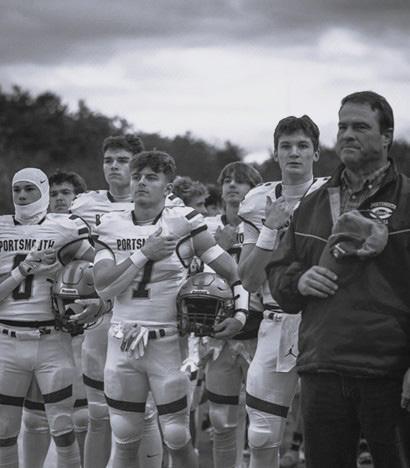
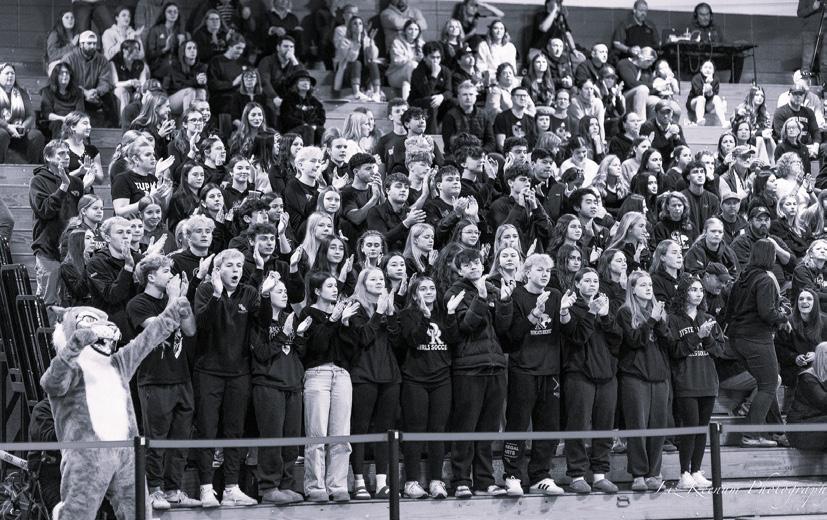
Friday Night Lights pg.27
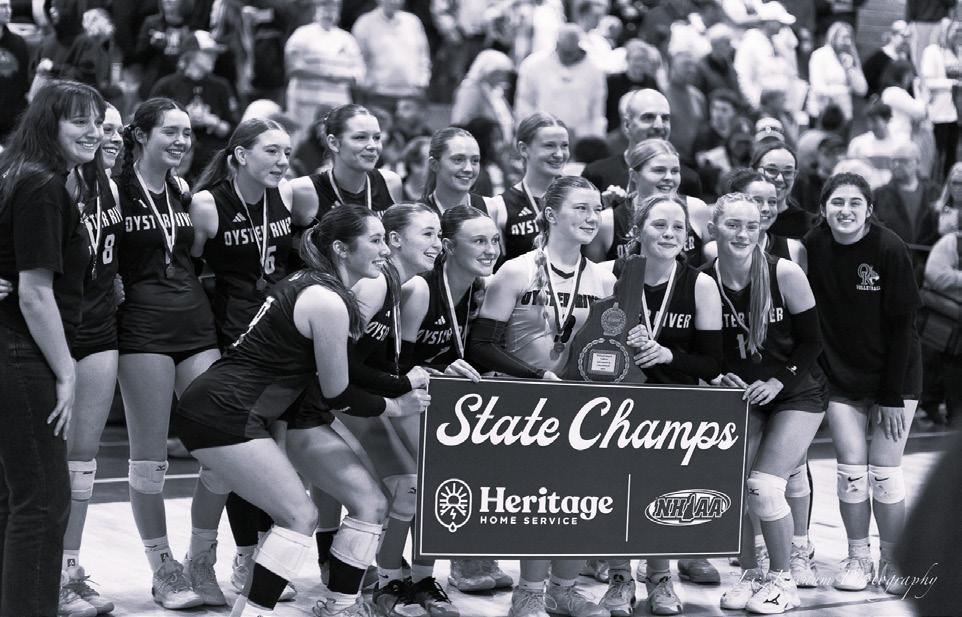
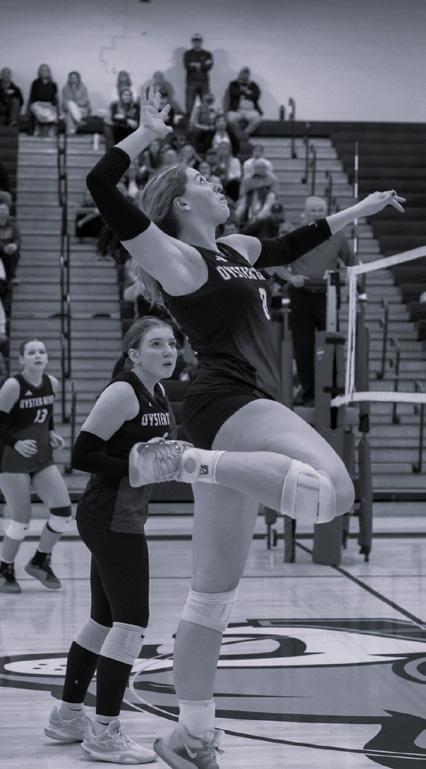
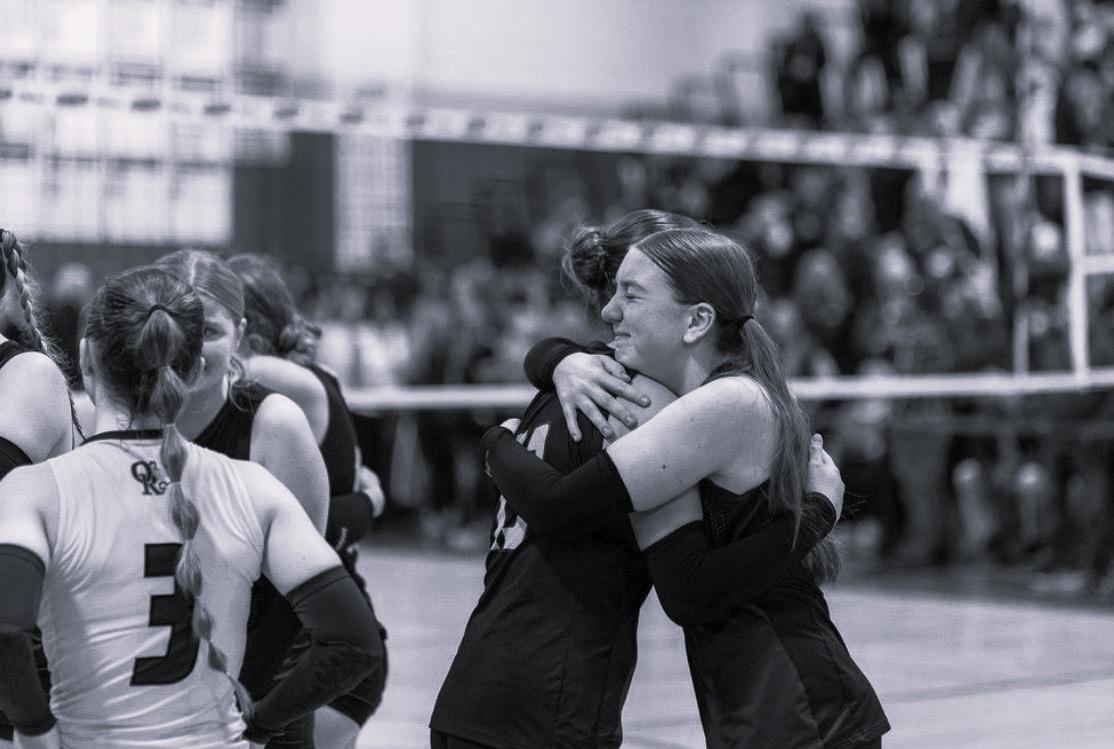
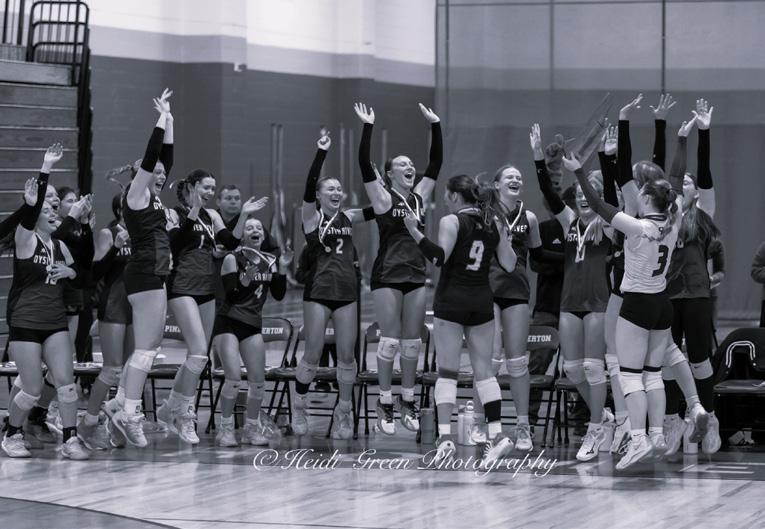
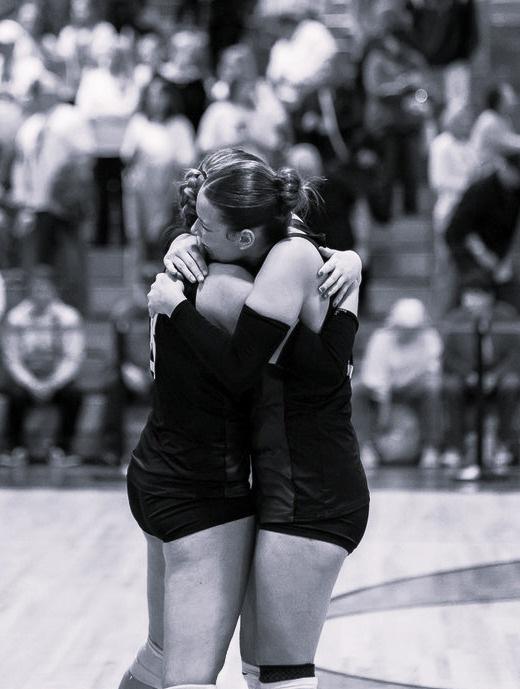
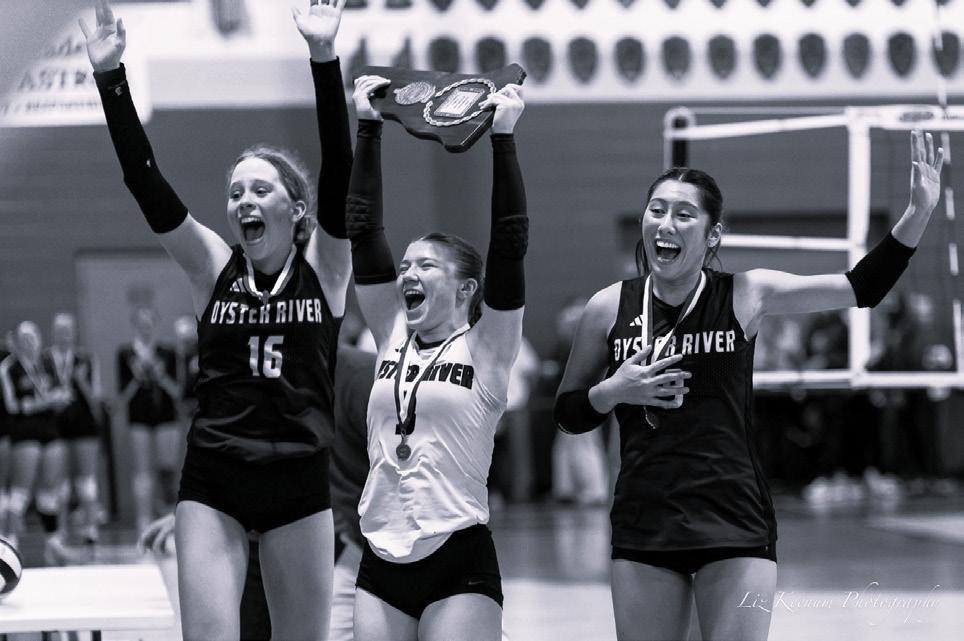
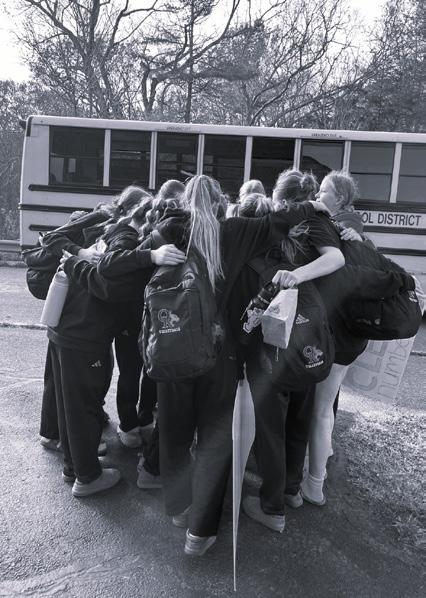
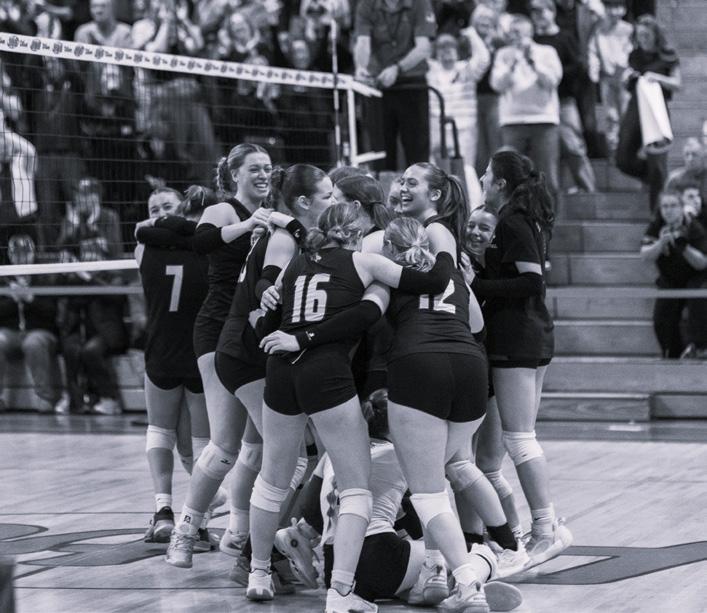
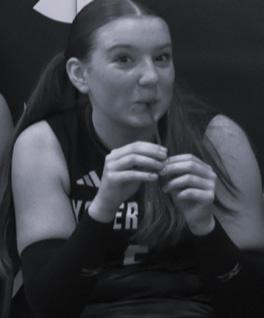
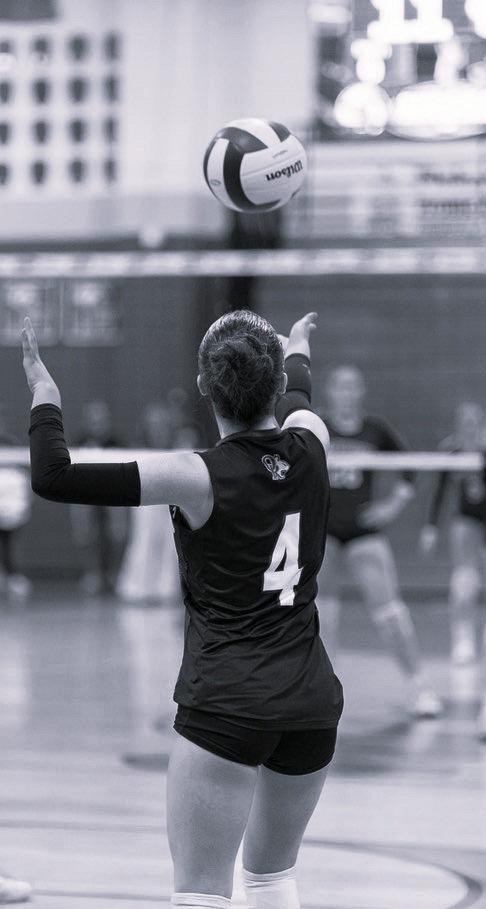
Volleyball Recap pg.29
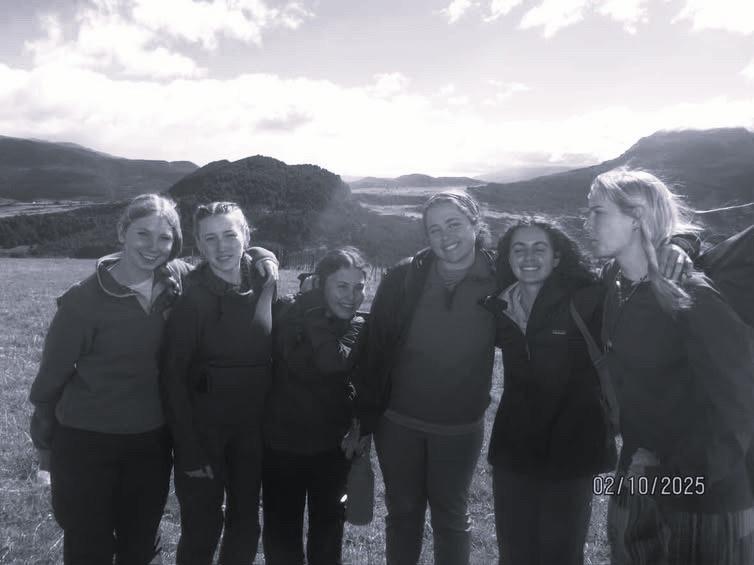
Bobcats Abroad pg.30
KidCull pg.33
Meet the Staff
Strawberry milk - she got milkonherbuzzfeedquiz
youseenhimatChristmas?
Annie Graff (she/her) (‘26) Co-Editor in Chief Espressoshot-highenergy
Emily Taylor (she/her) (‘27) Layout + Cover Editor
Sadie Goldberg (she/her) (‘26)
Thea Smith (she/her) (‘27) Marketing Director
Jimmy Kim (he/him) (‘26) Archive Manager Spritecranberry-have
Levi Clapp (he/him) (‘27)
DEI at Oyster River
Oyster River joins lawsuit regarding Diversity, Equity, and Inclusion in public schools.
written by ISABELLE JACKMAN and ELISE BACON
visuals by ISABELLE JACKMAN
The Oyster River Corporative School District (ORCSD) made a statement on August 7th, 2025, that announced the district would be joining an Ameri can Civil Liberties Union (ACLU) law suit against the New Hampshire state government.
The ACLU lawsuit was filed re garding the legality of House Bill 2 (HB2), a state budget bill where two sections direct ly prohibit Diversity Equity and Inclusion (DEI) programs in public schools. These programs could range from DEI train ing to classroom curriculum, as well as many other clubs and organizations.
The first section, 333 titled “Pro hibition on Diversity, Equity, and Inclusion,” speaks gener ally about state organizations including school districts. The second section, 334 ti tled “Prohibition on Diversity, Equity, and Inclusion in Pub lic Schools,” specifies public school districts.
ly filed the lawsuit was because of the vagueness of the two sections of the bill; that same reason applied for Oyster River. “Part of it is that the language that we are held to is difficult for any-
we are committed to becoming educated, ethical, responsible citizens who are committed to contributing positively toward the betterment of our society and world,” the school board then unanimously decided to join the
Oyster River was the fourth school district to join the ACLU lawsuit, the other districts being Dover, Somersworth, and Grantham. National organizations such as the National Education Association – New Hampshire (NEA-NH), and New Hampshire Outright (a non-profit dedicated to helping LGBTQ+ students across the state that provides educational trainings to schools and organizations) were also involved in the lawsuit. As well as two professionals, representing themselves, who work with DEI in educational environments.
These sections outline what prohibiting DEI in public schools looks like, as well as what would happen if a school did not follow the guidelines. Part of the initial complaint that led to the filing of the law suit was that the language of the guidelines was too vague for school districts to follow, given the severity of the repercussions. The main repercussion stated was cutting state funding to any public school that went against the specificalities in the subsections.
One reason why the ACLU initial-
The bill was initially signed into law on June 27th, 2025 by Governor Kelly Ayotte. After seeing that the bill (HB2) passed directly contradicted the mission statement of “Oyster River High School seeks to provide a nurturing community where the uniqueness of each member is valued. In this spirit,
After initially filling two injunctions delaying her final decision, on October 2nd, 2025, Chief Judge Landya McCafferty ruled in favor of the ACLU and other plaintiffs ordering a preliminary injunction preventing the four government agencies from enforcing any repercussions outlined in HB2.
Mouth of the River (MOR) reached out to sponsors of the bill, other representatives on the Finance committee, and Governor Kelly Ayotte, but was unable to get in contact with anyone, nor was MOR able to determine who authored sections 333 and 334 of HB2.
To read Bella and Elise’s perspective on writing and reporting for this article, read their features article coming soon to the MOR website.
In Case You Missed It...
National Art Society: A New Chapter
written by KRISTINA JAKOBS
visuals by MARIA ROSI
written by BEL EJARQUE
The Addition of AP English
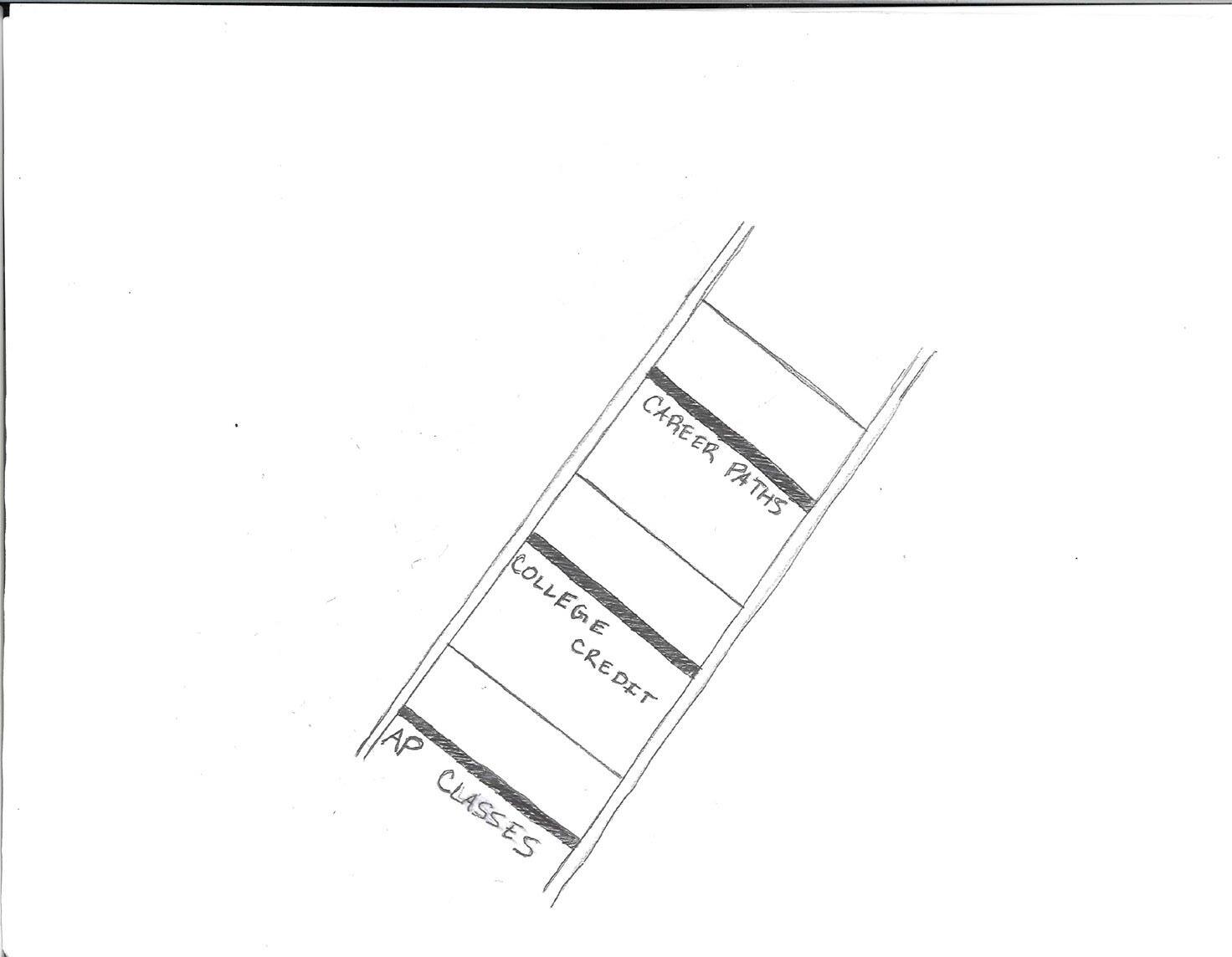
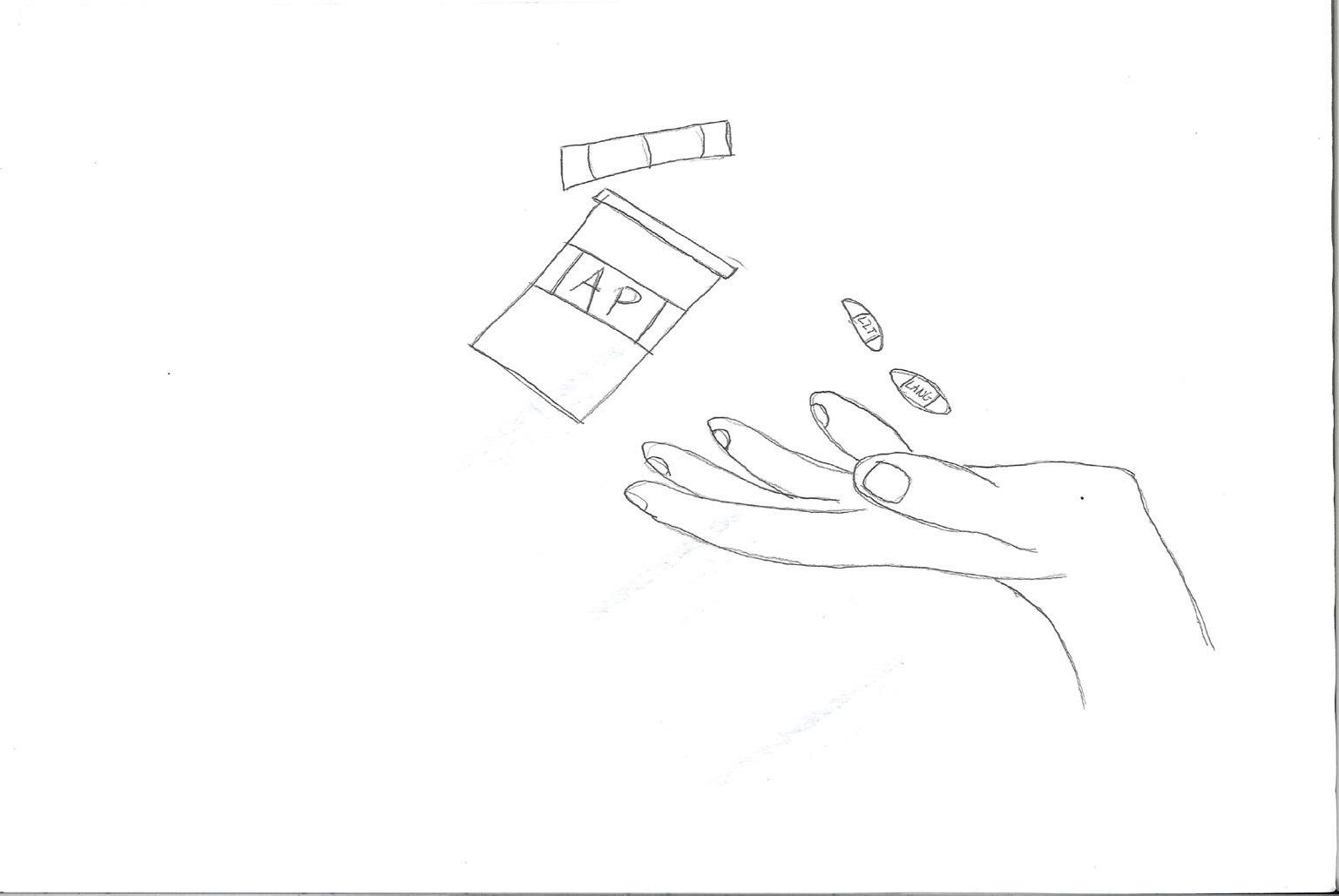
AP English has finally been added to the program of studies, but what does this mean for the English department?
visuals and writing by
ANNIE GRAFF
Editors note: MOR advisor Shawn Kelly had no involvement in the process of writing, editing, or grading this article given it’s nature and his position within the English department. Edits were made exclusively by staff members of MOR and Evan Allen.
Recently, the new Superintendent Dr. Robert Shaps made the decision to institute two sections of AP Lan-
onto high-achieving students to take the AP course for the credits. A curriculum without classes with a credit
ping block.
thing because that thing is good in and of itself.” Garman’s stance on the topic involves concern that the inclusion of APs will put external pressure
could possibly reduce student choice,” comments Garman. So far it seems like the Advanced Seminar and Advanced Writing classes may be on the chop-
This development of the English curriculum also raises the question of more changes made to other English classes, such as the mandatory underclassmen courses. As of now, all underclassmen take the same level of English classes as Freshmen and Sophomores. This is a heterogenous class model, the idea that students of all levels should be kept together. “Tracking systems divide students into perceived ability levels. Sometimes that is valid, but often it is not,” states Garman. Tracking systems are common and encouraged in math and science courses; they’re instituted here at ORHS, specifically in the math courses. For ORHS students in the first three years of high school, they’re placed into a pathway of classes based on skill levels from middle school. This pathway opens to a selection of electives in their senior year, some more accessible based on prior classes. However, English is much more versatile and subjective. When it comes to English classes the idea is that keeping students on the same track from the time that they’re in the eighth grade until they graduate makes them miss out on being met with challenging material or finding a skill they didn’t know they had.
Shaps comments “I certainly am a strong supporter of this idea of heterogeneity, as opposed to what is typical in other schools where there is leveling.” Although Shaps was a supporter this model of classes, he stood firm on his decision for upperclassmen APs. Shaps brought up his history as the Su-
perintendent at Mamaroneck School Districts in New York State.
During his 13 years there he also instituted AP classes in schools that previously did not have them. “After I
tives... it’s worked pretty well in the past,” she continues later “That is not to say that AP isn’t a good course... but we offer similar skill development in our other courses.” It was a common feel-
comments, “Last year I took Advanced Writing and Advanced Seminar-which I loved- but I really wanted to have that AP credit because I knew a lot of the schools I was applying to would take
first included APs, every year the population and pass rate of these classes grew. It was important for me to provide these opportunities for college credit, as we had a large population of underprivileged students, students that struggled financially, first-generation immigrants, and first-generation graduates.” States Shaps.
On the other hand, the utility of tak ing an AP class can be extreme ly helpful for students, poten tially saving them thousands of dollars. When a person enrolls in an AP course, they have the opportunity at the beginning of the year to register to take the test. AP tests are scored out of five and depending on what college the person is attending and what score they got on the exam. Taking and passing an AP can allow a student to skip certain classes. This means that a college student saves money by graduating early or not hav ing to pay for a class.
With the expenses of colleges rising every year, higher levels of education are becoming further out of reach for low-income families. According to College Tuition Compare, the average in-state tuition for a New Hampshire college is $14,435 per year, before any type of financial aid.
ing in the English Department that it would have been preferred to augment certain pre-existing courses to include more AP material, as opposed to including a new class.
This idea of a compromise between AP classes by changing certain curriculums to gear towards student interested in taking an AP English test was
deeply, and comments on its importance.
it.” Pavlik goes on to describe how she had no concept of how the model of the AP test would work but became informed through study guides and online resources. She continues, “I really enjoyed Advanced Writing and Advanced Seminar, and I probably would have enjoyed an AP, but I ended up not needing to take the classes to do well on the test.”
Data from ORHS counseling shows that from 2020-2025, 17 students have taken the AP Language and Composition AP test, with an average score of four, the lowest being two. Along with these, 10 students have taken the English Literature and Composition AP test from 2020-2025, with an average score of four as well, the lowest being three. It’s likely that the number of students taking these tests will greatly increase after the inclusion of the class next year.
However, one of the points of dissent brought up was that certain English electives already offered had the course work to prepare a student for an AP test. Shauna Horsley, ORHS English teacher states, “We encourage students to take the AP exams after certain elec-
ORHS has always offered any of the English AP tests, and usually there are a few select students every year that prepare for the test independently or collaborate with a teacher to study. Horsley comments, ‘I don’t think [AP English is] more rigorous, it’s prescribed.”
Elena Pavlik (‘25) took the AP Literature and Composition test her senior year, studying for it independently, and
Despite some dissent among the English Department, it’s been decided that the class will be included next year at the potential loss of some sections of an advanced elective. It remains to be seen if the AP Literature and Composition class will also be included, but either way these classes will cause some major changes to the English Department, and the opportunities offered to students. Garmen states “AP Language and Composition is a good class; we’ll teach it well.”
An Attitude of Gratitude
GReflecting on a season of thankfulness with the ORHS strings orchestra.
written by JAHRIE HOULE visuals by CHASE PROMPRADIT
ratitude is more than a fleeting emotion. It runs deep in our conscience, shaping our view of the world whether we realize it or not. In trying times, it’s easy to lose touch of positivity, but the Oyster River High School (ORHS) music department is showing the community just how important it is to hold onto the good things in life.
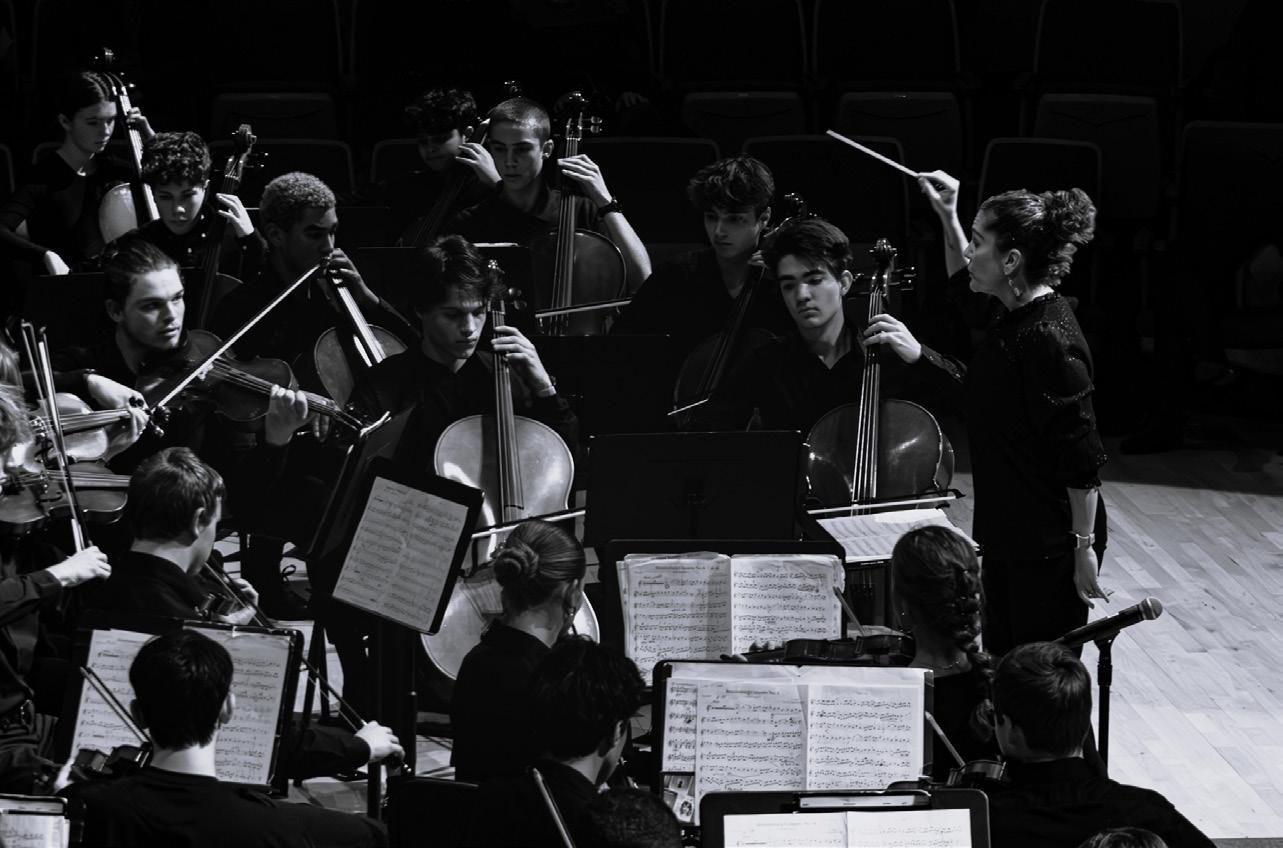
This year, the ORHS string orchestra’s winter concert held a special meaning for all. It featured a spirited performance of Katie O’Hara Labrie’s “With Gratitude”, a vibrant tribute to a story of life, loss, and reverence.
“With Gratitude” was composed in memory of a young girl, Sadie Murata, who even through tremendous hardship never failed to spread positivity and express gratitude towards those she loved. Her spirit lives on through this piece which represents her courageous battle with cancer, love for the world and rich outlook on life, a sto-
ry which the ORHS strings orchestra had the privilege of bringing to life on Tuesday, December 9th.
“This was one of my most rewarding performances that I’ve [conducted]. I think the reaction was extremely positive and a lot of people attended that don’t normally attend,” says Andrea von Oeyen, ORHS orchestra teacher. Von Oeyen led the orchestra in their rendition of the piece, pushing her students to fill every note with meaning. “You want to be super sensitive as the leader of the group when you conduct something that has a story that’s so poignant and moving and sad,” she says.
However, the performance was far from the extent of the experience. In the weeks leading up to the concert, von Oeyen worked with her students to explore the concept of gratefulness, urging them to incorporate gratitude in their everyday routines. She col-
lected a series of slides from ORHS community members expressing thankfulness for things in their lives that played overhead as the orchestra performed their final piece. She also guided a group of Journalism students in the creation of a video presentation and arranged an online meeting with the composer so the entire ensemble could hear Sadie’s story in detail and discuss compositional elements of the arrangement.
“[You] don’t usually think of [projects like this] when you think of a traditional orchestra class, but I think it really allowed us to find deeper meaning in the piece we were playing and turn it into a more meaningful experience than just looking at notes and playing them,” says violinist Georgia Leone (‘28). “I was just thinking about how lucky we are to even have a music program, let alone meeting living composers and doing whole community
projects regarding our music.”
As Leone shares, gratitude runs far deeper than the Thanksgiving dinner table. Practicing gratitude, even in the face of adversity, can have lasting benefits and lead to a happier, more fulfilling life. An article published by the Greater Good Magazine titled “Why Gratitude is Good” explains how gratitude is the best way to combat negative emotions, as feelings of genuine gratefulness are simply incompatible with those of envy and disappointment. However, this isn’t to say negative emotions aren’t real or necessary. The act of intentionally giving thanks for what you have and all that is good in your life won’t eliminate hardship and negativity, only amplify the positive, allowing you to view the world in a more optimistic light, just as Sadie did.
Violist Ike Williams (‘26) says it best. “Staying positive [can be] a challenge and thinking about [a loss] can be hard, but focusing on the positives, the good memories... it’s the way to not hurt.”
Rayan Barakat (‘26), a violinist in the ORHS strings orchestra and major contributor to the gratitude project, shares his own words of reflection.
“[This project has] strengthened my perspective on music and its universality,” he says. “We play all these beautiful pieces, but everything behind it has a message, and I’m grateful to be able to express that message to people.”
From encouraging themselves and others to reflect on what they’re grateful for to sharing powerful stories of those who dedicated their lives to positivity, the ORHS orchestra program is making ripples, far bigger than the school community.
Barakat says, “[the goal] was really to help people look inward and reflect, change or just have a new outlook on life. I think music is a great way to do that because music is the universal language; it connects everyone and everything.”
The Views on Nostalgia
Generation Z - looking back on childhood and how nostalgia is c hanging with each generation.
writing and visuals by EMILY TAYLOR
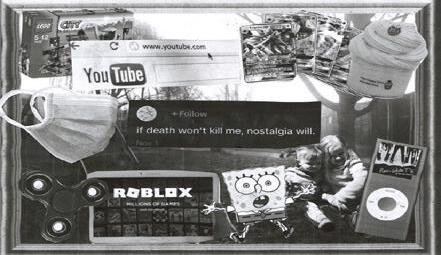
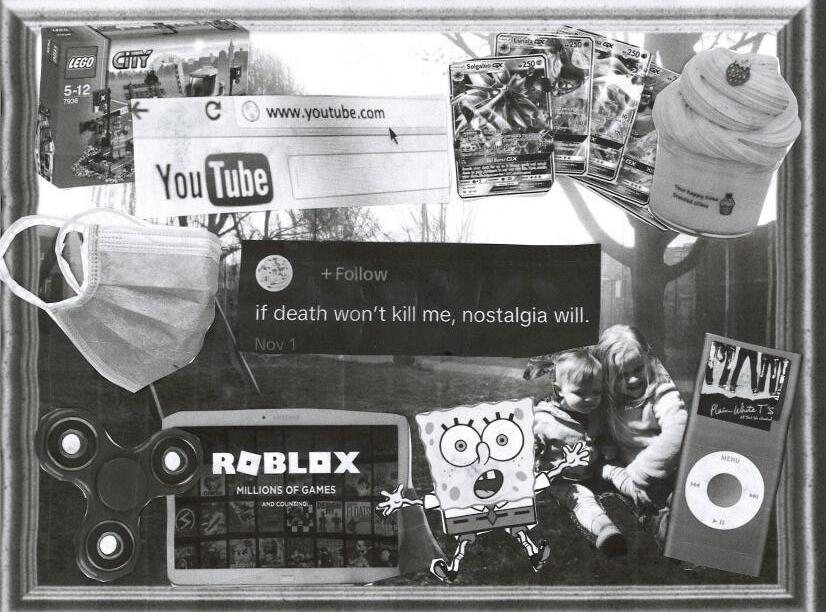
Scrolling on TikTok lately has been a nostalgia trap. Video posts consist of audio and visuals of the typical childhood experience of someone born in the mid to late 2000’s. Media icons like Spongebob and Arthur appear, fruit flavored yogurt tubes, and the sparkly clothes from Justice. Alongside the combination of these photos and the sentimental songs of “Hey There Delilah” or “Slipping Through My Fingers” in the background, it can easily invoke that longing feeling. One of the most typical comments on these posts being, “nostalgia will be the death of me.”
Generation Z (Gen Z) is getting older. We’re no longer the youngest kids, and are now trying to reflect on what growing up was like, some longing to go back. With Gen Z being the generation of social media, classic kids television, and the rise of the huge toys sections in stores, there’s a lot of things to look back on.
essentially,” Quirke says.
There seems to be a theme that adult’s associate nostalgia solely with youth. There are childlike joy and memories that slowly disappear once you’ve become older and more mature.
Childhood seems to be a common point of nostalgia for most other kids my age. Sometimes, when my friends and I talk, the conversation can quickly pivot to elementary school.
good example, explaining how a social media post can take all the good of something and get rid of the bad. “... say you’re a junior in college, looking back on that video... and you’re like, ‘wow, high school was the best thing ever.’ Maybe you don’t realize that... something happened [that week] that was catastrophic, and that aids the nostalgia.”
This change seems to have happened recently, however with Quirke being a 2018 high school graduate, he said his experience before going off to college wasn’t centered around social media at all. TikTok didn’t exist, and Instagram wasn’t nearly as popular, especially with there being accounts for schools now. Looking back at his old high school’s Instagram, there’s now consistent posting, which wasn’t a thing when he was a student.
But not everyone’s definition for nostalgia is the same. As teenagers like Lucy Adjemian (’27) are getting older, she personally describes the experience as something that, “very much pertains to your childhood... for most people it’s how you grew up.”
Oyster River High School (ORHS) teacher Chris Quirke adds how this nostalgia has a lot to do with how much you’re changing in these younger years. “You have this nostalgia for [your childhood]. But the reason that it’s such a powerful experience is because you’re changing, your brain is changing. You’re becoming an adult
The fidget spinners, cafeteria food, the strict recess teacher. In hindsight, it feels like we’ve dramatized the memories. We’ve held onto the good and tried to push out the bad, even though elementary school was not enjoyable for some of us.
“Nostalgia is looking backwards most often with rose colored glasses to a previous time where you see much of what your brain perceives as good, versus potentially what actually happened,” Quirke describes.
Quirke attributes social media as a big contributor to the rose-colored filter. He described spirit week as a
Adjemian agrees with the role that social media plays in her nostalgia. “I look up on TikTok, ‘nostalgia’, and will just cry... I’ll listen to nostalgic songs... and that’s when it goes back to social media, just hearing these nostalgic songs and media,” she says.
It seems media, especially digital, has a lot to do with the root of nostalgia. Adjemian mentioned how it makes it much easier to look back on memories when we have such easy access to the digital evidence of them. “... like my camera roll, I’ll just scroll, even through photos from last year, and go, ‘oh, I really miss that.’ Having that access to being able to just see that, I don’t know if that hurts more or less... if I am down, thinking about nostalgic things, it does hurt more
seeing that sort of stuff.”
Adjemian also brought up the limited content made for kids nowadays besides social media. She has two younger siblings, one eleven, the other six, and says by watching them, she’s noticed how it doesn’t seem like there’s any media to be nostalgic for.
All of the media for younger audiences seems mass produced and unmemorable, and the classic sources that a lot of young adults now grew up with are being forgotten. “The kids I babysit have never seen The Princess and The Frog, and I’m like, ‘okay, let’s watch that now’ because they don’t have that kind of stuff,” Adjemian said.
There’s a chance of this causing separation between the generations, A lot of the nostalgia we have also centers around the technology that was accessible then. When I was younger, phones were still small with a single camera, and my dad recorded my youngest memories on a camcorder. VHSs were something my mom still bought, alongside all of the Barbie movies on DVDs. Whenever I’m in Goodwill and come across Toy Story on VHS, I think of sitting down in front of the big screen and pushing the tape in while eating fruit off my Hello Kitty plate.
one who made shows or songs were so talented and really cared about their work. Now I feel like media is just a cash grab and people just put it out so that they can make money off of it,” Quimby added.
Quimby also has noticed the difference in how COVID was for younger kids to how it was for us. She said, “I believe that [preschool aged] kids will be affected by COVID but in a different way that we were. The kids I work with are the ages of 4 and 5, so they were born during the time of COVID happening. The world being shut down was normal for them.”
There’s also been an increase in the use of technology being used in student’s classrooms as early as preschool, with younger kids learning how to use touchscreens and devices during school. This is evidence of how the younger generation, Generation Alpha, is different from all the ones before. Technology wasn’t nearly as
eration, it’s like, ‘wow, what was high school like without phones?’ People started thinking about that concept. I think it’s a compounded nostalgia kind of thing,” Quirke said.
Now, with the phone ban, students get to explore this interest. While the phone ban is inconvenient, there’s no doubt there’s been more discussion and connection across peers. It’s like having a glimpse into the past, with ORHS students walking around with digital cameras and figuring out new technologies to stay productive.
The general consensus, though, is that everyone is nostalgic, no matter the generation. The definition and background behind the word might be different, but everybody has the ability to be reflective and even mournful of their past. With Gen Z getting older, we’re starting to slowly develop the perspectives the generations before us have on their childhood.
“Asaculture,we’vealwaysbeennostalgic.”
-ChristopherQuirke
incorporated into classrooms like this before them.
Charlotte Quimby (‘26) has worked with the Preschool Education Program (PEP) kids at ORHS, and currently works with other preschool-aged children at “Little Tree” in Dover, has also witnessed first hand how nostalgia will be for younger kids in comparison to teenagers now. She agreed with Adjemian’s consensus in the change of media aimed towards younger audiences. Quimby talked about how she grew up with limited technology access besides shows on PBS and the 2010’s hits playlist her parents would play.
“I believe now children don’t have the same nostalgia, because media isn’t as limited as it once was. It was a privilege to have... media, and every-
And this is something that stretches across the decades, as social studies teacher at ORHS Nate Grove describes. “... once upon a time were people nostalgic for fountain pens that had ink. Every once in a while, my mother will still mention [the pens]. That’s an example of technology that she misses. To me, it’s not a thing, but it is to her. I suppose nostalgia around technology is generational. It’s always changing.”
Quirke also relates a type of post that became popular on TikTok of camcorder videos of high school in the 2000’s. There’s a grainy look to the video and a crunchy sound of the audio that some kids my age are used to hearing while watching back their baby videos.
These videos resulted in nostalgia for the graduates then, but also curiosity for current students. “For this gen-
“As a culture, we’ve always been nostalgic. We’ve always been trying to look back, and we have that sort of declined bias of like, ‘oh, things are always getting worse.’ We want to go back to how things used to be, because that’s what we’re comfortable with. That was good,” Quirke says.
This has made me reflect on my own sort of nostalgia, like my favorite song “Fireflies” by Owl City when I was little, to my Kindle Fire I downloaded Roblox and drawing apps on. Sometimes I even find myself nostalgic for COVID, for both the things I experienced and the things I missed out on. And based on my interviews and conversations with other students my age, this doesn’t seem to be uncommon.
Everyone’s perception of nostalgia is different, but it’s hard to deny the media and technology that ties into it. There’s also the aspect of the foundations of our childhood that comes into it, and how once we’re older, we seem to lose this fonder perception of the world.
Shine Bright like a Diamond
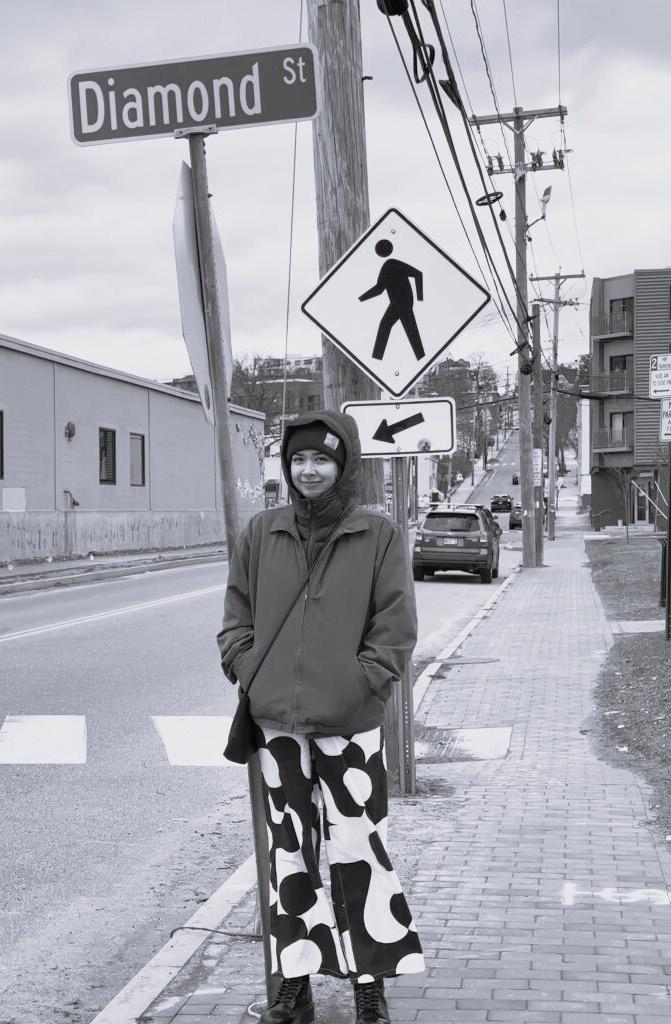
In-Ja Diamond is the new Attendence Secretary at ORHS.
written by SADIE GOLDBERG visuals from IN-JA DIAMOND
inding the right person to fill the Attendance Secretary position at Oyster River High School (ORHS) was a long process, but now that In-Ja Diamond has taken on the position, it’s clear that she’s exactly what ORHS needed.
Diamond is replacing Colleen Fleming, who retired at the end of the 20242025 school year. Diamond’s joyful and outgoing personality is a large part of what makes her such an amazing fit for the job, because that energy permeates into both the way she interacts with her coworkers and into the way she interacts with students or anyone who comes through the front office. Combined with her love for working with high school students and the positive mindset that’s needed to take on the ever-changing job of being an Attendance Secretary, she’s quickly becoming a cherished member of the ORHS community.
Diamond has been working in education for the majority of her career, after having attended Keene State College for elementary education. She’s worked at multiple elementary schools and high schools, which ORHS Principal Rebecca Noe says really came through in her interview for the position. Her familiarity with how schools function was a big positive. Diamond said, “I’m really happy to be back at a high school...I love getting to know the kids.”
She had been hearing about the community from her husband, ORHS social studies teacher Eden Suoth, for years prior to her landing her current role. She said, “I’d heard many good things from him, and I thought [ORHS] sounded like an awesome community.” It was through Suoth that she first heard about the job opening. He knew she was looking for a job and
when he saw the secretary position was open, he immediately thought of her because of her outgoing personal-
ity. He said, “I think she’s the good fit for all of the wonderful and kind people in the front office who do so much for us.”
Diamond says, “I always want people to come in [to ORHS] having a good start to their day. You never know where people are coming from, so I try to be warm and welcoming when people come in.” Caitlyn Plourde (‘26), comes in from CTE every morning
and has to sign in in the front office. She says, “she’s just really nice. She’s a friendly face.”
Her job includes keeping track of attendance, which means answering phone calls, emails and a variety of question from students and their guardians, and making sure that the people in the building are meant to be there, which means handling the front door and students signing in and out of the school. And sometimes, all of those things are happening at once.
Diamond says, “it’s been a big learning curve and a bit of a whirlwind because I’m still getting to know everybody and getting to know the school... There’s a ton I don’t know but everyone’s telling me to ask questions so I will!”
The other office staff are helping her learn the ropes of the school and her job. Amy Fleming, the Substitute Coordinator at ORHS says, “she’s such a great people person, communicating well and always seeing the positive in everything. [The secretary] position can definitely be difficult but having that mindset has been amazing.”
One interest of Diamond’s that she is quickly becoming known for is her love of cats. Fleming found Diamonds’ love of cats through showing her a picture of her friend’s two new kittens. Fleming said, “she was just so enamored.” Along with her own two cats, Bumi and Luna, her interests include painting and drawing, music, and getting outside with Suoth.
Diamond is being welcomed into the community with open-arms as students and faculty alike take the time to get to know her as a person. She says, “everyone here is warm and welcoming. People are constantly coming down and introducing themselves. It’s just a really nice community.”
Diamond’scats,Bumi(left)andLuna (right).
Sunday Scaries
You’re not alone with your Sunday night scaries!
writing and visuals by BEL EJARQUE
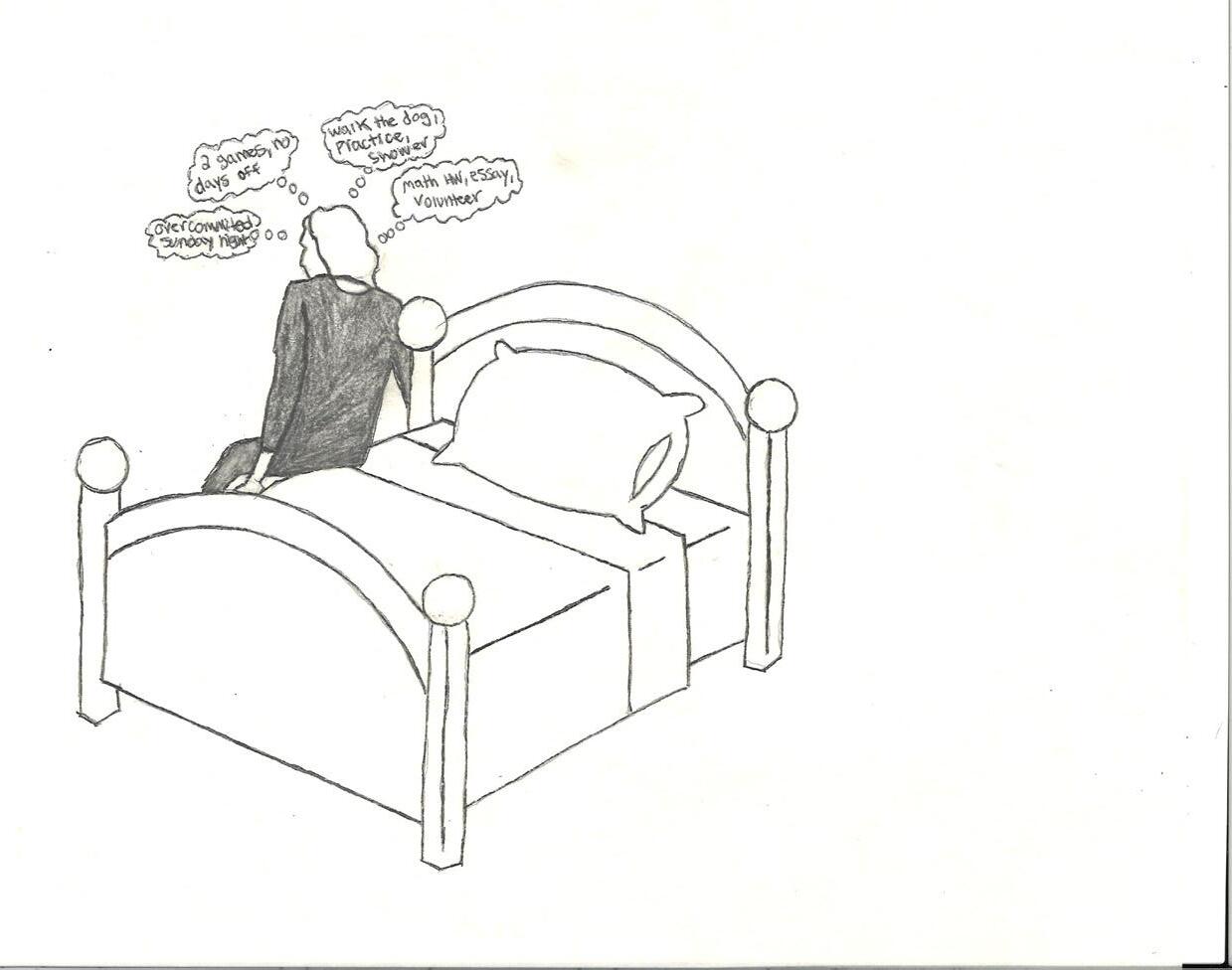
Does your heart ever beat a little faster when you see it’s 5:00pm on a Sunday? Do you start to feel nauseous and irritable, and start stressing about everything you should or could do, but instead just keep doom scrolling because it seems like the only option? Do you only feel these symptoms of anxiety on a Sunday night?
If these signs of dread for the impending Monday sound like something you’ve experienced, there’s a good chance you’ve encountered the Sunday scaries. Sunday scaries refer to anticipatory dread, specifically referring to anxiety when the weekend is almost over. You may be nervous or anxious about the week of school or work before it even happens.
It’s safe to say that not everyone relates to this, though. Some people feel the scaries only sometimes, while others may love their Sunday nights, use it as a “reset time.” It can be a day of rest, relaxation, and getting the little things done. But for major procrastinators and overthinkers (or anyone with these weekly thoughts), there are coping strategies to take some of the weight off your shoulders.
I use the term “Sunday scaries” almost every week during the school year. The mere thought of having to go “back to the grind” sends my body and mind into a fluster of uncontrolled thoughts. My brain goes into high alert, overthinking everything there is. Things like “I shouldn’t have been on my phone for the last 45 minutes, I could have been doing my homework,” or, “how am I going to find time to do this assignment, write an essay, walk my dog, go to practice, clean my room, volunteer, eat dinner, shower, and enjoy my life this week?” Ava Gasowski (‘28) relates to this, saying, “I feel uncoordinated and if I have a bunch of stuff to do, I don’t know what’s more important.”
When I feel this level of unease that I’m not sure others would understand, I use my favorite coping strategy. Writing down what I’m feeling may sound like something a therapist would say, but I genuinely feel better after I can write what’s going through my head. Sometimes it’s all I need to release a little tension. The next piece of advice I can offer is to make a to-do list as the week goes on and do a little bit whenever you can. The National Council for Mental Wellbeing suggests categorizing your tasks: high, medium, and low priority.
Although, thoughts like: is what I’m doing worth it? What does any of it even mean? Sometimes these thoughts all swirl in my head when I think of the long week ahead. Whether it’s the people pleaser in someone or the combined stressors, these big questions can send your brain into an uncomfortable frenzy before you start your week. Scott McGrath, teacher at Oyster River High School (ORHS), says “it’s really a shift of mindset, I think we can sometimes feel like a slave to the exterior world and all these different expectations; we put undue pressure on ourselves.”
When you feel yourself thinking about all you have to do with not enough time, another way to deal with this can be to take a few minutes to yourself to breathe. Once I stopped rolling my eyes at the idea of meditating and actually tried it, I genuinely felt more ready to tackle my stressors. Meditating can allow you to plant yourself firmly in the present, whether it’s with a meditation app or just sitting in a quite space for a little while, centering your mind. A coping strategy that works well for Maddie Repucci (‘27) when she feels the scaries is to phone a friend. Repucci says, “I call my cousin and vent, and she’ll do the same thing so I kind of know that I’m not the only one.”
Sunday dread can often be for a num-
ber of reasons. A major component of the unease can come from overbooking yourself. I for one have to keep myself busy, but if I keep myself too busy, that’s when the spiraling starts. The fear of starting your week can also be a sign of something that is not right in life. Maybe it’s the sport you play that genuinely might just be draining you more than filling you up. Or it could be the job you applied for and now are starting to regret that decision.
Everyone has to do hard things in life, but it’s important to find that balance between what’s scary and good and what’s just dreadfully scary.
And if you’re anything like me, who can’t pinpoint what’s making your Sundays so nerve wracking and can usually get over it by the time Monday morning rolls around, you may need to figure out some coping strategies for yourself.
It’s also possible to make your Sunday a day you look forward to; maybe you start to do your high priority tasks on your Saturday morning instead of pushing it all off to a Sunday and letting your Sunday be a day for you. Finish the book you’ve been looking forward to. Go window shopping with your friends, watch that movie, and bake those cookies. Make it a day where you can feel productive with whatever it is that makes you happy.
All in all, the restlessness and familiar unease of a Sunday can feel scary, but there are ways to manage it. Don’t let the blues get to you.
Hallway Runway
What fashion means to the most fashionable at ORHS.
visuals and writing by ELSA SVENSON
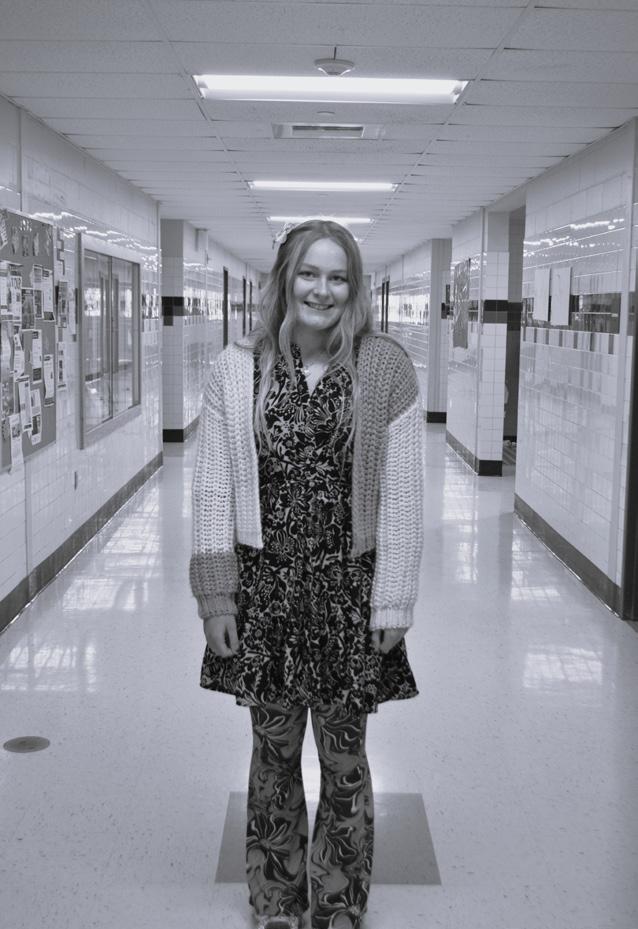
For some, the hallways between math and English classes are not just a route to get from point A to point B, it’s a runway. During passing periods it’s easy to spot certain individuals that stand out because their style speaks louder than the crowds of bustling students. I talked to some of the most standout dressers of Oyster River High School (ORHS) to get past their signature looks, and into the thoughts behind them.
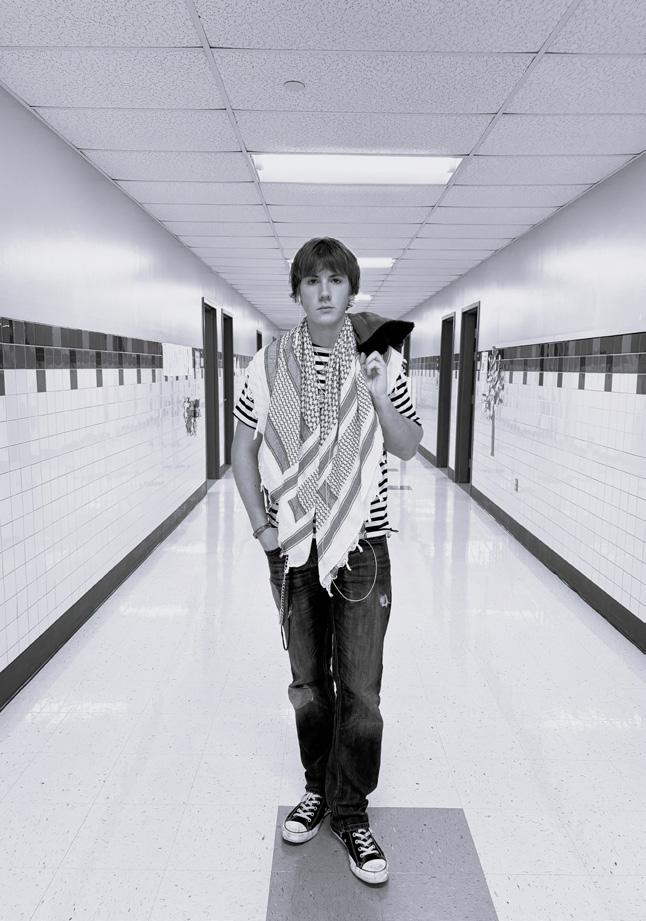
Drew Sharp (‘26)
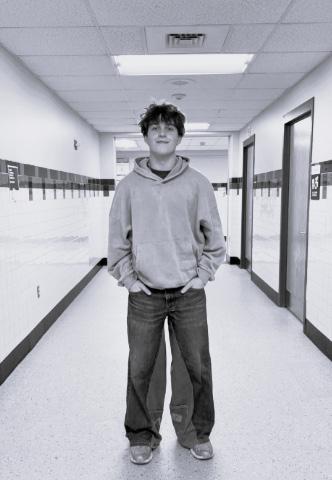
Drew Sharp (’26) dresses like he has somewhere much cooler to be, and honestly, he probably does. For Drew, fashion is a soundtrack that synchs with the music he’s been listening to lately. When the song switches, so does the fit. When Drew’s listening to Avant-Gard electronic, he’s in all black. The next day he’s experimenting with color that reflects a Japanese Americana look. Sharp’s style tip is to trust your instinct, not the algorithm. “Wear what you want, but don’t follow trends,” Sharp advises. He’s not chasing a look; Drew Sharp is just following the music.
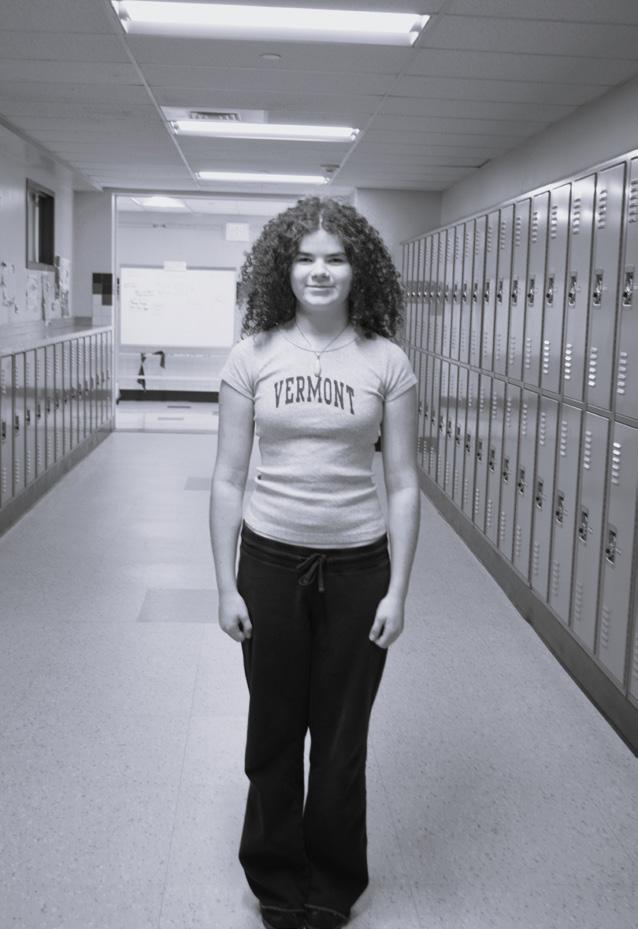
Bailey Everett (‘28)
Bailey Everett’s (‘28) expertise in fun colors and patterns is a breath of fresh air in ORHS’s monotone hallways. Her eccentric combinations of bold pieces paired beautifully with delicate accessories creates looks that very well could be categorized as art. But, what’s almost as cool as her look, is her mindset. “I like dressing different from everyone else,” stated Everett, “I don’t really care what other people think.” Her style doesn’t blend in, and that’s exactly the point.
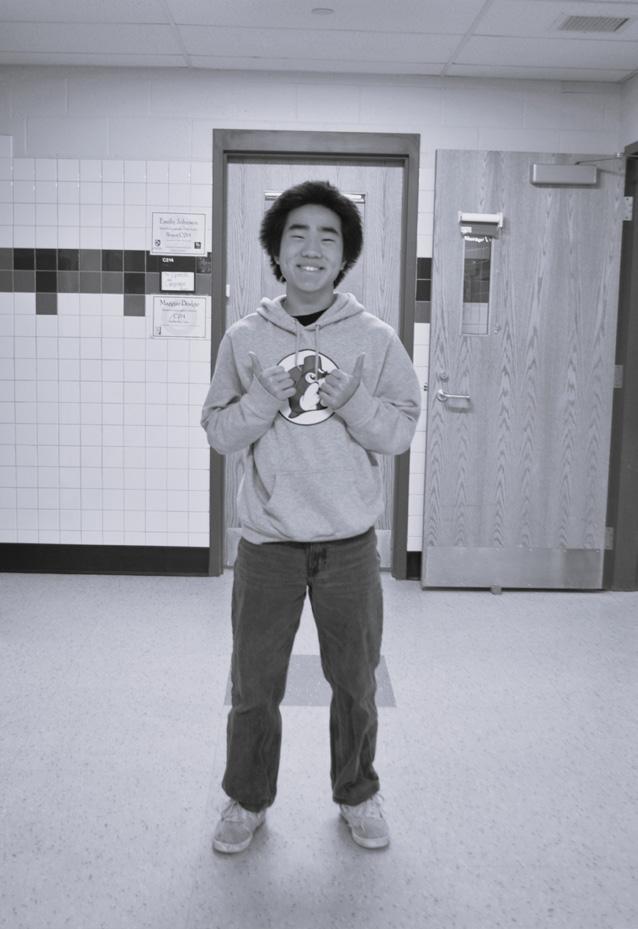
Aaron Yu (‘27)
Effortless, comfortable and rooted in what matters to him, Aaron Yu (‘27) is always dressed in intention. Yu enjoys fashion as it gives him a way to show people what he likes. The Urban Outfitters connoisseur leans for a cozy but stylish vibe but isn’t afraid to take inspiration from the people around him. Yu mirrors elements that his older siblings passed to him. Yu said, “I look up to my siblings, so a lot of what I wear is taken from them.” Clearly, fashion is in the family. You can usually find Yu in the hallways sporting his favorite pair of New Balances and signature smile, making being style savvy look simple.
Larkyn Clapp (‘29)
Effortlessly cool is pretty hard to pull off, unless you’re Larkynn Clapp (‘29). Clapp’s outfits reflect herself perfectly, quietly confident. The freshman fashionista likes to wear fun pieces like statement jewelry and fun graphics to elevate her style, while still keeping the modest look overall. Clapp gives credit to Pinterest and Instagram for style inspo, and says she uses social media as a way to discover and create. She explained, “Fashion to me is dressing in a way that best represents myself.” Her outfits aren’t meant to turn heads, but they do in the best way.
Jude Mackenzie (‘27)
Not everyone can pull off authentic, but Jude Mackenzie (‘27) does it with ease. For Mackenzie, fashion is completely self-expression. Using clothing as canvas to paint himself as true to him as possible, Mackenzie is a fashion artist. When Mackenzie was asked how he would describe his personal style as he said, “My style? It’s me. That’s my style.” Right now, you can often find him wearing cool graphics, statement jackets or something he lowballed on Depop. A little bold, a little thrifty, but entirely Jude.
Ryan Keyes (‘29)
Whether it’s thrifted, reworked, or entirely handmade, Ryan Keyes (‘29) can pull it off. His style is regularly shifting, but some things stay consistent; Keyes always gravitates towards pieces that pull him out of his comfort zone. His signature look is still something he’s figuring out, “my style is kind of all over the place,” explained Keyes, “but we’re working on it.” Keyes is taking his time landing on one perfect aesthetic, and in the meantime, exploring every possible option. His look may alternate, but the creativity behind it is authentically organic. To Ryan Keyes, fashion sense is built, not bought.
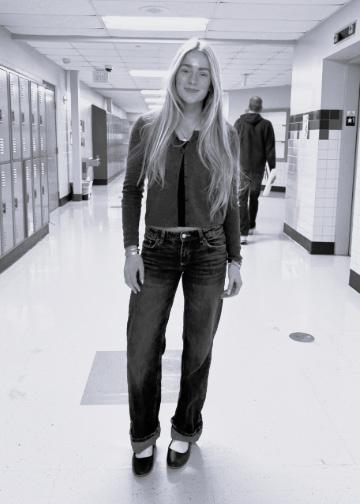
Liv Fox (‘27)
Avery Baumgardt (‘26)
Is there a day when Avery Baumgardt (‘26) doesn’t look put together? (The answer is no.) As a devoted thrifter, Baumgardt has the talent of making a secondhand piece a flawless statement gem in her look. Leaning into a femininity and chicness, she’s mastered the execution of an effortless but clearly curated vibe. “I always feel better when I like my outfit,” admitted Baumgardt. When she loves what she’s wearing, her confidence settles in a quiet but unmistakable way. Baumgardt may call it getting dressed, but the rest of us call it pulling off perfection.
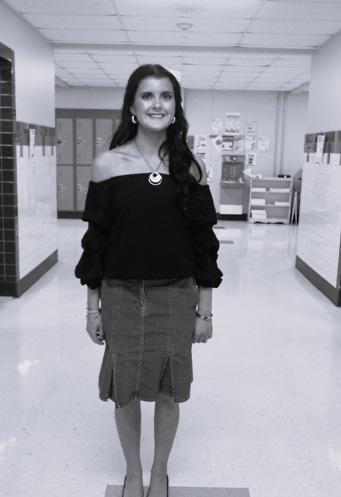
Liv Fox’s (‘27) fashion sense may have started at home, but it’s clear her talent and ambition will take her much farther than her closet. Fox’s polished and feminine style is an ode to the fashionable women in her life that taught her fashion wasn’t just a hobby, but an art. “I grew up around really unique styles,” said Fox, “when I was younger, I was influenced by my mom and grandma, they were really into fashion too.” In Fox’s pursuit of expressing herself, she hopes to encourage others to go out of their comfort zone as well and normalize dressing up for everyone. Fox hopes to go to school for fashion in the upcoming years. Make sure you appreciate Liv Fox’s everyday elegance while you can because it’s going far beyond the halls of ORHS.
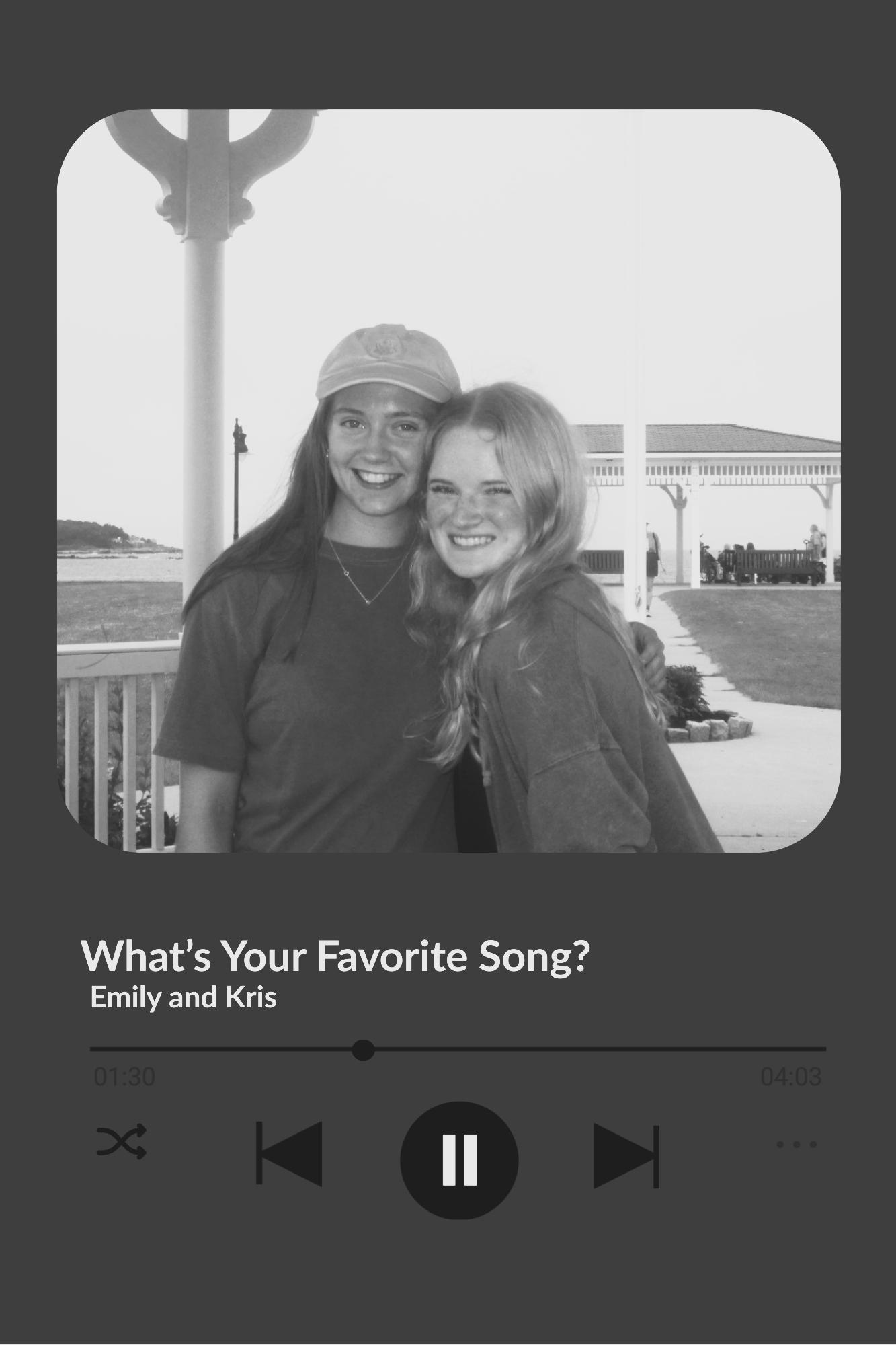
What’s Your Favorite Song?
A video series of asking ORHS students and staff their favorite songs
curated by KRISTINA JAKOBS and EMILY TAYLOR
Buy, Lose, Repeat
How the Lost and Found Reflects School Culture.
visuals and writing by ELSA SVENSON
Have you ever wondered where your left Nike Elite sock or favorite practice T-shirt mysteriously disappeared to? It probably ended up in one of the three lost and founds Oyster River High School (ORHS)
offers around the school.
The three locations are as follows, one in both locker rooms connected to the gym, the front office, and the locker in the back corner of the lunchroom.
Trader Joes Canvas Tote Bag, $25
A well-loved tan and navy canvas Trader Joe’s tote bag sits sadly in the blue lost and found closet in the back of the lunchroom. Is it the forgotten star of an advisory breakfast, or a packed lunch gone wrong? Only Joe knows.loset in the back of the lunchroom. Is it the forgotten star of an advisory breakfast, or a packed lunch gone wrong? Only Joe knows.
Apple Airpods & Case, $160
The smooth white case of Apple Airpods gleams untouched in the front office. The headphones quietly hum the tunes of forgotten songs, and the knowledge of podcasts past. Is the owner now living a quiet music-less life? Or enjoying reconnecting with the sounds of organic high school melodies?
Samsung Galaxy Phone, $849
This Samsung Galaxy Phone’s screen now remains dark and untouched in the Front Office. Is its owner left unplugged from the digital word connecting with nature, or are they still searching for their technological companion? The screen leaves no clues, except its case, which nods to an artistic keeper.
Glasses, $15-$100
I’ll keep this brief since the owner can’t read it anyway.
These locations remain overflowing with abundances of clothing, shoes and other miscellaneous items. As new discarded items get found and added every day, the piles grow, and so do the problems.
World Literature Folder, $3
A crumpled and neglected World Literature folder lays in the darkness of the lunch closet. The faded ink hints at long classes of writing and answering comprehension questions. Was this once in the possession of a diligent student that got overwhelmed with their English work and left it behind, or a rebellious peer that was done with the class and its assignments?
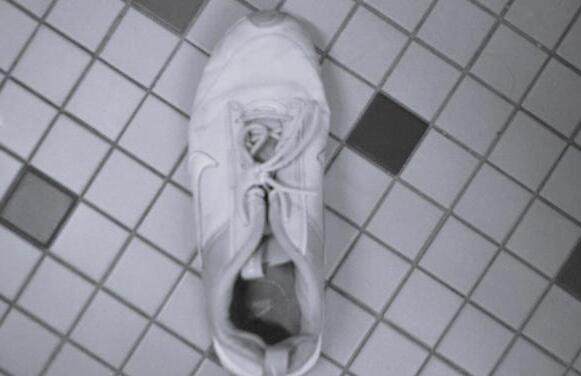
Single Nike Sneaker, $75/2
A single well-worn Nike sneaker is left buried deep in the lost and found bin that resides in the gym, abandoned in a sea of other rejected footwear and suspiciously smelling gym wear. The blemishes in the sole represent many miles of travel, and readiness for new adventures to come, (outside of the girls’ JV locker room).
The list goes on as more and more items get added to ORHS’s three lost and founds each day. In a week, the clock will reset, and a new series of items will wind up forgotten, and the cycle repeats. Buy, lose, replace.
Seeing that some of the items in these piles look like they have been here longer than some of the sophomore class, it’s likely the pattern of repurchasing lost items is common. These six items are a part of a much larger story.
There is something telling about this rhythm relating to the culture at ORHS. When items with high price points like cellphones, or entire class folders filled with work end up discarded, it says something about how
quickly belongings turn into clutter when we don’t feel the need to be responsible for them anymore.
When looking through the three lost and founds there was an abundance of clothing, footwear and goods that each carried a personal story. These items have a value outside of price.
This tiny ecosystem represents how unsustainable our habits can be. When you lose an item just to buy another one to replace it, the original gets left to sit around, and later, thrown away. Everyday things get added to the lost and found that could be needed by someone else.
This culture has become increasingly casual. As I explored deeper into the
piles, I found a water bottle that stuck out to me. The last name of one of my friends was displayed boldly in Sharpie across the back. “BIGGWITHER”
When I asked Avery Biggwither (‘27) if she knew she had lost the waterbottle she replied, “I didn’t know I had even lost a water bottle. Or if I did, I didn’t care enough to look for it.”
The real secret of the lost and found isn’t what’s in it, but how we treat those things. We rush, replace, and move on.
Slowing down to reclaim these lost items is a win for our wallets, our planet, and the culture of ORHS.
So, check the lost and found. Your items miss you! Probably more than you miss them.
Counting the Hours
An exploration into the intentions behind student service.
visuals and writing by XANDER AHN
At Oyster River High School (ORHS), volunteer hours have become a shared topic among many students’ conversations. Almost every day I hear my friends asking how many community service hours I have or when I’m planning on volunteering next. Whether the volunteering hours come from running the snack shack at the Oyster River Youth Association (ORYA) games or selling baked goods for a fundraiser, volunteer work has become a key part of school culture at ORHS. Beneath all of the hours and work that been done lies a complicated reality. For many students, including myself, the decision to volunteer isn’t always about the generosity but more about the advantages it creates.
For students chasing competitive college admissions or honor societies like National Honor Society (NHS) or Tri-M Music Honor Society, volunteer hours have become more of a necessity. I’ve noticed many students start to discuss the sincerity versus self-interest aspect about volunteering as they log community service hours and try to cram in extracurriculars to their college applications. The question, however, isn’t whether students are helping, it’s why they’re doing it, which plays a big role in how ORHS sees volunteerism today.
Volunteerism at ORHS is seen by many students as the act of helping someone without any personal gain attached to it. As Brayden Alvarez (’28) put it, “volunteering means to me doing work to help the community without expecting anything in return.” However, there are many external pressures that make students feel the need to volunteer. Students don’t need to participate in these clubs,
visuals by COLE PELAGGI and REBECCA NOE
but those who do often face service requirements. For example, NHS requires volunteer hours for both application and membership, while Tri-M only requires them to remain in the club. Many students say that it creates a culture of motivation to do good in the community, but can also be seen as stressful.
Alvarez was honest that he’s mostly volunteering to reach his academic goals. “I plan to do it so I can get into NHS,” he said. When asked why that mattered, he again answered very openly. “I would volunteer because it benefits me and my college resume.” While he acknowledges the good that comes from helping others, his focus explains how tightly the decision to volunteer for personal gain and generosity are connected.
That pressure is echoed by June Brown (’27), who views NHS as a key motivator to volunteer. “I think NHS started it really,” she shared. “Maybe I wouldn’t do it as regularly if it weren’t for that.” Her volunteering at library events, school concerts, and church drives reflects a mix of obligation and enjoyment. “As long as you enjoy it,
you’re still gaining something from it,” Brown added, but still acknowledged the mindset can feel kind of wrong when personal gain takes precedence.
Many students are recognizing the issue between genuine passion for what they’re doing and just doing it to check it off their list. Cal Kimbal (’27) described it bluntly. “There’s pressure to just do it even if I’m not passionate about what I’m volunteering for,” he said. “A lot of people I’ve worked with, especially through NHS, talk about just doing it for the hours instead of doing it because they’re passionate about the organization.”
Kimbal’s experience is very similar to mine. As a member of NHS I feel as though the way the program is structured can distort the original spirit of giving. Even well-meaning requirements risk turning meaningful acts into obligations for students to complete to partake in an honor society. “If you’re going to do it for NHS, I’d recommend doing some outside as well, just so there’s that passion in the model
of your work,” Kimball noted. Aidan Kenoyer (’27) agreed, arguing that quotas created by college admissions and honor society clubs create a robotic culture of service. “I think the requiring of hours is not necessarily useful… you should only volunteer for stuff you really want to help.” His example of students volunteering at sports bake sales without any connection to the teams they’re raising money for shows how sincerity can slip away under pressure. “Most of them don’t really care about raising the money, they’re just there for the hours,” Kenoyer added.
Still, there are students that resist that approach. Beckett Condon (’29) has been volunteering since middle school and has embraced the joy of giving back without expecting anything in return. “Usually, it was never to earn something, it was more just
to help out the community,” he stated. Though he plans to apply to NHS, Condon doesn’t view service as a requirement and already has his hours done. “I’ve clocked most of my hours, but a lot I really haven’t worried about writing down. To not think of it as a forced thing is a better outlook.”
His words reflect a quieter group of students, but it’s something that I think all students, including myself, should strive to do. Condon’s commitment of coaching T-ball, attending service trips, and helping at church shows an-
other side of ORHS volunteerism that has been lost. I see that students sometimes lose track of why they are volunteering; it’s not just about gaining that advantage on your resume but giving your time and commitment to something that is bigger than yourself. Brown too finds personal values beyond resume building when volunteering with her church. “With church, I get a lot more from it for myself. It’s about your values and beliefs you want to include in your daily life.” Kenoyer also mentions this saying that there should be varied opportunities when it comes to volunteering for honor societies. “I’m really passionate about cooking so maybe if there was the opportunity to feed people at the soup kitchen I’d do it.”
Not everyone believes that mixed motives diminish the value of volunteering. As Alvarez said, “Even if you’re doing it just to get into a good school, you’re still doing volunteer hours.” He sees no harm in a system that pressures students into helping, arguing that the end result of benefiting the community matters more than the intent of why the student is choosing to volunteer. Alvarez’s words echo what many students think about day to day. Kimbal expressed a similar implication. “If it benefits others, it’s not inherently wrong, but doing it to put on your resume and then saying you’re passion-
ate about it isn’t genuine.”
Even Kenoyer, who finds NHS’s structure incoherent, admitted that the system at least exposes students to service who might never seek it out. Still, he believes the school could revise its approach. “Maybe making it easier for students to implement their own organizations that they’re passionate about would make the volunteering more genuine,” he suggested.
The irony of ORHS’s volunteer culture is that the programs meant to teach generosity sometimes inspire self-interest. That contradiction might not be entirely wrong, even when people act out of self-interest, because it doesn’t erase the good that has been done.
Still, impact without integrity can feel hollow. Condon reflects, “if you see it as a requirement or something you need to do to get into a good college, then you’re not going to do your best job at it.” That’s the challenge facing students today, to let their service mean more than their resumes.
At ORHS, volunteering walks a fine line between genuine goodwill and a resume builder. The true value of service isn’t why students start volunteering, but whether in the act of helping others, they can discover a reason to keep going long after the boxes are checked.
Room to Read?
Why you should keep reading.
written by RILEY DUGGAN visuals by ANYA SHUBA
During my time at Oyster River High School (ORHS), I’ve noticed a surprising trend: the older I get, the less I read. It’s not because I dislike reading; it’s actually the opposite. But somewhere between freshman and senior year, reading quietly disappeared from my school day and my free time. Between homework, sports, extracurriculars, and everything else that comes with being a high schooler, reading has become something I want
Rogers’ point highlights a major challenge for many high schoolers. After sitting in class all day, working and taking in information, our attention spans feel stretched thin. So, is it really worth putting our brains through what some people may call more “stress” to read?
The answer comes from understanding what reading really does for us. While phones and social media give us constant stimulation, reading
allows you to have a very short attention span and lets you see information very quickly, and while a book takes longer, it helps you maintain your attention span,” she said.
Roy’s point highlights something students often don’t notice. Reading isn’t just an academic skill, it’s mental training for many parts of life. So, why does reading matter? From the academic side, Alicha Smith, a paraeducator at ORHS, notices the im-
to do, but I rarely find the time to do. Lately I’ve realized I’m not the only one feeling this way, which raised a bigger question for me: how does reading actually help high schoolers, and should we be finding more time to read in our busy schedules?
During my attempt to answer this question, I talked to Nora Rogers (‘26), who spoke about how drained many students feel after a busy day. “The last thing I want to do after getting home from thinking all day is thinking more,” she said. Rogers said she’d rather sit and watch videos on social media, because when she tried to read, she “kept re-reading the same page over and over.”
works in a different way. It makes the brain slow down, focus, and imagine, which are all skills that I feel like I’ve lost with less reading.
According to a study titled “Teens Today Spend More Time on Digital Media, Less Time Reading” done by the American Psychological Association, recently, less than 20% of U.S. teens report reading for pleasure. We seem to be losing touch with these skills we could have.
Although the study reports less reading for pleasure, some students still find time, because it helps them feel grounded. Abby Roy (‘28) still makes time to read for fun, and she explained why she reads. “Social media
pact daily. “Reading is a skill you’ll use throughout your whole life,” she said. “I’ve noticed that students who read outside of school find it so much easier to analyze [assignments for class].”
Smith also noted that if students are reading regularly, longer reading assignments - and class assignments in general - will feel less difficult.
Research backs Smith’s point up. Students today seem to be losing touch with skills we used to have, like reading comprehension, as Kara Sullivan, ORHS English teacher, noted. The University of Cambridge analyzed the benefits of reading early in life and found that it is linked to better performance on tests that measured verbal
learning, memory, and speech development. This study, titled “Reading For Pleasure Early in Childhood Linked to Better Cognitive Performance and Mental Wellbeing in Adolescence” also found that reading more is linked to higher academic achievement.
As Sullivan mentioned, she has seen students more recently having a challenging time understanding books that she says are not particularly difficult. Sullivan says this may be due to the fact that students are not taking as much time to read now as they did a few years ago. Similarly to Smith, Sullivan said that students who read more books find it much easier to understand vocabulary in her class-assigned books like Literature and the Land, making it easier for them to do well in the class.
This is why having more reading built into our curriculum, and our lives, matters. Not as heavy homework assignments but as consistent time with books. Smith also notes that sometimes students will struggle with class material because it isn’t taught in a way that feels relevant. “Sometimes the material turns students off. We’ve been teaching the same books for decades. For example, To Kill a Mockingbird has a modern version called The Hate U Give and since it’s set recently, students would relate to it so much more.” Smith says using this book could help students understand themes across time periods. Rogers adds that when teachers guide discussions, older books can become clearer and more interesting.
I’ve enjoyed reading in a few of my English classes. For me, it becomes easier to have fun reading a book if I’m interested in the content of the book or the topic of class. If students find a class that sounds interesting from the many literature classes ORHS offers, they may have a much easier time reading, and the class could help them connect to a book, which could help strengthen their reading comprehension. With the vast options of classes, ORHS offers, some not even literature-based, it’s easy to find a class where a student could begin to find reading fun.
So, the answer to my original ques-
tion? There are a lot of reasons reading helps high schoolers, in ways we sometimes don’t even notice. The answer to the second part of my question (should we be making more time for reading) I think is yes, but not forcing it when everything is too busy. Reading shouldn’t be a stressor; it doesn’t have to be something that feels forced into a busy schedule.
Reading can be a great way to escape into another world. For me, I can read and imagine what the world looks like in that book, and that makes me want to continue. Roy put it perfectly: “My favorite part about reading is that it lets you live another life. My great-grandmother wrote a poem about reading. ‘You can’t be a thousand people, but you can read a thousand books.’”
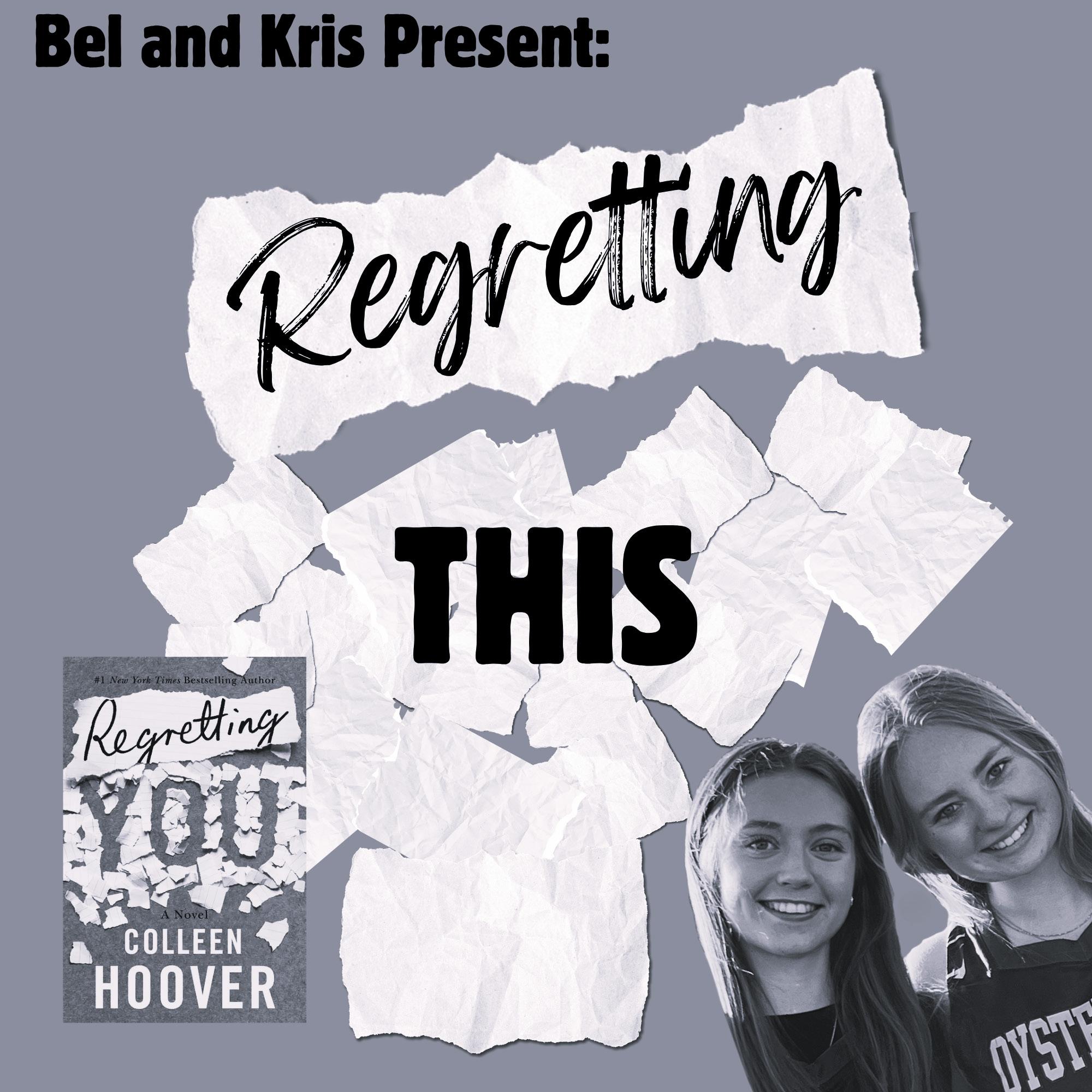
The Book Podcast: Regretting This
visuals and writing by KRISTINA JAKOBS and BEL EJARQUE
Our Book Recommendations
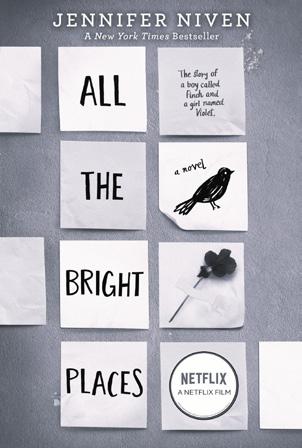
AlltheBrightPlaces will literally take your breath away. Theodore Finch and Violet Markey are two opposite people, trying to find their place in the world. Both struggling with their mental health, one more than the other, they get to know each other by exploring their home state of Indiana for a school project. The emotions and depth of this story had me on the edge of my seat, sometimes laughing, sometimes in tears, usually a hysterical mix of both. If there is one book that can tie together every emotion, it’s this one. -Bel
In The Guest List, Lucy Foley creates a thrilling web of mystery and anticipation that was a perfect winter read for me. A diverse cast of characters are invited to a wedding, staged in the isolated dark of an Irish island. On the night of the wedding, a body is uncovered, creating reactions of panic and horror. Following this discovery, the story starts days before the wedding and unfolds backwards, following the prospective murderers as the wedding day approaches. I strongly suggest reading this book if you are looking for an intense and intriguing page turner. -Kris
One of my favorite, less well-known romance novels of all time, Tweet Cute by Emma Lord incorporates family rivalry, enemies to lovers, delicious recipes and a duo perspective rom-com style of writing. Main characters Pepper and Jack are family enemies without even knowing it. From family issues to an online Twitter battle about a grilled cheese recipe, these two have more in common than they think. With inspiration for baked-goods recipes and an all-the-feels romance, this book is one you don’t want to miss. -Bel
If you were ever tempted to read a classic novel, I strongly encourage you to pick Little Women. This book follows the lives of the four March sisters (Amy, Jo, Beth, and Meg) as they grow up and face a variety of challenges. It is such a fun read that leads the reader to deeply connect with and enjoy the characters. Even though it was written in 1868, the experiences and emotions of the March sisters remain relatable, and you’ll find yourself feeling like you are the fifth March sibling by the end of the book. Also, I’d suggest reading the book so you can better enjoy the incredible 2019 movie based on the book! -Kris
Little Women by Lousia May Alcott
Tweet Cute by Emma Lord
The Guest List by Lucy Foley
AlltheBrightPlaces by Jennifer Niven
Redbull Review
Eva and Elsa try and review BNG’s $3 Redbull Wednesday drinks.
by ELSA SVENSON and EVA BEBBINGTON
visuals
Generative AI in Oyster River
written by ELISE BACON
Fantasy Football
How Fantasy Football is creating friendships.
visuals and writing by XANDER AHN
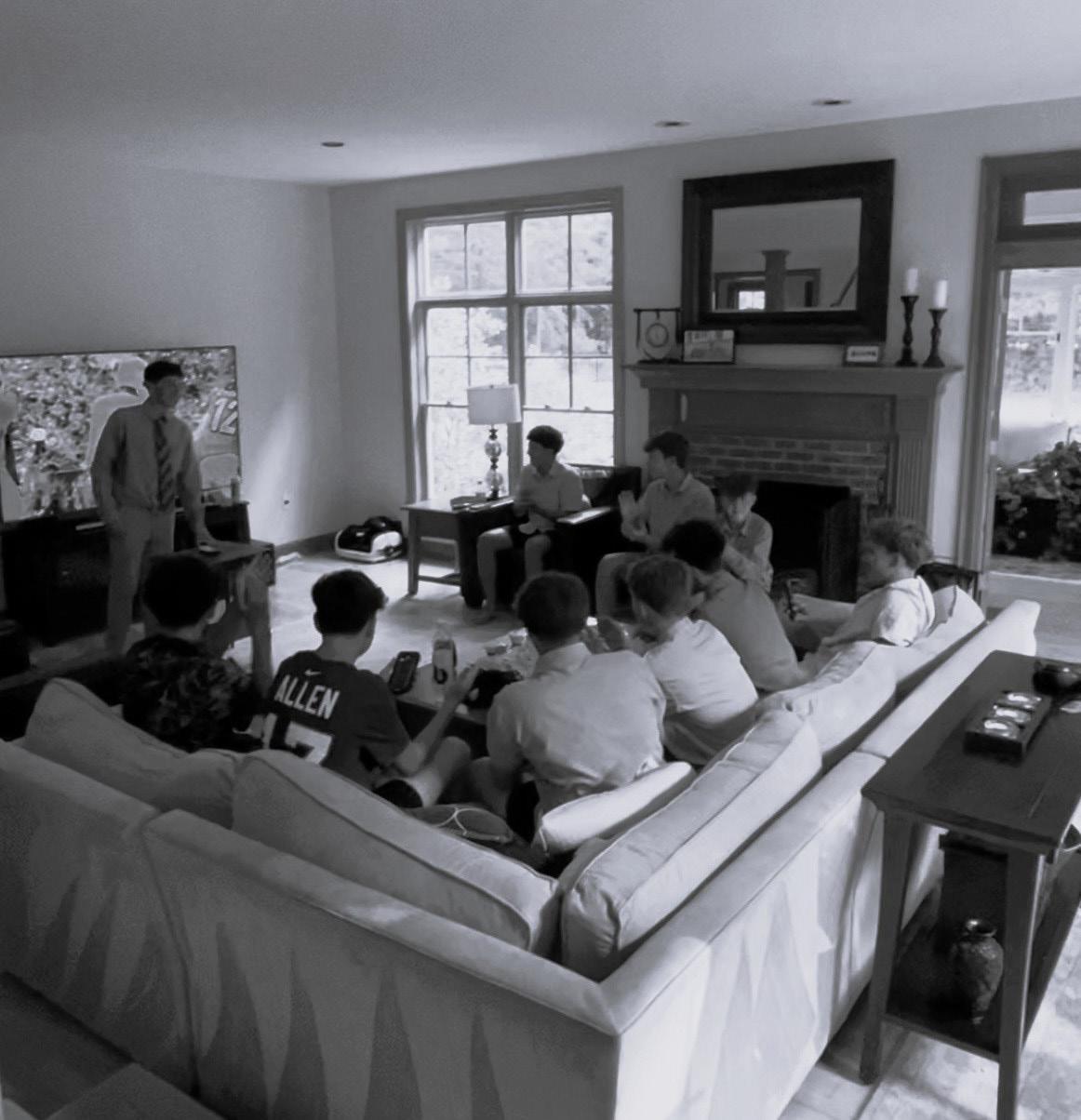
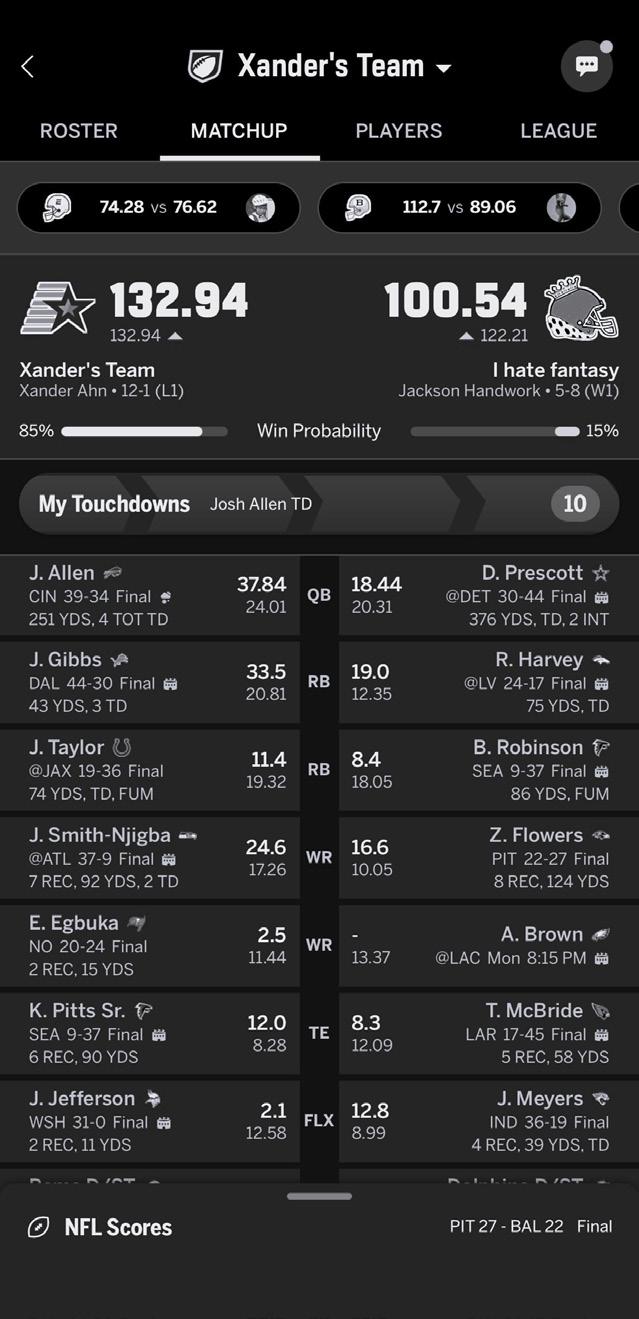
It’s getting late, and Oyster River High School (ORHS) students are glued to their phones tracking every point that decides the fate of their fantasy football team. Whether it’s waking up on Monday morning to discover your star running back managed to score only two points or staying up late to watch your quarterback throw a game winning touchdown that wins you the week, the drama and laughs never stop. Fantasy Football has become a widespread activity among many students at ORHS caused by growing participation in school leagues and the social interactions that come with them. The friendships created, the thrill of the ups and downs throughout the season, and the creative punishments all contribute to its rise in popularity.
At ORHS, leagues span across grades and friend groups, with each student acting as a “manager” as they build their team by drafting real National Football League (NFL) players who earn points based on their gameday performances. Things like catches, yards, and touchdowns increase their points. Every week you’ll go against a
new manager, and your record will be kept. Each league is run by a “commissioner,” who keeps everyone engaged and handles most of the league drama that occurs throughout the season. There are many different leagues that exist across grade levels and friend groups, but the joy and chaos that students endure is widespread.
If you’ve ever wondered how much agony a high school student can experience, just talk to a fantasy manager after Monday Night Football. One moment you’re sitting on top of world seeing your 99% chance to win, the next watching their opponent’s defense score 30 points. As Reese Bellabona (‘27) puts it discussing a loss of his, “Stuff got heated, blood was shed, things were said.” Yet it’s all in the name of fun, even when it means starting your week with the classic question, “The punishment this year can’t be that bad right?” Those punishments have become one of the defining features of a fantasy league at ORHS, creating a form of motivation.
One way students get engaged in fantasy football is through implement-
ing a form of punishment. By leagues adding punishments, it makes sure managers are paying attention to their lineups and team in fear of finishing last. The idea mostly comes from social media where leagues post videos of the league loser participating in punishments. Elizabeth Piller (‘28), who is the commissioner of her league explained the importance of, “Reminding people that there’s a punishment, so they have to stay in tune and update their team.” For many leagues, the threat of outrageous punishments is what keeps people locked in.
Some punishments leagues are considering for this year include sitting in a dog cage while people throw food at you or bringing an inflatable date to a restaurant. For Cole Pelaggi (‘27), “The punishments definitely add a lot to it because you don’t want to get last place... or else you’re going to serve something pretty bad at the end of the season.” At ORHS, surviving your fantasy season means more than winning; it means dodging humiliation dreamed up by your closest friends. Outside of punishments, much of the league’s energy plays out in group chats that keep the group close together.
The group chats are always filled with relentless banter or talks of shady business between managers. If your team breaks down, you’ll know before first period thanks to roasts and play by play breakdowns that make you question your draft strategy. If you’re lucky, you won’t get put into an edit that Bellabona makes occasionally to mock his friends. Piller mentioned, “We started a TikTok account to update people... make memes out of people at the bottom.” For some, Monday
lunches means not eating, just defending yourself from people reminding you that you’re going to lose. However, behind all the chaos and banter are the commissioners who keep the league organized and fair.
Joey Alvarez (‘29) explains that being a commissioner is like running a family, “You invite friends over, watch every weekend. Endless conversation.” Alvarez also plans to buy a championship ring for the winner of his league, showing how some leagues go all out and become very competitive.
Competitive Fantasy at ORHS turns students into night owls, glued to their phones as games stretch into overtime and past 12 am. Pelaggi confesses, “Last night I watched Patrick Mahomes till after eleven. Had to secure the win.” The screen time spikes on Sundays as you check to see how many points your players have scored and what percent chance you have of winning. “It’s probably a problem, but it’s necessary,” he admits. Only in Fantasy Football will high schoolers call about “business” on a Sunday to argue over who to trade.
Beyond the competition, the most casual students have turned into true NFL fans through fantasy. Bellabona says, “Fantasy Football made me a big fan of just the entire NFL. I now watch the San Francisco 49ers because I want to see [Christian McCaffrey] dominate the league.” Plus, every trade, win, or loss is an excuse to keep friendship lively. “It’s a good way to connect even if we don’t hang out every single day. I can still be like, ‘Oh, I beat you,’ or ‘You beat me,’” Julian Sarzosa (‘27) added.
In a game defined by luck, trash talk, and unforgettable moments, fantasy football at ORHS thrives on inside jokes and enough chaos to keep everyone coming back for more. It keeps groups connected with one another and creates many laughs along the way. Win or lose, ORHS students know that every hilarious mishap, late night debate, and overall friendship is what makes Fantasy Football popular at ORHS.
Friday Nights Without the Lights
Why we don’t have a football team.
written by LEVI CLAPP
Fvisuals by AVERY BIGGWITHER
or almost 15 years, Oyster River High School (ORHS) has been a consistently competitive program in Division II sports in New Hampshire. Since they transferred into the Division II level, numerous collegiate and professional athletes have come out of their programs including Brennan Oxford (baseball) (’18), Will Carrico (swimming) (’23) and Maegan Doody (cross country/track) (’15). However, they have never produced a single Division 1 or 2 football player out of their program. Why? Because they don’t have their own football team.
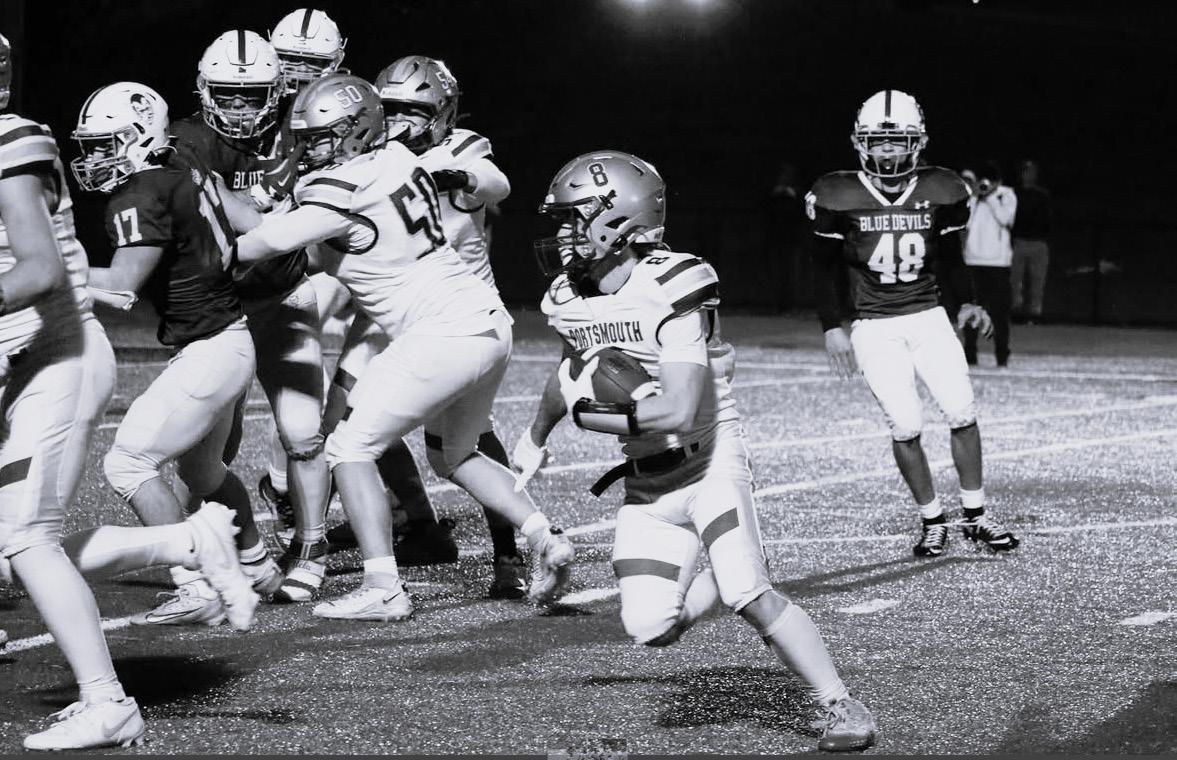
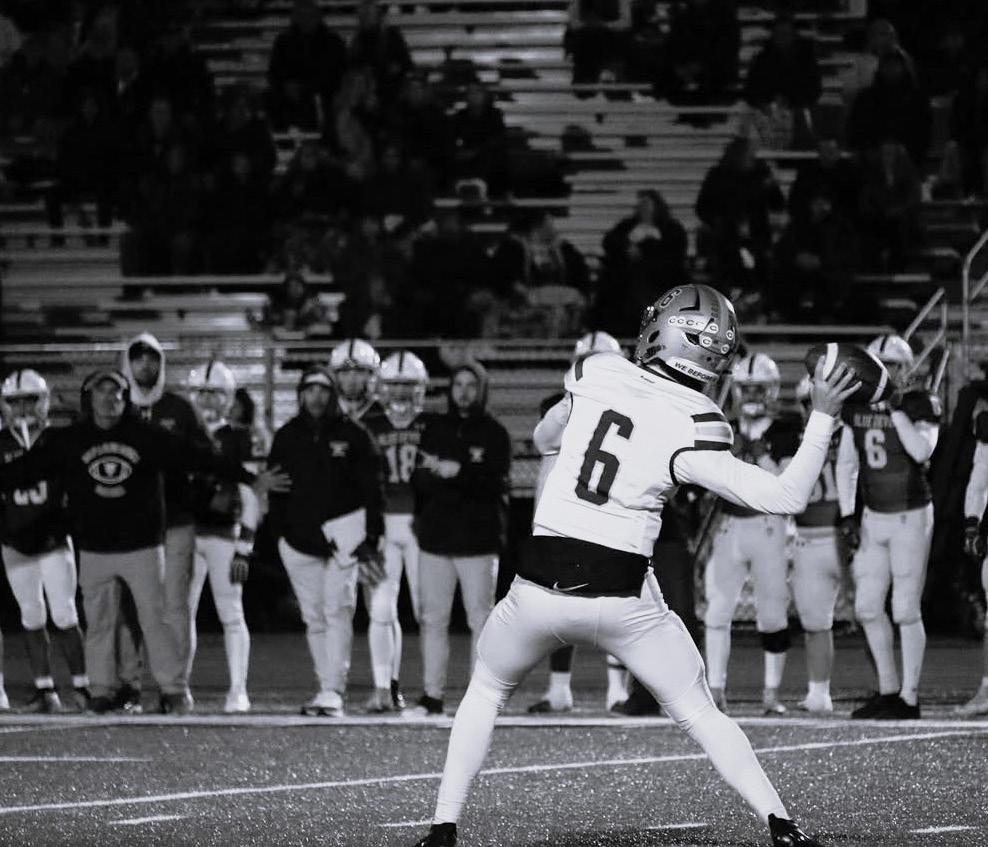
I was minding my business in class one day and heard some people talking about if we had our own team. As of now, Oyster River does already have an opportunity as a co-op team with Portsmouth High School (PHS). This has allowed an opportunity for ORHS athletes who play football to compete. But it made me wonder, who would be on the team? Would we be good? This raised questions among students
about the logistics of the team. Not having a team has been a prevalent topic in the district for some years now, as it’s typical for a school as big as ORHS to have a team. However, there are many reasons why we don’t have our own team.
In 2016, The ORHS athletic department came up with the plan to initiate
teams have 30-40 kids on a varsity team, making it very difficult to properly supply a full team, especially with the frequency of injuries in football. With only a few players on the bench at a time, there would be a shortage of subs.
a co-op with PHS to form a joint team, becoming the “Clippercats”. Andy Lathrop, the school’s athletic director says, “We typically have around 20 to 25 kids that we send over there. If we were to have our own team, that would be not really enough.” Typically, most
Around this time, parents in the Oyster River Cooperative School District (ORCSD) made a push for a school football program. This topic had been a longstanding battle between parents and administration, but a more rigorous campaign was initiated after the installation of Lathrop. Lathrop identified that the immediate problem was the lack of demand among the students for a team. Lathrop speaks further on how a football team might not be sustainable if it was formed. He claims that with small popular demand, if it was to be formed, it’s likely that interest would fizzle out within a few years, leaving not enough people to form a team. On the other hand, Lathrop also says that
it might be able to draw more interest from people not already on the Portsmouth team, as a home team is easier to access than out in Portsmouth.
Creating a team was covered in the 2018 article “A Football Fantasy Come True” by Aliyah Murphy. The topic was discussed in a January 17th meeting with the school board; the school board approved the co-op agreement with a 6-0 vote. This agreement was needed, because there simply weren’t enough players to make a competitive team at ORHS. In this article, Dan Klein, who was a school board member for Oyster River at the time, said “This proposal seems to benefit both Oyster River and Portsmouth for the long-term.”
ORHS has about 30 athletes who have positions on the Portsmouth team, on both varsity and JV. If ORHS started a team, they would most likely be on it. Among some of the varsity starters on the Portsmouth-ORHS
youngest prospect on the team, Thomas Allen (’29) who plays Cornerback/ Receiver, just like Gedney. “He’s been starting the last couple of games for Portsmouth, and he’s really good and really fast. He’s also a receiver and a corner.” Allen has recorded multiple interceptions this season, showing real promise as a defensive presence in the backfield. Allen also functions as a punt returner and recorded a 64-yard punt return touchdown in the Week 8 game against Spaulding High School. As a team, some positions of strength include the offensive and defensive lines, anchored by Keating and Cisneros, and the receiver and cornerback positions consisting of Gruner, Gedney and Allen.
The Clippercats currently play in Division 1 against teams like Bedford and Nashua South. The top 2 teams in the division. However, Oyster River is in Division II for most sports, so the football team would most likely follow in suit. This would have them going up against schools like Souhegan, Trinity, Plymouth and Pelham.
joint team are Micah Gedney (’26), Ronin Keating (’26), Travis Cisneros (’27), and Van Gruner (’26).
Lucas Donahue (’26) also plays for the team as a receiver. He spoke on the
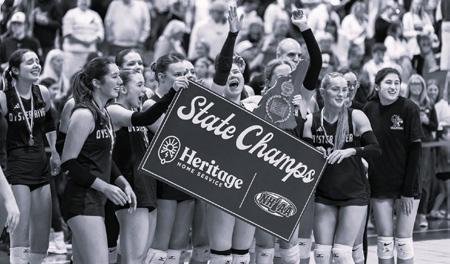
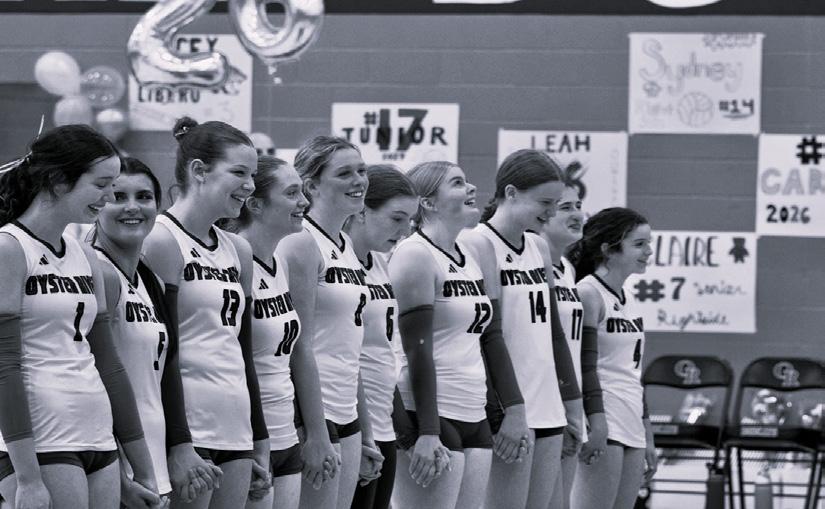
Volleyball SZN Recap
2025 Girls Volleyball Team Wins State Championship.
filmed by THEA SMITH
visuals by LIZ KEENUM and HEIDI GREEN
Bobcats Abroad
Join ORHS students in their studies all across the globe.
written by JAHRIE HOULE
Fvisuals courtesy of sources
rom the Patagonia mountains of Chile to the remote forests of rural Maine,students are extending their learning far beyond the walls of Oyster River High School (ORHS). Whether across the world or in their own backyard, these opportunities are allowing passionate individuals to learn real-world skills that will stick with them for the rest of their lives. Here are a few Bobcats who are breaking the mold of traditional education and bringing their experiences and newly acquired expertise all the way back to Durham.
Harley Kachadorian
Last semester, Harley Kachadorian (‘26) attended Alzar School, an immersive educational experience that aims to blend traditional academics with cultural exploration and outdoor adventure.
With a home base in Cascade, Idaho, the natural environment is a strong focus in the program’s teaching philosophy. Kachadorian says, “It opened my eyes to a lot of new outdoor education opportunities, and that’s kind of formed [my idea of] what I want to do and how I want to do it for the rest of my life.”
The program also places a huge emphasis on travel and cultural immersion, even while students are still completing an American curriculum.
“[We spent] two and a half months in Patagonia, Chile, where we did
English classes like it was an American school,” says Kachadorian. While the 25 students learning alongside Kachadorian attended classes every day just like back home, they spent their time off from schoolwork to learn on a much larger scale through outdoor expeditions in the Patagonia mountains. “We did, in total, a month of backpacking and kayaking,” she says.
Even though Kachadorian completed the spring semester thousands of miles away from ORHS, she shares that the transition -- in terms of her classes and graduation requirements -- was fairly simple. She took mostly semester-long electives in the fall and worked with Sean Peschel, the Extended Learning Opportunity (ELO) coordinator at ORHS to ensure that her full year classes could transfer to Alzar. “I did half the curriculum here, and then I filled out a form to see which part of the curriculum I still needed to learn, and when I was there, they made sure that all the students got what they need-
ed to successfully finish out the year in that class, so it was pretty seamless,” she says.
Her experience allowed her to continue her education in a way where she could also experience new things and connect to a culture widely different from her own. “It was a very eye-opening experience,” she says. “I’ve never lived or been out of New Hampshire for that long.”
Kachadorian also shares that her time abroad has helped her become more adapted to new things in her own life. “[Before], I was very scared of change,” she says, “I didn’t like when my schedule changed at all and I think this was the first time that I really em braced it... [this experience] has definitely changed my idea of how I can take my adversity to change and succeed with it.”
Geneva Ruml
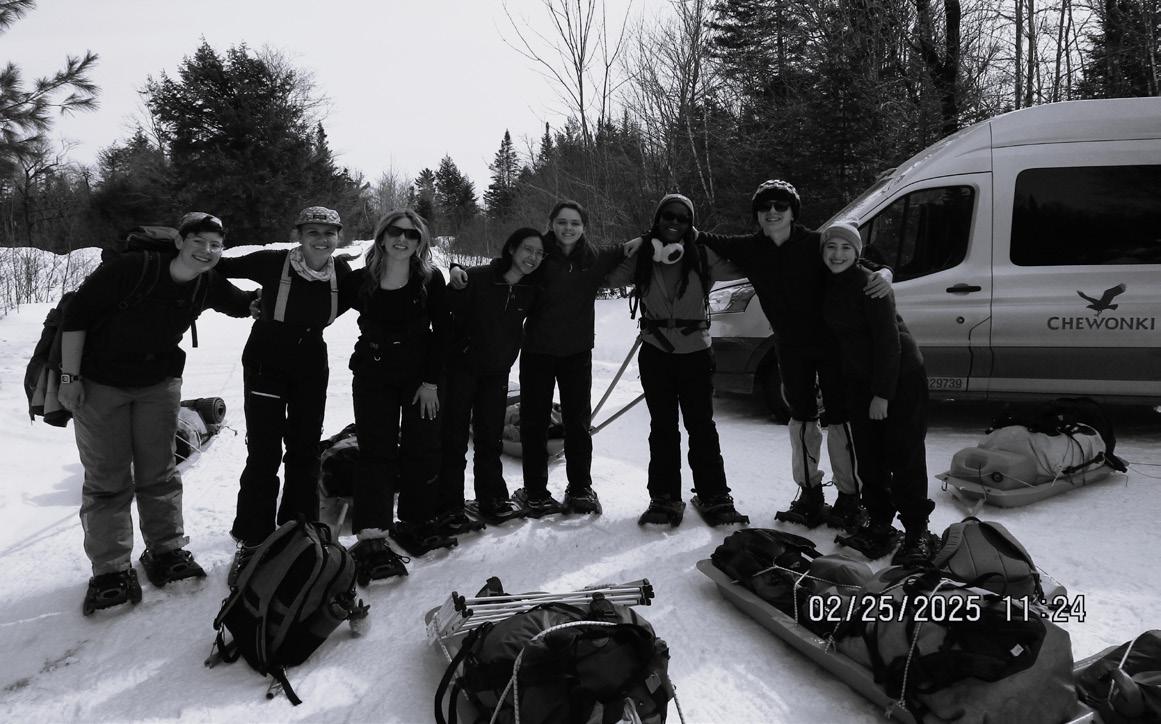
Geneva Ruml (‘26) also spent the last semester away from ORHS, just a little closer to home. This spring, she attended the Maine Coast Semester (MCS) program in Chewaukee, Maine. “The academics were a big part of it, but the primary focus was on the surrounding environment – how it impacts our daily life, and how we impact it,” says Ruml.
In addition to academic rigor and environmental impact, the program also focuses on community building. “There were only 26 of us in my semester,” Ruml says. “There were no phones at the program and everyone was really excited about that... everybody wanted to live well together and form a really strong community.” From living in cabins with their classmates to engaging in daily conversations and lessons, the students at MCS were
able to form genuine connections with their peers, without the influence of the online world which is generally very prevalent in the lives of this generation.
Ruml also shares how she thrived in an environment strongly built on a passion for learning and caring for people and the earth. She says, “everybody there was very engaged and academically motivated because what we were learning was actually interesting and immediately applicable to the environment we were in.”
Like Kachadorian, Ruml took
mainly new classes during her semester away, but was still able to complete her year-long classes to fulfil her credit requirements. She shares how her time here not only gave her valuable life experiences but also helped prepare her for the heightened workload that comes with college, which she plans to attend after high school. “Academically, it was a lot more intense than it was here. The workload was a lot bigger, so time management was a big thing.”
Ruml reflects on her last semester as a pivotal experience in her educational journey that she would recommend to other like-minded individuals. “It gave me more confidence in sharing my perspective and gave me better tools to do that and to understand the world in general. I feel generally better equipped in both life and academia,” she says.
Zadi Hale
While semester school prgrams are a great way for students to take their education into their own hands, they aren’t the only way ORHS students are exploring the world. Take Zadi Hale (‘28) who plans to spend this year’s spring semester in Kyoto, Japan, exploring a new culture with her family while taking her classes online.
This opportunity arose from Hale’s father, a professor at the University of New Hampshire (UNH) who is completing his sabbatical across the globe along with his family. While she won’t be attending traditional school in Japan, Hale will be completing her required classes through The Virtual Learning Academy (VLACS) while exploring a new place and enjoying her time abroad, which she argues is learning in its purest form.
“I feel like going places and experiencing things in real life is the best way to learn,” she says. “I can read as many books as I want on Japan, but that’s never going to give me the actual experience of being there.”
While most of her online classes follow the traditional curriculum she would be completing at ORHS, she is going to be doing an independent study on Japanese history next semester in place of U.S. history which is typically a required class for sophomores. She hopes that this will help her become more immersed in the culture and that she’ll leave with a more extensive understanding of her experiences.
Hale will also be putting her language skills to the test during her time abroad. “I’m learning a little bit of Japanese online right now, but I’m hoping that I’ll leave with at least a
little bit of proficiency in that language.” She also highlights the communication skills required to survive in a foreign country. “I feel like the travel experience, being in a new country where you don’t speak the language and you can’t read the signs [builds] a lot of life skills,” she says.
While she enjoys her time at ORHS, Hale shares her excitement to delve into an entirely new life for a semester and expresses her delight at the endless opportunities that travel can present. “My family, we’re not big planners, if we’re being honest, and we’re just going to figure it out as we go,” she says. “[I’m looking forward to] being totally surrounded by something that I’m unfamiliar with. Every day [I won’t] really know what’s happening and I think that’s kind of cool.”
“I feel like going places and experiencing things in reallifeisthebestwaytolearn.”-ZadiHale
While these opportunities may seem out of reach at first, sometimes all it takes is one curious individual willing to take a bold leap into a unique learning experience. From learning about a program through outside sources or their own research, to conferring with their counselor and family, the process of completing a semester-worth of studies away from ORHS is simpler than many realize. To those considering a semester program or any non-traditional form of schooling Kachadorian says, “just take those risks and take those opportunities because it truly changed my life and it made my perspective on the world and like the town that we live in a lot different, and I think for the better.”
KIDCULL
Apple Music’s Next Up.
written by JIMMY KIM
visuals by OTV.IAN
Footsteps. Silence. Lights. Anticipation fills the small room, as the background track to “Coming Home” By Leon Bridges plays. A deep low voice shakes the room as Cullen Nesbitt, reaches for the microphone.
Cullen Nesbitt (‘26), a.k.a. “KidCull” is a passionate senior at Oyster River High School (ORHS) who found solace in songwriting, and with encouragement from his parents, peers, and siblings, he is determined to make a name for himself in the everchanging music scene.
On November 20th, 2024, Nesbitt’s career started when his sister’s boyfriend, Ian Carrion, helped begin his career. “He was the one that told me that I had a good voice,” Nesbitt said. From there, Nesbitt and Carrion worked together in producing music, creating songs, and even collaborated
on a song together. or Nesbitt, creating music begins with finding a sample beat on YouTube, or one that he creates from scratch. Next, he’ll hum on the beat as a way to figure it out, then create the words to match that flow he established. Then finally, he’ll touch up on the song by editing lyrics to match or cut out any parts to finalize the song. “And then you get a song,” Nesbitt states. However, many revisions come over the song before Nesbitt finally decides that it’s “finished.” One example would be his newest single, Five. “It was done for like a week, but I listened to it once and figured out, hey, maybe I should say something different in this part.”
Nesbitt’s musical direction comes from big influential artists, such as Brent Faiyaz, Leon Thomas, and Drake.
However, he is currently working on developing a new sound, similar to that of Jack Johnson. “I really like making [songs and music,] as it’s more genuine to me. I do have a couple of songs right now that are complete. I got an album coming around January 1st, about 12-14 songs. I have a lot of singing on the album, a lot of R&B.”
Even with this coming style change, he wants to stick to the name KidCull. “I had a couple midnight talks about changing
my name. I was going to change it to CULLTURE, but was quickly told that that’s terrible.”
Although he finds making music fun, he receives constant criticism from his fellow classmates. “I understand it’s easy to make fun of a kid that’s making music at school, but I do it because it’s fun. I do it because I’m interested in it,” Nesbitt says.
“I’ve always found it cruel or just disrespectful to make fun of me for trying to make something out of myself. People bring up my first song Consistency, and I’m like, yeah, I understand. My first song sucked. And my second. And guess what? My third song sucked,” he continued.
“You make mistakes, but you learn from them, and you build that up over time. I mean, Yeat released 500 songs before he had one hit.”
Nesbitt has also performed live, performing during Coffee House on
“I’m really excited because this is the future for me.”
- Cullen Nesbitt
11/06, singing “Coming Home” (Leon Bridges), “Tennessee Whiskey” (Chris Stapleton), and an original song.
Nesbitt expressed how Coffee House is an important step for him in his career. Noting that he’ll need to be able to perform live and that starting from such a familiar place really helps. “It’s hard to perform in front of a crowd. Looking out on the stage and just seeing even 40 people is crazy.”
And as luck would have it, Nesbitt seems to have found his new home. Out The Vault (OTV) is a new record label that initially began as a project for Carrion and Nesbitt but grew to become something bigger than they imagined. “It’s coming together. I got a lot more people interested in my gigs. People work years in this industry to get to this kind of place. I’m re-
ally excited because this is the future for me.”
All of his time, energy, work and dedication finally comes to a head on January 30th, the day Nesbitt finally gets his chance to shine. Nesbitt debuts live at Big Night Live in Boston, MA, and was invited to join Rob49 on stage as an opener. He thanks Carrion for giving him this chance. Rob49, most famously know for his song, “WTHELLY” has also been featured on Travis Scott’s “TOPIA TWINS” which has been streamed nearly 300 million times across streaming platforms. Carrion connected Nesbitt to Project X, a famous producer who created hits such as Just Wanna Rock (Lil Uzi Vert), and It’s Getting Hot (NLE Choppa), who then connected Nesbitt to another DJ.
This DJ worked closely with Rob49, and contacted who
works closely in with Rob49, and contacted him about Nesbitt, who approved of him opening.
“Every drop of my money is going to music right now, I’m working nonstop, I don’t even have heat in my car. We’re advertising, making flyers, merch, CDs and records,” says Nesbitt. “There’s going to be a lot of cool stuff coming up.”
As Nesbitt’s chapter at ORHS closes, a new chapter opens up. One where his biggest dreams can become reality, and where he’ll face challenges bigger than before. “I’m really interested in creating [music] and I want to learn from it and get better at it.” He comments, “the future is very, very bright so, stick with me because I’m going all the way. And I’m bringing the Grammy home to Oyster River, I swear to God.”