RADICAL METHODS LAB
PROGRAMME
DECEMBER 2025
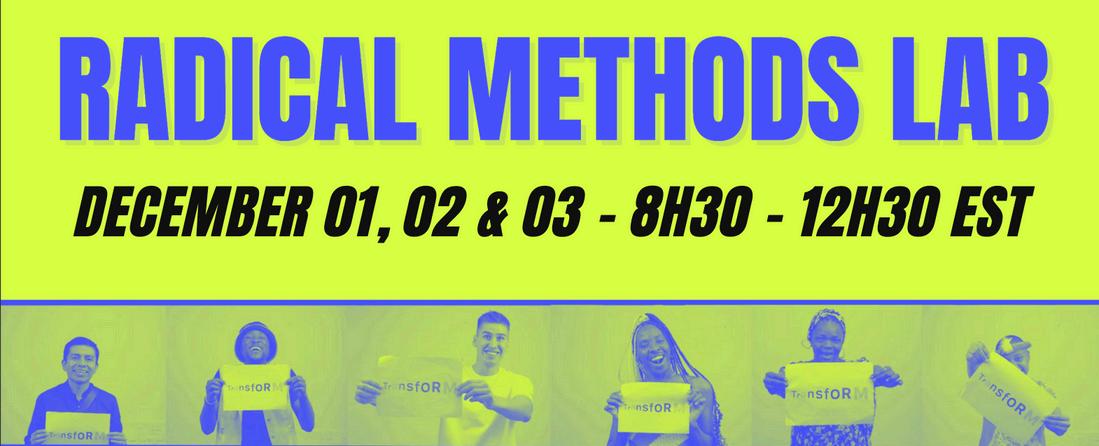
Welcome to the Radical Methods Lab
The Radical Methods Lab is a three-day online “ summer school” designed to support master’s and doctoral students, early career researchers, and community organizers working in partnership with young people in exploring youth-led engagement with Participatory Visual Research Methods and gender transformation. In keeping with TRANSFORM’s commitment to supporting a new generation of researchers in youth-led methods, this exciting training program focuses on Photovoice, Cellphilming, and Political Embroidery, combining hands-on workshops, mentoring sessions, Q&As, and discussions.
Led by youth activists from the Global South and supported by the TRANSFORM team, the three half-day sessions offer a unique opportunity for participants to explore gender-transformative, arts-based approaches to community research and youth-led activism.
The Radical Methods Lab brings together powerful stories, images, and creative expressions from youth across diverse global contexts, speaking to issues deeply rooted in their local realities and calling for attentiveness, respect, openness, and thoughtful engagement. The Radical Methods Lab tasks all participants helping to foster a safe, transformative, and collaborative environment through care, sensitivity, and collective support. Whether you are new to participatory methods or are building on an existing practice, the Radical Methods Lab welcomes participants to take part in this unique learning opportunity.
EngagingwithYoungPeopleforSocialChange EngagingwithYoungPeopleforSocialChange
TRANSFORM is a SSHRC-funded global partnership that positions young people as leaders, innovators, and critical thinkers in advancing gender transformation and social justice.
Working across a number of countries including Canada, India, Malawi, Mali, Mexico, Nigeria, Sierra Leone, Tanzania and South Africa, TRANSFORM uses participatory, visual, and artsbased methods from photovoice to performance to zine-making to explore how gender norms are challenged and reimagined in practice.
Through Youth-to-Youth (Y2Y) spaces, it connects local interventions with global dialogues and intergenerational collaboration. Grounded in feminist, decolonial, and intersectional approaches, TRANSFORM amplifies youth voices to disrupt gender norms and influence gender transformative practices across concerns such as gender violence and climate justice.
Youth-led ArtfulEngagement Decolonization Intergenerationality
GenderTransformative Interventions
YOUTH
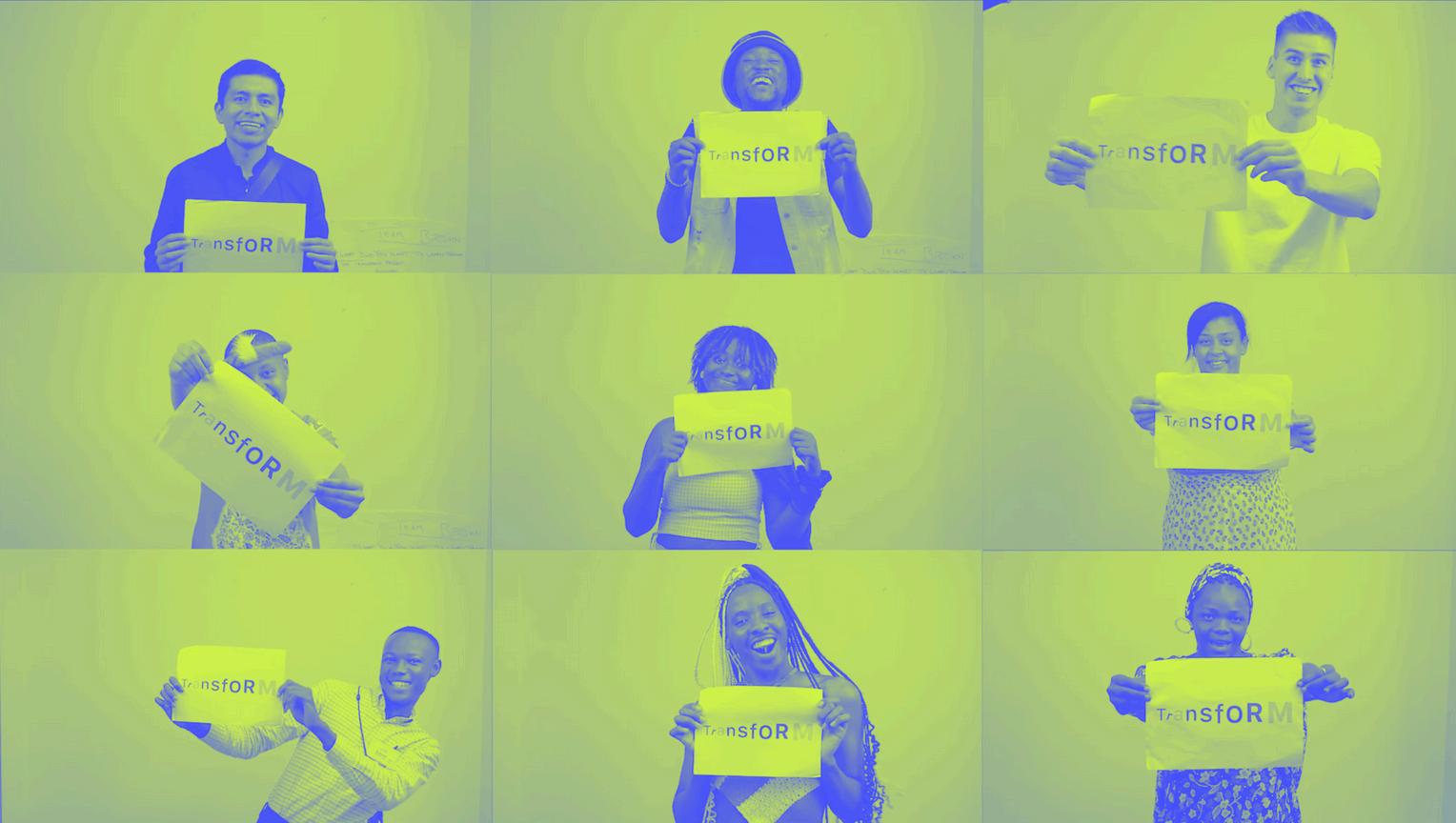
YOUTH CO-LEADERS
Sbusiso Mahlinza (Queeng Sburh)
I am from Richards Bay, South Africa I joined the TRANSFORM Partnership in early 2025 through the Uthingo Network. As an LGBTQ person committed to gender-transformative work, I am passionate about creating inclusive spaces where young people can express themselves and challenge harmful norms
Tuka Sikhakhane (Teekay)
I am Tuka ,also known as Teekay from South Africa, in between two small towns, Mooi River and Estcourt, on the deep rural areas of Hlathikhulu. I am an advocate of Hlathikhulu Site under the massive program Transform. I joined the program because I always wanted change to begin through me
Khamis Muhammad Chadi
Khamis Muhammad Chadi is from Bauchi State, northern Nigeria. He has a degree in Agriculture from Abubakar Tafawa Balewa University Bauchi. Khamis is a team player with considerable experience in adolescent sexual and reproductive health research. He has participated extensively in field activities including data collection, training and supporting adolescents in creating cellphilms.
Nafisah Muhammad Muminat
Nafisa is a graduate of English Literature, from Bauchi State, northern Nigeria. She is an educator and has a passion for field research She has worked with adolescent girls in Toro Local government area of Bauchi State by supporting them on cellphilms and photo voice
Nafisa encourages young girls to use innovation and display confidence in their work
Brenda Ojinaga Zapata I’m a Mexican student and feminist embroiderer, part of the Transform group at the Universidad Nacional Autónoma de México. I’m interested in how embroidery becomes a political practice through which women share their experiences, express their demands, and make their presence visible in public space
Ellah Tambalaweko
Ellah is a passionate Malawian youth advocate dedicated to advancing gender equality, social justice, and community development. With a strong background in SRHR, climatesmart agriculture, and youth empowerment, she has worked closely with community structures, young people, and development partners to drive meaningful change
Muhammad Hayatu Haruna
Muhammad Hayatu Haruna is from Bauchi state, northern Nigeria He has a higher national diploma in Business Administration and Management Hayatu is an active member of a team working on adolescent sexual and reproductive health in northern Nigeria
Asma'u Abdulhakeem
Asmau Abdulhakeem is a young public health student from Bauchi State, Northern Nigeria
She holds a diploma in health education and promotion and is passionate about community engagement, health education, and empowering young people
Asmau is skilled in communication, and aims to promote health and wellbeing through targeted interventions and education
YOUTH CO-LEADERS
Abdulai Sahid Tencoid Conteh Jr.
A highly motivated and dedicated individual hailing from Freetown, Sierra Leone. With degrees in Education Economics and International Diplomacy, plus certifications in digital communication, he blends academic rigor with global awareness Currently pursuing an MPhil in Statistics, he is committed to data-driven solutions for development
Shafa’atu Muhammad
My name is Shafa’atu Muhammad (Shafy) and I am from Jos, Nigeria I hold a degree in Mass Communication and have built a multidisciplinary career as a writer, communicator, and entrepreneur I am the founder of Shafs Foodies and More, a catering brand through which I express my creativity and commitment to quality service.
Bintu Dumbuya
Bintu Dumbuya is a 24-year-old Sierra Leonean and a soon-tobe graduate of Milton Margai Technical University, where she has pursued her studies with dedication and purpose. She is passionate about personal growth, community service, and creating opportunities for others-especially young women striving to overcome challenges. Bintu continues to build herself as a leader, a learner, and an advocate for positive change.
Marie Njuguna
Adam Khalid Muhammad
I'm Adam Khalid Muhammad (Kakaki), student of Sociology at the University of Jos, Nigeria My studies are fueled by a strong interest in understanding social dynamics and inequality I'm deeply driven by the passion and zeal for change-making and actively embrace roles as a youth advocate and community activist
Blessing Azhime Moses
My name is Blessing Azhime Moses, I am from Jos Nigeria and I am also a graduating student of plateau State University Bokkos Nigeria, from the department of political science. I am an activist, a public administrator and one who believes in service to humanity that brings out positive change in our communities.
Rejoice
Nesho
I am currently student of the National Teachers Institute (NTI) in Nigeria, studying English and social studies I am also a fashion designer I am a youth transformation leader from the vibrant Jenta community As a passionate advocate for personal growth and education, I am committed to inspiring positive change within my community, promoting learning, and supporting community development.
I am a program assistant at Youth Alive! Kenya and a young person with a strong passion for advancing gender justice and the youth agenda in development spaces In my work, I enjoy supporting programmes and organizations that are focused on promoting and implementing youth-responsive and youth-inclusive initiatives that reflect the realities, voices, and aspirations of young people Currently, I work at the intersection of gender justice and youth engagement at Youth Alive! Kenya under the Gender Equity and Social Well-Being program, contributing to gender equality initiatives, care economy advocacy, and community-driven programming
Behind the Scenes
Lisa Starr
Lisa is Dean of Education at the University of Lethbridge and CoDirector of TRANSFORM A former Department Chair at McGill and past President of CASWE, she has taught across Canada, Asia, and the Middle East Her SSHRC-funded research explores participatory visual methods to address gender-based violence and reimagine pedagogy.
Shannon Walsh
Guggenheim Fellow, 2023
Governor General’s Award recipient in Visual and Media Arts, and co-director of TRANSFORM, Shannon is an award-winning filmmaker and scholar whose work spans labour rights, climate change, and grief. Her films have screened globally, including at SXSW and the Venice Biennale
Twisha Singh
Twisha is a Research Associate at McGill University and a lecturer specializing in Gender and Sexuality Studies A historian with expertise in modern South Asia, she is a researcher Associate on TRANSFORM at McGill’s Participatory Cultures Lab and teaches at the IGSF (McGill) and Simone de Beauvoir Institute (Concordia)
Graciela Martínez-Zalce
Sánchez
Graciela is a leading scholar in Canadian Cultural Studies, feminist literary criticism, and gender theory A founding member of Mexico’s pioneering gender studies workshop, she explores sociodigital literary communities and Mexican representations in Canadian film
Claudia Mitchell
A Distinguished James McGill Professor, directs McGill’s Institute for Human Development and the Participatory Cultures Lab
Claudia is the Principal Investigator and co-director of TRANSFORM Her research centers on participatory visual methods in gender equity and anti-violence work.
Relebohile Moletsane
The FALF-Wits-NRF Chair in Gender-based Violence & Femicide at the University of the Witwatersrand, Relebohile is a co-director of TRANSFORM Her work focuses on teacher development and addressing sexual violence in South African rural communities She co-led the SSHRC-funded Networks for Change project and co-edited Ethical Practice in Participatory Visual Research
Angela MacDonald
Angela is a Project Administrator at the Participatory Cultures Lab for the TRANSFORM project She works closely with the coDirectors, Research Associate and Research Assistants
Emilia Vera Romero
Research Assistant at the Participatory Cultures Lab and an organizer of the TRANSFORM Learning Series She is currently pursuing her Master’s degree at McGill University.
Workshop Overview
The Radical Methods Lab workshops are youth-driven spaces where young leaders from across TRANSFORM redefine what research, storytelling, and social change can look like. These workshops are more than demonstrations of technique they are acts of political claiming, where youth lead with their creativity, lived experience, and collective wisdom. Each session becomes a site of transformation where young people:
Name the issues shaping their lives and communities, from drug use to SRHR to intergenerational harm.
Create visual evidence through photovoice, cellphilming, and embroidery that refuses silence and demands public attention.
Design their own methodological futures, choosing the tools and approaches that speak most powerfully to their realities.
Model feminist, decolonial leadership, grounded in care, courage, reciprocity, and community accountability.
Build cross-site solidarities, discovering resonances between Sierra Leone, Malawi, Mexico, Bauchi, Jos, and beyond
These workshops show what becomes possible when youth are not positioned as participants but as producers of knowledge, facilitators of learning, and architects of social change. Their work is bold, political, imaginative and central to the future of TRANSFORM.
TIME ZONES
COUNTRY
Canada (Montreal) 8:30am 12:30pm
Mexico 7:30am 11:30am
Sierra Leone 1:30pm 5:30pm
Nigeria 2:30pm 6:30pm
South Africa & Malawi 3:30pm 7:30pm
Schedule Overview DAY 1
Time Session Details
8:30–8:40 Welcome Tuka Sikhakhane & Queeng Sburh
8:40–9:20
9:20–10:45
Panel Presentation: Social change by, with and for Youth
Workshop 1: Photovoice A Capturing Reality: Photovoice for Youth Advocacy
Facilitator: Lisa Starr
Panelists: Brenda, Marie, Queeng, Tuka
Facilitator: Ellah Tambalaweko
10:45 - 10:50 BREAK
10:50 - 12:15
Workshop 2: Political Embroidery Embroidery as a Subversive Political Act
12:15 - 12:30 Spotlight on Visual Ethics
Facilitator: Brenda Ojinaga Zapata
Facilitators: Twisha Singh and Emilia Vera Romero
12:30 Wrap Up
Schedule Overview DAY 2
Time Session Details
8:30 – 8:35 Welcome Tuka & Queeng
Workshop 3: Photovoice B
8:35 – 10:05
Photovoice: The Fight Against Drugs
Facilitators: Abdulai Sahid Tencoid Conteh Jr. Bintu Dumbuya
10:05 – 10:10 BREAK
Facilitators: Blessing Azhime Moses
10:10 – 11:40
11:45 - 12:25
Workshop 4: Cellphilming A Women Make History
Researcher Panel Youth-Led Participatory Research in Gender Transformation
Khalid Muhammad Adam
Rejoyce Nesho Shafatu Adamu
Facilitator: Lisa Starr Panelists: Claudia Mitchell Kimia Ghomeshi Shannon Walsh Relebohile Moletsane
12:25 – 12:30 Wrap - Up
Schedule Overview DAY 3
Time Session Details
8:30–8:35 Welcome Tuka & Queeng
8:35 - 10:05
Workshop 5: Cellphilming B Transform Change begings with me
Facilitators: Muhammad Haruna, Khamis Muhammad Chadi, Asma'u Abdulhakeem, Nafisah Muminat Muhammad (Bauchi, Nigeria)
10:05 - 10:10 BREAK
Q&A
10:10 -11:10
11:10 - 11:55
Participatory Arts based Methodologies for Social Change
Researcher Panel Next Steps: Mobilizing for Social Change
Facilitators: Lisa Starr Panelists: All Youth CoLeaders
Claudia Mitchell, Lisa Starr, Shannon Walsh & Relebohile Moletsane
11:55 - 12:00 Wrap-Up
Detailed Workshop Guide
YOUTH PANEL — SOCIAL CHANGE BY, WITH AND FOR YOUNG PEOPLE
Facilitator: Lisa Starr
Panelists: Brenda Ojinaga Zapata (Mexico), Marie Njuguna (Youth Alive! Kenya), Queeng Sbhur (South Africa), Tuka Sikhakhane (South Africa)
This youth-led panel spotlights young people as creators of knowledge and change Panelists share how they mobilize radical methods to confront injustices in their communities Through lived experience, creativity, and collaboration, they reshape research and advocacy. Their leadership affirms that social change is most powerful when driven by, with, and for youth. Their dialogue opens new pathways for collective imagination and justice-oriented action Together, they envision futures where youth expertise reshapes systems, stories, and possibilities. As the first session of the Lab, this conversation establishes a spirit of courage, creativity, and collaboration It sets the foundation for three days of transformative, youth-centered learning and action.
WORKSHOP 1 — PHOTOVOICE A CAPTURING REALITY: PHOTOVOICE FOR YOUTH ADVOCACY
Facilitator: Ella Tambalaweko (Lilongwe, Malawi)
This fun and creative workshop introduces Photovoice, a storytelling method where young people use photos to share their real experiences, ideas, and challenges and all the things that affect them, instead of writing long reports to share and interact with the duty bearers and all-important stakeholders We will explore how photos can spark conversations, raise awareness, and inspire action in our communities. You will learn how to plan a Photovoice project, take meaningful pictures, discuss stories behind the images, and present them confidently. By the end, you will have practical skills to use photography as a powerful tool for expression and youth advocacy. Participants will also discover how ethical imagemaking protects their voices while strengthening their stories This workshop empowers youth to turn everyday moments into powerful catalysts for change.
Detailed Workshop Guide
WORKSHOP 2 — POLITICAL EMBROIDERY
EMBROIDERY AS A SUBVERSIVE AND POLITICAL ACT
Facilitator:
Brenda Ojinaga Zapata (Mexico City, Mexico)
In this session, we’ll talk about the meaning and power of political embroidery by exploring what it is and tracing how, across different historical periods and geographic contexts, women have turned to needle and thread as a medium for articulation, resistance, and the visibility of gendered forms of oppression. From collective projects that honor victims of violence to embroidered messages carried in marches, embroidery has long served as a tool for expression and dissent. It has become more than a craft: it is a way of naming injustices and stitching together shared experiences of resistance. Our invitation is for participants to rediscover embroidery beyond traditional gender roles and to experience its political and creative force through their own hands. By embroidering together, we aim to create a space where the body, the thread, and the stories we share become part of a collective act of imagining and demanding a more just and equal world.
Suggested materials for the session
For this workshop, we’ll use very simple materials. Everything can be inexpensive or reused. A piece offabric(eg cotton, muslin, an old napkin or shirt)
Embroidery hoop(optional)
Embroidery thread
Embroidery needle
Scissors
Apen or pencilto draw your design
Remember:
It is not necessary to know how to embroider this workshop invites you to experience the sensorial, creative, and deeply personal dimensions of stitching. Political embroidery is not about technical perfection; it is about care, presence, naming, and resistance Each stitch becomes a way of slowing down, paying attention, and transforming personal reflections into collective meaning This practice opens space for political expression through texture, colour, and touch, allowing participants to speak back to injustice in intimate and powerful ways. Embroidery here is not gendered; it is a radical, accessible medium for anyone seeking to make their stories visible Through this shared creative process, participants discover how small, deliberate acts of making can become bold gestures of solidarity and social change
Detailed Workshop Guide
SPOTLIGHT ON VISUAL ETHICS
This brief session will introduce participants to the core principles of visual ethics that guide radical, youth-led methods. It will cover how to create powerful images safely avoiding faces, focusing on hands, objects, and environments and how to use captions thoughtfully to frame meaning without exposing vulnerability Participants will explore how care, consent, and creativity work together in photovoice and other visual approaches, setting a strong ethical foundation for the three days ahead This opening conversation ensures that all work in the Lab is grounded in dignity, agency, and respect.
WORKSHOP 3 — PHOTOVOICE A PHOTOVOICE & THE FIGHT AGAINST DRUGS
Facilitators:
Abdulai Sahid Tencoid Conteh Jr., Bintu Dumbuya (Freetown, Sierra Leone)
Photovoice empowers young people to capture how drugs affect their communities through their own creative lenses. Through photos and storytelling, youth reveal hidden challenges, resilience, and the everyday courage around them This hands-on workshop transforms lived experiences into collective insight and community awareness. Led by youth facilitators, the session is energizing, collaborative, and rooted in real-life creativity. Participants learn how images spark conversations, healing, and advocacy Together, they show how youth voices can drive meaningful change in the fight against drugs.
Detailed Workshop Guide
WORKSHOP 5 — CELLPHILMING B TRANSFORM CHANGE BEGINS WITH ME
Facilitators: Muhammad Haruna, Khamis Muhammad Chadi, Asma'u Abdulhakeem, Nafisah Muminat Muhammad (Bauchi, Nigeria)
This workshop explores how cellphilming can ignite personal insight and inspire community action, grounding the idea that meaningful change begins with the individual. Youth facilitators from Bauchi will guide participants through creative, hands-on exercises that turn everyday experiences into compelling visual stories Through collaboration and reflection, youth learn how to use simple tools to voice their perspectives and spark dialogue The session highlights how small acts of agency can grow into powerful movements for transformation. Together, participants will envision how their stories can shape more just and hopeful futures. They will also learn how youth-led media can challenge dominant narratives and open space for community-led solutions Ultimately, the workshop affirms the power of young people as creators, storytellers, and leaders of social change.
QUESTION & ANSWER SESSION
Facilitator: Lisa Starr
In this session, participants will have the chance to engage directly with the Youth Leaders in an open, generative Q&A grounded in the content and questions that have emerged over the last three days. The conversation invites participants to reflect on their own roles in gender-transformative research and practice, and to ask questions emerging from earlier workshops Together, the group will think through challenges, possibilities, and the personal commitments that drive meaningful change. This interactive dialogue creates space for curiosity, honesty, and collective learning Participants will also consider how youth-led insights and experiences can reshape future research directions. The session encourages everyone to imagine how their own practices can contribute to more equitable, justicecentered futures
RESEARCHER PANEL
YOUTH-LED PARTICIPATORY RESEARCH IN GENDER TRANSFORMATION
Facilitator: Lisa Starr
Panelists: Claudia Mitchell, Kimia Ghomeshi, Shannon Walsh, Relebohile Moletsane
This panel will explore how gender transformation shapes every stage of participatory research from design and methodology to ethics, collaboration, and impact Facilitated by Lisa Starr and featuring Claudia Mitchell, Kimia Ghomeshi, Shannon Walsh, and Relebohile Moletsane, the conversation will highlight how researchers engage with youth, communities, and partners to challenge norms and reimagine power. Panelists will share insights from global projects that use creative, visual, and justice-centered approaches. Together, they will interrogate how gender transformation is not an add-on but a framework for doing research differently The session invites participants to think critically and courageously about their own practices. Ultimately, it asks how transformative research can open space for more equitable futures
RESEARCHER PANEL
NEXT STEPS: MOBILIZING FOR SOCIAL CHANGE
Facilitator: Lisa Starr
Panelists: Claudia Mitchell, Lisa Starr, Shannon Walsh & Relebohile Moletsane
This panel brings together leading researchers to reflect on how participatory, youthled work can be mobilized toward real social change. Facilitated by Lisa Starr with panelists Claudia Mitchell, Shannon Walsh, and Relebohile Moletsane, the session highlights how youth empowerment and youth leadership drive research from insight to action. Drawing on global projects, the panel explores strategies for moving visual and collaborative methods beyond documentation into advocacy and community transformation Panelists will discuss what it takes to amplify youth voices, sustain intergenerational partnerships, and support young people as agents of change.
Resources TOOLKIT
How to Use This Toolkit
The Radical Methods Lab Toolkit brings together practical and accessible tools for participatory visual and arts-based research with young people and communities It centres youth-led, feminist, decolonial, and gender-transformative approaches.
What’s Inside
Each resource includes:
Purpose
When to use it
Type of method
Short description
How to Navigate
1. Introduction (Section 1)
Clickherefor thetoolkit!
Start here for the purpose, principles, and foundations of the toolkit
2. Methods Overview (Section 2)
Quick explanations of zine-making, photovoice, cellphilming, mixed arts-based methods, and textile/embodied practices
Use this to choose the right method for your context.
Thematic Clusters (Section 3)
Find resources based on themes such as GBV, SRHR, leadership, feminist/decolonial approaches, and CEFM
Use this when designing workshops or projects around specific issues.
Resource Lists (Section 4)
Practice-focused tools: step-by-step guides, templates, activities, and links.
Use this section when you are ready to plan or facilitate
Tips for Use
Adapt tools to your community and cultural context
Co-create with youth whenever possible
Start simple and combine methods as needed
Build in safety, care, and consent
Use outputs (zines, photos, films) for advocacy and community dialogue
Who’s It For?
This toolkit is especially for those working within and alongside the TRANSFORM Partnership, the Radical Methods Lab (RML), and broader networks advancing feminist, decolonial, youth-led, and arts-based approaches to reimagining futures, challenging inequalities, and mobilizing for structural change