Sheet Vol. 8 | No. 9 | February 2026


Sheet Vol. 8 | No. 9 | February 2026




Dave Bartley BSc, PhD Moredun Research Institute
Lynsey Melville BSc, PhD Moredun Research Institute



Nematodirus is a roundworm that infects young lambs, typically in spring when lambs are around 6-8 weeks old
- Although thought of as a spring disease in very young lambs, in recent years outbreaks of the disease at other times of the year are becoming more common
Onset of disease can be extremely rapid and lambs can die before parasite eggs appear in faeces
- Acute disease occurs when synchronous hatching of worm eggs in spring coincides with the grazing of young lambs
Hatching of eggs is driven by the weather so the timing of mass-hatch events varies year-on-year
Risk of hatching forecasts can be found at www.scops.org.uk/nematodirusforecast. Look up the risk of hatching in your area to better time treatment/intervention
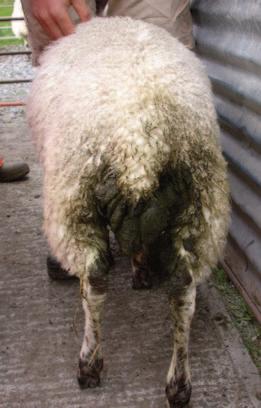
Signs of heavy infection are profuse, watery, yellowy-green diarrhoea which leads to severe dehydration. The fleeces of infected animals can become dull and rough and the animals may show a “tucked up” appearance
Lighter infections reduce appetite and productivity resulting in classical ‘ill thrift’
Benzimidazole (white drench; 1-BZ) resistance has recently been identified in Nematodirus battus populations in the UK. However, given that white drench resistance in Nematodirus battus appears to be at low levels in the UK at present, white drenches (1-BZ) are still recommended for the control of this parasite in young stock
Speak to your veterinary surgeon or advisor to ensure that you use a suitable anthelmintic to control Nematodirus on your farm




There are several species of Nematodirus (sometimes called thread-necked worms) that contribute to economic losses in lambs
Most of the losses in the UK occur in the spring in young lambs and are caused by Nematodirus battus
Like other roundworms Nematodirus have a simple lifecycle with one important difference, Nematodirus develop into larvae inside the egg rather than on pasture (Figure 1)
Nematodirus eggs don't hatch immediately after the larvae develop. The eggs need a prolonged period of chilling followed by at least ten days of temperatures above 10oC


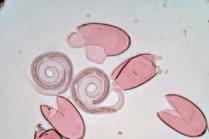
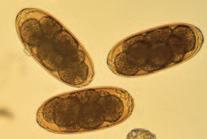


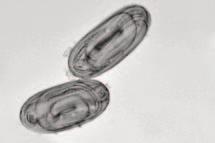
On farm, prolonged chilling would occur during winter months prior to eggs hatching in spring
Given optimal weather conditions, synchronous hatching of eggs can occur, resulting in an extremely high number of infectious larvae on pasture at once
Once the egg hatches to release the infective larvae, they rely on being ingested by livestock to complete their lifecycle
The ability to develop to the infective stage within the egg is a unique aspect of the Nematodirus lifecycle and affords the parasite immense benefits in terms of protection from adverse environmental effects. This added protection means that very high numbers of eggs survive to yield infective larvae resulting in very high levels of Nematodirus challenge from contaminated pastures. In comparison, the larval stages of other roundworms develop unprotected in the environment.
A working knowledge of the Nematodirus lifecycle is important for:
- Understanding where potential infection hot-spots may exist
- Identifying when lambs may be at risk of becoming heavily infected
- Making anthelmintic product choices
As Nematodirus is largely transmitted lamb-to-lamb and has a long incubation period (usually around 12 months) diagnosis of acute nematodirosis should take into account the previous grazing season and relative ‘risk’ of the pasture. ‘High risk pasture’ in this case refers to land which was grazed the previous spring by 1-3 month old lambs infected with Nematodirus.
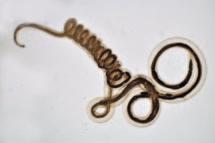
Heavy infections with Nematodirus larvae damage the small intestine, leading to diarrhoea and dehydration. The adult worms coil around villi in the small intestine (Figure 2) to maintain their location within the gut, causing damage. Some of the most severe clinical signs are caused by the immature parasites as they migrate through the gut. In some cases this can lead to sudden death before the parasites have matured to the egg laying stages. This means that heavily infected lambs can die before eggs are seen in a faecal egg count (FEC).
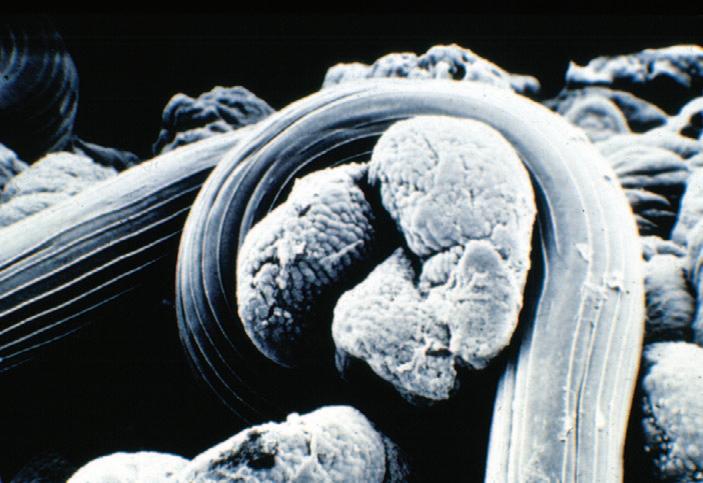
Acute infection in spring lambs
Acute nematodirosis occurs when naïve lambs graze pasture contaminated with high numbers of infectious larvae following a mass egg hatch.
Symptoms of acute nematodirosis:
• Profuse watery yellow, green diarrhoea which may contain blood and mucus (Figure 3)
• Dehydration
• Mortality if left unchecked
Chronic disease:
• Breech soiling
• Loss of appetite
• Rough wool
Where young lambs receive an early season check in growth due to Nematodirus, their performance throughout the rest of the grazing season may be compromised.
Q3
How can I diagnose Nematodirus infection?
Acute nematodirosis can be difficult to diagnose as severe clinical symptoms and even death can occur before the appearance of parasite eggs in the faeces.
The SCOPS hatching forecast is a useful tool which predicts the timing of nematodirus hatching in different areas of the UK (based on weather patterns) and can help with understanding when high-risk periods may be.
Faecal egg counts can be useful under certain circumstances:
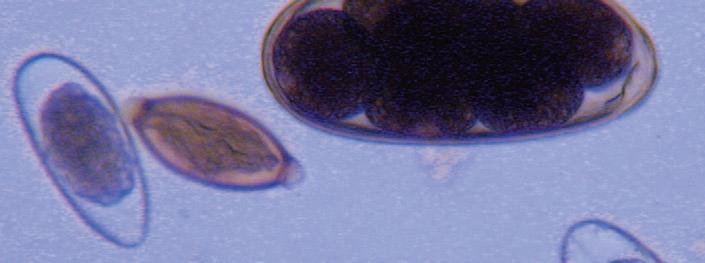
1. As confirmation early in the season (early spring) that symptoms of ill-thrift are not as a result of other roundworms (Figure 4) or other causes such as coccidiosis.
2. To check that any anthelmintic administration to control Nematodirus has been effective.
Ask your vet or faecal egg counting supplier to do a single pooled/composite sample for an inexpensive method of monitoring a group of animals.
With sheep it may be more practical and economical to gather samples from a group (mob). Fresh samples can be collected by holding animals in a corner of the field and allowing them to stand for a few minutes. Very fresh samples (steamers) can then be collected from the ground into individually numbered polythene bags (2-3 pellets or similar quantities of diarrhoea should be sufficient). Depending on the size of the flock, between 10 and 15 individual samples should be collected from each group of lambs to be examined. Ask your egg count provider to pool these samples for a single count.
Figure 4: Different roundworm eggs that can be observed under a microscope N – Nematodirus, S - Other Strongyle and T –Trichuris (whipworm)
Nematodirus is a disease primarily passed via eggs surviving on pasture from one year to the next, and pasture management plays an important role in reducing the risk of disease.
• Preventing susceptible lambs from grazing on pasture that carried young lambs the previous spring until the risk posed by that pasture has declined in late summer. Infective Nematodirus larvae survive only a short time on pasture, consequently by late summer the number of infective larvae remaining from the spring hatch should be low (subject to weather conditions)
• Grazing high risk pasture with other non susceptible stock such as adult cattle at the time of nematodirus hatch. These animals will hoover up infective larvae but will not become infected themselves
Note: studies at Moredun have shown that young calves in their first grazing season are capable of transmitting Nematodirus and thus should not be incorporated into such grazing strategies
• Reseeding of pastures will reduce but not eliminate parasite contamination risk
• Arable cropping
On many sheep farms with permanent pastures, it is often not possible to avoid high risk pastures. Under these circumstances farmers will have to resort to the strategic use of anthelmintics to control the risk posed by infected pastures. It is advisable to discuss anthelmintic treatment options with a vet or sheep advisor.
The white drenches (benzimidazole, 1-BZ) remain the anthelmintic of choice for the control of Nematodirus due to the high safety index (safe choice for young stock) and high efficacy on most farms.
In lambs grazing on high risk pastures and in seasons that are considered to provide high risk conditions (see Q5) multiple anthelmintic treatments may be required. The need for repeat treatment can be assessed by conducting a postdrench efficacy check (PDEC). In animals where risk is considered to be very high, it may be necessary to administer up to a total of three treatments with an effective anthelmintic given three weeks apart to control disease. However, on many farms this will be unnecessary and one or two treatments should serve to minimise the risk.
Key points:
• The first cases of anthelmintic resistance in Nematodirus were identified in a number of sheep flocks around 10 years ago
• Resistance to the other drug classes has not been reported in Nematodirus to date
• Treatment failure has only been confirmed on a few farms
• SCOPS advise to continue using white drenches BUT to conduct a post drench efficacy check (PDEC) 10-14 days after treatment to assess how well the drug has worked
- As white drench resistance is currently present at low levels, Nematodirus populations on the majority of farms will be successfully removed/controlled using white drenches
• The use of white drenches early in the grazing season when other roundworms are not present could ‘safeguard’ other anthelmintic classes for use later in the season as the more often an anthelmintic drench is administered, the more likely worms are to develop resistance to that drug class.
• White drench resistance in other roundworms (e.g. brown stomach worm, Teladorsagia) is widespread in the UK.
• Other anthelmintic classes will also be effective against Nematodirus. These could be a good choice if treating Nematodirus later in the season when lambs have a significant level of co-infection with other roundworms (diagnosed by FEC). Speak to your vet for support in making treatment decisions.
Q5
It is important to know if your drugs are working effectively as unidentified resistance could lead to treatment failures and potential production losses. A simple and inexpensive PDEC can be performed to assess how well a drug is working.
Post drench efficacy check (PDEC)
• Collect 10-20 fresh faecal samples from animals 10-14 days after treatment with a white, clear, orange or purple wormers and 5 - 7 days after treatment with a yellow wormer.
• Faecal samples can be pooled and a single egg count performed on the pooled material by your veterinarian or practitioner
• If the drug is working effectively then very few worm eggs will be present in the post-treatment sample
How can I predict when to administer the first anthelmintic drench to spring lambs to control Nematodirus?
• The hatching of Nematodirus eggs is highly dependent upon climatic conditions and will vary year to year; region to region and even field to field.
• It is possible to forecast the approximate timing of ‘peak’ Nematodirus egg hatch, i.e. the synchronous hatching of eggs which can lead to acute disease
• The forecast is based on a mathematical model which analyses weather data from across the UK
• The forecast is available online at www.scops.org.uk/nematodirus-forecast along with additional information on sheep health
Tips for forecasting:
• Find the weather station closest/most appropriate to your farm
• Check the height above sea level of the weather station you are referring to in the forecast (click on station to view details). As temperature decreases on average 1oC per 100m, height above sea level may significantly impact on the timing of the Nematodirus hatch, therefore, your most appropriate weather station may not be the closest to your holding
• Monitor the predicted timing of the peak hatch throughout spring and early summer
• Lamb age
• Coccidiosis risk
• Sudden cold weather followed by warmer weather
• Lambs under other stressors (e.g. triplets, fostered, on young/older ewes)
Dips in the temperature can interrupt the hatching of Nematodirus eggs. If a proportion of eggs have not hatched when temperatures shift above or below the hatching range, they will remain intact and hatch when temperatures re-enter the appropriate range. Young lambs are therefore at greatest risk in years where spring temperatures remain above 10oC day/night for a significant period of time as this will allow for maximum hatching of infectious larvae. In years with highly fluctuating spring temperature, hatch may be slow and therefore less likely to result in the acute form of the disease.
Nematodirus is typically described as a spring-time disease of young lambs transmitted from one year’s lamb crop to the next. However, the behaviour of this worm and is now regularly observed (Figure 5).
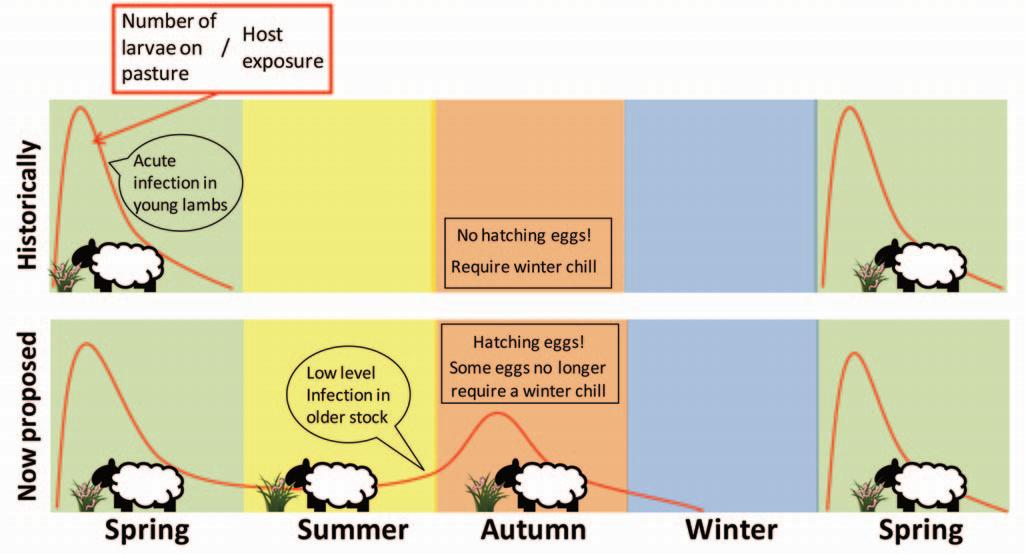
Nematodirus infection remains a major issue for spring lambs with disease most commonly and acutely observed in spring. However, it has been reported throughout the year and in a survey conducted by Moredun, 50% of responders observed Nematodirus outwith spring, 15% of which experienced disease in autumn and 3% in winter. The secondary rise of this parasite in autumn has been repeatedly reported on a significant number of farms throughout the UK.
• Studies into changes in the hatching behaviour of Nematodirus have shown that a proportion of eggs from some farms are able to hatch without undergoing a period of chilling. It would therefore be possible for these eggs to be shed in spring and hatch later the same grazing season, when temperatures re-enter the hatching range in autumn (Figure 5)
• In years where spring temperatures fluctuate greatly or remain within the hatching range for only a short period of time, the spring hatch may be interrupted. In this situation, low level hatching may occur throughout early summer or autumn depending upon temperatures. The autumn hatch may therefore also include eggs from the previous year which were prevented from hatching in spring
• Alternatively it is also possible that autumn Nematodirus may have arisen from the selection of late hatching populations since our spring anthelmintic treatments directed against Nematodirus might be expected to suppress those populations with a tendency to hatch in spring
Which animals are at risk of infection in autumn?
Any animals which have not been previously exposed to Nematodirus will be at a greater risk of developing the disease in autumn, e.g. lambs which did not receive a high Nematodirus challenge in spring. These may be lambs which were grazed on low contamination/clean pasture in spring or lambs grazed in a year where the spring hatch was interrupted, or occurred early before the lambs were eating grass thus a high larval challenge was not present. In this situation lambs may miss the spring infection and will not develop any natural immunity so will be at greater risk later in the year.
Nematodirus is spread between lambs with adult sheep playing only a very minor role in the transmission of infection. Animals which have been previously exposed to sufficient levels of Nematodirus can develop a protective immunity to this parasite relatively quickly (usually by 3 – 6 months of age). Once immunity has been developed, it is believed to be maintained throughout the animal’s life (with the possible exception in female animals around lambing). Previously exposed animals can still become infected, but usually with a low level infection. Whilst these animals are unlikely to suffer disease symptoms, they can be responsible for laying down contamination for the following year and spreading worm eggs to additional areas of the farm.
Minimise Nematodirus risk for lambs
Grazing
• If possible, avoid grazing young lambs on highly contaminated fields (those grazed yearly by 1-3 month old lambs)
• Skip a year – graze adult cattle, crop or re-seed to reduce contamination for the following year
Forecast hatch: Be prepared
• Monitor online forecasts to predict when Nematodirus eggs on your farm are most likely to hatch (http://www.scops.org.uk/nematodirus-forecast.html)
Control the disease
• Treat groups of ‘at risk’ lambs (those grazing contaminated fields around the time of the predicted Nematodirus hatch) with an effective anthelmintic treatment
• Conduct a post drench efficacy check (PDEC) to ensure the treatment has worked


Produced by The Moredun Foundation Pentlands Science Park, Bush Loan, Penicuik, EH26 0PZ, Scotland
Phone: +44 (0)131 445 5111
E-mail: info@moredun.org.uk
Website: www.moredun.org.uk