







ENSURE SAFETY WITH HIDDEN FASTENERS.


1 2 3 4 5
Trex’s hidden fastening systems eliminate the risk of sharp nails or screws protruding from the deck. This helps prevent potential paw injuries and painful snags.
PROTECT PAWS WITH COMPOSITE DECKING.

Trex’s durable composite deck boards resist scratches and remain splinterfree. It also eliminates the need for toxic staining.
BANISH STAINS.
Made with durable, resistant, recycled materials, Trex decking boards can stand up to any dog-related mess. Stains remove easily with soap and water.
ENHANCE SAFETY WITH LATTICE.
Trex’s lattice collection offers a reliable solution that restricts access to the underside of the deck. Keeping pets safe and unwanted critters out.
BEAT THE HEAT WITH LINEAGE® DECKING.
Trex boards made with SunComfortable heat-mitigating technology, can offer your pets a cooler experience. This ensures that your pets can play and lounge more comfortably.



MARCH 23–26, 2026

SESSION 1: 4:40–5:40PM | SESSION 2: 5:40–6:40PM
Splash Camp is for kids who love to swim and want to grow their swimming skills. Learn competitive strokes from certified coaches and current Barracudas in the water!
Bozeman High School Swim Center
$100 Per Participant (SWAG Bag Included!)



Kids ages 5 +
*Participants must be able to complete one length of freestyle and backstroke without floatation devices
Registration is limited! For more information scan the code
Proudly
®
Health Benefits! Swimming is a fun way to keep your kiddos active and healthy.









Improves Social Skills! Swimming will give your child the opportunity to meet new friends their age who share similar interests!


Boosts Confidence! Swimming helps children overcome fears and teaches them to adapt to new challenges.
Improves Mental Development! According to studies, due to the exercise, swimming helps children develop their mind/body connection.
Reduces Stress! The increase of endorphins in the brain from swimming help kids to effectively relieve their stress.
Teaches Safety Skills! Swimming teaches children a lifesaving skill and helps them be more aware of their surroundings and others.
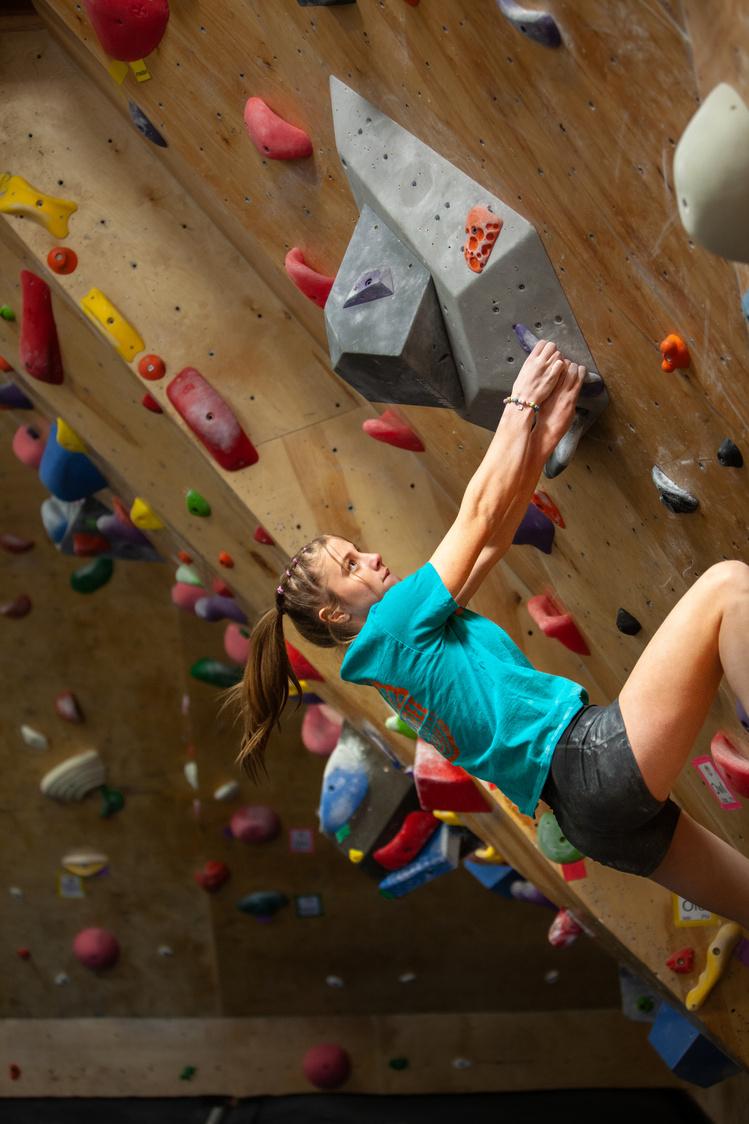
Indoor Climbing camps.
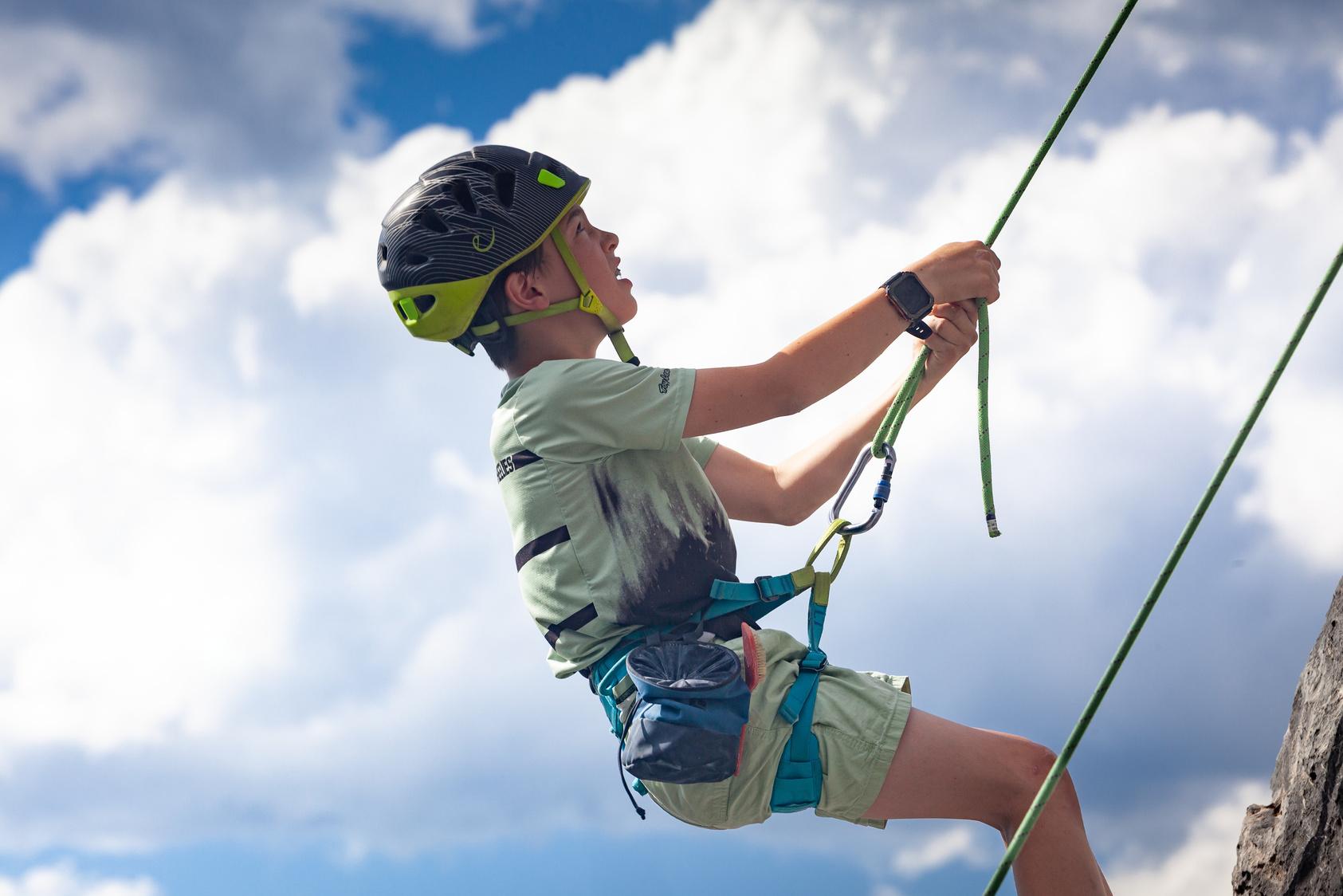
Outdoor Climbing camps.
Ages 12-14, Middle School
Outdoor Climbing Camp:
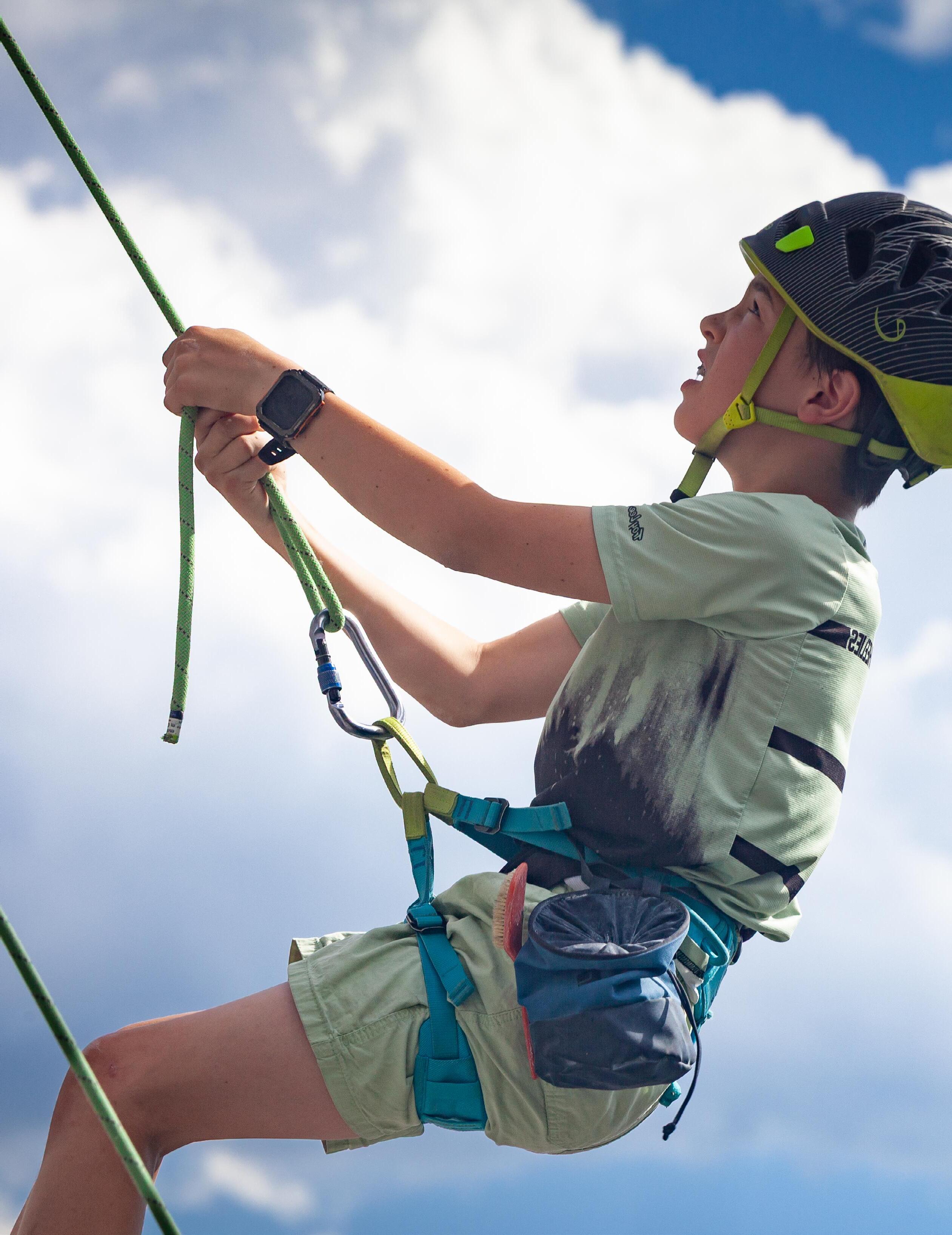
Climb Helena crags. Five days of climbing, confidence-building, and adventure. Learn knots, belaying, and safety All day camp
Monday–Friday (8:30 AM – 4 PM).

Ages 15-18, High School
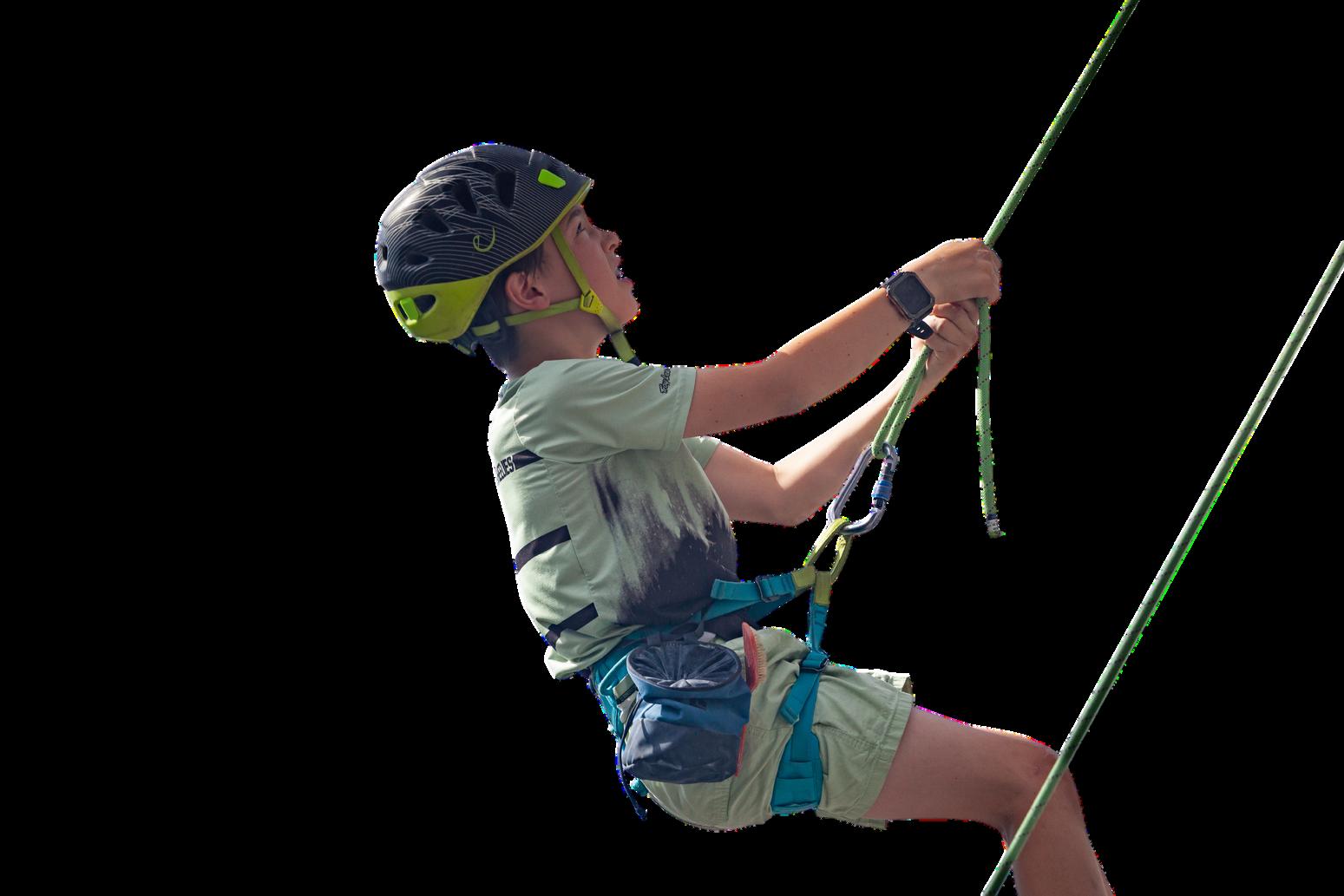
Outdoor Climbing Camp:
Climb Helena crags for 3 days and camp 2 nights at a premier Montana crag Learn climbing techniques, rope work & backcountry safety.
Monday–Friday (All Day + 2 Overnight).
Monday–Friday (8:30 AM–12:00 PM). NO EXPERIENCE NEEDED FOR ANY OF OUR CAMPS!
Ages 9-11, Afternoon
Indoor Climbing Camp:
Bouldering fundamentals, ageappropriate techniques and games, and learning how to progress through grades. Snack, arts & crafts, & outdoor activities
Monday–Friday (1 PM– 4:30 PM).
Ages 6-8, Morning
Indoor Climbing Camp:
Our youngest climbers will learn bouldering basics, safety & technique through fun games & activities. Snack, arts & crafts, and outdoor games.

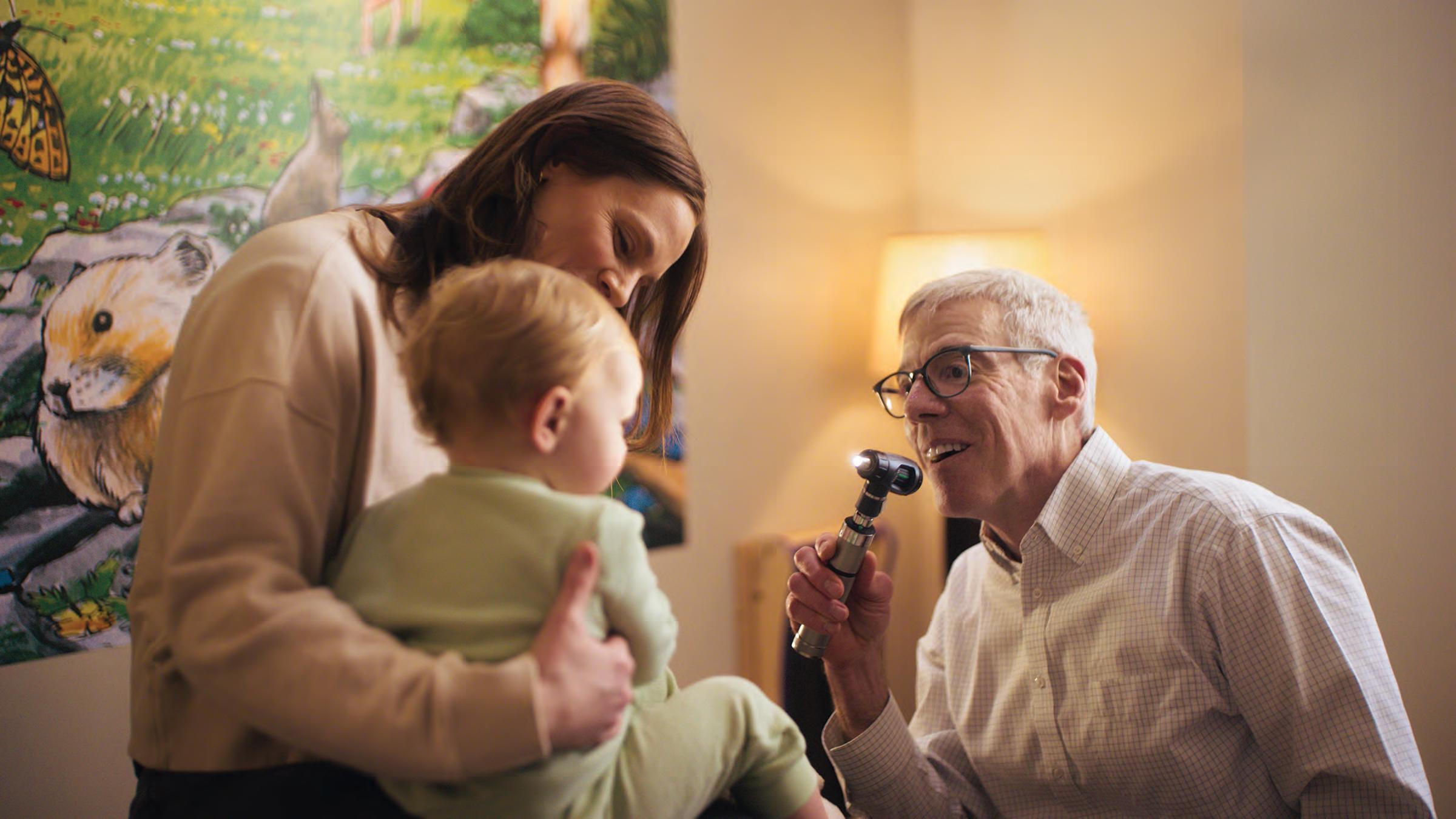
From common skin conditions like eczema, acne, allergies and insect bites to more complex issues such as birthmarks, genetic skin disorders, and skin cancers, we offer a wide range of services to meet your family’s dermatologic needs.
We offer same-day and next-day medical appointments, and we are in network with most insurance companies.

Dr. Crowley is a Helena native dedicated to serving Montana families with thoughtful, evidence-based dermatologic care. A board-certified medical dermatologist, he treats both adults and children with a thorough, patient-centered approach.

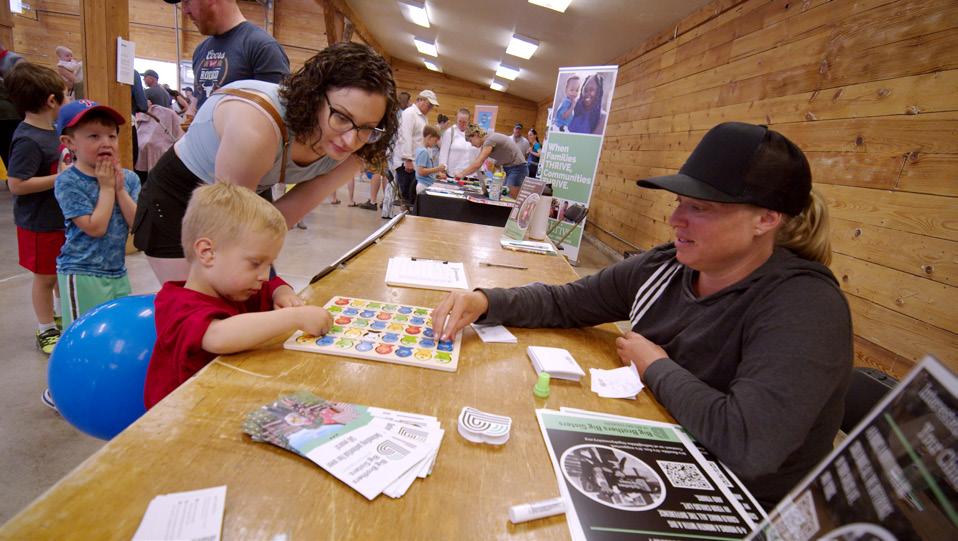

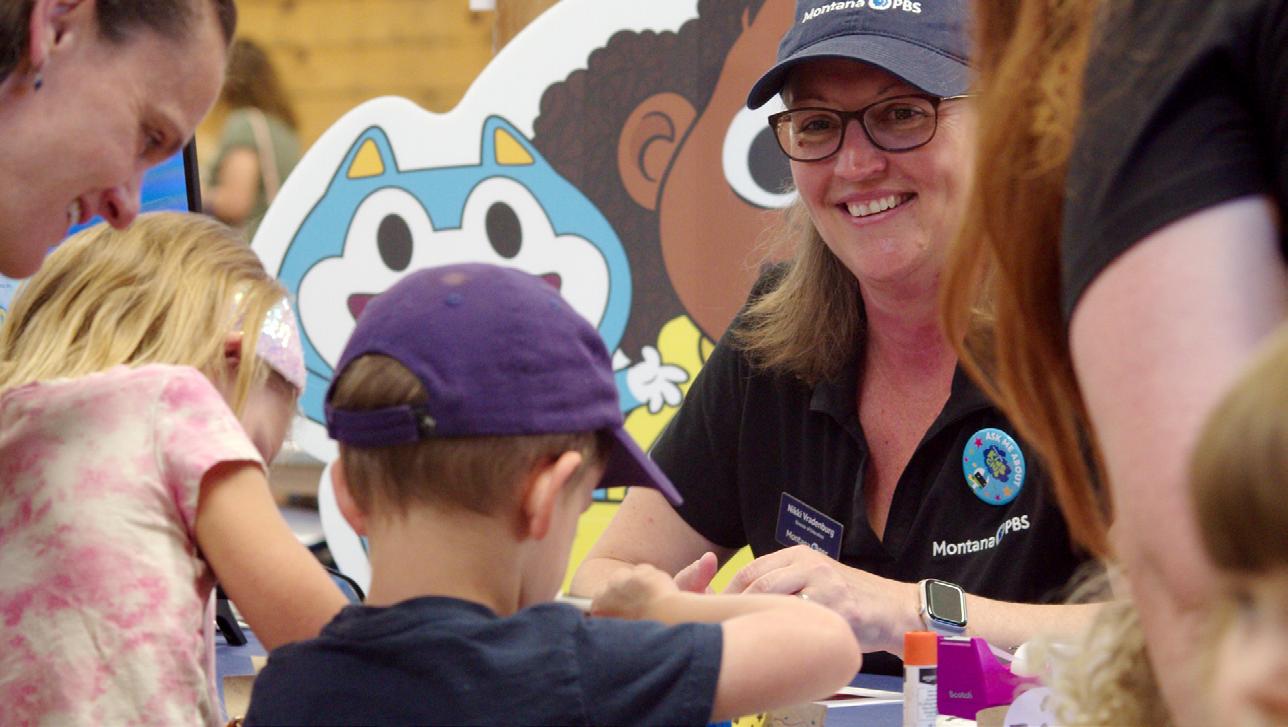
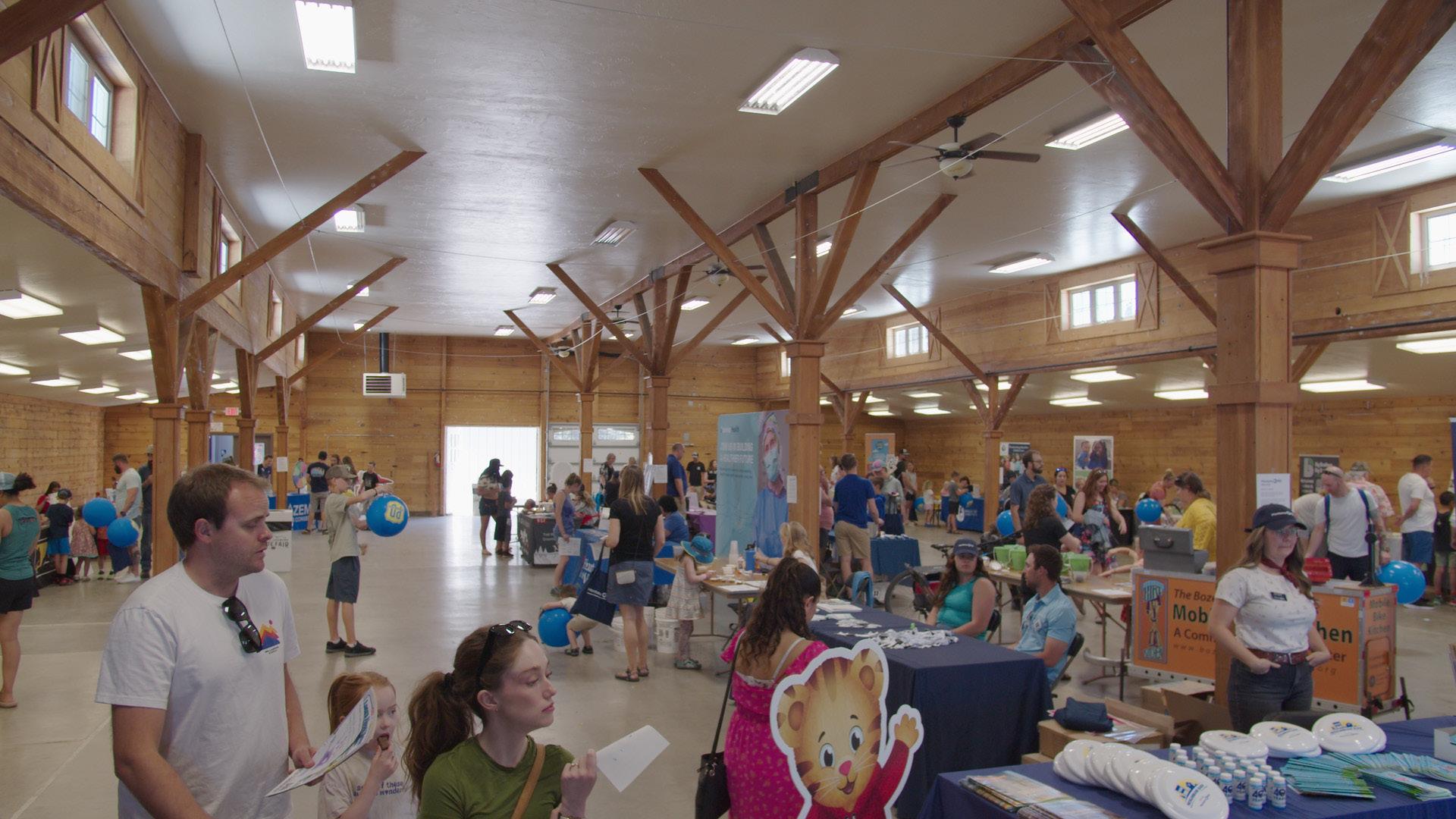
Neighbor Day, Montana PBS’s annual fun-filled day of learning, is just around the corner! We've partnered with community organizations across Gallatin County to host an event that’s perfect for families with children ages 3-8 in Bozeman. There will be tables and booths full of hands-on educational activities focusing on STEM and literacy, summer resources for parents, and a Daniel Tiger meet-and-greet!
It's a beautiful day in the neighborhood, so please won't you be our neighbor?
Saturday, June 13th, 9am-12pm Gallatin Valley Fairgrounds

Two Bozeman Locations
(North campus) 3774 Equestrian Ln. (South campus) 233 Enterprise Blvd.
Serving ages 6 mths to 6 yrs
*some exclusions may apply Save up to 20% per month!
Enrolling Infant, Toddler and Primary classrooms!
• Hot lunches & snacks from our own school kitchen included with tuition
• Weekly music classes included
• Supportive community of teachers & families
• Licensed early childhood center with DPHHS since 2013
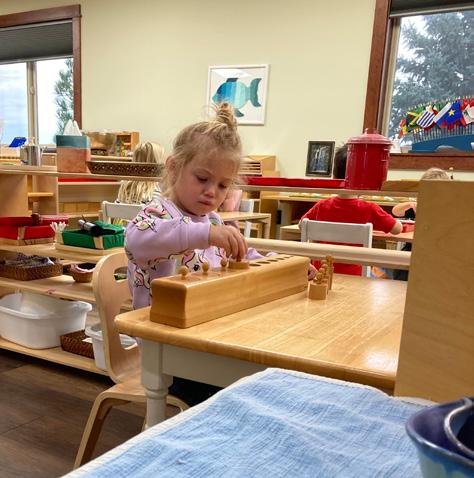
• Children’s developmental needs supported by trained Montessori teachers
• Variety of scheduling options available
• Spacious, beautiful environments
• Best Beginnings scholarships accepted!
CONTACT US TODAY!
Email: enrollment@bozeman montessori.com Ph: (406) 600-8098 www.bozemanmontessori.com Follow us on


PUBLISHER MEDIA MAVENS LLC PO BOX 11056, BOZEMAN, MT 59719 INFO@MTPARENT.COM
ADVERTISING/OWNER CORA DESANTIS CORA@MTPARENT.CO M 406-579-0746
EDITOR IN CHIEF/ACCOUNTING/OWNER LEIGH RIPLEY LEIGH@MTPARENT.COM
CREATIVE DIRECTOR/OWNER SHAUNESCY WILLARD SHAUNESCY@MTPARENT.COM

LAYOUT & DESIGN SHAUNESCY WILLARD
COPY EDITORS ELEONORE SNOW & LEIGH RIPLEY
AD DESIGN BRITTNY CUFF
COVER PHOTO STONETREE CLIMBING CENTER
SOCIAL MEDIA BRITTNY CUFF, ANDREA HILL & CORA DESANTIS
PRINT MAGAZINE DISTRIBUTION CORA@MTPARENT.COM
SUBMIT PHOTOS SHAUNESCY@MTPARENT.COM
CONTRIBUTING WRITERS: BOB GOODWYN ALI SCHWEITZER
JEANNINE TIDWELL
NAOMI SHAFER
AMY PRECHTER
DR. JAKE CHIPPS
RYAN HANNAHOE
MARDY HARDING
ALLEGRA BERESZNIEWICZ, M.S., CCC-SLP CALLIE KAZAKOFF AND OLIVIA FIRTH
VICTORIA VAN GARDEREN
MEREDITH JOHNSON
DESIREE MCCANN
FLORA MCCORMICK
BLAIR FJESETH
* Montana Parent strives to provide accurate information and entertainment to our readers. Some content may be based on opinion of the author and may not represent our views. We want all voices to be heard, so we all can be educated on both sides of important issues.
CONTRIBUTING PHOTOGRAPHERS: STONETREE CLIMBING CENTER
TWIN EAGLES WILDERNESS SCHOOL
CEDAR RIDGE EQUINE AMERICAN COMPUTER MUSEUM MONTANA LEARNING CENTER CAMP MIMANAGISH CAMP BIG HORN
LISTING PHOTOS PROVIDED BY INDIVIDUAL CAMPS


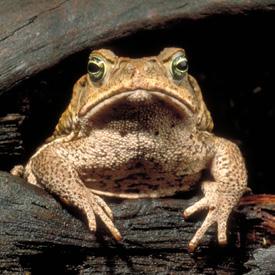
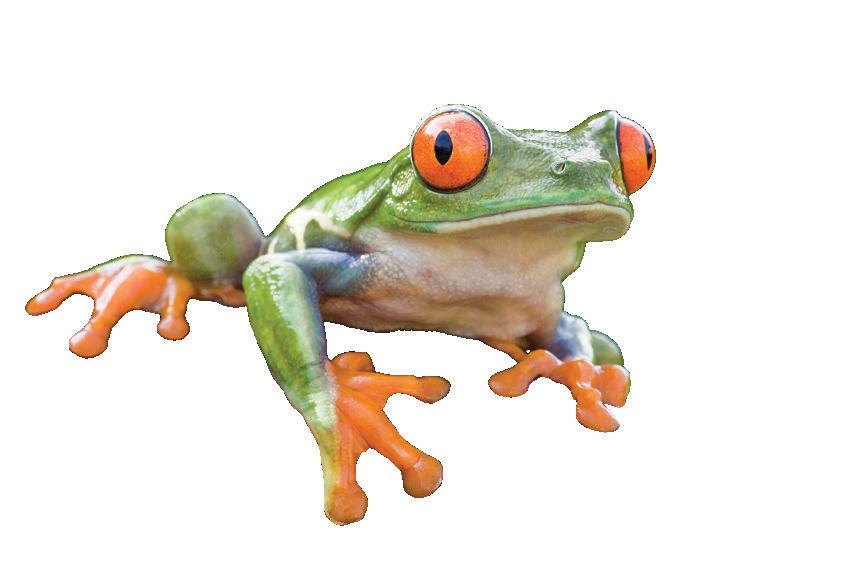
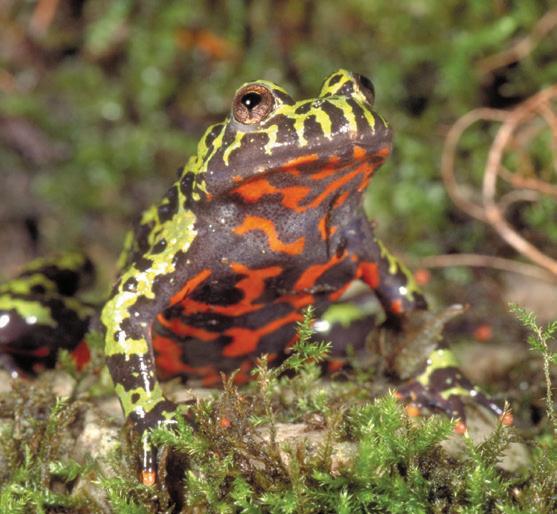


Discover singing, camouflaged, and wildly colorful frogs in habitats filled with live plants and rainforest vibes. Play with hands-on interactives, trigger real frog calls, and get noseto-nose with nature’s most surprising superstars.
Explore every side of these amazing amphibians - their biology, natural history, role in human cultures, importance to ecosystems, and the threats they face in a changing world.
This immersive adventure is fun, fascinating, and ribbit-ing for all ages! Scan the QR code to learn more.
Clyde Peeling’s Reptiland in Allenwood, Pennsylvania, an institution accredited by the Association of Zoos and Aquariums, created, tours, and provides a professional keeper for the



place—only to realize it all happened during the 20 minutes of recess squeezed between classes and a rushed lunch.
These are the stories that matter.
WRITTEN BY BOB GOODWYN, OWNER OF STONETREE CLIMBING & FITNESS
Camps check a lot of boxes for families: They’re active; they’re engaging; they help solve the everpresent question of summer childcare — and, most importantly, they’re fun.
But if we zoom out for a moment, camps are something more than a schedule-filler between school years. They’re experiences. They’re where friendships form quickly, confidence grows quietly and kids discover parts of themselves they didn’t know were there.
At their best, camps are a beautiful blend of recess, classroom and experiential learning— wrapped up with friends.
The range of camps available to families today is impressively wide, and that’s a good thing. There truly is something for everyone.
For the creators among us, immersion is powerful. Spending consecutive days painting, drawing, playing music, acting or building allows skills to deepen in a way that once-a-week lessons can’t quite replicate.
When kids have uninterrupted time to explore creativity, confidence often follows.
There are also camps that are less about mastery and more about exploration—trying something new, being outdoors, learning by doing. These are often the camps kids talk about long after summer ends.
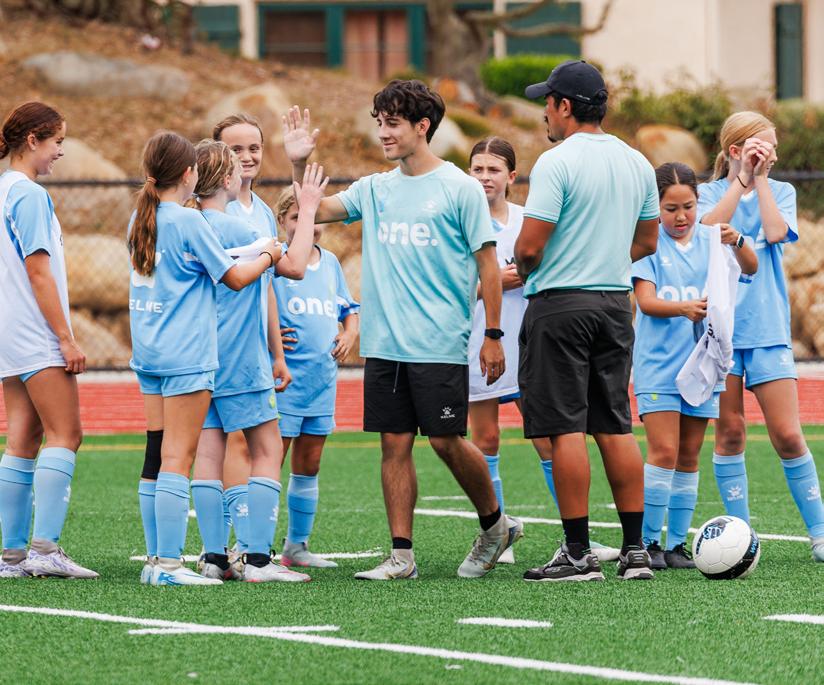
Then there are super active camps—think football, basketball, soccer, gymnastics or swimming— where even the “breaks” involve movement. These are the camps that make parents think, I’m going to have to pack two lunches today.
This was me every summer. I remember doing football camp in the morning and swim camp in the afternoon, then coaching that same schedule as a high schooler. Nothing sharpens skills like five days in a row of throwing, kicking, climbing or flipping. Kids come home tired, proud and slightly run-down and we wonder why they want to wake up and do it all over again.
If you’ve ever asked your child, “How was school today?” you probably know the answer that follows.
You might hear 45 minutes of detailed storytelling about who chased who on the playground, who’s really cool these days, who’s kind of annoying and what imaginary game took
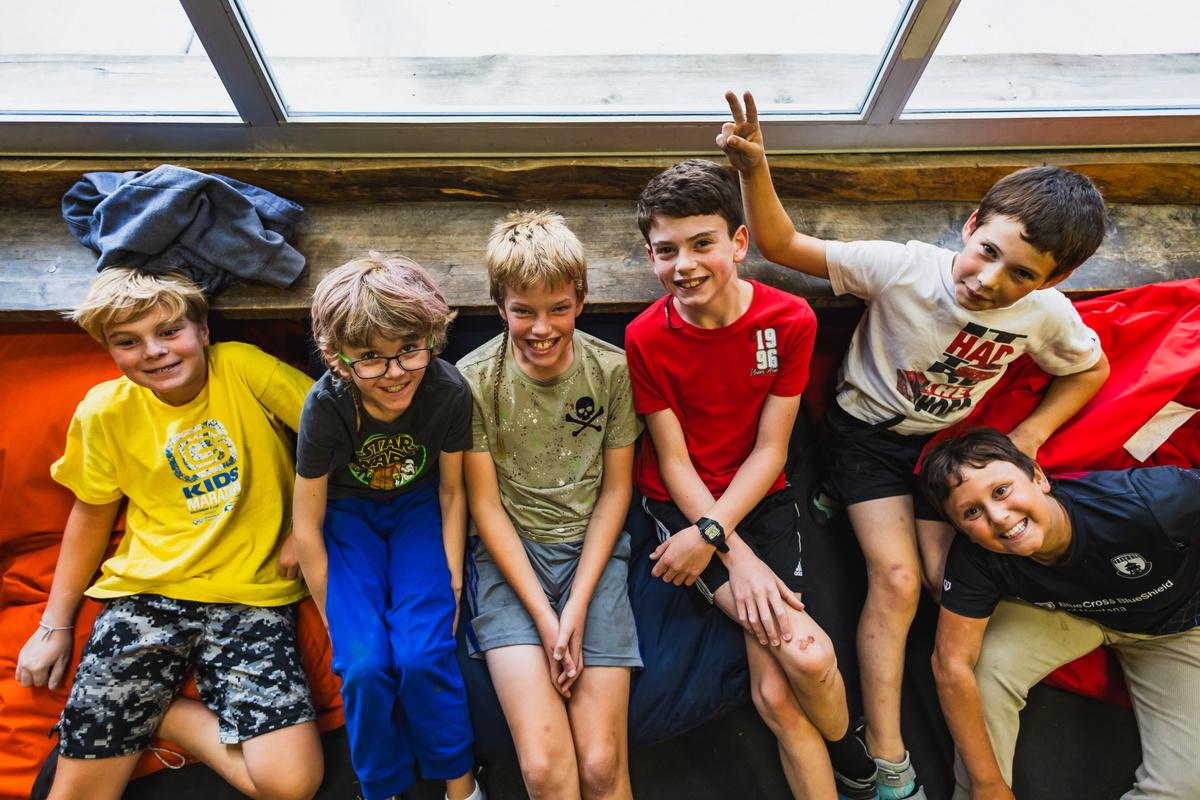
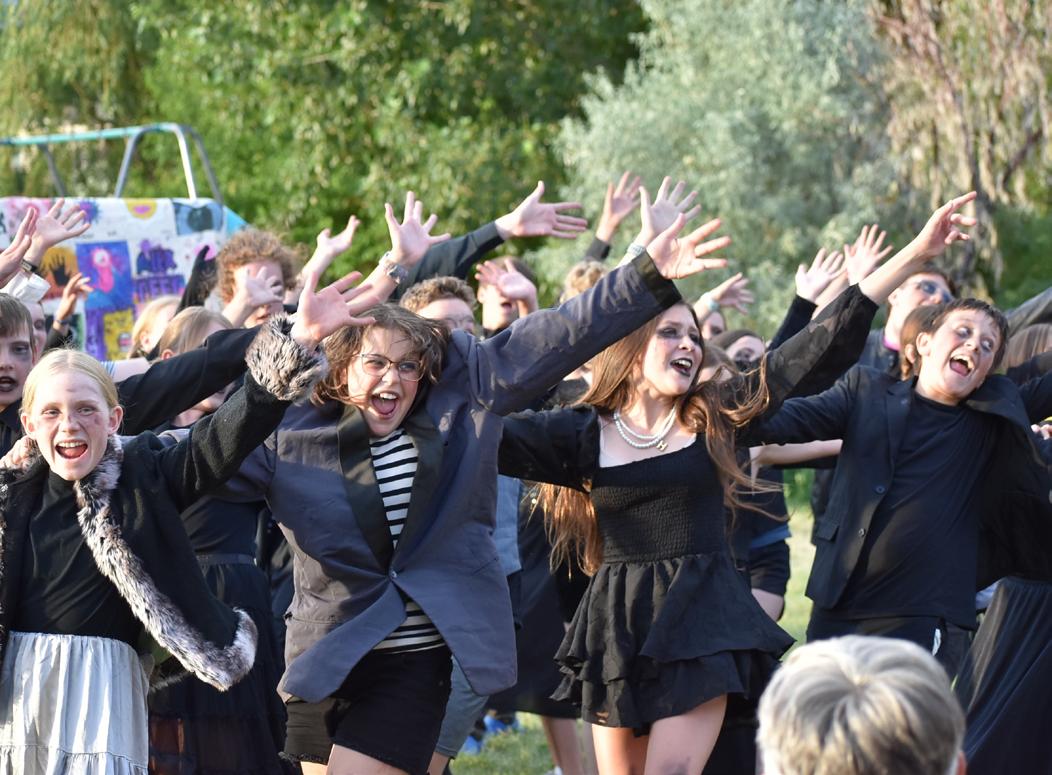
As much as kids may enjoy the activity itself— sports, games, art—it’s the interactions that stick. The friendships. The inside jokes. The shared moments of success, frustration and laughter. Camps, whether spring break or summer, take that recess magic and stretch it into full days, full weeks and sometimes lifelong memories.
Camps create a unique social environment. Kids get to spend full days with friends who share their interests, or meet new friends they didn’t even know existed yet. In many cases, they’re discovering both a passion and a best friend at the same time.
Here’s a small but telling example: I can still remember the name of my middle school crush from camp—but I also remember the first and last name of the kid I played the most basketball with. In fact, we reconnected just last summer, and we might even have his kids at Stonetree this summer. That’s the kind of connection camps quietly create, coming full circle.
But one of the most powerful elements of camp often goes unnoticed: mentorship.
Most camps are led by young adults—high schoolers, college students or early-career professionals—who genuinely love what they’re teaching. Think of the high school basketball player trying to play at the next level, the budding artist working toward their first break
or the ski coach who logs 100 days in winter only to fly south in May to chase more snow in the southern hemisphere. These aren’t far-removed authority figures. They’re close enough in age to be relatable, aspirational and deeply influential.
I can still remember my eyes popping open when one of my ski coaches told me about their first backflip.
There’s something powerful about watching someone you look up to love the same thing you’re learning. Passion is contagious. Confidence is modeled. Kids see what’s possible when someone sticks with something they care about.
That combination of shared experience, friendship and mentorship is where camp really shines.
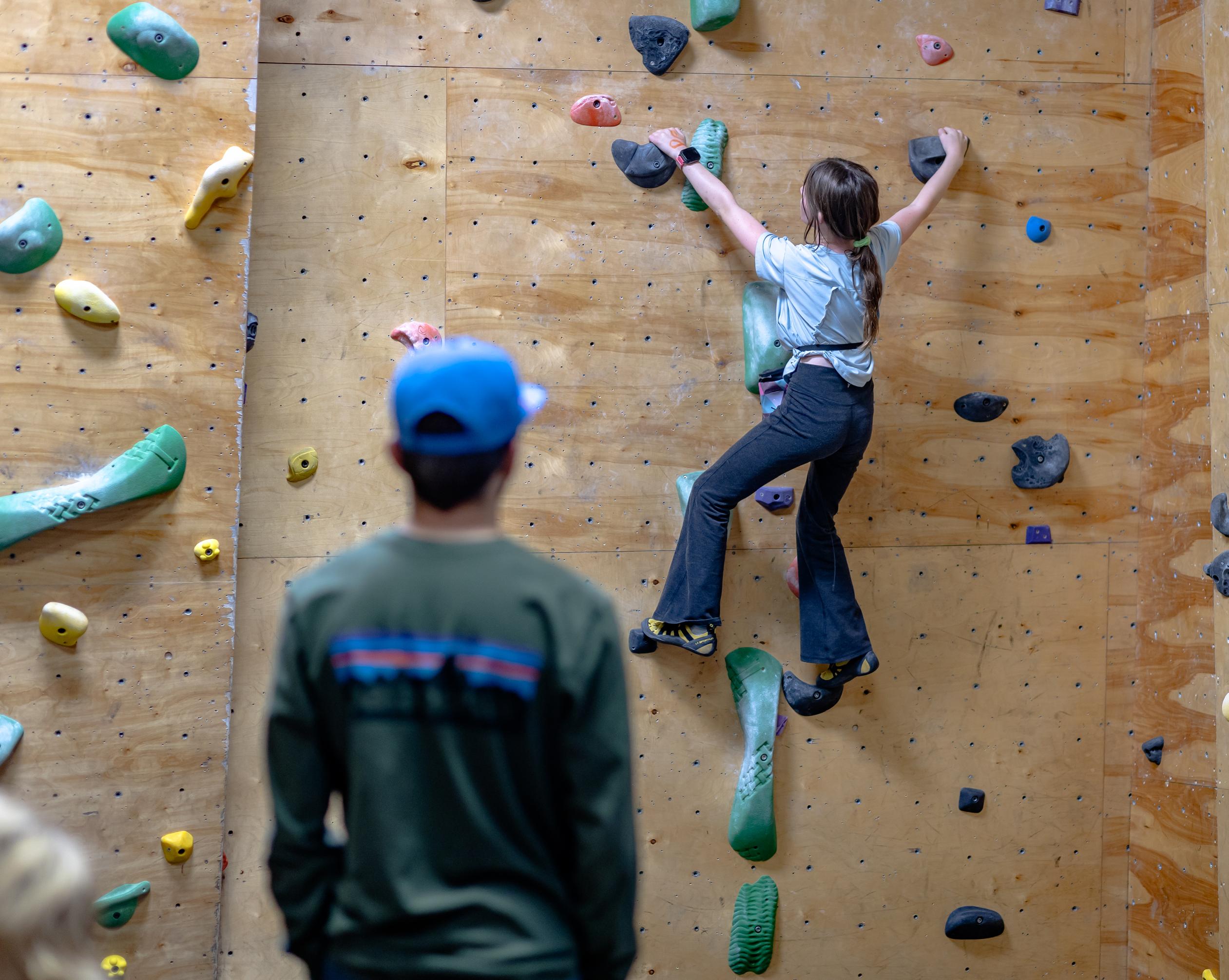
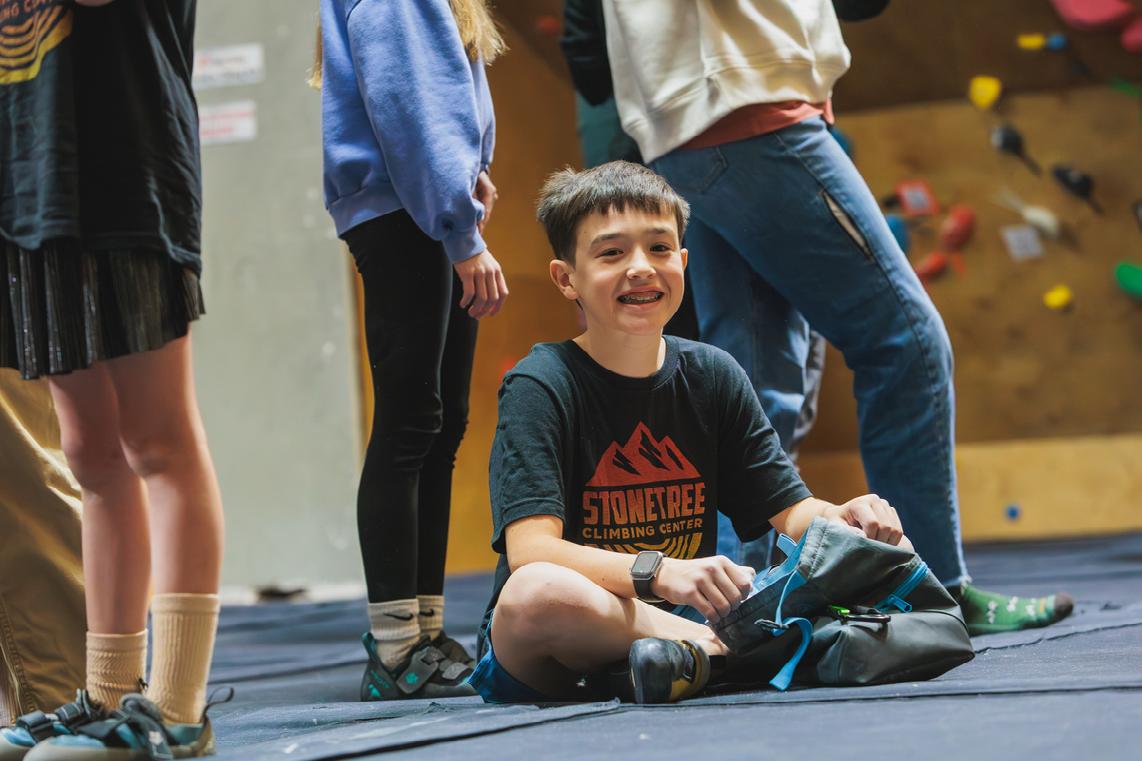
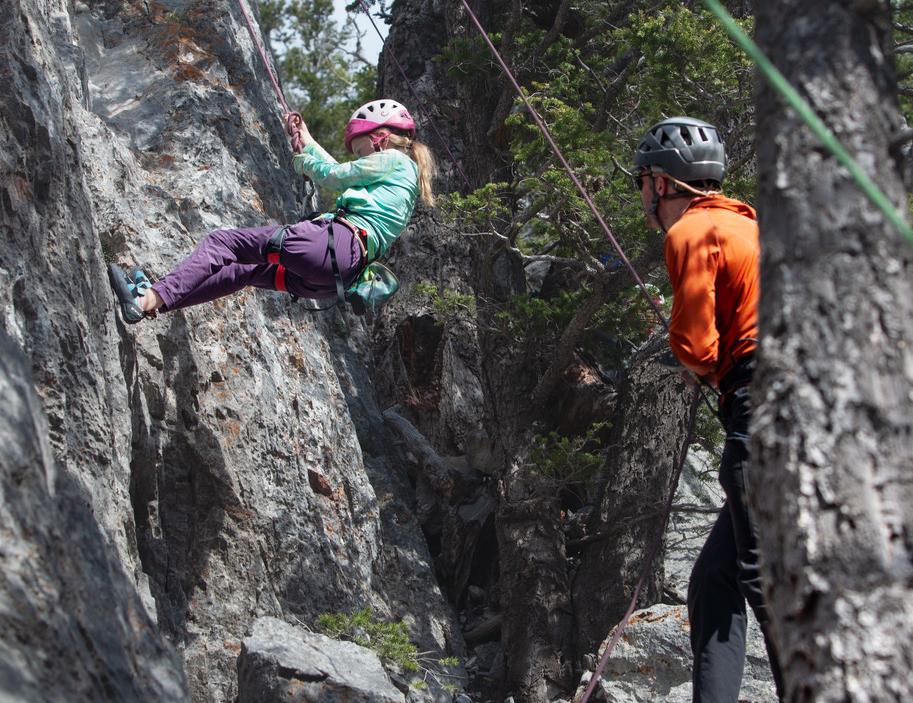
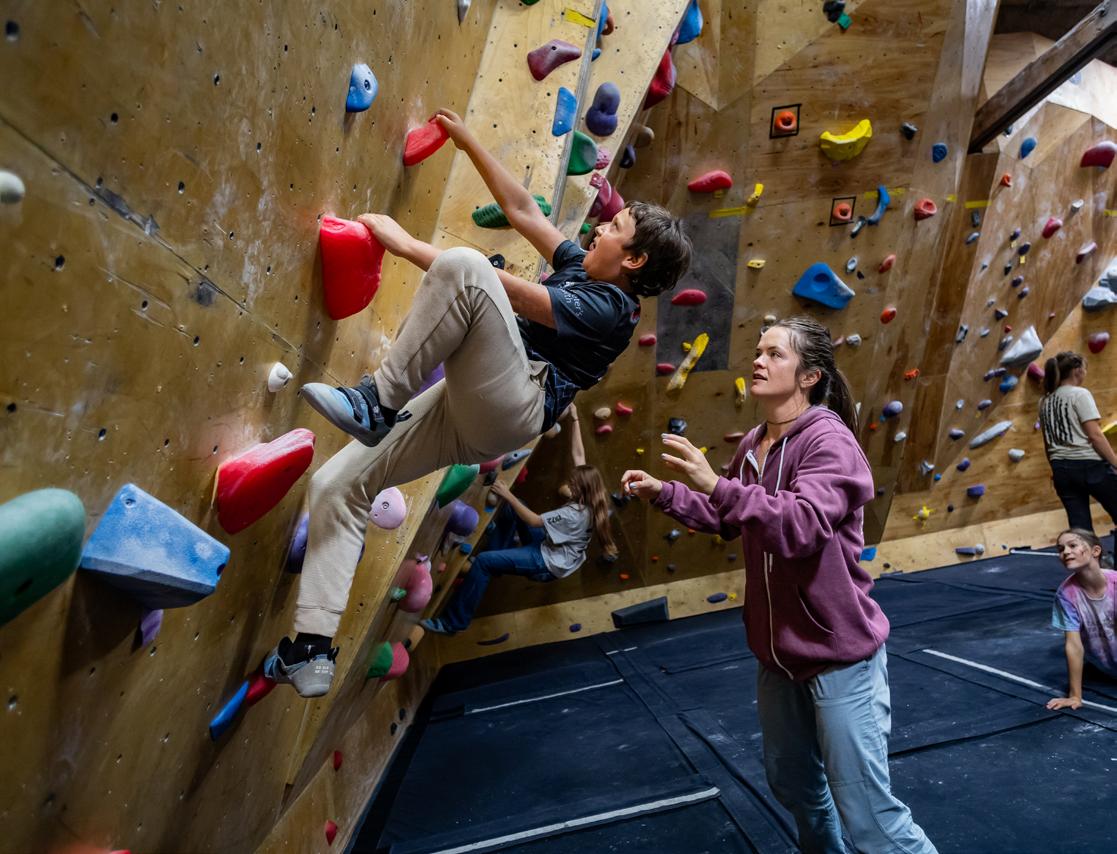
At Stonetree Climbing Center, we see this dynamic play out every day—and especially during spring break and summer camps.
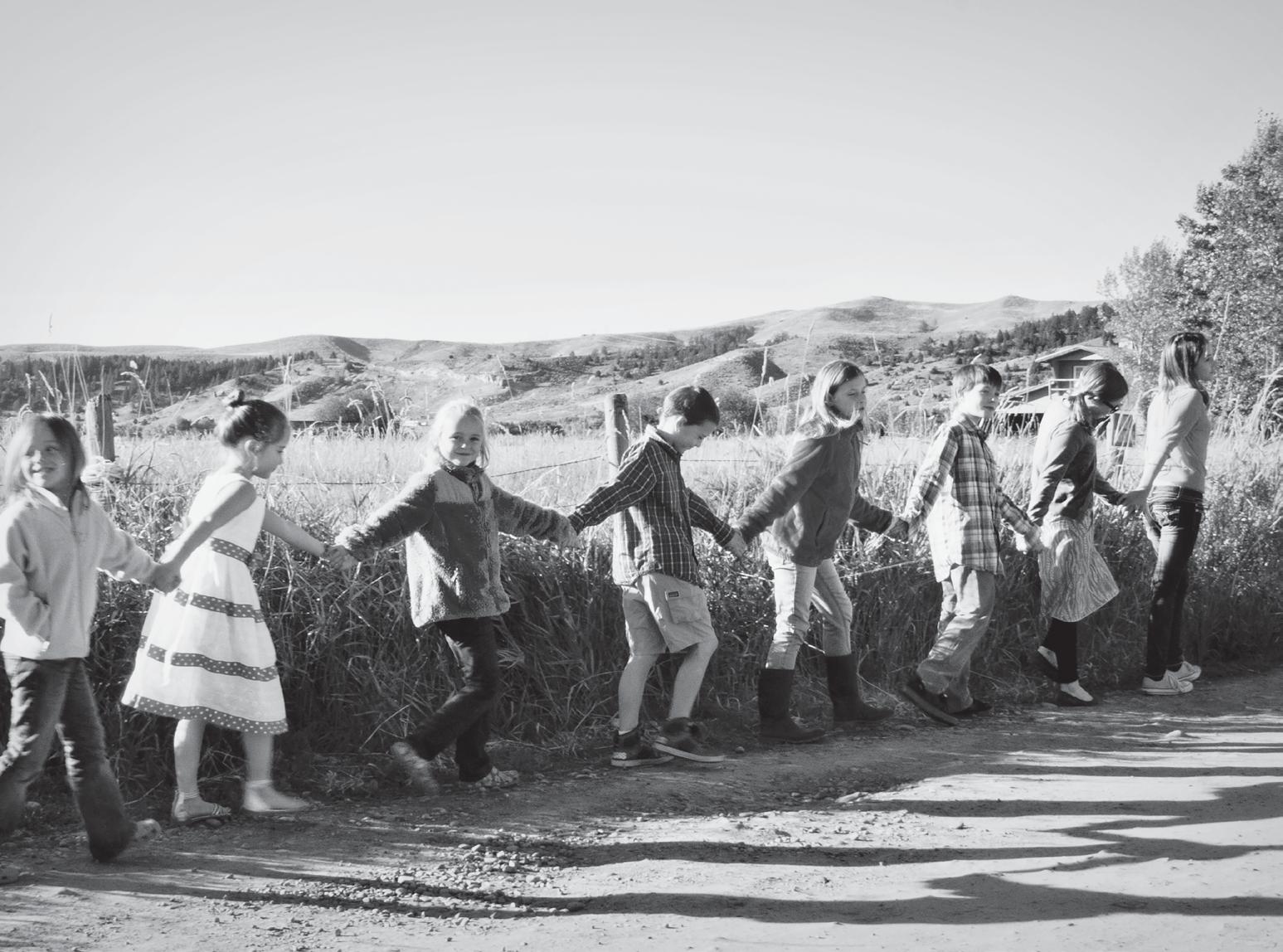
Climbing is uniquely suited for building friendships and mentorships. Only one person is on the wall at a time, but no one climbs alone. Friends and mentors are always right behind you—cheering, encouraging, offering advice or simply being present.
Our camps blend indoor climbing, outdoor experiences, movement games and skillbuilding. We climb. We explore. We problemsolve. And we do it all with a strong sense of belonging, alongside peers and mentors who care deeply about the experience.
Whether it’s sports, arts, robotics, climbing or something entirely different, camps offer kids space to grow socially, emotionally and physically—through shared experiences.
If you’re wondering what to do for your child this summer, start with a camp. Find something that sparks curiosity. Find something that brings kids together with mentors who are passionate about what they do. The skills will come. The friendships might last much longer.
From a lifelong camper—that’s why camp matters.
Bob Goodwyn is the Owner of Stonetree
Ages
Full
$1,900
$2,400
$190
$240
$2,550 Members
$3,550 Non-Members
Individual Week
$280 Members
$355 Non-Members

By blending ancient wilderness survival skills with nature-based mentoring, Twin Eagles helps students of all ages build confidence, leadership and a profound relationship with the wild.
This summer, Twin Eagles returns to Bozeman to host two special weeks (June 22 and June 29) of Nature Day Camps at Gallatin Valley Botanical. Children ages 6-13 are invited to dive into the elements and experience the deep, messy healing of nature firsthand.
Learn more and register at www.twineagles.org.

It emerges from the ground with a soft, wet, earthy smell in the spring and summer. When the sun hits, it shines. You can squish your toes in it and feel delight from its cool, smooth dampness. You can slide in it and be surprised at where you’ll land. You can build with it, make art with it, soak or take a bath in it, wrestle in it, stomp in it and get downright dirty in it. And one of the best parts is, it’s free!
In a sanitized world, mud might not be in your reach. However, when I consider the rich textures that make up life, mud is marvelous. It’s an essential ingredient and an important element in our connection with nature.
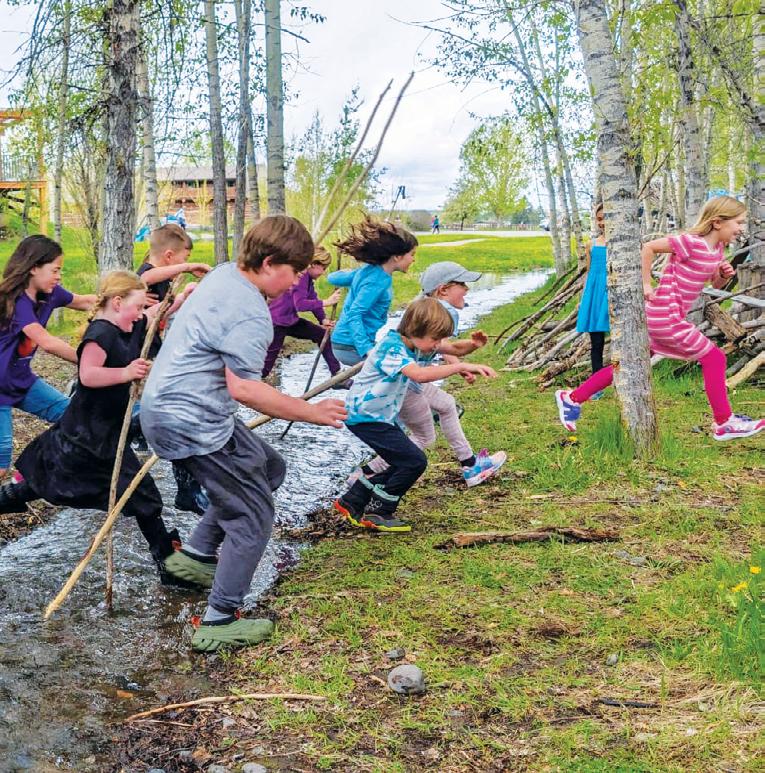
I ran a program with a bunch of kids one summer, guiding them through deep connections with nature. They experienced all the rich qualities of childhood: jumping into the cold waters of ponds and streams, sensing the palpable hot sun on their bodies, stalking through beds of damp leaf litter and dry pine needles, smelling green, tasting the curious flavors of bitter dandelion and savory chickweed, and getting completely covered in mud—a practice we incorporate into our summer nature camps across the Inland Northwest.
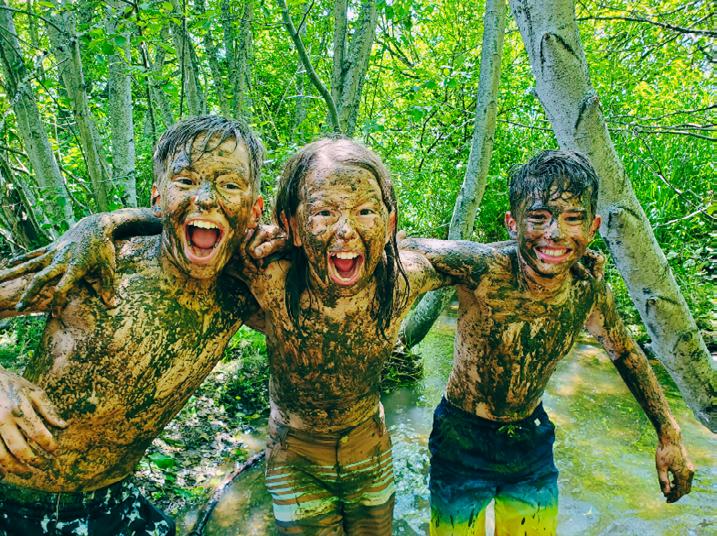
At the peak of that week, my students were guided to creep and prowl through the mud, transforming like chameleons as their bodies changed color. After an hour of slithering together through a mudslide, one student approached me and said, “Well, now I’m cleaner.”
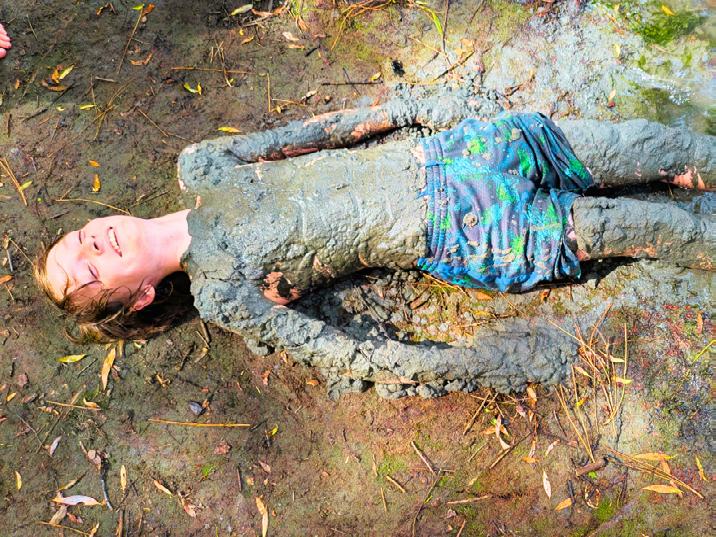
And he was right. It wasn’t the first time I’d seen students emerge from the muck feeling purged—cleansed not of dirt, but of schedules, screens and the constant transition from A to B. It was clear he didn’t need soap or shampoo to feel fresh; all he needed was mud.
Connection with nature is crucial for it gives all of us, young and old, the opportunities to touch and feel the very real textures that make up life. But natural connection alone is not enough. We need mentors who serve as catalysts and coaches, to guide us visibly and invisibly into uncomfortable, growth-expanding moments like creeping through mud or through thickets.
It is in those thicket moments that we are faced with the very real substance of ourselves. We are given the opportunity to see who we are in tough times and where we’re going
with ourselves when things get itchy and uncomfortable.
While the norm is that children—and people in general—don’t get dirty, substrates like mud offer us the potential to go slow and absorb, get dirty and wet, hot or muddy. With the process of mentoring, we’re trying to break down and recycle these boxes that say we can’t get dirty or we can’t do this or that.
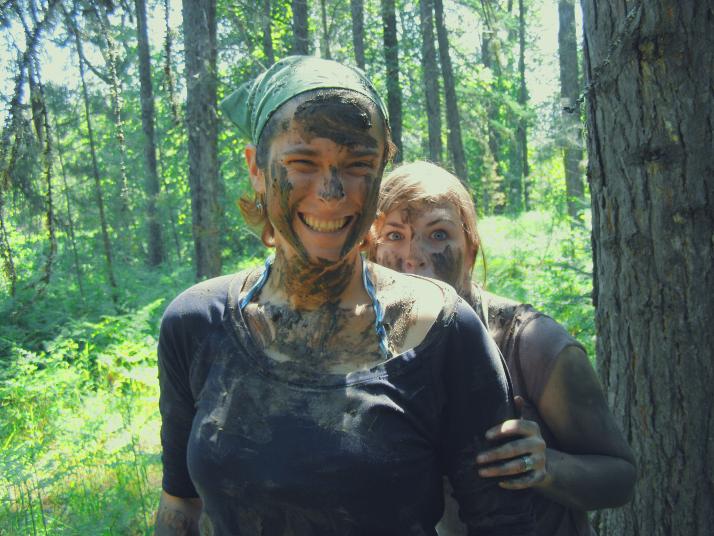
This summer, I invite you to prioritize these unpolished, earthy experiences. Whether through a dedicated outdoor camp or simply more time off the beaten path, give children— especially those in that crucial 6 to 13 age range—the space to step out of the humanmade world and dive deep into the magic of the wild. When a child navigates the mud and comes out the other side, they aren’t just dirty; they’re resilient. They’ve touched the earth, and in doing so, they’ve touched the very real substance of who they are.
Jeannine Tidwell is the co-founder and co-director of Twin Eagles Wilderness School based in Sandpoint, Idaho. For more than two decades, she has guided youth and adults toward resilience and belonging through deep nature connection, community building and cultural regeneration.
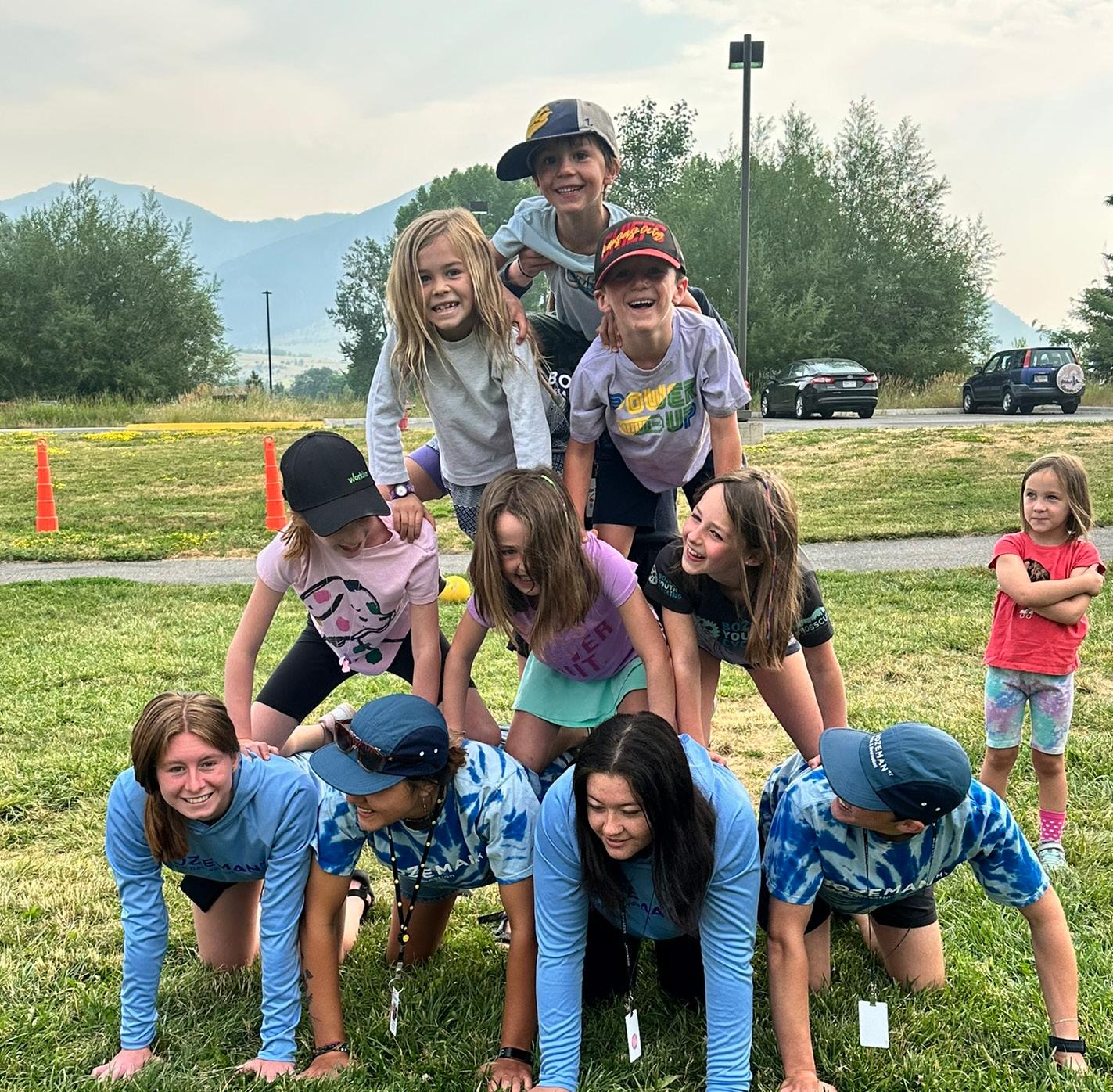
WRITTEN BY ALI SCHWEITZER
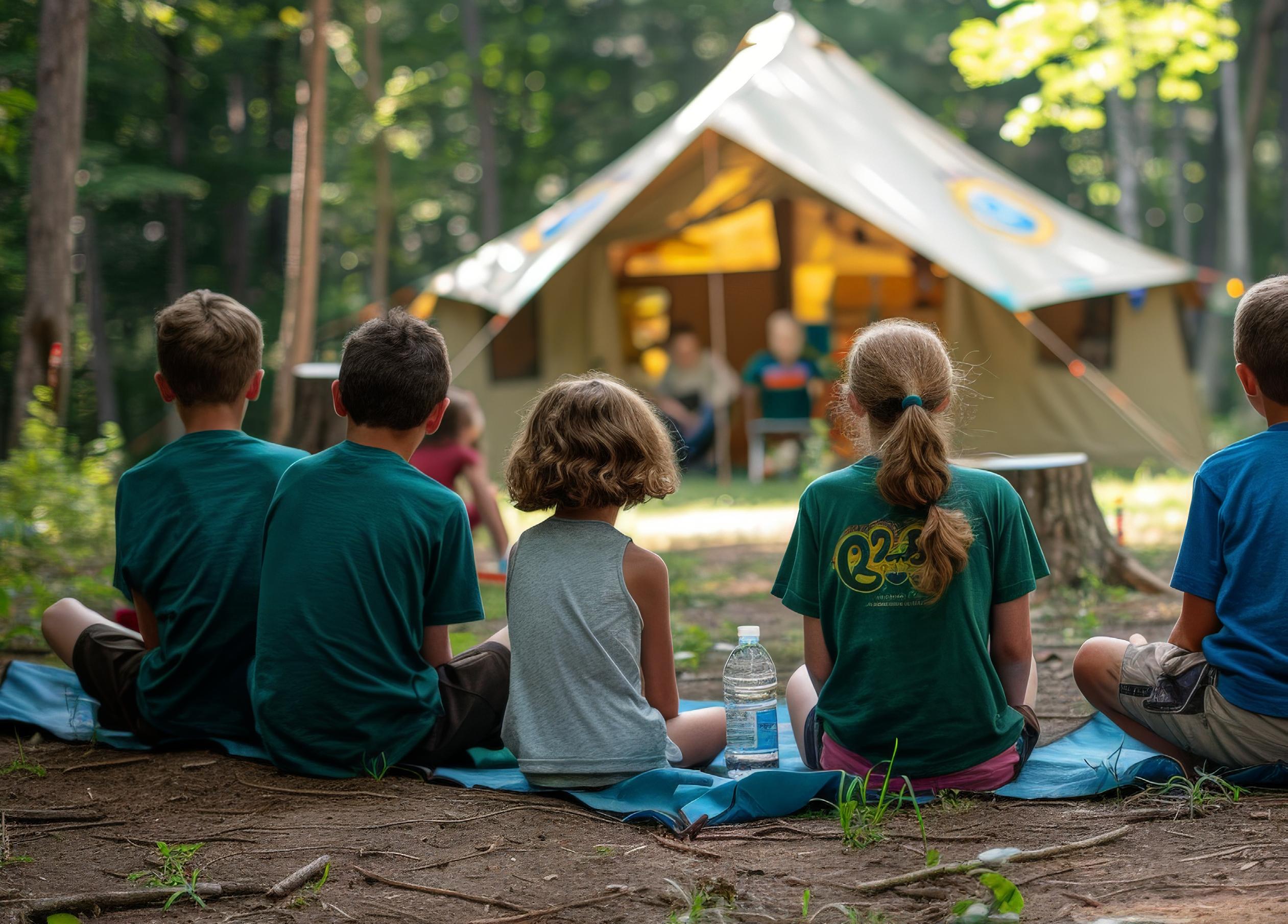
I never had to go to camp as a kid. My mom was a teacher, so I spent my summers running around the neighborhood with my friends and brother until it was dark and I knew it was time to go home. I drank out of the water hose when I was thirsty and stopped home from time to time to have a snack, but then I was back outside riding my bike, building forts and catching salamanders in the creek and neighbor’s window wells. So, when I had kids and realized that I was not a teacher and could not stay at home all summer, it hit me hard.
I didn’t want my kids to miss out; I wondered how would they ever have fun experiences like I did growing up if they were stuck in camp? I was surprised when I started looking at camps and realized that picking one (or more) involved planning and strategy. I started to get anxious thinking about all the questions… Which camp was open long enough to accommodate my work schedule? Which camp would get them outside more than inside? Which one did I need to sign them up for as early as possible? But as I went down the rabbit hole, I began to wonder if maybe I had been the kid who missed out, because let me tell you, the camps offered in the Gallatin Valley make me want to be a kid all over again.
My kids have gone to camp now for nine years, and while they have not always been at the same one every year, they have enjoyed their experiences immensely. In fact, as my work schedule changed over the years and I was able to stay home more during the summer, my kids asked if they had to stay home with me on my days off or if they could go to camp instead…but don’t take my word for it, let’s hear what they have to say about their camp stories.
“I’ve gone to camp since I was in kindergarten and the things I remember the most are going on field trips to fun places, making new friends who I don’t know from my own school and playing games with the counselors. My favorite memory is from last year when we got to go to JumpTime and almost everyone from camp participated in a massive game of tag. We went all over the place, even going into the obstacle course to try and hide in the net from whoever was ‘it.’ I like going to camp because we get to spend a lot of time outside and go to different places to eat our lunch…we are not stuck in a boring lunch room, but get to eat while on an adventure. I have also participated in community clean-up days and feel good about picking up trash to keep our community beautiful. I’ve liked having the chance to make new friends who don’t go to my school and know that I have all summer to hang out with these kids and do fun things together.
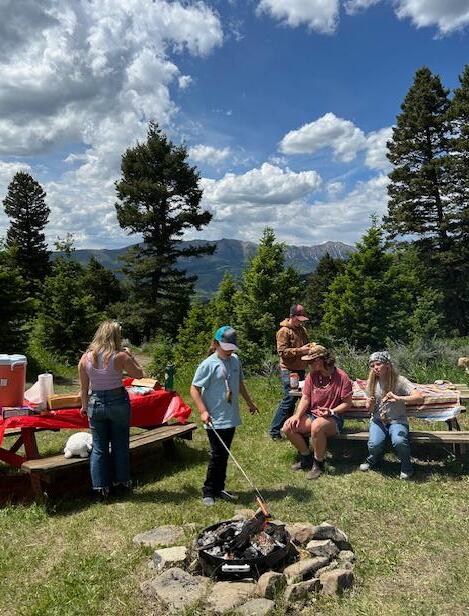
The absolute best summer camp experience was sleep-away camp. This was the best because it was like a giant never-ending sleepover, complete with fishing, fires with s’mores and making spears with our pocketknives to protect our camp from intruders. Waking up in nature was also cool, have you ever seen the dew drops in the morning? Pretty cool! As a veteran to the whole camp process, I can tell you that if you are new to camp and this may be your first year, don’t be afraid. Camp is super fun, you make so many new friends and get to know the counselors really well. There is nothing to be nervous about — once you get there, you’ll never want to leave. And maybe don’t get written up…it’s not fun when you have to tell your parents why you weren’t listening at camp…and if you get too many, you may get kicked out…not that I know anything about that part.”
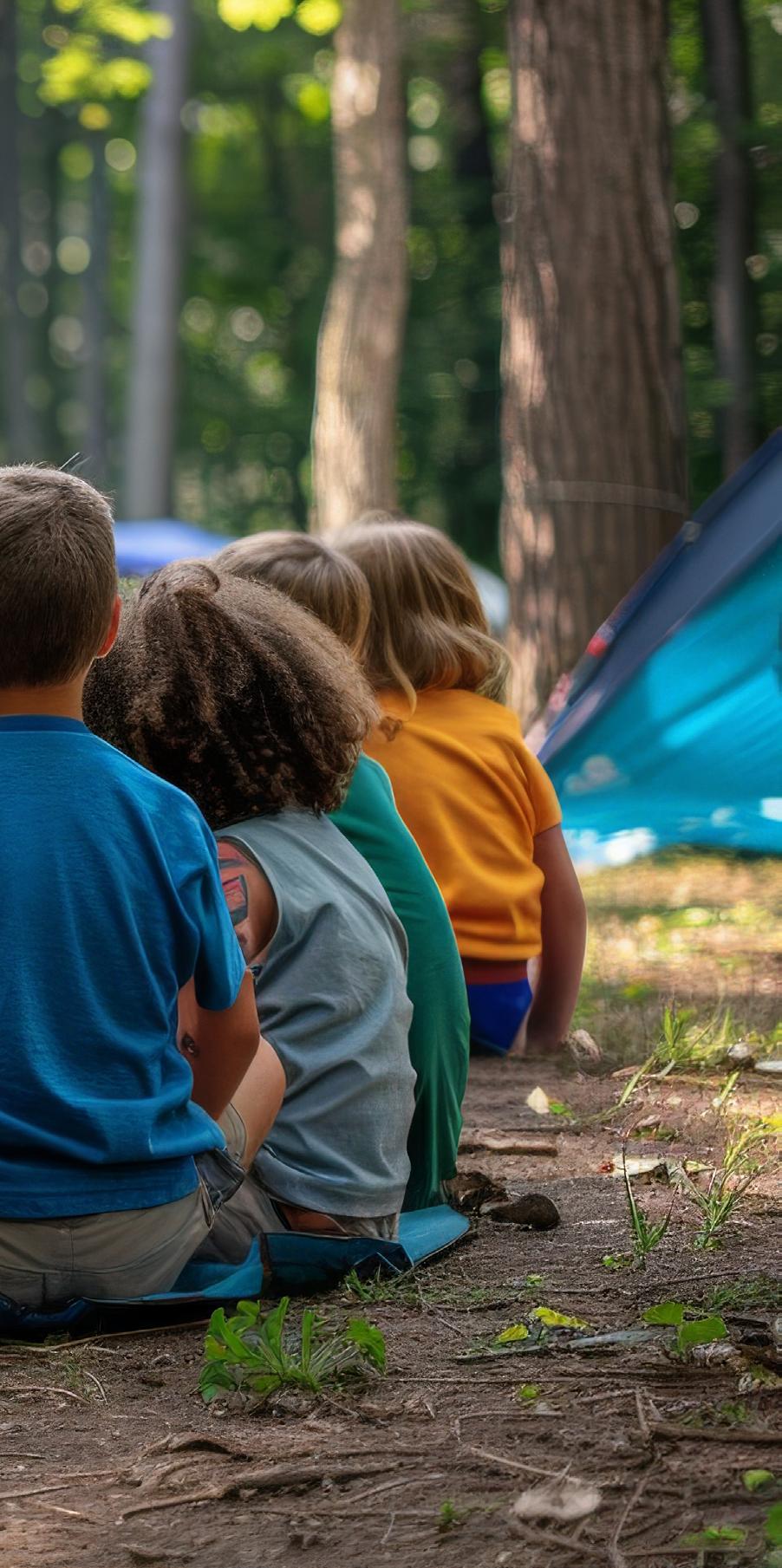
“My first experience at camp was as a 3-year-old at my Montessori school, playing in the sandbox, helping with the garden and eating fresh veggies. But when I was given the chance to go to camp with my big brother as kindergartener, I said yes! I love that at camp I get to play with all my friends and spend the day on adventures with them. We also get to watch movies on Wednesdays. I enjoy the hikes most of the time, especially when we get to go on ones that have butterflies. I remember catching one last year, it was blue, purplish and white and I named it Violet.
It was really fun to see my best friend from my Montessori school at camp with me, as well. We got to pick up right where we left off after both going to different kindergartens. I am most fond of the weekly talent shows, where we get to go up on stage and show people our talents. I have gone up there twice. Once I sang a song I wrote with my friend, and the other time was with three other friends and we made a pyramid and did cartwheels, splits and back bends. When you go up on stage, you feel a little scared at first, but as you get going you forget your fears and you hear people clapping at the end, which makes you feel proud. Another fun thing about camp is candy days, where you can bring your money (or your mom’s money if she is nice) and you get to buy candy. We also get to do crafts where we make a whole bunch of fun things like puppets for our parents. This summer heading back to camp, I’m most excited about being able to see my friends I don’t see at school and play and go on field trips with them. One piece of advice I would give to future campers is to always bring your water bottle and not forget your lunch, you will need the energy for all the fun.”
As you decide which camp to send your kids to know that you are not alone, but don’t stress. We’ve been to a few camps in town and my kids have had great experiences and made friends. While I will always remember my summers at home, I am actually glad that my kids have had the camp experience. The friendships they made, the adventures they have been on and the smiles they come home with are all this mama’s heart needs. Plus, they are too tired after a day of camp to want to stay outside until it’s dark and time to come home.

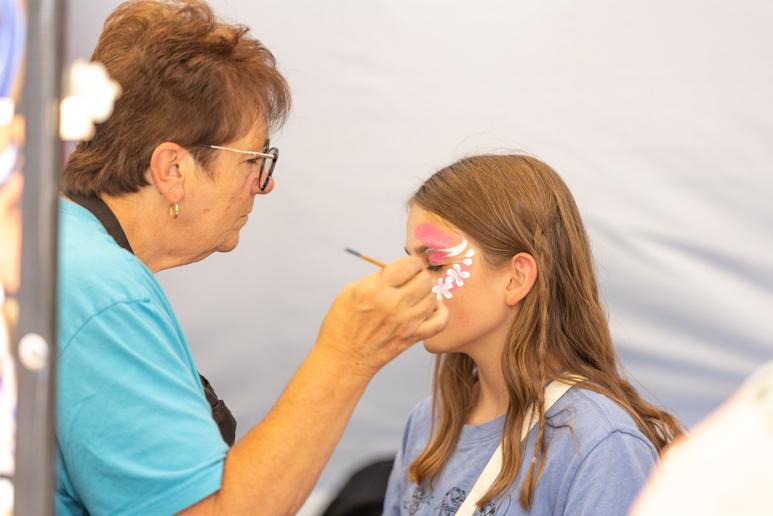




Made your summer plans yet?
Fair tickets are same low prices as always and kids 5 & under are free

We invite you to connect with us through our: + Peer support groups + Seasonal workshops & classes + Our signature storytelling event, Moms Like Me + Perinatal Resource Guide
The journey from preconception to parenthood is one of the most significant transitions in a person’s life. Every parent deserves strong care and support during this transformational time.
Roots is a Bozeman-based nonprofit connecting families to the support they need from preconception through parenthood. Roots exists to connect families to families, families to professionals, and professionals to one another during this unique and often challenging developmental stage. We do this through effective programming and the support of the resource network featured in our Perinatal Resource Guide. To learn more, visit our website using the QR code.

you’ll often find her and her kids running around their neighborhood until dark…but camp will tire them out, making bedtime a bit earlier in the summer.
And if you don’t find what you’re looking for, please reach out— our team is here to help. hello@rootsfamilycollaborative.com
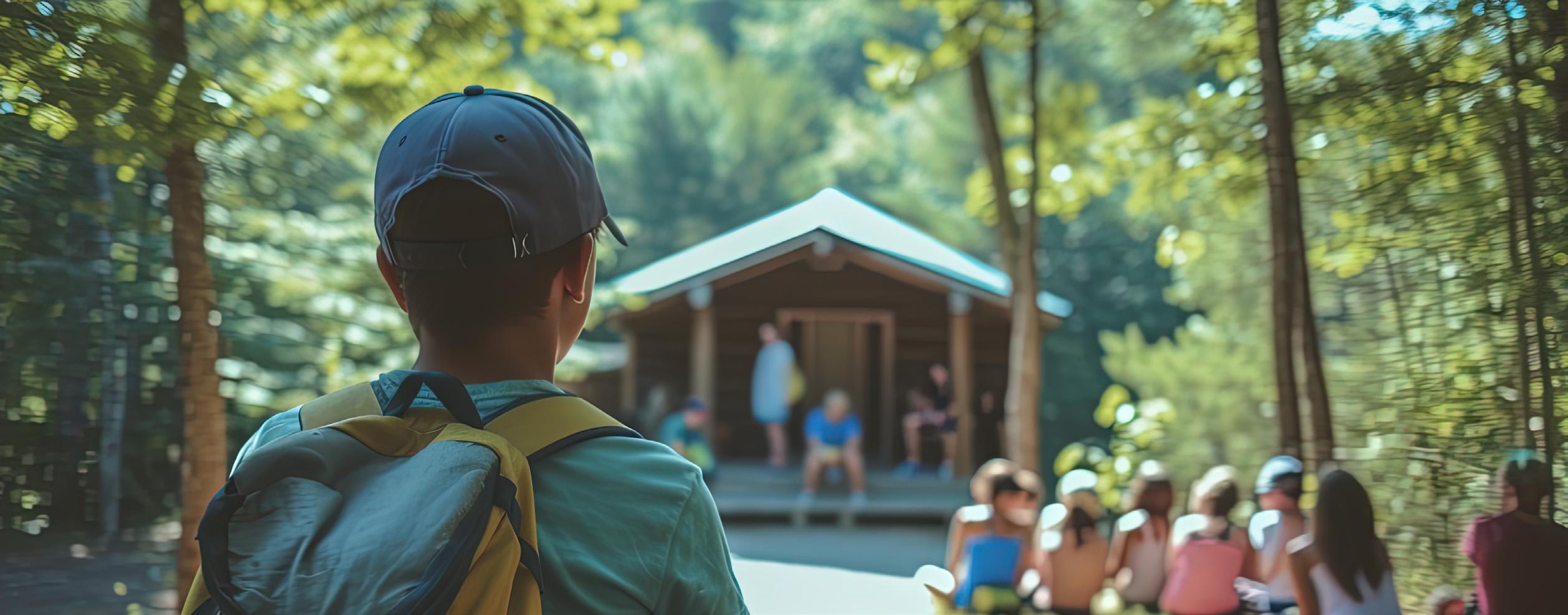
For many Montana families, summer camp is a cherished rite of passage. It represents independence, new friendships and experiences that help children grow in confidence. But for parents of children who are neurodivergent, have sensory sensitivities or face social-emotional challenges, the decision to send a child to camp can also bring a very real mix of hope and worry.
If your child has found a rhythm that works, the idea of changing that routine—even for something positive—can feel daunting. And since many families enroll in multiple camps over the summer, that can mean several first days, new schedules, unfamiliar environments and new social groups to navigate.
It’s natural to find yourself wondering:
» Will my child be understood?
» Will staff know how to support them?
» Will they be safe, included and treated with patience?
» What happens if they get overwhelmed or fall behind?
These questions come from love and careful attention to your child’s needs. The good news is that many camps today are far more prepared to support different types of learners than they were even a decade ago. Knowing what to look for—and what to ask—can help you choose a program with greater confidence and peace of mind.
WRITTEN BY NAOMI SHAFER
Below are some practical questions to consider when exploring camps.
And if you’re worried that asking about accommodations might change how staff view your child, I want to offer reassurance: As a camp director, I am genuinely grateful when parents share this information. It helps us support children more thoughtfully and sets everyone up for success.
“What if my child can’t keep up?” One of the most common fears that parents share is that their child will struggle to keep pace with the group.
Strong camps understand that “keeping up” looks different for every child. Quality programs build in flexibility by offering demonstrations alongside verbal instructions, breaking activities into smaller steps and allowing campers to observe before jumping in. Progress is measured by engagement, effort and growth—not by comparison to other children.
Ask camps: How do you adapt activities for different learning styles and support children who need extra time?
“What if my child gets overwhelmed?” Camps can be busy, loud and highly stimulating. For children with sensory sensitivities, anxiety or emotional regulation challenges, this is often one of the biggest concerns.
Many camps now use sensory-aware practices, such as offering quiet spaces, allowing for breaks and training staff to recognize early signs of overwhelm. The goal isn’t to remove all challenges—it’s to help children regulate and feel supported so they can return to activities with confidence.
Ask camps: What does your staff do when a camper is overstimulated or emotionally dysregulated?
“Will counselors really understand my child?”
It’s common for parents to worry that counselors—especially younger staff—won’t have the experience or training to support their child’s needs.
Well-run camps invest in staff training around neurodiversity, communication strategies and emotional support. Counselors are taught to look beyond behavior and consider what a child may be communicating through their actions. When staff are supported and well-trained, children feel safer, more understood and more willing to try new things.
Ask camps: How do you coach counselors to work with children who need additional support?
“What if my child feels left out socially?”
Social dynamics can be especially stressful for children who struggle with communication, social cues or peer relationships.
Many camps intentionally structure social interactions through small groups, partner activities and counselor-facilitated games. These structures reduce pressure and help children connect more naturally. A strong camp culture emphasizes inclusion, kindness and multiple ways to participate, so children can find their own way to belong.
Ask camps: How does your camp support social connection, and what do you do if a child is having a hard time finding their place?
“How will you communicate with me?”
For parents, not knowing how the day is going can be a major source of anxiety. Strong camps see families as partners. They invite parents to share what works at home or at school, and they communicate proactively if challenges arise. This collaboration helps create consistency and builds trust—so parents and staff are working together to support the child.
Ask camps: What kind of communication can I expect? How does your staff handle challenges if they come up?
While camp can feel like a leap of faith, it can also be uniquely transformative for children who learn differently. Camp offers opportunities to:
» Build independence in a supported environment
» Practice social skills in low-pressure, playful ways
» Discover strengths outside of traditional academics
» Experience success through handson, movement-based or creative activities
Many parents are surprised to see their child grow in confidence, flexibility and self-advocacy over the course of a camp session. Small wins—trying something new, making a connection or sticking with a challenge—can have a lasting impact.
You know your child better than anyone. A good camp will welcome your questions, listen carefully and be honest about what they can and cannot support. Feeling heard and respected as a parent is often a strong sign that your child will be, too.
Sending a child who learns differently to camp may require extra thought and preparation. But with the right program, it can also open the door to meaningful growth, connection and joy—for both your child and your family.
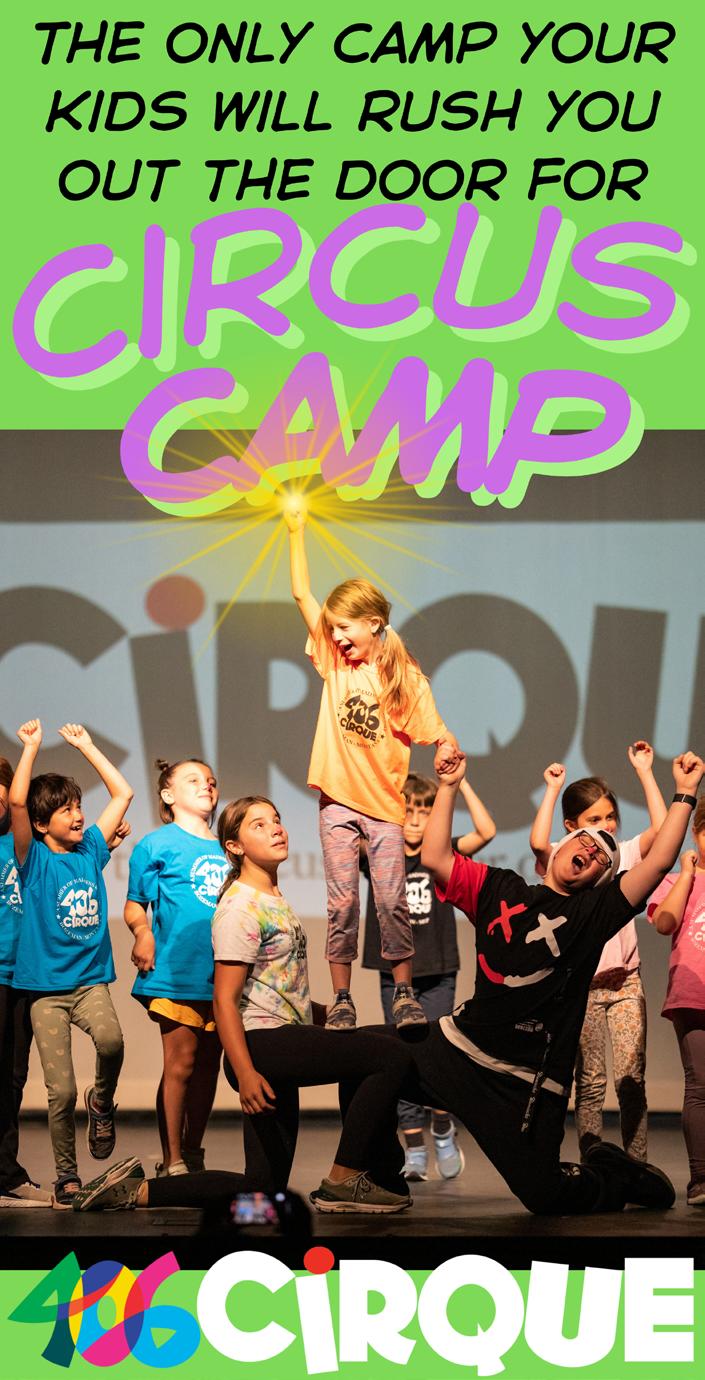
WRITTEN BY NAOMI SHAFER, EXECUTIVE DIRECTOR 406CIRQUE
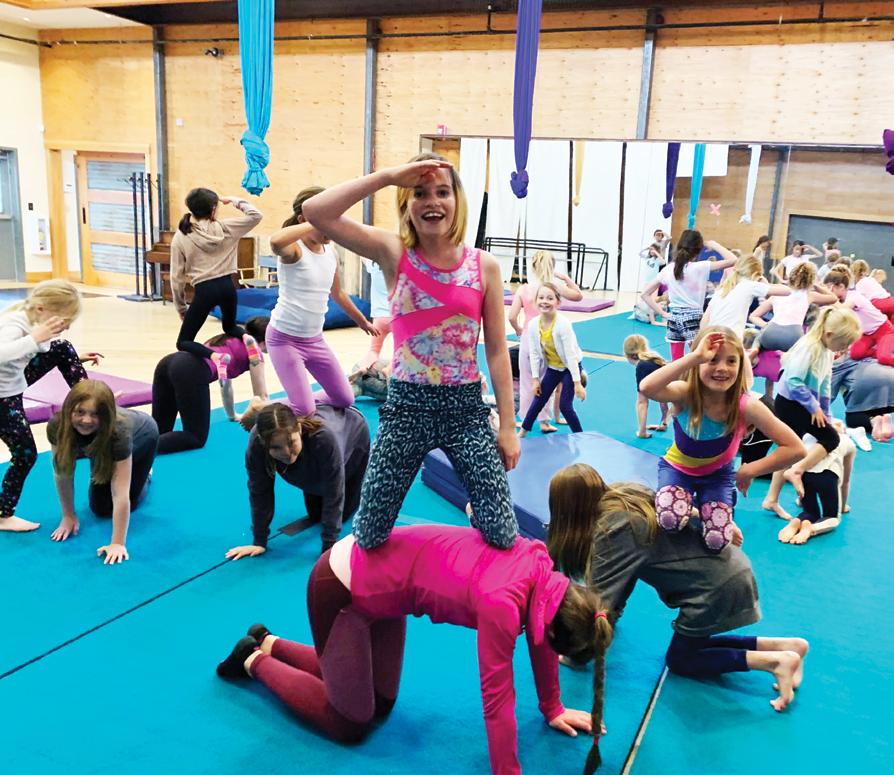
At 406Cirque supporting different types of learners is built into how programs are designed and taught. The organization’s circus camps emphasize multiple ways to engage, recognizing that children learn best through different combinations of seeing, hearing and doing.
Circus camp relies on clear routines, consistent expectations and predictable transitions. This helps campers feel secure and focused. Structure is used to reduce anxiety while still allowing room for creativity and exploration.
Sensory-Aware Practices
Recognizing that circus spaces can be stimulating, 406Cirque incorporates calm-down options and staff awareness around sensory overload. Campers are supported in taking breaks when needed and rejoining activities when they are regulated and ready.
Full-Body Focus
Circus training naturally engages the whole body and mind at once, which can be especially beneficial for campers with ADHD and other attention or regulation challenges. Because circus skills require balance, timing, coordination and spatial awareness, campers are given a clear, physical focus for their energy. This kind of full-body concentration can support sustained attention in a way that seated or purely verbal activities often cannot. Many children find that moving while learning helps them feel more regulated, present and successful, creating conditions where focus and confidence can grow together.
Strength-Based, ConfidenceBuilding Culture
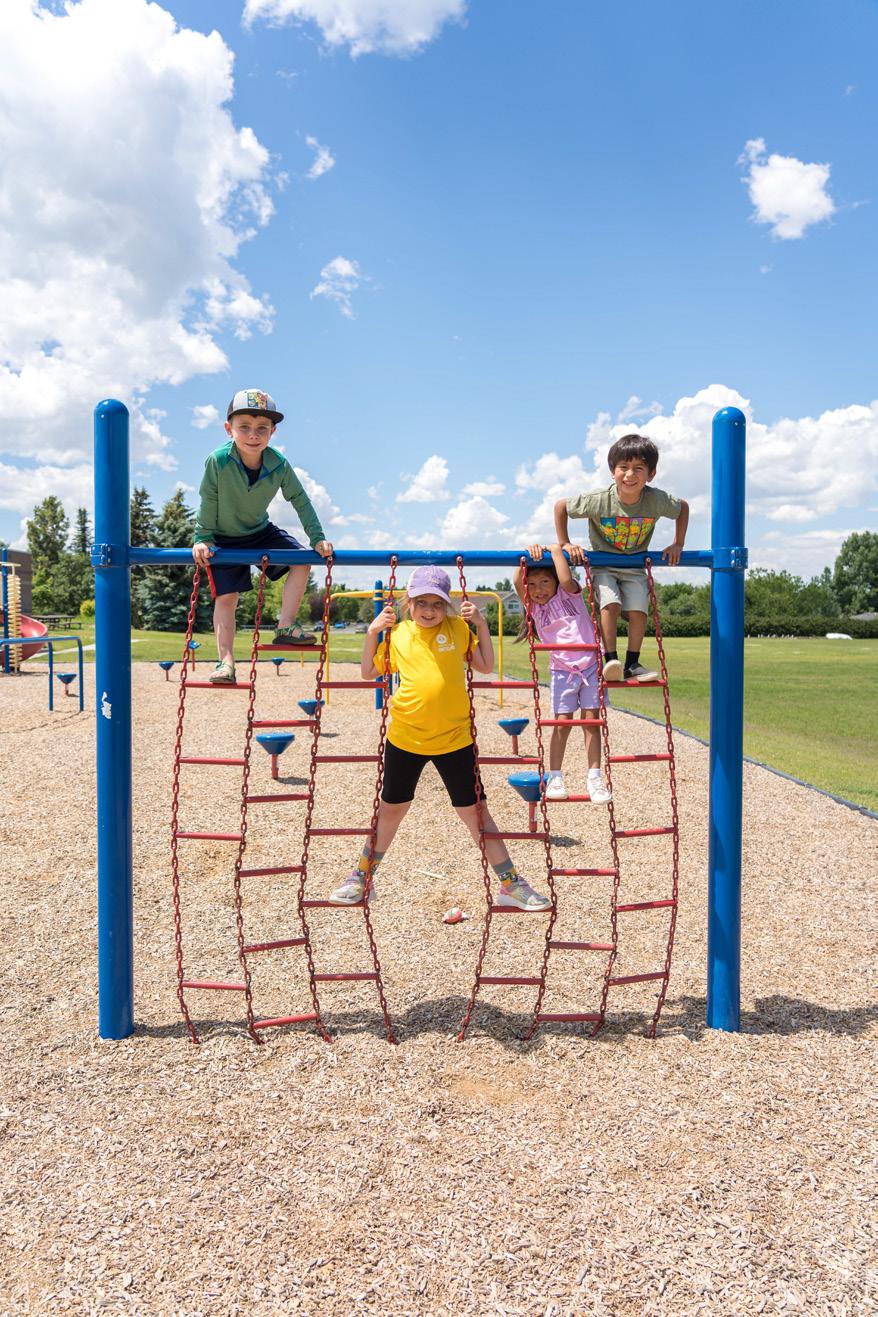
Rather than emphasizing comparison or performance, 406Cirque prioritizes personal growth, effort and creative problem-solving. Campers are encouraged to discover what they can do and to build on their strengths.
For families seeking a camp environment that values inclusion, flexibility and whole-child development, 406Cirque offers a model where different types of learners are not just accommodated—they are actively supported.
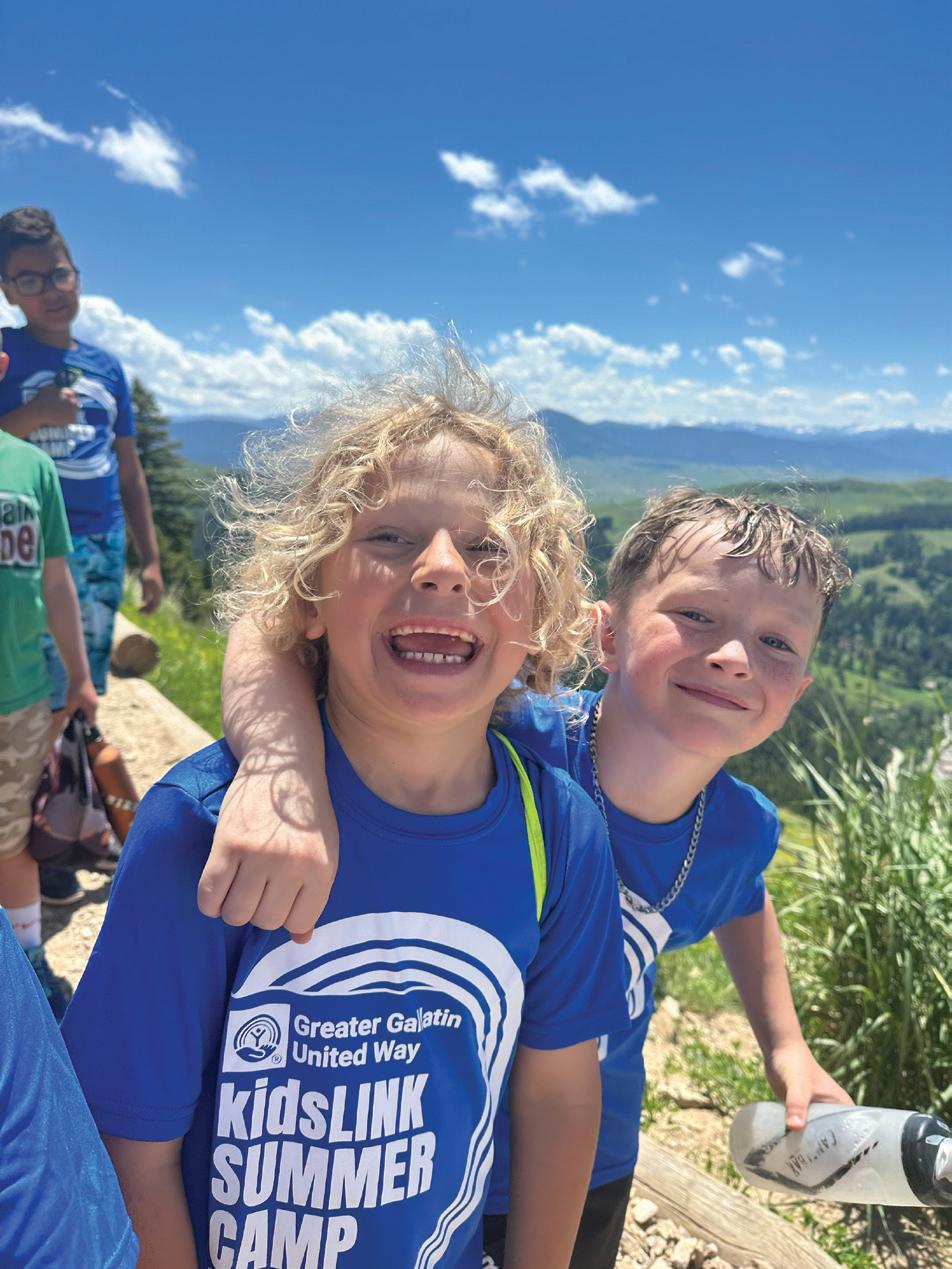
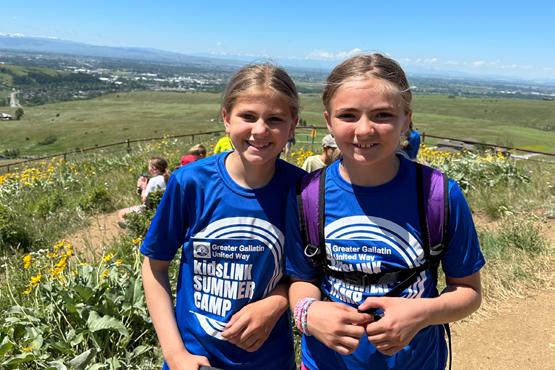
kidsLINK camps in Big Sky, Bozeman, and Belgrade offer weekly all-day fun for children ages three through rising 5th grade – with tuition assistance available.

ARTICLE & PHOTOS AMY PRECHTER
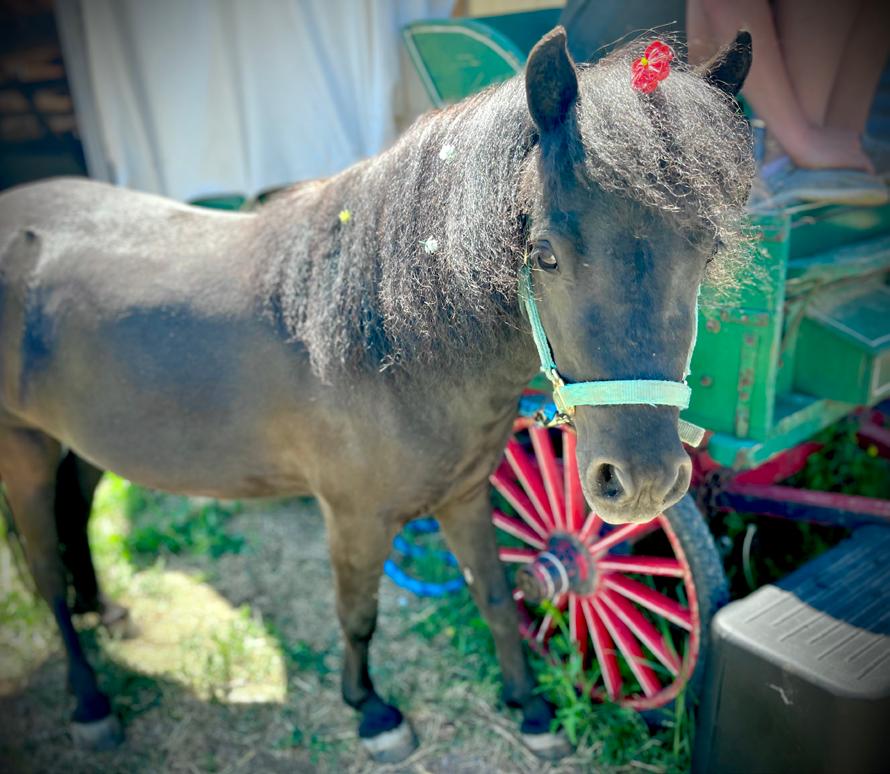
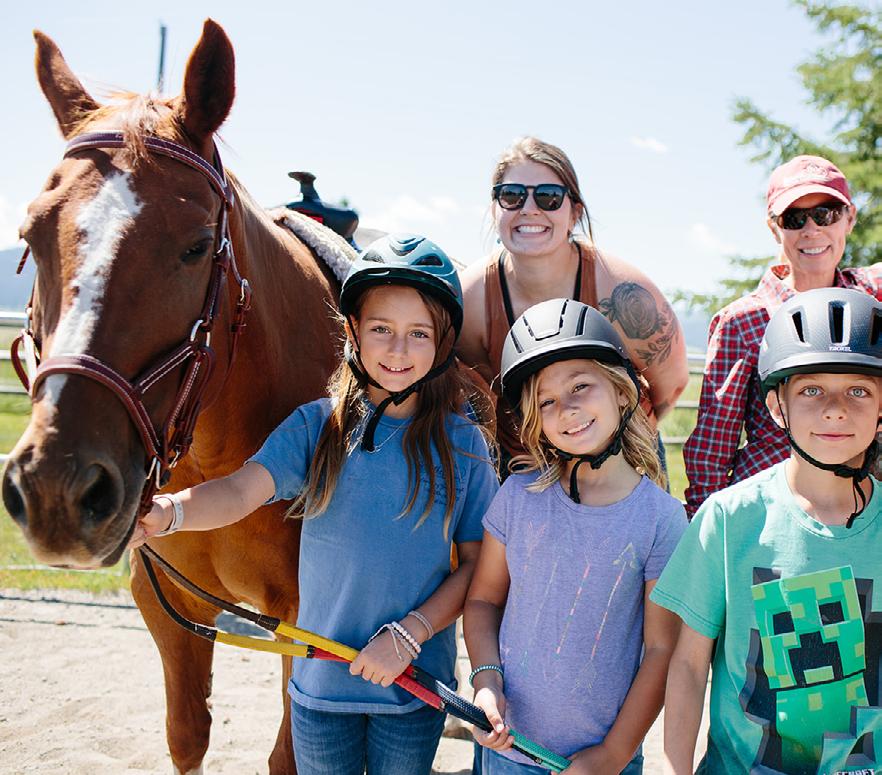
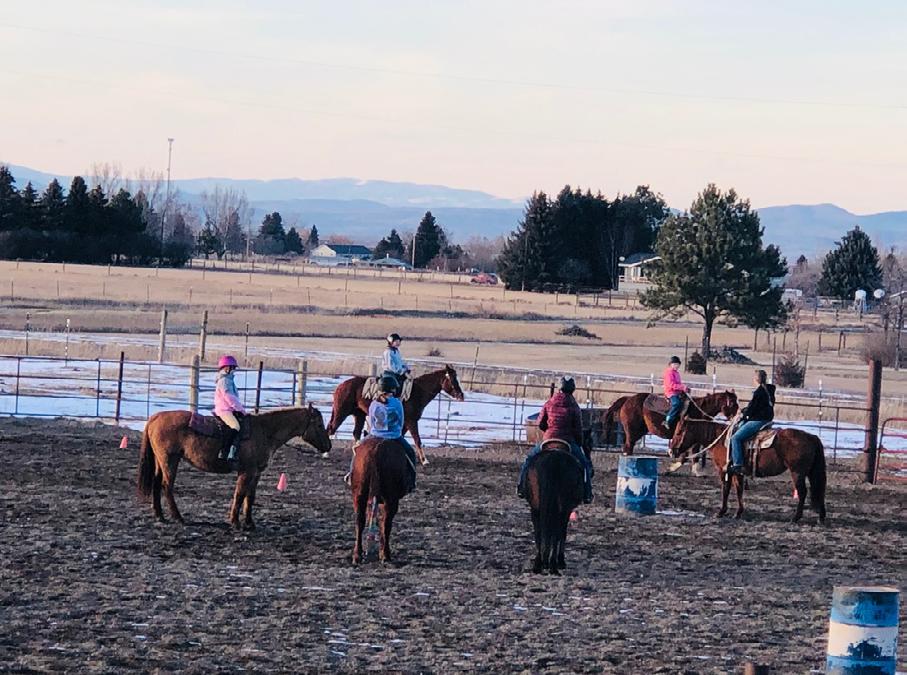
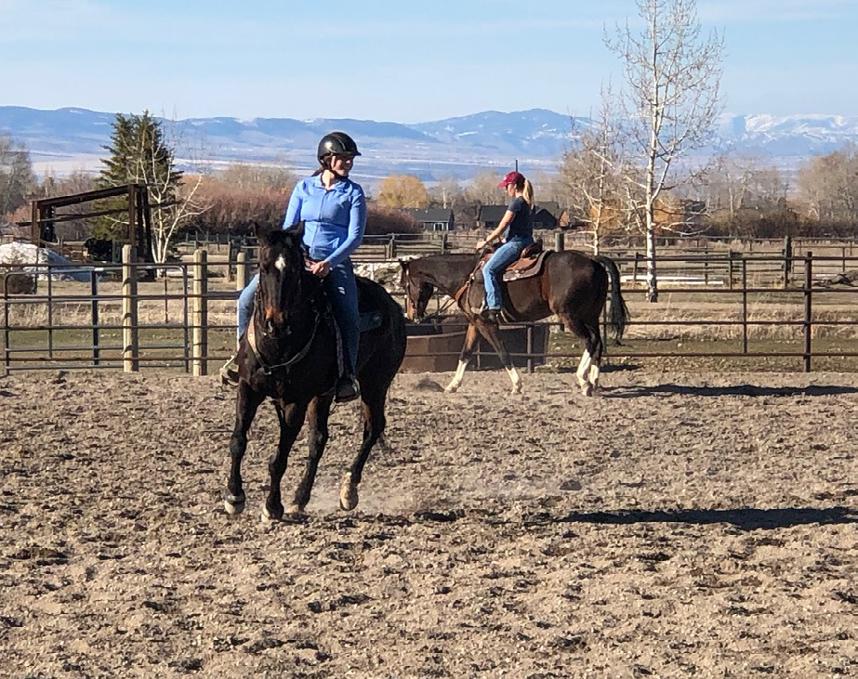
When it comes to selecting equine activities for your kids, you have the right to be picky – after all, you want them to have fun and stay safe. There are many horse camps and lesson programs to choose from in our area, so how does one go about selecting the right one?
Here are a few guidelines to get you started:
Experience: Ask how many years the facility offering the camp or lesson program has been in business and how long they have been in their current facility. Ask who they trained under professionally? And yes, it is OK to ask for a resume and references. The last thing you want to do is send your kids off to ride with someone who lacks training and experience when there is so much that can go quickly wrong. Horses are large animals that can sometimes behave unpredictably, but safety problems are avoidable when there is a knowledgeable and experienced trainer/ instructor in charge.
Facility Grounds: Seek out a facility that is well kept, clean and organized. Is there safe, solid fencing around the perimeter? Or do the riding arenas have wire fencing that could be easily broken by a spirited horse or, even worse, entangle a rider?
Safety Policies: What safety precautions do they take? Are young riders (under 18 years-old) required to wear helmets? Specifically, they should require that your kids use an equine certified helmet, as bike and ski helmets are not made for horseback riding.
Are youth required to wear riding helmets at all times when working around the horse and not just when riding?
Does the facility require riders to wear boots with a heel (no tennis shoes or flip flops should be allowed)? Preferably, the facility should also require riders to wear boots with smooth soles (versus lug soles like on hiking boots) and boots without laces (laces can easily become caught in a stirrup). Long pants should be required.
Ask if dogs are allowed to run freely on the premises during camp and lesson hours? Dogs can easily spook a horse or a nervous camper, and thus create unsafe conditions for all.
Finally, ask if the program includes safety tips on being around horses both on the ground and while riding. Find out if these tips are enforced during the camp or lesson. Do staff members have any training in CPR and First Aid?
Liability: Does the facility carry liability insurance? Do they collect emergency contact information? Do they ask for information regarding medications and allergies of riders and campers?
Ratios: How many kids does each instructor have in a group? Are the groups organized by ages or skill level? Do riders have assistants available to them when tacking up, leading horses to the arena and riding? How many assistants are available for each class or camp?
Horses: Are horses well cared for? Do they have healthy looking coats, and well-maintained hooves? A healthier horse makes for a safer and happier horse to ride. Ask if the facility’s horses are used regularly for riding instruction. More specifically, are the camp/lesson horses experienced with younger riders? Older, experienced horses are worth their weight in gold in terms of safety. I always tell clients who are shopping for a horse for their kids that the horse they purchase should be at least the age of the youngest human that they would trust
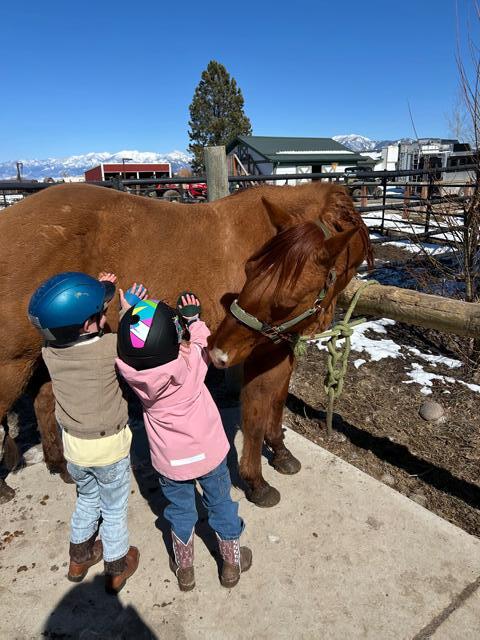
to babysit their kids. Consider asking for more information if you see or hear that the facility is using a very young horse in their kids’ program. Yes, there are some young horses that can manage the challenge of young, inexperienced riders with patience and grace, but these horses are typically few and far between.
Program/Camp: Are kids doing more than just getting on and riding? Learning horsemanship skills on the ground is a vital component to becoming a safe and experienced rider. In addition to riding, campers should also learn about leading and tying horses, grooming and horse care (cleaning up after horses, feeding and watering), tacking and untacking, as well as tack care. The list could go on for miles —with horses, there is always something more to learn. A well-rounded horsemanship camp or lesson program should teach kids more than just how to ride. If someone tells you differently, that should be a red flag.
Pricing: As much as feasible, don’t let low prices factor in your selection. You get what you pay for — horses are expensive, as is quality instruction.
Safety, fun and education — in this order — has always been my motto when it comes to horsemanship programs. First and foremost, riders and their horses must be safe, and so teaching safe horsemanship is our number-one priority at Cedar Ridge Equine. Over the years, we have found that kids who learn how to be safe around horses have increased confidence as riders, which allows everyone to have more fun learning as much as they can about their fourlegged equine friends. The very best programs focus on safety, fun and education knowing that a solid foundation in horsemanship will last for a lifetime for these kids.
Here’s to safe and happy campers and their horses!
WRITTEN BY DR. JAKE CHIPPS, PROGRAM DIRECTOR FOR AMERICAN COMPUTER & ROBOTICS MUSEUM
Montana parents are known for raising resourceful children. We teach our kids to appreciate the outdoors, be self-reliant and fix what’s broken. We instinctively equip them with the tools they need to thrive in our rugged landscape.
But the landscape of the future is shifting. The mountains may remain unchanged, but the world our children will graduate into is increasingly digital. To navigate it, our kids will need a new set of essential tools. Today, literacy in computer science and engineering is becoming as fundamental as reading and writing.
A persistent myth suggests that computer science is only for students who want to sit in dark rooms typing lines of code. In reality, computer science and engineering are about a specific, powerful type of problem-solving called computational thinking.
This mindset involves breaking complex challenges into manageable steps, recognizing patterns and designing solutions. It’s all about resilience. In engineering, the first attempt rarely works; students must test, fail and iterate. This “failforward” approach is invaluable whether a child grows up to be a software architect in Bozeman, a veterinarian in Miles City or a rancher in the Hi-Line.
We often assume high-tech innovation is reserved for Silicon Valley, but Montana is rapidly becoming a tech hub. Technology is transforming our state’s backbone industries — even farming and ranching.
Modern agriculture relies on data from drones and soil sensors to maximize yields. Environmental science uses sophisticated modeling to protect our forests. And Montana parents want to make sure that our kids are designing the future of our state, rather than just consuming technology created elsewhere. These skills future-proof their careers, providing stability in a job market that increasingly rewards technical fluency.
I know this feels daunting. If you didn’t grow up coding, how do you bridge the gap between your child playing Minecraft and them understanding the mechanics beneath the screen? Fortunately, Montana has world-class resources to help.
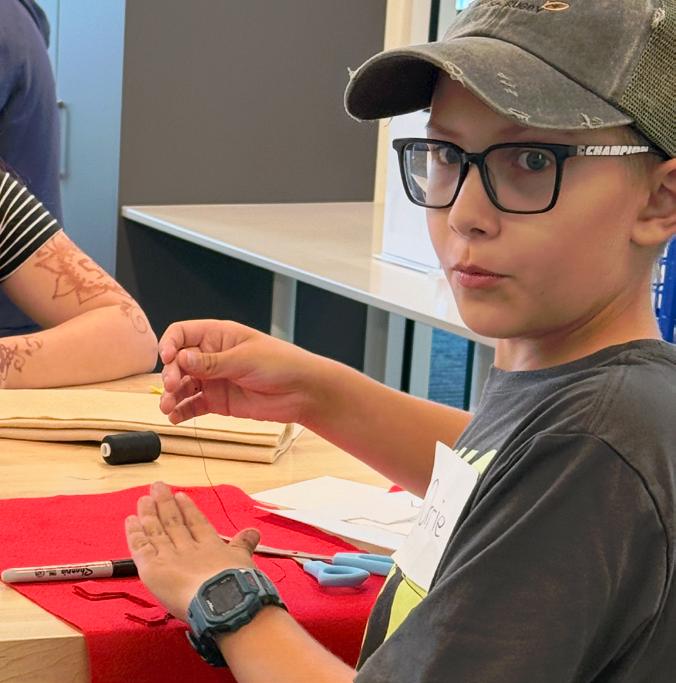
This summer, the American Computer & Robotics Museum in Bozeman—one of the world’s most significant collections of tech history—is launching a brand-new camp experience: Innovators in the Making.
This camp is designed for the curious kid who loves taking things apart. It takes students beyond the screen and into the “guts” of how things work, blending historical inspiration with modern application.
Campers will dive into:
» Hands-on Robotics: Building and programming bots to solve real-world challenges.
» Creative Coding: Moving beyond basics to create interactive, logic-based projects.
» Hardware Fundamentals: Understanding the circuits and systems that power our lives.
Led by experienced educators, Innovators in the Making provides a collaborative environment where kids don’t just learn about the future—they start building it.
Spaces are limited! Visit www.acrmuseum. org/summer-camp to register and secure your child’s spot for the 2026 season.
By encouraging our kids to explore computer science and engineering, we aren’t just preparing them for a job, we are giving them the keys to unlock whatever future they choose to build under the Big Sky.
Dr. Jake Chipps is the Program Director for American Computer & Robotics Museum.

ARTICLE & PHOTOS RYAN HANNAHOE, EXECUTIVE DIRECTOR, MONTANA LEARNING CENTER AT CANYON
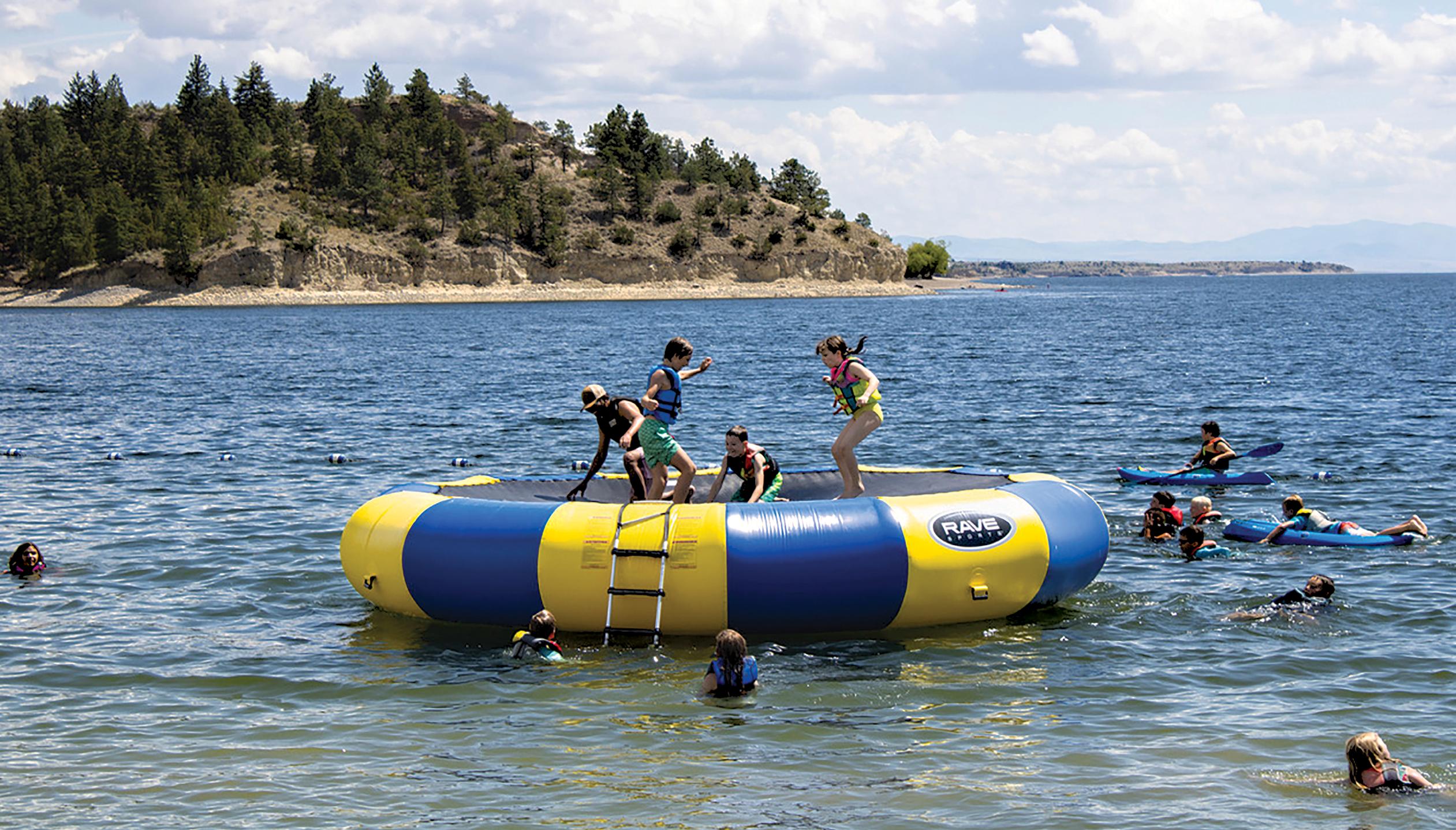
For many families the idea of overnight camp brings a mix of excitement and hesitation. The possibilities feel big— new friendships, growing confidence, time outdoors—but so do the questions. Will my child be OK away from home? Are they ready for the independence that comes with sleeping somewhere new? And how do I know if this is the right experience for them?
Overnight camp can be a meaningful milestone in a child’s development. It offers a chance to practice independence in a supportive, structured environment. Campers learn to manage daily routines, follow schedules, collaborate with peers and navigate small challenges on their own. Those experiences often translate into greater confidence and resilience that show up back at school and at home long after summer ends.
So, what does it mean to be “camp ready?”
It usually starts with a basic level of independence. A child doesn’t need to have everything figured out, but it helps if they can handle simple tasks like getting dressed, keeping track of personal items and asking for help when they need it. Camp is often where kids build these skills—not where they’re expected to already be experts.
Social readiness is another important piece. Overnight camps bring together kids from different schools, towns and backgrounds. For some children, this feels energizing and exciting; for others, it can be intimidating at first. Both reactions are completely normal. What matters most is whether the camp environment encourages kindness, teamwork and inclusion, helping kids ease into new friendships at their own pace.
Homesickness is often the biggest concern parents raise, and it’s also one of the most common camp experiences. Feeling unsure in a new place is a natural response. Well-run camps anticipate this and design days filled with engaging activities, steady routines and supportive staff who know how to help campers through those first moments of adjustment. For many kids, homesickness fades quickly once they’re immersed in what the day has to offer.
Another factor families often consider is the type of camp experience itself. For children who are curious, hands-on learners, overnight STEM camps can offer a particularly strong blend of intellectual challenge and outdoor adventure. Programs like those offered by Montana Learning Center (MLC) combine science, engineering and problem-solving with the classic elements of camp life—cabins, campfires, shared meals and experiences that help friendships form naturally.
At MLC’s campus on beautiful Canyon Ferry Lake, the setting itself becomes part of the learning. Days might include experiments, engineering challenges or environmental science activities tied directly to the lake and surrounding landscape and aligned with each camp’s theme. Evenings slow down with time outdoors, reflection and—on clear nights— looking up at Montana’s famously dark skies. The balance of hands-on learning and time in nature helps campers stay engaged without feeling overwhelmed.
In addition to its lakeside campus, Montana Learning Center also offers overnight STEM camps at locations around the region. These offsite camps give kids the opportunity to experience different environments while maintaining a consistent focus on safety, supervision and meaningful learning. For some families, starting with a shorter session or a camp closer to home can be a helpful way to ease into the overnight camp experience.
Ultimately, deciding whether your child is ready for overnight camp isn’t about eliminating every worry. It’s about choosing an environment that recognizes kids grow at different rates and supports them through that growth. A good camp meets children where they are, challenges them thoughtfully and gives them room to succeed—and sometimes stumble—in a safe, caring setting.
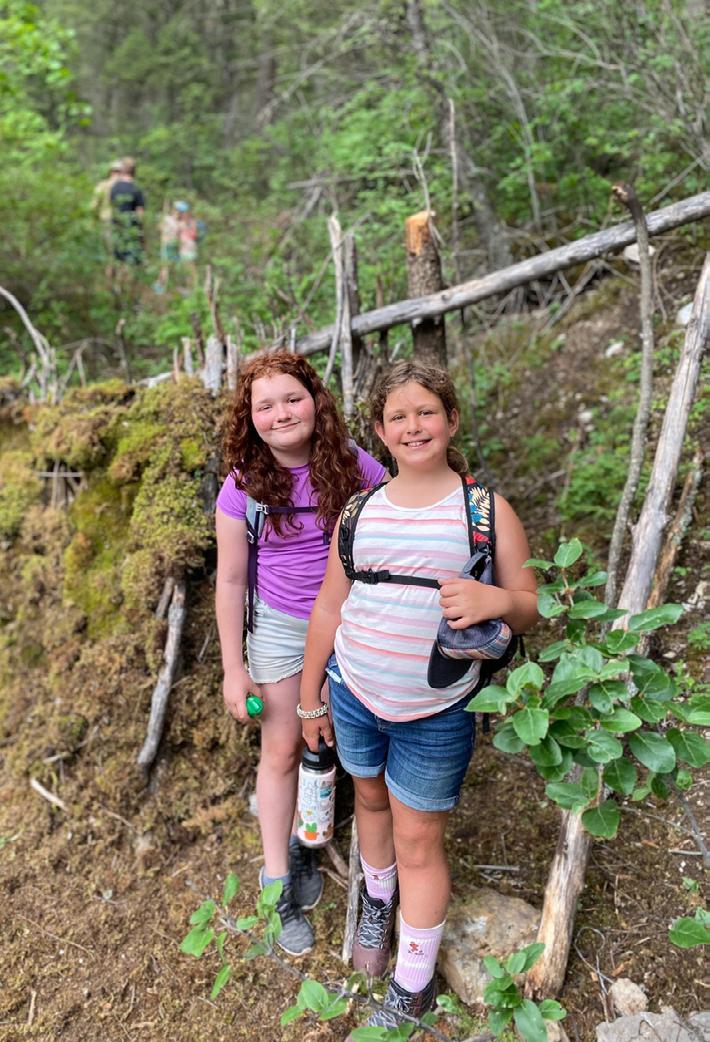
Many families find that overnight camp becomes a turning point. Kids return home a little taller, a little more confident and eager to share stories about what they accomplished on their own. Whether it’s learning a new skill, making a first close friend outside their usual circle or simply realizing they can handle being away from home, those experiences often stay with them long after summer is over.
Being “camp ready” isn’t about having all the answers. It’s about recognizing when your child may be ready for a new kind of experience— and trusting that, with the right support, they can rise to it.
Located at scenic Canyon Ferry Lake, the Montana Learning Center is a statewide STEM education hub offering youth summer camps, teacher professional development and Montana’s largest public-access telescope. In partnership with Montana State University, MLC helps facilitate NASA’s Northwest Earth & Space Science Pathways (NESSP) program, expanding aerospace and Earth-space science education across Montana.
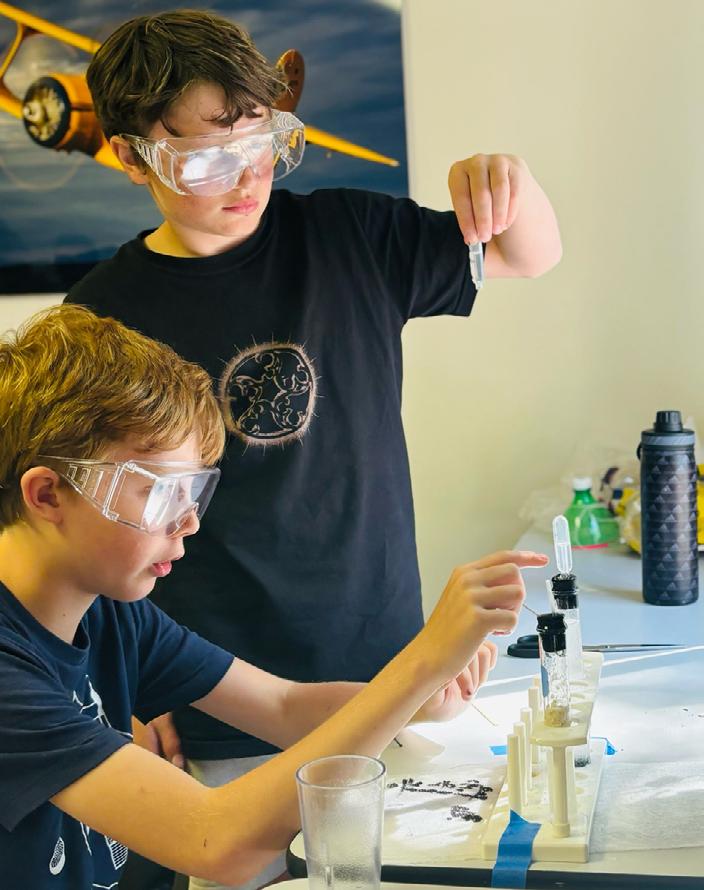
NEW THIS SUMMER!
Join ACRM this Summer and Unleash Your Inner Innovator!
STEM SUMMER CAMPS JUNE 15 – JULY 10, 2026 9AM–3PM DAILY FOR KIDS ENTERING GRADES 3 THROUGH 8
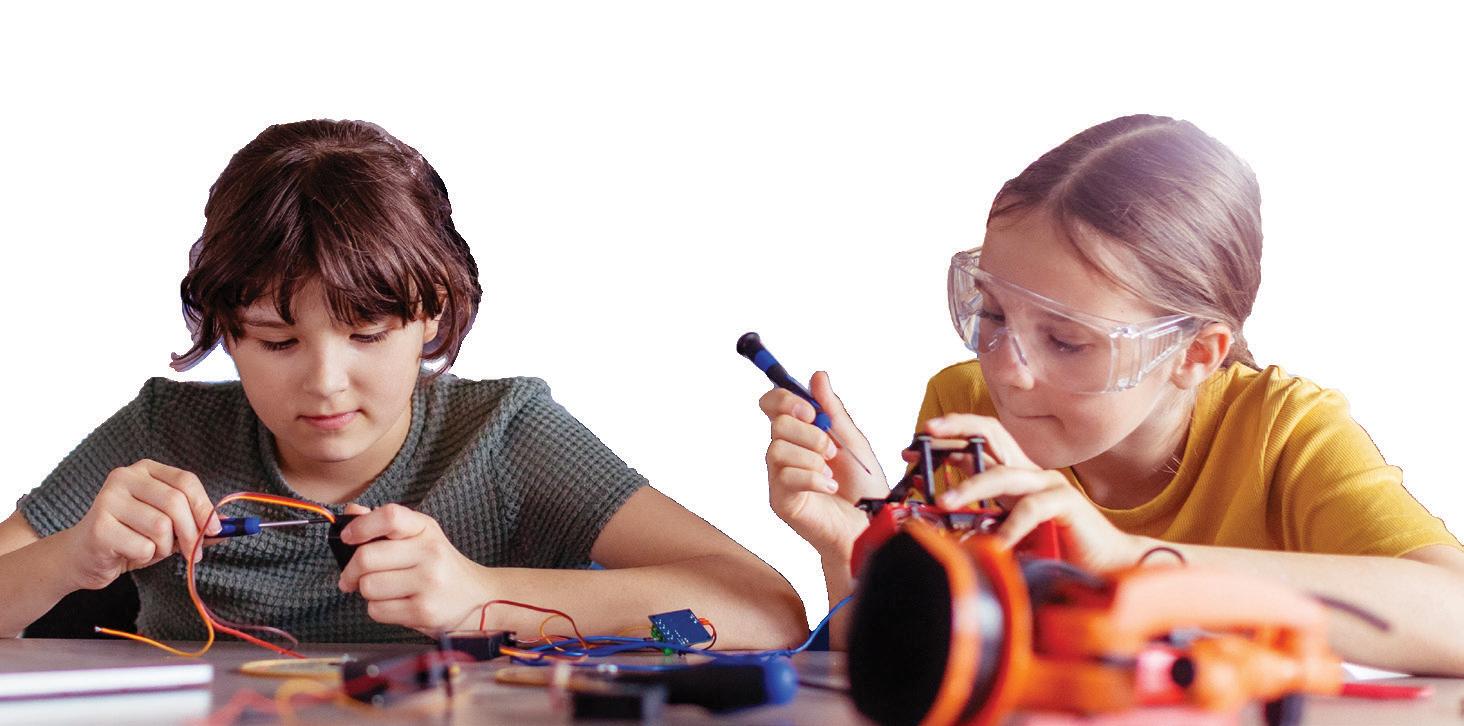
Join the American Computer & Robotics Museum for “Innovators in the Making,” a STEM summer camp designed for curious minds. Each week has a fun and engaging theme, and every day is packed with hands-on projects where kids build, experiment, and collaborate.
SIGN UP FOR ONE SESSION, OR JOIN IN THE FUN FOR ALL FOUR!
WEEK 1: JUNE 15–19
WEEK 2: JUNE 22–26
Robotics & Automation
Engineering & Design
WEEK 3: JUNE 29–JULY 3 Digital Explorers & Creative Tech
WEEK 4: JULY 6–10
Space & Earth Science Discoveries
Indoor and outdoor activities! Each camper gets a camp t-shirt and water bottle!
TO REGISTER: VISIT ACRMUSEUM.ORG/SUMMER-CAMP
COST: $375 per week; 10% discount for ACRM Family Members
QUESTIONS? Email Dr. Jake Chipps at programs@acrmuseum.org

2023 Stadium Drive, 1A | Bozeman MT 406-582-1288 | ACRMUSEUM.ORG

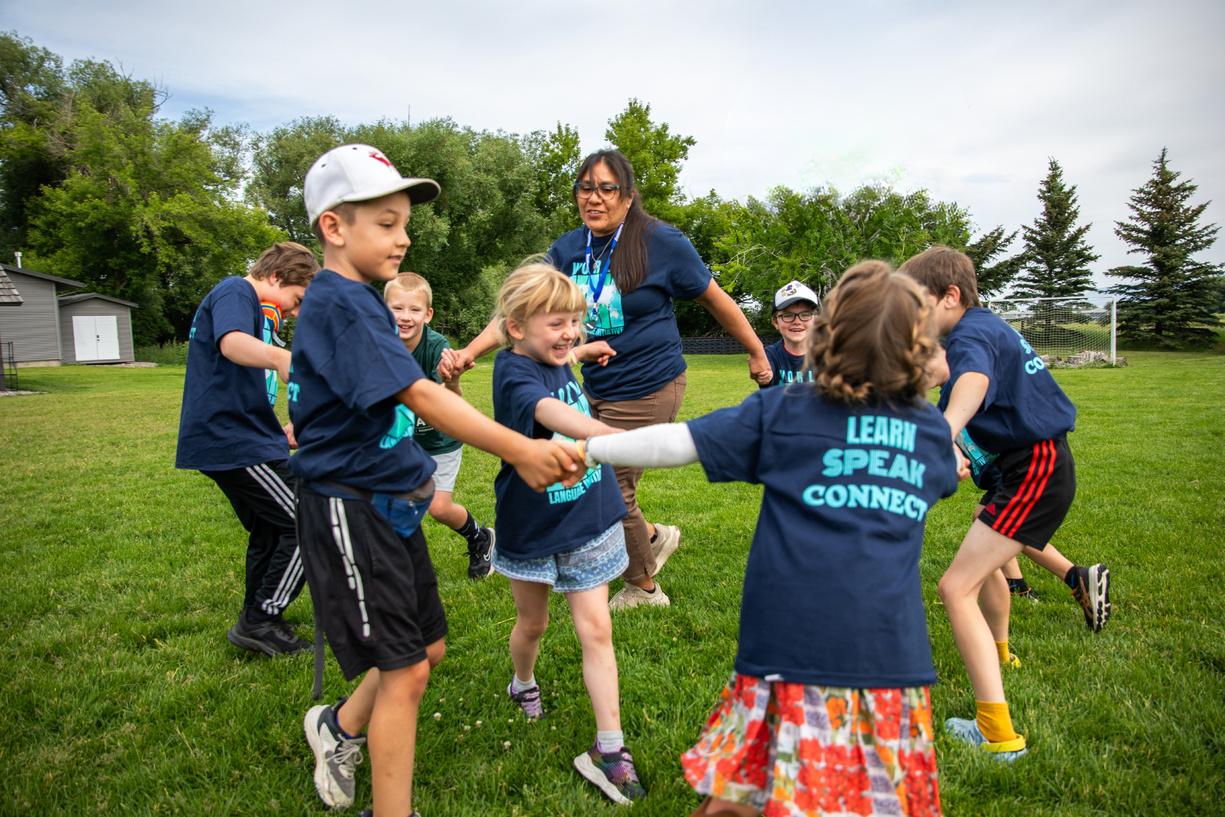
WRITTEN BY MARDY HARDING, PROGRAM COORDINATOR, WORLD LANGUAGE INITIATIVE - MONTANA
“It looks just like Seattle, except everything is in Chinese!” I exclaimed as my family drove from the airport to our new home in Shenzhen, China. I was 8 years old, and we had just moved across the globe for my father’s job.
I had no idea how sentient my observation was at the time, but I would soon learn how critical a factor language is when traveling, moving or working abroad. Language shapes everything, and our ability to communicate can impact our experience, safety and relationships.
As a kid living in China, language became a way to connect with my new world. My language learning consisted of weekly Mandarin lessons in school, Chinese friends and my mother encouraging me to use the language. At first it was uncomfortable — the characters on signs felt confusing, and the language difficult to parse, even as an 8 year-old with a malleable brain. With time, though, I began to understand. My brain developed new neural
pathways that made words sound familiar, and characters began to make sense as another form of writing.
By the time we moved back to the United States two years later, I had learned enough Mandarin to order my favorite snack from a street vendor outside school, wish my Chinese friends’ families a Happy New Year and communicate with my babysitter. I was even able to write an entire paragraph in Mandarin, which still hangs on my parents’ fridge today.
Though my Mandarin has faded over the years, the experience of developing different ways of thinking and communicating through this language shaped my life.
Learning a second language has been shown to transform our brains. Research shows that navigating more than one language strengthens cognitive skills, especially when its learned young. Multilingual youth often demonstrate greater creativity, empathy and flexibility, and language learning has been linked to higher academic achievement and long-term brain health. The list of benefits goes on and on.
Beyond the science, learning a language creates endless opportunities for joy. For me, moving back to the United States to start middle school was an awkward transition, and it was through language learning that I found my people. My sixth-grade French teacher was witty and blunt, and she made language learning fun. Our class laughed and sang everyday — songs I still remember.
I became close with the kids at my table, and eventually we dreamt of traveling to France together. We committed to learning French through high school, where the language continued to expand our worlds. We watched French language films and researched francophone cultures for our monthly “Culture Days.” This was how I learned about numerous francophone countries beyond France. Learning that I would be able to communicate in Haiti, Belgium, Madagascar, Algeria, Monaco, Morocco and other countries opened up my world.
As I thought about life after high school, using the language I had worked so hard to learn became a priority. In college I chose

to major in International Studies, and soon after I began researching study abroad opportunities. I studied abroad in Morocco, where French is spoken, but I took Arabic. My host family understood both languages, so our communication wound up being a jumble of Arabic, French and English. This led to funny misunderstandings, emphatic debates and a close relationship formed through shared language.
Generally speaking, my friends who made an effort to speak the languages with their host families had much better experiences than those who didn’t. The language also allowed us to explore and have impactful cultural adventures, like discovering a local jazz festival or an underground art collective.
These experiences are some of the many doors that language opens up beyond our cognitive functioning — it can shape opportunities as early as high school. There are countless scholarships for multilingual students, as well as opportunities to travel, study and work abroad.

A second language can boost a resume and tell a story of resilience and versatility. Institutions and businesses know we live in a globalized world, and so the ability to communicate with other countries is in high demand.
My peers in the International Studies program — who were all required to take advanced language courses — now work in policy research, at the FBI, in international marketing, food systems management, mountaineering and more. Meanwhile, I found myself in the nonprofit workforce as the program coordinator at World Language Initiative - Montana, where I get to create these opportunities for today’s kids.
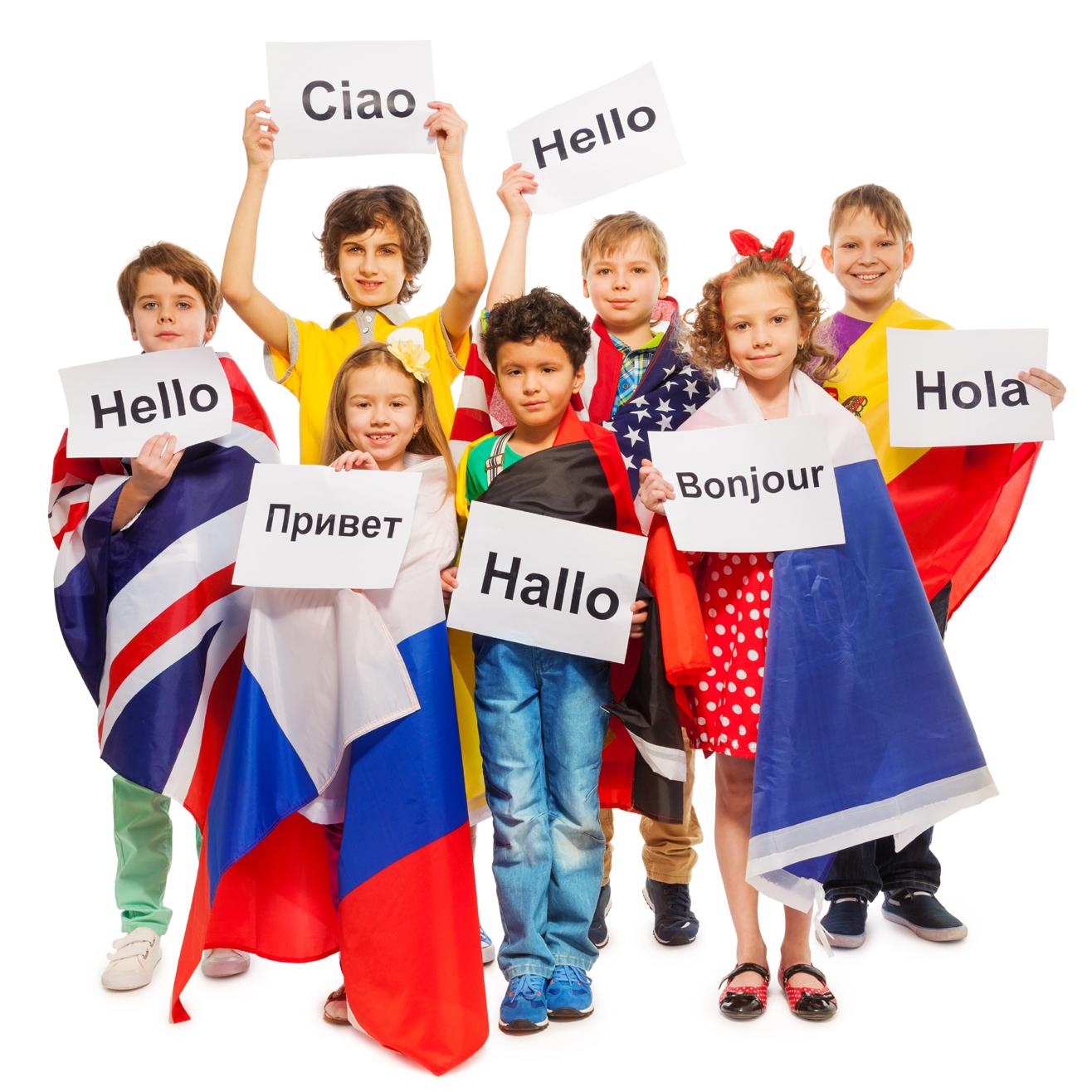
Through classes and camps, our students don’t just learn vocabulary, they build confidence, curiosity and connections that can shape their futures. Language opens doors. Sometimes to a second family, sometimes to life-changing adventures and sometimes to careers students never imagined. All it takes is the chance to start.
Sat. APRIL 11, 2026 10:00am - 3:00pm at the Gallatin Crossing (formerly Gallatin Valley Mall)













WRITTEN BY ALLEGRA BERESZNIEWICZ, M.S., CCC-SLP | OWNER, GRO SPEECH
Summer camp season has a way of bringing up equal parts excitement and quiet worry for parents. On the surface, camp sounds simple enough. Fresh air, new friends, independence and fun. But for parents of kids who struggle with speech, sensory processing or transitions, the question often feels heavier: Is my child actually ready for this?
If that question has crossed your mind, you are far from alone. Many children do not fit the picture of the carefree, adaptable camper who jumps into new situations without hesitation. Some need extra time to warm up, struggle to be understood by unfamiliar adults or peers or become overwhelmed by noise, routines and group expectations. None of this means camp is off the table. It just means the preparation may look a little different.
For many families, camp is one of the first experiences where kids are away from caregivers who know how to interpret their speech or anticipate their needs. A child who is mostly understood at home may find it harder to communicate with new counselors or peers. Others may know what they want to say but struggle to organize their words quickly enough in group settings. This can show up as frustration, withdrawal or emotional outbursts, especially at the end of a long day.
Sensory needs can also play a big role. Camps are full of unpredictable sounds, smells, textures and transitions. One moment may be crafting at a table, the next a whistle blowing and everyone lining up for swimming. For children who rely on structure or have difficulty shifting between activities, this constant change can be exhausting. Some kids manage by masking their discomfort all day, only to melt down once they are back in the safety of home.
So how do parents decide if their child is ready?
Instead of asking whether your child fits the idea of a typical camper, it can be more helpful to ask what kind of camp environment will support your child best. Smaller group sizes, consistent routines and predictable schedules can make a huge difference. Camps that are willing to communicate openly, accept feedback and make small accommodations often end up being a great fit, even for kids who need extra support.
It is also worth paying attention to how your child handles transitions and communication in other settings. Can they ask for help when they need it, even if the words are not perfect? Do they recover from changes in routine with support? Are they able to participate in group activities for short periods of time? These skills do not have to be mastered before camp, but understanding your child’s starting point helps set realistic expectations.
Preparation matters more than perfection. Talking through what camp will look like ahead of time can reduce anxiety. Visiting the location, reviewing the daily schedule or practicing simple phrases like “I need help” or “I need a break” can build confidence. For some children, having a familiar routine before and after camp helps balance the stimulation of the day.
It is also OK to start small. Half-day camps, shorter sessions or camps focused on a specific interest can be a great way to test the waters. Success does not always mean loving every minute. Sometimes success is simply getting through the day, learning something new and building resilience over time.
Perhaps the most important thing to remember is that struggling does not mean failing. Camp can be a place where children learn independence, communication and flexibility at their own pace. With the right environment and support, many kids who do not seem like “typical campers” end up gaining confidence in ways that surprise everyone, including themselves.
At Gro Speech, we work with children who have speech, language and sensory-based challenges, and we support families as they prepare for real-life experiences like school and camp.
Visit www.grospeech.com or call 406-556-9853 to learn more. Gro Speech offers pediatric speech, language, feeding/swallowing, myofunctional, occupational and lactation consulting therapy services from birth to adolescence. We have been serving Gallatin County and beyond for 20+ years with in person clinic sessions and remote, telehealth therapy options when appropriate for families. For more parenting strategies and ideas in relation to speech and sensory development listen to Gab and Gro: Conversations in Pediatric Therapy anywhere you listen to podcasts.
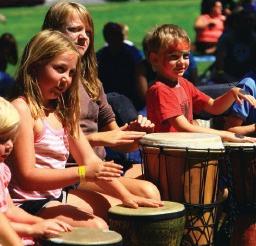
We all remember the stress of starting a new school year – that feeling that you left everything you learned last year somewhere between the airport and your grandparents' house, but you can’t remember where. Studies have repeatedly found that these losses are very real and measurable. A 2020 study conducted by Brown University reviewed five prior years of assessment data from 18 million students in all 50 states. The results were astounding: The average student loses between 17 and 28% of school-year gains in ELA during the following summer. For math, the average loss fell between 25 and 34% of their learning from the previous year.
These losses have the potential to cause achievement gaps that widen every year. Although summer should absolutely be a time for exploration and time outside, neglecting academic practice during this time makes starting the new school year much more difficult and stressful for students and their parents. Fortunately, preventing summer slide doesn’t require rigorous learning all summer, but rather building a routine that keeps students actively engaged in reading, writing, math and STEM.
If you want to keep up your elementary schooler reading, try Storyline Online. The website has dozens of videos featuring famous actors reading children’s books. The stories are engaging, animated, subtitled and make an excellent summer reading activity. Another great way to practice literacy and family time is to have your child read a book and tell them

you’ll watch the movie version as a family when they finish. While watching the movie, you can even ask them questions about how the movie might be different from the book. Drawing connections between the book and the movie is a great way for your kiddo to practice critical thinking skills. You could do this twice a month, and by the end of the summer your kiddo will have read six chapter books.
Make screen time educational. Depending on your family’s needs, you can either restrict some screen time to educational apps, or add the incentive of additional screen time if they’re using a learning app. Khan Academy Kids is an excellent smartphone/tablet app for children ages 2-8. Your kids won’t mind the screen time and there are plenty of thoughtful learning apps out there — ABCya!, MathHero and PBSKids are all great options to introduce.
For older kids, there are plenty of ways to sneakily introduce new vocabulary words. Using a vocabulary app or other resource, collect a few new words each week. You can even pick a theme for the words that aligns with one of their interests — or bring one up in conversation as if you don’t know the meaning and ask them to research it for you. If your kid is the competitive type, challenge them to use their new vocabulary word(s) as many times that day or week as they can, with a reward for reaching a certain number of uses.
To get your older kids practicing math in the summer, lean into their motivations as emerging adults. Helping them start a business is a great
way to get them thinking. Let them start a lawn mowing service or have a lemonade stand. Help them along the way, but make sure they’re in charge of the money management (calculating costs, profit margins, counting money, keeping good track of sales). You could also make a habit out of baking, but add an extra step. Find a recipe you like, but tell your kid you’re only making a half recipe. Before you start, they need to cut all of the measurements in half and convert the measurements into decimals (all without a calculator).
If planning and managing your kid’s antisummer-slide routine is daunting, Big Sky Tutoring can do it for you. They offer book clubs, writing groups, math review groups, math advancement groups, STEM clubs and more. Their programs are designed to supplement summer day camps with just enough academics to help your student stay engaged over the summer. All of their group sessions are 90 minutes once a week, and come with daily homework assignments that will keep your students using their brains every day. Your students deserve a break, which is why all of our programs start after Independence Day and run through the end of the summer. Their programs are led by experienced educators who know how to make learning fun and maintain a supportive environment. Big Sky Tutoring will do the hard part! Just drop off your kids once a week and see how much easier back-to-school time is — your kids will be ready to rock and roll.


WRITTEN BY VICTORIA VAN GARDEREN

The emails start arriving in February. Summer camp registrations. Enrichment programs. Sports clinics. By March, many parents find themselves hunched over laptops, credit cards in hand, playing Tetris with their family calendar—trying to fill those long weeks between June and August with enough structure to prevent the dreaded words: “I’m bored.”
But what if boredom isn’t the enemy we’ve made it out to be?
As a parent, I understand the impulse. Summer stretches ahead like an endless prairie, and the fear of managing your work commitments or running out of activities can feel real. We worry our children might waste these precious months glued to screens, or that we’ll fail them somehow if we haven’t curated the perfect balance of exploration and adventure.
I know this pressure intimately. For much of my children’s growing-up years, I was a single parent working as a Montessori teacher and administrator. Piecing together enough camps so I could keep up with my own job was challenging—logistically, financially and emotionally. I’ve lived the calendar Tetris, the guilt when camps didn’t align with my work schedule, the exhaustion of trying to make it all fit. So, when I suggest we might be overbooking our children’s summers, I’m not speaking from some idealized position of abundant time and resources. I’m speaking from the trenches.
Yet somewhere between doing nothing and doing everything, we’ve lost sight of what summer used to be—and what our children actually need.
This isn’t an argument against camps. Montana offers great options. My own school, Bozeman
Montessori, offers creative, weekly camps with themes parents can opt in or out of. Many camps like ours provide experiences our kids genuinely love. The issue isn’t the programs themselves; it’s the compulsion to eliminate every gap, to ensure our children are constantly engaged and entertained. In our well-intentioned efforts to give them “the best summer ever,” we risk giving them something else entirely: exhaustion, overstimulation and, with it, the loss of something irreplaceable–their ability to simply be.
When children have space to be bored, something remarkable happens. After the initial restlessness passes, creativity emerges. A stick becomes a fishing pole or a walking staff for an imaginary quest. A cardboard box transforms into a fort, a rocket ship, a secret clubhouse. The backyard—the same backyard they’ve known their whole lives—suddenly reveals hidden possibilities when they have time to truly explore it.
Research shows that unstructured time allows children to develop their capacity to generate ideas and direct their own play. But this capacity requires practice, and practice requires time—time we’re not giving them when every moment is spoken for and adult-directed.
Here in Montana, we’re particularly fortunate. Summer isn’t just a season; it’s sacred. Our children don’t need to travel to experience wonder—it’s in the creek at the park, in the mountains visible from the kitchen window, in the seemingly endless daylight that stretches past bedtime. Yet how often do we actually let them sink into that wonder without an agenda of activities?
I’m proposing something practical: that we protect some of that open space on our calendars. That we choose our camps
thoughtfully and then schedule breathing room around them if we can.
An afternoon at the local park isn’t a placeholder until something better comes along. Building a fort from couch cushions isn’t what happens when we can’t afford “real” activities. These moments are the point. They’re where children learn to navigate conflict with siblings or neighbors, to negotiate rules in their own games, to discover what actually interests them when no adult is directing the show.
This summer, what if we intentionally blocked out unstructured time and defended it as fiercely as we defend soccer practice? What if, instead of frantically filling the calendar, we asked our children what they’re actually curious about and built from there?
The message we send matters. When we pack every moment, we inadvertently teach our children that worth lies in constant productivity, or that empty time is to be avoided. So yes, sign up for that one camp your daughter keeps mentioning. Let your son do the baseball clinic if he loves it. But then? Leave some afternoons open, or maybe carve out a Friday. Schedule blocks of nothing. Stock up on art supplies and old blankets for fort-building. Your children might complain of boredom. Let them. Sit with the discomfort of not fixing it immediately. What emerges on the other side—the games they invent, the projects they devise, the way they learn to be with themselves—that’s not just enough. That’s pure Montana gold.
Victoria van Garderen is the director and co-owner of Bozeman Montessori, which has been running a summer program as part of their year-round programming for over a decade. A working parent who balanced a demanding job while raising children, she cherishes the freedom to explore all the gorgeous things Bozeman has to offer in the summer—spontaneous hikes, afternoons at the river or simply watching clouds from her porch with a glass of lemonade. Her approach to parenting and education is rooted in the belief that children thrive when given the space to discover the magical world around them.






Plan your kids' summer fun here for more information about these camps, visit our interactive Summer Camp & Activities Finder at www.mtparent.com
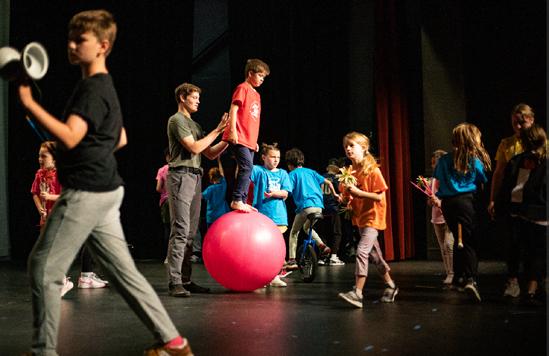
406Cirque Circus Camp
Ç registrations@406cirque.com
Ç (406) 404-6208
Ç www.406cirque.com/summer-camp
406Cirque Camp is a hands-on performing arts experience where kids and teens explore circus through movement, creativity and collaboration. Campers train in acrobatics, aerial arts, juggling, balance and clowning while building strength, confidence and focus. Days are structured yet playful, emphasizing skill development, teamwork and self-expression. Options are available for single week camps or three-week sessions. The three-week session culminates in a showcase, giving campers the chance to share their work.
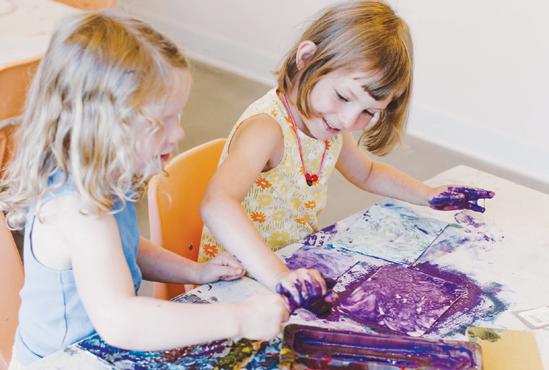
Art Camp by State of Play: Littles (3-7 years old) and Bigs (6-9 years old)
Ç info@stateofplay.co
Ç (406) 404-2374
Ç www.stateofplay.co
State of Play summer camps are designed to spark imagination, build confidence and let kids explore creativity through hands-on art and play.

Big Sky Tutoring
Ç admin@bigskytutoring.info
Ç (406) 312-1558
Ç www.bigskytutoring.info/2026-summerprograms
This summer, Big Sky Tutoring is offering a selection of both enrichment and foundational skill-building programs to help your student excel and tap into their motivation. Their foundational programs are designed to close learning gaps from last school year and prepare students to start the next school year with the tools they need to excel. Enrichment programs offer students expert guidance to grow as writers, scientific thinkers and mathematicians. Big Sky Tutoring programs are conducted with a small student-to-instructor ratio that allows for individual support and attention.

Save your kid from a melt down and yourself from a headache at back-to-school time.
We know it’s like pulling teeth to get your kids to read or do math in the summer. Don’t stress!
Let the professionals take it from here. Our tutors are running engaging summer groups with daily homework assignments.
We’ll do the hard part! Just drop off your kid once a week and see how much easier back to school time is; your kid will be ready to rock and roll.
PREVENT SUMMER SLIDE WITH:
Remedial Math Groups
Advanced Math Groups
Emerging Writer ’s Groups
Summer Book Clubs
Summer Research Academy
Summer STEM Clubs
ACT Preparation Courses
SCAN HERE TO INQUIRE
admin@bigskytuoring info
406-312-1558
bigskytutoring info
Ç info@bozemansummercamp.com
Ç (406) 306-0800
Ç www.bozemansummercamp.com
Join Bozeman’s Best Summer Camp for an unforgettable summer filled with adventure, learning and fun. The mission is to provide a safe, nurturing environment where your child can grow, make new friends and create lasting memories. Each week, your child will participate in an exciting variety of activities, including sports, martial arts, tumbling, dance, arts and crafts, educational lessons, splash days, field trips and much more. There’s never a dull moment, and your child is going to love being there. Camp runs Monday-Friday, 7:30 a.m.5:30 p.m. Full summer and weekly enrollment options available.
Ç bozemanchildrenstheatre@gmail.com
Ç (406) 539-3153
Ç www.bozemanchildrenstheatre.com/newproduct
Campers will go from auditions to performances in less than two weeks with the Bozeman Children’s Theatre’s staff of licensed educators!
Ç enrollment@bozemanmontessori.com
Ç (406) 600-8098
Ç www.bozemanmontessori.com
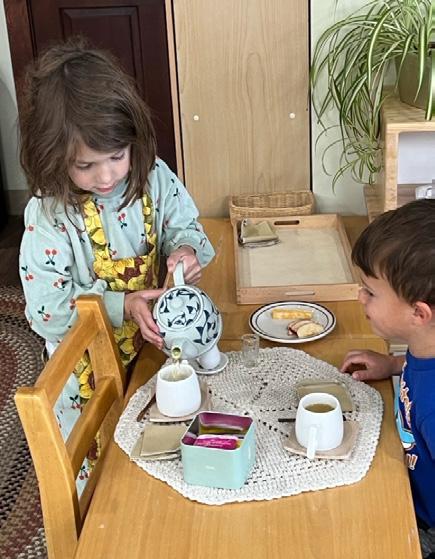
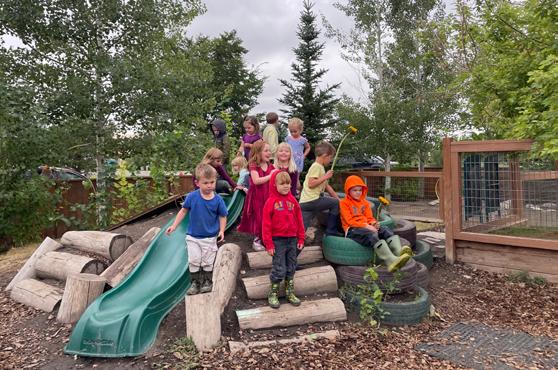
Set against the beautiful backdrop of the Bridger Mountains, our summer program is designed to be an extension of the Montessori classroom, blending discovery of the natural world with the joy of creative expression. Children will engage in hands-on activities that foster independence, curiosity and a deep connection to our local Montana environment. Weekly themed options are available for children ages 6 months through 6 years, Monday-Thursday.
Ç bozemansportscamp@gmail.com
Ç (406) 661-5496
Ç www.bozemansports.camp
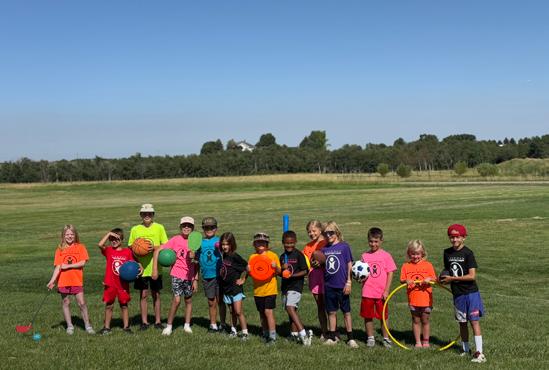
Bozeman Sports Camp is an active summer sports camp for kids entering grades K-6. They provide fun and engaging activities, games and instruction covering sports of all kind. Camp directors are Bozeman-area teachers and college students studying education. Counselors are trained to provide quality instruction of sports skills, strategies and sportsmanship while creating an active setting for kids to spend their summer.
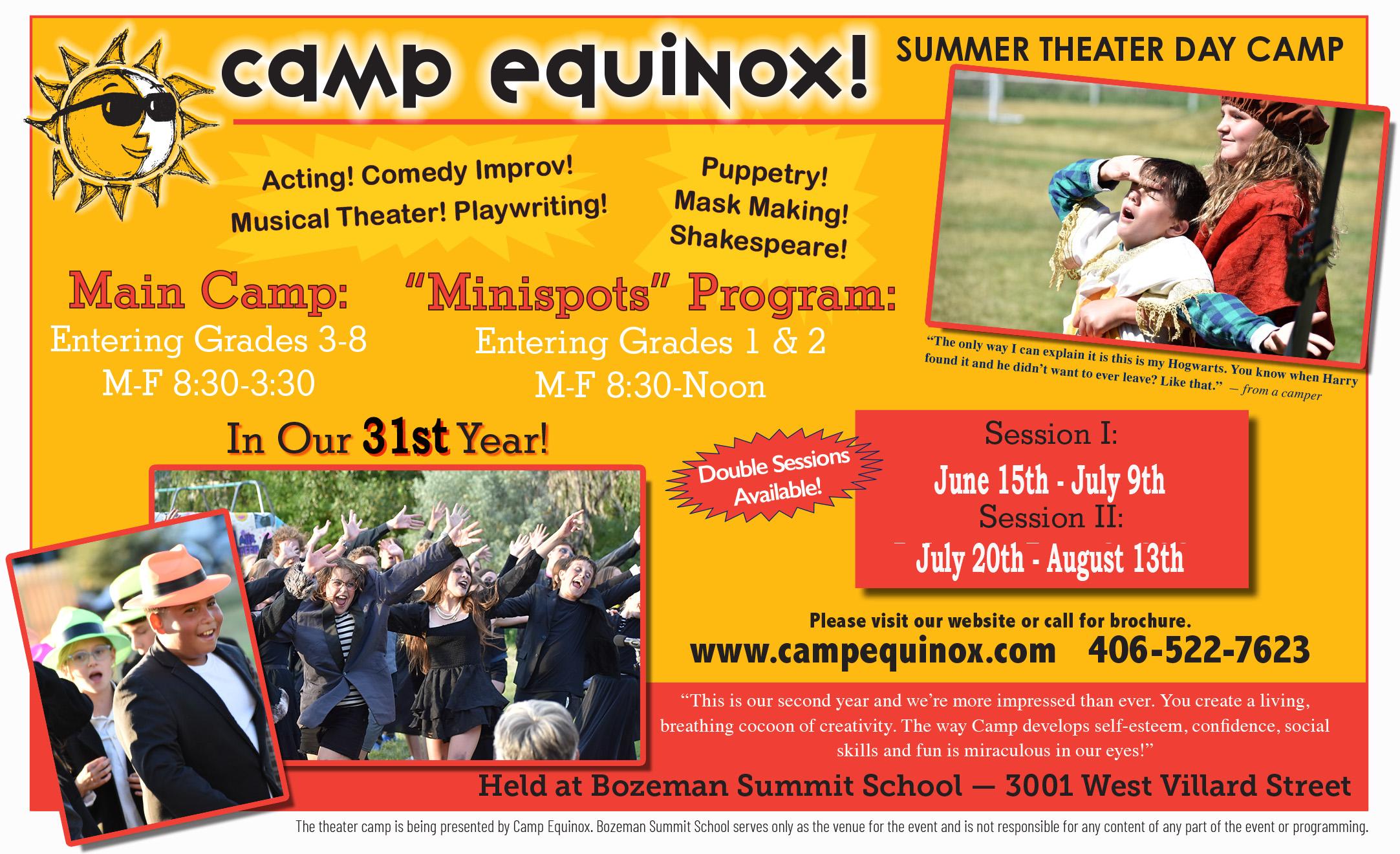
Ç registrar@campequinox.com
Ç (406) 522-7623
Ç www.campequinox.com
“What a magical, magical place. You guys really have a gift.” - camp parent
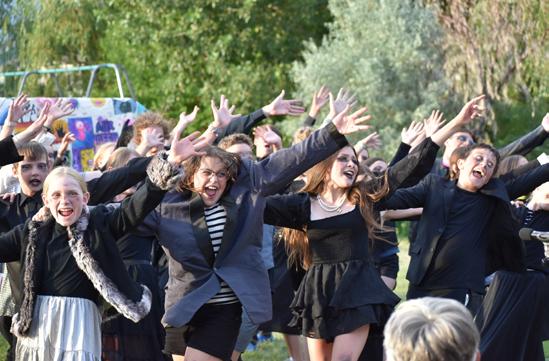
Since 1996 Camp Equinox has been an exciting place for kids to learn all about the theater, and explore their own creativity. The goal is to give students the opportunity to meet challenges, build self-confidence and see their success in final performances, all in the environment of a supportive community. The positive growth that takes place through the performing arts is thrilling. You may not recognize your kids after four weeks at Camp Equinox.

Ç bozeman@pinspiration.com
Ç (406) 219-3786
Ç www.pinspiration.com/locations/ bozeman
This pin-spirational art camp is sure to entertain your kids, offering campers ages 6-12 the opportunity to learn and grow as they explore their creative spirit. Each week of camp has a unique theme, so your child can enjoy multiple sessions and walk away with an armful of creations, learned techniques and longlasting memories. Campers will make two to three themed projects per day, and also enjoy themed activities and games. Choose which camp speaks to your child or enjoy them all.

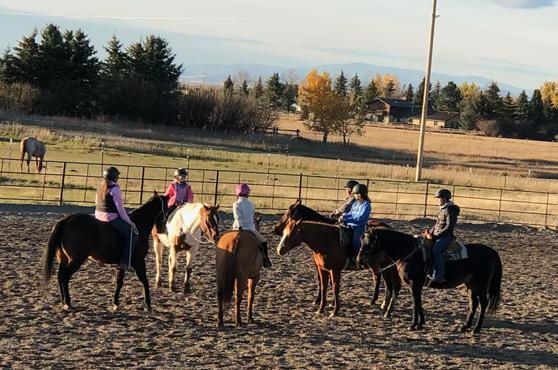
Ridge Equine
Ç Cedarridgeequines@gmail.com
Ç (530) 263-3433
Ç ww.cedarridgeequine.com
Cedar Ridge Equine offers several dates for horsemanship clinics and lessons for youth of all ages, from beginner to advanced riders. In all of the clinics, Cedar Ridge Equine teaches life skill development and personal growth as an intricate component of the horsemanship program. They have several options for adults available as well. Lesson horses and tack are provided.
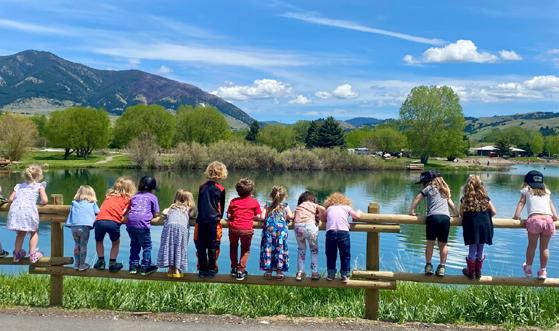
Ç erin.creativeartspreschool@gmail.com
Ç (406) 579-7692
Ç www.creativeartspreschool.org
Creative Arts Summer Camp is a natureinspired art camp where outdoor exploration and creative expression go hand-in-hand. Children spend time outside each day observing the world around them, then bring those experiences to life through hands-on art projects, music and imaginative play. Designed for children ages 3-7, weekly themes offer a thoughtful balance of nature, creativity and connection in a warm, supportive environment.
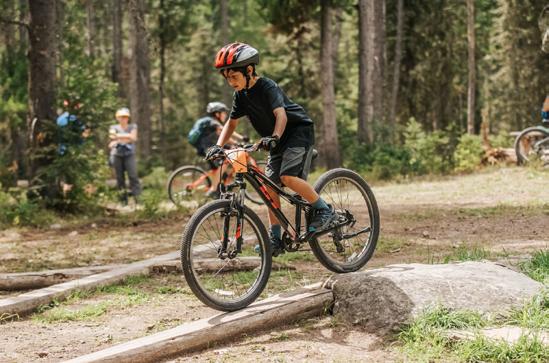
Mountain Bike Camps
Ç camps@crosscutmt.org
Ç (406) 586-9690
Ç www.crosscutmt.org/youthbiking-camps
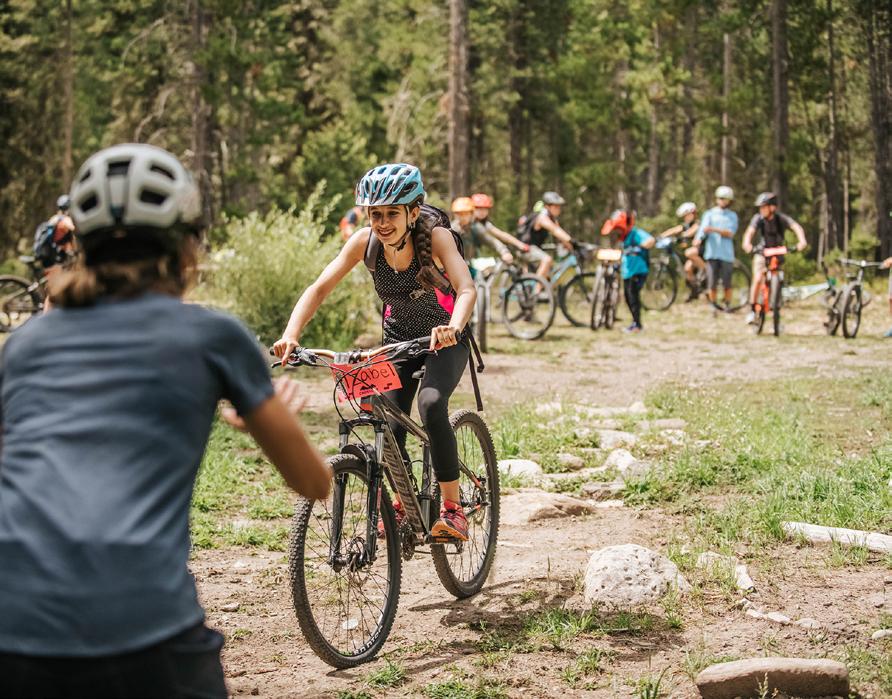
Crosscut’s Mountain Bike Camps help young riders build confidence, skills and trail awareness through fun, progression-based instruction and plenty of time on the trails. Guided by experienced coaches and grounded in safety, campers develop strong riding fundamentals while exploring Crosscut’s trail system and making new friends.
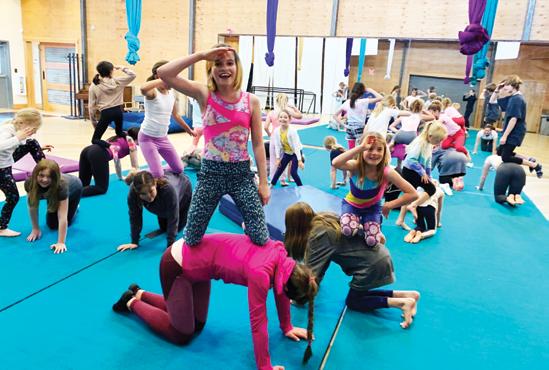
Ç info@mountainairdance.org
Ç (406) 595-0909
Ç mountainairdance.org
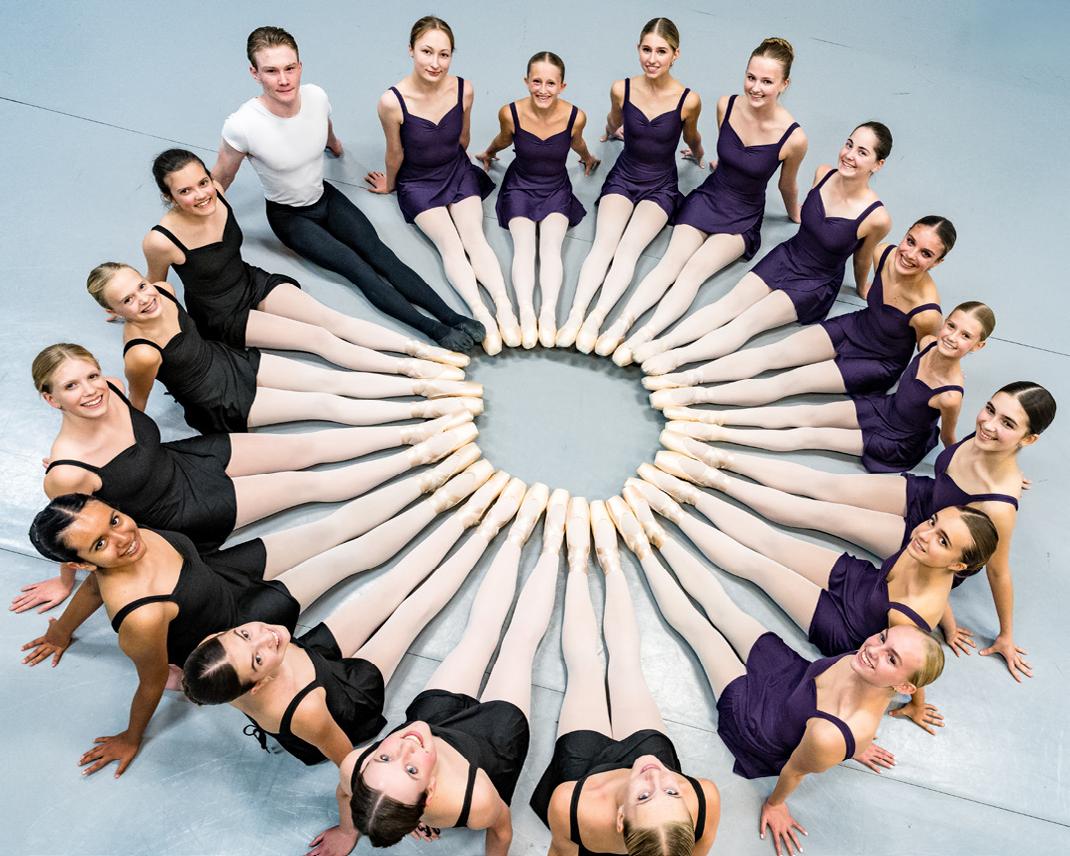
This fun and unique day camp challenges students physically and mentally with classes in aerial arts, dance technique, choreography, yoga, Pilates, hand balancing, flexibility training, arts and crafts and more. Experienced instructors will guide students through their day in small groups based on age and skill level. Join the fun and learn to fly! No experience required. For ages 6-16.
Ç education@theEmerson.org
Ç (406) 587-9797
Ç www.theEmerson.org/youth-camps
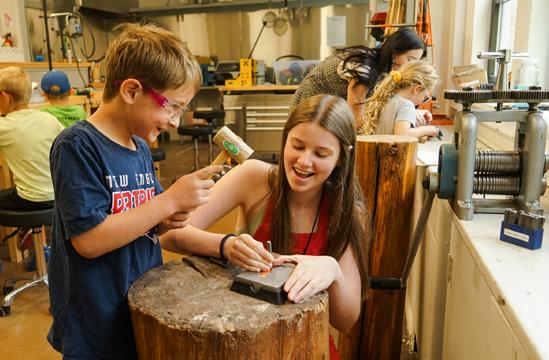
Unleash your child’s creativity at Emerson Art Camp, which offers eight unique, weeklong adventures packed with imagination, exploration and hands-on fun. Running Monday through Friday from 9 a.m.–3 p.m., each camp features a different creative theme designed to inspire young artists ages 5–12. Campers spend their days creating, playing, laughing and learning outdoors, guided by instructors who encourage curiosity and selfexpression. From experimenting with new materials to collaborating with friends, every day is a chance to discover something new.
Ç recdept@bozeman.net
Ç (406) 582-2290
Ç www.bozeman.net/recreation
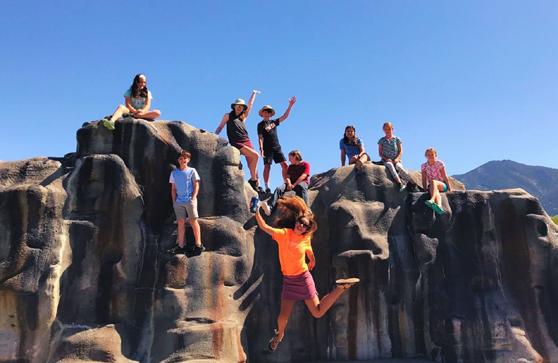
It is tough to find the variety, adventure and affordability of Bozeman Parks and Recreation camps anywhere else. Run by leaders who truly care about your children and implementing quality programs, Parks and Recreation summer camps create a safe and fun environment that is spent mostly outdoors where kids will play, laugh, create art of all kinds, learn about their local ecosystem, meet new friends, get a little dirty and challenge themselves by engaging in new activities daily. Bozeman Parks and Recreation is creating community through people, parks and programs.
Ç coachmack@forthefuturesports.com
Ç (701) 391-3301
Ç www.forthefuturesports.com
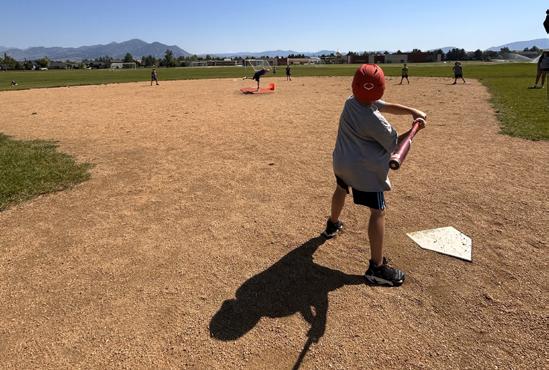
For the Future Sports Camp is a series of weeklong, coed, sports-focused day camps for kids entering grades K-8, held at Sacajawea Middle School in Bozeman. Every day of the nine-week program is full of active, outdoor fun. Campers are split into three age groups according to grade: K-2, 3-5 and 6-8, and will participate in age-appropriate skills, drills and games. For the Future Sports Camp is designed for all skill levels, so whether you child is looking to improve their game, learn a new sport or just have fun and meet new people, there is a spot waiting for them this summer.
Ç leah.weaver@gallatinvalleyymca.org
Ç (406) 994-9622
Ç www.gallatinvalleyymca.org
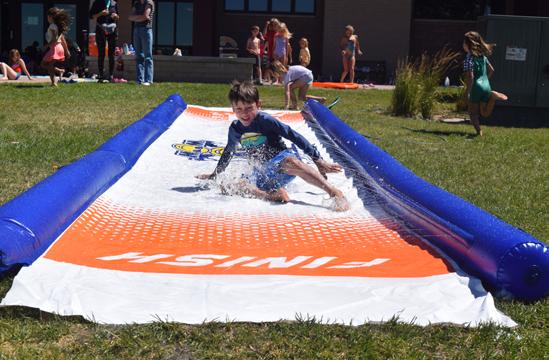
Gallatin Valley YMCA adventure day camps, specialty camps and sports camps are more than fun — they help kids build lasting friendships, celebrate achievements and discover a circle where they belong. The Y offers full-day and half-day camps for kids ages 5 through 14. Summer camp is so much more fun in the sun. At the Y, they provide an exciting and safe community for young people to explore the outdoors, build self-esteem, develop interpersonal skills, make-lasting friendships and more.

Ç mmalloy@allthrive.org
Ç (406) 922-4246
Join Thrive for the annual Girls Stories, Girls Voices summer camp, held Monday-Friday, July 20-24, from 9 a.m. to 3 p.m. This year’s theme, “Girls are Powerful,” is designed specifically for middle school girls to discover their inner superhero. Activities include creative writing, art projects, movement, sharing memories and having fun. The event registration fee is $150, and both full and partial scholarships are available for any camper. This camp is for girls moving into sixth, seventh and eighth grade.

GirlSing Music Camp Singing, Songwriting, Art and Outdoor Fun with Music Kate
Ç KateBryan2000@gmail.com
Ç (406) 570-2839
Ç www.GirlSing.com
GirlSing Music Camp is offered Monday-Friday, 9 a.m. to 4 p.m. for ages 7 to 11 (optional early drop-off and late pick-up for small fee). Camp sessions empower girls to explore their creative spirits through singing, songwriting, journaling and self-expressive art projects. Celebrating the beauty in every personality (introvert, extrovert, in-between, etc.) and honoring the gifts that make each girl unique, these indoor/ outdoor camps offer engaging activities (daily hikes/outdoor play, picnics, rhythm-making and creative arts). Thursday nights feature an art and music program. Flexible Fridays are available to accommodate family weekend plans.




Ç support@heartandhandcenter.com
Ç (406) 587-4036
Ç www.heartandhandcenter.com
Ç kidslink@greatergallatinunitedway. org
Ç (406) 587-2194
Ç www.greatergallatinunitedway.org
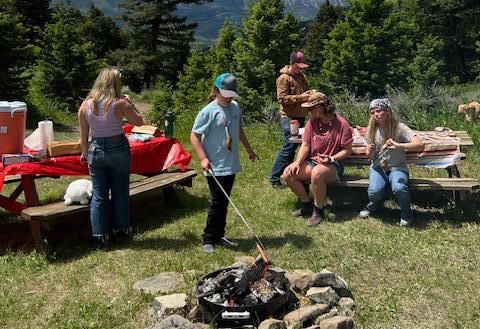
Heart and Hand Center day camps provide life-changing experiences with horses that will enhance and improve understanding of relational boundaries, improve self-awareness and emotional regulation, reduce anger and anxiety, diminish depression and self-doubt and build confidence and self-esteem while adding a wealth of increased understanding about oneself and others. Art and musical activities are included in every camp along with hiking and times for quiet meditation at Heart and Hand Center’s beautiful 286-acre ranch retreat center near Bozeman.
Ç programs@acrmuseum.org
Ç (406) 582-1288
Ç www.acrmuseum.org/summer-camp
Looking for an exciting and enriching summer experience for your child? You’ve come to the right place! The American Computer and Robotics Museum is thrilled to launch “Innovators in the Making,” a STEM summer camp designed for curious minds entering grades 3 through 8. This camp isn’t just about learning; it’s about doing, creating and discovering. Each week has a fun and engaging theme, and every day is packed with hands-on projects where kids build, experiment and collaborate. Sign up for as many sessions as you want. Come prepared for indoor and outdoor activities. Bring a sack lunch and snacks, and come prepared for both indoor and outdoor activities, Each camper receives a camp t-shirt and water bottle. Weeklong sessions start June 15, June 22, June 29 and July 6.
kidsLINK Summer Camps offer fun, safe and enriching experiences in Bozeman and Belgrade for preschoolers through rising fifth-graders. Programs include Jumpstart Aftercare, featuring weekly themes, hands-on STEM, creative arts, outdoor play, field trips and special projects with community partners. In Big Sky, kidsLINK Summer Camp (for ages 3–5) focuses on kindergarten readiness through playbased learning, giving kids plenty of time to explore, play, make friends and build confidence, curiosity and new skills in a supportive environment.

Ç annie@lastbestcomedy.com
Ç (323) 533-6368
Ç www.lastbestcomedy.com/kitcomedy
Kit Comedy Camp offers children an immersive introduction to the world of comedic performance. Throughout the camp, kids will learn how to work as a team, gain stage confidence and produce their own shows—all while having fun with new friends. Three different weeks are offered, focusing on three core comedy disciplines. With flexible enrollment options, parents can choose to enroll their kiddos in the full three weeks or any of the individual weeks. Each week concludes with a showcase, giving students the chance to shine on stage at Last Best Comedy. Join us for a summer filled with laughter.
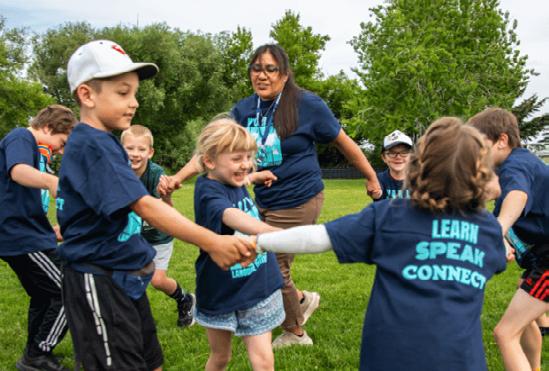
Ç info@wlimt.org
Ç (406) 414-6419
Ç www.wlimt.org/summer-camps
Expand your child’s world. World Language Initiative-Montana (WLI) offers three weeks of dynamic and engaging language and culture camps for kids entering grades K through 5. Spanish, French, Mandarin and Arabic camps will leave your child dreaming of traveling the globe. Camps are filled with games, arts and crafts, songs, making native treats and walking field trips — all led by experienced language coaches. Held at the WLI classrooms at the Emerson Center, camps run Monday through Thursday, from 9 a.m.-3 p.m.
Ç admin@lonemountain.biz
Ç (406) 587-1180
Ç www.lonemountain.biz
Lone Mountain offers a fun variety of summer camp options. Everything from KidVentures camp for little ones to Campapalooza (an all-around day camp offering swimming in the afternoon sessions). Join Trampoline Camp, Gymnastics Camp and don’t forget about swimming lessons. They also have camps for Tiny Dancers (preschool dance) and Ninja Camp. Lone Mountain can keep your kids active, engaged and having fun this summer. Whether you’re looking for fun and movement or progressing with skills, Lone Mountain has you covered. Camp offerings vary by week, so check out the website or call for details.
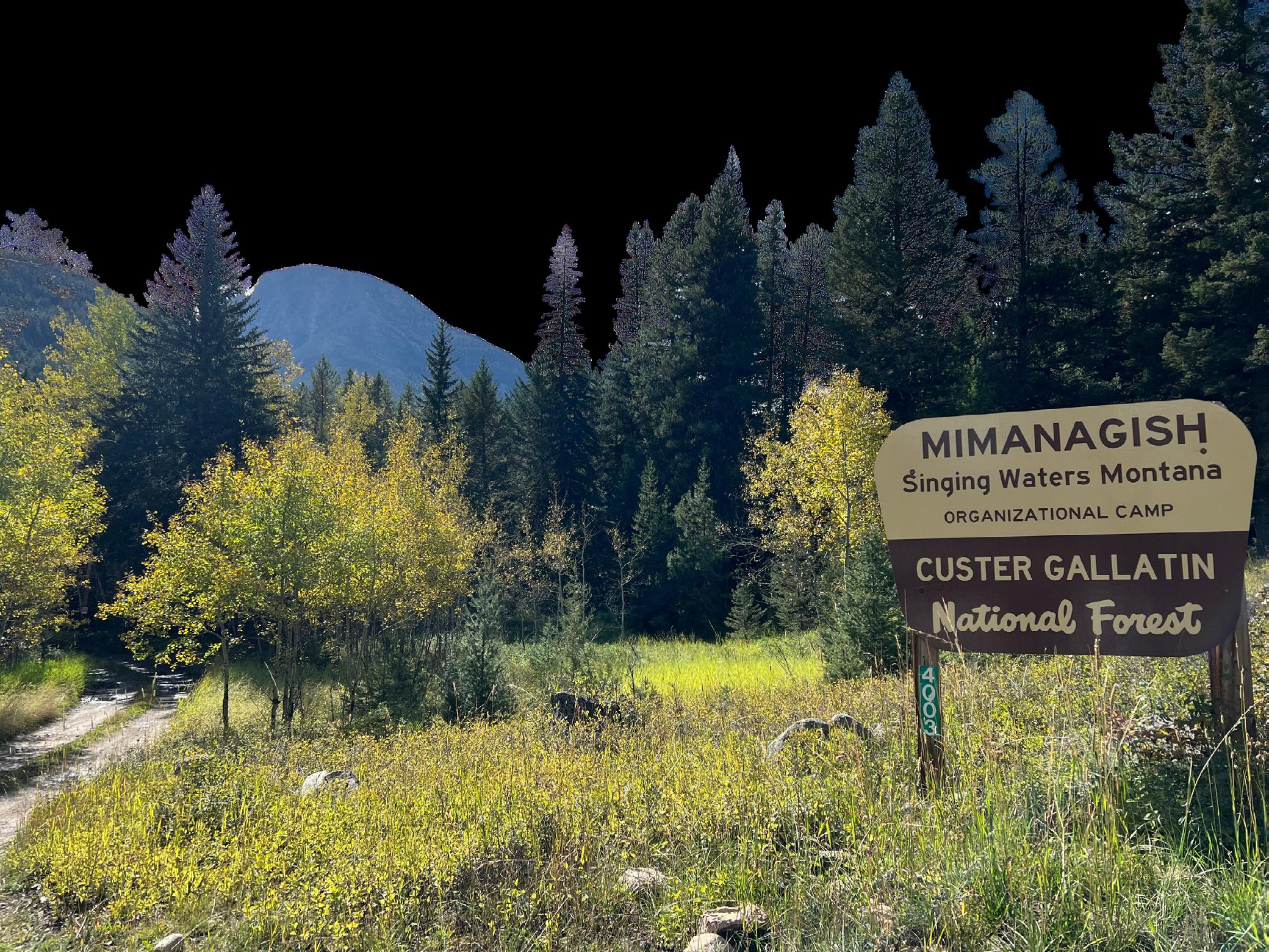
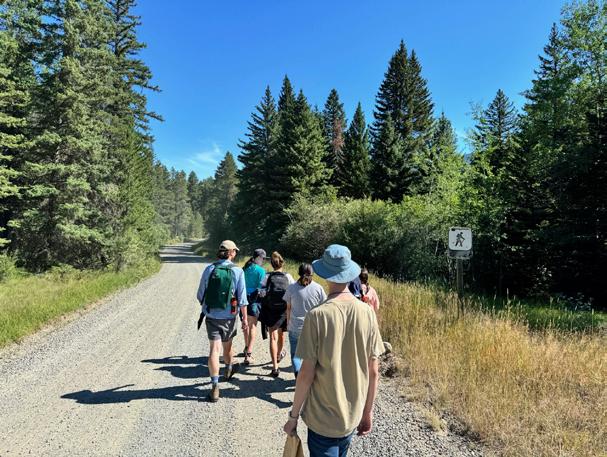
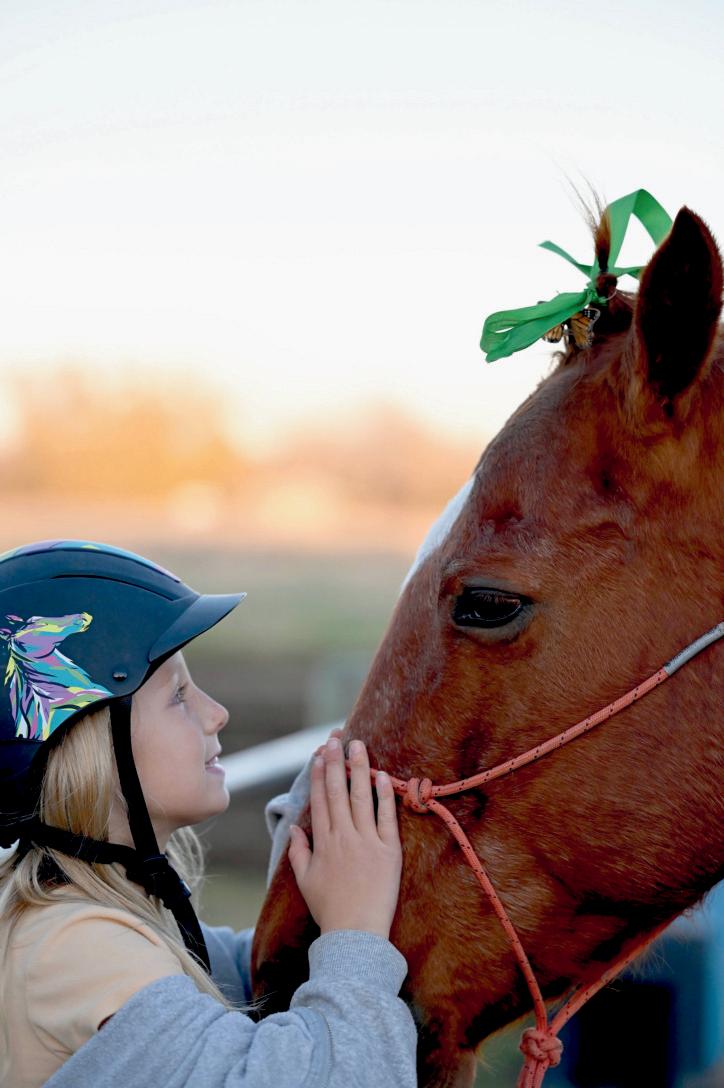
Give your child an extraordinary learning experience.

SUMMER CAMPS
9AM TO NOON GRADES 3-8
JUNE 22-26, JULY 6-10 JULY 13-17, AUG 3-7
REGISTER MARCH 1 NEEDS-BASED SCHOLARSHIPS AVAILABLE. SCAN QR CODE FOR MORE INFORMATION. WINDHORSEEQUINELEARNING.ORG PROGRAMS@WINDHORSEEQUINELEARNING.ORG 406.522.3906
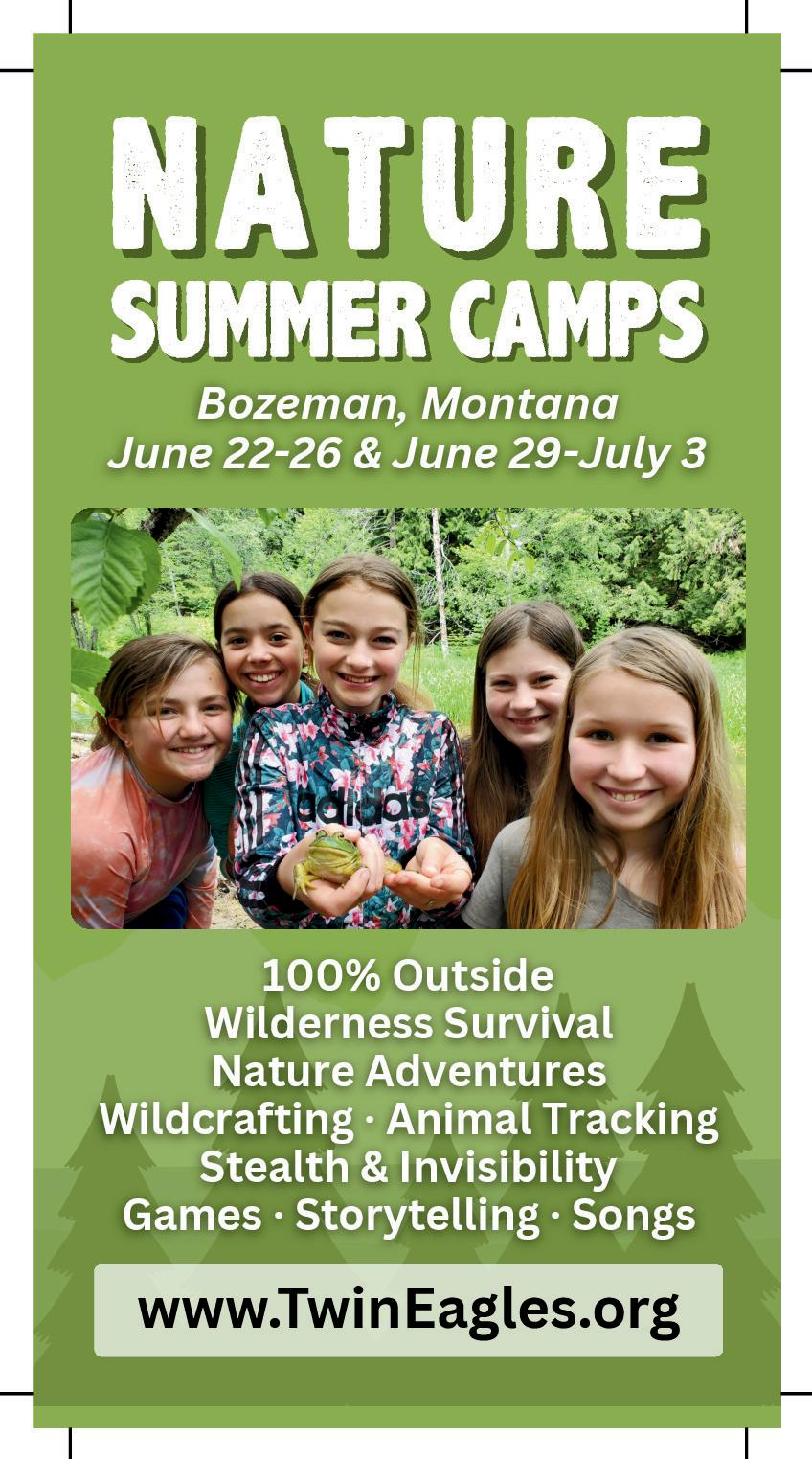
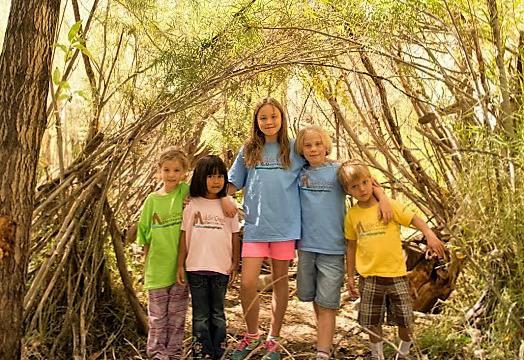
info@middlecreekmontessori.org (406) 587-3817
www.middlecreekmontessori.org/ montessori-summer-forms
Join Middle Creek Montessori as they explore the adventures of Jack and Annie through the Magic Treehouse book series by Mary Pope Osbourne. Each week, camp will focus on one of these captivating books. Campers will work on literacy skills, learn more about each book’s theme and enjoy the natural world on the Middle Creek campus. Enroll in any or all of the eight available weeks.
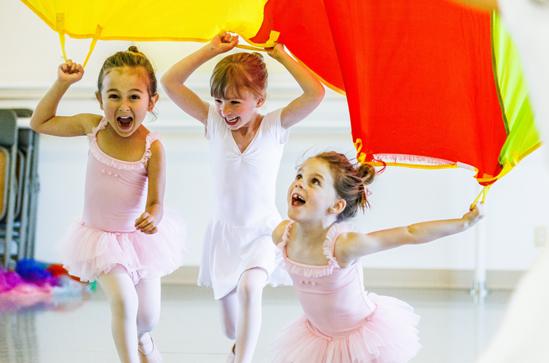
Ç info@montanaballet.org
Ç (406) 582-8702
Ç www.montanaballet.org
Montana Ballet Company offers a vibrant lineup of summer programs for dancers of all ages. Open summer classes are available for ages 2 through adult, while Sleeping Beauty Summer invites young dancers ages 4–8 to explore creativity and movement. Aspiring dancers can deepen their training through MBC’s summer intensives, designed to help students grow, learn and refine their artistry under the guidance of exceptional faculty. Programs include Dancing Under the Big Sky for ages 12–18 and MBC’s Junior Intensive for ages 8–11.

Ç education@outdoorscience.org
Ç (406) 740-6677
Ç www.outdoorscience.org
These well-loved, weeklong camps include various outdoor themes: animals, geology, outdoor skills, water ecology, nature photography and more. Montana Outdoor Science School looks forward to another exciting summer full of learning and adventures in our beautiful Montana home. Be sure to sign up early, as camps fill quickly. Please email education@ outdoorscience.org with any questions.
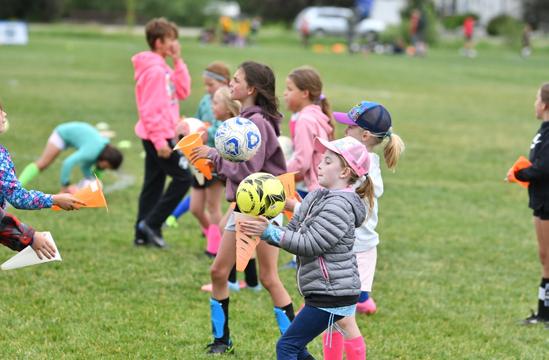
Ç recreational@montanasurf.org
Ç (406) 600-8146
Ç www.montanasurf.org
This summer, Montana Surf Soccer Club invites players of all skill levels to experience fun, high-energy soccer camps led by a professional coaching staff and guided by the club’s technical philosophy. Summer camps focus on skill development, creativity, confidence and a love for the game through engaging activities, smallsided games and age-appropriate training. Whether your child is new to soccer or looking to sharpen their skills, Montana Surf summer camps provide a positive, safe and exciting environment where players learn, grow and make lasting memories, on and off the field.
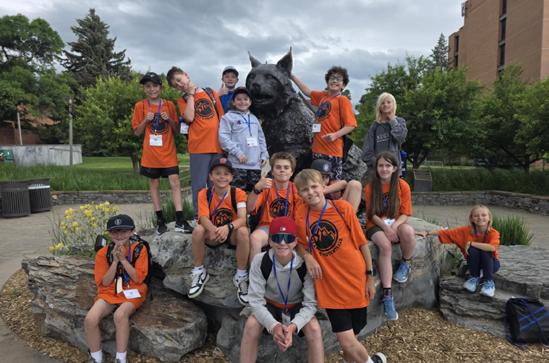
Ç justin.gibson3@montana.edu
Ç (406) 994-6633
Ç www.ato.montana.edu/peaks
MSU Peaks and Potentials invites rising fifth to seventh grade students to the MSU campus for a week of hands-on learning and unforgettable fun. Participants will enjoy engaging educational workshops and exciting activities like robotics with Legos, wilderness survival skills, painting, hiking and s’mores, swimming at the MSU Wellness Center and so much more.
With both daytime commuter and overnight resident options available, families can choose the experience that fits best. Join MSU Peaks and Potentials June 15–19 to explore your passions and make new friends in a safe, supportive and inspiring environment.
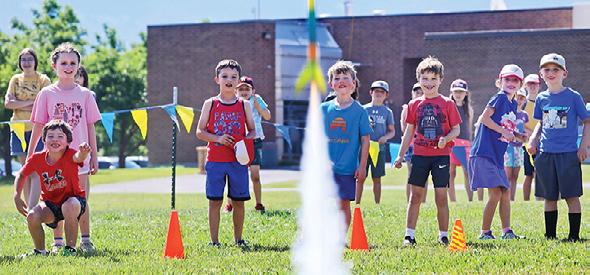
Ç programs@montana.edu
Ç (406) 994-2251
Ç www.museumoftherockies.org/ summer-camps
Join Museum of the Rockies for STEAMthemed summer camps for grades 1 to 8, offering immersive programs in paleontology, history, natural sciences, art, physics and Yellowstone. Campers learn from museum experts and enthusiastic instructors while exploring exhibits and enjoying the outdoors. It’s the perfect place to stay active, make new friends and create lasting memories.
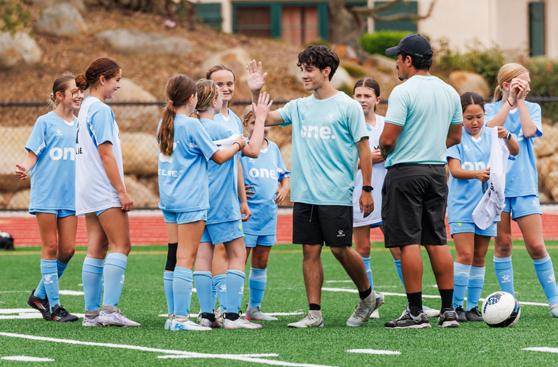
Ç info@onesoccerschools.com
Ç (805) 303-1327
Ç www.onesoccerschools.com/ day-camps
one. Soccer Schools day camps use game-based learning and expert coaching to improve scoring goals, master 1v1 situations and elevate soccer IQ with themed exercises designed to enhance decision-making under pressure.
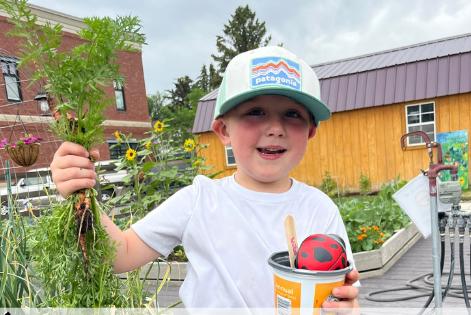
Ç admin@optoutdoors.school
Ç (406) 595-7616
Ç www.optoutdoors.school/ summer-club
Join OptOut Summer Club, where experienced elementary educators turn every sunny day into a blend of learning, laughter and exploration. They keep curious minds sharp and hands busy with exciting STEM challenges, creative crafts and interactive games—all designed to beat the summer slide and spark discovery. With their very own Magic School Bus ready to roll, kids will explore the best of a Montana summer—one adventure at a time.

Ç camp@heartofthevalleyshelter.org
Ç (406) 388-9399
Ç www.heartofthevalleyshelter.org
This seven-week summer day camp is for children (6–12 years old) who love pets! Campers learn the importance of compassionate pet care through time with pets, games, crafts, humane education lessons and a wide variety of guest speakers. Each week children will have the opportunity to interact with a variety of pets. The camp is Monday through Friday with drop-off between 8:30 and 9 a.m. and pick up between 3 and 3:30 p.m. The weekly cost of camp tuition is $270. Need-based scholarships are also available. To apply for a scholarship, contact the Volunteer & Outreach Manager.

Ç camps@ridgeathletic.com
Ç (406) 586-2816
Ç www.ridgeathletic.com/kids/camp/bozemansummer-camps
Give your kids an unforgettable, movement-filled summer at Ridge Athletic Club. Summer Camps run June 15-August 21 and feature exciting weekly themes based on foundational movements designed to keep kids active, engaged and having fun. Camps are available for ages 3–5 (half day) and 6–10 (full day), with flexible options to attend individual weeks or the entire summer. From sports and swimming to speed, agility and games, each week brings new energy, friendships and adventures.
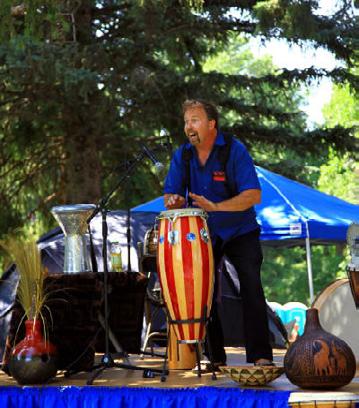
Ç chet@rhythmdrums.com
Ç (406) 580-8229
Ç www.rhythmdrums.com/camps
Rhythms World Drum Camps are held in Bozeman (at The Emerson). Children ages 5-12 are invited to join Chet Leach (a.k.a. Mr. Chet) for weeklong drum camps. These summer camps will include drumming from Africa, Brazil, Cuba and Egypt. Your child will learn about world culture through storytelling, games and, of course, lots of drumming!
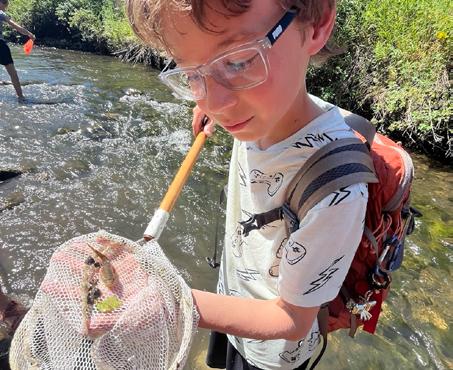
Ç rockycreekeducation@gmail.com
Ç (406) 599-2361
Ç www.gallatinvalleybotanical.com
At Rocky Creek Summer Farm Camp, their mission is to engage campers with local agriculture and landscapes by inspiring connection to the land, sense of place and confidence as members of a natural community. The education staff is committed to experiential teaching, connecting with nature, working cooperatively and intentional play. Many things on the farm might be new or intimidating to campers, and the staff finds it valuable to gently encourage campers to try new things and engage with new experiences they encounter. Camp is held from 9 a.m.-3:30 p.m., Monday to Friday weekly at Rocky Creek Farm.
Ç rooksgamesandmore@gmail.com
Ç (406) 556-2153

Ç www.rooksgamesandmore.com/ pages/rooks-rpg-camp
Delve into one of the most immersive experiences available: Dungeons & Dragons. This camp is designed to show kids how the worlds of Dungeons & Dragons can be explored and enjoyed. Campers will learn all the fundamentals, from building a character and playing the game to learning the core rules and even how to be a Dungeon Master. Rook's staff has spent countless years rolling dice and casting spells, so they would never lead any of your little heroes astray.
2740 W Main St rooksgamesandmore@gmail.com 406-556-2153
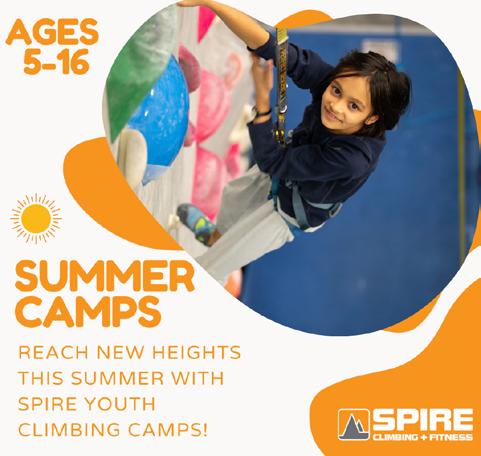
Ç kids@spireclimbing.com
Ç (406) 586-0706
Ç www.spireclimbing.com/summerclimbing-camps
Spire summer camps are a great way for children ages 5–16 to enjoy rock climbing in a fun, structured environment. At Spire, beginners learn the essentials of the sport while kids with prior experience take their skills to the next level. These are half-day, weeklong camps with tons of climbing time, as well as challenge courses, daily snack, outside play time and much more. Instructors engage campers in fun, challenging activities designed to improve strength, confidence, focus, trust and teamwork.
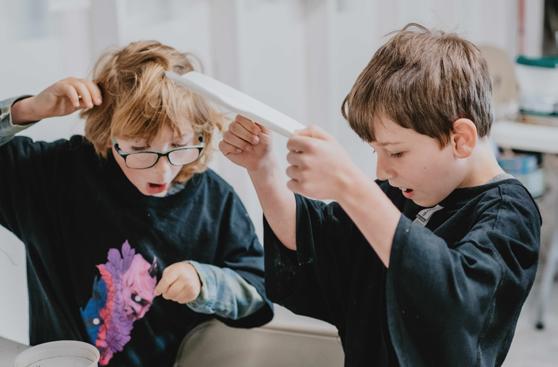
Ç angela.yonke@tinworksart.org
Ç www.tinworksart.org
This is your invitation to explore art with play and creation at Tinworks. Experiment with materials, learn to cultivate creative thinking and showcase your new skills. Activities and topics include sculpture, photography, drawing, printmaking, ceramics, improv, performance, toy making, puppets, costumes, history, science, storytelling, circus and magic. Students will tour the exhibition to observe and discuss artworks, take short field trips and create multiple projects to take home. Camps are led by arts professionals Monday-Friday from 9 a.m.-3 p.m. Six camps in total; maximum 16 campers per session.
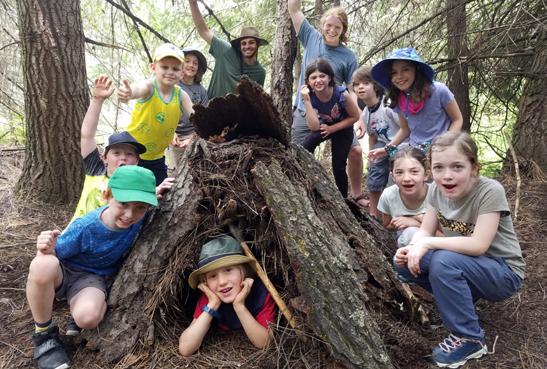
Ç office@twineagles.org
Ç (208) 265-3685
Ç www.twineagles.org
Discover epic fun, adventure and connection at Twin Eagles day camps for kids ages 6–13. These 100% outdoor camps immerse children in forests, creeks and meadows through hands-on exploration, play and skill-building in small groups led by caring, experienced mentors. Campers build deep relationships with nature through games, stories, songs, wildlife tracking, nature crafts, edible and medicinal plants and ageappropriate wilderness skills. Twin Eagles focuses on mentoring the whole child, nurturing confidence, curiosity, resilience and a strong sense of belonging in the natural world.
Ç info@rockhavencamp.org
Ç (406) 451-7092
Ç www.rockhavencamp.org
Rockhaven UnCamp is an innovative summer camp program where nature-based free play is front and center. This is a safe environment where creativity, curiosity and imagination can flourish, where kids can be kids, get a little (or a lot) dirty and connect with nature and fellowship together. UnCamp at Rockhaven takes the expectations and strict schedules out of camp and puts back in genuine play, natural curiosity and epic messes. Expect your camper to come home with muddy faces, sticky fingers and awesome memories that will last a lifetime.

Ç programs@windhorseequinelearning.org
Ç (406) 522-3906
Ç www.windhorseequinelearning.org
Windhorse Equine Learning offers a unique camp experience centered on leadership and partnership. Kids learn beginner horsemanship and riding skills while practicing communication, trust and respect with their horses and peers. Working alongside a powerful animal builds confidence and self-awareness, teaching campers how to be effective leaders and partners. Camps run from 9 a.m. to noon, are open to grades 3–8 and require no prior horse experience.



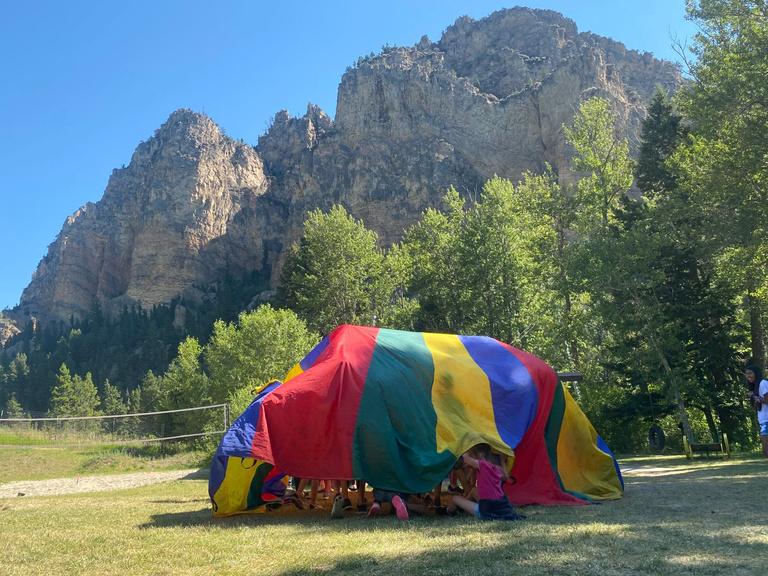
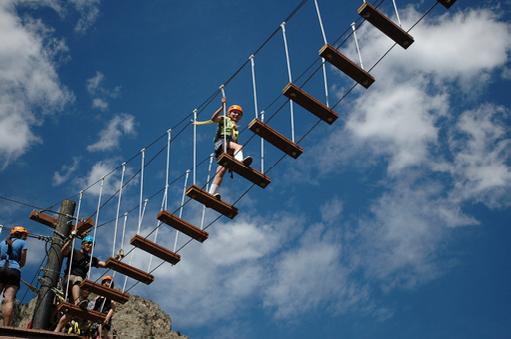


Ç office@yaacmap.org
Ç (406) 763-4727
Ç www.yaacamp.org
For more than six decades, YAA has provided youth with unforgettable camp experiences just south of Bozeman. They offer day camps, overnight camps and specialty camps for campers entering first through 12th grade, blending active outdoor fun with intentional faith experiences. Whether it’s a camper’s first time away from home or they’re a seasoned YAA veteran, each week at camp is designed to stretch the heart, sharpen friendships and create memories that last a lifetime.
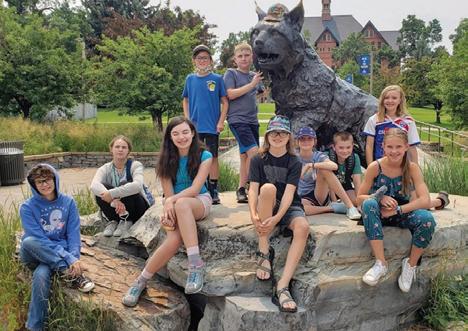
Ç yellowstonewp@ gmail.com
Ç (406) 994-6550
Ç www.ato.montana.edu/ywp/youth
The Yellowstone Writing Project’s summer writing camps are multi-day “unschooled” writing workshops. Youth Writing Camp is for those entering grades 5-12, and Young Writer’s Camp is for children entering grades 3 and 4. In both camps, writers explore various genres, play with form and language and share their writing within a supportive community of peers and licensed educators—the Yellowstone Writing Project teacher consultants. The program includes writing on the move, writing games, writing encouragement and feedback throughout the writing process. Come write with us!
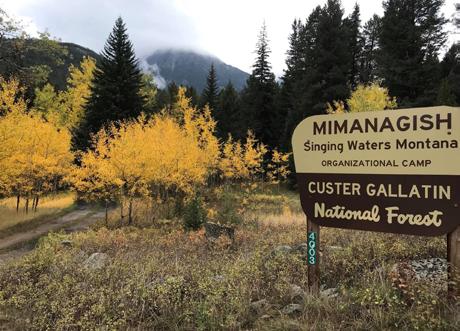
Ç info@mimanagish.org
Ç (406) 290-9096
A camp for those who don’t have a camp, Camp Mimanagish is located just south of Big Timber in the scenic Boulder Valley. With plenty of opportunity to hike, play and explore the landscape, this camp is great for the whole family. With a wide variety of family-friendly camps and offerings, you’re sure to find one that fits your needs. Their mission is to offer opportunities to foster relationships, nourish mind, body and spirit, unplug from distraction inviting solace and creativity and build a beloved community that values justice, equality and love.
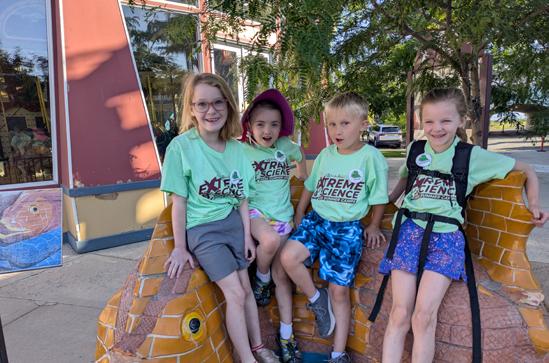
Ç info@explorationworks.org
Ç (406) 457-1800
Ç www.explorationworks.org/summercamps
Spend the summer as a scientist and explore the world around you. ExplorationWorks is offering summer camps for kids ages 4 and up. Camps begin the week of June 15 and run through the week of August 17. Registration is now open. View the full lineup and register at ExplorationWorks.org/summer-camps.

Grandstreet Summer Theatre School
Ç marianne@grandstreettheatre. com
Ç (406) 442-4270
Ç www.grandstreettheatre.com
Grandstreet Theatre School offers a wide variety of summer camps. Other than the Theatre for Social Skills camp, camps are sold out for summer of 2026.

Ç registrar@helenasoccer.org
Ç (773) 556-6646
Ç www.helenasoccer.org
Helena Youth Soccer Association camps are designed for players of all ages and abilities, meeting each athlete where they are and helping them grow, improve and reach their full potential—on and off the field.
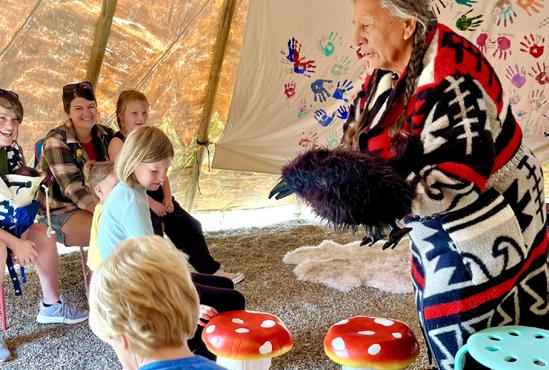
Ç JackalopeJumpRentals@gmail.com
Ç (406) 422-9358
Ç www.JoyMeadowsFarm.com
Join Joy Meadows Farm in Helena for many family-friendly adventures. Take in the 360 mountain views and enjoy the tipi lodge, park, mercantile and petting zoo and attend the 2026 summer fun activities including bounce houses, Native American story time, live turtle show, lizards and python day, carnival day, Disney dress up and street dance, zoology exhibits and the Queen City Renaissance and Fairy mini festival. Hug baby goats, pet the mini horses and more. School, summer camp, daycare groups and birthday party bookings welcome.
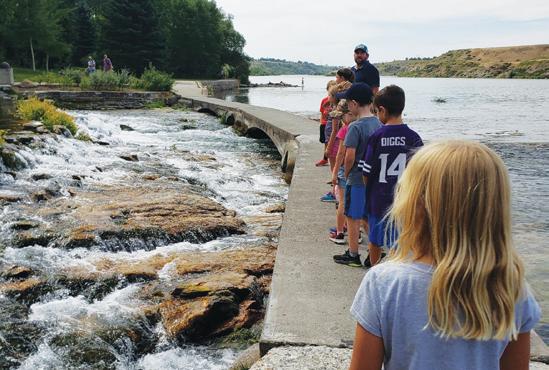
Ç christina@littlefoxlearningcenter.com
Ç (406) 868-4468
Ç www.littlefoxlearningcenter.com
Little Fox Learning Center balances fun, engaging and educational curriculum with children’s favorite outings and activities, as well as time to learn to relax and rest. Primary focuses include but are not limited to: art, music, science, physical and outdoor education, farming/animals, gardening/plant identification, building, field trips, social-emotional skills, cooking and more. Children work hard during the school year; summer should be full of learning new skills and making wonderful memories. Mentoring programs for ages 13-15 are also offered.
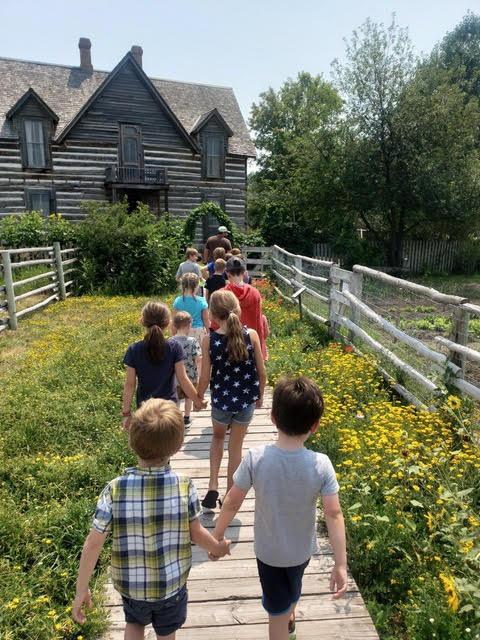
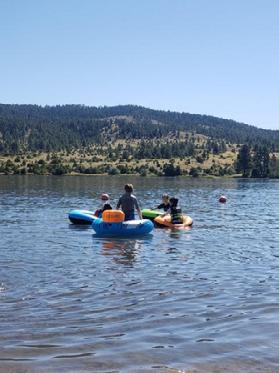



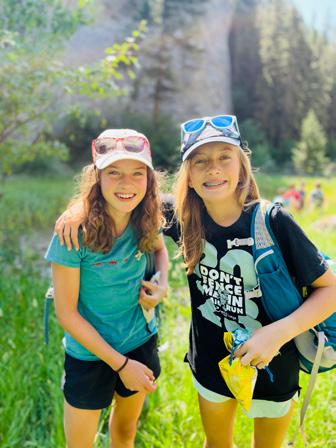


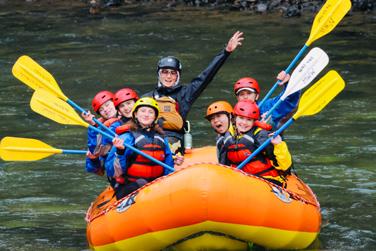
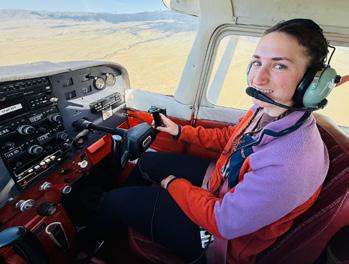


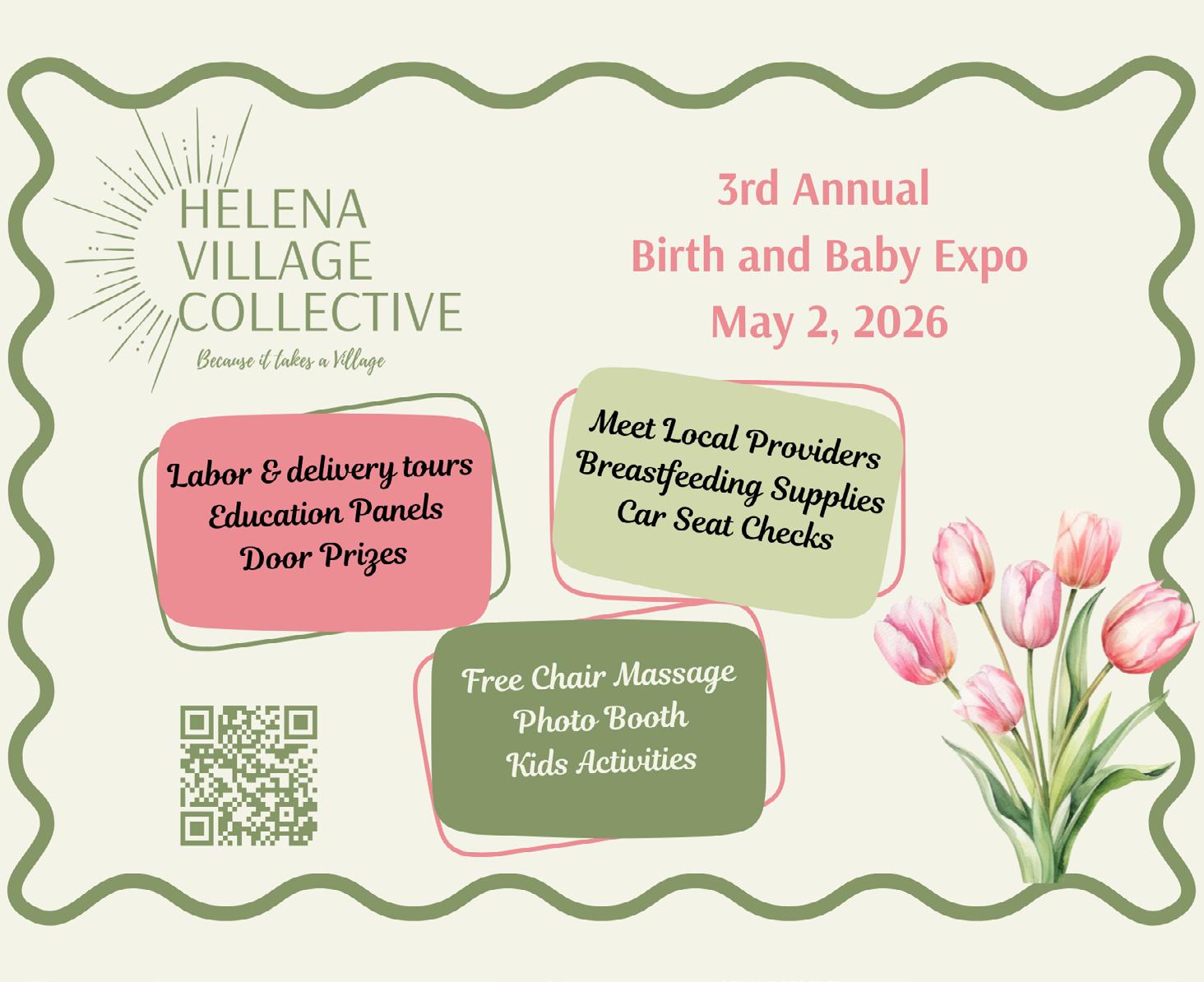

Ç MontanaLearningCenter@gmail.com
Ç (406) 475-3638
Ç www.montanalearning.org/studentprograms
Get ready for a summer of curiosity, creativity and campfire stars at the Montana Learning Center. Located on the shores of Canyon Ferry Lake, MLC’s hands-on STEM camps invite kids to launch rockets, solve mysteries, explore Montana’s wild landscapes and cool off with recreation on the lake. Campers also gaze through powerful telescopes under some of the darkest skies in the state. From science experiments to outdoor adventures, kids learn by doing—while making friends and lifelong memories. Summer at MLC isn’t just camp… it’s an adventure in discovery.
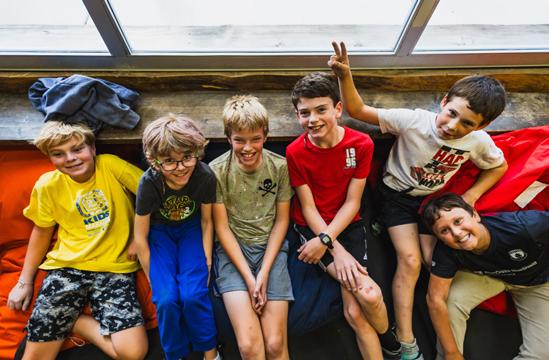
Ç youthprograms@stonetreeclimbing.com
Ç (406) 543-0325
Ç www.stonetreeclimbing.com/ summercamps
Stonetree Climbing Center offers day camps for ages 6–18, with no climbing experience needed. Younger kids (6–11) enjoy a week of indoor bouldering, games on and off the wall, arts and crafts and confidence-building fun. Teens (12+) tackle outdoor roped climbing at Helena crags. While exploring, campers learn climbing techniques, belaying and “Leave No Trace” principles. All Stonetree camps challenge comfort zones, spark friendships and inspire a lifelong passion for climbing and the outdoors.

MEREDITH JOHNSON
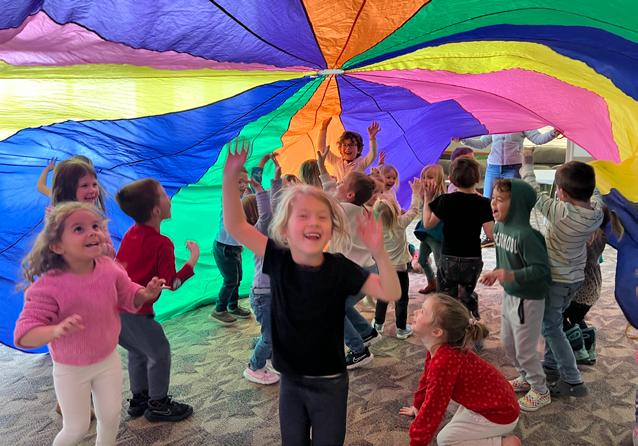
In 1966 a bunch of stay-at-home mothers organized a group experience for their preschool-aged children while also carving out a morning for themselves to run errands and attend to appointments. In those first years, the group met on Thursday mornings and called themselves the Methodist Preschool (they were located in the Methodist Church on Willson and Olive). By 1981 there were two classes, one for 4 year-olds and one for 3 year-olds. In 2004 the program became its own nonprofit entity separate from the church and was renamed Willson Avenue Preschool. In 2006 the preschool moved into the newly constructed Christ the King Lutheran on Durston and Flanders Mill, where they officially became the Willson Preschool.
Over the last six decades, the preschool has been blessed with loving and skilled teachers who are committed to their vocation, the children and their families. Some of the teachers have been with the preschool since the late '90s. Others were students themselves; and a handful of families are in their third generation of Willson attendance. Almost all of the teachers have had kids (and grandkids) in the program.
The school has seen a lot of changes, including big ones like names and locations. Since my own son was a student 19 years ago and I started teaching 15 years ago, there have been smaller but still important changes. We lock the doors now; we have a web presence and an Instagram page. But the arc of the program remains the same: Our objective is to enrich the lives of children. We focus on the social, emotional, intellectual and creative development in a loving and caring environment, just like our predecessors. We build community in the classroom, on the playground and in the hallways.
Alumni and current preschool families alike comment on what a special preschool this is, with one parent saying, “What a difference (the teachers) and the preschool made in our lives…I learned so much about my kids and mothering by being a part of the community.”
When you have young children, preschool can be a vital component of your family’s life. We often hear stories about friendships that have spanned the years, families who are still close and run into each other at school events throughout elementary, middle school and high school, parents who are still friends 40 years later even though their kids grew apart long ago.
My own family has such a story. My husband remains good friends with his preschool buddy from the Methodist Preschool and I now count his friend’s wife among my closest friends. What a gift.
We look forward to another six decades of being a nurturing and engaging environment where kids can grow and thrive. We promise to continue to build strong learning foundations and a love of school and learning in this community that we love.
Meredith Johnson has been teaching at Willson for 15 years and codirector for four. She knows she stands on strong shoulders of the women before her and beside her in the classroom. They all have Willson running through their veins and are as blessed as the families they have worked with over the last 60 years.
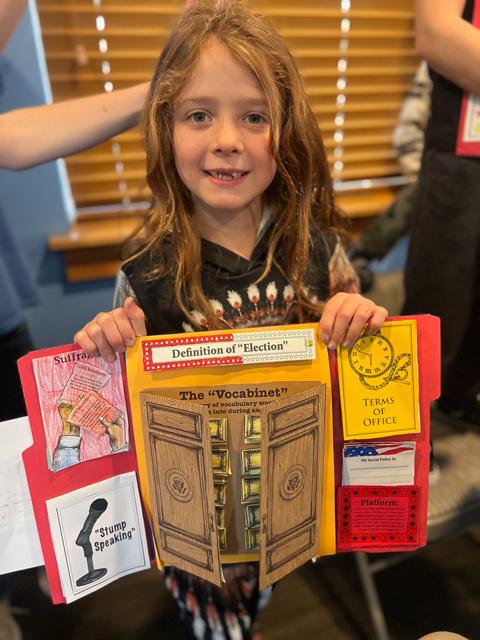
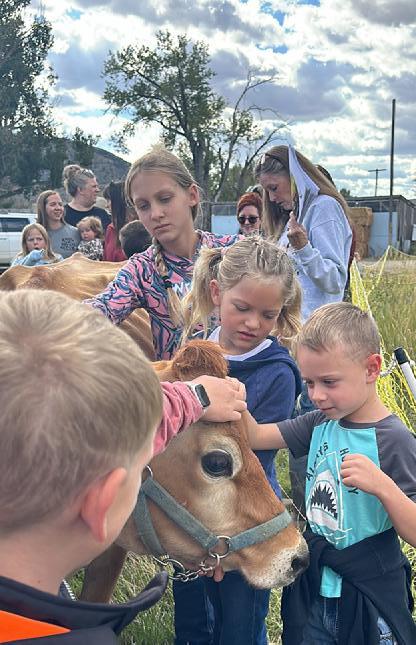
WRITTEN BY DESIREE MCCANN FOUNDER OF IGNITE LEARNING COLLECTIVE
In the heart of Bozeman, a quiet educational movement is growing—one built not on test scores and rigid grading, but on curiosity, relationships and a deep belief that children learn best when they are truly known. Ignite Learning Collective is a hybrid homeschool learning community serving families across the Gallatin Valley who are seeking something different: An education that values growth over grades and community over competition.
Founded to support homeschooling families, Ignite Learning Collective operates as a two-day-per-week, in-person learning model for students in kindergarten through middle school. Families remain the primary educators, while Ignite provides structure, enrichment and a vibrant communal learning environment. This balance allows students to experience the flexibility of homeschooling while benefiting from shared learning, collaboration and accountability.
At the core of Ignite’s approach is a values-based educational philosophy that emphasizes handson learning, critical thinking and whole-child development. Ignite teaches from a biblical worldview while welcoming families from all backgrounds who respect and value this foundation. Rather than relying on traditional letter grades, the program focuses on progress, mastery and individual growth, encouraging students to engage deeply and meaningfully with their learning.
A typical day at Ignite looks different from a conventional school schedule. Mornings often begin with connection—students gathering in their classrooms to build relationships, share reflections and set intentions for the day. From there, learning
Continued on page 48...
unfolds through interactive lessons, group projects and guided exploration. A science block may involve building, observing or experimenting rather than completing worksheets, while humanities lessons often blend history, literature, discussion and creative expression.
One of Ignite’s most distinctive features is how learning regularly extends beyond the classroom walls. Field trips are not occasional rewards; they are a core part of the educational experience. Students may tour a local airport, watching planes take off while learning how aviation, physics and community infrastructure intersect. Another month might include a visit to a working farm, where students collect eggs, milk goats and explore lessons in biology, sustainability and responsibility through hands-on experience. These moments ground learning in real life and often become the experiences students remember most.
Ignite’s classrooms are intentionally small and organized by developmental stages, allowing educators to tailor instruction and build strong relationships with each student. Teachers act as guides and facilitators, designing experiential lessons that often cross subject boundaries and spark curiosity. Students are encouraged to collaborate, problem-solve and grow in confidence as learners.
Families are deeply integrated into the Ignite community, from volunteering and attending family events to participating in shared traditions such as annual Thanksgiving potlucks, local service projects, field trips and mission trips to Mexico. Serving the elderly in the Gallatin Valley is also an important part of Ignite’s commitment to community engagement.
Ignite recognizes the realities of life in the Gallatin Valley, where many parents work full-time or manage demanding schedules. The hybrid model is intentionally designed to support working families who value homeschooling but need a learning environment that partners with them rather than replaces them. For many families, Ignite becomes more than a school—it becomes a supportive network and a place of connection.
As a nonprofit organization, Ignite Learning Collective is sustained through tuition, fundraising and community generosity. The school is committed to transparency and accessibility, offering scholarship opportunities when possible. Founder and Director Desiree McCann is passionate about removing as many roadblocks as possible so families can continue homeschooling without having to choose between work and education.
In a time when many families feel overwhelmed by educational choices, Ignite Learning Collective offers a compelling alternative—one where children are encouraged to wonder, learning is rooted in real experiences and community is at the heart of it all. To learn more, visit www.ignitelearningmt.com. Ignite would love to come alongside your family.

Bozeman Field School is an independent, nonprofit high school in Bozeman. With an emphasis on community, they offer small classes, low student-teacher ratios and lots of experiential learning.
Students take four core classes each morning: humanities (English/ History combination course), math, science and Spanish. Afternoons are for electives. Offerings include everything from Environmental Law and Policy and Wetland Ecology to Music Ensemble and Aerial Arts. BFS does its best to meet student interest in topics, as well as engage with the local professional scene in Bozeman. As a result, elective courses can cover anything that can be taught.
Four times a year, students are taken off campus on weeklong field trips called Expeditions, where they are able to see how classroom concepts apply in the real world. Whether counting mountain goats and bighorn sheep in Glacier National Park as part of a Citizen Science Project or digging for fossils in eastern Montana, students are continuously challenged to engage in hands-on, place-based learning.
During January, Bozeman Field School has a designated three-week term, which allows students to take on internships with faculty support in their area of interest, or dive deeper into specific topics through immersive courses. An example would be History and Science of Ski Technology, where students worked in groups to build skis.
Bozeman Field School’s biggest asset is its unparalleled community. Students report feeling comfortable being themselves, and that the school can feel like a second family. This is a place where young people can thrive as learners as they grow. BFS students graduate equipped intellectually and emotionally to engage in their communities with confidence, compassion and purpose.
Additionally, graduates are set up for success in college, with alumni being accepted into MSU Honors College and many other high-level programs, including Middlebury College, Savannah College of Art and Design, Gonzaga and University of Arizona.
Bozeman Field School is enrolling ninth-12th grade students on a rolling basis and offers financial aid. Interested families should reach out to admissions, admissions@bozemanfieldschool.org.
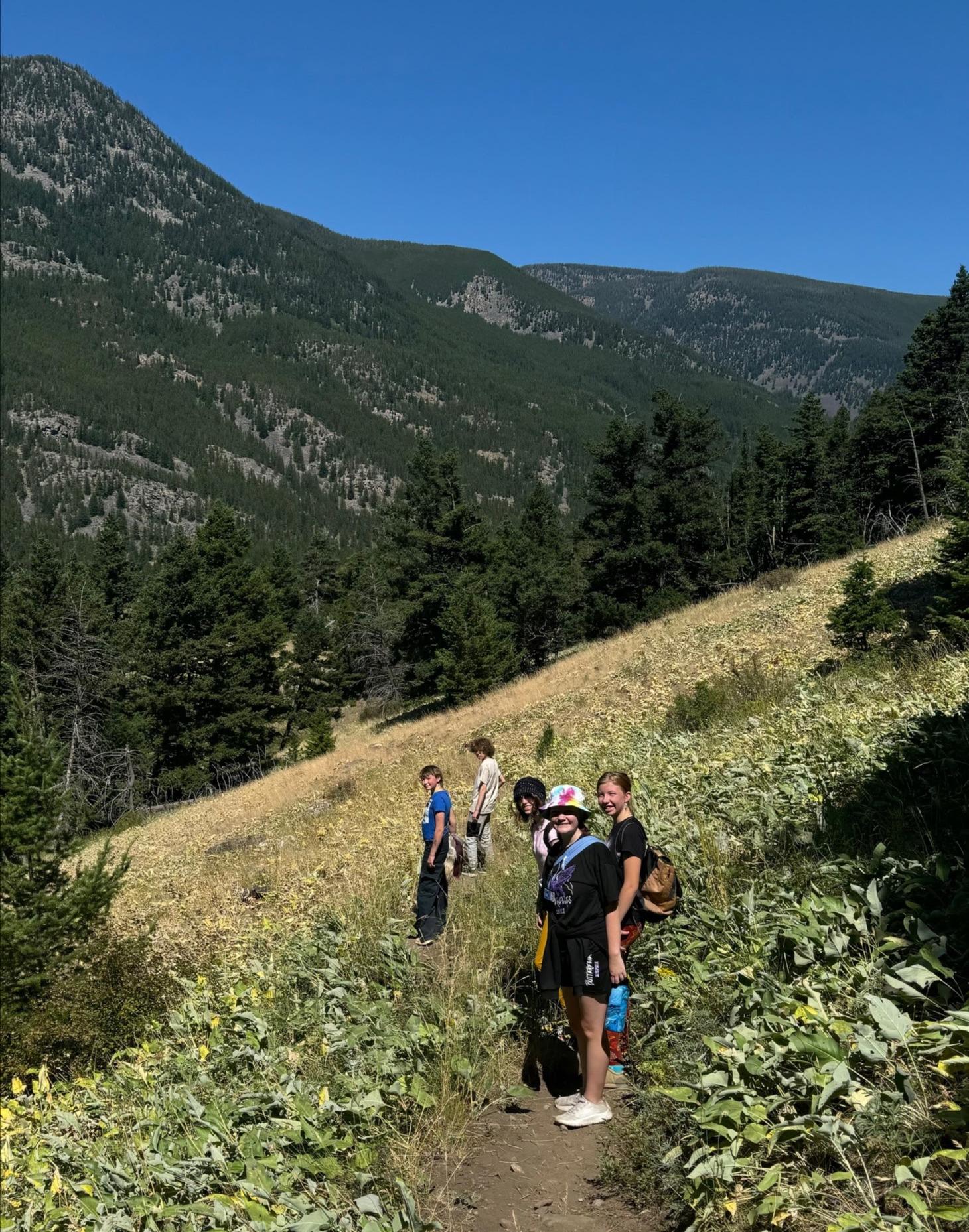
The Baxter will be thoughtfully restored to its original purpose as Bozeman’s landmark boutique hotel beginning this spring— just in time to celebrate its 100-year anniversary next year.
The Baxter will continue in its current community role of hosting weddings and special events, including the annual Princess Tea, Photos with Santa and other family events throughout the year.
In addition, Café Aurore, the Bacchus and Ted’s Montana Grill will remain open and operational while the upper-level apartments are converted back into hotel rooms.
In 1927, Bozeman’s civic leaders believed their community deserved a hotel announcing to the world that this wasn’t just another frontier outpost, but a sophisticated destination worthy of the travelers who passed through. Approximately 250 community members invested in the project—business owners, ranchers, professionals and citizens who believed in Bozeman’s future enough to put their money behind it.
The Baxter Hotel opened in 1929 and served as the town’s premier boutique hotel for nearly 50 years, hosting notable guests including Eleanor Roosevelt and Richard Nixon, before being converted into residential condominium apartments by a former developer in the 1980s.
That same community spirit of 1927 is driving the current Baxter team to steward the restoration of Bozeman’s “crown jewel” to its original purpose— Bozeman’s landmark boutique hotel—honoring its century-long legacy through uncompromising standards and genuine connection to Bozeman and its residents.
The restoration is being led by the Loseff and Orizotti families from Bozeman and Butte, respectively, who have been majority owners of the property since 2004.

“For almost a century, people have been walking through these doors asking how they can check in—even over the past 50 years when The Baxter Hotel was no longer operating as a hotel. That’s the kind of magnetism you can’t contrive,” said Amy Horton, general manager of The Baxter Hotel. “When we reopen as a hotel in time for our centennial, that question will finally have an answer: welcome home.”
The restoration is slated to be completed by fall of 2027 and will include 32 guest rooms, a fitness center, a wellness center with cold plunge tub, infrared sauna, recovery room and treatment room, a member’s club and dining area, along with an upgraded grand lobby and nearly 3,000 square feet of ballroom space for weddings and special events.
Local Bozeman firms Intrinsik Architecture, Envi Interior Design Studio, Langlas & Associates, Inc. and other local groups are actively involved in The Baxter Hotel restoration project.
To learn more about the restoration or upcoming special events, visit thebaxterhotel.com or instagram.com/baxterhotel.

In the summer of 2026, Tinworks Art will present Chisel & Razor: The Artistic Legacies of Edmonia & Samuel Lewis, a two-part exhibition that reveals, for the first time, the intertwined histories of siblings Edmonia Lewis and Samuel Lewis.
Though separated by geography, Edmonia working in Rome and Samuel in Bozeman, their stories explore how creativity, ambition and collaboration can shape communities and endure across generations.
Edmonia Lewis is widely recognized as the first internationally acclaimed Black and Anishinaabe sculptor. A master of the neoclassical style, she upended many artistic and cultural norms. Her most famous sculptural subjects — Cleopatra and the biblical figure of Hagar — countered the era’s figurative stereotypes and connected these foundational stories of Western culture to the Black diaspora.
Less known is the story of her brother Samuel Lewis. Arriving in Montana in 1866, Samuel was a founding member of Bozeman’s Black settler community. A skilled barber, entrepreneur and property developer, he earned respect as a civic leader while also performing as a musician and magician. Samuel played a crucial role in supporting Edmonia’s career, acting as her benefactor and advocate.
“Although separated for most of their lives, the intertwined stories of these two figures reflect the creative resilience, migration histories and cultural exchanges that shaped 19th-century America,” notes Dr. Melissa Ragain, Special Project Curator at Tinworks and Professor at Montana State University. “By bringing Edmonia’s story into conversation with Samuel’s, this exhibition repositions Montana within a global history of art.”
Chisel & Razor brings these parallel legacies into dialogue through the work of contemporary artists.
Act I, on view from June 19 through Oct. 31, focuses on Samuel Lewis. The centerpiece is a new commission by Los Angeles–based artist Edgar Arceneaux, who will present a theatrical reconstruction of the siblings’ lives developed with local Bozeman actors. Following its live presentation, the project will be transformed into a multimedia installation, with additional works by artists include Terry Adkins, Sonya Clark, Maud Sulter and Nate Young.
Act II, from Oct. 1, 2026, through April 4, 2027, centers on Edmonia Lewis and inaugurates Tinworks’ restored Mill Building. This installment features Edmonia Triumphalis, an immersive commission by Auriea Harvey, a Black, expatriate artist living in Rome whose biography echoes Edmonia’s own. Harvey imagines a journey Edmonia never made: to Bozeman. Additional artists in Act II include Sanford Biggers, Andrea Carlson, Kelly Church and Athena LaTocha.
For more information visit tinworksart.org.
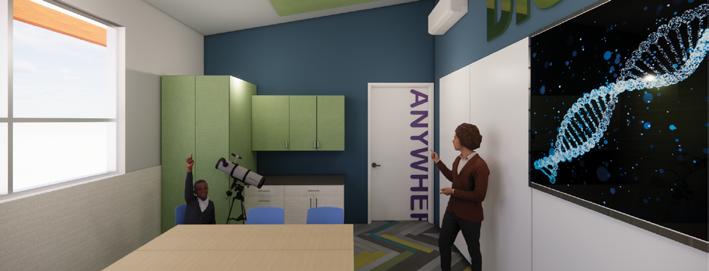
THE DISCOVERY LAB
Space for Pre-K programs, camps, after-school classes, workshops, and more!

THE ANYWHERE ROOM

Journey across the globe and beyond with cutting-edge Igloo Vision technology.
995 Carousel Way | Helena, MT 59601 (406) 457-1800 | explorationworks.org

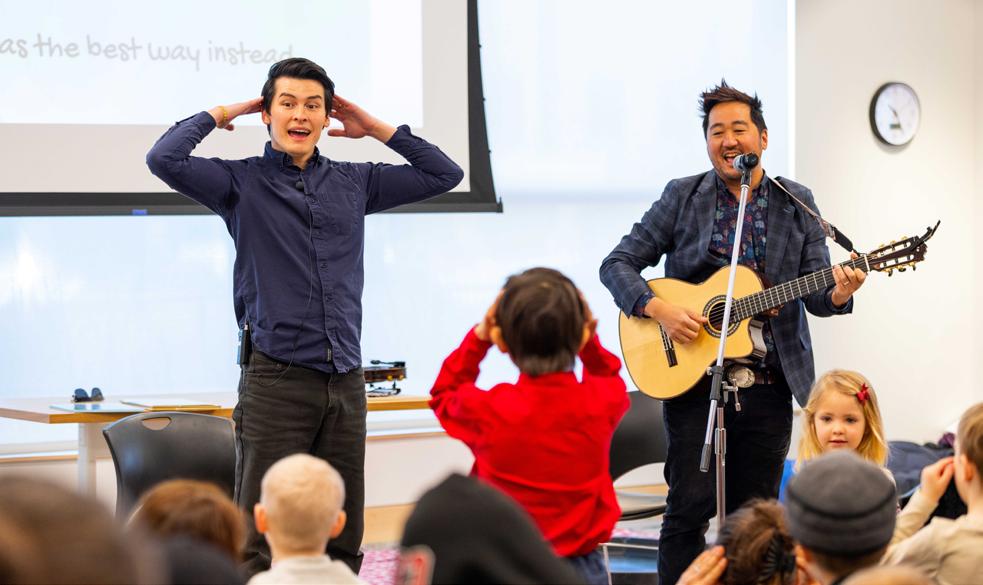
Features 15 minutes of songs and movement, one short board book and 45 minutes of sensory play, process art and gross motor exploration. Especially for kids from birth to 35 months and their caregivers. Held every Tuesday and Thursday at 10:15 a.m. in the Community Room.
Features 20 minutes of songs and movement, one or two full-length picture books and 40 minutes of sensory play, process art and fine motor exploration. Kids may be invited to use tools like scissors, glue or tweezers during this program and may handle materials that are choking hazards for babies. Especially for kids ages 3 to 5 and their caregivers. Held every Wednesday and Friday at 10:15 a.m. in the Community Room.
Features 20 minutes of songs, stories and movement and 40 minutes of playtime. Library staff varies this program week to week to meet the developmental needs of the attending little ones. Especially for kids birth through 5 and their caregivers. Every Saturday at 10:15 a.m., check out the Bozeman Public Library events calendar for current location.
The Bozeman Symphony invites families with young children—especially those ages 3 to 5—to experience Symphony Storytime, a free and engaging program presented in partnership with the Bozeman Public Library in its Community Room at 626 E. Main St.
Symphony Storytime is designed to inspire a love of music, reading and creative discovery in young children. Each session coincides with the library’s regular Toddler and Preschool Storytime at 10:15 a.m. There is a special guest reader and a live performance by a Bozeman Symphony musician bringing a beloved storybook to life in an engaging, multisensory experience.
The 2026 season Symphony Storytime dates:
Ç SATURDAY, MARCH 14
Ç WEDNESDAY, APRIL 22
Ç WEDNESDAY, MAY 13
Ç WEDNESDAY, JUNE 10
Follow the Bozeman Symphony on Facebook and Instagram for updates on featured instruments, musicians and readers.

For more information, visit www.bozemansymphony.org or call 406-585-9774.

MARCH 7 & 8, 2026
Montana Ballet Company (MBC) continues its 2025-26 season with the romantic, classic story ballet Sleeping Beauty, in collaboration with the Bozeman Symphony conducted by Norman Huynh, at the Willson Auditorium on March 7 & 8, 2026.
The tale of Sleeping Beauty, known for its enchanting storyline and timeless appeal, has captivated audiences for generations. This beloved story, filled with magic, love and the triumph of good over evil, follows a young princess cursed to fall into a deep sleep, only to be awakened by true love’s kiss. Through its rich symbolism, memorable characters and enduring themes of hope and destiny, Sleeping Beauty continues to resonate with viewers of all ages, securing its place as one of the most cherished ballets.
Sleeping Beauty will run for three performances, Saturday, March 7 at 2 p.m. and 7 p.m. and Sunday, March 8 at 2 p.m.
For tickets call 406-582-8702 or visit www.montanaballet.org.
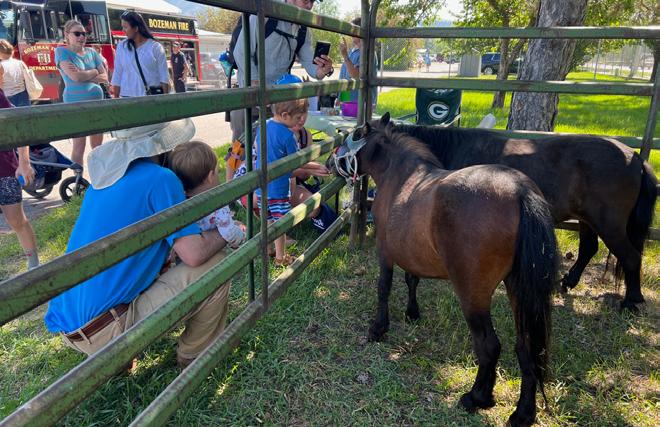
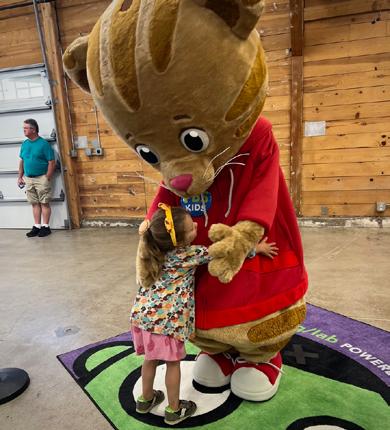
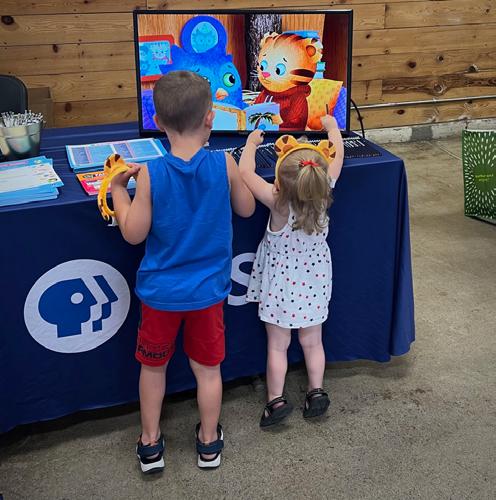
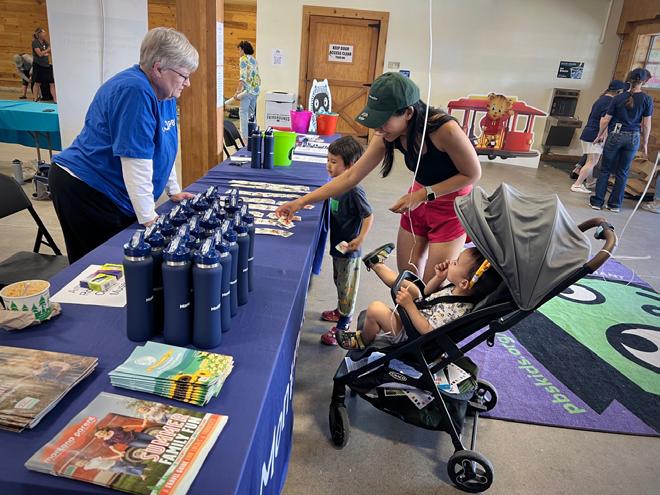
On Saturday, June 13, Montana PBS will host a free annual family event called Neighbor Day for families with children ages 3 to 8, at the Gallatin County Fairgrounds in Bozeman, from 9 a.m.-noon. This is the third year Montana PBS has hosted this event to help families in Montana kick off summer learning. Neighbor Day events are hosted by PBS stations across the country to connect families with local resources while meeting beloved PBS KIDS characters. Montana PBS is Montana’s public television station located in Bozeman and has been broadcasting PBS programming across the state for more than 40 years. Neighbor Day is a collaboration between multiple departments at Montana PBS devoted to supporting families to learn and grow with PBS programming.
When families enter the building on Neighbor Day, they are greeted by a member of the Montana PBS staff and given a free tote bag to carry with them throughout the event. These tote bags are soon filled with information and freebies collected from tables throughout the building. More than 20 nonprofit and municipal organizations are available on Neighbor Day to meet families. They set up activities for kids to play and learn as they make their way around the room. Organizations you can expect to see at Neighbor Day include Big Brothers Big Sisters, YMCA, U.S. National Forest Service—and many more. All kids and their grown-ups get to make crafts, play games, climb in and out of fire trucks and hold rabbits on their laps.
The headliner of Neighbor Day is Daniel Tiger! Kids come from all over the state to meet this beloved character from Daniel Tiger’s Neighborhood— a spin-off of the popular PBS program Mister Rogers Neighborhood Daniel Tiger’s Neighborhood is an award-winning show focused on teaching kids about how to manage their feelings and cooperate with friends and family. Daniel and his family have delighted audiences for over a decade. For many kids, meeting Daniel Tiger and taking a photo with him at Neighbor Day is the best part of the whole experience. Montana PBS gives all kids who come to Neighbor Day a souvenir pair of Daniel Tiger ears to wear home, along with free resources for summer learning featuring PBS KIDS programs.
Mark your calendars for Saturday June 13, 2026, and plan to join PBS in Bozeman for a day filled with fun, friends and family. Neighbor Day will be held at the Gallatin County Fairgrounds at the same time as the Farmers Market from 9 a.m.-noon. Won’t you please be our neighbor?

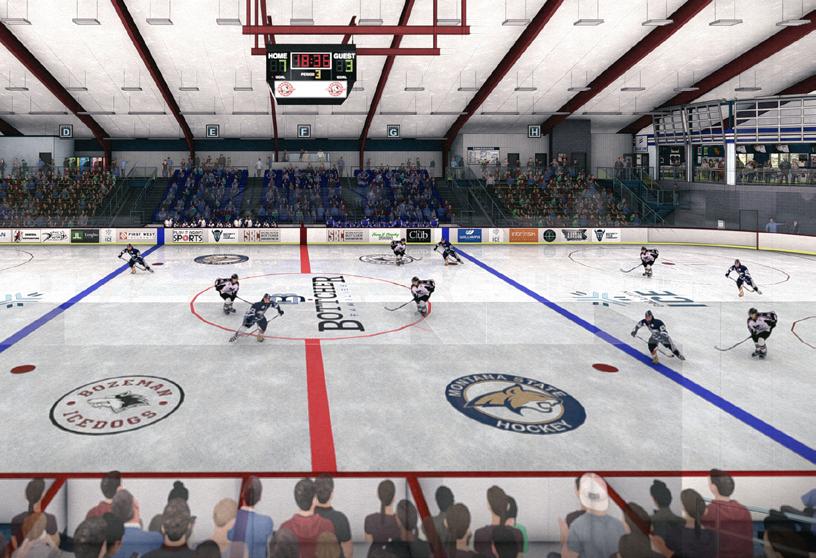
Ice is a nonprofit organization dedicated to providing affordable, accessible and attainable ice sports to the Gallatin Valley. Since 1983, Gallatin Ice has fostered the growth of the region’s ice-based sports and recreation community by building quality facilities one phase at a time. Today, the Gallatin Ice Arena at the Gallatin County Fairgrounds is the exclusive indoor venue for hockey, figure skating and curling competitions in southwest Montana, with nearly 3,500 local families engaged in programs throughout the year. The arena welcomes an estimated 200,000 annual visitors—a number that continues to grow. To meet demand, Gallatin Ice depends on the support of individuals, corporations and grantmakers. For more information, visit gallatinice.org.
WRITTEN BY FLORA MCCORMICK

In this column, you can ask your questions about parenting kids from ages 2 to 10 to Flora McCormick, Licensed Counselor & Parenting Coach.
Why Less Screen Time Today Builds Calmer Kids Tomorrow
Many kids these days are constantly asking for tech devices: smartphones, smartwatches, video games and tablets. Families gift these devices with good intentions, but often find themselves facing more tension, more arguments and more power struggles over them than they expected. So let’s talk about this together, calmly and without pressure before you go down a road you could avoid.
Technology is everywhere. It’s part of school, friendships and daily life, which can make it feel hard to say “ no. ”
Parents often think:
» Everyone else has it.
» My child really wants it.
» I don’t want them to feel left out or even bullied for not having this.
Those worries are real, especially as kids get older. At the same time, it can help to pause and ask what matters most for your family right now. Sometimes the concern is less about kids playing together and more about fitting in or feeling cool. When that’s the case, there’s an opportunity to support kids in learning confidence and how to handle uncomfortable moments with guidance and connection.
Another reason technology can be tempting is boredom Parents notice:
» Kids struggle to entertain themselves without a screen.
» Turning devices off leads to big emotions.
» Everything feels smoother when the screen is on.
But here’s the catch: When technology becomes the main form of kids’ entertainment, it can make everything else harder.
Over time:
» Kids rely more on fast stimulation and the immediate gratification that comes from technology. Their brains can even get addicted to the dopamine that’s produced when they get “stars” or wins in tablet or video games.
» Creativity and independent play feel less “fun.”
» Feelings can get bigger when the screen goes away, because kids go through withdrawal from the high emotions caused by the technology (winning/ losing/going to the next level of a game or even scrolling all fire emotional neurons in the brain).
Technology is designed to hold attention and create excitement (i.e. these devices are literally trying to keep our attention as long as possible), even when it looks educational. This can mess with your child by causing their brain to crave that level of immediate gratification, and make regulation in real life tougher, especially during transitions.
For many families, less technology actually brings more calm and fewer battles.
Instead of focusing on keeping kids busy or helping them keep up, it can be helpful to think about what brings the most ease into your home.
Some reflections to consider:
» Does this device add calm or add tension?
» Are emotions running higher since technology increased?
» Is it harder to hold boundaries around screens lately?
When technology is part of family life, slower options often feel more supportive. Watching a show or movie as a family allows kids to follow a story, see problems solved and settle into a shared experience.
If staying connected is the goal, there are less invasive tools available. One example is the Fitbit Ace. It allows kids to text parents and approved adults without access to apps, peer texting or social media.
If you’re deciding to simplify or pause technology, here’s a script you can use:
“This device is something that is a tool, not a toy. And so when your brain is ready for that tool, we absolutely will get it for you. For now, we want to focus on other types of toys, getting outside, sports or extracurricular activities.”
And if you’re wondering how to fill the time, especially during school breaks, I created an anti-technology options list with simple ideas and games, which you can find at SustainableParenting.com/tech.
As you move through this season, remember that there are no perfect choices, only thoughtful ones. Technology can feel helpful in the moment, and it can also create more challenges than expected. Pausing to notice what brings the most connection, calm and ease into your home is already a powerful step. Whatever you decide, your child benefits most from your presence, your guidance and the steady relationship you’re building every day. That foundation matters far more than any device ever could.
To get more sanity-saving strategies for parenting young kids, join Flora’s Free Facebook Group: Sustainable Parenting. Questions for the next issue or wins/questions from this issue can be submitted to contactflora@gmail.com. A special thank you to those who submit monthly questions.
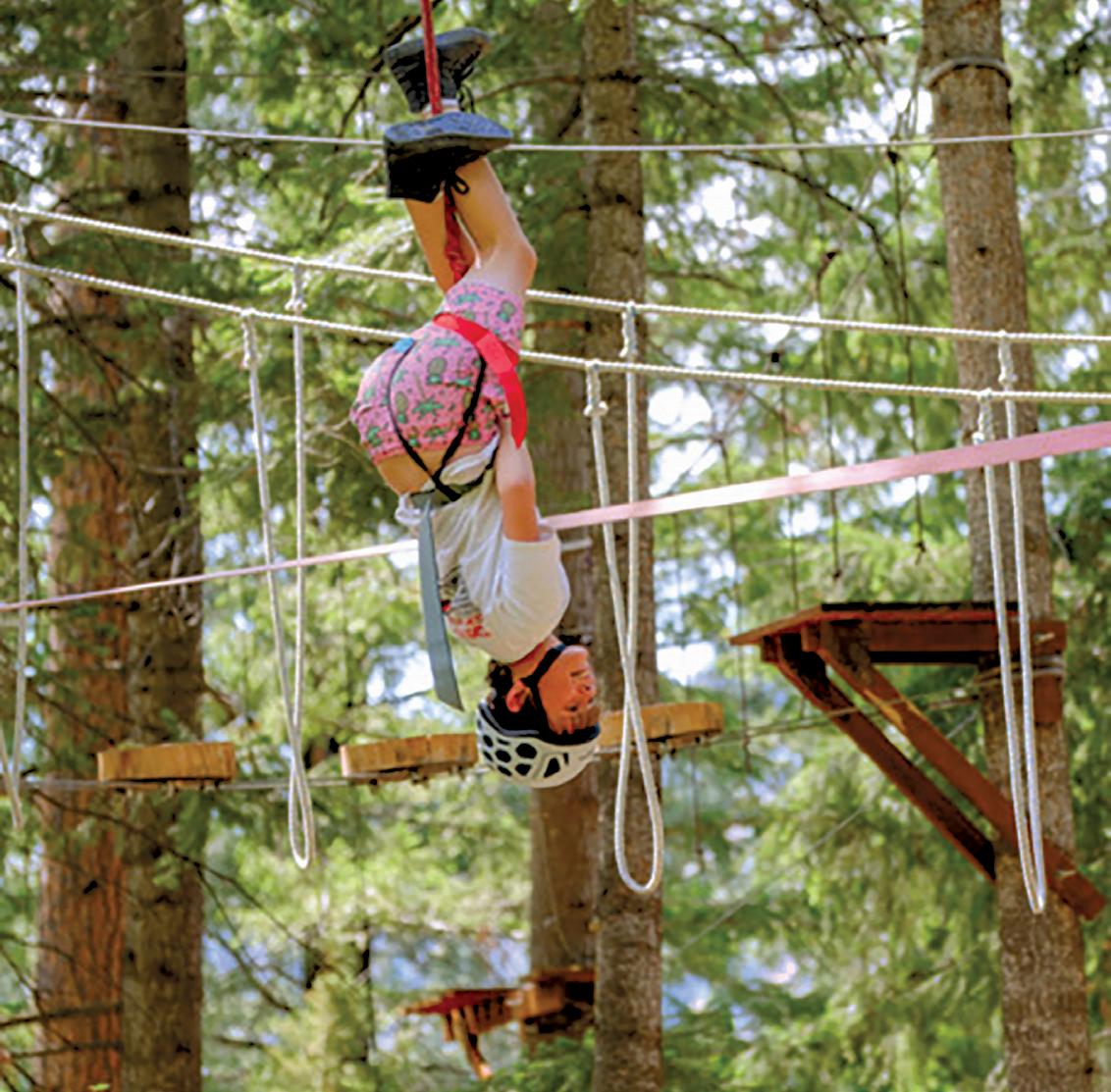
WRITTEN BY BLAIR FJESETH | PHOTO CAMP
As a parent, you know there will be moments in your child’s life are inevitable—both good and bad—but that doesn’t make them any easier to face. One of those moments came for me last summer when my oldest went to his very first sleep-away camp, an outdoor adventure camp. It was a moment of pride, excitement and, I’ll admit, a little bit of anxiety. I was excited for him, for all the adventure and growth this experience would bring — but, deep down, I knew it would also change him. When I picked him up at the end of the week, I knew I’d be greeted by a different kid. He’d be older, maybe even a little more mature, more confident and more independent. Yes, he would be different; and that change, though beautiful, would be bittersweet for me as the mama. As much as I hate to admit it, or even feel it, I’d be grieving the days when I was his everything, when I was the one he turned to as his sole source of comfort, safety and guidance.
I contemplated camping nearby in case he needed me. My husband definitely called me out on that one. Thank goodness for cooler heads prevailing. Could you imagine me being a creeper mom, hiding in the bushes just making sure my baby was OK?
I spent the week trying not to obsess over what he was doing or how he was feeling, but as parents, we know we can’t turn off that part of our brain. I’ve been obsessing over this human for more than a decade at this point, and nothing will change that.
Of course, to pile on, this was all leading up to the start of middle school, and with it, another new version of him, the preteen who would start to see the world a little differently, a little more independently. This shift isn’t something you can stop, no matter how much you might want to freeze time and hold on to those sweet, innocent moments of childhood. The baby, the toddler, the little kid — all those stages are passing, and the new chapters are coming whether I’m ready or not.
But here’s the thing, while I grieve, I also celebrate. Because as much as I miss the boy he used to be, I’m so proud of the young man he’s becoming. He’s strong, he’s brave and he’s learning to navigate the world on his own. He’s taking the first steps into a bigger, more complicated world. And I, as his mother, will be right here, cheering him on, supporting, encouraging and loving him through each phase of his life.
So, as “we” headed into middle school and continued to change in ways I couldn’t always predict, I continued to embrace these shifts, grief and all. I mourned the moments I won’t get back, but I also treasured the ones that are yet to come. And I’ll hold on to the one truth that’s gotten me through so much of parenting: No matter how old he gets, no matter how much he grows, he’ll always be my boy.
And that, in itself, is the greatest gift of all.
Blair Fjeseth is a working professional and proud Montana mom. You can reach her at blairparker.inc@gmail.com.





ENJOY FRESH, LOCAL FOOD ALL YEAR.
Our Whole Farm CSA runs year-round and is designed to support every part of our local, organic farm. Members receive weekly vegetables, a selection of meats including lamb, pork, and chicken, eggs, flower bouquets, and much more. The program begins February 1.
SIGN UP NOW AT www.gallatinvalleybotanical.com.