UNTOLD Dubai
Riyadh Season
Sami Yusuf Amman’s ancient Roman Theatre hosts the acclaimed singer-songwriter
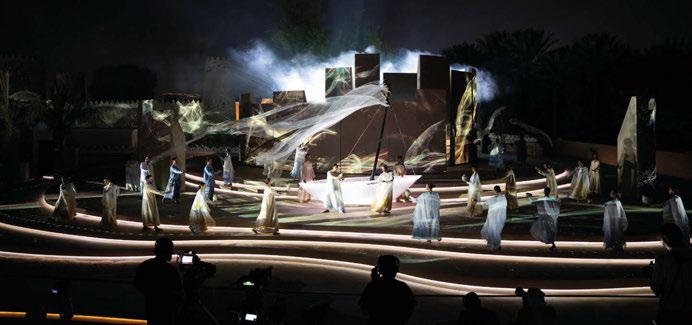
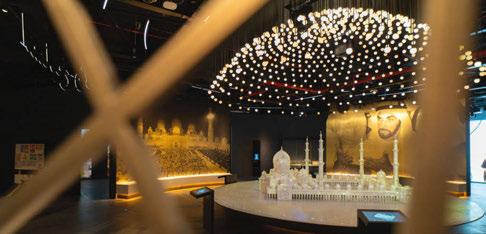
Al Ain Musum
ceremony rich
ibrahimkandemir.com
ibrahim@koalaproductions.com @ikandemir

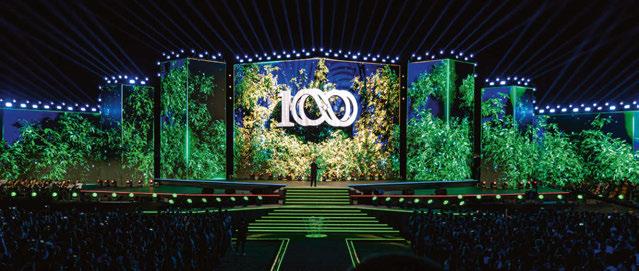
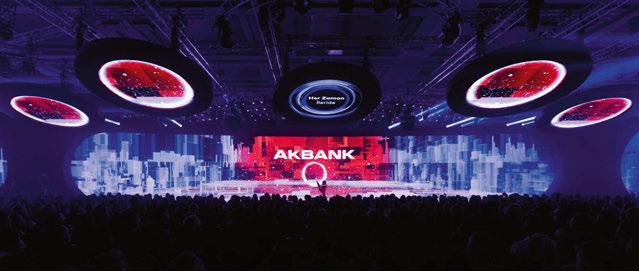
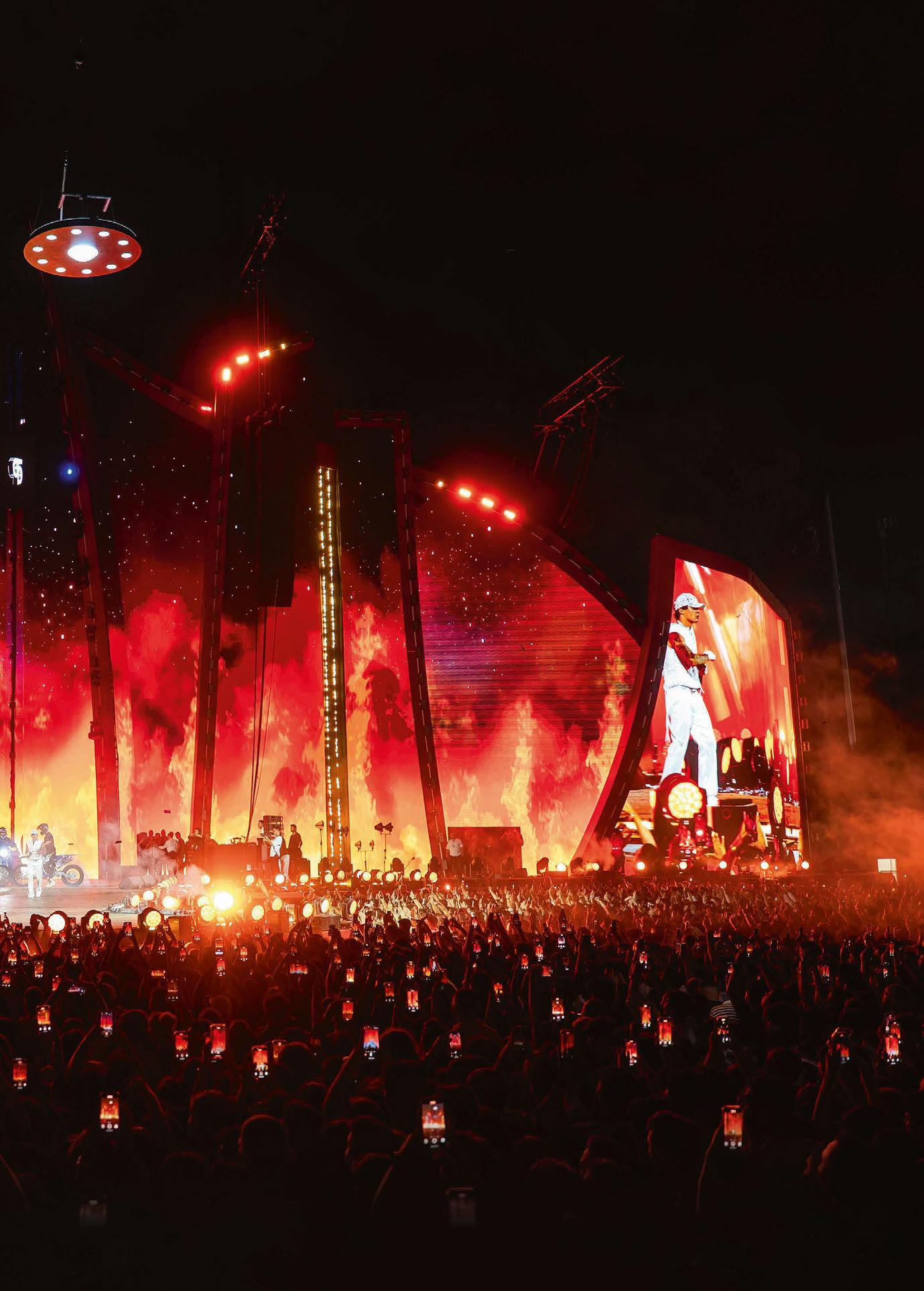
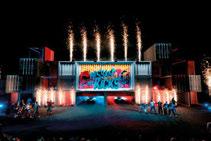
The 100th Anniversary Celebrations of Heydar Aliyev
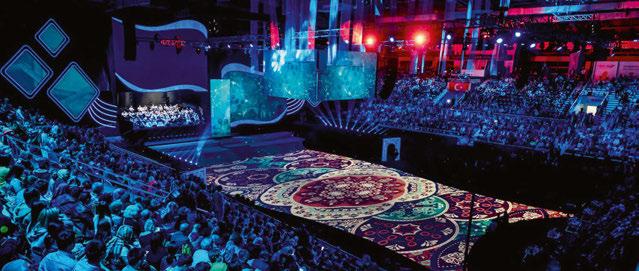
Bursa Kültür Yolu Opening Ceremony
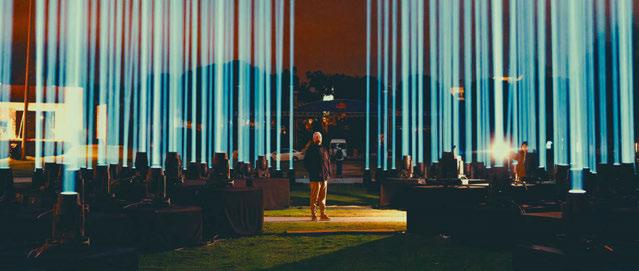
TETSED Light Field
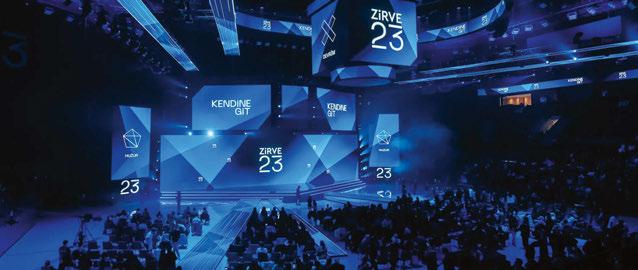
Zirve 23
İstanbul Festival
Safe and Sound
Authentic Sound, Proven Safety
Genuine L-Acoustics products deliver the world’s best sound with rigorously tested safety standards. Counterfeit products fail where it matters most.
Our testing shows structural materials in fakes are up to 50% weaker than genuine L-Acoustics products, putting your audiences at risk.
When you choose authentic L-Acoustics, you choose uncompromising performance and peace of mind.
See how L-Acoustics protects your investment by ensuring authenticity at:
l-acoustics.com/anti-counterfeiting








LESSSOMETIMES ISMORE











All the wireless power, audio clarity, and seamless integration you expect from Bolero now in a lighter, smaller form. With proven Boleroperformanceinacompactanddiscreet body, Bolero Mini is ready for any challenge inbroadcast,sports,orliveevents.














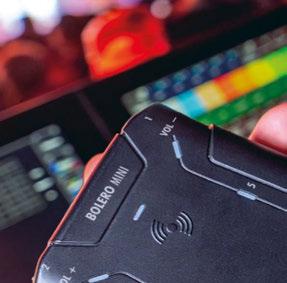



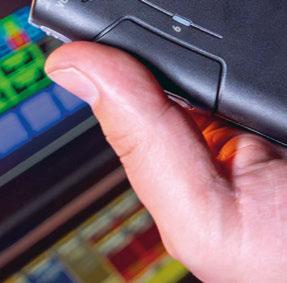



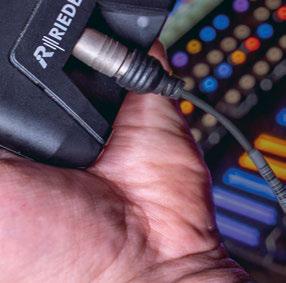
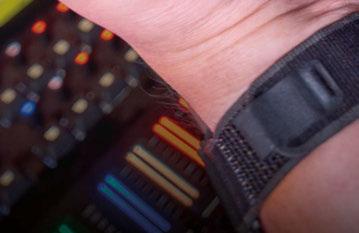


•165g,28mmthin •Touch&GoNFCbeltpackregistration •Bluetoothconnectivity •Riedel-exclusiveAdvanced DECTReceiver(ADR)








Bolero User Chris Rostalski
Welcome to TPiMEA
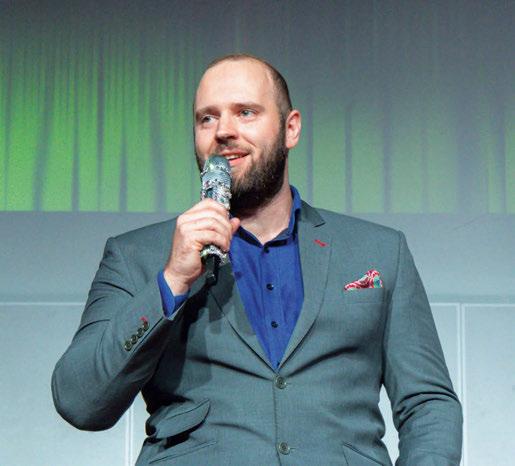
Peter Iantorno Editorial Director
Here we are at the end of another year – and what a year it’s been. From Coldplay’s record-breaking Abu Dhabi run to festivals Balad Beast, Offlimits, and A Thousand and One, and the high-profile launch of Disney Abu Dhabi, it’s been a year packed with production progress and industry innovation. And as we look ahead to 2026, if the list of gigs and events already on the agenda is anything to go by, we’re in for another bumper year.
We a re making a few changes of our own for 2026 –the biggest news being a brand-new venue for the TPiMEA Awards! We are delighted to confirm that the TPiMEA Awards 2026 will take place on 21 May at Coca-Cola Arena – a world-class venue befitting the world-class talent we have in the region. Find out more about the reasons behind the move, as well as a very exciting announcement of some new company categories, on page 34
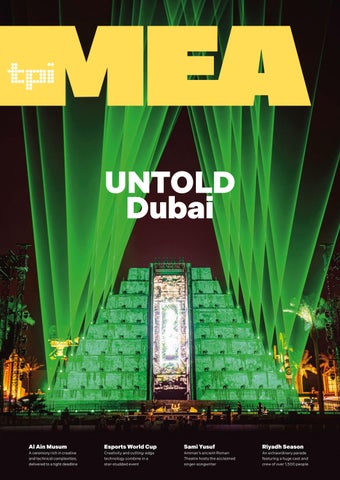
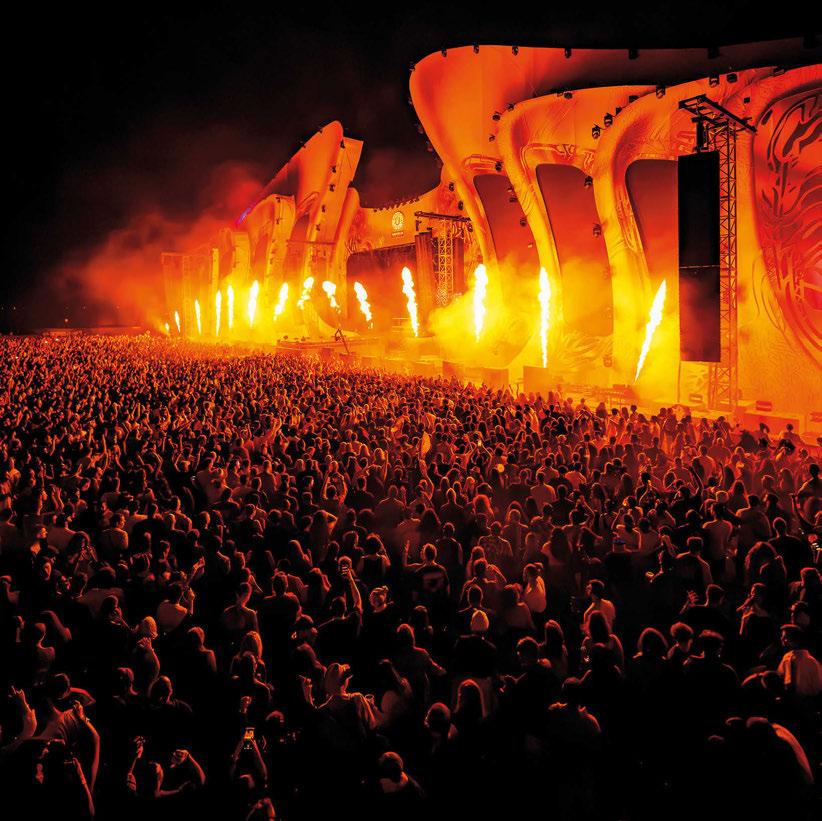
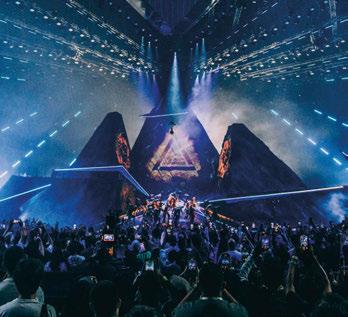
Also changing venues this year was the subject of our cover story for this issue, UNTOLD Dubai. Returning to the UAE for its second edition, this year saw the festival take place at Dubai Parks and Resorts, and TPiMEA was onsite roaming the festival grounds to see it unfold firsthand. Read our in-depth report on page 38
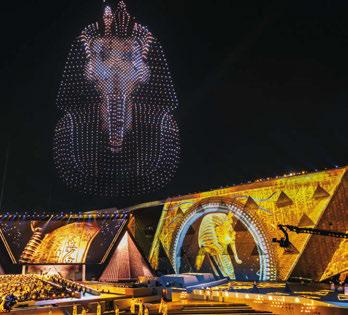
Elsewhere in the issue, museums seem to be having a moment in the region right now, and we have covered two of the biggest launches to have taken place in recent weeks – Al Ain Museum (page 62), and the Grand Egyptian Museum in Cairo (page 18). Both of these projects saw an incredible level of detail and precision, and both resulted in truly stunning productions.
And that’s not all – we also look back at the Esports World Cup Opening Ceremony, which took place in Riyadh over the summer (page 52), we cover Sami Yusuf’s performance at the ancient Roman Theatre in Amman (page 24), Matt Faddy, the composer and sound designer behind some of the region’s biggest events, sits down for our First Look interview (page 10), and much more.
Enjoy the issue.
3-6

First Look
10 Matt Faddy
The composer who provides the soundtrack for the region's most iconic moments shares his story.
Event Focus
18 Grand Egyptian Museum
An historic launch seen by a huge global audience.
24 Sami Yusuf
The maestro graces Amman's Roman Theatre.
32 Jennifer Lopez
JLo makes Uzbekistan debut with YASTREB-Sound.
34 Riyadh Season Opening
Riyadh Boulevard is awash with colour – and balloons – for a New York-style Opening Ceremony Parade.
Production Profile
38 UNTOLD Dubai
Dubai's biggest festival returns for a second year, with an all-new venue and heightened production values.
52 Esports World Cup
Riyadh cements its status as the Esports capital of the world with a star-studded display of creativity and cutting-edge technology.
62 Al Ain Museum
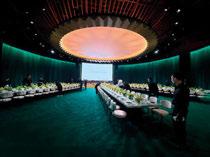
The UAE's first museum reopens with a dazzling ceremony delivered to a near-impossible timescale.
Interview
82 Gearhouse Group
The company on its recovery from Business Rescue.
84 CONDUCTR
CEO and co-founder Peter Cliff shares the creative innovation studio's plans for Middle East expansion.
In Profile
86 Mistika
The company bringing soul, narrative, and creative cultural storytelling to the region’s live events.
Feedback
88 Showforce KSA
How the crewing company is investing in KSA through its new Showforce Kingdom initiative.
Gear Heads
90 Matrox ConvertIP
Editorial Director
Peter Iantorno
Tel: +44 (0)161 476 8360
Mobile: +44 (0)7763 233637
e-mail: p.iantorno@mondiale.co.uk
Managing Editor Stew Hume


Delving into the intricacies of IP video infrastructure.
91 DiGiCO Quantum 112
As 7Hertz takes stock of DiGiCo’s new compact console, John Parkhouse discusses its benefits.
92 CasaMilan camera package
The compact camera package that captured the TPiMEA Awards 2025.
94 Regional Round-up
The latest MEA news, including the first Showstop courses in the Middle East, and World Stage Design.
Cover Photography
UNTOLD Dubai by Julien Duval
Printed By Buxton Press www.buxpress.co.uk
www.tpimeamagazine.com www.tpimeaawards.com www.tpimagazine.com www.tpiawards.com
@TPiMEA_Magazine / TPiMEAMagazine
@ tpimea_magazine /company/tpimeamagazine

Jeddah
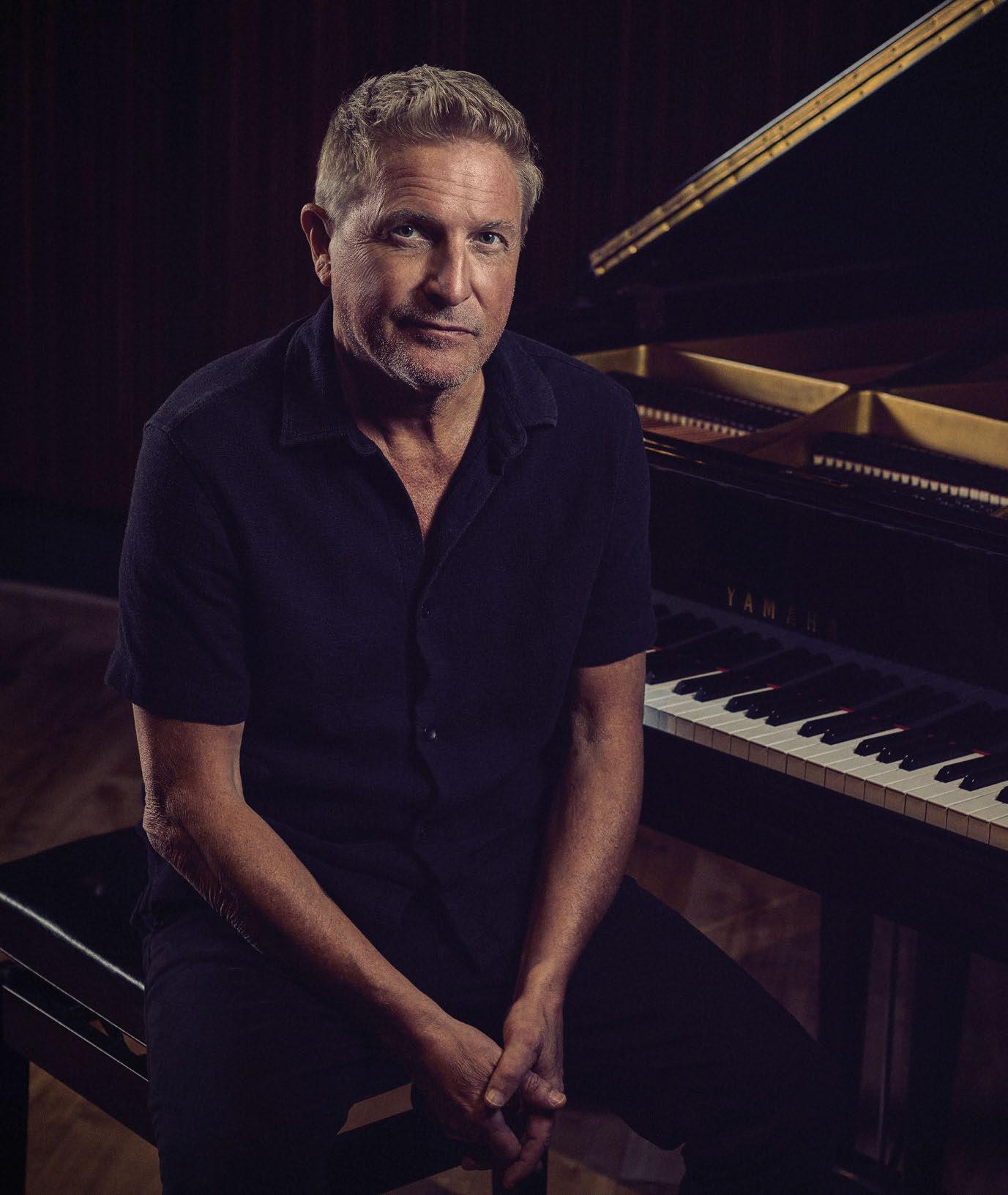
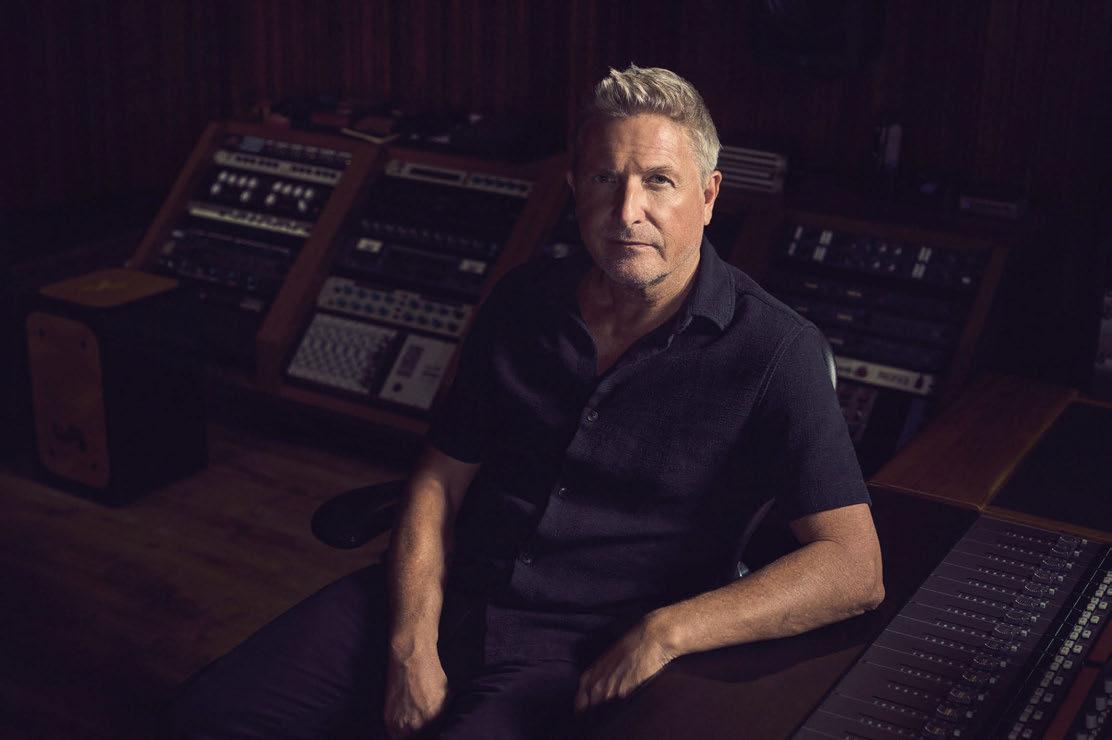
Matt Faddy, Composer and Sound Designer, Blowfish Music
From composing the music for the launch of TeamLab Phenomena and music directing for the launch of Disney Abu Dhabi to arranging the first official version of the UAE National Anthem, Matt Faddy has provided the soundtrack for some of the region’s most iconic moments.
Audio delivery at live events has been written about chapter and verse within the pages of TPiMEA, with the relative roles of those up and down the supply chain –from manufacturer to distributor, to rental house to end user – all covered at length. However, one area of sound that has received comparatively little coverage up to now is the music composition and arrangement process.
A pa rticularly prominent figure within the region’s live events scene – especially when it comes to the grand ceremonies and launch events that the Middle East is known for – Matt Faddy often finds himself at the sharp end of the most prestigious and high-profile events in the region.
From his early career in London working as a studio sound engineer with the likes of Annie Lennox, Sting and Supergrass, to his move to Dubai in the early 2000s and subsequent transition into the world of composition, here Faddy shares some of his favourite memories from the past 25 years of providing the soundtrack to the lives of many within the UAE and beyond.
What sparked your interest in the industry?
I’ve loved music since I was a child; I learned to play piano at home, mostly experimenting composing my own music and then playing keyboard in a terrible band at school, but I realised from quite an early age the chances of making a career in music needed a different approach.
I always knew that I wanted to be involved in music in some way and, after I was lucky enough to spend some time in a very basic four-track analogue recording studio owned by one of my brother’s friends, I became fascinated by the prospect of becoming a sound engineer. I was never
particularly academic. I somehow managed to get onto an electronics diploma course after school, but my heart was never in it – all I kept thinking about was my time in the studio. Inevitably I ended up dropping out.
I grew up in Hampshire, but I knew that all the big studios were in London, so I got hold of a London Yellow Pages, looked up every recording studio I could find, and wrote an individual letter to each of them.
Th ere were more than 100 studios in London in those days [1986], and I wrote a letter to every one of them. Out of those 100 or so letters, I got one reply from a studio in Charlotte Street, which invited me for an interview and ultimately offered me a job as a tea boy and runner.
Th e studio and offices were spread over four floors, and I’ll never forget my first duty was to rub out all the cigarette marks on the carpet that had been left from their New Year’s Eve party. Looking back, I think they were probably testing my resilience and seeing how passionate I was about working in the industry and getting my foot in the door. Throughout that first week I remember looking longingly at a Roland Jupiter-8 that was propped up against a wall in the live room, and I threw myself into the task because I was desperate to get my hands on that Jupiter-8.
Tell us about your early career as a recording engineer… I had a fantastic introduction into the world of audio engineering. Charlotte Street Studios was an analogue 24-track studio with no computers, and the sound engineer and studio manager there was a brilliant mentor in my early career who taught me everything I knew. After a year or so, he left to work for another studio; I expected the owner to
employ someone else for the role but that never happened, so at the age of 20, I ended up taking on the position as resident sound engineer, which was a very steep learning curve but an incredible chance that brought me some amazing opportunities.
We had many wonderful artists pass through the studio over the years. I was lucky enough to have worked on Annie Lennox’s first album Diva, with Annie and a brilliant keyboard player and producer named Marius de Vries. I remember one evening my sister was in town with her newborn son and was planning to stay with me for a few days. She asked if she could pop by to collect the keys to my house and, despite me telling her to ring the night bell and wait for me to come out, she decided to clatter down the stairs straight into the studio, disrupting Annie’s session. It was the first day of the session and I didn’t know how Annie would react, but she was amazing; she helped my sister carry the push chair down the stairs and talked to her for an hour while my nephew sat on her knee. A few months later there was an announcement in the newspapers that Annie Lennox was pregnant with her first child.
I also worked with Bruce Dickinson from Iron Maiden, Sinéad O’Connor, Sting, Bobby Womack, and many others. I eventually left after 10 years to work in a studio based in the old Trident Studios in St Annes Court in Soho.
How did you find the shift from analogue to digital?
I was very lucky to catch the end of the analogue era and the start of the transition to digital. It was an amazing and exciting time; there were a lot of studios in a small area around Soho, and there was a real community – all the sound engineers used to drink in the same pub, The Ship on Wardour Street.
As d igital non-linear systems like Avid Pro Tools started coming into play, two groups of sound engineers began to emerge – those who saw the potential of this new digital technology and embraced it, and those who resisted it. Those in the latter group were the engineers who unfortunately didn’t survive in the industry.
It was also a time of major change in the industry as the technology within home studios was getting better and better. When record labels had been booking studios for months at a time, they began booking them for weeks or even days as all the writing and preproduction could be done elsewhere. It meant that many of the big studios began to struggle to survive and sadly a lot of them closed within a few years.
How did your move to Dubai come about?
Alongside my work as a sound engineer, I had continued to write music. The studio was owned by a music production
company, and I ended up writing music for a lot of television commercials and programmes, including many cookery shows with the likes of Keith Floyd, Antonio Carluccio and Rick Stein.
In 2001, I got a call from an old client and colleague of mine – a very talented writer called Barry Kirsch, who had moved to Dubai and was setting up BKP Music. He asked if I would be interested in joining him. I remember clearly it was a typical rainy day in London, there were queues to get into the Oxford Circus Underground Station, and I thought, ‘what have I got to lose?’
I travelled to Dubai, and I loved it from the start. My time at BKP Music was an amazing and unforgettable experience but, after 22 years, I decided I wanted to focus my attention on composing music for shows and events and took the difficult decision to leave and start my own company, Blowfish music.
Tell us about the UAE National Anthem project…
The rearrangement of the UAE National Anthem was certainly one of my proudest pieces of work. Prior to 2015, there was no standardised version; we would often be sent all kinds of weird and wonderful recordings that included various different instruments and were not always well recorded or produced.
At B KP I had earned a reputation for composing orchestral music for events, and we were approached by the Prime Minister’s Office in Dubai to create an official
arrangement of the UAE National Anthem. This is one of the things I love about this country and this region; you get opportunities that would be unimaginable almost anywhere else – certainly back in the UK.
The process was, perhaps surprisingly, incredibly smooth. I produced a demo as a midi mock-up, which was approved very quickly. I then flew to the Czech Republic and recorded the score with the Prague Philharmonic Orchestra. We had a couple of versions – one slow and one staccato –both to click track.
A wonderful conductor, Harout Fazlian, then suggested he should record one more version without the click track and we all knew immediately this was the one – it had such a natural flow with perfect timing and feel. This is why it’s always so important to work with the best conductors!
This version has now become the definitive one used on all official events, and there’s even a copy of the score in a glass case inside the Etihad Museum in Dubai, which I find amazing. The UAE has given me so much over the past 24 years, so to be invited to do this for the country and to have my score in the Etihad Museum is something that I am immensely proud of.
Which other projects in the region have you been particularly proud of?
Every event I work on is special for its own reasons but there are a few that stand out. UAE National Day 2014 with HQWS – known as HQ Creative at the time – was one of the most
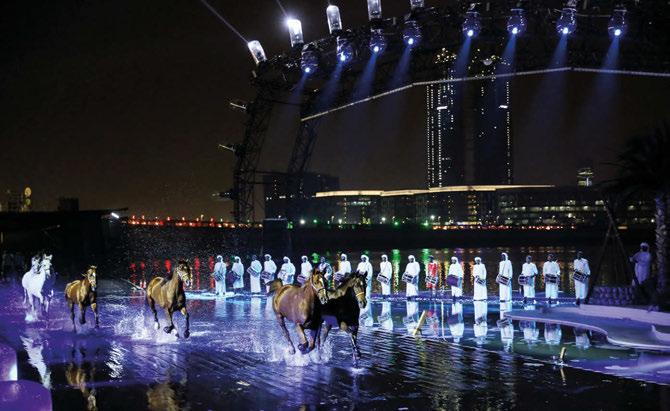
phenomenal shows that I have ever been a part of. Led by Creative Director Daz Jamieson, it had everything from water projection, fireworks, lasers and over 200 dancers and 20 horses running across a platform that was mounted just below the surface of a lake in Business Bay. The effect was incredible; the horses looked like they were galloping on water.
That show also stands out for one other unfortunate reason – a moment I’ll never forget. It was during the dress rehearsal, and I was on site mixing with Pro Tools as usual. Halfway through, everything went out of sync, and the comms lit up with the production team in a bit of a panic asking if the music had changed. Daz asked me if anything had changed and I was sure at that moment that nothing had. I will never forget Daz announcing, ‘If Matt Faddy says it hasn’t changed, that’s good enough for me’.
Th e very next moment I realised that there’d been a weird glitch in Pro Tools, and the music was wrong, so I had to nervously shuffle into the production office with everyone staring at me and admit that I had make a terrible mistake. Thankfully, the show ran like clockwork once we’d figured out the glitch, but the experience taught me to not just double check but quadruple check everything. We laugh about it now and I am relieved to say that is the only major mistake I’ve made in 20 years of writing music for shows (so far, at least!).
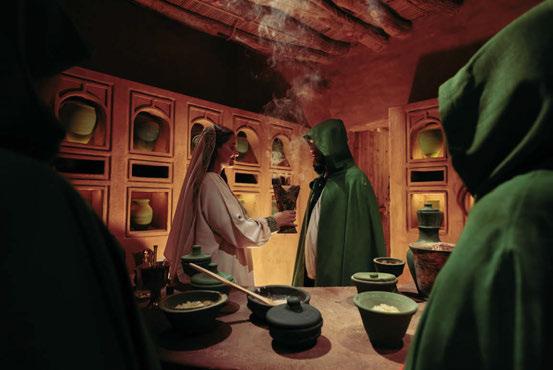
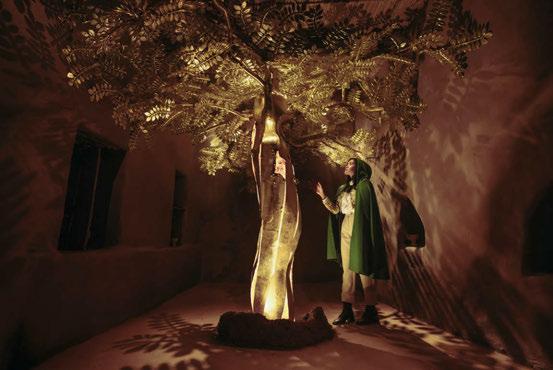
I also love working on shows and events in the ancient city of AlUla, Saudi Arabia. I’ve done countless projects there including the TIRE Exhibition last year – a beautifully produced theatrical immersive exhibition with a lot of live actors that required various soundscapes, music and sound design. That is another one I am really proud of. The exhibition was produced by Martina Margaux and Vittoria Bellingeri from AIMES. Right off the back of that, I produced the music for a drone and projection mapping show in Hegra, which was also incredible.
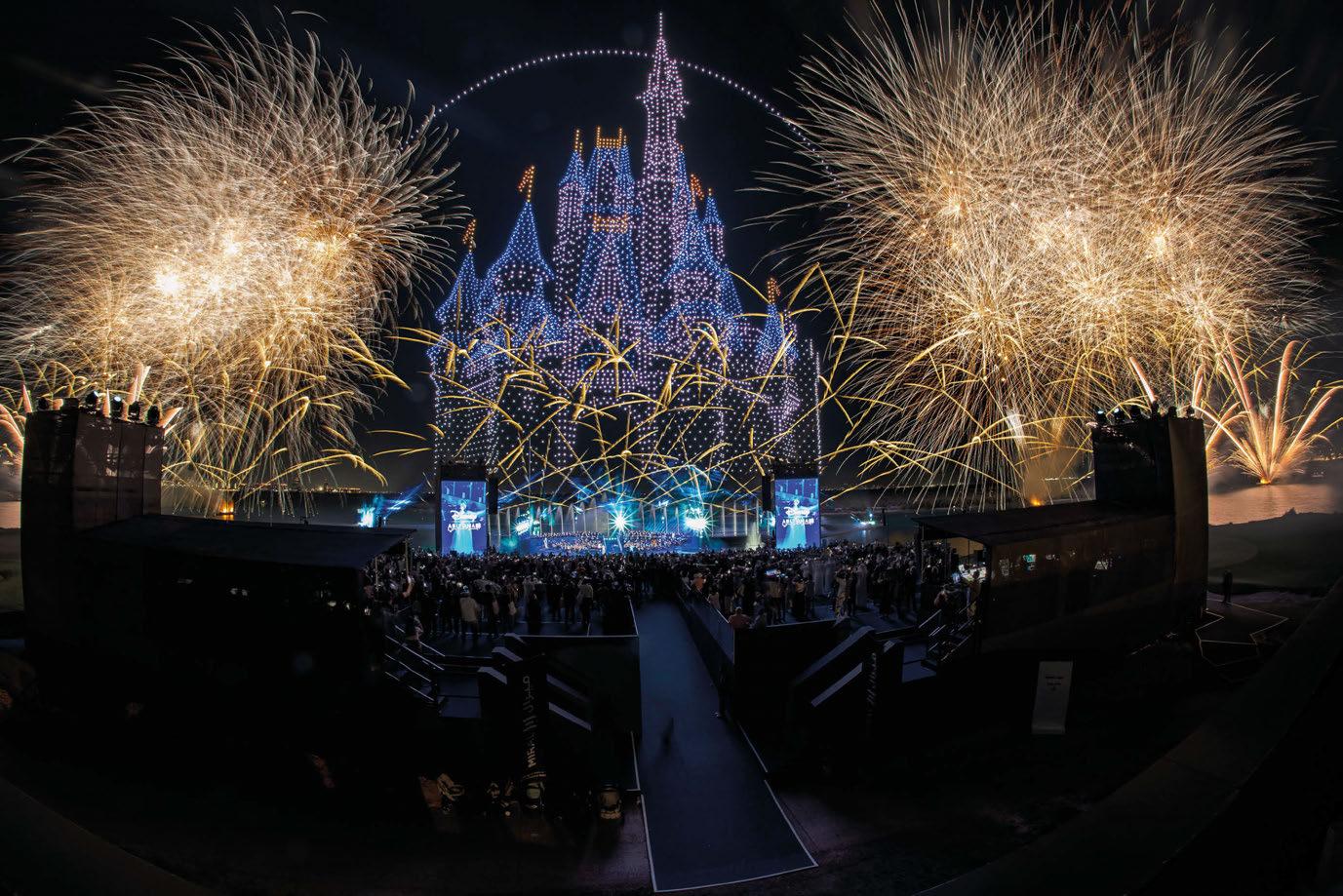
More recently, I worked with HQWS again on the launches of TeamLab Phenomena, under Creative Director Armanda Baptista, and then Disney Abu Dhabi – both of which were incredibly special. For Disney Abu Dhabi, such was the secrecy around the project, we were given just two weeks to produce the show. Working with a brilliant arranger called Steve Sidwell, we had a 60-piece orchestra from Eastern Europe, 40 local musicians as well as a 100-piece choir, and it was all brought together in a fortnight including producing and recording all the music.
How does your composition process work?
As soon as a project is confirmed, the first thing everyone needs is the music, so immediately everyone wants to know when it will be ready. The first thing I need to do is create a structure for the music for the whole show as a rough demo and a framework so everyone can start to lock in timings and start programming.
Of ten the creative event agency will produce a previsualisation of the show called an animatic, which will include my music, and that is a nice way to see a show start to come together in real time.
In terms of kit, I’m a big Pro Tools advocate. It’s very robust and, while it might not be quite as advanced for midi programming as some other platforms like Apple Logic Pro and Steinberg Cubase, I love the rock-solid reliability of it with audio. It’s the industry standard – wherever you go in the world, every half decent studio will be using Pro Tools.
How closely do you work with the audio delivery team on major shows?
It’s very important that I collaborate closely with the AV team on any project. There are some amazing AV companies out there, but for audio, Clair Global is a company that I have especially enjoyed working with over the past few years. I know the team well; they have all been in the region working with various audio companies for a long time and not only do they really know their stuff, but we also know each
other’s workflow, so I love working with them. I have recently started exploring L-Acoustics L-ISA in my work – I used it for the first time on the TeamLab Phenomena launch.
Th e Clair Global team is very good with L-ISA and they even have a demo room at their warehouse. It’s such a powerful immersive tool; I can do a binaural pre-mix at home on headphones, then go into Clair’s demo room to pre-mix, and that means much less time on site doing the final mix.
Anything I can do beforehand to speed up the process when we’re onsite is always valuable.
What is your assessment of the health of the events industry in the region?
I think the events industry in the Middle East is very healthy at the moment. Saudi Arabia’s investment in tourism, events and culture has had a huge positive impact on our business. Events went a bit quiet in the UAE for a little while, but I think
the UAE is coming back to prominence now. The recent boom in real estate has helped that of course, and I find that I’m working on a lot of property launches these days –some of which are incredible shows in their own right.
What are you working on at the moment?
In terms of current projects, I’m working with Energie Entertainment on Carols by Candlelight for Expo City. I’ve worked with Energie regularly over the past couple of years, and they are a great company to work with. The founder, Tyler Davis-Smith, is brilliant at putting shows together and always works with an amazing event crew onsite that work like clockwork together. Watching them onsite under pressure is always impressive – I could swear they communicate telepathically sometimes.
Photos: Martin Beck @martinbeckphotographer – shot at More Communications, AIMES, HQWS www.mattfaddy.com
Grand Egyptian Museum Opening
HiLights Group brings together a world-class technical and creative team to deliver an historic moment for Egypt, viewed by a massive global audience.
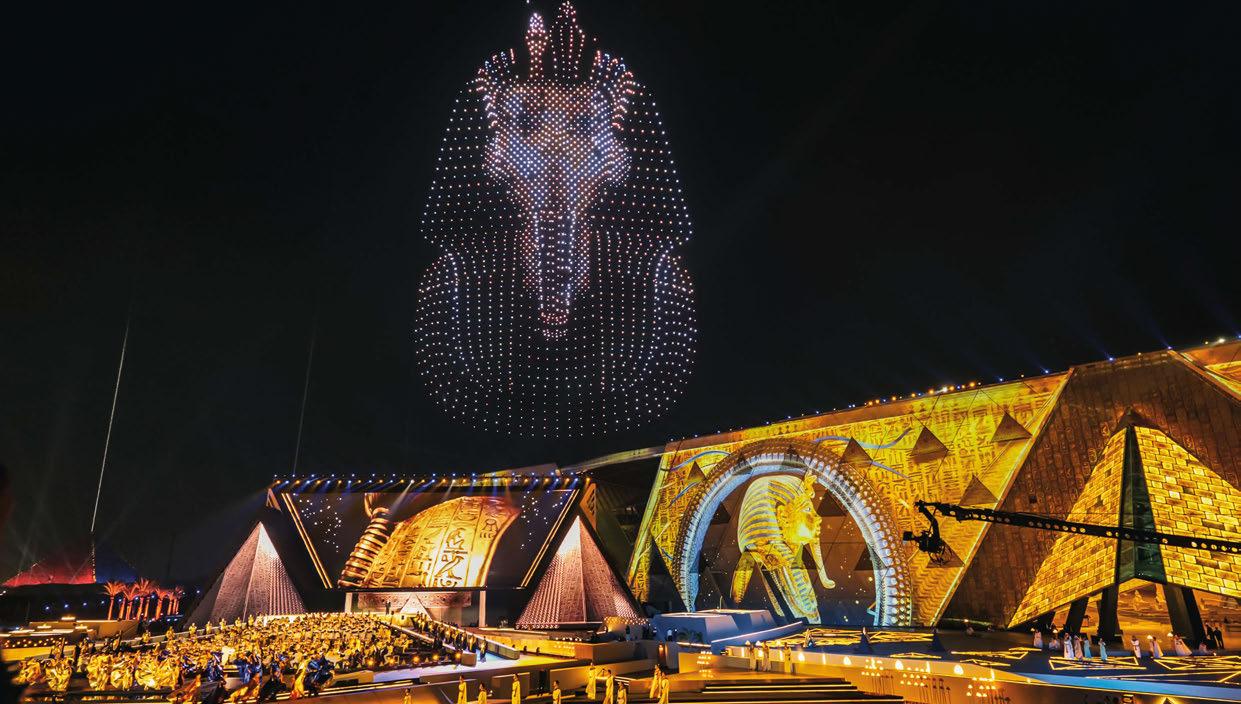
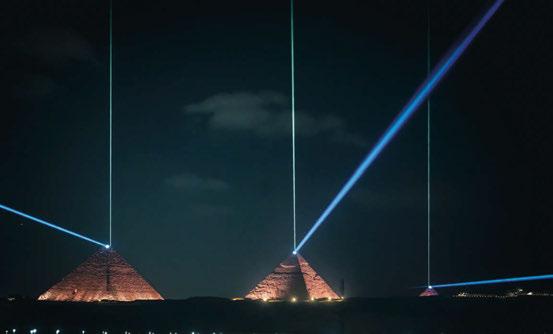
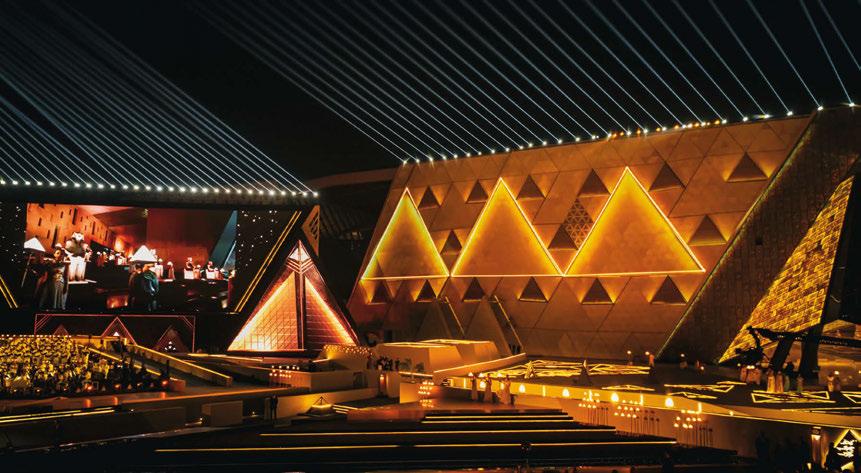
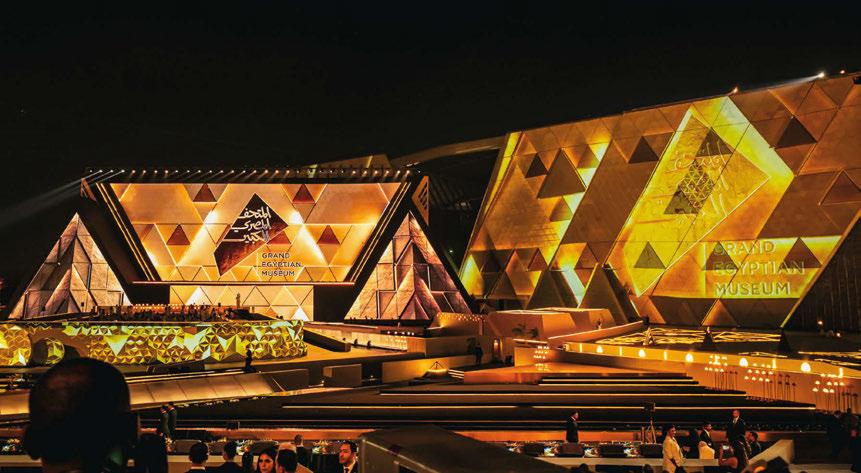
More than 20 years in the making, and at a reported cost of $1 billion, the Grand Egyptian Museum (GEM) in Cairo is the world’s largest museum dedicated to a single civilisation, housing over 100,000 artefacts. Egypt’s new icon officially opened its doors to the public on 1 November, with a fittingly grand ceremony attended by 40 heads of state and broadcast live to a global audience of over one billion people around the world.
With the eyes of the world firmly upon them and pressure very much on to deliver an event that was worthy of the occasion, MediaHub entrusted HiLights Group with delivering the full technical execution. HiLights Group in turn collaborated with a selection of local and international partners including: Live Legends and Roland Greil (part of the 360 Degree Collective), who produced the lighting design; Lumasky, which delivered an ambitious 5,000-drone light show; Kvant Events Middle
East, which provided an epic laser show and laser mapping; and Dirty Monitor, which handled video content for the projection mapping.
Hamed and Ahmed Arafa, cofounders of HiLights Group, shared their company’s process on the momentous event. “Our process started almost six months before the event, during which we were fully involved in gathering the brief and aligning the vision,” they recalled. “We held multiple coordination meetings with all involved authorities and stakeholders including creative, technical, security, and governmental stakeholders, to ensure a unified understanding of the project’s objectives and constraints.”
Af ter aligning on the creative direction, the HiLights team moved into the technical planning stage, developing the full production workflow for lighting, projection, LED screens, drones, lasers, power distribution, and automation.
“We conducted detailed site surveys to finalise pathways, rigging positions, screen placements,
and safety zones,” Arafa added, noting that the complexity of the power and network distribution was one of the key challenges. “We overcame this by planning redundant pathways, using fibre solutions, and performing early on-site measurements to adjust cable routes and equipment positioning,” he revealed.
Co ordinating multiple international teams of lighting, content, drones, lasers, and ensuring all departments were aligned on timing, safety, and technical needs provided a challenge throughout the project. “We solved this challenge by establishing a unified communication workflow, daily coordination meetings, and a detailed integration timeline,” Arafa said. “During the pre-build phase, we supervised equipment preparation, testing, and timeline integration between all teams. The load-in phase followed a strict sequence – rigging, structural installation, LED and projection setup, lighting deployment, fibre and networking, then system integration.”
The unpredictable Cairo weather conditions also required contingency planning. “We implemented weatherproofing solutions, added a range of extra safety measures for rigging, and ensured all systems had backups, including backup generators, secondary network paths, and redundant media servers,” Arafa revealed. “Ultimately, through structured coordination, strong communication, and proactive problem solving, we delivered a successful show despite the scale and technical complexity.”
By s how night, the production team had completed several cue-to-cue rehearsals, validated all backup systems, and synchronised the full show across lighting, video, projection, drones, lasers, and automation to deliver a seamless live experience. “We were particularly pleased with how seamlessly all technical elements came together to create a unified and impactful experience,” Arafa commented. “The synchronisation between the lighting design,
projection mapping, drones, lasers, and LED screens delivered a visually cohesive show that enhanced the museum’s atmosphere without overshadowing its heritage. It was one of those rare projects where creativity, emotion, history, and technology all aligned perfectly.”
‘Once-in-a-lifetime’
Describing the project as “once-in-a-lifetime”, Lighting Designer Roland Greil was glad to get the call from Live Legends. “From the moment we flew out to Cairo for the first meeting, the scale and importance of the project was immediately apparent,” he told TPiMEA. “This was a huge moment for Egypt, and it deserved a big show –and that is exactly what it got.”
Even before the presence of any formal stage or production design, Greil was given a “very clear creative vision” to work to by Show Directors, Ahmed Morsy and Mazen Al Motagwel. “The creative was extremely ambitious, and it
sparked my interest from the outset, because rather than ‘flash and trash’ and being massive for the sake of being massive, there was a desire to achieve something much classier and more cinematic in its approach.”
Ah ead of the show, the lighting team spent a week at Live Legends’ state-of-the-art studio in Abcoude, Netherlands, perfecting the previsualisation. “Live Legends has an amazing studio that helped us do a very thorough pre-viz process,” Greil recalled. “That meant we could take the show as a baseline to Egypt, which was important because we needed to save as much time as possible on site due to the sheer size and complexity of the design.”
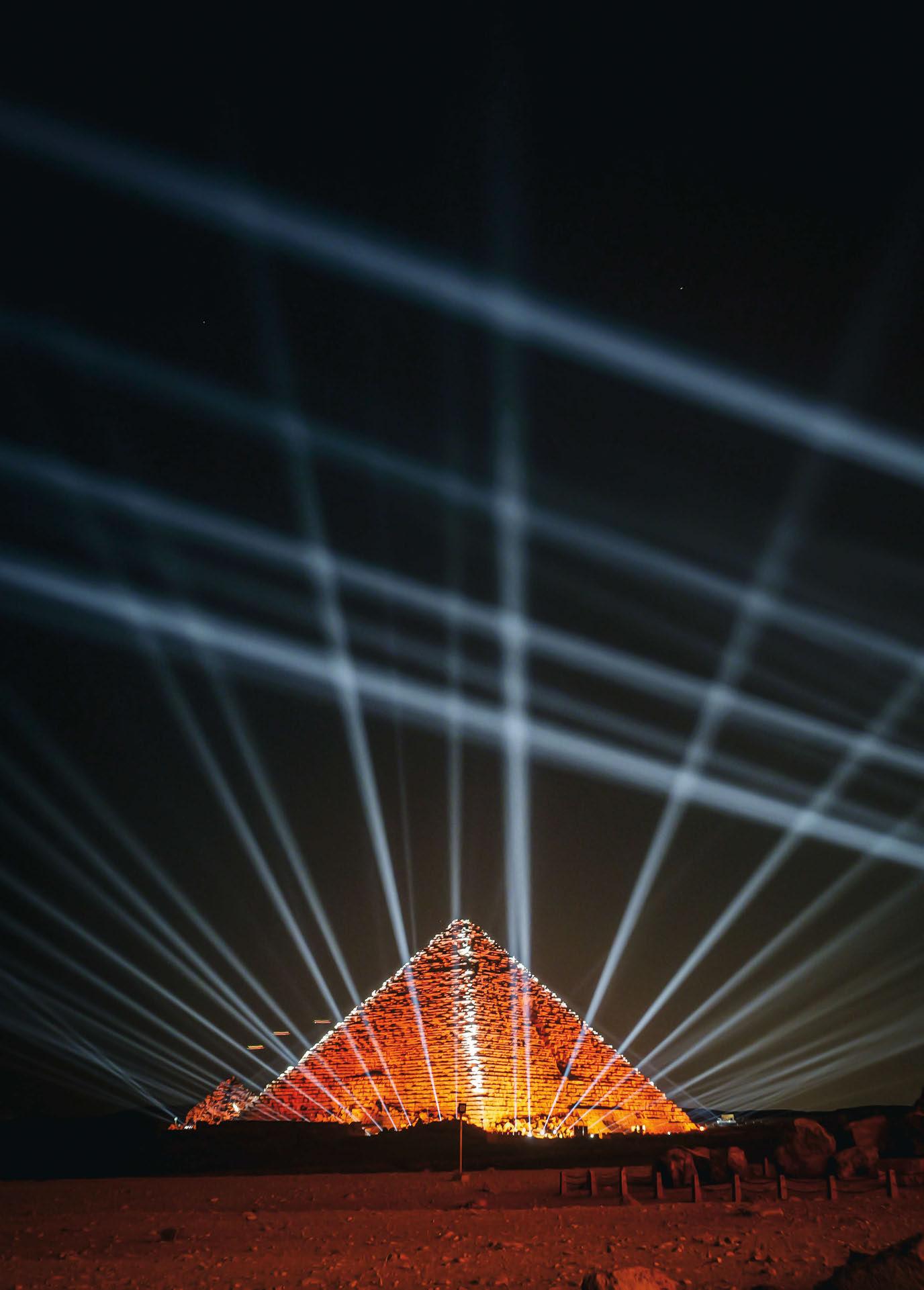
Th e lighting scope was split into two distinct zones: the main stage area and the Great Pyramids of Giza, which were clearly visible in the background from a couple of kilometres away. “We combined our knowledge of cinematic, architectural and show lighting to take on each
element of this project,” Greil explained. “The Great Pyramids stand above everything, so to try and overshadow them with big, flashy looks would be foolish. Instead, we created some very strong cinematic looks, which were picked up especially well on the broadcast.”
Three layers of lighting were used around the pyramids, with up to 1,000 LED floods illuminating the gigantic structures, which were also framed by beam lights to pick out and frame the edges. “Marcus [Bossdorf, Lighting Associate, Pyramids] was kept incredibly busy with this,” Greil smiled. “In fact, I think he may now know every stone around the pyramids by name.”
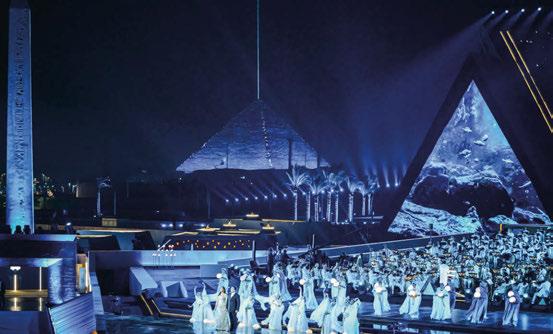
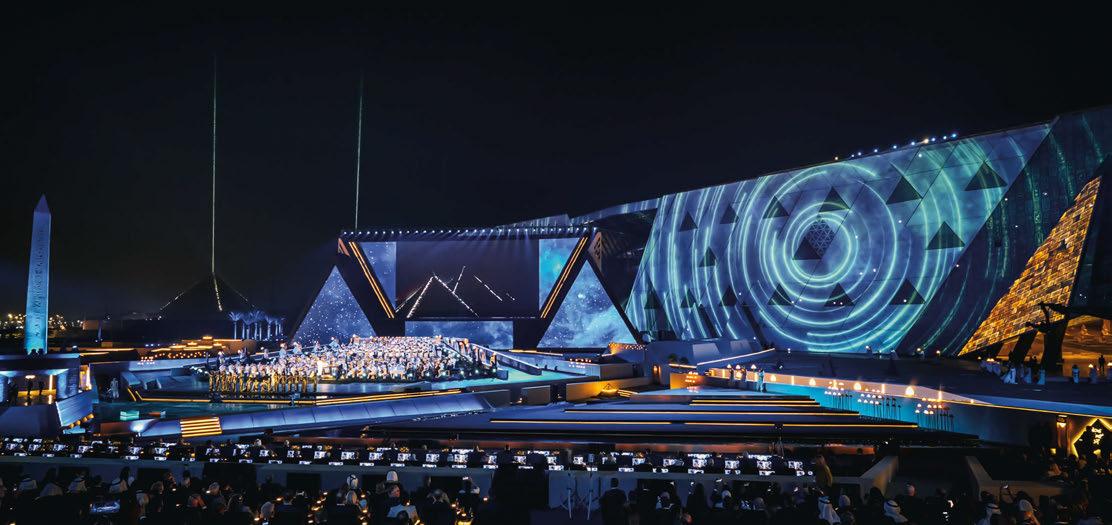
Production Designer, Mohammed Attia ensured that the “classy and elegant” theme continued into the stage area, where Greil was restrained in his use of saturated colours. “The museum was the real star attraction, so large parts of the show were in tungsten, warm white lighting,” the LD described.
“That gave us the headroom to go into more saturated colours to add emphasis to specific scenes that warranted it such as one that referenced the Nile and the traditional boats, where we lit the entire scenery in a deep blue.”
Th e museum stage system was more complex, with multiple layers to it. “We played around with nearly 3,000 LED parcans, which
we laid out throughout the garden and the architectural scheme around the stage and museum to really get control of every single tree in terms of colour and intensity,” Greil revealed.
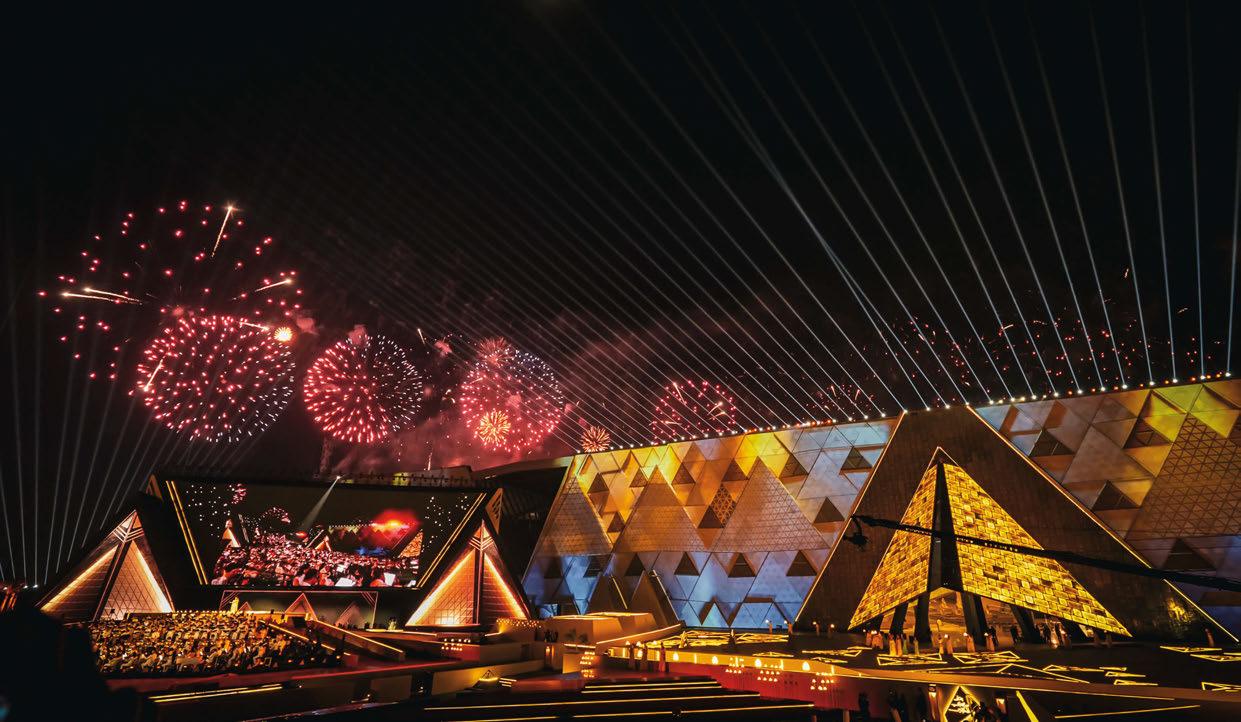
While the main facade of the museum was all projection mapped, the other sides of the museum building were all uplit with LED wash lights. “We wanted to really make the building shine and create this cohesive design where it’s all integrated into one big architectural, classy lighting look,” Greil explained.
Th e overall inventory featured more than 9,000 fixtures, including Claypaky Skylos used specifically for powerful sky-tracking effects, Ayrton Cobra and Domino LT to enhance longrange projection and architectural highlighting, as well as a series of Vari-Lite fixtures, including the VL3600, VLZ, VL10, VL4000, and VL6000, with VL3600 LTs used in a Spot Track system for follow spots.
While the lighting console of choice – MA Lighting grandMA3 – was no surprise, unusually for a large-scale ceremony, the lighting was operated manually on the night. “A symphonic orchestra performed the music live, and with the team of talented operators that we had on the ground, the decision was made for lighting to operate live as well,” Greil revealed. “Normally I wouldn’t take on such a show without timecode,
but here it felt more organic than we could ever have achieved with a perfectly cued timecode show. Klaus [Kubesch, Lead LX Programmer], worked wonders with his magic fingers and magic ears.”
Th e lighting team also included: Lead Associate Designer, Troy Eckerman; Associate Designer GEM, Michael Kuehbandner; Design Assistant, Jannick Lippert; LX Programmer II GEM, Alex Scheu; LX Programmer I Pyramids, Andre Beß; LX Programmer II Pyramids, Grant Hickey; SFX & Pyro Programmer, Lucas Gerritzen; Project Manager, Tom Levin Schwenzle; Previz, Bas Knappers; and Account Director, Olivier Monod de Froideville. “I was surrounded by an amazing crew on the ground who made it all happen,” Greil commented. “HiLights Group also did an incredible job. There are not many companies around the world that have supplied rigs of that size, and their crew were all fantastic.”
“It was our honour to have Roland Greil and the Live Legends team on board with us for this amazing project,” added HiLights’ Arafa. “The whole team did a fantastic job with a perfect performance, professionalism, dedication, flexibility and honesty commitment to make it happen in a very professional way with a seamless procedure. We can’t wait to see them all and do amazing work again soon.”


‘A tribute to the grandeur of Egypt’ Along with the massive lighting deployment, HiLights also provided and installed the largest video projection mapping show seen in Egypt to date. High-performance Digital Projection Titan 37K WUXGA projectors covered a total area of 16,691sq m, ensuring optimal luminance levels, seamless alignment, and visual uniformity throughout the production.
And projection was just part of the video deployment, as HiLights also provided some 1,500 sq m of outdoor LED screens, NovaStar splicing, Dataton WATCHPAX60 media servers and Barco Event Master processing, ensuring seamless playback, edge blending, and systemwide media synchronisation for the video content, which was designed by Dirty Monitor.
Th e historic moment was given a punchy visual uplift thanks to Kvant Events Middle East, which collaborated with Kvant Show Production to provide a striking laser show and laser mapping. “We relied on Kvant’s high-tech laser systems to create a powerful visual connection between the Pyramids and the Museum, symbolically linking both landmarks as part of one integrated story,” explained Arafa. “Their laser beams added depth, scale, and continuity which helps us deliver the show’s message across the entire site.”
Th e deployment included: three Architect 500W lasers, positioned to appear as if beaming straight from the tips of the three Great Pyramids; six Epic 270W BlueBoost units performing skytracking looks; and 10 Clubmax 40W systems for precise laser mapping, synchronised with the video projection.
Th e Kvant team on the project included: Project Manager, Matus Lalik; Laser Operator, Drohi Rakshand; and Laser Effect Technicians, Shahnewaz Mithu and Sharafat Prithu. “This was more than an event; it was a moment where history met the future,” stated Kvant. “Huge thanks to our partner HiLights Group for the trust and collaboration on this legendary project.”
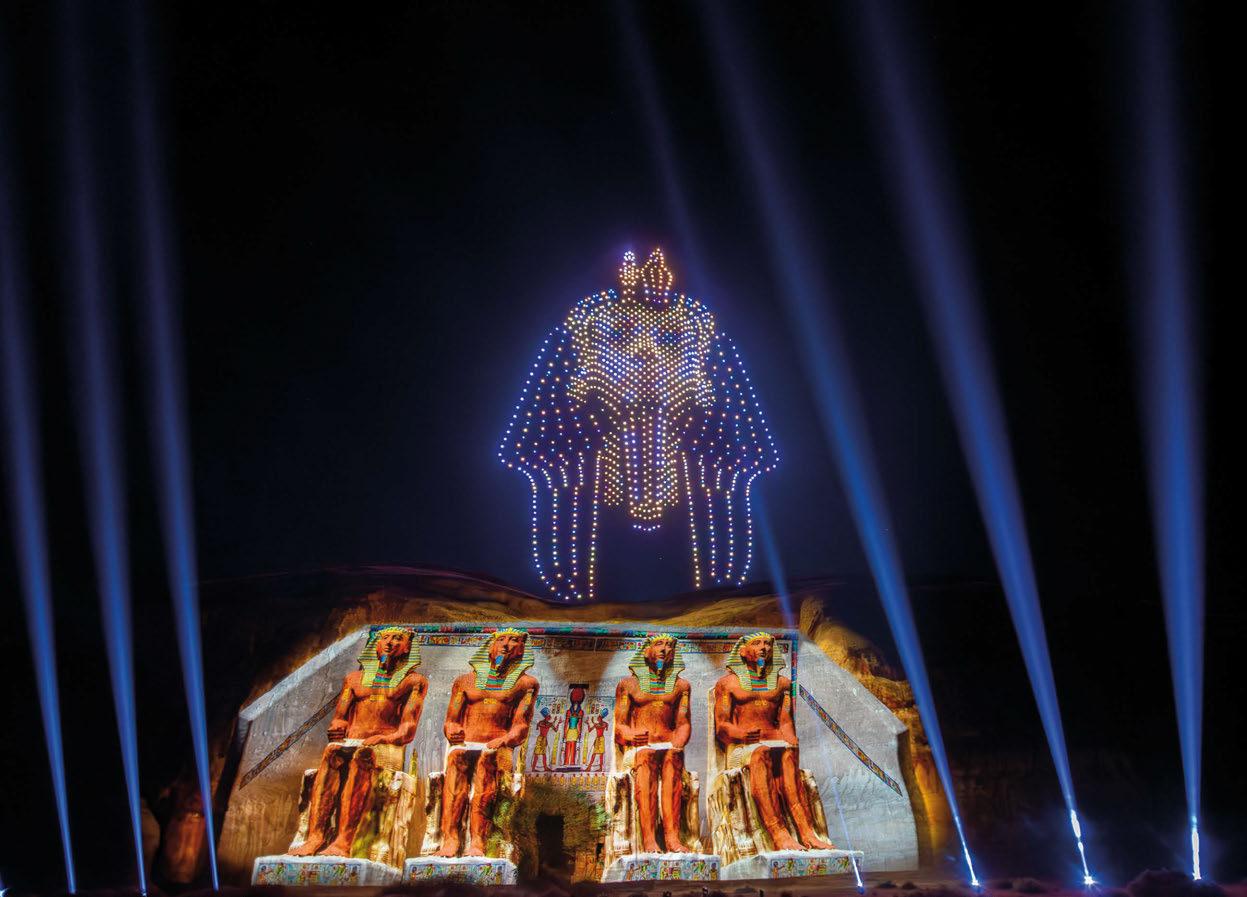
Ad ding further visual appeal, Lumasky lit up the skies above the GEM and Great Pyramids with a swarm of 5,000 drones. “This was the largest drone show ever done in Egypt,” Arafa noted. “We worked closely with the Lumasky team from a creative standpoint to define the main message of the event. The drone formations were developed to support the show’s narrative and were fully synchronised with the music, video content, lighting, lasers, and overall storytelling, making the aerial visuals an extension of the show rather than a completely separate element.”
“This wasn’t just a technical production event,” Arafa concluded. “It was a tribute to the grandeur of Egypt, telling the story using all our technology and equipment – from lighting fixtures, LED screens, video projection, laser shows, and drone shows – all executed with precision and creativity.
Photos: Kvant Events Middle East www.mediahubmena.com www.hilightsgroup.com www.360-degree-collective.com www.livelegends.com www.roland-greil.com www.kvantevents.com www.lumasky.show
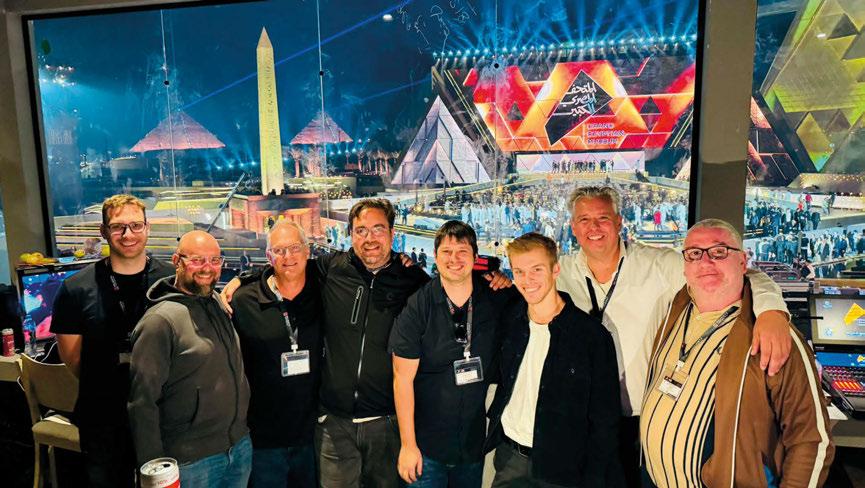
Above: Alex Scheu (GEM LX Programmer II), Michael Kuehbandner (GEM Associate Designer), Troy Eckerman (Lead Associate Designer), Roland Greil (Principal Lighting Designer), Klaus Kubesch (Lead Programmer), Jannick Lippert (Design Assistant), Olivier Monod de Froideville (Account Director), Andre Bress (Pyramids LX Programmer).
Single-channel broadband directivity for all. CCL is a compact cardioid line array. A big idea, right sized for the most accessible range of applications and audiences. Experience more at dbaudio.com/cl-series
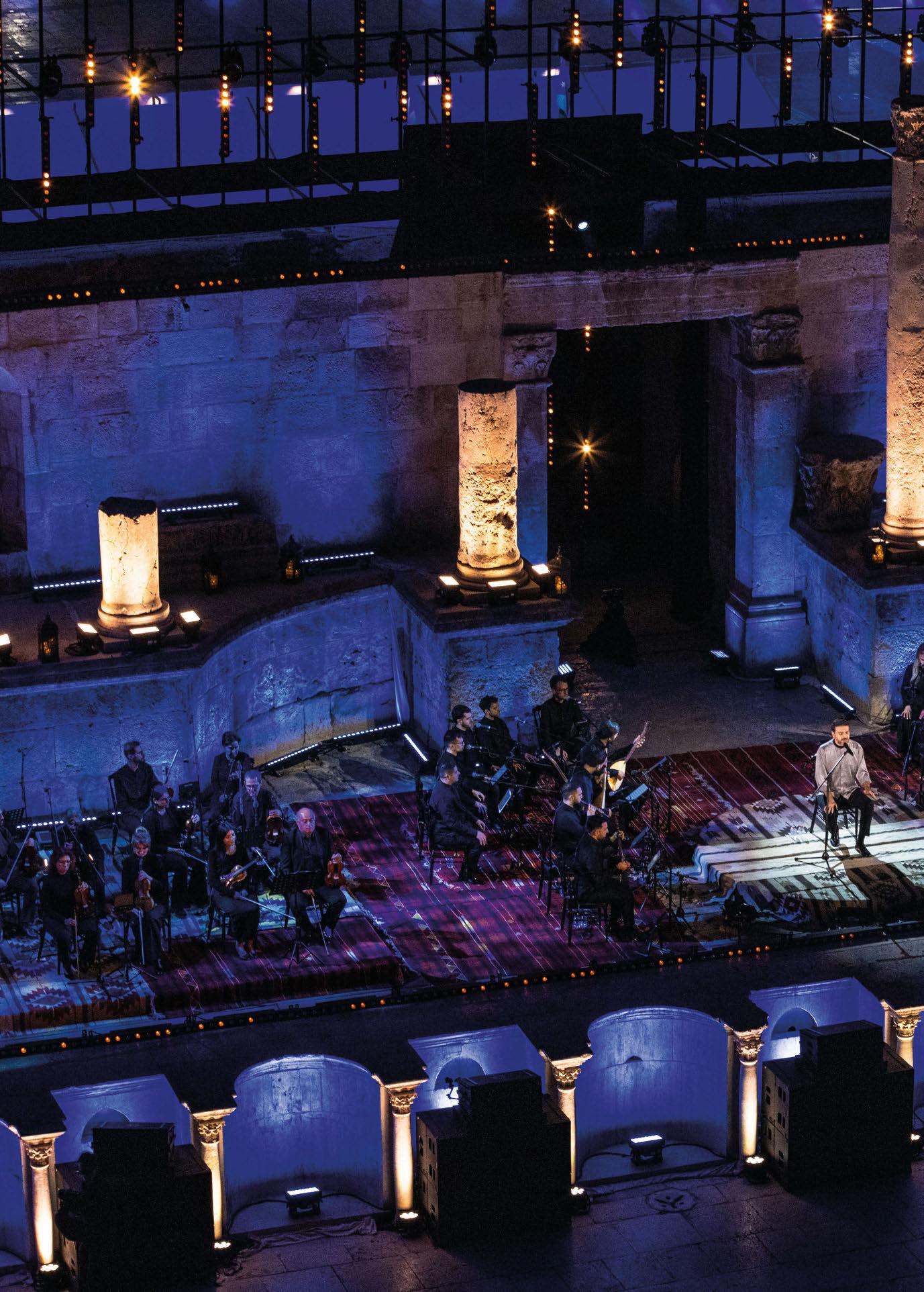
Sami Yusuf live at Amman’s Roman Theatre
Internationally acclaimed composer, maestro and vocalist, Sami Yusuf descends on the Roman Theatre in Amman with a show that blends ancient architecture, intricate musicianship, and modern production design…
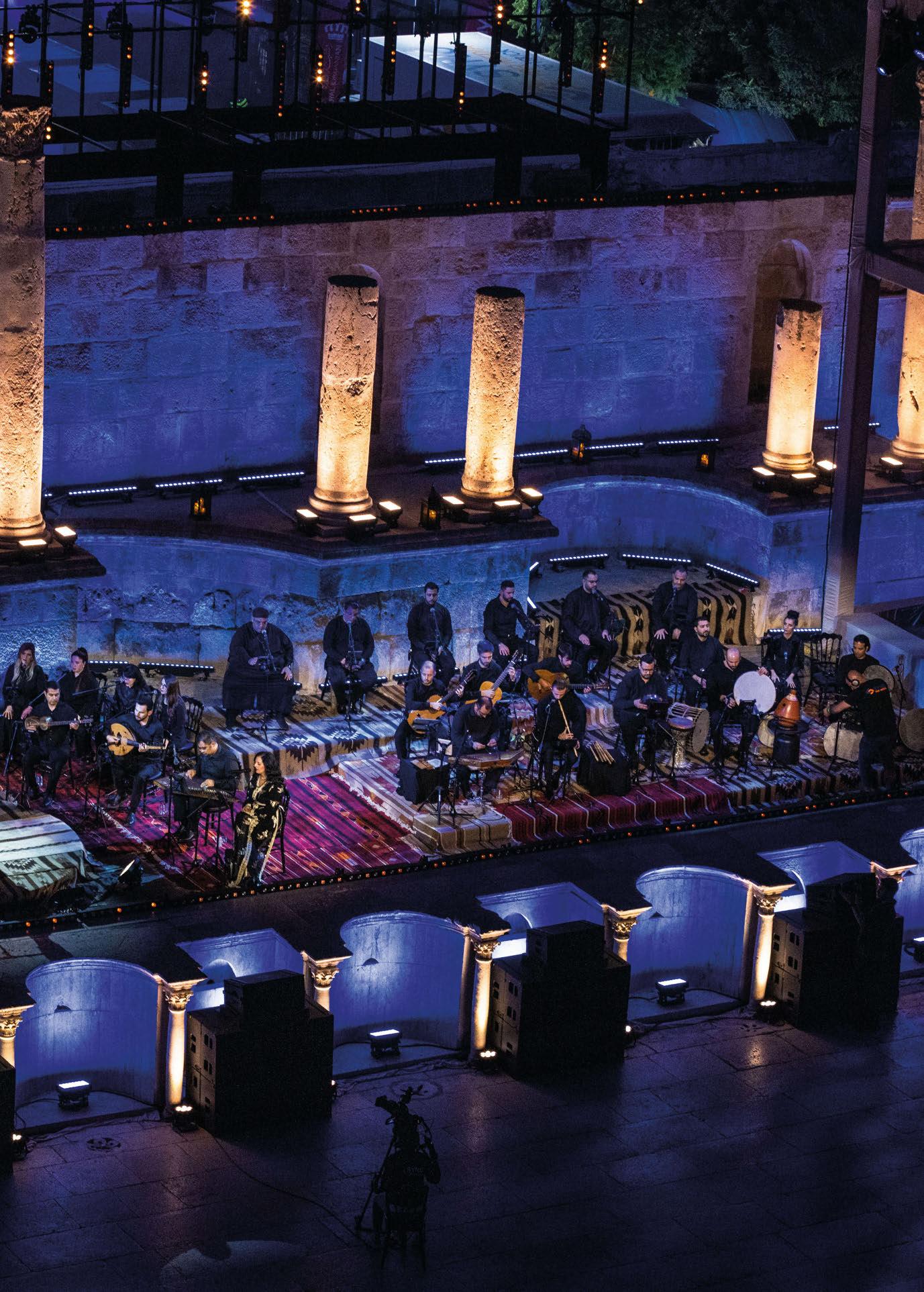
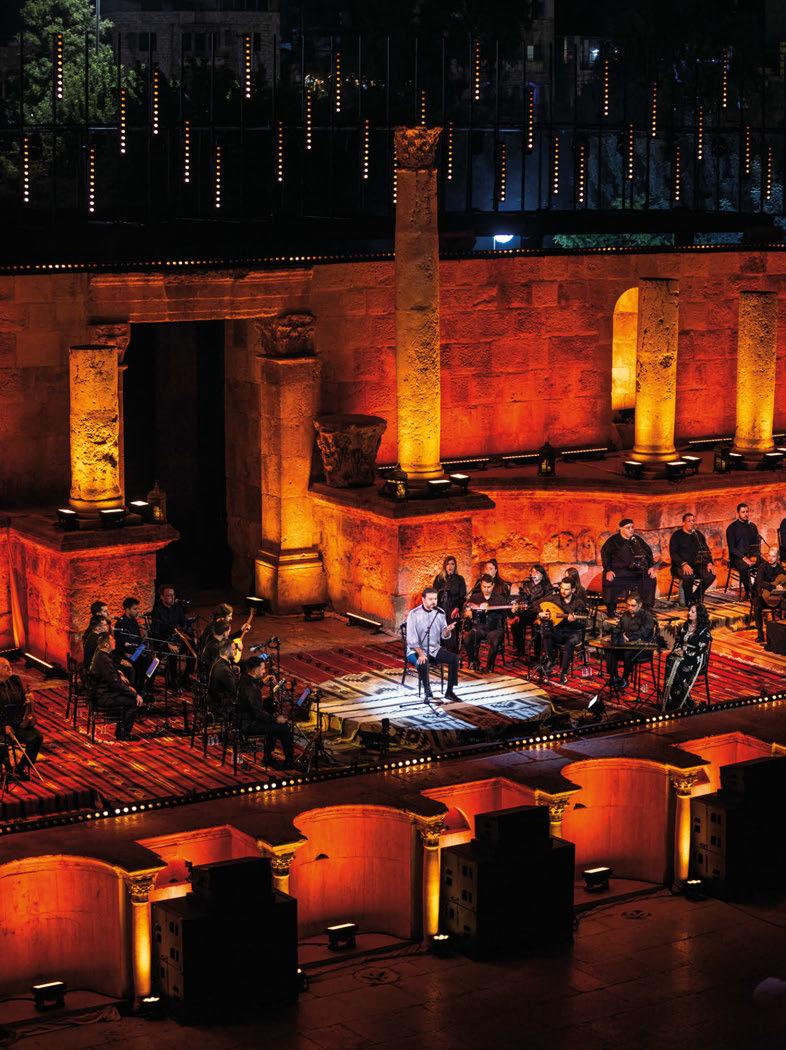
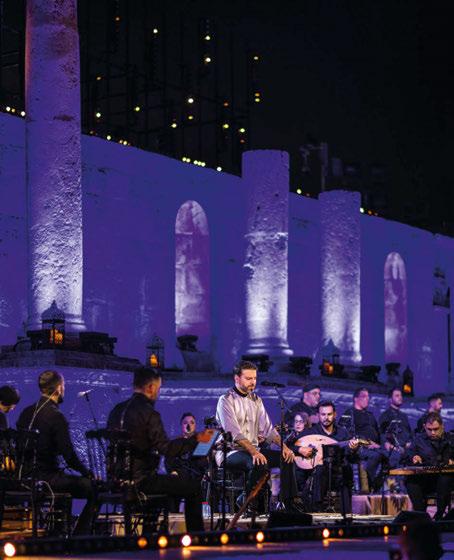
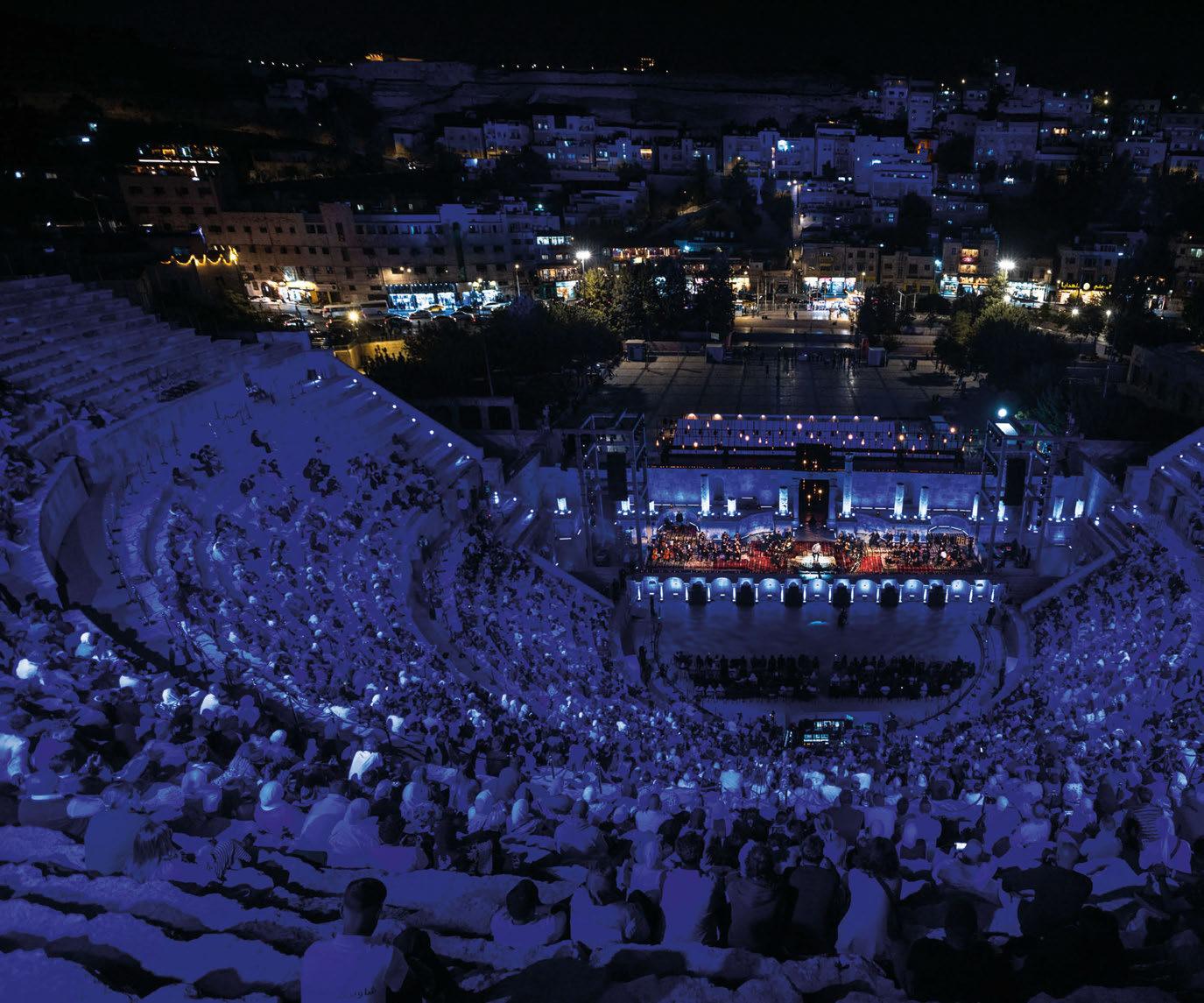
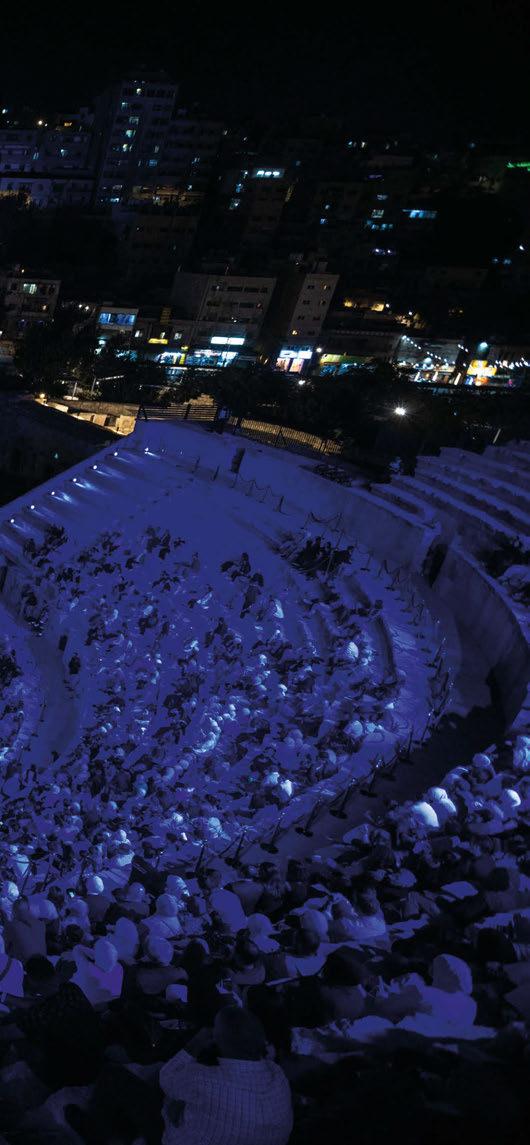
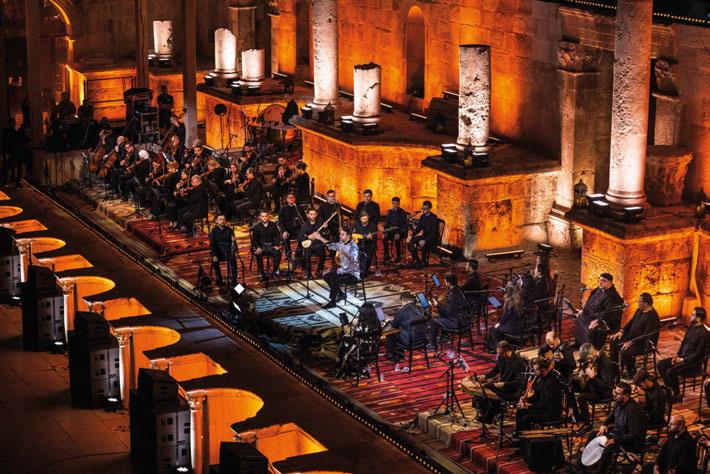
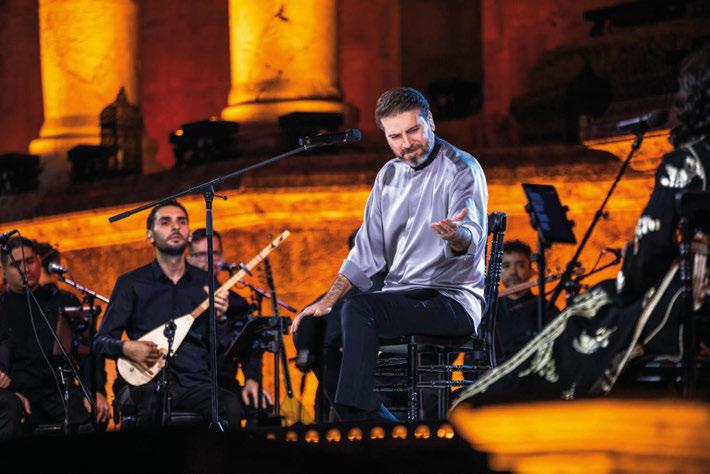
For one night in October, Sami Yusuf took to the stage at the 6,000-seat, 2nd Century Roman Theatre in Amman, Jordan, with more than 50 musicians, performing with an array of traditional instruments and voices spanning the Middle East, South Asia, South America and Europe, in a celebration of cultural tradition and musical unity.
To make this project a reality, sound design specialist Auditoria was brought on board to design and operate the audio, with a creative lighting design courtesy of Woodroffe Bassett Design and technical supply from Amman-based R.B Event Technology.
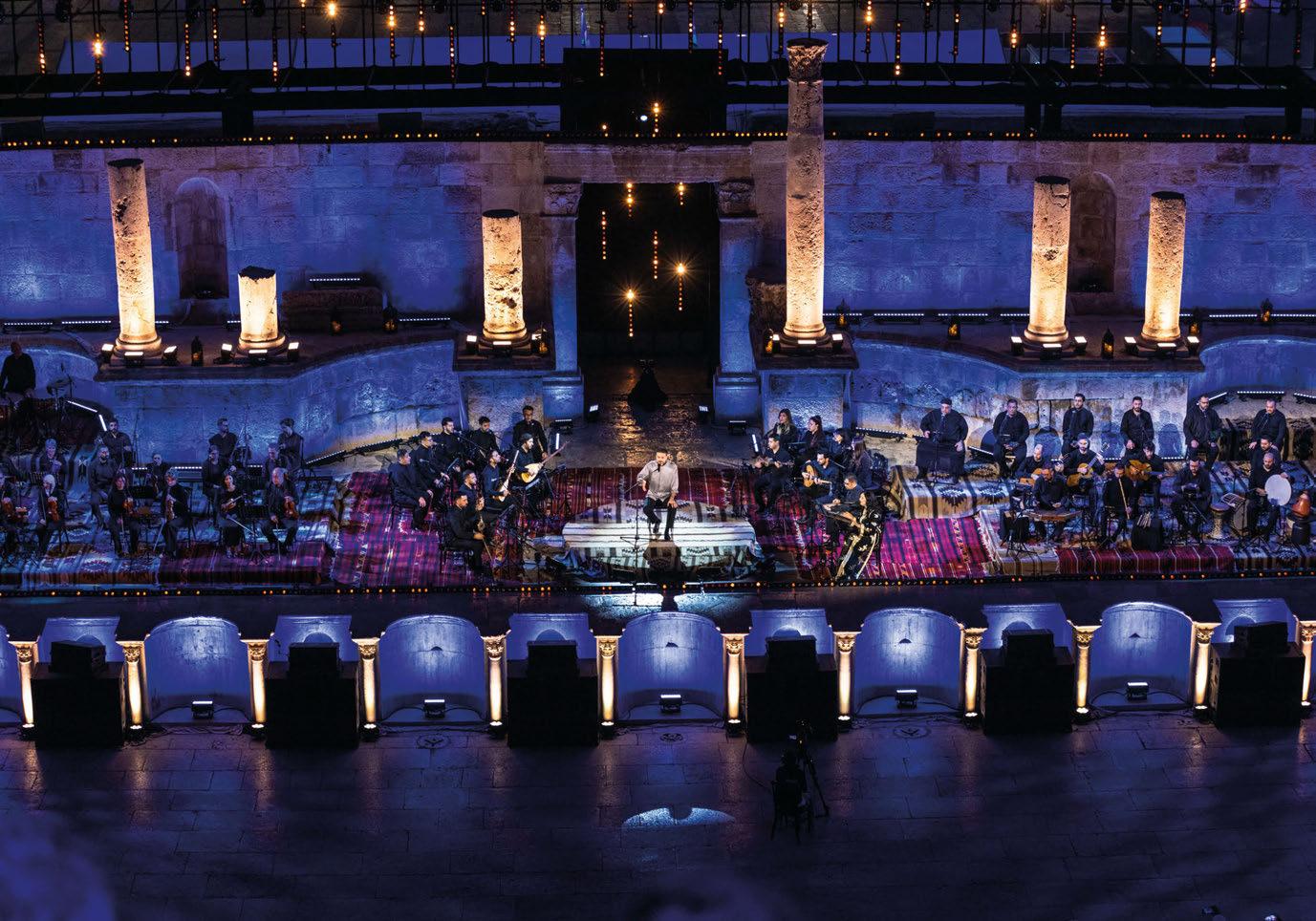
“O ur goal was to sensitively light the space and accentuate its natural beauty, while of course lighting the performers and dynamically responding to the music,” Grant Anderson, Associate Lighting Designer at Woodroffe Bassett Design, commented. “We architecturally lit the features throughout the venue and skimmed light up the walls to accentuate the hand-crafted stonework,” he added.
“Additionally, we lit the backdrop of the working city behind the playing space, introducing this around halfway through the evening to add an extra layer of depth and offer
contrast and context to the historical space in front of us.” The Woodroffe Bassett Design team of Lighting Designer, Adam Bassett; Associate Lighting Designer, Grant Anderson; Lighting Coordinator, John Coman, and Lighting Programmer, Alex Passmore collaborated with Sami Yusuf and his support team to create a colour journey for the evening and a look and feel for each piece of music that was appropriate.
“We discussed the physical movement of light and how it can often be distracting and jar against the very thing it’s trying to accentuate – the music,” Anderson recalled. “We focussed on creating a design that worked with the music and could create those big impact moments when they were required, but was actually more focussed on the environment to allow the music to take centre stage.”
The team attended a site visit several months in advance and marked up key lighting positions. Back in the UK, the designers began to sketch out a design, drawing the lighting packages in Vectorworks. On the ground, the team worked with local vendor, R.B Event Technology, to produce an MVR from Vectorworks to take straight into two MA Lighting grandMA3 Full Size consoles – a main and a backup on-site.
Around 200 Showtec Sunstrips situated in various positions were selected as “warm point sources” throughout the backdrop, which acted as a lighting base. From there, the design team architecturally lit the features within the venue using a variety of colour-changing sources to work with the design and the colour path that shifted throughout the set list.
R. B Event Technology was responsible for providing sound systems, lighting systems, trussing and rigging, control systems, and communication systems.
Ahmad Alhaj Mohammad, Head of Design & Creative Department and Technical Project Manager at R.B. Event Technology, commented: “Woodroffe Bassett created a very wellbalanced lighting installation, followed by a majestic programming sequence that perfectly complemented both the audio experience and the venue. The lighting backdrop – an extension of the stone façade – composed primarily of Showtec Sunstrip Active fixtures, established a distinctive visual identity for the show. The end result was subtle, grand, and warmly immersive.”
Spots and washes were added to the structure installed to hang the PA, maximising the use of infrastructure already in place. These
fixtures provided additional colour washes and texture across the musicians on stage.
Around 20 discrete lighting towers were located at the very back of the auditorium, clad in black to disappear into the night. These housed a spot and two washes each; the spots were all utilised for key light and the washes for audience halos. A handful of additional spot positions were also deployed to ensure full lighting coverage and adequate intensity.
A further 30 wash fixtures were deployed to light the city backdrop and another 30 beam lights outside of the venue. Neither of these systems were visible from within the venue, but when utilised, their output added impact when called for in the music.
“The classic Sunstrip was the featured piece of lighting equipment in this design,” Anderson noted. “We used the fixture across the design to give a warm glow and twinkle in the space and on camera. One of the briefs was to be sensitive regarding movement throughout. The Sunstrips
allowed us to accent and punctuate the music where appropriate while ensuring that there was no negative impact on the musicians’ world.”
In addition to 150 Showtec Sunstrip Actives, 48 Power Spot Q9s and an ArtNet and networking system for the MA3s, the lighting system featured ADJ Hydro Profile, Hydro Wash X19, Focus Profile and Vizi Wash Z19, HEX Panel IP, 15 HEX BAR IP lighting solutions.
‘Creativity and teamwork’
In a venue that is not designed to take modern technology infrastructure, it was important for the team that the equipment blended into the surroundings as much as possible. R.B Event Technology colour-matched fabrics to the stonework to hide infrastructure, such as trusses and cabling that would otherwise impose on the venue architecture.
“The venue presented significant challenges due to the sensitivity of its structures and its archaeological importance. With no direct access
from the upper levels, we had to rely primarily on manpower to transport all the equipment to those areas. Despite these challenges, our prior experience working at this location – having handled several projects there before – gave us a clear understanding of what needed to be done. It is always close to our hearts to work in such venues, rich with history, character, and texture,” Mohammad commented. “Managing such a large-scale, highly detailed event within a limited time was equally challenging. To overcome this, we developed a comprehensive plan outlining every detail, task, and location. This approach allowed our teams to remain fully aligned and focussed throughout all stages of the project.”
Making sure the positions for key light would work was also a challenge. Anderson elaborated: “There are not a lot of obvious options, so there was real creativity and teamwork involved to ensure that we could sensitively install the infrastructure while still achieving the angle and quality of light on stage required to light the
performance for the live experience and balance for the camera.”
According to Anderson, the big-picture moments translated very well in the space and on camera. “From sensitively lighting the venue, to opening the light across the city and introducing beams over the back wall, we were able to create an impressive wide shot. This, combined with the close-up details on stage – such as our lanterns and point sources in the back of shots – worked very well,” he commented, praising the wider production team, who he described as “wonderful collaborators”. He added: “We were very well looked after by R.B Event Technology in particular; nothing we requested was a problem, and the attention to detail was second to none.”
‘Magical spaces’
Spanning over 200m in trussing with electrical chain hoists and controls, R.B Event Technology partnered with Clair Global UAE to supply an extensive sound package comprising L-Acoustics
K2 and KARA II loudspeakers, KS28 subwoofers and ARCS WIFO systems. DiGiCo Quantum 338 Pulses were chosen for control and partnered 56-channel SD Racks.
A Shure Axient Digital PSM, in-ear monitoring solutions and microphones, along with a Holyland wireless intercom system and stage risers, production tent, power generators, toilets, and fabric elements made up the substantial delivery.
Auditoria was engaged by Astiana to design and deliver the audio and control systems. With the historic nature of the site dictating system placement, Auditoria worked within strict venue guidelines to deliver a refined audio systems design and precise on-stage configuration.
The team selected microphones that could withstand outdoor conditions while still offering maximum gain before feedback, often orienting them not toward the instrument itself, but away from the PA, aligning rejection points to minimise any captured reflections. “It’s always a privilege to work with Sami Yusuf,” commented Scott
Willsallen, Director at Auditoria. “He surrounds himself with exceptional musicians, and his music draws on such a diverse range of traditions. To bring that to life in a 2,000-year-old theatre was a truly special experience.”
The Roman Theatre, built entirely from stone into the side of a hill on three sides and curved in design, presents a uniquely challenging acoustic environment. Its geometry also creates strong reflections that return directly to the stage, making microphone choice, placement, and system tuning crucial.
“Amphitheatres are magical spaces, but they are acoustically unforgiving,” Willsallen explained. “Every position must respect the heritage of the site and the sound it naturally creates. Our design had to be precise and sympathetic to both the space and the performance.”
Compounding the challenge, many of the instruments in Sami Yusuf’s ensemble, such as the Balaban, are naturally quiet and highly detailed. Capturing those subtleties without
introducing feedback required careful planning and microphone placement.
The team had a complex challenge between the performance environments and rehearsal conditions, which took place in a closed space, while the show was staged outdoors in an openair amphitheatre – an environment that changes dramatically once filled with an audience.
“You can’t EQ for an empty amphitheatre made of stone the same way you can for a live crowd,” explained Willsallen. “Our experience told us not to overcorrect during rehearsals. We made decisions we knew would work once the venue was full; that’s where experience really matters.”
Auditoria’s team designed the full audio and show control system, managing more than 110 live input channels and 60 stereo monitor outputs, with comprehensive signal distribution and full multi-track recording for post-production and digital releases post-performance.
The team’s approach combined technical precision with restraint, allowing the natural character of the instruments and the emotion of
the performance to shine through. The result was a concert that resonated far beyond the stones itself – a meeting of history, art, and technology that brought people together through sound.
Mohammad commented: “From the early stages, both Auditoria and Woodroffe Bassett were exceptionally professional and precise about their requirements. They had a clear vision of how the show should look and sound. The entire process was both intriguing and deeply rewarding. The audio experience was mesmerising – almost sacred – while every lighting fixture translated those profound emotions into a dialogue between the past and the future. Every stone and every arch carried its own character, resonating beautifully with the notes of Sami Yusuf’s performance.”
Balancing traditional instrumentation with orchestral and choral elements required a thoughtful approach to sound design. FOH Engineer, Richard Sharratt; Monitor Engineer, Martin Dineley; Replay Operator, Luis Miranda and Recording Engineer, Ben Milton made careful
EQ and dynamics decisions during rehearsals, anticipating how the sound would change once the audience filled the amphitheatre.
Upon reflection, this project, Mohammad recalled, was a “magnificent journey” filled with challenges and rewards.
He concluded: “It was an incredibly interesting project from every angle – technical, aesthetic, and operational. We worked with deep respect for the significance of the site and the infinite meanings embedded within its architecture. From the very beginning, we understood that our role was to complement the architecture – never to compete with it. This philosophy guided every decision we made and allowed us to harness the tools and expertise of R.B Event Technology in a way that elevated the overall scene – creating something both artistic and majestic.”
Photos: R.B Event Technology www.samiyusuf.art www.auditoria.systems www.woodroffebassett.com
@rb_eventtechnology
Jennifer Lopez Up All Night: Live in 2025
YASTREB-Sound provides audio for the artist’s Uzbekistan debut.
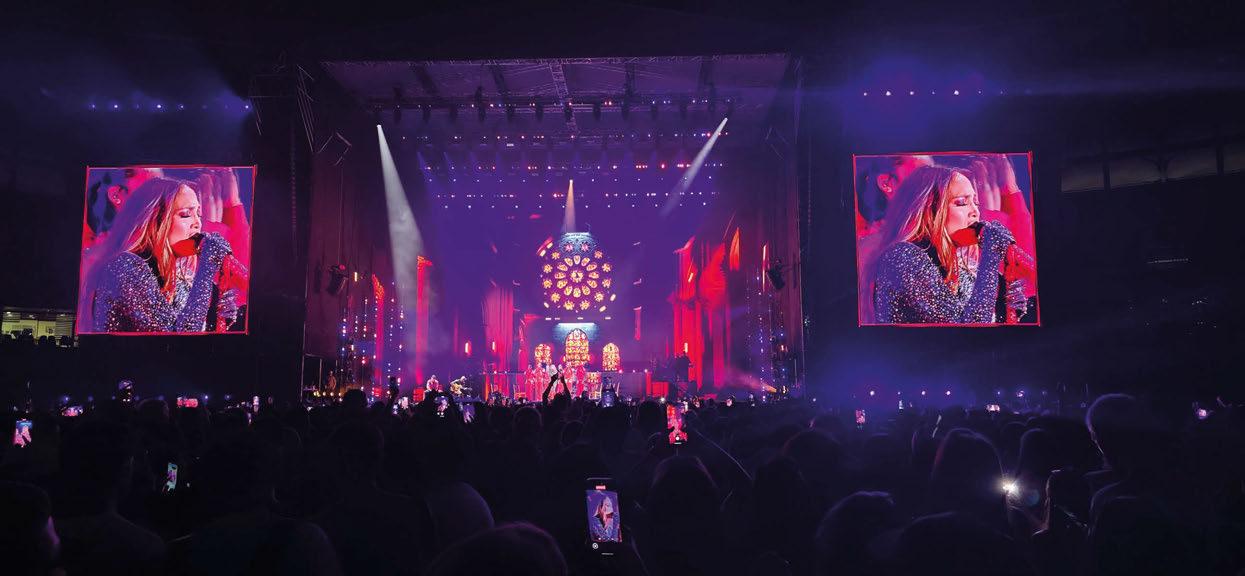
In August, the Bunyodkor Stadium in Tashkent, Uzbekistan, hosted Jennifer Lopez’s Up All Night: Live in 2025 tour. The show was watched by over 31,000 attendees and marked the country’s first performance by an American A-list artist.
Tashkent-based rental and sales company YASTREB-Sound supplied the entire audio system for the occasion, deploying an L-Acoustics PA system along with DiGiCo consoles at both FOH and monitors, ensuring that there was no drop-off in quality at the country’s largest stadium.
YASTREB-Sound’s Chief System Engineer, Eduard Asadov, designed the system, working in close collaboration with Matt Coplon, Jennifer Lopez’s touring System Engineer.
The audio system was carefully calibrated to deliver the very best sound for the huge number of fans in attendance and included L-Acoustics K1 and K2 arrays with L2 elements alongside KS28 and SB28 subs.
Jennifer Lopez’s FOH Engineer, Craig Doubet, manned a DiGiCo Quantum 326, while Monitor
Engineer César Benítez, who also counts Ricky Martin and Enrique Iglesias among his clients, controlled the artist’s mix on a Quantum 338.
With over 30 years of professional experience including the past two decades mixing in the world’s largest arenas, Doubet is well-versed in what works for headline performances at large venues like Bunyodkor Stadium, and, for him, the Quantum 326 is “on another level”.
He stated: “I enjoy working on this console. It offers an enormous channel count, exceptional flexibility, and powerful onboard tools like Mustard and Spice Rack processing, along with True Solo and customisable Macros. All these features streamline the workflow and enable quick, precise adjustments, whether it’s fine-tuning Jennifer’s vocals or managing the full band mix.”
Doubet also benefitted from the fully integrated Fourier Audio transform.engine, which provides stability, ultra-low latency, and expanded creative options for fine dynamic processing. DiGiCo’s latest v20 upgrade has further expanded the console integration with
the transform.engine, making the Quantum 326 an even more powerful tool for engineers and delivering fantastic results for artists.
For YASTREB-Sound and Asadov, the significance of supplying such a prestigious event has not been lost. “Delivering success stories like this elevates the Uzbekistan sound industry’s profile and drives the growth of local projects,” he said. For him, the concert was more than just a technical achievement – it was a milestone for Uzbekistan and Central Asia, demonstrating that the region has both the expertise and resources to host events at an international standard.
“The most important thing is a happy audience. And, of course, the FOH Engineer I hand the system to,” Asadov concluded. “With the power of DiGiCo consoles at our disposal, we are even better placed to serve the needs of high-profile international touring artists, and if the engineers are satisfied, we’ve done our job.”
Photo: DiGiCo www.digico.biz www.yastreb.uz
optical CON ® MTP
Easy cleaning. Easy maintenance. When the show must go on, trust opticalCON.
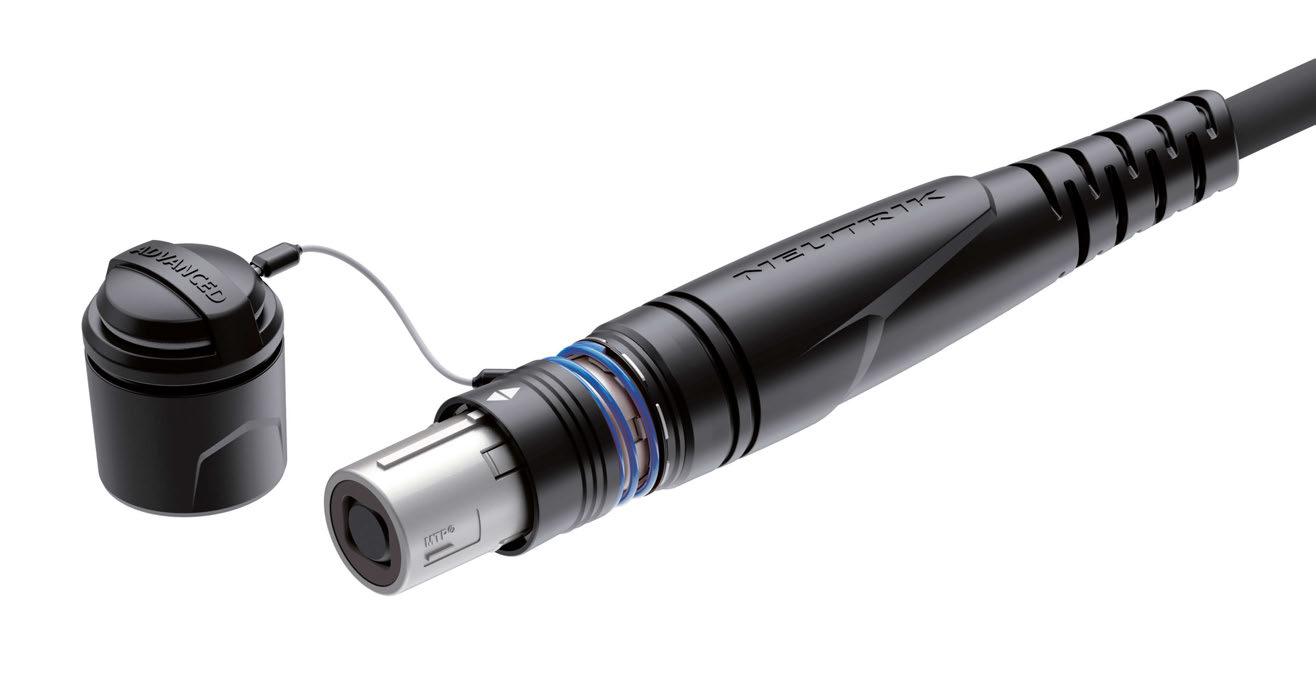
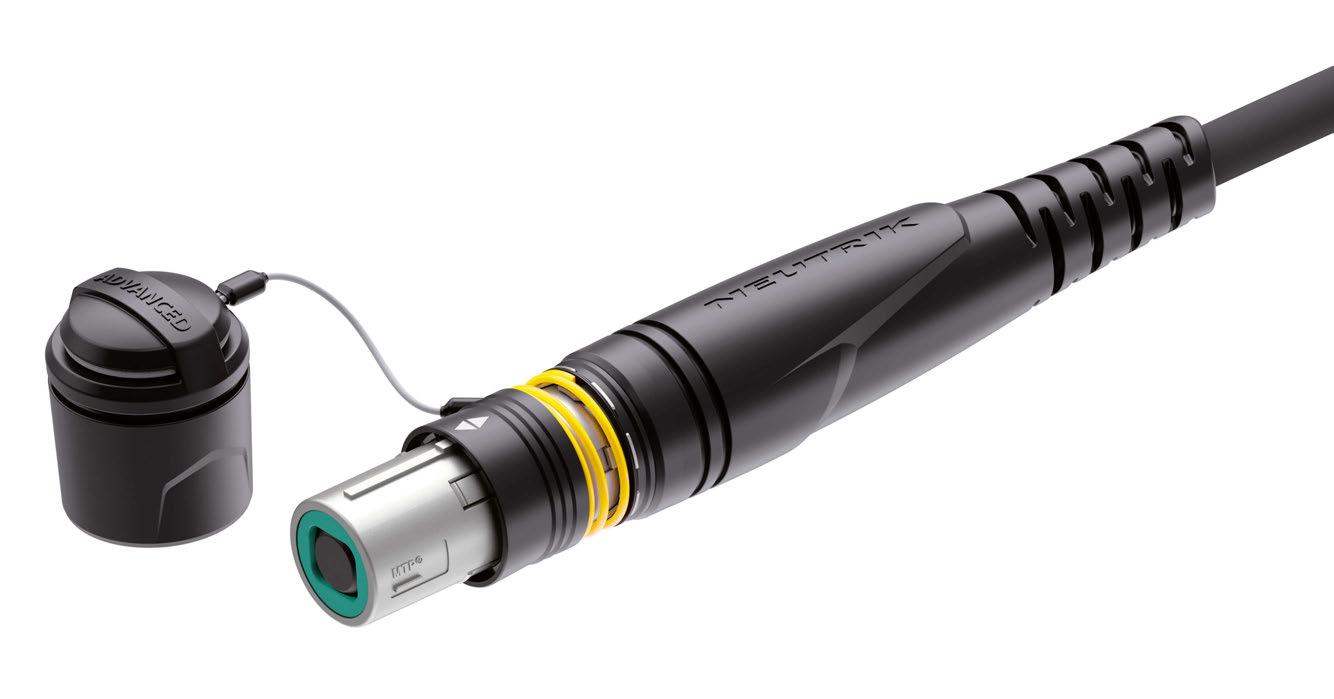
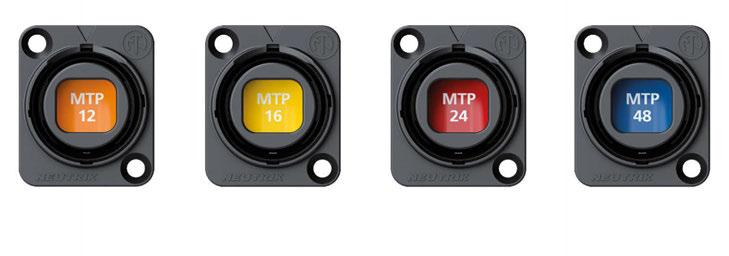
Reliable, ruggedised fiber optic solution. Available in 12-channel, 16-channel, 24-channel & 48-channel


Riyadh Season Opening Ceremony 2025
Riyadh Season kicks off with an extraordinary parade, featuring a cast and crew of 1,500 people and the Middle East debut of the iconic giant Macy’s balloons.
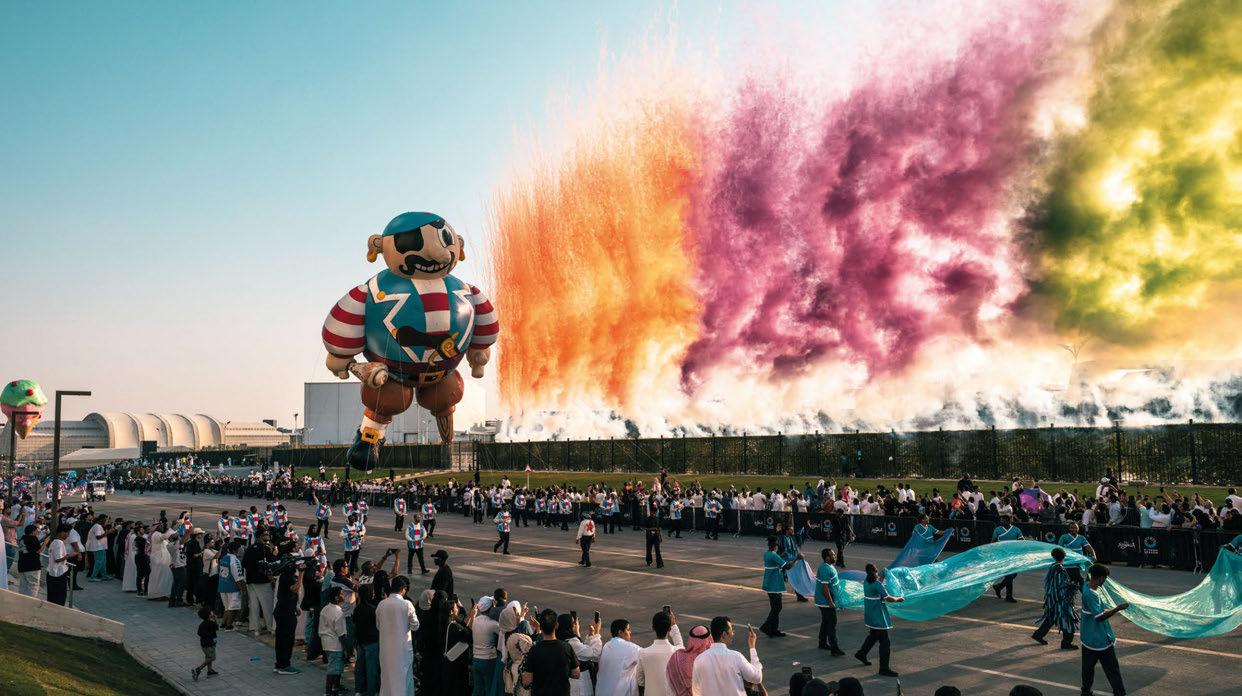
Here at TPiMEA, we’re accustomed to covering the region’s biggest productions – many of which just so happen to boast the latest and greatest in live events technology, deployed by experts in their respective fields. We’re not only about the kit though; sometimes the human element of an event is so compelling, it warrants a special mention. This is very much the case for the Opening Ceremony of Riyadh Season 2025 – an audacious parade featuring a cast and crew of 1,500, watched by more than 40,000 people over a 1.7km stretch between Kingdom Arena and BLVD World.
“This was not the most technical show in terms of AVL deployment, but the level of detail and organisation required to make it run was absolutely huge,” said Marc Van Sintruyen, CEO of 555 Live Experience, which produced the
event in collaboration with SELA. “From the giant helium-filled balloons and daytime pyrotechnics to the costume design and choreography for all the parade performance groups and the massive back-of-house infrastructure, this was undoubtedly one of the most demanding and rewarding projects that we have ever taken on.”
While conventional opening ceremonies are usually over in a matter of minutes, the Riyadh Season Opening Ceremony took place over the course of an hour-and-a-half – a novel experience for Van Sintruyen. “Most shows we do are a short, intense burst – all the planning leads up to a spike of adrenaline and then it’s all over in what seems like the blink of an eye – but this was completely different,” he shared. “We were also in a completely different environment. Everything is much easier to control in a stadium
or an arena, but out on the streets there are so many variables to consider.”
Leading the project on the ground was the joint SELA and 555 team of Technical Director, Arvi Piiparinen, Client Liaison Manager, Fahad Al Otaibi, and Artist & Performer Coordinator, Khumar Guluzade. The parade was built between 2–9 October, performed on 10 October, and fully struck by 11 October – a feat usually requiring triple the time. Fahad Alotaibi handled continuous communication with client teams and city authorities, often working overnight to maintain approvals and route readiness.
Th e parade was led by the iconic giant Macy’s helium balloons, which made the trip from their usual New York City neighbourhood for their Middle East debut in Riyadh. In total, 14 giant balloons were supplied, including eight large
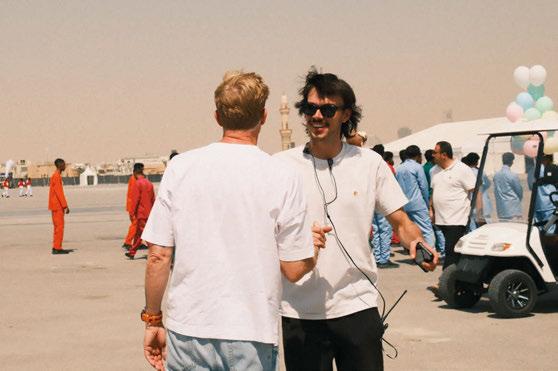
and one small Macy’s moving balloons, one static Macy’s display balloon and four custom inflatables by Fabulous Inflatables for Riyadh Season.
To support them, the technical team built five helium inflation stations and one cold-air station in the BOH area. Each was powered by its own helium rack, with a total of 320 high-pressure cylinders releasing 3,200 cubic metres of helium.
“The real challenge was getting everyone lined up in the correct positions and ready to go on time,” Van Sintruyen said, recalling the challenging weather conditions. “Each balloon was attached to a vehicle as well as being handheld, but we still had to keep a close eye on the wind, as an unexpected gust could cause havoc with balloons colliding or blowing out of position.”
A total of 25 scaffolding platforms were installed throughout the route, with 20 housing the PA and technical systems, which were supplied by SLS Production, and five for camera operators. There were also some 4,000 daytime pyrotechnic shots provided by Groupe F, which were triggered manually to add to the ‘wow’ factor.
To host the performers and manage the technical operations, the team constructed a full temporary backstage city, including: 4,000 sq m of tented structures for cast, welfare, catering, medical and police; 16 portacabins for management and technical teams; and designated FX, SFX, AVL and logistics yards.
Power was supplied through a distributed generator system, while the route infrastructure
required 4 km of police barriers, 2km of Heras fencing, and 1,000 sandbags produced on-site to stabilise structures against wind and crowds.
‘Building bridges between cultures’ ON THE SLY was brought on board by 555 Live Experience as the music directors for the show, reporting to the Creative Director, Luca Taschini and Art Director, Giulia Marrocchino, to deliver their vision of the music. “This was a very large project, with over 14 different musical themes composed, produced and sound design added,” explained ON THE SLY’s David Wakefield. “Each act and float had a different music composition and sound design that set the tone, energy and told the story for each part of the parade.”
Each musical theme was ‘loopable’ for seamless playback as the parade made its way through the streets. “We’re sensitive to different cultures and tailoring the musical approach to fit the show,” Wakefield stated. “We have experts in all kinds of genres and cultures, so we can create powerful hybrid scores where the show is rooted in a location or culture, but at the same time a world-class level of production.
“The soundtrack is such a key part of any production – it’s our job to maximise the emotional impact of the storytelling. Seeing the finished show with our music and sound design in it is always a real ‘pinch me’ moment.”
For the 555 Live Experience team, the event also helped continue its mission of integrating
and elevating Saudi talent within large-scale international productions, with the creative direction team featuring Khumar Guluzade and Belgian choreographer, Björn Loykens, working hand in hand with three Saudi assistant choreographers and dancers.
“The collaboration perfectly reflects the spirit of Saudisation and the vision of Saudi Vision 2030 to empower local creatives,” explained 555’s Operations – Crew & Happiness Manager, Cindy Van pollaert, who revealed that one of the assistant choreographers had previously performed as a dancer in the Opening Ceremony of the Formula 1 Saudi Arabian Grand Prix in Jeddah in 2023.
“S eeing him return in a leadership role this year was a full-circle moment and a testament to how talent grows when given the right platform and opportunities.”
Sh e concluded: “At 555, we believe that creating shows is about more than production; it’s about building bridges between cultures, recognising potential, and giving local talent a stage to shine on an international level. This collaboration reflects the Kingdom’s growing creative scene and our shared commitment to nurturing it.”
Photos: 555 Live Experience www.riyadhseason.com www.sela.sa www.555liveexperience.com www.onthesly.com
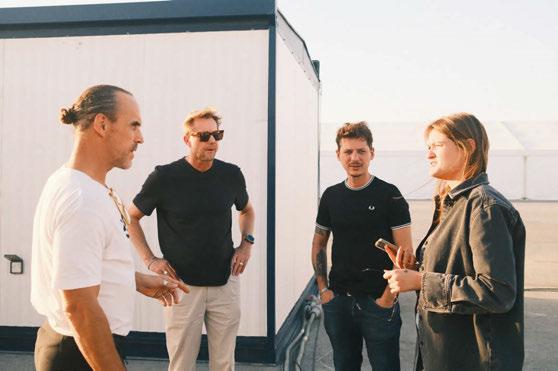
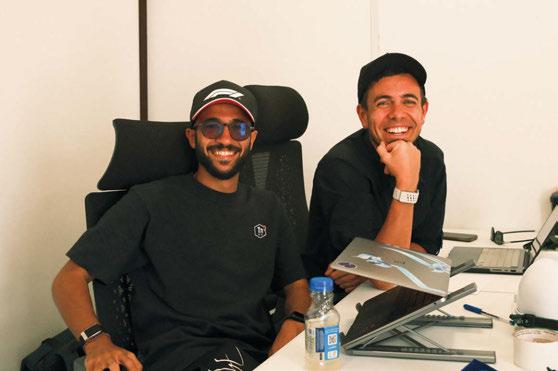
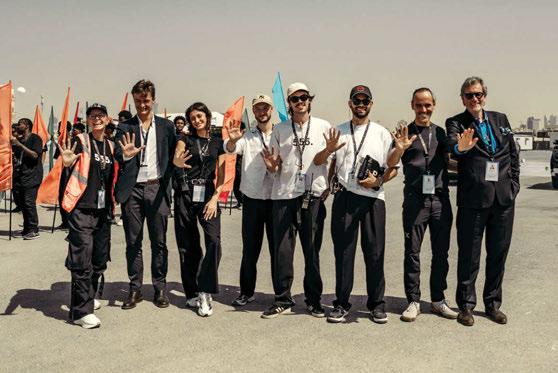
Top left: Alexandre Molina Barragan, CCO 555, Marc Van Sintruyen, CEO 555, Luca Taschini, Creative Director 555, Giulia Marocchino, Art Director 555.
Top right: Marc Van Sintruyen with Björn Loykens, Choreographer Parade.
Above left: Fahad Alotaibi with Arvi Piiparinen, Technical Director 555.
Above right: Production team members with Pascal H. Grégoire, H.E. Belgian Ambassador in Riyadh.
HEADLINE SPONSOR
BAR SPONSOR
CONTENT PARTNER
TECHNICAL PARTNER
CATEGORY SPONSORS

SUPPORTERS
For sponsorship opportunities please contact Fran on f.begaj@mondiale.co.uk
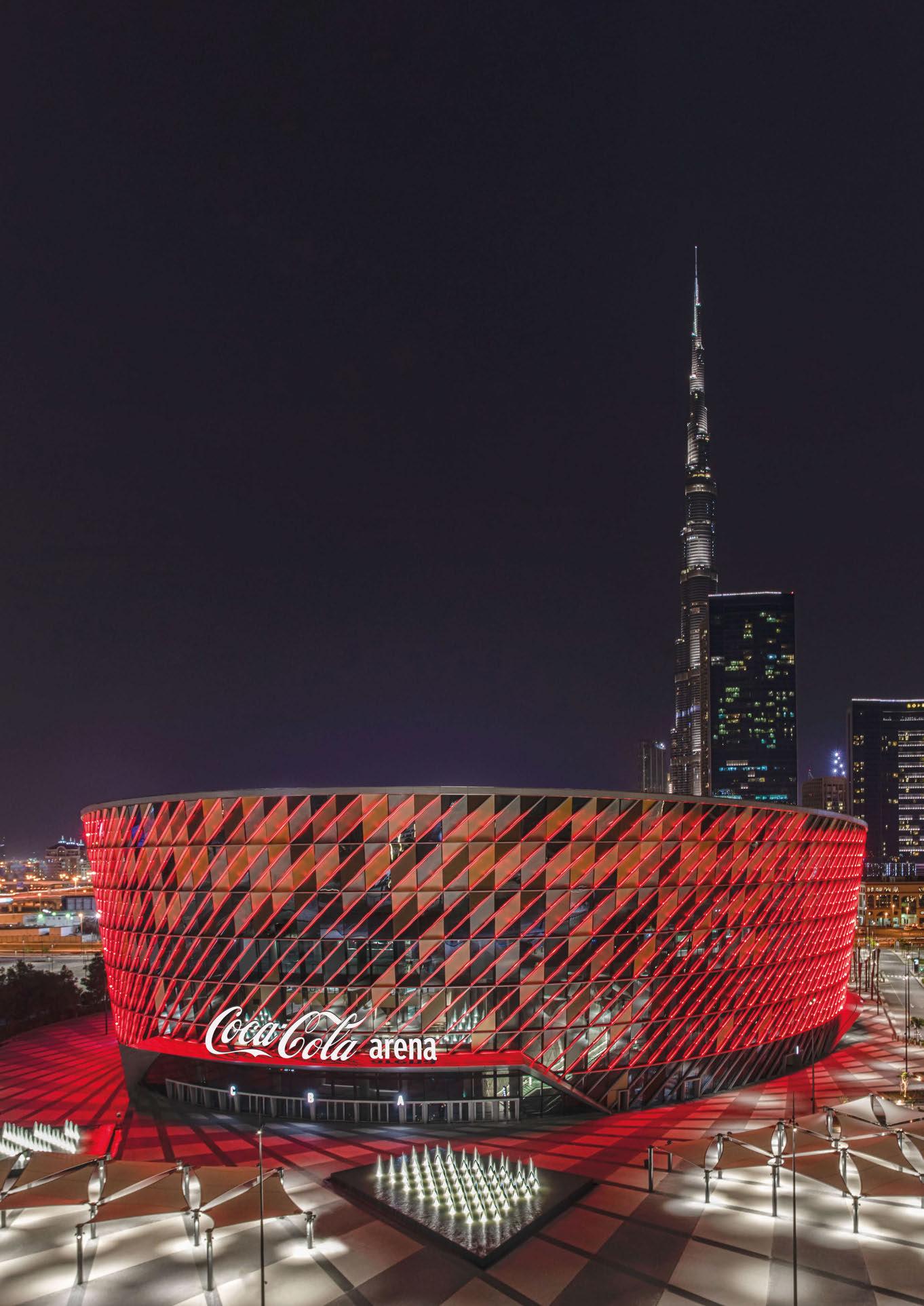
TPiMEA AWARDS 2026 IS MOVING…
For 2026, the TPiMEA Awards has a new home at Coca-Cola Arena – a world-class venue befitting the world-class talent we have in the region.
Our new home brings new possibilities. So, as well as being a much bigger, bolder and more sophisticated production than ever before, the event will now become a seated feasting dinner, with each ticket assigned to a table.
We will also be bringing in a celebrity comedian, who will perform an opening set before taking you through the awards.
This new format will place more attention and emphasis on the deserving winners while maintaining the laid-back atmosphere that the TPiMEA Awards are known for. There will still be plenty of time to network and catch up with old friends at the bar!
CATEGORY CHANGES
As well as the venue change, for the first time ever, the TPiMEA Awards will include company categories for 2026. These company categories will be judged by a panel of industry leaders from some of the top event agencies across the Middle East.
Opening in the new year, company applications will challenge each company to demonstrate to the judges why it is a worthy winner in its chosen category. The judging panel will score each application, and the companies with the highest score will be put forward to the shortlist, which will then be voted on by the wider industry. The overall winners will be decided by a 70/30 split in favour of the judges.
Our individual categories have always been at the heart of the TPiMEA Awards, and that remains the same. The individual categories are decided through a multi-phase process, which runs separately from the company applications.
Individuals are not eligible to win the same award two years in a row. The 2025 TPiMEA Awards winners are invited to become part of this year’s TPiMEA Academy, who have their say on the shortlist and overall winners.
The process for individual categories starts with a nomination period. The individuals who receive the most nominations from the industry and the TPiMEA Academy are put forward to the shortlist. Once the shortlists have been established, industry voting opens, and the overall winners are decided by a combination of the Academy and industry vote, with a 70/30 split in favour of the industry.
THE 2026 CATEGORIES
PRODUCTION MANAGER OF THE YEAR
THE NIGEL BEATON STAGE MANAGER OF THE YEAR
SHOWCALLER OF THE YEAR
LIGHTING ENGINEER OF THE YEAR
FOH ENGINEER OF THE YEAR
LIGHTING DESIGNER OF THE YEAR
FAVOURITE LIGHTING RENTAL COMPANY
EVENT COORDINATOR OF THE YEAR
MONITOR ENGINEER OF THE YEAR NEW
SOUND SYSTEM DESIGNER OF THE YEAR NEW
FAVOURITE SOUND RENTAL COMPANY
VIDEO SPECIALIST OF THE YEAR
FAVOURITE RIGGING COMPANY NEW
FAVOURITE VIDEO RENTAL COMPANY
TEMPORARY STRUCTURE PROJECT MANAGER OF THE YEAR
RIGGER OF THE YEAR
ENTERTAINMENT MANAGER OF THE YEAR
EVENT PROJECT MANAGER OF THE YEAR
FAVOURITE SFX COMPANY
COMMS & NETWORK ENGINEER OF THE YEAR
TEMPORARY POWER SUPPLY ENGINEER OF THE YEAR SITE INFRASTRUCTURE MANAGER OF THE YEAR
FAVOURITE CREWING COMPANY
FAVOURITE HEALTH & SAFETY COMPANY NEW NEW
FAVOURITE LOGISTICS COMPANY NEW NEW NEW
RISING STAR THE GREEN AWARD THE COMPANY CULTURE AWARD
THE TPiMEA INDUSTRY RECOGNITION AWARD
OUTSTANDING EVENT PRODUCTION OF THE YEAR
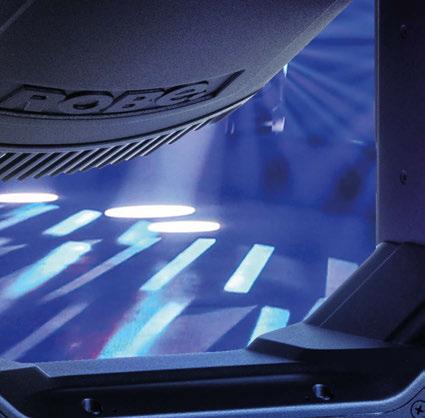
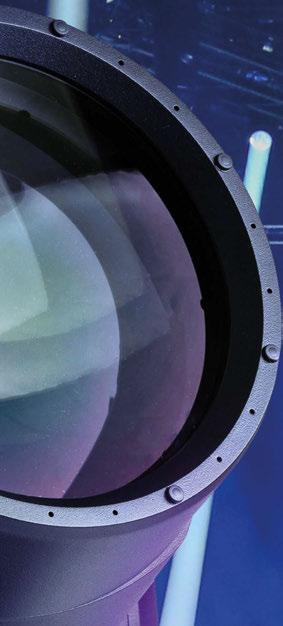
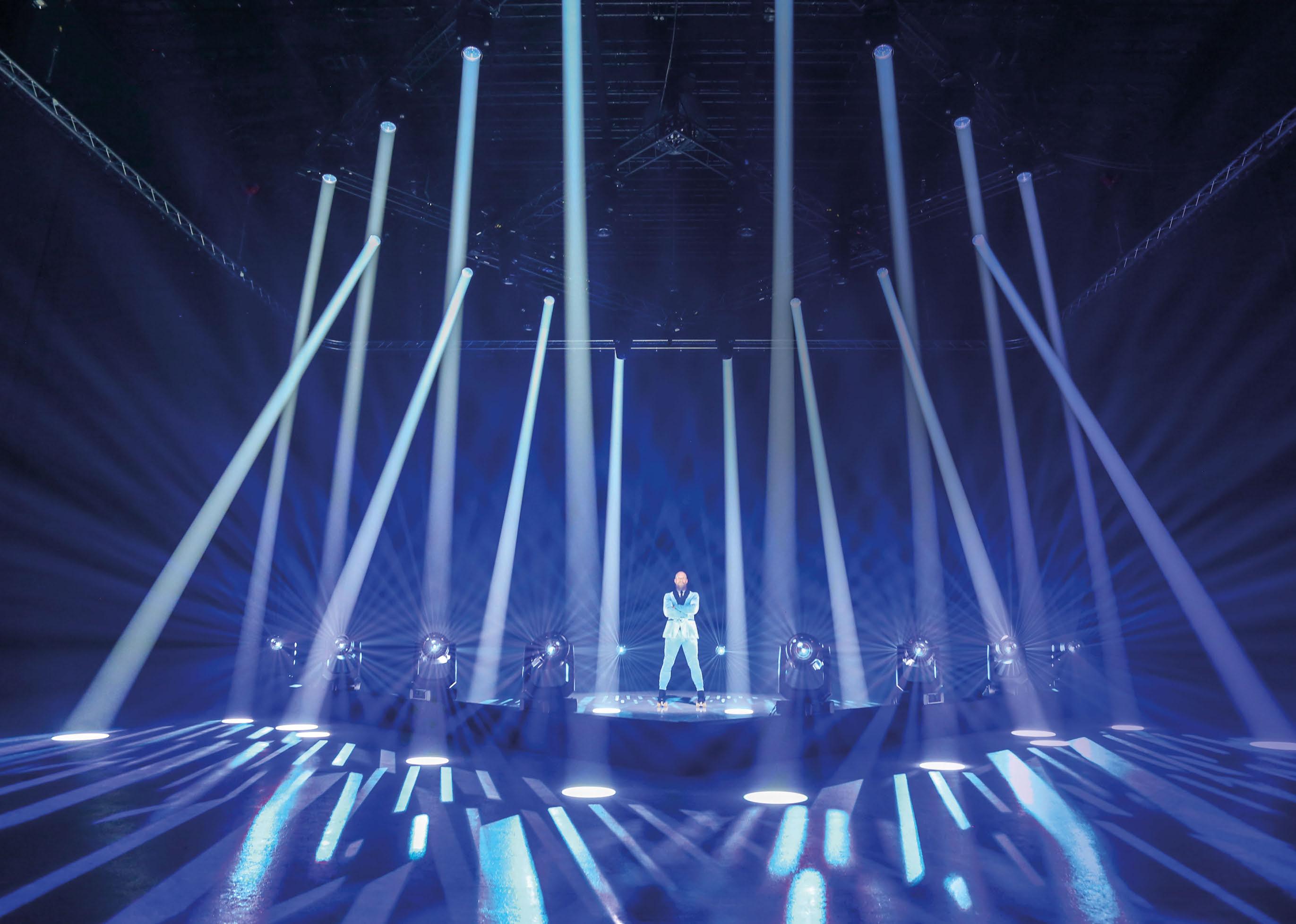
A True Workhorse Long-throw Luminaire
No compromise IP65/66 high-output low footprint
LED WashBeam and FollowSpot

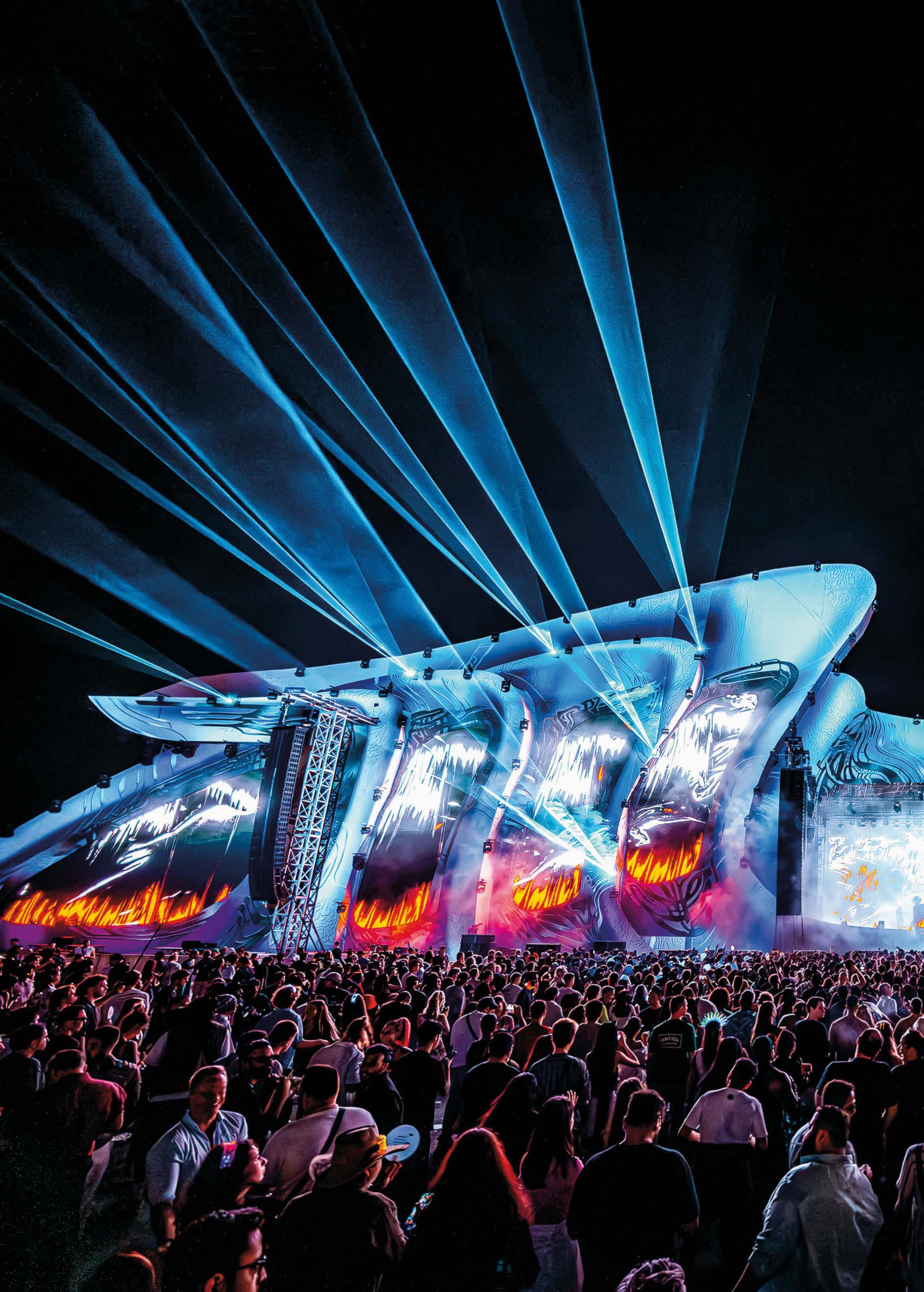
UNTOLD Dubai 2025
As Dubai’s biggest mega festival returns for a second year with an all-new venue and heightened production values, TPiMEA is on site to see the spectacle firsthand.
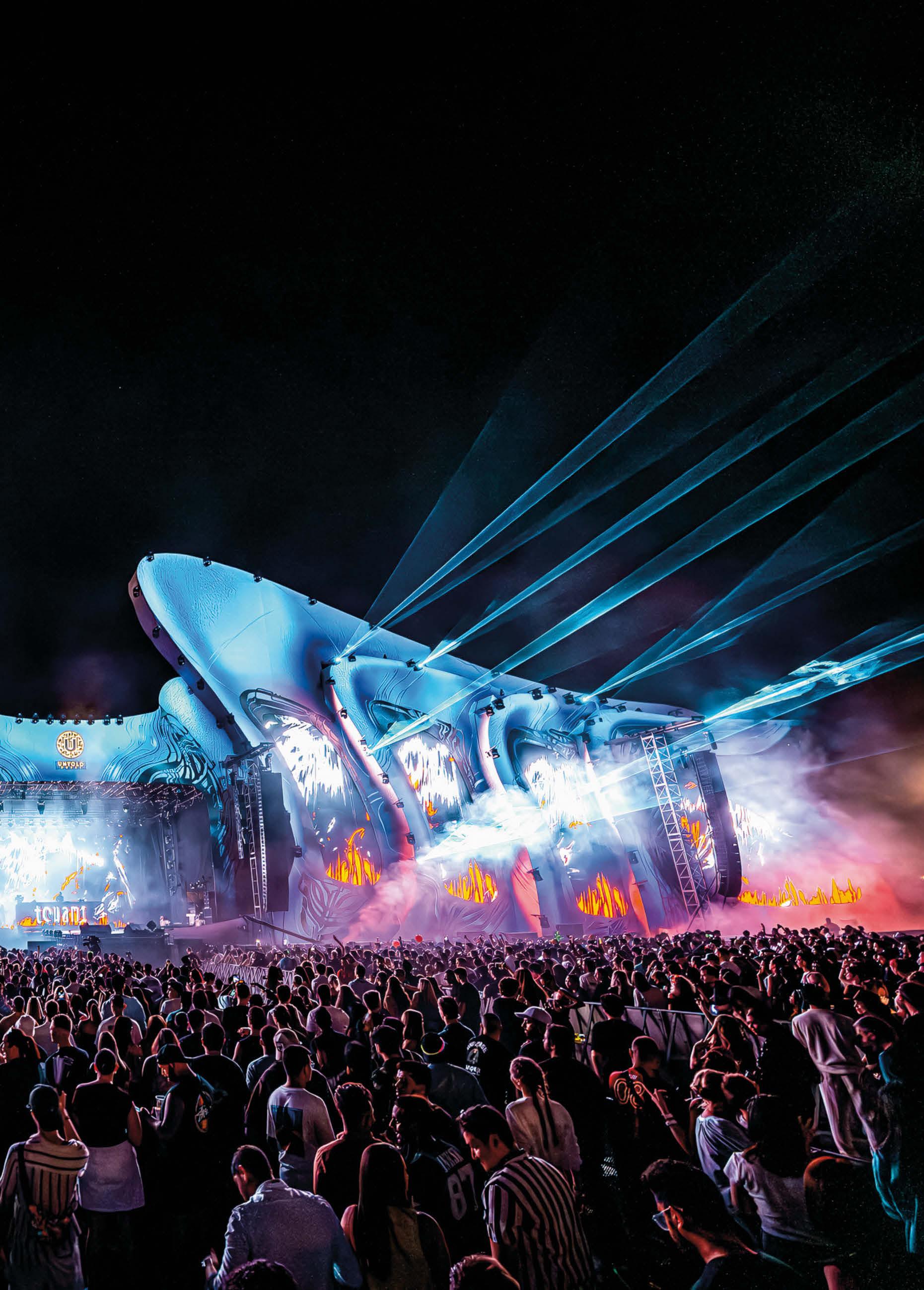
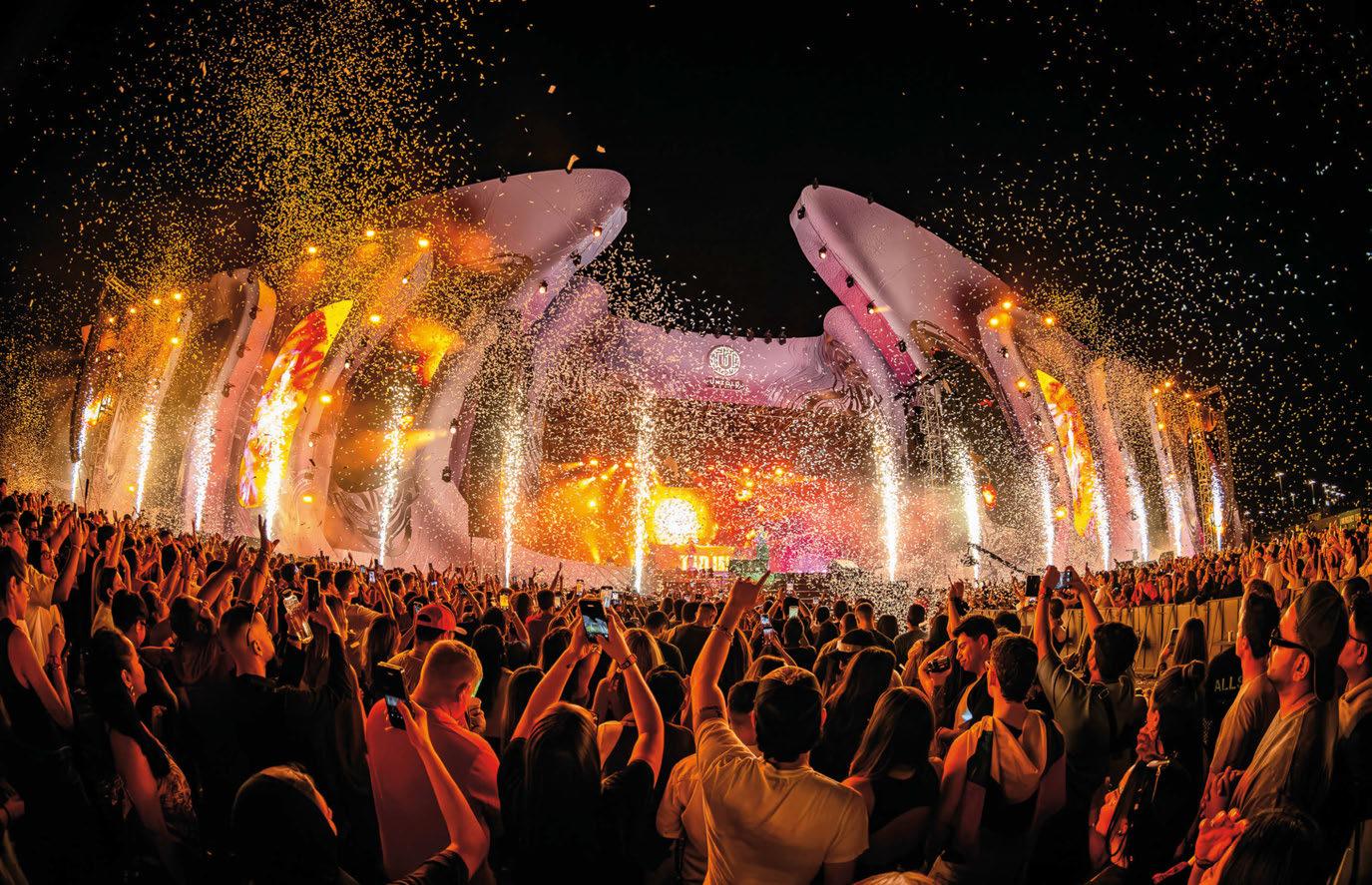
Most Middle East festivals tend to do a lot of things right. From record-breaking production levels to a plethora of food and beverage options, there’s very little to complain about for the region’s festivalgoers. However, one area where the admittedly still nascent Middle East festival market doesn’t always hit the mark is that much less tangible characteristic of authenticity, which is earned by a festival returning year after year and building its own legend in the process. This sense of authenticity is in abundance at the original UNTOLD festival, which has taken place annually in Romania for the past decade, and as the festival’s Dubai offshoot enters its second year, it seems that magic dust may just be starting to rub off.
Having changed venues from its debut iteration at Expo City, UNTOLD Dubai has now found a new home at the sprawling Dubai Parks and Resorts and, according to UNTOLD’s Chief Technical Officer and Head of Production, Radu Rus, this time the festival is putting down roots.
“D ubai Parks and Resorts presents a one-ofa-kind setting – a fully themed entertainment park inside a music festival. This integration creates a uniquely immersive experience unmatched anywhere in the world,” he stated.
“The vast space provides unlimited potential for expansion. Under our five-year partnership, we plan to grow progressively each year, with a longterm vision to reach over 400,000 participants,” he added. “Our collaboration focusses on sustainable growth – strengthening both the festival and the park ecosystem. The goal is to eventually host multiple large-scale events per year under the UNTOLD brand.”
TPiMEA’s first taste of the new venue came a few hours prior to doors opening on the first of the festival’s four days of programming. We were greeted at the gate by Karl Jenkins of A LOUD MINORITY (ALM) – a company that has played a major role in UNTOLD’s integration into the Dubai events landscape.
As we whizzed around the site on a golf buggy conducting a few final checks, Jenkins wound black the clocks on his company’s history working with UNTOLD. “Our initial introduction to UNTOLD came from their desire to bring what is already a very established festival into the Dubai market,” he began.
“B ringing a festival to the Middle East requires a certain level of curation, and our local knowledge and expertise were a perfect fit, so we came aboard in the first year to help smooth the entry into the region.” Having overseen the
technical delivery of the secondary stages in the festival’s first year, Jenkins and the ALM team have gained a close relationship with the UNTOLD team, even visiting the festival in Romania for the past two years running to see how it is produced there.
“We learned in Romania some of the things that give UNTOLD a genuine identity,” he recalled. “Aside from the main stage, which is in an arena, the rest of the festival is among trees and grass and it’s close to nature. The new location at Dubai Parks and Resorts enables us to get much closer to this kind of raw, unfiltered, feeling, utilising grassed areas, trees and well-grown gardens for some of the stages.”
Charged with managing the secondary stages once again, this year ALM had a much larger presence on the ground, with the company devoting resources to handle the tender, stage design and vendor management processes as well as managing the operation of the stages.
“There is a small army of ALM personnel on site this weekend,” Jenkins quipped.
In fact, ALM’s remit this year spanned the whole spectrum, from a kids’ DJ school setup and the intimate lakeside Soul Circle stage to the underground club vibes of the indoor Retro and Time stages, the medium-sized outdoor Alchemy
Performance that pushes your imagination
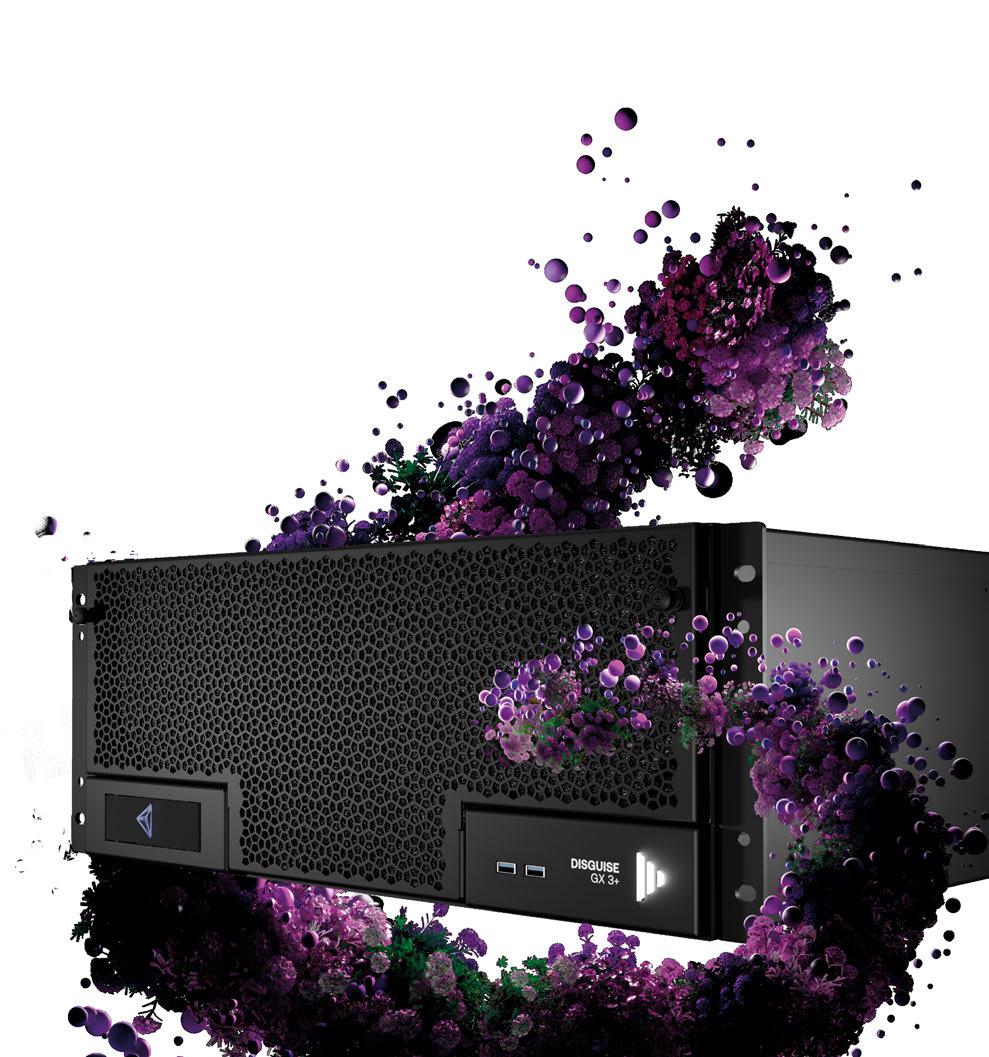
As expectations for unforgettable live shows grow, so does the complexity of the content - and most systems can’t keep up. That’s why we built the GX 3+.
Our most powerful and future-ready media server to date is built to bring your next production leaps ahead of current industry standards. Powered by the latest NVIDIA Blackwell GPU architecture, the GX 3+ enables you to break new creative barriers with Notch 1.0 to achieve richer, bolder visuals.
Disguise’s GX 3+ unlocks the freedom to dream bigger and deliver experiences your audience will never forget.

LEARN MORE COME VISIT US Get your free ticket: ISE260313
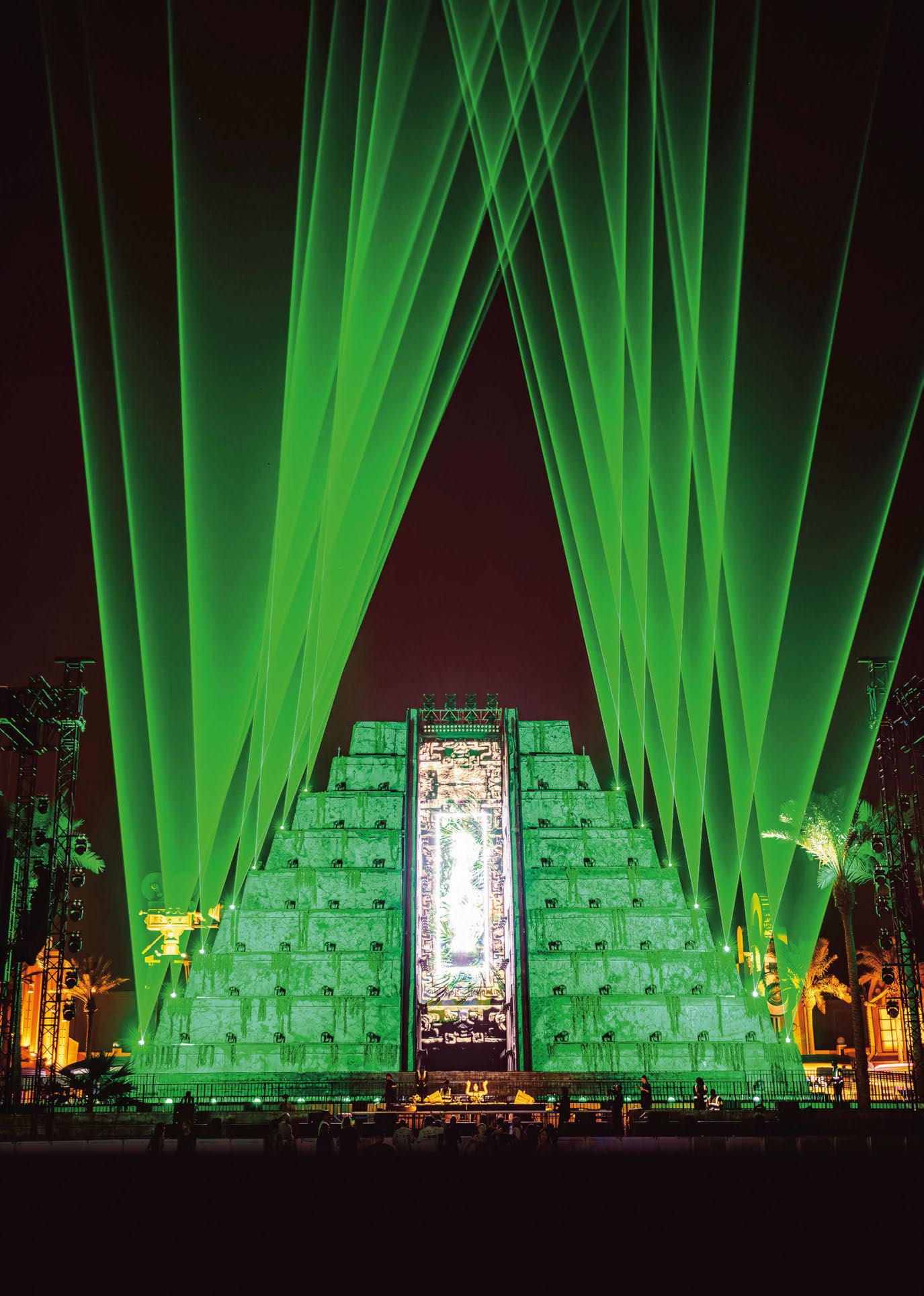
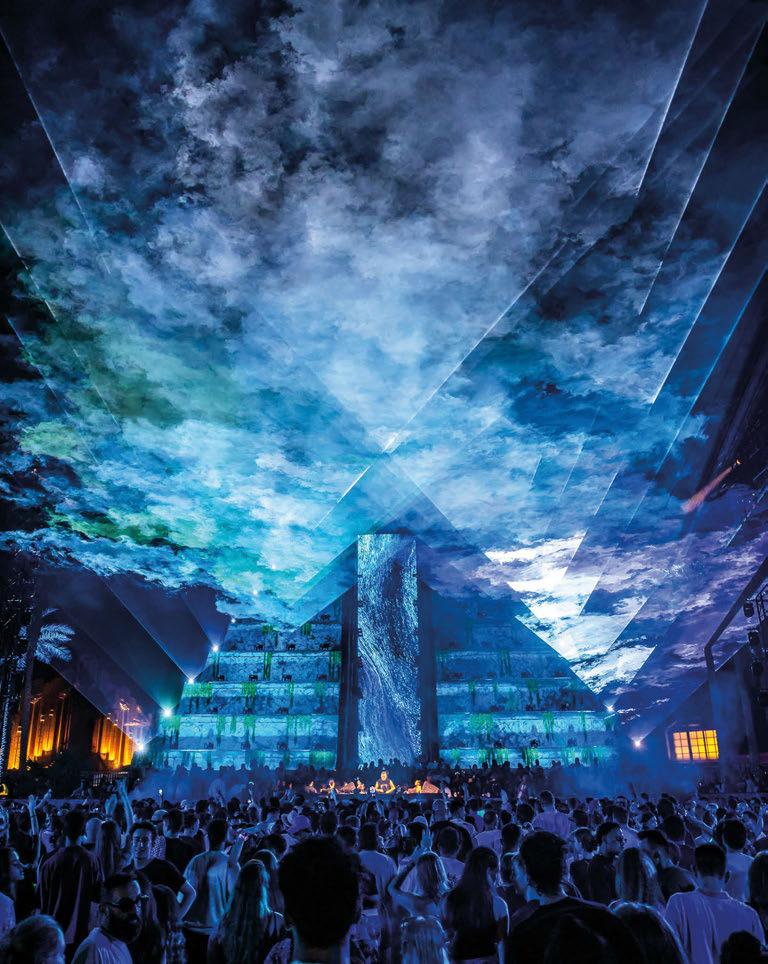
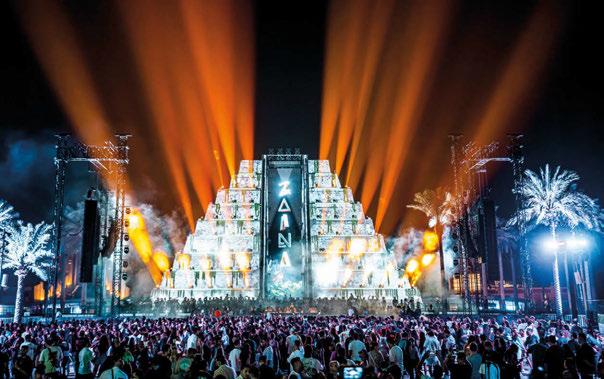
stage, and the gigantic Mexican-inspired structure that formed the Zamna stage.
“It was an interesting challenge to deliver such a range of different-sized stages simultaneously,” Jenkins commented. “Each stage contributed to that organic festival experience.”
Main Stage build
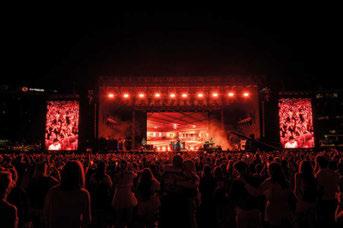
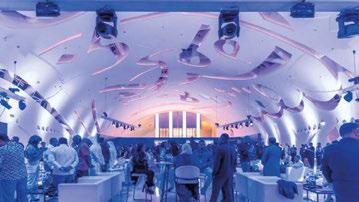
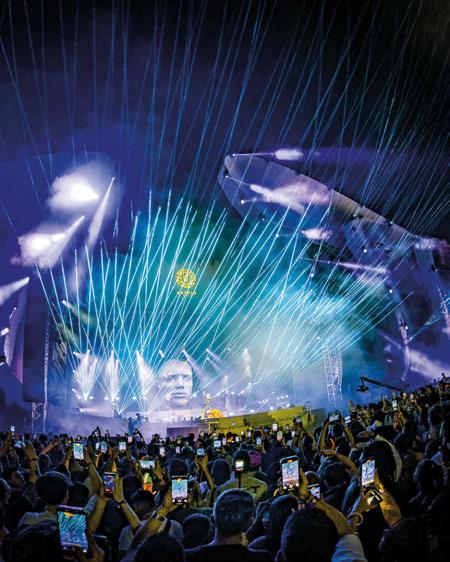
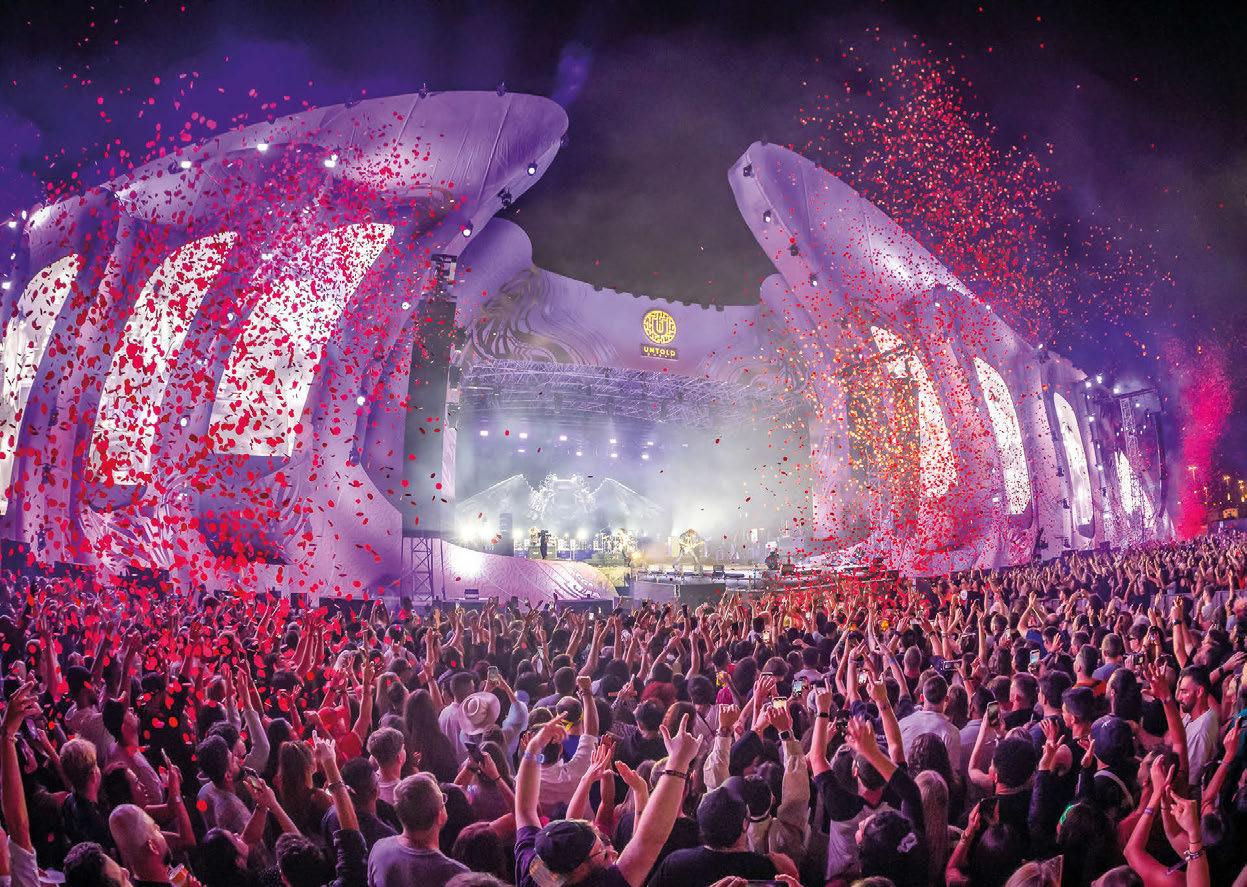
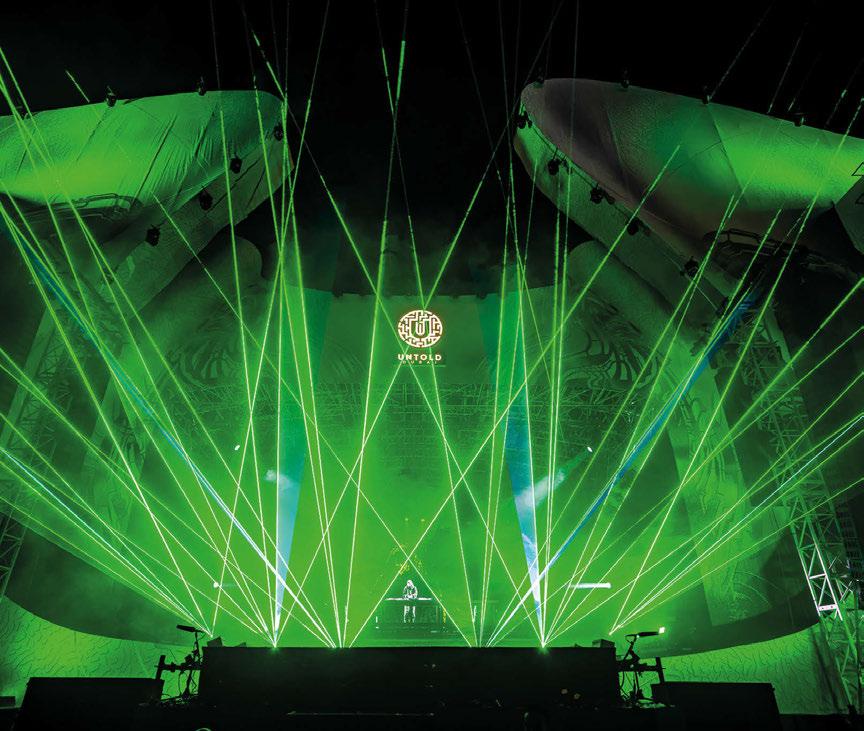
As we continued to roam the expansive site, the imposing silhouette of the UNTOLD Dubai Main Stage soon came into view. Drawing inspiration from the organic, fluid shapes of desert dunes, the stage featured curved rooflines and an asymmetric arch with flowing peaks and valleys. Fully designed, developed and managed by UNTOLD’s in-house architecture and creative team, the stage was a fitting backdrop for some of the festival’s biggest headliners, including the likes of YUNGBLUD, J Balvin, Sugababes, Swae Lee, and Armin Van Buuren.
“J ust one look at the Main Stage reveals how much the project has evolved since last year,” stated UNTOLD’s Rus, clearly proud of the achievement. “It has more than 700 lighting fixtures, 900 sq m of LED, a total audio output exceeding 1.25 MW of continuous power, and a 100% increase in decorative elements compared
to last year. The stage spans 120m in width, reaches 28m in height, and includes a 20m-by20m performance area with 12m of vertical clearance – a true engineering and artistic marvel that reflects UNTOLD’s commitment to scale and spectacle.”
All Events Services (AES) was entrusted with the design, engineering, and full structural construction of the bespoke Main Stage and the VIP hospitality platform, along with additional festival infrastructure. AES’s PM on the project, Louis Webster, talked TPiMEA through the brief: “We worked side by side with UNTOLD’s creative team to turn their vision into reality,” he began. “After several design meetings and planning sessions, we brought their ideas to life using Layher system scaffolding, which gave us the flexibility to create sweeping roof lines and integrate all the AV and decorative elements they wanted. Everyone was invested in making sure the final result matched both the creative ambitions and the practical requirements.”
AES deployed its heavy-duty Asterix roof, which is designed specifically for heavy loads and to stand up to the Dubai climate. Webster described the task of coordinating all the suppliers involved as “challenging but rewarding”.
He stated: “We mapped out the build schedule carefully to make sure each team could get their work done without delays. Daily communication and teamwork were very important – especially with so many moving parts and tight deadlines. The toughest part was aligning everyone’s schedules and keeping things flexible as designs or requirements changed last minute. Strong communication and a positive, team-focussed attitude helped us tackle issues quickly and keep the build on track.”
Reflecting on the project, Webster shared his pride at the team’s performance. “What I’m most proud of is our crew’s dedication and the final stage we delivered,” he stated. “It was a stunning centrepiece for the festival and seeing it all come together in time for showtime made all of the hard work worthwhile.”
Beyond the main stage, AES also supplied and managed a fleet of festival buggies, enabling seamless transportation for artists, staff, and logistics across the vast event site. The company also added a unique cultural element to the event, with its AES SB Skatepark, which drew large crowds of extreme sports enthusiasts.
“The UNTOLD festival project reinforces AES’s commitment to advancing live event engineering,
festival production, technical innovation and scenic décor solutions across the Middle East and beyond,” said JJ Trichardt, Founder and Managing Partner, sharing his pleasure at working with the UNTOLD team, noting how impressive it was to see the scope of work distributed across a community of event experts.
“A ES was proud to power the Main Stage and wider site infrastructure at the second edition of UNTOLD Dubai, aligning seamlessly with venue flow and AV partner PRG during an extremely busy and blessed kick-off to the GCC events season,” he continued. “We reinforced structures and engineered efficient load-in and load-out plans that boosted productivity and optimised hire costs for our client. Most importantly, AES believes in investing in collaboration even with competitors because our industry is strongest when we build community with local service providers. Sharing scope and standards with the UNTOLD Dubai team showcased how unity elevates delivery and audience experience alike.”
Main Stage AVL
PRG provided a turnkey technical solution for the Main Stage once again, following its delivery
in the festival’s debut edition. “Radu engaged us early on to ensure he had the right people and equipment to deliver,” commented PRG’s Director of Account Management, Harry Lister.
“We have a great working relationship with the team,” he added. “They make sure our HODs are speaking directly to their UNTOLD counterparts, which always makes things run smoother.”
Th e stage boasted an L-Acoustics PA system, which included 60 K1, 60 K2, 60 KARA II, 60 KS28 and 16 SB18 all running via LA12X amplifiers. FOH and monitors ran on a pair of DiGiCo Quantum 7s, while PRG also provided a Clear-Com Arcadia system consisting of 25 Wireless Freespeak beltpacks and 20 wired Helixnets.
“The scale of the stage increased drastically this year, meaning our LED count grew with it,” Lister stated as he ran through the rest of the supply. PRG’s video team installed INFiLED AR4 across the IMAGs and centre screen, running NovaStar MX40 processing. “The screens were all stacked, which resulted in a time-consuming build, but the video team did a great job and finished ahead of schedule,” he reported.
Th e extensive lighting package included Ayrton Cobra, Domino LT and Robe iForte LTX,
with most of the fixtures sitting on outrigged pipes across the façade of the stage. PRG also supplied three MA Lighting grandMA3 full size consoles, as well as an on-site pre-vis suite.
Th e only element that saw a reduction in scope from last year was rigging. “This was purely down to the fact that all the LED was stacked and not flown,” Lister explained. “That said, we still had a considerable amount of oneand two-tonne hoists onsite, along with hundreds of metres of truss to ensure lighting and audio had positions for all their equipment.”
In a ddition to the main festival package, PRG also supplied audio, video, lighting and rigging equipment for all the artist riders, ranging from Martin Garrix to YUNGBLUD.
“We were pleased with the overall delivery,” Lister summarised. “Despite the challenges, the team delivered a world-class setup. Special mention goes out to Terence Collings who worked tirelessly to ensure this project was delivered to the highest standards.”
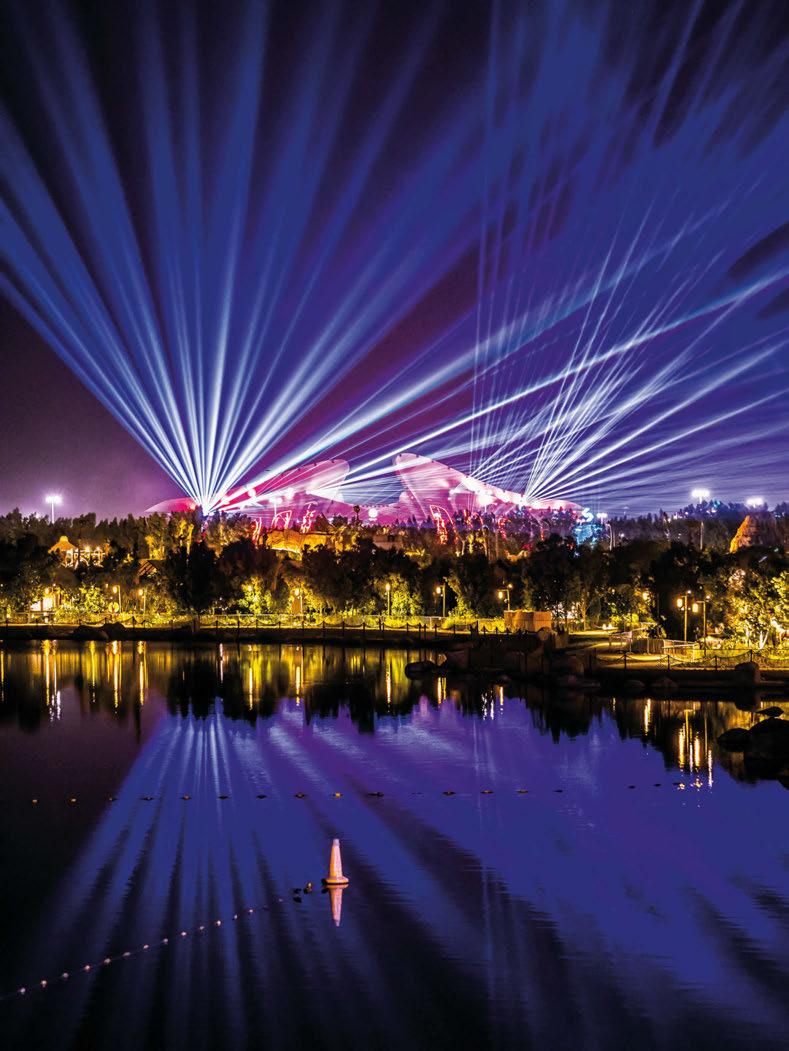
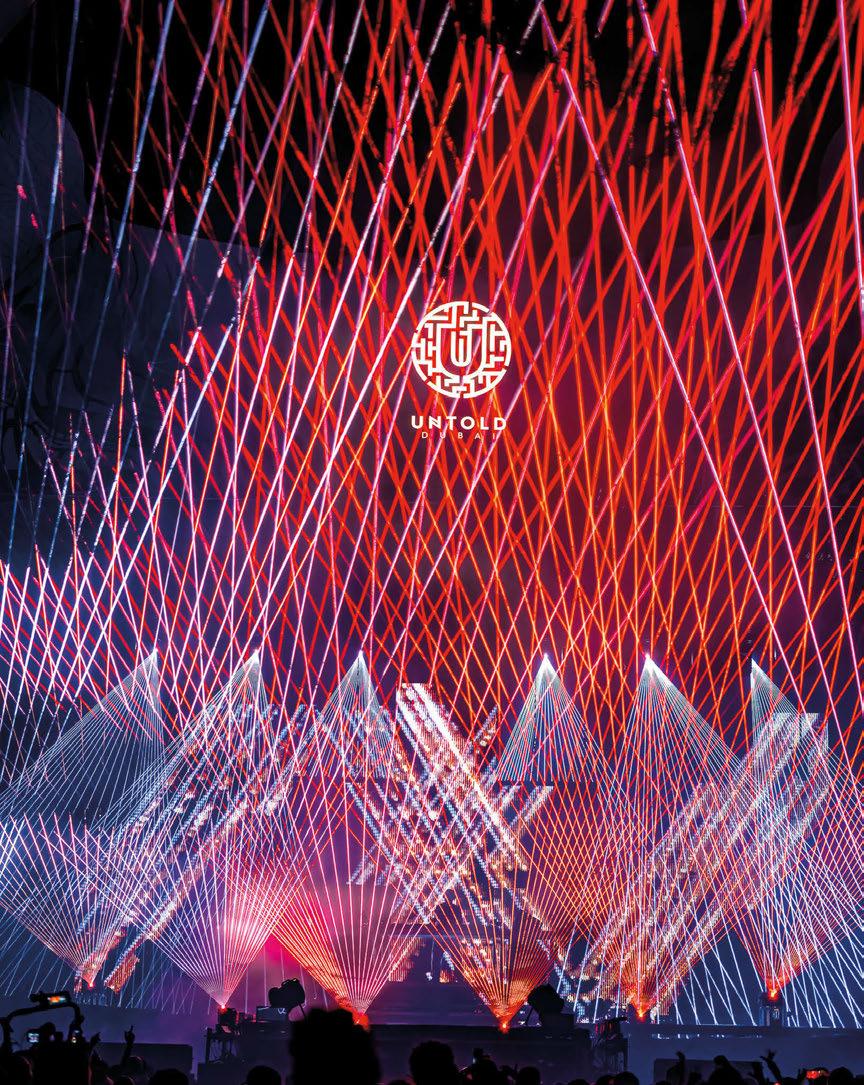
AV M-SFX supplied 26 40W lasers accompanied by six MDG me2 and eight Hazebase high-power fog machines to help give the stage a cinematic visual impact. The
SFX supply meanwhile included 10 MagicFX Flameblazers, which were positioned across the full width of the stage’s roof, as well as a ground package of 14 Showven Sparkular Cyclone, 16 Explo Wave Flames, six MagicFX Stadium Shots, and 16 Eco2 Jets.
“As always on festivals on this scale, our primary mission is to support the artists’ performance and elevate the show,” commented AVM-SFX’s Hanre Rossouw. “In this context, our laser setup acts as a complementary extension of the light show, enhancing the overall spectacle. For UNTOLD, we meticulously tailored the design to create the most immersive and impactful experience possible, emphasising the sheer scale and grandeur of the stage.”
Rossouw was pleased to report “virtually no challenges” with the on-site deployment. “This was thanks to our longstanding collaboration and excellent communication with the UNTOLD production team,” he commented. “It’s a real thrill to witness thousands of people losing themselves in the music each day of the festival, knowing that we played a part in making that magic experience. For our entire team, there’s an immense pleasure in seeing our vision realised and in contributing to a production that leaves such a lasting impression.”
Broadcast
Whatever Live was engaged to facilitate and produce the full live broadcast of the festival across multiple platforms, including YouTube and other global streaming outlets. “Our responsibility was to ensure a seamless, high-quality broadcast experience that reflected the scale and energy of the festival,” commented the company’s founder and Executive Producer, Ean Thorley.
With the primary objective of expanding UNTOLD Dubai’s international reach, Thorley explained how the Whatever Live team utilised the new venue. “The new site presented a fresh opportunity to showcase the festival’s evolved identity and connect with a broader global audience through compelling, multiplatform live content,” he stated.
Thorley described how his process began months in advance with the stage design and site CAD drawings. “These layouts allowed both UNTOLD and Whatever Live to identify optimal camera positions, determine required camera types, and plan specialist systems such as track, cable cam, and jib locations,” he explained. “Once the full camera and lens list was drafted, it was shared with OB suppliers for quotations.”
UN TOLD’s Head of Video, Laviniu Lazar, commissioned Prime Vision to supply and manage all broadcast equipment, including cameras, OB trucks and broadcast audio. For the Main Stage, a mix of long-range box lenses were deployed for tight, detailed artist close-ups, paired with wide-angle lenses for expansive stage and crowd shots.
Spe cialist cameras, such as dolly/track systems, a Jimmy Jib, and aerial cable solutions were positioned strategically to add dynamic movement and depth to the coverage.
“We also positioned three dedicated cameras backstage to capture artist interviews immediately after their performances, delivering valuable content for social media distribution and festival promotion,” Thorley added.
As ide from the usual challenge of navigating production logistics, the biggest technical
challenge for the broadcast team this year was power. “The power needs of an OB truck are very specific; broadcast requires a different frequency and stability than stage lighting, lasers, or audio systems,” Thorley revealed. “To ensure operational reliability, we sourced a dedicated generator exclusively for the Broadcast Village.”
Lo oking back on the project, Thorley was pleased with the achievement given the relatively compact setup of broadcast cameras supported by drones at the team’s disposal.
“D espite the streamlined configuration, we delivered a polished, energetic live broadcast with zero stream interruptions,” he commented. “Performance-wise, there were some incredible standout moments; YUNGBLUD brought an unexpected surge of rock energy to an EDMfocussed festival, while Alan Walker, Armin van Buuren, and Martin Garrix delivered world-class sets that translated brilliantly on screen.”
Zamna
Away from the Main Stage, the Zamna stage was the result of a close collaboration between the
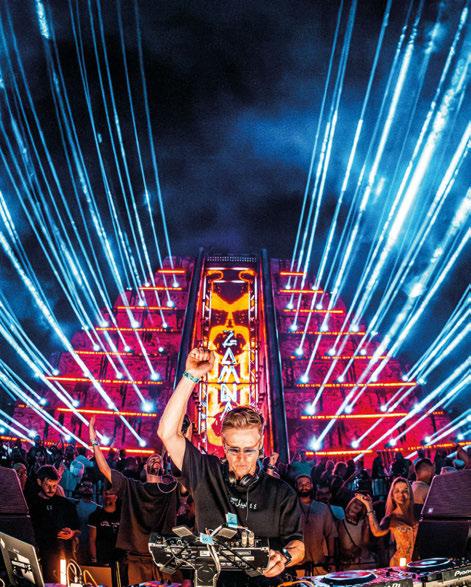
globally renowned festival brand born in Tulum, Mexico, and the UNTOLD Universe Production Department. “The presence of the Zamna stage at UNTOLD Dubai was designed to bring the essence of Tulum to the heart of Dubai,” commented Rus. “The former Galaxy stage was completely reimagined as a destination of its own – a space that transports visitors into a new dimension of sound and joy.”
Naturally given its imposing size and impressive technical scope, Zamna demanded significant resources. “It was always going to be a challenging feat,” said ALM’s Jenkins, recalling the process of technically realising the ambitious design. “The most challenging part of Zamna was the structure, which was handled by Fruition Events – a company I’ve worked with very closely on many projects.”
Catching up with TPiMEA after the festival, Fruition Events founder Warren Barlow recalled the “clever system” that supported the design on the Zamna stage. “Once we’d received the creative from the UNTOLD and Zamna teams, it was a case of adapting it into something that was
structurally feasible and efficient in terms of the use of equipment and labour,” he recalled.
While Barlow described the structure behind the stage as “quite minimal in some regards”, the real achievement was in the level of preproduction work, which allowed the structure to be as minimal as it was. “The normal way to draw that structure would have required twice the amount of scaffolding, but with some smart solutions such as cantilevers, we were able to build it much more efficiently,” he explained. “The detail was all in the preproduction phase, which meant that it was a relatively quick and simple execution once we were onsite.”
Another win for the Fruition team was the fact that the stage was created entirely from equipment in stock at the company’s Dubai warehouse. “This is a testament to our ongoing investment into what we believe is the right kit that is versatile enough to create the kinds of structures that the region demands,” Barlow commented. “Our ability to deliver a product that matched the creative and production requirements exactly from our in-house stock
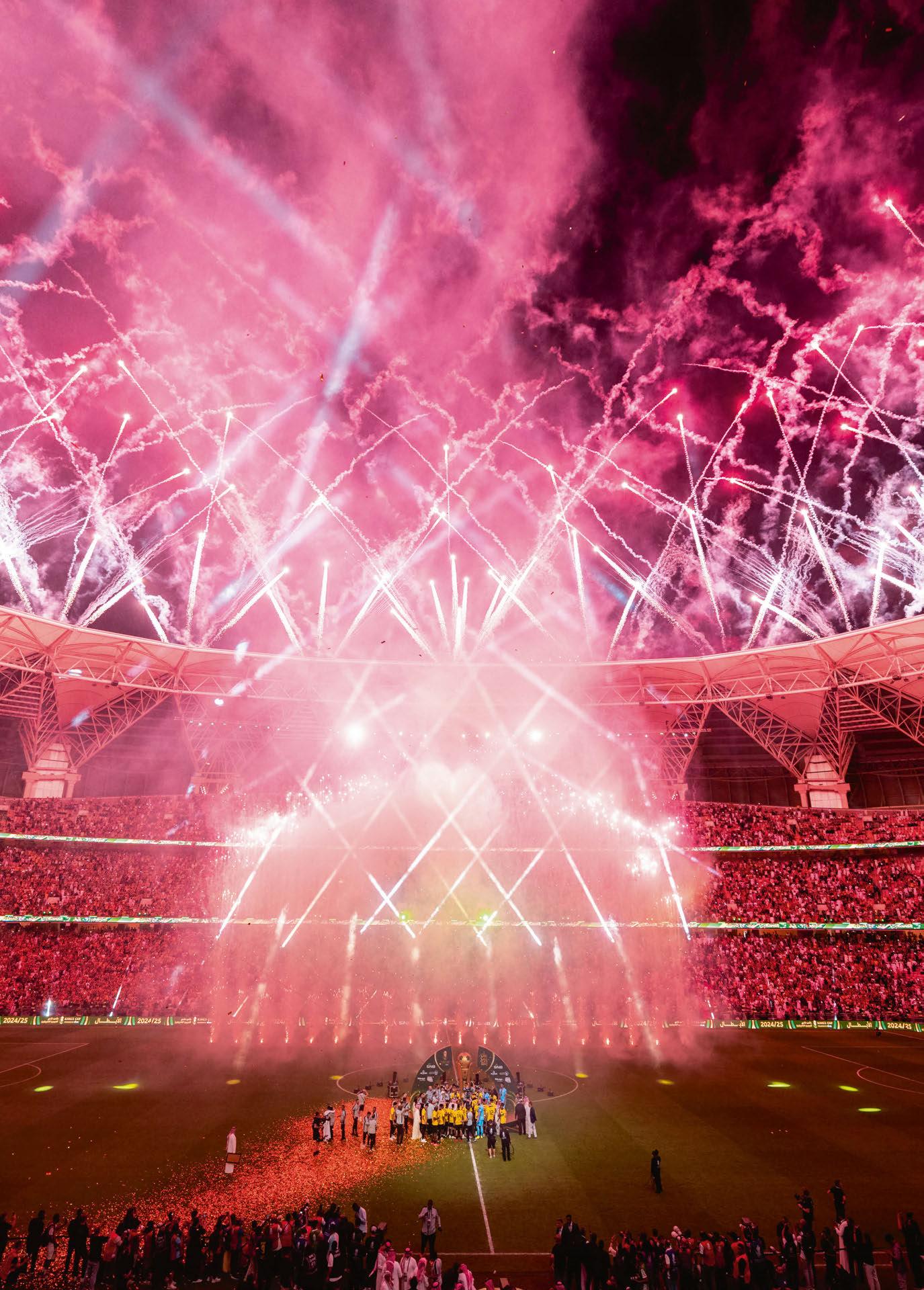

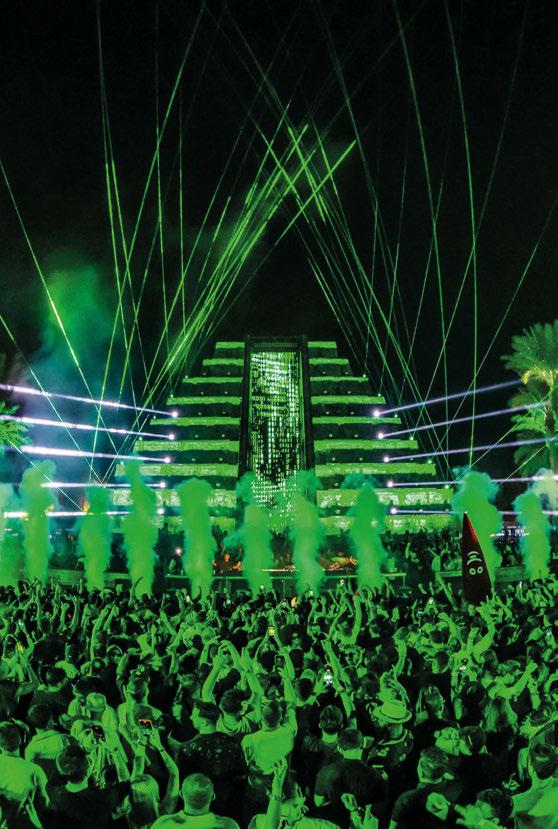
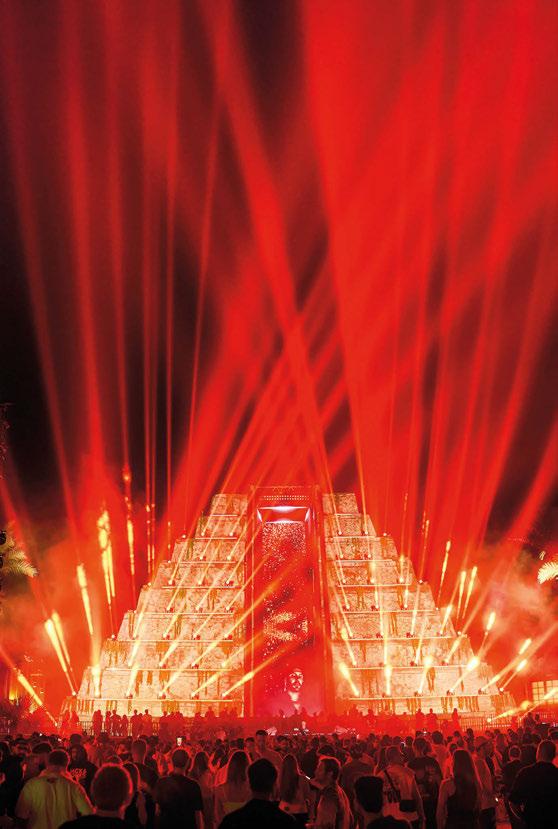
is hugely pleasing.” Fruition also came up with a custom PA tower solution to accommodate the unusual audio setup, with both forward- and backward-facing PA hangs (to accommodate the VIP area) able to be hung from the same tower.
“We all love a challenge – whether that’s from a design or an operational perspective – and solving issues like this is something we enjoy.”
Barlow described Fruition’s first time working with UNTOLD as “a very positive experience”. He added: “Any multistage site carries logistical challenges, but everyone was a pleasure to work with, and the result speaks for itself.”
SLS Production provided the lighting, video, and audio for Zamna, with Technical Director Kevin Shyam leading the team onsite.
Th e lighting rig featured a festival package of 12 CHAUVET Professional Strike Array 4C and 180 Showjockey RGB LED bars. A further 96 Ayrton Cobra, 112 Robe Tetra2, 68 Spiider, two Robin Forte, as well as 89 CHAUVET Professional Color Strike M and 12 Strike Array 4C made up the supply of moving heads.
SLS also supplied two MA Lighting grandMA3 full size consoles and three MA3 NPUs, along with two Luminex GigaCore 10 switches.
SF X and atmospherics came in the form of Showven F1 uFlamers, MagicFX CO2JET IIs, STADIUMSHOTs and CO2 STADIUMBLASTERs, as well as Smoke Factory Tour Hazers, Antari Smoke Z3000s and several 35W lasers.
The 5m by 18m LED screen was made up of Gloshine Vanish transparent LED, with content running on a Resolume Arena media server and processing courtesy of a NovaStar H2 and Analog Way Zenith 200.
Th e unique design of the stage, with the integrated VIP area behind the DJ booth, meant that audio deployment posed a particular challenge. “The main PA needed to sit forward of the VIPs, which meant we had to have a separate PA system pointing backwards to cover the VIP area,” Jenkins described. “A lot of preproduction went into that stage to ensure that we could achieve the desired effect.”
Th e PA in question was a Meyer Sound system comprising Meyer Sound PANTHER W and PANTHER L, 1100LFC and 2100LFC, while further 2100LFC, LEOPARD and LINA loudspeakers were deployed to fulfil audio booth, front fill and back fill requirements.
A Di GiCo SD12 was at FOH with an SD9 as backup. RF was handled by a robust Shure system, with a ULXD4D Dual-Channel Digital Wireless Receiver, ULXD2 K51 Wireless Handheld Transmitters, and Shure UA870 Active Directional Antenna utilised.
Alchemy
Set in a tucked-away grassed area tightly packed in between shops and restaurants, the Alchemy stage was a hit with UNTOLD guests seeking a
more up-close-and-personal experience that still packed high levels of production. “Alchemy proved that great things can come in relatively small packages,” said Barlow of Fruition, which was tasked with the build of the stage by ALM.
Also lending its expertise to the Alchemy stage was 3DB, which was charged with supplying a turnkey technical solution for the stage, as well as several smaller stages and activations throughout the UNTOLD site. “We’ve been wanting to work with 3DB for a while now and this proved to be the perfect opportunity,” Jenkins revealed. “The festival environment is very dynamic, and they had to adapt to quite a few changes at the last minute, but we worked through it together and they did a fantastic job.”
Included in the technical supply for the Alchemy stage was a full CHAUVET Professional lighting rig, a flown d&b audiotechnik KSL PA system along with subs, monitors and microphones, 3.9mm pixel pitch LED screens, as well as full lighting, audio and video control.
Dean Goodchild, Project Manager at 3DB, explained how the company’s scope increased as the project progressed: “We initially arrived with just the Alchemy stage in our scope, but other areas were soon brought to us,” he recalled.
“S oul Stage came to us first, where we supplied a custom stage designed by our scenic department. This design included the stage, facia, backdrop and built in controllable LED.
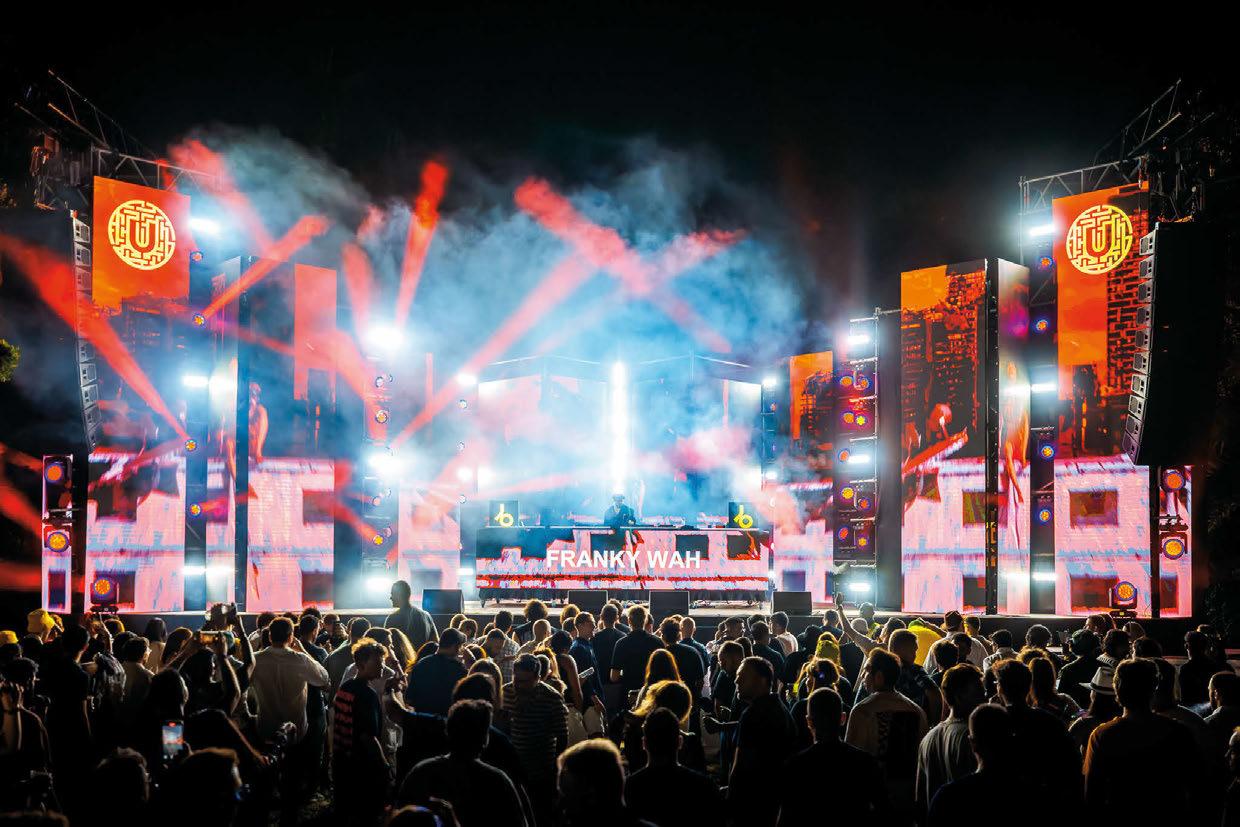
Within this space, we also supplied some lighting to wash the area as well as a couple of profiles for a stage wash.”
Fashion Village was next into the 3DB wheelhouse, with the company supplying a DJ setup with column speakers, as well as some additional lighting to wash the walls. “This was a unique building that looked like it had been left completely unused for years, so it was our job to give it some life,” he commented.
“We also covered additional lighting and column speakers in a DJ school, plus one more DJ area over by the hotel,” he added. “Our scenic department provided DJ tables within each DJ area. Each had its own crew made up of full-time 3DB staff and freelancers who we’ve worked with over many projects in the past.”
Good child described Dubai Parks and Resorts as “a unique venue for a festival”, noting the spread-out nature of 3DB’s deployment across the site as one of the main challenges of the project. “The venue was also open to the public during build days, so we had to plan around this,” he revealed. “Juggling the additional areas that came to us at critical times in the Alchemy build was another challenge, but we are well equipped to deal with these additional areas, and we had a great crew who we could trust to deliver in a timely and professional manner.”
Looking back on the delivery, Goodchild reflected on a job well done. “It was nice
hearing from our client that we had next to zero problems, and that we could be left alone in all the areas that we were covering to just get on and deliver,” he said. “I’d like to think of that as positive of us at 3DB in most events. We are selfsufficient; give us a plan and we can adapt.”
Jamie Watkins, Sales Director at 3DB, added: “It was an honour to be appointed by UNTOLD Festival, and we extend our thanks to Karl Jenkins of ALM for recommending 3DB. As UNTOLD continues its rise as one of the region’s most influential and ambitious festivals, we’re proud to have played our part in delivering a world-class experience. 2025 has been a milestone year of growth for 3DB, strengthening our portfolio as a trusted production partner for major events across the Middle East. We look forward to building on this momentum, expanding our capabilities, and deepening the relationships that drive our industry forward.”
Health and safety
Ensuring the site was a safe environment for both crew and festivalgoers alike, Gallowglass provided end-to-end safety and crowdmanagement, covering event safety strategy, emergency and evacuation planning, barrier and stewarding design, and on-site safety management throughout build, live event days, and breakdown. “Our team, supported by the Ogma Safety team, coordinated closely with
venue management, local authorities, emergency services, contractors, and security partners to ensure all safety, licensing, and operational requirements were met while delivering a safe and efficient festival experience,” described Declan Meenan, Senior Safety Advisor and Branch Manager at Gallowglass Health and Safety Middle East.
Planning for the deployment followed a structured process beginning with early scoping and risk identification, followed by detailed crowdmodelling to forecast peak flows and design barriers in the park and stages, safety marshal, and emergency-route solutions. “We developed comprehensive safety and emergency plans using RAMP and DIM-ICE methodologies before working onsite to verify installations, brief teams, and oversee build,” Meenan recalled.
While Meenan highlighted the positives of the venue, including “excellent foundational infrastructure, large open spaces, and strong amenities”, he noted that it didn’t come without its challenges. “Adapting a theme-park environment into a multistage music event introduced new complexities – particularly in managing intersecting movements between rides, attractions, and event zones,” he said.
“Additional considerations included the scale of the site, emergency-access routing, stakeholder coordination, and managing heat exposure. Despite these challenges, the venue’s
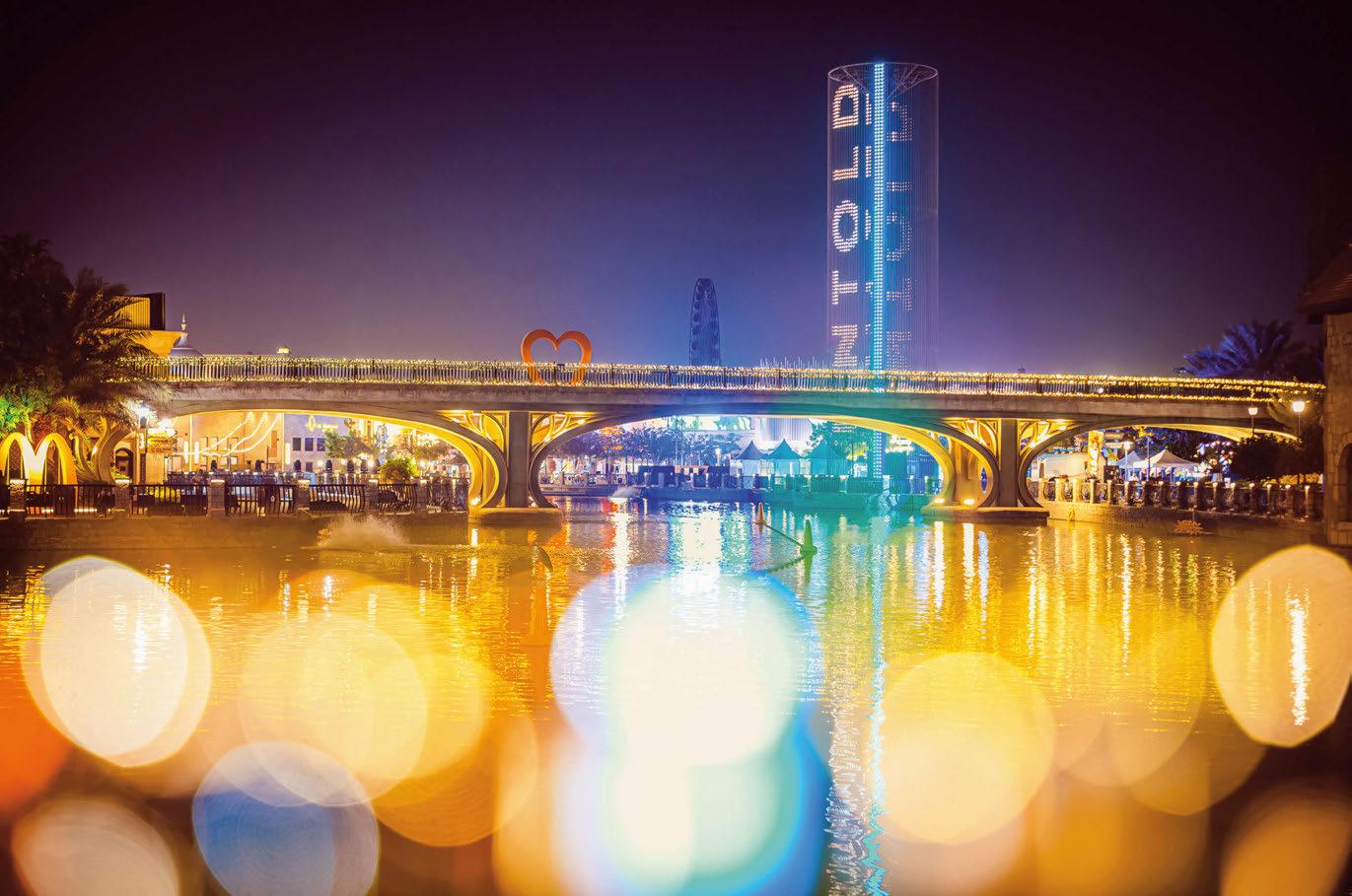
layout ultimately allowed us to design effective, segmented crowd-flow systems that supported a safe and enjoyable event. Being that little bit further out of the hustle and bustle of Dubai’s busy roads allowed for an easy flow of traffic in and out of the event, which made it more for better customer satisfaction.”
Key challenges included: “managing extremely high crowd volumes across multiple stages, adapting park-style flows into festival-style movements, and ensuring emergency-access routes remained clear across a sprawling venue”. Meenan added: “These were managed through detailed modelling, staged pedestrian routing, additional marshal resources, clear interface planning with ride operations, and extensive preevent safety checks. Heat management was also addressed through hydration points and active welfare monitoring.”
Meenan was particularly pleased with the strength of Gallowglass’s crowd-science application, which allowed the team to predict and mitigate pinch-points and deliver smooth ingress and egress throughout the event. “Our live command desk operated efficiently, enabling rapid decision-making and strong coordination
between traffic marshals, security, medical teams, and venue partners,” he stated.
‘A strong foundation for future editions’ Elsewhere on site, the main indoor stages –Retro and Time – were also overseen by ALM, with Alliance Events brought in to meet the AVL requirements in both spaces. “The indoor stages were quite complicated because they’re basically shell buildings with nothing in them, so we did a lot of pipe and drape work and even had to install carpet into one of them to get the audio environment to a point where it sounded how we wanted,” Jenkins recalled. “They were a little bit rough and raw, but that was one of the things that made them iconic. You don’t always want this polished product at a festival.”
Another year working with the UNTOLD team has strengthened the relationship further. “We realised that we have very similar ideologies as companies,” Jenkins stated. “UNTOLD is only getting bigger, and now UNTOLD Dubai has found its long-term home, I believe it will really start to bed in as an annual festival.”
Indeed, the festival has already announced its return to Dubai Parks and Resorts next year,
from 5 to 8 November 2026, and UNTOLD’s Rus couldn’t be happier.
“As festival organisers, we operate in a highly dynamic and fast-paced environment, whereas the venue’s processes were initially more structured,” he stated. “However, the Dubai Parks and Resorts team showed remarkable flexibility and eagerness to adapt, even updating their internal permit and workflow systems to better align with our needs. This mutual understanding sets a strong foundation for our future editions. We truly feel supported and valued in the UAE, building strong, long-term relationships that grow deeper with each project.”
Photos: UNTOLD Dubai www.untold.com www.aloudminority.com www.prg.com www.aes.ae www.whatever.live www.fruitionevents.ae www.slspro.net www.3db-dxb.com www.avm-sfx.com www.aeme.ae www.gallowglasshs.ae

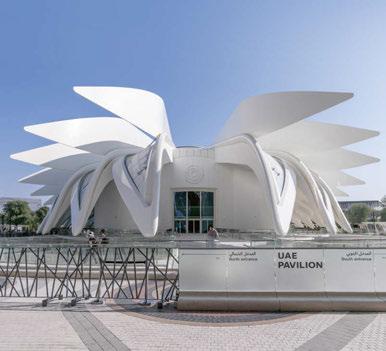
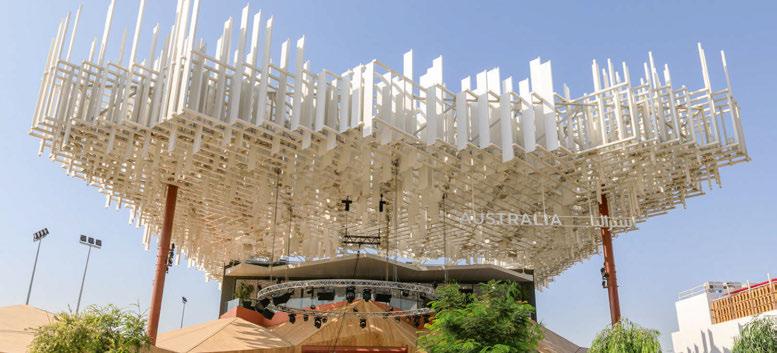
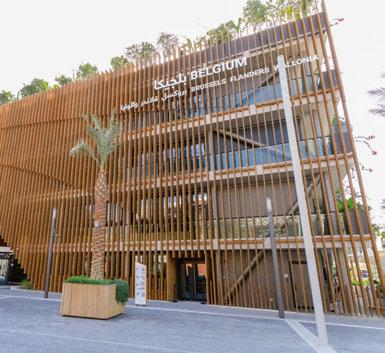
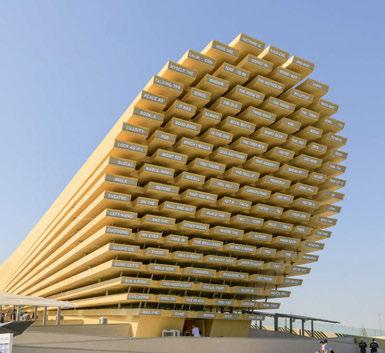
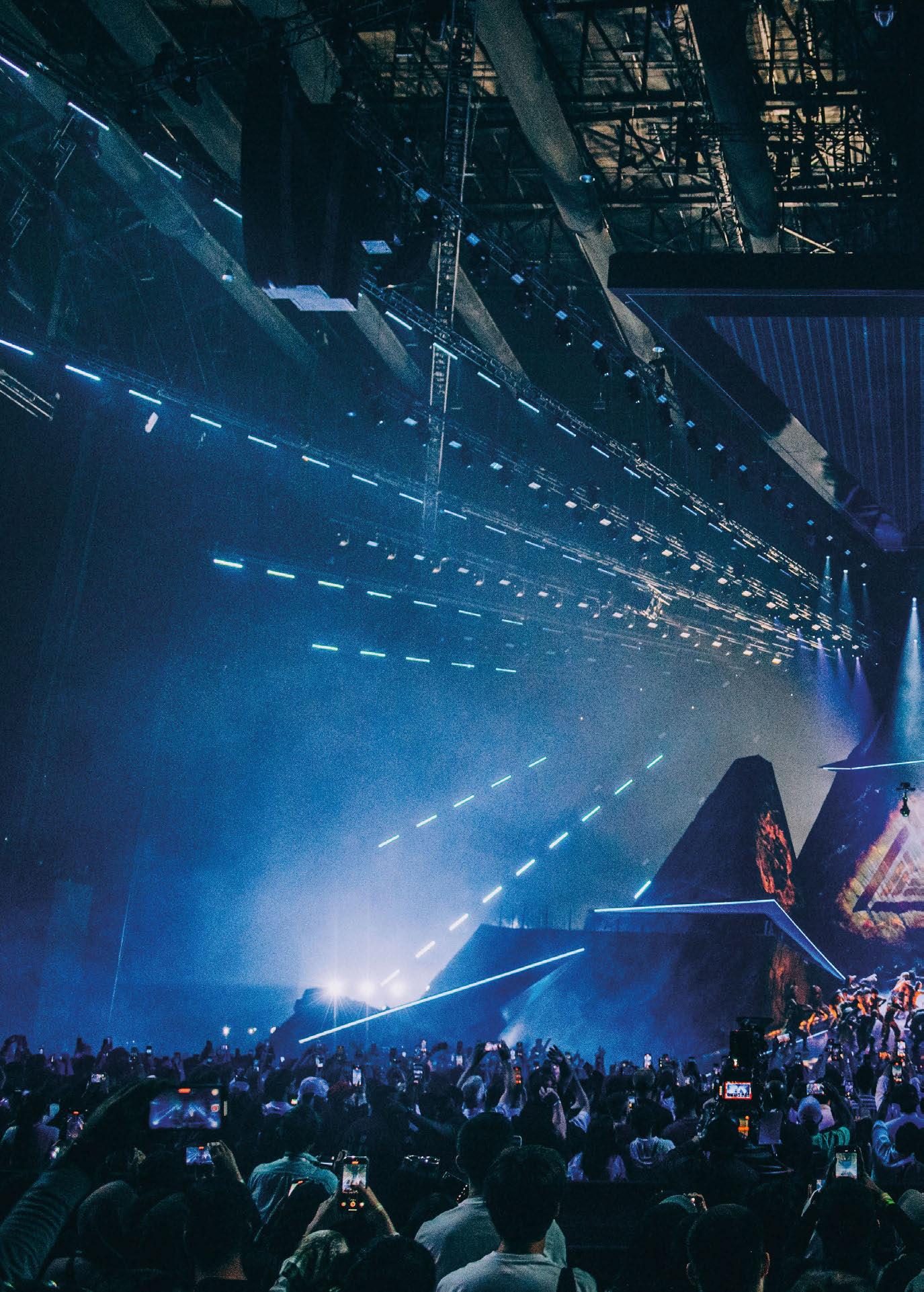
Esports World Cup Opening
Riyadh cements its status as the Esports capital of the world with a star-studded display of creativity and cutting-edge technology.
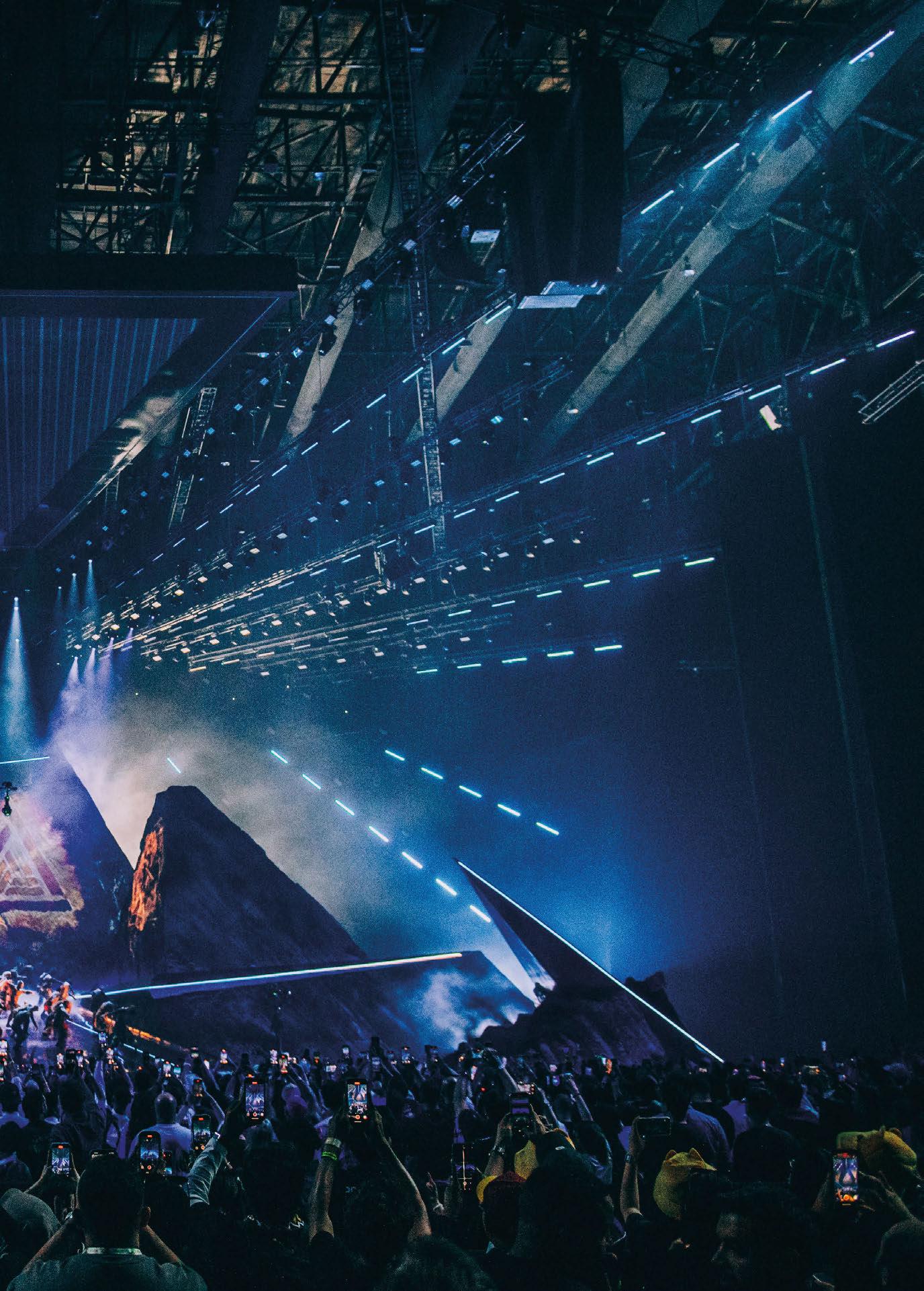
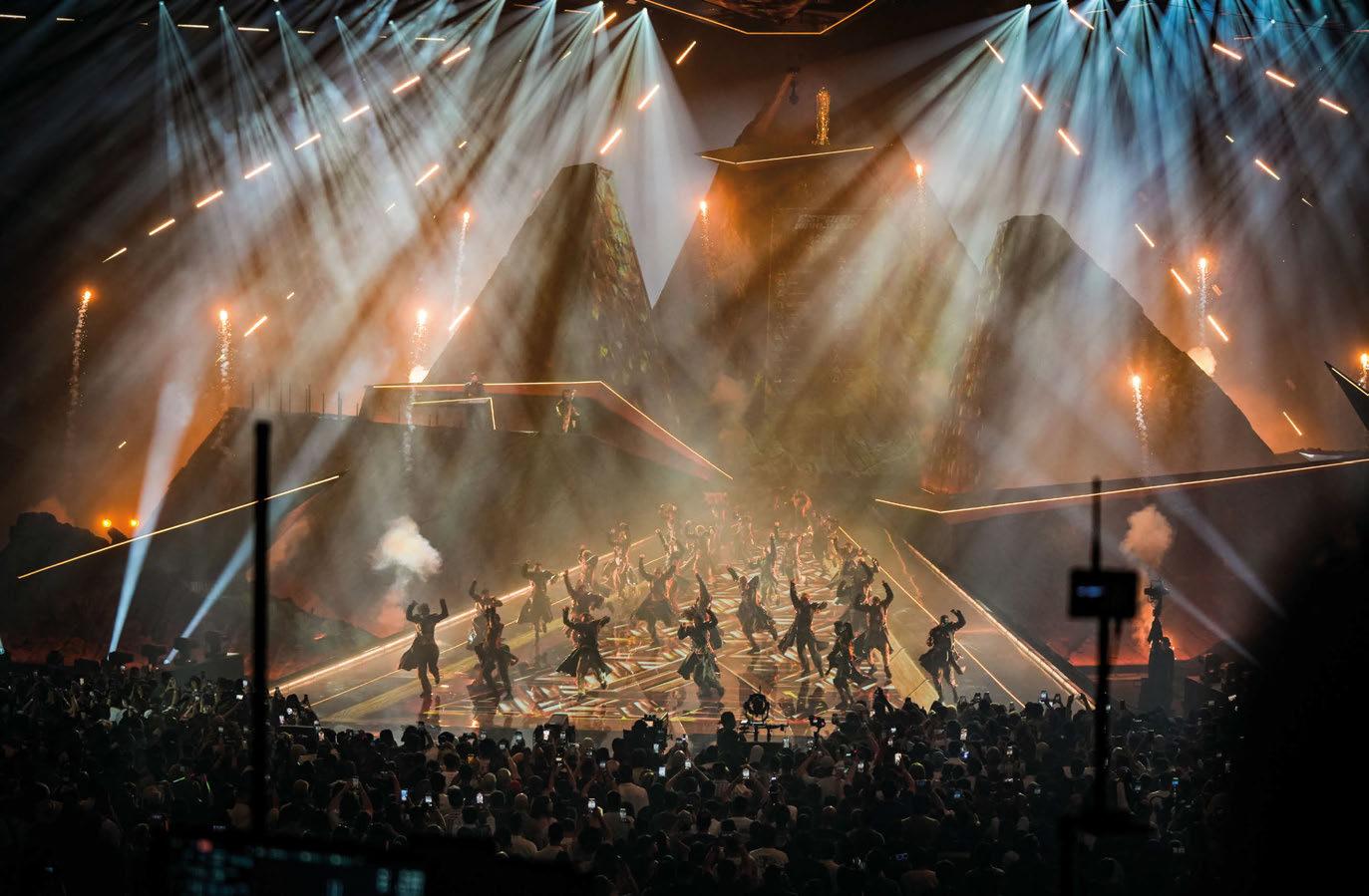
For many years, Esports has been discussed in terms of its vast potential, with ambitious projections and idealistic visions of how this unique platform could be set to revolutionise the way that sports, entertainment, music and technology can combine. While these conversations have historically been framed on the future, the involvement of Saudi Arabia seems to have turbocharged the global growth of Esports, with the Kingdom giving it a prominent position within its Vision 2030 plans. Case in point was the Esports World Cup, which saw more than 2,000 players take part in 25 competitions over seven weeks for a total prize pool of $70 million, with Saudi Arabian Team Falcons emerging on top of the leaderboard for the second tournament running.
Th e Esports World Cup kicked off with a soldout Opening Ceremony at Riyadh’s ANB Arena, which featured a headline performance from Post Malone. Produced by an award-winning team led by Executive Producer, Ariel Horn, and Executive Creative Director, Viranda Tantula, the show was designed by Possible Productions and set on a 40m mountain stage, with tiered ramps, automated LED ceiling and floor, and a spectacular lighting rig.
Providing its local knowledge and technical production expertise, MDLBEAST oversaw the
ambitious project, co-ordinating with creatives and technical suppliers to ensure a smooth delivery. MDLBEAST Project Director, Simon Haddad, wound back the clocks on how the production came together.
“We worked closely with partners on both the creative and technical sides to put together a world-class production that marked an important milestone for Saudi Arabia,” he began. “This kind of production only comes together when everyone is unified, and part of my role was to help facilitate that.”
Within the space of 15 minutes, the production packed in multiple artists, dancers and musicians, with virtuoso cellist Tina Guo opening the show, accompanied by a troupe of backing dancers, followed by a live performance of the official song of the Esports World Cup, Til My Fingers Bleed, featuring K-pop star Dino of SEVENTEEN, US rapper Duckwrth, and Telle Smith of metalcore band, The Word Alive. The star attraction was a headline performance from Post Malone, before the teams were introduced, then Swedish DJ Alesso closed out the show, welcoming cellist Guo back to the stage to perform a euphoric rendition of their instrumental song, Ascension
“Any show of this level must be extremely precise in the way that it is produced,” Haddad commented. “Every element – from audio
to automation to video to lighting – must be aligned and programmed to within fractions of a second to ensure that the creative vision is achieved. It took a lot of collaboration between various parties, partners and entities involved in the project to get to the point where we could achieve that level of precision.”
With an “incredibly ambitious” creative to accommodate, Haddad made a point of identifying the areas of the production that presented the biggest challenges and tackling them head-on.
“Any project of this size and scale is bound to present challenges, and it was my responsibility to pinpoint these challenges and engage with all the relevant parties to find the right solutions, often thinking creatively to help us all achieve the desired result,” he explained.
“When there are multiple parties involved in delivering a show – each with their own agenda and priorities – it becomes extremely important to ensure that everyone remains focussed on the same overarching goal of making the show the very best that it can be,” he added.
“There was a very strong coordination between us, the creative team and the technical suppliers to realise this creative vision and bring it to reality. That requires creativity on all parts and the ability to share the vision and interact with it.”

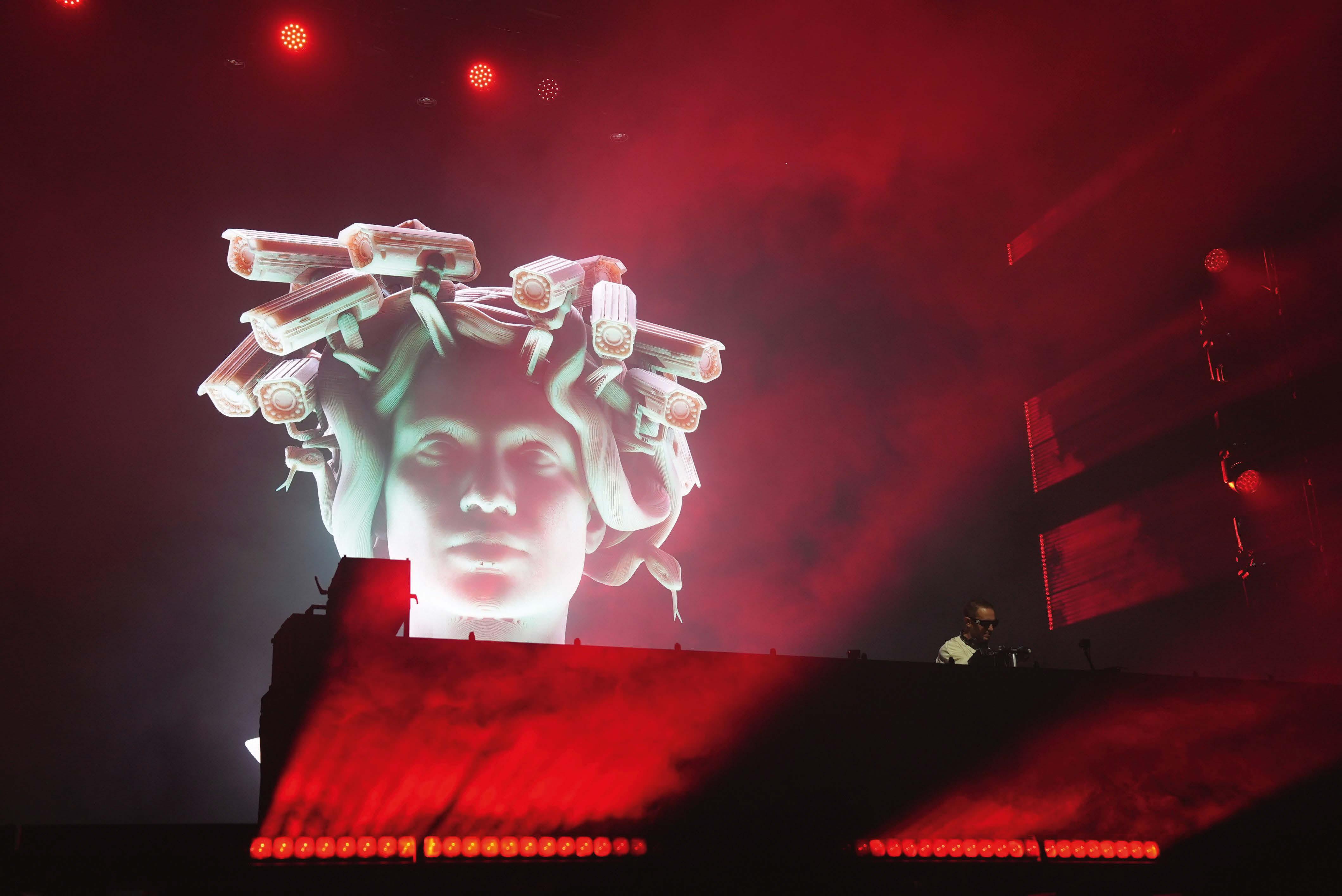
Turning Creative Ideas Into Technical Reality.
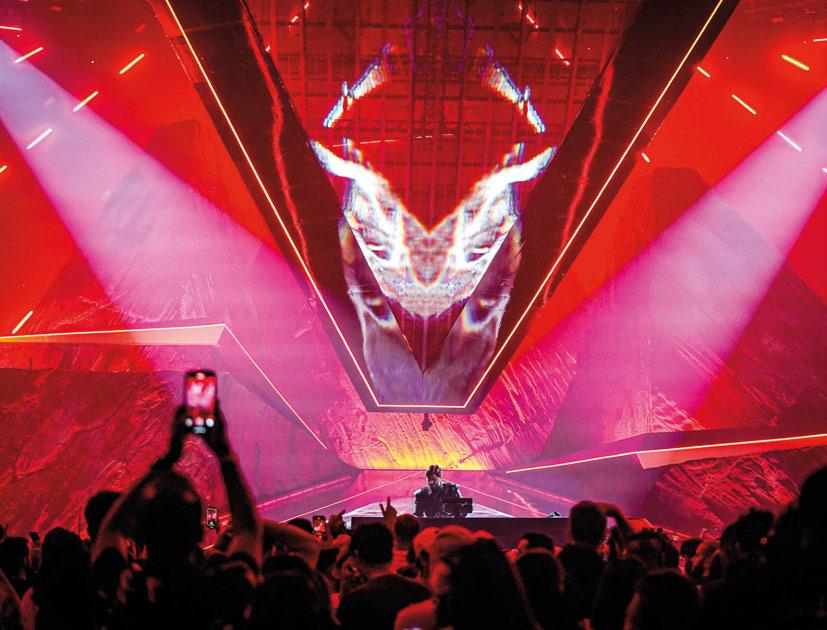
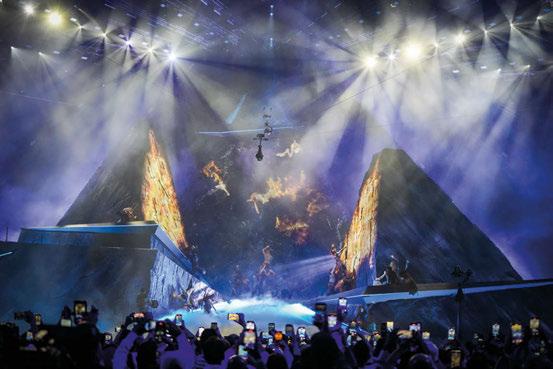
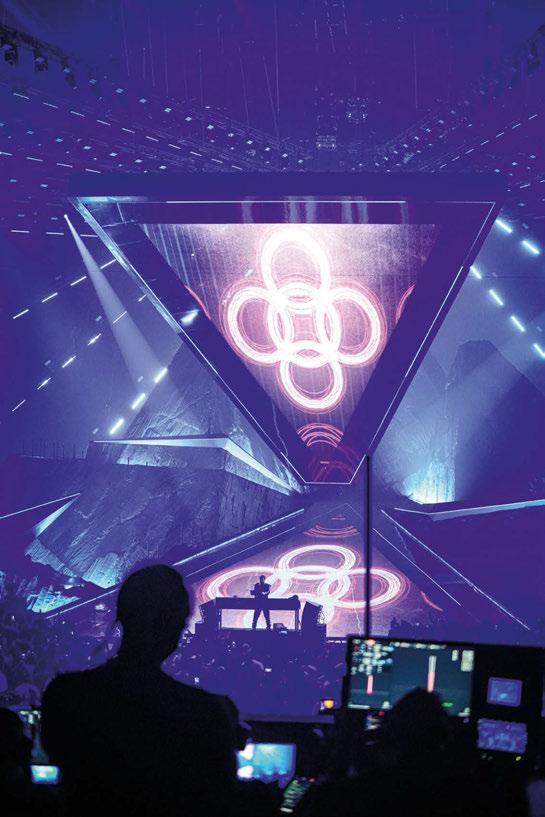
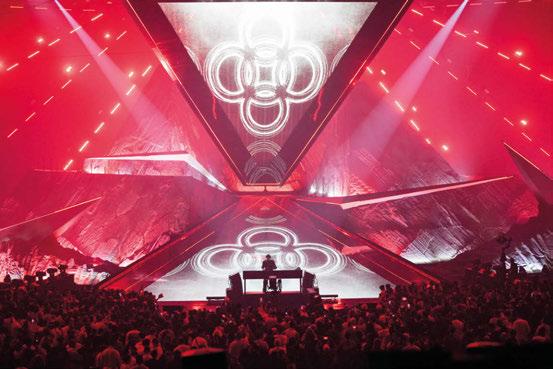
Among the technical suppliers for the project were Creative Technology Middle East (CTME) for LED, projection mapping, and lighting, Strictly FX, Unusual Rigging, Simple Solutions, and Clair Global, which supplied audio, communications and network infrastructure.
‘Super bright, super punchy’
Set among a realistic soaring scenic mountain range (designed by Florian Wieder and crafted by Simple Solutions), the keystone visual element of the staging production was an expansive automated video installation comprising more than 388 sq m of LED.
De spite utilising 121 sq m of lightweight ROE Visual Vanish 8T LED product, the triangularshaped overhead structure still weighed in at around 8.5 tonnes – such was its enormity. The stage floor meanwhile mirrored the suspended LED roof, with 195 sq m of ROE Visual Black Marble 4.76 mm used. CTME’s Head of Video, Carlos Aguilar, explained the choice of LED
products. “The Vanish 8T was perfect for the LED roof because it is lightweight and it has the transparency and resolution that the production was looking for,” he stated. “The Black Marble looked perfect on camera thanks to its highcontrast glass finish.”
Complementing the LED installation, projection mapping transformed the scenic mountains into a canvas for a mixture of creative content, dynamic storytelling and information sharing. The CTME team deployed Panasonic RQ50K projectors positioned strategically to cover the custom-fabricated geometric surfaces, with each providing 50,000 lumens of meticulously colour-calibrated output.
“The RQ50K is a very large, heavy projector, which brought challenges when it came to positioning – especially because we were limited in space to accommodate all the automation and camera sightlines,” Aguilar explained. “However, we needed something with outstanding colour accuracy that was super bright, super punchy
and would hold its own among all the other light sources in the arena to be effective for the broadcast – and the 50K was perfect for this.”
Two NovaStar H9 processors and Brompton SX40 systems handled LED processing. All screen routing and composition were managed through an Analog Way Aquilon RS4, which enabled dynamic, multi-layered control across all display surfaces. The system’s backbone consisted of seven Disguise VX 4+ media servers, each connected through 100-gigabit DAC cables to distribute content, supported by two Arista 100-gigabit switches.
Visual Noise oversaw the complete video engineering workflow, with the company bringing its expertise in detailed execution, pixel-perfect accuracy, and advanced video technology implementation to the project. “It was an hour to work with Visual Noise, MDLBEAST, TAIT and the entire production team on this very special project,” Aguilar stated. “The final product showed what the Middle East is capable
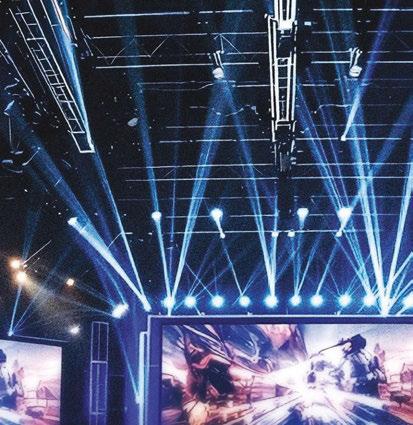
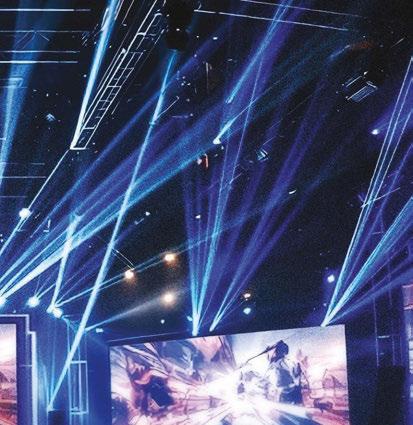

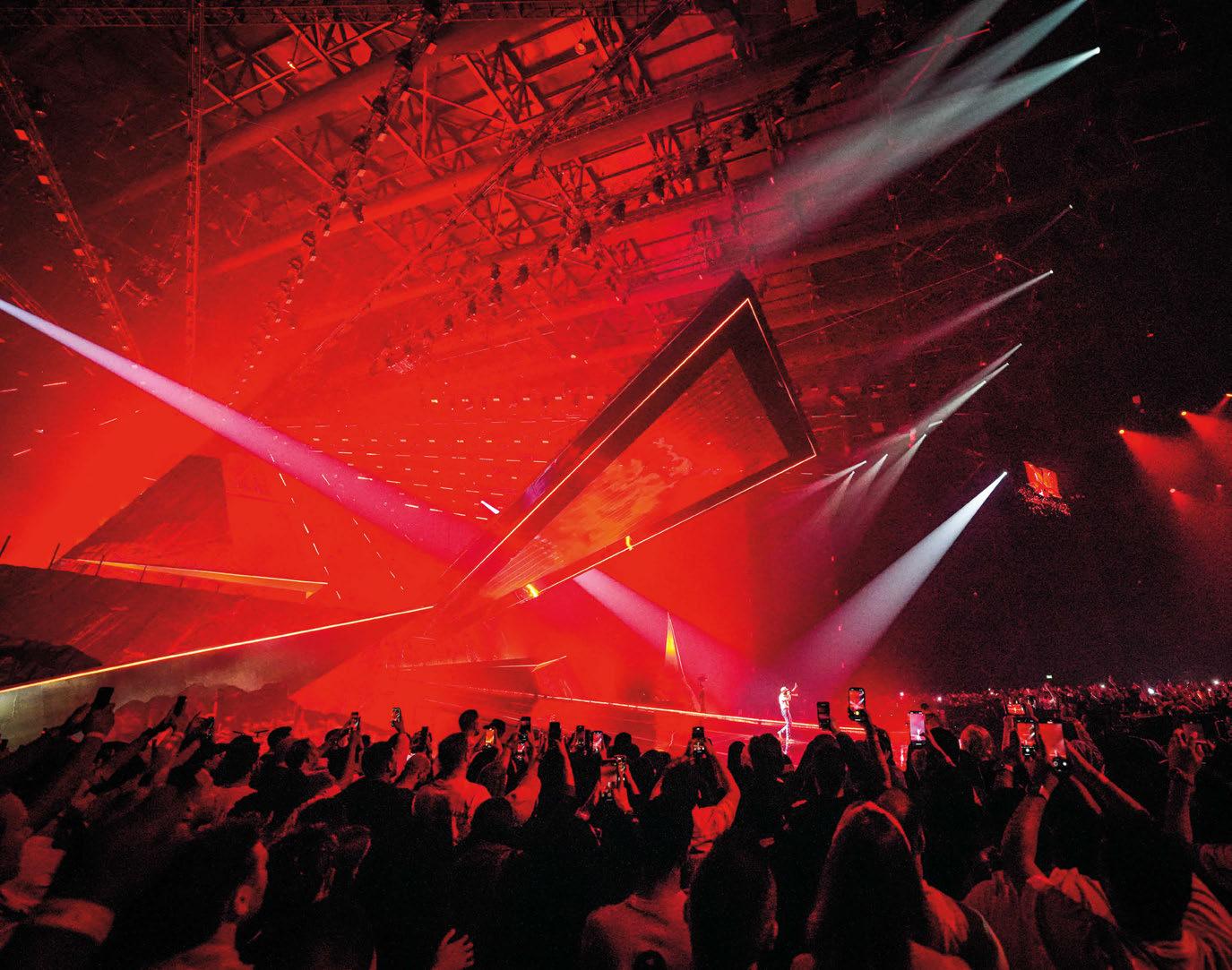
of producing – a show that more than meets international standards.”
‘Mystery and drama’
Lighting Designer Jon Kusner of 22 Degrees presided over a mammoth all-LED lighting rig featuring 1,463 fixtures, programmed across 250 universes and a total of 120,000 MA parameters, with 9km of Socapex and 15km of DMX cable. With admittedly little immediate knowledge of the Esports world, Kusner was grateful for the guidance of the “very patient” Creative Producers, Trevor Burke and Nick Troop when it came to the creative.
The LD is “still kind of analogue” when it comes to his approach to lighting design, creating “childish doodles” with pencil and paper. “I was lucky enough to have one of the smartest and most talented lighting directors, Will Gossett, as my associate,” he said. “Will has this ability to take my doodle, ask questions to challenge the design and help make it his own, then turn that into a 3D drawing in Vectorworks. His attention to detail is sharp and his ability to quickly communicate with the scenic department and others is impressive.”
The starting point for this design came from questions posed by Trevor Burke. “We aimed to
establish how lighting can exist, be dynamic but at same time be able to not distract the eye from the mystery of the scenic mountain environment and the cast. How do you make it big but not litter the space with lights and beams?” Kusner recalled. “With this, I started to dissect the needs of the show; light the people, light the scenery and then figure out how to incorporate lighting that could be used and function but not be a visual irritant from the camera perspective.”
To accommodate these needs, Kusner added side lighting positions that were masked from most of the audience’s – and camera’s –perspective. “With the basic needs covered, I went back to the creative producer and talked about the need to have a lighting experience or dynamic cueing potential because we would need that excitement to make it a ‘show’ – and a big show at that,” Kusner explained. “We used LED lights like GLP impression X4 Bar 20, Robe Tetra2, and Elation Pulse Panel FX to make some big statements, have the speed we needed and echo an architectural design element of ‘lines’ to mimic the shape of the scenic mountains. I think this worked out very nicely.”
Atmospherics played an important role in the overall look of the show, with smoke and haze
prominent throughout. The challenge for Kusner and his lighting team revolved around ensuring that the smoke and haze were well lit without having any of the fixtures visible. “Using the floor and the hiding areas that scenic mountains made up was the best way to add a bunch of fixtures that would be well hidden from the eyes of people and cameras most of the time but light the atmosphere,” he revealed.
The lighting rig featured 200 Elation Proteus Maximus, which served as the main profiles, positioned between the series of triangular truss fingers and distributed around the venue, 182 Pulse Panel FX integrated in line with LED battens, and 191 Pulse Bar L positioned both behind the mountain and at the base as uplights, delivering striking eye-candy effects.
Elsewhere were 190 Martin VDO Sceptron 10; 54 Ayrton Domino S, 34 Perseo, and 71 Argo; 111 GLP impression X4 Bar 20; 18 SGM Lighting P-10; 35 Robe iTetra2, 33 Tetra2, 40 iFORTE, 14 FORTE and 11 iFORTE LTX follow spots equipped with Robo follow spot stations.
Six MA Lighting grandMA3 full size consoles were used for control, with the lighting running over a Luminex network featuring 40 LumiNode 12 Ethernet-DMX processing units, eight
GigaCore 20T Pro AV Ethernet switches and 60 LumiSplit 2.10 DMX splitters. Two Syncronorm Depence suites running the latest R4 software and equipped with MA Lighting grandMA3 vizkeys were used for previsualisation.
While he’s reasonably product agnostic and always willing to be flexible depending on availability, Kusner prioritises confidence in equipment when it comes to fixture choices. “It’s important to be comfortable and believe that the gear will perform as expected,” he commented. “This is the time that I lean heavily on a few trusted programmers and even other vendors who I can call and ask questions, to vet the gear and see if others trust it. The workhorses on this show were the GLP impression X4 Bar 20, Robe Tetra2 and SGM P10s.”
Looking back on the show, despite the variety of massive looks, Kusner pointed to the simplistic scheme deployed for the opening as his favourite moment. “We lit the cellist, Tina Guo, with a simple sidle light in a breakup gobo and a step-down light; it was a simple, tasteful way to start the mystery and drama,” he recalled. “To go from this simple two-light setup to then bring in the entirety of the lighting rig was such a drastic change in scale, and the space went from tiny to huge with just a well-placed light cue in the music.”
With this project being Kusner’s first time working in Saudi Arabia and the first time collaborating with both MDLBEAST and CTME, he wasn’t sure what to expect. However, he was pleased to report a “very comfortable and easy” working environment. “I think CTME was the biggest win from my perspective. They were beyond prepared and the team they organised made this huge show feel as if it wasn’t even a tall task. They had thought through the entire process and were so buttoned down, pleasant and accommodating; we couldn’t ask for a better experience, and I hope to be back in Saudi soon.”
CT ME’s Head of Lighting, Sam Connolly, was delighted with his team’s deployment and the collaboration with the wider production. “It was amazing to work with MDLBEAST, TAIT and, of course, Jon and the 22 Degrees team,” he stated. “We pride ourselves on going into precise details here at CTME, and it’s always a breath of air when you work with someone who shares that same level of detail. I believe the finished product shows the level of understanding between the teams.”
Lighting Crew Chief, Grigory Matveev, shared the “great experience” he had with the 22 Degrees and earlybirdvisual teams. “Every detail proves itself in the final picture,” he commented.
“This project headlined a season full of growth for us, and it was the ideal milestone to demonstrate the capabilities of our lighting department.
We passed this test with our heads held high, surrounded by amazing colleagues.”
‘A truly global undertaking’
The striking visual spectacle presented a challenging environment for the audio deployment, which was handled adeptly by Clair Global. Stuart Wright, General Manager at Clair KSA, explained some of the challenges associated with the project: “The event’s set design meant that the main PA had to fly much higher than the ideal position, potentially creating a strange image for anyone standing at floor level,” he commented. “A challenge was presented here with the system tuning needed to balance this position, for the floor audience.”
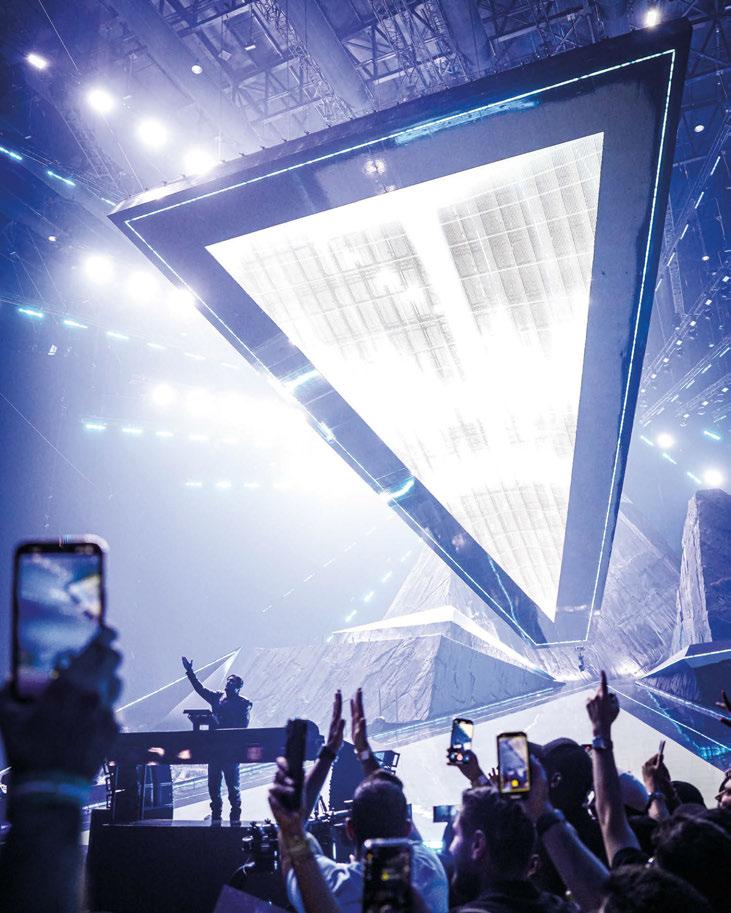
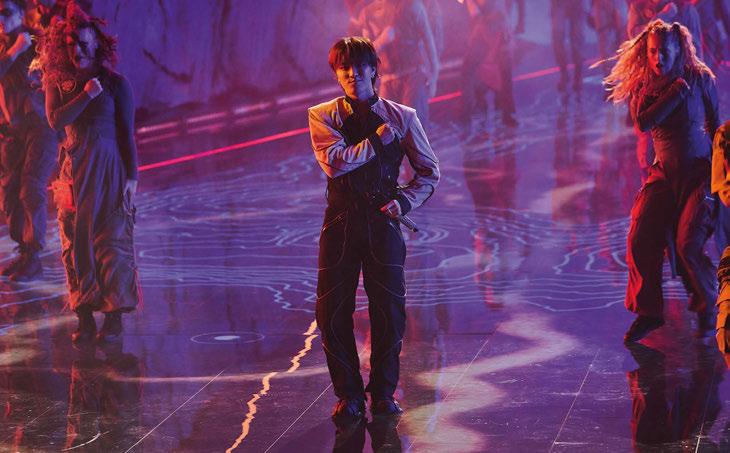
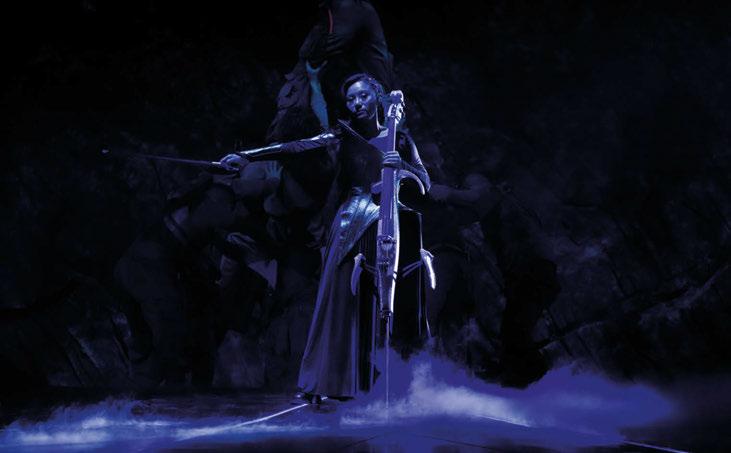
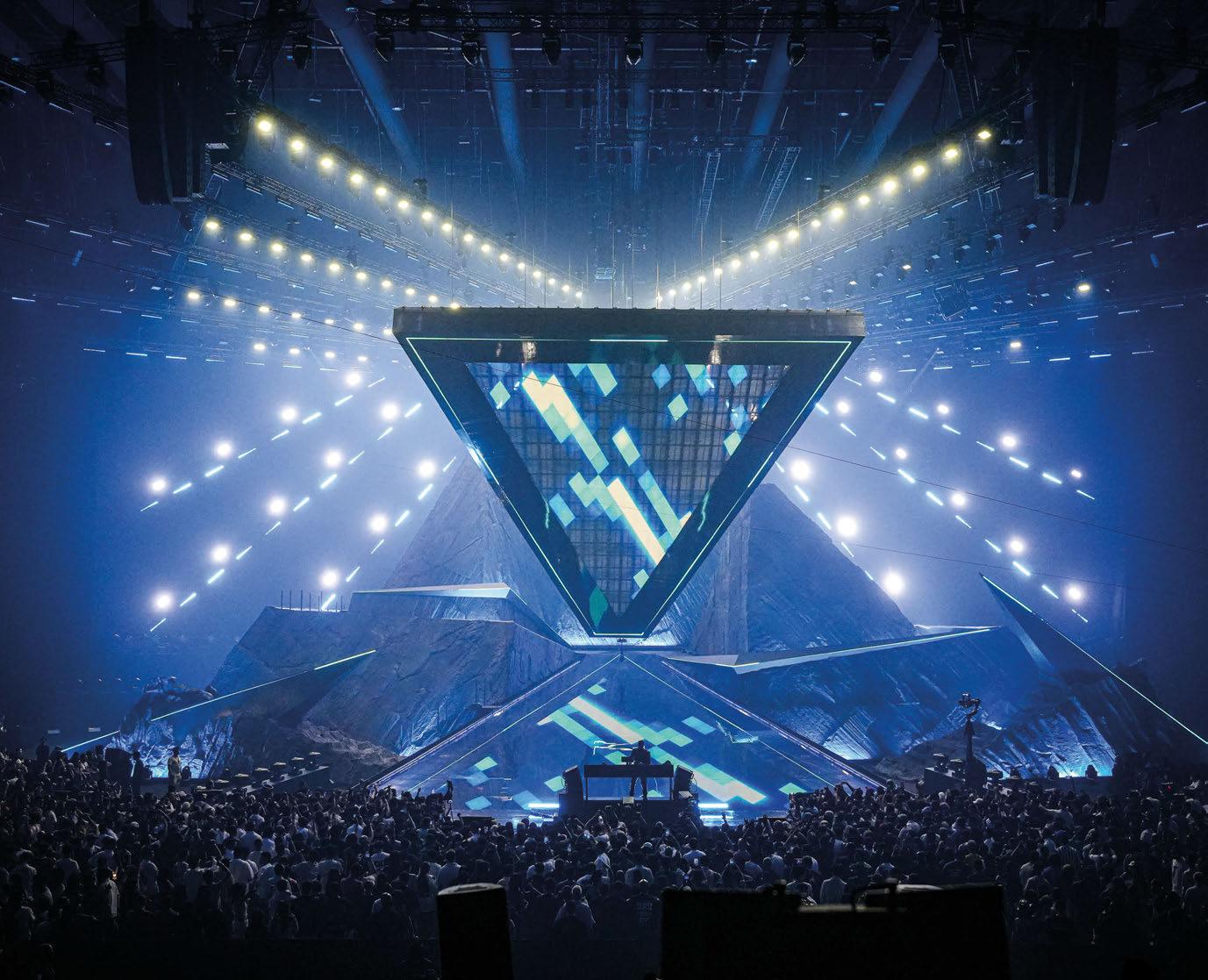
Room acoustics were also challenging, with little absorption and reflections from the glass in the VIP areas requiring extra attention.
Ha ndling the task at hand was an L-Acoustics PA comprising left and right hangs of three L2 over L2D and two sub-hangs each consisting of eight KS28, which were hung, end-fired behind the main L2 hangs. Delays were flown 34m from the main hangs. “These consisted of an L2 over an L2D,” Wright revealed. “There were also eight front fills at audience level along the front of the mojo, which were placed on KS28s.” Amps were flown for the main hangs, while VIP amps sat on platforms either side of the venue.
PA was driven from a redundant AVB network with analogue fallback. Control was a single DiGiCo loop with three SD7 consoles – one at FOH, one at monitors, and one for Post Malone’s monitors. Processing was via amps, with an L-Acoustics P1 for AES-AVB, and analogue fallback was from the DiGiCo SD-Racks.
“The Main AVB loop consisted of LS10 AVB switches, which were in each amp rack,” Wright
commented, delving further into the intricacies of the setup. “We had Netgear switches at FOH for the AVB network and at stage end, running a trunk configuration.”
With broadcast high on the agenda, the Clair KSA team ensured a smooth delivery to the show’s broadcast partners. “Broadcast received two 64 channels of MADI, which were split from all channels of replay and live elements of the show,” he noted. “Audio for these sends were copied from the monitor console.”
Reflecting on the delivery of the project, Wright praised the “seamless communication” throughout production. “Everyone had very clear information to work from, with regular opportunities to voice any concerns. Relations between technical departments on this production were great, with everyone looking out for each other and working together to reach our goal,” he commented.
“Daryl [Payne] worked hard to create a warm, friendly and open environment for everyone involved. It was a pleasure to work with him to pull
off something special and unique. The production team were always happy no matter how long the days were. The information flow was great and was received in a flexible environment that was always open to changes.”
Also reflecting on the project, MDLBEAST’s Haddad paid tribute to the company’s Executive Director of Events, Michael ‘Curly’ Jobson, who played a vital role in marrying together the creative and technical elements of the production. “Curly’s leadership and creative vision once again proved invaluable to this project,” he commented. “This was a global undertaking, with skills drawn from all over the world; but importantly it was produced in Saudi Arabia and in a distinctly Saudi way. It was an honour to be a part of this incredible project.”
Photos: CTME www.esportsworldcup.com www.mdlbeast.com www.22deg.com www.ct-group.com www.clairglobal.com
TheTRUe PROFILE
All the features you ever dreamed of – in one unit.
TheTRUe INDOOR FIXTURE
Lightweight and Compact. No compromises.
TheTRUe
HIGH CRI UNIT
No filters. No LED changes. Always accurate.
TheTRUe WASH
No filters. Just a real Fresnel or PC lens.
TheTRUe OUTDOOR FIXTURE
IP54 rated. Built for the real world.
TheTRUe
HIGH OUTPUT UNIT
Over 20,000 lumensVariable CRI up to 93.

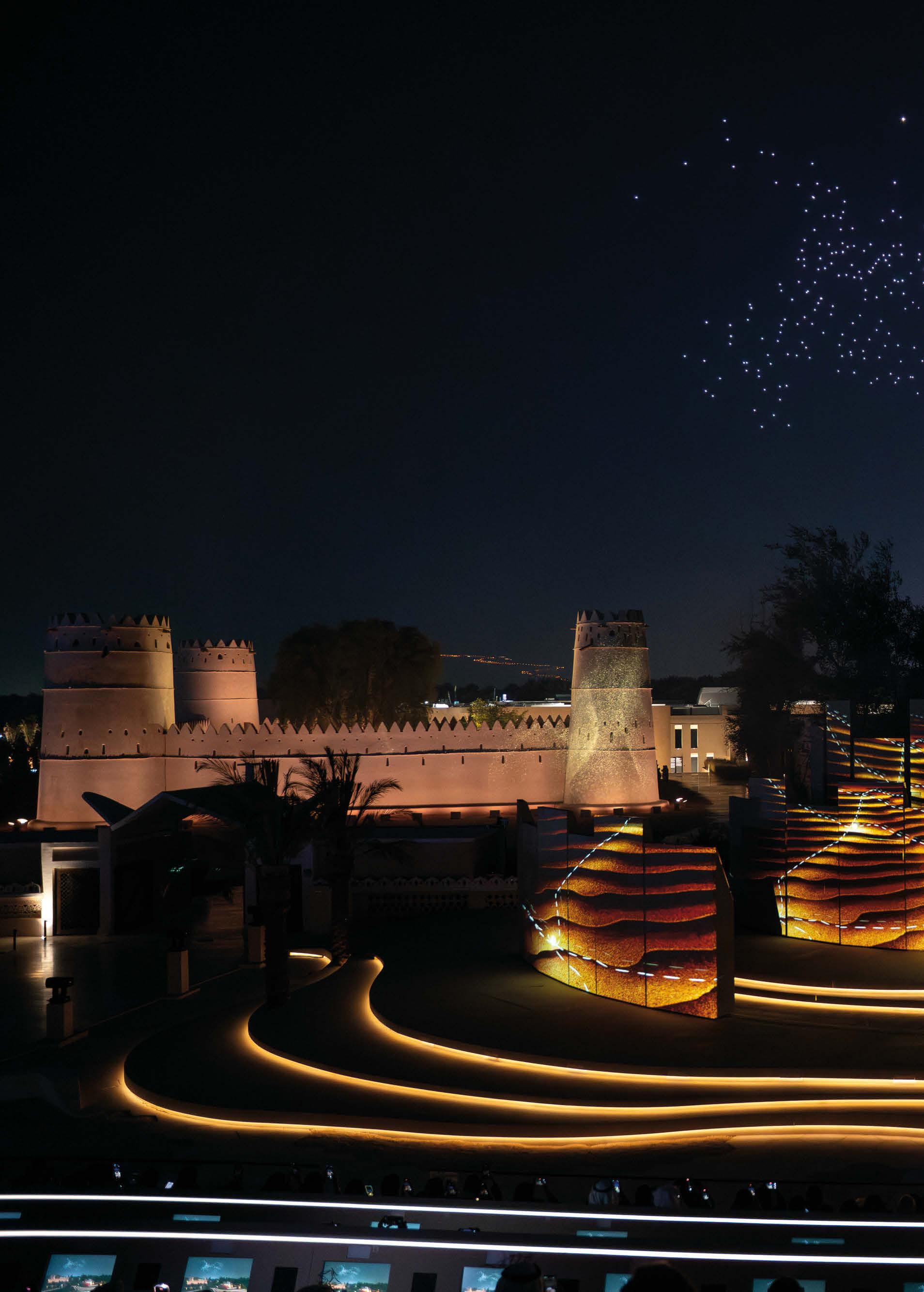
Al Ain Museum Reopening Ceremony
A multitalented team unite to deliver a ceremony rich in creative and technical complexities to an almost-impossible timescale…
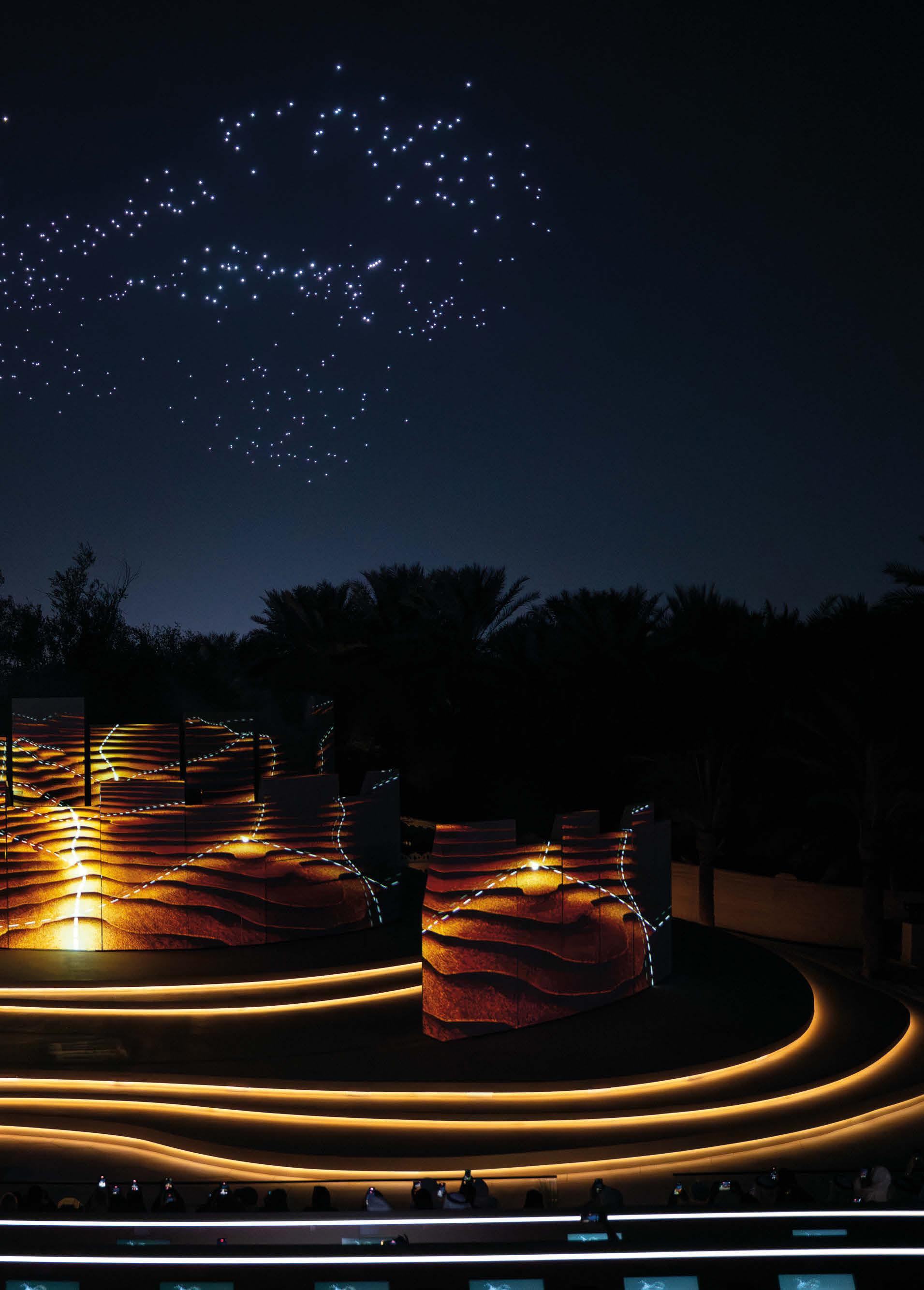
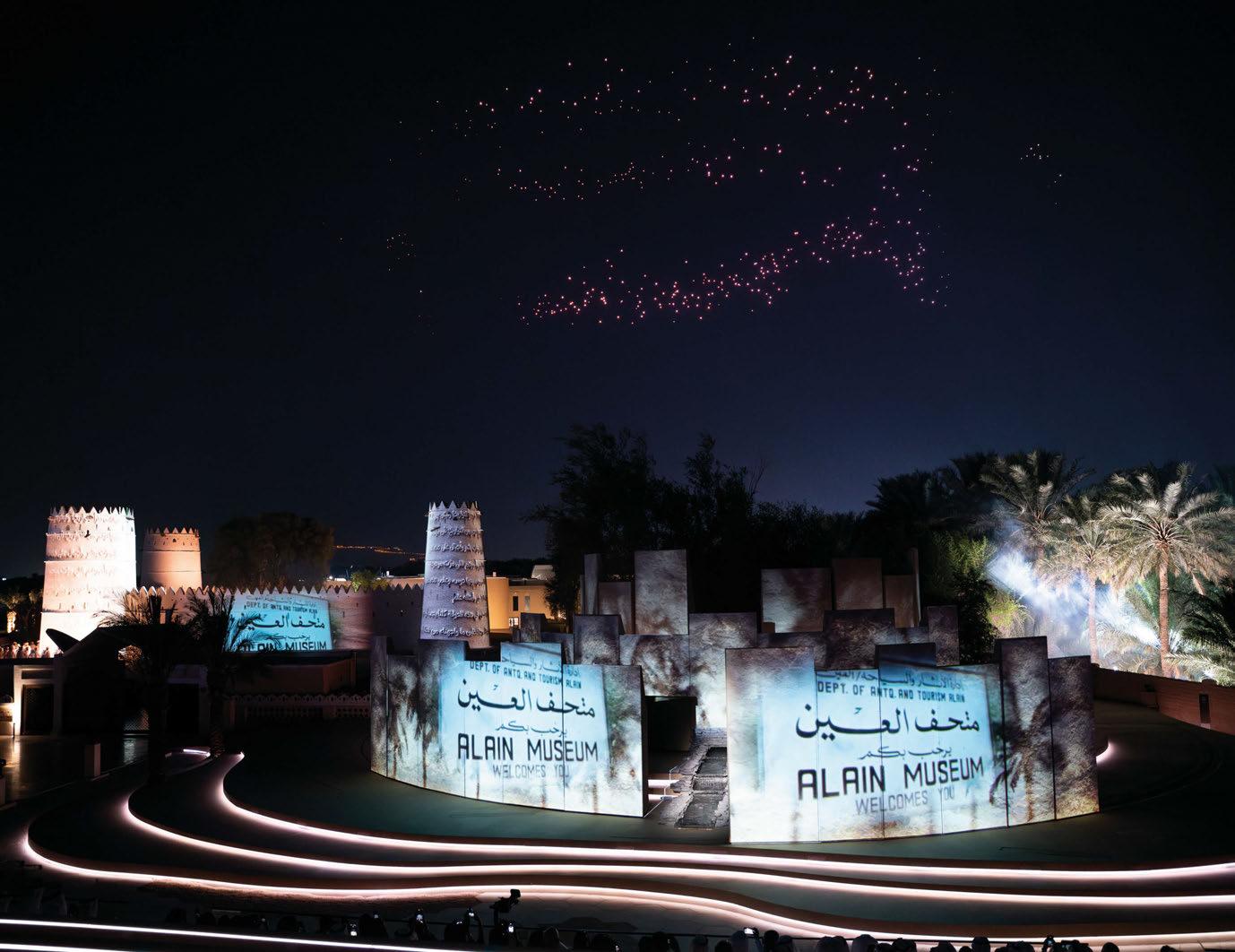
For most markets, curating, creatively developing, producing and delivering a major show in the space of eight weeks would be unthinkable. However, the UAE is not most markets and, as was recently proved by DAE Global UAE (David Atkins Enterprises), with the right team in place, anything is possible. DAE was entrusted by Department of Culture and Tourism (DCT) Abu Dhabi with delivering a spectacular ceremony to celebrate the reopening of Al Ain Museum – the UAE’s first museum, originally established in 1969 by the country’s founding father, Sheikh Zayed – which recently underwent an extensive redevelopment period.
With time very much of the essence, DAE immediately set about assembling a crack team made up of a combination of in-house talent and creative collaborators as well as familiar freelancers, technical partners and suppliers. “We handpicked the team and all the suppliers for this project and honestly, I’m not sure we could have pulled it off without the strong relationships we’ve built over time,” explained DAE Global’s Middle East Managing Director and Executive Creative Director, Chelsey Raysbrook, who led the project alongside
Executive Producer, Egor Seregin. “We had to think strategically about what could realistically be achieved within the timeframe, and took calculated risks based on our experience of delivering shows of this scale,” Seregin explained. “Every decision had to be weighed against its impact on the wider production, which meant staying incredibly focused on priorities and ensuring all teams were aligned at every stage.”
Th e collaborators included: Auditoria (audio design), Musicom (composition), Clair Global (audio and comms), Bruno Poet Lighting Design, Luke Halls Studio (video design), Andrea Farini (scenic design), Wonder Works (technical design), PRG (lighting and video), AVM-SFX (special effects), Skymagic (LED drones), FLOW (power), Al Laith (structures), Stage One (automation), VK Exhibitions (staging and scenic design finishes), Evolution (props), MTM Production (broadcast direction), and Abu Dhabi Media (broadcast), among many others.
Th e project leadership team included: Technical Director, Tarmo Krimm; Operations Director, Fabio Prado; Head of Creative Production, Annabel Van Weel; Guest Experience Director, Kellie Holmes; Commercial Director, Dean Dallender; and HR and Admin Director,
Daisy Kennedy; along with the DAE Executive Team of CEO David Atkins and Global Managing Director, Mike Reid.
Working closely with Omar Salem Al Kaabi, Director of Al Ain Museum, as well as a dedicated team of curators, archaeologists, and branding and marketing specialists, the DAE team undertook a rapid yet robust extensive research period to inform the deeply human narrative of the ceremony, which was said to “reconnect the Al Ain community to the lives, values, and heritage of their ancestors”. Raysbrook commented: “Al Ain’s story is much bigger than just the museum. Instead of focussing simply on the artefacts and attractions inside the museum, we identified that there are much bigger stories to be told about human action through time.”
The theme of the ceremony revolved around the idea of journeying through layers. “The layers were very physical and ‘of the earth’, because the museum is based upon archaeology and the stories told through that,” Raysbrook explained. “Al Ain is also a city with many layers – it’s rich in heritage, community and landmarks – so the meaning was both literal and metaphorical.”
Inspired in part by Jahili Fort, the city’s landmarks and sympathetic to the surrounding
THE POWER YOU DON’T HAVE TO BABYSIT
With 24/7 remote monitoring, every generator is under our watchful eye. Reliable power, from anywhere.
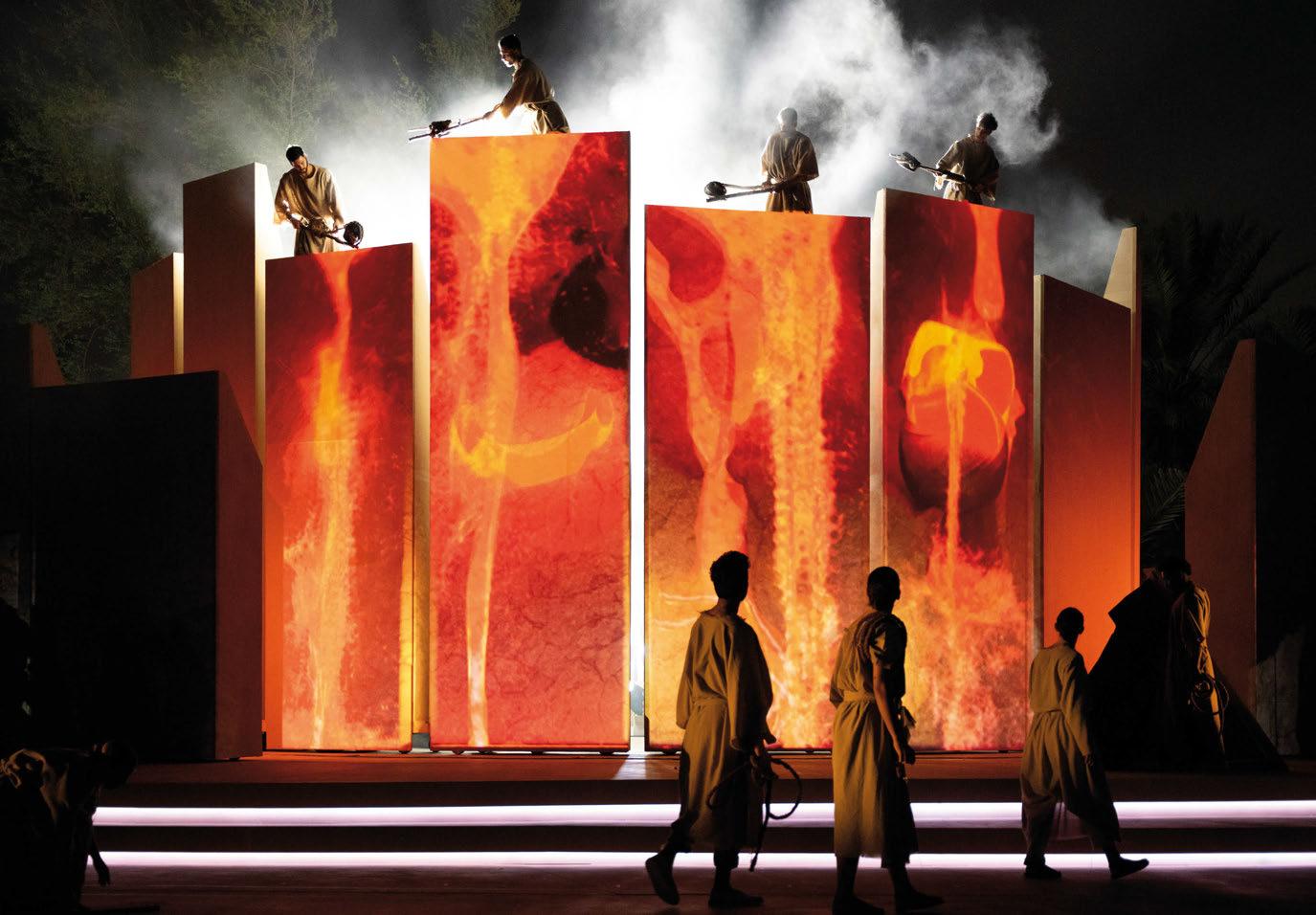
museum architecture, the stage design was carefully considered, with Scenic Designer Andrea Faini lending his vast experience and creativity to the layout, aesthetic and movement opportunity of the performance area.
“The stage was a crucial element of the show; in fact, it’s where we began,” Raysbrook recalled. “The physicality of Al Ain called for the stage to drive the action, but we also had to ensure the museum remained the protagonist. The stage Andrea and I created became a playground – a multilayered, transformative space capable of telling many stories in and around it. At its core, it represented layers that could be moved and journeyed through, but its ability to shift form, create narrative-driven motifs and move as part of the show made it much more.”
Th e DAE technical team was led by Technical Director, Tarmo Krimm, with support from Technical Systems Manager, Shannon Gobell. The on-site technical leadership team also included: Technical Staging and Scenic Manager, Felipe Malta; Audio and Comms TM, Ramchander Sankar; Broadcast and Rigging TM, Timo Tali; Power TM, Daniil Kulyakov; and Majlis and Guest
Services TM, Dmitri Lesnikov. “The entire team on this project were invaluable, and every single person played their part,” Raysbrook stated.
Te chnical Director Tarmo Krimm’s involvement in the project began with a remote preproduction phase, during which he scoped the technical documentation, confirmed feasibility of creative ideas with the engineering teams, aligned the production schedule with the creative workflows, and set up the communication structure between all departments. “After the remote phase, we spent a week in Dubai conducting detailed site assessments, verifying measurements, coordinating with local suppliers, and finalising the integration plan for staging, scenic, lighting, video, audio, and comms,” Krimm explained. “This period was also used to close any outstanding technical gaps and prepare the site for the build.”
Th e stage and supporting temporary structures were constructed over a three-week build period, which included the installation of all scenic elements, automation components, cable infrastructure, power distribution, and showcontrol systems. “Following the build, we ran two weeks of rehearsals to refine cueing, validate all
system integrations, execute full technical runs, and program the sound, lighting, media servers, and automation,” Krimm added. “Once the show was completed, the project closed with a 10-day load-out that involved dismantling the temporary structures, managing equipment returns and ensuring proper site handover.”
With a compressed timeline and no practical window for trial-and-error or gradual iteration, the entire production process shifted almost directly from early conceptual work into full-scale production. “Inevitably, this meant that certain design refinements and technical adjustments occurred in parallel with the installation on site,” Krimm explained. “This parallel workflow places pressure on all sides. It also means monitoring how each adjustment affects interfaces between departments – because even a small modification in one area can cascade into others.”
This expedited way of working meant the administrative side was even more important. “Every evolving detail must be captured in the paperwork. In a fast-moving project, administrative accuracy becomes a critical backbone, ensuring that rapid decisions made on

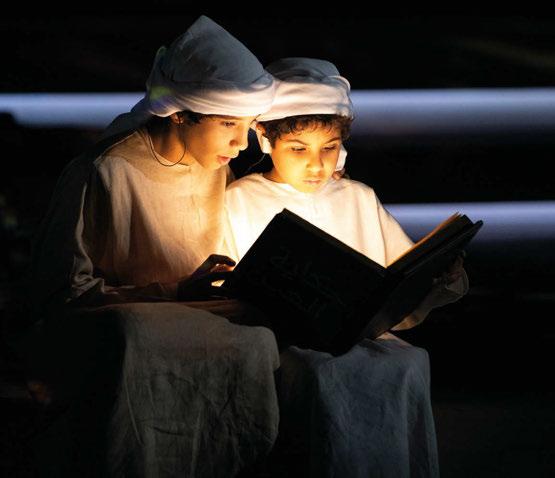
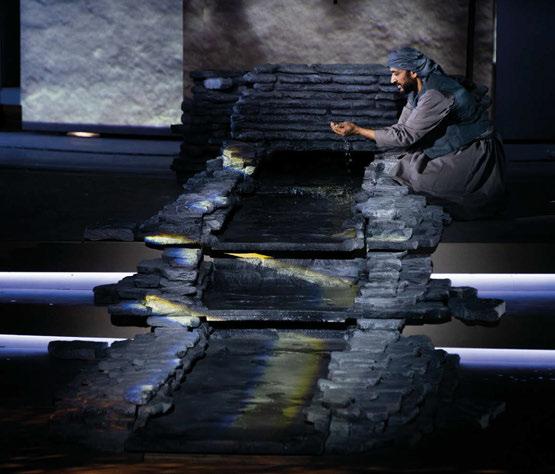
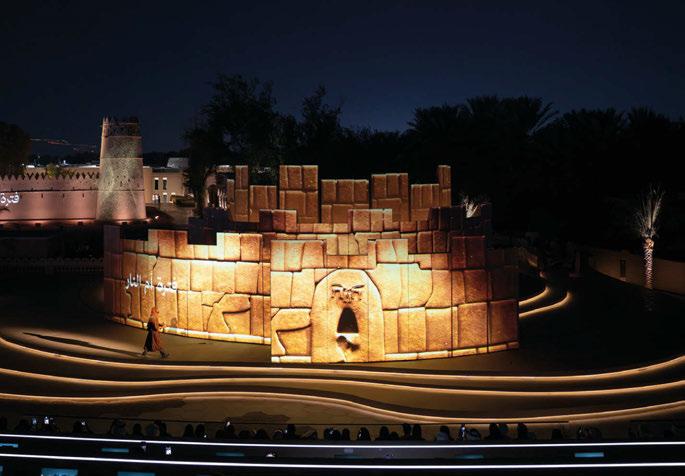
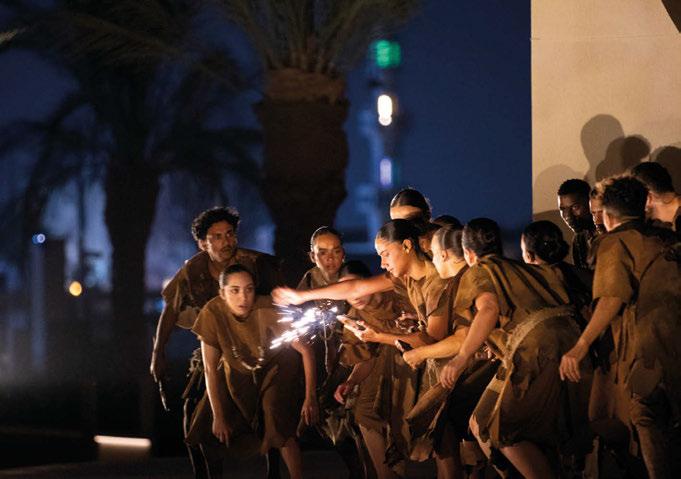
site are properly documented and contractually aligned,” Krimm stated, noting that it falls on the suppliers to absorb and action a large number of changes, often with very little lead time. “Flexibility and responsiveness become essential qualities. Vendors need enough resources, the right mindset, and the technical depth to adjust their approach without compromising safety, compliance, or the show’s creative intent.”
Another major operational challenge was the requirement for the full broadcast infrastructure to be installed, commissioned, operated, struck, and then deinstalled within a four-day window. “Despite this compressed schedule, the creative expectation for broadcast quality remained set at the highest level,” Krimm stated.
Th e show was captured using a system of 16 4K broadcast cameras supplied by Live Productions from Abu Dhabi Media Network, with the broadcast overlay integrated into the installed audio and video infrastructure. This allowed the camera mix to be fully scripted and executed through LiveEdit. “Under normal circumstances, the installation alone would typically require up to three days,” Krimm said.
“Meeting this accelerated timeline demanded exceptionally tight technical coordination across all departments. It was achievable only due to the capability and efficiency of the Live Productions team, who were able to mobilise rapidly, ensuring that each phase of the workflow remained aligned, executable, and fully supported within the constrained schedule.”
Stage and scenic
DAE’s unique proposition during the bidding process was to utilise the space between the museum and a nearby oasis area – something that Raysbrook believes was a key driving factor to the show’s success. “The creative was all about journeys through layers and time, so the journey between the fort, museum and oasis was a strong storytelling device, and the stage became deeply strategic and purposeful in telling this story,” she recalled.
Th e main stage was a malleable performance area, made up of 32 monolithic structures ranging from 3.7m to 6m tall – some of which were automated and some of which were able to be moved manually. “The stage was very
theatrical by design,” Raysbrook explained, adding that Faini’s design combined with the expertise of Wonder Works. “Realising this within this unique setting was instrumental in its design.”
Wonder Works was brought in during the bidding process to provide technical design, drafting, and consultancy for the show. “My main task initially was developing an accurate 3D model of the site to help evaluate feasibility and support the early design conversations,” revealed Wonder Works Technical Designer, Héctor Gaitán, who explained that the first step was building a detailed 3D model of the museum and its surroundings. “We then integrated the developing set design into that environment.”
Gaitán also produced back-of-house zoning layouts to support early planning. “To do this, I used AutoCAD to retrace the key geometries and take advantage of its geolocation tools for accurate site and positioning information,” he explained. “I also used Adobe Illustrator to extract vector data from PDFs, ensuring we could work from the best available references.”
One of the biggest early challenges for the Wonder Works team was building a reliable
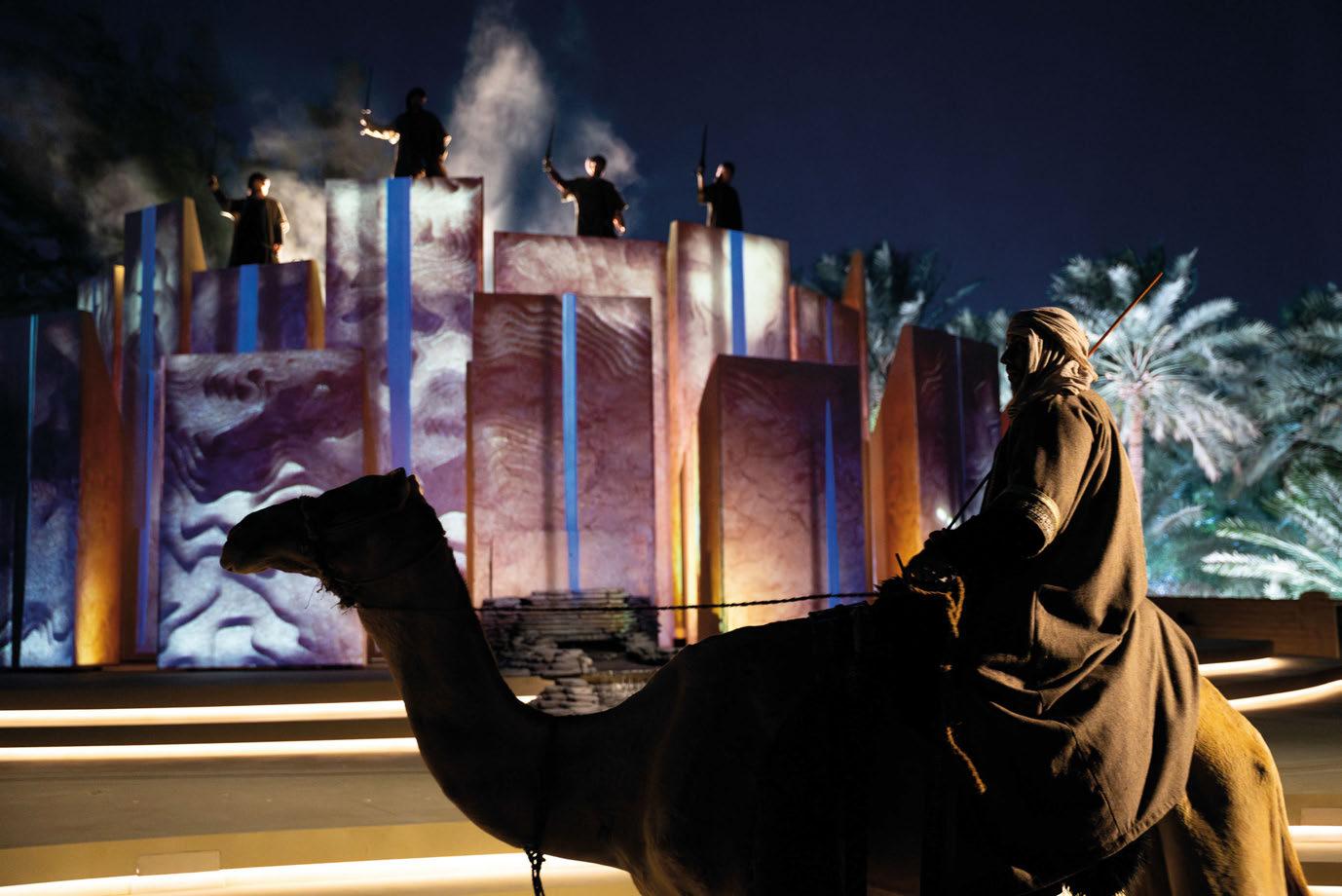
3D model with the limited images and PDF drawings available. “Once that was achieved, the next step for us was to convert the creative team’s conceptual models into precise technical drawings,” Gaitán recalled.
“The main difficulty here was consolidating information from multiple sources and formats, interpreting it correctly, and then translating it into accurate, native AutoCAD geometries.”
Visiting the site just before the rehearsal phase began, the Technical Designer described the experience of seeing the physical environment take shape as “extremely rewarding”. He added: “It was satisfying to see how the technical work I contributed to had directly supported the final design. DAE Global put together a great team and I am looking forward to collaborating with them again.”
With the stage designed to be “as manual as possible”, a single layer of automation was specified for the central structures, with all the outside structures moved manually.
“It’s such a human-led story, that it really worked when the audience could see people physically pushing and pulling the structures
during the show, not just in transition,” the Creative Director commented.
Automation was handled by Stage One, which also fabricated the steel frames for the panels in its Abu Dhabi warehouse, before they were sent to site, where VK Exhibition clad the backs and painted in a projection-friendly textured surface.
“The whole project from our side was conducted using equipment that was already in the country,” reported Stage One Technical Director, Rob Parkin. “We have a healthy inventory that is based permanently in Abu Dhabi now, which means we can react quickly, which was exactly what was required for this project.”
While Parkin described the automated system as “straightforward”, he noted the use of Pepperl+Fuchs to ensure that the moving panels, which were powered via friction drive wheel, were referenced accurately. The biggest challenge, according to Parkin, was the engineering of the panels.
“That had to be carefully considered,” he stated. “The panels had to be lightweight enough so they could be moved around easily on stage, but heavy enough so they weren’t blown over by
the wind.” Much like the rest of the team, Parkin attributed the success of the project to the longrunning interdepartmental relationships built up over many years.
“We’ve worked alongside Al Laith and VK for more than a decade, and we know how to work on what others might consider impossibly tight timelines,” he commented. “This project was another example of what is possible when the right team comes together.”
Power
DAE Global engaged FLOW to deliver a complete temporary power and distribution solution for the project. “This was an event of national and cultural importance that required precision, reliability, and sensitivity to its heritage surroundings,” explained FLOW’s Account Manager for the project, Sumanth Shetty.
“The objective was to provide stable, uninterrupted power to all operational and show elements while maintaining minimal visual and physical impact on the site.”
The company supplied power capacity in excess of 3,300 kVA, distributed through over
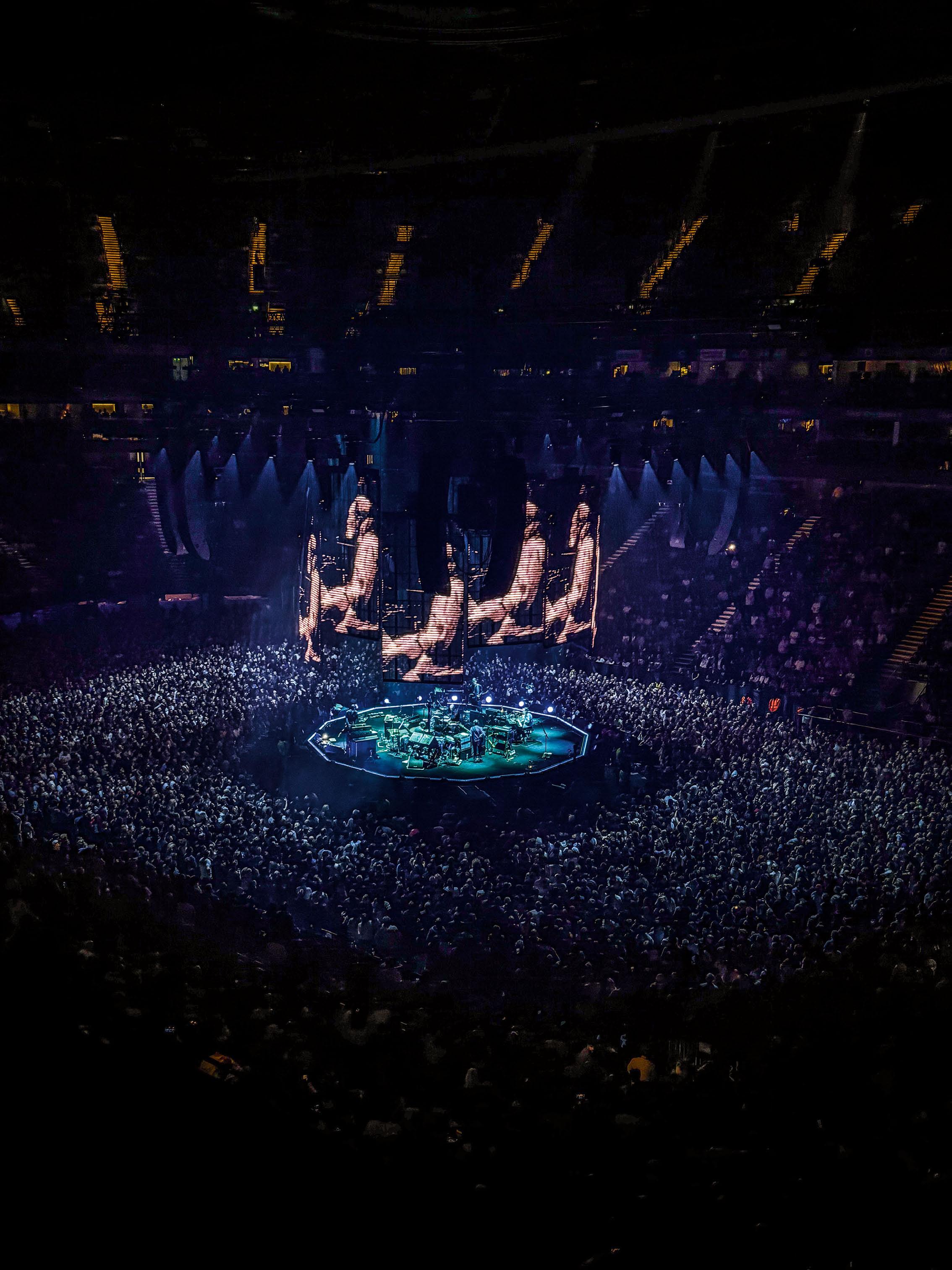


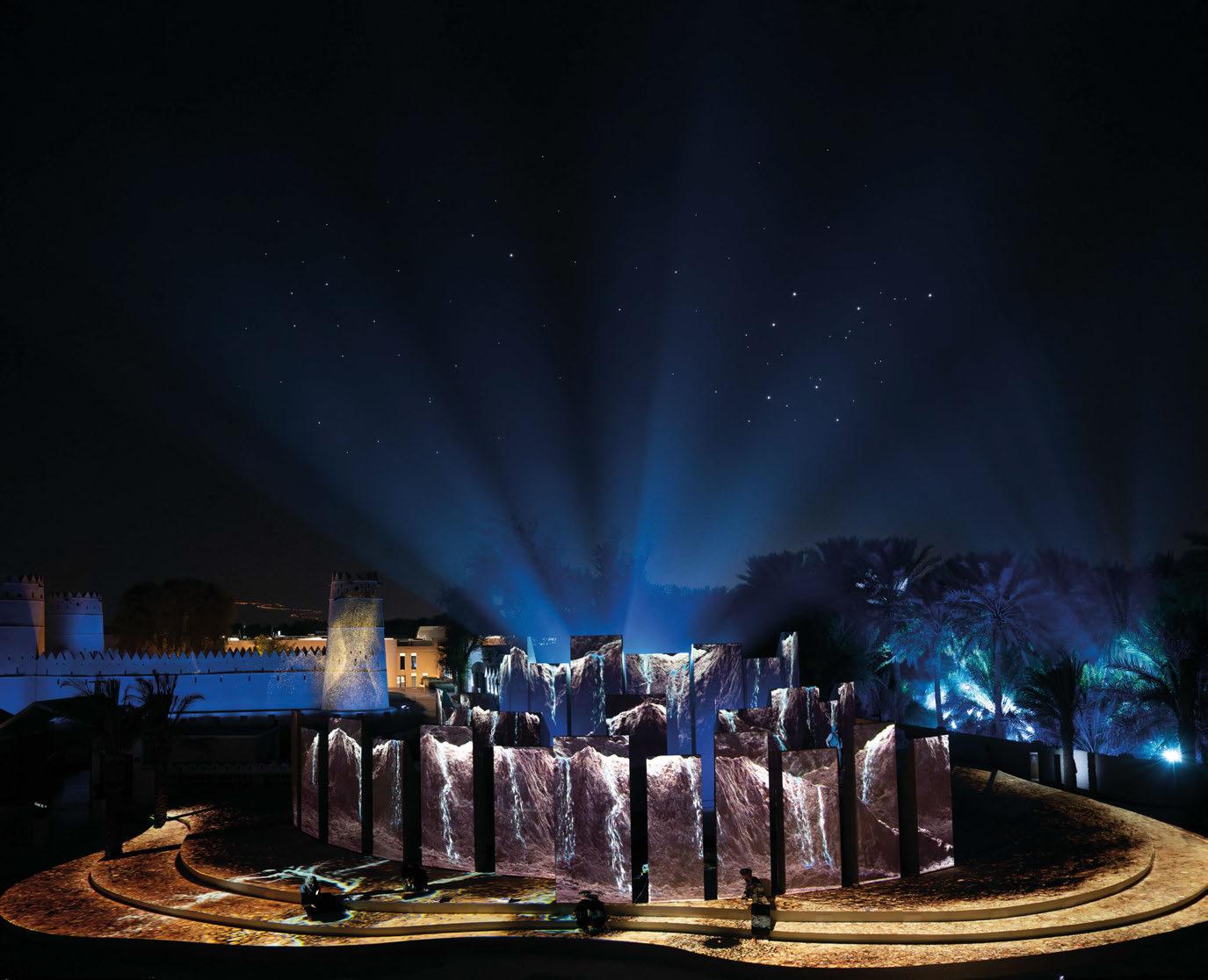
80 power distribution units and more than 15,000m of cabling across the venue. “We deployed biofuel-ready generators, supported by dedicated power engineers and project managers overseeing every stage of delivery,” Shetty revealed. “Given the scale and significance of the project, we maintained round-the-clock technical coverage, ensuring continuous supervision and rapid response throughout setup, rehearsals, and event days.”
FLOW’s process began with a comprehensive site survey to understand the museum’s layout, load distribution, and access constraints.
“Working closely with DAE Global’s technical team, we developed a detailed power strategy –mapping generator locations, cable routing, and distribution layouts that balanced efficiency with preservation of the museum’s architecture and visitor pathways,” Shetty said.
“O ur engineering and operations teams then translated these plans into detailed load schedules, single-line diagrams, and installation drawings. Once finalised, our crew mobilised for setup, managing installation, testing, and commissioning under the direct supervision of FLOW’s project managers and power engineers.”
Throughout rehearsals and show days, FLOW’s monitoring and load management systems ensured that the network operated efficiently, optimising load distribution and bringing significant fuel savings without compromising performance or reliability.
Th e vast scale of the venue presented one of the key challenges. “The museum grounds required long cable runs between key areas, which in typical conditions could have caused voltage drops,” Shetty explained. “We mitigated this through careful load balancing, the use of appropriately sized conductors, and strategic placement of distribution units to maintain steady voltage across all zones.”
Working within a heritage environment also meant strict access controls and a need for discreet routing, with every route and cable drop planned meticulously to avoid visual or physical disruption. “The entire power infrastructure functioned flawlessly and remained almost invisible to guests throughout the event,” Shetty reflected, giving his overall impressions of the project. “Most of all, it was the teamwork that stood out,” he concluded. “The collaboration between FLOW and DAE Global’s technical team
was exceptional – transparent, proactive, and solutions-driven at every stage. It was a project that demanded precision and cooperation, and both teams delivered exactly that.”
Mus ic composition
Tasked with composing, arranging, and producing an original soundtrack for the show, Musicom blended a 35-piece string orchestra with synthetic and organic textures, Arabic solo instruments, and Emirati choirs.
“The soundtrack needed to be synchronised with all content and staging elements, including cast and choreography, video content, lighting, drones, and automation – and needed to be specified for an immersive sound system,” explained Producer, Renaud Charlier. “The music was designed to illustrate and enhance the rich heritage of this UNESCO World Heritage site and the entire region, brought to life through remarkable archaeological discoveries.”
Af ter receiving a brief rich in historical and archaeological details, the Musicom team, led by Music Director Pierre Mussche, kicked off the composition process at its Belgium HQ. Once a solid demo version was approved by the show
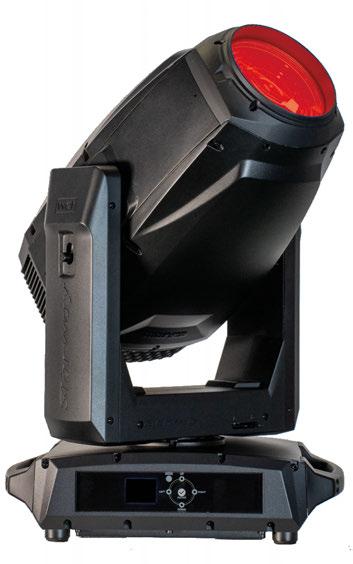



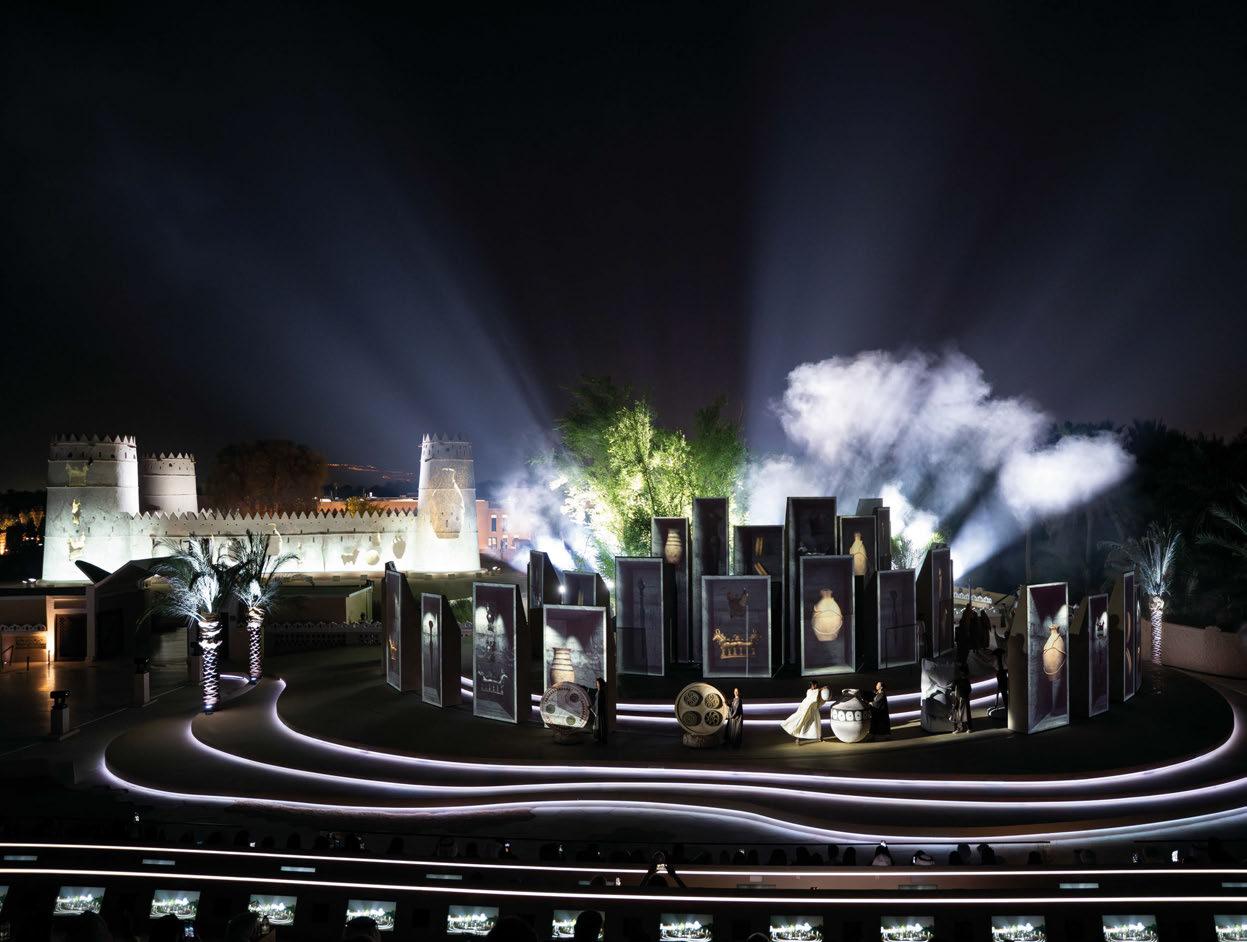
director, it was sent to Musicom’s longtime Emirati partner, Mohamed Al Ahmed of Studio Al Watan, who was responsible for the additional Arabic composition and arrangements.
“We then finalised the orchestral arrangements, orchestrations, and the production of the full score and parts,” Charlier recalled. “The orchestral recordings were scheduled in London at the renowned Air Lyndhurst Studios, featuring 35 top-tier string musicians conducted by the brilliant maestro, Nicholas Dodd.”
With track counts reaching as high as 350 individual music tracks for certain musical segments, the widespread use of Avid Pro Tools was crucial to ensure a seamless production process. “This kind of multi-collaborative production is only possible because all teams work within the same industry-standard recording, editing, and mixing platform,” Charlier said of the software.
Af ter meticulous editing and mixing, the master files were sent onsite to Auditoria, which spatialised the music for the L-Acoustics L-ISA system. “The artistic value and coherence of the
project were nothing short of extraordinary –especially given the incredibly limited production time,” Charlier reflected.
“M usical and visual elements merged seamlessly, with every colour, texture, and movement intertwined in perfect harmony. The meticulous attention to detail – from mapping the content to synchronising the choreography – was beautifully underscored and elevated by the musical arrangements. We truly enjoyed the show, and the audience’s response was nothing short of overwhelming.”
Audio
Auditoria designed and delivered the full audio and show control systems, also handling sound design content creation. System Engineer, Ethan Curry talked through the project: “The challenge was to create an immersive and engaging sound field that felt natural and emotionally connected to the storytelling, while keeping the technology invisible within the environment,” he noted.
To a chieve consistent coverage and spatial interest across a large outdoor grandstand, the system was built around a layered loudspeaker
design. Over 300 L-Acoustics 5XT and 50 SB10i loudspeakers were integrated into the seating structure to provide nearfield stereo for every listener. These were complemented by KARA II and X6i speakers concealed within the stage fascia and a rear-surround layer of X12s to enhance depth and localisation.
At the centre of the control infrastructure, a dual-engine DiGiCo Quantum 7 console and dual-redundant Ovation replay systems delivered timecode-based playback across 128 channels of MADI, distributed via a fully redundant Optocore network. Spatial processing was handled by a pair of dual-redundant L-Acoustics L-ISA II processors following timecode to trigger programmed snapshots containing object trajectories and room engine changes to enhance the spatial experience.
Au ditoria made key refinements in the final weeks to improve spatial detail and reduce visual impact. “We transitioned from a wide-stereo concept to a layered system design, which improved immersion and preserved the clean visual lines of the stage and museum façade,” Curry explained. The final system provided
precise localisation, dynamic range, and smooth tonal balance across the audience area. “The show was a beautiful experience, highlighting the history of Al Ain through the ages, brought to life with technology, performance and creativity,” expressed Curry. “To deliver a project of this scale in such a short time frame, with that level of care and collaboration, was a real achievement.”
Working closely alongside Auditoria was Clair Global, which supplied the audio equipment as well as an extensive comms package. Al Woods, COO at Clair Global UAE, shared his take on the collaboration: “We work really well alongside Auditoria and our team, Matt [Oliver], Edo [Michelori] and Nico [Pisano] are aligned with and have a long-term understanding of Auditoria’s design and delivery approach,” he shared.
“From a supplier perspective, their design approach to the overall delivery of an audio solution is exceptionally detailed,” he added. “This makes the supply of human resource and equipment much easier as it is very well planned and documented.”
With the site still under construction during the load-in phase, there were no shortage of challenges to overcome. “This included design changes, which were navigated and dealt with by Auditoria then fed to Nico to execute onsite,”
Woods explained, adding that the complete system was connected with an SM Xtreme fibre network, with more than 3,000m of fibre ran in for audio alone. “All elements of the design ensured complete redundancy across the audio design – something we’ve become accustomed to while working with the designers at Auditoria,” Woods added. “It’s always a pleasure to work with them as it gives us the opportunity to work on complex and interesting systems.”
Clair also provided communications for all departments, with a sitewide deployment of Motorola R7 two-way radios and repeaters, as well as a fully redundant show communications system featuring a Riedel 1024 Artist frame hub with eight field nodes, 45 Smart Panels, and 80 Bolero for all show-related departments.
“This included integration of simplex radios and audio feeds into the duplex comms system, FM mass cast systems and SIMPTE distribution to all users,” Woods detailed, noting that communications covered not just the venue but also the rehearsal, backstage and remote sites for drone launches.
Wo ods concluded by reflecting on the “flawless” delivery. “I’m extremely proud of the Clair team – both onsite and back-office staff – who work tirelessly to give our clients an
exceptional experience,” he commented. “Tarmo Krimm and the whole DAE team were great –efficient, and supportive in such a challenging working environment.”
Tracking
PRG played a major role in the project, supplying an extensive technical package including lighting and video, and deploying an experienced team to handle the delivery.
Director of Account Management, Harry Lister, gave his thoughts on the project: “Preproduction is key on a show such as this, and that started from the moment we received the RFP. DAE’s technical department put together a stunning set of documents, which clearly outlined what equipment they needed and set the expectation of what the team were looking for on this project,” he recalled. “In return, we assembled a world-class project team to work on this, with Didrik Paulsen running pre-production and planning, Damien McGurn leading onsite project management, Yves Winand and Tyron Windell heading up video, and Brandon Labuschagne and Regard Odendaal taking care of lighting.”
Te chnical Systems Manager, Shannon Gobell, added his take on the technical challenge: “It was a complex show with a lot of technology, but
UPGRADE
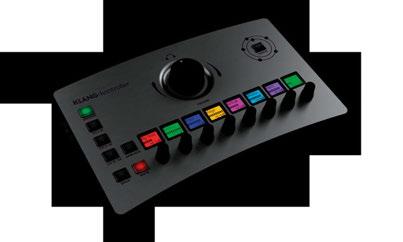

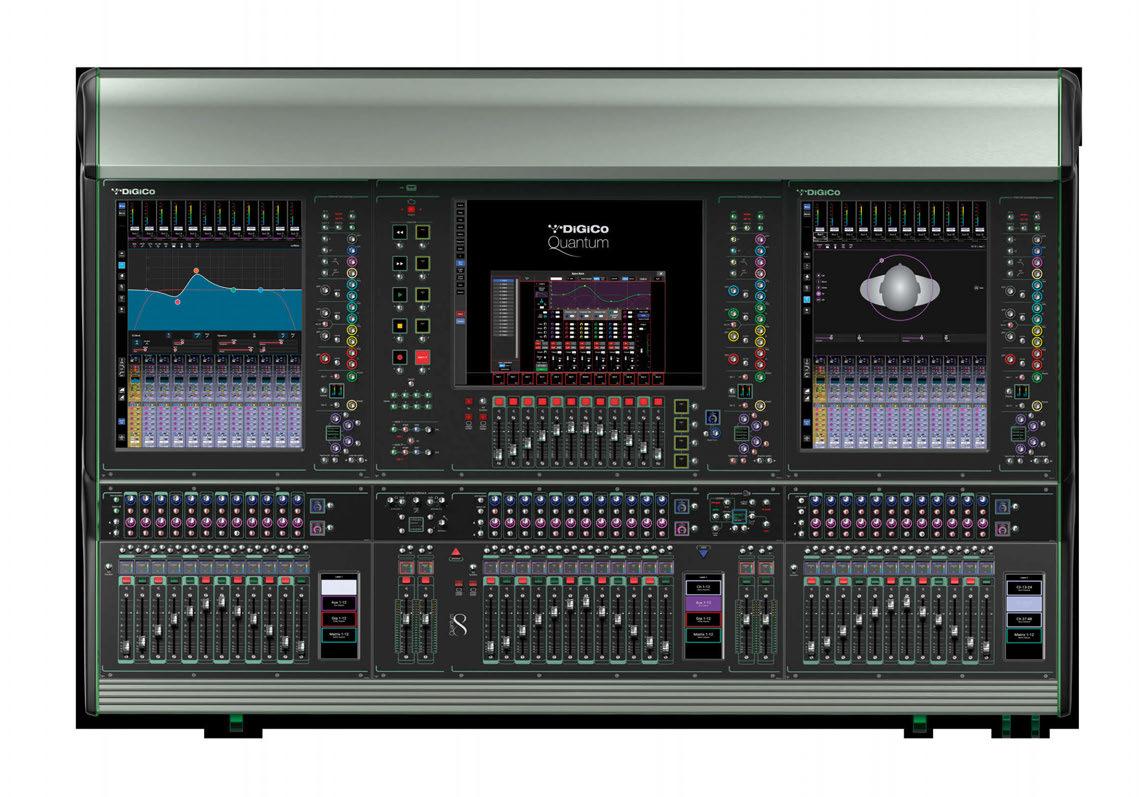

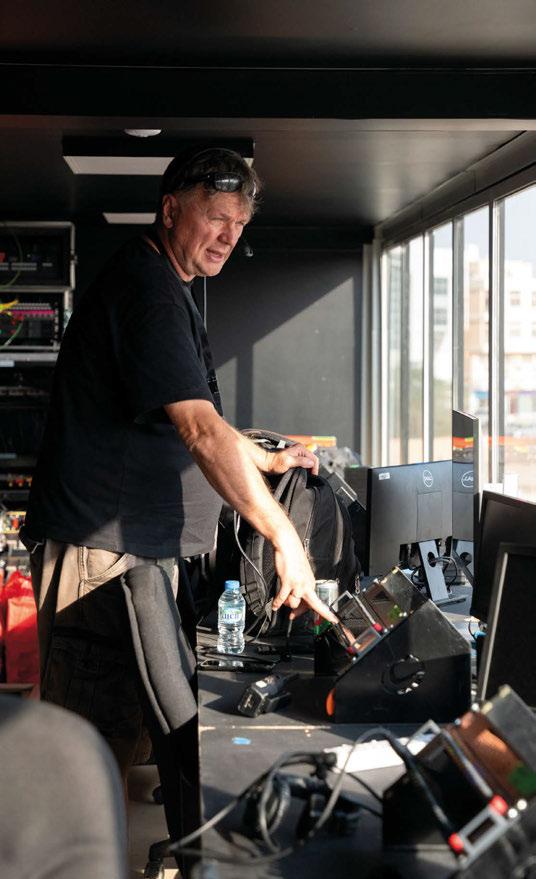
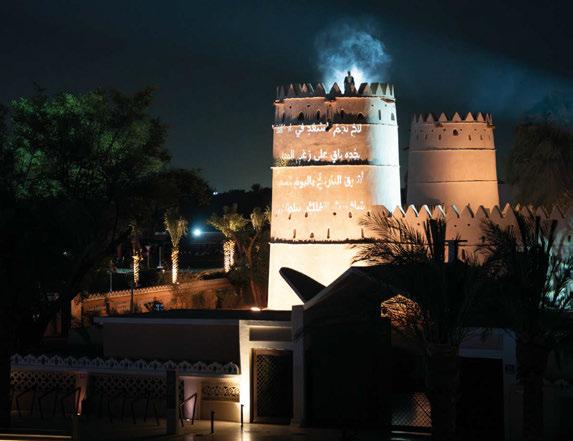
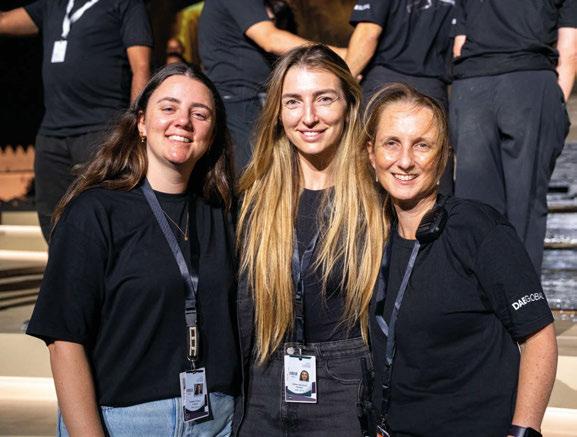
this technology was buried into the environment around the stage and cleverly integrated into the stage so the magic would happen without the technology intruding – particularly in relation to lighting and audio,” he stated.
Th e tracked projection solution provided a major technical challenge, with a sophisticated CAST BlackTrax system used to track each of the 32 monolith scenic panels as they moved around the stage.
“The show was outdoor, curved and there was no time to do any pre-scope testing, so we knew that we needed a dedicated team looking into this,” Lister stated, explaining the decision to bring in CAST to work directly with the production team to deliver the tracking scope. “They provided great support, equipment and personnel,” he added. “No doubt, this was one of the most complex projection tracking scopes delivered to date, so having the support of Dekkar Densham and his team was very helpful.”
Go bell added: “The challenges with BlackTrax performing at the high levels of expectation we had of the video system and the projected visuals took an entire village of exceptionally talented individuals from all over the globe
bringing their minds together; the system was pushed in ways most thought were not possible.”
Joana Provido and Nicholas Lau represented CAST and BlackTrax on site in Al Ain. “Splitting between day and night shifts meant we were able to provide continuous coverage, supporting installation during the day and working through rehearsals and programming sessions overnight,” Lau explained. “We collaborated closely with the wider production team to ensure all physical and technical infrastructure –networking, cabling, and sensor hang locations – were correctly implemented and optimised.”
Th e BlackTrax system was engineered to operate in an exposed outdoor environment, where shifting weather conditions demanded robust, weather-ready hardware. The system included 14 brand-new, IP-rated Versa Sensors – eight BT Sensor VX41 units and six BT Sensor VX120 units – marking the world’s first deployment of the new Versa line. “These sensors delivered flawless, uninterrupted tracking and stood up to the elements without the need for external housings,” Lau explained.
Ea ch scenic panel was outfitted with two BlackTrax Classic Beacons and six Flathead
Stringers, bringing the installation to a total of 48 beacons and 144 stringers. Together, they enabled the system to track up to 144 points simultaneously with high precision and reliability. The system was driven by a main and backup BlackTrax server configuration, supported by a Controller Kit for synchronisation. PRG provided a robust 10G Netgear AV network as the backbone, and fibre was fed directly into both servers to ensure maximum reliability and bandwidth.
Te chnical Director Krimm reflected on the need for redundancy: “This ensured that the tracking cameras always had multiple stringer reference points available, even if some of them became obstructed due to the monolith’s travel, cast blocking the view, or an angle that pushed a point outside the visible field,” he explained.
“Further fine-tuning allowed PRG to refine the tracking calibration, positional smoothing and introduce predictive offsets to keep the images perfectly aligned during the movements.”
On e of the primary challenges for the CAST team involved the movement of the scenic panels and how this affected the positioning of the BlackTrax Classic Beacons and Flathead Stringers. “Most panels were mounted on a track
and operated manually, and because they were secured at the bottom, the upper portion of the panels naturally exhibited a slight sway while in motion,” Lau explained.
“Given BlackTrax’s high tracking fidelity, even this subtle movement translated into visible shifts in the projection output,” he continued. “To address this, we strategically installed additional Classic Beacons and Stringers lower down the panels, keeping the calculated tracking centre closer to the most stable point of the structure. With improved physical stability, we were able to refine the data further using a combination of prediction and smoothing tools. This approach significantly enhanced overall tracking consistency and delivered the stable visual result the creative team needed.”
Af ter nearly a month on-site, Lau described the feeling of seeing all departments’ work come together as “incredibly rewarding”. He stated: “Every production element integrated beautifully, supporting the storytelling and creating a unified visual experience. I’m proud to see BlackTrax play a key role behind the scenes.
“Productions of this scale are always a learning opportunity, and collaborating with such a high calibre team has provided valuable insights. We will take those learnings forward as we continue advancing tracking technology and supporting future creative projects.”
Video
PRG deployed Barco UDX4K40 projectors across the site for the main stage and fort area, all running redundantly through Disguise VX 4+ media servers. “We also engaged EVOKE to work with us closely on the Disguise side of things,” Lister noted, praising Patrick Morris, Kristaps Liseks, and Chema Menendez for their “incredible support”.
With a significant amount of media servers running on site, Disguise also played an integral role from remote, creating software patches within short notice to help with the stability of the very large and complex BlackTrax system onsite. Technical Systems Manager, Shannon Gobell added: “I thank Peter Kirkup and all the wonderful people (right around the globe) behind the scenes at Disguise who assisted with the software patches.”
As well as the projection scope, PRG also provided the embedded VVIP console monitors and the 4K camera for monitoring and wide shots. “The video network ran across the site using Riedel Micron UHD units, as we were looking for redundancy, flexibility and 4K capabilities,” Lister added.
Gobell also placed on record his appreciation for PRG and Lister. “Harry offered incredible support right through the project,” he said. “His willingness to do whatever was needed to support the lighting and video creative development through beautifully integrated and well-considered technical solutions was a massive help.”
Video content was designed by Luke Halls Studio, and TPiMEA caught up with the man himself following the show to get his take on the project: “It was a quick turnaround and a tricky set to design for, with multiple free-moving projection surfaces and heavy use of BlackTrax, so it was useful to have CAST on site,” he recalled.
With time at a premium, Halls adopted “oldfashioned previz methods”, running through
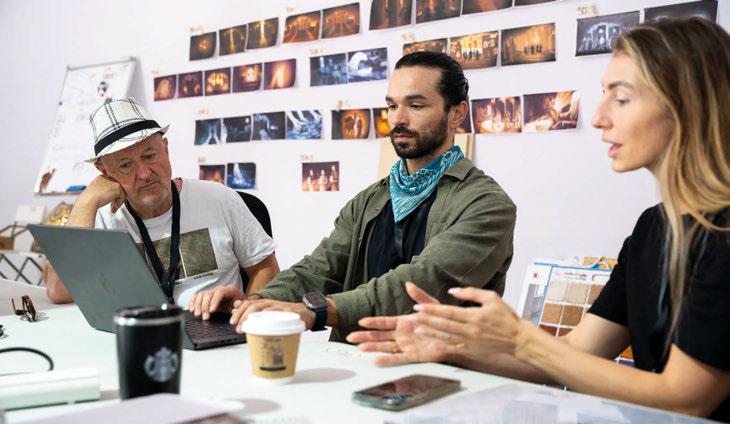
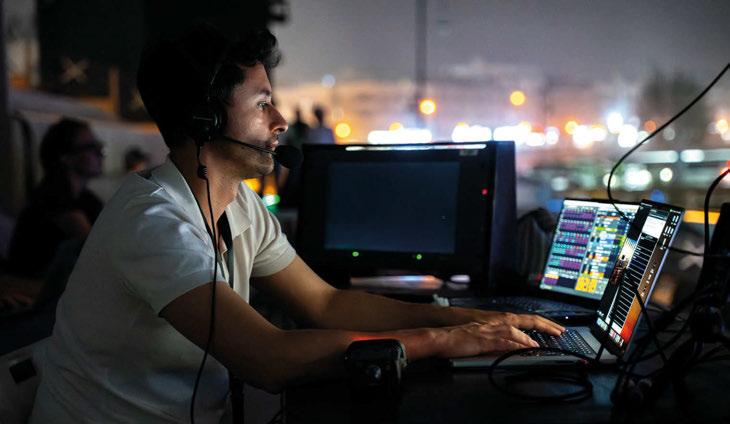
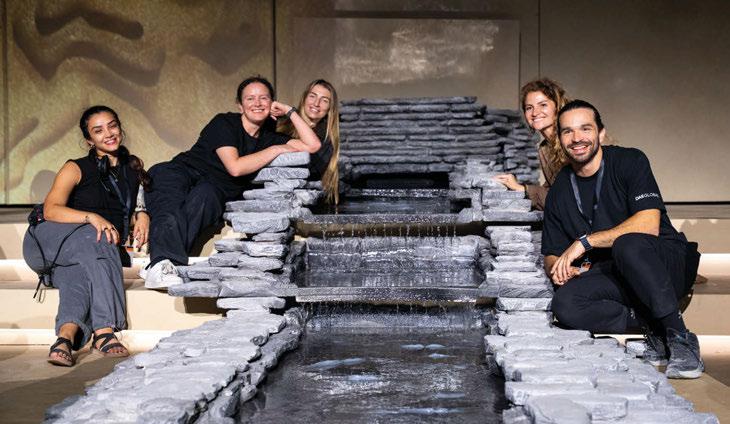
Opposite left: Technical Director, Tarmo Krimm. Opposite right: Head of Creative Production, Annabel Van Weel, Executive Creative Director, Chelsey Raysbrook, and PSM, Felicity Hollingbery. Above top: CEO, David Atkins with Senior Choreographer, Luis Florencio, and Chelsey Raysbrook. Above middle: Lighting Designer, Max Narula. Above: Choreography team including Staging Director Sian Kelly and Chelsey Raysbrook.
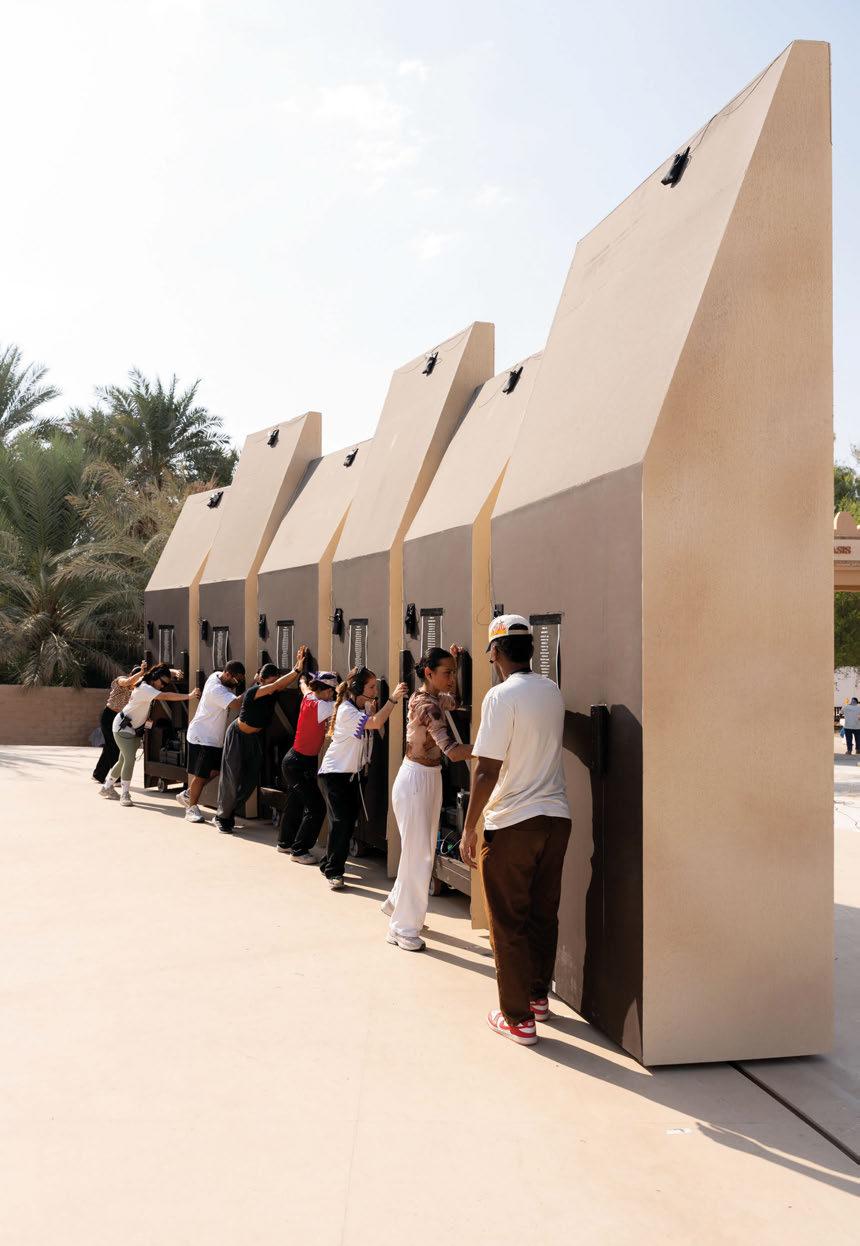
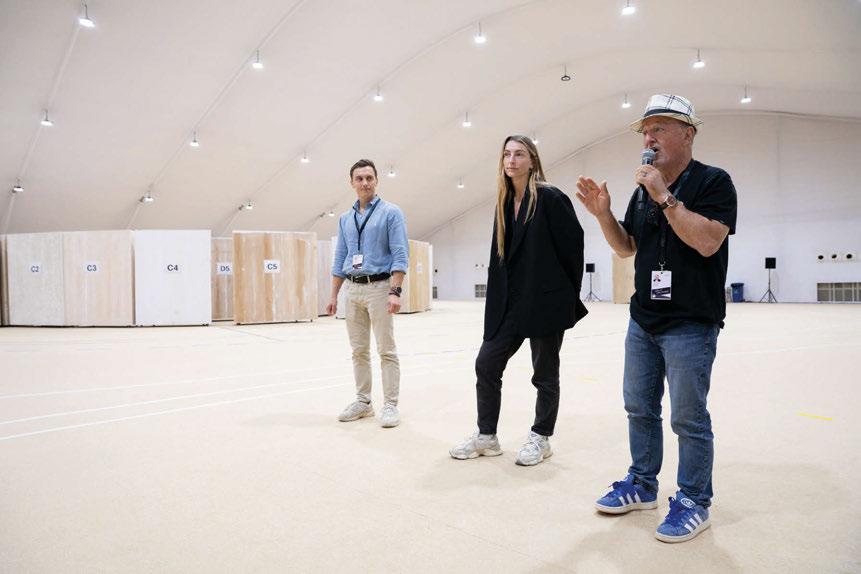
content in the real built environment rather than in the virtual world. “I would load the content into the run-throughs, learn what I needed to learn through those, and then go back and build it,” he recalled. “It wasn’t until the last couple of days that we really saw the tracked content working how it was intended.”
Th e content played with the concept of layers, taking the audience through both the physical archaeological layers and metaphorical layers of time told by the creative. “A lot of our work on this was quite elemental,” he revealed. “We put a lot of effort into studying the rock formations in the area, making sure that the content represented the right kind of rock and the right kind of sand for the locale. These details are so important to the authenticity of the show.”
Halls paid tribute to the strong working relationships that were shared on every level throughout the production team. “I’ve worked closely with Chelsey many times before and we have built up a good shorthand, which helped us bring together the project super quickly,” he commented. “Every department worked very well together and that shows in the result.”
Lighting
Also praising the collaborative approach was Lighting Designer, Max Narula, who worked on the project under the guidance of Bruno Poet. “One of the nice things about working with DAE and Chelsey especially is that video, lighting and audio departments are all treated as fully fledged members of the creative team,” he told TPiMEA. “It means that the whole team can come together to work out production challenges before they become problems, which invariably ends in a better show.”
With lighting very much playing a supportive role to the video, the confidence that “lighting doesn’t have to do everything, all the time” was key to Narula’s design. “We work with Luke Halls Studio a lot and we’ve developed a good understanding of when we need to go big with lighting and when we need to step back and allow the projection to take centre stage,” he explained. “This show was primarily about projection, so the priority was ensuring that we created an environment where the projection was brilliantly legible and clean and there was absolutely no spill from the lights on any of the projection surfaces.”
Narula described how the creative brief specified that as few technical elements as possible should be on display. “It’s impossible to hide every fixture completely and still get the desired output, so we had to strike a balance, and we used clever theatrical tricks to get enough light into the areas we wanted without everything being out on show,” he recalled.
The nearby fort was given equal prominence to the stage, with projection and architectural lighting utilised to pick out the lines of the building. There was also a lot of care and attention given to the oasis area, with beams of light firing through the palm trees.
PRG supplied the lighting rig, which included Ayrton Domino LT, Nando 502 and Rivale as the main workhorse fixtures and Robe iFORTE LTX used for follow spots. “The Rivale are great,” Narula reported. “They look great on camera and don’t lose any intensity when you put colour through them.”
There was also a selection of Astera products deployed on the project, with PRG’s Lister
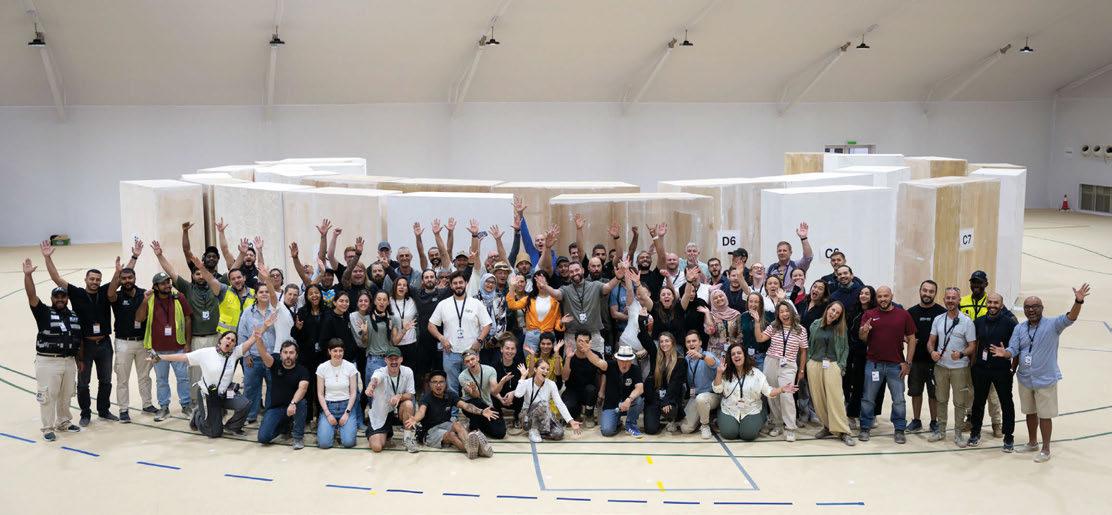
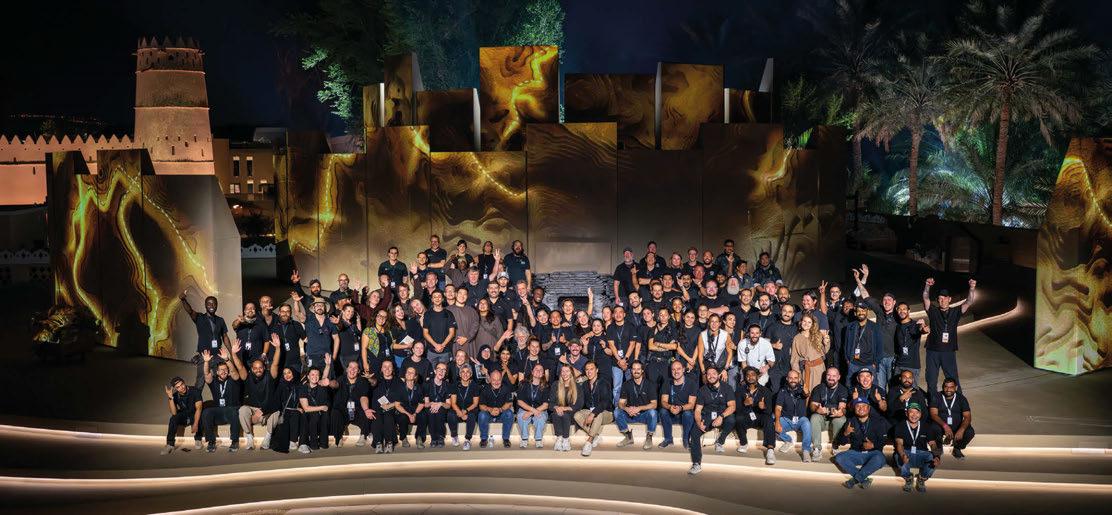
Opposite top: First tech rehearsals on set with cast. Opposite bottom: Executive Producer, Egor Seregin, DAE Global Middle East Executive Director and Executive Creative Director, Chelsey Raysbrook, and CEO, David Atkins.
Above: The DAE Global Al Ain Museum team.
describing the use of the Hyperion Tubes at the rear of the main automated panels as “a masterclass in placement” from Narula and the Bruno Poet team.
“As well as the show control, which comprised several MA Lighting grandMA3 consoles, we also set up a previs suite for the lighting design team onsite,” Lister noted. “We love working with great people, and Max Narula and Johanne Jensen are just that.”
He added: “Working on ceremonies is unlike any other show environment. There’s something truly special about watching everything come together on the night; it’s a feeling few get to experience. We were proud to collaborate with the world-class team from DAE, whose expertise and creativity elevated every aspect of the production. I’m inspired by people who challenge convention and push us to see things differently,
which is why I always value working with Shannon Gobell. Every project we tackle together sets a new benchmark for the next.”
SFX
AVM-SFX designed, supplied, installed, and operated the special effects. “Our scope covered multiple scenes across the show, including flame, atmosphere, and mechanical wind effects, as well as handheld SFX elements,” explained AVMSFX’s Hanre Rossouw. “We worked closely with the creative team, stage management, props, and technical departments to ensure every effect integrated seamlessly into the performance and met all safety requirements.”
Rossouw was brought into the creative process long before the effects were finalised. “As creative continued evolving the scenes, we proposed the SFX concepts in parallel – testing,
redesigning, and adjusting based on staging, timing, and practical limitations,” he recalled. “On site, our team managed the complete install, including the boat-mounted fans, spark effects, flame tray integration, holipowder deployment, and all backstage infrastructure.”
Ac ross the four major scenes, a mix of atmospheric and flame-based effects were deployed, including: custom flame trays, producing a clean and consistent 30-second flame effect; Antari AF-4 Fans, used to create wind movement of the sail on the boat; AVMSFX’s most powerful S&P Fans in combination holipowder, providing an instant dusty haze during two key performance scenes; and handheld pyrotechnical handheld squib effects.
Ac cording to Rossouw, the main challenge was the rapid pace of creative changes. “Effects were still being designed while we were already
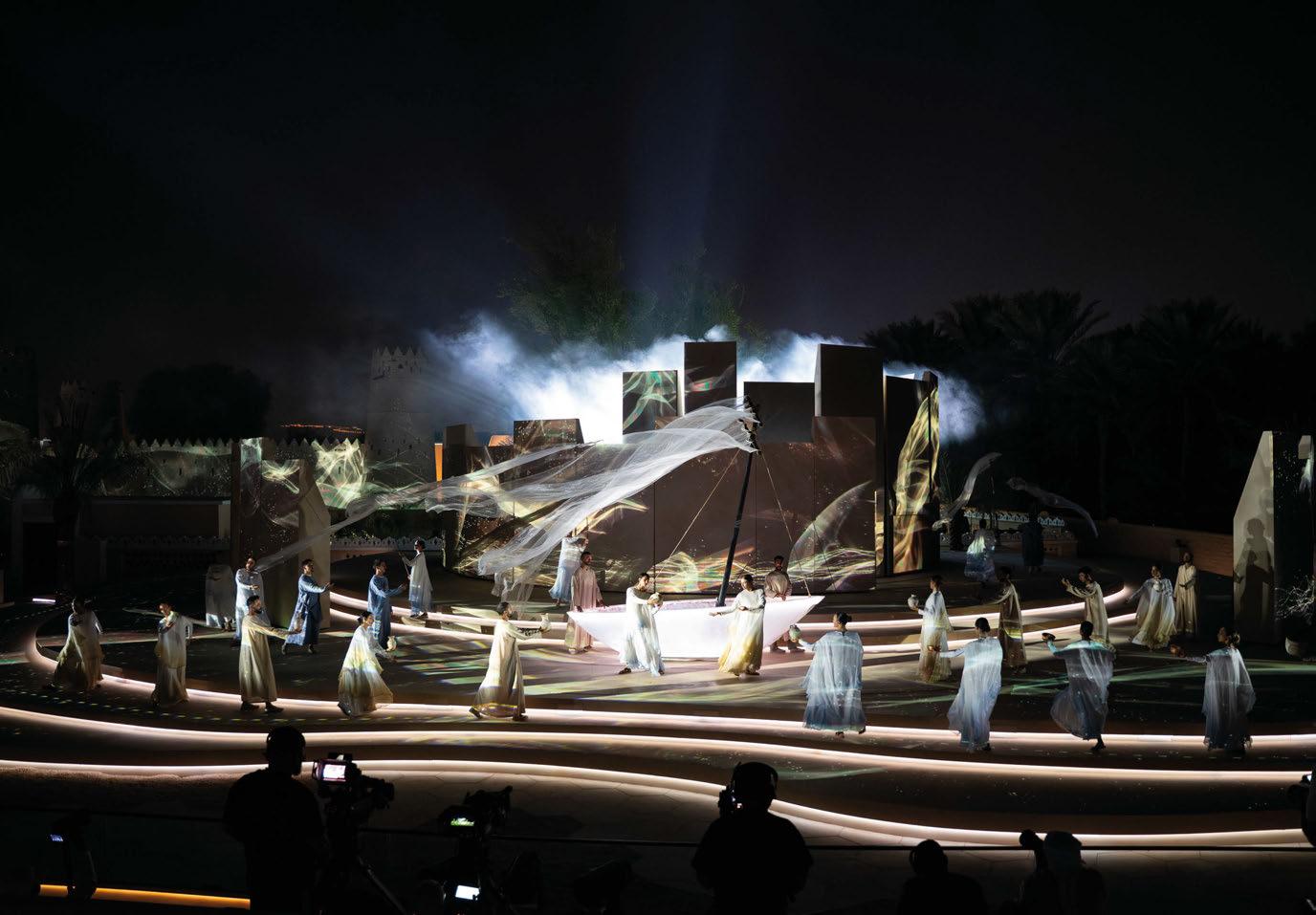
on site,” he commented. “This required constant adaptation, on-the-spot engineering tweaks, and extremely flexible logistics.”
Du bbing the creative environment as “very fluid”, Rossouw was pleased with his team’s ability to deliver every effect “exactly as required, safely, and on time”. He added: “The custom flame tray effect was a standout – consistent, clean, and visually perfect every night. The holipowder haze scenes also exceeded expectations, giving the stage a unique texture that supported the storytelling beautifully. Most importantly, the collaboration between our crew, props, and stage management kept everything smooth backstage, allowing the performers to focus on their craft while we handled the technical magic behind the scenes.”
Gobell praised Rossouw and the AVMSFX team for their “patience with a constantly developing special effects brief”. He added: “A lot of R&D and testing had to happen in parallel with the rehearsal process and Hanre’s flexibility and well-managed ‘fast track’ development process was crucial in arriving at safe and effective special effect outcomes for the show that supported Chelsey’s beautiful storytelling.”
Technical Director Krimm rounded up his experience of the project with a quote from American theorist, Russell L. Ackoff: “A system is never the sum of its parts; it is the product of their interaction,” he stated.
“I am sincerely grateful to all of our suppliers for their contributions. On a project of this scale and complexity, there is no distinction between ‘small’ or ‘large’ scopes of work – every element is technically interconnected, and the performance of one component directly affects the reliability of the whole system,” he continued. “For the audience, the final result appeared beautiful, seamless, intelligent, and fully operational, so behind that was an ecosystem in which precision, timing, and collaboration from every party were essential.”
He a dded: “We created a beautiful show in a spectacularly beautiful location, with the historic museum and the surrounding oasis serving as central protagonists. Everyone who contributed to this project should feel genuinely proud of what we accomplished together during our time in Al Ain. The collaboration, commitment, and shared focus across all teams are what truly made this production exceptional.”
Also reflecting on the project, Chelsey Raysbrook shared the sentiment from the DAE Global Executive Team: “Every project challenges us to push boundaries, and this one certainly pushed them in every way – creatively, technically and in the timeframe we had. It was not an easy undertaking, but the commitment, positivity, and trust across the entire team, including our collaborative partners at DCT, made the impossible possible. We are genuinely proud of what we achieved together.”
Photos: Stephen Godenzie Photography, DAE Global www.alainmuseum.ae www.daeglobal.com www.auditoria.systems www.clairglobal.com www.musicom-studio.com www.wonder.co.uk www.stageone.co.uk www.flowsolutions.me www.prg.com www.cast-soft.com www.brunopoet.co.uk www.lukehalls.com www.avm-sfx.com
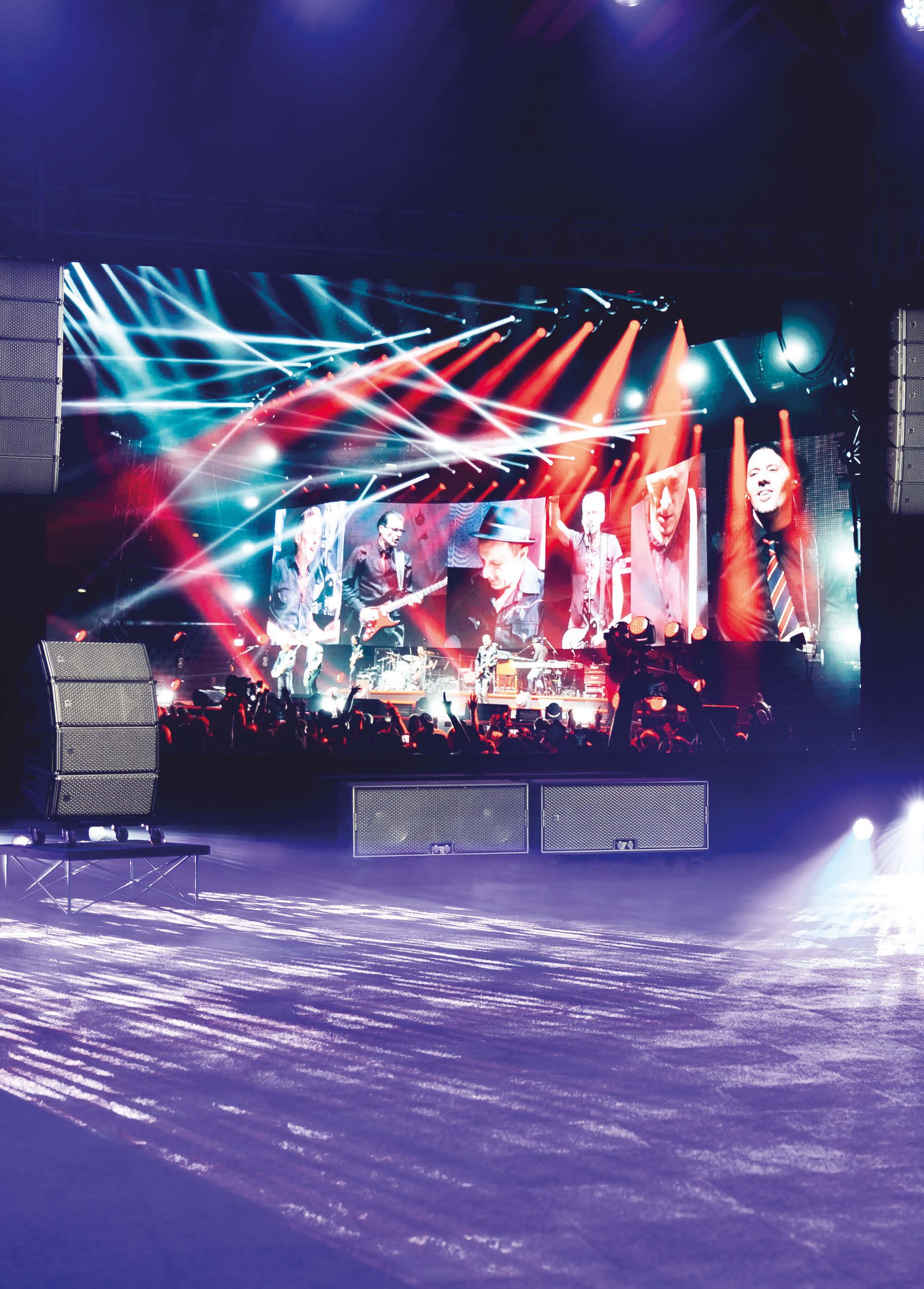
ISE 2026
Fira de Barcelona I Gran Via I 3 - 6 February 2026
The world-renowned annual tech show is back. At our last edition, 20,495 leading Venues & Live Events affiliated professionals joined us for a taste of state-of-the-art industry tech. This year, that number’s set to grow as we Push Beyond.
So don’t miss seeing, hearing and feeling it first. Test what’s next – and what’s possible – in the world of Venues & Live Events.
GET YOUR FREE TICKET
Register with code: tpimea at iseurope.org
A joint venture partnership of
Gearhouse Group: Coming back from the brink
As Gearhouse Group successfully emerges from Business Rescue, Joint Managing Director Nasser Abbas explains how the company is entering a new era of growth and stability.
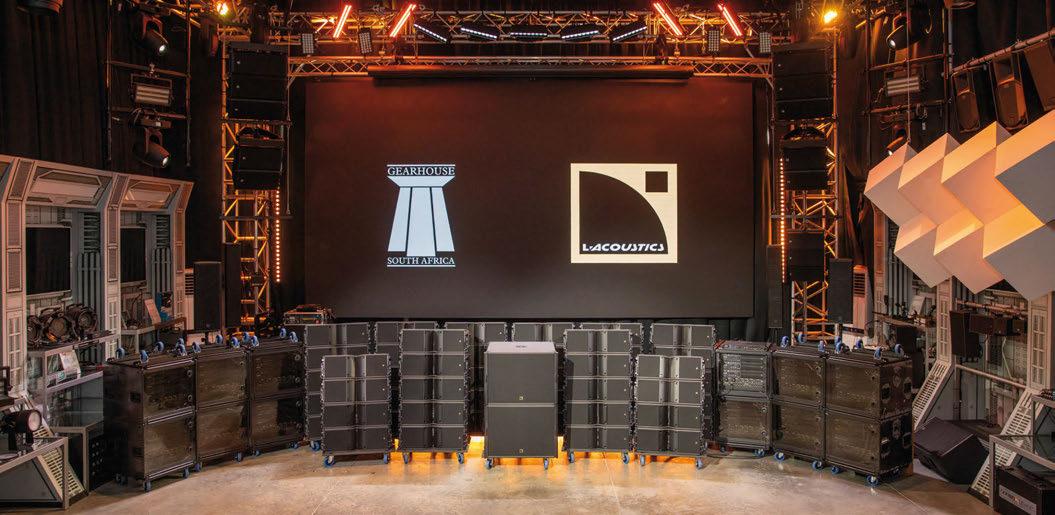
In October 2025, marking the middle of spring in the Southern Hemisphere, Gearhouse Group, one of South Africa’s leading technical production suppliers, officially emerged from its voluntary Business Rescue Plan. The company settled all its Business Rescue obligations, repaying its creditors in full and resolving a COVIDrelated debt of R140 million (approximately $7.7 million). With this milestone marking a significant turnaround for the company, Joint Managing Director Nasser Abbas shared his insights on the process and his ambitions for growth and long-term stability in the post-recovery phase.
What led to Gearhouse Group entering Business Rescue?
Like many businesses worldwide, Gearhouse Group was severely impacted by the COVID-19 pandemic, which of course led to a sudden and prolonged shutdown of all live events. Recognising the gravity of the situation early, we proactively engaged our financial stakeholders, including our bank, the South African Revenue Service (SARS) and major creditors, to prepare for potential financial strain. In c onsultation with its auditors, PKF, Gearhouse Group explored the option of Business Rescue – a structured legal
process that allows companies to suspend debt obligations and restructure operations in partnership with creditors. Having exhausted all alternative solutions, the company entered voluntary Business Rescue in late April 2020.
What was the company’s strategy to exit Business Rescue after recovery?
Throughout the voluntary Business Rescue process, Gearhouse maintained consistent communication with creditors via the appointed Business Rescue Practitioner, while management simultaneously sought potential investors. Although the last major investment proposal fell through in April 2022, a noticeable increase in business activity since February of that year signalled the beginning of recovery.
With lockdown restrictions lifted, management proposed a ‘trade-out’ strategy to repay all creditors over time through operational income. In May 2022, creditors overwhelmingly supported the plan with 99% voting in favour, including both the bank and SARS. This unprecedented consensus reflected the high level of confidence in the company’s ability to recover and trade its way out of debt.
How did Gearhouse employees contribute to the company’s recovery?
Gearhouse employees and senior managers demonstrated extraordinary resilience and commitment. Salaries were reduced to 20% for six months, after which a projectbased remuneration system was implemented. Despite the hardship, the core team continued working tirelessly, remaining motivated and fully engaged. Transparent communication ensured that staff were kept informed and supported throughout.
By September 2022, Gearhouse Group had returned to full operational capacity with approximately 260 employees – around 60% of its pre-pandemic workforce. Many former employees had emigrated or transitioned to other industries, prompting the company to prioritise debt repayment and operational stability before reinvesting in new equipment. Despite this cautious approach, business rebounded rapidly and 2023, and 2024 became the most successful trading year in Gearhouse’s 34-year history.
Cash flow management throughout the recovery phase required precision and discipline, supported by open communication with stakeholders and the professional guidance of Business Rescue Practitioner, Derek Schickerling. His expertise and confidence in the company’s recovery were instrumental in ensuring a smooth and compliant process.
Gearhouse Group not only met but exceeded its Business Rescue commitments. The company’s technical capabilities, experienced workforce and strong client relationships enabled it to deliver successfully on major projects even during the most constrained periods.
The crisis also prompted some significant internal improvements, streamlining operations, reducing costs and establishing a leaner, more agile business model that has strengthened long-term performance.
Has the company been able to continue making investments throughout the process?
Emerging from undoubtedly its most challenging chapter, the company has since reinvested R260 million in new equipment over the past three years while fully honouring all creditor obligations.
We’ve made significant investments in equipment across all disciplines, from Elation Proteus, Ayrton Rivale, Robe Tetra, ROXX CLUSTER, and ETC Halcyon lighting fixtures to MA Lighting grandMA3 full size consoles in the lighting department, to Green Hippo Boreal+ MK2 Hippotizers, AV Stumpfl PIXERA media servers, projectors from Panasonic, Christie and Barco and Leyard and Absen LED screens for the video team.
The audio department meanwhile has received new Meyer Sound and L-Acoustics systems, a Turbosound monitor rig, Allen & Heath digital mixers and stage boxes, DiGiCo Quantum 338 consoles, Shure and Sennheiser microphones and a range of Clear-Com equipment.
We’ve also invested in Layher stage systems, Stageco equipment, Eurotruss trussing, ChainMaster motors, Blackmagic Design gear, and a variety of backline that continues to improve our offering.
How is the company helping the local community through its recovery?
In January 2023, Gearhouse proudly reopened the Gearhouse Kentse Mpahlwa Academy – one of its most valued contributions to the industry. The Academy continues to provide education and practical training opportunities to young professionals, many of whom support their families through their new careers.
Though its impact cannot be measured on a balance sheet, the Academy remains a symbol of Gearhouse’s commitment to empowering future generations and building a sustainable future for the live events industry.
Photos: Gearhouse Group www.gearhouse.co.za
Group Joint
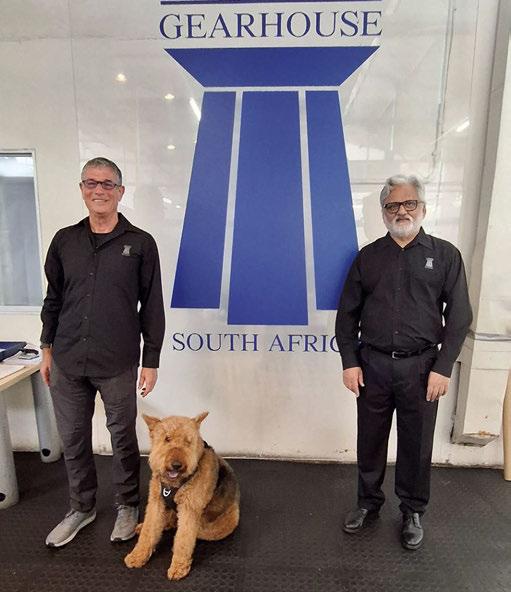
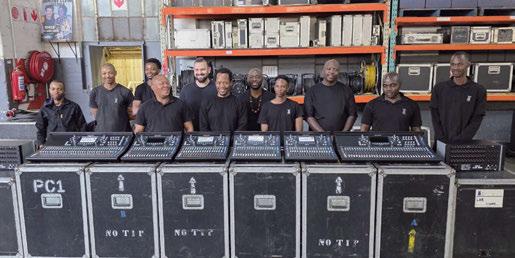
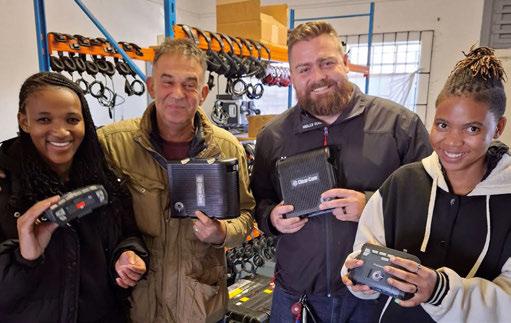
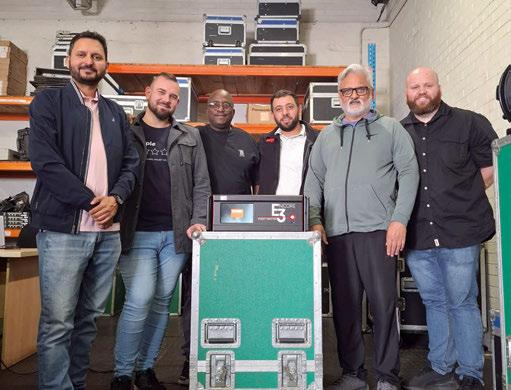
Below: Gearhouse
Managing Directors, Ofer Lapid and Nasser Abbas, with Figaro the dog.
CONDUCTR launches Middle East hub
As CONDUCTR expands into the Middle East, TPiMEA catches up with CEO and co-founder Peter Cliff to find out how the company plans to service the region’s burgeoning attractions and entertainment sector.
Creative innovation studio CONDUCTR recently announced the launch of a new Middle East hub, marking the company’s third regional base alongside its UK headquarters and US operations.
“The Middle East is one of the most exciting regions in the world for creative technology right now. We’re already collaborating with some of the biggest names in the sector, and this new hub allows us to be closer to the partners we’re working with every day,” commented co-founder and CEO, Peter Cliff. “It reinforces our commitment to the region and our ambition to help shape what comes next for immersive, tech-powered entertainment.”
While CONDUCTR has already worked extensively in the region, the company saw the benefit of formalising its presence. “Now felt like the right time to formalise our presence and create a stronger local base for collaboration,” Cliff explained. “The Middle East is a very relationship-driven region. Being closer to our clients allows us to work hand in hand with them, which is at the heart of how
CONDUCTR
operates as a studio,” he added. Over the past year, CONDUCTR has delivered multiple large-scale design and installation projects across the GCC, working with leading operators and brands in the UAE and Saudi Arabia.
“These range from early-stage concept development through to large-scale technical delivery and product installations,” Cliff revealed. “What’s most exciting for us is seeing how receptive the region is to innovation, clients are embracing new technologies and pushing for experiences that are both creative and technologically advanced.”
Th e move comes in response to what Cliff described as “a shift” in the Middle East’s entertainment market in recent years. “It’s moved from being a fast-growing region to a mature one that knows exactly what it wants to deliver. The UAE, in particular, has been developing major destinations for decades and has now found its rhythm in terms of scale, quality, and ambition,” he stated. “With recent announcements like Disney’s expansion into the region, it’s clear the GCC has become a global powerhouse.”
Th e CEO believes that while the region’s local supply chain has developed significantly, the sheer scale of ambition in the Middle East means that demand for technical expertise is bound to increase.
“U s having a presence in the region allows us to bridge the gap, bringing our in-house design, engineering and technology capability into a market that’s growing faster than ever, while also working alongside local specialists who understand the cultural and operational nuances in the region,” he explained.
Looking ahead, Cliff sees the Middle East expansion as part of a broader global strategy. “In the short term, it’s about supporting the projects we already have in the region and building even stronger relationships with our clients and partners here. We want to grow a dedicated team that can manage everything from early creative development to technical delivery locally, supported by our UK and US studios,” he commented.
“Longer term, it’s about embedding ourselves in key markets where immersive, technology-powered experiences are driving the future of entertainment. The Middle East is at the forefront of that movement, and we intend to play a major role in shaping what comes next.”
Photo: CONDUCTR www.conductr.com
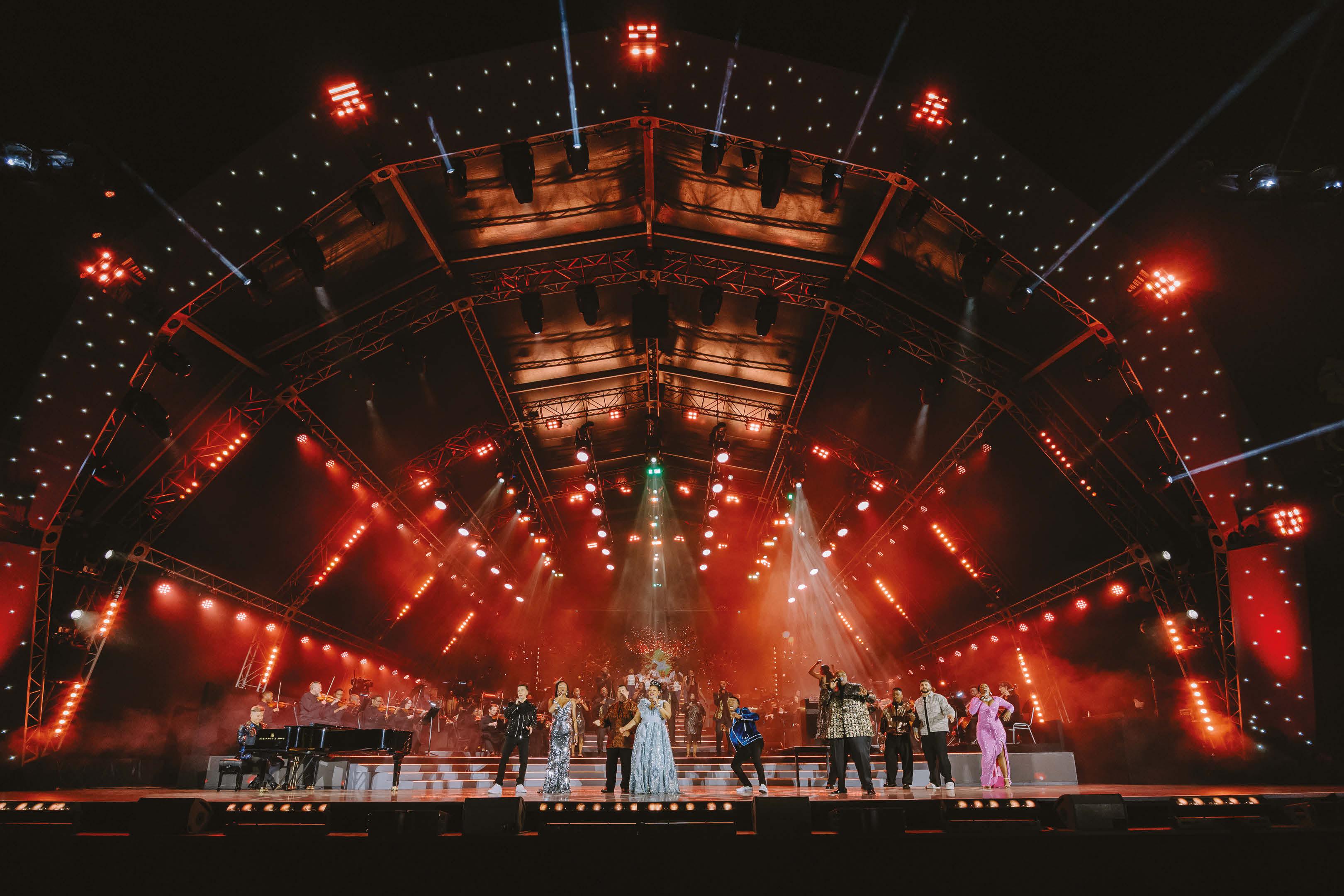



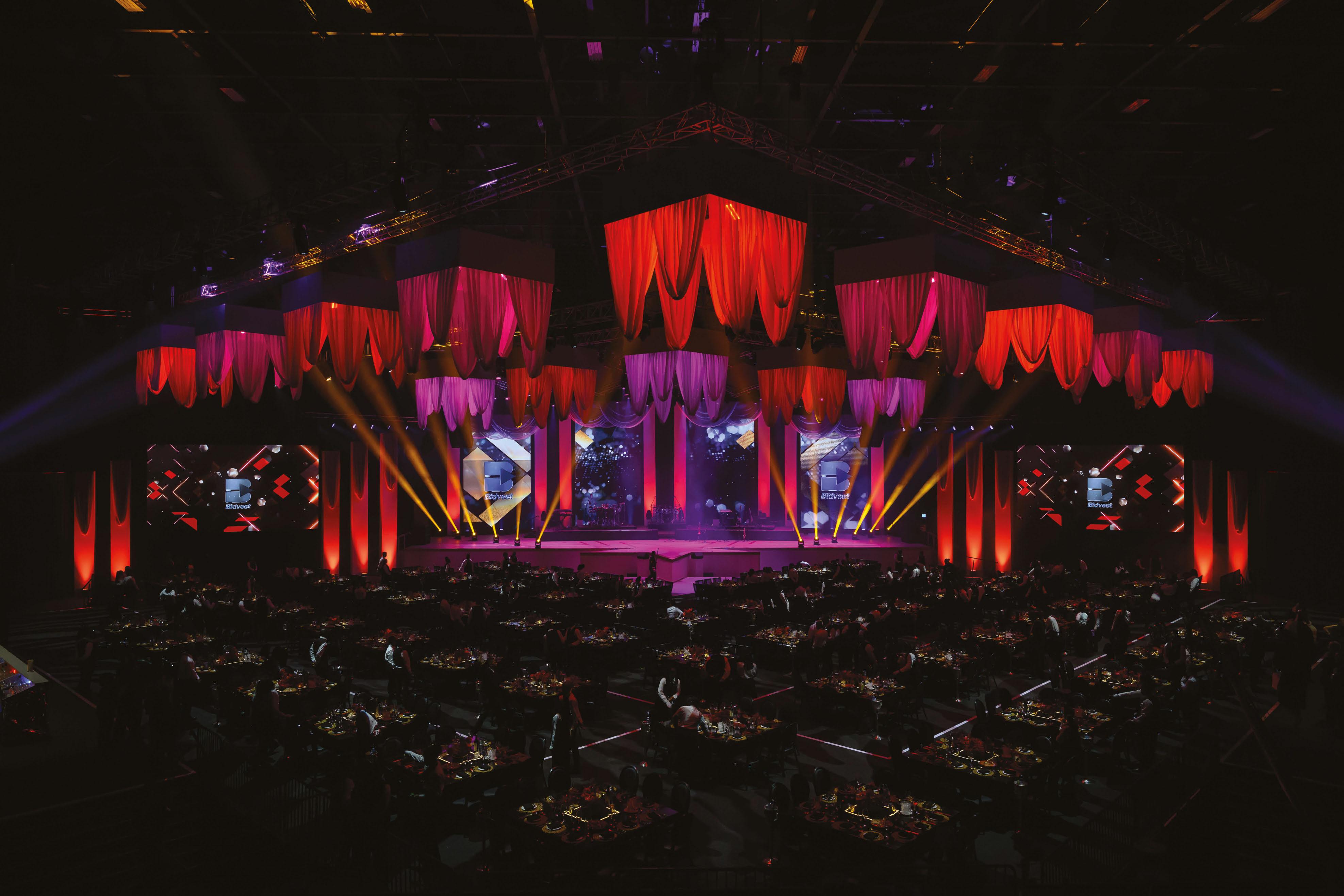
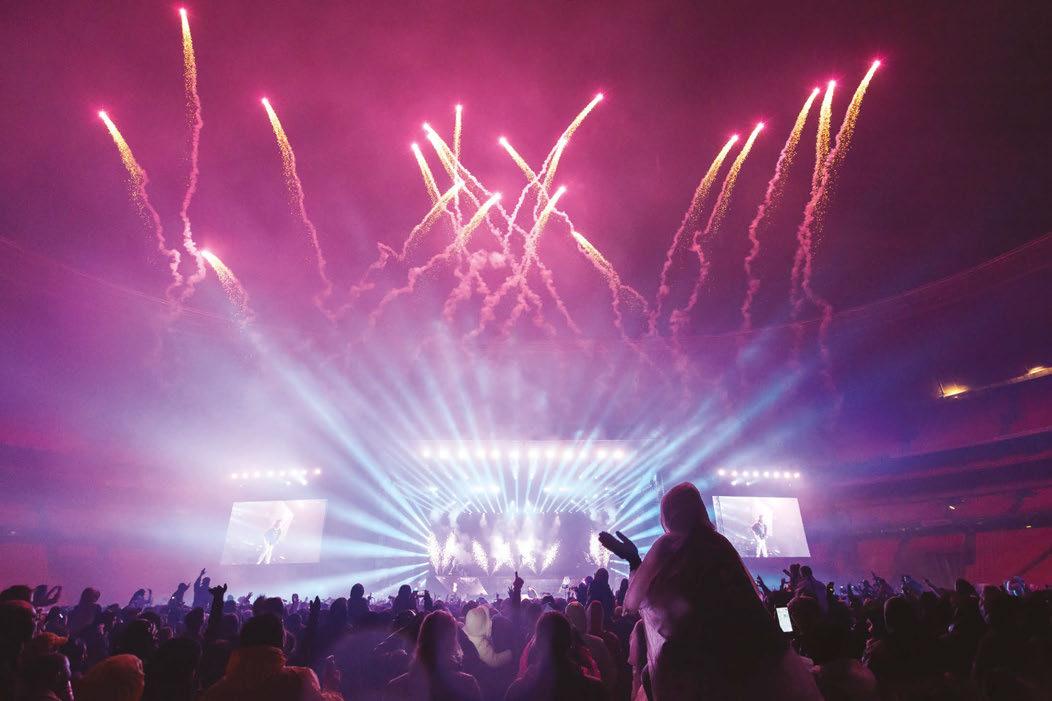
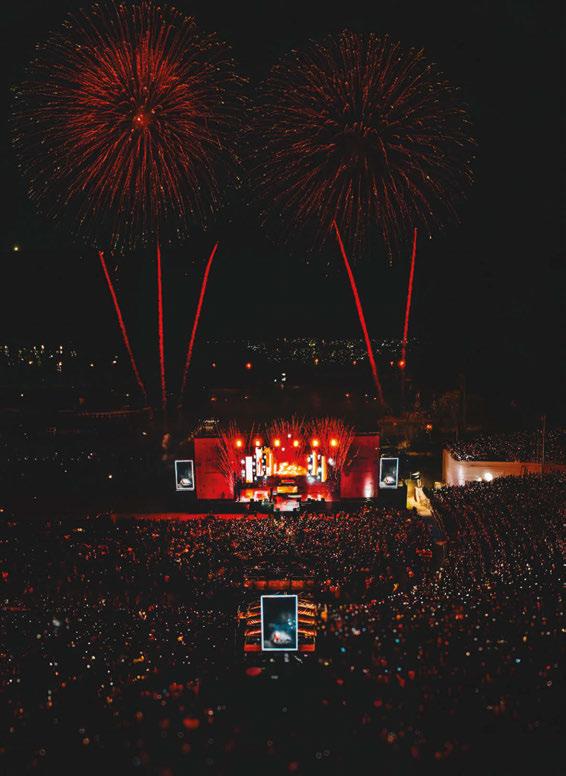

Mistika: entertainment rooted in culture
Bringing soul, narrative, and creative cultural storytelling to the region’s live events, Mistika is aiming to empower regional creatives, and set a new benchmark for cultural storytelling in the Arab world.
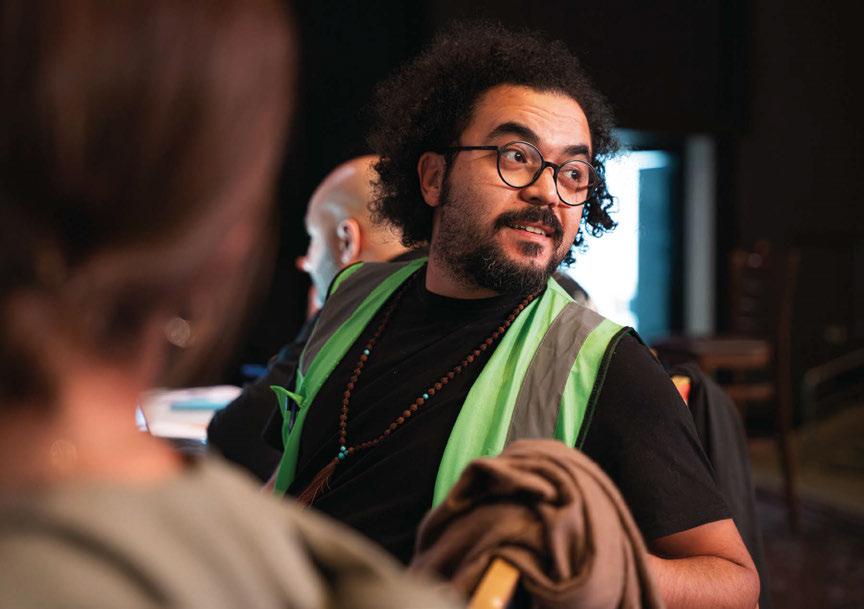
The Middle East has never been short of ambition when it comes to the size and scale of events. However, the same can’t always be said for the depth of cultural storytelling present in those events. Enter Mistika: a company born out of a desire to bridge the gap between heritage and innovation in the region’s events.
“For years, we saw a mismatch between the scale of events in the region and the depth of cultural storytelling on stage,” explained Mistika co-founder Jimi Elgohary. “Clients were looking for experiences that felt authentic to the GCC and Arab culture, but the market was mostly offering
generic entertainment, imported concepts, or last-minute booking rather than curated cultural programming. Mistika is a production house that doesn’t just ‘add entertainment’ to a show but designs full entertainment journeys that are rooted in culture, sonically and visually.”
Th e Mistika team identified a clear need for authentic, research-based cultural and heritage programming, access to a vetted pool of regional artists, folk performers, and niche talents, and original IPs and live concepts that can travel and scale. “We are a partner who understands both creative integrity and large-scale event
operations,” Elgohary commented. “We aim to craft live experiences that feel real, meaningful, and culturally grounded, while still operating at the speed and standard that today’s megaevents require.”
Th e co-founder explained Mistika’s ethos, which is rooted in three things: “Authenticity, creative integrity, and collaboration. We represent culture as it truly is – not as a stereotype,” he commented. “Every show must have a soul, a narrative, and intention. We build community, not just productions.”
With a background in indie music, Elgohary is well-acquainted with the demands on artists. “Being part of the indie music scene has shaped everything about how I work,” he stated. “As an artist, you learn to listen, to rhythm, to people, to the culture around you. You understand what it means to build something from scratch, to stay true to your identity, and to create work that moves people.
“That mentality sits at the heart of Mistika,” he added. “We approach every project as a story first, not a deliverable. And we work closely with artists and cultural practitioners to ensure they are represented with respect, dignity, and accuracy. My background as an artist also allows me to carry both perspectives – the artist and the client – and try to always be mindful of the many ways one can achieve the best performance by ensuring the artist is well taken care of.”
Sinc e its foundation in 2018 and official brand launch in 2023, the company has already racked up several milestone moments, including: winning its first industry award for stage direction at the SeaWorld Abu Dhabi Grand Opening; launching its first IP, Marra Indie, which introduced a new regional platform for indie artists in the Arab world; booking and delivering over 900 talents and 100-plus live shows in 2024 alone; programming and producing cultural showcases for Al Burda Award for the UAE Ministry of Culture across 2023, 2024 and 2025; casting
and booking talents for Disney’s The Castle activations in Riyadh; heritage programming at Al Shindagha Museum, Liwa Village Festival, and Abu Dhabi Finance Week in 2024; supporting international superstars such as Myriam Fares and managing entertainment at Formula 1 and Qatar Grand Prix; and delivering immersive theatre experiences such as AlUla Cinema Week.
According to Elgohary, the biggest challenge the company faces is finding the balance between authenticity and scale. “Cultural programming requires deep research, accurate representation, and careful casting, but the region is evolving quickly, and timelines are becoming tighter every year,” he commented. “The challenge is delivering depth within speed, and we’ve been building our internal structure to do exactly that.”
Educating stakeholders on the importance of cultural accuracy is another hurdle to be overcome. “Many still see culture as a ‘nice-tohave’, when in reality, it’s the anchor that gives any show meaning,” Elgohary said. “Like most creative houses, we navigate the challenge of maintaining creative integrity while meeting commercial demands.”
While the company already has a strong footprint in the UAE, Saudi Arabia, Qatar and Egypt, Elgohary has his eye on expansion into the region. “We also see significant sector growth potential in original IP creation, which is our strongest differentiator, as well as cultural megafestivals, international touring shows, artist representation and tour management, cultural consultancy and research-based programming. The market is hungry for content that feels genuine, and that’s where Mistika thrives.”
Th e immediate goal for Mistika is to strengthen its internal structure and refine the way it delivers cultural and entertainment programming at scale. “As our portfolio grows, so does our responsibility to maintain quality, accuracy, and creative integrity, so this year is very much about building smarter systems, empowering our team, and elevating the artist and client experience across every project,” the co-founder stated.
Next on the agenda is the expansion of Mistika’s cultural footprint across the GCC while growing its original IP catalogue. “We believe that the future of entertainment in the region isn’t just in producing shows – it’s in building sustainable, tourable concepts and platforms that nurture regional talent and travel internationally,” Elgohary said. “We’re also investing more in artist representation and touring – an area that draws heavily from my own journey as a musician and allows us to advocate for artists with true empathy and insight.”
Lo oking further ahead, Elgohary is aiming to grow Mistika to become one of the region’s leading forces in culturally grounded live experiences. “That means developing largescale cultural festivals, international touring productions, and multi-year programming frameworks that redefine how our stories are told on the global stage,” he concluded. “The vision is to build a legacy – not just a company – that pushes the industry forward, empowers regional creatives, and sets a new benchmark for cultural storytelling in the Arab world.”
Photos: Mistika www.mistikalive.me
@mistikaliveme
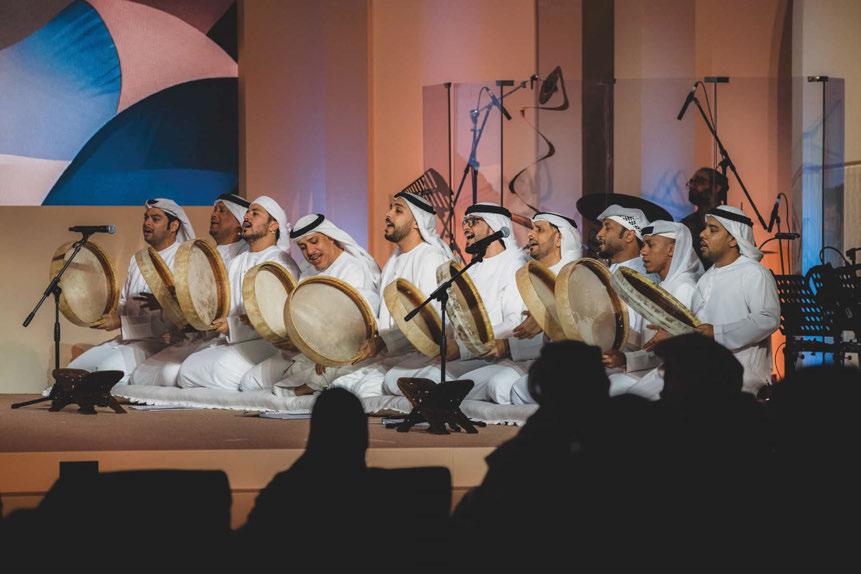
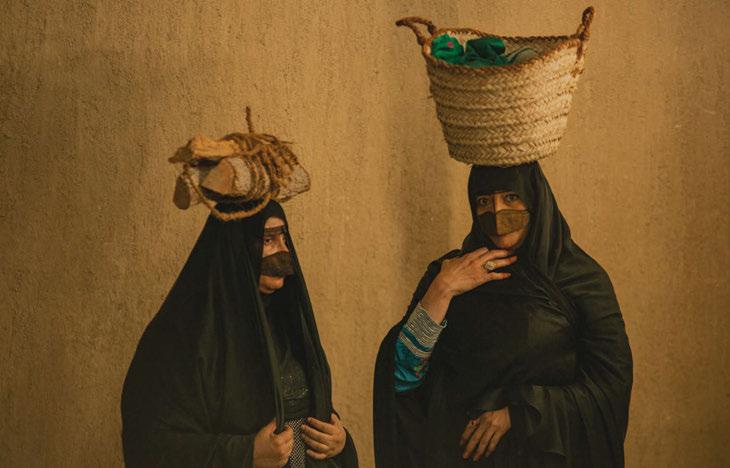
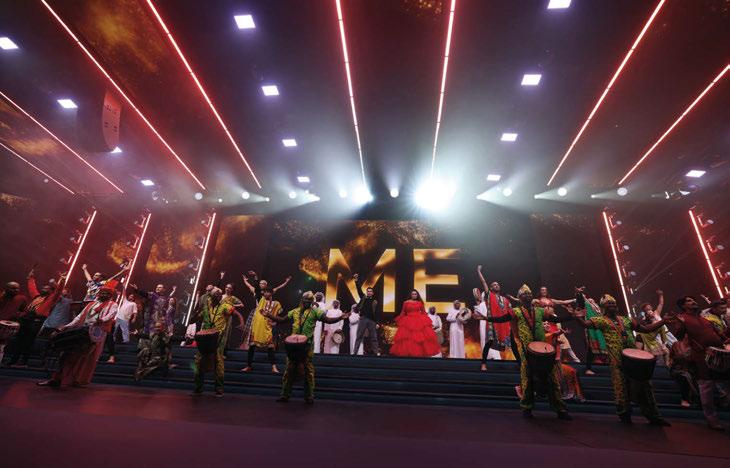
Facing page: Mistika co-founder, Jimi Elgohary. Top: Al Burda Awards. Middle: Al Shindagha Museum.
Above: Middle East Event Show.
Showforce leading the way in KSA
As Showforce opens a dedicated crew hub in Saudi Arabia, the team behind the initiative discuss how the company is investing in the Kingdom.
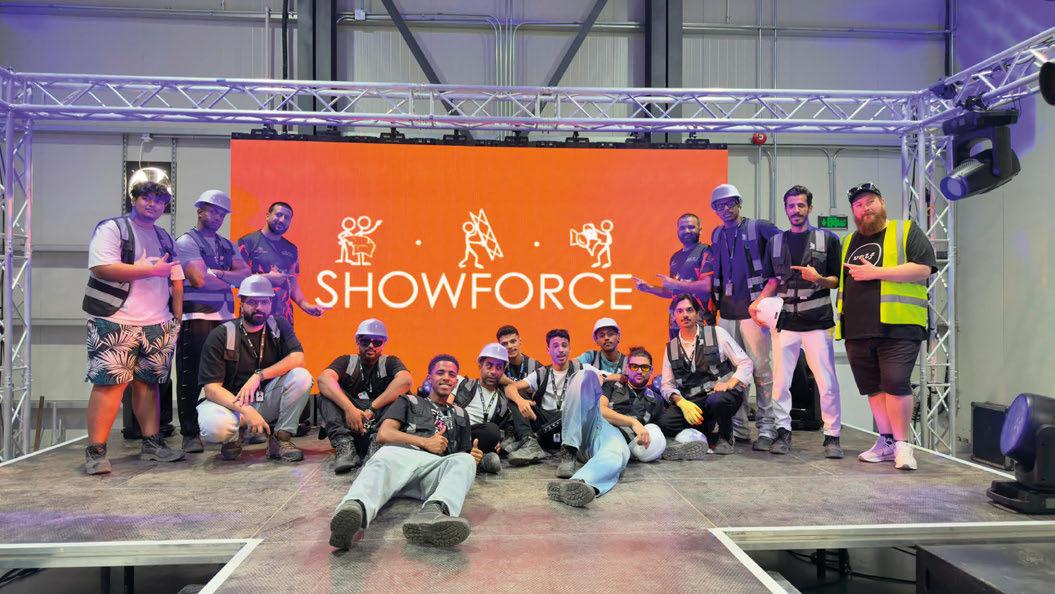
Showforce’s KSA operation is integral to its global business. Investment in the team and building on the foundations that it has laid is very much a part of the company’s long-term plans. “From the outset, we’ve been fully aligned with the Saudi Vision 2030 and committed to the KSA market – it’s always been about building a business that has a strong presence and meaningful partnerships with all stakeholders,” said founder and Chief Executive, Ian Spendlove.
Since the KSA office opened in September 2023, Showforce has grown its team, with over 400 active crew now in the country. The majority of the team are local crew that are fully trained and highly experienced in all aspects of event production and technical delivery. “We’re incredibly proud of them; we’ve taken the time and invested resources in recruiting, training and nurturing to get them this far,” Spendlove commented.
“O ur company ethos has always been to take our skills and expertise to new territories and leave a legacy of employment,” he added. “It’s something that has been very successful in the UAE and we’re now replicating that in KSA.
People are at the heart of our organisation and remain our most valuable resource. If we don’t invest in our staff and crew, then we won’t continue to be successful.”
To support its KSA team, Showforce recently launched Showforce Kingdom – a dedicated hub for its crew in Saudi Arabia. Ricky Holland, Director of Special Projects, discussed the initiative: “In a market that’s growing rapidly, new suppliers are arriving all the time and the competition for the trained and skilled event crew that exist in the country is high. Welfare is always a priority for us. I’ve made it clear, on numerous occasions, that our crew are treated with dignity and respect no matter where they’re based in the world. This commitment extends beyond the workplace with the opening of Showforce Kingdom in KSA – a space where the crew can come together as a team, share experiences, meals, relax and enjoy their leisure time.”
Ac cording to Spendlove, the crew were onboard with the idea from day one. “When we first suggested opening a crew hub, the crew were really onboard; they helped us find the perfect location and venue for it, then assisted with the fit out and finishing touches,” he commented. “Our local
crew in KSA are active all over the country; not just Jeddah and Riyadh – we also have ongoing projects in Abha, Yanbu, and Tabuk. Having Showforce Kingdom as an environment where they feel supported and motivated is proving to be incredibly beneficial. It has quickly become an important part of how we work together.”
Th e company recently made several promotions within its KSA crew, with key players progressing to the roles of Local Crew Manager, Crew Chief and Senior Crew. “The welfare, development and recognition of our crew is core to our operations,” Spendlove added. “We are proud to invest in our people, providing clear career pathways and rewarding commitment, professionalism and excellence.”
Compliance and Saudisation are key considerations when running any business in KSA, and the Showforce team has an in-depth understanding of the Kingdom’s labour regulations, visa system and workforce culture.
“We can extend that expertise to our clients and partners on the ground,” Spendlove noted. “We’re also working towards recruiting Saudi nationals, and our involvement in the BeastED Career Path Programme this August and September is pivotal to that process.”
Ho lland played a major role in Showforce’s contribution to BeastED, and he couldn’t be happier with both his and the company’s involvement. “We supported the Academy of Live Technology’s Stage Production training where two cohorts learned about staging, rigging, lighting, sound and video, then went on to deliver two dedicated IPAF
Certification courses,” he recalled. “Witnessing people who were so interested and excited about what they were learning, the events industry and the opportunities they would have as a result was amazing.”
Haroon Nasir, Showforce’s Country Operations Lead –KSA, has seen the company’s development in the Kingdom firsthand. “The camaraderie and pride within our team are evident in both the feedback we receive and the results we achieve,” he stated. “We know that a motivated and wellsupported crew is key to delivering the highest standards for our clients worldwide.”
Lo oking ahead, Nasir wants to continue investing in the team and ensuring that the company remains aligned with Saudi Vision 2030’s values. “This includes expanding our crews’ reach across the country and continuing to work in Qiddiya, AlUla, Diriyah and the Red Sea, as well as in Riyadh and Jeddah,” he commented. “We will continue to collaborate with BeastED and look to increase our role within the career path programme. We also have plans to deliver specialist training for our own crew, from plant operators and working at height certifications to expanding the team and creating more local crew managers, crew chiefs and senior crew. The addition of more Saudi nationals to both our office-based staff and crew is the ultimate goal. We don’t just want to recruit Saudi talent; we also want to play our part in creating it.”
Photo: Showforce www.showforce.com

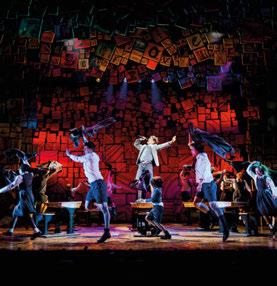
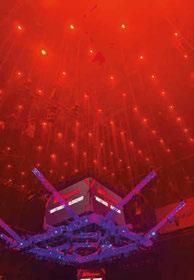


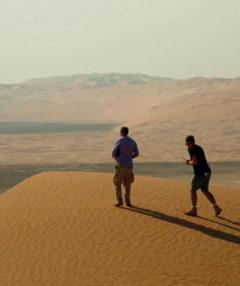
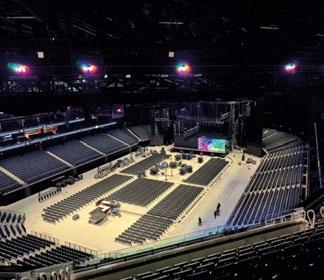
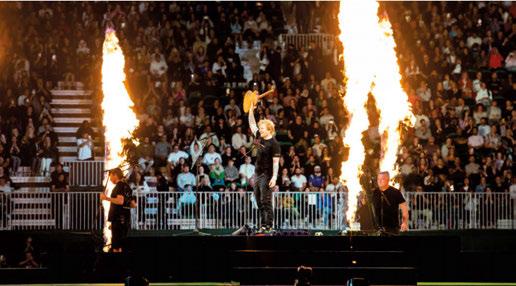
Matrox ConvertIP
Fresh from exhibiting with distribution partner Abcom at GITEX 2025, Cecilia Wills, Sales Director at Matrox Video, discusses how Matrox ConvertIP is powering next-generation IP video infrastructures across the Middle East.
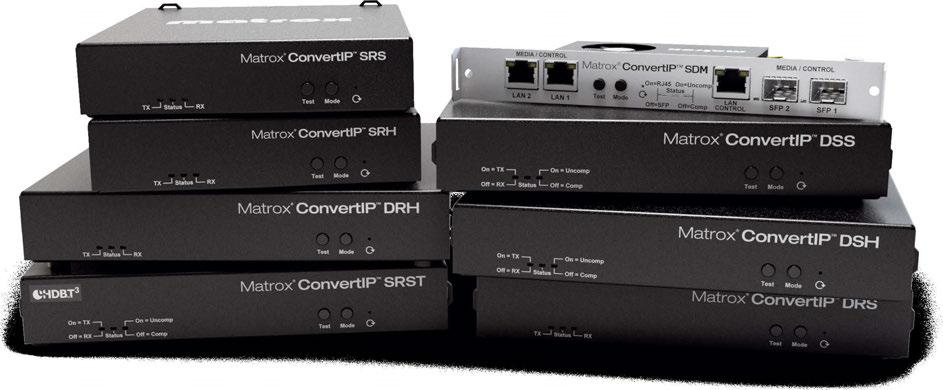
How was the experience exhibiting with Abcom at GITEX this year?
GITEX 2025 provided an outstanding platform for Matrox Video to connect with the Middle East market. Visitors showed strong interest in next-generation IP video workflows and broadcast/AV solutions. The event’s massive scale made it clear that GITEX has outgrown its traditional footprint, and the move to a larger venue of Expo city in 2026 will further support its momentum.
Partnering with Abcom at the show strengthened our ability to engage directly with customers, demo real workflows, and highlight trusted, reliable solutions for the region’s booming event and AV integration sectors.
What are the main features of Matrox ConvertIP that benefit end users?
Matrox ConvertIP is a versatile family of ST 2110/IPMX encoders, decoders, and converters designed to form the backbone of openstandards–based IP video infrastructures. With multiple I/O options – including HDMI, SDI, and HDBaseT – ConvertIP enables users to route and distribute professional-grade video signals over IP networks while still using their trusted cameras, switchers, monitors, and projectors.
A key advantage of ConvertIP is its standards-based interoperability. With support for ST 2110, NMOS, and IPMX-ready operation, it integrates seamlessly into mixed-vendor environments, helping rental firms, system integrators, and production crews reduce setup time and avoid compatibility issues. ConvertIP also supports both uncompressed
and compressed workflows, including JPEGXS, allowing teams to allocate bandwidth efficiently. Uncompressed streams can be used for mission-critical screens and lowlatency stage feeds, while compressed streams are ideal for overflow areas, backstage monitoring, and other auxiliary viewing spaces. These devices maintain subframe latency and deliver full-fidelity video, including 4K60, HDR, and professional colour spaces. This ensures screens remain in sync across multi-display environments and that image quality is preserved for even the most demanding live-event applications.
Designed for scalability, ConvertIP works across 1G to 25G networks and supports both copper and fibre infrastructures. This makes it easy for venues to expand, modernise, or hybridise systems without committing to a full network overhaul.
Select ConvertIP models also offer quadview monitoring on a single display, providing operators with real-time visibility of multiple feeds without requiring additional equipment — ideal for control rooms, production racks, and event back-of-house operations.
Why is ConvertIP well suited to the Middle East events market?
The Middle East continues to host increasingly ambitious events from mega concerts to high-profile conferences and televised global spectacles. ConvertIP aligns perfectly with this market’s growing demand for flexible, scalable, future-proof AV infrastructure. ConvertIP makes it simple to deliver high-quality, low-
latency feeds to overflow spaces, remote studios, and online platforms, supporting modern hybrid event formats that have grown in popularity region-wide.
With open-standard compatibility, rental and staging companies benefit from device interchangeability across suppliers, venues, and event types. This reduces logistical complexity and protects long-term investment.
Middle Eastern venues – whether temporary or permanent – increasingly require adaptable IP-based systems, and ConvertIP scales easily from small productions to large, networked broadcast environments.
What kind of support does Abcom offer to Matrox Video users in the Middle East?
Abcom, one of Matrox’s long-standing partners in Dubai, provides end-to-end support for AV and IP-based deployments across the region. Their services include: a fully equipped demo and experience centre; hands-on demonstrations of ConvertIP and other Matrox Video solutions; expert pre-sales consultation; post-sales technical support and troubleshooting; training sessions for integrators, rental companies, and end users; and assistance with system design, configuration, and commissioning. Abcom’s knowledgeable team ensures that customers deploy solutions confidently and efficiently, whether for live events, control rooms, or corporate AV applications.
Photo: Matrox Video www.video.matrox.com www.abcom.ae
DiGiCo Quantum 112
As 7Hertz, DiGiCo distributor for the Middle East and Gulf regions, takes stock of DiGiCo’s new compact console, John Parkhouse discusses its benefits.
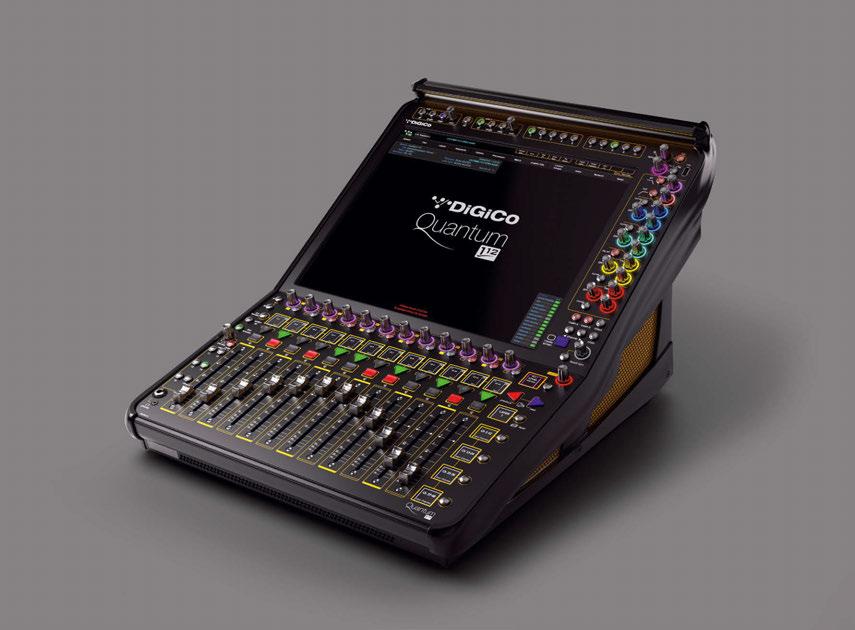
Where does the Q112 fit within DiGiCo’s range of digital mixing consoles?
The Quantum 112 (Q112) is a compact yet highperformance console within the Quantum series, positioned just below the Quantum 2, 3, 5, 7 and 8. It unlocks the full power of Quantum processing in the smallest form factor yet, offering a remarkably portable and powerful experience of the world-renowned Quantum platform. It represents a major leap for situations where transportability and space efficiency are critical.
Th e Q112 delivers DiGiCo’s signature Quantum processing power and pristine sound quality in a compact, cost-effective package, ideal for a wide range of applications that demand top-tier performance. For example, Ed Sheeran’s FOH Engineer was already using it for some promo shows within a very short time of release.
What are the main features of the Q112 that will benefit end users?
Weighing just 14kg (or 23kg in its bespoke Peli case), the Q112 redefines portability, making it truly possible to mix on the go. It offers a total
of 80 input channels, 24 aux/subgroup busses, LR/LCR master busses, and a 12×8 matrix, all with full processing.
Th e console also provides onboard XLR i/o, 12 control groups, two solo busses, two DMI slots, and onboard Dante as standard.
With the Q112, DiGiCo has effectively created an ultra-compact mixer that builds on the enduring popularity of the SD11 (released in 2011), but now unleashes the full power of the Quantum engine in a compact footprint.
At 7Hertz, we saw an immediate market response, with a Q112 package sold within just a few days of the announcement.
Why is the Q112 an ideal product for the Middle East market?
The console’s size and weight make it ideal for engineers and rental companies who travel frequently. It can be checked in as standard airline luggage, removing the stress of freight, customs delays, and logistical complexity.
Engineers can simply arrive with the console on hand, by land, sea or air, then plug in and mix. The Q112 also brings Quantum performance within reach at
a more accessible price point. With full Dante integration, multiple DMI options, and compatibility across the entire DiGiCo ecosystem, it’s a smart investment for rental companies and production houses managing multiple events.
Moreover, DiGiCo’s long-standing commitment to product longevity ensures lasting value. The SD7, launched in 2007, is still in global use – proof that DiGiCo consoles remain relevant and supported for many years after release.
It ’s also designed to handle the region’s demanding conditions — heat, humidity, dust, and sand. The Q112 carries DiGiCo’s reputation for robustness and reliability. Combined with the company’s world-class support network, it makes the console a dependable choice for any professional environment.
What kind of support does 7Hertz offer to DiGiCo users in the region?
Whether it’s product orientation, technical consultancy, or hands-on training, 7Hertz and its team of sound engineers and specialists provide comprehensive support throughout the entire ownership journey.
Re presenting a brand like DiGiCo carries great responsibility and pride, and we share their uncompromising commitment to technical excellence and education. Our focus is always on ensuring users in the region get the very best out of their systems, both today and long into the future.
Photo: DiGiCo www.digico.biz www.the7hz.net
CasaMilan Live Productions compact camera package
CasaMilan founder and Executive Director, Stefano Milan, shares the secrets behind the custom-built camera solution that brought cinematic precision to the TPiMEA Awards 2025.
What was the idea behind this innovation?
We wanted to bridge the gap between cinematic image quality and live production efficiency. Traditional camera setups often demand bulky infrastructure, multiple power sources, and complex signal routing – all of which can slow down deployment and complicate control.
Instead, we came up with a custom-built multi-camera system centered on Blackmagic Studio Camera 6K Pros paired with Canon CN-E 70-200mm T4.4 L IS KAS lenses and a 18-400mm lens for versatile coverage.
It ’s about solving complexity through simplicity. We wanted a compact solution that’s fast, light, and reliable – something we can trust in any indoor venue, under tight timelines. And as we like to say at CasaMilan, the solution often turns out more beautiful than the puzzle.
How was this solution deployed at the TPiMEA Awards 2025?
For us at CasaMilan, the TPiMEA Awards was not just another show; it was an opportunity to showcase this bespoke camera system that’s been years in the making.
Th e magic isn’t just in the gear; it is in how it is all put together. Every camera connected back to a compact, in-house-built rack featuring four Blackmagic Studio Converters, an ATEM Television Studio HD8 ISO mixer and a 42in LCD multiviewer. A single Cat7 cable delivered power, signal, and camera control – a streamlined approach that transformed setup time and reduced on-site clutter.
Everything was packed in Pelican cases – one for each camera and lens – making transport and setup as effortless as possible. Meanwhile, Hollyland Solidcom C1 Pro wireless comms ensured smooth communication between the roaming radio camera on a gimbal and the rest of the studio camera team.
On s ite, the CasaMilan crew operated like a finely tuned orchestra, conducted by Multicam Director, Christine Henry.
Each c amera had a specific role in capturing the evening’s flow and thanks to the compact size, it was much less obstructing than a conventional broadcast camera.
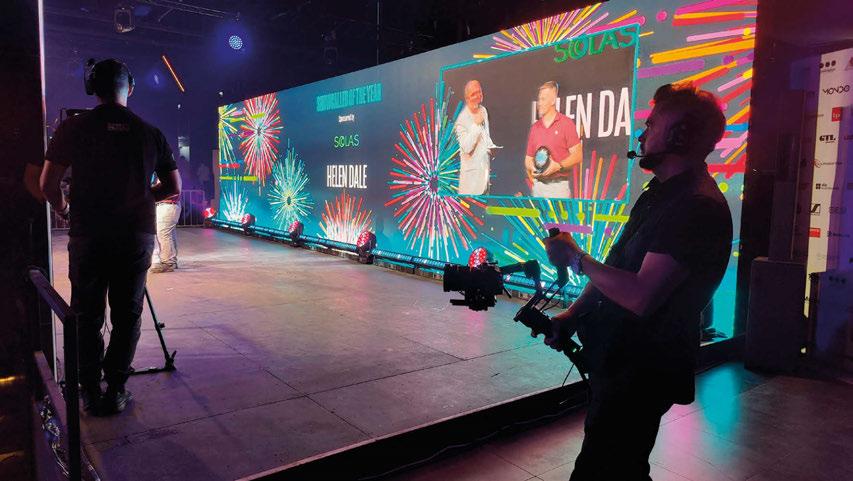
Camera one (stage left) provided a stable profile shot of the stage; cameras two and three (back of venue) captured wides, mids, and walk-ons using Canon servo zoom lenses for cinematic, parfocal transitions; and camera four (mobile, handheld) added energy and intimacy by following sponsors and winners.
Camera direction is the ultimate team sport and the direction of the live mix mirrored the precision of a live performance. It’s our performance and skillset that makes the magic happen. Every camera op, every cue, every switch matters – and that unity is what turns a show into a visual experience.
Where else in the region might we see this kind of setup utilised?
CasaMilan’s camera system has quietly become a favourite across the region’s top award nights, including numerous ITP Media Group productions, where its modularity and reliability are crucial.
By combining broadcast-quality images with a portable, networked system, the
solution allows us to deliver cinematic visuals without the need for an OB truck or cumbersome infrastructure.
How pleased were you with your delivery at TPiMEA Awards 2025?
Much of the pleasure of being behind the scenes on a live show is finding solutions that are as small and fast as they are effective. Our priority has always been the people in our team, not the equipment.
Through experience and technical creativity, we’ve discovered that tools like the Blackmagic Studio Cameras or our ultracompact TriCaster AV setup allow us to work smarter – fast to build, fast to dismantle and without the need for massive AV desks to deliver magic on stage.
And yes – the ultimate goal is always to be out of the venue within 20 minutes, or even better at the bar celebrating a job well done with our clients.
Photo: CasaMilan www.casamilan.co


Flame Projector G-Flame






















bi-directional





Highlights of the Flame Projector "G-Flame":
•A range of control options including DMX512, 12-24V, ext. contact, radio and RS-485 offer unparalleled versatility
•The internal fitted battery provides up to 110 h stand-by time with no tethered power cables giving greater portability
•Water resistant, with improved water drain system

•Operation with readily available and inexpensive gas canisters, aerosol canisters or gas cylinders possible
•Fuel canisters are completely encased in the housing and therefore well protected
•Canister holder fitted with non-return valves for additional safety
•All components are equipped with quick-couplers for fast assembly
•Independent operation when used with the optional Advanced radio module or wireless DMX receivers
•Integrated fine filter prevents particle ingress and leakage of solenoid valves
•Equipped with two solenoid valves connected in line for increased safety
•Electronic flame monitoring by means of a highly selective optical sensor
•Equipped with digital tilt sensor for maximum safety
•Bi-directional communication with the PFC Advanced controller and USB Radio Modem PFM Advanced for remote programming and remote data requests
•Prepared for quick mounting on stands and truss elements
•Illuminated text display with convenient menu navigation
•Optical warning when armed
•Delayed ignition after gas release programmable (Atomic Effect)
•Fast step sequences possible because the flame extinguishes within a short time of solenoid valve closure, even during canister operation
•Additional features: Flame quota, flame duration limit and optional sleep mode



Flame Comparison:






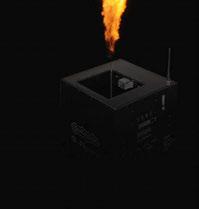

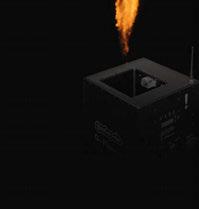

Control Inputs:
•Radio: -
-
•External
•Voltage
•DMX512,





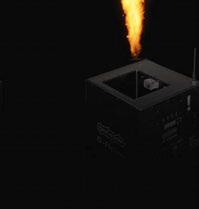




G-Flame with 5 kg gas cylinder, liquid phase (dip tube)
G-Flame with four gas cartridges, "Power Upgrade"
G-Flame with two gas cartridges
G-Flame
World Stage Design 2025 makes history in Sharjah
Key industry partnerships strengthen the quadrennial international exhibition.
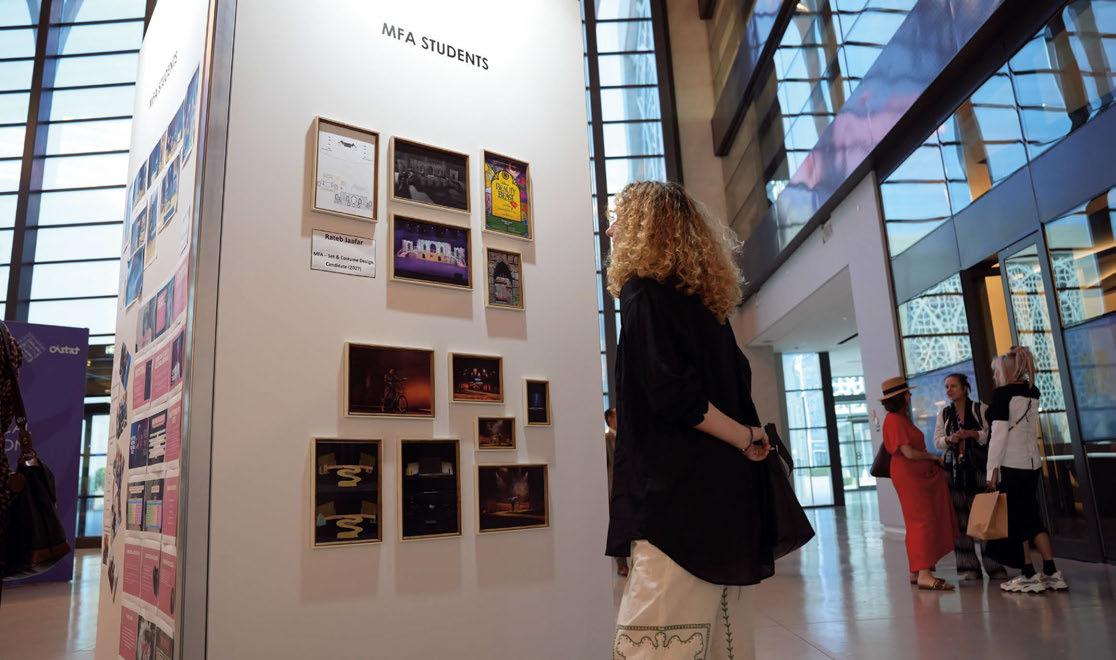
World Stage Design 2025 has officially wrapped, marking a successful edition that brought artists, designers, educators, and industry leaders together for an unforgettable week of creative exchange and innovation.
Hosted in Sharjah and co-produced by Sharjah Performing Arts Academy (SPAA) and the International Organization of Scenographers, Theatre Architects, and Technicians (OISTAT), this year’s event attracted around 1,200 visitors from around the world.
“This year’s edition of World Stage Design stands as a testament to the power of global collaboration and the continued evolution of performance design,” stated WSD 2025 Project Director, Jacqui George. “This edition signified a meeting point for performance design, innovation, and global collaboration.”
Featuring a dynamic programme of exhibitions, performances, and professional development opportunities, the international exhibition welcomed 140 exhibitors, showcasing
pioneering work in scenography, theatre architecture, and technical invention.
Th e event was further strengthened by invaluable industry partnerships, with the likes of Taylex Group, EFM Global, CAST, NMK Electronics, ShowTex Middle East, Protec, and First Star Computer, among others, playing a key role in supporting the event’s growth and enhancing the technical and creative ambitions of the programme.
Of ficial Build Partner Taylex Group brought its expertise in live events, exhibitions, and brand experiences to deliver a large-scale, immersive, and sustainable build across the three distinct venues of SPAA, Bait Obaid Al Shamsi, and Sharjah Research, Technology and Innovation Park (SRTIP).
“WS D 2025 represents everything we believe in creativity, collaboration, and conscious innovation,” commented Karl Clark, CEO of Taylex Group. “Delivering this project across three unique venues, each with its own character and
challenges, required precision, partnership, and a shared commitment to doing things differently. Sustainability was not an afterthought; it was built into every decision. We’re incredibly proud to have played a part in shaping this historic moment for the region.”
Over 80% of the build was delivered using fully sustainable materials and methods, powered by the beMatrix reusable frame system –drastically reducing waste and carbon emissions without compromising creativity or quality. This modular approach delivered smarter, cleaner, and faster construction – connecting without tools, minimising on-site waste, and setting a new standard for responsible event production.
Ja cqui George stated: “Working with Taylex Group Middle East, our official build partner, has been an inspiring and collaborative experience. From day one, we shared a common vision exploring every opportunity to embed sustainable working practices into the build. Their solution-focused approach ensured that
our creative ambitions were realised while staying true to our sustainability goals. Delivering seamlessly across multiple venues, from heritage sites to innovation hubs, Taylex demonstrated true industry leadership.”
Another industry partnership with NMK Electronics resulted in the popular Pause & Play Stage – a space designed to elevate conversations, performances, and moments of reflection through technology. NMK delivered a complete ecosystem of audio, video, lighting, and control by integrating L-Acoustics speakers, Shure microphones, Allen & Heath mixers, and CHAUVET Professional lighting.
“Pause & Play invited reflection and renewal, an opportunity to pause, reconsider our practices, and then play, experiment, and create with new perspectives,” George explained.
“The theme mirrored our commitment to both tradition and experimentation, encouraging artists to explore how design can shape more sustainable, inclusive, and imaginative futures for performance worldwide.”
Alex Kemanes, Regional Director, Middle East, at NMK Electronics commented: “At NMK, we see our role as more than a technology advocate; we are enablers of creative expression. Collaborations like this bring together technical
innovation and artistic vision. We’re proud to support institutions like SPAA that are shaping the region’s creative future. Our mission is to create spaces where education, performance, and imagination thrive together.”
“O ur collaboration with SPAA is about nurturing a creative community that doesn’t just use technology, it understands it and transforms it into art,” added Dino Drimakis, Director of Strategic Development at NMK Electronics. “By investing in young talent today, we’re helping shape the creative identity of tomorrow.”
Another major highlight of the festival, Scenofest delivered an impressive 126 workshops, masterclasses, and performances, providing hands-on learning, artistic exploration, and exceptional networking opportunities for emerging and established practitioners alike. The event also honoured top global performance design talent with Sheikha Hoor Al Qassimi congratulating the winners of the Design Exhibition, Theatre Architecture Competition, and Technical Invention Prizes at the WSD 2025 Awards and Closing Ceremony at SPAA. Photos: World Stage Design www.sharjahwsd2025.com www.taylexgroup.com www.nmkelectronics.com
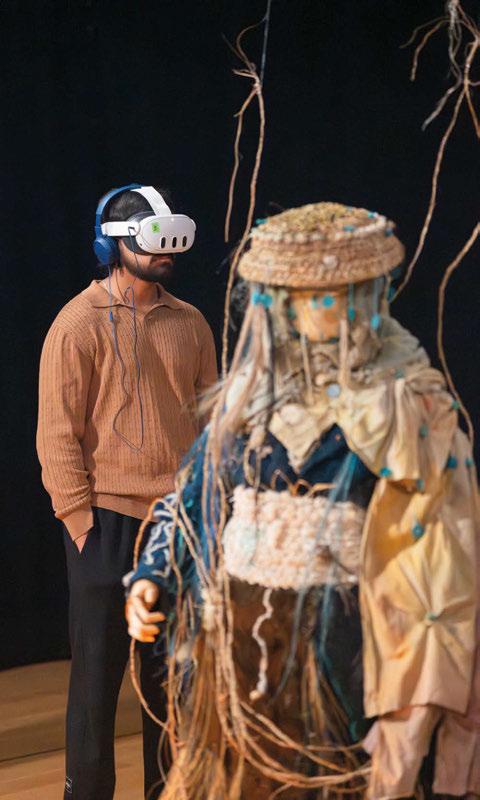


We cordially invite you to visit and purchase professional lighting and audio systems in Guangzhou,China
Welcome to contact and register for exhibition services!
Booth consultation : Ms.Tina :+86 18138780160
URL: https://www.getshow.com.cn/ E-mail: info@getshow.com.cn
Clear-Com in control at Red Bull Shay’iMoto
ShowCom deploys one of South Africa’s largest Clear-Com setups, supplied by DWR Distribution, at popular motorsport event.
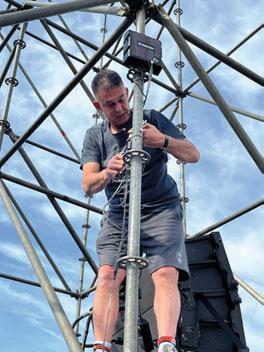
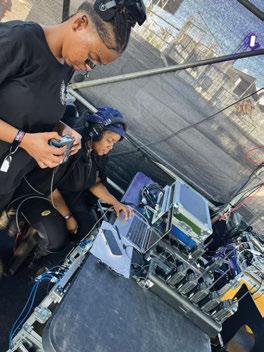
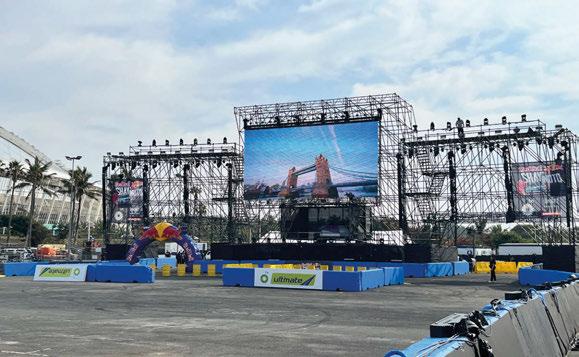
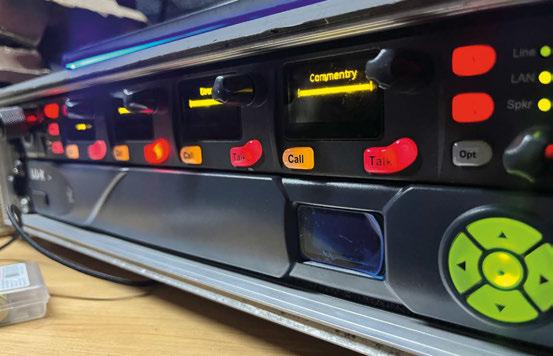
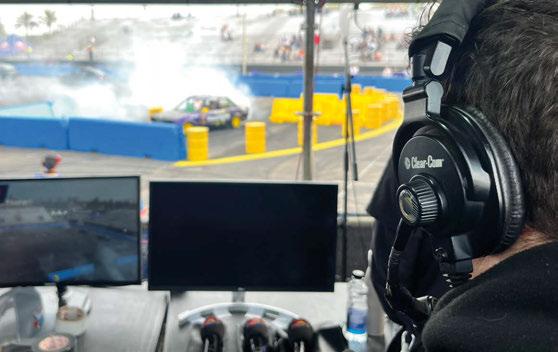
South African intercom and RF specialist ShowCom, part of the Gearhouse Group, recently completed a major Clear-Com deployment at Shay’iMoto – a motorsport spinning showdown born from South Africa’s township culture.
Nic kolas Chapman, Managing Director at ShowCom, invested in an extensive inventory of new equipment for the occasion, sourced through DWR Distribution. “What we’ve just invested in is opening a whole new world for us,” Chapman commented.
“We’ve gone with the FreeSpeak II TCVR IP19 transceivers, picked up some of the new nine-channel FreeSpeak belt packs, and – the game-changer for me – the VI12 key push-button panels that can IV inject straight into the Arcadia.”
For Chapman, this setup isn’t just an upgrade – it’s a launchpad into the OB world. “In our business, setup and teardown time is brutal. We can’t afford full complex matrix systems
that take hours to rig. This modular Clear-Com system gives us high-end flexibility without the heavy lifting. It’s fast, efficient, and built for highpressure environments.”
Kyle Robson from DWR Distribution backed Chapman all the way. “Nick wanted the gear just in time for Red Bull Shay’iMoto, and he pulled it off,” he recalled.
“This was one of the biggest Clear-Com deployments we’ve seen in the country. It really put the system through its paces. Nick’s passion for Clear-Com is contagious – he’s flying the flag in South Africa,” he added.
Th e Arcadia system, paired with Clear-Com’s latest multi-channel panels, gives the ShowCom team broadcast-level control in a modular setup.
“This move means we can scale up or down depending on the gig. Broadcast teams run 12, 24, even 32-channel panels, and now we can do the same,” Chapman explained. “It is the door that I have been wanting to open for years.”
And that door just led to new business. “We landed our first broadcast contract off the back of this system,” he reported proudly. “We bought enough gear to power through the Red Bull event, but I’m already planning to expand – more panels, more IP transceivers, more flexibility. The goal is to phase out wired comms completely. With setup times shrinking, every second counts, and Arcadia’s plug-and-play design is a dream.”
Chapman has been loyal to Clear-Com since 1985, when it was the go-to name in live comms, and decades later, that trust still stands. “ClearCom has always been solid, but what they’re doing now is next level,” he stated. “I love that everything is modular. I can break a big system into smaller ones depending on the job – it’s powerful, smart, and built for people like us.”
Photos: ShowCom
www.gearhouse.co.za/showcom www.dwrdistribution.co.za www.clearcom.com
Showstop Procedure Middle East debuts in Saudi Arabia
ESM Operations invites Steve Allen to deliver two Showstop Procedure courses in KSA, with more to follow in the region.
The first Showstop courses in the Middle East, in Riyadh and Jeddah, were hosted by ESM Operations, whose own staff were joined by invited attendees from members of The Royal Guard, the Government’s General Entertainment Authority, Onyx Arena, MDLBEAST, F1 Jeddah and Conference Organisers from the World Defence Show.
Steve Coleman, Managing Director of ESM Operations, became aware of the introduction of the new Showstop Procedure course, online. When he realised that his former employer and mentor, Dr Mark Hamilton, was one of the course instigators, he was confident that it would be a valuable addition to his company’s skill set.
“I a pplaud and welcome anything the industry can do to improve our safety procedures, and I was seeing many top professionals endorsing this course,” he commented. “The two days training with Steve Allen exceeded my expectations, along with everyone else on the courses. His knowledge,


vast experience, and enthusiasm engaged everyone, and he opened our minds to appreciate the moral, legal and financial benefits this procedure adds. We [ESM] work with all sorts of events. I expected this to be only for music events, but I can see this framework being applied to sports, cultural and commercial events; there are so many applications.
“H aving an internationally standardised Showstop Procedure would be a significant positive step to improving safety at all mass gatherings,” he added. “It would be great to see this universally adopted, which is why I hope to be working with Steve and Mark to arrange more courses in the region soon.”
The Showstop Procedure course was introduced in March 2025, supported by the Pink Bows Foundation, and has been endorsed by the International Institute of Risk & Safety Management (iiRSM), with support from the UK Crowd Management Association (UKCMA), Event Safety Alliance Canada, and global event
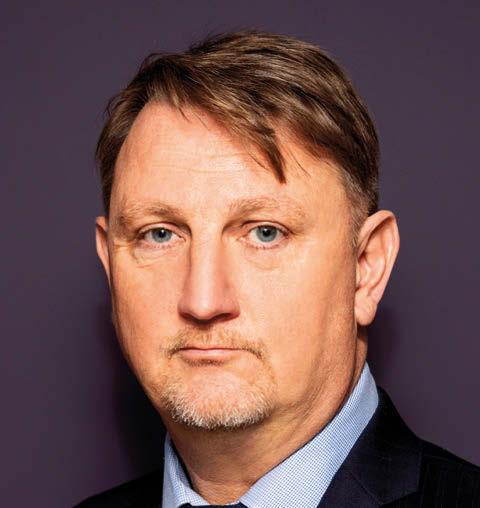
insurers WTW. The one-day course culminates in a 75-minute exam, which is internationally accredited by CPD and Highfield. The Middle East joins previous courses that have taken place in the US, UK, Canada, Australia, and mainland Europe, with over 400 event professionals already undertaking the training course.
Steve Allen commented: “I’m proud and delighted to have delivered the first Showstop Procedure courses in the Kingdom of Saudi Arabia, alongside Steve [Coleman] and a great team at ESM Operations. It’s abundantly clear that everyone attending these courses takes their responsibility to deliver safe events seriously. Pink Bows Foundation is enhancing safety at events to reduce the risk of tragic outcomes. I look forward to returning to the region in 2026 to deliver more training alongside Steve Coleman and ESM Operations.”
Photo: Pink Bows Foundation www.pinkbowsfoundation.org www.esmoperations.com