















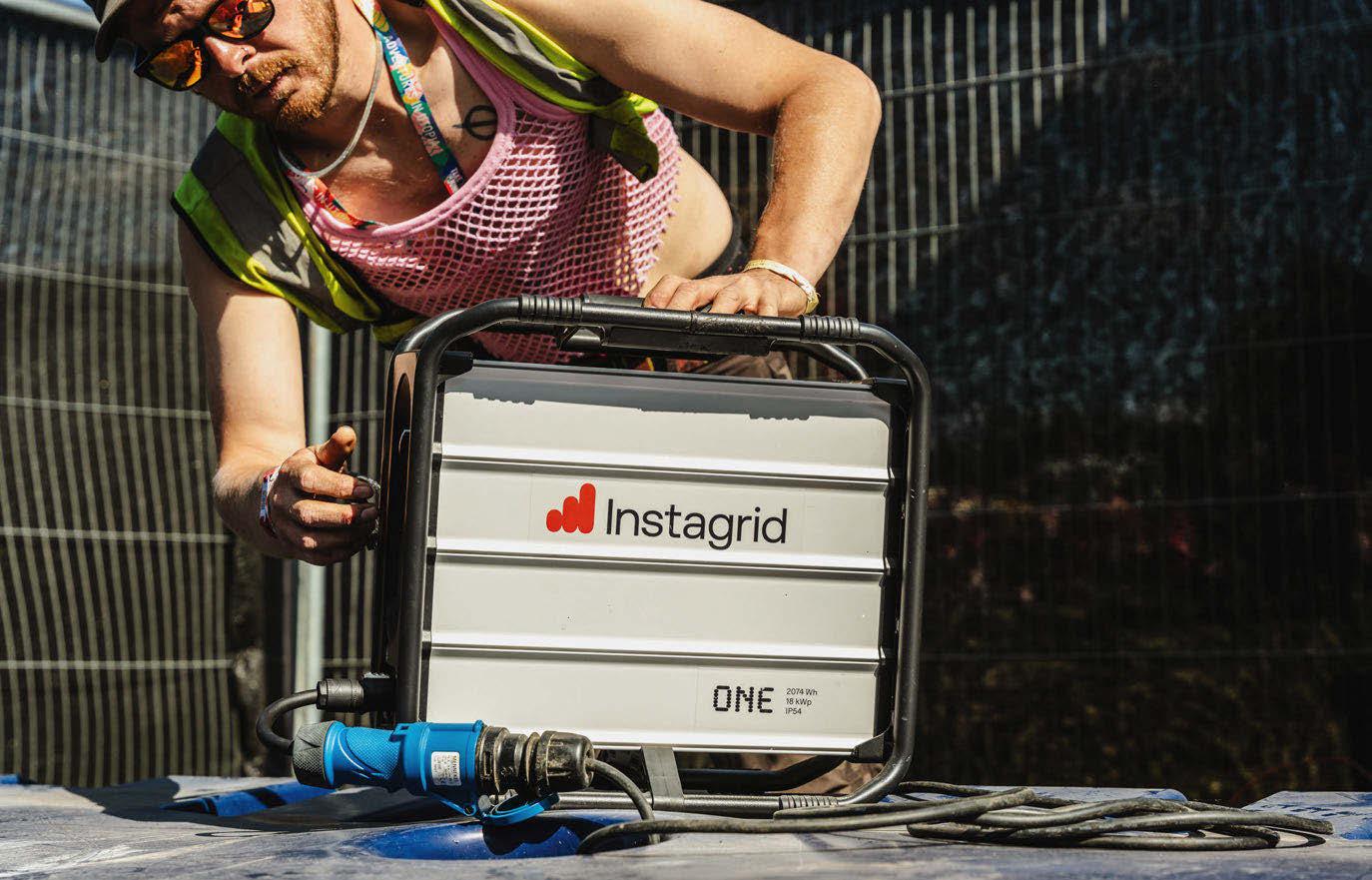
For the first on-site teams.
For the lighting teams. For the rigging teams. For every team who needs power.
Instagrid delivers silent, emission free energy at the flick of a switch. Bringing portable power to your event, wherever your team needs it.
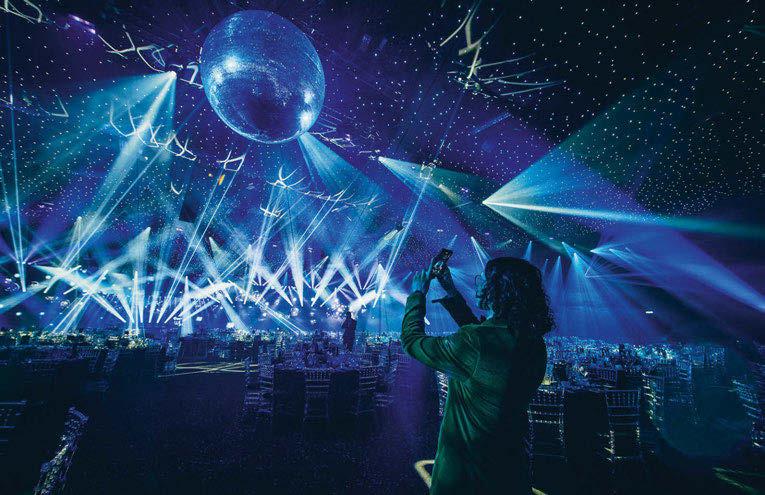
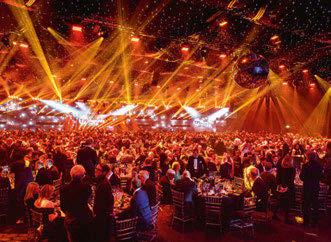
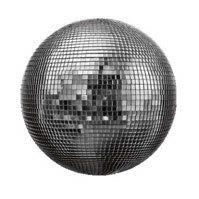
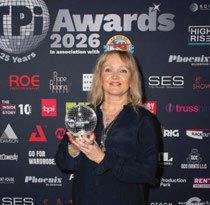
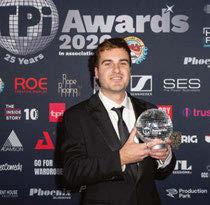
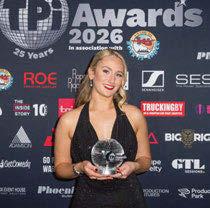
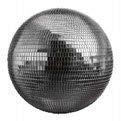
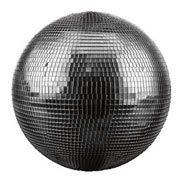
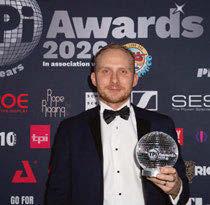
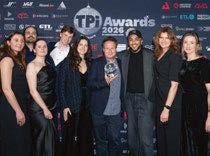
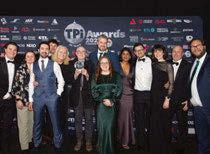
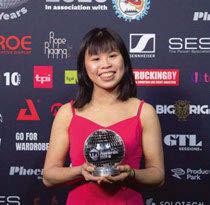
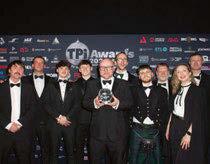
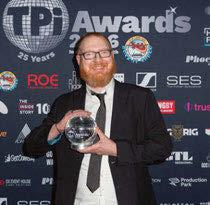
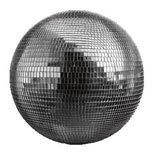
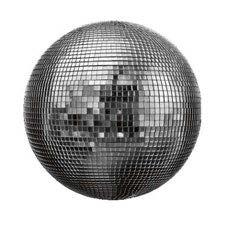
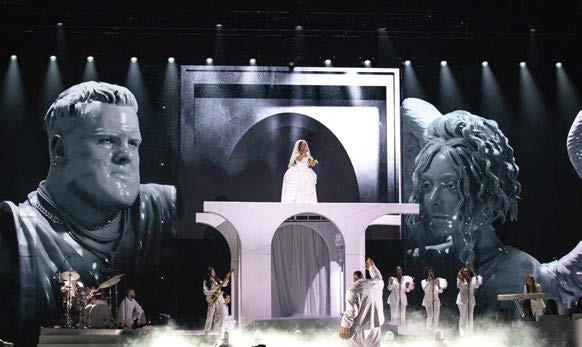
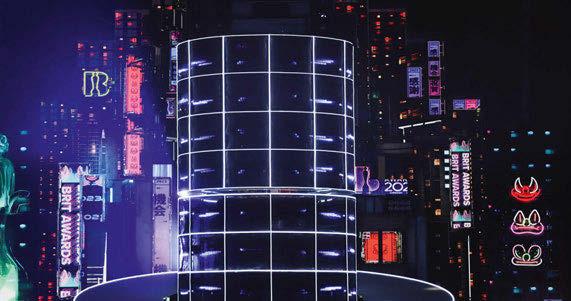
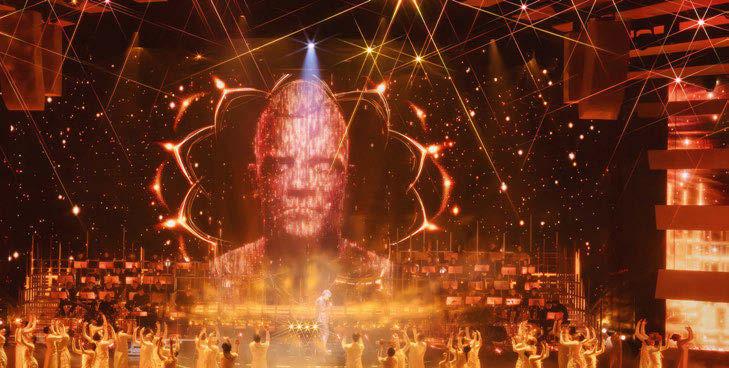
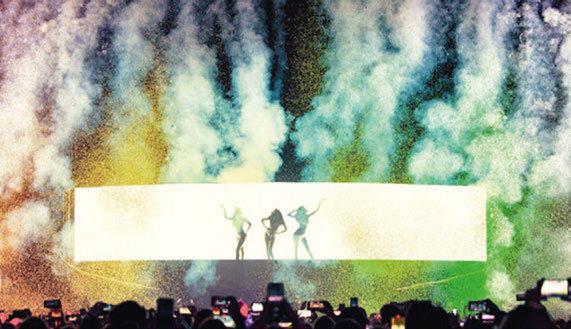
With 1,962 industry insiders in the room, a 2m mirror ball (step aside, Strictly Come Dancing ) and more stage invasions than a hardcore show, the TPi Awards 2026 proved a hive of production talent and good vibes. Now in its 25th year, the event demands expert levels of organisation to host a room full of people who have truly seen it all – and to persuade them to swap their workwear for their Monday best. Congratulations to all the nominees and winners [p10], and thanks to the TPi Awards’ academy, sponsors, supporters and suppliers who helped make the night a glittering success.
Huge thanks must go to Fran Begaj, Alice Clarke, Charlotte Moore, among many others, whose efforts – backed by a stellar production team – turned days, weeks and months of planning into a sparkling reality, as Ali discovers [p12]. In more TPi Awards-related content, Stew catches up with TPi Industry Recognition Award winner Roger Barrett to reflect on 50 years of Star Live [p98]; and Roadies in Recovery reflect on a third year in a row of hosting The Sober Table at the TPi Awards, while paying tribute to the late John Bowman [p114].
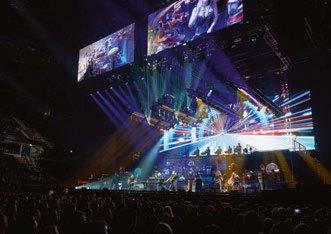
An artist familiar with awards ceremonies, Hans Zimmer heads back out on the road with the world’s largest modular synthesiser, an elaborate stage design and a tight-knit crew in tow [p52]. Elsewhere, Florence + The Machine’s return to
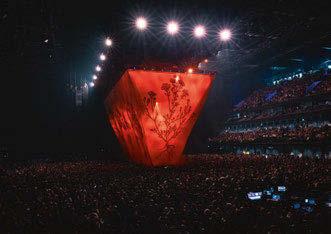
arena stages sees a road-tested touring team reunite with creatives and production partners to conjure an ethereal spectacle [p60].
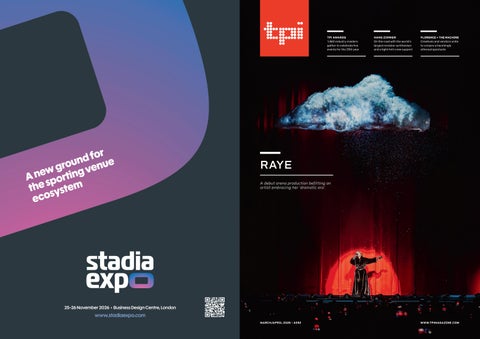
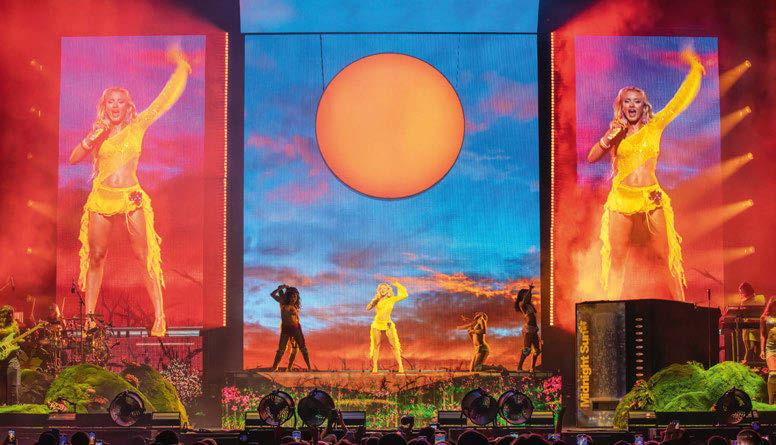
On the topic of collaboration, few artists can command a room with quite the mix of vocal acrobatics and charisma as RAYE, who graces this month’s cover. It feels only fitting, then – if you’ll pardon the tenuous link – that the team behind the scenes are equally adept at the acrobatics required to deliver the award-winning artist and her sisters’ first arena tour [p74].
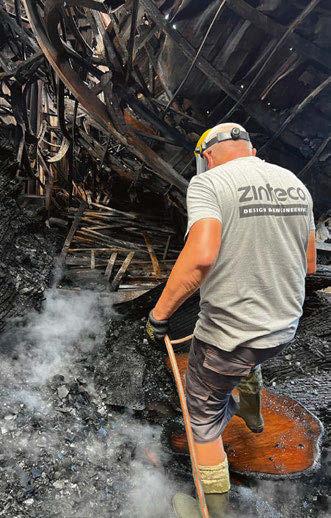
However, the road isn’t always smooth, as we learn from TMB and NA Company, which donated thousands of pieces of equipment to support one of Ukraine’s leading live event production companies after Russian Shahed drones struck the area.
If you’d like to learn more, the Bring Light Back website is now live, which explains the effort and how individuals or companies can participate and help [p116]
Through it all, the show must go on. With GTL Sessions fast approaching, if you’re a tour manager – or provide services to the community – don’t hesitate to get in touch.
See you on the road,
Jacob Editor
Issue #292 March / April 2026
Managing Editor
Stew Hume
Tel: +44 (0)161 476 8360
Mobile: +44 (0)7702 054344
Email:s.hume@mondiale.co.uk
Editor Jacob Waite Tel: +44 (0)161 476 8360
Mobile: +44 (0) 7592679612
Email:j.waite@mondiale.co.uk
Assistant Editor AliciaPollitt Tel: +44 (0)161 476 8360
Mobile: +44 (0) 7508441986
Email:a.pollitt@mondiale.co.uk
Commercial Director
Fran Begaj Tel: +44 (0)161 476 8360
Mobile: +44 (0) 7852336728
Email:f.begaj@mondiale.co.uk
Senior Account Manager
MatildaMatthews Tel: +44 (0)161 476 8360
Mobile: +44 (0)7413555978
Email:m.matthews@mondiale.co.uk
Account Manager Tom Dyson Tel: +44 (0)161 476 8360 Mobile: +44 (0) 7306505230
Email:t.dyson@mondiale.co.uk
Account Manager Molly Cummins Tel: +44 (0)161 476 8360 Mobile: +44 (0) 7710427823
Email:m.cummins@mondiale.co.uk
Digital Content Manager James Robertson Tel: +44 (0)161 476 8360 Mobile: +44 (0) 7725475819 e-mail: j.robertson@mondiale.co.uk
Marketing and Events Manager Alice Clarke Tel: +44 (0)161 476 8360
Mobile: +44 (0) 7752392465
Email:a.clarke@mondiale.co.uk
Marketing and Events Assistant Charlie Moore Tel: +44 (0)161 476 8360
Email:c.moore@mondiale.co.uk
Editorial Director Peter Iantorno Tel: +44 (0)161 476 8360 Mobile: +44 (0)7763 233637 Email:p.iantorno@mondiale.co.uk
Chief Executive Justin Gawne Tel: +44 (0)161 476 8360 Mobile: +44 (0)7768850767
Email:j.gawne@mondiale.co.uk
Accounts Lynette Levi / Sarah Miller: ar@mondiale.co.uk Mondiale Group Chairman DamianWalsh
Graphic Design & Production Jez Reid: j.reid@mondiale.co.uk DavidBell:d.bell@mondiale.co.uk
Cover Photo
RAYE by Luke Dyson
Printed By Buxton Press • www.buxpress.co.uk
Annual subscriptions (including P&P): £42 (UK), £60 (Europe), £78/$125 (RoW).
Subscription enquiries to:
Subscriptions, Mondiale Media Limited, Strawberry Studios, Watson Square, Stockport, SK1 3AZ, UK. Tel: +44 (0)161 476 5580
Email:subscriptions@mondiale.co.uk www.tpimagazine.com www.tpiawards.com www.gtlsessions.com
Access our complete range of globally available professional AV equipment and request your rental quote online.
Stay up to date with the latest innovations and product r releases from our partner brands.


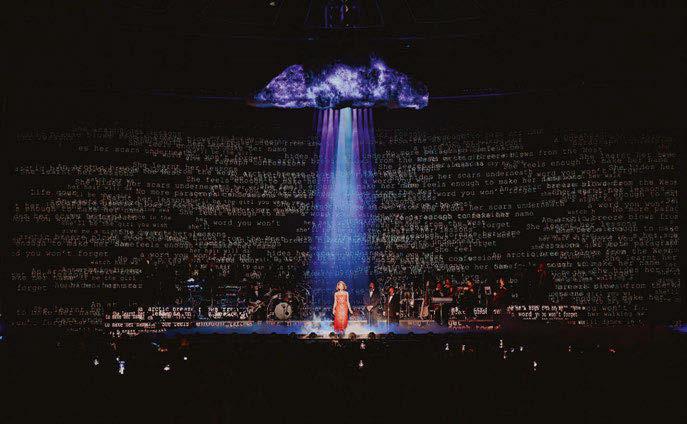
The award-winning artist and her sisters take to arena stages for the first time with a production befitting an artist embracing her self-confessed ‘dramatic era’.
10 Meet TPi Awards’ class of 2026.
12 Behind the screens of the 25th anni versary of the ceremony.
26 Next Robe Generation (NRG) students illuminate the room.
30 The Live Events Stage returns to ISE for its second year.
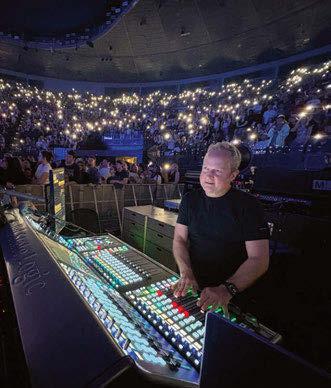
32 FOH Engineer, Philip J Harvey unpacks Lorde’s live mix.
36 Gravity Rigs on orchestrating
Luciano’s recent live offering.
40 Tiakolo’s crew push the boundaries of an automated set.
44 The Reytons hit the stage at OVO Arena Wembley.
50 HANS Z IMMER
The renowned composer returns to the touring circuit with an elevated stage show.
60 FLORENCE + THE MACHINE
A road -tested touring team bring a hauntingly ethereal spectacle to life…
90 Alan Thompson reflects on touring with Barry Can’t Swim.
94 Core Pro Audio opens its brandnew L-Acoustic L-ISA auditorium.
98 Star Live discusses 50 years, complex stadium productions and its recent expansion.
106 HansTolo Enterprises analyse where the industry is headed and unveil what is next for them.
PRODUCTION FUTURES
108 Hannah Eakins shares the latest news from PF.
GEAR HEADS
110 Martin Audio reveals the latest update to Wavefront Precision.
112 Martin Professional unveils the MAC One Beam.
FEEDBACK
114 Roadies in Recovery on the importance of their presence at the TPi Awards.
116 The industry supports Zinteco following a recent Russian bombing in Kyiv.
118 PSA looks to the future.
BACK CHAT
122 Nancy Skipper on the trials and tribulations of balancing parenting in the industry.



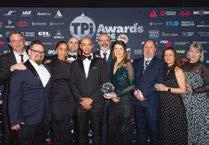
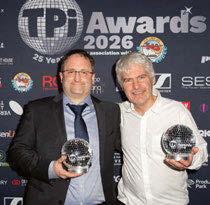
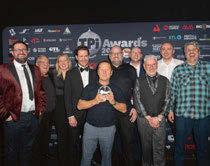
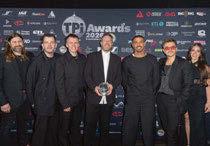




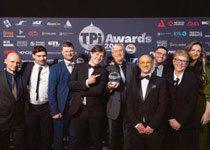

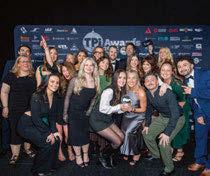
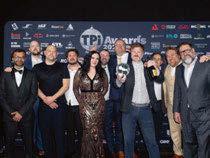
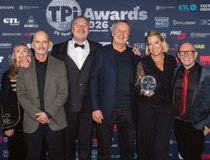
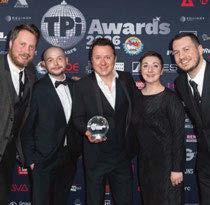

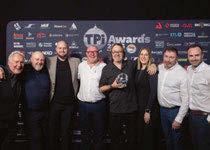
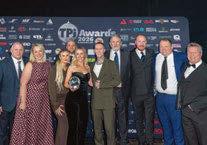
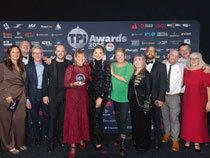
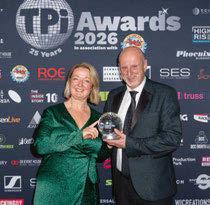
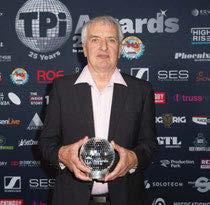

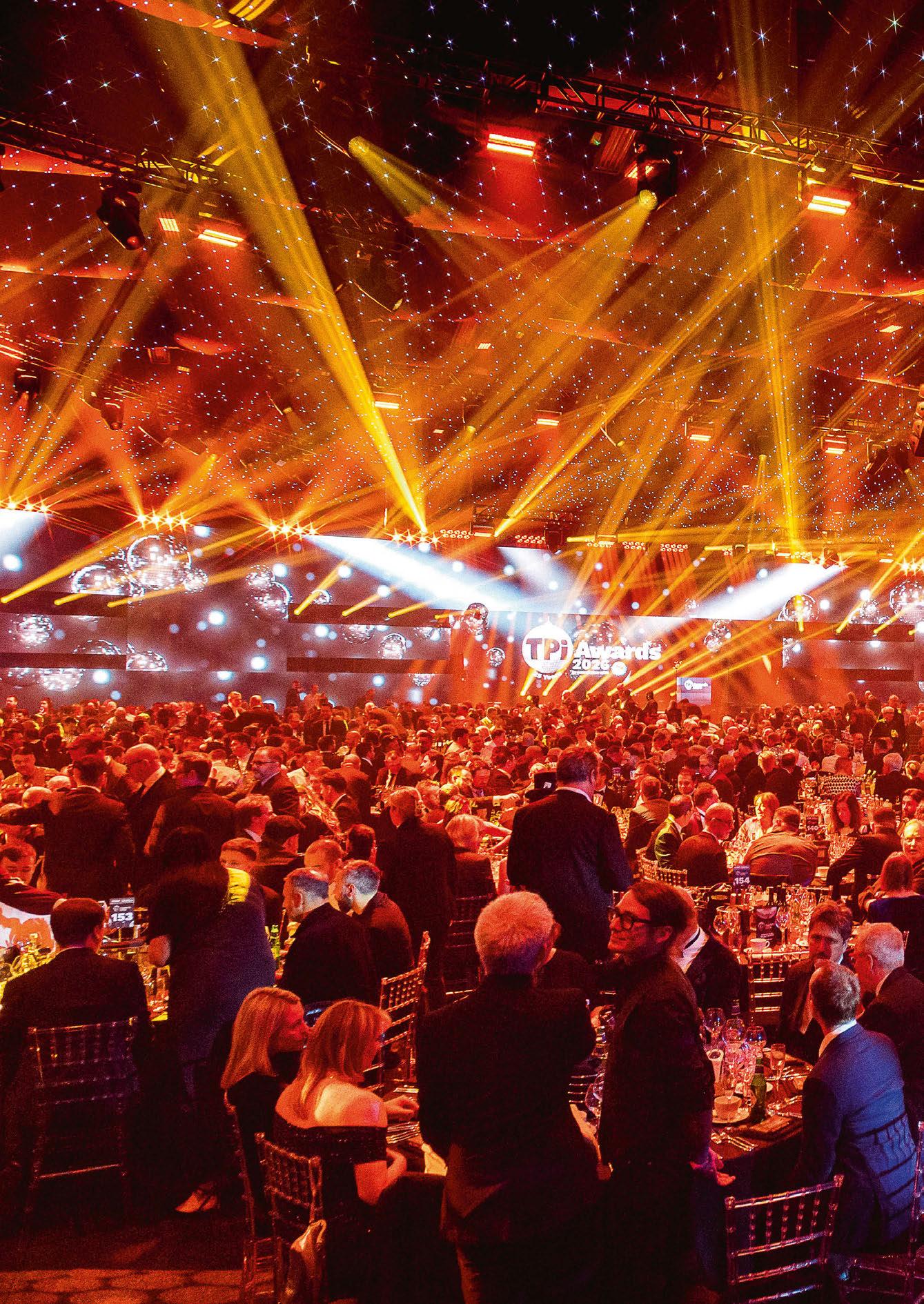
As the industry comes together to celebrate two-and-a-half decades of our very own annual gathering, we take an exclusive peek behind the LED screen to hear from the dedicated team of suppliers behind the event…

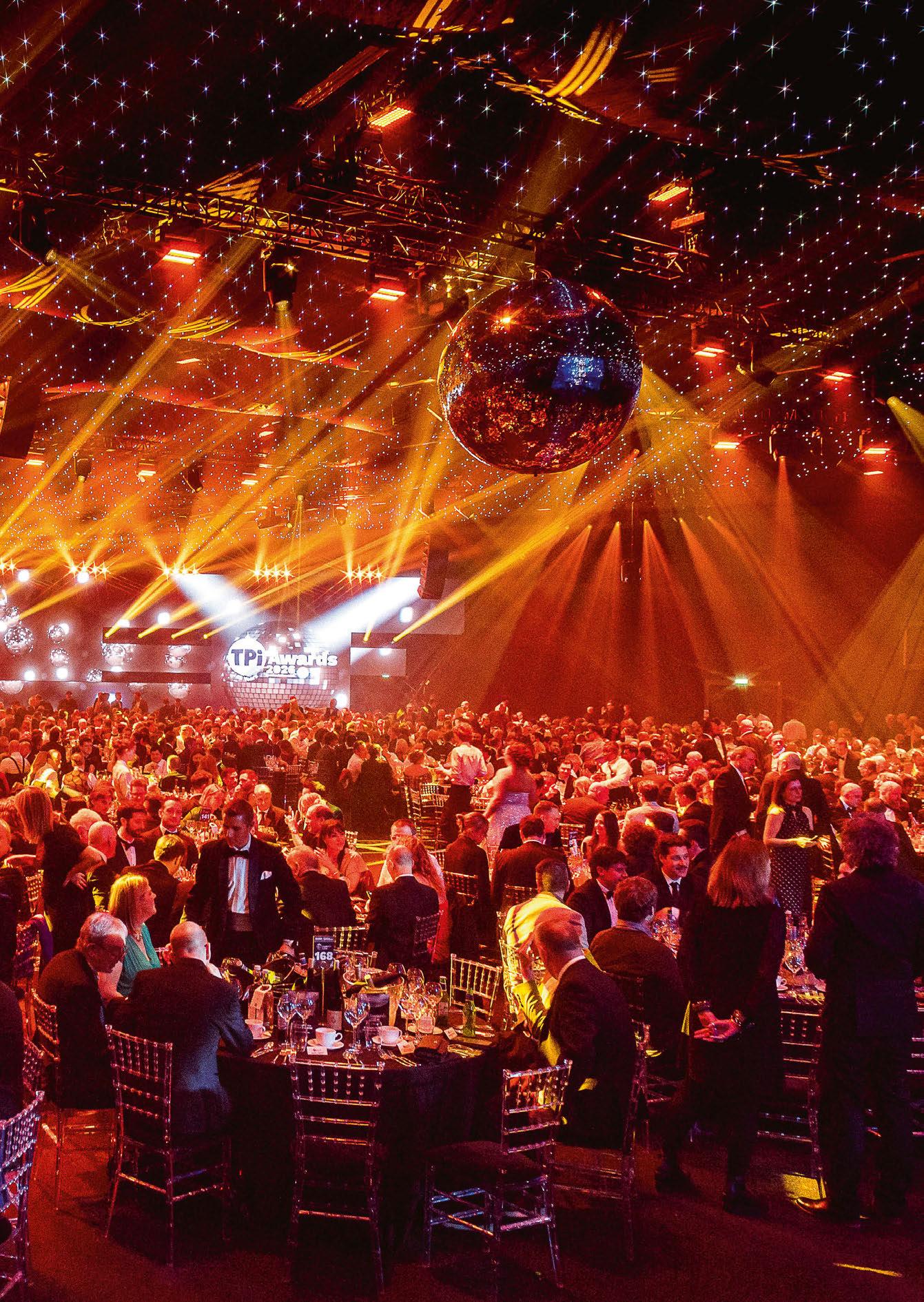
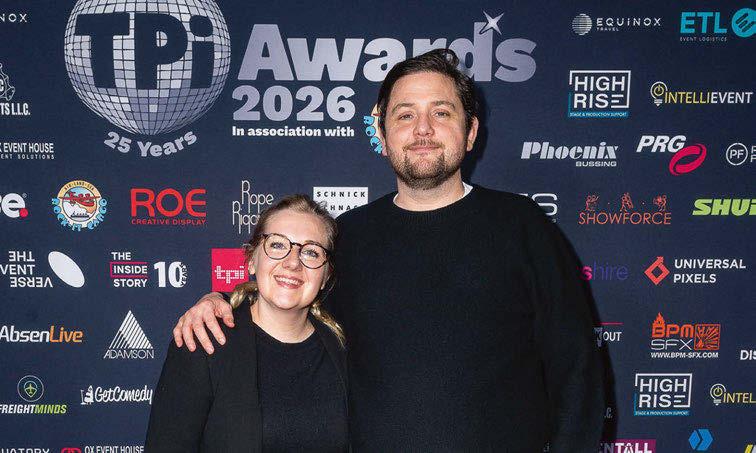
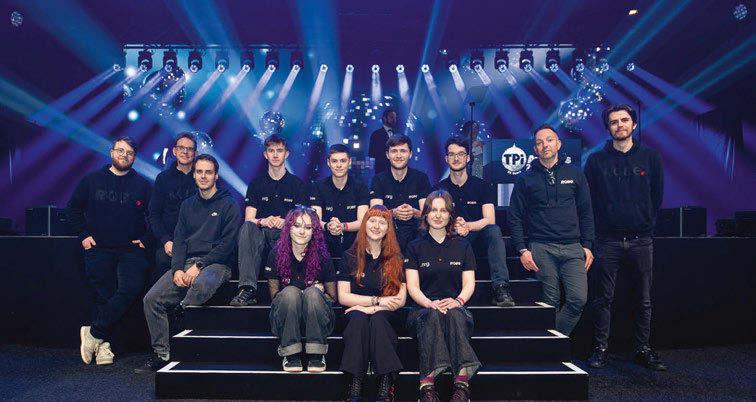
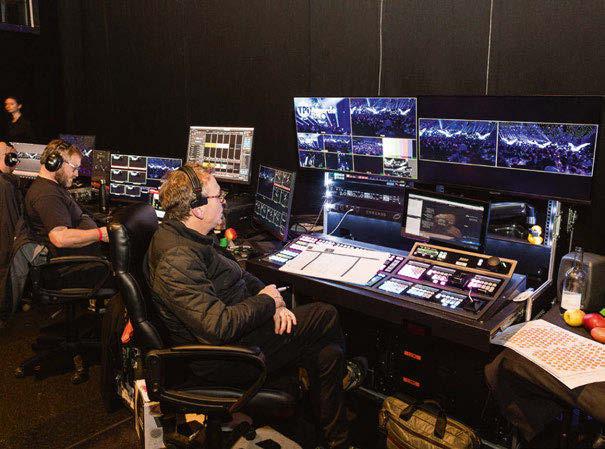
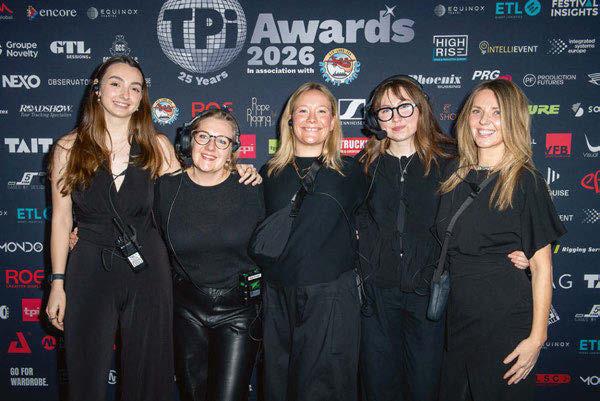
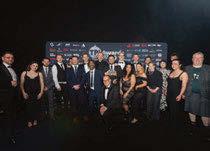
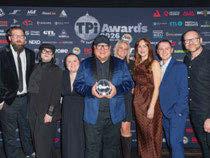
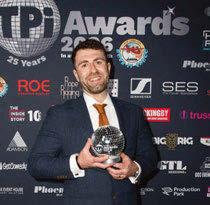
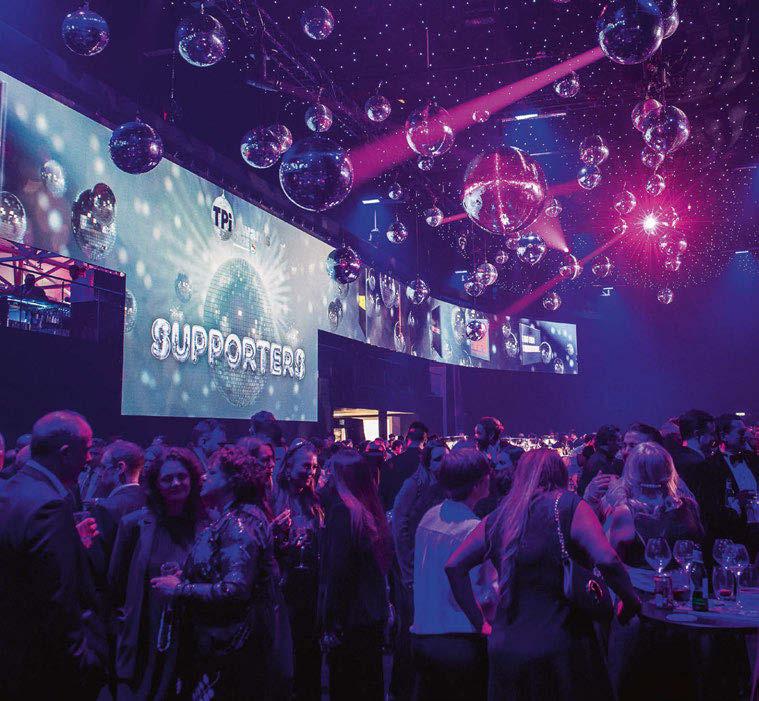
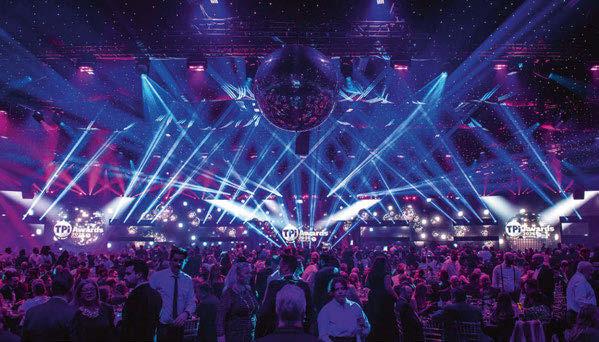
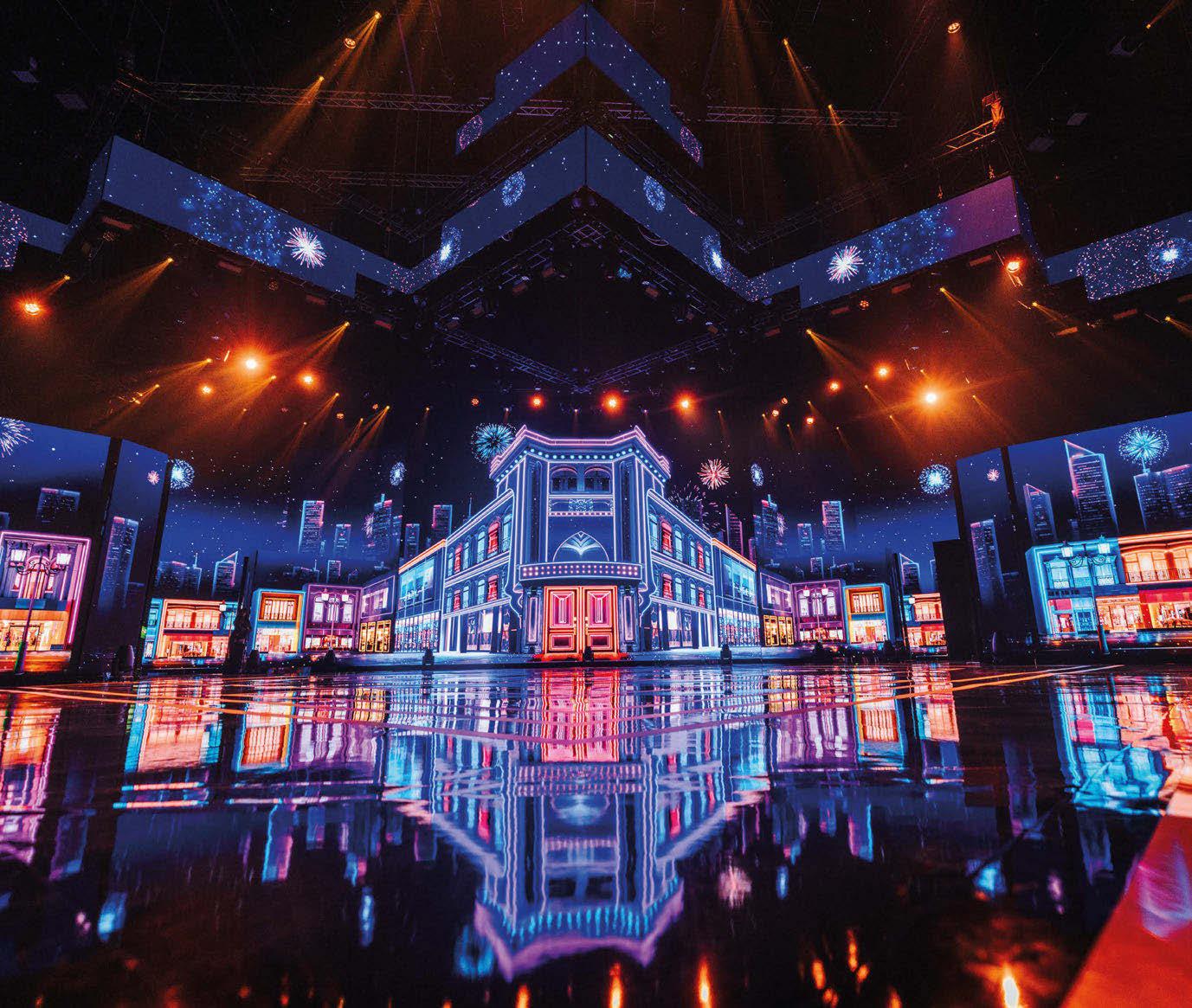
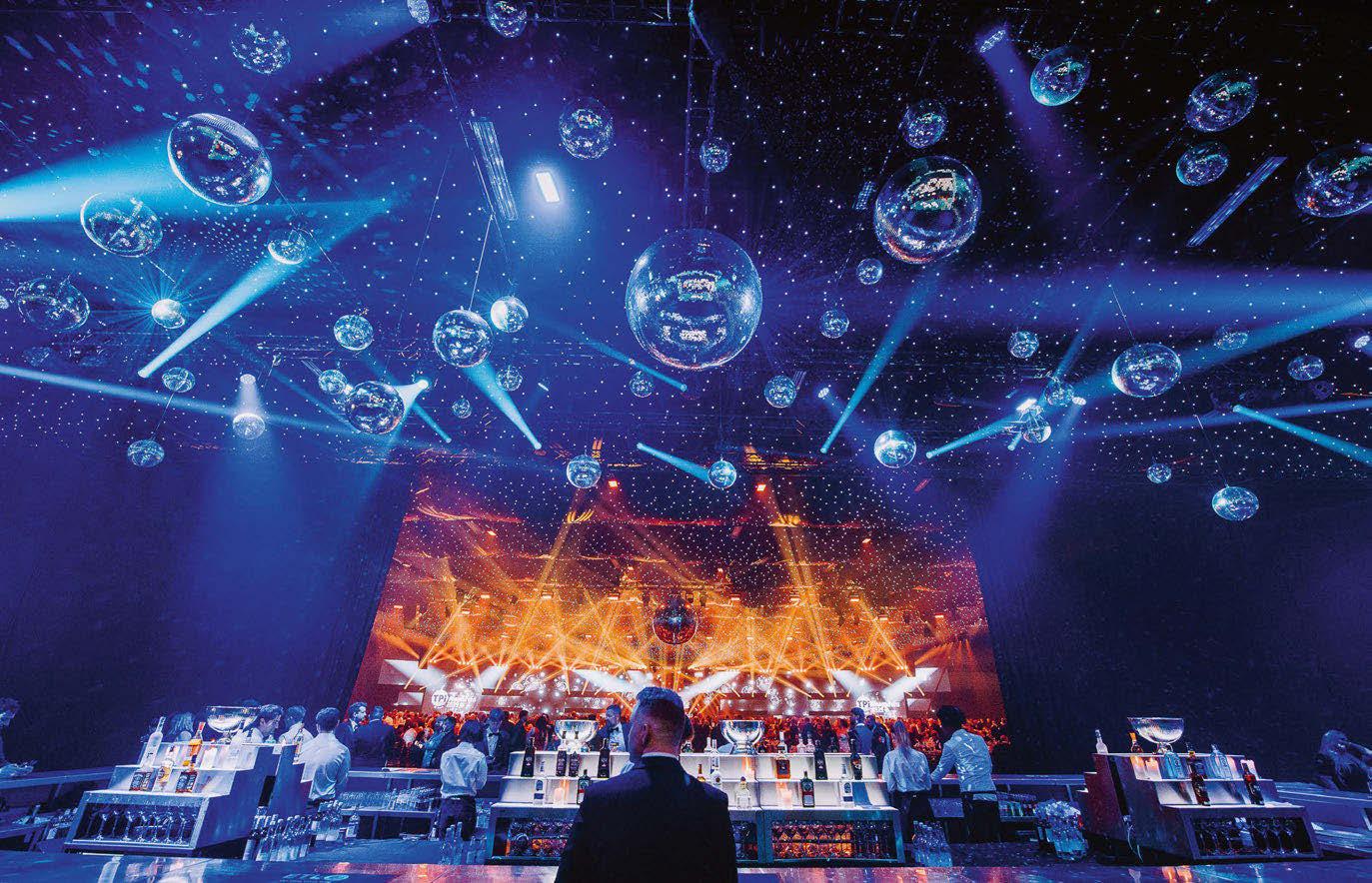
With the industry swapping their show blacks for their black-tie attire for yet another year, the TPi Awards saw its largest attendance yet, with the Mondiale Technology Media team scanning a whopping 1,962 attendees through the doors. What’s more, this year saw the event reach an important milestone – 25 years. To mark our silver anniversary, the creative drew heavily from the theme, with disco balls and glitter aplenty.
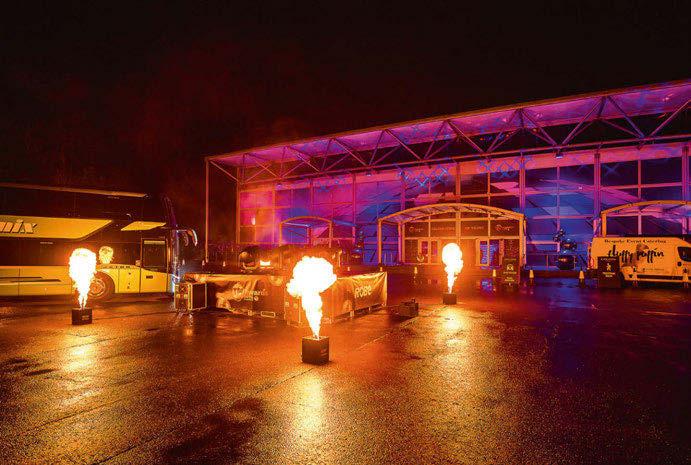
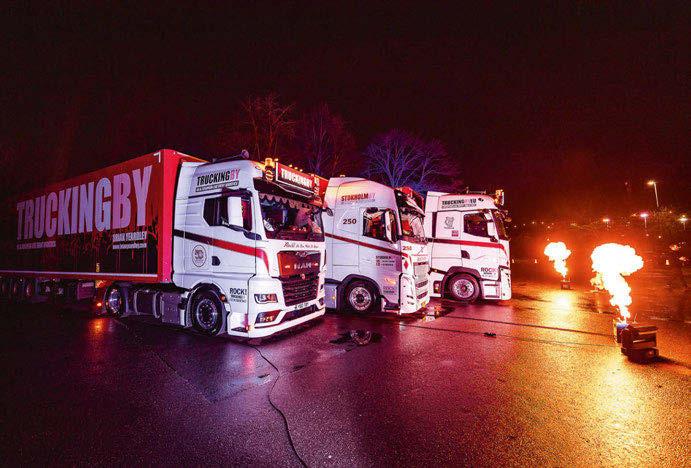
The evening’s theatrics began as attendees approached Evolution London. Tucked in the middle of Battersea Park, the venue was given an exterior makeover with a temporary installation from Robe, special effects from BPM SFX, and vehicles from the fleets of TRUCKINGBY, Vans For Bands, Phoenix Bussing and ETL Logistics all on display.
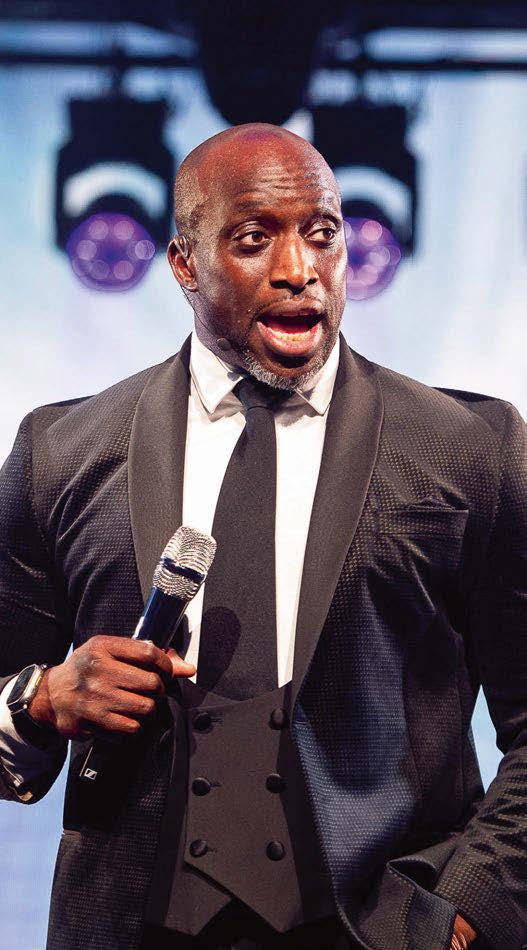
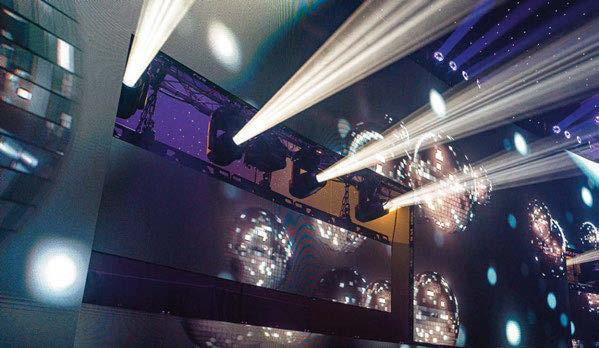
This , however, was just the start; in true TPi fashion, once attendees entered the venue, they were treated to all-silver walkways, a plethora of mirrorballs, a spectacular lighting rig, and the largest number of LED panels ever seen at the annual event, as well as a standout comedy set from returning TPi Awards host and crowd favourite, Emmanuel Sonubi.
“This year was a very important year for the TPi Awards – our silver anniversary – and because we change our theme every year, we wanted to have fun with it and go all out,” began Commercial Director, Fran Begaj, who also celebrated an anniversary of her own, revelling in five years of organising the event.
“Going from the silver theme, Charlie (Moore, Marketing & Events Assistant) made the connection between the mirrors on disco balls representing reflection, and with that in mind, we thought, what better theme than a disco ball extravaganza for our 25th year?”
Fran went on to explain that a lot of the inspiration for the awards comes through both the coverage from the magazine across the year, and the shows she visits, both as a punter and as a representative of TPi.
“At the beginning of last year, I attended a Teddy Swims concert, and there was a point during that show where fan-submitted videos were on the video screens, which led to us gathering footage from previous winners and images from our archive,” she recalled.
“Beyond inspiration, we always try to go bigger and better every year,” she added.
Go To Live’s Jess Webb and Ryan Esson were once again overseeing the event’s production; the PRG Video crew working backstage at the event; the Robe lighting team, featuring Jordan Tinniswood, Andy Webb, Tomas Kohout, Jamie Mather, Annie Francis, Tom Skinner, Abby Wills, Daniel Nunn, Kayleigh Brown, Gabriel Reis, Nathan Wan and Kyle Evans; and the hardworking stage management team of Alejandra Gonzalez Muñoz, Jess Webb, Julia Mackness, Lauren Bevis and Natasha Dumbleton.



“Somehow, we managed to succeed on that once again. We hit 1,962 attendees and had a waiting list for more. It’s incredible that nearly 2,000 people attended the awards, and that it has become a staple event for people in the industry calendar.”
Curating an event for the events industry, has its pressures as Fran elaborated: “For our suppliers and teams that work on the event, they are presenting their work in front of their peers. Fans at a show might not notice a pixel out of place, or a missed cue, but at the TPi Awards, they do. Our suppliers have to work so hard to make sure everything is perfect,” she said. “Our suppliers are a group who work in the best interests of the event, creating a really cohesive and collective environment.”
The team at GoTo Live, made up of Jess Webb and Ryan Esson, reflected on their role in the anniversary edition: “This year has been a very busy one; the pressure of the 25th anniversary meant everything had to be perfect, but our highlight was the amount of time we laughed with the team in the planning of this,” Webb commented. “We are a really
good team, and with the amount of weird and wonderful things you come across in live events, sometimes you just have to have a good laugh.”
Esson added: “The awards have gone from strength to strength. The show gets bigger every year and in our debrief every year we ask how we’re going to top it, and somehow the team does,” he explained.
“I think people would be interested or impressed by how quickly the kit flies up, with such a large production build, we’re surprised every year that we pull it off!”
Coming together to achieve the feat was a dedicated collection of suppliers that included AED Group, Blackout, BPM SFX, Encore, NEXO, Observatory, PRG, Robe, Sennheiser, Showforce, Sound of Music, TRUCKINGBY and Visual Architects.
BOOGIE FEVER
Displayed at the front of the venue was the largest venue wrap in TPi Awards history from Wrapped Signs, which was designed by Observatory, who also looked after the content
played on the abundance of LED screens inside the venue.
Observatory was brought into the fray just three weeks before the event, with a previous supplier having to pull out due to a conflicting schedule. Despite the short turnaround, the design house more than knocked it out of the park for the awards.
“If we had never done it before, we wouldn’t have stepped in, but because this would be our fourth year returning to the awards, we knew what to expect, we knew the brief to work to, and I think we pulled it off,” commented Simon Harris, Technical Director at Observatory. “Despite coming in at the last minute, this year’s TPi Awards saw some of the largest files we have ever worked on.”
Fran and the wider team, made up of Moore and Alice Clarke, Marketing and Event Manager, got in touch with previous winners and delved through the archive to collate images from previous years of the TPi Awards, which were then utilised to celebrate the anniversary properly, with Harris and the Observatory team compiling the images to curate footage
for the opening VT. Observatory also worked meticulously on the Absent Friends memorial portion of the awards ceremony, which saw a moment of reflection for friends and family in the industry that we have lost over the year.
For Harris, working on the TPi Awards is always special, but for the 2026 edition, he was celebrating his 20th anniversary of attending the night. “I realised it on the night, actually, which was surreal,” he said. “The awards are a great place where the industry can come together, celebrate and catch up with friends who you don’t often get to see because everyone is off gallivanting.”
Harr is also paid tribute to the wider Observatory team behind the effort, with the Technical Director noting that Creative Director, Ben Sheppee, who was on site for the entire build, ensured that everything was delivered as planned. “We have experience working together, and the whole team is brilliant; our open working relationship has made that dialogue between us all the more important,” Harris explained.
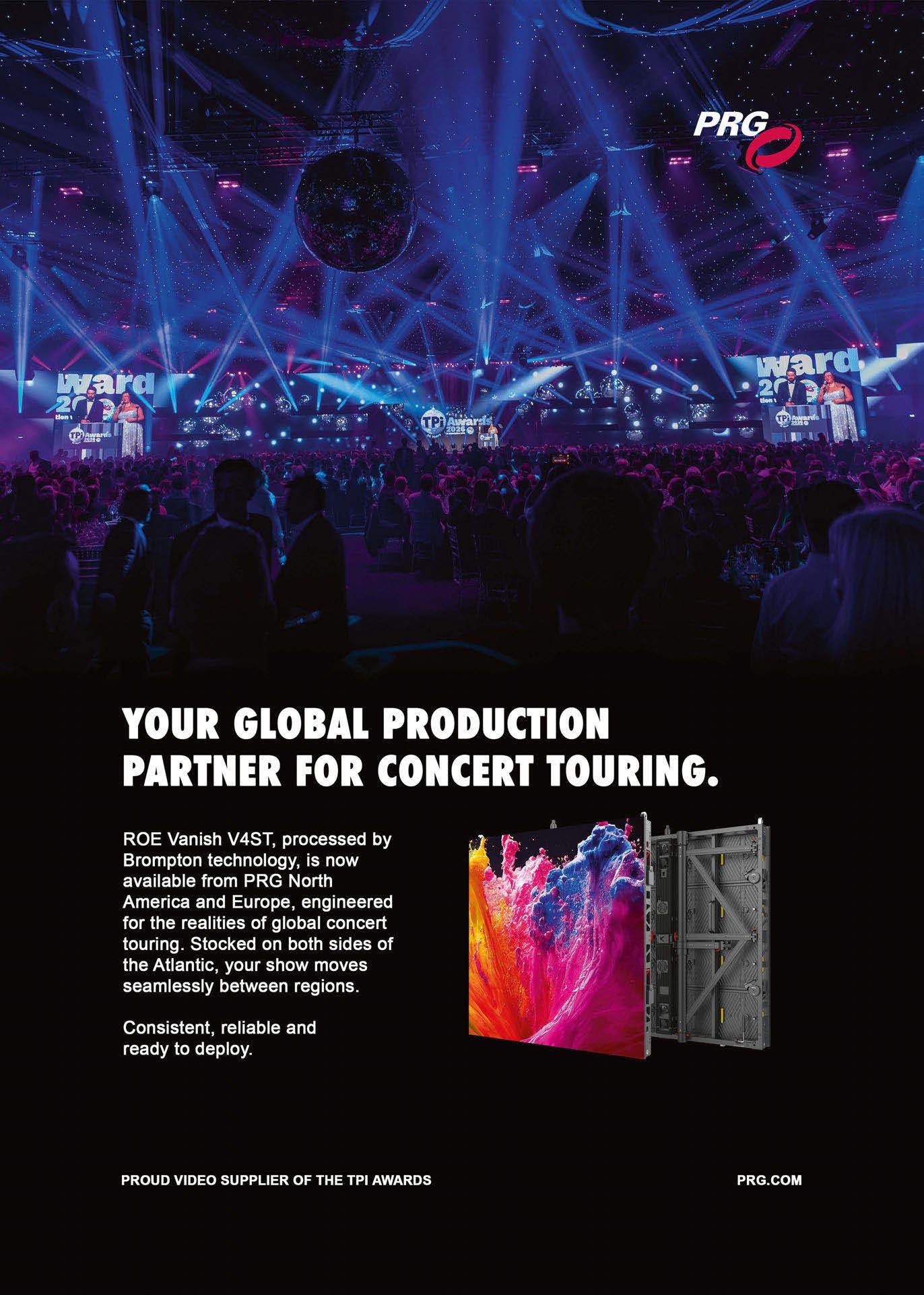
Observatory certainly had its work cut out for it, with PRG providing the awards’ largest screen yet – a gigantic 54m by 6m wall of ROE Visual VANISH V4ST LED. Making its debuting outing for the supplier, the screen was wrapped around the sides of the venue, before being carted off to join the Wu-Tang Clan production.
PRG also provided a dedicated 45m Unilumin UtileIII screen for the bar area, as well as two long-throw cameras, two PTZ cameras, a Steadicam to capture the winner walk-ups, and a 24ft jib to give sweeping shots of the space in Evolution London. “We have loved
being back as the video supplier for a second year,” commented PRG Technical Account Manager, Nick Clarke. “This is an event that is all about celebrating the industry, and that really comes through with the collaboration between suppliers. Working alongside Ben (Hornshaw, PRG Head of Projects), we’ve pushed the venue to the limit this year, with a screen spanning the entire 54m width of the room and as much height as the rigging points could give us.
“A huge thanks to Fran Begaj, the whole TPi Team and, of course, Ryan Esson for having us along for the ride. I wonder what Fran has up her sleeve for 2027…”
DISCO INFERNO
In charge of the over 300 Robe lighting fixtures on the rig was Lighting Director, Nathan Wan, who worked closely with Associate LD, Andy Webb. The Robe in-house creative team was also supported by Jordan Tinniswood, Kyle Evans, Tomas Kohout and seven NRG (Next Robe Generation) students from four different colleges around the UK.
The team thought the awards were the perfect place to feature the recently launched GigaPointe prominently on the rig, with other fixtures such as 70 SVB1, 32 iESPRITE LTL, 40 iPAINTE LTM WB, 12 SVOPATT, 36 WTF!, seven T1 and T2 profiles, 20 iBOLT, six iFORTE LTX FS, 16 LEDBeam 350 and 20 LedPOINTES.
The Robe team utilised the ScanGuard system, a patented Robe geo-fencing system, designed to keep the use of the iBOLT indoor as safe as possible. The lighting giant also curated an outdoor installation for the spectacle to
begin before the doors of Evolution London even opened. This year’s outdoor show featured nine iBOLTs with six WTF!s utilised as asymmetrical flood lights for the TRUCKINGBY, Vans for Bands, Phoenix Bussing and ETL Logistics vehicles on display.
The impressive lighting rig was programmed and controlled on an Avolites D9-215, while a D7-215 was utilised for the bar area and exterior.
NRG crew member, Daniel Nunn, was Assistant Lighting Designer in the main room, while Jamie Mather and Annie Francis oversaw lighting for the VIP bar, and Tom Skinner looked after the iBOLTs outside. Abby Wills and Gabriel Reis operated Robospots for the ceremony and Emmanuel Sonubi’s set, along with Mather, Francis and Skinner.
Outside the venue joining Robe was BPM SFX, which provided four MagicFX Eco2 Jets, and eight Galaxis G Flames, to bring attendees and industry professionals into the action straight away.
BPM SF X also provided six Kvant Atom 58 lasers, eight Showven Sparkulars for the main room, which were used in the opening video and for Sonubi’s set.
“BPM SFX is delighted to have supplied the TPi Awards with our SFX and lasers, helping to enhance one of the most prestigious nights in the live events calendar,” stated Luke Harlow, Digital Designer at BPM SFX.
“We take great pleasure in supporting events that bring the industry together and celebrate the creativity, innovation, and dedication of professionals working across our field of work,” he continued. “Recognising the outstanding

Production that powers possibilities
Encore are proud sponsors of TPi Awards 2026

Come and check us out. Scan the QR code above!








efforts that go on in our sector is something we believe in strongly, and it is an honour to contribute to an evening that shines a spotlight on those achievements,” he added. The Digital Designer also noted that being able to help make the night “truly memorable and immersive” through “carefully designed visual effects” is exactly what the BPM SFX team sets out to do with every project.

“To be involved in the production of such a respected awards ceremony fills us with immense pride and reinforces our passion for delivering impactful, high-quality effects for the live events industry.”
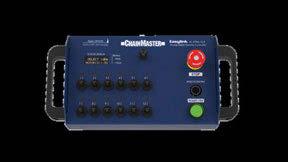
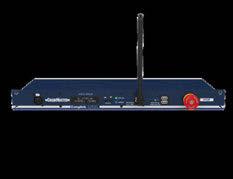
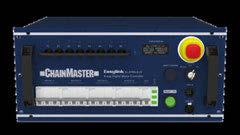
Supports various motor configurations & channels
Direct & Low-Voltage Control available
Same interface across all versions
Precise & safe control for every application
CHAINMASTER GmbH info@chainmaster.de • www.chainmaster.de
Audio supplier, Sound of Music returned the TPi Awards with a team of eight handling the project, including: Mike Burwood, Head of Department / System design; Ben Williamson, System Technician; Joe Turton, Comms Technician; Toby Chevis, FOH Engineer; Sam Mcleod, RF Tech; Giorgio Labatte, PA Rigger; Ryan Berry, PA Rigger; and Neil Denbo, PA Rigger. am deployed a full NEXO PA system with main left and right hangs of six M1210 and one M1220. Iinfills comprised three M1210 and one M1220, while delays consisted of four M1210. Down and front fills were covered by six P15 and four P8s, respectively, while low-end reinforcement came in the form of16 MSUB18s deployed in a horizontal array for optimal coverage. The entire sound system was driven by a combination of NXAMP4X4 and NXAMP4X2 MK2 amplifiers.
d of Music also covered the bar area, Robe VIP bar, foyer, and smoking area with a selection of point-source solutions, including P15, P10, P8, ID24, and IDS110, with further P8 and ID24 utilised for backstage monitoring. e once again delighted to support the TPi Awards in collaboration with Sound of Music for another amazing awards evening,” commented Rich Soper, Sales Manager, Nexo. “This has become such a highlight of the year for us, and we really look forward to the opportunity to congratulate
everyone in our industry for their continued hard work and support – especially on the 25th anniversary. We are all well-deserved winners tonight”
‘Anniversary’ was the word on everyone’s lips during the evening – especially Sennheiser’s, which supplied four EW-DX Microphones with two specially customised silver models for the occasion an exclusive to the event.
“Sennheiser is extremely proud to support the TPi Awards as an official sponsor and presenter of the Favourite Sound Rental Company award, recognising the organisations that continue to push the boundaries of live sound and touring productions,” commented Sennheiser’s Maria Avila.
She continued: “The TPi Awards represent one of the most important evenings in the live entertainment calendar, bringing together the touring community to celebrate excellence, innovation, and the people behind the shows that inspire audiences. For Sennheiser, the TPi Awards are not only a celebration of industry achievements but also an opportunity to connect with the professionals who shape the future of live sound.”
Bringing together all of the kit to Evolution London was down to TRUCKINGBY – a company
that believes logistics isn’t just about moving equipment from A to B, but is instead about precision, responsibility and delivering the best solutions.
Shaun Wood, Senior Tour Coordinator at TRUCKINGBY, commented: “We are extremely proud to showcase our brand as the official trucking provider through our support of the TPi Awards. Providing specialist trucking services for such a prestigious event reflects our commitment to reliability, professionalism, and partnership. Supporting the TPi Awards allows us to stand alongside the very best in the industry we serve. It gives us tremendous pride to see our trucks illuminated for guests to pass as they arrive at the venue, creating a striking first impression and a natural focal point for conversation throughout the evening.”
Wood added: “Contributing to the TPi Awards has reinforced the importance of celebrating excellence across every area of events production. These awards shine a spotlight on the creativity, technical expertise, and dedication that drive our industry forward. By recognising outstanding achievement in the industry, they inspire companies and individuals alike to raise standards, innovate boldly, and continually push boundaries.”
As the doors closed at 4am on yet another TPi Awards, the Mondiale Technology Media
team were whisked back up to Manchester, after a 10am lobby call, by Phoenix Bussing.
With all that said, what is left to do but celebrate winners, and of course, thank both the dedicated suppliers and sponsors that make this annual gathering possible.
Also, a huge ‘thank you’ to the TPi Academy, which aided the creation of the shortlists for each category.
As the glitter settles, the mirror balls stop spinning and we look through the numerous photos from this year’s event, only one question remains… how will we top this one in 2027? Watch this space... www.tpiawards.com www.gotolive.co.uk www.pahire.com www.showforce.com www.brianyeardley.com www.visual-architects.com www.avolites.com www.robe.cz www.nexo.com www.observatory.design www.prg.com www.bpm-sfx.com www.blackout.co.uk www.aedgroup.com www.sennheiser.com www.encore-emea.com







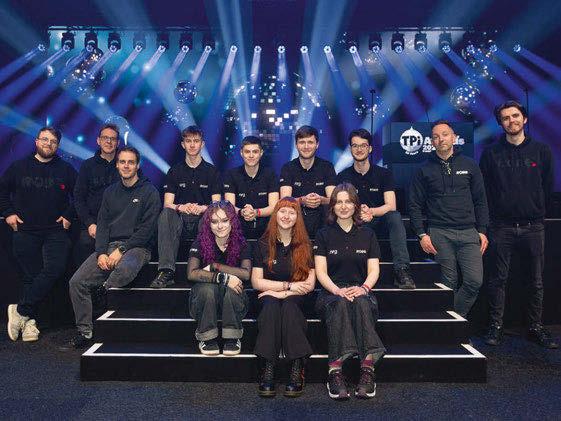
Seven Next Robe Generation students from colleges and universities across the country come together to help light the industry’s favourite night out…
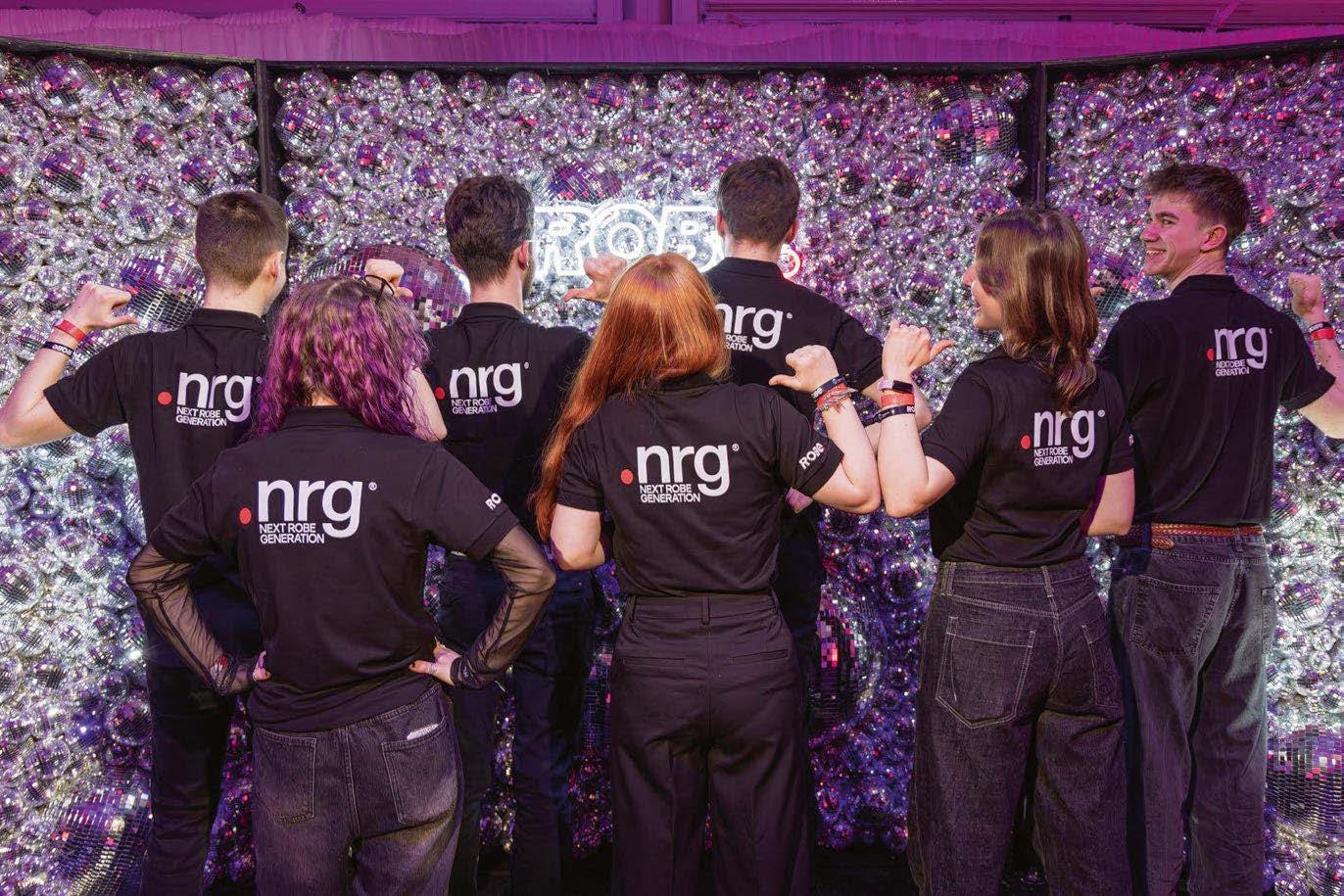
From Glastonbury to Eurovision and Strictly Come Dancing, Next Robe Generation offers unique work experiences across the live sector, and the TPi Awards is no stranger to the organisation, with a select few students gaining experience at the event for many years now. This year’s volunteers were selected from a pool of other like-minded students and were then invited to Robe’s UK HQ for training and a sneak-peak into this year’s rig before the night.
This year’s NRG Students featured Nottingham Trent University’s Daniel Nunn, Assistant LD in the main room, Jamie Mather, LD in the bar area and Kayleigh Brown, RoboSpot Operator. As well as Academy of Live Technology’s Annie Francis, LD in the Robe Bar, Tom Skinner, LD for the courtyard, while Falmouth University’s Gabriel Reis, RoboSpot Operator, and Royal Conservatoire of Scotland’s Abby Wills, RoboSpot Operator, were also onboard for the event.
Nunn told TPi about the application process, describing it as “welcoming” and “thorough”. Applicants had to design multiple lighting states using Capture and submit them for assessment. “When I got confirmation, I was in disbelief,” Nunn s aid. “I knew about the scale of the TPi Awards before I applied, and to be told I would be in the main room programming and operating a giant lighting rig in a room full of the top people in the industry was an incredible surprise.”
Nunn also walked through the training, which was held at Robe’s Northampton HQ,
where day one focussed on RoboSpot and Avolites refreshers, while day two looked into previsualisation and programming for the awards. “It was a great honour to be part of the 25th anniversary of the TPi Awards. With such high stakes, it was comforting to know I was surrounded by amazing designers and programmers who encouraged me every step of the way,” he said.
Mather, who took on the role of Bar Lighting Designer, also commented on his experience: “I was absolutely overjoyed to hear that I had made the opportunity, let alone achieved one of the design roles! I was very daunted at the idea that I now had to help design one of the largest events in the production industry’s calendar. I was filled wit h ner vous excitement at the idea of being in a room with some of the biggest names in the industry. Being a member of the NRG crew at the TPi Awards is an achievement in itself, and that gave me the confidence to be able to speak to professionals who had earned their own right to be at the awards.”
Francis, who headed up the lighting design for the Robe VIP Bar, added: “Getting involved in one of the industry’s largest and best-known events was such an honour. While also being given the privilege to design lighting for one of the biggest lighting companies, with the audience being some of the biggest names in this industry, is still unbelievable to me,” Francis added. “I would 100% recommend applying for the opportunity to anyone who is thinking about
it in the future. The experience was beneficial, rewarding, memorable, and joyful.”
Responsible for looking after the nine iBOLTs for the outdoor installation was Skinner, who elaborated on his experience: “I was thrilled to have the opportunity to light the entrance to the event as it’s the first thing that the guests would see,” Skinner added. “The pressure to perform is really on as everyone in the room knows more about what you’re doing than you do, and you’re there to impress them. Having the team to support shifted my focus to get the most out of the experience.”
Ensuring winners were appropriately lit during their walk to the stage, was down to Reis, Brown and Wills. “NRG have lots of opportunities around the year, but the TPi Awards experience had the widest amount of learning available; with training the week before at Robe HQ, a day of setup and then the show itself,” Reis commented. “It occurred to me about five minutes before the show started that there is a high chance my future employer is potentially sitting somewhere in front of me, which at first was a little daunting, but actually, as I thought about it, I liked how connected the industry is, and how everyone comes together for amazing events like this.”
Brow n applied for the opportunity after some of her university peers had taken part in previous years, and what solidified her decision to apply was meeting Jane Monk and other Robe crew at a Production Futures event.

“They were very encouraging throughout the whole process, and it gave me the confidence to just apply,” Brown said. “When I received the call from Jane that I had been selected as a RoboSpot operator, I was thrilled. From there on, it was all just about preparing for the big day. After the training day at the Robe HQ, I felt a lot more confident. This day also introduced me to the rest of the crew I would be working with, which was incredible as we were all in the same situation and all figuring it out together.”
When reflecting on how it felt to be involved in one of the industry’s biggest events, on such a special anniversary, Wills put it perfectly: “It felt like a reminder that I am headed in the right direction, and that I can use this stage of my career to my advantage, but also that this is truly only the start,” she elaborated. “The professionals at the event are responsible for creating some of the most challenging productions in the industry. Seeing them also catching up with old friends, colleagues, and meeting people for the first time, the same way we were – that was a moment of realisation that made it a whole lot easier to take everything in, and made the prospect of one day being part of those incredible achievements feel a little bit closer.”
To thank the NRG Students for their hard work in the leadup to, and at the awards, they will be whisked away to the Czech Republic to visit Robe to see the ins-and-outs of the lighting manufacturer’s processes. The group have also been invited back to TPi Awards 2027 as guests of the magazine.
www.robe.cz
www.nrg.community




With 51 speakers gracing the stage over three days, the Live Events Stage – curated by TPi Magazine – returns to Integrated Systems Europe (ISE).
Photos: TPi Magazine
Evolving from the Live Event Summit, which was hosted for three years at ISE, the Live Events Stage was created to provide a space on the tradeshow floor for free content covering a wide array of topics from the world of entertainment. Not only that, the stage offers a platform for some of the event’s most distinguished practitioners.
Managing Editor of TPi, Stew Hume, was responsible for curating the content, welcoming back headline sponsor MA Lighting. In the opening session, the company’s Managing Director, Stephan Saremba shared his thoughts on the state of the live events sector and how MA Lighting continues to elevate its service.
This year saw Ross Video join as the day sponsor. The company’s Business Development Director for Experiential Technologies, Mike Steinbrecher, interviewed Patrick Verhey, Director of Media R&D and Training at LMG Systems, who discussed the Innovation Vertex AV production suite and how it is empowering the company to deliver some of today’s most striking and ambitious projects.
One of t he goals of the Live Events Stage is to provide insight into some of the world’s most incredible shows.The first day saw several members of the wider Oasis Live ’25 team shared insights into the tour’s technical aspects. Sound System Engineer, Josh Lloyd, representatives from Universal Pixels, Mark Strange, and Peter Holdich from Star Live, who created the stage for the production.
The t hree individuals provided insight into how the tour came together and the collaboration between departments. TPi heard from Tony Smith, long-time Audio System Designer for Coldplay, who spoke about the band’s Music of the Spheres tour.
From audio to video, Jack Banks, Video Director for Mumford & Sons, was on site outlining his approach to live footage during the band’s Rushmere campaign.
It wasn’t just the world of live touring that featured on the stage. Julien Pateau, CEO and Founder of Lab 2580 – Executive Producer for the pre-match ceremonies of the FIFA World Cup this summer – provided insight into how large-scale, opening ceremony-style events come together.
The Li ve Events Stage too featured guest curation of several sessions. MONDO-DR Editor, Todd Staszko oversaw two sessions with Anders Jørgensen, Project Executive at Stouenborg, who discussed his work at the Avicii Arena, followed by a packed session with Cirque du Soleil’s Director of Technical Design, Simon Lachance, who discussed the company’s latest residency in Berlin.
MONDO-DR Assistant Editor, Daisy Thorogood, also took to the stage, welcoming a panel of experts from the cruise ship sector to discuss innovations in entertainment technology on the high seas. The panel featured Paul Byrne of EWP, Matt DeJong of Royal Caribbean Group and Caitlyn Luc from Norwegian Cruise Line Holdings.
Meanwhile, Frame:work’s Laura Frank coordinated two sessions. The first saw her interview the talented Tito Sabatini, Show Director at Duo2 from Brazil, who shared insights into how he has utilised video in several of his latest projects.
This was followed by a session overseen by Pawel ‘Spider’ Pajak of Percepto, who took a deep dive into the world of drone technology, welcoming Darrel ‘Daz’ Jamieson of Worldwide Shows, Dubai, alongside Denis Kornilovich of LumaSky. In addition, the Live Events Stage
hosted several large panels in which experts from across the industry tackled major issues facing their respective sectors.
The audio roundtable featured Pieter Doms of Noizboyz and co-founder of Areal, d&b audiotechnik’s Michael Kinzel, and JOYNED’s Fabian Braun.
The lighting discussion brought together High Scream’s Romain Pissenem, lighting designers Sam Parry and Sergi Prat, Marfa Lights’ Andrius Stasiulis and Creative Technology’s Sam Connolly. Meanwhile, the video panel included Video Director Jack Banks alongside CuePilot’s Danny Hodgetts, Ross Video’s Martin Kuhn, Creative Technology’s Tom Burford, and Satore Studio’s Tupac Martir.
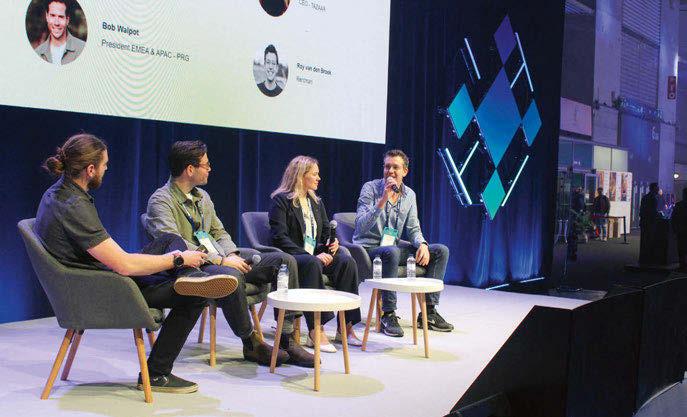
Other notable sessions included 50 Years of Audio, in which several team members from Britannia Row Productions walked through the company’s five-decade history; developments in the rental market with PRG’s Bob Walpot, TAZAAR’s Lisa Stafford and Rentman’s Roy van den Broek (pictured above); sustainability experts Axelle Meunier of L-Acoustics and Andy Land of Focusrite Group outlined how manufacturers could be on the front foot of a greener future, while the team from Production Park spoke about the innovations taking place at its Wakefield site.
Finally, TPi explored the development of emerging entertainment markets around the globe with DWR Distribution’s Duncan Riley, Creative Technology’s Andy Reardon and Rock-it Cargo’s Chris Palmer.
Over t he coming months, TPi will be releasing footage from several of the talks across socials. If you are interested in being part of next year’s programme, get in touch. www.iseurope.org
ONE KEY. READY FOR YOUR OUTPUT. grandMA3 onPC DMX-key
FOH Engineer, Philip J Harvey reflects on his journey with Lorde on the road...

Words: Alicia Pollitt
Philip J Harvey
In celebration of her fourth album, Virgin, Lorde hit the road with a steadfast crew, into bigger venues, after an intimate tour for Solar Power. Discussing the jump back into arenas, TPi caught up with FOH Engineer, Philip J Harvey, to delve into everything ULTRASOUND WORLD TOUR
“This is my 12th year with Lorde; I have worked with her throughout her discography – approaching the ULTRASOUND WORLD TOUR with Virgin was particularly interesting and challenging,” Harvey began. “While the show features a majority of songs from Virgin, there are also numerous hits from her back catalogue interspersed throughout, and they have been reconfigured to fit within the driven style of Ultrasound.”
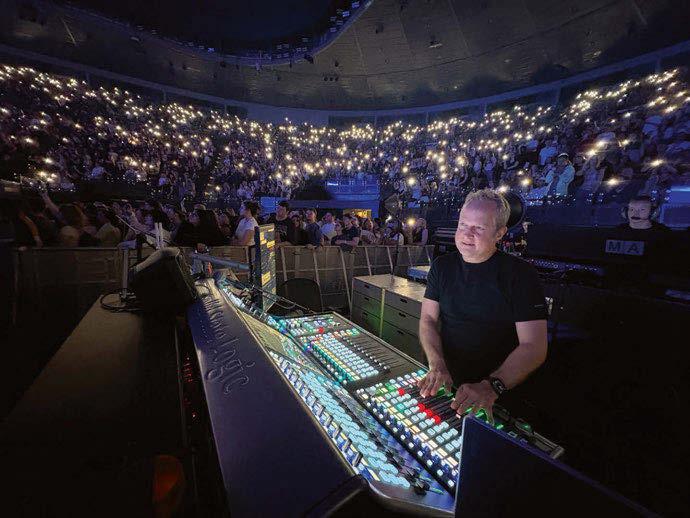
Harvey’s desk of choice was a Solid State Logic L550 Plus, which controlled an L-Acoustics L-ISA immersive system with L2 for the United States leg of the tour and a K1 and K2 system for the UK and Europe run, which was supplied by Clair Global. “The sound of the console is why I choose SSL,” he said.
“Bet ween the fidelity of their SuperAnalogue preamps and internal DSP processing, I just haven’t found an equal. I always ask ‘What sounds best?’ And for me, the combination of the SSL and L-Acoustics is where the magic is!”
L-Acoustics has always been the first preference for Lorde’s production, with the singer’s Melodrama tour acting as the L-ISA system’s international debut deployed on an arena scale in 2018.
“L-Acoustics approached us in late 2017 and thought that Lorde would be perfect to debut it,” he explained. “As a sound mixer and engineer, I loved the idea of utilising the cutting
edge of sound technology on our tour. Their inventive approach, knowledge and support is why I use them.”
The FOH Engineer worked with the producer of Virgin, and support act for a select few dates, Jim-E Stack, to reproduce effects from the recorded album live. “We wanted to bring the instruments to the forefront so that the Ultrasound would feel more like a live show performed instead of tracked,” Harvey elaborated, going on to tell TPi that he was able to use some of the same plug-ins in his rig that Lorde and Jim-E Stack utilised in the studio when making the album. “With Jim-E and musical director, Chris Hartz, crafting the Virgin songs as well as reimagining songs from the earlier albums to fit into Ultrasound’s live, pumping, driven style was really exciting.”
Describing the mix for this tour as a “little more raw”, Harvey ran through his setup: “I run a customised FOH rack, which I created and experimented with during COVID-19 to keep my head in music production while the industry was at a standstill,” he explained. “My FOH recording/effects rig for this tour features an M1 Mac Mini at it’s heart with a Metric Halo ULN-8 mkIV and a 2882+DSP fitted with MADI Cards as my I/Os.”
Harvey also employs software-based plugin host, Gig Performer 5, which allows him to use plugins natively. “The best thing about this set up is that I can use any plugin that I desire, which allows me to use the same kit the studio team utilised while producing the album. For example, the song David features a tremolo effect that really blossoms powerfully at the end; Jim-E Stack let me know which plugin he used and the settings and it worked amazingly
well for the live performance,” he explained. The song in mention, David, sees Lorde walk through the crowd from the A stage to a B stage at FOH, which took extra diligence to ensure the audience wasn’t caught on the DPA Microphones’ d:facto 4018VL through the PA. “Davi d is so powerful, and vulnerable and she loves being surrounded by her fans, so it really is a special moment,” he said. “The audience gets very emotional and I have to time it just right when I’m muting the microphone so we can have her interact without the crowd roaring through the PA and ensure the song is intimately sung in its entirety.”
The engineer had one goal in mind for his mix: “I wanted it so that the audience can’t help themselves but move their body and dance because of how big, driving and powerful the tide of sound feels,” he explained.
“I wanted to create a massive flow of energy for the audience through the sonic landscape, and getting that reciprocal energy from the crowd when they start to lose it is my favourite part of the job.”
While the ULTRASOUND WORLD TOUR is still ongoing, Harvey found time to reflect on his longevity within the camp: “The best thing about working with Lorde is the camp as a whole, which has a down to earth family vibe –and that definitely comes from the top down. We have also been able to play some of the best venues worldwide, as well as some of the largest and it has been an amazing opportunity and a dream to be involved with such a creative and passionate team.”
www.lorde.co.nz
www.clairglobal.com
www.solidstatelogic.com

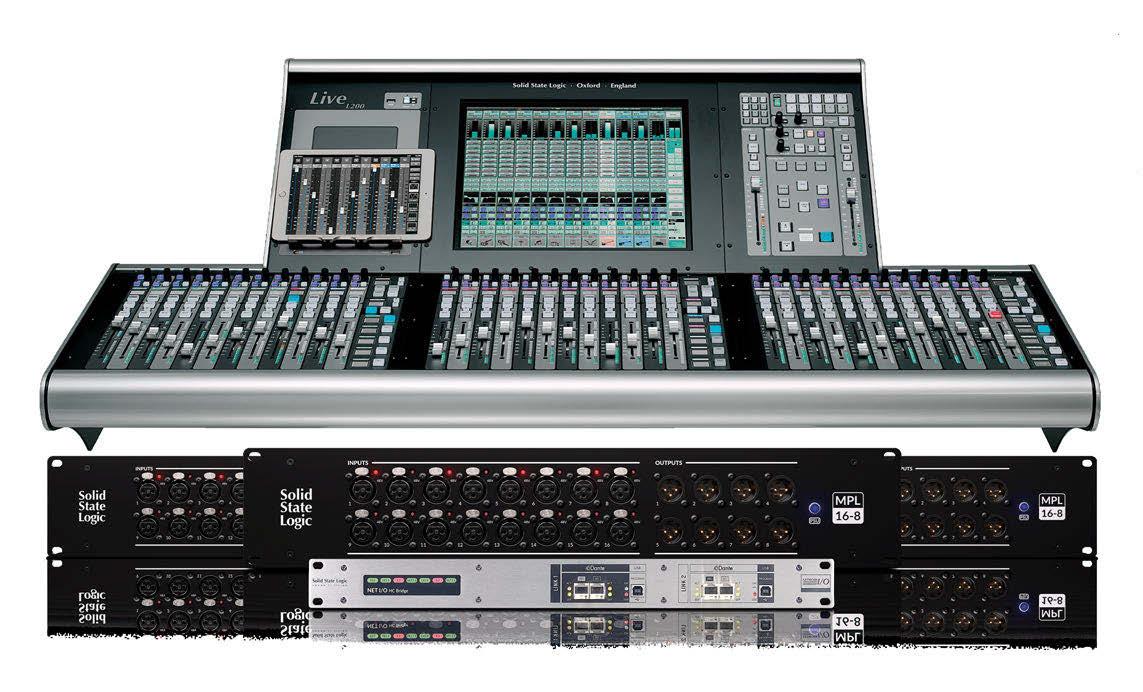
The SSL Live production platform is extremely flexible, with an almost infinite number of system configurations available. SSL Live Bundles have been developed to provide complete systems optimised for touring, installed sound, and church audio, in the most cost-effective way possible.
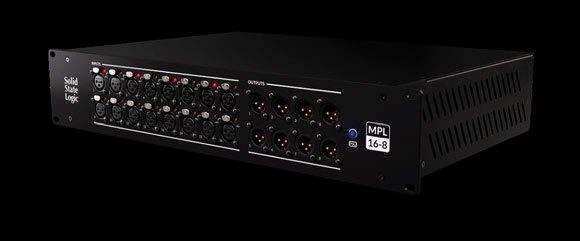
With the introduction of the new Dante-enabled MPL 16-8 stagebox, Solid State Logic has introduced new SSL Live Bundles for the L100 and L200 Plus consoles.
Contact one of our live sound experts to learn more about the new SSL Live Bundles and to find out why you should step up to SSL Live.
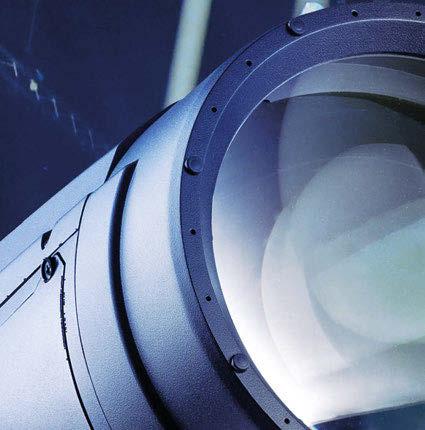

No compromise IP65/66 high-output low footprint
LED WashBeam and FollowSpot
Discover more
Gravity Rigs helps bring the most ambitious live project of Luciano’s career to life…
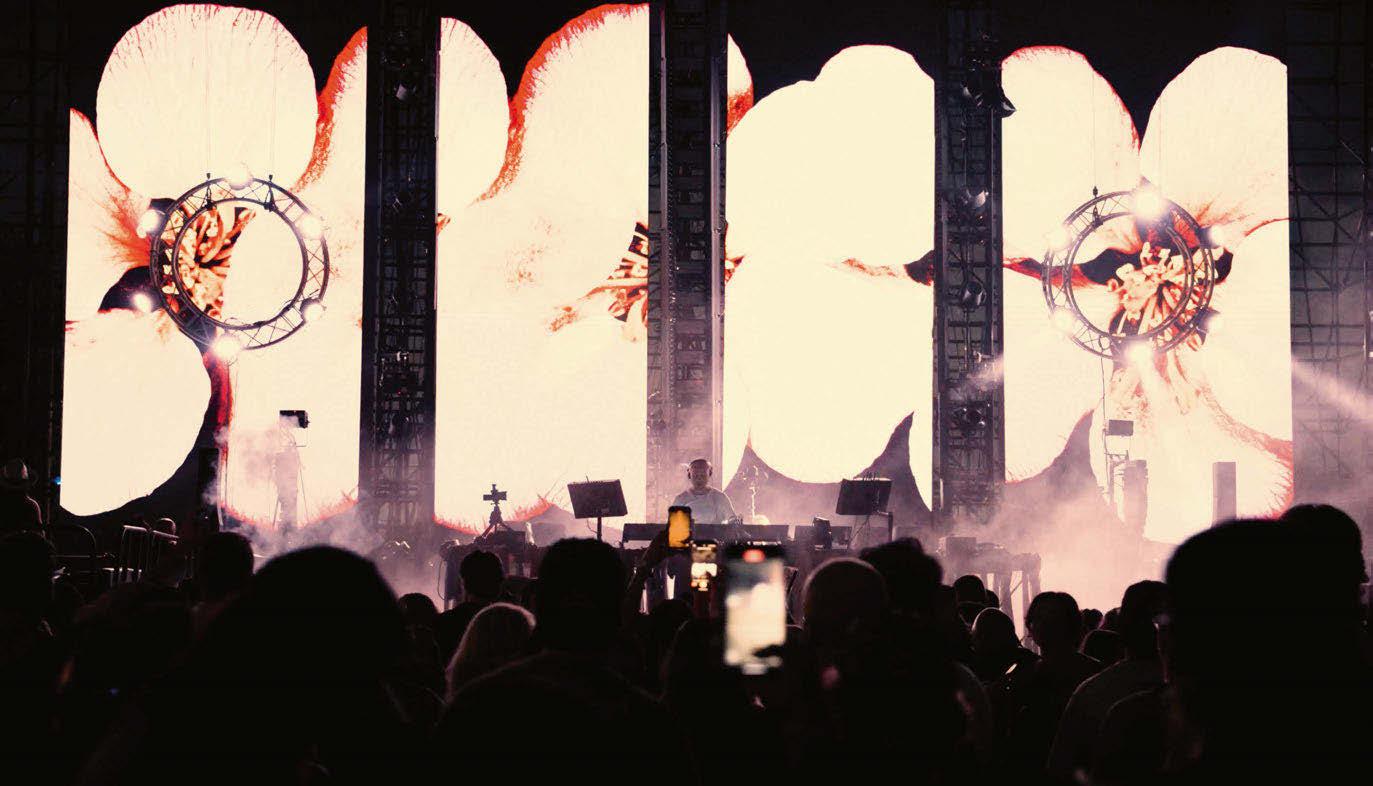
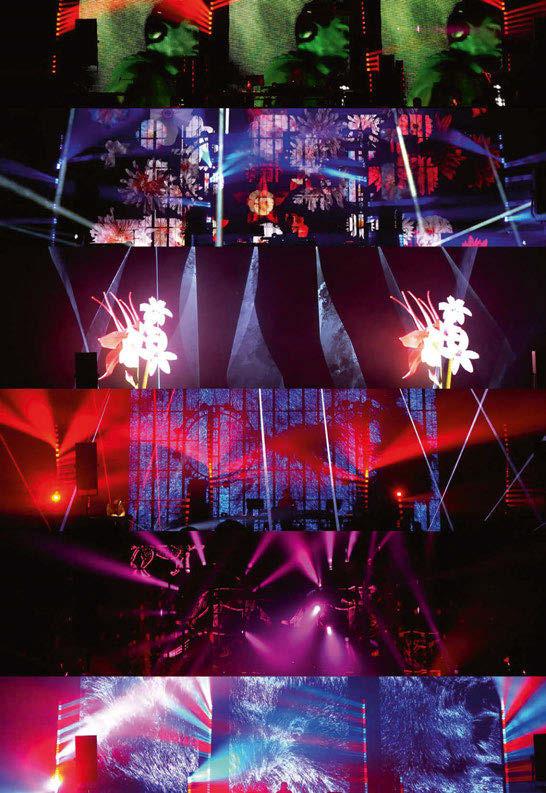
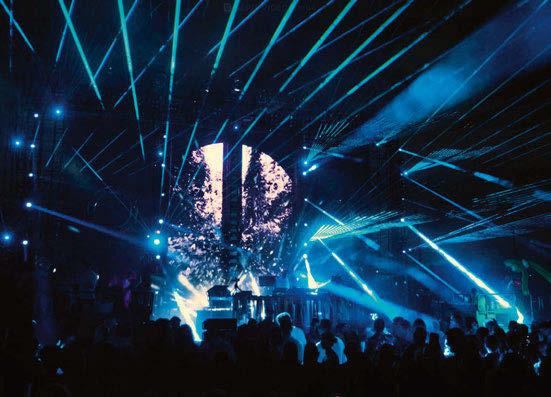
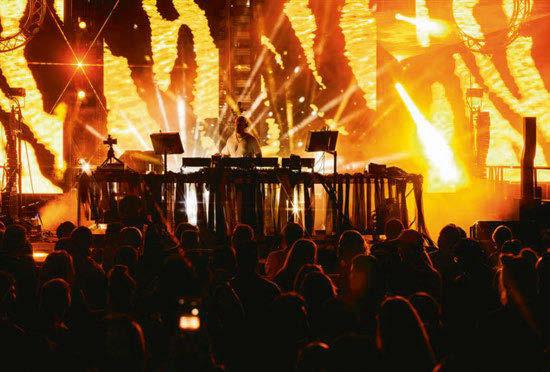
Two years in the making, Luciano premiered ALIVE – his most ambitious tour to date – at Art Basel Miami, supported by a fully bespoke rig and tour support from Gravity Rigs.
Raw, improvised, and driven by emotion, ALIVE demonstrates how sound, light, machines, and human energy merge in real time, creating a performance that exists only in the moment. The Swiss - Chilean DJ and producer approached Gravity Rigs in late 2023. Following a disastrous flood in his studio that destroyed almost everything, Luciano rose from the proverbial ashes to pay tribute to 30 plus years of songwriting, emotion, and memory that were almost lost forever.
The result is a show that encourages audiences to surrender to the moment - a concept that deliberately challenges the capture-first culture of the iPhone generation.
“It’s a project that you have to sit down with at a certain moment in your life,” Luciano explained. “I’m gathering an entire lifespan of music and sharing it with the world instead of letting it die in computers in my house, but it’s very much a team effort. I’m simply the person at the centre making the sounds, but the success belongs to the whole collective. It was a dream I had for years – to have fun and be creative, and for this to succeed we needed the right team, so we made a decision to only ever go to work with people that we respect, love and admire. I remembered reading an article about a guy called Matt Cox. We did a little research and discovered he’d started a company with his best friend Alex Turner, we were impressed...”
Grav ity Rigs co-founder co-founder Matt Cox agreed: “Luciano cherry picked a strong team across audio, visuals and show delivery. Even with that level of expertise, the vibe
stayed relaxed but focussed, and it honestly felt more like a family than a typical production environment. Because the project was so creatively led, everyone had a voice and ideas were encouraged from all sides, which was really refreshing and made it a joy to be part of.”
In ter ms of the brief, Luciano’s scale of ambition and artistic rigour were clear from the outset, as Cox recalled. “It was a multifaceted brief, Luciano wanted to DJ in a traditional sense but also add multiple layers of performance tech, all synced. He wanted the freedom to experiment musically alongside four-deck mixing, using synced hardware including Eurorack, synths and drum machines.”
This was paired with an exploration of live sampling to generate one-off sounds unique to each show, enhanced by the addition of live singers and musicians to elevate the live element. “The whole concept was to be able to explore DJ worlds and multiple sound creation worlds, and move freely between the two whilst on stage. This would also allow live triggering of visual content to enhance the show.”
At the heart of the setup, the initial layers and backbone of the set are delivered via a Pioneer DJM-V10 mixer and Native Instruments controllers. These layers are seamlessly synced with a more experimental performance environment featuring Ableton Live, an NI Maschine controller, Novation Launch controllers, two Eurorack modular synth systems and live sampling via an XLN Sequencer, all clocked through a flexible range of sync approaches. High-quality audio interfaces from Ferrofish and RME ensured clarity and consistency throughout the signal chain, with BSS DI units forming the final analogue stage before the system
reached front-of-house and monitor world. One of Luciano’s key requirements was that the system had to have back up in almost every department to ensure the show could continue without interruption. If anything malfunctioned, this meant switched A/B back up computers systems on both the DJ and creative ‘Ableton’ side, synchronise with the flexibility for any element to operate as either driver or receiver.
“Given its open-ended nature, using Eurorack Modular also allowed us to create interesting synced modular effects with the ability to work across a wide range of fixed quantisations,” co-founder Matt Cox explained. “We could also use sync-free ‘self generating’ sounds that really lend themselves well to some of the sonic landscapes that Luciano likes to create. The physical side of actually using Eurorack also offered up a great visual element to the show as Luciano dialled in and tweaked those sounds and is clearly seen interacting with the system and adding to the set.”
Live synced sampling was a new avenue for the Gravity Rigs team. Turner explained, “The setup enabled the audio, crowd mics and mics on Luciano’s riser to be recorded live and reshaped into one-off, perfectly timed soundscapes that could be mixed back into the set. “This opened up a whole new scope for audio manipulation and crowd interaction. The ‘Life’ sequencer was really useful here and can turn even the most mundane audio clip into a living breathing sonic sequence.”
With global shows planned in multiple continents and with tight turn around schedules the whole setup needed to freight quickly and easily, so was packaged in multiple Peli cases that are all checkable to international flights using the Gravity Rigs transit system. A key
challenge for the Gravity Rigs team was keeping connections between system elements as streamlined as possible, allowing for fast setup in festival environments where signal flow across the stage and production infrastructure involved multiple formats.
“Keeping redundant systems in time and always ready to switchover took some figuring out. A requirement to move more critical parts of the setup to a safer off stage position also added challenges, we were very happy using robust but lightweight optical MADI broadcast ready cable runs which kept looms lightweight but able to cover the long distance to reach offstage,” Cox clarified. “We had Stardraw software in-house so we found the large scale of the project easy to manage. It helps massively in terms of signal flow visualisation, rack design and with budget management.”
One particular customisation the crew were happy with was the creation of a show clock and timer that works across a LAN for all departments to view including the artist. “The show clock allowed everyone to observe critical timings during the performance. As well as a countdown facility and actual projected show finish time, the clock (which was iPad based)
also had a sub timer for smaller sections to keep the artist focused on not over elaborating or experimenting. There’s a curfew you know!” Turner explained.
“All of this was bespoke created in Max/ MSP – another option we have for clients,” said Cox adding. “We have built devices in Max that address particular needs for other clients too, like Giant Bar Counters and auto-group track openers. That is one of Ableton Live’s strengths: using Max for creative or control effects can be very powerful.”
Balancing artistic intent with logistical and venue constraints was at the forefront when designing the rig.
“There also had to be a consideration of realistic setup times. Thankfully, sensible casing numbers, complexity only where absolutely necessary and keeping an eye on the budget are all skills we’ve honed over the years and definitely had to bring to this project.”
Cox agreed: “Identifying potential failure points and inappropriate kit choices is absolutely something we bring to the logistics table.” In terms of aesthetics the team were asked to keep as much of the infrastructure of the rig offstage and create sleek and minimal
lines. Luciano has loved the rig so far. It’s a tighter sync than he’s previously achieved and huge creative possibilities have allowed him to forget about the technicalities of the performance and concentrate solely on creating the sonic journey he’s renowned for.
So what’s next for Gravity Rigs? “Besides bespoke design, build and delivery, which is our passion and core business – we’ve really expanded our range of services.” Turner said.
“Our aim now is to help anyone who needs a playback or performance rig, no matter how much or how little support they need from us – from the full scope of our team’s capabilities, designing and delivering across multiple departments for large -format shows… through to focussed research and development or proof- of- concept work for an artist whose crew may not have the bandwidth or facilities.”
Cox added: “Or simply supplying the kit, or building or upgrading and revamping existing rigs. We want any artist or production to be able to use Gravity Rigs in exactly the way they need. That’s the vision we’re working towards as we approach our 10 -year anniversary.” www.magikluciano.com www.gravityrigs.com


The creative team behind the French rapper deploys the latest networking and tracking software to push the boundaries of an automated set.

Words: Stew Hume
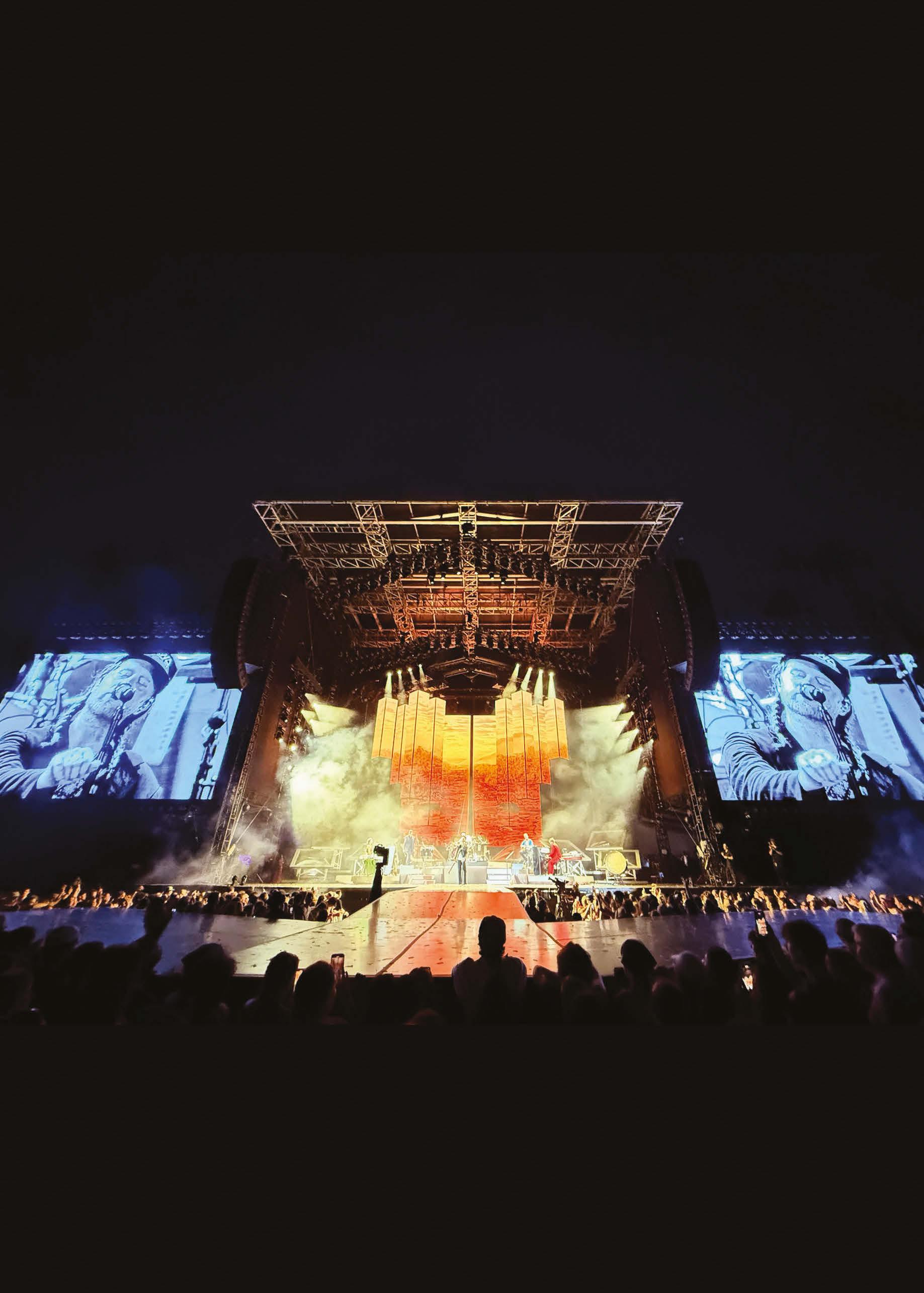
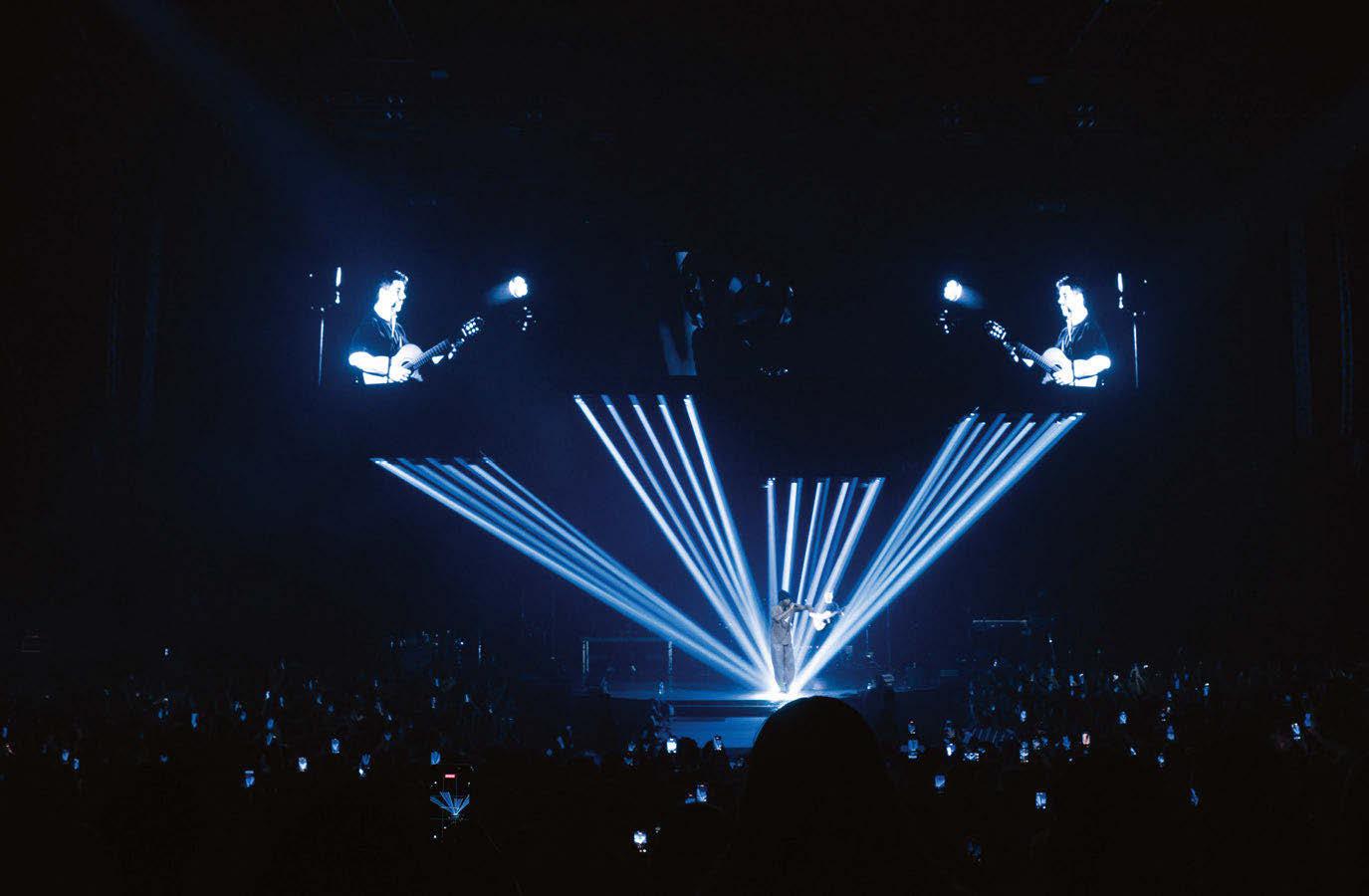
For a publication that showcases the best visual creatives, often encyclopaedic in their knowledge of the latest in event technology, it’s amusing to think that, often, the goal in show design is to hide technology to ‘keep the magic’. However, this seemed to be the goal behind the design for French rapper Tiakola’s latest tour, where the creatives sought to create a truly mobile, integrated stage space that would meld with the rapper’s performance and that of his band.
TPi caught up with Julien Peyrache and Michael Berzon of Alien le studio, who oversaw scenography and lighting design for the project. Having been brought in by Nonstop Productions, the duo began initial conversations with Tiakola’s producers, Morgan Antonutti and Marie-Sandrine Martin, to discuss the show’s vision.
One of t he goals from the outset was to “play with verticality,” with both the rapper’s first appearance and his supporting band
entering from different directions. “There was also a strong design goal for the band not to be static but truly mobile,” commented the design duo. The solution was to create highly kinetic, modular scenography with musician lifts, as well as a fully automated rear LED screen, along with a custom sphere covered in shards of broken glass representing a ‘star’ iconography that is heavily associated with Tiakola.
With so many automative elements, it was key that the team needed a robust tracking solution to ensure the key moment remained illuminated throughout the show. For both Peyrache and Berzon, the solution came in the form of Naostage, but as TPi soon found, the offering opened more doors than just tracking.
“We’d been following Naostage’s progress on social media, but the real ‘click’ happened in the field,” explained Peyrache and Berzon. “It was during Calogero’s festival tour at the Poupet Festival where Paul [Cales], the founder of Naostage, was there to demonstrate the
system.” From that point, they were keen to utilise it in a real-world scenario. “What immediately seduced me was its absolute malleability,” commented Peyrache. “It allows the use of any type of fixture, without any brand or model limitations.”
Berzon continued: “The potential of the system seemed obvious. Our stage was full of moving parts: the motorised video screen, the musicians’ lifts, light pods, and, of course, Tiakola himself, who has incredible stage energy and occupies the entire space. We realised that the true power of Naostage would be to pair real-time tracking these elements with the positioning of our fixtures to generate organic and ultra-precise tableaus.”
The fix ture count for the show was notable, with 108 Starway Baracca 360s and 18 FloodLites. There were also 48 CHAUVET Professional Color Strike Ms along with 32 Robe Lighting Tetras, 22 ESPIRITEs, 16 Spiiders, eight LEDBeam 150s and seven




FORTEs. Of this sizeable rig, around 120 were calibrated to the Naostage system, with each fixture calibrated individually.
To aid in the process, the production used Naostage’s advanced tracking software, KRATOS. “Calibration consists of defining six reference points on the floor and entering their exact coordinates, which allows the system to orient itself within a 3D space identical to that of our MA Lighting console, ensuring everyone is speaking the same spatial,” the duo stated.
With t he spatial information being so vital, the design team began to see the Naostage solution less as a follow-spot tool and more as the “nerve centre of a massive 3D interactive ecosystem”. In total, it handled five human targets and six machinery trackers, for a total of 23 individual PSN Trackers.
“We also had to retrieve PSN (Positional Stage Net) values from our Raynok automation system. This included the altitude of the giant LED screen, and automated sphere, the four musician lifts, and the position of the four light pods above them, which could move up, down, and tilt on the X, Y, and Z axes,” they explained.
To upd ate the precise location of each fixture in real-time within the MA Lighting grandMA3 software, and to make this mountain
of data digestible, the team employed the services of Jérémy Dufeux of Carrot Industries to deploy the PSN Toolbox; software that acted as the global brain of the operation. It collected streams from Naostage and Raynok, organised them into a spreadsheet, merged and transformed these values, and then output specific, clean PSN streams to the grandMA3 lighting console and the Smode media server.
“The integration with the Smode server allowed us to perform dynamic generative tracking directly within the LED screen’s video content,” commented Peyrache and Berzon. “We programmed a virtual halo of light that moved in real-time behind Tiakola. Whether he went left or right, this digital halo translated along the 22m screen to stay perfectly aligned with his back, thus merging the physical and digital worlds.”
They continued to describe how the project led them to utilise PSN in “unexpected ways, to sculpt the space”. They elaborated: “We used the system to target virtual points in the void, directly above the audience. By forcing dozens of projectors to converge their beams on these invisible 3D coordinates, we managed to materialise gigantic stars of light in mid-air. These luminous architectures literally moved
above the pit. This allowed us to bypass the absence of background video by invading the entire volume of the Zenith, while weaving Tiakola’s cosmic metaphor – the star – right over his fans’ heads.”
After an ambitious collaboration, Peyrache and Berzon gave their final thoughts on the project: “To summarise this tour, we would say it is the victory of a scenography where technology totally disappeared in favour of emotion, poetry and creating a ‘living’ stage. Managing 16 tracking targets simultaneously and making worlds that usually don’t necessarily speak to each other with such fluidity between screen and lift automation (Raynok), optical tracking (Naostage), media servers (Smode), and lighting (grandMA) – was a colossal challenge.
“But t he real technical pride is that this complexity served pure ideas. Successfully inverting the perception of light by forcing our 108 fixtures to follow the artist’s heels so that he becomes the light source himself or successfully sculpting 3D stars in the void above the pit to compensate for the lack of a background screen. These are the moments we will remember.” www.naostage.com
THANKS TO OUR TEAM OF DRIVERS, OFFICE STAFF, WORKSHOP & BUILDSHOP FOR THEIR DEDICATED WORK! AND OF COURSE THANKS TO OUR CLIENTS FOR VOTING FOR US!
Headoffice Austria: joerg@beatthestreet.net | hannes@beatthestreet.net | lee@beatthestreet.net
Office UK: garry@beatthestreet.net | dan@beatthestreet.net
Office Spain & France: tristan@beatthestreet.net
Office UK Groundtransport: ian@beatthestreet.net | mark@beatthestreet.net | courtney@beatthestreet.net
Office USA: samuel.brown@beatthestreet.us | john.aikin@beatthestreet.us www.beatthestreet.net | www.beatthestreet.us
Doncaster-based Infinity Production Group and Insert Productions deliver a footballthemed production design for The Reytons.

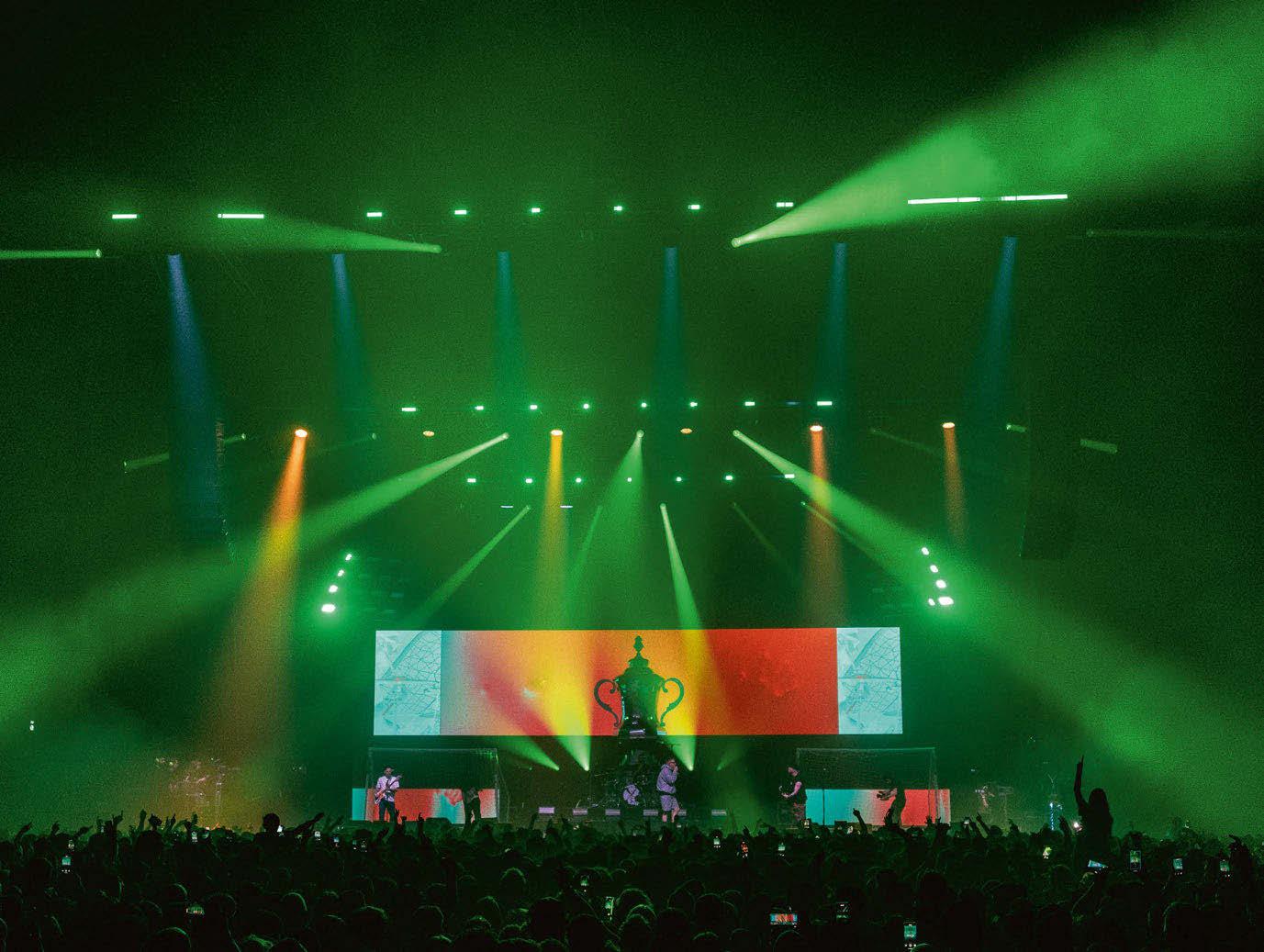
Rotherham rock band The Reytons headlined their biggest ever gig outside Yorkshire when they played OVO Arena Wembley. Bringing South Yorkshire to the capital was a labour of love for the band and their production team.
Doncaster-based Infinity Production Group was the lead technology supplier, wit h Insert
Productions’ Connor Hill fulfilling the role of Production Manager – continuing a longstanding relationship, stretching back over several years from when Hill’s for mer band The Novus played in a pub which The Rey tons used to regularly drink at.
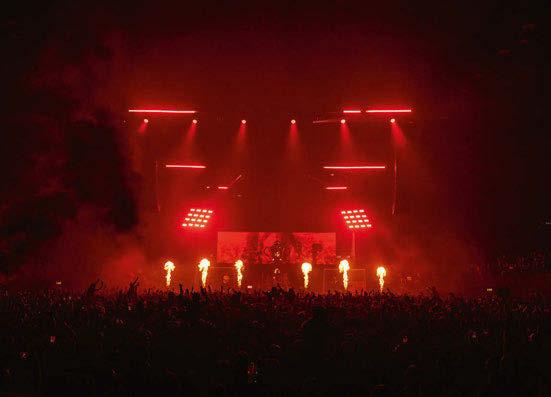
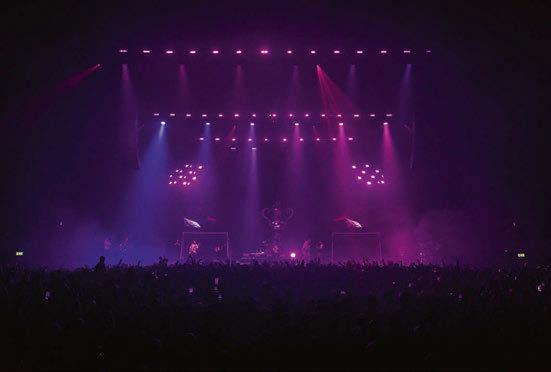
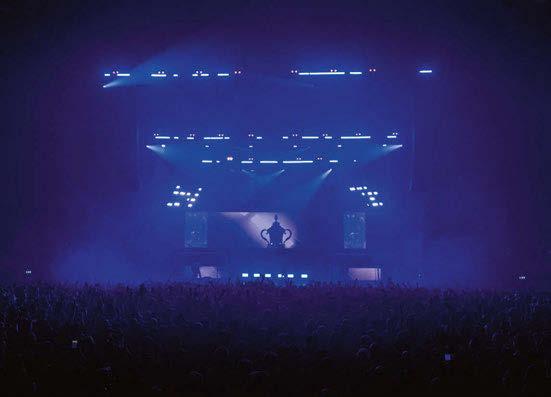
The creative brief was to produce a footballthemed stage set , wit h lighting and video design complimenting the onstage aesthetic.
Central to the design as a 15m by 3m LED screen, supplied and installed by Insert
Productions. Downstage, sat a 5m tall plex iglass model of the FA Cup trophy. Football goals and a 7m by 1m LED banner mimicking a football
stadium’s advertising boards completed the onstage design.
Infinity Production Group’s Mat t Mason took on the role of Lighting Designer, creating an atmospheric visual experience which made full use of the arena’s space.
Discussing the gig Mat t said: “Infinity Production Group par tnered wit h Insert Productions to bring the design to life. Most of the lighting was supplied by Insert Productions, with additional equipment provided by PRG –including rehearsal facilities. Prior to shipping all the equipment to Wembley, we built and tested the ent ire rig in PRG’s Lox ngbridge warehouse.”
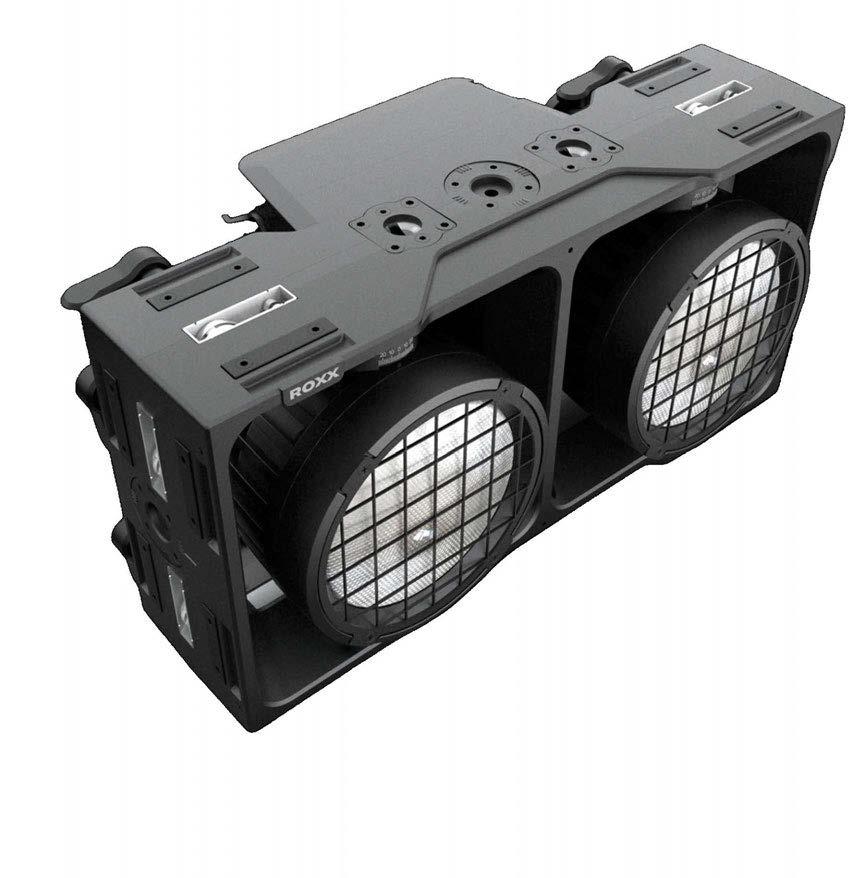
The lighting rig consisted of exclusively LED fixtures, using Ayr ton Rivale, CHAUVET Professional Str ike M and Rogue R3X washes, ACME Lighting PIXEL LINE IP, Robe Pointe, and ROXX Lighting Cluster B2 blinder lights. Commenting on the choice of lighting fixtures, Mason said: “The budget on the
production had modest limits, so we wanted to make the biggest impact we could for the money we spent. We used two over-stage trusses, wit h a front truss, floor lights and two pods imitating football stadium floodlights either side of the stage. We lined each truss with ACME Pixel Line LED bat tens, creating three bold lines of light above the stage. Mov ing lights and effects lights around the rig added to the atmosphere, heightened by two MDG low foggers creating a misty vibe.”
Jack Timmins, Lighting Programmer and Operator, added: “The lighting design did a great job of highlighting the band on stage and lighting the audience too when we tur ned the blinders up. One of the key elements I loved was the two banks of 16 CHAUVET Professional Strike Ms, hung diagonally stage lef t and right which looked like football floodlights.
“For a thoroughly independent band, who put their fans front and centre – this was
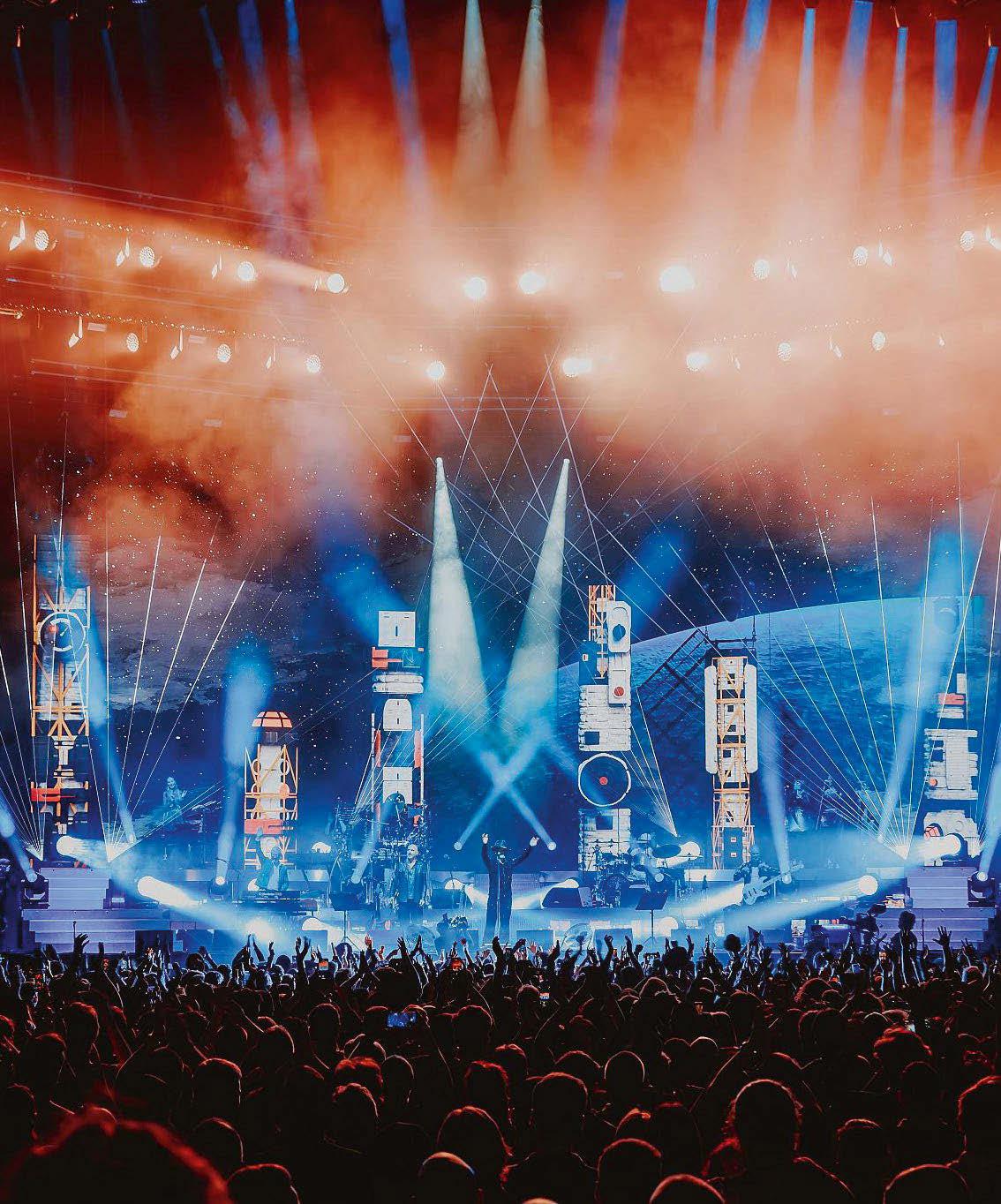
a perfect setup for The Reytons. Whether through bringing the lights up when lead singer Jonny Yerrell chatted to the audience, or when we kicked huge inflatable footballs into the audience, the crowd were as much a part of the show as the band on stage.”
Independence is very important to The Reytons; they self-release all their records and enlisted another independent, Communion One, as the promoter for their Wembley gig.
The Reytons believe passionately about supporting up and coming young professionals and are undeterred by inexperience. Many of the team who brought the Wembley gig to life were given their first major role in the industry by The Reytons.
The budget for Wembley was carefully managed. Not because the band wanted to make a big profit, but so they could keep ticket prices low. £37.50 for an arena show in 2025 is unheard of, yet the band knew most of their fans would be travelling down from Yorkshire and wanted neither to price them out of being able to come, nor make a profit at their expense.
As the song title, and rallying call between fans goes: “We’re all Reytons, ain’t we?”
Their big night out in London didn’t just need to look good, it had to sound good, too. Audio equipment was supplied by Solotech, with Chris Sherwin as FOH Engineer and Alex Walters as Monitor Engineer.
The PA design utilised d&b audiotechnik KSL array boxes, with two main hangs, with additional side hangs and front fills creating an immersive spatial audio experience. d&b SL GSUBs provided low frequency playback.
Support acts Youth Killed It and Pigeon Detectives were mixed on a Yamaha CL5, with an Allen & Heath dLive 128 channel digital mixing console being used for The Reytons.
The audio package included microphones, with a monitor system including in-ear monitors. Insert Productions’ Ryan Staplehurst fulfilled the role of Media Server Engineer, operating a Resolume system which combined prerendered content with live camera feeds.
Discussing the video system, Staplehurst said: “We chose Absen 2.5mm LED panels for
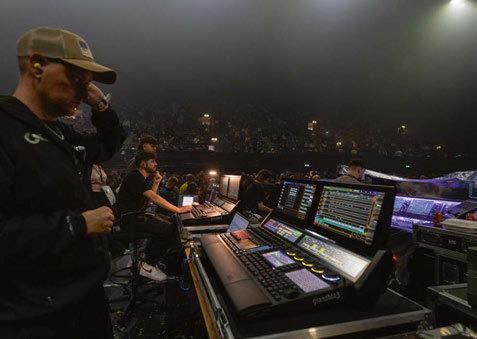




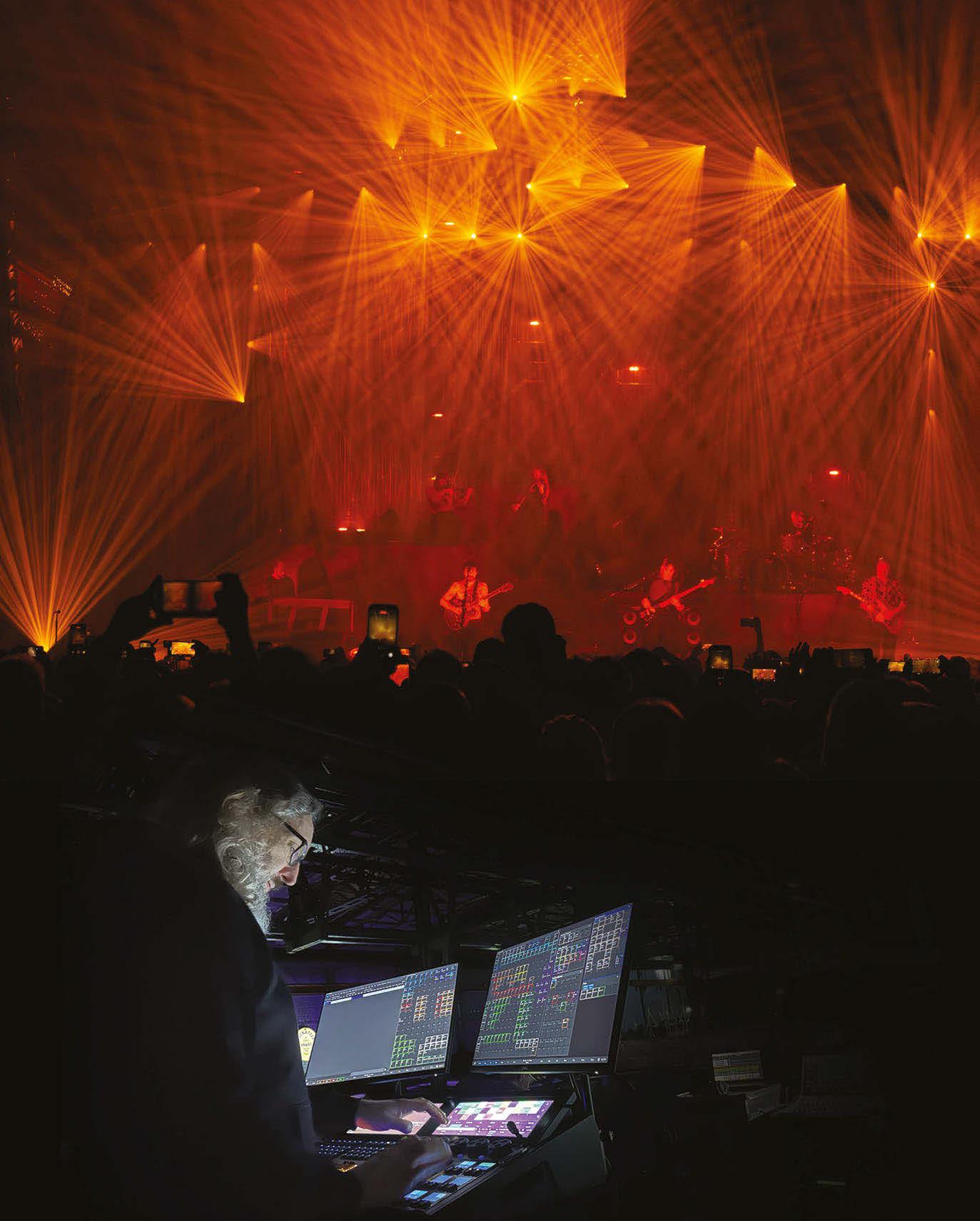

all the screens due to its superior brightness and definition over lower pixel pitch products. Content was fed to the screens via a Pixelhue P20 switcher and NovaStar MX30 LED processors from a Resolume media server. The show content was a combination of prerendered footage integrated with live camera feeds supplied by Surdevan Creative.
“All t he content was timecoded, including live segments, which we manually manipulated in realtime using Resolume video effects tools. We specified Resolume over other media servers due to its combination of high performance and ease of use. Surdevan did a fantastic job of providing us with a program feed from manned cameras at front of house, roaming cameras onstage and remote PTZ cameras positioned around the stage.”
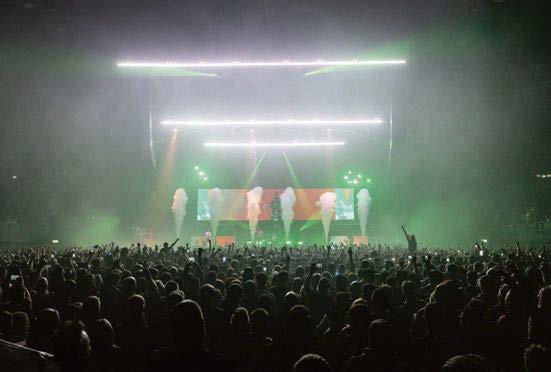
Special effects, a key part of the show, were designed and operated by Insert Productions’ Connor Hill, who brings six years of SFX experience to the role: “The band really wanted to give the fans an epic show to remember; a massive visual ingredient was SFX features like confetti canons, flame and CO2 jets. Mist FX supplied all the products, one of their team was onsite to install them in Wembley and I triggered the effects during the show. The result of which was hopefully a stunning event in the lives of Reytons fans, with thousands and thousands of
“...a
stunning event in the lives of Reytons fans, with thousands and thousands of pictures and videos shared on social media and in group chats.”
Production Manager, Connor Hill of Insert Productions
pictures and videos shared on social media and in group chats.”
Discussing the overall experience from his position as Production Manager, Connor Hill added: “We’re proud of what we achieved with limited time and money for the one-off show. Being a singular event, there was the potential for costs to spiral out of control, or
timeframes stretched which could have resulted in compromises being made. Thanks to the commitment, creativity and professionalism of the entire production team, we produced a show within all budget and creative requirements.”
www.thereytons.com
www.infinityproductiongroup.co.uk
www.insertproductions.com
The Hollywood film score legend returns to the touring circuit with a production that sees the deployment of the world’s largest modular synthesiser, an elaborate stage design, and a tight-knit crew travel worldwide once again…

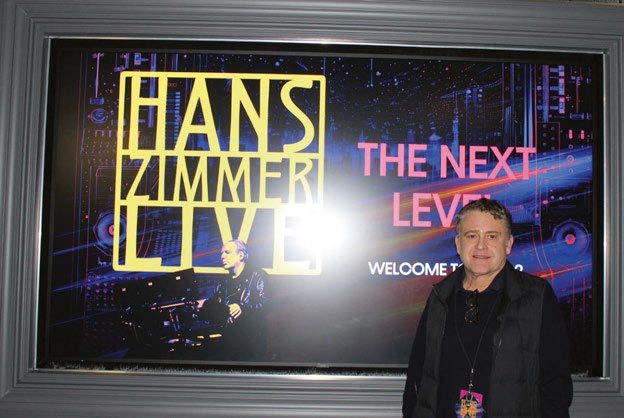
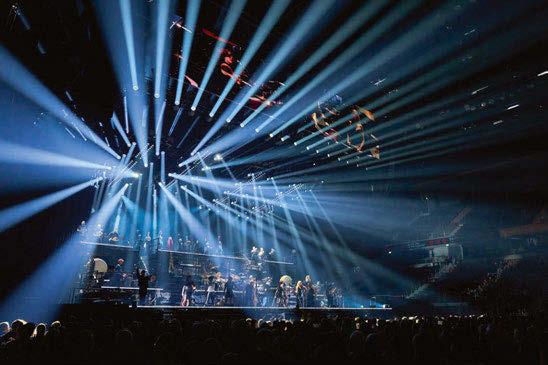
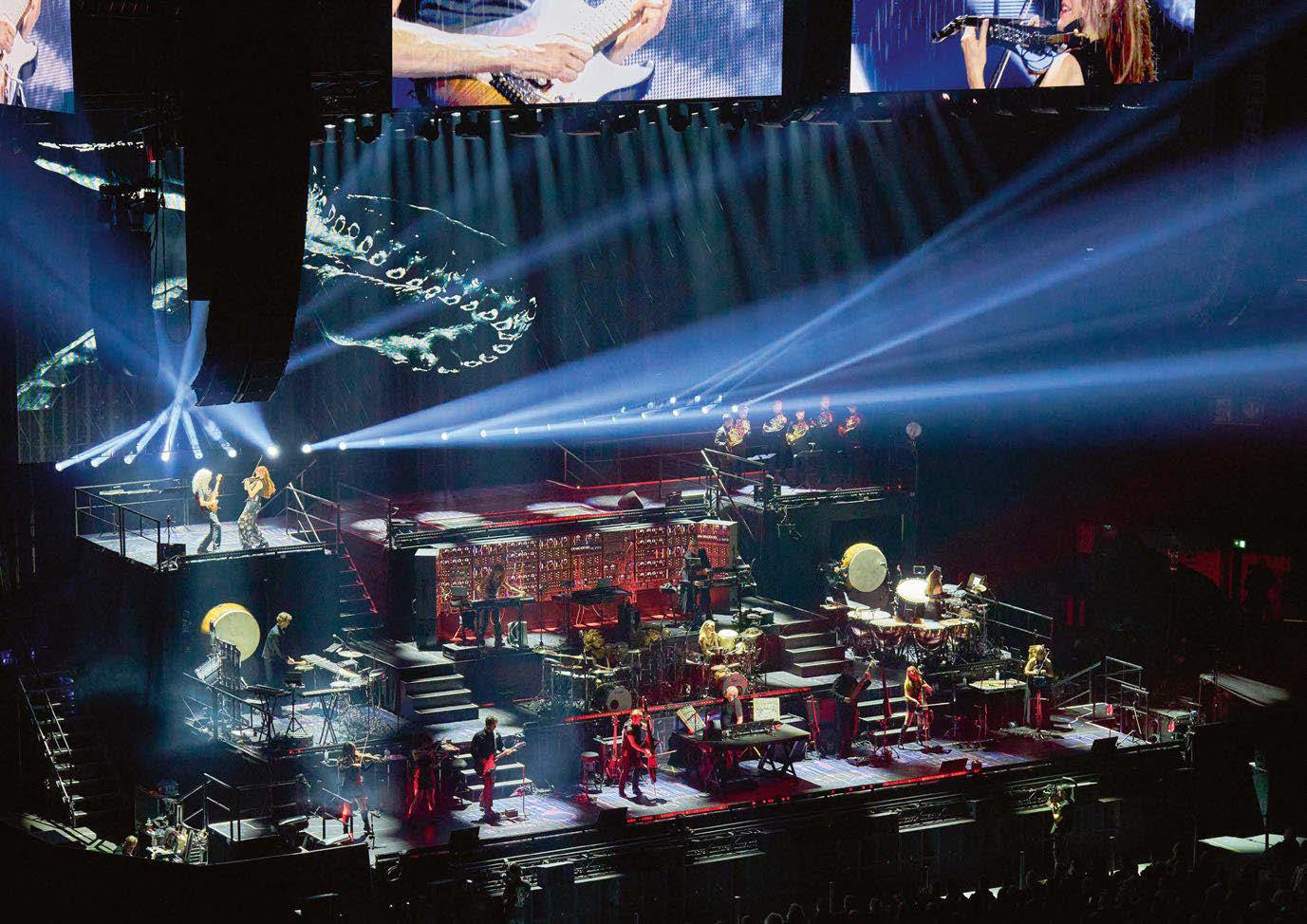
Naming a tour The Next Level, the expectation for a great production was already set, yet when it comes to decorated Hollywood composer, Hans Zimmer, whose shows are already equal parts epic and cinematic, TPi wondered what more could be in store for audiences. TPi met the team behind the tour at The O2 in London to uncover what pushed this live show up a level.
Production Manager, Jim Baggott, and Tour Director, Michael Weiss, took care of the 150-strong touring party and the 20-truck production. The suppliers included Neg Earth Lights (Lighting, Rigging and Automation), Britannia Row Productions – part of Clair Global (audio), BBM Clair (video), All Access Staging & Productions (staging), Beat The Street (bussing), Trucking Service, North House (content), Eat Your Hearts Out (catering) and Lightswitch (lighting and concept design).
“The joint effort bet ween Michael and I has been about curating the whole experience of
the spectacle of a Hans Zimmer show,” Baggott commented, having been part of the camp since 2014.
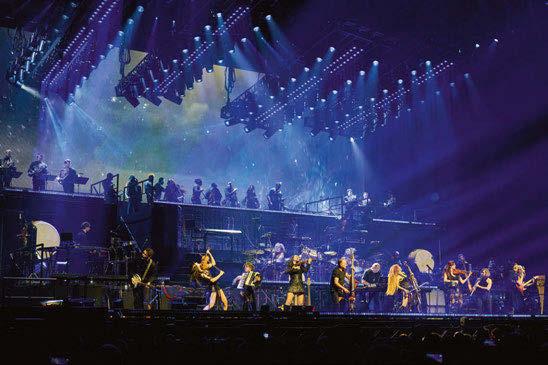
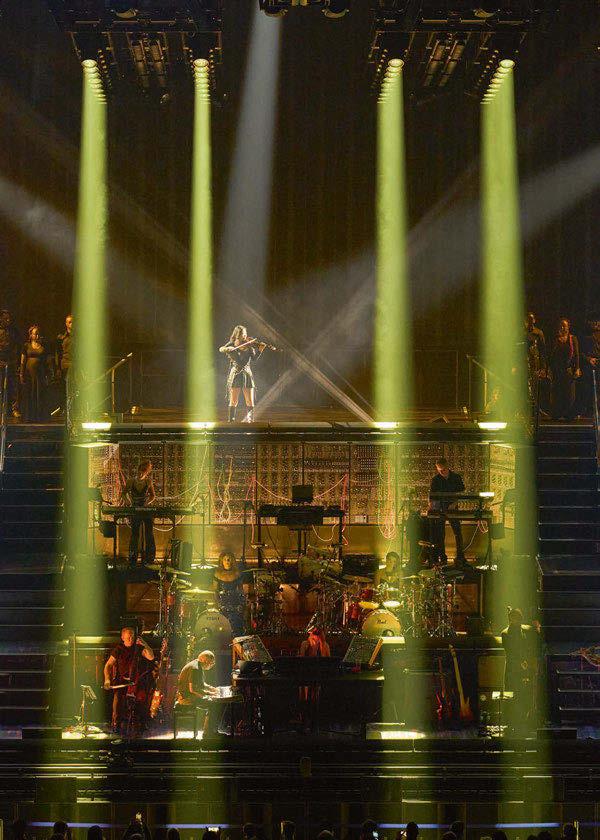
“We have been out on the road for a while, but this show in particular is the full experience; we have 20 band members on stage, a 16-piece Kenyan choir, plus a 10-cabinet synthesiser as the focal point of the show.”
Baggott shared the changes made to ensure this tour was The Next Level : “This show is multi-layered, both conceptually and physically,” Baggott said.
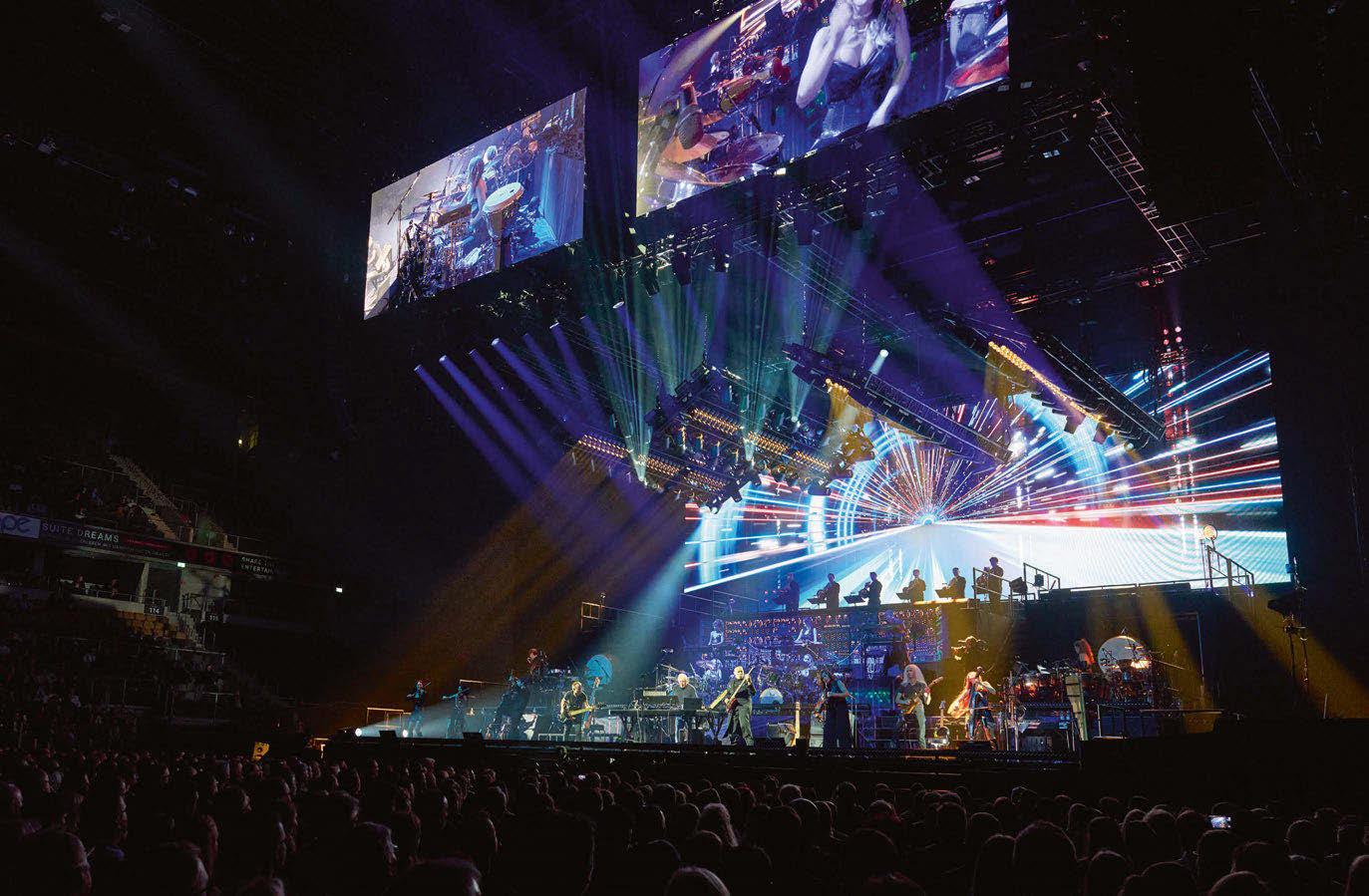
“We are now reaching higher on the stage than we ever have previously, and we have quite a significant lighting and automation rig However, despite this, we have been able to keep our wings quite open to be able to have a 220° audience.”
Baggott closed by giving an overview of this latest venture: “I have done my fair share of tours, but this tour has an especially good atmosphere,” he commented. “Some of
our suppliers and touring crew are new, but everyone has really come together to work hard and put on a great show.”
A TIME OF QUIET BETWEEN THE STORMS Sound Designer and FOH Engineer, Colin Pink, and System Designer and Engineer, Tom Jacobs, were tasked with sonically recreating the scores for some of the biggest films of all time and steering away from Hans Zimmer’s classic orchestral hits to a more electronicfocused display. An L-Acoustics K1 system stands as the main PA, with L2 loudspeakers for centre and side hangs.
“L-Acoustics is a preference of us both,” Jacobs said. “The system has been so adaptable for the different-sized venues we have played on this tour – for example, we were able to use L2 for our main rig in Dublin and it worked perfectly.”
For Pink, though it may be a downside for some engineers, he described the L-Acoustics
system as “revealing”. He elaborated: “Everything you do shows up so clearly, and I think that is what makes it such a brilliant tool,” he explained. “For me, it also feels as if there is an infinite amount of headroom, and that helps keep the show dynamic and lively.”
The FOH Engineer works from a DiGiCo Quantum 852, after upgrading from a Quantum 7 console, which Pink said was to take advantage of its new features for the over 300 input channels The Next Level required.
“DiGiCo makes great consoles; this show is massive by any standards and the workflow the console offers me has simplified it as much as possible,” Pink said. “I am also running the theatre option because I use a crosspoint delay matrix so that I can time align all of our front fills and side hangs to different areas of the stage individually, which is a technique mainly used in theatre, but we’re using it here.”
Pink noted the amount of percussion, which he said is one of the things that makes the show “big and exciting”. He added: “For the first few rows of the audience, the acoustic noise from the stage is bigger than that of the PA. So, helping to get the sound imaging from a timing point of view is invaluable in maintaining clarity.”
For microphones, Pink deployed a range of brands including sE Electronics RNT tube, sE8,
RNR1, Shure SM57, Beta52A, KSM9, KSM11, DPA Microphones 4061 CORE microphones. He also used Neumann MCM and Shure headsets for the choir.
With TPi catching up with the crew on the penultimate day of the first leg of the tour, the meticulous refinement didn’t end. “Hans is incredibly collaborative and will let me take his music and do what I feel. Because the music isn’t written for this format, he is very open to changing things,” Pink explained.
“He is also very good at driving things forward. He’ll check things and let us know if anything changes within the ensemble,” he added. “He’s really good at getting the most out of people; you always feel really valued working with him, and that inspires you to make things as good as you can.”
With a show run-time of three hours and 15 minutes, Jacobs and Pink’s shared favourite moments of the show tend to fluctuate. “The dynamic range of the show makes it entirely bigger than the sum of its parts; we go from beautiful quieter parts to some rocky moments, and each is beautiful in their own way,” commented Jacobs.
Accompanying Pink and Jacobs in the audio department was Monitor Engineer, Maurizio ‘Mo’ Gennari, who also worked from a DiGiCo
Quantum 852 and liked the challenge of The Next Level, naming the tour as “one of the most complex” he has ever worked on.
“I’m looking after 36 mixes, with 18 effects and helping me look after that is a Shure Axient Digital wireless microphone system,” he described. “It is configured to make it so much easier for us, which helps our RF Technician, Daniel Melcher, who is incredible.”
Mo int roduced a Fourier Audio transform. engine specifically for Zimmer’s Ultimate Ears UE 18+ PRO in-ear mix, which is accompanied by a Shure PSM 1000 monitoring system.
“Generally, Hans is the only musician on stage who has a full mix, which makes sense as he is the composer, but through rehearsals, I worked with each band member to perfect a mix that works for them,” Mo added. “We have a lot of snapshots running within each song, but I’m able to change the mix at different moments – when we have our soloists, everybody wants to hear more of it.”
Clair Global’s Philipp Kaetel commented on the vendor’s involvement: “We are honoured to be trusted by industry legends Michael Weiss and Jim Baggott. We take pride in being able to deliver John Featherstone’s creative vision for all things visual, and Colin Pink and Tom Jacobs’ creative vision for all things audible.
Headoffice Austria: joerg@beatthestreet.net | hannes@beatthestreet.net | lee@beatthestreet.net
Office UK: garry@beatthestreet.net | dan@beatthestreet.net
Office Spain & France: tristan@beatthestreet.net
Office UK Groundtransport: ian@beatthestreet.net | mark@beatthestreet.net | courtney@beatthestreet.net
Office USA: samuel.brown@beatthestreet.us | john.aikin@beatthestreet.us www.beatthestreet.net | www.beatthestreet.us WE ARE PROUD TO BE INVOLVED
The collaborative spirit and mentality have, from day one, been what makes this tour a beacon project for us, and I cannot thank our team members enough for their commitment to excellence on this tour.”
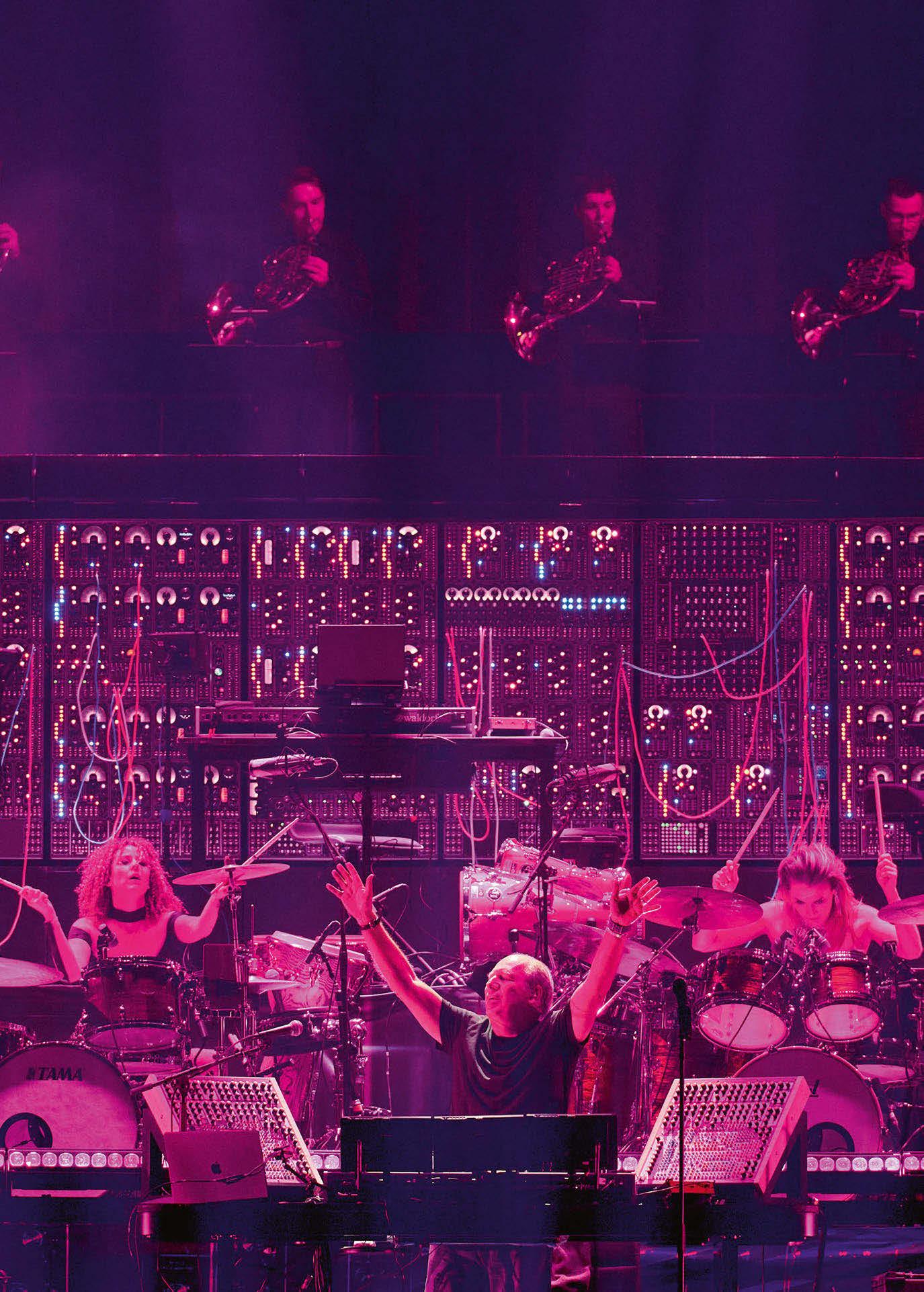
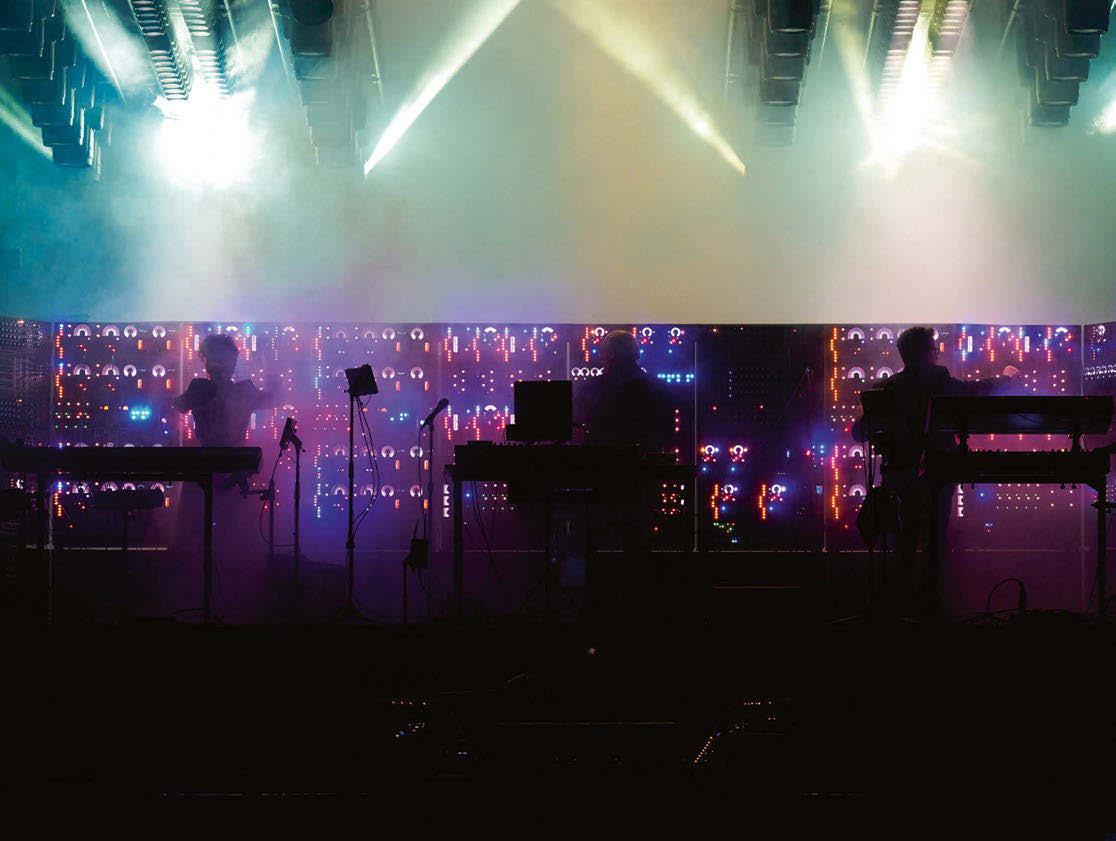
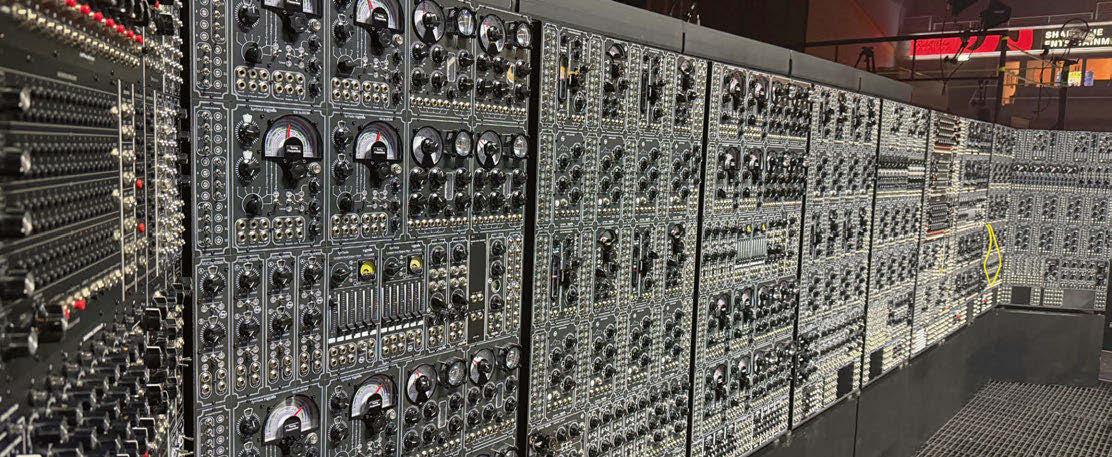
A cent repiece on the stage was the imposing 10-cabinet modular synthesiser from SynTesla, named GIORGIO III. The creation of the synth-juggernaut had been a collaboration between Zimmer and Pierre Jean ‘PJ’ Tardiveau to curate the desired sound.
At the t ime of writing, GIORGIO III stands as the largest modular synthesiser in the world –an impressive feat considering the system also had to be modified to be durable for touring. “We have a complete electrical system that can switch automatically from European voltage to American,” PJ said. “We have some very specific power filters to ensure that there is always a very clean current.”
From idea to fruition, the process for the synthesiser consisted of just a 10-month timeline, which PJ originally thought impossible, calling himself and the team “crazy” for even taking on the feat. “When I see what we were able to achieve, I am so proud,” stated PJ.“It was really easy to work with Hans and not only is he probably the best score composer in the world, but one of the best humans too.”
TIME (CODE)
TPi spoke to father-daughter duo John and Hailey Featherstone of Lightswtich who, fittingly for the composers’ The Next Level tour, have reconfigured their design to fit the higher level of the tour.
“The most interesting thing about this project was coming back so quickly on what was a very successful and well-received tour and having the opportunity to really think about the sacred things we wanted to keep for this run,” John said. “We wanted to reinvent the design, without just doing it differently for the sake of doing so.”
As the show went on the road without an orchestra, the dynamics changed organically, and it was up to the Featherstones as well as co-Lighting Designer and Lightswitch collaborator, Chris Herman to tackle this, as Hailey told TPi: “We lost the orchestra and gained a giant 10-cabinet synthesiser. Hans also changed his approach to the arrangements and the introduction of new instruments has changed it in a foundationally different way,” Hailey said, going on to comment on GIORGIO III and how due to its customisability and size, the Lightswitch team were given an intimate collaborative role with the SynTesla team.
“We worked with the team, and mainly PJ, who built the modules in the cabinets; they knew it was important and that it was a showpiece as well as a functional musical instrument,” Hailey said. “The great thing with modular synthesisers is that they are just interesting-looking anyway, but it was up to us to help mould the lighting gently in a way that was visually captivating.”
John went on to discuss the dynamic shift that occurred when the camp pivoted from using an orchestra. “What really struck me was that there has been a role flip from the
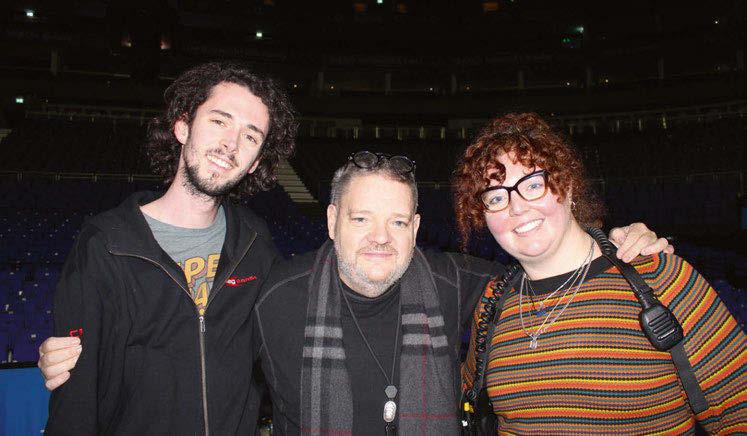
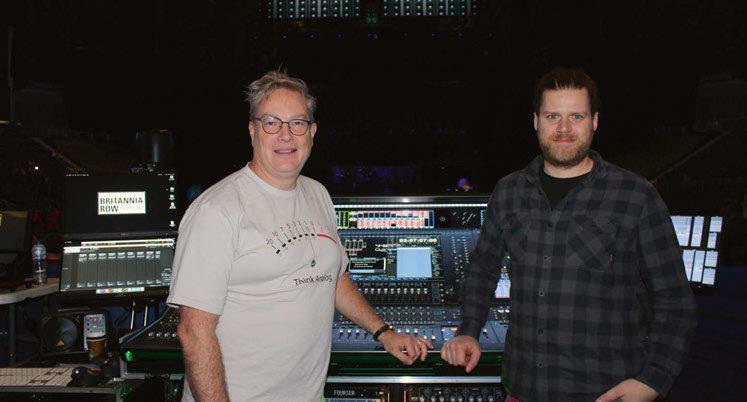
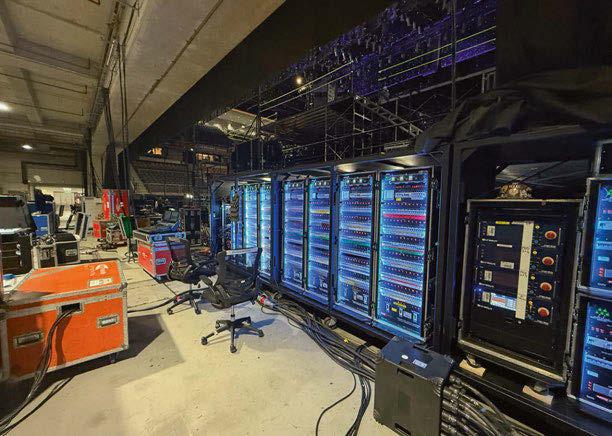
Lighting Director, Zach Boebel with Lighting and Concept Designer, John Featherstone and co-Lighting Designer and Director, Hailey Featherstone; Sound Designer and FOH Engineer, Colin Pink with System Designer and Engineer, Tom Jacobs; Production Manager, Jim Baggott.
last tour where the music was narrative, and the lighting was more in-your-face like that of a rock show. Whereas Hans has changed the musical direction this time around, and with it taking a more electronic and frankly percussive tone, we’re making the lighting design more narrative and theatrical to accompany a fiercer arrangement,” he explained.
With collaboration being a dominant theme within the touring ranks, Hailey wanted Hans and the other musicians on stage to view the lighting design as an additional member of the ensemble. “It was a big takeaway from the last tour when the performers saw lighting as an additional member, and that really influenced how we went about the design this time, which was all guns blazing,” Hailey laughed. “We were able to sit back into the role and the collaboration of what we’ve been allowed to do within this production, and with Hans, to uplift the core of his message.”
Joining the camp for The Next Level was Zach Boebel, Lighting Director and RoboSpot Operator. “This is my first tour in this role, and it has been a great experience. Everyone is super motivated and wants to make the show better,” Boebel said. “It’s cliché to say that the camp
feels like a family, but this one truly does.”
Helping the Lightswitch team achieve their vision was a rig made up of ACME Lighting Tornados, GLP JDC1s, Martin Professional MAC Ones and VDO Sceptron 10s, as well as a large Robe deployment of iFORTEs, iFORTE LTXs, iFORTE LTX FS’, MegaPointes, iESPRITE LTLs and Robin Tetra2s with atmospherics from MDG, including ATMe and theONE.
“I couldn’t possibly pick a favourite fixture; it’s like picking a favourite kid,” John remarked. “They all stand as my favourites for different moments. For example, the iESPRITE LTLs we really lean into demonstrably fabulous ways during Gladiator. We have a rough arc of where we want the show to go, and each fixture is pivotal in achieving this.”
Boebel and Hailey control the rig on the road with an MA Lighting grandMA3 and Boebel has enjoyed the process of learning the software: “It has been an interesting journey of figuring out how we can best use the system to help us. I know this has been the first tour that Hailey and John have used the system in its entirety and it has been an engaging learning experience.”
For the team, the support from Neg Earth Lights has been “invaluable”, John enthused:
The imposing 10-cabinet modular synthesiser from SynTesla, named GIORGIO III, is the world’s largest modular synthesiser.


“I know it’s a cliché, but we really try to live and breathe how much we appreciate the people that support us. There is a huge team from Neg Earth Lights who never get to be out on the road, and put their entire hearts and souls into this project, and we’re really grateful.”
For Neg Earth Lights, the feeling is mutual, with Project Manager, Alex Griffiths, on hand to help the camp: “Supporting Hans Zimmer live has been a real highlight for us at Neg Earth. The project involved close collaboration between our inhouse engineering team, the Lightswitch design team, show management, and our touring crew to refine load data, safety factors, and installation methods from prep through rehearsals. It’s always rewarding when complex engineering becomes invisible to the audience, and that’s exactly what this show achieves: a technically demanding system performing consistently and safely every night on an international tour,” he commented.
“It’s a technically ambitious production, and we were proud to deliver the full lighting, rigging, and automation package, with a major focus on the custom-engineered POD structures that run on automation throughout the show. To achieve the required movement, accuracy, and repeatability, we designed and manufactured bespoke
components including reinforced end frames and fixture support systems, all engineered, load-tested, and integrated to work seamlessly with the automation control.”
Supporting the lighting design was an additional video package from BBM Clair, which supplied ROE Visual Emerald 8.9 Video Panels, a Ross Video Carbonite Ultra switcher and an array of Sony cameras, which were positioned at different prime points for Video Director, Rob McShane, to steer the envisioned narrative.
“I’m using all the outputs on the Ross Video switcher for the 13 camera positions I have around the venue,” McShane explained.
“Two of them are manned, one out in the house, a guy on stage, a camera in the pit on a track that runs back and forth all night long; that’s my hero camera – it gives me these really beautiful rockstar shots.” McShane also deployed a further three robotic cameras on stage, and seven POV cameras which covered multiple surfaces. He explained: “There are so many levels of the stage and show, I want to try and capture a combination of spotlighting the soloists when it is their moment while also showcasing the grandness of the show.”
With a v ideo team of just five people, the challenge in the lead-up to the tour was to ensure that the show, in the sum of all its parts, was presented as well as possible. Helping this along was a PIXERA FOUR media server system, which helped showcase the content from NorthHouse.
TPi caught up with Northhouse founder, Tom Bairstow, to delve into The Next Level.
“We got introduced into the camp for the Queen’s Jubilee, where we projection-mapped some beautiful archival footage of nature onto Buckingham Palace,” Bairstow commented.
“We then worked with the team on a project in Dubai where we created this epic scene from Interstellar and our relationship has just built from there.”
Bairstow and the NorthHouse team were then enlisted to curate big picture visuals and worked closely with the designers of the show to bring synergy between the lighting and video design. “John then came up with the idea of having a semi-transparent screen, which meant that we could play around with marrying up video and lighting,” Bairstow explained.
“We then built a Previs in Unreal Engine, which is our software of choice, and played around with how it could look, and it gave some
amazing results.”
With t he majority of Hans Zimmer’s music synonymous with films such as Gladiator, Pirates of the Caribbean and Inception, for the content creator of a tour that performs these scores could be daunting, but for Bairstow and team, it was nothing but inspiring.
“The best thing about designing visuals for someone like Hans is the soundscape it creates. On top of the abstract atmosphere the music has already created, the majority of audience members have probably seen the films behind them, so this helped us be inspired by the art that was already out there and construct something that was not just recreating scenes from the film,” he elucidated.
“We ut ilised the colour palettes that were inspired by the films, to portray the emotion of the pieces,” he added. For Bairstow, the shared language between Zimmer and the NorthHouse team was what made The Next Level extra special to work on. “He is very, very trusting, even looking at the musicians around him, he puts his entire trust in ensuring we can pull off his vision,” Bairstow said. “We’re grateful that he put his faith in us to pull his vision together, and it was great.”
As the first leg of the tour wrapped up
at Manchester’s Co-op Live, The Next Level certainly isn’t facing its curtain call yet, with the tour kicking back off in Amsterdam and traversing Europe throughout March.
If Hans Zimmer’s meticulous nature of perfecting his live shows is anything to go by, TPi is excited to see what lies next, but for now, Production Manager, Baggot puts it best: “This show is pure large-scale entertainment that appeals to everybody, and the team that has come together to make it work have made a real effort to make it what it is.”
www.hanszimmerlive.com
www.lightswitch.net
www.clairglobal.com
www.colinpinksound.com
www.bbmclair.com
www.negearth.co.uk
www.britanniarow.com
www.truckingservice.de
www.northhousecreative.com
www.allaccessinc.com
www.syntesla.com
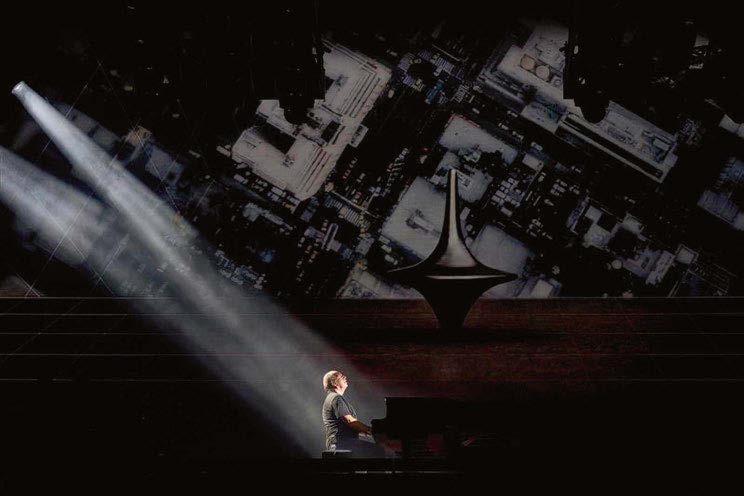
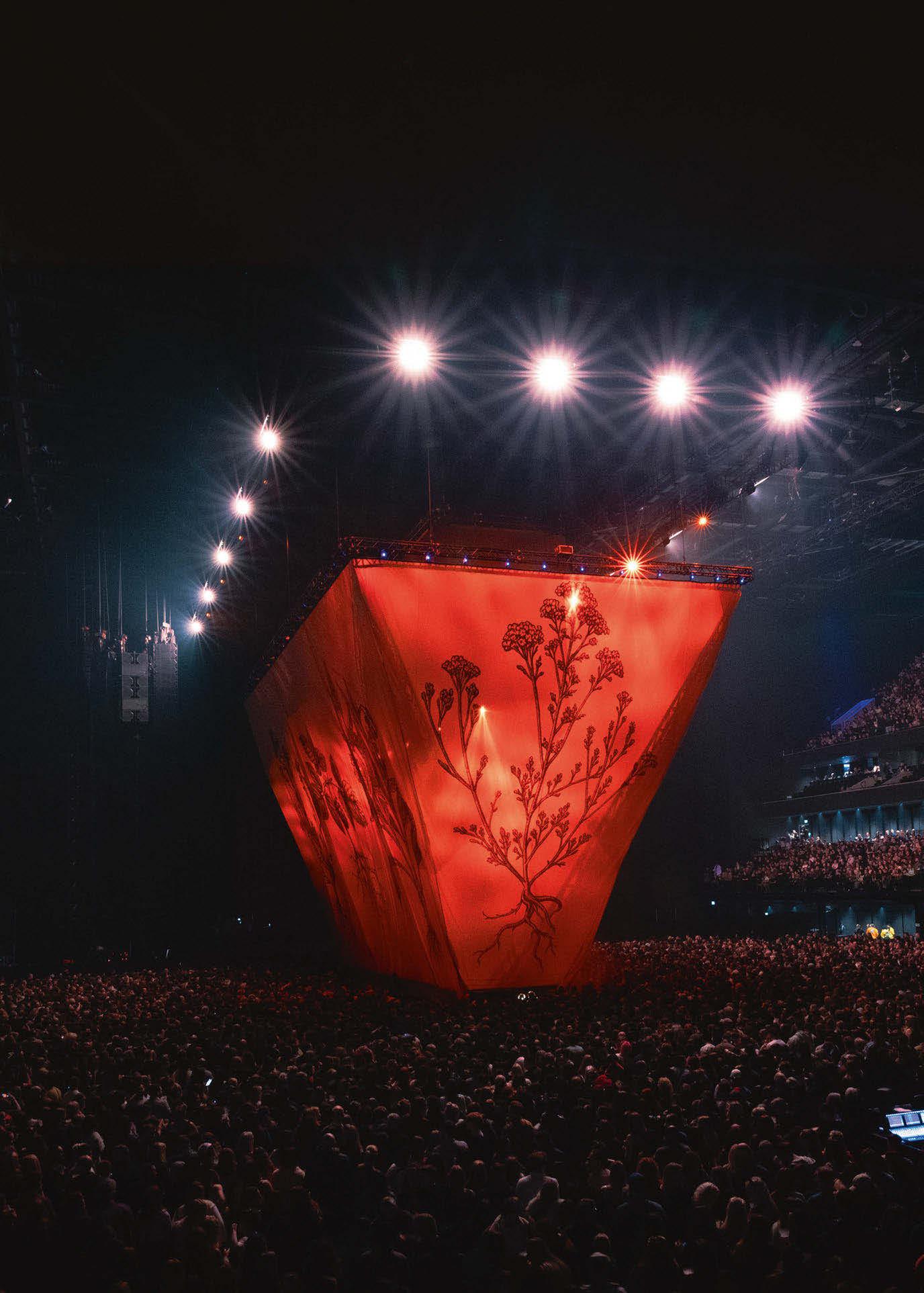
A road-tested touring team unite with creatives and production partners to bring a hauntingly ethereal spectacle to life…

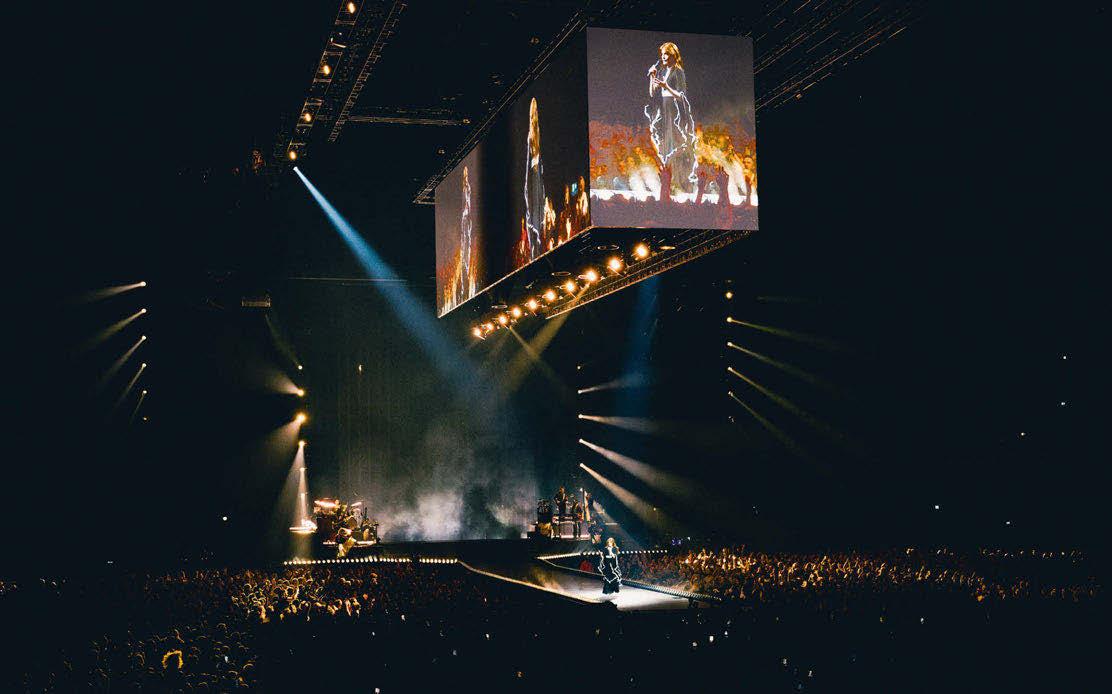
Bewitching. Ethereal. Enchanting. Few tours in recent memory have embodied these qualities quite like Florence + The Machine’s Everybody Scream Tour. Each night, the artist leaves it all out there – emotionally, through a deeply introspective record, and physically, as she paces the stage barefoot, charging up and down the thrust before casting herself among the crowd. Surrounding her, a dance troupe known as the Witch Choir twist and contort, shaping their bodies and expressions into arresting, otherworldly forms. For the production team, the brief is anything but straightforward: to create a performance environment that underpins and amplifies this narrative, forges a connection between audience and art, and navigates the logistical, technical and financial realities of touring.
Thankfully, Production Manager Wob Roberts orchestrated the tour, drawing on the expertise of Britannia Row Productions (audio), Neg Earth Lights (lighting), Strictly FX (special effects), Solotech (video), Vis-A-Vis (cameras), All Access Staging & Productions (stage mechanisms), The Next Stage (staging), Tysers and Acre Jean (drapes), EPS (barriers), Sarah’s Kitchen (catering), Nicely Done (furniture), CSE Crosscom (radios), KB Event (trucking), Phoenix Bussing (crew travel), LH2 Studios (production rehearsals), Silent Partners Studio (video content), Silent House Productions (show design), and Equinox Travel
(travel agents), Skytime Jets (charter flights), Goldstar Chauffeur (ground transport), among others. “It’s a complex production that requires collaboration,” Roberts informed TPi from backstage at Liverpool’s M&S Bank Arena.
A hive of activity and vibes, Tour Director, Lucy Graubart, Tour Manager, Emily Holt and Production Coordinator, Sophie Kemp, among others, supported Roberts in the production office. “They are invaluable,” Roberts said. “Very few production managers can operate effectively without a supportive team.”
Kemp played a pivotal role in the tour’s administration and logistics. “With Wob focussed on the technical side, I support everything else alongside the production office, HODs and stage managers,” she explained, citing responsibilities from crew travel and accommodation for more than 90 personnel to immigration and advancing.
Prioritising wellbeing, Kemp also ensured the crew were rested and supported on the road. “When the drapes fell on opening night and everybody screamed, it made all the long hours worthwhile,” she enthused.
“It’s been incredible to see the process come to life, from rehearsals through to the first sold-out night in Belfast,” said Tour Manager Emily Holt, who was responsible for booking, managing and overseeing all schedules and logistics for the artist, entourage, band and dancers. Her remit covered travel, itineraries,
guest lists and all backstage logistics. “We run a tight schedule. We must account for everything from vocal and physical warm-ups to glam and general welfare. It’s essential that we build in time for individual needs; while still ensuring there’s space to switch off.”
As wit h most modern tours, routing, which is often determined before the show’s creative is finalised, means the team must work with the hand they are dealt. “I came in too late to make any changes, but what we can do is look after the crew and treat them well,” Roberts stated.
When scheduling prevents the team from reaching the next venue in time, an advance rigging team is dispatched to plot and install 64 of the 130 points. The remainder is completed once the main crew arrives. “It’s a substantial build but we’re fortunate to have an exceptional team: Stage Managers, Felix Baird and Matty Roberts, with Yose Lawson as Head Rigger, supported by Tom Armstrong and Kieran ‘Beano’ Bean,” Roberts explained.
Tour Director, Lucy Graubart oversaw and streamlined budgeting, show settlements and HR, acting as the main point of contact for financial matters and any wider issues beyond day-to-day logistics.
“A show of this size is designed creatively and then must be realised in production while maintaining that vision,” she explained. “That takes teamwork and flexibility; and sometimes plans change and elements don’t quite function
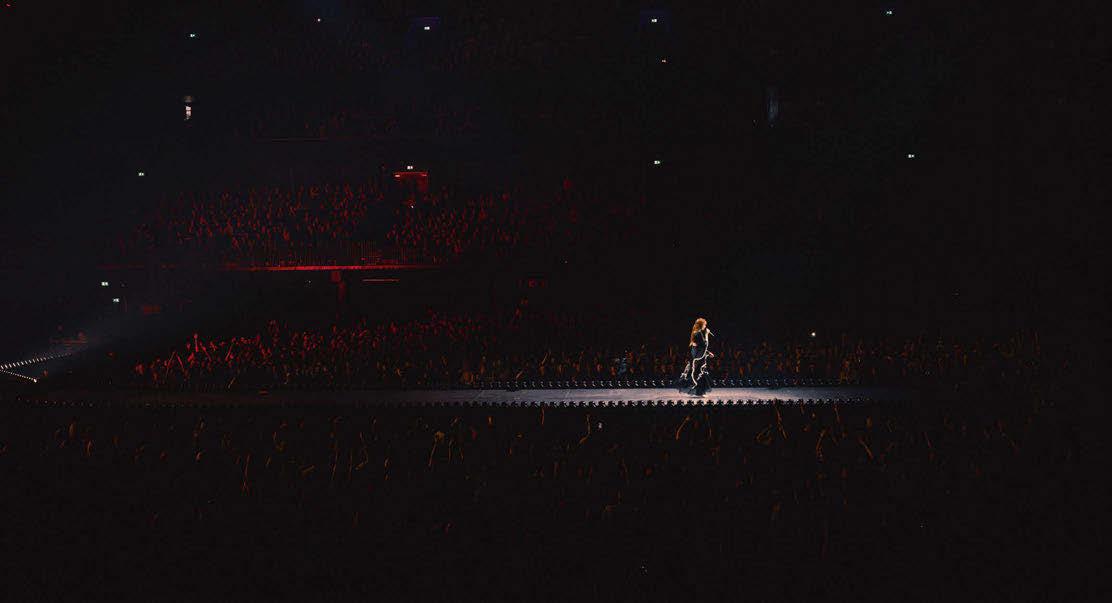
as originally intended, so you must implement new systems to make it work. That can incur additional costs, so it’s about being flexible and holding sufficient contingency.”
Nicel y Done supplied sofas, lighting, foliage, pipe and drape, dressing both the backstage areas and front of stage, with stock sourced from its warehouse in Newark. “It’s been a cool experience,” said former bricklayer Lewis Williams of Nicely Done. “Time is our greatest challenge. I was nervous as it was my first tour, but it was seamless and the team made me feel welcome straight away.”
Crew welfare is paramount, as Graubart explained: “Even for seasoned touring personnel, life on the road can feel isolating, so it’s vital that people know they’re looked after and supported. Our door is open if anyone needs to talk. We’ve organised crew activities on a couple of days off during the tour. Sarah’s Kitchen has been feeding us incredibly well.”
Reflecting on the tour, Graubart said: “It’s a fantastic team of people. To work with so many women as well, even in this industry today, is brilliant. Everyone has come together to make this project really something special.”
The creative team started discussing the tour 18 months out. “In those first conversations, I presented a couple priorities to Florence –the main one being that I wanted her to have more space to run and move than she’s had on previous tours. I also wanted to find some huge visual moments that could match Florence’s intensity and have fun with it. Florence loves theatre and I thought that should be a part of the visual language,” Creative Director, Molly Hawkins recalled. Musical Director Pauli
Lovejoy and Hawkins developed the set list in collaboration with Florence, based on a ‘classic myth’. She elaborated: “We used this to inform the atypical arc of the show. Legendary choreographer Ryan Heffington has a longstanding artistic relationship with Florence and was able to see things in the music I didn’t even realise were there. Ryan is a true artist who, like Florence, bares himself wholly in his work.”
Hawk ins enlisted the support of Production and Lighting Designer, Stu Dingley of Silent House. “Stu went above and beyond with inventiveness. He came up with the kabuki that stretches over the audience. It displaces so much air at the top of the show; it’s an entrance worthy of Florence. He also came up with the cold smoke curtain flowing down the upstage wall, which we use during You Can Have It All. It hit me like a train and the first time Florence did it in rehearsal I burst into tears.”
Dingley designed the stage and screens so that there are a few completely different experiences depending on viewpoint. “Working with Molly is great. She is an incredible person and has a clear way of defining a creative idea and seeing it through, with an understanding of the tools at her disposal. It’s fascinating to see the depth of her understanding of an artist and how they want to be represented, and that comes through in every decision,” Dingley said, retracing the origins of the project. “We knew we wanted to anchor the design around a long thrust extending into the arena, reducing the distance between Florence and the audience. From there, we explored themes rooted in folklore and witchcraft, looking for ways to build a sense of magic and ritual into the show.”
A key part of that was concealing elements of the rig so they could appear at key moments.
“We integrated ACME PIXEL LINE IPs behind the ROE Visual Vanish, sub-deck lighting and smoke, and DMX fans overhead to move the atmosphere through the space, creating more theatrical and magical moments.”
Hawk ins and Dingley started sketching ideas on an iPad over a blank arena, including an early concept of large fabric reshaping the space. From there, the design moved into Silent House’s studio pipeline, with drawings developed in Vectorworks. The team then spent a week of previsualisation in Los Angeles at Earlybird, building the show in Syncronorm Depence, where lighting and video were programmed together. Production rehearsals took place at LH2.
“We wanted to work with large quantities of a limited number of fixtures, so the package became a balance of creative intent, budget, and availability. We landed on Ayrton Khamsins, CHAUVET Professional Strike Ms, and ACME Lighting Tornados and PIXEL LINE IPs. The Tornados were particularly important for the thrust, allowing us to create shadow play on the drape with the benefit of their individual pan and tilt.”
TMB Solaris Flare Q+ and CHAUVET Professional COLORado PXL Bar 8 and 16 solutions further made up the rig, with atmospherics provided by Look Solutions Viper NT Fog and MDG theONE DMX Atmospheric Generators and JEM AF 1 Fans.
Lighting Director, Alex McManus controlled the design on the road. “He’s a very talented LD and programmer and has been instrumental in keeping the show in great shape,” Dingley said, further citing the influence of Lighting Programmer, Will Flavin as an “incredible programmer” with “endless ideas and strong

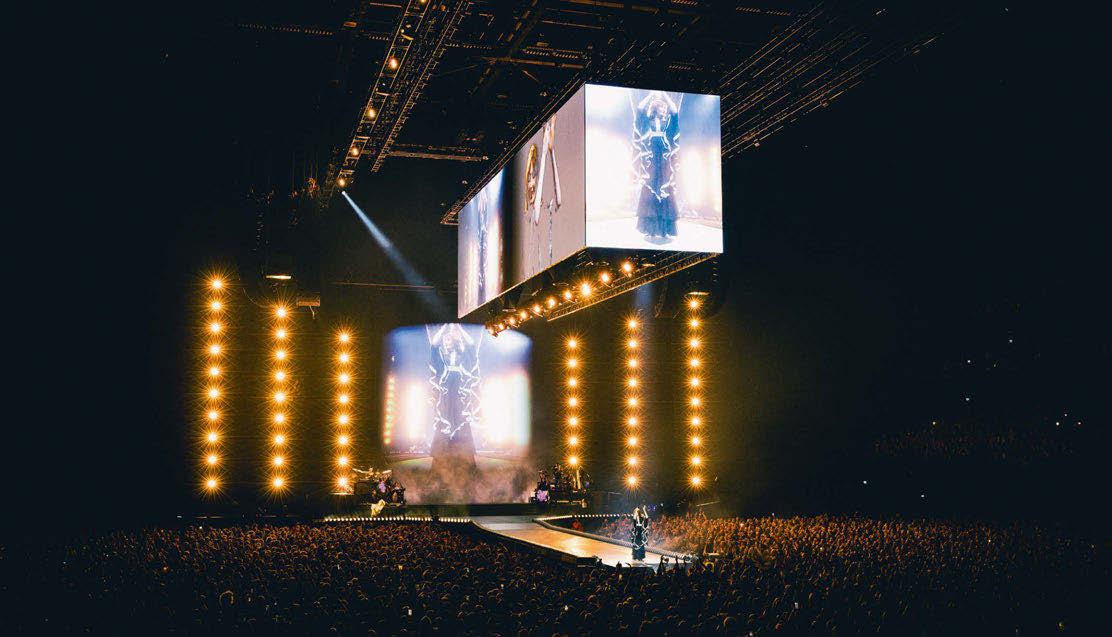
technical understanding” as well as Media Server Programmer, Luke Collins. “We were lucky to have him with us as he is always in high demand, bringing his expertise and energy to the team.”
Leaning into classic theatrical approaches like side light, dancer light, multiple follow spot positions, and custom atmospherics, Dingley and the creative team’s focus was on restraint and consistency rather than adding new tools.
“Everything was about keeping the picture clean and intentional. Florence is the priority. She’s lit with six RoboSpots, which gives us control over how she’s seen at any moment. We can shape her face, adjust colour and support the narrative without it feeling overdone.”
Light levels were kept low, providing headroom for the larger moments. “The long runs of PIXEL LINEs behind the ROE Visual Vanish LED panels are a standout – their first use reads like red blood dripping down the screen, marking the shift into the first dark section. We also embedded cryo fog and fast-dissipating smoke units under the stage and overhead to create more atmospheric, swampy, ‘witchy’ looks without blowing out the camera shots,” he said.
The fog curtain, a closely guarded trade secret, combined low smoke and fog machines with precise timing and engineering. “The first pass wasn’t big or strong enough. We did some tech work, changed the design, and were able to achieve the full four minutes over 12m,”
Strictly FX’s Natalie Frew recalled, supported by fellow Kiwi Jack Hooper in the SFX department. “We have a lot of low smoke, with a custom-
built fog curtain at the back of the stage dropping 12m. It’s the only one of its kind, and we have 12 pop-ups around the stage to deliver low smoke across the entire stage and thrust.”
Around 28 CO₂ bottles power the effects, while pop-up foggers were used for around seven songs, creating an ethereal visual experience. “We run at optimum settings for the size of the room without using any more than we need,” Frew noted. “It’s been a joy to be a part of.”
Harp moments acted as a palette cleanser from the scale of the show, allowing space and stillness to come through in a way that Dingley says “really pays off”. He added: “The opening is also a highlight, with the large kabuki and sniffer set during changeover and released after a dramatic moment of witch screams and shadow play, as if the figures behind the cloth are possessed and under a spell.”
All Access Staging & Productions supplied seven sniffer units, a spare, and a 300ft kabuki drop to achieve the look. Additional technicians supported the touring carpentry team. Four sniffers were flown from LA, two from New Jersey with the rest sourced from the team’s UK office. Dedicated mains and control cable were brought from LA to cover the extensive cable runs required.
“We’ve never supplied this many sniffers at once, so we designed and built custom control gear to simplify operation for the tour carpenters,” Martyn Drew, Senior Project Manager at All Access Staging & Productions,
commented. “The team are a pleasure to work with. All necessary information is shared in advance, and decisions are made in good time, ensuring the right equipment is delivered.”
Several elements were integrated into the stage design, including lighting shelves, vents for smoke machines, fans, and a set of fold-down pantograph steps to enable a dramatic entrance for the artist. “The riser was constructed so it can easily be broken into manageable, independent sections that can be wheeled onto stage and locked together to form the complete structure,” reported Ollie Laight of The Next Stage. “We brought in our ‘go-to’ scenic artist, Catherine Briggs, to lead the scenic process, working her magic on this set. Layers of wood grain were applied first to give the appearance of planking, with an intricate flower-and-vine pattern over the top.”
The st age build began in November and lasted eight weeks, with test building and artworking taking place at The Next Stage’s workshop. “The thrust had to be configured with a central corridor along its length to allow performers access from beneath the main stage to the pantograph staircase at the downstage end,” Laight explained.
“Using our modular support frames and beams, we were able to accommodate this. The initial brief also called for an underlit floor for the thrust, giving a distinct look compared to a standard opal lightbox.”
Anot her technical challenge was making the stage surface soft and forgiving. “With the artist performing barefoot, we applied foam beneath the plastic surface to cushion
the
introducing transform.suite ‘25.
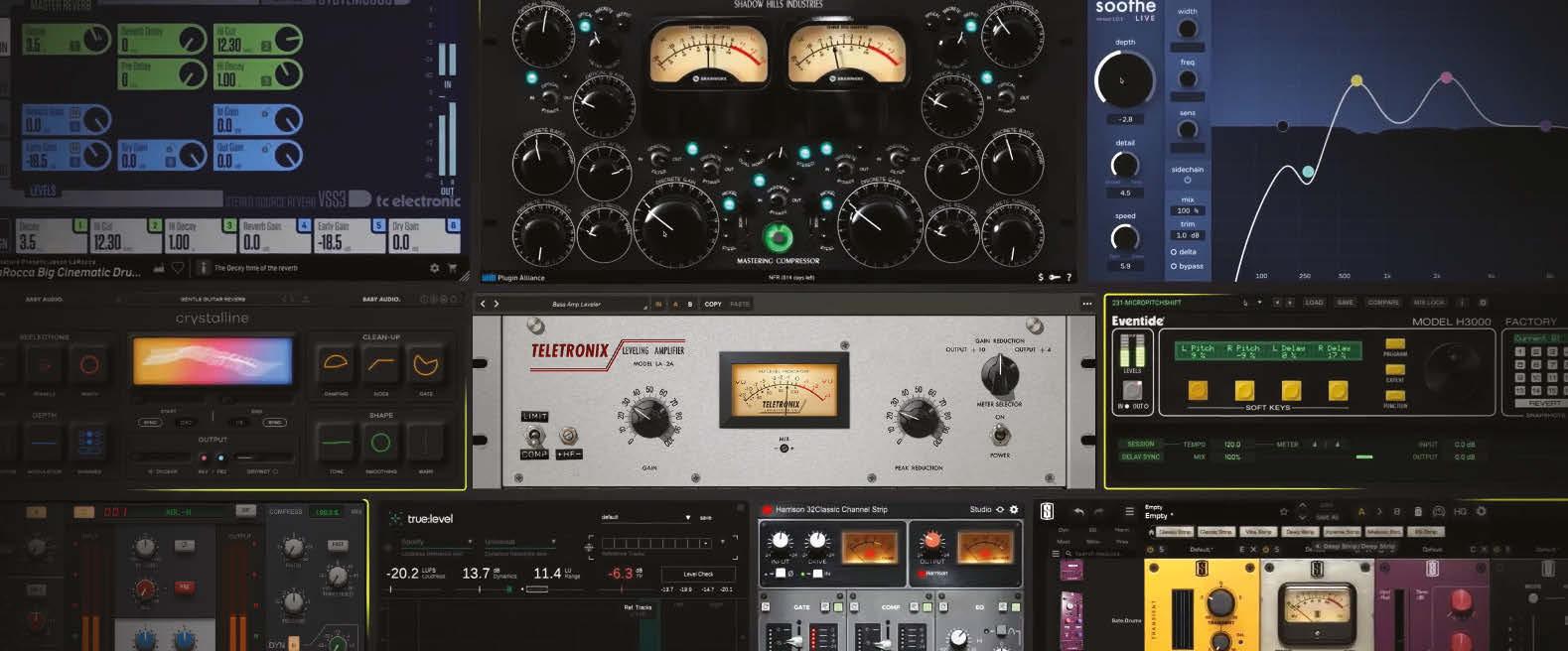



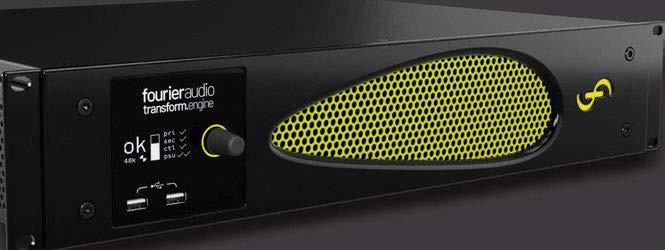

70+ plugins. 10 world-class brands. exclusively for transform.engine. available now. fourieraudio.com/suite activate today.


bring the studio to live!
$699 for 12 months. key features
- one-click install and activation
- manageafleet of engineswitheaseonline
- one annualpayment for non stop access
- perfect for arider
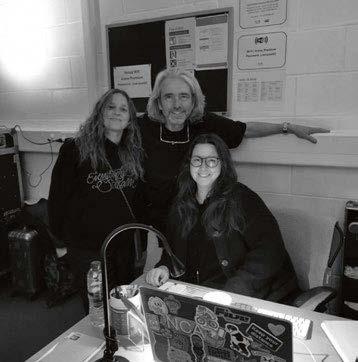
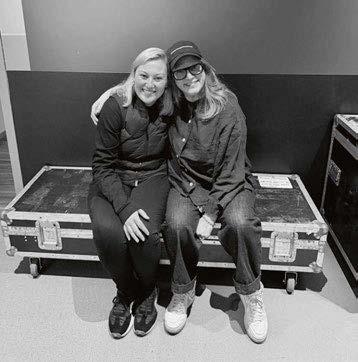
the aluminium frame and treated the entire thrust with an anti-slip glaze to improve grip,” he continued. “It’s been a truly collaborative process and a pleasure working with such a friendly and professional group.”
Lighting Crew Chief, Bianca Mastroianni, oversaw a team of eight lighting technicians and two automation technicians. “We’ve got a solid group of people in the crew, from a junior right through to the experienced. Across the lighting team we have a 50/50 split of men and women, this equality was important to me in the crew selection process.”
Among them was Ellen Sargeant, a young technician from Australia embarking on her first European arena tour. “It’s good to have her and to train new technicians, to show them the way on the road. Sharing the knowledge, giving people their own responsibility during the loadin and making sure everybody knows what’s going on makes for a calm load-in,” Mastroianni said. “All the gear from Neg Earth Lights is well maintained and prepared.”
Khamsins proved the workhorses of the lighting rig, flown on a giant horseshoe-shaped truss spanning most of the arena, alongside CHAUVET Professional Color Strike M units. A further back wall of Khamsins completed the rider, along with columns of ACME Lighting PIXEL LINE IP fixtures – the result of some clever
custom engineering. The metalwork-heavy tour also featured ACME Lighting Tornado fixtures along the truss.
“There are a lot of layers of concentric truss, which is essential on load-in to ensure we’re working cohesively,” explained Mastroianni. “It was important early on that we split departments off into separate cable management trusses to streamline the load-in. The number of cable bridges may look like a lot, but it allows for departmental independence and streamlined load-ins and -outs.”
Six active ‘RoboSpot’ systems and a spare in the rig ensured the action was tracked throughout. “It’s a nice camp,” Mastroianni noted. “It’s going to be a good year.”
Automation Lead, Steve Kellaway’s setup featured a Kinesys Apex system with a Vector console, operating 22 axes of movement using 500kg Apex hoists and drives, alongside EXE Flexa load cells. He oversaw the assembly of the mother trusses, pre-rigged with hoists, ensuring they were thoroughly checked before the moving elements were flown. These included the long central spine truss and the kabuki horseshoe truss that framed the stage –both running on Kinesys – which moved at key moments during the show.
“A lot of the automation is dedicated to the set for the big kabuki opening, which is pulled away by the carpenters’ large sniffers. It means we can get it in quickly during the changeover,
Production Assistant, Miren Abasolo Montes with Production Manager, Wob Roberts and Production Coordinator, Sophie Kemp; Tour Manager Emily Holt with Tour Director, Lucy Graubart; Nicely Done’s Lewis Williams and Lisa Hill; FOH Engineer, Brad Madix with Systems Engineer, Elad Klein; Monitor Technician, Nick Jackson with Monitor Engineer, Hannah Brodrick; Media Server Programmer, Luke Collins with Camera Director, Phil Woodhead.
EVERYBODY SCREAM TOURING EUROPE & USA 2026
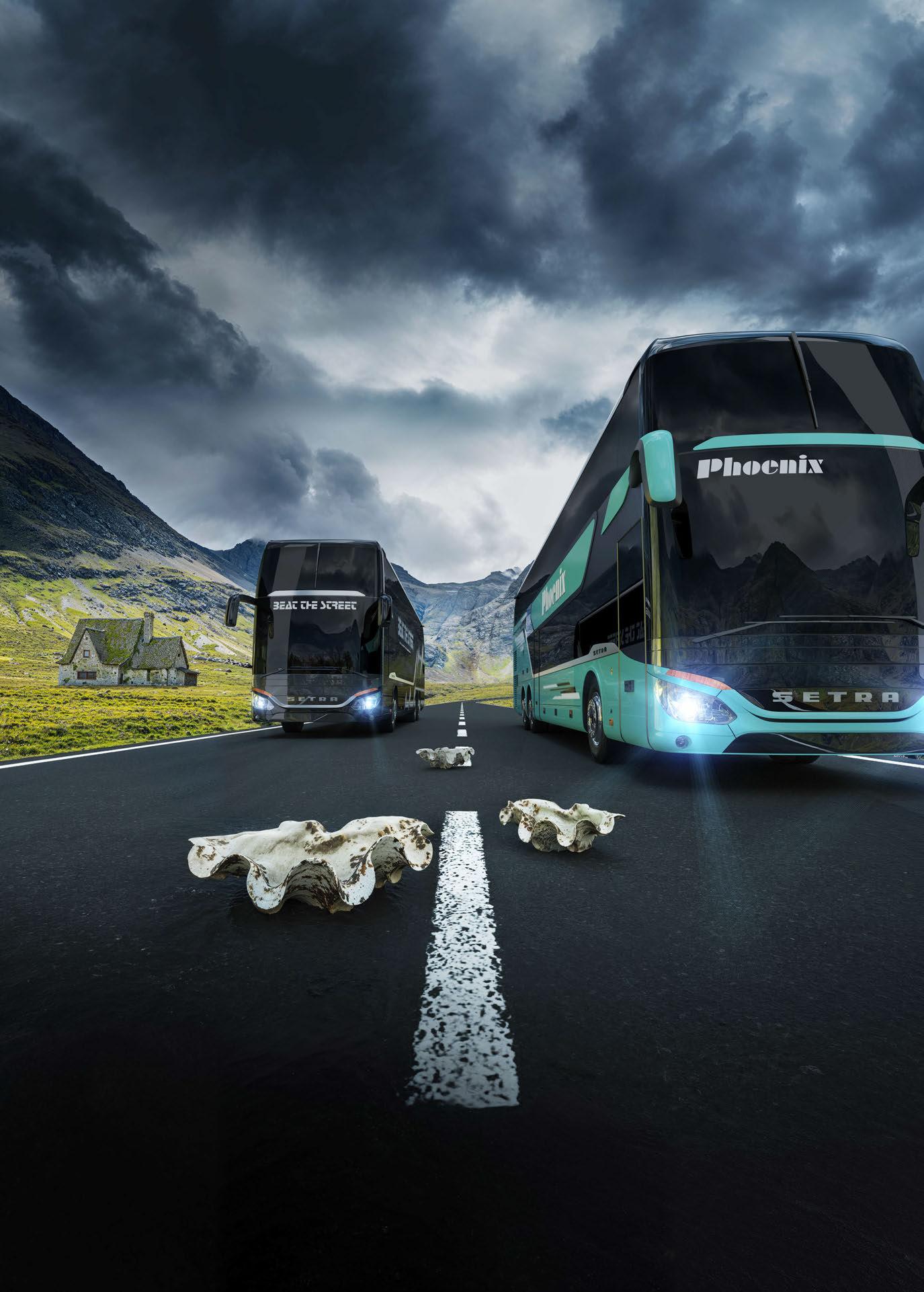
Headoffice Austria: joerg@beatthestreet.net | hannes@beatthestreet.net | lee@beatthestreet.net • Office UK: garry@beatthestreet.net | dan@beatthestreet.net Office Spain & France: tristan@beatthestreet.net • Office UK Groundtransport: ian@beatthestreet.net | mark@beatthestreet.net | courtney@beatthestreet.net Office USA: samuel.brown@beatthestreet.us | john.aikin@beatthestreet.us • www.beatthestreet.net | www.beatthestreet.us Phoenix Bussing UK: andy.gray@phoenix-bussing.co.uk | sean.gerrard@phoenix-bussing.co.uk | stewart.scott@phoenix-bussing.co.uk • www.phoenix-bussing.co.uk WE ARE PROUD TO BE INVOLVED
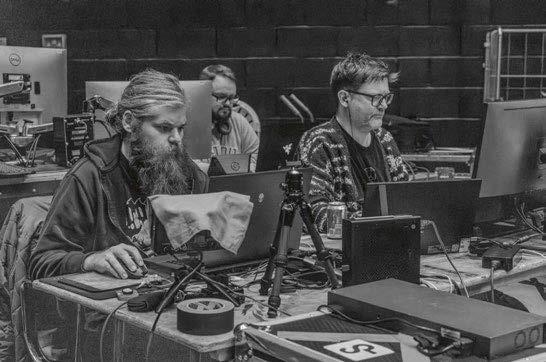
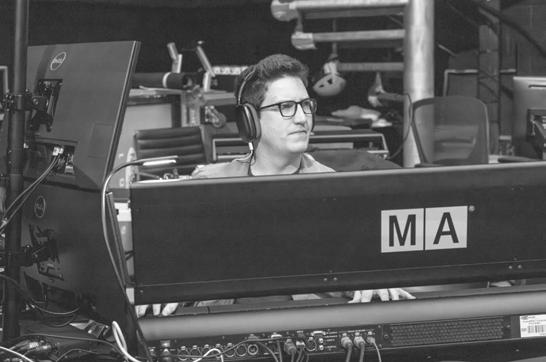
then clear it out for the support bands. We lower it in, set it, and it’s only there for about 10 minutes of the show for that big opening moment. During rehearsals, we also introduced some additional show moves, including lowering the central truss,” he explained.
One of t he standout moments is the lowering of a 22m truss into a diagonal position. “It’s quite exciting to watch the numbers and see the weight shift, from a purely technical perspective,” he added. “Overall, it’s a lovely group of people – everyone gets on.”
Neg Earth Lights’ Martin Garnish commented: “The greatest challenge on this project has been the opening drape setup. Several tests were undertaken at our facility at LH2, and at our warehouse, to conceptualise the most effective way to make the drop and sniff work, while allowing for it to be deployed in the simplest way possible. Working alongside All Access Staging & Productions and the tour team several scenarios were investigated. Ultimately, a Kinesys Apex automation system was deployed to allow for the drape to be set smoothly in the changeover, which was not something any of us had planned for initially.”
Neg Earth Lights’ Lindsey Markham said it’s an “honour” for Neg Earth Lights to be involved in this project. “Working with Stu Dingley and Silent House has been a pleasure; helping realise their vision is incredibly rewarding. Any collaboration with Mr. Roberts is always a pleasant experience, and this project has been no exception!”
‘A DIFFERENT APPROACH’ TO VIDEO Camera Director Phil Woodhead explained the challenge of working with two very different screen formats. “It requires a different approach for the camera operators. They can’t do anything other than wide and tight shots, with everything in the centre. They’re basic shots, but the team have their hands full tracking Florence and the dancers, who use every inch of the stage and thrust.”
The c amera setup included two cameras split at FOH and a pair of robotic cameras on long lenses either side of the stage complemented by a handheld camera and a rail camera situated in the pit. “They are our reverse shots. When Florence is running towards the stage, they capture the action. When Florence is in the middle, we normally use the two side cameras and the FOH cameras when Florence is out front, and a mixture depending on which way Florence is turning,” Woodhead noted.
Six manned cameras and four PTZ robotic cameras are also positioned around the stage for band shots. “During production rehearsals, we had to study Florence’s movements and anticipate where she would go. The show is constantly evolving, so new shots come in. There are amazing moments from her and the dancers, and the show moves up and down in brightness levels. We try to reinforce that with the shots as well, complementing the lighting, which is why being at FOH is so beneficial.”
Woodhead ran a small, powerful switcher with a polarised screen to cut between two
Strictly FX’s Jack Hooper with Natalie Frew; Stage Miracles crew assisting Neg Earth Lights’ Dale Moran and Lighting Crew Chief, Bianca Mastroianni (centre); Automation Lead, Steve Kellaway; Silent Partners Studio’s Notch Programmer, Heath Saunders with Media Server Programmer, Luke Collins and fellow SPS Notch Programmer, Mike Wilson; Lighting Programmer, Will Flavin at LH2 Studios.
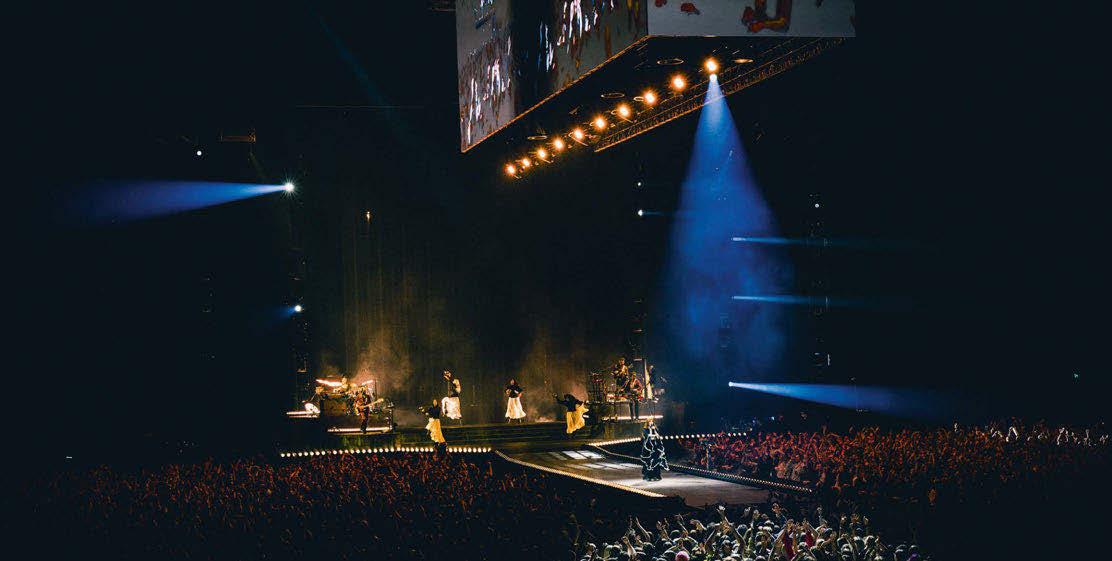
surfaces to accommodate the different screen ratios without distracting the audience with a sea of non-show-related light sources emanating from FOH. “I’m cutting two different shows – one on my programme bank and another on another bank for the two different ratio screens – it keeps me on my toes.”
Luke Collins, freelance media server programmer, was brought on board through the design team. “They were looking for a different approach. We’ve ended up with a show that is fully IMAG-based. We’ve only got one or two content assets, and they’re used to treat camera pictures. There are a lot of different Notch looks, built by Gav and Heath at Silent Partners Studio.”
Content was driven by three Disguise GX 3+ media servers – including a backup – brand new from Solotech, enabling the creative team to use more of the effects toolbox than they might have on other media servers without dropping framerate. “The interesting effects that SPS have put together mean bits of screen need to be managed live, given how much feedback they generate, which is why being at FOH has been beneficial. When effects get too heavy, I can pull them down or add new ones to keep the image as clean as possible,” he explained.
Solotech supplied a complete camera and PPU system, all onstage LED made up of ROE Visual Vanish V8T GOB and the main central LED adorned with ROE CB5MKii with custom framing. “Crew are always the key to every successful tour; at Solotech, we focus on employed people where possible, and Max runs a great team, and it was great to be able to keep consistency between this and his previous tours. Big thanks to all the team for their consistent hard work,” Solotech’s Ian ‘Woody’ Woodall commented.
“Hav ing such a large quantity of ROE CB5Mkii has allowed us to split our inventory between the UK, US and Canada. At the start of this year,
we took the same approach with our Disguise GX 3+ investment. This allows the team to pick up the same equipment on both sides of the Atlantic,” he added. “It was great to be able to work with them on this project.”
During Big God, the team uses Notch NVIDIA Background Removal to isolate Florence and track her outline to generate flames. A few other songs also use Background Removal, while some are colour graded, and others have additional effects layered on.
“We’re making extensive use of a feature in Disguise called Expression Variable Layer, which allows me to set keyframes to musical beats that aren’t directly linked to the parameters they control. I can later attach them to whatever the design team wants,” Collins explained.
In addition to digital effects, Woodhead also deployed an analogue toy at FOH: a mini camera through a prism. “I put a shot of Florence through it and bring it in and out of focus on the screen,” he commented. “On one song there’s a prism effect using Notch, complemented with a real prism effect handheld – it’s an organic play for the show.”
One particularly striking moment is during Seven Devils : “It’s all red lighting; Florence is standing still, and the dancers are crawling along the floor, pulling scary faces and contorting their bodies. We have two cameras on Florence and the others tracking the dancers. It’s an epic song, foreboding and scary live. She’s a very emotional performer – she puts everything into it – and it’s great to carry that emotion into the audience with the cameras.”
The Vis-A-Vis camera setup was overseen by Luke Cartwright and Tim Bolland, featuring Super Towers developed with BlackCam Robotics, a B60 Wireless Rail Cam system, Canon CR-N300 PTZs, and Vislink Wireless HCAM systems. Woodhead complimented
Vis-A-Vis’ bespoke packaging. “We put a lot of thought into making life easier for touring crews – long hours and tight turnarounds are part of the job, so anything that reduces strain, saves time, and creates a smoother workflow is worth it,” Amira Woodall, Project Coordinator at Vis-A-Vis, commented. “Phil is a great director; he knows what he wants but also lets you create moments when things stray from the original choreography. He prompts us to use the full range of Fujinon 107 lenses and the height of the Super Towers, giving a dynamic flow to match the show.”
‘A JOY TO MIX’
FOH Engineer Brad Madix began mixing for Florence + The Machine on 2017’s High As Hope tour. “I love working with her – she’s a phenomenally talented singer and a pleasant person to deal with. Her sound now includes more found sound, like someone’s dropped a tambourine in another room. We’ve got some interesting instruments on this campaign. At the start of the tour, we mic’d up a glass armonica – I’d never even seen one in real life before – and we’re also carrying a waterphone. There are interstitials between songs with spooky, eerie sounds; we’ve got a theremin and of course the signature harp, too. It’s been interesting incorporating some unconventional instrumentation,” he said. “We went through several mics and capsules on the last tour and settled on a DPA 4018V capsule on a Shure Axient handheld transmitter. It’s a smoothsounding microphone. Our concern was its wide polar pattern, which is great when she’s moving around, but less ideal when she’s out in front of the PA. It also has a lovely high end.”
Elsewhere in the input list: a Shure Beta 91A inside the kick drum, a Telefunken M81 on the outside, a selection of DPA Microphones
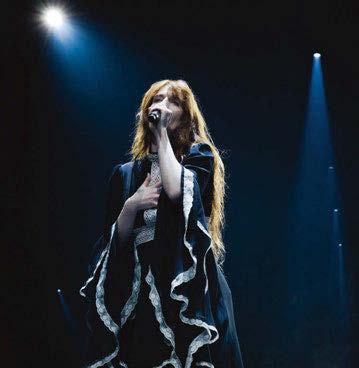
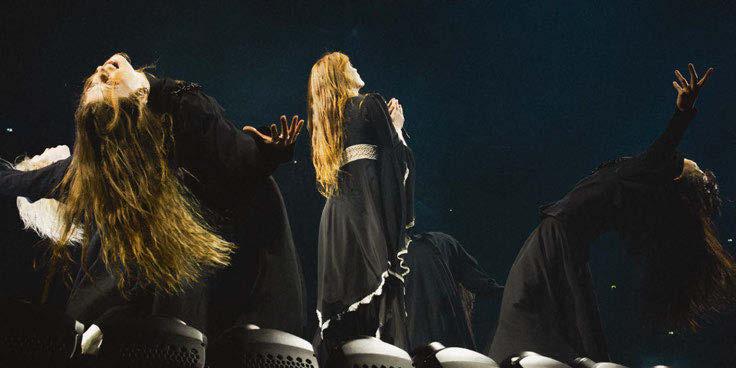
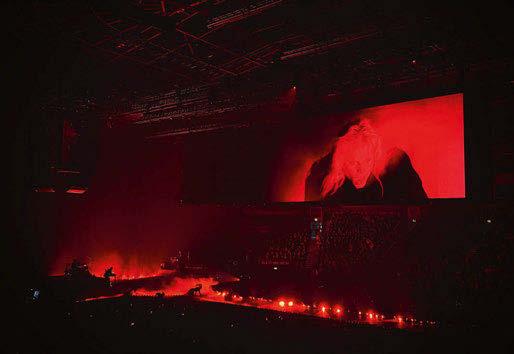
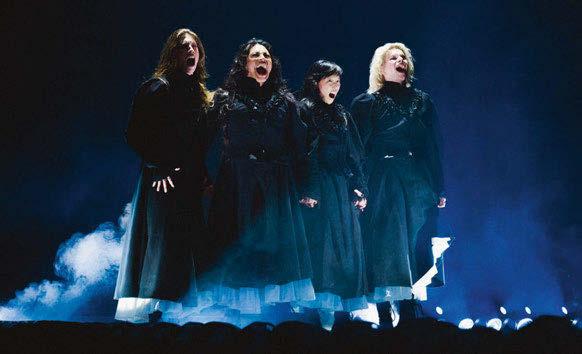
complemented by Telefunken models, a Royer R-121 and Shure SM57 on guitar cabinet –“classic” – and a Beyerdynamic M88 on bass. “I really like the DPA line, but if you’re chasing certain classic sounds, you can’t beat an SM57 on a guitar cab. Blending ribbon and dynamic mics adds warmth and weight to the mix.”
Drum mics featured DPA 2011Cs on overheads and 4099Ds on toms and percussion elements. Telefunken M80s were used on snare and sax (the latter a late addition). Ambient capture featured a DPA 5100 for recording, alongside shotgun microphones and a pair of Audio-Technica AT4050 cardioids.
“There’s a lot of Radial and Aura DIs in the rig,” he added. “I was told about a fun plugin called Acoustify – a zero-latency impulse response plug-in. It feels like cheating and it’s not expensive. I’m hosting it via Pro Tools on the desk. Mostly I use what comes with the console, but here’s a nice multiband compressor from McDSP, and on the theremin I use their tape emulator delay plug-in. I use Phoenix II on acoustic guitar.”
Madi x mixed on an Avid S6L with two HDX cards and a 192 Engine. Channel count reached the mid 90s including comms, while stage inputs are kept under 64. “The engine has a Milan card, which allows us to record up to 216 channels. Above 128, I’m recording
instrument stems,” he explained. “It’s my favourite console. Once I learned Pro Tools, the workflow synergy between the two became incredibly comfortable. Plug-ins run natively within the desk and there’s a good selection. For the few things I can’t run onboard, I’ll host them in Pro Tools, as long as they’re zero latency or time-based like a reverb.”
CSE Crosscom provided a communications package using Motorola radios with purposebuilt touring flight cases. “Working with the production team was a joy,” CSE Crosscom’s Dan Howroyd said. “Our goal is always to provide a system that crews can depend on.”
On the PA side, the tour deployed Cohesion CO12. “I love the way it sounds. It was different enough in rehearsals that it took me a little time to get to grips with it. The extended high end is the most obvious improvement. We’re doing far less EQ than on older versions. From a practical standpoint, the amp racks take up half the space they used to. I’m not boosting vocal high end or high mids – just making incremental moves and cutting fewer abrasive frequencies.”
System Engineer Elad Kleiner supported Madix, with a single delay position behind FOH and one column of delay cabinets covering the rear of the arena. “Elad is one of a handful of system techs I feel comfortable mixing with. He’s meticulous and knows how to set up and
tune a PA. Florence is incredibly dynamic, with a beautiful and emotionally complex voice. The PA – particularly in the high end – complements her wherever she is in the room.”
Madi x also praised vendor support from Britannia Row Productions, part of the Clair Global family. “There are a lot of strengths – engineering and support are key, but so is logistical capability. I know I can reproduce this setup almost anywhere in the world thanks to their global network. Beyond the gear, the knowledge base is unrivalled and they’re generous with sharing insight.”
Brit annia Row Productions’ Jonathan Dunlop, said: “It has been a pleasure to work with this camp. This team has helped to create a memorable show, and I look forward to ensuring they continue to receive seamless audio services in the future.”
Summing up, Madix pinpointed tracks such as Daffodil, Seven Devils and Old Religion as highlights. “It’s a joy to mix.”
TPi Award-winning Monitor Engineer, Hannah Brodrick moved from a DiGiCo Quantum SD7 to a DiGiCo Quantum 338, alongside Shure Axient PSM, both of which she described as “brilliant” additions to her setup. “There’s nothing DiGiCo can’t do, and having timecode integration is
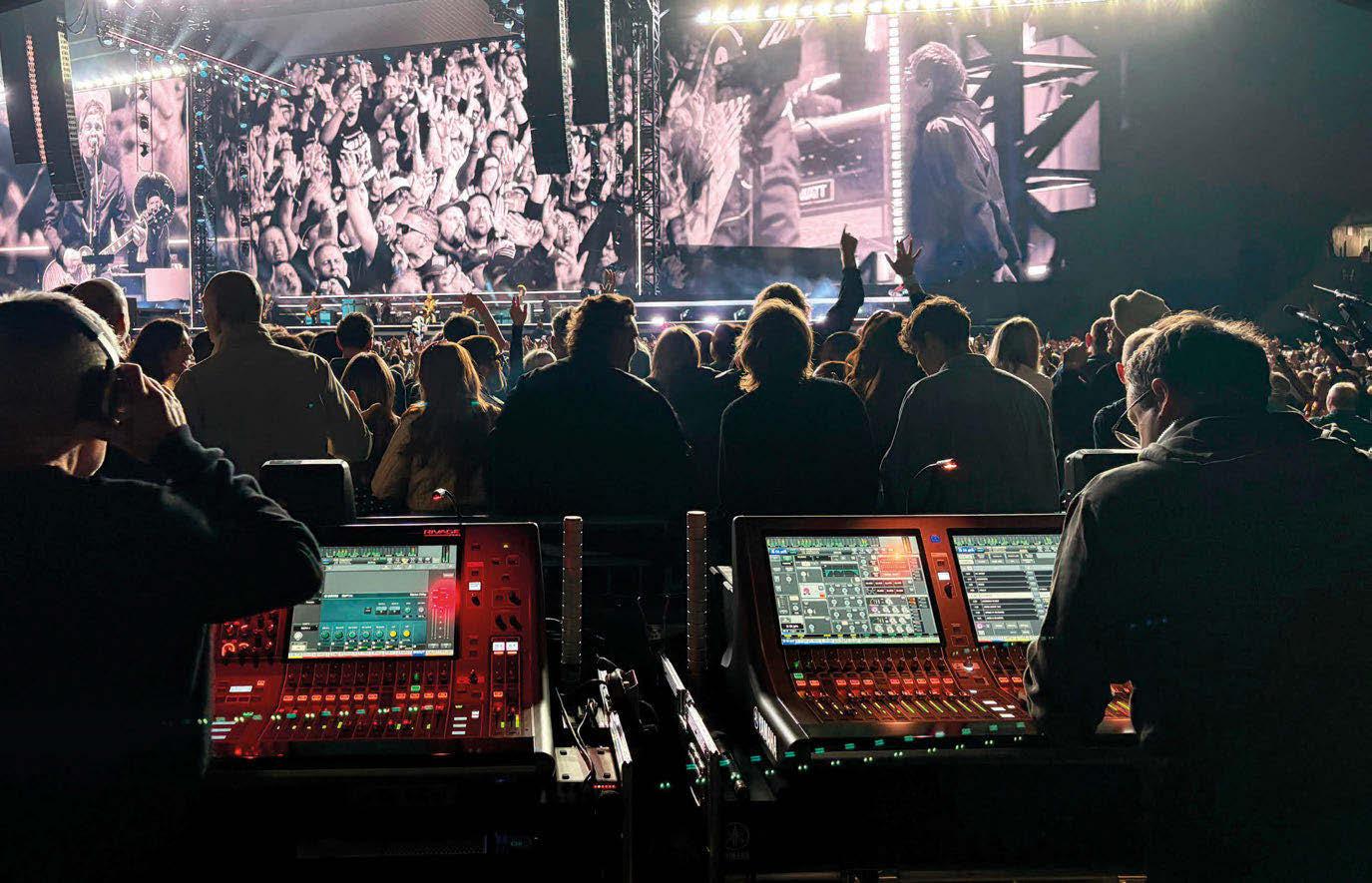
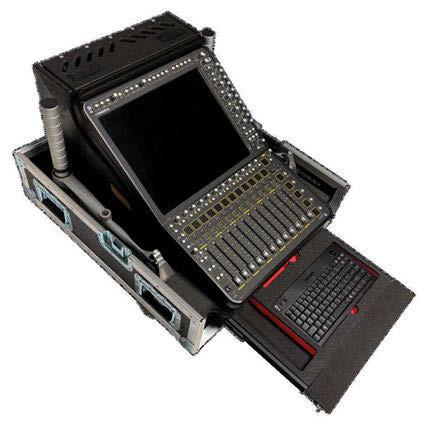
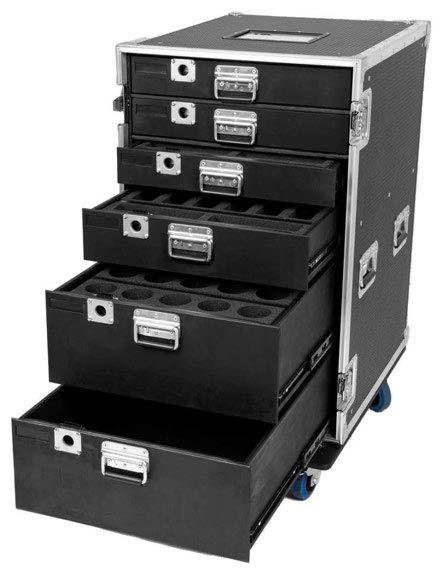
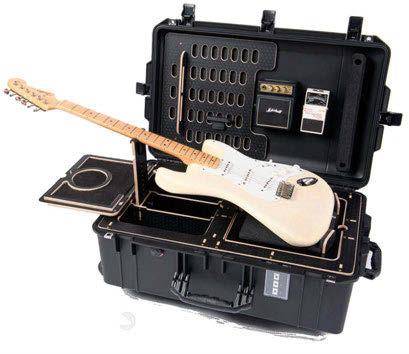
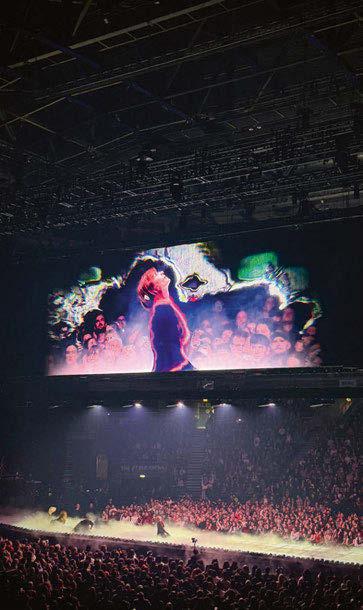
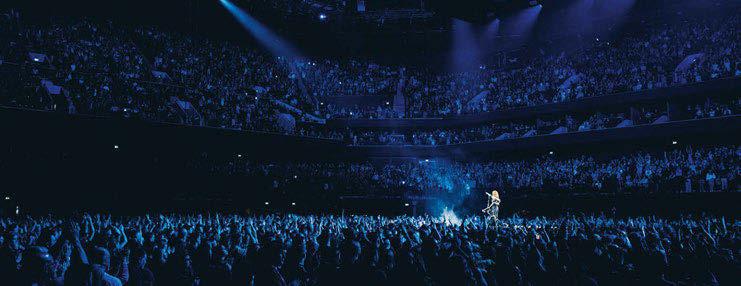
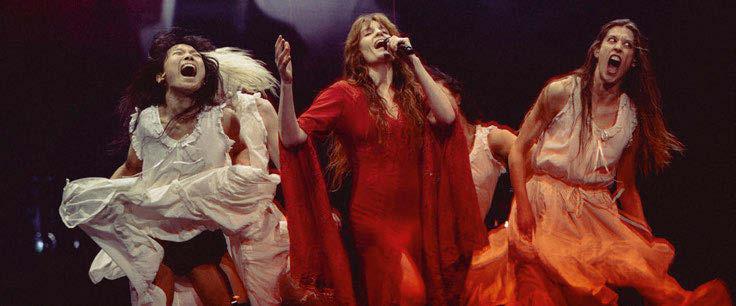
important. I’m also running plug-ins via the Fourier Audio transform.engine – Seventh Heaven from LiquidSonics for Florence’s reverb, a couple of Fairchild 670 compressors and a Lexicon 224 reverb for drums.”
Brodrick also experimented with KLANG immersive monitoring. “Some elements really benefit from it, like drums and ambience. I’ve got a ring of ambient mics down the thrust and at the sides of the stage – six in total – spaced out to replicate the audience sound. I’ve always struggled to get ambient mics sounding how I want them to sound, but with KLANG, you just place them where you want, and it sounds natural,” the engineer said.
The entire camp ran on Ultimate Ears in-ear monitors: Florence on UE Live, with band and crew on UE 18+ models, and dancers on a mixture of generics and UE5s.
“It’s been challenging with her performing out in front of the PA on the thrust and having her vocal so prominent in her mix. Brad, Elad and I work hard to steer the vocal energy away from the thrust. I also work closely with Toby in playback to make sure she has click throughout – if she loses timing, I have something I can grab to loop her back in,” she added. “On a few shows I jumped into mix second support. We’re a team and we all help.”
With multiple responsibilities, Brodrick was supported by technician Nick Jackson. “He’s an amazing tech – he helps get everything up and running each day and handles mics on and off stage. I also have support from Jack Drury at Shure when designing the RF side who helps spec the system, and Sam Spice from Britannia
Row Productions with RF configuration.” When it came to standout moments in the mix, You Can Have It All. “It’s a powerful point in the set and I love that sense of theatre. She goes on a very personal journey on stage, and we try to be sensitive and respectful to the subject matter. Hopefully that translates in how the show is received,” Brodrick said. “It’s great to be part of something so special – a show full of spooky drama but also tender moments, shifting from intensity to introspection.”
‘AN ANTI-POP APPROACH’
Beat The Street and Phoenix Bussing supplied a Beat The Street Artist 5 Series bus, driven by Martin Schuetz; a 16-berth production bus steered by Lead Driver Russ Cohen Land, supported by Drivers, Paul Batey, Kevin Watson, Norman Sterzl and Paul Chandler; and a band bus driven by John Boyes.
A furt her three 16-berth and one 14-berth 5 Series models catered for the touring crew. Phoenix Bussing’s Stewart Scott said: “Working with this camp has been plain sailing and the crew’s knowledge makes our job easier.”
KB Event supplied 21 trucks, including Scania and Volvo models. “It’s always a pleasure to work alongside Wob,” said KB Event CEO, Stuart McPherson. “He requested our experienced lead driver, Steve Crawley, to oversee the transport operation. Having collaborated on several tours over the years, they have built a strong and reliable working relationship. Steve’s expertise in managing truck movements and maintaining clear communication with production ensures smooth load-ins and -outs,
which can be challenging with such a large fleet.” Having witnessed the vision go from render to reality, Hawkins praised those tasked with touring the production.
“The team are all at the top of their game in pop music. They were willing to approach this show in an almost ‘anti-pop’ way (Gabriel Couto Dumont’s words), an approach that really fits Florence. She has the voice, accolades and sold-out arenas of a pop star but a career and body of work in defiance of contemporary pop music. Her career and repertoire have been completely on her own terms and reached the highest echelons of culture, and I hope the show honours and reflects that.” www.florenceandthemachine.net www.britanniarow.com www.negearth.co.uk www.strictlyfx.com www.solotech.com www.woodcrab.co.uk www.visavis.video www.allaccessinc.com www.thenextstage-uk.com www.tyserallan.com www.eps.net www.nicelydone-eventhire.com www.csecrosscom.co.uk www.kbevent.com www.phoenix-bussing.co.uk www.lh2studios.co.uk www.silentpartnersstudio.com www.silent-house.com www.equinox-travel.com www.skytimejets.com www.goldstarchauffeurs.co.uk
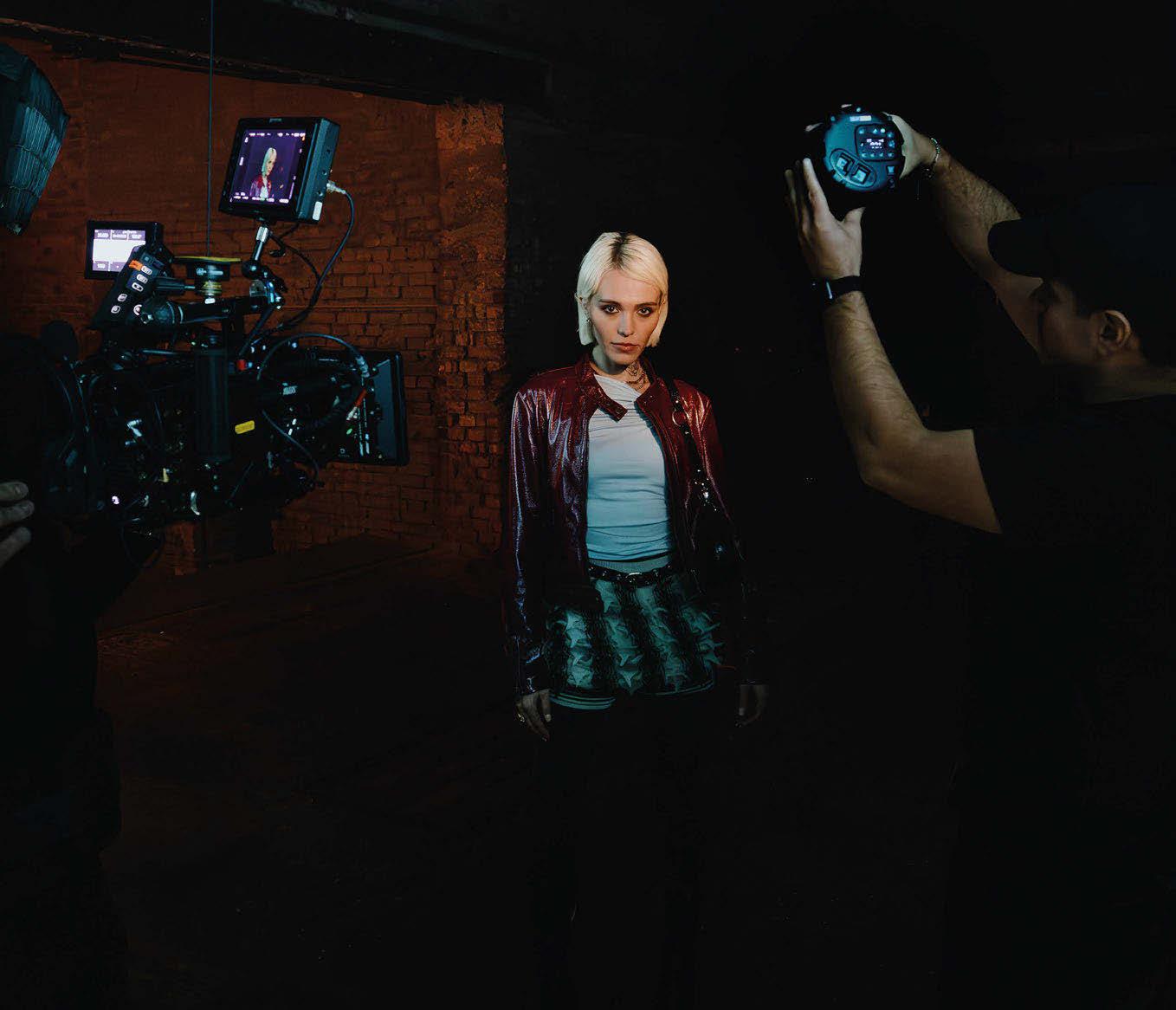
Built to fit in; designed to stand out. A 200 W equivalent ultra-compact spotlight with swappable QuikBrick batteries, a 13º–60º zoom range, CRMX, and built-in PoE, while consuming only 20 W.
QuikBeam with QuikBrick
NetBox and PowerInjector
The devices to use PoE with QuikBeam.
Barndoors for QuikBeam 8-Way rotational barndoors with integrated SafetyLink.
A battery that can be removed and inserted in seconds. www.astera-led.com/quikbeam
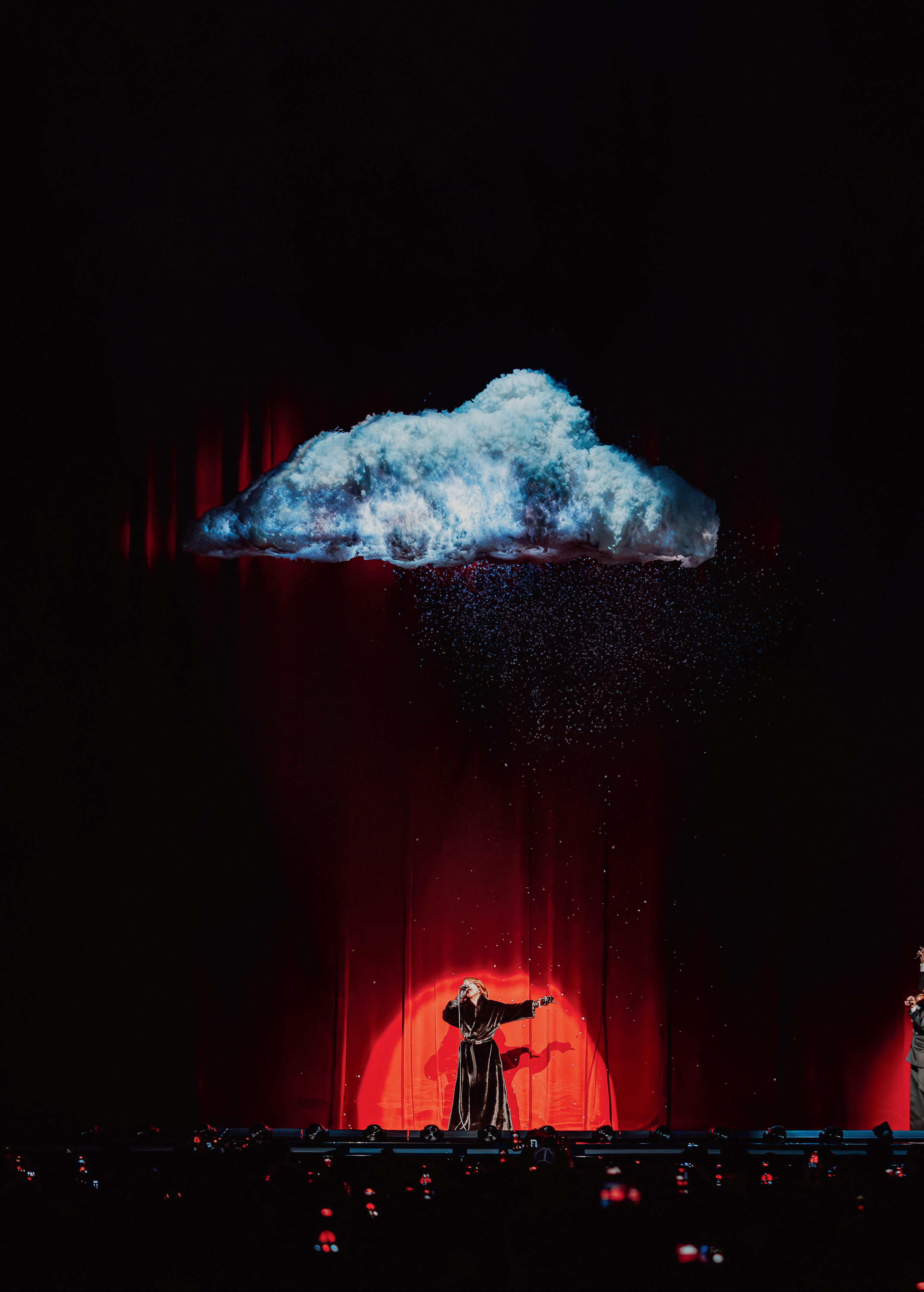
RAYE and her sisters take to arena stages for the first time with a production befitting an artist embracing her self-confessed ‘dramatic era’.
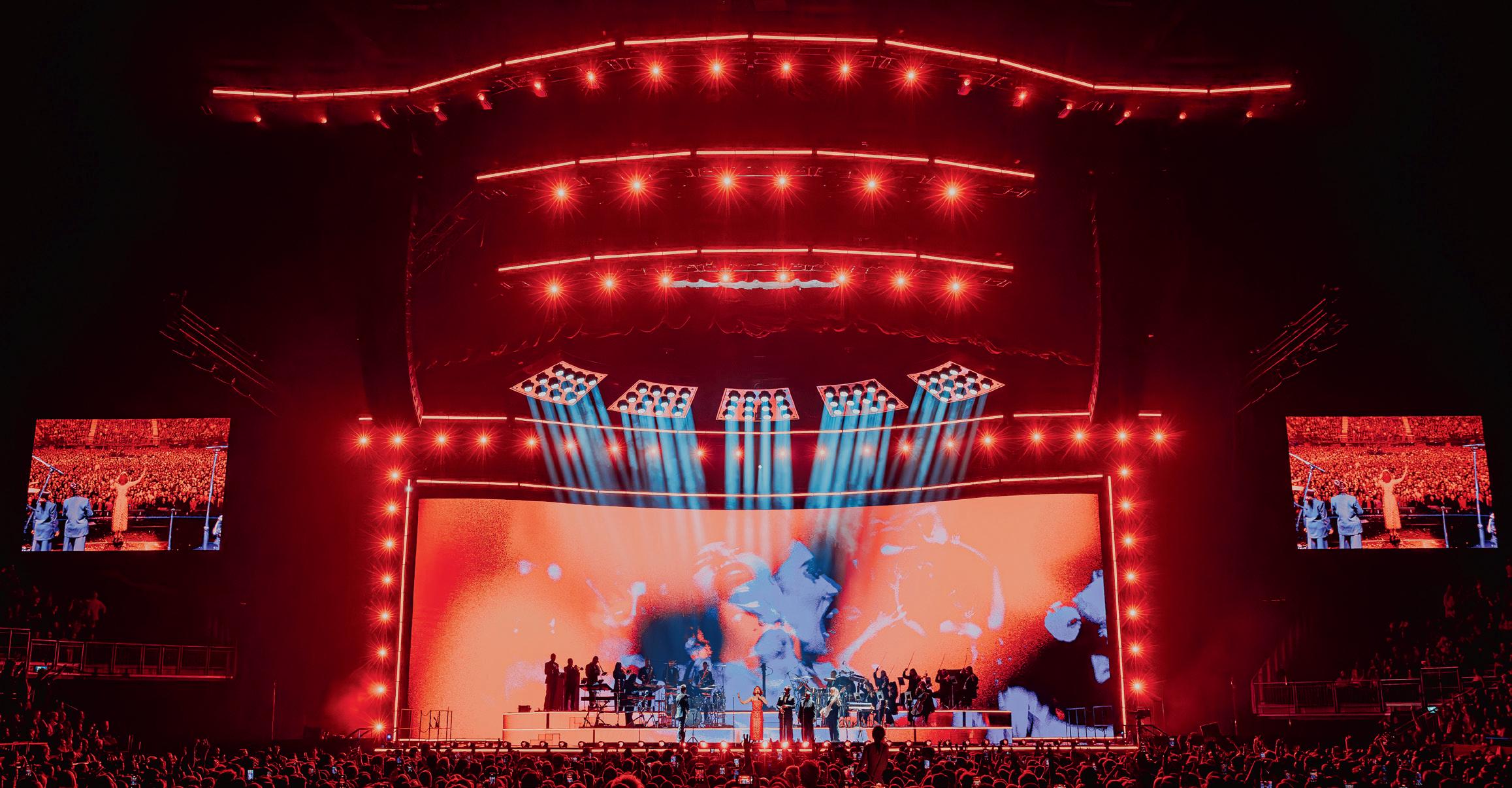
With her aptly titled THIS TOUR MAY CONTAIN NEW MUSIC, the genre-spanning RAYE showcases the freedoms and possibilities that come with being a proudly independent artist – chief among them, creative control.
With her sisters, Amma and Absolutely, warming the crowds before she hits the stage, nowhere is this more apparent than on her first-ever headline arena tour – a theatrical spectacle unfolding in four distinct acts.
Pull The Pin Out was tasked with assembling the creative and technical teams around RAYE’s vision. “It has all come out of RAYE’s head,” said Stephen ‘Stevie’ Reeve, Production Manager and Director of Pull The Pin Out, welcoming TPi backstage at Manchester’s Coop Live. “She’s the creative drive.”
Working alongside RAYE and Creative Director, Mikey Robbins, Reeve brought in key collaborators including Lyndon Ogbourne, Thomas Edwards, and Matt Askem. “They are hugely important creative forces,” he noted. “Alongside Treatment Studio, who delivered the visuals with RAYE. It’s the best team I’ve ever worked with.”
Planning began in September 2025, with the final design signed off in early December. Rehearsals loaded into Fly By Nite Studios on 9 January, leaving a month to realise the build.
Pull The Pin Out enlisted the support of Solotech (audio, lighting, video, and rigging), WICREATIONS and ShowTex (automation and drapes), KB Event (trucking), Phoenix Bussing (artist and crew travel), Ox Event House (custom metalwork and set design), Luna Remote Systems (cameras and dollies), Treatment Studio (content), ER Productions (lasers and special effects), Onstage Travel (travel agent), CC Young (accountants), Live Nation
(promoters), Popcorn Catering (food), among many others.
“There was an 11-week lead time on the drapes,” Reeve recalled. “Before the creative and budget were signed off, we had to hit go on the order with ShowTex and WICREATIONS to guarantee them being delivered in time.”
Cash flow at the outset of a tour, he explained, is often one of production’s toughest hurdles. “You’re waiting on promoter advances, but you’ve got to commit from day one.”
He praised artist accountants CC Young for their support, as well as promoter Live Nation. “They’ve been behind the show and focussed on making it work without being greedy. We’ve been blessed.”
In total, around 120 crew travel with the production, rising to approximately 150 daily once double drivers across 17 trucks and nine buses are factored in. “The two most important things on the road are where people sleep and what they eat,” Reeve stated, crediting KB Event, Phoenix Bussing and Popcorn Catering for keeping morale high.
KB Event supplied 17 trucks to transport the show elements, including Scania R 500S and Volvo FH and FH12 models.
To maximise UK rehearsal time, KB Event scheduled double drivers to ensure the trucks reached Łódź in time for the second rehearsal block, allowing contingency for any customs delays at Dover–Calais. Lead Driver Al Mac headed up the driving team.
“It’s been incredible to witness the production’s growth,” said KB Event’s Stuart McPherson. From early conversations through rehearsals to final delivery, the project engaged around 35 people across multiple Solotech departments. “To deliver a show of this scale
takes every one of those departments,” added Solotech’s Robin Conway. “Everyone has their role to play, miss a step and the chain breaks.”
He credited Cy Dodimead (lighting and rigging), David Shepherd (audio) and Ian ‘Woody’ Woodall (video) for their leadership across disciplines. “Fortunately, the teams here and in the US understand what it takes,” he continued. “We can push the button on certain elements early to protect deadlines. As it’s all under one roof, communication is quick and the flow of information is streamlined, which makes a real difference on a production of this size.”
CSE Crosscom radios, packaged in custom flightcases, ensured communication between departments. “It’s a pleasure to collaborate with this production team, supporting them year after year allows us to refine the system to suit a fast-paced touring environment,” CSE Crosscom Hire Manager, Dan Howroyd said.
The show spans more than 100ft across stage and screen, with IMAG towers and drapery providing isolation for the band while retaining intimacy. Support slots from RAYE’s sisters are integrated into the design, with additional projection and a white silk overlay transforming the red drape to create a distinct aesthetic. Reeve, who comes from a lighting background, was effusive about the lighting department. “[Production and Lighting Designer] Thomas Edwards and the lighting programmers have done a phenomenal job. The lighting is exceptional.”
The performance unfolds in four acts: an overtly theatrical opening, a bold Motowninspired section, a downstage jazz club vignette, an intimate piano moment during Ice Cream Man, followed by a euphoric nightclub segment with lasers and an “all killer, no filler”
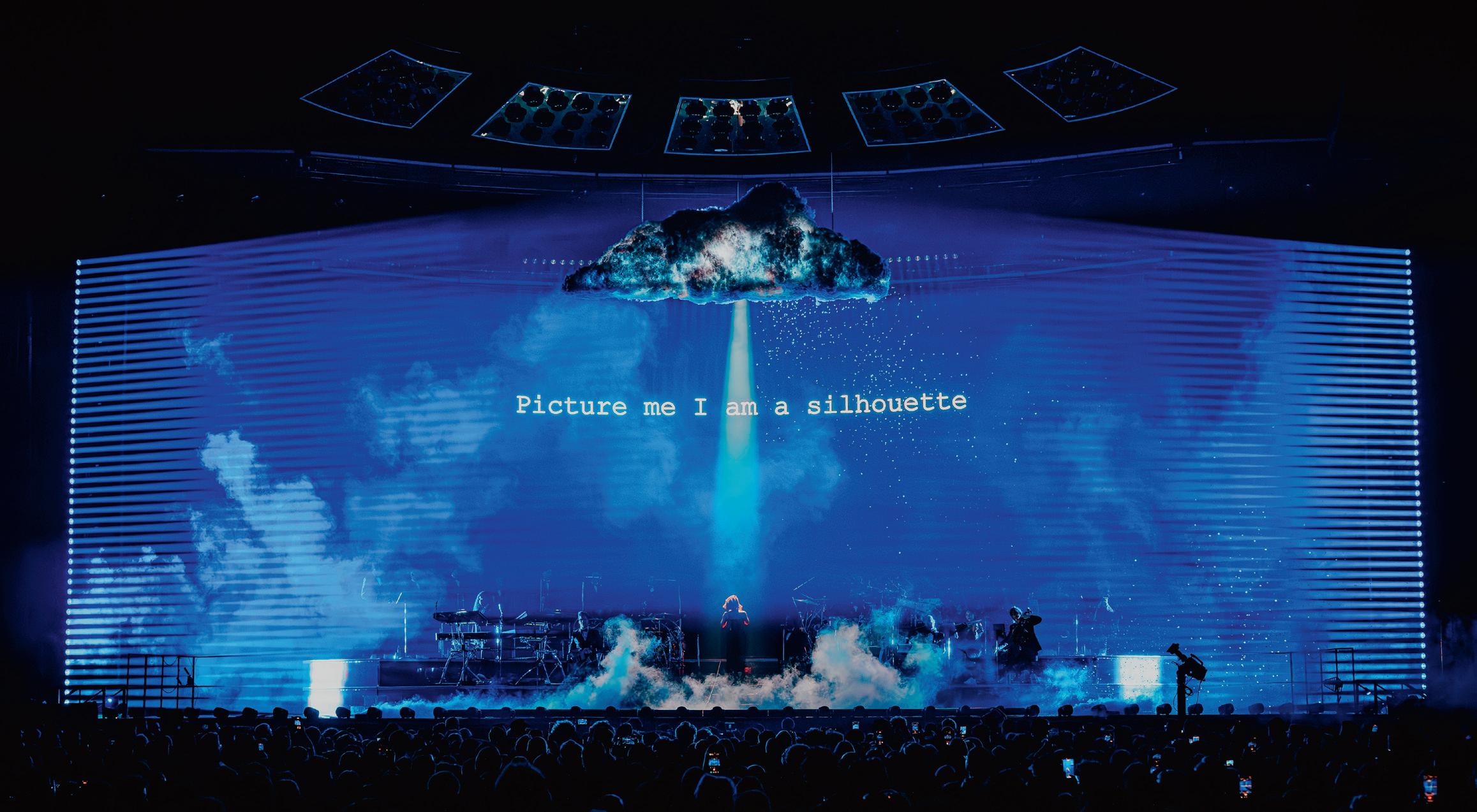
encore. “She’s an engaging performer. The audience hangs on her every word.”
Operationally, the day begins at 6.30am as 17 trucks unload. By 1pm the stage is in place, moving swiftly into lighting focus, laser safe-zoning, PA checks, camera line-up and soundchecks ahead of 6pm doors.
Two long-standing stage managers – Lee Freeman and Joe Greenash – oversee load-in, with Stewart Quinnell calling the show. Around 90 local crew and 20 riggers support each date. Design efficiencies allowed props to be stored upstage, while two carpenters doubled as nightclub bouncers during the show. The crew dressed in white shirts, waistcoats and bow ties, overseen by Wardrobe Coordinator Shelena, with the band in coordinated Nike Air Force 1s. “We even tour our own washing machines,” Reeve smiled.
With no traditional record label campaign, the tour is driving the album launch, with all 26 dates sold out. “We’re playing new music every night,” he said. “The tour went on sale before the album. It’s a unique approach.”
Despite long European drives between single shows, Reeve has prioritised welfare. “Mental health comes first. We make sure everyone gets proper rest,” he said.
With nine buses split into A, B and C parties, and a five-person production office dividing daily responsibilities, the operation runs lean and efficient. “It’s taken six months to get this over the line,” Reeve concluded. “That only happens with an amazing artist, a supportive creative team and suppliers who genuinely collaborate. We’re very lucky.”
Pull The Pin Out Director, Kevin Hopgood; Band TM, Juliet Baldrey; Live Nation’s Sabena Von Asten; Production Assistant, Rebecca
Duggan; Pull The Pin Out’s Bree Ishikawa; Tour Manager, Elodie Dubois and Production Coordinator, Francine Hough adopted an opendoor policy in the production office: “If there’s a complaint, an issue, or someone’s just having a hard time, they come to the production office. On the rare occasion our door is closed, it just means we’re heads-down for a bit – but everyone knows they can still come to us. We’re here to work, but we’re also always here to listen,” Hough said.
Marking the first double-show run of the campaign, the team found time for a morale boost. “We brought in puppies on the final day,” she smiled. “It lifted everyone. After long days, that bit of joy makes a difference.”
Despite the scale, Hough describes it as “probably the easiest touring schedule” she’s worked on. “We only had two back-to-backs. Great crew. The show is brilliant. RAYE looks and sounds incredible. The set and design are stunning. My Mam has never wanted to come to a show in the whole 28 years I’ve been working on gigs – but she even came to visit, so we must be doing something right.”
‘A VISUAL JOURNEY’
“The brief was to create a show that focussed on the music as a first point of call,” Production and Lighting Designer Thomas Edwards began. “All the attention had to be on RAYE and the musicians. In RAYE’s opinion, everything else comes after that.” That ethos became the cornerstone of a production that balances theatricality with restraint.
Collaborating with set and scenic designer Lyndon Ogbourne, Edwards’ first task was to establish a stage architecture that felt expansive yet intimate within the constraints
of arenas. “Configuring the shape of the stage and how the riser felt – and trying to make this as big and wide as possible – was a challenge,” he explained. “The priority was creating a show that could support the different segments and ideas RAYE had about how it would flow. We move through Motown, London Grit, Jazz Club, Opera and Nightclub – all distinct elements.”
Edwards drafted the show in Vectorworks, exporting into Syncronorm Depence R4 for visualisation, and generating renders using a combination of Cinema4D and Depence. Time was tight, but the creative dialogue was fluid.
“We’ve got a good relationship with RAYE. It’s easy to share ideas, thoughts or references swiftly, given the limited time we had.” RAYE’s dynamic vocal range is reflected in the production. “Less is more” defines moments such as Ice Cream Man, performed at the piano under a pair of spotlights. “It’s a song she doesn’t like to sing but feels she needs to. That vulnerability is exhibited throughout.”
The theatrical framework – including a striking red drape conceived by the artist –reinforces the narrative arc. During Girl Under the Grey Cloud, RAYE appears on stage right in a fur coat under a single followspot. A cloud forms and rains on her final note before she and the musicians disappear behind the curtain. As the drape rises, the show expands into full arena scale. “That gave us the ability to create a truly theatrical show,” Edwards noted.
From the outset, Edwards collaborated with scenic designer Lyndon Ogbourne and Visual Director, Matt Askem to ensure cohesion. RAYE had never previously incorporated cameras and large-scale content into her live show, so careful consideration was given to followspot angles, screen intensity and floor reflections
You’v e got ideas. Big on es . The latest releas e gives y ou ne w tools to bring the m to life—wit h f ew e r m an ual steps, smarter autom ation, and streamlin ed customisatio n. S ee it for y ours el f now.
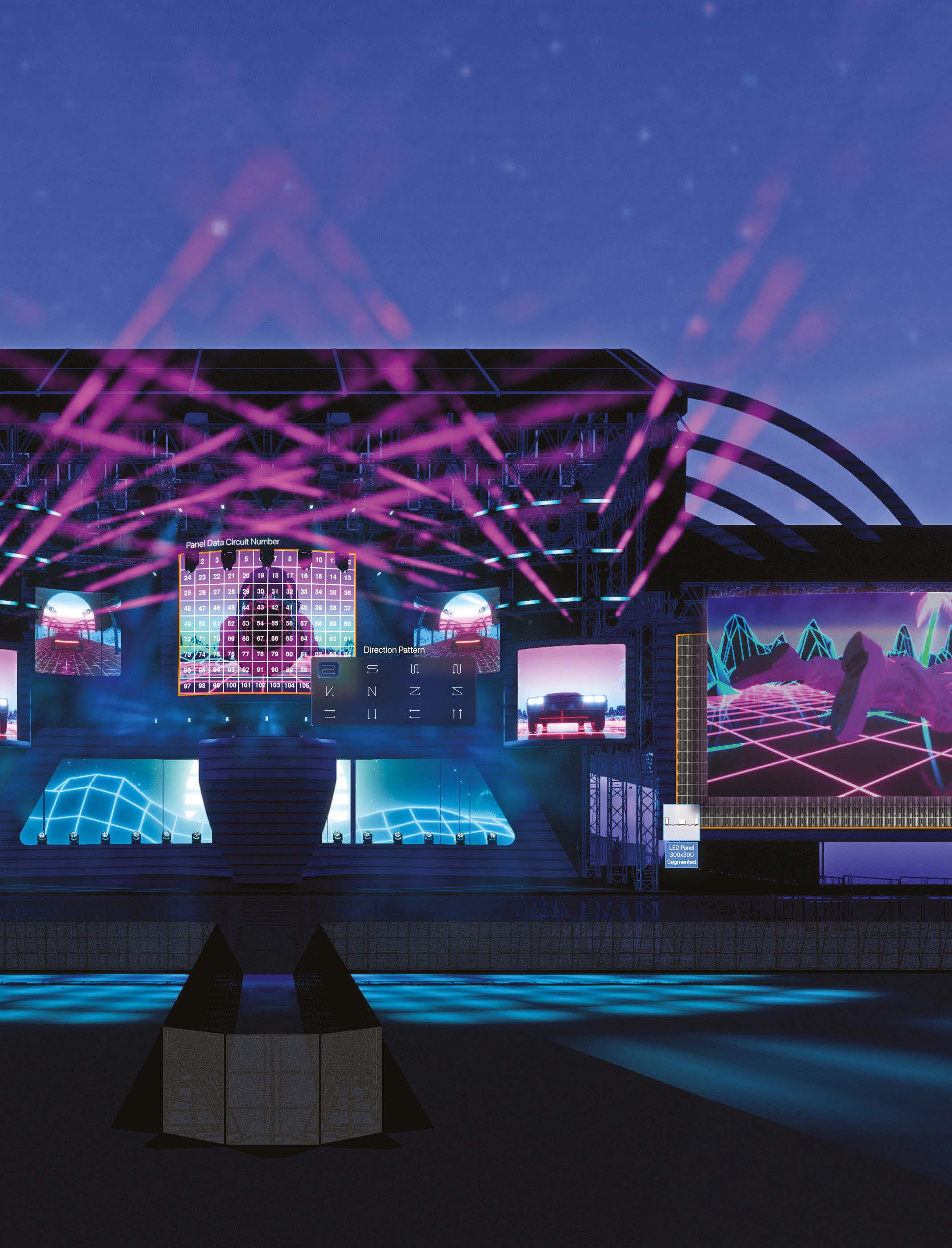
Try it for free.
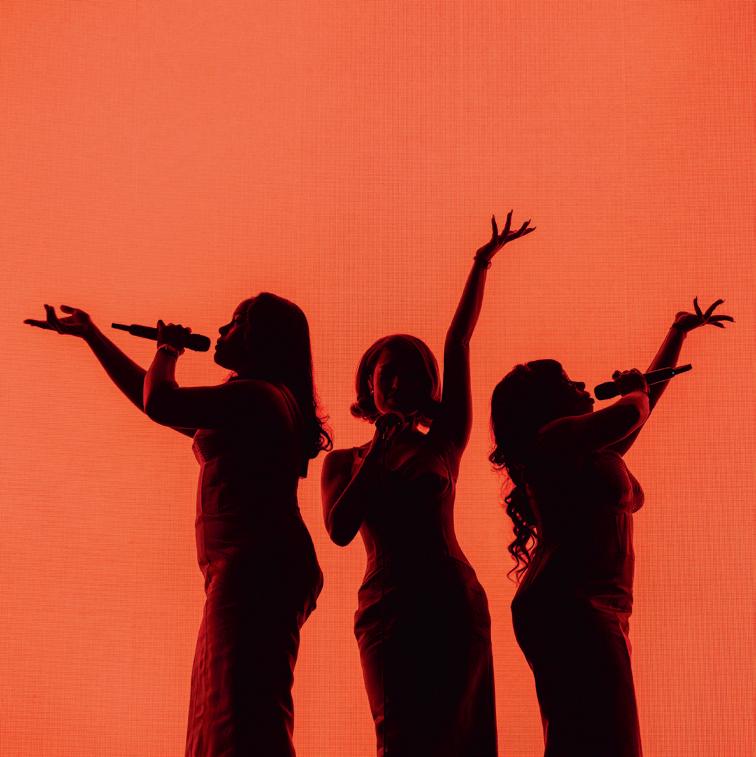
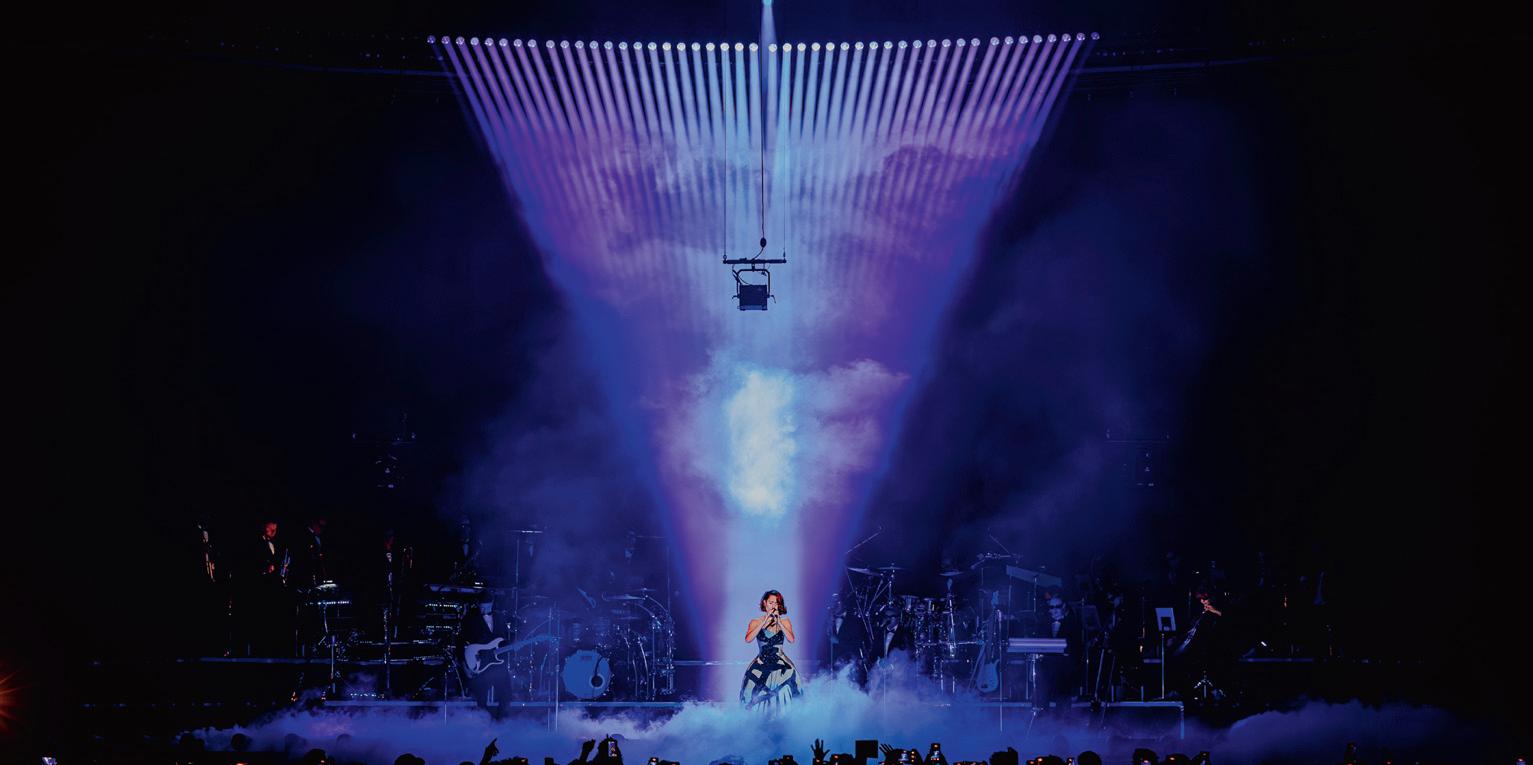
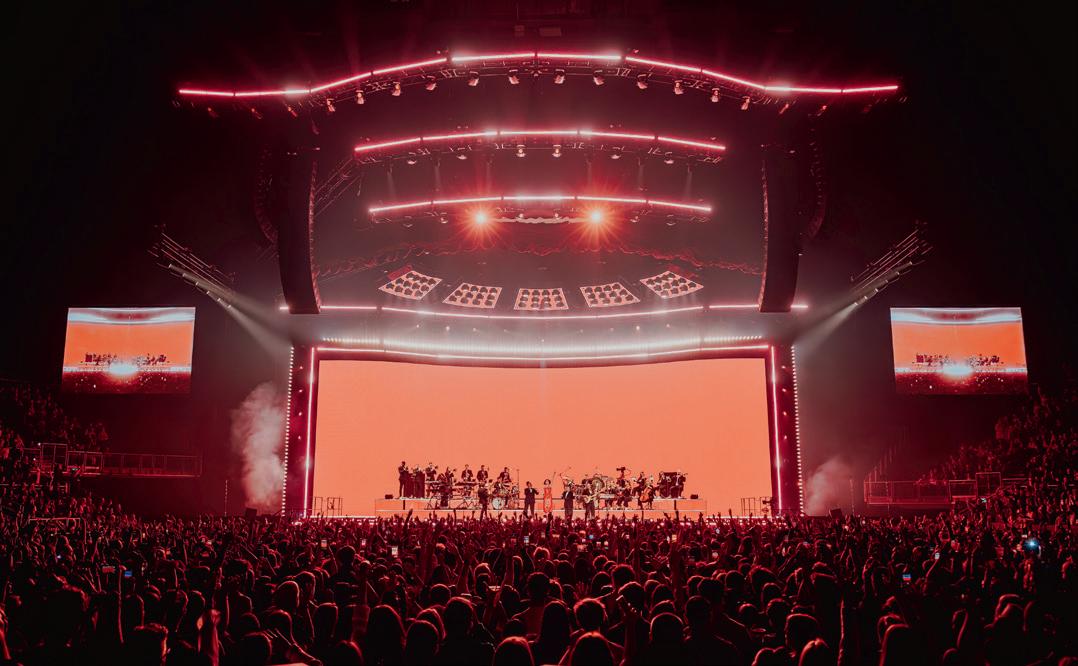
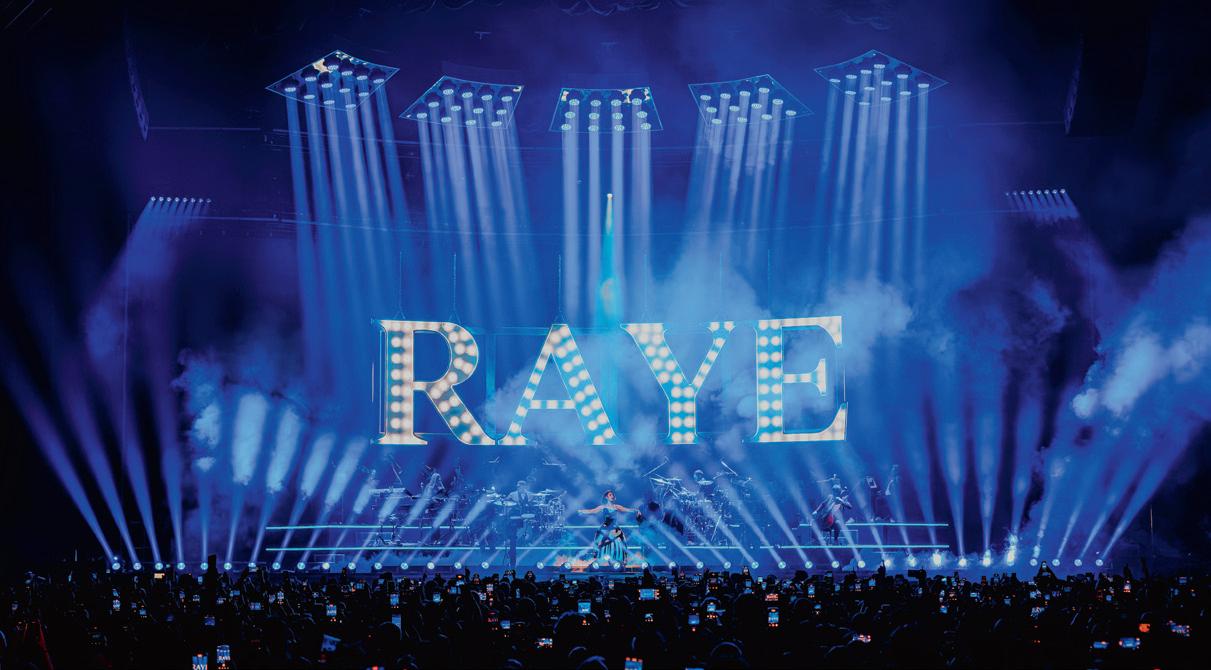
on the Marley stage surface. “She’s always on screen for IMAG to capture the movement, the emotion and her connection with the crowd,” Edwards commented. “The show is her and the band – not just RAYE supported by a band – so it was important they were always visible and lit for camera.”
A substantial upstage screen follows the curvature of the band riser. “A screen that size can overwrite any lighting effects,” Edwards commented. “Thankfully, Matt was a huge advocate of running it at a low percentage so we could play more with lighting. In most arena shows, the screen is the brightest thing in the room – we’ve gone the opposite way.”
The top lighting from the band was inspired from the angle of the band riser; overhead pods were clad in reflective mirror material by Ox Event House, integrating them visually with the screen and risers. Lined with matching LED products, they deliver both scenic cohesion and practical top light, with Robe Spiiders providing colour washes and sculptural shafts.
Curvature became a unifying design motif. The downstage edge mirrors the screen’s arc, fitted with carts housing Martin MAC One fixtures and ACME Lighting PIXEL LINE IPs angled at 40° to serve higher sightlines.
Each Martin MAC One is recessed so that only its LED face is visible above the 6ft stage edge, delivering tungsten-emulation warmth, mid-zoom pixel effects and dual-colour plate looks without exposing mechanical hardware. “They are my favourite fixture at the moment,”
Edwards admitted. “Versatile, compact, and they have a beautiful fresnel-style face.”
Given the scale of the video element, Edwards specified a substantial lighting rig to frame and complement it. Tornados outline the screen and torms, while Robe FORTEs, PIXEL LINE IPs and Martin MAC Ones populate extended trusses that replicated the screen’s width above the PA, creating a dominant structure not overpowered by LED. Everything runs in full pixel mode. “It’s a nightmare for the programmers,” Edwards laughed, crediting Guy Knox-Holmes and Dan Crowther for bringing the design to life. “However, it allows us to create a huge range of looks across 25 programmed songs. From extreme nightclub programming with lasers to the simplicity of Ice Cream Man, we can experiment with every fixture and not be limited by pixel control.”
Programming took place over a week, followed by intensive production rehearsal days. “It’s one of the most intensely programmed shows I’ve worked on; every musical stem was broken down in Reaper and by utilising MArkers Pro; translated into over 30,000 timecode events in the MA,” he said.
The nightclub medley remains a personal highlight. “When all the lasers come in and we throw everything at it, the crowd moments are huge. Taking people on a visual journey is fun.”
ER Productions’ laser integration required daily liaison with venues regarding air handling to maintain optimal atmospheric conditions for beams and cameras. The production
carries multiple haze and low-smoke solutions – including MDGs at FOH and stage, low smoke machines concealed within downstage dollies, and additional foggers and Uniques for reinforcement. Several laser units are discreetly hidden on trusses and winches. “I love the idea that we can hide elements of the rig from the crowd,” Edwards added.
The show’s signature cloud – fabricated by Ox Event House and populated with nine LED PARs, two PIXEL LINE IPs and biodegradable confetti by ER Productions – delivered faux rain and snow effects for Winter Woman and other key moments. Edwards emphasised the importance of unified supply and teamwork among suppliers. With Solotech providing a 360° service, communication remained streamlined. “Having one supplier for all visuals provides quick answers on rigging options and capabilities. The support has been fantastic.”
He also praised Matt Askem and Camera Director, Steve ‘TSP’ Price for collaborative colour balancing and show refinement. “We both care deeply about the show. We’re constantly reviewing and adjusting levels.”
For control, Edwards harnessed an MA Lighting grandMA3 system, programmed natively in MA3 mode. “It’s a breath of fresh air. The way it handles large amounts of pixels and parameters is a game changer and allows us to scale the show up or down as required.”
For Edwards, however, the true creative breakthrough happened long before rehearsals. “The best and only way to create





Fly by Nite would like to thank all of our clients & customers for helping us achieve the TPi Awards Favourite Trucking Company for 3 consecutive years
And… the 2026 LPS Pinnacle Award for International Trucking Company
Offices - Redditch, Dublin, Amsterdam, Tilburg, Cluj Rehearsal Studio - Redditch
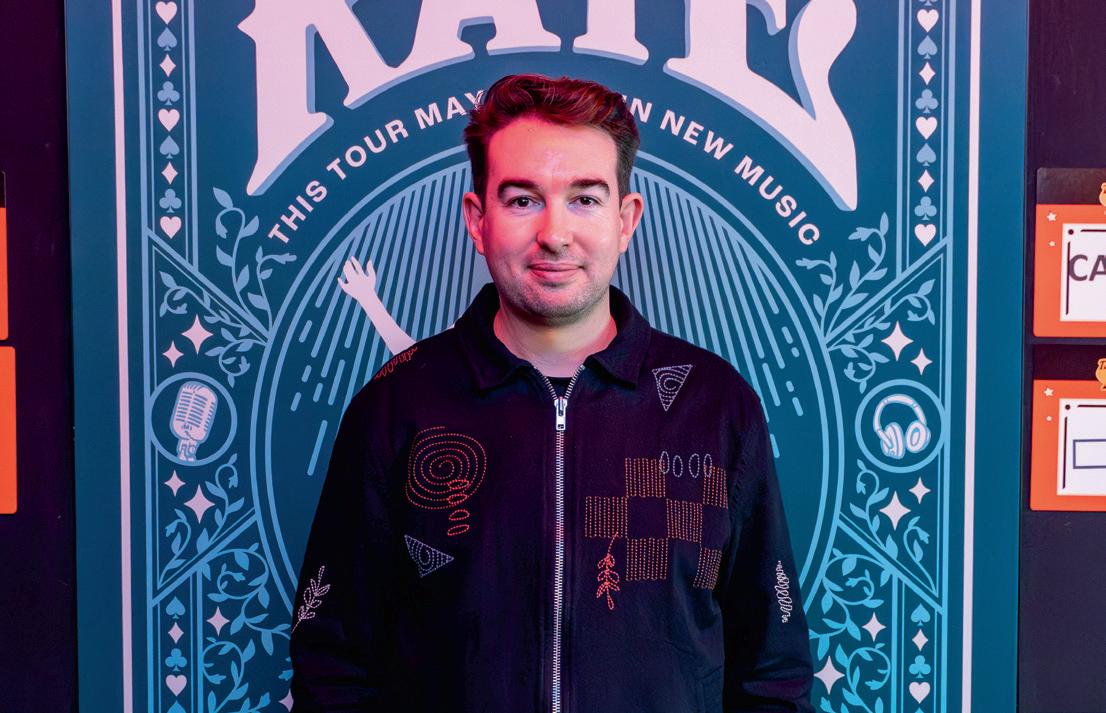
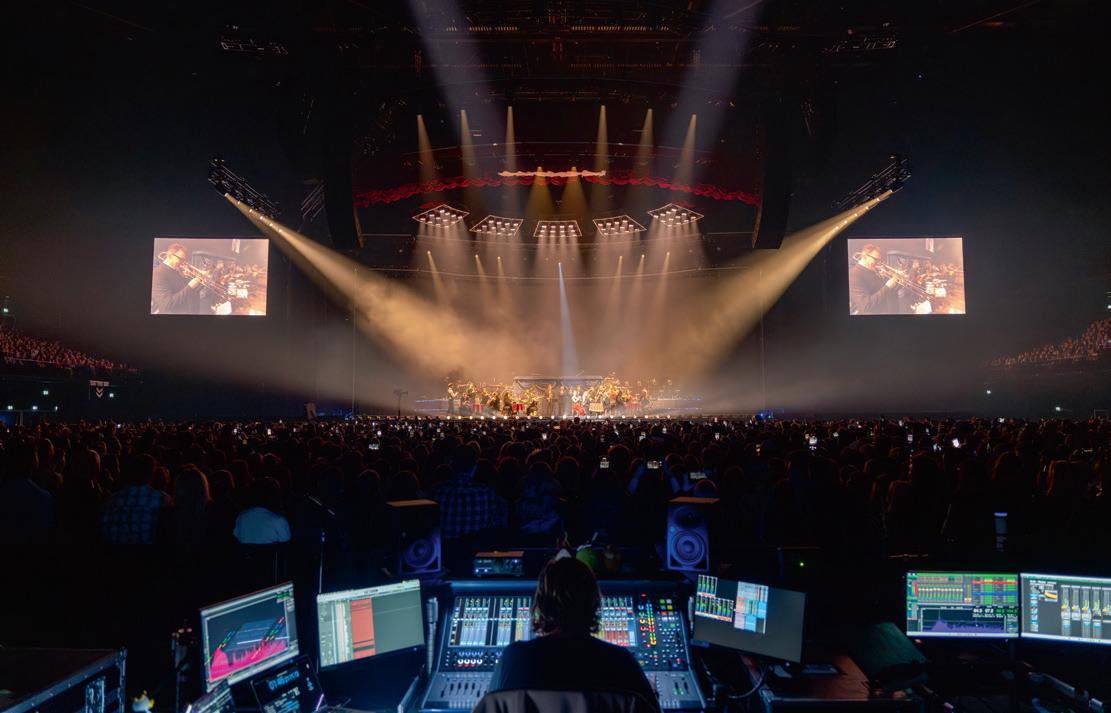
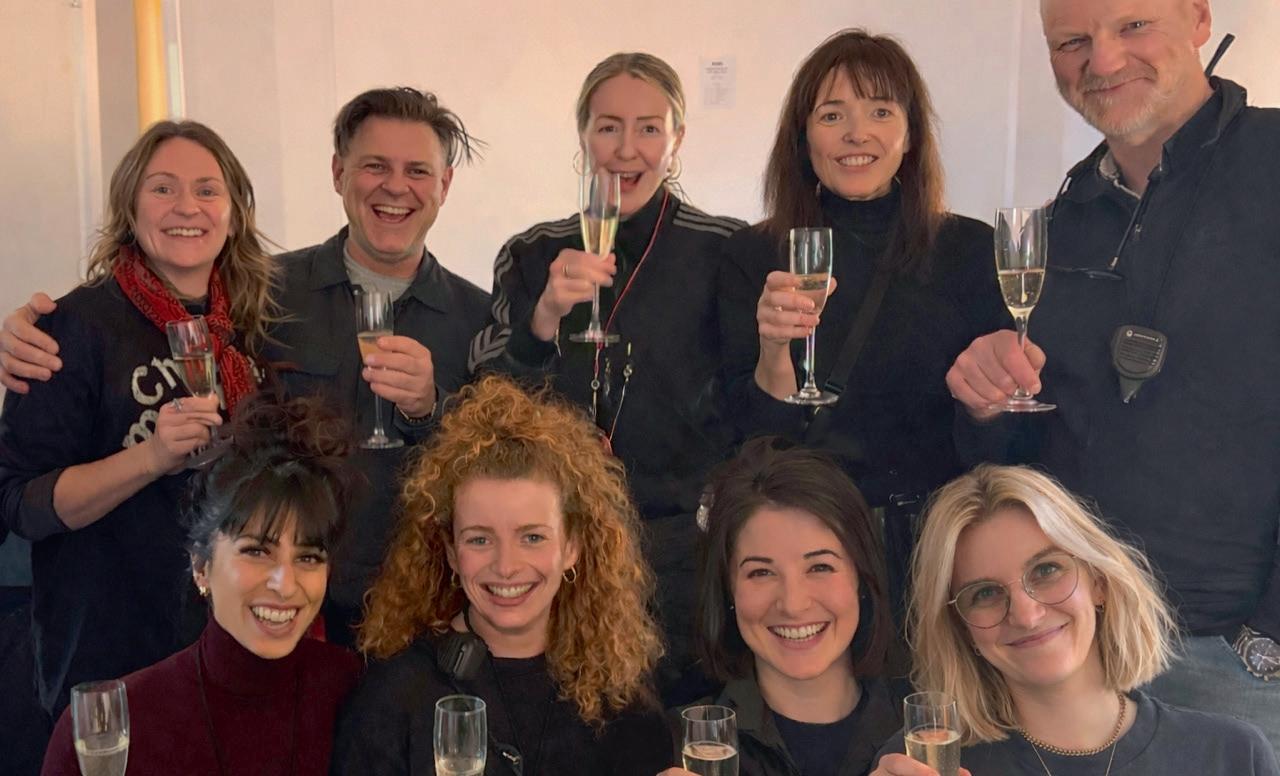
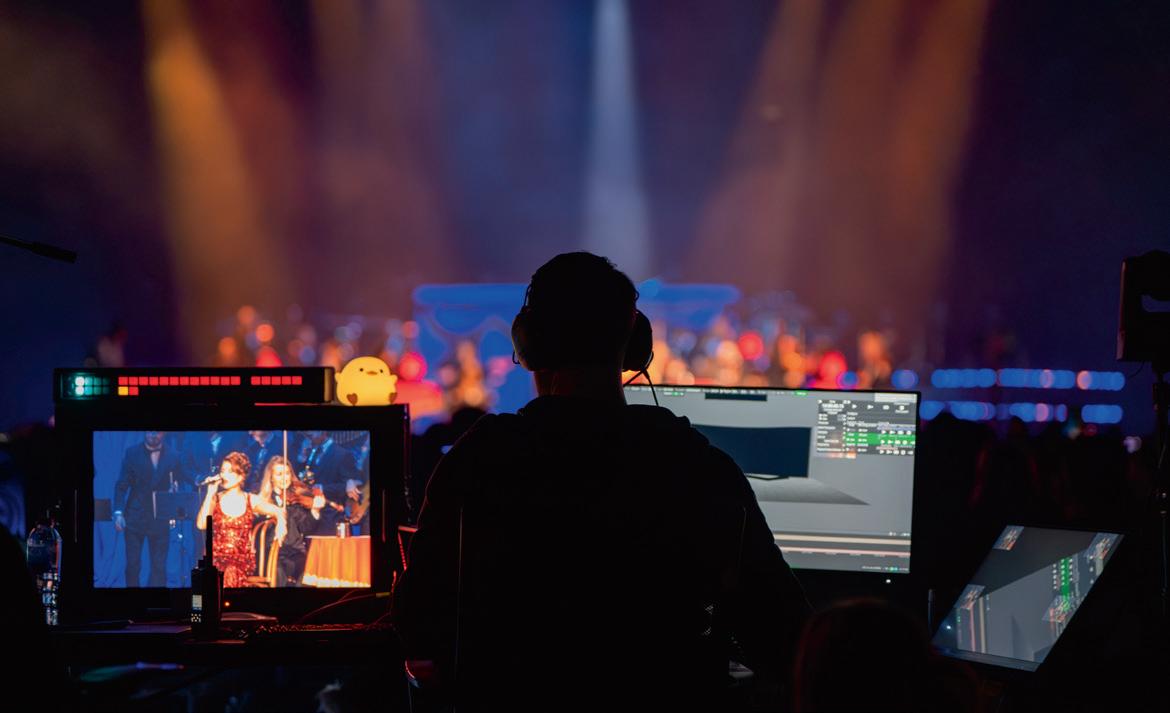
a perfect show is to sit in a room with the artist and hear directly what they want. RAYE was so specific. We were in her living room with a flip chart, listening to music, taking notes, with Depence set up to show different looks as we explored the creative. It was the greatest head start.” That dedication, from music to staging, has shaped a production that feels both grand and personal. “It’s humbling to be part of,” Edwards concluded. “Everyone has gone above and beyond to deliver their best.”
Production Designer Lyndon Ogbourne described working directly with RAYE as “phenomenal” and “really refreshing.” His initial proposal leaned fully into old Hollywood spectacle: “Curved staircases either side… very lavish… old school showgirl set.” The breakthrough, however, came from “a really simple curved line” sketched in a notebook.
The line evolved into the vast curved LED screen that now defines the arena show, delivering scale and impact while keeping RAYE surrounded by her band in a C-shaped formation on illuminated risers. “She wanted to feel surrounded by the band… intimate, but with that wow factor,” said Ogbourne.
Translating theatrical ideas into an arena presented its own challenges. Sliding flats and flown scenery were initially considered, but arenas simply do not have fly towers or wings. “We just don’t have that space.” The solution relied heavily on screen content to
carry the storytelling, but even then, there was the question: “Where does it come from?” The answer was hidden “doors” integrated into the LED wall, narrow apertures roughly 1.2m by 2.4m, through which scenic elements roll.
During the jazz club segment, two wheeled sections glide out and meet at centre stage, forming an intimate backdrop, with stagehands dressed as waiters helping the transitions feel part of the narrative.
The automated cloud originated from RAYE’s own idea. Multiple clouds were first proposed to form a shifting sky, but the concept was pared back to one singular, striking statement. “It’s stunning part of the show,” Ogbourne said. Working with Production and Lighting Designer Thomas Edwards, internal lighting gives the cloud “its own life… it almost has a character.”
Ogbourne praised Reeve as “a dream to work with,” noting his ability to balance logistics, budgets, and creative investment. He praised the influence of Ox Event House and WICREATIONS for making the vision a reality. The curtain, for instance, delivers a “theatrical wow moment” and later frames RAYE alone at the piano – “the heart of the show”.
Ogbourne’s collaboration with Edwards began only weeks before opening night, yet the lighting, he said, “brings intimacy to smaller moments and amplifies the spectacle of the arena-scale sections,” he said. “The creative team must have sent over 10,000 texts to finesse the eventual design and show aesthetic. It was one of the most engaging
Production and Lighting Designer, Thomas Edwards; Amma and Absolutely’s TM, Hannah Chapman; Pull The Pin Out Director and RAYE Production Manager, Stephen ‘Stevie’ Reeve; Production Coordinator, Francine Hough; Band TM, Juliet Baldrey; Pull The Pin Out Director, Kevin Hopgood. Bottom row: Live Nation’s Sabena Von Asten; Production Assistant, Rebecca Duggan; Pull The Pin Out’s Bree Ishikawa and Tour Manager, Elodie Dubois; FOH Engineer, Matthias Simmons; Media Server Programmer, Richard ‘Biccies’ Thomas.

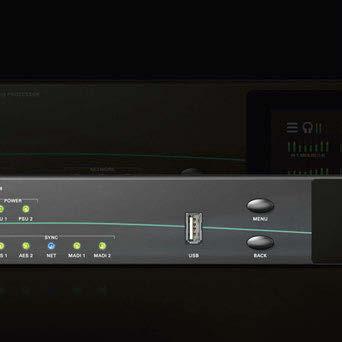

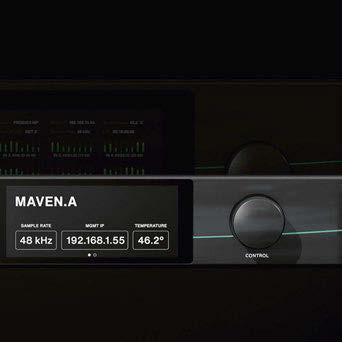

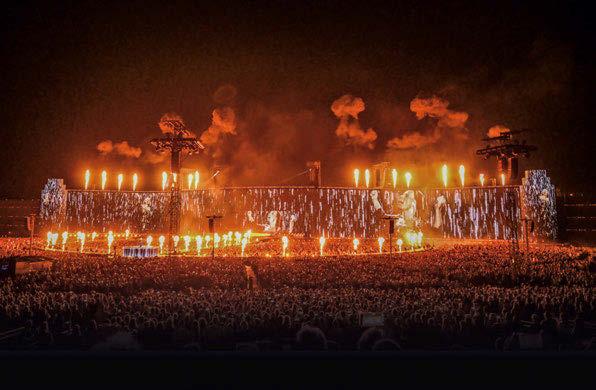
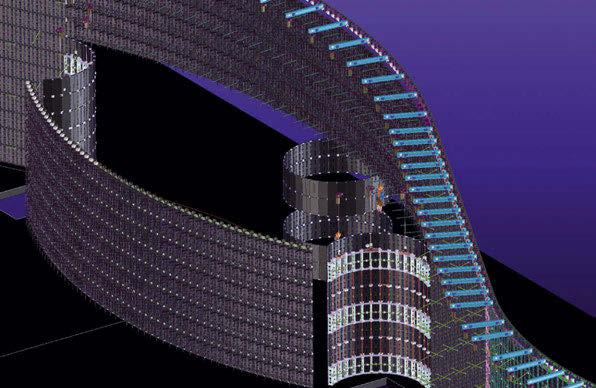

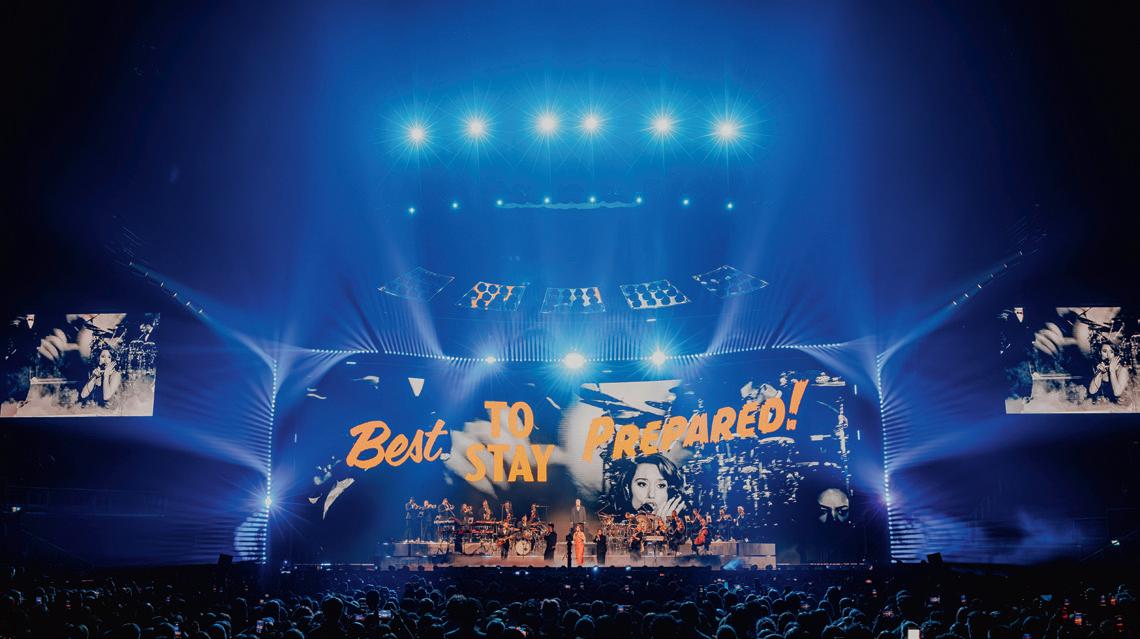
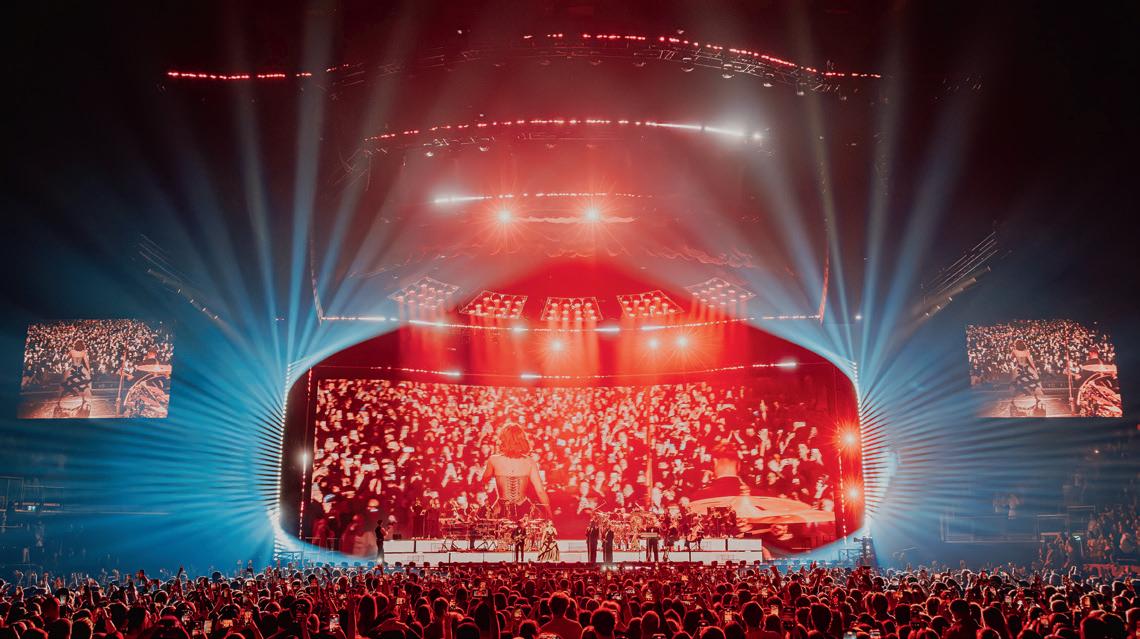
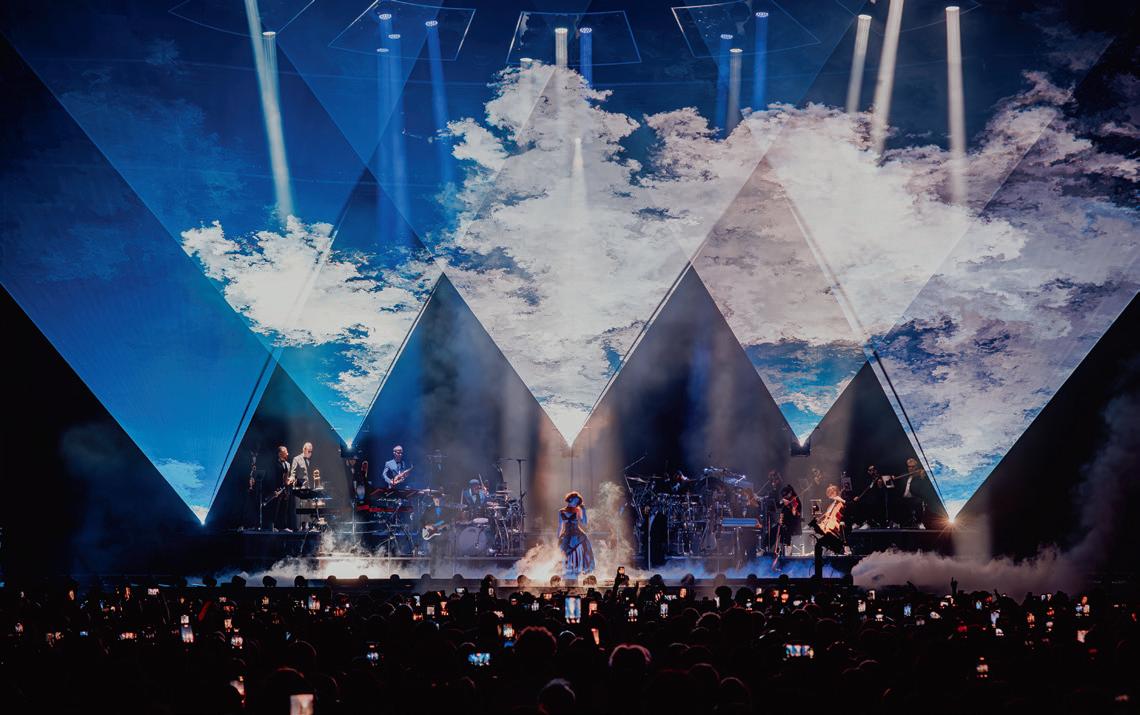
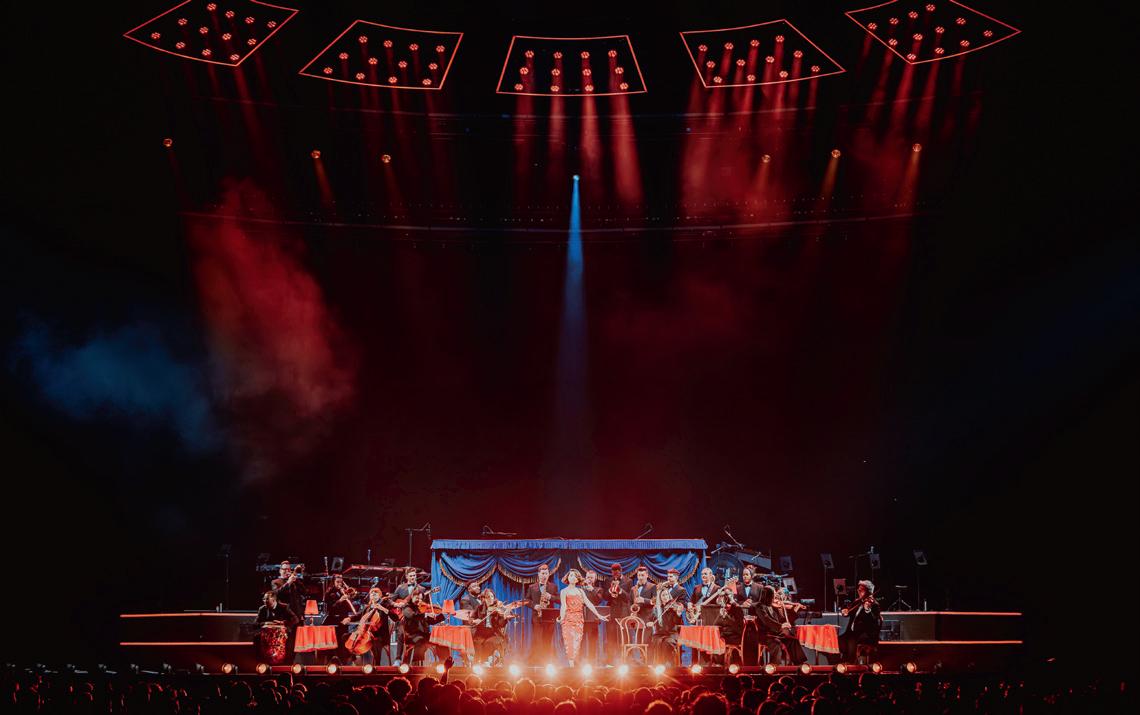
and collaborative experiences I’ve been a part of. Long may our collaboration continue,” Ogbourne added, praising the influence of Mikey Robbins. “We were calling each other at all hours of the day. His understanding of RAYE’s vision helped me with the design; it’s a creative friendship that I’ll always treasure.”
Seeing the set fully assembled for the first time at rehearsals was “overwhelming”, with the cloud still being refined late into the night. “Probably about two in the morning, I was still hands-on, working with the fabrication team to expand the foam detailing, making sure the opening image was exactly as envisaged,” Ogbourne recalled.
Reflecting on the tour so far, Ogbourne said the audience reaction has been the most moving aspect. “To see the love that RAYE has… and really get a sense of the wow factor” has been rewarding. With positive reviews rolling in, he added: “I’m so happy for RAYE. It’s been such a collaborative journey, and I’m deeply proud of the outcome.”
Ox Event House delivered the structural backbone of the production, with Duane Perry leading the carpentry team alongside Noah Roy, Ashley Nelson and Will Healy. “It’s one of the most integrated projects we’ve ever done because of how clean the look is,” said Ox Event House Technical Director, Ben Levitt. Central to that is the downstage helical curve, which conceals integrated lighting within its slanted fascia. The staging arrives in 10 sections, rolling straight off the trucks and clipping together.
Working closely with Edwards, Ogbourne and Solotech, Ox fabricated folded aluminium,
laser-cut sheets that magnetise onto the LED screen and latch to the deck seamlessly. The team also produced the rolled frames that give the screen its distinctive curved profile. “It was time-consuming, but straightforward because Tom, Lyndon and Stevie were so collaborative,” Ben explained. “It looks fantastic.”
As a favour to production, Ox wrapped each flown pod in reflective material – a last-minute push that proved worthwhile. “Everyone’s really pleased with how they came out,” Ben added.
In total, six joiners, five engineers and four carpenters worked alongside Fiona Levitt’s scenic department, including Esther on fabrics, to realise the build, which also encompassed the jazz scene props and the automated cloud. At peak, 30 people were engaged over a threeto-four-week period, supported by 19 aluminium fabricators. An additional truck enabled a redesigned deployment system. The entire stage, flooring and set included, could now be built in 52 minutes from tipping the trucks, ready to roll under the lighting rig in around an hour. Touring carts doubled as storage, eliminating the need for additional space in venues. “The stage managers were elated,” Ben said.
Ox spent a further week-and-a-half refining metalwork, woodwork and finishes alongside Solotech and the creative team, down to adjusting protruding façade lights by 10–12mm after photographing sightlines from the front rows. “The level of detail was huge,” Ben noted. The cloud, inspired by RAYE’s album artwork, became a defining feature. “The challenge was hiding the mechanics while making it look as realistic as possible,” said Fiona.
The structure comprises a graded, welded aluminium frame housing internal fixtures and swirl fans from ER Productions, clad with fireproof CNC-cut plywood, formers and malleable wire framework before scenic finishing. Layered acrylic panels of varying thickness create shadow and hotspot effects so the internal lighting appears diffused and natural. “You make it twice to get it right,” Ben admitted. “Clouds are surprisingly hard; everyone sees them differently. The trickiest part was the depth and how it hides away in the ceiling. We’re happy with the result.”
Ogbourne, Polly Phillips and Head of Scenic Jess Perry worked with Duane Perry, Head of Joinery, to refine the finish during on-site rehearsals. Beyond the cloud, Ox delivered two rolling stage systems, the seamless front pit curve, the multilevel curved and angular upstage set integrating LED, robocam positions, flown pods, the jazz door and associated props –amounting to seven or eight trucks of set alone.
For Fiona, one highlight is seeing the crew integrated into the performance. “We love that Will and Noah appear as bouncers at the jazz door,” she smiled. Noah being her nephew, adding a personal touch.
Ben Levitt’s favourite detail, however, is one the audience never notices. Steve Bottomley, Head of Manufacture at Ox, developed a CNCcut polycarbonate step system that sits in front of the stage video. Invisible to the eye, the clear sections interlock like a jigsaw without glue or bolts yet remain fully load-bearing. “The bit you can’t see is actually my favourite,” Levitt said. Reflecting on the wider collaboration, he
A New Vision for Transparency
Engineered to address key structural and visual challenges in the transparent LED market, Vanish Air Rental introduces a reimagined design that integrates the power system directly into a slim frame, elevating visual transparency to 92% and significantly enhancing light transmission and onstage sound permeability. For more information visit www.roevisual.com
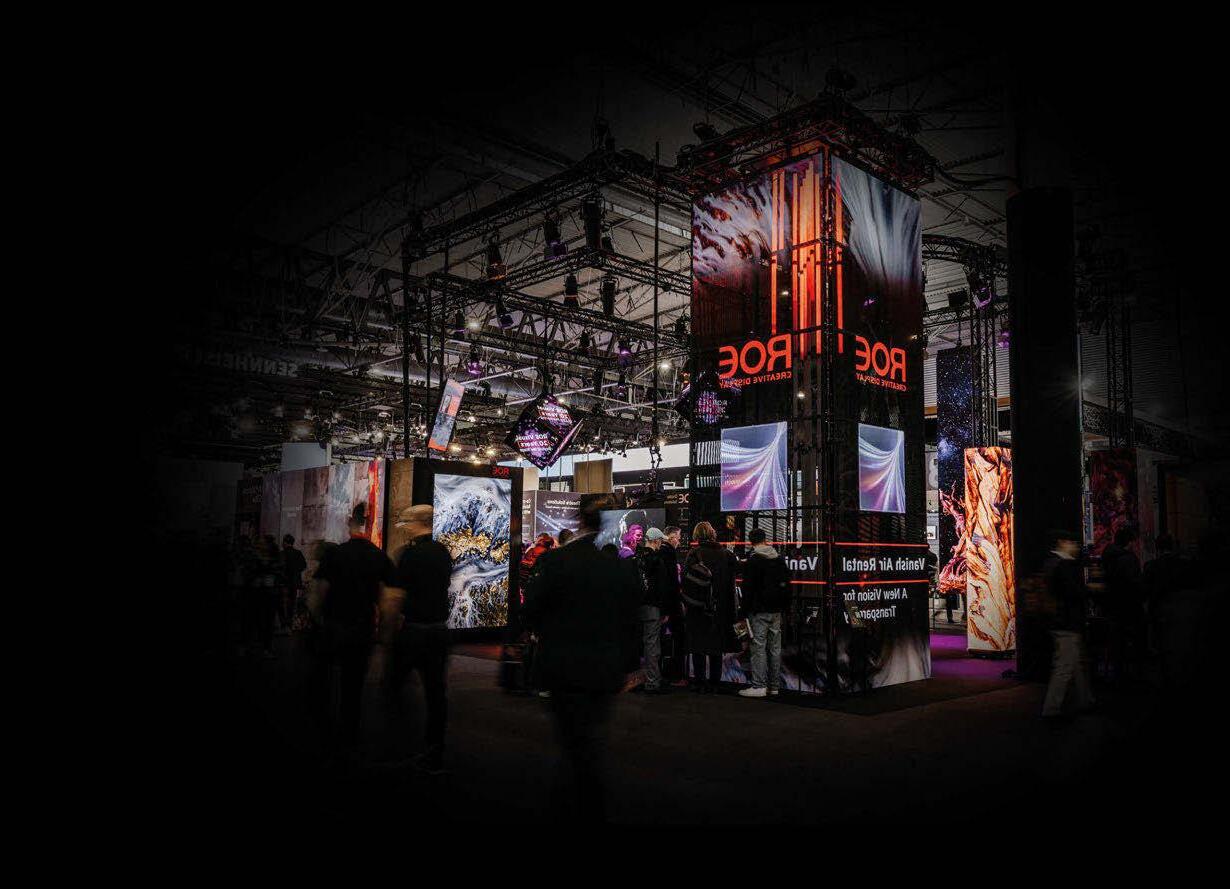
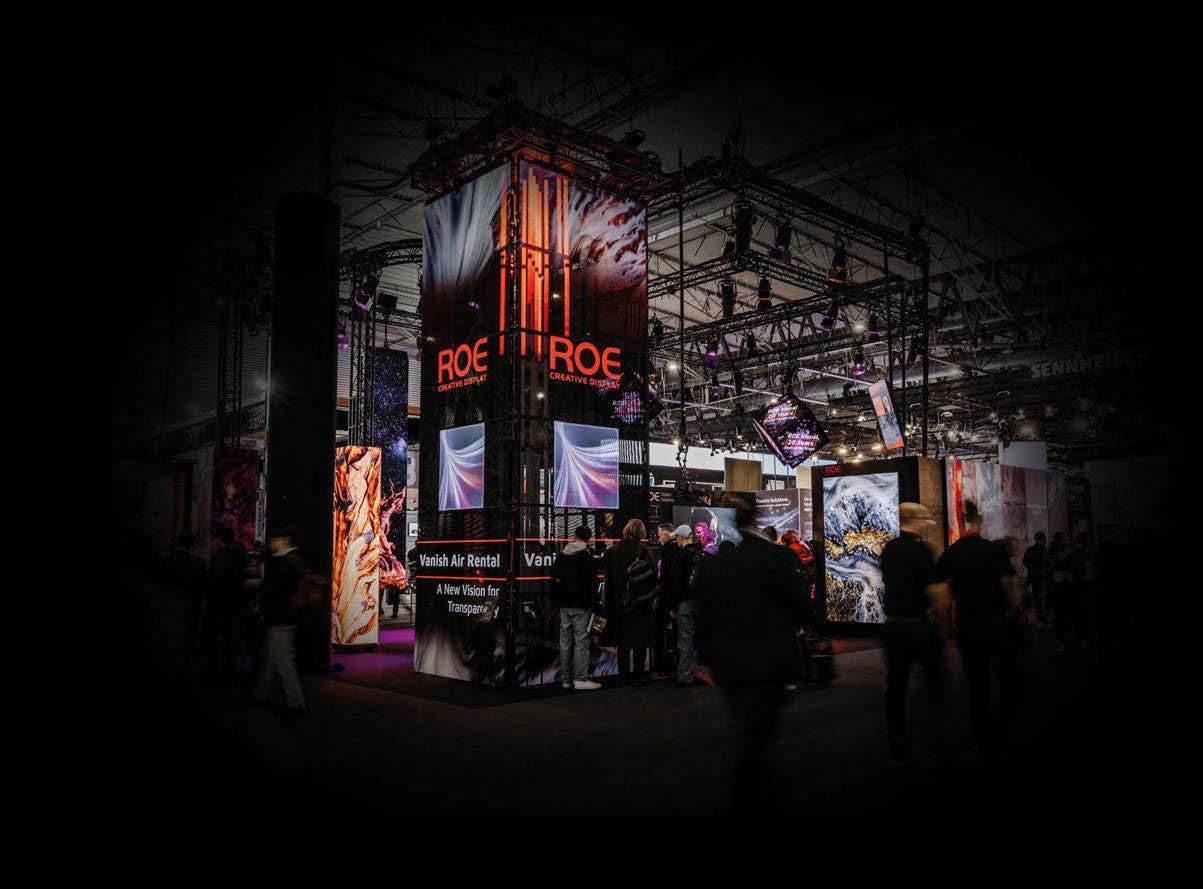
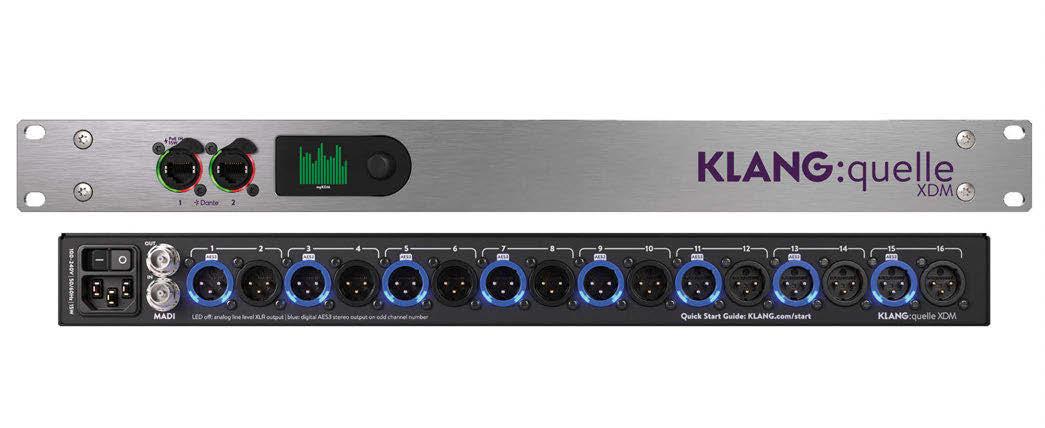
Works with any Dante or MADI system
16 analogue or 8 stereo digital outputs
Built-in redundancy with dual power and backup network
Converts both ways: Dante <> MADI, with passthrough
Simple remote control via the KLANG:app
Compact 1U rack design for touring or tight spaces
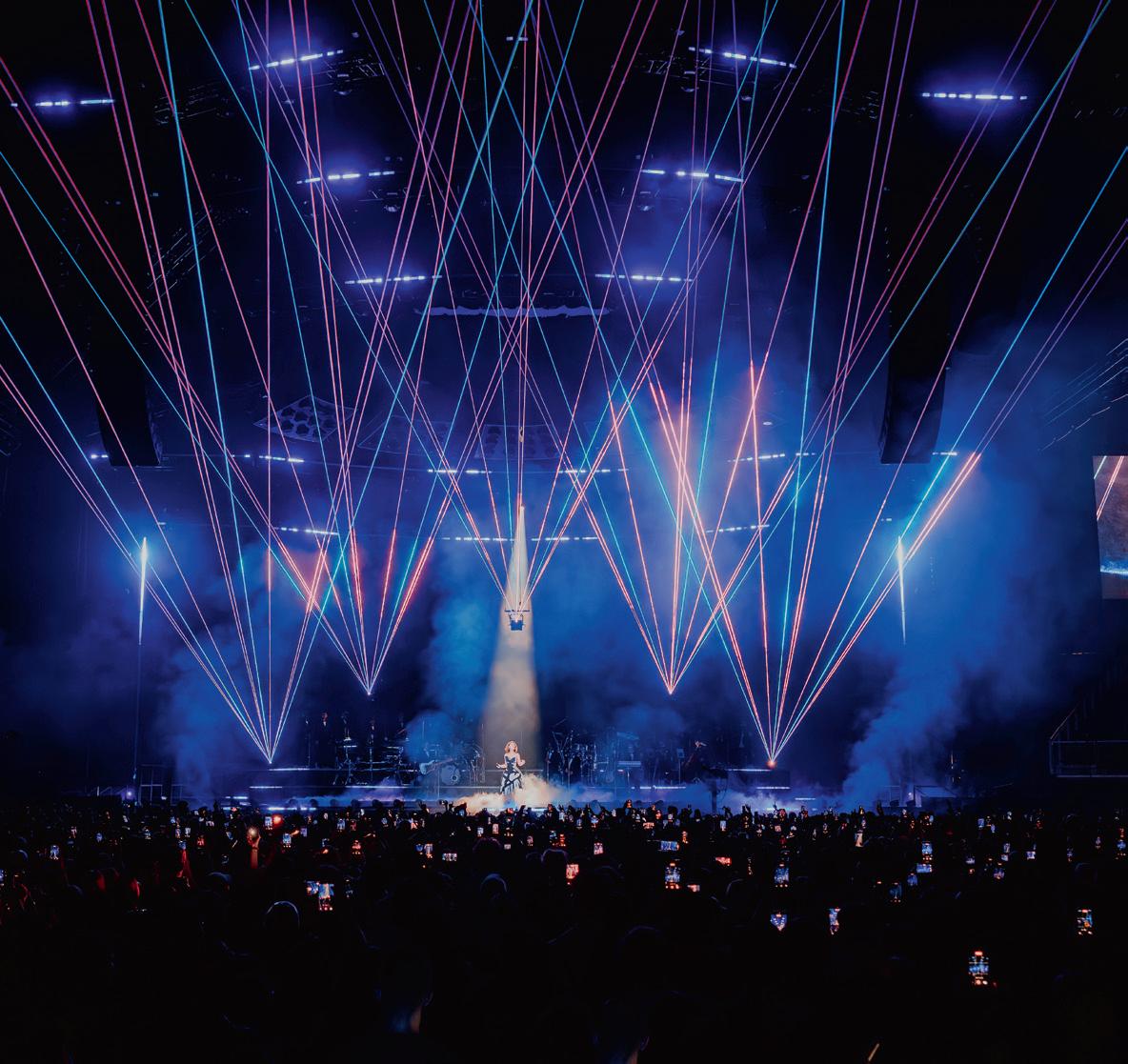
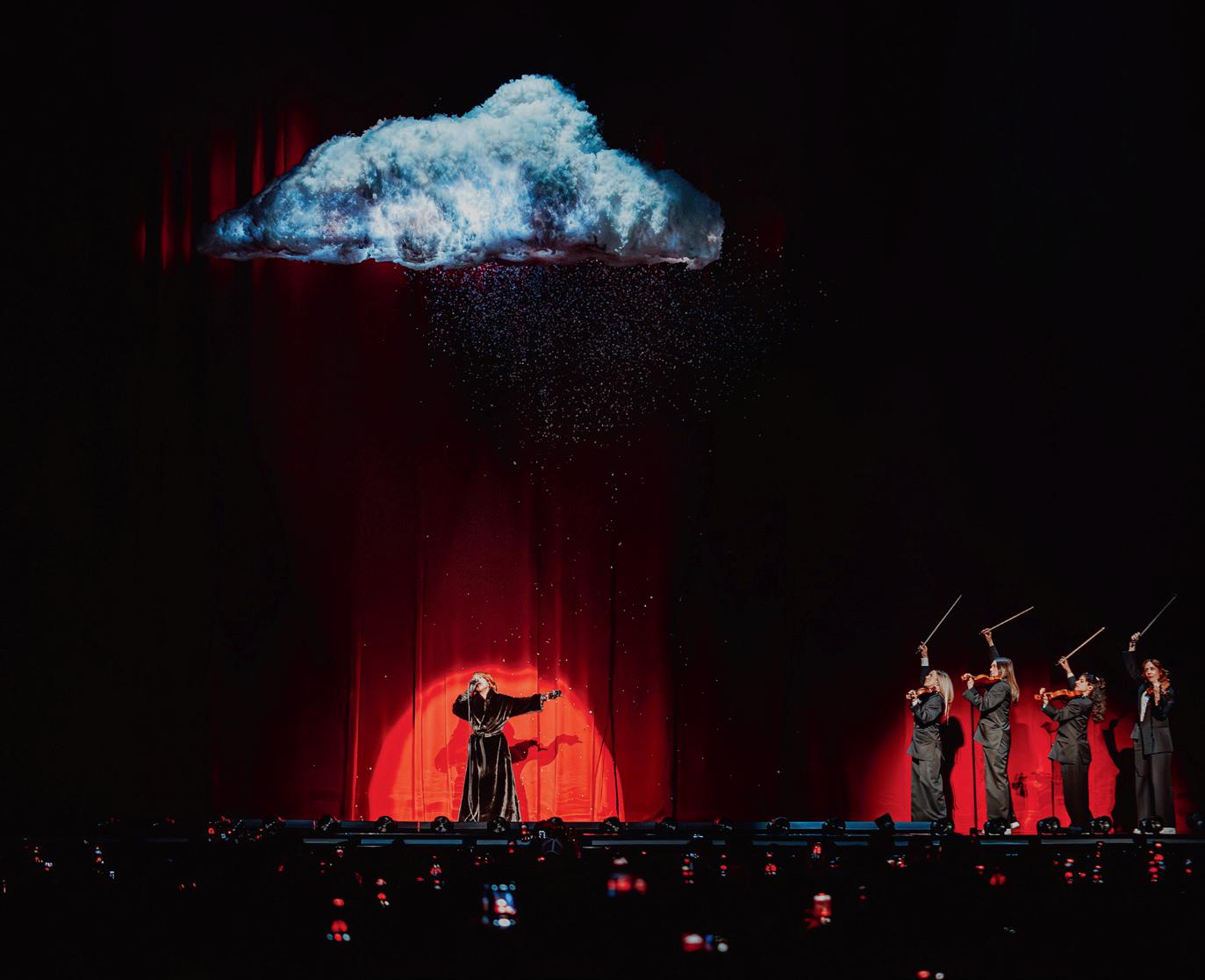
concluded: “It epitomises what this industry should be; mates getting a gig done. Seeing Stevie, Pete Clements and the whole team grow together with RAYE has been special. It’s a proper family camp. Everyone mucks in, everyone supports each other. That’s what makes projects like this so rewarding.”
Two 250kg chain hoists moved the automated cloud up and down with WICREATIONS integrating an automated winch for cable management – spooling cable in and out to provide power and data to all the elements inside the cloud, including the internal confetti system and lighting.
Three compact winches were also deployed for the laser units, which featured twice during the show in differing configurations. The automation elements were controlled via WICREATIONS’ patented software platform, WIMOTION. The drape was split in two substantial sections.“The team required a centre split for the opening moment,” explained WICREATIONS Project Manager, Raf Peeters. “RAYE disappears in the split before the cloud is lowered, and then both the drape and cloud are lifted to reveal the band behind.”
Lead time and weight of the curtain presented the most significant engineering challenges. Peeters drew on his relationship with ShowTex to find the best material and realise the artist’s vision with a high-quality
velvet product. “RAYE wanted a unique jazz look, so it was important that the material had a highgrade finish. And we figured out how to come up with a clever system to automate the curtain.”
The curtain measures 30m by 14m and to achieve the desired fullness, WICREATIONS used double the fabric with a total weight of around 350kg. The fabric is a synthetic, flameretardant velvet and is very durable throughout the tour. To protect the investment during loadins and -outs, the team fabricated two bespoke black ‘sausage bags’ to house and transport the curtains safely.
The WICREATIONS team comprised Crew Chief and Operator, Chris Sabelleck; Automation Technicians, Alin Ghenghe and Maarten Heyens, supported by WICREATIONS’ Project Manager, Cas Verbruggen. Sabelleck utilised WIMOTION control software and hardware to operate nine roll drops for the curtain, three powered data winches for the lasers, and a modified data winch delivering combined power and data to the cloud, alongside a 250kg WI hoist to automate its vertical movement.
“Despite performing in front of thousands, the design makes it feel like you’re in an intimate jazz club,” Peeters observed. “That’s a testament to the overall design. I hope this is the beginning of a long-lasting collaboration.”
A BUS FULL OF VIDEO CREW
Camera Director Steve ‘TSP’ Price stepped into the arena with what he describes as “a
real sense of responsibility”. The camera plan and video infrastructure were devised by Matt Askem, whom TSP credits as both mentor and influence. “I have so much admiration for Matt,” he said. “He’s been a huge influence on my career, so stepping in on his design makes you feel that responsibility.”
While Askem created the core plan, Price added a handful of elements, including a PTZ in the roof and a handheld in the pit. The rig also features two long-lens slash cameras with 40x lenses positioned on tracks at either side of the arena floor, along with curved tracking systems running across both the downstage edge and upstage behind the orchestra. Each track carries a Junior 5 remote head, operated from backstage video world.
Capturing RAYE’s spontaneous interactions with fans keeps the video team on their toes. Price added a pit camera specifically to respond quickly to crowd moments, though many are captured by the front-of-stage rail cam. “There’s a palpable atmosphere in the room when RAYE performs. Luna Remote Systems’ Camera Operator, Matthew Clarke-Irons is unbelievable – he’s working across multiple axes simultaneously. It’s second nature to him.”
Unlike many shows where artist-audience chatter can feel like downtime, Price counts these exchanges among his favourite moments. “That’s part of her magic. She’s emotionally authentic. Cameras can unite a room; they can connect artist and audience, and that’s part of












All the wireless power, audio clarity, and seamless integration you expect from Bolero now in a lighter, smaller form. With proven Boleroperformanceinacompactanddiscreet body, Bolero Mini is ready for any challenge inbroadcast,sports,orliveevents.








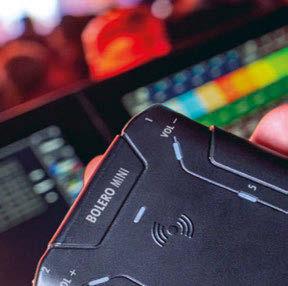




•165g,28mmthin •Touch&GoNFCbeltpackregistration •Bluetoothconnectivity •Riedel-exclusiveAdvanced DECTReceiver(ADR)





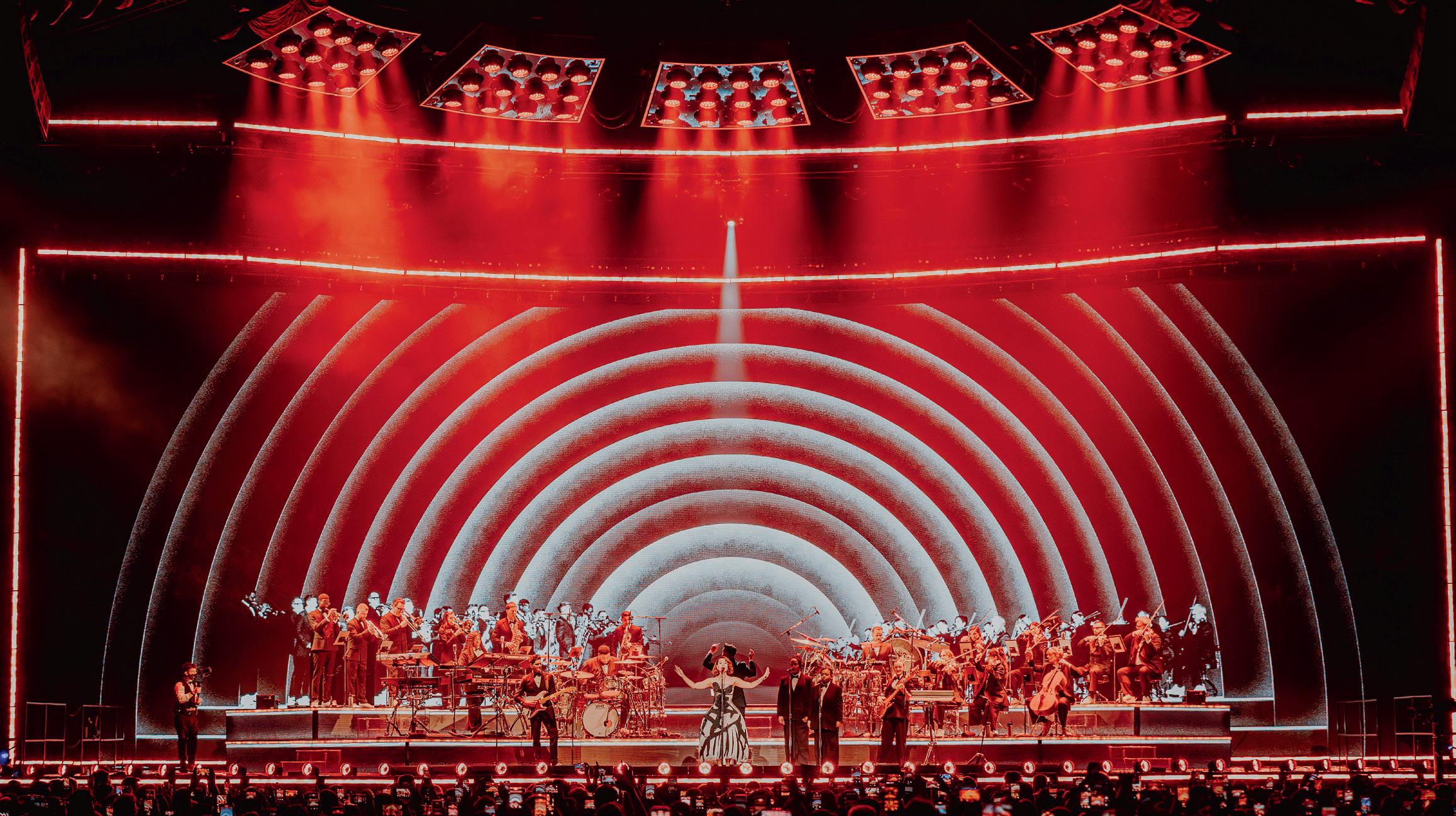
my role. I genuinely feel we’ve achieved that.”
One of the most powerful sequences arrives during Ice Cream Man. The song is shot as a single continuous take using the downstage tracking system. “The camera is always moving – very slowly circling the piano – and it pushes in extremely close during the most intense moments. There’s a symbiosis between what we’re doing and how she’s performing. You can see people in tears. It affects the crew as well.”
TSP directs nine 4K cameras using a Ross Touchdrive 2xME desk often delivering two simultaneous mixes, one to the IMAG screens and another to the wide upstage LED surface, each with different aspect ratios. “Directing has changed massively. You’re not just magnifying the image anymore; you’re shaping the visual language of the show,” he explained.
That evolution extends beyond the live moment. Price is also tasked with re-editing performances for social media and YouTube – a workload that has since warranted a full-time editor on the tour. “Spending hours editing a song prints every detail into my memory. It makes me sharper when shooting it live.”
Reflecting on the run so far, Price remains energised. “To witness RAYE at this stage of her career is incredibly exciting. I’m having the time of my life on this tour.”
Video Crew Chief, Glenn Austin and a team of 14 crew ensured the visual brief was met. “It’s a full tour bus of video crew,” he explained. “There’s a large upstage wall, which is the centrepiece of the show. It’s 210 sq m of LED, completely custom-curved, creating a scroll around the stage. The screens are running on Brompton main and backup SX40 processors, with media servers controlled from FOH. All content was custom designed, and all cameras
are recording in LOG, which Austin notes is unusual. “It’s challenging to manage the colour pipeline when recording in LOG and then transmitting it through the entire video system in time to keep it consistent for IMAG. We use LUTs and colour boxes in certain areas, which allows us to record camera ISOs and program recordings in LOG, so everything can be fully graded in post-production. We also record all stems of audio for mastering. Everything shot on this tour is content to be used elsewhere.”
He continued: “When the lights change, colour temperatures shift, and because the team apply their own LUTs, we can adjust to meet the ‘iconic’ brief. Ray, the engineer, is fantastic. He has nine Grass Valley cameras that he has had to tune perfectly. Some of the notch blocks, LUTs and effects require a perfect balance. We take time every day to colour grade the cameras to each venue, ensuring consistency across the recordings and ensuring the content can be edited if needed. The camera team on this tour is top of their game. Being a full-service Solotech tour, support is seamless. I could happily tour with this team for the rest of my life.”
Treatment Studio worked alongside Creative Director Mikey Robbins, Visual Director Matt Askem, and the wider creative team to realise the show’s video language, translating RAYE’s first experience with large-scale content into a cinematic yet intimate arena presentation.
“RAYE hadn’t worked with content before, but she had a very clear vision,” Treatment Studio’s Lizzie Pocock recalled. Existing artwork from her upcoming album and previous visual identity, such as the bold red world of WHERE IS MY
HUSBAND!, provided a springboard, while the creative process began with setlist discussions, reference imagery, and a focus on theatre, storytelling, and dramatic composition rather than overtly digital motion graphics.
This theatrical approach underpins moments like the operatic sequence following Music Therapy, where the curved LED screen extends the orchestra and subtly enhances space using scenic and in-camera tricks rather than spectacle for spectacle’s sake. Film noir elements in Beware the South London Lover Boy were graded and framed to make RAYE appear iconic, with Notch effects applied in harmony with Thomas Edwards’ lighting design.
Similarly, Click Clack Symphony leveraged the screen to amplify drama, landing as one of the show’s most visually striking sequences. Across roughly 12 Treatment Studio creatives, 3D designers, and animators, content was developed in tandem with ongoing music production, maintaining a collaborative and fluid workflow. On the technical side, Media Server Programmer Richard ‘Biccies’ Thomas deployed two Disguise GX 3 media servers to drive the main LED backwall, IMAG, and upstage screens. SDI routed video to Saco panels on risers, with live camera feed dominating most moments while pre-rendered content enhanced storytelling selectively.
Treatment Studio’s designs came to life in real time, with RAYE experimenting with RGB values on the system during production rehearsals. Notch-driven sequences, such as the freeze-framed, monochrome-filtered visuals for Beware the South London Lover Boy, and the epic cloud-lowered finale during Click Clack Symphony, relied on careful camera log management, LUT shading, and manual cueing

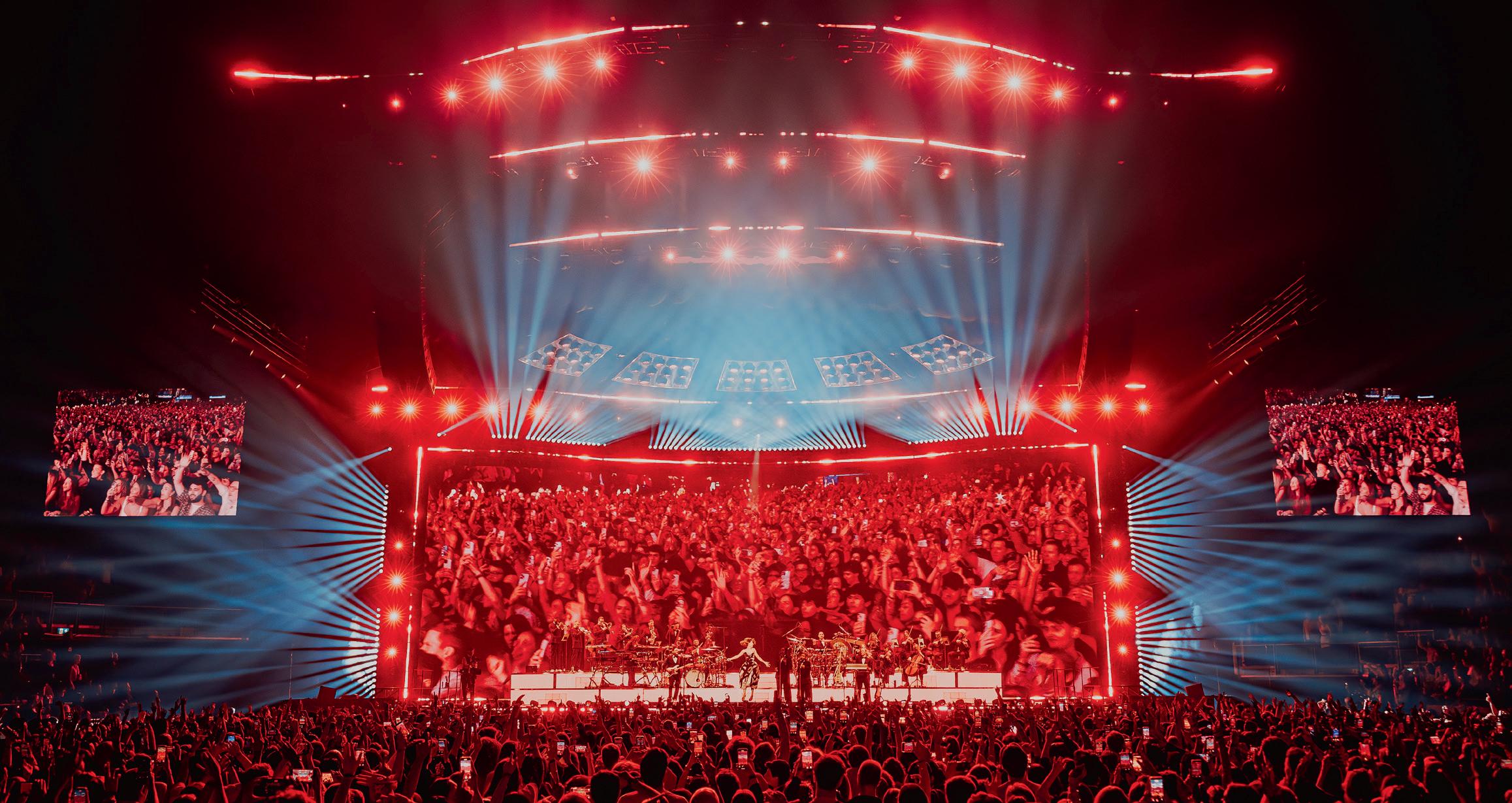
coordinated from FOH alongside Edwards. The aim, creating a show where RAYE remained central, guided every choice. As Pocock put it best: “RAYE and the musicians are so talented; we’re just adding the sprinkles on top.”
Biccies agreed: “It’s a really fun show to be part of with a great artist and team,” highlighting how each frame, transition, and effect was designed to serve the music, theatre, and intimate connection with the audience.
FROM CHISWICK TO PARIS
FOH Engineer, Matthias Simmons, has mixed RAYE’s shows on and off for 11 years, working on both ends of the multicore. Describing her current sound as sitting somewhere between jazz and dance, he relishes the genre-spanning intricacies of the production.
“It’s been quite the journey since her first gig in a pub in Chiswick,” he reflected. “She’s an amazing singer with such breadth. The production gets bigger with every campaign.”
With 21 people on stage, Simmons is kept on his toes. Musical Director, Pete Clements – who has toured with RAYE in various guises – masterminded everything from the grooving big band arrangement to the a cappella intro of WHERE IS MY HUSBAND!, as well as the interstitial musical moments that appear within the mix. “There are a lot of found sounds,” Simmons explained. “In Oscar Winning Tears. for example, there’s a ship’s chain being dragged along a deck to create this visceral effect. It really adds a welcome texture to the show.”
He added: “My favourite song to mix is still Escapism. New songs like South London Lover Boy and Skin and Bone kill. She seems to be unknowingly writing songs for these bigger spaces, and the translation feels simpler. Click Clack Symphony is mad good.” For control, Simmons mixed on Clements’ personally owned
DiGiCo Quantum 326. “I’ve had comments from other engineers respecting the small desk,” he noted. “It works well but I’ve definitely maxed out all the Mustard processing.”
Outboard for RAYE’s vocal chain includes a 545 d-esser (arena dependent), an Empirical Labs Distressor and a Rupert Neve 1083 for final EQ. Bass is treated with an API 550 EQ before hitting a Distressor. A Bricasti provides primary vocal reverb, while a Lexicon PCM96 – described by Simmons as a “fun” reverb – is deployed on the slide guitar during Ice Cream Man, on the kick drum in Hurting to emulate an off-beat Simmons-style kick, and on featured violin and cello solos. “It’s like a freaky special reverb,” he remarked.
An MBT on the band bus lends the mix a “nice bit of colour” and an elusive “magical silk”. The master bus also features an Elysia X-Max midsize band compression unit. “The threshold is down, but I’m using it on the output stage for a bit of sparkle, working on a mid-side principle. That feeds into the MBC before final conversion, which I send to System Engineer Dan Leaver.”
RAYE uses a DPA 2028 vocal microphone. “It’s a really magical mic with excellent rejection,” said Simmons. “We’ve got a mixture of Audix mics on kick and toms, Beyerdynamic M201s on snare tops for a natural, open sound, and 614s on the bottoms as standard. Overheads are the sE Electronics Rupert Neve models – very nice and shiny, with good rejection considering the headroom over a drum kit. The biggest win this tour has been the addition of REMIC Audio mics. They’re fantastic. We’re running Sennheiser systems with DPA capsules, standard 4099s on bongos, a D6 on the big drum and an open-headed bass drum for some of the more orchestral smashes.”
Simmons’ reference speakers are Neumann KH 150s. Meanwhile, the PA of choice is a d&b
audiotechnik GSL system. System Technician Daniel Leaver oversees the deployment. The main hangs comprise GSL, with KSL on the outers and XSL for 180° coverage. KSL subs are flown behind, with SL-G subs in the floor pit, SMY10s along the front for front fills and V10s on the outers to draw the image in.
“We worked closely with creative to ensure IMAG screens and the front truss didn’t become an acoustic barrier, keeping it consistent for everyone,” Leaver explained. “We’ve had good results in some challenging environments. In wide rooms – like Co-op Live – you get a nice result. House delays are V-Series, which helps lift the image underneath the house drape.”
For transport, a single amp rack cart per side is deployed, fully preloaded. “It’s a big push with four people, but once it’s rolled into place and plugged in, we’re good to go. We’re in and up before the noise window.”
Leaver processed the PA using ArrayCalc. “I design the system in there – everything is ArrayProcessed and time-aligned within the software. When I have time, I’ll walk the venue with SMAART, but I’m only making the smallest tweaks. Crucially, everything is network-based. We’re running a DirectOut PRODIGY system to distribute audio to the amp racks – a PRODIGY. MP at FOH and MAVEN units in each rack outputting all the AES streams, with a copper analogue backup fed in and out of the Prodigy for redundancy. It’s been a great tour.”
Reflecting on the team dynamic, Simmons concluded: “I trust Dan implicitly. The DiGiCo at FOH is on an Optocore loop with monitors –having it on the Opto loop is brilliant. Joe’s great; he is a super-pro, and has helped me out a lot at festivals. He’s a DiGiCo master.
“Solotech has supported us for years on festivals,” he continued. “It’s amazing to be involved. I was mixing when RAYE was

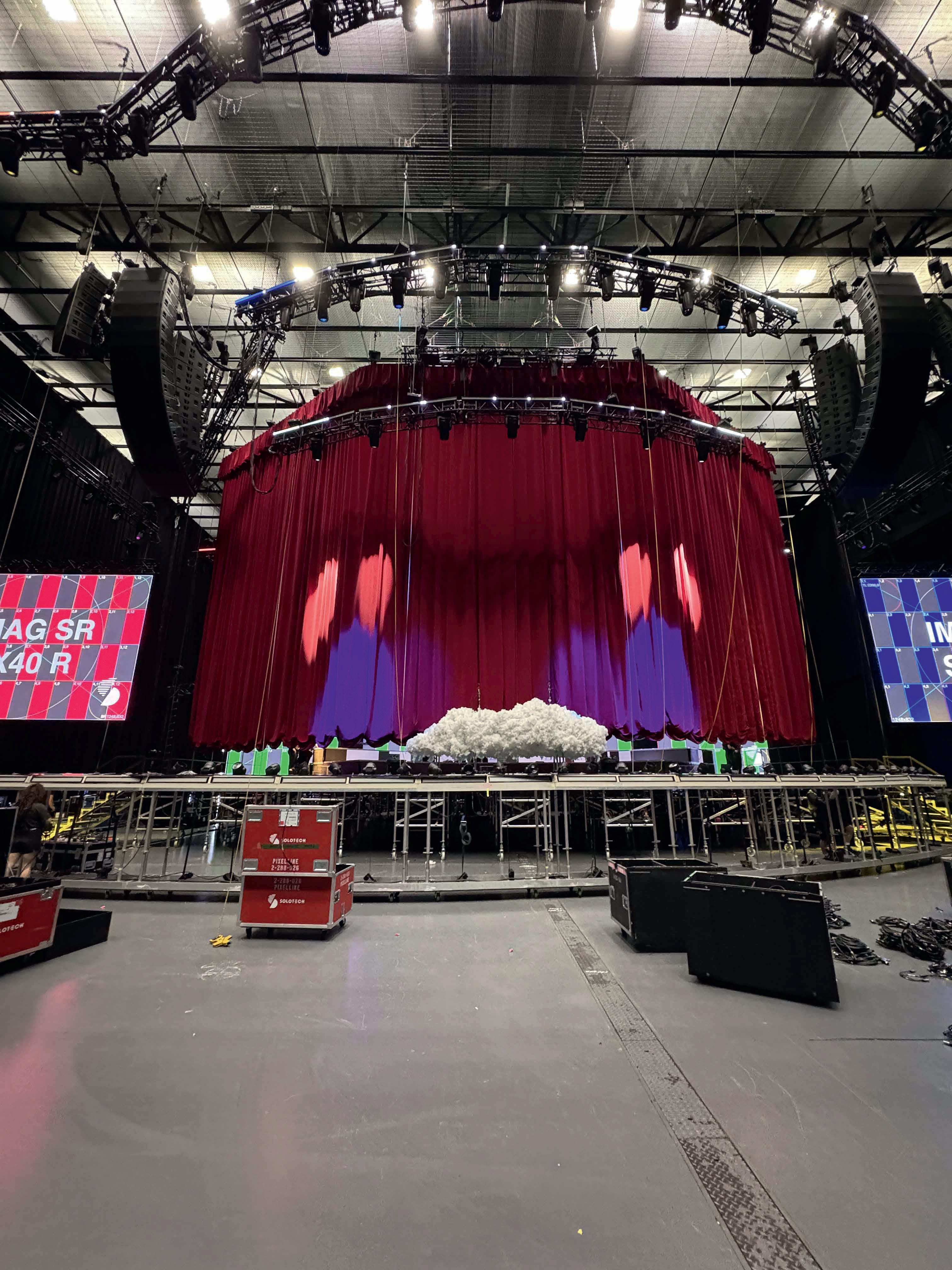
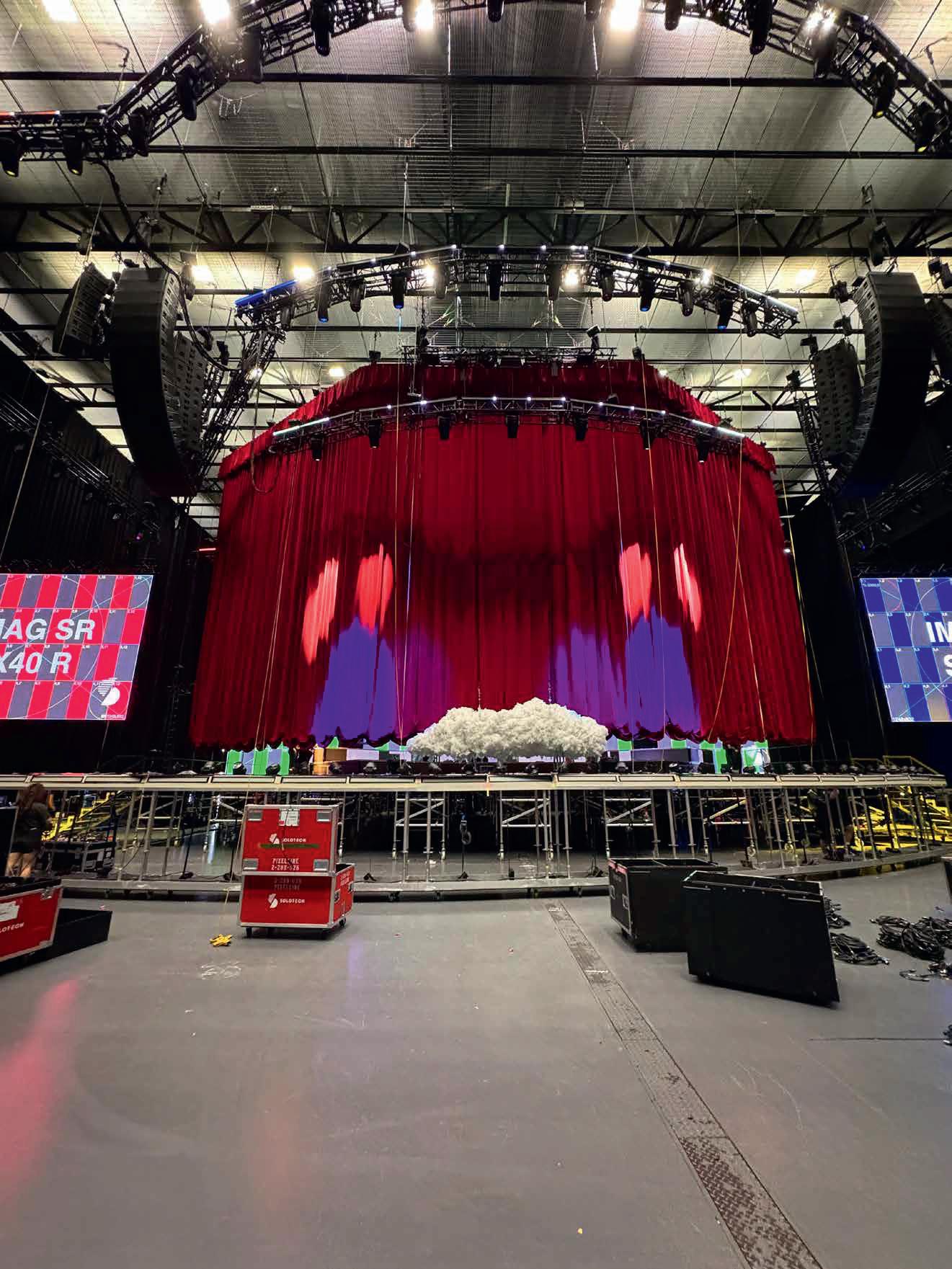
Tour Manager, Alan Thompson, reflects on his time in the industry, a busy tenure with the Scottish Producer and DJ, and what’s next for Travelled Music...
Words: Alicia Pollitt
Photo: Alan Thompson
With tour and production management company, Travelled Music, celebrating its 24th year in 2026, TPi caught up with Tour Manager, Alan Thompson, to discover how touring has changed for him, and what we can expect from the sibling-run company.
Can you tell us about your role as Tour Manager with Barry Can’t Swim?
“I came onboard with Barry Can’t Swim in early 2024. I recommended and was fortunate enough to have some good people join me and the team at the same time. We brought in a new musical director and FOH engineer, and as the year developed and the interest in the project grew so did the team, with more familiar faces joining to help as the audiences became bigger. Barry also began working with Zeal at the same time. They developed an incredible live show with lighting and visuals, which really established the show as a spectacle.”
You say you built the team from scratch at the start of the campaign, did you face any challenges doing this?
“Rome wasn’t built in a day! Finding square pegs for square holes is one thing, but establishing a cohesive team that has fun every day and night
is another. Sometimes it’s not necessarily about ability. We worked hard alongside Barry Can’t Swim’s management to ensure we had a great mixture of cognitively diverse people on the team so that we were thinking about all aspects of the show from all angles. Thankfully, I believe we created an amazing team with great spirit that saw us through some really heavy touring across the world.”
Can you tell us more about Travelled Music?
How do you find working with your brother?
“I started Travelled Music in 2002. Promoting shows and managing small bands in Scotland. I was lucky enough to end up on the road on tours with support acts for Amy Winehouse, Mika, Razorlight, and Primal Scream which then led onto touring with acts such as Overmono, Floating Points and Caribou. It has been so much fun to learn from some amazing people.
I’m still learning today, sometimes from my brother! He joined the company a few years ago and now tour manages Antony Szmierek, Dylan John Thomas, and The Pigeon Detectives, among others. It is nice being able to share an office with him. It’s a log cabin surrounded by fields with only a log burner for warmth so quite the opposite of a sweaty, sold out show.”
Now
Now
Now
The
The new Quantum 225 has been designed to work with you, supplying unprecedented power, performance and flexibility, delivered today for less than you imagine.
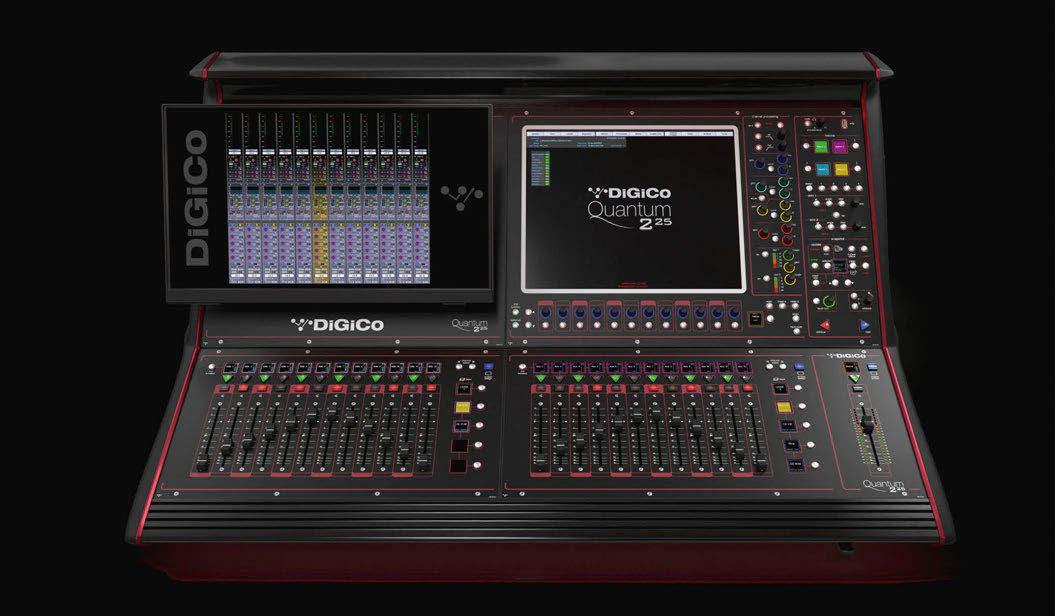


Has the landscape changed for tour management over the past couple of years for you, and if so, how?
“When i first started I needed to print out directions and had piles of paper for each show. Tour books were artworks compiled by hand like school projects. Now AI can recommend the best hotels near the venues and the vans can basically drive themselves to the show! Seriously, a driver-less taxi in San Francisco took us to soundcheck last year. It has changed and for the better. Promoters and venues are so much more accommodating, welcoming and understanding. Improvements in communication like emails and Whatsapp have really improved relationships. Catering is more eco-friendly and health-conscious. Touring is a pleasure as it should be.”
What have some of your highlights been working with Barry Can’t Swim?
“I really enjoyed Glastonbury 2024 with Barry Can’t Swim. The band were joined on stage by a choir for one song. Unbeknownst to anyone but me the choir were stuck at Reading train station with a cancelled train only a couple of hours
before they were due onstage. When we finally rushed them through the festival security and to the side of the stage moments before the show, everything calmed. The Park Stage had to be closed due to overcrowding, BBC were filming live, and the response from the audience was incredible. Just over a year later, Barry headlined All Points East Festival (APE) in London. We’d started touring only 15 months earlier with a team of just seven people. For that show, there were 129 names on the crew list cunningly managed by our amazing Production manager Shaun Kendrick, alongside APE’s Mark Ward. Again, Zeal produced a wonderful show, our FOH Greg Smart tamed the notorious Victoria Park with an incredible sounding show and 50000 people went home happy.”
What can we expect from you and Travelled Music in 2026?
“We have started the year strongly with a sold out European tour for Swedish act Anna von Hausswolff. Her latest album has recently won the Swedish Radio P3 Gold Album of the Year award, and the live show is amazing with such incredible musicians and touring crew. It has
been an honour. More tours are planned with major Canadian artists heading to Europe and we’ll be heading to North America for tours with UK acts later in the year.
We’re always expanding and looking for good people to work with, so hopefully we can find more good people and keep learning and developing as a company in 2026.”
How do you think the industry can change to support touring teams further?
“It is well publicised that touring for artists not at the highest level is expensive. Paying crew and musicians well and looking after people is very important, so we need to find ways of ensuring that tours can be more than loss leaders and become profitable in their own right. Organisations like the Music Venue Trust do great things to support grassroots venues, which in turn helps touring teams, but we need to find more ways of making sure the ticket prices paid at stadium level trickle down. So that the corporations in charge make a fair profit instead of obscene profits, and that all musicians and crew are paid fairly at all levels.”
www.travelledmusic.co.uk
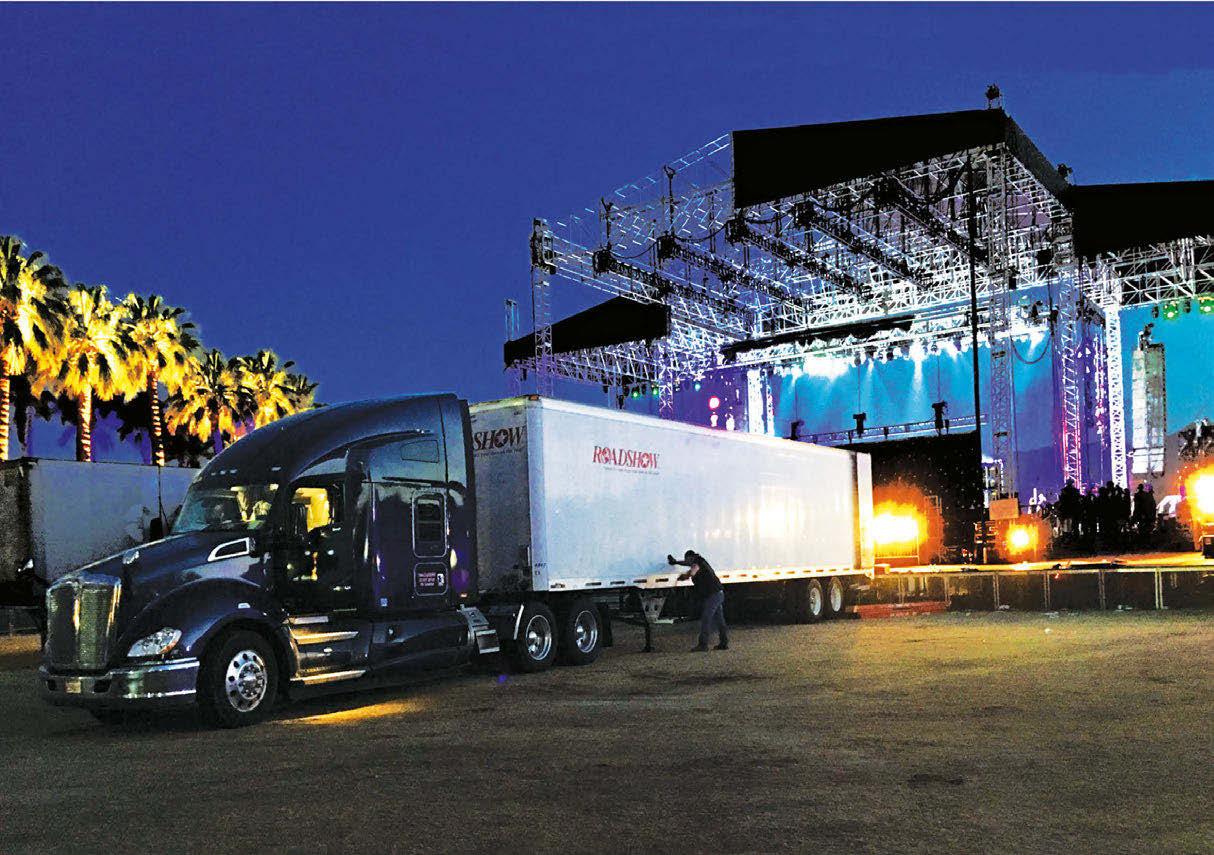














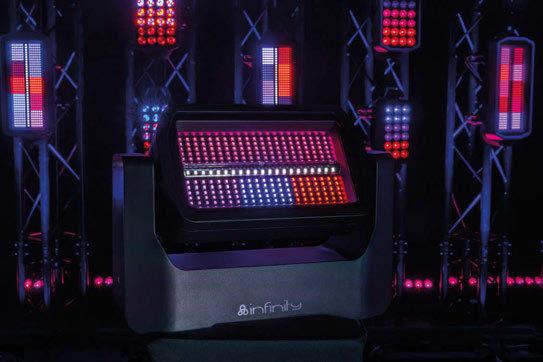



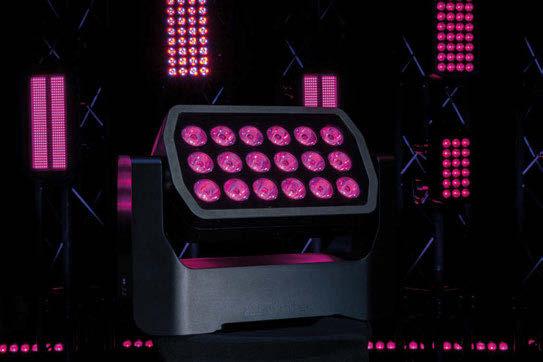


Strobe S250/4 Junior
✓ High output
✓ Section control



Wash W18/4 Junior

✓ Motorised tilt




✓ IP65-rated
✓ Comprehensive control

✓ GDTF files





Fresh off another successful Core Pro Show, Core Pro Audio opens the doors to a new space for immersive audio workflows.
In what has become a staple of the industry’s annual events calendar in the UK, in mid-January, hundreds of audio professionals descend on a hotel just outside Wolverhampton for a full day of discovery, hearing from some of the leading manufacturers operating in the world of pro audio and get hands-on time with some new pieces of kit. This year, the Core Pro Show took up residence in a brand-new location – Hogarths Stone Manor, a stone’s throw from Core Pro Audio’s office outside of Kidderminster. The day saw demos from the likes of L-Acoustics, Meyer Sound, DPA Microphones, Sennheiser, Shure, Sound Devices, DiGiCo, Allen & Heath, Yamaha, KLANG Technologies and Fourier Audio.
“We had around 250 people come along, which is 50% growth on last year,” began Tom Pickett, Operations and Marketing Manager at Core Pro Audio. “The goal is to provide a training and networking event for engineers to get their hands on equipment when we were coming back from the COVID-19 pandemic,” stated Tim Bamber, Director of Core Pro Audio.
“We don’t see this as a tradeshow. It’s a personal, intimate event where everyone gets a little snippet of all the brands we deal with and gets them up to speed.”
On top of brands sharing time with attendees, visitors got an exclusive look at the company’s brand-new L-Acoustics L-ISA Auditorium – the first of its kind in the UK, meeting the specification outlined by L-Acoustics. “We didn’t want to provide a truss box in a warehouse but maximise the opportunity by providing a space that is unique,” stated Bamber. “The end result is a full spec L-ISA Auditorium, which means any engineer can roll in their control setup and start
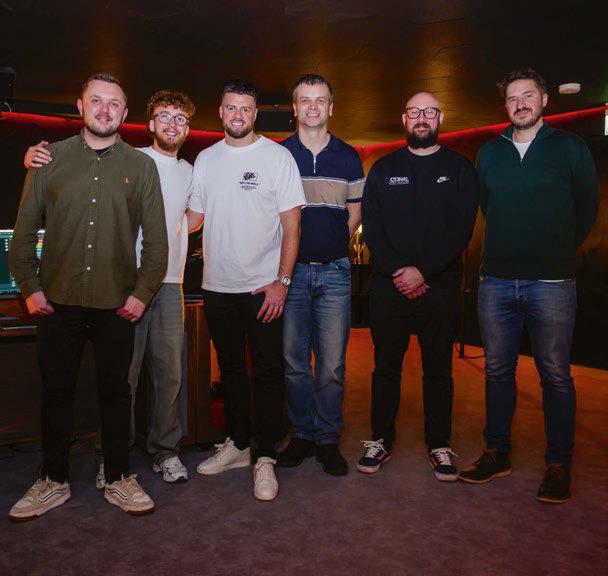
working on a mix for an upcoming show, or use the in-house system.”
The space also offers several recreation areas and a boardroom available to incoming productions. The space has also been set up to provide training for engineers using the L-ISA system, with a few members of the Core Pro Audio Team now certified to guide engineers through working with the L-ISA technology.
“Wit h the L-ISA system, it’s easy to understand once you’ve got your head around the basics,” stated Bamber, highlighting the need for facilities such as this one for engineers to get their hands on the technology.
The Director admitted that the benefits of creating the space will be somewhat of a “slow burn,” as the use of immersive technology in the live space is still in its early stages.
“Some engineers are nervous about getting into immersive as they haven’t had the time to use it in rehearsals, and it’s understandable that people are reluctant. Also, productions are somewhat nervous about any potential cost increase, so the ability to showcase what is even possible with an immersive system and give them that confidence is what the studio will hopefully provide,” he continued. “We already have engineers who have booked in over the next few months who are taking out an immersive project this summer and want to start working on their show files.”
The studio has been designed in line with L-Acoustics’ auditorium specification, which usually has a minimum of five points, though Core’s has the full offering to match all L-ISA Auditoriums worldwide, featuring X8i, X6i, and Syva subwoofers, all mounted in the wall, creating the ideal environment for engineers to develop and test immersive show workflows before heading out on tour.




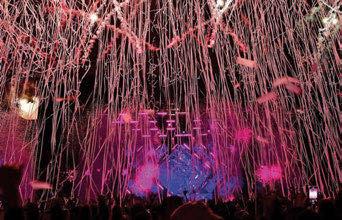


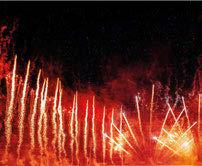

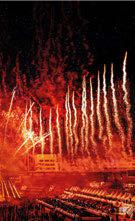










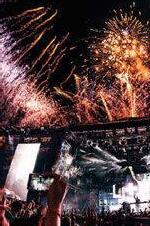











































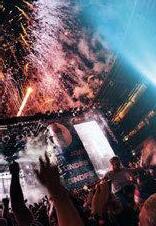
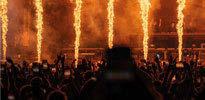

















and Europe, we have your live special effects needs covered — wherever your audience may be







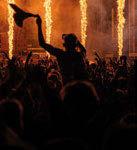


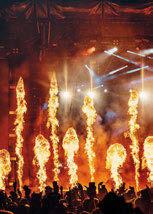




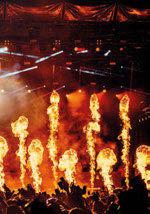

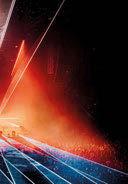








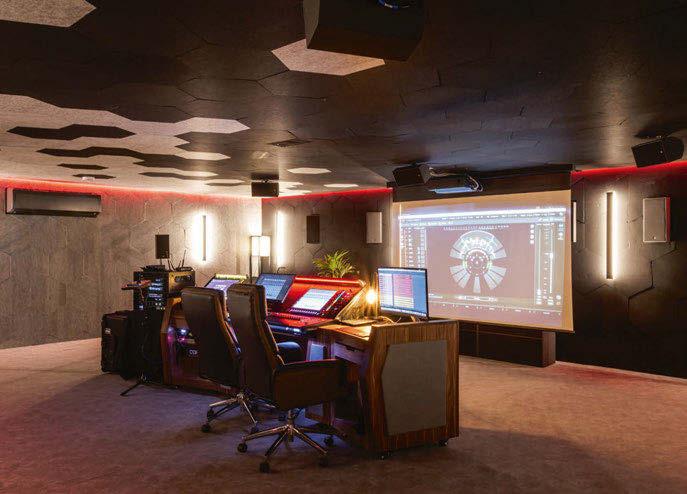
“The feedback we’ve had from L-Acoustics has been fantastic,” added Pickett.
“They’ve often said, ‘no company has done what you’ve done.’ For us, it’s important that it’s done to the right standard, and it’s not just a high spec studio but a nice environment we’ve built for everyone.”
Rahul Samuel, Head of Application, Northern Europe at L-Acoustics, gave his thoughts on the opening of the new facility.
“Bringing an L-ISA Auditorium to Core Pro Audio’s home in the West Midlands puts
spatial audio creativity right at the heart of that ecosystem. Tim Bamber and Joe Jackson have been exceptional partners in working with us to design a space that genuinely serves the artists and production teams moving through this region. These are the creative teams who will define live music’s future, and this is where we meet them.”
Bamber continued: “Audio loudspeaker development hasn’t seen many step-changes since systems like L-Acoustics’ V-DOSC. Technology has, of course, got better as it is
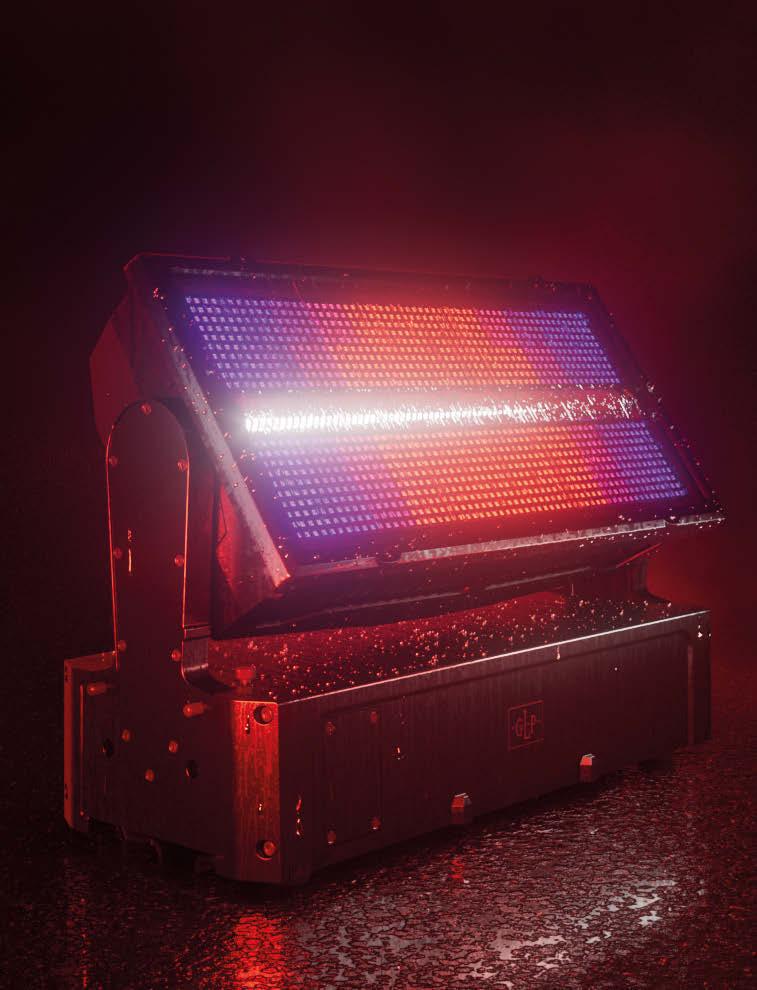
more efficient, and everything sounds better, but the principles are the same. Then, when you compare that to the visual world, technological innovation has gone through the roof. With ticket prices increasing, I think that the industry is going to have to look at providing something better and investing more in audio.”
With t hat, Core Pro Audio hopes its new studio will play a part in this next chapter of audio innovation. www.coreproaudio.co.uk www.l-acoustics.com





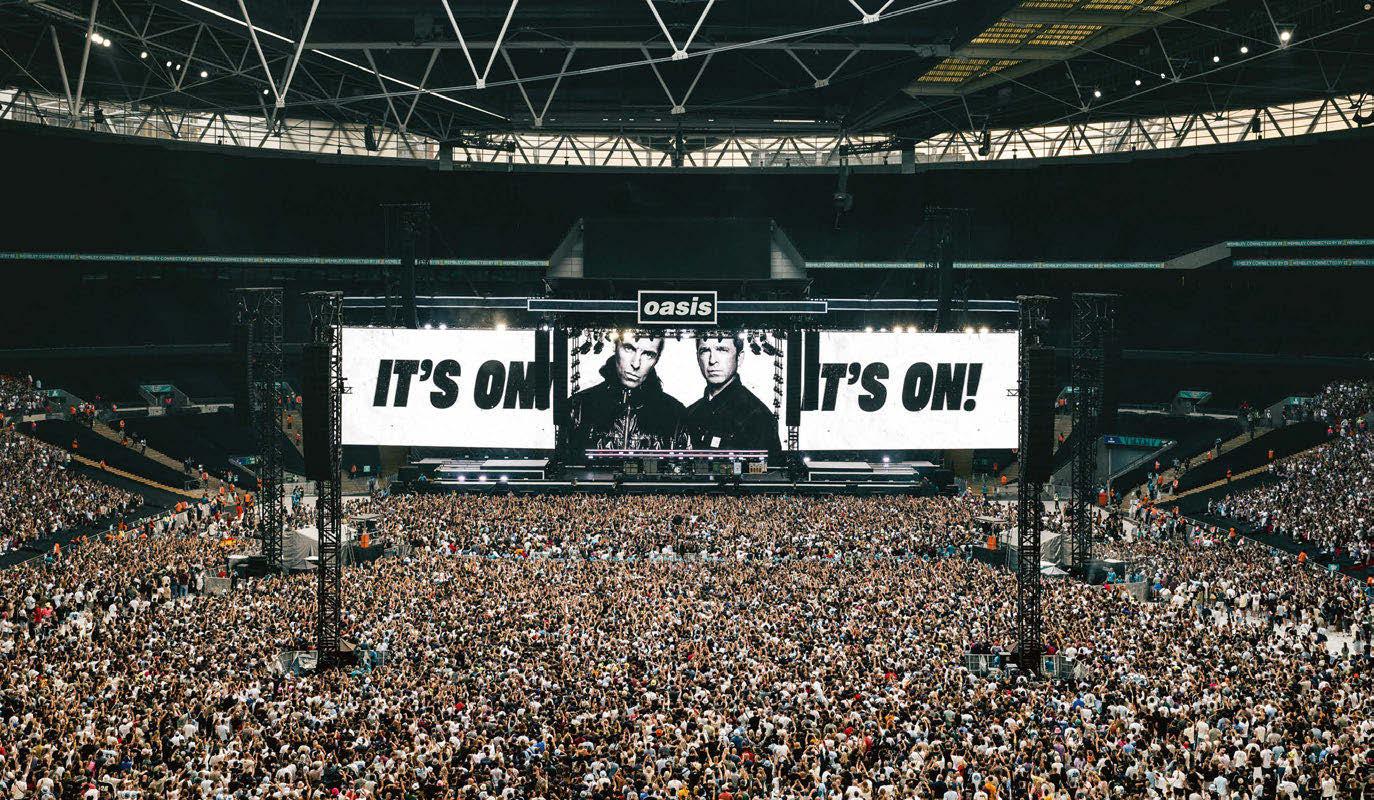
As Star Live celebrates 50 years, TPi sits down with the team to discover more about the company’s ability to deliver custom staging solutions in the complex world of stadium-scale productions, as well as its recent expansion.
Words: Stew Hume
Star Live and Harriet T K Bols (Oasis Live ‘25)
The past 12 months have been an interesting time for the live events sector, with several of the rental market’s most notable names that laid the foundations of how tours now go out on the road, celebrating their 50th anniversaries. One such company is Star Live. These days, Star is known globally as a staging company providing the physical infrastructure for stadiums and festivals – most recently seen in the pages of TPi for its work on Oasis’ Live ‘25 Tour. But the company’s origins actually lie in the world of audio.
“As a kid, I always wanted a career where I could work outside,” reflected Star’s founder, Roger Barrett and 2026’s TPi Industry
Recognition Awards winner, as he spoke of how this wish for a less conventional working environment led him into live events. “Back then, it was a fledgling events scene with often a few flat-bed trailers that would be your stage,” he chuckled. “There were never even stairs, and you’d have to make them out of various flight cases.”
Always one to try and find a solution, Barrett, seeing the lack of staging infrastructure, started investing in various bits of scaffolding to effectively create PA towers, but even then, he realised there was a gap in the market. “By the time we got to the early ’80s, we were doing bigger outdoor events, and there were still no
staging companies, but Fleetwood Mac did some substantial shows with a large American roof, and I was lucky to work on some of those shows and saw what was going on at that level of production.”
However, it was an accident at Notting Hill Carnival that became the catalyst that would change Star’s direction forever. “One year at the carnival, we had a lot of gear damaged after the show when the contractor’s scaffolding that was holding the PA collapsed. Thankfully, it was after the show, so nobody was hurt, but we were grilled by our insurers, who asked what we’d do to make sure this never happened again. A few days later, I was sitting in a pub
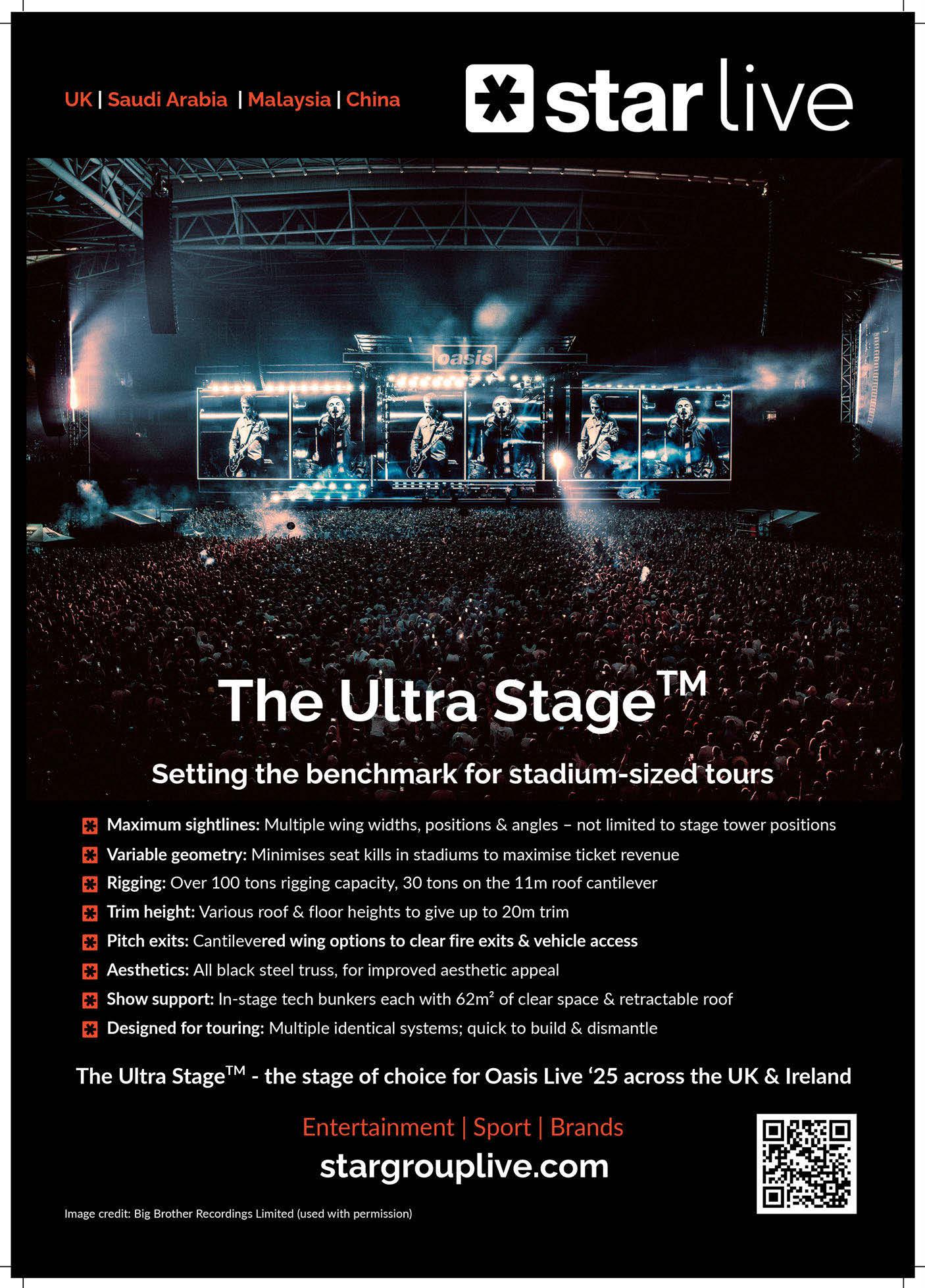
and just thought I could do a better job and set out to the library to get a book on how to build stages – there wasn’t one,” he laughed, but the seed was planted, and Barrett started to take meetings with some major scaffolding companies and began investing in equipment.
With Star moving away from its audio roots into staging, Barrett and the growing team recognised the demand for innovation in the staging world. “We learned quickly that building stages was very labour-intensive and hard to do safely,” he stated. “This thought led us to want to create a solution for a safe mobile stage for the market, which could be folded out from a truck. It was revolutionary and the mainstay of our business for 30 years.”
While also catering to the smaller events, Star was at the forefront of larger productions, developing a system for the bigger stages.
“We st arted to move from scaffolding to tower systems,” he reflected, discussing the change in the staging market. Since then, the company has become renowned for two of its products: the Ultra Stage for the touring and stadium market, and its VerTech system, for festivals.
“In my mind, the staging world is very much split at the top end of the market,” commented Barrett, noting the difference between stages for the festival industry – where providing a practical space for multiple acts is key and the more bespoke setup for stadium acts, where multiple changeovers aren’t needed but unique aesthetics are a priority.
“The latter is what drives a lot of the tech innovation,” he added, referring to how the Star Live team has grown over the years. Currently,
the company’s R&D Engineering team has six full-time members, including Barrett. Barrett explained that providing a solution that works for productions has enabled the Star Live team to stay one step ahead of innovations in the wider event sector. “It’s key that all our stages work for the production,” he stated. “For example, if a new PA comes out, we need to know all the specs, as we know productions are going to want to hang it on the very tip of the cantilever of the stage. We need to ensure we are ready for that before the request comes in.”
On this note, he explained how the increasing size of LED screens on stages is making wind bracing a particular challenge. “I don’t think my colleagues at other companies would disagree. We all have a lot of concerns about this topic, and there is a lot of work being done by people to try and resolve this, as large LED screens are basically giant sails,” he commented, expressing his frustration with many LED screen manufacturers’ unwillingness to help address this growing issue. “There are only one or two companies in the screen world that have realised the scale of these problems and have some quite clever design solutions, including carbon fibre stiffening systems.”
The conversation on safety within live events, especially when it comes to staging, has always been in Star Live’s DNA. “The first safety committee I sat on was in 1988 when there was an attempt to start a British standard on outdoor events safety,” Barrett recalled.
Although that venture was ultimately unsuccessful, Barrett has written several pieces of safety literature, from contributing to
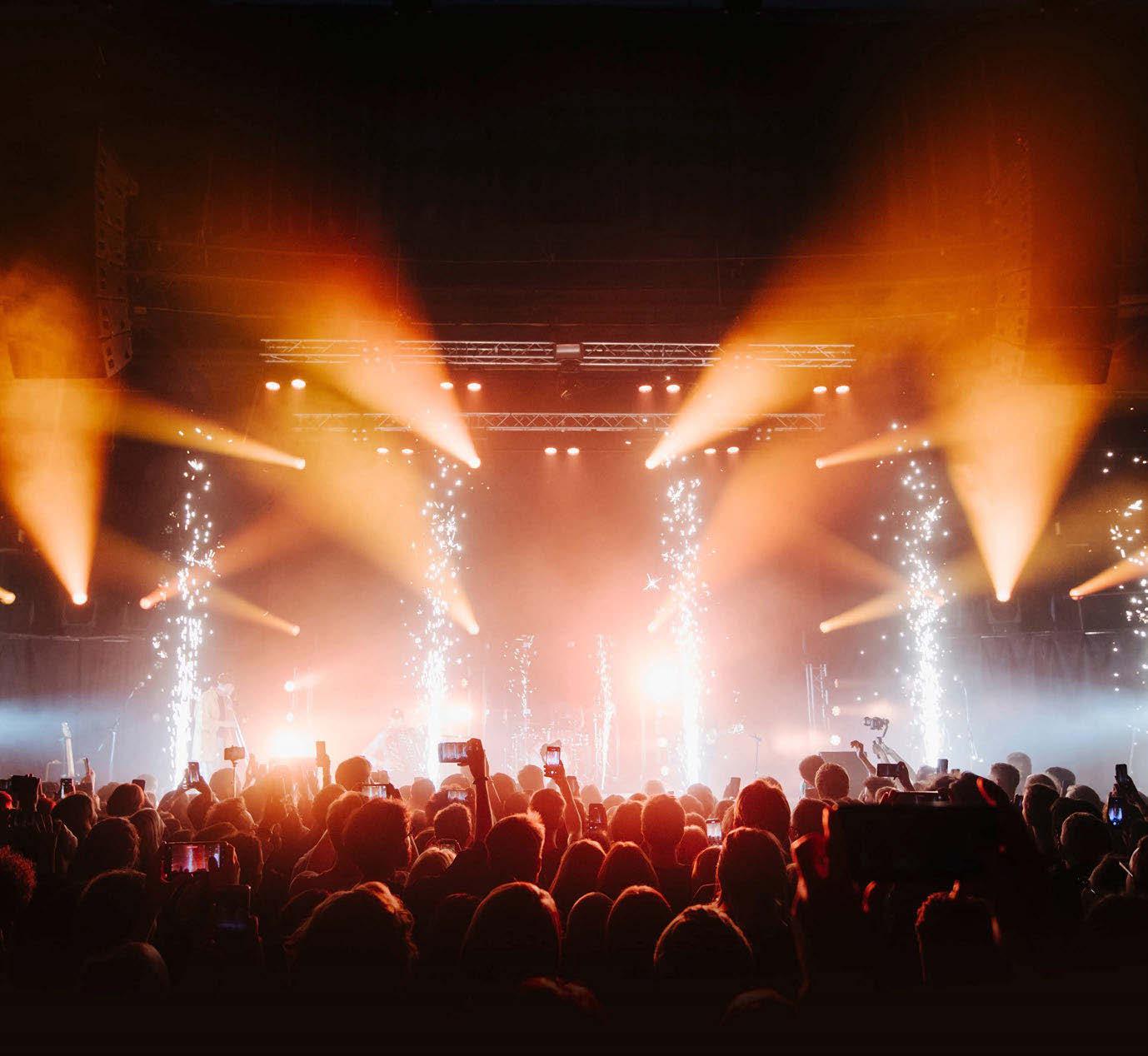
We know the audience experience takes centre stage, so our touring power solutions are custom designed specifically to suit your production needs.
Delivering safe, reliable, scalable energy that travels the globe with your show and deploys quickly at every venue. For multi city Arena & Stadium shows, CES Power has been your trusted touring power partner for over 25 years.
• Twinpack generators scalable for larger power requirements & redundancy/back up
• Zero-emission battery systems to support sustainable touring
• Air Conditioning systems for on stage cooling
• Transformers & UPS systems for multi voltage, 50 or 60 Hertz operation
• Expert tour ready technicians to handle all aspects of power ready show delivery and operation
• Scalable A & B systems for advance city pre-positioning
IF YOU CAN TOUR IT, WE CAN POWER IT
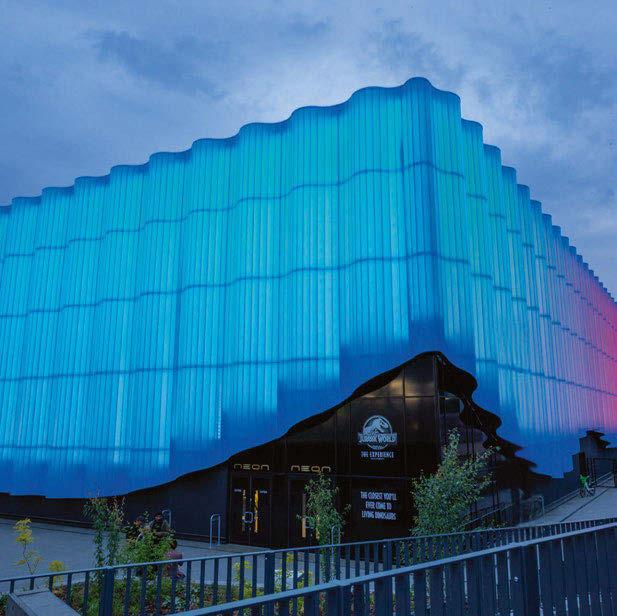
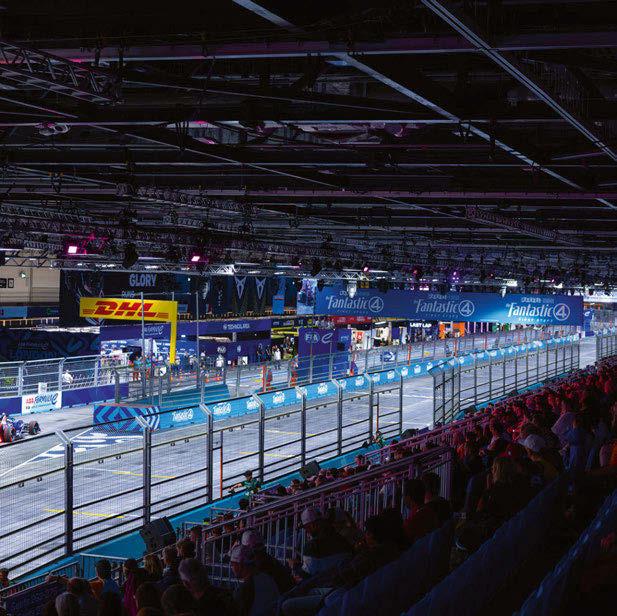
the second edition of Temporary Demountable Structures, to co-authoring Lightning Guidance for Outdoor Events and informing sections of the Health and Safety Executive’s Event Safety Guide, The Purple Guide. “However, The Purple Guide mostly focusses on crowd safety,” commented Barrett. Although he did not wish to downplay the importance of crowd safety, he argued that there was a need for more legislation governing the deployment of event structures at live shows. “We have a situation that during a show build we are classified as a ‘building site’, then during the show it’s handed over to the local HSE authorities. But due to funding being pulled, we find there is no proactive authority, which has led to a demonstrable rise in sketchy structures. What tends to happen is that most event organisers tend to rely on private advisers.” Barrett hopes for a future with changes, so it’s not solely on the shoulders of companies like Star Live. It was an interesting time to be sitting down with Barrett, as the past few years had seen an unprecedented number of stadium shows, particularly in the UK. “There are only a few companies that are providing stages at this level, and you often find that we’ll have trucks outside a venue waiting to load-in while the previous productions are breaking down their setup,” he explained. “I think the industry could move to a situation where the same core stage stays in. The big stage systems are mostly structural boxes that surround the stage, with wings attached, and can change the look of the show. I could see this being a situation in two to three years, with six-week hires of a stage
system that is then tweaked based on how it’s going and the grief it’s causing venues.”
The issue when growing Star Live into one of the leading companies in the staging world is that, by its nature, the company’s work is very seasonal. But due to its expertise in its field, Star Live garnered the interest of its current CEO Grahame Muir. Having previously been an investor and CEO of Arena Group for 26 years, Muir was looking for his next venture when, just before 2020, he was told about a potential investment opportunity in Star Live.
“I’ve known Roger for many years, and Star has always been a great business and brand, but it had never had a chance to deliver on its full potential,” began Muir. “It has a great heritage in music, which is fantastic, but it is a seasonal business. One of my main goals was to try and de-seasonalise Star Live while keeping the heritage of music alive.”
This i nvolved Star providing expertise in rapidly deploying solutions and building things quickly for clients outside of the music sphere. “You can apply the discipline of music or staging very easily to the sport and brand markets, and over the past few years, we’ve successfully started working in many of these sectors,” he noted, referencing projects including the likes of Formula E in London, Wimbledon, as well as Burberry’s runway show for London Fashion Week.
The company has not only expanded into different sectors but has also looked further afield, into Southeast Asia and, most
recently, Saudi Arabia. “It’s been an interesting challenge,” mused Muir, discussing the move to new regions. “We’ve got people on the ground in KSA, but the engineering of the business is still in the UK.”
Muir explained that entering new territories gives Star Live an opportunity to support the development of emerging sectors, especially by implementing stronger safety measures at live shows. “We had a situation where an Indian client who we’d worked with for years wanted to buy a stage from us,” said the CEO. “This is not something we normally do as we are a rental business, but we sold it with the stipulation that we sent the crew out for the first few years, and we even brought eight of their team over to the UK for a summer season to get them trained up. They want their own people doing shows at the competitive rates they can afford, and flying people from the UK is not sustainable in the long term – commercially or environmentally.
“This will do us out of a job in the long term, but they have the comfort of knowing Star Live is behind them, and we still do design and H&S packs for them,” he continued. “India is a massive market, and they may need 50 stages in the future, and we can be proud that we were at the start of this journey.”
The CEO also explained that similar projects have also happened in Latin America, another region of great interest to Star Live.
With Star celebrating 50 years in 2026, it’s outstanding to see where the company has gone. Speaking to the team, there is still an

exciting road ahead. “With the growth of the company, we are close to being profitable for 12 months in the year,” stated Muir. “We are eager to showcase the full service we can provide. We talk about the ‘entertainment’ sector broadly as we also have the design arm to our business. I think there is huge potential in pop-up and temporary exhibitions such as the Mundo Pixar exhibition in London, which we were involved in, and it’s most certainly our fastest-growing market.”
It’s an idea Barrett echoed: “All the growth we’ve had has spun off all the learning we had in building stages, and there can certainly be a cross-fertilisation of ideas. The NEON project we worked on at Battersea Power Station was essentially five big construction stages put together. Since that project, we have been introduced to more interested parties, as we are able to provide a solution that is much faster than conventional construction. For me, it’s been one of the most interesting developments.”
Like so many working within the live events sector, the learned skills of years of making the impossible, possible are really starting to turn the heads of other sectors.
Selfishly, TPi is excited to see what Star Live brings to the table during the next run of summer staging events and the latest innovations they bring to the touring market. With how summer is shaping up, there will be plenty to write about. www.stargrouplive.com
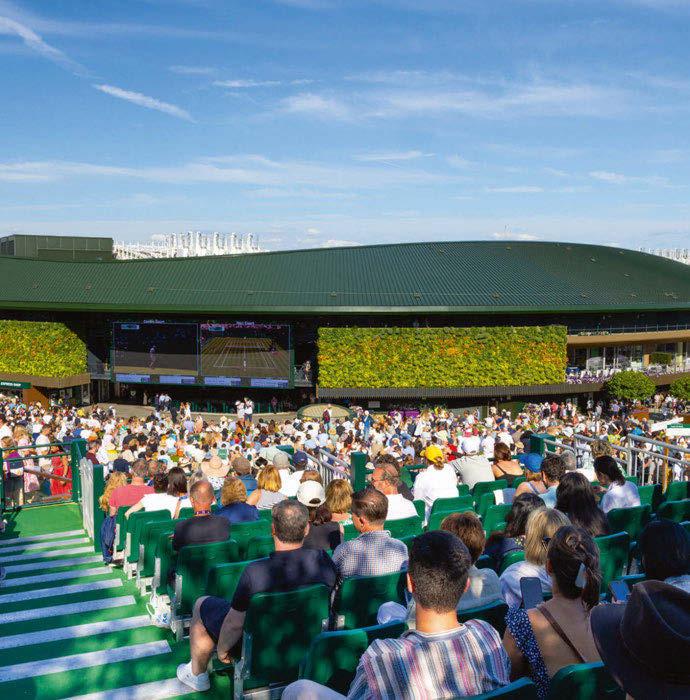
Tone Lopez and Raphiki Rhodes look back fondly on 2025, analyse where the industry is headed and unveil what is next for them for the rest of the year…
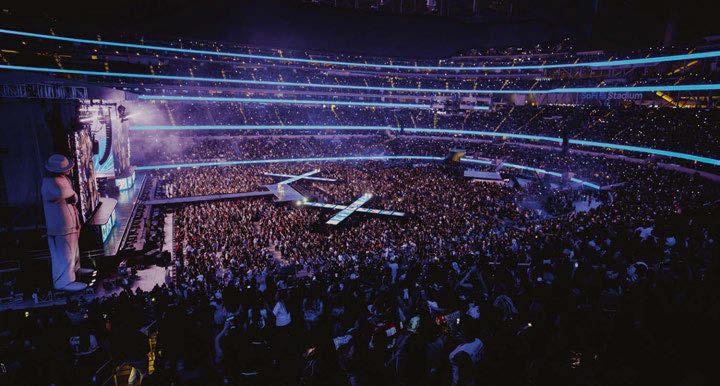
Full-service production houses are on the uptick and HansTolo Enterprises is no different, with co-founders Tone Lopez and Raphiki Rhodes at the helm. TPi caught up with the tour and production management specialists to get an insight into the beginnings of HansTolo Enterprises, highlights from the past year, and where the duo see the industry headed.
After starting the company in 2010, Lopez explained how “things started to get serious between 2014 and 2016”, when the pair were given some bigger opportunities. “We’ve been fortunate to be part of the development of some of the younger artists that are really having their moment right now,” he commented.
HansTolo’s roster certainly has its fair share of critically acclaimed artists from Aminé, A$AP Rocky, 21 Savage, Cardi B and Chris Brown.
“We’ve had some real highlights, and we have learned something new from every tour that we
have done,” Lopez added. For Rhodes, the sentiment is shared, with the production manager focusing on the positives from every experience. “The highlight is the experience of it – whether it’s a club, amphitheatre, college performance or stadium, every show is important and the fact we can look back on everything we have done up until this point and be proud,” he stated.
As tours become increasingly complex, with tighter scheduling and turnaround times, a 360° company can often alleviate stress, and with HansTolo working at this level, the duo also believe that the industry will continue to move towards this.
“There are already a lot of companies that have figured out that offering a menu of interrelated services is better,” Rhodes said. “Instead of having multiple points of contact, you can rely on just one person to do it all in-
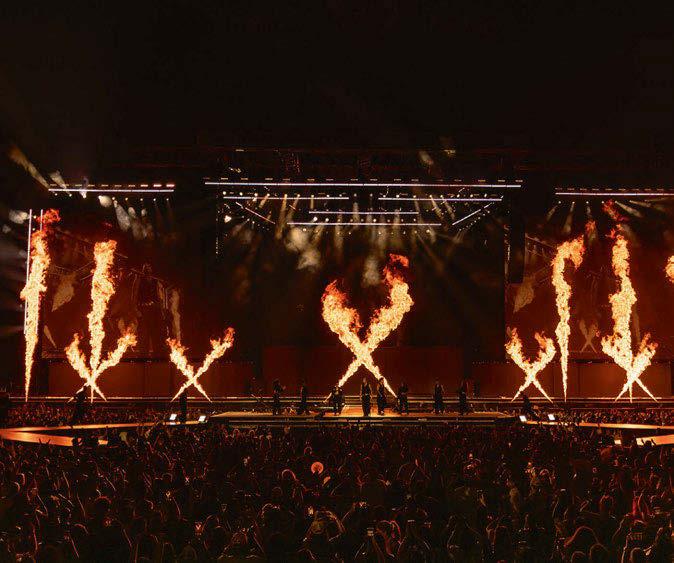
house, and I think we’re seeing this more often than not at this point.”
Working in their respective tour and production management roles has meant that the duo has been able to look at each other’s tasks from both sides – a direction that Lopez and Rhodes believe the industry is stepping towards. “The great thing between Tone and I is that we understand both sides, so we can conduct our days to best help each other out,” Rhodes commented. “We have also found that having that understanding makes the entire crew feel completely involved and understood.”
Tone also discussed the lack of diversity in the industry – something he believes is changing gradually. “When I started, I didn’t see many people who looked like us in leadership positions, and now we’re seeing more, and I think that’s dope,” Lopez said, noting that HansTolo always asks for diversity when working with vendor crews. “We want to be the best of the best in the shows we are curating, and when hiring a crew, I think it’s important to ask for that – we’re very conscious of the disparity, and we take pride in ensuring that there is diversity on our staff.”
Championing their crew is important to Lopez and Rhodes, and the pair compare themselves to coaches. “We have both played team sports, so we’re both coachable and able to coach, so we run our programme in a way that’s intended to get the best out of people and watch them grow,” Rhodes stated. “We’re learning
constantly, and so are the crews that work with us.”
It isn’t just the crews working with the duo that are a priority; Lopez and Rhodes also make a conscious effort to look after their own physical and mental health through improving their touring diets and exercise patterns as well as ensuring a work-life balance on and off the road.
“The more success you have in this industry, the more it starts to play on what your vision of a work-life balance is, but it is just discovering what works best for you individually,” Lopez said.
“We’re dealing, sometimes, with millions of dollars in production and we want to be the safe hands that can be trusted for a tour to go properly. A huge part of that is looking after ourselves so that we can stick to our end of the bargain.”
From working together on Chris Brown’s widely successful Breezy Bowl XX in 2025, HansTolo Enterprises looks forward to a busy 2026, where they don’t intend to slow down, and are instead looking to expand into the wider entertainment sectors as well as continuing their steadfast careers in touring with Cardi B’s Little Miss Drama Tour
“If we grow and continue to put out the best shows we possibly can, as well as focusing on artists at the beginning of their careers, then I think we will continue to get more and more opportunities which will create an atmosphere around who we are,” Lopez concluded.
www.instagram.com/hanstolo.ent


Words: Hannah Eakins
Looking ahead, what’s in store for Production Futures and the ON TOUR events?
“2026 feels like a pivotal year for us. Our ON TOUR events will continue to connect industry with emerging talent, but they now sit within a much broader vision. Production Futures is increasingly recognised not just as an events organiser, but as a strategic partner helping shape the future of the sector. Getting on the road post-COVID was essential to proving the demand for what we do. That journey confirmed something important: Production Futures is far more than a careers fair, it’s a platform for visibility, opportunity and credibility across the production industry behind the stage and screen. This year, we’ll be expanding partnership opportunities, increasing our digital reach, and creating more ways for organisations to engage meaningfully and grow alongside our community.”
Could you share more details about the MAKE NOISE initiative announced as part of LIVE Trust’s funding plans?
“MAKE NOISE is about introducing the live production sector to the next generation and empowering them to start to explore their career options. This all starts with highlighting audio engineering and expanding outward.
Supported by LIVE Trust, the initiative will provide resources, visibility and opportunities for individuals who might otherwise struggle to access the industry.”
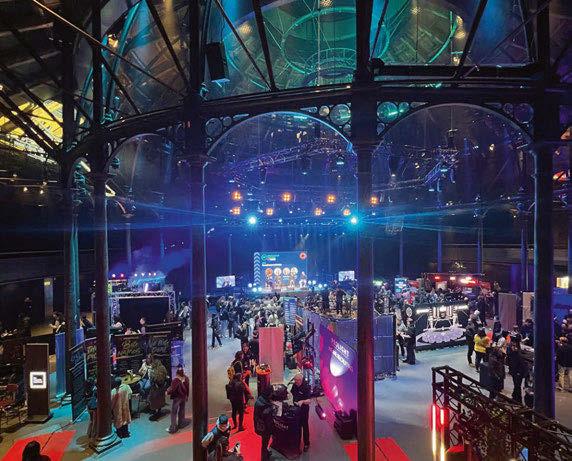
“We are focussing on schools, the home education community and people who are currently not in education, employment or training. Through our partner-led opportunities, MAKE NOISE aims to close the gap between talent and access. The campaign will launch at our show at AO Arena Manchester on 20 April. At its core, MAKE NOISE is about demonstrating that the future of live production belongs to everyone – not just the privileged few – and encouraging the wider industry to actively invest in young people.”
What does it mean for Production Futures to be part of this wider campaign?
“It signals a significant evolution for Production Futures. We are focussed on removing gatekeeping and reducing barriers to entry at scale. Our role now extends beyond hosting events – we are helping organisations demonstrate their commitment to inclusion, social value and meaningful opportunity. By partnering with Production Futures, organisations position themselves as active contributors to the industry’s future. They gain our endorsement in pitches, direct access to our engaged community, and a trusted platform to promote roles and opportunities with credibility. The result is expanded reach, stronger client confidence, and earlier access to the emerging talent shaping the next generation of live production.
As a result, Production Futures has moved from
being a ‘nice-to-support’ initiative to a go-to partner for companies aiming to create real impact and recognising that visibility and access are essential to industry growth.”
Aside from your own events, what else are you looking forward to in the year ahead?
“This year, we’ll be partnering with more industry events, delivering speednetworking sessions, panels and content beyond our own shows. We want our audience and partners to know that Production Futures expands far beyond events we organise ourselves – we create impactful pop-ups wherever we go, bringing visibility and opportunity directly into already existing industry spaces.
“Content is also a major focus. As our audience expands, partners can engage as digital collaborators as well as exhibitors. We’re building meaningful partnerships that help organisations raise their profile, grow audiences and connect with new communities year-round.
“Most of all, 2026 feels like a defining year – the moment when years of groundwork are translating into wider recognition, deeper collaboration and lasting impact across the industry. Our mission remains simple: make the industry visible, make opportunities real, and ensure access isn’t only limited to the privileged few.”
www.productionfutures.com



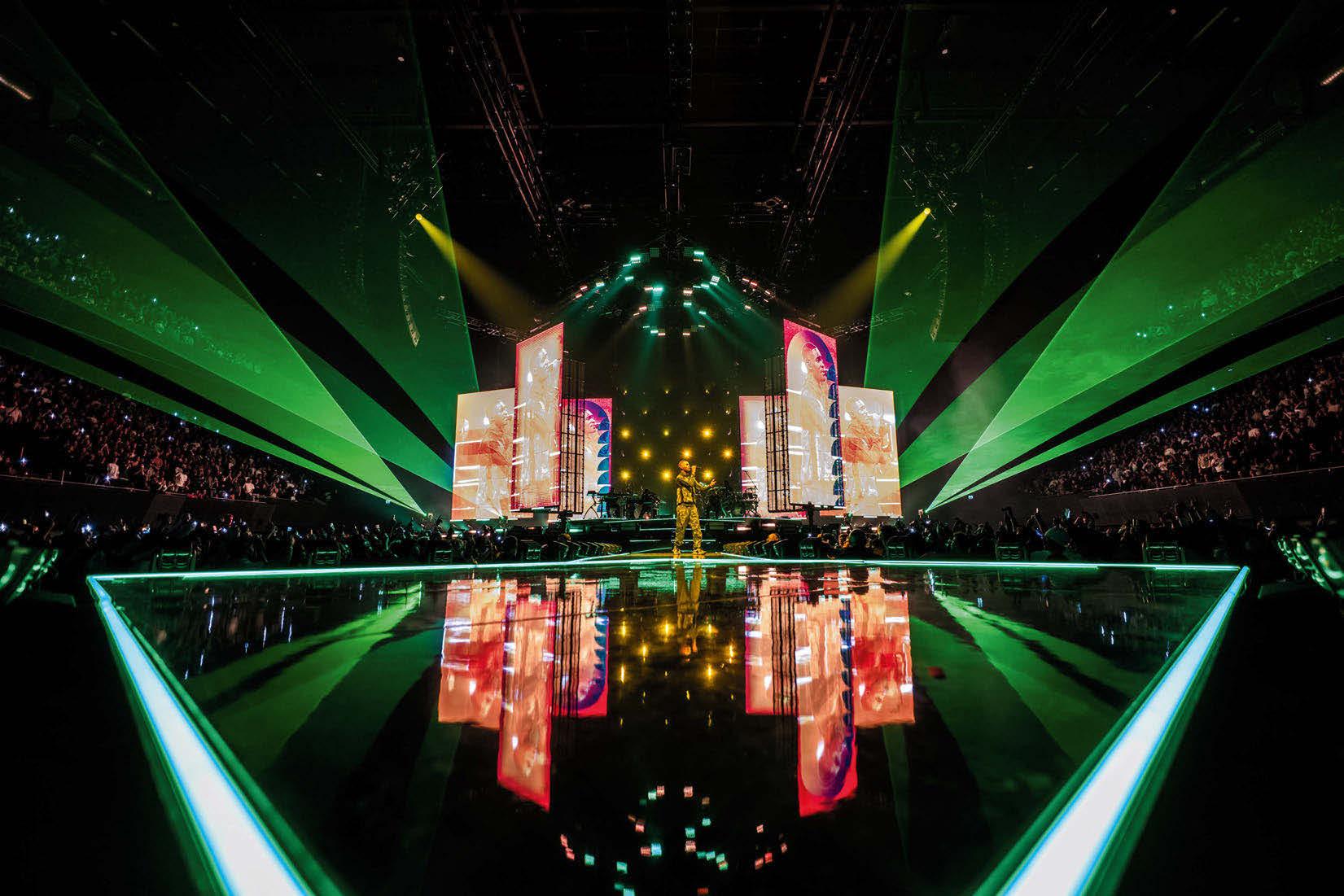

Dom Harter, Managing Director at Martin Audio, gives an update on the Wavefront Precision solution.

Words: Dom Harter
How long has the Wavefront Precision been a part of the Martin Audio line-up?
“Wavefront Precision has been part of the Martin Audio family since 2017, when the WPC and WPM were introduced as the first two models in the series. Two further formats followed in 2019 – WPS and WPL – completing a four-model family that scales from compact corporate work all the way up to arenascale touring. That breadth of coverage is a deliberate part of the design philosophy: the same core optimisation principles, applied across different throw distances and SPL requirements. It’s now the best-selling line array family in Martin Audio’s history, with a proven track record across global festival sites, major tours, theatres, houses of worship, and permanent installations.”
Could you describe the hardware updates to the line array and the SXH218 subwoofer?
“From Q2 2026, every Wavefront Precision enclosure ships with a significantly more robust construction. They are stronger, smarter, faster, and higher precision. The enclosures carry an IP54 rating, with corrosion resistance, heat, cold and humidity protection, and UV stability all addressed through improved materials and manufacturing methods. With upgraded paint finish and stronger metalwork, Wavefront Precision is built to handle the daily realities of touring without degradation over time.
“For rental companies, that translates directly into longer asset life and stronger return on investment. The grille now incorporates an LED indicator, controllable via VU-NET software. That means a technician can identify any individual cabinet in a hung array from the ground or FOH and confirm it’s correctly patched and wired, without climbing
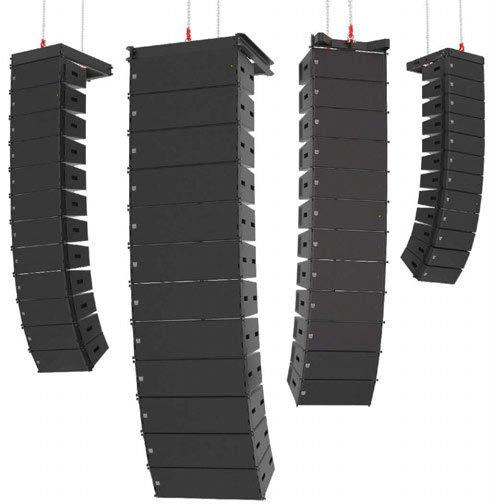
or guesswork. On the SXH218+, the same LED appears on the rear panel as well, so whether the sub is deployed in standard or cardioid configuration, positive identification is immediate. It’s a small addition that removes a real-world headache.”
Could you also describe some of the updated features in DISPLAY 3 software?
“The processing engine in DISPLAY 3 runs 27,000 times faster than DISPLAY 2. In practical terms, a complete system optimisation on a high-spec laptop takes under ten seconds; a single hang adjustment is resolved in under a second. That speed fundamentally changes how much design iteration is possible during the hours before doors open.
“Rat her than committing to a prediction and hoping it holds, engineers can model multiple configurations and refine the detail. This is particularly useful across complex festival sites where every stage has a different geometry and audience area.
“Snapshot storage is another step forward. Up to 20 optimisation snapshots can be stored per array, so when site conditions change, for example, when crowd density builds, wind shifts, or weather rolls in, switching to a precalculated solution is immediate rather than requiring full re-optimisation from scratch. Low frequency control has also been improved.
“The new goal-setting tools include a ‘Don’t Care’ zone function, which instructs the algorithm to not waste DSP on non-critical areas, and focus where it is absolutely required. Hence, if there was a zone that was less critical, this could be the designated ‘Don’t Care’ zone, whereas utilising the DSP with Hard Avoid functionality provides up to 30dB of reduction in designated areas.”
How can these updates be incorporated into rental houses’ existing stock?
“Retro-compatibility has been central to how this update has been structured. All existing Wavefront Precision inventory is forwardcompatible with the new systems, so a rental house running existing inventory doesn’t face a forced replacement cycle. For those who want the physical hardware improvements, upgrade kits are available and these add the enhanced weatherisation treatment and the LED indicator to grille components. The same applies to SXH218 owners. Critically, the DISPLAY 3 software benefits of faster optimisation, improved LF control and enhanced voicing are available to all existing Wavefront Precision owners regardless of whether they take the hardware upgrades.”
What will these updates mean for end users?
“The updates span hardware durability, field workflow, and software capability so the intent is that both existing and future partners feel the benefit from a system that is stronger, smarter, faster, and have higher precision. Stronger systems that withstand tougher conditions stay earning longer. Faster optimisation means better-designed deployments, not just quicker ones. The low frequency control improvements open up flexibility in how engineers approach line length and coverage – particularly relevant in the increasingly complex noise management environment that festival and live touring operators work within.
“The aim is that Wavefront Precision continues to be what sound system engineers reach for when the deployment demands a smarter approach with higher precision, not just raw output.”
www.martin-audio.com
EagleStrike was born from a bespoke request for a signature luminaire. It stands as the first LED-source followspot in Ayrton’s range, engineered for intensive outdoor use across long distances where precision is paramount. To create this uncompromising and unmatched extreme-luminaire, Ayrton developed an oversized 270 mm front lens that delivers a record-breaking illuminance of over 100,000 lux at 10 metres, with the beam narrowed to just 2.9°.

Illuminance at 10m > 100,000 lx
Zoom Aperture 2.9° to 43° Weight
Product Manager, Wouter Verlinden, delves into the latest addition to the lighting specialist’s fixture portfolio...
Words: Wouter Verlinden
Photo: Martin Professional
When did product development begin?
“During the development of the MAC One fixture in 2022/2023, we were already thinking about potential other family members for the MAC One family. Early in 2024, shortly after the shipping release of the MAC One fixture, the team could fully focus on the next family member, the MAC One Beam. So, initial concept investigations, including research of the LILI source, happened in 2022/2023, but the actual development started in early 2024.”
What were the initial goals when it came to designing the MAC One Beam?
“We were overwhelmed by the positive feedback we received from designers, technicians, rental companies and others on the original MAC One fixture. The low weight, extremely compact form-factor and ease of deployment in large quantities.
We wanted to keep the same family values and develop a Beam fixture in the same ecosystem. So, it was all about creating the most impactful beam fixture, while staying below 5Kg/11lbs, in MAC One dimensions, MAC One price-level and working with the MAC One rigging accessories.
“We were laser-focused to not create a feature-overloaded fixture, it had to follow the MAC One philosophy.”

Which features of the MAC One Beam do you think will appeal to lighting designers?
“Impactful beam from a very compact and lightweight fixture. Finally, a beam that can easily be deployed in large quantities. A beam that is ‘bright’ enough for most applications. And then the new three-dimensional backlight effect, which works great for those moments when you don’t need a beam and don’t want to have a ‘black hole’ in your design, but also works great combined with the beam.”
Which elements make it a robust fixture suitable for touring?
“Obviously, this fixture follows the Martin robustness and extreme testing and validation requirements. Designed and tested to survive years on the road. As we have seen with the MAC One fixture, which turned out to be a very high ROI unit for rental customers, we believe the MAC One Beam will be very similar. Being a Beam that fits anywhere...”
What are some of the ways you’ve been able to make changes to the MAC One Beam?
“This fixture was designed by our R&D team in Denmark, so it was not about ‘changing’, it was about designing exactly what we needed. This fixture carries the full Martin MAC DNA in terms of robustness, reliability, versatility, but the new innovations really came in the form of using
an automotive-grade LILI source, not used in this industry before. Enabling us to create a small, impactful and safe beam fixture. Also pushing the boundaries of how lightweight a high contrast beam fixture can be and then we pushed our creative team to come up with a new style of backlight effect.”
Where do you see the new fixture sitting in the wider family of Martin fixtures?
“It is the sibling of the MAC One fixture. So, in that sense, the smallest MAC in the range, and also the smallest Beam from Martin ever.”
What responses did this product get at ISE?
“Ever since Beam fixtures started showing up decades ago, we have all learned that demonstrating a beam fixture at a tradeshow is kind of a nightmare. Lots of ambient light, not enough throw distance, and uncontrollable levels of haze. Despite this, the responses were very positive. Customers who have seen the fixture before ISE, in an actual concert venue, were impressed and have already pre-ordered.”
Where can we expect to see the new fixture?
“The MAC One Beam started shipping from our Pecs, Hungary factory in March 2026, and with several thousands already pre-ordered we are curious to see where customers will take them.”
www.martin.com
For the third year running, Roadies in Recovery attend the TPi Awards. Joanne Croxford shares why having a presence at the event is more important than ever.
For the third year running, thanks to generous support from companies within the industry, Roadies in Recovery fundraised to buy two tables at the annual TPi Awards. The goal, as it had been for the previous two years, was to create a safe space at the ceremony for those who are in recovery and live a sober lifestyle.
Roadies in Recovery, as an organisation, began during the COVID-19 pandemic with a group of roadies from all walks of life from the touring world, getting together online for mutual aid and support to help keep themselves - and each other - clean, sober, and sane. Starting with a small group, the meeting, which they named ‘Roadies in Recovery’, held online meetings three times a week.
As this fellowship has grown, so has the outreach. “We had so many people say to us that the 2026 TPi Awards was the best year by far,” stated Croxford. “What was special was that we had representatives from the companies who had helped raise funds to purchase the tables join us for the evening.”
Crox ford was keen to thank the companies that have aided the initiative over the years, including: 4Wall Entertainment, Beat the Street, Britannia Row Productions, Christie Lites, Fly By Nite, Inner Sanctum, KB Event, Music First Partnership, Nighthawk Video, Passenger Recovery, Phoenix Bussing, Rock-it Cargo, TAG, Therapy on Tour, WTA Consulting. Croxford gave a special mention to VICTOR who funded an entire sober table. “It’s great to see how open companies have been with their support. The first year Christie Lites came in as an anonymous supporter, as they simply wanted to help, but it feels like the stigma around the topic has lifted.”
Crox ford highlighted the trend of people who would not necessarily class themselves as being ‘in recovery’, but who are pursuing a sober lifestyle and showing their support by taking a seat at the table. “It sparked so many interesting conversations during the night about how people within the industry can manage sobriety while out on the road, and it was great to have that diversity across
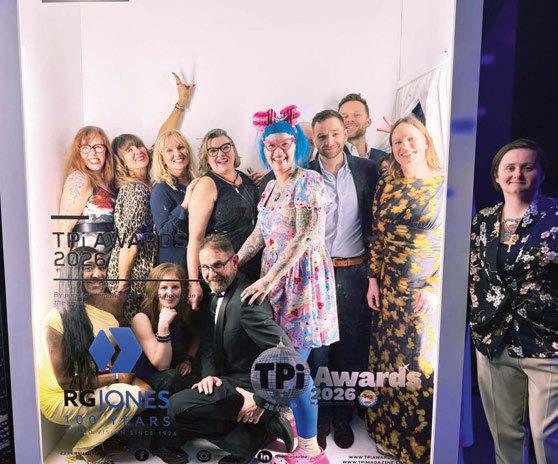
both tables,” she commented. “Our main goal at Roadies in Recovery is to help people in a 12-step programme. However, being a safe space where people can continually return has expanded organically. I had someone during the night say that we were ‘such a positive and healthy home base’ for them at the awards. They would go and find someone at another table to say hello, then come back to the Roadies in Recovery space to reset.”
Crox ford noted the surprise and joy of several people on the table ending up as winners on the night, with Suzi Green walking away with Tour Manager of the Year, as well as two representatives of Britannia Row Productions – this year’s Favourite Sound Rental Company winner – also being seated at the table. “It was also such a surprise that Hannah Brodrick [Monitor Engineer of the Year] gave us a shout-out in her acceptance video,” added Croxford. “To have people at the top of their game recognising the work that we are putting in, and the importance of our community, is such a big thing for us.”
Despite the awards being a celebratory moment for the organisation, the evening was also a chance for Roadies in Recovery to reflect on some of the realities of addiction, made particularly poignant with John Bowman appearing in this year’s Absent Friends memorial. Bowman, who was a prominent figure in the industry, working for FUSE Technical Group, tragically lost his battle with addiction in late 2025. During the Roadies in Recovery panel at THE Conference at Rock Lititz in December, friend and colleague Graham Buttrey, Labour Operations Lead and Account Executive at FUSE, paid tribute to Bowman. His ex press purpose was to put a ‘face to the name’ when discussing addiction and highlighting why communities such as Roadies in Recovery are so vital. Bowman thrived as a high-level crew chief and LED screen engineer. His thirty-plus-year career in live production made him a fixture on tours and broadcasts around the world. Revered for tireless work ethic, exacting standards and exceptional
Above: The Roadies in Recovery, table attendees at the TPi Awards. Opposite: John Bowman, notable video specialist who sadly passed away last year, with his wife Meg. Roadies in Recovery pay tribute to his memory at this year’s TPi Awards.
technical skill, he was often the go-to tech for the most demanding shows. A natural teacher and recruiter, he loved sharing his knowledge with others.
He int roduced many people into the industry, including his eldest son Christian; working side-by-side on shows most recently like Pearl Jam’s Dark Matter Tour were among his proudest moments. He believed every job bore his name and accepted nothing less than perfection, a standard that placed him at the centre of complex, high-profile productions where he consistently thrived.
Bowman’s excellence was recognised by the Television Academy when he was honoured for his contributions to the Emmy-winning Outstanding Lighting Design/Lighting Direction for a Variety Special: The Super Bowl LIV Halftime Show starring Jennifer Lopez and Shakira. His last completed gig in September, the day after his 55th birthday, was historymaking. Zach Bryan’s Quittin’ Time Tour at the University of Michigan’s Big House, set the US record for largest ticketed concert attendance.
Bowman’s direction, talents, mentorship, friendship, laughter and storytelling will be deeply missed on the road. At home, his love and legacy live on through his wife Meg and their five children – Christian (Kaci), Jordan (Paul), Peyton, Jackson and Brooke along with four grandchildren Teagan, Luna, Korbin and Silas.
“It is important to remember that people like John are ‘our’ people,” stated Croxford. “John was an integral member of our community, and he sadly lost his battle with addiction. Since he passed, I’ve spoken to his wife and we want to do as much as we can to ensure we don’t lose more people like John.”
To close, Croxford was pleased to say that, due to the immense generosity of all the supporters of the Sober Table, there was an excess of funds, which the Roadies in Recovery team has now paid forward to several industry charities. “We have sent money to the Roadie Clinic in America, as they started Roadies in Recovery six years ago. We have also given some money to Backup Tech, along with a donation to The Back Lounge, the online peer support group run by the aforementioned Suzi Green.”
Look ing ahead to the next 12 months, Croxford stated that the organisation is keen to launch a “stickers on flight cases” initiative to help spread the word about Roadies in Recovery and ensure those who might be looking for help can find it. She also encouraged anyone who would like to learn more to visit the organisation’s website. The TPi Awards looks forward to welcoming Roadies in Recovery again in 2027. www.roadiesinrecovery.com

Create your ideal lighting or speaker stand with durable base plates in various sizes and matching extension rods – or choose a complete stand from the K&M Compact Stage series. With smart design, exceptional stability, and optional weight plates, this system offers maximum flexibility for stage, rehearsal room, or studio. Convenient carrying bags ensure safe and easy transport. Discover space-saving stands tailored to your needs.

TMB coordinates with Company NA to donate thousands of pieces of truss and cable to Zinteco, one of Ukraine’s leading live event production companies, following a recent Russian bombing in Kyiv.
Words: Joan Lyman Melzig
I wanted to share a story that feels important for our industry to know. Several months ago, Zinteco – one of Ukraine’s leading live event production companies – lost their Kyiv workshops after Russian Shahed drones struck the area. Decades of investment in lighting, audio, staging equipment, and tools were destroyed.
What followed, however, was a clear reminder of how connected our industry really is. Zinteco never talked about stopping. The work they do – especially since the war began – has provided moments of normalcy and relief for audiences across Ukraine.
When news of the damage spread, companies throughout the live events community stepped in. Equipment was donated. Cables and truss were shipped. People sent what they could.
TMB coordinated with Company NA to donate thousands of pieces of truss and cable and covered the shipping. They also brought 40 of Zinteco’s Flare fixtures to the US, refurbished them, and added custom Ukraine-flag labels. Main Light has been renting those fixtures, with all rental proceeds going back to Zinteco.
There are many similar efforts, most of them done quietly. These companies aren’t looking for recognition – they’re helping because it feels like the right thing to do. Those who met
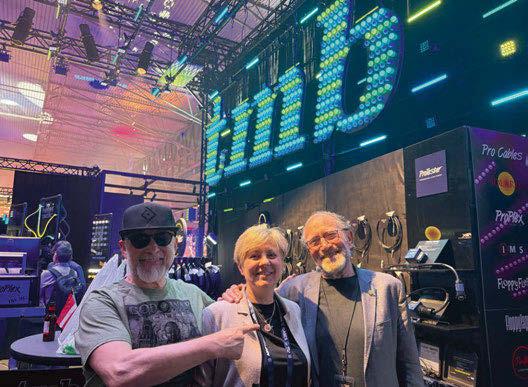
Olga Kushpitovska from Zinteco at LDI may already be familiar with the situation and may be looking for ways to help.
Shar ing the story felt like the most useful place to start. Between LDI, the holidays, and sorting out a simple way to collect support, things moved slowly, but with the new year it’s time to move forward and raise awareness.
This is a story worth sharing beyond a single crowdfunding page.
For anyone unfamiliar with Zinteco: if you’ve attended a major show in Ukraine, you’ve likely seen their work. They support everything from arena concerts to official state events. They’re the kind of crew you rely on when things get complicated. In live production, we depend on each other.
That ’s how this industry works. And when one of our own is hit hard, people step in to help where they can.
If this resonates, please consider sharing the story. Every bit of awareness helps Zinteco get back to doing what they do best – supporting live events that bring people together, even under difficult circumstances.
If you’d like to learn more, the Bring Light Back website is now live, which explains the effort and how individuals or companies can participate and help. www.bringlightback.org
Zinteco’s Stas and Olga Kushpitovska and TMB’s Colin
Following a successful AGM, Production Services Association (PSA) looks to the future..

Words: Tom Rees
Photo: PSA
It was a pleasure to welcome our members to the Production Services Association AGM at the Pestana Hotel, Chelsea in February. There’s something energising about getting our community in the same room: freelancers, employees and business owners. People who understand the pace, pressure and pride that comes with making live production happen. We heard feedback, shared progress, and left with a mandate: make membership even stronger and even more valuable. Thank you to everyone who attended, voted and contributed in-person or online.
With membership standing at over 2,500, the conversation reflected an evolving expectation from the members. 2025 saw investment in the foundations that make the PSA work smoothly: upgrading our communication, website and financial systems. It’s been hard work but valuable. The result for 2026, a more memberengaging experience, allowing everyone access to a range of growing support. Focus on service is now shaping everything we do in 2026. First and foremost, we’re strengthening industry representation even further. Making sure the realities of live production are understood by those who influence our work. We’re sharing
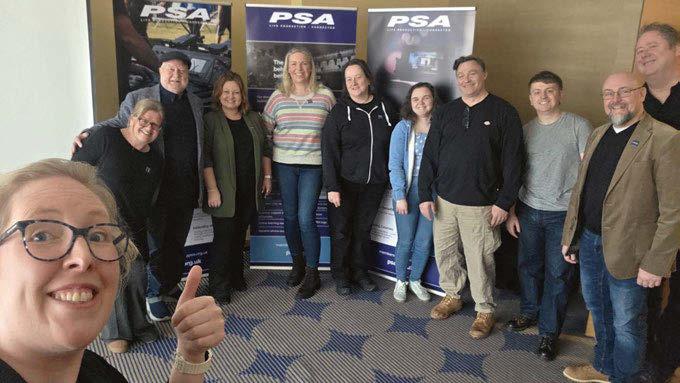
guidance, resources and updates that help members stay informed and protected, from evolving better standards to sharing information on wider regulatory developments. Alongside industry representation, we’re committed to delivering practical value in day-to-day life. PSA membership includes access to PSAdditions, helping members recover the cost of membership through discounts and deals on services such as gym membership, airport parking, insurances and cinema tickets.
We’re also continuing to negotiate partnerled industry discounts such as hearing protection, kit tracking, visa applications and wellbeing services.
Training and professional development remain a core priority. We’re particularly proud of the momentum behind our bursary scheme, now known as the Dave Keighley Bursary, which is gaining real interest across the membership. It exists to help members strengthen skills, broaden awareness and increase professional employment opportunities by contributing up to 25% of course costs (up to £250) per application. Alongside this are further training courses, webinars and online learning opportunities designed to help people
progress at every career stage, regardless of age or current position. Equally important is the support available when things get tough. Through our signposting to Stage Hand, Backup Tech, Music Support and others, we highlight available support and guidance on hardship grants, wellbeing and other resources that understand touring and freelance life.
Noting 2026, it would be remiss not to congratulate TPi on the silver anniversary of the TPi Awards. It was a fantastic night and a powerful reminder of the talent, teamwork and ingenuity that drives our industry forward. Congratulations and continued thanks are also essential to our newly elected and returning council, who volunteer their time and energy for the good of our association and wider industry.
If you’re reading this and not a PSA member, we’d encourage your involvement and support by joining. Our community is supportive, knowledgeable and passionate. The more voices we have, the stronger our representation, and the richer our collective knowledge becomes. Being part of it benefits us all professionally and personally. www.psa.org.uk
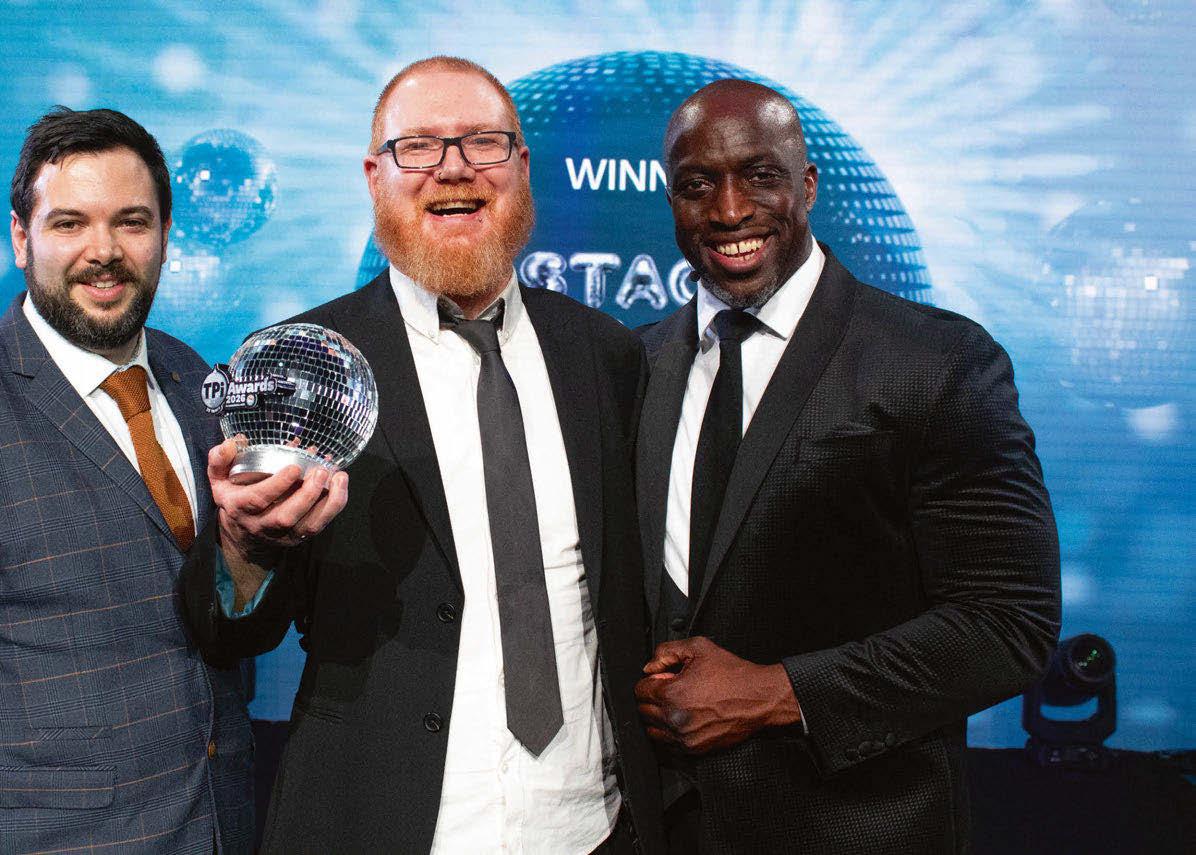
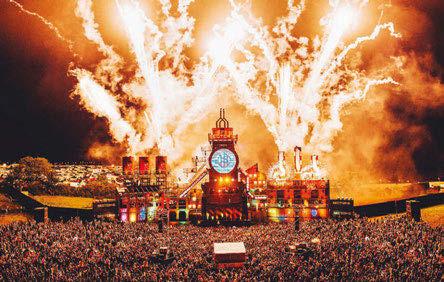
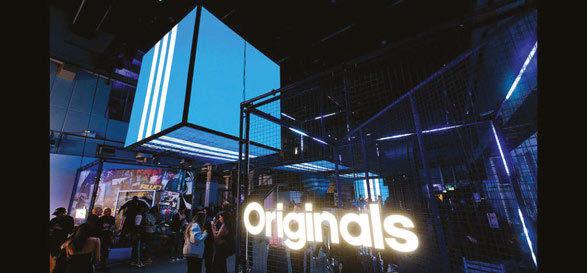
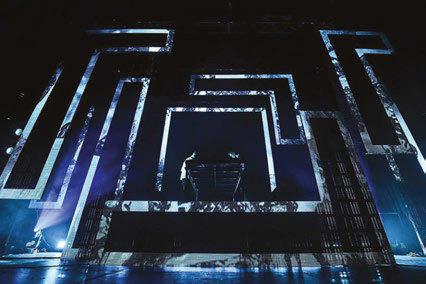
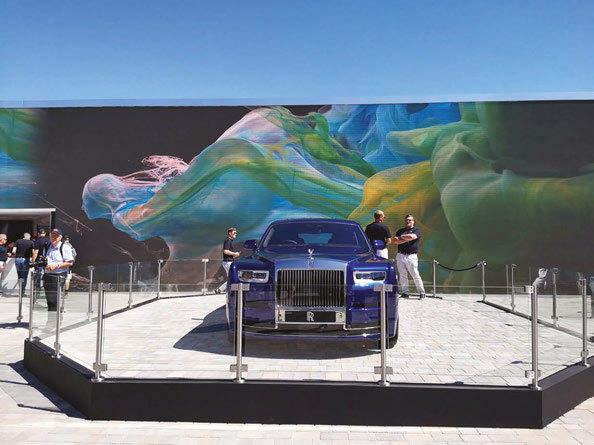
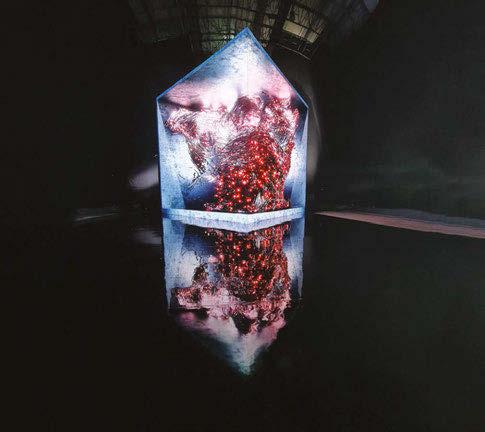
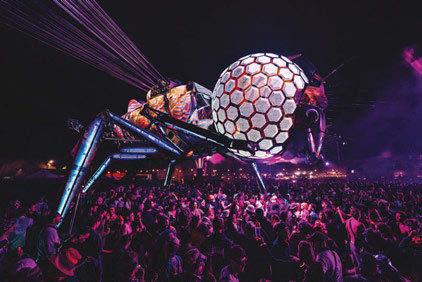






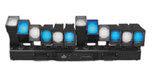




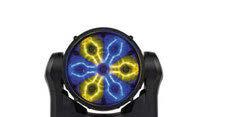











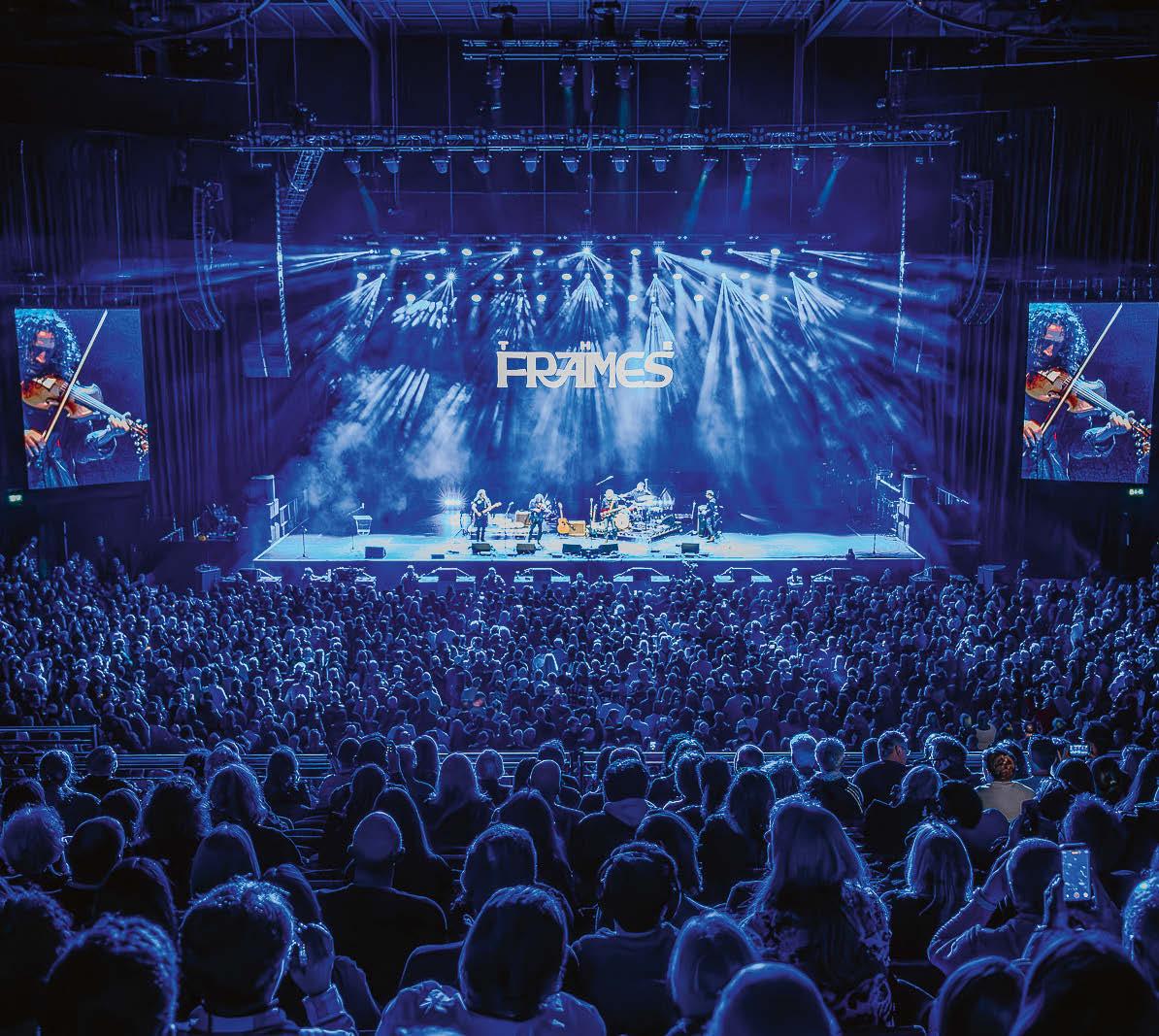

With over 25 years’ experience, Ginger Owl Productions’ Nancy Skipper shares the trials and tribulations of balancing parenting in the events industry.
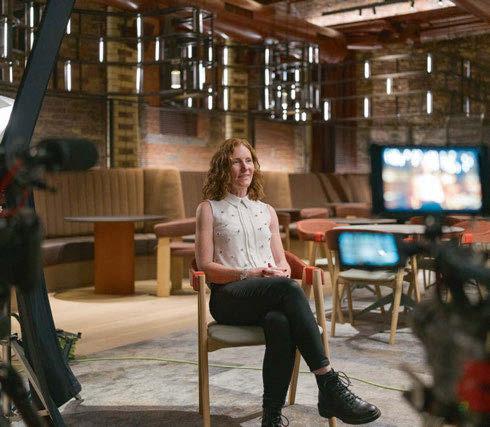
At what point did balancing career and parenting become a conversation you felt the industry needed to have more openly?
“For many years juggling parenting and managing a high workload was something I accepted as normal. I was in events before I was a parent; I accepted it as a way of life.
I knew parenting would be hard and I knew working in events was demanding, but it wasn’t until I became a single parent in 2017 that I understood how difficult managing the professional and parenting workloads would be – not just in terms of time, tiredness and managing expectations, but also the parenting guilt that comes with it. It’s only now that it’s becoming more of an open conversation across the sector as the focus seems to be switching to greater wellness and work-life balance, which is a welcome change.”
What has your experience been of balancing career and parenting responsibilities?
“I was brought up in the ‘have it all’ generation; we were told you could be a parent and run a business or hold a top job – and we believed it. The reality is that no one person can do it all – ultimately, either your work or your children miss out. When you make time for work and for family, it’s unlikely there is any time left for yourself. Events are often rigid in when and where they happen, which means I’ve missed parent’s evenings, birthday parties, and many of my children’s achievements. I’ve been fortunate that my children spend 50% of the time with their dad, who also works in a flexible way, but in a different industry.
“We learned to be adaptable; my kids have travelled with me – we all moved to Saudi Arabia to live and work there for a time. They’re used to spending time on festival sites and in venues. My daughter’s birthday falls during the week of the Teenage Cancer Trust every year – a show I have worked on since 2002. She was born in 2009, so she’s had many birthday parties at the Royal Albert Hall!”
“I also have some great clients who have been understanding, like David and Laura Farrow at DMF Music. My kids have been to Beautiful Days, a family music festival in Devon, almost every year since they were born. I used to take my oldest son to work with me if childcare fell through when I worked for Harvey Goldsmith at his office in London. I’ll never forget that one day when I finished a call I found him aged about 18 months, drawing on the boardroom wall with a banana! Harvey didn’t bat an eyelid and I’m so grateful for his support at that time.”
You recently spoke on a panel about parenting in events. What struck you most about the response to that?
“The one thing that struck me was the feeling that we are still not completely open about our parenting commitments. The overriding feeling was that we minimise the discussion of the need to take time out of the working day. I have been guilty of that in the past, concerned it to be a sign that my parenting commitments might supersede my commitment to the project. With so many different family structures, it seems surprising that parents hold back on the demands on us when so many of us are going through the same thing. Another key theme was the unsung heroes behind the scenes supporting each other to make sure all commitments are met. Partners, friends and extended family helping with pickup, dinner time, and after-school activities so no one misses out.”
How has your experience shaped Ginger Owl Productions’ working practices?
“We recognise the demands in time that we place on our teams and the sacrifices that can be required. My business partner, Julie, is also a parent, and we agree that family commitments are a priority. One of the best things about having a business with two directors is that we can step in for each other when required. We place emphasis on wellbeing and aim to be
flexible, offering as much support as possible with flexible working. We operate an open management policy; our team can manage their workloads as they need so they can meet their commitments. We encourage them to put family first; we give them the time they need if we can meet deadlines and deliver projects around it.”
Since launching GOAllAreas, what changes have you seen in how organisers approach accreditation and access management?
“Technology has advanced so much and the capabilities are growing and changing rapidly. In terms of accreditation and access management we are seeing huge growth in this area as event producers see the need for greater support in this function. The biggest benefit to using an advanced piece of technology like GOAllAreas isn’t the reduced admin, the real advantage is the data. Analysis of that data generates cost savings and helps deliver sustainability targets. It gives detailed, real-time insight allowing producers to drill down into things like catering numbers and food wastage.”
What gives you optimism about the future of the industry?
“With the emergence of new technology, we are seeing the introduction of new, bolder, grander event types and customer experiences along with the development of innovative entertainment products. There are emerging markets and new global events; big ideas are becoming reality. We’re developing young talent who are bringing youth and creativity to the sector and will be the leaders of the future. For working parents, I hope that the focus on wellbeing means they can prioritise their family commitments. I hope the sector continues to move towards becoming a collaborative, flexible environment where people can excel at work and in their family lives as parents and family members.”



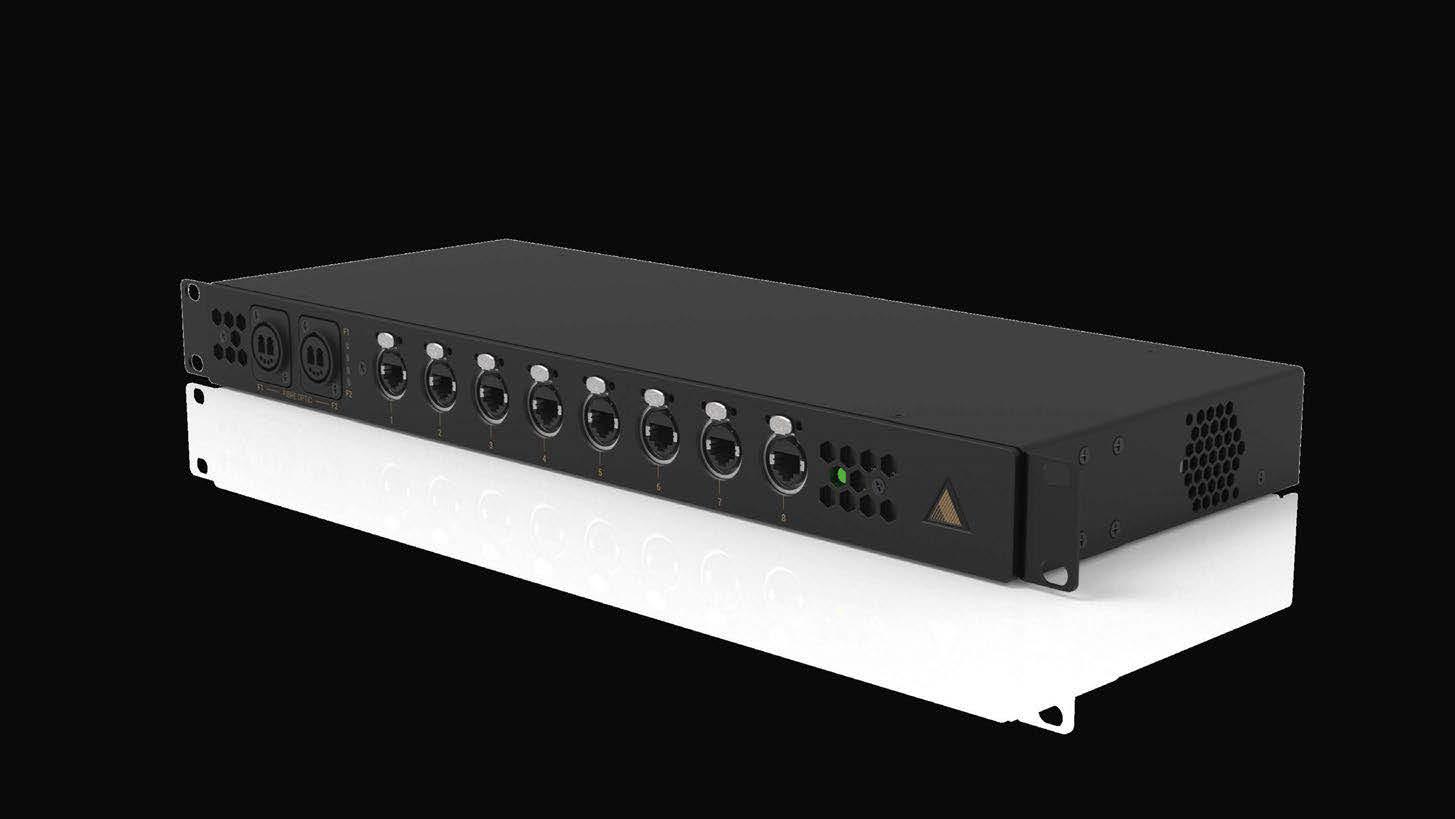
Whether deploying a redundant or primary-only network topology, the MS8.2 Milan network switch is perfectly suited to simplify mobile, installed systems and spatial audio applications.