F
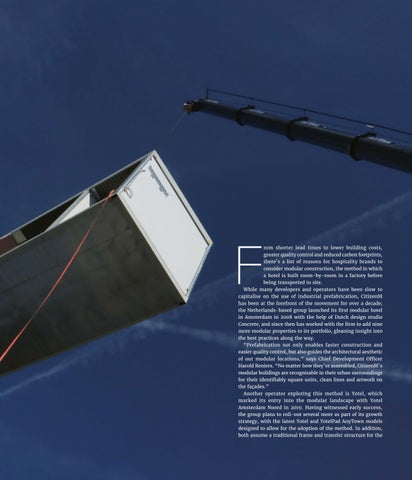
rom shorter lead times to lower building costs, greater quality control and reduced carbon footprints, there’s a list of reasons for hospitality brands to consider modular construction, the method in which a hotel is built room-by-room in a factory before being transported to site.
While many developers and operators have been slow to
capitalise on the use of industrial prefabrication, CitizenM has been at the forefront of the movement for over a decade; the Netherlands-based group launched its first modular hotel in Amsterdam in 2008 with the help of Dutch design studio Concrete, and since then has worked with the firm to add nine more modular properties to its portfolio, gleaning insight into the best practices along the way. “Prefabrication not only enables faster construction and easier quality control, but also guides the architectural aesthetic of our modular locations,” says Chief Development Officer Harold Reniers. “No matter how they’re assembled, CitizenM’s modular buildings are recognisable in their urban surroundings for their identifiably square units, clean lines and artwork on the façades.” Another operator exploring this method is Yotel, which marked its entry into the modular landscape with Yotel Amsterdam Noord in 2019. Having witnessed early success, the group plans to roll-out several more as part of its growth strategy, with the latest Yotel and YotelPad AnyTown models designed to allow for the adoption of the method. In addition, both assume a traditional frame and transfer structure for the