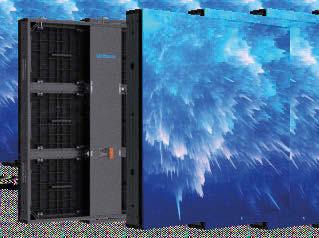
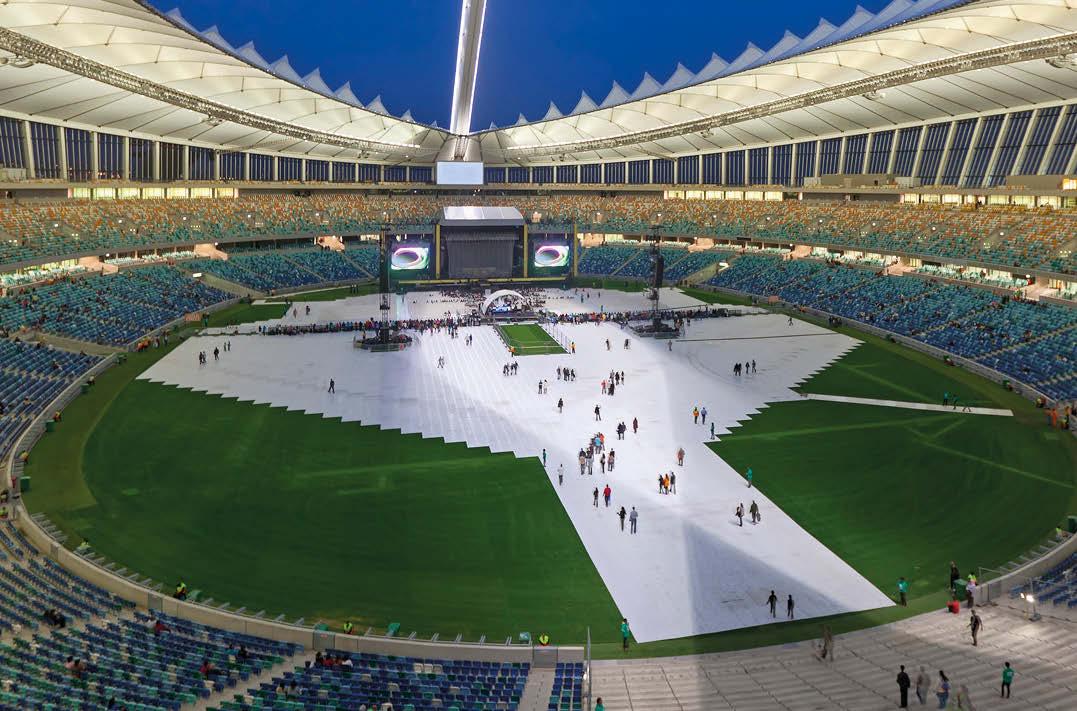
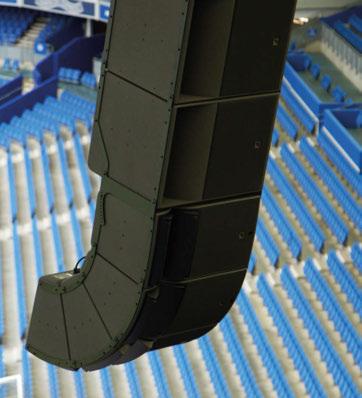
UC Berkeley’s stadium has upgraded to a Meyer Sound ULTRA system to enhance fan engagement.
VERNON DOWNS
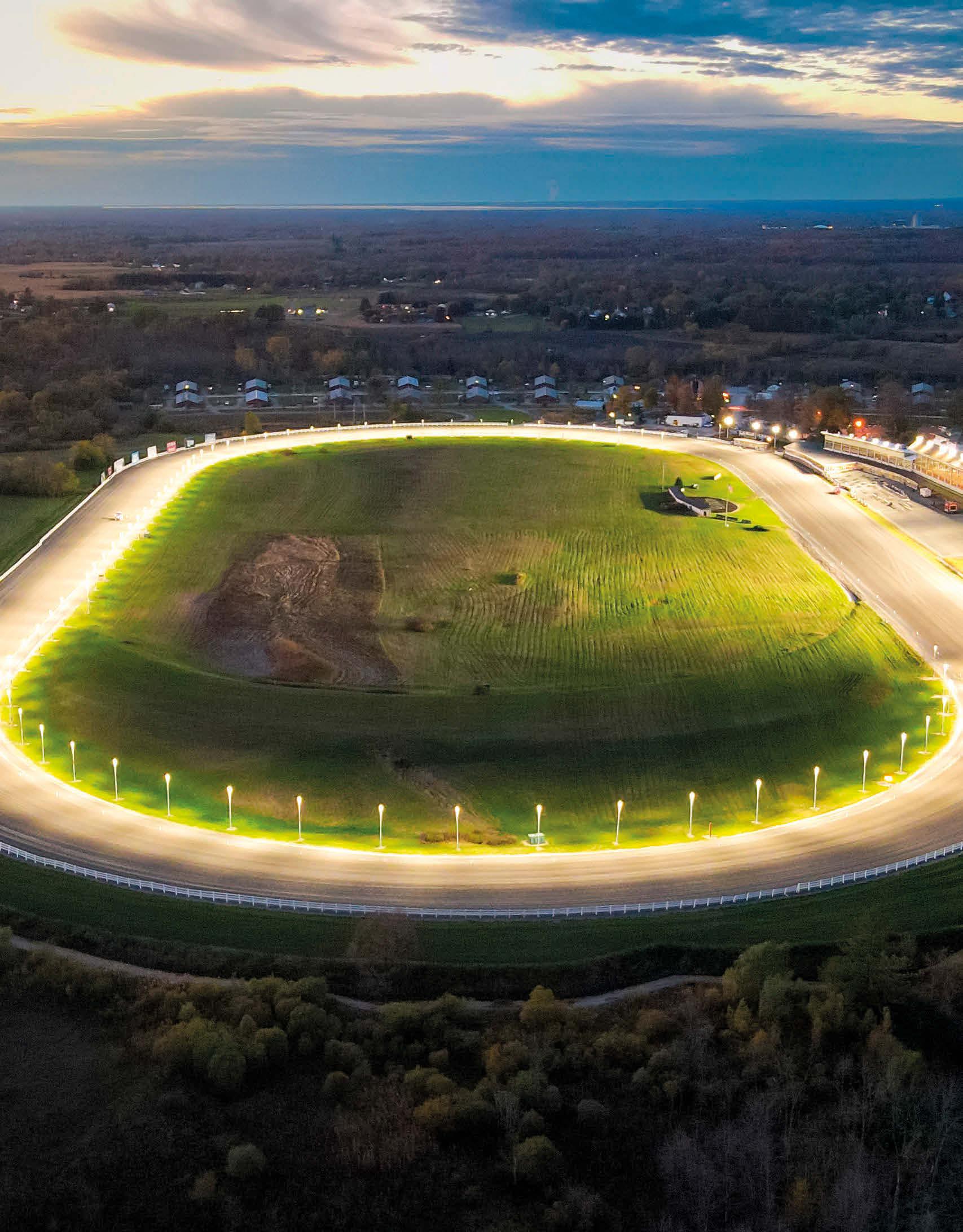
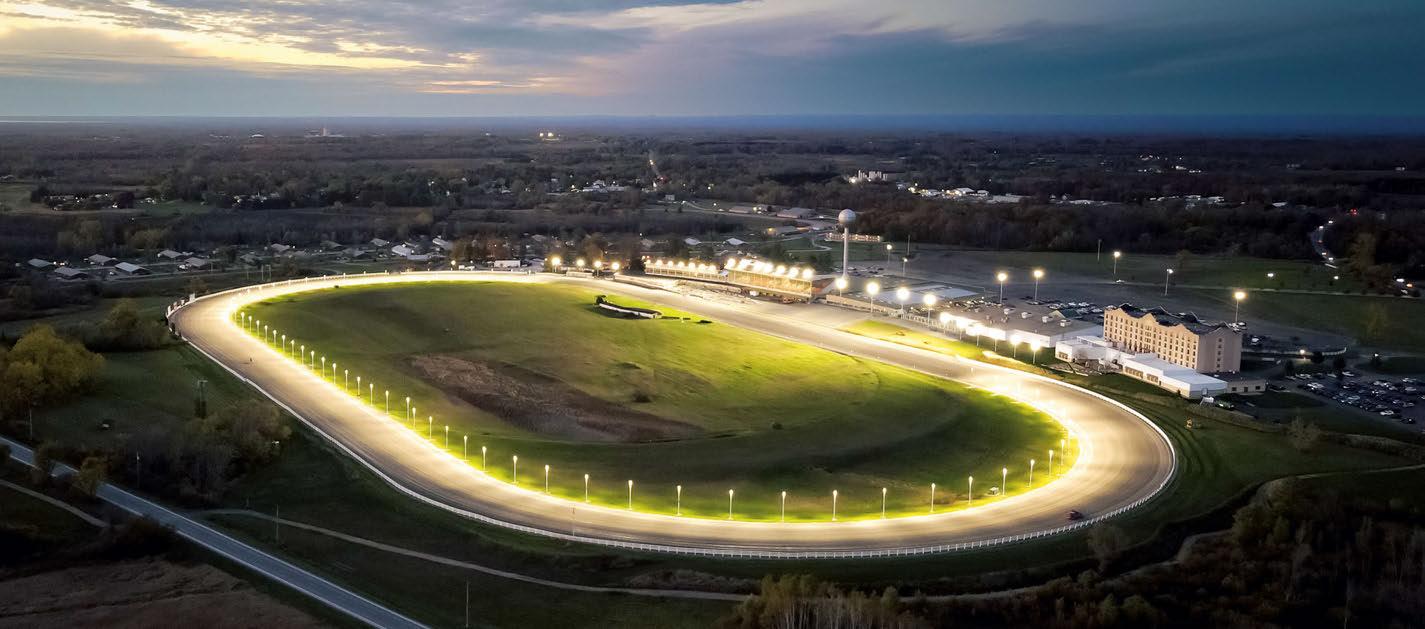
Lithonia Lighting modernised Vernon Downs Racing with an LED retrofit, enhancing safety, broadcast, and efficiency.
LALIGA ROUND-UP
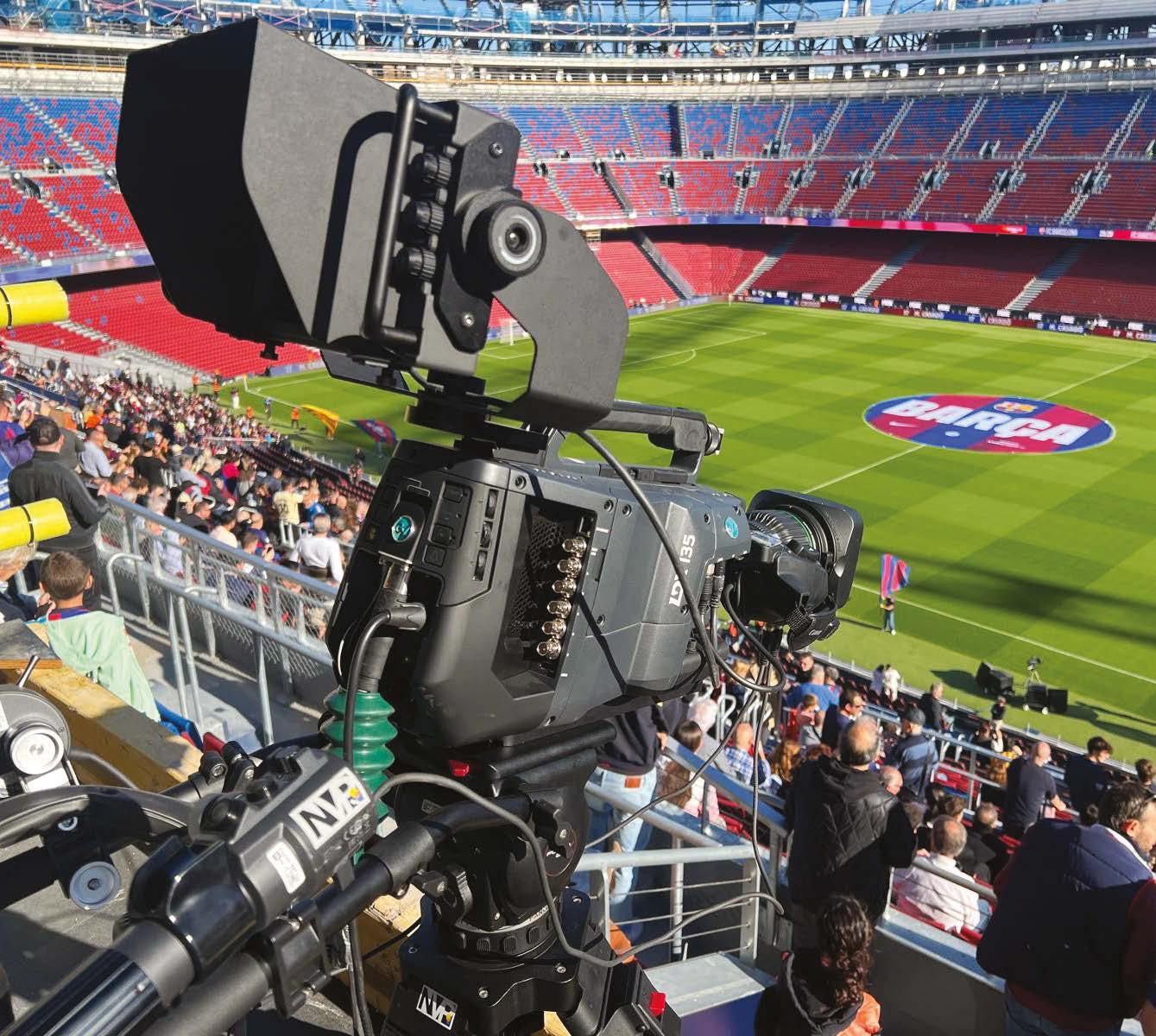
Grass Valley & NVP have deployed a 144-camera production ecosystem to elevate LALIGA’s live broadcasts.
TEAM TALK - RUSSELL PARTNERSHIP
Russell Partnership Collection explores how all-inclusive F&B models and technology are transforming stadium hospitality.
SCALABLE NETWORKING SIMPLIFIED.
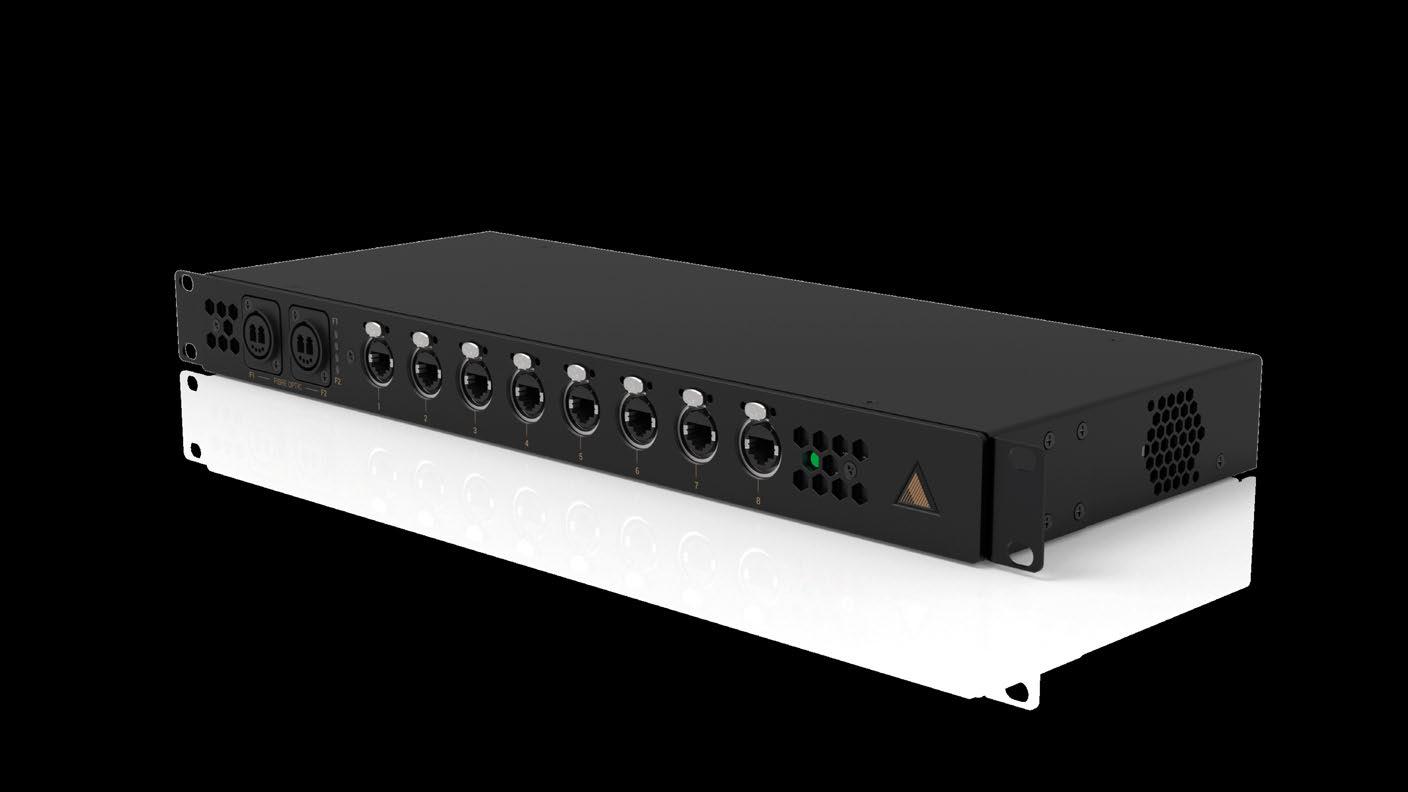
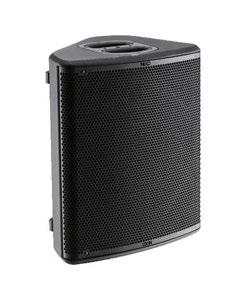
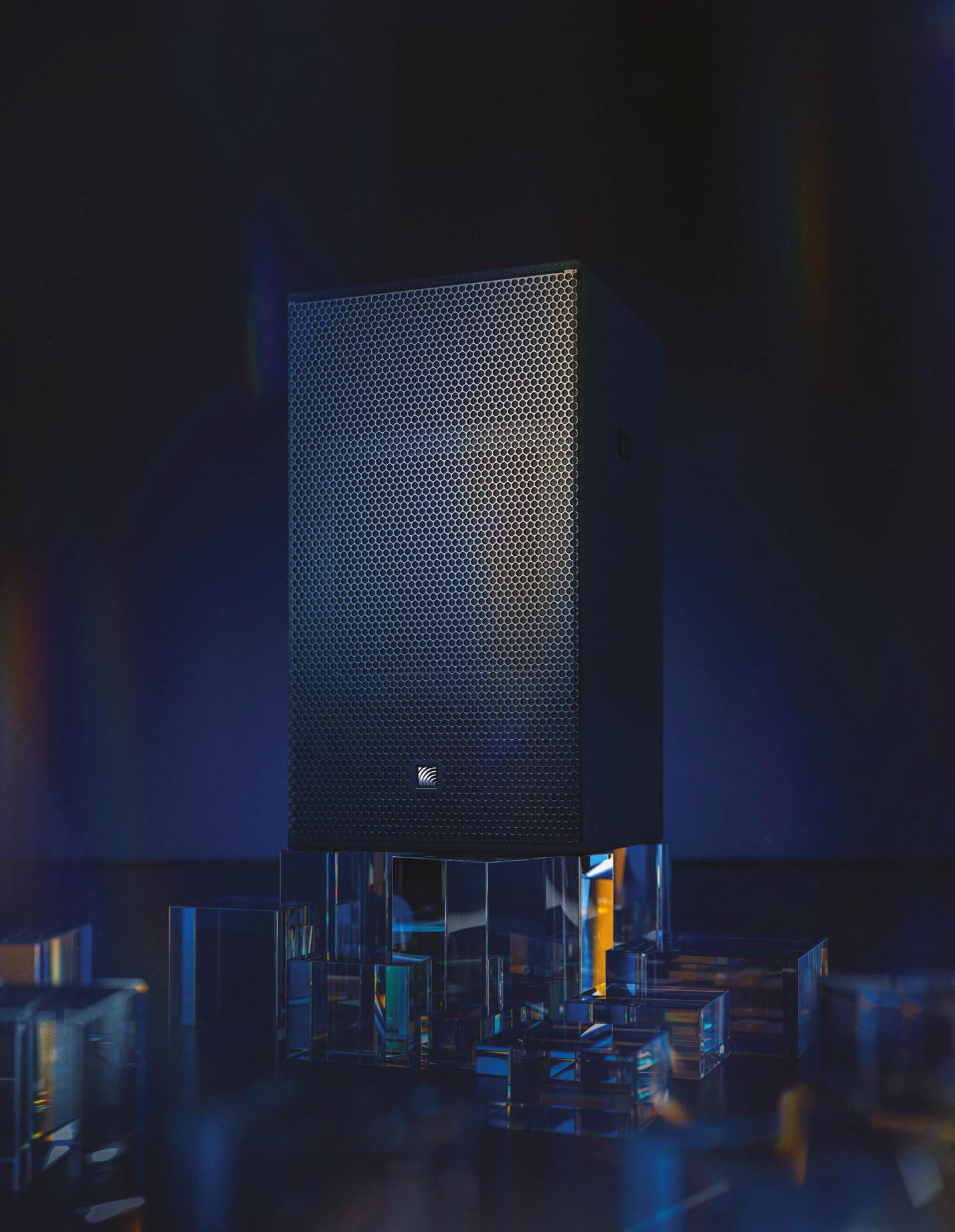
Whether deploying a redundant or primary-only network topology, the MS8.2 Milan network switch is perfectly suited to simplify mobile, installed systems and spatial audio applications.
WELCOME
e begin ISSUE 47 in the Czech Republic with our cover story on the Horácká Multipurpose Urban Arena in Jihlava. Designed by CHYBIK + KRISTOF, this urban landmark demonstrates how a 7,400-capacity venue can serve as a “good neighbour,” integrating a hotel, gym, and even a rooftop running track to activate the city centre. Inside, we go behind the scenes to explore the spectacular NEXO audio system that ensures every word is perfectly intelligible, whether for the Davis Cup or a local hockey match. Continuing the theme of transforming the fan experience, we feature the Russell Partnership Collection. Their expert analysis explores how all-inclusive F&B models and frictionless technology are moving hospitality from a background amenity to a primary driver of event satisfaction. By removing transactional friction, venues are deepening the emotional connection with their guests.
For our Team Talk, we tackle a critical commercial hurdle: roof capacity. Star Live explores why the “steel above the stage” is now a defining competitive asset. Through a case study in Mexico City, we see how retrofitting Mothergrids and smart control systems can unlock a venue’s ability to host tier-one touring productions by solving the complex rigging demands of modern, heavy LED and audio arrays.
Elsewhere, we’ve taken a closer look at NVP and Grass Valley’s massive 144-camera deployment for LALIGA, which sets a new global benchmark for live football production.
Over in the USA, Lithonia Lighting executed a comprehensive LED retrofit at Vernon Downs using 30-year-old infrastructure, while at California Memorial Stadium, a new Meyer Sound system is proving that audio is the true “emotional engine” of the game-day experience.
There’s plenty more inside, too. Enjoy!
Sam Hughes Chief Creative Officer & Editor-in-Chief
From Venue to Destination
Our award-winning team provides solutions for the most complex, large-scale, and
Chief Creative Officer & Editor-in-Chief
Sam Hughes s.hughes@mondiale.co.uk
Editorial Assistant Matt Johnson m.johnson@mondiale.co.uk
026 California Memorial Stadium | Berkeley, USA IPTV & DIGITAL SIGNAGE
034 SMH Group Stadium | Chesterfield, England LIGHTING
040 Vernon Downs | Oneida County, USA
046 Elation Round-Up | USA BROADCAST
052 LALIGA Round-Up | Spain
EXTRA TIME
060 WORK PRO Audio | CVA Series
062 Arenas as Cities: The Rise of the 365-Day Hospitality
Model | George Vaughan, The Digital Line
066 Why I nteroperability Is The Real MVP Of Sports And
Entertainment Venues | Ian Godfrey, TSL
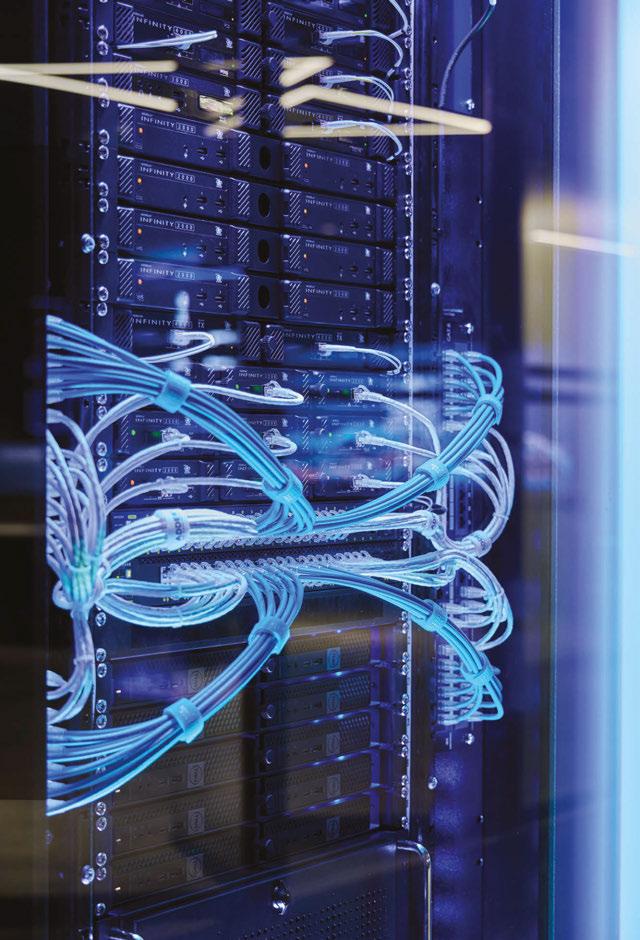
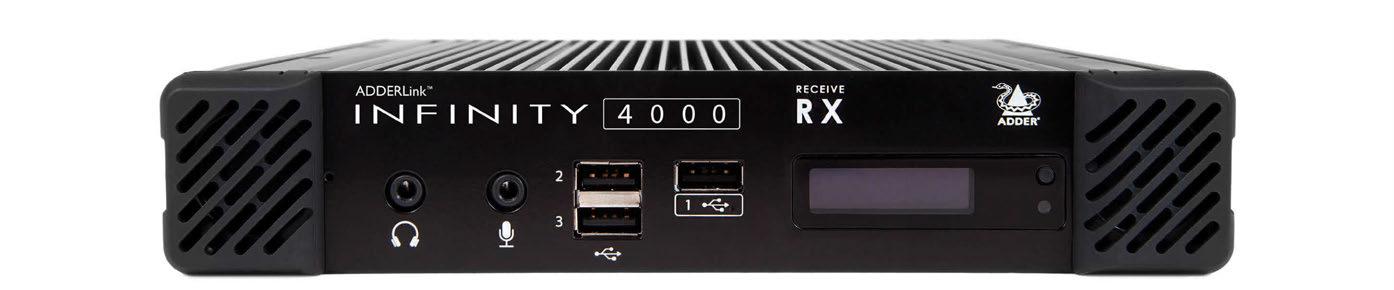
072 Behind The Screen: Powering Live Sports Production | Adder Technology
Printed By Buxton Press
Cover Image: Horácká Multipurpose Urban Arena - Pavel Bartak
WHEN THE ROOF IS THE LIMITING FACTOR: RETROFITTING MOTHERGRIDS IN LEGACY VENUES
Today’s multi-use venues are under increasing pressure to maximise event density. Calendar gaps are lost revenue. Rapid changeover is no longer a bonus – it is expected. But for many established venues, the constraint is not the pitch, the bowl, or the hospitality offer. It’s what’s above the stage area.
In the current touring landscape, roof capacity and ease of rigging are often the first criteria assessed during venue selection. If a venue cannot confidently demonstrate sufficient rigging capability in terms of capacity and feasibility, it may struggle to remain in contention for major touring productions.
Legacy assumptions vs modern demand
Many venue roofs were never designed with today’s touring demands in mind. In many cases, they were conceived purely for sport, with little consideration for concert rigging; in others, they were engineered for live events, but at a time when production loads were far lighter and less complex. Contemporary tours now bring together large-format LED walls, extensive dynamic lighting arrangements, powerful line array audio systems and broadcast infrastructure, creating loads that are not only heavier but far more concentrated.
In practical terms, this demands rigging systems that can transfer significant forces efficiently back to the primary structure. In many large sports venues, available strong points can be up to 12 metres (40 ft) apart and, in some cases, difficult to access. The challenge is no longer simply one of weight, but of how that load is safely and effectively transferred.
When roof infrastructure becomes the constraint, venues are forced into unappealing compromises: scaling back production, relying on costly temporary overlay systems such as ground support, or extending load-in and de-rig periods. In an increasingly competitive touring market, those limitations are not just technical issues; they are commercial ones. Fitting Mothergrids is increasingly emerging as the strategic response, particularly where legacy roofs are being upgraded rather than replaced. But successful Mothergrid design is not simply a structural exercise; it sits at the intersection of venue architecture, roof engineering, concert stage roof grids, and live event rigging methodology. When one of these disciplines is missing, the result can be a system that works on paper but fails commercially in practice. That risk is most evident in older venues – particularly those originally designed without consideration for
modern suspended loads.
Many legacy roof structures were never designed for today’s suspended loads, while traditional bridled rigging can introduce compression loads that existing members are not designed for.
In practice, performance is often governed as much by connection detailing as by member strength, with repetitive rigging attachment also risking damage to essential fire-resistant coatings.
In many cases, deflection limits become the controlling factor well before ultimate capacity is reached, reinforcing that Mothergrids are not simply an upgrade item, but a highly specialised intervention – one that can ultimately determine whether a venue is truly fit for contemporary live entertainment.
From assessment to intervention
In most cases, the starting point is not installation, but clarity – a detailed assessment of existing roof capacity, rigging methodology and operational constraints, benchmarked against current touring requirements. From there, the appropriate intervention can be defined, whether targeted retrofit, operational adjustment, or longer-term infrastructure investment.
This approach is best illustrated by a recent
Mothergrid upgrade in Mexico, where a carefully targeted retrofit unlocked commercial potential.
Case Insight | Mexico: Turning structural constraint into capability
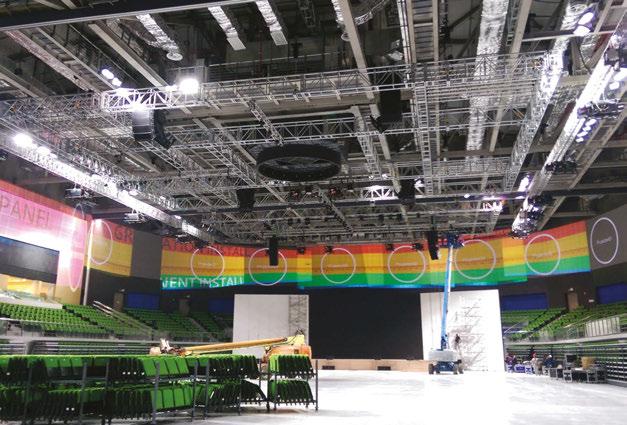
This project demonstrates how a carefully targeted retrofit can unlock significant commercial potential. Star Live brings over 20 years of experience in both Mothergrid installation and consultancy to venues considering such a move, spanning newbuild venues and legacy conversions. In some instances, this has included retrofitting Olympic venues within a year of their original construction, such as Beijing (2009) and London (2013). At the other end of the spectrum, more recent work has focused on much older infrastructure, including a major upgrade to a venue originally built for the 1968 Olympics.
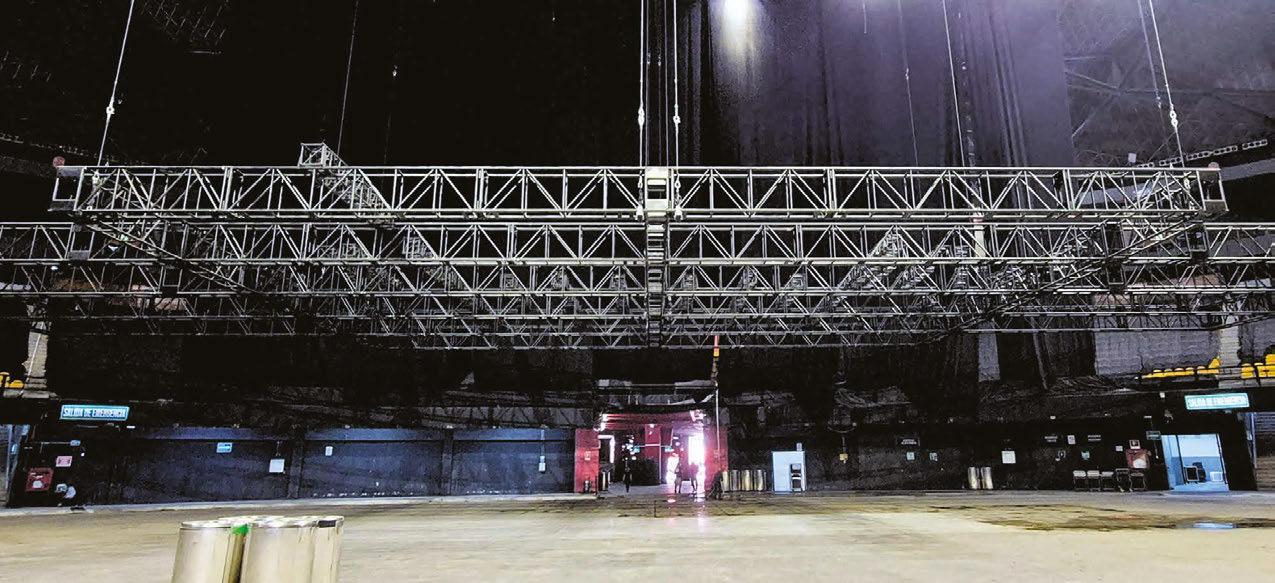
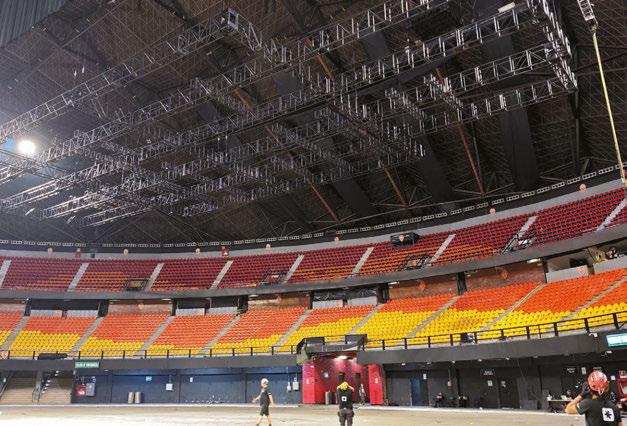
The Palacio de los Deportes in Mexico City is a well-established concert venue, defined by its 120m-span domed roof. Despite its prominence, the structure has long presented challenges for rigging, with processes historically slow, complex, and labourintensive. Through detailed assessment of the available engineering data, a 950 sq. metre (10,200 sq. foot) Mothergrid was introduced,
designed to work within the constraints of the existing structure.
The objective was clear: to enable faster rigging, fully verifiable for loads applied to the roof, reduce the extent of work at height and reduce the reliance of expensive large boom lifts, all without compromising overall capacity above the stage. The challenge lay in the roof itself. Previously strengthened, it offered limited capacity at each main node point, typically spaced up to 14 metres (46 ft) apart and positioned at varying levels due to the dome geometry. This made conventional rigging challenging, slow and difficult to verify for safety.
The installed solution redefined the rigging approach. All points are now configured as dead-hangs from the Mothergrid, supported by an array of movable spreader (spanner) trusses that allow loads to be positioned precisely where required. Central to this system is the control architecture. Star Live’s proprietary smART™ system, based on industrial PLC technology, continuously monitors both the position of, and load on, each hoist. By preventing movement when loads are exceeded or misaligned, the system protects the integrity of the structure while enabling real-time verification of production loads during installation. For operators and
incoming productions, this provides greater confidence in rigging accuracy, reduces risk during installation, and supports smoother technical approvals.
The proprietary smART™ control system is connected to Star Live’s HQ in the UK, enabling online 24/7 technical support to be provided.
Importantly, the works were phased between scheduled events, ensuring uninterrupted venue operation.
The impact was immediate: reduced reliance on temporary overlay for large-scale productions, streamlined rigging approvals, improved turnaround times, and greater confidence during the advance process. The reduction is access equipment requirements and rigging calls is a direct commercial benefit for every show. For the operator, this translated into measurable operational efficiencies and a strengthened position within the competitive touring market.
Getting it right from the start
While retrofit remains critical for many legacy venues, new-build projects offer the opportunity to integrate rigging infrastructure from the outset. Quite often, these requirements are only fully considered once structural design is already well advanced.
However, where rigging strategy is considered early – alongside roof design and long-term operational use – venues are better positioned to support current touring production without compromise.
As production demands continue to evolve, early coordination between design teams, venue operators, and live event specialists – spanning rigging, production, and broadcast – will be critical. Often, these disciplines are not fully integrated; bridging them requires a joined-up understanding of venue architecture, structural design, and live event delivery to ensure new venues remain technically capable and commercially competitive.
Investment in roof infrastructure is often perceived as a technical consideration, but in practice it functions as commercial
infrastructure. Enhanced Mothergrid capability unlocks access to tier-one touring productions, while reducing operational complexity and reliance on labour- and plant-intensive overlay, improving turnaround efficiency with shorter load and de-rig windows, and strengthening safety governance and compliance. For operators, this translates into improved utilisation of event calendars and greater confidence in delivering complex productions efficiently and safely.
In an increasingly competitive touring market, this level of capability is no longer a specialist feature – it is baseline expectation. For legacy venues, intelligently retrofitted Mothergrids can extend commercial lifespan and realign structural performance with contemporary production demands. The steel above the stage may not feature in marketing imagery, but in the contemporary multi-use venue, it increasingly defines what is possible below. Where adaptability drives revenue, roof
infrastructure is no longer hidden engineering – it is a defining competitive asset. For venues looking to upgrade or futureproof their capability, early engagement with specialists who understand venue architecture, structural engineering and live event delivery is critical to getting it right.
stargrouplive.com
FROM TRANSACTIONAL TO EXPERIENTIAL: THE FUTURE OF F&B IN GLOBAL STADIA
ounded in 1989 with a vision to create a positive difference across the food and hospitality sector, over three decades later, we’re proud to have lead, developed strategy and operated with some of the world’s largest global events, including the London 2012 Olympic Games, Sochi 2014 Winter Olympics, 2015 and 2019 Rugby World Cups, Expo 2020 Dubai and the 2018, 2022 and 2026 Commonwealth Games.
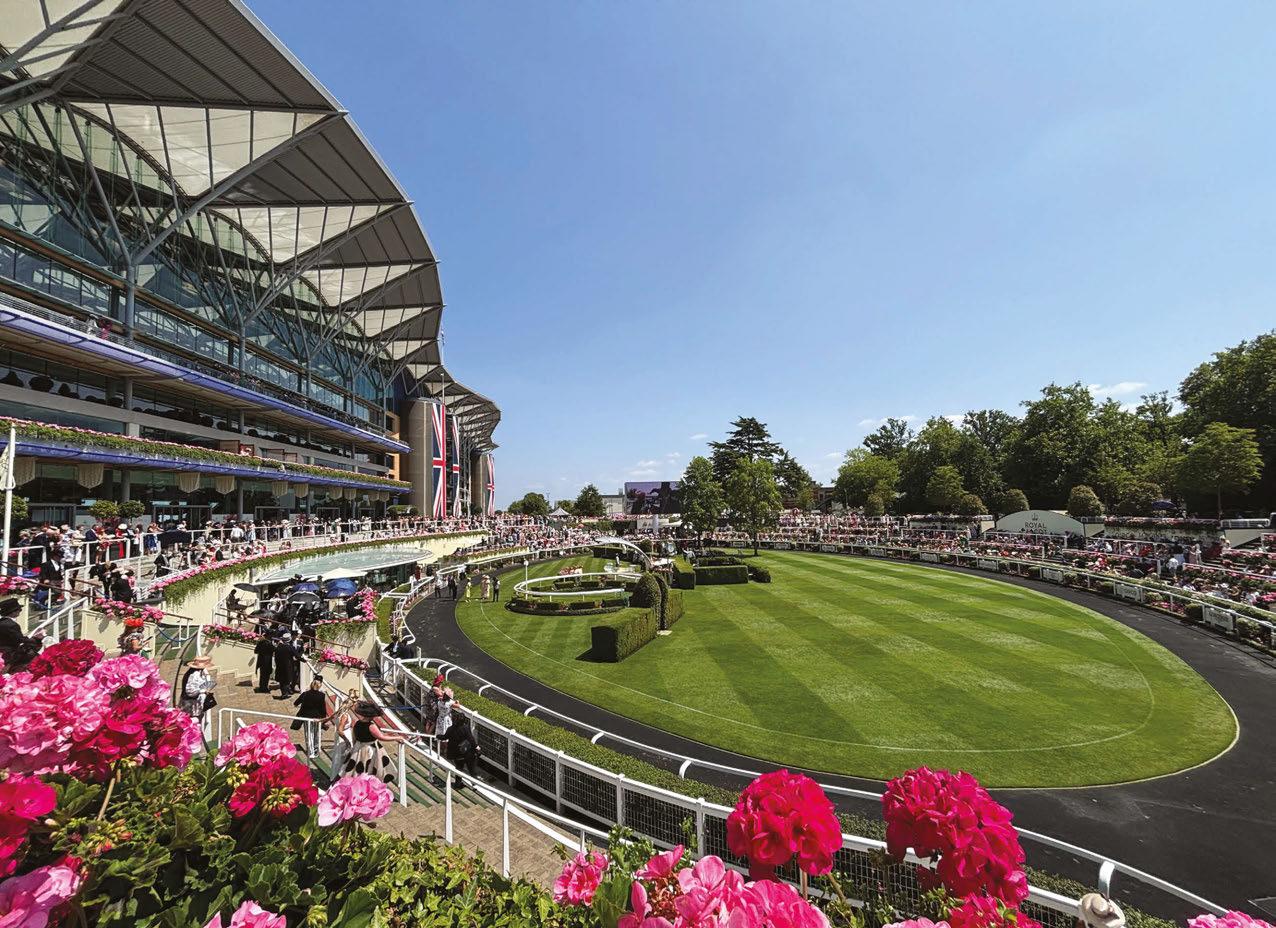
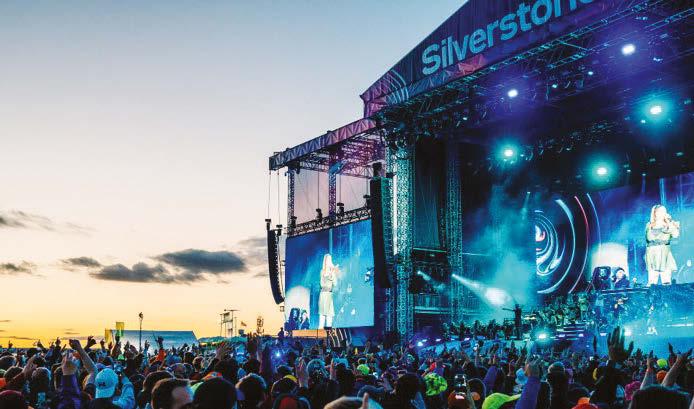
Today, we continue to deliver strategic consultancy and operational support globally, across multiple sectors including business, government, higher education, major events, conference and hotels. We have the privilege of working worldwide with clients and operators across stadia and events including Silverstone F1 British Grand Prix, Wembley Stadium, the R&A Open Championship, Royal Ascot, LIV Golf and the Jockey Club to name a few.
As independent industry specialists, our services range from developing long-term F&B strategy / masterplans to delivering future partner procurement processes. Contract evaluation, commercial modelling and operational efficiencies are also key services we deliver for clients as venues develop longer term partnerships with operators and maximise the commercial and revenue impact to the bottom line.
How has F&B / hospitality industry changed post pandemic?
Since the pandemic, food, beverage and hospitality has shifted from being a background amenity to becoming a centrestage driver of the modern event experience. Whether at a sports game, concert, conference, or festival, what guests eat, and drink plays a defining role in how they perceive and remember an event. Today, fans and attendees expect more than entertainment, they want memorable, meaningful, and high-quality culinary moments that complement the event itself. As a result, stadiums, arenas, and live venues worldwide are investing heavily in elevated food and beverage offerings that shape how people feel, engage, and return. One of the significant shifts is the transition towards localisation and authenticity. Rather than relying on generic fast-food staples, venues are showcasing flavours that reflect their city or region: local breweries, artisanal producers, iconic street-food dishes, and chef-led concepts. This not only enhances the sense of place but also deepens emotional connection, turning a visit into a richer, more personal experience.
Equally transformative is technology. Whilst education to the public is still required on usage, mobile ordering, self-checkout kiosks, and frictionless payment systems can
dramatically reduce waiting times, driving labour efficiencies and deliver customers more freedom to enjoy the event. These innovations have the ability to streamline crowd flow and alleviate some of the most common fan frustrations, such as missing key moments due to long queues. Convenience has become a form of hospitality - and fans are increasingly prioritising this as part of the wider customer experience.
Sustainability has always been a defining factor with venues embracing reusable cups, eco-packaging, reduced waste initiatives, and responsible sourcing. Guests increasingly value brands and spaces that reflect their environmental expectations.
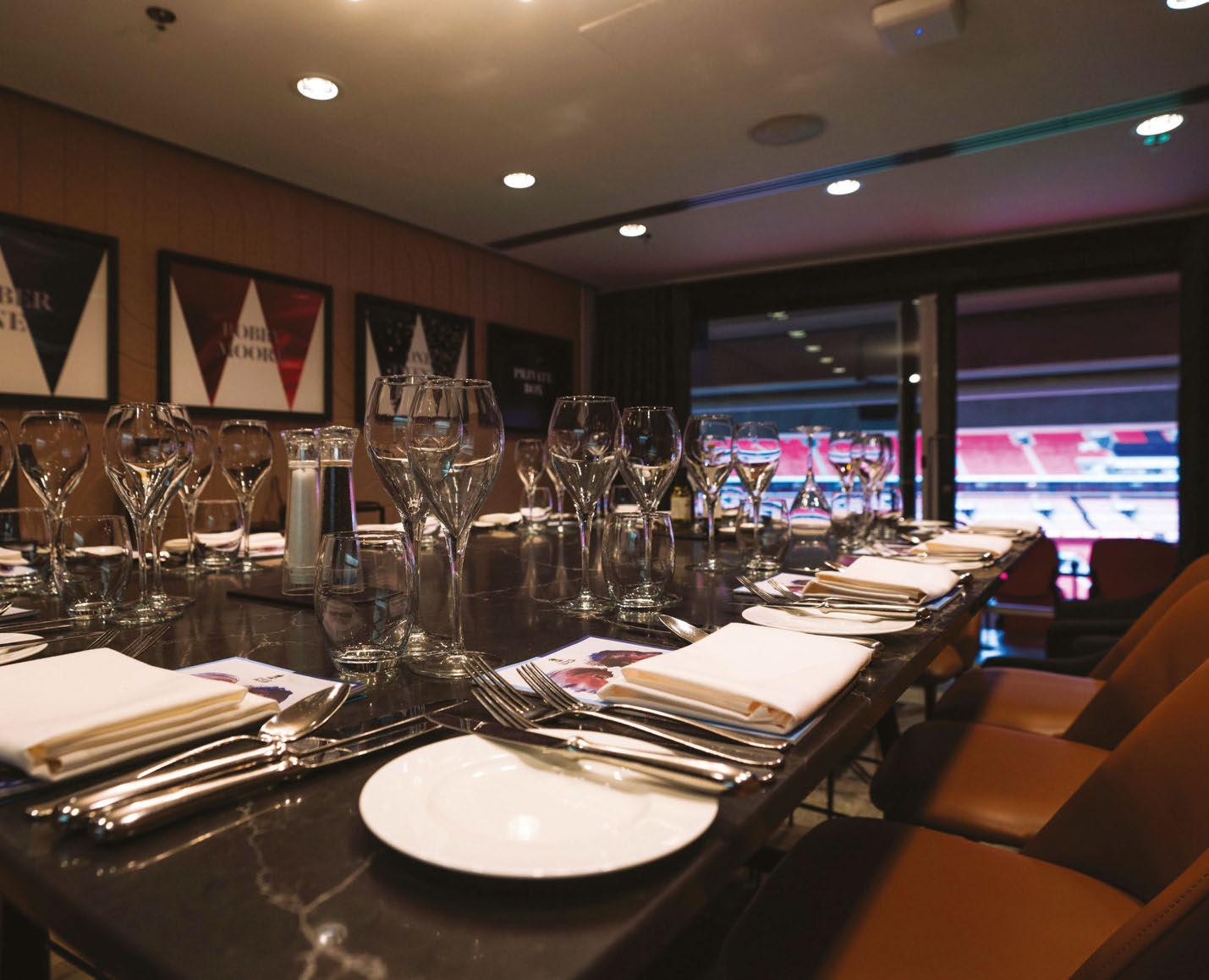
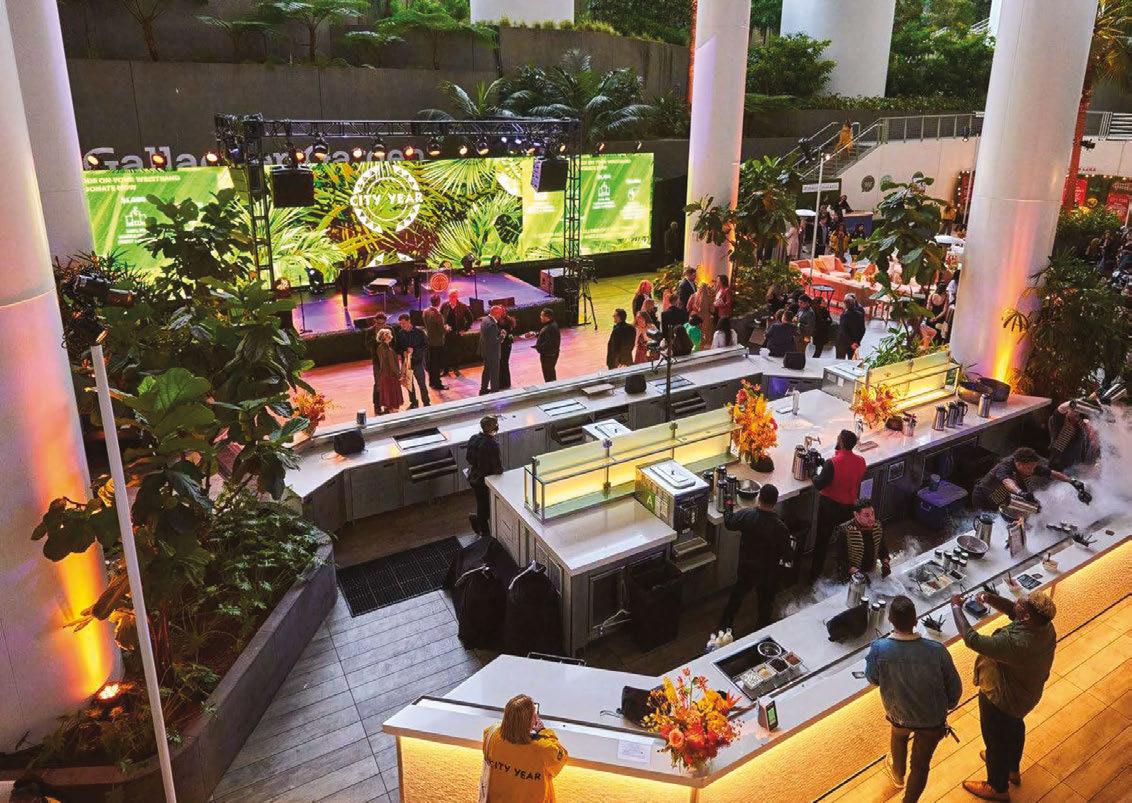
Food and beverage are also central to premium and hospitality experiences, with the quality of the hospitality area often shaping whether a fan buys a premium ticket or chooses a venue for a corporate outing. VIP memberships, Tunnel clubs, social lounges, craft cocktail bars, tasting rooms, and themed dining offers add layers of comfort and exclusivity. These spaces encourage longer dwell times, higher spending, and greater customer satisfaction and are increasingly replacing the traditional approach of a 12-seat hospitality box.
In an increasingly competitive events landscape, food and beverage are no longer optional enhancements. They are central
pillars of the overall guest journey, capable of transforming a standard event into an immersive, meaningful and memorable experience.
What will the future UK Stadia F&B / hospitality experience look like and who will be the first to adopt a fully all-inclusive F&B / ticket offer?
The traditional stadium experience in the UK has long been defined by queues, halftime rushes, and a limited choice between pies, chips, and beer. But a major shift is underway as consumer expectations evolve and competition for leisure time intensifies, stadium operators are reimagining food and beverage (F&B) not as a transactional necessity, but as a core part of the entertainment experience. At the heart of this transformation is the rise of premium spaces featuring a limited offering or all-inclusive F&B models - a concept that is set to redefine how fans engage with live sport over the next decade.
From Transactional to ExperientialHistorically, stadium F&B has been designed to focus on high-volume, high-margin revenue
generation within short time windows. The all-inclusive model flips this logic. Instead of fans paying per item, they pay upfront (often through premium tickets or hospitality packages) for unlimited or curated access to food and drink throughout the event.
This shift aligns with broader trends in hospitality and travel, where consumers increasingly value convenience, predictability, and experience over individual transactions. In a stadium context, it removes friction: no queues, no repeated payments, and no decisions under time pressure. The result is a smoother, more enjoyable matchday.
Tiered All-Inclusive Experiences - The future of all-inclusive stadia in the UK will not be a one-size-fits-all. Instead, it will operate across multiple tiers including Fully All Inclusive Premium hospitality - Highend packages featuring chef-led menus, fine dining, and unlimited drinks in exclusive lounges or pitch-side settings, GA Plus / Mid-tier inclusivity -Access to a curated range of food stations, street food vendors, and beverages included within upgraded ticket categories and General admission enhancements - Even standard ticket holders
may see partial inclusivity, such as bundled food-and-drink credits or “all-you-can-eat” zones and brand activations. This tiering allows clubs to maximise revenue while broadening access to elevated experiences at multiple consumer price points.
Food Quality Becomes a Differentiator - Allinclusive models demand higher food quality. When fans are no longer paying per item, the perceived value shifts from price to experience. As a result, stadiums are investing in diverse, rotating menus, partnerships with local food vendors and independent brands and fresh, made-to-order concepts rather than pre-prepared items. The aim is to transform stadium dining into something comparable with high-street food halls or casual dining destinations. In this model, food is not just sustenance, it becomes part of the reason fans arrive early and stay late.
The Role of Technology - Technology is already evolving the customer experience and will play a critical role in enabling scalable all-inclusive experiences through Digital ticketing integration - Access to food and drink tied directly to ticket type, Smart
tracking systems - Monitoring consumption patterns to optimise supply and reduce waste and Mobile ordering and delivery - Even within all-inclusive environments, fans expect convenience and personalisation. There is power and control available through leveraging data for strategic decision-making. Venues being able to strategically interpret and utilise their data, will continue to be highly valuable to ensure what is being delivered, matches the planned offering and margin. Understanding what fans consume, when, where and how often, allows operators to refine offerings, manage costs, and tailor experiences at an individual level.
Sustainability and Waste Management - One of the challenges and opportunities within all-inclusive F&B operation is sustainability. Unlimited consumption models risk increasing food waste, but future stadia are already addressing this through tasting portion sizes with the option to return, more data-driven production to match real demand, reusable or compostable packaging systems and menus designed to utilise lower-carbon ingredients. In many cases, all-inclusive models may reduce waste compared to traditional systems by enabling enhanced forecasting and eliminating overproduction driven by uncertain demand.
Operational Challenges - Providing allinclusive F&B at scale is complex and venues are tasked with balancing speed with quality, handling sharp demand peaks during halftime, and managing staffing and kitchen logistics
efficiently. All of this is while maintaining cost control in a model where consumption is inherently less predictable. To address this, future stadiums are being designed with modular kitchens, distributed food points, and flexible service areas that can adapt to different crowd flows and event types.
Beyond Matchday / The 365-Destination
Model – Not every stadia / venue has a desire to be a 365 destination, however, all-inclusive concepts will not be limited to matchdays. As stadiums evolve into multi-use venues, these offerings will eventually extend to concerts and large-scale events, corporate hospitality, conferences and community and leisure experiences. This creates new revenue streams and positions stadia as year-round destinations rather than occasional venues aiming to capture and maximise the match day window only.
A New Fan Mindset - Perhaps the most important shift is psychological. Allinclusive models are already beginning to change how fans think about consumption. Instead of rationing time and money, they are free to explore, try new options, and engage more fully with the environment. This will lead to longer dwell times, a higher overall satisfaction and a stronger emotional connection to the venue. In a competitive entertainment landscape, these factors are critical
The future of all-inclusive food and beverage in UK stadia represents a fundamental rethinking of the matchday experience. It is
not simply about offering more food or drink, it is about removing friction, elevating quality, and integrating hospitality into the core of live sport. As technology, design, and consumer expectations continue to evolve, all-inclusive F&B will move from a premium add-on to a central pillar of stadium strategy. For clubs and venue operators, the challenge will be delivering these experiences at scale while maintaining profitability and sustainability. For fans, the reward will be a richer, more seamless, and a more memorable day out.
In the years ahead, the question will no longer be whether to buy food at the stadium, but how the stadium itself becomes part of the culinary experience. We look forward to seeing which venues and which live events have the confidence, insight and strategy to go first… We are delighted to have been creating a positive difference for over 36 years. Built from the roots of the United Kingdom, our business has expanded across the globe, now capable of delivering food, technology and wellbeing consultancy and support internationally. You’ll find our professional, friendly team based in London, Oxfordshire, Dubai and across the United States and Canada and we are excited to be attending Stadia Sessions and look forward to meeting all attendees. To speak to our expert team visit; www.russellpartnership.com
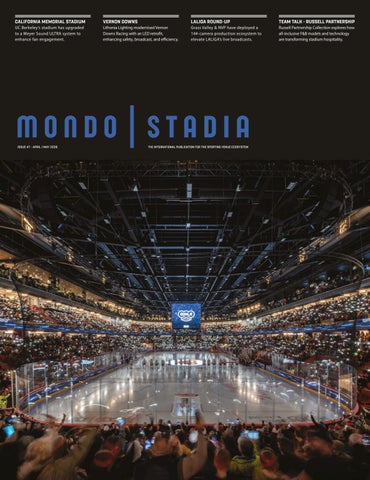
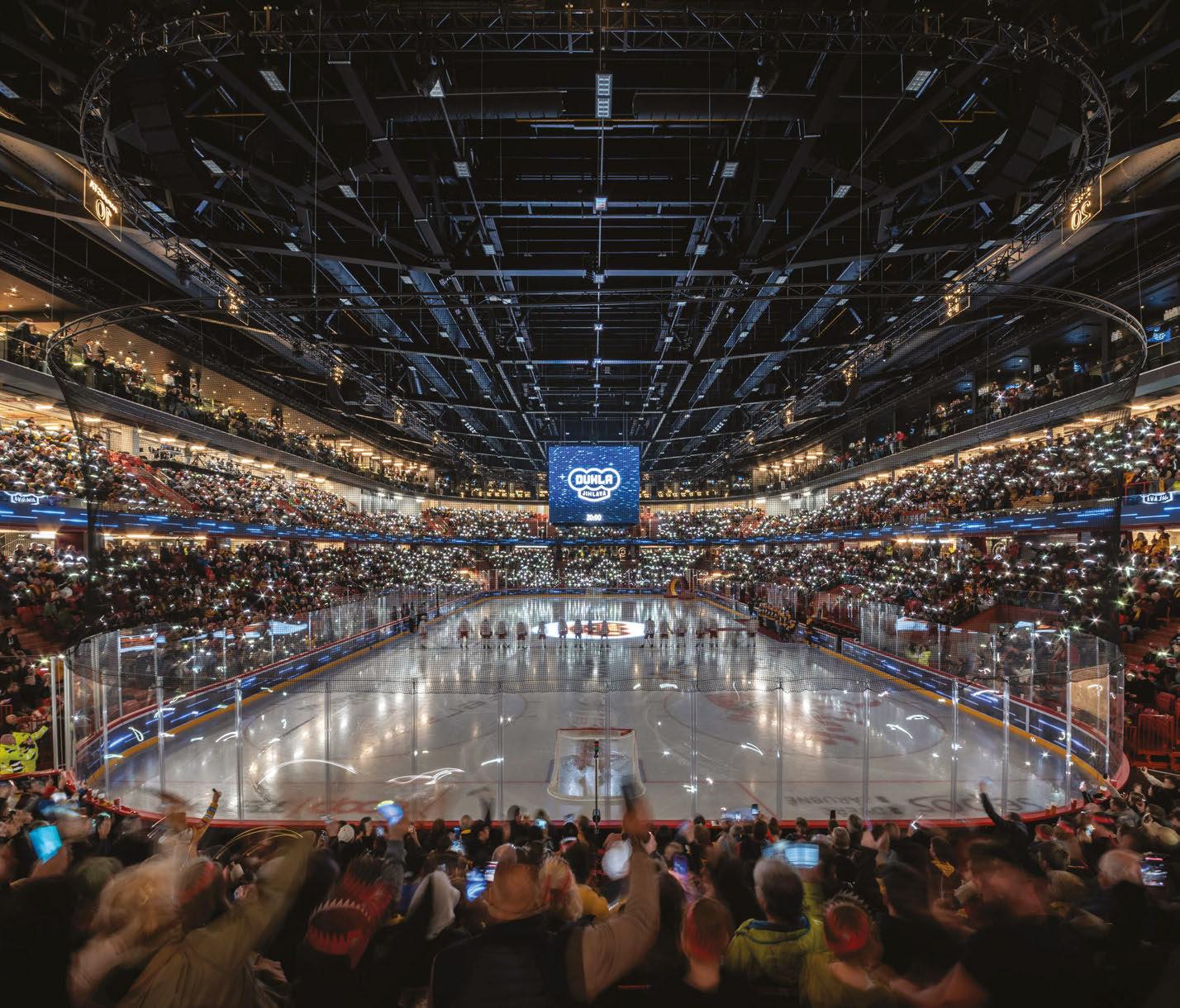
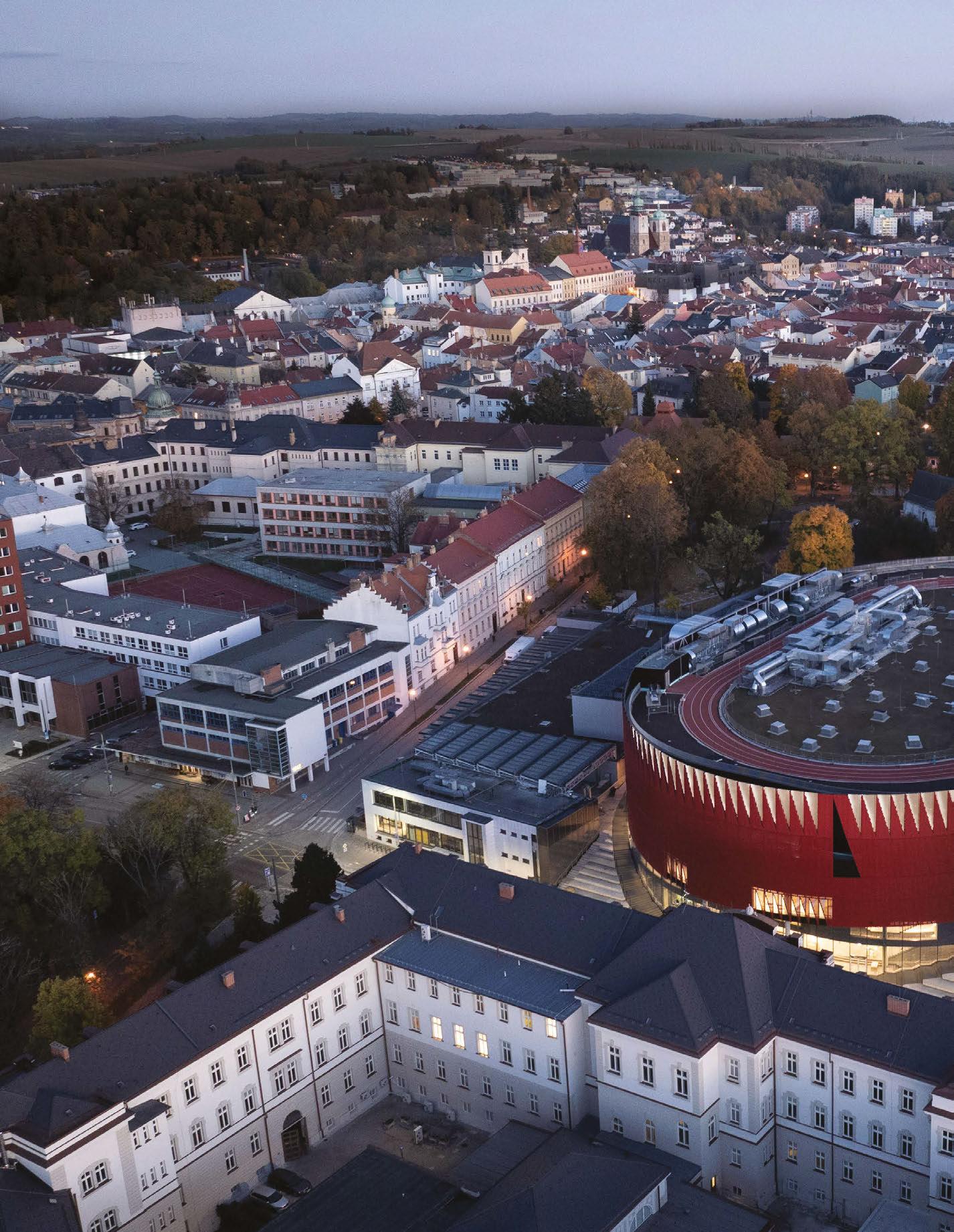
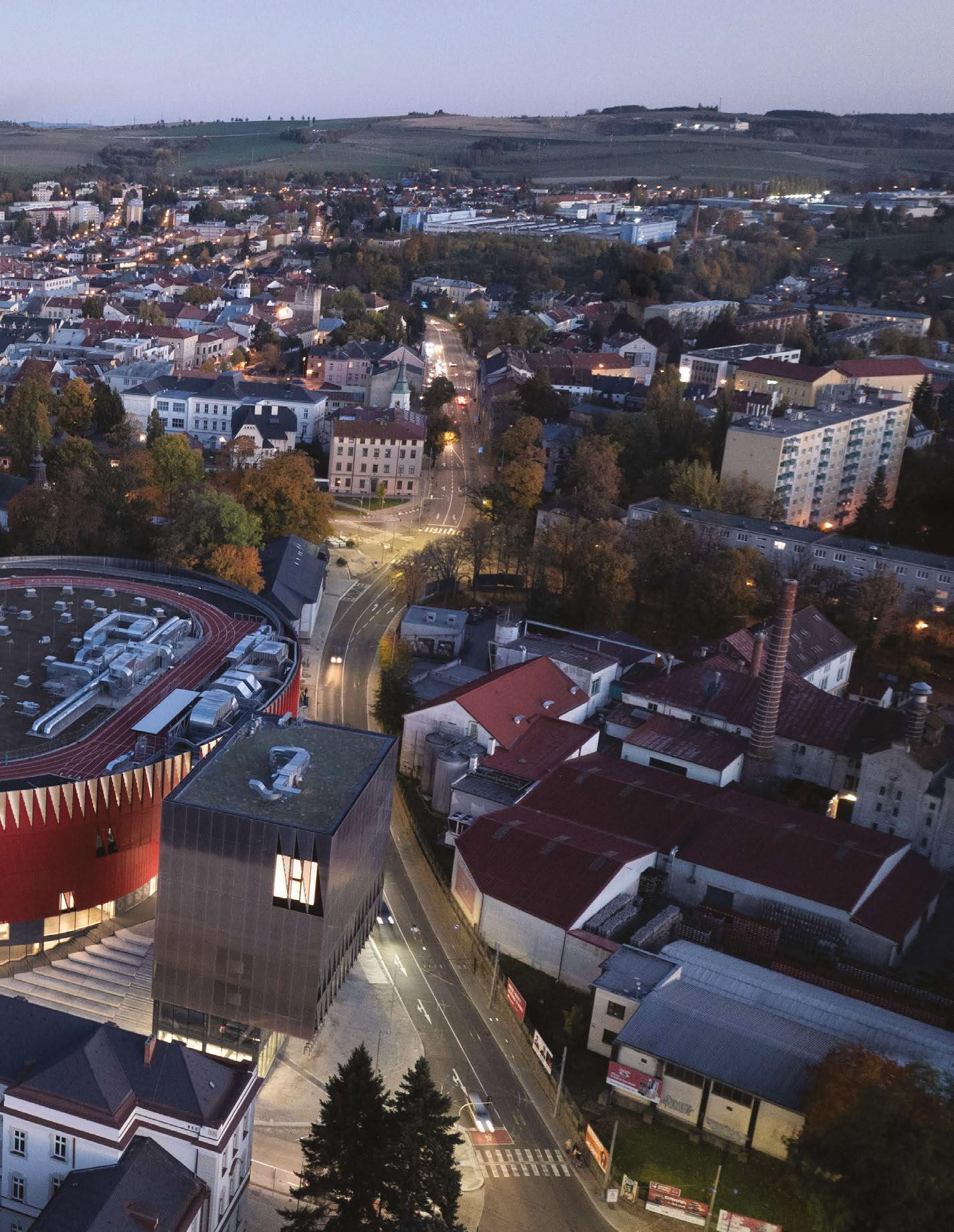
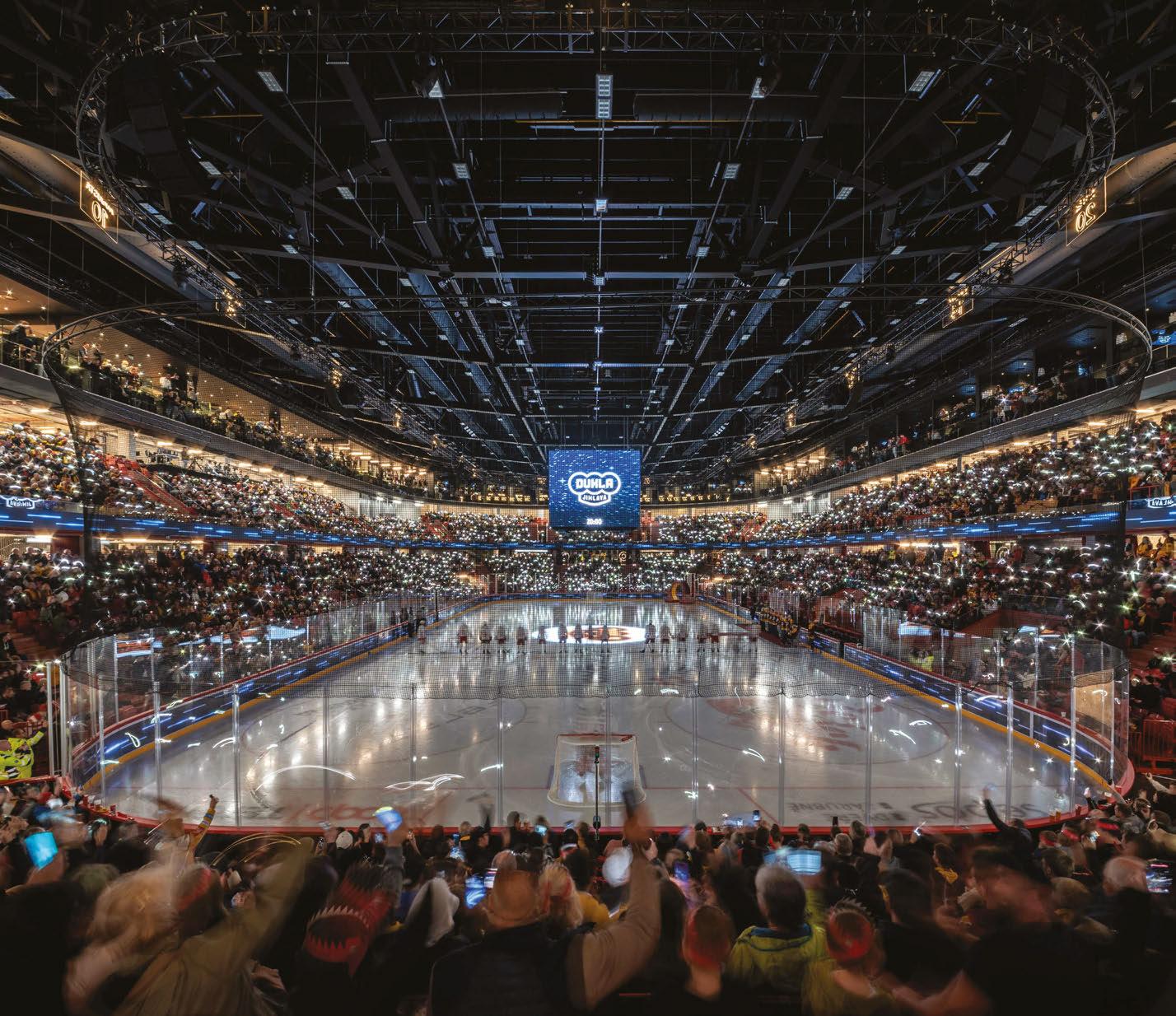
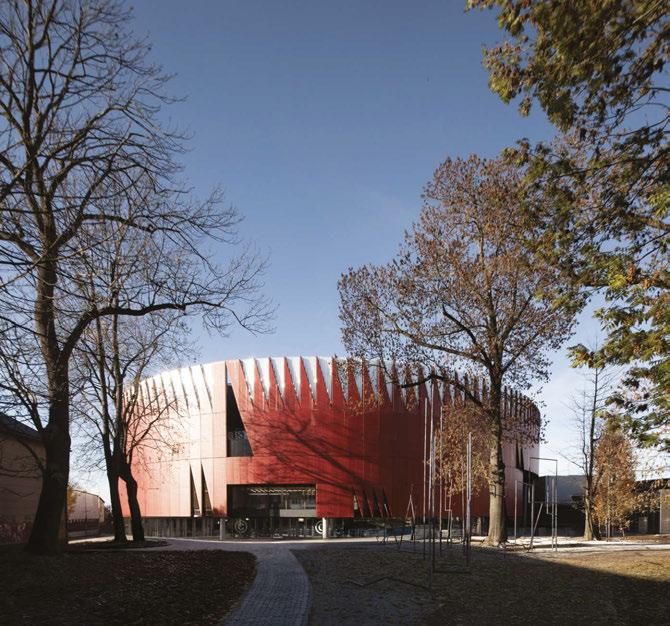
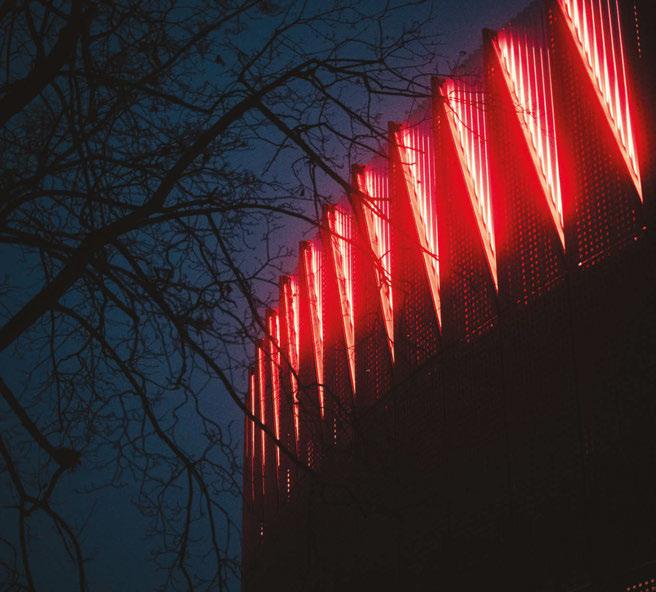
Abowl designed and engineered for atmosphere — from high-intensity sports matches and largescale concerts to more intimate events. A new urban landmark that integrates multiple sports facilities, activating the city centre and supporting local businesses. This is the Multipurpose Urban Arena in Jihlava, Czech Republic, designed by CHYBIK + KRISTOF.
The key challenge in designing a large multifunctional arena was its location — set in direct contact with the historic centre of a city of just 50,000 inhabitants. CHYBIK + KRISTOF approached this constraint as an opportunity: to transform the former 1950s ice stadium site into an active urban destination, building on existing infrastructure and bringing new value to the local community.
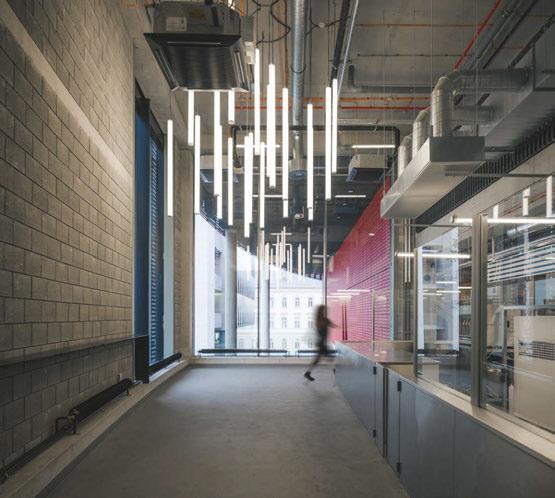
For this reason, the arena was conceived as a highly accessible public building, integrating a mix of uses — hotel, restaurant, a fan shop, gym, and a sport hall on the top floor.
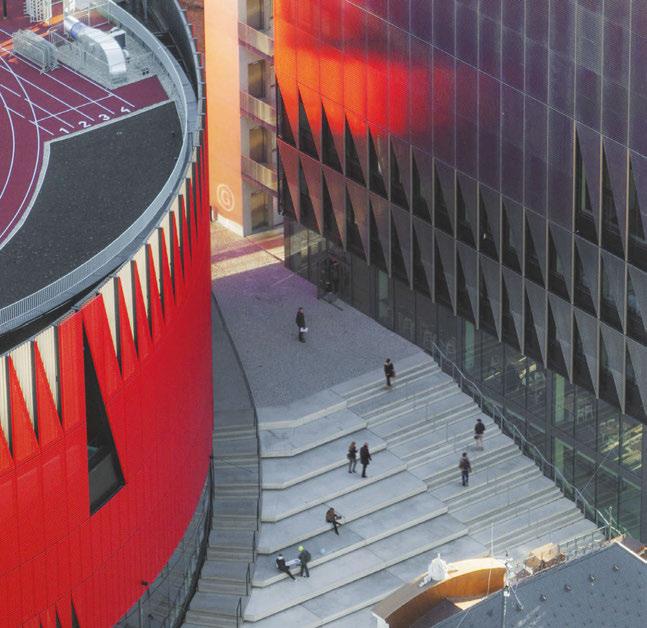
At the very top, it is crowned by a publicly accessible running
track on the roof of the red oval arena. This mix of uses activates the surrounding area throughout the day, supports local businesses in the city centre, and turns the former stadium site into a lively urban destination.
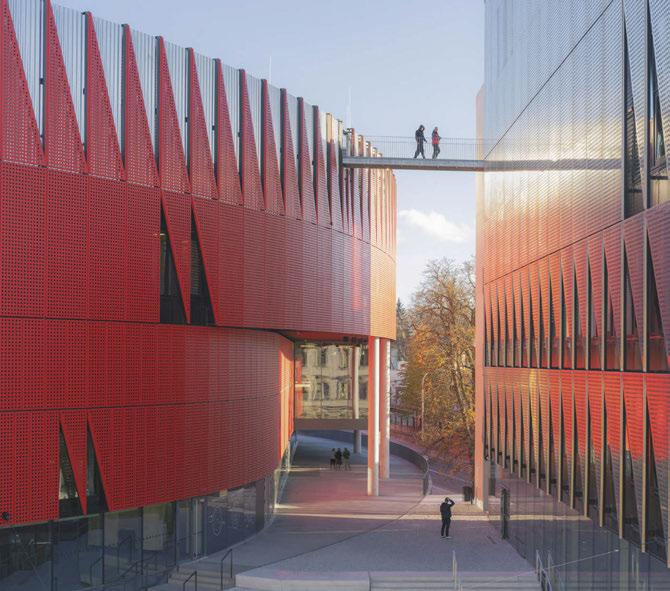
A key factor in the competition-winning proposal was the decision to divide the arena into two volumes: the red oval arena and a taller silver corner building. This strategy breaks down the scale and opens up a space between them, accommodating an outdoor amphitheatre for live sports screenings and open-air cinema.
The arena is conceived as a good neighbour. This is reflected in a strong focus on public space, including the outdoor amphitheatre, and in the architects’ success in convincing the client — the City of Jihlava — to invest in the renewal of the adjacent municipal park. Given its regional significance, the project was approached as public infrastructure rather than an isolated venue.
The design prioritises the fan experience from the outset.
Multiple entrances along the glazed perimeter provide direct visual contact with the playing field even before entering, making orientation immediate and intuitive. This is reinforced by a wayfinding system designed by Czech graphic designer Lukáš Kijonka.
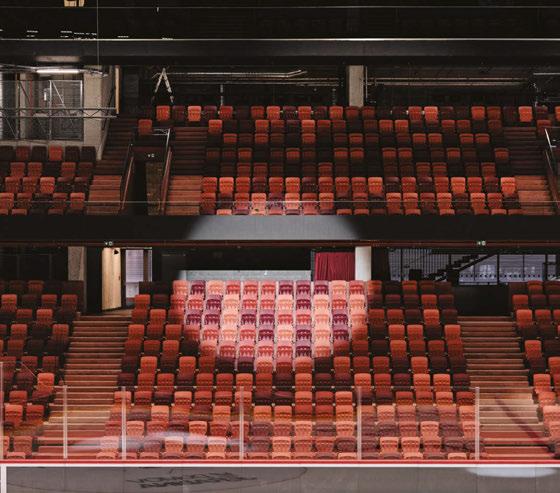
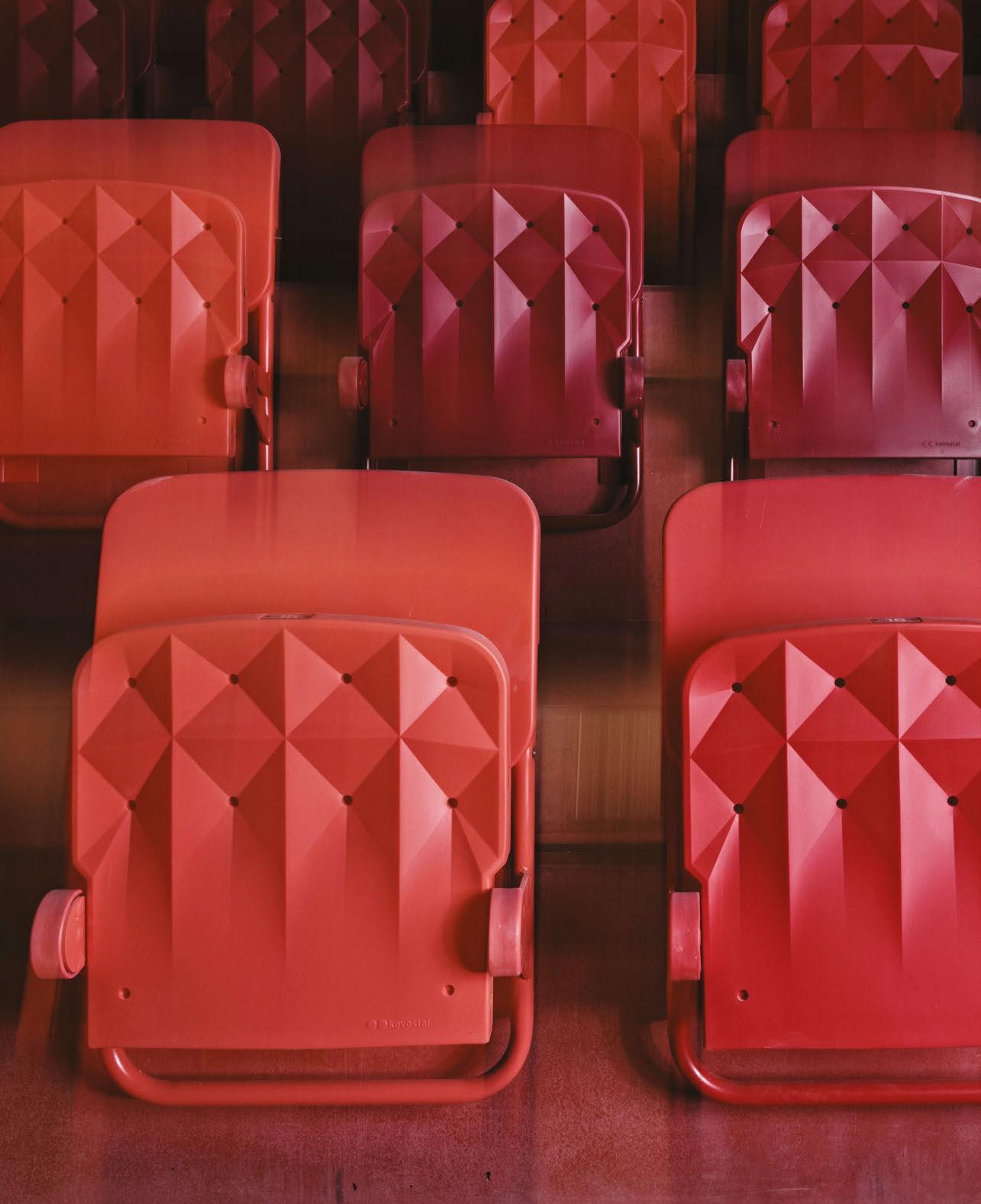
The bowl and seating layout are designed to maximise sightlines and maintain a close connection to the action for all spectators. Comfort is ensured by bespoke seating for the arena, developed by Czech designer David Karásek in collaboration with Kovostal. Each seat integrates an acoustic profile that absorbs sound when unoccupied, improving overall conditions within the hall, and is finished in varying shades of red reflecting the colours of the City of Jihlava and HC Dukla Jihlava — a palette that continues in the pigmented concrete of the stands and the arena’s façade.
The arena accommodates up to 7,400 spectators for cultural and social events, with an interior designed to adapt to different programme formats and scales. Since its opening in
autumn 2025, it has already hosted major events, including the Davis Cup, as well as basketball and ice hockey national team matches. The ambition was clear from the outset: to create a place that remains active throughout the day — a cultural and social hub not only for Jihlava, but for the wider Vysočina region.
The HORÁCKÁ Multipurpose Urban Arena is much more than a home professional ice hockey team HC Dukla Jihlava. Combining facilities for sports, music, education and business, this striking new arena is already recognised as a benchmark for multi-purpose municipal venues and seen in terms of what other cities in the country might achieve.
The arena boasts a highly-advanced AV technology implementation, undertaken by sound, light, video and staging specialists MusicData based in the town of Velké Meziříčí.
“Our work began in 2019, when we were approached by the architects of the Jihlava arena to design and engineer the sound systems, data networks, power distribution, stage technology, and lighting,” reports MusicData Director Tomas Ourednicek.
“From the very early stages of the project, we were guided by the ambition to realise the architects’ ideas. We sought to fully understand them, develop them, and translate them into the world of modern technology.”
“At the same time, we added a number of additional elements and functions. In doing so, we fundamentally influenced both the final appearance of the interiors and the overall technical functionality of the arena,” adds Stanislav Muryc, Chief Designer at MusicData.
The sound system at the Horacka Multifunkcni Arena covers the stands, the playing area, and all areas of the venue, with system design drawing on the extensive experience of MusicData’s installations in similar multifunctional arenas in the country and including repeated computer simulations and acoustic tests carried out directly in the arena.
We design, manufacture, and install for cities, sports halls, universities and theaters.
Design: Chybik + Kristof & studio mmcité obchod@kovostal.cz
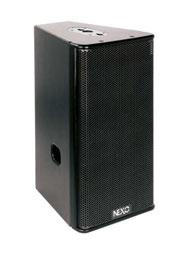
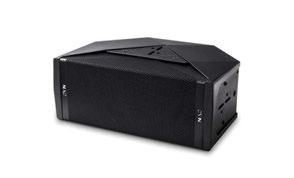
“We selected a proven concept using elements from the prestigious French manufacturer NEXO, specifically longthrow GEO S12ST-EN54 loudspeakers. The cluster system ensures even acoustic coverage of the stands. Each cluster is also equipped with two NEXO LS18 subwoofers,” explains Ourednicek.
“The NEXO system offers a number of innovative solutions.
For example, the patented Hyperbolic Reflective Wavesource (HRW™) and Configurable Directivity Device (CDD) provide a wide 120° coverage angle, meaning that only eight clusters are required to cover the entire arena.”
Power and processing are supplied by NEXO NXAMP4x4Mk2
Powered TD Controllers providing a total output of 126,000 watts of clean power.
“After the initial system start-up, it was immediately obvious that the sound would be exceptionally clear and very powerful,” says Ourednicek.
The entire system, including a Yamaha DM7 compact mixing console and Yamaha digital matrix is controlled via the stateof-the-art Dante™ data protocol operating over optical, metallic and wireless networks.
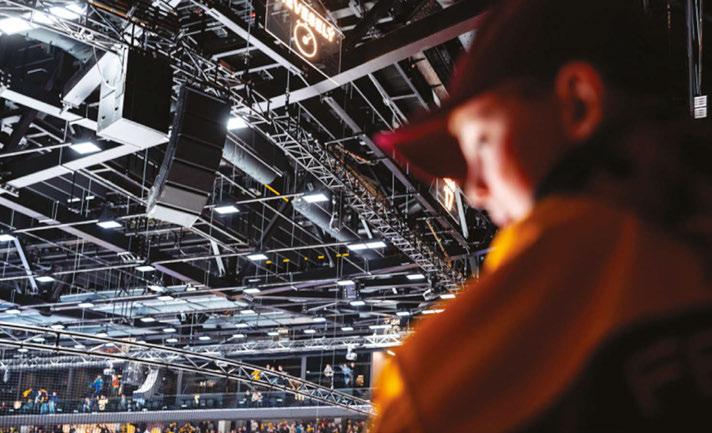
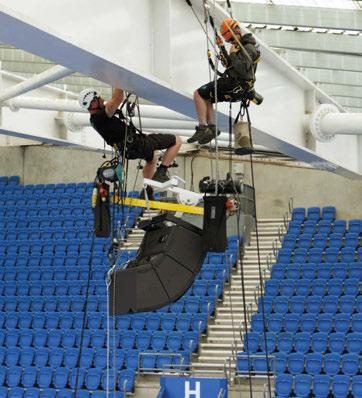
Two and a half tonnes of audio equipment are suspended from the truss structure around the stands, with additional loudspeakers installed behind the seating areas and throughout the arena. The sound system also includes delay elements and advanced software that allows it to adapt to current acoustic conditions in the hall.
During the design phase, particular emphasis was placed on achieving the shortest possible reverberation time so that the space could be used universally. Acoustic ceilings and specially designed seating also contributed to this result. The final configuration of the sound system was refined through a series of computer simulations and repeated adjustments.
“There is an extraordinary level of technical detail here.
Every word spoken by the announcer is perfectly intelligible throughout the arena and in the backstage areas,” says popular Czech Television commentator Robert Z.ruba, praising the work of the MusicData technicians.
“We always strive to ensure that our solutions are not only visually attractive and fully functional, but also highly practical” says Ourednicek in conclusion.
“We draw on more than 30 years of experience in designing and installing audiovisual and stage systems, as well as touring with artists across a wide range of Czech and European venues.
“This experience gives us a deep understanding of what is truly required. We know what visiting productions need, how they rig and connect their equipment, and what technical conditions they expect. This knowledge proves invaluable every time.”
VENUE FOCUS
CALIFORNIA MEMORIAL STADIUM
Berkeley, USA
Images: Meyer Sound
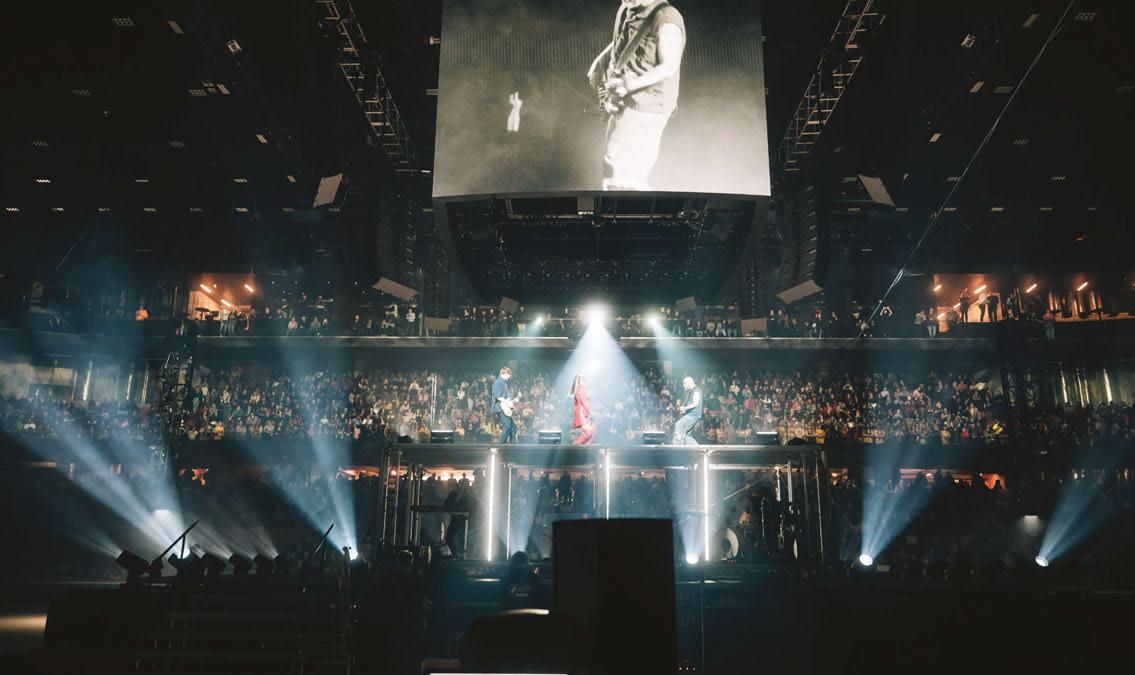
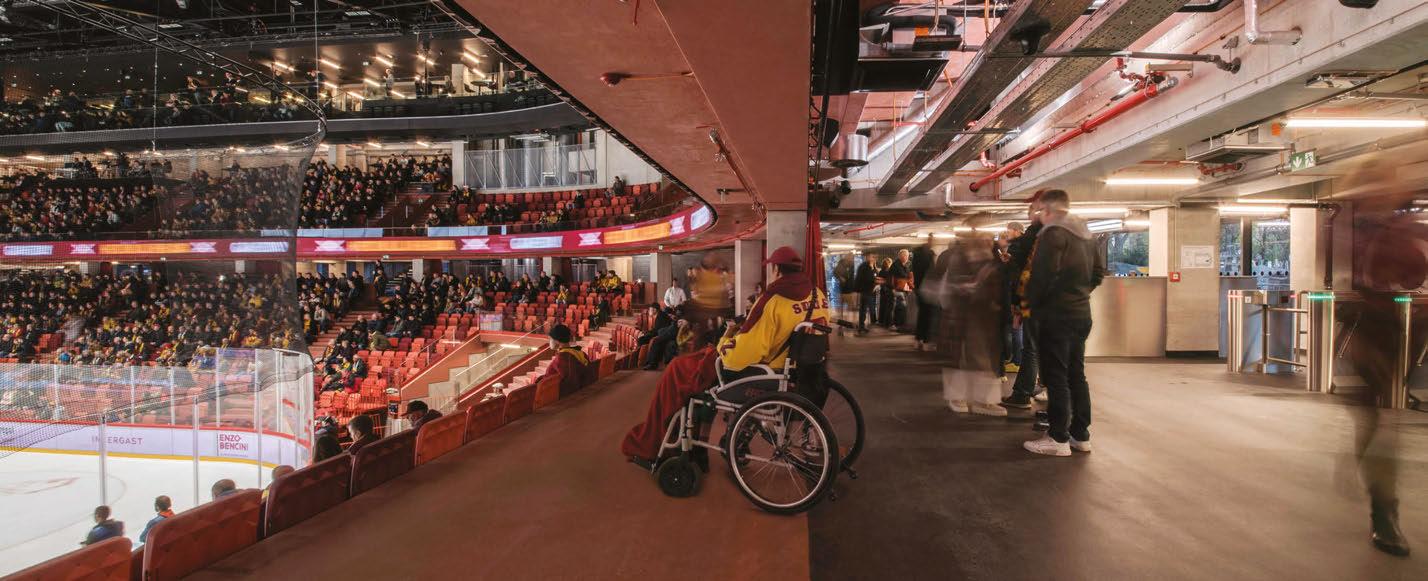
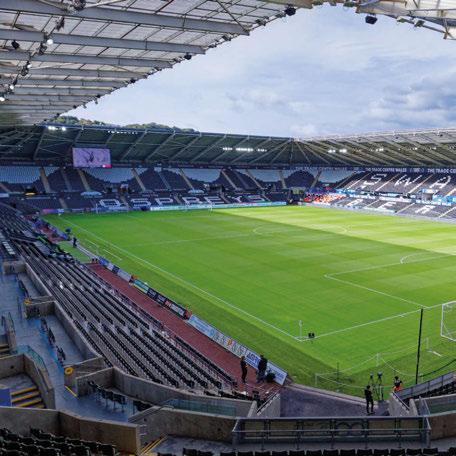
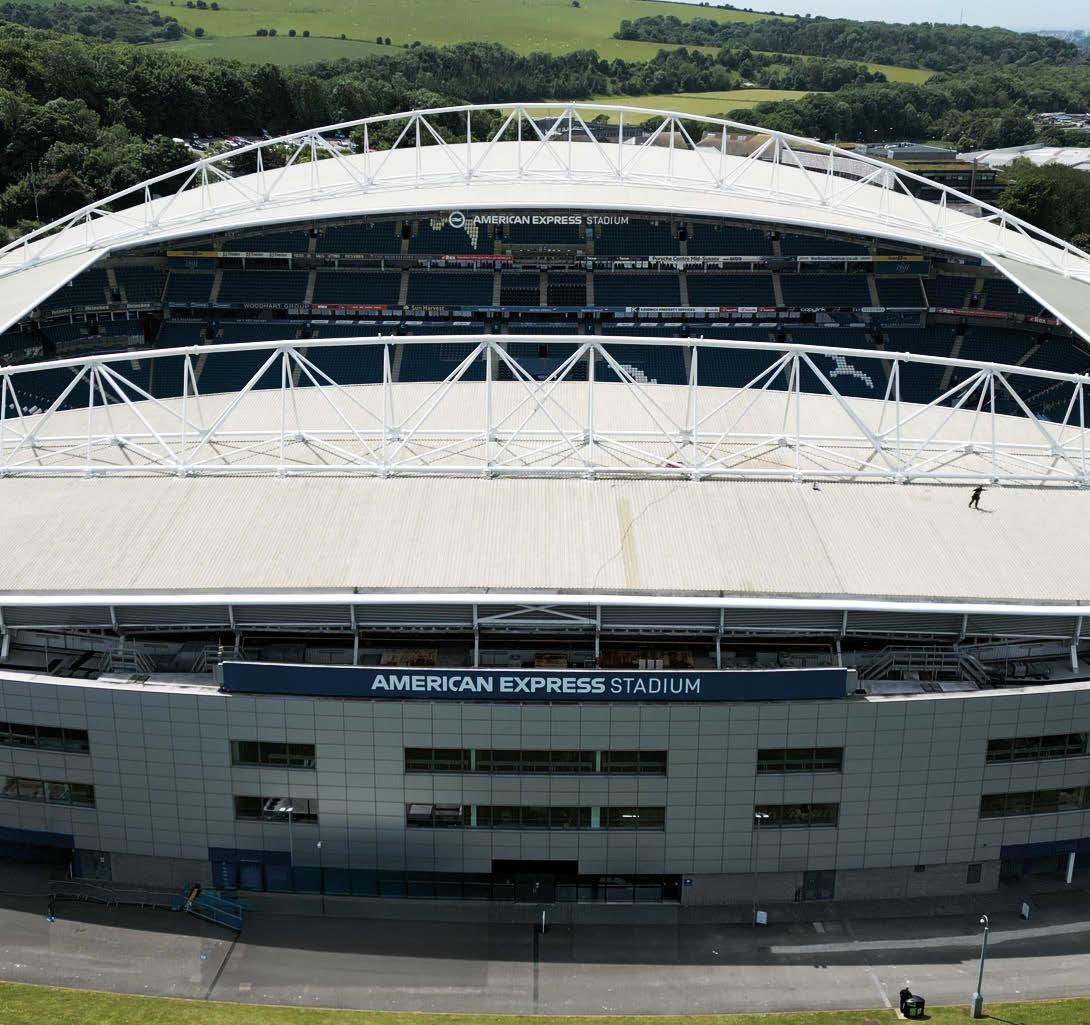
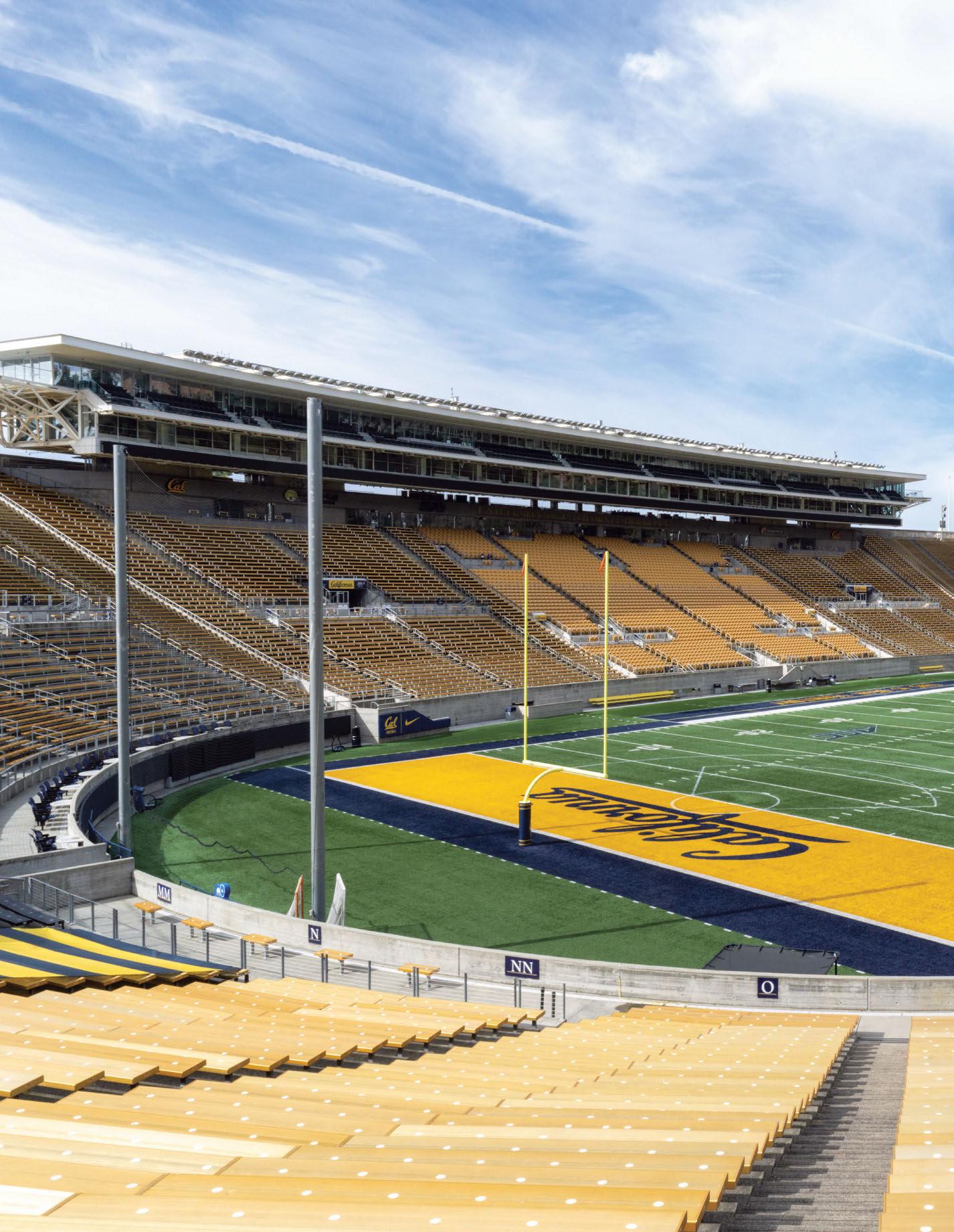
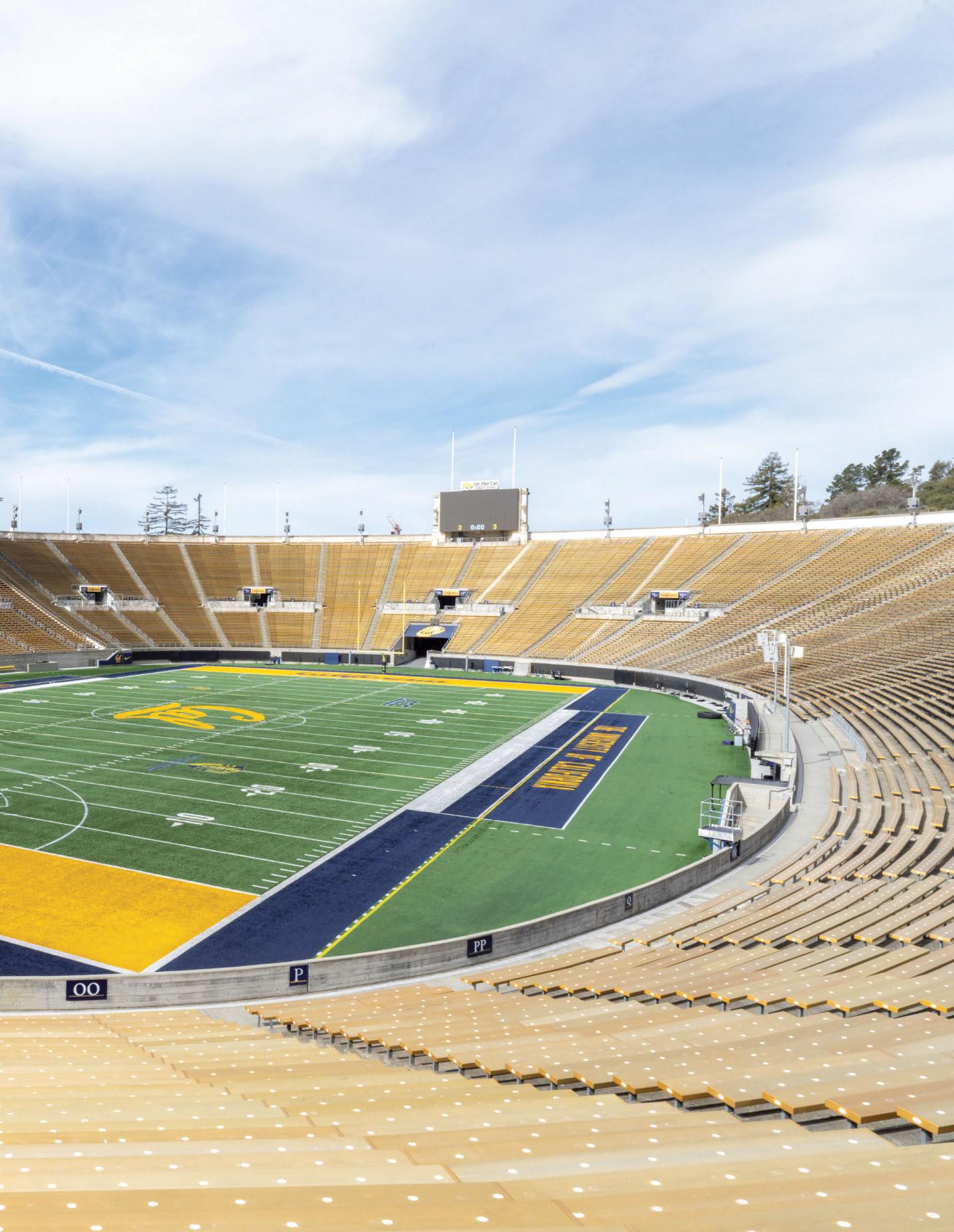
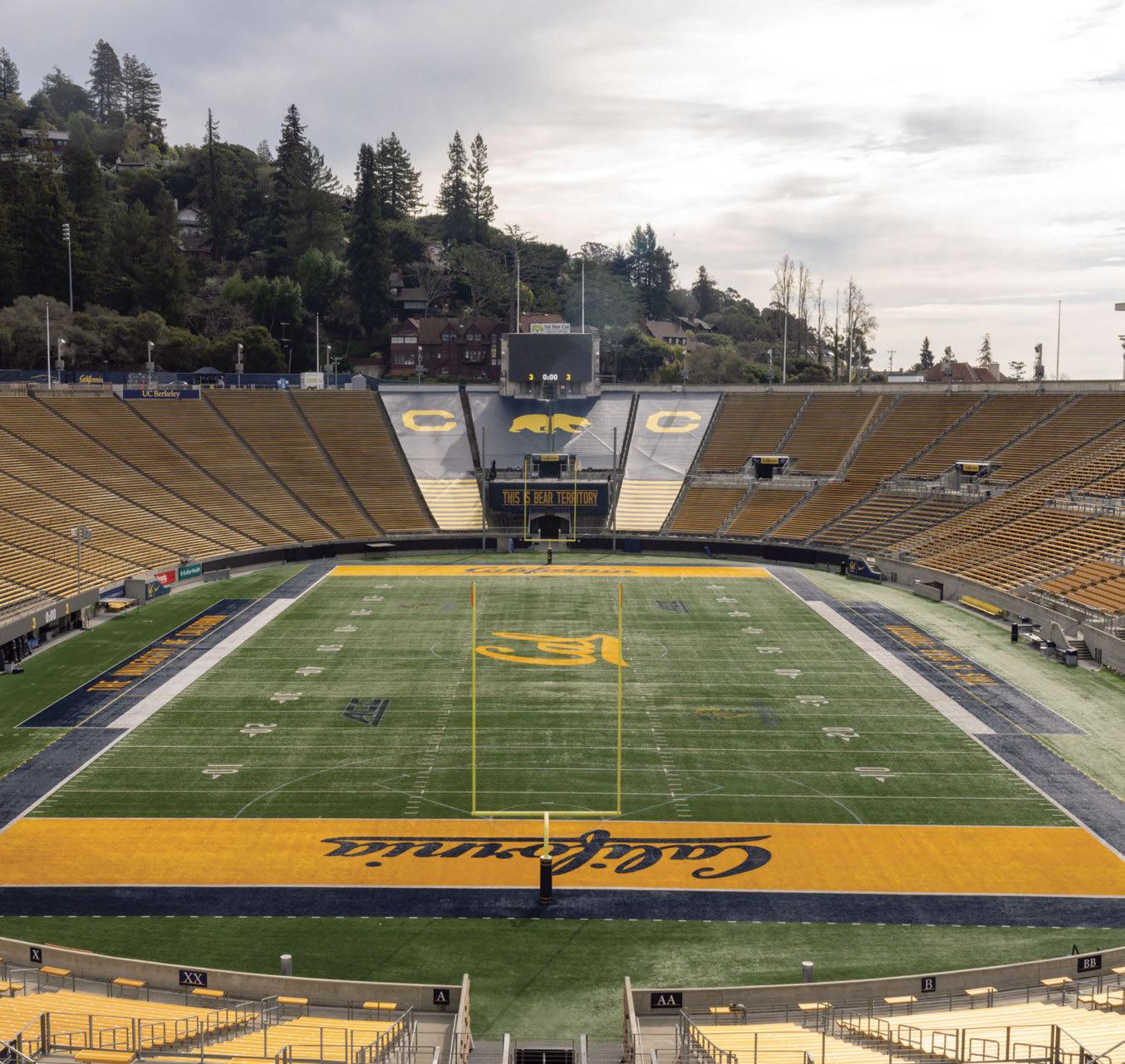
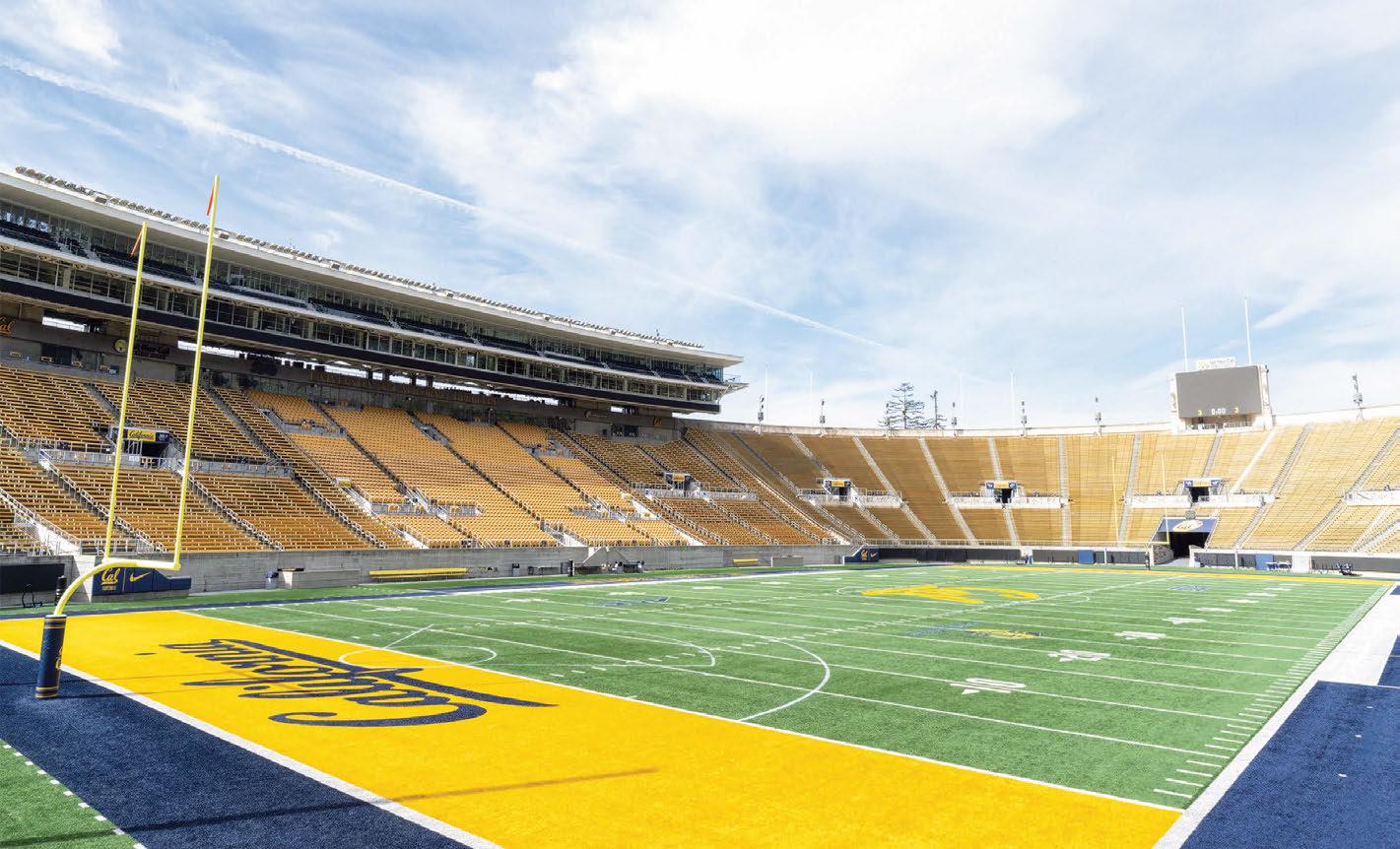
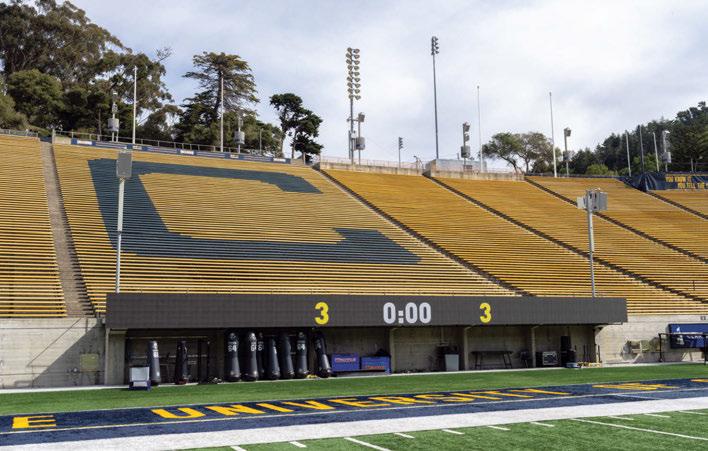
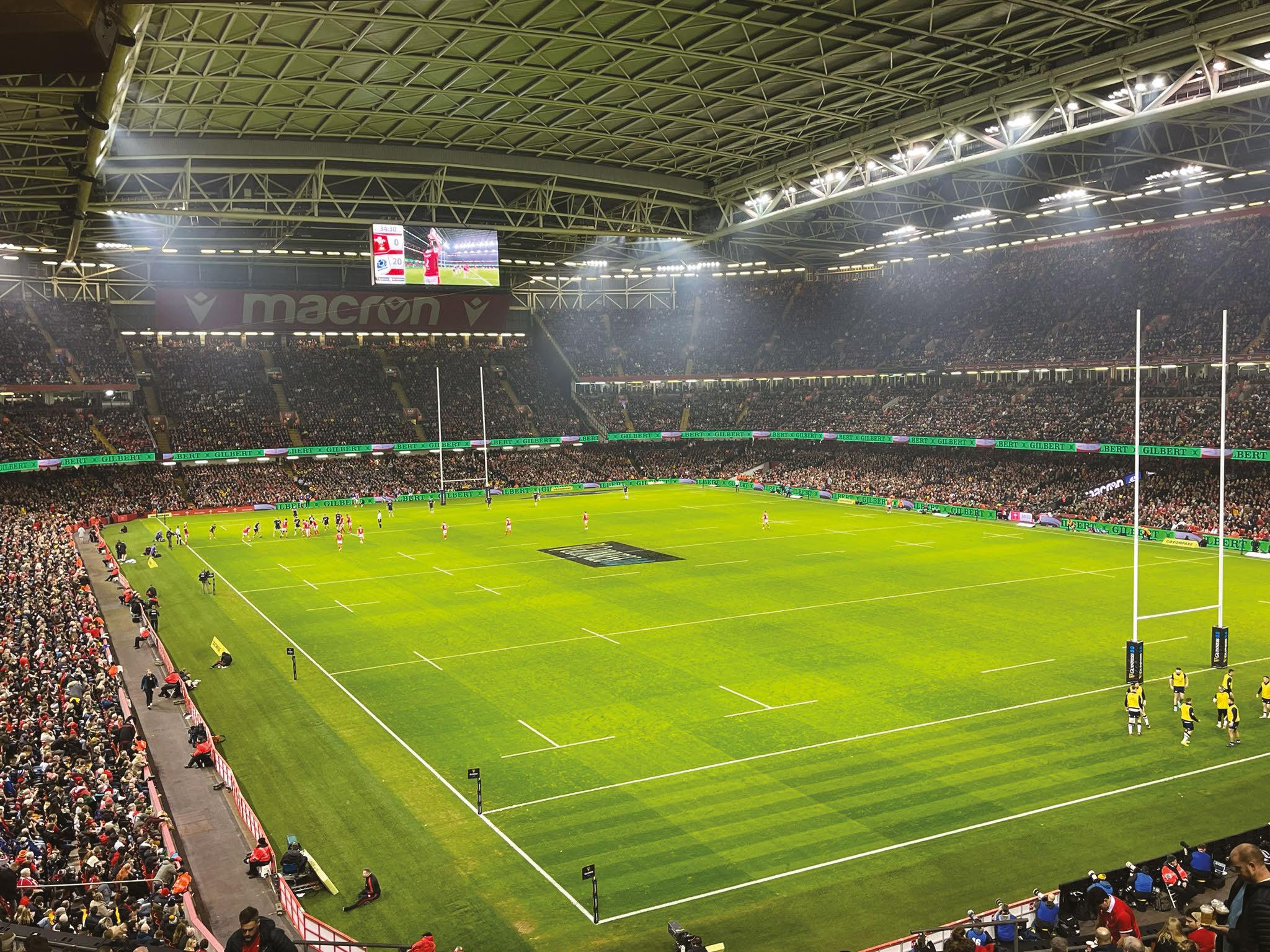
California Memorial Stadium at the University of California, Berkeley, has completed a comprehensive audio upgrade featuring a new Meyer Sound ULTRA™ family system. The design elevates the game-day experience for fans, athletes, and the broader campus community while continuing a long partnership between Cal Athletics and Meyer Sound. Opened in 1923, California Memorial Stadium is a Berkeley landmark and one of college football’s most scenic venues, framed by the Berkeley Hills and overlooking San Francisco Bay. The stadium was rededicated in 2012 following a major seismic retrofit that preserved its historic facade while modernizing its infrastructure for future generations of fans.
The new sound system, designed with the MAPP 3D™
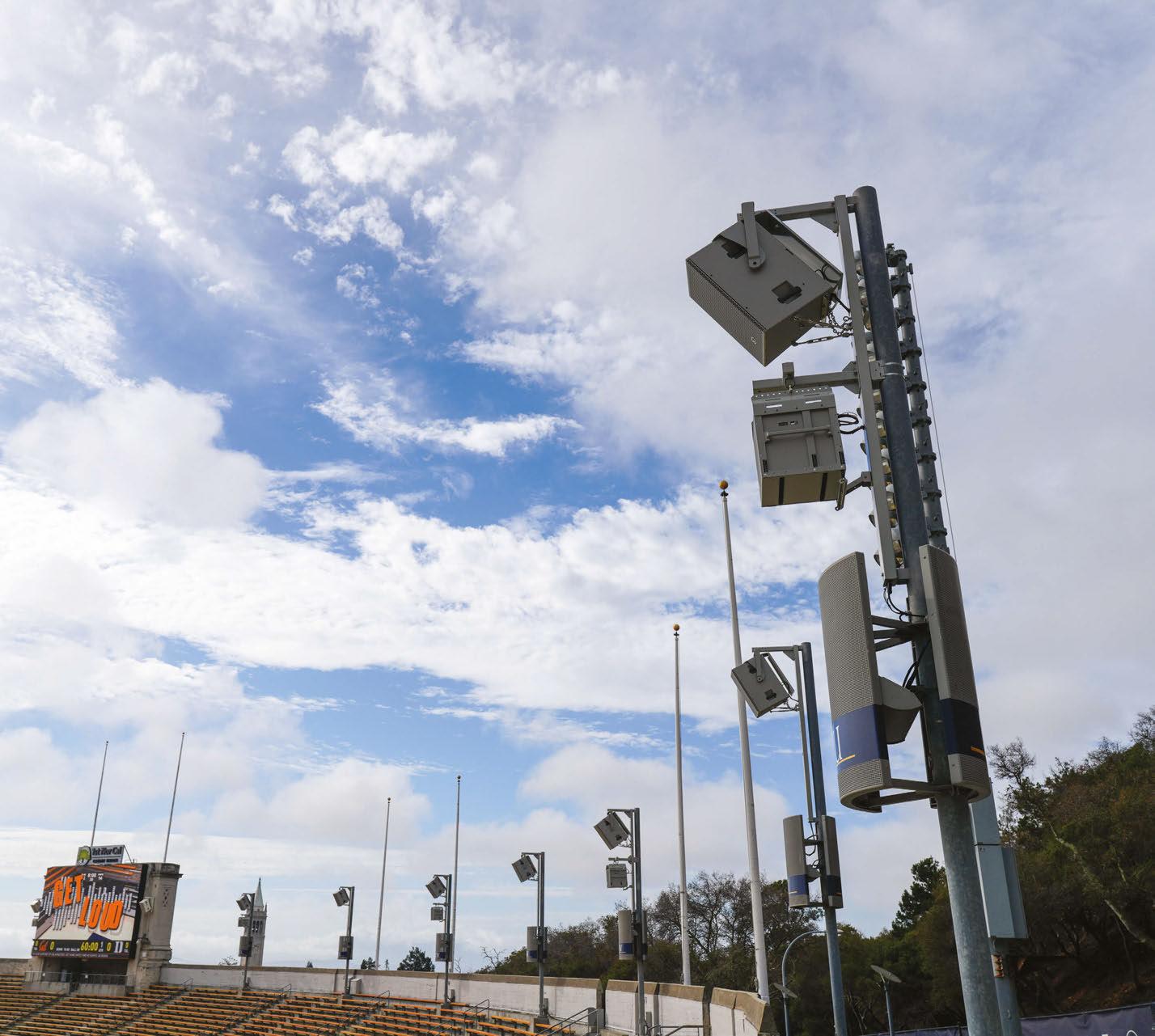
system design and prediction tool and supplied by Sound Image, a Clair Global brand, replaces an earlier Meyer Sound installation with a fully modernized distributed system built around ULTRA family loudspeakers and 750-LFC™ lowfrequency control elements. The result is more consistent coverage, greater low-end impact, and a more immersive experience across all seating tiers. “We’ve partnered with Meyer Sound for many years, going back well before the 2012 seismic retrofit of the stadium,” says Kurt Sakasegawa, building systems manager for Cal Athletics. “This new system builds on that foundation and really raises the bar for clarity and power.”
The upgrade also introduces Milan-based networked audio infrastructure, ensuring lossless digital signal transport, precise synchronization, and scalable flexibility for future
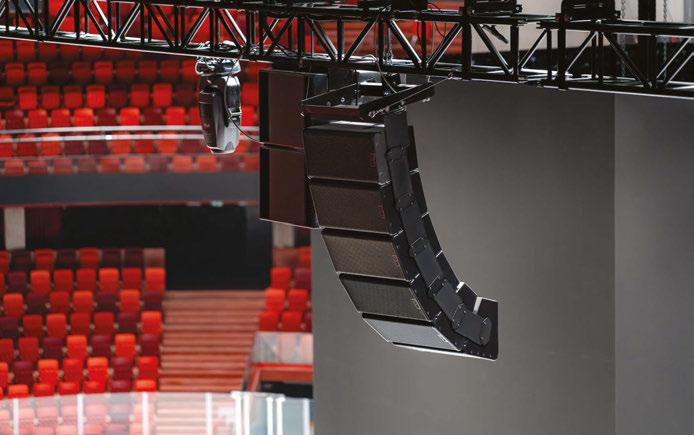
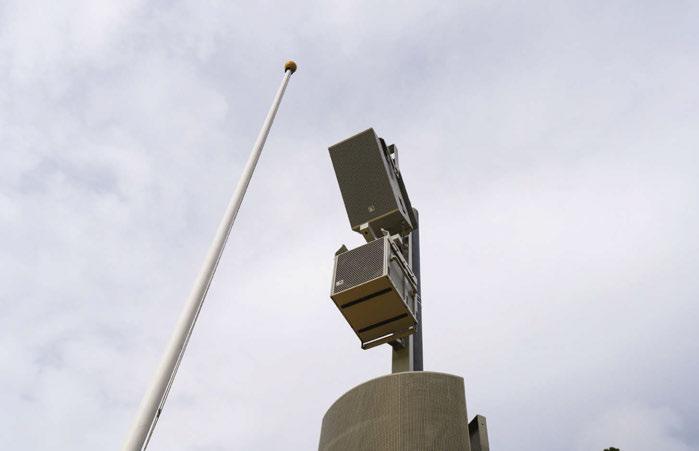
expansion. “The Milan network makes things easy to manage, and we’re getting the best possible signal straight from source to loudspeaker,” he adds. “It ticks a lot of boxes for us in terms of flexibility, expansion, and reliability.” The configuration comprises 20 ULTRA-X80™, 27 ULTRA-X82™, two ULTRA-X20™, 21 ULTRA-X23™, and 13 ULTRA-X40™ point source loudspeakers supported by eight USW-210P compact narrow subwoofers and 20 750-LFC™ and two 2100-LFC™ low-frequency control elements, all managed by Galileo® GALAXY 408 and 816 Network Platforms. The design delivers uniform coverage across all seating areas while maintaining tight pattern control to minimize spill into the surrounding Berkeley neighborhood—a long-standing priority for the venue’s operations team.
The system design incorporates thoughtful refinements to support both spectator and on-field experiences. A pair of loudspeakers previously dedicated to the student section were re-oriented toward the field, providing focused sound reinforcement for players during practices and pre-game warmups. The change enhances on-field energy without compromising clarity in the stands. To extend that experience, two 2100-LFC low-frequency control elements add extra punch and presence for players during practices and warmups.
A second system installation phase, completing the press box area, is scheduled before the 2026 football season. Coaches and players have commented on the increased energy and presence the new system delivers on the field.
“With Meyer Sound, we have enhanced our audio system to
continue to invest in an elevated game-day experience for our fans at California Memorial Stadium,” says California Football General Manager Ron Rivera. Kenny Lauer, Meyer Sound’s global head, experience and strategic innovation, frames the upgrade as part of a growing awareness of how sound shapes live events. “In sports, sound isn’t background—it’s the emotional engine of the experience,” he says. “At Memorial Stadium, you can feel how great sound connects fans and athletes in the same moment. It’s not just about volume; it’s about presence, emotion, and memory. That connection is what keeps people coming back.”
For Cal, the project represents both continuity and renewal—extending a trusted partnership while setting
a new standard for sound at the historic stadium. “We’ve worked with Meyer Sound for years, and this project continues that partnership,” says Casey W. Cox, associate athletic director of facilities. “It’s rewarding to see the stadium evolve while preserving that connection.”
The room shaping the future of stadiums, arenas and sporting venues
For the first time, the global sporting venue ecosystem is being brought together under one roof.
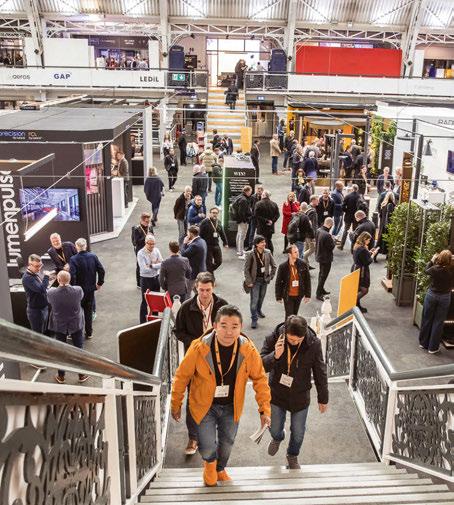
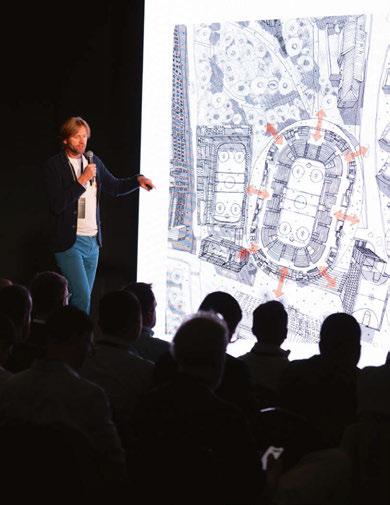
stadia expo is the new home ground for the people designing, delivering and commercialising the next generation of stadiums, arenas and sporting destinations.
From infrastructure and technology to fan experience, hospitality and operations, this is where the industry comes to explore what’s next.
SMH GROUP STADIUM
Chesterfield, England
Images: Uniguest
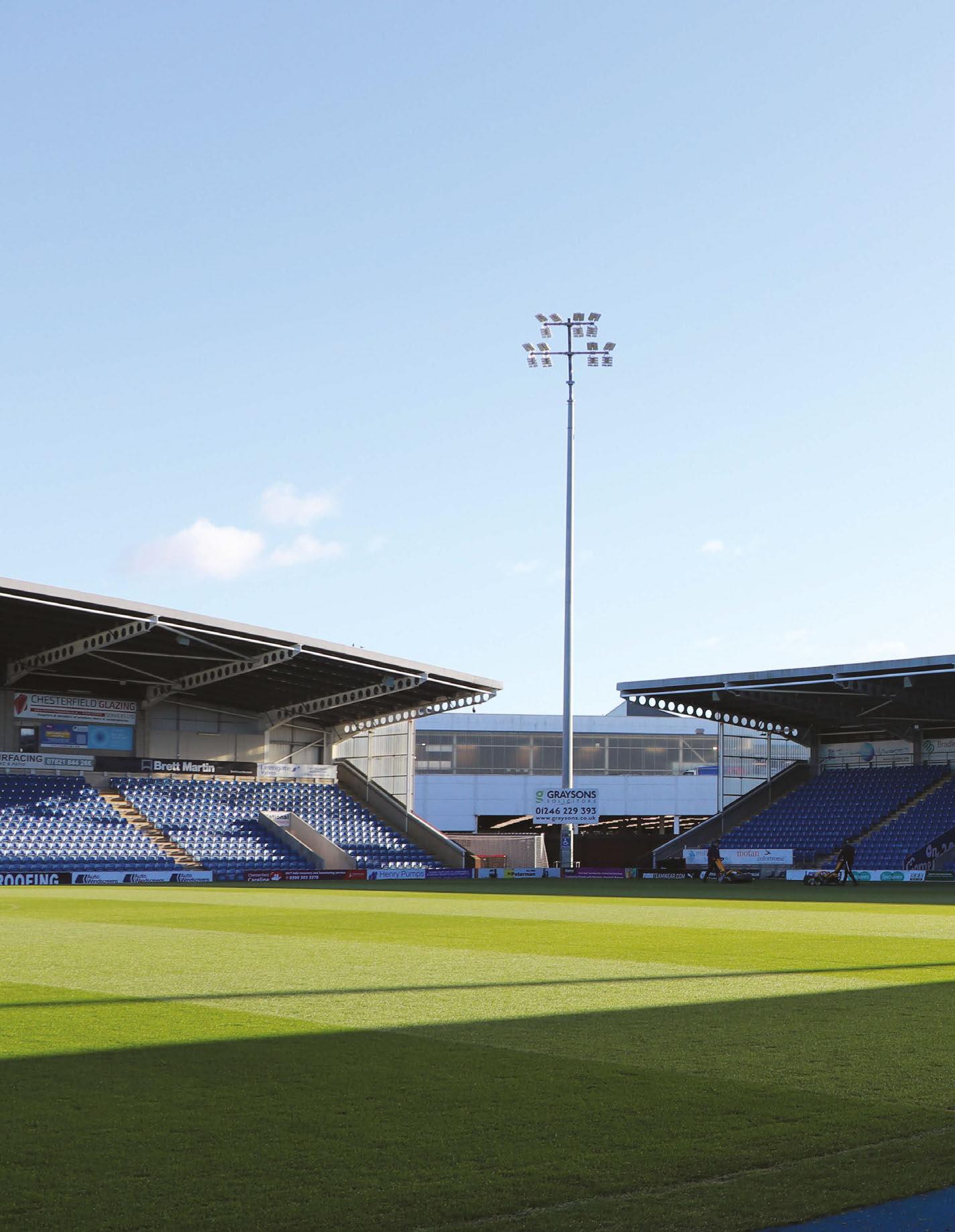
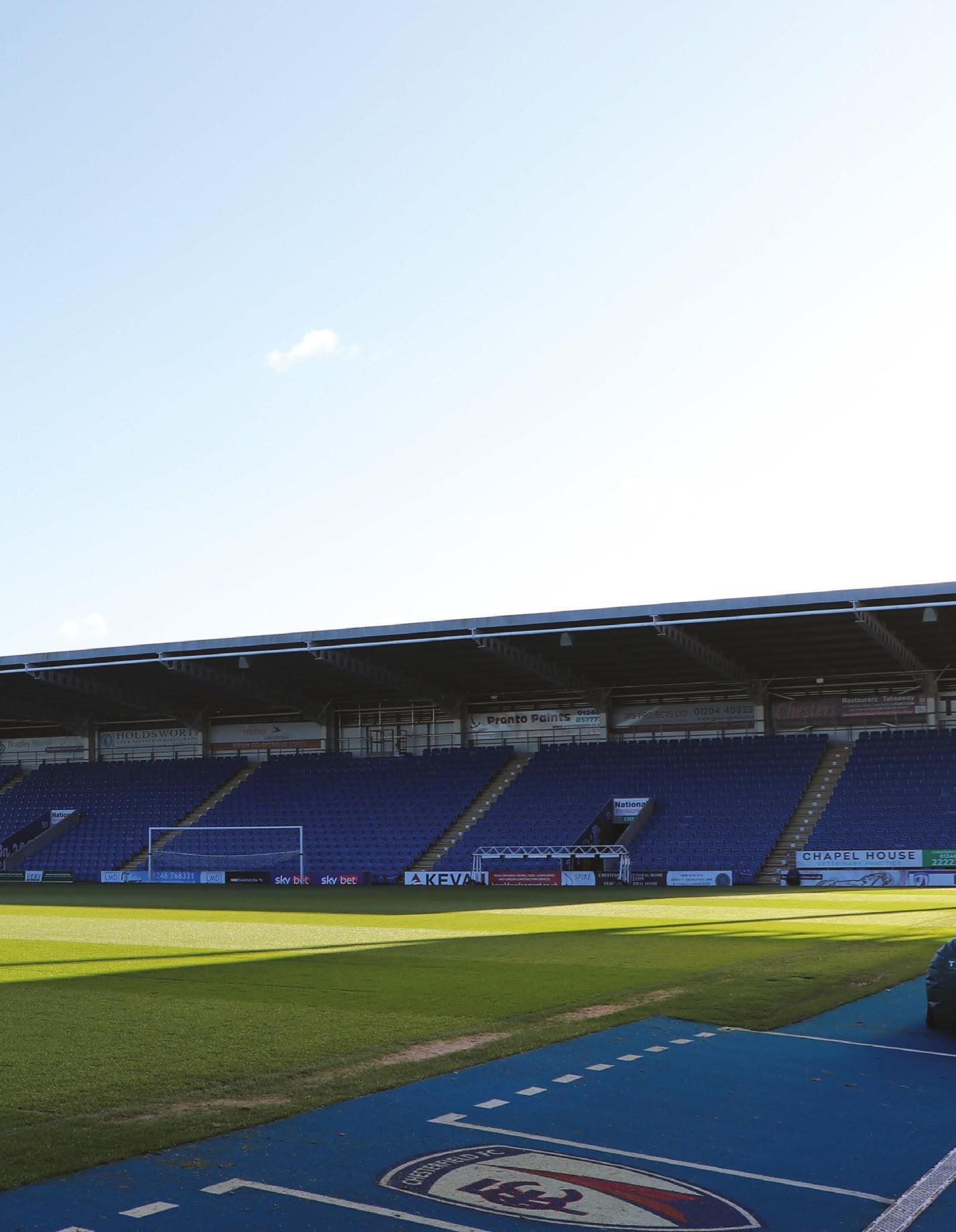
Founded in 1866, Chesterfield FC is one of England’s oldest football clubs and a central part of life in North Derbyshire. As the club worked to rebuild on the pitch and return to the Football League, attention also turned to improving the stadium experience for fans, partners and the wider community.
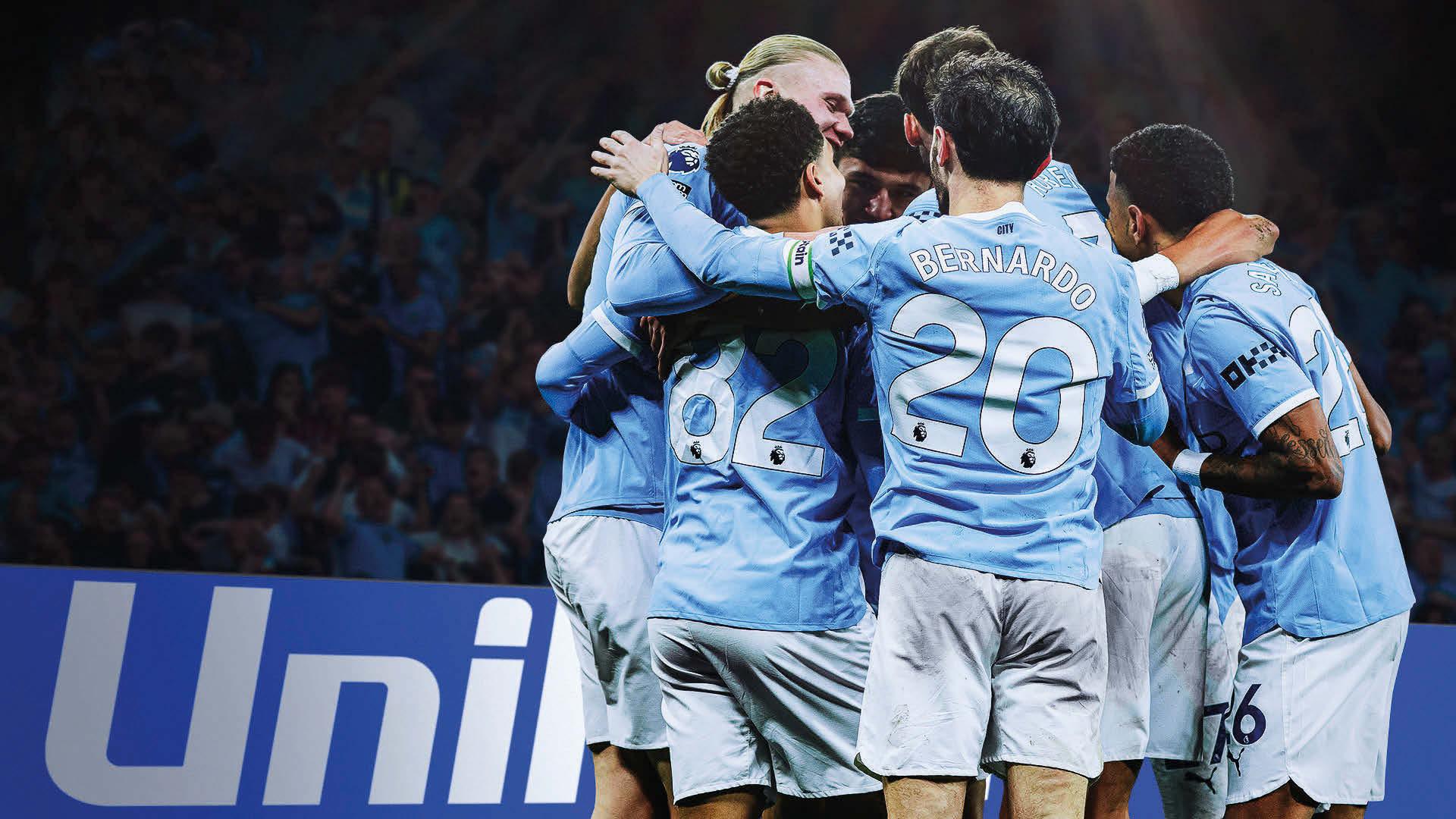
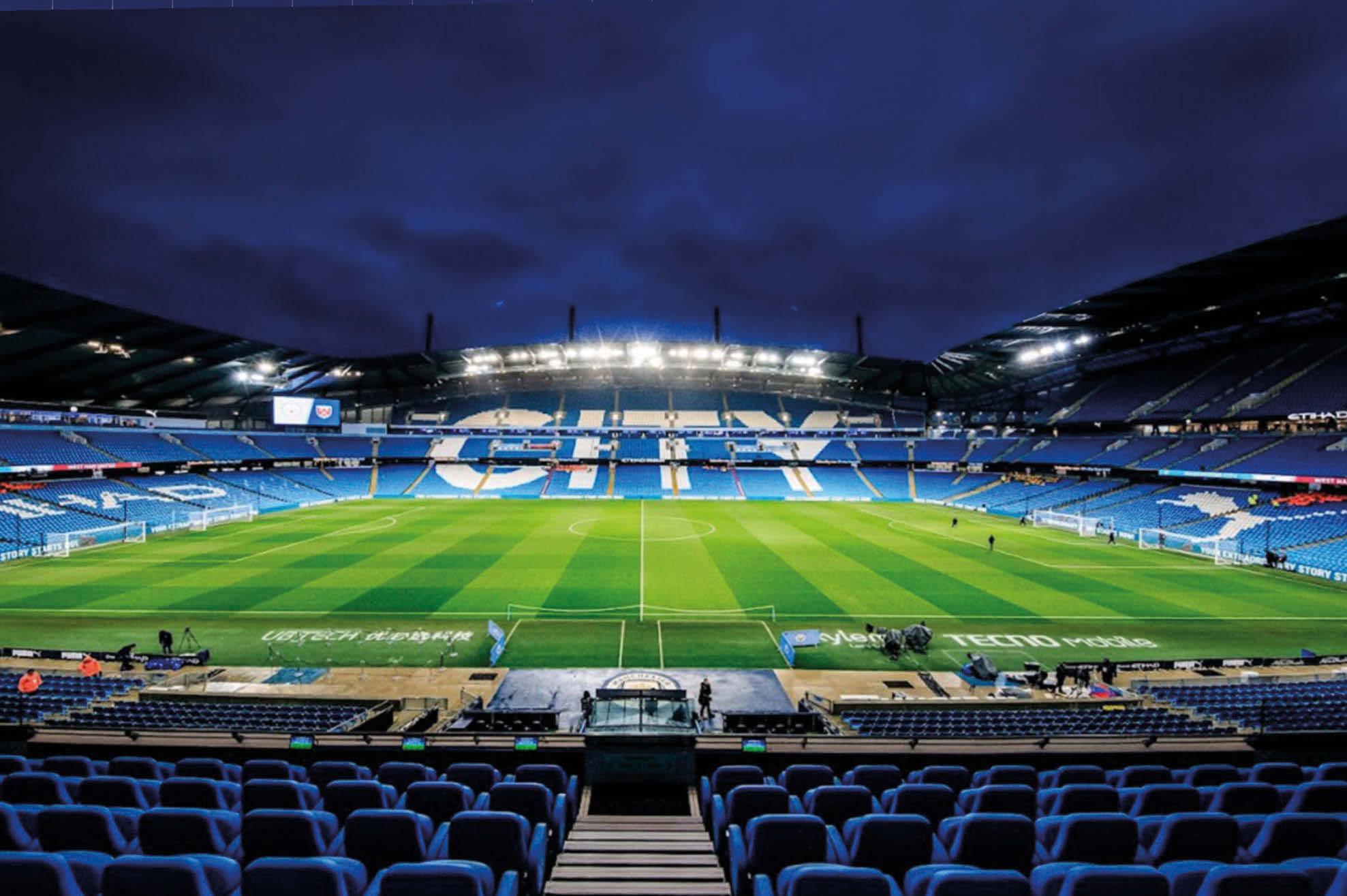
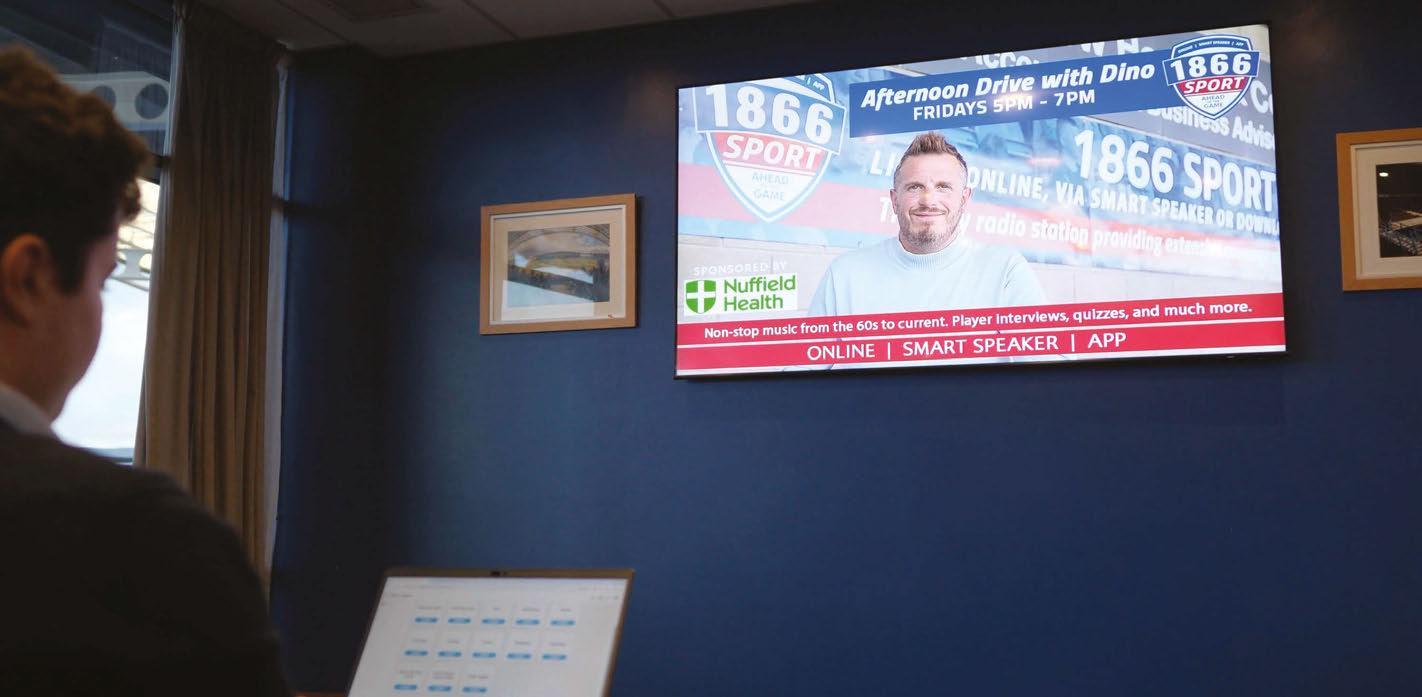
To facilitate this, the Club turned to Uniguest’s Sports Hub platform to transform matchday communication at the SMH Group Stadium, bringing Premier League-grade technology to a League Two environment.
“There are two sides to having a successful football club,” said Ashley Kirk, Chairman of Chesterfield FC. “There’s what happens on the pitch, but off it we knew there was investment needed in the ground. We wanted fans to feel proud of the stadium as well as the team.”
While the stadium itself was modern, digital communication across the venue had become outdated and difficult to manage. Content updates were manual, IPTV lacked flexibility and the club’s small internal team faced increasing pressure to keep systems running smoothly on matchdays.
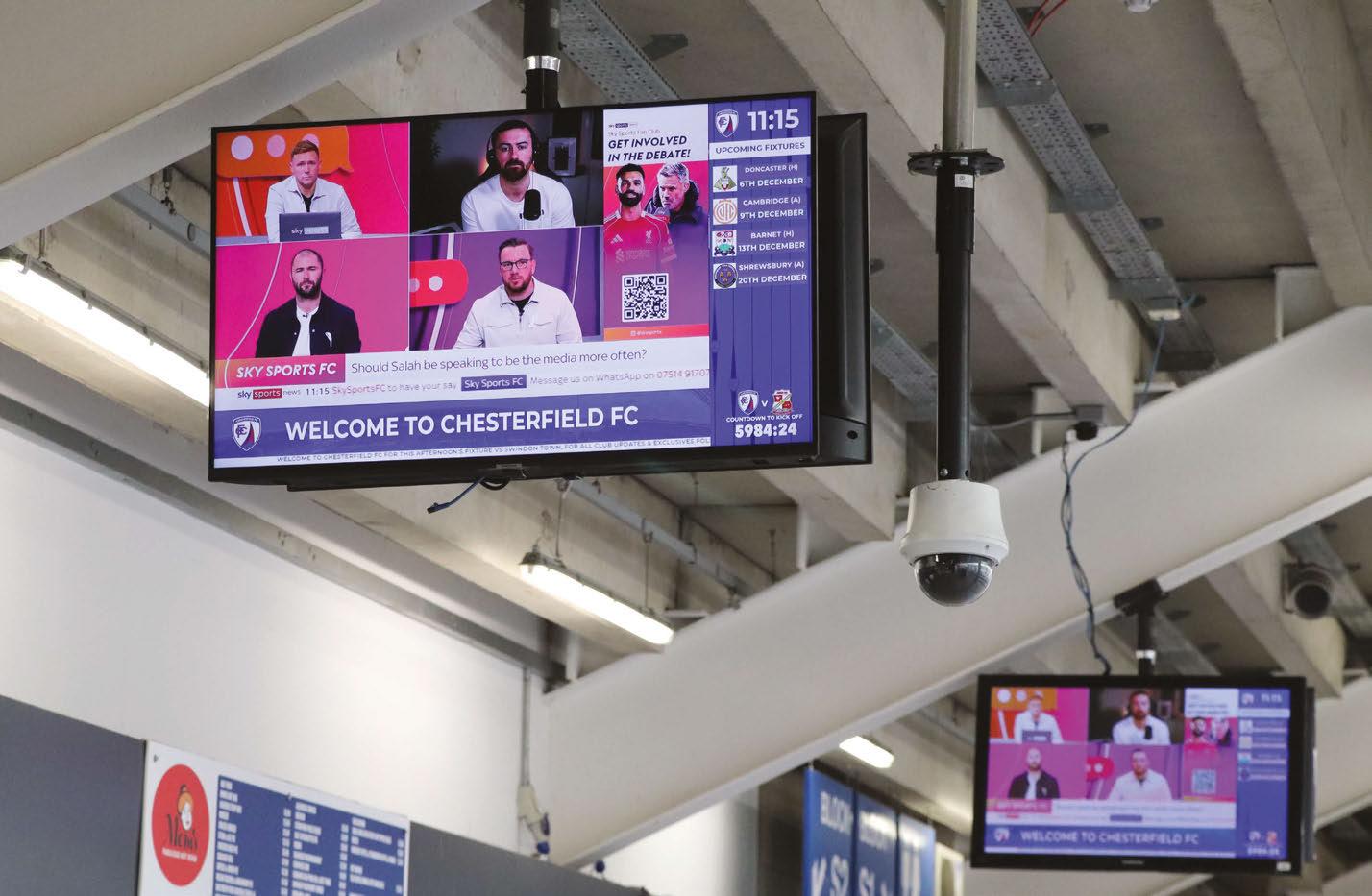
Chesterfield FC deployed Uniguest Sports Hub across approximately 40 screens throughout the stadium, spanning concourses, hospitality lounges, offices and reception areas.
The platform brings IPTV and digital signage into a single interface, enabling the club to manage content, layouts and scheduling centrally while maintaining flexibility across different areas of the venue.
A key improvement has been the ability to control live content across the stadium. With Sky Bright Box integration, different screens can now display different channels simultaneously, enhancing both the concourse and hospitality experience.
Sports Hub also enables real-time engagement through event triggers, allowing goals, substitutions and 50/50 draw results to be shared instantly across the screen network so fans remain connected wherever they are in the stadium.
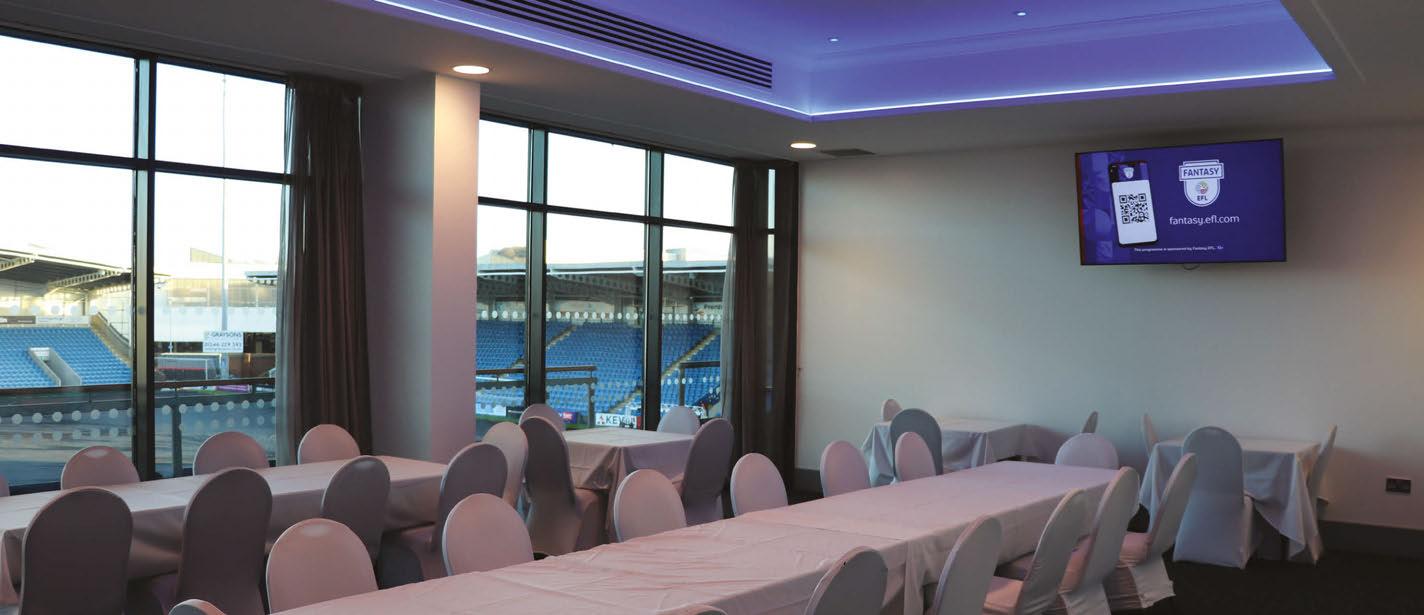
Beyond matchdays, the platform supports the club’s wider commercial strategy. Hospitality suites can display tailored branded content for conferences and corporate events, while integration with Microsoft Teams Rooms turns idle meeting room screens into branded digital signage.
“The team are constantly coming up with new inventory that we didn’t have before,” said Kirk. “Sponsors recognise they’re getting in front of 8,500 people every Saturday, and that’s powerful. It took a bit of investment, but the return has already been very, very good – we’re very pleased with it.”
The expanded digital estate has created new sponsorship opportunities across the stadium, while also strengthening the club’s conference and banqueting proposition through more flexible and engaging event experiences. The improvements have coincided with a strong resurgence in attendances, which have more than doubled in recent seasons. While success on the pitch has played a role, the enhanced matchday environment has contributed to improved fan feedback and a stronger overall perception of the club.
“Stadium technology needs to be both impactful and accessible across the sports and entertainment spectrum,” said James Keen, Executive Vice President of Marketing at Uniguest. “From stadia and arenas to community venues
and clubs, platforms need to scale to meet both engagement and budgetary goals. Chesterfield FC is a great example of how teams lower down the pyramid can create a highquality, connected experience for their supporters.”
The project reflects a broader shift in the industry, where technology once limited to top-tier venues is becoming accessible to clubs at every level – enabling them to improve operations, unlock new revenue streams and deliver a more connected fan experience.
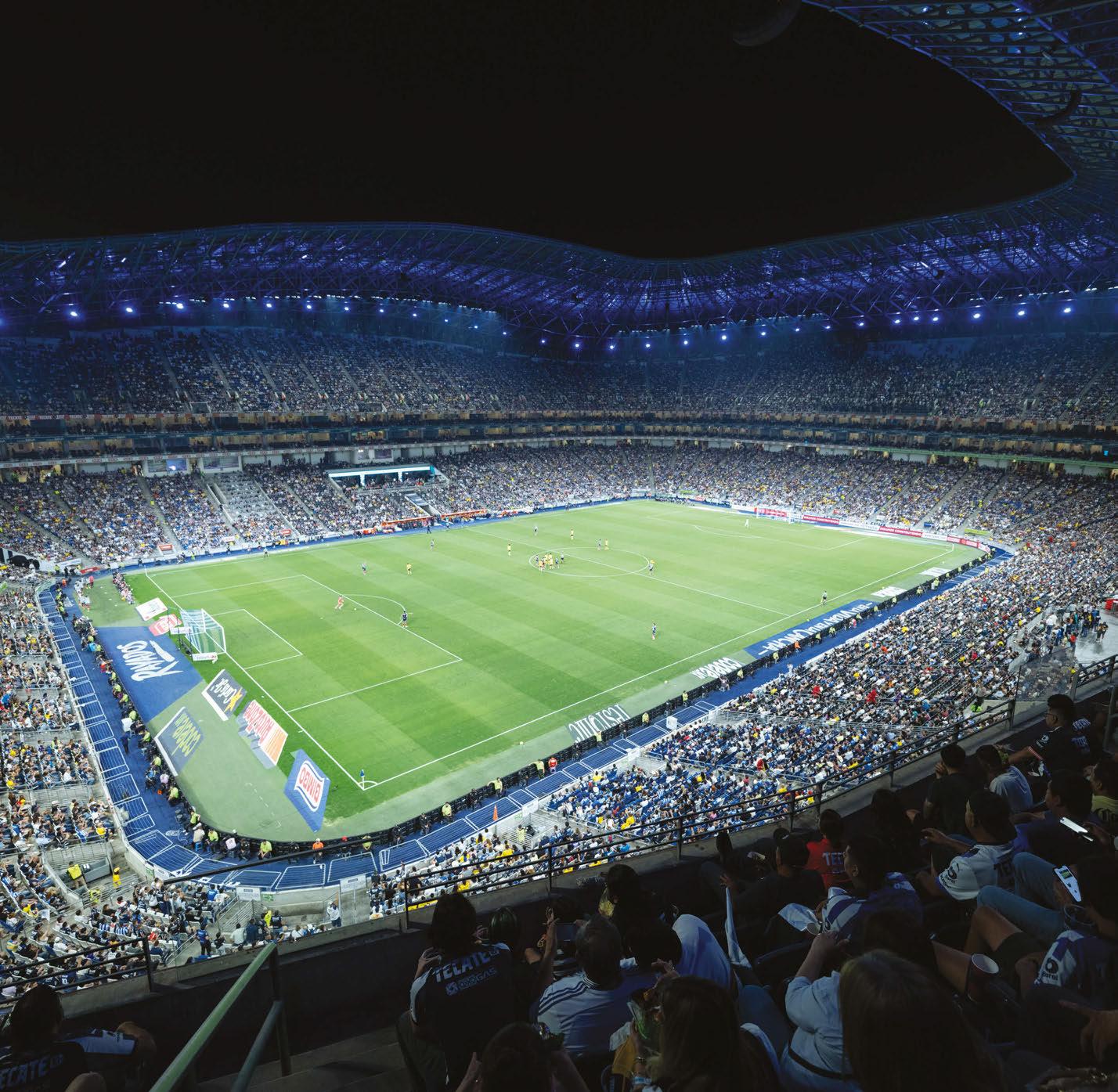
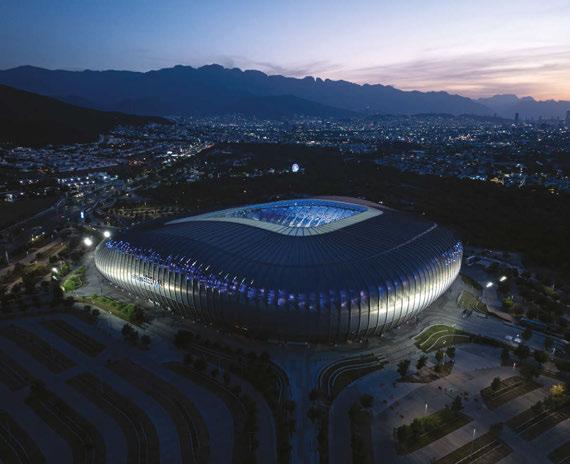
As Estadio BBVA in Monterrey, Mexico, prepares for the world’s most-watched sporting event, they chose Musco to light the moment. Drawing on more than 50 years of experience, we delivered elite field-of-play and entertainment lighting that elevates the experience for players, fans, and broadcast audiences.
SCAN HERE TO PUT OUR EXPERTISE TO WORK FOR YOU
Estadio BBVA Monterrey, Mexico
VERNON DOWNS
Oneida County, USA
Images: Lithonia Lighting®
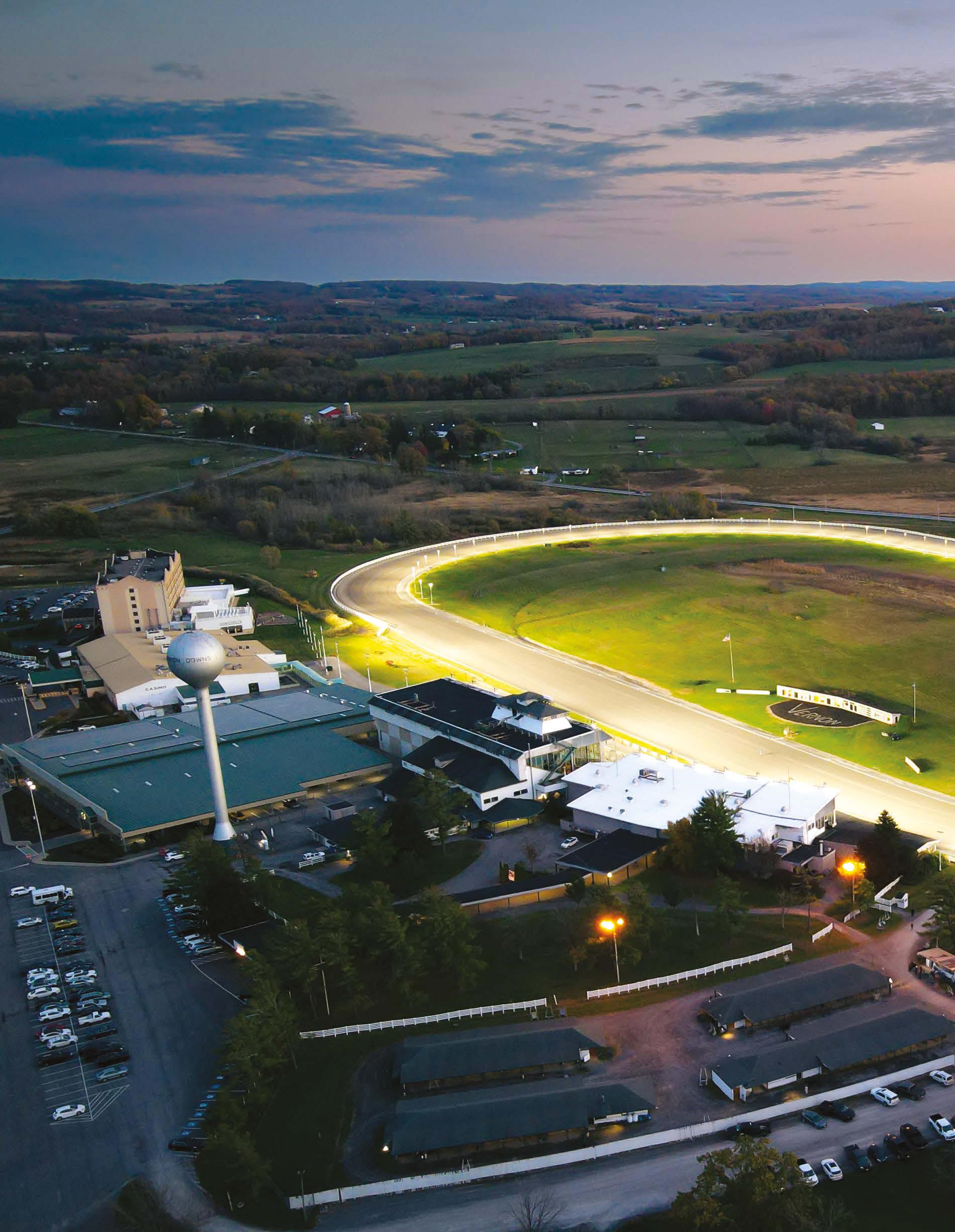
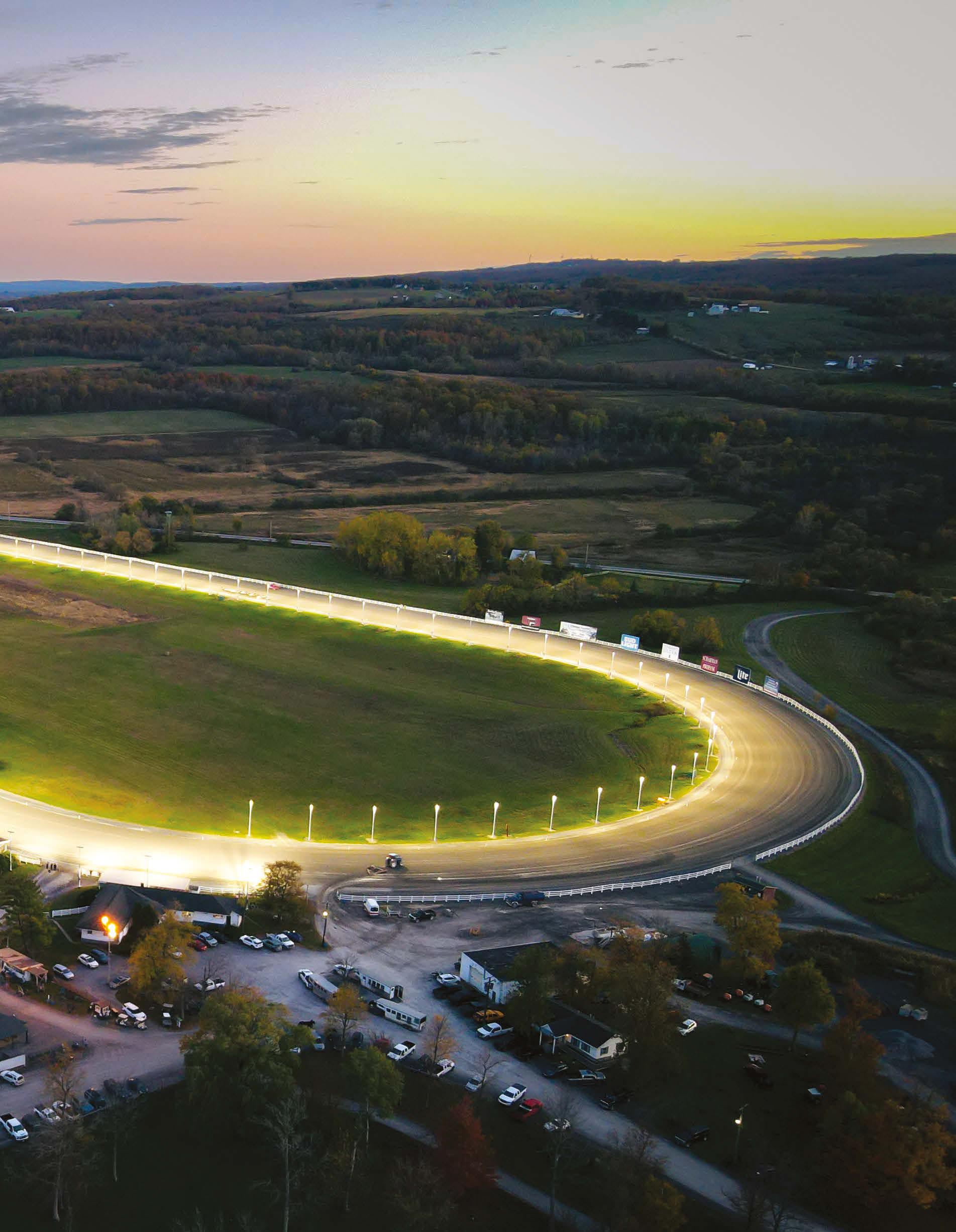
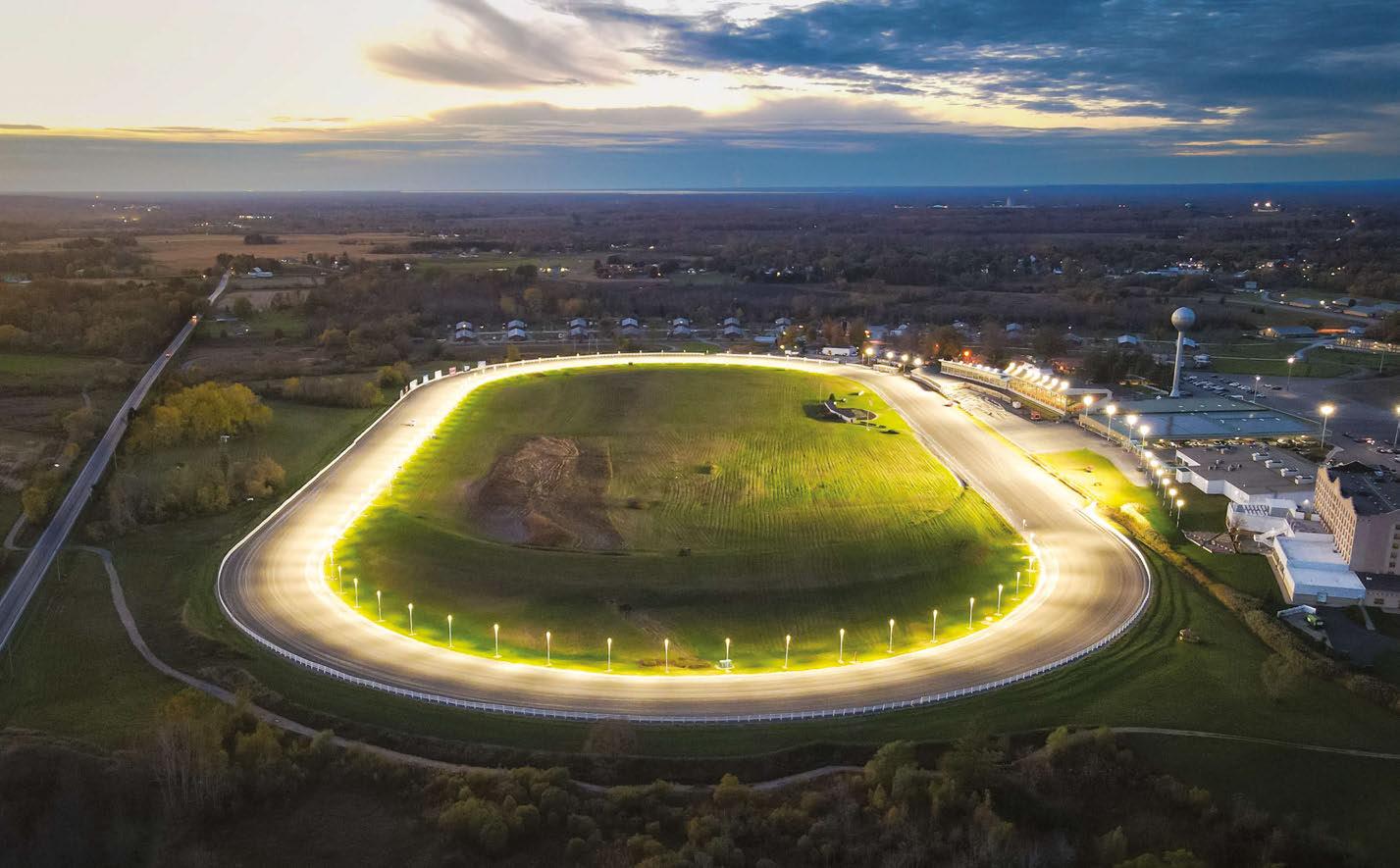
At Vernon Downs Racing in Oneida County, New York, consistent, high-quality lighting plays an important role in performance and the overall race-day experience, including visibility-related safety considerations. For Lithonia Lighting®, the challenge was clear: modernize an aging HID sports lighting system that was creating dark spots, glare, and operational strain – without requiring Vernon Downs to replace decades-old infrastructure.
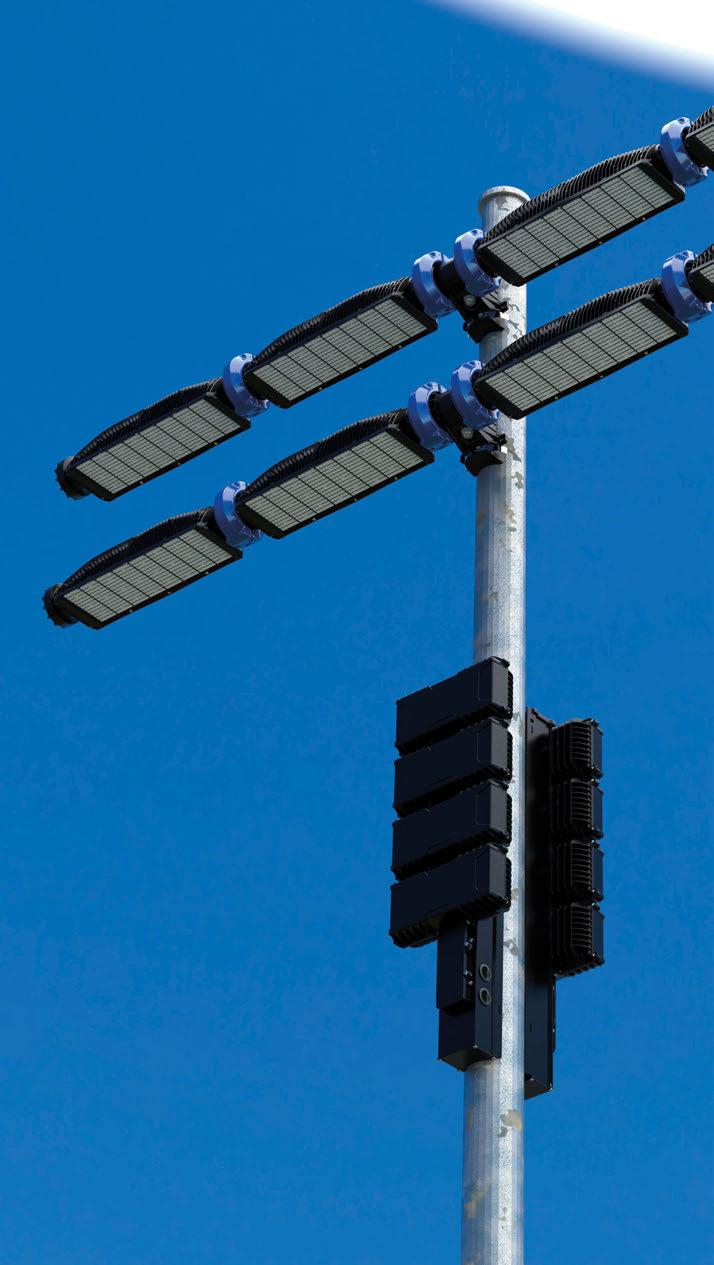
By deploying the M3 Sports Lighting solution, Lithonia Lighting delivered a comprehensive LED retrofit that transformed visibility on the track, improved broadcast quality, reduced maintenance demands, and unlocked new opportunities for fan engagement – all while integrating seamlessly with existing poles and wiring.
“This is the best I have ever seen it,” said Leslie DeLorenzo, Mutel Manager, with more than 30 years at Vernon Downs.
“I started as a parimutuel clerk punching tickets, so I’m well aware of the lighting here at the track.”
Addressing Visibility and Safety Challenges
Prior to the retrofit, inconsistent light levels created visible dark patches and glare conditions across portions of the track, affecting driver confidence, horse behavior, and safety conditions. Glare from outdated fixtures further complicated visibility, particularly during night races. Vernon Downs officials also had increasing concerns after safety conditions impacted race operations.
“We had an incident last year where we had to move our post time because they didn’t feel they were safe,” continued DeLorenzo, describing an experience at Vernon Downs before the lighting upgrade. “So that got us the new lights, and they haven’t complained about safety since.”
Lithonia Lighting’s team offered a solution focused on uniformity, visual comfort, and more precise optical control.
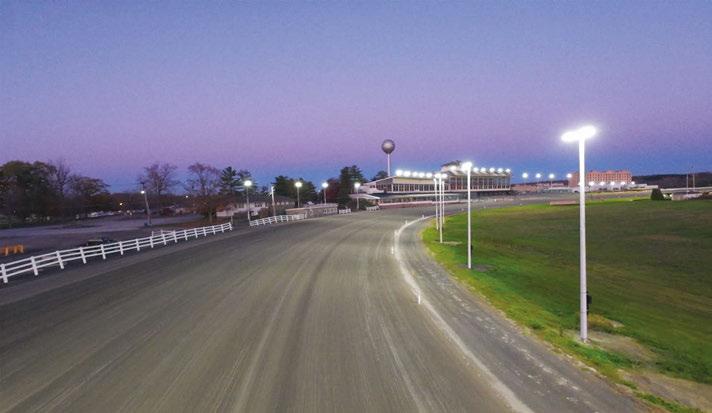
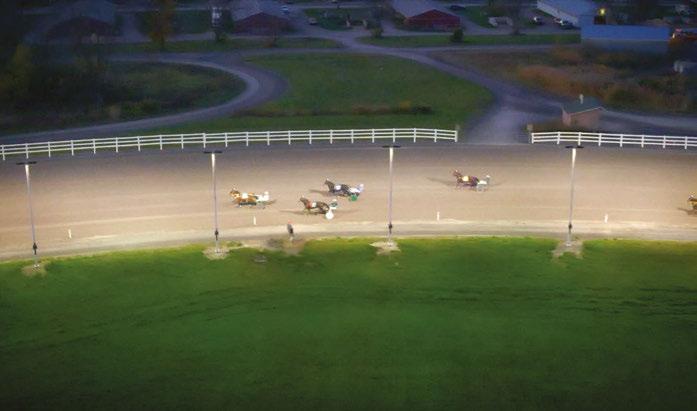
By directing light straight down onto the racing surface rather than outward, the new system significantly reduced glare and dark spots, creating a more comfortable and predictable environment for both horses and drivers.
“Some horses would look at dark spots here and there,” said John McDonald, Horsemen, of his observations. “Now that that’s eliminated, there’s no glare.”
A Retrofit-Built Solution Designed for Existing Infrastructure
A key differentiator of the M3 Sports Lighting solution is its ability to integrate with Vernon Downs’ existing infrastructure. Rather than requiring new poles or extensive rewiring, Lithonia Lighting retrofitted the system onto 30-year-old poles and reused existing wiring – helping reduce installation complexity and downtime.
“The biggest factor to me was that you could take my infrastructure and utilize that into incorporating the new system,” said Arthur Wood, AGM & Senior Director of Facilities, Vernon Downs. “Our poles are 30 years old and yet you could modify them enough to get your system onto it.”
This retrofit-friendly approach allowed Vernon Downs to
See Racing in a New Light
FROM SHADOWS TO BRILLIANCE
With the M3 Sports Lighting solution from Lithonia Lighting Vernon Downs Racing in central New York, achieved uniform, high-performance lighting — enhancing visibility, reducing fixtures, and elevating the race-day experience.
dramatically reduce fixture count while increasing overall performance. The project reduced the total number of fixtures from more than 800 HID luminaires to just over 200 highoutput LED fixtures, delivering enhanced illumination with fewer points of maintenance.
Broadcast-Ready Performance
The lighting upgrade delivered measurable improvements not only for racing operations, but also for spectators and broadcast audiences. With Vernon Downs exporting its racing signal to off-site viewers and wagering platforms, lighting quality plays a direct role in visibility on screen.
Lithonia Lighting’s M3 Sports Lighting system helped improve clarity for high-definition broadcasts, creating consistent illumination across camera angles and reducing harsh contrasts that previously affected image quality.
Energy and Operational Efficiency
In addition to performance gains, the LED retrofit delivered significant energy and maintenance savings. Compared to the existing HID system at Vernon Downs, the M3 Sports Lighting solution was projected to reduce energy consumption by up to 70%, saving more than $50,000 annually in energy costs.
“We used to spend two lifts out at the beginning of the season, and we would have to spend at least a week changing light bulbs,” explained Wood. “It would be two crews in two different directions trying to get it done in a week.”
Maintenance demands were also substantially reduced. The combination of fewer fixtures, long-life LED technology,
and field-replaceable remote drivers at Vernon Downs was designed to reduce routine bulb changes and seasonal lift rentals, resulting in estimated annual maintenance savings of more than $20,000.
Expanding Event Capabilities and Fan Engagement
Beyond racing operations, the integrated controls capabilities of the M3 system provide Vernon Downs with dynamic lighting control for non-racing events. Dimming, on/off control, and entertainment lighting effects enable the venue to support concerts, special events, and fan engagement experiences – extending the value of the lighting investment well beyond race nights.
“We talked today about doing two concerts next year,” said Wood. “This would help us immensely with just getting the people excited.”
A Brighter Future for Vernon Downs Racing
The Vernon Downs project demonstrates that racetrack lighting modernization can be accomplished without full infrastructure replacement. Through precision optical engineering, a reduced fixture count, and retrofit compatibility, Lithonia Lighting delivered a sports lighting solution that supports improved visibility, lowers operating costs, and helps prepare Vernon Downs Racing for the future.
The result is controlled, uniform illumination intended to support horse welfare considerations, driver confidence, broadcast clarity, and facility operations, illustrating a scalable retrofit approach for racetracks with similar needs.
ELATION LIGHTING USA ROUND-UP
Images: Elation
From historic arenas to next generation builds, lighting in North American sports venues is undergoing a quiet but significant shift.
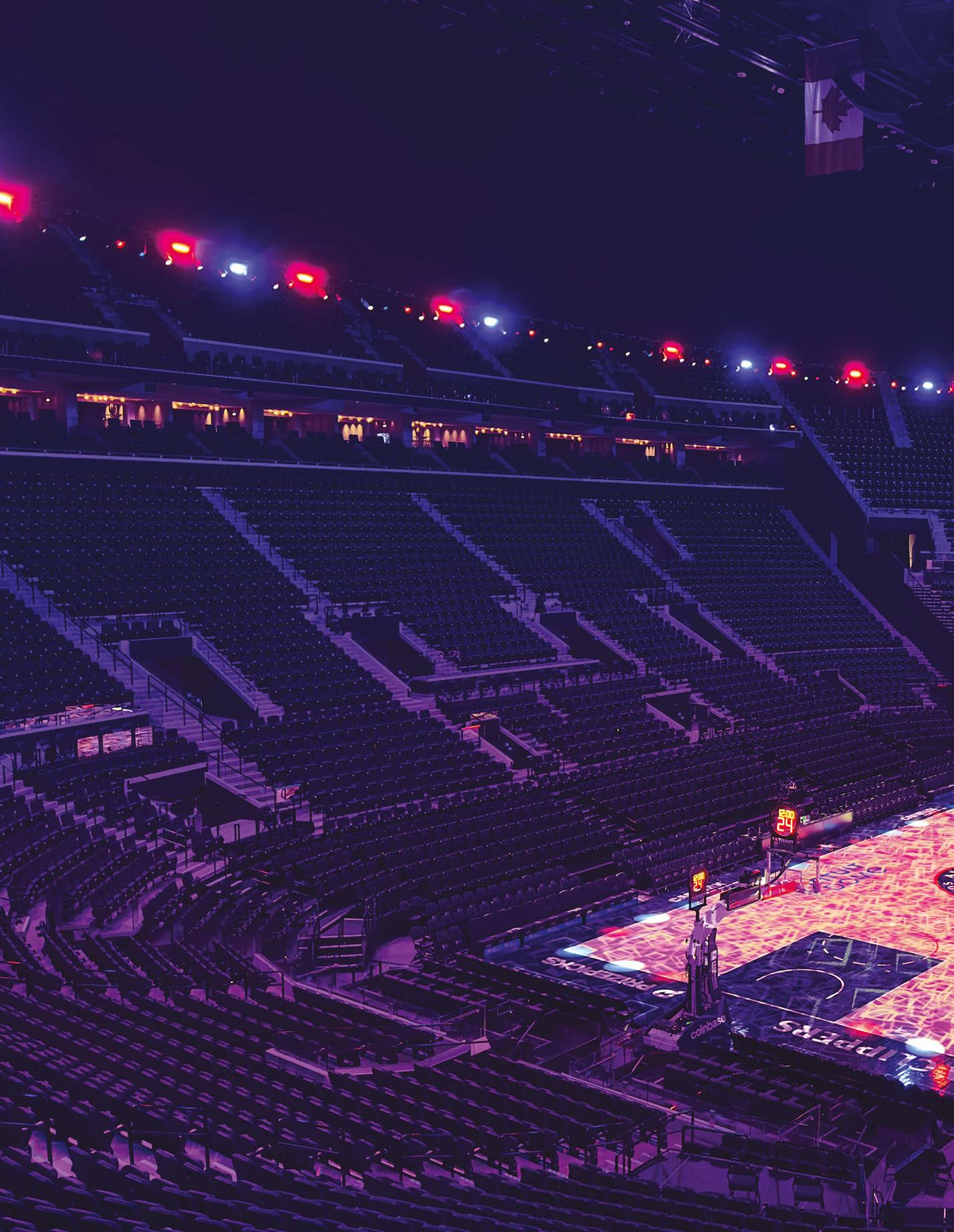
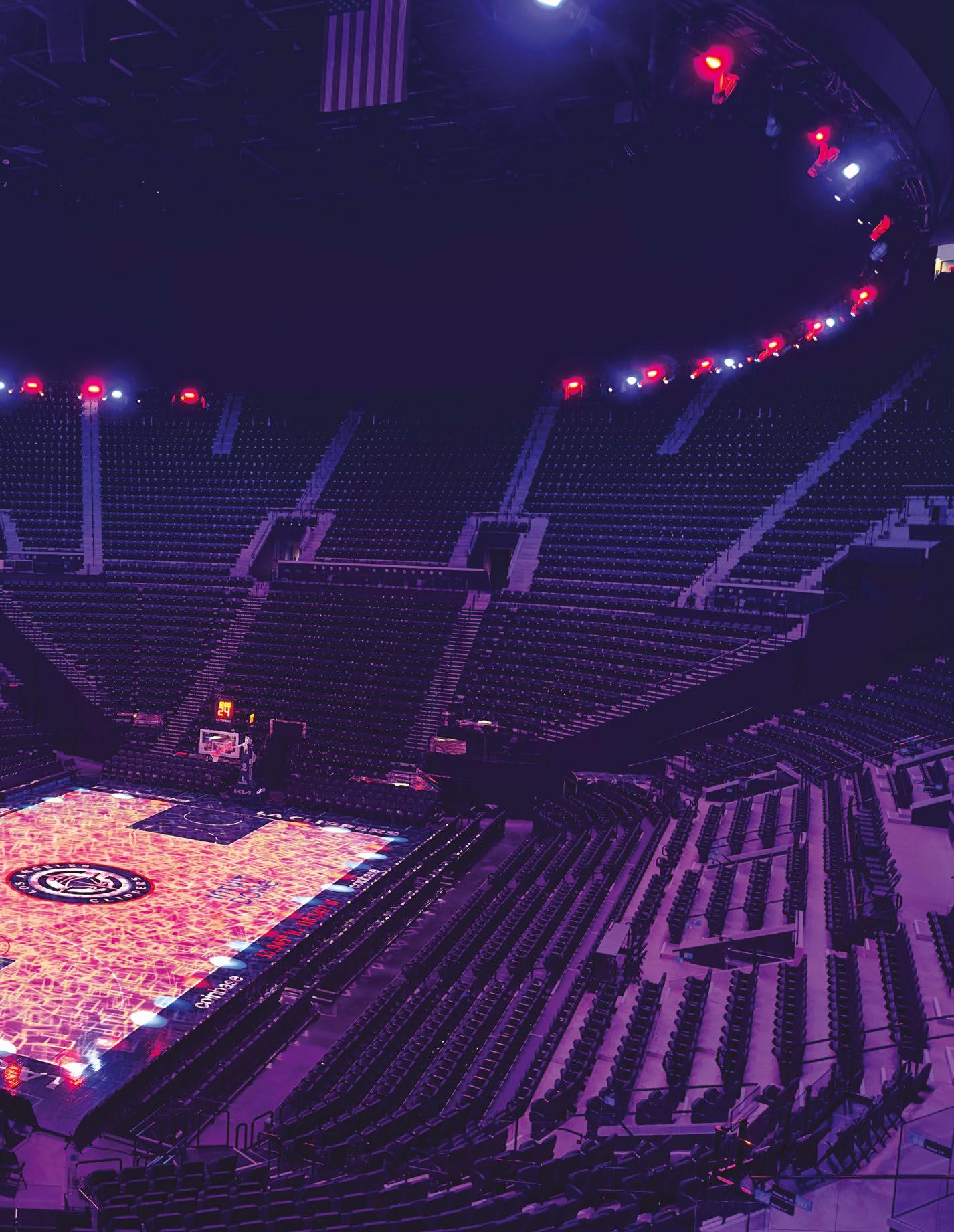
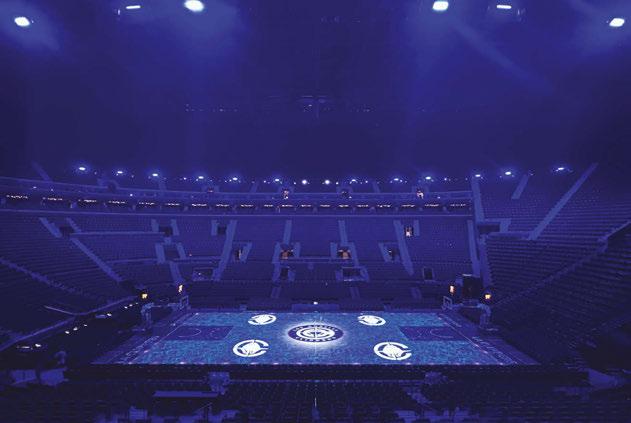
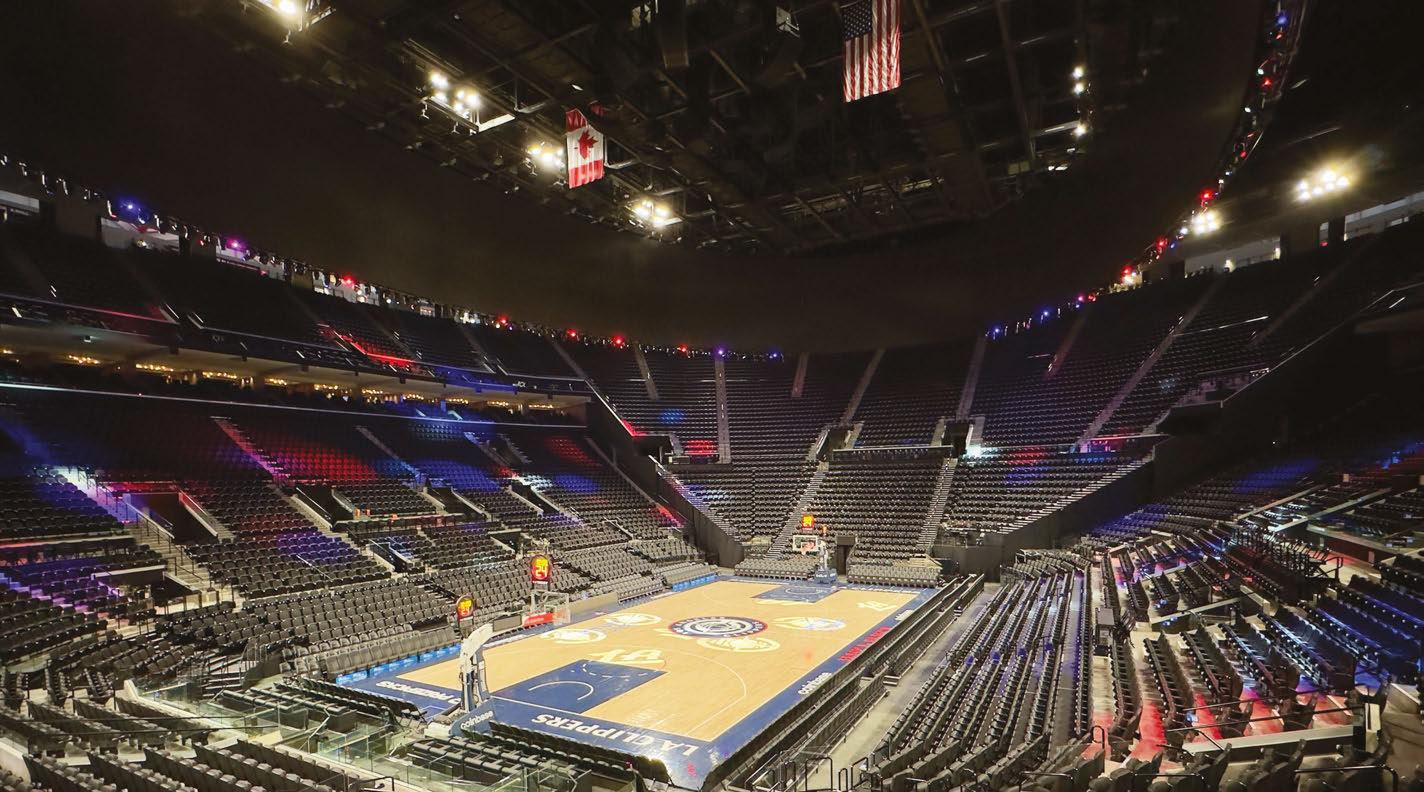
Recent upgrades at some of the country’s most prestigious arenas—Intuit Dome, Crypto.com Arena, American Airlines Center, and United Center—highlight a broader trend: venues are rethinking not just how they illuminate the game, but how lighting shapes the entire live experience.
Increasingly at the center of these modernisation efforts is Elation, a lighting manufacturer that has steadily built momentum in the arena sector by aligning its technology with the evolving demands of live sports presentation and broadcast, while maintaining the flexibility to support a wide range of arena events. While each installation is unique, a clear pattern has emerged: venues are not simply upgrading in-game and house lighting—they are investing in flexible, future-ready systems that entertain and elevate fan engagement, redefining what fans expect from the live sports experience.
Experience-Driven Design
For some time now, the role of lighting in arenas has grown beyond simple illumination. Today, it is evolving further into a core storytelling tool, integrating with video, audio, and architectural elements to create a cohesive, immersive, and engaging environment.
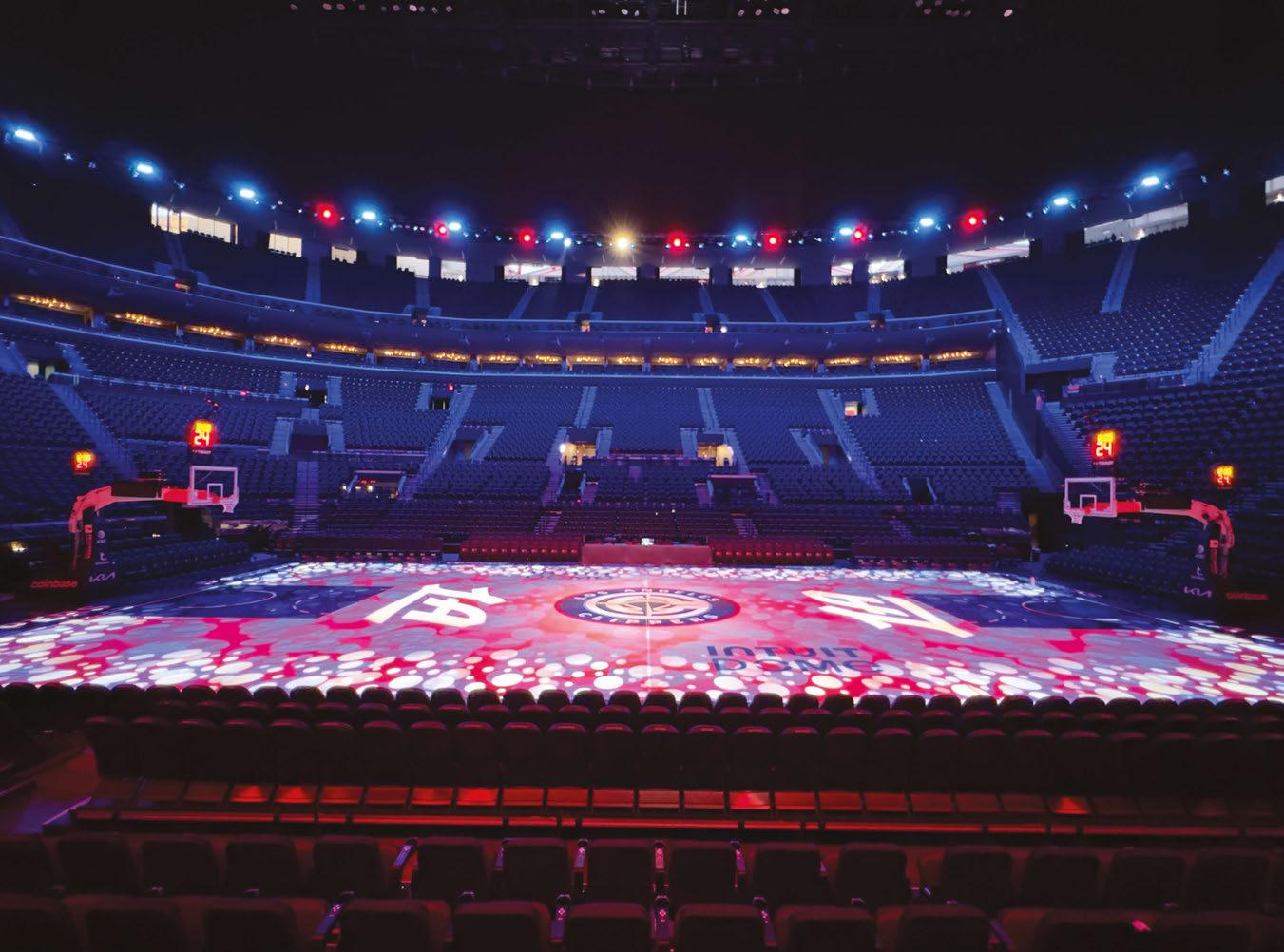
This is particularly evident at Intuit Dome, one of the most technologically advanced arenas in the world, where the
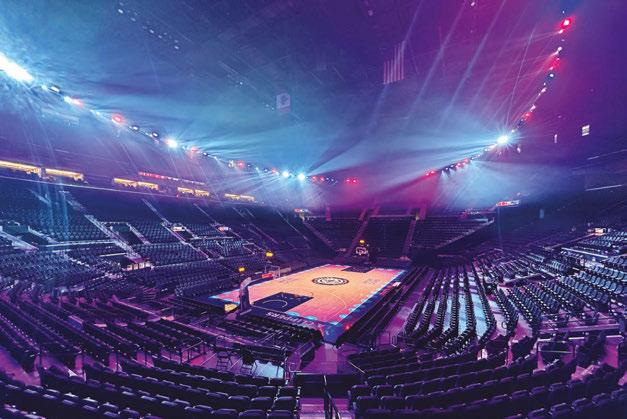
lighting system, provided by sales and integration firm JRLX, Inc, was conceived as part of a wider technological ecosystem to work in harmony with video, audio, and interactive elements. Rather than relying on traditional ‘lights out’ moments, the design supports a continuous visual narrative, integrating with the venue’s circular Halo LED scoreboard and seat-based fan-engagement features for a more captivating, theatrical experience.
When the Los Angeles Clippers took the court after the upgrade, fans were treated to more than just basketball.
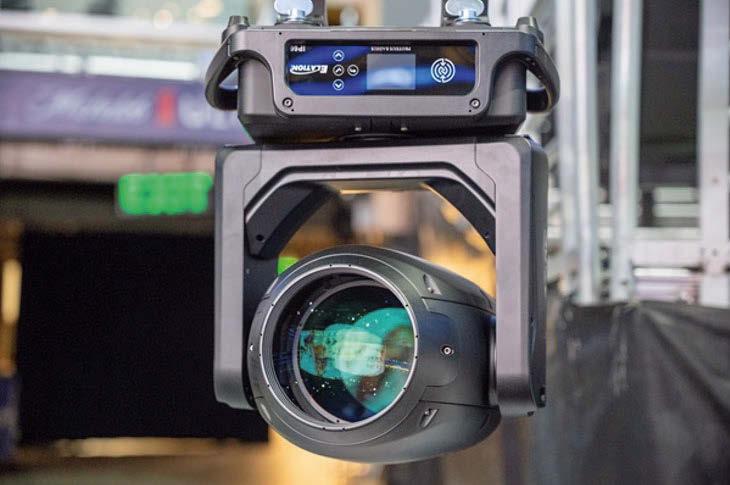
A new Elation lighting system, featuring beam, color, and texture effects from PROTEUS, PULSE and FUZE fixtures, transformed the arena into a fully immersive, multi-sensory environment, driven by the vision of Clippers lighting designer Robert Sanders.
“We’ve built a system that can deliver energy and emotion every night,” Sanders said. “We take you on a journey and give you an immersive light show experience so fans don’t just watch a Clippers game; they’re part of the experience.”
The effect is less about isolated cues and more about sustained atmosphere that keeps fans engaged from the moment they enter the arena until they exit.
Team Branding
A similar philosophy underpins upgrades at Crypto.com Arena, home to the LA Kings, Los Angeles Lakers, and LA Sparks, where lighting plays a key role in reinforcing team identity and energizing the building during pivotal moments.
For LA Kings games, high-intensity PROTUES RADIUS beam fixtures, mounted in a circle around the rink, create a striking cage-like effect around the ice during player intros, goal celebrations, and key game moments. This signature look, unique to the Kings, along with the broader lighting design, has become an essential element in reinforcing the team’s brand identity throughout a game.
Performance That Cuts Through One of the biggest challenges in arena lighting is scale. Fixtures must deliver enough intensity to register clearly in a bright sports lighting environment while still delivering saturated color and crisp effects that look good both inhouse and on camera.
Lighting systems installed at the United Center and American Airlines Center, for example, prioritize brightness, as well as consistency, ensuring even coverage across large playing surfaces and eliminating the hotspots or falloff associated with older technologies. This ability to “cut through” at long throws is critical in today’s arena environment, where lighting must function alongside LED scoreboards, ribbon displays, and high-definition broadcast workflows.
American Airlines Center, home to the NHL’s Dallas Stars and NBA’s Dallas Mavericks, replaced its aging discharge lights with Elation PARAGON LED profile moving heads.
“The new PARAGONs deliver a more even output from center to edge and are thousands of lumens brighter than most competitors in this class,” stated Robin Crouch of
integration company Gemini Light, Sound & Video. “Not only are we saving them money by switching to LED, but we’re also giving them higher-quality light and more intensity—a win, win, win.”
At the United Center, home to the NBA’s Chicago Bulls and NHL’s Chicago Blackhawks, high-power PROTEUS BRUTUS
LED Wash FX fixtures—part of a lighting system also provided by JRLX—deliver the ability to texture the ice or basketball court with widespread gobo coverage while maintaining strong output, even in color, for special effects.
“At the almost 300’ throw distances, the units can punch through the sports lighting for broadcast,” Jason Reberski of integration firm JRLX confirms.
Robert Sanders, who worked closely with JRLX on the Intuit Dome project, conducted shootouts with the court lights on so he could see what looks good with deep colors, textures, and patterns. “Seeing those saturated beams carry across the arena and register on camera was incredible,” he said. Equally important is control. The ability to shape light precisely, whether to frame a basketball court, isolate a player introduction, or avoid spill into spectator areas, has become a standard expectation. This reflects a broader move toward lighting rigs that behave more like theatrical systems, even within the scale of an arena
Broadcast-Ready by Design
With the continued growth of live sports broadcasting and streaming, lighting systems must meet stringent camera requirements. High output alone is not sufficient; accurate
color rendering, consistency, and flicker-free performance are all essential for delivering a polished on-screen product. Across the recent sports venue installs, broadcast quality was a key consideration. Whether illuminating player introductions, highlighting key moments, supporting performances, or lighting post-game interviews, the lighting systems are designed to look as good on camera as they do in person.
At the United Center and American Airlines Center, improvements in color quality and beam consistency have enhanced both live and televised experiences. Another advantage of the PARAGON fixtures at American Airlines Center, for example, is their ability to adapt—rather than being limited to a single CRI or color temperature, they can adjust to suit any situation.
At Intuit Dome, LD Robert Sanders can easily tune the lighting to broadcast standard. “Because we do a lot of presentation-style lighting, I need to illuminate the court like a stage and ensure it looks great on camera. Skin tones, makeup, costumes, outfits—everything has to look perfect for broadcast. With the Elation fixtures’ high CRI and excellent color mixing, I can achieve the ideal color temperature right from the front of the light.”
Meanwhile, Crypto.com Arena’s system includes custom solutions to reduce glare while maintaining performance, another example of the level of detail now required in modern arena design.
Reliability and Reduced Maintenance
While creative capability is critical, practical considerations are another major factor driving adoption and are often what determine long-term success. Arena lighting systems are often installed in hard-to-reach locations, from overhead catwalks to integrated scoreboard structures, where maintenance access is limited and costly. The transition away from lamp-based sources to LED and advanced light engines has therefore become a key driver in specification decisions. Eliminating routine lamp changes reduces both labor and downtime, while also improving consistency over
the lifespan of the fixture.
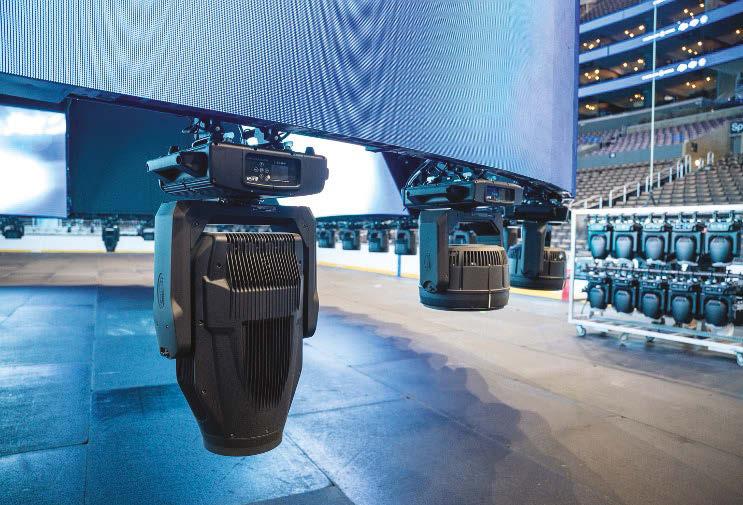
This was a clear factor in projects such as Crypto.com Arena, where long-term operational efficiency was prioritized alongside performance. At Intuit Dome, where fixtures mounted on the Halo LED display have limited access, reliability was a non-negotiable requirement. The installed system delivers the robustness needed for continuous, highpressure use without frequent intervention.
IP Indoor
Ingress protection, traditionally associated with outdoor use, is also becoming more relevant indoors. In fact, these latest installations all incorporate IP-rated fixtures. Dust, debris, and the general wear of multi-event venues can impact fixture longevity, and sealed units offer a level of resilience that aligns with the realities of arena operation. This added durability translates into fewer cleaning cycles and longer operational life, particularly in today’s multipurpose arenas that host concerts and a wide range of events year-round.
In Partnership
From early-stage demos and evaluations to final commissioning, these projects were delivered in partnership with trusted integrators and long-term collaborators, ensuring that each installation was tailored to the specific needs of the venue. Companies like JRLX, Volt Integrated, Gemini Light, Sound & Video, and others provide valuable professional advice and support, often working within tight offseason (and even in-season) windows.
Lighting’s Changing Role
Ultimately, the evolution of arena lighting reflects a broader shift toward fully integrated venue systems. Lighting must do more than illuminate; it is no longer a standalone system, but part of an interconnected infrastructure that supports fan engagement. Elation’s increasing presence in this space reflects how manufacturers are responding to these demands. As offerings continue to evolve, lighting is taking on a more defined role within this ecosystem, not just supporting the experience, but actively shaping it.
LALIGA ROUND-UP
Spain
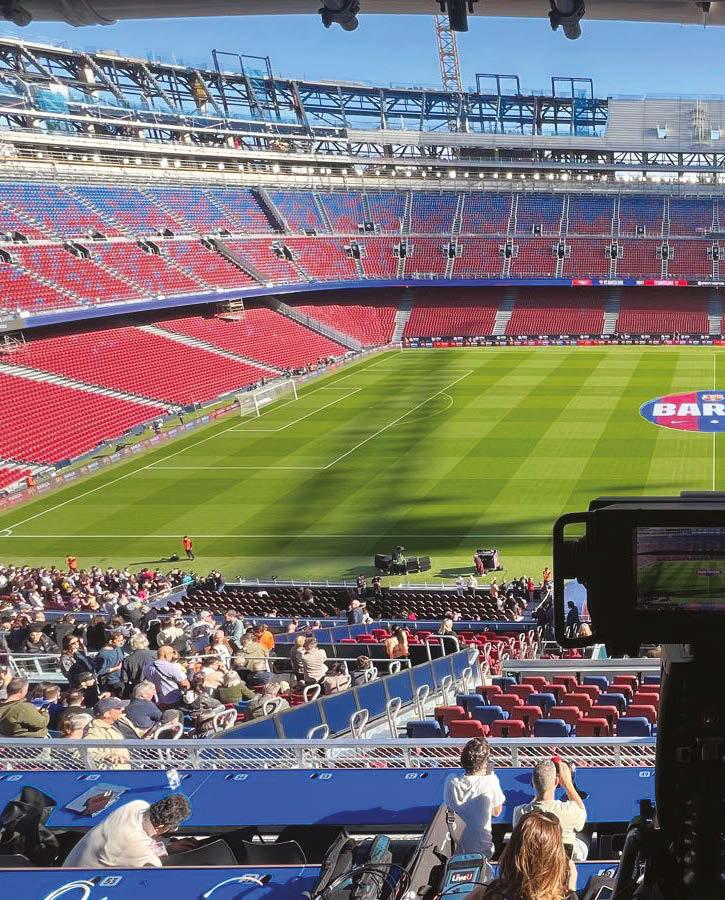
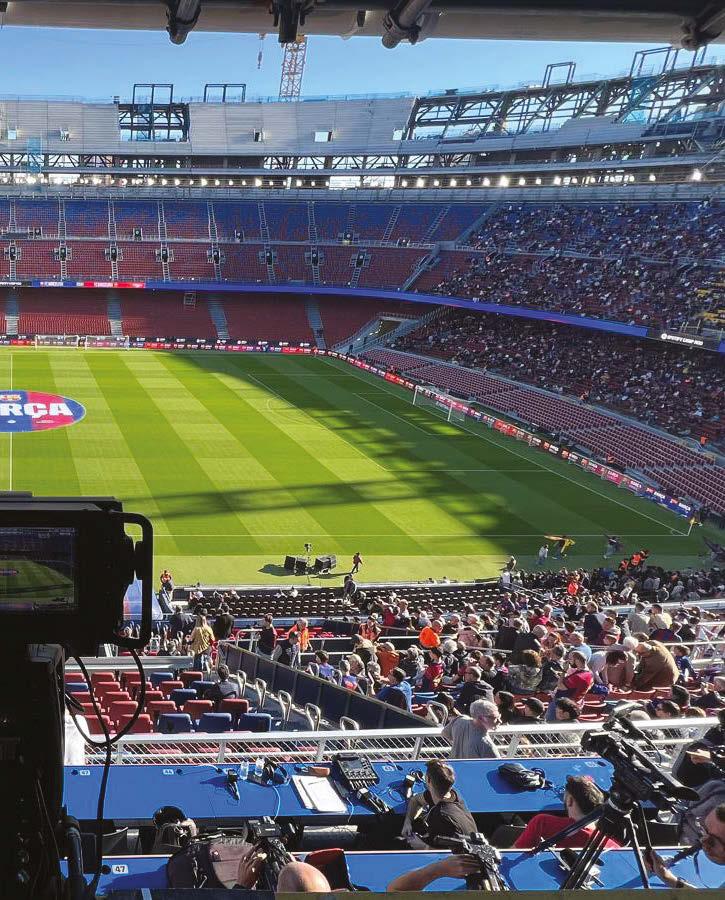
Grass Valley has recently launched and completed a major live production deployment with NVP, a leading European media company specializing in live sports production, delivering a significant leap forward in image quality, production flexibility, and technological innovation for LALIGA broadcasts. This deployment responds to LALIGA’s RFP, which prioritized maintaining leadership in broadcast production through modern technology and scalable workflows. In meeting that requirement, NVP and Grass Valley have implemented a camera and production system designed to enhance visual quality and support the scale of live match coverage.
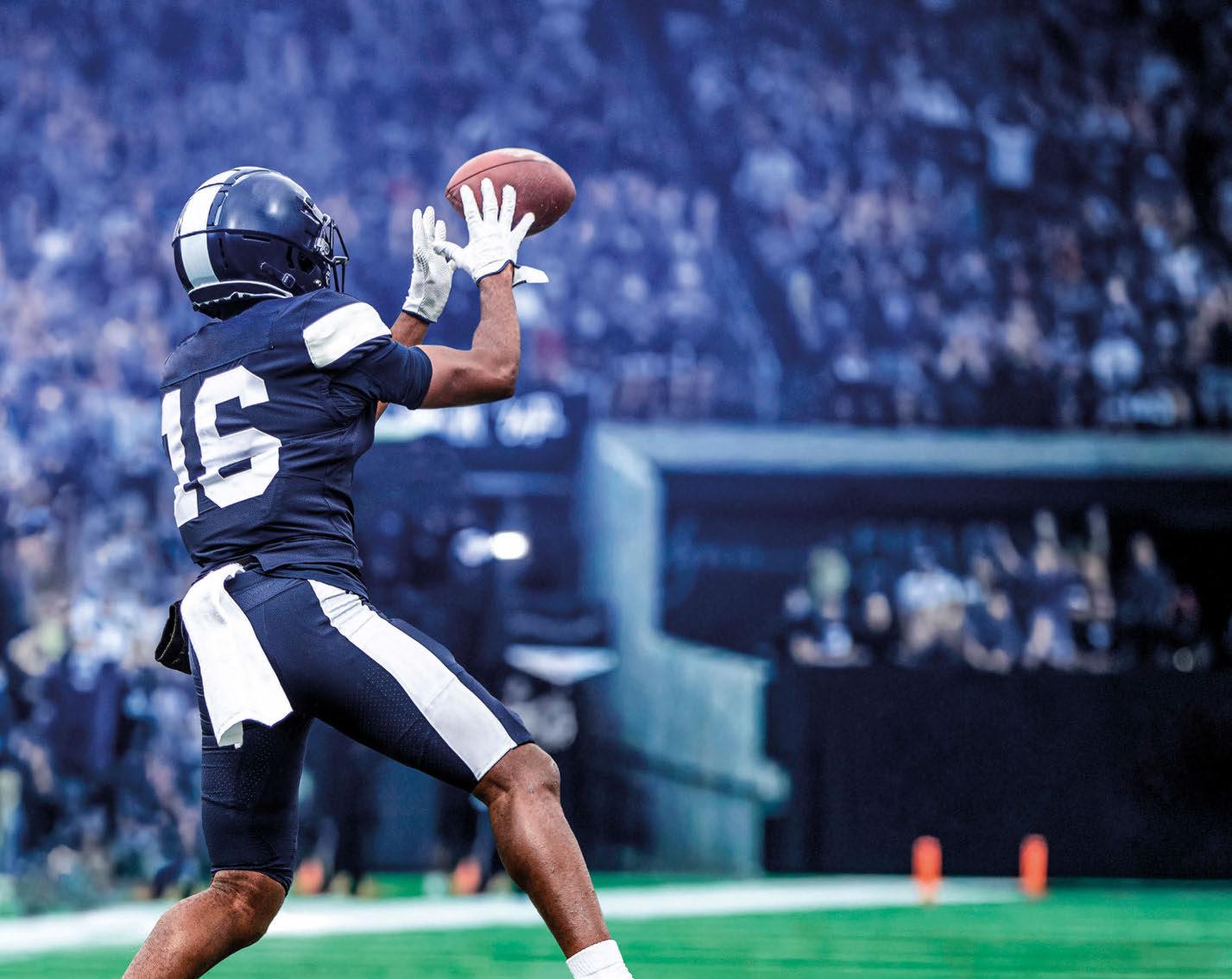
The project supports the production of more than 760 matches per season across Spain’s top professional football divisions (LALIGA EA Sports and LALIGA HYPERMOTION) and marks a new benchmark for live football production at scale.
Images: Grass Valley
Founded in 2007, NVP has built a strong reputation delivering large-scale international sports productions for global broadcasters and production partners. Building on a longstanding collaboration, NVP developed its proposal in line with LALIGA’s RFP, focused on advancing innovation and premium image quality. With that objective, NVP selected Grass Valley to deliver camera systems and workflows designed to scale and evolve over time.
Following LALIGA’s decision to entrust NVP with the production of both -first and second- division matches, the challenging opportunity was to deploy a unified production infrastructure capable of handling a very high volume of live content while further boosting premium image quality. All camera systems were delivered and deployed within an exceptionally short timeframe, meeting the demanding
production schedule ahead of the season’s start. Working closely with Grass Valley and systems integration partner Video Progetti S.r.l., NVP implemented a highperformance production ecosystem, spanning traditional OB operations and advanced remote production environments.
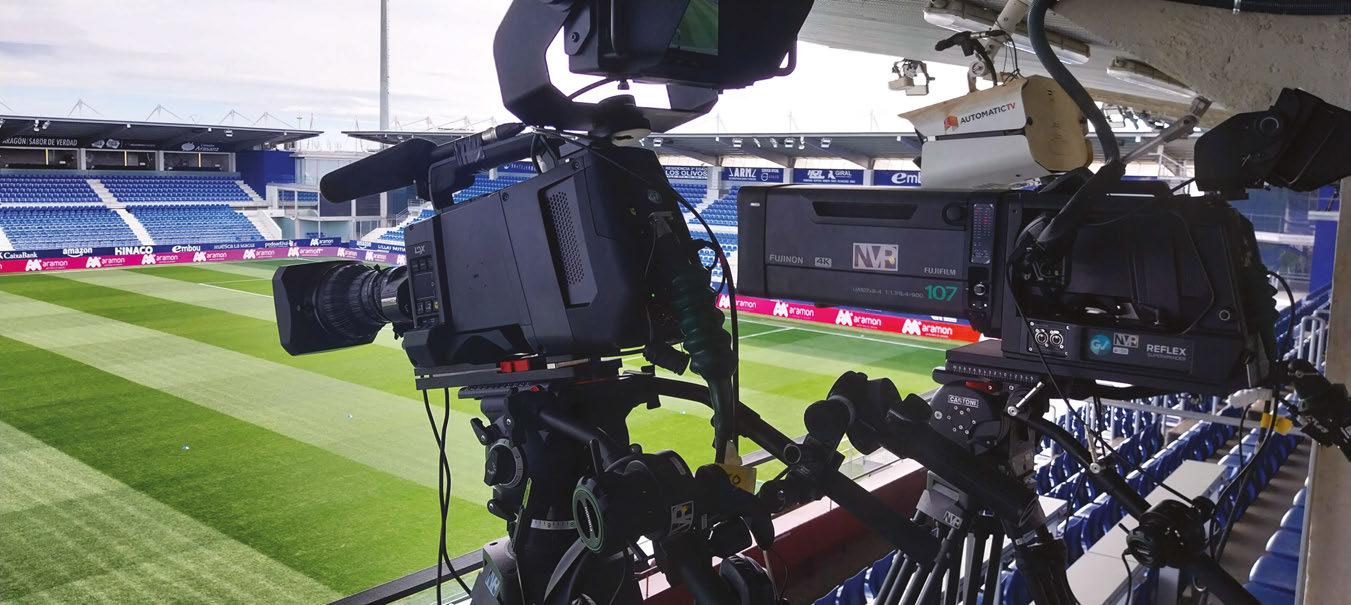
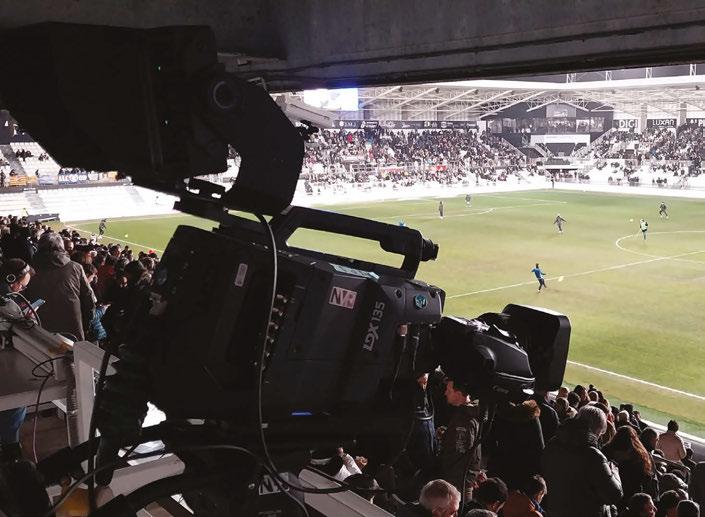
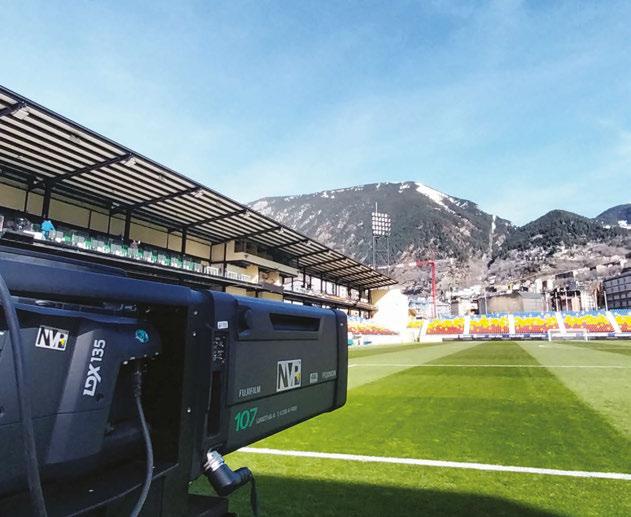
The deployment includes 144 Grass Valley cameras, with LDX 135 and LDX 150 systems forming the backbone of seven high-end OB trucks for LALIGA EA Sports (first-division) matches as well as eight OB trucks optimized for remote production in the LALIGA HYPERMOTION (second division).
All cameras deliver native 4K UHD images, with the LDX 150 systems providing additional native 4K UHD high-speed capture to enhance live action and replay storytelling. The solution also enables simultaneous UHD HDR and HD SDR production, ensuring consistent visual quality and delivering
Compact Long-throw Powerhouse
well equipped Your everyday go-to IP65 LED WashBeam, easy to handle and
the required flexibility across all matches.
The camera systems combine SDI and NativeIP connectivity, to support hybrid workflows. JPEGXS directly from the camera head helps address bandwidth constraints in remote production scenarios, providing optimal deployment flexibility. The à-la-carte licensing further allows NVP to dynamically add advanced capabilities such as super slow motion as audience demands evolve.
“Innovation is in NVP’s DNA,” said Ivan Pintabona, CTO at NVP. “With the LDX 150 and LDX 135, we are not only investing in cameras, we are investing in the future of live production. In particular, the LDX 135 cameras have demonstrated exceptional performance in real-world field operations, delivering a clear step forward in terms of image quality, HDR handling, and overall consistency in demanding
live environments. These systems allow us to deliver UHD HDR productions with the highest level of reliability, while ensuring we can scale quickly.”
Carlos Ferreira, VP of Sales for Southern Europe at Grass Valley, added: “This project with NVP highlights the power of close collaboration across the entire production ecosystem. Working alongside Video Progetti, we delivered a solution that combines outstanding image quality with the scalability and reliability required for top-tier football production. We’re proud to support NVP in raising the bar for LALIGA broadcasts.”
Create the ultimate fan experience.
Streamline match-day production while delivering a truly immersive experience for fans with the Unified Venue Control solution from Ross.
Our tailored end-to-end production solutions combine the power of production control room technology with LED content management systems to enable sports venues to deliver the best possible fan experience.
Explore the solution by visiting: rossvideo.com/sports-venue
EXTRA TIME
EXTRA TIME
060 WORK PRO Audio | CVA Series
062 Arenas as Cities: The Rise of the 365-Day Hospitality Model
| George Vaughan, The Digital Line
066 Why Interoperability Is The Real MVP Of Sports And Entertainment Venues
| Ian Godfrey, TSL
072 Behind The Screen: Powering Live Sports Production | Adder Technology
WORK PRO AUDIO
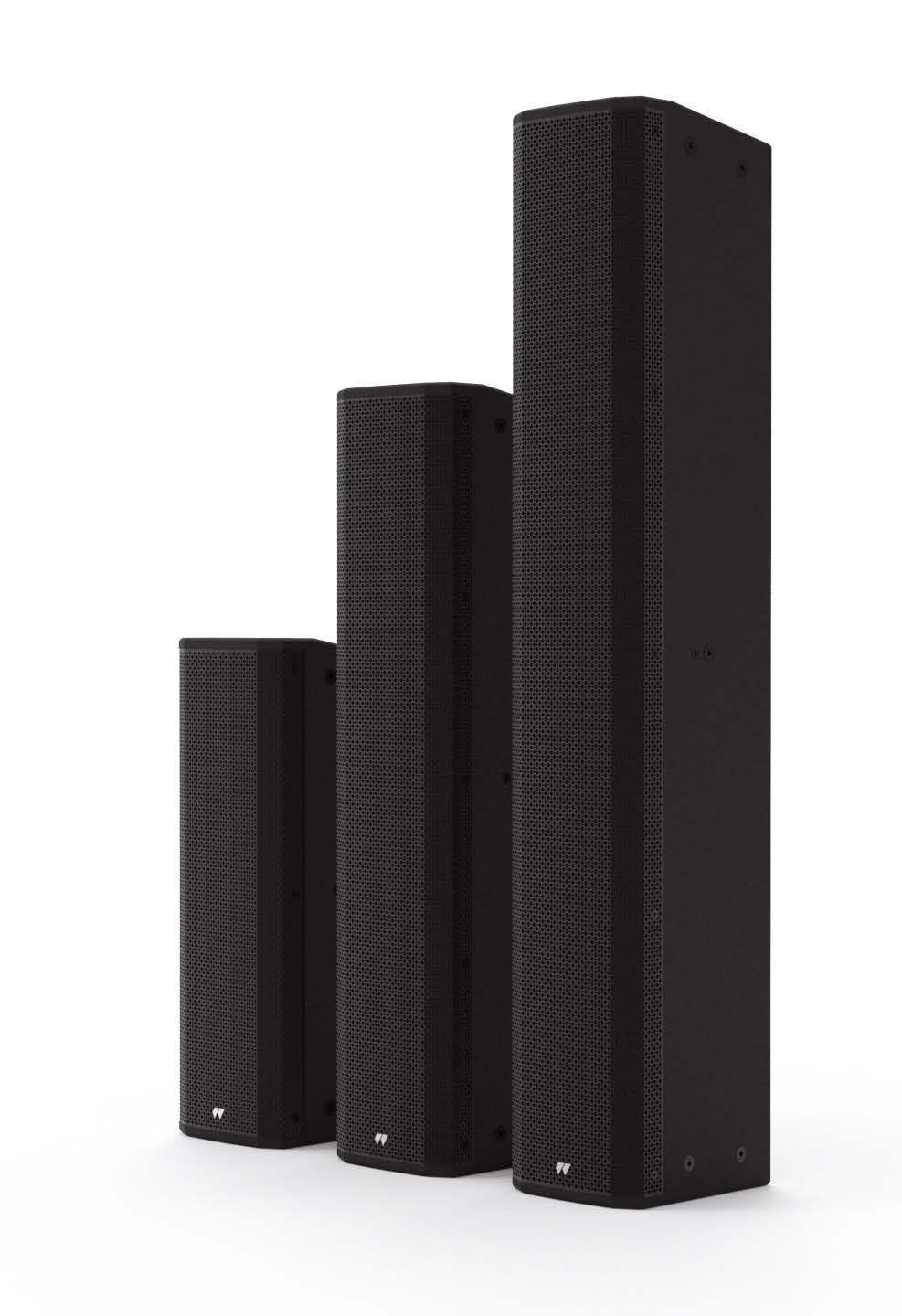
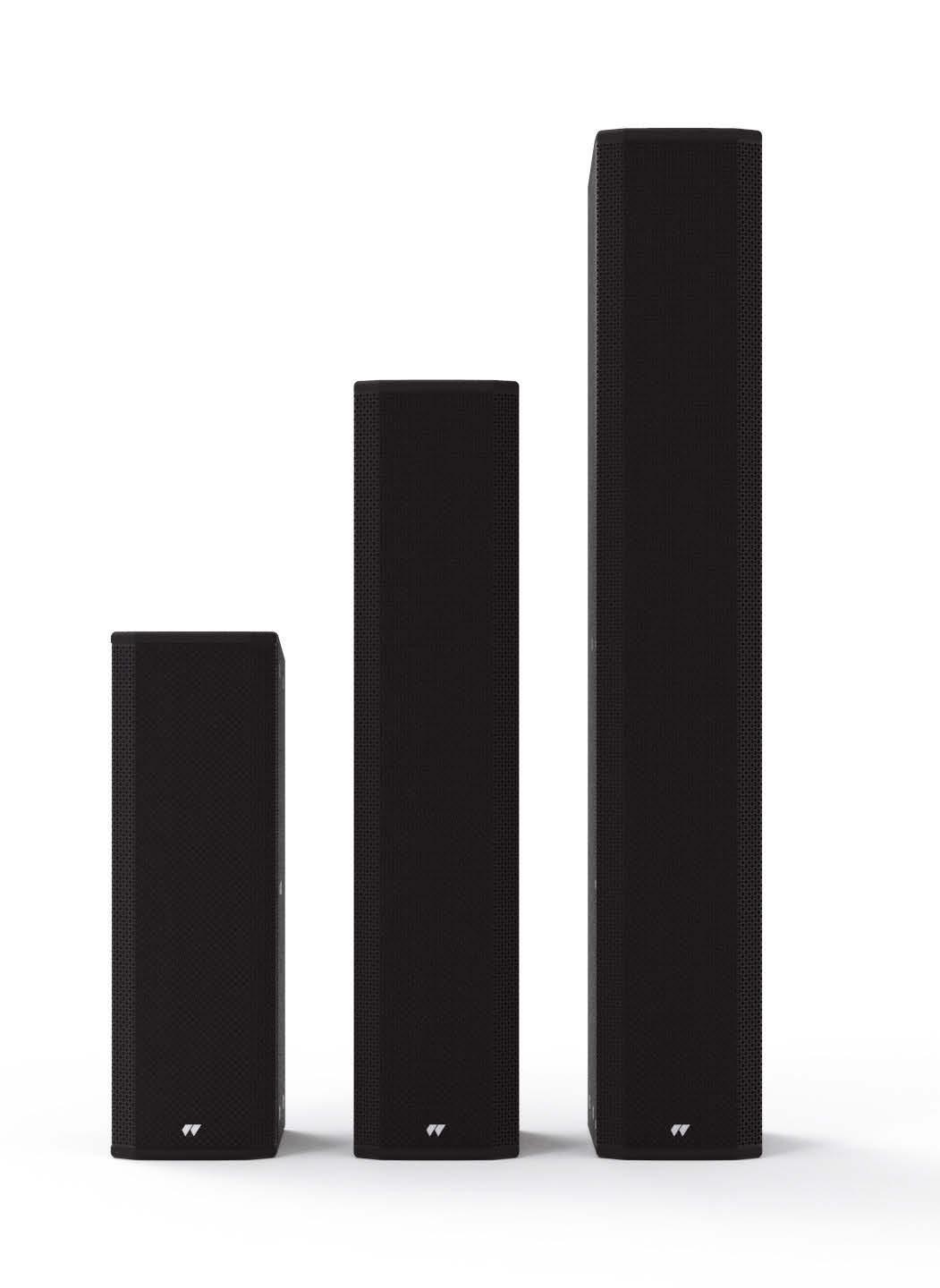
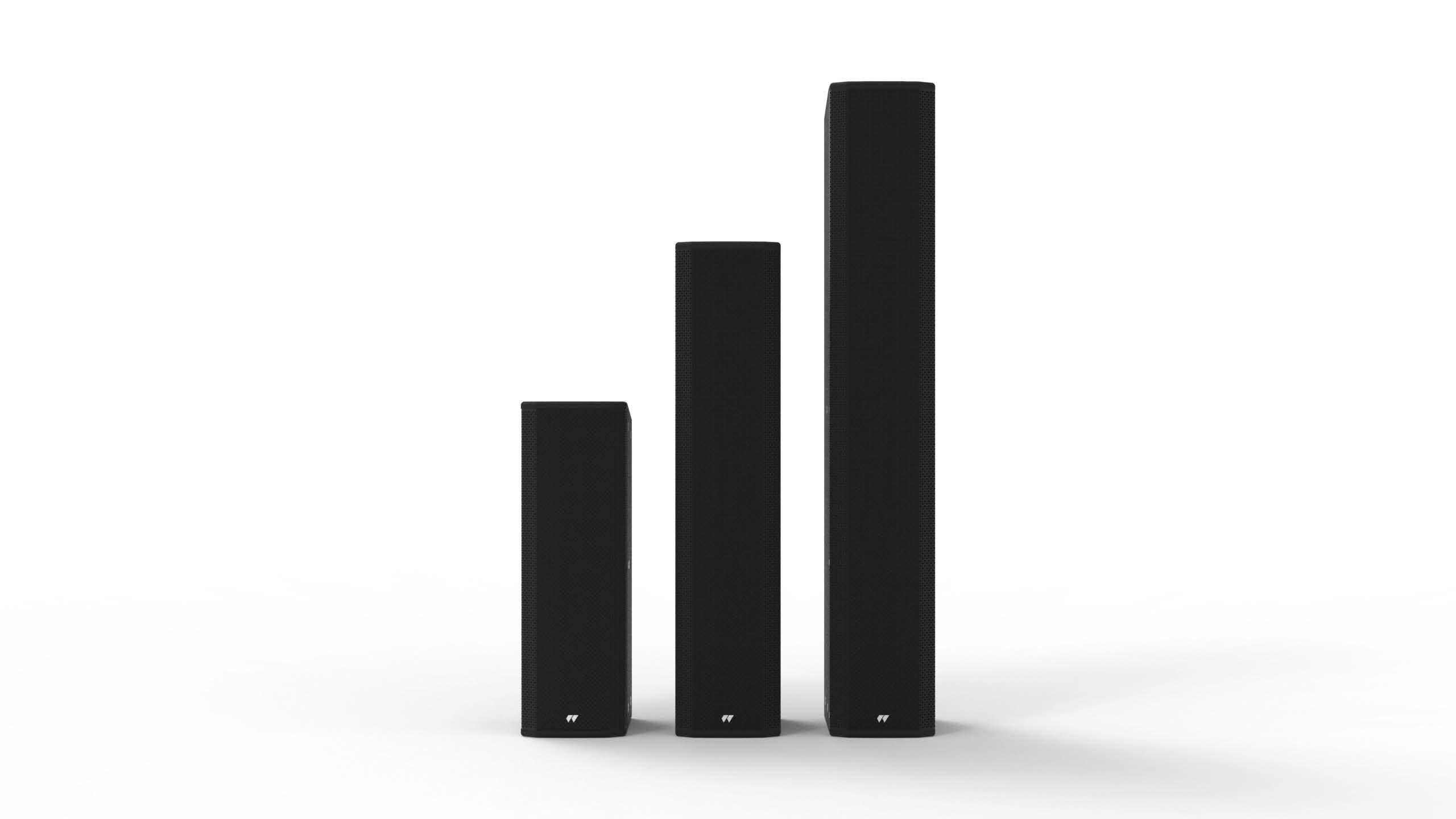
The CVA Series of column vertical array speakers from WORK PRO Audio, the installation and pro audio division of Equipson are suitable for a wide range of applications. The new speaker series has been designed to offer precision sound and flexibility in a highly durable cabinet.
The CVA Series is a range of line array column speakers consisting of three models: the CVA 4, CVA 6 and CVA 8. Featuring two, four or six 5-inch woofers depending on model, and dual 3/4-inch compression drivers paired with line horns, the CVA Series delivers from 500W program power rating to 1300W at 8Ω to produce clear and powerful audio. In addition to its exceptional sound performance, the CVA Series has been engineered with extreme durability as a top priority, further extending its appeal. Constructed from birch plywood with a sleek black, textured finish, the compact and lightweight design of each cabinet combines robust protection with an elegant appearance. Two Speakon input connectors on each speaker ensure compatibility with
virtually any peripheral audio equipment, making the CVA Series an excellent choice for a wide range of applications including live events, stadiums, houses of worship, conference halls, auditoriums and many more. This flexibility of use means that the CVA Series is equally at home in both permanent installations and for portable use.
The CVA Series offers versatile mounting options, providing two U-brackets on each model together with adapters that allow for 10° directional tilts, along with an extension bracket for combining two column speakers into a single array. Additionally, a 35mm socket on the base of each speaker facilitates easy setup on standard speaker poles or tripods. Optional accessories are available for more advanced mounting scenarios, including a wall mount to allow precise angle adjustments and a flying frame for suspension setups, both sold separately.
CVA Series
New Column Vertical Array
Wide sound dispersion, 12mm birch plywood enclosures, and textured finished
Equipped with dual Speakon connectors, U-brackets and 10° tilt adjustment for easy mounting.
From 500W to 1300W program @8 Ohm
CVA 4
CVA 6
CVA 8
ARENAS AS CITIES: THE RISE OF THE 365-DAY HOSPITALITY
George Vaughan, The Digital Line
f you build it, they will come.
IFor decades, stadium economics followed this simple, cinema inspired logic. Create a meeting place for fans of sports or music to congregate and they will gravitate to it. But in today’s landscape, that assumption no longer holds. Building the venue is only the starting point; the real challenge is giving people a reason to return when there is no event at all.
In today’s world, a modern stadium no longer sleeps. Lights remain on in its restaurants, visitors move through its lobbies, and office workers sip coffee in spaces that, just days before, were filled with thousands of chanting fans. The transformation is subtle but profound: the stadium has evolved from a periodic venue into a permanent destination.
What once seemed unusual now defines the direction of the industry. Increasingly, venues operate not as single-purpose sports facilities, but as miniature urban ecosystems - places designed to generate economic, social and cultural activity every day of the year. The result is the rise of the “365-day hospitality model,” where the success of a stadium is defined not only by what happens on a matchday, but also by what happens in between.
From Event Peaks to Everyday Footfall
For much of the 20th century, stadiums followed a simple rhythm. They opened for matches or concerts, produced intense but short-lived bursts of revenue and then
sat largely dormant. While this model was sufficient in an era of lower construction costs and fewer expectations, it is increasingly difficult to justify today. Modern venues often cost hundreds of millions, if not billions to build and maintain. More and more the reality is that idle time is no longer economically viable. In response, developers and operators have reimagined the stadium as a yearround destination. Rather than relying solely on ticket sales and event-day spending, they seek to maximise daily footfall. Visitors no longer need a match ticket to justify a trip. A family might come for dinner, a business might host a conference, or tourists might book a stadium tour as part of a broader itinerary. This marks a fundamental transition: from attendance-driven revenue to destination-driven revenue. In this new model, stadiums compete not only with other sports venues, but with restaurants, hotels and entertainment districts across the city.
The Anatomy of a Stadium District
To understand this transformation, it is useful to think of the modern arena not as a building, but as a district. Like any functioning urban environment, it is composed of multiple interdependent layers.
Hospitality infrastructure sits at the core. On-site hotels, premium lounges, rooftop bars and high-end restaurants provide consistent activity, independent of event schedules. A stadium hotel, for example, can maintain occupancy through tourism
and business travel even during the off-season.
Leisure and entertainment extend the venue’s appeal beyond sport. Cinemas, live music spaces, immersive attractions and curated fan zones create reasons to visit on non-event days. These offerings shift the focus from outcome (who wins) to experience (what you do while you are there).
Retail and commercial space adds another dimension. Branded outlets, food halls and pop-up concepts - often featuring local vendors - encourage repeat visits and diversify revenue streams. In many cases, these retail elements are designed to function as standalone destinations rather than adjuncts to sport.
Finally, the public realm plays a critical role. Open plazas, pedestrian walkways and green spaces all soften the boundary between stadium and city. When done well, these areas invite everyday use, making the complex feel integrated rather than enclosed.
In unison, these components create a self-sustaining environment where activity is constant, not episodic. A place that behaves less like a venue and more like a neighbourhood.
Why the Model Is Gaining Ground
Several forces are driving the rapid adoption of the 365-day model. First is financial pressure. The scale of modern stadium investment demands diversified and reliable income streams. Hospitality, conferencing and retail provide
steadier returns than the inherently cyclical nature of sport.
Second, consumer expectations have evolved. Attending a game is no longer a singular event, but part of a broader experience. Fans increasingly expect a full day – in some cases even a weekend - of socialising, dining and entertainment. Stadiums that fail to deliver this risk falling behind.
Third, cities themselves have embraced stadium-led development as a tool of regeneration. Anchoring a district with a high-profile venue can attract investment, create jobs and revitalise underused land. In this context, the stadium becomes not just a commercial asset, but a piece of urban infrastructure.
Hospitality as the Operating System
More than just a component, hospitality now sits at the heart of the model. Without it, the concept of the “stadium city” would struggle to function.
Hotels provide a continuous flow of overnight guests. Restaurants and bars generate daily footfall. Conference facilities and event spaces ensure that corporate clients fill the calendar even when there are no matches. These elements transform the stadium into a round-the-clock economic hub.
Crucially, hospitality also reshapes identity. A venue is no longer defined solely by its team or its events, but by the quality and diversity of the experiences it offers. In this sense, stadium operators are increasingly in the business of lifestyle as much as sport.
Models in Practice
The 365-day approach does not follow a single blueprint. Instead, it is adapted to local context, scale and strategy.
At one end of the spectrum are large-scale, mixed-use developments built around flagship venues. These projects integrate offices, retail, entertainment and residential space into a single master-planned district. The stadium acts as an anchor, but the surrounding ecosystem is equally important in sustaining daily activity.
Elsewhere, high-capacity venues are designed for maximum flexibility. By hosting a wide range of events, from international sport to concerts and corporate functions, they ensure high utilisation throughout the year. Extensive hospitality offerings support this versatility, allowing spaces to be reconfigured for different audiences and purposes.
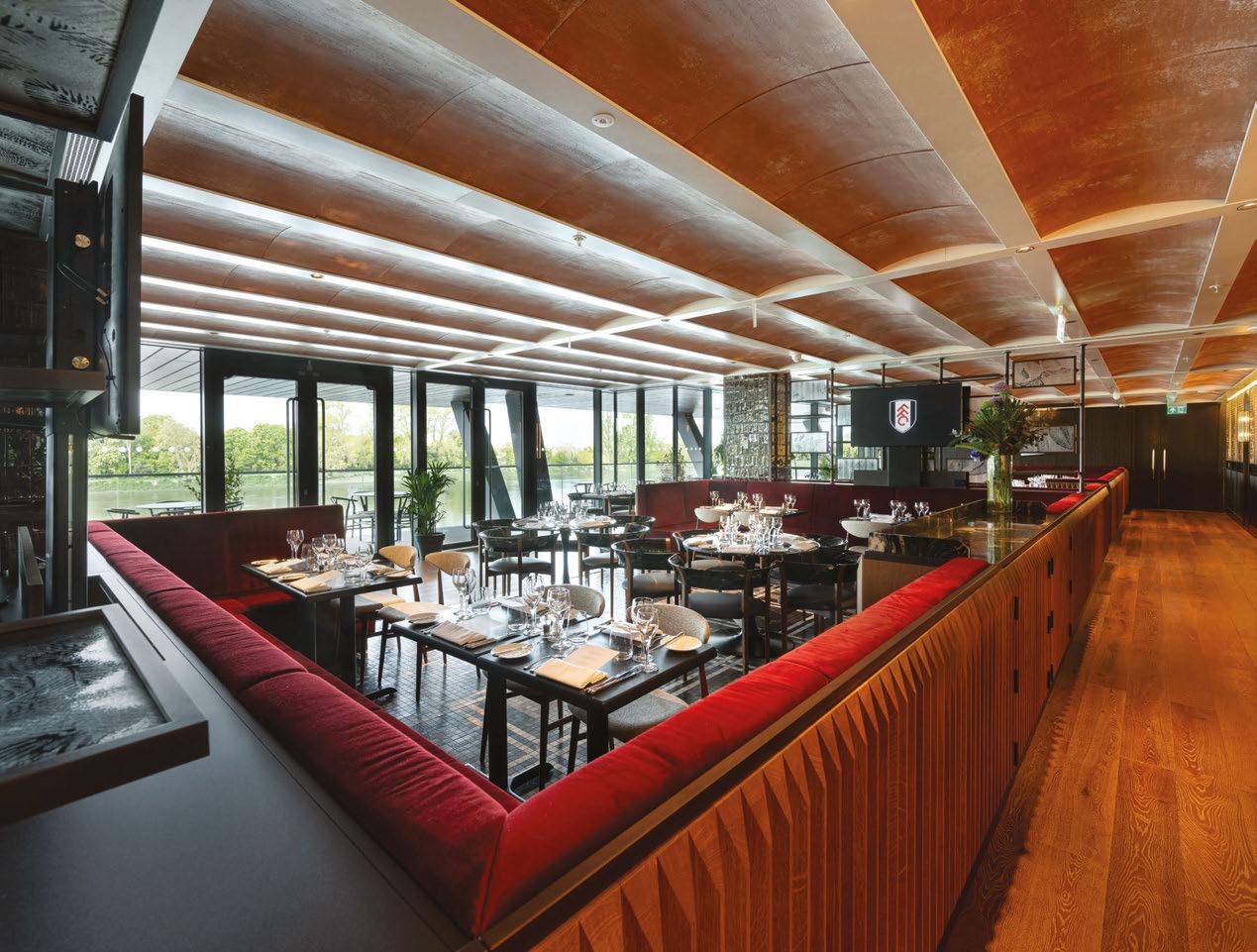
At a smaller scale, some clubs have adopted a more targeted approach. Rather than building entire districts, they focus on premium, experience-led hospitality that operates year-round. Riverside dining, private event spaces, and boutique lounges can attract visitors for business and leisure, independent of match schedules. This model demonstrates that continuous engagement is not solely a function of size, but of design and positioning.
Across these variations, the underlying principle remains consistent: sustained value comes from continuous use.
The Hidden Tensions
Still, it is far from plain sailing and despite its advantages, the 365-day model also raises a number of important questions.
One concern is commercialisation. As stadiums evolve into lifestyle destinations, there is a risk that they prioritise high-spending visitors over traditional supporters. Premium hospitality spaces may expand, while general admission experiences stagnate or become relatively less accessible.
Gentrification is another challenge. Large-scale developments can increase property values in surrounding areas, potentially displacing existing communities. While regeneration brings investment and opportunity, it can also alter the social fabric of a neighbourhood in ways that are not universally beneficial.
There is also the question of authenticity. For many fans, the appeal of a stadium lies in its raw, communal atmosphere - the sense of shared identity that emerges on matchday. As venues become more polished and commercially diverse, there
is a risk that this character is diluted. The stadium becomes a place to consume experiences, rather than to participate in a collective ritual.
These tensions are not easily resolved. They reflect a broader shift in how urban spaces are developed and used, and they raise a fundamental question: who are modern stadiums ultimately designed for?
What Comes Next
The trajectory is clear. Stadiums and arenas are becoming more integrated into the fabric of everyday life, blurring the line between event space and public space. Advances in technology, from personalised digital services to smart crowd management, will accelerate this shift, enabling venues to operate more efficiently and responsively.
In time, the most successful arenas may function as micro–smart cities: environments where sport, hospitality, work and leisure coexist seamlessly. Visiting a stadium will feel less like attending a special occasion and more like entering a familiar part of the urban landscape.
Yet the long-term success of this model will depend on balance. Financial sustainability, urban integration and fan culture must coexist. Overemphasis on one at the expense of the others risks undermining the very value these developments aim to create.
Beyond Matchday
The modern stadium is no longer just defined by the 90 minutes of play at its centre but by how it performs when there is no event at all.
In this sense, the shift to a 365-day hospitality model is not just a commercial evolution, it is a redefinition of what a stadium is. No longer a place that comes alive only for events, it is becoming a permanent fixture of urban life: a place where people gather not just for sport, but for work, leisure and community, every day of the year.
For decades, the promise was simple: if you build it, they will come. The new reality is more demanding and more revealing.
If you build it right, they will come back. And they will come more often.
WHY INTEROPERABILITY IS THE REAL MVP OF SPORTS AND ENTERTAINMENT VENUES
By Ian Godfrey, CTO, TSL
For major stadia and arena venues, the audience experience is defined as much by spectacle as by sport. And meeting those ever-increasing levels of expectation depends on complex technology stacks working seamlessly in the background.
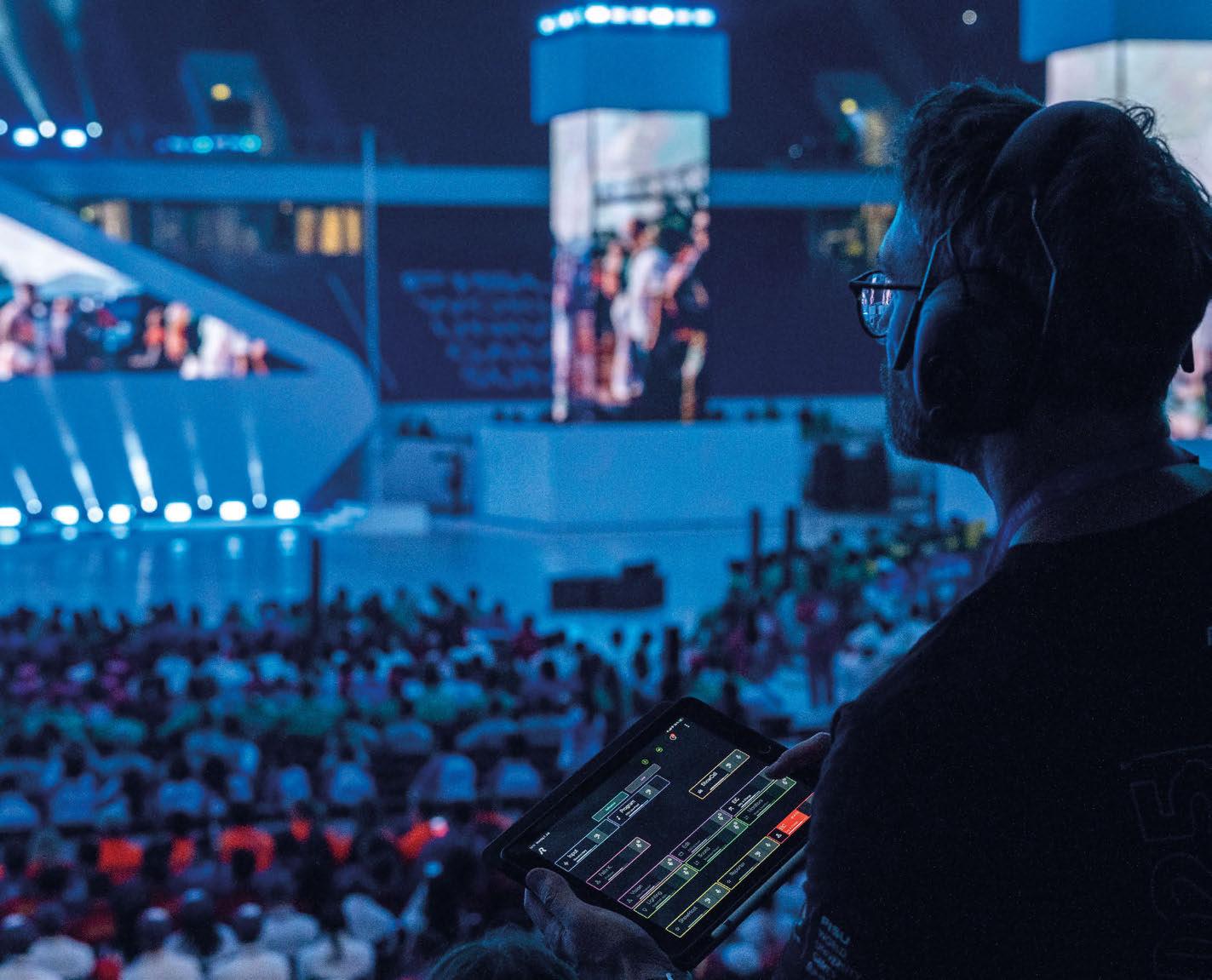
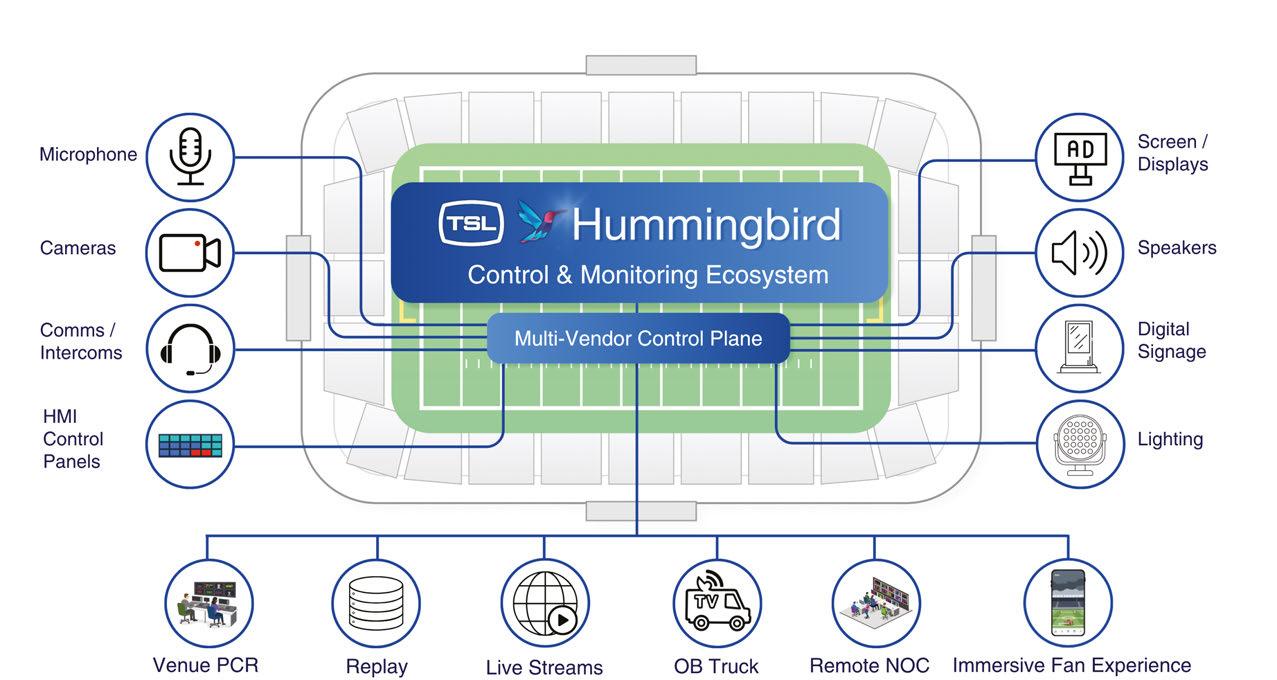
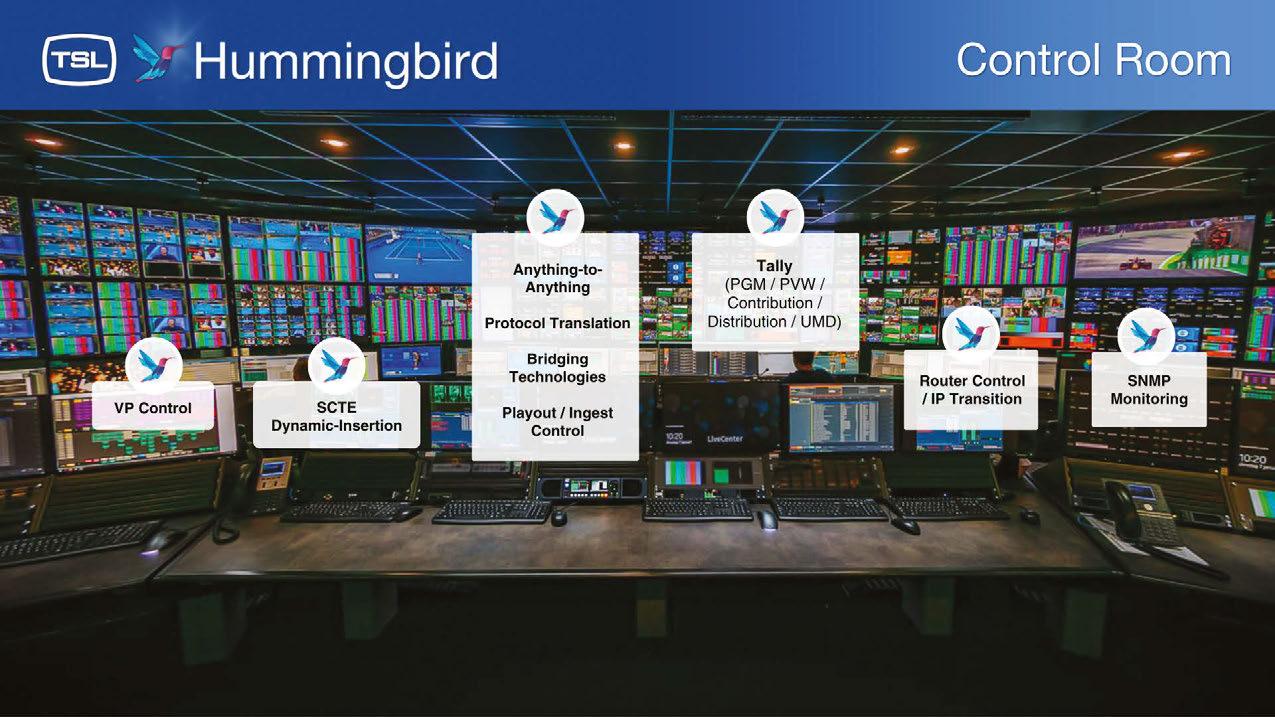
Modern venues are no longer just event spaces; they are now complex, multi-layered production environments. In many ways they resemble full-scale broadcast facilities that need to be capable of supporting everything from live sports and concerts to global live media distribution, often within the same operational window.
As a result, the challenge facing venue operators is no longer simply deploying more technology, but instead, how to make increasingly diverse and distributed systems work together as a coherent whole.
Managing increasing in-venue complexity
Venue AV and technical teams are now managing a vast ecosystem of technologies: broadcast infrastructure (in-venue, connecting to OB providers and specific feeds for tenants/franchises/artists’
live streams etc), AV systems, lighting, graphics engines, replay platforms, digital signage networks are only the start. Systems are sourced from different vendors, each with its own control protocols, interfaces, and operational logic.
Historically, audio and video domains were tightly coupled, often delivered as part of vertically integrated systems where signal transport and control logic were closely linked. That model worked when venues supported a narrower range of use cases and technologies evolved at a slower, more linear pace.
Today, that’s no longer the case. Venues need to support multiple, simultaneous workflows, such as live in-bowl production, broadcast, streaming, and in-house content creation and thirdparty events, across different technical requirements and new standards and formats. Tightly coupled systems can be harder to scale, slower to adapt, and more difficult to integrate with new technologies.
Decoupling addresses this by separating each domain into independent but interoperable layers. Audio networks, often based on Dante or AES67, video transport ranging from SDI to IP-based workflows, and monitoring systems can be designed, upgraded,
and operated independently, which makes it easier to introduce new capabilities, support hybrid infrastructures, and tailor systems to specific operational needs. However, as systems become more distributed, the burden of coordination increases. Without a unifying approach, complexity shifts from the infrastructure itself to the interfaces between systems, making sync, visibility, and operational control more difficult to maintain.
The hybrid reality of stadium tech stacks
Every additional interface in a venue system increases cognitive load and each manual step introduces potential for delay or error. In a live venue environment, where timing is critical, even small inefficiencies can have visible consequences.
Engineering teams face a parallel challenge of maintaining pointto-point integrations and adapting infrastructure to accommodate new solutions. What begins as a best-in-class deployment can evolve into a patchwork of dependencies that is difficult to scale. This is particularly evident in hybrid stadium environments, where legacy and emerging standards coexist. Many venues are
operating across SDI, NDI, and SMPTE ST 2110 simultaneously. Each standard serves a purpose, but bridging between them has to be carefully managed. Gateways must handle conversion, timing alignment, and signal integrity, while control systems must reconcile fundamentally different protocols and behaviours.
Interoperability at the core
Interoperability is often framed as a technical feature but in reality, it’s a foundational requirement for any multi-purpose venue infrastructure. An effective, interoperable environment allows systems from different manufacturers to communicate through a unified layer, normalising data, aligning control, and enabling central visibility. This approach shifts the focus from managing individual devices to managing the overall experience. For operators in venues, interoperability reduces the number of touchpoints required to execute complex actions. Instead of navigating multiple systems, they can work within a cohesive ecosystem with a single interface and common workflow that reflects how events unfold in real-time. For engineering teams, integration is simplified and long-term maintenance and training
requirements are reduced. New systems can be introduced without completely reengineering existing workflows, making a venue more adaptable to future innovation.
Most importantly, interoperability enables consistency, ensuring every element of the experience is delivered reliably, event after event.
Designing workflows for humans
Technology alone cannot solve complexity. How that technology is presented to and understood by an operator is equally important to successful system delivery.
Human-machine interfaces (HMIs) are often a defining factor in whether a system enhances or hinders operations. In highpressure live environments within a stadium, clarity and intuitiveness are essential. Operators need to access the right controls, at the right time to execute actions with confidence. Poorly designed interfaces can obscure critical information, require unnecessary steps or make accurate selection at speed awkward, opening the door to delay and errors.
This is particularly acute in venues where teams may be a mix of permanent staff, freelancer and event-specific operators, so HMIs must facilitate systems that are immediately usable without extensive onboarding and briefings.
Flexibility is key within effective HMIs. This could be combining dedicated hardware control panels and customisable softwarebased surfaces to tailor workflows to specific roles or use cases. Whether in a control room, pitchside, or within a broadcast suite, operators will benefit from consistent, intuitive interactions with the systems they rely on.
Moving beyond point-to-point integration
Historically many venues relied on point-to-point connections and while effective in the short-term, this approach can lead to rigid architectures that are difficult to scale.
Many are now adopting platform-based strategies, which
introduce an agnostic monitoring, control, and orchestration layer that sits above individual systems. Rather than connecting each device directly to each other, systems interface with a central platform that unifies control and visibility.
This model offers several advantages: it decouples systems from one another, reducing independencies; it provides a single source of truth for system status and performance; and it enables standardised workflows that can be applied across different technologies and events. Importantly, an agnostic platform approach also protects investment, because as new tech emerges, it can be integrated into an existing ecosystem without disrupting established operations.
Interoperability as a competitive advantage
As fan expectations evolve, venues will face increasing pressure to deliver more dynamic and personalised experiences, which will in turn require a more intelligent integration of new technologies. Platforms such as TSL Hummingbird that provide unified monitoring, control, and orchestration across broadcast and pro-AV systems, combined with flexible, user-centric HMI are emerging as key enablers in this shift. By bridging between disparate systems and simplifying operator interaction, they allow venues to scale their capabilities without increasing complexity. Monitoring and control across third-party systems from cameras and lighting to graphics and digital signage are brought together within a single, coherent ecosystem and paired with hardware and software-based control interfaces to achieve a new level of operational efficiency and flexibility.
Ultimately, deploying a truly interoperable control layer as a bridge across disparate systems with a unified interface for operators becomes a strategic advantage, helping venues deliver the experience their audience has come to expect, without the technology ever getting in the way.
MYKONOS, GREECE | 12-15 MAY 2026
BEHIND THE SCREENS: POWERING LIVE SPORTS PRODUCTION
From broadcast control rooms to distributed production workflows, modern live sports rely on seamless connectivity and real-time control. The journey begins in the broadcast control room where the expectations of live sports are defined, before those same environments and challenges are recreated inside Adder’s Customer Experience Center –a space designed to explore and solve the complexities of modern broadcast connectivity.
Transitions are a defining part of the stadium experience. Whether moving from the outer concourse towards the rising roar of the crowd, or walking through the tunnel to the bowl of the arena. These moments are carefully orchestrated to build anticipation and place the action center stage.
The lighting shifts, the sound changes. Conversations become sharper and more focused. For players stepping onto the field or broadcast teams taking their positions in the control room, this moment marks the transition from preparation to performance.
On match day, the tunnel is where anticipation builds and where the scale of what lies ahead begins to take shape.
As the corridor widens, the environment begins to shift.
And what emerges is not a conventional sports facility, but another kind of venue. One defined by high performance displays, interconnected ecosystems and a curated suite of technology partners powering the environment.
Where Technology Takes Center Stage
Environments like these have become essential to
the sports broadcast operation. Screens dominate the space, commanding attention similar to a stadium scoreboard. Beneath them lie operator consoles forming the wider technical ecosystem, designed to manage the feeds and workflows.
Operators are rarely working with a single system. With production workflows distributed across multiple machines often located in different rooms or technical areas, accessing information quickly and reliably becomes critical. Maintaining complete control, responsiveness and total flexibility across systems is essential to keeping production running smoothly.
This isn’t just any stadium control room. This is the Adder Customer Experience Center. Designed as an adaptable environment rather than a traditional showroom, the Customer Experience Center (CXC) allows broadcast teams to experience how modern control rooms, powered by Adder’s award-winning IP KVM solutions, operate in practice. As a space to explore how connectivity challenges can be addressed, the CXC was designed by the people who understand the applications of Adder’s solutions best: the employees. Insight from our own experts, shaped by years of experience supporting sports and
broadcast environments around the world, helped ensure the space reflects real-world challenges.
This has transformed the CXC from a designated demonstration space into a working environment built around authentic workflows.
Building the Broadcast Environment
Lighting is carefully balanced throughout, with focused spotlights highlighting key technological areas while softer ambient lighting introduces warmth and clarity across the wider space.
Subtle shifts in materials and textures help to define different areas within the space. Overhead acoustic treatments help manage sound in the space, while oak paneling frames the video wall, introducing warmth and balance to an otherwise highly technical environment.
Together, these design choices create a space that balances comfort with the precision required for modern broadcast operations.
Infrastructure Made Visible
Rather than concealing the technology powering the environment, the exposed ceiling exposes the infrastructure and places the technology centrally.
A full-height server rack showcases the technology behind the experience, highlighting the systems connecting operators to displays and critical production workflows.
Much like the unseen infrastructure that usually
supports control rooms and operations within the modern stadium environment, this technology forms the backbone of the entire environment. Yet despite the familiarity of the space, this environment serves a very different purpose.
One notable difference between a traditional live sports broadcast control room and the CXC is how visible the technology is within the space. In live production environments, the infrastructure that powers the broadcast typically remains hidden behind the scenes. Within the CXC however, the server rack is central to the experience. This was intentional by design, bringing the technology driving the experience into full view.
The Control Layer
In live sports, production teams seamlessly coordinate multiple camera feeds, replay systems, graphics engines and media servers all at the same time, to deliver high performance workflows with zero compromise on performance. The challenge of managing distributed systems without compromising performance is central to modern broadcast operations. Adder’s IP KVM solutions act as the control layer within this demanding environment, enabling operators to securely access and manage multiple systems from a single interface.
By removing the constraints of physical location and enabling instant switching between sources, Adder’s IP KVM solutions allow broadcast teams to maintain
full control over complex, distributed workflows without compromising the speed and precision that live sport demands.
The CXC is designed to reflect the realities of modern sports broadcasting environments, demonstrating how these challenges can be addressed through integrated, real-world solutions.
A Curated Technology Ecosystem
Like any modern broadcast environment, the CXC is built around a carefully integrated ecosystem of technologies working together to support end-to-end production workflows.
At the operator level, intuitive control interfaces allow teams to manage complex systems with confidence, simplifying the interaction between multiple sources and workflows. High performance visualization systems bring content to life across large format displays, while dedicated operator workstations provide the foundation for real-time decision making. Behind the scenes, advanced networking infrastructure ensures reliable connectivity across the environment, supporting the movement of highresolution video and data without disruption. Capture technologies enable remote participation and content acquisition, while collaborative workspaces support discussion, analysis and shared decision-making. Together these elements recreate the operational conditions of a modern broadcast control room, allowing workflows to be explored in a way that reflects real-world environments.
The Connectivity Layer
Sitting centrally to this ecosystem is Adder’s IP KVM technology, providing secure, high performance connectivity that allows operators to access and control systems across the entire environment.
Acting as the connectivity layer between technologies, Adder enables seamless interactions between production systems, signage players and operator workstations ensuring the entire experience functions as a single cohesive environment.
Powering the Moments Behind Live Sport
The experience has distinct similarity to the journey through a stadium tunnel. What begins as a corridor of anticipation opens up into an environment of deep team focus, streamlined actions and tactical collaboration.
Inside the CXC, visitors move beyond observing technology solutions. They are transported into an operational environment that reflects the broadcast and control spaces which they are accustomed to.
In this experience, teams can work directly with Adder’s IP KVM specialists to explore the connectivity challenges they face each day.
Because when every live moment depends on speed, reliability and control, the systems behind the scenes are just as critical as the action on the field.
Find out more about the Adder CXC and arrange your visit: bit.ly/4vRjGJs
HLG Monitoring Where It Matters Most
In live sports, every second counts. Operators monitoring live feeds need instant access to systems so they can review and manage content before it goes on air.
Now with HLG signal support, the ADDERLink® INFINITY 4000 series enables operators to manage HDR and SDR content directly from their workstations.
By removing the need for additional reference monitors, broadcast teams can streamline operations and stay focused on the moments in front of the camera.
Experience Adder IP KVM in action at our new state-of-the-art Customer Experience Center. Scan the QR code to discover more.
MILLION LEDS AT THE FACILITY
A total of 37 LED displays create 7,154+ square meters of digital space throughout the stadium.
ROLLED OUT AND STOOD ON END, THE RING WOULD BE 693 METERS HIGH, MORE THAN 3.5 TIMES THE HEIGHT OF THE TALLEST BUILDING IN NASHVILLE.
(333 Commerce - 188 meters tall)
OFFICIAL LARGE DISPLAY
PARTNER OF THE TENNESSEE TITANS
RING OF FIRE RING OF FIRE
THERE’S A NEW IN TOWN
The Ring of Fire is the first of its kind ever made in professional football totaling