Three steadfast personal passions drive the design philosophy behind each of the following selected works: a commitment to sustainability, an exploration of innovative design strategies, and a dedication to creating a built environment that is welcoming and inclusive to all. These three passions act as a framework for each project, regardless of its scale or scope, because of their significant ability to positively change the world through creative design. These selected works reflect this harmonious partnership and the various shapes and forms a project can take when intertwining environmental consciousness, imaginative creativity, and human-centric design.
BIZARRE BAZAAR
Community Recreation Center, Los Angeles, California p. 1-10
ROOTED IN PIAZZA DEI CIOMPI
Kindergarten and Public Library, Florence, Italy p. 11-18
MIRAS COMPLEX
Urban Design and Landscape Architecture, Warren, Ohio p. 19-24
THE JULIET
Mixed-use with Urban Farming, Cleveland, Ohio p. 25-30
ADA MEDIA HOUSE
Cultural and Performing Arts, Kent, Ohio p. 31-36
BIZARRE BAZAAR
Awarded Kent State Integrated Design Studio Honorable Mention
Date: Spring 2024
Professor: Nick Safley
Collaborator: Julia Stark
Location: Los Angeles, California
Size: 38,000 sqft
Type: Community Recreation Center
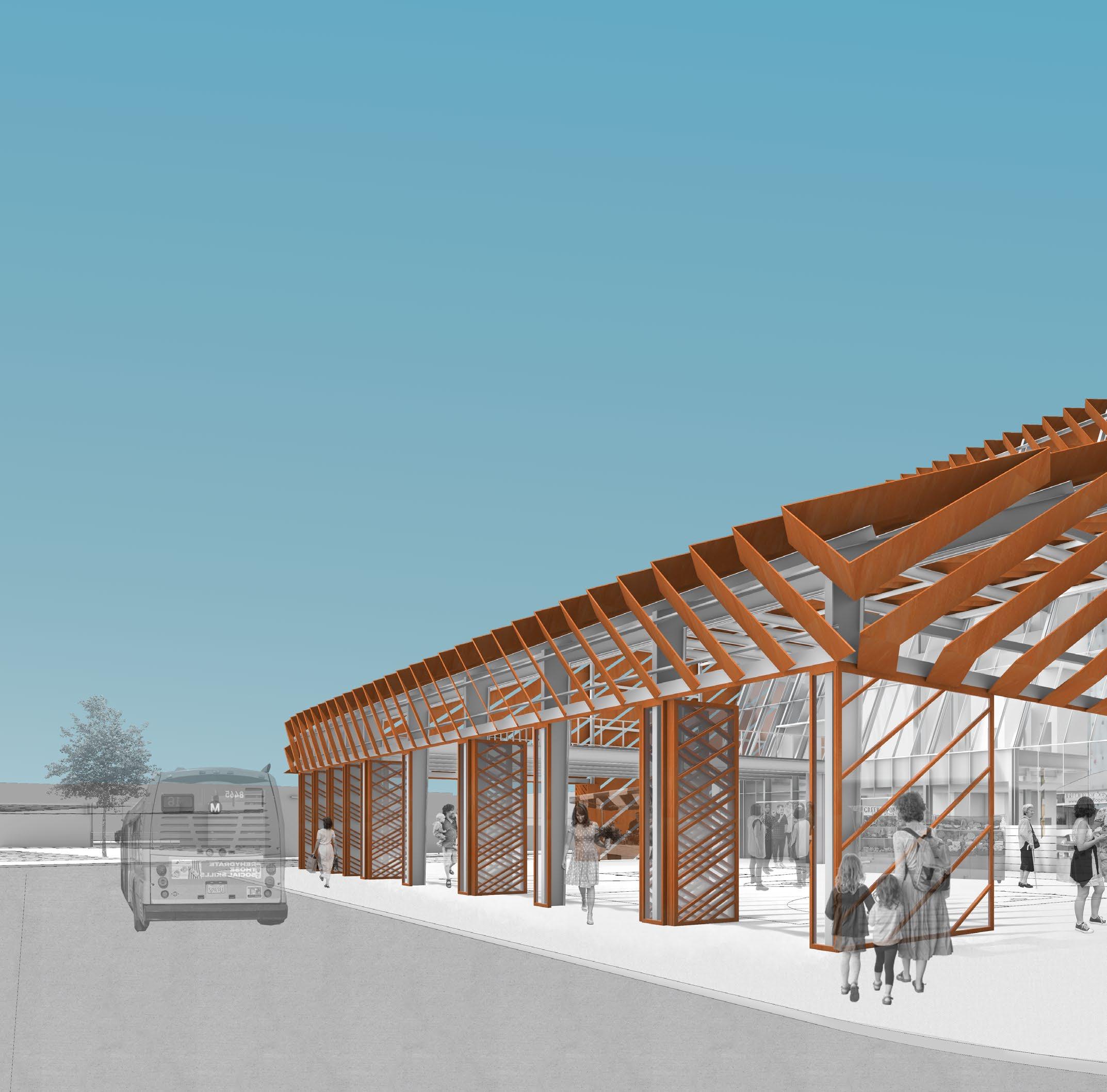
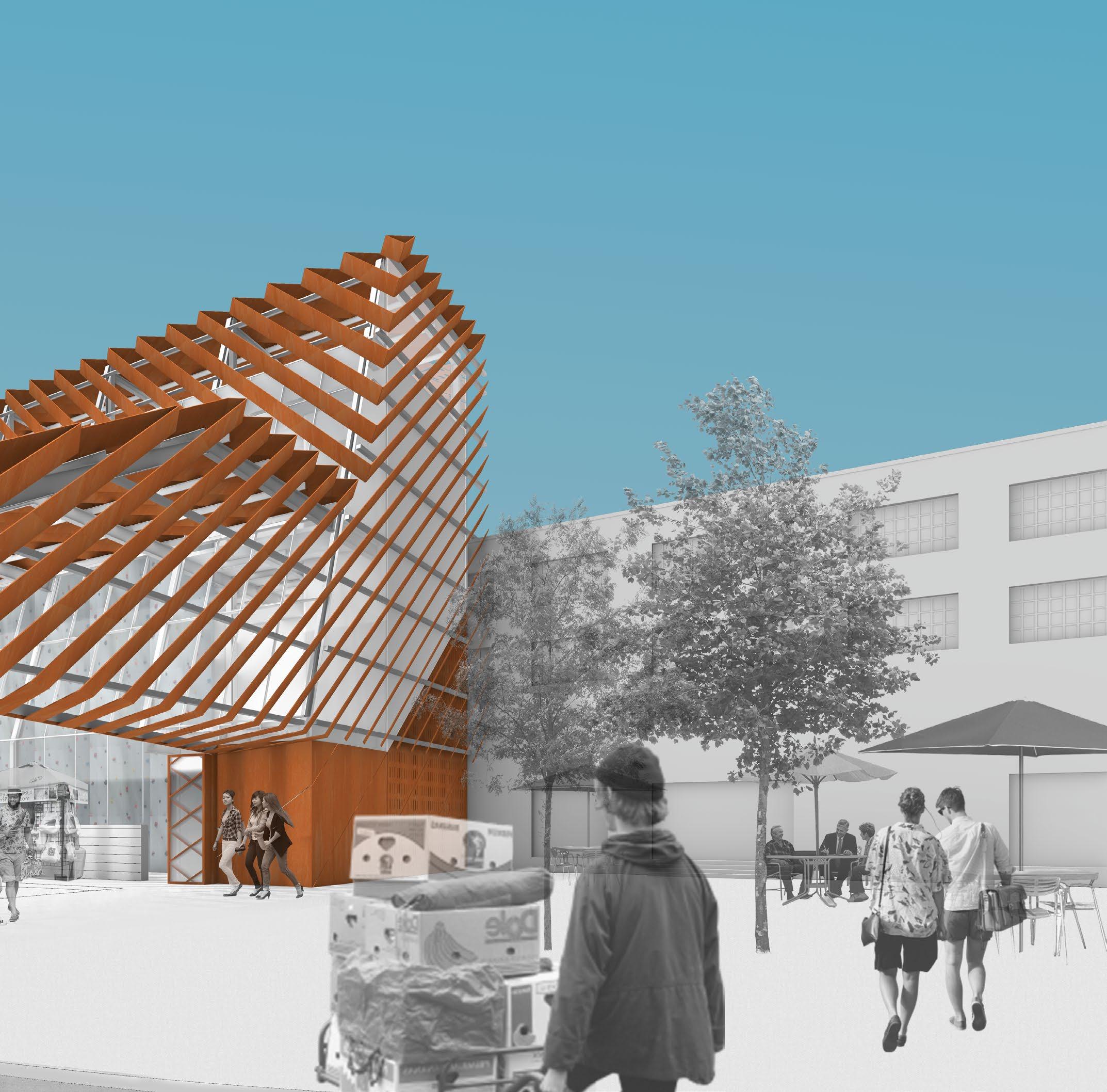
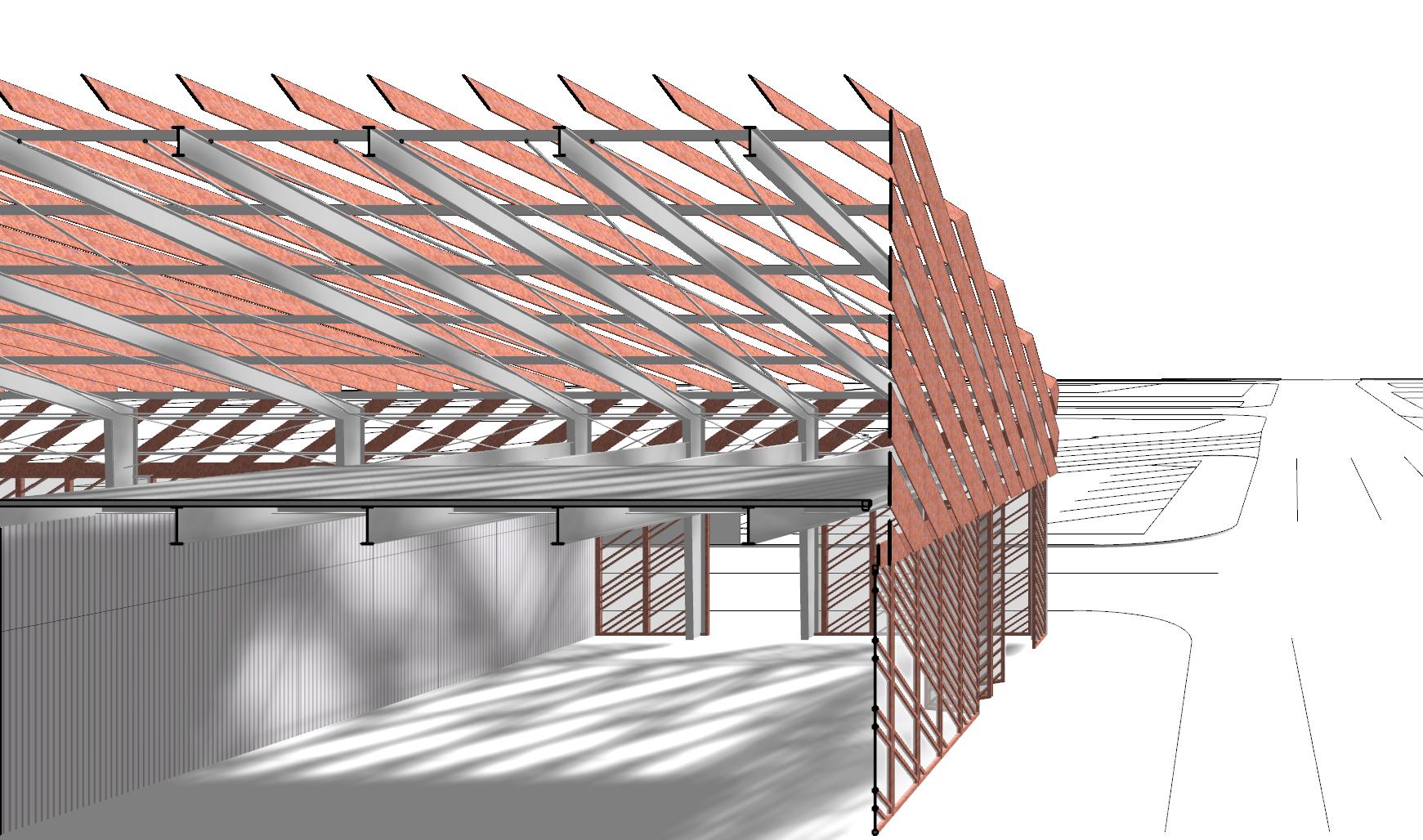
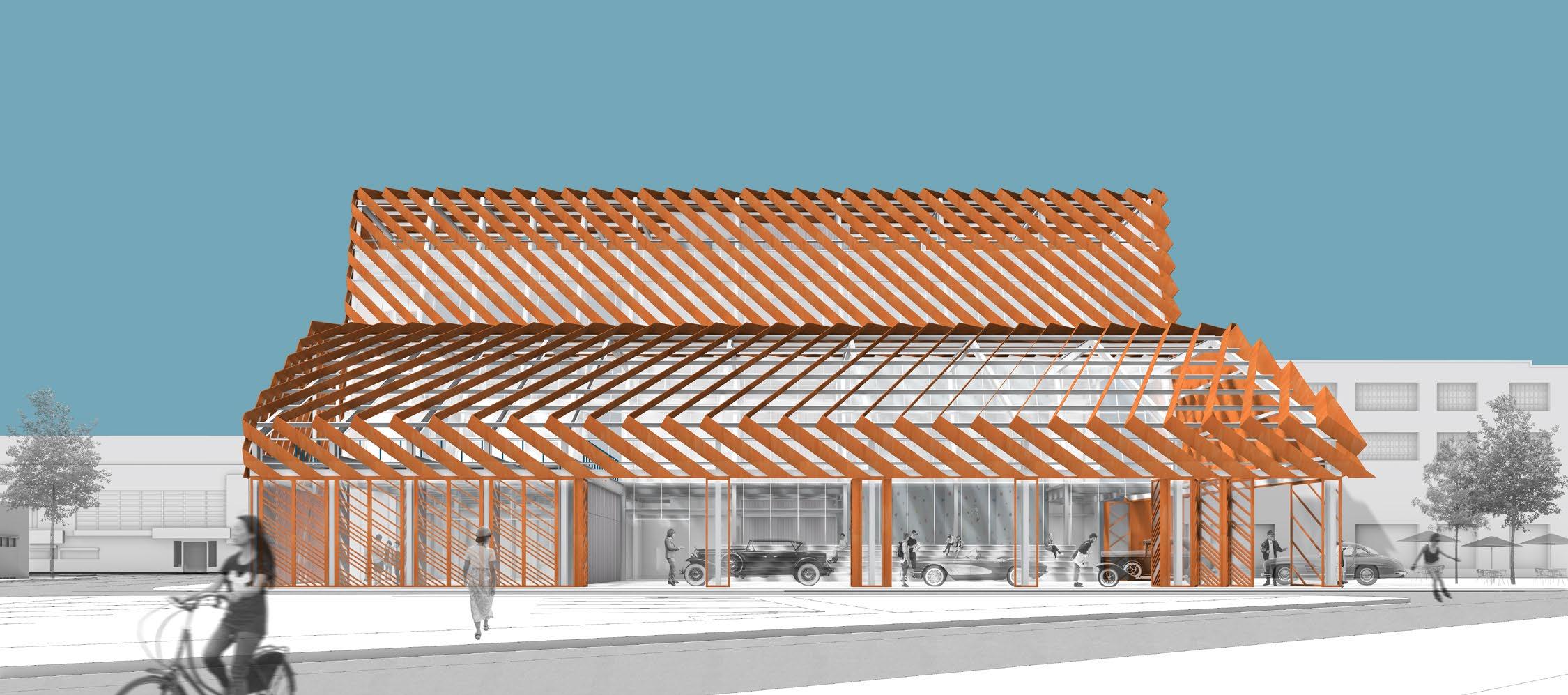
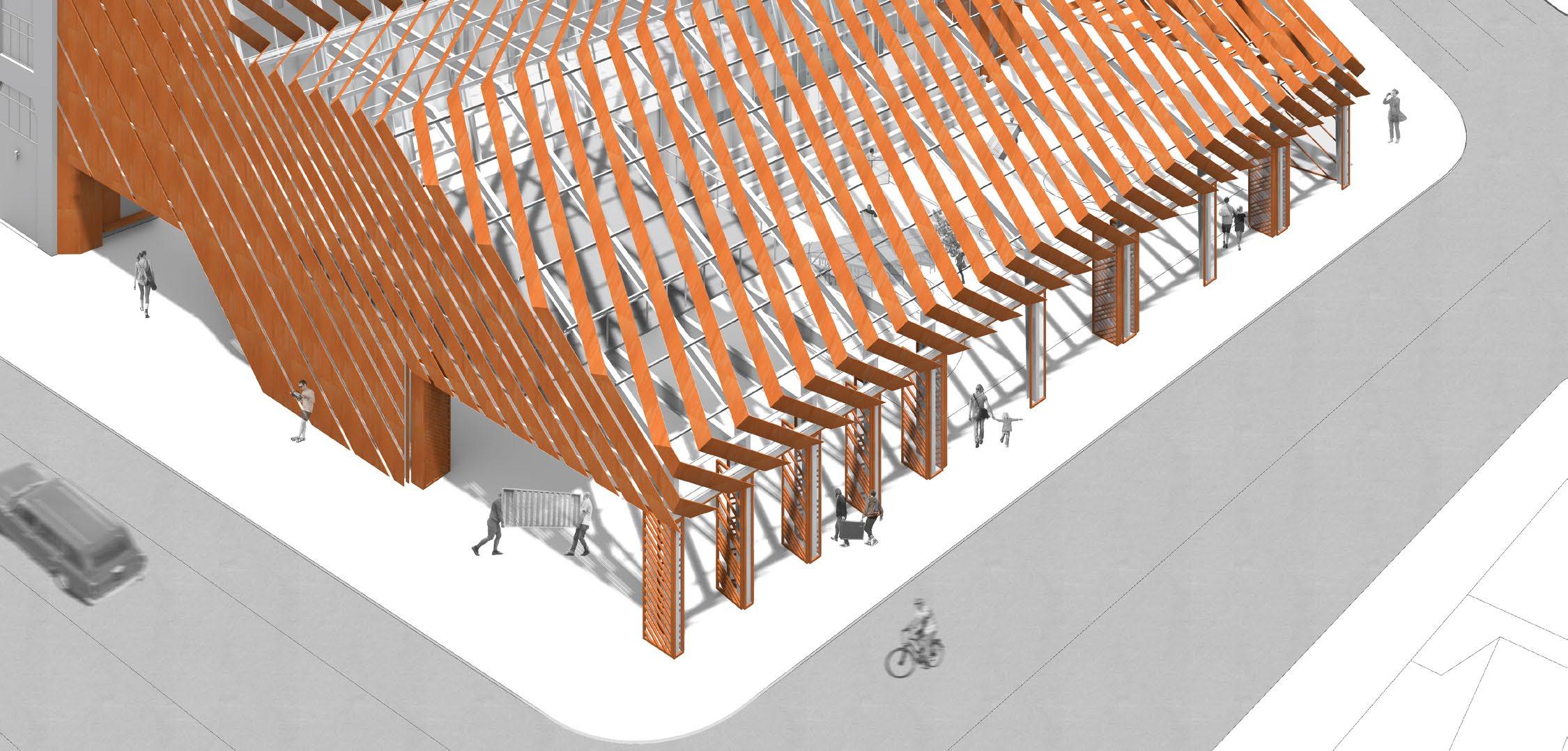
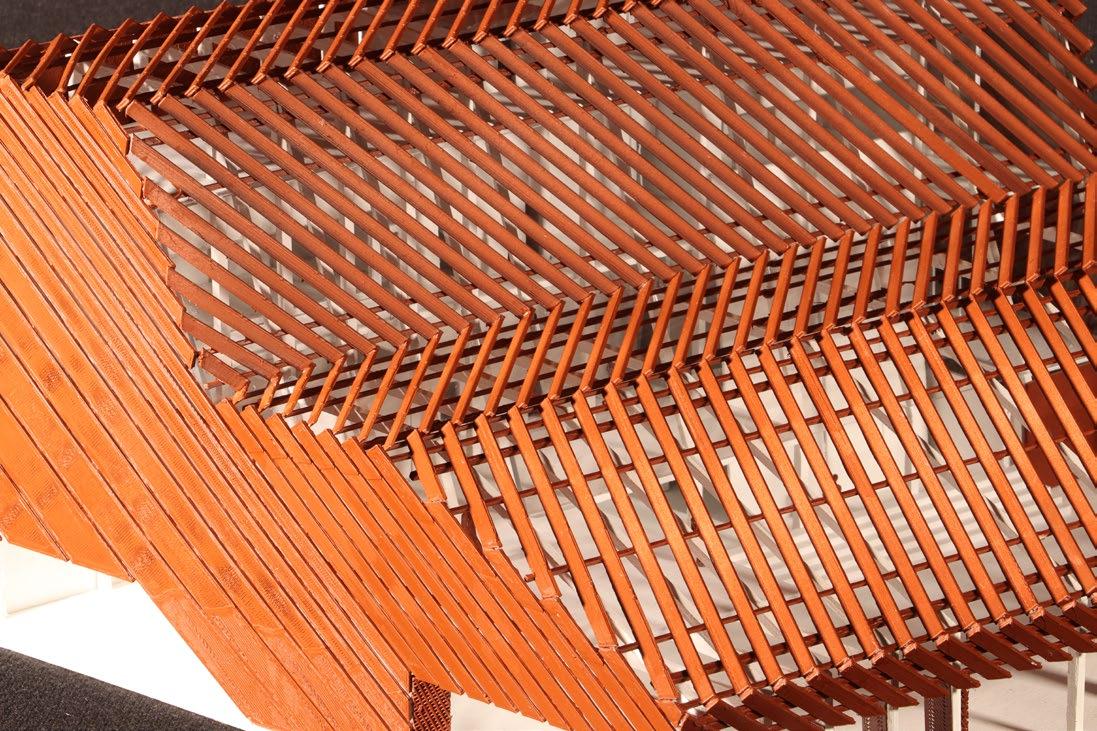
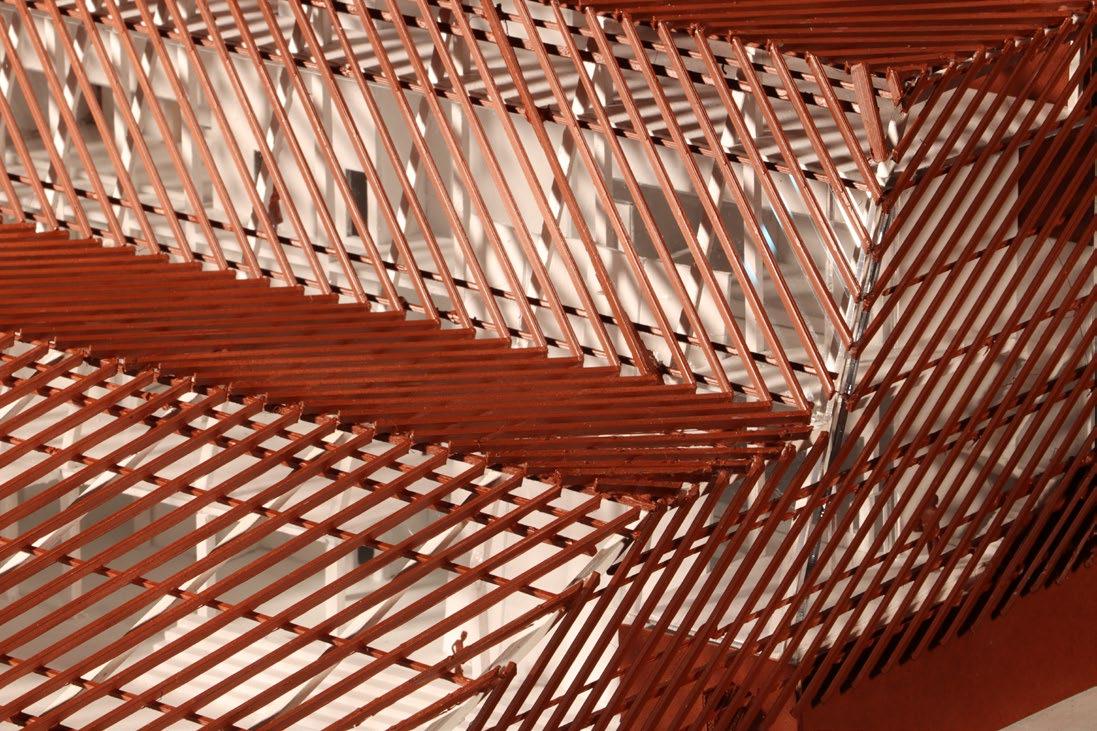
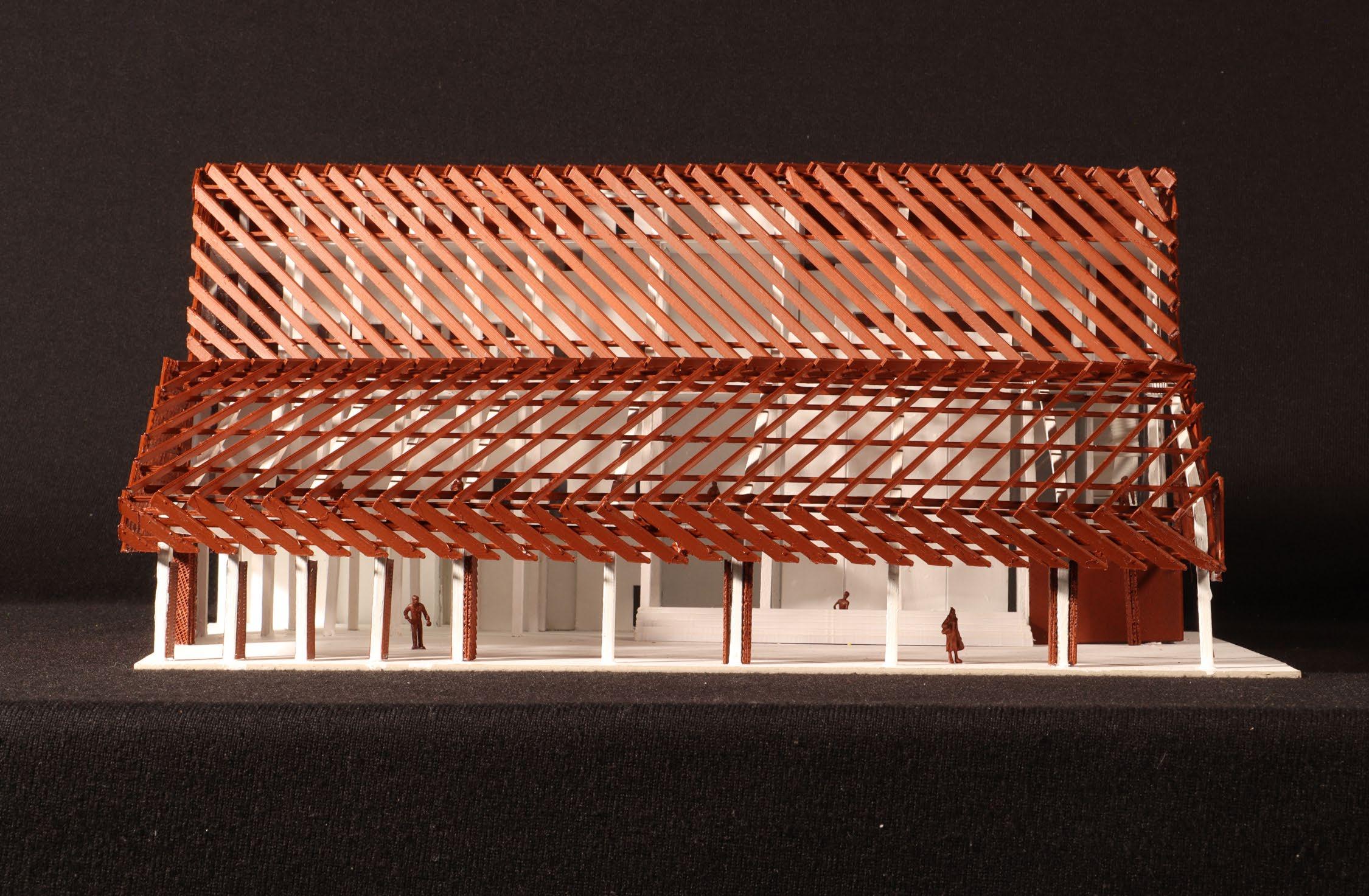
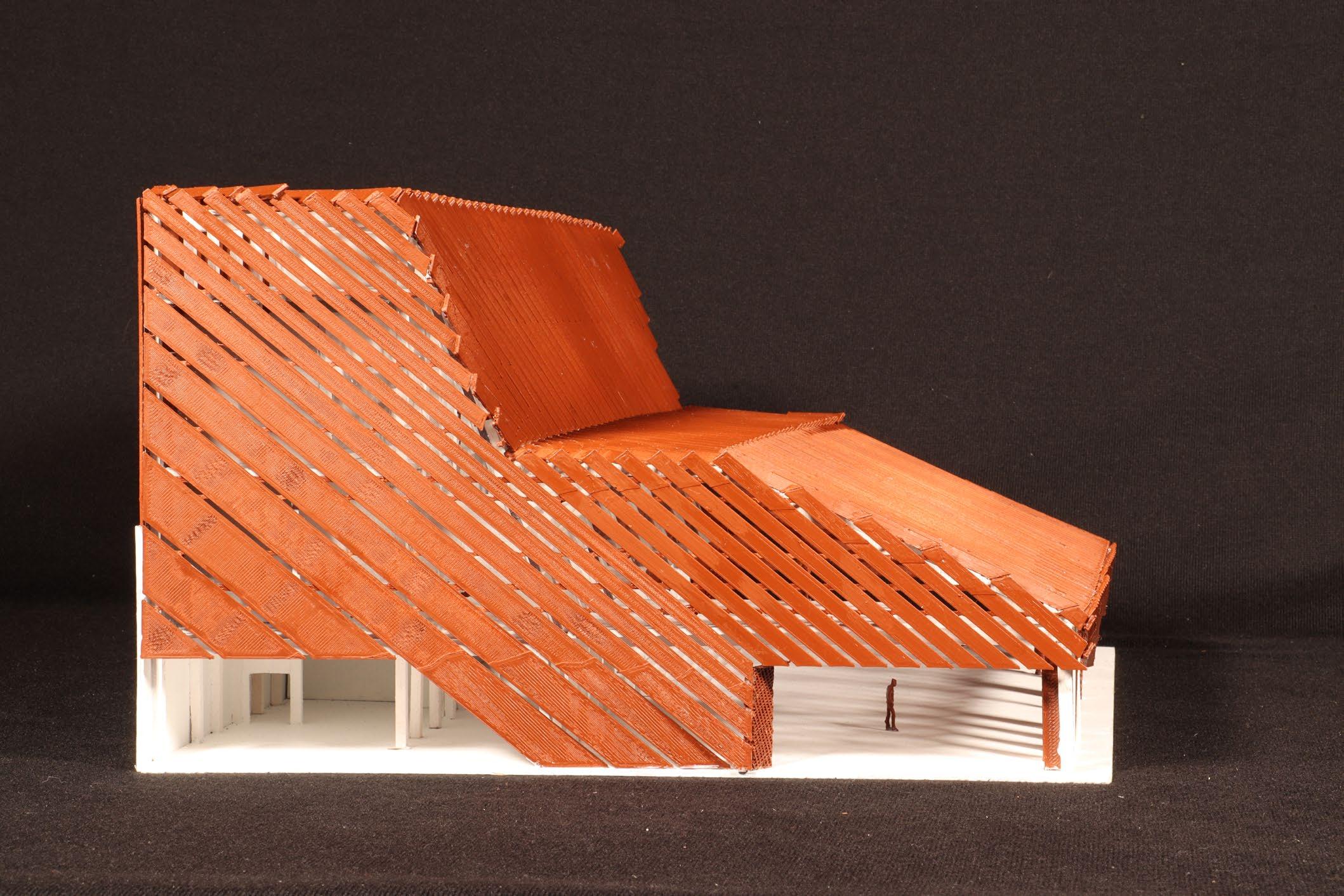
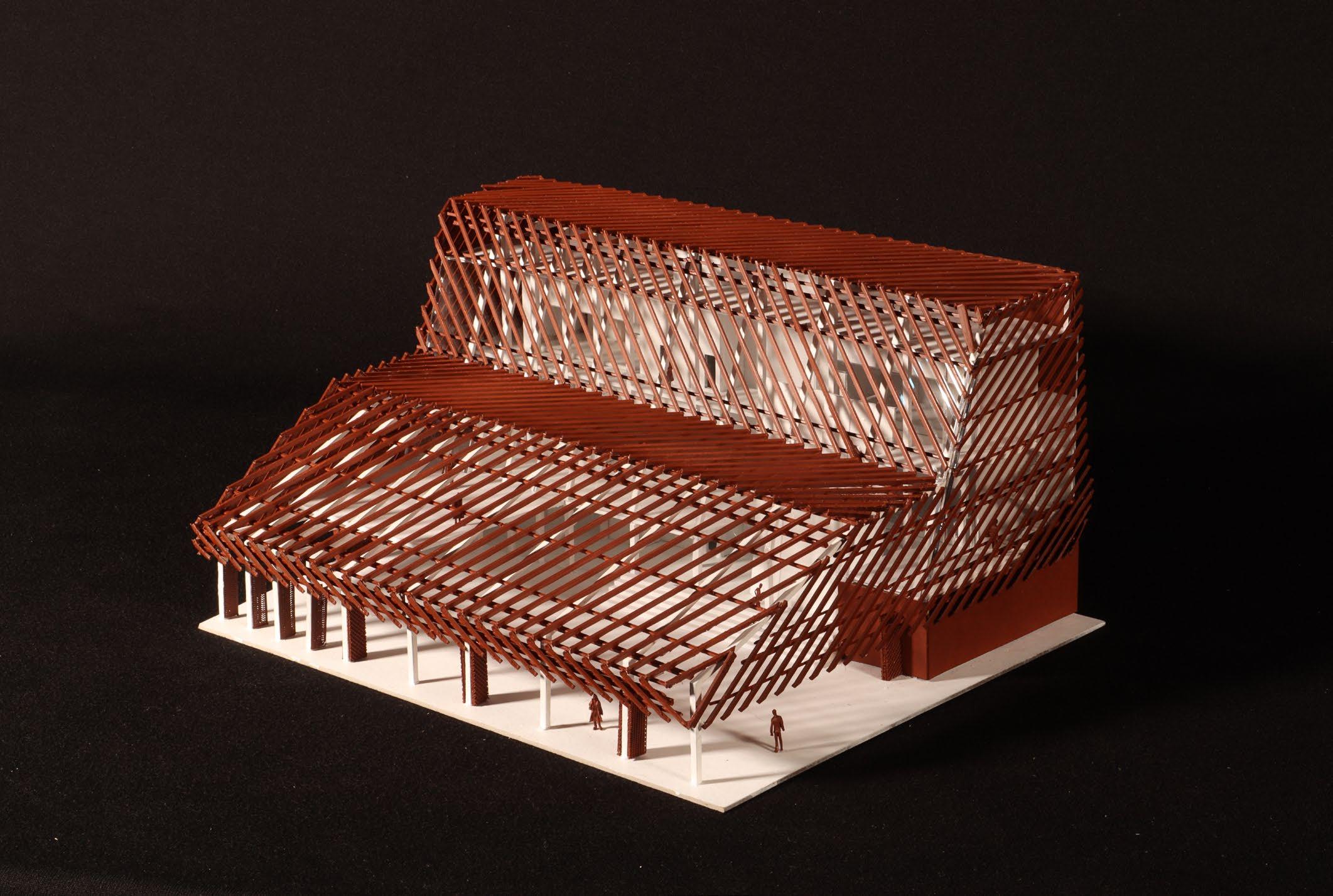
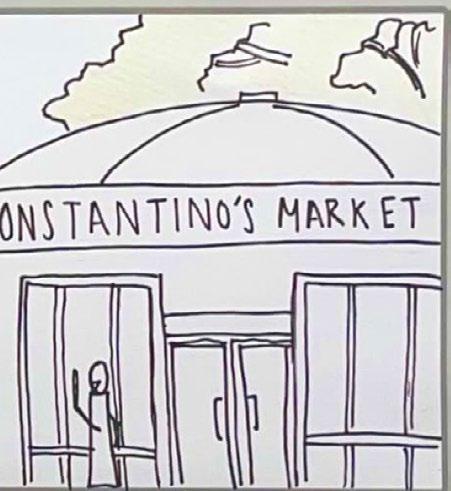
Two thermally separate, yet structurally and aesthetically intertwined buildings create a both flexible and permanent social recreational hub for the local and visiting community. Together the two buildings optimize energy and cost efficiency while hosting a combination of large-scale community engagement and more rigid, specialized sporting and recreational needs. As the site sits on the intersection between Los Angeles’ downtown Industrial District, Little Tokyo and vibrant Arts District, the design aims to fully support and welcome the fluctuating social and recreational needs of the city’s various occupants. By integrating form, function, and social engagement, the building emerges as a kinetic, sculptural addition to the bustling urban environment, offering a versatile canvas for largescale gatherings and specialized recreational activities.
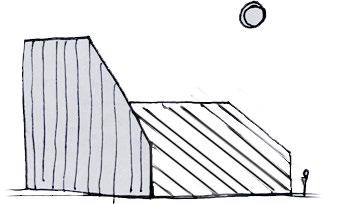
EXTRUDE TWO VOLUMES AT OPPOSING, YET COMPLIMENTARY DIRECTIONS
ALIGN SOUTHERN FACADE WITH ANGLED SITE EDGE
MECHANICAL SYSTEMS
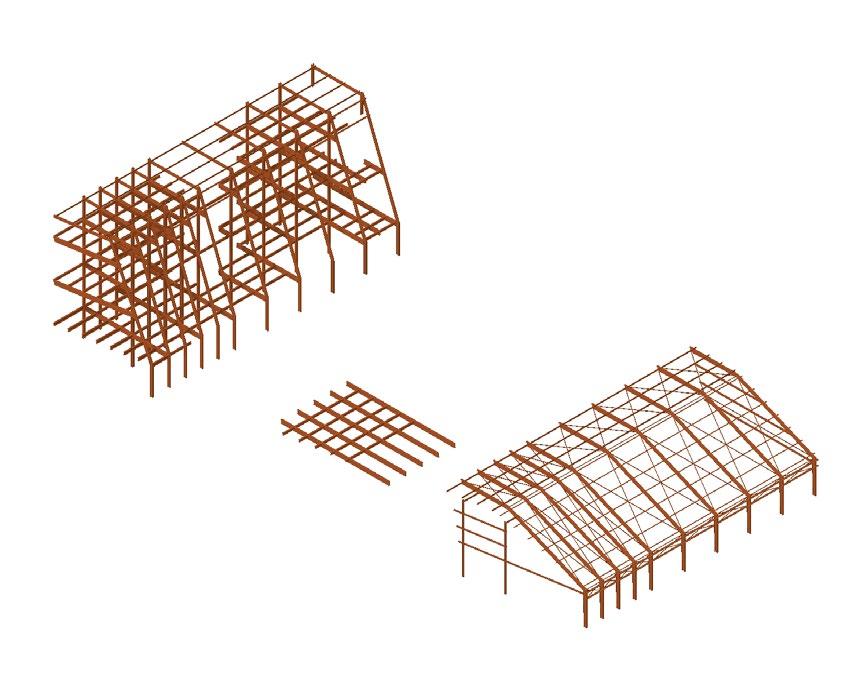
The division between flexible and rigid program primarily occurs through the thermal systems. Specifically, to create a more permeable connection between the shorter volume and the surrounding city, the space is thermally untreated to allow for more open community-based uses and full programmatic flexibility. The taller building is thermally conditioned as it hosts the more permanent and defined sporting and service programs. Although under a cohesive Corten Steel louver envelope both buildings are thermally
STRUCTURAL SYSTEMS
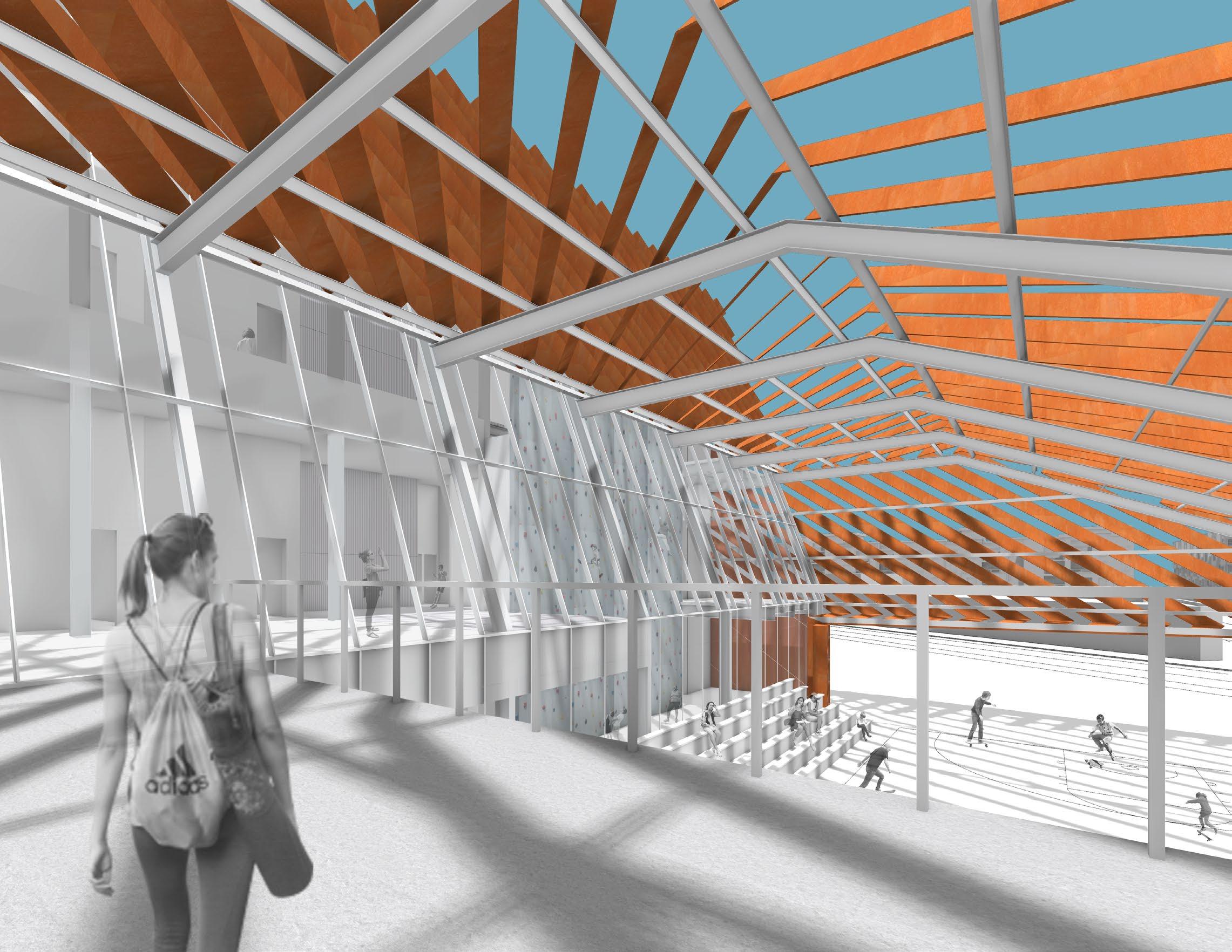
separate, an overarching linear structural grid, spanning from east to west, further acquaints both. The above-ground structural systems of each building remain primarily steel, with the openair structure utilizing an economic, exposed rigid frame long-span structure that fully welcomes a plethora of uses. Furthermore, sets of folding and swing doors along the three exposed elevations of the open-air building and between the multipurpose space and basketball court create a largely customizable public or private space.
BEVEL VOLUMES FOR HUMAN SCALE, VISUAL COHESION, AND VIEWS BETWEEN SISTERS
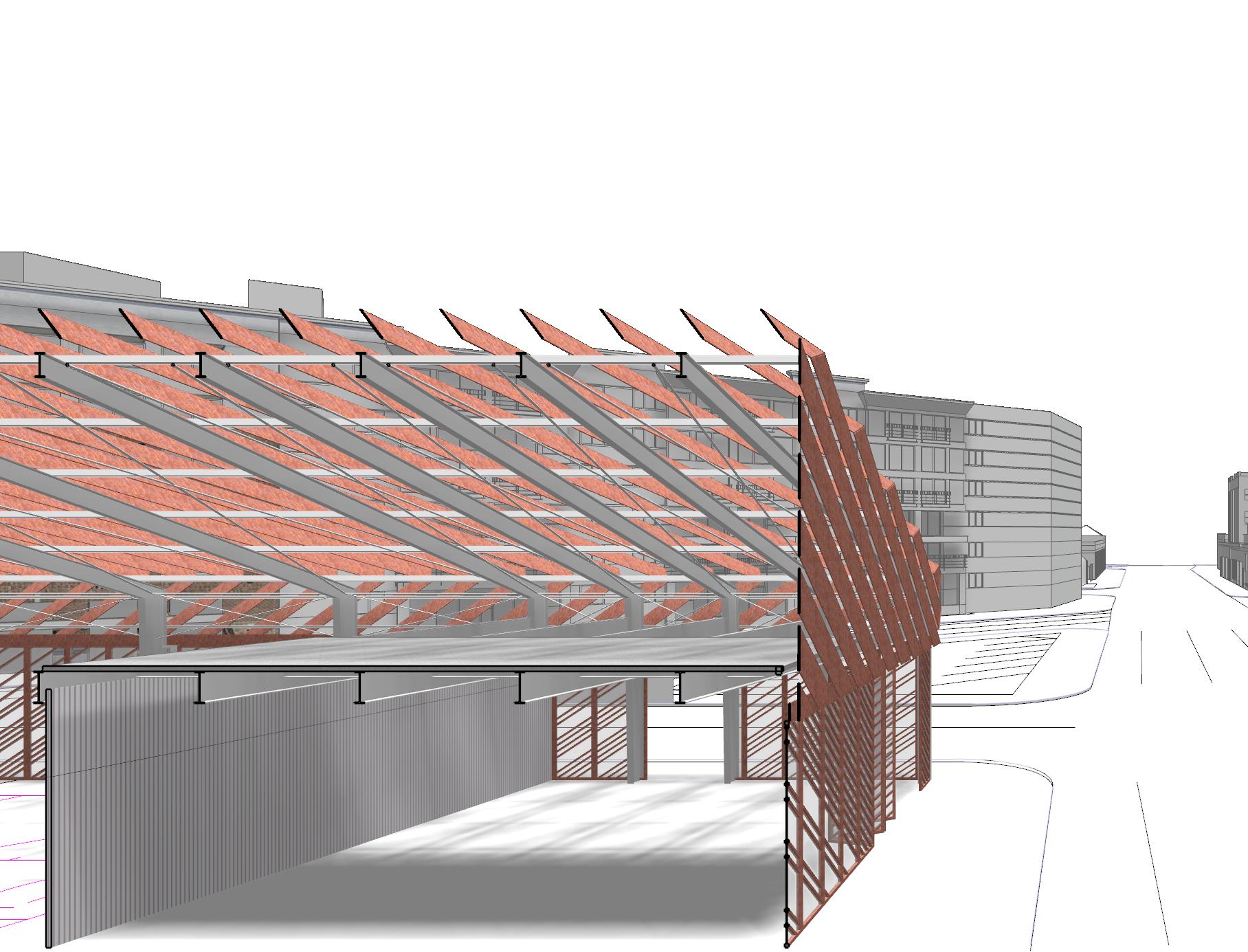
SLICE VOLUMES WITH AN OFFSET LOUVER ENVELOPE FOR PASSIVE SHADING
OPEN-AIR MULTI-PURPOSE SPACE DURING SKATE CAMP
CLIMBING
SWATH
Although the interior organization of both buildings follow the same linear structural grid, the louvers envelope is angled to contrast and create visual tension while optimizing passive
shading strategies. Angled towards the North, the corten steel louvers shield the interior spaces from the sun, while still optimizing daylighting and cooling strategies.
SUMMER MOVIE NIGHT
BIRD’S EYE VIEW DURING SET-UP FOR A CONCERT
STREET VIEW DURING A VINTAGE CAR SHOW
FOOD TRUCK FESTIVAL
The envelope design also allows the two buildings to be perceived as more transparent when approached from the North, which is towards the busy public plaza. Conversely, when looking at the building from the South, where
the more heavily trafficked road is, the building appears more opaque. This promotes the leading concept of flexible community engagement by creating a more welcoming, receptive facade towards the public plaza.
MODEL IMAGES
‘CLOSED’ LOUVERS
‘OPEN’ LOUVERS
ROOTED IN PIAZZA DEI CIOMPI
Date: Spring 2023
Professor: Paola Giaconia
Location: Florence, Italy
Size: 55,000 sqft
Type: Kindergarten and Public Library
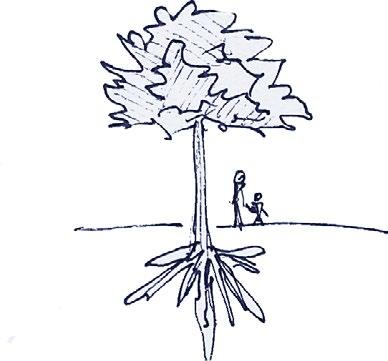
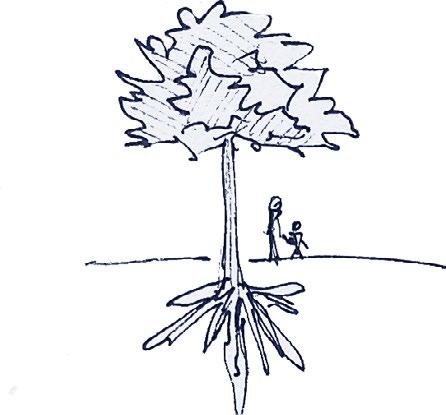
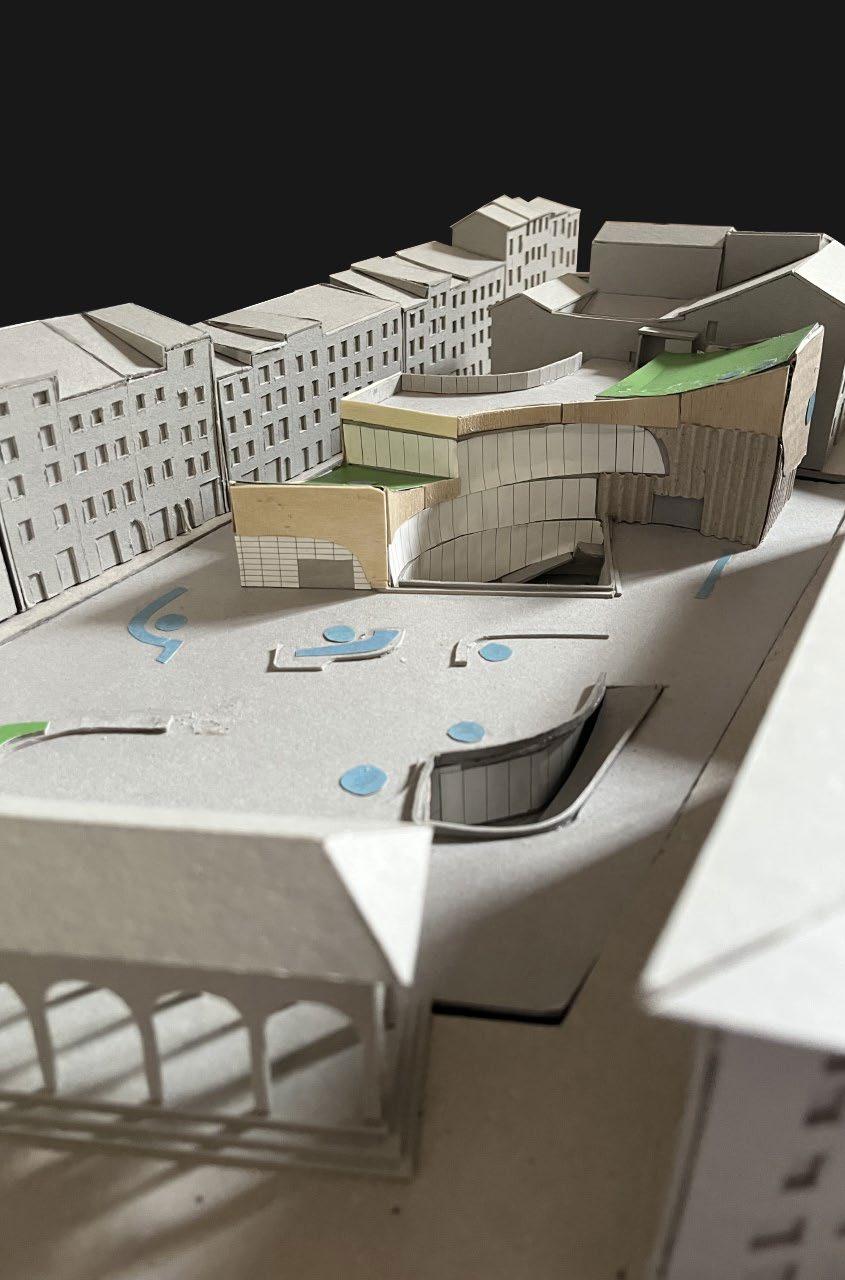
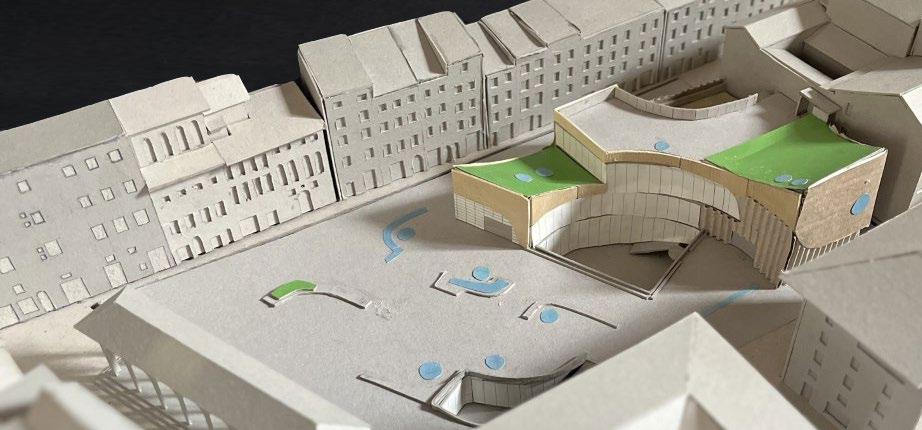
Designing a contemporary building in Florence’s historic Piazza dei Ciompi explores how to seamlessly blend new and old to meet evolving local needs. The hybrid kindergarten and public library design preserves crucial public plaza space while introducing new uses for the site. Inspired by the site’s historic, yet aged pine trees, the library roots itself into the ground, maintaining public access to the plaza above, while the kindergarten grows upwards with a series of terraced green roofs as mementos of the pine needles. The design studies the complex urban fabric surrounding the historic site to harmoniously cater to the shifting needs of the local community.
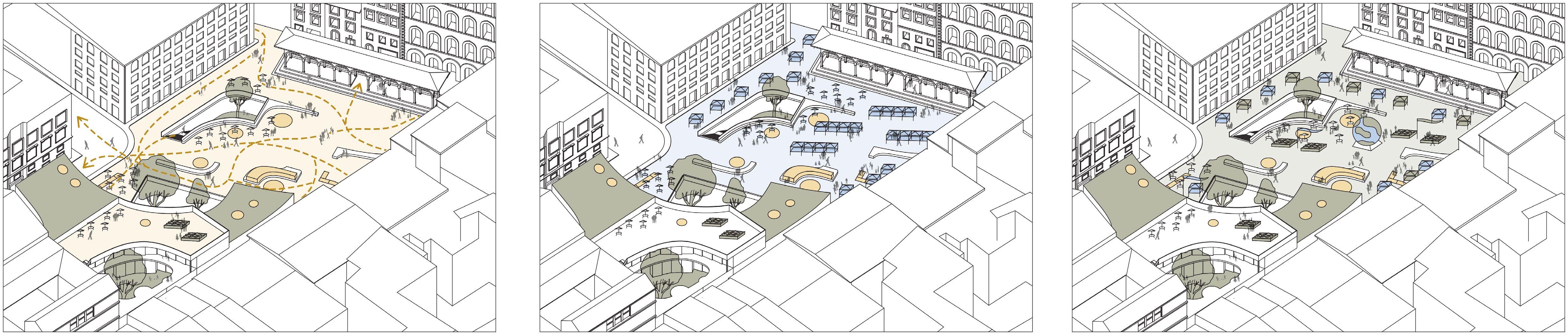
To maintain a majority of the public piazza space and provide refuge from the busy urban environment, the form delves underground. Two terraced forms grow upwards and are carved to correspond to the site’s pedestrian traffic. Sunken courtyards and skylights reintroduce green space and light to the below ground program. They also provide secondary pathways into and out of the library to connect to the activity above. Permanent seating and planters guide pedestrians through the site and engage various community uses for the public piazza.
JUNE 21
DEC21
LONGITUDINAL SECTION WITH DAYLIGHT STUDIES
EXISTING
FORM DIAGRAMS
EXTRUDING
CARVING PUNCTURING DETAILING
6. LECTURE ROOM
7. CIRCULATION TO KINDERGARTEN
8. LIBRARY LOBBY
9. KINDERGARTEN CLASSROOM
10. COURTYARD
12. PLAZA & LOGGIA DEL PESCE
13. SKYLIGHTS TO LIBRARY BELOW
14. MULTI-PURPOSE ROOM
15. OFFICE
16. GREEN ROOF
The Kindergarten and Public Library programs call for a specific engagement of public versus private space. The two programs remain almost entirely physically separate, one above ground, the other below, but join at crucial intersections. Connected by a children’s library and public gallery space, the two programs compliment each other while remaining true to their own needs. To ensure safety, the students must pass through interstitial spaces before entering the public program of the library. Through these intersections of public and private, the kindergarten program artfully weaves Montessori values into its design. Students are protected within the kindergarten spatial boundaries, but still allowed individual choice of activity via flexible membranes between classrooms, group areas, outdoors play and education spaces, and the adjoining public programs of the library.
To further incorporate into the historic context, the conceptual design employs repurposed materials to craft facade fenestrations and material details. Furthermore, the physical model mirrors this commitment by being constructed from recycled materials found in and around Florence.
1. LIBRARY
2. CAFE
3. SUNKEN COURTYARD 4. OFFICE
5. CHILDREN’S LIBRARY
11. GALLERY
SECOND LEVEL PLAN
PHYSICAL MODEL WITH RECYCLED MATERIALS
PHYSICAL MODEL WITH RECYCLED MATERIALS
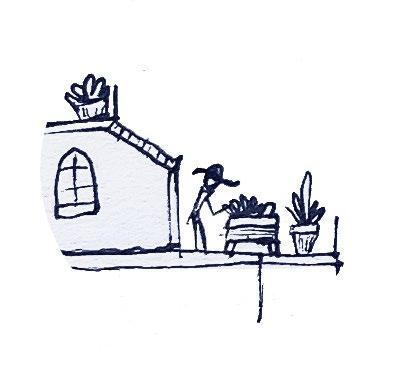
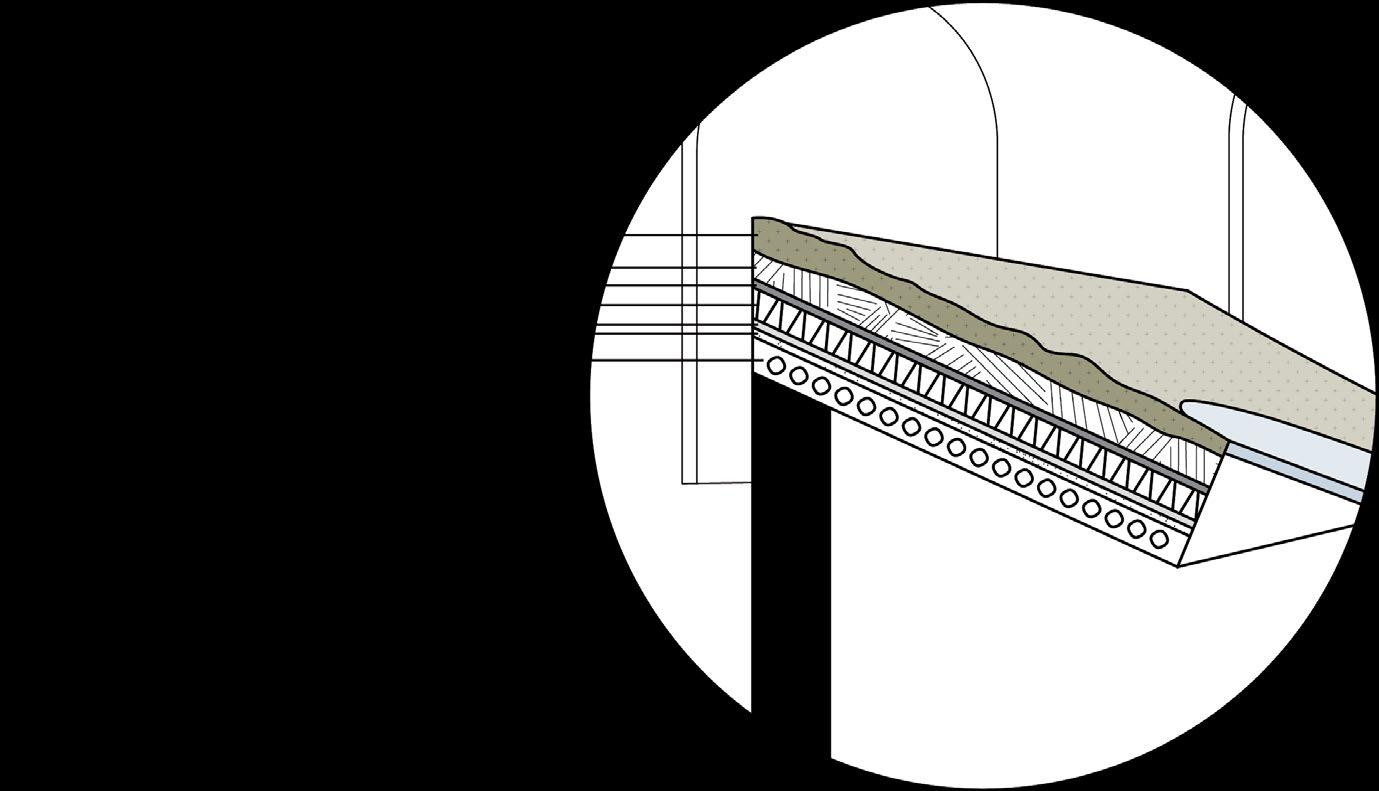
Florence’s dense historic urban fabric hinders the creation green spaces, thus the new design employs green roofs, sunken courtyards, and planters as a solution. Mainly, to counterbalance the removed existing fenced garden and provide maximum greenery, the kindergarten’s sloped roofs are clad with a sedum green roof system that not only acts as stormwater management and a visual connection to nature for the overlooking apartments, but also as a learning opportunity for the students. The roof slopes towards the accessible rooftop garden to demonstrate how the system works and interest students in horticulture.
EARTH DAY CELEBRATION
MIRAS COMPLEX
Date: Fall 2022
Professor: Bill Willoughby
Collaborators: City of Warren Community Members
Location: Warren, Ohio
Size: 980,000 sqft
Type: Urban Design and Landscape Architecture
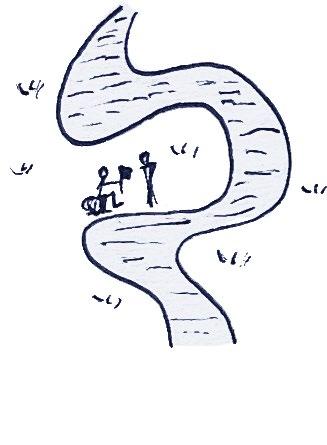
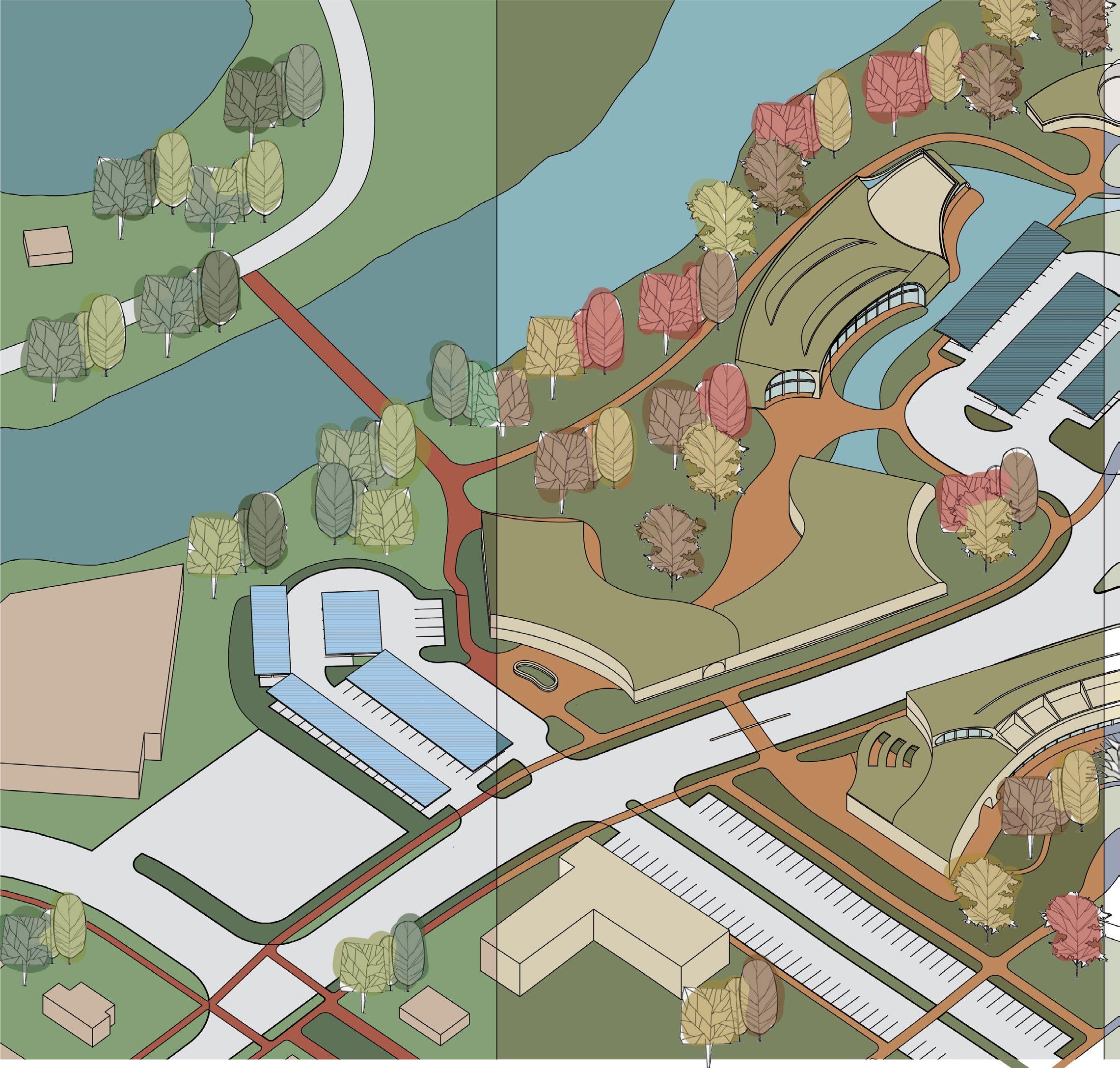
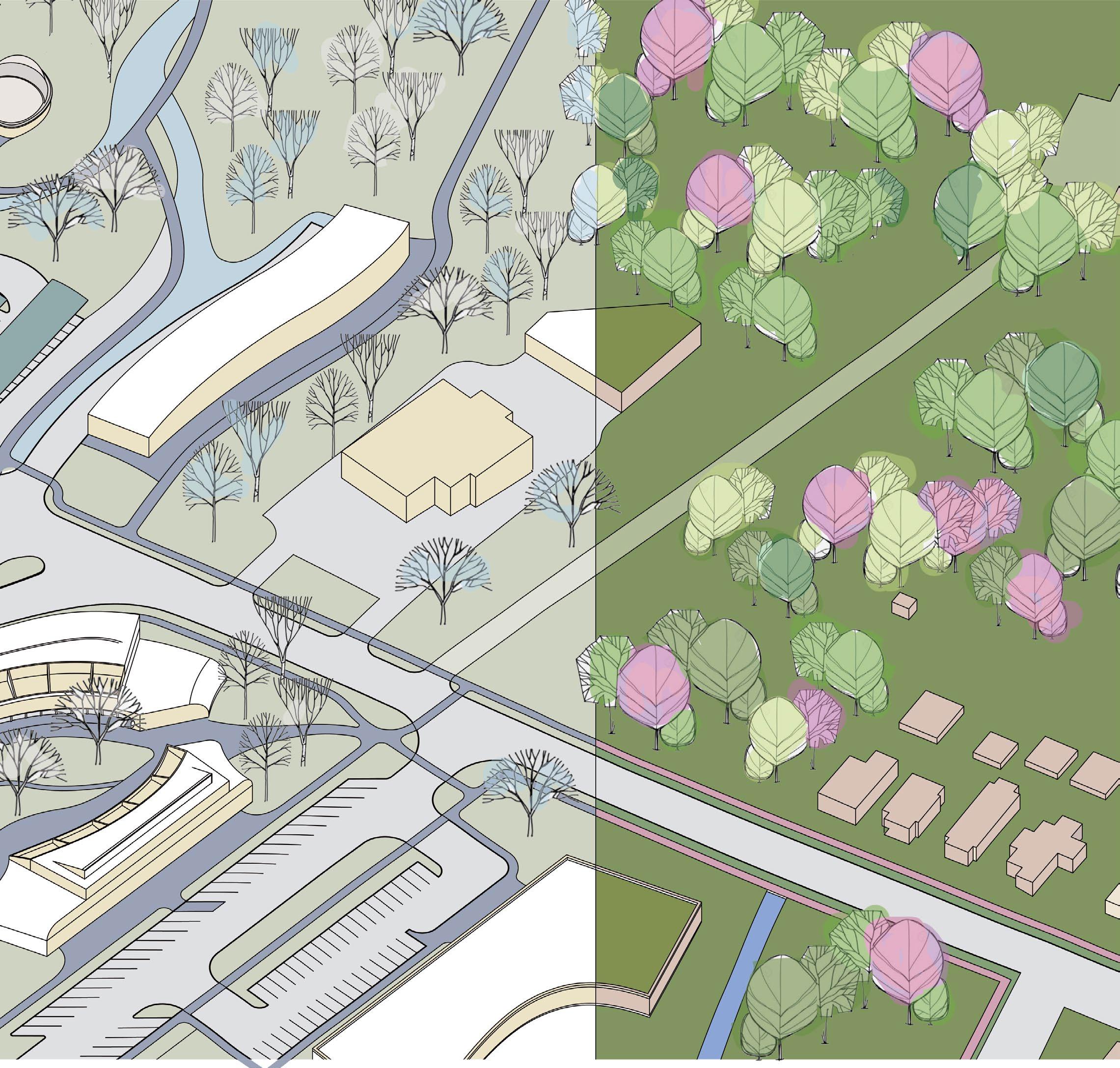
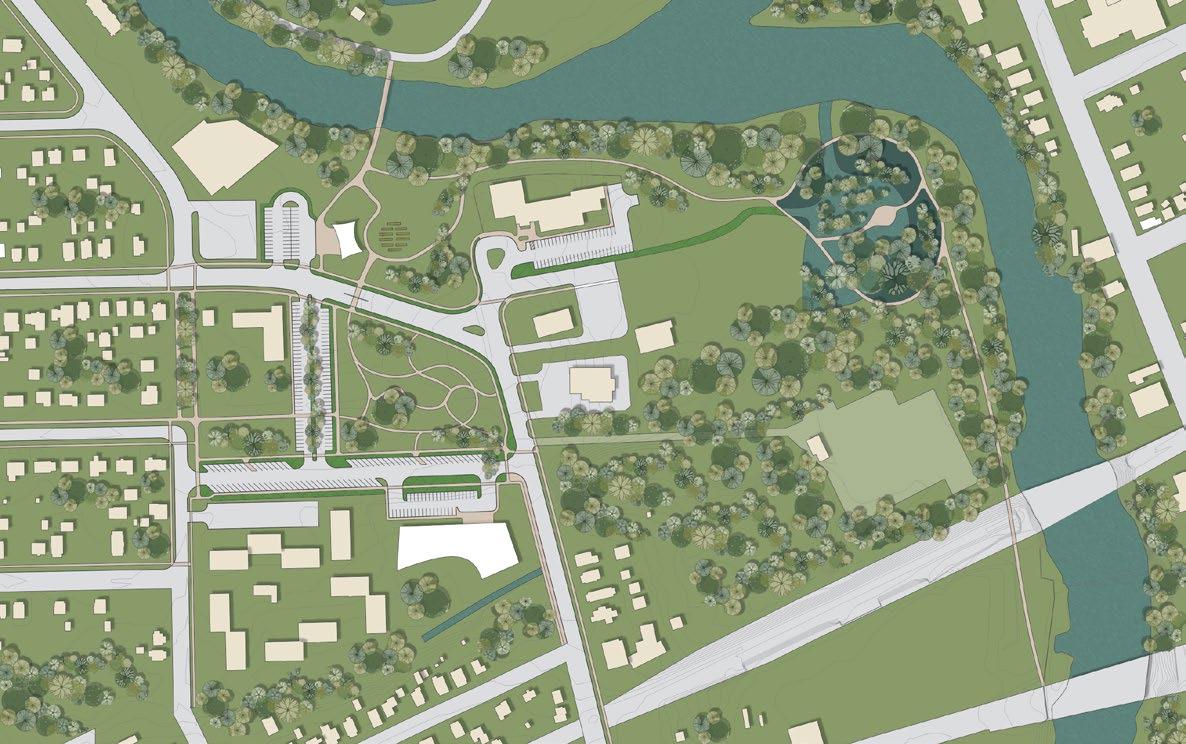
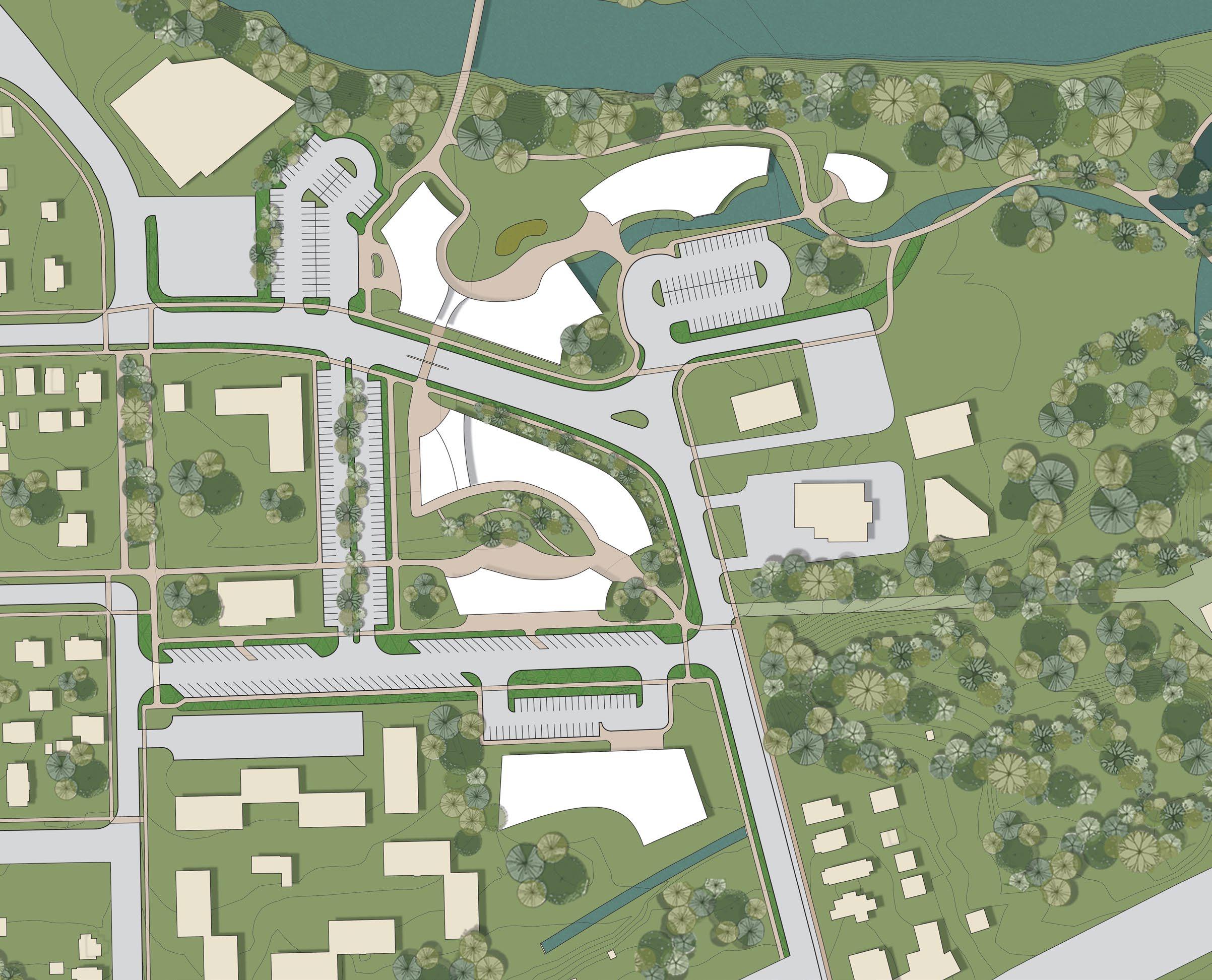
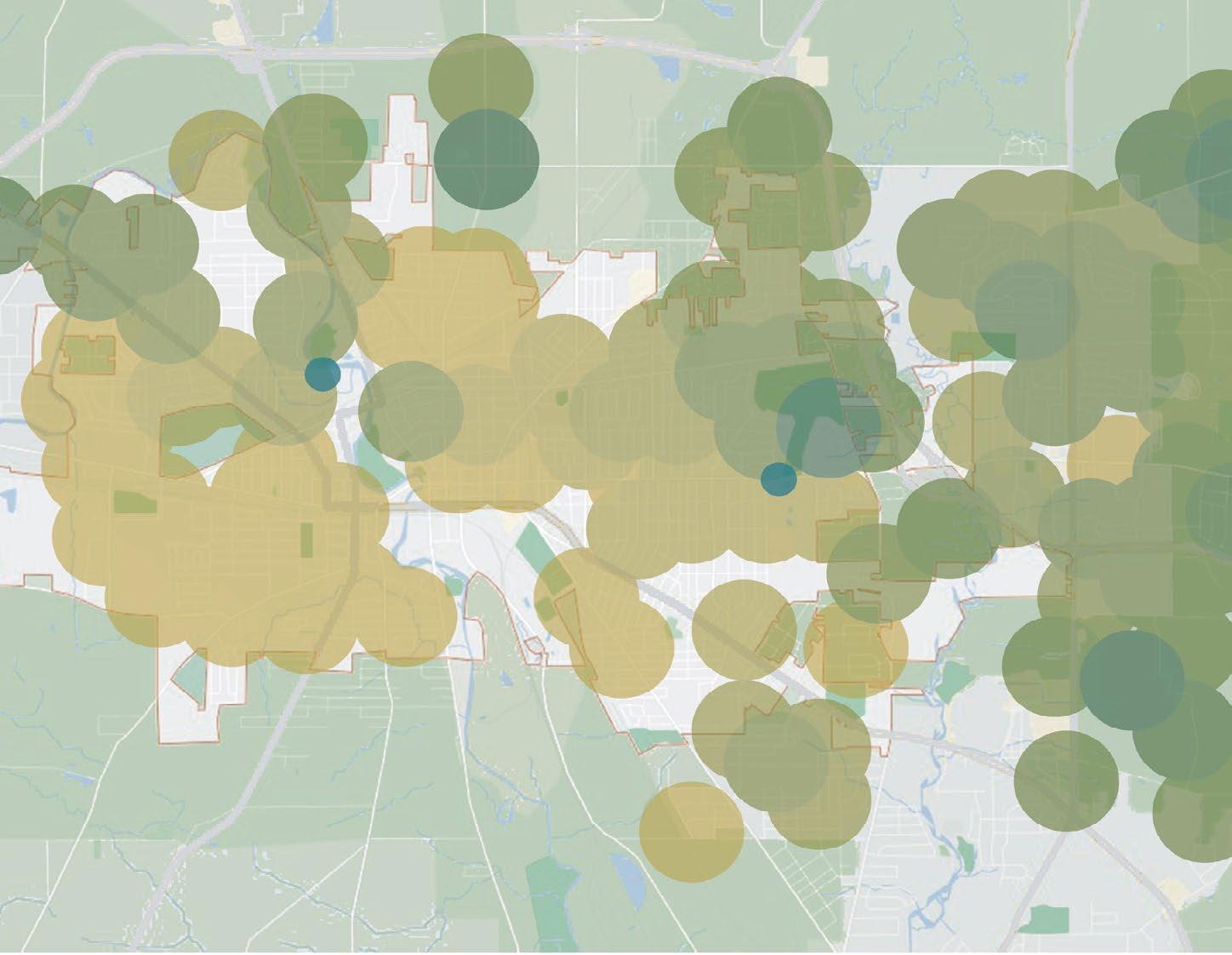
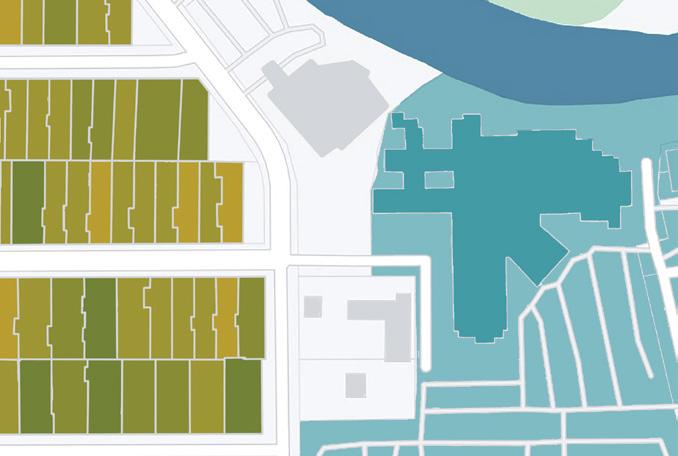
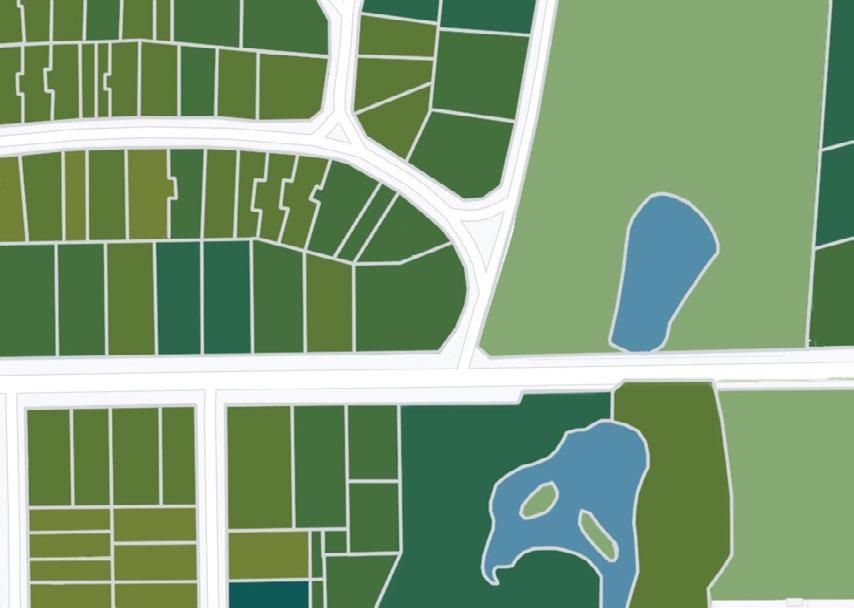
Entering an era of revitalization in Warren, Ohio following the Steel Industry crash of the late 1970s, the demolished St. Joseph Riverside Hospital site emerges as a key player in propelling the city forward. The Mahoning Interdisciplinary Revitalization and Sustainability (MIRAS)
Complex celebrates and engages the public by integrating existing natural processes of the Mahoning River throughout the site. Informed by urban design studies, the site’s layout mirrors the meandering path of the Mahoning River, guiding occupants through sectors of ecological, social, and economic revitalization.
KEY
1. CONSTRUCTED WETLAND
2. PASSIVE PARK AND COMMUNITY GARDEN
3. RELOCATED URGENT CARE
4. NATURE CENTER
5. OBSERVATORY
6. INTERACTIVE WATER PATH
7. ARTS AND SCIENCE HUB WITH LIVING MACHINE
8. MIXED-USE
9. RAIN GARDEN
10. BIOSWALE
11. DAYLIT STREAM
PHASE 1
Following the collapse of the Steel Industry in the 1970s, Warren, Ohio, akin to numerous other Northeastern cities, experienced a sharp decline in both population and economic prosperity. Presently, Warren is undergoing a revitalization, yet certain pockets of the city continue to struggle with growth. Nestled in West Warren, the transformation of the old hospital site stands as a potential catalyst for economic resurgence in the neighboring communities. This transformation not only imbues the site with a fresh identity of economic, social, and environmental revitalization but also promises widespread benefits for all of Warren.
B.
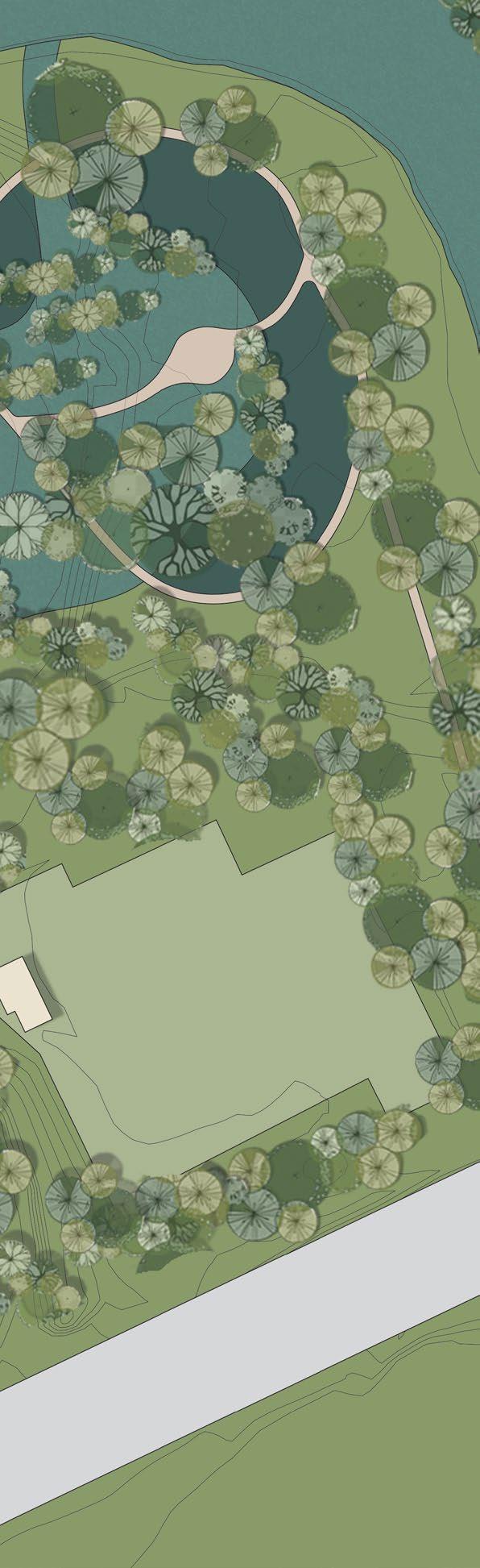
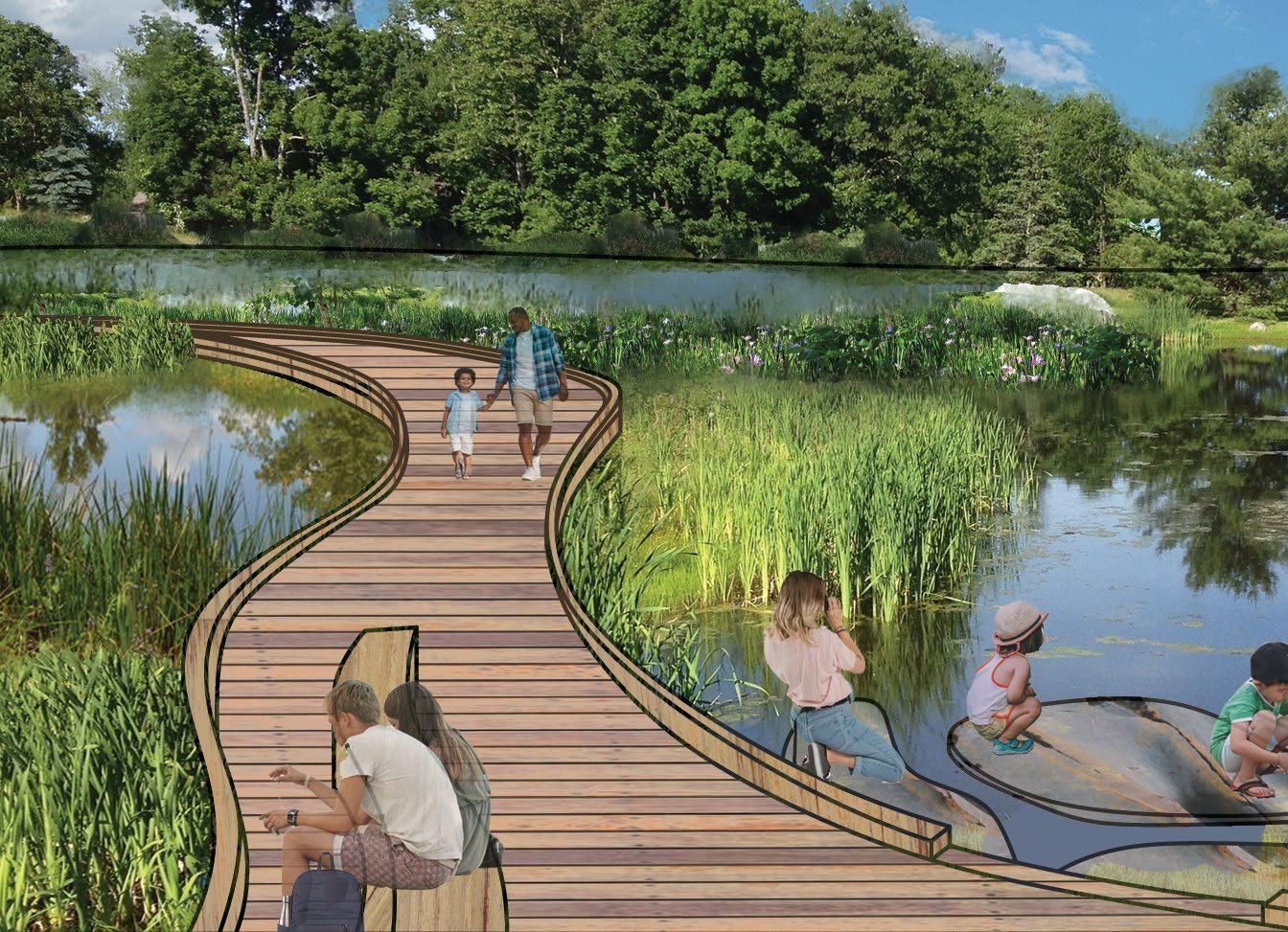
Acknowledged in three local news reports, the MIRAS Complex introduces dynamic transformations to the riverside site. A standout feature is the constructed wetland, which not only restores the floodland ecosystem but also offers an engaging educational and recreational space for visitors. The comprehensive improvement of water management across the site, achieved through the integration of wetlands, daylit streams, bioswales, rain gardens, and a living machine, ensures that visitors can actively participate in and appreciate the site’s harmonious interaction with the natural environment.
“KSU Students Imagine Future”, Tribune Chronicle, Dec. 8, 2022: Interviewed and quoted in article
“Kent State Students Present Plans for St. Joe’s Site in Warren”, WKBN, Dec. 7, 2022: Televised Interview and quoted in article
“New Ideas from Next Generation”, The Business Journal, 2023: Interviewed and quoted in article
THE JULIET
Date: Spring 2021
Professor: Aaron Schordock
Location: Cleveland, Ohio
Size: 320,000 sqft
Type: Mixed-use with Urban Farming
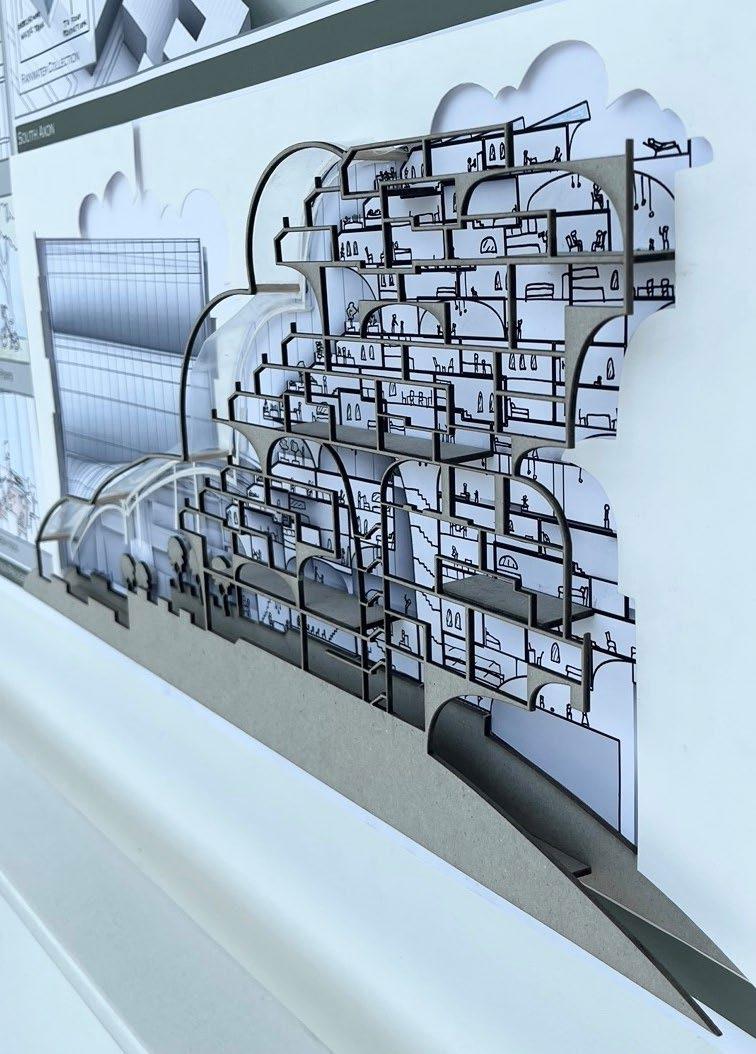
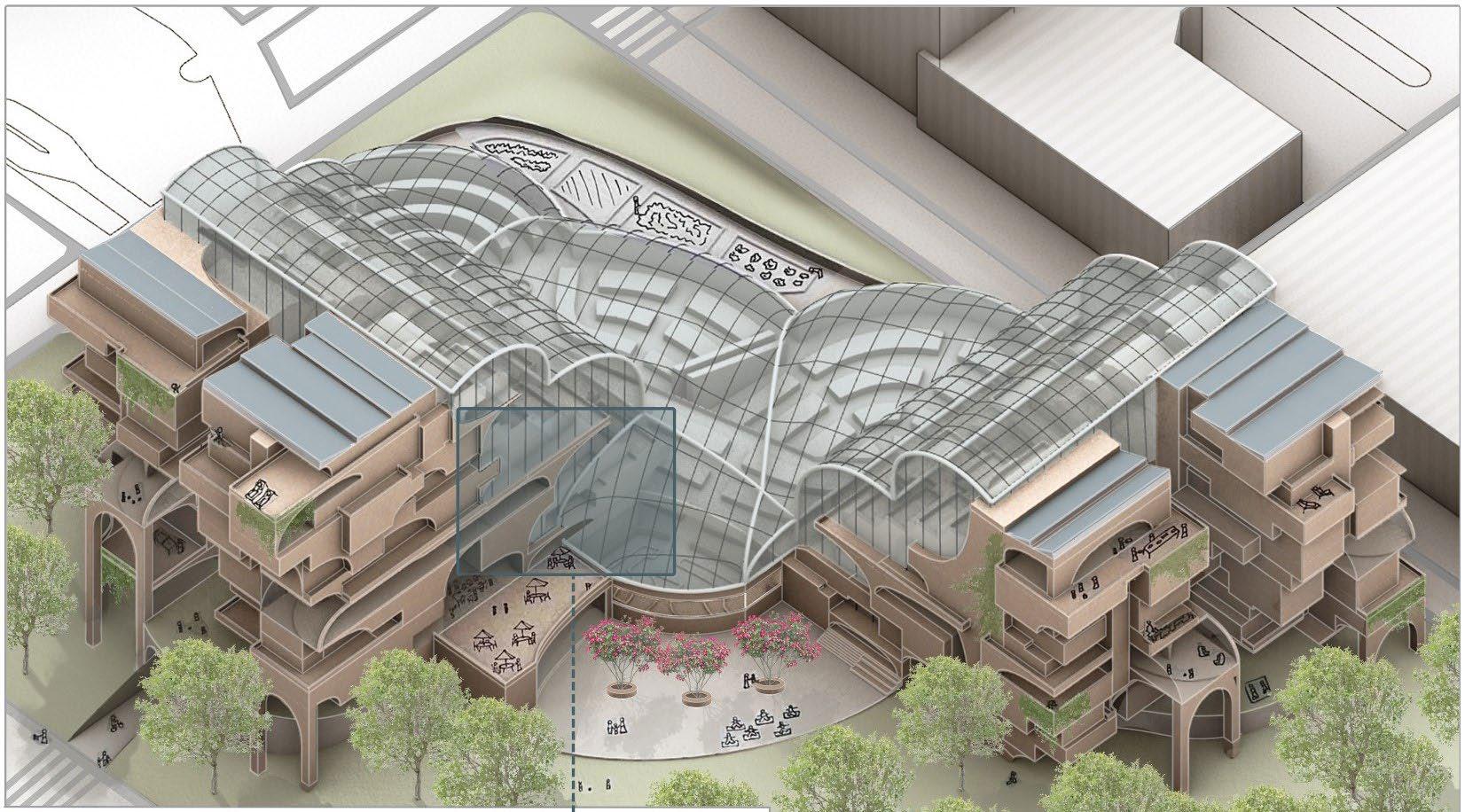
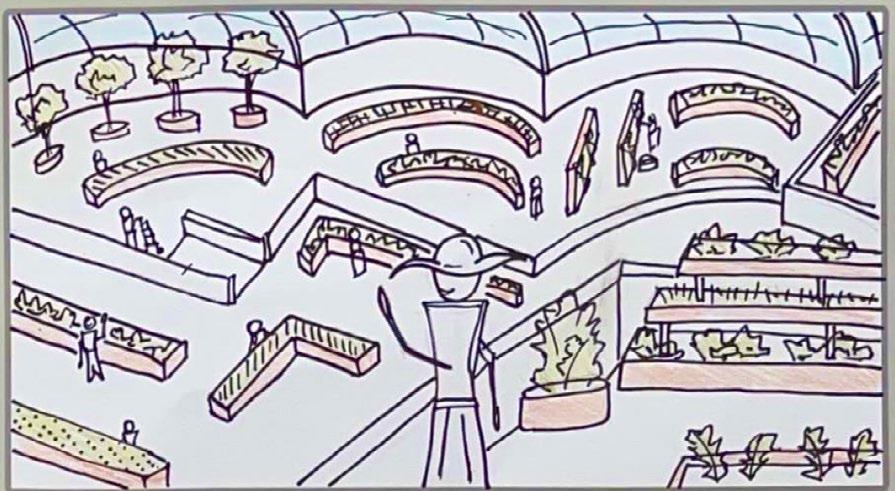
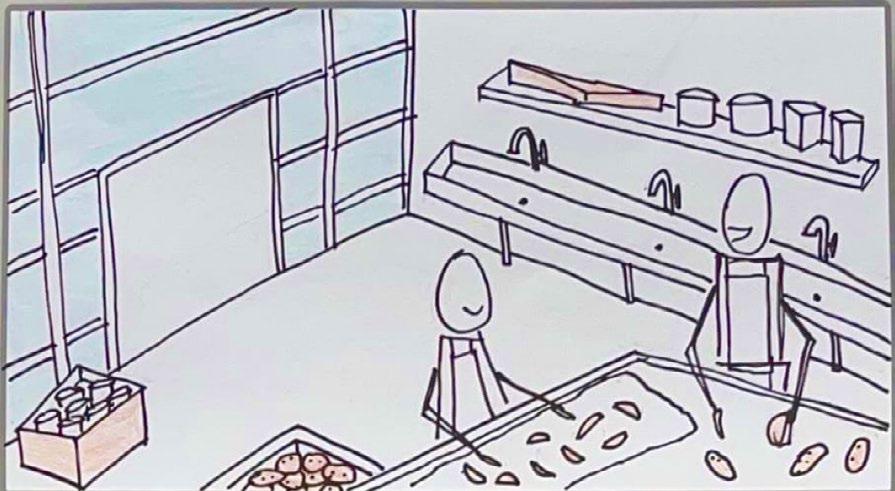
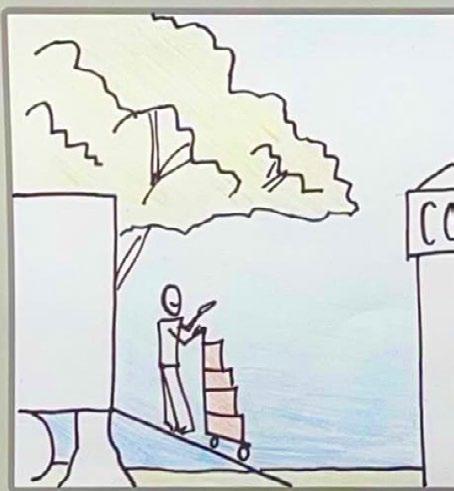
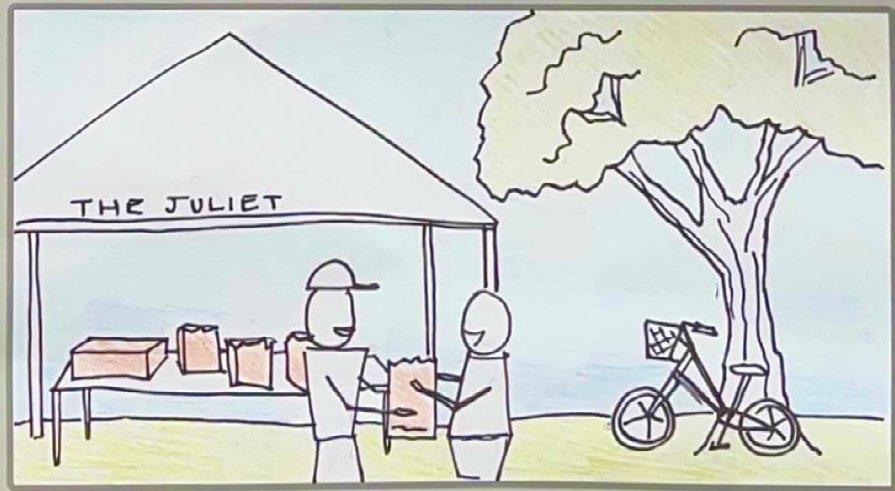
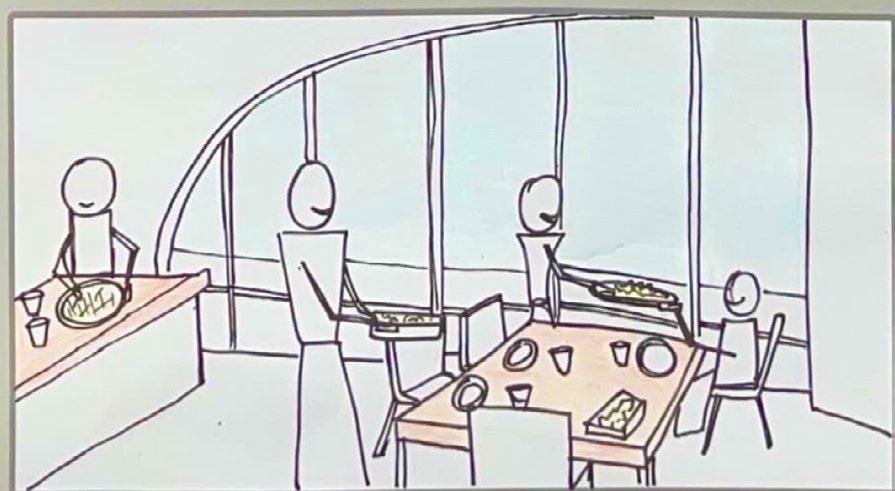
As the impacts of climate change force a growing number of people to seek new homes, cities like Cleveland, Ohio have the potential to serve as pivotal hubs for these displaced populations as they transition into permanent housing solutions. The innovative design of the Juliet not only accommodates, but also fosters a mutually beneficial relationship between the city’s stable urban population and the flux climate refugee population. The unique terraced design integrates retail, affordable housing, and urban farming to create a self-sustaining and inclusive environment that welcomes climate refugees into the fabric of the city during their transition.
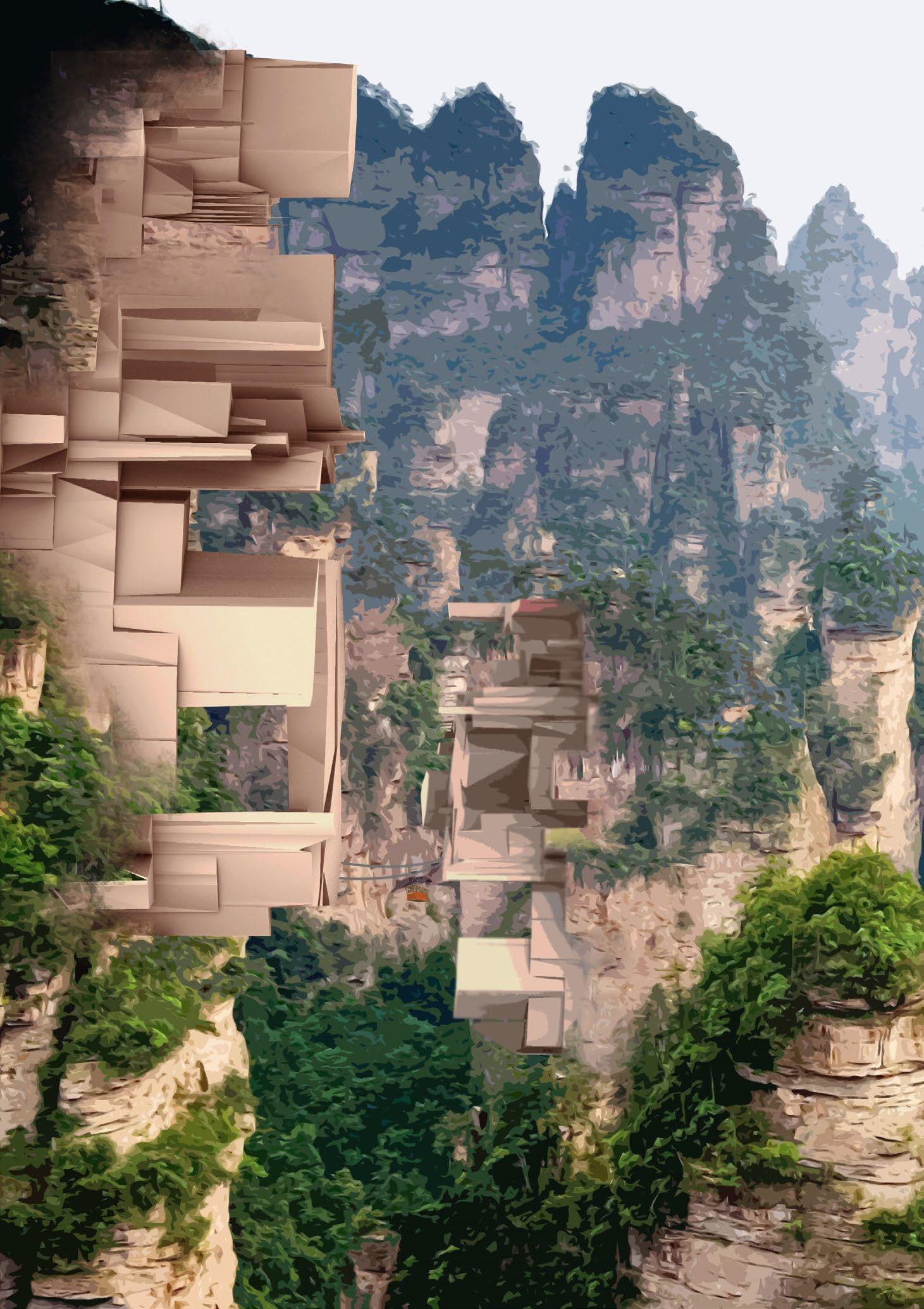
INSPIRATION EXPERIMENT: MOUNTAINSIDE FAVELA
A digital college, blending the stacked geometries of South American favelas with a vertical mountainous landscape, serves as the creative catalyst for Juliet’s design. The intentional vertical terracing of the apartments not only minimizes the building footprint but also maximizes the availability of wooded green space within the urban setting.
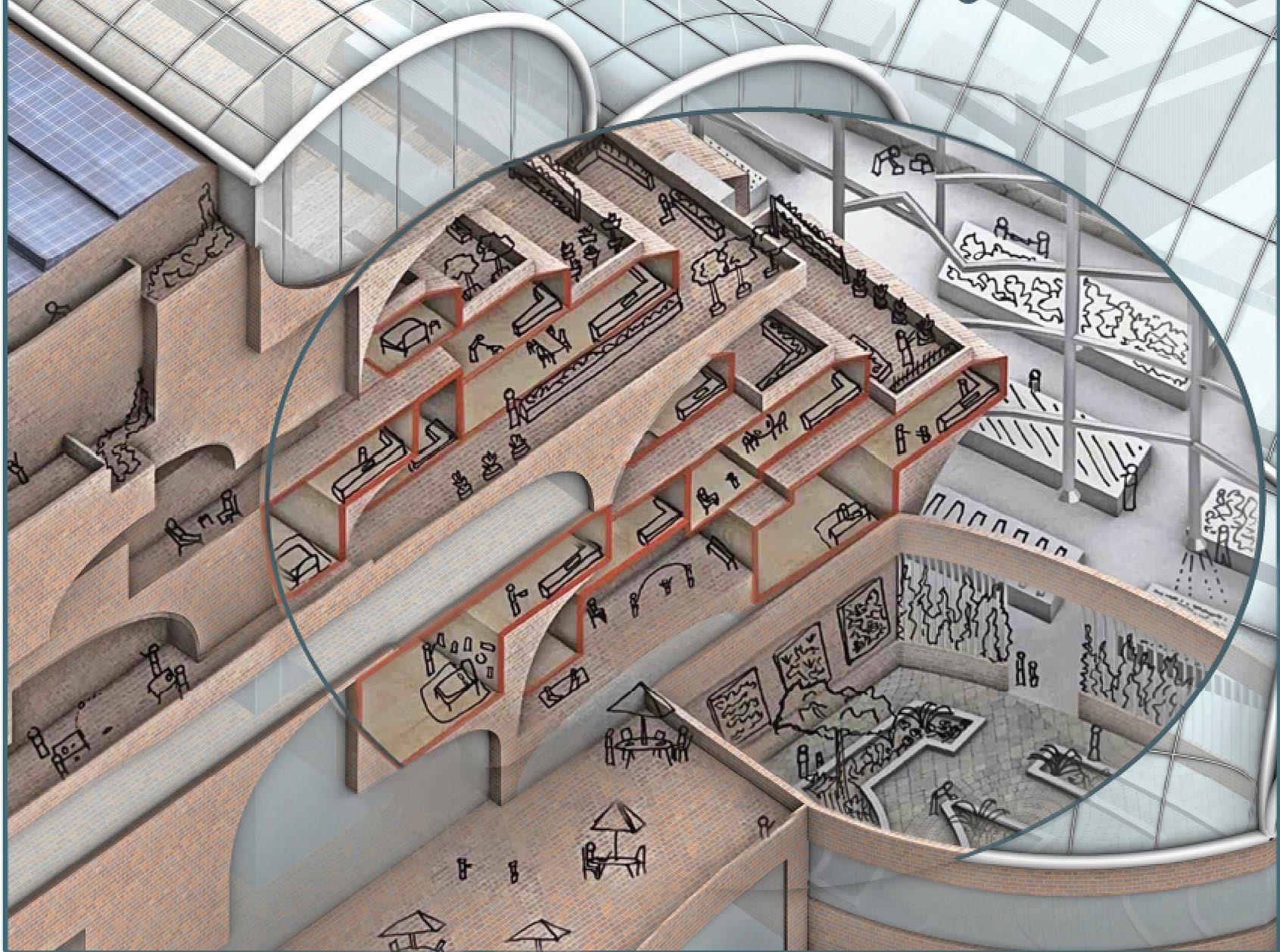
The strategic striations of the vertical, terraced apartment striations play a crucial role in optimizing passive daylighting, benefiting both the rooftop garden patios and the urban farming greenhouse. The private apartment terraces facing the South also have direct visual connections with the greenhouse below, thus deliberately fostering a greater sense of community among residents.
HOUSING AND GREENHOUSE INTERIOR
NORTH AXON
PRODUCTION
SOUTH AXON DIAGRAM
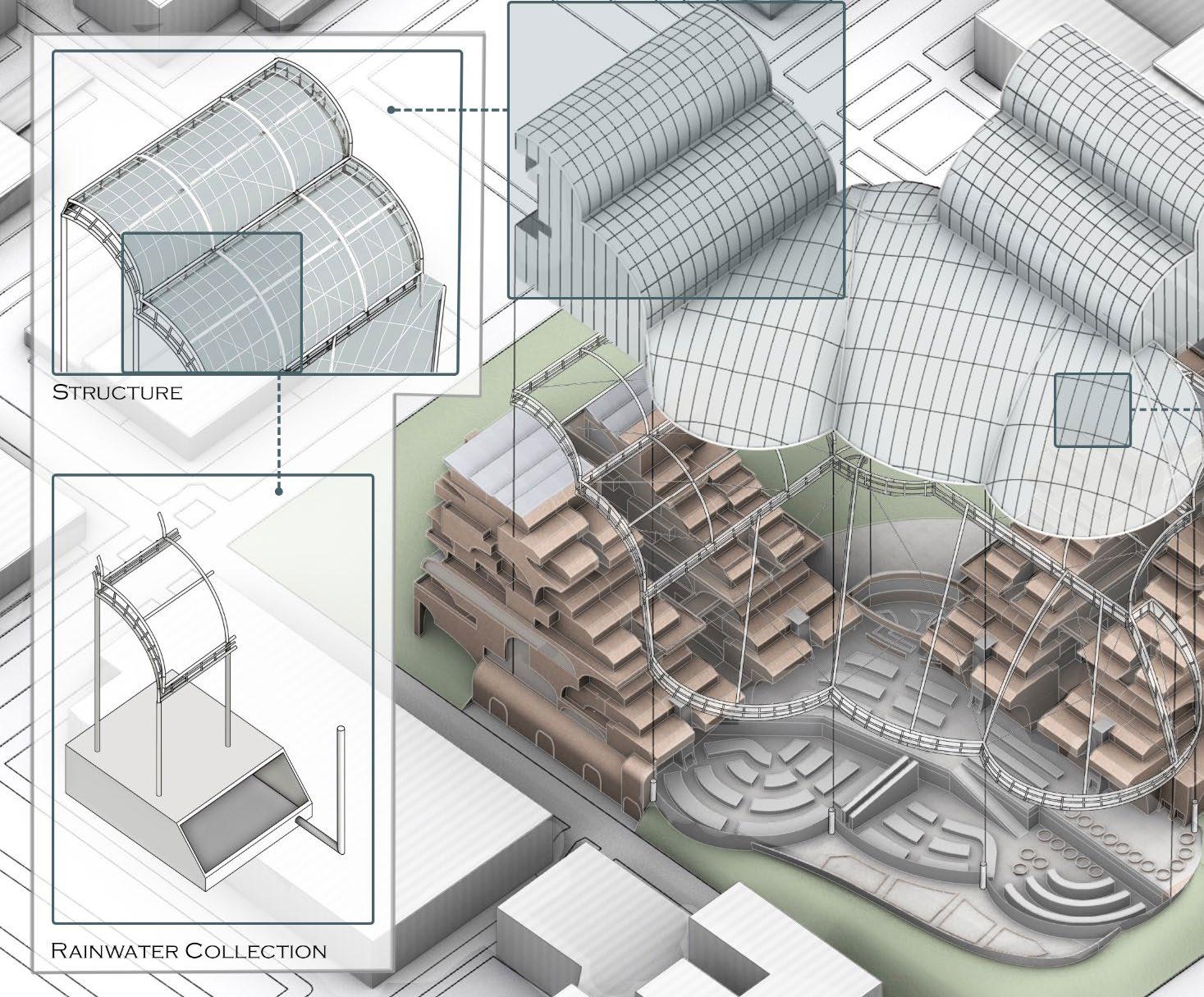
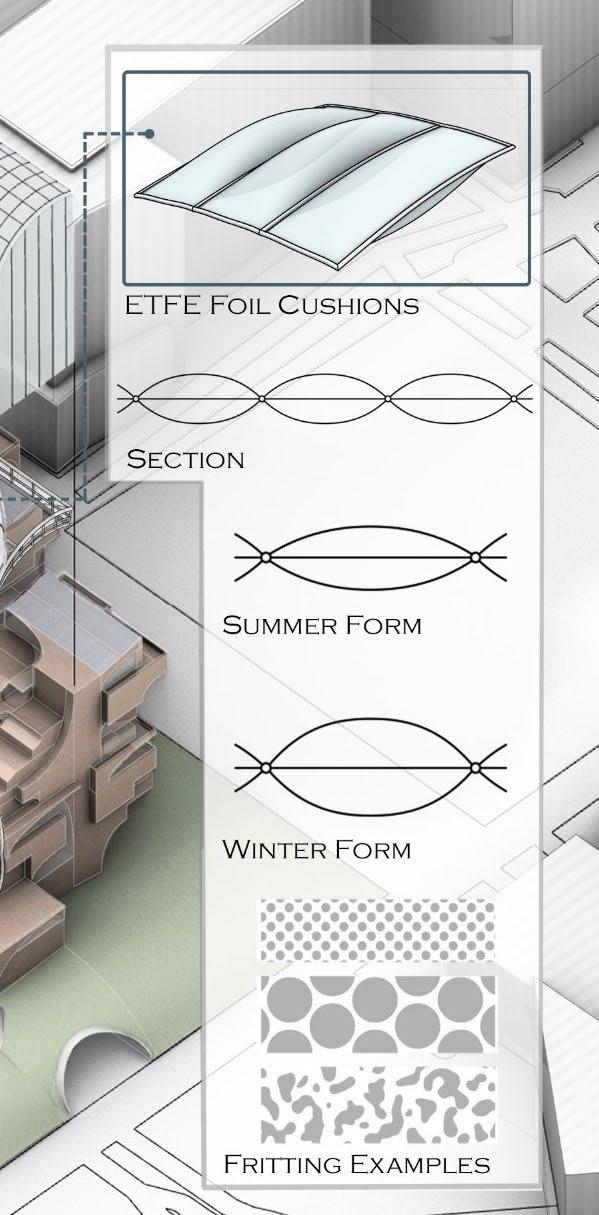
To enclose the greenhouse and ensure an optimal, controlled environment for food production, lightweight and adaptable ETFE Foil Cushions offer an intelligent solution. The overall pillowed design, reminiscent of simplified clouds, not only adds aesthetic appeal but also channels rainwater to underground tanks, enhancing the greenhouses’ self-sustainability.
To counteract overheating in the South-facing interior, the foil cushions exhibit a dynamic capability to inflate or deflate. During summer, they deflate to minimize insulation and align the printed fritting on the interior ETFE sheet to reflect more sunlight. Conversely, in winter, the foil cushions inflate to enhance insulation and deliberately misalign the fritting, maximizing sunlight exposure. This thoughtful mechanism provides an economical solution, ensuring an ideal, efficient year-round climate for sustainable food production.
ADA MEDIA HOUSE
Date: Fall 2021
Professor: Jennifer Rufener
Location: Kent, Ohio
Size: 70,000 sqft
Type: Cultural and Performing Arts
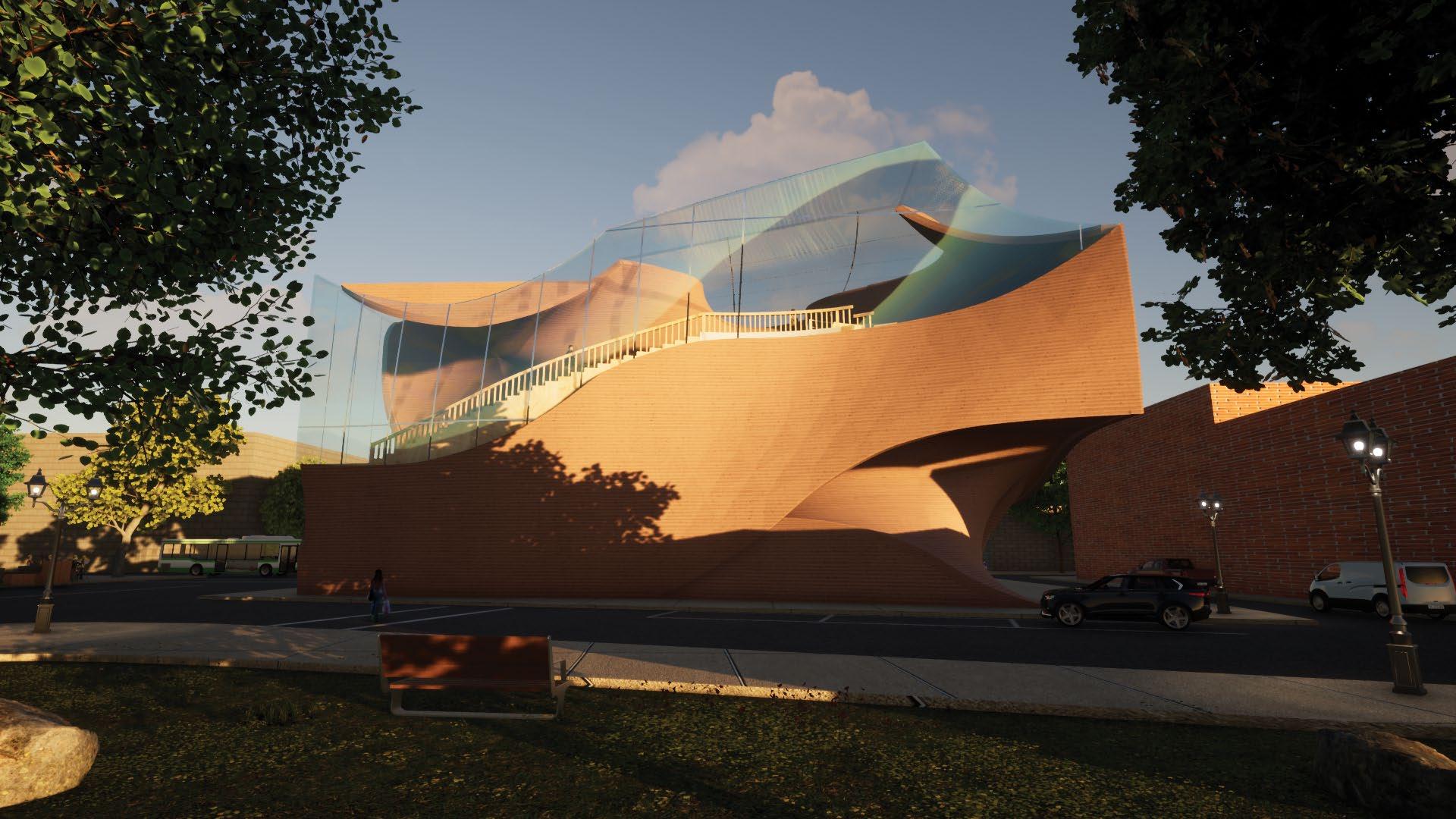
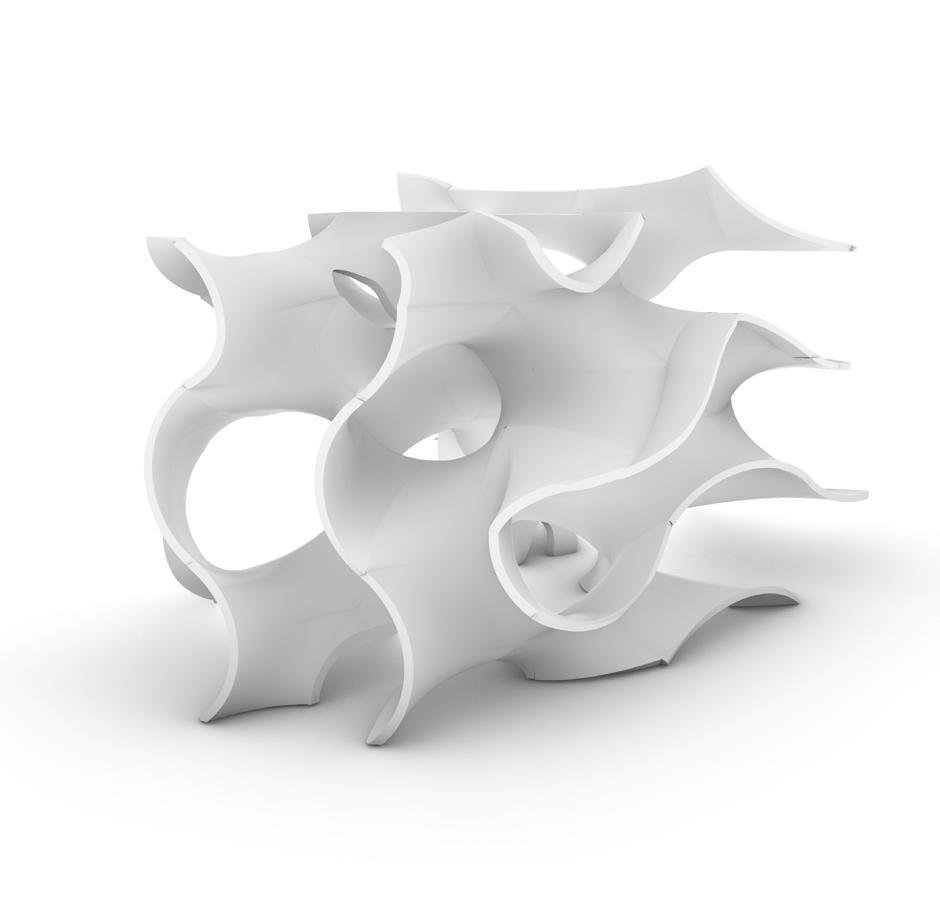
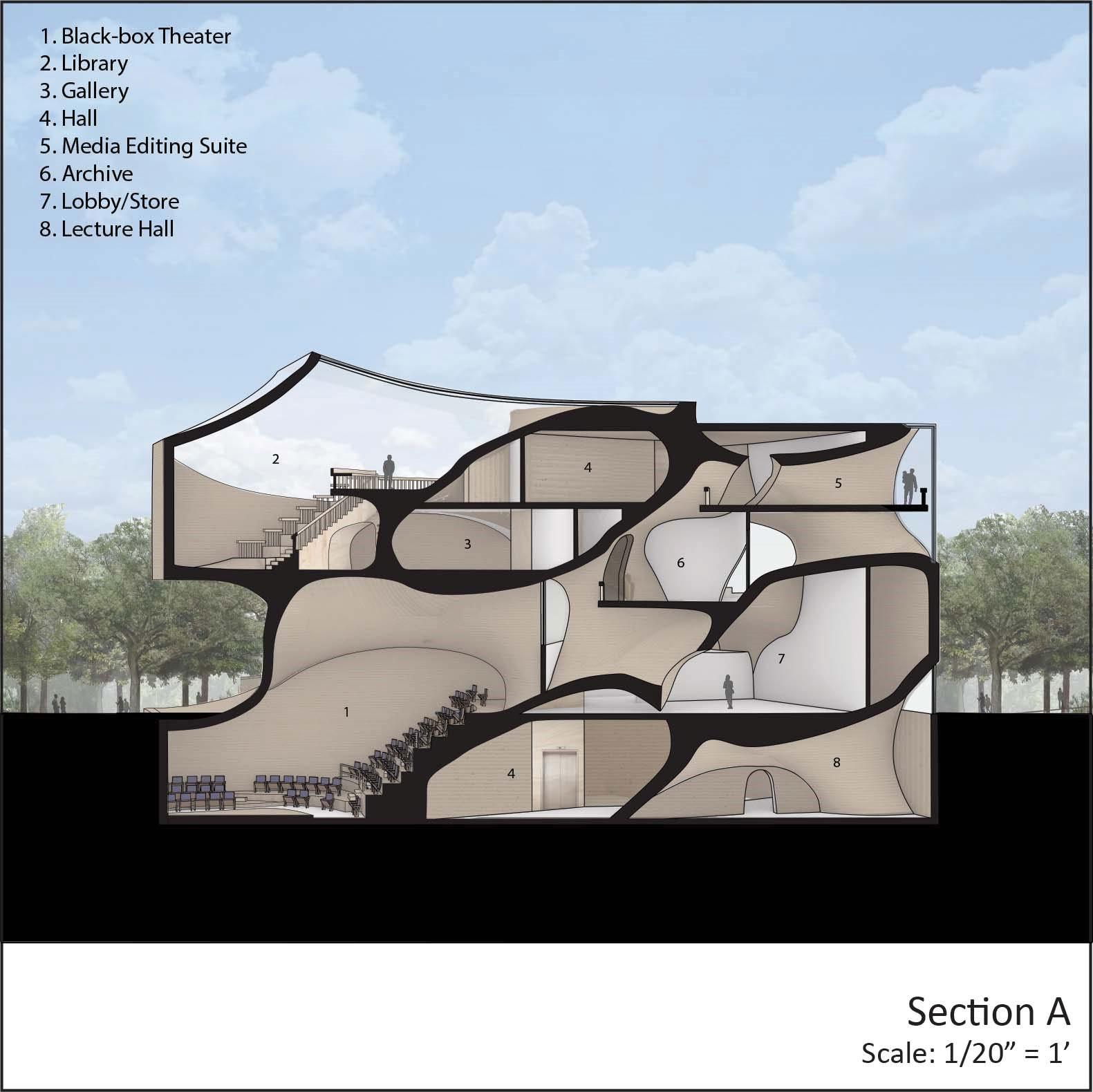
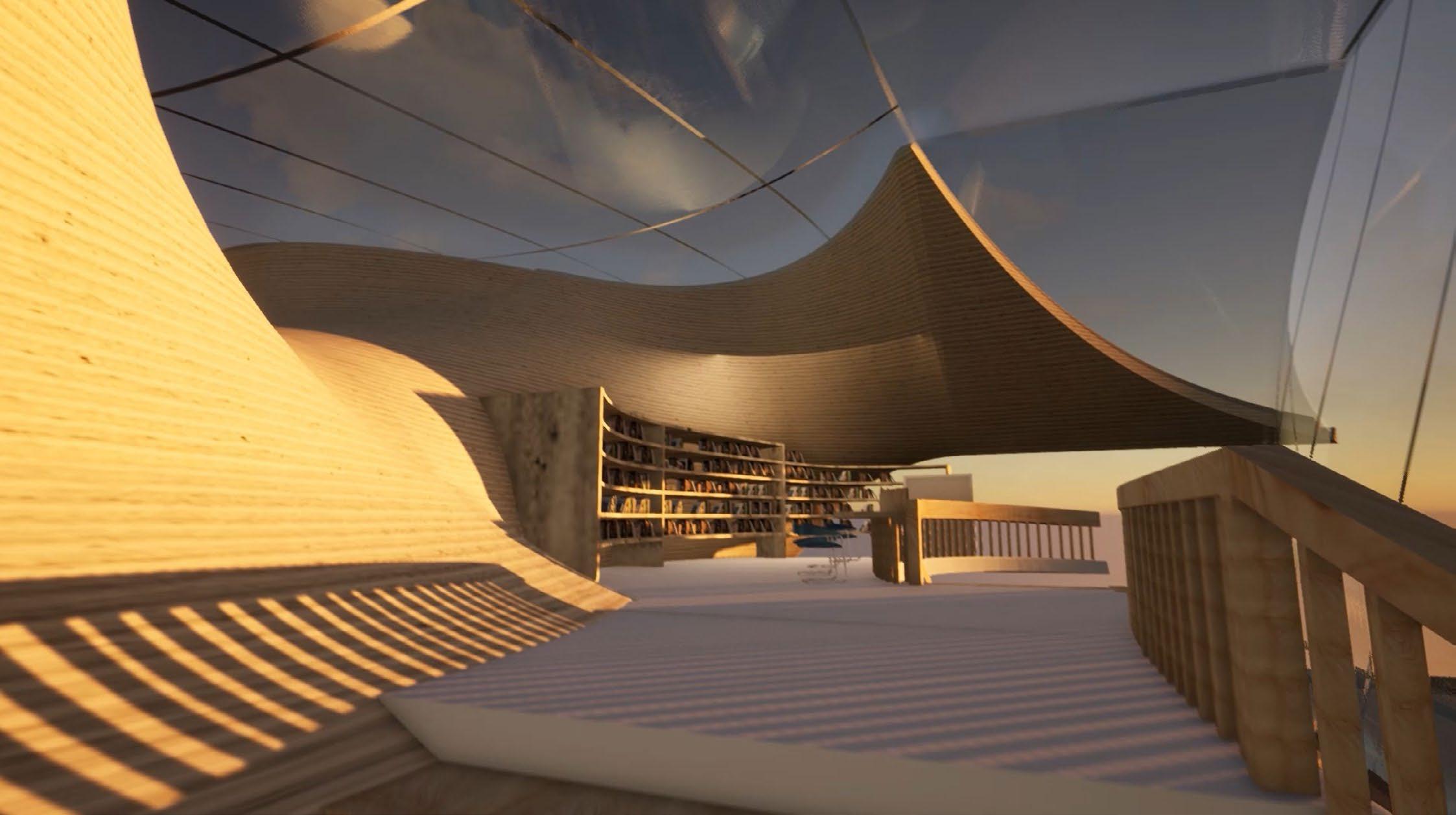
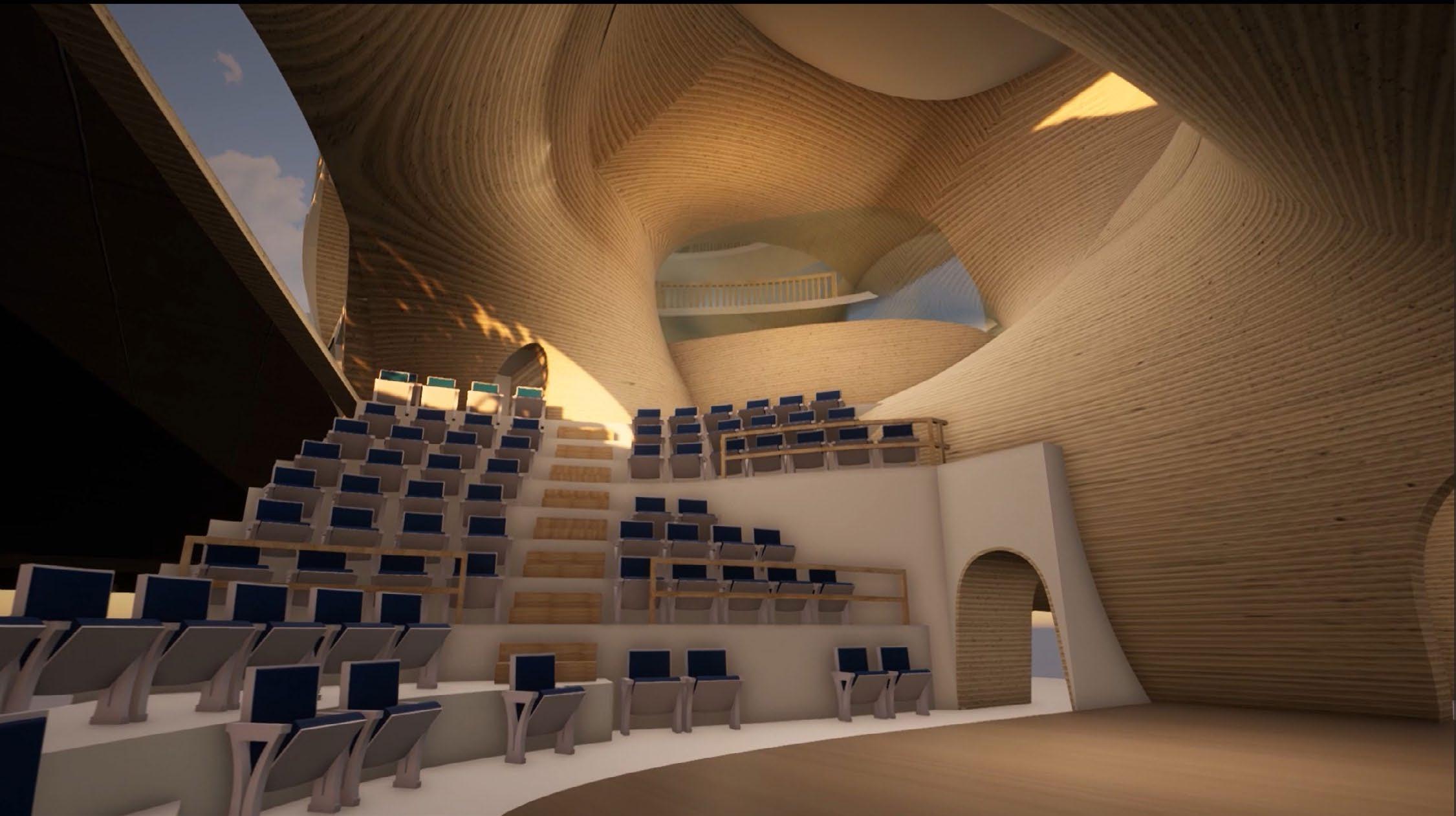
As the understanding of media evolves to encompass innovative technologies, emerging scientific disciplines, and bold artistic endeavors, the need for an interdisciplinary center becomes imperative. The ADA Media House design merges the innovative construction methodology of 3D Printing with sustainability to establish a public space dedicated to the study of art and media technologies. Employing a manipulated gyroid single surface form, the design seamlessly interconnects programs through a network of overlooks and openings, thus creating a dynamic and infinite spatial experience.
Perspec�ve
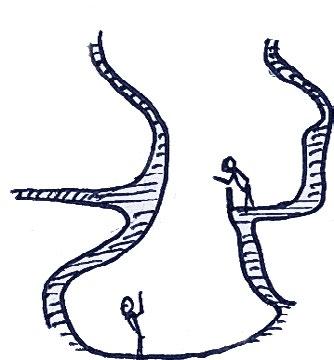
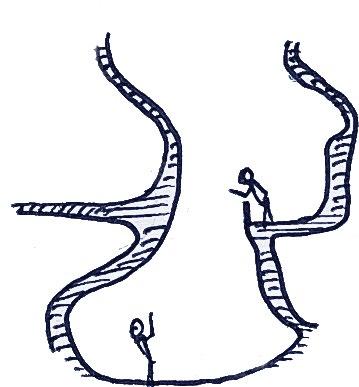
By employing the single-surface 3D print infill geometry known as the gyroid, the entire structure has the potential to be inherently self-supporting, reducing the need for excessive material. The infinitely interconnected gyroid geometry not only presents a visually captivating form, but also facilitates the creation of fascinating, intertwined interior spaces. As the structural form seamlessly weaves among itself, openings and overlooks emerge, providing an innovative means to link and integrate various media-related interior programs. As the gyroid form has no inherent beginning or end, the program linkage occurs horizontally and vertically over multiple levels. To create program spaces without impeding on the geometry of the gyroid, floor plates extend from peaks and valleys, typically ending in cantilevers to avoid typical stacked floors.
5.
1. BLACK BOX THEATER 2. RECITAL HALL
LECTURE ROOM
LOBBY
GIFT SHOP
CAFE
METHOD:
3D Printing to achieve the gyroid geometry
Example: TECLA by Mario Cucinella Architects and WASP Additive construction method via industrial 3D printing device for a prototype dwelling
MATERIAL:
Natural byproducts of agriculture or building excavation
Organic Matter Examples for filament: Corn and Wheat starch, local soils, cork and wood fibers
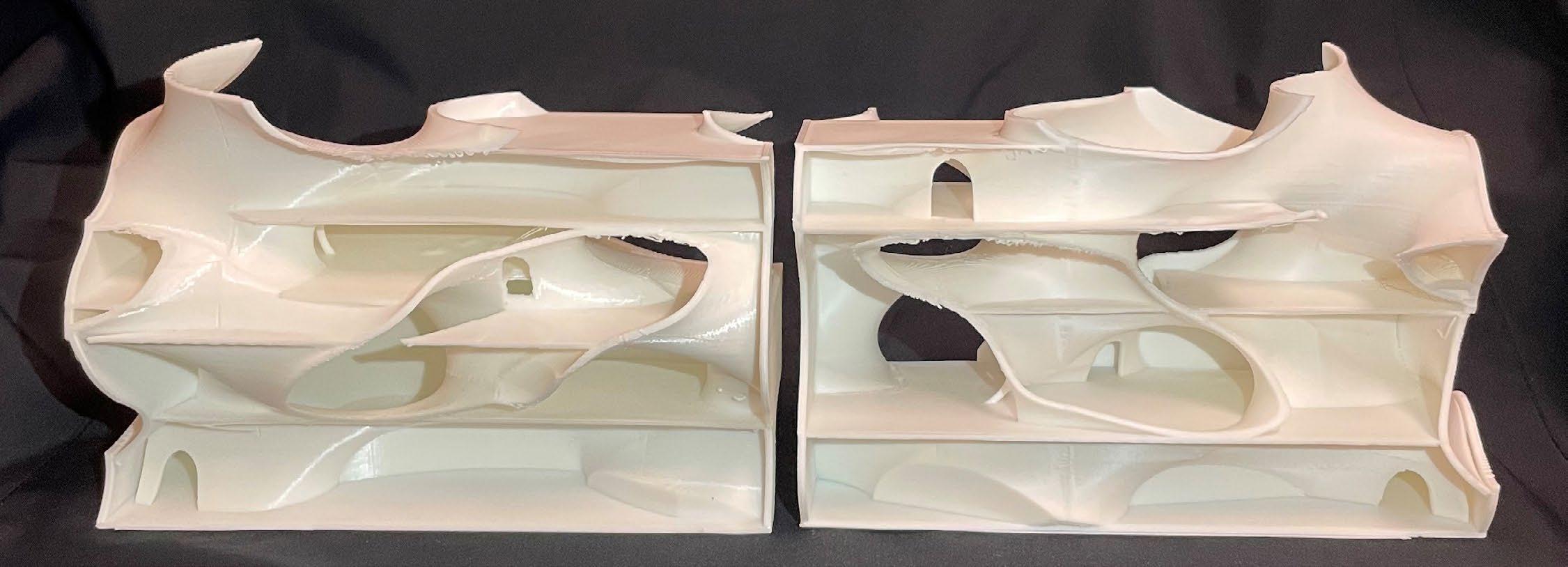
3D PRINTED MODEL
LIBRARY UPPER LEVEL
BLACK BOX THEATER
(240)-479-8706
mollyzwack@gmail.com
linkedin.com/in/molly-zwack
Kent State University
Bachelor of Science in Architecture
Summa cum laude
Minor in Environmental Studies
Study Abroad Semester in Florence, Italy, Spring 2023
University of Maryland Baltimore County
Pursued B.S. in Mechanical Engineering, GPA: 4.0
Transferred Spring 2021
Study Abroad Semester in Bristol, England, Summer 2019
Rhinoceros 7
Illustrator, InDesign, Photoshop AutoCAD
Revit and Enscape Twinmotion
MS Office Suite SketchUp
Verbal and Written Communication
Adaptability
Problem-solving Empathy Teamwork
Tau Sigma Delta Honor Society
2024-present
Green Roofs for Healthy Cities
2024-present
KSU CAED Student Ambassador Spring 2024
American Society of Civil Engineers
2022-present
American Institute of Architects
2021-present
Design Intern, Deitrick and Associates Interiors, Inc.
Akron, Ohio - March 2024-July 2024
Assisted lead designers in developing a commemorative memorial garden in Indianapolis. Responsibilities included digital drafting of site design, detail, material, and furnishing specification, presentation drawings, and general research. To ensure project feasibility, efficiency, and alignment with design intent, the workflow included substantial coordination with consultants and manufacturers.
CAED Office Assistant and Student Ambassador
Kent State University, Ohio - Spring 2024
As the first point of contact for the College of Architecture and Environmental Design’s Advising and Dean’s office, responsibilities primarily included fostering a welcoming, inclusive, organized environment for all visitors, students, and staff. Duties ranged from assisting staff and faculty with various projects and errands to meeting with prospective students.
Architectural Intern, Upton Architecture
Kensington, Maryland - Summer 2019
Worked in a local residential architectural firm to facilitate an efficient, organized design environment. Responsibilities included expediting permits, filing on-going and past project documents, conducting site visits, and attending client consultations to ensure high-quality, personalized designs.
Alpha Rho Chi Bronze Medal Award, 2024
President’s List Scholar, 2021-2024
Akron Chapter NAWIC Scholarship, 2023
First Place, 2022
-Three Minute Failure Case Study Student Competition at the ASCE 9th Forensic Engineering Congress