Thank you for making a commitment to your faith through the Lenten season! Your effort will make Lent REAL.
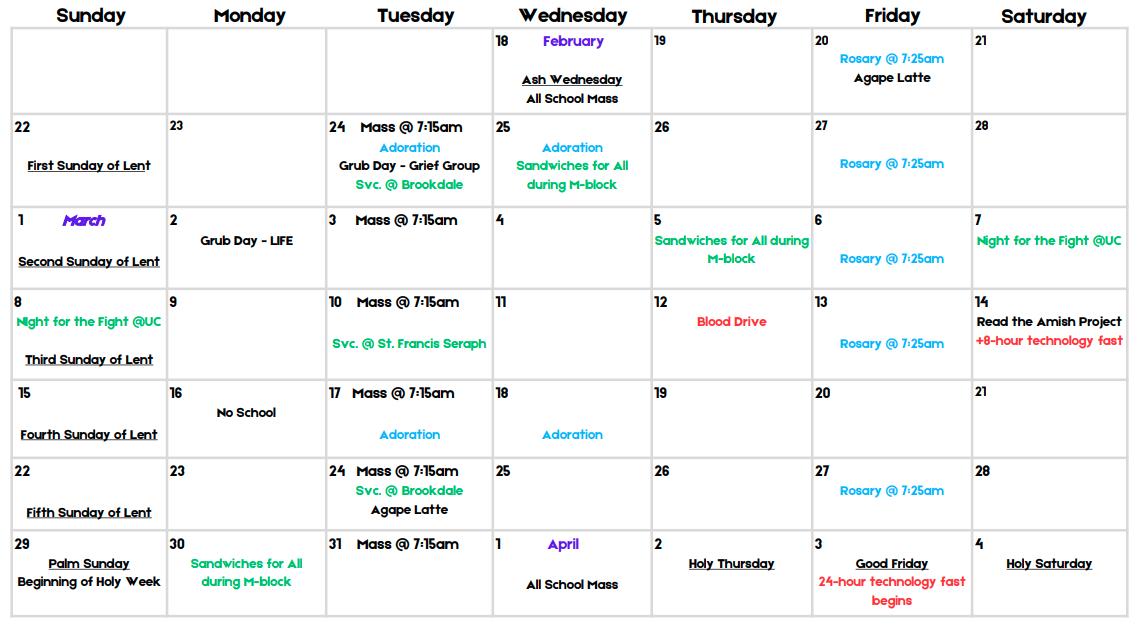
The first few pages in this journal give an overview of C40M and Lent. There’s also a basic calendar of important dates and events both in our school and in the Catholic Church tradition.
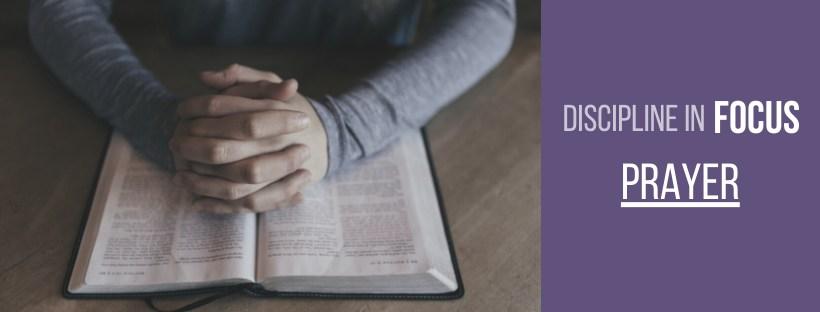
Lent is a time to explore our relationship with the Lord. Recognizing that we are not super-humans, that we are not gods, we can see our need to rely on something greater than ourselves. There is a greater power than us, and we need to rely on this strength in our own lives. So, we PRAY.
During Lent, we take 40 days to prepare ourselves for Christ’s death and resurrection. We recall the great sacrifice made by Christ. This is why we find small ways to sacrifice in our own lives during Lent. On certain days, we FAST. On Fridays, we don’t eat meat. Throughout Lent, we give up some of our comforts to keep Christ on the forefront of our minds. We remind ourselves what St. Paul tells us in his letter to the Philippians: “I can do all things through Christ, who strengthens me.” (4:13)
Lent is also a time to recognize Christ’s presence within every one of us. We know that when one member of the body of Christ suffers, we all suffer. As we give up things to realize what we can do without, we’re naturally reminded that there are people in need around the world, including in our own community, so we actively seek out ways to serve and give to those in need. We practice ALMSGIVING.
InyourLentenjourney…
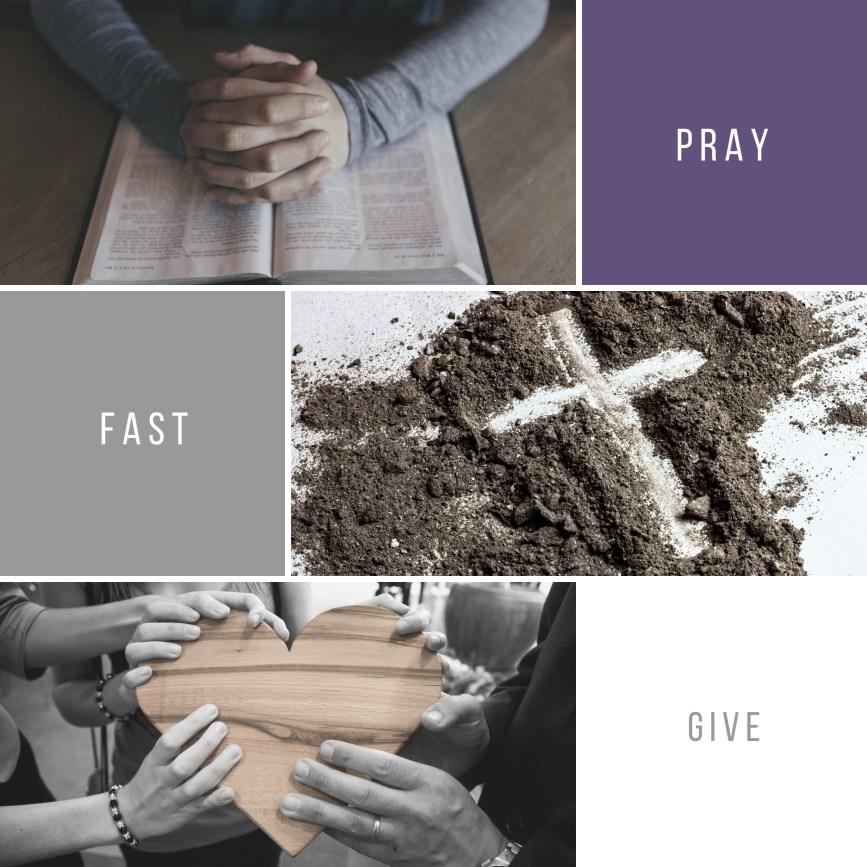
There are three main pillars of C40M:
This journal contains words that can change your life! The WORD of God, living and active, found in the passages read at the Sunday Mass of the Catholic Church is the main guide for the season of Lent. Along with the Sunday readings, there will be passages from news articles, spiritual leaders, and historical figures to aid your reflection.
Keep your journal close by you in the morning and at night to reflect on the themes of the week, and write down insights you gain, answers to reflection questions, and things you want to remember from prayer, the readings, or small group. Which brings us to pillar three...
You will meet weekly with your small group, facilitated by an adult. This is an opportunity to be truly and honestly yourself with a group of guys from Moeller who you may not know. This is an awesome experience of brotherhood! Support your brothers and be supported by them. Remember that God might be speaking to you through your peers and your facilitator.
Important Dates
Put these in your phone to remind yourself!
Now let’s get started. MAKE LENT REAL!
The journey begins.
Ash Wednesday marks the beginning of Lent. On this day, we receive ashes on our forehead as a remembrance that “you are dust, and to dust you shall return.” Ash Wednesday is a reminder of our mortality. We will not live forever, and we are not super-humans. We are called to remember that our time on earth is short-lived. We need to take care of our spiritual well-being.
In Lent, we try to grow closer to God primarily through three categories of activity:
Prayer
Fasting Almsgiving
In the first week of Lent, we’ll examine some opportunities for prayer that will give us a context for our other Lenten disciplines. For now, let’s look at the last two disciplines and challenge ourselves for the next 40 days…
Fasting
Fasting is still an active discipline! It’s not simply the absence of something. Sacrifice is something you notice, something you have to consciously choose to do, and something that should help you grow closer to God.
What is one small sacrifice that you will make during Lent? (something in your life that you will notice when you don’t allow yourself to use it…Soda? Video games? TV? A certain food or restaurant? Etc.)
Whenever you notice that you want what you gave up, pray for those without all the creature comforts that you have and strive to rely more closely on the love of God.
What is one significant change that you will make during Lent? This could be something in your life that you know is not positive, that damages your relationship with Christ and your neighbor, that you would like to remove from your routine…(fighting with a sibling? Talking back to parents? An unhealthy habit or addiction such as pornography, alcohol, tobacco, vaping? Cheating in school work? Etc.)
What are the ways you will hold yourself accountable? Will you share with your small group what you’ve given up and/or when you’ve messed up your plan? Make a note when you’ve fallen?
Almsgiving
As Christians, we are called to action. We are called to make the world a better place, by first making ourselves better people for others. It is not enough that we simply sacrifice something during Lent. We must also DO something. By DOING, we are living Christ’s call to serve our brothers and sisters.
What is one thing that you will DO during this Lenten season which will have a positive impact on others? (Volunteer? Take steps to improve a relationship in your life? Learn more about and donate to a charity? Etc.)
Challenges for Ash Wednesday through Saturday
Fast on Ash Wednesday.
In the Catholic tradition, this means not eating meat, only having one significant meal, only two small meals or snacks to sustain your energy, and nothing in between those three meals (water is OK at any time).
Spend 5 minutes in silent prayer each day, trying to intentionally listen to God. This could be done before or after school or during lunchtime.
Pray the Rosary Friday morning in the chapel starting at 7:25am.
Abstain from eating meat on Friday.
Attend Agape Latte on Friday during M-block Special speaker: Dcn. Royce Winters the 2025 Ohio Dr. King Governor’s Humanitarian Award
Read the Gospel for Sunday’s Mass ahead of time.
You can always find the Sunday Gospel reading on the first page of each week in the journal and at www.usccb.org/readings
Daily Checklist
Wed Thu Fri Sat Pray?
Keep your Lenten commitment?
Ask God for strength and guidance?
.Questions for Reflection
What tempts you, and leads you away from God?
How do you work through these temptations in a healthy way?
Lent starts off with a few challenging days. How have the first few days gone for you?
1stSundayofLent February 22
Matthew 4:1-11
At that time Jesus was led by the Spirit into the desert to be tempted by the devil. He fasted for forty days and forty nights, and afterwards he was hungry. The tempter approached and said to him, "If you are the Son of God, command that these stones become loaves of bread." He said in reply, "It is written: One does not live on bread alone, but on every word that comes forth from the mouth of God."
Then the devil took him to the holy city, and made him stand on the parapet of the temple, and said to him, "If you are the Son of God, throw yourself down. For it is written: He will command his angels concerning you and with their hands they will support you, lest you dash your foot against a stone." Jesus answered him, "Again it is written, You shall not put the Lord, your God, to the test."
Then the devil took him up to a very high mountain, and showed him all the kingdoms of the world in their magnificence, and he said to him, "All these I shall give to you, if you will prostrate yourself and worship me." At this, Jesus said to him, "Get away, Satan! It is written: The Lord, your God, shall you worship and him alone shall you serve."
Then the devil left him and, behold, angels came and ministered to him.
As we read in today’s Gospel reading, Jesus was tempted immediately when he set aside time to intentionally pray. Have you ever found yourself devoting time to pray, only to get distracted almost instantly when you begin praying? This is so common!
A lot of times we might think prayer has to be “good” or free from distraction. We can think that it’s not worth praying at all if our whole heart isn’t into it or if we don’t hear God’s voice immediately. This isn’t what’s most important, though. What’s most important is doing what Jesus did: spend some quality one-on-one time with your Heavenly Father.
There are many ways to pray. We ask for assistance in personal matters. We thank God for all of the gifts and blessings He has given. We pray in serving others (spoiler: more on that in week 3!) No matter how we pray, it’s important to know that prayer isn’t a *MaGiCaL fOrMuLa*. Prayer is simply the time we spend loving the One who loves us more than anything.
If you’re looking to hear something from God, make sure you take the time to stop talking at Him and begin to listen. You might be surprised at what you start to hear! If not, do not give in to the temptation to stop trying. Trust that God is doing things in your life that you cannot see…
Challenges for the first week of Lent
Go to Mass/church service on Sunday. Attend your small group meeting. Let your leader know if you can’t make it.
Prepare for Reconciliation during religion class. (Tuesday and Wednesday this week) Even if you are not Catholic, you are still invited to talk with a priest about your sins and struggles.
Participate in Tuesday Morning Mass at 7:15 a.m. in the school Chapel.
Sign up to serve with the Moeller group at Brookdale on Tuesday after school. This is a senior living community right across the street from Moeller.
Pray the Rosary Friday morning in the chapel starting at 7:25am.
Abstain from eating meat on Friday.
Read the Gospel for next Sunday’s Mass ahead of time.
You can always find the Sunday Gospel reading on the first page of each week in the journal and at www.usccb.org/readings
Daily Checklist
Questions for Reflection
What are the ways you usually pray?
How do you like to pray (alone, with others, formal prayers, spontaneous, with music, silently, Mass, in nature, etc.)?
How frequently do you take time to share time alone with God?
When you spend time in prayer, do you let your own thoughts take up most of the time, or do you try to listen for the voice of God?
When do you feel closest to God?
Use this space to journal about your experience this week or answer the reflection questions.
2ndSundayofLent
March 1
Matthew 17:1-9
Jesus took Peter, James, and John his brother, and led them up a high mountain by themselves. And he was transfigured before them; his face shone like the sun and his clothes became white as light.
And behold, Moses and Elijah appeared to them, conversing with him. Then Peter said to Jesus in reply, "Lord, it is good that we are here. If you wish, I will make three tents here, one for you, one for Moses, and one for Elijah." While he was still speaking, behold, a bright cloud cast a shadow over them, then from the cloud came a voice that said, "This is my beloved Son, with whom I am well pleased; listen to him."
When the disciples heard this, they fell prostrate and were very much afraid. But Jesus came and touched them, saying, "Rise, and do not be afraid." And when the disciples raised their eyes, they saw no one else but Jesus alone.
As they were coming down from the mountain, Jesus charged them, "Do not tell the vision to anyone until the Son of Man has been raised from the dead."
Fasting is not the absence of activity. When you fast, you make a real effort to give something up. We notice the absence of what we’ve given up, and it helps us to focus on the sacrifice that Jesus made for us. Not only did Jesus give up his life for us, but he also gave us an example to follow, telling us to take up our cross and follow him. Jesus also fasted for forty days to focus on what he was called to do by the Father. When we consciously give things up, we have an opportunity to focus ourselves on our relationship with God.
"When you fast, do not look gloomy like the hypocrites. They neglect their appearance, so that they may appear to others to be fasting. Amen, I say to you, they have received their reward. But when you fast, anoint your head and wash your face, so that you may not appear to be fasting, except to your Father who is hidden. And your Father who sees what is hidden will repay you.”
-Matthew 6:16-18
Challenges for the second week of Lent
Go to Mass/church service on Sunday.
Attend your small group meeting. Let your leader know if you can’t make it.
Pick a day to pray the Lord’s Prayer (Our Father) several times. Circle one: Sun Mon Tue Wed Thu Fri Sat
Participate in Tuesday Morning Mass at 7:15 a.m. in the school Chapel.
Sign up to serve with Sandwiches for All During M-block on Thursday. Help make over 200 PB&J sandwiches to deliver to Our Daily Bread
Participate in the 24-hour food fast Thursday and Friday. Begin after dinner Thursday evening. Check with your parents first to make sure this is ok. You can still drink water and juice. Break the fast on Friday evening when 24 hours are up. Journal about your experience.
Pray the Rosary Friday morning in the chapel starting at 7:25am.
Abstain from eating meat on Friday.
Read the Gospel for next Sunday’s Mass ahead of time.
You can always find the Sunday Gospel reading on the first page of each week in the journal and at www.usccb.org/readings
Daily Checklist
Pray?
Keep your Lenten commitment?
Ask God for strength and guidance?
Questions for Reflection
What has been the most challenging part of fasting for you so far? This can be about the 24-hour fast or your overall Lenten sacrifice.
What would daily activities be like if you had to live each day with hunger? Without easy access to water? Without safe shelter? Use this space to journal.
3rdSundayofLent
March 8
John 4:5-15, 19b-26, 39a, 40-42
Jesus came to a town of Samaria called Sychar, near the plot of land that Jacob had given to his son Joseph. Jacob’s well was there. Jesus, tired from his journey, sat down there at the well. It was about noon. A woman of Samaria came to draw water. Jesus said to her, “Give me a drink.” His disciples had gone into the town to buy food. The Samaritan woman said to him, “How can you, a Jew, ask me, a Samaritan woman, for a drink?” For Jews use nothing in common with Samaritans. Jesus answered and said to her, “If you knew the gift of God and who is saying to you, ‘Give me a drink, ‘ you would have asked him and he would have given you living water.” The woman said to him, “Sir, you do not even have a bucket and the cistern is deep; where then can you get this living water? Are you greater than our father Jacob, who gave us this cistern and drank from it himself with his children and his flocks?” Jesus answered and said to her, “Everyone who drinks this water will be thirsty again; but whoever drinks the water I shall give will never thirst; the water I shall give will become in him a spring of water welling up to eternal life.” The woman said to him, “Sir, give me this water, so that I may not be thirsty or have to keep coming here to draw water.
“I can see that you are a prophet. Our ancestors worshiped on this mountain; but you people say that the place to worship is in Jerusalem.” Jesus said to her, “Believe me, woman, the hour is coming when you will worship the Father neither on this mountain nor in Jerusalem. You people worship what you do not understand; we worship what we understand, because salvation is from the Jews. But the hour is coming, and is now here, when true worshipers will worship the Father in Spirit and truth; and indeed the Father seeks such people to worship him. God is Spirit, and those who worship him must worship in Spirit and truth.” The woman said to him, “I know that the Messiah is coming, the one called the Christ; when he comes, he will tell us everything.” Jesus said to her, “I am he, the one who is speaking with you.” Many of the Samaritans of that town began to believe in him. When the Samaritans came to him, they invited him to stay with them; and he stayed there two days. Many more began to believe in him because of his word, and they said to the woman, “We no longer believe because of your word; for we have heard for
“Live simply so that others may simply live.” This quote, often attributed to either St. Elizabeth Ann Seton or Mohandas Gandhi, should resonate with us during the Lenten season. We sacrifice to grow closer to God, and our fasting calls us to solidarity with those in need.
So what?
To take fasting and solidarity a step further, we’re called to give to those in need. Maybe it’s something small, something from your excess, like donating clothes you don’t wear anymore. Maybe it’s giving your time to someone who doesn’t have anyone to sit with at lunch, or that friend who is always left out on Friday and Saturday nights. Maybe it’s something larger: giving up a Saturday morning to help at a soup kitchen or food pantry, setting aside a dollar a day to donate to a local organization that serves the poor, or creating an event to raise money to help victims of the war in Ukraine or the Holy Land. Whatever we give, we must always remember: what we give to others, we give to Christ. What we keep to ourselves and withhold from others, we withhold from Christ. (see Matthew 25).
Challenges for the third week of Lent
Go to Mass/church service on Sunday. Attend your small group meeting. Let your leader know if you can’t make it.
Participate in Tuesday Morning Mass at 7:15 a.m. in the school Chapel.
Sign up to service at Mother Teresa Dining Hall at St. Francis Seraph from 36pm on Tuesday.
Keep track of your use of apps each day.
Use Screen Time in your phone’s settings (under Digital Wellbeing Dashboard for Android users) to notice how you use your phone. Use journal pages after “The Amish Project” to log your usage each day.
Read “The Amish Project” article (extra booklet) and fast from electronic technology for eight hours on Saturday. Take 8 straight hours (sleeping hours not included), and put technology aside (phone, video games, TV, computer, etc.) Unplug yourself. Find other forms of entertainment. Spend time with people. (Prepare yourself to do this on a larger scale later in Lent)
Pray the Rosary Friday morning in the chapel starting at 7:25am.
Abstain from eating meat on Friday.
Read the Gospel for next Sunday’s Mass ahead of time. You can always find the Sunday Gospel reading on the first page of each week in the journal and at www.usccb.org/readings
Sun Mon Tue Wed Thu Fri Sat
Pray?
Keep your Lenten commitment?
Ask God for strength and guidance?
Questions for Reflection
What social issues (examples: poverty, hunger, homelessness, violence, abortion, racism, sexism, the environment) are you most concerned about?
What can you do to serve those in need?
What does it truly mean to love your neighbor? Do you love yourself as much as your neighbor, and vice versa?
Who among your “neighbors” are you called to love more deeply?
Use this space to journal.
4thSundayofLent
March 15
John 9:1, 6-9, 13-17, 34-38
As Jesus passed by he saw a man blind from birth. He spat on the ground and made clay with the saliva, and smeared the clay on his eyes, and said to him, "Go wash in the Pool of Siloam" which means Sent . So he went and washed, and came back able to see. His neighbors and those who had seen him earlier as a beggar said, "Isn't this the one who used to sit and beg?" Some said, "It is, " but others said, "No, he just looks like him." He said, "I am."
They brought the one who was once blind to the Pharisees. Now Jesus had made clay and opened his eyes on a sabbath. So then the Pharisees also asked him how he was able to see. He said to them, "He put clay on my eyes, and I washed, and now I can see." So some of the Pharisees said, "This man is not from God, because he does not keep the sabbath." But others said, "How can a sinful man do such signs?" And there was a division among them. So they said to the blind man again, "What do you have to say about him, since he opened your eyes?" He said, "He is a prophet." They answered and said to him, "You were born totally in sin, and are you trying to teach us?" Then they threw him out.
When Jesus heard that they had thrown him out, he found him and said, "Do you believe in the Son of Man?" He answered and said, "Who is he, sir, that I may believe in him?" Jesus said to him, "You have seen him, and the one speaking with you is he." He said, "I do believe, Lord," and he worshiped him.
“In focus”: Virtue
Prayer, fasting, and almsgiving help us to grow in relationship with God. We focus ourselves inward, hearing God’s voice; we turn ourselves to the Cross, sharing in a small way the suffering of Christ for us; and we are finally turned outward toward our brothers and sisters, giving of ourselves out of love.
Is this all just to check off some boxes to say we were closer to Christ for just 40 days? Is Lent really a conversion, or more of an interruption?
If we simply check off some boxes and change a couple behaviors for a little while, we’re not truly growing. For long-term growth, we have to keep practicing. The Church refers to this practice as growing in virtue.
We are now just past the halfway mark of Lent. Look back on the last 3.5 weeks that you’ve completed. Notice how some little habits may have changed. Think about where there’s still room for growth. This week, look forward to how you will practice these disciplines in a way that will offer you sustained growth beyond Lent.
Challenges for the fourth week of Lent
Go to Mass/church service on Sunday. Attend your small group meeting. Let your leader know if you can’t make it.
Participate in Tuesday Morning Mass at 7:15 a.m. in the school chapel.
Spend 5 minutes in silent prayer each day, trying to intentionally listen to God. This could be done before or after school or during lunchtime.
Prepare for Reconciliation during religion class. (Tuesday and Wednesday this week) Even if you are not Catholic, you are still invited to talk with a priest about your sins and struggles.
Pray the Rosary Friday morning in the chapel starting at 7:25am.
Abstain from eating meat on Friday.
Read the Gospel for next Sunday’s Mass ahead of time. You can always find the Sunday Gospel reading on the first page of each week in the journal and at www.usccb.org/readings
Daily Checklist
Sun Mon Tue Wed Thu Fri Sat
Pray?
Keep your Lenten commitment?
Ask God for strength and guidance?
Questions for Reflection
In Reconciliation, we confess our sins. We need God’s help in overcoming sin, even after confession. What is one thing that you need to pray for yourself? Not an intention for someone else, but for you?
What are you most afraid of when it comes to your relationship with God?
Do you accept the love and mercy of God? Is there something about yourself that you think is unlovable or unforgiveable?
We’re called to love one another as God loves us. Is there someone you need to forgive or seek forgiveness from?
What can you do to become more patient, honest, and trusting?
Use this space to journal.
5thSundayofLent March 22
John 11:3-7, 17, 20-27, 33b-45
The sisters of Lazarus sent word to Jesus, saying, “Master, the one you love is ill.” When Jesus heard this he said, “This illness is not to end in death, but is for the glory of God, that the Son of God may be glorified through it.” Now Jesus loved Martha and her sister and Lazarus. So when he heard that he was ill, he remained for two days in the place where he was. Then after this he said to his disciples, "Let us go back to Judea.” When Jesus arrived, he found that Lazarus had already been in the tomb for four days. When Martha heard that Jesus was coming, she went to meet him; but Mary sat at home. Martha said to Jesus, “Lord, if you had been here, my brother would not have died. But even now I know that whatever you ask of God, God will give you.” Jesus said to her, “Your brother will rise.” Martha said, “I know he will rise, in the resurrection on the last day.” Jesus told her, “I am the resurrection and the life; whoever believes in me, even if he dies, will live, and everyone who lives and believes in me will never die. Do you believe this?” She said to him, “Yes, Lord. I have come to believe that you are the Christ, the Son of God, the one who is coming into the world.”
He became perturbed and deeply troubled, and said, “Where have you laid him?” They said to him, “Sir, come and see.” And Jesus wept. So the Jews said, “See how he loved him.” But some of them said, “Could not the one who opened the eyes of the blind man have done something so that this man would not have died?” So Jesus, perturbed again, came to the tomb. It was a cave, and a stone lay across it. Jesus said, “Take away the stone.” Martha, the dead man’s sister, said to him, “Lord, by now there will be a stench; he has been dead for four days.” Jesus said to her, “Did I not tell you that if you believe you will see the glory of God?” So they took away the stone. And Jesus raised his eyes and said, “Father, I thank you for hearing me. I know that you always hear me; but because of the crowd here I have said this, that they may believe that you sent me.” And when he had said this, He cried out in a loud voice, “Lazarus, come out!” The dead man came out, tied hand and foot with burial bands, and his face was wrapped in a cloth. So Jesus said to them, “Untie him and let him go.”
Virtue in focus: Charity
A charity is an organization devoted to some mission of improving life for people, such as American Cancer Society or Habitat for Humanity. The virtue of charity is our practice of following Jesus’s commandment that we love one another. This is not a simple action of giving a few dollars out of our excess (think of how we thought about almsgiving in week 3). Charity involves kindness, gentleness, bearing wrongs patiently, forgiveness, and giving others the benefit of the doubt. Charity starts in the heart, and moves us out of compassion to recognize our relationship with others.
St. Mother Teresa of Calcutta said, “When a poor person dies of hunger it has not happened because God did not take care of him or her. It has happened because neither you nor I wanted to give that person what he or she needed.” She also said, “Little things are indeed little, but to be faithful in little things is a great thing.” This is an important reminder in our attempt to grow in our practice of the virtue of charity.
Challenges for the fifth week of Lent
Go to Mass/church service on Sunday. Attend your final small group meeting. Let your leader know if you can’t make it.
Participate in Tuesday Morning Mass at 7:15am in the school Chapel.
Sign up to serve with the Moeller group at Brookdale on Tuesday after school. This is a senior living community right across the street from Moeller.
Pray the Rosary starting at 7:25am in the chapel.
Abstain from eating meat on Friday.
Make a plan to observe Holy Week and the Triduum when Spring break starts. Look up Mass times. Remember to bring your journal with you! Don’t let the most important week of the season pass by without meaning.
Read the Gospel for next Sunday’s Mass ahead of time. You can always find the Sunday Gospel reading on the first page of each week in the journal and at www.usccb.org/readings
Daily Checklist
Sun Mon Tue Wed Thu Fri Sat
Pray?
Keep your Lenten commitment?
Ask God for strength and guidance?
Questions for Reflection
In the Gospel for this Sunday, it says that “Jesus wept.” Jesus loves us with the intensity that he loved Lazarus. What can you do to allow yourself to ever more feel the love of Jesus?
What do you love so much that you would weep over it? Do you express enough gratitude for this?
Who is someone you know that might be in distress?
How can you be the hands and feet of Christ to this person?
Hospitality is a form of charity. When is a time when you were welcomed unexpectedly by someone? How can you be more welcoming?
Use this space to journal.
March 29-5
Matthew 21:1-11
When Jesus and the disciples drew near Jerusalem and came to Bethphage on the Mount of Olives, Jesus sent two disciples, saying to them, "Go into the village opposite you, and immediately you will find an ass tethered, and a colt with her. Untie them and bring them here to me. And if anyone should say anything to you, reply, 'The master has need of them.' Then he will send them at once." This happened so that what had been spoken through the prophet might be fulfilled: Say to daughter Zion, "Behold, your king comes to you, meek and riding on an ass, and on a colt, the foal of a beast of burden."
The disciples went and did as Jesus had ordered them. They brought the ass and the colt and laid their cloaks over them, and he sat upon them. The very large crowd spread their cloaks on the road, while others cut branches from the trees and strewed them on the road. The crowds preceding him and those following kept crying out and saying: "Hosanna to the Son of David; blessed is he who comes in the name of the Lord; hosanna in the highest." And when he entered Jerusalem the whole city was shaken and asked, "Who is this?" And the crowds replied, "This is Jesus the prophet, from Nazareth in Galilee."
Virtue in focus: Humility
This is perhaps the most sacred week of the year for Christians. During this week, our anticipation is heightened. We might be excited because spring break has started, looking forward to seeing family for Easter and enjoying a week off school, or thinking about the first time we ll play Fortnite or doomscroll TikTok after giving it up for Lent. We’re tempted to look ahead and miss the meaning of these few important days.
In short, this may be the most challenging week of Lent.
We have the knowledge of Easter Sunday and the gift of Christ s Resurrection, but at this time, we look toward the Cross and the gift of his sacrifice.
As St. Paul wrote in the letter to the Philippians, Jesus, though he was in the form of God, did not regard equality with God something to be grasped. Rather, he emptied himself, taking the form of a slave, coming in human likeness; and found human in appearance, he humbled himself, becoming obedient to death, even death on a cross” (Phil 2:6
Throughout all of Lent, we have focused on the disciplines of prayer, fasting, and almsgiving, as means to grow in virtue. Last week, we thought about how those disciplines help us to grow in true charity, love for others. Today, we shift to consider humility. If we truly love others, it isn s convenient. We must follow Christ s example and empty ourselves completely for the good of others. In other words, we must give until it hurts.
Humility is often thought of as simply dismissing praise, not calling attention to oneself. As a virtue, humility is taken one step further. Rather than just not calling attention to ourselves, we strive to recognize our gifts and use them for the betterment of our community, even if it s not the most convenient, easy, or popular thing to do.
Jesus chose a difficult journey, and it was not popular, even among the people he was closest with, the people he came to save. He emptied himself completely (this is called kenosis in Greek) and gave himself up on the Cross to save us from our sins.
We have an important question to reflect on this whole week: Would we do the same? Will we take up our cross and follow him?
Challenges for Holy Week
Go to Mass/church service on Palm Sunday.
Read the reflections and challenges in your journal for each day of the Paschal Triduum: Holy Thursday, Good Friday, Holy Saturday, and Easter Sunday
Read the Gospel for Easter Sunday ahead of time. There are several different Masses for Easter Sunday with different readings. You can find them at www.usccb.org/readings
Holy Week Reflection
Holy Week is a time of keeping vigil. We watch with Jesus in the Garden of Gethsemane, we stand in sorrow under his cross, and we keep vigil in hope outside his tomb. Keeping vigil is hard for humans. It can be hard to concentrate, and it can be hard to be patient. “Could you not stay awake with me one hour?” It is hard to be patient because keeping vigil can bring about a helpless feeling. We don’t like simply “watching”, we like “doing.” And if we see an injustice, we want to “fix” it right away. That is the good in us. But sometimes it is more important to keep vigil; sometimes it is more important to walk with someone than it is to “help” them. This week we stand with Christ. We cannot stop the crucifixion; we can only stand and watch. But on the way to the crucifixion we can follow. We can take up our cross and follow. When parents go somewhere, children often ask: “Can I go with you?” Then, when they get tired or bored, they ask to be taken home because the trip is too long or hard. Holy week calls all of God’s children to follow Jesus to the very end. This week, we walk with Christ, we keep vigil, to the very end…and experience the greatest of beginnings.
-Adapted from What is Holy Week All About?, Jerry Welte
Questions for reflection
Think back on a time when you had a tough journey to make. It could be spiritual, physical, a tough trip, a long hike, a grueling practice. How did you persevere?
How did you feel when you reached the end? What benefits come from completing a difficult task from beginning to end?
ThePaschalTriduum
April 2-5
This is the most sacred time of the year in the Church. We focus on the three days (tri-duum) leading up to the Resurrection of Jesus.
Why is it called the TRI-duum when it spans four days? What does it mean to say that Jesus rose on the third day?
In the Jewish tradition of Jesus’s time, a day lasted from sundown to sundown, rather than from midnight to midnight. The Triduum officially begins in the evening of Holy Thursday.
So, the three days of the Holy Triduum are:
Day 1: Evening of Holy Thursday to evening of Good Friday
The first day begins with the Mass of the Lord’s Supper on the evening of Holy Thursday. We stay after Mass on Thursday night to pray, as Jesus asked of his disciples, “Stay here and keep watch.” This leads us into our remembrance of Jesus’s Passion and Crucifixion. Jesus’s death on the Cross as an offering for our sins marks the end of the first day.
Day 2: Evening of Good Friday to evening of Holy Saturday
On the second day, we pray “in the tomb” with Christ. As believers, we anticipate the following day, when we celebrate the victory of Christ over sin and death.
Day 3: Evening of Holy Saturday to evening of Easter Sunday
The Easter Vigil in the evening of Holy Saturday begins the celebration of Christ’s resurrection. There are several readings at this Mass, which illustrate the path that God led us along throughout history, all leading up to the Resurrection of Jesus the Christ. Since Jesus rose from the dead at night, and the tomb was found to be empty in the morning, we celebrate his Resurrection at night at the Easter Vigil, at daybreak, or in the morning. Each time illustrates a different account of Jesus’s Resurrection.
HolyThursday April 2
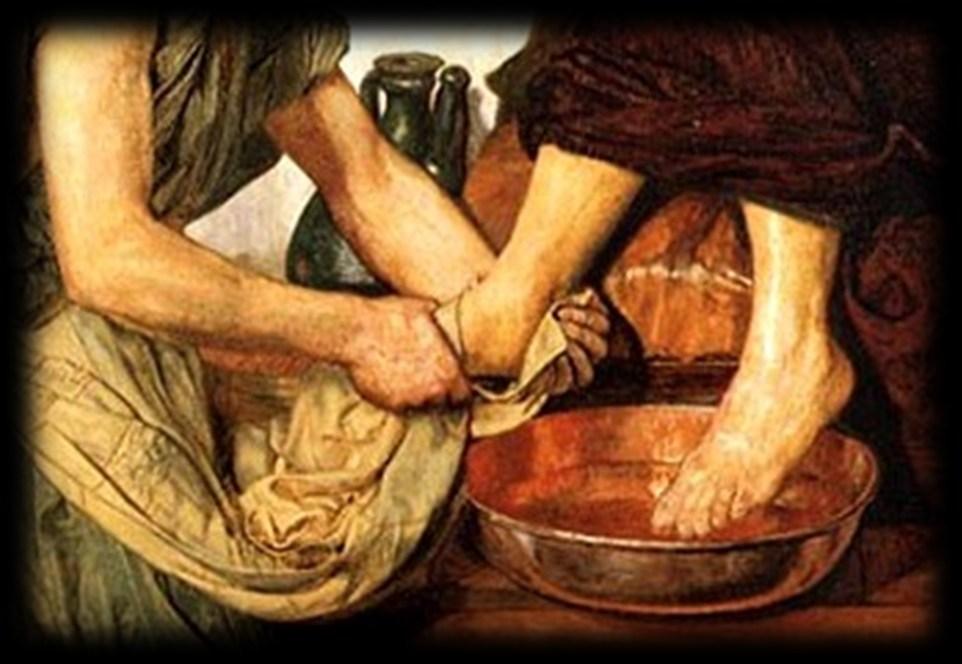
The ritual of the washing of the feet happens at Mass on Holy Thursday. This action is a living ritual of ongoing response to Christ’s call of mutual service for all disciples: “If I have washed your feet, you also ought to wash one another’s feet.” (John 13:4)
In the time of Christ, people’s feet were nasty. Folks most likely wore some type of sandal, and they walked a lot. The roads were not paved, so dirt and grime would accumulate over the course of a day. Christ’s action is one of humble service. He lowered himself and washed their nasty feet, as an example to all of us.
Reflection:
Your time with C40M is nearing an end. How are you called to serve after this week?
Challenges:
Commit to fulfilling a consistent service opportunity during the Easter season (50 days starting on Easter Sunday). Does it happen every week? Every other week? You pick and you decide.
Attend Holy Thursday Mass, and if your church allows you to come forward, come forward and wash the feet of someone else. Allow your feet to be washed. Participate in the “living ritual.”
Spend 15 minutes in silent prayer with Jesus, anticipating Good Friday (Matthew 26:38-40)
GoodFriday
April 3
Early in the day, through the stations of the cross, we recall Christ’s journey with the Cross to his place of crucifixion.
During Good Friday services, notice that when the Cross is brought forward, the priest lays completely on the ground. This act of humility is a symbol that says “Christ, I lay my life before you. I humbly venerate your sacrifice. It is the Cross which strengthens me.”
Challenges:
Pray the stations of the cross at your parish.
Go to Good Friday services. As you approach the Cross, ask yourself, “What does this Cross mean to my life?”
Fast and abstain. In the Catholic tradition, this means not eating meat, only having one significant meal, only two small meals or snacks to sustain your energy, and nothing in between those three meals (water is OK at any time).
Participate in a 24 hour technology fast starting on Friday, ending on Saturday. The same rules from the 8 hour fast on March 9 (Week 3) apply. Make this sacrifice in light of Christ’s sacrifice for us. Spend some time with Christ in “the tomb.”
April 4
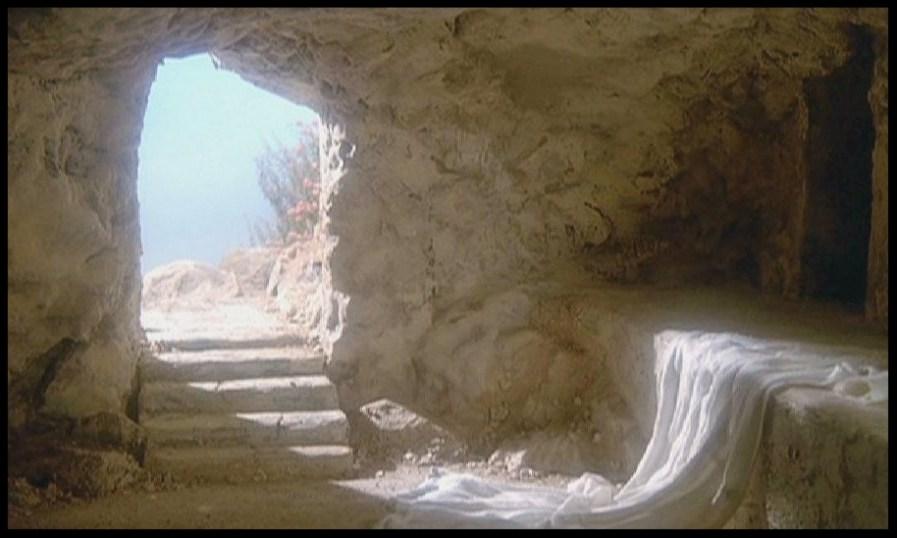
Then the angel said to the women in reply, "Do not be afraid! I know that you are seeking Jesus the crucified. He is not here, for he has been raised just as he said. Come and see the place where he lay. -Matthew 28: 5-6
Mary Magdalene and Mary were astounded to find the tomb empty. Since Jesus crucified was not there, they had to seek him elsewhere. Here is where the Easter mystery begins for us – when we seek the risen Christ.
If we are alert, we will find our risen Lord in the richness of the Church’s sacraments, especially through his body and blood. Christ is with us as we anoint the sick, baptize and confirm our young and old, reconcile sinners to the Father, and enter into marriage or holy orders. Through signs and actions we experience God’s ongoing love, compassion, and mercy. In all the key moments of life –birth and death, love and commitment, and, yes, even sin – the risen lord is present with us on our journey.
If we are alert, we will find our risen Lord in the human community, both in its glory and its misery. We encounter the risen Lord in the scholar who unveils the truth, the artist who expresses beauty, in the leader who serves others. We encounter the risen Christ in the nursing home resident, in the prisoner on death row, in the stranger seeking a homeland. The gospel has great clarity in telling us that whatever we do to the least of God’s children, we do to the Lord himself.
If we are alert, we will find our risen Lord in Scripture. By prayerfully pondering God’s word, we will encounter Jesus as the suffering servant, as the shepherd who never leaves his flock untended, as the teacher of great parables, as a friend and redeemer.
The tomb is empty. The Lord is not there. But he keeps showing up in our sacraments, in the community, and in his sacred word. Indeed, he shows up in the depth of our hearts if we but listen.
-from Daily Reflections for Lent, Morneau
Challenges:
Continue your technology fast from Friday. Use this time to pray and to engage in a meaningful way with your family and the people around you.
Attend the Easter Vigil Mass. This is one of the most sacred and ancient of all liturgies and rituals in Christianity. New Christians and Catholics are welcomed into the Church at this Mass.
April 5
John 20: 1-9
On the first day of the week, Mary of Magdala came to the tomb early in the morning, while it was still dark, and saw the stone removed from the tomb.
So she ran and went to Simon Peter and to the other disciple whom Jesus loved, and told them, "They have taken the Lord from the tomb, and we don't know where they put him."
So Peter and the other disciple went out and came to the tomb. They both ran, but the other disciple ran faster than Peter and arrived at the tomb first; he bent down and saw the burial cloths there, but did not go in.
When Simon Peter arrived after him, he went into the tomb and saw the burial cloths there, and the cloth that had covered his head, not with the burial cloths but rolled up in a separate place.
Then the other disciple also went in, the one who had arrived at the tomb first, and he saw and believed.
For they did not yet understand the Scripture that he had to rise from the dead.
When Peter and the other disciple get to the tomb, they find nothing there but Christ’s burial clothes. If Christianity were just about Christ’s death, all that Christ would be is a good example from 2000 years ago. Christ was more than that. He did not end, and his message did not end, with his crucifixion. Christ is risen…the journey has just begun.
Challenges:
Go to church or livestream services if you did not attend the Easter Vigil.
Use this space to journal.
How was my effort in C40M?
What were some major insights I gained?
What is something that moved me in a positive way?
What is something I would like to do better going forward in the Easter season?
How will I integrate the disciplines of prayer, fasting, and almsgiving into my daily life?
How will I strive to live a life of virtue, especially the virtue of courage?
How will you courageously share the Good News of Christ’s Resurrection?
Will Lent be a process of conversion or just an interruption?
What steps will you take to joyfully continue the journey through the 50 days of Easter?