Contents
A Review of 2025
Key events in 2025
Update of the MO Collection website released.
02 01–05 31
Conclusion of a six-year educational program series entitled “Visual Thinking Strategy in Schools,” launched with the British Council.
01 28
Annual MO Museum Donors Evening.
01 08
Opening of Infinity, an installation by Ray Bartkus, in the MO Atrium.
03 07
MO education director Jurgita Zigmantė shared her experience at the Education Code Lithuanian education leaders forum.
03 20–21
Visit to MO by a team from the Danish Trapholt Museum for Modern Art and Design.
04 28
Announcement of the Lessons in Thinking for Life MO educational campaign.
05 19
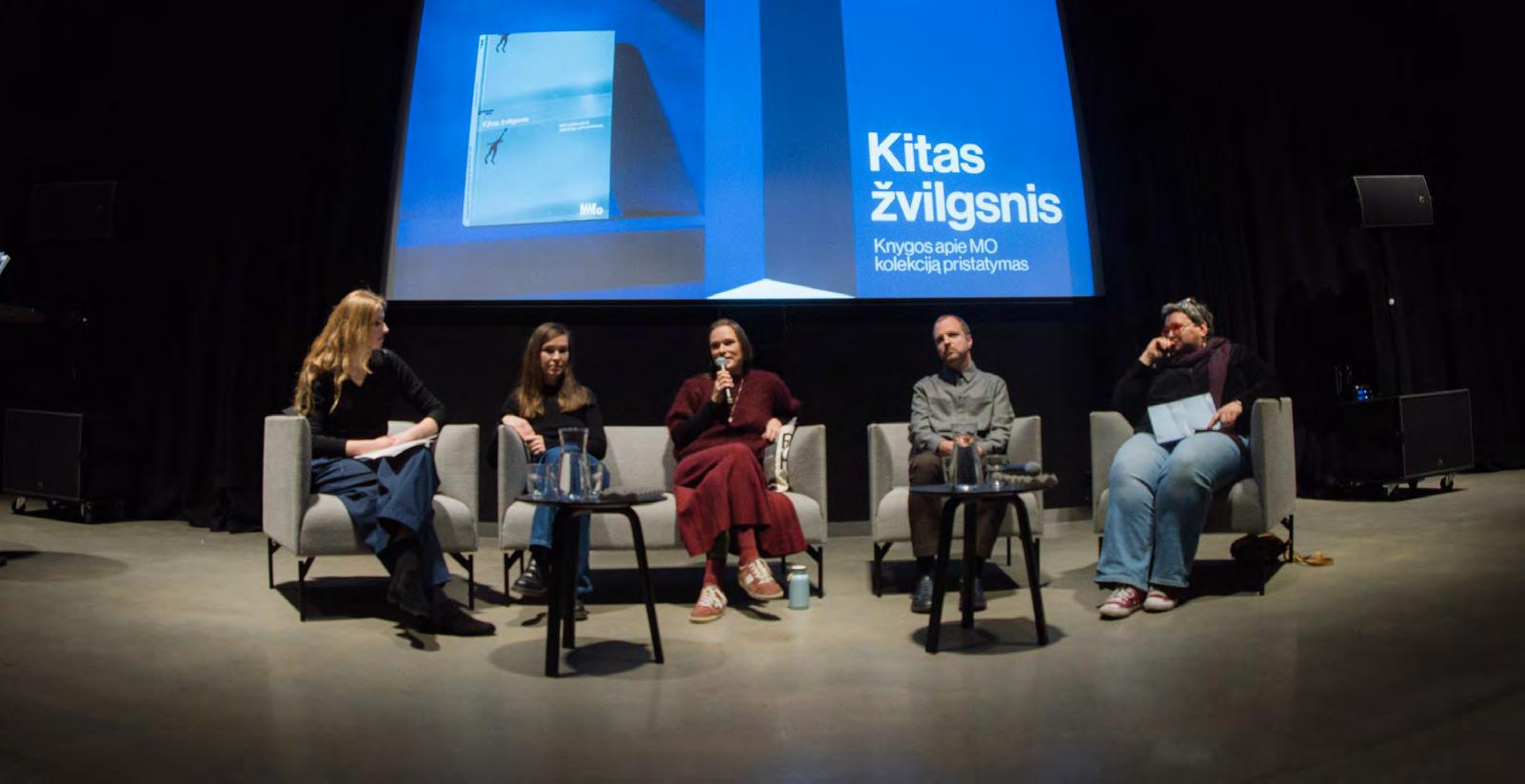
New book launch of ANOTHER LOOK. The MO Collection from Different Perspectives
05 29
Presentation of the MO Young Critics Scholarship at the Art Critics Awards ceremony.
06 03
Director Milda Ivanauskienė spoke about MO’s activities in the field of education at an international symposium in Denmark.
02 04
Announcement of MO governance changes, including the creation of an Advisory Board and International Arts Council.
04 17
Opening of GamePlay. Playing for Impact, in the Small Hall.
05 21
Presentation of the 25th talking Vilnius sculpture, dedicated to Mikalojus Konstantinas Čiurlionis.
05 09
Together with LRT Lithuanian National Radio and Television, announcement of a competition for schoolchildren to recreate a painting from the MO Collection and win a night at the museum for their entire class.
06 16–07 25
Summer camps for children.
06 14–08 16
Traditional MO Outside summer concerts and poetry readings.
07 06
MO Museum founders Danguolė and Viktoras Butkus are awarded the Officer’s Cross of the Order for Merits to Lithuania.
08 28
Handicraft enthusiasts were invited for the first ever Knit Happens event on the MO Terrace.
09 10
MO Museum takes second place among the Most Resonating Brands in Lithuania at the Baltic Brand Forum 2025.
09 16–10 31
Together with the TMV Foundation, MO launched a project of free educational activities for schools in Marijampolė.
10 21
Fifth “It’s a Match” conference on art, business, and creativity.
10 24–11 24
With the support of MO major patron Panorama, opening of the installation Geometry of Thoughts by Jurga Marcinauskaitė and Laimis Valančiūnas for visitors to the Panorama shopping center.
11 07
Fourth Night at MO Museum for our youngest visitors.
09 01–10 30
“Be neriMO” events for Vilnius seniors.
10 11
10 18
Celebration of MO Museum’s 7th birthday!
Opening of the exhibition Forever Temporary in the Main Hall.
11 04
The first workshops for the MO Teacher’s Pass community.
11 27
Opening of the exhibition Eyes and Fields. Rose Lowder and Kazimiera Zimblytė, in the Small Hall.
2025 in Review
Milda Ivanauskienė, MO Museum Director
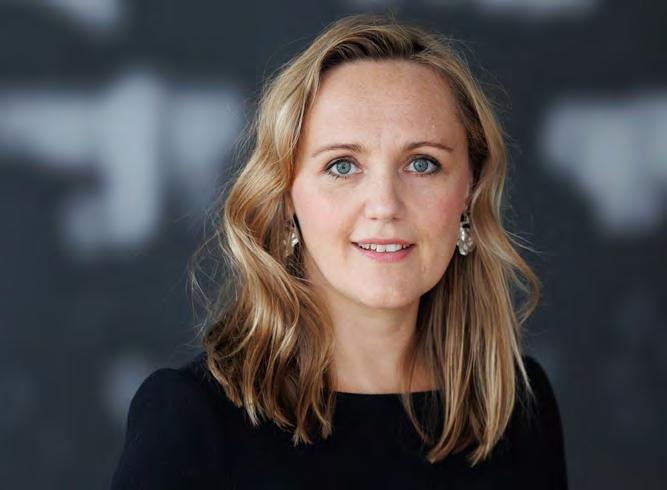
2020 was marked by the pandemic. In 2022, a war broke out not far from our borders. And 2025 will go down in history as the year when Lithuania’s cultural community came together in the face of a threat to democracy in our country.
We are now experiencing, more clearly than ever before, the foundational importance of culture. More clearly than ever, we understand the importance of civic awareness in our society. And, like never before, we see how vital it is that as many people as possible feel value, meaning, balance, and community through culture.
This has been our view since we first created MO Museum, and from this year forward we have decided to do a systematic review of our social impact. We’ve reached a large audience—an essential factor for any impact—but we hope to gain a deeper and more detailed perspective. We’ve begun analyzing how our exhibitions and the subjects they explore contribute to societal resilience through building critical and creative thinking, broadening horizons, engaging curiosity, encouraging reflection about one’s own attitudes, opening up to different points of view, and seeing oneself within a larger context, experiencing contact with others. All of these avenues of impact promote the self-reflection and mutual connections that are so vital to civic society.
The 2025 exhibition From Within emphasized the importance of art for developing emotional health. During the run of the exhibition, researchers from the Vilnius University Faculty of Medicine conducted a survey of over 2,000 museum visitors, and found “that, after viewing the exhibition, most visitors felt calmer, more
relaxed, or contemplative,” and that their “visit became an experience in self-reflection and emotional openness.”
The exhibition Forever Temporary, which opened in the autumn of 2025, presented a philosophical perspective focused on questions that have always been universal and which remain eternal despite the ever-changing answers dictated by a given period. We also presented the first ever video game exhibition in Lithuania, GamePlay. Playing for Impact, in which we explored these games as an important part of visual culture. We opened Fields and Eyes in our Small Hall this autumn, devoted to abstraction and the works of two artists—Kazimiera Zimblytė and Rose Lowder—who explored similar questions, but never actually met.
We continued our intensive work with the education sector and undertook impact studies to learn how critical and creative thinking skills grow and a sense of identity develops after participation in ongoing cultural education programs.
By engaging in such important work, we preserve our broad perspective and bring together different fields and contexts, helping us to secure a place among the most resonating brands in this year’s Baltic Brands Awards.
To ensure that our work remains relevant and ambitious as MO reaches a new level of organizational maturity, we welcomed the launch of an Advisory Arts Council and Advisory Board. With their contribution, we hope to develop international partnerships, continue a dialogue between the cultural and business communities, and ensure the highest professional standards at MO.
For 2026, we plan to present two particularly relevant exhibitions. In the spring, we will explore Gen Z’s outlook on the world in our region, and in the autumn, we’ll look at how technology shapes our experience of realty and our relationship with it. The Small Hall will welcome an installation by internationally acclaimed artist melanie bonajoe, and an exhibition devoted to creators who disregard academic conventions.
As we begin 2026, we carry with us the essential experience of this past year: The most important thing is to do all we can to ensure that we can continue to work and create in a free country, where human rights and freedoms are respected and a democratic culture and values are cherished.
“Culture is the foundation of a free, democratic, empathetic, and creative society. Openness, dialogue, critical thinking, and creativity are society’s fundamental values. With the growing trend toward authoritarianism, all of this is being called into question. MO, as an active participant in our culture, and appreciating the fragility of democracy, is committed to adamantly defending these values.”
and Viktoras Butkus
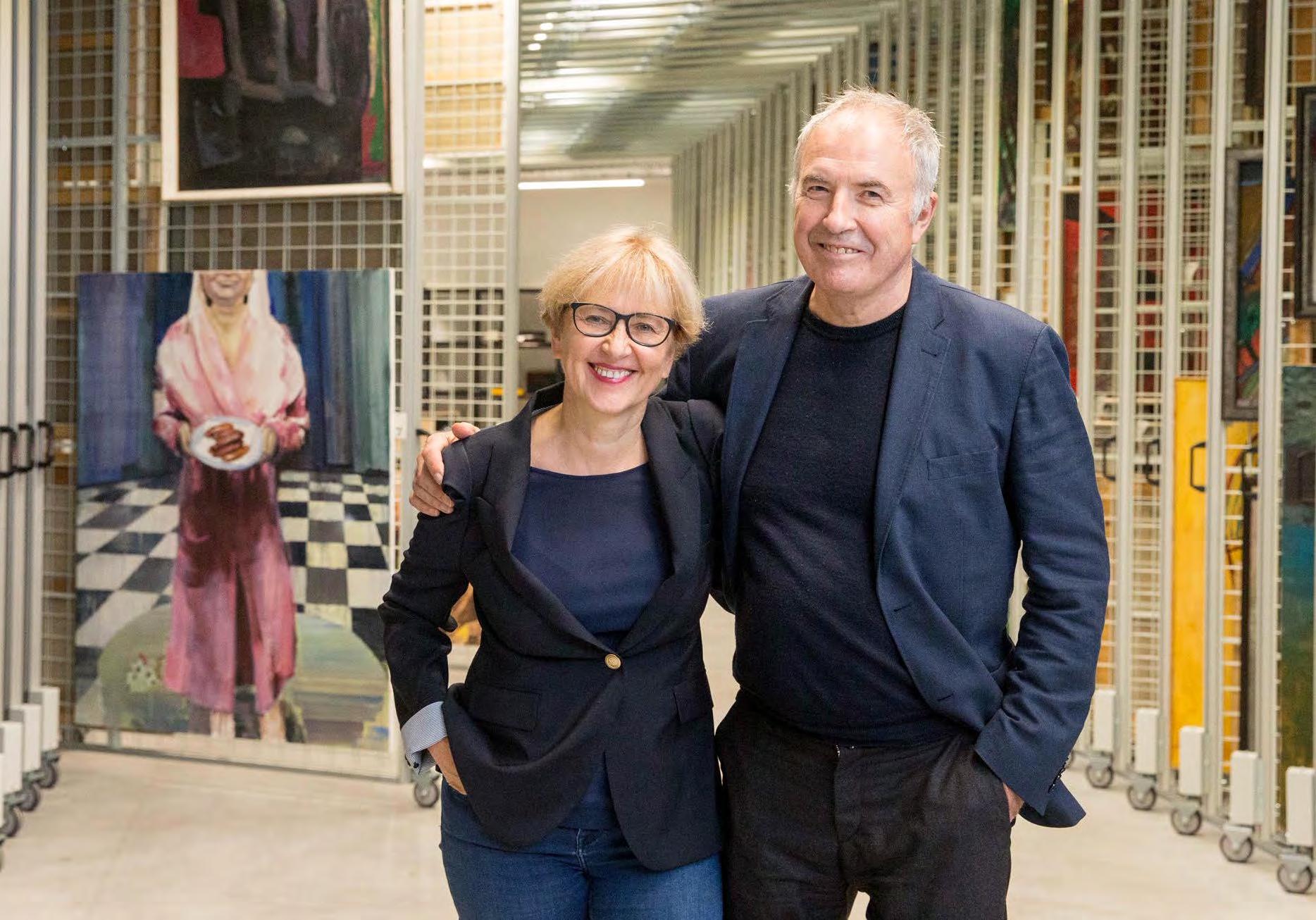
Danguolė
MO Museum is the topof-mind art museum in Lithuania*
Six out of ten people in Lithuania know about MO Museum**
148 753 museum visitors
15 972
children participating in educational programs
About eight in ten visitors to MO Museum want to visit again**
23 026
adults participating in cultural educational events
20 764 foreign visitors
26 000 e-Guide listeners
66 369 Facebook followers
32 056 Instagram followers
20 890 newsletter subscribers
*The MO Museum was the top of mind for 19% of the country’s adult population, and was mentioned by 30% of respondents in total. Survey of Lithuanian residents on visits to art museums, Baltic Research, October 2025
**MO brand awareness survey in Lithuania, Baltic Research, November 2025
800 MOdernists
Awards
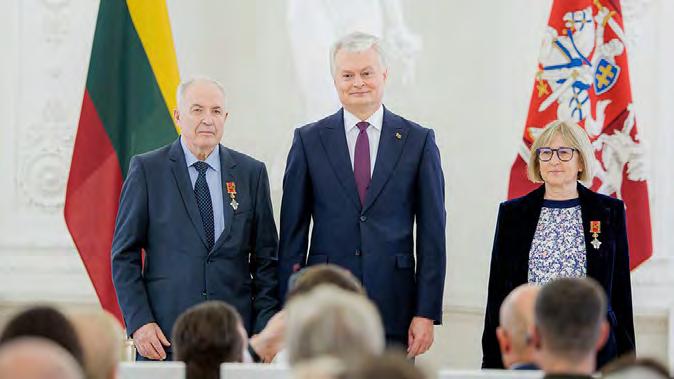
Recognizing MO Museum’s founders
Danguolė and Viktoras Butkus, founders of MO Museum, received the Officer’s Cross of the Order for Merits to Lithuania on July 6, 2025, in recognition of their significant and unwavering efforts to foster interest in Lithuania’s modern and contemporary art throughout the country and abroad.
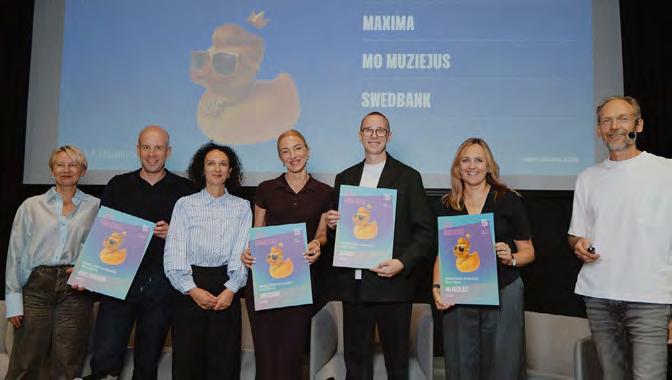
Baltic Brand Forum 2025 Awards
For the second year, MO Museum has been nominated for an award in marketing and advertising by the Baltic Brand Forum. Baltic Brand conducted a survey of over 3,000 respondents in the Baltic countries covering more than 600 categories. We are delighted that, this year, MO Museum placed second among the top five most resonating brands in Lithuania!
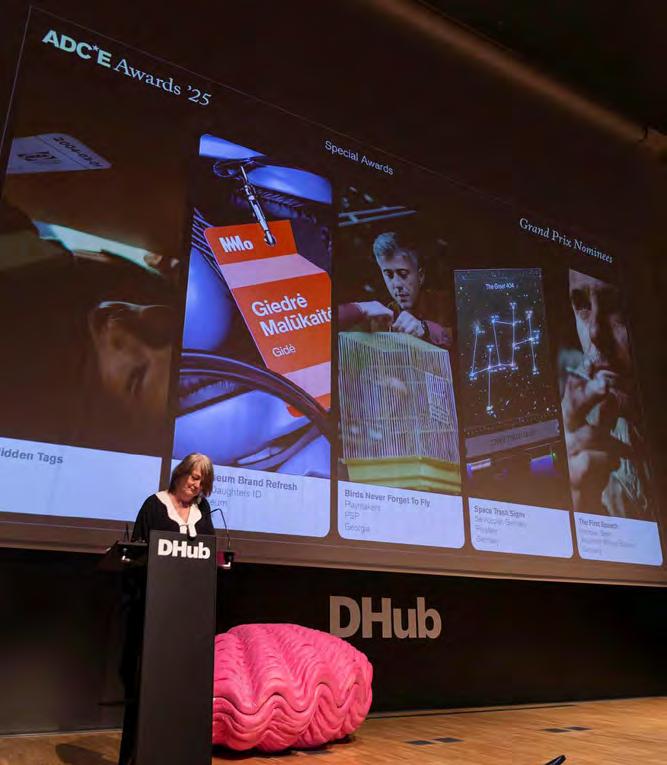
MO’s visual identity honored among top designs
in Europe
The Sons & Daughters ID branding agency won ADC Europe’s gold award for MO Museum’s brand refresh— the only gold award given to Lithuanian designers this year by ADCE! MO Museum also received a silver award for its motion graphics. The ADCE Awards set the benchmark for creative excellence and visual execution. The ADCE jury consists of over sixty experts in various fields of advertising from leading European agencies.
“This visual identity incorporates the shape of the MO Museum building created by Daniel Libeskind and the idea of a breakthrough, which reflects the museum’s role in society. MO fosters a different perspective, asks questions, and isn’t afraid of difficult subjects, inviting us to think more broadly. This multifaceted brand solution was also appreciated by the design jury, which singled out MO Museum’s brand as a candidate for the Grand Prix award,” said Sons & Daughters ID Creative Director Adomas Jazdauskas.
02 Governance Changes
Changes in how MO Museum is governed
We began 2025 with important governance changes at MO Museum, welcoming the creation of an Advisory Board and an International MO Arts Council.
“After six years of operation, once our museum had achieved a level of organizational maturity, we understood that, to sustain the high quality of exhibitions, build international partnerships, and remain relevant in the worlds of culture and business, we needed changes in our governance.
This is why we inaugurated two advisory bodies this year—an Arts Council and a Board—which will help ensure that our museum’s activities will meet the highest standards and promote a more active dialogue with the art and business communities,” says MO Museum Director Milda Ivanauskienė.
A MO Arts Council to help build international ties
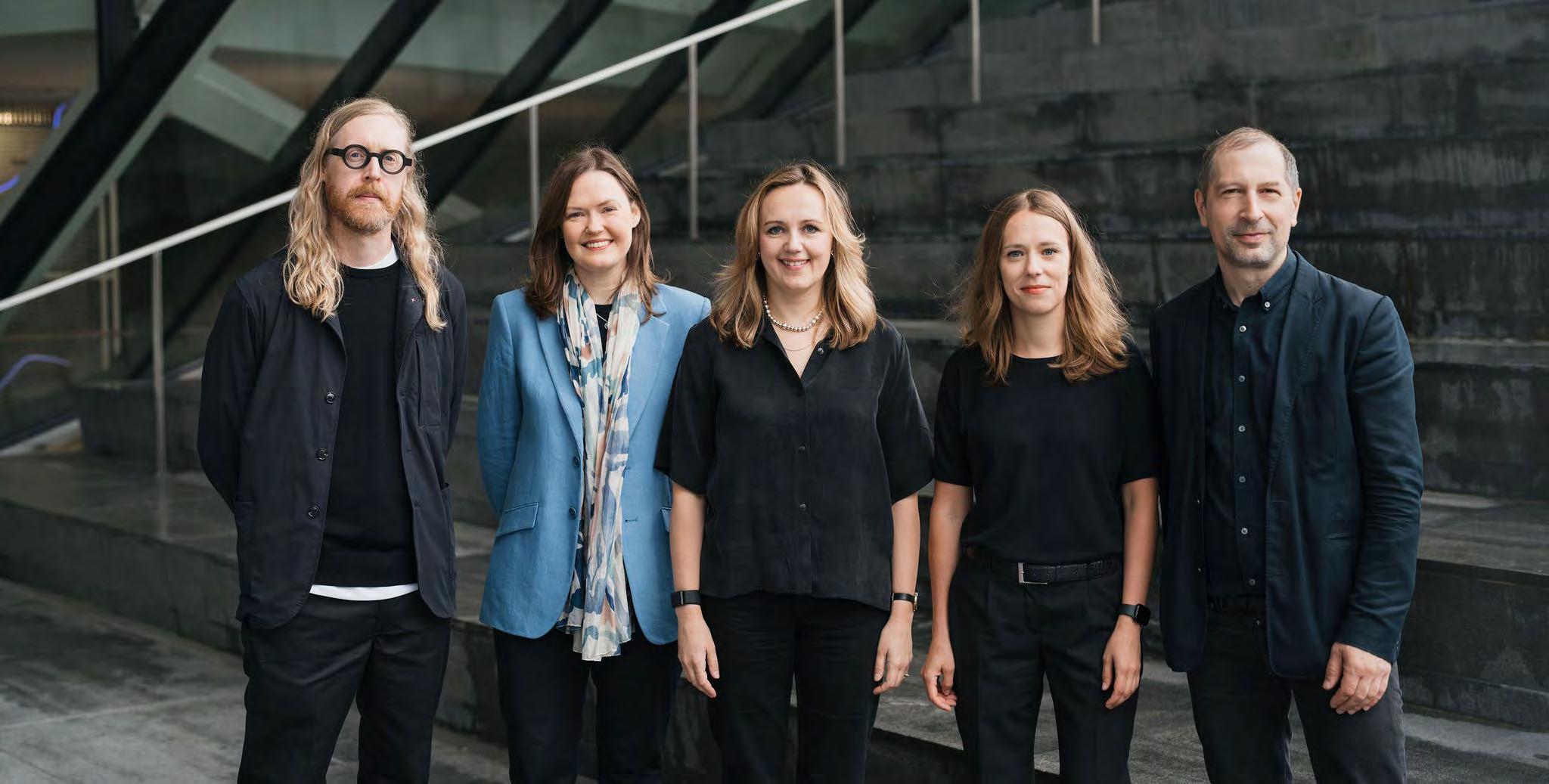
An advisory Arts Council has been created to help build international partnerships and promote an ambitious exhibition program at MO Museum. The council has been joined by curators from leading international arts institutions.
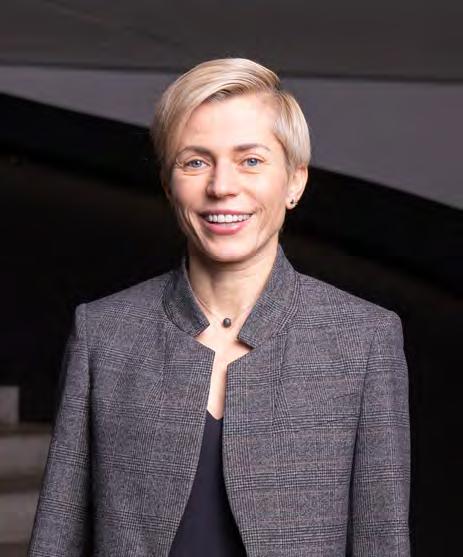
In addition to MO Director Milda Ivanauskienė and Chief Curator Miglė Survilaitė, the council welcomes Gražina Subelytė, art historian and curator with the Peggy Guggenheim Collection; Philipp Ziegler, Head of the Curatorial Department at the ZKM Center for Art and Media, Karlsruhe, Germany, one of the world’s leading media arts museums; and Andreas Nilsson, curator at the Moderna Museet in Sweden.
Working in close collaboration with MO Museum’s curatorial team, the council will ensure broader opportunities to establish ties with foreign arts institutions and curators representing these institutions or working independently and ensure continuity with international exhibitions and cooperation.
A board of independent business professionals
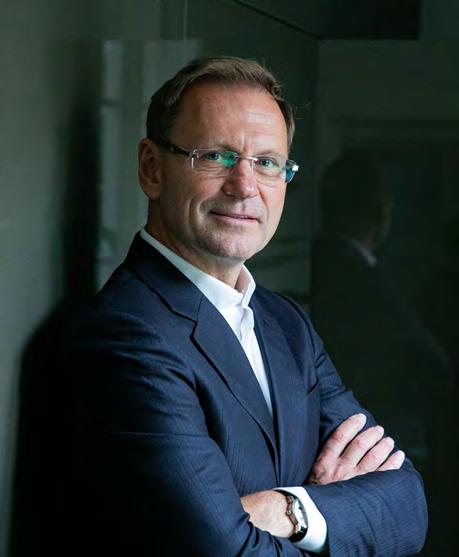
The MO Museum Advisory Board is a team of professionals established to help the museum address strategic issues and work with our business community of donors and partners. The board will help ensure organizational sustainability and respond to the growing need for sponsorship and support when planning ambitious international exhibitions.
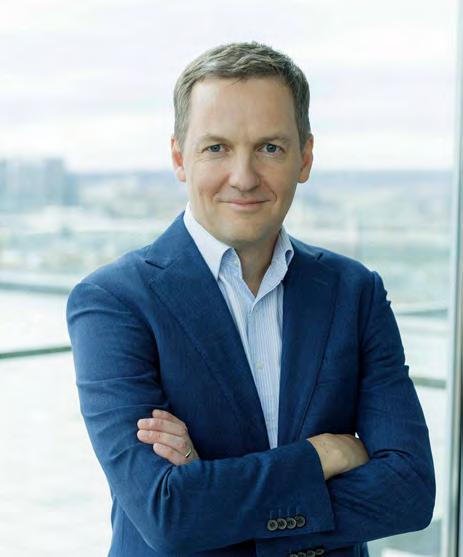
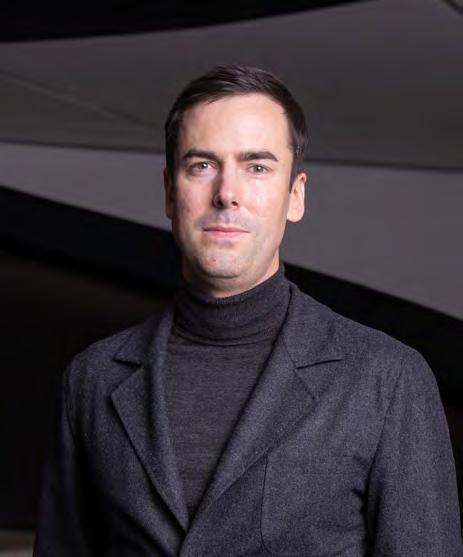
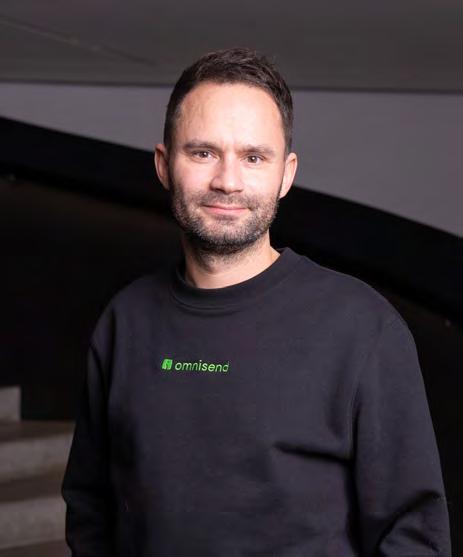
Four of the board’s members represent different business sectors: Darius Zubas, Chairman and Managing Director of Akola Group; Rytas Laurinavičius, founder and CEO of Omnisend; Kornelijus Čelutka, investor and Chairman of the Board of Gemma and Lemon Gym; and Roma Puišienė, CEO of Bioremdium. They are joined by two members who represent MO Museum’s founders: Vytautas Butkus and Rokas Iščiukas.
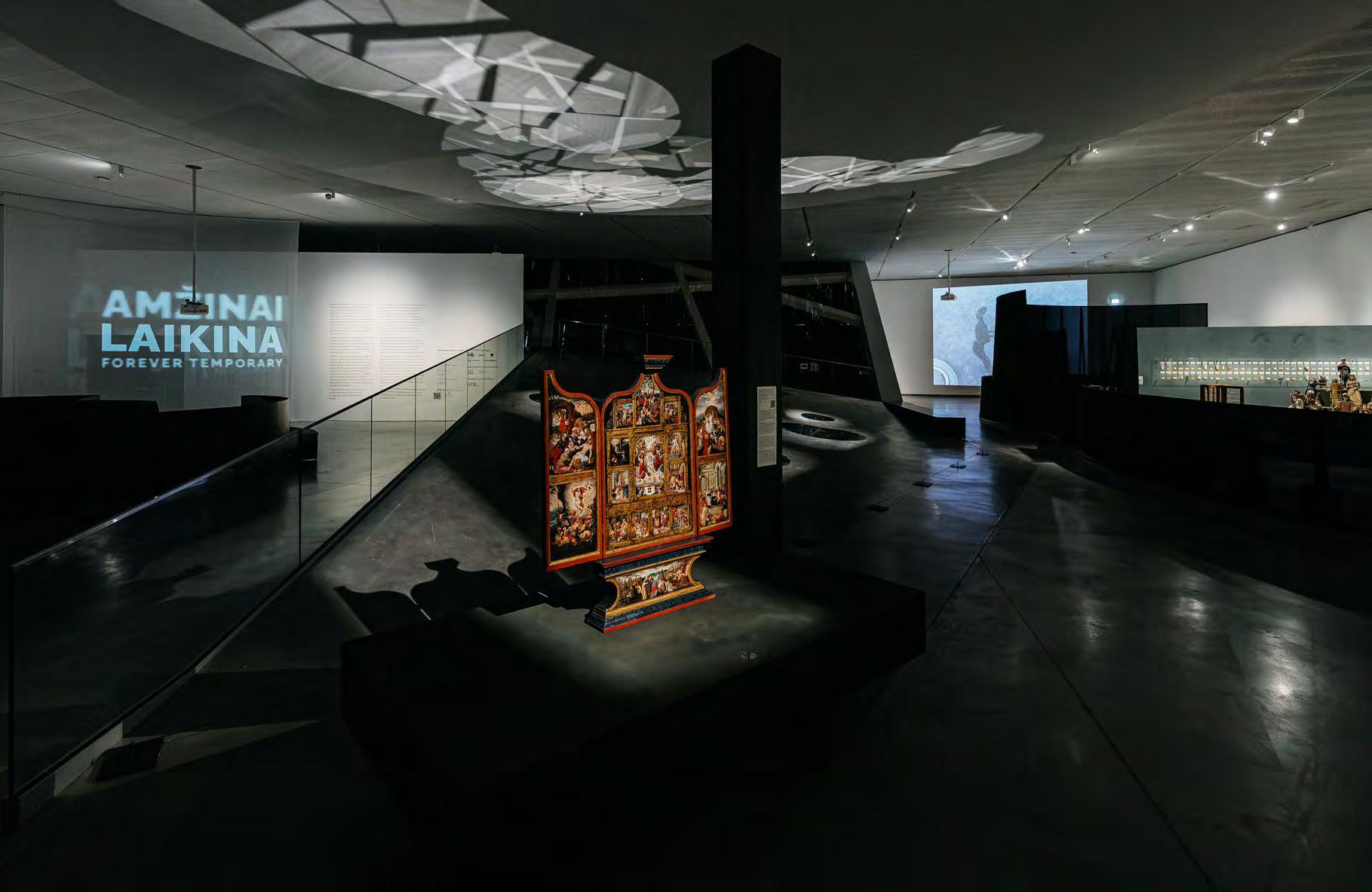
Forever Temporary
October 11, 2025–March 15, 2026 / Great Hall
Curators: Giedrė Mickūnaitė, Dovilė Barcytė
Coordinator: Kamilė Jagėlienė
Architect: Povilas Marozas
Graphic Designer: Liudas Parulskis
Technician: Dominykas Šavelis
Narrator: Mindaugas Nastaravičius
Translators: Aušra Simanavičiūtė, Darius Sužiedėlis
Editor: Audra Kairienė
This exhibition, opened in the autumn of 2025, focuses on a dialogue between art history and the present day, between “then” and “now”, between “this way” and “another way.” What can we learn about works of art and the people who view them from art history if we understand it not only as the evolution of styles or eras, but as humanity’s effort to understand itself in the world? Every period in time brings its own contexts and distinct visual language, but all eras also share a common denominator: the eternally relevant existential questions at the center of the creative process.
A sense of the past, present, and future is the backbone of this exhibition, and is at the center of a story about how we perceive our place and actions in the world. How we define our identity. How we try to understand the inexplicable. How we love, what we fear, why we strive, and what we hope for. Sometimes, the answers are dictated by cultural experience and are different in every period of time and not always easily recognizable today. And sometimes, they are instinctive reactions endemic to every period in time.
This exhibition has sought commonality through the differences between eras, experiences, and perspectives. Time may separate us, but we are connected by eternal questions.
Major Partners

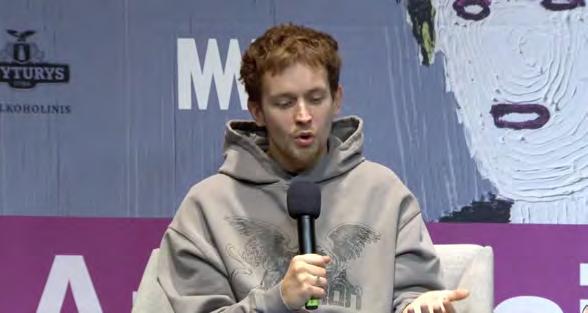
Listen to a discussion from the opening of this exhibition:

GamePlay. Playing for Impact
April 17–November 16, 2025 / Small Hall
Curators: Agnė Kuprytė, Laura Schmidt
Architecture and design by Joris Šykovas
Translator: Erika Urbelevič
Editors: Audra Kairienė, Darius Sužiedėlis
Exhibition installed by Dominykas Šavelis
IT by Mantas Aleknavičius


SERGEY GI AVETIKOV
ARAS PRANCKEVIČIUS
RENALDAS
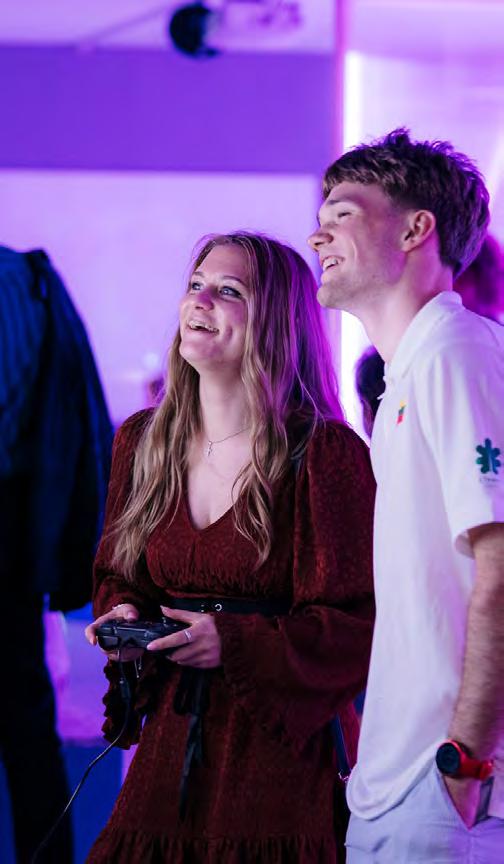
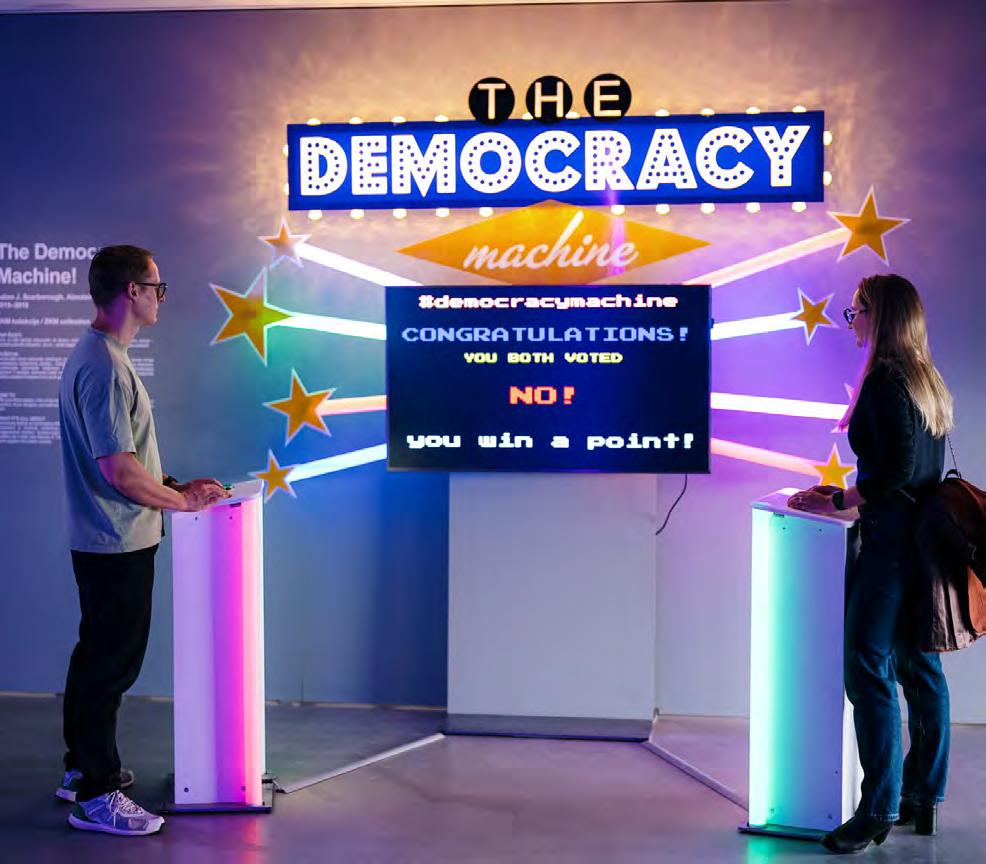
GamePlay. Playing for Impact was the first ever video game exhibition at an art museum in Lithuania and was the result of a collaboration with the ZKM Center for Art and Media in Karlsruhe, Germany. This exhibition at MO Museum was an adaptation of ZKM’s acclaimed video game exhibition zkm_gameplay. the next level
Combining traditional artistic forms such as graphic art, cinema, animation, music, sculpture, and literature, video games open new creative opportunities for artists and provide unique ways of interacting with viewers. GamePlay. Playing for Impact invited visitors to learn and reflect about various forms of video games as they played them.
This exhibition focused on three main areas: games that expand creative and aesthetic limits; games that focus on current social and political issues; and games that help foster empathy through personal stories.
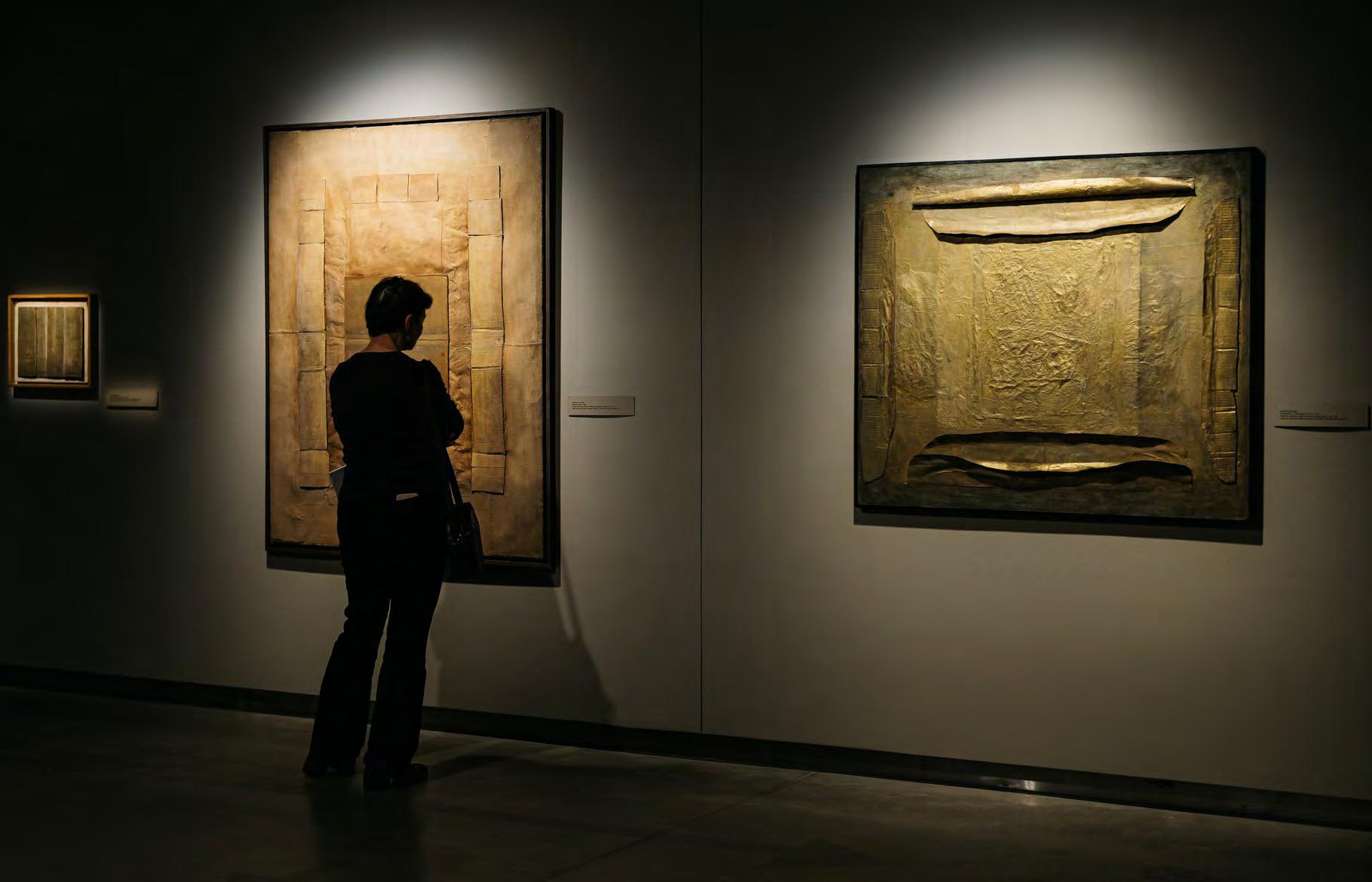
Eyes and Fields. Rose Lowder and Kazimiera
Zimblytė
November 27, 2025–May 3, 2026 / Small Hall
Curators: Inesa Brašiškė, Miglė Survilaitė
Architect: Gabrielė Černiavskaja
Coordinator: Agnė Kuprytė
Architect and Producer: Dominykas Šavelis
Translator: Alexandra Bondarev
Editors: Audra Kairienė, Darius Sužiedėlis
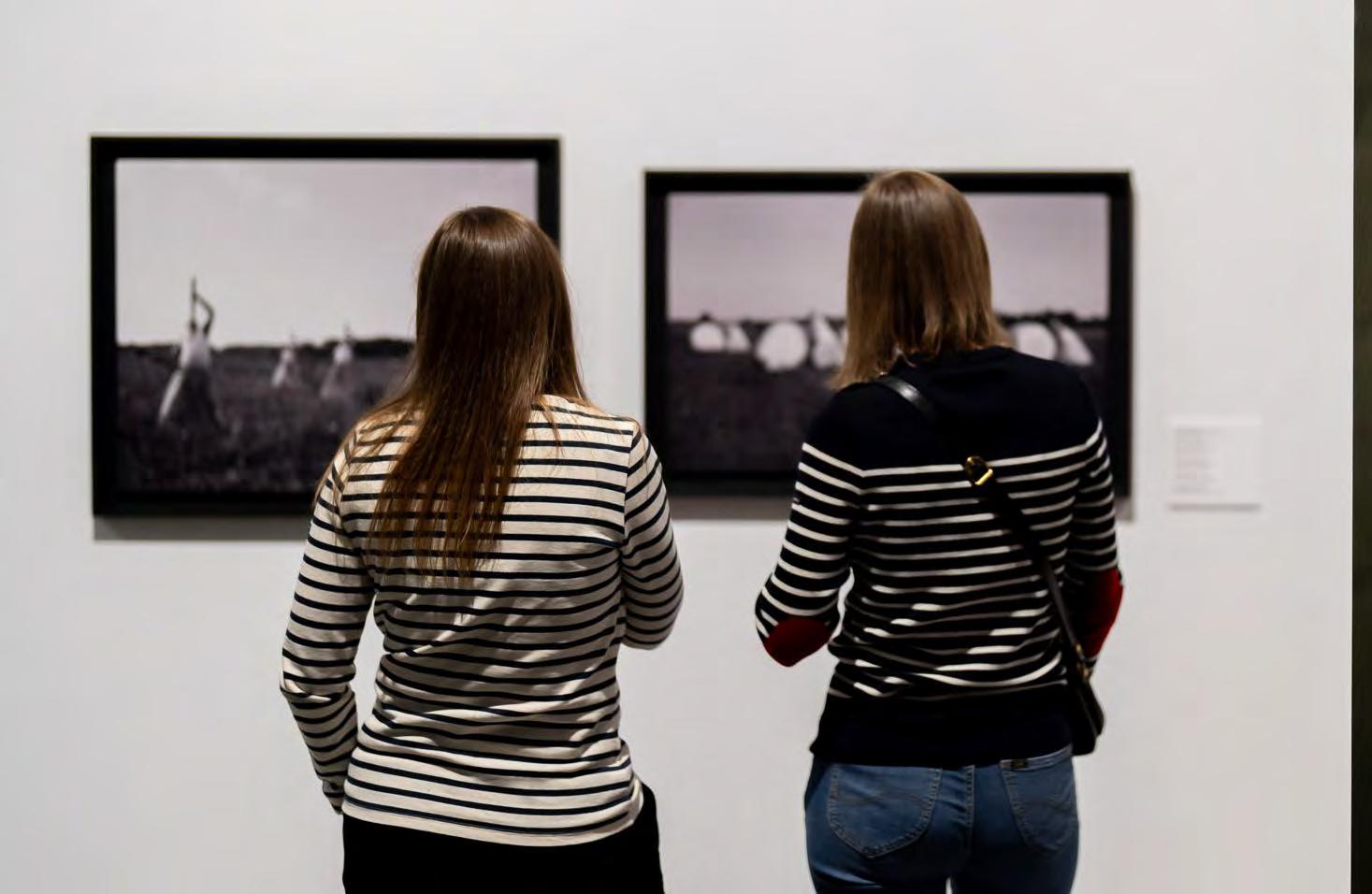
Although they lived at a similar time, Kazimiera Zimblytė-Kazė (1933–1999) and Rose Lowder (b. 1941) never met. These two artists worked in different contexts: Kazė lived most of her life in Soviet Lithuania, and Rose—in Western Europe. Their disciplines also differ: Zimblytė is best known as a painter, while Lowder continues to be active in the world of experimental cinema. But they have one thing in common. Both use abstract expression to ask the question: How do we see and experience the world?
In the works presented in this exhibition, we will not find a narrative or the depiction of easily recognizable objects. But abstraction is not just an aesthetic choice here—it is a critical approach and a way of thinking. In this way, both artists explored optical phenomena and tested the limits of media, creating reflections of the environments in which they lived.
Infinity, an installation by Ray Bartkus
January 8–February 10, 2025 / Atrium
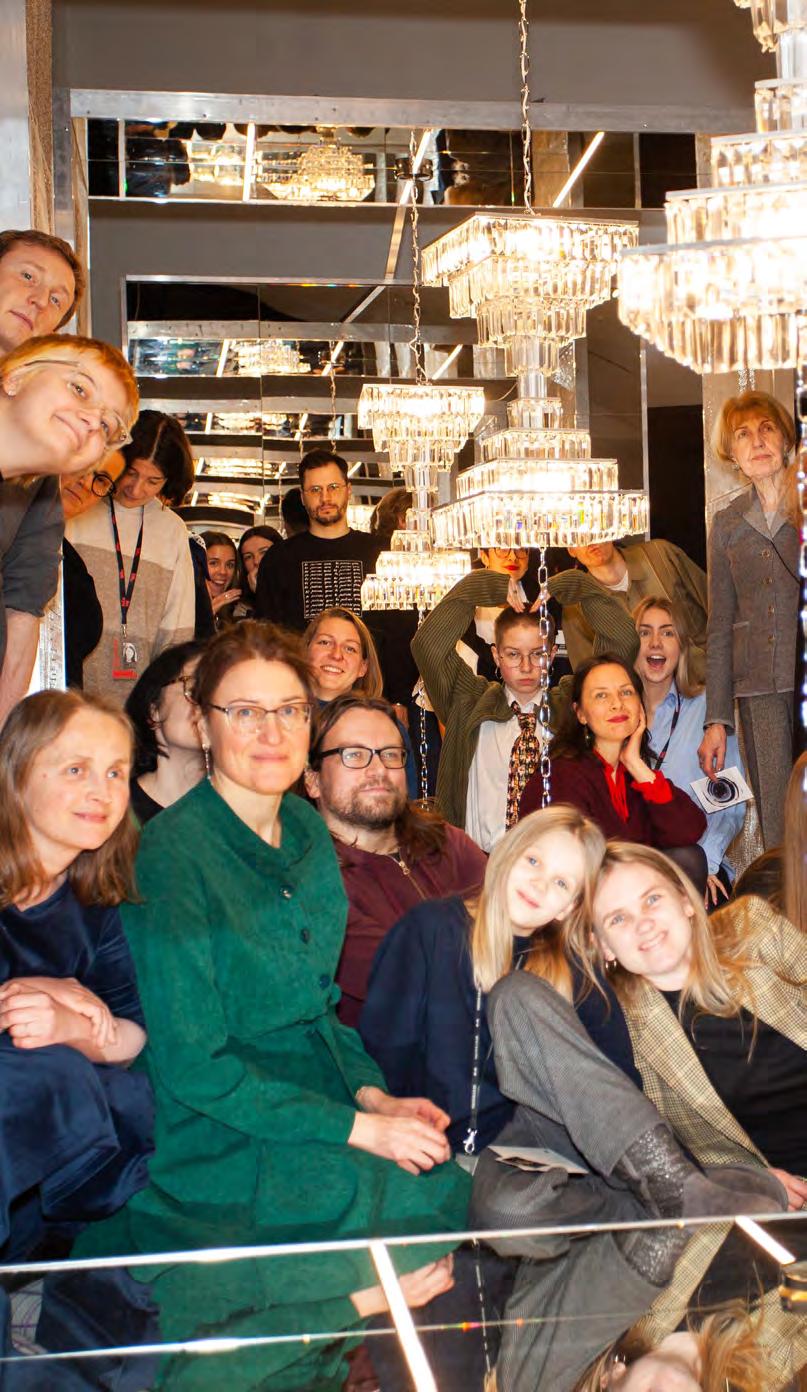
Infinity, an installation by Ray Bartkus (b. 1961), who lives and works in New York, is the continuation of reflections and experiments begun a decade earlier. The idea for this work came to Bartkus after working on commissions for various renowned New Yorkers— people with nearly limitless opportunities, enormous ambitions and responsibilities, wealth, beauty, and power. Bartkus wanted to explore all of this visually and find a way to portray contemporary icons and the rules governing their lives without moralizing.
The work’s untypical theme is accentuated by a nontraditional technique. Nails were inserted into an aluminum net and the nail heads produced pixel-like images that were then reflected endlessly in mirrors. The installation produced an unexpected contrast: Shiny front-facing portraits and their negative images on the reverse side of the screens were all made using simple, rough construction materials.
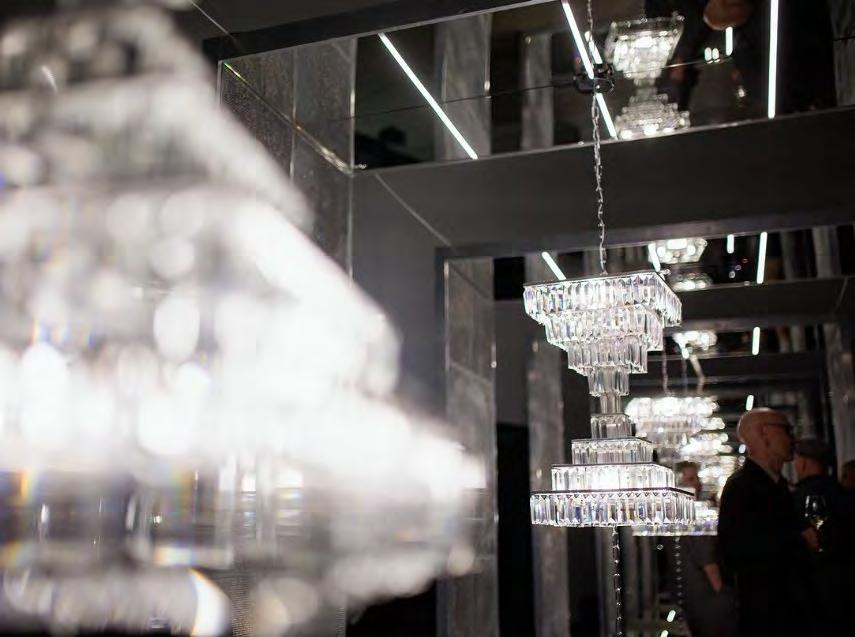
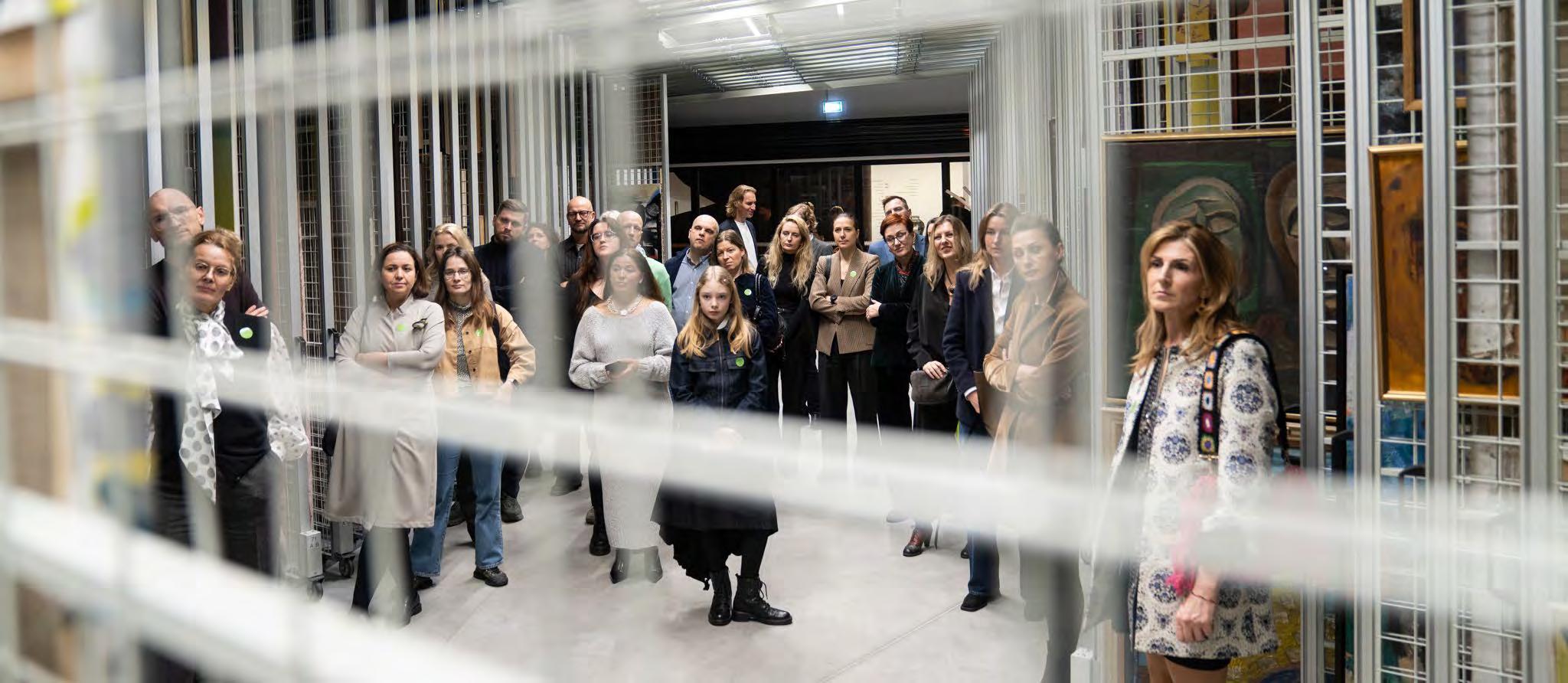
MO Collection artists in the atrium
Year-long program / Atrium
In 2025, MO Museum invited visitors to our atrium to learn more about the artists whose works make up the MO Collection.
Displayed in the atrium and visible through the glass protecting the museum’s storage area, were works by Jonas Jurcikas, Adomas Danusevičius, and Gabrielė Adomaitytė, while QR labels allowed visitors to delve deeper into these artists’ creative careers and learn which of their works are part of the MO Museum Collection
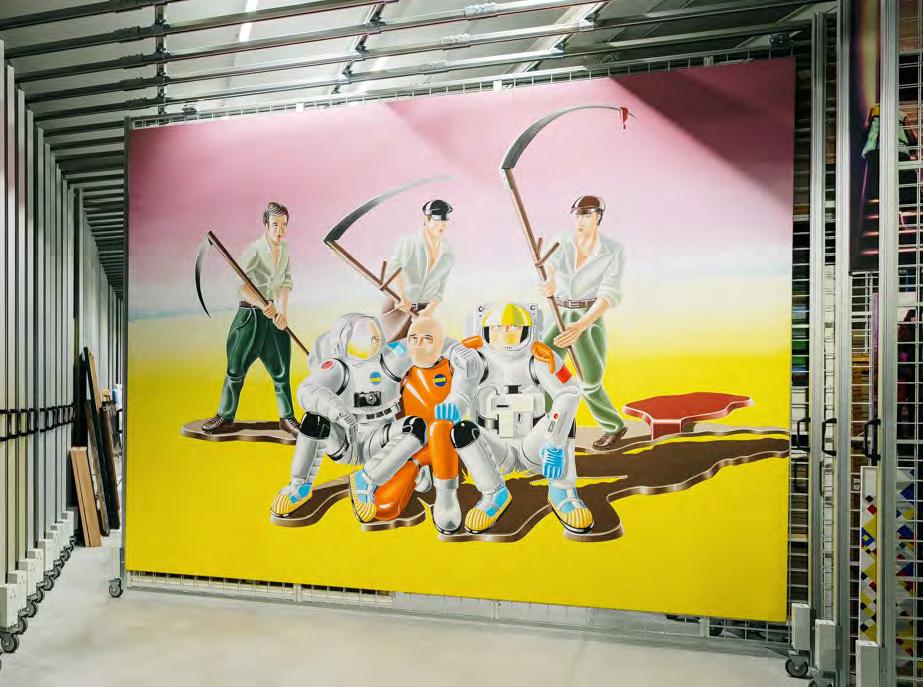
04 Collection
New ways of looking at the MO Collection
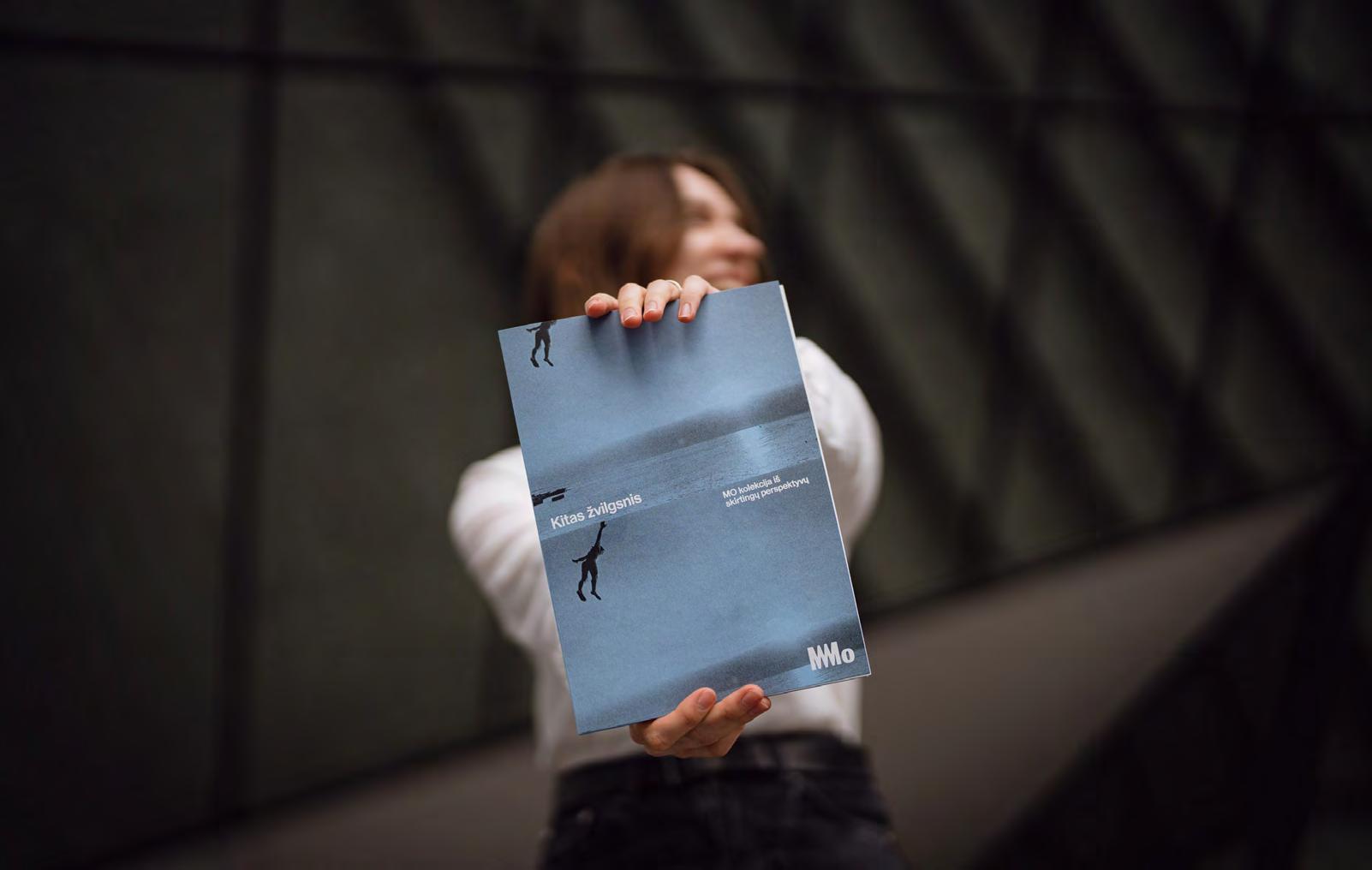
In 2025, we published a rare book that was several years in the making: Another Look. The MO Collection from Different Perspectives, presenting a series of various viewpoints about MO’s holdings.
Because our collection is constantly growing to include new contemporary and modern works of art, we saw a need to explore our most prominent works, to present the collection as an integral whole, and also to examine it anew. It would be impossible to delve into our entire collection, but we did want to expand the limits of traditional canons and disciplines. We thought it would be useful to seek out new points of view on our collection that might be relevant to the present day and avoid considering it with a simple repetition of established narratives. We wanted to talk about our collection not from some distant, all-knowing position, but from subjective—embodied, emplaced, and entimed—perspectives.
In an effort to avoid ostensible objectivity, we invited professionals from ten different fields (cultural and art history, philosophy, cinema, music, theatre, and others) to explore the collection, choose their own themes, and interpret the works through the prism of their own personal and professional experiences. Their resulting essays articulate aspects of time, corporeality, and perspective, and reflect on the experience of war, environmental issues, and the post-Internet condition. In this book, works of art function as witnesses to a particular time, as catalysts of eternal philosophical questions and contemporary phenomena, and perhaps even objects capable of articulating pain.
Authors:
Natalija Arlauskaitė
Inesa Brašiškė
Jogintė Bučinskaitė
Vaiva Daraškevičiūtė
Karolis Kaupinis
Giedrė Mickūnaitė
Rasa Murauskaitė-Juškienė
Helmutas Šabasevičius
Tomas Vaiseta
Aistė Paulina Virbickaitė.
Editors:
Marius Armonas
Miglė Survilaitė
Collection news
The MO Museum Collection is one of the largest private art holdings in Lithuania, and includes works created from 1960 to the present day. In 2011, MO Museum’s holdings were designated a nationally significant collection, consisting of over 6,300 works of modern and contemporary art by Lithuanian artists and constantly expanding to include new works. This year, MO founders Danguolė and Viktoras Butkus added 35 new acquisitons to the collection, 32 of which are by new artists, thereby increasing the number of total artists featured in the collection to 366
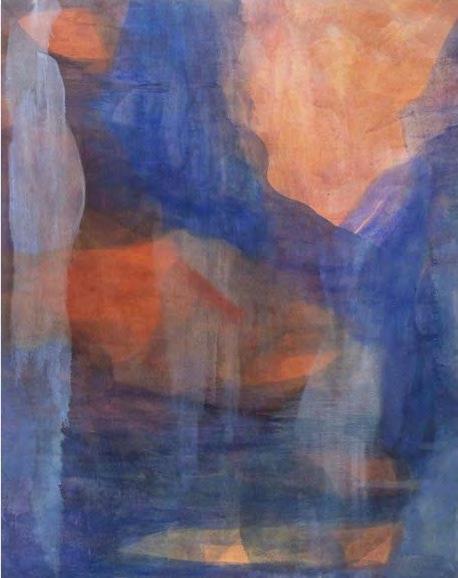
Agnė Juodvalkytė Gelmėn, 2023
Agnė Juodvalkytė Into the Depths, 2023
Agnė Juodvalkytė’s work includes painting, textiles, and objects, all of which serve as a point of reference to explore the connections between history, culture, and identity. Juodvalkytė values the creative process itself, working with various materials, natural pigments, graphite dust, clothing, fabrics woven by her grandmother, and various plants.

Rokas Dovydėnas
Iš serijos Plėviakojis vs Louhan, 2011–2023
Rokas Dovydėnas
From the series Plėviakojis vs Louhan, 2011–2023
These ceramic vases from the series Plėviakojis vs Louhan resemble Chinese porcelain but are made from local clay. Dovydėnas explores the eternal struggle between good and evil and desire and discipline with humor and ingenuity, transferring it onto glazed surfaces. In his vases, humor becomes an artistic approach—a way of talking about serious things easily and openly.
The MO Collection holds works by 366 artists
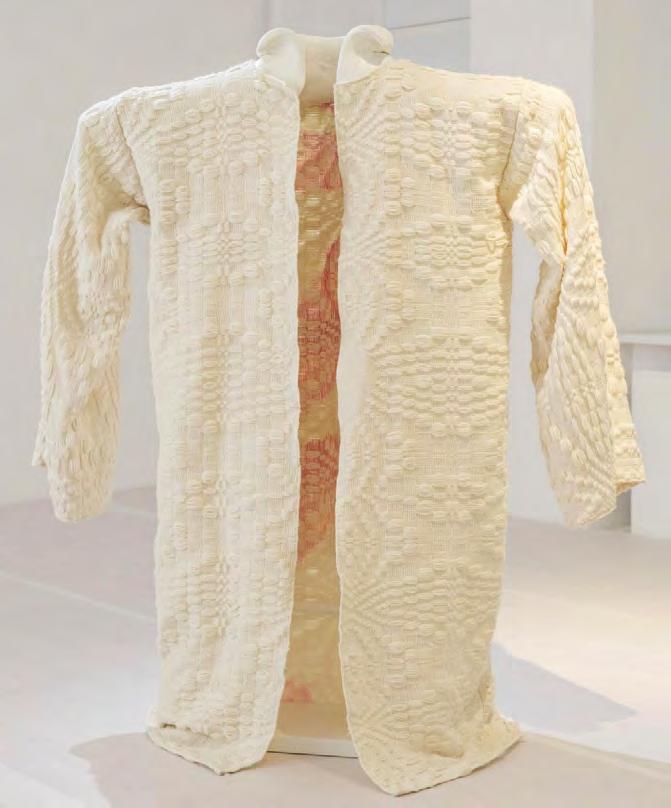
Morta Jonynaitė
Pink Street Boys, 2024
This work by Morta Jonynaitė was named after a band that played one night at the bar where Jonynaitė was dancing. The coat she was wearing became soaked in sweat, beer, and the fumes of that night in the bar. The oversized coat with a boxer “tattooed” on the back the faded memory of the artist, captured in the form of fabric, speaking to the intersection of personal and collective memories.
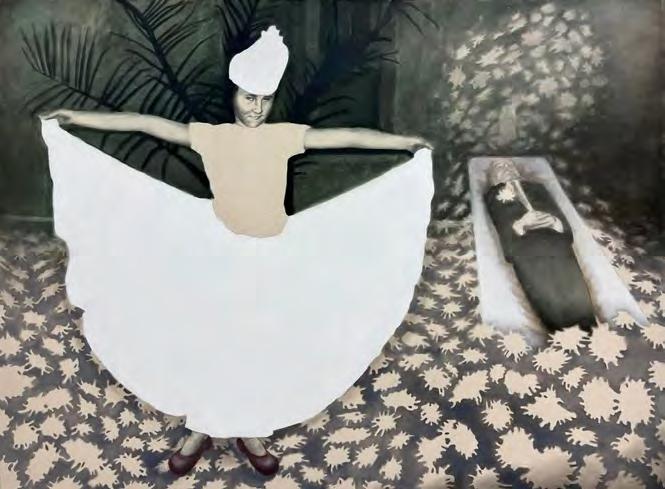
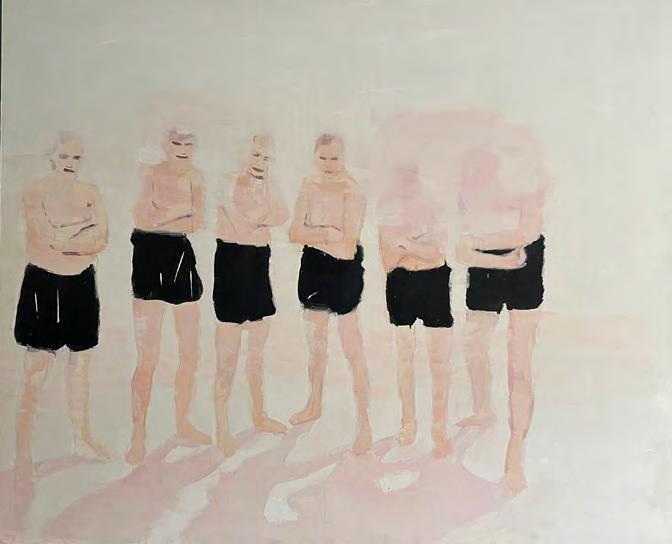
Adomas Danusevičius
Don’t ask, don’t tell (iš ciklo Karminas), 2010
Adomas Danusevičius
Don’t Ask, Don’t Tell (from the series Carmine), 2010
Adomas Danusevičius is one of the first artists in Lithuania to analyze the theme of masculinity on a regular basis. In his work, masculinity is seen as a cultural and social construct associated with stereotypes and gender restrictions. He poses questions about the traditional concept of a “real man,” a view stereotypically associated with strength, rationality, and heterosexuality, and he sheds light on efforts to imitate these expectations while hiding one’s true identity.
Kristijonas Gurčinas Salionas ;D, 2023
Kristijonas Gurčinas Living Room ;D, 2023
In his art, Kristijonas Gurčinas explores his own and contemporary society’s relationship with death and spiritual symbols that lose their sacredness in pop culture and become objects of mass consumption. As he collects and reinterprets images from various sources, Gurčinas creates a space where the sacred and the everyday collide in his paintings. His works speak of contemporary spirituality—often ironic, agnostic, but still searching for symbols that might fill the sense of spiritual emptiness.
A Museum for All
Accessibility
We strive to make everyone’s visit to MO and their experience of art the smoothest and most comfortable possible, and we continued our efforts toward that end in 2025.
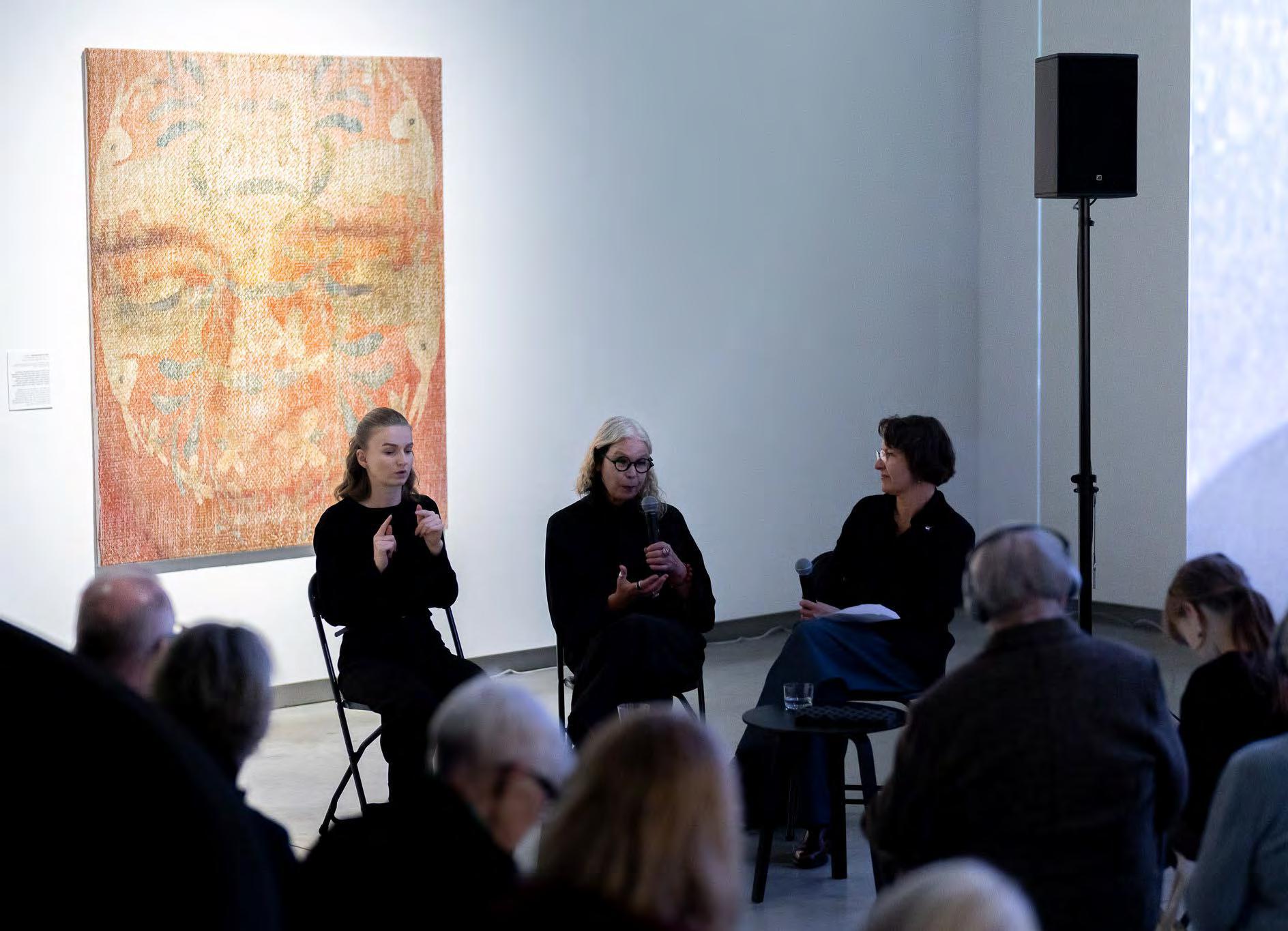
Accessible museum spaces
MO Museum’s website features a dedicated page called “Accessibility,” where visitors can find the most important information about accessing the museum. To avoid any anxiety over visiting a new, unfamiliar space, visitors can use the page to familiarize themselves with the museum’s layout, its social history, and information about accessibility measures and benefits. The museum’s spaces, exhibition halls, and events infrastructure are adapted to visitors with disabilities,
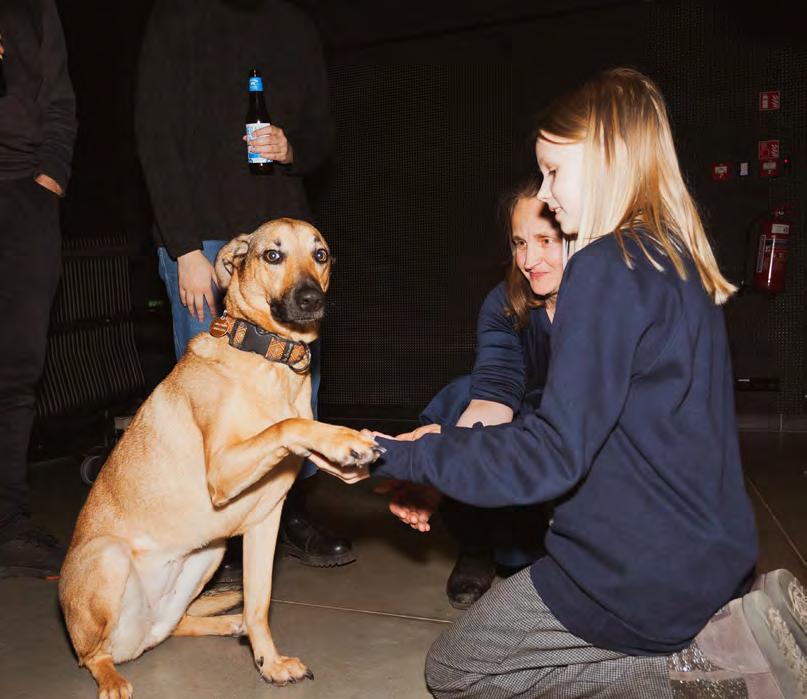
including elevators, special toilets, and access to wheelchairs for use inside the museum. We also welcome specially trained guide dogs at MO.
This year, we made even more strides in our accessibility efforts: We improved signage marking stairs and potential obstacles, updated our cloakroom labeling, and changed the museum’s main entrance doors, which now open at the push of a button. We also acquired various devices such as noise-cancelling earphones and hearing loops, which visitors may take advantage of as they visit our exhibitions, or use in activities (a 3D model of the museum, sculptural reproductions, etc.)
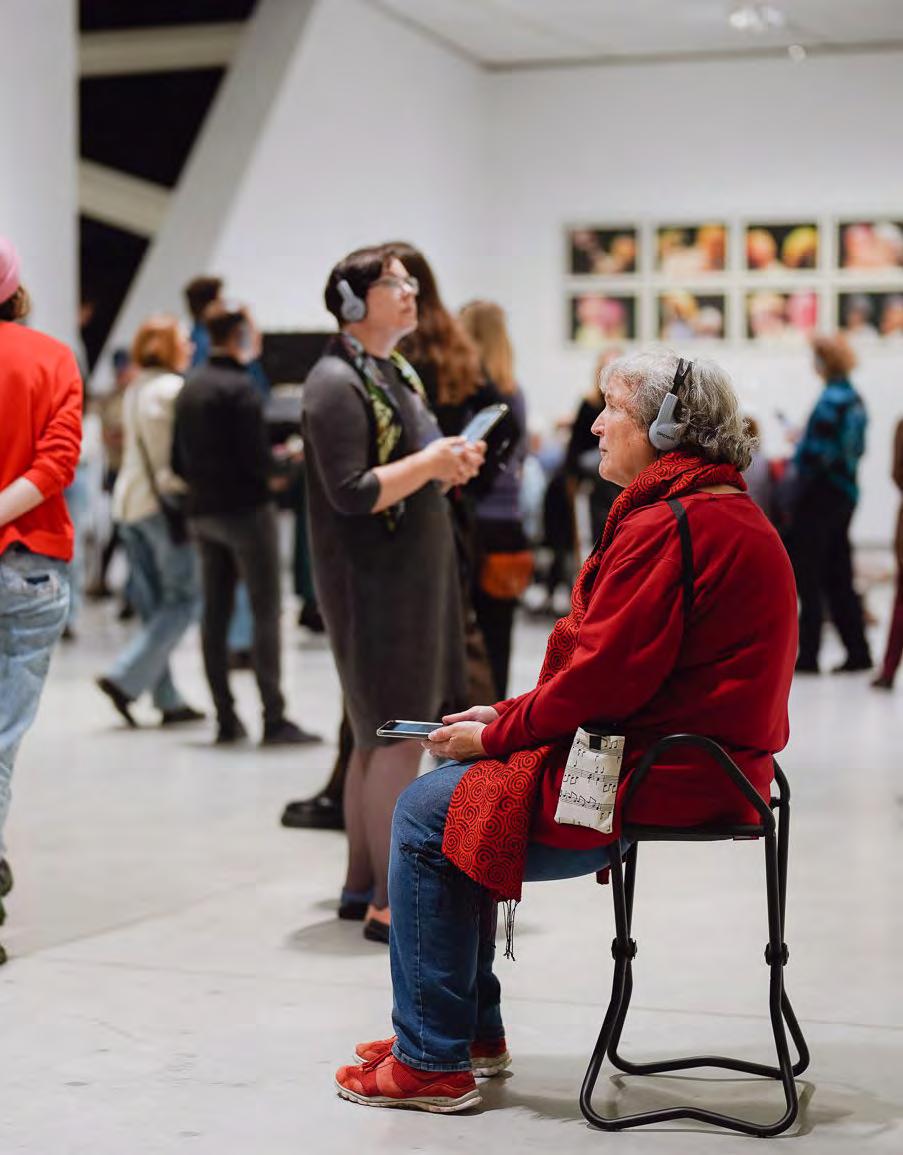
Content accessibility
To be even more accessible, we’ve interpreted the presentation of our museum and e-guides to our main exhibitions From Within and Forever Temporary into sign language. The guides to these exhibitions have also been prepared as Easy Read texts. Presentations at MO exhibition openings and MOrathon events, discussions, and conversations with artists were interpreted in Lithuanian Sign Language and broadcast live.
This year, we successfully implemented planned content accessibility innovations: preparing two tours of our major exhibitions in Lithuanian Sign Language for the deaf and hard of hearing and a tactile exercise for the blind and visually impaired in the MO Sculpture Garden.
We also improved our own knowledge in the field of accessibility and built relationships with communities, organizing two training sessions for our team, compiling a list of experts and consultants, and taking part in networking events.
We are pleased to have five educators at our museum who are able to lead educational programs for people with various disabilities.
Future plans
We will continue collaborating with disabled communities and specialists in this field to better respond to the needs of our visitors and implement further changes. In future, we plan to focus on content accessibility: improving educational and tour formats and integrating various interactive experiences for our visitors. To ensure a meaningful cooperation with all visitors, we plan to conduct training programs and consultations and draft guidelines for employees and volunteers. We also plan to continue implementing changes in our infrastructure and IT fields.
More than a Museum
Protests by the Lithuanian cultural community
From the first public protest by the cultural community on September 25, 2025, MO participated in this movement to express one common position: The Nemunas Dawn Party must not oversee the Ministry of Culture.
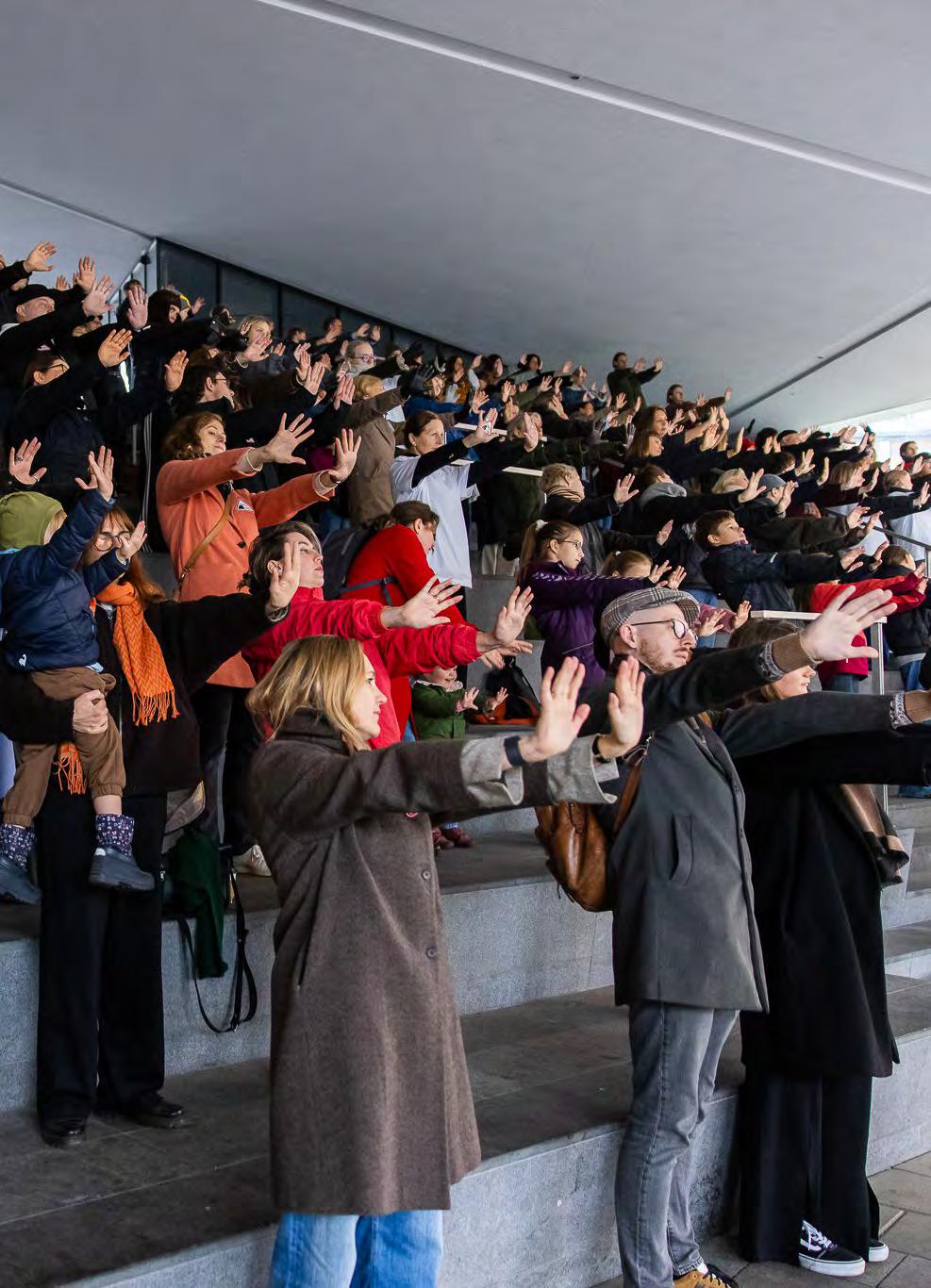
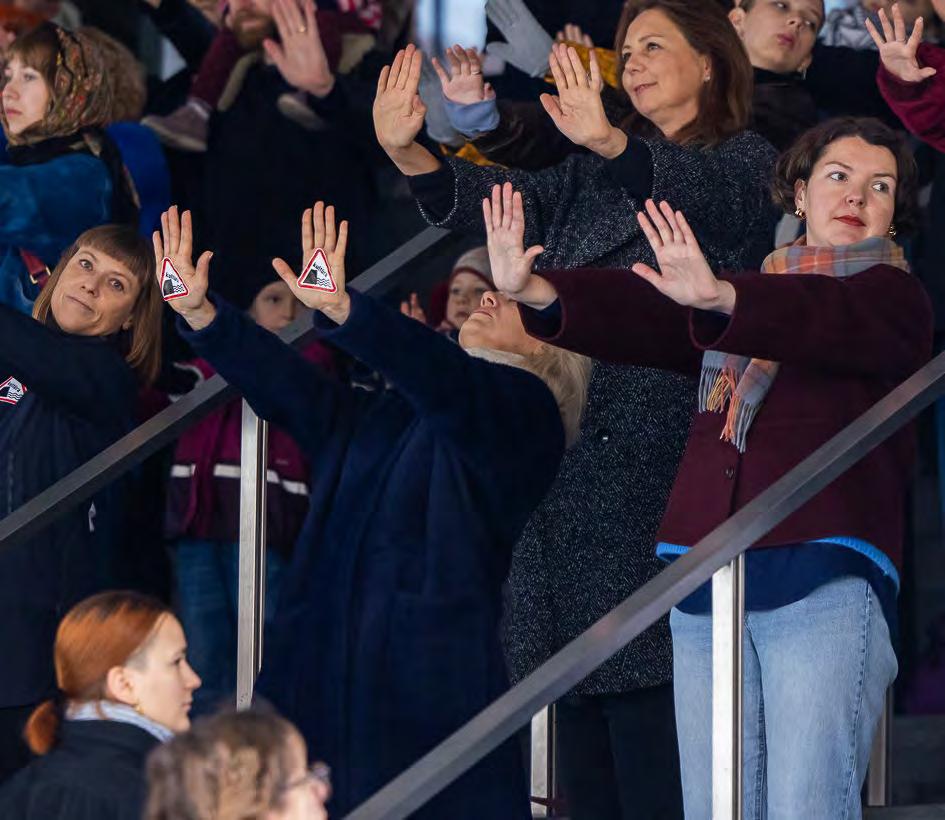
On October 5, we joined a warning strike organized by the Cultural Assembly called “This Might be the Last Chance,” and called on all who are not indifferent to this issue to participate. Outside MO, on the museum’s steps, the MO community, the Vilnius City Dance Theatre, and the Low Air School organized a joint protest of movement, using our bodies to express our values.
MO Museum was open to visitors free of charge all day long, and we also made it possible to conveniently sign the cultural community’s petition and obtain stickers with the Cultural Assembly’s protest sign. Jūra (The Sea), a composition by Mikalojus Konstantinas Čiurlionis, resonated thorough the museum’s spaces.
A sculpture of Čiurlionis
gains a voice
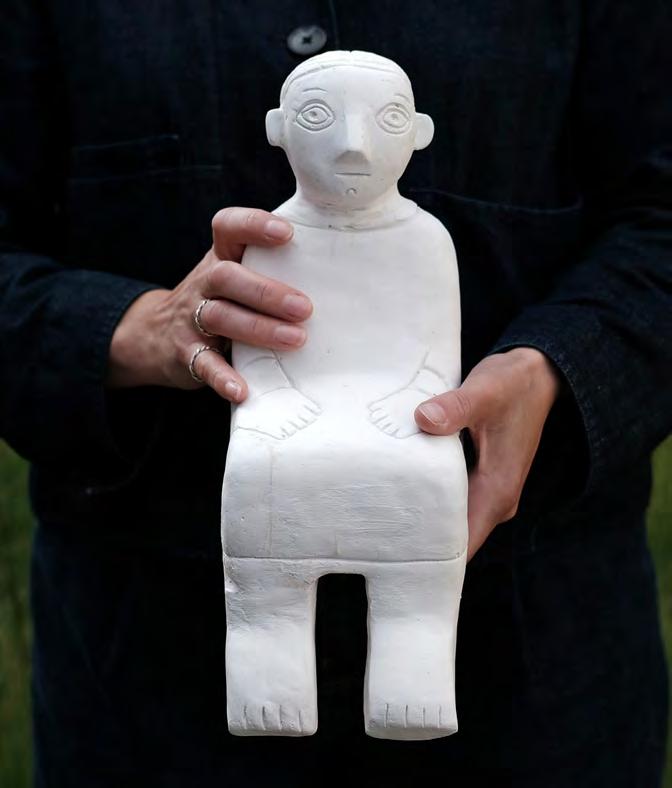
Since 2015, the interactive project Vilnius Talking Sculptures has invited passersby to learn more about the important historical figures or fictional characters and symbols commemorated in public sculptures around the city. A bust of Mikalojus Konstantinas Čiurlionis by sculpture Žilvinas Landzbergas became the 25th work featured in this project and was added to the walking tour inviting viewers to explore Vilnius through the memories of unique individuals.
To learn more about the other talking sculptures visit: mo.lt/vilniaus-kalbancios-skulpturos

Installation at the Panorama Shopping Center
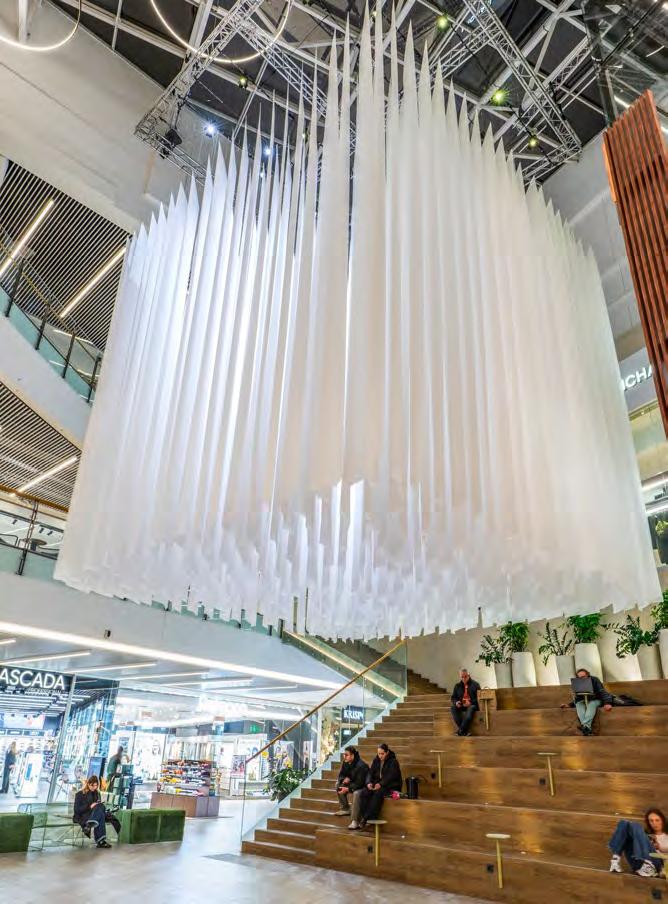
Together with our major sponsor, Panorama, we invited visitors to new encounters with art outside the museum’s walls—to an installation entitled Geometry of Thoughts, by Jurga Marcinauskaitė and Laimis Valančiūnas, mounted inside the Panaroma Shopping Center.
Geometry of Thoughts is a giant, hanging figure suspended inside the center’s atrium—a cloud-like cube made of light, fluttering ribbons. The installation invited viewers to pause and experience their thoughts as invisible architecture, which changes as it rises upward, depending on the angle of one’s perspective. The installation was complemented by music created specifically for this project. Viewers were invited to sit down within the installation space and pause for a moment.
The opening of the installation featured a conversation about emotional health with two psychotherapists: Brigita Kaleckaitė, founder of the Vilnius Gestalt Institute, and Professor Eugenijus Laurinaitis.
MO TV
MO Television is celebrating its fourth year. Culture lovers from anywhere in Lithuania continued to be able to see MO exhibitions, backstage stories, and conversations with artists and cultural activists across all Cgates platforms.
Art Stories with LRT Public Television
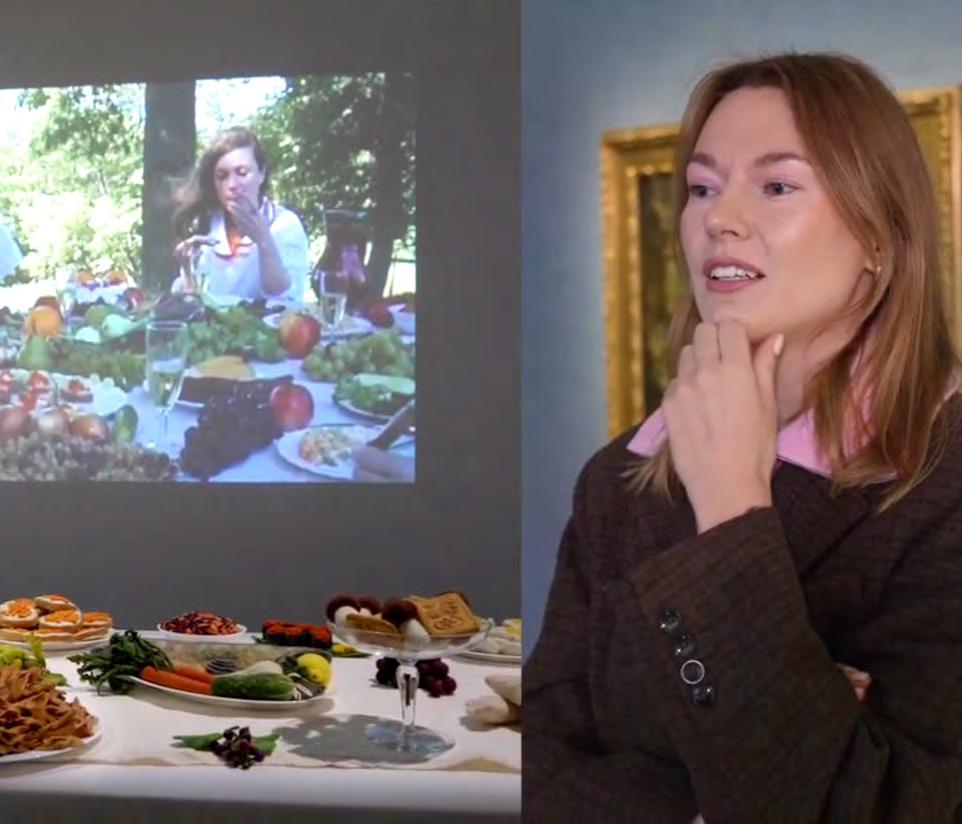
Together with LRT Lithuanian Public Television we continued to invite viewers to take a closer look at contemporary art. A series of reports presented several works from the exhibition Forever Temporary. In the first part, prominent Lithuanians shared their insights about works of art and the emotions they bring about, and in the second half, the exhibition’s curator, Dovilė Barcytė, delved deeper into the stories behind those works. This is an inquisitive look at art through personal connections and is full of the joy of discovery.
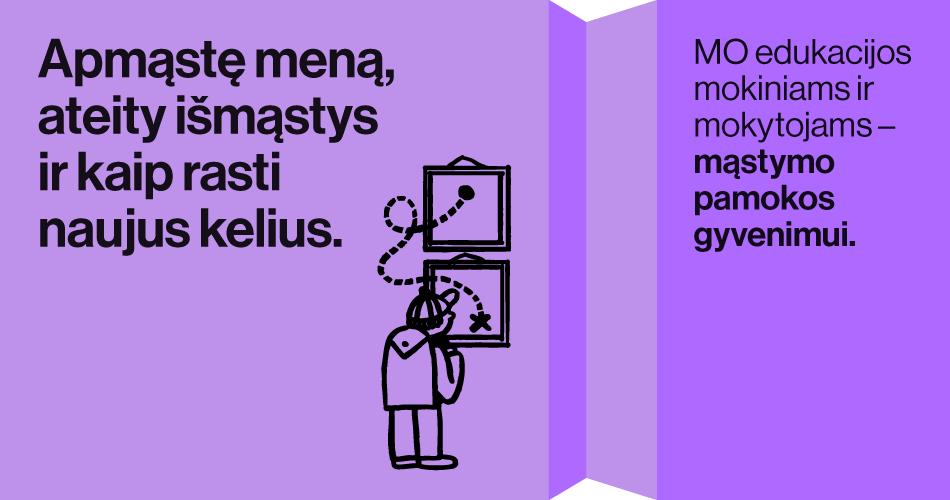
MO Museum’s education program for students and teachers is a purposeful step toward the future, where education and culture react together to a changing world. To meet the challenges of today and tomorrow, we have to acknowledge that culture plays an essential role, not just a supportive one. This was reaffirmed in 2024 by the UNESCO Framework for Arts and Culture Education, a document demonstrating the agreement by over 200 countries that for society to be strong and vibrant, culture must be a central part of education.
In MO’s educational programs, we learn through art, not about art. We don’t repeat skills, we discover them through reflection, thought, and discussion. This is how we build a foundation for a society that values not only knowledge, but also critical, sensitive, and responsible understanding.
More information about MO Museum’s educational activities:: mo.lt/momoko
Educational activities at MO Museum
Educational activities are part of our daily life at MO. From first graders to recent graduates, we welcome all schoolchildren to MO educational programs designed to develop various skills and expand knowledge of art in an engaging way. We’ve even created programs for our youngest visitors. After all, knowing about art and understanding how it works is important for them, too.
MO Museum employs over twenty qualified educators who regularly expand their own skills and knowledge through various training programs. Our team includes educators, psychologists, art historians, and even writers, actors, and musicians! All of them enrich our MO educational programs with their experience and specific knowledge. Give our programs a try!
MO educational activities are sponsored by:

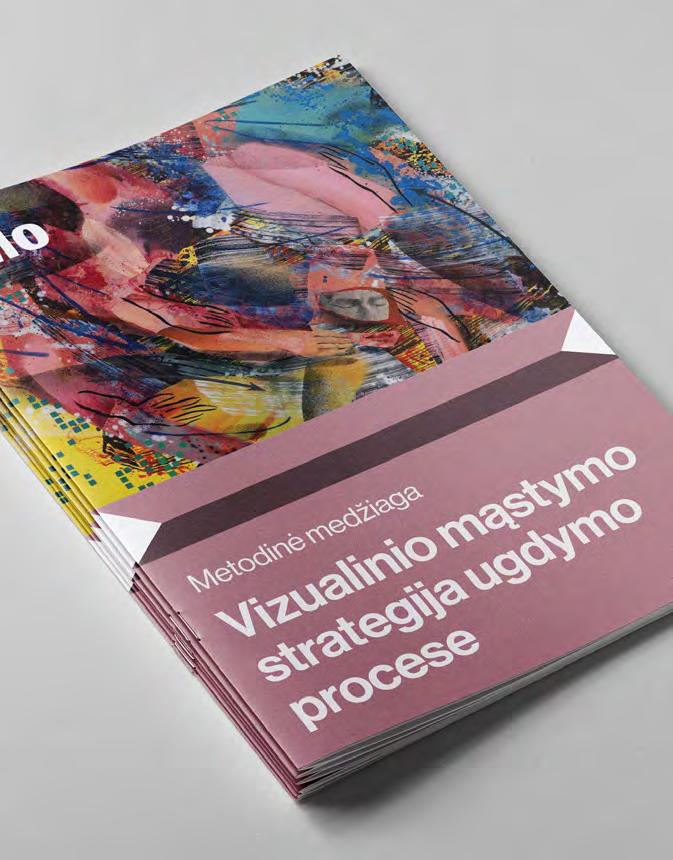
A publication about Visual Thinking Strategy as a new classroom Tool
Since the start of MO Museum, we have been developing our knowledge of the visual thinking strategy and its application in the education process. We decided it was time to put all that knowledge into one publication! This methodological material, published in Lithuanian as Vizualinio mąstymo strategija ugdymo procese (Visual Thinking Strategy in the Development Process), is designed for the professional development of educators, and seeks to demonstrate how the application of the visual thinking strategy can motivate student participation and develop important contemporary skills such as creativity, critical thinking, emotional literacy, and many others.
This material presents specific exercises, questions, and examples about how to adapt this method and how to use it (and in which grades) to teach in an engaging and modern way.
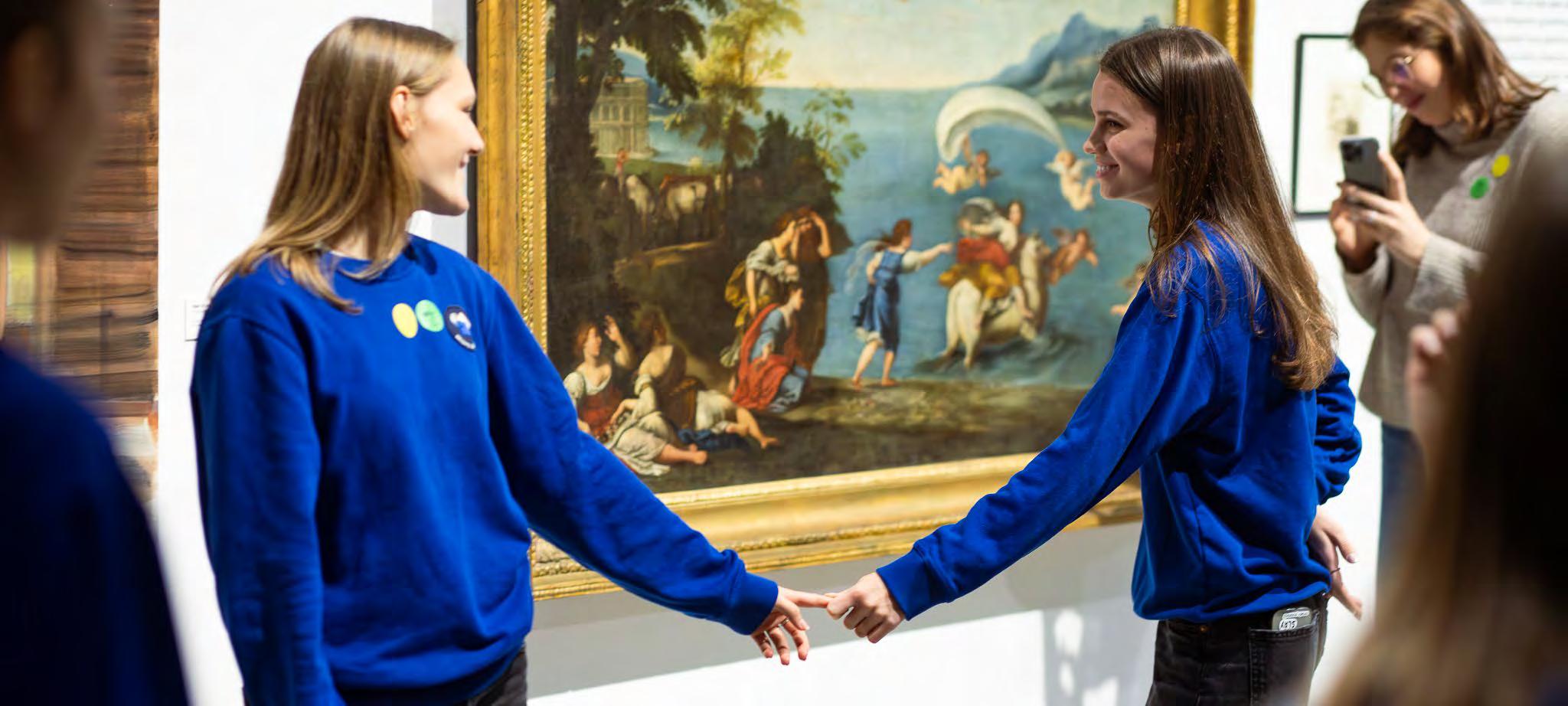
MO and Erudito Licėjus:
a synergy of formal and informal development
Developing the most important skills for the 21st century—creativity, critical thinking, and the ability to cooperate and communicate—is one of MO Museum’s core goals, and we seek to realize this mission together with our major MO Museum partner, Erudito Licėjus.
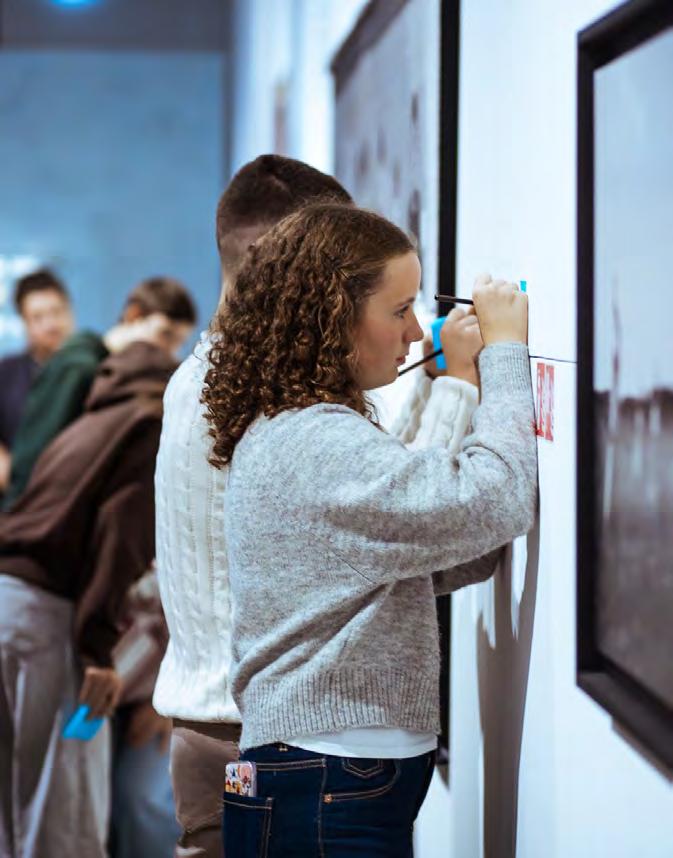
This autumn, we launched a broad study of 9th grade students that will span an entire academic year. This expanded applied anthropology study will help us measure and evaluate the impact of teaching the visual thinking strategy used in MO educational programs. Students from Erudito Licėjus meet with MO educator Evelina Jokštė once a week, and this methodology is also applied by the lyceum’s teachers.
Teachers were invited to visual thinking strategy training sessions, and we also learned how to integrate cultural development methods into the education process.
This enduring partnership helps us seek out creative innovations in education. It is a laboratory of sorts, in which we create and search for new forms and ideas to make development inclusive and original, and how to provide opportunities for self-expression as part of the development process
Nerijus
Pačėsa, Director of Erudito Licėjus.
Major Partner
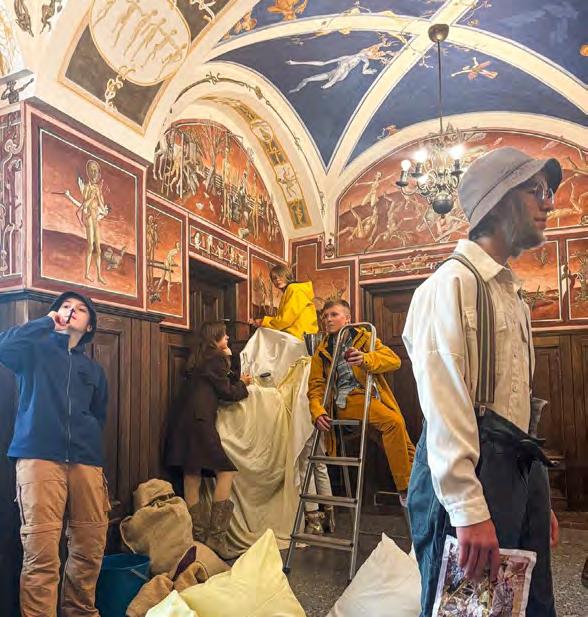
Recreate a painting with your class—a school competition with LRTU
In collaboration with the LRTU channel, we invited Lithuanian schoolchildren to use their creativity, combining all the skills of their entire class, to create a living painting interpreting a specific work in the MO Collection. As many as fifty-six teams of students between the first and twelfth grades from all over Lithuania took part in the competition. The team judged to have made the most creative and popular living painting, class 6A from the Vilnius Humanistic School, received a unique prize for its detailed restaging of Audrius Puipys’ 1987 lithograph Breakfast with Petras Repšys: a night at MO Museum.
By asking students to creatively reinterpret works from the MO Collection, we also encouraged them to experience how art enables us to think, cooperate, and create. Collaboration, dialogue, and reflecting together can produce a result whose creation is not only fun, but meaningful. We hope that students also developed cooperation and critical thinking skills: Bringing the entire class together to create a living painting undoubtedly brought to light new perspectives, unexpected ideas, and new ways to see and perceive a work of art.
Competition partner:

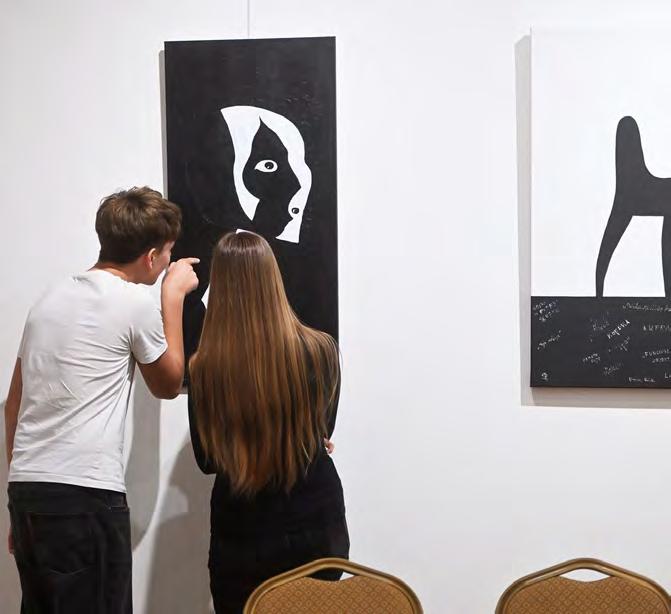
Cultural activities for Marijampolė schools with the TMV Foundation
Schools in Marijampolė began the new school year with expanded opportunities for cultural development. Together with long-time MO Museum supporter, the charitable TMV Foundation, we brought a project for schoolchildren and teachers to Marijampolė for the first time. This project made it possible to donate twenty free educational activities to the city’s schools, to help them develop skills needed in today’s world.
MO Museum has a long tradition of bringing activities to Marijampolė. Our partnership with the TMV Foundation, established by the TMV Capital enterprise group for philanthropic and charitable projects, has given us numerous opportunities to bring MO’s most popular exhibits and various educational activities to the people of Marijampolė, but this was the first time we’ve implemented such a broad cultural development project.
Major Sponspor in Marijampolė:

Visual Thinking Strategy activities for the Millenium Schools program
Visual thinking strategy exercise for literature classes are part of a cultural development tool prepared by MO Museum for the Millenium Schools program. The purpose of these exercises is to apply the visual thinking strategy in literature lessons to develop cultural, social, and emotional skills, and broaden creativity and the ability to learn and communicate.
Our program devotes considerable attention to teacher training as well as practical knowledge how to consistently apply this new information in the education process, and how to combine various subjects and engage students.
Thanks to these events and the diversity of the activities, I changed how I look at life. I understood that it’s not good to rush. That you have to notice every detail. I understood that art is one of the best ways to express yourself.
Student
We awakened students’ curiosity and creativity, engaged with all of them, not just the most advanced ones, and encouraged them to interpret and analyze material more deeply, to find symbolic meanings and cultural connections in art and literature, and enriched their education experience.
Teacher
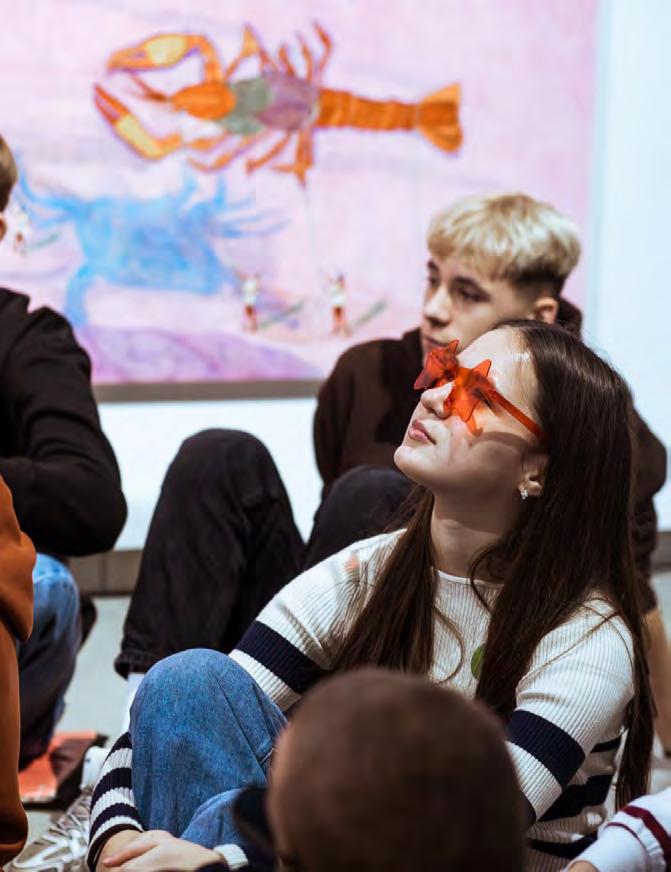
Our Millenium Schools educational development program has already visited
33 schools in 16 municipalities and engaged with 388 teachers 1586 students
Conclusion of the MO and British Council project for ethnic minority schools
Teachers shared their thoughts about this project:
It was most important for me as a person: I see many things differently—things I’d never stop to think about before.
The VTS method slows things down and the class responds entirely differently—they start to think and talk in a deeper way.
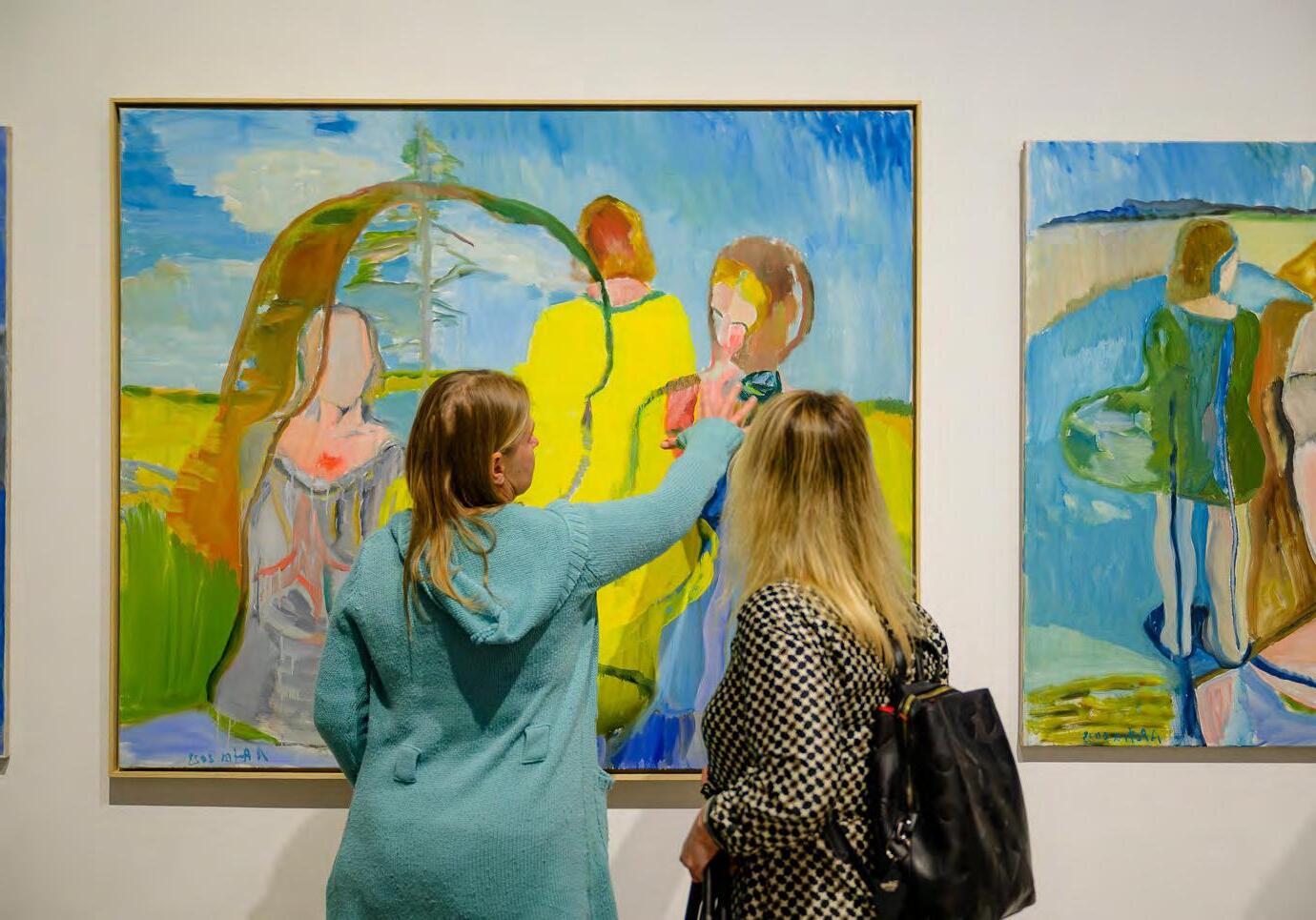
The six-year-long partnership between MO and the British Council in Lithuania, including the project “The Visual Thinking Strategy in Schools”, has come to an end, bringing about profound changes. By applying cultural education methods, the detachment and indifference in classrooms was replaced by trust: Children with limited Lithuanian language skills as well as students who tend to sit in the back of classrooms all shared their insights and cooperated with one another. According to MO Museum educators, such activities are one of the essential ways to reduce exclusion, bolster children’s creativity and critical thinking, and support exhausted teachers who may be lacking in motivation.
This winter and autumn, teachers and students from the Ferdynand Ruszczyc School in Rudamina, the Stefan Báthory School in Lavoriškės, and Pagirių High School took part in a project with MO educators, learning the visual thinking strategy methods used extensively in the museum’s educational programs, and created integrated Lithuanian literature lessons.
Although this six-year project has now come to an end, its results demonstrate a huge need to continue similar cultural education interventions and ensure their longevity.
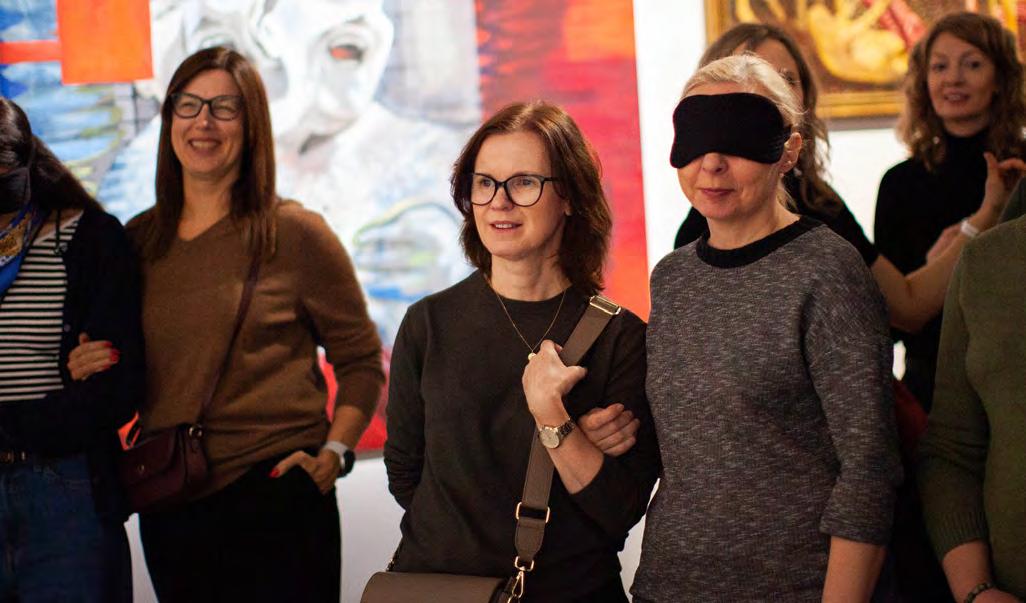
The MO and British Council project reached
980 teachers
1723 students 203 community members
Project Partner
Teacher Training Program
Since it opened, one of MO Museum’s most important tasks and challenges was to expand the geographic boundaries of cultural education as much as possible and ensure that members of the education community in every part of Lithuania could have access to useful, practical knowledge.
This past year, we continued to invite the teaching community to numerous lectures and seminars. We discussed how creativity changes the development process and becomes a practical, applicable skill; about the importance of visuality in performances for preschool children and how to encourage young people to write poetry using works of art. We explored how to foster civic-mindedness and critical thinking through an art exhibition, how art can help inclusive development, and how works of art can help us reflect in a meaningful and interesting way.
866 teachers participated in our skills development program.
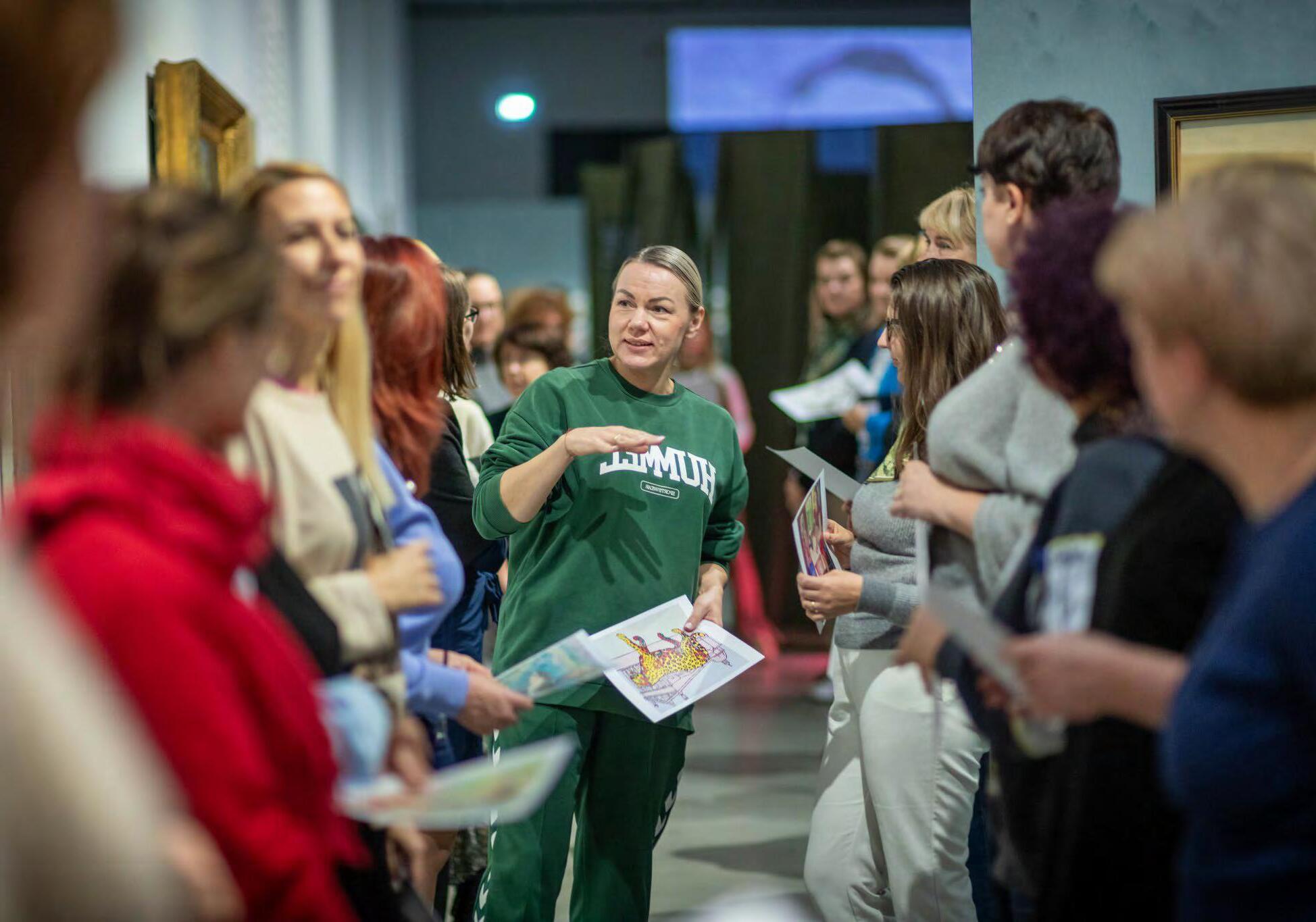
Workshops with the Teacher’s Pass community
In November, over one hundred educators from all over Lithuania gathered at MO Museum to broaden their knowledge about inclusion, the importance of visuality, creative reflection, and poetry development methods. Professionals from various fields shared their experiences about how art can become a tool for a child’s self-expression and a means to promote empathy and community. Teachers gained both theoretical and practical knowledge, expanding their professional skills and horizons, and took part in active networking. These workshops are a significant means of bolstering educators’ creativity and promoting collaboration between the fields of education and culture.
08 Cultural Education
For Families and Children
Family Sundays
At MO Museum, Sundays are for families. This spring, we welcomed an updated program for a more diverse audience of children. We not only spent time with MO Family Sunday veteran actors Eimantas Bareikis and Marija Korenkaitė, we also watched performances for toddlers and explored emotions in visual thinking educational acitivities as part of the main MO exhibition From Within.
In the autumn, we invited pakeisti į families to explore the themes of time and change using works of art, colors, and paper. Family Sunday participants listened to a legend about ancient times and created our own stores about the heroes of that age. We also took part in educational activities in the Forever Temporary exhibition.
1750 visitors took part in Family Sundays
Educational activities Sponsored by the Kazickas Family Foundation
Together with the Kazickas Family Foundation we continue the initiative for socially vulnerable groups of young people, inviting them to take part in MO educational programs for free. The goal is to reach young people who may not always have the means to visit cultural institutions to learn more about modern art. This includes groups from youth day centers, children in care homes and smaller settlements, especially those far from Vilnius. This joint education program has reached over 6,000 people and visited more than fifty towns and villages in Lithuania.
Project is sponsored by
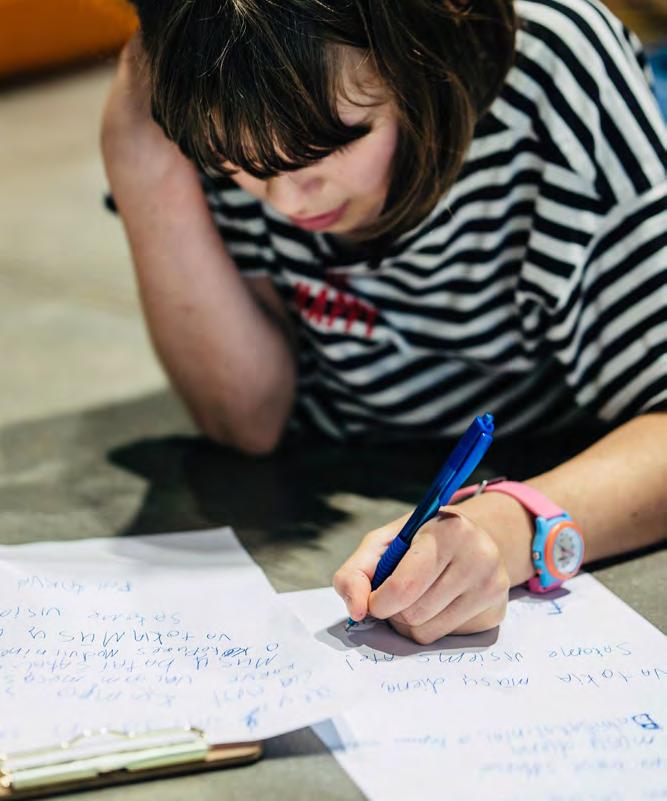
Tours For Moms, Dads, and Their Little Ones
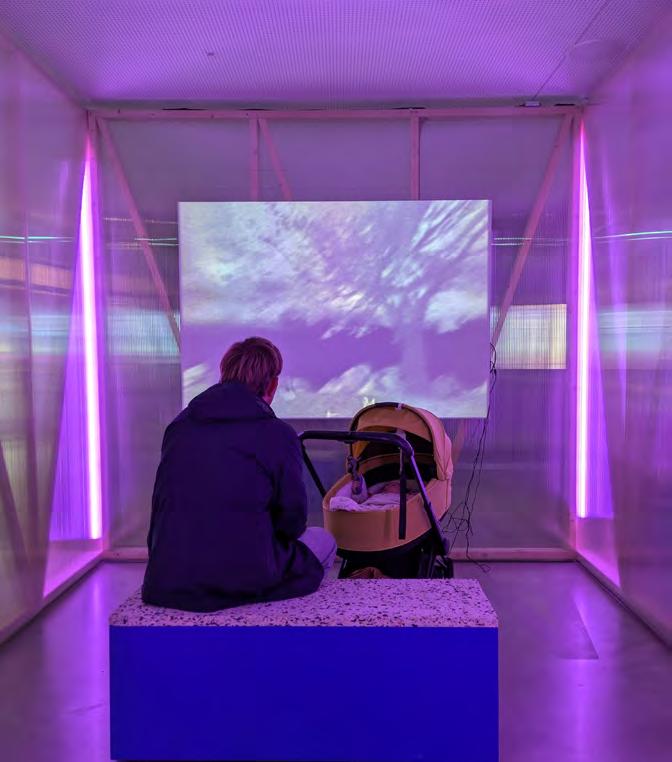
When we opened our main exhibition Forever Temporary, we brought back regular tours for moms, dads, and their small children. These special tours allow parents to comfortably experience the exhibition along with their toddlers in carriages, carriers, or in their arms—whatever suits them best.
MO Children’s Summer Camps and Night at the Museum
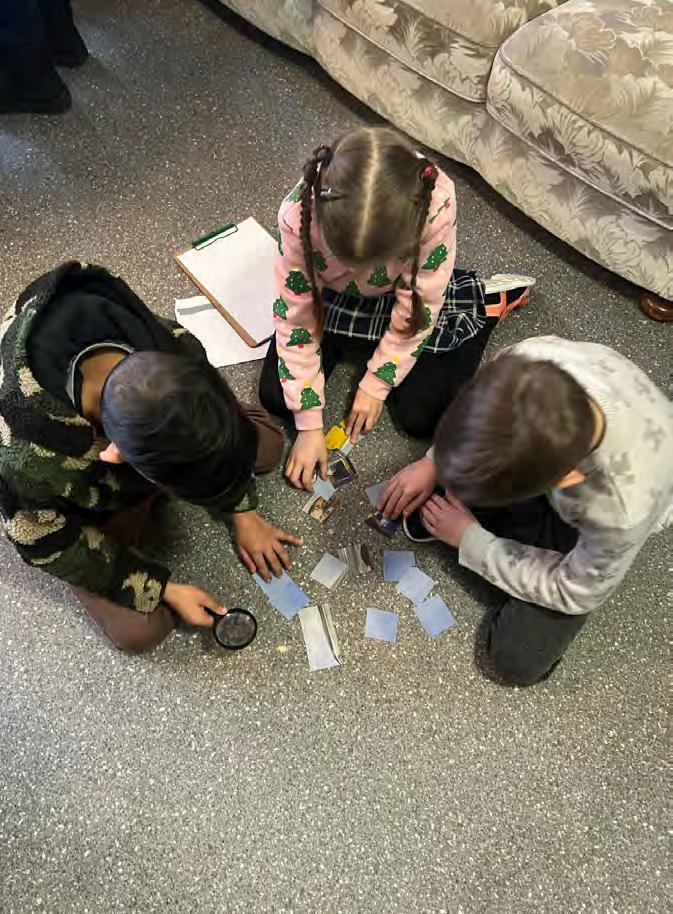
MO continued to invite our youngest friends to its traditional Children’s Summer Camps. This year, we held two “Einam” (Let’s Go) creativity camps and two storytelling camps. The camp programs, led by actors Marija and Eimantas, guided children on an exploration and experimentation with various forms of art and creativity (from collages to rap!), and dove into the magical world of mandala colors, set out on a photo hunt, played a game called 1000 and 1, organized a picnic in the city and the unforgettable festival Einam 2025. There were also new faces to see: actors Benita Vasauskaitė, Aistė Šeštokaitė, and Matas Pranskevičius helped kids at our storytelling camps to create their tales. They explored how to tell a story using various forms of art, games, and improvisation. And, with the help of the Vilnius City Municipality, we welcomed over ten children from socially vulnerable families who may not have had the chance to participate in a camp for financial reasons.
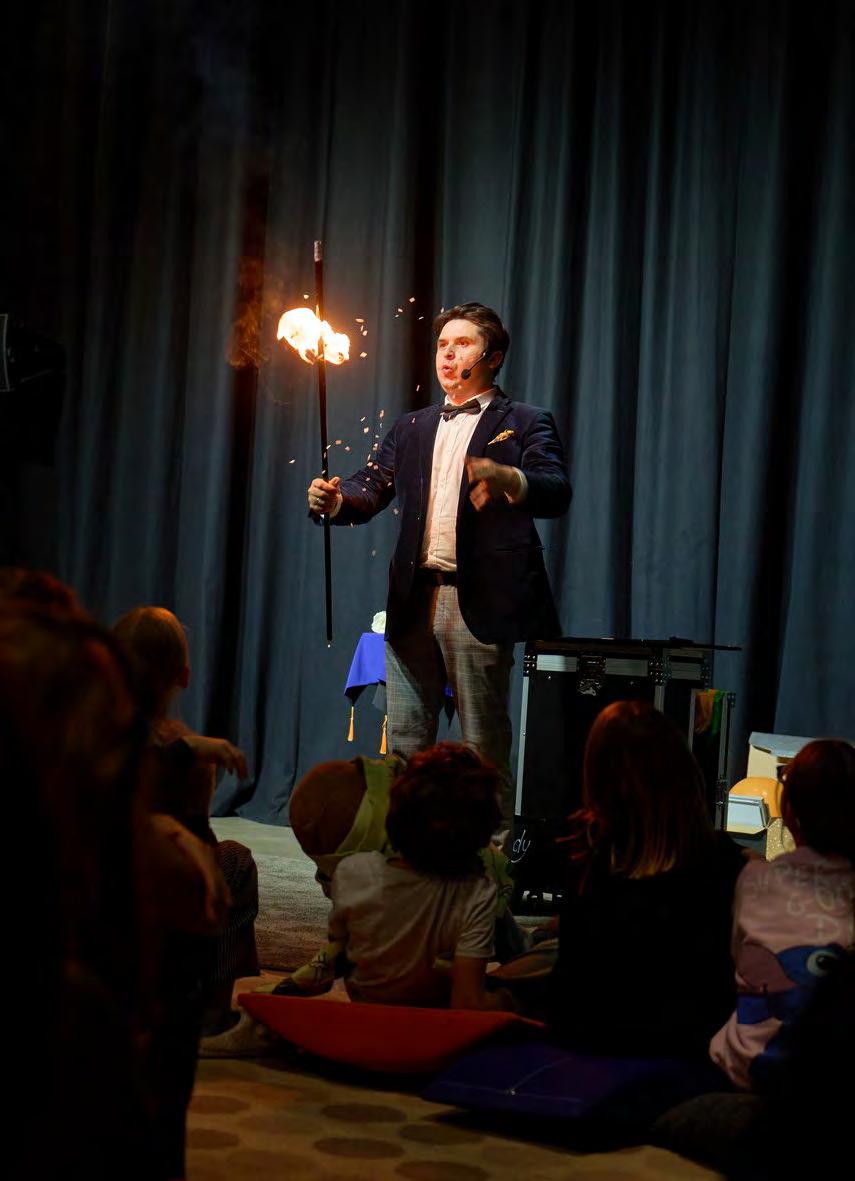
And, as we do every year, we held a unique event just for children: Night at MO Museum. Works of art and exhibitions from new angles, creative exercises, treasure hunts, music, films, and even a magic show— all after normal museum hours. An entirely different way of seeing art awaited those arriving with sleeping bags and pajamas.
For Adults
Mindfulness exercises
Our main exhibition From Within encouraged visitors to make time for themselves to explore their emotions, thoughts, and experiences. We also presented a suitable way to do this: mindfulness exercises within the exhibition. These offered a chance to pause, calm one’s mind, and concentrate on what arises from within. With the help of MO educator and mindfulness teacher Agnė Sakevičiūtė, we used the exhibition space and artworks to apply various mindfulness methods.
We slowed down, meditated, focused on what our bodies were feeling, noticed our thoughts and emotions without rushing or judgement, and replaced our daily overthinking with the “slow looking” technique, by carefully observing works of art from unexpected angles to learn about being mindfully present in the moment.
Tours for university students
Regardless of the academic field we choose to explore, encounters with art always expand our horizons and offer surprising perspectives. In this spirit, we organized special tours for university and college students with a volunteer guide on the last Monday of the month.
Tours for seniors
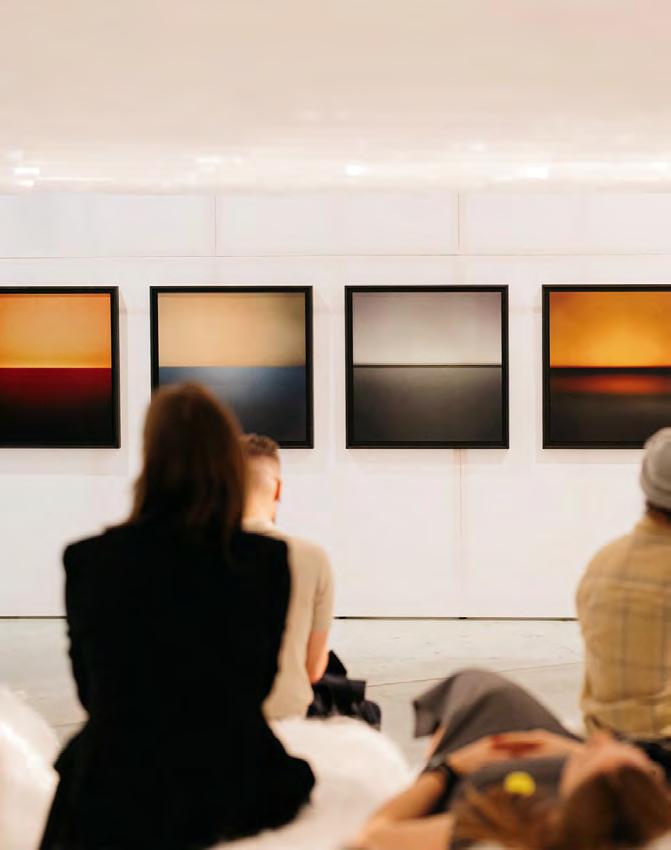
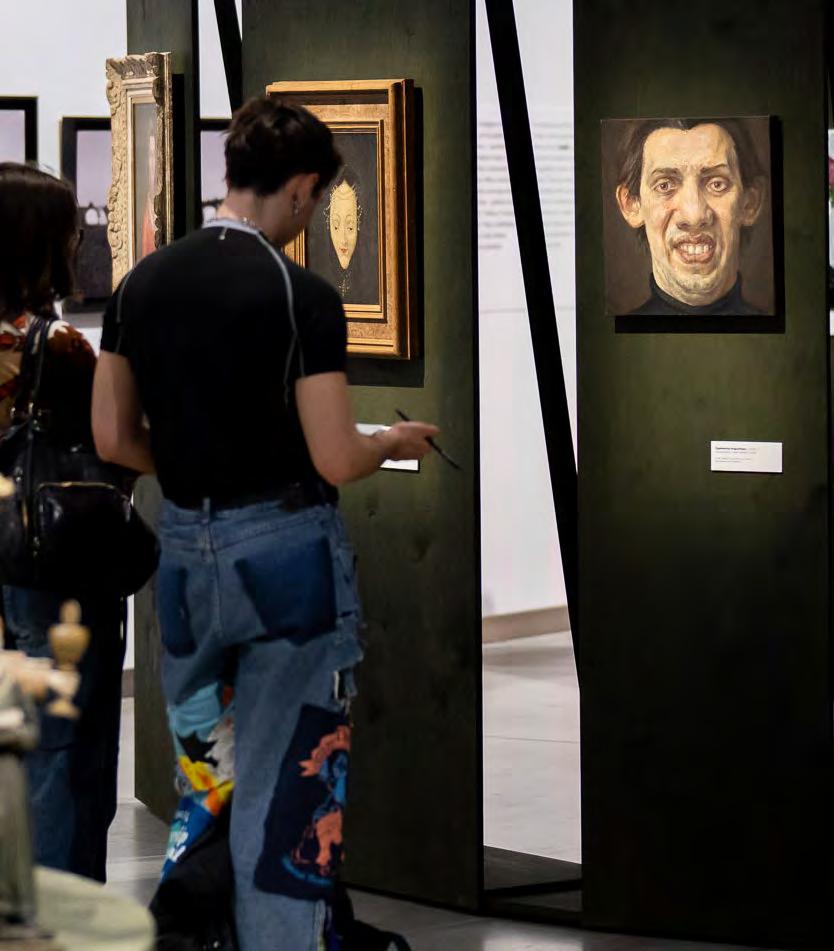
Encountering art not only brings joy, but it sparks curiosity and community. That’s why we continued to organize relaxing and friendly guided afternoon tours for seniors every third Wednesday of the month
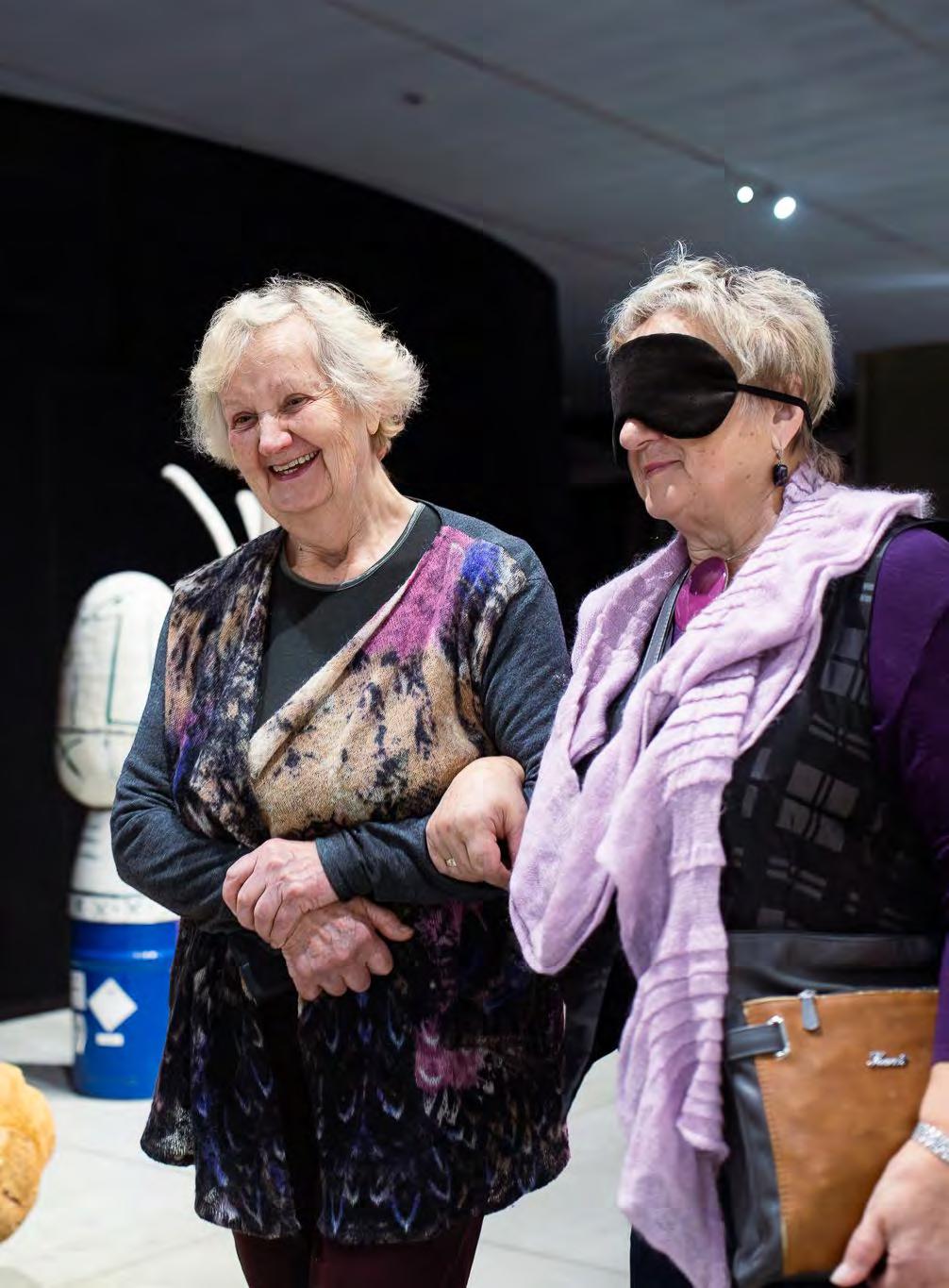
“Be neriMO” activities for seniors
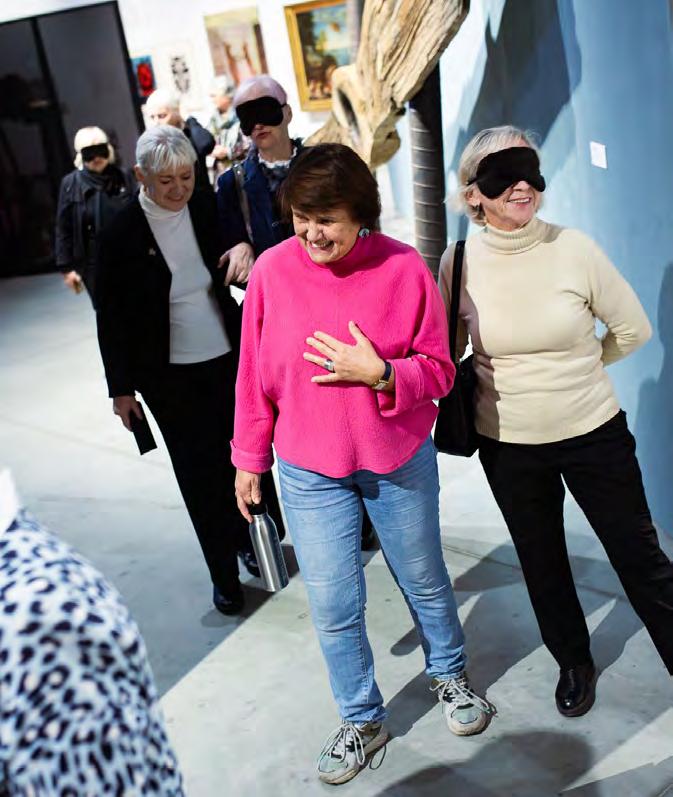
In the fall of 2025, Vilnius residents 65 years and older once again had the chance to take part in the ongoing “be neriMO” (“no worries”) project to improve their emotional health and strengthen social relationships.
120 Vilnius seniors took part in a series of six meetings led by MO Museum educators trained in psychology and psychotherapy. The exercises took place at MO Museum and other art institution spaces, offering participants a way to expand their cultural geography and experience the universality of methods used during these activities. All project participants reunited for a final meeting in November, where they shared their experiences and reflected on their impressions in a larger group.
“I’m happy that the number of events and activities for older people in Vilnius is quickly growing, but there’s still a lack of consistent and long-term activity programs. That is the focus of the ‘be neriMO’ program: to transfer new interpersonal relationships as well as practical methods for recognizing and managing emotions into everyday life,” says MO Museum Head of Educational Programs Jurgita Zigmantė.
Project participants also shared their experiences:
You find a lot of interesting people, empathy, and experiences at these activities, and you discover more patience to solve your own problems.
I would even say that I grew stronger. Even my self-esteem grew, I think, because I saw that it wasn’t my own misunderstanding, or my attitude, or my mistake to see things one way or another, but that it was my originality as a human being, as a person.
Project financed by Vilnius City Municipality
MO Outside poetry and concerts
The fourth MO Outside concert season presented even more names than before—new ones as well as well-known talents. We opened the terrace for their musical explorations and discoveries. Like every year, we looked to new horizons, and this time they included an encounter of alternative and popular music with sound art. Paulius Kilbauskas, Livija Gemma, Kabloonak, Kamilė Dambrauskaitė, Bucktooth Tiger, dadcap, Seodophy, Galèra, and the November 20th Orchestra all took part in a concert program curated by Marius Libas.
We approached this year’s MO poetry readings in search of sharp edges, diversity, and poetry that creates a unique perspective—one that redraws the maps of everyday life. We welcomed already beloved as well as lesser-known authors: Many new texts were read aloud, promising to reveal interesting twists and turns in contemporary Lithuanian poetry. The themes and participants of these poetry readings were selected by Zigmas Pakštaitis, who also moderated discussions with the authors.
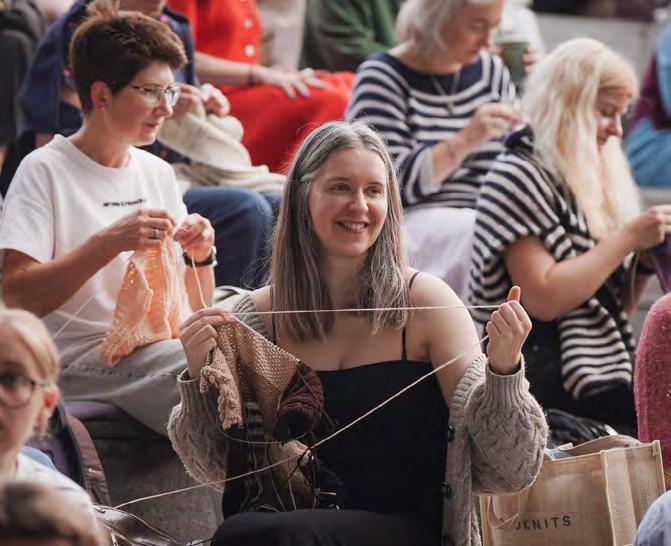
„Knit Happens“
For the first time, we opened the MO Terrace to those who knit, crochet, or want to try their hand at knitting. All you had to do was bring your own knitting or other handicraft. We welcomed both experienced knitters and those picking up needles or a crochet hook for the very first time. We knitted without obligation or pressure, enjoying the slow pace and creation of the craft itself. Some 300 enthusiasts joined our open knitting evening, and we hope that not only threads, but also new friendships were knit together that night! DJ Wilte, took care of the music and helped set a proper knitting rhythm.
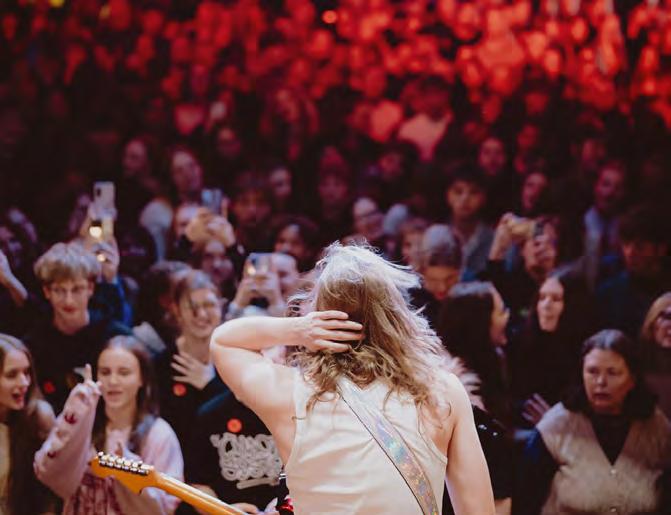
MOrathons
We continued our tradition of organizing cultural festivals that we call MOrathons to help inaugurate our main exhibitions. At the opening of Forever Temporary, we explored the themes of the exhibition: the temporary and the eternal, commonality and diversity.
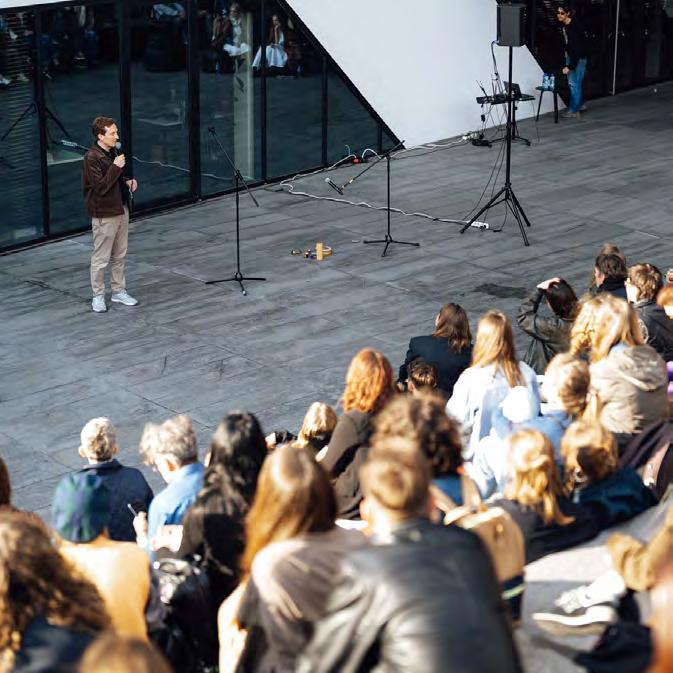
Over 2000 people listened to music and poetry at MO Outside this year.
We explored the exhibition during guided tours led by the curators and as part of their presentation “What are the exhibition works talking about?,” we discussed time and ephemerality from a philosophical and everyday perspective. One discussion explored what is perhaps music’s most eternal theme—love, Paulius Markevičius presented selections from his ritualistic and dreamlike performance, and we finished off with the leading Lithuanian alternative music band Abudu.
Back2school with Ričardas Jankauskas
We once again invited visitors to spend their Monday evenings at MO Museum, listening to Ričardas Jankauskas discuss the life and work of M. K. Čiurlionis. These talks explored the history of Čiurlionis’ family, his educational journey, participation in the Lithuanian national revival, and the period of exhibiting works by Lithuanian artists in Vilnius. Jankauskas also focused on the question of the women in Čiurlionis’ life, especially Sofija Kymantaitė-Čiurlionienė and finally, he explored Čiurlionis’ symbolic painting and the remembrance of his creative legacy.
Dates with Arts
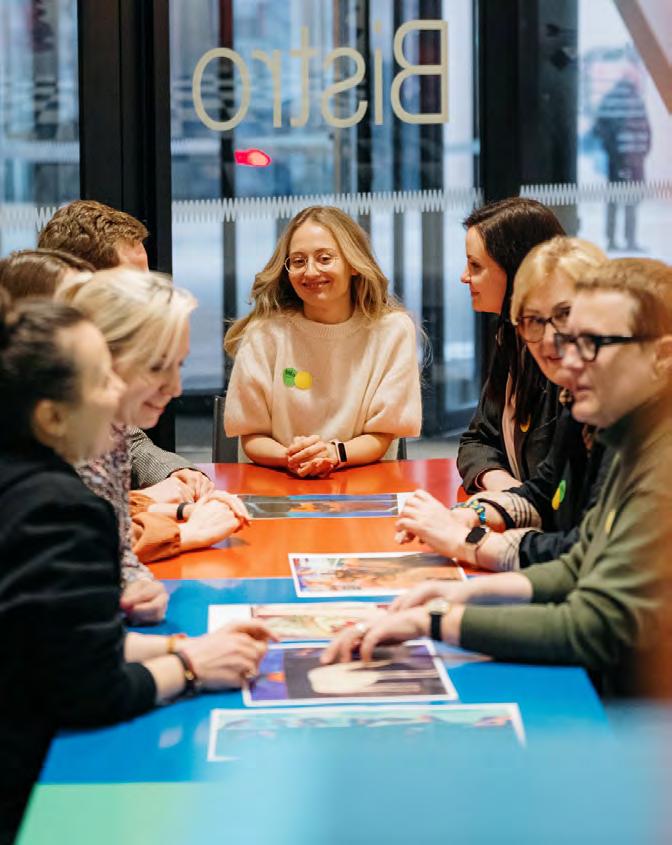
Begun in 2023, we again invited visitors on a date with works art—to expand horizons and experience exhibitions in a different way. MO Bistro and questions by experienced MOderators helped set the mood for the gathering, managing to motivate even the quietest participants. At the From Within exhibition, we enjoyed a lively discussion about how we study works of art and how each of us views them differently, and we tried to understand why that is. But most importantly, we shared our own observations with one another.
“MOmandiruotė” team building
A MOmandiruotė is a way to build teams through art. It is a journey of discovery—just without luggage, stress, or passports. During a MOmandiruotė, we explore works of art and share what we see in them. Using visual thinking strategy methods, we analyze artwork and connect this experience with the fundamentals of teamwork. By speaking, listening, and paying attention, we learn more about our colleagues.

MO Communities
Visitors are talking
There’s currently a special exhibition on the development and significance of video games in society that’s absolutely worth seeing. Plus, the unique architecture is an absolute must-see!
Axel
I just had to thank you for another wonderful exhibition. You are doing very important work for Lithuanian culture and for everyone who appreciates and loves art. Every time, I experience such tremendous esthetic pleasure at your exhibitions. I wish you much success in the future.
Kęstutis B.
It’s always good to return for new experiences.
Visitor
Impressive! We managed to see an exhibition of Lithuanian artists, and we liked what we saw. Dark, gloomy, strange, depressing, but— different.
Monika
A very interesting thing about is that sometimes move you something can mean to everyone. works in both temporary video games of art is very recommend
Arek
interesting place. The about contemporary art sometimes it doesn’t at all, and sometimes something speaks volumes. It something different everyone. Here, too, I found both categories. The temporary exhibition featuring games as a medium very interesting – I recommend it!
Impressive and so healing soul place. Must visit when in Vilnius.
Jelena
It was such a good museum, I recommend it so much. Emotional and beautiful exhibitions. So many things to see and explore. I wish I would’ve spent the whole day here.
Toni
There is always something to see. It’s good to be back.
Dangira
A small museum but very successful and architecturally beautiful both inside and out. Interesting and thoughtprovoking exhibitions of a high standard. We all enjoyed it, even those who are not fans of museums in general and art in particular.
Adi
Small but fantastic. Lithuania’s MOMA. Very interesting and meaningful interactive exhibition on the history of gaming currently (Oct 2025) very worth a visit while in Vilnius.
James
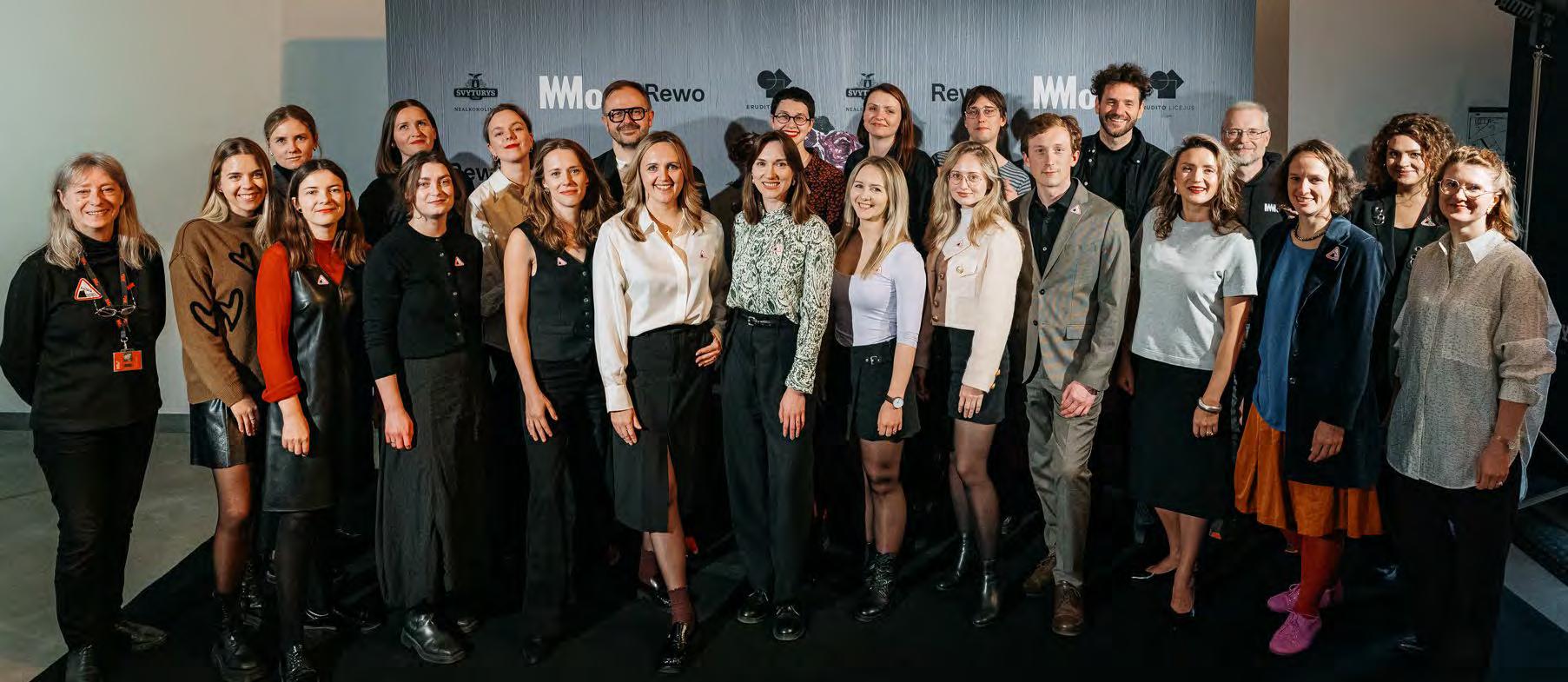
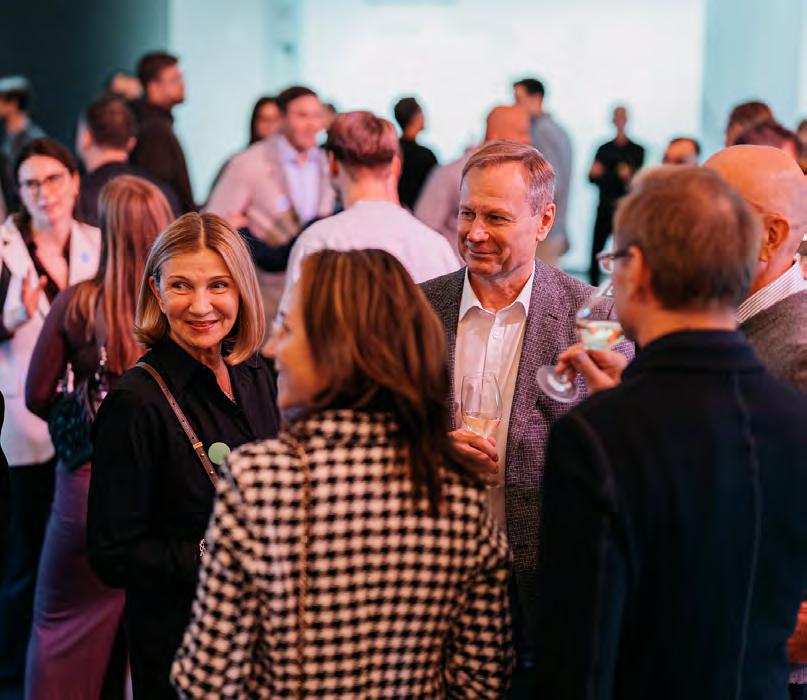
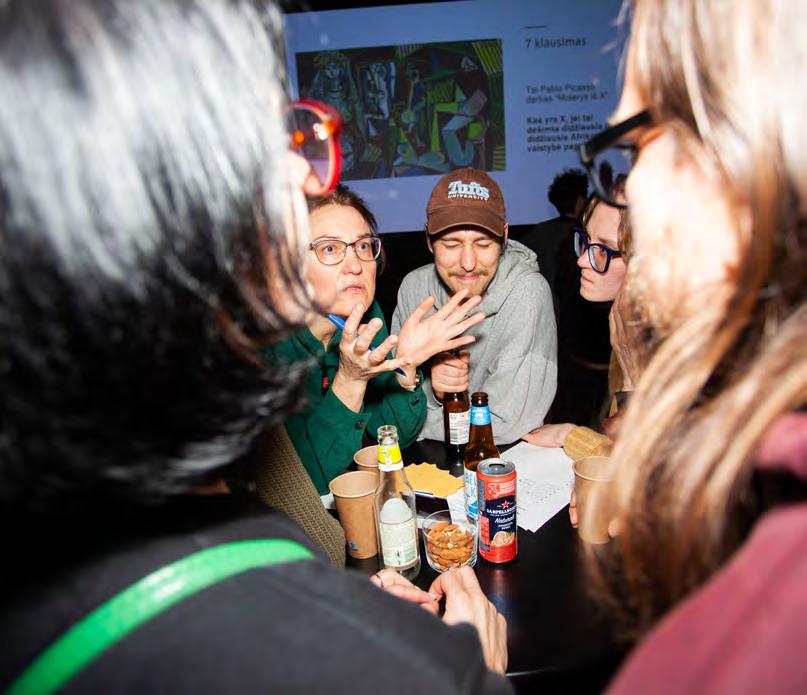
Donors and Partners
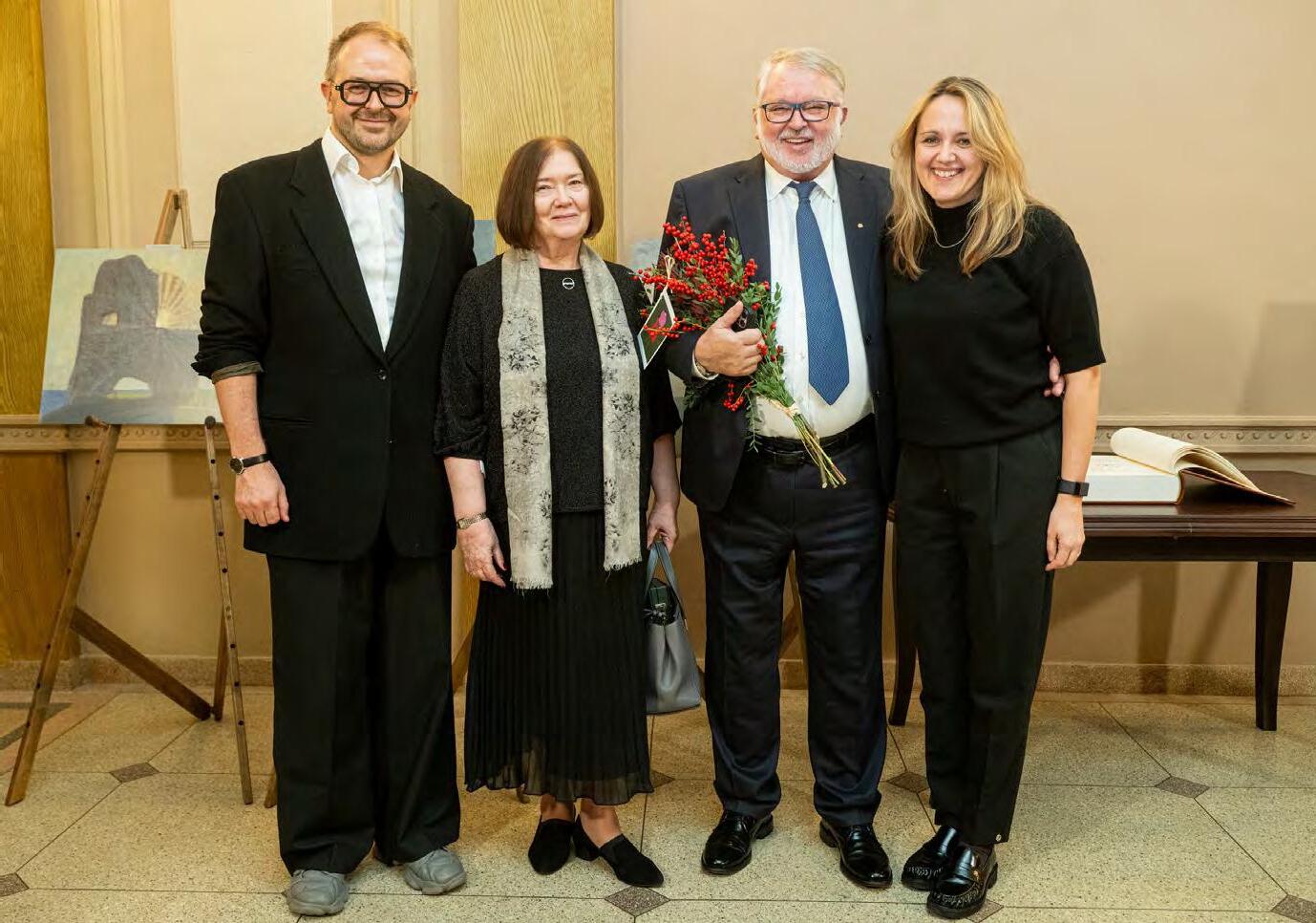
Community Donor Awards
National, municipal, and community donors were honored this year on November 14, on the eve of Philanthropy Day. Donor awards have been presented in Lithuania annually since 2018, and last year, thanks to an initiative led by MO Museum, Lithuania now celebrates Philanthropy Day every November 15th.
We’re so pleased that MO Museum’s donors were also recognized and honored this year! Community Donor awards for the past year were awarded to our enduring supporters: Baltisches Haus, Professor Vladas Algirdas Bumelis, and Žilvinas Mecelis.
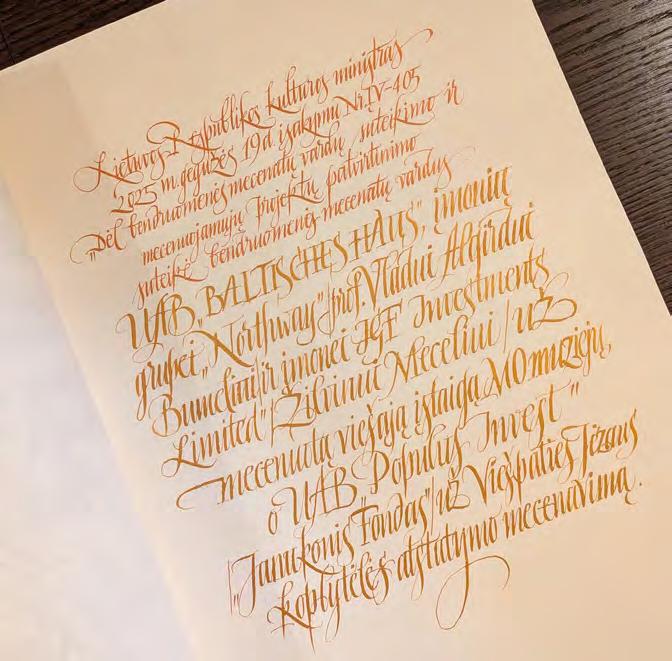
Names of honored donors are also inscribed in the Donors Book, held at the National Museum of Lithuania’s Palace of the Grand Dukes.
Donors and partners
Mindaugas Morkūnas, MO Director of Development, Board Member
We began this year with two new partnerships that helped us see the possibilities and prospects of the MO organization in a new light.
The startup company Hostinger decided to support MO so it could introduce its team to new experiences that help strengthen interpersonal relationships and discover new perspectives, which is such an integral part of creating innovation.
The Panorama Shopping and Leisure Center became a major MO partner. Together, we decided to bring more art and cultural experiences to less traditional museum spaces—which for MO Museum is an excellent opportunity to expand its audience and bring art closer to viewers.
This year we also received more donor and partner support, which is particularly important for sustaining MO Museum’s diverse budget. The cultural protests in Lithuania and the crisis in the Slovakian cultural sector have shown how important it is for culture to have as balanced a budget as possible and reduce dependence on public financing to a minimum.
We are grateful to our community of private donors, and that, thanks to their support, we can carry out our mission without regard to changing political winds.
In 2025, three of MO’s donors— Žilvinas Mecelis, Professor Vladas Algirdas Bumelis and his wife Žana, and Baltisches Haus—received the national Community Donor awards. We thank them and our other donors, who are also deserving of such recognition and will surely receive it in future.
We are delighted that this year, after the creation of the MO Advisory Arts Council and Advisory Board, our team had the chance to gain practical, first-hand experience of the Guggenheim Museum’s donor community development practices. We became convinced that, over the past seven years, we have been following a path that reflects the best international practices, and that, in the near future, we will expand the experience of MO donors not only in Vilnius, but also in Venice, Bilbao, and elsewhere.
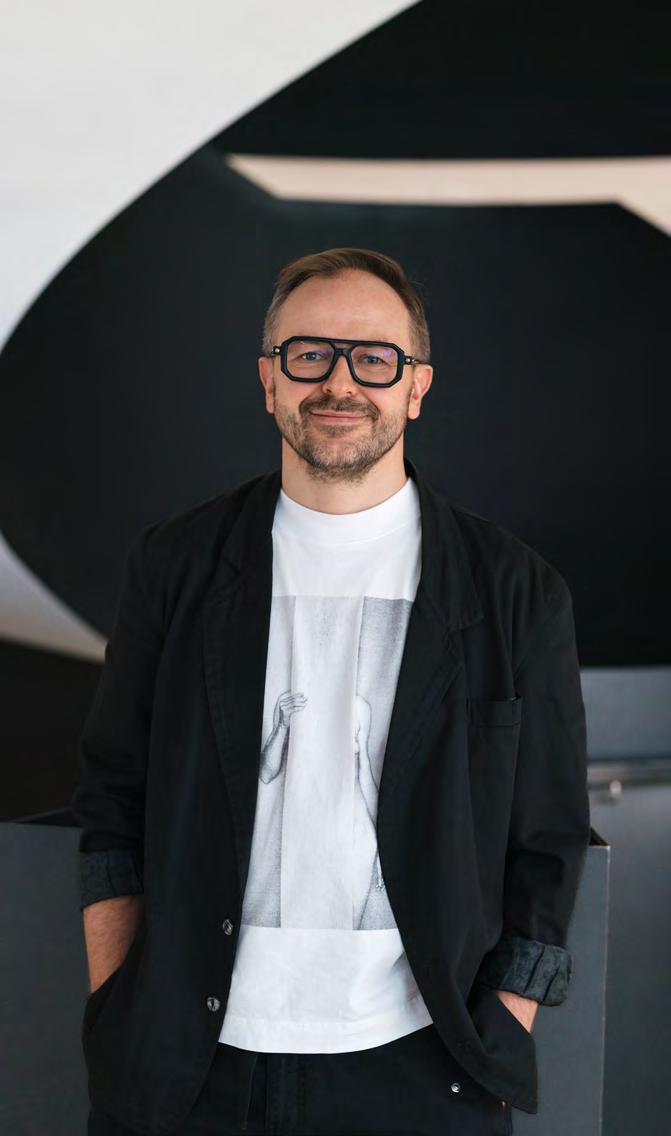
MO Donor community
Major Partners Major Patrons
Eugenijus Arvydas Janulaitis
In memoriam of MO supporter Alvyda Janulaitienė
Žilvinas and Ekaterina Mecelis
Staticus Group
Institutional Partners
Patrons
Žana and Vladas Algirdas Bumeliai
TMV Foundation
Kazickų šeimos fondas
Naresta
Ina and Darius Zubai
Strioga Family Foundation
Information Partners
Partners Supporters
Irmantas Norkus and Žaneta Norkienė
Eugenija Sutkienė
Justina and Vladas Jurkevičiai
Janina Muraškienė
Roma Puišienė
Aušra and Ričardas Čepai
Aras Pranckevičius
Rytis and Renata
Ramanta Gargasaitė and Rolandas Andrulis
Ieva and Justas
* Nearly 50 % of MO museum’s activities rely on support. For more about supporting MO: mo.lt/support
Ambassadors
Asta and Darius Vaičiulis
Rasa Juodviršienė
In memory of Remigijus Juodviršis
Marius Jakulis Jason Foundation
Andrius Šlimas
Marius Markevičius
Sergey and Natallia Avetikov
Jurgita Krasauskienė
The Bajorunas/Sarnoff Foundation
In memory of Irena Galvanauskienė
LitCapital
Kęstutis Ivanauskas and Jurgis Jasinskas
Vilniaus aukcionas
Manvesta UAB
Agnė Jonaitytė
Tomas Banišauskas / Bored Panda
Magdalena Sabalė
Ieva and Jonas Sabaliauskas
Lietpak
Build Me
Vilija and Gintautas Kvietkauskas
Reefo
Inga Langaitė
Andrius Šuminas
Julija and Evaldas Rimšelis
Milda and Arūnas Gečiauskas
Nijolė and Arūnas Zubas
Renida and Redas Kristanavičius
Krutuliai family
Friends
Rasa Klimavičiūtė
Justė and Darius Pinkevičius
Dovilė Burgienė
Viktorija and Simonas Jurgionis
Stede Ingram
MAGNUS kredito unija
Tautvydas Barštys and Neringa Mataitytė
Daiva Rakauskaitė
Neringa and Rolandas Vingilis
Darius Daubaras
Greta and Tomas Šidlauskas
Leta and Gintautas Galvanauskas
Tomas Krakauskas
Tomas and Dovilė Virbickas
Gabija and Mantas Radvila
Renatas Andrejevas
Simona and Dalius Neliubšys
Monika Skaržauskaitė
Brazzi
Aušra and Arūnas Eitutis
Evelina and Donatas Dailidė
Giedrė Duoblė
11 Budget
Budget
2025 was a successful year for MO Museum. We met and exceeded our overall revenue goals, with total revenue—including donations—rising to 3.4 million euro. The Millenium Schools Project (MSP), which involved as many as eighteen Lithuanian municipalities, had an especially significant impact on these results. The project’s total turnover in 2025 reached 270,000 euro. In addition, a record amount of private donation funding was achieved this year, exceeding one million euro.
The most significant impact on changes in expenditure, in addition to the MSP, was the fact that we only mounted one major exhibition in 2025, making it possible to close the year with a reserve set aside for exhibitions for the coming year.
Accordingly, two ambitious multinational exhibitions are planned for 2026, requiring appropriate financial resources. From a financial perspective, non-formal education activities will decrease since the Millennium Schools Project and the British Council’s People to People program have concluded.
As a project-driven organization, we hope that in the coming year we will once again succeed in attracting external support, participate successfully in public funding initiatives, and maintain a balanced flow of income and expenditures.
Tickets
Cultural education
Informal education
Other activities
Private support
International funding
Public funding
* December data are provisional
Tickets
Cultural education
Informal education
Other activities
Private support
International funding
Public funding
Photographers:
Donatas Babenskas
Edvardas Blažys
Rasa Grigaitytė
Ugnė Henriko
Gabrielius Jauniškis
Dmitrijus Matvejevas
Mantas Puida
Vilmantas Raupelis
Domas Rimeika
Greta Skaraitienė
Tautvydas Stukas
Rytis Šeškaitis
Aistė Užaitė
Dominykas Ugnius
Adas Vasiliauskas
Translator
Darius Sužiedėlis
Editor
Audra Kairienė
Designer
Neringa Martinėnaitė / Kabinet Agency