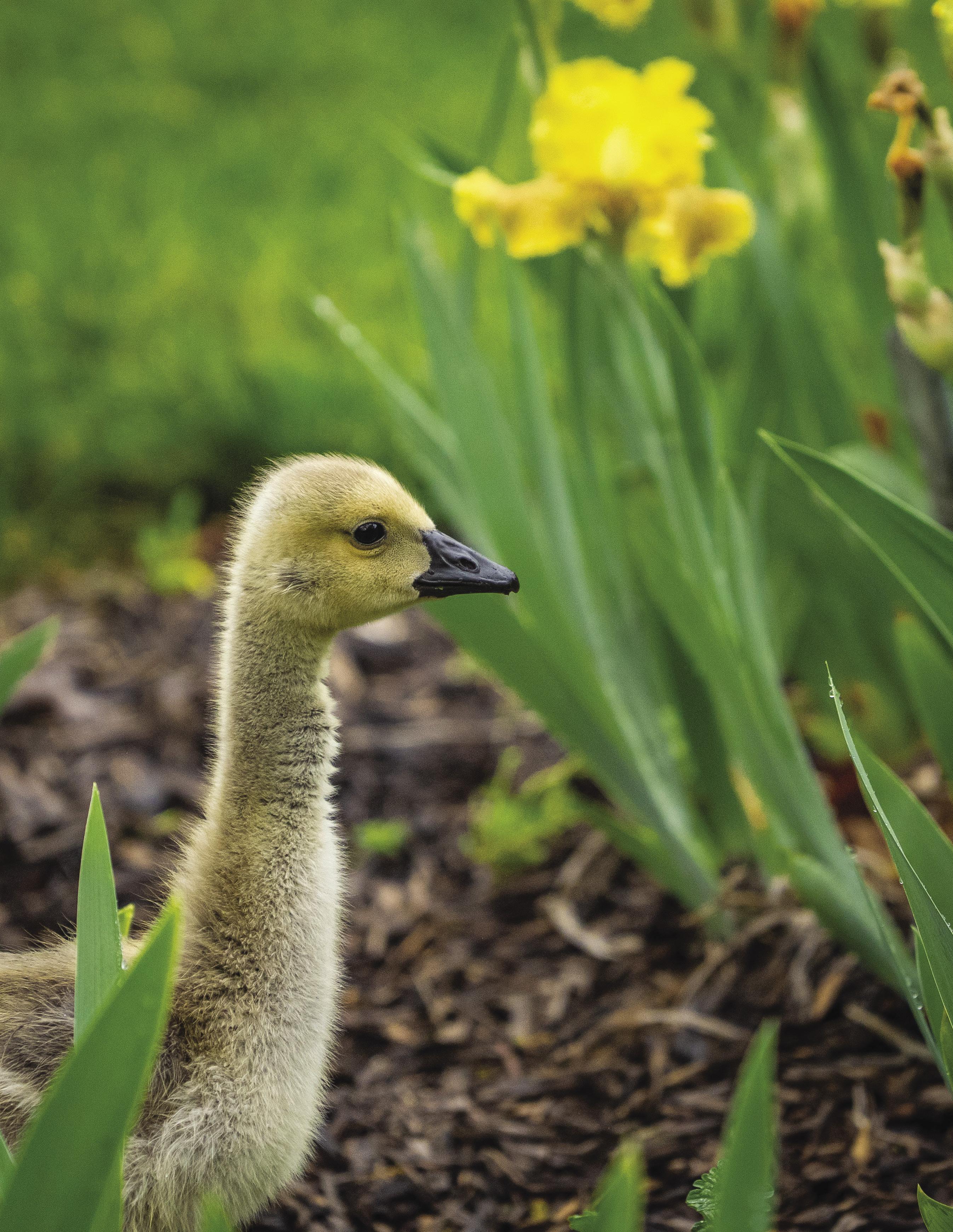
This Page A gosling blends in among the blooms in the Iris
ON THE COVER
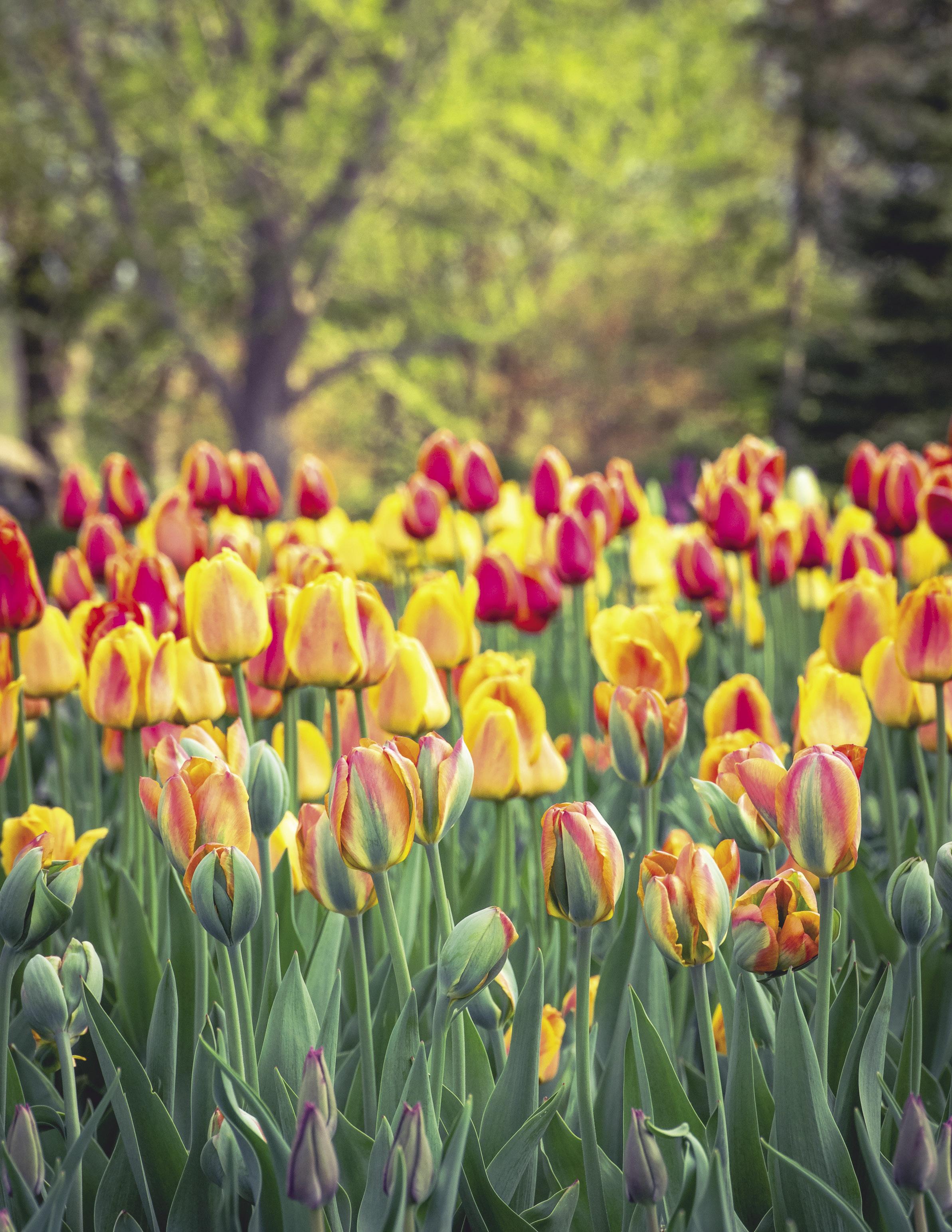
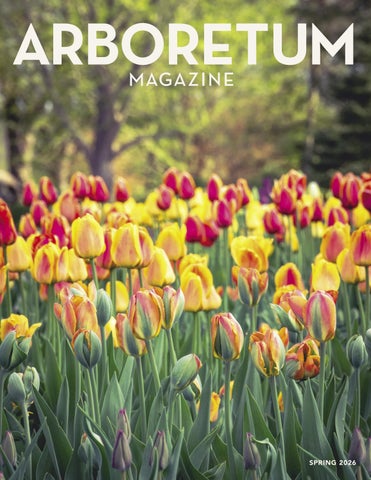
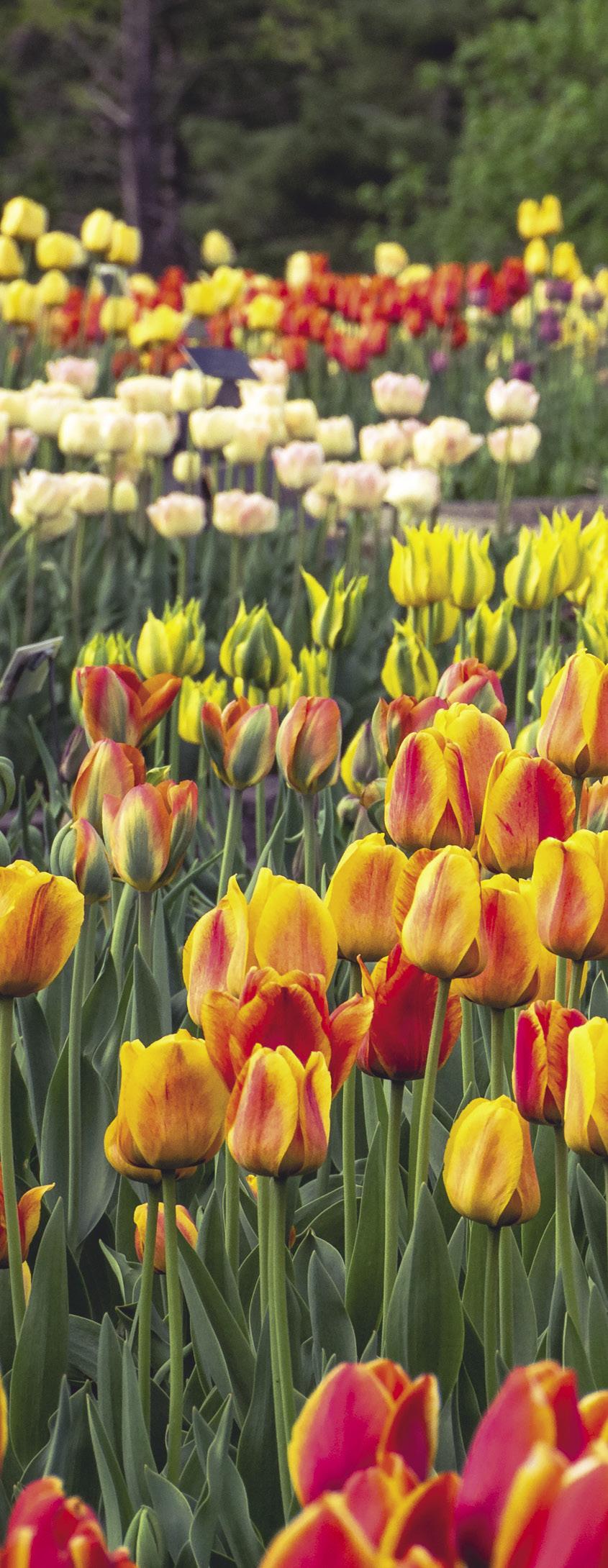
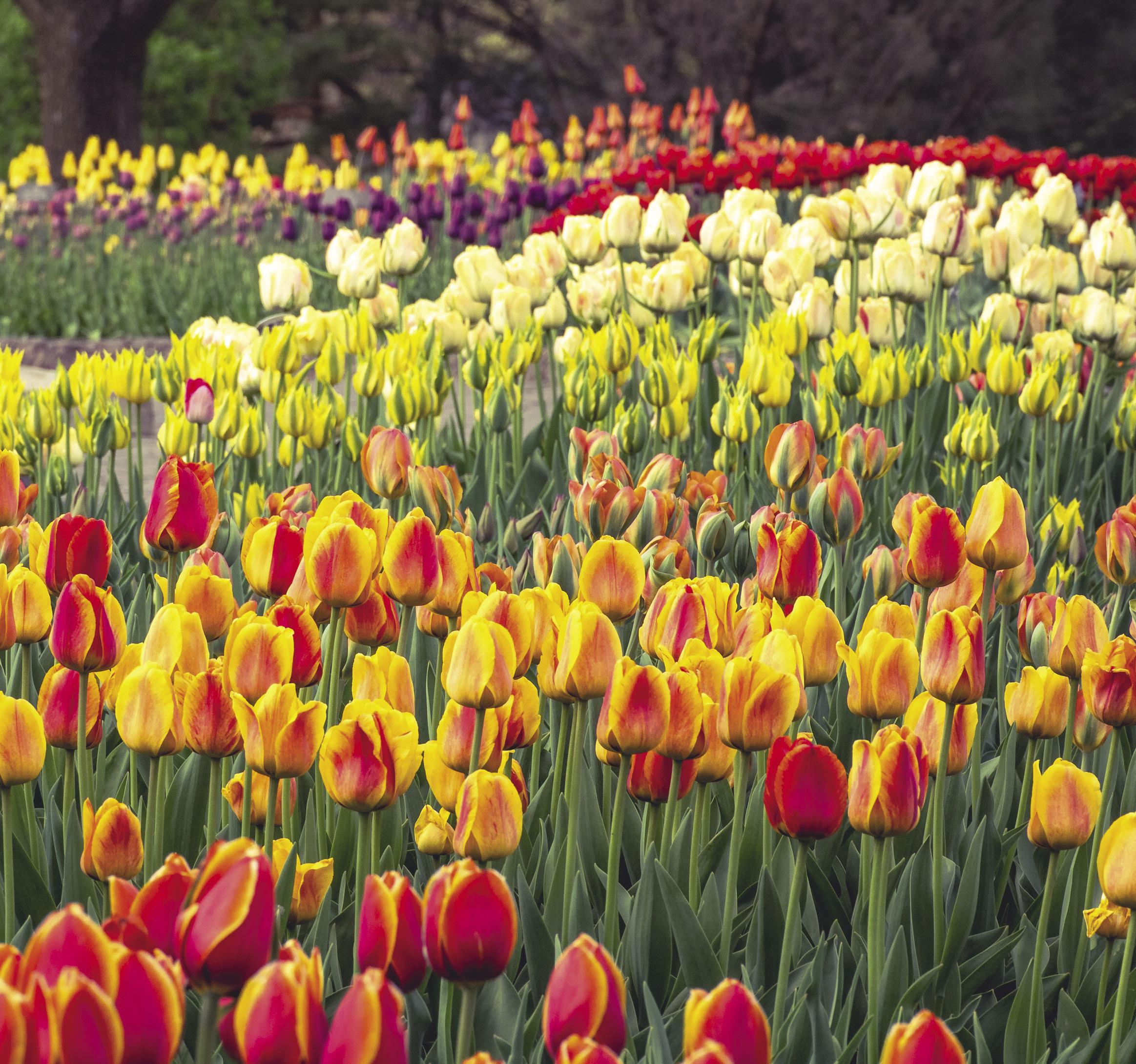
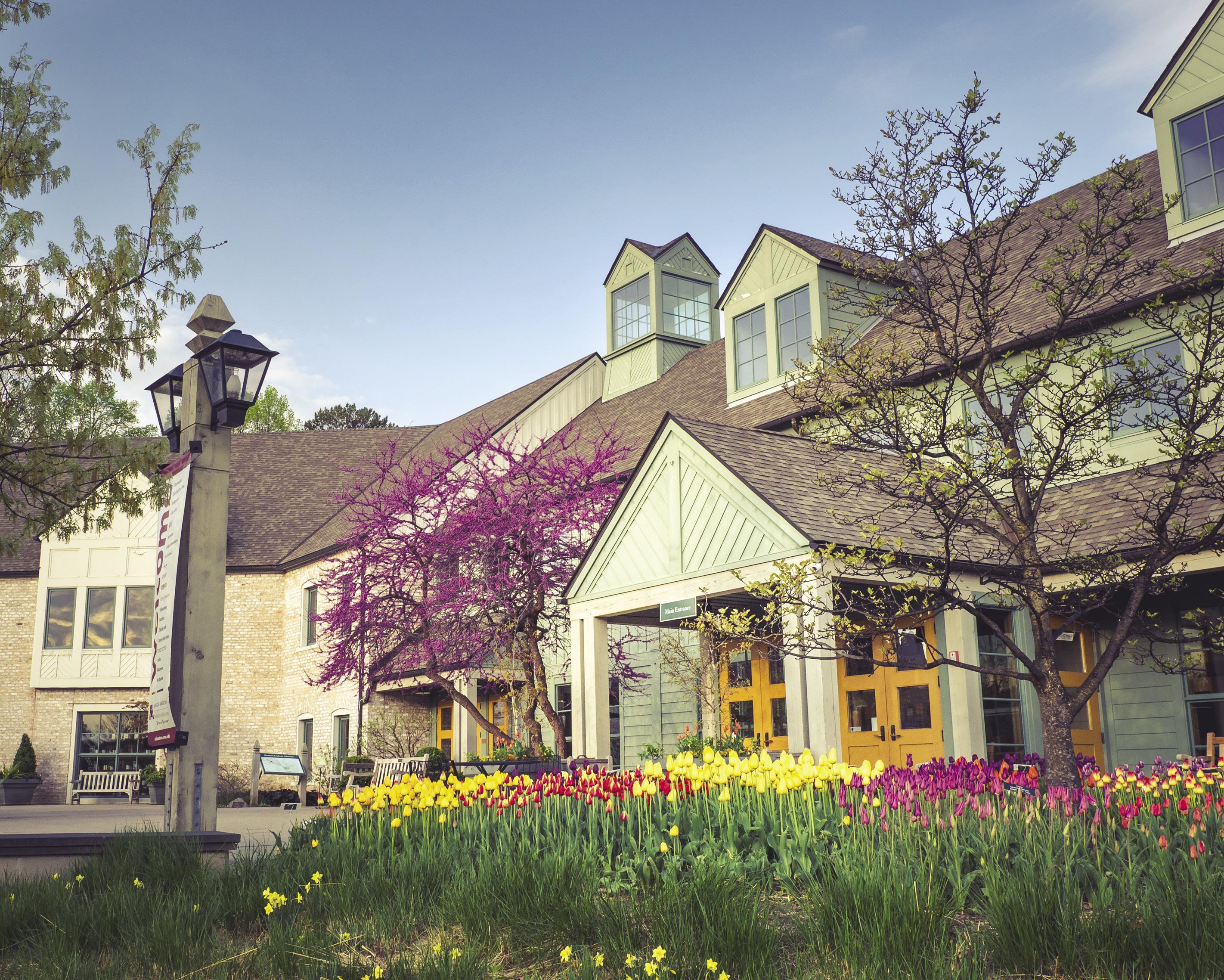
In early May, 40,000 tulips bloom across the Arboretum landscape, including 20,000 in the Annual Garden.
Garden in May. Photo by Jason Boudreau-Landis
Photo by Sara Pace
This Page A gosling blends in among the blooms in the Iris
ON THE COVER
In early May, 40,000 tulips bloom across the Arboretum landscape, including 20,000 in the Annual Garden.
SPRING 2026, VOL. 45, NO.1
Elise Bremer Editor
Brenda Drake Lesch
Art Director
Andrew Gapinski Executive Director
Matthew Clark, Ph.D. Director of Research
Rachelle Crosby Director of Facilities & Project Management
Timothy S. Kenny Director of Education
Jared Rubinstein Director of Horticulture & Collections
David Senior Director of Business & Finance
Susan Taylor, Ph.D. Director of Advancement
Tom Lany
Senior Marketing & Communications Manager
Kathy Persian President, Arboretum Foundation
Schoolyard gardens teach
Arboretum Magazine is published by the University of Minnesota Landscape Arboretum. The Arboretum is part of the College of Food, Agricultural and Natural Resource Sciences (CFANS) at the University of Minnesota. The magazine is a benefit of Arboretum membership. To request a copy of this publication in an alternate or digital format, please call 612-301-1257.
© 2026 Regents of the University of Minnesota. All rights reserved. The University of Minnesota is an equal opportunity educator and employer.
arb.umn.edu 612-624-2200 arbpr@umn.edu
Arboretum Magazine is printed on paper containing 100% sustainable recycled fiber.
Spring ushers in a period of transformation at the Arboretum, as the daily emergence of plants, expanding buds and anticipation for the growing season lead us toward warmer, longer days ahead. Although early spring in Minnesota can be unpredictable, I relish the opportunity to get outside each day to see the renewal unfolding across the Arboretum.
As we look forward to Arbor Day in April, it’s a perfect time to highlight the work of the Arboretum’s Curatorial Team, who, like curators at a traditional museum, seek to collect, preserve, study and display the best trees for our region. Read about how the Arboretum is planting trees for the future on the next page, followed by tips on best practices for tree planting.
Our spectacular spring tulip display, designed by Duane Otto, the Corrie Beck Horticulturist, brings a surge of immersive color to the gardens after the long winter. You can learn more about this year’s tulip display and the 15 unique divisions used to classify tulips in the illustrated guide on page 10.
After the tulips fade, be sure to return often throughout the season as the parade of blooms unfolds. For me, a highlight of the season is exploring the azaleas in bloom in pockets of magnificent color across the Arboretum landscape. Tucked away between trees in the Pine Collection, the stunning Azalea Trial Garden features rows of brightly colored shrubs that are part of the University’s Woody Ornamental Plant Breeding and Genetics program and are being evaluated by researchers at the Horticultural Research Center.
As the landscape transforms with spring, progress continues on the Building a Better Arboretum Project. Paving and planting will take place throughout the new entry this spring, establishing trees ahead of the opening late next year. Near the Farm at the Arb, construction is advancing on Betty’s Apple House, too. Updates on all these initiatives are available at arb.umn.edu/betterarboretum.
Thank you for your continued support through this transformative time at the Arboretum.
Andrew Gapinski

Carolyn Bernhardt l Contributing Writer
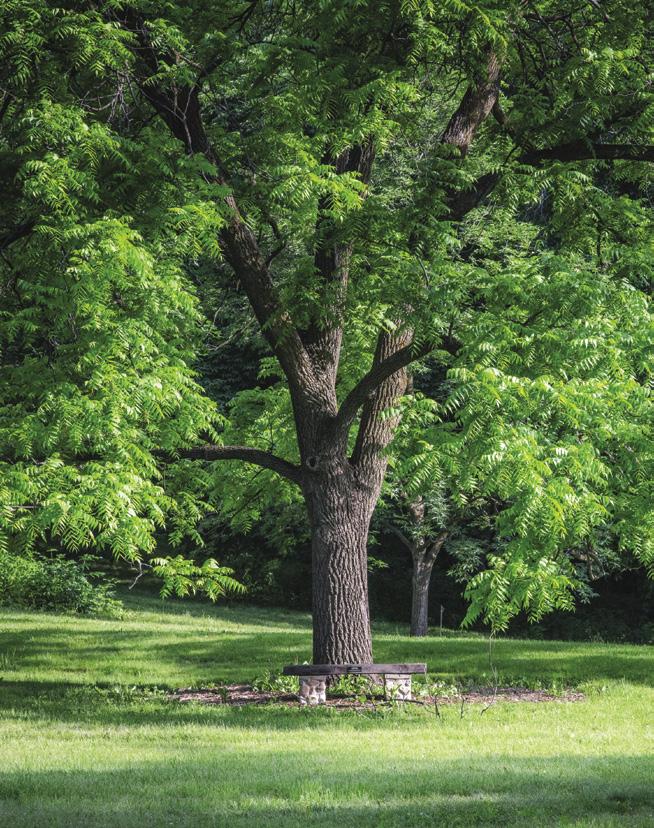
Not all the beauty at the University of Minnesota Landscape Arboretum sprawls out on the ground — sometimes, to soak it all in, visitors actually need to look up. Since its founding in 1958, the Arboretum has blossomed into a home to nationally recognized tree collections. Over the decades, experts at the Arboretum have refined their approach to selecting, planting and maintaining the health of countless trees — all while advancing research on tree health in a changing climate.
EXPERTLY CURATED AND CARED FOR
“Historically, the Arboretum has showcased the best plant performers in a northern landscape,” said Nick Kreevich, Curatorial Manager at the Arboretum. When selecting top performers, he and his colleagues are always sure to consider a tree’s bloom period, fall color, cold resistance, and resistance to pests and pathogens.
The Arboretum also seeks to widen diversity in its collections through the collection of wild germplasm and through collaboration with other botanical or research institutions and the University of Minnesota’s Department of Horticultural Science. Research at the Horticultural Research Center at the Arboretum has led to the introduction of many new ornamental plants proven to withstand Minnesota’s historical climate. These University of Minnesotadeveloped plants can be found throughout the Arboretum’s collections and identified by their maroon plant tag.
Along with a focus on plant breeding and research, the Arboretum serves as a seed bank to safeguard plant species that are either endangered or on the brink of extinction.
The dual-ended aim of the Arboretum’s Curatorial Team is to preserve species suited to Minnesota’s climate and test others for their adaptability.
As the global climate shifts, the Arboretum’s collections are expanding to include plants from regions south of the Upper Midwest. “This could include looking at specific plant species and their known or historic ranges, and for those more southern species, focusing particularly on their northernmost range,” said Kreevich. The approach increases the chances of a plant’s success in Minnesota’s shifting climate because plants that naturally grow near the northern edge of their range are more likely to be better adapted to harsh winter conditions.
“We utilize resources such as botanical literature, UMN Extension and field experts to understand how plants have thrived not only in their natural ranges, but also within a landscape setting,” said Brandon Miller, Assistant Professor in the Department of Horticultural Science and Curator of Plant Collections at the Arboretum. “Our lab’s research focuses on resilient landscape horticulture; we incorporate findings from recent research and what we are learning from our colleagues to inform plant selection and siting.”
In recent years, extended drought has made it difficult to establish new saplings. UMN faculty, researchers, horticulturists and arborists use Geographic Information Systems (GIS), a mapping technology, to assist in monitoring and caring for each planting. GIS technologies coupled with field data can be used to assess factors such as light and soil conditions, the slope of a tree’s location, and a tree’s proximity to other collections and surrounding species diversity.
Miller said maintaining a tree’s health involves a dynamic set of considerations, including correct planting depth, root maintenance, proper and routine pruning tactics, avoiding planting co-dominant leaders near one another, and not mulching above a tree’s root flare.
Eliminating unhealthy trees also helps the Arboretum’s tree population thrive. Decaying trees can pose safety hazards, and trees infected with pests or pathogens can harbor disease and spread it to healthy trees. Before removal, Arboretum experts consider the aesthetic impact of clearing a tree, whether the tree provides essential wildlife value, whether any current research projects are tied to the tree and whether its removal would impact educational or interpretive programming.
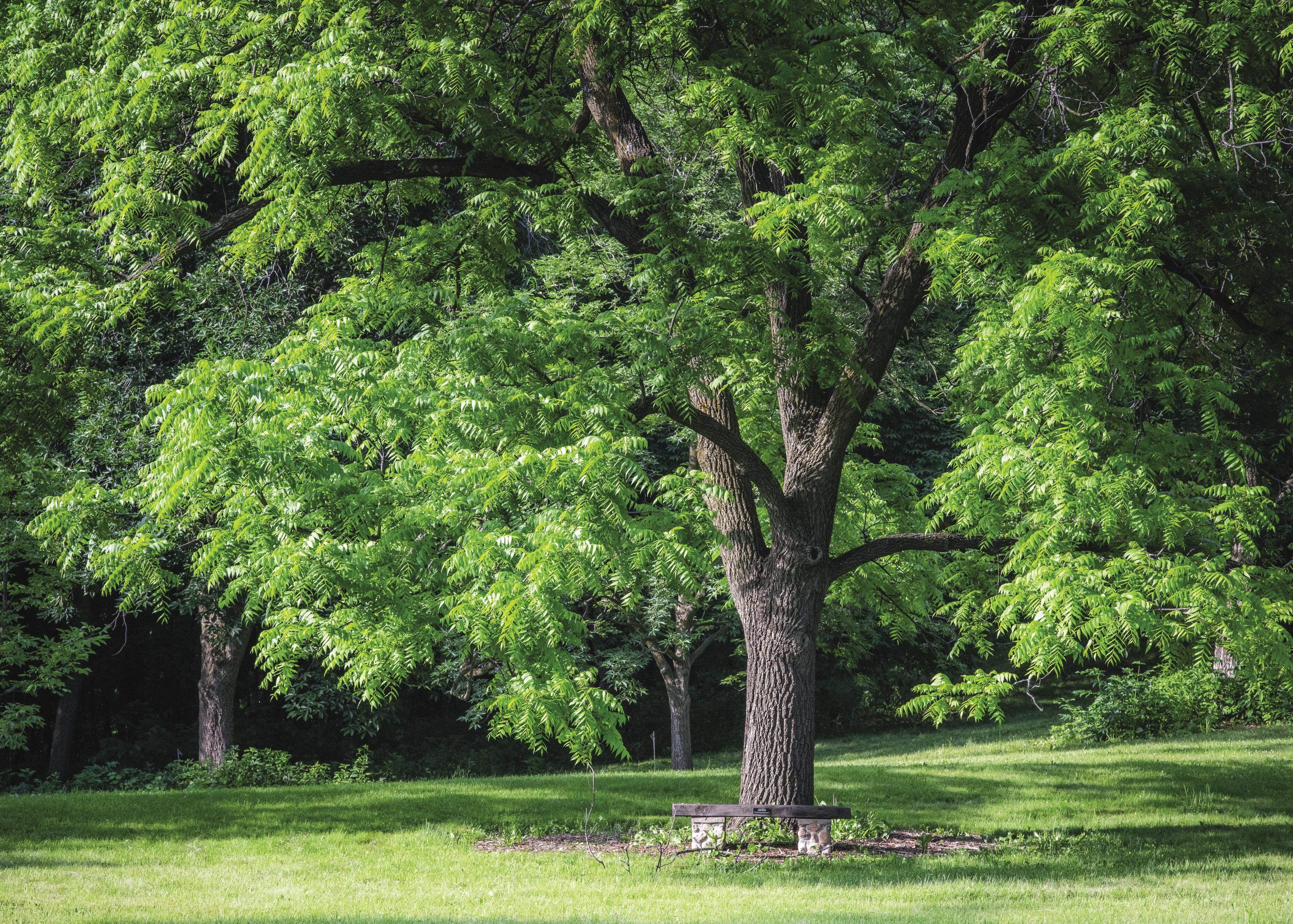
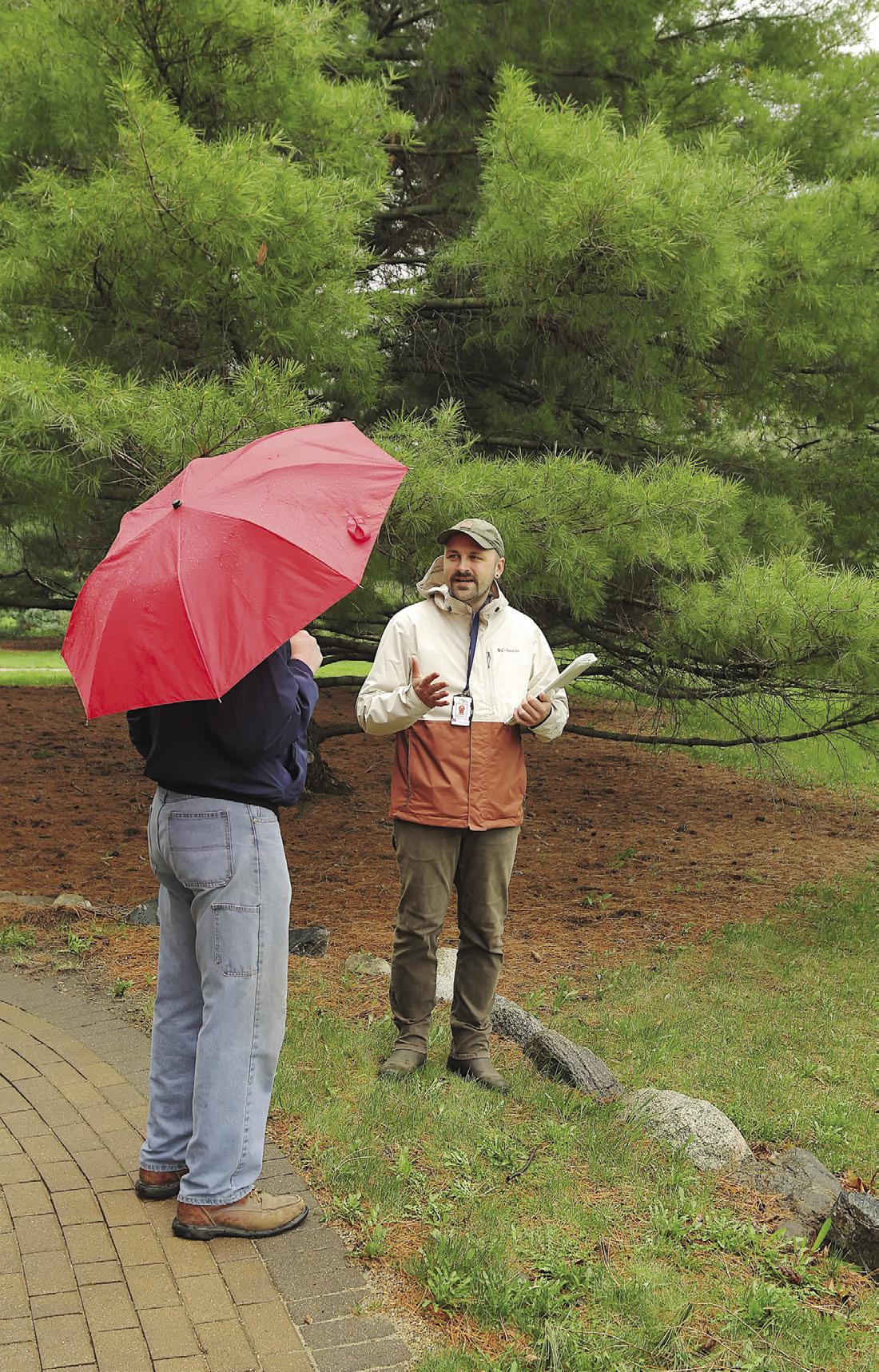
Kreevich hopes the Arboretum’s tree collections help visitors better understand the value of matching a tree to a landscape. “I would also hope that tree collections help people slow down and recognize species diversity,” he said. “For example, you can take a stroll through the Oak and Nut Collection and come across many species of oaks that have a range of diversity in their leaf shapes, bark, acorns, forms and more.”
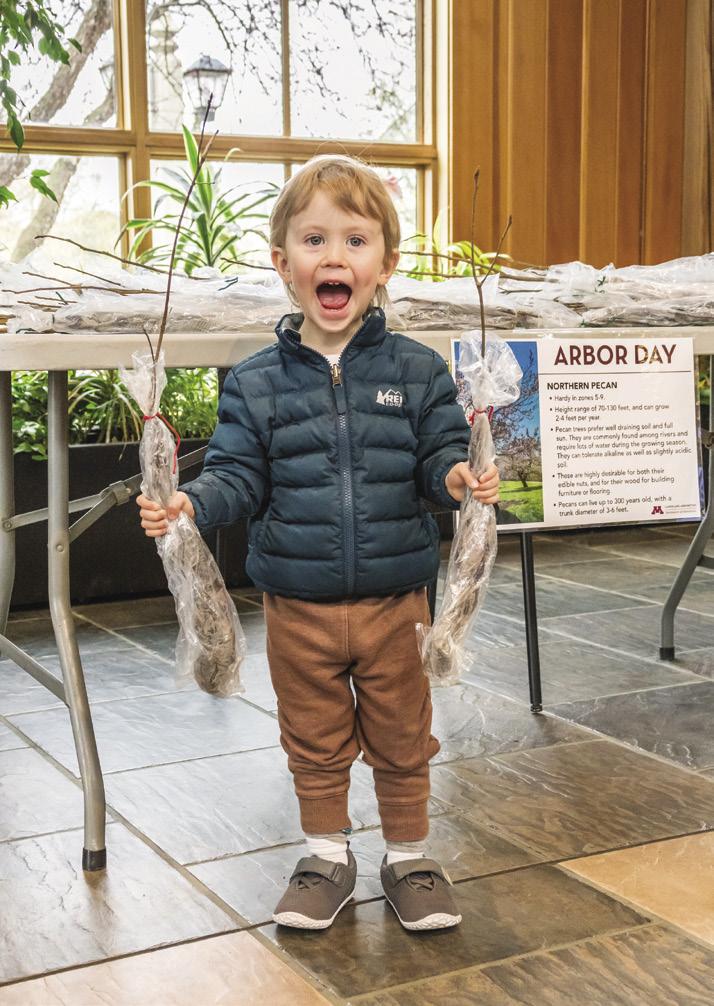
Learn more about the Arboretum’s trees and tree collections at an Arbor Day celebration on April 25. Visitors will play tree-themed games, attend presentations throughout the Arboretum’s tree exhibits and take home a free tree sapling to plant in their yard provided by Living Lands & Waters in partnership with Cargill. Visit arb.umn.edu/events/arborday to learn more.
Kreevich hopes the Arboretum’s tree collections help visitors better understand the value of matching a tree to a landscape.
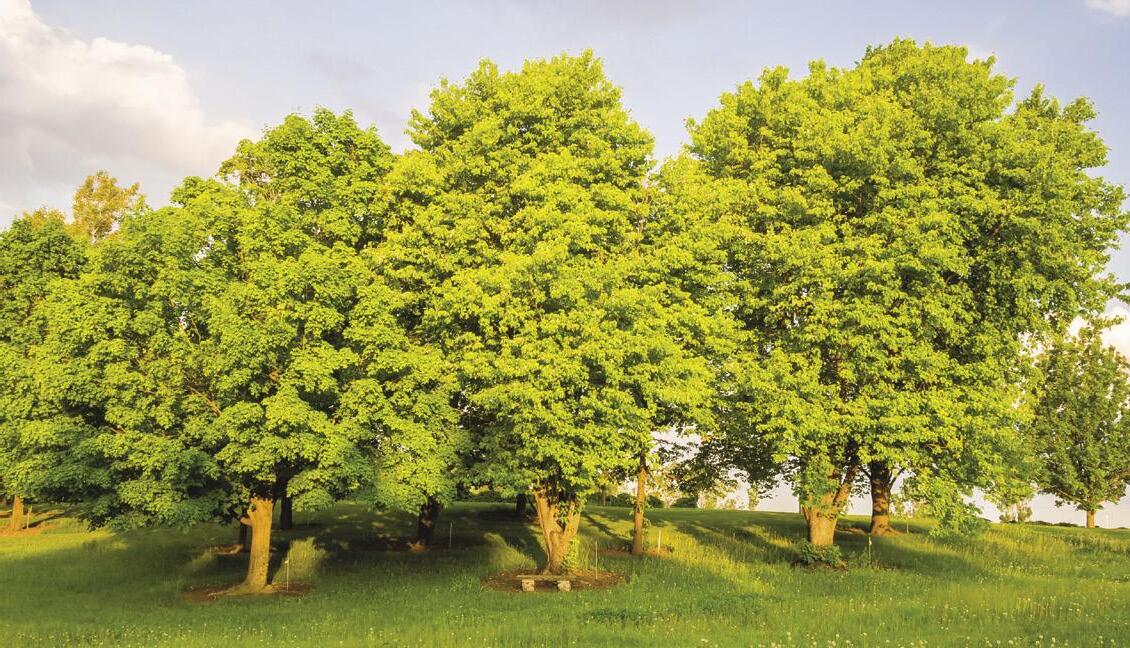
Tips on planting a tree from Arborist Stephanie Swanson
Selecting what to plant is the first step, Swanson said. Here are three key things to consider when making your selection:
1. The diseases your new tree may have to face. Identify the pests and pathogens that commonly cause tree loss in your area and avoid planting anything that might be susceptible. UMN researchers have helped develop diseaseresistant varieties and hybrids for species affected by oak wilt, Dutch elm disease and chestnut blight.
2. Your yard’s topography. This includes water levels and sunlight exposure, since these factors greatly influence how fast and how well a tree will grow. Also, if your property has overhead lines that could block tree growth, make sure to plant a tree that can tolerate a lot of pruning over its lifetime.
You can plant a tree anytime the ground isn’t frozen, but spring and fall are best. Fall is ideal because trees expend less energy on growth and flowering, reducing transplant shock and helping roots establish before winter.
3. How your new tree will affect your landscape. The shade, nuts and leaves a tree produces can affect what grows beneath it and will determine seasonal cleanup and maintenance.
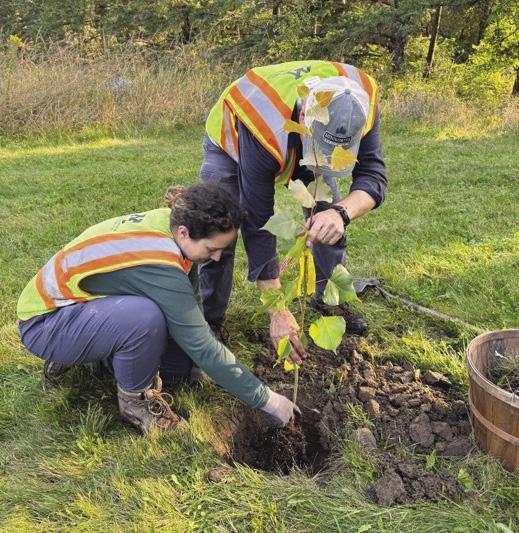
Planting steps vary depending on whether a tree is container-grown, balled and burlapped or bare-root. But in general, Swanson recommends digging a hole twice the width of the root ball to loosen compacted soil and help new fine roots, which are crucial for water uptake, grow. The hole should be no deeper than the root ball. Next, untangle and remove any roots that could grow to strangle, or girdle, the tree’s trunk, cutting off the water supply. Then, locate the root flare and ensure the first major root sits less than an inch below the soil surface. If a tree is planted too deeply, its roots can girdle the tree. “Container-grown trees are especially prone to this,” said Swanson.
Lastly, fill in the soil and water it right away! This helps the soil settle, removing air pockets.
Jocelyn Mehle, Molly Huber and Kristen Mastel l Andersen Horticultural Library/Minnesota Digital Library
celebration of Women’s
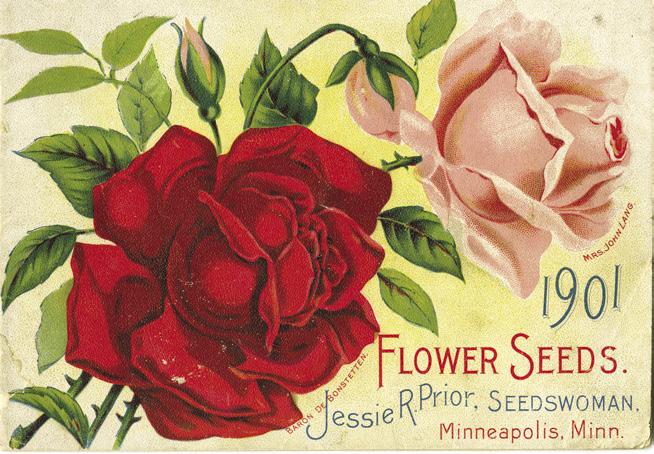
Month in March, we honor three Minnesota seedswomen — Carrie H. Lippincott, Emma V. White and Jessie Rockwood Prior — whose contributions to horticulture in the late 1800s helped redefine the seed-selling industry. These pioneering women combined creativity, savvy business practices and deep botanical knowledge to build successful enterprises that empowered home gardeners across the country. Their beautifully illustrated catalogs
Carrie H. Lippincott began her seed business in Minneapolis in the early 1890s, after relocating from New Jersey with her mother and sisters. Her first catalog was published in 1893, and she quickly gained traction with her vibrant, customer-friendly publications. Working alongside her brother-in-law, Samuel Haines, until 1898, Lippincott managed operations while Samuel handled marketing. She was intentional about employing women, assigning them key roles such as sorting seeds and managing correspondence. Her business grew rapidly — by 1894, she had more than 70,000 customers, and by 1896, that number had tripled. Initially focused on flower seeds, her offerings expanded to include vines, roses, vegetables and garden products. Lippincott’s catalogs were among the first to organize seeds alphabetically by common name and were accompanied by her popular growing guides, “Floral Culture.” Her success inspired other women to enter the industry in Minnesota and beyond. She retired from seed selling in the early
and innovative marketing strategies not only transformed how Americans engaged with floriculture, but also paved the way for future generations of women in horticulture and business.
Today, their legacy is preserved at the Andersen Horticultural Library. Home to the third-largest seed catalog collection in North America, the library’s collection consists of more than 80,000 catalogs — including original publications from these trailblazing entrepreneurs.
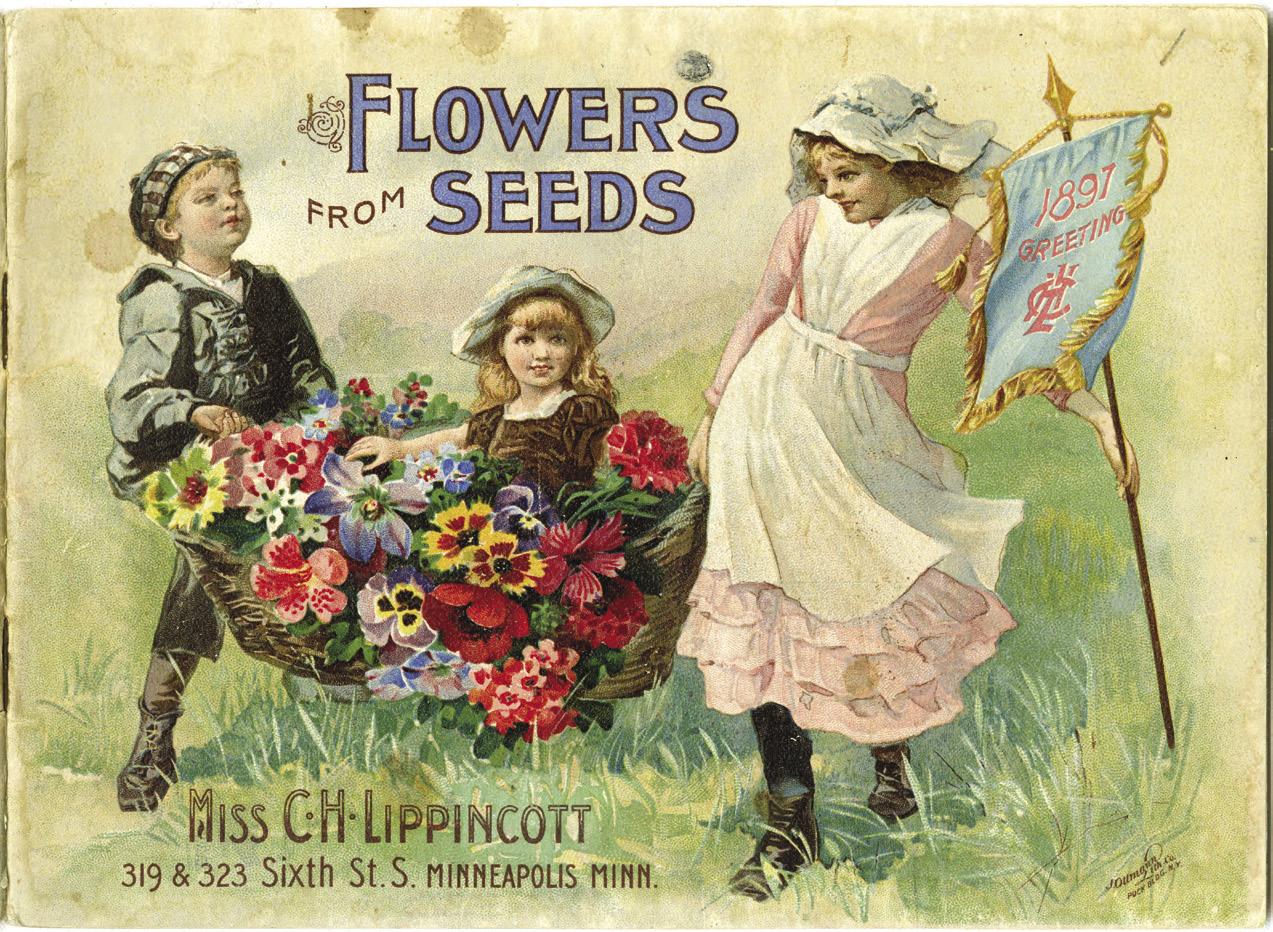
1920s but maintained her connection with plants, running a flower shop in Minneapolis until the mid-1930s. Lippincott died in 1941 and is buried in Lakewood Cemetery in southwest Minneapolis.
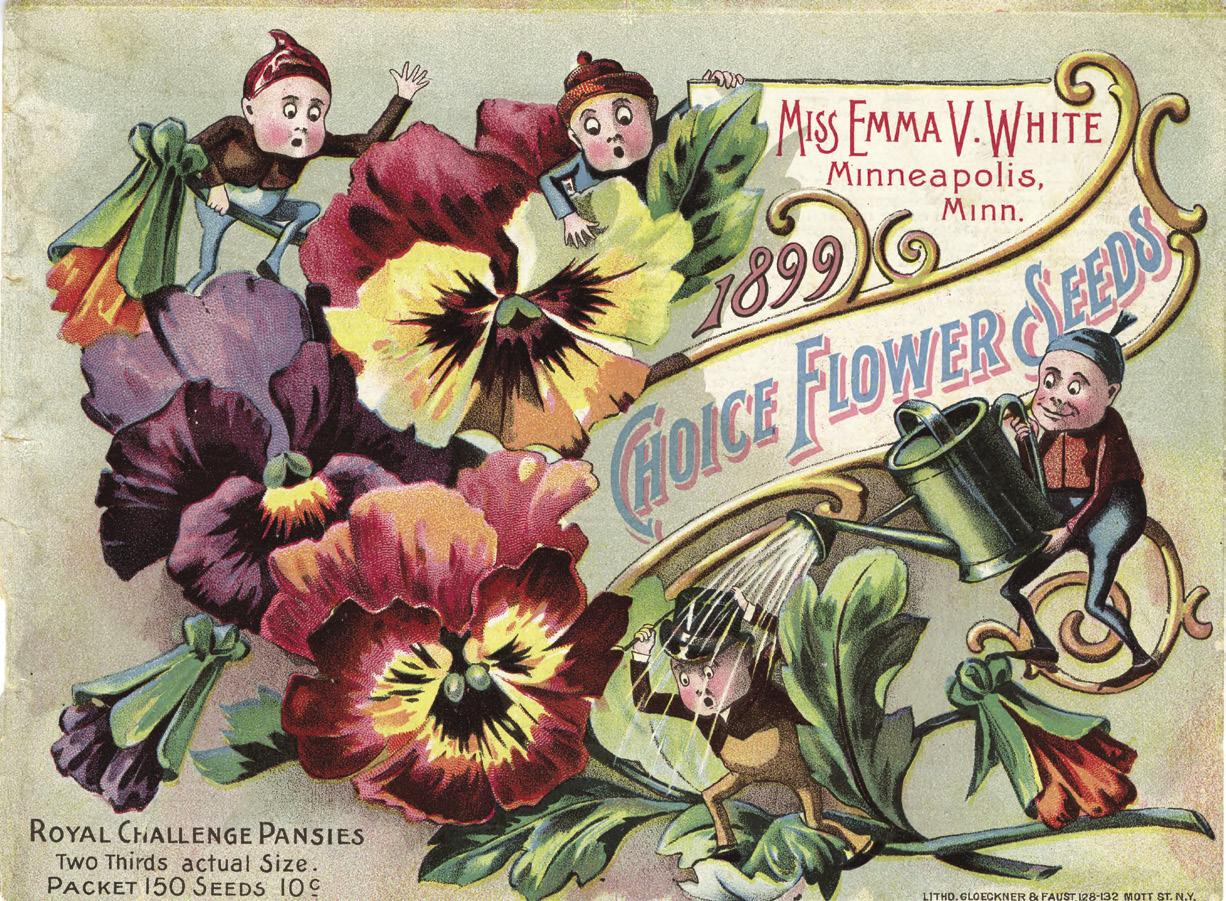
Emma V. White entered the seed business in 1896, acquiring the Minneapolis seed company E. Nagel & Co. and launching her own catalog with a public endorsement from Mr. Nagel. In her mid-40s at the time, White emphasized the affordability of her seeds, advertising savings of 30-50 percent compared to competitors. Her catalogs were visually engaging, featuring whimsical characters like the endearing Sunbonnet Babies and mischievous Brownies. She commissioned women artists such as Adelaide Upton Crosby to design her covers.
White was deeply involved in the Minnesota State Horticultural Society (MSHS) and regularly distributed mini books titled “Culture of Flowers” with seed orders, which offered detailed cultivation advice. She also fostered community engagement through competitions, including writing contests and pansygrowing challenges. When White retired around 1919–1920, she incorporated the company, “giving opportunity for younger hands and heads to help us serve our friends better than ever.” She later moved to California and married former MSHS Secretary A.W. Latham, passing away in 1932.
White emphasized the affordability of her seeds, advertising savings of 30-50 percent compared to competitors.
Jessie Rockwood Prior founded the Prior Seed Company in 1895 at just 18 years old. She shared a mailing address with her husband’s law office in Minneapolis, but also maintained trial grounds on Lake Minnetonka, where she cultivated seeds and kept beehives. Her catalogs were known for their full-color covers and artistic flair. Prior’s asters and pansies won multiple awards at the Minnesota State Fair, and her pansies earned a bronze medal at the 1904 St. Louis World’s Fair. She authored a leaflet on sweet pea cultivation and a general guide titled “Flowers From Seeds,” which was included with orders. Though little is known about her later life, Prior’s early achievements left a lasting impression. She died in 1960 and, like Lippincott, is buried in Lakewood Cemetery.
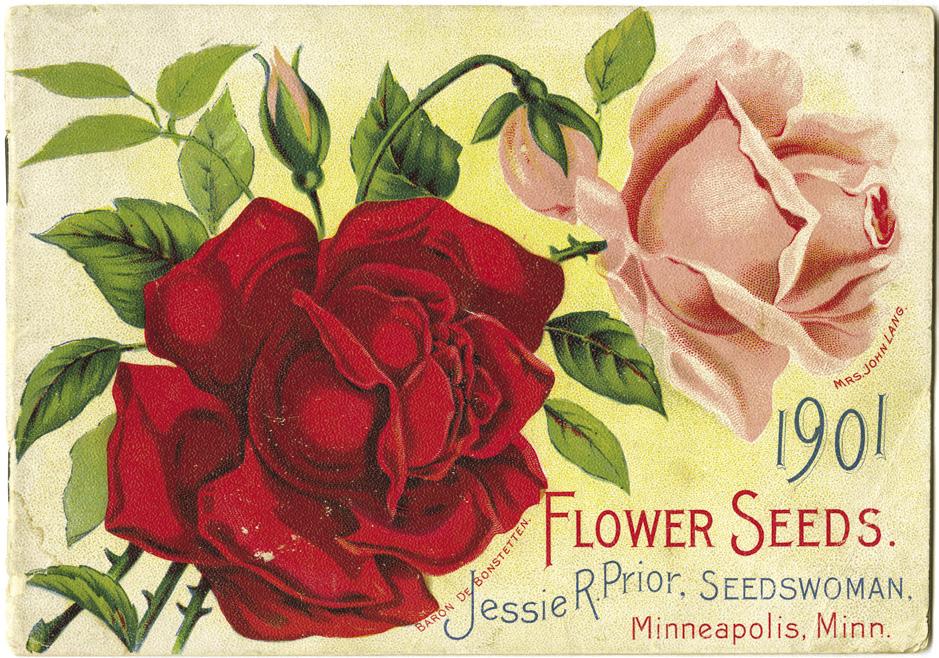
Together, these three seedswomen not only advanced horticultural commerce in Minnesota but also paved the way for women in business and botanical arts. Their catalogs, competitions and cultivation guides continue to inspire gardeners and historians alike. These materials are housed in the Andersen Horticultural Library, where they are available to be viewed by request.
The materials also inspired a traveling exhibit, created as a partnership between the Andersen Horticultural Library and the Minnesota Digital Library. The exhibit consists of three banners, one for each seedswoman, highlighting their story and sharing examples of their catalogs and guides. The exhibit will be on display this spring at the Rochester Public Library, the Belgrade Public Library, the Hardwood Creek Library and at Andersen Horticultural Library in April.
If a photo is worth a thousand words, the Arboretum Photographers Society’s work is worth a million
Picture the Arboretum in your mind’s eye. What do you see? For many visitors and Arboretum members, their favorite mental image of the Arboretum might not come from something seen with their own eyes, but rather, from a photograph.
Since its founding in 2008, the Arboretum Photographers Society (APS) has captured the beauty of the Arboretum in every season, collaborating with staff to share the very best of the Arboretum with its audience.
The work of APS photographers can be seen across the Arboretum’s communications, including Arboretum Magazine, eNews, the website and more. APS President Todd Mulvihill, who joined the group in its inaugural year, estimates that APS photographers have captured nearly 10,000 images of the Arboretum.
The volunteer group, which currently includes 35 member photographers, was formed with the dual goals of supporting the Arboretum through photography and forming a new kind of camera club with a focus on camaraderie, education and a shared love of photographing nature and the Arboretum’s landscape.
In addition to photographing the gardens, collections
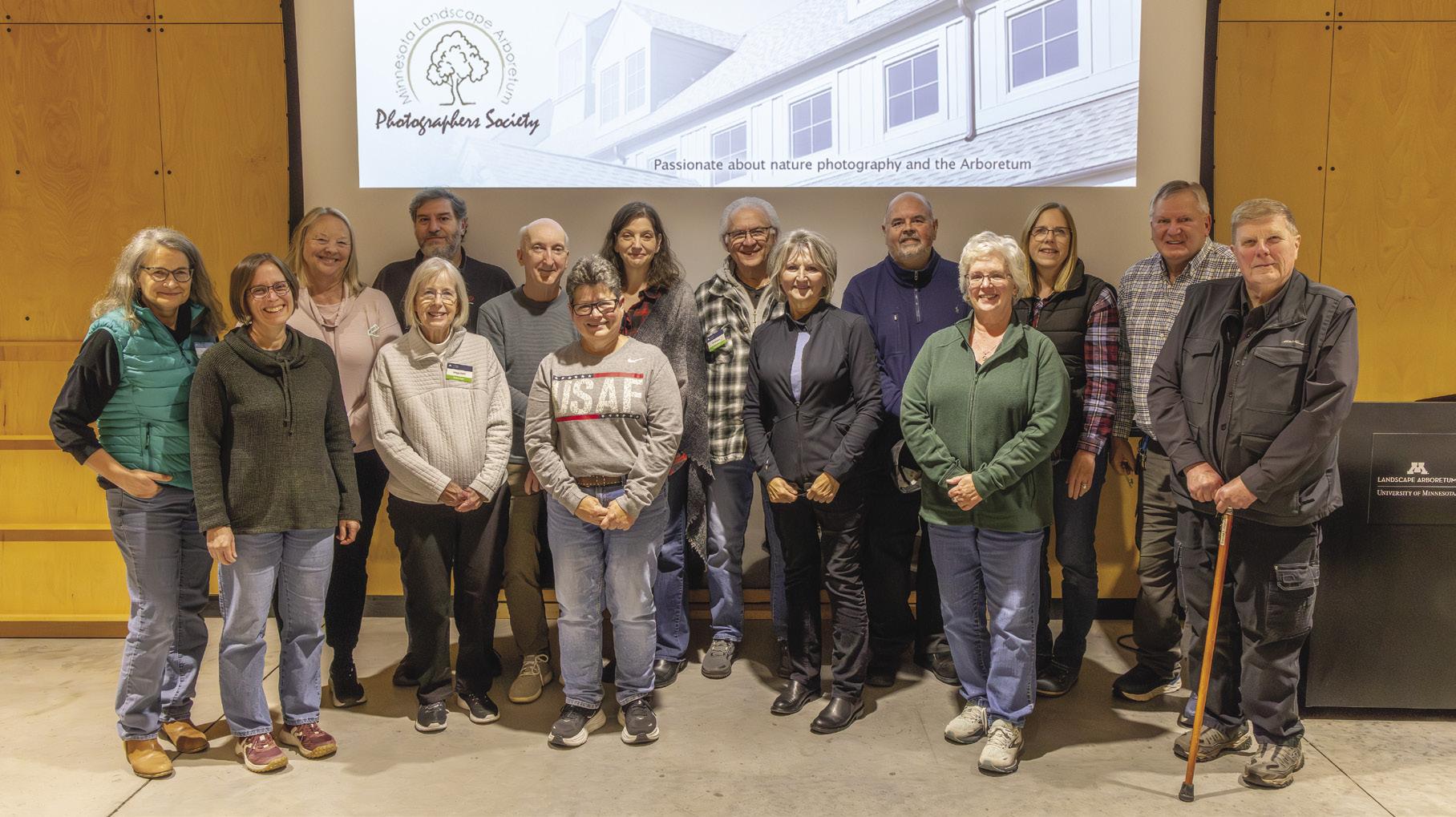
The Arboretum Photographers Society meets monthly at the Arboretum to share recent work and learn more about photography.
Photo courtesy of Arboretum Photographers Society
Elise Bremer l Editor
and natural areas on their own time, APS volunteers shoot assignments from staff: capturing images of plants and collections, delicious meals from Rootstock, events, celebrations, and more.
Members meet monthly at the Arboretum to learn about photography through presentations given by fellow members and special guest photographers. According to photographer Tyler Johnson, who joined APS in 2022 and serves on the board as webmaster, the experience of being a member of the group goes far beyond swapping tips.
“I can talk about photography, and their eyes don’t glaze over,” said Johnson. “It’s fun to be able to have those conversations and see what other people are sharing and getting feedback from others on my own work.”
The best opportunity to see the group’s work on display comes each spring during their annual photography exhibition. This year’s show, “Inspired by the Landscape,” will be on display from Feb. 17 to March 16 in the Cafe Gallery. To learn more, visit arb.umn.edu/art/cafe-gallery/inspired-aps Prospective members can learn more about APS at arboretumphotographers.com.
Matt Schuth l Naturalist

Matt Schuth is a naturalist and author of “Nature at Our Doorstep.” He has contributed a nature column to Arboretum Magazine for more than 30 years and hosts seasonal guided “Walks With Matt” exploring the natural world at the Arboretum.
In 1885, the poet Mary Frances Butts wrote about a little lady she met:
“...She wore a gown of green, She wore a scarlet cap, Graceful was her figure, Her manners very fine, A fairy airy creature, Her name was Columbine.”
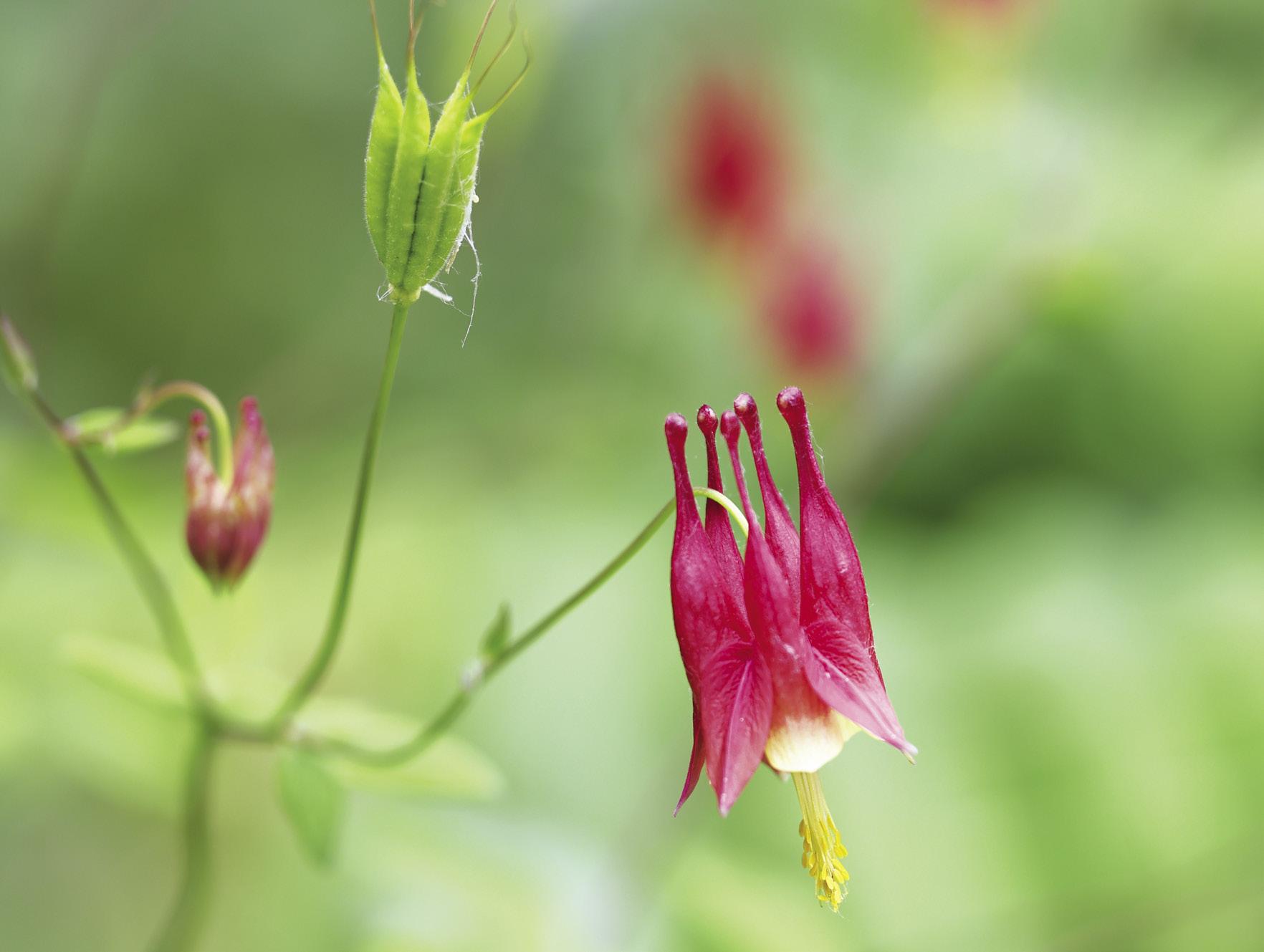
This poem is a lovely description of the dainty, dangling flower of the American columbine (Aquilegia canadensis). Its flower, with its cherry red exterior and sunshine yellow interior, looks as if it had been painted by the Michelangelo of the elfin world. The five long spurs of the flower were
American columbine blooms from May through June and can be found in the
thought to resemble the talons of an eagle, thus lending the genus name Aquilegia, from “aquila,” Latin for eagle.
The tubes of the spurs contract just below the tips where the nectar is stored. These long spurs are only able to be pollinated by ruby-throated hummingbirds, an evolved partnership. As children, we called the flower honeysuckle, and would chew the sweet nectar-filled spurs. The columbine is not a honeysuckle, but rather, a member of the buttercup family.
Columbines symbolize fragility, adaptability and tenacity. Even though the flower seems to have a soft tenderness, it has adapted itself to harsh climates such as rocky cliffs, sandy soils and more arid conditions.
In Norse mythology,columbines were associated with Freya, the goddess of love, for their delicate, enduring nature. Young Meskwaki men mixed ripe columbine seeds with tobacco to improve its smell. They believed it created a “love perfume” that would impress the young women they were courting. A man of the Omaha or Ponca tribe would rub pulverized columbine seeds into his palms and try to shake hands with the woman he loved, hoping she would love him in return.
For more practical purposes, columbine seeds were rubbed into hair to control lice, and its roots were used as incense.
The word columbine is derived from the Latin word “columba,” meaning dove, the symbol of peace. When we see the columbine in bloom, let’s think of peace. Find columbine at the Arboretum this spring at the entrance to the Grace B. Dayton Wildflower Garden from May through June.
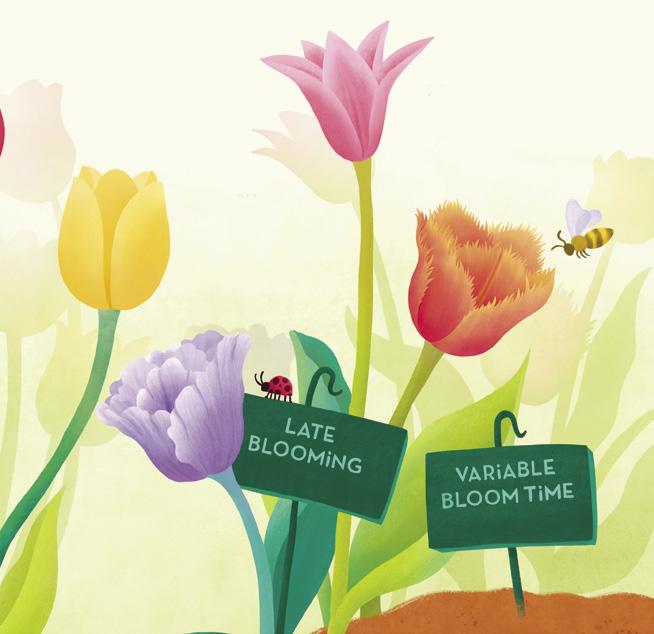
Each fall, Arboretum horticulture staff and volunteers receive, sort and plant 40,000 tulip bulbs in preparation for the spring tulip display. This May, visitors can expect to see blooms in a palette of warm pastels, including sherbet yellows, peaches and pinks accented by lavender and purple hues. Duane Otto, the Corrie Beck Horticulturist, plans the tulip display a year in advance, carefully mapping out a tapestry of tulips that includes early, mid- and late-season flowering varieties to ensure blooms throughout the spring season.
Tulips vary greatly in bloom period, origin, size, shape and color, and are classified into 15 distinct “types” or groups based on these traits. Look for these tulip types (and specific cultivars) at the Arboretum this spring.
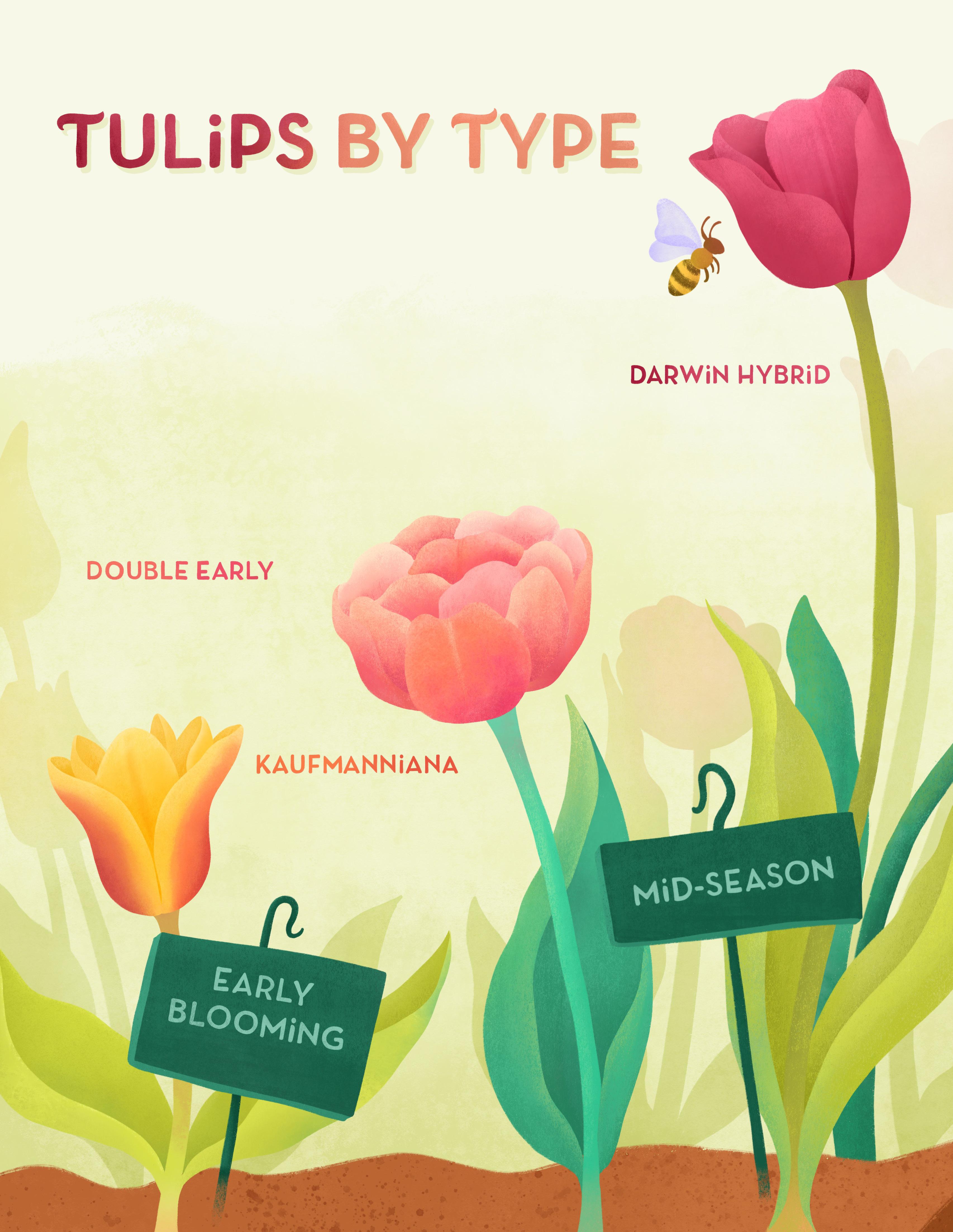
These tulips were bred by crossing the original Darwin tulips (now part of the single late group) with Tulipa fosteriana to create a large and strong tulip that can return for two to three years after planting. Cultivars: ‘Golden Parade’, ‘Lady van Eijk’, ‘Jade Maiden’
The fluffy, densely petaled flower heads of double early tulips resemble peonies. The large, heavy flowers sometimes require staking. Cultivars: ‘Avant Garde’, ‘Marie Jo’
These short-stemmed, perennial tulips bloom in early April and feature flowers that resemble water lilies. Their compact size and tendency to naturalize make Kaufmanniana a good choice for borders or rock gardens.
Other Types: Single Early, Fosteriana, Greigii
The long, pointed petals of tulips in this group arch outward, giving the flowers a lily-like resemblance. The dramatic flowers grow on tall stems and are long-flowering.
Cultivars: ‘Mariette’, ‘Flashback’
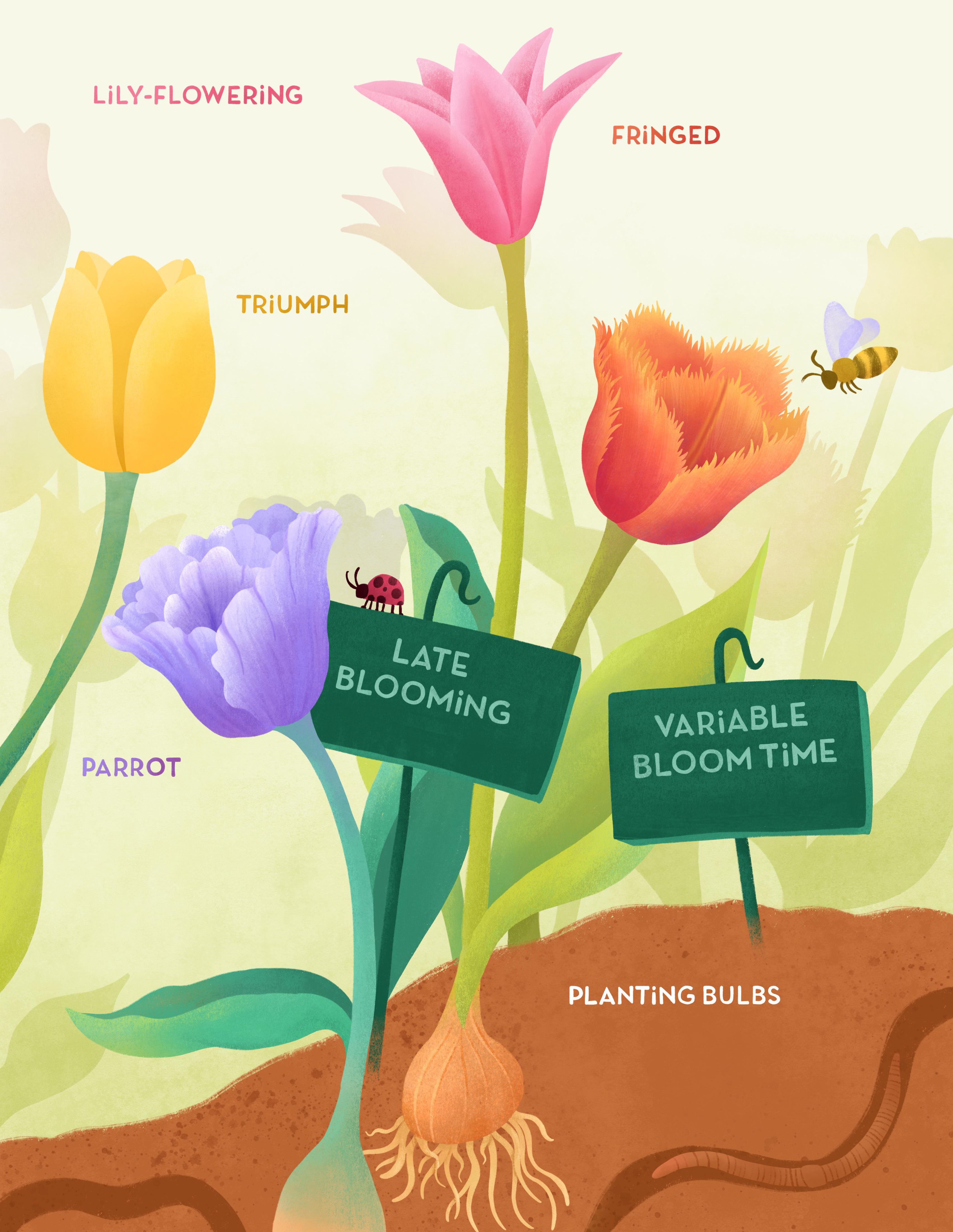
Triumph tulips are one of the largest groups of tulips and offer the widest range of flower colors. The classic, cup-shaped flowers grow on strong stems and are good for cutting.
Cultivars: ‘Silverstone’, ‘Yellow Present’, ‘Pretty Princess’, ‘Bullit’, ‘World Friendship’, ‘Beautydream’
Also known as crispa tulips, the frilly, feathery and crimped petals of fringed tulips add eye-catching texture to the tulip display. Many cultivars are mutants of single late tulips.
Cultivars: ‘Louvre’, ‘Fancy Frills’, ‘Crystal Star’, ‘Mon Amour’, ‘Cummins’, ‘Queensland’
The flamboyant flowers of tulips in this group feature deeply curled, frilled or feathered petals and can be single or multi-colored. The unique flowers are the result of mutations to single late and triumph tulips that have been selected for by plant breeders.
Cultivars: ‘Blue Parrot’, ‘Elsenburg’, ‘Yellow Madonna’
Rembrandt, Species and Miscellaneous
Tulip bulbs are planted in the fall by horticulture staff and volunteers and covered with straw after the first frost. In the spring, after the tulips begin to emerge, the straw is removed and the show begins!
Tiffany Enzenbacher, Matt Clark, Brandon Miller Department of Horticultural Science
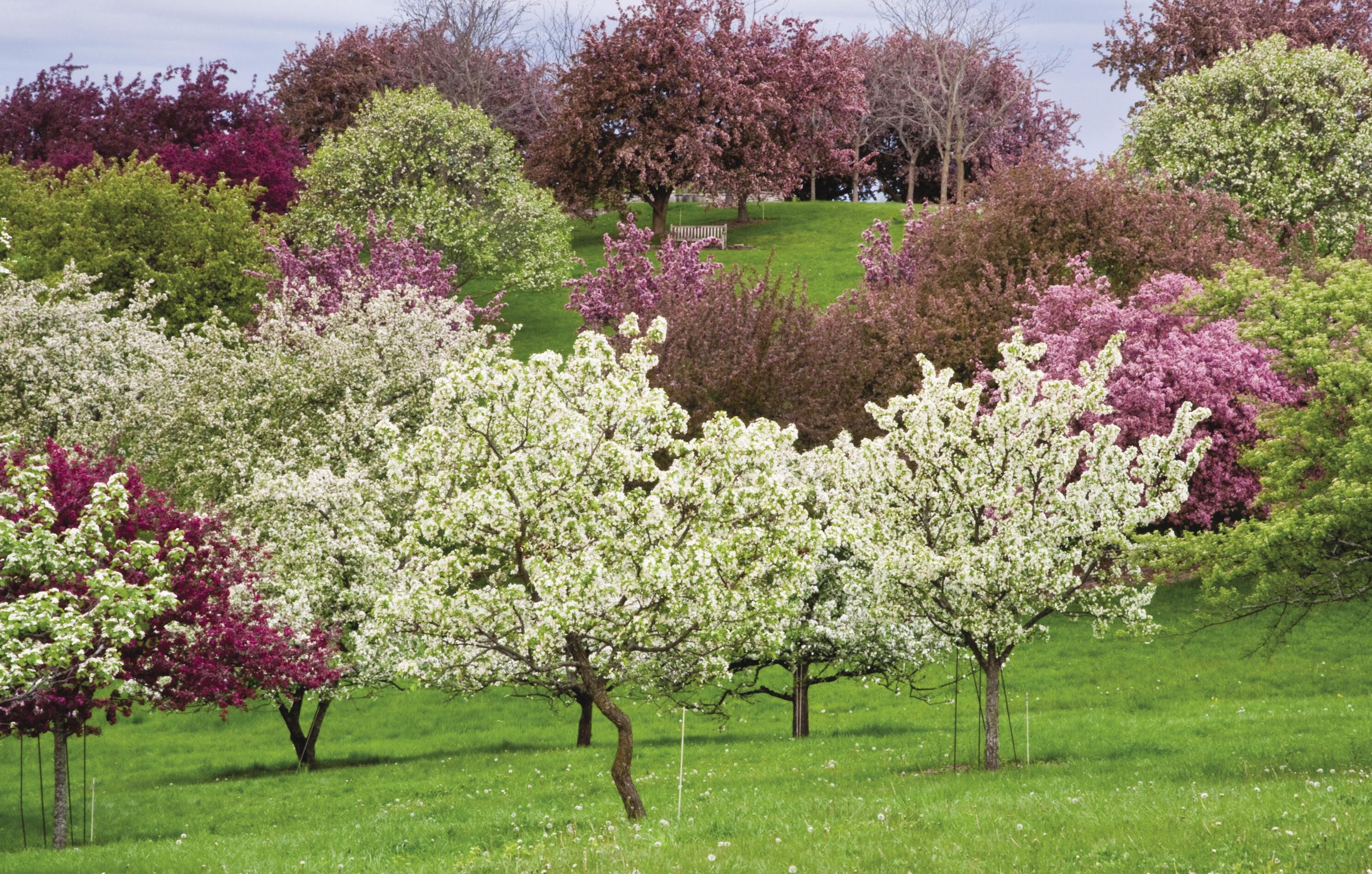
Flowering crabapples (Malus spp.) enliven the spring landscape with their exquisite blooms in shades of white, pink, magenta and burgundy. The sight and delightful fragrance of these floriferous harbingers of warmer days is a welcome one as you round the corner of Three-Mile Drive and enter the Crabapple Collection. The University of Minnesota Landscape
Arboretum features 162 flowering crabapple taxa (species, hybrids, subspecies, cultivars or varieties).
Not only do flowering crabapples possess spring splendor second to none, they also bookend the season with a burst of bright fruit in the fall. The hues of yellow, orange, gold and red provide a feeling of warmth as we prepare for the cold of a Minnesota winter.
Flowering crabapples have a place in nearly any landscape due to their variety of habits, adaptability and perhaps best of all, cold hardiness.
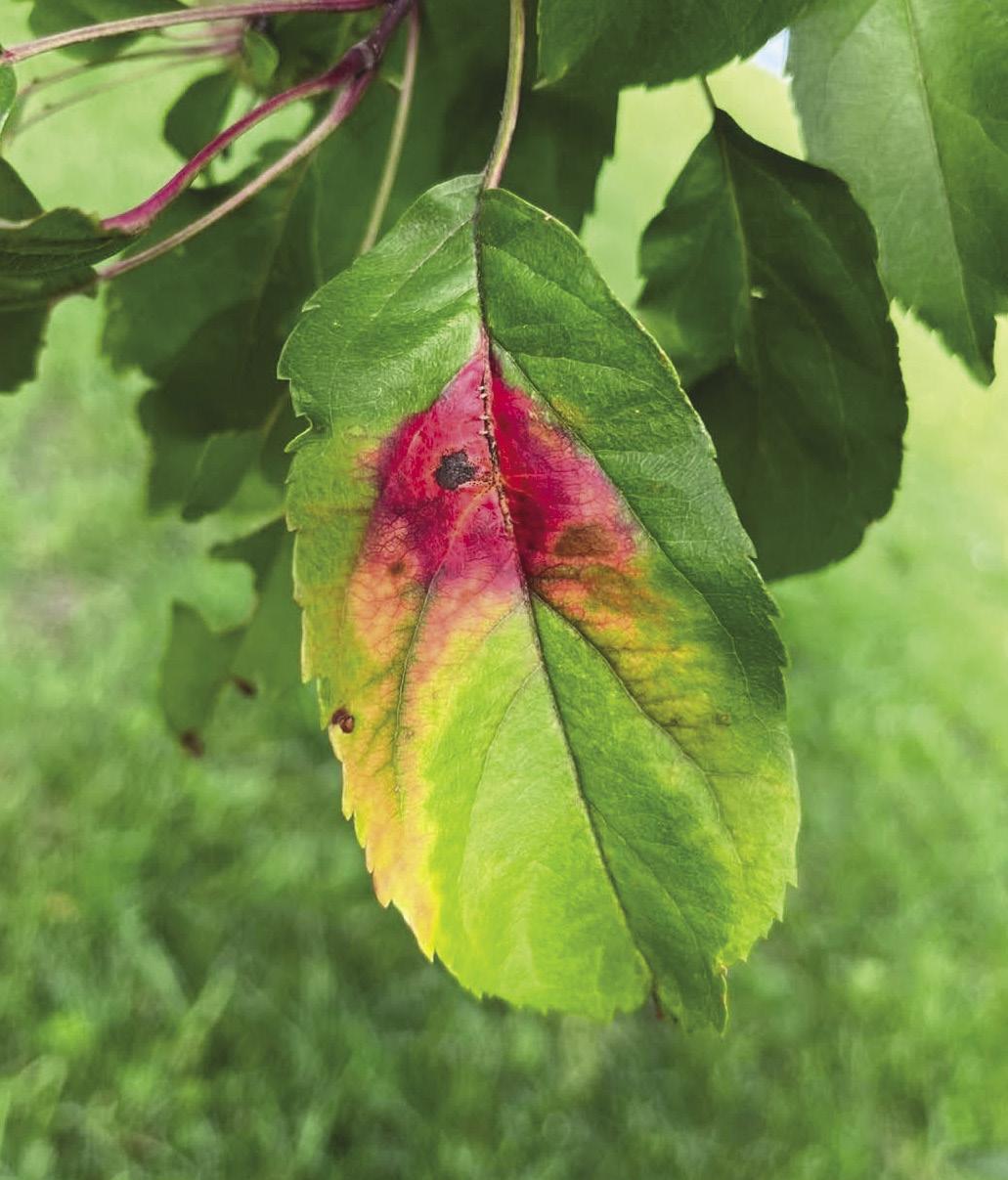
As flawless as flowering crabapples seem, they unfortunately do not come without issue. They are susceptible to various diseases that obscure their beauty and may result in lasting health effects. Red star rust is an emerging fungal disease (caused by Gymnosporangium yamadae) that was detected in Minnesota in 2022. It has been identified in 11 counties surrounding the Twin Cities metro, including Carver County.
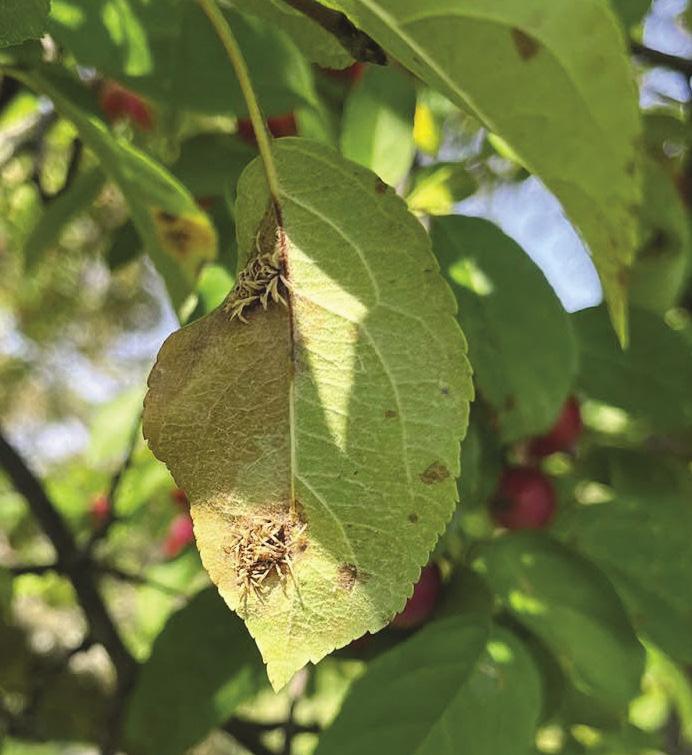
Red star rust requires two unrelated hosts to complete its life cycle: Malus spp., including flowering crabapple and dessert apple (M. ×domestica), and some popular species of landscape juniper (Juniperus spp.). Infected flowering crabapples and dessert apples display large lesions, or disease spots, on the upper foliar surfaces in mid-summer. These lesions are typically irregularly shaped with red margins and may resemble a star. Long, bristly fungal structures form underneath the lesions
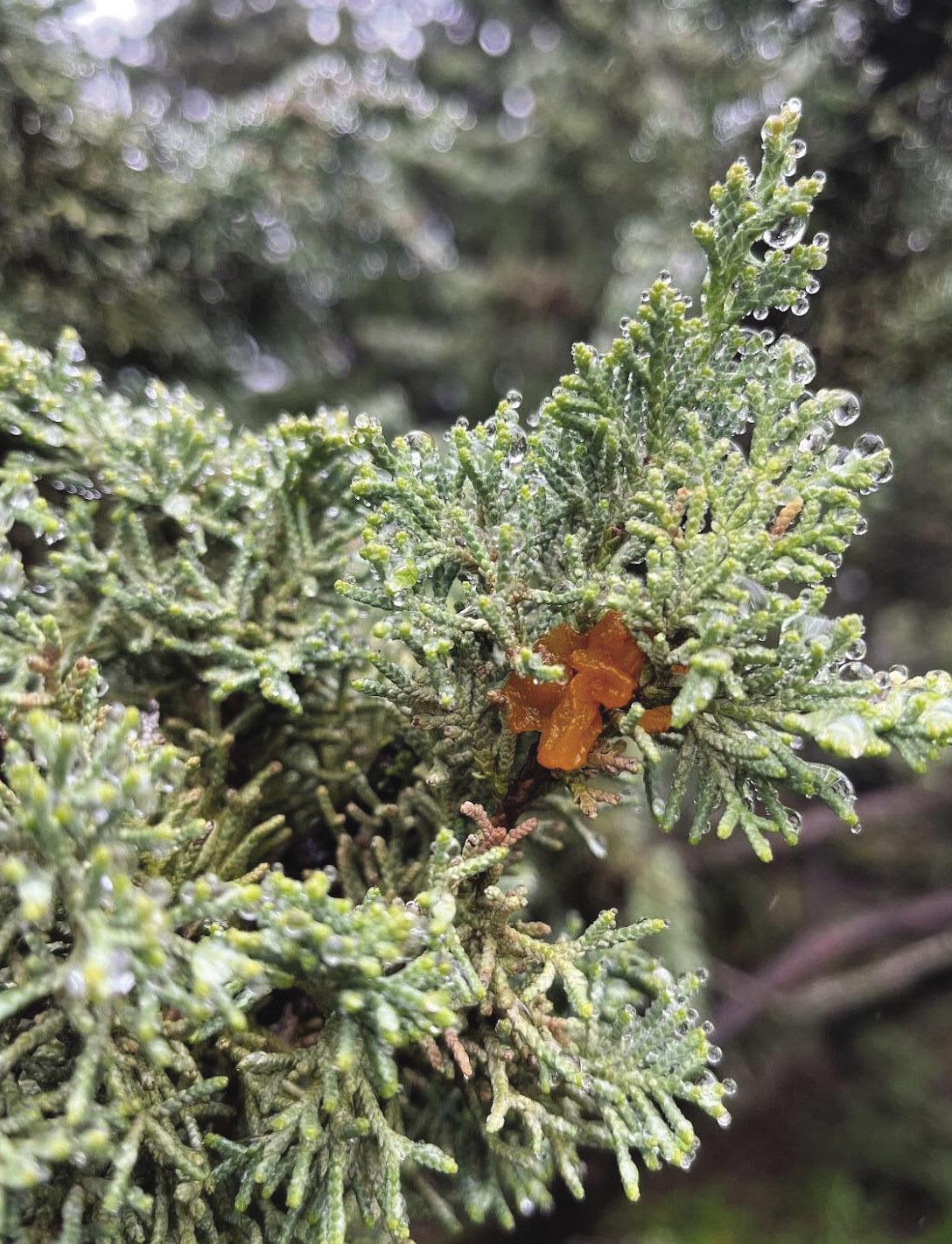
on the underside of foliage in late summer. Spores from these structures are windblown to juniper hosts located within three miles, where they yield small, round galls. Spores are released from juniper galls in orange, gelatinous masses coinciding with warming spring temperatures and rain. These spores are windblown to emerging flowering crabapple and dessert apple leaves, and the disease cycle repeats.
Researchers from the Departments of Horticultural Science and Plant Pathology at the University of Minnesota and the Minnesota Department of Agriculture are investigating practices to best manage this new disease, including identifying which taxa are less susceptible in a field situation or a landscape environment. The Arboretum is an ideal setting for such an effort due to the diversity of its holdings and comprehensive recordkeeping system. During systematic observations at the Arboretum, several flowering crabapple taxa, including ‘Bob White’ and tea crabapple (M. hupehensis), displayed no red star rust symptoms in 2024 and 2025. ‘Bob White’ is a tried and
true cultivar with single, white flowers giving way to yellow-green fruit. Tea crabapple is native to China and has an open, vase-shaped habit with fragrant, white, single flowers. The fruit is greenyellow with a red cheek.
Additional projects are currently underway at the Horticultural Research Center to evaluate the susceptibility of select flowering crabapples and dessert apples in an experimental setting. Preliminary results suggest that the University of Minnesota varieties SnowSweet® and the Chestnut crabapple, along with three advanced dessert apple selections from the apple breeding program, are less susceptible to red star rust. And not only did ‘Bob White’ flowering crabapple display no red star rust symptoms during Arboretum field observations, but initial experimental findings affirm it is less susceptible to red star rust compared to the other taxa tested. The outcomes of these investigations will help create recommendations for the nursery and apple industries here in Minnesota.
While research into the disease continues, homeowners with flowering
crabapples or junipers in their landscapes should not worry too much about the impacts of the disease on their plants. Red star rust is similar to cedar apple rust (caused by G. juniperi-virginianae), which seldom causes severe damage in the landscape. Disease can be lessened by avoiding planting host junipers, Chinese juniper (Juniperus chinensis), Sargent’s juniper (J. chinensis var. sargentii), garden juniper (J. procumbens) and flaky juniper (J. squamata), and Malus spp. together in the landscape, as red star rust requires both hosts to complete its life cycle.
Last but certainly not least, ‘Bob White’ flowering crabapple and tea crabapple can be viewed and enjoyed in the Crabapple Collection, together with hundreds of other magnificent specimens, where their perfumed flowers in the spring and brilliant colored fruit in the fall continue to add to the seasonal grandeur of the Arboretum.
For more information on red star rust, visit the Minnesota Department of Agriculture website at mda.state.mn.us/red-star-rust.
Jeff Iseminger l Contributing Writer
The floral symphony of colors you enjoy every spring at the Arboretum always features a movement of 40,000 tulips, commissioned by a woman who could not be a more felicitous fit.
She’s Dutch, you see.
Corrie Ooms (pronounced Ohms) Beck supports the tulip display in memory of her husband, Robert Beck. The display is planted by horticulture staff and volunteers and designed by Duane Otto, whose position she recently endowed as the Corrie Beck Horticulturist.
So how exactly did a Dutch woman end up helping the Arboretum conduct its annual tulip effusion?
Beck was born in Rotterdam in 1936, four years before the Nazis invaded her country and, in her case, forced her parents to house a Nazi officer.
“My brother and I were bound to our house and school,” she said, because the Germans had taken their cars, and the skies buzzed with fighter aircraft. In fact, she wouldn’t even see one of the famous fields of Dutch tulips until long after the war ended.
After Canadian soldiers liberated Rotterdam in 1945, said Beck, “The world opened up. We could explore everywhere without our parents worrying about us.”
She went on to study Latin and Greek in gymnasium (high school) and at Leiden University, along with languages such as Swedish and even Old Norse. After she worked in Sweden and at the Swedish embassy in The Hague, a friend encouraged her to apply at the University of Minnesota, where she enrolled in the doctoral program in classics.
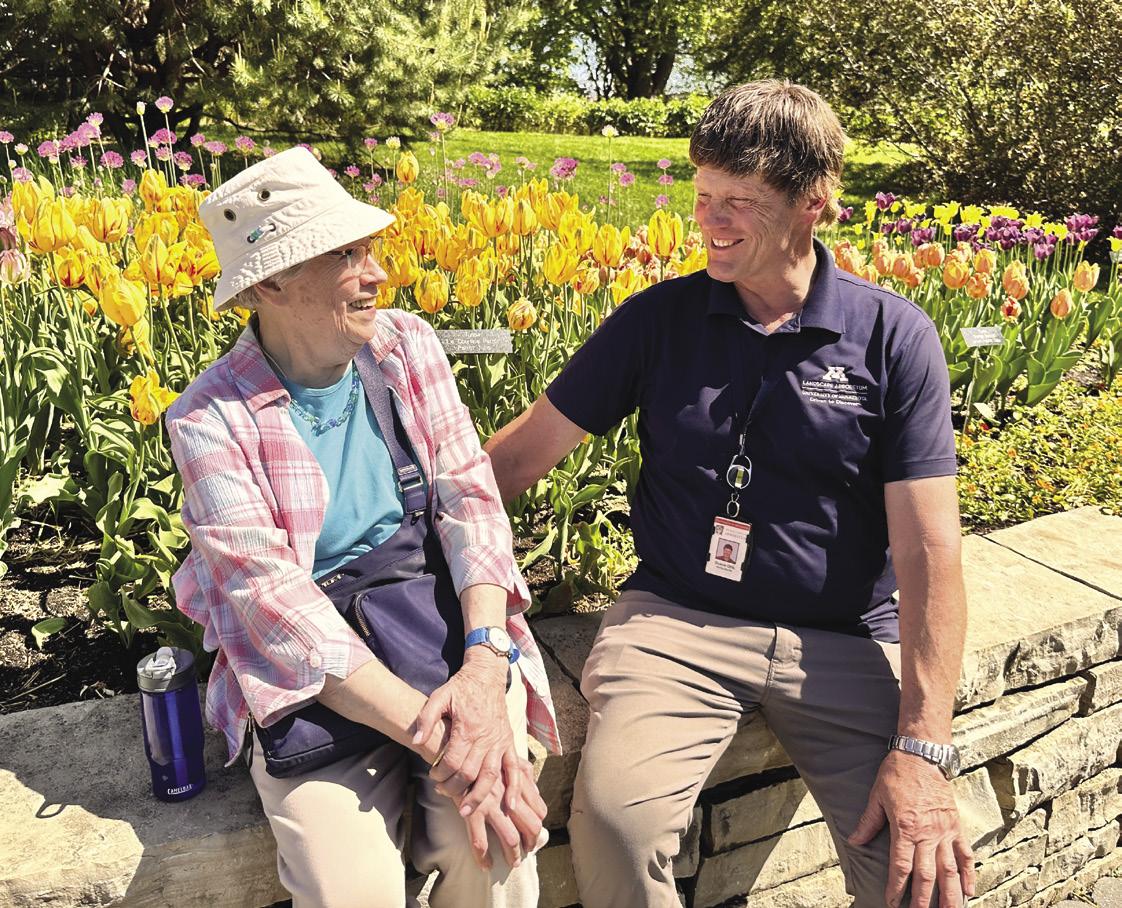
“As a doctoral student, I loved to study at the Arboretum,” said Beck. (She had heard of the Arboretum while still in the Netherlands from a Minneapolis friend.) Her favorite spot was the Andersen Horticultural Library, and years later, she helped the library acquire two antique books on flowers from an Amsterdam collection.
Beck was invited to speak one day to Arboretum gardeners on the use of Latin in the plant world. “One of the
audience members was nodding his head as I spoke,” she said, “and only afterward did I learn he was Dr. Leon Snyder, the Arboretum’s first director.”
While a doctoral student, she used her linguistic talent to support the research of the man she would later marry, Robert Beck, a regents professor in the history and philosophy of education. “Bob didn’t know Latin or Greek, so he asked me to review the English translations of classic works on education to make sure they
were accurate.” They were married in 1981, and Bob died in 1991.
Bob’s own travels were an important reason why Corrie endowed Duane Otto’s position as designer of the tulip display. “It was a nice thing to endow,” she said, “because Bob lived in the Netherlands on sabbatical with his wife, who later died, and their three children.”
There’s one more tie to her home country for the ways she’s invested in the Arboretum’s future: She endowed
the Corrie Ooms Beck Big Woods Pond located just west of the Fern Walk and added two nearby benches in memory of her parents and her neighbors growing up in Rotterdam. “Our neighbors didn’t have any children,” she said, “and they were almost like another set of parents for us.”
So what fuels this expansively generous partnership Beck has created? “I’ve always had a warm heart for the Arboretum,” she said. “The people are nice, it’s beautiful and it’s just a lovely place to go.”
Randy Gage l Manager of Youth Education
The 2026 Schoolyard Garden Conference draws educators together at the Arboretum
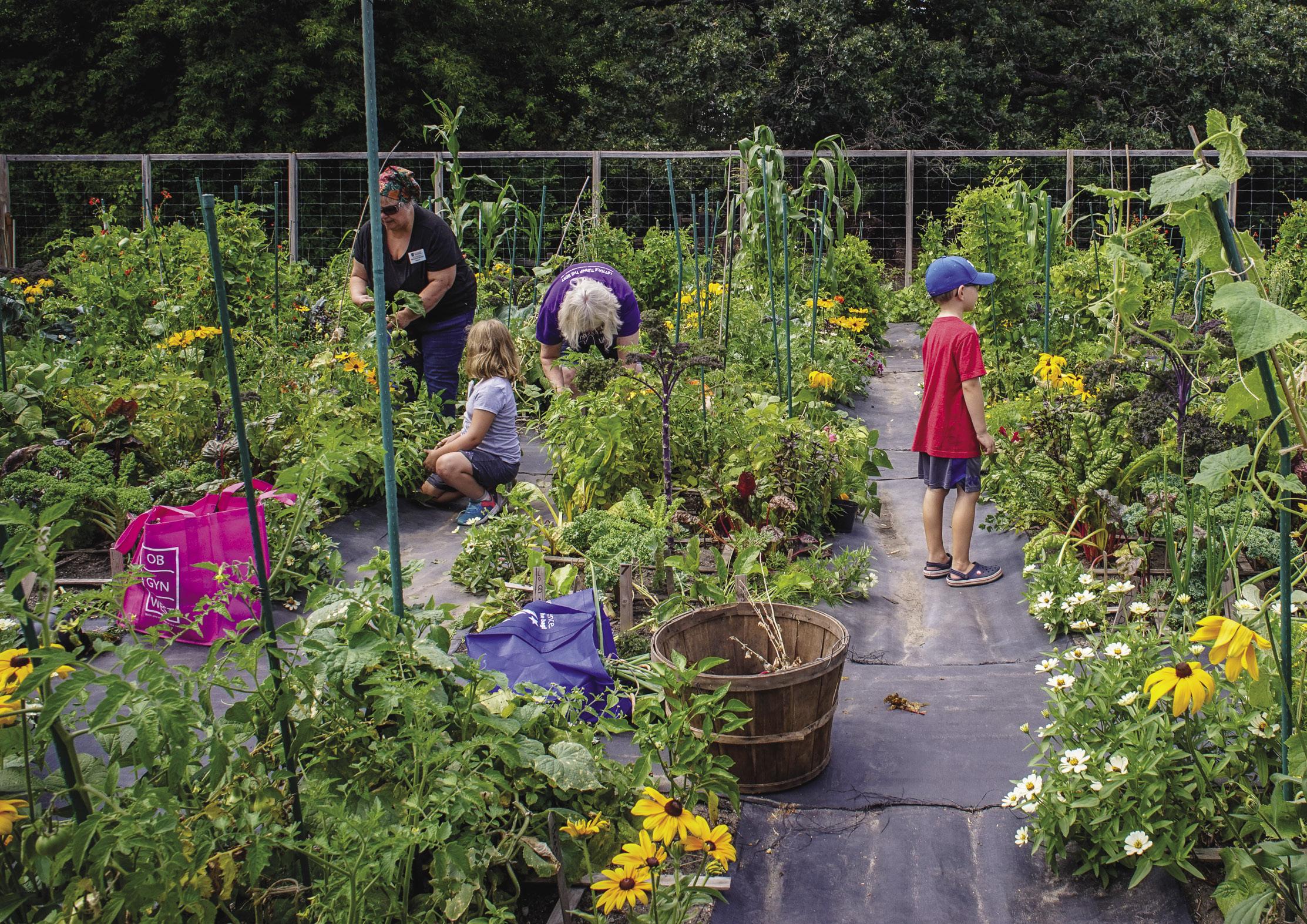
We gardeners understand well the kind of learning that takes place in our gardens. It’s a process of trial and error fueled by careful observation, application of knowledge and personal experience that happens in concert with the natural world. For schools and students, the garden offers a
wonderful contrast to the standardized tests and worksheets of the classroom — a dynamic living laboratory that responds to the actions of the gardener and provides a place to construct knowledge from firsthand experience. It is these lessons that the Arboretum Youth Education programs and a growing
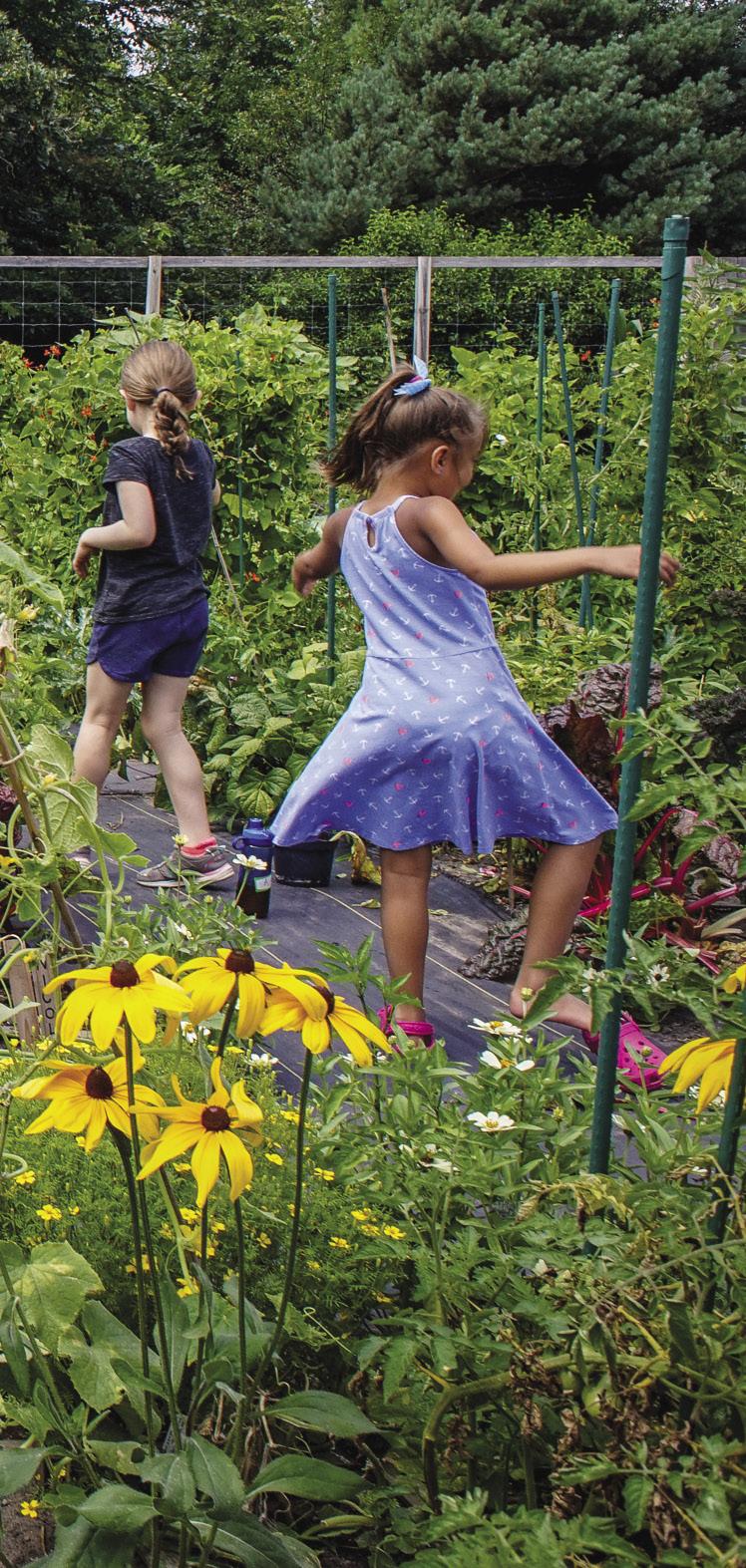
number of school communities all across the state are cultivating.
On March 13, the Arboretum will host the Minnesota schoolyard garden community’s annual Schoolyard Garden Conference. Organizers are planning for more than 200 educators, administrators, school food service workers and
schoolyard garden advocates to gather together to learn and support the growing work in school gardens across the state. “This conference is a critical resource for the schoolyard garden community to learn from one another and sustain and grow the essential learning possibilities of schoolyard garden efforts throughout the state,” said Arboretum conference collaborator Carrie Stowers.
According to Minnesota Department of Agriculture conference organizers Sue Knott and Keri Sidle, “The Arb is the perfect setting for this conference. Its beautiful facilities, focus on hands-on learning and mission to connect people with plants make it an ideal place for educators to feel inspired and immersed in the world of school gardening.”
No matter whether students are learning about food, science, art or culture, the garden serves as a living laboratory to help children develop science process skills, which help them build their capacity for science learning
throughout their education. The seven key process skills of science are:
Observing: “Do you see any flowers in this garden?”
Measuring: “Let’s see how tall the flowering plants in this garden are compared to your finger, arm or leg; are any taller than you?”
Classifying: “How many different colors of flowers do you see in this garden?”
Predicting: “Do you think we would see different colored flowers in a different garden?”
Recording: “Let’s draw a picture of the flowers we see, or count how many flowers of each color there are.”
Communicating: “Who can we share our drawing or flower color numbers with, and how should we do that?”
Inferring: “If this garden has many colors of flowers, will all gardens be like this?”
For schools and students, the garden offers a wonderful contrast to the standardized tests and worksheets of the classroom.
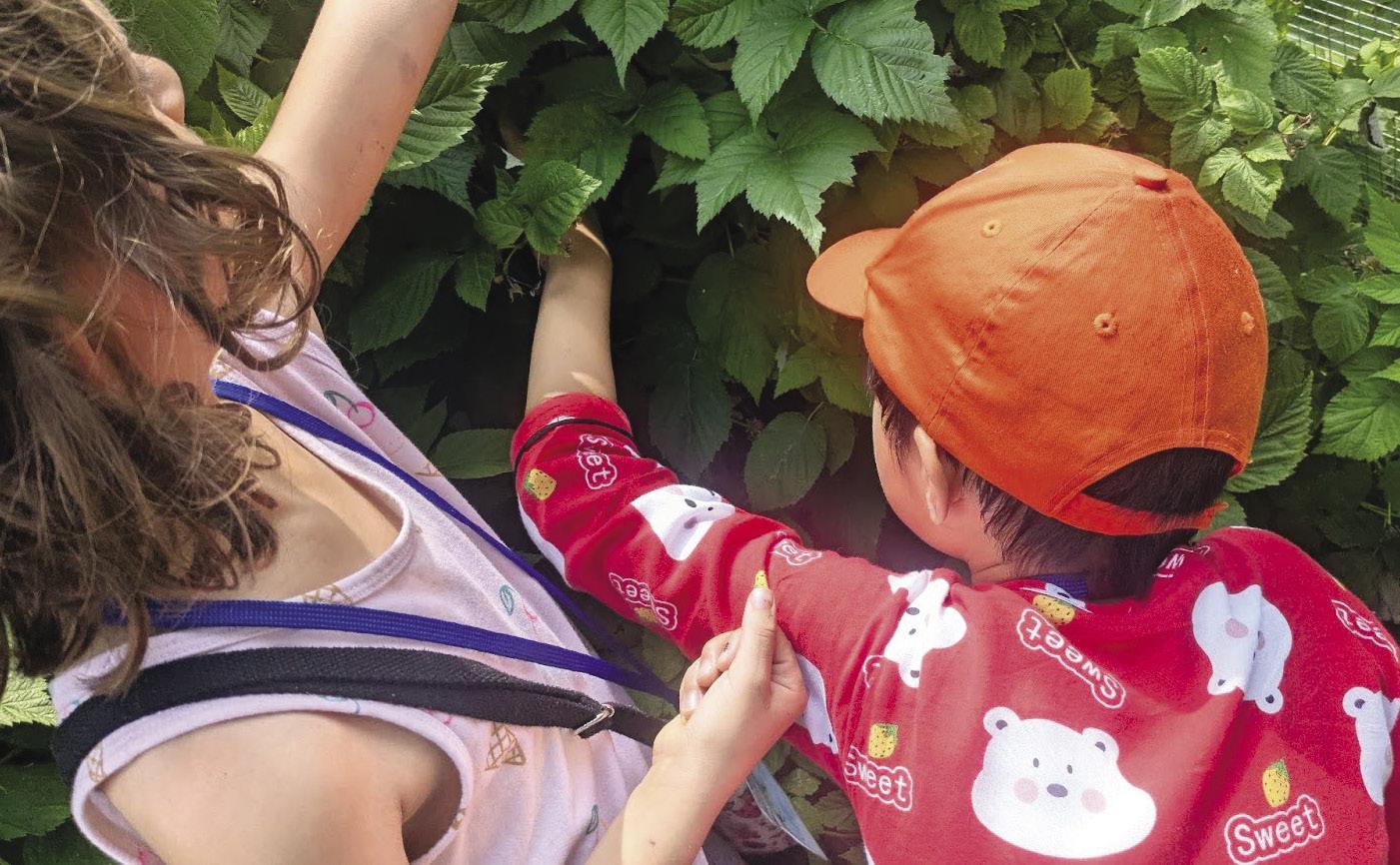
Arboretum Youth Education programs are loaded with opportunities for program participants to practice these skills in the gardens at the Arboretum and in the community.
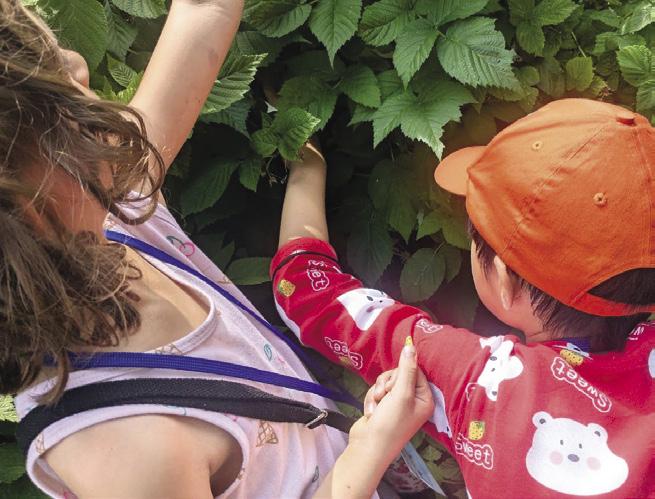
A garden affords countless opportunities for sensory observation. Arboretum Youth Educator Melinda Hooker shared a favorite example of sensory engagement using garden herbs. “We always love to have a couple of stevia plants. They’re so surprisingly sweet when kids nibble on the leaf. And when you roll it up with other herbs, it is a taste sensation. A lemon balm stevia leaf roll-up becomes ‘lemonade in your mouth,’ and a spearmint and stevia leaf combo is like ‘candy cane.’ Once the experimentation begins, gardeners are thrilled to share their favorite combinations with anyone willing to try,” said Hooker.
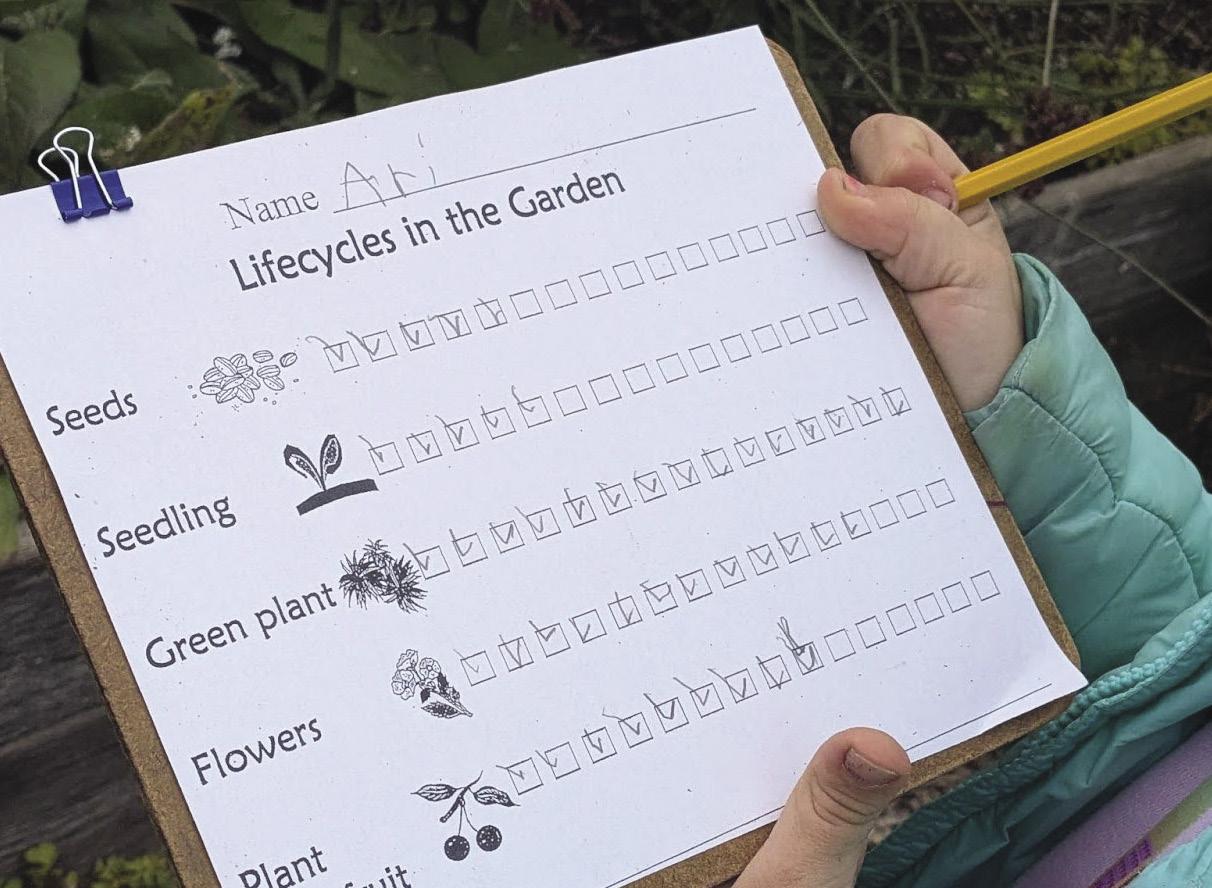
Arboretum field trips are also packed with science process skill practice in the garden. One favorite is the “Life Cycle Hunt” worksheet, which students use to classify their garden observations into life cycle stages: seed, seedling, green plant, flower, fruit and seed. The activity provides kids with a simple, hands-on way to practice science process skills — in this case, in a vegetable garden — to understand a science concept through hands-on observation, classification and communication.
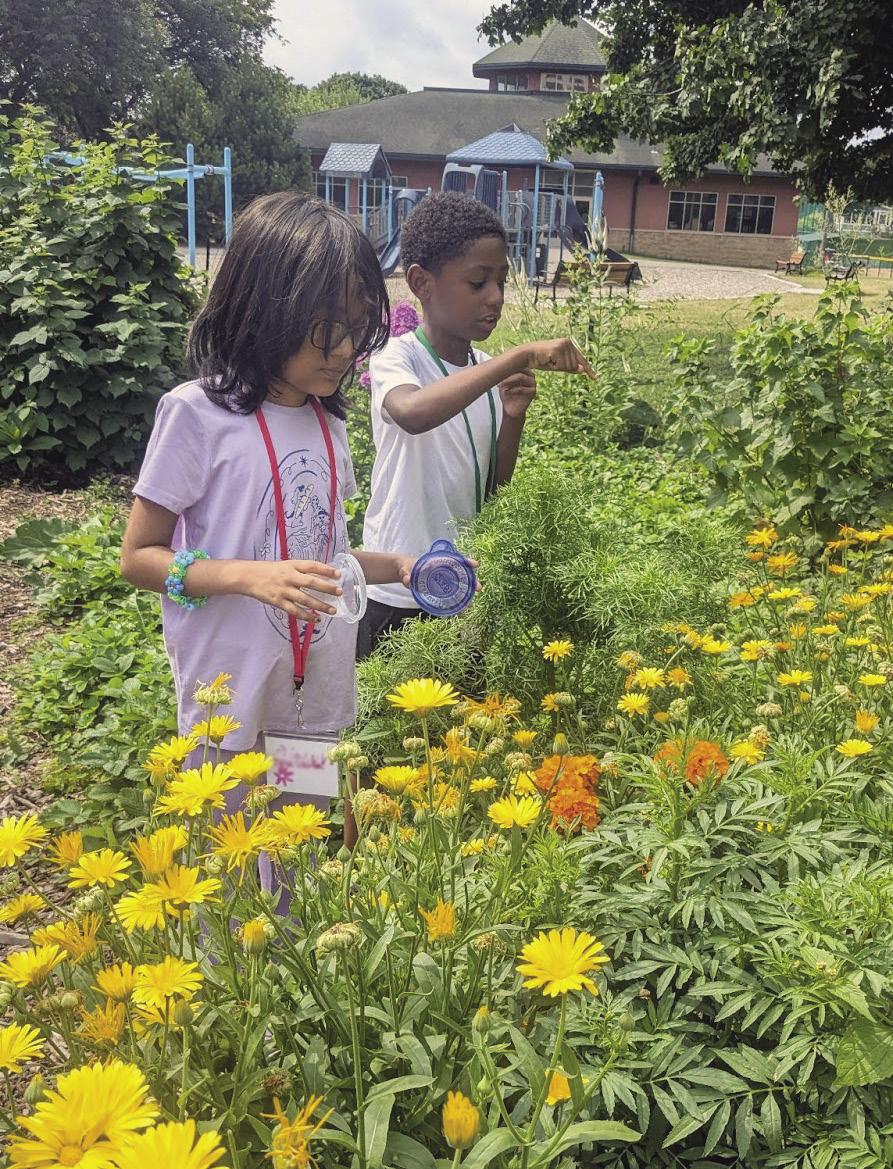
And the opportunities grow with multiple visits to the garden over time. The summer Children’s Garden in Residence program offers a multiweek experience growing veggies at community partner-based gardens in Minneapolis and St. Paul, bringing many opportunities to practice science process skills. “I love the progression that can be made through regular weekly garden visits,” program coordinator Marlys Daugherty shared.
“Take bees, for instance,” said Daugherty. “We might start with a discussion about bees, and then begin investigating the bees in our garden with questions like: ‘Where can we find them?’, ‘What are they doing?’” Daugherty shared that last summer,
one young gardener’s fear of bees made her anxious to even come into the garden at first. Her fear slowly turned to curiosity as she saw her instructors and the other gardeners carefully catch, observe and release bees. Soon she was ready to try a brave experiment of her own, and she carefully touched a big bumblebee.
“I never thought I’d care about bees until I started catching them, and if you’re quiet and gentle, you can even pet a bee!” she said. That moment was the result of weeks of observation, which led to a bold experiment and an amazing personal discovery shared with a community of learners. Another example of science in action in the garden!
The Schoolyard Garden Conference, happening March 13 at the Arboretum, brings together educators, farm-to-school champions, state and Extension staff, and cultural and community groups for a day of speaker presentations and workshops focused on building successful schoolyard garden programs. Learn more about this year’s Schoolyard Garden Conference and register at arb.umn.edu/events/schoolyardgardens
Open daily through March 15
Discover something new at the Arboretum this spring. In addition to 1,200 acres of gardens, collections and natural areas, the Arboretum offers a wide range of events, art exhibitions and classes so visitors can learn something new on each visit and deepen their connection with nature.
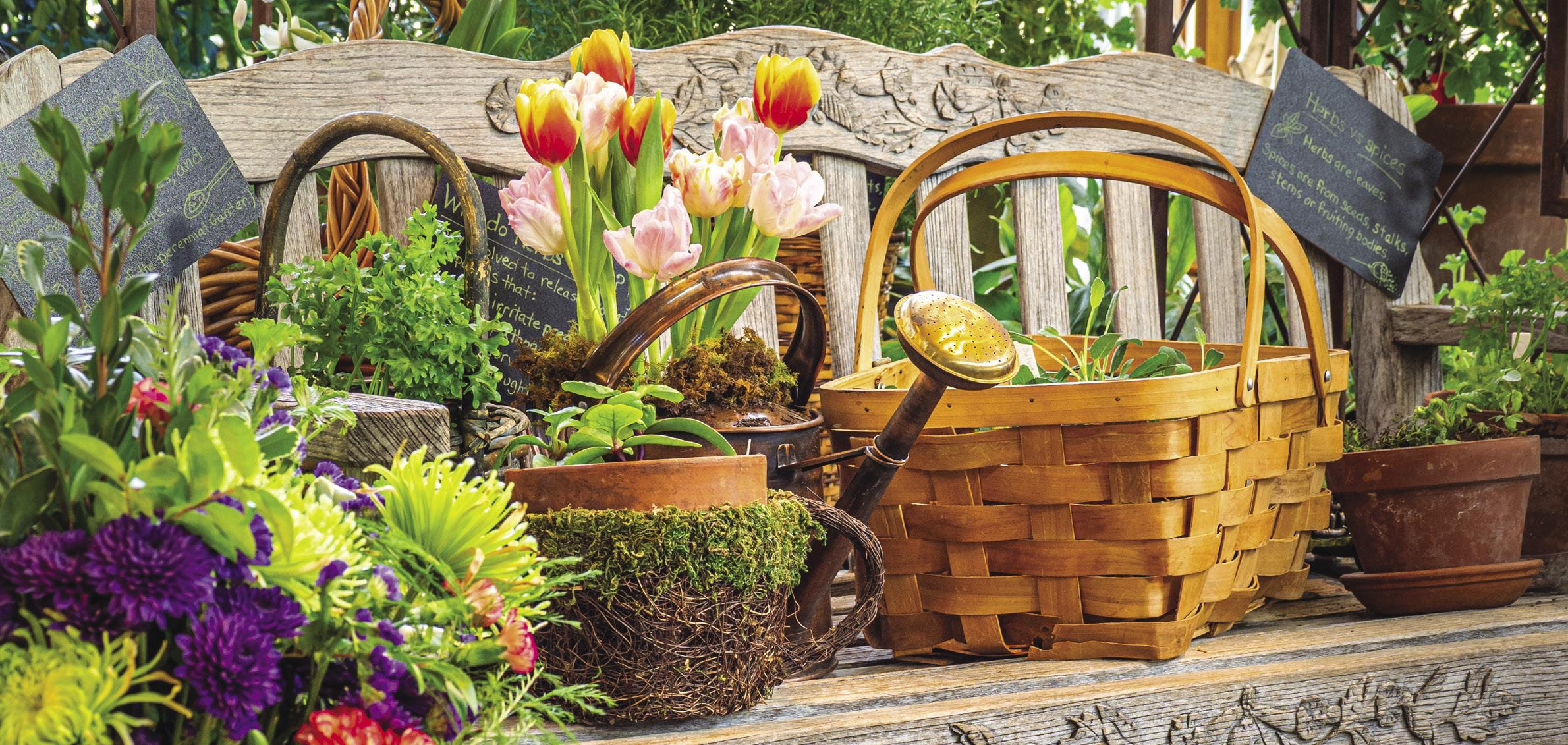
Step into an early spring at the Arboretum with thousands of plants, including spring bulbs, orchids and tropicals, on display in the Oswald Visitor Center and Snyder Building. This year’s show explores the theme of “water,” drawing inspiration from Minnesota’s lakes, rivers and wetlands and the life they support. Plus, explore the Flower Show at special events, including After Hours With the Flowers and Fairy Garden Make and Take workshops. The Spring Flower Show is included with general daily admission. Separate tickets are required for special events.
After Hours With the Flowers
Feb. 20, 27 and March 6, 6-9 p.m.
Fairy Garden Make and Take Feb. 14, 21 and 28, 1-3 p.m.
SCAN HERE to learn more or visit arb.umn.edu/flowershow
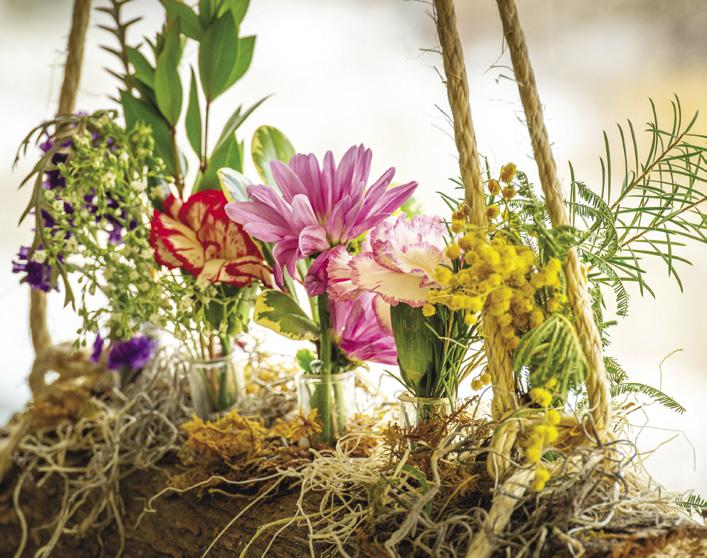
SCAN HERE to view all upcoming events and browse by topic at arb.umn. edu/events.
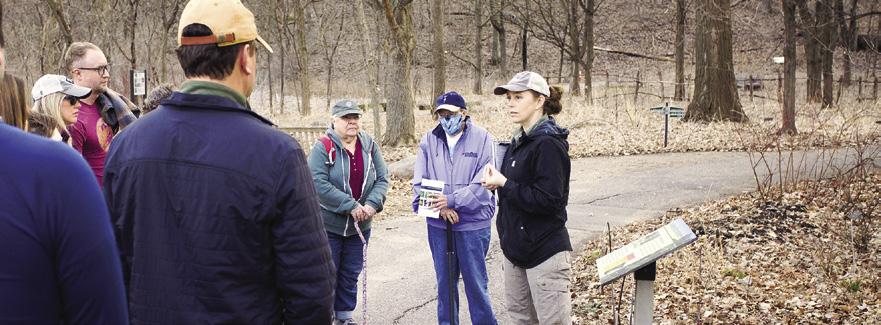
As temperatures slowly begin to rise, Full Moon Hikes in March and April invite visitors to get outdoors and explore the Arboretum after dark. Visitors will learn about the natural world at seasonally themed talks and hike tealight-lined trails before warming up around outdoor fire pits during these popular full moon-viewing events.
Full Sugar Maple Moon Hike
March 3, 7-10:30 p.m.
Full Pink Moon Hike
April 2, 8-10:30 p.m.
SCAN HERE to register or visit arb.umn.edu/fullmoonhikes
March 21, 8:30 a.m.-3 p.m.
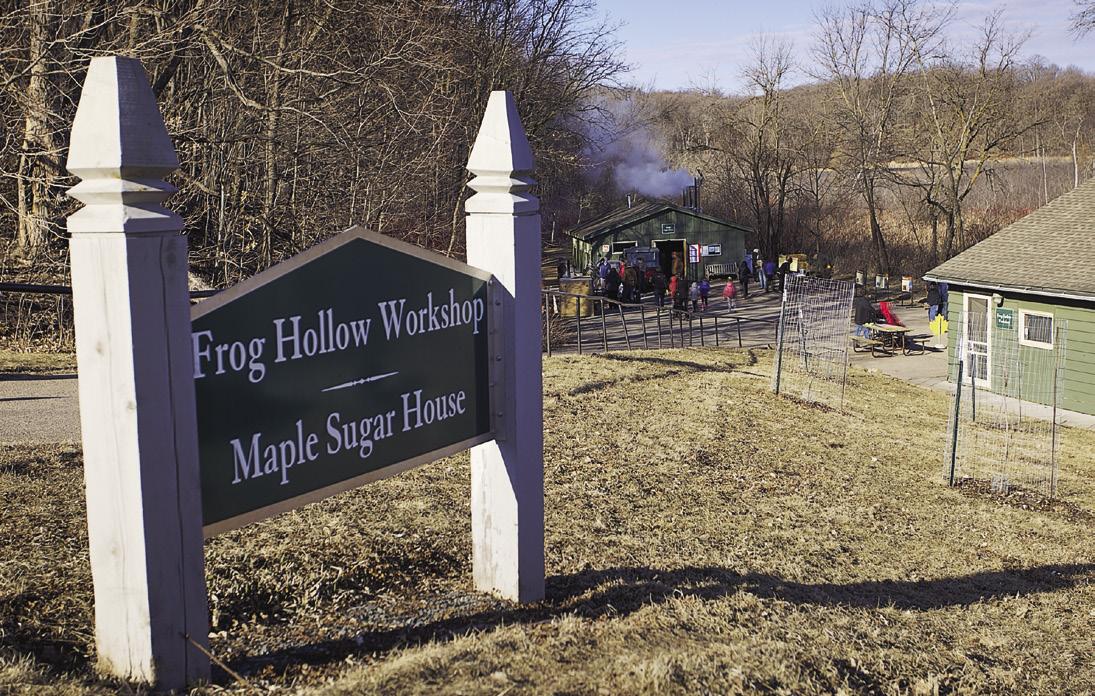
Celebrate the sweetness of spring at Maple Fest — a beloved pancake breakfast paired with hands-on maple syrup learning experiences at the Arboretum’s Maple Sugar House and Horticultural Research Center. Visitors can enjoy freshly made pancakes, sausage and maple syrup before or after exploring Maple Fest learning stations, where educators and volunteers demonstrate how maple sap is collected, processed and transformed into syrup. This familyfriendly tradition invites visitors to savor a delicious meal, discover the heritage of maple sugaring, and enjoy earlyspring beauty across the grounds.
SCAN HERE to register or visit arb.umn.edu/maplefest
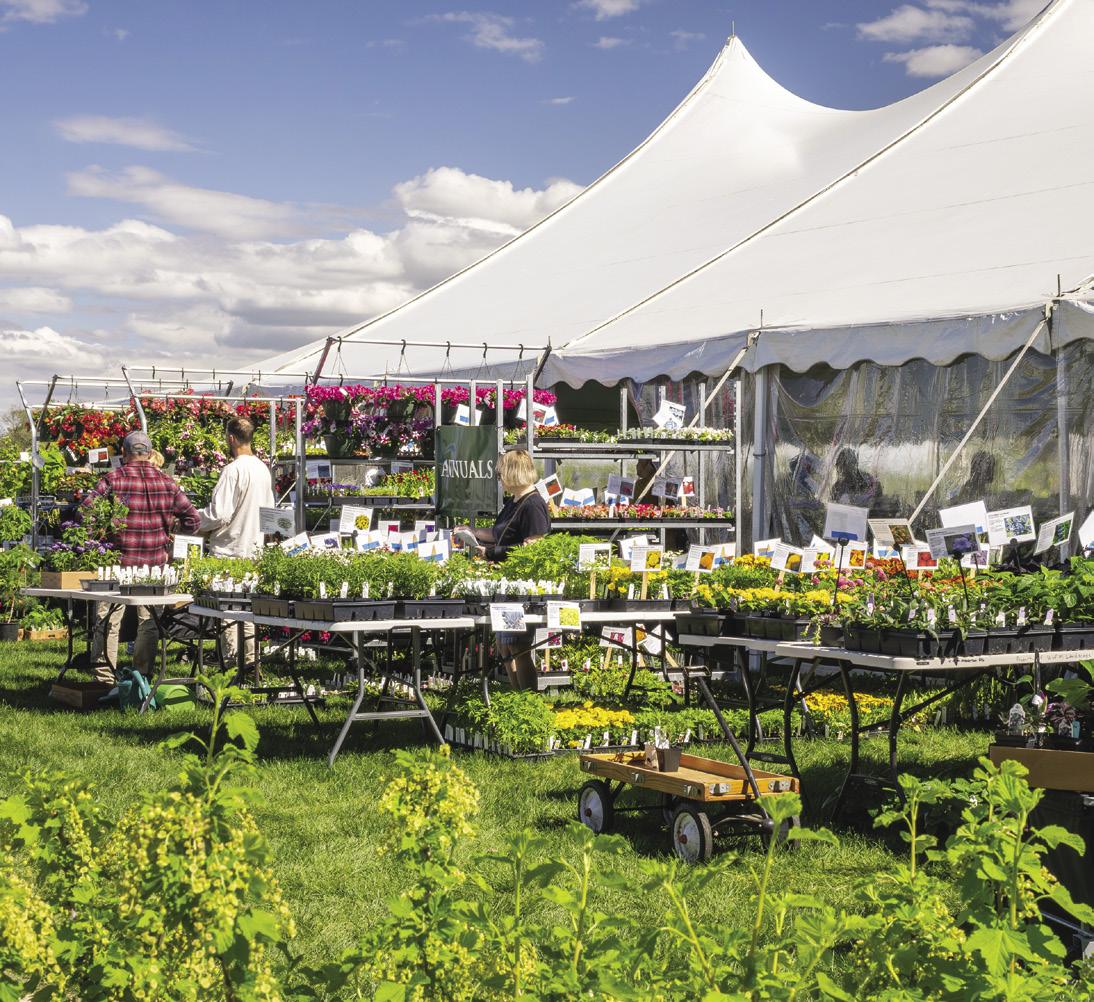
May 8-9, 8 a.m.-4 p.m.
Shop for plants selected by Arboretum horticulture experts at this annual sale featuring a wide selection of annuals, perennials, fruits, vegetables, herbs, trees and several UMN-developed plant varieties. This year, shoppers will find an expanded selection of native plants. Admission is free, but shoppers need to make a reservation online. The sale supports the Arboretum’s gardens, collections and natural areas, and its educational, horticultural and research programs.
SCAN HERE to learn more and reserve tickets, available on April 1, or visit arb.umn.edu/plantsale
Learners of all ages can discover something new at the Arboretum this spring! Adult classes and workshops cover a wide range of subjects with new class offerings available each season. Classes feature talented instructors, inspiring subject matter and a fun, social atmosphere.
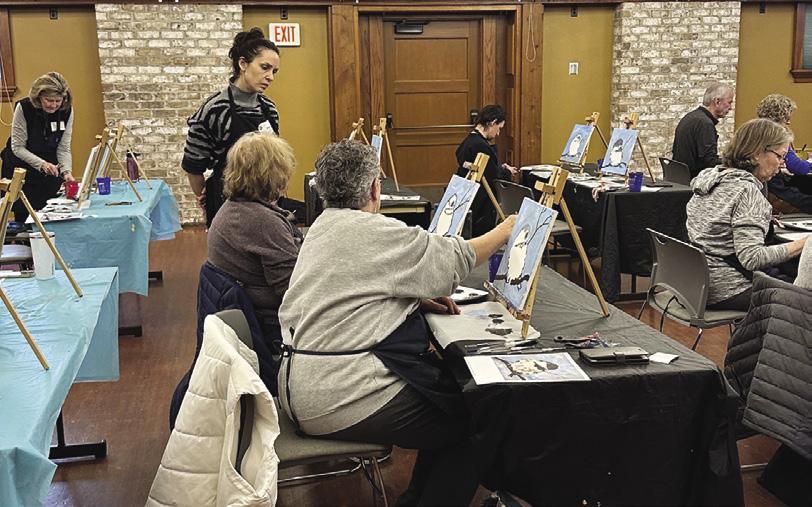
Youth and family programs allow young visitors and their families to explore plants through science and engaging hands-on activities. The Arboretum specializes in opportunities to play, garden, create and learn together!
SCAN HERE to browse the Arboretum’s full catalog of class offerings or visit arb.umn.edu/learn.
The Arboretum Education team is happy to assist participants with selecting, gifting or registering for classes by phone. They can be reached at 612-301-1210 on weekdays 9 a.m.-4 p.m. or via email at arbedu@umn.edu
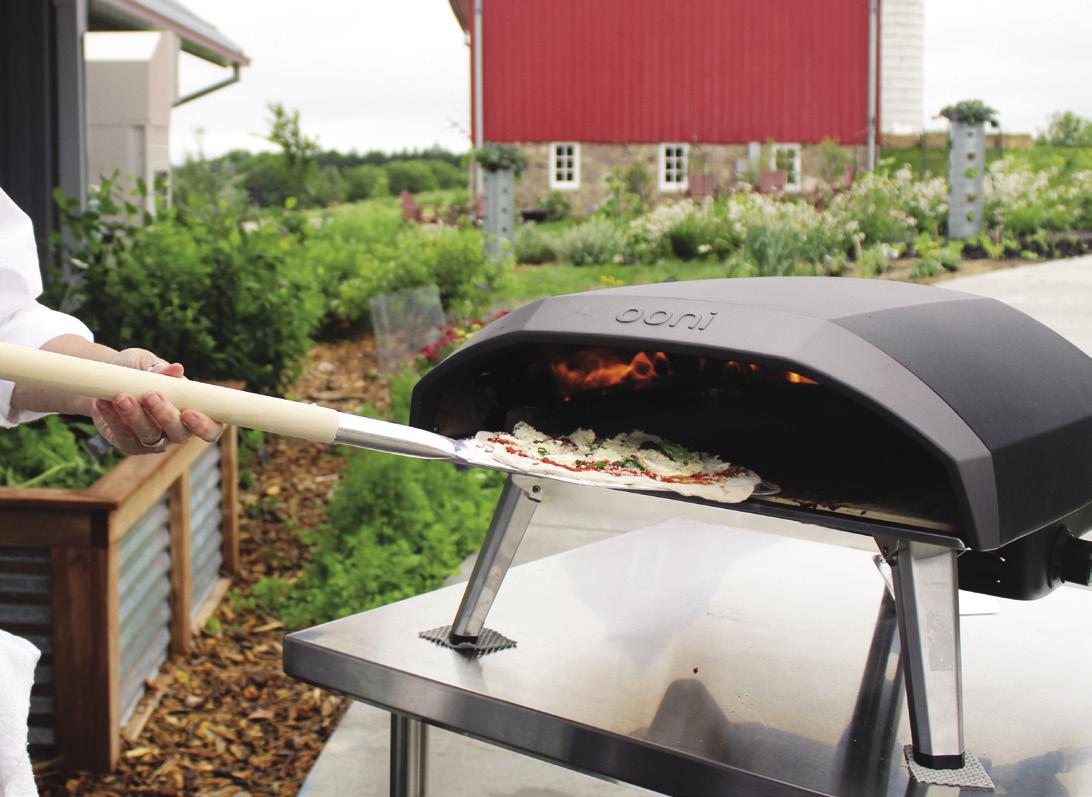
Chefs Beth Fisher and Cheo Smith lead a variety of culinary experiences featuring local ingredients and expert techniques — all in a one-of-a-kind atmosphere at the Farm at the Arb. Explore two upcoming classes below and view the full schedule online.
A Taste of Spring Brunch
April 4, 10 a.m.-noon
Exploring the Outdoor Pizza Oven May 16, 11 a.m.-1 p.m.
to view upcoming classes or visit arb.umn.edu/culinary.
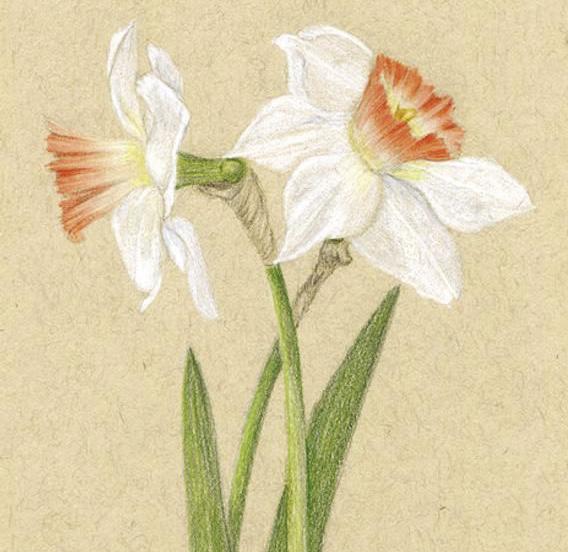
The Arboretum’s art classes include options for all levels, allowing participants to enjoy and grow at their own pace. For those ready to take their fine art skills further, botanical art and illustration classes focus on rendering plants in scientifically accurate detail using drawing and painting techniques. View class highlights for the season below and find the full selection online.
Still Life Drawing: Daffodils
April 8, 10 a.m.-12:30 p.m.
Botanical Art: Spring Ephemerals and Bulbs
Six Session Series: April 15-May 20, 9:30 a.m.-12:30 p.m.
SCAN HERE to view upcoming programs or visit arb.umn.edu/art-classes
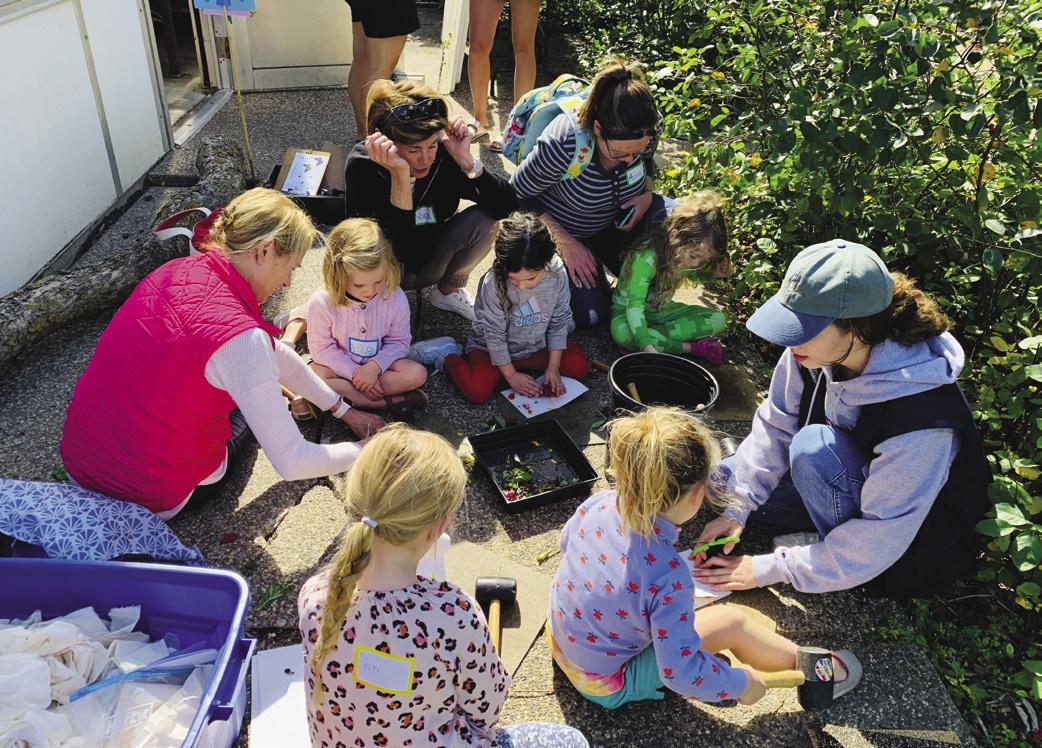
The Arboretum helps kids discover the world of plants through science and engaging, hands-on programs. Whether you’re looking for family-friendly fun for preschoolers or seeking a homeschool day, there are plenty of exciting options to learn and grow together this spring.
Pea Pods for Preschoolers Day
March 17, April 21 or May 22, 9:30-11:30 a.m.
Homeschool Day May 22, 1:15-2:30 p.m.
SCAN HERE to view upcoming classes or visit arb.umn.edu/family-programs
3675 Arboretum Drive
Chaska, Minnesota 55318-9613


Give today! Your gift supports the Arboretum's gardens, educational programs and horticultural research. Scan the QR code or visit arb.umn.edu/give to donate today.
by