math-positive teaching
Questions and Answers for Elementary Educators
Carrie S. Cutler
Foreword by Graham Fletcher

Carrie S. Cutler
Foreword by Graham Fletcher
Carrie S. Cutler
Foreword by Graham Fletcher
Copyright © 2026 by Solution Tree Press
Materials appearing here are copyrighted. With one exception, all rights are reserved. Readers may reproduce only those pages marked “Reproducible.” Otherwise, no part of this book may be reproduced or transmitted in any form or by any means (electronic, photocopying, recording, or otherwise) without prior written permission of the publisher. This book, in whole or in part, may not be included in a large language model, used to train AI, or uploaded into any AI system.
555 North Morton Street
Bloomington, IN 47404
800.733.6786 (toll free) / 812.336.7700
FAX: 812.336.7790
email: info@SolutionTree.com
SolutionTree.com
Visit go.SolutionTree.com/mathematics to download the free reproducibles in this book.
Printed in the United States of America
Library of Congress Cataloging-in-Publication Data
Names: Cutler, Carrie S. author | Seeley, Cathy L. editor | Bay-Williams, Jennifer M. editor
Title: Math-positive teaching : questions and answers for elementary educators / Carrie S. Cutler ; edited by: Cathy L. Seeley, Jennifer M. Bay-Williams.
Description: Bloomington, IN : Solution Tree Press, [2026] | Series: Growing the mathematician in every student collection | Includes bibliographical references and index.
Identifiers: LCCN 2025016866 (print) | LCCN 2025016867 (ebook) | ISBN 9798893740158 paperback | ISBN 9798893740165 ebook
Subjects: LCSH: Mathematics--Study and teaching (Elementary)--Handbooks, manuals, etc. | Mathematics teachers--Training of--Handbooks, manuals, etc. | LCGFT: Handbooks and manuals
Classification: LCC QA135.6 .C885 2026 (print) | LCC QA135.6 (ebook)
LC record available at https://lccn.loc.gov/2025016866
LC ebook record available at https://lccn.loc.gov/2025016867
Solution Tree
Cameron L. Rains, CEO
Edmund M. Ackerman, President
Solution Tree Press
Publisher: Kendra Slayton
Associate Publisher: Todd Brakke
Acquisitions Director: Hilary Goff
Editorial Director: Laurel Hecker
Art Director : Rian Anderson
Managing Editor : Sarah Ludwig
Copy Chief : Jessi Finn
Production Editor : Madonna Evans
Copy Editor: Charlotte Jones
Proofreader: Elijah Oates
Text and Cover Designer: Julie Csizmadia
Acquisitions Editor: Carol Collins
Content Development Specialist: Amy Rubenstein
Associate Editor: Elijah Oates
Editorial Assistant: Madison Chartier
Consulting Editors: Cathy L. Seeley and Jennifer M. Bay-Williams
No student should feel they’re “just not good at math” or “can’t do math”!
Growing the Mathematician in Every Student is a collection of books that brings a joyful positivity to a wide range of topics in mathematics learning and teaching. Written by leading educators who believe that every student can become a mathematical thinker and doer, the collection showcases effective teaching practices that have been shown to promote students’ growth across a blend of proficiencies, including conceptual development, computational fluency, problemsolving skills, and mathematical thinking. These engaging books offer preK–12 teachers and those who support them inspiration as well as accessible, on-the-ground strategies that bridge theory and research to the classroom.
Cathy L. Seeley, PhD, has been a teacher, a district mathematics coordinator, and a state mathematics director for Texas public schools, with a lifelong commitment to helping every student become a mathematical thinker and problem solver. From 1999 to 2001, she taught in Burkina Faso as a Peace Corps volunteer. Upon her return to the United States, she served as president of the National Council of Teachers of Mathematics (NCTM) from 2004 to 2006 before going back to her position as senior fellow for the Dana Center at The University of Texas. Her books include Faster Isn’t Smarter and its partner volume, Smarter Than We Think, as well as two short books copublished by ASCD, NCTM, and NCSM: (1) Making Sense of Math and (2) Building a Math-Positive Culture. Cathy is a consulting author for McGraw Hill’s Reveal Math secondary textbook series.
Jennifer M. Bay-Williams, PhD, a professor at the University of Louisville since 2006, teaches courses related to mathematics instruction and frequently works in elementary schools to support mathematics teaching. Prior to arriving at the University of Louisville, she taught in Kansas, Missouri, and Peru. A prolific author, popular speaker, and internationally respected mathematics educator, Jenny has focused her work on ways to ensure every student understands mathematics and develops a positive mathematics identity. Her books on fluency and on mathematics coaching are bestsellers, as is her textbook Elementary and Middle School Mathematics: Teaching Developmentally. Highlights of her service contributions over the past twenty years include serving as president of the Association of Mathematics Teacher Education, serving on the board of directors for the National Council of Teachers of Mathematics and TODOS: Mathematics for ALL, and serving on the education advisory board for Mathkind Global.
To the growing tribe of Cutler grandchildren. May you always live up to your immeasurable potential—mathematical and otherwise.
This book capstones my thirtieth year as an educator, witnessing my love for mathematics, children, and teachers who strive to join math and children together in math-positive ways. I could not have completed it without the invaluable contributions of many cheerleaders and champions.
I must start by thanking my husband, who supported me unfailingly throughout the writing of this book. Thank you, dearest darling Christopher, for editing drafts, making suggestions, offering encouragement, and giving me many Saturdays of kid-free time to write.
Sincere thanks to the talented team at Solution Tree. Carol Collins, Madonna Evans, Jennifer Bay-Williams, and Cathy Seeley have contributed expertise and encouragement throughout the process of revisiting, revising, and refining this book. Thank you for giving me a platform for my silly stories and impassioned pleas to improve mathematics education for students and the teachers who love them.
My professional mentor, co-presenter, and lifelong friend, Dr. Eula Ewing Monroe of Brigham Young University, has been my own personal
booster club president. Without her expansive vision of my abilities, this book would not have been possible.
Finally, thank you to the children (my own eight and those who have been loaned to me in classrooms through the years) who have served as the inspiration for this book as well as guinea pigs for the many activities and lessons in its pages. To Will, Sybil, Duncan, Chas, Zeb, McGregor, Quinn, and Knox especially—thank you for putting up with having a STEM mom. May this book help you continue to grow in your mathpositive mindset!
Solution Tree Press would like to thank the following reviewers:
Guy Barmoha
Director, Department of
Secondary Learning
Broward County Public Schools
Fort Lauderdale, Florida
Molly A. Bergeron
Assistant Professor of Elementary Mathematics
Education, School of Education
Indiana University Southeast
New Albany, Indiana
Tashana D. Howse
Educational Consultant Professor of Mathematics
Education, Department of Education
Georgia Gwinnett College Lawrenceville, Georgia
Georgina Rivera
Principal Charter Oak International Academy West Hartford, Connecticut
Kirk Savage
Assistant Superintendent
Chilliwack School District
Chilliwack, British Columbia, Canada
Sarah Schuhl
PK–12 Mathematics
Specialist, Coach, Author, and Consultant
Henderson, Nevada
Patrick L. Sullivan
Associate Professor, Department of Mathematics
Missouri State University
Springfield, Missouri
Rachel Swearengin
5th Grade Teacher
Manchester Park Elementary School
Lenexa, Kansas
Nicole M. Wessman-Enzinger Professor of Education
George Fox University Newberg, Oregon
Tammy Zunker
Former K–6 Mathematics and Early Childhood
Coordinator
Conroe Independent School District
Conroe, Texas
Visit go.SolutionTree.com/mathematics to download the free reproducibles in this book.
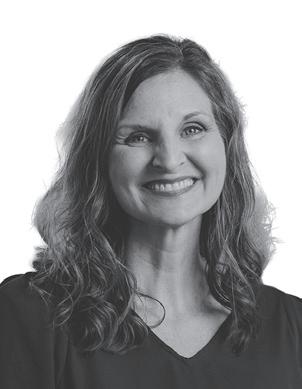
Carrie S. Cutler, EdD, is a clinical associate professor of mathematics education at the University of Houston in Houston, Texas. She has worked with thousands of preservice and in-service elementary and early childhood educators, providing professional development and curriculum support. Cutler began her career as an elementary teacher in predominantly low-income rural schools. For over twenty years, she has worked in an urban university setting teaching undergraduate mathematics content and methods courses as well as curriculum and leadership at the graduate level.
Cutler is the president of the Association of Mathematics Teacher Educators of Texas and co-lead facilitator of the National Association for the Education of Young Children’s Early Math Interest Forum. She was awarded the University of Houston’s Teaching Excellence and President’s Circle awards and the Texas Association for the Education of Young Children’s Teacher Educator of the Year honor. Cutler’s passion for
developing math-positive mindsets drives her mission to improve mathematics achievement for elementary and early childhood students. She has presented throughout the United States on topics ranging from developmentally appropriate early childhood mathematics, play-matized mathematics for elementary classrooms, and authentic assessment techniques for evaluating students’ progress in mathematics. Cutler has also worked with education leaders to revise and update state curricula for early childhood mathematics.
Dr. Cutler received a bachelor’s degree in elementary education from Utah State University, a master’s degree in teaching and learning from Brigham Young University, and a doctorate in curriculum and instruction from the University of Houston.
To learn more about Carrie Cutler’s work, visit www.carriecutler.com or follow @DrCarrieCutler on Instagram.
To book Carrie Cutler for professional development, contact pd@ SolutionTree.com.
by Graham Fletcher
Math can stir up a lot of emotions for teachers. Some remember struggling with it themselves as students; others worry they will not have all the answers when a student asks a question. Many simply feel stretched thin trying to fit everything into a packed school day. I have felt all those things too.
These emotions, however, are what make this book such a refreshing read. From the start, Carrie Cutler names the fears and doubts that so many teachers carry into their math blocks. She does not shy away from the hard parts, and she does not pretend there is one perfect way to teach. Instead, she supplies strategies and research she has explored through her own personal journey, and she helps teachers see what is possible.
This is not a book written from a distance. It comes from someone who has been in classrooms, wrestled with challenges, and now prepares future teachers to take on that same work. Carrie writes with honesty and encouragement, and her words remind us that progress in teaching math is not about perfection—it is about growth.
I have had the chance to read and endorse Carrie’s earlier book, Math Positive Mindsets: Growing a Child’s Mind Without Losing Yours. Then, I said that Carrie provides a beautiful framework for supporting and fostering a math positive classroom for new and experienced educators alike. By offering tools, tips, and implementation strategies, that book was a resource that empowered teachers and their students. The same can be said here, but in this book, Carrie has expanded the scope even further. She has written something that teachers can carry with them day after day as both a companion and a guide.
What makes this book stand out is the way it is built around real questions teachers ask. How do I set up math routines that actually work? How do I support students when they freeze in the middle of a problem? How do I engage families in ways that build confidence instead of anxiety? How do I design assessments that tell me more than whether a child got the answer right or wrong? These are the kinds of questions that live in every classroom, and Carrie gives us practical, research-informed ways to respond.
Another strength of this book is the way that Carrie pushes us to think more deeply. The Can’t Miss Research sections highlight big ideas that should shape how we teach. The Pause and Ponder reflections invite us to slow down and think about our own thinking. These features are not just extras on the side. They are intentional reminders that our growth as teachers depends on reflection just as much as it does on strategy.
Carrie also writes with a kind of honesty that is rare in professional resources. She shares her own early struggles and what she learned from them. She does not present teaching as neat and tidy, because it never is. Teaching is messy. Mistakes happen. Students surprise us. Growth takes time. By showing us her own learning, Carrie makes space for us to learn too.
For teachers who feel short on time, the design of this book is another gift. You do not have to read every chapter in order. You can flip to the question that addresses what you are facing right now. Each section offers clear explanations, concrete ideas, and tools you can use right away. The balance between research and practice is what makes this book so valuable. You will find strategies you can try tomorrow morning, and you will also gain a deeper understanding of why those strategies matter.
As you make your way through these pages, it will feel as if Carrie is walking beside you, whispering encouragement and reminding you that you’ve got this. That matters, because teachers often hear the opposite
voice, the one that says math is too hard, or that you are not a math person, or that your students cannot do it. Carrie’s voice cuts through the doubt with clarity and confidence.
At the heart of Math-Positive Teaching is a belief of Carrie’s that I share: Every child can see themselves as a mathematician, and every teacher can see themselves as a math teacher. If you have ever doubted either of those truths, this book will help you see them differently.
My hope is that as you read, you will give yourself permission to learn alongside Carrie. Mark up the margins, circle the questions that speak to you, and try out the ideas that feel doable. Teaching math is not about having all the answers—it is about staying curious and creating space for students to think and grow.
You could not have a better companion for that journey than Carrie Cutler.
Stay thirsty, math friends!
When I was in my first years of teaching mathematics, I felt a lot of fear. I was afraid that if I didn’t run around frantically passing out workbooks, giving step-by-step instructions, and setting up manipulatives, students wouldn’t learn. I was afraid that if students struggled with difficult problems, my supervisors would think I was unprepared or lazy.
I spent hours designing math lessons I thought would be engaging, rich, and challenging for my first graders. I included thick packets of practice problems and made sure I did plenty of modeling on the board beforehand so that students could do math correctly. I thought my efforts were paying off as students seemed to be mastering the content. One afternoon, however, I got a wake-up call.
One of my students, Tyler, asked me the golden question, “Why did you decide to become a teacher?” Wow! I was happy to fling open the pages of my passion-filled journey to my dream job! I gushed, “Tyler, I just love being a teacher. I love the books we read and the experiments we do and the math lessons and watching you play at recess—”
Tyler raised his little hand and put his finger to his lips. “I think it’s because you like to tell people what to do.”
Did Tyler consider me a good teacher? It seemed not. Instead, I realized that I came across to him (and probably to the other twenty-five first graders) as a bossy pants, and it was likely that my perfectionism was driving out my students’ accountability, agency, and belief in themselves as doers of mathematics. I thought I was building their confidence by giving them work that was very manageable for them and by modeling the solving steps they should take. But it was backfiring. I realized that my students felt I didn’t believe in their capacity to overcome challenges or engage with mistakes. I had a lot to think about. Was my classroom about students being compliant, doing things my way, or making perfect products they could hang on the refrigerator? Or was my classroom about thinking ?
I’ve come a long way in my teaching, and I still have a million miles to go, but this book is my attempt to bring you the tools I needed in my first years. It compiles research-based activities, lesson ideas, and other resources that will support your mathematics teaching—all with the goal of encouraging a math-positive mindset. The tips are based on research from the National Council of Teachers of Mathematics (NCTM), the National Association for the Education of Young Children, and professional journals in the fields of cognitive theory, child development, and education. These ideas also represent my thirty years of experience as an elementary school teacher, a conference presenter, a school in-service trainer, and a professor of elementary mathematics methods responsible for teaching new teachers how to teach mathematics.
The book is designed for busy elementary teachers. It is structured in a question-and-answer format with practical, plain-language explanations, advice, and tools. The table of contents lists the questions addressed in each chapter of the book, enabling you to quickly locate ideas and help. I don’t expect that you will read this book from cover to cover. Feel free to skip around. Look in the table of contents to find a question that matches your own. Or skim them all. I aim to provide a wealth of information to support your efforts to help your students and facilitate a math-positive classroom.
Math-Positive Teaching is divided into two parts. Part 1 covers broader topics about having a math-positive classroom, including classroom routines, assessments, and family relationships. Part 2 dives a little deeper into classroom practices and explores how to effectively teach the major content areas in elementary mathematics. The book’s chapters are as follows.
• Part 1:
+ Chapter 1, “Becoming a Math-Positive Teacher,” lays the groundwork for success by boldly declaring that math is for everyone and, with effort, every teacher can develop the attitudes, tools, and practices that support students’ mathematics learning.
+ Chapter 2, “Managing Math-Positive Routines and Practices,” will help you establish a math-positive classroom using counting and computation routines, workstations, and concrete and virtual manipulatives.
+ Chapter 3, “Promoting Problem-Solving Skills,” presents helpful guidelines for identifying worthwhile problems and tips for using discussion to facilitate problem solving.
+ Chapter 4, “Assessing the Math-Positive Way,” is explored through use of journals, portfolios, and performance tasks.
+ Chapter 5, “Encouraging Math-Positive Family Partnerships,” helps you empower families and caregivers to support their children through engagement with family math events, successful homework encounters, and online assistance when needed.
• Part 2: These chapters give overviews of K–5 objectives, break down confusing concepts, tackle common misconceptions, and present ways you can reinforce mathematical vocabulary while supporting conceptual learning over memorized procedures.
+ Chapter 6, “Counting and Number Sense”
+ Chapter 7, “Operation Sense”
+ Chapter 8, “Geometry”
+ Chapter 9, “Algebra”
+ Chapter 10, “Measurement and Data”
In addition to each chapter’s questions and answers, you’ll also see Pause and Ponder sections to help you reflect on your learning and consider how to apply the principles in your classroom. Each chapter also ends with a reproducible application guide that lists major topics from the chapter alongside ideas for classroom implementation.
Tyler and I recently reconnected via social media. He’s a father in his mid-thirties now working in a technical field. While he recalled the conservation lesson where I dressed up as a recycling superhero, GarbagyGert, and a few other miscellaneous first-grade memories, he had no recollection of the trajectory-adjusting conversation. I’m glad! I think that means math-positive replaced bossy pants just in time.
CHAPTER 1
To begin your journey from math-panicked to math-positive teaching, let’s first explore what it means to have a math-positive mindset. If you have a math-positive mindset, you believe that hard work and effort, not simply natural talent, lead to success in mathematics. This chapter addresses the most common anxieties about teaching mathematics and focuses on ways to build math-positive identities for yourself and your students.
Too many people believe that mathematics achievement is an exclusive club meant only for those lucky few born with genius genes. This isn’t true. Everyone can be good at mathematics with effort. Think of something you do well. Were you good at it from your first attempt, or did you become proficient through effort, practice, and determination? You can help your students understand this too. If your students idolize an athlete, musician, actor, or public figure, point out the level of effort that person puts into their craft. Hard things are worth the effort it takes to succeed.
Changing how you think about math will change how well you do math. People learn best with a growth mindset rather than a fixed mindset (Boaler, 2016; Dweck, 2006). With a fixed mindset, people believe that they can’t improve basic qualities such as their intelligence or ability to do well in math beyond an innate capacity. With a growth mindset, people believe that they can improve their abilities to learn and understand through work and effort. With math, a fixed mindset leads to hopelessness. A growth mindset perspective on learning math is essential for mathematics achievement (Mendoza & Yan, 2025)
Take a moment to watch Jo Boaler’s (2016) video How You Can Be Good at Math, and Other Surprising Facts about Learning on YouTube. Boaler, a professor of mathematics education at Stanford, explains that there is no such thing as a math gene. She describes what brain research about the growth mindset teaches us about learning and success in math. Wait until you hear what she says about mistakes in math! (See How Should I Handle Math Mistakes, page 17, later in this chapter.)
The students in my university classes are studying to become elementary teachers. On their journey, these preservice teachers engage in mathematics as learners, beefing up their content knowledge of elementary math concepts before they learn how to teach them to students. This can be tough! Relearning elementary math concepts well enough to teach them presents a host of challenges. But my classrooms have a motto: I can do hard things. “Hard things” might be completing a multistep math problem, using math language to describe your thinking, or creating a drawing to concretely represent a problem’s solution. Doing hard things is, well, hard. But that doesn’t mean it isn’t worth the effort. In fact, doing hard things helps our brains grow more than doing easy things does (Rege et al., 2021), and a supportive classroom environment has been shown to make a big difference in how students respond to challenges (Yeager, et al., 2021). I recently ordered pencils with I can do hard things printed on them. In my math methods classes, we put those empowering pencils to use as a reminder that effort is more important than natural talent for learning math and for many other things in life.
It’s no fun feeling like you’re bad at something. And it’s human nature to avoid things you feel bad at. But I wonder if maybe you feel you weren’t
good at math because you weren’t fast at math. Perhaps it didn’t come easily to you like it did for those students who seemed to breeze through assignments without breaking a sweat. Or maybe you were told that you were more of an artistic type of person than an analytical one. Sadly, like me, you may be part of a generation that believed only some students could learn math. Many students, especially those who were poor, nonnative English speakers, disabled, female, or members of racial-minority groups, became victims of low expectations for math learning. Students who struggled to learn math were tracked into lower-level math classes and given lower expectations for success.
Thankfully, things have improved in the 2020s, and a vision of mathematics for all students is beginning to guide modern education. This shift requires changing what we mean by “good at math.” According to Cathy L. Seeley, a former president of the NCTM, there are many ways to be good at math (2015). Some students can identify patterns or see relationships among numbers, quantities, or objects. Others may be resourceful problem solvers who can conjure up novel ways to approach unfamiliar problems. Still others may be good at visually representing mathematical ideas in graphs, tables, pictures, or words. Seeley (2015) contends that all types of math thinkers should have the opportunity to become successful math students by applying an assortment of strategies, all of which are taught, supported, and reinforced by us as teachers. When we’re accepting of all types of math thinkers, our classrooms become math-positive spaces where everyone feels capable of success. That’s only possible if we expand our definition of what makes a person good at math.
A person’s math identity dictates whether they feel they are a “math person.” A math identity includes beliefs about one’s ability to do math in school and to use math in everyday life (Aguirre, Mayfield-Ingram, & Martin, 2024). People with positive math identities are confident problem solvers, commit to solving challenging tasks, and understand that making mistakes is part of the process of doing mathematics (NCTM, 2020). Cultivating positive math identities leads to more than just helping students like math more. Positive social and emotional experiences during math time correlate with higher achievement (Cvencek, Kapur, & Meltzoff, 2015). For example, student achievement in math improves when students are given opportunities to “teach and learn from others; to explore, discover, and invent; and to test out the predictive power of their reasoning and calculations” (Immordino-Yang, Darling-Hammond, & Krone, 2018, p. 7). Thus, teachers must design math classrooms where math discourse and
discussion of worthwhile mathematical tasks emphasize effort, diverse strategies, and divergent ways of being good at math.
For various reasons, you may be nervous or unsure of your own ability in math and thus your ability to help your students. With math teaching, however, pedagogical and content knowledge really are power. So how do you boost your confidence? This leads us to the next question.
Just like you strive to encourage productive struggle in students’ math endeavors, you should likewise honor your own struggles as a developing teacher. Teaching math well is a complex, career-long process that takes time to refine. As professionals who are responsible for students’ mathematics learning, we work continually to increase our impact on students and are seldom satisfied with our accomplishments (NCTM, 2014). Remember that it’s not a sign of weakness to say something is hard; it’s the first step in intentional persistence.
Take proactive steps to address areas you consider weak spots in your teaching. The following are some ideas to get you started.
• Set short- and long-term goals and work collaboratively on these with like-minded colleagues.
• Examine students’ work and use it to drive continual reflection and instructional decisions.
• Engage in professional development, read journal articles and books, and attend online and in-person trainings. Don’t think of professional learning as something that is done to you but as something that is done for you.
• Take advantage of the assistance of an instructional coach or math instructional specialist.
• Enlist trusted fellow teachers to observe your teaching and give constructive feedback.
• Get involved in professional organizations for math and for teaching.
• Develop collegial relationships that can support your professional growth. You can start small by planning with your grade-level team to create lessons or assessments.
• Allow yourself time for reflection and celebration.
Math teachers need to understand math concepts well enough to explain them, respond to students’ questions, and support students’ different ways of approaching problems. The more you learn about math, the less scary it becomes. To bolster your math content knowledge and boost your confidence, try working through math curriculum materials for your grade level as well as the next few grades. If possible, join forces with a colleague to try to come up with as many different approaches to the math problems as you can. Thinking broadly will improve your math understanding, help you prepare to teach students from a variety of math backgrounds, and build your self-confidence. Locate released versions of your state’s annual math assessments. Then take them! These tests can help you get acquainted with math vocabulary and the test format while bolstering your math content knowledge.
Finally, recognize that you cannot control students or their learning, but you can do everything in your power to be the best math teacher possible. Your efforts to improve yourself will translate to better outcomes for students. Regardless of your own level of mathematics proficiency, your role as a math-positive teacher is vital. So, set aside your qualms, try the tips in this book, and feel empowered to help your students succeed in math.
PAUSE AND PONDE r
To whom can you turn for support when teaching math seems especially challenging? Which colleagues share your desire to create a mathpositive classroom?
Many factors influence students’ math identities and learning, including the math content they’re taught in school, the quality of instruction, and the math attitudes of students’ teachers (Schaeffer et al., 2021). Students get many of their cues about behaviors and values from the adults who care for them (Friedman, Wright, Masterson, Willer, & Bredekamp, 2021). I’m sure you’ve noticed your students mimicking your actions, preferences, and mannerisms. This is due to modeling. Modeling is also an instructional practice where students can observe teachers’ thought processes as they demonstrate how to solve a problem. Teachers can use worked examples to demonstrate new skills and ideas and describe each
step with a rationale. Modeling can help students make cognitive connections and understand how the parts of a concept fit together (Wilson, Long, Momsen, & Bray Speth, 2020). For example, a kindergarten teacher might demonstrate how to use counters to act out the joining action of an addition problem. The physical modeling a teacher does is important for developing the concept of addition as the joining of two (or more) sets. Modeling is an essential element of learning, whether that modeling takes the form of demonstrating a strategy for solving a problem or talking positively about math. Therefore, your attitude about mathematics can influence your students’ attitudes, for better or for worse.
I’ll never forget the jaw-dropping comment my sister’s sixth-grade teacher made at parent orientation: “I don’t like math very much, so we won’t be doing much of it this year.” How many students missed enriching mathematical experiences because one adult disliked math? Adults’ math talk must be positive, encouraging, and connected to effort and understanding rather than natural talent. We must be vigilant to ensure that our own math anxiety does not undermine our students’ math learning, especially in the formative years of elementary school. See what a difference a positive outlook can have on a general feeling of self-efficacy for learning and teaching math. You can begin by transforming your inner dialogue from “Ugh, I hate teaching math. It’s so hard to know how to help my students,” to “Hey, with time and effort I can improve in helping my students grow in math. I can see that they are starting to catch on, and so am I.”
On the other hand, while many teachers grapple with negative feelings about math, others love it and fail to see why our students don’t love it as well. Honor those feelings as a starting point for transforming students from math-panicked to math-positive. Recognize that your students may have an aversion to math for several reasons. They may feel that, unlike in writing, math success is limited to a fixed set of right answers (and even fewer right ways to find those answers). Instead of being rewarded for creative thinking, many students believe that in math they are restricted to the narrow confines of algorithms and procedures—many of which are drilled over and over. Some students dislike math because they find it disconnected from real life. Others may feel uncomfortable because learning math requires taking risks and making mistakes. Be understanding of your students’ growth into loving math. It’s a journey. Creating a math-positive classroom environment centered on supporting students’ thinking and growth will help students on their path to becoming math-positive.
PAUSE AND PONDE r
What experiences have shaped your identity as a doer of math? What experiences have shaped your math teacher identity?
Math anxiety is a negative emotional reaction or uneasiness (some might call it dread or panic) when asked to complete mathematical tasks (Mammarella, Caviola, & Dowker, 2019). Math anxiety undermines the development of mathematical skills by disrupting the use of working memory for maintaining task focus (Pellizzoni, Cargnelutti, Cuder, & Passolunghi, 2022). This, in turn, negatively affects achievement scores and potentially results in dislike and avoidance of math-related tasks. It is seen in students of all ages, regardless of their actual math abilities, and is considered more prevalent in girls than boys (Van Mier, Schleepen, & Van den Berg, 2019). What causes math anxiety? Poor self-esteem and low levels of self-efficacy, lack of confidence, perfectionism, and previous negative experiences with math all contribute to math anxiety (Luttenberger, Wimmer, & Paechter, 2018).
A study with first graders found that in classes where the teacher had higher math anxiety, students exhibited lower math achievement (Schaeffer et al., 2021). This was true for both girls and boys, even after researchers accounted for the teacher’s math ability and students’ beginning of the school year math knowledge. A teacher’s math anxiety is one factor that can compromise students’ math learning and may chart a negative path for future math attitudes and achievements (Schaeffer et al., 2021).
Math anxiety affects about 50 percent of the U.S. population (Boaler, 2012). I’m not sure why there isn’t a term for nervousness about other school subjects—maybe “conjugating verbs anxiety” doesn’t have quite the lyrical quality that “math anxiety” does. Nevertheless, math anxiety is a complex and genuine emotional reaction for many adults and students. Math anxiety is real, but you can keep it in check.
If you fear learning more about math, don’t let anxiety slow you down. You might want to try an experiment I use in my elementary math methods courses. My students are in their final few semesters before they begin their teaching careers. On the first day of class, I have them write on strips
of paper all their misgivings, anxieties, and personal doubts about themselves as doers of math. We put the strips in an empty jar and set them on the shelf. While we can’t destroy them permanently (like by setting them on fire—though it’s tempting), we can set them aside so that they don’t get in the way of our learning. I ask my students to promise me they will never disparage math in front of their students (or even privately, since I believe it feeds feelings of negativity). We then try to approach the course as eager learners and mathematically powerful thinkers.
Even if you don’t make a symbolic gesture and fill a jar with your doubts, remember that it won’t help your students to hear you say that you were never good at math, you could never understand math, or you never liked math. Don’t send that message! Math-positive communication makes for math-positive thinking. Focus on what you can offer your students: rich lessons, space for productive struggle, encouragement, and high expectations for their success.
The following are some tips for dealing with your students’ math anxiety.
• Encourage students to ask questions when they don’t understand something. Some people think asking questions is a sign of weakness; however, explain to students that asking questions makes their brains work better. The brain makes connections called neural pathway s between previous learning and new information (Center on the Developing Child, n.d.). We need neural pathways to make sense of new ideas.
• Support students in doing math in a way that’s natural for them. There’s often more than one way to work a math problem. Help students find what math strategies work best for them.
• Help students understand they are not alone in feeling nervous when they don’t understand how to do something. Tell them of a time when you encountered something challenging, worked hard to understand it, and overcame your anxiety.
• Practice stress management techniques such as breath work and positive self-talk. Students may want to use these techniques during testing situations regardless of the subject.
+ Helicopter breathing: Inhale deeply. Expel breath while making a ch-ch-ch sound, imitating a helicopter. Swirl both index fingers in a circular motion while raising them above the head. When arms are fully extended,
blow out the rest of the breath with a straight sh sound and lower the arms. Repeat until calm.
+ Progressive muscle relaxation: Focus on relaxing individual muscles one by one. In a calm voice, say, “Focus on your eyebrows. Raise them several times, then relax them. Focus on your jaw muscles. Bite down hard, then relax. Move next to the shoulders. Raise them and squeeze your shoulders together in the back. Then roll them slowly and relax them.” Continue down the body until even the toes are relaxed.
+ Singing bowl: Strike a singing bowl and have students focus only on the sound of the bowl ringing. The note may be heard for up to a minute if students listen carefully. The tone of the bowl has been found to induce a peaceful state and clarity of mind while engaging the relaxation reflex and inhibiting stress.
PAUSE AND PONDE r
What strategies have you enlisted for easing students’ math anxiety? Do you have students for whom math seems particularly anxiety-invoking? What additional ideas from this book might you use in your classroom or school?
Struggling at times is normal and is even necessary and valuable for understanding mathematics. The NCTM (2014) has adopted the phrase productive struggle to signify a challenging task that requires students to persevere in the face of difficulty. Productive struggle corresponds closely to growth mindset. When your students encounter a challenge that requires extended effort, it might help to compare it to other endeavors that require hard work and persistence, such as playing a sport or a musical instrument. How many practice shots did your students’ favorite basketball player take before winning the three point contest? Athletes do not become great without effort and struggle. Likewise, you can bet virtuoso Yo-Yo Ma’s first attempts at playing the cello were a bit screechy. Perseverance doesn’t indicate weakness or a lack of ability. Perseverance is what separates experts from novices. To struggle is to learn!
To build students’ positive math identities, you must plan for how you will respond to students’ mistakes. How can you orchestrate this?
• Choose math content that is challenging enough to promote interest and give students a chance to engage in productive struggle. Carefully selected math tasks can produce a just-right challenge that pushes students beyond their comfort zones into the space where productive struggle generates deep learning.
• Acknowledge the fact that mathematics can be challenging at times. Remind students that persistence and hard work are the keys to success. When students are struggling with a difficult concept, use encouragement to support their efforts; don’t just praise their innate ability.
• Reinforce feelings of mathematical power versus learned helplessness by giving feedback about determination rather than results (Young & Reed, 2017). When teachers promote perseverance, students feel safe to try and fail and try again.
• Give students time to grapple with ideas, make conjectures, and try out their thinking. Provide students with a risk-free space that gives room for divergent thinking and sometimes contradictory ideas. Develop a community of respect, tact, and good listeners. As the teacher, refrain from interrupting or supplying too much information too early.
• Help students understand how the brain can respond in positive ways to mistakes. It may seem counterintuitive, but mistakes are good for the brain—especially if the thinker also believes that they can get better through productive struggle in math.
Think of a time when a student gave an incorrect response during math. How did you handle it? How could you better communicate that you value diversity in students’ responses rather than one right answer or one preferred strategy? What benefits can you see to reinforcing processes in math, not just final answers?
I am not a perfect elementary teacher, a perfect college professor, or a perfect mathematician. If my mistakes in the classroom were lost socks, they would fill a jumbo capacity washing machine on an endless, sudsy
loop of regret. But challenges are how we learn, and how we respond to mistakes defines them as shameful or valuable. In my university courses, I have created a Wall of Mistakes on a bulletin board. The goal of the Wall of Mistakes is to normalize mistakes as part of the learning process. Students write their foibles, missteps, errors, and mistakes on a sticky note and hang it up to celebrate how errors help our brains grow. We must help students understand that making mistakes in math can be a stepping stone to understanding concepts. Mistakes represent students’ struggles, and in a math-positive classroom, persistence, determination, and effort count.
Neuroscience research shows that confronting a mistake in math causes synapses in a growth mindset individual’s brain to fire more frequently than those of a fixed mindset individual. The brain of the growth mindset individual engages with the mistake, trying to understand and learn from it. The fixed mindset brain remains comparatively static (Moser, Schroder, Heeter, Moran, & Lee, 2011). When we recognize that effort, persistence, and appropriate challenges lead to success in math—rather than natural talent—we regard our mistakes and struggles as the substance of learning (Boaler, 2024). So, it makes sense that praising students’ effort (“You worked hard on that problem!”) encourages them to adopt what researchers call incremental motivational frameworks—a belief that intelligence is malleable, that slip-ups and successes link to effort, and that challenge is desirable (Gunderson et al., 2018). Over time, teachers can flip the switch on how mistakes are perceived, helping students recognize that blunders are not just tolerated but expected and valued.
Students often want to know why they have to learn something, and as teachers we need to help them see the relevance in the mathematics they are doing. When I was a student teacher, I taught at a progressive lab school with teachers who endeavored to present mathematics as relevant and useful. A sixth-grade teacher exemplified real-world applications for math in his semester-long math project entitled, “Let’s Build a Shed.” The sixth graders had noted that the lack of a playground shed led to inefficiencies for locating recess equipment and requested a shed to store their balls, jump ropes, and other gear. The teacher designed a math unit integrated with other content areas where students could take the lead in researching, designing, fund raising, and building the playground shed. The number
of learning objectives only competed with the level of enthusiasm among the students. Through the shed project, students experienced authentic connections with mathematics and engaged in problem solving impossible to replicate in a traditional math classroom. These students knew why they had to learn math because they used math in personally meaningful ways.
All of the content in elementary school mathematics is relevant in daily life, whether we recognize it or not. Numbers and computation, fractions, shapes, algebraic reasoning, data analysis, and probability allow us to budget, share, complete puzzles, arrive on time, follow trends, and lose or (in the very rare case) win the lottery. Some of the rigorous high school mathematics content may seem isolated from real-world applications, but abstract reasoning, perseverance, and work ethic build personal character and habits of mind that pay off in multiple contexts. Even if students never expect to use a math concept, learning is a journey and not a destination. Math understandings are cumulative. A seemingly irrelevant math idea may become a doorway to something students will use in a future math class or in their career. And even if they don’t apply that particular math concept again, learning a new way to think is never a bad thing.
You can help students discover the relevance and interconnectedness of math with other areas of the curriculum by using integrated instruction. For example, analyzing graphs in social studies, gathering experiment results in science, and measuring the distance a softball is thrown in physical education entail important math skills. Pointing out the math that students do throughout the school day will help them recognize the countless essential connections of mathematics to the real world.
When students ask, “When am I going to use this?” they are often anticipating their adult lives. Students should see that practical applications for math exist outside the classroom in many forms. While some may think that only engineers and scientists use math in their work, all professions involve math to some degree. The following are a few examples to share with your students (Pagni, 2000). No doubt you can add to the list and perhaps consider the professions of your students’ parents as you do so. You may also consider enlisting parents to come talk to the class about their work and the ways in which math skills are needed in their jobs.
• Pharmacists use sorting and proportions to dispense the correct amount of medicine to people.
• Mechanics use problem solving to figure out what is wrong with a car. They also use measurement to calibrate engine parts and computation to determine estimates.
• Store managers need counting skills to keep track of inventory, employee work schedules, and wages. Cashiers use counting skills to make change.
• Carpenters and architects use estimating and measuring skills when designing or building things. They also need to be able to visualize how shapes fit together.
• Cooks use estimating, measuring, and time management skills to prepare meals.
• Floor and carpet installers use estimating, measuring, and multiplication skills to figure out room sizes and how much material to order.
The internet also provides rich resources for students to explore math in the real world. Check out the following websites and share them with students to investigate how math is useful in a variety of intriguing settings.
• The Futures Channel (www.thefutureschannel.com) produces mini-documentaries highlighting the math, science, engineering, and technology found in a variety of occupations. A few videos are free. Others are available with a monthly subscription. In “The Rhythm Track,” a drummer uses fractions and the value of notes to create rhythms. “Calculating the Power of the Wind” shows how giant windmills create electricity with blades, rotors, and wind.
• Ted Ed Talks (http://ed.ted.com/series/math-in-real-life) are searchable by topic, and math is a popular one. Find dozens of educational videos that show historical, futuristic, and practical applications for math. Check out math-related talks from Australian comedian and radio personality Adam Spencer, who riffs on prime numbers, and Eduardo Sáenz de Cabezón, who responds to stereotypical fixed mindset beliefs about the purposes of math with humorous, poignant connections to science (in Spanish with English subtitles).
• Get the Math (www.thirteen.org/get-the-math) is a multimedia project about math (algebra, in particular) in the real worlds of fashion, music, sports, video games, and more. It’s geared toward teens, but preteens and younger students will find the videos appealing as well. Fashion designer Chloe Dao uses math to create a clothing design that retails for less than $35. Special effects expert Jeremy Chernick uses math to design lighting for filming explosions.
Integrating culture with math learning is essential for students to develop a positive math identity, see the relevance and importance of math to their lives, and view themselves as mathematically powerful. Teachers should make explicit connections between mathematics content and culture whenever possible. Culturally responsive teachers take time to really get to know their culturally and linguistically diverse students, then plan math instruction that connects to students’ lived experiences inside and outside the classroom (Gutiérrez, Myers, & Kokka, 2023). By doing this, we communicate to students that we recognize and value their home cultures as useful resources for learning and applying mathematics. By leveraging ethnically diverse students’ cultural backgrounds and prior experiences, we make students’ learning more relevant, inclusive, and effective (Gay, 2021).
Consider your beliefs about your students’ abilities to succeed. Are there any biases that you identify? What have you learned about your students’ prior knowledge and skills—including the languages they speak and ways they communicate—and in what ways do you encourage them to use these in their learning of mathematics?
You can put math skills to use in real-world situations rather than relying on cultureless math worksheets by personalizing word problems, contextualizing problem scenarios to settings that make sense to your students, and by integrating activities like performance tasks (read more about them in What are the Advantages to Using Performance Tasks? on page 84) and Three Act Tasks.
Three Act Tasks are short video clips of culturally relevant problemsolving scenarios that allow for student-centered reasoning and modeling with mathematics. In act one, students see a very short video, picture, or math story that activates schema. Students notice and wonder, and you record their thinking to make it visible to other classmates. Students also start to figure out where the math is and land on a main question such as “How many pieces of candy fit in the piñata?” Act one gives the students very little information, so students must estimate based on their personal
schema for mathematics and the real world. In act two, students are given additional pieces of information and revise their estimate accordingly. Act three gives the last, essential pieces of information needed to solve the problem. Students solve it using a variety of strategies and discuss their reasoning.
You can create your own Three Act Tasks with a simple cell phone camera. First, find out what your students are interested in and a bit about their home cultures. You can do this by informally surveying students. You might ask some of these questions:
• If you picked a few items from around your home to represent your family, what would they be?
• If your grandparents gave you something special from their culture, what would it be?
• What special food does your family prepare for holidays or special occasions?
• If you had free time at home, what would you do?
• What is something you know a lot about?
• If you had $20 to spend, what would you buy?
Next, plan out what each video segment will show. For example, if I was creating a Three Act Task for first graders who love to play Pokémon, my three acts would be as follows:
• Act one—Show a tall stack of Pokémon cards. This image allows students to notice and wonder before making an estimate of the main question: How many Pokémon cards are there in the collection?
• Act two—Show the first ten cards being counted with the rest of the collection still visible but not able to be counted. This provides students with more information so that they can revise their estimates.
• Act three—Show the stack being divided in half and one of those stacks being counted. Students should now have enough information to solve the problem of knowing how many are in the collection.
Students can share with the class how they solved the problem using mental math, drawings, numbers, and reasoning.
For the past few years, the preservice teachers in my elementary math methods courses at the University of Houston have been creating Three
Act Tasks that incorporate a variety of cultural backgrounds. Our urban area serves many students from Spanish-speaking families. Thus, the Three Act Tasks have been designed with foods, games, and other contexts that grab students’ attention and connect to Hispanic culture. But this concept is applicable to any culture. You can find the Three Act Tasks on the UHouston Math YouTube channel (www.youtube .com/@UHoustonMath/videos). Playlists are organized by grade bands. Table 1.1 contains examples of a few culturally responsive Three Act Tasks.
Piñata Party How many SweeTARTS® fit in the piñata?
¡Dale, Dale, Dale!—Piñata Mystery
Sponch Mexican Candy Task
De La Rosa Rows
Mazapan Yum Yum Yum
Ay Mi Chicle
Taki Taki
Paper on Fire
PicaFresa Three Act Task
Enchilokas Three Act Task
How many Duvalín® are in the piñata?
How many Sponch® cookies would it take to fill the face of the rectangular prism?
How many Mazapan are in the box?
How many Mazapan fit in the box?
How many chicles fit in the box?
How many Takis® fit into the bowl?
How many hot fries fit on the sheet of paper?
How many PicaFresa® fit in the barrilito?
How many Enchilokas® fit in the jar?
Multi-digit multiplication, capacity, grades 2–4, piñatas
Arrays, Mexican candies, grades 3–4, piñatas
Area, counting, grades 1–3, Mexican cookies
Volume of a rectangular prism, grades 2–4, Mexican candy
Counting in sets, arrays, grades K-2, Mexican candy
Multiplication arrays, grades 2–4, Mexican gum
Multiplication within 100, grades 2–3, spicy chips
Area using the formula, grades 3–4, spicy chips
Counting within 100, grades preK-K, Mexican candy
Capacity with nonstandard units, grades 2–3, Mexican candy
Find the Tamarind How many tamarind candies are needed to cover the construction paper?
Loteria: La Rosa How many beans does it take to cover the loteria (lottery) card?
Arrays, area, grades 2–4, Mexican candy
Area using nonstandard units, grades 2–4, Mexican bingo card game
Becoming a math-positive teacher starts with overcoming your own math anxiety and embracing a growth mindset. By handling math mistakes as learning opportunities, you model resilience and confidence for your students. Help students see the value of mathematics by connecting it to real-life contexts and their home cultures, making learning more meaningful and inclusive. Take action today to transform your math classroom into a space where every student feels empowered and capable.
Use the application guide to connect these ideas and tools to your classroom practices.
Chapter 1 Topics Connect to Your Classroom
Overcoming your mathematics anxiety
Gaining confidence teaching mathematics
Handling mistakes in mathematics
Set aside negative past experiences in favor of a growth mindset for yourself as a teacher and doer of mathematics. Rather than speed, reinforce students’ resourceful problem solving, use of patterns, and visual representations.
Co-plan with and get constructive feedback from like-minded colleagues. Use student work to reflect and make instructional decisions. Attend professional development and read journal articles and books. Take advantage of an instructional coach or math instructional specialist. Get involved in professional organizations for math teaching.
Recognize that effort, persistence, and appropriate challenges—rather than natural talent—lead to success in math, and reward such behaviors. Regard mistakes and struggles as the substance of learning. Encourage a growth mindset by reinforcing students’ effort, persistence, focus, strategies, and improvement.
Leveraging culture in mathematics
Integrate culture with math learning to develop students’ positive math identities. Help them see the relevance and importance of math to their lives by accessing their lived experiences and funds of knowledge. Set up experiences, such as Three Act Tasks, where students can view themselves as authentically connected to math and mathematically powerful.
Many elementary teachers once struggled to learn mathematics themselves, so to teach it with confidence is a daunting prospect. But it is possible, and it need not induce anguish. In Math-Positive Teaching: Questions and Answers for Elementary Educators , Carrie S. Cutler proves everyone can learn (and teach) mathematics in math-positive classrooms, where teachers foster open mindsets toward challenge and incorporate thoughtful, innovative strategies to encourage students in this school subject. This book dismantles common misconceptions that learning math requires exceptional, exclusive capability. Using a question-and-answer format, Math-Positive Teaching equips readers with effective tools, strategies, and considerations for clearly demonstrating mathematical concepts, easing student anxiety, and improving their own confidence as math instructors along the way.
READERS WILL:
• Develop classroom routines and teaching strategies to cultivate math-positive mindsets
• Build confidence in explaining and demonstrating math concepts, from fundamental counting and number sense to more complex algebra, using diverse methods
• Reduce math anxiety through revised assessment practices that promote math positivity
• Create supportive math partnerships beyond the classroom with parents and caregivers
• Embrace math as a learning journey on which everyone can succeed
“With clear answers, research-based strategies, and ready-to-use activities, this book supports effective instruction across all domains of elementary mathematics. A must-have resource for any elementary mathematics teacher!”
—TONI GALASSINI, Professional Learning Specialist, CPS Office of Early Childhood Education, Chicago, Illinois
“Whether you have been teaching for decades or are a preservice teacher, this book is a must-read for all elementary mathematics educators. Embracing a positive approach to teaching mathematics should be at the core of every elementary mathematics classroom!”
—TRACEY A. HULEN, Mathematics Specialist, T.H. Educational Solutions
“Cutler blends practical strategies with real-world connections, giving teachers concrete ways to build math confidence in their classrooms and extend that positivity to families through homework ideas and family math nights. This book is both inspiring and immediately useful for creating a truly math-positive culture at school and at home.”
—SAMANTHA R. NEFF, Coauthor, Making Sense of Mathematics for Teaching
SolutionTree.com Visit go.SolutionTree.com/mathematics to download the free reproducibles in this book.